WO2023276868A1 - データ提供装置、フットケア製品提供方法及びフットケア製品 - Google Patents
データ提供装置、フットケア製品提供方法及びフットケア製品 Download PDFInfo
- Publication number
- WO2023276868A1 WO2023276868A1 PCT/JP2022/025246 JP2022025246W WO2023276868A1 WO 2023276868 A1 WO2023276868 A1 WO 2023276868A1 JP 2022025246 W JP2022025246 W JP 2022025246W WO 2023276868 A1 WO2023276868 A1 WO 2023276868A1
- Authority
- WO
- WIPO (PCT)
- Prior art keywords
- data
- foot
- care product
- foot care
- user
- Prior art date
- Legal status (The legal status is an assumption and is not a legal conclusion. Google has not performed a legal analysis and makes no representation as to the accuracy of the status listed.)
- Ceased
Links
Images





Classifications
-
- A—HUMAN NECESSITIES
- A43—FOOTWEAR
- A43B—CHARACTERISTIC FEATURES OF FOOTWEAR; PARTS OF FOOTWEAR
- A43B17/00—Insoles for insertion, e.g. footbeds or inlays, for attachment to the shoe after the upper has been joined
-
- A—HUMAN NECESSITIES
- A43—FOOTWEAR
- A43D—MACHINES, TOOLS, EQUIPMENT OR METHODS FOR MANUFACTURING OR REPAIRING FOOTWEAR
- A43D1/00—Foot or last measuring devices; Measuring devices for shoe parts
- A43D1/02—Foot-measuring devices
-
- G—PHYSICS
- G01—MEASURING; TESTING
- G01B—MEASURING LENGTH, THICKNESS OR SIMILAR LINEAR DIMENSIONS; MEASURING ANGLES; MEASURING AREAS; MEASURING IRREGULARITIES OF SURFACES OR CONTOURS
- G01B11/00—Measuring arrangements characterised by the use of optical techniques
- G01B11/24—Measuring arrangements characterised by the use of optical techniques for measuring contours or curvatures
-
- Y—GENERAL TAGGING OF NEW TECHNOLOGICAL DEVELOPMENTS; GENERAL TAGGING OF CROSS-SECTIONAL TECHNOLOGIES SPANNING OVER SEVERAL SECTIONS OF THE IPC; TECHNICAL SUBJECTS COVERED BY FORMER USPC CROSS-REFERENCE ART COLLECTIONS [XRACs] AND DIGESTS
- Y02—TECHNOLOGIES OR APPLICATIONS FOR MITIGATION OR ADAPTATION AGAINST CLIMATE CHANGE
- Y02P—CLIMATE CHANGE MITIGATION TECHNOLOGIES IN THE PRODUCTION OR PROCESSING OF GOODS
- Y02P90/00—Enabling technologies with a potential contribution to greenhouse gas [GHG] emissions mitigation
- Y02P90/30—Computing systems specially adapted for manufacturing
Definitions
- the present invention relates to a data providing device, a foot care product providing method, and a foot care product.
- custom-made special shoes and insoles were necessary.
- custom-made shoes are inconvenient because they require many visits to hospitals and shops for diagnosis by a doctor, measurement of foot size by a prosthetist, adjustment of shoes, and the like.
- the problem to be solved by the present invention is to provide a foot care product that fits shoes to the feet and reduces the burden on the user's feet.
- a data providing device that provides design data for a foot care product according to the three-dimensional shape of a user's foot, a communication unit that receives measurement data of a three-dimensional shape of the foot of the user from a user terminal; a calculation processing unit that calculates design data for the foot care product based on the measurement data; The calculation processing unit calculates, as the design data, the size and elasticity of the foot care product and the arrangement position of the sensor in the foot care product, The data providing device, wherein the communication unit transmits the design data to the foot care product manufacturing system.
- the sensor transmits detection data to the user terminal by wireless communication;
- the calculation processing unit generates guidance data related to walking of the user based on the detection data transmitted from the user terminal,
- the data providing device according to the above [1] or [2], wherein the communication unit transmits the guidance data to the user terminal.
- the foot care product includes an insole, a pad, or a sock with the insole disposed on the bottom,
- the data providing device according to any one of [1] to [4] above, wherein the calculation processing unit calculates materials, thicknesses, shapes and sizes of the insole, the pad and the sock as the design data.
- the insole or the pad is manufactured by 3D printing using resin, The data providing device according to [5], wherein the calculation processing unit calculates the type of the resin as the design data.
- a method of providing a foot care product according to the three-dimensional shape of a user's foot a step in which the user terminal generates measurement data of the three-dimensional shape of the user's foot and transmits the measurement data to a data providing device;
- the data providing device calculates the size and elasticity of the foot care product and the arrangement position of the sensor in the foot care product as design data of the foot care product based on the measurement data, and the foot care product manufacturing system sending to manufacturing the foot care product based on the design data in the manufacturing system; foot care product delivery methods, including;
- a foot care product worn by a user comprising: an insole placed on the bottom of a shoe, a pad placed inside the shoe, or a sock with the insole placed on the bottom; a sensor disposed inside or on the surface of the insole, pad or sock; The foot care product, wherein the sensor is placed at a position based on the three-dimensional size of the user's foot.
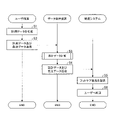
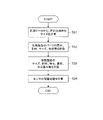
- FIG. 4 is a flow chart showing processing in the foot care product providing system when providing foot care products. It is a figure explaining the measuring method of a foot. 4 is a flow chart when the data providing device calculates design data; FIG. 3 is a side view showing a model of a user's foot; FIG. 4A is a top view showing a model of a user's foot; FIG. 3 shows an example of a table that can be used to determine the elasticity of an insole or pad; It is a perspective view showing an example of a foot care product. 4 is a flow chart showing processing in the foot care product providing system when providing guidance data. FIG. 4 is a diagram showing an example of a table that can be used to generate guidance data;
- FIG. 1 shows the configuration of a foot care product providing system 100.
- a user terminal 1 a data providing device 2 and a manufacturing system 3 are connected via a network N.
- a network N a known network such as the Internet or a telephone line can be used.
- the user terminal 1 receives an order for the foot care product 5, and the data providing device 2 calculates design data for the foot care product 5. Based on this design data, the manufacturing system 3 manufactures the foot care product 5 and provides it to the user.
- the user is, for example, a foot patient with foot deformity.
- the foot care product 5 is a product for reducing the burden on the user's feet.
- the foot care product 5 may be not only innerwear worn inside shoes, but also shoe last products such as sandals.
- Examples of innerwear include insoles and pads placed inside shoes, socks worn by users inside shoes, and the like. Socks usually have an insole placed on their bottom.
- the user terminal 1 is not particularly limited as long as it is a terminal capable of transmitting image data, such as a communication terminal with a camera.
- a smart phone, a tablet type, a notebook type or a desktop type PC (Personal Computer) used by the user can be used.
- the user terminal 1 transmits order data for the foot care product 5 to the data providing device 2 in accordance with the user's operation input.
- the user terminal 1 transmits image data of the user's foot or the like as measurement data to the data providing device 2 .
- ⁇ Data providing device> When receiving order data for foot care products 5 from the user terminal 1, the data providing device 2 generates design data for the foot care products 5 according to the three-dimensional shape of the user's feet based on the measurement data received from the user terminal 1. do. The data providing device 2 transmits the design data to the manufacturing system 3 together with order data for the foot care products 5 . In addition, the data providing device 2 can transmit guidance data on walking of the user to the user terminal 1 .
- FIG. 2 shows a configuration example of the data providing device 2.
- the data providing device 2 includes a CPU (Central Processing Unit) 21, a storage section 22, a communication section 23, a display section 24, an operation section 25, and the like.
- CPU Central Processing Unit
- the CPU 21 functions as a control section 211 and a calculation processing section 212 by reading and executing programs from the storage section 22 .
- the control unit 211 controls each unit of the data providing device 2 . For example, it controls the communication unit 23 to receive or transmit data with the user terminal 1 or the manufacturing system 3 .
- the calculation processing unit 212 generates design data and guidance data.
- the storage unit 22 stores programs readable by the CPU 21, tables used for executing the programs, and the like.
- a recording medium such as a hard disk can be used, for example.
- the communication unit 23 is an interface that communicates with an external computer such as the user terminal 1 via the network N.
- the display unit 24 is a display or the like.
- the display unit 24 displays an operation screen, processing results of the CPU 21, and the like according to instructions from the CPU 21.
- FIG. 1 A block diagram illustrating an exemplary computing environment in accordance with the present disclosure.
- the operation unit 25 is a keyboard, mouse, or the like.
- the operation unit 25 receives user's operations and outputs the operation contents to the CPU 21 .
- the manufacturing system 3 includes a reception terminal 31, a manufacturing device 32 for the foot care product 5, and the like.
- Examples of the manufacturing device 32 include a 3D printer that molds resin, a fabric cutting device, a sewing device, and the like.
- the reception terminal 31 Upon receiving the order data for the foot care products 5 and the design data for the foot care products 5 from the data providing device 2 , the reception terminal 31 transmits the design data to the manufacturing device 32 .
- the manufacturing device 32 forms the foot care product 5 or parts thereof based on the design data. After the foot care product 5 is manufactured by assembling the parts, the reception terminal 31 performs delivery processing of the foot care product 5 .
- FIG. 3 shows the processing flow of the foot care product providing system 100 when providing the foot care product 5.
- the user terminal 1 generates measurement data of the three-dimensional shape of the user's foot (step S1).
- the measurement data refers to data obtained by measuring the three-dimensional shape of the foot or data used for calculation for measurement.
- the user terminal 1 can transmit the image data of the foot taken by the camera to the data providing device 2 as measurement data.
- the data providing device 2 can analyze the image data and calculate the three-dimensional shape of the foot.
- the measurement data is not limited to photographed image data, and may be data obtained by calculating a three-dimensional shape such as the length, width, or instep height of the user terminal 1 from the image data. Data that has already been measured in and input by the user may be used.
- FIG. 4 is a diagram for explaining a method of measuring feet.
- the feet are photographed from multiple directions.
- the auxiliary tool for measurement is photographed together with the foot.
- a sheet 11 on which a grid is printed, a sticker-like marker 12 to be attached to the leg, or the like can be used.
- the three-dimensional size of the foot can be easily calculated based on the position, size, or degree of deformation of the shape of the grid or marker 12 .
- the seat 11 is arranged so as to surround not only the floor surface but also the three sides of the foot, because it facilitates three-dimensional measurement of the foot size.
- the user terminal 1 generates order data for the foot care products 5 and transmits it to the data providing device 2 together with the measurement data (step S2).
- the order data includes orderer information such as the name and address of the user who placed the order, product information data such as the type of foot care product 5 to be purchased (insole, pad or sock), color or price.
- the processing of the user terminal 1 may be performed by an application installed on the user terminal 1. According to guidance from the application, the user can perform input operations such as the photographing and orderer information. Alternatively, the user terminal 1 may access a website from which the foot care product 5 can be ordered, and follow the instructions on the website to upload photographed data, orderer information, etc. to the website. Both the application and website are provided by the data providing device 2 .
- control unit 211 receives the order data transmitted from the user terminal 1 and instructs the calculation processing unit 212 to design.
- the calculation processing unit 212 calculates the design data of the foot care product 5 based on the measurement data transmitted together with the order data in accordance with the instruction from the control unit 211 (step S3). Calculation of design data will be described later.
- control unit 211 generates order data from the order data and causes the communication unit 23 to transmit it to the manufacturing system 3 together with the calculated design data (step S4).
- the order data includes data such as product information of the foot care product 5 to be manufactured, orderer information of the user who delivers the foot care product 5, and the like.
- the reception terminal 31 when the reception terminal 31 receives the order data transmitted from the data providing device 2 , the reception terminal 31 transmits the design data transmitted together with the order data to the manufacturing device 32 .
- the manufacturing device 32 manufactures the foot care product 5 based on the design data (step S5).
- the design data specifies the type of resin.
- the manufacturing device 32 can manufacture the insole or pad by 3D printing using the designated type of resin.
- the manufacturing device 32 also arranges the sensor 6 on the foot care product 5 based on the design data. Thereby, the sensor 6 is arranged at a position based on the three-dimensional size of the user's foot.
- the reception terminal 31 executes delivery processing based on the order data (step S6). For example, in the delivery process, the reception terminal 31 prints a delivery destination list, an invoice of the delivery destination, and the like, and transmits delivery request data to the computer of the delivery company.
- FIG. 5 shows the processing of the data providing device 2 when calculating design data.
- the calculation processing unit 212 first calculates the three-dimensional size of the user's foot from the measurement data (step S31).
- the calculation processing unit 212 analyzes a plurality of image data to detect edges of the surface of the foot, and calculates the length, width, and height of the foot at a plurality of positions. Calculate in When the sheet 11 with the grid or the marker 12 is included in the photographed image, the calculation processing unit 212 detects the grid and the marker 12 in the sheet 11 . The calculation processing unit 212 can also calculate the length, width and height of the foot from the distances between the vertices of the grid, or calculate the position of the surface of the foot by measuring the distance from the floor to the marker 12. can also
- the calculation processing unit 212 prepares a database in advance of the distance from the camera to the grid or marker 12, the amount of deformation of the grid or marker 12 when changing the angle of the surface of the foot, or the amount of change in size. can also In this case, by matching the amount of deformation or the amount of change in size of the grid of the sheet 11 or of the marker 12 detected from the image data with the database, the distance from the camera to the grid or the marker 12, the surface of the foot, Tilt angles, distances between markers 12, etc. can be calculated.
- the calculation processing unit 212 may calculate the feature amount from each image data and detect the position of the feature point having the common feature amount.
- a three-dimensional model of the foot can be formed by arranging detected feature points in a three-dimensional space using feature points such as the toes, heels, and ankles of the feet as reference points. Any known calculation method can be used as long as the size of the three-dimensional shape can be calculated without being limited to the calculation method described above.
- the calculation processing unit 212 calculates the material, thickness, shape, size, etc. of the sock part, which is a fabric product among the foot care products 5, based on the calculation result of the foot size (step 32). This process is omitted when the foot care product 5 is only a resin product such as an insole or a pad.
- the calculation processing unit 212 can compare the user's foot size with the standard foot size, and determine the material, thickness, shape, size, etc. of the parts of the sock according to the difference. For example, when the width of the foot is larger than the standard size by a certain value or more, the calculation processing unit 212 divides the sock into three parts: a part that covers the sole, a part that covers the right side of the foot, and a part that covers the left side of the foot. can do.
- the sock it is better for the sock to have high elasticity, as the areas with more unevenness than the standard size are more likely to rub against the shoes and receive impact when walking.
- the elasticity of the sock can be enhanced by choosing a thick material fabric or choosing a highly cushioned knitting method such as pile knitting. Normally, the material and weaving method of all parts are the same, but if, for example, the width of the foot and the height of the instep at the big toe are larger than the standard size by more than a certain amount, the elasticity of the part covering the big toe will be increased by one level.
- the computational processing unit 212 can determine the thickness, material, or knitting of the part.
- the calculation processing unit 212 calculates the elasticity, material, thickness, shape, size, or arrangement position of the insoles, pads, sandals, etc., which are resin products among the foot care products 5, based on the calculation result of the foot size. etc. are calculated (step S33). Specifically, the calculation processing unit 212 can compare the user's foot size with a standard shoe size or a standard foot size, and determine the elasticity or the like according to the difference.
- 6A and 6B show an example of a user's foot size and standard shoe and foot sizes. 6A is a side view and FIG. 6B is a top view.
- the calculation processing unit 212 reads out the standard size shoe model K2 and the standard size foot model K3 from the storage unit 22 and arranges them in the three-dimensional virtual space. Each model K2 and K3 is generated in advance based on a statistically average size for each foot length and stored in the storage unit 22 .
- the shoe model K2 is a three-dimensional virtual model that reproduces the three-dimensional shape of the inner surface of the shoe.
- a standard size foot model (hereinafter referred to as a standard model) K3 is a three-dimensional virtual model that reproduces the three-dimensional shape of a standard foot.
- Three points P1 to P3 for supporting the foot during walking are set at the big toe, little toe and heel of the standard foot model K3. Also, an arch A connecting points P1 to P3 is set.
- the calculation processing unit 212 generates a three-dimensional model K1 that reproduces the three-dimensional shape of the surface of the user's foot from the measurement result of the user's foot size.
- the calculation processing unit 212 arranges the foot model K1 inside the shoe model K2 in the virtual space, and adjusts the position so that the end in the front-rear direction y matches the standard foot model K3.
- the calculation processing unit 212 matches the foot model K1 with the standard model K3 to determine points P1 to P3 in the foot model K1. For example, the calculation processing unit 212 projectively transforms the points P1 to P3 and the arch A set in the standard model K3 to the model K1.
- the calculation processing unit 212 determines the size and thickness of the insole 51 to be placed in the shoe model K2 so that the weight is supported at the three points P1 to P3 and the curvature of the arch A is maintained. do.
- the base insole 51 is determined to have a size and shape that is smaller than the area of the sole and larger than the area of the foot, and the thickness is determined so as to fit the toes and heels.
- the thickness is adjusted so that the upper surface of the foot model K1 is separated from the shoe model K3 by a certain distance or more in the height direction z.
- the calculation processing unit 212 adds the pads 53a and 53b to the insole 51. placement can be determined.
- the pads 53 a and 53 b may be attached to the upper surface of the insole 51 or embedded inside the insole 51 . Depending on the arrangement of the pads 53a and 53b, the insole 51 can be provided with elasticity different from thickness.
- the pad 53a is placed on the arch in order to maintain the shape of the arch A.
- the calculation processing unit 212 determines the shape and size of the pad 53a so as to fill the space between the upper surface of the insole 51 and the arch of the foot.
- Pad 53b is placed in the middle of the foot so that weight is applied to points P2 and P3.
- the calculation processing unit 212 adjusts the three-dimensional shape and size of the pad 53b so that the distance between the points P1 to P3 and the difference in curvature of the arch A between the foot model K1 and the standard model K3 are small. decide.
- the pads 53a and 53b may be pads arranged around the heel, instep, ankle, or the like. For example, if the foot has large unevenness, a pad may be arranged to fill the unevenness.
- the calculation processing unit 212 detects a recess where the size difference between the foot model K1 and the standard model K2 is greater than or equal to a threshold, and determines the three-dimensional shape and size of the pad so as to fill the recess.
- the calculation processing unit 212 calculates the elasticity and materials of the insole 51 and the pads 53a and 53b according to the difference between the user's foot model K1 and the standard model K3 or the difference between the foot model K1 and the shoe model K3. to decide.
- FIG. 7 shows an example of a table T1 that can be used to determine elasticity and material.
- Table T1 is stored in storage unit 22 .
- elasticity and material are associated with the difference from the standard model K3 or the shoe model K2 for each part of the foot.
- FIG. 7 when the foot model K1 is smaller and the difference is a negative value, it is indicated by (-).
- the difference between the foot model K1 and the standard model K3 is 10 mm or more, or the difference between the foot model K1 and the shoe model K2 (the distance from the foot to the shoe). is less than 10 mm, "soft” is associated with the elasticity, and "EVA (ethylene-vinyl acetate copolymer)" is associated with the material having this elasticity.
- the calculation processing unit 212 determines the elasticity of the insole 51 and the pads 53a and 53b and the materials to be used from the difference between the user's foot size and the standard foot size or shoe size.
- the type of resin used can be determined.
- the calculation processing unit 212 calculates the arrangement position of the sensor 6 on the foot care product 5 (step S34).
- asterisks exemplify the placement positions of the sensors 6 .
- the computation processing unit 212 computes the part where the foot is deformed due to the difference in three-dimensional size between the foot model K1 and the standard model K2.
- the calculation processing unit 212 determines the calculated site as the placement position of the sensor 6 .
- the calculation processing unit 212 determines that a deformation in which the big toe protrudes in the width direction x, that is, a so-called hallux valgus, has occurred. 6 placement positions.
- the calculation processing unit 212 can also calculate the part where the burden on the foot is predicted based on the difference between the foot model K1 and the shoe model K3, and determine the arrangement of the sensor 6 here. For example, when the instep is deformed to protrude upward, the distance in the height direction z from the instep to the shoe is short, and the foot is likely to be compressed.
- the calculation processing unit 212 compares the difference between the instep foot model K1 and the standard model K2 (the distance from the foot to the shoe) with a threshold, and if the difference is shorter than the threshold, the sensor 6 is placed on the shortest part. It can also be determined as a position.
- the calculation processing unit 212 can also determine a position that affects walking as the placement position of the sensor 6 .
- the points P1 to P3 can be determined as the placement positions of the sensors 6 in order to confirm whether the feet are supported at the points P1 to P3.
- the sensor 6 of this embodiment is a pressure sensor, but a temperature sensor, a humidity sensor, or the like may be used. Further, the sensor 6 of the present embodiment has wireless communication functions such as RFID (Radio Frequency IDentification System) and Bluetooth (registered trademark). This allows the sensor 6 to transmit the state of the foot to an external device such as the user terminal 1 at any time.
- RFID Radio Frequency IDentification System
- Bluetooth registered trademark
- the sensor 6 may be embedded inside the foot care product 5 such as the insole 51 or the pad 53a, or may be arranged on the surface of the foot care product 5.
- the calculation processing unit 212 can determine an arrangement method that places less burden on the foot according to the type of the sensor 6 and the distance from the foot to the shoe.
- FIG. 8 shows a sock 5A as an example of the foot care product 5.
- the sock 5A is a separate type sock that separately accommodates the thumb and fingers other than the thumb.
- the sock 5A consists of an insole 51 and a sock body 52. - ⁇ The sock main body 52 is integrally formed by sewing a bottom part and two left and right parts.
- the insole 51 is arranged on the bottom surface of the sock body 52 .
- the size, thickness, material, etc. of the insole 51 and the size, shape, material, etc. of each part of the main body of the sock 52 are determined based on the design data as described above.
- a plurality of sensors 6 are arranged on the sock 5A.
- the sensor 6 is also arranged at a position determined based on the three-dimensional size of the user's foot as described above. Some sensors 6 are embedded inside the insole 51 , while others are located on the outer surface or side of the sock body 52 .
- Detected data such as pressure output from the sensor 6 can be used to generate guidance data for the user's walking.
- the detection data can also be used to calculate design data when manufacturing new foot care products 5 .
- FIG. 9 shows the flow of processing when providing guidance data in the foot care product providing system 100.
- the user terminal 1 receives detection data transmitted from the sensor 6 (step S11), it transmits the detection data to the data providing device 2 (step S12).
- the calculation processing unit 212 generates guidance data based on the transmitted detection data (step S13).
- Guidance data includes, for example, information on the walking condition of the user, information on lesions predicted in the future, advice on correct walking methods, and the like.
- the instructional data can include images, videos, etc. that describe the correct way to walk.
- FIG. 10 shows an example of a table T2 that can be used to generate coaching data.
- instruction data is associated with the foot part and the level of pressure detected by the sensor 6 at that part.
- the calculation processing unit 212 calculates from the table T2, " Acquire guidance data such as "Hallux valgus may progress", “Land on the heel and kick strongly with your fingertips”.
- the control unit 211 controls the communication unit 23 to transmit guidance data to the user terminal 1 that transmitted the detection data (step S14).
- the user terminal 1 displays the transmitted guidance data (step S15).
- the shape of the foot may have changed, so the user terminal 1 photographs the foot and generates new measurement data. Then, as shown in FIG. 3, the user terminal 1 transmits the data together with the order data to the data providing device 2. FIG. At this time, the user terminal 1 can also transmit the detection data of the sensor 6 together.
- the data providing device 2 can calculate the design data of the newly manufactured foot care product 5 based on the detection data transmitted from the user terminal 1. For example, if the pressure level on the bottom side of the big toe is higher than the threshold value according to the detection data, the calculation processing unit 212 calculates the design data based on the measurement data, and then reduces the elasticity of the insole at the position of the big toe by one level. data can be changed.
- Design data may be calculated based not only on detection data at the time of ordering, but also on past detection data or guidance data generated from the detection data. As a result, it is possible to design foot care products 5 that better fit the foot based on past walking conditions and changes in the condition of the foot.
- the user terminal 1 transmits measurement data such as a photographed image of the foot to the data providing device 2 .
- the data providing device 2 calculates design data for the foot care product 5 based on the transmitted measurement data, and transmits the design data to the manufacturing system 3 .
- the manufacturing system 3 manufactures foot care products 5 based on the design data.
- the data providing device 2 uses the calculation processing unit 212 to calculate the size and elasticity of the foot care product 5, the arrangement position of the sensor 6, and the like.
- the user terminal 1 can order and measure the foot care products 5, the user can order the foot care products 5 customized specifically for the user's feet by a simple procedure while staying at home. Even commercially available shoes can fit the feet by wearing the foot care product 5, so the variation of shoes that can be selected increases, and the degree of freedom in design increases. Among the foot care products 5, innerwear is less expensive than custom-made shoes, so the user's financial burden can be reduced.
- the detection data of the sensor 6 placed on the foot care product 5 can be transmitted from the user terminal 1 to the data providing device 2.
- the data providing device 2 generates guidance data on walking from the detection data and transmits the guidance data to the user terminal 1 . This allows the user to monitor the user's foot condition or walking condition. In addition, it is possible to appropriately determine replacement timing.
- the detection data of the sensor 6 can also be used to calculate the design data of the foot care products 5 for the second and subsequent pairs. As a result, it is possible to provide the foot care product 5 which is improved so that the shoes fit the feet more easily and the walking is easily assisted.
- the model K2 of a standard size shoe is used, but the user terminal 1 may photograph the shoe and transmit the image data to the data providing device 2 as measurement data of the shoe.
- the calculation processing unit 212 can use the measurement data of the shoe to calculate the three-dimensional shape of the inner surface of the shoe and generate the model K2 of the shoe.
- the three-dimensional size of the inner surface of the shoe can be calculated in the same manner as the three-dimensional size of the foot. Since only the edge of the outer surface of the shoe can be detected from the image data, the calculation processing unit 212 can calculate the size of the inner surface by regarding, for example, 1 cm inside from the edge as the inner surface of the shoe.
- the present invention is particularly useful for foot lesion patients who need their shoes customized, but can also be used by users without lesions.
- commercially available shoes may fit the length of the foot, the width and height may not match the foot, but according to the present invention, the foot care product 5 that can fit the foot to the shoe can be provided by a simple procedure. can be purchased.
- Guidance data can also be used to predict the occurrence of future lesions and improve walking methods.
- the calculation processing unit 212 is implemented by software processing in which the CPU 21 reads and executes programs, but it may be implemented by hardware processing such as FPGA (Field-Programmable Gate Array). Also, a recording medium recording a program to be executed by a computer may be provided.
- the recording medium is not particularly limited as long as it is readable by computers such as CPUs and microcomputers, and semiconductor memories, magnetic disks, optical disks, and the like can be used.
- Foot care product providing system 1... User terminal, 2... Data providing device, 21... CPU, 22... Storage unit, 3... Manufacturing system, 5... Foot care product, 6... sensor
Landscapes
- Life Sciences & Earth Sciences (AREA)
- Biophysics (AREA)
- Physics & Mathematics (AREA)
- General Physics & Mathematics (AREA)
- Footwear And Its Accessory, Manufacturing Method And Apparatuses (AREA)
Priority Applications (1)
| Application Number | Priority Date | Filing Date | Title |
|---|---|---|---|
| JP2022575473A JP7306592B2 (ja) | 2021-06-28 | 2022-06-24 | データ提供装置、フットケア製品提供方法及びフットケア製品 |
Applications Claiming Priority (2)
| Application Number | Priority Date | Filing Date | Title |
|---|---|---|---|
| JP2021-106658 | 2021-06-28 | ||
| JP2021106658 | 2021-06-28 |
Publications (1)
| Publication Number | Publication Date |
|---|---|
| WO2023276868A1 true WO2023276868A1 (ja) | 2023-01-05 |
Family
ID=84691287
Family Applications (1)
| Application Number | Title | Priority Date | Filing Date |
|---|---|---|---|
| PCT/JP2022/025246 Ceased WO2023276868A1 (ja) | 2021-06-28 | 2022-06-24 | データ提供装置、フットケア製品提供方法及びフットケア製品 |
Country Status (2)
| Country | Link |
|---|---|
| JP (1) | JP7306592B2 (https=) |
| WO (1) | WO2023276868A1 (https=) |
Citations (5)
| Publication number | Priority date | Publication date | Assignee | Title |
|---|---|---|---|---|
| US20140130370A1 (en) * | 2012-11-14 | 2014-05-15 | Puma North America, Inc. | Sports footwear traction elements |
| JP2019503906A (ja) * | 2016-01-06 | 2019-02-14 | ウィーブ ウェアラブルズ インコーポレイテッドWiivv Wearables Inc. | 3dプリントされたカスタム着用物の生成 |
| WO2019088232A1 (ja) * | 2017-11-02 | 2019-05-09 | Jsr株式会社 | 情報処理装置、情報処理システム、インソールの製造システム、インソールの製造方法、情報処理方法及びプログラム |
| WO2019171426A1 (ja) * | 2018-03-05 | 2019-09-12 | 悦子 田村 | 靴スペーサー設計システム |
| JP2020005766A (ja) * | 2018-07-04 | 2020-01-16 | 航 梅山 | ランニング支援システム |
Family Cites Families (1)
| Publication number | Priority date | Publication date | Assignee | Title |
|---|---|---|---|---|
| JPH0622245Y2 (ja) * | 1989-09-18 | 1994-06-15 | 美津濃株式会社 | スキー靴適合度測定装置 |
-
2022
- 2022-06-24 WO PCT/JP2022/025246 patent/WO2023276868A1/ja not_active Ceased
- 2022-06-24 JP JP2022575473A patent/JP7306592B2/ja active Active
Patent Citations (5)
| Publication number | Priority date | Publication date | Assignee | Title |
|---|---|---|---|---|
| US20140130370A1 (en) * | 2012-11-14 | 2014-05-15 | Puma North America, Inc. | Sports footwear traction elements |
| JP2019503906A (ja) * | 2016-01-06 | 2019-02-14 | ウィーブ ウェアラブルズ インコーポレイテッドWiivv Wearables Inc. | 3dプリントされたカスタム着用物の生成 |
| WO2019088232A1 (ja) * | 2017-11-02 | 2019-05-09 | Jsr株式会社 | 情報処理装置、情報処理システム、インソールの製造システム、インソールの製造方法、情報処理方法及びプログラム |
| WO2019171426A1 (ja) * | 2018-03-05 | 2019-09-12 | 悦子 田村 | 靴スペーサー設計システム |
| JP2020005766A (ja) * | 2018-07-04 | 2020-01-16 | 航 梅山 | ランニング支援システム |
Also Published As
| Publication number | Publication date |
|---|---|
| JP7306592B2 (ja) | 2023-07-11 |
| JPWO2023276868A1 (https=) | 2023-01-05 |
Similar Documents
| Publication | Publication Date | Title |
|---|---|---|
| EP1971946B1 (en) | Method and apparatus for customizing insoles for footware | |
| TWI629012B (zh) | 智慧鞋墊 | |
| EP2430940B1 (en) | Foot measurement apparatus | |
| CN103142233B (zh) | 足部测量设备 | |
| US20080189194A1 (en) | Systems and methods for customized fitting, building and selling of footwear, and footwear assemblies formed from such methods | |
| US11903453B2 (en) | System for providing user-customized last and method therefor | |
| WO2022187068A1 (en) | Systems and methods for providing personalized footwear | |
| WO2005006905A1 (ja) | 靴選択支援システムおよび靴選択支援方法 | |
| JP2004305374A (ja) | 足の傾角測定方法、靴または靴用中敷選択方法、靴または靴用中敷製造方法、および、足の傾角測定装置 | |
| WO2020033997A1 (en) | Customized insole manufacturing system | |
| KR20090093116A (ko) | 생체역학적 진단 데이터를 이용한 맞춤형 인솔 제작 방법및 상기 방법을 수행하기 위한 시스템 | |
| Zhu et al. | Differences in foot shape when wearing wedge-heeled shoes with elevated forefoot height and heel height | |
| JP7306592B2 (ja) | データ提供装置、フットケア製品提供方法及びフットケア製品 | |
| JP7789382B2 (ja) | インソール提示システムおよびインソール提示方法 | |
| EP4490648A1 (en) | Systems, methods and apparatus for providing personalized footwear | |
| TWI898332B (zh) | 智慧足鞋檢測與鞋墊處方方法及系統 | |
| JP2022089563A (ja) | インナーソールの製作方法 | |
| JP7678444B1 (ja) | インソールの製作システム、インソールの製作方法、及びインソール | |
| US20240415238A1 (en) | Insole designing apparatus, insole designing method and recording medium having program recorded thereon | |
| KR102641919B1 (ko) | 스마트 인솔을 활용한 실시간 피드백 기반의 가상현실 보행 시스템 | |
| JP2025096928A (ja) | インソールの選定システム | |
| TWM668464U (zh) | 步態分析客製化鞋墊系統 | |
| HK40121373A (zh) | 用於提供个性化鞋类的系统、方法和装置 | |
| KR102345404B1 (ko) | 신체정보 측정용 틸팅제어기 | |
| JP2024160930A (ja) | インソール提示システムおよびインソール提示方法 |
Legal Events
| Date | Code | Title | Description |
|---|---|---|---|
| ENP | Entry into the national phase |
Ref document number: 2022575473 Country of ref document: JP Kind code of ref document: A |
|
| 121 | Ep: the epo has been informed by wipo that ep was designated in this application |
Ref document number: 22833015 Country of ref document: EP Kind code of ref document: A1 |
|
| NENP | Non-entry into the national phase |
Ref country code: DE |
|
| 122 | Ep: pct application non-entry in european phase |
Ref document number: 22833015 Country of ref document: EP Kind code of ref document: A1 |