WO2023218682A1 - 工程計画作成支援装置、工程計画作成支援システム、工程計画作成支援方法およびプログラム - Google Patents
工程計画作成支援装置、工程計画作成支援システム、工程計画作成支援方法およびプログラム Download PDFInfo
- Publication number
- WO2023218682A1 WO2023218682A1 PCT/JP2022/040891 JP2022040891W WO2023218682A1 WO 2023218682 A1 WO2023218682 A1 WO 2023218682A1 JP 2022040891 W JP2022040891 W JP 2022040891W WO 2023218682 A1 WO2023218682 A1 WO 2023218682A1
- Authority
- WO
- WIPO (PCT)
- Prior art keywords
- work
- worker
- information
- work time
- past
- Prior art date
- Legal status (The legal status is an assumption and is not a legal conclusion. Google has not performed a legal analysis and makes no representation as to the accuracy of the status listed.)
- Ceased
Links
Images




Classifications
-
- G—PHYSICS
- G06—COMPUTING OR CALCULATING; COUNTING
- G06Q—INFORMATION AND COMMUNICATION TECHNOLOGY [ICT] SPECIALLY ADAPTED FOR ADMINISTRATIVE, COMMERCIAL, FINANCIAL, MANAGERIAL OR SUPERVISORY PURPOSES; SYSTEMS OR METHODS SPECIALLY ADAPTED FOR ADMINISTRATIVE, COMMERCIAL, FINANCIAL, MANAGERIAL OR SUPERVISORY PURPOSES, NOT OTHERWISE PROVIDED FOR
- G06Q10/00—Administration; Management
- G06Q10/04—Forecasting or optimisation specially adapted for administrative or management purposes, e.g. linear programming or "cutting stock problem"
-
- G—PHYSICS
- G06—COMPUTING OR CALCULATING; COUNTING
- G06Q—INFORMATION AND COMMUNICATION TECHNOLOGY [ICT] SPECIALLY ADAPTED FOR ADMINISTRATIVE, COMMERCIAL, FINANCIAL, MANAGERIAL OR SUPERVISORY PURPOSES; SYSTEMS OR METHODS SPECIALLY ADAPTED FOR ADMINISTRATIVE, COMMERCIAL, FINANCIAL, MANAGERIAL OR SUPERVISORY PURPOSES, NOT OTHERWISE PROVIDED FOR
- G06Q10/00—Administration; Management
- G06Q10/06—Resources, workflows, human or project management; Enterprise or organisation planning; Enterprise or organisation modelling
- G06Q10/063—Operations research, analysis or management
- G06Q10/0631—Resource planning, allocation, distributing or scheduling for enterprises or organisations
- G06Q10/06314—Calendaring for a resource
-
- G—PHYSICS
- G06—COMPUTING OR CALCULATING; COUNTING
- G06Q—INFORMATION AND COMMUNICATION TECHNOLOGY [ICT] SPECIALLY ADAPTED FOR ADMINISTRATIVE, COMMERCIAL, FINANCIAL, MANAGERIAL OR SUPERVISORY PURPOSES; SYSTEMS OR METHODS SPECIALLY ADAPTED FOR ADMINISTRATIVE, COMMERCIAL, FINANCIAL, MANAGERIAL OR SUPERVISORY PURPOSES, NOT OTHERWISE PROVIDED FOR
- G06Q10/00—Administration; Management
- G06Q10/06—Resources, workflows, human or project management; Enterprise or organisation planning; Enterprise or organisation modelling
- G06Q10/063—Operations research, analysis or management
- G06Q10/0631—Resource planning, allocation, distributing or scheduling for enterprises or organisations
- G06Q10/06311—Scheduling, planning or task assignment for a person or group
-
- G—PHYSICS
- G06—COMPUTING OR CALCULATING; COUNTING
- G06Q—INFORMATION AND COMMUNICATION TECHNOLOGY [ICT] SPECIALLY ADAPTED FOR ADMINISTRATIVE, COMMERCIAL, FINANCIAL, MANAGERIAL OR SUPERVISORY PURPOSES; SYSTEMS OR METHODS SPECIALLY ADAPTED FOR ADMINISTRATIVE, COMMERCIAL, FINANCIAL, MANAGERIAL OR SUPERVISORY PURPOSES, NOT OTHERWISE PROVIDED FOR
- G06Q10/00—Administration; Management
- G06Q10/06—Resources, workflows, human or project management; Enterprise or organisation planning; Enterprise or organisation modelling
- G06Q10/063—Operations research, analysis or management
- G06Q10/0631—Resource planning, allocation, distributing or scheduling for enterprises or organisations
- G06Q10/06311—Scheduling, planning or task assignment for a person or group
- G06Q10/063112—Skill-based matching of a person or a group to a task
-
- G—PHYSICS
- G06—COMPUTING OR CALCULATING; COUNTING
- G06Q—INFORMATION AND COMMUNICATION TECHNOLOGY [ICT] SPECIALLY ADAPTED FOR ADMINISTRATIVE, COMMERCIAL, FINANCIAL, MANAGERIAL OR SUPERVISORY PURPOSES; SYSTEMS OR METHODS SPECIALLY ADAPTED FOR ADMINISTRATIVE, COMMERCIAL, FINANCIAL, MANAGERIAL OR SUPERVISORY PURPOSES, NOT OTHERWISE PROVIDED FOR
- G06Q10/00—Administration; Management
- G06Q10/06—Resources, workflows, human or project management; Enterprise or organisation planning; Enterprise or organisation modelling
- G06Q10/063—Operations research, analysis or management
- G06Q10/0631—Resource planning, allocation, distributing or scheduling for enterprises or organisations
- G06Q10/06311—Scheduling, planning or task assignment for a person or group
- G06Q10/063118—Staff planning in a project environment
-
- G—PHYSICS
- G06—COMPUTING OR CALCULATING; COUNTING
- G06Q—INFORMATION AND COMMUNICATION TECHNOLOGY [ICT] SPECIALLY ADAPTED FOR ADMINISTRATIVE, COMMERCIAL, FINANCIAL, MANAGERIAL OR SUPERVISORY PURPOSES; SYSTEMS OR METHODS SPECIALLY ADAPTED FOR ADMINISTRATIVE, COMMERCIAL, FINANCIAL, MANAGERIAL OR SUPERVISORY PURPOSES, NOT OTHERWISE PROVIDED FOR
- G06Q10/00—Administration; Management
- G06Q10/06—Resources, workflows, human or project management; Enterprise or organisation planning; Enterprise or organisation modelling
- G06Q10/063—Operations research, analysis or management
- G06Q10/0639—Performance analysis of employees; Performance analysis of enterprise or organisation operations
- G06Q10/06398—Performance of employee with respect to a job function
-
- G—PHYSICS
- G06—COMPUTING OR CALCULATING; COUNTING
- G06Q—INFORMATION AND COMMUNICATION TECHNOLOGY [ICT] SPECIALLY ADAPTED FOR ADMINISTRATIVE, COMMERCIAL, FINANCIAL, MANAGERIAL OR SUPERVISORY PURPOSES; SYSTEMS OR METHODS SPECIALLY ADAPTED FOR ADMINISTRATIVE, COMMERCIAL, FINANCIAL, MANAGERIAL OR SUPERVISORY PURPOSES, NOT OTHERWISE PROVIDED FOR
- G06Q50/00—Information and communication technology [ICT] specially adapted for implementation of business processes of specific business sectors, e.g. utilities or tourism
- G06Q50/04—Manufacturing
-
- Y—GENERAL TAGGING OF NEW TECHNOLOGICAL DEVELOPMENTS; GENERAL TAGGING OF CROSS-SECTIONAL TECHNOLOGIES SPANNING OVER SEVERAL SECTIONS OF THE IPC; TECHNICAL SUBJECTS COVERED BY FORMER USPC CROSS-REFERENCE ART COLLECTIONS [XRACs] AND DIGESTS
- Y02—TECHNOLOGIES OR APPLICATIONS FOR MITIGATION OR ADAPTATION AGAINST CLIMATE CHANGE
- Y02P—CLIMATE CHANGE MITIGATION TECHNOLOGIES IN THE PRODUCTION OR PROCESSING OF GOODS
- Y02P90/00—Enabling technologies with a potential contribution to greenhouse gas [GHG] emissions mitigation
- Y02P90/30—Computing systems specially adapted for manufacturing
Definitions
- the present disclosure relates to a process plan creation support device, a process plan creation support system, a process plan creation support method, and a program.
- Patent Document 1 discloses that the work time corresponding to the work subject is calculated for the work assigned to each work station on an assembly line, and based on the calculated work time, an evaluation index for each work station is calculated and output.
- a process planning support device is disclosed.
- Patent Document 1 when there is a worker whose work time is unknown due to lack of data, such as a newcomer or a supporter, it is not known how long the worker can work, and it is difficult to efficiently It may not be possible to give work instructions.
- the present disclosure has been made in order to solve the above-mentioned problems, and aims to enable efficient work instructions even when there are workers whose working hours are unknown. .
- a process plan creation support device includes a production plan information acquisition section, a personnel allocation calculation section, a process plan information generation section, and a work time information update section.
- the production plan information acquisition unit acquires production plan information indicating a production plan for a product.
- the personnel allocation calculation unit calculates attendance information indicating the workers who are on the clock, work definition information indicating the elemental work that constitutes each process of the production process of the product, and the elemental work of each worker. Based on the work time information indicating the element work time, which is this time, the personnel allocation for the element work corresponding to the production plan indicated by the production plan information is calculated.
- the process plan information generation unit rearranges the production order, causes the personnel allocation calculation unit to calculate the personnel allocation, and generates process plan information indicating the personnel allocation and production order that maximizes the evaluation value for evaluating productivity.
- the work time information update unit updates the work time information of the worker who has a past work record based on the shooting information showing the video shot of the worker, and updates the work time information of the worker who has a past work record, and updates the work time information of the worker who has the most similar attributes to the worker who has no past work record. Based on the work time information of the worker who has a past work record, the element work time of the worker who has no past work record is predicted, and the work time information of the worker who has no past work record is generated.
- the past work record whose attributes are most similar to that of a worker who has no past work record.
- a diagram showing a configuration example of a process plan creation support system according to Embodiment 1 A diagram showing an example of a functional configuration of a process plan creation support device according to Embodiment 1.
- a diagram showing an example of work time information according to Embodiment 1 A diagram showing an example of work definition information according to Embodiment 1
- a diagram showing an example of person attribute information according to Embodiment 1 Diagram showing personal attribute information of newcomer X according to Embodiment 1
- a diagram conceptually representing the process of predicting the element work time of newcomer X according to Embodiment 1 A diagram showing an example of a graph of probability distribution of element work time of newcomer X according to Embodiment 1
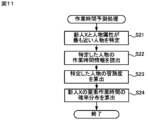
- Flowchart showing an example of operation of process plan creation support processing according to Embodiment 1 Flowchart showing an example of operation of work time prediction processing according to Embodiment 1
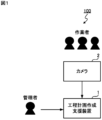
- FIG. 1 The configuration of the process planning support system 100 according to the first embodiment will be explained using FIG. 1.
- a user (administrator in the figure) of the process plan creation support system 100 inputs into the process plan creation support device 1 production plan information indicating today's production plan for the product.
- the production plan information here is information indicating the number of products to be produced for each model, and the order of production does not need to be determined.
- the product model is an example of the type of product.
- the camera 2 is a camera that photographs the worker.
- a 3D camera that can photograph the hands of a worker is fixedly installed.
- the camera 2 transmits photographing information indicating a photographed image of the worker to the process plan creation support device 1.
- the process planning support device 1 calculates personnel allocation for the work corresponding to the production plan based on the input production plan information and the received photographic information.
- the process planning support device 1 calculates an evaluation value for evaluating productivity based on the calculated personnel allocation.
- the process planning support device 1 rearranges the production order and allocates personnel, and calculates the personnel allocation and production order that maximize the evaluation value for evaluating productivity.
- the process plan creation support device 1 outputs process plan information indicating personnel allocation and production order that maximizes the evaluation value for evaluating productivity.
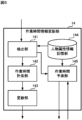
- the process plan creation support device 1 receives photographic information from the camera 2, identifies a worker who is working at work based on the photographic information, and generates worker information indicating the worker who is working.
- a working time information updating unit 14 updates working time information based on photographic information
- a production planning information acquisition unit 15 receives input of production planning information indicating today's production plan from a user, and stores production planning information. It includes a production plan information storage section 16 and a work definition information storage section 17 that stores work definition information indicating element work constituting each step of the production process for each model.
- the process planning support device 1 also includes a staffing calculation unit 18 that calculates staffing for the work corresponding to the production plan indicated by the production plan information, based on attendance information, work time information, and work definition information;
- the process planning information generation unit 19 calculates the personnel allocation and production order that maximize the evaluation value for evaluating performance and generates process planning information, and the process planning information output unit 20 outputs the process planning information.
- the attendance information generation unit 11 acquires the name of the worker present, that is, the name of the attendance worker, by identifying the person appearing in the video indicated by the photographic information received from the camera 2.
- the worker information generating section 11 generates worker information indicating the name of the worker and stores it in the worker information storage section 12 .
- Examples of means for identifying a person in a video include a method of reading an AR (Argumented Reality) marker unique to a worker, a method of using facial recognition technology, and the like.
- the work time information storage unit 13 stores work time information indicating the work time of each worker.
- the work time information is data recording the time required for each element work for each combination of worker, machine type, and element work.
- the time required for element work will be referred to as element work time.
- the element work time indicated by the work time information is not a constant, but is a continuous probability distribution with the element work time as the horizontal axis and the number of times as the vertical axis.
- Figure 3 shows worker 1, machine type M1, elemental work E01, worker 1, machine type M1, elemental work E02, worker 2, machine type M1, elemental work E01, and worker 2, machine type M1, elemental work E02. It shows the probability distribution of the element work time of the combination.
- work time information indicating the element work time of the result is stored, but if there is no past work record (new employee, supporter) etc.) stores work time information indicating the predicted element work time. A method for predicting element work time will be described later. Furthermore, when new work results are obtained for a combination of worker, machine type, and elemental work, the work information is updated.
- the personnel allocation calculation unit 18 calculates an evaluation value for evaluating productivity with respect to the production plan (model and number of machines) indicated by the production plan information, based on the attendance information, work time information, and work definition information. Allocate personnel to maximize. Personnel assignment refers to allocating workers to each elemental work that constitutes each process of producing a product.
- the evaluation value for evaluating productivity is, for example, the value obtained by dividing the number of machines produced by the total time the workers are present (machines/hour). In this case, the larger the value (units/hour) obtained by dividing the number of units produced by the total time the workers are present, the higher the productivity.
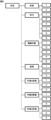
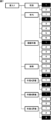
- the work definition information is information indicating what kind of elemental work the production process for each model is composed of.
- the production process for model M1 has four steps: “setup,” “process 1," “process 2,” and “process 3.”
- "Setup” is composed of "element work E01", . . . , “element work E0n0”.
- "Process 1” is composed of "element work E11”, . . . , “element work E1n1”.
- “Process 2” is composed of "element work E21", . . . , “element work E2n2”.
- "Process 3" is composed of "element work E31", . . .
- step 1 is a sub-set
- step 2 is a characteristic test
- step 3 is a total set.
- the "element work E01" of “setup” is, for example, jig replacement
- the element work E0n0 is, for example, entry work.
- the "element work E11” of "process 1” is, for example, jig replacement
- the element work E1n1 is, for example, screw tightening.
- the “element work E21” of “process 2” is, for example, replacing the jig
- the element work E2n2 is, for example, removing the inspection machine.
- the “element work E31" of "process 3” is, for example, jig replacement
- the element work E3n3 is, for example, transportation work.
- the process plan information generation unit 19 rearranges the production order of the models and once again causes the personnel allocation calculation unit 18 to execute the personnel allocation that maximizes the evaluation value. If the maximum evaluation value calculated by the personnel allocation calculation unit 18 exceeds the previous calculation result, the optimal solution for personnel allocation and production order is updated. Repeating this, the process plan information generation unit 19 compares the maximum evaluation values of all the ways calculated by the personnel allocation calculation unit 18, and determines the personnel allocation and production order that maximize the evaluation value as the optimal solution, and generates process plan information. generate.
- the process plan information output section 20 outputs the process plan information generated by the process plan information generation section 19.
- the process plan information may be output by, for example, screen display or audio output. Alternatively, it may be transmitted to a user terminal used by a user (administrator or worker).
- the work time information updating unit 14 identifies the person and model of the camera shown in the video indicated by the photographic information received from the camera 2, and measures the element work time.
- the work time information update unit 14 updates the work time information stored in the work time information storage unit 13 based on the measured element work time.
- the work time information update unit 14 includes a detection unit 141 that detects the worker and the model of the product handled by the worker from the video indicated by the shooting information, and a work time measurement unit 142 that measures the element work time of the worker.
- An updating unit 143 that updates work time information based on the element work time measured by the work time measurement unit 142, and a person attribute information storage unit 144 that stores person attribute information indicating the attributes of each worker who has a past work record.
- a work time prediction unit 145 that predicts element work time based on person attribute information when the worker detected by the detection unit 141 has no past work performance (new employee, supporter, etc.).
- the detection unit 141 detects the worker and the model of the product handled by the worker from the video indicated by the photographic information received from the camera 2.
- the detection unit 141 refers to the person attribute information stored in the person attribute information storage unit 144 and determines whether the detected worker is a worker who has a past work record. If the detected worker is a worker who has a past work record, the detection unit 141 sends information indicating the detected worker and model and photographing information to the work time measurement unit 142. If the detected worker is not a worker with past work experience (a new employee, a supporter, etc.), the detection unit 141 sends information indicating the detected worker and model and photographing information to the work time prediction unit 145.
- the work time measuring unit 142 When the work time measuring unit 142 receives information indicating the detected worker and model and the photographing information from the detecting unit 141, the work time measuring unit 142 identifies the elemental work being performed by the worker based on the video indicated by the photographing information, and calculates the work time. Measure the element work time of the person.
- a behavior classification device As a means for specifying elemental work, for example, there is a behavior classification device.
- the behavior classification device can automatically divide the continuous work video into elemental tasks based on the video of the worker performing the work based on AI-based judgment, and can obtain the elemental work time. Alternatively, if the elemental work can be identified with a jig, the elemental work may be identified by reading an AR marker specific to the jig.
- the work time measurement unit 142 sends the information indicating the worker and the machine type received from the detection unit 141 and the information indicating the calculated element work time to the update unit 143.
- the updating unit 143 selects the corresponding worker from among the work information stored in the work time information storage unit 13 based on the information indicating the worker and the model received from the work time measurement unit 142 and the information indicating the element work time. ⁇ Update the work time information for the combination of machine type and elemental work.
- Person attribute information stores worker attributes and their numerical values.
- the attributes of the worker are "name”, “gender”, “age”, “years of service”, “physique”, “work A evaluation”, “work B evaluation”, and "work C "Evaluation”.
- the numerical value of "gender” is 1 for male and 2 for female.
- the numbers for "age” are 1 for teenagers, 2 for those in their 20s, 3 for those in their 30s, 4 for those in their 40s, 5 for those in their 50s, and 6 for those in their 60s and above.
- the numerical values for "years of service” are 1 for 10 years or less, 2 for 11 to 20 years, 3 for 21 to 30 years, 4 for 31 to 40 years, and 5 for 41 years or more.
- the numerical values for "physique” are 1 for thin, 2 for normal, and 3 for fat.
- “Task A evaluation” is an evaluation of the speed of completing work A.
- task B evaluation and “task C evaluation” are evaluations of the speed of time to complete task B and task C, respectively.
- Work A, work B, and work C include, for example, picking up parts, attaching parts, tightening screws, inserting electronic parts, gluing work, soldering work, and transport work.
- the numerical values for "work A evaluation”, “work B evaluation”, and “work C evaluation” are 3 for fast, 2 for standard, and 1 for slow. Evaluation values for "work A evaluation,” “work B evaluation,” and “work C evaluation” are assigned according to predetermined rules.
- the numerical value of the worker's attribute in the person attribute information is not limited to the example shown in FIG. 6.
- “age” may be classified more precisely in 5-year increments, or the age value itself may be used.
- the "years of service” may be the value of the number of years of service itself.
- the "physique” may be a BMI value calculated from height and weight.
- the attributes may include an evaluation of the speed of completing tasks other than tasks A, B, and C.
- the personal attribute information also includes the attributes and numerical values of workers who have no past work experience (new employees, supporters, etc.).
- the work time prediction unit 145 uses a calculation formula to determine, based on the person attribute information, a worker who has a past work record similar to a worker who has no past work record (new employee, supporter, etc.). do.
- the work time prediction unit 145 refers to the work information of workers with past work records similar to those of workers with no past work records (newcomers, supporters, etc.), and calculates the elemental work of workers with no past work records. Predict the time.
- the work time prediction unit 145 predicts the element work time of the new employee X by executing the following steps 1 to 4.
- Step 1 is to identify a person (a worker with past work experience) whose attributes are most similar to newcomer X.
- the person's working time information is read from the working time information storage section 13.
- Step 3 is to calculate the proficiency level backwards.
- Step 4 is to calculate the probability distribution of the element work time of the new employee X in the relevant machine and the relevant element work.
- the work time prediction unit 145 determines that the worker i whose attribute similarity degree Si is the smallest is the worker whose attributes are most similar to the newcomer X.
- As an initial value it is preferable that the coefficient kj of an attribute that is considered to have a high correlation in predicting the degree of similarity is small.
- Equation 1 uses the least squares method
- the means for calculating the degree of similarity is not limited to the least squares method, and other methods may be used.
- An example is multiple regression analysis.
- the work time prediction unit 145 reads the work time information of the worker i whose attribute similarity Si is the minimum from the work time information storage unit 13.
- the element work time of the relevant model and the relevant element work of the worker i selected in step 2 is a probability distribution formed as a result of the worker i becoming familiar with the element work to some extent through experience. Newcomer X has no experience with this. Therefore, in step 3, when predicting the element work time of newcomer X, the proficiency level is calculated backwards.
- the proficiency level can generally be expressed by the following number 2.
- y(x) is the element work time of the x-th production, and x ⁇ 0.
- c is the element work time of the first production, and c ⁇ 0.
- a(x) logx/log2.
- the work time prediction unit 145 discounts the probability distribution of the element work time at the current moment (number of achievements x) of the worker i who has the highest attribute similarity with the newcomer X by the proficiency rate p. Obtain the probability distribution of element work times.
- the proficiency rate p and the number of achievements x are values held for each worker, and the proficiency information indicating the proficiency rate p and the number of achievements x of each worker is stored in the person attribute information storage unit 144. . Note that each time the work performance increases, the value of the proficiency rate p indicated by the proficiency level information is updated according to the work performance.
- step 4 a graph of the probability distribution of the element work time of the new employee X for the relevant machine and the relevant element work is calculated.
- the work time prediction unit 145 similarly repeats steps 1 to 4 and calculates a graph of the probability distribution of the element work time of newcomer X for all machine types and all element tasks.
- FIG. 8 is a diagram conceptually representing the process of predicting the element work time of newcomer X.
- the worker i whose attribute similarity Si with the newcomer X is the smallest is worker 4.
- the attributes of worker 4 are closest to those of newcomer X.
- the work time prediction unit 145 calculates the probability distribution of the element work time of the newcomer X by discounting the probability distribution of the element work time of the worker 4 who has the highest degree of similarity to the newcomer X by the proficiency rate p. obtain.
- FIG. 9 is a diagram showing an example of a graph of the probability distribution of the element work time of newcomer X predicted by the work time prediction unit 145.
- the example in FIG. 9 shows the probability distribution of element work time for the combination of newcomer X, machine type M1, and element work E01.
- the work time prediction unit 145 stores work information indicating the predicted probability distribution of each element work time of the new employee X in the work time information storage unit 13.
- the work time prediction unit 145 stores work information indicating the probability distribution of each element work time of the work performance of newcomer X in the work time information storage unit 13.
- the determined number of times is, for example, 50 times.
- the probability density function predicted as the element work time of newcomer X is expressed as f0(t), and the probability density function obtained as the element work time of newcomer X's performance is expressed as fX(t).
- t (0 ⁇ t) be a real number representing the element work time.
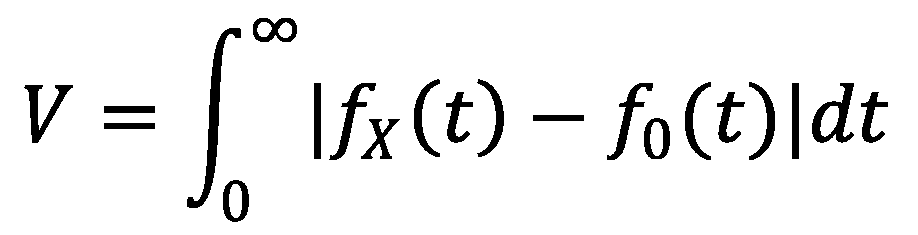
- the work time prediction unit 145 evaluates prediction accuracy.
- the work time prediction unit 145 calculates an evaluation value V for evaluating prediction accuracy based on the difference between the prediction and the actual result using Equation 3 below.
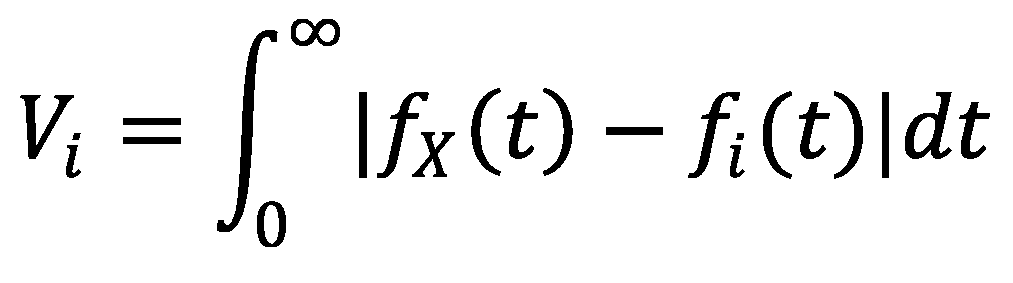
- the similarity Vi of work time is calculated using Equation 4 below.
- the worker whose element work time similarity Vi is the minimum (the person whose element work time is most similar to newcomer X) is defined as worker Y.
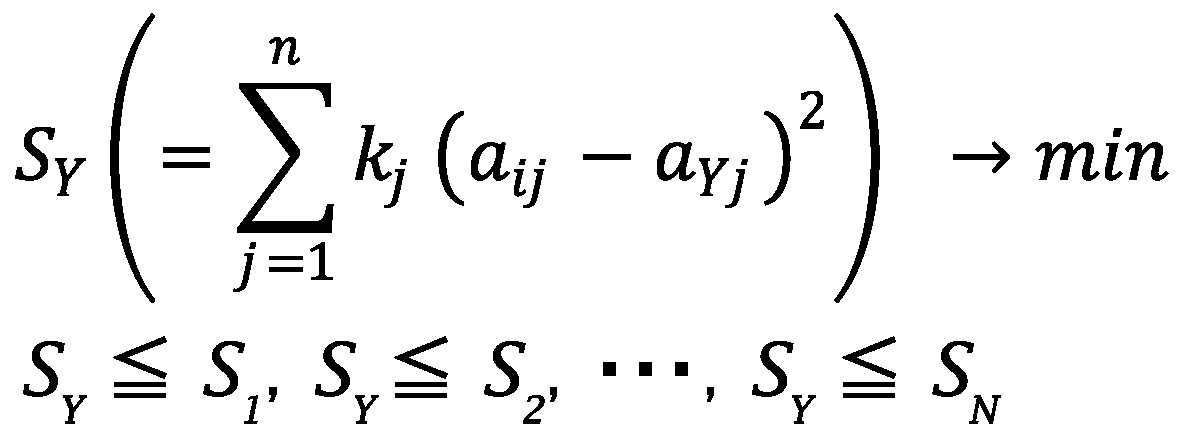
- the work time prediction unit 145 calculates and updates coefficients k1, . . . , kn that satisfy Equation 5 below.
- the process planning support device 1 also updates the person attribute information stored in the person attribute information storage unit 144 and the work definition information stored in the work definition information storage unit 17 at predetermined timing.
- the values of items that change such as "age”, “years of service”, “physique”, “work A rating”, “work B rating”, “work C rating”, are changed every time they change. Perform updates.
- the process planning support device 1 stores information indicating the worker's date of birth and date of employment as information accompanying the person attribute information, the process planning support device 1 stores the "age” and "years of service”. Can be updated automatically.
- the process planning support device 1 can acquire information indicating the worker's physique and automatically update the "physique” by linking with an in-house health management system that manages the health of the worker, for example. can.
- work definition information when the configuration of elemental work in each process of the production process for each model changes, for example, when starting production of a new model or changing the design of a product, the user can edit the work definition information. ,Update.
- the process planning support device 1 may be configured to notify the user when there is a possibility that the configuration of the elemental operations of each process of the production process for each model has been changed.
- the camera 2 photographs the worker while the worker is working.
- the work time information update unit 14 of the process planning support device 1 specifies the worker, model, and elemental work shown in the video indicated by the photographic information received from the camera 2.
- the process planning support device 1 determines whether the order of the elemental operations actually performed by the worker for the model specified by the work time information update unit 14 is different from the order of the elemental operations for the corresponding model indicated by the work definition information. Notify the user that the configuration of elemental work for the applicable model may have been changed.
- the notification method to the user may be, for example, displaying a message on the screen, outputting the message by voice, or transmitting it to the user terminal used by the user. Further, an editing screen for the work definition information may be displayed together with the message, and editing by the user may be accepted. At this time, on the work definition information editing screen, candidates for elemental work to be changed may be displayed based on the order of elemental work actually performed by the worker on the specified model.
- the process plan creation support process shown in FIG. 10 starts, for example, when the process plan creation support device 1 is powered on.
- the production plan information acquisition unit 15 of the process plan creation support device 1 determines whether production plan information indicating today's production plan has been input (step S11). If the production plan information is not input (step S11; NO), the process moves to step S19.
- the production plan information acquisition section 15 stores the input production plan information in the production plan information storage section 16.
- the personnel allocation calculation unit 18 calculates the number of personnel that will give the maximum evaluation value for evaluating productivity for the production plan (model and number of machines) indicated by the production plan information, based on the attendance information, work time information, and work definition information. Arrangement is executed (step S12).
- the work time information is data that records the element work time for each combination of worker, machine type, and element work.
- the element work time indicated by the work time information is not a constant, but is a continuous probability distribution with the element work time as the horizontal axis and the number of times as the vertical axis.
- Figure 3 shows worker 1, machine type M1, elemental work E01, worker 1, machine type M1, elemental work E02, worker 2, machine type M1, elemental work E01, and worker 2, machine type M1, elemental work E02. It shows the probability distribution of the element work time of the combination.
- the work definition information is information indicating what kind of elemental work the production process for each model is composed of.
- the production process for model 1 has four steps: “setup,” “process 1," “process 2,” and “process 3.”
- "Setup” is composed of "element work E01", . . . , “element work E0n0”.
- "Process 1” is composed of "element work E11”, . . . , “element work E1n1”.
- “Process 2” is composed of "element work E21", . . . , “element work E2n2”.
- "Process 3" is composed of "element work E31", . . . , “element work E3n3".
- the process plan information generation unit 19 determines whether the maximum evaluation value calculated by the personnel allocation calculation unit 18 exceeds the previous calculation result (step S13). If it does not exceed the previous calculation result, or if there is no previous calculation result (step S13; NO), the process moves to step S15. If the result exceeds the previous calculation result (step S13; YES), the process planning information generation unit 19 updates the optimal solution for staffing and production order (step S14), and the staffing calculation unit 18 calculates the maximum of all possible solutions. It is determined whether the evaluation value has been calculated (step S15).
- step S15; NO If the maximum evaluation value of all the cases has not been calculated (step S15; NO), the process plan information generation unit 19 changes the production order of the models (step S16). The process returns to step S12, and once again the staffing calculation unit 18 executes the staffing that maximizes the evaluation value. Steps S12 to S16 are repeated. If the staffing calculation unit 18 calculates the maximum evaluation value of all the ways (step S15; YES), the process plan information generation unit 19 compares the maximum evaluation values of all the ways calculated by the staffing calculation unit 18. , process plan information is generated using the personnel allocation and production order that maximize the evaluation value as the optimal solution (step S17).
- the process plan information output unit 20 outputs the process plan information generated by the process plan information generation unit 19 (step S18). If the power of the process planning support device 1 is not turned off (step S19; NO), the process returns to step S11 and repeats steps S11 to S19. When the power of the process planning support device 1 is turned off (step S19; YES), the process ends.
- the work time prediction process shown in FIG. 11 is started, for example, when there is no past work record of the worker detected by the detection unit 141 of the process planning support device 1.
- the work time prediction unit 145 of the process planning support device 1 identifies a person (a worker with a past work record) whose attributes are most similar to the new employee X (step S21).
- the work time prediction unit 145 reads the work time information of the identified person from the work time information storage unit 13 (step S22).
- the work time prediction unit 145 calculates the proficiency level of the identified person (step S23). By discounting the probability distribution of the element work time of the specified person at the present moment (number of achievements x) by the proficiency rate, the probability distribution of the element work time of the newcomer X is calculated (step S24), and the process ends.
- FIG. 9 shows the probability distribution of element work time for the combination of newcomer X, machine type M1, and element work E01.
- the process plan creation support device 1 when creating a process plan that maximizes the productivity evaluation value based on the element work time of each worker, it is possible to create a process plan that maximizes the productivity evaluation value based on the element work time of each worker.
- the element work time of workers with no past work records is predicted, and the element work time of workers with no past work records is predicted.
- efficient work instructions can be given even when there are workers whose work time is unknown.
- the element work time is handled using a probability distribution, it is possible to deal with cases where there are variations in the element work time.
- the work time prediction unit 145 uses a prediction process different from that in the first embodiment.
- the other configurations are the same as in the first embodiment.
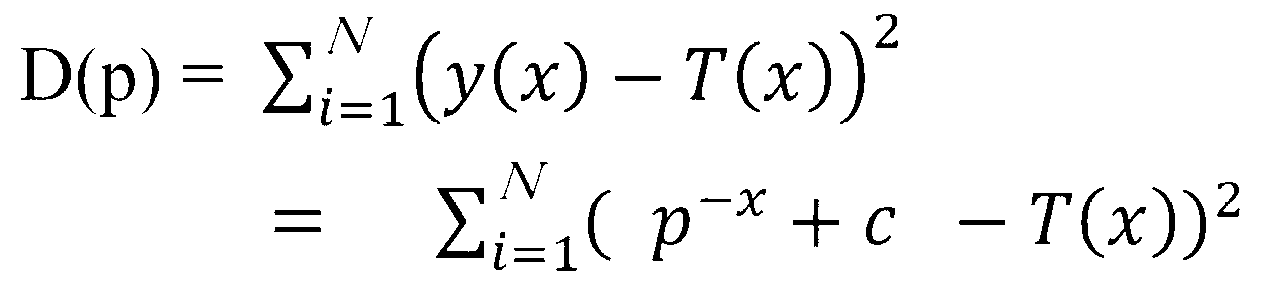
- the element work time of a certain worker is expressed by the following equation 6 as an exponential function model with a negative exponent.
- y(x) is the element work time of the x-th production, and x ⁇ 0.
- c is the element work time of the first production, and c ⁇ 0.
- p is the proficiency rate.
- T(x) be the actual elemental work time of a certain worker in the x-th production, and let p, which minimizes Equation 7 below, be the proficiency rate of that worker.
- the number of digits to the right of the decimal point of the proficiency rate p should be determined depending on the accuracy desired by the user, since generally the larger the number of digits, the longer the calculation time.
- the work time prediction unit 145 selects an element at the present moment (number of achievements x) of a worker who has a past work record and has the highest attribute similarity with a worker who has no past work record. By discounting the probability distribution of the work time by the proficiency rate p, the probability distribution of the element work time of a worker with no past work experience is obtained.
- the proficiency rate that minimizes the difference between the elemental work time calculated using the proficiency rate and the actual elemental work time is determined for the work for which there is no past work history.
- the prediction accuracy can be improved by using it to predict the element work time of the person.
- the attendance information generation unit 11 acquires the names of the workers present, that is, the names of the attendance workers, by identifying the person appearing in the video indicated by the shooting information. , the worker information indicating the name of the worker is generated, but the present invention is not limited to this.
- the attendance information generation unit 11 acquires the names of the workers present, that is, the names of the workers, by identifying the people in the still images of the workers, and indicates the names of the workers.
- Attendee information may also be generated.
- the process plan creation support device 1 may acquire attendance information by cooperating with an in-house attendance management system that manages attendance and departure of workers.
- the process planning support device 1 includes the work time information storage section 13, the attendance information storage section 12, and the work definition information storage section 17, but these storage sections are stored in external devices.
- the system may be provided.
- the working time information storage unit 13 and the working time information updating unit 14 may be provided in a working time information updating device separate from the process planning support device 1.
- the attendance information storage section 12 and the attendance information generation section 11 may be provided in an attendance information generation device separate from the process plan creation support device 1.
- the production plan information acquisition unit 15 of the process plan creation support device 1 receives input of production plan information indicating the production plan for today's products, but the invention is not limited thereto.
- the user only has to input into the process plan creation support device 1 production plan information indicating the production plan for the product on the day for which the process plan is to be created.
- the process plan creation support device 1 cooperates with an in-house production planning system that manages production plans, and when the user inputs the date (designated date) on which the process plan is to be created into the process plan creation support device 1, the process plan creation support device 1
- the plan information acquisition unit 15 may be configured to acquire production plan information indicating a production plan for a specified date from a production planning system.
- the unit in which the process plan is created is not limited to one day, but may be in other units such as half a day or two days.
- Embodiments 1 and 2 above an example of supporting the creation of a process plan that allocates tasks included in the process of producing a product to workers has been described. Any product that involves work will suffice.
- the process planning support device 1 includes a temporary storage section 101, a storage section 102, a calculation section 103, an input section 104, a transmission/reception section 105, and a display section 106.
- Temporary storage section 101, storage section 102, input section 104, transmission/reception section 105, and display section 106 are all connected to calculation section 103 via BUS.
- the calculation unit 103 is, for example, a CPU (Central Processing Unit).
- the calculation unit 103 executes the processes of the attendance information generation unit 11 , the work time information update unit 14 , the personnel allocation calculation unit 18 , and the process plan information generation unit 19 according to the control program stored in the storage unit 102 .
- the temporary storage unit 101 is, for example, a RAM (Random-Access Memory).
- the temporary storage unit 101 loads the control program stored in the storage unit 102 and is used as a work area for the calculation unit 103.
- the storage unit 102 is a nonvolatile memory such as a flash memory, a hard disk, a DVD-RAM (Digital Versatile Disc-Random Access Memory), and a DVD-RW (Digital Versatile Disc-ReWritable).
- the storage unit 102 stores in advance a program for causing the calculation unit 103 to perform the processing of the process planning support device 1, and also supplies data stored by this program to the calculation unit 103 according to instructions from the calculation unit 103. , stores the data supplied from the calculation unit 103.
- the attendance information storage section 12 , the work time information storage section 13 , the production plan information storage section 16 , and the work definition information storage section 17 are configured in the storage section 102 .
- the input unit 104 is an interface device that connects input devices such as a keyboard, pointing device, and voice input device, and the input devices to the BUS. Information input by the user is supplied to the calculation unit 103 via the input unit 104 .
- the input unit 104 functions as the production plan information acquisition unit 15. In a configuration in which the work time information update unit 14 displays a message and an edit screen for work definition information and accepts editing by the user, the input unit 104 functions as the work time information update unit 14 .
- the transmitting/receiving unit 105 is a network termination device or wireless communication device connected to the network, and a serial interface or LAN (Local Area Network) interface connected thereto.
- the process plan information output unit 20 transmits process plan information to a user terminal used by a user (manager or worker)
- the transmitting/receiving unit 105 functions as the process plan information output unit 20.
- the display unit 106 is a display device such as an LCD (Liquid Crystal Display) or an organic EL (electroluminescence) display.
- the transmitting/receiving unit 105 functions as the process plan information output unit 20.
- the display section 106 functions as the work time information update section 14 .
- Worker information generation section 11 attendance information storage section 12, work time information storage section 13, work time information update section 14, production plan information acquisition section 15, production plan information storage of the process plan creation support device 1 shown in FIG. 16, the work definition information storage section 17, the personnel allocation calculation section 18, the process plan information generation section 19, and the process plan information output section 20. It is executed by processing using the input unit 104, the transmitting/receiving unit 105, the display unit 106, etc. as resources.
- the main parts that perform the processing of the process planning support device 1, such as the calculation section 103, temporary storage section 101, storage section 102, input section 104, transmission/reception section 105, and display section 106, are not based on a dedicated system, but are usually This can be realized using a computer system.
- a computer program for executing the above operations may be stored on a computer-readable recording medium such as a flexible disk, a CD-ROM (Compact Disc-Read Only Memory), or a DVD-ROM (Digital Versatile Disc-Read Only Memory).
- the process plan creation support device 1 that executes the above-mentioned processing may be configured.
- the process plan creation support device 1 may be constructed by storing the computer program in a storage device of a server device on a communication network such as the Internet, and downloading the program to a normal computer system.
- the application program portion may be stored on a recording medium or a storage device. It may be stored in
- the computer program may be posted on a bulletin board system (BBS) on a communication network, and the computer program may be provided via the communication network. Then, by starting this computer program and executing it in the same way as other application programs under the control of the OS, the above-mentioned processing may be executed.
- BSS bulletin board system
- Process plan creation support device 2. Camera, 11. Attendee information generation unit, 12. Attendee information storage unit, 13. Working time information storage unit, 14. Working time information updating unit, 15. Production plan information acquisition unit, 16. Production plan information storage. Department, 17 Work definition information storage unit, 18 Personnel allocation calculation unit, 19 Process plan information generation unit, 20 Process plan information output unit, 100 Process plan creation support system, 101 Temporary storage unit, 102 Storage unit, 103 Calculation unit, 104 Input unit, 105 Transmission and reception unit, 106 Display unit, 141 Detection unit, 142 Work time measurement unit, 143 Update unit, 144 Person attribute information storage unit, 145 Work time prediction unit.
Landscapes
- Business, Economics & Management (AREA)
- Human Resources & Organizations (AREA)
- Engineering & Computer Science (AREA)
- Economics (AREA)
- Strategic Management (AREA)
- Entrepreneurship & Innovation (AREA)
- General Physics & Mathematics (AREA)
- General Business, Economics & Management (AREA)
- Educational Administration (AREA)
- Marketing (AREA)
- Theoretical Computer Science (AREA)
- Development Economics (AREA)
- Tourism & Hospitality (AREA)
- Physics & Mathematics (AREA)
- Quality & Reliability (AREA)
- Game Theory and Decision Science (AREA)
- Operations Research (AREA)
- Manufacturing & Machinery (AREA)
- Health & Medical Sciences (AREA)
- General Health & Medical Sciences (AREA)
- Primary Health Care (AREA)
- General Factory Administration (AREA)
- Management, Administration, Business Operations System, And Electronic Commerce (AREA)
Abstract
Description
実施の形態1に係る工程計画作成支援システム100の構成について、図1を用いて説明する。工程計画作成支援システム100のユーザ(図中、管理者)は、工程計画作成支援装置1に、本日の製品の生産計画を示す生産計画情報を入力する。ここでの生産計画情報は、製品の機種ごとの生産台数を示す情報であり、生産する順序は決まっていなくてもよい。製品の機種は、生産品の種別の例である。

y(x)=cp^a(x)
実施の形態2では、作業時間予測部145において、実施の形態1とは異なる予測プロセスを用いる。その他の構成は実施の形態1と同様である。ある作業者の要素作業時間を、負の指数をもつ指数関数モデルとして、以下の数6で表す。
y(x)=p-x+c
Claims (9)
- 生産品の生産計画を示す生産計画情報を取得する生産計画情報取得部と、
出勤している作業者である出勤者を示す出勤者情報、生産品の生産プロセスの各工程を構成する要素作業を示す作業定義情報、および、各作業者の要素作業にかかる時間である要素作業時間を示す作業時間情報に基づいて、前記生産計画情報が示す生産計画に対応する要素作業に対する人員配置を算出する人員配置算出部と、
生産順序を入れ替えて、前記人員配置算出部に人員配置を算出させて、生産性を評価する評価値を最大化する人員配置および生産順序を示す工程計画情報を生成する工程計画情報生成部と、
作業者を撮影した映像を示す撮影情報に基づいて、過去の作業実績がある作業者の前記作業時間情報を更新し、過去の作業実績がない作業者に最も属性が類似する過去の作業実績がある作業者の前記作業時間情報に基づいて、前記過去の作業実績がない作業者の要素作業時間を予測し、前記過去の作業実績がない作業者の前記作業時間情報を生成する作業時間情報更新部と、
を備える、
工程計画作成支援装置。 - 前記作業時間情報更新部は、
前記撮影情報が示す映像から、作業者および作業者が扱っている生産品の種別を検出する検出部、
前記撮影情報に基づいて、作業者の要素作業時間を計測する作業時間計測部、
前記検出部が検出した作業者の過去の作業実績がある場合に、前記検出部が検出した作業者および作業者が扱っている生産品の種別と前記作業時間計測部が計測した要素作業時間とに基づいて、過去の作業実績がある作業者の前記作業時間情報を更新する更新部、ならびに、
前記検出部が検出した作業者の過去の作業実績がない場合に、各作業者の属性を示す人物属性情報に基づいて、過去の作業実績がない作業者に最も属性が類似する過去の作業実績がある作業者を特定し、特定した作業者の前記作業時間情報に基づいて、前記過去の作業実績がない作業者の要素作業時間を予測し、前記過去の作業実績がない作業者の要素作業時間を示す前記作業時間情報を生成する作業時間予測部と、
を含む、
請求項1に記載の工程計画作成支援装置。 - 前記作業時間情報が示す要素作業時間は、各作業者の各要素作業時間の確率分布である、
請求項2に記載の工程計画作成支援装置。 - 前記作業時間予測部は、過去の作業実績がない作業者に最も属性が類似する過去の作業実績がある作業者の現時点での各要素作業時間の確率分布を、過去の作業実績がない作業者に最も属性が類似する過去の作業実績がある作業者の習熟率で割り戻すことで、過去の作業実績がない作業者の各要素作業時間の確率分布を得る、
請求項3に記載の工程計画作成支援装置。 - 前記作業時間予測部は、前記過去の作業実績がない作業者の作業実績が決められた回数蓄積されると、前記過去の作業実績がない作業者を前記過去の作業実績がある作業者とし、前記検出部が検出した作業者および作業者が扱っている生産品の種別と前記作業時間計測部が計測した要素作業時間とに基づいて、前記作業情報を生成する、
請求項2から4のいずれか1項に記載の工程計画作成支援装置。 - 前記撮影情報に基づいて前記出勤者を特定し、前記出勤者情報を生成する出勤者情報生成部をさらに備える、
請求項1から5のいずれか1項に記載の工程計画作成支援装置。 - 作業者を撮影するカメラと、前記カメラと接続する工程計画作成支援装置とを備え、
前記工程計画作成支援装置は、
生産品の生産計画を示す生産計画情報を取得する生産計画情報取得部、
出勤している作業者である出勤者を示す出勤者情報、生産品の生産プロセスの各工程を構成する要素作業を示す作業定義情報、および、各作業者の要素作業にかかる時間である要素作業時間を示す作業時間情報に基づいて、前記生産計画情報が示す生産計画に対応する要素作業に対する人員配置を算出する人員配置算出部、
生産順序を入れ替えて、前記人員配置算出部に人員配置を算出させて、生産性を評価する評価値を最大化する人員配置および生産順序を示す工程計画情報を生成する工程計画情報生成部、ならびに、
前記カメラが作業者を撮影した映像を示す撮影情報に基づいて、過去の作業実績がある作業者の前記作業時間情報を更新し、過去の作業実績がない作業者に最も属性が類似する過去の作業実績がある作業者の前記作業時間情報に基づいて、前記過去の作業実績がない作業者の要素作業時間を予測し、前記過去の作業実績がない作業者の前記作業時間情報を生成する作業時間情報更新部、
を有する、
工程計画作成支援システム。 - 工程計画作成支援装置が実行する、
生産品の生産計画を示す生産計画情報を取得するステップと、
出勤している作業者である出勤者を示す出勤者情報、生産品の生産プロセスの各工程を構成する要素作業を示す作業定義情報、および、各作業者の要素作業にかかる時間である要素作業時間を示す作業時間情報に基づいて、前記生産計画情報が示す生産計画に対応する要素作業に対する人員配置を算出するステップと、
生産順序を入れ替えて、人員配置を算出するステップを実行し、生産性を評価する評価値を最大化する人員配置および生産順序を示す工程計画情報を生成するステップと、
作業者を撮影した映像を示す撮影情報に基づいて、過去の作業実績がある作業者の前記作業時間情報を更新し、過去の作業実績がない作業者に最も属性が類似する過去の作業実績がある作業者の前記作業時間情報に基づいて、前記過去の作業実績がない作業者の要素作業時間を予測し、前記過去の作業実績がない作業者の前記作業時間情報を生成するステップと、
を備える、
工程計画作成支援方法。 - コンピュータに、
出勤している作業者である出勤者を示す出勤者情報、生産品の生産プロセスの各工程を構成する要素作業を示す作業定義情報、および、各作業者の要素作業にかかる時間である要素作業時間を示す作業時間情報に基づいて、取得した生産計画情報が示す生産計画に対応する要素作業に対する人員配置を算出するステップと、
生産順序を入れ替えて、人員配置を算出するステップを実行し、生産性を評価する評価値を最大化する人員配置および生産順序を示す工程計画情報を生成するステップと、
作業者を撮影した映像を示す撮影情報に基づいて、過去の作業実績がある作業者の前記作業時間情報を更新し、過去の作業実績がない作業者に最も属性が類似する過去の作業実績がある作業者の前記作業時間情報に基づいて、前記過去の作業実績がない作業者の要素作業時間を予測し、前記過去の作業実績がない作業者の前記作業時間情報を生成するステップと、
を実行させるプログラム。
Priority Applications (4)
| Application Number | Priority Date | Filing Date | Title |
|---|---|---|---|
| US18/863,425 US20250292172A1 (en) | 2022-05-13 | 2022-11-01 | Process plan preparation assistance apparatus, process plan preparation assistance system, and process plan preparation assistance method |
| DE112022007218.0T DE112022007218T5 (de) | 2022-05-13 | 2022-11-01 | Bearbeitungsplanerstellungsunterstützungsvorrichtung, Bearbeitungsplanerstellungsunterstützungssystem, Bearbeitungsplanerstellungsunterstützungsverfahren und Programm |
| JP2024520246A JP7678936B2 (ja) | 2022-05-13 | 2022-11-01 | 工程計画作成支援装置、工程計画作成支援システム、工程計画作成支援方法およびプログラム |
| CN202280095896.9A CN119173894A (zh) | 2022-05-13 | 2022-11-01 | 工序计划制作辅助装置、工序计划制作辅助系统、工序计划制作辅助方法和程序 |
Applications Claiming Priority (2)
| Application Number | Priority Date | Filing Date | Title |
|---|---|---|---|
| JP2022079193 | 2022-05-13 | ||
| JP2022-079193 | 2022-05-13 |
Publications (1)
| Publication Number | Publication Date |
|---|---|
| WO2023218682A1 true WO2023218682A1 (ja) | 2023-11-16 |
Family
ID=88729950
Family Applications (1)
| Application Number | Title | Priority Date | Filing Date |
|---|---|---|---|
| PCT/JP2022/040891 Ceased WO2023218682A1 (ja) | 2022-05-13 | 2022-11-01 | 工程計画作成支援装置、工程計画作成支援システム、工程計画作成支援方法およびプログラム |
Country Status (5)
| Country | Link |
|---|---|
| US (1) | US20250292172A1 (ja) |
| JP (1) | JP7678936B2 (ja) |
| CN (1) | CN119173894A (ja) |
| DE (1) | DE112022007218T5 (ja) |
| WO (1) | WO2023218682A1 (ja) |
Citations (3)
| Publication number | Priority date | Publication date | Assignee | Title |
|---|---|---|---|---|
| JP2009245043A (ja) * | 2008-03-31 | 2009-10-22 | Hitachi Ltd | ライン生産管理支援方法および装置 |
| JP2020034849A (ja) * | 2018-08-31 | 2020-03-05 | オムロン株式会社 | 作業支援装置、作業支援方法及び作業支援プログラム |
| JP2021117538A (ja) * | 2020-01-22 | 2021-08-10 | 株式会社日立製作所 | 工場管理装置、工場管理方法、及び工場管理プログラム |
Family Cites Families (1)
| Publication number | Priority date | Publication date | Assignee | Title |
|---|---|---|---|---|
| JP2022079193A (ja) | 2020-11-16 | 2022-05-26 | スクウェア・エニックス プライベート リミテッド | プログラム、情報処理装置及び方法 |
-
2022
- 2022-11-01 US US18/863,425 patent/US20250292172A1/en active Pending
- 2022-11-01 WO PCT/JP2022/040891 patent/WO2023218682A1/ja not_active Ceased
- 2022-11-01 CN CN202280095896.9A patent/CN119173894A/zh active Pending
- 2022-11-01 DE DE112022007218.0T patent/DE112022007218T5/de active Pending
- 2022-11-01 JP JP2024520246A patent/JP7678936B2/ja active Active
Patent Citations (3)
| Publication number | Priority date | Publication date | Assignee | Title |
|---|---|---|---|---|
| JP2009245043A (ja) * | 2008-03-31 | 2009-10-22 | Hitachi Ltd | ライン生産管理支援方法および装置 |
| JP2020034849A (ja) * | 2018-08-31 | 2020-03-05 | オムロン株式会社 | 作業支援装置、作業支援方法及び作業支援プログラム |
| JP2021117538A (ja) * | 2020-01-22 | 2021-08-10 | 株式会社日立製作所 | 工場管理装置、工場管理方法、及び工場管理プログラム |
Also Published As
| Publication number | Publication date |
|---|---|
| CN119173894A (zh) | 2024-12-20 |
| US20250292172A1 (en) | 2025-09-18 |
| JP7678936B2 (ja) | 2025-05-16 |
| JPWO2023218682A1 (ja) | 2023-11-16 |
| DE112022007218T5 (de) | 2025-03-13 |
Similar Documents
| Publication | Publication Date | Title |
|---|---|---|
| US12437310B2 (en) | Method of training machine learning models for making simulated estimations | |
| US10083412B2 (en) | Systems and methods for scheduling work items | |
| US12524715B2 (en) | Wait time prediction | |
| US10922745B2 (en) | Systems and methods for machine-based matching of lodging inventory from disparate reservation provider system | |
| US20160335583A1 (en) | Systems and Methods for Scheduling Work Items | |
| JP5830780B2 (ja) | 業務分析装置、業務分析システム及び業務分析方法 | |
| US9760592B2 (en) | Metrics management and monitoring system for service transition and delivery management | |
| US12254030B1 (en) | Systems and methods of generating and transforming data sets for entity comparison | |
| CN117196530A (zh) | 一种软件项目集与人力资源池数字智能化调度方法及系统 | |
| US20150242782A1 (en) | Interactive Planning Method And Tool | |
| US20200118058A1 (en) | Real-time workflow tracking | |
| JP2019028871A (ja) | プロジェクト管理支援装置、プロジェクト管理支援方法およびプログラム | |
| JP6265871B2 (ja) | 営業業務支援システム、及び営業業務支援方法 | |
| CN112347092A (zh) | 生成数据分析看板的方法、装置和计算机设备 | |
| CN114219663A (zh) | 产品推荐方法、装置、计算机设备及存储介质 | |
| US20110231336A1 (en) | Forecasting product/service realization profiles | |
| CN112446520B (zh) | 一种预测产品排期时间的方法和装置 | |
| JP7678936B2 (ja) | 工程計画作成支援装置、工程計画作成支援システム、工程計画作成支援方法およびプログラム | |
| CN113190587A (zh) | 实现业务数据处理的数据处理方法和装置 | |
| CN116911805B (zh) | 资源告警方法、装置、电子设备和计算机可读介质 | |
| CN119180564A (zh) | 项目评估方法、装置、计算机设备和可读存储介质 | |
| CN116029584B (zh) | 一种绩效的确定方法、装置、电子设备和一种绩效系统 | |
| CN119671219B (zh) | 一种任务单处理方法和系统 | |
| US20160011916A1 (en) | Computer, association calculation method, and storage medium | |
| CN120029981B (zh) | 用餐报告展示方法、装置、电子设备和计算机可读介质 |
Legal Events
| Date | Code | Title | Description |
|---|---|---|---|
| 121 | Ep: the epo has been informed by wipo that ep was designated in this application |
Ref document number: 22941758 Country of ref document: EP Kind code of ref document: A1 |
|
| ENP | Entry into the national phase |
Ref document number: 2024520246 Country of ref document: JP Kind code of ref document: A |
|
| WWE | Wipo information: entry into national phase |
Ref document number: 18863425 Country of ref document: US |
|
| WWE | Wipo information: entry into national phase |
Ref document number: 112022007218 Country of ref document: DE |
|
| WWP | Wipo information: published in national office |
Ref document number: 112022007218 Country of ref document: DE |
|
| 122 | Ep: pct application non-entry in european phase |
Ref document number: 22941758 Country of ref document: EP Kind code of ref document: A1 |
|
| WWP | Wipo information: published in national office |
Ref document number: 18863425 Country of ref document: US |