WO2023210248A1 - カーボンナノチューブ撚糸の製造方法 - Google Patents
カーボンナノチューブ撚糸の製造方法 Download PDFInfo
- Publication number
- WO2023210248A1 WO2023210248A1 PCT/JP2023/012782 JP2023012782W WO2023210248A1 WO 2023210248 A1 WO2023210248 A1 WO 2023210248A1 JP 2023012782 W JP2023012782 W JP 2023012782W WO 2023210248 A1 WO2023210248 A1 WO 2023210248A1
- Authority
- WO
- WIPO (PCT)
- Prior art keywords
- carbon nanotube
- twisted
- yarn
- twisting
- twisted yarn
- Prior art date
- Legal status (The legal status is an assumption and is not a legal conclusion. Google has not performed a legal analysis and makes no representation as to the accuracy of the status listed.)
- Ceased
Links
Images

Classifications
-
- D—TEXTILES; PAPER
- D02—YARNS; MECHANICAL FINISHING OF YARNS OR ROPES; WARPING OR BEAMING
- D02G—CRIMPING OR CURLING FIBRES, FILAMENTS, THREADS, OR YARNS; YARNS OR THREADS
- D02G3/00—Yarns or threads, e.g. fancy yarns; Processes or apparatus for the production thereof, not otherwise provided for
- D02G3/02—Yarns or threads characterised by the material or by the materials from which they are made
-
- D—TEXTILES; PAPER
- D02—YARNS; MECHANICAL FINISHING OF YARNS OR ROPES; WARPING OR BEAMING
- D02G—CRIMPING OR CURLING FIBRES, FILAMENTS, THREADS, OR YARNS; YARNS OR THREADS
- D02G3/00—Yarns or threads, e.g. fancy yarns; Processes or apparatus for the production thereof, not otherwise provided for
- D02G3/22—Yarns or threads characterised by constructional features, e.g. blending, filament/fibre
- D02G3/26—Yarns or threads characterised by constructional features, e.g. blending, filament/fibre with characteristics dependent on the amount or direction of twist
-
- D—TEXTILES; PAPER
- D02—YARNS; MECHANICAL FINISHING OF YARNS OR ROPES; WARPING OR BEAMING
- D02G—CRIMPING OR CURLING FIBRES, FILAMENTS, THREADS, OR YARNS; YARNS OR THREADS
- D02G3/00—Yarns or threads, e.g. fancy yarns; Processes or apparatus for the production thereof, not otherwise provided for
- D02G3/02—Yarns or threads characterised by the material or by the materials from which they are made
- D02G3/16—Yarns or threads made from mineral substances
-
- C—CHEMISTRY; METALLURGY
- C01—INORGANIC CHEMISTRY
- C01B—NON-METALLIC ELEMENTS; COMPOUNDS THEREOF; METALLOIDS OR COMPOUNDS THEREOF NOT COVERED BY SUBCLASS C01C
- C01B32/00—Carbon; Compounds thereof
- C01B32/15—Nano-sized carbon materials
- C01B32/158—Carbon nanotubes
- C01B32/168—After-treatment
-
- D—TEXTILES; PAPER
- D01—NATURAL OR MAN-MADE THREADS OR FIBRES; SPINNING
- D01F—CHEMICAL FEATURES IN THE MANUFACTURE OF ARTIFICIAL FILAMENTS, THREADS, FIBRES, BRISTLES OR RIBBONS; APPARATUS SPECIALLY ADAPTED FOR THE MANUFACTURE OF CARBON FILAMENTS
- D01F9/00—Artificial filaments or the like of other substances; Manufacture thereof; Apparatus specially adapted for the manufacture of carbon filaments
- D01F9/08—Artificial filaments or the like of other substances; Manufacture thereof; Apparatus specially adapted for the manufacture of carbon filaments of inorganic material
- D01F9/12—Carbon filaments; Apparatus specially adapted for the manufacture thereof
- D01F9/127—Carbon filaments; Apparatus specially adapted for the manufacture thereof by thermal decomposition of hydrocarbon gases or vapours or other carbon-containing compounds in the form of gas or vapour, e.g. carbon monoxide, alcohols
-
- D—TEXTILES; PAPER
- D10—INDEXING SCHEME ASSOCIATED WITH SUBLASSES OF SECTION D, RELATING TO TEXTILES
- D10B—INDEXING SCHEME ASSOCIATED WITH SUBLASSES OF SECTION D, RELATING TO TEXTILES
- D10B2101/00—Inorganic fibres
- D10B2101/10—Inorganic fibres based on non-oxides other than metals
- D10B2101/12—Carbon; Pitch
- D10B2101/122—Nanocarbons
-
- D—TEXTILES; PAPER
- D10—INDEXING SCHEME ASSOCIATED WITH SUBLASSES OF SECTION D, RELATING TO TEXTILES
- D10B—INDEXING SCHEME ASSOCIATED WITH SUBLASSES OF SECTION D, RELATING TO TEXTILES
- D10B2401/00—Physical properties
- D10B2401/06—Load-responsive characteristics
-
- D—TEXTILES; PAPER
- D10—INDEXING SCHEME ASSOCIATED WITH SUBLASSES OF SECTION D, RELATING TO TEXTILES
- D10B—INDEXING SCHEME ASSOCIATED WITH SUBLASSES OF SECTION D, RELATING TO TEXTILES
- D10B2401/00—Physical properties
- D10B2401/06—Load-responsive characteristics
- D10B2401/063—Load-responsive characteristics high strength
-
- D—TEXTILES; PAPER
- D10—INDEXING SCHEME ASSOCIATED WITH SUBLASSES OF SECTION D, RELATING TO TEXTILES
- D10B—INDEXING SCHEME ASSOCIATED WITH SUBLASSES OF SECTION D, RELATING TO TEXTILES
- D10B2401/00—Physical properties
- D10B2401/16—Physical properties antistatic; conductive
Definitions
- the present invention relates to a method for producing twisted carbon nanotube yarn.
- Carbon nanotubes have excellent mechanical, electrical, or thermal properties, and are expected to be used in industries such as field emission displays and conductive fillers.
- carbon nanotube twisted yarn which is made by spinning carbon nanotube fibers, is expected to be used.
- Carbon nanotube twisted yarn is produced by twisting a sheet of carbon nanotubes pulled out in the form of threads from a carbon nanotube substrate.
- the strength of the carbon nanotube sheet drawn from the carbon nanotube substrate is weak. Therefore, when strong twisting is applied to carbon nanotubes pulled out from a substrate, there is a problem in that the fibers break.
- the twisted yarn made of carbon nanotubes produced in this way is very thin, there is a problem in that it does not have sufficient tensile strength or electrical conductivity.
- Patent Document 1 describes a method for producing carbon nanotube twisted yarn, in which a twisted yarn containing carbon nanotubes is irradiated with an electron beam.
- An object of the present invention is to provide a method for producing twisted carbon nanotube yarn that can produce twisted carbon nanotube yarn with excellent strength and conductivity.
- the number of twists is 300 times/m or more and 5000 times/m or less, and the number of twists when twisting the carbon nanotube linear body in the step of obtaining the carbon nanotube twisted yarn is 900 times/m or more and 5000 times/m or less.
- a method for producing twisted carbon nanotube yarn is 300 times/m or more and 5000 times/m or less.
- the electrical conductivity of the twisted carbon nanotube yarn is 6.0 ⁇ 10 2 S/cm or more and 6.3 ⁇ 10 5 S/cm.
- the method for producing carbon nanotube twisted yarn is as follows.
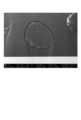
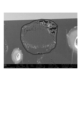
- Example 1 is an SEM photograph showing a cross section of the carbon nanotube twisted yarn obtained in Example 1.
- 3 is an SEM photograph showing a cross section of the carbon nanotube twisted yarn obtained in Comparative Example 1.
- 7 is an SEM photograph showing a cross section of the carbon nanotube twisted yarn obtained in Comparative Example 4.
- the method for manufacturing twisted carbon nanotube yarn according to the present embodiment includes a step of drawing out carbon nanotubes in a sheet form from the end of a carbon nanotube forest to obtain a carbon nanotube sheet (drawing step), and twisting the carbon nanotube sheet. , a step of performing a false twisting step to untwist the carbon nanotube linear body (false twisting step), and a step of twisting the carbon nanotube linear body to obtain a carbon nanotube twisted yarn (main twisting step).
- This is a method that provides the following.
- the carbon nanotube sheet is subjected to a false twisting process in which the sheet is twisted and then untwisted.
- the strength of the carbon nanotube linear body before the main twisting step can be increased. Therefore, in the main twisting step, even if the carbon nanotube linear body is strongly twisted, the fibers can be prevented from being cut.
- a carbon nanotube twisted yarn with sufficient twist can be produced, and a carbon nanotube twisted yarn with excellent strength and conductivity can be produced.
- a carbon nanotube forest is prepared.
- a carbon nanotube forest can be produced, for example, by a chemical vapor deposition method or a method of growing like a cotton in the air.
- the carbon nanotube forest include aggregates of carbon nanotubes grown on a substrate by chemical vapor deposition.
- any known substrate can be used as appropriate.
- a plastic substrate, a glass substrate, a silicon substrate, a metal substrate including metals such as iron and copper, or alloys thereof, etc. can be used.
- a silicon dioxide film may be laminated on the surface of these substrates.
- the carbon nanotubes grown on the substrate by chemical vapor deposition may be single-walled carbon nanotubes, double-walled carbon nanotubes, multi-walled carbon nanotubes, or a mixture thereof.
- the form of the carbon nanotube aggregate is not particularly limited, it is preferably an aggregate formed on a substrate with high density and high orientation from the viewpoint of easy formation of twisted carbon nanotube yarns.
- the bulk density of the carbon nanotubes on the substrate is preferably 20 mg/cm 3 or more. If the bulk density is 20 mg/cm 3 or more, the drawing characteristics can be improved.
- Highly oriented means that the carbon nanotubes are aligned perpendicularly to the plane of the substrate while being adjacent to each other.
- the average height (length) of the carbon nanotubes in the carbon nanotube aggregate is preferably 100 ⁇ m or more, and preferably 150 ⁇ m or more.
- the number of layers of carbon nanotubes in the carbon nanotube aggregate may be one or more, and preferably one to 40 layers.
- carbon nanotubes are then drawn out in a sheet form from the ends of the carbon nanotube forest to obtain a carbon nanotube sheet.
- the carbon nanotube sheet can be pulled out using a known pulling tool.
- the width of the carbon nanotube sheet is preferably 20 mm or more and 200 mm or less, more preferably 25 mm or more and 100 mm or less.
- the carbon nanotube sheet obtained in the drawing process is twisted and then subjected to a false-twisting process in which the twist is untwisted to obtain a linear carbon nanotube body.
- a known method can be used to twist the carbon nanotube sheet. For example, twisting can be applied by rotating a roller or the like holding the carbon nanotube sheet. Alternatively, the carbon nanotube sheet may be twisted by being wound around a roller or the like.
- a known method can be used to untwist the twisted carbon nanotube sheet.
- the twisted carbon nanotube sheet may be untwisted by being pulled back from a rolled roller or the like. That is, when twisting is applied using a roller or the like, for example, when the roller twists to the right, the exit side naturally becomes a left-handed twist and returns to zero (no twist). Note that it is preferable to ensure a sufficient pass line for the twist to return naturally.
- the number of twists when falsely twisting the carbon nanotube sheet in the false twisting process must be 300 times/m or more and 5000 times/m or less, and 500 times/m or more and 5000 times/m or less. It is preferably 700 times/m or more and 5000 times/m or less.
- the number of twists when untwisting the falsely twisted carbon nanotube sheet is preferably 300 times/m or more and 5000 times/m or less, and preferably 500 times/m or more and 5000 times/m or less. More preferably, it is 700 times/m or more and 5000 times/m or less. If the number of twists is within the above range, the strength of the linear carbon nanotube body can be increased.
- the carbon nanotube linear bodies obtained in the false twisting step are twisted to obtain twisted carbon nanotube yarns.
- a known method can be used to twist the carbon nanotube sheet linear body.
- the carbon nanotube linear bodies can be twisted by rotating a roller or the like that grips them.
- the twisted carbon nanotube yarn is wound around a bobbin. At this time, the carbon nanotube twisted yarn is pulled, but since the strength of the carbon nanotube linear body is improved in the false twisting process, it is possible to prevent the carbon nanotube linear body from being cut.
- the number of twists when twisting the carbon nanotube linear body needs to be 900 times/m or more and 5000 times/m or less, more preferably 1000 times/m or more and 3000 times/m or less, More preferably 1000 times/m or more and 2000 times/m or less.
- the carbon nanotube twisted yarn according to this embodiment is obtained.
- the obtained carbon nanotube twisted yarn preferably satisfies the following conditions.
- the diameter of the carbon nanotube twisted yarn is preferably 1 ⁇ m or more and 1000 ⁇ m or less, more preferably 15 ⁇ m or more and 100 ⁇ m or less, and even more preferably 25 ⁇ m or more and 75 ⁇ m or less, from the viewpoint of the strength and handleability of the carbon nanotube twisted yarn. .
- the twist angle of the carbon nanotube twist is preferably 8° or more and 50° or less, and more preferably 10° or more and 30° or less. This twisting angle can be adjusted by adjusting the number of twists when twisting the carbon nanotube linear body. Further, after the main twisting step, the twist may be returned so that the twist angle falls within the above range.
- the porosity of the carbon nanotube twisted yarn is preferably 0% or more and 1% or less, more preferably 0% or more and 0.5% or less. If the porosity is within the above range, the strength and conductivity of the twisted carbon nanotube yarn can be improved.
- the electrical conductivity of the carbon nanotube twisted yarn is preferably 6.0 ⁇ 10 2 S/cm or more and 6.3 ⁇ 10 5 S/cm or less from the viewpoint of the conductivity of the carbon nanotube twisted yarn.
- the electrical conductivity of the carbon nanotube strands can be calculated by measuring the diameter ( ⁇ m) and wire resistance ( ⁇ /cm) of the carbon nanotube strands and converting them into electrical conductivity per cross-sectional area.
- the tensile strength of the carbon nanotube twist is preferably 750 MPa or more and 5000 MPa or less, and more preferably 1000 MPa or more and 5000 MPa or less.
- the tensile strength of carbon nanotube twisted yarn can be measured by the method described in JIS L1095.
- the present invention is not limited to the above-described embodiments, and the present invention includes modifications, improvements, etc. within a range that can achieve the object of the present invention.
- Example 1 A cut with a width of 33 mm is made on the carbon nanotube forest, and from the end of the cut, carbon nanotubes are pulled out in a sheet shape (width: 33 mm) in a direction within 10 degrees of deviation from the parallel direction of the carbon nanotube forest.
- a carbon nanotube sheet was obtained.
- the obtained carbon nanotube sheets are bundled into a thread using a guide, the thread-like carbon nanotubes are twisted (number of twists: 1000 times/m), and then the false twisting process is performed to untwist (return to natural state).
- a carbon nanotube linear body was obtained.
- the obtained carbon nanotube linear body was twisted (number of twists: 1200 times/m) and wound around a bobbin to obtain a carbon nanotube twisted yarn.
- a cut with a width of 33 mm is made on the carbon nanotube forest, and from the end of the cut, carbon nanotubes are pulled out in a sheet shape (width: 33 mm) in a direction within 10 degrees of deviation from the parallel direction of the carbon nanotube forest.
- a carbon nanotube sheet was obtained.
- the obtained carbon nanotube sheets are bundled into a thread using a guide, the thread-like carbon nanotubes are twisted (number of twists: 1000 times/m), and then the twist is untwisted (restored to its natural state).
- a nanotube thread was obtained.
- a cut with a width of 33 mm is made on the carbon nanotube forest, and from the end of the cut, carbon nanotubes are pulled out in a sheet shape (width: 33 mm) in a direction within 10 degrees of deviation from the parallel direction of the carbon nanotube forest.
- a carbon nanotube sheet was obtained.
- the obtained carbon nanotube sheets were bundled into a thread using a guide, the thread-like carbon nanotubes were twisted (number of twists: 1200 times/m), and wound around a bobbin. At this time, the carbon nanotube twist yarn was cut, and the carbon nanotube twist yarn could not be produced.
- a cut with a width of 33 mm is made on the carbon nanotube forest, and from the end of the cut, carbon nanotubes are pulled out in a sheet shape (width: 33 mm) in a direction within 10 degrees of deviation from the parallel direction of the carbon nanotube forest.
- a carbon nanotube sheet was obtained.
- the obtained carbon nanotube sheets are bundled into a thread using a guide, the thread-like carbon nanotubes are twisted (number of twists: 1000 times/m), and then the false twisting process is performed to untwist (return to natural state).
- a carbon nanotube linear body was obtained.
- the obtained carbon nanotube linear body was twisted (number of twists: 800 times/m) and wound around a bobbin to obtain a carbon nanotube twisted yarn.
- a cut with a width of 33 mm is made on the carbon nanotube forest, and from the end of the cut, carbon nanotubes are pulled out in a sheet shape (width: 33 mm) in a direction within 10 degrees of deviation from the parallel direction of the carbon nanotube forest.
- a carbon nanotube sheet was obtained.
- the obtained carbon nanotube sheets are bundled into threads using a guide, the thread-like carbon nanotubes are twisted (number of twists: 250 times/m), and then a false twisting process is performed in which the twists are untwisted (return to natural state).
- a carbon nanotube linear body was obtained.
- the obtained carbon nanotube linear body was twisted (number of twists: 1200 times/m) and wound around a bobbin. At this time, the carbon nanotube twist yarn was cut, and the carbon nanotube twist yarn could not be produced.
- the carbon nanotube yarn obtained in Example 1 has a lower porosity and higher electrical conductivity and tensile strength than the carbon nanotube yarn obtained in Comparative Example 1. Do you get it. From this, it was confirmed that according to the present invention, a twisted carbon nanotube yarn having excellent strength and conductivity could be obtained.
Landscapes
- Engineering & Computer Science (AREA)
- Chemical & Material Sciences (AREA)
- Textile Engineering (AREA)
- Mechanical Engineering (AREA)
- Nanotechnology (AREA)
- Organic Chemistry (AREA)
- Materials Engineering (AREA)
- Inorganic Chemistry (AREA)
- Physics & Mathematics (AREA)
- Thermal Sciences (AREA)
- Chemical Kinetics & Catalysis (AREA)
- General Chemical & Material Sciences (AREA)
- Yarns And Mechanical Finishing Of Yarns Or Ropes (AREA)
Priority Applications (5)
| Application Number | Priority Date | Filing Date | Title |
|---|---|---|---|
| EP23795995.2A EP4516976A4 (en) | 2022-04-26 | 2023-03-29 | PROCESS FOR MANUFACTURING TWISTED WIRE IN CARBON NANOTUBE |
| CN202380034354.5A CN119053735A (zh) | 2022-04-26 | 2023-03-29 | 碳纳米管加捻纱的制造方法 |
| KR1020247032776A KR20250003535A (ko) | 2022-04-26 | 2023-03-29 | 카본 나노튜브 연사의 제조 방법 |
| US18/855,758 US20260185273A1 (en) | 2022-04-26 | 2023-03-29 | Method for manufacturing carbon nanotube twisted yarn |
| JP2024517919A JPWO2023210248A1 (cg-RX-API-DMAC7.html) | 2022-04-26 | 2023-03-29 |
Applications Claiming Priority (2)
| Application Number | Priority Date | Filing Date | Title |
|---|---|---|---|
| JP2022072377 | 2022-04-26 | ||
| JP2022-072377 | 2022-04-26 |
Publications (1)
| Publication Number | Publication Date |
|---|---|
| WO2023210248A1 true WO2023210248A1 (ja) | 2023-11-02 |
Family
ID=88518635
Family Applications (1)
| Application Number | Title | Priority Date | Filing Date |
|---|---|---|---|
| PCT/JP2023/012782 Ceased WO2023210248A1 (ja) | 2022-04-26 | 2023-03-29 | カーボンナノチューブ撚糸の製造方法 |
Country Status (7)
| Country | Link |
|---|---|
| US (1) | US20260185273A1 (cg-RX-API-DMAC7.html) |
| EP (1) | EP4516976A4 (cg-RX-API-DMAC7.html) |
| JP (1) | JPWO2023210248A1 (cg-RX-API-DMAC7.html) |
| KR (1) | KR20250003535A (cg-RX-API-DMAC7.html) |
| CN (1) | CN119053735A (cg-RX-API-DMAC7.html) |
| TW (1) | TW202409371A (cg-RX-API-DMAC7.html) |
| WO (1) | WO2023210248A1 (cg-RX-API-DMAC7.html) |
Citations (4)
| Publication number | Priority date | Publication date | Assignee | Title |
|---|---|---|---|---|
| JP2008523254A (ja) * | 2004-11-09 | 2008-07-03 | ボード オブ リージェンツ, ザ ユニバーシティ オブ テキサス システム | ナノファイバーのリボンおよびシートならびにナノファイバーの撚り糸および無撚り糸の製造および適用 |
| JP2011153392A (ja) | 2010-01-28 | 2011-08-11 | Osaka Prefecture | カーボンナノチューブ撚糸およびその製造方法 |
| WO2015001668A1 (ja) * | 2013-07-05 | 2015-01-08 | 村田機械株式会社 | 糸製造装置 |
| US20180171512A1 (en) * | 2016-12-19 | 2018-06-21 | Lintec Of America, Inc. | Nanofiber yarn spinning system |
Family Cites Families (5)
| Publication number | Priority date | Publication date | Assignee | Title |
|---|---|---|---|---|
| CN102953171A (zh) * | 2011-08-30 | 2013-03-06 | 苏州捷迪纳米科技有限公司 | 碳纳米管纺纱机及采用该碳纳米管纺纱机制备碳纳米管纱线的方法 |
| EP3018242B1 (en) * | 2013-07-05 | 2019-10-23 | Murata Machinery, Ltd. | Yarn manufacturing apparatus |
| CN105408535B (zh) * | 2013-07-22 | 2017-10-13 | 村田机械株式会社 | 纱线制造装置 |
| US10425993B2 (en) * | 2016-12-08 | 2019-09-24 | Goodrich Corporation | Carbon nanotube yarn heater |
| JP7372092B2 (ja) * | 2019-09-18 | 2023-10-31 | 日立造船株式会社 | カーボンナノチューブ撚糸の製造方法 |
-
2023
- 2023-03-29 JP JP2024517919A patent/JPWO2023210248A1/ja active Pending
- 2023-03-29 CN CN202380034354.5A patent/CN119053735A/zh active Pending
- 2023-03-29 US US18/855,758 patent/US20260185273A1/en active Pending
- 2023-03-29 EP EP23795995.2A patent/EP4516976A4/en active Pending
- 2023-03-29 WO PCT/JP2023/012782 patent/WO2023210248A1/ja not_active Ceased
- 2023-03-29 KR KR1020247032776A patent/KR20250003535A/ko active Pending
- 2023-04-11 TW TW112113404A patent/TW202409371A/zh unknown
Patent Citations (4)
| Publication number | Priority date | Publication date | Assignee | Title |
|---|---|---|---|---|
| JP2008523254A (ja) * | 2004-11-09 | 2008-07-03 | ボード オブ リージェンツ, ザ ユニバーシティ オブ テキサス システム | ナノファイバーのリボンおよびシートならびにナノファイバーの撚り糸および無撚り糸の製造および適用 |
| JP2011153392A (ja) | 2010-01-28 | 2011-08-11 | Osaka Prefecture | カーボンナノチューブ撚糸およびその製造方法 |
| WO2015001668A1 (ja) * | 2013-07-05 | 2015-01-08 | 村田機械株式会社 | 糸製造装置 |
| US20180171512A1 (en) * | 2016-12-19 | 2018-06-21 | Lintec Of America, Inc. | Nanofiber yarn spinning system |
Non-Patent Citations (1)
| Title |
|---|
| See also references of EP4516976A4 |
Also Published As
| Publication number | Publication date |
|---|---|
| EP4516976A1 (en) | 2025-03-05 |
| EP4516976A4 (en) | 2026-04-29 |
| JPWO2023210248A1 (cg-RX-API-DMAC7.html) | 2023-11-02 |
| CN119053735A (zh) | 2024-11-29 |
| US20260185273A1 (en) | 2026-07-02 |
| KR20250003535A (ko) | 2025-01-07 |
| TW202409371A (zh) | 2024-03-01 |
Similar Documents
| Publication | Publication Date | Title |
|---|---|---|
| Liu et al. | Carbon nanotube yarns with high tensile strength made by a twisting and shrinking method | |
| Miao | Yarn spun from carbon nanotube forests: production, structure, properties and applications | |
| CN112368432B (zh) | 碳纤维及其制造方法 | |
| US20160032499A1 (en) | Methods of making nanofiber yarns and threads | |
| JP2014517797A (ja) | ドープした多層カーボンナノチューブファイバーおよびその製造方法 | |
| US20140217643A1 (en) | Carbon nanotube fiber and method for producing the same | |
| Miao | The role of twist in dry spun carbon nanotube yarns | |
| US20090230353A1 (en) | Fiber aggregate and fabricating method of the same | |
| JP6837385B2 (ja) | ガラスヤーン、ガラスクロス、プリプレグ及びプリント配線板 | |
| US20140314949A1 (en) | Carbon nanotube conductor with enhanced electrical conductivity | |
| CN101058911A (zh) | 两步包缠混合纤维的缠绕方式 | |
| JP2018133296A (ja) | カーボンナノチューブ撚糸電線及びその製造方法 | |
| JP2019049077A (ja) | カーボンナノチューブワイヤの製造方法 | |
| JPWO2019172246A1 (ja) | 炭素繊維およびその製造方法 | |
| CN108625005B (zh) | 碳纳米管纤维复合包芯纱及其制备方法与应用 | |
| JPWO2019172247A1 (ja) | 炭素繊維束およびその製造方法 | |
| Misak et al. | Failure analysis of carbon nanotube wires | |
| JP7372092B2 (ja) | カーボンナノチューブ撚糸の製造方法 | |
| JP2016141778A (ja) | ナノ繊維−高分子複合体及びその製造方法 | |
| KR20250003535A (ko) | 카본 나노튜브 연사의 제조 방법 | |
| CN1965126B (zh) | 用于加强橡胶制品的金属帘线及制造该帘线的方法 | |
| JP2019151956A (ja) | 炭素繊維束および炭素繊維ならびに炭素繊維束の製造方法 | |
| Smith et al. | Small-Scale Processing of High-Performance BNNT Fiber for Space and Electronics Applications | |
| JP4253067B2 (ja) | ポリエステル部分融着糸及びその製造方法 | |
| JP4496705B2 (ja) | ガラスヤーンの解舒方法及びガラスヤーン |
Legal Events
| Date | Code | Title | Description |
|---|---|---|---|
| 121 | Ep: the epo has been informed by wipo that ep was designated in this application |
Ref document number: 23795995 Country of ref document: EP Kind code of ref document: A1 |
|
| ENP | Entry into the national phase |
Ref document number: 2024517919 Country of ref document: JP Kind code of ref document: A |
|
| WWE | Wipo information: entry into national phase |
Ref document number: 18855758 Country of ref document: US |
|
| WWE | Wipo information: entry into national phase |
Ref document number: 202380034354.5 Country of ref document: CN |
|
| WWE | Wipo information: entry into national phase |
Ref document number: 2023795995 Country of ref document: EP |
|
| NENP | Non-entry into the national phase |
Ref country code: DE |
|
| ENP | Entry into the national phase |
Ref document number: 2023795995 Country of ref document: EP Effective date: 20241126 |
|
| WWP | Wipo information: published in national office |
Ref document number: 18855758 Country of ref document: US |