WO2023210147A1 - 異物検知システム及び車両 - Google Patents
異物検知システム及び車両 Download PDFInfo
- Publication number
- WO2023210147A1 WO2023210147A1 PCT/JP2023/007253 JP2023007253W WO2023210147A1 WO 2023210147 A1 WO2023210147 A1 WO 2023210147A1 JP 2023007253 W JP2023007253 W JP 2023007253W WO 2023210147 A1 WO2023210147 A1 WO 2023210147A1
- Authority
- WO
- WIPO (PCT)
- Prior art keywords
- foreign object
- vehicle
- server device
- object detection
- detection
- Prior art date
- Legal status (The legal status is an assumption and is not a legal conclusion. Google has not performed a legal analysis and makes no representation as to the accuracy of the status listed.)
- Ceased
Links
Images



Classifications
-
- G—PHYSICS
- G08—SIGNALLING
- G08G—TRAFFIC CONTROL SYSTEMS
- G08G1/00—Traffic control systems for road vehicles
- G08G1/01—Detecting movement of traffic to be counted or controlled
- G08G1/0104—Measuring and analyzing of parameters relative to traffic conditions
- G08G1/0125—Traffic data processing
- G08G1/0133—Traffic data processing for classifying traffic situation
-
- G—PHYSICS
- G07—CHECKING-DEVICES
- G07C—TIME OR ATTENDANCE REGISTERS; REGISTERING OR INDICATING THE WORKING OF MACHINES; GENERATING RANDOM NUMBERS; VOTING OR LOTTERY APPARATUS; ARRANGEMENTS, SYSTEMS OR APPARATUS FOR CHECKING NOT PROVIDED FOR ELSEWHERE
- G07C5/00—Registering or indicating the working of vehicles
- G07C5/006—Indicating maintenance
-
- G—PHYSICS
- G07—CHECKING-DEVICES
- G07C—TIME OR ATTENDANCE REGISTERS; REGISTERING OR INDICATING THE WORKING OF MACHINES; GENERATING RANDOM NUMBERS; VOTING OR LOTTERY APPARATUS; ARRANGEMENTS, SYSTEMS OR APPARATUS FOR CHECKING NOT PROVIDED FOR ELSEWHERE
- G07C5/00—Registering or indicating the working of vehicles
- G07C5/008—Registering or indicating the working of vehicles communicating information to a remotely located station
-
- G—PHYSICS
- G08—SIGNALLING
- G08G—TRAFFIC CONTROL SYSTEMS
- G08G1/00—Traffic control systems for road vehicles
-
- G—PHYSICS
- G08—SIGNALLING
- G08G—TRAFFIC CONTROL SYSTEMS
- G08G1/00—Traffic control systems for road vehicles
- G08G1/01—Detecting movement of traffic to be counted or controlled
-
- G—PHYSICS
- G08—SIGNALLING
- G08G—TRAFFIC CONTROL SYSTEMS
- G08G1/00—Traffic control systems for road vehicles
- G08G1/01—Detecting movement of traffic to be counted or controlled
- G08G1/0104—Measuring and analyzing of parameters relative to traffic conditions
- G08G1/0108—Measuring and analyzing of parameters relative to traffic conditions based on the source of data
- G08G1/0112—Measuring and analyzing of parameters relative to traffic conditions based on the source of data from the vehicle, e.g. floating car data [FCD]
-
- G—PHYSICS
- G08—SIGNALLING
- G08G—TRAFFIC CONTROL SYSTEMS
- G08G1/00—Traffic control systems for road vehicles
- G08G1/123—Traffic control systems for road vehicles indicating the position of vehicles, e.g. scheduled vehicles; Managing passenger vehicles circulating according to a fixed timetable, e.g. buses, trains, trams
- G08G1/127—Traffic control systems for road vehicles indicating the position of vehicles, e.g. scheduled vehicles; Managing passenger vehicles circulating according to a fixed timetable, e.g. buses, trains, trams to a central station ; Indicators in a central station
- G08G1/13—Traffic control systems for road vehicles indicating the position of vehicles, e.g. scheduled vehicles; Managing passenger vehicles circulating according to a fixed timetable, e.g. buses, trains, trams to a central station ; Indicators in a central station the indicator being in the form of a map
Definitions
- the present invention relates to a foreign object detection system and vehicle that detect foreign objects such as fallen objects existing on a road on which a vehicle travels.
- Patent Document 1 discloses that a discovered vehicle that has detected a falling object transmits a location information request to surrounding vehicles to obtain location information, and surrounding vehicles whose distance to the fallen object is less than a threshold value are grouped, and the detected vehicle determines the group membership status.
- a system is described that sends a notification and notifies a server vehicle of fallen object information from a discovered vehicle.
- the discovered vehicle periodically requests location information from nearby vehicles to acquire the location information of the surrounding vehicles, and when the distance between the server vehicle and the fallen object is equal to or greater than a threshold, the server It is described that the server vehicle is updated by transmitting a server vehicle update request from the vehicle that discovered the vehicle to the surrounding vehicle closest to the fallen object.
- the present invention has been made in view of the above problems, and its purpose is to provide a foreign object detection system and a vehicle that can suppress transmission of erroneous foreign object detection information.
- a foreign object detection system includes a vehicle equipped with a detection device that detects a foreign object existing on a road on which the vehicle is traveling, and a foreign object that is actually present on the road on which the vehicle is traveling based on the detection result of the detection device.
- a foreign object detection system comprising: a server device that determines whether or not the foreign object is detected, and the server device compares a foreign object detection result by the detection device and information regarding a position where the foreign object is detected between a plurality of vehicles. By this, the validity of the foreign object detection results is evaluated.
- the server device preferably evaluates the validity of the foreign object detection result based on the number of vehicles determined to have a foreign object and the number of vehicles determined to have no foreign object at the position where the foreign object was detected. Thereby, the accuracy of foreign object detection can be improved.
- the server device transmits information urging the vehicles that have been determined to be on the minority side to have their detection devices repaired. Thereby, it is possible to suppress transmission of erroneous foreign object detection information due to a failure of the detection device.
- the server device preferably evaluates the validity of the foreign object detection result in consideration of the weather and illuminance around the vehicle. This can prevent the accuracy of foreign object detection from decreasing due to the weather and illuminance around the vehicle.
- a vehicle according to the present invention includes a detection device that detects a foreign object existing on the road on which the vehicle is traveling, and determines whether or not a foreign object actually exists on the road on which the vehicle is traveling based on the detection result of the detection device.
- the foreign object detection result by the detection device and the position at which the foreign object was detected are notified to the server device.
- the server device compare information regarding foreign objects between a plurality of vehicles.
- the server device Based on the aggregation results of foreign object detection results by the server device, it is preferable to receive information urging maintenance of the detection device of the vehicle and notify the user.
- the server device In order to have the server device evaluate the validity of the foreign object detection result in consideration of the weather and illuminance around the vehicle, it is preferable to notify the server device of the weather and illuminance detected by the vehicle.
- the validity of the foreign object detection result is evaluated by comparing the foreign object detection result by the detection device and the information regarding the position where the foreign object was detected between multiple vehicles. Therefore, transmission of erroneous foreign object detection information can be suppressed.
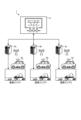
- FIG. 1 is a schematic diagram showing the configuration of a foreign object detection system that is an embodiment of the present invention.
- FIG. 2 is a block diagram showing the configuration of the vehicle shown in FIG. 1.
- FIG. 3 is a schematic diagram showing an example of a power feeding operation of a vehicle.
- FIG. 4 is a schematic diagram showing a modification of the power feeding operation of the vehicle.
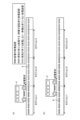
- FIG. 5 is a flowchart showing the flow of foreign object detection processing according to an embodiment of the present invention.
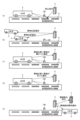
- FIG. 6 is a schematic diagram for explaining an example of foreign object detection processing according to an embodiment of the present invention.
- FIG. 7 is a schematic diagram for explaining another example of foreign object detection processing that is an embodiment of the present invention.
- FIG. 1 is a schematic diagram showing the configuration of a foreign object detection system that is an embodiment of the present invention.
- a foreign object detection system 1 which is an embodiment of the present invention, is a system that detects foreign objects such as fallen objects existing on a road on which a vehicle 2 (2a to 2c) is traveling.
- an edge server device 3 (3a to 3c), and a main server device 4 as main components.
- the functions of the edge server device 3 and the main server device 4 may be realized by one information processing device.
- the vehicle 2 is configured of well-known vehicles such as EHV (Electric Hybrid Vehicle), BEV (Battery Electric Vehicle), PHEV (Plug-in Hybrid Electric Vehicle), and FCEV (Fuel Cell Electric Vehicle). , a communication module 21, an on-vehicle controller 22, and a detection device 23.
- EHV Electrical Hybrid Vehicle
- BEV Battery Electric Vehicle
- PHEV Battery Electric Vehicle
- FCEV Fluel Cell Electric Vehicle
- the communication module 21 is constituted by a wireless communication circuit that can perform wireless communication via a telecommunication line such as an Internet line network or a mobile phone line network, and controls information communication with the edge server device 3.
- a telecommunication line such as an Internet line network or a mobile phone line network
- the in-vehicle controller 22 includes hardware such as a CPU (Central Processing Unit), a DSP (Digital Signal Processor), a processor such as an FPGA (Field-Programmable Gate Array), a RAM (Random Access Memory), a ROM (Read Only Memory), etc. It has a main memory section.
- the on-vehicle controller 22 controls the overall operation of the vehicle 2 by executing a computer program stored in the main storage section.
- unique identification information (vehicle ID) for each vehicle 2 is stored in the main memory.
- the detection device 23 is composed of devices such as LiDAR (Light Detection And Ranging), a camera, and a millimeter wave radar, and detects foreign objects present around the vehicle 2.
- the detection device 23 outputs information regarding the detected foreign object and its position (longitude, latitude, etc.) to the vehicle controller 22 as foreign object detection information.
- the detection device 23 uses a raindrop sensor and an illuminance sensor to acquire information regarding the weather and illuminance around the vehicle 2 as surrounding environment information, and outputs the acquired surrounding environment information to the on-vehicle controller 22.
- the vehicle 2 is configured to be able to receive power from a power supply device provided on the road. Specifically, as shown in FIGS. 3(a) and 3(b), the vehicle 2 individually transmits a power supply request to the power supply device 6 installed on the road, and the power supply device 6 that receives the power supply request Authentication processing for vehicle 2 is executed. Then, when the vehicle 2 is authenticated, the power supply device 6 performs power supply processing to the vehicle 2. The vehicle 2 does not send power supply requests to the power supply devices 6 individually, but sequentially transmits power supply requests to sections constituted by a plurality of power supply devices 6, as shown in FIGS. 4(a) and 4(b). When the vehicle 2 is authenticated, the power supply devices 6 in each section may sequentially perform the power supply process to the vehicle 2.
- the edge server device 3 is constituted by an information processing device such as a workstation.
- the edge server device 3 acquires the vehicle ID, foreign object detection information, and surrounding environment information from the vehicle 2 for each road area where the vehicle 2 travels via the telecommunications line, and sends the acquired information to the main server device 4. do.
- the main server device 4 is constituted by an information processing device such as a workstation located at the information management center that operates the foreign object detection system 1.
- the main server device 4 acquires the vehicle ID, foreign object detection information, and surrounding environment information of each vehicle 2 from the edge server device 3 via a telecommunications line, and determines whether there is a foreign object on the road based on the acquired information. Determine whether Then, the main server device 4 transmits various information to the administrator who manages the vehicle 2 and the power supply device 6 via the edge server device 3 based on the determination result.
- the edge server device 3 and the main server device 4 execute the foreign object detection processing described below, thereby suppressing distribution of erroneous foreign object detection information.
- the operations of the edge server device 3 and main server device 4 when executing the foreign object detection process will be described below with reference to FIGS. 5 to 7.
- FIG. 5 is a flowchart showing the flow of foreign object detection processing according to an embodiment of the present invention.
- the foreign object detection process shown in FIG. 5 is performed when a falling object OB actually exists on the road, and the first vehicle 2 among the three vehicles 2 detects the falling object OB, and the second This process is performed when the detection device 23 of the vehicle 2 is out of order.
- the location information of the fallen object OB is transmitted to the main server device 4 along with its own vehicle ID (step S2).
- the main server device 4 controls the operation of the power supply device 6 near the position indicated by the position information of the fallen object OB.
- the received position information of the fallen object OB is transmitted to the second and third vehicles 2 (foreign object position notification) (step S4, FIGS. 6(a) and 6(b)).
- the second and third vehicles 2 receive the position information of the fallen object OB transmitted from the main server device 4 via the edge server device 3 (steps S5a, 5b), and The detection result of the fallen object OB at the position indicated by the information is transmitted to the main server device 4 (steps S6a, 6b).
- the detection device 23 of the second vehicle 2 is out of order, so the second vehicle 2 transmits the information that there is no falling object OB at the position indicated by the position information.
- the third vehicle 2 transmits information that there is a fallen object OB at the position indicated by the position information (FIGS. 6(c) and 6(d)).
- the main server device 4 receives the detection results of the fallen object OB transmitted from the plurality of vehicles 2 (step S7), and the main server device 4 receives the detection results of the fallen object OB transmitted from the plurality of vehicles 2 (step S7), and determines that the falling object OB is present or absent at the position indicated by the position information of the vehicle 2. It is determined whether the number of vehicles exceeds a predetermined threshold (step S8).
- step S8 Yes
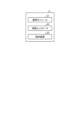
- the main server device 4 3 the vehicle 2 that has been determined to be on the minority side is sent a notification that there is an abnormality in the detection device 23 (step S9), and the vehicle 2 that has received the notification receives information such as the need for maintenance of the detection device 23. is displayed (step S10).
- the second vehicle 2 receives the above notification and displays information such as the need for maintenance of the detection device 23 (FIG. 6(e)).
- the predetermined threshold value may be changed depending on the weather and illuminance around the vehicle 2.
- the main server device 4 determines whether the number of vehicles 2 determined to have a fallen object OB at the position indicated by the position information is greater than or equal to a predetermined number (step S11). As a result of the determination, if it is determined that the number of vehicles 2 for which it has been determined that there is a fallen object OB at the location indicated by the location information is greater than or equal to the predetermined number (step S11: Yes), the main server device 4 It is determined that the fallen object OB is definitely located at the position, and information instructing the control device 7 that controls the power supply device 6 to remove the fallen object OB is transmitted (step S12).
- control device 7 When the control device 7 receives the information instructing the removal of the fallen object OB (step S13), it instructs the worker to remove the fallen object OB (step S14).
- the foreign object detection accuracy by the detection device 23 changes depending on the weather and illumination around the vehicle 2. Therefore, the predetermined number may be changed depending on the weather and illuminance around the vehicle 2. Further, the determination results may be weighted between the vehicles 2, such as by weighting the determination of the vehicle 2 in which the detection device 23 has a large number of sensors.
- the main server device 4 collects information regarding the foreign object detection result by the detection device 23 and the position where the foreign object was detected. Since the validity of the foreign object detection results is evaluated by comparing between the vehicles 2, it is possible to suppress transmission of erroneous foreign object detection information. The main server device 4 also verifies the validity of the foreign object detection result based on the number of vehicles 2 determined to have a foreign object and the number of vehicles 2 determined to have no foreign object at the position where the foreign object was detected. Since the evaluation is performed, the accuracy of foreign object detection can be improved.
- the main server device 4 transmits information urging maintenance of the detection device 23 to the vehicle 2 that has been determined to be on the minority side, so it is possible to suppress the transmission of erroneous foreign object detection information due to a failure of the detection device 23. . Furthermore, since the main server device 4 evaluates the validity of the foreign object detection result in consideration of the weather and illuminance around the vehicle 2, it is possible to prevent the accuracy of foreign object detection from decreasing due to the weather and illuminance around the vehicle.
- the above-mentioned foreign object detection process is performed when there is a foreign object on the road, and the first vehicle 2 among the three vehicles 2 detects the foreign object, and the detection device 23 of the second vehicle 2 is out of order.
- this is a case where there is actually no foreign object on the road, and the first vehicle 2 among the three vehicles 2 has a foreign object.
- the in-vehicle controller 22 of the first vehicle 2 detects a falling object OB that does not actually exist.
- the main server device 4 stops the operation of the power supply device 6 near the position indicated by the position information of the fallen object OB, and receives the The position information of the fallen object OB is transmitted to the second and third vehicles 2 (FIG. 7(b)).
- the second and third vehicles 2 receive the position information of the fallen object OB transmitted from the main server device 4 via the edge server device 3, and the falling object OB falls at the position indicated by the received position information.
- the object OB detection results are sent to the main server device 4.
- the second and third vehicles 2 transmit information that there is no falling object OB at the position indicated by the received position information (Fig. 6(c)). , (d)). Thereafter, the main server device 4 executes the same process as the foreign object detection process described above. In this example, the first vehicle 2 displays information such as that the detection device 23 requires maintenance. Furthermore, since there is actually no falling object OB, the power supply device 6 that has stopped operating is restarted.
- the accuracy of foreign object detection by the detection device 23 changes depending on the weather and time of day. For example, there is a difference in foreign object detection accuracy between sunny days and rainy nights. Therefore, it is preferable to change the number of times (count value) that the detection device 23 detects a foreign object at the same location depending on the weather and time of day.
- the weight of the count value of each detection device 23 according to the detection results of the raindrop sensor and the illuminance sensor for example, the weight of the count value of LiDAR when the weather around the vehicle 2 is rainy is 1
- the main server device 4 preferably executes the processing in step S8 and step S11 using the weighted count value.
- the detection range of the detection device 23 it is also possible to distinguish between a range where there is a problem with vehicle running or power supply, and a range other than that. For example, it is possible to determine whether a foreign object is present within the travel range by image recognition or the like. If it is determined that there is no problem with power supply, such as when a fallen object is on the shoulder of the road, it is possible to continue power supply.
- the LiDAR count value is D1
- the camera count value is D2
- the millimeter wave radar count value is D3
- the weight based on the detection of the raindrop sensor is S1
- the weight based on the detection result of the illuminance sensor is It is preferable to obtain the count value of the detection device 23 using the following equations 1 and 2, with the weight being S2.
- the present invention it is possible to provide a foreign object detection system and a vehicle that can suppress transmission of erroneous foreign object detection information.
Landscapes
- Physics & Mathematics (AREA)
- General Physics & Mathematics (AREA)
- Chemical & Material Sciences (AREA)
- Analytical Chemistry (AREA)
- Engineering & Computer Science (AREA)
- Radar, Positioning & Navigation (AREA)
- Remote Sensing (AREA)
- Traffic Control Systems (AREA)
Priority Applications (2)
| Application Number | Priority Date | Filing Date | Title |
|---|---|---|---|
| CN202380034593.0A CN118974794A (zh) | 2022-04-27 | 2023-02-28 | 异物检测系统以及车辆 |
| US18/851,139 US20250209910A1 (en) | 2022-04-27 | 2023-02-28 | Foreign substance detection system and vehicle |
Applications Claiming Priority (2)
| Application Number | Priority Date | Filing Date | Title |
|---|---|---|---|
| JP2022073384A JP7783125B2 (ja) | 2022-04-27 | 2022-04-27 | 異物検知システム |
| JP2022-073384 | 2022-04-27 |
Publications (1)
| Publication Number | Publication Date |
|---|---|
| WO2023210147A1 true WO2023210147A1 (ja) | 2023-11-02 |
Family
ID=88518428
Family Applications (1)
| Application Number | Title | Priority Date | Filing Date |
|---|---|---|---|
| PCT/JP2023/007253 Ceased WO2023210147A1 (ja) | 2022-04-27 | 2023-02-28 | 異物検知システム及び車両 |
Country Status (4)
| Country | Link |
|---|---|
| US (1) | US20250209910A1 (https=) |
| JP (1) | JP7783125B2 (https=) |
| CN (1) | CN118974794A (https=) |
| WO (1) | WO2023210147A1 (https=) |
Families Citing this family (1)
| Publication number | Priority date | Publication date | Assignee | Title |
|---|---|---|---|---|
| US20250229771A1 (en) * | 2024-01-12 | 2025-07-17 | Ford Global Technologies, Llc | System and method for identifying a vehicle in suboptimal condition |
Citations (4)
| Publication number | Priority date | Publication date | Assignee | Title |
|---|---|---|---|---|
| JP2019087076A (ja) * | 2017-11-08 | 2019-06-06 | 住友電気工業株式会社 | 車両検知システム、サーバ、車両検知方法、車両検知プログラム |
| JP2019185347A (ja) * | 2018-04-09 | 2019-10-24 | 株式会社デンソー | 物体認識装置、及び、物体認識方法 |
| JP2021167770A (ja) * | 2020-04-10 | 2021-10-21 | 株式会社Soken | 物標追跡装置 |
| WO2021261228A1 (ja) * | 2020-06-23 | 2021-12-30 | 株式会社デンソー | 障害物情報管理装置、障害物情報管理方法、車両用装置 |
Family Cites Families (1)
| Publication number | Priority date | Publication date | Assignee | Title |
|---|---|---|---|---|
| JP7243477B2 (ja) | 2019-06-24 | 2023-03-22 | 株式会社デンソー | 給電システム |
-
2022
- 2022-04-27 JP JP2022073384A patent/JP7783125B2/ja active Active
-
2023
- 2023-02-28 US US18/851,139 patent/US20250209910A1/en active Pending
- 2023-02-28 CN CN202380034593.0A patent/CN118974794A/zh active Pending
- 2023-02-28 WO PCT/JP2023/007253 patent/WO2023210147A1/ja not_active Ceased
Patent Citations (4)
| Publication number | Priority date | Publication date | Assignee | Title |
|---|---|---|---|---|
| JP2019087076A (ja) * | 2017-11-08 | 2019-06-06 | 住友電気工業株式会社 | 車両検知システム、サーバ、車両検知方法、車両検知プログラム |
| JP2019185347A (ja) * | 2018-04-09 | 2019-10-24 | 株式会社デンソー | 物体認識装置、及び、物体認識方法 |
| JP2021167770A (ja) * | 2020-04-10 | 2021-10-21 | 株式会社Soken | 物標追跡装置 |
| WO2021261228A1 (ja) * | 2020-06-23 | 2021-12-30 | 株式会社デンソー | 障害物情報管理装置、障害物情報管理方法、車両用装置 |
Also Published As
| Publication number | Publication date |
|---|---|
| JP2023162767A (ja) | 2023-11-09 |
| JP7783125B2 (ja) | 2025-12-09 |
| US20250209910A1 (en) | 2025-06-26 |
| CN118974794A (zh) | 2024-11-15 |
Similar Documents
| Publication | Publication Date | Title |
|---|---|---|
| US12454287B2 (en) | Autonomous driving control method and apparatus | |
| CN113127583B (zh) | 一种数据传输方法和装置 | |
| US11810407B2 (en) | Selecting V2X communications interface | |
| US9485247B2 (en) | On-board vehicle communication system and method | |
| CN111063188B (zh) | 分布式路线确定系统 | |
| JP2020513617A (ja) | 運転行為の確定方法、装置、機器及び記憶媒体 | |
| JP2016095831A (ja) | 運転支援システム及びセンタ | |
| WO2018212346A1 (ja) | 制御装置、走査システム、制御方法、およびプログラム | |
| US11823570B2 (en) | Traffic management server, and method and computer program for traffic management using the same | |
| CN109658692B (zh) | 基于自组网的信号灯控制方法、装置、设备及存储介质 | |
| JP2019219845A (ja) | 車両管理システムおよび車両管理方法 | |
| JP7407913B2 (ja) | 車両のインターネットにおける共謀攻撃に対する安全な防御のためのシステム及びその方法 | |
| US12115986B2 (en) | Vehicle speed control method, apparatus and device | |
| WO2023210147A1 (ja) | 異物検知システム及び車両 | |
| JP2012133726A (ja) | 車載通信装置および通信方法 | |
| US12184561B1 (en) | Systems and methods to utilize edge computing to respond to latency in connected vehicles | |
| US20190260687A1 (en) | Onboard device and method of transmitting probe data | |
| CN112906486B (zh) | 无人驾驶出租车的乘客状况检测方法、控制方法及系统 | |
| US20240140428A1 (en) | Smart traffic control devices and beacons, methods of their operation, and use by vehicles of information provided by the devices and beacons | |
| CN111801954B (zh) | 在多层v2x系统中中继事件信息的方法 | |
| JP6638487B2 (ja) | 車両用走行分析情報提供システム | |
| US12235116B2 (en) | Autonomous management of wireless connectivity of priority response vehicles | |
| US20240175680A1 (en) | Road inspection system, measurement vehicle, server, road inspection method, and program recording medium | |
| CN115862360A (zh) | 公交车行驶速度管理方法、装置、电子设备及存储介质 | |
| JP2019079467A (ja) | 車両状態判定装置、車両状態判定システム、車両状態判定方法、及び、車両状態判定プログラム |
Legal Events
| Date | Code | Title | Description |
|---|---|---|---|
| 121 | Ep: the epo has been informed by wipo that ep was designated in this application |
Ref document number: 23795895 Country of ref document: EP Kind code of ref document: A1 |
|
| WWE | Wipo information: entry into national phase |
Ref document number: 18851139 Country of ref document: US |
|
| WWE | Wipo information: entry into national phase |
Ref document number: 202380034593.0 Country of ref document: CN |
|
| NENP | Non-entry into the national phase |
Ref country code: DE |
|
| 122 | Ep: pct application non-entry in european phase |
Ref document number: 23795895 Country of ref document: EP Kind code of ref document: A1 |
|
| WWP | Wipo information: published in national office |
Ref document number: 18851139 Country of ref document: US |