WO2023204279A1 - 吸着材、吸着シート、分離膜、人工透析機器および製造方法 - Google Patents
吸着材、吸着シート、分離膜、人工透析機器および製造方法 Download PDFInfo
- Publication number
- WO2023204279A1 WO2023204279A1 PCT/JP2023/015824 JP2023015824W WO2023204279A1 WO 2023204279 A1 WO2023204279 A1 WO 2023204279A1 JP 2023015824 W JP2023015824 W JP 2023015824W WO 2023204279 A1 WO2023204279 A1 WO 2023204279A1
- Authority
- WO
- WIPO (PCT)
- Prior art keywords
- adsorbent
- particles
- precursor
- etching
- disease
- Prior art date
- Legal status (The legal status is an assumption and is not a legal conclusion. Google has not performed a legal analysis and makes no representation as to the accuracy of the status listed.)
- Ceased
Links
Images


Classifications
-
- A—HUMAN NECESSITIES
- A61—MEDICAL OR VETERINARY SCIENCE; HYGIENE
- A61M—DEVICES FOR INTRODUCING MEDIA INTO, OR ONTO, THE BODY; DEVICES FOR TRANSDUCING BODY MEDIA OR FOR TAKING MEDIA FROM THE BODY; DEVICES FOR PRODUCING OR ENDING SLEEP OR STUPOR
- A61M1/00—Suction or pumping devices for medical purposes; Devices for carrying-off, for treatment of, or for carrying-over, body-liquids; Drainage systems
- A61M1/36—Other treatment of blood in a by-pass of the natural circulatory system, e.g. temperature adaptation, irradiation ; Extra-corporeal blood circuits
- A61M1/3679—Other treatment of blood in a by-pass of the natural circulatory system, e.g. temperature adaptation, irradiation ; Extra-corporeal blood circuits by absorption
-
- A—HUMAN NECESSITIES
- A61—MEDICAL OR VETERINARY SCIENCE; HYGIENE
- A61P—SPECIFIC THERAPEUTIC ACTIVITY OF CHEMICAL COMPOUNDS OR MEDICINAL PREPARATIONS
- A61P7/00—Drugs for disorders of the blood or the extracellular fluid
-
- A—HUMAN NECESSITIES
- A61—MEDICAL OR VETERINARY SCIENCE; HYGIENE
- A61K—PREPARATIONS FOR MEDICAL, DENTAL OR TOILETRY PURPOSES
- A61K33/00—Medicinal preparations containing inorganic active ingredients
-
- A—HUMAN NECESSITIES
- A61—MEDICAL OR VETERINARY SCIENCE; HYGIENE
- A61K—PREPARATIONS FOR MEDICAL, DENTAL OR TOILETRY PURPOSES
- A61K9/00—Medicinal preparations characterised by special physical form
- A61K9/14—Particulate form, e.g. powders, Processes for size reducing of pure drugs or the resulting products, Pure drug nanoparticles
- A61K9/16—Agglomerates; Granulates; Microbeadlets ; Microspheres; Pellets; Solid products obtained by spray drying, spray freeze drying, spray congealing,(multiple) emulsion solvent evaporation or extraction
-
- A—HUMAN NECESSITIES
- A61—MEDICAL OR VETERINARY SCIENCE; HYGIENE
- A61M—DEVICES FOR INTRODUCING MEDIA INTO, OR ONTO, THE BODY; DEVICES FOR TRANSDUCING BODY MEDIA OR FOR TAKING MEDIA FROM THE BODY; DEVICES FOR PRODUCING OR ENDING SLEEP OR STUPOR
- A61M1/00—Suction or pumping devices for medical purposes; Devices for carrying-off, for treatment of, or for carrying-over, body-liquids; Drainage systems
- A61M1/36—Other treatment of blood in a by-pass of the natural circulatory system, e.g. temperature adaptation, irradiation ; Extra-corporeal blood circuits
- A61M1/3687—Chemical treatment
-
- A—HUMAN NECESSITIES
- A61—MEDICAL OR VETERINARY SCIENCE; HYGIENE
- A61P—SPECIFIC THERAPEUTIC ACTIVITY OF CHEMICAL COMPOUNDS OR MEDICINAL PREPARATIONS
- A61P13/00—Drugs for disorders of the urinary system
- A61P13/12—Drugs for disorders of the urinary system of the kidneys
-
- A—HUMAN NECESSITIES
- A61—MEDICAL OR VETERINARY SCIENCE; HYGIENE
- A61P—SPECIFIC THERAPEUTIC ACTIVITY OF CHEMICAL COMPOUNDS OR MEDICINAL PREPARATIONS
- A61P39/00—General protective or antinoxious agents
- A61P39/02—Antidotes
-
- A—HUMAN NECESSITIES
- A61—MEDICAL OR VETERINARY SCIENCE; HYGIENE
- A61P—SPECIFIC THERAPEUTIC ACTIVITY OF CHEMICAL COMPOUNDS OR MEDICINAL PREPARATIONS
- A61P9/00—Drugs for disorders of the cardiovascular system
- A61P9/12—Antihypertensives
-
- B—PERFORMING OPERATIONS; TRANSPORTING
- B01—PHYSICAL OR CHEMICAL PROCESSES OR APPARATUS IN GENERAL
- B01J—CHEMICAL OR PHYSICAL PROCESSES, e.g. CATALYSIS OR COLLOID CHEMISTRY; THEIR RELEVANT APPARATUS
- B01J20/00—Solid sorbent compositions or filter aid compositions; Sorbents for chromatography; Processes for preparing, regenerating or reactivating thereof
- B01J20/02—Solid sorbent compositions or filter aid compositions; Sorbents for chromatography; Processes for preparing, regenerating or reactivating thereof comprising inorganic material
- B01J20/0203—Solid sorbent compositions or filter aid compositions; Sorbents for chromatography; Processes for preparing, regenerating or reactivating thereof comprising inorganic material comprising compounds of metals not provided for in B01J20/04
- B01J20/0211—Compounds of Ti, Zr, Hf
-
- B—PERFORMING OPERATIONS; TRANSPORTING
- B01—PHYSICAL OR CHEMICAL PROCESSES OR APPARATUS IN GENERAL
- B01J—CHEMICAL OR PHYSICAL PROCESSES, e.g. CATALYSIS OR COLLOID CHEMISTRY; THEIR RELEVANT APPARATUS
- B01J20/00—Solid sorbent compositions or filter aid compositions; Sorbents for chromatography; Processes for preparing, regenerating or reactivating thereof
- B01J20/02—Solid sorbent compositions or filter aid compositions; Sorbents for chromatography; Processes for preparing, regenerating or reactivating thereof comprising inorganic material
- B01J20/0203—Solid sorbent compositions or filter aid compositions; Sorbents for chromatography; Processes for preparing, regenerating or reactivating thereof comprising inorganic material comprising compounds of metals not provided for in B01J20/04
- B01J20/0248—Compounds of B, Al, Ga, In, Tl
-
- B—PERFORMING OPERATIONS; TRANSPORTING
- B01—PHYSICAL OR CHEMICAL PROCESSES OR APPARATUS IN GENERAL
- B01J—CHEMICAL OR PHYSICAL PROCESSES, e.g. CATALYSIS OR COLLOID CHEMISTRY; THEIR RELEVANT APPARATUS
- B01J20/00—Solid sorbent compositions or filter aid compositions; Sorbents for chromatography; Processes for preparing, regenerating or reactivating thereof
- B01J20/02—Solid sorbent compositions or filter aid compositions; Sorbents for chromatography; Processes for preparing, regenerating or reactivating thereof comprising inorganic material
- B01J20/0203—Solid sorbent compositions or filter aid compositions; Sorbents for chromatography; Processes for preparing, regenerating or reactivating thereof comprising inorganic material comprising compounds of metals not provided for in B01J20/04
- B01J20/0274—Solid sorbent compositions or filter aid compositions; Sorbents for chromatography; Processes for preparing, regenerating or reactivating thereof comprising inorganic material comprising compounds of metals not provided for in B01J20/04 characterised by the type of anion
-
- B—PERFORMING OPERATIONS; TRANSPORTING
- B01—PHYSICAL OR CHEMICAL PROCESSES OR APPARATUS IN GENERAL
- B01J—CHEMICAL OR PHYSICAL PROCESSES, e.g. CATALYSIS OR COLLOID CHEMISTRY; THEIR RELEVANT APPARATUS
- B01J20/00—Solid sorbent compositions or filter aid compositions; Sorbents for chromatography; Processes for preparing, regenerating or reactivating thereof
- B01J20/02—Solid sorbent compositions or filter aid compositions; Sorbents for chromatography; Processes for preparing, regenerating or reactivating thereof comprising inorganic material
- B01J20/04—Solid sorbent compositions or filter aid compositions; Sorbents for chromatography; Processes for preparing, regenerating or reactivating thereof comprising inorganic material comprising compounds of alkali metals, alkaline earth metals or magnesium
-
- B—PERFORMING OPERATIONS; TRANSPORTING
- B01—PHYSICAL OR CHEMICAL PROCESSES OR APPARATUS IN GENERAL
- B01J—CHEMICAL OR PHYSICAL PROCESSES, e.g. CATALYSIS OR COLLOID CHEMISTRY; THEIR RELEVANT APPARATUS
- B01J20/00—Solid sorbent compositions or filter aid compositions; Sorbents for chromatography; Processes for preparing, regenerating or reactivating thereof
- B01J20/30—Processes for preparing, regenerating, or reactivating
- B01J20/3021—Milling, crushing or grinding
-
- B—PERFORMING OPERATIONS; TRANSPORTING
- B01—PHYSICAL OR CHEMICAL PROCESSES OR APPARATUS IN GENERAL
- B01J—CHEMICAL OR PHYSICAL PROCESSES, e.g. CATALYSIS OR COLLOID CHEMISTRY; THEIR RELEVANT APPARATUS
- B01J20/00—Solid sorbent compositions or filter aid compositions; Sorbents for chromatography; Processes for preparing, regenerating or reactivating thereof
- B01J20/30—Processes for preparing, regenerating, or reactivating
- B01J20/3071—Washing or leaching
-
- B—PERFORMING OPERATIONS; TRANSPORTING
- B01—PHYSICAL OR CHEMICAL PROCESSES OR APPARATUS IN GENERAL
- B01J—CHEMICAL OR PHYSICAL PROCESSES, e.g. CATALYSIS OR COLLOID CHEMISTRY; THEIR RELEVANT APPARATUS
- B01J20/00—Solid sorbent compositions or filter aid compositions; Sorbents for chromatography; Processes for preparing, regenerating or reactivating thereof
- B01J20/30—Processes for preparing, regenerating, or reactivating
- B01J20/3078—Thermal treatment, e.g. calcining or pyrolizing
-
- B—PERFORMING OPERATIONS; TRANSPORTING
- B01—PHYSICAL OR CHEMICAL PROCESSES OR APPARATUS IN GENERAL
- B01J—CHEMICAL OR PHYSICAL PROCESSES, e.g. CATALYSIS OR COLLOID CHEMISTRY; THEIR RELEVANT APPARATUS
- B01J20/00—Solid sorbent compositions or filter aid compositions; Sorbents for chromatography; Processes for preparing, regenerating or reactivating thereof
- B01J20/30—Processes for preparing, regenerating, or reactivating
- B01J20/3085—Chemical treatments not covered by groups B01J20/3007 - B01J20/3078
-
- A—HUMAN NECESSITIES
- A61—MEDICAL OR VETERINARY SCIENCE; HYGIENE
- A61M—DEVICES FOR INTRODUCING MEDIA INTO, OR ONTO, THE BODY; DEVICES FOR TRANSDUCING BODY MEDIA OR FOR TAKING MEDIA FROM THE BODY; DEVICES FOR PRODUCING OR ENDING SLEEP OR STUPOR
- A61M2202/00—Special media to be introduced, removed or treated
- A61M2202/07—Proteins
-
- A—HUMAN NECESSITIES
- A61—MEDICAL OR VETERINARY SCIENCE; HYGIENE
- A61M—DEVICES FOR INTRODUCING MEDIA INTO, OR ONTO, THE BODY; DEVICES FOR TRANSDUCING BODY MEDIA OR FOR TAKING MEDIA FROM THE BODY; DEVICES FOR PRODUCING OR ENDING SLEEP OR STUPOR
- A61M2202/00—Special media to be introduced, removed or treated
- A61M2202/20—Pathogenic agents
-
- A—HUMAN NECESSITIES
- A61—MEDICAL OR VETERINARY SCIENCE; HYGIENE
- A61M—DEVICES FOR INTRODUCING MEDIA INTO, OR ONTO, THE BODY; DEVICES FOR TRANSDUCING BODY MEDIA OR FOR TAKING MEDIA FROM THE BODY; DEVICES FOR PRODUCING OR ENDING SLEEP OR STUPOR
- A61M2207/00—Methods of manufacture, assembly or production
Definitions
- the present disclosure relates to an adsorbent, an adsorption sheet, a separation membrane, an artificial dialysis device, and a manufacturing method.
- kidney disease The number of patients with kidney disease is increasing year by year, and according to statistics from the Japan Dialysis Society, the number of chronic dialysis patients has increased by approximately 17% from 2010 to 2020.
- kidney function declines due to renal disease, disease-causing substances accumulate in the blood, which can result in uremia, electrolyte metabolism disorders, autoimmune diseases, and the like.
- hemodialysis-type kidney function substitutes and the like are used to remove disease-causing substances from the body.
- Non-Patent Document 1 describes an adsorption type blood purifier using cellulose beads fixed with cetylamine as an adsorbent as a filter used in a hemodialysis type renal function substitute device.
- Non-Patent Document 1 the types of adsorbate are limited.
- One of the objectives of the present disclosure is to provide a novel adsorbent that can be used to adsorb a wider range of adsorbate than that of Non-Patent Document 1.
- the present disclosure also aims to provide an adsorption sheet, a separation membrane, an artificial dialysis device, and a method for manufacturing such an adsorbent using such an adsorbent.
- Adsorbents of the present disclosure include two-dimensional particles having one or more layers,
- the layer has the following formula: M m X n (wherein M is at least one group 3, 4, 5, 6, 7 metal, X is a carbon atom, a nitrogen atom or a combination thereof, n is 1 or more and 4 or less, m is greater than n and less than or equal to 5)
- the present disclosure it is possible to provide a novel adsorbent that can be used to adsorb a wider range of adsorbate compared to Non-Patent Document 1. Moreover, the present disclosure can also provide an adsorption sheet, a separation membrane, an artificial dialysis device using an adsorbent used to adsorb a wide range of adsorbates compared to Non-Patent Document 1, and a method for manufacturing such an adsorbent. .
- FIG. 2 is a schematic cross-sectional view showing two-dimensional particles that are layered materials that can be used in the adsorbent of the present invention, in which (a) shows a single-layer MXene, and (b) shows a multi-layer (eg, two-layer) MXene.
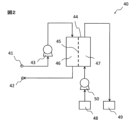
- show. 1 is a diagram schematically illustrating an example of an artificial dialysis device using an adsorbent according to the present invention.
- FIG. 3 is a diagram schematically illustrating another example of an artificial dialysis device using an adsorbent according to the present invention.
- the adsorbent of the present disclosure is used to adsorb disease-causing substances, comprising two-dimensional particles having one or more layers;
- the above layer has the following compositional formula: M m X n (wherein M is at least one group 3, 4, 5, 6, 7 metal, X is a carbon atom, a nitrogen atom or a combination thereof, n is 1 or more and 4 or less, m is greater than n and less than or equal to 5)
- an adsorbent that can adsorb various adsorbates, and in particular, it is possible to provide an adsorbent that can adsorb disease-causing substances.
- the present disclosure should not be construed as being limited to a particular theory, the reason why the adsorbent of the present disclosure can adsorb a variety of adsorbates is thought to be as follows.
- the two-dimensional particles contained in the adsorbent of the present disclosure are particles of a layered material also called MXene, and the surface of the layer body represented by M m atom, chlorine atom, oxygen atom, and hydrogen atom).
- MXene a layered material
- the surface of the layer body represented by M m atom, chlorine atom, oxygen atom, and hydrogen atom.
- positively charged adsorbate e.g., cations, etc.
- negatively charged adsorbate e.g., anions, etc.
- the inventors of the present disclosure have investigated adsorbates that can be adsorbed by the two-dimensional particles, and found that in addition to the adsorbates that have a positive or negative charge, the two-dimensional particles have a relatively high concentration of substances such as proteins. It was discovered that compounds of molecular weight can also be adsorbed.
- the above-mentioned two-dimensional particles can be understood as a layered material or a layered compound, and are also expressed as "M m There is also. Typically, n may be 1, 2, 3 or 4, but is not limited thereto.
- M is at least one selected from the group consisting of Ti, Zr, Hf, V, Nb, Ta, Cr, Mo and Mn, and preferably contains at least Ti; It is at least one selected from the group consisting of V, Cr and Mo, and more preferably contains at least Ti.
- the proportion of Ti atoms in M is preferably 50 atom % or more and 100 atom % or less, more preferably 70 atom % or more and 100 atom % or less, and even more preferably 90 atom % or more and 100 atom % or less.
- M may include Ti and X may be a carbon atom or a nitrogen atom, preferably M may be Ti and X may be a carbon atom.
- the MAX phase is Ti 3 AlC 2 and the MXene is Ti 3 C 2 T s (in other words, M is Ti, X is C, n is 2, m is 3 ).
- MXene may contain a relatively small amount of A atoms derived from the MAX phase of the precursor, for example, 10% by mass or less with respect to the original A atoms.
- the residual amount of A atoms may be preferably 8% by mass or less, more preferably 6% by mass or less. However, even if the residual amount of A atoms exceeds 10% by mass, there may be cases in which there is no problem depending on the application and usage conditions of the two-dimensional particles.
- the two-dimensional particles are an aggregate including one layer of MXene particles (hereinafter simply referred to as "MXene particles") 10a (single-layer MXene particles) schematically illustrated in FIG. 1(a). More specifically, the MXene particles 10a consist of a layer main body (M m X n layer ) 1a represented by M m MXene layer 7a having a modification or termination T3a, 5a present in at least one of the following. Therefore, the MXene layer 7a is also expressed as "M m X n T s ", where s is an arbitrary number.
- the two-dimensional particles may include one or more layers.
- MXene particles with multiple layers include MXene particles 10b with two layers as schematically shown in FIG. 1(b), but are not limited to these examples.
- 1b, 3b, 5b, and 7b in FIG. 1(b) are the same as 1a, 3a, 5a, and 7a in FIG. 1(a) described above.
- Two adjacent MXene layers (eg, 7a and 7b) of a multilayer MXene particle do not necessarily have to be completely separated and may be in partial contact.
- the above-mentioned MXene particles 10a are those in which the above-mentioned multi-layer MXene particles 10b are individually separated and exist in one layer, and the multi-layer MXene particles 10b which are not separated remain, and the above-mentioned single-layer MXene particles 10a and multi-layer MXene particles 10b are present. It may be a mixture of
- the thickness of each layer (corresponding to the above-mentioned MXene layers 7a and 7b) included in the MXene particles is, for example, 0.8 nm or more and 5 nm or less, particularly 0.8 nm or more and 3 nm or less. (It may differ mainly depending on the number of M atomic layers included in each layer.)
- the interlayer distance or void size, indicated by ⁇ d in FIG. 1(b)
- the total number of layers may be greater than or equal to 2 and less than or equal to 20,000.
- the ratio of (average length of two-dimensional surfaces of two-dimensional particles)/(average thickness of two-dimensional particles) is 1.2 or more, preferably 1.5 or more, more preferably 2 That's all.
- the average value of the major axis of the two-dimensional surface of the two-dimensional particles and the average value of the thickness of the two-dimensional particles may be determined by the method described below.
- the two-dimensional particles in this embodiment include two-dimensional particles with a small number of layers obtained by the multilayer MXene particles that are subjected to a delamination process.
- the above-mentioned "the number of layers is small” means, for example, that the number of stacked MXene layers is six or less.
- the thickness of the multilayer MXene particles having a small number of layers in the stacking direction is preferably 15 nm or less, more preferably 10 nm or less.
- multilayer MXene particles with a small number of layers may be referred to as “few layer MXene particles.”
- single-layer MXene particles and small-layer MXene particles may be collectively referred to as “single-layer/small-layer MXene particles.”
- the ratio of (average length of two-dimensional surfaces of two-dimensional particles)/(average thickness of two-dimensional particles) is 1.2 or more, preferably 1.5 or more. It is 10 or less, more preferably 2 or more and 5 or less.
- these "MXene particles with a small number of layers” may be referred to as “low-layer MXene particles.”
- single-layer MXene particles and small-layer MXene particles may be collectively referred to as "single-layer/small-layer MXene particles.” This can improve the film formability of a film containing two-dimensional particles.
- Examples of the single-layer/small-layer MXene particles include two-dimensional particles obtained through delamination treatment.
- the two-dimensional particles of the present embodiment preferably include single-walled MXene particles and small-walled MXene particles, that is, single-walled and small-walled MXene particles.
- the proportion of single-layer/poor-layer MXene particles having a thickness of 15 nm or less is preferably 90 volume % or more, more preferably 95 volume % or more. This can improve the film formability of a film containing two-dimensional particles.
- the average value of the major axis of the two-dimensional surface is 0.01 ⁇ m or more and 20 ⁇ m or less.
- the average value of the major axis of the two-dimensional surface may be referred to as "average flake size.”
- the orientation of the two-dimensional particles can be evaluated, for example, by the electrical conductivity of the material containing the two-dimensional particles.
- the average value of the major axis of the two-dimensional surface is preferably 0.02 ⁇ m or more, more preferably 0.05 ⁇ m or more.
- the average value of the major axis of the two-dimensional surface is 20 ⁇ m or less, preferably 15 ⁇ m or less, and more preferably 10 ⁇ m or less, from the viewpoint of dispersibility in the dispersion medium.
- the major axis of the two-dimensional surface refers to the major axis when each MXene particle is approximated to an elliptical shape in an electron micrograph, and the average value of the major axis of the two-dimensional surface refers to the number average of the major axis of 80 or more particles.
- the electron microscope a scanning electron microscope (SEM) or a transmission electron microscope (TEM) photograph can be used.
- the average value of the major axis of the two-dimensional particles of this embodiment may be measured by dissolving a material containing the two-dimensional particles in a solvent and dispersing the two-dimensional particles in the solvent. Alternatively, it may be measured from a SEM image of the above material.
- the average thickness of the two-dimensional particles of this embodiment is preferably 1 nm or more and 15 nm or less.
- the thickness is preferably 10 nm or less, more preferably 7 nm or less, and still more preferably 5 nm or less.
- the lower limit of the thickness of a two-dimensional particle may be 1 nm.
- the average value of the thickness of the two-dimensional particles is determined as a number average dimension (for example, a number average of at least 40 particles) based on an atomic force microscope (AFM) photograph or a transmission electron microscope (TEM) photograph.
- AFM atomic force microscope
- TEM transmission electron microscope
- the method for producing the two-dimensional particles is as follows: (a) providing a predetermined precursor; (b) obtaining an etched product by removing at least some A atoms from the precursor using an etching solution; and (c) cleaning the etched product to obtain an etched cleaning product. including obtaining; (d) Mixing the etching cleaning treatment product and a metal compound containing metal cations to obtain an intercalation treatment product in which the metal cations are intercalated in the etching cleaning treatment product. (e) The above-mentioned The method may further include stirring the intercalation-treated product to obtain a delamination-treated product in which the intercalation-treated product is delaminated.
- the etched product or delamination product can be used as the two-dimensional particles, and preferably, the etched and cleaned product can be used as the two-dimensional particles.
- a predetermined precursor is prepared.
- the predetermined precursor that can be used in this embodiment is a MAX phase that is a precursor of MXene, The formula below: M m AX n (wherein M is at least one Group 3, 4, 5, 6, or 7 metal and includes at least Ti; X is a carbon atom, a nitrogen atom, or a combination thereof; A is at least one group 12, 13, 14, 15, 16 element, n is 1 or more and 4 or less, m is greater than n and less than or equal to 5) It is expressed as
- A is at least one group 12, 13, 14, 15, 16 element, usually a group A element, typically a group IIIA and IVA element, more specifically Al, Ga, In, It may contain at least one member selected from the group consisting of Tl, Si, Ge, Sn, Pb, P, As, S and Cd, preferably Al.
- the MAX phase is a crystal in which a layer composed of A atoms is located between two layers represented by M m X n (which may have a crystal lattice in which each Has a structure.
- M m X n which may have a crystal lattice in which each Has a structure.
- M m X n layers layers
- a atomic layer a layer of A atoms
- the above MAX phase can be manufactured by a known method. For example, TiC powder, Ti powder, and Al powder are mixed in a ball mill, and the resulting mixed powder is fired in an Ar atmosphere to obtain a fired body (block-like MAX phase). Thereafter, the obtained fired body can be pulverized with an end mill to obtain a powdered MAX phase for the next step.
- step (b) an etching process is performed to remove at least a portion of the A atoms from M m AX n of the precursor by etching using an etching solution.
- a processed product is obtained in which at least a portion of the layer composed of A atoms is removed while the layer represented by M m X n in the precursor is maintained.
- the etching solution may contain an acid such as HF, HCl, HBr, HI, sulfuric acid, phosphoric acid, or nitric acid, and typically, an etching solution containing F atoms can be used.
- Such etching solutions include a mixture of LiF and hydrochloric acid; a mixture of hydrofluoric acid and hydrochloric acid; a mixture containing hydrofluoric acid; these mixtures may further contain phosphoric acid, etc. .
- the etching solution may typically be an aqueous solution.
- step (c) the processed material obtained by the etching process is cleaned to obtain an etched and cleaned processed material.
- the acid used in the etching process can be sufficiently removed.
- Cleaning may be performed using a cleaning liquid, typically by mixing the etching product and the cleaning liquid.
- a cleaning liquid typically contains water, preferably pure water. On the other hand, in addition to pure water, it may further contain a small amount of hydrochloric acid or the like.
- the amount of the cleaning liquid to be mixed with the etching product and the method of mixing the etching product and the cleaning liquid are not particularly limited.
- such a mixing method includes allowing the etching product and the cleaning solution to coexist and performing stirring, centrifugation, and the like. Examples of the stirring method include methods using a handshake, an automatic shaker, a shear mixer, a pot mill, and the like.
- the degree of stirring such as stirring speed and stirring time, may be adjusted depending on the amount, concentration, etc. of the etching material to be processed. Washing with the above-mentioned washing liquid may be performed one or more times, and it is preferable to perform the washing multiple times. For example, specifically, washing with the above washing solution involves step (i) adding the washing solution (to the treated material or the remaining precipitate obtained in (iii) below) and stirring, and step (ii) centrifuging the stirred material. , step (iii) discarding the supernatant after centrifugation, may be performed sequentially, and steps (i) to (iii) may be repeated at least 2 times, for example, 15 times or less. Can be mentioned.
- step (d) an intercalation treatment is performed to intercalate metal cations on the etched and cleaned product using a metal compound containing metal cations, thereby obtaining an intercalated product.
- an intercalated product is obtained in which the metal cation is intercalated between two adjacent M m X n layers.
- Such intercalation treatment may be performed in a dispersion medium.
- the metal cation may be the same as the metal cation contained in the two-dimensional particles, and may include Li cations and other metal cations. However, the metal of the metal cation and the M atom are different. Further, the metal of the metal cation and the A atom contained in the precursor are different.
- the metal compound examples include ionic compounds in which the metal cation and anion are combined. Examples include sulfide salts, nitrates, acetates, and carboxylates of the above metal cations, including iodides, phosphates, and sulfates.
- the metal cation is preferably a lithium ion
- the metal compound is preferably a metal compound containing a lithium ion, more preferably an ionic compound of lithium ion, and one of iodide, phosphate, and sulfide salt of lithium ion.
- the above is more preferable. If lithium ions are used as metal ions, water hydrated with lithium ions has the most negative dielectric constant, so it is thought that it will be easier to form a single layer.
- the specific method of the intercalation treatment is not particularly limited, and for example, the etching cleaning treatment product and the metal compound may be mixed and stirred, or the mixture may be left standing.
- stirring at room temperature can be mentioned.
- the above-mentioned stirring method includes, for example, a method using a stirring bar such as a stirrer, a method using a stirring blade, a method using a mixer, a method using a centrifugal device, and the like.
- the time can be set depending on the production scale, and can be set, for example, between 12 and 24 hours.
- the intercalation treatment may be performed in the presence of a dispersion medium.
- a dispersion medium include water; organic media such as N-methylpyrrolidone, N-methylformamide, N,N-dimethylformamide, methanol, ethanol, dimethyl sulfoxide, ethylene glycol, and acetic acid.
- the order of mixing the dispersion medium, the etching cleaning product, and the metal compound is not particularly limited, but in one embodiment, the metal compound may be mixed after the dispersion medium and the etching cleaning product are mixed. Typically, the etching solution after performing the etching process may be used as the dispersion medium.
- the intercalation treatment may typically be performed on the etched and cleaned product, but in another embodiment, the intercalation treatment may be performed on the precursor at the same time as the etching treatment.
- etching and intercalation treatment involves mixing a precursor, an etching solution, and a metal compound containing a metal cation to remove at least some A atoms from the precursor;
- the method includes obtaining an intercalated product by intercalating a metal cation into a precursor from which atoms have been removed. As a result, at least a part of the A atoms are removed from the precursor (MAX) , and the M m An intercalated product is obtained.
- etching solution and metal compound used in the etching and intercalation treatments the same ones as the etching solution and the metal compound used in step (b) can be used, respectively.
- step (e) the intercalated product is stirred and a delamination treatment is performed to delaminate the intercalated product to obtain a delamination treated product.
- a delamination treatment is performed to delaminate the intercalated product to obtain a delamination treated product.
- shear stress is applied to the intercalated product, and at least a portion of two adjacent M m
- the conditions for delamination treatment are not particularly limited, and it can be performed by a known method.
- a method for applying shear stress to the intercalated product there is a method of dispersing the intercalated product in a dispersion medium and stirring the dispersion medium.
- Stirring methods include stirring using a mechanical shaker, vortex mixer, homogenizer, ultrasonication, hand shake, automatic shaker, and the like.
- the degree of stirring, such as stirring speed and stirring time, may be adjusted depending on the amount, concentration, etc. of the material to be treated.
- pure water may be added to the remaining precipitate, and the layers may be separated by, for example, stirring with a handshake or an automatic shaker.
- Removal of unpeeled substances includes a step of centrifuging, discarding the supernatant, and then washing the remaining precipitate with water. For example, (i) adding pure water to the remaining precipitate after discarding the supernatant and stirring, (ii) centrifuging, and (iii) collecting the supernatant.
- the operations (i) to (iii) may be repeated one or more times, preferably two or more times and 10 or less times to obtain a supernatant liquid containing monolayer/poor-layer MXene particles as a delamination product. It will be done. Alternatively, this supernatant liquid may be centrifuged, and the supernatant liquid after centrifugation may be discarded to obtain a clay containing monolayer/poor-layer MXene particles as a delamination product.
- the delamination treated product may be further washed. Such cleaning may remove at least a portion of impurities and the like.
- a treated product obtained by washing a delamination-treated product is also referred to as a delamination-cleaned product, and the delamination-cleaned product is included in the technical scope of a delamination-treated product.
- the above-mentioned cleaning can be performed using a cleaning liquid, and typically, it can be performed by mixing the delamination treated product and the cleaning liquid.
- the cleaning may be carried out by treating the delamination-treated product with an acid and then mixing the acid-treated product with a cleaning solution.
- acids include inorganic acids such as hydrochloric acid, sulfuric acid, nitric acid, phosphoric acid, perchloric acid, hydroiodic acid, hydrobromic acid, and hydrofluoric acid; acetic acid, citric acid, oxalic acid, benzoic acid, sorbic acid, etc.
- washing with the above-mentioned washing liquid includes step (i) adding the washing liquid (to the treated material or the remaining precipitate obtained in (iii) below) and stirring, step (ii) centrifuging the stirred material, and step ( iii) Discarding the supernatant after centrifugation may be carried out sequentially, and steps (i) to (iii) may be repeated two or more times, for example, 15 or less times.
- the above-mentioned stirring may be performed using a handshake, an automatic shaker, a shear mixer, a pot mill, or the like.
- the acid treatment may be performed at least once, and if necessary, the operation of mixing with a fresh acid solution (acid solution not used for acid treatment) and stirring may be performed at least 2 times, for example, within a range of 10 times or less. You can go.
- the cleaning liquid the same one as the cleaning liquid in step (c) can be used.
- water may be used as the cleaning liquid, and pure water is preferable.
- the above-mentioned mixing may be carried out by the same method as the mixing method in step (c), and specific examples thereof include stirring, centrifugation, etc. Examples of the stirring method include methods using a handshake, an automatic shaker, a shear mixer, a pot mill, and the like.
- the intermediates and target products in the production method described above may be dried by suction filtration, heat drying, freeze drying, vacuum drying, etc.
- the proportion of two-dimensional particles in the film of the present disclosure is preferably 20 volume% or more and 100 volume% or less, more preferably 50 volume% or more and 100 volume% or less, still more preferably 70 volume% or more and 100 volume% or less, even more preferably
- the content may be 90% by volume or more and 100% by volume or less, more preferably 95% by volume or more and 100% by volume or less.
- the adsorbent of the present disclosure may further include one or more materials selected from ceramics, metals, and resins.
- the adsorbent in this embodiment includes a material such as ceramics, metal, or resin, it may be easy to stably exhibit adsorption performance.
- the above ceramics include metal oxides such as silica, alumina, zirconia, titania, magnesia, cerium oxide, zinc oxide, barium titanate, hexaferrite, and mullite, silicon nitride, titanium nitride, aluminum nitride, silicon carbide, and titanium carbide. , tungsten carbide, boron carbide, titanium boride, and other non-oxide ceramics.
- Examples of the above-mentioned metals include metals of Groups 2 to 13 such as iron, titanium, magnesium, and aluminum; and alloys based on metals of Groups 2 to 13.
- the above resin may be either a natural resin or a synthetic resin, and includes hydrophilic resins and hydrophobic resins.
- Such hydrophilic resins may include those that exhibit hydrophilicity by blending a hydrophilic auxiliary agent such as a surfactant with a hydrophobic resin, and those that exhibit hydrophilicity by modifying a portion of the hydrophobic resin with a hydrophilic group.
- hydrophilic resin examples include resins having polar groups (e.g., hydroxyl group, substituted or unsubstituted amino group, carboxyl group, sulfonic acid group, carbonyl group, ester bond, amide bond, etc.). , cellulose, cellulose acetate, regenerated cellulose, and other cellulose resins; polysulfone, polyethersulfone, and other polysulfone resins; hydrophilic polyurethane; polyvinyl alcohol and its copolymers; sodium alginate; acrylic resin; substituted or unsubstituted polyacrylamide ; acrylonitrile; polyaniline sulfonic acid; polyamide resin such as nylon;
- the hydrophilic resin is preferably a resin having a group capable of forming a hydrogen bond with the modification of the layer or with the terminal T as the polar group.
- groups include hydroxyl groups, carboxyl groups, sulfonic acid groups, carbonyl groups, and amide bonds.
- resins having these groups include water-soluble polyurethane, polyvinyl alcohol, sodium alginate, acrylic acid-based water-soluble polymers, polyacrylamide, polyaniline sulfonic acid, and nylon. Among them, water-soluble polyurethane, polyvinyl alcohol, Sodium alginate is preferred, and water-soluble polyurethane is more preferred.
- the hydrophilic resin is preferably an acrylic resin; polyacrylonitrile; cellulose resin; polysulfone resin; polyvinyl alcohol and copolymers thereof, such as polymethyl methacrylate, polyacrylonitrile, cellulose, cellulose acetate, polysulfone, Polyvinyl alcohol and a copolymer of polyvinyl alcohol and polyethylene are more preferred, polysulfone, polymethyl methacrylate, and cellulose acetate are even more preferred, and polysulfone and polymethyl methacrylate are even more preferred.
- These resins are resins that can be used for dialysis, hemofiltration, etc., and may be suitable when the adsorbent of the present disclosure is applied to a dialysis device.
- hydrophobic resin examples include resins that do not contain the above-mentioned polar groups.
- the adsorbent of the present disclosure can be manufactured using the two-dimensional particles described above.
- the above-mentioned two-dimensional particles may be used as the adsorbent of the present disclosure as they are, or the two-dimensional particles may be mixed with one or more materials selected from ceramics, metals, and resins to be used as needed, and formed into a predetermined shape. It can also be used as an adsorbent.
- the adsorbent when the adsorbent contains a resin, the adsorbent can be manufactured by mixing the two-dimensional particles and the resin to form a mixture and molding the mixture.
- the mixing of the two-dimensional particles and the resin may be carried out without a solvent or in the presence of a dispersion medium.
- a dispersion medium is typically water, and may optionally contain relatively small amounts (e.g., 30% by weight or less, preferably 20% by weight or less, on a total basis) of other liquid substances in addition to water. good.
- the two-dimensional particles and resin can be stirred using a dispersion device such as a homogenizer, a propeller stirrer, a thin film swirl type stirrer, a planetary mixer, a mechanical shaker, or a vortex mixer.
- a dispersion device such as a homogenizer, a propeller stirrer, a thin film swirl type stirrer, a planetary mixer, a mechanical shaker, or a vortex mixer.
- the molding method is not particularly limited, and for example, the mixture of the two-dimensional particles and resin may be molded as is into a predetermined shape, or the two-dimensional particles, resin, and dispersion medium may be mixed to form a mixture.
- the mixture is applied to a substrate (for example, a substrate) to obtain a precursor film containing a dispersion medium, and the precursor film is dried to remove at least a portion of the dispersion medium contained in the precursor film. This may be used as a film.
- Examples of the above coating methods include spray coating using a nozzle such as a one-fluid nozzle, two-fluid nozzle, or an airbrush, slit coating using a table coater, comma coater, or bar coater, screen printing, and metal mask printing.
- Examples include coating methods such as spin coating, dipping, and dropping.
- the above coating and drying may be repeated multiple times as necessary until a film of desired thickness is obtained.
- the above drying may be performed at a temperature of 400 degrees or less using, for example, a normal pressure oven or a vacuum oven.
- the two-dimensional particles and, for example, particulate ceramics or metal are mixed and heated at a low temperature that allows the composition of the two-dimensional particles to be maintained.
- Adsorbents can be manufactured.
- the above-mentioned adsorbent is used to adsorb disease-causing substances, and can be used, for example, to adsorb and remove or adsorb and reduce disease-causing substances in blood.
- the ability of the adsorbent to adsorb disease-causing substances can be confirmed, for example, in an adsorption test using human plasma.
- the disease-causing agent preferably includes a protein.
- proteins include uremic proteins (specifically, medium-molecular uremic substances) such as parathyroid hormone, ⁇ 2-microglobulin, and tumor necrosis factor (TNF)- ⁇ ; interleukins, and interferons. , chemokines, hematopoietic factors, cell growth factors, tumor necrosis factors, and other cytokines (in one embodiment, inflammatory cytokines such as interleukin 18); and other proteins such as albumin and M protein.
- uremic proteins specifically, medium-molecular uremic substances
- TNF tumor necrosis factor
- uremic proteins specifically, medium-molecular uremic substances
- uremic refers to an increase in blood concentration associated with a decline in kidney function, resulting in acute kidney injury (including acute renal failure), chronic kidney disease (chronic renal failure, and end-stage renal failure). This means that it can cause various symptoms associated with renal diseases such as renal failure (including kidney failure), especially symptoms associated with renal disorders.
- inflammatory substances as disease-causing substances, it is expected to have a preventive effect on various symptoms associated with inflammatory diseases.
- Symptoms associated with inflammatory diseases include vascular dementia, inflammatory bowel disease, hepatitis, and myocarditis.
- the disease-causing substance preferably includes an electrolyte (ionic substance). That is, the adsorbent can also be used to adsorb electrolytes.
- electrolytes include cations and anions.
- Such cations include cations that can be excreted in the kidney, and specifically include Na + , K + , Mg 2+ , and Ca 2+ .
- anions include anions that can be excreted in the kidney, and specifically include P-containing anions (eg, PO 4 3 ⁇ ).
- the concentration of the above electrolytes (especially electrolytes that can be excreted by the kidneys) in the blood may increase, resulting in hypernatremia, hyperkalemia, hypermagnesemia, hyperphosphatemia, etc. may cause electrolyte metabolism disorders.
- adsorbing these electrolytes using the amount of adsorbent described above a preventive effect on electrolyte metabolic disorders is expected.
- the disease-causing substance preferably further includes protein-bound uremic substances such as creatinine, homocysteine, indoxyl sulfate, and p-cresyl sulfate; carcinogenic substances, and the like. That is, the adsorbent can also be used to adsorb protein-bound uremic substances and carcinogenic substances. Therefore, by using an adsorbent containing the above-mentioned two-dimensional particles as a separation membrane in a dialysis apparatus, therapeutic or preventive effects on the various diseases mentioned above are expected.
- protein-bound uremic substances such as creatinine, homocysteine, indoxyl sulfate, and p-cresyl sulfate
- carcinogenic substances and the like. That is, the adsorbent can also be used to adsorb protein-bound uremic substances and carcinogenic substances. Therefore, by using an adsorbent containing the above-mentioned two-dimensional particles as a separation
- the adsorbent of the present disclosure can adsorb the above-mentioned adsorbate, thereby causing various symptoms associated with renal diseases such as acute kidney injury (including acute renal failure) and chronic kidney disease (including chronic renal failure and end-stage renal failure). , is expected to prevent or treat various symptoms associated with inflammatory diseases, particularly renal disorders and/or inflammatory diseases.
- uremia electrolyte metabolic disorders such as hypernatremia, hyperkalemia, hypermagnesemia, and hyperphosphatemia
- autoimmune diseases infectious diseases
- inflammatory diseases endocrine/metabolic diseases Diseases
- cardiovascular diseases blood diseases; digestive diseases; neurological diseases; malignant tumors; drug addiction; expected to prevent or treat inflammatory diseases such as vascular dementia, inflammatory bowel disease, hepatitis, and myocarditis.
- inflammatory diseases such as vascular dementia, inflammatory bowel disease, hepatitis, and myocarditis.
- An adsorption method that includes adsorbing the disease-causing substance using the adsorbent is also included within the technical scope of the present disclosure.
- Such an adsorption method preferably includes adsorbing protein as a disease-causing substance using the above-mentioned adsorbent.
- the adsorption method may further include adsorbing an electrolyte as a disease-causing substance. That is, the adsorption method may include adsorbing the protein and electrolyte as the disease-causing substance using the adsorbent.
- Such an adsorption method may further include adsorbing other adsorbate using the adsorbent.
- adsorption of such a disease-causing substance can be carried out by bringing an adsorbent into contact with a liquid containing an adsorbate such as a protein or an electrolyte as a disease-causing substance.
- a liquid containing such adsorbates may contain substances other than proteins and electrolytes as disease-causing substances.
- Specific examples of the liquid containing the adsorbate include blood, dialysate, and the like.
- the adsorption sheet in this embodiment includes the above-mentioned adsorption material.
- adsorption sheet By containing the above-mentioned adsorbent, such an adsorption sheet can adsorb various adsorbents, especially disease-causing substances, and since the adsorbent can be physically fixed, it can stably exhibit adsorption performance.
- the adsorption sheet in this embodiment may be made of the above-mentioned adsorbent, and may further contain one or more materials selected from the above-mentioned ceramics, metals, and resins in addition to the above-mentioned adsorbent.
- the same materials as the ceramics, metals, and resins that can be included in the above-mentioned adsorbent can be used, respectively.
- the adsorption sheet in this embodiment further includes one or more materials selected from the above ceramics, metals, and resins
- the adsorption sheet includes a member in which the adsorption material and the material are uniformly mixed.
- it may include a member containing the above-mentioned adsorbent and a member containing the material.
- the adsorption sheet in this embodiment includes a base material containing one selected from the above ceramics, metals, and resins; and a film containing the above adsorbent material and disposed on the base material. It's okay.
- a film containing such an adsorbent covers at least a portion of the surface of the substrate, and may cover the entire surface of the substrate.
- the adsorption sheet may be manufactured by forming a film containing an adsorbent on the surface of the base material.
- the method for producing a membrane containing the adsorbent is not particularly limited, and includes, for example, mixing the two-dimensional particles, a dispersion medium, and optionally two-dimensional particles to obtain a mixture;
- the method includes applying the precursor film onto a material to obtain a precursor film containing a dispersion medium, and drying the precursor film to remove at least a part of the dispersion medium contained in the precursor film to form a film. obtain.
- Examples of commonly used methods for applying the mixture to the substrate include dipping, brushing, roller, roll coater, air spray, airless spray, curtain flow coater, roller curtain coater, die coater, and electrostatic coating. Any coating method can be used.
- the thickness of the adsorption sheet and the thickness of the substrate can be set as appropriate depending on the application.
- the separation membrane in this embodiment includes the above adsorbent.
- a separation membrane By containing the above-mentioned adsorbent, such a separation membrane can adsorb various adsorbates, especially disease-causing substances, and since the adsorbent can be physically fixed, it can stably exhibit adsorption performance.
- the separation membrane in this embodiment is particularly suitable as a separation membrane for artificial dialysis used in the above-mentioned hemodialysis and the like.
- the separation membrane may be made of the adsorbent, and may further contain one or more materials selected from the ceramics, metals, and resins in addition to the adsorbent.
- it may include a base material, a base material containing one selected from the above-mentioned ceramics, metals, and resins; and a membrane containing the above-mentioned adsorbent and disposed on the base material.
- a film containing such an adsorbent covers at least a portion of the surface of the substrate, and may cover the entire surface of the substrate.
- the shape of such a base material is not particularly limited, and may be in the shape of a film, sheet, plate, porous, hollow fiber, bead, or the like.
- the same materials as the ceramics, metals, and resins that can be included in the above-mentioned adsorbent can be used, respectively.
- cellulose-based and synthetic polymer-based materials used for hemodialysis etc. are preferred, and specifically, polymethyl methacrylate, polyacrylonitrile, cellulose, cellulose acetate, polysulfone, polyvinyl alcohol, and a combination of polyvinyl alcohol and ethylene.
- Polymers such as vinyl alcohol copolymers can be preferably used, more preferably polysulfone, polymethyl methacrylate, and cellulose acetate, and still more preferably polysulfone and polymethyl methacrylate.
- the form of the separation membrane for artificial dialysis is not particularly limited, and includes, for example, a porous type, a hollow fiber type, and a flat membrane laminated type.
- the artificial dialysis device in this embodiment includes the above adsorbent.
- such artificial dialysis equipment can adsorb various adsorbents, especially disease-causing substances, and can adsorb and remove various waste products in hemodialysis, hemofiltration, hemodiafiltration, peritoneal dialysis, etc. It can be used for.
- the adsorbent of this embodiment can be used in artificial dialysis equipment for performing the above-mentioned hemodialysis, hemofiltration, hemodiafiltration, peritoneal dialysis, and the like.
- the above-mentioned artificial dialysis equipment is classified into, for example, hemodialysis equipment and peritoneal dialysis equipment, and hemodialysis equipment is divided into one-pass type (single-pass type) and circulation type. Furthermore, the circulation type includes the REDY system (recirculating dialysate system) and other systems.
- the above-mentioned artificial dialysis equipment can be divided into methods that remove urea without contacting the blood through cross-flow of blood from the patient and dialysate, and methods that directly filter blood. Additionally, the mainstream peritoneal dialysis equipment is one-pass type.
- the adsorbent of this embodiment can be used for both hemodialysis and peritoneal dialysis, and is used as an adsorption membrane, separation membrane, adsorbent cartridge, etc. in artificial dialysis equipment such as hemodialysis equipment and peritoneal dialysis equipment. be able to.
- the adsorbent of this embodiment may be used in an adsorbent cartridge.
- FIG. 2 schematically shows a one-pass hemodialysis device as an example of an artificial dialysis device using the adsorbent according to the present disclosure.
- a blood purification device 44 by a blood pump 43.
- the dialysate is sent from the unused dialysate tank 48 to the blood purification device 44 by the dialysate pump 50.
- the blood in the blood passage area 46 of the blood purification device is subjected to hemodialysis, hemofiltration dialysis, or hemofiltration by the separation membrane 45, and the substance to be removed passes through the separation membrane 45 and is passed through the blood purification device.
- a device may be provided that includes a path for replenishing the blood with drugs, proteins, etc. as necessary during the feeding of blood before and/or after treatment. Further, sensors may be provided for measuring blood flow rate, dialysate flow rate, and protein concentration in blood as necessary. Moreover, an on-off valve that can open and close the flow path as necessary may be provided in the middle of the blood and/or dialysate flow path.
- FIG. 3 schematically shows a one-pass hemodialysis device as another example of an artificial dialysis device using the adsorbent according to the present disclosure.
- the hemodialysis device 40A in FIG. 2 differs from the hemodialysis device 40 in FIG. 2 in that a separation membrane 45A is disposed between the blood pump 43A and the blood purification device 44A, and in the blood purification device, The difference is that a semipermeable membrane 51A is disposed as a membrane that separates blood and dialysate.
- the rest of the configuration is the same as the hemodialysis device 40 in FIG. 2, so the same reference numerals are given and the explanation will be omitted.
- the hemodialysis device 40A of FIG. 3 before the blood is passed through the blood purification device 44A, it is brought into contact with the separation membrane 45A so that adsorbate such as disease-causing substances can be adsorbed, thereby improving dialysis efficiency.
- the separation membrane 45A may be clad with a resin or the like and arranged in the form of a column. Further, in the column, filters may be respectively disposed on the blood inflow side and the blood outflow side of the column so that blood is distributed in the separation membrane 45A.
- the membrane that separates blood and dialysate is a semipermeable membrane 51A, but the separation membrane of the present disclosure may be used instead of the semipermeable membrane 51A.
- Example 1 [Preparation of MXene]
- two-dimensional particles were produced by sequentially carrying out (1) preparation of a precursor (MAX), (2) etching of the precursor, and (3) washing and drying as detailed below. .
- precursor (MAX) TiC powder, Ti powder, and Al powder (all manufactured by Kojundo Kagaku Kenkyusho Co., Ltd.) were charged in a molar ratio of 2:1:1 into a ball mill containing zirconia balls. and mixed for 24 hours. The obtained mixed powder was fired at 1,350° C. for 2 hours in an Ar atmosphere. The fired body (block) thus obtained was ground with an end mill to a maximum size of 40 ⁇ m or less. Thereby, Ti 3 AlC 2 particles were obtained as a precursor (MAX).
- Example 2 In Example 2, (1) Preparation of the precursor (MAX) was performed in the same manner as in Example 1, and then the following step (2) was performed, and (3) washing and drying were performed in the same manner as in Example 1. Then, two-dimensional particles were produced.
- ⁇ Etching solution composition 50% by mass HF 5mL, 45 mL H2O
- Precursor input amount 3.0g
- ⁇ Etching container 100mL Eye Boy ⁇ Etching temperature: 35°C ⁇ Etching time: 24h ⁇ Stirrer rotation speed: 400 rpm
- Example 3 In Example 3, (1) Preparation of the precursor (MAX) was performed in the same manner as in Example 1, and then the following step (2) was performed, and (3) washing and drying were performed in the same manner as in Example 1. Then, two-dimensional particles were produced.
- ⁇ Etching solution composition 6 mL of 49% by mass HF aqueous solution, 9 mL H2O 85% by mass H3PO4 aqueous solution 45mL
- Precursor input amount 3.0g ⁇ Etching container: 100mL Eye Boy ⁇ Etching temperature: 35°C ⁇ Etching time: 24h ⁇ Stirrer rotation speed: 400 rpm
- Example 4 In Example 4, (1) Preparation of the precursor (MAX) was performed in the same manner as in Example 1, and then the following step (2) was performed, and (3) washing and drying were performed in the same manner as in Example 1. Then, two-dimensional particles were produced.
- ⁇ Etching solution composition LiF 4.8g HCl (9M) 60mL ⁇ Precursor input amount: 3.0g ⁇ Etching container: 100mL Eye Boy ⁇ Etching temperature: 35°C ⁇ Etching time: 24h ⁇ Stirrer rotation speed: 400 rpm (3) Cleaning: Same as Example 1
- Example 5 two-dimensional particles were produced by sequentially carrying out (1) preparation of a precursor (MAX), (2) etching of the precursor, and (3) washing and drying, which will be described in detail below.
- MAX a precursor
- etching of the precursor etching of the precursor
- washing and drying which will be described in detail below.
- precursor (MAX) 73 g of Ti powder, 47.2 g of TiN powder, 20.6 g of Al powder, and 9.2 g of C powder (all manufactured by Kojundo Kagaku Kenkyusho Co., Ltd.) were placed in a zirconia ball. The mixture was placed in a ball mill and mixed for 24 hours. The obtained mixed powder was fired at 1,400° C. for 2 hours in an Ar atmosphere. The fired body (block) thus obtained was ground with an end mill to a maximum size of 40 ⁇ m or less. As a result, Ti 3 AlCN particles were obtained as a precursor (MAX).
- Example 6 two-dimensional particles were produced by sequentially carrying out (1) preparation of a precursor (MAX), (2) etching of the precursor, and (3) washing and drying, which will be described in detail below.
- MAX a precursor
- etching of the precursor etching of the precursor
- washing and drying which will be described in detail below.
- precursor (MAX) 21.5 g of V powder, 6.3 g of Al powder, and 2.3 g of C powder (all manufactured by Kojundo Kagaku Kenkyusho Co., Ltd.) were put into a ball mill containing zirconia balls. and mixed for 24 hours. The obtained mixed powder was fired at 1,550° C. for 2 hours in an Ar atmosphere. The fired body (block) thus obtained was crushed to a maximum size of 45 ⁇ m or less using a jaw crusher. Thereby, V 2 AlC particles were obtained as a precursor (MAX).
- V 2 AlC particles (powder) prepared by the above method etching was performed under the following etching conditions to obtain a solid-liquid mixture (slurry) containing a solid component derived from the V 2 AlC powder.
- Ta. (Etching conditions) ⁇ Precursor: V 2 AlC (45 ⁇ m sieve) ⁇ Etching solution composition: 48% by mass HF 6mL 38.8% by mass HCl 24mL ⁇ Precursor input amount: 3.0g ⁇ Etching container: 100mL Eye Boy ⁇ Etching temperature: 50°C ⁇ Etching time: 48h ⁇ Stirrer rotation speed: 400 rpm
- Example 7 two-dimensional particles were produced by sequentially carrying out (1) preparation of a precursor (MAX), (2) etching of the precursor, and (3) washing and drying, which will be described in detail below.
- MAX a precursor
- etching of the precursor etching of the precursor
- washing and drying which will be described in detail below.
- precursor (MAX) 105.4 g of Ti powder, 32.7 g of Al powder, and 11.9 g of C powder (all manufactured by Kojundo Kagaku Kenkyusho Co., Ltd.) were put into a ball mill containing zirconia balls. and mixed for 24 hours. The obtained mixed powder was fired at 1,550° C. for 2 hours in an Ar atmosphere. The fired body (block) thus obtained was ground with an end mill to a maximum size of 40 ⁇ m or less. As a result, Ti 2 AlC particles were obtained as a precursor (MAX).
- Example 8 two-dimensional particles were produced by sequentially carrying out (1) preparation of a precursor (MAX), (2) etching of the precursor, and (3) washing and drying, which will be described in detail below.
- MAX a precursor
- etching of the precursor etching of the precursor
- washing and drying which will be described in detail below.
- Example 9 two-dimensional particles were produced by sequentially carrying out (1) preparation of a precursor (MAX), (2) etching of the precursor, and (3) washing and drying, which will be described in detail below.
- MAX a precursor
- etching of the precursor etching of the precursor
- washing and drying which will be described in detail below.
- Example 10 In Example 10, (1) preparation of precursor (MAX), (2) etching of precursor, (3) cleaning, (4) Li intercalation, (5) delamination, ( 6) Two-dimensional particles were produced by sequentially carrying out modification with amino groups and drying.
- Li intercalation The Ti 3 C 2 T x -water medium clay prepared by the above method was stirred at 20°C or higher and 25°C or lower for 12 hours using LiCl as the Li-containing compound under the following conditions. , Li intercalation was performed.
- Li intercalation conditions ⁇ Ti 3 C 2 T x - Water medium clay (MXene after washing): Solid content 0.75 g ⁇ LiCl: 0.75g ⁇ Intercalation container: 100mL Eyeboy ⁇ Temperature: 20°C or higher and 25°C or lower (room temperature) ⁇ Time: 10h ⁇ Stirrer rotation speed: 800 rpm
- Comparative example 1 Spherical adsorbent carbon ("Kremezin Rapidly Disintegrating Tablets 500 mg", manufactured by Kureha Co., Ltd.) was pulverized using a mortar and subjected to adsorption evaluation.
- Comparative example 2 An adsorption type blood purifier ("Rixel", manufactured by Kaneka Corporation) was disassembled, and the adsorbent taken out was subjected to adsorption evaluation.
- Comparative example 3 Medicinal charcoal (manufactured by Nichiiko Co., Ltd.) was used for adsorption evaluation.
- Adsorption evaluation method Human plasma collected from a healthy person, two-dimensional particles of the example, spherical adsorbent carbon of the comparative example, adsorption type blood purifier, or medicinal charcoal (hereinafter collectively referred to as "adsorbent") were mixed in 50 mL. The mixture was weighed into a centrifuge tube and shaken for 60 minutes using a constant temperature shaker (Titec BR-33FL) set at 37°C. Thereafter, several mL of the mixed solution was sampled, and the adsorbent was separated using a syringe filter with a hole diameter of 0.45 ⁇ m (Merck Millipore Sterilization Millex, diameter 33 mm, hole diameter 0.45 ⁇ m), and then component analysis was performed.
- adsorbent Human plasma collected from a healthy person, two-dimensional particles of the example, spherical adsorbent carbon of the comparative example, adsorption type blood purifier, or medicinal charcoal (hereinafter collectively referred to
- Example 1 the amount of human plasma was 10 mL and the amount of adsorbent was 0.6 g, and in Examples 5 to 8 and Example 10, the amount of human plasma was 4 mL, and the amount of adsorbent was 0.2 g. In Example 9, the amount of human plasma was 4 mL, and the amount of adsorbent was 0.2 g.
- component analysis included Na, P, K, urea, creatinine, homocysteine, folic acid, and parathyroid hormone. hormone), ⁇ 2-microglobulin, interleukin-18, trypsin, TNF- ⁇ (tumor necrosis factor- ⁇ ), ⁇ -amylase, albumin ( Albumin).
- component analysis included albumin (Albumin), chloride (Cl), serum urea nitrogen (BUN), ⁇ -amylase (AMY), lipase, Na, K, inorganic phosphorus (IP), ⁇ 2-micro The experiment was conducted on globulin ( ⁇ 2-microglobulin).
- Measurement of Na, K, and Cl was carried out by electrode method; measurement of P, inorganic phosphorus, ⁇ -amylase, lipase, and creatinine was carried out by enzymatic method; measurement of urea and serum urea nitrogen was carried out by urease/GLDH/UV method. Measurement of homocysteine was carried out by HPLC method; measurement of folic acid was carried out by CLIA method; measurement of parathyroid hormone was carried out by ECLIA method; measurement of ⁇ 2-microglobulin was carried out by latex agglutination method. ; Interleukin-18, trypsin, and TNF- ⁇ were measured by EIA method; albumin was measured by colorimetric method (BGC method).
- the adsorbent materials of Examples 1 to 4 contain medium-molecular uremic substances such as parathyroid hormone, ⁇ 2-microglobulin, tumor necrosis factor (TNF)- ⁇ , and inflammatory substances such as interleukin-18 as disease-causing substances. It was confirmed that it has the ability to adsorb proteins such as cytokines; albumin, and electrolytes such as Na + , K + , and P; and protein-bound uremic substances such as creatinine and homocysteine. Therefore, the adsorbent containing the two-dimensional particles described above can adsorb a variety of adsorbates, and is expected to be applied to adsorption sheets, separation membranes, and artificial dialysis equipment using such an adsorbent.
- medium-molecular uremic substances such as parathyroid hormone, ⁇ 2-microglobulin, tumor necrosis factor (TNF)- ⁇ , and inflammatory substances such as interleukin-18 as disease-causing substances. It was confirmed that it has the ability
- the two-dimensional particles of Examples 5 to 10 exhibited the ability to adsorb disease-causing substances, particularly electrolytes (ionic substances), uremic substances, and other proteins. Therefore, the adsorbent containing the two-dimensional particles described above can adsorb a variety of adsorbates, and is expected to be applied to adsorption sheets, separation membranes, and artificial dialysis equipment using such an adsorbent.
- Comparative Examples 1 to 3 did not contain the predetermined two-dimensional particles, and as a result of the adsorption test, it was confirmed that the adsorbate was limited. In particular, it was not confirmed that any of the adsorbents of Comparative Examples 1 to 3 adsorbed electrolytes such as Na + , K + , and P.
- This disclosure includes: ⁇ 1> comprising two-dimensional particles having one or more layers;
- the layer has the following formula: M m X n (wherein M is at least one group 3, 4, 5, 6, 7 metal, X is a carbon atom, a nitrogen atom or a combination thereof, n is 1 or more and 4 or less, m is greater than n and less than or equal to 5)
- ⁇ 2> The adsorbent according to ⁇ 1>, wherein the disease-causing substance contains protein.
- ⁇ 3> The adsorbent according to ⁇ 1> or ⁇ 2>, wherein the disease-causing substance includes a uremic protein.
- ⁇ 4> The adsorbent according to ⁇ 3>, wherein the uremic protein includes ⁇ 2-microglobulin.
- ⁇ 5> The adsorbent according to any one of ⁇ 1> to ⁇ 4>, wherein the disease-causing substance includes a cytokine.
- ⁇ 6> The adsorbent according to ⁇ 5>, wherein the cytokine includes at least one selected from the group consisting of interleukins, interferons, chemokines, hematopoietic factors, cell growth factors, and tumor necrosis factors.
- cytokine includes at least one selected from the group consisting of interleukins, interferons, chemokines, hematopoietic factors, cell growth factors, and tumor necrosis factors.
- ⁇ 7> The adsorbent according to any one of ⁇ 1> to ⁇ 6>, wherein the disease-causing substance contains an electrolyte.
- the electrolyte contains at least one selected from the group consisting of Na + , K + , Mg 2+ , Ca 2+ and PO 4 3- .
- ⁇ 9> An adsorption sheet containing the adsorbent according to any one of ⁇ 1> to ⁇ 8>.
- ⁇ 10> A separation membrane comprising the adsorbent according to any one of ⁇ 1> to ⁇ 8>.
- ⁇ 11> An artificial dialysis device comprising the adsorbent according to any one of ⁇ 1> to ⁇ 8>.
- a method for producing an adsorbent used for adsorbing disease-causing substances comprising: (a) preparing a predetermined precursor; and (b) obtaining an etched product by removing at least some A atoms from the precursor using an etching solution; (c) cleaning the etched product to obtain an etched cleaning product;
- a method for producing an adsorbent the method comprising obtaining an adsorbent using the etched and cleaned product as two-dimensional particles.
Landscapes
- Chemical & Material Sciences (AREA)
- Health & Medical Sciences (AREA)
- Chemical Kinetics & Catalysis (AREA)
- Organic Chemistry (AREA)
- Animal Behavior & Ethology (AREA)
- Life Sciences & Earth Sciences (AREA)
- General Health & Medical Sciences (AREA)
- Public Health (AREA)
- Veterinary Medicine (AREA)
- Engineering & Computer Science (AREA)
- Pharmacology & Pharmacy (AREA)
- Medicinal Chemistry (AREA)
- Analytical Chemistry (AREA)
- Bioinformatics & Cheminformatics (AREA)
- General Chemical & Material Sciences (AREA)
- Inorganic Chemistry (AREA)
- Heart & Thoracic Surgery (AREA)
- Nuclear Medicine, Radiotherapy & Molecular Imaging (AREA)
- Vascular Medicine (AREA)
- Cardiology (AREA)
- Epidemiology (AREA)
- Hematology (AREA)
- Biomedical Technology (AREA)
- Anesthesiology (AREA)
- Urology & Nephrology (AREA)
- Physics & Mathematics (AREA)
- Thermal Sciences (AREA)
- Toxicology (AREA)
- Diabetes (AREA)
- Pharmaceuticals Containing Other Organic And Inorganic Compounds (AREA)
- Solid-Sorbent Or Filter-Aiding Compositions (AREA)
Priority Applications (3)
| Application Number | Priority Date | Filing Date | Title |
|---|---|---|---|
| JP2024516314A JPWO2023204279A1 (https=) | 2022-04-21 | 2023-04-20 | |
| CN202380034701.4A CN119031979A (zh) | 2022-04-21 | 2023-04-20 | 吸附材料、吸附片、分离膜、人工透析机器及制造方法 |
| US18/915,818 US20250032694A1 (en) | 2022-04-21 | 2024-10-15 | Adsorbent material, adsorbent sheet, separation membrane, artificial dialysis machine, and production method |
Applications Claiming Priority (8)
| Application Number | Priority Date | Filing Date | Title |
|---|---|---|---|
| JP2022-070348 | 2022-04-21 | ||
| JP2022070348 | 2022-04-21 | ||
| JP2022112701 | 2022-07-13 | ||
| JP2022-112701 | 2022-07-13 | ||
| JP2022-163375 | 2022-10-11 | ||
| PCT/JP2022/037909 WO2023203791A1 (ja) | 2022-04-21 | 2022-10-11 | 医薬組成物、吸着方法、治療方法および予防方法 |
| JP2022163375 | 2022-10-11 | ||
| JPPCT/JP2022/037909 | 2022-10-11 |
Related Child Applications (1)
| Application Number | Title | Priority Date | Filing Date |
|---|---|---|---|
| US18/915,818 Continuation US20250032694A1 (en) | 2022-04-21 | 2024-10-15 | Adsorbent material, adsorbent sheet, separation membrane, artificial dialysis machine, and production method |
Publications (1)
| Publication Number | Publication Date |
|---|---|
| WO2023204279A1 true WO2023204279A1 (ja) | 2023-10-26 |
Family
ID=88419979
Family Applications (2)
| Application Number | Title | Priority Date | Filing Date |
|---|---|---|---|
| PCT/JP2023/015824 Ceased WO2023204279A1 (ja) | 2022-04-21 | 2023-04-20 | 吸着材、吸着シート、分離膜、人工透析機器および製造方法 |
| PCT/JP2023/015821 Ceased WO2023204278A1 (ja) | 2022-04-21 | 2023-04-20 | 医薬組成物、吸着方法、治療方法および予防方法 |
Family Applications After (1)
| Application Number | Title | Priority Date | Filing Date |
|---|---|---|---|
| PCT/JP2023/015821 Ceased WO2023204278A1 (ja) | 2022-04-21 | 2023-04-20 | 医薬組成物、吸着方法、治療方法および予防方法 |
Country Status (5)
| Country | Link |
|---|---|
| US (2) | US20250032694A1 (https=) |
| EP (1) | EP4491187A4 (https=) |
| JP (2) | JPWO2023204279A1 (https=) |
| CN (2) | CN119031922A (https=) |
| WO (2) | WO2023204279A1 (https=) |
Families Citing this family (2)
| Publication number | Priority date | Publication date | Assignee | Title |
|---|---|---|---|---|
| CN120305284A (zh) * | 2024-01-12 | 2025-07-15 | 株式会社村田制作所 | 药物组合物、肠道菌群的改善方法、治疗方法和预防方法 |
| WO2025225525A1 (ja) * | 2024-04-26 | 2025-10-30 | 株式会社村田製作所 | 導電性粒子、フィルム、ペースト、コンポジット材料、および導電性粒子の製造方法 |
Family Cites Families (4)
| Publication number | Priority date | Publication date | Assignee | Title |
|---|---|---|---|---|
| US11278862B2 (en) * | 2017-08-01 | 2022-03-22 | Drexel University | Mxene sorbent for removal of small molecules from dialysate |
| CN112316157A (zh) * | 2020-11-12 | 2021-02-05 | 苏州北科纳米科技有限公司 | 一种抗氧化MXenes材料的制备方法及应用 |
| CN115531411B (zh) * | 2022-09-19 | 2023-09-01 | 中南大学湘雅医院 | 一种具备ct成像和治疗双重作用的药物及其制备方法和应用 |
| WO2024101159A1 (ja) * | 2022-11-08 | 2024-05-16 | 株式会社村田製作所 | 医薬組成物、吸着方法、治療方法および予防方法 |
-
2023
- 2023-04-20 EP EP23791926.1A patent/EP4491187A4/en active Pending
- 2023-04-20 JP JP2024516314A patent/JPWO2023204279A1/ja active Pending
- 2023-04-20 CN CN202380034747.6A patent/CN119031922A/zh active Pending
- 2023-04-20 WO PCT/JP2023/015824 patent/WO2023204279A1/ja not_active Ceased
- 2023-04-20 JP JP2024516313A patent/JPWO2023204278A1/ja active Pending
- 2023-04-20 WO PCT/JP2023/015821 patent/WO2023204278A1/ja not_active Ceased
- 2023-04-20 CN CN202380034701.4A patent/CN119031979A/zh active Pending
-
2024
- 2024-10-15 US US18/915,818 patent/US20250032694A1/en active Pending
- 2024-10-18 US US18/919,892 patent/US20250041331A1/en active Pending
Non-Patent Citations (6)
| Title |
|---|
| F. DURANTON, G. COHEN, R. DE SMET, M. RODRIGUEZ, J. JANKOWSKI, R. VANHOLDER, A. ARGILES: "Normal and Pathologic Concentrations of Uremic Toxins", JOURNAL OF THE AMERICAN SOCIETY OF NEPHROLOGY, vol. 23, no. 7, 1 July 2012 (2012-07-01), pages 1258 - 1270, XP055176137, ISSN: 10466673, DOI: 10.1681/ASN.2011121175 * |
| OZULUMBA TOCHUKWU, INGAVLE GANESH, GOGOTSI YURY, SANDEMAN SUSAN: "Moderating cellular inflammation using 2-dimensional titanium carbide MXene and graphene variants", BIOMATERIALS SCIENCE, R S C PUBLICATIONS, GB, vol. 9, no. 5, 10 March 2021 (2021-03-10), GB , pages 1805 - 1815, XP093100637, ISSN: 2047-4830, DOI: 10.1039/D0BM01953D * |
| SHARMA GEETU, MUTHUSWAMY ELAYARAJA, NAGUIB MICHAEL, GOGOTSI YURY, NAVROTSKY ALEXANDRA, WU DI: "Calorimetric Study of Alkali Metal Ion (K + , Na + , Li + ) Exchange in a Clay-Like MXene", THE JOURNAL OF PHYSICAL CHEMISTRY C, AMERICAN CHEMICAL SOCIETY, US, vol. 121, no. 28, 20 July 2017 (2017-07-20), US , pages 15145 - 15153, XP093100680, ISSN: 1932-7447, DOI: 10.1021/acs.jpcc.7b02419 * |
| WANG TIANYI, SUN XIAOYU, GUO XIN, ZHANG JINQIANG, YANG JIAN, TAO SHOUXUAN, GUAN JUN, ZHOU LIN, HAN JIE, WANG CHENGYIN, YAO HANG, W: "Ultraefficiently Calming Cytokine Storm Using Ti 3 C 2 T x MXene", SMALL METHODS, WILEY - V C H VERLAG GMBH & CO. KGAA, DE, vol. 5, no. 5, 1 May 2021 (2021-05-01), DE , pages 2001108, XP093100642, ISSN: 2366-9608, DOI: 10.1002/smtd.202001108 * |
| ZHAO QI, SEREDYCH MYKOLA, PRECETTI ELIOT, SHUCK CHRISTOPHER E., HARHAY MEERA, PANG RUI, SHAN CHONG-XIN, GOGOTSI YURY: "Adsorption of Uremic Toxins Using Ti 3 C 2 T x MXene for Dialysate Regeneration", ACS NANO, AMERICAN CHEMICAL SOCIETY, US, vol. 14, no. 9, 22 September 2020 (2020-09-22), US , pages 11787 - 11798, XP093100634, ISSN: 1936-0851, DOI: 10.1021/acsnano.0c04546 * |
| ZHAO XING, WANG LI‐YA, LI JIA‐MENG, PENG LI‐MEI, TANG CHUN‐YAN, ZHA XIANG‐JUN, KE KAI, YANG MING‐BO, SU BAI‐HAI, YANG WEI: "Redox‐Mediated Artificial Non‐Enzymatic Antioxidant MXene Nanoplatforms for Acute Kidney Injury Alleviation", ADVANCED SCIENCE, vol. 8, no. 18, 1 September 2021 (2021-09-01), pages 2101498, XP093100686, ISSN: 2198-3844, DOI: 10.1002/advs.202101498 * |
Also Published As
| Publication number | Publication date |
|---|---|
| CN119031979A (zh) | 2024-11-26 |
| US20250032694A1 (en) | 2025-01-30 |
| EP4491187A4 (en) | 2026-03-18 |
| CN119031922A (zh) | 2024-11-26 |
| EP4491187A1 (en) | 2025-01-15 |
| JPWO2023204279A1 (https=) | 2023-10-26 |
| WO2023204278A1 (ja) | 2023-10-26 |
| JPWO2023204278A1 (https=) | 2023-10-26 |
| US20250041331A1 (en) | 2025-02-06 |
Similar Documents
| Publication | Publication Date | Title |
|---|---|---|
| US20250032694A1 (en) | Adsorbent material, adsorbent sheet, separation membrane, artificial dialysis machine, and production method | |
| JP7416289B2 (ja) | 吸着材およびその製造方法、吸着シート、人工透析用分離膜ならびに人工透析機器 | |
| EP2735326B1 (en) | Liver support system | |
| CN108348673B (zh) | 血液处理用磷吸附剂、血液处理系统及血液处理方法 | |
| CN110636874B (zh) | 血液处理用磷吸附剂、血液处理系统及血液处理方法 | |
| US20230356178A1 (en) | Adsorbent, method for manufacturing same, adsorption sheet, separation film, and artificial dialysis equipment | |
| JP7112521B2 (ja) | 血液浄化デバイスと血液成分調整器を備えた体外血液循環システム | |
| AU2013349975A1 (en) | Integrated device for liver support system | |
| CN116391240A (zh) | 导电性二维粒子及其制造方法、导电性膜、导电性复合材料和导电性糊剂 | |
| EP4061519B1 (en) | Porous membranes comprising sorbent particles for improved urea capture | |
| CN113613776B (zh) | 血液净化器 | |
| US20230201776A1 (en) | A graphene oxide-based membrane | |
| JP7117368B2 (ja) | 血液浄化器及びその製法 | |
| US20240279069A1 (en) | Two-dimensional particle, conductive film, conductive paste, and method for producing two-dimensional particle | |
| WO2025084353A1 (ja) | 吸着材、吸着シート、分離膜、人工透析機器および医薬組成物 | |
| WO2023203791A1 (ja) | 医薬組成物、吸着方法、治療方法および予防方法 | |
| CN116710160A (zh) | 吸附材料及其制造方法、吸附片、分离膜和人工透析设备 | |
| JP2001245973A (ja) | チタン酸化物から成る血液浄化用吸着剤 | |
| CN1431044A (zh) | 一种基于蒙脱石的血液净化吸附剂及其制备方法 | |
| JP7446143B2 (ja) | 補体活性化を惹起しない血液処理用多孔性成形体 | |
| WO2020025552A1 (en) | Process for preparing an adsorbent for phosphate in aqueous medium | |
| CN113631256B (zh) | 血液净化器 | |
| CN113631257B (zh) | 血液净化器及其制法 | |
| WO2024150559A1 (ja) | フィルタ、二酸化炭素濃度調整装置および二酸化炭素濃度調整方法 | |
| CN118743982A (zh) | Cu-BTC/聚醚砜复合微球制备方法及其应用 |
Legal Events
| Date | Code | Title | Description |
|---|---|---|---|
| 121 | Ep: the epo has been informed by wipo that ep was designated in this application |
Ref document number: 23791927 Country of ref document: EP Kind code of ref document: A1 |
|
| WWE | Wipo information: entry into national phase |
Ref document number: 2024516314 Country of ref document: JP |
|
| WWE | Wipo information: entry into national phase |
Ref document number: 202380034701.4 Country of ref document: CN |
|
| NENP | Non-entry into the national phase |
Ref country code: DE |
|
| 122 | Ep: pct application non-entry in european phase |
Ref document number: 23791927 Country of ref document: EP Kind code of ref document: A1 |