WO2023204089A1 - ヌクレオシドホスホロアミダイト識別システム、ヌクレオシドホスホロアミダイト識別方法及びプログラム - Google Patents
ヌクレオシドホスホロアミダイト識別システム、ヌクレオシドホスホロアミダイト識別方法及びプログラム Download PDFInfo
- Publication number
- WO2023204089A1 WO2023204089A1 PCT/JP2023/014606 JP2023014606W WO2023204089A1 WO 2023204089 A1 WO2023204089 A1 WO 2023204089A1 JP 2023014606 W JP2023014606 W JP 2023014606W WO 2023204089 A1 WO2023204089 A1 WO 2023204089A1
- Authority
- WO
- WIPO (PCT)
- Prior art keywords
- nucleoside phosphoramidite
- identification
- unit
- nucleoside
- spectrum
- Prior art date
- Legal status (The legal status is an assumption and is not a legal conclusion. Google has not performed a legal analysis and makes no representation as to the accuracy of the status listed.)
- Ceased
Links
Images










Classifications
-
- G—PHYSICS
- G01—MEASURING; TESTING
- G01N—INVESTIGATING OR ANALYSING MATERIALS BY DETERMINING THEIR CHEMICAL OR PHYSICAL PROPERTIES
- G01N21/00—Investigating or analysing materials by the use of optical means, i.e. using sub-millimetre waves, infrared, visible or ultraviolet light
- G01N21/17—Systems in which incident light is modified in accordance with the properties of the material investigated
- G01N21/25—Colour; Spectral properties, i.e. comparison of effect of material on the light at two or more different wavelengths or wavelength bands
- G01N21/31—Investigating relative effect of material at wavelengths characteristic of specific elements or molecules, e.g. atomic absorption spectrometry
- G01N21/35—Investigating relative effect of material at wavelengths characteristic of specific elements or molecules, e.g. atomic absorption spectrometry using infrared light
- G01N21/3577—Investigating relative effect of material at wavelengths characteristic of specific elements or molecules, e.g. atomic absorption spectrometry using infrared light for analysing liquids, e.g. polluted water
-
- G—PHYSICS
- G01—MEASURING; TESTING
- G01N—INVESTIGATING OR ANALYSING MATERIALS BY DETERMINING THEIR CHEMICAL OR PHYSICAL PROPERTIES
- G01N21/00—Investigating or analysing materials by the use of optical means, i.e. using sub-millimetre waves, infrared, visible or ultraviolet light
- G01N21/62—Systems in which the material investigated is excited whereby it emits light or causes a change in wavelength of the incident light
- G01N21/63—Systems in which the material investigated is excited whereby it emits light or causes a change in wavelength of the incident light optically excited
- G01N21/65—Raman scattering
-
- G—PHYSICS
- G16—INFORMATION AND COMMUNICATION TECHNOLOGY [ICT] SPECIALLY ADAPTED FOR SPECIFIC APPLICATION FIELDS
- G16B—BIOINFORMATICS, i.e. INFORMATION AND COMMUNICATION TECHNOLOGY [ICT] SPECIALLY ADAPTED FOR GENETIC OR PROTEIN-RELATED DATA PROCESSING IN COMPUTATIONAL MOLECULAR BIOLOGY
- G16B40/00—ICT specially adapted for biostatistics; ICT specially adapted for bioinformatics-related machine learning or data mining, e.g. knowledge discovery or pattern finding
- G16B40/10—Signal processing, e.g. from mass spectrometry [MS] or from PCR
-
- G—PHYSICS
- G16—INFORMATION AND COMMUNICATION TECHNOLOGY [ICT] SPECIALLY ADAPTED FOR SPECIFIC APPLICATION FIELDS
- G16B—BIOINFORMATICS, i.e. INFORMATION AND COMMUNICATION TECHNOLOGY [ICT] SPECIALLY ADAPTED FOR GENETIC OR PROTEIN-RELATED DATA PROCESSING IN COMPUTATIONAL MOLECULAR BIOLOGY
- G16B50/00—ICT programming tools or database systems specially adapted for bioinformatics
- G16B50/30—Data warehousing; Computing architectures
-
- G—PHYSICS
- G01—MEASURING; TESTING
- G01N—INVESTIGATING OR ANALYSING MATERIALS BY DETERMINING THEIR CHEMICAL OR PHYSICAL PROPERTIES
- G01N2201/00—Features of devices classified in G01N21/00
- G01N2201/12—Circuits of general importance; Signal processing
- G01N2201/129—Using chemometrical methods
Definitions
- the present invention relates to a nucleoside phosphoramidite identification system, a nucleoside phosphoramidite identification method, and a program.
- nucleic acid synthesizer that synthesizes oligonucleotides by linking nucleoside phosphoramidites according to sequence information.
- a plurality of reaction vessels are provided with a deprotection unit, a coupling unit, an oxidation/thiolation unit, a capping unit, and a washing unit, and each unit is moved according to a synthetic scheme for a desired nucleic acid sequence.
- a nucleic acid synthesizer is disclosed.
- Non-Patent Document 1 discloses a technique for monitoring in real time an acetonitrile solution of a nucleoside phosphoramidite sent to a reaction container using an infrared spectrometer.
- an infrared absorption spectrum detected by an infrared spectrometer is subjected to partial least squares discriminant analysis (PLS-DA) (hereinafter also referred to as "PLS judgment method").
- PLS-DA partial least squares discriminant analysis
- the analysis identifies the type of nucleoside phosphoramidite being delivered.
- the PLS determination method has a problem in that the identification accuracy of nucleoside phosphoramidites is low.
- the concentration of nucleoside phosphoramidites the more susceptible they are to noise, and therefore the more erroneous identifications tend to occur.
- one aspect of the present invention aims to improve the identification accuracy of nucleoside phosphoramidites.
- a nucleoside phosphoramidite identification system includes a storage unit that stores spectra of a plurality of different nucleoside phosphoramidite solutions, and a storage unit that detects the spectra of the nucleoside phosphoramidite solutions.
- the detection unit includes a detection unit and an identification unit that identifies a nucleoside phosphoramidite based on the cosine similarity between the spectrum stored in the storage unit and the spectrum detected by the detection unit.
- the identification accuracy of nucleoside phosphoramidites can be improved.
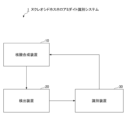
- FIG. 1 is a diagram showing an example of the overall configuration of a nucleoside phosphoramidite identification system.
- FIG. 2 is a diagram showing an example of the hardware configuration of a nucleic acid synthesizer.
- FIG. 3 is a diagram showing an example of the hardware configuration of a computer.
- FIG. 4 is a diagram showing an example of the functional configuration of a nucleoside phosphoramidite identification system.
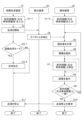
- FIG. 5 is a diagram showing an example of the processing procedure of the nucleoside phosphoramidite identification method.
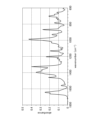
- FIG. 6 is a diagram showing an example of an infrared absorption spectrum.
- FIG. 7 is a diagram showing an example of a result display screen.
- FIG. 1 is a diagram showing an example of the overall configuration of a nucleoside phosphoramidite identification system.
- FIG. 2 is a diagram showing an example of the hardware configuration of a nucleic acid synthesizer.
- FIG. 3 is a diagram showing an example of the hardware
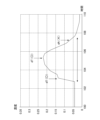
- FIG. 8 is a diagram showing an example of a change in concentration of a nucleoside phosphoramidite solution.
- FIG. 9 is a diagram showing an example of a Raman spectrum.
- FIG. 10 is a diagram showing an example of the hardware configuration of a nucleic acid synthesis apparatus in the third embodiment.
- FIG. 11 is a diagram showing an example of the processing procedure of the nucleoside phosphoramidite identification method in the third embodiment.
- FIG. 12 is a diagram showing experimental data.
- FIG. 13 is a diagram showing the identification results of Example 1.
- FIG. 14 is a diagram showing the identification results of Comparative Example 1.
- FIG. 15 is a diagram showing the identification results of Example 2.
- FIG. 16 is a diagram showing the identification results of Example 3.
- FIG. 17 is a diagram showing the identification results of Example 4.
- a first embodiment of the present invention is a nucleoside phosphoramidite identification system that identifies the type of nucleoside phosphoramidite sent to a column in a nucleic acid synthesizer.
- the nucleoside phosphoramidite identification system in this embodiment detects an infrared absorption spectrum from an acetonitrile solution containing a nucleoside phosphoramidite (hereinafter also referred to as "nucleoside phosphoramidite solution”) using an infrared spectrometer.
- the type of nucleoside phosphoramidite to be delivered is identified based on the cosine similarity between the detected infrared absorption spectrum and the previously stored infrared absorption spectrum.
- the method for detecting a spectrum from a nucleoside phosphoramidite solution is not limited to an infrared spectrometer.
- a Raman spectrometer may be used instead of an infrared spectrometer.
- a configuration using a Raman spectrometer will be explained in the second embodiment.
- vector a ⁇ and vector b ⁇ are vectors of all wave numbers in an analysis wave number range (hereinafter also referred to as measurement wave number range) in an infrared absorption spectrum or a Raman spectrum.
- the vector a ⁇ is data of a spectrum (reference) in which the type of nucleoside phosphoramidite has been specified in advance.
- the vector b ⁇ is data of a detected spectrum in which the type of nucleoside phosphoramidite is unknown. At this time, if cos(a ⁇ , b ⁇ ) in equation (1) is closest to 1, the cosine similarity is maximum.
- nucleoside phosphoramidite identification system in this embodiment compares the identification result of the nucleoside phosphoramidite with the sequence information of the oligonucleotide to be synthesized.
- the nucleoside phosphoramidite identification system in this embodiment associates the identification results and the matching results and displays them in real time on a display device such as a display.
- nucleoside phosphoramidite identification system in this embodiment performs control to issue a warning or stop feeding the nucleoside phosphoramidite to the nucleic acid synthesizer when an error is detected from the verification results.
- FIG. 1 is a block diagram showing an example of the overall configuration of a nucleoside phosphoramidite identification system in this embodiment.
- the nucleoside phosphoramidite identification system 1 in this embodiment includes a nucleic acid synthesis device 10, a detection device 20, and an identification device 30.
- the detection device 20 is optically connected to a flow cell provided in the tube of the nucleic acid synthesis device 10.
- the identification device 30 is electrically connected to the nucleic acid synthesis device 10 and the detection device 20.
- the nucleic acid synthesizer 10 is a nucleic acid synthesizer that synthesizes oligonucleotides.
- the nucleic acid synthesizer 10 includes an acetonitrile solution containing various nucleoside phosphoramidites used for oligonucleotide synthesis, a solution containing an activating agent, a solution containing a deprotecting agent, a solution containing an oxidizing agent or a thiolating agent, and a capping agent. , acetonitrile for washing, a plurality of tanks for storing an amine wash reaction solution, and a column for synthesizing oligonucleotides. Each tank and column are connected by a tube via a pump. The pump controls the delivery of the nucleoside phosphoramidite solution from any one tank to the column according to the sequence information of the oligonucleotide.
- the tube connecting the pump and the column is provided with a flow cell for connecting various measuring devices.
- the detection device 20 is a measurement device that detects the spectrum of the nucleoside phosphoramidite solution in a flow cell provided in the nucleic acid synthesis device 10.
- the detection device 20 in this embodiment is an infrared spectrometer that detects an infrared absorption spectrum by irradiating a nucleoside phosphoramidite solution with infrared rays before being sent to the column.
- the identification device 30 is a PC (Personal Computer), workstation, or server that identifies the type of nucleoside phosphoramidite to be sent to the column based on the infrared absorption spectrum of the nucleoside phosphoramidite solution detected by the detection device 20. It is an information processing device such as Infrared absorption spectra detected from various nucleoside phosphoramidite solutions by the detection device 20 are stored in advance in the storage section of the identification device 30 as a reference. The identification device 30 identifies the column based on the cosine similarity between the reference infrared absorption spectrum stored in the storage unit and the infrared absorption spectrum of the nucleoside phosphoramidite solution as the detection target detected by the detection device 20. Identify the type of nucleoside phosphoramidite delivered.
- PC Personal Computer
- the overall configuration of the nucleoside phosphoramidite identification system 1 shown in FIG. 1 is one example, and there may be various system configuration examples depending on the use and purpose.
- the identification device 30 may be realized by a plurality of computers, or may be realized as a cloud computing service.
- the nucleoside phosphoramidite identification system 1 may be realized by a stand-alone information processing device that has the functions that the detection device 20 and the identification device 30 should each have.
- FIG. 2 is a block diagram showing an example of the hardware configuration of the nucleic acid synthesis apparatus 10 in this embodiment.
- the nucleic acid synthesis apparatus 10 in this embodiment includes a tank 11, a pump 12, a tube 13, a flow cell 14, a column 15, and a waste liquid tank 16.
- Tank 11 stores an acetonitrile solution containing nucleoside phosphoramidites.
- the tank 11 is composed of a plurality of tanks, and each tank contains an acetonitrile solution containing a type of nucleoside phosphoramidite, a solution containing an activating agent (not shown), a solution containing a deprotecting agent, an oxidizing agent, or a thiolating agent.
- a solution containing a capping agent, a solution containing a capping agent, acetonitrile for washing, and an amine wash reaction solution are each stored.
- the nucleoside phosphoramidites stored in the tank 11 have DNA bases of adenine (hereinafter referred to as "dA”), thymine (hereinafter referred to as “dT”), and guanine (hereinafter referred to as “dG”). ”), cytosine (hereinafter referred to as “dC”), and 5-methyl-cytosine (hereinafter referred to as “5MedC”).
- the nucleoside phosphoramidite is not limited to the above, and may be other modified DNA, RNA, or modified RNA.
- the pump 12 is connected to the tank 11 and column 15 through tubes 13, respectively. Pump 12 pumps the nucleoside phosphoramidite solution from tank 11 to column 15 .
- the pump 12 is controlled to sequentially pump one of the nucleoside phosphoramidite solutions to the column 15 according to the sequence information of the oligonucleotide.
- the flow cell 14 is provided in the tube 13 that connects the pump 12 and the column 15.
- the flow cell 14 is configured to be optically connectable to various measuring devices.
- the column 15 is a reaction vessel in which the nucleoside phosphoramidite, activator, deprotecting agent, oxidizing agent or thiolating agent, and capping agent sent from the tank 11 by the pump 12 are reacted to produce oligonucleotides. .
- a nucleic acid synthesis method consisting of steps such as deprotection, coupling, oxidation or thiolation, and capping is performed.
- the waste liquid tank 16 is connected to the column 15 through a tube 13.
- the solution used in column 15 is discarded to waste tank 16.
- the hardware configuration of the nucleic acid synthesis apparatus 10 shown in FIG. 2 is an example.
- the nucleic acid synthesis apparatus 10 in this embodiment may have any hardware configuration as long as it can detect a spectrum from the nucleoside phosphoramidite solution fed to the column 15.
- FIG. 3 is a block diagram showing an example of the hardware configuration of the computer 500 in this embodiment.
- the computer 500 includes a CPU (Central Processing Unit) 501, a ROM (Read Only Memory) 502, a RAM (Random Access Memory) 503, an HDD (Hard Disk Drive) 504, an input device 505, It has a display device 506, a communication I/F (Interface) 507, and an external I/F 508.
- CPU501, ROM502, and RAM503 form what is called a computer.
- Each piece of hardware in the computer 500 is interconnected via a bus line 509. Note that the input device 505 and the display device 506 may be connected to an external I/F 508 for use.
- the CPU 501 is an arithmetic unit that realizes control and functions of the entire computer 500 by reading programs and data from a storage device such as the ROM 502 or the HDD 504 onto the RAM 503 and executing processing.
- the ROM 502 is an example of a nonvolatile semiconductor memory (storage device) that can retain programs and data even when the power is turned off.
- the ROM 502 functions as a main storage device that stores various programs, data, etc. necessary for the CPU 501 to execute various programs installed on the HDD 504 .
- the ROM 502 stores data such as boot programs such as the BIOS (Basic Input/Output System) and EFI (Extensible Firmware Interface) that are executed when the computer 500 is started, OS (Operating System) settings, and network settings. is stored.
- BIOS Basic Input/Output System
- EFI Extensible Firmware Interface
- the RAM 503 is an example of a volatile semiconductor memory (storage device) whose programs and data are erased when the power is turned off.
- the RAM 503 is, for example, DRAM (Dynamic Random Access Memory) or SRAM (Static Random Access Memory).
- the RAM 503 provides a work area where various programs installed on the HDD 504 are expanded when the CPU 501 executes them.
- the HDD 504 is an example of a nonvolatile storage device that stores programs and data.
- the programs and data stored in the HDD 504 include an OS, which is basic software that controls the entire computer 500, and applications that provide various functions on the OS.
- the computer 500 may use a storage device (for example, SSD: Solid State Drive) that uses flash memory as a storage medium.
- SSD Solid State Drive
- the input device 505 is a touch panel used by the user to input various signals, operation keys or buttons, a keyboard or mouse, a microphone for inputting sound data such as voice, or the like.
- the display device 506 is composed of a display such as a liquid crystal or organic EL (Electro-Luminescence) that displays a screen, a speaker that outputs sound data such as audio, and the like.
- a display such as a liquid crystal or organic EL (Electro-Luminescence) that displays a screen
- a speaker that outputs sound data such as audio, and the like.
- the communication I/F 507 is an interface that connects to a communication network and allows the computer 500 to perform data communication.
- the external I/F 508 is an interface with an external device.
- the external device includes a drive device 510 and the like.
- the drive device 510 is a device for setting the recording medium 511.
- the recording medium 511 here includes a medium that records information optically, electrically, or magnetically, such as a CD-ROM, a flexible disk, and a magneto-optical disk. Further, the recording medium 511 may include a semiconductor memory or the like that electrically records information, such as a ROM or a flash memory. Thereby, the computer 500 can read and/or write to the recording medium 511 via the external I/F 508.
- the various programs installed on the HDD 504 are, for example, when the distributed recording medium 511 is set in the drive device 510 connected to the external I/F 508, and the various programs recorded on the recording medium 511 are read by the drive device 510. It is installed by Alternatively, various programs to be installed on the HDD 504 may be installed by being downloaded from a network different from the communication network via the communication I/F 507.
- FIG. 4 is a block diagram showing an example of the functional configuration of the nucleoside phosphoramidite identification system in this embodiment.
- the nucleic acid synthesis apparatus 10 in this embodiment includes a sequence information input section 101, a liquid storage section 102, a liquid feeding section 103, and a synthesis section 104.
- the sequence information input unit 101 inputs the nucleic acid synthesis conditions (nucleoside phosphoramidite solution, solution containing an activating agent, solution containing a deprotecting agent, oxidizing agent, or (solution containing a thiolating agent, solution containing a capping agent, delivery conditions for acetonitrile for washing, amine wash reaction solution, etc.), and sequence information representing the nucleic acid sequence of the oligonucleotide synthesized by the nucleic acid synthesis apparatus 10 are accepted.
- Sequence information is information indicating the type of bases of a nucleoside phosphoramidite and the order in which they are bonded to synthesize an oligonucleotide.
- the nucleic acid synthesis apparatus 10 synthesizes oligonucleotides (hereinafter also referred to as nucleic acid synthesis mode) according to the nucleic acid synthesis conditions and the sequence information (hereinafter also referred to as sequence information, etc.).
- sequence information input section 101 inputs liquid feeding conditions under which the liquid feeding section 103 feeds various nucleoside phosphoramidite solutions, and information on the individual nucleoside phosphoramidites to be fed, in response to a user's operation. accepts input.
- the nucleic acid synthesizer 10 does not perform nucleic acid synthesis, but instead delivers various nucleoside phosphoramidite solutions (hereinafter also referred to as single unit information) according to the liquid delivery conditions and the single unit information (hereinafter also referred to as single unit information, etc.). , also referred to as single liquid delivery mode).
- the liquid storage section 102 contains various nucleoside phosphoramidite solutions, solutions containing activating agents, solutions containing deprotecting agents, solutions containing oxidizing agents or thiolating agents, solutions containing capping agents, acetonitrile for cleaning, and amines. Store the wash reaction solution.
- the liquid storage section 102 is realized, for example, by the tank 11 shown in FIG. 2.
- the liquid feeding unit 103 sends a nucleoside phosphoramidite solution, a solution containing an activating agent, and a deprotecting agent stored in the liquid storage unit 102 according to the sequence information etc. received by the sequence information input unit 101.
- a solution containing an oxidizing agent or a thiolating agent, a solution containing a capping agent, and acetonitrile for washing or an amine wash reaction solution are sequentially delivered to the synthesis section 104 .
- the liquid sending unit 103 sends the nucleoside phosphoramidite solution stored in the liquid storage unit 102 to the synthesis unit 104 according to the single unit information etc. received by the sequence information input unit 101.
- the liquid sending unit 103 is realized, for example, by the pump 12 and tube 13 shown in FIG. 2.
- the synthesis section 104 receives the nucleoside phosphoramidite solution sent from the liquid sending section 103, a solution containing an activating agent, a solution containing a deprotecting agent, a solution containing an oxidizing agent or a thiolating agent, and a cap. Oligonucleotides are synthesized according to a predetermined nucleic acid synthesis method using a solution containing a solvent, acetonitrile for washing, and an amine wash reaction solution.
- the combining unit 104 is realized by, for example, the column 15 shown in FIG. 2.
- the detection device 20 in this embodiment includes a detection section 201.
- the detection unit 201 is realized by a process that causes the CPU 501 to execute a program loaded onto the RAM 503 from the HDD 504 shown in FIG.
- the detection unit 201 detects an infrared absorption spectrum from the nucleoside phosphoramidite solution sent by the liquid delivery unit 103.
- the infrared absorption spectrum detected by the detection unit 201 will also be referred to as a "detected spectrum.” Further, the detection unit 201 outputs the detected spectrum to the identification device 30.
- the identification device 30 in this embodiment includes a spectrum storage section 300, a sequence information input section 301, a similarity calculation section 302, an identification section 303, a matching section 304, a result display section 305, a control 306, an array information storage section 310, and a result storage section 320.
- Sequence information input unit 301 similarity calculation unit 302, identification unit 303, collation unit 304, result display unit 305, and control unit 306 execute programs developed on RAM 503 from HDD 504 shown in FIG. 3 on CPU 501. This is achieved by processing.
- the spectrum storage section 300, the array information storage section 310, and the result storage section 320 are realized using, for example, the HDD 504 shown in FIG. 3.
- the spectrum storage unit 300 stores an infrared absorption spectrum detected in advance in single liquid feeding mode as a reference from a nucleoside phosphoramidite to be identified.
- the infrared absorption spectrum stored in the spectrum storage unit 300 will also be referred to as an "identification target spectrum.”
- the identification target spectrum is stored in the spectrum storage unit 300 in association with the individual information of various nucleoside phosphoramidites input from the sequence information input unit 301.
- Nucleoside phosphoramidites to be identified are various nucleoside phosphoramidites included in the sequence information of oligonucleotides synthesized by the nucleic acid synthesizer 10.
- the nucleoside phosphoramidites to be identified are various nucleoside phosphoramidites stored in the liquid storage section 102 of the nucleic acid synthesis apparatus 10.
- the identification target spectra stored in the spectrum storage unit 300 may include a plurality of infrared absorption spectra detected using nucleoside phosphoramidite solutions prepared at different concentrations for each type of nucleoside phosphoramidite. With this configuration, it becomes possible to identify not only the type of nucleoside phosphoramidite but also the concentration of the acetonitrile solution.
- the sequence information input unit 301 accepts input of sequence information of oligonucleotides in nucleic acid synthesis mode or individual information of various nucleoside phosphoramidites in single liquid delivery mode in accordance with user operations.
- the sequence information storage unit 310 stores the sequence information of oligonucleotides or the single information of various nucleoside phosphoramidites received by the sequence information input unit 301.
- the similarity calculation unit 302 calculates the cosine similarity between each of the identification target spectra stored in the spectrum storage unit 300 and the detection spectrum detected by the detection device 20.
- the identification unit 303 identifies the type of nucleoside phosphoramidite delivered by the liquid delivery unit 103 of the nucleic acid synthesizer 10 based on the cosine similarity calculated by the similarity calculation unit 302. Specifically, the identification unit 303 selects the identification target spectrum corresponding to the cosine similarity having the largest value among the cosine similarities calculated by the similarity calculation unit 302 (that is, the identification target spectrum that is most similar to the detected spectrum). Identify. Next, the identification unit 303 identifies the type of nucleoside phosphoramidite corresponding to the identified spectrum to be identified as the type of the nucleoside phosphoramidite that was sent.
- the collation unit 304 collates the identification result of the nucleoside phosphoramidite identified by the identification unit 303 and the sequence information or simple substance information stored in the sequence information storage unit 310. Specifically, the matching unit 304 first identifies the correct nucleoside phosphoramidite to be currently delivered, according to the sequence information or the single unit information. Next, the matching unit 304 determines whether the correct nucleoside phosphoramidite and the identification result of the nucleoside phosphoramidite identified by the identification unit 303 match.
- the result storage unit 320 stores the identification result by the identification unit 303 and the verification result by the verification unit 304 in association with each other.
- the result display unit 305 displays the identification results and the matching results stored in the result storage unit 320 in association with each other on the display device 506. At this time, if the comparison results indicate a mismatch, the result display unit 305 displays a warning to that effect.
- the control unit 306 controls the nucleic acid synthesis apparatus 10 to stop liquid feeding when the verification result of the verification unit 304 indicates a mismatch.
- Methods for stopping the liquid feeding vary depending on the nucleic acid synthesis apparatus 10, but include, for example, closing the tube 13 so that the solution does not flow, or sending a control signal to stop the pump 12.
- FIG. 5 is a flowchart showing an example of the processing procedure of the nucleoside phosphoramidite identification method in this embodiment.
- step S1-1 the sequence information input unit 101 included in the nucleic acid synthesis apparatus 10 receives input of sequence information of oligonucleotides or single information of various nucleoside phosphoramidites, etc., in response to user operations.
- the array information input section 101 sends the received array information, etc. or single information, etc. to the liquid feeding section 103.
- step S1-2 the sequence information input unit 301 included in the identification device 30 receives input of sequence information of oligonucleotides or single information of various nucleoside phosphoramidites in response to user operations.
- the array information input unit 301 stores the received array information or single information in the array information storage unit 310.
- step S2 in the nucleic acid synthesis mode, the liquid feeding unit 103 of the nucleic acid synthesis apparatus 10 sends a nucleoside phosphoramidite solution stored in the liquid storage unit 102, a nucleoside phosphoramidite solution stored in the liquid storage unit 102, A solution containing an activating agent, a solution containing a deprotecting agent, a solution containing an oxidizing agent or a thiolating agent, a solution containing a capping agent, and acetonitrile for washing or an amine wash reaction solution are sequentially fed to the synthesis section 104.
- the liquid feeding unit 103 feeds the nucleoside phosphoramidite solution stored in the liquid storage unit 102 to the synthesis unit 104 according to the single unit information etc. received from the sequence information input unit 101.
- liquid feeding unit 103 may receive oligonucleotide sequence information or various nucleoside phosphoramidite unit information from the sequence information input unit 301.
- step S3-1 the synthesis unit 104 included in the nucleic acid synthesis apparatus 10 determines whether the mode is nucleic acid synthesis mode or single liquid delivery mode. If the mode is nucleic acid synthesis mode (YES), the synthesis unit 104 advances the process to step S3-2. If it is the single liquid feeding mode (NO), the synthesis unit 104 skips step S3-2.
- step S3-2 the synthesis unit 104 included in the nucleic acid synthesis apparatus 10 collects the nucleoside phosphoramidite, activator, deprotecting agent, oxidizing agent or thiolating agent, and capping agent sent from the liquid sending unit 103.
- oligonucleotides are synthesized according to a predetermined nucleic acid synthesis method.
- step S4 the detection unit 201 included in the detection device 20 detects an infrared absorption spectrum from the nucleoside phosphoramidite solution sent by the liquid delivery unit 103. Next, the detection unit 201 outputs the detected spectrum to the identification device 30.
- FIG. 6 is a diagram showing an example of an infrared absorption spectrum.
- FIG. 6 is an example of an infrared absorption spectrum detected from dT nucleoside phosphoramidite.
- the example in FIG. 6 is an infrared absorption spectrum detected from an acetonitrile solution containing dT nucleoside phosphoramidites prepared at a concentration of 200 mM.
- the horizontal axis is wave number, and the vertical axis is absorbance.
- step S5 the similarity calculation unit 302 included in the identification device 30 receives input of the detected spectrum output by the detection device 20.
- the similarity calculation unit 302 reads out the identification target spectrum stored in the spectrum storage unit 300.
- the similarity calculation unit 302 calculates the cosine similarity between the identification target spectrum and the detected spectrum for each identification target spectrum.
- the similarity calculation unit 302 sends the cosine similarity corresponding to each of the identification target spectra to the identification unit 303.
- step S6 the identification unit 303 included in the identification device 30 receives the cosine similarity from the similarity calculation unit 302. Next, the identification unit 303 identifies an identification target spectrum corresponding to the cosine similarity having the largest value among the received cosine similarities. Subsequently, the identification unit 303 identifies the type of nucleoside phosphoramidite corresponding to the identified spectrum to be identified as the type of the nucleoside phosphoramidite that has been sent.
- the identification unit 303 sends the identification result representing the type of identified nucleoside phosphoramidite to the matching unit 304. Next, the identification unit 303 stores the identification result in the result storage unit 320.
- the identification unit 303 may only store the identification result in the result storage unit 320 without sending the identification result to the matching unit 304. In this case, the identification unit 303 skips step S7 and advances the process to step S8.
- step S7 the collation unit 304 included in the identification device 30 receives the identification result from the identification unit 303.
- the matching unit 304 identifies the correct nucleoside phosphoramidite to be currently delivered, according to the sequence information or single unit information stored in the sequence information storage unit 310.
- the matching unit 304 determines whether the correct nucleoside phosphoramidite and the identification result of the nucleoside phosphoramidite match. Next, the matching unit 304 stores a matching result indicating whether or not the correct answer matches the identification result in the result storage unit 320.
- step S8 the result display unit 305 included in the identification device 30 displays the identification results and the matching results stored in the result storage unit 320 in association with each other on the display device 506. At this time, if the comparison results indicate a mismatch, the result display unit 305 displays a warning to that effect.
- the result display unit 305 may output a warning sound from the speaker of the display device 506 when the comparison result indicates a mismatch.
- step S7 the result display unit 305 displays the identification results stored in the result storage unit 320 on the display device 506.
- FIG. 7 is a conceptual diagram showing an example of a result display screen in this embodiment.
- the result display screen 1000 in this embodiment includes a sequence information input field 1001, a sequence information display field 1002, an identification result display field 1003, a matching result display field 1004, a start button 1008, and a cancel button. It has 1009.
- the sequence information input field 1001 accepts input of sequence information of oligonucleotides or single information of various nucleoside phosphoramidites according to user operations.
- sequence information or simple substance information When the user inputs sequence information or simple substance information and presses the start button 1008, identification of nucleoside phosphoramidites is started.
- the sequence information display column 1002 displays a predetermined number of nucleoside phosphoramidites to be delivered from the current moment. In the example of FIG. 7, it is shown that the liquids should be delivered in the order of dA, 5MedC, dC, dT, and dG.
- identification results corresponding to each array information are displayed in order.
- dA, 5MedC, and dT are identified in this order. Note that "-" indicates that identification has not yet been performed.
- matching results corresponding to each identification result are displayed in order.
- matching results are displayed in different colors.
- white areas represent a match
- shaded areas represent a mismatch
- black areas represent an unidentified area.
- Any color may be used as the type of color coding as long as it is a color that the user can easily distinguish. For example, a match may be set in green, a mismatch in red, an unidentified state in gray, etc.
- the display mode of the matching results is not limited to color coding, and any display mode may be used as long as the user can easily understand the matching results.
- step S7 the matching result display field 1004 is not displayed on the result display screen 1000.
- step S9 the matching unit 304 included in the identification device 30 determines whether the matching result in step S7 represents a match (that is, whether the identification result matches the array information or the single information). If the verification result indicates a match (YES), the verification unit 304 returns the process to step S5 and waits for the detection spectrum of the nucleoside phosphoramidite to be sent next. If the verification result indicates a mismatch (NO), the verification unit 304 advances the process to step S10.
- step S10 the control unit 306 included in the identification device 30 controls the nucleic acid synthesis device 10 to stop liquid feeding.
- the control is control for closing the tube 13 of the nucleic acid synthesis apparatus 10.
- the control is control for transmitting a stop signal for the pump 12 of the nucleic acid synthesis apparatus 10.
- step S11 the liquid feeding section 103 included in the nucleic acid synthesis apparatus 10 stops feeding the liquid in accordance with the control from the control section 306. For example, when the tube 13 is blocked, the nucleic acid synthesis apparatus 10 detects an abnormality in liquid feeding and automatically stops liquid feeding. Further, for example, when the nucleic acid synthesis apparatus 10 receives a stop signal for the pump 12, it stops the pump 12 in response to the stop signal.
- the nucleoside phosphoramidite identification system in this embodiment uses an infrared absorption spectrum detected from a nucleoside phosphoramidite solution and an infrared absorption spectrum detected in advance from various nucleoside phosphoramidite solutions and stored as a reference. Identify the types of nucleoside phosphoramidites based on the cosine similarity of .
- nucleoside phosphoramidite In the prior art, the type of nucleoside phosphoramidite is identified based on the PLS determination method. However, when the concentration of nucleoside phosphoramidites is low, there is a problem that the identification accuracy decreases. This is partly because low concentrations of nucleoside phosphoramidites are susceptible to noise when detecting spectra.
- a change in concentration occurs within the tube. This is because it is necessary to wash the inside of the tube with acetonitrile between each step of the nucleic acid synthesis method, and the liquid is transferred by injecting the nucleoside phosphoramidite solution into the tube filled with acetonitrile.
- Figure 8 shows the results of measuring the concentration at 1250 cm -1 spectral intensity when a dT nucleoside phosphoramidite solution was pumped in a nucleic acid synthesizer, and the results of identifying the measurement results using the conventional PLS determination method.
- This is a graph.
- the concentration of the nucleoside phosphoramidite solution gradually decreases. Therefore, the conventional PLS determination method incorrectly determines dA.
- the conventional PLS determination method when a determination is made in a state where the concentration has decreased near the end of liquid feeding, there is a tendency for a large number of erroneous determinations to occur.
- the degree of similarity is calculated by focusing on the position and height of the peak of the spectrum. Therefore, if the position or height of the peak changes due to the influence of noise, there is a high possibility of misidentification.
- similarity is calculated by focusing on the spectral shape. Therefore, even if the position or height of the peak changes due to the influence of noise, it can be correctly identified as long as the spectrum shape does not change significantly.
- the identification accuracy of nucleoside phosphoramidites is improved compared to the conventional system.
- the detection device 20 is an infrared spectrometer, and is configured to identify the type of nucleoside phosphoramidite based on the infrared absorption spectrum detected from the nucleoside phosphoramidite solution.
- the detection device 20 is a Raman spectrometer, and is configured to identify the type of nucleoside phosphoramidite based on the Raman spectrum detected from the nucleoside phosphoramidite solution.
- nucleoside phosphoramidite identification system 1 in this embodiment will be explained, focusing on the differences from the nucleoside phosphoramidite identification system 1 in the first embodiment.
- the detection device 20 in this embodiment is a Raman spectrometer that decomposes Raman scattered light generated by irradiating a laser onto a nucleoside phosphoramidite solution fed to a column into spectra.
- the detection unit 201 in this embodiment detects a Raman spectrum from the nucleoside phosphoramidite solution fed by the liquid feeding unit 103. Further, the detection unit 201 outputs the detected Raman spectrum to the identification device 30.
- the spectrum storage unit 300 in this embodiment stores a Raman spectrum detected in advance from a nucleoside phosphoramidite to be identified.
- the Raman spectrum stored in the spectrum storage unit 300 will also be referred to as an "identification target spectrum.”
- the similarity calculation unit 302 in this embodiment calculates the cosine similarity between each Raman spectrum stored in the spectrum storage unit 300 and the Raman spectrum detected by the detection device 20.
- the identification unit 303 in this embodiment identifies the type of nucleoside phosphoramidite delivered by the liquid delivery unit 103 of the nucleic acid synthesis apparatus 10 based on the cosine similarity calculated by the similarity calculation unit 302.
- FIG. 9 is a diagram showing an example of a Raman spectrum.
- FIG. 9 is an example of a Raman spectrum detected from a dC nucleoside phosphoramidite.
- the example in FIG. 9 is a Raman spectrum detected from an acetonitrile solution prepared at a concentration of 100 mM.
- the horizontal axis is Raman shift
- the vertical axis is light intensity.
- FIG. 9(A) is a graph showing the light intensity in the range of 0 to 80,000
- FIG. 9(B) is a graph showing the light intensity in the range of 0 to 20,000.
- the nucleoside phosphoramidite identification system in this embodiment is based on the cosine similarity between a Raman spectrum detected from a nucleoside phosphoramidite solution and a Raman spectrum detected in advance from various nucleoside phosphoramidite solutions and stored as a reference. Identify the types of nucleoside phosphoramidites based on:
- the identification accuracy of nucleoside phosphoramidites is improved compared to the conventional system, as in the first embodiment.
- control unit 306 is configured to control the nucleic acid synthesis apparatus 10 to stop liquid feeding when the comparison result between the sequence information and the identification result does not match.
- control unit 306 is configured to control the nucleic acid synthesis apparatus 10 to discard the supplied nucleoside phosphoramidite solution.
- nucleoside phosphoramidite identification system 1 in this embodiment will be explained, focusing on the differences from the nucleoside phosphoramidite identification system 1 in the first embodiment.
- FIG. 10 is a block diagram showing an example of the hardware configuration of the nucleic acid synthesis apparatus 10 in this embodiment.
- the nucleic acid synthesis apparatus 10 of this embodiment differs from the nucleic acid synthesis apparatus 10 of the first embodiment in that it further includes an electromagnetic valve 17 and a waste liquid tube 18.
- the electromagnetic valve 17 is provided in the tube 13 that connects the flow cell 14 and the column 15. Further, the electromagnetic valve 17 is further connected to a waste liquid tank 16 through a waste liquid tube 18. Further, the electromagnetic valve 17 is electrically connected to the identification device 30. The electromagnetic valve 17 is controlled in accordance with a control signal received from the identification device 30 so as to send the nucleoside phosphoramidite solution sent through the tube 13 to the waste liquid tube 18 .
- the path from the electromagnetic valve 17 through the waste liquid tube 18 to the waste liquid tank 16 will also be referred to as a "disposal path.”
- FIG. 11 is a flowchart showing an example of the processing procedure of the nucleoside phosphoramidite identification method in this embodiment.
- the nucleoside phosphoramidite identification method in this embodiment differs from the nucleoside phosphoramidite identification method in the first embodiment in the processing in steps S10 and S11.
- step S10 the control unit 306 included in the identification device 30 controls the nucleic acid synthesis device 10 to discard the nucleoside phosphoramidite solution.
- this control is a control that sends a control signal requesting the electromagnetic valve 17 of the nucleic acid synthesis apparatus 10 to send the nucleoside phosphoramidite solution to the waste liquid tube 18.
- step S11 the liquid sending unit 103 included in the nucleic acid synthesis apparatus 10 sends the nucleoside phosphoramidite solution to the waste liquid tank 16 under control from the control unit 306. Specifically, the nucleic acid synthesis apparatus 10 controls the electromagnetic valve 17 so that the nucleoside phosphoramidite solution is sent to the waste liquid tube 18.
- Example 1 In Example 1, nucleoside phosphoramidites were identified using the nucleoside phosphoramidite identification system in the first embodiment in single liquid delivery mode. Example 1 will be described below with reference to FIGS. 12 to 14.
- nucleic acid synthesizer was used to conduct the determination test for this example and the following comparative example.
- the success rate of determination was confirmed not for the type of nucleoside phosphoramidite being synthesized (nucleic acid synthesis mode), but for various concentrations alone (single liquid delivery mode).
- the reference was acquired in advance using the following procedure.
- single liquid delivery mode after preparing acetonitrile solutions of 25mM, 50mM, 100mM, and 200mM of nucleoside phosphoramidites (dA, dG, dT, dC), various nucleoside phosphoramidite solutions were prepared using the above nucleic acid synthesizer. was sent to a flow cell of an infrared spectrometer (ReactIR15 (registered trademark) manufactured by Mettler Toledo (registered trademark)) connected with a plastic tube, and the infrared absorption spectrum of the flowing acetonitrile solution was measured.
- ReactIR15 registered trademark
- Mettler Toledo registered trademark
- the measurement conditions of the infrared spectrometer are as follows.
- the measurement wave number range was 1850 to 650 cm -1 .
- the wave number resolution was 8 cm -1 .
- the number of times of integration was 16.
- the infrared absorption spectrum obtained through the above procedure was stored as a reference in the spectrum storage unit 300 included in the identification device 30 in association with the individual information of various nucleoside phosphoramidites.
- Example 1 After preparing acetonitrile solutions of 6.25mM, 12.5mM, 25mM, 50mM, 100mM, and 200mM of nucleoside phosphoramidites (dA, dG, dT, dC), various nucleoside phosphoramidite solutions were prepared using the above nucleic acid synthesizer.
- the infrared absorption spectrum of the flowing acetonitrile solution was measured by sending the solution to the flow cell of the infrared spectrometer connected with a plastic tube. Note that the measurement conditions of the infrared spectrometer are the same as those used for reference acquisition.
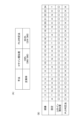
- FIG. 12 is a diagram showing the number of infrared absorption spectrum data detected under the above conditions for each solution concentration and type of nucleoside phosphoramidite.
- This example is an example in which nucleoside phosphoramidites were identified based on cosine similarity.
- the infrared absorption spectra detected from the infrared spectrometer described above are stored in the result storage unit 320 of the identification device 30, each infrared absorption spectrum is converted into an index, and the cosine of the reference infrared absorption spectrum at that time is We calculated the degree of similarity. Then, the type of nucleoside phosphoramidite with the maximum value of cosine similarity was output as the identification result.
- FIG. 13 is a diagram showing the identification results in this example.
- FIG. 13 is a table showing the determination success rate in each determination test.
- FIG. 14 is a diagram showing the identification results in this comparative example.
- FIG. 14 is a table showing the determination success rate in each determination test.
- the nucleoside phosphoramidite identification system of the first embodiment resulted in improved identification accuracy compared to the conventional method.
- Example 2 In Example 2, in the nucleic acid synthesis mode, the type of nucleoside phosphoramidite sent to the nucleic acid synthesizer was identified using the nucleoside phosphoramidite identification system of the first embodiment. Example 2 will be described below with reference to FIG. 15.
- the reference was acquired in advance using the following procedure.
- various nucleoside phosphoramidite solutions were prepared using the above nucleic acid synthesizer.
- the infrared absorption spectra obtained in the above procedure were stored as a reference in the spectrum storage unit 300 of the identification device 30 in association with the single information of various nucleoside phosphoramidites.
- oligonucleotides were synthesized as follows. First, porous resin beads (NittoPhase (registered trademark) HL UnyLinker 350) were placed in a synthesis column (volume 12.6 ml) at a synthesis scale of 480 ⁇ mol, and a nucleic acid synthesizer (AKTA oligopilot 100 (registered trademark), Cytiva (registered trademark) (manufactured by the company). Subsequently, 200 mM of nucleoside phosphoramidite and 4,5-dicyanoimidazole as an activator were added to perform a coupling reaction.
- AKTA oligopilot 100 registered trademark
- Cytiva registered trademark
- a 24mer DNA oligonucleotide (5'-TCGACGTATTGACGTATTGACGTA-3' fully oxidized: SEQ ID NO: 1) was synthesized under DMT-off conditions. After the synthesis, the synthesis column was taken out from the nucleic acid synthesizer 10, and the oligonucleotide was cut out from the porous resin beads in the synthesis column using an ammonia aqueous solution and purified to obtain a purified product.
- FIG. 15(A) is a diagram showing the identification results in this example.
- 360 out of 360 samples were answered correctly, and all types of nucleoside phosphoramidites were correctly identified.
- 324 out of 360 samples were correctly identified, and 36 samples were incorrectly identified.
- FIG. 15(B) is a diagram showing the order of feeding nucleoside phosphoramidites and the identification results for the set sequence information. The case where all 15 samples were correctly identified in each cycle was marked as " ⁇ ", and the case where one or more samples were incorrectly identified was marked as "x”. As shown in FIG. 15(B), in the conventional PLS determination method, erroneous identification occurred when dT and dC were delivered.
- the nucleoside phosphoramidite identification system of the first embodiment showed improved identification accuracy compared to the conventional method even for nucleoside phosphoramidites during synthesis. .
- Example 3 modified nucleoside phosphoramidites were identified using the nucleoside phosphoramidite identification system of the first embodiment in single liquid delivery mode. Example 3 will be described below with reference to FIG. 16.
- the reference was acquired in advance using the following procedure.
- modified nucleoside phosphoramidites (2'OMerA, 2'OMerC, 2'OMerG, 5MedC)
- various modified nucleosides were prepared using the above nucleic acid synthesizer.
- the phosphoramidite solution was sent to the flow cell of the above-mentioned infrared spectrometer connected with a plastic tube, and the infrared absorption spectrum of the flowing acetonitrile solution was measured. Note that the measurement conditions of the infrared spectrometer are the same as in Example 1.
- the infrared absorption spectra obtained in the above procedure were stored as a reference in the spectrum storage unit 300 of the identification device 30 in association with the single information of various nucleoside phosphoramidites.
- each infrared absorption spectrum is converted into an index, and the cosine of the reference infrared absorption spectrum at that time is We calculated the degree of similarity. Then, the type of modified nucleoside phosphoramidite with the maximum value of cosine similarity was output as the identification result.
- FIG. 16 is a diagram showing the identification results in this example. As shown in FIG. 16, cosine similarity correctly identified all types of nucleoside phosphoramidites. Therefore, it was shown that not only unmodified nucleoside phosphoramidites but also modified nucleoside phosphoramidites can be identified by cosine similarity. From the identification results in FIG. 16 and the identification results in FIG. 15 of Example 2 (in nucleic acid synthesis mode), it is estimated that modified nucleoside phosphoramidites can be correctly identified even under nucleic acid synthesis conditions (nucleic acid synthesis mode). .
- Example 4 In Example 4, in single liquid delivery mode, nucleoside phosphoramidites were identified using the nucleoside phosphoramidite identification system in the second embodiment (that is, using Raman spectra). Example 4 will be described below with reference to FIG. 17.
- the reference was acquired in advance using the following procedure.
- acetonitrile solutions 11.8mM, 23.5mM, 36.6mM, 48mM, 64mM, 80mM, 100mM of nucleoside phosphoramidites (dA, dG, dT, dC, 5MedC)
- various nucleoside phosphoramidites were prepared.
- SP-21 manufactured by From
- the roamidite solution is sent to a flow cell integrated probe (manufactured by Marq Metrix) of a Raman spectrometer (PI-200 manufactured by Process Instruments) connected with a plastic tube. Then, the Raman spectrum of the flowing acetonitrile solution was measured.
- the measurement conditions of the Raman spectrometer are as follows.
- the laser wavelength was 532 nm.
- the measurement wave number range was 1850 to 650 cm -1 .
- the wave number resolution was 8 cm -1 .
- the exposure time was 1 second.
- the number of times of accumulation was 10.
- the Raman spectrum obtained through the above procedure was stored as a reference in the spectrum storage unit 300 included in the identification device 30 in association with various types of nucleoside phosphoramidite single information.
- the inside of the plastic tube was washed and replaced with 12 ml of acetonitrile.
- the cosine similarity between the Raman spectrum obtained from the flow cell and the Raman spectrum registered as a reference was determined. Then, the type of nucleoside phosphoramidite with the maximum value of cosine similarity was output as the identification result.
- FIG. 17 is a diagram showing the identification results in this example. As shown in FIG. 17, five types of nucleoside phosphoramidites were delivered and the types of all nucleoside phosphoramidites were accurately identified. From the identification results by Raman spectra in FIG. 17 and the identification results in FIG. 15 of Example 2 (using the same cosine similarity in nucleic acid synthesis mode), it is clear that even under nucleic acid synthesis conditions (nucleic acid synthesis mode), Raman spectrum detection and cosine It is estimated that all types of nucleoside phosphoramidites can be correctly identified based on the degree of similarity.
- processing circuit refers to a processor programmed to execute each function by software, such as a processor implemented by an electronic circuit, or a processor designed to execute each function explained above. This includes devices such as ASICs (Application Specific Integrated Circuits), DSPs (Digital Signal Processors), FPGAs (Field Programmable Gate Arrays), and conventional circuit modules.
- ASICs Application Specific Integrated Circuits
- DSPs Digital Signal Processors
- FPGAs Field Programmable Gate Arrays
- Nucleoside phosphoramidite identification system 10 Nucleic acid synthesis device 101 Sequence information input section 102 Liquid storage section 103 Liquid feeding section 104 Synthesis section 20 Detection device 201 Detection section 30 Identification device 300 Spectrum storage section 301 Sequence information input section 302 Similarity calculation section 303 Identification unit 304 Collation unit 305 Result display unit 306 Control unit 310 Sequence information storage unit 320 Result storage unit
Landscapes
- Physics & Mathematics (AREA)
- Health & Medical Sciences (AREA)
- Life Sciences & Earth Sciences (AREA)
- Engineering & Computer Science (AREA)
- Spectroscopy & Molecular Physics (AREA)
- General Health & Medical Sciences (AREA)
- Medical Informatics (AREA)
- Theoretical Computer Science (AREA)
- Databases & Information Systems (AREA)
- Immunology (AREA)
- Pathology (AREA)
- General Physics & Mathematics (AREA)
- Biochemistry (AREA)
- Analytical Chemistry (AREA)
- Bioethics (AREA)
- Biophysics (AREA)
- Chemical & Material Sciences (AREA)
- Bioinformatics & Cheminformatics (AREA)
- Bioinformatics & Computational Biology (AREA)
- Biotechnology (AREA)
- Evolutionary Biology (AREA)
- Nuclear Medicine, Radiotherapy & Molecular Imaging (AREA)
- Molecular Biology (AREA)
- Signal Processing (AREA)
- Artificial Intelligence (AREA)
- Computer Vision & Pattern Recognition (AREA)
- Data Mining & Analysis (AREA)
- Epidemiology (AREA)
- Evolutionary Computation (AREA)
- Public Health (AREA)
- Software Systems (AREA)
- Saccharide Compounds (AREA)
- Measuring Or Testing Involving Enzymes Or Micro-Organisms (AREA)
- Apparatus Associated With Microorganisms And Enzymes (AREA)
Priority Applications (5)
| Application Number | Priority Date | Filing Date | Title |
|---|---|---|---|
| CN202380014539.XA CN118265902A (zh) | 2022-04-18 | 2023-04-10 | 核苷亚磷酰胺识别系统、核苷亚磷酰胺识别方法及程序 |
| JP2024516208A JPWO2023204089A1 (https=) | 2022-04-18 | 2023-04-10 | |
| KR1020247015928A KR20250005959A (ko) | 2022-04-18 | 2023-04-10 | 뉴클레오시드포스포아미다이트 식별 시스템, 뉴클레오시드포스포아미다이트 식별 방법 및 프로그램 |
| US18/275,076 US20240242778A1 (en) | 2022-04-18 | 2023-04-10 | Nucleoside phosphoramidite identifying system, nucleoside phosphoramidite identifying method, and non-transitory computer-readable recording medium storing program |
| EP23791738.0A EP4513170A4 (en) | 2022-04-18 | 2023-04-10 | NUCLEOSIDE PHOSPHOROAMIDITE IDENTIFICATION SYSTEM, AND NUCLEOSIDE PHOSPHOROAMIDITE IDENTIFICATION METHOD AND PROGRAM |
Applications Claiming Priority (2)
| Application Number | Priority Date | Filing Date | Title |
|---|---|---|---|
| JP2022068370 | 2022-04-18 | ||
| JP2022-068370 | 2022-04-18 |
Publications (1)
| Publication Number | Publication Date |
|---|---|
| WO2023204089A1 true WO2023204089A1 (ja) | 2023-10-26 |
Family
ID=88420033
Family Applications (1)
| Application Number | Title | Priority Date | Filing Date |
|---|---|---|---|
| PCT/JP2023/014606 Ceased WO2023204089A1 (ja) | 2022-04-18 | 2023-04-10 | ヌクレオシドホスホロアミダイト識別システム、ヌクレオシドホスホロアミダイト識別方法及びプログラム |
Country Status (6)
| Country | Link |
|---|---|
| US (1) | US20240242778A1 (https=) |
| EP (1) | EP4513170A4 (https=) |
| JP (1) | JPWO2023204089A1 (https=) |
| KR (1) | KR20250005959A (https=) |
| CN (1) | CN118265902A (https=) |
| WO (1) | WO2023204089A1 (https=) |
Citations (4)
| Publication number | Priority date | Publication date | Assignee | Title |
|---|---|---|---|---|
| US20180059011A1 (en) * | 2016-08-26 | 2018-03-01 | Optionline LLC | Methodology for the identification of materials through methods of comparison of the spectrum of a sample against a reference library of spectra of materials |
| WO2020210476A1 (en) | 2019-04-10 | 2020-10-15 | Nitto Denko Avecia Inc. | Process and apparatus for sequential synthesis of biological polymers |
| JP2021177130A (ja) * | 2020-05-07 | 2021-11-11 | 群馬県 | クロマトグラムの解析方法 |
| JP2022068370A (ja) | 2017-11-16 | 2022-05-09 | 株式会社大一商会 | 遊技機 |
Family Cites Families (4)
| Publication number | Priority date | Publication date | Assignee | Title |
|---|---|---|---|---|
| CN104215623B (zh) * | 2013-05-31 | 2018-09-25 | 欧普图斯(苏州)光学纳米科技有限公司 | 面向多行业检测的激光拉曼光谱智能化辨识方法及系统 |
| CN108777019B (zh) * | 2018-04-28 | 2021-01-05 | 深圳市芭田生态工程股份有限公司 | 一种近红外光谱模型转移策略优选方法及装置 |
| US10663345B2 (en) * | 2018-08-22 | 2020-05-26 | Paul Bartholomew | Raman spectroscopy for minerals identification |
| DK3809118T3 (da) * | 2019-10-17 | 2023-09-18 | Evonik Operations Gmbh | Fremgangsmåde til at forudsige en egenskabsværdi af et materiale ved anvendelse af hovedkomponentanalyse |
-
2023
- 2023-04-10 JP JP2024516208A patent/JPWO2023204089A1/ja active Pending
- 2023-04-10 KR KR1020247015928A patent/KR20250005959A/ko active Pending
- 2023-04-10 US US18/275,076 patent/US20240242778A1/en active Pending
- 2023-04-10 EP EP23791738.0A patent/EP4513170A4/en active Pending
- 2023-04-10 CN CN202380014539.XA patent/CN118265902A/zh active Pending
- 2023-04-10 WO PCT/JP2023/014606 patent/WO2023204089A1/ja not_active Ceased
Patent Citations (4)
| Publication number | Priority date | Publication date | Assignee | Title |
|---|---|---|---|---|
| US20180059011A1 (en) * | 2016-08-26 | 2018-03-01 | Optionline LLC | Methodology for the identification of materials through methods of comparison of the spectrum of a sample against a reference library of spectra of materials |
| JP2022068370A (ja) | 2017-11-16 | 2022-05-09 | 株式会社大一商会 | 遊技機 |
| WO2020210476A1 (en) | 2019-04-10 | 2020-10-15 | Nitto Denko Avecia Inc. | Process and apparatus for sequential synthesis of biological polymers |
| JP2021177130A (ja) * | 2020-05-07 | 2021-11-11 | 群馬県 | クロマトグラムの解析方法 |
Non-Patent Citations (5)
| Title |
|---|
| HE LIQING; WEI XIAOLI; MA XIPENG; YIN XINMIN; SONG MING; DONNINGER HOWARD; YADDANAPUDI KAVITHA; MCCLAIN CRAIG J.; ZHANG XIANG: "Simultaneous Quantification of Nucleosides and Nucleotides from Biological Samples", JOURNAL OF THE AMERICAN SOCIETY FOR MASS SPECTROMETRY, ELSEVIER SCIENCE INC, US, vol. 30, no. 6, 7 March 2019 (2019-03-07), US , pages 987 - 1000, XP037055323, ISSN: 1044-0305, DOI: 10.1007/s13361-019-02140-7 * |
| JOHN-DAVID MCELDERRYDANIEL HILLELLIOTT SCHMITTXIAOYE SUJESSICA STOLEE: "In-line Phosphoramidite Identification by FTIR to Support Real-Time Oligonucleotide Sequence Confirmation", ORGANIC PROCESS RESEARCH DEVELOPMENT, vol. 25, no. 2, 2021, pages 262 - 270, XP093101603, DOI: 10.1021/acs.oprd.0c00479 |
| MCELDERRY JOHN-DAVID, HILL DANIEL, SCHMITT ELLIOTT, SU XIAOYE, STOLEE JESSICA: "In-line Phosphoramidite Identification by FTIR to Support Real-Time Oligonucleotide Sequence Confirmation", ORGANIC PROCESS RESEARCH & DEVELOPMENT, AMERICAN CHEMICAL SOCIETY, US, vol. 25, no. 2, 19 February 2021 (2021-02-19), US , pages 262 - 270, XP093101603, ISSN: 1083-6160, DOI: 10.1021/acs.oprd.0c00479 * |
| REKHA GAUTAM, SANDEEP VANGA, FREEK ARIESE, SIVA UMAPATHY: "Review of multidimensional data processing approaches for Raman and infrared spectroscopy", EPJ TECHNIQUES AND INSTRUMENTATION, vol. 2, no. 1, 1 December 2015 (2015-12-01), XP055508785, DOI: 10.1140/epjti/s40485-015-0018-6 * |
| See also references of EP4513170A4 |
Also Published As
| Publication number | Publication date |
|---|---|
| EP4513170A4 (en) | 2025-07-02 |
| US20240242778A1 (en) | 2024-07-18 |
| JPWO2023204089A1 (https=) | 2023-10-26 |
| KR20250005959A (ko) | 2025-01-10 |
| EP4513170A1 (en) | 2025-02-26 |
| CN118265902A (zh) | 2024-06-28 |
Similar Documents
| Publication | Publication Date | Title |
|---|---|---|
| Trinder | A rapid method for the determination of sodium in serum | |
| US10991453B2 (en) | Alignment of nucleic acid sequences containing homopolymers based on signal values measured for nucleotide incorporations | |
| Svitel et al. | Probing the functional heterogeneity of surface binding sites by analysis of experimental binding traces and the effect of mass transport limitation | |
| CN114424050B (zh) | 海水中的总氯的检测 | |
| JPS5936227B2 (ja) | 化学分析方法 | |
| CN105695618A (zh) | 甲硫氨酸-叶酸代谢关键酶mthfr的snp检测试剂盒及其使用方法 | |
| Ma et al. | Analyzing the water confined in hydrogel using near-infrared spectroscopy | |
| US11231368B2 (en) | Ultra low range sulfite measurement | |
| WO2023204089A1 (ja) | ヌクレオシドホスホロアミダイト識別システム、ヌクレオシドホスホロアミダイト識別方法及びプログラム | |
| Burness | Ribonucleic acid content of encephalomyocarditis virus | |
| CN116240273B (zh) | 一种基于低深度全基因组测序的判断母源污染比例的方法及其应用 | |
| US20230375514A1 (en) | Thiocarbamate-based indicator detection of ozone | |
| CN114283896B (zh) | 一种监测酶促反应过程中组分变化模型的建模方法 | |
| Morais et al. | Use of a single air segment to minimise dispersion and improve mixing in sequential injection: turbidimetric determination of sulphate in waters | |
| JP7532396B2 (ja) | パートナー非依存性遺伝子融合検出のための方法 | |
| US10801949B2 (en) | Optical analysis apparatus and manufacturing system for a substance | |
| RU141657U1 (ru) | Анализатор мочи | |
| US20240286129A1 (en) | Systems and methods to detect presence of fluids | |
| CN217202759U (zh) | 基因测序装置 | |
| JP2008076342A (ja) | 自動分析装置 | |
| Seok et al. | Development of a technique for diagnosis and screening of superficial bladder cancer by cell-pellet DNA from urine sample | |
| EP3767286B1 (en) | Sp3 substituted carbon electrode analysis | |
| WO2015145702A1 (ja) | 二リン酸化合物検出器、及び二リン酸化合物検出方法 | |
| EP3771906B1 (en) | Sulfate detection with barium | |
| CN114134228B (zh) | 评估PI3K/Akt/mTOR通路相关基因突变的试剂盒、系统、储存介质及其应用 |
Legal Events
| Date | Code | Title | Description |
|---|---|---|---|
| WWE | Wipo information: entry into national phase |
Ref document number: 18275076 Country of ref document: US |
|
| 121 | Ep: the epo has been informed by wipo that ep was designated in this application |
Ref document number: 23791738 Country of ref document: EP Kind code of ref document: A1 |
|
| ENP | Entry into the national phase |
Ref document number: 2024516208 Country of ref document: JP Kind code of ref document: A |
|
| WWE | Wipo information: entry into national phase |
Ref document number: 202380014539.X Country of ref document: CN |
|
| WWE | Wipo information: entry into national phase |
Ref document number: 202417049071 Country of ref document: IN |
|
| WWE | Wipo information: entry into national phase |
Ref document number: 2023791738 Country of ref document: EP |
|
| NENP | Non-entry into the national phase |
Ref country code: DE |
|
| ENP | Entry into the national phase |
Ref document number: 2023791738 Country of ref document: EP Effective date: 20241118 |