WO2023190085A1 - 血圧推定装置、血圧推定方法およびプログラム - Google Patents
血圧推定装置、血圧推定方法およびプログラム Download PDFInfo
- Publication number
- WO2023190085A1 WO2023190085A1 PCT/JP2023/011648 JP2023011648W WO2023190085A1 WO 2023190085 A1 WO2023190085 A1 WO 2023190085A1 JP 2023011648 W JP2023011648 W JP 2023011648W WO 2023190085 A1 WO2023190085 A1 WO 2023190085A1
- Authority
- WO
- WIPO (PCT)
- Prior art keywords
- blood pressure
- subject
- pressure value
- model
- biological information
- Prior art date
- Legal status (The legal status is an assumption and is not a legal conclusion. Google has not performed a legal analysis and makes no representation as to the accuracy of the status listed.)
- Ceased
Links
Images





Classifications
-
- A—HUMAN NECESSITIES
- A61—MEDICAL OR VETERINARY SCIENCE; HYGIENE
- A61B—DIAGNOSIS; SURGERY; IDENTIFICATION
- A61B5/00—Measuring for diagnostic purposes; Identification of persons
- A61B5/02—Detecting, measuring or recording for evaluating the cardiovascular system, e.g. pulse, heart rate, blood pressure or blood flow
- A61B5/021—Measuring pressure in heart or blood vessels
-
- A—HUMAN NECESSITIES
- A61—MEDICAL OR VETERINARY SCIENCE; HYGIENE
- A61B—DIAGNOSIS; SURGERY; IDENTIFICATION
- A61B5/00—Measuring for diagnostic purposes; Identification of persons
- A61B5/02—Detecting, measuring or recording for evaluating the cardiovascular system, e.g. pulse, heart rate, blood pressure or blood flow
-
- A—HUMAN NECESSITIES
- A61—MEDICAL OR VETERINARY SCIENCE; HYGIENE
- A61B—DIAGNOSIS; SURGERY; IDENTIFICATION
- A61B5/00—Measuring for diagnostic purposes; Identification of persons
- A61B5/02—Detecting, measuring or recording for evaluating the cardiovascular system, e.g. pulse, heart rate, blood pressure or blood flow
- A61B5/021—Measuring pressure in heart or blood vessels
- A61B5/02108—Measuring pressure in heart or blood vessels from analysis of pulse wave characteristics
- A61B5/02125—Measuring pressure in heart or blood vessels from analysis of pulse wave characteristics of pulse wave propagation time
-
- A—HUMAN NECESSITIES
- A61—MEDICAL OR VETERINARY SCIENCE; HYGIENE
- A61B—DIAGNOSIS; SURGERY; IDENTIFICATION
- A61B5/00—Measuring for diagnostic purposes; Identification of persons
- A61B5/02—Detecting, measuring or recording for evaluating the cardiovascular system, e.g. pulse, heart rate, blood pressure or blood flow
- A61B5/021—Measuring pressure in heart or blood vessels
- A61B5/022—Measuring pressure in heart or blood vessels by applying pressure to close blood vessels, e.g. against the skin; Ophthalmodynamometers
-
- A—HUMAN NECESSITIES
- A61—MEDICAL OR VETERINARY SCIENCE; HYGIENE
- A61B—DIAGNOSIS; SURGERY; IDENTIFICATION
- A61B5/00—Measuring for diagnostic purposes; Identification of persons
- A61B5/72—Signal processing specially adapted for physiological signals or for diagnostic purposes
- A61B5/7235—Details of waveform analysis
- A61B5/7264—Classification of physiological signals or data, e.g. using neural networks, statistical classifiers, expert systems or fuzzy systems
- A61B5/7267—Classification of physiological signals or data, e.g. using neural networks, statistical classifiers, expert systems or fuzzy systems involving training the classification device
Definitions
- the present disclosure relates to a blood pressure estimation device, a blood pressure estimation method, and a program.
- Patent Documents 1 to 3 disclose techniques for estimating blood pressure values by substituting biological information such as pulse waves and electrocardiograms into a blood pressure value estimation formula prepared in advance.
- the estimation formula that uses biological information to estimate blood pressure values may or may not be able to estimate accurately depending on the person. . In other words, it is difficult to accurately estimate the blood pressure values of many people using one estimation formula.
- the present disclosure provides a blood pressure estimation device and the like that can accurately estimate blood pressure values for each individual.
- the blood pressure estimation device includes an acquisition unit that acquires biological information of a target person, and inputs the acquired biological information of the target person into a trained model generated by machine learning. a blood pressure estimation model inference unit that infers an estimation model for the blood pressure value of the subject, the obtained biological information of the subject, and the inferred blood pressure value estimation model of the subject. and a blood pressure estimating unit that estimates the blood pressure.
- a blood pressure estimation method is a blood pressure estimation method that is executed by a computer, and includes an acquisition step of acquiring biological information of a subject, and a blood pressure estimation method in which the acquired biological information of the subject is generated by machine learning.
- a blood pressure estimation model inference step of inferring a model for estimating the blood pressure value of the subject by inputting it into a trained model, the acquired biological information of the subject, and the inferred estimation of the blood pressure value of the subject; and a blood pressure estimation step of estimating the blood pressure value of the subject based on the model.
- a program according to the present disclosure is a program that causes a computer to execute the above blood pressure estimation method.
- the blood pressure estimation device and the like it is possible to accurately estimate blood pressure values for each individual.
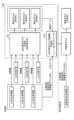
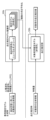
- FIG. 1 is a block diagram showing an example of a blood pressure estimation device according to Embodiment 1.
- FIG. 3 is a diagram for explaining a specific example of feature amounts.
- 5 is a flowchart illustrating an example of the operation of the blood pressure estimating device according to the first embodiment when estimating blood pressure.
- 2 is a flowchart illustrating an example of an operation during learning of the blood pressure estimating device according to the first embodiment.
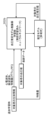
- FIG. 3 is a diagram for explaining a learning section according to the first embodiment.
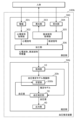
- FIG. 2 is a block diagram illustrating an example of a blood pressure estimation device according to a modification of the first embodiment.
- FIG. 2 is a block diagram illustrating an example of a blood pressure estimation device according to a second embodiment.
- FIG. 7 is a diagram for explaining an example of an operation during learning of the blood pressure estimating device according to the second embodiment.
- FIG. 7 is a diagram for explaining an example of an operation during additional learning of the blood pressure estimating device according to the second embodiment.
- FIG. 7 is a diagram for explaining an example of the operation of the blood pressure estimating device according to Embodiment 2 when estimating blood pressure.
- FIG. 7 is a diagram for explaining another example of the operation of the blood pressure estimating device according to the second embodiment when estimating blood pressure.
- FIG. 7 is a diagram for explaining an example of an operation during learning of the blood pressure estimating device according to Embodiment 3;
- this method estimates blood pressure values using biological information such as electrocardiograms and pulse waves, and more specifically, blood pressure values are estimated from pulse transmission time (PTT).
- PTT is a delay time of a pulse wave signal with respect to an electrocardiogram signal. It is known that when blood pressure increases, PTT becomes shorter, and when blood pressure decreases, PTT tends to become longer. Since there is a correlation between blood pressure and PTT, it is possible to estimate blood pressure values using electrocardiograms and pulse waves. It is possible. For example, as shown in Patent Documents 1 to 3, various estimation formulas for estimating blood pressure values using biological information such as pulse waves and electrocardiograms have been disclosed.
- the blood pressure value of the subject may not be optimal, and it may be difficult to accurately measure the blood pressure value of the subject.
- a blood pressure estimation device includes an acquisition unit that acquires biological information of a subject, and inputs the acquired biological information of the subject into a learned model generated by machine learning.
- a blood pressure estimation model inference unit that infers an estimation model for the blood pressure value of the subject, the acquired biological information of the subject, and the inferred model for estimating the blood pressure value of the subject. and a blood pressure estimating unit that estimates the blood pressure value of the blood pressure.
- a model for estimating a subject's blood pressure value is inferred using a learned model generated by machine learning.
- This estimation model is a model for the subject inferred from the subject's biological information, and is an optimal model for the subject. Therefore, blood pressure values can be accurately estimated for each individual using the inferred estimation model.
- the blood pressure estimation device can be made smaller, and, for example, a wearable device can be equipped with a blood pressure measurement function.
- the portability of the blood pressure estimation device can be improved.
- a cuff is not used for estimating (measuring) blood pressure, the portability of the blood pressure estimating device is improved, so that blood pressure can be measured continuously or constantly. Therefore, it is possible to understand the subject's condition in detail from instantaneous changes in blood pressure, which were difficult to judge in the past.
- the blood pressure estimation device may further include a learning unit that generates the learned model by performing machine learning based on the biological information of the plurality of people.
- a trained model can be generated using biometric information of multiple people.
- the learning unit may generate the learned model by performing machine learning based on blood pressure values and biological information of each of the plurality of people.
- the learning unit may generate the learned model by performing machine learning using biological information of each of the plurality of people as input data and blood pressure values of each of the plurality of people as teacher data. good.
- the learning unit generates an estimation model for the blood pressure value of each of the plurality of people based on the blood pressure value and biological information of each of the plurality of people, and inputs the biological information of each of the plurality of people.
- the trained model may be generated by performing machine learning using the generated blood pressure value estimation model of each of the plurality of people as data and the blood pressure value of each of the plurality of people as training data. good.
- an estimation model of each blood pressure value of a plurality of people from the relationship between each blood pressure value of a plurality of people and biological information. Then, machine learning is performed using the biological information of multiple people as input data and the estimated models and blood pressure values of multiple people as training data, so that the biological information is input and the estimated model is output. A trained model can be generated. In this way, the blood pressure values of multiple people are also used as training data, and the error between the estimated blood pressure values of multiple people estimated by the estimation model and the blood pressure values used as training data is Since machine learning is performed in advance to reduce the size, it is possible to perform additional learning using the subject's biological information and blood pressure value.
- the learning unit uses the acquired biological information of the subject as input data and performs additional machine learning using the subject's blood pressure value as teaching data, thereby learning the learned model for the subject. May be generated.
- the trained model is a model that has been trained using biological information of a person different from the target person, so depending on the target person, the estimation model output from the trained model may not be able to accurately estimate blood pressure values. be.
- an estimation model that can accurately estimate the subject's blood pressure value was created.
- a trained model for the target person to be output can be generated.
- the blood pressure estimation model inference unit inputs a plurality of pieces of biological information of the subject, which were used when additional machine learning was performed, into the trained model for the subject.
- the blood pressure estimation unit infers a plurality of estimation models for the blood pressure value of the subject, generates one estimation model for the subject from the plurality of inferred estimation models for the blood pressure value of the subject, and the blood pressure estimation unit
- the blood pressure value of the subject may be estimated based on the subject's biological information and the estimation model for the subject.
- an estimated model for one subject is created by averaging multiple estimated models that are inferred using multiple biological information of the subject that was used when additional machine learning was performed. can be generated. For example, it is no longer necessary to infer an estimation model each time a subject's blood pressure value is estimated, and once the estimation model for the subject is generated, the estimation model for the subject can be used to estimate the subject's blood pressure value. can do.
- the learning unit generates an estimation model of the blood pressure value of each of the plurality of people based on the blood pressure value and biological information of each of the plurality of people, and the biological information of each of the plurality of people,
- the learned model may be generated by performing machine learning based on the generated blood pressure value estimation model of each of the plurality of people.
- the learning unit may generate an estimation model for the blood pressure values of each of the plurality of people by regression analysis.
- the blood pressure estimation model inference unit may infer a polynomial using the acquired biological information of the subject as a variable, as the model for estimating the blood pressure value of the subject.
- the estimation model for the subject's blood pressure value may be a polynomial.
- the blood pressure estimation model inference unit may infer a weighting coefficient of a neural network that receives the acquired biological information of the subject as an input, as an estimation model of the blood pressure value of the subject.
- the model for estimating the blood pressure value of the subject may be a neural network.
- the biological information may be biological information regarding electrocardiograms and pulse waves.
- the blood pressure value can be estimated based on the biological information regarding the electrocardiogram and the pulse wave.
- the blood pressure estimation model inference unit inputs an electrocardiogram waveform and a pulse waveform as acquired biological information of the subject and information for matching the times of the electrocardiogram waveform and the pulse waveform to the learned model.
- an estimation model for the blood pressure value of the subject is inferred
- the blood pressure estimator infers a model for estimating the blood pressure value of the subject
- the blood pressure estimating unit includes feature amounts related to the electrocardiogram and pulse wave as the acquired biological information of the subject, and the inferred model of the blood pressure value of the subject.
- the blood pressure value of the subject may be estimated based on the blood pressure value estimation model.
- the optimal estimation model for the subject can be inferred from the subject's electrocardiogram waveform and pulse waveform. Furthermore, when estimating the blood pressure value of a subject using the inferred estimation model, it is not necessary to use the electrocardiogram waveform and pulse wave waveform. It is possible to easily estimate a person's blood pressure value.
- the information for matching the times of the electrocardiogram waveform and the pulse waveform is the pulse wave transit time (PTTv) from the R wave of the electrocardiogram waveform to the trough of the pulse waveform
- the pulse wave transit time (PTTv) from the peak of the pulse waveform to the may include the time to the peak of the pulse waveform (PPI: Peak to Peak Interval).
- the blood pressure estimation unit estimates the blood pressure value of the target person by multiplying the acquired biological information of the target person by a coefficient included in an inferred estimation model of the blood pressure value of the target person. You may.
- blood pressure values can be estimated using a simple method.
- a blood pressure estimation method is a method that is executed by a computer, and includes an acquisition step of acquiring biological information of a subject, and a method that includes an acquisition step of acquiring biological information of a subject, and a method in which the acquired biological information of the subject is generated by machine learning.
- a blood pressure estimation model inference step of inferring an estimation model of the blood pressure value of the subject by inputting the obtained biological information of the subject into a trained model; and a blood pressure estimating step of estimating the blood pressure value of the subject based on the estimation model.
- a program according to one aspect of the present disclosure is a program that causes a computer to execute the above blood pressure estimation method.
- Embodiment 1 a blood pressure estimation device according to Embodiment 1 will be described.
- FIG. 1 is a block diagram illustrating an example of a blood pressure estimation device 100 according to the first embodiment.
- the blood pressure estimation device 100 is a device that estimates a person's blood pressure value.
- the person whose blood pressure value is estimated will also be referred to as a subject.
- the blood pressure estimating device 100 can estimate blood pressure values using a method that does not use a cuff. Therefore, the blood pressure estimation device 100 can be realized as a wearable device, for example.
- the blood pressure estimating device 100 includes an estimating section 50 and a measuring section 300.
- the measurement unit 300 measures a person's electrocardiogram and pulse wave.
- the measuring section 300 includes an electrode 301, an electrocardiographic signal acquisition section 302, a light emitting section 303, a light receiving section 304, a pulse wave signal acquisition section 305, and a processing section 306.
- the electrocardiographic signal acquisition unit 302 acquires electrocardiographic signals via the electrodes 301 (specifically, two electrodes) that are in contact with the human body.
- the electrocardiographic signal acquisition unit 302 includes an amplifier circuit, a filter circuit, an AD conversion circuit, and the like, and a weak electrocardiographic signal is amplified, noise is removed, and converted into a digital value.
- the pulse wave signal acquisition unit 305 acquires a pulse wave signal based on the light emitted from the light emitting unit 303 reflected by the human body and received by the light receiving unit 304.
- the light receiving unit 304 converts the amount of reflected light received into a voltage value and outputs the voltage value to the pulse wave signal acquisition unit 305 as a pulse wave signal.
- the pulse wave signal acquisition unit 305 includes an amplifier circuit, a filter circuit, an AD conversion circuit, and the like, and the weak pulse wave signal is amplified, noise is removed, and converted into a digital value. Note that, instead of the reflected light reflected from the human body, transmitted light transmitted through the human body may be used.
- the processing unit 306 extracts biological information from the electrocardiogram signal and pulse wave signal acquired by the electrocardiogram signal acquisition unit 302 and pulse wave signal acquisition unit 305.
- the biological information is biological information regarding an electrocardiogram and a pulse wave, and specifically, an electrocardiogram waveform, a pulse wave waveform, and various feature amounts.
- the processing unit 306 extracts an electrocardiogram waveform and a pulse waveform for one beat. Specifically, the processing unit 306 detects R waves (see FIG. 2) from the electrocardiogram waveform, and extracts one beat of the electrocardiogram waveform based on the interval of the detected R waves. Further, the processing unit 306 detects pulse wave troughs (see FIG. 2) in the pulse wave waveform, and extracts one beat worth of pulse wave waveform based on the interval between the detected troughs.
- the processing unit 306 extracts 25 types of feature amounts.
- the 25 types of feature amounts will be explained using FIG. 2.
- FIG. 2 is a diagram for explaining a specific example of feature amounts.
- FIG. 2(a) is a diagram showing an electrocardiogram signal
- FIG. 2(b) is a diagram showing a pulse wave signal
- FIG. 2(c) is a diagram showing a pulse waveform for one beat.
- 2(d) is the first differential pulse waveform of the pulse waveform shown in FIG. 2(c)
- FIG. 2(e) is the pulse waveform shown in FIG. 2(c). This is the second-order differential pulse wave waveform.
- feature quantities x 1 to x 25 are shown as 25 types of feature quantities.
- the feature quantity x1 is the pulse wave transit time (PTTp) from the R wave of the electrocardiogram waveform (the point of contraction of the heart) to the peak of the pulse wave waveform.
- the feature quantity x2 is the pulse wave transit time (PTTv) from the R wave of the electrocardiogram waveform to the trough of the pulse wave waveform.
- the feature quantity x3 is the time (PPI) from the peak of a pulse wave waveform to the peak of the next pulse wave waveform.
- the feature quantity x4 has a value of 0 between the e wave (the last peak of the second order differential pulse wave waveform) and the f wave (the last trough of the second order differential pulse wave waveform). The time has come.
- the feature quantity x5 is the value of the first-order differential pulse wave waveform at time x4 .
- the feature amount x6 is the value of the pulse waveform at time x4 .
- the feature quantity x7 is the time of the a-wave of the second-order differential pulse wave waveform (the first peak of the second-order differential pulse wave waveform).
- the feature quantity x8 is the value of the second-order differential pulse wave waveform at time x7 .
- the feature quantity x 9 is the time of the b wave (first trough of the second-order differential pulse wave waveform) of the second-order differential pulse wave waveform.
- the feature amount x10 is the value at time x9 of the second-order differential pulse wave waveform.
- the feature quantity x11 is the time of the c wave of the second-order differential pulse wave waveform (the second peak of the second-order differential pulse wave waveform).
- the feature quantity x12 is the value of the second-order differential pulse wave waveform at time x11 .
- the feature quantity x13 is the time of the d wave of the second-order differential pulse wave waveform (the second valley of the second-order differential pulse wave waveform).
- the feature amount x14 is the value of the second-order differential pulse wave waveform at time x13 .
- the feature quantity x15 is the time of the e wave of the second-order differential pulse wave waveform.
- the feature amount x16 is the value of the second-order differential pulse wave waveform at time x15 .
- the feature quantity x 17 is the time of the f wave of the second-order differential pulse wave waveform.
- the feature quantity x18 is the value of the second-order differential pulse wave waveform at time x17 .
- the feature quantity x19 is the value of the first-order differential pulse wave waveform at time x7 .
- the feature quantity x20 is the value of the first-order differential pulse wave waveform at time x9 .
- the feature quantity x21 is the time of the peak of the first-order differential pulse wave waveform.
- the feature amount x 22 is the value of the first-order differential pulse wave waveform at time x 21 .
- the feature quantity x 23 is the time of the valley of the first-order differential pulse wave waveform.
- the feature quantity x24 is the value of the first-order differential pulse wave waveform at time x23 .
- the feature quantity x25 is the value of the straight line connecting the peak and the end of the pulse waveform at time x4 .
- the electrocardiogram waveform and pulse waveform for several beats are extracted, and the average of the electrocardiogram waveform and pulse waveform for several beats and the average of each feature in the electrocardiogram waveform and pulse waveform for several beats are extracted. may be done.
- the estimation unit 50 estimates the blood pressure value of the subject.
- the estimation section 50 includes an acquisition section 10 , a blood pressure estimation model inference section 20 , a blood pressure estimation section 30 , and an output section 40 .
- Blood pressure estimation device 100 (estimation unit 50) is a computer including a processor, memory, and the like.
- the memory includes ROM (Read Only Memory), RAM (Random Access Memory), and the like, and can store programs executed by the processor.
- the acquisition unit 10, the blood pressure estimation model inference unit 20, the blood pressure estimation unit 30, and the output unit 40 are realized by a processor that executes a program stored in a memory, or the like.
- the acquisition unit 10 acquires the subject's biological information. Specifically, the acquisition unit 10 acquires the subject's electrocardiogram waveform, pulse wave waveform, and various feature amounts from the measurement unit 300.
- the blood pressure estimation model inference unit 20 infers an estimation model for the blood pressure value of the subject by inputting the acquired biological information of the subject into a learned model generated by machine learning. For example, the blood pressure estimation model inference unit 20 inputs an electrocardiogram waveform, a pulse waveform, and information for matching the times of the electrocardiogram waveform and the pulse waveform as acquired biological information of the subject into the learned model. By doing so, an estimation model for the subject's blood pressure value is inferred.
- Information for matching the time between the electrocardiogram waveform and the pulse waveform is, for example, the pulse wave transit time (PTTv) from the R wave of the electrocardiogram waveform to the trough of the pulse waveform, and the time from the peak of the pulse waveform to the next pulse waveform.
- PTTv pulse wave transit time
- the blood pressure estimation model inference unit 20 infers a systolic blood pressure value estimation model and a diastolic blood pressure value estimation model as the subject's blood pressure value estimation model.
- the blood pressure estimation model inference section 20 may include a learning section 200.
- the learning unit 200 generates a learned model by performing machine learning based on biological information of a plurality of people.
- the blood pressure estimation unit 30 estimates the blood pressure value of the subject based on the acquired biological information of the subject and the inferred blood pressure value estimation model of the subject. For example, the blood pressure estimating unit 30 estimates the blood pressure value of the subject based on the acquired feature amounts regarding electrocardiogram and pulse wave as the subject's biological information and the inferred blood pressure value estimation model of the subject. do.
- the feature quantities related to electrocardiogram and pulse wave are feature quantities extracted from the electrocardiogram waveform and pulse wave waveform, and more specifically, the feature quantities x 1 to x 25 mentioned above, but the blood pressure value of the subject
- the feature quantity used for estimation is not limited to this, and may be a part of the feature quantities x 1 to x 25 or another feature quantity.
- the output unit 40 outputs the estimated blood pressure value.
- the output unit 40 outputs the estimated systolic blood pressure value and diastolic blood pressure value.
- the blood pressure estimating device 100 may include a display unit (such as a display) or an audio output unit (speaker), and the estimated blood pressure value may be displayed or output as audio.
- the measurement unit 300 does not need to be a component of the blood pressure estimation device 100.
- the blood pressure estimating device 100 (estimating unit 50) may acquire an electrocardiogram waveform, a pulse wave waveform, and various feature amounts from a measuring unit 300 provided separately from the blood pressure estimating device 100.
- FIG. 3 is a flowchart illustrating an example of the operation of the blood pressure estimation device 100 according to the first embodiment when estimating blood pressure.
- the acquisition unit 10 acquires biometric information of the subject (step S11). As described above, for example, the acquisition unit 10 acquires the electrocardiogram waveform, pulse waveform, and various feature amounts (eg, feature amounts x 1 to x 25 ) of the subject.
- the acquisition unit 10 acquires the electrocardiogram waveform, pulse waveform, and various feature amounts (eg, feature amounts x 1 to x 25 ) of the subject.
- the blood pressure estimation model inference unit 20 infers an estimation model for the blood pressure value of the subject by inputting the acquired biological information of the subject into the learned model generated by machine learning (step S12 ).
- the blood pressure estimation model inference unit 20 inputs the acquired electrocardiogram waveform, pulse waveform, PTTv (feature quantity x 2 ), and PPI (feature quantity x 3 ) of the subject into the learned model.
- a model for estimating the systolic blood pressure value and a model for estimating the diastolic blood pressure value of the subject are inferred.
- the blood pressure estimation model inference unit 20 infers a polynomial using the acquired biological information of the subject as a variable as a model for estimating the blood pressure value of the subject (systolic blood pressure value estimation model and diastolic blood pressure value estimation model).
- this variable is a feature amount related to an electrocardiogram and a pulse wave, specifically, a feature amount extracted from an electrocardiogram waveform and a pulse wave waveform, and more specifically, the above-mentioned feature amount x 1 ⁇ x25 .
- this variable is not limited to the feature quantities x 1 to x 25 but may be a part of the feature quantities x 1 to x 25 or another feature quantity.
- the systolic blood pressure value estimation model and the diastolic blood pressure value estimation model can be expressed by polynomials such as Equation 1 and Equation 2 below.
- a i and b i are coefficients
- c and d are constants
- x i are features.
- the blood pressure estimating unit 30 estimates the blood pressure value of the subject based on the acquired biological information of the subject and the inferred blood pressure value estimation model of the subject (step S13). For example, the blood pressure estimating unit 30 estimates the blood pressure value of the subject by multiplying the acquired biological information of the subject by a coefficient included in the inferred estimation model of the blood pressure value of the subject. For example, the blood pressure estimating unit 30 multiplies the acquired characteristic quantities x 1 to x 25 of the subject by the coefficients a i and b i in equations 1 and 2 above, thereby calculating the systolic blood pressure value and the lowest blood pressure value of the subject. Estimate blood pressure values.
- the output unit 40 outputs the estimated blood pressure value of the subject (step S14). For example, the output unit 40 outputs and displays the estimated systolic blood pressure value and diastolic blood pressure value of the subject on a display or the like.
- FIG. 4 is a flowchart illustrating an example of the operation of the blood pressure estimation device 100 according to the first embodiment during learning.
- FIG. 5 is a diagram for explaining the learning section 200 according to the first embodiment.
- a blood pressure estimation model generation section 201 and a blood pressure estimation model inference learning section 202 are shown as functional components used for learning by the learning section 200.
- the lower part of FIG. 5 schematically shows the flow of inference of the estimated model using the generated learned model.
- the learning unit 200 acquires blood pressure values and biological information of each of a plurality of people (step S21). For example, the learning unit 200 acquires a systolic blood pressure value and a diastolic blood pressure value as the blood pressure values of each of a plurality of people.
- the systolic blood pressure value and the diastolic blood pressure value are, for example, blood pressure values measured by a method using a cuff.
- the learning unit 200 acquires an electrocardiogram waveform, a pulse waveform, and a feature amount related to the electrocardiogram and pulse wave as biological information of each of the plurality of people.
- the feature amounts related to the electrocardiogram and pulse wave are feature amounts extracted from the electrocardiogram waveform and the pulse wave waveform, and specifically, the feature amounts x 1 to x 25 described above.
- people A, B, and C are shown in FIG. 5 as an example of a plurality of people. It's okay to be hit.
- the learning unit 200 (blood pressure estimation model generation unit 201) generates an estimation model for the blood pressure values of each of the plurality of people based on the blood pressure value and biological information of each of the plurality of people (step S22). For example, the learning unit 200 (blood pressure estimation model generation unit 201) generates an estimation model of each blood pressure value of a plurality of people by regression analysis. For example, a blood pressure estimation model for each individual is generated by regression analysis using a blood pressure value measured by a method using a cuff as training data and biological information (feature amount) as input data.
- a model for estimating person A's systolic blood pressure value is generated by multiple regression analysis using person A's systolic blood pressure value as training data and feature quantities x 1 to x 25 as input data;
- An estimation model for the diastolic blood pressure value of person A is generated by multiple regression analysis using the diastolic blood pressure value of person A as training data and the feature quantities x 1 to x 25 as input data.
- the estimation model for the systolic blood pressure value and the estimation model for the diastolic blood pressure value of person A are shown as estimation model A.
- Estimation model A is, for example, a polynomial whose variables are biological information of person A (eg, feature quantities x 1 to x 25 ).
- estimation model B for person B specifically, a model for estimating systolic blood pressure value and an estimation model for diastolic blood pressure value for person B
- estimation model C for person C specifically, a model for estimating person B's systolic blood pressure value and a model for estimating diastolic blood pressure value.
- a systolic blood pressure value estimation model and a diastolic blood pressure value estimation model of C) are generated.
- the estimation model generated by the blood pressure estimation model generation unit 201 through multiple regression analysis is a model for each individual, and for learning, the feature values (input data) and blood pressure values (teacher data) are will be prepared.
- the estimation model is a polynomial shown in Equation 1 and Equation 2 above, but depending on the case, a certain coefficient may be set to 0 and there may be a term that is not used during estimation.
- the method of generating an estimation model by the blood pressure estimation model generation unit 201 is not limited to a method using multiple regression analysis, but may be a method using other regression analysis such as a neural network. For example, when multiple regression analysis is used in the blood pressure estimation model generation unit 201, processing speed can be increased. On the other hand, when a neural network is used in the blood pressure estimation model generation unit 201, the accuracy of machine learning can be improved.
- the learning unit 200 uses the acquired biological information of each of the plurality of people and the generated estimation model of the blood pressure value of each of the plurality of people to create a machine.
- a learned model is generated (step S23).
- the blood pressure estimation model inference unit learning unit 202 learns a neural network that outputs a blood pressure value estimation model based on the biological information of each of a plurality of people. ) is generated.
- the blood pressure estimation model inference unit learning unit 202 uses the electrocardiogram waveform, pulse waveform, PTTv, and PPI of each of a plurality of people (for example, people A, B, and C) as input data, and uses the generated plurality of people (for example, people A, B, and C) as input data.
- a neural network that outputs a blood pressure value estimation model (polynomial) is trained using each of the polynomials A, B, and C) as training data.
- the blood pressure estimation model inference device learning unit 202 performs machine learning based on input data and teacher data of multiple people, and outputs polynomial coefficients (for example, a i and b i ) and constants (for example, c and d).
- the blood pressure estimation model inference unit 20 uses the electrocardiogram waveform, pulse waveform, PTTv and Based on feature quantities such as PPI, coefficients and constants of an estimation model suitable for the subject can be output. Then, the blood pressure value of the subject can be estimated by multiplying this coefficient by the subject's feature quantities (eg, feature quantities x 1 to x 25 ) and adding a constant.
- feature quantities eg, feature quantities x 1 to x 25
- a model for estimating the blood pressure value of the subject is inferred using the learned model generated by machine learning.
- This estimated model is a model inferred from the subject's biological information, and is the optimal model for the subject. Therefore, blood pressure values can be accurately estimated for each individual using the inferred estimation model.
- the blood pressure estimation device 100 can be made smaller, and, for example, a wearable device can be equipped with a blood pressure measurement function. Alternatively, the portability of the blood pressure estimation device 100 can be improved. Further, since a cuff is not used for estimating (measuring) blood pressure, the portability of the blood pressure estimating device is improved, so that blood pressure can be measured continuously or constantly. Therefore, it is possible to understand the subject's condition in detail from instantaneous changes in blood pressure, which were difficult to judge in the past.
- FIG. 6 is a block diagram illustrating an example of a blood pressure estimation device 100a according to a modification of the first embodiment.
- the blood pressure estimation device 100a according to the modification of the first embodiment includes an estimation unit 50a instead of the estimation unit 50, and the blood pressure estimation model inference unit 20a of the estimation unit 50a does not include the learning unit 200. This is different from the blood pressure estimation device 100 according to No. 1. Other points are basically the same as those in Embodiment 1, so detailed explanation will be omitted.
- the learning unit 200 may be provided in a computer outside the blood pressure estimation device 100a.
- the external computer may be a server or the like.
- a learning unit 200 provided in an external computer collects biological information (electrocardiographic waveforms, pulse waveforms, and feature quantities) of a plurality of people, and blood pressure values (systolic blood pressure values and minimum blood pressure values) of a plurality of people used as teaching data. blood pressure value) and generate a trained model.
- the blood pressure estimation device 100a receives the learned model generated by the learning section 200 via a communication section (not shown) for communicating with an external computer, and the blood pressure estimation model inference section 20a
- An estimation model for the blood pressure value of the subject may be inferred using the received trained model.
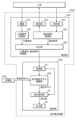
- FIG. 7 is a block diagram showing an example of a blood pressure estimation device 100b according to the second embodiment.
- the blood pressure estimating device 100b according to the second embodiment differs from the blood pressure estimating device 100 according to the first embodiment in that an estimating section 50b is provided instead of the estimating section 50.
- the estimation unit 50b according to the second embodiment differs from the estimation unit 50 according to the first embodiment in that the estimation unit 50b includes a blood pressure estimation model inference unit 20b instead of the blood pressure estimation model inference unit 20.
- Blood pressure estimation model inference section 20b differs from blood pressure estimation model inference section 20 according to the first embodiment in that it includes a learning section 200b instead of learning section 200.
- Other points are basically the same as those in Embodiment 1, so detailed explanation will be omitted.
- the learning unit 200b generates a learned model by performing machine learning based on the blood pressure values and biological information of each of a plurality of people.
- the learning unit 200b also learns the subject's blood pressure values (for example, the systolic blood pressure value and the diastolic blood pressure value measured by a method using a cuff) and the blood pressure value estimated by the blood pressure estimation unit 30 (for example, the estimated blood pressure value). It also has a function to perform additional learning of the trained model using the systolic blood pressure value and diastolic blood pressure value. Details of the learning section 200b will be explained using FIGS. 8 and 9.
- FIG. 8 is a diagram for explaining an example of the operation of the blood pressure estimation device 100b according to the second embodiment during learning.
- the learning unit 200b acquires blood pressure values and biological information of each of a plurality of people. For example, the learning unit 200b acquires a systolic blood pressure value and a diastolic blood pressure value as the blood pressure values of each of a plurality of people.
- the systolic blood pressure value and the diastolic blood pressure value are, for example, blood pressure values measured by a method using a cuff.
- the learning unit 200b acquires an electrocardiogram waveform, a pulse waveform, and a feature amount related to the electrocardiogram and pulse wave as biological information of each of the plurality of people.
- the feature amounts related to the electrocardiogram and pulse wave are feature amounts extracted from the electrocardiogram waveform and the pulse wave waveform, and specifically, the feature amounts x 1 to x 25 described above.
- people A, B, and C are shown in FIG. 8 as an example of multiple people. It's okay to be hit.
- the learning unit 200b (blood pressure estimation model generation unit 201) generates an estimation model of the blood pressure values of each of the plurality of people based on the blood pressure value and biological information of each of the plurality of people.
- the blood pressure estimation model generation unit 201 generates an estimation model of each blood pressure value of a plurality of people by regression analysis.
- a blood pressure estimation model for each individual is generated by regression analysis using a blood pressure value measured by a method using a cuff as training data and biological information (feature amount) as input data.
- a model for estimating person A's systolic blood pressure value is generated by multiple regression analysis using person A's systolic blood pressure value as training data and feature quantities x 1 to x 25 as input data;
- An estimation model for the diastolic blood pressure value of person A is generated by multiple regression analysis using the diastolic blood pressure value of person A as training data and the feature quantities x 1 to x 25 as input data.
- the estimation model for the systolic blood pressure value and the estimation model for the diastolic blood pressure value of person A are shown as estimation model A.
- Estimation model A is, for example, a polynomial whose variables are biological information of person A (eg, feature quantities x 1 to x 25 ).
- estimation model B for person B specifically, a model for estimating systolic blood pressure value and an estimation model for diastolic blood pressure value for person B
- estimation model C for person C specifically, a model for estimating person B's systolic blood pressure value and a model for estimating diastolic blood pressure value.
- a systolic blood pressure value estimation model and a diastolic blood pressure value estimation model of C) are generated.
- the estimation model generated by the blood pressure estimation model generation unit 201 through multiple regression analysis is a model for each individual, and for learning, the feature values (input data) and blood pressure values (teacher data) are will be prepared.
- the estimation model is a polynomial shown in Equation 1 and Equation 2 above, but depending on the case, a certain coefficient may be set to 0 and there may be a term that is not used during estimation.
- the method of generating an estimation model by the blood pressure estimation model generation unit 201 is not limited to a method using multiple regression analysis, but may be a method using other regression analysis such as a neural network. For example, when multiple regression analysis is used in the blood pressure estimation model generation unit 201, processing speed can be increased. On the other hand, when a neural network is used in the blood pressure estimation model generation unit 201, the accuracy of machine learning can be improved.
- the learning unit 200b uses the biological information of each of the plurality of people as input data, and generates a blood pressure value estimation model of each of the plurality of people and a plurality of A trained model is generated by performing machine learning using each person's blood pressure values as training data.
- the blood pressure estimation model inference device learning unit 202b learns a neural network that outputs a blood pressure value estimation model based on the biological information of each of a plurality of people. ) is generated.
- the blood pressure estimation model inference device learning unit 202 does not use the blood pressure values of a plurality of people as training data, but in the second embodiment, the blood pressure estimation model inference device learning unit 202b uses a plurality of people's blood pressure values as training data. Each person's blood pressure value is used as training data.
- the blood pressure estimation model inference device learning unit 202b uses the electrocardiogram waveform, pulse waveform, PTTv, and PPI of each of a plurality of people (for example, people A, B, and C) as input data, and uses the generated plurality of Outputs a blood pressure value estimation model (polynomial) using polynomials for each person (for example, people A, B, and C) and blood pressure values for each of multiple people (for example, people A, B, and C) as training data.
- a blood pressure value estimation model polynomial
- the blood pressure estimation model inference device learning unit 202b infers the estimation model based on the input data each time it learns, in other words, each time it updates the weighting coefficients of the neural network, and adds feature quantities to the inferred estimation model.
- feature quantities x 1 to x 25 blood pressure values of a plurality of people (for example, people A, B, and C) are estimated.
- the blood pressure estimation model inference unit learning unit 202b compares the estimated blood pressure value with the blood pressure value that is teacher data to find an error, and performs learning so that this error becomes smaller. In this way, the blood pressure estimation model inference device learning unit 202b generates a learned model.
- the blood pressure estimation model inference unit 20b uses the electrocardiogram waveform, pulse waveform, PTTv and Based on feature quantities such as PPI, coefficients and constants of an estimation model suitable for the subject can be output. Then, the blood pressure value of the subject can be estimated by multiplying this coefficient by the subject's feature quantities (eg, feature quantities x 1 to x 25 ) and adding a constant.
- the trained model is a model trained using biological information of a person different from the target person, the estimation model output from the trained model may not be able to accurately estimate blood pressure values depending on the target person. In some cases.
- FIG. 9 is a diagram for explaining an example of the operation of the blood pressure estimation device 100b according to the second embodiment during additional learning.
- the learning unit 200b uses the acquired biological information of the target person as input data and performs additional machine learning using the target person's blood pressure value as teaching data, thereby creating a model for the target person. Generate a trained model. Note that when performing additional machine learning, it is difficult to prepare a correct estimation model for the subject, so the subject's blood pressure value is used as training data. For example, when a subject uses the blood pressure estimation device 100b for the first time, blood pressure estimation model inference can be made by measuring blood pressure values and biological information (such as electrocardiogram waveforms and pulse waveforms) multiple times (for example, three times). The device learning unit 202b acquires data for additional learning. For example, biological information is measured by the measurement unit 300, and blood pressure values are measured using a sphygmomanometer using a cuff or the like.
- the blood pressure estimation model inference device learning unit 202b performs additional learning using the subject's electrocardiogram waveform, pulse wave waveform, PTTv, and PPI as input data, and the subject's blood pressure value as teacher data.
- the blood pressure estimation model inference unit learning unit 202b performs inference on the estimation model in the same manner as in the pre-learning, and inputs feature quantities (for example, feature quantities x 1 to x 25 ) for the inferred estimation model, thereby determining the target Estimate a person's blood pressure value.
- the blood pressure estimation model inference unit learning unit 202b compares the estimated blood pressure value with the blood pressure value that is teacher data to find an error, and performs learning so that this error becomes smaller. Thereby, it is possible to generate a trained model for the subject that outputs an estimation model that can accurately estimate the blood pressure value of the subject.
- Embodiment 2 as explained in FIG. 8, pre-training of the trained model is performed so that the error between the estimated blood pressure value and the correct blood pressure value is small. It is possible to perform additional learning on the trained model so that the error between the calculated blood pressure value and the correct blood pressure value is reduced.
- FIG. 10 is a diagram for explaining an example of the operation of the blood pressure estimating device 100b according to the second embodiment when estimating blood pressure.
- the blood pressure estimation model inference unit 20b uses the subject's electrocardiogram waveform, pulse waveform, and feature quantities such as PTTv and PPI to Coefficients and constants (blood pressure estimation unit 30) of a suitable estimation model can be output. Then, by multiplying this coefficient by the subject's feature quantities (for example, feature quantities x 1 to x 25 ) and adding a constant, the subject's blood pressure value can be estimated with higher accuracy.
- FIG. 10 shows an example in which an estimation model is inferred each time the subject's blood pressure value is estimated, but when the subject uses the blood pressure estimation device 100b for the first time, the estimation model for the subject is Once generated, the estimation model for the subject may be used thereafter when estimating the blood pressure value of the subject. This will be explained using FIG. 11.
- FIG. 11 is a diagram for explaining another example of the operation of the blood pressure estimation device 100b according to the second embodiment when estimating blood pressure.
- the blood pressure estimating device 100b includes a blood pressure estimating section 30b that estimates the blood pressure value of the subject using an estimation model for the subject, instead of the blood pressure estimating section 30.
- the blood pressure estimation model inference unit 20b collects multiple (for example, three) pieces of biological information (for example, electrocardiogram waveform, pulse waveform, PTTv, and PPI) of the subject that were used when additional machine learning was performed. By inputting the information into the trained model for the target person (additionally trained neural network), a plurality of (for example, three) estimation models for the target person's blood pressure value are inferred. Then, the blood pressure estimation model inference unit 20b generates one estimation model for the subject from the plurality of estimation models for the inferred blood pressure value of the subject.
- biological information for example, electrocardiogram waveform, pulse waveform, PTTv, and PPI
- the blood pressure estimation model inference unit 20b generates an estimation model for one subject by calculating the average value of each coefficient and each constant of a plurality of estimation models (polynomials) of the inferred blood pressure value of the subject. .
- the average value may be calculated by excluding outliers.
- an estimation model for the subject may be generated by obtaining a median value or the like instead of the average value.
- the blood pressure estimating unit 30b estimates the blood pressure value of the subject based on the acquired biological information of the subject (for example, feature quantities x 1 to x 25 ) and the estimation model for the subject. In this way, it is no longer necessary to infer an estimation model each time the subject's blood pressure value is estimated, and once the estimation model for the subject is generated, the estimation model for the subject can be used to estimate the subject's blood pressure value. can be estimated.
- blood pressure values and biological information are used when generating a trained model, additional learning using the biological information and blood pressure values of the subject can be performed on the generated trained model. becomes possible.
- the blood pressure values of multiple people are also used as training data, and the error between the estimated blood pressure values of multiple people estimated by the estimation model and the blood pressure values used as training data. Since machine learning is performed in advance so that the amount is small, it is possible to perform additional learning using the subject's biological information and blood pressure value. Then, additional machine learning is performed using the subject's biological information as input data and the subject's blood pressure value as training data, thereby outputting an estimation model that can accurately estimate the subject's blood pressure value. It is possible to generate a trained model for users.
- the learning unit 200b may be provided in a computer outside the blood pressure estimation device 100b, as in the modification of the first embodiment.
- FIG. 12 is a diagram for explaining an example of the operation of the blood pressure estimating device according to the third embodiment during learning.
- the blood pressure estimation device differs from the blood pressure estimation device 100b according to the second embodiment in that it includes a learning section 200c instead of the learning section 200b.
- Other points are the same as those in Embodiment 2, so explanations will be omitted.
- the learning unit 200c (blood pressure estimation model inference unit learning unit 202c) performs machine learning using biological information of multiple people as input data and blood pressure values of multiple people as training data. By doing this, a trained model is generated.
- the learning unit 200c does not include the blood pressure estimation model generation unit 201 unlike the learning unit 200b according to the second embodiment.
- the blood pressure estimation model inference device learning unit 202c calculates the blood pressure values of each of a plurality of people. Do not use the estimated model as training data. Even in this case, the blood pressure estimation model inference device learning unit 202c learns a neural network that outputs a blood pressure value estimation model based on the biological information of each of a plurality of people. Generate a model (trained model).
- the blood pressure estimation model inference device learning unit 202c uses as input data the electrocardiogram waveform, pulse waveform, PTTv, and PPI of each of a plurality of people (for example, people A, B, and C), and For example, a neural network that outputs a blood pressure value estimation model (polynomial) is trained using the blood pressure values of people A, B, and C as training data.
- the blood pressure estimation model inference device learning unit 202c infers the estimation model based on the input data each time it learns, in other words, each time it updates the weighting coefficient of the neural network, and calculates the feature amount for the inferred estimation model.
- blood pressure values of a plurality of people are estimated.
- the blood pressure estimation model inference device learning unit 202c compares the estimated blood pressure value with the blood pressure value that is teacher data to find an error, and performs learning so that this error becomes small. In this way, the blood pressure estimation model inference device learning unit 202c generates a trained model.
- Embodiment 3 when generating a trained model, machine learning is performed using biological information as input data and blood pressure values as teacher data. It becomes possible to perform additional learning using the information as input data and the subject's blood pressure value as teacher data.
- the learning unit 200c may be provided in a computer outside the blood pressure estimation device, as in the modification of the first embodiment.
- the blood pressure estimation model generation unit 201 may generate weighting coefficients of a neural network as estimation models for each of a plurality of people. Then, the blood pressure estimation model inference device learning unit 202 uses the electrocardiogram waveform, pulse waveform, PTTv, and PPI of each of the plurality of people as input data, and uses the generated weight coefficients of the neural network of the plurality of people as training data. , a neural network that outputs a blood pressure value estimation model (neural network) may be trained.
- the blood pressure estimation model inference unit 20 infers weighting coefficients of a neural network that inputs the acquired biological information (for example, feature quantities x 1 to x 25 ) of the subject as an estimation model of the subject's blood pressure value. do.
- examples of biological information used by the blood pressure estimation model inference unit for inference of the estimation model include electrocardiogram waveforms, pulse waveforms, and information for matching the times of the electrocardiogram waveforms and the pulse waveforms ( For example, PTTv and PPI) have been explained, and feature quantities related to electrocardiograms and pulse waves (for example, feature quantities x 1 to x 25 ) have been explained as examples of biological information used by the blood pressure estimation unit to estimate blood pressure values.
- PTTv and PPI feature quantities related to electrocardiograms and pulse waves
- feature quantities x 1 to x 25 have been explained as examples of biological information used by the blood pressure estimation unit to estimate blood pressure values.
- the biological information that the blood pressure estimation model inference section uses to infer the estimation model and the biological information that the blood pressure estimation section uses to estimate the blood pressure value may be the same.
- the biological information that the blood pressure estimation model inference unit uses to infer the estimation model and the biological information that the blood pressure estimation unit uses to estimate the blood pressure value are both feature quantities related to electrocardiograms and pulse waves (for example, feature quantities x 1 to x 25 ).
- the information for synchronizing the time of the electrocardiogram waveform and the pulse waveform is PTTv and PPI, but the information is not limited to this.
- the information for synchronizing the time between the electrocardiogram waveform and the pulse waveform is the pulse wave transit time (PTTv) from the R wave of the electrocardiogram waveform to the peak of the pulse waveform, and the information from the R wave of the electrocardiogram waveform to the next pulse waveform. It may be the time until the R wave of the electrocardiogram waveform (RRI: RR Interval).
- the biological information is information regarding electrocardiograms and pulse waves, but the present invention is not limited to this.
- the biological information may be a ballistocardiogram, a phonocardiogram, a bioimpedance, or the like.
- biological information such as height, weight, blood oxygen saturation concentration (SpO2), or body temperature may be used to estimate the blood pressure value.
- the present disclosure can be realized not only as a blood pressure estimation device, but also as a blood pressure estimation method including steps (processing) performed by the components constituting the blood pressure estimation device.
- the blood pressure estimation method is a method executed by a computer, and as shown in FIG.
- a blood pressure estimation model inference step (step S12) of inferring an estimation model of the blood pressure value of the subject by inputting it into the trained model generated by learning, the acquired biological information of the subject, and the inferred target.
- a blood pressure estimation step (step S13) of estimating the blood pressure value of the subject based on the estimation model of the blood pressure value of the subject.
- the present disclosure can be implemented as a program for causing a processor to execute the steps included in the blood pressure estimation method. Further, the present disclosure can be implemented as a non-transitory computer-readable recording medium such as a CD-ROM on which the program is recorded.
- each step is executed by executing the program using hardware resources such as a computer's CPU, memory, and input/output circuits. . That is, each step is executed by the CPU acquiring data from a memory or input/output circuit, etc., and performing calculations, and outputting the calculation results to the memory, input/output circuit, etc.
- hardware resources such as a computer's CPU, memory, and input/output circuits.
- each component included in the blood pressure estimation device may be configured with dedicated hardware, or may be realized by executing a software program suitable for each component.
- Each component may be realized by a program execution unit such as a CPU or a processor reading and executing a software program recorded on a recording medium such as a hard disk or a semiconductor memory.
- a part or all of the functions of the blood pressure estimating device according to the above embodiment are typically realized as an LSI, which is an integrated circuit. These may be integrated into one chip individually, or may be integrated into one chip including some or all of them. Further, circuit integration is not limited to LSI, and may be realized using a dedicated circuit or a general-purpose processor.
- An FPGA Field Programmable Gate Array
- a reconfigurable processor that can reconfigure the connections and settings of circuit cells inside the LSI may be used.
- the present disclosure can be applied to devices such as wearable devices that measure blood pressure without using a cuff.
Landscapes
- Health & Medical Sciences (AREA)
- Life Sciences & Earth Sciences (AREA)
- Engineering & Computer Science (AREA)
- Physics & Mathematics (AREA)
- Cardiology (AREA)
- Biophysics (AREA)
- Public Health (AREA)
- Veterinary Medicine (AREA)
- Physiology (AREA)
- General Health & Medical Sciences (AREA)
- Animal Behavior & Ethology (AREA)
- Surgery (AREA)
- Molecular Biology (AREA)
- Pathology (AREA)
- Biomedical Technology (AREA)
- Heart & Thoracic Surgery (AREA)
- Medical Informatics (AREA)
- Artificial Intelligence (AREA)
- Vascular Medicine (AREA)
- Evolutionary Computation (AREA)
- Fuzzy Systems (AREA)
- Signal Processing (AREA)
- Psychiatry (AREA)
- Mathematical Physics (AREA)
- Computer Vision & Pattern Recognition (AREA)
- Ophthalmology & Optometry (AREA)
- Measuring Pulse, Heart Rate, Blood Pressure Or Blood Flow (AREA)
Priority Applications (2)
| Application Number | Priority Date | Filing Date | Title |
|---|---|---|---|
| JP2024512303A JPWO2023190085A1 (https=) | 2022-03-30 | 2023-03-23 | |
| US18/888,879 US20250009239A1 (en) | 2022-03-30 | 2024-09-18 | Blood pressure estimation device, blood pressure estimation method, and recording medium |
Applications Claiming Priority (4)
| Application Number | Priority Date | Filing Date | Title |
|---|---|---|---|
| JP2022-055153 | 2022-03-30 | ||
| JP2022055153 | 2022-03-30 | ||
| JP2022-163397 | 2022-10-11 | ||
| JP2022163397 | 2022-10-11 |
Related Child Applications (1)
| Application Number | Title | Priority Date | Filing Date |
|---|---|---|---|
| US18/888,879 Continuation US20250009239A1 (en) | 2022-03-30 | 2024-09-18 | Blood pressure estimation device, blood pressure estimation method, and recording medium |
Publications (1)
| Publication Number | Publication Date |
|---|---|
| WO2023190085A1 true WO2023190085A1 (ja) | 2023-10-05 |
Family
ID=88202114
Family Applications (1)
| Application Number | Title | Priority Date | Filing Date |
|---|---|---|---|
| PCT/JP2023/011648 Ceased WO2023190085A1 (ja) | 2022-03-30 | 2023-03-23 | 血圧推定装置、血圧推定方法およびプログラム |
Country Status (3)
| Country | Link |
|---|---|
| US (1) | US20250009239A1 (https=) |
| JP (1) | JPWO2023190085A1 (https=) |
| WO (1) | WO2023190085A1 (https=) |
Citations (4)
| Publication number | Priority date | Publication date | Assignee | Title |
|---|---|---|---|---|
| JP2000157500A (ja) * | 1998-11-27 | 2000-06-13 | Nippon Colin Co Ltd | 血圧監視装置 |
| US20170347894A1 (en) * | 2016-06-03 | 2017-12-07 | Fourth Frontier Technologies Pvt. Ltd. | System and method for continuous monitoring of blood pressure |
| KR101820511B1 (ko) * | 2016-11-15 | 2018-01-19 | 서울대학교산학협력단 | 생체 신호를 이용한 활동 모델 기반 혈압 추정 장치 및 방법 |
| WO2021044696A1 (ja) * | 2019-09-06 | 2021-03-11 | Necソリューションイノベータ株式会社 | 栄養摂取量の推定装置、健康管理支援装置、栄養摂取量の推定方法、健康管理支援方法、プログラムおよび栄養摂取量の推定システム |
-
2023
- 2023-03-23 WO PCT/JP2023/011648 patent/WO2023190085A1/ja not_active Ceased
- 2023-03-23 JP JP2024512303A patent/JPWO2023190085A1/ja active Pending
-
2024
- 2024-09-18 US US18/888,879 patent/US20250009239A1/en active Pending
Patent Citations (4)
| Publication number | Priority date | Publication date | Assignee | Title |
|---|---|---|---|---|
| JP2000157500A (ja) * | 1998-11-27 | 2000-06-13 | Nippon Colin Co Ltd | 血圧監視装置 |
| US20170347894A1 (en) * | 2016-06-03 | 2017-12-07 | Fourth Frontier Technologies Pvt. Ltd. | System and method for continuous monitoring of blood pressure |
| KR101820511B1 (ko) * | 2016-11-15 | 2018-01-19 | 서울대학교산학협력단 | 생체 신호를 이용한 활동 모델 기반 혈압 추정 장치 및 방법 |
| WO2021044696A1 (ja) * | 2019-09-06 | 2021-03-11 | Necソリューションイノベータ株式会社 | 栄養摂取量の推定装置、健康管理支援装置、栄養摂取量の推定方法、健康管理支援方法、プログラムおよび栄養摂取量の推定システム |
Non-Patent Citations (1)
| Title |
|---|
| SONG KWANGSUB; CHUNG KU-YOUNG; CHANG JOON-HYUK: "Cuffless Deep Learning-Based Blood Pressure Estimation for Smart Wristwatches", IEEE TRANSACTIONS ON INSTRUMENTATION AND MEASUREMENT, IEEE, USA, vol. 69, no. 7, 14 October 2019 (2019-10-14), USA, pages 4292 - 4302, XP011791885, ISSN: 0018-9456, DOI: 10.1109/TIM.2019.2947103 * |
Also Published As
| Publication number | Publication date |
|---|---|
| JPWO2023190085A1 (https=) | 2023-10-05 |
| US20250009239A1 (en) | 2025-01-09 |
Similar Documents
| Publication | Publication Date | Title |
|---|---|---|
| Yang et al. | Estimation and validation of arterial blood pressure using photoplethysmogram morphology features in conjunction with pulse arrival time in large open databases | |
| CN107920758B (zh) | 用于确定血压值的方法、装置和计算机程序 | |
| Ghosh et al. | Continuous blood pressure prediction from pulse transit time using ECG and PPG signals | |
| Gaurav et al. | Cuff-less PPG based continuous blood pressure monitoring—A smartphone based approach | |
| Kurylyak et al. | A Neural Network-based method for continuous blood pressure estimation from a PPG signal | |
| KR101210828B1 (ko) | 다중 생체 신호 측정을 이용하여 손목혈압의 정확도를 향상시키는 방법 및 장치 | |
| John et al. | A multimodal data fusion technique for heartbeat detection in wearable IoT sensors | |
| Beutel et al. | Pulse arrival time segmentation into cardiac and vascular intervals–implications for pulse wave velocity and blood pressure estimation | |
| CN114145724A (zh) | 基于ecg和ppg多生理特征参数动态监测血压的方法 | |
| Landry et al. | Nonlinear dynamic modeling of blood pressure waveform: Towards an accurate cuffless monitoring system | |
| US10349838B2 (en) | Methods and apparatus for determining arterial pulse wave velocity | |
| US20230218178A1 (en) | Construction method and application of digital human cardiovascular system based on hemodynamics | |
| JP2018517528A5 (https=) | ||
| CN113470805A (zh) | 建立血压模型的方法 | |
| Roy et al. | BePCon: A photoplethysmography-based quality-aware continuous beat-to-beat blood pressure measurement technique using deep learning | |
| US12059234B2 (en) | Method and a system for estimating a measure of cardiovascular health of a subject | |
| CN116269269A (zh) | 具有数据质量评估功能的连续血压测量仪、系统及方法 | |
| Phan et al. | Noninvasive, wearable multi biosensors for continuous, long-term monitoring of blood pressure via internet of things applications | |
| JP6434432B2 (ja) | 10個未満の電極を有する装置から12誘導ecg計測値を生成する際に使用する改善されたecg算出方法 | |
| US12414697B2 (en) | Single-arm two-electrode blood pressure measuring device and measuring method thereof | |
| US20250169700A1 (en) | Machine learning techniques for estimating carotid-femoral pulse wave velocity and/or vascular age from single-site arterial waveform measurements | |
| Girčys et al. | Wearable system for real-time monitoring of hemodynamic parameters: Implementation and evaluation | |
| JP6615970B1 (ja) | 血圧推定装置および血圧推定プログラム | |
| Baktash et al. | Characteristic ratio-independent arterial stiffness-based blood pressure estimation | |
| WO2023190085A1 (ja) | 血圧推定装置、血圧推定方法およびプログラム |
Legal Events
| Date | Code | Title | Description |
|---|---|---|---|
| 121 | Ep: the epo has been informed by wipo that ep was designated in this application |
Ref document number: 23780095 Country of ref document: EP Kind code of ref document: A1 |
|
| ENP | Entry into the national phase |
Ref document number: 2024512303 Country of ref document: JP Kind code of ref document: A |
|
| NENP | Non-entry into the national phase |
Ref country code: DE |
|
| 122 | Ep: pct application non-entry in european phase |
Ref document number: 23780095 Country of ref document: EP Kind code of ref document: A1 |