WO2023181597A1 - 情報処理装置、プログラム、オブジェクト提供システム及び方法 - Google Patents
情報処理装置、プログラム、オブジェクト提供システム及び方法 Download PDFInfo
- Publication number
- WO2023181597A1 WO2023181597A1 PCT/JP2023/000849 JP2023000849W WO2023181597A1 WO 2023181597 A1 WO2023181597 A1 WO 2023181597A1 JP 2023000849 W JP2023000849 W JP 2023000849W WO 2023181597 A1 WO2023181597 A1 WO 2023181597A1
- Authority
- WO
- WIPO (PCT)
- Prior art keywords
- game
- user
- card
- expiration date
- mode
- Prior art date
- Legal status (The legal status is an assumption and is not a legal conclusion. Google has not performed a legal analysis and makes no representation as to the accuracy of the status listed.)
- Ceased
Links
Images








Classifications
-
- A—HUMAN NECESSITIES
- A63—SPORTS; GAMES; AMUSEMENTS
- A63F—CARD, BOARD, OR ROULETTE GAMES; INDOOR GAMES USING SMALL MOVING PLAYING BODIES; VIDEO GAMES; GAMES NOT OTHERWISE PROVIDED FOR
- A63F13/00—Video games, i.e. games using an electronically generated display having two or more dimensions
- A63F13/50—Controlling the output signals based on the game progress
- A63F13/53—Controlling the output signals based on the game progress involving additional visual information provided to the game scene, e.g. by overlay to simulate a head-up display [HUD] or displaying a laser sight in a shooting game
- A63F13/537—Controlling the output signals based on the game progress involving additional visual information provided to the game scene, e.g. by overlay to simulate a head-up display [HUD] or displaying a laser sight in a shooting game using indicators, e.g. showing the condition of a game character on screen
- A63F13/5375—Controlling the output signals based on the game progress involving additional visual information provided to the game scene, e.g. by overlay to simulate a head-up display [HUD] or displaying a laser sight in a shooting game using indicators, e.g. showing the condition of a game character on screen for graphically or textually suggesting an action, e.g. by displaying an arrow indicating a turn in a driving game
-
- A—HUMAN NECESSITIES
- A63—SPORTS; GAMES; AMUSEMENTS
- A63F—CARD, BOARD, OR ROULETTE GAMES; INDOOR GAMES USING SMALL MOVING PLAYING BODIES; VIDEO GAMES; GAMES NOT OTHERWISE PROVIDED FOR
- A63F13/00—Video games, i.e. games using an electronically generated display having two or more dimensions
- A63F13/60—Generating or modifying game content before or while executing the game program, e.g. authoring tools specially adapted for game development or game-integrated level editor
- A63F13/69—Generating or modifying game content before or while executing the game program, e.g. authoring tools specially adapted for game development or game-integrated level editor by enabling or updating specific game elements, e.g. unlocking hidden features, items, levels or versions
-
- A—HUMAN NECESSITIES
- A63—SPORTS; GAMES; AMUSEMENTS
- A63F—CARD, BOARD, OR ROULETTE GAMES; INDOOR GAMES USING SMALL MOVING PLAYING BODIES; VIDEO GAMES; GAMES NOT OTHERWISE PROVIDED FOR
- A63F13/00—Video games, i.e. games using an electronically generated display having two or more dimensions
- A63F13/70—Game security or game management aspects
- A63F13/79—Game security or game management aspects involving player-related data, e.g. identities, accounts, preferences or play histories
- A63F13/792—Game security or game management aspects involving player-related data, e.g. identities, accounts, preferences or play histories for payment purposes, e.g. monthly subscriptions
Definitions
- the present invention relates to an information processing device, a program, an object providing system, and a method.
- Patent Document 1 There is a game in which players acquire items to use in the game and use the acquired items to compete against each other (for example, Patent Document 1).
- an object of the present invention is to provide an information processing device, a program, an object providing system, and a method that improve user interest in a service that provides virtual objects to users.
- One aspect of the present invention includes providing means for providing an object that can be used in a predetermined service to a user in either a first aspect with an expiration date or a second aspect without an expiration date.
- the providing means is an information processing apparatus that controls the object according to the first aspect whose expiration date has passed, to be able to provide the object according to the second aspect on condition that payment of a price corresponding to the second aspect is settled. be.
- One aspect of the present invention is to control a computer so that an object provided to a user in a predetermined service can be used in either a first aspect with an expiration date or a second aspect without an expiration date.
- the control means is configured to enable the object of the second aspect to be used for the object of the first aspect whose expiration date has passed, on the condition that the payment of the price corresponding to the second aspect is settled. It is a program that controls.
- One aspect of the present invention is an object providing system that provides a user with an object that can be used in a predetermined service, the object being provided with an expiration date in the predetermined service without making payment of a price for the object a condition.
- One aspect of the present invention is an object providing method for providing a user with a virtual object that can be used in a predetermined service, the computer providing the object without making payment of the price for the object a condition.
- the computer Provided in a first mode in a predetermined service with an expiration date, conditional on payment of the price of the object, provided in a second mode without an expiration date in the predetermined service, after the expiration of the expiration date , providing the object of the second aspect that has inherited the value given to the object of the first aspect from the predetermined service during the expiration date, on the condition that the payment of the price for the object is settled. It is.
- FIG. 1 is a schematic diagram of an object providing system according to this embodiment.
- FIG. 2 is a diagram showing an example of the device configuration of a smartphone, which is an example of the terminal 1.
- FIG. 3 is a diagram for explaining an example in which a game card provided in the first aspect is changed to a game card in the second aspect.
- FIG. 4 is a block diagram showing an example of the functional configuration of the terminal 1.
- FIG. 5 is a diagram showing an example of each database of the terminal 1.
- FIG. 6 is a block diagram showing an example of the functional configuration of the game server 2.
- FIG. 7 is a diagram showing an example of each database of the game server 2.
- FIG. 1 is a schematic diagram of an object providing system according to this embodiment.
- FIG. 2 is a diagram showing an example of the device configuration of a smartphone, which is an example of the terminal 1.
- FIG. 3 is a diagram for explaining an example in which a game card provided in the first aspect is changed to a game card in the second aspect.
- FIG. 8 is a sequence diagram for explaining the system operation when a user registers for a game service provided by the system of this embodiment.
- FIG. 9 is a sequence diagram for explaining the operation of the system when the "Acquire Game Card” button on the menu screen is pressed.
- FIG. 10 is a diagram illustrating a card selection screen.
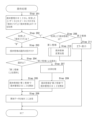
- FIG. 11 is a flowchart of the card provision process.
- FIG. 12 is a diagram illustrating a provision mode selection screen.
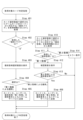
- FIG. 13 is a flowchart of the provision mode changing process.
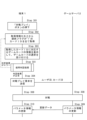
- FIG. 14 is a sequence diagram for explaining the operation of the system when the "competitive play" button on the menu screen is pressed.
- FIG. 15 is a diagram illustrating a reception screen.
- FIG. 16 is a flowchart of acquisition target card determination processing.
- FIG. 17 is a sequence diagram for explaining the operation of the system when the "Acquire Game Card” button on the menu screen is pressed in the second embodiment.
- FIG. 18 is a flowchart of the usage determination process.
- FIG. 19 is a diagram illustrating a provision number management table of Modification 1 of the first and second embodiments.
- the predetermined service of this embodiment is a service realized by a network service using the Internet or the like, and may be a game using virtual objects (e.g., game cards), or may be a game using virtual objects (e.g., game cards). It may also be a virtual space such as a metaverse using a computer (display).
- a game using virtual objects e.g., game cards
- a game using virtual objects e.g., game cards
- It may also be a virtual space such as a metaverse using a computer (display).
- FIG. 1 is a diagram showing an example of the overall configuration of a game system in this embodiment.
- the game system includes a user terminal 1 and a game server 2.
- the terminal 1 and the game server 2 can be connected to the communication line N and can communicate with each other.
- the communication line N means a communication path that allows data communication.
- the communication line N includes a dedicated line (dedicated cable) for direct connection, a LAN using Ethernet (registered trademark), etc., as well as communication networks such as a telephone communication network, a cable network, and the Internet. /Regardless of wireless.
- the terminal 1 is a computer that can execute a game program, and can connect to the communication line N via a wireless communication base station or the like and perform data communication with the game server 2.
- the terminal 1 is, for example, a smartphone, a mobile phone, a personal computer, a portable game device, a stationary home game device, an arcade game device, a tablet computer, a controller for a stationary home game device, or the like.
- FIG. 2 is a diagram showing an example of the device configuration of a smartphone, which is an example of the terminal 1.
- the terminal 1 includes a display 11, a touch operation panel 12 integrated with the display 11, a built-in speaker 13, and a camera 14.
- the terminal 1 is also provided with a control board, a built-in battery, a power button, a volume control button, etc. (not shown).
- the control board is equipped with various microprocessors such as a CPU, GPU, and DSP, various IC memories such as ASIC, VRAM, RAM, and ROM, and a wireless communication module for wirelessly communicating with a mobile phone base station.
- I/F circuit interface circuit
- driver circuit for the touch operation panel 12
- I/F circuit interface circuit
- control board Each of the elements mounted on these control boards is electrically connected to each other via a bus circuit or the like, and are connected so that data can be read and written and signals can be transmitted and received.
- the game server 2 is a server system configured to include one or more server devices, storage devices, and the like.
- the game server 2 provides various services for operating the game of this embodiment, manages data necessary for operating the game, distributes game programs and data necessary for executing the game on the terminal 1, etc. be able to. Further, the game server 2 does not need to be installed individually, and may be mixed with other servers in the cloud system.
- a competitive game between players using the terminal 1 can be realized via the game server 2 and the communication line N.
- the competitive game includes not only a competitive game in which the opponent is another player, but also a competitive game in which the opponent is a computer-generated non-player character.
- the game is not limited to competitive games between players, but includes games configured for one player.
- a virtual object is provided to the user, and the user plays the game using the object.
- the object in this embodiment is a virtual article and is an intangible object.
- the object is not limited to a game card, and may be any virtual item. For example, it may be a shaped object such as a figure.
- a game using game cards as virtual goods will be explained as an example.
- the virtual object (game card) is provided to the user in one of two modes: a first mode in which an expiration date is set, and a second mode in which an expiration date is not set. .
- the provision according to the first aspect is free of charge, and the provision according to the second aspect is paid.
- the game card according to the first aspect and the game card according to the second aspect are treated as game cards having the same function and effect within the game.
- the game card of the first aspect and the game card of the second aspect are game cards having the same character information. Since the game card provided in the second aspect has no expiration date, it can be used continuously.
- the game card provided in the first aspect becomes unusable after its expiration date has passed.
- the expiration date of the game card according to the first aspect can also be expressed as the rental period of the game card. It can also be said that a predetermined rental period is set for the game card provided in the first aspect.
- the game card on the condition that the payment for the provision of the game card according to the second aspect has been settled, the game card will be changed to the game card according to the second aspect, and the game card according to the second aspect It can be used as It is not possible to change the game card of the second aspect to the game card of the first aspect.
- the game card A can be used for the game in the second aspect.
- Card A ie, game card A with no expiration date, can be used continuously.
- the game card A will be used as the second card after that. It can be used as a game card A depending on the mode.
- a game in which a player competes using a plurality of game cards acquired will be described as an example, but the content of the game is not limited to this, and any game that uses game cards (objects) can be used. It may be something like this.
- the game of this embodiment is provided free of charge. However, it is not limited to this and may be paid.
- different types of characters are respectively associated with multiple types of game cards used in the game.
- the parameters (experience values, level, etc.) of the character associated with the game card used in the battle change.
- the game card provided in the first aspect becomes usable as a game card in the second aspect on the condition that the payment of the price is completed in the second aspect
- the game card is associated with the game card. You can inherit the parameters of the character you are currently using. This can be said to inherit the value (character parameters) given to the object (game card) used in the service in the game.
- the user can use the character's experience points, level, etc., which have been increased by using the game card of the first aspect in a game, without losing them even after changing to the game card of the second aspect.
- the price corresponding to the provision according to the second mode is settled within a predetermined period (grace period, first period) after the expiration date. Only when this happens, the parameters of the character associated with the game card will be inherited. Even if the price is paid after the grace period (first period) has elapsed, it will become usable as a game card in the second mode, but the character parameters associated with the game card will not be carried over and will be set to the initial values. be done.
- FIG. 4 is a block diagram showing an example of the functional configuration of the terminal 1.
- the terminal 1 includes an operation input section 21, a reading section 22, a display section 23, a sound output section 24, a communication section 25, a storage section 26, and a processing section 27. .
- the operation input unit 21 is for the user to input various operations related to the game, and outputs an operation input signal according to the operation input to the processing unit 27.
- the functions of the operation input unit 21 include, for example, elements directly operated by the user's fingers such as a touch operation pad, a home button, a button switch, a joystick, and a trackball, as well as an acceleration sensor, an angular velocity sensor, an inclination sensor, and a geomagnetic sensor. This can also be achieved using elements that detect movement or posture.
- the operation input unit 21 corresponds to the touch operation panel 12.
- the reading unit 22 is a photographing device consisting of an image sensor and the like.
- the reading unit 22 corresponds to the camera 14 in the example of the smartphone in FIG. 2 .
- the display unit 23 displays various game screens based on image signals input from the image generation unit 41.
- the function of the display unit 23 can be realized by, for example, a display device such as a flat panel display such as a liquid crystal, a cathode ray tube (CRT), a projector, or a head-mounted display.
- the display unit 23 corresponds to the display 11 in the example of the smartphone in FIG. 2 .
- the sound output unit 24 is for outputting sound effects and the like related to the game based on the sound signal input from the sound generation unit 42.
- the sound output unit 24 corresponds to the speaker 13 in the example of the smartphone in FIG. 2 .
- the communication unit 25 connects to the communication line N to realize communication.
- the functions of the communication unit 25 can be realized by, for example, a wireless communication device, a modem, a TA (terminal adapter), a wired communication cable jack, a control circuit, and the like.
- the storage unit 26 programs for operating the terminal 1 and realizing various functions of the terminal 1, data used during the execution of this program, etc. are stored in advance, or are temporarily stored each time processing is performed. be remembered.
- the storage unit 26 can be realized by, for example, a solid state drive using an IC memory such as RAM, ROM, or flash memory, a magnetic disk such as a hard disk, an optical disk such as CD-ROM or DVD, or the like.
- the storage unit 26 stores system programs and game programs.
- the system program is a program for realizing the basic functions of the terminal 1 as a computer.
- the game program is a program for causing the processing section 27 to function as a game calculation section 40, which will be described later.
- the storage unit 26 stores a database necessary for executing the game. The database necessary to run the program and game is distributed from the game server 2 or another application distribution server, etc. when the player completes account registration.
- the storage unit 26 stores a game card database (DB1) and an acquired information database (DB2).
- DB1 game card database
- DB2 acquired information database
- FIG. 5 is a diagram showing an example of each database.
- a card ID, a game card image, character information, and a price are stored in association with each other.
- the card ID is an identification number of a game card that can be provided in this game.
- the game card image is an image of a game card used in a game.
- the character information is various information regarding the character associated with the game card (character ID, character name, attributes, parameter initial values, etc.).
- the price is the price for providing the game card according to the second aspect.
- a card ID is an identification number of a game card that can be provided in this game.
- a provision flag (“1”) is set for a game card provided to a user.
- the provision mode is information indicating whether the provided game card is provided according to either the first mode or the second mode.
- the expiration date is the expiration date of the game card provided in the first aspect.
- the parameter information is the parameter (experience value, level) of the character associated with the game card.
- the processing unit 27 comprehensively controls the operation of the terminal 1 based on the programs and data stored in the storage unit 26, various input signals from the operation input unit 21, the reading unit 22, and the like.
- the functions of the processing unit 27 can be realized by, for example, a microprocessor such as a CPU or GPU, or an electronic component such as an ASIC or an IC memory.
- This processing section 27 includes a game calculation section 40, an image generation section 41, a sound generation section 42, and a communication control section 43 as main functional sections.
- the game calculation unit 40 executes various game processes to realize the game of this embodiment, and outputs the processing results to the image generation unit 41 and the sound generation unit 42.
- the game calculation section 40 includes a game management section 50, a game execution section 51, and a card management section 52.
- the game management section 50 updates the database and manages the entire game.
- the game execution unit 51 executes a competitive game using game cards through communication with the game server 2.
- a competitive game a user registers a group of game cards to be used in the competition prior to the competition. After the game cards are registered, the competitive play proceeds while a group of registered game cards take competitive actions in a predetermined game field.
- Competitive play is controlled based on operational inputs made to registered game cards and parameters of the characters on the game cards. Then, once the winner or loser is determined between the players, the competition ends. After the match ends, the parameters of the character associated with the game card used in the match are updated according to the result of the match.
- the card management unit 52 performs various processes related to game cards in the game through communication with the game server 2 .
- Various processes related to game cards include a process for a user to obtain a game card, and a process for registering a game card to be used in a match. Details of these processes will be described later.
- the image generation unit 41 generates one game screen in one frame time (for example, 1/60 seconds) based on the processing result of the game calculation unit 40, and outputs an image signal of the generated game screen to the display unit 23.
- the functions of the image generation unit 41 include, for example, processors such as GPUs and digital signal processors (DSPs), programs such as video signal ICs and video codecs, IC memories for drawing frames such as frame buffers, and texture data development. This can be realized using IC memory, etc.
- the sound generation unit 42 generates sound signals such as sound effects and BGM related to the game, audio information of operation assistance information, and various operation sounds based on the processing results of the game calculation unit 40, and outputs them to the sound output unit 34.
- the function of the sound generation unit 42 can be realized by, for example, a processor such as a digital signal processor (DSP) or a voice synthesis IC, an audio codec capable of reproducing audio files, or the like.
- DSP digital signal processor
- voice synthesis IC an audio codec capable of reproducing audio files, or the like.
- the communication control unit 43 performs communication connection and data processing for data communication with the game server 2.
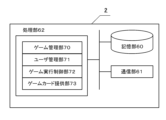
- FIG. 6 is a block diagram showing an example of the functional configuration of the game server 2. As shown in FIG.
- the game server 2 includes a storage section 60, a communication section 61, and a processing section 62.
- the storage unit 60 is realized by, for example, a RAM, ROM, IC memory such as a flash memory, a magnetic disk such as a hard disk, an optical disk such as a CD-ROM or DVD, and stores system programs and function programs.
- a system program is a program for realizing the basic functions of a computer.
- the functional program is a program for causing the processing unit 62 to perform a game management function.
- the storage unit 60 stores a user database 10 (DB10), a game card database 11 (DB11), and a provision management database 12 (DB12).
- FIG. 7 is a diagram showing an example of each database of the game server 2. As shown in FIG.
- the user DB 10 is a database for managing users.
- the user management DB 10 stores user names, payment information, etc. in association with user IDs.
- the payment information is information regarding the payment of the price of the object.
- payment for objects is performed using in-game currency. It is assumed that the payment information stores the amount of in-game currency held by the user.
- the currency amount for each user is set to an initial value (for example, "0" or the amount given as a bonus by the game service upon user registration) at the time of user registration, and is then charged through a predetermined charging process (charge). shall be taken as a thing.
- the game card DB11 is a database of information regarding game cards that can be provided in a game, and has the same configuration as the game card DB1 (FIG. 5) of the terminal 1.
- the game card DB 11 stores a card ID, a game card image, character information, and a price for receiving provision in the second mode in association with each other.
- the provision management DB 12 is a database that stores the data of the acquired information DB 2 (FIG. 5) of each user's terminal 1 for all users registered in this system.
- the provision management DB 12 stores card IDs of game cards that can be provided in this game, provision flags, provision modes, expiration dates, and parameter information in association with each other for each user ID.
- the communication unit 61 is for communicating with the terminal 1.
- the communication unit 61 connects to the communication line N to realize communication.
- the functions of the communication unit 61 can be realized by, for example, a wireless communication device, a modem, a TA (terminal adapter), a wired communication cable jack, a control circuit, and the like.
- the processing unit 62 comprehensively controls the operation of the game server 2 based on the programs and data stored in the storage unit 60.
- the functions of the processing unit 62 can be realized by, for example, a microprocessor such as a CPU or GPU, or an electronic component such as an ASIC or an IC memory.
- the processing section 62 includes a game management section 70, a user management section 71, a card use control section 72, and a game card provision section 73 as main functional sections.
- the game management section 70 manages the entire game service provided by this system.
- the user management unit 71 manages the user DB 10 and updates the database.
- the user management unit 71 performs user registration processing and the like.
- the game execution control unit 72 performs competition processing through communication with the terminal 1. Before starting competitive play, among the game cards registered by the user to be used in the battle, the expiry date of the game card of the first mode is checked, and the use of the game card of the first mode whose expiration date has passed is determined. make it impossible. Details of the process of checking the expiration date of the game card will be described later.
- the game execution control unit 72 updates the parameters of the characters used in the battle in the provision management DB 12 based on the battle results, and transmits information such as the updated parameters to the terminal 1.
- the game card providing unit 73 manages the game card DB 11 and the provision management DB 12, and updates each database.
- the game card providing unit 73 performs a process of providing game cards requested by the user.
- the game card providing unit 73 manages the provision of the requested game card (identified by the card ID) to determine whether the provision status to the requesting user falls under any of the following (1) to (3). Discrimination is made using DB12. (1) Not provided. (2) Provided in the first aspect. (3) Provided in the second aspect.
- the game card providing unit 73 sends and displays a message to the user's terminal 1 to the effect that the game card can be provided in either the first mode or the second mode, and displays the message to the effect that the game card can be provided in either the first mode or the second mode. Allow the user to select the mode. Then, a process of providing game cards in the selected manner is performed. Note that in this case, the game card providing unit 73 may present to the terminal 1 a recommendation for providing according to the first aspect. In the case of (2) above, the game card providing unit 73 can provide only the second mode. In this embodiment, the same type of game card of the first aspect is not provided to a user who has been provided with the game card of the first aspect.
- a second game card is provided to the user by changing the game card provided in the first aspect to a game card in the second aspect, on the condition that the payment of the price for the game card is completed in the second aspect. Perform processing. If the completion of the payment of the price is within the expiration date of the provided game card of the first aspect or within a predetermined grace period after the expiration date, the parameter information of the game card is inherited. .
- the game card providing unit 73 sends and displays a message to the user's terminal 1 to the effect that the requested game card has already been provided. In this case, the process of providing game cards is not performed. In this way, for the same type of game card (game card having the same card ID), both the first aspect game card and the second aspect game card cannot be used by the same user at the same time. Details of the process of providing game cards will be described later.
- Step 101 the game management unit 50 receives input of information necessary for user registration (for example, user A's user name, etc.) (Step 101), and The information is transmitted together with the user registration request to the game server 2 (Step 102).
- the user management unit 71 of the game server 2 receives the user registration request from the terminal 1, it registers the received information such as the user name of the user A in the user DB 10 together with the newly acquired user ID of the user A (Step 103 ).
- the user management unit 71 transmits a user registration completion notification to the terminal 1 along with the user ID of the user A (Step 104).
- the game management unit 50 of the terminal 1 stores the received user ID and displays that user registration is complete (Step 105). As described above, user A can execute the game provided by this system.
- the game management unit 50 of the terminal 1 displays a game menu screen after logging in using the user ID.
- menu buttons such as "Obtain Game Card”, “Competitive Play”, and "End Game” are displayed.
- Step 110 the card management unit 52 of the terminal 1 uses the game card DB1 and the acquisition information DB2 to generate a list of game cards that can be provided in this game. is displayed (Step 111), and an input for selecting the game card that user A wants to acquire is accepted (Step 112).
- the list of game cards may be displayed so that game cards that have not been acquired can be distinguished from game cards that have been acquired. Furthermore, for the acquired game cards, it may be indicated whether the provision mode is the first mode or the second mode.
- FIG. 10 illustrates a card selection screen that displays a list of game cards and accepts selection input of a game card to be acquired.
- the card management unit 52 transmits the card ID of the game card selected by the user A on the card selection screen (“1002” in the example of FIG. 10) and the user ID of the user A to the game server 2 together with a request for provision (Step 113).
- the game card providing unit 73 of the game server 2 executes a card providing process for providing the requested game card to user A (Step 114).
- the detailed flow of the card provision process will be described later.
- the game server 2 updates the provision management DB 12 with updated data (in this example, the user A's card ID “1002”) in order to provide the requested game card to the user A. corresponding data) to user A's terminal 1.
- the card management unit 52 of the terminal 1 updates the acquired information DB2 with the received update data (Step 115).
- user A is provided with the game card with card ID "1002".
- the system operation when the game card is provided to user A has been described above.
- Step 114 details of the card provision process in Step 114 will be explained using the flowchart of FIG. 11.
- the game card providing unit 73 of the game server 2 receives the provision request from the terminal 1 of the user A
- the game card providing unit 73 retrieves the "provision flag” corresponding to the received user A's user ID and card ID ("1002") from the provision management DB 12. ” and “Provision mode” (Step 201). If the acquired “provision flag” is “0” (Step 202), the game card providing unit 73 transmits the data of the provision mode selection screen that accepts the selection of the provision mode to the terminal 1 of the user A, and selects the provision mode. The selection is accepted (Step 203). An example of the provision mode selection screen is shown in FIG.
- the game card providing unit 73 stores the user A's user ID and the requested card ID ("1002") in the provision management DB 12. Each data item corresponding to is updated (Step 205).
- “Provision flag” is “1”
- “Provision mode” is “1st mode”
- “Expiration date” is a predetermined expiration date (for example, a date one month from the current date, etc.)
- parameter information is Update each with the initial value.
- the game card providing unit 73 transmits the updated data in the provision management DB 12 to the terminal 1 of the user A (Step 206). As described above, on the user A's terminal 1 side, the acquired information DB2 is updated with update data from the game server 2. As a result, user A is provided with the card ID (“1002”) in the first mode.
- Step 204 of the card provision process in FIG. 11 if the selection content received from the terminal 1 is "Provision in the second mode," the game card providing unit 73 performs payment processing for the provision in the second mode. (Step 207).
- the game card providing unit 73 transfers the payment information (in-game currency amount) of the user A from the user DB 10 to the "compensation price" corresponding to the card ID ("1002") set in the game card DB 11. " Subtract the value and update.
- the game card providing unit 73 updates each data item corresponding to the user A's user ID and the requested card ID (“1002”) in the provision management DB 12 (Step 209).
- the "provision flag” is updated to “1”
- the “provision mode” is updated to “second mode”
- the "use period” is updated to “none”
- the parameter information is updated to the initial value.
- the game card providing unit 73 transmits the updated data in the provision management DB 12 to the terminal 1 of the user A (Step 206).
- the acquired information DB2 is updated with update data from the game server 2.
- user A is provided with the card ID (“1002”) in the second mode.
- Step 202 of the card provision process in FIG. 11 it is determined that the "provision flag" acquired from the provision management DB 12 is "1", and subsequently in Step 208, the acquired “provision mode” is set to "first mode". ”, that is, when an acquisition request is received from the user's terminal 1 for a game card that has already been provided in the first mode (Step 208), the “provision mode” in the provision management DB 12 is changed to the first mode.
- a provision mode change process is performed in which the game card is changed from the first mode to the second mode and the game card of the second mode is provided to the user (Step 210). Note that details of the provision mode changing process will be described later.
- the game card providing unit 73 transmits the updated data in the provision management DB 12 to the terminal 1 of the user A (Step 206).
- the acquired information DB2 is updated with update data from the game server 2.
- user A is provided with the card ID (“1002”) in the second mode.
- Step 202 if it is determined that the "provision flag" acquired from the provision management DB 12 is "1”, and then in Step 208, the acquired "provision mode” is determined to be "second mode", That is, when an acquisition request is received from the user's terminal 1 for a game card that has already been provided in the second mode, an error message indicating that the game card has already been acquired is sent to the terminal 1 (Step 211).
- the game card providing unit 73 transmits confirmation screen data to the terminal 1 to confirm to the user that the game card will be provided in the second mode (Step 221).
- the confirmation screen for example, a message indicating that the specified game card has already been provided in the first mode and a button for selecting whether or not to receive the provision in the second mode are displayed.
- the game card providing unit 73 receives the request for provision according to the second aspect.
- Step 223 Payment processing for provision is performed (Step 223).
- the provision management DB 12 acquires the "expiration date" stored in correspondence with the user ID of the requesting user and the requested card ID (Step 224), and indicates that the expiration date has passed. It is determined whether the previous or current time is within the grace period (Step 225). If the expiration date has not yet passed, or if the current time is within the grace period after the expiration date (for example, within two weeks after the expiration date has passed), the game card providing unit 73 stores information about the requesting user in the provision management DB 12.
- the "parameter information” corresponding to the user ID and the requested card ID are not changed, and the "provision mode” is updated to "second mode” and the “expiration date” to "none” (Step 226). As a result, the parameter information from the first mode is inherited.
- the game card providing unit 73 transmits the updated data in the provision management DB 12 to the user's terminal 1 (Step 227).
- the game card providing unit 73 stores the information of the requesting user in the provision management DB 12.
- the "parameter information" corresponding to the user ID and the requested card ID is updated to an initial value
- the "provision mode” is updated to "second mode”
- the "expiration date” is updated to "none” (Step 228).
- the parameter information is initialized without being inherited.
- the game card providing unit 73 transmits the updated data in the provision management DB 12 to the user's terminal 1 (Step 227).
- the card provision process has been described above.
- Step 301 the game execution unit 51 of the terminal 1 of user B acquires all the card IDs of the game cards whose provision flag is "1" in the acquisition information DB 2.
- Step 302 information on the game card (for example, game card image, etc.) corresponding to the acquired card ID is displayed using the game card DB1, and input for selecting the game card is accepted (Step 303).
- a message prompting the user to select a predetermined number of game cards to be used in the battle may also be displayed on the reception screen that accepts the selection input.
- An example of the reception screen is shown in FIG.
- the game execution unit 51 plays a competitive game with the user ID of user B and the card ID of the selected game card.
- the request is sent to the game server 2 (Step 304).
- the game execution control unit 72 of the game server 2 receives the competitive play request, the game card ID of the game card provided in the first aspect and whose expiration date has passed is included in the card ID received from the terminal 1 of the user B.
- a usage determination process is performed to determine the presence or absence of an ID (Step 305).
- the provision management DB 12 is searched to see if there is one in which the value of the "provision mode" corresponding to the received user ID of user B and the received card ID is "first mode”. Then, if the "provision mode" is "first mode", the corresponding "expiration date” value is obtained from the provision management DB 12, and it is determined whether the obtained expiration date has passed. .
- the game execution control unit 72 transmits a message indicating the result of the usage determination process to the terminal 1 (Step 306).
- the game execution unit 51 of the terminal 1 displays the received message (Step 307). If the determination result is normal (there are no cards whose expiration date has passed), the game server 2 may send a message to the effect that the selected game card is appropriate and a match is to be started, for example. In addition, if the judgment result is an error (some cards have expired), for example, we will notify you of the card ID of the game card whose expiration date has passed, and encourage you to reselect the card to be used in the battle. A message is sent from the game server 2 and displayed on the terminal 1.
- a card reselection button is displayed on the message display screen (error screen), and in response to the card reselection button being pressed, the process returns to Step 302 and the game card used for the battle is displayed. may be made reselectable. Additionally, on the error screen, a message recommending provision of the game card in the second mode for game cards whose expiration date has passed, and a button to transition to the screen for receiving the card provision (FIG. 10 or FIG. 12) are displayed. You can do it like this.
- the game execution control unit 72 of the game server 2 executes the match through communication with the terminal 1 (Step 308). After the match ends, the game execution control unit 72 of the game server 2 stores the parameter information associated with the card ID in the provision management DB 12 for the game card of user B used in the match based on the match result. The card is updated and the updated data is sent to user B's terminal 1 along with the card ID (Step 309).
- the game management unit 50 of the terminal 1 of the user B receives the update data of the card ID and parameter information, and updates the parameter information corresponding to the received card ID in the acquired information DB 2 (Step 310). As a result, user B plays a match using the game card, and the parameter information of user B's game card is updated based on the match result.
- objects in a predetermined service that provides objects to users, objects can be provided in either a first mode with an expiration date or a second mode without an expiration date. Furthermore, even after the object provided in the first aspect becomes unusable due to the expiration of its expiration date, the object can be used in the second mode by completing the payment of the price.
- the payment method for the game card according to the second aspect has been explained using in-game currency as an example, the method is not limited to this, and payment may be made using other payment methods such as cash, credit, tickets, etc.
- the grace period for payment of the price in the second aspect for the parameter information of the game card in the first aspect to be carried over may start immediately after the expiration date (at the end of the usable period), Alternatively, the process may be started after a predetermined period of time has elapsed immediately after the expiration date.
- the terminal 1 determines whether the game card selected by the user as an acquisition target is a card that has not yet been acquired, and if it has not been acquired, the terminal 1 determines whether or not the game card selected by the user as an acquisition target is a card that has not yet been acquired.
- the user may be allowed to select whether to obtain a game card.
- the terminal 1 performs the following acquisition target card determination process instead of Step 113 in the system operation shown in the sequence diagram of FIG. 9 described in the first embodiment.
- the acquisition target card determination process will be explained using the flowchart of FIG. 16.
- the game card management unit 52 of the terminal 1 acquires the "provision flag” corresponding to the card ID of the game card selected on the card selection screen from the acquisition information DB 2 (Step 401).
- the game card management unit 52 determines the acquired "provision flag” (Step 402).
- Step 402 if the “provision flag” is determined to be “0”, that is, if the selected game card has not been acquired, the game card management unit 52 displays the provision mode selection screen ( (see FIG. 12) is displayed on the display section 23, and the selection of the provision mode is accepted (Step 403).
- the game card management unit 52 stores the card ID of the game card to be acquired, the user's user ID, and , the selected provision mode "first mode” is transmitted to the game server 2 together with the provision request (Step 405). Further, in the provision mode selection screen, if the provision mode selected by the user is "Provision in the second mode” (Step 404), the game card management unit 52 stores the card ID of the game card to be acquired and the user's user information. The ID and the selected provision mode "second mode” are transmitted to the game server 2 along with the provision request (Step 406).
- Step 402 if the "provision flag” is determined to be “1”, that is, if the selected game card has been acquired, the game card management unit 52 selects the selected game card on the card selection screen.
- the "provision mode” corresponding to the card ID is obtained from the acquisition information DB2 (Step 410), and it is determined whether the obtained “provision mode” is the "first mode” or the "second mode” (Step 411).
- Step 411 If it is determined in Step 411 that the "provision mode" is the "first mode”, the game card management unit 52 determines that the selected game card is already provided in the first mode, so it is determined that the selected game card is provided in the second mode.
- a confirmation screen is displayed on the display unit 23 for confirming to the user that the following is true (Step 412).
- On the confirmation screen for example, a message indicating that the specified game card has already been provided in the first mode and a button for selecting whether or not to receive the provision in the second mode are displayed.
- the button for selecting provision in the second mode is pressed on the confirmation screen (Step 413), the game card management unit 52 stores the card ID of the game card to be acquired, the user ID of the user, and the selected provision mode.
- the "second mode" is transmitted to the game server 2 together with the provision request (Step 406).
- Step 411 determines that the "provision mode” is the "second mode"
- the processing after Step 114 in the sequence diagram of FIG. 9 is not executed and ends.
- the acquisition target card determination process has been described above.
- Step 203 in the provision process on the game server side (FIG. 11) is not necessary, and the process from Step 204 can proceed based on the information on the "provision mode" received from the terminal along with the provision request. Further, Step 208 and Step 211 are no longer necessary, and if the "provision flag" is determined to be "1" in Step 202, the process can proceed to Step 210.
- the card management unit 52 of the terminal 1 determines the expiration date of the game card used in the game (competition) (usage determination process).
- the operation of the system in this case will be explained with reference to the sequence diagram of FIG. 17. Note that the same step numbers are given to the same processes as in the system shown in the sequence diagram of FIG. 14 of the first embodiment, and detailed explanations are omitted.
- the game execution unit 51 of the user's terminal 1 acquires all the card IDs of the game cards whose provision flag is "1" in the acquisition information DB 2. (Step 302), information on the game card (for example, game card image, etc.) corresponding to the acquired card ID is acquired from the game card DB 1, displayed on the reception screen (see Figure 15), and the game card selection input is performed. It is accepted (Step 303). A message prompting the user to select a predetermined number of game cards to be used in the battle may also be displayed on the reception screen.
- the game execution unit 51 When the selection of a game card by the user is completed, such as by pressing a decision button on the reception screen, the game execution unit 51 performs a usage determination process to determine whether the selected game card can be used in the game. (Step 501). If the determination result of the usage determination process is normal, the game execution unit 51 transmits the user ID of the user and the card ID of the selected game card to the game server 2 along with a competitive play request (Step 304). Upon receiving the competitive play request, the game execution control unit 72 of the game server 2 executes the competitive play through communication with the terminal 1 (Step 308).
- the game execution control unit 72 of the game server 2 updates the parameter information and the like in the provision management DB 12 based on the competition results, and transmits the updated data to the terminal 1 (Step 309).
- the game management unit 50 of the terminal 1 receives the update data and updates the parameter information and the like in the acquired information DB 2 (Step 310).
- the use determination process in Step 501 will be explained using the flowchart of FIG. 18.
- the game execution unit 51 acquires the "provision mode” corresponding to the card ID for all the game cards selected on the reception screen from the acquisition management DB 2 (Step 601), and sets the "first mode” in the acquired “provision mode”. ” (Step 602). If the acquired "provision mode” includes “first mode”, the value of "expiration date” corresponding to the card ID whose "provision mode” is "first mode” is obtained from the acquisition management DB2 (Step 603); It is determined whether any of the obtained expiration dates have passed (Step 604).
- the game execution unit 51 performs a predetermined normal process (for example, displays a message indicating that the selected game card can be used in a battle) (Step 605). , this process ends. Furthermore, if there is an item whose expiration date has passed, the game execution unit 51 performs predetermined error processing (Step 606). In the error processing, for example, an error screen is displayed on the display unit 23 that displays an error message indicating that the expiration date has passed, as well as the card ID of the game card whose expiration date has passed.
- a message prompting you to reselect the card to be used in the battle and a card reselection button are displayed on the error screen, and in response to the card reselection button being pressed, the process returns to Step 302 and the game card to be used in the battle is selected. It may also be possible to select again. Additionally, on the error screen, a message recommending provision of the game card in the second mode for game cards whose expiration date has passed, and a button to transition to the screen for receiving the card provision (FIG. 10 or FIG. 12) are displayed. You can do it like this.
- the number of game cards of the first aspect provided to each user during a predetermined period may be limited to within a predetermined number.
- the storage unit 60 stores a supply number management table that manages the cumulative number of game cards of the first mode provided for each user during a predetermined period (second period, for example, one month).
- the game card providing unit 73 determines whether the cumulative number of provided cards corresponding to the user ID of the user requesting the provision is within a predetermined number. If the number is within a predetermined number, provision is possible, and if it exceeds a predetermined number, provision is not possible.
- the game card providing unit 73 After providing the first game card, the game card providing unit 73 adds 1 to the number of offers corresponding to the user ID in the number of offers management table. The value of the number of offers for each user in the number of offers management table is cleared (to "0") every predetermined period.
- ⁇ Modification 2 of the first and second embodiments> When the user registers game cards to be used in a battle, the user may be shown which one is recommended for use. For example, a "recommended button" is displayed on the screen for selecting a card to be used, and in response to the button being pressed, the card usage control unit 72 of the game server 2 uses the provision management DB 12 to provide the card to the user.
- a recommended game card may be selected from among the game cards based on predetermined criteria, and the card ID of the selected card may be transmitted to the terminal 1 and displayed. Criteria for selecting recommended cards include the following examples, but are not limited to these, and other criteria may also be used.
- the game management section 70 calculates the number of times the card is used when winning a match based on the information on the matches of all users registered in this game service, based on the type of card (card ID) A list of cards that have been used a predetermined number of times or more may be generated and stored in the storage unit 60.
- the game execution control unit 72 may search the list to see if there is a card that the user has acquired, and recommend the corresponding card.
- the game card recommended by the card usage control unit 72 may be selected from among the game cards of the first aspect provided to the user.
- the user may select from among the game card of the first aspect and the game card of the second aspect provided to the user.
- a set of game cards from a deck to be used in the game may be recommended.
- a predetermined number of game cards (three in the example of the embodiment) constituting one set may be selected based on the above criteria, and combinations thereof may be presented.
- the game management unit 70 counts the number of times each deck has been used when winning a battle based on the information regarding the battles of all the users registered as users of this game service, and the number of times each deck has been used is greater than or equal to a predetermined number.
- a list of decks may be generated and stored in the storage unit 60.
- the usage control unit 72 may search the list of decks to see if there is a deck that can be constructed from the cards acquired by the user, and recommend a combination of cards to construct the corresponding deck.
- the combination of game cards recommended by the card usage control unit 72 may be selected from among the game cards of the first aspect provided to the user.
- the user may select from among the game card of the first aspect and the game card of the second aspect provided to the user.
- the card use control unit 72 changes the game card of the first mode provided to the user to the second mode according to a predetermined criterion. select game cards to recommend to the user. Then, for the selected game card, a message recommending changing to the second mode and a button to transition to the screen (FIG. 10 or FIG. 12) for receiving the second mode game card are displayed. You can also do this.
- Predetermined criteria for selecting game cards to be recommended for changing to the second mode include, for example, (1) expiration date ends within a predetermined period, (2) frequency of use in battles, etc. but not limited to.
- the information on the frequency of use in matches (2) is obtained by storing match history data on the terminal 1 or game server 2 including information on cards used by the user in matches, and using this match history data. It's okay.
- the user may be notified that the expiration date is approaching.
- the game card providing unit 72 of the game server 2 receives the information from the terminal 1.
- search for a game card of the first aspect whose expiration date ends within a predetermined period for example, 3 days, etc.
- a message recommending receiving the provision according to the second aspect may be sent to the terminal 1 and displayed.
- the card management unit 52 of the terminal 1 accesses the acquisition management DB2.
- a message recommending that the game card of the first mode whose expiration date ends within a predetermined period (for example, 3 days, etc.) is searched for, and that it is provided according to the second mode together with the card ID of the corresponding game card. may be displayed on the display section 23.
- ⁇ Modification 4 of the first and second embodiments> Regarding the game card of the first mode, the parameters will be carried over on the condition that the payment of the price according to the second mode is completed within a predetermined period (grace period, first period) after the expiry date.
- a predetermined period for settling the price within the grace period, it may be necessary to pay a second price higher than the price before the expiration date.
- ⁇ Variation 5 of the first and second embodiments> Regardless of whether or not the expiry date according to the first aspect has passed, if the game card of the first aspect is changed to the game card of the second aspect on the condition that the payment of the price is completed, the game card
- the parameters of the associated character may be inherited.
- the user selects the provision mode for game cards that have not been provided to the user, but the present invention is not limited to this, and the game card providing unit 73 of the game server 1 may In the case of providing game cards of the same type, control may be performed such that after providing game cards in the first mode, they can be provided in the second mode. Further, when acquiring a game card, the card management unit 52 of the terminal 1 may control the game server 2 so that only the game card that has been provided in the first mode can be requested to be provided in the second mode. .
- the number of game cards that can inherit the parameters given to the game card of the first aspect during the expiration date may be limited to a predetermined number. For example, if the number of game cards whose parameters can be inherited is set as "5", then among the game cards provided to the user in the first mode, the 5th game card with the latest date of provision in the first mode, for example, Up to one card is managed as a card whose parameters can be inherited. In this case, the sixth card from the date of provision can be used in the second mode by paying the price, but the parameters cannot be inherited.
- Information processing device
- the providing means is configured to provide the first aspect from the predetermined service during the expiration date on the condition that the payment of the price corresponding to the second aspect is made in a first period after the expiration date of the object according to the first aspect has passed. providing the object of the second aspect that inherits the value given to the object;
- the information processing device according to supplementary note 1.
- the predetermined service is a game
- the game further comprises a usage presenting means for presenting which of the objects of the first aspect provided to the user is recommended to be used.
- the information processing device according to supplementary note 1 or supplementary note 2.
- the usage presenting means controls to be able to present which combination of objects is recommended for use among the objects of the first aspect provided to the user.
- the information processing device according to appendix 3.
- the predetermined service is a game
- the game further includes a usage presenting means for presenting which of the objects of the first aspect and the objects of the second aspect is recommended for use.
- the information processing device according to supplementary note 1 or supplementary note 2.
- the providing means controls the number of objects of the first aspect provided to each user in the second period to be within a predetermined number;
- the information processing device according to any one of Supplementary Notes 1 to 5.
- control means is configured to receive the first aspect from the predetermined service during the expiration date on the condition that the payment of the price corresponding to the second aspect is made in a first period after the expiration date of the object according to the first aspect has passed. controlling the object of the second aspect that has inherited the value given to the object to be usable; The program described in Appendix 7.
- Each object is associated with a character.
- control means controls the object provided in the first aspect to be changeable to the object in the second aspect before the expiration date of the object provided in the first aspect, on condition that the payment of the price is settled. do, The program described in any of Appendix 7 to Appendix 9.
- control means controls to make it impossible to use the object of the second aspect provided to the user in the first aspect.
- control means controls the same type of object so that both the object according to the first aspect and the object according to the second aspect cannot be used at the same time.
- control means makes it possible to acquire an object of the first aspect when an object of the same type has not been acquired according to the first aspect.
- control means makes it impossible to obtain an object associated with the same character as a character associated with the object acquired according to the first aspect.
- control means preferentially presents the object according to the first aspect between the object according to the first aspect and the object according to the second aspect when the user acquires the object.
- control means presents a list of the acquired objects together with information indicating whether the provision mode is a first mode or a second mode.
- An object providing system that provides a user with objects that can be used in a predetermined service, The object is provided in a first manner in which there is an expiration date in the predetermined service without making payment of the price for the object a condition, and the object is provided in a first manner in which there is a term of use within the predetermined service, with the payment of the price for the object being conditional on the payment of the price for the object.
- the providing means is configured to provide the first aspect of the present invention, which takes over the value given to the object of the first aspect from the predetermined service during the expiration date, on the condition that the payment for the object is settled after the expiration date.
- providing two types of objects Object serving system.
- An object providing method for providing a user with a virtual object that can be used in a predetermined service comprising: The computer is The object is provided in a first manner in which there is an expiration date in the predetermined service without making payment of the price for the object a condition, and the object is provided in a first manner in which there is a term of use within the predetermined service, with the payment of the price for the object being conditional on the payment of the price for the object.
- Provided in a second form with no expiration date The object of the second aspect that has inherited the value given to the object of the first aspect from the predetermined service during the expiration date, on the condition that the payment for the object is settled after the expiration of the expiration date. provide, How to provide the object.
Landscapes
- Engineering & Computer Science (AREA)
- Multimedia (AREA)
- Business, Economics & Management (AREA)
- Computer Security & Cryptography (AREA)
- General Business, Economics & Management (AREA)
- Physics & Mathematics (AREA)
- Optics & Photonics (AREA)
- Management, Administration, Business Operations System, And Electronic Commerce (AREA)
Applications Claiming Priority (2)
| Application Number | Priority Date | Filing Date | Title |
|---|---|---|---|
| JP2022046093A JP7296500B1 (ja) | 2022-03-22 | 2022-03-22 | 情報処理装置、プログラム、オブジェクト提供システム及び方法 |
| JP2022-046093 | 2022-03-22 |
Publications (1)
| Publication Number | Publication Date |
|---|---|
| WO2023181597A1 true WO2023181597A1 (ja) | 2023-09-28 |
Family
ID=86772785
Family Applications (1)
| Application Number | Title | Priority Date | Filing Date |
|---|---|---|---|
| PCT/JP2023/000849 Ceased WO2023181597A1 (ja) | 2022-03-22 | 2023-01-13 | 情報処理装置、プログラム、オブジェクト提供システム及び方法 |
Country Status (2)
| Country | Link |
|---|---|
| JP (2) | JP7296500B1 (https=) |
| WO (1) | WO2023181597A1 (https=) |
Families Citing this family (2)
| Publication number | Priority date | Publication date | Assignee | Title |
|---|---|---|---|---|
| JP7296500B1 (ja) * | 2022-03-22 | 2023-06-22 | 株式会社バンダイ | 情報処理装置、プログラム、オブジェクト提供システム及び方法 |
| JP7731457B2 (ja) * | 2024-02-01 | 2025-08-29 | 株式会社 ディー・エヌ・エー | プログラム、システム、方法、情報処理装置、サーバ、及び演出情報の生成方法 |
Citations (6)
| Publication number | Priority date | Publication date | Assignee | Title |
|---|---|---|---|---|
| JP2017070579A (ja) * | 2015-10-08 | 2017-04-13 | 任天堂株式会社 | ゲームシステム、ゲーム装置、サーバ装置、情報処理プログラム及びアイテム購入制限方法 |
| JP2017176522A (ja) * | 2016-03-30 | 2017-10-05 | 株式会社バンダイナムコエンターテインメント | プログラム及びサーバシステム |
| US9789406B2 (en) * | 2014-07-03 | 2017-10-17 | Activision Publishing, Inc. | System and method for driving microtransactions in multiplayer video games |
| JP2020110378A (ja) * | 2019-01-11 | 2020-07-27 | 株式会社セガ | プログラム及び情報処理装置 |
| JP2020188870A (ja) * | 2019-05-20 | 2020-11-26 | 株式会社コナミデジタルエンタテインメント | ゲームシステム、その制御方法及びコンピュータプログラム |
| JP2021142074A (ja) * | 2020-03-11 | 2021-09-24 | 株式会社コナミデジタルエンタテインメント | プログラム、ゲームシステム及び方法 |
Family Cites Families (2)
| Publication number | Priority date | Publication date | Assignee | Title |
|---|---|---|---|---|
| JP2020096863A (ja) * | 2020-01-30 | 2020-06-25 | 株式会社コロプラ | ゲームプログラム、方法、および情報処理装置 |
| JP7296500B1 (ja) * | 2022-03-22 | 2023-06-22 | 株式会社バンダイ | 情報処理装置、プログラム、オブジェクト提供システム及び方法 |
-
2022
- 2022-03-22 JP JP2022046093A patent/JP7296500B1/ja active Active
-
2023
- 2023-01-13 WO PCT/JP2023/000849 patent/WO2023181597A1/ja not_active Ceased
- 2023-06-10 JP JP2023095925A patent/JP2023140350A/ja active Pending
Patent Citations (6)
| Publication number | Priority date | Publication date | Assignee | Title |
|---|---|---|---|---|
| US9789406B2 (en) * | 2014-07-03 | 2017-10-17 | Activision Publishing, Inc. | System and method for driving microtransactions in multiplayer video games |
| JP2017070579A (ja) * | 2015-10-08 | 2017-04-13 | 任天堂株式会社 | ゲームシステム、ゲーム装置、サーバ装置、情報処理プログラム及びアイテム購入制限方法 |
| JP2017176522A (ja) * | 2016-03-30 | 2017-10-05 | 株式会社バンダイナムコエンターテインメント | プログラム及びサーバシステム |
| JP2020110378A (ja) * | 2019-01-11 | 2020-07-27 | 株式会社セガ | プログラム及び情報処理装置 |
| JP2020188870A (ja) * | 2019-05-20 | 2020-11-26 | 株式会社コナミデジタルエンタテインメント | ゲームシステム、その制御方法及びコンピュータプログラム |
| JP2021142074A (ja) * | 2020-03-11 | 2021-09-24 | 株式会社コナミデジタルエンタテインメント | プログラム、ゲームシステム及び方法 |
Also Published As
| Publication number | Publication date |
|---|---|
| JP2023140350A (ja) | 2023-10-04 |
| JP7296500B1 (ja) | 2023-06-22 |
| JP2023140187A (ja) | 2023-10-04 |
Similar Documents
| Publication | Publication Date | Title |
|---|---|---|
| JP6420076B2 (ja) | システムおよびプログラム | |
| US10963898B2 (en) | Computer system for performing display control for advertisement | |
| JP7634151B2 (ja) | ゲームプログラム、ゲーム装置、ゲームシステム | |
| JP2023140350A (ja) | 情報処理装置、プログラム、オブジェクト提供システム及び方法 | |
| JP2023133497A (ja) | プログラム、端末、ゲーム管理装置及びゲームシステム | |
| JP7737515B2 (ja) | プログラム、及びゲーム装置 | |
| JP2019213795A (ja) | プログラム、コンピュータシステム、及びゲームシステム | |
| US11367328B2 (en) | Program, terminal, gaming system, and game management device | |
| JP2020171596A (ja) | プログラム、情報処理装置、ゲームサーバおよびゲームシステム | |
| JP2019012567A (ja) | システムおよびプログラム | |
| JP2020054857A (ja) | ゲームプログラムおよびゲームシステム | |
| JP2024026711A (ja) | コンピュータシステムおよびゲームシステム | |
| JP2023093721A (ja) | プログラム、端末、ゲームシステム及びゲーム管理装置 | |
| JP7598500B1 (ja) | プログラム、及びゲーム装置 | |
| JP7610748B1 (ja) | プログラム、ゲーム管理装置、及びゲーム装置 | |
| JP7628202B1 (ja) | プログラム、及びゲーム装置 | |
| JP7598501B1 (ja) | プログラム、及びゲーム装置 | |
| JP7629557B1 (ja) | プログラム、及びゲーム装置 | |
| JP7646909B1 (ja) | プログラム、及びゲーム装置 | |
| JP7214791B2 (ja) | 課金管理サーバ、課金管理プログラム、課金管理方法 | |
| JP6961857B1 (ja) | 課金管理サーバ、課金管理プログラム、課金管理方法 | |
| JP6676234B2 (ja) | ゲームシステム及びそのコンピュータプログラム | |
| JP6458234B1 (ja) | ゲームシステム及びそのコンピュータプログラム | |
| JP2024039054A (ja) | オブジェクト交換システム、情報処理装置、及びプログラム | |
| JP2022048973A (ja) | 課金管理サーバ、課金管理プログラム、課金管理方法 |
Legal Events
| Date | Code | Title | Description |
|---|---|---|---|
| 121 | Ep: the epo has been informed by wipo that ep was designated in this application |
Ref document number: 23774198 Country of ref document: EP Kind code of ref document: A1 |
|
| NENP | Non-entry into the national phase |
Ref country code: DE |
|
| 122 | Ep: pct application non-entry in european phase |
Ref document number: 23774198 Country of ref document: EP Kind code of ref document: A1 |