WO2023176373A1 - 半導体装置 - Google Patents
半導体装置 Download PDFInfo
- Publication number
- WO2023176373A1 WO2023176373A1 PCT/JP2023/006800 JP2023006800W WO2023176373A1 WO 2023176373 A1 WO2023176373 A1 WO 2023176373A1 JP 2023006800 W JP2023006800 W JP 2023006800W WO 2023176373 A1 WO2023176373 A1 WO 2023176373A1
- Authority
- WO
- WIPO (PCT)
- Prior art keywords
- gate
- length
- electrode
- drain
- source
- Prior art date
- Legal status (The legal status is an assumption and is not a legal conclusion. Google has not performed a legal analysis and makes no representation as to the accuracy of the status listed.)
- Ceased
Links
Images









Classifications
-
- H—ELECTRICITY
- H10—SEMICONDUCTOR DEVICES; ELECTRIC SOLID-STATE DEVICES NOT OTHERWISE PROVIDED FOR
- H10D—INORGANIC ELECTRIC SEMICONDUCTOR DEVICES
- H10D30/00—Field-effect transistors [FET]
- H10D30/40—FETs having zero-dimensional [0D], one-dimensional [1D] or two-dimensional [2D] charge carrier gas channels
- H10D30/47—FETs having zero-dimensional [0D], one-dimensional [1D] or two-dimensional [2D] charge carrier gas channels having two-dimensional [2D] charge carrier gas channels, e.g. nanoribbon FETs or high electron mobility transistors [HEMT]
- H10D30/471—High electron mobility transistors [HEMT] or high hole mobility transistors [HHMT]
- H10D30/475—High electron mobility transistors [HEMT] or high hole mobility transistors [HHMT] having wider bandgap layer formed on top of lower bandgap active layer, e.g. undoped barrier HEMTs such as i-AlGaN/GaN HEMTs
-
- H—ELECTRICITY
- H10—SEMICONDUCTOR DEVICES; ELECTRIC SOLID-STATE DEVICES NOT OTHERWISE PROVIDED FOR
- H10D—INORGANIC ELECTRIC SEMICONDUCTOR DEVICES
- H10D64/00—Electrodes of devices having potential barriers
- H10D64/20—Electrodes characterised by their shapes, relative sizes or dispositions
- H10D64/27—Electrodes not carrying the current to be rectified, amplified, oscillated or switched, e.g. gates
- H10D64/311—Gate electrodes for field-effect devices
- H10D64/411—Gate electrodes for field-effect devices for FETs
- H10D64/511—Gate electrodes for field-effect devices for FETs for IGFETs
- H10D64/517—Gate electrodes for field-effect devices for FETs for IGFETs characterised by the conducting layers
- H10D64/518—Gate electrodes for field-effect devices for FETs for IGFETs characterised by the conducting layers characterised by their lengths or sectional shapes
-
- H—ELECTRICITY
- H10—SEMICONDUCTOR DEVICES; ELECTRIC SOLID-STATE DEVICES NOT OTHERWISE PROVIDED FOR
- H10D—INORGANIC ELECTRIC SEMICONDUCTOR DEVICES
- H10D30/00—Field-effect transistors [FET]
- H10D30/01—Manufacture or treatment
- H10D30/015—Manufacture or treatment of FETs having heterojunction interface channels or heterojunction gate electrodes, e.g. HEMT
-
- H—ELECTRICITY
- H10—SEMICONDUCTOR DEVICES; ELECTRIC SOLID-STATE DEVICES NOT OTHERWISE PROVIDED FOR
- H10D—INORGANIC ELECTRIC SEMICONDUCTOR DEVICES
- H10D30/00—Field-effect transistors [FET]
- H10D30/01—Manufacture or treatment
- H10D30/061—Manufacture or treatment of FETs having Schottky gates
- H10D30/0612—Manufacture or treatment of FETs having Schottky gates of lateral single-gate Schottky FETs
- H10D30/0616—Manufacture or treatment of FETs having Schottky gates of lateral single-gate Schottky FETs using processes wherein the final gate is made before the completion of the source and drain regions, e.g. gate-first processes
-
- H—ELECTRICITY
- H10—SEMICONDUCTOR DEVICES; ELECTRIC SOLID-STATE DEVICES NOT OTHERWISE PROVIDED FOR
- H10D—INORGANIC ELECTRIC SEMICONDUCTOR DEVICES
- H10D30/00—Field-effect transistors [FET]
- H10D30/40—FETs having zero-dimensional [0D], one-dimensional [1D] or two-dimensional [2D] charge carrier gas channels
- H10D30/47—FETs having zero-dimensional [0D], one-dimensional [1D] or two-dimensional [2D] charge carrier gas channels having two-dimensional [2D] charge carrier gas channels, e.g. nanoribbon FETs or high electron mobility transistors [HEMT]
-
- H—ELECTRICITY
- H10—SEMICONDUCTOR DEVICES; ELECTRIC SOLID-STATE DEVICES NOT OTHERWISE PROVIDED FOR
- H10D—INORGANIC ELECTRIC SEMICONDUCTOR DEVICES
- H10D30/00—Field-effect transistors [FET]
- H10D30/60—Insulated-gate field-effect transistors [IGFET]
- H10D30/67—Thin-film transistors [TFT]
- H10D30/6729—Thin-film transistors [TFT] characterised by the electrodes
- H10D30/6737—Thin-film transistors [TFT] characterised by the electrodes characterised by the electrode materials
- H10D30/6738—Schottky barrier electrodes
-
- H—ELECTRICITY
- H10—SEMICONDUCTOR DEVICES; ELECTRIC SOLID-STATE DEVICES NOT OTHERWISE PROVIDED FOR
- H10D—INORGANIC ELECTRIC SEMICONDUCTOR DEVICES
- H10D30/00—Field-effect transistors [FET]
- H10D30/60—Insulated-gate field-effect transistors [IGFET]
- H10D30/67—Thin-film transistors [TFT]
- H10D30/674—Thin-film transistors [TFT] characterised by the active materials
- H10D30/675—Group III-V materials, Group II-VI materials, Group IV-VI materials, selenium or tellurium
-
- H—ELECTRICITY
- H10—SEMICONDUCTOR DEVICES; ELECTRIC SOLID-STATE DEVICES NOT OTHERWISE PROVIDED FOR
- H10D—INORGANIC ELECTRIC SEMICONDUCTOR DEVICES
- H10D62/00—Semiconductor bodies, or regions thereof, of devices having potential barriers
- H10D62/80—Semiconductor bodies, or regions thereof, of devices having potential barriers characterised by the materials
- H10D62/85—Semiconductor bodies, or regions thereof, of devices having potential barriers characterised by the materials being Group III-V materials, e.g. GaAs
-
- H—ELECTRICITY
- H10—SEMICONDUCTOR DEVICES; ELECTRIC SOLID-STATE DEVICES NOT OTHERWISE PROVIDED FOR
- H10D—INORGANIC ELECTRIC SEMICONDUCTOR DEVICES
- H10D64/00—Electrodes of devices having potential barriers
- H10D64/01—Manufacture or treatment
- H10D64/011—Manufacture or treatment of electrodes ohmically coupled to a semiconductor
-
- H—ELECTRICITY
- H10—SEMICONDUCTOR DEVICES; ELECTRIC SOLID-STATE DEVICES NOT OTHERWISE PROVIDED FOR
- H10D—INORGANIC ELECTRIC SEMICONDUCTOR DEVICES
- H10D64/00—Electrodes of devices having potential barriers
- H10D64/01—Manufacture or treatment
- H10D64/021—Manufacture or treatment using multiple gate spacer layers, e.g. bilayered sidewall spacers
-
- H—ELECTRICITY
- H10—SEMICONDUCTOR DEVICES; ELECTRIC SOLID-STATE DEVICES NOT OTHERWISE PROVIDED FOR
- H10D—INORGANIC ELECTRIC SEMICONDUCTOR DEVICES
- H10D64/00—Electrodes of devices having potential barriers
- H10D64/20—Electrodes characterised by their shapes, relative sizes or dispositions
- H10D64/23—Electrodes carrying the current to be rectified, amplified, oscillated or switched, e.g. sources, drains, anodes or cathodes
- H10D64/251—Source or drain electrodes for field-effect devices
- H10D64/258—Source or drain electrodes for field-effect devices characterised by the relative positions of the source or drain electrodes with respect to the gate electrode
-
- H—ELECTRICITY
- H10—SEMICONDUCTOR DEVICES; ELECTRIC SOLID-STATE DEVICES NOT OTHERWISE PROVIDED FOR
- H10D—INORGANIC ELECTRIC SEMICONDUCTOR DEVICES
- H10D64/00—Electrodes of devices having potential barriers
- H10D64/20—Electrodes characterised by their shapes, relative sizes or dispositions
- H10D64/27—Electrodes not carrying the current to be rectified, amplified, oscillated or switched, e.g. gates
- H10D64/311—Gate electrodes for field-effect devices
- H10D64/411—Gate electrodes for field-effect devices for FETs
-
- H—ELECTRICITY
- H10—SEMICONDUCTOR DEVICES; ELECTRIC SOLID-STATE DEVICES NOT OTHERWISE PROVIDED FOR
- H10D—INORGANIC ELECTRIC SEMICONDUCTOR DEVICES
- H10D64/00—Electrodes of devices having potential barriers
- H10D64/60—Electrodes characterised by their materials
- H10D64/64—Electrodes comprising a Schottky barrier to a semiconductor
-
- H—ELECTRICITY
- H10—SEMICONDUCTOR DEVICES; ELECTRIC SOLID-STATE DEVICES NOT OTHERWISE PROVIDED FOR
- H10D—INORGANIC ELECTRIC SEMICONDUCTOR DEVICES
- H10D62/00—Semiconductor bodies, or regions thereof, of devices having potential barriers
- H10D62/10—Shapes, relative sizes or dispositions of the regions of the semiconductor bodies; Shapes of the semiconductor bodies
- H10D62/17—Semiconductor regions connected to electrodes not carrying current to be rectified, amplified or switched, e.g. channel regions
- H10D62/343—Gate regions of field-effect devices having PN junction gates
-
- H—ELECTRICITY
- H10—SEMICONDUCTOR DEVICES; ELECTRIC SOLID-STATE DEVICES NOT OTHERWISE PROVIDED FOR
- H10D—INORGANIC ELECTRIC SEMICONDUCTOR DEVICES
- H10D62/00—Semiconductor bodies, or regions thereof, of devices having potential barriers
- H10D62/80—Semiconductor bodies, or regions thereof, of devices having potential barriers characterised by the materials
- H10D62/83—Semiconductor bodies, or regions thereof, of devices having potential barriers characterised by the materials being Group IV materials, e.g. B-doped Si or undoped Ge
-
- H—ELECTRICITY
- H10—SEMICONDUCTOR DEVICES; ELECTRIC SOLID-STATE DEVICES NOT OTHERWISE PROVIDED FOR
- H10D—INORGANIC ELECTRIC SEMICONDUCTOR DEVICES
- H10D62/00—Semiconductor bodies, or regions thereof, of devices having potential barriers
- H10D62/80—Semiconductor bodies, or regions thereof, of devices having potential barriers characterised by the materials
- H10D62/85—Semiconductor bodies, or regions thereof, of devices having potential barriers characterised by the materials being Group III-V materials, e.g. GaAs
- H10D62/8503—Nitride Group III-V materials, e.g. AlN or GaN
Definitions
- the present disclosure relates to a semiconductor device.
- HEMT high electron mobility transistors
- nitride semiconductors Group III nitride semiconductors
- GaN gallium nitride
- 2DEG two-dimensional electron gas
- Power devices using HEMT are recognized as devices that enable lower on-resistance and higher speed/higher frequency operation than typical silicon (Si) power devices.
- a nitride semiconductor HEMT includes an electron transit layer made of a gallium nitride (GaN) layer and an electron supply layer made of an aluminum gallium nitride (AlGaN) layer. 2DEG is formed in the electron transit layer near the interface of the heterojunction between the electron transit layer and the electron supply layer.
- a semiconductor layer for example, a p-type GaN layer
- an acceptor type impurity is provided on the electron transit layer directly under the gate electrode.
- Patent Document 1 discloses such a normally-off type (enhancement mode type) HEMT.
- the maximum positive gate rating which is one of the absolute maximum rating items, is Voltage is relatively low.
- the maximum forward gate rated voltage is on the order of +6V, while the gate drive voltage is on the order of +5V, a difference of only about 1V.
- a gate leakage current may flow from the lower end of the gate electrode toward the 2DEG to the p-type gate layer.
- Such gate leakage current becomes a factor that reduces the maximum rated gate voltage in the positive direction.
- the current density of the gate leakage current becomes locally high at a part of the p-type gate layer, crystal defects may occur in the p-type gate layer at that local part. Such crystal defects cause a further increase in gate leakage current, causing the number of crystal defects to increase over time, and eventually lead to crystal destruction.
- the maximum rated gate voltage in the positive direction decreases. Therefore, there is still room for improvement in suppressing local increases in the current density of gate leakage current and improving the maximum rated gate voltage in the positive direction.
- a semiconductor device generates two-dimensional electron gas in the first semiconductor layer near an interface between a substrate, a first semiconductor layer disposed above the substrate, and the first semiconductor layer. a second semiconductor layer disposed on the first semiconductor layer; and a source electrode disposed on the second semiconductor layer. Further, the semiconductor device includes a first gate portion formed of a third semiconductor layer containing acceptor type impurities and disposed on the second semiconductor layer, and a first gate portion formed of the third semiconductor layer containing the acceptor type impurities. a second gate portion formed on the second semiconductor layer at a position opposite to the first gate portion with respect to the source electrode; and a second gate portion on a part of the first gate portion.
- a first gate electrode is provided, and a second gate electrode is provided on a portion of the second gate portion.
- the semiconductor device also includes a first drain electrode disposed on the second semiconductor layer at a position opposite to the source electrode with respect to the first gate portion, and a first drain electrode disposed on the second semiconductor layer at a position opposite to the source electrode with respect to the first gate portion; a second drain electrode disposed on the second semiconductor layer at a position opposite to the source electrode.
- the upper surface of the first gate portion includes a first source side end portion closer to the source electrode and a first drain side end portion closer to the first drain electrode.
- the lower surface of the first gate electrode includes a first source-side electrode end portion closer to the source electrode and a first drain-side electrode end portion closer to the first drain electrode.
- the upper surface of the second gate portion includes a second source side end portion closer to the source electrode and a second drain side end portion closer to the second drain electrode.
- the lower surface of the second gate electrode includes a second source-side electrode end portion closer to the source electrode and a second drain-side electrode end portion closer to the second drain electrode.
- the upper surface of the first gate portion includes a first side space portion extending with a length L1 corresponding to the distance between the first source side end portion and the first source side electrode end portion; and a second side space portion extending with a length L2 corresponding to the distance between the drain side end portion and the first drain side electrode end portion.
- the upper surface of the second gate part has a third side space part extending with a length L3 corresponding to the distance between the second source side end part and the second source side electrode end part, and the second side space part. and a fourth side space portion extending with a length L4 corresponding to the distance between the drain side end portion and the second drain side electrode end portion.
- the length L1 and the length L2 satisfy the relationship L1>L2
- the length L3 and the length L4 satisfy the relationship L3>L4.
- a semiconductor device can suppress a local increase in the current density of gate leakage current and improve the gate maximum rated voltage in the positive direction.
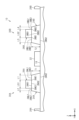
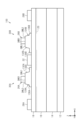
- FIG. 1 is a schematic cross-sectional view of an exemplary semiconductor device according to the first embodiment.
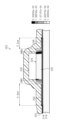
- FIG. 2 is a partially enlarged view of the semiconductor device of FIG.
- FIG. 3 is a partially enlarged view of the semiconductor device of FIG. 1 showing the path of gate leakage current.
- FIG. 4 is a schematic cross-sectional view showing a method of manufacturing the semiconductor device of FIG.
- FIG. 5 is a schematic cross-sectional view showing a manufacturing method following the step of FIG. 4.
- FIG. 6 is a schematic cross-sectional view showing a manufacturing method following the process shown in FIG.
- FIG. 7 is a schematic cross-sectional view showing a manufacturing method following the step of FIG. 6.
- FIG. 8 is a schematic cross-sectional view showing a manufacturing method following the step of FIG. 7.
- FIG. 9 is a schematic cross-sectional view showing a manufacturing method following the process of FIG. 8.
- FIG. 10 is a schematic cross-sectional view showing a manufacturing method following the step of FIG. 9.
- FIG. 11 is a schematic cross-sectional view showing a manufacturing method following the step of FIG. 10.
- FIG. 12 is a schematic cross-sectional view showing a manufacturing method following the step of FIG. 11.
- FIG. 13 is a schematic cross-sectional view of an exemplary semiconductor device according to the second embodiment.
- FIG. 14 is a partially enlarged view of the semiconductor device of FIG. 13.
- FIG. 15 is a partially enlarged view of the semiconductor device of FIG. 13 showing the path of gate leakage current.
- FIG. 16 is a cross-sectional view showing a simulation result of the current density of a bulk leak current flowing through the gate structure (gate portion including a source side horizontal extension portion and a drain side horizontal extension portion) of the second embodiment.
- FIG. 1 is a schematic cross-sectional view of an exemplary semiconductor device 10 according to the first embodiment. First, the overall structure of the semiconductor device 10 will be described with reference to FIG.
- the semiconductor device 10 is configured as a HEMT using a III-V group semiconductor.
- a group III nitride semiconductor is used as the group III-V semiconductor.
- a group III nitride semiconductor is a group III-V semiconductor using nitrogen as a group V element, and typical examples thereof include GaN, aluminum nitride (AlN), and indium nitride (InN). Generally, it can be expressed as Al x In y Ga 1-x-y N (0 ⁇ x ⁇ 1, 0 ⁇ y ⁇ 1, 0 ⁇ x+y ⁇ 1).
- the semiconductor device 10 is configured as a HEMT using GaN, for example.
- the semiconductor device 10 includes a substrate 12, a buffer layer 14 formed on the substrate 12, an electron transit layer 16 formed on the buffer layer 14, and an electron transit layer 16 formed on the electron transit layer 16. and an electron supply layer 18.
- Substrate 12 may be formed of silicon (Si), silicon carbide (SiC), GaN, sapphire, or other substrate materials.
- the substrate 12 is a conductive Si substrate.
- the thickness of the substrate 12 may be, for example, 200 ⁇ m or more and 1500 ⁇ m or less.
- the Z direction of the mutually orthogonal XYZ axes shown in the drawings is a direction that is orthogonal to the main surface of the substrate 12.
- the term "planar view" used in this specification refers to viewing the semiconductor device 10 from above along the Z direction, unless explicitly stated otherwise.
- the buffer layer 14 is located between the substrate 12 and the electron transit layer 16 and may be formed of any material that can alleviate the lattice mismatch between the substrate 12 and the electron transit layer 16.
- buffer layer 14 includes one or more nitride semiconductor layers.
- buffer layer 14 may include at least one of an aluminum nitride (AlN) layer, an aluminum gallium nitride (AlGaN) layer, and a graded AlGaN layer having a different aluminum (Al) composition.
- the buffer layer 14 may be formed by a single AlN layer, a single AlGaN layer, a layer having an AlGaN/GaN superlattice structure, a layer having an AlN/AlGaN superlattice structure, or a layer having an AlN/GaN superlattice structure. can be formed.
- buffer layer 14 includes a first buffer layer formed on substrate 12 and a second buffer layer formed on the first buffer layer.
- the first buffer layer is, for example, an AlN layer, and may have a thickness of, for example, about 200 nm.
- the second buffer layer may include, for example, a plurality of AlGaN layers, and each AlGaN layer may have a thickness of, for example, about 100 nm.
- impurities may be introduced into a part of the buffer layer 14 to make it semi-insulating.
- the impurity is, for example, carbon (C) or iron (Fe), and the concentration of the impurity may be, for example, 4 ⁇ 10 16 cm ⁇ 3 or more.
- the electron transit layer 16 is a semiconductor layer (corresponding to the first semiconductor layer), and may be made of, for example, a nitride semiconductor.
- the electron transit layer 16 is, for example, a GaN layer.
- the electron transit layer 16 may have a thickness of, for example, 0.5 ⁇ m or more and 2 ⁇ m or less.
- impurities may be introduced into a part of the electron transit layer 16 to make the region other than the surface layer region of the electron transit layer 16 semi-insulating.
- the impurity is, for example, C, and the concentration of the impurity may be, for example, 1 ⁇ 10 19 cm ⁇ 3 or more in peak concentration.
- the electron supply layer 18 is a semiconductor layer (corresponding to the second semiconductor layer), and may be made of, for example, a nitride semiconductor.
- the electron supply layer 18 is, for example, an AlGaN layer.
- the electron supply layer 18 has a larger band gap than the electron transit layer 16.
- the electron supply layer 18, which is an AlGaN layer has a larger band gap than the electron transit layer 16, which is a GaN layer.
- the electron supply layer 18 is made of Al x Ga 1-x N.
- x is 0.1 ⁇ x ⁇ 0.4, more preferably 0.2 ⁇ x ⁇ 0.3, but is not necessarily limited to this range.
- the electron supply layer 18 may have a thickness of, for example, 5 nm or more and 20 nm or less.
- the electron transit layer 16 and the electron supply layer 18 are made of nitride semiconductors having different lattice constants. Therefore, the nitride semiconductor (eg, GaN) forming the electron transit layer 16 and the nitride semiconductor (eg, AlGaN) forming the electron supply layer 18 form a lattice-mismatched junction. Due to the spontaneous polarization of the electron transit layer 16 and the electron supply layer 18 and the piezo polarization caused by the stress applied to the heterojunction of the electron supply layer 18, electrons near the heterojunction interface between the electron transit layer 16 and the electron supply layer 18 are The energy level of the conduction band of the traveling layer 16 is lower than the Fermi level.
- 2DEG 20 spreads within the electron transit layer 16 at a position close to the heterojunction interface between the electron transit layer 16 and the electron supply layer 18 (for example, at a distance of several nm from the interface).
- the concentration of 2DEG20 is not particularly limited, but may be, for example, about 1 ⁇ 10 13 cm ⁇ 2 .
- the semiconductor device 10 further includes a source electrode 22, a first gate part 24A, a second gate part 24B, a first gate electrode 26A, a second gate electrode 26B, a first drain electrode 28A, and a second drain electrode 28B.
- the source electrode 22, the first gate part 24A, the second gate part 24B, the first drain electrode 28A, and the second drain electrode 28B are arranged on the electron supply layer 18.
- the source electrode 22 is located between the first gate part 24A and the second gate part 24B.
- the second gate section 24B is located on the opposite side of the source electrode 22 from the first gate section 24A.
- the first gate portion 24A is located between the source electrode 22 and the first drain electrode 28A.
- the first drain electrode 28A is located on the opposite side of the source electrode 22 with respect to the first gate portion 24A.
- the second gate portion 24B is located between the source electrode 22 and the second drain electrode 28B.
- the second drain electrode 28B is located on the opposite side of the source electrode 22 with respect to the second gate portion 24B.
- the source electrode 22 and the first and second drain electrodes 28A and 28B are in ohmic contact with the 2DEG 20 directly below the electron supply layer 18, that is, electrically connected to the 2DEG 20.
- the source electrode 22 and the first and second drain electrodes 28A and 28B are made of, for example, a titanium (Ti) layer, a titanium nitride (TiN) layer, an aluminum (Al) layer, an aluminum silicon copper (AlSiCu) layer, and an aluminum copper ( It may be formed by one or more metal layers with at least one of the following: (AlCu) layers.
- the source electrode 22 and the first and second drain electrodes 28A and 28B each have a three-layer structure including, for example, a Ti layer, an Al layer, and a Ti layer. It is advantageous if the source electrode 22 and the first and second drain electrodes 28A, 28B are all made of the same material because they can be formed in the same process.
- the first and second gate portions 24A and 24B are semiconductor layers (corresponding to the third semiconductor layer) containing acceptor type impurities, and may be formed of, for example, a nitride semiconductor containing acceptor type impurities.
- the first and second gate portions 24A and 24B may be made of any semiconductor material having a smaller band gap than the electron supply layer 18.
- the first and second gate parts 24A and 24B are GaN layers doped with acceptor type impurities, that is, p-type GaN layers.
- the acceptor type impurity may include, for example, at least one of zinc (Zn), magnesium (Mg), and carbon (C). Note that in the first embodiment, Mg is used as an acceptor type impurity.
- the acceptor type impurity may have a maximum concentration of, for example, 7 ⁇ 10 18 cm ⁇ 3 or more and 1 ⁇ 10 20 cm ⁇ 3 or less.
- the thicknesses of the first and second gate portions 24A and 24B are not particularly limited, and may be appropriately determined, for example, taking into consideration gate breakdown voltage and the like.
- the first and second gate parts 24A and 24B may have a thickness of 80 nm or more and 150 nm or less.
- the cross-sectional shape of the first and second gate parts 24A, 24B (the cross-sectional shape along the ZX plane in FIG. 1) is not particularly limited, and may be, for example, rectangular, trapezoidal, or any other arbitrary shape. good.
- the lengths of the first and second gate portions 24A and 24B in the X direction are not particularly limited, and may be, for example, 0.4 ⁇ m or more and 1.0 ⁇ m or less.
- the first gate electrode 26A is arranged on a part of the first gate part 24A.
- the second gate electrode 26B is arranged on a part of the second gate section 24B.
- the first and second gate electrodes 26A, 26B are formed of one or more metal layers, and may be, for example, titanium nitride (TiN) layers.
- the first and second gate electrodes 26A and 26B may be constituted by a first metal layer (for example, a Ti layer) and a second metal layer (for example, a TiN layer) provided on the first metal layer. .
- the first and second gate electrodes 26A and 26B are TiN layers, and are Schottky-junctioned to the first and second gate portions 24A and 24B (p-type GaN layers), respectively.
- the thickness of the first and second gate electrodes 26A and 26B is not particularly limited, and may be, for example, 50 nm or more and 300 nm or less.
- the electron transit layer 16, the electron supply layer 18, the first gate part 24A, the first gate electrode 26A, the source electrode 22, and the first drain electrode 28A form a first field effect transistor (FET).
- FET field effect transistor
- a second field effect transistor (FET) 30B is configured by the electron transit layer 16, the electron supply layer 18, the second gate portion 24B, the second gate electrode 26B, the source electrode 22, and the second drain electrode 28B.
- the first and second FETs 30A and 30B are each configured as a normally-off type GaN-HEMT. Note that although the semiconductor device 10 is shown as including two FETs 30A and 30B in FIG. 1, in reality, the semiconductor device 10 includes a large number of FETs by repeating the structure of FIG.
- the first gate portion 24A, the first gate electrode 26A, the first drain electrode 28A, and the source electrode 22 have a gate-drain distance of the gate-drain distance in consideration of the drain-source breakdown voltage, etc.
- the distance between the sources is longer than the distance between the sources.
- the gate-drain distance corresponds to the distance from the first gate portion 24A (the end closer to the first drain electrode 28A) to the first drain electrode 28A.
- the gate-source distance corresponds to the distance from the first gate portion 24A (the end closer to the source electrode 22) to the source electrode 22.
- the gate-drain distance can be set to be longer than the sum of the gate-source distance and the gate length (length in the X direction) of the first gate electrode 26A.
- the second gate portion 24B, second gate electrode 26B, second drain electrode 28B, and source electrode 22 are arranged such that the gate-drain distance is longer than the gate-source distance.
- the gate-drain distance may be set to be longer than the sum of the gate-source distance and the gate length (the length of the second gate electrode 26B in the X direction).
- FIG. 2 is a partially enlarged view of the semiconductor device 10 of FIG.
- the first gate portion 24A has, for example, a trapezoidal cross-sectional shape, and has an upper surface 24AS1 and a lower surface 24AS2 having a larger area than the upper surface 24AS1.
- the first gate electrode 26A is formed on a part of the upper surface 24AS1 of the first gate portion 24A.
- the first gate electrode 26A has, for example, a rectangular cross-sectional shape, and has a length LG1 in the direction (X direction) in which the first drain electrode 28A, the first gate portion 24A, and the source electrode 22 are arranged side by side. . This length LG1 is shorter than the length of the upper surface 24AS1 of the first gate portion 24A in the X direction.
- the upper surface 24AS1 of the first gate part 24A is exposed from the region not in contact with the lower surface 26AS2 of the first gate electrode 26A, that is, the lower surface 26AS2 of the first gate electrode 26A, and extends to the outside of the first gate electrode 26A.
- the upper surface 24AS1 of the first gate portion 24A has two side space regions extending outside both side walls of the first gate electrode 26A in the X direction, a first side space portion 24AL1 and a second side space region. space portion 24AL2.
- the first side space portion 24AL1 is a region located closer to the source electrode 22, and extends in the X direction with a length L1.
- the second side space portion 24AL2 is a region located closer to the first drain electrode 28A, and extends in the X direction with a length L2.
- the length L1 and the length L2 are determined by two ends of the upper surface 24AS1 of the first gate portion 24A and two ends of the lower surface 26AS2 of the first gate electrode 26A.
- the upper surface 24AS1 of the first gate portion 24A has a first source end 24AE1 located closer to the source electrode 22 and a first drain end 24AE2 located closer to the first drain electrode 28A.
- the lower surface 26AS2 of the first gate electrode 26A includes a first source electrode end 26AE1 located closer to the source electrode 22 and a first drain electrode end 26AE2 located closer to the first drain electrode 28A.
- the first source-side end 24AE1 of the first gate portion 24A is located closer to the source electrode 22 than the first source-side electrode end 26AE1 of the first gate electrode 26A. Therefore, the length L1 of the first side space portion 24AL1 corresponds to the distance between the first source side end portion 24AE1 and the first source side electrode end portion 26AE1.
- the first drain end 24AE2 of the first gate portion 24A is located closer to the first drain electrode 28A than the first drain end 26AE2 of the first gate electrode 26A. Therefore, the length L2 of the second side space portion 24AL2 corresponds to the distance between the first drain side end portion 24AE2 and the first drain side electrode end portion 26AE2.
- the length L1 of the first side space portion 24AL1 and the length L2 of the second side space portion 24AL2 are set to satisfy the relationship L1>L2, more preferably, the relationship L1 ⁇ 2 ⁇ L2. Therefore, as shown in FIG. 2, the first gate electrode 26A is arranged on the upper surface 24AS1 of the first gate part 24A at a position closer to the first drain electrode 28A than the intermediate position in the X direction of the first gate part 24A. ing. In this way, in the first FET 30A, the first gate portion 24A and the first gate electrode 26A form an asymmetric gate structure in a cross-sectional view along the ZX plane. This asymmetric gate structure contributes to suppressing local increases in current density of gate leakage current. The relationship between the asymmetric gate structure of the first FET 30A and gate leakage current will be described later with reference to FIG. 3.
- the length L1 of the first side space portion 24AL1 of the first gate portion 24A is set to be equal to or less than the thickness T1 (distance from the upper surface 24AS1 to the lower surface 24AS2) of the first gate portion 24A. can be done. That is, the length L1 of the first side space portion 24AL1 and the thickness T1 of the first gate portion 24A may be set to satisfy the relationship L1 ⁇ T1.
- the first gate electrode 26A is connected to the first gate part 24A by a Schottky junction
- a reverse bias is applied to the Schottky junction part, and the first gate part 24A A depletion layer spreads within.
- the ratio of the area of the bonding interface (length in the X direction) of the Schottky junction to the area (length in the X direction) of the upper surface 24AS1 of the first gate portion 24A is determined. , it is possible to maintain the thickness satisfactorily based on the thickness T1 of the first gate portion 24A.
- the length L1 of the first side space portion 24AL1, the length L2 of the second side space portion 24AL2, and the length LG1 of the first gate electrode 26A can be set to satisfy the relationship LG1 ⁇ L1+L2.
- the area (length in the X direction) where the first gate electrode 26A contacts the upper surface 24AS1 of the first gate portion 24A is increased, and the area from the first gate electrode 26A to the first gate portion 24A is increased. It becomes possible to efficiently transmit the gate signal to.
- the second gate section 24B has, for example, a trapezoidal cross-sectional shape, and includes an upper surface 24BS1 and a lower surface 24BS2 having a larger area than the upper surface 24BS1.
- the second gate electrode 26B is formed on a part of the upper surface 24BS1 of the second gate portion 24B.
- the second gate electrode 26B has, for example, a rectangular cross-sectional shape, and has a length LG2 in the direction (X direction) in which the second drain electrode 28B, the second gate part 24B, and the source electrode 22 are arranged side by side. . This length LG2 is shorter than the length of the upper surface 24BS1 of the second gate portion 24B in the X direction.
- the upper surface 24BS1 of the second gate part 24B is exposed from the region not in contact with the lower surface 26BS2 of the second gate electrode 26B, that is, the lower surface 26BS2 of the second gate electrode 26B, and extends to the outside of the second gate electrode 26B.
- the upper surface 24BS1 of the second gate part 24B has two side space regions extending outside both side walls of the second gate electrode 26B in the X direction, a third side space part 24BL1 and a fourth side space region.
- the space part 24BL2 is included.
- the third side space portion 24BL1 is a region located closer to the source electrode 22, and extends in the X direction with a length L3.
- the fourth side space portion 24BL2 is a region located closer to the second drain electrode 28B, and extends in the X direction with a length L4.
- the length L3 and the length L4 are determined by two ends of the upper surface 24BS1 of the second gate part 24B and two ends of the lower surface 26BS2 of the second gate electrode 26B.
- the upper surface 24BS1 of the second gate portion 24B has a second source side end portion 24BE1 located closer to the source electrode 22 and a second drain side end portion 24BE2 located closer to the second drain electrode 28B.
- the lower surface 26BS2 of the second gate electrode 26B includes a second source side electrode end portion 26BE1 located closer to the source electrode 22 and a second drain side electrode end portion 26BE2 located closer to the second drain electrode 28B.
- the second source-side end 24BE1 of the second gate portion 24B is located closer to the source electrode 22 than the second source-side electrode end 26BE1 of the second gate electrode 26B. Therefore, the length L3 of the third side space portion 24BL1 corresponds to the distance between the second source side end portion 24BE1 and the second source side electrode end portion 26BE1.
- the second drain-side end 24BE2 of the second gate portion 24B is located closer to the second drain electrode 28B than the second drain-side electrode end 26BE2 of the second gate electrode 26B. Therefore, the length L4 of the fourth side space portion 24BL2 corresponds to the distance between the second drain side end portion 24BE2 and the second drain side electrode end portion 26BE2.
- the length L3 of the third side space portion 24BL1 and the length L4 of the fourth side space portion 24BL2 are set to satisfy the relationship L3>L4, more preferably, the relationship L3 ⁇ 2 ⁇ L4. Therefore, as shown in FIG. 2, the second gate electrode 26B is arranged on the upper surface 24BS1 of the second gate part 24B at a position closer to the second drain electrode 28B than the middle position in the X direction of the second gate part 24B. ing. In this way, in the second FET 30B, the second gate portion 24B and the second gate electrode 26B form an asymmetric gate structure in a cross-sectional view along the ZX plane. This asymmetric gate structure contributes to suppressing local increases in current density of gate leakage current. The relationship between the asymmetric gate structure of the second FET 30B and gate leakage current will be described later with reference to FIG. 3.
- the length L3 of the third side space section 24BL1 of the second gate section 24B is the thickness T2 (from the upper surface 24BS1 to the lower surface 24BS2) of the second gate section 24B, although this is not necessarily limited. (distance) or less. That is, the length L3 of the third side space portion 24BL1 and the thickness T2 of the second gate portion 24B may be set to satisfy the relationship L3 ⁇ T2. By satisfying this relationship, the depletion layer that spreads vertically from the junction interface of the Schottky junction between the second gate electrode 26B and the second gate part 24B is formed in the horizontal direction with respect to the area of the upper surface 24BS1 of the second gate part 24B. (X direction) as well. Thereby, the maximum rated gate voltage in the positive direction can be increased.
- the length L3 of the third side space part 24BL1, the length L4 of the fourth side space part 24BL2, and the length LG2 of the second gate electrode 26B (second The distance from the source side electrode end portion 26BE1 to the second drain side electrode end portion 26BE2) can be set to satisfy the relationship LG2 ⁇ L3+L4.
- the area (length in the X direction) where the second gate electrode 26B contacts the upper surface 24BS1 of the second gate portion 24B is increased, and the second gate electrode 26B is connected to the second gate portion 24B. It becomes possible to efficiently transmit the gate signal to. As a result, it is possible to improve subthreshold characteristics and reduce drain leakage current when the gate voltage is equal to or lower than the threshold voltage. Furthermore, since the cross-sectional area of the second gate electrode 26B becomes larger, it becomes possible to lower the gate resistance.
- the first FET 30A has an asymmetric gate structure
- the second FET 30B has an asymmetric gate structure.
- the first FET 30A and the second FET 30B may be configured symmetrically with respect to the substrate orthogonal axis in the Z direction passing through the center of the source electrode 22 in the X direction.
- the first FET 30A corresponds to a portion of the semiconductor device 10 from the first drain electrode 28A to the source electrode 22 in the X direction, and is configured by the first gate portion 24A and the first gate electrode 26A. Including asymmetric gate structures.
- the second FET 30B corresponds to a portion of the semiconductor device 10 from the second drain electrode 28B to the source electrode 22 in the X direction, and includes an asymmetric gate structure constituted by a second gate portion 24B and a second gate electrode 26B. .
- the first FET 30A and the second FET 30B are relative to the substrate orthogonal axis passing through the center of the source electrode 22. It can be configured laterally symmetrically.
- the other features described above regarding the first and second FETs 30A and 30B may also be configured to have symmetry.
- FIG. 3 is a partially enlarged view of the semiconductor device 10 of FIG. 1 showing the path of gate leakage current in the first FET 30A.
- the first FET 30A will be mainly described here, the same applies to the second FET 30B.
- the asymmetric gate structure is a structure in which the first gate electrode 26A is arranged on the first gate portion 24A so as to satisfy the relationship L1>L2 (see FIG. 2).
- the first gate portion 24A is arranged directly under the first gate electrode 26A.
- a gate leak current flows in the first gate portion 24A from the lower surface 26AS2 of the first gate electrode 26A toward the 2DEG20.
- This gate leakage current is classified into first to third leakage currents Ig1, Ig2, and Ig3 along the following three paths.
- the first leakage current Ig1 flows from the first source-side electrode end 26AE1 of the first gate electrode 26A to the first side space AL1 of the first gate portion 24A and the side surface of the first gate portion 24A (the side surface closer to the source electrode 22). ) and then flows toward the 2DEG 20.
- the second leakage current Ig2 flows from the first drain side electrode end 26AE2 of the first gate electrode 26A to the second side space AL2 of the first gate section 24A and the side surface of the first gate section 24A (closer to the first drain electrode 28A). This is the current that flows toward the 2DEG 20 after flowing along the side surface of the 2DEG 20.
- the third leakage current Ig3 is a current that flows from the lower surface 26AS2 of the first gate electrode 26A through the inside of the first gate portion 24A, and then flows toward the 2DEG20. Note that when a voltage equal to or higher than the threshold voltage is applied to the first gate electrode 26A and the 2DEG 20 is generated, the second leakage current Ig2 is a current flowing through the 2DEG 20 toward the source electrode 22 and a current flowing through the first drain electrode 28A. The current flows toward the 2DEG 20. On the other hand, most of the first and third leakage currents Ig1 and Ig3 flow through the 2DEG 20 toward the source electrode 22.
- the first and second leakage currents Ig1 and Ig2 are surface leakage currents.
- the third leak current Ig3 is a bulk leak current. Although it depends on the material of the first gate part 24A, the material of the protective film covering the first gate part 24A, and other conditions, for example, a structure in which the first gate electrode 26A is Schottky bonded to the first gate part 24A In this case, the surface leakage current is often as large or larger than the bulk leakage current.
- the gate-drain distance is longer than the gate-source distance (eg, the sum of the gate-source distance and the gate length of the first gate electrode 26A). Therefore, the path of the first leakage current Ig1 flowing to the source electrode 22 along the first side space portion 24AL1 etc. is changed to the source electrode 22 (and the first drain electrode 28A) along the second side space portion 24AL2 etc.
- the path of the second leakage current Ig2 is shorter than that of the second leakage current Ig2. In a symmetrical gate structure, such a difference in path distance causes the first leakage current Ig1 to be significantly larger than the second leakage current Ig2.
- the first source side electrode end 26AE1 of the first gate electrode 26A not only serves as the starting point of the first leakage current Ig1, but also serves as the starting point of a portion of the third leakage current Ig3. Therefore, the portion of the first gate portion 24A located directly below the first source-side electrode end portion 26AE1 may be a portion where gate leakage current is more likely to concentrate than other portions. Therefore, in the case of a symmetrical gate structure in which the first leakage current Ig1 is significantly larger than the second leakage current Ig2 as described above, the first gate portion 24A located directly below the end of the gate electrode near the source electrode 22 The current density of gate leakage current becomes particularly high at these points.
- the first gate electrode 26A is arranged on the upper surface 24AS1 of the first gate part 24A in an asymmetric gate structure that satisfies the relationship L1>L2 (see FIG. 2).
- the first leak current Ig1 is reduced because the length L1 of the first side space portion 24AL1 is longer than the length L2 of the second side space portion 24AL2.
- the path of the first leakage current Ig1 is longer than that in a symmetrical gate structure, so as the difference in path distance is reduced as described above, the first leakage current Ig1 is reduce As a result, the current density at the first gate portion 24A located directly below the first source side electrode end portion 26AE1 can be reduced, and the maximum positive gate rated voltage of the first FET 30A can be improved.
- the path of the second leak current Ig2 is shorter than that of a symmetrical gate structure due to the relationship L1>L2, the path of the second leak current Ig2 is long to begin with, so the second leak current Ig2 is relatively small. Therefore, even if the length L2 decreases due to an increase in the length L1, the second leakage current Ig2 hardly increases.
- the present inventors have discovered that as the length L1 of the first side space portion 24AL1 becomes larger than the length L2 of the second side space portion 24AL2, the first leakage current Ig1 decreases exponentially. I'm finding out. From this point of view, it is more preferable that the lengths L1 and L2 are set so as to satisfy the relationship L1 ⁇ 2 ⁇ L2. By satisfying this relationship, the path of the first leakage current Ig1 flowing along the first side space portion 24AL1 etc. becomes longer. Thereby, the third leak current Ig3 can be relatively increased compared to the case of the condition of L1>L2, so the first leak current Ig1 can be further reduced. As a result, the current density of the gate leakage current at the first gate portion 24A located directly below the first source side electrode end portion 26AE1 can be further reduced.
- the second gate electrode 26B is arranged on the upper surface 24BS1 of the second gate portion 24B in an asymmetric gate structure that satisfies the relationship L3>L4 (see FIG. 2). This reduces the current density at the second gate portion 24B located directly below the second source side electrode end portion 26BE1 of the second gate electrode 26B, and improves the positive gate maximum rated voltage of the second FET 30B. be able to. Also in this case, the lengths L3 and L4 satisfy the relationship L3 ⁇ 2 ⁇ L4, thereby further reducing the current density at the second gate portion 24B located directly below the second source side electrode end portion 26BE1. can do.
- FIGS. 4 to 12 are schematic cross-sectional views showing exemplary manufacturing steps of the semiconductor device 10. Note that for ease of understanding, members that become the final components of the semiconductor device 10 are indicated by the same reference numerals as in FIG. 1.
- a buffer layer 14 a first semiconductor layer corresponding to the electron transport layer 16, a second semiconductor layer corresponding to the electron supply layer 18, and a gate are formed on a substrate 12, which is a conductive Si substrate, for example.
- a third semiconductor layer corresponding to layer 24 is in turn formed by epitaxial growth.
- a metal organic chemical vapor deposition (MOCVD) method can be used for the epitaxial growth process.
- the gate layer 24 is a layer for forming the first and second gate parts 24A and 24B in FIG. Buffer layer 14, electron transport layer 16, electron supply layer 18, and gate layer 24 may be formed of any material and thickness corresponding to their respective structures described with reference to FIG. 1.
- the electron transit layer 16 is a GaN layer
- the electron supply layer 18 is an AlGaN layer
- the gate layer 24 is a p-type GaN layer doped with Mg as an acceptor type impurity.
- the thickness of the buffer layer 14 is, for example, 1.5 ⁇ m
- the thickness of the electron transit layer 16 is, for example, 1 ⁇ m
- the thickness of the electron supply layer 18 is, for example, 20 nm
- the thickness of the gate layer 24 is, for example, 100 nm.
- a gate electrode layer 26 is formed on the gate layer 24 by, for example, sputtering.
- the gate electrode layer 26 is a layer for forming the first and second gate electrodes 26A and 26B in FIG.
- Gate electrode layer 26 may be formed of any material and thickness that corresponds to the structure of first and second gate electrodes 26A, 26B described with reference to FIG.
- the gate electrode layer 26 is a TiN layer, and its thickness is, for example, 200 nm.
- the first protective layer 42 is formed on the gate electrode layer 26 by, for example, plasma-enhanced chemical vapor deposition (PECVD).
- PECVD plasma-enhanced chemical vapor deposition
- the first protective layer 42 is, for example, a SiN layer, and has a thickness of, for example, 200 nm.
- the material and thickness of the first protective layer 42 are not particularly limited.
- a mask 44 including an opening 44X is formed on the first protective layer 42.
- etching for example, dry etching
- the first protective layer 42 and the gate electrode layer 26 are removed at positions corresponding to the openings 44X.
- a through hole 45 (see FIG. 6) that penetrates the first protective layer 42 and the gate electrode layer 26 is formed at a position corresponding to the opening 44X, so that the gate layer 24 is formed through the through hole 45. surface is exposed.
- Mask 44 is then removed.
- a second protective layer 46 is formed to cover the entire surfaces of the gate layer 24, gate electrode layer 26, and first protective layer 42, for example, by PECVD.
- the second protective layer 46 is, for example, a SiN layer, and has a thickness of, for example, 80 nm.
- the material and thickness of the second protective layer 46 are not particularly limited.
- the second protective layer 46 is etched back until the surface of the second protective layer 46 is exposed.
- a first side wall 46A and a second side wall 46B are formed that respectively cover the first side surface 45A and the second side surface 45B of the through hole 45.
- the first and second sidewalls 46A, 46B are each part of the second protective layer 46 that remains after etchback. Note that when the thickness of the second protective layer 46 is 80 nm, the thickness of each of the first side wall 46A and the second side wall 46B is, for example, about 40 nm.
- the first protective layer 42 and the gate electrode layer 26 are selectively etched to form a first gate electrode 26A and a second gate electrode 26B.
- a mask (not shown) having openings at positions corresponding to the formation regions of the first and second gate electrodes 26A and 26B is formed on the structure shown in FIG.
- the first protective layer 42 and the gate electrode layer 26 are etched (eg, dry etched) using this mask, thereby forming the first gate electrode 26A and the second gate electrode 26B.
- each length (gate length) of the first and second gate electrodes 26A and 26B is, for example, 500 nm, but the gate length is not limited to this.
- the first protective layer 42 is formed as a first upper wall 42A covering the first gate electrode 26A and a second upper wall 42B covering the second gate electrode 26B.
- the gate layer 24, the first gate electrode 26A, the first upper wall 42A, the first side wall 46A, the second gate electrode 26B, the second upper wall 42B, and the first A third protective layer 48 is formed to cover the entire surface of the second side wall 46B.
- the third protective layer 48 is, for example, a SiN layer, and has a thickness of, for example, 80 nm.
- the material and thickness of the third protective layer 48 are not particularly limited.
- the third protective layer 48 is etched back until the surface of the gate layer 24 is exposed.
- a third sidewall 48A1 covering the first sidewall 46A and a fourth sidewall 48B1 covering the second sidewall 46B are formed.
- a fifth sidewall 48A2 that covers the first gate electrode 26A (and the first upper wall 42A) and a sixth sidewall 48B2 that covers the second gate electrode 26B (and the second upper wall 42B) are formed.
- the third sidewall 48A1, the fourth sidewall 48B1, the fifth sidewall 48A2, and the sixth sidewall 48B2 are each part of the third protective layer 48 that remains after the etchback. Note that when the thickness of the third protective layer 48 is 80 nm, the thickness of each of the third side wall 48A1, the fourth side wall 48B1, the fifth side wall 48A2, and the sixth side wall 48B2 is, for example, about 40 nm.
- the first gate portion 24A and the second gate portion 24B are formed by etching (for example, dry etching) the gate layer 24 using the sidewall 48B2 as a mask.
- etching for example, dry etching
- the first and second gate portions 24A and 24B are each formed into a trapezoidal cross-sectional shape as shown in FIG. be done.
- the length of the upper surface 24AS1 of the first gate part 24A is the gate length of the first gate electrode 26A, the thickness of the first side wall 46A, the thickness of the third side wall 48A1, and the thickness of the fifth side wall 48A2. Since it is almost equal to the total sum, it is approximately 620 nm.
- the length of the upper surface 24BS1 of the second gate portion 24B is determined by the gate length of the second gate electrode 26B, the thickness of the second side wall 46B, the thickness of the fourth side wall 48B1, and the thickness of the sixth side wall 48B2. Since it is almost equal to the total sum, it is approximately 620 nm.
- the first upper wall 42A, the second upper wall 42B, the first side wall 46A, the second side wall 46B, the third side wall 48A1, the fourth side wall 48B1, the fifth side wall 48A2, and the sixth Sidewall 48B2 is removed.
- the first side space section 24AL1 and the second side space section 24AL2 are formed on the upper surface 24AS1 of the first gate section 24A
- the third side space section 24BL1 and the second side space section 24AL2 are formed on the upper surface 24BS1 of the second gate section 24B.
- a four-side space portion 24BL2 is formed.
- the length L1 (see FIG. 2) of the first side space portion 24AL1 is approximately 80 nm, since it is approximately equal to the sum of the thickness of the first side wall 46A and the thickness of the third side wall 48A1.
- the length L2 (see FIG. 2) of the second side space portion 24AL2 is approximately 40 nm, since it is approximately equal to the thickness of the fifth side wall 48A2. Therefore, in this example, the relationship L1 ⁇ 2 ⁇ L2 is satisfied.
- the length L3 (see FIG. 2) of the third side space portion 24BL1 is approximately 80 nm, since it is approximately equal to the sum of the thickness of the second side wall 46B and the thickness of the fourth side wall 48B1.
- the length L4 (see FIG. 2) of the fourth side space portion 24BL2 is approximately 40 nm, since it is approximately equal to the thickness of the sixth side wall 48B2. Therefore, in this example, the relationship L3 ⁇ 2 ⁇ L4 is satisfied.
- Source electrode 22, the first drain electrode 28A, and the second drain electrode 28B are formed simultaneously.
- Source electrode 22, first drain electrode 28A, and second drain electrode 28B may be formed of any material and thickness corresponding to their respective structures described with reference to FIG. 1.
- the source electrode 22, the first drain electrode 28A, and the second drain electrode 28B each have a three-layer structure including a Ti layer, an Al layer, and a Ti layer.
- heat treatment annealing is performed at, for example, about 600 degrees, thereby completing the semiconductor device 10 having the structure shown in FIG.
- the semiconductor device 10 includes first and second gate portions 24A and 24B formed of semiconductor layers containing acceptor type impurities.
- the first and second gate electrodes 26A and 26B are arranged on parts of the first and second gate parts 24A and 24B, respectively.
- the upper surface 24AS1 of the first gate portion 24A includes a first side space portion 24AL1 extending with a length L1 toward the source electrode 22, and a second side space portion 24AL2 extending with a length L2 toward the first drain electrode 28A. including.
- the upper surface 24BS1 of the second gate portion 24B includes a third side space portion 24BL1 extending with a length L3 toward the source electrode 22, and a fourth side space portion 24BL2 extending with a length L4 toward the second drain electrode 28B. including.
- the lengths L1 and L2 satisfy the relationship L1>L2. Therefore, the first gate portion 24A and the first gate electrode 26A form an asymmetric gate structure. Further, the lengths L3 and L4 satisfy the relationship L3>L4. Therefore, the second gate portion 24B and the second gate electrode 26B form an asymmetric gate structure.
- a gate leak current may flow from the lower surface 26AS2 of the first gate electrode 26A toward the 2DEG 20 to the first gate portion 24A.
- This gate leakage current includes a first leakage current Ig1 flowing along the first side space portion AL1 etc., a second leakage current Ig2 flowing along the second side space portion AL2 etc., and a second leakage current Ig2 flowing through the inside of the first gate portion 24A. 3 leakage current Ig3.
- the first source-side electrode end 26AE1 of the first gate electrode 26A not only serves as the starting point of the first leakage current Ig1, but also serves as the starting point of a portion of the third leakage current Ig3. Therefore, the portion of the first gate portion 24A located directly below the first source side electrode end portion 26AE1 is a portion where gate leakage current is more likely to concentrate than other portions.
- the first gate electrode 26A is arranged on the upper surface 24AS1 of the first gate part 24A so as to satisfy the relationship L1>L2 (see FIG. 2).
- the first leakage current Ig1 is reduced. That is, in the asymmetrical gate structure satisfying L1>L2, the path of the first leakage current Ig1 is longer than that in the symmetrical gate structure, so the first leakage current Ig1 is reduced.
- the current density at the first gate portion 24A located directly below the first source side electrode end portion 26AE1 can be reduced, and the gate maximum rated voltage in the positive direction can be improved.
- the semiconductor device 10 of the first embodiment has the following advantages. (1-1) In the first gate portion 24A, the length L1 of the first side space portion 24AL1 and the length L2 of the second side space portion 24AL2 satisfy the relationship L1>L2. Further, in the second gate portion 24B, the length L1 of the third side space portion 24BL1 and the length of the fourth side space portion 24BL2 satisfy the relationship L3>L4.
- the path through which the first leak current Ig1 flows along the first side space portion 24AL1 and the like can be lengthened. This makes it possible to reduce the current density of the gate leakage current at the first gate portion 24A located directly below the source side electrode end portion 26AE1. That is, local increases in current density can be suppressed. As a result, the maximum rated gate voltage in the positive direction can be improved by the asymmetric gate structure combining the first gate portion 24A and the first gate electrode 26A.
- the second gate section 24B similarly to the first gate section 24A, in the second gate section 24B as well, it is possible to lengthen the path through which the first leak current Ig1 flows along the third side space section 24BL1 and the like. This makes it possible to reduce the current density of the gate leakage current at the second gate portion 24B located directly below the second source side electrode end portion 26BE1. That is, local increases in current density can be suppressed. As a result, the maximum rated gate voltage in the positive direction can be improved by the asymmetric gate structure combining the second gate portion 24B and the second gate electrode 26B.
- Length L1 and length L2 satisfy the relationship L1 ⁇ 2 ⁇ L2, and length L3 and length L4 satisfy the relationship L3 ⁇ 2 ⁇ L4. According to this configuration, in each of the first and second gate parts 24A, 24B, the path of the first leak current Ig1 becomes further longer, so the third leak current Ig3 is relatively increased, and the first leak current Ig1 can be further reduced. As a result, it is possible to further suppress local increases in current density and improve the maximum rated gate voltage in the positive direction.
- the first gate electrode 26A is connected to the first gate part 24A by a Schottky junction
- a reverse bias is applied to the Schottky junction part
- the first gate part 24A A depletion layer spreads within.
- the ratio of the area of the bonding interface of the Schottky junction to the area of the upper surface 24AS1 of the first gate part 24A is changed. It becomes possible to maintain it well based on the thickness T1.
- the depletion layer that spreads vertically from the junction interface can be well maintained in the horizontal direction with respect to the area of the upper surface 24AS1 of the first gate portion 24A, so the maximum rated gate voltage in the positive direction can be increased. can do.
- the second gate section 24B also satisfies the relationship L3 ⁇ T2 in a structure in which the second gate electrode 26B is Schottky-junctioned to the second gate section 24B.
- This makes it possible to maintain a good ratio of the area of the junction interface of the Schottky junction to the area of the upper surface 24BS1 of the second gate section 24B based on the thickness T2 of the second gate section 24B.
- the depletion layer that spreads vertically from the junction interface can be maintained well in the horizontal direction with respect to the area of the upper surface 24BS1 of the second gate portion 24B, so the maximum rated gate voltage in the positive direction can be increased. can do.
- the length L1 of the first side space portion 24AL1, the length L2 of the second side space portion 24AL2, and the length LG1 of the first gate electrode 26A satisfy the relationship LG1 ⁇ L1+L2. Furthermore, the length L3 of the third side space portion 24BL1, the length L4 of the fourth side space portion 24BL2, and the length LG2 of the second gate electrode 26B satisfy the relationship LG2 ⁇ L3+L4.
- the contact area of the first gate electrode 26A with the upper surface 24AS1 of the first gate part 24A is increased, and the gate signal is efficiently transmitted from the first gate electrode 26A to the first gate part 24A. It becomes possible to do so.
- This makes it possible to sufficiently transmit the gate signal to the end of the lower surface 24AS2 of the first gate section 24A, thereby improving the subthreshold characteristics.
- drain leakage current can be reduced when the gate voltage is below the threshold voltage.
- the cross-sectional area of the first gate electrode 26A becomes larger, it becomes possible to lower the gate resistance.
- the area where the second gate electrode 26B contacts the upper surface 24BS1 of the second gate section 24B can be increased. As a result, it is possible to improve subthreshold characteristics and reduce drain leakage current when the gate voltage is equal to or lower than the threshold voltage. Furthermore, since the cross-sectional area of the second gate electrode 26B becomes larger, it becomes possible to lower the gate resistance.
- the electron transport layer 16 is a GaN layer
- the electron supply layer 18 is an AlGaN layer
- the first gate section 24A and second gate section 24B are GaN layers containing acceptor type impurities. According to this configuration, it is possible to suppress a local increase in the current density of gate leakage current in the GaN-HEMT structure and improve the maximum rated gate voltage in the positive direction.
- the first gate electrode 26A is connected to the first gate portion 24A by a Schottky junction
- the second gate electrode 26B is connected to the second gate portion 24B by a Schottky junction.
- the surface leak current first and second leak currents Ig1 and Ig2
- the bulk leak current third leak current Ig3
- the gate-drain distance is longer than the gate-source distance
- the path of the first leak current Ig1 becomes shorter than the path of the second leak current Ig2, so that the first leak current Ig1 becomes 2 leakage current Ig2. Therefore, as described above, there are places where the gate leakage current locally increases in the first and second gate parts 24A and 24B.
- the first FET 30A includes an asymmetric gate structure including the first gate electrode 26A and the first gate portion 24A
- the second FET 30B includes an asymmetric gate structure including the second gate electrode 26B and the second gate portion 24B. It is also a normally-off type. Therefore, the first and second FETs 30A and 30B can be configured to be suitable for power transistors from a fail-safe standpoint.
- FIG. 13 is a schematic cross-sectional view of an exemplary semiconductor device 100 according to the second embodiment.
- FIG. 14 is a partially enlarged view of the semiconductor device 100 of FIG. 13. Note that in FIGS. 13 to 15, components similar to those of the semiconductor device 10 of the first embodiment are given the same reference numerals. In the following, descriptions of components similar to those in the first embodiment will be omitted, and components different from those in the first embodiment will be described.
- the first and second gate portions 124A and 124B are semiconductor layers (corresponding to the third semiconductor layer) containing acceptor type impurities, and may be formed of, for example, a nitride semiconductor containing acceptor type impurities.
- the first and second gate portions 124A and 124B may be made of any semiconductor material having a smaller band gap than the electron supply layer 18.
- the first and second gate parts 124A and 124B are GaN layers doped with acceptor type impurities, that is, p-type GaN layers.
- the acceptor type impurity may include, for example, at least one of zinc (Zn), magnesium (Mg), and carbon (C). Note that in the second embodiment, Mg is used as an acceptor type impurity.
- the acceptor type impurity may have a maximum concentration of, for example, 7 ⁇ 10 18 cm ⁇ 3 or more and 1 ⁇ 10 20 cm ⁇ 3 or less.
- the thicknesses of the first and second gate portions 124A and 124B are not particularly limited, and may be appropriately determined, for example, taking into consideration gate breakdown voltage and the like.
- the first and second gate parts 124A and 124B may have a thickness of 80 nm or more and 150 nm or less. In the second embodiment, the thickness of the first and second gate parts 124A and 124B is about 100 nm.
- the first gate portion 124A includes a first ridge portion 132A, a first source side horizontally extending portion 134A, and a first drain side horizontally extending portion 136A.
- the second gate section 124B includes a second ridge section 132B, a second source side horizontally extending section 134B, and a second drain side horizontally extending section 136B.
- the cross-sectional shape of the first and second ridge portions 132A and 132B is not particularly limited, and may be, for example, rectangular, trapezoidal, or any other arbitrary shape.
- the first and second ridge portions 132A and 132B have a trapezoidal shape in cross section.
- the first and second ridge portions 132A, 132B include tapered inclined side walls, but the first and second ridge portions 132A, 132B may or may not have such inclined side walls. .
- first ridge portion 132A and each horizontally extending portion 134A, 136A serves as an extending portion or It may exist as a part of the first ridge part 132A (a part of the second ridge part 132B).
- first ridge portion 132A can also be regarded as a portion corresponding to or similar to the first gate portion 24A of the first embodiment. Therefore, the first gate portion 124A of the second embodiment has a first source side horizontally extending portion 134A and a first drain side horizontally extending portion 124A of the first embodiment that can correspond to the first ridge portion 132A. It can also be considered as a configuration in which the extension portion 136A is added.
- the second ridge portion 132B can also be regarded as a portion corresponding to or similar to the second gate portion 24B of the first embodiment. Therefore, the second gate part 124B of the second embodiment has a second source side horizontally extending part 134B and a second drain side horizontally extending part 134B in the second gate part 24B of the first embodiment which can correspond to the second ridge part 132B. It can also be considered as a configuration in which the extension portion 136B is added.
- first and second ridge parts 132A and 132B that can correspond to the configurations of the first and second gate parts 24A and 24B of the first embodiment will be described below. This will be explained using the same reference numerals as the configurations of the second gate sections 24A and 24B.
- the upper surface 24AS1 of the first gate section 124A corresponds to the upper surface of the first ridge section 132A, and the first gate electrode 26A is arranged on the upper surface 24AS1 of the first ridge section 132A (first gate section 124A).
- the relationship between the first ridge portion 132A and the first gate electrode 26A in the second embodiment may correspond to the relationship between the first gate portion 24A and the first gate electrode 26A in the first embodiment.
- the upper surface 24AS1 of the first ridge portion 132A includes a first side space portion 24AL1 having a length L1 and a second side space portion having a length L2, as in the first embodiment. 24AL2.
- the lengths L1 and L2 satisfy the relationship L1>L2, more preferably the relationship L1 ⁇ 2 ⁇ L2.
- the upper surface 24BS1 of the second gate section 124B corresponds to the upper surface of the second ridge section 132B
- the second gate electrode 26B is arranged on the upper surface 24BS1 of the second ridge section 132B (second gate section 124B).
- the relationship between the second ridge portion 132B and the second gate electrode 26B in the second embodiment may correspond to the relationship between the second gate portion 24B and the second gate electrode 26B in the first embodiment.
- the upper surface 24BS1 of the second ridge portion 132B includes a third side space portion 24BL1 having a length L3 and a fourth side space portion having a length L4, as in the first embodiment. 24BL2.
- the lengths L3 and L4 satisfy the relationship L3>L4, more preferably the relationship L3 ⁇ 2 ⁇ L4.
- the first source-side horizontally extending portion 134A extends horizontally with a length L5 in the direction (X direction) from the first ridge portion 132A toward the source electrode 22.
- the first drain side horizontally extending portion 136A extends horizontally with a length L6 in the direction (X direction) from the first ridge portion 132A toward the first drain electrode 28A.
- the length L5 of the first source side horizontally extending portion 134A is longer than the length L6 of the first drain side horizontally extending portion 136A. Therefore, the length L5 and the length L6 are set to satisfy the relationship L5>L6, more preferably, the relationship L6 ⁇ L5 ⁇ 2 ⁇ L6.
- the length L5 of the first source side horizontally extending portion 134A may be, for example, 0.2 ⁇ m or more and 0.6 ⁇ m or less.
- the length L6 of the first drain side horizontally extending portion 136A may be, for example, 0.2 ⁇ m or more and 0.3 ⁇ m or less.
- the thickness of the first source-side horizontally extending portion 134A and the thickness of the first drain-side horizontally extending portion 136A may be the same, and may be, for example, 5 nm or more and 25 nm or less.
- the second source-side horizontally extending portion 134B extends horizontally with a length L7 in the direction (X direction) from the second ridge portion 132B toward the source electrode 22.
- the second drain side horizontally extending portion 136B extends horizontally with a length L8 in the direction (X direction) from the second ridge portion 132B toward the second drain electrode 28B.
- the length L7 of the second source side horizontally extending portion 134B is longer than the length L8 of the second drain side horizontally extending portion 136B. Therefore, the length L7 and the length L8 are set to satisfy the relationship L7>L8, more preferably, the relationship L8 ⁇ L7 ⁇ 2 ⁇ L8.
- the length L7 of the second source-side horizontally extending portion 134B may be, for example, 0.2 ⁇ m or more and 0.6 ⁇ m or less.
- the length L8 of the second drain side horizontally extending portion 136B may be, for example, 0.2 ⁇ m or more and 0.3 ⁇ m or less.
- the thickness of the second source-side horizontally extending portion 134B and the thickness of the second drain-side horizontally extending portion 136B may be the same, and may be, for example, 5 nm or more and 25 nm or less.
- FIG. 15 is a partially enlarged view of the semiconductor device 100 of FIG. 13 showing the path of gate leakage current in the first FET 30A of the second embodiment.
- the first FET 30A will be mainly described here, the same applies to the second FET 30B.
- the first to Fourth leakage currents Ig11, Ig12, Ig13, and Ig14 flow into the first gate portion 124A.
- the first leak current Ig11 flows from the first source-side electrode end 26AE1 of the first gate electrode 26A to the first side space AL1 of the first ridge portion 132A, to the side surface of the first ridge portion 132A (the side surface closer to the source electrode 22). , and the current that flows toward the 2DEG 20 after flowing along the surface of the first source side horizontally extending portion 134A.
- the second leakage current Ig12 flows from the first drain side electrode end 26AE2 of the first gate electrode 26A to the second side space AL2 of the first ridge portion 132A, to the side surface of the first ridge portion 132A (closer to the first drain electrode 28A). This is a current that flows toward the 2DEG 20 after flowing along the surface of the first drain side horizontally extending portion 136A.
- the third leakage current Ig13 is a current that flows from the lower surface 26AS2 of the first gate electrode 26A through the inside of the first ridge portion 132A and the inside of the first source side horizontal extension portion 134A, and then flows toward the 2DEG 20.
- the fourth leakage current Ig14 is a current that flows from the lower surface 26AS2 of the first gate electrode 26A through the inside of the first ridge portion 132A and the inside of the first drain side horizontal extension portion 136A, and then flows toward the 2DEG 20.
- the second and fourth leakage currents Ig12 and Ig14 are respectively currents flowing through the 2DEG 20 toward the source electrode 22; The current flows through the 2DEG 20 toward the first drain electrode 28A.
- most of the first and third leakage currents Ig11 and Ig13 flow through the 2DEG 20 toward the source electrode 22.
- the portion of the first gate portion 124A located directly below the first source-side electrode end portion 26AE1 of the first gate electrode 26A may be a portion where gate leakage current is more likely to concentrate than other portions.
- the first gate section 124A of the second embodiment has a first source side horizontal extension section 134A and a first drain side horizontal extension section in addition to the first ridge section 132A. It has an extension part 136A.
- the first gate portion 124A has only the first ridge portion 132A
- the first ridge portion 132A and the electron supply layer 18 are The electric field is concentrated at the end of the first ridge portion 132A at the interface.
- the first gate portion 124A has the first source side horizontally extending portion 134A and the first drain side horizontally extending portion 136A together with the first ridge portion 132A
- the first gate portion The area of the interface between 124A and the electron supply layer 18 becomes larger. Therefore, compared to a gate structure in which the first gate part 124A has only the first ridge part 132A, the electric field concentrated at the end of the first gate part 124A can be alleviated.
- the first and second leakage currents Ig11 and Ig12 surface leakage currents
- the first and second leak currents Ig11 and Ig12 can be reduced by relatively increasing the third and fourth leak currents Ig13 and Ig14 (bulk leak currents).
- the thickness of the first source side horizontally extending portion 134A and the thickness of the first drain side horizontally extending portion 136A are smaller than the thickness of the first ridge portion 132A. Therefore, the turn-on voltage of the pin diode composed of the first gate portion 124A (here, p-type GaN layer), the electron supply layer 18 (here, AlGaN layer), and the 2DEG 20 is higher than that of the first ridge portion 132A. , becomes smaller in the regions of the first source side horizontally extending portion 134A and the first drain side horizontally extending portion 136A.
- the gate voltage applied to the first gate electrode 26A is equal to the third leakage current Ig13 flowing inside the first source side horizontally extending portion 134A and the fourth leakage current flowing inside the first drain side horizontally extending portion 136A. It is consumed more by Ig14.
- the withstand voltage at the Schottky junction between the first gate electrode 26A and the first gate portion 124A can be increased, and the maximum rated gate voltage in the positive direction can be improved.
- the length L5 of the first source side horizontally extending portion 134A and the length L6 of the first drain side horizontally extending portion 136A are set to satisfy the relationship L5>L6. .
- the third leak current Ig13 can be reduced more than the fourth leak current Ig14. This effect will be explained below with reference to FIG. 16.
- FIG. 16 is a cross-sectional view showing the simulation results of the current density of the bulk leak current flowing through the gate structure of the second embodiment.
- the semiconductor device 100 used in this simulation includes an electron transit layer 216 (GaN layer), an electron supply layer 218 (AlGaN layer) on the electron transit layer 216, and a gate portion on the electron supply layer 218.
- 224 p-type GaN layer
- a gate electrode 226 TiN layer
- the gate section 224 includes a ridge section 232, a source side horizontally extending section 234, and a drain side horizontally extending section 236.
- the electron transit layer 216, the electron supply layer 218, the gate section 224, and the gate electrode 226 are, for example, the electron transit layer 16, the electron supply layer 18, the first gate section 124A, and the first gate in FIGS. 13 to 15. They may correspond to the electrodes 26A, respectively.
- the ridge portion 232, the source side horizontally extending portion 234, and the drain side horizontally extending portion 236 of the gate portion 224 are, for example, the first ridge portion 132A, the first source side horizontally extending portion of the first gate portion 124A. 134A, and the first drain side horizontally extending portion 136A, respectively.
- the current density distribution of the bulk leak current flowing from the gate electrode 226 to the gate portion 224 when a positive voltage (for example, 23 V) was applied to the gate electrode 226 was investigated. Note that this simulation did not investigate surface leakage current.
- the length of the source side horizontally extending portion 234 (for example, the length L5 of the first source side horizontally extending portion 134A) is 0.4 ⁇ m
- the length of the drain side horizontally extending portion 236 (for example, the length L5 of the first source side horizontally extending portion 134A) is 0.4 ⁇ m.
- the length L6) of the drain side horizontally extending portion 136A is 0.2 ⁇ m.
- the bulk leak current flowing from the source side electrode end 226E1 of the gate electrode 226 is smaller than the bulk leak current flowing from the drain side electrode end 226E2 of the gate electrode 226. This is because the length of the source side horizontal extension part 234 is longer than the length of the drain side horizontal extension part 236, so the electric field at the tip of the source side horizontal extension part 234 is relaxed and the source side horizontal extension is It is considered that the current flowing in the portion 234 has decreased.
- the third leak current Ig13 can be lower than the fourth leak current Ig14.
- the source resistance due to the increase in the length L5 of the first source side horizontally extending portion 134A can suppress the increase in
- the first gate electrode 26A has an asymmetric gate structure that satisfies the relationship L1>L2 on the upper surface 24AS1 of the first ridge portion 132A (first gate portion 124A). It is located. Therefore, like the first embodiment, the first leak current Ig11 can also be reduced. As a result, the first leakage current Ig11 and the third leakage current Ig13 are reduced, thereby reducing the current density of the gate leakage current at the first gate portion 124A located directly below the first source side electrode end 26AE1. The maximum rated gate voltage in the positive direction can be improved by further reducing the voltage.
- the concentration of acceptor type impurities in the first ridge portion 132A is lower than the concentration of acceptor type impurities in the first source side horizontally extending portion 134A and the first drain side horizontally extending portion 136A. It's okay.
- the first ridge portion 132A is doped with Mg at a first concentration
- the first source side horizontally extending portion 134A and the first drain side horizontally extending portion 136A are doped with Mg at a second concentration lower than the first concentration. It may also be doped with Mg.
- the first concentration and second concentration in this case may be, for example, the maximum concentration of acceptor type impurities doped into each region.
- the bulk leak current that is, the third and fourth Leak currents Ig13, Ig14
- the current density of the gate leakage current at the first gate portion 124A located directly below the first source side electrode end portion 26AE1 can be further reduced, and the maximum rated gate voltage in the positive direction can be improved.
- the second gate section 124B having the same configuration as the first gate section 124A. Note that when the first gate portion 124A is configured with different impurity concentrations as described above, the second gate portion 124B is also configured with different impurity concentrations.
- the method for manufacturing the semiconductor device 10 of the first embodiment described with reference to FIGS. 4 to 12 can be applied.
- a step of forming the first ridge portion 132A (second ridge portion 132B) is performed.
- a step of forming a first source side horizontally extending portion 134A (second source side horizontally extending portion 134B) and a first drain side horizontally extending portion 136A (second drain side horizontally extending portion 136B) is performed.
- the first gate section 124A (second gate section 124B) shown in FIGS. 13 to 15 can be formed.
- the semiconductor device 100 of the second embodiment has the following advantages in addition to the advantages (1-1) to (1-7) of the first embodiment.
- the first gate portion 124A includes a first source side horizontally extending portion 134A extending from the first ridge portion 132A with a length L5, and a first source side horizontally extending portion 134A extending from the first ridge portion 132A with a length L6. 1 drain side horizontally extending portion 136A.
- the second gate portion 124B includes a second source side horizontally extending portion 134B extending from the second ridge portion 132B to a length L7, and a second drain side extending from the second ridge portion 132B to a length L8. horizontally extending portion 136B.
- the electric field concentrated at the end portion of the first gate portion 124A can be alleviated.
- Ig11 and Ig12 surface leakage currents
- the electric field concentrated at the end of the first gate part 124A is relaxed to reduce the first and second leakage currents Ig11 and Ig12 (surface leakage currents). can be reduced. Thereby, the current density of the gate leakage current at the second gate portion 124B located directly below the second source side electrode end portion 26BE1 can be reduced, and the maximum rated gate voltage in the positive direction can be improved.
- a bulk leak current flows into the second source-side horizontally extending part 134B by relaxing the electric field at the tip of the second source-side horizontally extending part 134B. can be reduced.
- the current density of the gate leakage current at the second gate portion 124B located directly below the second source side electrode end portion 26BE1 can be reduced, and the maximum rated gate voltage in the positive direction can be improved.
- Length L5 and length L6 satisfy the relationship L6 ⁇ L5 ⁇ 2 ⁇ L6, and length L7 and length L8 satisfy the relationship L8 ⁇ L7 ⁇ 2 ⁇ L8. According to this configuration, it is possible to suppress an increase in source resistance due to an increase in the length L5 of the first source side horizontally extending portion 134A. Similarly, it is possible to suppress an increase in source resistance due to an increase in the length L7 of the second source-side horizontally extending portion 134B.
- the concentration of the acceptor type impurity doped in the first ridge portion 132A is the same as that in the first source side horizontally extending portion 134A and the first drain side horizontally extending portion 136A. The concentration may be lower than the concentration of acceptor type impurities.
- the second gate portion 124B has an acceptor type impurity doped in the second ridge portion 132B at a higher concentration than the second source side horizontally extending portion 134B and the second drain side horizontally extending portion 136B. The concentration of impurities may be lower than that of impurities.
- a bulk leak current flows through the first source-side horizontally extending portion 134A and the first drain-side horizontally extending portion 136A, as well as the second source-side horizontally extending portion 134B and the second drain-side horizontally extending portion.
- the bulk leak current flowing through 136B can be reduced. Thereby, the effect of reducing the current density of gate leakage current can be further enhanced, and the maximum rated gate voltage in the positive direction can be improved.
- the semiconductor device 10 is not limited to a device using GaN.
- a nitride semiconductor such as AlN or InN may be used instead of GaN.
- the semiconductor device 10 is not limited to being configured as a HEMT using a nitride semiconductor, but may be configured as a HEMT using other III-V semiconductors.
- the gate structure of the semiconductor device 100 of the second embodiment is configured to have the asymmetric gate structure of the semiconductor device 10 of the first embodiment (that is, it satisfies the relationship of L1>L2 and L3>L4)
- other features of the first embodiment may be omitted in the second embodiment.
- first gate electrode 26A (second gate electrode 26B) is Schottky bonded to the first gate part 24A (second gate part 24B) has been described.
- Application is not necessarily limited to gate structures to be bonded.
- it can also be applied to a gate structure in which ohmic contact is made.
- the term “on” as used in this disclosure includes the meanings of “on” and “above” unless the context clearly indicates otherwise.
- the phrase “the first layer is formed on the second layer” refers to the fact that in some embodiments the first layer may be directly disposed on the second layer in contact with the second layer, but in other embodiments. It is contemplated that the first layer may be placed above the second layer without contacting the second layer. That is, the term “on” does not exclude structures in which other layers are formed between the first layer and the second layer.
- each of the above embodiments in which the electron supply layer 18 is formed on the electron transit layer 16 has a structure in which an intermediate layer is located between the electron supply layer 18 and the electron transit layer 16 in order to stably form the 2DEG 20. Also included.
- the Z-axis direction used in the present disclosure does not necessarily have to be a vertical direction, nor does it need to completely coincide with the vertical direction. Accordingly, in various structures according to the present disclosure (e.g., the structure shown in FIG. 1), “upper” and “lower” in the Z-axis direction described herein are “upper” and “lower” in the vertical direction. Not limited to one thing.
- the X-axis direction may be a vertical direction
- the Y-axis direction may be a vertical direction.
- (Appendix A1) a substrate (12); a first semiconductor layer (16) disposed above the substrate (12); A second semiconductor disposed on the first semiconductor layer (16) to generate a two-dimensional electron gas (20) in the first semiconductor layer (16) near the interface with the first semiconductor layer (16).
- the second semiconductor layer (18) is formed of the third semiconductor layer containing the acceptor type impurity and is located at a position opposite to the first gate portion (24A; 124A) with respect to the source electrode (22).
- a second gate part (24B; 124B) disposed above; a first gate electrode (26A) disposed on a part of the first gate part (24A; 124A); a second gate electrode (26B) disposed on a part of the second gate part (24B; 124B); a first drain electrode (28A) disposed on the second semiconductor layer (18) at a position opposite to the source electrode (22) with respect to the first gate portion (24A; 124A); a second drain electrode (28B) disposed on the second semiconductor layer (18) at a position opposite to the source electrode (22) with respect to the second gate portion (24B; 124B); Equipped with The upper surface (24AS1) of the first gate part (24A; 124A) has a first source side end (24AE1) closer to the source electrode (22) and a first drain side closer to the first drain electrode (28A).
- the lower surface (26AS2) of the first gate electrode (26A) has a first source side electrode end (26AE1) closer to the source electrode (22) and a first drain side electrode end closer to the first drain electrode (28A). including the extreme part (26AE2),
- the upper surface (24BS1) of the second gate part (24B; 124B) has a second source side end (24BE1) closer to the source electrode (22) and a second drain side closer to the second drain electrode (28B).
- the lower surface (26BS2) of the second gate electrode (26B) has a second source side electrode end (26BE1) closer to the source electrode (22) and a second drain side electrode end portion (26BE1) closer to the second drain electrode (28B).
- the upper surface (24AS1) of the first gate part (24A; 124A) is a first side space portion (24AL1) extending with a length L1 corresponding to the distance between the first source side end portion (24AE1) and the first source side electrode end portion (26AE1); a second side space portion (24AL2) extending with a length L2 corresponding to the distance between the first drain side end portion (24AE2) and the first drain side electrode end portion (26AE2);
- the upper surface (24BS1) of the second gate part (24B; 124B) is a third side space portion (24BL1) extending with a length L3 corresponding to the distance between the second source side end portion (24BE1) and the second source side electrode end portion (26BE1); a fourth side space portion (24BL2) extending with a length L4 corresponding to the distance between the second drain side end portion (24BE2) and the second drain side electrode end portion (26BE2);
- a semiconductor device (10; 100) wherein the length L1 and the length
- Appendix A2 The semiconductor device according to appendix A1, wherein the length L1 and the length L2 satisfy the relationship L1 ⁇ 2 ⁇ L2, and the length L3 and the length L4 satisfy the relationship L3 ⁇ 2 ⁇ L4. (10;100).
- the first gate part (24A; 124A) has a thickness T1 from the upper surface (24AS1) to the lower surface (24AS2) of the first gate part (24A; 124A),
- the second gate part (24B; 124B) has a thickness T2 from the upper surface (24BS1) to the lower surface (24BS2) of the second gate part (24B; 124B),
- the first gate electrode (26A) has a length LG1 from the first source side electrode end (26AE1) to the first drain side electrode end (26AE2)
- the second gate electrode (26B) has a length LG2 from the second source side electrode end (26BE1) to the second drain side electrode end (26BE2)
- the length L1, the length L2, and the length LG1 satisfy the relationship LG1 ⁇ L1+L2, and the length L3, the length L4, and the length LG2 satisfy the relationship LG2 ⁇ L3+L4.
- the semiconductor device (10; 100) according to any one of Appendices A1 to A3.
- the first gate part (124A) is a first ridge portion (132A) including the upper surface (24AS1) of the first gate portion (124A); a first source-side horizontally extending portion (134A) extending horizontally from the first ridge portion (132A) toward the source electrode (22); a first drain side horizontally extending portion (136A) extending horizontally in a direction from the first ridge portion (132A) toward the first drain electrode (28A);
- the second gate part (124B) is a second ridge portion (132B) including the upper surface (24BS1) of the second gate portion (124B); a second source-side horizontally extending portion (134B) extending horizontally from the second ridge portion (132B) toward the source electrode (22); A second drain side horizontally extending portion (136B) extending horizontally from the second ridge portion (132B) toward the second drain electrode (28B).
- a semiconductor device (100) according to one of the above.
- the first source side horizontally extending portion (134A) extends with a length L5 in the direction from the first ridge portion (132A) toward the source electrode (22),
- the first drain side horizontally extending portion (136A) extends with a length L6 in the direction from the first ridge portion (132A) toward the first drain electrode (28A),
- the second source-side horizontally extending portion (134B) extends with a length L7 in the direction from the second ridge portion (132B) toward the source electrode (22),
- the second drain side horizontally extending portion (136B) extends with a length L8 in the direction from the second ridge portion (132B) toward the second drain electrode (28B),
- the semiconductor device (100) according to appendix A5, wherein the length L5 and the length L6 satisfy the relationship L5>L6, and the length L7 and the length L8 satisfy the relationship L7>L8.
- Appendix A8 The semiconductor device according to appendix A6 or A7 (100 ).
- the first ridge portion (132A) and the second ridge portion (132B) include the acceptor type impurity at a first concentration
- the first source side horizontally extending portion (134A), the first drain side horizontally extending portion (136A), the second source side horizontally extending portion (134B), and the second drain side horizontally extending portion ( 136B) is a semiconductor device (100) according to any one of appendices A5 to A8, which includes the acceptor type impurity at a second concentration lower than the first concentration.
- the first semiconductor layer (16) is a GaN layer
- the second semiconductor layer (18) is an AlGaN layer
- the first gate electrode (26A) is connected to the first gate portion (24A; 124A) by a Schottky junction, The semiconductor device (10; 100) according to any one of appendices A1 to A10, wherein the second gate electrode (26B) is Schottky-junctioned to the second gate portion (24B; 124B).
- the electrode (28A) constitutes a first field effect transistor (30A)
- the electrode (28B) constitutes a second field effect transistor (30B)
- (Appendix A14) a substrate (12); a first semiconductor layer (16) disposed above the substrate (12); A second semiconductor disposed on the first semiconductor layer (16) to generate a two-dimensional electron gas (20) in the first semiconductor layer (16) near the interface with the first semiconductor layer (16).
- the first gate part (124A) is a first ridge portion (132A); a first source-side horizontally extending portion (134A) extending horizontally from the first ridge portion (132A) toward the source electrode (22) with a length L5; a first drain side horizontally extending portion (136A) extending horizontally with a length L6 in a direction from the first ridge portion (132A) toward the first drain electrode (28A);
- the second gate gate electrode (126A) is a first ridge portion (132A); a first source-side horizontally extending portion (134A) extending horizontally from the first ridge portion (132A) toward the source electrode (22) with a length L5; a first drain side horizontally extending portion (136A) extending horizontally with a length L6 in a direction from the first ridge portion (132A) toward the first drain electrode (28A);
- the second gate gate part (124A) is a first ridge portion (132A); a first source-side horizontally extending portion (134
- Appendix A16 The semiconductor device according to appendix A14 or A15 (100 ).
- the first ridge portion (132A) and the second ridge portion (132B) include the acceptor type impurity at a first concentration
- the first source side horizontally extending portion (134A), the first drain side horizontally extending portion (136A), the second source side horizontally extending portion (134B), and the second drain side horizontally extending portion ( 136B) is a semiconductor device (100) according to any one of appendices A14 to A16, which includes the acceptor type impurity at a second concentration lower than the first concentration.
- the first semiconductor layer (16) is a GaN layer
- the second semiconductor layer (18) is an AlGaN layer
- the semiconductor device (100) according to any one of appendices A14 to A17, wherein the first gate part (124A) and the second gate part (124B) are GaN layers containing the acceptor type impurity.
- the first gate electrode (26A) is Schottky-junctioned to the first gate part (124A), The semiconductor device (100) according to any one of appendices A14 to A18, wherein the second gate electrode (26B) is Schottky-junctioned to the second gate portion (124B).
- the first semiconductor layer (16), the second semiconductor layer (18), the first gate part (124A), the first gate electrode (26A), the source electrode (22), and the first drain electrode ( 28A) constitutes the first field effect transistor (30A)
- the first semiconductor layer (16), the second semiconductor layer (18), the second gate part (124B), the second gate electrode (26B), the source electrode (22), and the second drain electrode ( 28B) constitutes a second field effect transistor (30B)
- the semiconductor device (100) according to any one of appendices A14 to A19, wherein the first field effect transistor (30A) and the second field effect transistor (30B) are normally-off types.
- (Appendix B1) a substrate (12); a first semiconductor layer (16) disposed above the substrate (12); A second semiconductor disposed on the first semiconductor layer (16) to generate a two-dimensional electron gas (20) in the first semiconductor layer (16) near the interface with the first semiconductor layer (16).
- the lower surface (26AS2; 26BS2) of the gate electrode (26A; 26B) has a source side electrode end (26AE1; 26BE1) closer to the source electrode (22) and a drain side electrode end closer to the drain electrode (28A).
- the upper surface (24AS1; 24BS1) of the gate part (24A; 124A; 24B; 124B) is a first side space portion (24AL1; 24BL1) extending with a length L1 corresponding to the distance between the source side end portion (24AE1; 24BE1) and the source side electrode end portion (26AE1; 26BE1); a second side space portion (24AL2; 24BL2) extending with a length L2 corresponding to the distance between the drain side end portion (24AE2; 24BE2) and the drain side electrode end portion (26AE2; 26BE2); including, A semiconductor device (10; 100), wherein the length L1 and the length L2 satisfy the relationship L1>L2.
- the gate part (124A; 124B) is A ridge part (132A; 132B), a source side horizontally extending portion (134A; 134B) extending horizontally from the ridge portion (132A; 132B) toward the source electrode (22) with a length L5; a drain side horizontally extending portion (136A; 136B) extending horizontally from the ridge portion (132A; 132B) toward the drain electrode (28A) with a length L6;
Landscapes
- Junction Field-Effect Transistors (AREA)
Priority Applications (2)
| Application Number | Priority Date | Filing Date | Title |
|---|---|---|---|
| JP2024507661A JPWO2023176373A1 (https=) | 2022-03-15 | 2023-02-24 | |
| US18/827,900 US20240429297A1 (en) | 2022-03-15 | 2024-09-09 | Semiconductor device |
Applications Claiming Priority (2)
| Application Number | Priority Date | Filing Date | Title |
|---|---|---|---|
| JP2022-040038 | 2022-03-15 | ||
| JP2022040038 | 2022-03-15 |
Related Child Applications (1)
| Application Number | Title | Priority Date | Filing Date |
|---|---|---|---|
| US18/827,900 Continuation US20240429297A1 (en) | 2022-03-15 | 2024-09-09 | Semiconductor device |
Publications (1)
| Publication Number | Publication Date |
|---|---|
| WO2023176373A1 true WO2023176373A1 (ja) | 2023-09-21 |
Family
ID=88023474
Family Applications (1)
| Application Number | Title | Priority Date | Filing Date |
|---|---|---|---|
| PCT/JP2023/006800 Ceased WO2023176373A1 (ja) | 2022-03-15 | 2023-02-24 | 半導体装置 |
Country Status (3)
| Country | Link |
|---|---|
| US (1) | US20240429297A1 (https=) |
| JP (1) | JPWO2023176373A1 (https=) |
| WO (1) | WO2023176373A1 (https=) |
Families Citing this family (1)
| Publication number | Priority date | Publication date | Assignee | Title |
|---|---|---|---|---|
| TW202404087A (zh) * | 2022-06-30 | 2024-01-16 | 聯華電子股份有限公司 | 高電子遷移率電晶體元件的製造方法 |
Citations (4)
| Publication number | Priority date | Publication date | Assignee | Title |
|---|---|---|---|---|
| WO2021200564A1 (ja) * | 2020-03-31 | 2021-10-07 | 豊田合成株式会社 | 半導体素子および装置 |
| WO2021200565A1 (ja) * | 2020-03-31 | 2021-10-07 | 豊田合成株式会社 | 半導体素子および装置 |
| WO2021200566A1 (ja) * | 2020-03-31 | 2021-10-07 | 豊田合成株式会社 | 半導体素子および装置 |
| WO2022113536A1 (ja) * | 2020-11-26 | 2022-06-02 | ローム株式会社 | 窒化物半導体装置およびその製造方法 |
-
2023
- 2023-02-24 WO PCT/JP2023/006800 patent/WO2023176373A1/ja not_active Ceased
- 2023-02-24 JP JP2024507661A patent/JPWO2023176373A1/ja active Pending
-
2024
- 2024-09-09 US US18/827,900 patent/US20240429297A1/en active Pending
Patent Citations (4)
| Publication number | Priority date | Publication date | Assignee | Title |
|---|---|---|---|---|
| WO2021200564A1 (ja) * | 2020-03-31 | 2021-10-07 | 豊田合成株式会社 | 半導体素子および装置 |
| WO2021200565A1 (ja) * | 2020-03-31 | 2021-10-07 | 豊田合成株式会社 | 半導体素子および装置 |
| WO2021200566A1 (ja) * | 2020-03-31 | 2021-10-07 | 豊田合成株式会社 | 半導体素子および装置 |
| WO2022113536A1 (ja) * | 2020-11-26 | 2022-06-02 | ローム株式会社 | 窒化物半導体装置およびその製造方法 |
Also Published As
| Publication number | Publication date |
|---|---|
| US20240429297A1 (en) | 2024-12-26 |
| JPWO2023176373A1 (https=) | 2023-09-21 |
Similar Documents
| Publication | Publication Date | Title |
|---|---|---|
| US11699751B2 (en) | Semiconductor device | |
| US20220416072A1 (en) | Nitride semiconductor device and method of manufacturing the same | |
| US10229992B2 (en) | Semiconductor device and manufacturing method of semiconductor device | |
| US8164117B2 (en) | Nitride semiconductor device | |
| US8390029B2 (en) | Semiconductor device for reducing and/or preventing current collapse | |
| JP5649112B2 (ja) | 電界効果トランジスタ | |
| CN102694013B (zh) | 采用耗尽模式GaN基FET的串叠电路 | |
| US8546848B2 (en) | Nitride semiconductor device | |
| US8933461B2 (en) | III-nitride enhancement mode transistors with tunable and high gate-source voltage rating | |
| US20110227132A1 (en) | Field-effect transistor | |
| US20130292699A1 (en) | Nitride semiconductor device | |
| JP2009200096A (ja) | 窒化物半導体装置とそれを含む電力変換装置 | |
| WO2010084727A1 (ja) | 電界効果トランジスタ及びその製造方法 | |
| TWI790291B (zh) | 半導體功率元件 | |
| CN104704615B (zh) | 开关元件 | |
| CN103681834B (zh) | 化合物半导体器件及其制造方法 | |
| WO2022190414A1 (ja) | ノーマリーオフ型分極超接合GaN系電界効果トランジスタおよび電気機器 | |
| WO2020217735A1 (ja) | 窒化物半導体装置 | |
| CN104025271B (zh) | 常断型异质结场效应晶体管 | |
| CN103003930B (zh) | 场效应晶体管 | |
| JP6233088B2 (ja) | 電界効果トランジスタ | |
| JP5721782B2 (ja) | 半導体装置 | |
| JP2009239144A (ja) | 窒化ガリウム系化合物半導体からなる半導体素子及びその製造方法 | |
| US20240429297A1 (en) | Semiconductor device | |
| US20250040212A1 (en) | Nitride semiconductor device |
Legal Events
| Date | Code | Title | Description |
|---|---|---|---|
| 121 | Ep: the epo has been informed by wipo that ep was designated in this application |
Ref document number: 23770332 Country of ref document: EP Kind code of ref document: A1 |
|
| ENP | Entry into the national phase |
Ref document number: 2024507661 Country of ref document: JP Kind code of ref document: A |
|
| NENP | Non-entry into the national phase |
Ref country code: DE |
|
| 122 | Ep: pct application non-entry in european phase |
Ref document number: 23770332 Country of ref document: EP Kind code of ref document: A1 |