WO2023170768A1 - 制御装置、監視システム、制御方法及び非一時的なコンピュータ可読媒体 - Google Patents
制御装置、監視システム、制御方法及び非一時的なコンピュータ可読媒体 Download PDFInfo
- Publication number
- WO2023170768A1 WO2023170768A1 PCT/JP2022/009840 JP2022009840W WO2023170768A1 WO 2023170768 A1 WO2023170768 A1 WO 2023170768A1 JP 2022009840 W JP2022009840 W JP 2022009840W WO 2023170768 A1 WO2023170768 A1 WO 2023170768A1
- Authority
- WO
- WIPO (PCT)
- Prior art keywords
- information
- quality
- information acquisition
- vehicle
- event
- Prior art date
- Legal status (The legal status is an assumption and is not a legal conclusion. Google has not performed a legal analysis and makes no representation as to the accuracy of the status listed.)
- Ceased
Links
Images






Classifications
-
- G—PHYSICS
- G06—COMPUTING OR CALCULATING; COUNTING
- G06V—IMAGE OR VIDEO RECOGNITION OR UNDERSTANDING
- G06V20/00—Scenes; Scene-specific elements
- G06V20/50—Context or environment of the image
- G06V20/56—Context or environment of the image exterior to a vehicle by using sensors mounted on the vehicle
-
- G—PHYSICS
- G06—COMPUTING OR CALCULATING; COUNTING
- G06V—IMAGE OR VIDEO RECOGNITION OR UNDERSTANDING
- G06V20/00—Scenes; Scene-specific elements
- G06V20/40—Scenes; Scene-specific elements in video content
- G06V20/44—Event detection
-
- G—PHYSICS
- G08—SIGNALLING
- G08G—TRAFFIC CONTROL SYSTEMS
- G08G1/00—Traffic control systems for road vehicles
- G08G1/16—Anti-collision systems
Definitions
- the present invention relates to a control device, a monitoring system, a control method, and a non-transitory computer-readable medium.
- Remote monitoring technology has advanced in recent years in fields such as automatic vehicle driving and factory operating status management.
- Patent Document 1 discloses that a remote control device receives an internal image of a vehicle, and predicts the risk of an accident occurring in the vehicle based on the internal image and situation information indicating the situation of the vehicle. It is described that the quality of the internal video is adjusted based on the results.
- Patent Document 2 discloses that an external device determines whether or not a predetermined symptom is occurring in the driver based on an internal image of the vehicle, and when a predetermined symptom occurs, It is stated that the video is high quality and the driver's condition is clearly recorded.
- US Pat. No. 5,001,301 describes that the pitch of a variable pitch camera mounted on an autonomous vehicle is changed to maximize the clarity and/or resolution of the camera's image as the autonomous vehicle moves. is listed.
- An object of the present disclosure is to provide a control device, a monitoring system, a control method, and a non-transitory computer-readable medium that can improve the accuracy of remote monitoring and adjust the amount of data communication necessary for remote monitoring. It is to be.
- the control device detects an event that should be noted in the vicinity of any of the information acquisition devices based on the environmental information transmitted from the plurality of information acquisition devices that acquire environmental information.
- a detection means for detecting whether or not a cautionary event has occurred; and a first sensor for transmitting the environmental information unrelated to the detection of the occurrence of the cautionary event when the detecting means detects the occurrence of the cautionary event.
- the information acquisition device includes an instruction unit that outputs an instruction to the first information acquisition device to change the quality of the environmental information transmitted by the information acquisition device.
- One aspect of the monitoring system includes a plurality of information acquisition devices that acquire environmental information and transmit the acquired environmental information, and based on the environmental information transmitted from the plurality of information acquisition devices
- the control device includes a control device that controls transmission of the environmental information of the plurality of information acquisition devices, and the control device controls transmission of the environmental information of any of the information acquisition devices based on the environmental information transmitted from the plurality of information acquisition devices.
- a detection means for detecting whether or not a cautionary event, which is an event that requires attention, has occurred in the surrounding area;
- the information acquisition apparatus includes an instruction means for outputting an instruction to the first information acquisition apparatus to change the quality of the environmental information transmitted by the first information acquisition apparatus that has transmitted the environmental information.
- a control method is executed by a control device, and based on the environmental information transmitted from a plurality of information acquisition devices that acquire environmental information, one of the information acquisition devices detects whether or not a cautionary event, which is an event that requires attention, has occurred in the vicinity of An instruction is output to the first information acquisition device to change the quality of the environmental information transmitted by the first information acquisition device.
- One aspect of the non-transitory computer-readable medium according to the present embodiment is configured to provide a non-transitory computer-readable medium that generates warning information in the vicinity of any of the information acquisition devices based on the environmental information transmitted from the plurality of information acquisition devices that acquire environmental information.
- the first said information acquisition which detects whether or not a cautionary event that should occur has occurred, and when the occurrence of said cautionary event is detected, transmits said environmental information that is not related to the detection of the occurrence of said cautionary event;
- the method causes a computer to output an instruction to the first information acquisition device to change the quality of the environmental information transmitted by the device.
- a control device a monitoring system, a control method, and a non-transitory computer-readable medium are provided that can improve the accuracy of remote monitoring and adjust the amount of data communication necessary for remote monitoring. can do.
- FIG. 1 is a block diagram showing an example of a control device according to a first embodiment
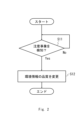
- FIG. 5 is a flowchart illustrating an example of processing executed by the control device according to the first embodiment
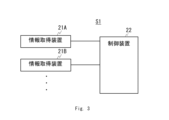
- 1 is a block diagram showing an example of a monitoring system according to a first embodiment
- FIG. 2 is a block diagram illustrating an example of a monitoring system according to a second embodiment.
- FIG. 2 is a block diagram showing an example of a site-side system according to a second embodiment.
- FIG. 2 is a block diagram illustrating an example of a cloud according to a second embodiment.
- FIG. 2 is a block diagram illustrating an example of a display system according to a second embodiment.
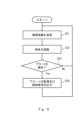
- 7 is a flowchart illustrating an example of processing executed by the control system according to the second embodiment.
- FIG. 2 is a block diagram showing an example of the hardware configuration of a device according to each embodiment.
- Embodiment 1 (Embodiment 1A)
- a control device that detects the occurrence of a cautionary event, which is a cautionary event, will be described.
- FIG. 1 is a block diagram showing an example of a control device.
- the control device 10 includes a detection section 11 and an instruction section 12. Each section (each means) of the control device 10 is controlled by a control section (controller) not shown reading a program. Each component will be explained below.
- the detection unit 11 detects whether a cautionary event, which is an event that requires attention, has occurred in the vicinity of any of the information acquisition devices, based on the environmental information transmitted from the plurality of information acquisition devices that acquire environmental information.
- “information acquisition device” refers to a camera that captures still or video images, a sensor that can detect its own position such as a satellite positioning system (e.g. GPS (Global Positioning System)) sensor, a microphone, or a device installed in a vehicle. It is a device that can obtain arbitrary information regarding the surrounding environment in which the device is installed, such as a CAN (Controller Area Network) sensor or a vibration detection sensor.
- “Environmental information” is information acquired by the information acquisition device, and includes, for example, video information, position information, sound information, vehicle status information, or vibration information.
- the environmental information that the detection unit 11 acquires from a plurality of information acquisition devices may be the same type of information or may be different information.
- all of the plurality of information acquisition devices may transmit video information.
- one information acquisition device may transmit video information while another information acquisition device transmits audio information.
- the plurality of information acquisition devices may be provided on the same detection target (for example, a vehicle), or may be provided at different locations. Further, the position where the information acquisition device is provided may be fixed or may be provided on a movable object such as a vehicle. Details of such variations will be described later in Embodiment 2 and thereafter.
- the detection unit 11 determines, as a cautionary event that should be noted, for example, that an accident has occurred or that the possibility of an accident occurring in the near future is greater than or equal to a predetermined threshold. Specifically, when a certain information acquisition device is mounted on a vehicle and captures an image in the direction in which the vehicle is traveling, the detection unit 11 detects whether the vehicle is moving toward an object (for example, another object) based on the image. The judgment detects whether the vehicle has come into contact with a vehicle (vehicle) or will come into contact within a predetermined period of time. The determination may be performed, for example, using an AI (Artificial Intelligence) model that has been subjected to machine learning, or may be performed using any analysis method such as image analysis.
- AI Artificial Intelligence
- the properties of the object such as its size, shape, and material, the distance between the information acquisition device and the object, the speed of the information acquisition device and the object, the positional relationship between the information acquisition device and the object, and the direction of movement of each.
- At least one of the factors may be detected by environmental information acquired by one or more information acquisition devices. This detected factor can be used by an AI model or the like to determine the presence or absence of a cautionary event.
- the detection unit 11 may detect rapid acceleration or deceleration of a vehicle equipped with the information acquisition device that is equal to or higher than a predetermined threshold based on position information or vehicle status information, or detect sound information or A collision or acceleration/deceleration of a vehicle equipped with the information acquisition device may be detected based on the vibration information. Based on such detection results, the detection unit 11 detects whether or not a cautionary event has occurred.
- the instruction unit 12 is configured to change the quality of the environmental information transmitted by the first information acquisition device that has transmitted the environmental information unrelated to the detection of the occurrence of the cautionary event, when the detection unit 11 detects the occurrence of the cautionary event. , outputs an instruction to the first information acquisition device.
- the “first information acquisition device” refers to a device that acquires environmental information that is not related to the detection of the occurrence of a caution event by the detection unit 11.
- the first information acquisition device may be such that the detection unit 11 cannot detect the occurrence of a warning event from the acquired environmental information.
- the detection unit 11 detects the occurrence of a caution event based on the image from the information acquisition device that photographs the front.
- the information acquisition device that photographs the area other than the front of the vehicle may correspond to the “first information acquisition device”.
- multiple information acquisition devices are fixed outdoors and the occurrence of a cautionary event is detected based on images from one information acquisition device, the area where the cautionary event is occurring is not photographed.
- the information acquisition device also corresponds to the "first information acquisition device.”
- the "first information acquisition device" may be one or more information acquisition devices.
- the instruction unit 12 may cause the first information acquisition device to change the quality of the environmental information transmitted by the device to be higher or lower.
- Increasing the quality means, for example, if the environmental information is a video, increasing the image quality of the video. Improving image quality may mean, for example, increasing at least one of the frame rate, bit rate, and resolution of the video. The opposite is true when lowering the image quality.
- increasing the quality of environmental information may mean increasing the frequency of transmission of the environmental information, if it is any of position information, sound information, vehicle status information, or vibration information. The opposite is true when lowering the quality of environmental information.
- the amount of data of the environmental information to be transmitted is changed.
- the quality of environmental information increases, the amount of data increases, while when the quality of environmental information decreases, the amount of data decreases.
- the quality of environmental information increases, the amount of data increases, which increases the cost of communication between the control device 10 and the information acquisition device, but it becomes possible to improve the accuracy of remote monitoring.
- the quality of environmental information is lower, the accuracy of remote monitoring will be lower, but the amount of data will be smaller, making it possible to lower communication costs.
- FIG. 2 is a flowchart showing an example of typical processing of the control device 10, and this flowchart explains the processing of the control method executed by the control device 10. The details of the processing executed by each unit below are as described above.
- the detection unit 11 detects, based on the environmental information transmitted from the plurality of information acquisition devices, whether a cautionary event, which is an event that requires attention, has occurred in the vicinity of any of the information acquisition devices (step S11 ; detection step). When not detected (No in step S11), the detection unit 11 intermittently performs the determination in step S11 again.
- step S11 When the detection unit 11 detects that a cautionary event has occurred (Yes in step S11), the instruction unit 12 transmits the environmental information that is not related to the detection of the occurrence of the cautionary event to the first information acquisition device that has transmitted the environmental information. An instruction is output to change the quality of the environmental information to be used (step S12; instruction step).
- control device 10 when the control device 10 detects that a cautionary event has occurred, the control device 10 determines the quality of the environmental information to be transmitted to the first information acquisition device that has transmitted the environmental information that is not related to the detection of the occurrence of the cautionary event. can be changed. Therefore, it is possible to simultaneously improve the accuracy of remote monitoring and adjust the amount of data communication required for remote monitoring.
- control device 10 may have a centralized configuration consisting of a single computer, or a distributed configuration in which multiple computers share and execute the processing of the detection unit 11 and the instruction unit 12. It may have.
- a distributed configuration a plurality of devices may be connected via a communication network such as a LAN (Local Area Network), a WAN (Wide Area Network), or the Internet.
- LAN Local Area Network
- WAN Wide Area Network
- Embodiment 1B Next, in Embodiment 1B, a monitoring system will be described.
- FIG. 3 is a block diagram showing an example of a monitoring system.
- the monitoring system S1 includes a plurality of information acquisition devices 21A, 21B, . . . and a control device 22.
- Each information acquisition device 21 acquires environmental information around it and transmits the acquired environmental information to the control device 22. Details of the information acquisition device 21 are as described in Embodiment 1A.
- the control device 22 controls the transmission of environmental information from the plurality of information acquisition devices 21 based on the environmental information transmitted from each information acquisition device 21 .
- the control device 22 corresponds to the control device 10 in Embodiment 1A.
- the control device 22 includes a detection unit 11 that detects whether a cautionary event has occurred around any of the information acquisition devices 21 based on the environmental information transmitted from the information acquisition device 21;
- the information acquisition device 21 (first information acquisition device) that has transmitted the environmental information unrelated to the detection of the occurrence of the cautionary event changes the quality of the environmental information transmitted.
- includes an instruction section 12 that outputs instructions to the first information acquisition device 21. The detailed description of each part is also as described in Embodiment 1A.
- FIG. 4 is a block diagram showing an example of a monitoring system.
- the monitoring system S2 is a system for remotely monitoring vehicles, etc., and includes a field-side system 110, a cloud 120, and a display system 130.
- the on-site system 110 and the cloud 120, and the cloud 120 and the display system 130 are connected by a wireless line or wired line such as LTE (Long Term Evolution), 5G (Fifth Generation), wireless LAN (Local Area Network), etc. , to send and receive data over the line.
- LTE Long Term Evolution
- 5G Fifth Generation
- wireless LAN Local Area Network
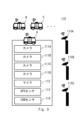
- FIG. 5 is a block diagram showing an example of the site-side system 110.
- the field-side system 110 includes cameras 111A to 111D, a GPS sensor 112, a microphone 113, a CAN sensor 114, and infrastructure cameras 115A to 115C. These devices transmit, as environmental information, images seen from the vehicle, position information, sound information, and images taken outdoors to the control system 200 via the wireless network.
- cameras 111A to 111D, GPS sensor 112, microphone 113, and CAN sensor 114 are mounted on vehicle A, and function as a control device for vehicle A.
- the vehicle here is assumed to be a car capable of self-driving, it is also possible to apply to any vehicle other than self-driving, such as a motorcycle, a bicycle, a railway vehicle, etc.
- the present invention can be applied not only to vehicles but also to any moving object other than a vehicle, such as an aircraft or a ship. Note that when the cameras 111A to 111D and the infrastructure cameras 115A to 115C are collectively referred to, they are also written as the camera 111 and the infrastructure camera 115.
- Cameras 111A, 111B, 111C, and 111D are installed outside the vehicle A, and take videos of the front, rear, right side, and left side of the vehicle A, respectively. Note that a camera may also be provided inside the vehicle A, so that images of the interior of the vehicle may be similarly captured.
- GPS sensor 112 acquires position information of vehicle A using the GPS function.
- Microphone 113 acquires sound information around vehicle A.
- the CAN sensor 114 is connected to the control system of the vehicle A, and acquires vehicle status information indicating the running status of the vehicle A, the presence or absence of a failure, and the like. In addition to transmitting the acquired environmental information to the cloud 120, these devices change the method of transmitting the environmental information based on the control signal when receiving a control signal regarding the transmission of the environmental information from the cloud 120. The details will be described later.
- cameras 111 to CAN sensors 114 are also installed in vehicles B, C, and so on. These devices also transmit the environmental information acquired by each device to the cloud 120, and when receiving a control signal from the cloud 120, change the method of transmitting the environmental information based on the control signal.
- the infrastructure cameras 115 are fixed-position cameras that are installed at different locations outdoors and can photograph different areas. As an example, it is installed at a place where vehicles can travel, such as a road, a traffic light, a roadside device, an intersection, a railroad crossing (for example, a place where an accident is likely to occur), and the surrounding area can be photographed. In addition to transmitting captured images to the cloud 120, the infrastructure camera 115 changes the method of transmitting the environmental information based on the control signal when receiving a control signal regarding the transmission of environmental information from the cloud 120.
- FIG. 6 is a block diagram showing an example of the cloud 120.
- the cloud 120 In addition to relaying environmental information from the field-side system 110 and distributing it to the display system 130, the cloud 120 also has a function of generating an alert indicating that an alert event (corresponding to the caution event in the first embodiment) has occurred in the vehicle.
- a control system 200 is provided.
- the control system 200 corresponds to the control device 10 in the first embodiment, and includes an information receiving section 201, a recognition section 202, an alert determination section 203, a monitoring information DB (Database) 204, and an information distribution section 205.
- Database Monitoring information DB
- control system 200 may have a centralized configuration consisting of a single computer, or a distributed configuration in which multiple computers share and execute the processing of the information receiving section 201 - information distributing section 205. It may have a mold configuration. In a distributed configuration, multiple devices may be connected via a communication network, such as a LAN, WAN, or the Internet. Similarly, the entire cloud 120 may have a centralized configuration made up of a single computer, or a distributed configuration made up of multiple computers. Details of the information receiving section 201-information distributing section 205 will be described below.
- the information receiving unit 201 receives environmental information transmitted from each device provided in the on-site system 110. Information receiving section 201 outputs the received environmental information to other sections of control system 200.
- the recognition unit 202 (recognition engine) identifies the area of the object appearing in the video shot by each camera 111 and the infrastructure camera 115 based on the environmental information acquired from the information receiving unit 201, and identifies the object in that area. (recognize. For example, the recognition unit 202 can recognize whether objects appearing in the video are people, vehicles, utility poles, or other obstacles. Furthermore, the recognition unit 202 estimates the posture of an object such as a person appearing in the video by identifying its feature points. Here, the recognition unit 202 may execute the recognition process regarding the vehicle A using at least one of the video captured by the camera 111 of the vehicle A and the video captured by the infrastructure camera 115 that captured the vehicle A from the outside. can.
- the recognition unit 202 can estimate the distance between the object shown in the video and the camera 111 or infrastructure camera 115 that captured the video based on the video. Furthermore, the recognition unit 202 can also recognize the driving lane of the road in which the vehicle equipped with the camera 111 that captured the video travels.
- the recognition unit 202 performs the above processing and outputs the processing result (object recognition result) to the monitoring information DB 204.
- the recognition unit 202 uses an AI model that has been machine learned in advance to identify objects in the video, estimate posture, estimate distance, and recognize driving lanes.
- other analysis techniques may be used for these processes.
- sound information, position information, vehicle status information, etc. may be further used in the above recognition process.
- the alert determination unit 203 corresponds to the detection unit 11 and the instruction unit 12 according to the first embodiment, and upon acquiring the object recognition result and the environment information, the alert determination unit 203 determines whether the vehicles A, B, C, etc. Determine whether an alert event has occurred in at least one of them. When it is determined that an alert event has occurred in any vehicle, alert information regarding that vehicle is output to the monitoring information DB 204 and the information distribution unit 205. In the example shown below, the alert determination unit 203 uses an AI model that has been machine learned in advance to determine the presence or absence of an alert, but other analysis methods may be used for the determination.
- the recognition unit 202 recognizes that another vehicle is stopped within a predetermined distance from the vehicle A, based on the image of the camera 111A of the vehicle A. do. Based on this recognition result, the alert determination unit 203 determines whether the vehicle A is approaching a parked vehicle by inputting environmental information into the AI model for determination. Then, when vehicle A is approaching, it is determined that an alert event exists that indicates that vehicle A may collide with another vehicle. Then, the alert flag for vehicle A is set from "No" to "Yes", and the alert information is output to the monitoring information DB 204 and the information distribution unit 205. Similar to the recognition process, this determination can be performed using at least one of the video captured by the camera 111 of the vehicle A and the video captured by the infrastructure camera 115 that captured the vehicle A from the outside.
- the recognition unit 202 recognizes that a passenger standing inside vehicle A, which is a bus, has lost his posture and fallen, based on the image of a camera installed inside vehicle A. shall be. Based on this recognition result, the alert determination unit 203 inputs environmental information into the AI model for determination, and if it is determined that vehicle A has decelerated at a predetermined acceleration or higher, it determines the possibility that vehicle A has suddenly stopped. It is determined that an alert event exists. Then, the alert flag for vehicle A is set from "No" to "Yes", and the alert information is output to the monitoring information DB 204 and the information distribution unit 205.
- sound information, position information, vehicle status information, etc. may be used in the above determination process. For example, it may be determined that vehicle A has decelerated at a predetermined acceleration or higher based on information about the running state of vehicle A acquired by CAN sensor 114.
- the alert determination unit 203 identifies an area related to the occurrence of an alert event in the camera video (a partial area in the video) as an attention area for monitoring, and includes information on the attention area in the alert information. Also good.
- alert determination unit 203 specifies the area where the vehicle in front is reflected in the image of camera 111A as the area of interest. In this case, buildings around the road on which vehicle A travels are not important areas for monitoring, and therefore do not need to be included in the area of interest.
- the alert determination unit 203 specifies an area where the fallen passenger is reflected in the video of a camera installed inside vehicle A as an area of interest.
- the alert determination unit 203 outputs a control signal that controls any device in the field-side system 110 to change the quality of the environmental information to be transmitted. You can also do that. The details will be described later.
- the monitoring information DB 204 stores the environmental information received by the information receiving unit 201 and the alert information determined by the alert determining unit 203.
- the information stored in this monitoring information DB 204 is transmitted to the display system 130 by the information distribution unit 205 as necessary.
- the monitoring information DB 204 includes information on the camera 111, GPS sensor 112, microphone 113, and CAN sensor 114 mounted on each vehicle, and map information of the area managed by the control system 200 (for example, information on the area where each infrastructure camera 115 is installed). Regional map information) and location information where the infrastructure camera 115 is installed may be stored.
- the monitoring information DB 204 may further store AI models used by the recognition unit 202 and the alert determination unit 203, respectively.
- the information distribution unit 205 distributes the environmental information received by the information reception unit 201 and the alert information determined by the alert determination unit 203 to the display system 130.
- FIG. 7 is a block diagram showing an example of the display system 130.
- the display system 130 receives environmental information from the information distribution unit 205 and presents the information to the monitor.
- the display system 130 includes an information receiving section 131, a presentation switching section 132, an integrated display section 133, and detailed information presentation sections 134A, 134B, .
- Detailed information presentation sections 134A and 134B are collectively referred to as detailed information presentation section 134. The details of each part will be explained below.
- the information receiving unit 131 receives the environmental information and alert information distributed from the information distribution unit 205. Then, the received information is output to the presentation switching unit 132. Further, among the environmental information distributed from the information distribution section 205, at least video information from the camera 111 is output to the integrated display section 133. However, environmental information other than video, such as position information of the GPS sensor 112, may also be output to the integrated display section 133.
- the presentation switching unit 132 analyzes the acquired alert information, and if there is a vehicle for which the alert is “Yes”, outputs the environmental information distributed from the device mounted on that vehicle to the detailed information presentation unit 134.
- the presentation of information is switched so that the information is displayed.
- the image of the camera 111 mounted on the vehicle whose alert is “Yes” the position information detected by the GPS sensor 112, the sound information acquired by the microphone 113, and the vehicle status information acquired by the CAN sensor 114 is output to the detailed information presentation section 134.
- different detailed information presentation sections are provided so that the vehicles whose alert is "Yes” correspond to the detailed information presentation section 134 on a one-to-one basis. 134, environmental information of different vehicles is output.
- the presentation switching unit 132 displays not only the image of the camera 111 mounted on the vehicle whose alert is “Yes” but also the infrastructure camera capable of photographing the vehicle on the display unit of the detailed information presentation unit 134. If there is video of infrastructure camera 115, the video of infrastructure camera 115 may be displayed.
- the integrated display unit 133 displays images acquired from each camera 111 in a plurality of vehicles in real time, with the images divided for each vehicle. For example, in one section of the integrated display section 133, images from cameras 111A to 111D of vehicle A are displayed, and in another section, images from cameras 111A to 111D of vehicle B are displayed. Note that the integrated display section 133 may further display images captured by the infrastructure camera 115.
- the integrated display unit 133 is composed of, for example, a large-screen display panel.
- the detailed information presentation section 134 is an information presentation section provided for each of the plurality of monitors, and includes a display section and a speaker.
- the display section of the detailed information presentation section 134 displays, for a particular vehicle, images from cameras 111A to 111D mounted on that vehicle, position information detected by the GPS sensor 112, and vehicle status information detected by the CAN sensor 114. is displayed in real time. Further, an image of the infrastructure camera 115 that can photograph the specific vehicle may also be displayed on the display unit. Further, the speaker of the detailed information presentation unit 134 outputs the sound detected by the microphone 113 mounted on the vehicle. By viewing the display on the display and listening to the sound from the speaker, the observer can grasp the situation of the vehicle and its surroundings.
- FIG. 8 is a flowchart showing an example of a typical process of the control system 200, and this flowchart explains the process of the control method executed by the control system 200. The details of the processing executed by each unit below are as described above.
- the information receiving unit 201 receives environmental information such as video and position information transmitted from each device of the site-side system 110 (step S21; receiving step).
- the recognition unit 202 identifies the area of the object appearing in the video shot by each camera 111 and the infrastructure camera 115 based on the environmental information acquired from the information receiving unit 201, and recognizes the object in the area (step S22 ; recognition step).
- the alert determination unit 203 determines whether an alert event has occurred in at least one of each vehicle based on the object recognition result and the environmental information (step S23; detection step). If the occurrence of an alert event is not detected (No in step S23), the control system 200 returns to step S21 and repeats the process.
- the alert determination unit 203 If it is detected that an alert event has occurred in any vehicle (Yes in step S23), the alert determination unit 203 generates alert information and distributes it to the display system 130 via the information distribution unit 205. Furthermore, the alert determination unit 203 outputs a control signal that controls the device of the field system 110 to change the quality of the environmental information to be transmitted (step S24; control step).
- the detailed information presentation unit 134 By distributing the alert information, the detailed information presentation unit 134 presents the environmental information of the vehicle whose alert is “Yes” to the monitor according to the output from the presentation switching unit 132. At this time, the detailed information presentation section 134 may also display the fact that an alert event has occurred in the vehicle A on the display section using characters or the like. Further, the detailed information presentation unit 134 may display a display that emphasizes the attention area in the video from the camera 111 based on the attention area information included in the alert information. As an example, a frame line surrounding the region of interest may be displayed on the display unit.
- the monitoring officer can take some kind of response to the vehicle in which the alert has occurred. For example, when an autonomously driving vehicle A approaches a parked vehicle, the supervisor can control the driving of the vehicle A by viewing the video from the camera 111A that captures the front of the vehicle A. and can perform collision avoidance operations. Additionally, if a supervisor confirms on video that an accident has occurred in the vehicle that triggered the alert, staff can be dispatched to the location of the vehicle based on the vehicle's location information displayed on the display. .
- the monitoring system S2 When the alert determination unit 203 of the control system 200 determines that the alert flag is "Yes" in a certain vehicle, the monitoring system S2 performs the following embodiments 2A to 2F as specific processing of step S24 in FIG. It is possible to execute the process shown in Note that the following example will be described assuming that vehicle A is the vehicle in which the alert event has occurred. Furthermore, the processes shown in Embodiments 2A to 2F can be applied in combination as appropriate.
- the alert determination unit 203 can transmit a control signal to all the cameras 111 mounted on the vehicle A, via the information reception unit 201, instructing them to improve the quality of the entire video to be transmitted.
- All the cameras 111 mounted on vehicle A include not only the camera 111 that captured the video that was the basis for determining that an alert event has occurred, but also the camera 111 that did not capture such video (that is, the camera 111 that did not capture such video) Also included is a camera 111 (not related to the detection of the occurrence of the incident).
- the cameras 111A to 111D transmit images having a quality that allows judgment by the AI model in the recognition unit 202 and alert judgment unit 203.
- this quality is too low for human visual inspection. Therefore, if this video is sent as it is to the display system 130 and the lifeguard checks the video on the detailed information presentation unit 134, the lifeguard may not be able to make accurate judgments, or the lifeguard may feel uncomfortable or fatigued. The problem is that it is possible.
- the alert determination unit 203 uses the occurrence of an alert in the vehicle A as a trigger, refers to the monitoring information DB 204, recognizes all the cameras 111 mounted on the vehicle A, and assigns an alert to each camera 111. In response, a control signal is sent to change the quality of the video. Based on the control signal, each camera 111 transmits a higher quality video to the cloud 120 and the display system 130 than when no alert occurs. As described above, the presentation switching section 132 causes the detailed information presentation section 134 to present the video captured by the camera 111 of the vehicle A in which the alert has occurred.
- the surveillance officer checks the video of vehicle A on the detailed information presentation unit 134, he or she can check the high-quality video, making it easier to make accurate judgments, and also avoid any discomfort when viewing the video. It has the effect of reducing fatigue.
- FIG. 9A shows an example of the quality of the video transmitted by the camera 111 of vehicle A when no alert occurs (for AI) and the quality of the video when an alert occurs (for the monitor). It is a table.
- frame rate, bit rate, and resolution are specified as parameters indicating video quality.
- the frame rate, bit rate, and resolution for AI are 10 [fps], 0.5 [Mbps], and HD (High Definition), respectively, while for the observer, they are 30 [fps] and 5 [Mbps], respectively. , Full HD, and the quality has improved.
- the parameter that changes between the AI video and the surveillance video may be at least one of the frame rate, bit rate, and resolution.
- the quality parameters that change are not limited to this example.
- the alert determination unit 203 does not refer to all the cameras 111 mounted on the vehicle A, but rather uses the video that is the basis for determining that an alert event has occurred (video related to the detection of the occurrence of an alert event).
- a control signal may be outputted only to the camera 111 that took the image to make the video quality suitable for surveillance personnel.
- the alert determination unit 203 determines the camera 111 that captured the video that is the basis for determining that an alert event has occurred, and the camera 111 that captures a capture area close to the capture area of the camera 111. It is also possible to output such a control signal.
- the alert determination unit 203 determines the occurrence of an alert event based on the image in front of the vehicle A captured by the camera 111A
- the alert determination unit 203 captures an image of the side of the vehicle A as well as the camera 111A.
- Control signals may also be output for the cameras 111C and 111D to make the video quality suitable for surveillance personnel.
- the alert determination unit 203 determines whether the parked vehicle It is determined that the cameras capable of photographing the relevant direction are cameras 111A and 111D. Then, a control signal may be outputted to these cameras 111 to make the video quality suitable for surveillance personnel.
- Embodiment 2B In Embodiment 2A, an example has been described in which, when an alert event occurs in vehicle A, the quality of the video captured by camera 111 mounted on vehicle A is changed.
- the cameras whose video quality is to be changed may include not only the camera 111 of the vehicle A but also the infrastructure camera 115.
- the alert determination unit 203 acquires the current position information of vehicle A stored in the monitoring information DB 204. This position information is transmitted from the GPS sensor 112 of vehicle A. Further, the alert determination unit 203 acquires position information of all infrastructure cameras 115 connected to the control system 200. Then, the current position information of vehicle A and the position information of infrastructure camera 115 are compared for each infrastructure camera 115, and it is determined whether there is a possibility that infrastructure camera 115 can photograph vehicle A.
- the alert determination unit 203 determines whether the infrastructure camera 115 can photograph the vehicle A when the distance between the vehicle A and the predetermined infrastructure camera 115 is within a predetermined distance (that is, they are geographically close to each other). If the distance between the two is greater than a predetermined distance, it may be determined that there is no possibility of photographing.
- the monitoring information DB 204 may store data indicating the shooting area or shooting direction of each infrastructure camera 115 on the map.
- the alert determination unit 203 uses the data of the photographing area or the photographing direction of the infrastructure camera 115 determined to be in close proximity to the vehicle A to determine whether the vehicle A is located within the photographing area or in the photographing direction of the infrastructure camera 115. In this case, it is determined that there is a possibility that the infrastructure camera 115 can photograph vehicle A. If not, the alert determination unit 203 determines that there is no possibility that the infrastructure camera 115 can photograph the vehicle A.
- the alert determination unit 203 may further refer to map information stored in the monitoring information DB 204 when the vehicle A is located within the imaging area of the infrastructure camera 115 or in the imaging direction. By referring to the map information, the alert determination unit 203 uses data such as the height and size of buildings etc. around the infrastructure camera 115 to determine whether vehicle A is located in a blind spot of a building as seen from the infrastructure camera 115. Determine whether or not. The alert determination unit 203 determines that there is a possibility that the infrastructure camera 115 can photograph the vehicle A when the vehicle A is not located in a blind spot of a building when viewed from the infrastructure camera 115, and when the vehicle A is located in the blind spot, It is determined that there is no possibility that the infrastructure camera 115 can photograph vehicle A.
- the alert determination unit 203 sends a control signal to the infrastructure camera 115 that has determined that there is a possibility of photographing the vehicle A so as to cause the output video to be of a quality suitable for surveillance personnel, as shown in Embodiment 2A. Send.
- the video from the infrastructure camera 115 that can photograph the vehicle A is of high quality for the surveillance personnel, so the surveillance personnel on the display system 130 side can view the video and perform highly accurate surveillance. I can do it.
- the alert determination unit 203 executes the above-described control also for the cameras 111 mounted on other vehicles such as vehicles B, C, etc. Is possible. Specifically, when an alert event occurs in vehicle A, the alert determination unit 203 acquires the current position information of vehicles such as vehicle A and vehicles B, C, etc. stored in the monitoring information DB 204. do. This position information is transmitted from the GPS sensor 112 mounted on each vehicle. Then, the current location information of vehicle A is compared with the location information of vehicles B, C, etc. for each vehicle, and it is determined whether there are other vehicles that may be able to photograph vehicle A. Determine.
- the alert determination unit 203 determines that there is a possibility that the camera 111 of that vehicle can photograph vehicle A, and the distance between the two is If the distance is more than a predetermined distance, it may be determined that there is no possibility of photographing.
- the monitoring information DB 204 may store data indicating the photographing area or photographing direction of each vehicle.
- the alert determination unit 203 maps the data of the photographing area or photographing direction of each camera 111 of the vehicle determined to be close to the vehicle A on the map information, so that the vehicle A is within the photographing area or photographing direction. If the camera 111 of the vehicle is located in the direction above, it is determined that there is a possibility that the camera 111 of the vehicle can photograph the vehicle A. If not, the alert determination unit 203 determines that there is no possibility that the camera 111 of the vehicle will be able to photograph the vehicle A.
- the alert determination unit 203 may further refer to the map information stored in the monitoring information DB 204 when the vehicle A is located within the shooting area of the camera 111 of another vehicle or in the shooting direction.
- the alert determination unit 203 uses data such as the height and size of buildings etc. in the vicinity of the vehicle A and the vehicle A, and uses data such as the height and size of buildings etc. in the vicinity of the vehicle A to detect whether the vehicle A is in a blind spot of a building as seen from the vehicle. Determine whether it is located.
- the alert determination unit 203 determines that there is a possibility that the camera 111 of the vehicle can photograph the vehicle A when the vehicle A is not located in the blind spot of a building when viewed from the vehicle, and when the vehicle A is located in the blind spot, It is determined that there is no possibility that the camera 111 of that vehicle can photograph vehicle A.
- the alert determination unit 203 transmits a control signal to the camera 111 of the vehicle determined to have a possibility of photographing the vehicle A to improve the quality of the output video from the one for AI to the one for the observer. Thereby, the monitoring person on the display system 130 side can watch the video from another vehicle and perform highly accurate monitoring.
- the alert determination unit 203 may repeatedly perform the above-described determination for the camera 111 of a vehicle different from vehicle A every predetermined time period. As a result, for example, when vehicle B moves from a position where vehicle A can be photographed to a position where photographing is not possible, the alert determination unit 203 determines that the camera of vehicle B is a camera that has no possibility of photographing. do. Then, the quality of the video from the camera 111 can be lowered from the quality for the observer to the quality for the AI. In addition, if there is a vehicle that moves vehicle A from a position where it cannot be photographed to a position where it can be photographed, the quality of the image of the camera 111 newly installed in that vehicle will be changed from the quality for AI to the quality for the observer. can be raised.
- the infrastructure camera 115 or the camera 111 mounted on a vehicle other than vehicle A transmits the quality video for the monitor to the display system 130 via the cloud 120 by the presentation switching unit 132.
- the detailed information presentation section 134 may display the video of 111 on the display section of the detailed information presentation section 134. Thereby, the observer can easily check both the video from the vehicle A's onboard camera and the video showing the vehicle A from the outside.
- Embodiment 2C In Embodiments 2A and 2B, the quality of the video controlled by the alert determination unit 203 was set to two levels: one for AI and one for observers. However, the quality of the video controlled by the alert determination unit 203 is not limited to two levels, one for AI and one for observers, but may be set in three or more levels.
- FIG. 9B shows the quality of the video transmitted by the camera 111 of vehicle A when no alert event occurs (for AI), and the quality of the video when an alert event occurs (for AI detailed analysis and for monitoring).
- This is a table showing an example of In FIG. 9B, with respect to the settings shown in FIG. 9A, the quality of the video when an alert event occurs is set for AI detailed analysis, in addition to that for the monitor.
- the frame rate, bit rate, and resolution of the video for AI detailed analysis are 15 [fps], 2 [Mbps], and Full HD, respectively, and this quality is between that for AI and for observers.
- the recognition unit 202 and alert determination unit 203 execute determination using an AI model, the accuracy of the determination can be increased by improving the quality of the video to be determined. Therefore, when an alert event occurs in any of the vehicles, the alert determination unit 203 sends the video from the AI-use to the AI-detailed image to the camera 111 that is not monitored by the observer but is related to the alert event. A control signal can be output to raise the temperature for analysis.
- the camera related to the alert event is, for example, the camera 111 that captures images close to the area where the alert event occurs.
- the alert determination unit 203 determines the occurrence of an alert event based on the image in front of the vehicle A taken by the camera 111A
- the alert determination unit 203 changes the quality of the image of the camera 111A from the one for AI to the one for the observer.
- the alert determination unit 203 can improve the quality of the images of the cameras 111C and 111D from the one for AI to the one for detailed AI analysis.
- the alert determination unit 203 sends the images to the cameras 111A and 111D of the vehicle A using AI, similar to the reason shown in Embodiment 2A. Improve the quality from normal use to lifeguard quality.
- the alert determination unit 203 can improve the quality of the images from the cameras 111B and 111C from the quality for AI to the quality for AI detailed analysis. However, as shown in Embodiment 2A, all images from the camera 111 mounted on the vehicle A may be improved in quality from those for AI to those for surveillance personnel.
- the quality of the camera image may be improved from one for AI to one for detailed AI analysis.
- the determination as to whether there is a possibility of photographing vehicle A is as shown in Embodiment 2B.
- the alert judgment unit 203 can detect the image transmitted by the camera.
- the quality of the data may be improved from that for detailed AI analysis to that for observers.
- Embodiments 2A to 2C when an alert event that is considered to require monitoring by a supervisor occurs, the control system 200 uses a camera that is assumed to be capturing the situation. can be controlled to ensure high quality. As a result, it is possible to simultaneously improve the accuracy of monitoring by the observer and reduce communication costs.
- the alert determination unit 203 sends an alert based on the video from camera 111 to cameras 111B to 111D mounted on vehicle A. Even if the occurrence of an event is not detected, control can be performed to improve the quality of the transmitted video. Specifically, the quality of the video can be increased from one for AI to one for detailed AI analysis or for observers. This makes it possible to achieve both accurate analysis of the AI model or observer and reduction of communication costs during normal times.
- the video to be sent will be of a quality suitable for surveillance personnel, and cameras that have captured images that are not related to the detection of the occurrence of an alert event.
- the quality of the transmitted video can be made suitable for detailed AI analysis.
- unnecessary data communication volume can be reduced and communication costs can be reduced. can.
- the quality of the video transmitted by the camera before detecting the occurrence of an alert event may be relatively low quality for AI. Thereby, the effect of reducing communication costs can be increased.
- the camera that improves the quality of the video for detailed AI analysis is either a camera mounted on a vehicle other than the vehicle in which the alert event was detected, or a camera whose position is fixed and which can photograph the vehicle from outside. It may also be a camera. This makes it possible to externally monitor a vehicle in which the occurrence of an alert event has been detected, enabling more accurate monitoring.
- Embodiments 2A to 2C when the alert determination unit 203 determines that the alert flag in vehicle A has changed from "Yes" to "No," the quality of the video is A control signal may be transmitted to the camera 111, which has been improved for analysis, to instruct it to lower the quality of the entire transmitted video for AI use.
- the alert determination unit 203 may improve the quality of the video transmitted from a vehicle in which the occurrence of an alert event is not detected from for AI use to AI detailed analysis, or vice versa. The quality may be lowered from one for AI detailed analysis to one for AI.
- the alert determination unit 203 When the alert determination unit 203 detects the occurrence of an alert event regarding a specific vehicle, it may change not only the quality of the transmitted video but also the quality of other environmental information.
- the alert determination unit 203 when the alert determination unit 203 detects the occurrence of an alert event for vehicle A, the alert determination unit 203 refers to the monitoring information DB 204 and determines not only the camera 111 mounted on vehicle A but also the GPS sensor 112, Information on the microphone 113 and CAN sensor 114 is acquired. Then, the alert determination unit 203 transmits a control signal to change the quality of the video to the camera 111 of the vehicle A, as shown in Embodiment 2A. Further, the alert determination unit 203 can transmit a control signal to the GPS sensor 112, microphone 113, and CAN sensor 114 mounted on the vehicle A to increase the frequency of transmission of environmental information transmitted by each device. .
- FIG. 10 shows the quality of the environmental information transmitted by the GPS sensor 112, microphone 113, and CAN sensor 114 of vehicle A when no alert occurs (for AI) and the quality when an alert occurs (for observer).
- This is a table showing an example.
- the frequency of transmission of GPS information, sound information, and CAN information, which are location information, for AI is 0.2 [Hz], 32 k[bps], and 1 (Hz), respectively, which are transmitted by each device.
- the transmission frequency for monitors is 10 [Hz], 192 k[bps], and 100 (Hz), respectively, and the transmission frequency is improving.
- the alert determination unit 203 transmits a control signal to each device of vehicle A to increase the frequency of environmental information transmission from the one for AI to the one for the observer, so that each device transmits environmental information at the frequency for the one for the observer. is sent to cloud 120 and display system 130.
- the detailed information presentation unit 134 displays the position information detected by the GPS sensor 112 and the vehicle status information detected by the CAN sensor 114 in real time at a transmission frequency for the observer. Furthermore, the speaker of the detailed information presentation unit 134 outputs the sound from the microphone 113 at a transmission frequency for the monitor. As a result, the monitoring officer can confirm information regarding vehicle A more accurately, and therefore can perform highly accurate monitoring. Furthermore, it is also possible to reduce the amount of data communication required when the occurrence of an alert event is not detected.
- the alert determination unit 203 may perform control to improve the transmission frequency of at least any of the location information, sound information, and CAN information, rather than all of them. Furthermore, the alert determination unit 203 may similarly improve the transmission frequency of other environmental information not limited to location information, sound information, and CAN information.
- the alert determination unit 203 may improve the quality of environmental information other than images from vehicles in which the occurrence of an alert event is not detected from for AI use to AI detailed analysis, or vice versa.
- the quality may be lowered from one for AI detailed analysis to one for AI.
- the transmission frequency for AI detailed analysis is higher than that for AI, but lower than that for supervisors, and although it is insufficient for surveillance by supervisors, it enables detailed analysis using the AI model.
- This control allows the control system 200 to perform detailed monitoring.
- the AI model of the alert judgment unit 203 detects the occurrence of an alert event based on the environmental information improved for detailed AI analysis
- the alert judgment unit 203 determines the quality of the environmental information transmitted from the vehicle.
- the system may be improved from one for detailed AI analysis to one for monitoring personnel.
- the alert determination unit 203 determines the quality of the video in areas other than the area of interest in the video over time. You can lower it.
- the alert determination unit 203 detects the occurrence of an alert event based on the video from the camera 111A of the vehicle A, and thereby improves the quality of the entire video transmitted by the camera 111A from the one for AI to the one for the monitor. Thereafter, the alert determination unit 203 refers to the information on the attention area included in the alert information regarding the camera 111A, and sends a control signal to reduce the quality of the video transmitted in areas other than the attention area as time passes. It is transmitted to camera 111A.
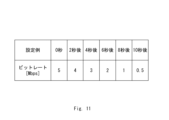
- FIG. 11 is a table showing an example in which the bit rate of the video transmitted by the alert determination unit 203 is increased for use by a supervisor, and then lowered again to use for AI.
- the alert determination unit 203 increases the bit rate of the entire video transmitted from the camera 111A from 0.5 [Mbps] to 5 [Mbps]. After that, change the bit rate in the area other than the focused area to 4 [Mbps] after 2 seconds, 3 [Mbps] after 4 seconds, 2 [Mbps] after 6 seconds, 1 [Mbps] after 8 seconds, and 0.5 after 10 seconds.
- a control signal is sent to the camera 111A to change the speed to [Mbps].
- the camera 111A transmits a video with a quality according to this control signal, so that the observer can view the video whose video quality deteriorates over time in areas other than the area of interest via the detailed information presentation unit 134. Visually recognize.
- lifeguards need to check video quality for the lifeguards of the area of interest.
- the reason why the video is provided in such a way that the video quality in the area of interest is for the observer and the quality of the video in other areas is for the AI is when the inspector views the image from the camera 111. There was a possibility that I would feel uncomfortable.
- the alert determination unit 203 increases the quality of the entire video of the camera 111A, then lowers the quality of the video in areas other than the attention area in the video, and then transmits the video.
- a control signal is transmitted to the camera 111A.
- the quality of the video in areas other than the area of interest is lowered after the supervisor views the entire video at a high quality for the supervisor, thereby reducing the sense of discomfort that the supervisor feels when monitoring the video.
- the alert determination unit 203 can be set so that the quality of the video monotonically decreases over time.
- the alert determination unit 203 may not only lower the quality of the video discontinuously (stepwise) as in the above example, but also monotonically decrease the quality by continuously lowering the quality.
- any lowering method of two or more steps can be applied.
- the alert determination unit 203 may specify all areas other than the attention area as areas other than the attention area that reduce the quality of the video, or may specify areas other than the attention area and a predetermined area surrounding the attention area (in other words, If so, a partial area other than the area of interest may be specified.
- the alert determination unit 203 is not limited to the above-mentioned example as the quality of the video of the area other than the attention area, and controls to lower at least one of the frame rate, bit rate, and resolution from the one for the observer to the one for the AI. It's okay.
- the alert determination unit 203 may lower the quality of the video in areas other than the attention area so that the quality of the video is ultimately used for detailed AI analysis. This makes it possible to perform detailed analysis using the AI model while lowering the quality of the video in areas that are less necessary. Therefore, it becomes easier to detect that an alert event occurs in an area other than the area of interest.
- the alert determination unit 203 improves the quality of the entire video of the camera 111A again to the quality for the observer.
- the alert determination unit 203 When the alert determination unit 203 detects the occurrence of an alert event in any vehicle, the alert determination unit 203 lowers the quality of the video transmitted from the camera that captured the video that is not related to the detection of the alert occurrence.
- a control signal may be transmitted to the camera.
- the alert determination unit 203 when the alert determination unit 203 detects the occurrence of an alert event using environmental information from one of the devices mounted on the vehicle A, the alert determination unit 203 refers to the information stored in the monitoring information DB 204 and determines whether the vehicle A Determine which vehicles other than those in which the occurrence of an alert event has not been detected. If the video transmitted from the camera 111 mounted on the vehicle is for use by a surveillance officer, the quality of the entire video is lowered to be for AI detailed analysis or for AI use. Furthermore, if the video transmitted from the camera 111 mounted on the vehicle is for AI detailed analysis, the alert determination unit 203 lowers the quality of the entire video for AI analysis. The video quality to be lowered is at least one of the frame rate, bit rate, and resolution.
- the quality of the entire video may be lowered in at least one of the camera 111 and the infrastructure camera 115 of the vehicle that is determined to have no possibility of photographing the vehicle A in the determination shown in Embodiment 2B. Control may be performed similarly.
- the alert determination unit 203 detects at least one of the GPS sensor 112, the microphone 113, and the CAN sensor 114. Regarding the environmental information from the system, if the transmission frequency is for the monitor, it can be lowered for the AI.
- the alert determination unit 203 when the alert determination unit 203 detects the occurrence of an alert event, it controls the device that has transmitted environmental information unrelated to the detection of the occurrence of the alert event to lower the quality of the environmental information to be transmitted. Can send signals. This makes it possible to reduce the amount of data communication for information that requires little monitoring.
- the alert determination unit 203 can transmit a control signal to a device mounted on a vehicle in which no alert is detected so as to lower the quality of the environmental information to be transmitted. This makes it possible to reduce the amount of data communication from vehicles that require less monitoring.
- the quality of the video transmitted from the camera may be changed not only in two or three stages as shown in the second embodiment, but also in four or more stages.
- the second embodiment it has been explained that uniform numerical settings are made for the cameras in the respective settings for AI, detailed AI analysis, and surveillance. However, even if the settings are the same for AI, AI detailed analysis, or surveillance personnel, depending on the characteristics of the camera (for example, whether the camera is a car-mounted camera 111 or an infrastructure camera 115) or the location where the camera is installed. Therefore, the numerical value indicating the quality may be set to be different for each camera.
- the alert determination unit 203 of the control system 200 can determine not only the presence or absence of an alert, but also the level of the alert when an alert event is detected. For example, when the alert determination unit 203 determines that there is a possibility that an accident will occur in vehicle A, if the possibility of the accident occurring is less than a predetermined threshold, or if the time until the accident occurs is determined to be If the alert level is greater than or equal to the threshold, the alert level can be set to "low". On the other hand, if the probability of an accident occurring is greater than or equal to a predetermined threshold, or if the time until an accident occurs is less than a predetermined threshold, the alert level is set to "high.” be able to. The alert determination unit 203 can determine the alert level in this way, store it in the monitoring information DB 204 as alert information, and output it to the display system 130. This allows the monitor to easily check the status of the alert event.
- the alert determination unit 203 may perform control to gradually reduce the quality of the video in areas other than the attention area, as shown in Embodiment 2E. good.
- the monitor may output a control signal for changing the quality of the environmental information to the cloud 120 by operating the detailed information presentation unit 134. For example, the monitor determines that the occurrence of the alert event in vehicle A has been resolved by checking the video etc. displayed on detailed information presentation section 134. In this case, in response to the observer's operation, the detailed information presentation unit 134 requests the cloud 120 to reduce the overall quality of the video from the camera 111 of vehicle A from that for the observer to the one for AI or for AI detailed analysis. Send control signals.
- the alert determination unit 203 changes the alert flag in the vehicle A from "Yes" to "No” in accordance with the signal, and changes the quality of the entire video transmitted by the camera 111 of the vehicle A in accordance with the control signal. output the instructions. This reduces the quality of the video transmitted by the designated camera 111, thereby reducing the amount of data communication that is less necessary.
- What the monitoring system according to the present disclosure monitors is not a vehicle, but can target any object such as a factory production line.
- this disclosure has been described as a hardware configuration, but this disclosure is not limited to this.
- This disclosure realizes the processing (steps) of each device in the control device or monitoring system described in each of the above embodiments by causing a processor in a computer constituting such a device to execute a computer program. It is also possible.
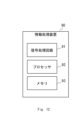
- FIG. 12 is a block diagram illustrating an example of the hardware configuration of an information processing device (computer) that executes the processes of each of the embodiments described above.
- this information processing device 90 includes a signal processing circuit 91, a processor 92, and a memory 93.
- the information processing device 90 constitutes each device in a control device or a monitoring system.
- the signal processing circuit 91 is a circuit for processing signals under the control of the processor 92. Note that the signal processing circuit 91 may include a communication circuit that receives signals from a transmitting device.
- the processor 92 reads software (computer program) from the memory 93 and executes it to perform the processing of the apparatus described in the above embodiment.
- the number of processors 92 is not limited to one, and a plurality of processors may be provided.
- the processor 92 one of a CPU (Central Processing Unit), MPU (Micro Processing Unit), FPGA (Field-Programmable Gate Array), DSP (Demand-Side Platform), and ASIC (Application Specific Integrated Circuit) is used. or a plurality of them may be used in parallel.
- the memory 93 is composed of volatile memory, nonvolatile memory, or a combination thereof.
- the number of memories 93 is not limited to one, and a plurality of memories may be provided.
- the volatile memory may be, for example, RAM (Random Access Memory) such as DRAM (Dynamic Random Access Memory) or SRAM (Static Random Access Memory).
- the nonvolatile memory may be, for example, ROM (Random Only Memory) such as PROM (Programmable Random Only Memory) or EPROM (Erasable Programmable Read Only Memory), flash memory, or SSD (Solid State Drive).
- Memory 93 is used to store one or more instructions.
- one or more instructions are stored in memory 93 as a group of software modules.
- the processor 92 can perform the processing described in the above embodiment by reading out and executing these software module groups from the memory 93.
- the memory 93 may include one built into the processor 92 in addition to one provided outside the processor 92. Furthermore, the memory 93 may include storage located apart from the processors that constitute the processor 92. In this case, the processor 92 can access the memory 93 via an I/O (Input/Output) interface.
- I/O Input/Output
- processors included in each device in the embodiments described above executes one or more programs including a group of instructions for causing a computer to execute the algorithm described using the drawings. . Through this processing, the signal processing method described in each embodiment can be realized.
- a program includes a set of instructions (or software code) that, when loaded into a computer, causes the computer to perform one or more of the functions described in the embodiments.
- the programs may be stored on various types of non-transitory computer readable medium or tangible storage medium.
- computer readable or tangible storage media may include random-access memory (RAM), read-only memory (ROM), flash memory, solid-state drive (SSD) or other memory technology, CD - Including ROM, digital versatile disk (DVD), Blu-ray disk or other optical disk storage, magnetic cassette, magnetic tape, magnetic disk storage or other magnetic storage device.
- the program may be transmitted on a transitory computer-readable medium or a communication medium.
- transitory computer-readable or communication media includes electrical, optical, acoustic, or other forms of propagating signals.
- Additional note 1 Detection for detecting whether a cautionary event, which is an event that requires attention, has occurred in the vicinity of any of the information acquisition devices based on the environmental information transmitted from a plurality of information acquisition devices that acquire environmental information. means and When the detection means detects the occurrence of the cautionary event, the quality of the environmental information transmitted by the first information acquisition device that has transmitted the environmental information unrelated to the detection of the occurrence of the cautionary event is changed.
- a control device comprising: (Additional note 2)
- the plurality of information acquisition devices are devices mounted on the same vehicle,
- the instruction means instructs the first information acquisition device to increase the quality of the environmental information transmitted by the first information acquisition device when the detection means detects the occurrence of the cautionary event.
- output instructions The control device according to supplementary note 1.
- the instruction means when the detection means detects the occurrence of the caution event for a predetermined vehicle, instructs the first information acquisition device that has a possibility of photographing the vehicle. outputting the instruction to improve the quality of the video that is the environmental information transmitted by the The control device according to supplementary note 1.
- the instruction means when the detection means detects the occurrence of the caution event for a predetermined vehicle, instructs the first information acquisition device that has a possibility of photographing the vehicle.
- the quality of the video that is the environmental information transmitted by is changed from the first quality to a second quality that is higher than the first quality, and the video that is the environmental information that is related to the detection of the occurrence of the caution event is changed from the first quality to a second quality that is higher than the first quality.
- the quality of the video transmitted by the second information acquisition device is changed from a third quality to a fourth quality higher than the second quality and the third quality to the second information acquisition device that transmitted the video.
- the control device according to supplementary note 1.
- the first information acquisition device is a device installed in a vehicle different from the vehicle in which the second information acquisition device is installed, or a device whose position is fixed and the second information acquisition device is installed. A device that can take pictures of a vehicle from the outside.
- the control device according to appendix 4. The first information acquisition device is a device that acquires at least one of sound information, state information of the vehicle, and position information of the vehicle as the environmental information,
- the instruction means causes the first information acquisition device to increase the frequency of transmission of the environmental information transmitted by the first information acquisition device when the detection means detects the occurrence of the cautionary event. outputting the instructions;
- the control device according to supplementary note 2.
- the instruction means when the detection means detects the occurrence of the caution event, instructs the second information acquisition device that has transmitted the image as the environmental information related to the detection of the occurrence of the caution event. After increasing the quality of the entire video transmitted by the second information acquisition device, lowering the quality of at least a partial region of the video other than the region related to the occurrence of the caution event and transmitting the video. Output the said instructions as, The control device according to any one of Supplementary Notes 1 to 6. (Appendix 8) The instruction means sets the quality of the video of the partial area to decrease monotonically over time when lowering the quality of the video of the partial area. The control device according to appendix 7.
- the instruction means instructs the first information acquisition device to lower the quality of the environmental information transmitted by the first information acquisition device when the detection means detects the occurrence of the cautionary event. output instructions,
- the control device according to supplementary note 1.
- the first information acquisition device is a device installed in a vehicle, and is installed in a different vehicle from the second information acquisition device that transmitted the environmental information related to the detection of the occurrence of the cautionary event.
- the control device according to appendix 9.
- (Appendix 11) a plurality of information acquisition devices that acquire environmental information and transmit the acquired environmental information; a control device that controls transmission of the environmental information of the plurality of information acquisition devices based on the environmental information transmitted from the plurality of information acquisition devices,
- the control device includes: a detection means for detecting whether a cautionary event, which is an event to be noted, has occurred in the vicinity of any of the information acquisition devices, based on the environmental information transmitted from the plurality of information acquisition devices; When the detection means detects the occurrence of the cautionary event, the quality of the environmental information transmitted by the first information acquisition device that has transmitted the environmental information unrelated to the detection of the occurrence of the cautionary event is changed.
- an instruction means for outputting an instruction to the first information acquisition device.
- a monitoring system A monitoring system.
- the plurality of information acquisition devices are devices mounted on the same vehicle,
- the instruction means instructs the first information acquisition device to increase the quality of the environmental information transmitted by the first information acquisition device when the detection means detects the occurrence of the cautionary event.
- output instructions The monitoring system described in Appendix 11.
- (Appendix 13) Based on the environmental information transmitted from a plurality of information acquisition devices that acquire environmental information, detecting whether a caution event that is an event that requires attention has occurred in the vicinity of any of the information acquisition devices;
- the first information acquisition device which has transmitted the environmental information unrelated to the detection of the occurrence of the cautionary event, changes the quality of the environmental information transmitted when the occurrence of the cautionary event is detected.
- Appendix 14 Based on the environmental information transmitted from a plurality of information acquisition devices that acquire environmental information, detecting whether a caution event that is an event that requires attention has occurred in the vicinity of any of the information acquisition devices; The first information acquisition device, which has transmitted the environmental information unrelated to the detection of the occurrence of the cautionary event, changes the quality of the environmental information transmitted when the occurrence of the cautionary event is detected.
- Control device 11 Detection section 12 Instruction section S1 Monitoring system 21 Information acquisition device 22
- Control device S2 Monitoring system 110 Field side system 111 Camera 112 GPS sensor 113 Microphone 114 CAN sensor 115 Infrastructure camera 120 Cloud 130 Display system 131 Information receiving section 132 Presentation Switching unit 133 Integrated display unit 134 Detailed information presentation unit 200
- Control system 201 Information receiving unit 202
- Recognition unit 203 Alert determination unit 204
- Monitoring information DB 205 Information distribution department
Landscapes
- Engineering & Computer Science (AREA)
- Physics & Mathematics (AREA)
- General Physics & Mathematics (AREA)
- Multimedia (AREA)
- Theoretical Computer Science (AREA)
- Traffic Control Systems (AREA)
Priority Applications (3)
| Application Number | Priority Date | Filing Date | Title |
|---|---|---|---|
| JP2024505684A JP7779373B2 (ja) | 2022-03-08 | 2022-03-08 | 制御装置、制御方法及びプログラム |
| US18/841,421 US20250166390A1 (en) | 2022-03-08 | 2022-03-08 | Control apparatus, monitoring system, control method, and non-transitory computer-readable medium |
| PCT/JP2022/009840 WO2023170768A1 (ja) | 2022-03-08 | 2022-03-08 | 制御装置、監視システム、制御方法及び非一時的なコンピュータ可読媒体 |
Applications Claiming Priority (1)
| Application Number | Priority Date | Filing Date | Title |
|---|---|---|---|
| PCT/JP2022/009840 WO2023170768A1 (ja) | 2022-03-08 | 2022-03-08 | 制御装置、監視システム、制御方法及び非一時的なコンピュータ可読媒体 |
Publications (1)
| Publication Number | Publication Date |
|---|---|
| WO2023170768A1 true WO2023170768A1 (ja) | 2023-09-14 |
Family
ID=87936270
Family Applications (1)
| Application Number | Title | Priority Date | Filing Date |
|---|---|---|---|
| PCT/JP2022/009840 Ceased WO2023170768A1 (ja) | 2022-03-08 | 2022-03-08 | 制御装置、監視システム、制御方法及び非一時的なコンピュータ可読媒体 |
Country Status (3)
| Country | Link |
|---|---|
| US (1) | US20250166390A1 (https=) |
| JP (1) | JP7779373B2 (https=) |
| WO (1) | WO2023170768A1 (https=) |
Cited By (1)
| Publication number | Priority date | Publication date | Assignee | Title |
|---|---|---|---|---|
| JP7643678B1 (ja) | 2024-05-27 | 2025-03-11 | 株式会社イイガ | 自動運転システム、自動運転方法、移動体、および自動運転プログラム |
Citations (3)
| Publication number | Priority date | Publication date | Assignee | Title |
|---|---|---|---|---|
| JP2009294882A (ja) * | 2008-06-04 | 2009-12-17 | Toyota Motor Corp | 車両画像記録装置、車両画像記録システム |
| JP2018152786A (ja) * | 2017-03-14 | 2018-09-27 | トヨタ自動車株式会社 | 画像記録システム、画像記録方法、画像記録プログラム |
| WO2021210134A1 (ja) * | 2020-04-16 | 2021-10-21 | 日本電信電話株式会社 | 映像配信装置、映像配信方法及びプログラム |
Family Cites Families (4)
| Publication number | Priority date | Publication date | Assignee | Title |
|---|---|---|---|---|
| JP2004280696A (ja) * | 2003-03-18 | 2004-10-07 | Denso Corp | 被害車両の撮影方法 |
| JP4433985B2 (ja) * | 2004-11-09 | 2010-03-17 | 日本ビクター株式会社 | 監視画像処理装置 |
| JP5306660B2 (ja) * | 2008-01-11 | 2013-10-02 | トヨタホーム株式会社 | 監視システム及びセキュリティ管理システム |
| JP6456039B2 (ja) * | 2014-04-25 | 2019-01-23 | 株式会社 日立産業制御ソリューションズ | 監視カメラシステム |
-
2022
- 2022-03-08 US US18/841,421 patent/US20250166390A1/en active Pending
- 2022-03-08 WO PCT/JP2022/009840 patent/WO2023170768A1/ja not_active Ceased
- 2022-03-08 JP JP2024505684A patent/JP7779373B2/ja active Active
Patent Citations (3)
| Publication number | Priority date | Publication date | Assignee | Title |
|---|---|---|---|---|
| JP2009294882A (ja) * | 2008-06-04 | 2009-12-17 | Toyota Motor Corp | 車両画像記録装置、車両画像記録システム |
| JP2018152786A (ja) * | 2017-03-14 | 2018-09-27 | トヨタ自動車株式会社 | 画像記録システム、画像記録方法、画像記録プログラム |
| WO2021210134A1 (ja) * | 2020-04-16 | 2021-10-21 | 日本電信電話株式会社 | 映像配信装置、映像配信方法及びプログラム |
Cited By (2)
| Publication number | Priority date | Publication date | Assignee | Title |
|---|---|---|---|---|
| JP7643678B1 (ja) | 2024-05-27 | 2025-03-11 | 株式会社イイガ | 自動運転システム、自動運転方法、移動体、および自動運転プログラム |
| JP2025178838A (ja) * | 2024-05-27 | 2025-12-09 | 株式会社イイガ | 自動運転システム、自動運転方法、移動体、および自動運転プログラム |
Also Published As
| Publication number | Publication date |
|---|---|
| US20250166390A1 (en) | 2025-05-22 |
| JP7779373B2 (ja) | 2025-12-03 |
| JPWO2023170768A1 (https=) | 2023-09-14 |
Similar Documents
| Publication | Publication Date | Title |
|---|---|---|
| US20260024440A1 (en) | Providing autonomous vehicle assistance | |
| CN112534487B (zh) | 信息处理设备、移动体、信息处理方法和程序 | |
| JP6988815B2 (ja) | 画像処理装置および画像処理方法 | |
| JPWO2019116784A1 (ja) | 情報処理装置、移動体、制御システム、情報処理方法及びプログラム | |
| US20200201325A1 (en) | Systems and methods for prioritizing data processing | |
| JPWO2018180579A1 (ja) | 撮像制御装置、および撮像制御装置の制御方法、並びに移動体 | |
| JP7459932B2 (ja) | 遠隔監視システム、装置、方法、及びプログラム | |
| CN109891463A (zh) | 图像处理设备和图像处理方法 | |
| JP7243714B2 (ja) | 露光制御装置、露光制御方法、プログラム、撮影装置、及び、移動体 | |
| KR102781701B1 (ko) | 이상 검출 장치와 이상 검출 방법 및 프로그램과 정보 처리 시스템 | |
| CN111583200A (zh) | 大跨越输电线路预警系统及方法 | |
| JPWO2020116204A1 (ja) | 情報処理装置、情報処理方法、プログラム、移動体制御装置、及び、移動体 | |
| KR20210142604A (ko) | 정보 처리 방법, 프로그램 및 정보 처리 장치 | |
| JP7451423B2 (ja) | 画像処理装置、画像処理方法および画像処理システム | |
| WO2023007663A1 (ja) | 監視システム、監視装置、及び監視方法 | |
| US20210192864A1 (en) | Using dynamic triggers in dangerous situations to view sensor data for autonomous vehicle passengers | |
| CN115782778A (zh) | 车辆的自动事件检测 | |
| JP7779373B2 (ja) | 制御装置、制御方法及びプログラム | |
| WO2022004412A1 (ja) | 情報処理装置、情報処理方法、並びにプログラム | |
| WO2021199349A1 (ja) | 遠隔監視システム、配信制御装置、及び方法 | |
| JP7433542B1 (ja) | 遠隔監視装置、遠隔監視システム、及び、遠隔監視方法 | |
| US20240412331A1 (en) | Information processing device, information processing method, and program | |
| US11106917B2 (en) | Surveillance system with human-machine interface | |
| JP2023143338A (ja) | 注意喚起装置、および注意喚起方法 | |
| CN120858373A (zh) | 信息处理装置和信息处理方法 |
Legal Events
| Date | Code | Title | Description |
|---|---|---|---|
| 121 | Ep: the epo has been informed by wipo that ep was designated in this application |
Ref document number: 22930754 Country of ref document: EP Kind code of ref document: A1 |
|
| ENP | Entry into the national phase |
Ref document number: 2024505684 Country of ref document: JP Kind code of ref document: A |
|
| WWE | Wipo information: entry into national phase |
Ref document number: 18841421 Country of ref document: US |
|
| NENP | Non-entry into the national phase |
Ref country code: DE |
|
| 122 | Ep: pct application non-entry in european phase |
Ref document number: 22930754 Country of ref document: EP Kind code of ref document: A1 |
|
| WWP | Wipo information: published in national office |
Ref document number: 18841421 Country of ref document: US |