WO2023163203A1 - 腎臓疾患の予防および/または治療用医薬組成物 - Google Patents
腎臓疾患の予防および/または治療用医薬組成物 Download PDFInfo
- Publication number
- WO2023163203A1 WO2023163203A1 PCT/JP2023/007230 JP2023007230W WO2023163203A1 WO 2023163203 A1 WO2023163203 A1 WO 2023163203A1 JP 2023007230 W JP2023007230 W JP 2023007230W WO 2023163203 A1 WO2023163203 A1 WO 2023163203A1
- Authority
- WO
- WIPO (PCT)
- Prior art keywords
- compound
- optionally substituted
- general formula
- pharmaceutical composition
- atom
- Prior art date
- Legal status (The legal status is an assumption and is not a legal conclusion. Google has not performed a legal analysis and makes no representation as to the accuracy of the status listed.)
- Ceased
Links
Images



Classifications
-
- A—HUMAN NECESSITIES
- A61—MEDICAL OR VETERINARY SCIENCE; HYGIENE
- A61K—PREPARATIONS FOR MEDICAL, DENTAL OR TOILETRY PURPOSES
- A61K31/00—Medicinal preparations containing organic active ingredients
- A61K31/33—Heterocyclic compounds
- A61K31/395—Heterocyclic compounds having nitrogen as a ring hetero atom, e.g. guanethidine or rifamycins
- A61K31/435—Heterocyclic compounds having nitrogen as a ring hetero atom, e.g. guanethidine or rifamycins having six-membered rings with one nitrogen as the only ring hetero atom
- A61K31/44—Non condensed pyridines; Hydrogenated derivatives thereof
- A61K31/445—Non condensed piperidines, e.g. piperocaine
- A61K31/4523—Non condensed piperidines, e.g. piperocaine containing further heterocyclic ring systems
- A61K31/454—Non condensed piperidines, e.g. piperocaine containing further heterocyclic ring systems containing a five-membered ring with nitrogen as a ring hetero atom, e.g. pimozide, domperidone
-
- A—HUMAN NECESSITIES
- A61—MEDICAL OR VETERINARY SCIENCE; HYGIENE
- A61K—PREPARATIONS FOR MEDICAL, DENTAL OR TOILETRY PURPOSES
- A61K31/00—Medicinal preparations containing organic active ingredients
- A61K31/33—Heterocyclic compounds
- A61K31/395—Heterocyclic compounds having nitrogen as a ring hetero atom, e.g. guanethidine or rifamycins
- A61K31/435—Heterocyclic compounds having nitrogen as a ring hetero atom, e.g. guanethidine or rifamycins having six-membered rings with one nitrogen as the only ring hetero atom
- A61K31/44—Non condensed pyridines; Hydrogenated derivatives thereof
- A61K31/445—Non condensed piperidines, e.g. piperocaine
- A61K31/4523—Non condensed piperidines, e.g. piperocaine containing further heterocyclic ring systems
- A61K31/4545—Non condensed piperidines, e.g. piperocaine containing further heterocyclic ring systems containing a six-membered ring with nitrogen as a ring hetero atom, e.g. pipamperone, anabasine
-
- A—HUMAN NECESSITIES
- A61—MEDICAL OR VETERINARY SCIENCE; HYGIENE
- A61K—PREPARATIONS FOR MEDICAL, DENTAL OR TOILETRY PURPOSES
- A61K31/00—Medicinal preparations containing organic active ingredients
- A61K31/33—Heterocyclic compounds
- A61K31/395—Heterocyclic compounds having nitrogen as a ring hetero atom, e.g. guanethidine or rifamycins
- A61K31/495—Heterocyclic compounds having nitrogen as a ring hetero atom, e.g. guanethidine or rifamycins having six-membered rings with two or more nitrogen atoms as the only ring heteroatoms, e.g. piperazine or tetrazines
- A61K31/496—Non-condensed piperazines containing further heterocyclic rings, e.g. rifampin, thiothixene or sparfloxacin
-
- A—HUMAN NECESSITIES
- A61—MEDICAL OR VETERINARY SCIENCE; HYGIENE
- A61K—PREPARATIONS FOR MEDICAL, DENTAL OR TOILETRY PURPOSES
- A61K31/00—Medicinal preparations containing organic active ingredients
- A61K31/33—Heterocyclic compounds
- A61K31/395—Heterocyclic compounds having nitrogen as a ring hetero atom, e.g. guanethidine or rifamycins
- A61K31/495—Heterocyclic compounds having nitrogen as a ring hetero atom, e.g. guanethidine or rifamycins having six-membered rings with two or more nitrogen atoms as the only ring heteroatoms, e.g. piperazine or tetrazines
- A61K31/4995—Pyrazines or piperazines forming part of bridged ring systems
-
- A—HUMAN NECESSITIES
- A61—MEDICAL OR VETERINARY SCIENCE; HYGIENE
- A61K—PREPARATIONS FOR MEDICAL, DENTAL OR TOILETRY PURPOSES
- A61K31/00—Medicinal preparations containing organic active ingredients
- A61K31/33—Heterocyclic compounds
- A61K31/395—Heterocyclic compounds having nitrogen as a ring hetero atom, e.g. guanethidine or rifamycins
- A61K31/535—Heterocyclic compounds having nitrogen as a ring hetero atom, e.g. guanethidine or rifamycins having six-membered rings with at least one nitrogen and one oxygen as the ring hetero atoms, e.g. 1,2-oxazines
- A61K31/5375—1,4-Oxazines, e.g. morpholine
- A61K31/5377—1,4-Oxazines, e.g. morpholine not condensed and containing further heterocyclic rings, e.g. timolol
-
- A—HUMAN NECESSITIES
- A61—MEDICAL OR VETERINARY SCIENCE; HYGIENE
- A61K—PREPARATIONS FOR MEDICAL, DENTAL OR TOILETRY PURPOSES
- A61K45/00—Medicinal preparations containing active ingredients not provided for in groups A61K31/00 - A61K41/00
- A61K45/06—Mixtures of active ingredients without chemical characterisation, e.g. antiphlogistics and cardiaca
-
- A—HUMAN NECESSITIES
- A61—MEDICAL OR VETERINARY SCIENCE; HYGIENE
- A61P—SPECIFIC THERAPEUTIC ACTIVITY OF CHEMICAL COMPOUNDS OR MEDICINAL PREPARATIONS
- A61P13/00—Drugs for disorders of the urinary system
- A61P13/12—Drugs for disorders of the urinary system of the kidneys
Definitions
- the present invention relates to a pharmaceutical composition for prevention and/or treatment of kidney disease.
- Severe proteinuria occurs due to pathological disorders in the kidneys, etc.
- causes of proteinuria include acute glomerulonephritis, chronic glomerulonephritis, diabetic nephropathy, and the like.
- blood protein mainly albumin
- urinary protein itself causes renal tubular disorder or interstitial disorder and lowers renal function.
- drugs antihypertensives, steroids, immunosuppressants, etc.
- renal transplantation dialysis, etc. have been used as symptomatic treatments to suppress proteinuria, but no fundamental therapeutic drug exists yet.
- gene modification therapy for humans is generally very costly and there are still problems with safety verification.
- the objective is to provide a pharmaceutical composition, especially an oral pharmaceutical composition, which is useful for the prevention and/or treatment of kidney diseases, especially diseases caused by glomerular disorders.
- a typical present invention is as follows.
- A is an optionally substituted benzene ring.
- B is optionally substituted aryl or optionally substituted heteroaryl.
- X is an oxygen atom or a sulfur atom.
- Y is a nitrogen atom or a carbon atom.
- R 1s are each independently lower alkyl, two R 1s may be bonded to each other to form a spiro ring or a bridged structure, or two R 1s are bonded to each other, A saturated condensed heterocyclic ring may be formed together with the carbon atoms and nitrogen atoms constituting the ring containing Y.
- p is 0, 1, or 2; Alternatively, (R 1 ) p is oxo.
- a pharmaceutical composition for the prevention and/or treatment of renal disease containing a compound represented by, a salt thereof, or a prodrug thereof.
- Section 2. Item 2. The pharmaceutical composition according to item 1, wherein in general formula (1), B is an optionally substituted monocyclic aryl or an optionally substituted monocyclic or bicyclic nitrogen-containing heteroaryl.
- Item 3. Item 1 or 2, wherein in general formula (1), A is a benzene ring optionally substituted with at least one group selected from the group consisting of A-1) to A-16) below.
- B is a monocyclic aryl or a monocyclic or bicyclic heteroaryl, and the monocyclic aryl is at least one selected from the group consisting of the following B-1) to B-16) may be substituted with any group, and the monocyclic or bicyclic heteroaryl may be substituted with at least one group selected from the group consisting of the following B-1) to B-17),
- the pharmaceutical composition according to any one of Items 1 to 3: B-1) Halogen, B-2) a hydroxyl group, B-3) nitro, B-4) cyano, B-5) carboxyl B-6) optionally substituted amino, B-7) an optionally substituted cyclic amino, B-8) optionally substituted lower alkyl, B-9) optionally substituted lower alkoxy, B-10) lower alkoxycarbonyl, B-11) lower alkylsulfonyl, B-12) carbamoyl optionally substituted with lower alkyl or lower alkylsulfonyl, B-13
- Item 5. The pharmaceutical composition according to any one of items 1 to 4, wherein in general formula (1), the 4-position of the benzisoxazole or benzisothiazole skeleton is substituted.
- B is substituted pyridyl or substituted phenyl, wherein at least the carbon atom ortho to the carbon atom on the pyridine or benzene ring to which Y is attached is substituted;
- Item 4. The pharmaceutical composition according to any one of items 1 to 3.
- A is a benzene ring optionally substituted with at least one group selected from the group consisting of halogen, lower alkoxy, and lower alkyl optionally substituted with halogen;
- B is pyridyl or phenyl, and the following B-1), B-5), B-8), B-10), B-12), and B-13):
- (R 1 ) p is oxo, Item 5.
- the compound represented by general formula (1) is represented by general formula (1A) [In the formula, Z is a nitrogen atom or CH. Y is a nitrogen atom or a carbon atom. R 11 may be independently methyl or ethyl, or two R 11 may be bonded together to form a methylene, dimethylene or trimethylene bridge structure. p is 0, 1, or 2; Alternatively, (R 11 ) p is oxo. R 21 , R 22 and R 23 are each independently a hydrogen atom, halogen, carbamoyl, or trifluoromethyl.
- R 31 , R 32 and R 33 are each independently a hydrogen atom, halogen, halogen-substituted lower alkyl, methyl, carboxyl, lower alkoxycarbonyl, monomethylaminocarbonyl, or dimethylaminocarbonyl.
- ] is a compound represented by 8.
- R 21 is a chlorine atom or trifluoromethyl
- R 22 and R 23 are hydrogen atoms
- R 31 is a chlorine atom
- R 32 is a hydrogen atom
- R 33 is a hydrogen atom, carboxyl, or lower alkoxycarbonyl
- Item 9. The composition of Item 8.
- B is optionally substituted aryl or optionally substituted heteroaryl.
- Y is a nitrogen atom or a carbon atom.
- R 1s are each independently lower alkyl, two R 1s may be bonded to each other to form a spiro ring or a bridged structure, or two R 1s are bonded to each other, A saturated condensed heterocyclic ring may be formed together with the carbon atoms and nitrogen atoms constituting the ring containing Y.
- p is 0, 1, or 2; Alternatively, (R 1 ) p is oxo.
- a pharmaceutical composition for the prevention and/or treatment of renal disease containing a compound represented by, a salt thereof, or a prodrug thereof. Item 12. Item 12.
- the compound represented by the general formula (1), the compound represented by the general formula (2), a salt thereof, or a prodrug thereof has the effect of alleviating kidney disease, especially chronic glomerulonephritis, and suppressing high proteinuria. or to suppress the decrease in serum albumin, or to reduce lymphocyte infiltration and tertiary lymphoid tissue formation.
- FIG. 1 is a graph showing the amount of urinary protein measured in Test Example 1.
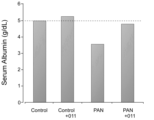
- FIG. 2 is a graph showing serum albumin levels measured in Test Example 1.
- FIG. 3 is a graph showing the weight of the left kidney per rat body weight measured in Test Example 1.
- FIG. 4 is a graph showing the left and right kidney weights of rats measured in Test Example 3.
- FIG. 5 is a graph showing the PAS staining results measured in Test Example 3.
- FIG. 6 is a graph showing the results of quantitative PCR measured in Test Example 3.
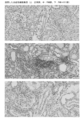
- FIG. 7 is a photograph of the infiltrated inflammatory cell population observed in Test Example 3.
- One embodiment of the present invention is a pharmaceutical composition for preventing and/or treating kidney disease, containing a compound represented by the following general formula (1), a salt thereof, or a prodrug thereof.
- Another embodiment is a composition for mitigating progression of kidney disease, containing a compound represented by the following general formula (1), a salt thereof, or a prodrug thereof.
- another embodiment is a medicament for suppressing and/or improving kidney function (especially glomerular function) containing a compound represented by the following general formula (1), a salt thereof, or a prodrug thereof: composition.
- A is an optionally substituted benzene ring.
- B is optionally substituted aryl or optionally substituted heteroaryl.
- X is an oxygen atom or a sulfur atom.
- Y is a nitrogen atom or a carbon atom.
- R 1s are each independently lower alkyl, two R 1s may be bonded to each other to form a spiro ring or a bridged structure, or two R 1s are bonded to each other, A saturated condensed heterocyclic ring may be formed together with the carbon atoms and nitrogen atoms constituting the ring containing Y.
- p is 0, 1, or 2; or, (R 1 ) p is oxo.
- the substituents of the "optionally substituted benzene ring" include, for example, halogen; hydroxyl group; nitro; cyano; carboxyl; optionally substituted amino; optionally substituted cyclic amino; optionally substituted lower alkoxy; lower alkoxycarbonyl; lower alkylsulfonyl; carbamoyl optionally substituted with lower alkyl or lower alkylsulfonyl; optionally substituted cyclic aminocarbonyl; sulfamoyl optionally substituted with alkyl; cyclic aminosulfonyl optionally substituted; tetrazolyl and the like.
- the substituents may be used singly or in combination of two or more.
- aryl includes, for example, monocyclic or bicyclic aryl, specifically phenyl, naphthyl, and the like.
- aryl in "optionally substituted aryl" is as defined above.
- Optionally substituted aryl substituents include, for example, halogen; hydroxyl group; nitro; cyano; carboxyl; optionally substituted amino; optionally substituted cyclic amino; optionally substituted lower alkyl; optionally substituted lower alkoxy; lower alkoxycarbonyl; lower alkylsulfonyl; carbamoyl optionally substituted by lower alkyl or lower alkylsulfonyl; optionally substituted cyclic aminocarbonyl; optionally substituted by lower alkyl optionally substituted cyclic aminosulfonyl; tetrazolyl; oxo and the like.
- One type of substituent may be used alone, or two or more types may be used.
- heteroaryl includes, for example, monocyclic or bicyclic nitrogen-containing heteroaryl, specifically, one or more (eg, 1 to 3, 1 or 2, 1) on the ring, and may contain one or more (eg, 1 to 3, 1 or 2, 1) sulfur atoms or oxygen atoms as other heteroatoms, monocyclic or bicyclic and nitrogen-containing heteroaryl.
- heteroaryls include pyrrolyl, imidazolyl, triazolyl, tetrazolyl, pyrazolyl, pyridyl, pyrazinyl, pyrimidinyl, pyridazinyl, furyl, thienyl, oxazolyl, isoxazolyl, thiazolyl, isothiazolyl, furazanyl, oxadiazolyl, thiadiazolyl, indolyl, isoindolyl, benzofuranyl, isobenzofuranyl, benzothienyl, isobenzothienyl, indazolyl, quinolyl, isoquinolyl, purinyl, phthalazinyl, pteridyl, naphthyridinyl, quinoxalinyl, quinazolinyl, cinnolinyl, benzoxazolyl, benzothiazolyl, benzimid
- heteroaryl in "optionally substituted heteroaryl” is as defined above.
- Optionally substituted heteroaryl substituents include, for example, halogen; hydroxyl group; nitro; cyano; carboxyl; optionally substituted amino; optionally substituted cyclic amino; optionally substituted lower alkyl optionally substituted lower alkoxy; lower alkoxycarbonyl; lower alkylsulfonyl; carbamoyl optionally substituted with lower alkyl or lower alkylsulfonyl; optionally substituted cyclic aminocarbonyl; optionally substituted cyclic aminosulfonyl; tetrazolyl; oxo and the like.
- One type of substituent may be used alone, or two or more types may be used.
- lower alkyl includes, for example, C1-C8 alkyl containing linear, branched or cyclic structures, preferably C1-C6 alkyl, more preferably C1-C4 alkyl, Particularly preferred is C1-C3 alkyl.
- linear or branched lower alkyls include methyl, ethyl, 1-propyl, 2-propyl, 1-butyl, 2-butyl, isobutyl, t-butyl, n-pentyl, neopentyl, cyclopropyl, cyclopropylmethyl, cyclobutyl, cyclobutylmethyl, cyclopentyl, cyclopentylmethyl, cyclohexyl, cyclohexylmethyl, cyclohexylethyl, etc. is mentioned.
- Preferred are methyl, ethyl, 2-propyl, t-butyl, cyclopropyl and the like.
- the "halogen" includes a fluorine atom, a chlorine atom, a bromine atom, an iodine atom and the like, preferably a fluorine atom and a chlorine atom.
- optionally substituted amino refers to optionally substituted acyclic amino, and the substituents thereof include lower alkyl (eg, methyl, ethyl, propyl, etc.), C1-C8 acyl (eg, acetyl, propionyl, etc.), aryl (eg, phenyl, etc.), or heteroaryl.
- substituents include lower alkyl (eg, methyl, ethyl, propyl, etc.), C1-C8 acyl (eg, acetyl, propionyl, etc.), aryl (eg, phenyl, etc.), or heteroaryl.
- One type of substituent may be used alone, or two or more types may be used.
- Preferred optionally substituted amino include, for example, amino, methylamino, dimethylamino, ethylamino, diethylamino, cyclohexylamino, acetylamino, benzoylamino, phenylamino and the like.
- cyclic amino has, for example, a nitrogen atom as a ring-constituting atom, and may further contain one or more oxygen atoms (eg, 1 to 3, 1 or 2, 1) 5 to 7-membered cyclic amino, examples thereof include pyrrolidino, piperidino, piperazino, morpholino and the like, preferably pyrrolidino, morpholino and the like.
- the cyclic amino in "optionally substituted cyclic amino” is as defined above.
- substituents of cyclic amino include lower alkyl, lower alkoxy, amino, hydroxyl group, nitro, cyano, carboxyl, oxo and the like.
- Cyclic amino may be substituted with at least one group selected from the group consisting of the above substituents.
- the number of substituents may be, for example, 0, 1, 2 or 3, preferably 0, 1 or 2.
- the optionally substituted cyclic amino specifically includes pyrrolidino, piperidino, piperazino, 4-methylpiperidino, morpholino, 2-pyrrolidonyl and the like, preferably pyrrolidino and morpholino.
- the lower alkyl in "optionally substituted lower alkyl” is as defined above.
- Substituents of lower alkyl include, for example, hydroxyl group; amino; C1-C8 alkylamino (eg, methylamino, ethylamino, propylamino, t-butylamino, etc.); C1-C8 alkoxy (eg, methoxy, ethoxy, 1-propyl oxy, 2-propyloxy, t-butyloxy, etc.); halogen (eg, fluorine atom, chlorine atom, bromine atom, etc.); halo C1-C8 alkoxy (eg, trifluoromethoxy, etc.); aliphatic heterocyclic group (eg, morpholino, piperidinyl , pyrrolidinyl, 4-methyl-1-piperazino, etc.); aryl (eg, phenyl, 1-naphthyl,
- Preferred substituents include methylamino, ethylamino, dimethylamino, diethylamino, methoxy, ethoxy, 2-propyloxy, t-butoxycarbonyl, hydroxyl group, fluorine atom, chlorine atom, trichloromethyl, trifluoromethyl, trifluoromethoxy and morpholino. , piperidino, pyrrolidino, carboxyl, methoxycarbonyl, ethoxycarbonyl, morpholinocarbonyl, phenyl, pyridyl and the like.
- the optionally substituted lower alkyl may be substituted with at least one group selected from the group consisting of the above substituents, and the number of substituents is, for example, 0, 1, 2, 3 number, preferably 0, 1 or 2.
- lower alkyl substituted with halogen refers to an alkyl in which all hydrogen atoms are substituted with halogen.
- Halogen and lower alkyl in halogen-substituted lower alkyl are as defined above. Halogens substituting alkyl are preferably the same.
- the halogen-substituted lower alkyl is preferably trichloromethyl or trifluoromethyl, preferably trifluoromethyl.
- lower alkoxy includes, for example, C1-C8 alkoxy containing a linear, branched or cyclic structure, preferably C1-C6 alkoxy, more preferably C1-C4 alkoxy, Particularly preferred is C1-C3 alkoxy.
- linear or branched alkoxy includes methoxy, ethoxy, 1-propoxy, 2-propoxy, 1-butoxy, 2-butoxy, isobutoxy, t-butoxy, n-pentyloxy, and neopentyl. oxy, n-hexyloxy, isohexyloxy, 3-methylpentyloxy and the like.
- Alkoxy containing a cyclic structure includes cyclopropoxy, cyclopropylmethoxy, cyclobutyloxy, cyclobutylmethoxy, cyclopentyloxy, cyclopentylmethoxy, cyclohexyloxy, cyclohexylmethoxy, cyclohexylethoxy and the like. Methoxy, ethoxy, 2-propoxy, t-butoxy, cyclopropoxy and the like are preferred.
- lower alkoxy in "optionally substituted lower alkoxy” is as defined above.
- Substituents of lower alkoxy include, for example, hydroxyl group; amino; C1-C8 alkylamino (eg, methylamino, ethylamino, propylamino, t-butylamino, etc.); C1-C8 alkoxy (eg, methoxy, ethoxy, 1-propyl oxy, 2-propyloxy, t-butoxy, etc.); halogen (eg, fluorine atom, chlorine atom, bromine atom, etc.); halo C1-C8 alkoxy (eg, trifluoromethoxy, etc.); aliphatic heterocyclic group (eg, morpholino, piperidinyl , pyrrolidinyl, 4-methyl-1-piperazino, etc.); aryl (eg, phenyl, 1-naphthyl, etc.);
- Preferred substituents include methylamino, ethylamino, dimethylamino, diethylamino, methoxy, ethoxy, 2-propyloxy, t-butoxycarbonyl, hydroxyl group, fluorine atom, chlorine atom, trifluoro, morpholino, piperidino, pyrrolidino, carboxyl, Methoxycarbonyl, morpholinocarbonyl, phenyl, pyridyl and the like.
- Optionally substituted lower alkoxy may be substituted with at least one group selected from the group consisting of the above substituents, and the number of substituents is, for example, 0, 1, 2, 3 , preferably 0, 1, or 2.
- lower alkoxy in "lower alkoxycarbonyl” is as defined above.
- Lower alkoxycarbonyl is a group in which the above lower alkoxy is attached to carbonyl.
- Lower alkoxycarbonyl includes, for example, C1-C8 alkoxycarbonyl including linear, branched, or cyclic structures. Specifically, linear or branched alkoxycarbonyl includes methoxycarbonyl, ethoxycarbonyl, 1-propoxycarbonyl, 2-propoxycarbonyl, 1-butoxycarbonyl, 2-butoxycarbonyl, isobutoxycarbonyl, t- butoxycarbonyl and the like.
- C1-C8 alkoxycarbonyl containing a cyclic structure includes cyclopropoxycarbonyl, cyclopropylmethoxycarbonyl, cyclobutyloxycarbonyl, cyclobutylmethoxycarbonyl, cyclopentyloxycarbonyl, cyclopentylmethoxycarbonyl, cyclohexyloxycarbonyl, cyclohexylmethoxycarbonyl, cyclohexylethoxy carbonyl and the like.
- Preferred lower alkoxycarbonyls include methoxycarbonyl, ethoxycarbonyl, 2-propoxycarbonyl, cyclopropoxycarbonyl and the like.
- lower alkyl in “lower alkylsulfonyl” is as defined above.
- Lower alkylsulfonyl is a group in which the above lower alkyl is attached to sulfonyl.
- Examples of lower alkylsulfonyl include C1-C8 alkylsulfonyl having a linear, branched, or cyclic structure.
- linear or branched alkylsulfonyl includes methane sulfonyl, ethanesulfonyl, 1-propylsulfonyl, 2-propylsulfonyl, 1-butylsulfonyl, 2-butylsulfonyl, isobutylsulfonyl, t-butylsulfonyl and the like.
- C1-C8 alkylsulfonyl containing a cyclic structure examples include cyclopropylsulfonyl, cyclopropylmethylsulfonyl, cyclobutylsulfonyl, cyclobutylmethylsulfonyl, cyclopentylsulfonyl, cyclopentylmethylsulfonyl, cyclohexylsulfonyl, cyclohexylmethylsulfonyl, cyclohexylethylsulfonyl and the like.
- Preferred are methanesulfonyl, ethanesulfonyl, 2-propanesulfonyl, cyclopropanesulfonyl and the like.
- lower alkyl and lower alkylsulfonyl are as defined above.
- Carbamoyl optionally substituted with lower alkyl or lower alkylsulfonyl includes “carbamoyl optionally substituted with lower alkyl” and “carbamoyl optionally substituted with lower alkylsulfonyl”.
- Carbamoyl optionally substituted with lower alkyl is a group in which 1 or 2 of the above lower alkyl may be bonded to carbamoyl. When two lower alkyls are bonded, the lower alkyls may be the same or different. Carbamoyl optionally substituted with lower alkyl includes, for example, carbamoyl, or aminocarbonyl substituted with C1-C8 alkyl containing a linear, branched or cyclic structure.
- carbamoyl optionally substituted with lower alkyl include carbamoyl, methylaminocarbonyl, ethylaminocarbonyl, propylaminocarbonyl, 2-propylaminocarbonyl, dimethylaminocarbonyl, diethylaminocarbonyl, ethylmethylaminocarbonyl, methylpropylaminocarbonyl, dicyclohexylaminocarbonyl and the like.
- Carbamoyl optionally substituted with lower alkylsulfonyl is a group in which 1 or 2 of the above lower alkylsulfonyl may be bonded to carbamoyl. When two lower alkylsulfonyls are bonded, the lower alkylsulfonyls may be the same or different.
- Carbamoyl optionally substituted with lower alkylsulfonyl includes, for example, carbamoyl, or aminocarbonyl substituted with C1-C8 alkylsulfonyl containing a linear, branched or cyclic structure, and the like.
- Linear or branched C1-C8 alkylsulfonylaminocarbonyl for example, methanesulfonylaminocarbonyl, ethanesulfonylaminocarbonyl, 1-propylsulfonylaminocarbonyl, 2-propylsulfonylaminocarbonyl, 1-butylsulfonylaminocarbonyl , 2-butylsulfonylaminocarbonyl, isobutylsulfonylaminocarbonyl, t-butylsulfonylaminocarbonyl and the like.
- C1-C8 alkylsulfonylaminocarbonyl containing a cyclic structure for example, cyclopropylsulfonylaminocarbonyl, cyclopropylmethylsulfonylaminocarbonyl, cyclobutylsulfonylaminocarbonyl, cyclobutylmethylsulfonylaminocarbonyl, cyclopentylsulfonylaminocarbonyl, cyclopentylmethylsulfonyl aminocarbonyl, cyclohexylsulfonylaminocarbonyl, cyclohexylmethylsulfonylaminocarbonyl, cyclohexylethylsulfonylaminocarbonyl and the like.
- Preferred carbamoyl optionally substituted with lower alkylsulfonyl include carbamoyl, methanesulfonylaminocarbonyl, ethanesulfonylaminocarbonyl, 2-propylsulfonylaminocarbonyl, cyclopropylsulfonylaminocarbonyl and the like.
- optionally substituted cyclic amino in "optionally substituted cyclic aminocarbonyl" is as defined above.
- Optionally substituted cyclic aminocarbonyl is a group in which the above optionally substituted cyclic amino is bonded to carbonyl.
- Optionally substituted cyclic aminocarbonyl specifically includes pyrrolidinocarbonyl, piperidinocarbonyl, piperazinocarbonyl, 4-methylpiperidino, morpholinocarbonyl, 2-pyrrolidonylcarbonyl and the like, preferably includes pyrrolidinocarbonyl, morpholinocarbonyl and the like.
- the lower alkyl in "sulfamoyl optionally substituted with lower alkyl” is as defined above.
- Sulfamoyl optionally substituted with lower alkyl is a group in which 1 or 2 of the above lower alkyl may be bonded to sulfamoyl. When two lower alkyls are bonded, the lower alkyls may be the same or different.
- Sulfamoyl optionally substituted with lower alkyl includes, for example, sulfamoyl; aminosulfonyl substituted with C1-C8 alkyl containing a linear, branched, or cyclic structure, and the like.
- optionally substituted cyclic amino in "optionally substituted cyclic aminosulfonyl" is as defined above.
- Optionally substituted cyclic aminosulfonyl is a group in which the above optionally substituted cyclic amino is bonded to sulfonyl.
- Specific examples of optionally substituted cyclic aminosulfonyl include pyrrolidinosulfonyl, piperidinosulfonyl, piperazinosulfonyl, 4-methylpiperidinosulfonyl, morpholinosulfonyl, 4-piperidonylsulfonyl and the like. and preferably pyrrolidinosulfonyl, morpholinosulfonyl and the like.
- A is an optionally substituted benzene ring.
- the substituents of A include, for example, at least one selected from the group consisting of A-1) to A-16) below, and when there are multiple substituents, they may be the same or different. good.
- the number of substituents in A is, for example, 0 to 5, 0 to 4, 0 to 3, preferably 0, 1 or 2, more preferably 0 or 1. When there are multiple substituents, they may be the same or different.
- substituents of A include at least one selected from the group consisting of A-1 and A-3 to A-16 above, and A-1 and A-3 to A-16 above. At least one selected from the group excluding methoxy from the group.
- Preferred substituents for A are at least one selected from the group consisting of halogen; lower alkoxy; carbamoyl optionally substituted with lower alkyl or lower alkylsulfonyl; and lower alkyl optionally substituted with halogen.
- a more preferred substituent of A is at least one selected from the group consisting of halogen; lower alkoxy; carbamoyl; and lower alkyl optionally substituted with halogen; , methoxy, ethoxy, carbamoyl, fluoromethyl, difluoromethyl, trifluoromethyl, fluoroethyl, difluoroethyl, and at least one selected from the group consisting of trifluoroethyl, more preferably halogen, methoxy, ethoxy, carbamoyl , fluoromethyl, difluoromethyl, trifluoromethyl, fluoroethyl, difluoroethyl, and at least one selected from the group consisting of trifluoroethyl, particularly preferably chlorine atom, fluorine atom, and trifluoromethyl At least one selected from the group.
- the substituent of A is attached to any carbon atom at the 4-, 5-, 6-, and 7-positions of the benzoisoxazole or benzoisothiazole skeleton. However, it preferably binds to at least one of the 4-, 5- and 6-position carbon atoms, more preferably the 4- and/or 5-position carbon atoms, and most preferably the 4-position carbon atom.
- the position numbers of the atoms constituting the benzoisoxazole or benzoisothiazole skeleton are as follows.
- A is halogen, lower alkoxy, or lower alkyl optionally substituted with halogen at the 4-position carbon atom of the benzoisoxazole or benzoisothiazole skeleton.
- B is optionally substituted aryl or optionally substituted heteroaryl.
- Optionally substituted aryl or optionally substituted heteroaryl is as defined above.
- Aryl includes, for example, phenyl or naphthyl, with phenyl being preferred.
- Heteroaryl is preferably monocyclic nitrogen-containing heteroaryl containing no other heteroatom as a ring-constituting atom, or benzimidazolyl.
- the monocyclic nitrogen-containing heteroaryl containing no other heteroatom as a ring-constituting atom is preferably a 5- or 6-membered heteroaryl containing one nitrogen atom as a ring-constituting heteroatom, such as pyrrolyl and pyridyl. with pyridyl being preferred and 2-pyridyl being even more preferred.
- benzimidazolyl benzimidazol-3-yl is preferred.
- B When B is monocyclic aryl, B may be substituted with at least one group selected from the group consisting of B-1) to B-16) below. When B is monocyclic or bicyclic heteroaryl, B may be substituted with at least one group selected from the group consisting of B-1) to B-17) below.
- B-1) Halogen, B-2) a hydroxyl group, B-3) nitro, B-4) cyano, B-5) carboxyl B-6) optionally substituted amino, B-7) an optionally substituted cyclic amino, B-8) optionally substituted lower alkyl, B-9) optionally substituted lower alkoxy, B-10) lower alkoxycarbonyl, B-11) lower alkylsulfonyl, B-12) carbamoyl optionally substituted with lower alkyl or lower alkylsulfonyl, B-13) optionally substituted cyclic aminocarbonyl, B-14) sulfamoyl optionally substituted with lower alkyl, B-15) optionally substituted cyclic aminosulfonyl, B-16) tetrazolyl, B-17) Oxo.
- the number of substituents in B is, for example, 0 or at least 1, 0 to 5, 0 to 4, preferably 0 to 3, more preferably 0, 1 or 2. When there are multiple substituents, they may be the same or different.
- Preferred substituents of B are halogen; carboxyl, optionally substituted lower alkyl; lower alkoxycarbonyl; carbamoyl optionally substituted with lower alkyl or lower alkylsulfonyl; and optionally substituted cyclic aminocarbonyl At least one selected from the group consisting of halogen, carboxyl, methyl, ethyl, 1-propyl, 2-propyl, hydroxymethyl, carboxymethyl, trichloromethyl, trifluoromethyl, methoxycarbonyl , ethoxycarbonyl, t-butoxycarbonyl, methylaminocarbonyl, dimethylaminocarbonyl, ethylmethylaminocarbonyl, methanesulfonylaminocarbonyl, pyrrolidinocarbonyl, and morpholinocarbonyl.
- Particularly preferred substituents for B include at least one selected from the group consisting of a chlorine atom, a fluorine atom, methyl, carboxyl, methoxycarbonyl, ethoxycarbonyl, methylaminocarbonyl, and dimethylaminocarbonyl.
- B when Y is a nitrogen atom, B is preferably optionally substituted phenyl or optionally substituted pyridyl, and when Y is a carbon atom, B is substituted Optionally substituted phenyl, optionally substituted pyridyl, or 2-oxobenzimidazol-3-yl is preferred, and optionally substituted phenyl or optionally substituted pyridyl is more preferred.
- the carbon atom ortho to the carbon atom on the pyridine or benzene ring bonded to Y It is preferred that 1 or 2, preferably 1, is substituted.
- the substituent bonded to the ortho-position carbon atom may be any of the substituents of B described above, preferably halogen, more preferably chlorine or fluorine, and still more preferably chlorine. .
- the pyridine or benzene ring bonded to Y is para-positioned to the carbon atom on the benzene ring.
- the carbon atoms are unsubstituted or substituted with carboxyl.
- the carbon atom ortho to the carbon atom on the pyridine or benzene ring bonded to Y 1 or 2, preferably 1, are substituted with a chlorine atom or a fluorine atom, the carbon atom at the meta position is unsubstituted, the carbon atom at the para position is unsubstituted, or carboxyl, methoxycarbonyl, or It is more preferably substituted with ethoxycarbonyl.
- Y is a nitrogen atom and B is a substituted 2-pyridyl
- the carbon atom ortho to the carbon atom on the pyridine ring bonded to Y is substituted with a chlorine atom or a fluorine atom.
- all of the carbon atoms in the meta position are unsubstituted and the carbon atoms in the para position are either unsubstituted or substituted with carboxyl.
- Y is a nitrogen atom and B is a substituted phenyl
- one of the two carbon atoms ortho to the carbon atom on the benzene ring bonded to Y is a chlorine atom.
- Y is a carbon atom and B is a substituted 2-pyridyl
- the carbon atom ortho to the carbon atom on the pyridine ring bonded to Y is substituted with a chlorine atom or a fluorine atom.
- all of the carbon atoms in the meta-position are unsubstituted and the carbon atoms in the para-position are either unsubstituted or substituted with carboxyl, methoxycarbonyl or ethoxycarbonyl.
- Y is a carbon atom and B is a substituted phenyl
- one of the two carbon atoms ortho to the carbon atom on the benzene ring bonded to Y is a chlorine atom. or substituted with a fluorine atom, the other ortho carbon atom is unsubstituted, all of the meta carbon atoms are unsubstituted, and the para carbon atom is unsubstituted or carboxyl, Substitution with methoxycarbonyl or ethoxycarbonyl is particularly preferred.
- X is an oxygen atom or a sulfur atom, preferably an oxygen atom.
- Y is a nitrogen atom or a carbon atom, preferably a nitrogen atom.
- each R 1 is independently lower alkyl, or two R 1s may be bonded to each other to form a spiro ring or a bridged structure, Alternatively, two R1 's may combine with each other to form a saturated condensed heterocyclic ring together with the carbon and nitrogen atoms constituting the ring containing Y.
- R 1 When R 1 is lower alkyl, preferred R 1 include, for example, linear or branched C1-C3 alkyl, more preferably methyl, ethyl, even more preferably methyl.
- forming a spiro ring means It refers to the case where two R 1 's are bonded to one and the R 1 's are bonded to each other to form a ring together with the carbon atom.
- forming a bridged structure means It refers to the case where two R 1 's are bonded to each other and the R 1 's are bonded to each other.
- two R 1 's are bonded together to form a spiro ring or a bridged structure
- two R 1 's are bonded together to form methylene, dimethylene, trimethylene, or tetramethylene.
- to form a crosslinked structure, or form a spiro ring by becoming dimethylene or trimethylene preferably two R 1 are bonded to each other to become methylene, dimethylene, or trimethylene to form a bridge This is the case of forming a structure.
- R 1 are bonded to each other to form a saturated condensed heterocyclic ring together with a carbon atom and a nitrogen atom constituting a ring containing Y in general formula (1) It refers to the case where one R 1 is bonded to each of two adjacent ones of them, and the R 1s are bonded together to form a saturated condensed heterocyclic ring together with the carbon and nitrogen atoms constituting the ring containing Y.
- the saturated condensed heterocyclic ring as used herein means two condensed rings of a heterocyclic ring containing Y (pyrazine ring or piperidine ring) and a saturated carbocyclic ring containing R 1 .
- the saturated condensed heterocyclic ring includes, for example, a condensed ring of a pyrazine ring or piperidine ring and a cyclopentane ring or a cyclohexane ring.
- Specific examples of saturated condensed heterocycles include octahydrocyclopentapyridine, octahydrocyclopentapyrazine, decahydroquinoline and decahydroquinoxaline.
- R 1 is a bridge structure formed by C1-C3 alkyl or dimethylene, and more preferred R 1 is methyl, ethyl or a bridge structure formed by dimethylene represented by the above structural formula.
- p is 0, 1, or 2.
- (R 1 )p may be oxo.
- a pharmaceutical composition for preventing and/or treating renal disease containing a compound represented by the following general formula (1A), a salt thereof, or a prodrug thereof is also included in the present invention.
- Another embodiment is a composition for mitigating progression of kidney disease, containing a compound represented by the following general formula (1A), a salt thereof, or a prodrug thereof.
- another embodiment is a pharmaceutical composition for suppressing and/or improving renal function deterioration, containing a compound represented by the following general formula (1A), a salt thereof, or a prodrug thereof.
- Z is a nitrogen atom or CH.
- Y is a nitrogen atom or a carbon atom.
- R 11 may be independently methyl or ethyl, or two R 11 may be bonded together to form a methylene, dimethylene or trimethylene bridge structure.
- p is 0, 1, or 2; Alternatively, (R 11 ) p is oxo.
- R 21 , R 22 and R 23 are each independently a hydrogen atom, halogen, carbamoyl, or trifluoromethyl.
- R 31 , R 32 and R 33 are each independently a hydrogen atom, halogen, halogen-substituted lower alkyl, methyl, carboxyl, lower alkoxycarbonyl, monomethylaminocarbonyl, or dimethylaminocarbonyl. ].
- Z is a nitrogen atom or CH.
- Z is preferably a nitrogen atom when Y is a nitrogen atom.
- Y is a nitrogen atom or a carbon atom.
- each R 11 is independently methyl or ethyl, or two R 11 are bonded to each other to form a bridged structure with methylene, dimethylene or trimethylene. may be formed.
- R 11 is preferably a crosslinked structure composed of methyl or ethyl, or dimethylene or trimethylene, more preferably a crosslinked structure composed of methyl or diethylene.
- (R 11 ) p is preferably oxo or is represented by the following structural formula.
- R 111 represents C1-C3 alkyl.
- Preferred as R 111 are methyl or ethyl, more preferred is methyl.
- (R 11 ) p may be oxo.
- R 21 , R 22 and R 23 are each independently a hydrogen atom, halogen, carbamoyl or trifluoromethyl, and R 21 , R 22 and R It is preferred that at least one of 23 is halogen, carbamoyl, or trifluoromethyl.
- R 21 is preferably chlorine atom, fluorine atom, carbamoyl or trifluoromethyl, more preferably chlorine atom or trifluoromethyl.
- R 22 is preferably a hydrogen atom, a chlorine atom or trifluoromethyl, more preferably a hydrogen atom.
- R 23 is preferably a hydrogen atom, a chlorine atom or trifluoromethyl, more preferably a hydrogen atom. It is particularly preferred that R 21 is halogen (preferably chlorine or fluorine) or trifluoromethyl and both R 22 and R 23 are hydrogen.
- R 31 , R 32 and R 33 are each independently a hydrogen atom, halogen, halogen-substituted lower alkyl, methyl, carboxyl, lower alkoxycarbonyl, monomethyl aminocarbonyl or dimethylaminocarbonyl.
- R 31 is preferably a hydrogen atom, halogen, trichloromethyl, trifluoromethyl or methyl, more preferably halogen, trichloromethyl, trifluoromethyl or methyl, particularly preferably a chlorine atom.
- R 32 is preferably a hydrogen atom, halogen or methyl, more preferably a hydrogen atom.
- R 33 is preferably a hydrogen atom, halogen, carboxyl, methoxycarbonyl, ethoxycarbonyl, monomethylaminocarbonyl or dimethylaminocarbonyl, more preferably a hydrogen atom, carboxyl, methoxycarbonyl or ethoxycarbonyl, particularly preferably hydrogen atomic or carboxyl.
- R 31 , R 32 and R 33 are R 31 being halogen (preferably chlorine or fluorine), R 32 being hydrogen and R 33 being hydrogen or carboxyl.
- R 21 is halogen (preferably chlorine atom)
- R 31 is halogen (preferably chlorine or fluorine atom)
- R 32 is hydrogen atom
- R 33 is hydrogen atom.
- R 21 is trihalomethyl (preferably trifluoromethyl)
- R 31 is halogen (preferably chlorine atom or fluorine atom)
- R 32 is hydrogen atom
- R 33 is hydrogen atom, carboxyl , methoxycarbonyl, or ethoxycarbonyl.
- R 21 is carbamoyl
- R 31 is halogen (preferably chlorine atom or fluorine atom, more preferably chlorine atom)
- R 32 is hydrogen atom
- R 33 is hydrogen atom.
- R 21 is a chlorine atom or trifluoromethyl
- R 22 and R 23 are hydrogen atoms
- R 31 is a chlorine atom
- R 32 is a hydrogen atom
- R 33 is a hydrogen atom or carboxyl is preferred.
- Specific examples of the compounds represented by formula (1), salts thereof, or prodrugs thereof include, for example, compound 011, compound 021, compound 031, compound 041, compound 051, compound 061, compound 071, compound 081, compound 091, compound 101, compound 111, compound 121, compound 131, compound 141, compound 151, compound 161, compound 171, compound 181, compound 191, compound 201, compound 211, compound 221, compound 231, compound 241, Compound 251, Compound 261, Compound 271, Compound 281, Compound 291, Compound 301, Compound 311, Compound 321, Compound 331, Compound 341, Compound 351, Compound 361, Compound 371, Compound 381, Compound 391, Compound 401, Compound 411 , Compound 421, Compound 431, or Compound 441, preferably the following compounds, salts thereof, or prodrugs thereof.
- Compounds represented by general formula (1), salts thereof, or prodrugs thereof are more preferably compound 011, compound 021, compound 031, compound 041, compound 061, compound 071, compound 081, compound 091, compound 101, Compound 111, Compound 121, Compound 131, Compound 141, Compound 151, Compound 161, Compound 171, Compound 191, Compound 221, Compound 281, Compound 311, Compound 321, Compound 331, Compound 341, Compound 351, Compound 361, Compound 371 , Compound 381, Compound 391, Compound 401, Compound 431, or Compound 441, a salt thereof, or a prodrug thereof, more preferably Compound 011, Compound 021, Compound 031, Compound 041, Compound 061, Compound 071, Compound 081, compound 091, compound 101, compound 111, compound 121, compound 131, compound 141, compound 151, compound 161, compound 171, compound 191, compound 321, compound 351, compound 361, compound 371, compound 381, compound 401, Compound 431, or Compound 441,
- One embodiment of the present invention includes a pharmaceutical composition for prevention and/or treatment of kidney disease containing a compound represented by the following general formula (2), a salt thereof, or a prodrug thereof.
- Another embodiment is a composition for mitigating progression of kidney disease, containing a compound represented by the following general formula (2), a salt thereof, or a prodrug thereof.
- another embodiment is a pharmaceutical composition for suppressing and/or improving renal function deterioration, containing a compound represented by the following general formula (2), a salt thereof, or a prodrug thereof. Since the compound is structurally similar to the compound represented by the general formula (1), the compound, a salt thereof, or a prodrug thereof may have a preventive and/or therapeutic effect on renal disease, leading to the progression of renal disease. It may have an alleviating effect and may have an effect of suppressing and/or improving renal function decline.
- the compound or its salt can also be an intermediate compound of the compound represented by general formula (1).
- the carbon atom at the ortho position to the carbon atom of the A ring (benzene ring) bonded to the carbon atom constituting the oxime structure has a substituent.
- the substituent may be, for example, at least one group selected from the group consisting of A-1) to A-16) above.
- compounds represented by general formula (2) salts thereof, or prodrugs thereof
- compounds represented by the following general formula (2B), salts thereof, or prodrugs thereof are preferable.
- the compound represented by the following general formula (2B) or a salt thereof is preferable as an intermediate compound in the production of the compound represented by the general formula (1).
- G 1 is halogen, lower alkylsulfonyl optionally substituted with halogen, or benzenesulfonyl optionally substituted with lower alkyl or nitro. ].
- the compound represented by the general formula (2B) or a salt thereof is used as an intermediate compound in the production of the compound represented by the general formula (1), the E form is preferred.
- Halogen represented by G 1 includes, for example, a chlorine atom, a fluorine atom, a bromine atom and an iodine atom.
- lower alkylsulfonyl in the optionally halogen-substituted lower alkylsulfonyl represented by G 1 is as defined above.
- lower alkylsulfonyl is a group in which lower alkyl is bonded to sulfonyl, and the lower alkyl may be substituted with halogen.
- Lower alkylsulfonyl optionally substituted with halogen for example, linear or branched C1-C6 alkyl optionally substituted with 1 to 3 halogens (preferably C1-C4 alkyl, more C1-C3 alkyl)sulfonyl is preferred, and specific examples include methanesulfonyl, ethanesulfonyl, trifluoromethanesulfonyl and the like.
- the benzenesulfonyl optionally substituted with lower alkyl represented by G 1 includes, for example, 1 to 3 (preferably 1 or 2, more preferably 1) linear or branched C1- Examples include benzenesulfonyl optionally substituted with C6 alkyl (preferably C1-C4 alkyl, more preferably C1-C3 alkyl), and specific examples include p-toluenesulfonyl.
- the optionally nitro-substituted benzenesulfonyl represented by G 1 includes, for example, 1 to 3 (preferably 1) nitro-substituted benzenesulfonyl, specifically, Examples include o-nitrobenzenesulfonyl, p-nitrobenzenesulfonyl and the like.
- Preferred G 1 is chlorine atom, fluorine atom, bromine atom, methanesulfonyl, ethanesulfonyl, trifluoromethanesulfonyl, p-toluenesulfonyl or p-nitrobenzenesulfonyl. More preferred G 1 is a chlorine atom or a bromine atom.
- the compounds represented by formula (2), salts thereof, or prodrugs thereof include, for example, the following compounds, salts thereof, or prodrugs thereof.
- Compounds represented by general formula (2), salts thereof, or prodrugs thereof are preferably compound 062, compound 202, compound 362, or compound 372, salts thereof, or prodrugs thereof, more preferably compound 202 the (E) isomer of Compound 362, the (Z) isomer of Compound 362, or the (Z) isomer of Compound 372, a salt thereof, or a prodrug thereof.
- the above compound can be produced, for example, by appropriately modifying or combining production methods 1 to 3 described in detail below, methods analogous thereto, known methods, and the like.
- the compounds used as starting compounds may each be used as a salt.
- the method shown below is merely an example, and it is also possible to manufacture by another method as appropriate based on the knowledge of those skilled in organic synthesis.
- 1,2-benzisothiazole or its derivative or 1,2-benzisoxazole or its derivative which is not a commercial product, is used as a raw material compound, it is manufactured and procured with reference to the methods described in the following publications. can do.
- Functional groups can be protected as necessary in each reaction in production.
- Protecting groups and techniques for their protection and deprotection are described in known methods, for example, T.W.Greene and P.G.M.Wuts, "Protective Groups in Organic Synthesis", 3rd Ed., John Wiley and Sons, Inc., New York (1999). The methods described can be applied accordingly.
- the compound represented by general formula (1) can be produced by the synthesis scheme shown in Reaction Scheme-1 below. That is, the compound represented by general formula (1) can be produced from the compound represented by general formula (3) and the compound represented by general formula (4).
- G2 is halogen, lower alkylsulfonyl optionally substituted with halogen, or benzenesulfonyl optionally substituted with lower alkyl or nitro. ].
- Halogen represented by G2 includes, for example, a chlorine atom, a fluorine atom, a bromine atom and an iodine atom.
- lower alkyl in the optionally halogen-substituted lower alkylsulfonyl represented by G2 is as defined above.
- lower alkylsulfonyl is a group in which lower alkyl is bonded to sulfonyl, and the lower alkyl may be substituted with halogen.
- Lower alkylsulfonyl optionally substituted with halogen for example, linear or branched C1-C6 alkyl optionally substituted with 1 to 3 halogens (preferably C1-C4 alkyl, more C1-C3 alkyl)sulfonyl is preferred, and specific examples include methanesulfonyl, ethanesulfonyl, trifluoromethanesulfonyl and the like.
- the benzenesulfonyl optionally substituted with lower alkyl represented by G 2 includes, for example, 1 to 3 linear or branched C1 to C6 alkyl (preferably C1 to C4 alkyl, more preferably C1 benzenesulfonyl which may be substituted with C3 alkyl), and specific examples include p-toluenesulfonyl and the like.
- the optionally nitro-substituted benzenesulfonyl represented by G 2 includes, for example, 1 to 3 (preferably 1) nitro-substituted benzenesulfonyl, specifically, Examples include o-nitrobenzenesulfonyl, p-nitrobenzenesulfonyl and the like.
- Preferred G2 is chlorine atom, fluorine atom, bromine atom, methanesulfonyl, ethanesulfonyl, trifluoromethanesulfonyl, p-toluenesulfonyl or p-nitrobenzenesulfonyl.
- the reaction between the compound represented by general formula (3) and the compound represented by general formula (4) can be carried out, for example, in an inert solvent in the presence or absence of a base. If necessary, an activator may be added to the reaction system.
- the compound represented by the general formula (3) and the compound represented by the general formula (4) are known compounds and can be produced by known methods.
- inert solvents examples include ether solvents such as diethyl ether, tetrahydrofuran (THF), dioxane, and dimethoxymethane; aromatic hydrocarbon solvents such as toluene, benzene, and xylene; and halogens such as dichloromethane, chloroform, dichloroethane, and carbon tetrachloride.
- hydrocarbon solvents, ketone solvents such as acetone, dimethylsulfoxide, N,N-dimethylformamide (DMF), aprotic solvents such as acetonitrile, and pyridine. Two or more of these solvents may be mixed at an appropriate ratio and used.
- Examples of the base include metal hydrides such as sodium hydride and potassium hydride, metal hydroxides such as potassium hydroxide and sodium hydroxide, metals such as potassium carbonate, potassium hydrogen carbonate, sodium carbonate, sodium hydrogen carbonate and cesium carbonate.
- metal hydrides such as sodium hydride and potassium hydride
- metal hydroxides such as potassium hydroxide and sodium hydroxide
- metals such as potassium carbonate, potassium hydrogen carbonate, sodium carbonate, sodium hydrogen carbonate and cesium carbonate.
- Examples include carbonates, alkylamines such as triethylamine and ethyldiisopropylamine, and metal alkoxides such as sodium methoxide and potassium t-butoxide.
- the amount of the base to be used is usually 1 mol or more, preferably 1 to 5 mol, more preferably 1 to 2 mol, per 1 mol of the compound represented by general formula (4).
- the amount of the compound represented by the general formula (3) to be used is usually 0.2 mol or more, preferably 0.2 to 2 mol, more preferably 1 mol of the compound represented by the general formula (4). is 0.2 to 1.5 mol.
- the reaction temperature is usually -50°C to 180°C, preferably -30°C to 180°C, more preferably -10°C to 180°C. Microwaves may be used to accelerate the reaction, and the reaction temperature in that case is, for example, 80°C to 180°C, preferably 100°C to 180°C.
- the reaction time is generally 10 minutes to 48 hours, preferably 10 minutes to 24 hours.
- the compound represented by general formula (1B) can be produced by the synthesis scheme shown in Reaction Scheme-2 below. That is, the compound represented by general formula (1B) can be produced from the compound represented by general formula (5) and the compound represented by general formula (6).
- G 3 is halogen, lower alkylsulfonyl optionally substituted with halogen, or benzenesulfonyl optionally substituted with lower alkyl or nitro. ].
- Halogen represented by G3 includes, for example, a chlorine atom, a fluorine atom, a bromine atom and an iodine atom.
- lower alkyl in the optionally halogen-substituted lower alkylsulfonyl for G3 is as defined above.
- lower alkylsulfonyl is a group in which lower alkyl is bonded to sulfonyl, and the lower alkyl may be substituted with halogen.
- Lower alkylsulfonyl optionally substituted with halogen for example, linear or branched C1-C6 alkyl optionally substituted with 1 to 3 halogens (preferably C1-C4 alkyl, more C1-C3 alkyl)sulfonyl is preferred, and specific examples include methanesulfonyl, ethanesulfonyl, trifluoromethanesulfonyl and the like.
- the benzenesulfonyl optionally substituted with lower alkyl represented by G 3 includes, for example, 1 to 3 linear or branched C1 to C6 alkyl (preferably C1 to C4 alkyl, more preferably C1 benzenesulfonyl which may be substituted with C3 alkyl), and specific examples include p-toluenesulfonyl and the like.
- the optionally nitro-substituted benzenesulfonyl represented by G 3 includes, for example, 1 to 3 (preferably 1) nitro-substituted benzenesulfonyl, specifically, Examples include o-nitrobenzenesulfonyl, p-nitrobenzenesulfonyl and the like.
- Preferred G3 is chlorine atom, fluorine atom, bromine atom, methanesulfonyl, ethanesulfonyl, trifluoromethanesulfonyl, p-toluenesulfonyl or p-nitrobenzenesulfonyl.
- the compound represented by general formula (1B) can be obtained by coupling the compound represented by general formula (5) and the compound represented by general formula (6).
- the compound represented by the general formula (5) and the compound represented by the general formula (6) are known compounds and can be produced by known methods.
- This reaction can be carried out, for example, in an inert solvent in the presence of a base.
- inert solvents examples include ether solvents such as diethyl ether, tetrahydrofuran (THF), dioxane, and dimethoxymethane; aromatic hydrocarbon solvents such as toluene, benzene, and xylene; and halogens such as dichloromethane, chloroform, dichloroethane, and carbon tetrachloride.
- hydrocarbon solvents, ketone solvents such as acetone, dimethylsulfoxide, N,N-dimethylformamide (DMF), aprotic solvents such as acetonitrile, and pyridine. Two or more of these solvents may be mixed at an appropriate ratio and used.
- Examples of the base include metal hydrides such as sodium hydride and potassium hydride, metal hydroxides such as potassium hydroxide and sodium hydroxide, metals such as potassium carbonate, potassium hydrogen carbonate, sodium carbonate, sodium hydrogen carbonate and cesium carbonate.
- metal hydrides such as sodium hydride and potassium hydride
- metal hydroxides such as potassium hydroxide and sodium hydroxide
- metals such as potassium carbonate, potassium hydrogen carbonate, sodium carbonate, sodium hydrogen carbonate and cesium carbonate.
- Examples include carbonates, alkylamines such as triethylamine and ethyldiisopropylamine, and metal alkoxides such as sodium methoxide and potassium t-butoxide.
- the amount of the compound represented by the general formula (6) to be used is usually 0.5 mol or more, further 1 mol or more, preferably 0.9 to 1 mol, per 1 mol of the compound represented by the general formula (5). 2 mol, more preferably 0.9 to 1.5 mol.
- the amount of the base to be used is usually 1 mol or more, preferably 1 to 5 mol, more preferably 1 to 2 mol, per 1 mol of the compound represented by general formula (5).
- the reaction temperature is usually 30°C to 10°C higher than the boiling point of the solvent, preferably 80°C to 10°C higher than the boiling point of the solvent. Microwaves may be used to accelerate the reaction, and the reaction temperature in that case is, for example, 80°C to 180°C, preferably 100°C to 180°C.
- the reaction time is generally 10 minutes to 48 hours, preferably 10 minutes to 24 hours.
- reaction between the compound represented by the general formula (5) and the compound represented by the general formula (6) can also be performed using the Buchward reaction, for example, palladium catalyst, phosphine ligand, base
- the compound represented by the general formula (5) and the compound represented by the general formula (6) are reacted in a solvent in the presence of.
- palladium catalysts examples include divalent palladium such as Pd(OAc) 2 , PdCl 2 , allylpalladium(II) chloride (dimer), bis(acetonitrile)palladium(II) dichloride, bis(benzonitrile)palladium(II) dichloride, and the like.
- Phosphine ligands include, for example, BINAP ((2,2'-bis(diphenylphosphanyl)-1,1'-bisnaphthalene), Xphos (2-dicyclohexylphosphino-2',4',6'-tri bidentate phosphine ligands such as isopropylbiphenyl).
- BINAP ((2,2'-bis(diphenylphosphanyl)-1,1'-bisnaphthalene)
- Xphos (2-dicyclohexylphosphino-2',4',6'-tri bidentate phosphine ligands such as isopropylbiphenyl).
- bases examples include strong bases such as t-BuONa (sodium tert-butoxy).
- the amount of the compound represented by the general formula (6) to be used is usually 0.5 mol or more, preferably 1 mol or more, preferably 1 mol or more, per 1 mol of the compound represented by the general formula (5). It is 0.9 to 2 mol, more preferably 1 to 1.5 mol.
- the amount of the palladium catalyst used is generally 0.005-1 mol, preferably 0.01-0.2 mol, per 1 mol of the compound represented by general formula (5).
- the amount of the phosphine ligand used is usually 0.5-5 mol, preferably 1-2 mol, per 1 mol of the palladium catalyst.
- the amount of the base to be used is usually 0.5 mol or more, preferably 1 to 2 mol, per 1 mol of the compound represented by general formula (5).
- the reaction temperature is usually 40°C to 150°C, preferably 80°C to 110°C, and the reaction time is usually 1 to 24 hours, preferably 3 to 12 hours.
- the compound represented by general formula (1) or (2) can be produced by the synthesis scheme shown in Reaction Scheme-3 below. That is, the compound represented by the general formula (1C) converts the compound represented by the general formula (7) into the compound represented by the general formula (8), and the compound represented by the general formula (4). It can be produced by reacting to produce an oxime compound represented by the general formula (2B), followed by ring closure.
- Halogen represented by G4 includes, for example, a chlorine atom, a fluorine atom, a bromine atom and an iodine atom.
- Step 1 that is, the step of converting the compound represented by the general formula (7) to the compound represented by the general formula (8) is, for example, halogenation to the compound represented by the general formula (7) in an inert solvent. It is possible by reacting agents.
- inert solvents for this reaction include ether solvents such as diethyl ether, tetrahydrofuran (THF), dioxane, and dimethoxymethane; aromatic hydrocarbon solvents such as toluene, benzene, and xylene; dichloromethane, chloroform, dichloroethane, and carbon tetrachloride.
- ketone solvents such as acetone, dimethylsulfoxide, N,N-dimethylformamide (DMF), aprotic solvents such as acetonitrile, and pyridine. Two or more of these solvents may be mixed at an appropriate ratio and used.
- halogenating agents include common halogenating agents such as N-bromosuccinimide and N-chlorosuccinimide.
- the amount of the halogenating agent to be used is usually equimolar to excess molar, preferably 1 to 5 molar, more preferably 1 to 2 molar, relative to the compound represented by the general formula (7).
- the reaction temperature is usually -30 to 150°C, preferably -10 to 100°C, more preferably -10 to 40°C.
- the reaction time is generally 10 minutes to 48 hours, preferably 10 minutes to 24 hours, more preferably 30 minutes to 18 hours.
- Step 2 that is, the step of synthesizing the compound represented by the general formula (2B) by reacting the compound represented by the general formula (8) with the compound represented by the general formula (4), for example, in an inert solvent , in the presence of a base.
- inert solvents in this reaction include ether solvents such as diethyl ether, tetrahydrofuran (THF), dioxane and dimethoxymethane; aromatic hydrocarbon solvents such as toluene, benzene and xylene; dichloromethane, chloroform, dichloroethane, tetrachloride; Halogenated hydrocarbon solvents such as carbon, ketone solvents such as acetone, dimethylsulfoxide, N,N-dimethylformamide (DMF), aprotic solvents such as acetonitrile, and pyridine. Two or more of these solvents may be mixed at an appropriate ratio and used.
- ether solvents such as diethyl ether, tetrahydrofuran (THF), dioxane and dimethoxymethane
- aromatic hydrocarbon solvents such as toluene, benzene and xylene
- Examples of the base include metal hydrides such as sodium hydride and potassium hydride, metal hydroxides such as potassium hydroxide and sodium hydroxide, metals such as potassium carbonate, potassium hydrogen carbonate, sodium carbonate, sodium hydrogen carbonate and cesium carbonate.
- metal hydrides such as sodium hydride and potassium hydride
- metal hydroxides such as potassium hydroxide and sodium hydroxide
- metals such as potassium carbonate, potassium hydrogen carbonate, sodium carbonate, sodium hydrogen carbonate and cesium carbonate.
- Examples include carbonates, alkylamines such as triethylamine and ethyldiisopropylamine, and metal alkoxides such as sodium methoxide and potassium t-butoxide.
- the amount of the compound represented by the general formula (8) to be used is generally 0.5 mol or more, 0.8 mol or more, preferably 0.9 mol, per 1 mol of the compound represented by the general formula (4). ⁇ 2 mol, more preferably 0.9-1.5 mol.
- the amount of the base to be used is usually 1 mol or more, preferably 1 to 5 mol, more preferably 1 to 2 mol, per 1 mol of the compound represented by general formula (4).
- the reaction temperature is usually -20°C to 10°C higher than the boiling point of the solvent, preferably 0°C to 40°C.
- the reaction time is generally 10 minutes to 48 hours, preferably 10 minutes to 24 hours, more preferably 30 minutes to 18 hours.
- Step 3 that is, the step of ring-closing the compound represented by the general formula (2B) to convert it to the compound represented by the general formula (1) can be performed, for example, in an inert solvent in the presence of a base. .
- the compound represented by the general formula (2B) has geometric isomers (E)-isomer and (Z)-isomer, but the (E)-isomer is preferred because less heating is required during the ring closure reaction.
- the (Z) form is obtained as the main product in the reaction of step 2.
- the (Z) form By subjecting the (Z) form to acidic conditions, it can be isomerized to the preferred (E) form.
- the (E) form can be obtained almost quantitatively by treating a mixture of the (E) form and the (Z) form with a catalytic amount of acid in an inert solvent. Therefore, the isomerization reaction may be performed after step 2 and before step 3.
- inert solvents in this isomerization reaction include ether solvents such as diethyl ether, tetrahydrofuran (THF), dioxane, and dimethoxymethane; aromatic hydrocarbon solvents such as toluene, benzene, and xylene; dichloromethane, chloroform, dichloroethane; Examples thereof include halogenated hydrocarbon solvents such as carbon tetrachloride, ketone solvents such as acetone, dimethylsulfoxide, N,N-dimethylformamide (DMF), aprotic solvents such as acetonitrile, and pyridine. Two or more of these solvents may be mixed at an appropriate ratio and used.
- ether solvents such as diethyl ether, tetrahydrofuran (THF), dioxane, and dimethoxymethane
- aromatic hydrocarbon solvents such as toluene, benzene, and xylene
- Acids used in this isomerization reaction include inorganic acids such as sulfuric acid, hydrochloric acid, bromic acid and perchloric acid; carboxylic acids such as acetic acid, lactic acid, oxalic acid and trifluoroacetic acid; Sulfonic acids such as toluenesulfonic acid, camphorsulfonic acid and trifluoromethanesulfonic acid, and Lewis acids such as aluminum chloride, boron trifluoride, titanium tetrachloride, copper acetate, copper chloride, iron chloride, zinc chloride and tin chloride. .
- the amount of the acid used may be a catalytic amount, for example, 0.001 to 0.3 times mol, preferably 0.01 to 0.2 times mol, per 1 mol of the compound represented by the general formula (2B). It is a double mole.
- the reaction temperature in this isomerization reaction is usually room temperature to the boiling point of the solvent, preferably 40°C to the boiling point of the solvent.
- the reaction time is generally 10 minutes to 24 hours, preferably 1 hour to 6 hours.
- inert solvents in step 3 include ether solvents such as diethyl ether, tetrahydrofuran (THF), dioxane, and dimethoxymethane; aromatic hydrocarbon solvents such as toluene, benzene, and xylene; dichloromethane, chloroform, dichloroethane, tetrachloride; Halogenated hydrocarbon solvents such as carbon, ketone solvents such as acetone, dimethylsulfoxide, N,N-dimethylformamide (DMF), aprotic solvents such as acetonitrile, and pyridine. Two or more of these solvents may be mixed at an appropriate ratio and used.
- ether solvents such as diethyl ether, tetrahydrofuran (THF), dioxane, and dimethoxymethane
- aromatic hydrocarbon solvents such as toluene, benzene, and xylene
- Examples of the base include metal hydrides such as sodium hydride and potassium hydride, metal hydroxides such as potassium hydroxide and sodium hydroxide, metals such as potassium carbonate, potassium hydrogen carbonate, sodium carbonate, sodium hydrogen carbonate and cesium carbonate.
- metal hydrides such as sodium hydride and potassium hydride
- metal hydroxides such as potassium hydroxide and sodium hydroxide
- metals such as potassium carbonate, potassium hydrogen carbonate, sodium carbonate, sodium hydrogen carbonate and cesium carbonate.
- Examples include carbonates, alkylamines such as triethylamine and ethyldiisopropylamine, and metal alkoxides such as sodium methoxide and potassium t-butoxide.
- the amount of the base to be used is usually 1 mol or more, preferably 1 to 5 mol, more preferably 1 to 2 mol, per 1 mol of the compound represented by general formula (2B).
- the reaction temperature is usually 50°C to 10°C higher than the boiling point of the solvent, preferably 80°C to 10°C higher than the boiling point of the solvent. Microwaves may be used to accelerate the reaction, and the reaction temperature in that case is, for example, 80°C to 180°C, preferably 100°C to 180°C.
- the reaction time is generally 10 minutes to 8 hours, preferably 10 minutes to 2 hours.
- the compound represented by the general formula (1) or (2) according to the present invention, the intermediate compound thereof and the starting material compound thereof can be produced by the synthesis methods described above, and are described in the examples of the present specification.
- the known or publicly known technology for example, B. R. Kiran et al., SYNTHESIS, EVALUATION OF ANALGESIC AND ANTI-INFLAMMATORY ACTIVITIES OF SUBSTITUTED 1,2-BENZOXAZOLONE AND 3-CHLORO-1, 2-BENZOXAZOLE DERIVATIVES, International Journal of Pharmaceutical Sciences and Research, 2015; 6: 2918-2925.
- the starting material compound and the intermediate compound shown in each of the above reaction schemes are, if necessary, protected with a suitable protecting group for their functional groups using a known method before being subjected to the reaction, and after completion of the reaction,
- the protecting group can be deprotected by a known method.
- Each target compound obtained according to the above reaction scheme can be isolated and purified. For example, after cooling the reaction mixture, an isolation procedure such as filtration, concentration, extraction, etc., is performed to separate the crude reaction product, which is then subjected to common techniques such as column chromatography, recrystallization, etc. It can be isolated and purified from the reaction mixture by subjecting it to a purification procedure.
- the starting material compound and the compound represented by general formula (1) or (2) shown in each of the above reaction schemes may be added with a solvent solvate (e.g., hydrate, ethanolate, etc.). Included are compounds that are in the form
- the compound represented by the general formula (1) or (2), the intermediate compound obtained in each of the above reaction schemes, and the starting material compound are added to the double bond, ring, condensed ring isomer (E, Z, cis, trans isomers), isomers due to the presence of an asymmetric carbon (R, S isomers, ⁇ , ⁇ isomers, enantiomers, diastereomers), optically active isomers (D, L, d, l isomers), Chromatography Polar isomers (highly polar isomers, low polar isomers), equilibrium compounds, rotational isomers, mixtures of these in arbitrary ratios, and racemic mixtures have isomers such as geometric isomers, stereoisomers, and optical isomers by graph separation. If so, all isomers are included.
- optical isomers can be separated using various known resolution methods (eg, optical resolution by crystallization, direct optical resolution by chromatography, etc.).
- the salts of the compounds represented by general formula (1) or (2) include all pharmaceutically acceptable ones.
- Pharmaceutically acceptable salts are not particularly limited, and examples include alkali metal salts such as sodium salts and potassium salts; alkaline earth metal salts such as calcium salts and magnesium salts; inorganic metal salts such as zinc salts; Organic base salts such as triethanolamine, trihydroxymethylaminomethane, amino acids; inorganic acid salts such as hydrochlorides, hydrobromides, sulfates, phosphates, nitrates; acetates, carbonates, propionates, Organic acids such as succinate, lactate, malate, tartrate, citrate, maleate, fumarate, methanesulfonate, p-toluenesulfonate, benzenesulfonate, ascorbate, etc. Salt etc. are mentioned. These salts can be produced according to conventional methods.
- Various isomers can be isolated by known separation methods. For example, a racemic compound can be led to stereoscopically pure isomers by a general optical resolution method (eg, optical resolution by crystallization, direct optical resolution by chromatography, etc.). Optically active compounds can also be produced by using suitable optically active raw materials.
- a general optical resolution method eg, optical resolution by crystallization, direct optical resolution by chromatography, etc.
- Optically active compounds can also be produced by using suitable optically active raw materials.
- the starting material compound, intermediate compound, and target compound represented in each of the above reaction schemes can be used in appropriate salt forms.
- one or more atoms can be substituted with one or more isotopic atoms.
- isotopic atoms include deuterium (2H), tritium (3H), 13C, 14N, 18O, and the like.
- the pharmaceutical composition of the present invention may be a compound represented by general formula (1) or (2), a salt thereof, or a prodrug thereof formulated in the form of a conventional pharmaceutical composition, and the compound, A salt thereof, or a prodrug thereof, may be prepared using a pharmaceutically acceptable carrier.
- the carrier include commonly used diluents or excipients such as fillers, extenders, binders, wetting agents, disintegrants, surfactants and lubricants.
- a prodrug refers to a compound that is converted into a compound represented by general formula (1) or (2) by an in vivo reaction (eg, enzymatic reaction, reaction by gastric acid).
- an in vivo reaction eg, enzymatic reaction, reaction by gastric acid.
- the compound represented by general formula (1) or (2) has a carboxyl, it is a compound in which the carboxyl is converted to an ester.
- ester examples include methyl ester, ethyl ester, 1-propyl ester, 2-propyl ester, pivaloyloxymethyl ester, acetyloxymethyl ester, cyclohexylacetyloxymethyl ester, 1-methylcyclohexylcarbonyloxymethyl ester, ethyloxy carbonyloxy-1-ethyl ester, cyclohexyloxycarbonyloxy-1-ethyl ester and the like.
- the pharmaceutical composition of the present invention can be selected from various forms depending on the therapeutic purpose, and typical examples thereof include tablets, pills, powders, liquids, suspensions, emulsions, granules, capsules, Suppositories, injections (solutions, suspensions, etc.), ointments, inhalants, eardrops and the like can be mentioned.
- formulations for oral administration formulations for transdermal administration, formulations for subcutaneous administration, formulations for topical administration and injections are preferred, and formulations for oral administration are more preferred.
- a wide range of known carriers can be used.
- Disintegration inhibitors such as glycerin and starch, adsorbents such as starch, lactose, kaolin, bentonite, and colloidal silicic acid, and lubricants such as refined talc, stearate, boric acid powder, and polyethylene glycol. be done.
- tablets can be tablets coated with conventional tablet shells, such as sugar-coated tablets, gelatin-coated tablets, enteric-coated tablets, film-coated tablets, double tablets, or multi-layer tablets, if necessary.
- conventional tablet shells such as sugar-coated tablets, gelatin-coated tablets, enteric-coated tablets, film-coated tablets, double tablets, or multi-layer tablets, if necessary.
- a wide range of known carriers can be used for forming pills, for example, excipients such as glucose, lactose, starch, cocoa butter, hardened vegetable oil, kaolin, talc, gum arabic powder, tragacanth powder, and gelatin. , binders such as ethanol, and disintegrants such as laminaran and agar.
- the carrier used for forming suppositories a wide range of known carriers can be used, including polyethylene glycol, cacao butter, higher alcohols, esters of higher alcohols, gelatin, semi-synthetic glycerides, and the like.
- the liquid, emulsion and suspension be sterilized and isotonic with blood.
- diluents used in the preparation of these liquids, emulsions and suspensions widely known diluents can be used, for example, water, ethanol, propylene glycol, polyoxylated isostearyl alcohol, ethoxylated iso Examples include stearyl alcohol, polyoxyethylene sorbitan fatty acid esters, and the like.
- a sufficient amount of salt, glycerin, glucose, etc. can be included in the pharmaceutical preparation to prepare an isotonic solution, and usual solubilizers, buffers, and soothing agents can be added.
- colorants, preservatives, flavoring agents, flavoring agents, sweetening agents, etc., and other pharmaceutical agents can be contained as necessary.
- Ointments are in the form of paste, cream, gel, etc.
- diluents such as white petrolatum, paraffin, glycerin, cellulose derivatives, polyethylene glycol, silicone, bentonite, etc. are used. can.
- Inhalants are formulations intended to be applied to the bronchi or lungs by inhaling the active ingredient as an aerosol, and include powder inhalants, liquid inhalants, and inhalation aerosols.
- Powder inhalants are formulations that are inhaled as an aerosol of powdery solid particles, and are usually produced by making the active ingredient into fine particles and, if necessary, mixing them with excipients such as lactose to homogenize them. can.
- An inhalation solution refers to a liquid inhalation that is applied by a nebulizer or the like, and can usually be produced by adding a solvent, an appropriate isotonizing agent, a pH adjusting agent, etc. to the active ingredient and mixing them.
- An inhalation aerosol is a metered dose inhaler that sprays a fixed amount of an active ingredient together with a propellant filled in a container.
- Inhalation aerosol formulations are usually prepared by adding a solvent and appropriate dispersant, stabilizer, etc. to the active ingredient to form a solution or suspension, which is then filled together with a liquid propellant into a pressure-resistant container and fitted with a metering valve. It can be manufactured by
- the pharmaceutical composition of the present invention may contain coloring agents, preservatives, flavoring agents, flavoring agents, sweetening agents, and other pharmaceutical agents, if necessary.
- the amount of the compound represented by general formula (1) or (2), a salt thereof, or a prodrug thereof contained in the pharmaceutical composition of the present invention is not particularly limited and can be appropriately selected within a wide range. Although it is possible, it is usually 0.5 to 90% by weight, 1 to 85% by weight, preferably 1 to 80% by weight in the pharmaceutical composition.
- the method of administration of the pharmaceutical composition of the present invention is not particularly limited, and is administered by a method according to various formulation forms, patient's age, sex, disease state, and other conditions.
- tablets, pills, liquids, suspensions, emulsions, granules and capsules are administered orally.
- it may be administered intravenously alone or mixed with a normal replacement fluid such as glucose or amino acid, or if necessary, it may be administered alone intramuscularly, intracutaneously, subcutaneously, intraperitoneally, etc. can be administered to Suppositories are administered rectally.
- inhalants they are administered nasally. Ear drops are administered per ear.
- Preferred administration methods are oral administration and injection administration (including subcutaneous administration, intramuscular administration, intravenous administration, and intrathecal administration), more preferably oral administration and subcutaneous administration, still more preferably oral administration. be.
- the dosage of the pharmaceutical composition of the present invention may be selected in consideration of usage, patient age, sex, degree of disease, and other conditions.
- the compound, its salt, or its prodrug is used in an amount of, for example, 0.01 to 100 mg, 0.05 to 100 mg, 0.1 to 100 mg, etc., per 1 kg of body weight per day, preferably 0.5 mg per day. In an amount of 1 to 50 mg, once to several times per day, or at intervals of once every 2 days, 3 days, 4 days, 5 days, 6 days, 1 week, 2 weeks or 4 weeks administered. Since the dose varies depending on various conditions, a dose less than the above range may be sufficient, and a dose exceeding the above range may be necessary.
- the pharmaceutical composition of the present invention can also be used as a combination drug in combination with other drugs.
- Other drugs include drugs that have renal disease alleviating action, renal function decline suppressing action, or renal function improving action.
- drugs can be used as drugs having renal disease alleviating action, renal function deterioration suppressing action, or renal function improving action.
- Drugs that have renal disease alleviating action, renal function decline suppressing action, or renal function improving action to be used in combination include SGLT2 inhibitors such as dapagliflozin, empagliflozin, and canagliflozin, and angiotensin II such as candesartan and valsartan.
- Receptor antagonists angiotensin converting enzyme inhibitors such as enalapril, imidapril and perindopril, mineralocorticoid receptor antagonists such as spironolactone and eplerenone, calcium channel blockers such as amlodipine and nifedipine, loop diuretics such as furosemide, azosemide and torasemide , corticosteroids such as prednisolone, and immunosuppressants (calcineurin inhibitors) such as cyclosporine.
- angiotensin converting enzyme inhibitors such as enalapril, imidapril and perindopril
- mineralocorticoid receptor antagonists such as spironolactone and eplerenone
- calcium channel blockers such as amlodipine and nifedipine
- loop diuretics such as furosemide, azosemide and torasemide
- corticosteroids such as pre
- the present invention provides an effective amount of a compound represented by general formula (1) or (2), a pharmaceutically acceptable salt thereof, or a prodrug thereof to a patient in need of prevention and/or treatment of kidney disease.
- a method of preventing and/or treating renal disease comprising administering can be included.
- the present invention administers an effective amount of a compound represented by general formula (1) or (2), a pharmaceutically acceptable salt thereof, or a prodrug thereof to a patient in need of alleviating progression of kidney disease.
- a method of reducing progression of kidney disease comprising:
- the present invention provides a compound represented by general formula (1) or (2), a pharmaceutically acceptable salt thereof, or a prodrug thereof for patients in need of suppressing and/or improving renal function deterioration.
- a method for suppressing and/or improving renal function, comprising administering an effective amount of
- High urinary protein means that the protein concentration in urine is, for example, 30 mg/dL or more, preferably 100 mg/dL or more, more preferably 300 mg/dL or more, and still more preferably 1000 mg/dL or more, and the upper limit is not particularly limited. is usually below 10,000 mg/dL.
- the compound represented by general formula (1) or (2), a salt thereof, or a prodrug thereof has the action of preventing and/or treating kidney disease (in other words, the action of reducing progression of kidney disease).
- the compound represented by general formula (1) or (2), its salt, or its prodrug has an effect of suppressing and/or improving renal function deterioration.
- the action of suppressing and/or improving renal function is, for example, an action of suppressing an increase in urinary protein level, an action of reducing urinary protein level, and the like.
- the action of reducing the amount of protein in urine may be an action of reducing the amount of protein in urine, for example, 20 mg/dL or more, 30 mg/dL or more, 50 mg/dL or more, 80 mg/dL or more, etc., preferably 100 mg. /dL or more, more preferably 120 mg/dL or more, more preferably 150 mg/dL or more.
- the upper limit of the amount of protein reduction in the action of reducing the amount of protein in urine is not particularly limited. may
- Kidney disease can be roughly divided into glomerular disease, vascular disease, tubular or interstitial disease, etc., depending on the site of damage.
- Glomerular diseases include chronic glomerulonephritis (IgA nephropathy, membranous nephropathy, minimal change nephrotic syndrome, focal segmental glomerulosclerosis (FSGS) ) , crescent primary glomerulonephritis, diabetic nephropathy, lupus nephritis, microscopic polyangiitis (ANCA-associated vasculitis), hepatitis virus-related Secondary glomerular diseases such as nephropathy, hereditary or congenital glomerular diseases such as benign familial hematuria, Alport's syndrome, and Fabry's disease.
- IgA nephropathy chronic glomerulonephritis
- membranous nephropathy membranous nephropathy
- minimal change nephrotic syndrome focal segmental glomerulosclerosis (FSGS)
- FSGS focal segmental glomerulosclerosis
- Vascular diseases include hypertensive nephropathy (nephrosclerosis), renal artery stenosis (fibromuscular dysplasia, aortitis syndrome, arteriosclerosis), cholesterol embolism, renal vein thrombosis, ischemic nephropathy, etc. is mentioned.
- glomerular disease For kidney disease, glomerular disease is preferred.
- chronic glomerulonephritis and diabetic nephropathy are preferable, and IgA nephropathy, membranous nephropathy, minimal change nephrotic syndrome, focal segmental glomerulosclerosis, crescentic nephritis, membranous Proliferative glomerulonephritis and diabetic nephropathy are more preferred, IgA nephropathy, membranous nephropathy, minimally altered nephrotic syndrome, focal segmental glomerulonephritis, crescentic nephritis, and membranous proliferative Glomerulonephritis is more preferred, with focal segmental glomerulosclerosis and minimal change nephrotic syndrome being particularly preferred.
- Kidney diseases accompanied by high proteinuria symptoms are preferred.
- Kidney diseases accompanied by hyperproteinuria symptoms include minimal change nephrotic syndrome, focal segmental glomerulosclerosis, diabetic nephropathy, IgA nephropathy, membranous nephropathy, minimal change nephrotic syndrome, focal Segmental glomerulosclerosis and diabetic nephropathy are preferred, and minimal change nephrotic syndrome and focal segmental glomerulosclerosis are more preferred.
- the kidney disease may be a kidney disease excluding at least one, at least two, at least three, at least four, at least five, or all of the following diseases.
- Kidney disease that can be ruled out ⁇ Acute kidney injury (especially kidney injury due to administration of platinum-containing drugs) ⁇ Renal aging ⁇ Aging-related decrease in renal function ⁇ Diabetic kidney disease ⁇ Obesity-related kidney disease (e.g., obesity-related renal tubulopathy, etc.) • Renal Fibrosis
- the kidney disease may be a kidney disease excluding acute kidney injury, in particular kidney disease excluding platinum-containing drug administration induced kidney injury.
- Kidney disease may be kidney disease, excluding renal aging, age-related decline in renal function, diabetic kidney disease, and obesity-related kidney disease (e.g., obesity-related renal tubulopathy) .
- Kidney disease is any kidney disease excluding acute kidney injury, renal aging, age-related decline in renal function, diabetic kidney disease, and obesity-related kidney disease (e.g., obesity-related renal tubular disease).
- Kidney disease excluding renal fibrosis, acute kidney injury, renal aging, age-related decline in renal function, diabetic kidney disease, and obesity-related kidney disease (e.g., obesity-related renal tubular disease) renal disease.
- the compounds represented by general formula (1) or (2) are less likely to be metabolized in the liver.
- it is highly soluble in PBS, thus advantageous for formulation, and in addition, highly permeable to membranes, thus advantageous in terms of bioavailability.
- the compounds represented by general formula (1) or (2) are excellent in terms of pharmacokinetics.
- Test Example 1 Effect 1 of compound 011 on urinary protein level using puromycin aminonucleoside-induced nephropathy rats (Test method) 8-week-old SD rats (8 males) were anesthetized and intraperitoneally injected with 120 mg/kg of puromycin aminonucleoside (PAN) (day 0). PAN damages glomerular basement membrane cells (podocytes) and induces glomerular injury in rats. PAN-treated rats are focal segmental glomerulosclerosis model rats and minimally altered nephrotic syndrome model rats. After 3 days after PAN injection, the test compound (Compound 011) was administered (10 mg/kg/day) mixed with food.
- PAN puromycin aminonucleoside-induced nephropathy rats
- the rats were reared under a 12-hour light-dark cycle (lights on from 7:00 to 19:00, lights off from 19:00 to 7:00 the next morning), and were given food and water ad libitum (PAN+011 group). Urine was collected on day 0, the day of PAN administration, and on days 3, 10, 20 and 27 after PAN administration. Urine collection was performed by placing rats in metabolic cages for 17 hours (17:00-10:00 next morning).
- a group without PAN treatment and test compound administration control group, male, 3 animals
- a group without PAN treatment but with test compound administration control + 011 group, male, 5 animals
- PAN A treated group PAN group, male, 9 rats
- Urinary protein content was measured using the Bradford method. Serum albumin levels were measured using the BCP (bromocresol purple) modified method.
- BCP bromocresol purple
- the number of serum samples is 8 because one mouse was excluded from which serum samples could not be obtained.
- Twenty-seven days after the administration of PAN the left kidney of the rat was excised, its size was visually confirmed, and its weight was measured. The number of left kidney samples is 3 because the left kidneys of all 3 control animals were removed and weighed. The number of left kidney samples is 4 because the left kidneys of 4 animals out of 5 in the control +011 group were removed and weighed. The number of left kidney samples is 7 because the left kidneys of 7 out of 9 animals in the PAN group were removed and weighed. The number of left kidney samples is 7 because the left kidneys of 7 out of 8 animals in the PAN+011 group were removed and weighed.
- FIG. 1 shows the results of urinary protein level measurement
- FIG. 2 shows the results of serum albumin level (day 27) measurement
- FIG. 3 shows the results of left kidney weight measurement.
- Test Example 2 Effect of compound 011 on diabetic nephropathy model mice (test method)
- the db/db mouse a type 2 diabetes model mouse, exhibits marked obesity and hyperglycemia due to overeating, and gradually develops a high level of urinary protein due to glomerular hypertrophy and glomerular injury. That is, it can be said that it is a diabetic nephropathy model mouse.
- a test compound (compound 011) mixed in food was administered to 9-week-old db/db mice for 8 weeks (10 mg/kg/day; diabetic nephropathy + 011 group), except that no test compound was administered.
- the urinary protein-suppressing effect of the test compound on the diabetic nephropathy model is examined by comparing with the db/db mice (diabetic nephropathy group) treated with the same.
- Groups control group and control + 011 group
- Each of the above 4 groups uses male mice, with 6 mice per group.
- mice were bred under a 12-hour light-dark cycle (lights on from 7:00 to 19:00, lights off from 19:00 to 7:00 the next morning), and were given food and water ad libitum.
- Urine is collected at the start of the test (9 weeks old), 4 weeks later (13 weeks old), and 8 weeks later (17 weeks old), and the amount of urinary protein is measured by the Bradford method.
- Test Example 3 Effect 2 of compound 011 on urinary protein level using puromycin aminonucleoside-induced nephropathy rats The effect of compound 011 on PAN-treated rats with severe disease longer than in Test Example 1 was examined.
- (Test method) 120 mg/kg of puromycin aminonucleoside (PAN) was intraperitoneally injected into 8-week-old SD rats (8 males) under anesthesia. Then, 60 mg/kg of PAN was intraperitoneally injected again one month later.
- PAN produces focal segmental glomerulosclerosis model rats by damaging glomerular basement membrane cells (podocytes) (Kim, J Mol Med, 2018, 96, 631-644).
- this model rat develops chronic kidney injury accompanied by infiltration of lymphocytes and macrophages (Ornellas, Sci Rep, 2019, 9:19604).
- the test compound (Compound 011) was administered (10 mg/kg/day) mixed with food.
- the rats were reared under a 12-hour light-dark cycle (lights on from 7:00 to 19:00, lights off from 19:00 to 7:00 the next morning), and were given food and water ad libitum (PAN+011 group).
- Chronic proteinuria may occur after the first dose of PAN without the second dose of PAN. Therefore, if rats receiving the first PAN dose had sufficiently high levels of proteinuria, the rats were not given a second PAN dose. Rats that did not receive a second dose of PAN were also included in the statistics.
- cDNA was prepared from RNA extracted from tissues by reverse transcriptase, and gene expression was evaluated by real-time PCR.
- TB Green Premix Ex Taq II (Takara Bio) was used as a reagent required for the reaction, and QuantStudio5 (Thermo fisher) was used for analysis.
- FIG. 4 shows the weight measurement results of the left and right kidneys
- Fig. 5 shows the analysis results of PAS staining
- FIG. 6 shows the results of quantitative PCR of the expressed gene extracted from the kidney. The population of infiltrating inflammatory cells is shown in FIG.
- the weight of the left kidney in the PAN+011 group decreased by 29% and the weight of the right kidney by 28% after 2 months compared to the weight of the left kidney in the PAN group per rat body weight (Fig. 4).
- the test compound, compound 011 significantly inhibited the increase in left and right kidney weights induced by PAN treatment (ANOVA test, *p ⁇ 0.03).
- a tertiary lymphoid tissue-like structure (Sato, Yanagida, Nichinenkaishi 2023, 65, 43-47) was formed in the border region between the cortex and the medulla due to the infiltration of inflammatory cell populations into the renal tissue. formed in places. The area was stained dark purple with PAS staining.
- the area of tertiary lymphoid tissue-like structures consisting of inflammatory cell populations was greatly reduced (FIGS. 5 and 7).
- the test compound, compound 011 suppressed the formation of tertiary lymphoid tissue-like structures formed by infiltration of inflammatory cell populations formed over a long period of time after PAN treatment by 50% or more on average.
Landscapes
- Health & Medical Sciences (AREA)
- Veterinary Medicine (AREA)
- Chemical & Material Sciences (AREA)
- Medicinal Chemistry (AREA)
- Pharmacology & Pharmacy (AREA)
- Life Sciences & Earth Sciences (AREA)
- Animal Behavior & Ethology (AREA)
- General Health & Medical Sciences (AREA)
- Public Health (AREA)
- Epidemiology (AREA)
- Engineering & Computer Science (AREA)
- Bioinformatics & Cheminformatics (AREA)
- Urology & Nephrology (AREA)
- Chemical Kinetics & Catalysis (AREA)
- General Chemical & Material Sciences (AREA)
- Nuclear Medicine, Radiotherapy & Molecular Imaging (AREA)
- Organic Chemistry (AREA)
- Pharmaceuticals Containing Other Organic And Inorganic Compounds (AREA)
Priority Applications (3)
| Application Number | Priority Date | Filing Date | Title |
|---|---|---|---|
| US18/841,742 US20250170116A1 (en) | 2022-02-28 | 2023-02-28 | Pharmaceutical composition for preventing and/or treating renal disease |
| JP2024503306A JPWO2023163203A1 (https=) | 2022-02-28 | 2023-02-28 | |
| EP23760201.6A EP4487848A4 (en) | 2022-02-28 | 2023-02-28 | Pharmaceutical composition for the prevention and/or treatment of kidney diseases |
Applications Claiming Priority (2)
| Application Number | Priority Date | Filing Date | Title |
|---|---|---|---|
| JP2022-029773 | 2022-02-28 | ||
| JP2022029773 | 2022-02-28 |
Publications (1)
| Publication Number | Publication Date |
|---|---|
| WO2023163203A1 true WO2023163203A1 (ja) | 2023-08-31 |
Family
ID=87766272
Family Applications (1)
| Application Number | Title | Priority Date | Filing Date |
|---|---|---|---|
| PCT/JP2023/007230 Ceased WO2023163203A1 (ja) | 2022-02-28 | 2023-02-28 | 腎臓疾患の予防および/または治療用医薬組成物 |
Country Status (4)
| Country | Link |
|---|---|
| US (1) | US20250170116A1 (https=) |
| EP (1) | EP4487848A4 (https=) |
| JP (1) | JPWO2023163203A1 (https=) |
| WO (1) | WO2023163203A1 (https=) |
Cited By (1)
| Publication number | Priority date | Publication date | Assignee | Title |
|---|---|---|---|---|
| EP4364739A4 (en) * | 2021-06-29 | 2025-06-25 | Osaka University | Pharmaceutical composition for preventing and/or treating kidney injury, and autophagy activator |
Citations (4)
| Publication number | Priority date | Publication date | Assignee | Title |
|---|---|---|---|---|
| WO2008054702A1 (en) * | 2006-10-31 | 2008-05-08 | Schering Corporation | Anilinopiperazine derivatives and methods of use thereof |
| WO2019208812A1 (ja) * | 2018-04-27 | 2019-10-31 | 国立大学法人大阪大学 | ベンゾイソオキサゾール化合物 |
| WO2021079962A1 (ja) | 2019-10-24 | 2021-04-29 | 国立大学法人大阪大学 | 難聴の予防および/または治療用医薬組成物 |
| WO2023276828A1 (ja) * | 2021-06-29 | 2023-01-05 | 国立大学法人大阪大学 | 腎障害の予防および/または治療用医薬組成物、並びにオートファジー活性化剤 |
Family Cites Families (4)
| Publication number | Priority date | Publication date | Assignee | Title |
|---|---|---|---|---|
| WO2006114706A1 (en) * | 2005-04-26 | 2006-11-02 | Pfizer Limited | Triazole derivatives as vasopressin antagonists |
| EP2356111A1 (en) * | 2008-11-10 | 2011-08-17 | Schering Corporation | Compounds for the treatment of inflammatory disorders |
| US9006450B2 (en) * | 2010-07-01 | 2015-04-14 | Boehringer Ingelheim International Gmbh | Compounds, pharmaceutical compositions and uses thereof |
| WO2020102575A1 (en) * | 2018-11-16 | 2020-05-22 | Inception Ibd, Inc. | Heterocyclic aminothiazoles and uses thereof |
-
2023
- 2023-02-28 US US18/841,742 patent/US20250170116A1/en active Pending
- 2023-02-28 EP EP23760201.6A patent/EP4487848A4/en active Pending
- 2023-02-28 WO PCT/JP2023/007230 patent/WO2023163203A1/ja not_active Ceased
- 2023-02-28 JP JP2024503306A patent/JPWO2023163203A1/ja active Pending
Patent Citations (4)
| Publication number | Priority date | Publication date | Assignee | Title |
|---|---|---|---|---|
| WO2008054702A1 (en) * | 2006-10-31 | 2008-05-08 | Schering Corporation | Anilinopiperazine derivatives and methods of use thereof |
| WO2019208812A1 (ja) * | 2018-04-27 | 2019-10-31 | 国立大学法人大阪大学 | ベンゾイソオキサゾール化合物 |
| WO2021079962A1 (ja) | 2019-10-24 | 2021-04-29 | 国立大学法人大阪大学 | 難聴の予防および/または治療用医薬組成物 |
| WO2023276828A1 (ja) * | 2021-06-29 | 2023-01-05 | 国立大学法人大阪大学 | 腎障害の予防および/または治療用医薬組成物、並びにオートファジー活性化剤 |
Non-Patent Citations (8)
| Title |
|---|
| "Heterocyclic Chemistry", 2017, ELSEVIER, article "Heterocyclic Chemistry in the 21st Century: A Tribute to Alan Katritzky" |
| B.R. KIRAN ET AL.: "SYNTHESIS, EVALUATION OF ANALGESIC AND ANTIINFLAMMATORY ACTIVITIES OF SUBSTITUTED 1,2-BENZOXAZOLONE AND 3-CHLORO-1,2-BENZOXAZOLE DERIVATIVES", INTERNATIONAL JOURNAL OF PHARMACEUTICAL SCIENCES AND RESEARCH, vol. 6, 2015, pages 2918 - 2925 |
| KIM, J MOL MED, vol. 96, 2018, pages 631 - 644 |
| R. A. SHASTRI: "Review on Synthesis of 3-Substituted 1,2-Benzisoxazole Derivatives", CHEM. SCI. TRANS., vol. 5, 2016, pages 8 - 20, XP055581116, DOI: 10.7598/cst2016.1120 |
| SATOYANAGIDA, THE JAPANESE JOURNAL OF NEPHROLOGY, vol. 65, 2023, pages 43 - 47 |
| See also references of EP4487848A4 |
| T. W. GREENEP. G. M. WUTS: "Protective Groups in Organic Synthesis", 1999, JOHN WILEY AND SONS, INC. |
| WANG LIMING, JIRKA GRANT, ROSENBERG PAUL B., BUCKLEY ANNE F., GOMEZ JOSE A., FIELDS TIMOTHY A., WINN MICHELLE P., SPURNEY ROBERT F: "Gq signaling causes glomerular injury by activating TRPC6", THE JOURNAL OF CLINICAL INVESTIGATION, B M J GROUP, GB, vol. 125, no. 5, 1 May 2015 (2015-05-01), GB , pages 1913 - 1926, XP093085410, ISSN: 0021-9738, DOI: 10.1172/JCI76767 * |
Cited By (1)
| Publication number | Priority date | Publication date | Assignee | Title |
|---|---|---|---|---|
| EP4364739A4 (en) * | 2021-06-29 | 2025-06-25 | Osaka University | Pharmaceutical composition for preventing and/or treating kidney injury, and autophagy activator |
Also Published As
| Publication number | Publication date |
|---|---|
| EP4487848A4 (en) | 2025-06-25 |
| EP4487848A1 (en) | 2025-01-08 |
| JPWO2023163203A1 (https=) | 2023-08-31 |
| US20250170116A1 (en) | 2025-05-29 |
Similar Documents
| Publication | Publication Date | Title |
|---|---|---|
| US11976062B2 (en) | Benzisoxazole compound | |
| CN110511219B (zh) | 苯基取代的二氢萘啶类化合物及其用途 | |
| CN102791690B (zh) | 作为抗癌药的二取代吡啶衍生物 | |
| CN112707854B (zh) | 吡咯酰胺类化合物及其用途 | |
| EP2389377B1 (en) | Substituted oxadiazole derivatives as s1p agonists in the treatment of autoimmune and inflammatory diseases | |
| EP3590941B1 (en) | Urea-substituted aromatic ring-linked dioxane-quinazoline and -linked dioxane-quinoline compounds, preparation method therefor and use thereof | |
| JP7594274B2 (ja) | 難聴の予防および/または治療用医薬組成物 | |
| JP6574705B2 (ja) | アルドステロン合成酵素(cyp11b2又はcyp11b1)阻害剤としての新規ジヒドロキノリン−2−オン誘導体 | |
| WO2006022374A1 (ja) | 2-フェニルピリジン誘導体 | |
| WO2023163203A1 (ja) | 腎臓疾患の予防および/または治療用医薬組成物 | |
| CN112513041A (zh) | 三环化合物 | |
| WO2023132208A1 (ja) | 心不全の予防および/または治療用医薬組成物 | |
| JP3012338B2 (ja) | アリールおよびヘテロアリールアルコキシナフタレン誘導体 | |
| EP4364739A1 (en) | Pharmaceutical composition for preventing and/or treating kidney injury, and autophagy activator | |
| JP6279600B2 (ja) | ジアシルグリセロールアシルトランスフェラーゼ阻害剤としての新規化合物 | |
| HK40049264A (en) | Pyrrole amide compound and use thereof | |
| HK40049264B (zh) | 吡咯酰胺类化合物及其用途 | |
| WO2025237199A1 (zh) | 含氮并环化合物、含其的药物组合物及其应用 | |
| CN106604917A (zh) | 作为醛固酮合酶抑制剂的新型二氢喹啉吡唑基化合物 | |
| CN106660998B (zh) | 吡唑基-3,4-二氢喹啉-2-酮醛固酮合酶抑制剂 |
Legal Events
| Date | Code | Title | Description |
|---|---|---|---|
| 121 | Ep: the epo has been informed by wipo that ep was designated in this application |
Ref document number: 23760201 Country of ref document: EP Kind code of ref document: A1 |
|
| ENP | Entry into the national phase |
Ref document number: 2024503306 Country of ref document: JP Kind code of ref document: A |
|
| WWE | Wipo information: entry into national phase |
Ref document number: 18841742 Country of ref document: US |
|
| WWE | Wipo information: entry into national phase |
Ref document number: 2023760201 Country of ref document: EP |
|
| NENP | Non-entry into the national phase |
Ref country code: DE |
|
| ENP | Entry into the national phase |
Ref document number: 2023760201 Country of ref document: EP Effective date: 20240930 |
|
| WWP | Wipo information: published in national office |
Ref document number: 18841742 Country of ref document: US |