WO2023145089A1 - 人工知能システム及び人工知能の動作方法を実施するコンピュータシステム、並びにコンピュータプログラム記録媒体 - Google Patents
人工知能システム及び人工知能の動作方法を実施するコンピュータシステム、並びにコンピュータプログラム記録媒体 Download PDFInfo
- Publication number
- WO2023145089A1 WO2023145089A1 PCT/JP2022/003671 JP2022003671W WO2023145089A1 WO 2023145089 A1 WO2023145089 A1 WO 2023145089A1 JP 2022003671 W JP2022003671 W JP 2022003671W WO 2023145089 A1 WO2023145089 A1 WO 2023145089A1
- Authority
- WO
- WIPO (PCT)
- Prior art keywords
- data
- inference
- human
- environmental data
- artificial intelligence
- Prior art date
- Legal status (The legal status is an assumption and is not a legal conclusion. Google has not performed a legal analysis and makes no representation as to the accuracy of the status listed.)
- Ceased
Links
Images





Classifications
-
- G—PHYSICS
- G06—COMPUTING OR CALCULATING; COUNTING
- G06N—COMPUTING ARRANGEMENTS BASED ON SPECIFIC COMPUTATIONAL MODELS
- G06N20/00—Machine learning
Definitions
- the present invention relates to an artificial intelligence system and an artificial intelligence operating method.
- the present invention preferably relates to an artificial intelligence system with a learning function, and more particularly to so-called human-in-the-loop (HITL) applications that utilize human intelligence.
- HTL human-in-the-loop
- the device described in Patent Document 1 inputs control information related to process control latent in the head of a plant operator from the operator in real time during the operation of the plant, and the input control information and the operator operate the plant. , and from the plant observation data, patterns with statistical regularity are discriminated and learned, and based on the learned patterns, a qualitative model of plant operation is constructed. As learning progresses, plant processes are monitored and controlled based on the constructed qualitative model.
- Patent Document 2 learns operating procedure knowledge using observation results of model performances by an expert who is skilled in operating equipment, and inquires of the expert about unknown points in the application order of the learned operating procedure knowledge. , update the learned operating procedure knowledge when the inquiry result is wrong.
- tacit knowledge In the brains of plant operators and equipment operation experts, there exists a large amount of operational know-how and equipment operation procedures that correspond to a wide variety of possible situations as tacit knowledge. From this huge amount of tacit knowledge, what should be selected and taught to artificial intelligence? It is difficult for humans to judge whether or not If humans choose the knowledge to be taught to artificial intelligence by their own judgment, it is impossible to verbalize and define tacit knowledge and create and link teaching data to it until artificial intelligence is trained to a practical level. It can be done efficiently and waste too much time and too much work.
- One object of the present invention is to provide an artificial intelligence system in which the system itself selects specific situations or events that would be improved by the use of knowledge and effectively requires humans to provide knowledge.
- Another object of the present invention is to provide an artificial intelligence system that asks humans how they should help artificial intelligence.
- An artificial intelligence system includes an inference system that accepts environmental data generated in the environment, makes inferences using the accepted environmental data, and outputs an inference result, and creates using the environmental data with human involvement.
- a training system for training the inference system by inputting the input teacher data and incorporating knowledge into the inference system using the input teacher data.
- the training system selects, from given environmental data, specific environmental data related to specific knowledge that is desired to be incorporated into the inference system, and participates in creating teacher data using the selected specific environmental data. It has human utilization means that require humans to
- An artificial intelligence system selects what knowledge to incorporate into the inference system by itself, and requires humans to participate in creating training data about the selected knowledge. continue to grow.
- FIG. 1 is a diagram illustrating a hardware configuration of an artificial intelligence system according to one embodiment
- FIG. It is a figure which shows the concept of the basic function of the artificial intelligence system which concerns on this embodiment. It is a figure which shows the more concrete functional structure of the system which applied the artificial intelligence system which concerns on this embodiment to the support of plant operation. It is a figure which shows operation
- FIG. 4 is a diagram illustrating user interfaces for know-how registration and training data registration in the artificial intelligence system according to the present embodiment; FIG.
- FIG. 4 is a diagram illustrating a user interface for know-how proposal/evaluation in the artificial intelligence system according to the present embodiment; It is a figure which shows an example of the flow of reliability evaluation regarding real-time inference in the artificial intelligence system which concerns on this embodiment.
- FIG. 5 is a diagram showing a modification of the configuration for performing know-how registration in step S5 shown in FIG. 4 in the artificial intelligence system according to this embodiment;
- FIG. 4 is a diagram illustrating the flow of the process of learning a driving evaluation method;
- FIG. 5 is a diagram illustrating the flow of communication between the operator and the system on the user interface during learning of the driving evaluation method;
- FIG. 4 is a diagram illustrating the process flow of driving evaluation;
- FIG. 4 is a diagram illustrating the flow of communication between the operator and the system on the user interface during driving evaluation;
- FIG. 4 illustrates a proposal message of the real-time reasoning system;
- xxx data may be used as an example of information, but any data structure of information may be used. That is, “xxx data” can be referred to as “xxx tables” to indicate that the information is independent of the data structure. Furthermore, “xxx data” may be simply referred to as "xxx”. In the following description, the configuration of each information is an example, and the information may be divided and held or combined and held.
- processing may be explained with the “program” as the subject, but the program is executed by a processor (for example, CPU (Central Processing Unit)) to appropriately perform the specified processing.
- the subject of processing may be a program because it is performed using storage resources (eg, memory) and/or communication interface devices (eg, ports).
- a process described using a program as a subject may be a process performed by a processor or a computer having the processor.
- FIG. 1 shows the physical configuration of a computer system to which the artificial intelligence system according to the embodiment is applied.
- the computer system 50 is composed of multiple (or one) physical computers 201 connected to a network 240 .
- the network 240 is one or more communication networks, and may include, for example, at least one of an FC (Fibre Channel) network and an IP (Internet Protocol) network.
- Network 240 may exist outside computer system 50 .
- Each physical computer 201 is, for example, a general-purpose computer and has physical computer resources 330 .
- the physical computer resource 330 includes an interface section 251, a storage section 252, and a processor section 253 connected thereto.
- the computer system 50 may be, for example, a cloud computing system that provides XaaS (X as a Service).
- XaaS generally refers to any resources (for example, hardware, lines, software execution environment, application programs, development environment, etc.) necessary for building or operating a system that can be used through a network such as the Internet.
- resources for example, hardware, lines, software execution environment, application programs, development environment, etc.
- the letter (or word) adopted as "X" of XaaS differs depending on the type of XaaS (service model).
- examples of XaaS include PaaS (Platform as a Service), SaaS (Software as a Service), PaaS (Platform as a Service), IaaS (Infrastructure as a Service) or HaaS (Hardware as a Service).
- FIG. 2 is a diagram showing the concept of the basic functions of an artificial intelligence system according to one embodiment. Although there are limitless applications of artificial intelligence systems, in this embodiment, as one non-limiting example of such applications, the artificial intelligence system assists plant operators in plant operations (at least part of the operations). ).
- the environment 20 shown in FIG. 2 is an environment in which an AI (artificial intelligence) system 30 participates or influences (for example, inference results of the AI system 30 are used).
- environment 20 is the plant (which may of course include the plant itself, as well as humans 40 associated with it, as well as the environment and external systems associated with the plant).
- Data entering AI system 30 from environment 20 may include data or signals input to/output from environment 20, data or signals passing through environment 20, and the like.
- DCS Distributed Control System
- the AI system 30 inputs environmental data from the environment 20 and makes inferences regarding the input environmental data.
- AI system 30 preferably inputs environmental data in real time and performs inference work in real time.
- the reliability of the inference made by the AI system 30 (that is, the inference ability, that is, the learning level of the AI system 30, or the inference result obtained from the inference) is evaluated.
- An evaluation of reliability is preferably made for each environmental data input at each point in time or for each taxonomic group of environmental data. Thus, at some point in time, inference may be rated as highly reliable for some environmental data, but less reliable for other environmental data.
- the AI system 30 If the reliability of inference is evaluated to be low for certain environmental data at a certain point in time, it means that at that point, the AI system 30 is immature in learning knowledge such as know-how about the environmental data. It means that it is desirable to study about Therefore, the AI system 30 presents the environmental data to the human 40 and requests the human to input knowledge about the environmental data to the AI system 30 as teacher data. Then, the AI system 30 learns based on the teacher data. In other words, the AI system 30 proactively works on the human 40 and utilizes human intelligence (HI) to acquire and learn new knowledge. On the other hand, if at some point in time the reliability of the inference is evaluated with respect to certain environmental data, the AI system 30 provides the inference result to the environment (including the human 40).
- HI human intelligence
- the AI system 30 proactively finds an opportunity, situation, or event in which it is preferable to use HI, and proactively works on the human 40 to use HI for learning (receiving teaching from HI). ) to increase the reliability of the inference.
- the process from (2) “evaluate the reliability of inference” to (3) “notify humans if reliability is low” in FIG. It has three processes. 1) From environmental data that has been input and saved in the past, select environmental data that has not yet been used to create training data (preferably, prioritize environmental data that occurs more frequently). ), and use it as a material for new training data. 2) When environmental data is input in real time at each point in time and inference is performed in real time, based on the feature amount of the input environment data at each point in time (for example, the feature of the input environment data Based on quantitative similarity), the input environment data is evaluated to what extent it can elicit reliable inference results, and environmental data evaluated as having low confidence in elicitable inference results are used as new training data.
- the inference results of the input environmental data at each point in time are provided to humans, and the humans are required to evaluate the validity of the inference results. . Then, based on the evaluation results of validity fed back from humans, the input environment data evaluated as having low validity of the inference result is selected as material for new teacher data.
- FIG. 3 is a diagram showing a more specific functional configuration of a system in which the artificial intelligence system according to the embodiment is applied to assist plant operation.
- the artificial intelligence system 30 of this embodiment shown in FIG. 3 can communicate with the plant system 20 and the plant operator 40 .
- the artificial intelligence system 30 has an AI training system 300 and a real-time reasoning system 310 .
- the real-time reasoning system 310 has a configuration as disclosed, for example, in WO2019/003485.
- a plant system 20 as an example of an environment has an analysis system 21, an operation panel 22, a DCS 23, a sensor group 24, an equipment group 25, and a processed object group 26.
- the equipment group 25 is various equipment that constitutes the production equipment of the plant system
- the processed material group 26 is raw materials, intermediate products, products, wastes, etc. that are processed on the day of the production equipment.
- the sensor group 24 senses the state and operation of the device group 25 and the processed object group 26 .
- the DCS 23 performs process control of the equipment group 25 .
- the operation panel 22 is operated by the operator 40 to operate the device group 25 .
- the analysis system 21 receives data output from the sensor group 24 and analyzes various states, operations, performance, productivity, and the like of the plant system 20 .
- plant data refers to a bundle of various signals and data originating from these plant system 20 components.
- the AI system 30 includes data generated from time to time regarding the plant system 20 (hereinafter referred to as "plant data", but plant data includes data and signals input/output to/from the plant system 20, signals passing through the plant system 20, data, signals, etc.) are input in real time, and inference is performed in real time using the plant data ("(1) real time data” in FIG. 3) input in real time.
- the result of inference (for example, a notification indicating which know-how is applied to which plant data and what kind of operation is proposed) is an operator (which may include people involved in the plant in aspects other than operation) 40.
- the AI system 30 also includes a time-series set of plant data that occurred in the past in the plant system 20 ("(1) time-series data" in FIG. This time-series data is used in the learning cycle.
- the AI training system 300 has a data classification section 301 , a know-how registration section 302 and a know-how evaluation section 303 .
- the data classification unit 301 classifies the input plant data (real-time data and time-series data) into a plurality of groups according to classification rules (that is, labels the input plant data).
- Classification rules may be set in advance by a system designer, an operator, or the like.
- Groups that is, labels
- the data classifier 301 classifies (labels) the real-time data before providing it to the real-time reasoning system 310 .
- the data classification unit 301 classifies the time-series data, and then, based on the classification result, determines the driving know-how to be learned with priority (that is, whether the real-time inference system 310 has not learned the learning level Select and extract time-series data (plant data) related to operational know-how that is immature). The selective extraction method will be described later.
- the data classification unit 301 then provides the extracted plant data to the know-how registration unit 302 .
- the know-how registration unit 302 notifies the operator 40 of the plant data extracted by the data classification unit 301 and requests the operator 40 to register the know-how.
- the operator 40 registers know-how in response to a request from the know-how registration unit 302 .
- registration of know-how consists of, for example, two stages of registration work indicated as "know-how registration” and "teaching data registration” in the figure.
- the operator 40 inputs basic information (for example, the name of the know-how and the details of the operator's operation) related to the know-how that is the basis of the operation shown in the notified plant data.
- the know-how registration unit 302 creates training data from the registered information and provides the training data to the data classification unit 301 .
- the data classification unit 301 has an inference model (not shown, hereinafter referred to as a learning model) that is in the process of learning, gives teacher data to the learning model, and makes the learning model learn new know-how. By repeating the above process for a large number of plant data, the inference performance of the learning model is improved.
- the data classification unit 301 deploys the learning model to the real-time inference system 310 (that is, the inference model in the real-time inference system 310 is upgraded to a higher inference performance level). renew or nurture into something).
- the real-time inference system 310 inputs plant data in real time, makes inferences, and passes the inference results regarding each plant data to the know-how evaluation unit 303 .
- the know-how evaluation unit 303 evaluates the reliability of the inference result of each plant data, and determines whether the reliability level is lower than a certain level (that is, the plant data is related to the know-how to be learned) or the reliability level. Determine whether it is higher (that is, the plant data is not related to the know-how to be learned). If the judgment result is higher than the reliability level, it means that new know-how should be registered because the input plant data at that time is still unlearned or immature. Accordingly, real-time inference system 310 provides its inference results (which include at least the input plant data used for inference at that time) to data classifier 301 .
- the data classification unit 301 passes the input plant data to the know-how registration unit 302 by the method already explained.
- the know-how registration unit 302 requests the operator 40 to perform know-how registration and training data registration for the input plant data by the method already explained.
- the know-how registration and teacher data registration at this time may be performed immediately after the inference result is obtained, or may be performed after a certain amount of low-reliability inference results have accumulated. However, if it is performed immediately after, it is convenient for the operator 40 because the know-how registration and the training data registration regarding the operation are requested immediately after the operator 40 performs the operation.
- the learning model is then trained using the newly registered teacher data in the same manner as already explained, and eventually the learning level is further increased.
- the resulting learning model is deployed to inference system 310 . This further enhances the reasoning capabilities of real-time reasoning system 310 .
- the know-how evaluation unit 303 evaluates the inference result (the input plant data and the learned data used for the inference). know-how and a driving operation suggestion obtained from inference) in the form of a "know-how proposal" (for example, since an event XXXX has occurred, an operation XXX is proposed according to the know-how XXXX). displayed to member 40. The operator 40 evaluates whether the know-how proposal is appropriate or not, inputs the evaluation result, and feeds it back to the know-how evaluation unit 303 .
- the know-how evaluation unit 303 notifies the data classification unit 301 of whether the know-how evaluation result fed back from the operator 40 is valid or invalid. If the operator 40 determines that the know-how proposal is inappropriate, it means that new know-how should be registered with respect to the input plant data used for the inference at that time. Therefore, in this case, the data classification unit 301 passes the input plant data to the know-how registration unit 302, and the know-how registration unit 302 transfers the input plant data to the know-how registration unit 302, as in the case where the reliability of the inference result is low.
- Know-how registration and teacher data registration are performed for the input plant data by the following method.
- the know-how registration and the training data registration in this case may be performed immediately after the feedback from the operator 40, or may be performed after a certain amount of feedback from the operator 40 has accumulated. would be more convenient for the operator 40. In any event, this feedback-based know-how and training data also enhances the reasoning capabilities of the real-time reasoning system 310 .
- FIG. 4 is a diagram showing the operation of the artificial intelligence system according to this embodiment.
- the AI system 30 of this embodiment acquires plant data (real-time data and/or time-series data) from the plant system 20 (step S1).
- the real-time inference system 310 acquires real-time data from the plant system 20 (S2), performs an inference operation based on this real-time data, and outputs the inference result to the AI training system 300 (S3).
- the AI training system 300 acquires and stores the time-series data from the plant system 20, and classifies the time-series data into a plurality of groups according to predetermined classification rules (S4).
- the AI training system 300 preferentially selects a group with a high frequency of occurrence (the amount of plant data classified therein is relatively large) from among those groups (that is, various know-how areas), From within the selected group, data that has not yet been used to create training data (that is, plant data belonging to a new know-how area) is extracted, and the extracted plant data is presented to the operator 40 to provide know-how. Registration and training data registration are requested to the operator 40 (S5).
- the AI training system 300 receives the know-how registered by the operator 40 (S6) and the training data related to the know-how (S5). Furthermore, the AI training system 300 uses the teaching data registered by the operator 40 to make its own learning model learn new know-how (that is, registered by the operator 40) (S7). Then, the AI training system 300 registers (deploys) the learned new learning model in the real-time inference system 310 (S8).
- the AI training system 300 judges the reliability of the inference results input from the real-time inference system 310, and if it judges that the reliability is high, it proposes know-how based on the inference results to the operator 40 (S9). If it is judged that the reliability of the inference result is low, the input uranium and data used in the inference at that time are taken and the process proceeds to step S5 (S9). Also, if the evaluation of the know-how proposed to the operator 40 is received from the operator 40 and the evaluation that the know-how proposal is inappropriate is received, the input uranium and data used for the inference at that time are taken and the process proceeds to step S5 (S9). .
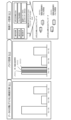
- FIG. 5 is a diagram for explaining the know-how extraction process in the artificial intelligence system according to this embodiment.
- FIG. 6 is a diagram illustrating a user interface (registration form displayed to the user) for know-how registration and training data registration in the artificial intelligence system according to this embodiment.
- the process shown in FIG. 5 corresponds to the process performed by the data classification unit 301 and the know-how registration unit 302 in FIG. 3, that is, the process from steps S4 to S5 in FIG.
- time-series data is divided into a plurality of groups (for example, groups corresponding to a plurality of types of driving operations, or For each group (that is, event type, in other words, know-how area), each Save the plant data at the point in time. Then, the amount of data stored in each group, in other words, the frequency of occurrence of each group is calculated and graphed.
- groups for example, groups corresponding to a plurality of types of driving operations, or For each group (that is, event type, in other words, know-how area), each Save the plant data at the point in time.
- the amount of data stored in each group in other words, the frequency of occurrence of each group is calculated and graphed.
- data are classified into three groups A, B, and C, and group A has the highest frequency of occurrence.
- Such a histogram for each group may be presented to the operator 40. Details of the set of plant data belonging to each group may also be presented to the operator 40 . This makes it easier for the operator to determine which know-how should be preferentially learned by the model.
- the group that has a larger amount of plant data that has not yet been used to create training data (that is, contains unlearned events with a higher occurrence frequency) are preferentially selected (typically, the group with the highest occurrence frequency is selected), and from that group, unused plant data is extracted for creating teacher data. For example, in FIG. 5, some unused plant data is extracted from group A with the highest frequency of occurrence. Then, together with the extracted plant data, a know-how registration form such as that shown in FIG. 6A is displayed to the operator, thereby requesting the operator to register the know-how. The operator registers the know-how by inputting the required items in the form.
- a training data registration form such as that shown in FIG. , and enter more detailed items to be registered.
- one or more conditions to be confirmed when performing the registered operation that is, to be satisfied for performing the operation
- teacher data is created based on these registration items.
- step S13 in FIG. 5 the registered know-how is applied based on the registered training data.
- Plant data for example, plant data with a high degree of similarity to the plant data used for know-how registration
- Plant data that is judged to correspond to the above is automatically selected from a set of past plant data (time-series data) that has already been accumulated. Searched and extracted. Then, the same label as the registered know-how is automatically attached to the extracted plant data.
- a new group (label) is created that collects only the plant data corresponding to the registered know-how.
- the creation of detailed groups for each registered know-how described above may be performed completely automatically, but the help of the operator 40 may also be used.
- the extracted data is presented to the operator 40 to determine whether or not the extracted data is appropriate. Only the extracted data may be put into the group.
- the teacher data created based on the extracted data may be presented to the operator 40 to determine whether or not the teacher data is appropriate, and only when the teacher data is appropriate, the teacher data may be used for learning. good.
- FIG. 7 is a diagram illustrating a user interface (know-how proposal form) for know-how proposal/evaluation in the artificial intelligence system according to this embodiment.
- the form illustrated in FIG. 7 is presented to the operator 40 (at step S9 in FIG. 4) by the know-how evaluation unit 303 shown in FIG.
- the know-how evaluation unit 303 evaluates the reliability of the inference result output by the real-time inference system 310, and if the reliability of the inference is higher than a predetermined level, the inference result ( For example, what kind of operation should be performed) is presented to the operator 40 in the form of a know-how proposal together with information on the plant data used in the inference and the know-how (label) applied there.
- the name of application know-how the proposed operation content (inference result), the date and time of the target plant data, the registrant of the know-how, and the like are presented.
- the operator 40 evaluates the proposal to determine whether it is appropriate or not, and inputs the result into the know-how proposal form.
- FIG. 8 shows an example of the flow of reliability judgment performed by the know-how evaluation unit 303 for the inference results from the real-time inference system 310.
- the real-time inference system 310 extracts the plant data having the same label (that is, the same group) as the label assigned to the input real-time used for inference from the set of time-series data. (Step S21). Then, the degree of similarity between the extracted predetermined feature amount of the time-series data having the same label and the feature amount of the input real-time data is calculated (S22). At that time, if training data has already been created for the time-series data, the conditions for performing the operation included in the training data (for example, "temperature sensor 1 is XX", "Pressure sensor 1 is XXX”, etc.) can be treated as a component having a greater weight than other components among the feature quantities.
- the inference result is determined to be highly reliable; otherwise, it is determined to be unreliable (S23).
- the inference result is determined to be highly reliable; otherwise, it is determined to be unreliable (S23).
- FIG. 9 shows a modified example of the configuration for "presenting the new know-how area and registering know-how" in step S5 shown in FIG.
- the know-how registration unit 302 (which is part of the AI training system 300 as shown in FIG. 3) includes a driving evaluation method learning unit 322, a driving evaluation unit 324, a know-how/ It has a teacher database 326 .
- the operation evaluation method learning unit 322 evaluates the operation evaluation method, that is, the operation of the plant system 20 performed by the operator 40, that is, the quality of the operation action (for example, 60 points out of 100). ) method, and create a driving evaluation model that evaluates driving actions in that method.
- the driving evaluation unit 324 uses the driving evaluation model created by the driving evaluation method learning unit 322 to evaluate the driving action performed by the operator 40, and the evaluation result (for example, 60 out of 100 points).
- the know-how/teaching database 326 is a system that stores the know-how registered by the operator 40 and teaching data.
- the operation evaluation method learning unit 322 includes a time-series database 320 (which is stored in the system according to the present embodiment) that accumulates operation data (time-series data) output from the plant system 20 in the past.
- a data set related to a specific type of past driving action for example, operating a specific device for a specific purpose
- the data set is used to drive the data set.
- the data set is presented to the operator 40, and the operator 40 is requested to evaluate whether the driving action indicated by the data set is good or bad (preparatory evaluation in advance for learning the evaluation method).
- the operator 40 judges whether the driving action indicated by the presented data set is good or bad, and inputs (registers) the evaluation result in the driving evaluation method learning unit 322 .
- the driving evaluation method learning unit 322 retrieves a large number of data sets from the time-series database 320 for one type of driving action, and repeats the prior driving evaluation request and the registration of the driving evaluation result as described above. Learn how to evaluate that type of driving action to the required level.
- a driving evaluation method learning unit 322 and a driving evaluation unit 324 may be provided for each of these driving action types. However, in the following description, the driving evaluation method learning unit 322 and the driving evaluation unit 324 for one type of driving action will be described.
- the learned driving evaluation model created by the driving evaluation method learning unit 322 is deployed to the driving evaluation unit 324, thereby enabling the driving evaluation unit 324 to operate.
- the operation evaluation unit 324 may use operation data output from the plant system 20 (past operation data accumulated in the time-series database 320, or current operation data (real-time data) obtained from the plant system 20. ) is input, a data set indicating a predetermined driving action type for a predetermined device is extracted from the driving data, and the data set is evaluated (e.g., 90 points, 65 points, etc.). ). Then, the driving evaluation unit 324 presents the data set and the evaluation result of the data set (driving action) (for example, scores such as 90 points and 65 points) to the operator.
- driving action for example, scores such as 90 points and 65 points
- the data set is displayed in the form of a graph showing changes in each data value along the time axis so that the operator 40 can easily grasp it visually.
- the timing at which the driving evaluation unit 324 evaluates and the timing at which the evaluation result is presented to the operator 40 may be substantially simultaneous with the driving action to be evaluated (that is, in real time), or the driving action may be may be a predetermined time or a selected time after the is performed.
- the evaluation of the driving action is performed in real time almost at the same time as the driving action, and the evaluation result is once stored in the system, and then is evaluated at a time convenient for the operator 40, such as a time selected by the operator 40.
- the evaluation result may be presented to the operator 40 .
- all evaluated driving actions may be presented to the operator 40 regardless of whether the evaluation results are good or bad, or the evaluation results may be worse than a predetermined standard. Only driving actions (for example, with a score of less than 80) may be selected and presented to the operator 40 . In any case, at least the driving action whose evaluation result is worse than the predetermined standard is the action that the operator 40 is not good at. Therefore, when the driving evaluation unit 324 notifies the operator 40 of a driving action with a poor evaluation result, the driving evaluation unit 324 requests the operator 40 to register know-how about the action.
- the operator 40 can register the know-how and training data related to the driving action in the driving evaluation unit 324.
- the driving evaluation unit 324 stores the registered know-how and training data in the know-how/training database 326 .
- the teacher data stored here is used for learning an inference model or designing inference rules for constructing the real-time inference system 310, as already described with reference to FIGS. S8).
- FIG. 10 illustrates the flow of the process in which the driving evaluation learning unit 322 described above learns the driving evaluation method.
- FIG. 11 illustrates the flow of communication between the driving evaluation learning unit 22 and the operator 40 on the user interface when learning the driving evaluation method.
- the operation evaluation learning unit 322 allows the operator 40 to select a device in the plant system 20 to be targeted for operation support and the type of operation action (S31).
- the driving evaluation learning unit 322 presents the operator 40 with a request message such as "Please select a device and operation.”
- the device to be supported and the type of driving action are specified, for example, "activation operation of XXX reaction system".
- the driving evaluation learning unit 322 selects data items to be displayed for the operator 40 regarding the target device and the type of driving action (that is, to be viewed in order to evaluate the quality of the driving action).
- a set is selected (S32). For example, as shown in FIG. 11, in S321, the driving evaluation learning unit 322 presents the operator 40 with a request message such as "Please select the item you want to display.”
- a set of data items to be viewed for evaluation is designated, for example, "XX heater outlet gas temperature, XX catalyst first layer lower temperature, XXX heater outlet gas temperature, XXX outlet gas pressure".
- the driving evaluation learning unit 322 acquires one data set of data items designated by the operator 40 from the time-series database 320 with respect to the target device and driving action type designated by the operator 40. These data sets are extracted and presented to the operator 40 in graph form (S33). For example, as shown in FIG. 11, in S331, the driving evaluation learning unit 322 creates a graph showing changes along the time axis of the data values of each extracted data set and asks, "Is this graph okay? Display the graph on the user interface screen with a request message such as "Please confirm".
- the driving evaluation learning unit 322 causes the operator 40 to evaluate (scoring) each set of driving data displayed in the form of a graph (that is, each past driving action) (S34). ). For example, as shown in FIG. 11, in S341, the driving evaluation learning unit 322 displays a request message such as "Please select and score past driving data.” In S342, an evaluation score such as 70 points or 20 points is input for each graph (driving action).
- the driving evaluation learning unit 322 evaluates each data set (driving action) presented to the operator 40 and the evaluation result ( points) are used to create a driving evaluation model that learns the driving evaluation method of the driving action type of the corresponding device (S35).
- the evaluation method learned here does not necessarily have to be a detailed evaluation method that gives a two-digit score as exemplified, and may be a simpler evaluation method.
- a simple evaluation method for example, there may be a method of evaluating in two stages, good or bad.
- learning may be performed using only a data set that has obtained one evaluation result of good (or bad). For example, when learning using only datasets that have been evaluated as good, calculate the distance on the data space from the trained good dataset, and score according to that distance or simply judge whether it is good or bad can be created as an evaluation result.
- the driving evaluation unit 324 evaluates the driving actions performed by the operator 40 in real time.
- FIG. 12 illustrates the flow of the driving evaluation process performed by the driving evaluation unit 324 .
- FIG. 13 illustrates the communication flow between the operation evaluation unit 324 and the operator 40 on the user interface at that time.
- the operation evaluation unit 324 inputs real-time operation data (real-time data) from the plant system 20, and from the real-time data regarding the target device and operation action type, selects the data of the data item. A set is extracted (S41). Then, the driving evaluation unit 324 evaluates (scores) the extracted data set (that is, the driving action just performed) using the learned evaluation method (S42).
- the driving evaluation unit 324 determines whether the evaluation result satisfies a predetermined selection condition (for example, the score is lower than a certain reference value, that is, the condition that the driving action just performed is worse than the certain reference value). If the condition is satisfied, the evaluated data set and the evaluation result are presented to the operator 40 (S43).
- the data set is displayed, for example, in the form of a graph representing changes in data values along the time axis so that the operator 40 can easily understand it visually.
- the operation evaluation unit 324 causes the operator 40 to specify, on the displayed graph of the data set, what is the data state that serves as an index (foundation) for the evaluation result (S44).
- a display example of the user interface in the process of S43 to S44 in FIG. 12 described above is shown in S431 to S442 in FIG. (It should be noted that the operator 40 who responds to the displayed message shown in FIG. 13 may be a different person than the operator 40 who performed the evaluated driving action.) For example, when the operator 40 activates the target equipment If an operation is performed and the operation evaluation unit 324 evaluates the start operation as lower than a certain standard, the operation evaluation unit 324 in S431 of FIG. A message indicating the low evaluation result is displayed to the operator 40. In response to this message, if operator 40 agrees with the results of the evaluation, such as yes in S432, driving evaluator 324 graphs the evaluated data set as shown in S442.
- a message such as "Please tell me where points were deducted.” is requested to the operator 40.
- the operator 40 puts an index mark 51 on the data state corresponding to the above index on the graph (in this example, a location where a certain data value changes abruptly), as shown in S442. .
- the driving evaluation unit 324 stores the data state of the portion marked with the designation mark 51 as an index of the evaluation result (low evaluation result).
- the operation evaluator 324 prompts the operator 40 to input details of what the data state means and what the correct operation should have been when the data state occurred (see FIG. 12). S45). For example, as shown in FIG. 13, the operation unit 324 presents a request message to the operator 40 in S451, such as "Please tell me what state it is in and how it should be operated.” In response to this request, the operator 40, in S452, states, "The state 'XX heater outlet temperature' is 'suddenly dropping'. The state 'reaction may stop.' Please enter information such as The operation evaluation unit 324 stores the input information as the content of the proposal message to be presented to the operator 40 by the real-time inference unit 310 (see FIG. 3).
- the driving evaluation unit 324 extracts one or more sets (usually many sets) of data sets corresponding to the target device and driving action type from the time-series database 320, and is presented to the operator 40 in the same graph format as above (S46). Then, the driving evaluation unit 324 designates a data state that serves as an indicator of the evaluation result (high evaluation result) in contrast to the previous evaluation result (low evaluation result) from among the graphs of these data sets.
- a request is made to the operator 40 (S47). For example, as shown in FIG. 13, in S471, the operation unit 324 displays a message to the operator 40 such as "Please tell us what kind of driving you should aim for." Display a graph of a dataset (usually many sets).
- the operator 40 selects from the displayed graph a portion of the data state that serves as an indicator of the driving action to be aimed at (highly evaluated), and the index is displayed at that portion. Attaching a mark 53 designates the data state corresponding to the index.
- the driving evaluation unit 324 stores the designated data state as an index of the above-described contrasting evaluation result (high evaluation result).
- the driving evaluation unit 324 sends the know-how name to the operator 40 regarding the data state that serves as an indicator of the low evaluation and high evaluation input by the operator 40 in S44 to S47 and the driving action to be taken.
- Input is made (S48) (for example, S481 to S482 in FIG. 13), and the input information is stored in the know-how/teaching database 326 as teaching data in association with the know-how name (S49).
- the teacher data stored in the know-how/teacher database 326 is used to create an inference model that configures the real-time inference system 310 (see FIG. 3), as already described.
- the teacher data in the know-how and teacher database 326 can be used as the teacher data for the machine learning.
- the teacher data in the know-how and teacher database 326 is the programming of the inference rules, that is, can be used for design.
- the real-time inference system 310 created in this way inputs real-time operation data (real-time data) from the plant system 20, and from the real-time data, a data set of selected data items related to the operation action type of the target equipment. A data set containing data states corresponding to the low evaluation result index is extracted. The real-time reasoning system 310 then identifies the data state corresponding to the low-evaluation index from the extracted data set, what the data state means, and the operation to be performed on the data set is Identify something and use the identified matter to create a proposal message and present it to the operator 40 .
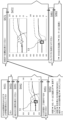
- FIG. 14 shows an example of a suggestion message presented to the driver 40 by the real-time reasoning system 310.
- the extracted data set is displayed in the form of a graph, and an index mark 55 is displayed on the graph at the location of the data state corresponding to the low-evaluation index.
- the target device and the type of driving action are displayed, such as "Device: XXX reaction system. Operation: Activation.”
- Status XX heater outlet temperature is dropping rapidly.
- Suggestion Reduce XXXX operation range.” .
- an artificial intelligence system and a learning method in an artificial intelligence system that select what knowledge to learn by themselves and proceed with learning while requesting humans to do so. can be realized.
- part or all of the above configurations, functions, processing units, processing means, etc. may be realized by hardware, for example, by designing them with an integrated circuit.
- the present invention can also be implemented by software program code that implements the functions of the embodiments.
- a computer is provided with a storage medium recording the program code, and a processor included in the computer reads the program code stored in the storage medium.
- the program code itself read from the storage medium implements the functions of the above-described embodiments, and the program code itself and the storage medium storing it constitute the present invention.
- Examples of storage media for supplying such program code include flexible disks, CD-ROMs, DVD-ROMs, hard disks, SSDs (Solid State Drives), optical disks, magneto-optical disks, CD-Rs, magnetic tapes, A nonvolatile memory card, ROM, or the like is used.
- program code that implements the functions described in this embodiment can be implemented in a wide range of programs or script languages, such as assembler, C/C++, perl, Shell, PHP, Java (registered trademark), and Python.
- all or part of the program code of the software that implements the functions of each embodiment may be stored in advance in the storage resources of the computer, or may be stored in other devices connected to the network as necessary. It may be stored in the storage resource of the computer from a temporary storage device or from a non-temporary storage medium via an external I/F (not shown) provided in the computer.
- the program code of the software that realizes the functions of the embodiment can be stored in storage means such as a hard disk or memory of a computer or in a storage medium such as a CD-RW or CD-R.
- a processor provided in the computer may read and execute the program code stored in the storage means or the storage medium.
- control lines and information lines indicate those that are considered necessary for explanation, and not all the control lines and information lines are necessarily indicated on the product. All configurations may be interconnected.
Landscapes
- Engineering & Computer Science (AREA)
- Theoretical Computer Science (AREA)
- Software Systems (AREA)
- Data Mining & Analysis (AREA)
- Evolutionary Computation (AREA)
- Medical Informatics (AREA)
- Computer Vision & Pattern Recognition (AREA)
- Physics & Mathematics (AREA)
- Computing Systems (AREA)
- General Engineering & Computer Science (AREA)
- General Physics & Mathematics (AREA)
- Mathematical Physics (AREA)
- Artificial Intelligence (AREA)
- Testing And Monitoring For Control Systems (AREA)
Priority Applications (2)
| Application Number | Priority Date | Filing Date | Title |
|---|---|---|---|
| JP2023576596A JP7794404B2 (ja) | 2022-01-31 | 2022-01-31 | 人工知能システム及び人工知能の動作方法を実施するコンピュータシステム、並びにコンピュータプログラム記録媒体 |
| PCT/JP2022/003671 WO2023145089A1 (ja) | 2022-01-31 | 2022-01-31 | 人工知能システム及び人工知能の動作方法を実施するコンピュータシステム、並びにコンピュータプログラム記録媒体 |
Applications Claiming Priority (1)
| Application Number | Priority Date | Filing Date | Title |
|---|---|---|---|
| PCT/JP2022/003671 WO2023145089A1 (ja) | 2022-01-31 | 2022-01-31 | 人工知能システム及び人工知能の動作方法を実施するコンピュータシステム、並びにコンピュータプログラム記録媒体 |
Publications (1)
| Publication Number | Publication Date |
|---|---|
| WO2023145089A1 true WO2023145089A1 (ja) | 2023-08-03 |
Family
ID=87470983
Family Applications (1)
| Application Number | Title | Priority Date | Filing Date |
|---|---|---|---|
| PCT/JP2022/003671 Ceased WO2023145089A1 (ja) | 2022-01-31 | 2022-01-31 | 人工知能システム及び人工知能の動作方法を実施するコンピュータシステム、並びにコンピュータプログラム記録媒体 |
Country Status (2)
| Country | Link |
|---|---|
| JP (1) | JP7794404B2 (https=) |
| WO (1) | WO2023145089A1 (https=) |
Citations (2)
| Publication number | Priority date | Publication date | Assignee | Title |
|---|---|---|---|---|
| JP2017107386A (ja) * | 2015-12-09 | 2017-06-15 | 日本電信電話株式会社 | 事例選択装置、分類装置、方法、及びプログラム |
| WO2019150813A1 (ja) * | 2018-01-30 | 2019-08-08 | 富士フイルム株式会社 | データ処理装置及び方法、認識装置、学習データ保存装置、機械学習装置並びにプログラム |
Family Cites Families (3)
| Publication number | Priority date | Publication date | Assignee | Title |
|---|---|---|---|---|
| US8280719B2 (en) | 2005-05-05 | 2012-10-02 | Ramp, Inc. | Methods and systems relating to information extraction |
| GB201517462D0 (en) | 2015-10-02 | 2015-11-18 | Tractable Ltd | Semi-automatic labelling of datasets |
| CN112541083A (zh) | 2020-12-23 | 2021-03-23 | 西安交通大学 | 一种基于主动学习混合神经网络的文本分类方法 |
-
2022
- 2022-01-31 JP JP2023576596A patent/JP7794404B2/ja active Active
- 2022-01-31 WO PCT/JP2022/003671 patent/WO2023145089A1/ja not_active Ceased
Patent Citations (2)
| Publication number | Priority date | Publication date | Assignee | Title |
|---|---|---|---|---|
| JP2017107386A (ja) * | 2015-12-09 | 2017-06-15 | 日本電信電話株式会社 | 事例選択装置、分類装置、方法、及びプログラム |
| WO2019150813A1 (ja) * | 2018-01-30 | 2019-08-08 | 富士フイルム株式会社 | データ処理装置及び方法、認識装置、学習データ保存装置、機械学習装置並びにプログラム |
Also Published As
| Publication number | Publication date |
|---|---|
| JP7794404B2 (ja) | 2026-01-06 |
| JPWO2023145089A1 (https=) | 2023-08-03 |
Similar Documents
| Publication | Publication Date | Title |
|---|---|---|
| US7630874B2 (en) | Data visualization methods for simulation modeling of agent behavioral expression | |
| US20050049988A1 (en) | Provision of data for analysis | |
| US12525230B2 (en) | Conversational artificial intelligence runtime system using a human-like instructions | |
| CN115427907B (zh) | 用于工业过程中的智能报警管理方法 | |
| JPH0769828B2 (ja) | 診断エキスパート・システムにおける応答入力処理方法 | |
| Metzger et al. | A user study on explainable online reinforcement learning for adaptive systems | |
| WO2023145089A1 (ja) | 人工知能システム及び人工知能の動作方法を実施するコンピュータシステム、並びにコンピュータプログラム記録媒体 | |
| Pasqual | Development of an expert system for the identification and control of weeds in wheat, triticale, barley and oat crops | |
| JP2023111624A (ja) | プラント運転支援システム及びプラント運転支援方法を実施するコンピュータシステム、並びにコンピュータプログラム記録媒体 | |
| CN120407420A (zh) | 一种软件测试方法、设备、介质及计算机程序产品 | |
| JPH0831084B2 (ja) | 情報処理システムのユーザー支援方法 | |
| US20220100299A1 (en) | System and method for intelligent polymorphism of user interface | |
| Gyles et al. | An integrated intuitive and deliberative model of expert decision-making in air traffic control | |
| JP7822508B1 (ja) | 情報処理システム、情報処理方法及びプログラム | |
| CN121414233B (zh) | 基于多智能体协同的智能电网任务自主规划方法及系统 | |
| JP7822510B1 (ja) | 情報処理システム、情報処理方法及びプログラム | |
| JPH06222922A (ja) | エキスパートシステム | |
| JP7819428B1 (ja) | データ管理装置、データ管理システム、データ管理方法、およびデータ管理プログラム | |
| JP2025114520A (ja) | プラント運転支援システム及びプログラム格納媒体 | |
| JP7806883B2 (ja) | モデル探索装置、モデル探索方法、及び、プログラム | |
| WO2025159193A1 (ja) | 行動ベースド支援システム及びプログラム格納媒体 | |
| EP4653964A1 (en) | A method for controlling a sub-system of an industrial plant | |
| JP3312141B2 (ja) | 命令ブレーク・ダウン装置および方法ならびに命令解析装置および方法 | |
| JP2001117774A (ja) | 適応化機構を備えたプロダクションシステム | |
| de la Torre | Where Representations Begin: From Basic to Decoupled Representations |
Legal Events
| Date | Code | Title | Description |
|---|---|---|---|
| 121 | Ep: the epo has been informed by wipo that ep was designated in this application |
Ref document number: 22923952 Country of ref document: EP Kind code of ref document: A1 |
|
| WWE | Wipo information: entry into national phase |
Ref document number: 2023576596 Country of ref document: JP |
|
| NENP | Non-entry into the national phase |
Ref country code: DE |
|
| 32PN | Ep: public notification in the ep bulletin as address of the adressee cannot be established |
Free format text: NOTING OF LOSS OF RIGHTS PURSUANT TO RULE 112(1) EPC (EPO FORM 1205A DATED 11.11.2024) |
|
| 122 | Ep: pct application non-entry in european phase |
Ref document number: 22923952 Country of ref document: EP Kind code of ref document: A1 |