WO2023120345A1 - 情報提供システム - Google Patents
情報提供システム Download PDFInfo
- Publication number
- WO2023120345A1 WO2023120345A1 PCT/JP2022/046121 JP2022046121W WO2023120345A1 WO 2023120345 A1 WO2023120345 A1 WO 2023120345A1 JP 2022046121 W JP2022046121 W JP 2022046121W WO 2023120345 A1 WO2023120345 A1 WO 2023120345A1
- Authority
- WO
- WIPO (PCT)
- Prior art keywords
- information
- intestinal
- user
- intestinal environment
- specific
- Prior art date
- Legal status (The legal status is an assumption and is not a legal conclusion. Google has not performed a legal analysis and makes no representation as to the accuracy of the status listed.)
- Ceased
Links
Images






Classifications
-
- G—PHYSICS
- G16—INFORMATION AND COMMUNICATION TECHNOLOGY [ICT] SPECIALLY ADAPTED FOR SPECIFIC APPLICATION FIELDS
- G16H—HEALTHCARE INFORMATICS, i.e. INFORMATION AND COMMUNICATION TECHNOLOGY [ICT] SPECIALLY ADAPTED FOR THE HANDLING OR PROCESSING OF MEDICAL OR HEALTHCARE DATA
- G16H20/00—ICT specially adapted for therapies or health-improving plans, e.g. for handling prescriptions, for steering therapy or for monitoring patient compliance
Definitions
- the present invention relates to an information providing system.
- the intestinal environment differs from person to person due to lifestyle habits such as diet, and the balance of the intestinal flora and metabolites derived from the intestinal flora are deeply involved in maintaining health and various diseases. It is becoming clear that there are In addition, it is known that the effects of ingesting functional substances such as drugs, supplements, and foodstuffs vary from person to person based on differences in the intestinal environment of the individual.
- Patent Document 1 users are classified based on test results related to intestinal bacteria, and based on the evaluation results when another user classified into the same group ingests a functional material, it is suitable for the user. It is disclosed to present a functional material that will do.
- the above-mentioned technology proposes functional materials that are suitable for users at this time, and does not take into account cases where functional materials are not suitable.
- the present invention can lead to acquisition of compatibility with functional substances by proposing actions for changing the intestinal environmental pattern even if there is no compatibility with functional substances at present.
- One purpose is to provide an information provision system.
- an information providing system that provides behavioral information necessary to acquire responsiveness to a specific functional substance according to the user's intestinal environment pattern.
- responsiveness to functional substances can be acquired in the future by proposing actions that are effective in changing intestinal environmental patterns. can.
- FIG. 1 is a functional block diagram of a server device according to an embodiment of the present invention
- FIG. A configuration example of a responsive intestinal environment information storage unit according to an embodiment of the present invention.
- the present invention has the following configurations.
- An information providing system that provides behavioral information necessary to acquire responsiveness to a specific functional substance according to the user's intestinal environment pattern.
- a comparison unit that compares the intestinal environment pattern of the user with the intestinal environment pattern responsive to the specific functional substance; an action selection unit that selects action information for bringing the intestinal environment pattern of the user closer to the responsive intestinal environment pattern based on the result of the comparison;
- the comparison unit determines at least one of the presence or absence and excess or deficiency of specific intestinal bacteria, the presence or absence and excess or deficiency of a specific metabolite, the presence or absence of or excess or deficiency of a specific stool protein, or whether or not the stool has a specific stool texture.
- the information providing system according to item 2 wherein whether or not is specified as a difference.
- the behavior information is behavior that increases or decreases at least one of specific intestinal bacteria, metabolites, and stool proteins related to the difference, or has an effect of changing stool properties. offer system.
- [Item 5] 5 5. The information providing system according to any one of items 1 to 4, wherein the behavior information relates to food intake.
- the present invention is based on the finding that the effects of ingesting functional substances such as drugs, supplements, and foodstuffs vary from person to person based on differences in the intestinal environmental patterns of the individual.
- a "responder” can be defined as a person who can obtain an effect when ingesting such a functional substance, and a “non-responder” can be defined as a person who cannot obtain the effect.
- Such a concept is considered to exist universally between substances such as foods ingested, such as probiotics such as yogurt and foods with function claims, and the effects brought about by them.
- pharmaceuticals For example, it has been reported that the effects of immune checkpoint inhibitors, which have been attracting attention in recent years as cancer treatment drugs, depend on the pattern of the intestinal flora of patients. It is believed that the reason is that the pattern influences the host immune system. Since the intestinal environment differs from person to person, it is possible that foods (including foods for specified health uses and foods with function claims) and pharmaceuticals that are expected to have beneficial effects will have the same effect on all people. It should be recognized that there are responders and non-responders.
- some foods, supplements, and pharmaceuticals are known to have the effect of increasing or decreasing specific intestinal bacteria and metabolites derived from intestinal bacteria.
- yogurt containing lactic acid bacteria and bifidobacteria, fermented foods such as rice bran pickles and natto, probiotics such as antiflatulent agents, and foods and supplements called prebiotics containing large amounts of dietary fiber and oligosaccharides improve the intestinal environment. known to change.
- prebiotics containing large amounts of dietary fiber and oligosaccharides improve the intestinal environment. known to change.
- the intestinal environment changes depending on lifestyle habits such as exercise habits, alcohol intake, and stress.
- responsive intestinal environment patterns In the present invention, through research and surveys, common intestinal environment patterns among responders to specific functional substances are found, and these are put into a database as "responsive intestinal environment patterns".
- a research method for finding a responsive intestinal environment pattern can be carried out by a known method, and for example, the following method can be carried out.
- the present invention first, by comparing the user's intestinal environment pattern with a responsive intestinal environment pattern common to people who are responders to a specific functional substance, or non-responders. Then, if the user is a non-responder, it proposes action information for changing the user's intestinal environment pattern to a responsive intestinal environment pattern. According to the present invention, even a non-responder to a specific functional substance at first can change its own intestinal environment pattern to a responder by taking a specific action.
- the responder may be referred to as "responsive”
- the non-responder may be referred to as "non-responsive".
- intestinal environment pattern refers to the presence or absence of specific intestinal bacteria, the relative abundance ratio, the balance between intestinal bacteria, the presence or absence of intestinal metabolites, their content, and the balance between metabolites. , the presence or absence and content of protein in stool, stool properties (such as water content, hardness, color, etc.), and combinations thereof.
- the intestinal bacteria are not limited to bacteria, but include archaebacteria, fungi, and viruses (phages).
- the intestinal metabolites include metabolites produced by intestinal bacteria, dead cells of intestinal bacteria, food residues, substances secreted by the host, etc., and are mainly detected in stool. It may also be detected from sources other than stool, such as intestinal contents.
- the fecal protein includes proteins produced by intestinal bacteria, food residues, and substances secreted by the host (digestive enzymes, immunoglobulins, antimicrobial peptides, etc.), and is mainly detected in feces. It may be detected from other than stool such as contents.
- the term "functional substance” refers to a food (including beverages, hereinafter the same) that is expected to bring about a certain effect when ingested, and its form is a food with health claims and a health supplement. , Foods with Function Claims, Foods for Specified Health Uses, and Foods for Special Dietary Uses. Furthermore, “functional substances” include pharmaceuticals, supplements, and the like. In addition, “food” also includes foodstuffs and specific nutrients contained in foodstuffs. In addition, “pharmaceuticals” and “supplements” may be active ingredients (compounds) contained therein.
- the predetermined effects of functional substances include, for example, weight loss, prevention of weight gain, lowering of blood sugar level, improvement of glucose tolerance, improvement of bowel movement, improvement of immunity, improvement of skin condition, improvement of Any substance that changes the physical and mental state of the ingester, such as having a depressive effect, may be used.
- the intake of the functional substance in the present invention is not limited to humans, but can also be applied to animals such as livestock and pets, and industrial animals such as bees and silkworms.
- the system according to the embodiment of the present invention evaluates whether it is responsive to a specific functional substance based on the data on the intestinal environment of the user, and if it is not responsive, the responsive intestinal bacterium pattern This is to provide the user terminal with action information for approaching.
- the system of the present invention comprises a server 1 and user terminals 2 connected to the server 1 via a network such as the Internet. Although one user terminal 2 is illustrated in FIG. 1 for convenience of explanation, a plurality of terminals can be connected to the network of this system.
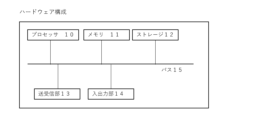
- the server 1 and the user terminal 2 according to this embodiment have the following hardware configurations.
- the following configuration is an example, and may have a configuration other than this.
- the server 1 constitutes part of the system by executing information processing through communication with the user terminal 2 .
- the server 1 may be a general-purpose computer such as a workstation or personal computer, or may be logically implemented by cloud computing.
- the server 1 includes at least a processor 10 , a memory 11 , a storage 12 , a transmission/reception section 13 , an input/output section 14 and the like, which are electrically connected to each other through a bus 15 .
- the processor 10 is an arithmetic device that controls the overall operation of the server 1, controls transmission and reception of data between elements, and performs information processing necessary for executing applications.
- the processor 10 is a CPU (Central Processing Unit), and executes a program or the like stored in the storage 12 and developed in the memory 11 to carry out each information process.
- CPU Central Processing Unit
- the memory 11 includes a main memory composed of a volatile memory device such as a DRAM (Dynamic Random Access Memory), and an auxiliary memory composed of a non-volatile memory device such as a flash memory or a HDD (Hard Disc Drive). .
- the memory 11 is used as a work area or the like for the processor 10, and stores a BIOS (Basic Input/Output System) executed when the server 1 is started, various setting information, and the like.
- BIOS Basic Input/Output System
- the storage 12 stores various programs such as application programs.
- a database storing data used for each process may be constructed in the storage 12 .
- the transmission/reception unit 13 connects the server 1 to the network 3.
- the transmitting/receiving unit 13 may include a short-range communication interface of Bluetooth (registered trademark) and BLE (Bluetooth Low Energy).
- the input/output unit 14 is an information input device such as a keyboard and mouse, and an output device such as a display, which are used as needed.
- a bus 15 is commonly connected to the above elements and transmits, for example, address signals, data signals and various control signals.
- the user terminal 2 configures a part of the information providing system by executing information processing through communication with the server 1 .
- the user terminal 2 may be, for example, a workstation or a general-purpose computer such as a personal computer, or may be a mobile communication device such as a smart phone.
- FIG. 3 is a diagram showing a software configuration example of the server 1 in the system of the present invention.
- the server 1 includes a data acquisition unit 111, a comparison unit 112, an action selection unit 113, an information provision unit 114, a responsive intestinal environment information storage unit 121, a difference list storage unit 122, an intestinal environment change information storage unit 123, and user information.
- a storage unit 124 may be provided.
- the data acquisition unit 111, the comparison unit 112, the action selection unit 113, and the information provision unit 114 are realized by the processor 10 provided in the server reading out a program stored in the storage 12 into the memory 11 and executing it,
- the intestinal environment information storage unit 121, the difference list storage unit 122, the intestinal environment change information storage unit 123, and the user information storage unit 124 are part of a storage area provided by at least one of the memory 11 and the storage 12. Realized.
- the responsive intestinal environment information storage unit 121 includes combinations of specific functional substances and characteristics of responsive intestinal environment patterns that can obtain the effects of the functional substances. That is, when past studies have clarified an intestinal environment pattern common to responders who can obtain the effects of a functional substance, the characteristics of the intestinal environment pattern common to the responders can be defined as "responsive gut.” This is a database of internal environmental patterns.
- FIG. 4 is a configuration example of responsive intestinal environment information.
- the category information of the functional substance food, supplement, pharmaceutical, etc.
- the effects obtained by ingesting the functional substance relieve constipation, lose weight, increase glucose tolerance
- responsive intestinal environment pattern information includes the presence or absence of specific intestinal bacteria, abundance, relative abundance ratio, balance between intestinal bacteria (existence ratio of specific intestinal bacteria, etc.), presence or absence of intestinal metabolites , content, balance between metabolites, presence/absence and content of protein in stool, stool properties (eg, water content, hardness, color, etc.).
- the enteric bacteria can be obtained by any specific method, such as its genus (Prevotella bacteria, etc.) or species (Prevotella copri, etc.).
- the relative abundance ratio of intestinal bacteria, the balance between intestinal bacteria, the content of metabolites, the balance between metabolites, etc. can be defined by numerical values (thresholds) for the range to be judged as a responder.
- the threshold value is a cutoff value for distinguishing between a group in which the functional substance is effective and a group in which it is not effective, and can be determined as appropriate.
- the cut-off value may be calculated by appropriately selecting a machine learning algorithm such as a decision tree, random forest, logistic regression, etc., or may be determined appropriately from the distribution of values in the effective group and the ineffective group. More specifically, for example, the relationship between sensitivity and false positive rate (1-specificity) can be obtained by ROC analysis.
- Sensitivity is, for example, the rate at which a prediction target, which is a group in which the true state increases, is predicted to be a group in which the true state increases correctly.
- the specificity is the proportion of the prediction target, which is the group in which the true state does not increase, is correctly predicted to be the group in which the increase does not occur.
- sensitivity and false positive rate values are obtained when the cutoff value is continuously changed. Then, plot the obtained sensitivity and false positive rate values on a graph with sensitivity on the vertical axis (Y axis) and false positive rate on the horizontal axis (X axis), and select sensitivity from the plotted points 1.
- a cutoff value corresponding to the combination of sensitivity and specificity thus determined can be set as the final cutoff value.
- the method of determining the combination of sensitivity and specificity is not limited to the method of determining the combination that minimizes (1-sensitivity) 2 + false positive rate 2 described above.
- a method of determining a combination that maximizes the product of , or a method of determining a combination that maximizes (sensitivity + specificity)/2 may be used.
- the difference list storage unit 122 is information for specifying the difference between the user's intestinal environment pattern and the responsive intestinal environment pattern.
- FIG. 5 is a configuration example of a difference list stored in the difference list storage unit 122.
- the difference list can be linked to identification information such as a difference ID and can include the content of the difference.
- the content of the difference is the lack/excess of specific genera, the lack/excess of specific metabolites, and the lack/excess of specific stool proteins. , specific stool properties (eg, water content, hardness, color, etc.).
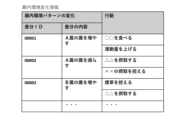
- the intestinal environment change information storage unit 123 includes behavior information that causes a change in a specific intestinal environment pattern.
- FIG. 6 is a configuration example of the intestinal environment change information stored in the intestinal environment change information storage unit 123.
- the action information corresponding to the difference ID described above is stored in association with it.
- Each piece of action information may be attached with identification information such as an action information ID.
- Changes in the intestinal environmental pattern include, for example, increasing/decreasing specific intestinal bacteria, adjusting the ratio of specific intestinal bacteria, increasing/decreasing specific metabolites, specific metabolism Adjustment of the abundance ratio of substances, etc. or a combination thereof is included.
- Behavioral information is known to bring about changes in specific intestinal environmental patterns, and includes dietary behavior related to ingesting or refraining from ingesting specific foods, and ingesting specific supplements. , supplement behavior related to refraining from taking, etc., taking specific medicines or taking medication related to refraining from taking, increasing exercise, increasing sleep time, refraining from smoking, reducing stress, alcohol Lifestyle behavior related to lifestyle habits such as refraining from intake may be included, but is not limited to this, and any behavior that has the effect of changing the intestinal environment pattern may be included.
- a plurality of pieces of behavioral information known to be effective may be associated with changes in specific intestinal environmental patterns.
- the type of behavior information (eating behavior, supplement behavior, medication behavior, lifestyle behavior, etc.) may be given.
- behavior information can be added at any time for actions that have been found to be effective in changing a specific intestinal environment pattern.
- weighting information or priority may be given to action information that can be expected to be more effective.
- each piece of action information includes information on past success probability and efficiency.
- the probability of success in the past is the probability that the expected change in the intestinal environment pattern occurred when the action was performed. Alternatively, it may be the proportion of those who have an effect among a population of people who have an intestinal environment pattern similar to the target user's intestinal environment pattern.
- Similar intestinal environment patterns can be appropriately set based on arbitrary criteria.
- a value of UniFrac distance which is a value obtained by calculating a difference in intestinal flora profile as a distance, a correlation coefficient, a Euclidean distance, or the like can be used as an index.
- the distance between the intestinal microbiota data based on statistical methods (e.g., Jensen Shannon Divergence, etc.) and then performing clustering (e.g., k-medoid method, etc.), the so-called "enterotype” , and define people with the same enterotype as similar.
- the enterotype is a classification based on the ratio of specific bacteria, and typical examples are Bacteroides enterotype in which the genus Bacteroides is dominant, Prevotella enterotype in which the genus Prevotella is dominant, and Ruminococcus enterotype in which the genus Ruminococcus is dominant. It is known that there are cases where it can be classified into three types.
- the efficiency of behavioral information change is an indicator of how much the expected change in the intestinal environment pattern can be obtained with respect to the number of times the behavior is performed, the implementation period, the amount of intake, etc.
- the amount of change in the intestinal environment pattern can be represented by the rate of increase/decrease in abundance, such as the rate of increase/decrease of the target intestinal bacteria compared to before the behavior. For example, if the behavioral information is "to take 100 g of food A a day", by measuring the amount of change in the intestinal environment pattern in a predetermined period (for example, one month) of ingesting food A, , the change efficiency per predetermined period is calculated.
- an average value or the like may be obtained with all the people who have performed the behavior as a population, or a population having similar intestinal environment patterns to the target user may be used as the population.
- the user information storage unit 124 stores user information.
- FIG. 7 is a configuration example of user information stored in the user information storage unit 124.
- the user information may be linked to the user ID, and may include basic user information and intestinal environment pattern information of the user.
- User basic information includes information related to user attributes such as name, age, gender, address, occupation, and hometown, as well as physical conditions such as chronic diseases, medical history, allergies, physical constitution (obesity, weakness, etc.), prescription drugs, regular drugs, etc. It may also include information related to lifestyle habits such as diet, drinking habits, smoking habits, exercise habits, and the like.
- the user's intestinal environment pattern information is the user's intestinal environment pattern information obtained by analyzing the user's stool, and is stored together with the sampling date. If sampling and analysis are performed multiple times, multiple sets of intestinal environment pattern information can be obtained.
- the intestinal environment pattern information includes the presence or absence of specific intestinal bacteria, relative abundance ratio, balance between intestinal bacteria, presence or absence of intestinal metabolites, content, balance between metabolites, protein in stool, stool properties ( moisture content, consistency, color, etc.) and combinations thereof, and may also include genetic sequence data extracted from the user's stool sample, and the quantitative data itself.
- the result (responder/non-responder) and action information proposed in the case of a non-responder can also be stored. .
- Data on intestinal bacteria can be obtained by extracting total DNA from stool samples provided by users, reading their sequences, and quantifying them based on the sequences and a gene database (eg, KEGG). be.
- Microorganisms can be quantified, for example, by extracting total DNA from stool samples, reading their sequences, and comparing the sequences with base sequences registered in a 16S ribosomal RNA database (eg, SILVA).
- SILVA 16S ribosomal RNA database
- the 16S ribosomal RNA gene may be amplified by PCR and their sequences read.
- the relative or absolute quantification value of the specific microorganism may be obtained by amplifying the gene of the specific microorganism by quantitative PCR after extracting the total DNA.
- the amount of microorganisms may be quantified using an antibody that binds to a specific microorganism (or its protein, etc.), or the amount of microorganisms may be measured using a selective medium in which only specific microorganisms can grow.
- Metabolites can be exhaustively quantified from a user's stool sample, for example, by using an analyzer equipped with a mass spectrometer such as CE-MS, LC-MS, and GC-MS.
- the amount of a metabolite or protein may be defined by the content in a predetermined amount of stool specimen, or may be a relative value between a plurality of stool specimens.
- an analysis device without a mass spectrometer such as HPLC may be used, and metabolites or metabolites may be detected by ELISA using an antibody against a specific substance, colorimetric method based on an enzymatic reaction with a specific substance, or the like.
- the amount of protein may be determined.
- the data acquisition unit 111 acquires data on the user's intestinal environment pattern.
- the data acquisition unit 111 may acquire the analyzed intestinal bacteria pattern information from the user terminal 2, the server 1, or via another data server.
- the comparison unit 112 compares the acquired intestinal environment pattern of the user with the responsive intestinal environment pattern of the specific functional substance.
- the comparison unit 112 may read out and compare the corresponding responsive intestinal environment patterns for the functional substance specified by the user, or read out the corresponding responsive intestinal environment patterns of all the functional substances. You can compare. If the intestinal environment pattern of the user matches the responsive intestinal environment pattern of a specific functional substance, the comparison unit 112 determines that the user is responsive (responder) to the functional substance. can judge. On the other hand, if it does not match the responsive intestinal environment pattern, it is determined to be non-responsive (non-responder), and the difference is further extracted.
- the responsive intestinal environment pattern of a certain functional substance is a pattern in which the relative abundance ratio of genus A intestinal bacteria is 0.5 or more and the relative abundance ratio of genus B intestinal bacteria is 0.2 or more.
- the relative abundance ratio of A genus intestinal bacteria in the user's intestinal environment pattern is 0.55 and the relative abundance ratio of B genus is 0.1
- the user's intestinal environment pattern is Satisfies, but does not meet the conditions for the B genus. Therefore, the comparison unit 112 finds that the relative abundance ratio of bacteria belonging to the genus B is insufficient as the difference.
- the comparison unit 112 selects from the difference list storage unit 122 the difference ID corresponding to the difference extracted as a result of the comparison. For example, in the first example above, if the difference is that the relative abundance ratio of B bacteria is insufficient, 00003 is selected as the difference ID. Also, in the second example above, if the difference is that the relative abundance of genus A intestinal bacteria and/or the excess of B genus intestinal bacteria is the difference, Select 00001 and/or 00004 as the difference ID. The comparison unit 112 notifies the action selection unit 113 of the extracted difference.
- the action selection unit 113 selects an action for bringing the user's intestinal environment pattern closer to the responsive intestinal environment pattern based on the extracted difference.
- action information associated with the difference ID can be selected.
- a plurality of behavior information are registered for one difference ID, or when a plurality of difference IDs are extracted, two or more pieces of behavior information can be selected.
- the number of selectable action information items can be set in advance, and when more action information items than the set number are hit, the action information items can be narrowed down to the set number or less. In that case, the action information can be ranked according to a predetermined priority, and a set number of items can be selected in descending order of priority.
- the action selection unit 113 may select actions with high success probability or high change efficiency. Alternatively, the selection may be made based on an index that combines the probability of success and the efficiency of change. Also, when the user or the like designates a specific type of behavior information (eating behavior, supplement behavior, medication behavior, lifestyle behavior, etc.), only behavior information corresponding to the designated type is selected. For example, when the user designates “eating behavior”, “supplement behavior”, “medication behavior”, and "lifestyle behavior” are not selected. The action selection unit 113 notifies the selected action information to the information provision unit 114 .
- a specific type of behavior information eating behavior, supplement behavior, medication behavior, lifestyle behavior, etc.
- the information providing unit 114 provides the user terminal 2 with the result of responsiveness determination (whether it is a responder or a non-responder) with respect to a specific functional substance, and the behavior information selected by the behavior selection unit 113 in the case of a non-responder.
- provide to Additional information may be added to each action information as necessary. For example, in the case of eating behavior, food containing the food, recipe information using the food, restaurant information, and the like may be added. Furthermore, a link to an EC site where these ingredients and foods can be purchased may be included. In addition, in the case of a supplement behavior or a drug-taking behavior, it may include precautions such as the dosage and usage of the supplement or medicine, and a link to an EC site where the product can be purchased. In the case of lifestyle behaviors, information such as introduction of applications that support smoking cessation, introduction of recommended types of exercise and sports gyms, useful information for improving the quality of sleep, and tips for maintaining the lifestyle. may be provided.
- the data acquisition unit 111 acquires the user's intestinal environment data (S101).
- the intestinal environment data may be acquired by newly sampling and analyzing the user's feces, or may be acquired from data already held by the user or the server.
- the comparison unit 112 compares the user's intestinal environment pattern with a responsive intestinal environment pattern related to a specific functional substance (S102).
- a responsive intestinal environment pattern related to a specific functional substance (S102).
- the comparison unit 112 determines that the user is a responder to the functional substance, and if necessary The information to that effect is output to the terminal 2, and the processing ends.
- the difference is extracted.
- a difference may be identified as a difference ID in the difference list.
- the action selection unit 113 selects appropriate action information from the intestinal environment change information storage unit 123 based on the extracted difference (S104). That is, it is possible to select behavior information associated with the difference ID.
- the information providing unit 114 provides the action information selected by the action selecting unit 113 to the user terminal 2 (S105). It is preferable to add additional information related to the behavior information as necessary.
- the above is the basic explanation of the information providing system of the present invention.
- whether or not the user is a responder who can obtain the effect of a specific functional substance is determined based on the user's intestinal environment data, and even if the user is a non-responder, the responder
- the user can be provided with behavioral information to approach the .
- the user can change his/her intestinal environment pattern and become a responder in the future.
- ⁇ Modification 1 Meal recommendation function>
- the configuration of this modification is the same as that described above, except that the server 1 further includes a meal selection unit.
- recipe information including both foods is further provided. is. That is, it is possible to present a recipe that allows simultaneous ingestion of a functional substance and a food that serves as a responder to the functional substance.
- the meal selection unit searches for recipes containing specific functional substances and foods specified by the proposed eating behavior by any method. For example, a recipe information site provided on the Internet may be accessed and a search may be made for items containing a predetermined food as an ingredient.
- a storage unit storing recipe information including specific functional substances and foods included in eating behavior may be prepared in advance and retrieved.
- the meal selection unit can propose recipes, menus, course menus, etc. as the meal information. In other words, a recipe may be selected in which both the functional substance food and the proposed eating behavior food can be ingested in one dish. It may be a combination of various dishes.
- the information providing unit 114 can add the meal information selected by the meal selection unit to the behavior information and provide it to the user.
- the non-responder degree determination unit evaluates how close the user's intestinal bacterium pattern is to the responsive intestinal bacterium pattern of a specific functional substance. be able to.
- the method of specifying the non-responder degree is not particularly limited. Also, the higher the numerical value or index, the closer to the responder (for example, when the numerical value is 100, the responder), or the higher the numerical value or index, the closer to the non-responder (for example, when the numerical value is 0, the responder). There is).
- the evaluation of the degree of non-responder can be appropriately performed by any method.
- the threshold for responder judgment corresponders if 80 or more, non-responders if lower than 80
- 80 is the maximum (For example, if the relative abundance ratio is 40, the non-responder degree is 50%, and if the relative abundance ratio is 20, the non-responder degree is 25%).
- the degree of non-responders may be defined by further setting some thresholds among non-responders.
- an intermediate value such as 50 or 30 is set as a threshold for determining the non-responder degree, with 50 to 79 as a high non-responder degree, 30 to 49 as a medium non-responder degree, and 0 to 29 as a low non-responder degree.
- a graded evaluation may be performed.
- the responsive intestinal bacterium pattern is defined by multiple conditions (relative abundance ratio of bacteria of genus A, relative abundance ratio of bacteria of genus B, amount of metabolite C, etc.), the conditions are satisfied.
- Non-responders may be assessed by the number of items that are covered. That is, if two of the three conditions are satisfied, the non-responder degree may be 66%. Also, the average of each non-responder degree may be taken.
- the non-responder degree can be determined when the comparison unit 112 makes a comparison with the responsive intestinal bacterium pattern.
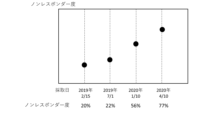
- the information providing unit 114 preferably outputs to the user terminal 2 the progress of the past non-responder degree determination results.
- FIG. 9 is a display example output to the user terminal 2.
- the non-responder rate numerically and graphically along with the sampling dates of past stool specimens, it is possible to clearly understand that the user is getting closer to becoming a responder. You can feel the effect of behavioral information.
- the past stool samples may include only those included in an arbitrary period specified by the user, or may include all those stored in the user information storage unit 124 .
- This modification is another modification in which the server 1 includes a non-responder degree determination unit.
- the server 1 includes a non-responder degree determination unit.
- functional substances that are likely to become responders based on the non-responder degree described above, among the functional substances that were non-responders.
- functional substances of the same kind may be grouped. From the viewpoint of grouping, for example, effects are common or similar (same effect of losing weight, common effect of improving bowel movement, common effect of improving immunity, etc.), biological or chemical (e.g.
- Bifidobacterium, Bulgaria bulgaricus, and Helveticus are included in the "lactic acid bacteria” group), and are in the same category when food is categorized appropriately (categories such as “grains” and “fruits” Categorization such as “staple food” and “dessert”), or that providers such as manufacturers and sellers who provide the functional substance are the same.
- the comparison unit 112 performs responder determination for multiple functional substances, and further determines the degree of non-responder when there are multiple functional substances that were non-responders. Then, the non-responder degree can be compared within the same group, and the functional substance with the highest non-responder degree (close to the responder) can be selected.
- the behavior selection unit 113 selects behavior based on the difference corresponding to the functional substance selected based on the non-responder degree.
- the user can receive behavioral information about the functional substances in the same group that are most likely to become responders. Also, the behavior selection unit 113 can select behavior information for all functional substances in the group, and the information providing unit 114 can provide the non-responder degree of each functional substance together with the behavior information. Using the non-responder degree as a guideline, the user can select a functional substance that has a high possibility of becoming a responder from the group.
- FIG. 10 is a screen display example of the user terminal in this modified example.
- the non-responder degree is determined for a plurality of lactic acid bacteria.
- the degree of non-responder is indicated by the degree of recommendation (the number of stars).
- action information for becoming a responder of lactic acid bacterium B is displayed. Note that the screen display example is not limited to this.
- the behavior selection unit 113 can select behavior information that is most effective for the user from among a plurality of pieces of behavior information based on the user's intestinal environment pattern.
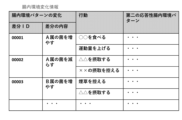
- the intestinal environment change information storage unit 123 further stores a second responsive intestinal environment pattern capable of obtaining an expected effect for each action.
- the intestinal environment pattern common to people who can (or are likely to obtain) the effect of "increase the number of bacteria of the genus A" by the behavior of "eating ⁇ " is defined as the "second responsive intestinal environment”. pattern”.
- the second responsive intestinal environment pattern as described above, the presence or absence of specific intestinal bacteria, the relative abundance ratio, the balance between intestinal bacteria, the presence or absence of metabolites derived from intestinal bacteria, the content , the balance between metabolites, and combinations thereof.
- the action selection unit 113 selects the second responsive bowel associated with the plurality of pieces of action information "Eat ⁇ " and "Increase the amount of exercise”. Read the internal environment pattern. Then, the intestinal environment pattern of the user and the second responsive intestinal environment pattern are compared. When the user's intestinal environment pattern matches the second responsive intestinal environment pattern of specific behavioral information, it can be determined that the user is likely to benefit from the behavioral information. On the other hand, if it does not match the second responsive intestinal environment pattern, it is judged that it is difficult to obtain the effect. Then, the action selection unit 113 can select action information determined to be likely to be effective based on the intestinal environment pattern from among the plurality of pieces of action information.
Landscapes
- Health & Medical Sciences (AREA)
- Engineering & Computer Science (AREA)
- Epidemiology (AREA)
- General Health & Medical Sciences (AREA)
- Medical Informatics (AREA)
- Primary Health Care (AREA)
- Public Health (AREA)
- Medical Treatment And Welfare Office Work (AREA)
Priority Applications (2)
| Application Number | Priority Date | Filing Date | Title |
|---|---|---|---|
| JP2023569356A JP7549407B2 (ja) | 2021-12-23 | 2022-12-15 | 情報提供システム |
| JP2024141889A JP2024152954A (ja) | 2021-12-23 | 2024-08-23 | 情報提供システム |
Applications Claiming Priority (2)
| Application Number | Priority Date | Filing Date | Title |
|---|---|---|---|
| JP2021-209739 | 2021-12-23 | ||
| JP2021209739 | 2021-12-23 |
Publications (1)
| Publication Number | Publication Date |
|---|---|
| WO2023120345A1 true WO2023120345A1 (ja) | 2023-06-29 |
Family
ID=86902486
Family Applications (1)
| Application Number | Title | Priority Date | Filing Date |
|---|---|---|---|
| PCT/JP2022/046121 Ceased WO2023120345A1 (ja) | 2021-12-23 | 2022-12-15 | 情報提供システム |
Country Status (2)
| Country | Link |
|---|---|
| JP (2) | JP7549407B2 (https=) |
| WO (1) | WO2023120345A1 (https=) |
Citations (6)
| Publication number | Priority date | Publication date | Assignee | Title |
|---|---|---|---|---|
| JP2017122603A (ja) * | 2016-01-05 | 2017-07-13 | 哲朗 高山 | 潰瘍性大腸炎の診断及び/又は予後予測のためのマッピング方法 |
| JP2018049645A (ja) * | 2015-08-12 | 2018-03-29 | ヤヱガキ醗酵技研株式会社 | 情報処理装置、情報処理方法、及びプログラム |
| JP2019515948A (ja) * | 2016-03-28 | 2019-06-13 | スーチョウ プラジュナ バイオテック カンパニー リミテッド | 抗がん腫瘍溶解性ウイルス併用療法および優良レスポンダー選択プラットフォーム |
| WO2019189408A1 (ja) * | 2018-03-29 | 2019-10-03 | 森永乳業株式会社 | プロバイオティクスを用いた肥満の治療、体脂肪減少用組成物、及びウエスト周囲径低減用組成物 |
| WO2020003733A1 (ja) * | 2018-06-29 | 2020-01-02 | 株式会社サイキンソー | 腸内細菌の検査法 |
| JP2021086556A (ja) * | 2019-11-29 | 2021-06-03 | 株式会社カネカ | 情報処理装置、情報処理方法、及びコンピュータプログラム |
Family Cites Families (1)
| Publication number | Priority date | Publication date | Assignee | Title |
|---|---|---|---|---|
| JP2020103220A (ja) * | 2018-12-28 | 2020-07-09 | 森永乳業株式会社 | プレバイオティクスのスクリーニング方法 |
-
2022
- 2022-12-15 JP JP2023569356A patent/JP7549407B2/ja active Active
- 2022-12-15 WO PCT/JP2022/046121 patent/WO2023120345A1/ja not_active Ceased
-
2024
- 2024-08-23 JP JP2024141889A patent/JP2024152954A/ja active Pending
Patent Citations (6)
| Publication number | Priority date | Publication date | Assignee | Title |
|---|---|---|---|---|
| JP2018049645A (ja) * | 2015-08-12 | 2018-03-29 | ヤヱガキ醗酵技研株式会社 | 情報処理装置、情報処理方法、及びプログラム |
| JP2017122603A (ja) * | 2016-01-05 | 2017-07-13 | 哲朗 高山 | 潰瘍性大腸炎の診断及び/又は予後予測のためのマッピング方法 |
| JP2019515948A (ja) * | 2016-03-28 | 2019-06-13 | スーチョウ プラジュナ バイオテック カンパニー リミテッド | 抗がん腫瘍溶解性ウイルス併用療法および優良レスポンダー選択プラットフォーム |
| WO2019189408A1 (ja) * | 2018-03-29 | 2019-10-03 | 森永乳業株式会社 | プロバイオティクスを用いた肥満の治療、体脂肪減少用組成物、及びウエスト周囲径低減用組成物 |
| WO2020003733A1 (ja) * | 2018-06-29 | 2020-01-02 | 株式会社サイキンソー | 腸内細菌の検査法 |
| JP2021086556A (ja) * | 2019-11-29 | 2021-06-03 | 株式会社カネカ | 情報処理装置、情報処理方法、及びコンピュータプログラム |
Also Published As
| Publication number | Publication date |
|---|---|
| JP7549407B2 (ja) | 2024-09-11 |
| JP2024152954A (ja) | 2024-10-25 |
| JPWO2023120345A1 (https=) | 2023-06-29 |
Similar Documents
| Publication | Publication Date | Title |
|---|---|---|
| Poole et al. | Human salivary amylase gene copy number impacts oral and gut microbiomes | |
| Carmody et al. | Cooking shapes the structure and function of the gut microbiome | |
| Griffin et al. | Prior dietary practices and connections to a human gut microbial metacommunity alter responses to diet interventions | |
| Vangay et al. | US immigration westernizes the human gut microbiome | |
| Deschasaux et al. | Depicting the composition of gut microbiota in a population with varied ethnic origins but shared geography | |
| Zeevi et al. | Personalized nutrition by prediction of glycemic responses | |
| David et al. | Diet rapidly and reproducibly alters the human gut microbiome | |
| Swann et al. | Considerations for the design and conduct of human gut microbiota intervention studies relating to foods | |
| Hall et al. | Environment-wide association study (EWAS) for type 2 diabetes in the Marshfield Personalized Medicine Research Project Biobank | |
| Sprockett et al. | Microbiota assembly, structure, and dynamics among Tsimane horticulturalists of the Bolivian Amazon | |
| Lee-Sarwar et al. | Fecal short-chain fatty acids in pregnancy and offspring asthma and allergic outcomes | |
| Deak et al. | Genome-wide investigation of maximum habitual alcohol intake in US veterans in relation to alcohol consumption traits and alcohol use disorder | |
| Playford et al. | Problematic dichotomization of risk for intensive care unit (ICU)–acquired invasive candidiasis: results using a risk-predictive model to categorize 3 levels of risk from a multicenter prospective cohort of Australian ICU patients | |
| US10150982B2 (en) | Microbial ecology shift assay | |
| Hollister et al. | Characterization of the stool microbiome in hispanic preschool children by weight status and time | |
| EP4120849A1 (en) | Microbiome fingerprints, dietary fingerprints, and microbiome ancestry, and methods of their use | |
| Lapidot et al. | Socioeconomic disparities and household crowding in association with the fecal microbiome of school-age children | |
| Tataru et al. | Topic modeling for multi-omic integration in the human gut microbiome and implications for Autism | |
| Min et al. | Health behavior profiles among midlife women: Identifying at-risk subgroups for metabolic syndrome using latent class analysis | |
| Shridhar et al. | Environmental, socioeconomic, and health factors associated with gut microbiome species and strains in isolated Honduras villages | |
| Pu et al. | The gut mycobiome signatures in long-lived populations | |
| Morandini et al. | Urbanization associates with restricted gut microbiome diversity and delayed maturation in infants | |
| Jonduo et al. | Gut microbiota composition in obese and non-obese adult relatives from the highlands of Papua New Guinea | |
| JP7549407B2 (ja) | 情報提供システム | |
| Magro et al. | Calprotectin and the magnitude of antibodies to infliximab in clinically-stable ulcerative colitis patients are more relevant than infliximab trough levels and pharmacokinetics for therapeutic escalation |
Legal Events
| Date | Code | Title | Description |
|---|---|---|---|
| 121 | Ep: the epo has been informed by wipo that ep was designated in this application |
Ref document number: 22911053 Country of ref document: EP Kind code of ref document: A1 |
|
| WWE | Wipo information: entry into national phase |
Ref document number: 2023569356 Country of ref document: JP |
|
| NENP | Non-entry into the national phase |
Ref country code: DE |
|
| 122 | Ep: pct application non-entry in european phase |
Ref document number: 22911053 Country of ref document: EP Kind code of ref document: A1 |