WO2023120331A1 - 抗がん薬の低酸素応答性プロドラッグと放射線治療の併用療法、並びに新規低酸素応答性プロドラッグ - Google Patents
抗がん薬の低酸素応答性プロドラッグと放射線治療の併用療法、並びに新規低酸素応答性プロドラッグ Download PDFInfo
- Publication number
- WO2023120331A1 WO2023120331A1 PCT/JP2022/046076 JP2022046076W WO2023120331A1 WO 2023120331 A1 WO2023120331 A1 WO 2023120331A1 JP 2022046076 W JP2022046076 W JP 2022046076W WO 2023120331 A1 WO2023120331 A1 WO 2023120331A1
- Authority
- WO
- WIPO (PCT)
- Prior art keywords
- derived
- structural formula
- formula
- amino group
- anticancer drug
- Prior art date
- Legal status (The legal status is an assumption and is not a legal conclusion. Google has not performed a legal analysis and makes no representation as to the accuracy of the status listed.)
- Ceased
Links
Images







Classifications
-
- A—HUMAN NECESSITIES
- A61—MEDICAL OR VETERINARY SCIENCE; HYGIENE
- A61K—PREPARATIONS FOR MEDICAL, DENTAL OR TOILETRY PURPOSES
- A61K31/00—Medicinal preparations containing organic active ingredients
- A61K31/33—Heterocyclic compounds
- A61K31/395—Heterocyclic compounds having nitrogen as a ring hetero atom, e.g. guanethidine or rifamycins
- A61K31/435—Heterocyclic compounds having nitrogen as a ring hetero atom, e.g. guanethidine or rifamycins having six-membered rings with one nitrogen as the only ring hetero atom
- A61K31/4353—Heterocyclic compounds having nitrogen as a ring hetero atom, e.g. guanethidine or rifamycins having six-membered rings with one nitrogen as the only ring hetero atom ortho- or peri-condensed with heterocyclic ring systems
- A61K31/437—Heterocyclic compounds having nitrogen as a ring hetero atom, e.g. guanethidine or rifamycins having six-membered rings with one nitrogen as the only ring hetero atom ortho- or peri-condensed with heterocyclic ring systems the heterocyclic ring system containing a five-membered ring having nitrogen as a ring hetero atom, e.g. indolizine, beta-carboline
-
- A—HUMAN NECESSITIES
- A61—MEDICAL OR VETERINARY SCIENCE; HYGIENE
- A61K—PREPARATIONS FOR MEDICAL, DENTAL OR TOILETRY PURPOSES
- A61K31/00—Medicinal preparations containing organic active ingredients
- A61K31/33—Heterocyclic compounds
- A61K31/395—Heterocyclic compounds having nitrogen as a ring hetero atom, e.g. guanethidine or rifamycins
- A61K31/435—Heterocyclic compounds having nitrogen as a ring hetero atom, e.g. guanethidine or rifamycins having six-membered rings with one nitrogen as the only ring hetero atom
- A61K31/44—Non condensed pyridines; Hydrogenated derivatives thereof
- A61K31/4406—Non condensed pyridines; Hydrogenated derivatives thereof only substituted in position 3, e.g. zimeldine
-
- A—HUMAN NECESSITIES
- A61—MEDICAL OR VETERINARY SCIENCE; HYGIENE
- A61K—PREPARATIONS FOR MEDICAL, DENTAL OR TOILETRY PURPOSES
- A61K31/00—Medicinal preparations containing organic active ingredients
- A61K31/33—Heterocyclic compounds
- A61K31/395—Heterocyclic compounds having nitrogen as a ring hetero atom, e.g. guanethidine or rifamycins
- A61K31/435—Heterocyclic compounds having nitrogen as a ring hetero atom, e.g. guanethidine or rifamycins having six-membered rings with one nitrogen as the only ring hetero atom
- A61K31/44—Non condensed pyridines; Hydrogenated derivatives thereof
- A61K31/4427—Non condensed pyridines; Hydrogenated derivatives thereof containing further heterocyclic ring systems
- A61K31/4439—Non condensed pyridines; Hydrogenated derivatives thereof containing further heterocyclic ring systems containing a five-membered ring with nitrogen as a ring hetero atom, e.g. omeprazole
-
- A—HUMAN NECESSITIES
- A61—MEDICAL OR VETERINARY SCIENCE; HYGIENE
- A61K—PREPARATIONS FOR MEDICAL, DENTAL OR TOILETRY PURPOSES
- A61K31/00—Medicinal preparations containing organic active ingredients
- A61K31/33—Heterocyclic compounds
- A61K31/395—Heterocyclic compounds having nitrogen as a ring hetero atom, e.g. guanethidine or rifamycins
- A61K31/435—Heterocyclic compounds having nitrogen as a ring hetero atom, e.g. guanethidine or rifamycins having six-membered rings with one nitrogen as the only ring hetero atom
- A61K31/44—Non condensed pyridines; Hydrogenated derivatives thereof
- A61K31/445—Non condensed piperidines, e.g. piperocaine
- A61K31/4523—Non condensed piperidines, e.g. piperocaine containing further heterocyclic ring systems
-
- A—HUMAN NECESSITIES
- A61—MEDICAL OR VETERINARY SCIENCE; HYGIENE
- A61K—PREPARATIONS FOR MEDICAL, DENTAL OR TOILETRY PURPOSES
- A61K31/00—Medicinal preparations containing organic active ingredients
- A61K31/33—Heterocyclic compounds
- A61K31/395—Heterocyclic compounds having nitrogen as a ring hetero atom, e.g. guanethidine or rifamycins
- A61K31/435—Heterocyclic compounds having nitrogen as a ring hetero atom, e.g. guanethidine or rifamycins having six-membered rings with one nitrogen as the only ring hetero atom
- A61K31/44—Non condensed pyridines; Hydrogenated derivatives thereof
- A61K31/445—Non condensed piperidines, e.g. piperocaine
- A61K31/4523—Non condensed piperidines, e.g. piperocaine containing further heterocyclic ring systems
- A61K31/454—Non condensed piperidines, e.g. piperocaine containing further heterocyclic ring systems containing a five-membered ring with nitrogen as a ring hetero atom, e.g. pimozide, domperidone
-
- A—HUMAN NECESSITIES
- A61—MEDICAL OR VETERINARY SCIENCE; HYGIENE
- A61K—PREPARATIONS FOR MEDICAL, DENTAL OR TOILETRY PURPOSES
- A61K31/00—Medicinal preparations containing organic active ingredients
- A61K31/33—Heterocyclic compounds
- A61K31/395—Heterocyclic compounds having nitrogen as a ring hetero atom, e.g. guanethidine or rifamycins
- A61K31/435—Heterocyclic compounds having nitrogen as a ring hetero atom, e.g. guanethidine or rifamycins having six-membered rings with one nitrogen as the only ring hetero atom
- A61K31/44—Non condensed pyridines; Hydrogenated derivatives thereof
- A61K31/445—Non condensed piperidines, e.g. piperocaine
- A61K31/4523—Non condensed piperidines, e.g. piperocaine containing further heterocyclic ring systems
- A61K31/4545—Non condensed piperidines, e.g. piperocaine containing further heterocyclic ring systems containing a six-membered ring with nitrogen as a ring hetero atom, e.g. pipamperone, anabasine
-
- A—HUMAN NECESSITIES
- A61—MEDICAL OR VETERINARY SCIENCE; HYGIENE
- A61K—PREPARATIONS FOR MEDICAL, DENTAL OR TOILETRY PURPOSES
- A61K31/00—Medicinal preparations containing organic active ingredients
- A61K31/33—Heterocyclic compounds
- A61K31/395—Heterocyclic compounds having nitrogen as a ring hetero atom, e.g. guanethidine or rifamycins
- A61K31/495—Heterocyclic compounds having nitrogen as a ring hetero atom, e.g. guanethidine or rifamycins having six-membered rings with two or more nitrogen atoms as the only ring heteroatoms, e.g. piperazine or tetrazines
- A61K31/505—Pyrimidines; Hydrogenated pyrimidines, e.g. trimethoprim
- A61K31/506—Pyrimidines; Hydrogenated pyrimidines, e.g. trimethoprim not condensed and containing further heterocyclic rings
-
- A—HUMAN NECESSITIES
- A61—MEDICAL OR VETERINARY SCIENCE; HYGIENE
- A61K—PREPARATIONS FOR MEDICAL, DENTAL OR TOILETRY PURPOSES
- A61K31/00—Medicinal preparations containing organic active ingredients
- A61K31/33—Heterocyclic compounds
- A61K31/395—Heterocyclic compounds having nitrogen as a ring hetero atom, e.g. guanethidine or rifamycins
- A61K31/495—Heterocyclic compounds having nitrogen as a ring hetero atom, e.g. guanethidine or rifamycins having six-membered rings with two or more nitrogen atoms as the only ring heteroatoms, e.g. piperazine or tetrazines
- A61K31/505—Pyrimidines; Hydrogenated pyrimidines, e.g. trimethoprim
- A61K31/513—Pyrimidines; Hydrogenated pyrimidines, e.g. trimethoprim having oxo groups directly attached to the heterocyclic ring, e.g. cytosine
-
- A—HUMAN NECESSITIES
- A61—MEDICAL OR VETERINARY SCIENCE; HYGIENE
- A61K—PREPARATIONS FOR MEDICAL, DENTAL OR TOILETRY PURPOSES
- A61K31/00—Medicinal preparations containing organic active ingredients
- A61K31/33—Heterocyclic compounds
- A61K31/395—Heterocyclic compounds having nitrogen as a ring hetero atom, e.g. guanethidine or rifamycins
- A61K31/495—Heterocyclic compounds having nitrogen as a ring hetero atom, e.g. guanethidine or rifamycins having six-membered rings with two or more nitrogen atoms as the only ring heteroatoms, e.g. piperazine or tetrazines
- A61K31/505—Pyrimidines; Hydrogenated pyrimidines, e.g. trimethoprim
- A61K31/519—Pyrimidines; Hydrogenated pyrimidines, e.g. trimethoprim ortho- or peri-condensed with heterocyclic rings
-
- A—HUMAN NECESSITIES
- A61—MEDICAL OR VETERINARY SCIENCE; HYGIENE
- A61K—PREPARATIONS FOR MEDICAL, DENTAL OR TOILETRY PURPOSES
- A61K31/00—Medicinal preparations containing organic active ingredients
- A61K31/70—Carbohydrates; Sugars; Derivatives thereof
- A61K31/7028—Compounds having saccharide radicals attached to non-saccharide compounds by glycosidic linkages
- A61K31/7034—Compounds having saccharide radicals attached to non-saccharide compounds by glycosidic linkages attached to a carbocyclic compound, e.g. phloridzin
- A61K31/704—Compounds having saccharide radicals attached to non-saccharide compounds by glycosidic linkages attached to a carbocyclic compound, e.g. phloridzin attached to a condensed carbocyclic ring system, e.g. sennosides, thiocolchicosides, escin, daunorubicin
-
- A—HUMAN NECESSITIES
- A61—MEDICAL OR VETERINARY SCIENCE; HYGIENE
- A61K—PREPARATIONS FOR MEDICAL, DENTAL OR TOILETRY PURPOSES
- A61K31/00—Medicinal preparations containing organic active ingredients
- A61K31/70—Carbohydrates; Sugars; Derivatives thereof
- A61K31/7042—Compounds having saccharide radicals and heterocyclic rings
- A61K31/7052—Compounds having saccharide radicals and heterocyclic rings having nitrogen as a ring hetero atom, e.g. nucleosides, nucleotides
- A61K31/706—Compounds having saccharide radicals and heterocyclic rings having nitrogen as a ring hetero atom, e.g. nucleosides, nucleotides containing six-membered rings with nitrogen as a ring hetero atom
- A61K31/7064—Compounds having saccharide radicals and heterocyclic rings having nitrogen as a ring hetero atom, e.g. nucleosides, nucleotides containing six-membered rings with nitrogen as a ring hetero atom containing condensed or non-condensed pyrimidines
- A61K31/7068—Compounds having saccharide radicals and heterocyclic rings having nitrogen as a ring hetero atom, e.g. nucleosides, nucleotides containing six-membered rings with nitrogen as a ring hetero atom containing condensed or non-condensed pyrimidines having oxo groups directly attached to the pyrimidine ring, e.g. cytidine, cytidylic acid
-
- A—HUMAN NECESSITIES
- A61—MEDICAL OR VETERINARY SCIENCE; HYGIENE
- A61K—PREPARATIONS FOR MEDICAL, DENTAL OR TOILETRY PURPOSES
- A61K41/00—Medicinal preparations obtained by treating materials with wave energy or particle radiation ; Therapies using these preparations
- A61K41/0038—Radiosensitizing, i.e. administration of pharmaceutical agents that enhance the effect of radiotherapy
-
- A—HUMAN NECESSITIES
- A61—MEDICAL OR VETERINARY SCIENCE; HYGIENE
- A61K—PREPARATIONS FOR MEDICAL, DENTAL OR TOILETRY PURPOSES
- A61K47/00—Medicinal preparations characterised by the non-active ingredients used, e.g. carriers or inert additives; Targeting or modifying agents chemically bound to the active ingredient
- A61K47/50—Medicinal preparations characterised by the non-active ingredients used, e.g. carriers or inert additives; Targeting or modifying agents chemically bound to the active ingredient the non-active ingredient being chemically bound to the active ingredient, e.g. polymer-drug conjugates
- A61K47/51—Medicinal preparations characterised by the non-active ingredients used, e.g. carriers or inert additives; Targeting or modifying agents chemically bound to the active ingredient the non-active ingredient being chemically bound to the active ingredient, e.g. polymer-drug conjugates the non-active ingredient being a modifying agent
- A61K47/54—Medicinal preparations characterised by the non-active ingredients used, e.g. carriers or inert additives; Targeting or modifying agents chemically bound to the active ingredient the non-active ingredient being chemically bound to the active ingredient, e.g. polymer-drug conjugates the non-active ingredient being a modifying agent the modifying agent being an organic compound
- A61K47/545—Heterocyclic compounds
-
- A—HUMAN NECESSITIES
- A61—MEDICAL OR VETERINARY SCIENCE; HYGIENE
- A61N—ELECTROTHERAPY; MAGNETOTHERAPY; RADIATION THERAPY; ULTRASOUND THERAPY
- A61N5/00—Radiation therapy
- A61N5/10—X-ray therapy; Gamma-ray therapy; Particle-irradiation therapy
-
- A—HUMAN NECESSITIES
- A61—MEDICAL OR VETERINARY SCIENCE; HYGIENE
- A61P—SPECIFIC THERAPEUTIC ACTIVITY OF CHEMICAL COMPOUNDS OR MEDICINAL PREPARATIONS
- A61P35/00—Antineoplastic agents
-
- A—HUMAN NECESSITIES
- A61—MEDICAL OR VETERINARY SCIENCE; HYGIENE
- A61P—SPECIFIC THERAPEUTIC ACTIVITY OF CHEMICAL COMPOUNDS OR MEDICINAL PREPARATIONS
- A61P43/00—Drugs for specific purposes, not provided for in groups A61P1/00-A61P41/00
-
- C—CHEMISTRY; METALLURGY
- C07—ORGANIC CHEMISTRY
- C07D—HETEROCYCLIC COMPOUNDS
- C07D401/00—Heterocyclic compounds containing two or more hetero rings, having nitrogen atoms as the only ring hetero atoms, at least one ring being a six-membered ring with only one nitrogen atom
- C07D401/02—Heterocyclic compounds containing two or more hetero rings, having nitrogen atoms as the only ring hetero atoms, at least one ring being a six-membered ring with only one nitrogen atom containing two hetero rings
- C07D401/12—Heterocyclic compounds containing two or more hetero rings, having nitrogen atoms as the only ring hetero atoms, at least one ring being a six-membered ring with only one nitrogen atom containing two hetero rings linked by a chain containing hetero atoms as chain links
-
- C—CHEMISTRY; METALLURGY
- C07—ORGANIC CHEMISTRY
- C07D—HETEROCYCLIC COMPOUNDS
- C07D401/00—Heterocyclic compounds containing two or more hetero rings, having nitrogen atoms as the only ring hetero atoms, at least one ring being a six-membered ring with only one nitrogen atom
- C07D401/14—Heterocyclic compounds containing two or more hetero rings, having nitrogen atoms as the only ring hetero atoms, at least one ring being a six-membered ring with only one nitrogen atom containing three or more hetero rings
-
- C—CHEMISTRY; METALLURGY
- C07—ORGANIC CHEMISTRY
- C07D—HETEROCYCLIC COMPOUNDS
- C07D417/00—Heterocyclic compounds containing two or more hetero rings, at least one ring having nitrogen and sulfur atoms as the only ring hetero atoms, not provided for by group C07D415/00
- C07D417/14—Heterocyclic compounds containing two or more hetero rings, at least one ring having nitrogen and sulfur atoms as the only ring hetero atoms, not provided for by group C07D415/00 containing three or more hetero rings
-
- C—CHEMISTRY; METALLURGY
- C07—ORGANIC CHEMISTRY
- C07D—HETEROCYCLIC COMPOUNDS
- C07D471/00—Heterocyclic compounds containing nitrogen atoms as the only ring hetero atoms in the condensed system, at least one ring being a six-membered ring with one nitrogen atom, not provided for by groups C07D451/00 - C07D463/00
- C07D471/02—Heterocyclic compounds containing nitrogen atoms as the only ring hetero atoms in the condensed system, at least one ring being a six-membered ring with one nitrogen atom, not provided for by groups C07D451/00 - C07D463/00 in which the condensed system contains two hetero rings
- C07D471/04—Ortho-condensed systems
-
- C—CHEMISTRY; METALLURGY
- C07—ORGANIC CHEMISTRY
- C07D—HETEROCYCLIC COMPOUNDS
- C07D487/00—Heterocyclic compounds containing nitrogen atoms as the only ring hetero atoms in the condensed system, not provided for by groups C07D451/00 - C07D477/00
- C07D487/02—Heterocyclic compounds containing nitrogen atoms as the only ring hetero atoms in the condensed system, not provided for by groups C07D451/00 - C07D477/00 in which the condensed system contains two hetero rings
- C07D487/04—Ortho-condensed systems
-
- A—HUMAN NECESSITIES
- A61—MEDICAL OR VETERINARY SCIENCE; HYGIENE
- A61N—ELECTROTHERAPY; MAGNETOTHERAPY; RADIATION THERAPY; ULTRASOUND THERAPY
- A61N5/00—Radiation therapy
- A61N5/10—X-ray therapy; Gamma-ray therapy; Particle-irradiation therapy
- A61N2005/1092—Details
- A61N2005/1098—Enhancing the effect of the particle by an injected agent or implanted device
Definitions
- the present invention relates to a formulation containing a hypoxia-responsive prodrug as an active ingredient, for improving or enhancing the effect of radiotherapy in combination therapy of an anticancer drug and radiotherapy, more specifically the hypoxic A responsive prodrug forms an amide or imide with 2-nitro-1-imidazolepropionic acid via an amino group (-NH 2 ) or imino group (-NH-) in the anticancer drug molecule
- said formulations which are compounds with covalently bound structures, as well as novel hypoxia-responsive prodrugs among said compounds.
- Non-Patent Document 1 As a prodrug as described above, for example, nitroimidazole-based TH-302 (evofosafamide) has been proposed and its combination therapy with radiation therapy has been studied, but as far as the present inventors know, it has not reached clinical use. Similar nitroimidazole compounds such as pimonidazole, etanidazole, and nimorazole have also been proposed as such sensitizers, but their survival rates are statistically lower than those of conventional radiotherapy alone. No statistically significant improvement was achieved by any of the compounds, and the combination of these compounds with radiotherapy has either failed to show significant benefit or has been so toxic that it has not been used clinically.
- nitroimidazole-based TH-302 evofosafamide
- Similar nitroimidazole compounds such as pimonidazole, etanidazole, and nimorazole have also been proposed as such sensitizers, but their survival rates are statistically lower than those of conventional radio
- cancer can be treated by administration of TH-302 alone or in combination with other anticancer agents and/or radiation therapy (no specific treatment for combination with therapy). No related data was disclosed, and the results of subsequent clinical trials, etc., were disappointing as described in Non-Patent Document 1.
- Non-Patent Document 1 the nitroimidazole-based prodrugs described therein did not necessarily show satisfactory effects in combination therapy with radiation therapy that we performed. Nonetheless, we investigated whether gemcitabine's PropHAP has merit in combination therapy with radiotherapy.
- gemcitabine's PropHAP was not effective against experimental animals, and the parent compound produced side effects such as weight loss in test animals. It was confirmed that, at an irradiation dose of , it showed almost the same therapeutic effect as the parent compound, but did not cause a significant reduction in body weight. This is the case even when the dose of the drug is increased.
- the combined use of radiation therapy and drug therapy is Significantly superior anti-cancer effects are achieved compared to radiation monotherapy, parent compound monotherapy, and parent compound and radiotherapy combination. Such effects were also seen with the prophaps of palbociclib, niraparib, ribociclib and doxorubicin, which differ from those of gemcitabine in their chemical structure and mechanism of action on tumors.
- Aspect 1 In combination therapy of radiotherapy and drug therapy for malignant tumors containing a compound represented by formula I as an active ingredient, for improving or enhancing the therapeutic effect of combination therapy including the radiotherapy Or a pharmaceutical formulation for use in improving or enhancing.
- the portion where R1 and R2 are bonded to the N atom is a portion obtained by removing the amino group or imino group from an anticancer drug having an amino group or imino group, and when having an amino group, either R1 or R2 is Anthracyclines, wherein the anticancer drug representing a hydrogen atom and having a moiety in which R1 and R2 are bound to the N atom is selected from doxorubicin, idarubicin, epirubicin, daunorubicin, pirarubicin, amrubicin, aclacinomycin, anthramycin, and zorubicin.
- bleomycin, and actinomycin selected from ribociclib.
- quinoline alkaloids selected from camptothecin, topotecan, and irinotecan
- taxanes selected from docetaxel and paclitaxel
- vinca alkaloids selected from vinorelbine, vincristine, vinblastine, and vindesine
- deoxycytidines selected from cytarabine, pyrimidines selected from 5-fluorouracil, capecitabine, and doxifluridine, purine ring derivatives selected from fludarabine, 6-mercaptopurine, and 6-thioguanine
- macrolides selected from epothilones, niraparib , crizotinib, dabrafenib, vemurafenib, entinostat, panobinostat, cobimetinib, barbociclib, other anticancer agents selected from ribociclib.
- Aspect 2 The pharmaceutical formulation according to Aspect 1, wherein the compound represented by Formula I is derived from each of the following anticancer drugs and represented by each of the following structural formulas.
- crizotinib It is derived from crizotinib and has the structural formula:
- Aspect 3 Medical therapy and radiation for malignant tumors, comprising administering an effective dose of a compound of formula I to a patient or individual in need of treatment for malignant tumors and administering an effective dose of radiation. Combination therapies.
- Formula I During the ceremony, The portion where R1 and R2 are bonded to the N atom is a portion obtained by removing the amino group or imino group from an anticancer drug having an amino group or imino group, and when having an amino group, either R1 or R2 is Anthracyclines, wherein the anticancer drug representing a hydrogen atom and having a moiety in which R1 and R2 are bound to the N atom is selected from doxorubicin, idarubicin, epirubicin, daunorubicin, pirarubicin, amrubicin, aclacinomycin, anthramycin, and zorubicin.
- bleomycin, and actinomycin selected from ribociclib.
- quinoline alkaloids selected from camptothecin, topotecan, and irinotecan
- taxanes selected from docetaxel and paclitaxel
- vinca alkaloids selected from vinorelbine, vincristine, vinblastine, and vindesine
- deoxycytidines selected from cytarabine, pyrimidines selected from 5-fluorouracil, capecitabine, and doxifluridine, purine ring derivatives selected from fludarabine, 6-mercaptopurine, and 6-thioguanine
- macrolides selected from epothilones, niraparib , crizotinib, dabrafenib, vemurafenib, entinostat, panobinostat, cobimetinib, barbociclib, other anticancer agents selected from ribociclib.
- Aspect 4 The combination therapy according to Aspect 3, wherein the compound represented by Formula I is derived from each of the following anticancer drugs and represented by each of the following structural formulas. It is derived from gemcitabine and has the structural formula: , It is derived from doxorubicin and has the structural formula: , It is derived from 5-fluorouracil and has the structural formula: Either It is derived from niraparib and has the structural formula: , It is derived from crizotinib and has the structural formula: Either It is derived from dabrafenib and has the structural formula: , It is derived from vemurafenib and has the structural formula: , It is derived from entinostat and has the structural formula: , It is derived from cobimetinib and has the structural formula: , It is derived from barbociclib and has the structural formula: , or is derived from ribociclib and has the structural formula: .
- Aspect 5 A compound represented by Formula I-1 or a pharmaceutically acceptable salt thereof.
- the portion where R1 and R2 are bonded to the N atom is a portion obtained by removing the amino group or imino group from an anticancer drug having an amino group or imino group, and when having an amino group, either R1 or R2 is Compounds each representing a hydrogen atom, derived from an anticancer drug selected from the group consisting of niraparib, crizotinib, tabrafenib, vemurafenib, entinostat, cobimetinib, barbocyclyl, and ribociclib, and represented by the following structural formulas: : It is derived from niraparib and has the structural formula:
- crizotinib It is derived from crizotinib and has the structural formula:
- a method for providing a hypoxia-responsive prodrug for improving or enhancing the therapeutic effect of a combination therapy including radiation therapy in combination therapy of radiation therapy and drug therapy for malignant tumors comprising: (1) an anticancer drug via an amino group (NH 2 ) or an imino group (-NH-) in the molecule of formula II:
- a method comprising the step of selecting said prodrug with significantly higher therapeutic efficacy.
- FIG. 1 is a graphical representation of the results of (b) in vitro test 1 of Example 1.
- FIG. FIG. 2 is a graphical representation of the results of (c) in vitro test 2 of Example 1.
- FIG. FIG. 4 is a graphical representation of the results of the (d) in vivo test of Example 1.
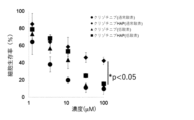
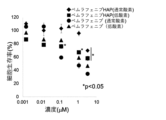
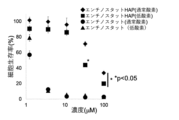
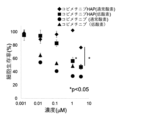
- FIG. 4 is a graphical representation of the results of the (b) in vitro test of Example 2.
- FIG. 3 is a graphical representation of the results of the (b) in vitro test of Example 3.
- FIG. FIG. 4 is a graphical representation of the results of the (b) in vitro test of Example 4.
- FIG. FIG. 5 is a graphical representation of the results of the (b) in vitro test of Example 5.
- FIG. 6 is a graphical representation of the results of the (b) in vitro test of Example 6.
- FIG. 11 is a graphical representation of the results of the (b) in vitro test of Example 7.
- FIG. 11 is a graphical representation of the results of the (c) in vivo test of Example 7.
- FIG. 10 is a graphical representation of the results of (b) in vitro and (c) in vivo testing of Example 8.
- FIG. 10 is a graphical representation of the results of in vivo test 1 of Example 9.
- FIG. 10 is a graphical representation of the results of in vivo study 2 of Example 9.
- FIG. 10 is a graphical representation of the results of in vivo test 2 (Part 2) of Example 9.
- FIG. 10 is a graphical representation of the results of in vivo study 3 of Example 9.
- FIG. 10 is a graphical representation of the results of in vivo testing of Example 10.
- FIG. 10 is a graphical representation of the results of in vivo testing of Example
- the radiation used in the "radiotherapy method" of the present invention is that used in general radiation therapy in a broad sense, and is not limited to, for example, X-rays, gamma ( ⁇ ) rays, alpha ( ⁇ ) ray, beta ( ⁇ ) ray, proton beam, and heavy particle (carbon ion) beam, and the irradiation mode of radiation can be any mode already used in the art.
- the patient or individual (which can be a mammal, including a human) is generally administered a compound of Formula I from about 30 minutes to about 48 hours after administration. , typically from about 1 hour to about 24 hours.
- Irradiation should involve external irradiation, in which radiation is delivered from outside the body of the patient or subject, and internal irradiation, in which radiation is delivered to the cancer or its surroundings from sources embedded within the body, or a combination of both. can be done.
- malignant tumors that can be treated or treated by such administration and irradiation are or may be the subject of radiotherapy and drug regimens or chemoradiation therapy now or in the future, e.g., head and neck cancer, It can be cervical cancer, esophageal cancer, lung cancer, pancreatic cancer, breast cancer, soft tissue sarcoma, and other tumors that are expected to have a desired effect by treatment with the therapy.
- the mode of administration of the compound represented by Formula I can be oral administration or parenteral administration, and specifically, is appropriately determined with reference to the administration mode commonly used clinically for the parent compound. be able to.
- “Improve or enhance the effect of combination therapy including radiation therapy” means that in combination therapy of radiation therapy and an anticancer drug (in vivo), the parent compound of the compound represented by Formula I (Formula I), the parent compound of the compound represented by Formula I (Formula I) (Formula I An anticancer drug having a moiety in which R1 and R2 are bound to the N atom in the compound represented by or a compound that is a starting material for the compound) is administered to an experimental animal bearing a malignant tumor, and radiotherapy is performed Nausea, vomiting, neuropathy, etc., or weight loss, etc., which may result from these manifestations in the animal when vaccinated, is statistically significantly reduced when the parent compound is replaced by a compound of Formula I.
- the therapeutic effect is at least the same, or at least shows a statistically significantly enhanced effect compared to radiotherapy alone.
- Statistically significantly reduced or significantly enhanced means that when the data obtained from the test results of 5 or more groups of subjects (including test individuals) are statistically processed by t-test, It is to reduce or enhance with a significant difference.
- “Pharmaceutical formulation” is a formulation that can be used in the technical field of medicine, is a concept interchangeable with pharmaceutical composition, and in addition to the compound of formula I as an active ingredient, Diluents, carriers, excipients, etc. that are generally safe, non-toxic, and do not adversely affect the properties of the compounds that can be used include, but are not limited to, sterile Water, nonionic surfactants, ethanol, glycerol and mixtures thereof, and other compounds or mixtures that have been used as diluents, carriers, excipients for individual drug substances can be mentioned.
- Pharmaceutically acceptable salts of the compounds described in aspect 5 can be acid addition salts of mineral acids such as hydrochloric acid, sulfuric acid, organic acids such as formic acid, acetic acid, citric acid, methanesulfonic acid, etc.
- mineral acids such as hydrochloric acid, sulfuric acid, organic acids such as formic acid, acetic acid, citric acid, methanesulfonic acid, etc.
- the compound when it has an acidic group such as a carboxyl group or a hydroxyl group, it can be an addition salt of an alkali metal such as sodium or potassium, or an organic amine such as ammonium or methylamine.
- Compounds of formula I as described in aspect 1 or hypoxia-responsive prodrugs as described in aspect 6 can be converted to amides by reaction of the corresponding or common anticancer drug with imidazole propionic acid of formula II. It can be produced by forming a bond or an imide bond. Such reactions may be carried out by reacting the anticancer drug with a compound of formula II in a suitable inert solvent in the presence of condensing agents (e.g. carbodiimides) known per se in the art, or Active esters of compounds of Formula II (halides, esters with N-hydroxysuccinimide, etc.) may be reacted with compounds of Formula I in a suitable solvent.
- condensing agents e.g. carbodiimides
- Active esters of compounds of Formula II halides, esters with N-hydroxysuccinimide, etc.
- reaction when an amino group or a cyclic amino group and a hydroxyl group coexist in the molecule of the organic compound, any group may be protected by a method known in the art, followed by the above reaction. Either reaction may be performed.
- PropHAPs of gemcitabine, doxirubicin, and 5-fluorouracil those described in the patent publication can be used as they are. By quoting, the content of the description becomes the content of this specification as it is.
- the effective irradiation dose of radiation and the effective dose of the compound represented by Formula I cannot be specified because the optimum dose varies depending on the type of malignant tumor to be treated, the degree of severity, and the type of compound used, but in general , the irradiation dose, dosage regimen, and dosage when using the corresponding parent compound that has been specifically considered for the combination therapy, can be referred to, for example, materials available from the US Food and Drug Administration, pharmaceuticals It can be determined by a medical professional in light of data such as those discussed in the literature.
- EML-ALK mutant human non-small cell lung cancer EML4-ALK fusion-A549 (ATCC model number CCL-185IG) was seeded in a 96-well plate at a density of 3000 cells / well, and the resulting crizotinib or crizotinib Cell viability after adding HAP (mixture of 5 and 6) and incubating at normal oxygen concentration and hypoxia concentration (0.2%) for 1 day, then changing the medium and culturing under the same conditions for 2 more days observed about. The results are shown in FIG. It can be confirmed from FIG. 4 that the cytotoxicity is recovered under hypoxia.
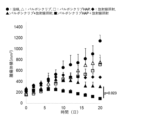
- mice In vivo test Balb/c nude mice (6 mice per group) were subcutaneously transplanted with human pancreatic cancer cells (MIA Paca-2), and orally administered palbociclib or palbociclib HAP (100 mg/kg, twice/week ), and the synergistic effect with radiotherapy (2 Gy, 2 times/week on the day after pharmaceutical administration) was analyzed. The results are shown in FIG. From FIG. 10, it can be confirmed that the prodrug-administered group has an enhanced tumor growth inhibitory effect when radiation is used in combination, as compared to radiation monotherapy and the combined use of the drug substance palbociclib and radiation.
- MIA Paca-2 human pancreatic cancer cells
- palbociclib or palbociclib HAP 100 mg/kg, twice/week
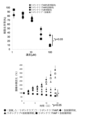
- mice In vivo test Balb/c nude mice (6 mice per group) were subcutaneously transplanted with 17 ⁇ -estradiol sustained-release pellets (manufactured by Innovative Research of America) and human breast cancer cells (MCF7), and orally given ribociclib or ribociclib HAP. It was administered (75 mg/kg, 2 times/week), and the synergistic effect with radiotherapy (1 Gy, 2 times/week on the day after pharmaceutical administration) was analyzed. The results are shown in the lower part of FIG. From this figure, it can be confirmed that the tumor growth inhibitory effect is enhanced in the prodrug-administered group when radiation is used in combination, as compared with radiation alone and radiation combined with ribociclib, which is the drug substance.
- Example 9 Gemcitabine HAP In vivo test 1: Human pancreatic cancer cells (MIA Paca-2) were subcutaneously transplanted into Balb/c nude mice (6 or 7 mice per group), respectively, and gemcitabine or gemcitabine HAP (Patent No. 5676020) was used. ) was intraperitoneally administered (120 mg/kg, twice/week), and the synergistic effect of combination therapy with radiotherapy (the day after drug administration, 2 Gy, twice/week) was analyzed. The results are shown in FIG. It can be confirmed from FIG. 12 that the tumor growth inhibitory effect is enhanced in the drug-administered group as compared with the radiotherapy alone.
- MIA Paca-2 Human pancreatic cancer cells
- the gemcitabine-HAP-administered group showed no weight loss, and the survival rate was also improved.
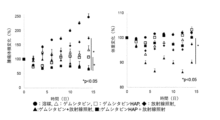
- In vivo test 2 Human pancreatic cancer cells (MIA Paca-2) were subcutaneously transplanted to Balb/c nude mice (6 mice per group), and gemcitabine or gemcitabine HAP was intraperitoneally administered (10 mg/kg, twice/week), followed by irradiation. The synergistic effect of combination therapy with treatment (one day after drug administration, 1 Gy, twice/week) was analyzed. The results are shown in FIG. From FIG.
- the gemcitabine HAP-administered group has an enhanced tumor growth inhibitory effect when radiation is used in combination, as compared with radiation alone and radiation combined with gemcitabine, which is the drug substance. It can be confirmed that when the dose is reduced to 10 mg/kg, it is more effective than gemcitabine when used in combination with radiation.
- In vivo test 2 (part 2): Human cancer cells (MIA Paca-2) were subcutaneously implanted in Balb/c nude mice (7 mice per group), and 2-nitroimidazole (10 mg/kg, twice/week), 2-nitroimidazole and gemcitabine were administered, respectively.
- FIG. Figure 14 shows that compared with radiotherapy alone, radiosensitizer 2-nitroimidazole, drug substance gemcitabine, and 2-nitroimidazole combined with radiation, the gemcitabine HAP-administered group showed tumor growth when combined with radiation. It can be confirmed that the growth inhibitory effect is enhanced.
- In vivo test 3 Human cholangiocarcinoma cells (HuCCT1) were subcutaneously implanted in Balb/c nude mice (5 mice per group), and gemcitabine or gemcitabine HAP was intraperitoneally administered (30 mg). /kg, 2 times/week), and the synergistic effect of combination therapy with radiotherapy (2 Gy, 2 times/week on the day after administration of pharmaceuticals) was analyzed. The results are shown in FIG. It can be confirmed from FIG. 15 that the tumor growth inhibitory effect is enhanced in the drug-administered group as compared with the radiotherapy alone. In addition, body weight loss was not observed in the gemcitabine HAP-administered group as compared with the gemcitabine-administered group.
- Example 10 Doxorubicin HAP Balb / c nude mice (6 or more per group) were subcutaneously transplanted with 17 ⁇ -estradiol sustained release pellets (Innovative Research of America) and human breast cancer cells (MCF7), and doxorubicin (4 mg / kg, Day 0, 2) or Doxorubicin HAP (4 mg/kg, or 16 mg/kg, Days 0, 2, 7, 9) was intraperitoneally administered, and the synergistic effect with radiotherapy (0.5 Gy, Days 1, 3, 8, 10) was analyzed. The results are shown in the lower part of FIG.
- the tumor growth inhibitory effect is enhanced in the prodrug-administered group when the radiation is used in combination, compared with the radiation alone and the combination of the drug substance doxorubicin and radiation.
- body weight loss was not observed in the doxorubicin-HAP-administered group as compared with the doxorubicin-administered group.
Landscapes
- Health & Medical Sciences (AREA)
- Chemical & Material Sciences (AREA)
- Organic Chemistry (AREA)
- Life Sciences & Earth Sciences (AREA)
- General Health & Medical Sciences (AREA)
- Veterinary Medicine (AREA)
- Public Health (AREA)
- Animal Behavior & Ethology (AREA)
- Pharmacology & Pharmacy (AREA)
- Medicinal Chemistry (AREA)
- Epidemiology (AREA)
- Molecular Biology (AREA)
- Nuclear Medicine, Radiotherapy & Molecular Imaging (AREA)
- Engineering & Computer Science (AREA)
- Chemical Kinetics & Catalysis (AREA)
- General Chemical & Material Sciences (AREA)
- Biomedical Technology (AREA)
- Bioinformatics & Cheminformatics (AREA)
- Pathology (AREA)
- Radiology & Medical Imaging (AREA)
- Pharmaceuticals Containing Other Organic And Inorganic Compounds (AREA)
Priority Applications (5)
| Application Number | Priority Date | Filing Date | Title |
|---|---|---|---|
| CA3240954A CA3240954A1 (en) | 2021-12-21 | 2022-12-14 | Combination therapy of hypoxia-responsive prodrug of an anticancer drug and radiotherapy,and novel hypoxia-responsive prodrug |
| EP22911039.0A EP4454646A4 (en) | 2021-12-21 | 2022-12-14 | Combination therapy with radiation therapy and a hypoxia-responsive prodrug of an anticancer agent, as well as a novel hypoxia-responsive prodrug. |
| CN202280085171.1A CN118475349A (zh) | 2021-12-21 | 2022-12-14 | 抗癌药的低氧响应性前药与放射治疗的联合疗法、以及新型低氧响应性前药 |
| US18/718,920 US20240424011A1 (en) | 2021-12-21 | 2022-12-14 | Combination therapy of hypoxia-responsive prodrug of an anticancer drug and radiotherapy, and novel hypoxia-responsive prodrug |
| JP2023569350A JPWO2023120331A1 (enExample) | 2021-12-21 | 2022-12-14 |
Applications Claiming Priority (2)
| Application Number | Priority Date | Filing Date | Title |
|---|---|---|---|
| JP2021-207215 | 2021-12-21 | ||
| JP2021207215 | 2021-12-21 |
Publications (1)
| Publication Number | Publication Date |
|---|---|
| WO2023120331A1 true WO2023120331A1 (ja) | 2023-06-29 |
Family
ID=86902538
Family Applications (1)
| Application Number | Title | Priority Date | Filing Date |
|---|---|---|---|
| PCT/JP2022/046076 Ceased WO2023120331A1 (ja) | 2021-12-21 | 2022-12-14 | 抗がん薬の低酸素応答性プロドラッグと放射線治療の併用療法、並びに新規低酸素応答性プロドラッグ |
Country Status (6)
| Country | Link |
|---|---|
| US (1) | US20240424011A1 (enExample) |
| EP (1) | EP4454646A4 (enExample) |
| JP (1) | JPWO2023120331A1 (enExample) |
| CN (1) | CN118475349A (enExample) |
| CA (1) | CA3240954A1 (enExample) |
| WO (1) | WO2023120331A1 (enExample) |
Cited By (1)
| Publication number | Priority date | Publication date | Assignee | Title |
|---|---|---|---|---|
| US12115154B2 (en) | 2020-12-16 | 2024-10-15 | Srx Cardio, Llc | Compounds for the modulation of proprotein convertase subtilisin/kexin type 9 (PCSK9) |
Citations (4)
| Publication number | Priority date | Publication date | Assignee | Title |
|---|---|---|---|---|
| JPH07101860A (ja) * | 1993-09-30 | 1995-04-18 | Taiho Yakuhin Kogyo Kk | 抗悪性腫瘍剤 |
| WO2013122112A1 (ja) * | 2012-02-13 | 2013-08-22 | 国立大学法人筑波大学 | ニトロイミダゾールを用いたプロドラッグ |
| JP2016017059A (ja) * | 2014-07-10 | 2016-02-01 | 国立大学法人 筑波大学 | 抗腫瘍性プロドラッグを含む組成物 |
| CN110755628A (zh) * | 2019-11-13 | 2020-02-07 | 华南协同创新研究院 | 一种乏氧响应性壳聚糖药物载体及其制备方法与应用 |
Family Cites Families (2)
| Publication number | Priority date | Publication date | Assignee | Title |
|---|---|---|---|---|
| ZA200507752B (en) * | 2003-03-28 | 2007-01-31 | Threshold Pharmaceuticals Inc | Compositions and methods for treating cancer |
| US7842278B2 (en) * | 2006-10-27 | 2010-11-30 | Natural Pharmacia International, Inc. | Hypoxia-selective, weakly basic 2-nitroimidazole delivery agents and methods of use thereof |
-
2022
- 2022-12-14 JP JP2023569350A patent/JPWO2023120331A1/ja active Pending
- 2022-12-14 EP EP22911039.0A patent/EP4454646A4/en active Pending
- 2022-12-14 WO PCT/JP2022/046076 patent/WO2023120331A1/ja not_active Ceased
- 2022-12-14 CN CN202280085171.1A patent/CN118475349A/zh active Pending
- 2022-12-14 US US18/718,920 patent/US20240424011A1/en active Pending
- 2022-12-14 CA CA3240954A patent/CA3240954A1/en active Pending
Patent Citations (5)
| Publication number | Priority date | Publication date | Assignee | Title |
|---|---|---|---|---|
| JPH07101860A (ja) * | 1993-09-30 | 1995-04-18 | Taiho Yakuhin Kogyo Kk | 抗悪性腫瘍剤 |
| WO2013122112A1 (ja) * | 2012-02-13 | 2013-08-22 | 国立大学法人筑波大学 | ニトロイミダゾールを用いたプロドラッグ |
| JP5676020B2 (ja) | 2012-02-13 | 2015-02-25 | 国立大学法人 筑波大学 | ニトロイミダゾールを用いたプロドラッグ |
| JP2016017059A (ja) * | 2014-07-10 | 2016-02-01 | 国立大学法人 筑波大学 | 抗腫瘍性プロドラッグを含む組成物 |
| CN110755628A (zh) * | 2019-11-13 | 2020-02-07 | 华南协同创新研究院 | 一种乏氧响应性壳聚糖药物载体及其制备方法与应用 |
Non-Patent Citations (4)
| Title |
|---|
| HAY M P, LEE H H, WILSON W R, ROBERTS P B, DENNY W A.: "Hypoxia-selective antitumor agents. 10. Bis(nitroimidazoles) and related bis(nitroheterocycles): Development of derivatives with higher rates of metabolic activation under hypoxia and improved aqueous solubility", JOURNAL OF MEDICINAL CHEMISTRY, AMERICAN CHEMICAL SOCIETY, US, vol. 38, no. 11, 1 May 1995 (1995-05-01), US , pages 1928 - 1941, XP002686339, ISSN: 0022-2623, DOI: 10.1021/jm00011a013 * |
| I. N. MISTRY, INT J RADIATION ONCOL BIO PHYS, vol. 98, no. 5, 2017, pages 1183 - 1196 |
| IKEDA YUTAKA, HISANO HIKARU, NISHIKAWA YUJI, NAGASAKI YUKIO: "Targeting and Treatment of Tumor Hypoxia by Newly Designed Prodrug Possessing High Permeability in Solid Tumors", MOLECULAR PHARMACEUTICS, AMERICAN CHEMICAL SOCIETY, US, vol. 13, no. 7, 5 July 2016 (2016-07-05), US , pages 2283 - 2289, XP093073314, ISSN: 1543-8384, DOI: 10.1021/acs.molpharmaceut.6b00011 * |
| See also references of EP4454646A4 |
Cited By (1)
| Publication number | Priority date | Publication date | Assignee | Title |
|---|---|---|---|---|
| US12115154B2 (en) | 2020-12-16 | 2024-10-15 | Srx Cardio, Llc | Compounds for the modulation of proprotein convertase subtilisin/kexin type 9 (PCSK9) |
Also Published As
| Publication number | Publication date |
|---|---|
| EP4454646A1 (en) | 2024-10-30 |
| JPWO2023120331A1 (enExample) | 2023-06-29 |
| CA3240954A1 (en) | 2023-06-29 |
| US20240424011A1 (en) | 2024-12-26 |
| CN118475349A (zh) | 2024-08-09 |
| EP4454646A4 (en) | 2025-12-17 |
Similar Documents
| Publication | Publication Date | Title |
|---|---|---|
| CA3142960C (en) | A formulation of a conjugate of a tubulysin analog to a cell-binding molecule | |
| TW581677B (en) | Use of alkylated iminosugars to treat multidrug resistance | |
| US10934255B2 (en) | Nrf and HIF activators/HDAC inhibitors and therapeutic methods using the same | |
| JP5314590B2 (ja) | カンプトテシン結合部分 | |
| CN101668547B (zh) | 选择缺氧组织的弱碱性2-硝基咪唑递送剂及其应用方法 | |
| EP4253391A1 (en) | Radiation-activated tetravalent platinum complex and use thereof | |
| WO2019170059A1 (zh) | 铁蛋白包载药物的方法及其产物 | |
| JP2024531258A (ja) | 微小管阻害剤に基づく抗体薬物複合体 | |
| EP4454646A1 (en) | Combination therapy involving radiotherapy and hypoxia-responsive prodrug of anticancer drug, and novel hypoxia-responsive prodrug | |
| EP4670740A1 (en) | USE OF A DRUG CONJUGATE IN THE TREATMENT OF A TUMOR DISEASE AND PROCEDURE | |
| US6576612B1 (en) | Antitumor therapy comprising distamycin derivatives | |
| EP4335442A1 (en) | Use of adenosine diphosphate ribose as adjuvant therapy for radiation and/or anticancer therapy | |
| US20130101680A1 (en) | Radiotherapy enhancer | |
| ES2991018T3 (es) | (N-(2-((2-bencilfenil)amino)-2-oxoetil)-L-naftamida) como agente terapéutico anticanceroso | |
| EP4445919A1 (en) | Antibody-drug conjugate having improved affinity, and preparation method therefor and application thereof | |
| SG11202110249SA (en) | Non-hydrolyzable, non-cleavable, stable linkers for precision therapeutics and uses thereof | |
| EP1611889A1 (en) | Antibacterial agent and anticancer agent | |
| US20180214560A1 (en) | Hpma-drug conjugates for the treatment of acute myeloid leukemia | |
| JP7337342B2 (ja) | Peg化ホウ素クラスター化合物、およびpeg化ホウ素クラスター化合物を含む抗腫瘍剤、およびpeg化ホウ素クラスターを含む増感剤 | |
| CN114788875A (zh) | 一种激活Hippo通路的超分子纳米药物及其制备方法与应用 | |
| JP2007302609A (ja) | 低酸素性細胞放射線増感剤における放射線増感能の増強剤 | |
| EP0313094B1 (en) | Anticancer agent and reagent for obtaining revertants | |
| WO2023053082A1 (en) | Lectin-drug conjugates | |
| EP4733301A1 (en) | Radiation-activatable compound and use thereof | |
| CN118382461A (zh) | 修饰的寡核苷酸-药物缀合物及其用途 |
Legal Events
| Date | Code | Title | Description |
|---|---|---|---|
| 121 | Ep: the epo has been informed by wipo that ep was designated in this application |
Ref document number: 22911039 Country of ref document: EP Kind code of ref document: A1 |
|
| ENP | Entry into the national phase |
Ref document number: 3240954 Country of ref document: CA |
|
| WWE | Wipo information: entry into national phase |
Ref document number: 18718920 Country of ref document: US |
|
| WWE | Wipo information: entry into national phase |
Ref document number: 2023569350 Country of ref document: JP |
|
| WWE | Wipo information: entry into national phase |
Ref document number: 202280085171.1 Country of ref document: CN |
|
| WWE | Wipo information: entry into national phase |
Ref document number: 202447053684 Country of ref document: IN |
|
| NENP | Non-entry into the national phase |
Ref country code: DE |
|
| ENP | Entry into the national phase |
Ref document number: 2022911039 Country of ref document: EP Effective date: 20240722 |