WO2023106256A1 - 改変型アデノ随伴ウイルスベクター - Google Patents
改変型アデノ随伴ウイルスベクター Download PDFInfo
- Publication number
- WO2023106256A1 WO2023106256A1 PCT/JP2022/044701 JP2022044701W WO2023106256A1 WO 2023106256 A1 WO2023106256 A1 WO 2023106256A1 JP 2022044701 W JP2022044701 W JP 2022044701W WO 2023106256 A1 WO2023106256 A1 WO 2023106256A1
- Authority
- WO
- WIPO (PCT)
- Prior art keywords
- amino acid
- seq
- acid sequence
- cells
- substitution
- Prior art date
- Legal status (The legal status is an assumption and is not a legal conclusion. Google has not performed a legal analysis and makes no representation as to the accuracy of the status listed.)
- Ceased
Links
Images




Classifications
-
- A—HUMAN NECESSITIES
- A61—MEDICAL OR VETERINARY SCIENCE; HYGIENE
- A61K—PREPARATIONS FOR MEDICAL, DENTAL OR TOILETRY PURPOSES
- A61K48/00—Medicinal preparations containing genetic material which is inserted into cells of the living body to treat genetic diseases; Gene therapy
- A61K48/005—Medicinal preparations containing genetic material which is inserted into cells of the living body to treat genetic diseases; Gene therapy characterised by an aspect of the 'active' part of the composition delivered, i.e. the nucleic acid delivered
- A61K48/0058—Nucleic acids adapted for tissue specific expression, e.g. having tissue specific promoters as part of a contruct
-
- A—HUMAN NECESSITIES
- A61—MEDICAL OR VETERINARY SCIENCE; HYGIENE
- A61K—PREPARATIONS FOR MEDICAL, DENTAL OR TOILETRY PURPOSES
- A61K38/00—Medicinal preparations containing peptides
- A61K38/16—Peptides having more than 20 amino acids; Gastrins; Somatostatins; Melanotropins; Derivatives thereof
- A61K38/17—Peptides having more than 20 amino acids; Gastrins; Somatostatins; Melanotropins; Derivatives thereof from animals; from humans
- A61K38/1703—Peptides having more than 20 amino acids; Gastrins; Somatostatins; Melanotropins; Derivatives thereof from animals; from humans from vertebrates
- A61K38/1709—Peptides having more than 20 amino acids; Gastrins; Somatostatins; Melanotropins; Derivatives thereof from animals; from humans from vertebrates from mammals
-
- A—HUMAN NECESSITIES
- A61—MEDICAL OR VETERINARY SCIENCE; HYGIENE
- A61K—PREPARATIONS FOR MEDICAL, DENTAL OR TOILETRY PURPOSES
- A61K48/00—Medicinal preparations containing genetic material which is inserted into cells of the living body to treat genetic diseases; Gene therapy
- A61K48/0008—Medicinal preparations containing genetic material which is inserted into cells of the living body to treat genetic diseases; Gene therapy characterised by an aspect of the 'non-active' part of the composition delivered, e.g. wherein such 'non-active' part is not delivered simultaneously with the 'active' part of the composition
- A61K48/0025—Medicinal preparations containing genetic material which is inserted into cells of the living body to treat genetic diseases; Gene therapy characterised by an aspect of the 'non-active' part of the composition delivered, e.g. wherein such 'non-active' part is not delivered simultaneously with the 'active' part of the composition wherein the non-active part clearly interacts with the delivered nucleic acid
- A61K48/0041—Medicinal preparations containing genetic material which is inserted into cells of the living body to treat genetic diseases; Gene therapy characterised by an aspect of the 'non-active' part of the composition delivered, e.g. wherein such 'non-active' part is not delivered simultaneously with the 'active' part of the composition wherein the non-active part clearly interacts with the delivered nucleic acid the non-active part being polymeric
-
- A—HUMAN NECESSITIES
- A61—MEDICAL OR VETERINARY SCIENCE; HYGIENE
- A61K—PREPARATIONS FOR MEDICAL, DENTAL OR TOILETRY PURPOSES
- A61K48/00—Medicinal preparations containing genetic material which is inserted into cells of the living body to treat genetic diseases; Gene therapy
- A61K48/005—Medicinal preparations containing genetic material which is inserted into cells of the living body to treat genetic diseases; Gene therapy characterised by an aspect of the 'active' part of the composition delivered, i.e. the nucleic acid delivered
-
- A—HUMAN NECESSITIES
- A61—MEDICAL OR VETERINARY SCIENCE; HYGIENE
- A61K—PREPARATIONS FOR MEDICAL, DENTAL OR TOILETRY PURPOSES
- A61K48/00—Medicinal preparations containing genetic material which is inserted into cells of the living body to treat genetic diseases; Gene therapy
- A61K48/0075—Medicinal preparations containing genetic material which is inserted into cells of the living body to treat genetic diseases; Gene therapy characterised by an aspect of the delivery route, e.g. oral, subcutaneous
-
- A—HUMAN NECESSITIES
- A61—MEDICAL OR VETERINARY SCIENCE; HYGIENE
- A61P—SPECIFIC THERAPEUTIC ACTIVITY OF CHEMICAL COMPOUNDS OR MEDICINAL PREPARATIONS
- A61P1/00—Drugs for disorders of the alimentary tract or the digestive system
-
- A—HUMAN NECESSITIES
- A61—MEDICAL OR VETERINARY SCIENCE; HYGIENE
- A61P—SPECIFIC THERAPEUTIC ACTIVITY OF CHEMICAL COMPOUNDS OR MEDICINAL PREPARATIONS
- A61P13/00—Drugs for disorders of the urinary system
- A61P13/12—Drugs for disorders of the urinary system of the kidneys
-
- A—HUMAN NECESSITIES
- A61—MEDICAL OR VETERINARY SCIENCE; HYGIENE
- A61P—SPECIFIC THERAPEUTIC ACTIVITY OF CHEMICAL COMPOUNDS OR MEDICINAL PREPARATIONS
- A61P17/00—Drugs for dermatological disorders
-
- A—HUMAN NECESSITIES
- A61—MEDICAL OR VETERINARY SCIENCE; HYGIENE
- A61P—SPECIFIC THERAPEUTIC ACTIVITY OF CHEMICAL COMPOUNDS OR MEDICINAL PREPARATIONS
- A61P25/00—Drugs for disorders of the nervous system
-
- A—HUMAN NECESSITIES
- A61—MEDICAL OR VETERINARY SCIENCE; HYGIENE
- A61P—SPECIFIC THERAPEUTIC ACTIVITY OF CHEMICAL COMPOUNDS OR MEDICINAL PREPARATIONS
- A61P27/00—Drugs for disorders of the senses
- A61P27/02—Ophthalmic agents
-
- A—HUMAN NECESSITIES
- A61—MEDICAL OR VETERINARY SCIENCE; HYGIENE
- A61P—SPECIFIC THERAPEUTIC ACTIVITY OF CHEMICAL COMPOUNDS OR MEDICINAL PREPARATIONS
- A61P27/00—Drugs for disorders of the senses
- A61P27/16—Otologicals
-
- A—HUMAN NECESSITIES
- A61—MEDICAL OR VETERINARY SCIENCE; HYGIENE
- A61P—SPECIFIC THERAPEUTIC ACTIVITY OF CHEMICAL COMPOUNDS OR MEDICINAL PREPARATIONS
- A61P35/00—Antineoplastic agents
-
- C—CHEMISTRY; METALLURGY
- C07—ORGANIC CHEMISTRY
- C07K—PEPTIDES
- C07K14/00—Peptides having more than 20 amino acids; Gastrins; Somatostatins; Melanotropins; Derivatives thereof
- C07K14/005—Peptides having more than 20 amino acids; Gastrins; Somatostatins; Melanotropins; Derivatives thereof from viruses
-
- C—CHEMISTRY; METALLURGY
- C12—BIOCHEMISTRY; BEER; SPIRITS; WINE; VINEGAR; MICROBIOLOGY; ENZYMOLOGY; MUTATION OR GENETIC ENGINEERING
- C12N—MICROORGANISMS OR ENZYMES; COMPOSITIONS THEREOF; PROPAGATING, PRESERVING, OR MAINTAINING MICROORGANISMS; MUTATION OR GENETIC ENGINEERING; CULTURE MEDIA
- C12N15/00—Mutation or genetic engineering; DNA or RNA concerning genetic engineering, vectors, e.g. plasmids, or their isolation, preparation or purification; Use of hosts therefor
- C12N15/09—Recombinant DNA-technology
- C12N15/63—Introduction of foreign genetic material using vectors; Vectors; Use of hosts therefor; Regulation of expression
- C12N15/79—Vectors or expression systems specially adapted for eukaryotic hosts
- C12N15/85—Vectors or expression systems specially adapted for eukaryotic hosts for animal cells
- C12N15/86—Viral vectors
-
- A—HUMAN NECESSITIES
- A61—MEDICAL OR VETERINARY SCIENCE; HYGIENE
- A61K—PREPARATIONS FOR MEDICAL, DENTAL OR TOILETRY PURPOSES
- A61K35/00—Medicinal preparations containing materials or reaction products thereof with undetermined constitution
- A61K35/66—Microorganisms or materials therefrom
- A61K35/76—Viruses; Subviral particles; Bacteriophages
-
- A—HUMAN NECESSITIES
- A61—MEDICAL OR VETERINARY SCIENCE; HYGIENE
- A61K—PREPARATIONS FOR MEDICAL, DENTAL OR TOILETRY PURPOSES
- A61K38/00—Medicinal preparations containing peptides
-
- C—CHEMISTRY; METALLURGY
- C12—BIOCHEMISTRY; BEER; SPIRITS; WINE; VINEGAR; MICROBIOLOGY; ENZYMOLOGY; MUTATION OR GENETIC ENGINEERING
- C12N—MICROORGANISMS OR ENZYMES; COMPOSITIONS THEREOF; PROPAGATING, PRESERVING, OR MAINTAINING MICROORGANISMS; MUTATION OR GENETIC ENGINEERING; CULTURE MEDIA
- C12N2750/00—MICROORGANISMS OR ENZYMES; COMPOSITIONS THEREOF; PROPAGATING, PRESERVING, OR MAINTAINING MICROORGANISMS; MUTATION OR GENETIC ENGINEERING; CULTURE MEDIA ssDNA viruses
- C12N2750/00011—Details
- C12N2750/14011—Parvoviridae
- C12N2750/14111—Dependovirus, e.g. adenoassociated viruses
- C12N2750/14122—New viral proteins or individual genes, new structural or functional aspects of known viral proteins or genes
-
- C—CHEMISTRY; METALLURGY
- C12—BIOCHEMISTRY; BEER; SPIRITS; WINE; VINEGAR; MICROBIOLOGY; ENZYMOLOGY; MUTATION OR GENETIC ENGINEERING
- C12N—MICROORGANISMS OR ENZYMES; COMPOSITIONS THEREOF; PROPAGATING, PRESERVING, OR MAINTAINING MICROORGANISMS; MUTATION OR GENETIC ENGINEERING; CULTURE MEDIA
- C12N2750/00—MICROORGANISMS OR ENZYMES; COMPOSITIONS THEREOF; PROPAGATING, PRESERVING, OR MAINTAINING MICROORGANISMS; MUTATION OR GENETIC ENGINEERING; CULTURE MEDIA ssDNA viruses
- C12N2750/00011—Details
- C12N2750/14011—Parvoviridae
- C12N2750/14111—Dependovirus, e.g. adenoassociated viruses
- C12N2750/14141—Use of virus, viral particle or viral elements as a vector
- C12N2750/14143—Use of virus, viral particle or viral elements as a vector viral genome or elements thereof as genetic vector
-
- C—CHEMISTRY; METALLURGY
- C12—BIOCHEMISTRY; BEER; SPIRITS; WINE; VINEGAR; MICROBIOLOGY; ENZYMOLOGY; MUTATION OR GENETIC ENGINEERING
- C12N—MICROORGANISMS OR ENZYMES; COMPOSITIONS THEREOF; PROPAGATING, PRESERVING, OR MAINTAINING MICROORGANISMS; MUTATION OR GENETIC ENGINEERING; CULTURE MEDIA
- C12N2750/00—MICROORGANISMS OR ENZYMES; COMPOSITIONS THEREOF; PROPAGATING, PRESERVING, OR MAINTAINING MICROORGANISMS; MUTATION OR GENETIC ENGINEERING; CULTURE MEDIA ssDNA viruses
- C12N2750/00011—Details
- C12N2750/14011—Parvoviridae
- C12N2750/14111—Dependovirus, e.g. adenoassociated viruses
- C12N2750/14141—Use of virus, viral particle or viral elements as a vector
- C12N2750/14145—Special targeting system for viral vectors
-
- C—CHEMISTRY; METALLURGY
- C12—BIOCHEMISTRY; BEER; SPIRITS; WINE; VINEGAR; MICROBIOLOGY; ENZYMOLOGY; MUTATION OR GENETIC ENGINEERING
- C12N—MICROORGANISMS OR ENZYMES; COMPOSITIONS THEREOF; PROPAGATING, PRESERVING, OR MAINTAINING MICROORGANISMS; MUTATION OR GENETIC ENGINEERING; CULTURE MEDIA
- C12N2750/00—MICROORGANISMS OR ENZYMES; COMPOSITIONS THEREOF; PROPAGATING, PRESERVING, OR MAINTAINING MICROORGANISMS; MUTATION OR GENETIC ENGINEERING; CULTURE MEDIA ssDNA viruses
- C12N2750/00011—Details
- C12N2750/14011—Parvoviridae
- C12N2750/14111—Dependovirus, e.g. adenoassociated viruses
- C12N2750/14151—Methods of production or purification of viral material
Definitions
- the present invention relates to modified adeno-associated virus vectors.
- AAV1-10 adeno-associated virus
- AAV adeno-associated virus
- AAV greatly differs in infection tropism depending on the type of serotype, and it is necessary to select an optimal vector according to target cells for target gene therapy or genome editing therapy.
- existing AAV vectors do not always exhibit optimal tropism for infection of target cells. Since the infection tropism of AAV varies depending on the amino acid sequence of the capsid region, it is possible to develop a vector with optimal infection tropism by modifying the same sequence. From this point of view, modified adeno-associated virus vectors for gene therapy and genome editing therapy for various diseases are being studied.
- Wild serotypes such as AAV1 and AAV2 have been used as candidates for gene therapy for the inner ear, but recently capsid-modified vectors such as AAV-ANC80L65 (Patent Document 1) have also been developed. These strains allow gene transfer to the inner ear, but have different infection tropisms.
- AAV1 has the ability to infect cochlear outer cells (external spiral groove cells), but has weak ability to infect other epithelial cells.
- AAV2 has a high ability to infect cochlear hair cells, but a weak ability to infect other epithelial cells.
- the AAV-ANC80L65 vector which enhances the ability of AAV2 to infect the inner ear, has the ability to infect some outer hair cells in addition to the ability of AAV2 to infect inner hair cells.
- Application to gene therapy for GJB2 mutant deafness (characterized by defective formation of gap junctions), which is the most common type of hereditary deafness, due to its low ability to infect external and cochlear internal cells (inner spiral groove cells) is difficult.
- infection is directed to epithelial cells represented by inner ear cells, interstitial cells, nerve cells, retinal cells, lens cells, cancer cells, skin cells, and cells expressing gap junctions and constituent connexin molecules.
- a modified AAV vector with excellent performance has not yet been developed. Therefore, the object of the present invention is to infect epithelial cells typified by inner ear cells, interstitial cells, nerve cells, retinal cells, lens cells, cancer cells, skin cells, and cells expressing gap junctions and connexin molecules.
- An object of the present invention is to provide a modified AAV vector with excellent directivity.
- the present inventors first examined the infection tropism of AAV serotypes to inner ear epithelial cells, and found that AAV1, AAV6, AAV7, and AAV8 attack inner ear epithelial cells, particularly supporting cells that form inner ear gap junctions. It was found that the tropism of infection was high.
- Patent Document 1 It has a different infection tropism from the described AAV-ANC80L65 vector and other wild-type AAVs, and found that it becomes a vector with high infection tropism to epithelial cells typified by inner ear epithelial cells, and completed the present invention. .
- a modified adeno-associated virus vector in which some amino acid residues of the adeno-associated virus capsid sequence are substituted with other amino acid residues, and alignment with the amino acid sequence of the AAV1 capsid sequence of SEQ ID NO: 1 at (1) position 129 (Leu), (2) position 268 (Ser), (3) position 447 (Asn), (4) position 470 (Gly), (5) position 472 (Ser), (6) 473
- One or more amino acid residues selected from position (Val), (7) position 502 (Thr) and (8) position 531 (Glu) or the amino acid residue at a position corresponding thereto is replaced with another amino acid residue modified adeno-associated virus vector.
- the epithelial cells are epithelial cells selected from inner ear epithelial cells, intestinal epithelial cells, retinal cells, skin cells, renal cells, airway epithelial cells, nerve cells, myocardial cells, and cancer cells in which Connexin expression is involved.
- a gene selected from GJB2 gene, SLC26A4 gene, TMC1 gene, TMC2 gene and Atoh1 gene which can be applied to gene therapy or genome editing therapy for hereditary diseases, tissue damage and cancer
- [7] A gene therapy drug or genome editing drug for treatment of genetic disease, tissue damage or cancer in target cells, containing the modified adeno-associated virus vector of [6].
- [8] Use of the modified adenovirus-associated vector of [6] for the production of a gene therapy drug or genome editing drug for treatment of genetic disease, tissue damage or cancer in target cells.
- the modified adenovirus-associated vector of [6] for use in treating genetic diseases, tissue damage or cancer in target cells.
- a method for treating a genetic disease, tissue damage or cancer in a target cell which comprises administering the modified adeno-associated virus vector of [6].
- a candidate modified adeno-associated virus vector is obtained by substituting any one or more amino acid residues selected from (a) below with other amino acid residues in the amino acid sequence of the capsid sequence of the reference adeno-associated virus vector.
- the amino acid substitution is Leu129Phe, Ser268Thr, Asn447Ser, Gly470Thr, Ser472Ala, Val473Asn, Thr502Ala and Glu531Lys
- the production method according to [12] which is one or more selected from [15] The production method of [12], wherein the target cells are inner ear, skin, heart, eye, brain, upper gastrointestinal tract, lower gastrointestinal tract or kidney cells.
- Target cells are inner ear epithelial cells, intestinal epithelial cells, airway epithelial cells, retinal cells, lens cells, skin cells, kidney cells, airway epithelial cells, nerve cells, cardiomyocytes, stromal cells, and involved in Connexin expression
- the production method according to [12] which is a cell selected from cancer cells that cause cancer.
- the production method of [12], wherein the target cells are inner ear epithelial cells.
- the present invention also provides the following inventions [1] to [17].
- [1] A modified adeno-associated virus vector that exhibits improved tropism for infectivity to target cells, A modified adeno-associated virus vector in which substitution of one or more amino acid residues selected from the following (1) to (8) is introduced into the amino acid sequence of the capsid sequence.
- the substitution of the amino acid residue is (1) substitution of phenylalanine for leucine present at the position corresponding to position 129 of the amino acid sequence of SEQ ID NO: 1 in alignment with the amino acid sequence of SEQ ID NO: 1; (2) substitution of threonine for serine present at the position corresponding to position 268 of the amino acid sequence of SEQ ID NO: 1 in alignment with the amino acid sequence of SEQ ID NO: 1; (3) substitution of asparagine to serine at a position corresponding to position 447 of the amino acid sequence of SEQ ID NO: 1 in alignment with the amino acid sequence of SEQ ID NO: 1; (4) substitution of threonine for glycine present at the position corresponding to position 470 of the amino acid sequence of SEQ ID NO: 1 in alignment with the amino acid sequence of SEQ ID NO: 1; (5) substitution of serine with alanine at the position corresponding to position 472 of the amino acid sequence of SEQ ID NO: 1 in alignment with the amino acid sequence of SEQ ID NO: 1;
- [3-2] The modified adeno-associated virus vector of [3], which has a capsid sequence consisting of the amino acid sequence of SEQ ID NO: 14 or SEQ ID NO: 15.
- [4] The modified adeno-associated virus vector of [3], further comprising the substitution of the amino acid residue of (1) or (8).
- [4-2] The modified adeno-associated virus vector of [4], which has a capsid sequence consisting of the amino acid sequence of SEQ ID NO: 16 or SEQ ID NO: 17.
- [4-3] The modified adeno-associated virus vector of [1] or [2], which has a combination of the amino acid residue substitutions of (3) to (7).
- [4-4] The modified adeno-associated virus vector of [4-3], which has a capsid sequence consisting of the amino acid sequence of SEQ ID NO:18.
- [5] The modified adeno-associated virus vector of any one of [1] to [4], wherein the target cells are epithelial cells, stromal cells, lens cells or cancer cells.
- [6] The modified adeno-associated virus vector of [5], wherein the epithelial cells are inner ear epithelial cells, intestinal epithelial cells, retinal cells, skin cells, renal cells, airway epithelial cells, nerve cells or uterine cells.
- [7] The modified adeno-associated virus vector of [5] or [6], wherein the target cell has a gap junction or expresses a connexin molecule that constitutes a gap junction.
- GJB2 connexin 26
- SLC26A4 pendrin
- TMC1 gene TMC1 gene
- TMC2 gene voltage-gated potassium channel subfamily Q member 4)
- KCNQ4 cadherin 23
- PCDH15 protocadherin 15
- OTOF otoferrin
- Atoh1 gene protein atonal homolog 1
- CDKN1B cyclin-dependent kinase inhibitor 1B
- a pharmaceutical comprising the modified adeno-associated virus vector of any one of [1] to [9].
- the drug of [10] which is used for treatment of genetic disease, tissue damage and/or cancer, or genome editing.
- a genetic disease, tissue comprising the step of administering a therapeutically effective amount of the modified adeno-associated virus vector of any one of [1] to [9] to a subject having a genetic disease, tissue damage and/or cancer A method of treating injury and/or cancer.
- a genome editing method comprising the step of administering an effective amount of the modified adeno-associated virus vector of any one of [1] to [9] to a subject.
- a method for producing a modified adeno-associated virus vector exhibiting improved infectivity tropism for target cells comprising: introducing substitutions of one or more amino acid residues selected from (1) to (8) below into the amino acid sequence of the capsid sequence, Production method.
- [16] creating a candidate adeno-associated virus vector by introducing substitutions of one or more amino acid residues selected from (1) to (8) above into the amino acid sequence of the capsid sequence of the reference adeno-associated virus vector; process and measuring the target cell infectious dose of the candidate adeno-associated viral vector; and selecting a candidate adeno-associated viral vector that has increased the target cell infectious dose compared to the reference adeno-associated viral vector;
- the modified AAV vector of the present invention has a high infection tropism for epithelial cells typified by inner ear epithelial cells, gene therapy agents, genome editing therapeutic agents, and regenerative medicine for various diseases caused by abnormalities of these epithelial cells are used. It is useful as a vector for In particular, the modified AAV vector of the present invention, in which the GJB2 gene is integrated, is useful as a gene therapy agent for deafness.
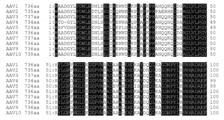
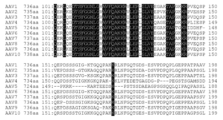
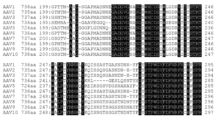
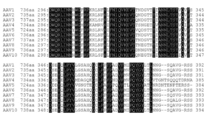
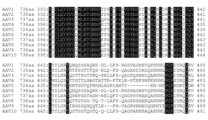
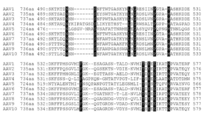
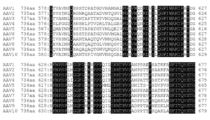
- FIG. 1 shows an alignment of AAV1-10 capsid sequences.
- FIG. 1 shows an alignment of AAV1-10 capsid sequences.
- FIG. 1 shows an alignment of AAV1-10 capsid sequences.
- FIG. 1 shows an alignment of AAV1-10 capsid sequences.
- FIG. 1 shows an alignment of AAV1-10 capsid sequences.
- FIG. 1 shows an alignment of AAV1-10 capsid sequences.
- FIG. 1 shows an alignment of AAV1-10 capsid sequences.
- FIG. 1 shows an alignment of AAV1-10 capsid sequences.
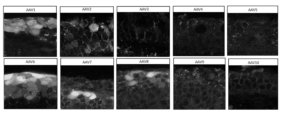
- FIG. 2 shows the infection tropism of various AAV serotypes to inner ear cells.
- FIG. 2 is a diagram quantifying the infection tropism of various AAV serotypes to inner ear cells.
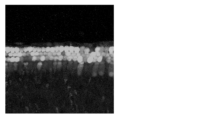
- FIG. 2 shows stained images of tissue transfected with a modified adeno-associated virus vector in which GJB2 was transfected with AAV-sia1.8 into the inner ear epithelium of GJB2-deficient mice.
- Red indicates the connexin 26 protein by the introduced GJB2 gene.
- Green indicates the EGFP reporter.
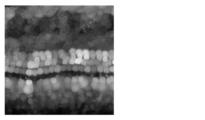
- FIG. 10 shows stained images of tissue into which a modified adeno-associated virus vector into which GJB2 was introduced with AAV-sia6.8 was introduced into the inner ear epithelium of a GJB2-deficient mouse. Red indicates gap junctions by the introduced GJB2 gene, and green indicates the EGFP reporter. The red lines between cells are gap junctions formed by gene therapy.
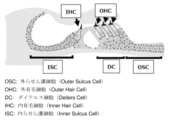
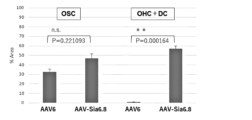
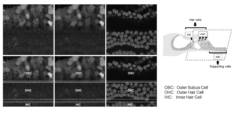
- FIG. 2 is a schematic diagram showing cells that constitute the cochlear organ. The EGFP-positive area ratio in the outer spiral groove cell region (OSC) and the region containing outer hair cells and Ditellus cells (OHC+DC) is shown.
- OSC outer spiral groove cell region
- OPC+DC Ditellus cells
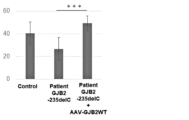
- Inner ear epithelial cells induced from iPSCs of hearing-impaired patients were infected with AAV-sia6.8 carrying the wild-type GJB2 gene, and the expression of connexin 26 (CX26) protein and connexin 30 (CX30) protein was detected by immunostaining. indicate. The expression intensity ratio of CX26 protein to CX30 protein is shown.
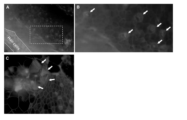
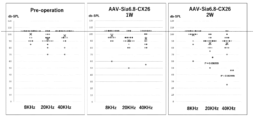
- Cultured cochlear organs of mice infected with AAV-sia6.8 carrying the protein atonal homolog 1 (Atohl) gene are shown. Thresholds of ABR before surgery, 1 week and 2 weeks after surgery in GJB2-deficient mice treated with AAV-sia6.8 carrying the wild-type GJB2 gene are shown.
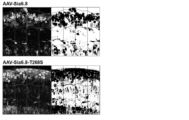
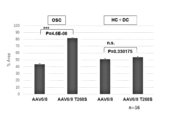
- FIG. 2 shows stained images of cultured cochlear organs of GJB2-deficient mice infected with AAV-sia6.8 containing promoter 2 and loaded with GJB2 gene and EGFP gene. Red indicates gap junctions by the introduced GJB2 gene, and green indicates the EGFP reporter. It is a stained image of cultured cochlear organs of mice infected with AAV-sia6.8 carrying an EGFP gene and its Thr268Ser variant. The EGFP-positive area ratio in the outer spiral groove cell region (OSC) and the region containing outer hair cells and Ditellus cells (OHC+DC) is shown.
- OSC outer spiral groove cell region
- OPC+DC Ditellus cells
- Wild-type AAV includes AAV1 to AAV10 as serotypes.
- the "reference AAV” to be introduced for substitution of amino acid residues is not particularly limited, but AAV1, AAV6, AAV7 and AAV8 are preferably used, AAV1, AAV6 or AAV8 are more preferably used, and AAV1 or AAV6 are more preferably used. is used, and AAV1 is even more preferably used.
- FIGS. 2 and 3 our experiments with various AAV vectors show that AAV1, AAV6, AAV7 and AAV8 have different tropisms for infection of inner ear cells, especially supporting cells forming gap junctions. It was found to be higher than the serotype. Therefore, it is preferred to have reference AAV for AAV1, AAV6, AAV7 and AAV8 modifications.
- the modified AAV vector of the present invention is a modified adeno-associated virus vector in which some amino acid residues of the capsid sequence of the wild adeno-associated virus are substituted with other amino acid residues, preferably AAV1, AAV6, AAV7 or A modified AAV vector in which some amino acid residues in the AAV8 capsid sequence are substituted with other amino acid residues is preferred. Further, modified AAV vectors in which some amino acid residues of the AAV1, AAV6 or AAV8 capsid sequence are substituted with other amino acid residues are more preferable, and some amino acid residues of the AAV1 or AAV6 capsid sequence are replaced with other amino acid residues.
- AAV vector in which some amino acid residues of the AAV1 capsid sequence are substituted with other amino acid residues is even more preferred. More specifically, in alignment with the amino acid sequence of the AAV1 capsid sequence of SEQ ID NO: 1, (1) position 129 (Leu), (2) position 268 (Ser), (3) position 447 (Asn), ( 4) one or more amino acids selected from position 470 (Gly), (5) position 472 (Ser), (6) position 473 (Thr), (7) position 502 (Thr) and (8) position 531 (Gln) Modified adeno-associated virus vectors in which residues or amino acid residues at positions corresponding thereto are substituted with other amino acid residues are preferred.
- the present invention provides a step of introducing a substitution of one or more amino acid residues selected from (1) to (8) above into the amino acid sequence of the capsid sequence of a reference AAV to create a candidate AAV (candidate AAV creation process) and a step of measuring the amount of infection of the target cells by the candidate AAV (measuring step); and a step of selecting a candidate AAV with an increased amount of infection of the target cells compared to the reference AAV (selection step); Also provided is a method for producing a modified AAV that exhibits improved tropism for infectivity to target cells, comprising:
- the “position corresponding to position 129 in the amino acid sequence of SEQ ID NO: 1 in alignment with the amino acid sequence of SEQ ID NO: 1” refers to the “reference AAV capsid sequence” to which substitution of amino acid residues is to be introduced. , means the position corresponding to position 129 of the amino acid sequence of SEQ ID NO:1 when the amino acid sequence of the capsid sequence is aligned with the amino acid sequence of SEQ ID NO:1.
- the “reference AAV” is not particularly limited, but may be wild-type AAV or wild-type AAV of serotype AAV1-10.
- a “reference AAV capsid sequence” may be, for example, a wild-type AAV capsid sequence, such as a wild-type AAV capsid sequence of serotype AAV1-10. Alignment is performed by aligning the two amino acid sequences to be compared so that as many amino acid residues of the two amino acid sequences are identical as possible. When aligning, appropriate gaps are inserted into one or both of the two amino acid sequences being compared, if necessary. Such alignment of amino acid sequences can be performed using well-known programs such as BLAST, FASTA, and CLUSTALW.
- amino acid residue at the position corresponding to the amino acid residue at the specific position may be an amino acid residue corresponding to the positions (1) to (8) of SEQ ID NO: 1 in AAV1 to AAV10.
- AAV6, AAV7, and AAV8 are preferably amino acid residues corresponding to the positions (1) to (8) of SEQ ID NO: 1, and the amino acid residues of (1) to (8) of SEQ ID NO: 1 in AAV6 and AAV8 More preferably, it is the amino acid residue corresponding to the position.
- the AAV1 capsid sequence is shown in SEQ ID NO:1.
- the capsid sequences of AAV2-10 are shown in SEQ ID NOS:2-10. Alignments of capsid sequences of AAV1-10 are shown in FIGS. 1-1 to 1-8.
- leucine present at the position corresponding to position 129 in the amino acid sequence of SEQ ID NO: 1 (2) serine present at the position corresponding to position 268, and (3) corresponding to position 447.
- (4) glycine at a position corresponding to position 470, (5) serine at a position corresponding to position 472, (6) valine at a position corresponding to position 473, ( 7) threonine present at the position corresponding to position 502, and (8) glutamic acid present at the position corresponding to position 531 are (2-1) leucine at position 129 in the AAV2 capsid sequence (SEQ ID NO: 2).
- AAV4 capsid sequence (SEQ ID NO: 4), (4-1) leucine at position 128, (4-2) serine at position 257, (4-3) glutamine at position 450, (4-4 ) Asparagine at position 464, (4-5) Serine at position 466, (4-6) Asparagine at position 467, (4-7) Lysine at position 503, (4-8) 530 is aspartic acid present at the In the AAV5 capsid sequence (SEQ ID NO: 5), (5-1) phenylalanine at position 128, (5-2) serine at position 258, (5-3) valine at position 439, (5-4 ) there is no amino acid corresponding to position 470 of AAV1, (5-5) there is no amino acid corresponding to position 472 of AAV1, (5-6) there is no amino acid corresponding to position 473 of AAV1, (5- 7) Alanine at position 488, (5-8) Serine at position 518.
- AAV6 capsid sequence (SEQ ID NO: 6), (6-1) phenylalanine at position 129, (6-2) serine at position 268, (6-3) asparagine at position 447, (6-4 ) glycine at position 470, (6-5) serine at position 472, (6-6) valine at position 473, (6-7) threonine at position 502, (6-8) 531 It is lysine present at the position.
- AAV7 capsid sequence (SEQ ID NO: 7), (7-1) leucine at position 129, (7-2) threonine at position 269, (7-3) alanine at position 448, (7-4 (7-5) Alanine at 474; (7-6) Glutamic acid at 475; (7-7) Alanine at position 504; (7-8) Alanine at position 533. glutamic acid.
- AAV8 capsid sequence (SEQ ID NO: 8), (8-1) leucine at position 129, (8-2) serine at position 268, (8-3) valine at position 448, (8-4 ) Serine at position 470, (8-5) Alanine at position 472, (8-6) Asparagine at position 473, (8-7) Alanine at position 502, (8-8) 531 glutamic acid present at the In the capsid sequence of AAV9 (SEQ ID NO: 9), (9-1) leucine at position 129, (9-2) serine at position 268, (9-3) serine at position 448, (9-4 ) asparagine at position 470, (9-5) alanine at position 472, (9-6) valine at position 473, (9-7) alanine at position 502, (9-8) 531 glutamic acid present at the In the AAV10 capsid sequence (SEQ ID NO: 10), (10-1) leucine at position 129, (10-2) serine at position 269, (10-3) serine at position 449, (10-4
- a more preferred modified AAV vector of the present invention is one in which substitution of amino acid residues at the positions (1) to (8) of SEQ ID NO: 1 or positions corresponding thereto is , Thr502Ala and Glu531Lys.
- the modified AAV vector of the present invention has a high ability to infect hair cells (inner hair cells, outer hair cells).
- a modified AAV vector having a combination of substitutions of Ser268Thr, Asn447Ser, Gly470Thr, Ser472Ala, Val473Asn and Thr502Ala has a high ability to infect hair cells.
- a modified AAV vector having a Leu129Phe or Glu531Lys substitution in combination with these substitutions also has a high ability to infect hair cells.
- modified AAV vectors with combined substitutions of Asn447Ser, Gly470Thr, Ser472Ala, Val473Asn and Thr502Ala have a higher ability to infect hair cells and a significantly higher ability to infect outer spiral groove cells.
- Usual gene targeting means can be used as the modification (recombination) means. Specifically, a gene targeting means that mutates PCR primers as described in Nat Methods 6, 343-345 (2009) can be employed.
- any one or more amino acid residues selected from the following (a) are added to the amino acid sequence of the capsid sequence.
- any one or more amino acid residues selected from the following (a) are substituted with other amino acid residues to create candidate modified adeno-associated creating a viral vector (candidate AAV creating step); (a) in alignment with the amino acid sequence of the AAV1 capsid sequence of SEQ ID NO: 1, (1) 129th (Leu), (2) 268th (Ser), (3) position 447 (Asn), (4) position 470 (Gly), (5) position 472 (Ser), (6) 473rd place (Val), (7) Position 502 (Thr) and (8) Position 531 (Glu) Amino acid residues at positions corresponding to; measuring the amount of infection of the candidate modified adeno-associated virus vector to the target cell (measuring step); and (selection step);
- the reference adeno-associated virus vector is preferably AAV1, AAV6, AAV7 or AAV8, more preferably AAV1, AAV6 or AAV8.
- the amino acid substitution is more preferably one or more selected from Leu129Phe, Ser268Thr, Asn447Ser, Gly470Thr, Ser472Ala, Val473Asn, Thr502Ala and Glu531Lys.
- the amount of infection of target cells is measured by measuring the number of cells expressing the gene (gene encoding a protein such as a reporter protein) loaded on the candidate modified AAV or the intensity of expression of the protein in the cell. It can be carried out.
- the target cells include epithelial cells, stromal cells, lens cells, corneal cells, retinal cells, skeletal muscle cells, cardiomyocytes, pancreatic cells, hepatocytes, nerve cells, glial cells, blood cells, chondrocytes, osteocytes, They may be fibroblasts, adipocytes, or cancer cells.
- the epithelial cells may be inner ear epithelial cells, intestinal epithelial cells, retinal cells, skin cells, renal cells, airway epithelial cells, oral mucosal cells, nasal mucosal cells, glomerular cells, bladder cells, or uterine cells.
- said target cell may in particular be a cell that has gap junctions or expresses connexin molecules that are components of gap junctions.
- the resulting modified AAV vector has remarkably improved tropism for infection to target cells, for example, the epithelial cells.
- a modified AAV vector having one or more substitutions selected from Ser268Thr, Asn447Ser, Gly470Thr, Ser472Ala, Val473Asn and Thr502Ala in the capsid sequence of AAV1 is used to convert wild-type AAV1 into hair cells (inner hair cells). , outer hair cells), but it is highly specific for outer hair cells, and among the inner ear epithelial cells, it has the highest ability to infect outer hair cells, with an infection rate of 80-100%. efficiency.
- modified AAVs having infection tropism against various target cells.
- a specific example of such a modified AAV vector is an AAV vector having a capsid sequence of the amino acid sequence of SEQ ID NO: 15 (referred to as "AAV-sia1.8" in the present disclosure).
- an AAV vector having a capsid sequence of the amino acid sequence of SEQ ID NO: 16 (Glu531Lys variant of AAV-sia1.8) and an AAV having a capsid sequence of the amino acid sequence of SEQ ID NO: 17
- the vector (Leu129Phe variant of AAV-sia1.8) has stronger infectivity to outer hair cells and supporting cells than AAV1, and forms many large-area gap junction complexes in supporting cells. It also infects some inner hair cells.
- a modified AAV vector having one or more substitutions selected from Ser268Thr, Asn447Ser, Gly470Thr, Ser472Ala, Val473Asn and Thr502Ala in the AAV6 capsid sequence was subjected to similar substitutions in the AAV1 capsid sequence.
- the modified AAV vector Like the modified AAV vector, it has a high ability to infect outer hair cells. It has weaker specificity to outer hair cells and infection tropism than the modified AAV1, but has the ability to infect a wider range than the modified AAV1. By arbitrarily combining these amino acid substitutions, it may be possible to create modified AAVs having infection tropism against various target cells.
- a specific example of such a modified AAV vector is an AAV vector (AAV-sia6.8) having a capsid sequence of the amino acid sequence of SEQ ID NO:14.
- an AAV vector (Thr268Ser variant of AAV-sia6.8), which is a further variant of the same variant AAV vector and has a capsid sequence of the amino acid sequence of SEQ ID NO: 18, is more effective than AAV-sia6.8. It has a higher ability to infect hair cells and a significantly higher ability to infect outer spiral groove cells.
- the modified AAV vector of the present invention has improved tropism for infection of various epithelial cells, particularly epithelial cells forming gap junctions.
- Specific epithelial cells include inner ear epithelial cells, intestinal epithelial cells, retinal cells, skin cells, renal cells, airway epithelial cells, nerve cells, myocardial cells, and epithelial cells selected from cancer cells involved in Connexin expression. be done. Therefore, the modified AAV vector of the present invention is useful for gene therapy and genome editing therapy for diseases in these epithelial cells.
- the modified AAV vector of the present invention has improved infection tropism to the target cells
- the modified AAV vector is applied to genetic diseases in target cells, tissue damage, gene therapy of cancer, and genome editing therapy. It is preferable to integrate the gene obtained.
- genes include genetic disease-causing genes such as GJB2 gene, SLC26A4 gene, TMC1 gene, TMC2 gene, KCNQ4 gene, CHD23 gene, protocadherin 15 (PCDH15) gene, and otoferrin (OTOF) gene; Genes that are transcription factors such as CDKN1B gene and Hes1 gene and are involved in cell differentiation and proliferation.
- genes specifically associated with hereditary hearing loss include: Actg1, Adcy1, Adcy1, AIFM1, BDP1, BDP1, BTD, CCDC50, CDC164, CDC14A, CDH23, CEACAM16, CIB2, CLDN16, CLDN14, CLRN1, CLN1, COL11A, COL11A1, COL11A1, COL11A1 2, COL2A1, COL4A3, COL4A4, COL4A5, Col4a6, COL9A1, COL9A2, COL9A3, DCDC2, DIAPH1, DMXL2, DSPP, EDN3, EDNRB, ELM0D3, EPS8, EPS8L2, ESPN, ESRRB, EYA1, EYA4, FAM189A2, GIPC3, GJB3, GJB6, GPSM2, GRHL2, GRXCR1, GRXCR2, GSDME, HARS1, HGF, H0MER2, ILDR1, KARS1, KCNE1, KCNQ1, LHFPL5, LOX
- the modified AAV vector of the present invention can incorporate a promoter for expression of the genes described above.
- Known promoters such as CMV and CAG can be used as promoters, and promoters for genes in GJB2-expressing cells such as inner ear supporting cells include any of the nucleotide sequences of SEQ ID NOS: 11 to 13.
- a promoter comprising the above can be preferably used.
- One of the promoters may be repeatedly arranged continuously multiple times (tandem of a single promoter), or two or more may be combined so that any or all of the promoters are arranged continuously or discontinuously repeatedly multiple times. (multi-promoter tandem).
- the modified AAV vector of the present invention may incorporate an enhancer for enhancing promoter activity.
- enhancers can be used as the enhancer.
- an enhancer suitable for combination with a promoter comprising the nucleotide sequences of SEQ ID NOs: 11 to 13 for example, an enhancer comprising the nucleotide sequence of SEQ ID NO: 19 ("Characterization of GJB2 cis regulatory elements in the DFNB1 locus”, Human Genetics (2019) 138:1275-1286).
- One enhancer may be arranged multiple times in a row (tandem of a single enhancer), or two or more may be combined so that any or all of the enhancers are arranged in a row with multiple repetitions, either continuously or discontinuously. (tandem of multiple enhancers).
- a preferred specific example of gene therapy using the modified AAV vector of the present invention is gene therapy for GJB2 mutant deafness, which is the most common hereditary deafness. That is, GJB variant deafness is the most common hereditary deafness, accounting for approximately 45% of all cases of congenital deafness.
- a gene therapeutic agent for hearing loss can be produced by inserting the normal GJB gene into the modified AAV vector of the present invention. This gene therapy drug is administered by local administration to the inner ear lymph from the floor plate of the inner ear or intravenous administration, and normalizes abnormal gene functions by efficiently expressing target genes in target cells.
- Administration can be intravenous, intracerebroventricular, intracochlear, intrathecal, intramuscular, subcutaneous, or a combination thereof.
- administration may be administration to the cochlea or vestibular system, and delivery may be injection into the cochlea or vestibular system via the round window membrane (RWM), oval window, or semicircular canal. good.
- RWM round window membrane
- the gene therapy drug and genome editing drug of the present invention are prepared by mixing, dissolving, emulsifying, encapsulating, freeze-drying, etc. the modified AAV vector with a pharmaceutically acceptable carrier well known in the art. Can be formulated.
- Suitable preparations for oral administration include liquid preparations in which an effective amount of the modified AAV vector of the present invention is dissolved in a diluent such as water or physiological saline, and capsules and granules containing an effective amount in the form of solids or granules. formulations, powders or tablets, suspensions in which an effective amount is suspended in a suitable dispersion medium, emulsions in which a solution in which an effective amount is dissolved is dispersed and emulsified in a suitable dispersion medium, and the like.
- the modified AAV vectors of the present invention are combined with pharmaceutically acceptable solvents, excipients, binders, stabilizers, dispersants and the like into injectable solutions, suspensions, emulsions, It can be formulated into dosage forms such as creams, ointments, inhalants, and suppositories.
- the modified AAV vectors of the invention can be dissolved in aqueous solutions, preferably in physiologically compatible buffers such as Hank's solution, Ringer's solution, or physiological saline buffer.
- the medicaments of the present invention can take such forms as suspensions, solutions, or emulsions in oily or aqueous vehicles.
- the modified AAV vector of the present invention may be produced in the form of powder, and an aqueous solution or suspension may be prepared using sterilized water or the like before use.
- the modified AAV vectors of the invention can be powdered and made into a powder mix with a suitable base such as lactose or starch.
- Suppository formulations can be prepared by mixing the modified AAV vector of the present invention with a conventional suppository base such as cocoa butter.
- the therapeutic agents of the invention can be formulated as sustained release formulations, such as by encapsulating them in polymer matrices and the like.
- the dose of the modified AAV vector of the present invention varies depending on the patient's symptoms, route of administration, body weight, age, etc., it is preferably 0.5 ⁇ g to 100 mg per day for adults.
- Example 1 Evaluation of infection tropism of reference AAV (cultured inner ear epithelial tissue) Using AAV vectors of various serotypes (GeneCapoeia, AAVPrime TM Adeno-associated virus (AAV) Serotype Testing Kit Plus, Cat. No. AA321), experiments were performed according to the experimental guide for gene transfer using viral vectors, Yodosha, Experimental Medicine Supplement, Definitive Edition, AAV. Infection tropism to inner ear epithelial cells was examined by the method described in Gene therapy to inner ear using vector Pages 159-166 (2020.11).
- the GJB2 gene encoding connexin 26 was incorporated into the AAV vector under the control of promoters (referred to as promoter 1, promoter 2 and promoter 3, respectively) comprising any of the nucleotide sequences of SEQ ID NOS: 11-13.
- the inner ear was removed from a 4-day-old mouse (C57BL/6J strain), and the tissue containing the sensory epithelium was cultured overnight in DMEM medium on an 8-well chamber slide (Matsunami, Cat. No. SCS-N38). Each serotype AAV (AAV1-10, 5 ⁇ 10 8 -5 ⁇ 10 9 GC) was added on the following day.
- promoter 1 (gene sequence of 1065 bp upstream from the transcription initiation site of the human GJB2 gene), promoter 2 (gene sequence of 760 bp upstream from the transcription initiation site of the human GJB2 gene) and promoter 3 (transcription initiation site of the human GJB2 gene)
- promoter activity was evaluated based on the expression intensity of connexin 26, promoter 1, promoter 2, and promoter 3 were found in descending order of activity.
- Example 2 Creation of modified AAV by introducing amino acid substitutions into standard AAV and evaluation of infection tropism (cultured inner ear epithelial tissue) Using the gene targeting method of mutating the PCR primers described in Nat Methods 6, 343-345 (2009), vectors were constructed in which various amino acid substitutions were introduced into the amino acid sequence of the capsid sequence. note that. A GJB2 gene and a reporter gene (EGFP gene) were also introduced into the modified vector. Table 1 shows changes in transduction efficiency and infection tropism of the resulting modified vectors.
- a modified AAV vector (AAV-sia1.8; It is highly specific to outer hair cells, and has the highest ability to infect outer hair cells among inner ear epithelial cells (80-100). % infection efficiency.
- AAV-sia6.8 SEQ ID NO: 14
- the AAV-sia1.8 and It also has a high ability to infect outer hair cells. Although it has weaker specificity to outer hair cells and infection tropism than AAV-sia1.8, it was found to have the ability to infect a wider range of inner ear epithelial cell groups than AAV-sia1.8.
- Example 3 Introduction of further amino acid substitutions into modified AAV and evaluation of infection tropism
- AAV-sia1.8 Glu531Lys variant and AAV-sia1.8 Leu129Phe variant were prepared. bottom.
- the Glu531Lys variant of AAV-sia1.8 (SEQ ID NO: 16) has stronger infectivity to outer hair cells and supporting cells than AAV1, and forms many large-area gap junction complexes in supporting cells. . It also infects some inner hair cells.
- the Leu129Phe variant of AAV-sia1.8 (SEQ ID NO: 17) also has a stronger infectivity to outer hair cells and supporting cells than AAV1, and a gap junction complex with a large area in supporting cells. form a large number of It also infects some inner hair cells.
- FIG. 4 shows a stained image of GJB2 (GJB2 and EGFP introduced) introduced into the inner ear epithelium of a deafness model animal (GJB2-deficient mouse) with AAV sia1.8. show. Red indicates the connexin 26 protein by the introduced GJB2 gene. Green indicates the EGFP reporter. EGFP expression indicating infection is particularly strong in outer hair cells, and EGFP expression and connexin 26 expression indicating infection in other inner hair cells and supporting cells are low.
- FIG. 5 shows a stained image of GJB2 (GJB2 and EGFP introduced) introduced into the inner ear epithelium of GJB2-deficient mice with AAV-sia6.8.
- Red indicates a gap junction containing connexin 26 by the introduced GJB2 gene.
- Green indicates the EGFP reporter.
- the red lines between cells are gap junctions formed by gene therapy.
- Example 5 Gene Transfer into Cultured Cochlear Organs Derived from Deafness Model Animals Using cultured cochlear organs of GJB2-deficient mice, wild-type AAV6 and AAV-sia6.8 carrying the GJB2 gene and the EGFP gene were infected.
- mice Four-day-old mice were experimentally killed under anesthesia and the cochlea was removed from the temporal bone.
- the cochlear shaft was removed from the cochlea and the stria vascularis stripped from the organ of Corti.
- Organs of Corti were transferred to 8-well chamber slides and cultured overnight (5% CO2 atmosphere, 37°C). The medium was then changed to medium containing 4 ⁇ l of AAV solution per 100 ⁇ l (2.05 ⁇ 10 13 GC/mL). After an additional 5 days of culture, the organ of Corti was treated with 4% paraformaldehyde and fixed.
- FIG. 8 shows the results of image analysis of the EGFP-positive area ratio in the outer spiral groove cell region (OSC) and the region containing outer hair cells and Ditellus cells (OHC+DC).
- AAV-sia6.8 has a higher positive area rate than wild-type AAV6 in both the outer spiral groove cell region (OSC) and the region containing outer hair cells and Ditellus cells (OHC + DC). , showed that gene transfer was possible in a wide range of inner ear epithelial cells with high efficiency.
- Example 6 Gene therapy (repair of gap junctions in inner ear epithelial cells induced from iPSC cells derived from hearing impaired patients) Differentiation of inner ear epithelial cells was induced from induced pluripotent stem cells (iPSCs) established from patients with severe hearing loss due to abnormalities in the GJB2 gene and subjects with normal hearing. Inner ear epithelial cells were infected with AAV-sia6.8 carrying the wild-type GJB2 gene, and gap junction repair was performed by expression of connexin 26 (CX26).
- iPSCs induced pluripotent stem cells
- iPSC strain (201B7) derived from a normal hearing subject was obtained from the RIKEN BioResource Center Cell Bank.
- the iPSC line (cell line name: JUFMDOi005-A) derived from a patient with hearing loss is described in the present inventors' academic paper ("Generation of two induced pluripotent stem cell lines from PBMCs of siblings carrying c.235delC mutation in the GJB2 gene associated with sensorineural hearing loss”, Stem Cell Research, Volume 47, August 2020, 101910).
- iPSCs were suspended in Stem Fit medium supplemented with 20 ⁇ m Y27632 and seeded in 96-well plates at 9000 cells/well. After 2 days of incubation (37°C, 5% CO 2 ), gfCDM medium supplemented with 2% matrigel (Ham's F12 GlutaMax/IMDM GlutaMax (1:1) (Gibco), 1 % Chemically defined lipid concentrate (Gibco), 0.5 Cell aggregates were transferred to 96-well plates containing 100 ⁇ l of % BSA (Sigma), 15 ⁇ g/ml Transferin (Sigma), 450 ⁇ M 1-Thioglycerol (Sigma)) and further incubated.
- Stem Fit medium supplemented with 20 ⁇ m Y27632 and seeded in 96-well plates at 9000 cells/well.
- gfCDM medium supplemented with 2% matrigel (Ham's F12 GlutaMax/IMDM GlutaMax (1:1) (G
- TRIC inner ear-derived feeder cells
- Cochlear tissue consists of the organ of Corti, the basement membrane, and the lateral wall, and is mainly composed of supporting cells, hair cells, cochlear nerve fiber cells, and other cells of the basement membrane.
- TRICs were obtained by exposing cochlear tissue to trypsin and screening for trypsin-resistant cells. These cells were maintained under growth medium (DMEM-GlutaMax (Gibco), 10% FBS (Gibco)).
- CX26 connexin 26
- CX30 GJB6 gene product
- inner ear gap junctions were unclear and insufficiently formed, and the expression intensity of CX26 relative to CX30 was reduced to about 25%.
- the expression intensity of CX26 relative to CX30 was restored to about 50% (GJB2-235delC + AAV-GJB2WT), and gap junctions were repaired. I was able to confirm that there is.
- Example 7 Gene therapy (regeneration of hair cells) Infection experiments with AAV-sia6.8 harboring the protein atonal homolog 1 (Atoh1) gene were carried out using mouse cultured cochlear organs. It is known that the transcription factor Atoh1 induces the differentiation of supporting cells into hair cells when the gene is introduced into the supporting cells. As shown in FIG. 11, hair cell-like cells appeared in a region different from the hair cell region (the region surrounded by the dotted line in FIG. 11 (A)) (FIG. 11 (B) (C ) arrow). FIG. 11(B) is an enlarged view of the region enclosed by the dotted line in FIG. 11(A). It was demonstrated that AAV-sia6.8 can be effectively used to regenerate hair cells that have been lost due to noise-induced deafness or the like.
- Example 8 Gene therapy (hearing recovery in deafness model animals) Hearing ability of GJB2-deficient mice (3-4 weeks old) was measured based on auditory brainstem response (ABR) (preoperative hearing ability). Under anesthesia, two small holes were made in the lateral semicircular canal of mice using a dental drill. A capillary tube was inserted into one of the holes, and 10-12 ⁇ l of AAV-sia6.8 solution (about 1 ⁇ 10 13 GC/ml) loaded with the wild-type GJB2 gene was added to the endolymph at a rate of 3 ⁇ l/min. injected. One and two weeks after surgery, hearing was measured based on the auditory brainstem response (ABR) (post-operative hearing).
- ABR auditory brainstem response
- ABR was measured by placing stainless steel needle electrodes at the apex and ventrolateral side of the left and right ears, using waveform storage and stimulation control of the Scope software of the Power Laboratory system (PowerLab 4/25; AD Instruments). Electroencephalography was performed with an extracellular amplifier AC PreAmplifier (model P-55; Astro-Med). Acoustic stimulation was provided by a coupler-type speaker (model ES1spc; Bio Research Center). Thresholds were determined based on a series of responses with varying intensity at 5 dB intervals at frequencies of 8, 20, and 40 kHz.
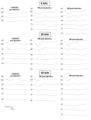
- Preoperative and postoperative ABR thresholds and waveforms are shown in Figures 12 and 13, respectively.
- Two weeks after the operation (AAV-Sia6.8-CX26 2W), the threshold of ABR at high wavelengths (20kHz, 40kHz) decreased compared to before the operation (Pre-operation), and a significant improvement in hearing was observed. (See FIG. 12).
- 2 weeks after the operation (2W post-infection) a response was confirmed even to weak sound pressure, which was not responsive before the operation (CX26cKO pre-injection) (see Fig. 13).
- Example 9 Cell-targeted gene transfer using a promoter Promoter 2 (gene sequence of 760 bp upstream from the transcription initiation point of the human GJB2 gene, SEQ ID NO: 12) was introduced into AAV-sia6.8, and the GJB2 gene and the EGFP gene were introduced. was loaded to infect cultured cochlear organs of GJB2-deficient mice. As shown in FIG. 14, the formation of gap junctions accompanied by the expression of EGPF (green) and the expression of connexin 26 (red) was confirmed in outer spiral groove cells (OSC), which are supporting cells. No infection of outer and inner hair cells (OHC and IHC) was observed. This result indicated that AAV-sia6.8 can be effectively used for cell-targeted gene transfer (gene transfer targeting supporting cells in this example) by introducing an appropriate promoter. .
- promoter Promoter 2 gene sequence of 760 bp upstream from the transcription initiation point of the human GJB2 gene, SEQ ID NO:
- Example 10 Introduction of additional amino acid substitutions into modified AAV and evaluation of infection tropism 2 Similar to Example 2, a Thr268Ser variant of AAV-sia6.8 was constructed. At amino acid position 268 of AAV-sia6.8, Ser in wild-type AAV6 is replaced with Thr. Therefore, the Thr268Ser variant of AAV-sia6.8 is a modification that restores the wild-type Ser to the amino acid at position 268.
- FIG. 15 and FIG. 16 show the fluorescence images of EGFP and the results of calculating the EGFP-positive area ratio by image analysis.
- the Thr268Ser variant of AAV-sia6.8 (AAV-Sia-T268S) has improved infection tropism to inner ear cells compared to AAV-sia6.8, especially in outer spiral groove cells (OSC). improvement was remarkable.
- SEQ ID NO: 1 amino acid sequence of capsid sequence of AAV1 SEQ ID NO: 2: amino acid sequence of capsid sequence of AAV2 SEQ ID NO: 3: amino acid sequence of capsid sequence of AAV3 SEQ ID NO: 4: amino acid sequence of capsid sequence of AAV4 SEQ ID NO: 5: of AAV5 Amino acid sequence of capsid sequence SEQ ID NO: 6: amino acid sequence of capsid sequence of AAV6 SEQ ID NO: 7: amino acid sequence of capsid sequence of AAV7 SEQ ID NO: 8: amino acid sequence of capsid sequence of AAV8 SEQ ID NO: 9: amino acid sequence of capsid sequence of AAV9 SEQ ID NO: 10: amino acid sequence of capsid sequence of AAV10 SEQ ID NO: 11: nucleic acid sequence of promoter 1 SEQ ID NO: 12: nucleic acid sequence of promoter 2 SEQ ID NO: 13: nucleic acid sequence of promoter 3 SEQ ID NO: 14: capsid sequence of AAV-
Landscapes
- Health & Medical Sciences (AREA)
- Life Sciences & Earth Sciences (AREA)
- Chemical & Material Sciences (AREA)
- Engineering & Computer Science (AREA)
- General Health & Medical Sciences (AREA)
- Medicinal Chemistry (AREA)
- Genetics & Genomics (AREA)
- Pharmacology & Pharmacy (AREA)
- Animal Behavior & Ethology (AREA)
- Public Health (AREA)
- Veterinary Medicine (AREA)
- Organic Chemistry (AREA)
- Bioinformatics & Cheminformatics (AREA)
- Biotechnology (AREA)
- Molecular Biology (AREA)
- Nuclear Medicine, Radiotherapy & Molecular Imaging (AREA)
- General Chemical & Material Sciences (AREA)
- Chemical Kinetics & Catalysis (AREA)
- Biochemistry (AREA)
- Epidemiology (AREA)
- Biomedical Technology (AREA)
- Zoology (AREA)
- Wood Science & Technology (AREA)
- General Engineering & Computer Science (AREA)
- Biophysics (AREA)
- Virology (AREA)
- Gastroenterology & Hepatology (AREA)
- Proteomics, Peptides & Aminoacids (AREA)
- Physics & Mathematics (AREA)
- Plant Pathology (AREA)
- Microbiology (AREA)
- Marine Sciences & Fisheries (AREA)
- Immunology (AREA)
- Ophthalmology & Optometry (AREA)
- Neurology (AREA)
- Neurosurgery (AREA)
- Dermatology (AREA)
- Urology & Nephrology (AREA)
- Micro-Organisms Or Cultivation Processes Thereof (AREA)
- Medicines Containing Material From Animals Or Micro-Organisms (AREA)
Priority Applications (4)
| Application Number | Priority Date | Filing Date | Title |
|---|---|---|---|
| JP2023566307A JPWO2023106256A1 (cg-RX-API-DMAC7.html) | 2021-12-06 | 2022-12-05 | |
| EP22904185.0A EP4446418A4 (en) | 2021-12-06 | 2022-12-05 | MODIFIED ADENO-ASSOCIATED VIRUS VECTOR |
| CN202280080524.9A CN118510905A (zh) | 2021-12-06 | 2022-12-05 | 改变型腺伴随病毒载体 |
| US18/716,317 US20250099619A1 (en) | 2021-12-06 | 2022-12-05 | Modified adeno-associated virus vector |
Applications Claiming Priority (2)
| Application Number | Priority Date | Filing Date | Title |
|---|---|---|---|
| JP2021-198101 | 2021-12-06 | ||
| JP2021198101 | 2021-12-06 |
Publications (1)
| Publication Number | Publication Date |
|---|---|
| WO2023106256A1 true WO2023106256A1 (ja) | 2023-06-15 |
Family
ID=86730352
Family Applications (1)
| Application Number | Title | Priority Date | Filing Date |
|---|---|---|---|
| PCT/JP2022/044701 Ceased WO2023106256A1 (ja) | 2021-12-06 | 2022-12-05 | 改変型アデノ随伴ウイルスベクター |
Country Status (5)
| Country | Link |
|---|---|
| US (1) | US20250099619A1 (cg-RX-API-DMAC7.html) |
| EP (1) | EP4446418A4 (cg-RX-API-DMAC7.html) |
| JP (1) | JPWO2023106256A1 (cg-RX-API-DMAC7.html) |
| CN (1) | CN118510905A (cg-RX-API-DMAC7.html) |
| WO (1) | WO2023106256A1 (cg-RX-API-DMAC7.html) |
Families Citing this family (1)
| Publication number | Priority date | Publication date | Assignee | Title |
|---|---|---|---|---|
| IL325122A (en) | 2018-02-22 | 2026-02-01 | Akouos Inc | Compositions and methods for treating non-age-related hearing impairment in humans |
Citations (6)
| Publication number | Priority date | Publication date | Assignee | Title |
|---|---|---|---|---|
| WO2007019994A1 (de) | 2005-08-16 | 2007-02-22 | Maquet Cardiopulmonary Ag | Verwendung von nichtionischen estern in einer beschichtung für mit blut in kontakt kommende oberflächen |
| JP2012165744A (ja) * | 2005-04-07 | 2012-09-06 | Trustees Of The Univ Of Pennsylvania | 改変されたaavベクター |
| JP2018514190A (ja) * | 2015-03-24 | 2018-06-07 | ザ リージェンツ オブ ザ ユニバーシティ オブ カリフォルニア | アデノ随伴ウイルス変異体及びその使用方法 |
| JP2019518458A (ja) * | 2016-05-13 | 2019-07-04 | 4ディー モレキュラー セラピューティクス インコーポレイテッド | アデノ関連ウイルス変異キャプシドおよびその使用方法 |
| WO2021009805A1 (ja) * | 2019-07-12 | 2021-01-21 | 株式会社遺伝子治療研究所 | ヒト肝臓への遺伝子導入のためのアデノ随伴ウイルスビリオン |
| US20210095313A1 (en) * | 2019-09-30 | 2021-04-01 | Applied Genetic Technologies Corporation | Adeno-associated virus (aav) systems for treatment of genetic hearing loss |
Family Cites Families (3)
| Publication number | Priority date | Publication date | Assignee | Title |
|---|---|---|---|---|
| US9725485B2 (en) * | 2012-05-15 | 2017-08-08 | University Of Florida Research Foundation, Inc. | AAV vectors with high transduction efficiency and uses thereof for gene therapy |
| US12534739B2 (en) * | 2018-10-11 | 2026-01-27 | Decibel Therapeutics, Inc. | AAV1 vectors and uses thereof for treatment of otic indications |
| CA3153972A1 (en) * | 2019-09-09 | 2021-03-18 | Massachusetts Eye And Ear Infirmary | Methods and compositions for modulating the interaction between adeno-associated virus (aav) and the aav receptor (aavr) for altered bio-distribution of aav |
-
2022
- 2022-12-05 US US18/716,317 patent/US20250099619A1/en active Pending
- 2022-12-05 EP EP22904185.0A patent/EP4446418A4/en active Pending
- 2022-12-05 JP JP2023566307A patent/JPWO2023106256A1/ja active Pending
- 2022-12-05 WO PCT/JP2022/044701 patent/WO2023106256A1/ja not_active Ceased
- 2022-12-05 CN CN202280080524.9A patent/CN118510905A/zh active Pending
Patent Citations (7)
| Publication number | Priority date | Publication date | Assignee | Title |
|---|---|---|---|---|
| JP2012165744A (ja) * | 2005-04-07 | 2012-09-06 | Trustees Of The Univ Of Pennsylvania | 改変されたaavベクター |
| JP2014204723A (ja) * | 2005-04-07 | 2014-10-30 | ザ・トラステイーズ・オブ・ザ・ユニバーシテイ・オブ・ | 改変されたaavベクター |
| WO2007019994A1 (de) | 2005-08-16 | 2007-02-22 | Maquet Cardiopulmonary Ag | Verwendung von nichtionischen estern in einer beschichtung für mit blut in kontakt kommende oberflächen |
| JP2018514190A (ja) * | 2015-03-24 | 2018-06-07 | ザ リージェンツ オブ ザ ユニバーシティ オブ カリフォルニア | アデノ随伴ウイルス変異体及びその使用方法 |
| JP2019518458A (ja) * | 2016-05-13 | 2019-07-04 | 4ディー モレキュラー セラピューティクス インコーポレイテッド | アデノ関連ウイルス変異キャプシドおよびその使用方法 |
| WO2021009805A1 (ja) * | 2019-07-12 | 2021-01-21 | 株式会社遺伝子治療研究所 | ヒト肝臓への遺伝子導入のためのアデノ随伴ウイルスビリオン |
| US20210095313A1 (en) * | 2019-09-30 | 2021-04-01 | Applied Genetic Technologies Corporation | Adeno-associated virus (aav) systems for treatment of genetic hearing loss |
Non-Patent Citations (8)
| Title |
|---|
| "Characterization of GJB2 cis regulatory elements in the DFNB1 locus", HUMAN GENETICS, vol. 138, 2019, pages 1275 - 1286 |
| "Generation of two induced pluripotent stem cell lines from PBMCs of siblings carrying c.235delC mutation in the GJB2 gene associated with sensorineural hearing loss", STEM CELL RESEARCH, vol. 47, August 2020 (2020-08-01), pages 101910 |
| "Guide to gene transfer experiments using viral vectors, Gene therapy for the inner ear using AAV vectors", November 2020, YODOSHA CO., LTD., pages: 159 - 166 |
| FAKHIRI JULIA; LANDEGGER LUKAS D.; GRIMM DIRK: "Breaking the sound barrier: Towards next-generation AAV vectors for gene therapy of hearing disorders", HEARING RESEARCH, ELSEVIER SCIENCE PUBLISHERS , AMSTERDAM, NL, vol. 413, 15 October 2020 (2020-10-15), NL , XP086905894, ISSN: 0378-5955, DOI: 10.1016/j.heares.2020.108092 * |
| JOURNAL OF VIROLOGY, vol. 90, no. 11, 2016, pages 5219 - 5230 |
| MOISAN STéPHANIE; LE NABEC ANAïS; QUILLéVéRé ALICIA; LE MARéCHAL CéDRIC; FéREC CLAUDE: "Characterization of-regulatory elements in thelocus", HUMAN GENETICS, SPRINGER BERLIN HEIDELBERG, BERLIN/HEIDELBERG, vol. 138, no. 11-12, 4 October 2019 (2019-10-04), Berlin/Heidelberg, pages 1275 - 1286, XP036950817, ISSN: 0340-6717, DOI: 10.1007/s00439-019-02068-8 * |
| NAT METHODS, vol. 6, 2009, pages 343 - 345 |
| See also references of EP4446418A4 |
Also Published As
| Publication number | Publication date |
|---|---|
| JPWO2023106256A1 (cg-RX-API-DMAC7.html) | 2023-06-15 |
| EP4446418A1 (en) | 2024-10-16 |
| CN118510905A (zh) | 2024-08-16 |
| US20250099619A1 (en) | 2025-03-27 |
| EP4446418A4 (en) | 2025-11-19 |
Similar Documents
| Publication | Publication Date | Title |
|---|---|---|
| US20260035715A1 (en) | Synthetic liver-tropic adeno-associated virus capsids and uses thereof | |
| JP7686709B2 (ja) | ミオシン15プロモーター及びその使用 | |
| JP4860886B2 (ja) | 二本鎖パルボウイルスベクター | |
| JP2025000750A (ja) | ミオシン15プロモーター及びその使用 | |
| JP2018520646A (ja) | ファブリー病の遺伝子治療 | |
| US20260041795A1 (en) | Adeno-associated virus capsid having tissue tropism and use thereof | |
| CN111876432B (zh) | 一组肝靶向新型腺相关病毒的获得及其应用 | |
| US20250099619A1 (en) | Modified adeno-associated virus vector | |
| CN115052634B (zh) | 前庭支持细胞启动子和其用途 | |
| US20230181767A1 (en) | Compositions and methods for promoting hair cell regeneration | |
| AU2024342045A1 (en) | Aav variant capable of infecting inner ear | |
| HK40118611A (en) | Synthetic liver-tropic adeno-associated virus capsids and uses thereof | |
| WO2026072721A1 (en) | Parvovirus compositions and methods for gene therapy | |
| CN121569044A (zh) | 用于治疗gjb2相关听力损失的组合物和方法 | |
| CN117603965A (zh) | sgRNA及其在制备用于治疗亨廷顿舞蹈症的产品中的应用 | |
| CN121399266A (zh) | 耳蜗外毛细胞特异性启动子及其应用 | |
| CN120366387A (zh) | 表达strc蛋白的双载体系统及其用途 | |
| HK40048077B (en) | Synthetic liver-tropic adeno-associated virus capsids and uses thereof | |
| HK40048077A (en) | Synthetic liver-tropic adeno-associated virus capsids and uses thereof |
Legal Events
| Date | Code | Title | Description |
|---|---|---|---|
| 121 | Ep: the epo has been informed by wipo that ep was designated in this application |
Ref document number: 22904185 Country of ref document: EP Kind code of ref document: A1 |
|
| ENP | Entry into the national phase |
Ref document number: 2023566307 Country of ref document: JP Kind code of ref document: A |
|
| WWE | Wipo information: entry into national phase |
Ref document number: 202280080524.9 Country of ref document: CN |
|
| WWE | Wipo information: entry into national phase |
Ref document number: 2022904185 Country of ref document: EP |
|
| NENP | Non-entry into the national phase |
Ref country code: DE |
|
| ENP | Entry into the national phase |
Ref document number: 2022904185 Country of ref document: EP Effective date: 20240708 |
|
| WWP | Wipo information: published in national office |
Ref document number: 18716317 Country of ref document: US |