WO2023105751A1 - 乗員監視装置及び乗員監視方法 - Google Patents
乗員監視装置及び乗員監視方法 Download PDFInfo
- Publication number
- WO2023105751A1 WO2023105751A1 PCT/JP2021/045526 JP2021045526W WO2023105751A1 WO 2023105751 A1 WO2023105751 A1 WO 2023105751A1 JP 2021045526 W JP2021045526 W JP 2021045526W WO 2023105751 A1 WO2023105751 A1 WO 2023105751A1
- Authority
- WO
- WIPO (PCT)
- Prior art keywords
- task
- determination unit
- driver
- state
- unit
- Prior art date
- Legal status (The legal status is an assumption and is not a legal conclusion. Google has not performed a legal analysis and makes no representation as to the accuracy of the status listed.)
- Ceased
Links
Images


Classifications
-
- H—ELECTRICITY
- H04—ELECTRIC COMMUNICATION TECHNIQUE
- H04N—PICTORIAL COMMUNICATION, e.g. TELEVISION
- H04N7/00—Television systems
- H04N7/18—Closed-circuit television [CCTV] systems, i.e. systems in which the video signal is not broadcast
Definitions
- the present disclosure relates to an occupant monitoring device and an occupant monitoring method.
- Patent Literature 1 discloses a smoking detection device that detects smoking as a second task.
- the smoking detection device of Patent Document 1 captures an image of a driver's face using an imaging unit provided inside a vehicle, determines the face orientation of the driver using the captured image, and detects a cigarette burning unit according to the face orientation. Set the existence discrimination area of . Then, the smoking detection device of Patent Document 1 detects the smoking of the driver by searching the existence discrimination area for a high-temperature area, which is a candidate area for the cigarette burning portion.
- the smoking detection device of Patent Document 1 may erroneously detect smoking by the driver even when the driver does not have a cigarette in his mouth. Specifically, this is the case where the driver is holding the handle with both hands while holding the cigarette in his hand. In this case, the driver's face and the cigarette are actually far apart, but the driver's face and the cigarette are detected close to each other on the captured image, so the driver's smoking is erroneously detected. . Therefore, the smoking detection device of Patent Literature 1 has a problem that the detection accuracy of the second task is insufficient.
- the present disclosure has been made to solve the above-described problems, and aims to provide an occupant monitoring device and an occupant monitoring method capable of highly accurately determining a second task.
- An occupant monitoring device includes an image acquisition unit that acquires a captured image from an imaging unit that captures an image of a driver of a vehicle, and a second task that is an action other than driving performed by the driver while driving using the captured image.
- a first second task determination unit that determines whether or not is being performed; a grip state determination unit that determines a grip state indicating whether or not the driver is gripping the steering wheel with both hands; and a second task determination unit that determines whether or not the second task is being performed based on the determination result of the second task determination unit and the determination result of the grip state determination unit.
- An occupant monitoring method acquires a captured image from an imaging unit that captures an image of a driver of a vehicle; a step of determining whether or not the driver is gripping the steering wheel with both hands; a step of determining whether or not the driver is gripping the steering wheel with both hands; and a determination result of whether or not the second task is being performed. and a step of determining whether or not the second task is being performed based on the grip state determination result.
- the second task is determined whether or not the second task is being performed based on the determination result of the first second task determination unit and the determination result of the grip state determination unit, so the second task is determined with high accuracy. be able to.
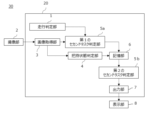
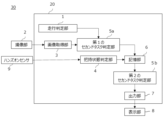
- FIG. 1 is a block diagram showing part of a vehicle equipped with an occupant monitoring device according to Embodiment 1.
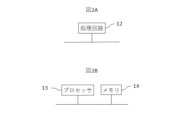
- FIG. FIG. 2 is a schematic diagram showing a hardware configuration example of the occupant monitoring device according to the first embodiment.
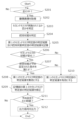
- FIG. 3 is a flow chart showing the processing operation of the occupant monitoring device according to the first embodiment.
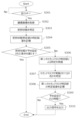
- FIG. 4 is a flow chart showing the processing operation of the occupant monitoring device according to the second embodiment.
- FIG. 5 is a flow chart showing the processing operation of the occupant monitoring device according to the third embodiment.
- FIG. 6 is a block diagram showing part of a vehicle equipped with an occupant monitoring device according to Embodiment 4.
- FIG. 7 is a block diagram showing part of a vehicle equipped with an occupant monitoring device according to Embodiment 5.
- FIG. 8 is a flow chart showing the processing operation of the occupant monitoring device according to the fifth embodiment.
- FIG. 1 is a block diagram showing part of a vehicle 30 equipped with an occupant monitoring device 20 according to Embodiment 1.
- the occupant monitoring device 20 determines whether or not the driver driving the vehicle 30 is performing the second task.
- the vehicle 30 is a car will be described, but any vehicle such as a motorcycle, a train, or an airplane may be used as long as it is operated by a person.
- a second task is an action other than driving performed by the driver while driving with at least one hand removed from the steering wheel.
- the second tasks are smoking, operating a mobile terminal, talking using a mobile terminal, eating and drinking, checking documents, and reading.
- the vehicle 30 includes a travel determination unit 1, an imaging unit 2, an image acquisition unit 3, a grip state determination unit 4, a second task determination unit 5, a storage unit 6, an output unit 7, and a display unit 8.
- the occupant monitoring device 20 includes a travel determination unit 1 , an image acquisition unit 3 , a grip state determination unit 4 , a second task determination unit 5 , a storage unit 6 and an output unit 7 .
- the second task determination section 5 has a first second task determination section 5a and a second second task determination section 5b.
- the travel determination unit 1 acquires travel information from the vehicle 30 indicating whether or not the vehicle 30 is traveling. Then, the travel determination unit 1 determines whether or not the vehicle 30 is running using the travel information, and outputs the determination result to the first second task determination unit 5a.
- the travel information is, for example, information indicating vehicle speed. The travel determination unit 1 determines that the vehicle 30 is not running when the vehicle speed is 0 km/h, and determines that the vehicle 30 is running when the vehicle speed is not 0 km/h.
- the imaging unit 2 is a camera provided inside the vehicle 30, and is installed on the instrument panel, dashboard, center display, A pillar, rearview mirror, or the like of the vehicle 30.
- the imaging unit 2 outputs a captured image of the driver of the vehicle 30 to the image acquiring unit 3 .
- the image acquisition unit 3 acquires the captured image from the imaging unit 2 that captures the driver of the vehicle 30 .
- the grip state determination unit 4 determines the grip state indicating whether or not the driver is gripping the steering wheel with both hands. Further, when the gripping state determining unit 4 determines that the driver does not grip the steering wheel with both hands, the gripping state determination unit 4 determines that the driver is gripping the steering wheel with the right hand and the driver is gripping the steering wheel with the left hand. It may be further determined which of the state and the state in which the driver is not gripping the steering wheel.
- a gripping state is a state in which the driver's hand is in contact with the steering wheel.
- the state in which the driver holds the steering wheel with both hands is “both hands”
- the state in which the driver holds the steering wheel in the right hand is “right hand”
- the state in which the driver holds the steering wheel with the left hand is “both hands”.
- a state in which the driver does not grip the steering wheel with both hands is referred to as a state in which both hands are not gripped.
- the gripping state determination unit 4 may determine the "right hand” and the "left hand” as "one hand”, which is the state in which the driver grips the steering wheel with one hand.
- the gripping state determination unit 4 detects a plurality of characteristic points of the driver in the captured image. Feature points are used to generate a so-called skeleton model. Then, the gripping state determination unit 4 uses the plurality of detected feature points to generate a skeletal model of the driver. Next, the grip state determination unit 4 uses the generated skeleton model to detect the tilt angle of the driver's shoulder or the tilt angle of the driver's arm. Thereby, the gripping state determination unit 4 can estimate the direction in which the driver's arms are facing, and can estimate whether or not the driver's hands are gripping the steering wheel.
- the method by which the gripping state determination unit 4 determines the gripping state is not limited to the method described above.
- the grip state determination unit 4 may determine whether or not the driver's hand is in contact with the steering wheel from the captured image, and determines whether the driver's hand is on the steering wheel side from a predetermined position.
- the second task determination unit 5 determines whether or not the second task is being executed.
- the second task determination section 5 has a first second task determination section 5a and a second second task determination section 5b.
- the first second task determination unit 5a determines whether or not the second task is being performed when the running determination unit 1 determines that the vehicle 30 is running.
- the second task determination unit 5b determines whether or not the second task is being performed based on the determination result of the first second task determination unit 5a and the determination result of the grip state determination unit 4.
- the first second task determination unit 5a uses the captured image acquired by the image acquisition unit 3 to determine whether or not the second task is being performed. In addition, the first second task determination unit 5a may further determine the type of the second task when determining that the second task is being performed.
- the type of the second task is at least one or more of smoking, mobile terminal operation, conversation using the mobile terminal, eating and drinking, checking documents, and reading.
- the determination by the first second task determination unit 5a can be performed by, for example, pattern matching processing.
- the first second task determination unit 5a stores in advance pattern images to be used for pattern matching processing.
- Pattern images include, for example, an image of a person smoking, an image of a person operating a mobile terminal, an image of a person having a conversation using a mobile terminal, an image of a person eating and drinking, and an image of a document. Images of people checking, images of people reading, images of cigarettes, images of mobile devices, images of food such as rice balls, images of containers such as PET bottles containing beverages, images of documents , and an image of a book. Then, the first second task determination unit 5a calculates the degree of similarity between the part of the captured image acquired by the image acquisition unit 3 and the pattern image, thereby determining whether or not the second task is being performed. determine the type.
- the determination by the first second task determination unit 5a may be performed using a known algorithm of supervised learning.
- the first second task determination unit 5a determines whether or not the second task is being performed and the type of the second task by so-called supervised learning.
- Supervised learning is a method of inferring results from inputs by giving a set of input and result (supervised label) data to a learning device as learning data, learning the features in those learning data.
- the first second task determination unit 5a has a machine learning model generated according to learning data in which image information and types of second tasks are combined in advance, and the captured image acquired by the image acquisition unit 3 is input to the machine learning model. By doing so, the second task is determined.
- Deep learning may be used as a learning algorithm to generate the machine learning model, or the machine learning model may be trained according to other known methods such as genetic programming, functional logic programming, or support vector machines. You may let
- the method of determining whether or not the second task is being performed and the type of the second task by the first second task determination unit 5a are not limited to the above methods.
- the imaging unit 2 has an infrared camera, and the image acquisition unit 3 acquires information on the heat distribution of the imaging area of the imaging unit 2 .
- the first second task determination unit 5a may determine whether or not the second task of smoking is being performed by determining the presence or absence of cigarettes based on the heat distribution information.
- a second task is an action other than driving that the driver performs while driving with at least one hand off the steering wheel. Therefore, for example, the act of the driver holding a cigarette in one hand and gripping the steering wheel with both hands is not a second task.
- the first second task determining unit 5a determines that the distance between the driver's mouth and the cigarette estimated from the captured image is equal to or less than a preset threshold value. , for example, 2 cm or less, it may be determined that the second task of smoking is being performed.
- a method of estimating the distance between the driver's mouth and the cigarette estimated from the captured image obtains the coordinate distance between the driver's mouth and the cigarette and the coordinate distance between the driver's eyes from the captured image. It is preferable to estimate the distance between the driver's mouth and the cigarette based on the standard distance between the eyes.
- the first second task determination unit 5a determines if the distance between the driver's face and the mobile terminal estimated from the captured image is a preset threshold value or less, for example, 5 cm or less. , it may be determined that the second task of conversation using the mobile terminal is being performed.
- the second task determination unit 5b determines whether or not the determination by the first second task determination unit 5a is to be performed, or whether or not the first second task determination unit 5a determines whether the grip state determined by the grip state determination unit 4 is performed. It is determined whether or not to validate the determination result by .
- the second second task determination unit 5b determines that the gripping state determination unit 4 determines that the second task is being performed when the first second task determination unit 5a determines that the second task is being performed. If it is determined that the task is not in the state, the determination result of the first second task determination unit 5a is validated.
- the second second task determination unit 5b determines that the grip state determination unit 4 is in the "both hands" grip state. If determined, the determination result of the first second task determination unit 5a is invalidated.
- the grip state determination unit 4 and the second task determination unit 5 perform determination at preset time intervals.
- the preset time intervals are, for example, 0.5 second intervals.
- the storage unit 6 stores the judgment result of the second task judgment unit 5 .
- the storage unit 6 can store a preset amount of past determination results, and stores at least the determination results of the second task determination unit 5 for the previous and latest captured images. Moreover, the storage unit 6 may further store the determination result of the gripping state determination unit 4 .
- the output unit 7 outputs to the display unit 8 a signal indicating that the second task is being executed.
- the display unit 8 is, for example, a speaker or a display provided on the vehicle 30 .
- the display unit 8 displays at least one of a voice and an image prompting the user to finish the execution of the second task.
- FIG. 2 is a schematic diagram showing a hardware configuration example of the occupant monitoring device 20 according to the first embodiment.
- the travel determination unit 1, the image acquisition unit 3, the grip state determination unit 4, the second task determination unit 5, the storage unit 6, and the output unit 7 of the occupant monitoring device 20 are dedicated hardware as shown in FIG. 2A. It may be a circuit 12 or it may be a processor 13 executing a program stored in a memory 14 as shown in FIG. 2B.
- each component of the occupant monitoring device 20 is dedicated hardware as shown in FIG. Specific Integrated Circuit), FPGA (Field-programmable Gate Array), or a combination thereof.
- Each function of each component of the occupant monitoring device 20 may be realized by the processing circuit 12 , or the functions of each component may be collectively realized by one processing circuit 12 .
- each component of the occupant monitoring device 20 when each component of the occupant monitoring device 20 is the processor 13, the function of each component is realized by software, firmware, or a combination of software and firmware.
- Software or firmware is written as a program and stored in memory 14 .
- the processor 13 implements the function of each component of the occupant monitoring device 20 by reading and executing the program stored in the memory 14 . That is, each component of the occupant monitoring device 20 executes a program that, when executed by the processor 13, results in the execution of each step shown in FIGS.
- a memory 14 is provided for storing. It can also be said that these programs cause a computer to execute the procedures or methods of each component of the occupant monitoring device 20 .
- the processor 13 is, for example, a CPU (Central Processing Unit), a processing device, an arithmetic device, a processor, a microprocessor, a microcomputer, or a DSP (Digital Signal Processor).
- the memory 14 may be non-volatile or volatile semiconductor memory such as RAM (Random Access Memory), ROM (Read Only Memory), flash memory, EPROM (Erasable Programmable ROM), EEPROM (Electrically EPROM), etc. However, it may be a magnetic disk such as a hard disk or a flexible disk, or an optical disk such as a mini disk, a CD (Compact Disc), or a DVD (Digital Versatile Disc).
- each configuration of the occupant monitoring device 20 may be partly realized by dedicated hardware and partly realized by software or firmware.
- the processing circuit 12 in the occupant monitoring device 20 can realize each of the functions described above by hardware, software, firmware, or a combination thereof.
- FIG. 3 is a flow chart showing the processing operation of the occupant monitoring device 20 of the first embodiment.
- step S101 the travel determination unit 1 determines whether or not the vehicle 30 is running.
- the running determination unit 1 determines that the vehicle 30 is running (YES in step S101)
- it outputs the determination result to the first second task determination unit 5a.
- the running determination unit 1 determines that the vehicle 30 is not running (NO in step S101)
- the running determination unit 1 repeats step S101 until it determines that the vehicle 30 is running. That is, since the second task is allowed to be performed while the vehicle 30 is stopped, the occupant monitoring device 20 does not perform the determination of the second task.
- step S102 the second task determination unit 5 causes the image acquisition unit 3 to acquire a captured image from the imaging unit 2 that captures an image of the driver.
- step S103 the grip state determination unit 4 uses the captured image acquired by the image acquisition unit 3 to determine the grip state indicating whether or not the driver is gripping the steering wheel with both hands.
- step S104 the first second task determination unit 5a uses the captured image acquired by the image acquisition unit 3 to determine whether or not the second task is being performed. In addition, when the first second task determination unit 5a determines that the second task is being performed, it may further determine the type of the second task. When the first second task determining unit 5a determines that the second task is being executed (YES in step S104), the process proceeds to step S105. When the first second task determination unit 5a determines that the second task is not executed (NO in step S104), the process proceeds to step S106.
- step S105 the storage unit 6 stores the judgment result of the first second task judgment unit 5a. After the processing operation of step S105, the process proceeds to step S107, and after the processing operation of step S106, the process proceeds to step S110.
- the second second task determination unit 5b determines whether or not the second task is being performed based on the determination result of the first second task determination unit 5a and the determination result of the grip state determination unit 4. judge.
- step S107 using the determination result of the grip state determination unit 4, the second second task determination unit 5b determines whether or not the grip state satisfies a preset condition.
- the preset condition of the gripping state in the present embodiment is that the driver grips the steering wheel with both hands, that is, the gripping state is "both hands".
- the gripping state determining unit 4 determines that the gripping state is "both hands"
- the driver is gripping the steering wheel with both hands, so both hands are physically occupied. Therefore, the result of determination that the second task is being executed by the first second task determination unit 5a (YES in step S104) is erroneous. Therefore, in step S108, the second second task determination section 5b determines that the determination result of the first second task determination section 5a is invalid.
- step S109 the second second task determination section 5b corrects the determination result of the first second task determination section 5a stored in the storage section 6 in step S105. More specifically, the second second task determination unit 5b corrects the latest determination result of the second task determined by the first second task determination unit 5a from execution of the second task to non-execution of the second task. .
- step S110 when the gripping state determination unit 4 determines that the gripping state is not “both hands” (NO in step S107), the second second task determination unit 5b determines that the determination result of the first second task determination unit 5a is valid. (step S110). Also, in step S104, when the first second task determination unit 5a determines that the second task is not performed, the second second task determination unit 5b validates the determination result of the first second task determination unit 5a. (step S110). When the second task determination unit 5b determines that the determination result of the first second task determination unit 5a is valid (step S110), the first second task determination unit 5a stored in steps S105 and S106 Since the processing operation for correcting the determination result is unnecessary, the process proceeds to step S111.
- step S111 the second task determination unit 5b determines whether or not the second task has been continuously performed for a preset time based on the second task determination result stored in the storage unit 6.
- the first is a case where the state in which the second task is being performed continues for a preset time when the first second task determination unit 5a determines whether or not the second task is being performed.
- the determination result stored in the storage unit 6 indicates whether the second task of the same type is selected.
- the preset time is set to a time during which it is expected that if the second task is continuously performed, the driver's concentration on driving will decrease, and since the driver is not holding the steering wheel with both hands, it is expected that the driver will not be able to respond quickly. good.
- the amount of time during which it is expected that the driver's concentration on driving will decrease and that the driver will not be able to handle the steering wheel with both hands will differ depending on the type of the second task. Therefore, the preset time may be set differently depending on the type of the second task. For example, the preset time is 2 to 3.5 seconds for the second task of smoking, and 3 to 4.5 seconds for the second task of conversation using a portable terminal.
- step S109 if the second task is not continuously performed for the preset time, the processing operation of the occupant monitoring device 20 is terminated.
- step S112 the second task determination unit 5b causes the output unit 7 to output a signal to the display unit 8 indicating that the second task is being performed. Then, the display unit 8 displays at least one of a voice and an image prompting the driver to finish the execution of the second task. With the above, the processing operation of the occupant monitoring device 20 is finished.
- the occupant monitoring device 20 in the present embodiment uses the captured image to determine whether or not the second task, which is an action other than driving performed by the driver while driving, is being performed.
- a second task determination unit 5 b is provided for determining whether or not the second task is being executed based on the determination result of the state determination unit 4 . Accordingly, the occupant monitoring device 20 can determine the second task with high accuracy.
- the first second task determination unit 5a determines that the smoking second task is being performed using the captured image.
- the cigarette is smaller than the handle, it may be erroneously determined that the smoking second task is being performed even when the cigarette is not actually captured in the captured image.
- the second task of smoking has been described as an example, but the same applies to other second tasks. In other words, there is a possibility that the determination result using the captured image in the first second task determination unit 5a is an erroneous determination.
- the gripping state determination unit 4 determines the gripping state using a captured image.
- the handle is larger than, for example, a cigarette
- the holding state can be determined with higher accuracy than the second task of the cigarette. That is, the determination result of the gripping state determination unit 4 is more accurate than the determination result of the first second task determination unit 5a. Therefore, the second second task determination unit 5b determines whether or not the second task is being performed, taking into account the determination result of the gripping state determination unit 4 in addition to the determination result of the first second task determination unit 5a. do. This makes it possible to determine the second task with higher accuracy.
- the second second task determination unit 5b determines whether or not to validate the determination result of the first second task determination unit 5a according to the gripping state. More specifically, when the first second task determination unit 5a determines that the second task is being performed, the second second task determination unit 5b determines whether the gripping state determination unit 4 indicates that the gripping state is "both hands". If it is determined that the state is not the state, the determination result of the first second task determination unit 5a is validated. The determination result of the part 5a is invalidated. While the driver is holding the steering wheel with both hands, the driver cannot perform the second task because both hands are occupied.
- the second task determination section 5b invalidates the determination result of the first second task determination section 5a, thereby making it possible to determine the second task with higher accuracy.
- the second task is an action performed by the driver with at least one hand removed from the steering wheel. or one or more.
- the driver may lose concentration on driving and may not be able to respond quickly because he/she is not holding the steering wheel with both hands.
- the occupant monitoring device 20 of the present embodiment can accurately determine a second task in which the driver may not be able to quickly respond because the driver's concentration on driving has decreased and the driver is not gripping the steering wheel with both hands. can be done.
- the second second task determination unit 5b outputs a signal to the display unit 8 indicating that the second task is being performed to the output unit 7 when the second task is continuously performed for a preset time. output.
- the display unit 8 provided in the vehicle 30 displays at least one of a voice and an image prompting the user to finish the execution of the second task according to the signal from the output unit 7 . This encourages the driver to finish the second task, so that the driver can concentrate on driving and try to drive safely by gripping the steering wheel with both hands.
- the output unit 7 outputs a signal to the display unit 8 every time the first second task determination unit 5a determines that the second task is being performed, the display unit 8 displays a large number of times, which annoys the driver. feel. Therefore, the second task determination unit 5b causes the output unit 7 to output a signal when the second task is continuously performed for a preset time. As a result, if the second task continues for a period of time during which it is expected that the driver will not be able to concentrate on driving and will not be able to handle the steering wheel with both hands, it will be possible to monitor the occupants.
- the device 20 may indicate to finish performing the second task. Therefore, the occupant monitoring device 20 can suppress annoyance caused by too many displays on the display unit 8 .
- the occupant monitoring device 20 also includes a storage section 6 that stores the determination results of the first second task determination section 5a and the second second task determination section 5b. Then, the first second task determination unit 5a determines the type of the second task when determining that the second task is being performed.
- the second task determination unit 5b causes the output unit 7 to output a signal when the determination result stored in the storage unit 6 indicates that the second task of the same type has been continuously performed for a preset time. .
- the preset time differs depending on the type of the second task. Depending on the type of the second task, how long the second task is continuously performed may reduce the driver's ability to concentrate on driving, and the driver may not be able to respond quickly because the driver is not holding the steering wheel with both hands. . Therefore, by setting the preset time differently depending on the type of the second task, it is possible to prompt the driver to finish the second task at the optimum timing for the type of the second task being performed. can.
- the occupant monitoring device 20 includes the storage unit 6, but the determination result of the second task determination unit 5 may be transmitted to and stored in a server device provided outside the vehicle 30. .
- the output unit 7 outputs a signal indicating that the second task is being performed to the display unit 8, and the display unit 8 informs the driver of the second task.
- the determination result of the second task by the occupant monitoring device 20 can be used by companies that operate commercial vehicles such as trucks and taxis.
- a company that operates commercial vehicles has a server device for managing the commercial vehicles.
- the output unit 7 may output a signal indicating that the second task is being executed to the server device.
- the management company can monitor whether the employee who is the driver of the business vehicle is performing the second task.
- Embodiment 2 An occupant monitoring device 20 according to Embodiment 2 will be described.
- the configuration of the occupant monitoring device 20 of the second embodiment is similar to that of the occupant monitoring device 20 of the first embodiment.
- the same reference numerals are assigned to the same configurations as in the first embodiment.
- the second task determination unit 5b of the present embodiment determines that the determination result of the first second task determination unit 5a is determined when the gripping state does not satisfy a preset condition. is validated, and if the state of the second task changes and the gripping state satisfies a preset condition, the determination result of the first second task determination unit 5a is invalidated.
- a change in the state of the second task means a change in the state of whether or not the second task is being implemented, or a change in the type of the second task. Specifically, when the state where the second task is not performed changes to the state where the second task is performed, and when the second task of smoking changes to the second task of conversation using a mobile terminal.
- the preset conditions for the gripping state of the present embodiment are at least one or more of the three conditions shown in Table 1.
- the first grip state condition is that the driver continues to grip the steering wheel with both hands, that is, the previous determination result of the grip state determination unit 4 is "both hands", and the latest grip state determination is performed. This is the case where the determination result of part 4 is "both hands".
- both hands of the driver are physically occupied and there is no possibility that the state of the second task will change.
- the second grip state condition is when the driver changes from gripping the steering wheel with both hands to not gripping the steering wheel with both hands. "both hands" and the latest determination result of the gripping state determining unit 4 is "right hand", “left hand”, “one hand” or “not gripped”.
- the second preset grip state condition is set when the preset time interval determined by the grip state determination unit 4 is sufficiently short, for example, shorter than 0.5 seconds. For example, the action of releasing the handle and changing the state of the second task cannot be performed at the same time in a time shorter than 0.5 seconds.
- a preset time interval determined by the gripping state determining unit 4 stored in the storage unit 6 and the first second task determining unit 5a determined by the gripping state determining unit 4 is determined by the operation of releasing the hand from the handle and the second task. If it is long enough to simultaneously change the state of , for example, if it is longer than 0.5 seconds, the condition for the second gripping state need not be set.
- the third gripping state condition is when the driver changes from not gripping the steering wheel with both hands to gripping the steering wheel with both hands, that is, the previous determination result of the gripping state determination unit 4 is "right hand”. , ⁇ left hand'', ⁇ one hand'', or ⁇ not gripped'', and the latest determination result of the grip state determination unit 4 is ⁇ both hands''.
- the state of the driver not gripping the steering wheel with both hands changes to the state of gripping the steering wheel with both hands, the operation of gripping the steering wheel with both hands and changing the state of the second task cannot be performed at the same time.
- FIG. 4 is a flow chart showing the processing operation of the occupant monitoring device 20 of the second embodiment.
- Steps S201 and S202 are the same as steps S101 and S102 of the embodiment, respectively.
- step S203 the first second task determination unit 5a uses the captured image acquired by the image acquisition unit 3 to determine whether or not the second task is being performed. In addition, when the first second task determination unit 5a determines that the second task is being performed, it may further determine the type of the second task.
- step S204 the grip state determination unit 4 determines the grip state indicating whether or not the driver is gripping the steering wheel with both hands. Steps S203 and S204 may be performed at the same time, and step S203 may be performed after step S204.
- step S205 the storage unit 6 stores the determination result of the first second task determination unit 5a in step S203 and the determination result of the grip state determination unit 4 in step S204.
- the second task determination unit 5b determines whether the second task is determined based on the determination result of the first second task determination unit 5a and the determination result of the grip state determination unit 4 stored in the storage unit 6. Determine whether or not it is implemented.
- the second second task determination unit 5b determines whether or not the state of the second task has changed. That is, the second task determination unit 5b detects that the state of the second task has changed when the latest determination result of the first second task determination unit 5a and the previous determination result of the first second task determination unit 5a are different. If the latest determination result of the first second task determination unit 5a and the previous determination result of the first second task determination unit 5a are the same, it is determined that there is no change in the state of the second task.
- a change in the state of the second task means a change in the state of whether or not the second task is being executed, or a change in the type of the second task.
- the second second task determination unit 5b determines whether or not the gripping state satisfies a preset condition (step S207).
- the preset conditions for the grip state are at least one or more of the three conditions shown in Table 1 above.
- step S207 If the gripping state satisfies the preset condition (YES in step S207), the second second task determination unit 5b determines that the determination result of the first second task determination unit 5a is invalid (step S208), and step Proceed to S209.
- step S209 the second task determination section 5b corrects the determination result of the first second task determination section 5a stored in the storage section 6 in step S205. More specifically, the second second task determination unit 5b deletes the latest determination result of the second task determined by the first second task determination unit 5a so that there is no data, or the previous determination result of the second task is deleted. Correct to the same judgment result as
- the second second task determination unit 5b determines that the determination result of the first second task determination unit 5a is valid (step S210). Moreover, even when the state of the second task does not change in step S206, the second second task determination unit 5b determines that the determination result of the first second task determination unit 5a is valid (step S210).
- Steps S211 and S212 are the same as steps S111 and S112 of the embodiment, respectively. With the above, the processing operation of the occupant monitoring device 20 is finished.
- the occupant monitoring device 20 in the present embodiment uses captured images to determine whether or not a second task, which is an action other than driving performed by the driver while driving, is being performed.
- a first second task determination unit 5a a grip state determination unit 4 that determines a grip state indicating whether or not the driver is gripping the steering wheel with both hands, and a first second task determination unit 5a.
- a second task determination unit 5 b is provided for determining whether or not the second task is being performed based on the determination result and the determination result of the gripping state determination unit 4 . Accordingly, the occupant monitoring device 20 can determine the second task with high accuracy.
- the second second task determination unit 5b determines whether or not to validate the determination result of the first second task determination unit 5a according to the gripping state. More specifically, when the state of the second task changes and the grip state does not satisfy the preset condition, the second task determination unit 5b makes the determination of the first second task determination unit 5a. The result is validated, and if the gripping state satisfies a preset condition when the state of the second task changes, the determination result of the first second task determination unit 5a is invalidated. The second task determination unit 5b determines that the state of the second task has changed when the latest determination result of the first second task determination unit 5a and the previous determination result of the first second task determination unit 5a are different.
- the preset condition of the gripping state is a condition in which there is no possibility that the state of the second task will change. Therefore, when the state of the second task changes, if the gripping state is the preset condition, the determination result of the first second task determination unit 5a is erroneous. Therefore, the second task determination section 5b invalidates the determination result of the first second task determination section 5a, thereby making it possible to determine the second task with higher accuracy.
- the preset condition of the gripping state is that, when the driver continues to grip the steering wheel with both hands, the state in which the driver grips the steering wheel with both hands is at least one of the following: when the driver changes from not gripping the steering wheel with both hands to the driver gripping the steering wheel with both hands. That's it.
- These conditions are conditions under which there is no possibility that the state of the second task will change.
- Embodiment 3 An occupant monitoring device 20 according to Embodiment 3 will be described.
- the configuration of the occupant monitoring device 20 of the third embodiment is the same as the configuration of the occupant monitoring device 20 of the first or second embodiment. Components similar to those of the first and second embodiments are denoted by the same reference numerals.
- the second A determination is made by the second task determination unit 5b.
- the determination is performed by the second task determination unit 5b.
- the second task determination unit 5b determines whether or not to perform the determination by the first second task determination unit 5a according to the gripping state. More specifically, when the gripping state does not satisfy a preset condition, the second task determining unit 5b causes the first second task determining unit 5a to make a determination so that the gripping state is set in advance. If the above condition is satisfied, the judgment by the first second task judging section 5a is not carried out.
- FIG. 5 is a flow chart showing the processing operation of the occupant monitoring device 20 of the third embodiment.
- Steps S301 to S303 are the same as steps S101 to S103 of the first embodiment, respectively.
- step S ⁇ b>304 the storage unit 6 stores the determination result of the gripping state determination unit 4 .
- step S305 the second task determination unit 5b determines whether or not the gripping state satisfies a preset condition.
- a preset condition of the gripping state is that when the driver continues to grip the steering wheel with both hands, the driver grips the steering wheel with both hands. and at least one or more of a state in which the driver does not grip the steering wheel with both hands to a state in which the driver grips the steering wheel with both hands.
- the second second task determination unit 5b does not cause the first second task determination unit 5a to perform the determination, and the occupant monitoring device 20 performs the processing. end the action.
- the second second task determination unit 5b causes the first second task determination unit 5a to perform determination (step S306).
- the first second task determination unit 5a determines whether or not the second task is being executed (step S307). Further, in step S307, the first second task determination unit 5a may further determine the type of the second task when the second task is being performed.
- step S308 the storage unit 6 stores the judgment result of the first second task judgment unit 5a.
- Steps S309 and S310 are the same as steps S111 and S112 of the first embodiment, respectively. With the above, the processing operation of the occupant monitoring device 20 is completed.
- the occupant monitoring device 20 in the present embodiment uses captured images to determine whether or not a second task, which is an action other than driving performed by the driver while driving, is being performed.
- a first second task determination unit 5a a grip state determination unit 4 that determines a grip state indicating whether or not the driver is gripping the steering wheel with both hands, and a first second task determination unit 5a.
- a second task determination unit 5 b is provided for determining whether or not the second task is being performed based on the determination result and the determination result of the gripping state determination unit 4 . Accordingly, the occupant monitoring device 20 can determine the second task with high accuracy.
- the second second task determination unit 5b determines whether or not to perform the determination by the first second task determination unit 5a according to the gripping state. More specifically, when the gripping state does not satisfy a preset condition, the second task determining unit 5b causes the first second task determining unit 5a to make a determination so that the gripping state is set in advance. If the above condition is satisfied, the judgment by the first second task judging section 5a is not carried out. As a result, it is possible to prevent erroneous determination by the first second task determining unit 5a when the gripping state satisfies a preset condition, so that the second task can be determined with high accuracy.
- the second second task determining section 5b omits the determination processing in the first second task determining section 5a. be able to. As a result, the processing load on the occupant monitoring device 20 can be reduced.
- FIG. 6 is a block diagram showing part of a vehicle 30 equipped with an occupant monitoring device 20 according to the fourth embodiment.
- the gripping state determination unit 4 determines the gripping state using a captured image.
- the gripping state determination unit 4 uses the hands-on signal from the hands-on sensor 9 to determine the gripping state.
- Other configurations of the occupant monitoring device 20 are the same as those of any one of the first to third embodiments. The same reference numerals are assigned to the same configurations as in the first to third embodiments.
- the grip state determination unit 4 determines the grip state indicating whether or not the driver is gripping the steering wheel with both hands. In other words, the gripping state determination unit 4 determines which of the gripping states is "both hands", “right hand”, “left hand”, “one hand”, and "no grip”.
- the hands-on sensor 9 is provided on the steering wheel of the vehicle 30, and detects any one of a state in which the driver touches the steering wheel with both hands, a right hand, a left hand, a hand, and both hands. A hands-on signal is output to the grasping state determination unit 4 .
- the hands-on sensor 9 is a pressure sensor is shown.
- Hands-on sensors 9 are provided on the left and right sides of the steering wheel, respectively.
- the hands-on sensors 9 may be provided on the entire left and right halves of the steering wheel, respectively, or may be provided only on locations that are assumed to be gripped.
- the hands-on sensor 9 detects a current value corresponding to the pressure, and determines that the driver's hand has touched the steering wheel when a current value equal to or greater than a preset threshold value is detected. For example, when both the hands-on sensors 9 provided on the left and right sides of the steering wheel detect a current value equal to or greater than a preset threshold value, the hands-on sensor 9 outputs a hands-on signal indicating that both hands of the driver are touching the steering wheel. .
- the hands-on sensor 9 When only the hands-on sensor 9 provided on the right side of the steering wheel detects a current value equal to or greater than a preset threshold value, the hands-on sensor 9 outputs a hands-on signal indicating that the right hand or one hand of the driver is touching the steering wheel.
- the hands-on sensor 9 When only the hands-on sensor 9 provided on the left side of the steering wheel detects a current value equal to or higher than a preset threshold value, the hands-on sensor 9 outputs a hands-on signal indicating a state in which the driver's left hand or one hand touches the steering wheel.
- both the hands-on sensors 9 provided on the left and right sides of the steering wheel detect a current value equal to or greater than a preset threshold value
- the hands-on sensors 9 output a hands-on signal indicating that both hands of the driver are not touching the steering wheel. do.
- the grip state determination unit 4 uses the hands-on signal from the hands-on sensor 9 to determine the grip state.
- the occupant monitoring method by the occupant monitoring device 20 is the same as the occupant monitoring method by the occupant monitoring device 20 of the first to third embodiments.
- the gripping state determination unit 4 determines the gripping state indicating whether or not the driver is gripping the steering wheel with both hands. At that time, the gripping state determination unit 4 uses the hands-on signal from the hands-on sensor 9 to determine the gripping state.
- the occupant monitoring device 20 in the present embodiment uses captured images to determine whether or not a second task, which is an action other than driving performed by the driver while driving, is being performed.
- a first second task determination unit 5a a grip state determination unit 4 that determines a grip state indicating whether or not the driver is gripping the steering wheel with both hands, and a first second task determination unit 5a.
- a second task determination unit 5 b is provided for determining whether or not the second task is being performed based on the determination result and the determination result of the gripping state determination unit 4 . Accordingly, the occupant monitoring device 20 can determine the second task with high accuracy.
- the gripping state determination unit 4 determines the gripping state using hands-on signals from hands-on sensors 9, which are pressure sensors provided on the left and right sides of the steering wheel.
- the hands-on sensor 9 detects a current value equal to or greater than a preset threshold when the driver's hand touches the steering wheel. Therefore, the grip state can be determined more accurately when the hands-on sensor 9 is used to determine the grip state than when the captured image is used to determine the grip state.
- the hands-on sensor 9 may be a capacitive sensor or a temperature sensor. If the hands-on sensor 9 is a capacitive sensor, the steering wheel has electrodes, and the gripping state is determined based on the capacitance that varies depending on the distance between the driver's hand and the electrodes. If the hands-on sensor 9 is a temperature sensor, the part of the steering wheel gripped by the driver will be warmer than other parts of the steering wheel due to body temperature. Therefore, when the temperature measured by the temperature sensor is equal to or higher than a preset threshold value, it may be determined that the handle is being gripped.
- the gripping state determination unit 4 may determine the gripping state using the hands-on signal of the hands-on sensor 9, which is a capacitance sensor or a temperature sensor provided on each of the left and right sides of the steering wheel.
- the grip state can be determined more accurately when the hands-on sensor 9 is used to determine the grip state than when the captured image is used to determine the grip state. can do.
- FIG. 7 is a block diagram showing part of a vehicle 30 equipped with an occupant monitoring device 20 according to the fourth embodiment.
- a vehicle 30 of the present embodiment has an automatic driving control unit 10 that performs automatic driving and an automatic driving level control unit 11 that controls the level of automatic driving.
- the same reference numerals are assigned to the same configurations as in the first embodiment.
- the automatic driving control unit 10 is composed of a driving support ECU and an automatic driving ECU.
- the driving assistance ECU is an electronic control unit that realizes a driving assistance function that assists the driving operation of the driver.
- the driver assistance ECU enables advanced driver assistance or partially automated cruise control at level 2 or lower in the automated driving level.
- the automatic driving ECU is an electronic control unit that realizes an automatic driving function capable of performing the driving operation on behalf of the driver.
- the autonomous driving ECU enables autonomous driving of level 3 or higher, in which the system of the vehicle 30 is the main control subject, only within a limited operational design area set in advance.
- the driver is the subject of all driving actions.
- the driving support ECU of the vehicle 30 implements either vehicle steering or vehicle driving and vehicle braking, and all other driving actions implement be the driver.
- the driving assistance ECU of the vehicle 30 is the subject of driving operations such as vehicle steering, vehicle driving, and vehicle braking.
- the driver becomes the subject of monitoring the surroundings, monitors the implementation status of the driving operation by the vehicle 30, and immediately performs actions such as gripping the steering wheel so as to always intervene in the driving operation. Must remain operable.
- the autonomous driving ECU of the vehicle 30 is responsible for all driving actions such as vehicle steering, vehicle driving, vehicle braking, and surrounding monitoring.
- the driver can perform the second task within a safe range without constantly monitoring the execution status of the driving action by the automatic driving ECU.
- the safe allowable range may be determined legally or may be determined based on safety in actual driving.
- the automated driving level is level 0 to 2
- the driver is prohibited from performing the second task, but when the automated driving level is level 3, the second task is performed within a safe range. can do.
- the second task can be executed even when the automatic driving level is level 4 or higher.
- the automatic driving level control unit 11 performs control to switch the automatic driving level. Also, the automatic driving level control unit 11 transmits a signal indicating the automatic driving level to the second second task determination unit 5b and the automatic driving control unit 10 .
- the display unit 8 displays at least one of a voice and an image prompting the driver to finish the second task. At this time, the display unit 8 should also display to the driver that the automatic driving is finished.
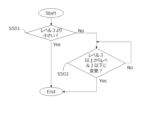
- FIG. 8 is a flow chart showing the processing operation of the occupant monitoring device 20 of the fifth embodiment.
- step S501 the second task determination unit 5b acquires information indicating the current level of automatic driving level from the automatic driving level control unit 11, and determines whether the automatic driving level is lower than level 3. . If the automatic driving level is lower than level 3, that is, from level 0 to level 2 (YES in step S501), the processing of the occupant monitoring device 20 described in any one of the first to third embodiments is omitted in FIG. perform the action.
- the second second task determination unit 5b performs control to change the automatic driving level from level 3 or higher to level 2 or lower in the automatic driving level control unit 11. It is determined whether or not to do so (step S502). For example, when performing control to change the automatic driving level from level 3 to level 2, the automatic driving level control unit 11 is controlled by the navigation device so that the vehicle 30 travels outside the preset limited operation design area. This is the case when information that is scheduled to be acquired is acquired.
- step S502 If the control for changing the automatic driving level from level 3 or higher to level 2 or lower is not performed (NO in step S502), that is, if the automatic driving level is maintained at level 3 or higher, the processing operation of step S502 is repeated. This is because the execution of the second task is allowed when the automatic driving level is level 3 or higher, so there is no need to determine whether the second task is being executed.
- the occupant monitoring device 20 in the present embodiment uses captured images to determine whether or not a second task, which is an action other than driving performed by the driver while driving, is being performed.
- a first second task determination unit 5a a grip state determination unit 4 that determines a grip state indicating whether or not the driver is gripping the steering wheel with both hands, and a first second task determination unit 5a.
- a second task determination unit 5 b is provided for determining whether or not the second task is being performed based on the determination result and the determination result of the gripping state determination unit 4 . Accordingly, the occupant monitoring device 20 can determine the second task with high accuracy.
- the second task determination unit 5b determines that the second task is A determination is made as to whether or not it has been implemented. Thereby, it is determined whether or not the second task is being performed when the subject of driving is changed to the driver. Then, when the subject of driving is changed from the vehicle 30 to the driver, the driver can end the execution of the second task.
- the second task determination unit 5b does not determine whether the second task is being performed when the automatic driving level is level 3 or higher where the vehicle 30 is the subject of driving. As a result, the occupant monitoring device 20 does not determine whether or not the second task is being performed at level 3 or higher where the second task is allowed to be performed, thereby reducing the processing load.
- 1 travel determination unit 2 imaging unit, 3 image acquisition unit, 4 gripping state determination unit, 5a first second task determination unit, 5b second second task determination unit, 6 storage unit, 7 output unit, 8 display unit, 9 hands-on sensor, 10 automatic driving control unit, 11 automatic driving level control unit, 12 processing circuit, 13 processor, 14 memory, 20 occupant monitoring device, 30 vehicle
Landscapes
- Engineering & Computer Science (AREA)
- Multimedia (AREA)
- Signal Processing (AREA)
- Closed-Circuit Television Systems (AREA)
- Image Analysis (AREA)
- Traffic Control Systems (AREA)
Abstract
Description
例えば特許文献1では、セカンドタスクである喫煙を検出する喫煙検出装置が開示されている。特許文献1の喫煙検出装置は、車両の内部に設けられた撮像部により運転者の顔を撮像し、撮像画像を用いて運転者の顔向きを判定するとともに、顔向きに応じて煙草燃焼部の存在判別領域を設定する。そして、特許文献1の喫煙検出装置は、存在判別領域に煙草燃焼部の候補領域である高温領域を探索することにより、運転者の喫煙を検出する。
実施の形態1における乗員監視装置20について図1を用いて説明する。図1は、実施の形態1の乗員監視装置20を備えた車両30の一部を示すブロック図である。乗員監視装置20は、車両30を運転する運転者がセカンドタスクを実施しているか否かを判定する。ここで、車両30とは車である例を説明するが、バイク、電車、飛行機等の人の操作により動かされる乗物であればよい。セカンドタスクとは、運転者が少なくとも一方の手をハンドルから離した状態で、運転中に行う運転以外の行為である。例えば、セカンドタスクは喫煙、携帯端末の操作、携帯端末を用いた会話、飲食、書類の確認、及び読書である。図1に示すように、車両30は、走行判定部1、撮像部2、画像取得部3、把持状態判定部4、セカンドタスク判定部5、記憶部6、出力部7、及び表示部8を備える。乗員監視装置20は、走行判定部1、画像取得部3、把持状態判定部4、セカンドタスク判定部5、記憶部6、及び出力部7を備える。セカンドタスク判定部5は、第1のセカンドタスク判定部5aと第2のセカンドタスク判定部5bとを有する。
第1のセカンドタスク判定部5aは、あらかじめ画像情報およびセカンドタスクの種類が組み合わせられた学習用データに従って生成された機会学習モデルを備え、機械学習モデルに画像取得部3により取得した撮像画像を入力することで、セカンドタスクを判定する。
機械学習モデルを生成する学習アルゴリズムとして、深層学習(Deep Learning)を用いてもよいし、例えば、遺伝的プログラミング、機能論理プログラミング、又はサポートベクターマシン等の他の公知の方法に従って機械学習モデルに学習させてもよい。
本実施の形態では、第2のセカンドタスク判定部5bは、第1のセカンドタスク判定部5aにおいてセカンドタスクが実施されていると判定された場合に、把持状態判定部4が「両手」の把持状態ではないと判定した場合、第1のセカンドタスク判定部5aの判定結果を有効とする。そして、第2のセカンドタスク判定部5bは、第1のセカンドタスク判定部5aにおいてセカンドタスクが実施されていると判定された場合に、把持状態判定部4が「両手」の把持状態であると判定した場合、第1のセカンドタスク判定部5aの判定結果を無効とする。
記憶部6はセカンドタスク判定部5の判定結果を記憶する。記憶部6は予め設定された分の過去の判定結果を記憶でき、少なくとも前回と最新の撮像画像に対するセカンドタスク判定部5の判定結果を記憶する。また、記憶部6は把持状態判定部4の判定結果をさらに記憶してもよい。
以上により、乗員監視装置20の処理動作を終了する。
上述のとおり、本実施の形態における乗員監視装置20は、撮像画像を用いて、運転者が運転中に行う運転以外の行為であるセカンドタスクが実施されているか否かを判定する第1のセカンドタスク判定部5aと、運転者が両手でハンドルを把持している状態であるか否かを示す把持状態を判定する把持状態判定部4と、第1のセカンドタスク判定部5aの判定結果及び把持状態判定部4の判定結果に基づき、セカンドタスクが実施されているか否かを判定する第2のセカンドタスク判定部5bを備える。これにより、乗員監視装置20は、セカンドタスクの判定を高精度に行うことができる。
例えば、第1のセカンドタスク判定部5aにおいて、撮像画像を用いて、喫煙のセカンドタスクが実施されていると判定したとする。しかしながら、煙草はハンドルと比較して小さいため、実際には撮像画像中に煙草が写っていない場合にも喫煙のセカンドタスクが実施されていると誤判定される虞がある。また、二次元の撮像画像から煙草と運転者の口との距離を正確に推定することは困難である。そのため、例えば運転者が手に煙草を持ちつつ、両手でハンドルを把持している場合にも、撮像画像上では、運転者の顔と煙草の位置が近く判定されるため、誤って喫煙のセカンドタスクが実施されていると判定される虞がある。ここでは、喫煙のセカンドタスクを例に説明したが、他のセカンドタスクでも同様である。つまり、第1のセカンドタスク判定部5aにおける撮像画像を用いた判定結果は、誤判定である可能性がある。
運転者が両手でハンドルを把持している状態において、運転者は両手が塞がっているため、セカンドタスクを実施することはできない。そのため、運転者が両手でハンドルを把持している状態において、第1のセカンドタスク判定部5aはセカンドタスクが実施されていると判定した場合、第1のセカンドタスク判定部5aの判定結果は誤りである。そこで、第2のセカンドタスク判定部5bは第1のセカンドタスク判定部5aの判定結果を無効とすることにより、セカンドタスクの判定をより高精度に行うことができる。
実施の形態2における乗員監視装置20について説明する。実施の形態2の乗員監視装置20の構成は、実施の形態1の乗員監視装置20の構成と同様である。実施の形態1と同様の構成については、同一符号が付されている。

以上により、乗員監視装置20の処理動作を終了する。
第2のセカンドタスク判定部5bは、最新の第1のセカンドタスク判定部5aの判定結果と前回の第1のセカンドタスク判定部5aの判定結果とが異なる場合にセカンドタスクの状態が変化したと判定し、最新の第1のセカンドタスク判定部5aの判定結果と前回の第1のセカンドタスク判定部5aの判定結果とが同じ場合はセカンドタスクの状態に変化はないと判定する。
把持状態の予め設定された条件は、セカンドタスクの状態が変化する可能性がない条件である。そのため、セカンドタスクの状態が変化した場合に、把持状態が予め設定された条件である場合は、第1のセカンドタスク判定部5aの判定結果は誤りである。そこで、第2のセカンドタスク判定部5bは第1のセカンドタスク判定部5aの判定結果を無効とすることにより、セカンドタスクの判定をより高精度に行うことができる。
実施の形態3における乗員監視装置20について説明する。実施の形態3の乗員監視装置20の構成は、実施の形態1又は実施の形態2の乗員監視装置20の構成と同様である。実施の形態1及び実施の形態2と同様の構成については、同一符号が付されている。
実施の形態3の乗員監視装置20では、把持状態判定部4による把持状態の判定が実施された後に、第2のセカンドタスク判定部5bによる判定を実施する。そして、第2のセカンドタスク判定部5bは、把持状態に応じて、第1のセカンドタスク判定部5aによる判定を実施させるか否かを判定する。より具体的には、第2のセカンドタスク判定部5bは、把持状態が予め設定された条件を満たさない場合は、第1のセカンドタスク判定部5aによる判定を実施させ、把持状態が予め設定された条件を満たす場合は、第1のセカンドタスク判定部5aによる判定を実施させない。
以上により、乗員監視装置20の処理動作を終了する。
実施の形態4における乗員監視装置20について図6を用いて説明する。図6は実施の形態4の乗員監視装置20を備えた車両30の一部を示すブロック図である。実施の形態1では、把持状態判定部4は撮像画像を用いて把持状態を判定する例を示した。実施の形態4では、把持状態判定部4はハンズオンセンサ9のハンズオン信号を用いて把持状態を判定する。その他の乗員監視装置20の構成は実施の形態1から3のいずれか1つと同様である。実施の形態1から3と同様の構成については、同一符号が付されている。
把持状態判定部4は、ハンズオンセンサ9のハンズオン信号を用いて把持状態を判定する。
実施の形態5における乗員監視装置20について図7を用いて説明する。図7は実施の形態4の乗員監視装置20を備えた車両30の一部を示すブロック図である。本実施の形態の車両30は、自動運転を実施する自動運転制御部10、及び自動運転レベルを制御する自動運転レベル制御部11を有する。実施の形態1と同様の構成については、同一符号が付されている。
Claims (15)
- 車両の運転者を撮像する撮像部から撮像画像を取得する画像取得部と、
前記撮像画像を用いて、前記運転者が運転中に行う運転以外の行為であるセカンドタスクが実施されているか否かを判定する第1のセカンドタスク判定部と、
前記運転者が両手でハンドルを把持している状態であるか否かを示す把持状態を判定する把持状態判定部と、
前記第1のセカンドタスク判定部の判定結果及び前記把持状態判定部の判定結果に基づき、前記セカンドタスクが実施されているか否かを判定する第2のセカンドタスク判定部と、
を備える乗員監視装置。 - 前記第2のセカンドタスク判定部は、前記把持状態に応じて、前記第1のセカンドタスク判定部による判定を実施させるか否か、又は前記第1のセカンドタスク判定部による判定結果を有効とするか否かを判定することを特徴とする請求項1に記載の乗員監視装置。
- 前記第2のセカンドタスク判定部は、前記第1のセカンドタスク判定部において前記セカンドタスクが実施されていると判定された場合に、前記把持状態判定部が前記把持状態ではないと判定した場合は、前記第1のセカンドタスク判定部の判定結果を有効とし、前記把持状態判定部が前記把持状態であると判定した場合は、前記第1のセカンドタスク判定部の判定結果を無効とすることを特徴とする請求項1又は請求項2に記載の乗員監視装置。
- 前記第2のセカンドタスク判定部は、前記セカンドタスクの状態が変化した場合に、前記把持状態が予め設定された条件を満たさない場合は、前記第1のセカンドタスク判定部の判定結果を有効とし、前記セカンドタスクの状態が変化した場合に、前記把持状態が前記予め設定された条件を満たす場合は、前記第1のセカンドタスク判定部の判定結果を無効とすることを特徴とする請求項1又は請求項2に記載の乗員監視装置。
- 前記第2のセカンドタスク判定部は、最新の前記第1のセカンドタスク判定部の判定結果と前回の前記第1のセカンドタスク判定部の判定結果とが異なる場合に前記セカンドタスクの状態が変化したと判定し、最新の前記第1のセカンドタスク判定部の判定結果と前回の前記第1のセカンドタスク判定部の判定結果とが同じ場合は前記セカンドタスクの状態に変化はないと判定することを特徴とする請求項4に記載の乗員監視装置。
- 前記第2のセカンドタスク判定部は、前記把持状態が予め設定された条件を満たさない場合は、前記第1のセカンドタスク判定部による判定を実施させ、前記把持状態が前記予め設定された条件を満たす場合は、前記第1のセカンドタスク判定部による判定を実施させないことを特徴とする請求項1又は請求項2に記載の乗員監視装置。
- 前記把持状態の前記予め設定された条件は、前記運転者が前記両手で前記ハンドルを把持している状態が継続している場合、前記運転者が前記両手で前記ハンドルを把持している状態から前記運転者が前記両手で前記ハンドルを把持していない状態に変化した場合、及び前記運転者が前記両手で前記ハンドルを把持していない状態から前記運転者が前記両手で前記ハンドルを把持している状態に変化した場合のうち少なくともいずれか1つ以上であることを特徴とする請求項4から6のいずれか一項に記載の乗員監視装置。
- 前記セカンドタスクは前記運転者が少なくとも一方の手を前記ハンドルから離した状態で行う行為であり、喫煙、携帯端末の操作、携帯端末を用いた会話、飲食、書類の確認、及び読書のうち少なくともいずれか1つ以上であることを特徴とする請求項1から7のいずれか一項に記載の乗員監視装置。
- 前記セカンドタスクの実施を終了するように促す音声及び画像の少なくともいずれか一方を表示する表示部に、前記セカンドタスクが実施されていることを示す信号を出力する出力部をさらに備え、
前記第2のセカンドタスク判定部は、前記セカンドタスクが予め設定された時間継続して実施されている場合に、前記出力部に前記信号を出力させることを特徴とする請求項1から8のいずれか一項に記載の乗員監視装置。 - 前記第1のセカンドタスク判定部及び前記第2のセカンドタスク判定部の判定結果を記憶する記憶部をさらに備え、
前記第1のセカンドタスク判定部は、前記セカンドタスクが実施されていると判定した場合に前記セカンドタスクの種類を判定し、
前記第2のセカンドタスク判定部は、前記記憶部に記憶された判定結果において、同じ種類の前記セカンドタスクが前記予め設定された時間継続して実施されている場合に、前記出力部に前記信号を出力させ、
前記予め設定された時間は、前記セカンドタスクの種類により異なることを特徴とする請求項9に記載の乗員監視装置。 - 前記第1のセカンドタスク判定部は、パターンマッチング又はニューラルネットワークを用いて、前記セカンドタスクが実施されているか否かを判定することを特徴とする請求項1から10のいずれか一項に記載の乗員監視装置。
- 前記把持状態判定部は、前記撮像画像を用いて前記把持状態を判定する、又は前記ハンドルの左右にそれぞれ設けられた圧力センサ、静電容量式センサ、若しくは温度センサのいずれかであるハンズオンセンサの信号を用いて前記把持状態を判定することを特徴とする請求項1から11のいずれか一項に記載の乗員監視装置。
- 前記第2のセカンドタスク判定部は、自動運転レベルが運転の実施主体が前記車両であるレベル3以上から前記運転の実施主体が前記運転者であるレベル2以下に変更する場合に、前記セカンドタスクが実施されているか否かの判定を実施することを特徴とする請求項1から12のいずれか一項に記載の乗員監視装置。
- 前記第2のセカンドタスク判定部は、自動運転レベルが運転の実施主体が前記車両であるレベル3以上である場合に、前記セカンドタスクが実施されているか否かの判定を実施しないことを特徴とする請求項1から13のいずれか一項に記載の乗員監視装置。
- 車両の運転者を撮像する撮像部から撮像画像を取得するステップと、
前記撮像画像を用いて、前記運転者が運転中に行う運転以外の行為であるセカンドタスクが実施されているか否かを判定するステップと、
前記運転者が両手でハンドルを把持している状態であるか否かを示す把持状態を判定するステップと、
前記セカンドタスクが実施されているか否かの判定結果及び前記把持状態の判定結果に基づき、前記セカンドタスクが実施されているか否かを判定するステップと、
を備える乗員監視方法。
Priority Applications (3)
| Application Number | Priority Date | Filing Date | Title |
|---|---|---|---|
| JP2023566026A JP7483160B2 (ja) | 2021-12-10 | 2021-12-10 | 乗員監視装置及び乗員監視方法 |
| CN202180104696.0A CN118525506A (zh) | 2021-12-10 | 2021-12-10 | 乘客监视装置及乘客监视方法 |
| PCT/JP2021/045526 WO2023105751A1 (ja) | 2021-12-10 | 2021-12-10 | 乗員監視装置及び乗員監視方法 |
Applications Claiming Priority (1)
| Application Number | Priority Date | Filing Date | Title |
|---|---|---|---|
| PCT/JP2021/045526 WO2023105751A1 (ja) | 2021-12-10 | 2021-12-10 | 乗員監視装置及び乗員監視方法 |
Publications (1)
| Publication Number | Publication Date |
|---|---|
| WO2023105751A1 true WO2023105751A1 (ja) | 2023-06-15 |
Family
ID=86729913
Family Applications (1)
| Application Number | Title | Priority Date | Filing Date |
|---|---|---|---|
| PCT/JP2021/045526 Ceased WO2023105751A1 (ja) | 2021-12-10 | 2021-12-10 | 乗員監視装置及び乗員監視方法 |
Country Status (3)
| Country | Link |
|---|---|
| JP (1) | JP7483160B2 (ja) |
| CN (1) | CN118525506A (ja) |
| WO (1) | WO2023105751A1 (ja) |
Cited By (1)
| Publication number | Priority date | Publication date | Assignee | Title |
|---|---|---|---|---|
| CN116486383A (zh) * | 2023-02-21 | 2023-07-25 | 长城汽车股份有限公司 | 吸烟行为识别方法、吸烟检测模型、装置、车辆及介质 |
Citations (2)
| Publication number | Priority date | Publication date | Assignee | Title |
|---|---|---|---|---|
| WO2019176037A1 (ja) * | 2018-03-15 | 2019-09-19 | 三菱電機株式会社 | 危険警告システム及び危険警告方法 |
| JP2021049891A (ja) * | 2019-09-25 | 2021-04-01 | 株式会社Subaru | 車両制御装置 |
Family Cites Families (1)
| Publication number | Priority date | Publication date | Assignee | Title |
|---|---|---|---|---|
| JP6439667B2 (ja) * | 2015-12-11 | 2018-12-19 | トヨタ自動車株式会社 | 車載警告システム |
-
2021
- 2021-12-10 CN CN202180104696.0A patent/CN118525506A/zh active Pending
- 2021-12-10 WO PCT/JP2021/045526 patent/WO2023105751A1/ja not_active Ceased
- 2021-12-10 JP JP2023566026A patent/JP7483160B2/ja active Active
Patent Citations (2)
| Publication number | Priority date | Publication date | Assignee | Title |
|---|---|---|---|---|
| WO2019176037A1 (ja) * | 2018-03-15 | 2019-09-19 | 三菱電機株式会社 | 危険警告システム及び危険警告方法 |
| JP2021049891A (ja) * | 2019-09-25 | 2021-04-01 | 株式会社Subaru | 車両制御装置 |
Cited By (2)
| Publication number | Priority date | Publication date | Assignee | Title |
|---|---|---|---|---|
| CN116486383A (zh) * | 2023-02-21 | 2023-07-25 | 长城汽车股份有限公司 | 吸烟行为识别方法、吸烟检测模型、装置、车辆及介质 |
| CN116486383B (zh) * | 2023-02-21 | 2025-11-25 | 长城汽车股份有限公司 | 吸烟行为识别方法、吸烟检测模型、装置、车辆及介质 |
Also Published As
| Publication number | Publication date |
|---|---|
| JPWO2023105751A1 (ja) | 2023-06-15 |
| CN118525506A (zh) | 2024-08-20 |
| JP7483160B2 (ja) | 2024-05-14 |
Similar Documents
| Publication | Publication Date | Title |
|---|---|---|
| CN107291365B (zh) | 用于在移动交通工具中控制交通工具显示器的系统和方法 | |
| US11254209B2 (en) | System and method for controlling vehicle systems in a vehicle | |
| US9475389B1 (en) | System and method for controlling a vehicle display based on driver behavior | |
| CN107665330B (zh) | 在车辆中检测头部姿势的系统、方法和计算机可读介质 | |
| US9703472B2 (en) | Method and system for operating console with touch screen | |
| US20180154903A1 (en) | Attention monitoring method and system for autonomous vehicles | |
| US10853674B2 (en) | Vehicle systems and methods for determining a gaze target based on a virtual eye position | |
| JP7047821B2 (ja) | 運転支援装置 | |
| CN112689587B (zh) | 考虑到在要求接管驾驶任务时驾驶员的非驾驶任务活动的可中断性而分类非驾驶任务活动的方法及因要求接管驾驶任务而中断非驾驶任务活动后重新释放非驾驶任务活动的方法 | |
| US20200064146A1 (en) | System and method for emotion navigation routing | |
| JP5255945B2 (ja) | 車両用運転評価装置 | |
| JP2016115117A (ja) | 判定装置および判定方法 | |
| US10817068B2 (en) | Vehicle systems and methods for determining target based on selecting a virtual eye position or a pointing direction | |
| JP6233248B2 (ja) | 把持状態判定装置、把持状態判定方法、入力装置、入力取得方法 | |
| Schinkel et al. | Driver intervention detection via real-time transfer function estimation | |
| JP7483160B2 (ja) | 乗員監視装置及び乗員監視方法 | |
| JP2016115120A (ja) | 開閉眼判定装置および開閉眼判定方法 | |
| JP2015132905A (ja) | 電子システム、検出範囲の制御方法、及び制御プログラム | |
| KR102635284B1 (ko) | 운전자 보조 시스템 및 운전자 보조 방법 | |
| US11501561B2 (en) | Occupant monitoring device, occupant monitoring method, and occupant monitoring program | |
| WO2021156914A1 (ja) | 注意方向判定装置および注意方向判定方法 | |
| JP6657048B2 (ja) | 処理結果異常検出装置、処理結果異常検出プログラム、処理結果異常検出方法及び移動体 | |
| CN114575685A (zh) | 基于视觉的汽车门把手防误触方法和系统 | |
| CN119872689A (zh) | 用于方向盘的脱手检测方法和装置及计算机存储介质 | |
| JP2007132678A (ja) | ナビゲーション装置 |
Legal Events
| Date | Code | Title | Description |
|---|---|---|---|
| 121 | Ep: the epo has been informed by wipo that ep was designated in this application |
Ref document number: 21967245 Country of ref document: EP Kind code of ref document: A1 |
|
| WWE | Wipo information: entry into national phase |
Ref document number: 2023566026 Country of ref document: JP |
|
| WWE | Wipo information: entry into national phase |
Ref document number: 202180104696.0 Country of ref document: CN |
|
| NENP | Non-entry into the national phase |
Ref country code: DE |
|
| 122 | Ep: pct application non-entry in european phase |
Ref document number: 21967245 Country of ref document: EP Kind code of ref document: A1 |