WO2023100715A1 - 樹脂組成物、硬化物、光学部材、紫外線吸収剤、化合物、化合物の製造方法および重合体 - Google Patents
樹脂組成物、硬化物、光学部材、紫外線吸収剤、化合物、化合物の製造方法および重合体 Download PDFInfo
- Publication number
- WO2023100715A1 WO2023100715A1 PCT/JP2022/043145 JP2022043145W WO2023100715A1 WO 2023100715 A1 WO2023100715 A1 WO 2023100715A1 JP 2022043145 W JP2022043145 W JP 2022043145W WO 2023100715 A1 WO2023100715 A1 WO 2023100715A1
- Authority
- WO
- WIPO (PCT)
- Prior art keywords
- group
- hydrogen atom
- formula
- aralkyl
- compound
- Prior art date
- Legal status (The legal status is an assumption and is not a legal conclusion. Google has not performed a legal analysis and makes no representation as to the accuracy of the status listed.)
- Ceased
Links
Classifications
-
- C—CHEMISTRY; METALLURGY
- C07—ORGANIC CHEMISTRY
- C07D—HETEROCYCLIC COMPOUNDS
- C07D495/00—Heterocyclic compounds containing in the condensed system at least one hetero ring having sulfur atoms as the only ring hetero atoms
- C07D495/02—Heterocyclic compounds containing in the condensed system at least one hetero ring having sulfur atoms as the only ring hetero atoms in which the condensed system contains two hetero rings
- C07D495/04—Ortho-condensed systems
-
- C—CHEMISTRY; METALLURGY
- C08—ORGANIC MACROMOLECULAR COMPOUNDS; THEIR PREPARATION OR CHEMICAL WORKING-UP; COMPOSITIONS BASED THEREON
- C08F—MACROMOLECULAR COMPOUNDS OBTAINED BY REACTIONS ONLY INVOLVING CARBON-TO-CARBON UNSATURATED BONDS
- C08F220/00—Copolymers of compounds having one or more unsaturated aliphatic radicals, each having only one carbon-to-carbon double bond, and only one being terminated by only one carboxyl radical or a salt, anhydride ester, amide, imide or nitrile thereof
- C08F220/02—Monocarboxylic acids having less than ten carbon atoms; Derivatives thereof
- C08F220/10—Esters
- C08F220/12—Esters of monohydric alcohols or phenols
- C08F220/14—Methyl esters, e.g. methyl (meth)acrylate
-
- C—CHEMISTRY; METALLURGY
- C08—ORGANIC MACROMOLECULAR COMPOUNDS; THEIR PREPARATION OR CHEMICAL WORKING-UP; COMPOSITIONS BASED THEREON
- C08K—Use of inorganic or non-macromolecular organic substances as compounding ingredients
- C08K5/00—Use of organic ingredients
- C08K5/16—Nitrogen-containing compounds
- C08K5/34—Heterocyclic compounds having nitrogen in the ring
- C08K5/3442—Heterocyclic compounds having nitrogen in the ring having two nitrogen atoms in the ring
- C08K5/3445—Five-membered rings
- C08K5/3447—Five-membered rings condensed with carbocyclic rings
-
- C—CHEMISTRY; METALLURGY
- C08—ORGANIC MACROMOLECULAR COMPOUNDS; THEIR PREPARATION OR CHEMICAL WORKING-UP; COMPOSITIONS BASED THEREON
- C08K—Use of inorganic or non-macromolecular organic substances as compounding ingredients
- C08K5/00—Use of organic ingredients
- C08K5/36—Sulfur-, selenium-, or tellurium-containing compounds
- C08K5/45—Heterocyclic compounds having sulfur in the ring
-
- C—CHEMISTRY; METALLURGY
- C08—ORGANIC MACROMOLECULAR COMPOUNDS; THEIR PREPARATION OR CHEMICAL WORKING-UP; COMPOSITIONS BASED THEREON
- C08K—Use of inorganic or non-macromolecular organic substances as compounding ingredients
- C08K5/00—Use of organic ingredients
- C08K5/36—Sulfur-, selenium-, or tellurium-containing compounds
- C08K5/45—Heterocyclic compounds having sulfur in the ring
- C08K5/46—Heterocyclic compounds having sulfur in the ring with oxygen or nitrogen in the ring
-
- C—CHEMISTRY; METALLURGY
- C08—ORGANIC MACROMOLECULAR COMPOUNDS; THEIR PREPARATION OR CHEMICAL WORKING-UP; COMPOSITIONS BASED THEREON
- C08L—COMPOSITIONS OF MACROMOLECULAR COMPOUNDS
- C08L101/00—Compositions of unspecified macromolecular compounds
-
- C—CHEMISTRY; METALLURGY
- C09—DYES; PAINTS; POLISHES; NATURAL RESINS; ADHESIVES; COMPOSITIONS NOT OTHERWISE PROVIDED FOR; APPLICATIONS OF MATERIALS NOT OTHERWISE PROVIDED FOR
- C09B—ORGANIC DYES OR CLOSELY-RELATED COMPOUNDS FOR PRODUCING DYES, e.g. PIGMENTS; MORDANTS; LAKES
- C09B57/00—Other synthetic dyes of known constitution
-
- C—CHEMISTRY; METALLURGY
- C09—DYES; PAINTS; POLISHES; NATURAL RESINS; ADHESIVES; COMPOSITIONS NOT OTHERWISE PROVIDED FOR; APPLICATIONS OF MATERIALS NOT OTHERWISE PROVIDED FOR
- C09B—ORGANIC DYES OR CLOSELY-RELATED COMPOUNDS FOR PRODUCING DYES, e.g. PIGMENTS; MORDANTS; LAKES
- C09B67/00—Influencing the physical, e.g. the dyeing or printing properties of dyestuffs without chemical reactions, e.g. by treating with solvents grinding or grinding assistants, coating of pigments or dyes; Process features in the making of dyestuff preparations; Dyestuff preparations of a special physical nature, e.g. tablets, films
- C09B67/006—Preparation of organic pigments
-
- G—PHYSICS
- G02—OPTICS
- G02B—OPTICAL ELEMENTS, SYSTEMS OR APPARATUS
- G02B5/00—Optical elements other than lenses
- G02B5/20—Filters
- G02B5/22—Absorbing filters
-
- G—PHYSICS
- G02—OPTICS
- G02B—OPTICAL ELEMENTS, SYSTEMS OR APPARATUS
- G02B5/00—Optical elements other than lenses
- G02B5/20—Filters
- G02B5/22—Absorbing filters
- G02B5/223—Absorbing filters containing organic substances, e.g. dyes, inks or pigments
-
- G—PHYSICS
- G02—OPTICS
- G02B—OPTICAL ELEMENTS, SYSTEMS OR APPARATUS
- G02B5/00—Optical elements other than lenses
- G02B5/003—Light absorbing elements
Definitions
- the present invention relates to a resin composition containing an ultraviolet absorber.
- the present invention also relates to a cured product and an optical member using the resin composition.
- the present invention also relates to an ultraviolet absorber, a compound, a method for producing the compound, and a polymer.
- Patent Literature 1 describes the use of a specific benzobisdithiol as an ultraviolet absorber.
- UV absorbers One of the required characteristics of UV absorbers is that they have little coloration. Moreover, in recent years, it is required to have a high absorbability for ultraviolet light having a longer wavelength around 400 nm.
- UV absorption performance of UV absorbers may deteriorate over time due to light irradiation.
- an ultraviolet absorber having a maximum absorption wavelength on the longer wavelength side of the ultraviolet region tends to have poor light fastness, and the ultraviolet absorption ability tends to decrease over time. For this reason, in recent years, further improvement in the performance of UV absorbers in terms of light resistance has been desired.
- an object of the present invention is to provide a resin composition that has excellent ability to absorb ultraviolet light in the vicinity of a wavelength of 400 nm, is less colored, and can be used to produce a cured product having excellent light resistance.
- Another object of the present invention is to provide a cured product, an optical member, an ultraviolet absorber, a compound, a method for producing the compound, and a polymer.
- the inventor of the present invention conducted intensive studies on a compound having a skeleton represented by formula ( 1 ) .
- the present inventors have completed the present invention based on the finding that the compound has excellent ability to absorb ultraviolet rays in the vicinity, little coloration, and excellent light resistance. Accordingly, the present invention provides the following.
- a resin composition containing a compound represented by Formula (1) and a resin
- Q 1 represents a group represented by formula (Q-1);
- R 1 and R 2 each independently represent a hydrogen atom or a substituent;
- X 1 to X 4 each independently represent -S-, -NR X1 -, or -SO 2 -, and
- R X1 represents a hydrogen atom or an alkyl group;
- * represents a bond
- R 101 and R 102 each independently have a hydrogen atom, an alkyl group, an aral
- R 101 and R 102 represents a group containing a polymerizable group; provided that when one of R 101 and R 102 is a hydrogen atom, the other represents an alkyl group, an aralkyl group, an aryl group, a heterocyclic group or a group containing a polymerizable group having an ethylenically unsaturated bond, When either one of R 101 and R 102 is a methyl group, the other contains a hydrogen atom, an alkyl group having 2 or more carbon atoms, an aralkyl group, an aryl group, a heterocyclic group or a polymerizable group having an ethylenically unsaturated bond.
- R 101 and R 102 represents the group, When one of R 101 and R 102 is a phenyl group, the other is a hydrogen atom, an alkyl group, an aralkyl group, an aryl group having a substituent, a heterocyclic group, or a group containing a polymerizable group having an ethylenically unsaturated bond.
- R 101 and R 102 each independently represent a hydrogen atom, an alkyl group, an aralkyl group, an aryl group or a heterocyclic group; when one of R 101 and R 102 is a hydrogen atom, the other represents an alkyl group, an aralkyl group, an aryl group or a heterocyclic group; when one of R 101 and R 102 is a methyl group, the other is a hydrogen atom, an alkyl group having 2 or more carbon atoms, an aralkyl group, an aryl group or a heterocyclic group; When either one of R 101 and R 102 is a phenyl group, the other represents a hydrogen atom, an alkyl group, an aralkyl group, an aryl group having a substituent, or a heterocyclic group.
- the resin composition according to ⁇ 1>. ⁇ 3> The resin composition according to ⁇ 1> or ⁇ 2>, wherein the compound represented by formula (1) is a compound represented by formula (3);
- Q 3 represents a group represented by formula (Q-1) above;
- R y11 represents a hydrogen atom, an alkyl group, an aralkyl group or an aryl group
- Y 11 is an alkyl group, an aralkyl group or an aryl
- the resin composition according to ⁇ 3> which represents a group.
- the resin is selected from (meth)acrylic resin, polystyrene resin, polyester resin, polyurethane resin, thiourethane resin, polyimide resin, polyamide resin, epoxy resin, polycarbonate resin, phthalate resin, cellulose acylate resin and cyclic olefin resin.
- ⁇ 7> A cured product obtained using the resin composition according to any one of ⁇ 1> to ⁇ 6>.
- Q 1 represents a group represented by formula (Q-1);
- R 1 and R 2 each independently represent a hydrogen atom or a substituent;
- X 1 to X 4 each independently represent -S-, -NR X1 -, or -SO 2 -, and
- R X1 represents a hydrogen atom
- R 101 and R 102 represents a group containing a polymerizable group; provided that when one of R 101 and R 102 is a hydrogen atom, the other represents an alkyl group, an aralkyl group, an aryl group, a heterocyclic group or a group containing a polymerizable group having an ethylenically unsaturated bond, When either one of R 101 and R 102 is a methyl group, the other contains a hydrogen atom, an alkyl group having 2 or more carbon atoms, an aralkyl group, an aryl group, a heterocyclic group or a polymerizable group having an ethylenically unsaturated bond.
- R 101 and R 102 represents the group, When one of R 101 and R 102 is a phenyl group, the other is a hydrogen atom, an alkyl group, an aralkyl group, an aryl group having a substituent, a heterocyclic group, or a group containing a polymerizable group having an ethylenically unsaturated bond.
- R 101 and R 102 each independently represent a hydrogen atom, an alkyl group, an aralkyl group, an aryl group or a heterocyclic group; when one of R 101 and R 102 is a hydrogen atom, the other represents an alkyl group, an aralkyl group, an aryl group or a heterocyclic group; when one of R 101 and R 102 is a methyl group, the other is a hydrogen atom, an alkyl group having 2 or more carbon atoms, an aralkyl group, an aryl group or a heterocyclic group; When either one of R 101 and R 102 is a phenyl group, the other represents a hydrogen atom, an alkyl group, an aralkyl group, an aryl group having a substituent, or a heterocyclic group.
- Q 3 represents a group represented by formula (Q-1);
- R 101 and R 102 represents a group containing a polymerizable group; provided that when one of R 101 and R 102 is a hydrogen atom, the other represents an alkyl group, an aralkyl group, an aryl group, a heterocyclic group or a group containing a polymerizable group having an ethylenically unsaturated bond, When either one of R 101 and R 102 is a methyl group, the other contains a hydrogen atom, an alkyl group having 2 or more carbon atoms, an aralkyl group, an aryl group, a heterocyclic group or a polymerizable group having an ethylenically unsaturated bond.
- R 101 and R 102 represents the group, When one of R 101 and R 102 is a phenyl group, the other is a hydrogen atom, an alkyl group, an aralkyl group, an aryl group having a substituent, a heterocyclic group, or a group containing a polymerizable group having an ethylenically unsaturated bond.
- R y11 represents a hydrogen atom, an alkyl group, an aralkyl group or an aryl group
- Y 11 is an alkyl group
- an aralkyl group or an aryl represents the group
- R 101 and R 102 each independently represent a hydrogen atom, an alkyl group, an aralkyl group, an aryl group or a heterocyclic group; when one of R 101 and R 102 is a hydrogen atom, the other represents an alkyl group, an aralkyl group, an aryl group or a heterocyclic group; when one of R 101 and R 102 is a methyl group, the other is a hydrogen atom, an alkyl
- a method for producing a compound comprising reacting a compound represented by formula (4) with a compound represented by formula (5) to produce a compound represented by formula (6);
- Q 5 represents a group represented by formula (Q-1)
- R q21 to R q23 each independently represent a hydrogen atom or a substituent, and
- R e51 represents a hydrogen atom, an alkyl
- R 101 and R 102 represents a group containing a polymerizable group; provided that when one of R 101 and R 102 is a hydrogen atom, the other represents an alkyl group, an aralkyl group, an aryl group, a heterocyclic group or a group containing a polymerizable group having an ethylenically unsaturated bond, When either one of R 101 and R 102 is a methyl group, the other contains a hydrogen atom, an alkyl group having 2 or more carbon atoms, an aralkyl group, an aryl group, a heterocyclic group or a polymerizable group having an ethylenically unsaturated bond.
- R 101 and R 102 represents the group, When one of R 101 and R 102 is a phenyl group, the other is a hydrogen atom, an alkyl group, an aralkyl group, an aryl group having a substituent, a heterocyclic group, or a group containing a polymerizable group having an ethylenically unsaturated bond.
- R 101 and R 102 each independently represent a hydrogen atom, an alkyl group, an aralkyl group, an aryl group or a heterocyclic group; when one of R 101 and R 102 is a hydrogen atom, the other represents an alkyl group, an aralkyl group, an aryl group or a heterocyclic group; when one of R 101 and R 102 is a methyl group, the other is a hydrogen atom, an alkyl group having 2 or more carbon atoms, an aralkyl group, an aryl group or a heterocyclic group; When either one of R 101 and R 102 is a phenyl group, the other represents a hydrogen atom, an alkyl group, an aralkyl group, an aryl group having a substituent, or a heterocyclic group.
- ⁇ 16> A polymer containing a structure derived from the compound according to ⁇ 13>.
- the present invention it is possible to provide a resin composition that can produce a cured product that has excellent ability to absorb ultraviolet light with a wavelength of about 400 nm, is less colored, and has excellent light resistance. Moreover, the present invention can provide a cured product, an optical member, an ultraviolet absorber, a compound, a method for producing a compound, and a polymer.
- a description that does not describe substitution or unsubstituted includes a group having a substituent as well as a group having no substituent.
- an "alkyl group” includes not only an alkyl group having no substituent (unsubstituted alkyl group) but also an alkyl group having a substituent (substituted alkyl group).
- a numerical range represented by "to” means a range including the numerical values before and after "to" as lower and upper limits.
- total solid content refers to the total amount of components excluding the solvent from all components of the resin composition.
- (meth)acrylate represents both or either acrylate and methacrylate
- (meth)acryl represents both or either acrylic and methacrylic
- (meth) ) Allyl represents both or either of allyl and methallyl
- (meth)acryloyl represents both or either of acryloyl and methacryloyl.
- process not only means an independent process, but even if it cannot be clearly distinguished from other processes, if the intended action of the process is achieved, the term include.
- the weight average molecular weight (Mw) and number average molecular weight (Mn) are defined as polystyrene equivalent values measured by gel permeation chromatography (GPC).
- the resin composition of the present invention is characterized by containing a compound represented by Formula (1) and a resin.
- the compound represented by the formula (1) is a compound that has an excellent ability to absorb ultraviolet light having a wavelength of about 400 nm, is less colored, and has excellent light resistance such that decomposition due to light irradiation is unlikely to occur. For this reason, the resin composition of the present invention can be used to produce a cured product that has excellent ability to absorb ultraviolet light having a wavelength of about 400 nm, little coloration, and excellent light resistance.
- the resin composition of the present invention may be a solution-state composition containing a solvent.
- the resin composition of the present invention may be a kneaded product.
- the kneaded product is obtained by kneading the compound represented by the formula (1) and the resin. That is, the kneaded product in this specification is a product in which the compound represented by formula (1) is mixed and dispersed in a resin, and the compound represented by formula (1) and the resin are mixed in a solvent. is different from a solution in which the is dissolved or dispersed.
- the kneaded material is also preferably pellets.
- pellet means a material obtained by granulating (pelletizing) a kneaded material into a certain shape such as a spherical shape, an ellipsoidal shape, a cylindrical shape, a prismatic shape, or the like.
- the pellets are preferably master pellets (masterbatch). Master pellets (masterbatch) are materials in which additives such as high-concentration UV absorbers are dispersed in resin. Used.
- the resin composition of the present invention contains a compound represented by Formula (1) (hereinafter also referred to as a specific compound).
- Q 1 represents a group represented by formula (Q-1);
- R 1 and R 2 each independently represent a hydrogen atom or a substituent;
- X 1 to X 4 each independently represent -S-, -NR X1 -, or -SO 2 -, and
- R X1 represents a hydrogen atom or an alkyl group;
- * represents a bond
- R 101 and R 102 represents a group containing a polymerizable group; provided that when either one of R 101 and R 102 is a hydrogen atom, the other represents an alkyl group, an aralkyl group, an aryl group, a heterocyclic group or a group containing a polymerizable group having an ethylenically unsaturated bond,
- R 101 and R 102 is a methyl group
- the other contains a hydrogen atom, an alkyl group having 2 or more carbon atoms, an aralkyl group, an aryl group, a heterocyclic group, or a polymerizable group having an ethylenically unsaturated bond.
- R 101 and R 102 represents the group, When one of R 101 and R 102 is a phenyl group, the other is a hydrogen atom, an alkyl group, an aralkyl group, an aryl group having a substituent, a heterocyclic group, or a group containing a polymerizable group having an ethylenically unsaturated bond.
- R y11 represents a hydrogen atom, an alkyl group, an aralkyl group or an aryl group
- Y 11 represents an alkyl group, an aralkyl group or an aryl group.
- the number of carbon atoms in the alkyl group is preferably 1 to 30, more preferably 1 to 20, still more preferably 1 to 15, particularly preferably 1 to 10, and most preferably 1 to 8.
- the alkyl group may be linear, branched or cyclic, preferably linear or branched.
- the alkyl group may have a substituent. Examples of the substituent include the groups described for the substituent T described later.
- the number of carbon atoms in the aryl group is preferably 6 to 30, more preferably 6 to 20, still more preferably 6 to 15, particularly preferably 6 to 10, and most preferably 6 to 8.
- the aryl group may have a substituent. Examples of the substituent include the groups described for the substituent T described later.
- the number of carbon atoms in the alkyl portion of the aralkyl group is preferably 1-10, more preferably 1-5, and even more preferably 1-3.
- the number of carbon atoms in the aryl portion of the aralkyl group is preferably 6-30, more preferably 6-20, even more preferably 6-15, particularly preferably 6-10, and most preferably 6-8.
- the aralkyl group may have a substituent. Examples of the substituent include the groups described for the substituent T described later.
- a specific example of the aralkyl group includes a benzyl group.
- the heterocyclic ring in the above heterocyclic group preferably contains a 5- or 6-membered saturated or unsaturated heterocyclic ring.
- the heterocyclic ring may be condensed with an aliphatic ring, an aromatic ring or another heterocyclic ring.
- Heteroatoms that make up the ring of the heterocyclic ring include B, N, O, S, Se and Te, with N, O and S being preferred.
- a heterocycle preferably has a free valency (monovalence) at its carbon atoms (the heterocyclic group is attached at a carbon atom).
- the number of carbon atoms in the heterocyclic group is preferably 1-40, more preferably 1-30, still more preferably 1-20.
- Examples of saturated heterocyclic rings in heterocyclic groups include pyrrolidine ring, morpholine ring, 2-bora-1,3-dioxolane ring and 1,3-thiazolidine ring.
- Examples of unsaturated heterocyclic rings in heterocyclic groups include imidazole, thiazole, benzothiazole, benzoxazole, benzotriazole, benzoselenazole, pyridine, pyrimidine and quinoline rings.
- halogen atoms examples include chlorine atoms, bromine atoms, and iodine atoms.
- the polymerizable group having an ethylenically unsaturated bond in the group containing a polymerizable group having an ethylenically unsaturated bond includes a vinyl group, a (meth)allyl group, a (meth)acryloyl group, and a (meth)acryloyloxy group. , (meth)acryloylamino group and vinylphenyl group, preferably (meth)acryloyloxy group and vinylphenyl group.
- Examples of the group containing a polymerizable group having an ethylenically unsaturated bond include groups represented by formula (T1) shown below. *-X T1 -Y T1 -Z T1 (T1)
- Rx 1 is a hydrogen atom
- Y T1 represents a single bond or a divalent linking group
- Z T1 represents a polymerizable group having an ethylenically unsaturated bond.
- the alkyl group represented by Rx 1 is preferably an alkyl group having 1 to 30 carbon atoms. Specific examples include methyl group, ethyl group, n-propyl group, isopropyl group, n-butyl and the like.
- the aryl group represented by Rx 1 is preferably a substituted or unsubstituted aryl group having 6 to 30 carbon atoms. Specific examples include phenyl group, p-tolyl group and naphthyl group.
- Rx 1 is preferably a hydrogen atom.
- the divalent linking group represented by YT1 includes a hydrocarbon group and a group in which two or more hydrocarbon groups are linked via a single bond or a linking group.
- the hydrocarbon group includes an aliphatic hydrocarbon group and an aromatic hydrocarbon group, preferably an aliphatic hydrocarbon group.
- the number of carbon atoms in the aliphatic hydrocarbon group is preferably 1-30, more preferably 1-20, even more preferably 1-15.
- the aliphatic hydrocarbon group may be linear, branched or cyclic.
- the cyclic aliphatic hydrocarbon group may be monocyclic or condensed.
- the cyclic aliphatic hydrocarbon group may have a crosslinked structure.
- the number of carbon atoms in the aromatic hydrocarbon group is preferably 6-30, more preferably 6-20, even more preferably 6-10.
- the hydrocarbon group may have a substituent.
- Substituents include the substituent T described later. For example, a hydroxy group etc. are mentioned as a substituent.
- Examples of the polymerizable group having an ethylenically unsaturated bond represented by Z T1 include a vinyl group, an allyl group, a (meth)acryloyl group, a (meth)acryloyloxy group, a (meth)acryloylamino group, and a vinylphenyl group. , (meth)acryloyloxy and vinylphenyl groups.
- T1 Specific examples of the group represented by formula (T1) include groups represented by T-1 to T-28 below. Me in the structural formulas below is a methyl group, and * is a bond.
- -Y 11 is more preferred.
- R y11 is preferably a hydrogen atom or an alkyl group, more preferably a hydrogen atom.
- Y 11 is preferably an alkyl group, more preferably a linear or branched alkyl group, even more preferably a branched alkyl group, because of its excellent solubility.
- Another embodiment includes an embodiment in which at least one of R 1 and R 2 is a group containing a polymerizable group having an ethylenically unsaturated bond. According to this aspect, it is possible to obtain the effect of suppressing bleeding out in the resin.
- X 1 to X 4 - X 1 to X 4 in Formula (1) each independently represent -S-, -NR X1 -, or -SO 2 -, and R X1 represents a hydrogen atom or an alkyl group.
- the preferred range of the alkyl group represented by R X1 is the same as the alkyl group described above.
- R X1 is preferably a hydrogen atom.
- X 1 to X 4 in formula (1) are preferably -S- because the effects of the present invention are exhibited more remarkably.
- R 101 and R 102 in formula (Q-1) each independently represent a hydrogen atom, an alkyl group, an aralkyl group, an aryl group, a heterocyclic group or a group containing a polymerizable group having an ethylenically unsaturated bond. .
- R 101 and R 102 when either one of R 101 and R 102 is a hydrogen atom, the other represents an alkyl group, an aralkyl group, an aryl group, a heterocyclic group or a group containing a polymerizable group having an ethylenically unsaturated bond, and R 101 or when one of R 102 is a methyl group, the other is a hydrogen atom, an alkyl group having 2 or more carbon atoms, an aralkyl group, an aryl group, a heterocyclic group, or a group containing a polymerizable group having an ethylenically unsaturated bond
- R 101 and R 102 is a phenyl group
- the other is a hydrogen atom, an alkyl group, an aralkyl group, an aryl group having a substituent, a heterocyclic group or a polymerizable group having an ethylenically unsaturated bond. represents a group containing
- the alkyl group represented by R 101 and R 102 preferably has 1 to 30 carbon atoms.
- the upper limit is preferably 20 or less, more preferably 15 or less, even more preferably 10 or less, and even more preferably 8 or less.
- the lower limit is preferably 2 or more, more preferably 3 or more.
- the alkyl group may be linear, branched or cyclic, preferably linear or branched.
- the alkyl group may have a substituent. Examples of the substituent include the groups described for the substituent T described later.
- the aryl group represented by R 101 and R 102 preferably has 6 to 30 carbon atoms, more preferably 6 to 20 carbon atoms, still more preferably 6 to 15 carbon atoms, particularly preferably 6 to 10 carbon atoms, and most preferably 6 to 8 carbon atoms.
- the aryl group may have a substituent. Examples of the substituent include the groups described for the substituent T described later.
- the number of carbon atoms in the alkyl portion of the aralkyl group represented by R 101 and R 102 is preferably 1-10, more preferably 1-5, even more preferably 1-3.
- the number of carbon atoms in the aryl portion of the aralkyl group is preferably 6-30, more preferably 6-20, even more preferably 6-15, particularly preferably 6-10, and most preferably 6-8.
- the aralkyl group may have a substituent. Examples of the substituent include the groups described for the substituent T described later.
- the heterocyclic groups represented by R 101 and R 102 include the heterocyclic groups described above.
- the group containing a polymerizable group having an ethylenically unsaturated bond represented by R 101 and R 102 includes a group represented by formula (V1). *-X V1 -Y V1 -Z V1 (V1)
- Rx 2 is represents a hydrogen atom, an alkyl group or an aryl group
- Y V1 represents a single bond or a divalent linking group
- Z V1 represents a polymerizable group having an ethylenically unsaturated bond.
- the alkyl group and aryl group represented by Rx 2 are synonymous with the alkyl group and aryl group represented by Rx 1 of the group represented by formula (T1), and the preferred ranges are also the same.
- Rx 2 is preferably a hydrogen atom.
- the divalent linking group represented by YV1 includes the groups described as the divalent linking group represented by YT1 of the group represented by formula (T1), and the preferred range is also the same.
- Examples of the polymerizable group having an ethylenically unsaturated bond represented by Z V1 include a vinyl group, an allyl group, a (meth)acryloyl group, a (meth)acryloyloxy group, a (meth)acryloylamino group, and a vinylphenyl group. , (meth)acryloyloxy and vinylphenyl groups.
- V1 Specific examples of the group represented by formula (V1) include groups represented by V-1 to V-12 below. * in the following structural formulas is a bond.
- each of R 101 and R 102 independently represents a hydrogen atom, an alkyl group, an aralkyl group, an aryl group or a heterocyclic group, when one of R 101 and R 102 is a hydrogen atom, the other represents an alkyl group, an aralkyl group, an aryl group or a heterocyclic group; when one of R 101 and R 102 is a methyl group, the other is a hydrogen atom, an alkyl group having 2 or more carbon atoms, an aralkyl group, an aryl group or a heterocyclic group; When one of R 101 and R 102 is a phenyl group, the other is a hydrogen atom, an alkyl group, an aralkyl group, an aryl group having a substituent, or a heterocyclic group.
- R 101 and R 102 in formula (Q-1) are each independently preferably an alkyl group or an aralkyl group, more preferably an aralkyl group.
- R 101 and R 102 are alkyl groups
- the alkyl groups represented by R 101 and R 102 are preferably independently alkyl groups having 2 or more carbon atoms.
- R 101 and R 102 in formula (Q-1) At least one of R 101 and R 102 in formula (Q-1) is a group containing a polymerizable group having an ethylenically unsaturated bond. aspects. According to this aspect, it is possible to obtain the effect of suppressing bleeding out in the resin.
- Substituents represented by R q1 to R q3 include a cyano group, a carbamoyl group, a sulfamoyl group, a nitro group, an acyl group, an alkylsulfonyl group, an arylsulfonyl group, an alkylsulfinyl group, an arylsulfinyl group, an alkoxycarbonyl group, and an aryloxycarbonyl group. group, an alkyl group, an aryl group, a heterocyclic group, a group containing a polymerizable group having an ethylenically unsaturated bond, and the like. These groups may further have a substituent. Examples of the substituent include the groups exemplified for the substituent T described later.
- the carbamoyl group includes a carbamoyl group having 1 to 10 carbon atoms, preferably a carbamoyl group having 2 to 8 carbon atoms, more preferably a carbamoyl group having 2 to 5 carbon atoms.
- the sulfamoyl group includes a sulfamoyl group having 0 to 10 carbon atoms, preferably a sulfamoyl group having 2 to 8 carbon atoms, and more preferably a sulfamoyl group having 2 to 5 carbon atoms.
- the acyl group includes an acyl group having 1 to 20 carbon atoms, preferably an acyl group having 1 to 12 carbon atoms, and more preferably an acyl group having 1 to 8 carbon atoms.
- the alkylsulfonyl group includes an alkylsulfonyl group having 1 to 20 carbon atoms, preferably an alkylsulfonyl group having 1 to 10 carbon atoms, more preferably an alkylsulfonyl group having 1 to 8 carbon atoms.
- the arylsulfonyl group includes an arylsulfonyl group having 6 to 20 carbon atoms, preferably an arylsulfonyl group having 6 to 10 carbon atoms.
- the alkylsulfinyl group includes an alkylsulfinyl group having 1 to 20 carbon atoms, preferably an alkylsulfinyl group having 1 to 10 carbon atoms, more preferably an alkylsulfinyl group having 1 to 8 carbon atoms.
- the arylsulfinyl group includes an arylsulfinyl group having 6 to 20 carbon atoms, preferably an arylsulfinyl group having 6 to 10 carbon atoms.
- the alkoxycarbonyl group includes an alkoxycarbonyl group having 2 to 20 carbon atoms, preferably an alkoxycarbonyl group having 2 to 12 carbon atoms, and more preferably an alkoxycarbonyl group having 2 to 8 carbon atoms.
- the aryloxycarbonyl group includes an aryloxycarbonyl group having 6 to 20 carbon atoms, preferably an aryloxycarbonyl group having 6 to 12 carbon atoms, and an aryloxycarbonyl group having 6 to 8 carbon atoms. is more preferred.
- the alkyl group includes an alkyl group having 1 to 18 carbon atoms, preferably an alkyl group having 1 to 10 carbon atoms, more preferably an alkyl group having 1 to 5 carbon atoms.
- the aryl group includes an aryl group having 6 to 20 carbon atoms, preferably an aryl group having 6 to 15 carbon atoms, and more preferably an aryl group having 6 to 10 carbon atoms.
- the heterocyclic ring in the heterocyclic group preferably contains a 5- or 6-membered saturated or unsaturated heterocyclic ring.
- the heterocyclic ring may be condensed with an aliphatic ring, an aromatic ring or another heterocyclic ring.
- Heteroatoms that make up the ring of the heterocyclic ring include B, N, O, S, Se and Te, with N, O and S being preferred.
- a heterocycle preferably has a free valency (monovalence) at its carbon atoms (the heterocyclic group is attached at a carbon atom).
- the number of carbon atoms in the heterocyclic group is preferably 1-40, more preferably 1-30, still more preferably 1-20.
- Groups containing a polymerizable group having an ethylenically unsaturated bond include groups represented by formula (U1). *-X U1 -Y U1 -Z U1 (U1)
- Rx 3 are synonymous with the alkyl group and aryl group represented by Rx 1 of the group represented by formula (T1), and the preferred ranges are also the same.
- Rx 3 is preferably a hydrogen atom.
- the divalent linking group represented by Y U1 includes the groups described as the divalent linking group represented by Y T1 of the group represented by formula (T1), and the preferred range is also the same.
- Examples of the polymerizable group having an ethylenically unsaturated bond represented by Z U1 include a vinyl group, an allyl group, a (meth)acryloyl group, a (meth)acryloyloxy group, a (meth)acryloylamino group, and a vinylphenyl group. , (meth)acryloyloxy and vinylphenyl groups.
- At least one of R q2 and R q3 is preferably an electron-withdrawing group, more preferably R q2 and R q3 are an electron-withdrawing group.
- At least one of R q2 and R q3 is also preferably a group containing a polymerizable group having an ethylenically unsaturated bond.
- it is also preferred that one of R q2 and R q3 is a group containing a polymerizable group having an ethylenically unsaturated bond, and the other is an electron-withdrawing group.
- Examples of the electron-withdrawing group include substituents having a Hammett's substituent constant ⁇ p value of 0.2 or more. Hammett's substituent constant ⁇ value will be described. Hammett's rule was proposed by L. et al. P. A rule of thumb put forward by Hammett, which is widely accepted today. Substituent constants determined by Hammett's rule include ⁇ p and ⁇ m values, and these values can be found in many general books. For example, J. A. Dean, ⁇ Lange's Handbook of Chemistry'' 12th edition, 1979 (Mc Graw-Hill), ⁇ Kagaku no Ryori'' extra edition, No. 122, pp. 96-103, 1979 (Nankodo), Chem.
- a substituent having a Hammett's substituent constant ⁇ p value of 0.2 or more indicates an electron-withdrawing group.
- the electron-withdrawing group is preferably a group having a Hammett's substituent constant ⁇ p value of 0.25 or more, more preferably a group having a Hammett's substituent constant ⁇ p value of 0.3 or more.
- a group having a substituent constant ⁇ p value of 0.35 or more is more preferable.
- Me represents a methyl group
- Ph represents a phenyl group.
- the values in parentheses are the ⁇ p values of representative substituents obtained from
- R q2 and R q3 each independently represent a hydrogen atom, a cyano group, a carbamoyl group, a sulfamoyl group, an acyl group, an alkylsulfonyl group, an arylsulfonyl group, an alkylsulfinyl group, an arylsulfinyl group, a nitro group, an alkoxycarbonyl group, An aryloxycarbonyl group or a group containing a polymerizable group having an ethylenically unsaturated bond is preferred.
- each of R q2 and R q3 is independently a hydrogen atom, a cyano group, a carbamoyl group, a sulfamoyl group, an acyl group, an alkylsulfonyl group, an arylsulfonyl group, an alkylsulfinyl group, an arylsulfinyl group, a nitro group, Examples include an alkoxycarbonyl group or an aryloxycarbonyl group.
- R q2 and R q3 are preferably a cyano group, an alkoxycarbonyl group, a nitro group or an alkylsulfonyl group, and each of R q2 and R q3 is independently a cyano group or an alkoxycarbonyl group. is more preferable.
- a preferred embodiment includes an embodiment in which R q2 and R q3 are cyano groups.
- Another preferred embodiment is an embodiment in which one of R q2 and R q3 is a cyano group and the other is an alkoxycarbonyl group.
- At least one of R q2 and R q3 is preferably a group containing a polymerizable group having an ethylenically unsaturated bond.
- Each of R q2 and R q3 may be independently a group containing a polymerizable group having an ethylenically unsaturated bond, and one of R q2 and R q3 contains a polymerizable group having an ethylenically unsaturated bond. group and the other may be an electron-withdrawing group.
- Rings other than the structure represented by formula (Q-1) include cyclopropane ring, cyclobutane ring, cyclopentane ring, cyclohexane ring, cycloheptane ring, pyrrolidine ring, tetrahydrofuran ring, tetrahydrothiophene ring, oxazoline ring, and thiazoline ring.
- At least one of R 1 , R 2 , Q 1 and Q 2 in Formula (1) preferably contains a group containing a polymerizable group having an ethylenically unsaturated bond, and R 1 , R 2 , Q 1 and More preferably, one or two of Q2 contain a group containing a polymerizable group having an ethylenically unsaturated bond.
- the number of polymerizable groups having an ethylenically unsaturated bond contained in formula (1) is preferably 1 to 2.
- the specific compound is preferably a compound represented by formula (3).
- the compound represented by formula (3) is the compound of the present invention.
- Q 3 represents a group represented by formula (Q-1) above;
- R y11 represents a hydrogen atom, an alkyl group, an aralkyl group or an aryl group
- Y 11 is an alkyl group , represents an aralkyl group or an aryl group.
- Q3 and Q4 in formula ( 3 ) are synonymous with Q1 and Q2 in formula (1), and the preferred ranges are also the same. Further, the preferred ranges of R y11 and Y 11 in formula (3) are synonymous with R y11 and Y 11 explained in formula (1).
- Another embodiment includes an embodiment in which at least one of R 11 and R 12 is a group containing a polymerizable group having an ethylenically unsaturated bond.
- At least one of R 11 , R 12 , Q 3 and Q 4 in formula (3) preferably contains a group containing a polymerizable group having an ethylenically unsaturated bond, and R 11 , R 12 , Q 3 and More preferably, one or two of Q4 contain a group containing a polymerizable group having an ethylenically unsaturated bond.
- R 11 , R 12 , R q12 , R q13 , R 101 and R 102 more preferably contain a group containing a polymerizable group having an ethylenically unsaturated bond preferable.
- the number of polymerizable groups having an ethylenically unsaturated bond contained in formula (3) is preferably 1 to 2.
- the specific compound is preferably a compound represented by formula (6).
- Q 5 represents a group represented by formula (Q-1) above
- Q5 and Q6 in formula (6) have the same meanings as Q1 and Q2 in formula (1), and the preferred ranges are also the same. Further, the preferred ranges of R y61 and Y 61 in formula (6) are synonymous with R y11 and Y 11 explained in formula (1).
- Substituent T includes the following groups. halogen atoms (e.g., chlorine atoms, bromine atoms, iodine atoms); Alkyl groups [linear, branched, and cyclic alkyl groups.
- halogen atoms e.g., chlorine atoms, bromine atoms, iodine atoms
- Alkyl groups [linear, branched, and cyclic alkyl groups.
- linear or branched alkyl groups preferably linear or branched alkyl groups having 1 to 30 carbon atoms, such as methyl, ethyl, n-propyl, isopropyl, t-butyl, n -octyl group, eicosyl group, 2-chloroethyl group, 2-cyanoethyl group, 2-ethylhexyl group
- cycloalkyl group preferably a cycloalkyl group having 3 to 30 carbon atoms, such as cyclohexyl group, cyclopentyl group, 4- n-dodecylcyclohexyl group
- bicycloalkyl group preferably a bicycloalkyl group having 5 to 30 carbon atoms, that is, a monovalent group obtained by removing one hydrogen atom from bicycloalkane having 5 to 30 carbon atoms.
- alkyl group for example, an alkylthio group alkyl group
- Alkenyl groups [linear, branched, and cyclic alkenyl groups.
- linear or branched alkenyl groups preferably linear or branched alkenyl groups having 2 to 30 carbon atoms, such as vinyl group, allyl group, prenyl group, geranyl group, oleyl group
- cycloalkenyl groups Preferably, a cycloalkenyl group having 3 to 30 carbon atoms. That is, a monovalent group obtained by removing one hydrogen atom from a cycloalkene having 3 to 30 carbon atoms.
- bicycloalkenyl group preferably a bicycloalkenyl group having 5 to 30 carbon atoms, that is, a monovalent group obtained by removing one hydrogen atom from a bicycloalkene having one double bond.
- bicyclo[2,2,1]hept-2-en-1-yl group bicyclo[2,2,2]oct-2-en-4-yl group).
- an alkynyl group preferably a linear or branched alkynyl group having 2 to 30 carbon atoms, such as an ethynyl group or a propargyl group
- an aryl group preferably an aryl group having 6 to 30 carbon atoms, such as a phenyl group, p-tolyl group, naphthyl group, m-chlorophenyl group, o-hexadecanoylaminophenyl group
- Heterocyclic group preferably a monovalent group obtained by removing one hydrogen atom from a 5- or 6-membered aromatic or non-aromatic heterocyclic compound, more preferably a 5- or 6-membered group having 3 to 30 carbon atoms (for example, 2-furyl group, 2-thienyl group, 2-pyrimidinyl group, 2-benzothiazolyl group); cyano group; hydroxy group; nitro group; Carboxyl group; an alkoxy group (preferably a linear or branched alkoxy group having 1 to 30 carbon atoms, such as a methoxy group, an ethoxy group, an isopropoxy group, a t-butoxy group, an n-
- phenoxy group 2-methylphenoxy group, 4-t-butylphenoxy group, 3-nitrophenoxy group, 2-tetradecanoylaminophenoxy group
- a heterocyclic oxy group preferably a heterocyclic oxy group having 2 to 30 carbon atoms, such as a 1-phenyltetrazole-5-oxy group and a 2-tetrahydropyranyloxy group
- Acyloxy group preferably formyloxy group, alkylcarbonyloxy group having 2 to 30 carbon atoms, arylcarbonyloxy group having 6 to 30 carbon atoms.
- p-methoxyphenylcarbonyloxy group p-methoxyphenylcarbonyloxy group
- Carbamoyloxy group (preferably a carbamoyloxy group having 1 to 30 carbon atoms.
- Examples include formylamino group, acetylamino group, pivaloylamino group, lauroylamino group, benzoyl amino group, 3,4,5-tri-n-octyloxyphenylcarbonylamino group);
- aminocarbonylamino group preferably an aminocarbonylamino group having 1 to 30 carbon atoms.
- carbamoylamino group N,N-dimethylaminocarbonylamino group, N,N-diethylaminocarbonylamino group, morpholinocarbonylamino group
- Alkoxycarbonylamino group preferably an alkoxycarbonylamino group having 2 to 30 carbon atoms.
- methoxycarbonylamino group methoxycarbonylamino group, ethoxycarbonylamino group, t-butoxycarbonylamino group, n-octadecyloxycarbonylamino group, N-methyl-methoxy carbonylamino group
- an aryloxycarbonylamino group preferably an aryloxycarbonylamino group having 7 to 30 carbon atoms, such as a phenoxycarbonylamino group, a p-chlorophenoxycarbonylamino group, a mn-octyloxyphenoxycarbonylamino group
- sulfamoylamino group preferably a sulfamoylamino group having 0 to 30 carbon atoms, such as sulfamoylamino group, N,N-dimethylaminosulfonylamino group, Nn-octylaminosulfonylamino group
- a sulfamoyl group (preferably a sulfamoyl group having 0 to 30 carbon atoms; for example, N-ethylsulfamoyl group, N-(3-dodecyloxypropyl)sulfamoyl group, N,N-dimethylsulfamoyl group, N-acetylsulfamoyl group; famoyl group, N-benzoylsulfamoyl group, N-(N'-phenylcarbamoyl)sulfamoyl group); sulfo group; an alkyl or arylsulfinyl group (preferably an alkylsulfinyl group having 1 to 30 carbon atoms, an arylsulfinyl group having 6 to 30 carbon atoms, such as a methylsulfinyl group, an ethylsulfinyl group, a phenyl
- an acyl group (preferably a formyl group, an alkylcarbonyl group having 2 to 30 carbon atoms, an arylcarbonyl group having 7 to 30 carbon atoms, or a heterocyclic carbonyl group bonded to a carbonyl group via a carbon atom having 4 to 30 carbon atoms; for example, , acetyl group, pivaloyl group, 2-chloroacetyl group, stearoyl group, benzoyl group, pn-octyloxyphenylcarbonyl group, 2-pyridylcarbonyl group, 2-furylcarbonyl group); an aryloxycarbonyl group (preferably an aryloxycarbonyl group having 7 to 30 carbon atoms, such as a phenoxycarbonyl group, o-chlorophenoxycarbonyl group, m-nitrophenoxycarbonyl group, pt-butylphenoxycarbonyl group); an alkoxycarbonyl group (preferably an alk
- Examples include carbamoyl group, N-methylcarbamoyl group, N,N-dimethylcarbamoyl group, N,N-di-n-octylcarbamoyl group, N-(methyl sulfonyl) carbamoyl group); Aryl or heterocyclic azo groups (preferably aryl azo groups having 6 to 30 carbon atoms, heterocyclic azo groups having 3 to 30 carbon atoms.
- phenylazo group p-chlorophenylazo group, 5-ethylthio-1,3,4- thiadiazol-2-ylazo group
- imide group preferably N-succinimide group, N-phthalimide group
- a phosphino group preferably a phosphino group having 2 to 30 carbon atoms; for example, a dimethylphosphino group, a diphenylphosphino group, a methylphenoxyphosphino group
- a phosphinyl group preferably a phosphinyl group having 2 to 30 carbon atoms, such as a phosphinyl group, a dioctyloxyphosphinyl group, a diethoxyphosphinyl group
- a phosphinyloxy group preferably a phosphinyloxy group having 2 to 30 carbon atoms, such as a diphenoxyphosphinyloxy group and a dioctyloxy
- one or more hydrogen atoms may be substituted with the substituent T described above.
- substituents include alkylcarbonylaminosulfonyl groups, arylcarbonylaminosulfonyl groups, alkylsulfonylaminocarbonyl groups, and arylsulfonylaminocarbonyl groups. Specific examples include a methylsulfonylaminocarbonyl group, a p-methylphenylsulfonylaminocarbonyl group, an acetylaminosulfonyl group, a benzoylaminosulfonyl group and the like.
- Specific examples of the specific compound include compounds having the following structures.
- Et is an ethyl group
- Me is a methyl group
- n Bu is a normal butyl group
- t Bu is a tert-butyl group
- Ph is a phenyl group.
- a specific compound is preferably used as an ultraviolet absorber.
- the maximum absorption wavelength of the specific compound preferably exists in the wavelength range of 380-420 nm, more preferably in the wavelength range of 390-410 nm.
- the specific compound preferably has a ratio of absorbance at a wavelength of 440 nm to 1 at a wavelength of 400 nm of less than 0.02.
- the molar extinction coefficient of the specific compound at the maximum absorption wavelength is preferably 80000 L/mol ⁇ cm or more, more preferably 85000 L/mol ⁇ cm or more, and even more preferably 90000 L/mol ⁇ cm or more.
- the molar extinction coefficient at a wavelength of 400 nm is preferably 30000 L/mol ⁇ cm or more, more preferably 40000 L/mol ⁇ cm or more, and even more preferably 50000 L/mol ⁇ cm or more.
- the molar absorption coefficient at a wavelength of 440 nm is preferably 1000 L/mol ⁇ cm or less, more preferably 800 L/mol ⁇ cm or less, and even more preferably 600 L/mol ⁇ cm or less.
- the absorbance, maximum absorption wavelength and molar extinction coefficient of a specific compound are obtained by measuring the spectrum of a solution prepared by dissolving the specific compound in ethyl acetate using a 1 cm quartz cell at room temperature (25°C). can be done. Examples of measuring devices include a spectrophotometer (UV-1800PC, manufactured by Shimadzu Corporation).
- the specific compound can be produced according to the method described in International Publication No. 2009/022736.
- the compound represented by formula (6) can also be produced by reacting the compound represented by formula (4) with the compound represented by formula (5).
- Q 5 represents a group represented by formula (Q-1) above
- R e51 represents a hydrogen atom, an alkyl group, an aralkyl group or an aryl group
- Re52 represents -Cl or an alkoxy group
- Y51 represents an alkyl group, an aralkyl group or an aryl group.
- Q5 and Q6 in formula (4) are synonymous with Q5 and Q6 in formula (6), and the preferred ranges are also the same.
- the number of carbon atoms in the alkyl group represented by Y 51 in formula (5) is preferably 1 to 30, more preferably 1 to 20, even more preferably 1 to 15, particularly preferably 1 to 10, and most preferably 1 to 8.
- the alkyl group may be linear, branched or cyclic, preferably linear or branched.
- the alkyl group may have a substituent. Examples of the substituent include the groups described for the substituent T described above.
- the number of carbon atoms in the aryl group represented by Y 51 in formula (5) is preferably 6-30, more preferably 6-20, still more preferably 6-15, particularly preferably 6-10, and most preferably 6-8.
- the aryl group may have a substituent. Examples of the substituent include the groups described for the substituent T described above.
- the number of carbon atoms in the alkyl portion of the aralkyl group represented by Y 51 in formula (5) is preferably 1-10, more preferably 1-5, and even more preferably 1-3.
- the number of carbon atoms in the aryl portion of the aralkyl group is preferably 6-30, more preferably 6-20, still more preferably 6-15, particularly preferably 6-10, and most preferably 6-8.
- the aralkyl group may have a substituent. Examples of the substituent include the groups described for the substituent T described above.
- Y 51 in formula (5) is preferably an alkyl group.
- the alkyl group, aralkyl group and aryl group represented by R e51 in E 51 of formula (5) are the same as the groups described for Y 51 of formula (5).
- the number of carbon atoms in the alkoxy group represented by R e52 in E 51 of formula (5) is preferably from 1 to 30, more preferably from 1 to 20, still more preferably from 1 to 15, particularly preferably from 1 to 10, and from 1 to 8. Most preferred.
- the reaction between the compound represented by formula (4) and the compound represented by formula (5) can be carried out in an organic solvent.
- the organic solvent is not particularly limited, but for example, dimethylformamide, dimethylacetamide, amide solvents such as N-methyl-2-pyrrolidone, tetrahydrofuran, acetonitrile, toluene, methanol, ethanol, isopropyl alcohol, and mixtures thereof. is preferred, and dimethylformamide or dimethylacetamide is particularly preferred.
- the reaction ratio between the compound represented by formula (4) and the compound represented by formula (5) can be appropriately set according to the desired structure of the compound represented by formula (6).
- the reaction temperature is not particularly limited, it is preferably from 0° C. to the boiling point of the reaction solvent.
- the reaction time is not particularly limited, but can be, for example, 1 hour to 48 hours.
- the content of the specific compound in the total solid content of the resin composition is preferably 0.01 to 50% by mass.
- the lower limit is preferably 0.05% by mass or more, more preferably 0.1% by mass or more.
- the upper limit is preferably 40% by mass or less, more preferably 30% by mass or less, and even more preferably 20% by mass or less.
- the content of the specific compound is preferably 0.01 to 50 parts by mass with respect to 100 parts by mass of the resin.
- the lower limit is preferably 0.05 parts by mass or more, more preferably 0.1 parts by mass or more.
- the upper limit is preferably 40 parts by mass or less, more preferably 30 parts by mass or less, and even more preferably 20 parts by mass or less.
- the resin composition may contain only 1 type of specific compounds, and may contain 2 or more types. When two or more specific compounds are included, the total amount thereof is preferably within the above range.
- the resin composition of the present invention contains a resin.
- the resin can be appropriately selected from resins satisfying physical properties such as transparency, refractive index, workability, etc. required according to the application or purpose.
- resins include (meth) acrylic resins, ene-thiol resins, polyester resins, polycarbonate resins, vinyl polymers [e.g., polydiene resins, polyalkene resins, polystyrene resins, polyvinyl ether resins, polyvinyl alcohol resins, polyvinyl ketone resins, polyfluoro vinyl resins and polyvinyl bromide resins], polythioether resins, polyphenylene resins, polyurethane resins, polysulfonate resins, nitrosopolymer resins, polysiloxane resins, polysulfide resins, polythioester resins, polysulfone resins, polysulfonamide resins, polyamide resins, Polyimine resin, polyurea resin, polyphosphazene resin, polysilane resin, polysilazane resin, polyfuran resin, polybenzoxazole resin, polyoxadiazole resin, polybenzothiazin
- (Meth)acrylic resins include polymers containing structural units derived from (meth)acrylic acid and/or esters thereof. Specific examples include polymers obtained by polymerizing at least one compound selected from the group consisting of (meth)acrylic acid, (meth)acrylic acid ester, (meth)acrylamide, and (meth)acrylonitrile. be done.
- Polyester resins include polyols (e.g., ethylene glycol, propylene glycol, glycerin, and trimethylolpropane), polybasic acids (e.g., aromatic dicarboxylic acids (e.g., terephthalic acid, isophthalic acid, naphthalene dicarboxylic acid, etc.), and , dicarboxylic acids in which the hydrogen atoms of these aromatic rings are substituted with methyl groups, ethyl groups, or phenyl groups, etc.), aliphatic dicarboxylic acids having 2 to 20 carbon atoms (e.g., adipic acid, sebacic acid, and dodecane dicarboxylic acid), or an alicyclic dicarboxylic acid (e.g., cyclohexanedicarboxylic acid, etc.)), a polymer obtained by the reaction, and a polymer obtained by ring-opening polymerization of a cyclic ester compound such
- epoxy resins examples include bisphenol A type epoxy resin, bisphenol F type epoxy resin, phenol novolak type epoxy resin, cresol novolac type epoxy resin, and aliphatic epoxy resin.
- Commercially available epoxy resins may be used, and examples of commercially available products include the following.
- Examples of commercially available bisphenol A type epoxy resins include jER825, jER827, jER828, jER834, jER1001, jER1002, jER1003, jER1055, jER1007, jER1009, and jER1010 (manufactured by Mitsubishi Chemical Corporation), and EPICLON860, EPICLON1050, EPICLON1051, and EPICLON1055 (manufactured by DIC Corporation) and the like.
- Examples of commercially available bisphenol F type epoxy resins include jER806, jER807, jER4004, jER4005, jER4007, and jER4010 (manufactured by Mitsubishi Chemical Corporation), EPICLON830, and EPICLON835 (manufactured by DIC Corporation), and LCE-21 and RE-602S (manufactured by Nippon Kayaku Co., Ltd.).
- Examples of commercially available phenolic novolac epoxy resins include jER152, jER154, jER157S70, and jER157S65 (manufactured by Mitsubishi Chemical Corporation), and EPICLON N-740, EPICLON N-770, and EPICLON N-775 ( and the like, manufactured by DIC Corporation).
- Examples of commercially available cresol novolac epoxy resins include EPICLON N-660, EPICLON N-665, EPICLON N-670, EPICLON N-673, EPICLON N-680, EPICLON N-690, and EPICLON N-695 (the above , manufactured by DIC Corporation), and EOCN-1020 (manufactured by Nippon Kayaku Co., Ltd.).
- Examples of commercially available aliphatic epoxy resins include ADEKA RESIN EP series (eg EP-4080S, EP-4085S, and EP-4088S; manufactured by ADEKA Corporation), Celoxide 2021P, Celoxide 2081, Celoxide 2083, and Celoxide 2085. , EHPE3150, EPOLEAD PB 3600, and EPOLEAD PB 4700 (manufactured by Daicel Corporation), Denacol EX-212L, EX-214L, EX-216L, EX-321L, and EX-850L (manufactured by Nagase ChemteX ( manufactured by ADEKA Corporation), ADEKA RESIN EP series (e.g.
- EP-4000S, EP-4003S, EP-4010S, and EP-4011S manufactured by ADEKA Corporation
- NC-2000, NC-3000, NC-7300, XD -1000, EPPN-501, and EPPN-502 manufactured by ADEKA Corporation
- jER1031S manufactured by Mitsubishi Chemical Corporation
- Other examples of commercially available epoxy resins include Marproof G-0150M, G-0105SA, G-0130SP, G-0250SP, G-1005S, G-1005SA, G-1010S, G-2050M, G-01100, and G-01758 (manufactured by NOF Corporation, epoxy group-containing polymer).
- cellulose acylate resin cellulose acylates described in paragraphs 0016 to 0021 of JP-A-2012-215689 are preferably used.
- polyester resin commercially available products such as Vylon series manufactured by Toyobo Co., Ltd. (eg, Vylon 500) can also be used.
- Vylon series manufactured by Toyobo Co., Ltd.
- SK Dyne series eg, SK Dyne-SF2147, etc.
- Soken Chemical Co., Ltd. can also be used.
- the polystyrene resin is preferably a resin containing 50% by mass or more of repeating units derived from a styrene-based monomer, more preferably a resin containing 70% by mass or more of repeating units derived from a styrene-based monomer. More preferably, the resin contains 85% by mass or more of repeating units derived from a monomer.
- styrene-based monomers include styrene and its derivatives.
- the styrene derivative is a compound in which another group is bonded to styrene, and examples thereof include o-methylstyrene, m-methylstyrene, p-methylstyrene, 2,4-dimethylstyrene, o-ethylstyrene, Alkyl styrenes such as p-ethylstyrene, and hydroxyl, alkoxy and carboxyl groups in the benzene nucleus of styrene such as hydroxystyrene, tert-butoxystyrene, vinyl benzoic acid, o-chlorostyrene and p-chlorostyrene, Substituted styrene into which a halogen or the like is introduced can be mentioned.
- the polystyrene resin may contain repeating units derived from monomers other than styrene-based monomers.
- Other monomers include alkyl (meth)acrylates such as methyl (meth)acrylate, cyclohexyl (meth)acrylate, methylphenyl (meth)acrylate, and isopropyl (meth)acrylate; methacrylic acid, acrylic acid, itaconic acid, maleic acid, Unsaturated carboxylic acid monomers such as fumaric acid and cinnamic acid; unsaturated dicarboxylic acid anhydride monomers such as maleic anhydride, itaconic acid, ethyl maleic acid, methyl itaconic acid and chloromaleic acid; acrylonitrile, methacrylonitrile unsaturated nitrile monomers such as; and the like.
- polystyrene resins include AS-70 (acrylonitrile-styrene copolymer resin) manufactured by Nippon Steel & Sumikin Chemical Co., Ltd., SMA2000P (styrene-maleic acid copolymer) manufactured by Kawase Chemical Co., Ltd., and Denka Corporation.
- Clearen 530L Clearen 730L from Asahi Kasei Corporation, Tufprene 126S, Asaprene T411 from Asahi Kasei Corporation, Kraton D1102A from Clayton Polymer Japan, Clayton D1116A from Styrolution, Stylolux S, Styrolux T from Asahi Kasei Co., Ltd.
- Commercially available hydrogenated polystyrene resins include Tuftec H series manufactured by Asahi Kasei Corporation, Kraton G series manufactured by Shell Japan, Dynalon (hydrogenated styrene-butadiene random copolymer) manufactured by JSR Corporation, Septon manufactured by Kuraray Co., Ltd., and the like can be mentioned.
- modified polystyrene resins include Tuftec M series manufactured by Asahi Kasei Corporation, Epofriend manufactured by Daicel Corporation, polar group-modified Dynalon manufactured by JSR Corporation, and Reseda manufactured by Toagosei Co., Ltd. etc.
- (R1) a polymer containing a structural unit derived from a norbornene compound
- (R2) a polymer containing a structural unit derived from a monocyclic cyclic olefin compound other than a norbornene compound
- (R3) a cyclic conjugated A polymer containing a structural unit derived from a diene compound
- (R4) a polymer containing a structural unit derived from a vinyl alicyclic hydrocarbon compound, and a structural unit derived from each of the compounds (R1) to (R4) hydrides of polymers containing
- the polymer containing a structural unit derived from a norbornene compound and the polymer containing a structural unit derived from a monocyclic cyclic olefin compound include ring-opened polymers of each compound.
- the cyclic olefin resin is preferably a polymer having a structural unit derived from a norbornene compound represented by formula (A-II) or formula (A-III).
- a polymer having a structural unit represented by formula (A-II) is an addition polymer of a norbornene compound
- a polymer having a structural unit represented by formula (A-III) is a ring-opening polymer of a norbornene compound. is.
- R 3 to R 6 in formulas (A-II) and (A-III) each independently represent a hydrogen atom or a hydrocarbon group having 1 to 10 carbon atoms.
- Hydrocarbon groups represented by R 3 to R 6 include alkyl groups, alkenyl groups, alkynyl groups and aryl groups, with alkyl groups and aryl groups being preferred.
- X 2 and X 3 , Y 2 and Y 3 are each independently a hydrogen atom, a hydrocarbon group having 1 to 10 carbon atoms, a halogen atom, a hydrocarbon group having 1 to 10 carbon atoms substituted with a halogen atom, - (CH 2 ) n COOR 11 , —(CH 2 ) n OCOR 12 , —(CH 2 ) n NCO, —(CH 2 ) n NO 2 , —(CH 2 ) n CN, —(CH 2 ) n CONR 13 R 14 , —(CH 2 ) n NR 13 R 14 , —(CH 2 ) n OZ 1 , —(CH 2 ) n W 1 , or X 2 and Y 2 or X 3 and Y 3 are bonded to each other represents (—CO) 2 O or (—CO) 2 NR 15 to form.
- R 11 to R 15 in the above groups that can be taken as X 2 , X 3 , Y 2 and Y 3 each independently represent a hydrogen atom or a hydrocarbon group having 1 to 20 carbon atoms
- Z 1 is represents a hydrocarbon group or a halogen-substituted hydrocarbon group
- W 1 is Si(R 16 ) p D (3-p)
- R 16 represents a hydrocarbon group having 1 to 10 carbon atoms
- D is a halogen atom
- —OCOR 17 or —OR 17 R 17 is a hydrocarbon group having 1 to 10 carbon atoms
- p is an integer of 0 to 3
- n is an integer of 0 to 10, preferably 0 to 8, more preferably 0 to 6.
- R 3 to R 6 in formulas (A-II) and (A-III) are each independently preferably a hydrogen atom or —CH 3 , more preferably a hydrogen atom in terms of moisture permeability.
- X 2 and X 3 are each preferably a hydrogen atom, -CH 3 or -C 2 H 5 , more preferably a hydrogen atom from the viewpoint of moisture permeability.
- Y 2 and Y 3 are each independently preferably a hydrogen atom, a halogen atom (especially a chlorine atom) or —(CH 2 ) n COOR 11 (especially —COOCH 3 ), more preferably a hydrogen atom in terms of moisture permeability. .
- Other groups are appropriately selected.
- a polymer having a structural unit represented by formula (A-II) or formula (A-III) may further contain one or more structural units represented by formula (AI).
- R 1 and R 2 each independently represent a hydrogen atom or a hydrocarbon group having 1 to 10 carbon atoms
- X 1 and Y 1 each independently represent a hydrogen atom, a carbon number 1 to 10 hydrocarbon group, halogen atom, halogen-substituted hydrocarbon group having 1 to 10 carbon atoms, —(CH 2 ) n COOR 11 , —(CH 2 ) n OCOR 12 , —(CH 2 ) n NCO, —(CH 2 ) n NO 2 , —(CH 2 ) n CN, —(CH 2 ) n CONR 13 R 14 , —(CH 2 ) n NR 13 R 14 , —(CH 2 ) n OZ 1 , —(CH 2 ) n W 1 , or (—CO) 2 O or (—CO) 2 NR 15 formed by combining X 2 and Y 2 or X 3 and Y 3 with each other.
- R 11 to R 15 in the above groups that can be taken as X 1 and Y 1 each independently represent a hydrogen atom or a hydrocarbon group having 1 to 20 carbon atoms, and Z 1 is a hydrocarbon group or substituted with halogen represents a hydrocarbon group
- W 1 represents Si(R 16 ) p D (3-p) (R 16 represents a hydrocarbon group having 1 to 10 carbon atoms, D represents a halogen atom, -OCOR 17 or -OR 17 ( R 17 represents a hydrocarbon group having 1 to 10 carbon atoms, p represents an integer of 0 to 3).
- n represents an integer of 0-10.
- the content of the structural unit represented by formula (A-II) or formula (A-III) in the cyclic polyolefin resin is preferably 90% by mass or less, more preferably 30 to 85% by mass. It is preferably from 50 to 79% by mass, and even more preferably from 60 to 75% by mass.
- Cyclic olefin resins are described in JP-A-10-007732, JP-A-2002-504184, International Publication No. 2004/070463, etc., and the contents thereof can be referred to as appropriate.
- Cyclic olefin resins are obtained by addition polymerization of norbornene compounds (for example, polycyclic unsaturated compounds of norbornene).
- cyclic olefin resins include ARTON series manufactured by JSR Corporation (for example, ARTON G, F, RX4500), Zeonor ZF14 and ZF16 manufactured by Nippon Zeon Co., Ltd., and Zeonex 250 and 280. etc.
- cyclic olefin resins norbornene compounds, olefins such as ethylene, propylene and butene, conjugated dienes such as butadiene and isoprene, non-conjugated dienes such as ethylidenenorbornene, acrylonitrile, acrylic acid, methacrylic acid, maleic anhydride, Copolymers obtained by addition copolymerization with ethylenically unsaturated compounds such as acrylic acid esters, methacrylic acid esters, maleimide, vinyl acetate, and vinyl chloride can be mentioned. Among them, copolymers with ethylene are preferred.
- Such addition (co)polymers of norbornene compounds are sold by Mitsui Chemicals under the trade name of APEL, and have different glass transition temperatures (Tg). °C), APL6013T (Tg 125°C), or APL6015T (Tg 145°C).
- pellets such as TOPAS 8007, 6013 and 6015 are commercially available from Polyplastics.
- Appear 3000 is commercially available from Ferrania.
- hydrides of cyclic olefin resins can be synthesized by addition polymerization or ring-opening metathesis polymerization of norbornene compounds or the like, followed by hydrogenation. Synthesis methods, for example, JP-A-01-240517, JP-A-07-196736, JP-A-60-026024, JP-A-62-019801, JP-A-2003-159767 and JP-A-2003-159767 2004-309979, etc.
- the weight molecular weight of the cyclic olefin resin is preferably 5,000 to 500,000, more preferably 8,000 to 200,000, and even more preferably 10,000 to 100,000.
- Polycarbonate resins include reaction products of polyhydric phenol compounds and phosgene or carbonate ester compounds.
- polyhydric phenol compounds include hydroquinone, resorcinol, 4,4′-dihydroxydiphenyl, bis(4-hydroxyphenyl)methane, 1,1-bis(4-hydroxyphenyl)ethane, 1,1-bis(4-hydroxy phenyl)-1-phenylethane, bisphenol A, bisphenol C, bisphenol E, bisphenol F, bisphenol M, bisphenol P, bisphenol S, bisphenol Z, 2,2-bis(3-methyl-4-hydroxyphenyl)propane, 1 , 1-bis(4-hydroxyphenyl)cyclohexane, 2,2-bis(3-phenyl-4-hydroxyphenyl)propane, 2,2-bis(3-isopropyl-4-hydroxyphenyl)propane, 2,2- bis(4-hydroxyphenyl)butane, 2,2-bis(3,5-dimethyl-4-hydroxyphenyl)propane, 2,2-bis(3,5-dibromo-4-hydroxyphenyl)propane, 4,
- Carbonic acid ester compounds include phosgene, diphenyl carbonate, bis(chlorophenyl) carbonate, dinaphthyl carbonate, bis(diphenyl) carbonate, dimethyl carbonate, diethyl carbonate, dibutyl carbonate and the like. Carbonate is preferred.
- polycarbonate resins include Panlite L-1250WP and Panlite SP-1516 manufactured by Teijin Limited, Iupizeta EP-5000 and Iupizeta EP-4000 manufactured by Mitsubishi Gas Chemical Co., Ltd., and Sumika Polycarbonate Co., Ltd. caliber 301-30 manufactured by the company.
- thiourethane resins include reaction products of isocyanate compounds and polythiol compounds, reaction products of thiourethane resin precursors, and the like.
- Commercially available thiourethane resin precursors include MR-7, MR-8, MR-10 and MR-174 manufactured by Mitsui Chemicals, Inc.
- polyamide resins include aliphatic polyamide resins and aromatic polyamide resins.
- aliphatic polyamide resins include nylon 6, nylon 11, nylon 12, nylon 46, nylon 66, nylon 666, nylon 610 and nylon 612.
- aromatic polyamide resins include resins polymerized by dehydration condensation of diamines and dicarboxylic acids and using at least one of diamines and dicarboxylic acids containing an aromatic ring.
- Specific examples of aromatic polyamide resins include condensation polymers of meta-xylylenediamine and adipic acid or adipic acid halide.
- the resin may have an acid group.
- acid groups include carboxyl groups, phosphoric acid groups, sulfonic acid groups, and phenolic hydroxy groups. Only one type of acid group may be used, or two or more types may be used.
- a resin having an acid group can be used as an alkali-soluble resin, and can also be used as a dispersant.
- JP 2012-208494 paragraph numbers 0558 to 0571 (corresponding US Patent Application Publication No. 2012/0235099, paragraph numbers 0685 to 0700), and JP 2012- Reference can be made to paragraphs 0076 to 0099 of Japanese Patent No. 198408, and the contents thereof are incorporated herein.
- Acrybase FF-426 manufactured by Nippon Shokubai Co., Ltd.
- the acid value of the resin having acid groups is preferably 30-200 mgKOH/g.
- the lower limit of the acid value is preferably 50 mgKOH/g or more, more preferably 70 mgKOH/g or more.
- the upper limit of the acid value is preferably 150 mgKOH/g or less, more preferably 120 mgKOH/g or less.
- the resin may have a curable group.
- curable groups include ethylenically unsaturated bond-containing groups, epoxy groups, methylol groups, and alkoxysilyl groups.
- ethylenically unsaturated bond-containing groups include vinyl groups, styrene groups, allyl groups, methallyl groups, and (meth)acryloyl groups.
- Alkoxysilyl groups include, for example, monoalkoxysilyl groups, dialkoxysilyl groups, and trialkoxysilyl groups.
- resins containing a curable group include Dianal BR series (polymethyl methacrylate (PMMA), such as Dianal BR-80, BR-83, and BR-87; manufactured by Mitsubishi Chemical Corporation), Photomer 6173 (COOH-containing polyurethane acrylic oligomer; Diamond Shamrock Co., Ltd.), Viscoat R-264, and KS Resist 106 (both manufactured by Osaka Organic Chemical Industry Co., Ltd.), Cychromer P series (eg, ACA230AA), Plaxel CF200 series (both manufactured by Daicel Corporation), Ebecryl3800 (manufactured by Daicel UCB Co., Ltd.), Acrycure-RD-F8 (manufactured by Nippon Shokubai Co., Ltd.), and the like. Further, for example, commercially available products such as the products described with the epoxy resins described above are also included.
- PMMA polymethyl methacrylate
- PMMA polymethyl methacrylate
- Photomer 6173 COOH-containing
- the resin composition of the present invention is used for a lens (for example, a spectacle lens)
- the resin is preferably a thermoplastic resin such as carbonate resin, (meth)acrylic resin, or a thermosetting resin such as urethane resin. be.
- Adhesives and adhesives can also be used for the resin.
- adhesives include acrylic adhesives, rubber adhesives, silicone adhesives, and the like.
- An acrylic pressure-sensitive adhesive is a pressure-sensitive adhesive containing a polymer of (meth)acrylic monomers ((meth)acrylic polymer).
- adhesives include urethane resin adhesives, polyester adhesives, acrylic resin adhesives, ethylene vinyl acetate resin adhesives, polyvinyl alcohol adhesives, polyamide adhesives, and silicone adhesives. Among them, a urethane resin adhesive or a silicone adhesive is preferable as the adhesive because of its high adhesive strength.
- the adhesive a commercially available product may be used.
- Examples of commercially available products include a urethane resin adhesive (LIS-073-50U: trade name) manufactured by Toyo Ink Co., Ltd., and an acrylic resin manufactured by Soken Chemical Co., Ltd. system adhesive (SK Dyne-SF2147: trade name) and the like.
- the resin is at least one selected from (meth)acrylic resins, polystyrene resins, polyester resins, polyurethane resins, thiourethane resins, polyimide resins, polyamide resins, epoxy resins, polycarbonate resins, phthalate resins, cellulose acylate resins and cyclic olefin resins.
- (Meth)acrylic resins, polystyrene resins, polyester resins, polyurethane resins, and cyclic olefins for the reason that it is preferable to be a species, has good compatibility with specific compounds, and is easy to obtain a cured product with suppressed surface unevenness. More preferably, it is at least one selected from resins.
- the weight average molecular weight (Mw) of the resin is preferably 2,000 to 2,000,000.
- the lower limit of Mw of the resin is preferably 5,000 or more, more preferably 10,000 or more, and even more preferably 50,000 or more.
- the upper limit of Mw of the resin is preferably 1,000,000 or less, more preferably 500,000 or less, and even more preferably 200,000 or less.
- the weight average molecular weight (Mw) of the epoxy resin is preferably 100 or more, more preferably 200 to 2,000,000.
- the upper limit of Mw of the epoxy resin is preferably 1,000,000 or less, more preferably 500,000 or less.
- the lower limit of Mw of the epoxy resin is preferably 2000 or more.
- the weight average molecular weight (Mw) is a value measured by gel permeation chromatography (GPC). Measurement by GPC uses HLC (registered trademark)-8020GPC (manufactured by Tosoh Corporation) as a measuring device, and TSKgel (registered trademark) Super Multipore HZ-H (4.6 mm ID ⁇ 15 cm, Tosoh Corporation) as a column. ), and THF (tetrahydrofuran) is used as the eluent.
- the measurement conditions are a sample concentration of 0.45% by mass, a flow rate of 0.35 ml/min, a sample injection amount of 10 ⁇ l, a measurement temperature of 40° C., and an RI detector.
- the calibration curve is "Standard sample TSK standard, polystyrene" of Tosoh Corporation: "F-40", “F-20”, “F-4", “F-1”, “A-5000”, “A -2500”, “A-1000”, and "n-propylbenzene”.
- the total light transmittance of the resin is preferably 80% or higher, more preferably 85% or higher, even more preferably 90% or higher.
- the total light transmittance of the resin is a value measured based on the content described in "4th Edition Experimental Chemistry Course 29 Polymer Material Medium” (Maruzen, 1992) edited by The Chemical Society of Japan, pp. 225-232. is.
- the resin content in the total solid content of the resin composition is preferably 1 to 99.9% by mass.
- the lower limit is preferably 30% by mass or more, more preferably 50% by mass or more, and even more preferably 70% by mass or more.
- the upper limit is preferably 95% by mass or less, more preferably 90% by mass or less, and even more preferably 80% by mass or less.
- the resin composition may contain only one kind of resin, or may contain two or more kinds. When two or more resins are included, the total amount thereof is preferably within the above range.
- the resin composition of the present invention can contain an ultraviolet absorber (hereinafter also referred to as another ultraviolet absorber) other than the specific compound described above. According to this aspect, it is possible to form a cured product that can block light of wavelengths in the ultraviolet region over a wide range.
- an ultraviolet absorber hereinafter also referred to as another ultraviolet absorber
- the maximum absorption wavelength of other ultraviolet absorbers preferably exists in the wavelength range of 300 to 380 nm, more preferably in the wavelength range of 300 to 370 nm, and more preferably in the wavelength range of 310 to 360 nm. , in the wavelength range of 310 to 350 nm.
- the other ultraviolet absorber is also preferably a compound having a polymerizable group.
- polymerizable groups include vinyl groups, allyl groups, (meth)acryloyl groups, (meth)acryloyloxy groups, (meth)acryloylamino groups, and vinylphenyl groups.
- ultraviolet absorbers include aminobutadiene-based ultraviolet absorbers, dibenzoylmethane-based ultraviolet absorbers, benzotriazole-based ultraviolet absorbers, benzophenone-based ultraviolet absorbers, salicylic acid-based ultraviolet absorbers, acrylate-based ultraviolet absorbers, and triazine-based ultraviolet absorbers.
- examples include ultraviolet absorbers, and benzotriazole-based ultraviolet absorbers, benzophenone-based ultraviolet absorbers and triazine-based ultraviolet absorbers are preferred, and benzotriazole-based ultraviolet absorbers and triazine-based ultraviolet absorbers are more preferred.
- Specific examples of other ultraviolet absorbers include the compounds described in the examples below.
- the content of the other UV absorbers in the total solid content of the resin composition is preferably 0.01 to 50% by mass.
- the lower limit is preferably 0.05% by mass or more, more preferably 0.1% by mass or more.
- the upper limit is preferably 40% by mass or less, more preferably 30% by mass or less, and even more preferably 20% by mass or less. Further, the total content of the specific compound and other ultraviolet absorbers in the total solid content of the resin composition is preferably 0.01 to 50% by mass.
- the lower limit is preferably 0.05% by mass or more, more preferably 0.1% by mass or more.
- the upper limit is preferably 40% by mass or less, more preferably 30% by mass or less, and more preferably 20% by mass or less.
- the resin composition may contain only one other UV absorber, or may contain two or more. When two or more other UV absorbers are included, the total amount thereof is preferably within the above range.
- the resin composition of the present invention can contain a polymerizable compound.
- a polymerizable compound any compound that can be polymerized and cured by applying energy can be used without limitation.
- the polymerizable compound may be a radical polymerizable compound or a cationically polymerizable compound.
- the radically polymerizable compound include compounds having an ethylenically unsaturated bond-containing group.
- the polymerizable compound is preferably a compound having an ethylenically unsaturated bond-containing group, more preferably a compound having two or more ethylenically unsaturated bond-containing groups.
- the upper limit of the number of ethylenically unsaturated bond-containing groups contained in the polymerizable compound is preferably 15 or less, more preferably 10 or less, and even more preferably 6 or less.
- a vinyl group, an allyl group, a (meth)acryloyl group, etc. are mentioned as an ethylenically unsaturated bond containing group which a polymerizable compound has.
- Polymerizable compounds are monomers, prepolymers (i.e., dimers, trimers, or oligomers), mixtures thereof, and (co)polymers of compounds selected from monomers and prepolymers. Although it may be present, it is preferably a monomer.
- the molecular weight of the polymerizable compound is preferably 100-3000.
- the upper limit is preferably 2000 or less, more preferably 1500 or less.
- the lower limit is preferably 150 or more, more preferably 250 or more.
- Radically polymerizable compounds examples include unsaturated carboxylic acids (e.g., acrylic acid, methacrylic acid, itaconic acid, crotonic acid, isocrotonic acid, maleic acid, etc.), esters of unsaturated carboxylic acids, and amides of unsaturated carboxylic acids, and , unsaturated carboxylic acids or their esters or amides (co)polymers.
- unsaturated carboxylic acids e.g., acrylic acid, methacrylic acid, itaconic acid, crotonic acid, isocrotonic acid, maleic acid, etc.
- esters of unsaturated carboxylic acids e.g., acrylic acid, methacrylic acid, itaconic acid, crotonic acid, isocrotonic acid, maleic acid, etc.
- esters of unsaturated carboxylic acids e.g., acrylic acid, methacrylic acid, itaconic acid, crotonic acid, isocrotonic acid, male
- Radically polymerizable compounds include unsaturated carboxylic acid esters or unsaturated carboxylic acid amides having nucleophilic substituents (e.g., hydroxy group, amino group, mercapto group, etc.), and monofunctional or polyfunctional isocyanate compounds or epoxy compounds.
- a compound, an addition reaction product; a dehydration condensation reaction product of an unsaturated carboxylic acid ester or unsaturated carboxylic acid amide having a nucleophilic substituent and a monofunctional or polyfunctional carboxylic acid; an electrophilic substituent ( addition reaction product of an unsaturated carboxylic acid ester or unsaturated carboxylic acid amide having an isocyanate group, an epoxy group, etc., and a monofunctional or polyfunctional alcohol, amine or thiol; a substituted reaction product of an unsaturated carboxylic acid ester or unsaturated carboxylic acid amide having a halogen group, a tosyloxy group, etc., and a monofunctional or polyfunctional alcohol, amine or thiol; and the like can also be used.
- a compound obtained by replacing the above unsaturated carboxylic acid with unsaturated phosphonic acid, styrene, vinyl ether, or the like can also be used.
- a plurality of compounds with different functional numbers or a plurality of compounds with different types of polymerizable groups may be used in combination with the radically polymerizable compound.
- the radically polymerizable compound is preferably a (meth)acrylate compound, more preferably a bifunctional or higher (meth)acrylate compound, more preferably a 2- to 15-functional (meth)acrylate compound, Di- to 10-functional (meth)acrylate compounds are more preferred, and bi- to hexa-functional (meth)acrylate compounds are particularly preferred.
- radically polymerizable compounds include pentaerythritol tri(meth)acrylate, pentaerythritol tetra(meth)acrylate, dipentaerythritol penta(meth)acrylate, dipentaerythritol hexa(meth)acrylate, tri((meth)acryloyl oxyethyl) isocyanurate, pentaerythritol tetra(meth)acrylate ethylene oxide EO (ethylene oxide) modified, dipentaerythritol hexa(meth)acrylate EO (ethylene oxide) modified, benzyl(meth)acrylate and the like.
- pentaerythritol tri(meth)acrylate pentaerythritol tetra(meth)acrylate
- pentaerythritol tetra(meth)acrylate pentaerythritol tri(meth)acrylate
- radically polymerizable compounds include KAYARAD series from Nippon Kayaku Co., Ltd. (e.g., D-330, D-320, D-310, PET-30, TPA-330, DPHA, etc.), Shin-Nakamura Chemical Industry. Co., Ltd. NK ester series (e.g., A-DPH-12E, A-TMMT, A-TMM-3, etc.), Kyoeisha Chemical Co., Ltd. light acrylate series (e.g., DCP-A, etc.), Toagosei Co., Ltd.
- KAYARAD series from Nippon Kayaku Co., Ltd.
- D-330, D-320, D-310, PET-30, TPA-330, DPHA, etc. Shin-Nakamura Chemical Industry. Co., Ltd.
- NK ester series e.g., A-DPH-12E, A-TMMT, A-TMM-3, etc.
- Aronix series e.g., M-305, M-306, M-309, M-450, M-402, TO-1382, etc.
- Viscoat series e.g., V#802, etc.
- Radical polymerizable compounds include (meth)acrylate compounds described in JP-A-48-064183, JP-B-49-043191, and JP-B-52-030490, and the Japan Adhesion Society Journal vol. 20, No. 7, 300-308 (1984) as photocurable monomers and oligomers can be used.
- cationic polymerizable compounds include compounds having a cationic polymerizable group.
- cationic polymerizable groups include cyclic ether groups such as epoxy groups and oxetanyl groups, and vinyl ether groups, with cyclic ether groups being preferred.
- the cationically polymerizable compound is preferably a polyfunctional cationically polymerizable compound having two or more cationically polymerizable groups.
- Examples of cationic polymerizable compounds include polyfunctional alicyclic epoxy compounds, polyfunctional heterocyclic epoxy compounds, polyfunctional oxetane compounds, alkylene glycol diglycidyl ether, and alkylene glycol monovinyl monoglycidyl ether.
- cationic polymerizable compounds include 3′,4′-epoxycyclohexylmethyl 3,4-epoxycyclohexane carboxylate, bisphenol A diglycidyl ether, hydrogenated bisphenol A diglycidyl ether, 3,4-epoxycyclohexylmethyl- 3′,4′-epoxycyclohexanecarboxylate, 1,2-epoxy-4-(2-oxiranyl)cyclohexane adduct of 2,2-bis(hydroxymethyl)-1-butanol, xylylene bisoxetane, 3-ethyl -3-hydroxymethyloxetane, 3-ethyl-3- ⁇ [(3-ethyloxetan-3-yl)methoxy]methyl ⁇ oxetane, cyclohexanedimethanol divinyl ether, 2-ethylhexyl vinyl ether, cyclohexanedimethanol monovinyl ether, 4-
- a (meth)acrylate compound having a cationic polymerizable group can also be used as the cationic polymerizable compound.
- Specific examples of (meth)acrylate compounds having a cationic polymerizable group include 3,4-epoxycyclohexylmethyl methacrylate and the like. Examples of commercially available products include CYCLOMER M100 manufactured by DAICEL CORPORATION.
- the cationically polymerizable compounds include Aron oxetane series (OXT-101, OXT-121, OXT-221, etc.) manufactured by Toagosei Co., Ltd., Celoxide series (2021P) manufactured by Daicel Corporation, Nippon Carbide Industry Co., Ltd. Alkyldivinylether CHDVE, Alkylmonovinylether EHVE, Hydroxyalkylvinylether CHMVE, Hydroxyalkylvinylether HBVE, etc., manufactured by Ajinomoto Co., Inc. can also be used. Further, those exemplified as specific examples of the epoxy resin to be described later can also be used.
- the content of the polymerizable compound in the total solid content of the resin composition is preferably 0.1 to 90% by mass.
- the lower limit is preferably 1% by mass or more, more preferably 5% by mass or more.
- the upper limit is preferably 80% by mass or less, more preferably 70% by mass or less.
- the resin composition may contain only one type of polymerizable compound, or may contain two or more types. When two or more polymerizable compounds are included, the total amount thereof is preferably within the above range.
- the resin composition can contain a polymerization initiator.
- a polymerization initiator a compound capable of generating an initiation species necessary for the polymerization reaction upon application of energy can be used.
- Polymerization initiators include radical polymerization initiators and cationic polymerization initiators.
- the polymerization initiator is preferably a radical polymerization initiator.
- the polymerization initiator is preferably a cationic polymerization initiator.
- the polymerization initiator can be appropriately selected from, for example, photopolymerization initiators and thermal polymerization initiators, and photopolymerization initiators are preferred.
- a photopolymerization initiator is a compound that is sensitized by exposure light and initiates or accelerates the polymerization of a polymerizable compound.
- the photopolymerization initiator includes photoradical polymerization initiators and photocationic polymerization initiators, and is preferably a photoradical polymerization initiator.
- the radical photopolymerization initiator is preferably a compound that generates radicals in response to actinic rays having a wavelength of 300 nm or longer.
- photoradical polymerization initiators include oxime compounds, halogenated hydrocarbon derivatives (e.g., compounds having a triazine skeleton, compounds having an oxadiazole skeleton, etc.), oxydiazole compounds, carbonyl compounds, ketal compounds, benzoin compounds, and acridine. compounds, organic peroxides, azo compounds, coumarin compounds, azide compounds, metallocene compounds, hexaarylbiimidazole compounds, organic boric acid compounds, disulfonic acid compounds, onium salt compounds, acetophenone compounds, acylphosphine compounds and benzophenone compounds. be done.
- Acetophenone compounds include aminoacetophenone compounds and hydroxyacetophenone compounds. Examples of the acetophenone compound include those described in JP-A-2009-191179 and JP-A-10-291969. Commercially available aminoacetophenone compounds include Omnirad 907, Omnirad 369, Omnirad 369E, and Omnirad 379EG (manufactured by IGM Resins B.V.). Commercially available hydroxyacetophenone compounds include Omnirad 184, Omnirad 1173, Omnirad 2959, and Omnirad 127 (manufactured by IGM Resins B.V.).
- Acylphosphine compounds include acylphosphine compounds described in Japanese Patent No. 4225898.
- Commercially available acylphosphine compounds include Omnirad 819 and Omnirad TPO (manufactured by IGM Resins B.V.).
- Benzophenone compounds include benzophenone, 2-methylbenzophenone, 3-methylbenzophenone, 4-methylbenzophenone, 4-methoxybenzophenone, 2-chlorobenzophenone, 4-chlorobenzophenone, 4-bromobenzophenone, 2-carboxybenzophenone, 2-ethoxy carbonylbenzophenone, benzophenonetetracarboxylic acid or its tetramethyl ester, 4,4'-bis(dialkylamino)benzophenones (e.g., 4,4'-bis(dimethylamino)benzophenone, 4,4'-bis(dicyclohexylamino) Benzophenone, 4,4'-bis(diethylamino)benzophenone, 4,4'-bis(dihydroxyethylamino)benzophenone), 4-methoxy-4'-dimethylaminobenzophenone, 4,4'-dimethoxybenzophenone, 4-dimethylamino Examples
- Examples of the oxime compound include compounds described in JP-A-2001-233842, compounds described in JP-A-2000-080068, compounds described in JP-A-2006-342166, and paragraphs of JP-A-2016-006475. Compounds described in Nos. 0073 to 0075 and the like can be mentioned.
- oxime compounds oxime ester compounds are preferred.
- Commercially available oxime compounds include Irgacure OXE01, Irgacure OXE02 (manufactured by BASF), and Irgacure OXE03 (manufactured by BASF).
- Hexaarylbiimidazole compounds include compounds described in JP-B-06-029285, US Pat. No. 3,479,185, US Pat. No. 4,311,783, and US Pat. Specifically, 2,2′-bis(o-chlorophenyl)-4,4′,5,5′-tetraphenylbiimidazole, 2,2′-bis(o-bromophenyl))4,4′, 5,5'-Tetraphenylbiimidazole, 2,2'-bis(o,p-dichlorophenyl)-4,4',5,5'-tetraphenylbiimidazole, 2,2'-bis(o-chlorophenyl) -4,4',5,5'-tetra(m-methoxyphenyl)biimidazole, 2,2'-bis(o,o'-dichlorophenyl)-4,4',5,5'-tetraphenylbiimidazole
- the photocationic polymerization initiator is not particularly limited as long as it is a compound that generates protonic acid or Lewis acid upon exposure to light.
- the photoacid generator is preferably a compound that responds to actinic rays with a wavelength of 300 nm or more, more preferably 300 to 450 nm, and generates an acid.
- the photoacid generator is preferably a compound that generates an acid with a pKa of 4 or less by light irradiation, more preferably a compound that generates an acid with a pKa of 3 or less, and generates an acid with a pKa of 2 or less. It is more preferable that it is a compound that
- photocationic polymerization initiators include oxime sulfonate compounds, triazine compounds, sulfonium salts, iodonium salts, quaternary ammonium salts, diazomethane compounds, sulfone compounds, sulfonic acid ester compounds, iminosulfonic acid ester compounds, carboxylic acid ester compounds and sulfones. imide compounds.
- photocationic polymerization initiator paragraph numbers 0061 to 0108 of JP-A-2012-046577, compounds described in paragraph numbers 0029-0030 of JP-A-2002-122994, JP-A-2002-122994 Compounds described in paragraph numbers 0037 to 0063, oxime sulfonate compounds described in paragraph numbers 0081 to 0108 of JP-A-2013-210616, and the like.
- photocationic polymerization initiators include WPAG-469 (manufactured by Fujifilm Wako Pure Chemical Industries, Ltd.), CPI-100P (manufactured by San-Apro Co., Ltd.), CPI-210S (manufactured by San-Apro Co., Ltd.), Irgacure290 ( BASF Japan Ltd.) and the like.
- the thermal polymerization initiator is not particularly limited, and known thermal polymerization initiators can be used.
- thermal polymerization initiators can be used.
- the content of the polymerization initiator in the total solid content of the resin composition is preferably 0.1 to 20% by mass.
- the lower limit is preferably 0.3% by mass or more, more preferably 0.4% by mass or more.
- the upper limit is preferably 15% by mass or less, more preferably 10% by mass or less.
- the resin composition may contain only one polymerization initiator, or may contain two or more polymerization initiators. When two or more polymerization initiators are included, the total amount thereof is preferably within the above range.
- the resin composition of the present invention can contain a catalyst.
- the catalyst include acid catalysts such as hydrochloric acid, sulfuric acid, acetic acid and propionic acid, and basic catalysts such as sodium hydroxide, potassium hydroxide and triethylamine.
- the content of the catalyst is preferably 0.1 to 100 parts by mass, more preferably 0.1 to 50 parts by mass, and still more preferably 0 parts by mass with respect to 100 parts by mass of the resin. .1 to 20 parts by mass.
- the resin composition may contain only one type of catalyst, or may contain two or more types. When two or more kinds of catalysts are included, it is preferable that the total amount thereof is within the above range.
- a silane coupling agent means a silane compound having a hydrolyzable group and other functional groups.
- the hydrolyzable group refers to a substituent that is directly bonded to a silicon atom and capable of forming a siloxane bond by at least one of hydrolysis reaction and condensation reaction.
- Hydrolyzable groups include, for example, halogen atoms, alkoxy groups, acyloxy groups and the like, with alkoxy groups being preferred.
- the silane coupling agent is preferably a compound having an alkoxysilyl group.
- functional groups other than hydrolyzable groups include vinyl group, (meth)allyl group, (meth)acryloyl group, mercapto group, epoxy group, oxetanyl group, amino group, ureido group, sulfide group and isocyanate group. , phenyl group, etc., and amino group, (meth)acryloyl group and epoxy group are preferred.
- Specific examples of the silane coupling agent include compounds described in paragraph numbers 0018 to 0036 of JP-A-2009-288703 and compounds described in paragraph numbers 0056-0066 of JP-A-2009-242604.
- silane coupling agents include A-50 (organosilane) manufactured by Soken Chemical Co., Ltd., and the like.
- the content of the silane coupling agent in the total solid content of the resin composition is preferably 0.1 to 5% by mass.
- the upper limit is preferably 3% by mass or less, more preferably 2% by mass or less.
- the lower limit is preferably 0.5% by mass or more, more preferably 1% by mass or more.
- the number of silane coupling agents may be one, or two or more. When two or more kinds are used, the total amount is preferably within the above range.
- the resin composition of the present invention can contain a surfactant.
- surfactants include surfactants described in paragraph 0017 of Japanese Patent No. 4502784 and paragraphs 0060 to 0071 of JP-A-2009-237362.
- a nonionic surfactant a fluorine-based surfactant, or a silicone-based surfactant is preferable.
- fluorosurfactants include Megafac F-171, F-172, F-173, F-176, F-177, F-141, F-142, F-143, F-144, F -437, F-475, F-477, F-479, F-482, F-551-A, F-552, F-554, F-555-A, F-556, F-557, F-558 , F-559, F-560, F-561, F-565, F-563, F-568, F-575, F-780, EXP, MFS-330, R-41, R-41-LM, R -01, R-40, R-40-LM, RS-43, TF-1956, RS-90, R-94, RS-72-K, DS-21 (manufactured by DIC Corporation), Florard FC430, FC431, FC171 (manufactured by Sumitomo 3M Co., Ltd.), Surflon S-382, SC-101, SC-103, SC-104,
- an acrylic compound that has a molecular structure with a functional group containing a fluorine atom, and in which the functional group containing the fluorine atom is cleaved and the fluorine atom volatilizes when heat is applied is also suitable.
- a fluorosurfactant Megafac DS series manufactured by DIC Corporation (Chemical Daily (February 22, 2016), Nikkei Sangyo Shimbun (February 23, 2016)), for example, Megafac and DS-21.
- a polymer of a fluorine atom-containing vinyl ether compound having a fluorinated alkyl group or a fluorinated alkylene ether group and a hydrophilic vinyl ether compound is also preferably used as the fluorosurfactant.
- a block polymer can also be used for the fluorosurfactant.
- the fluorosurfactant has 2 or more (preferably 5 or more) repeating units derived from a (meth)acrylate compound having a fluorine atom and an alkyleneoxy group (preferably an ethyleneoxy group or a propyleneoxy group) (preferably 5 or more). ) and a repeating unit derived from an acrylate compound.
- a fluorine-containing polymer having an ethylenically unsaturated bond-containing group in the side chain can also be used as the fluorine-based surfactant.
- Commercially available products include Megafac RS-101, RS-102, RS-718K, and RS-72-K (manufactured by DIC Corporation).
- PFOA perfluorooctanoic acid
- PFOS perfluorooctane sulfonic acid
- silicone-based surfactants include straight-chain polymers composed of siloxane bonds, and modified siloxane polymers in which organic groups are introduced into side chains and terminals.
- Commercially available silicone surfactants include DOWSIL 8032 ADDITIVE, Toray Silicone DC3PA, Toray Silicone SH7PA, Toray Silicone DC11PA, Toray Silicone SH21PA, Toray Silicone SH28PA, Toray Silicone SH29PA, Toray Silicone SH30PA, Toray Silicone SH8400 (Toray ⁇ Dow Corning Co., Ltd.), X-22-4952, X-22-4272, X-22-6266, KF-351A, K354L, KF-355A, KF-945, KF-640, KF-642, KF -643, X-22-6191, X-22-4515, KF-6004, KP-341, KF-6001, KF-6002 (manufactured by Shin-Etsu Silicone Co., Ltd.), F-4440
- Nonionic surfactants include glycerol, trimethylolpropane, trimethylolethane and their ethoxylates and propoxylates (e.g., glycerol propoxylate, glycerol ethoxylate, etc.), polyoxyethylene lauryl ether, polyoxyethylene stearyl ether, Polyoxyethylene oleyl ether, polyoxyethylene octylphenyl ether, polyoxyethylene nonylphenyl ether, polyethylene glycol dilaurate, polyethylene glycol distearate, sorbitan fatty acid ester and the like.
- nonionic surfactants include Pluronic L10, L31, L61, L62, 10R5, 17R2, 25R2 (manufactured by BASF), Tetronic 304, 701, 704, 901, 904, 150R1 (manufactured by BASF company), Solsperse 20000 (manufactured by Nippon Lubrizol Co., Ltd.), NCW-101, NCW-1001, NCW-1002 (manufactured by Fujifilm Wako Pure Chemical Industries, Ltd.), Pionin D-6112, D- 6112-W, D-6315 (manufactured by Takemoto Oil & Fat Co., Ltd.), Olfine E1010, Surfynol 104, 400, 440 (manufactured by Nissin Chemical Industry Co., Ltd.) and the like.
- the content of the surfactant in the total solid content of the resin composition is preferably 0.01 to 3.0% by mass, more preferably 0.05 to 1.0% by mass, and 0.10 to 0.80% by mass. % is more preferred. Only one type of surfactant may be used, or two or more types may be used. When two or more kinds are used, the total amount is preferably within the above range.
- the resin composition preferably further contains a solvent.
- the solvent is not particularly limited, and includes water and organic solvents.
- the solvent is preferably an organic solvent.
- organic solvents examples include alcohol-based solvents, ester-based solvents, ether-based solvents, ketone-based solvents, amide-based solvents, hydrocarbon-based solvents, and halogen-based solvents.
- alcohol solvents include methanol, ethanol, 1-propanol, 2-propanol, 1-butanol, 2-butanol, 2-methyl-1-propanol, 1-methoxy-2-propanol, 2-ethoxyethanol, 2-butoxyethanol, ethylene glycol, propylene glycol, glycerin and the like.
- ester solvents include methyl acetate, ethyl acetate, n-butyl acetate, isobutyl acetate, amyl formate, isoamyl acetate, isobutyl acetate, butyl propionate, isopropyl butyrate, ethyl butyrate, butyl butyrate, methyl lactate, and lactic acid.
- alkoxyacetic acid alkyl esters e.g., methyl alkoxyacetate, ethyl alkoxyacetate, butyl alkoxyacetate (specifically, methyl methoxyacetate, ethyl methoxyacetate, butyl methoxyacetate, methyl ethoxyacetate, ethyl ethoxyacetate, etc.)
- 3-oxypropionic acid alkyl esters 2-oxypropionic acid alkyl esters, methyl 2-oxy-2-methylpropionate, ethyl 2-oxy-2-methylpropionate, methyl pyruvate, pyruvic acid Ethyl, propyl pyruvate, methyl acetoacetate, ethyl acetoacetate, methyl 2-oxobutanoate, ethyl 2-oxobutanoate, methyl cellosolve acetate, ethyl cellosolve acetate, propylene glyco
- ether solvents include diethylene glycol dimethyl ether, tetrahydrofuran, ethylene glycol monomethyl ether, ethylene glycol monoethyl ether, diethylene glycol monomethyl ether, diethylene glycol monoethyl ether, diethylene glycol monobutyl ether, propylene glycol monomethyl ether, polyethylene glycol monoalkyl ether, and polypropylene.
- amide solvents include N-methylpyrrolidone, dimethylformamide, dimethylacetamide and the like.
- ketone solvents include methyl ethyl ketone, cyclohexanone, cyclopentanone, 2-heptanone and 3-heptanone.
- hydrocarbon solvents include toluene and xylene.
- halogen solvents include chloroform and methylene chloride. These organic solvents may be used in combination of two or more.
- Organic solvents include methyl 3-ethoxypropionate, ethyl 3-ethoxypropionate, ethyl cellosolve acetate, ethyl lactate, diethylene glycol dimethyl ether, butyl acetate, methyl 3-methoxypropionate, 2-heptanone, cyclohexanone, cyclopentanone, ethylcarbylate. It preferably contains at least one selected from tall acetate, butyl carbitol acetate, propylene glycol monomethyl ether, and propylene glycol monomethyl ether acetate.
- the solvent content in the resin composition is preferably 10 to 90% by mass, more preferably 30 to 90% by mass, even more preferably 50 to 90% by mass.
- the resin composition may contain only one type of solvent, or may contain two or more types. When two or more solvents are included, the total amount thereof is preferably within the above range. Further, when the resin composition of the present invention is used as a kneaded product, the content of the organic solvent in the resin composition is preferably 0.1% by mass or less, and is 0.01% by mass or less. is more preferred.
- the resin composition of the present invention may contain a plasticizer.
- plasticizers include phthalate plasticizers, phosphate ester plasticizers, trimellitate ester plasticizers, fatty acid ester plasticizers, polyester plasticizers, glycerin plasticizers, polyalkylene glycol plasticizers, and the like. and phthalate ester plasticizers and phosphate ester plasticizers are preferred.
- Phthalate plasticizers include dimethyl phthalate, diethyl phthalate, diisopropyl phthalate, dibutyl phthalate, diisobutyl phthalate, dihexyl phthalate, dicyclohexyl phthalate, diphenyl phthalate, bis(2-ethylhexyl) phthalate, diisononyl phthalate, diisodecyl phthalate, diundecyl phthalate, and the like.
- Phosphate ester plasticizers include trimethyl phosphate, triethyl phosphate, tributyl phosphate, triphenyl phosphate, and tricresyl phosphate.
- Trimellitate ester plasticizers include tributyl trimetate and tris(2-ethylhexyl) trimetate.
- Fatty acid ester plasticizers include dimethyl adipate, diethyl adipate, dipropyl adipate, diisopropyl adipate, dibutyl adipate, diisobutyl adipate, dimethyl dodecanoate, dibutyl maleate, and ethyl oleate.
- Polyester-based plasticizers include acid components such as adipic acid, sebacic acid, terephthalic acid, isophthalic acid, naphthalenedicarboxylic acid, diphenyldicarboxylic acid, and rosin, and propylene glycol, 1,3-butanediol, and 1,4-butanediol. , 1,6-hexanediol, ethylene glycol and diethylene glycol, and polyesters with hydroxycarboxylic acids such as polycaprolactone. These polyesters may be terminal-blocked with a monofunctional carboxylic acid or monofunctional alcohol, or may be terminal-blocked with an epoxy compound or the like.
- Glycerin-based plasticizers include glycerin monoacetomonolaurate, glycerin diacetomonolaurate, glycerin monoacetomonostearate, glycerin diacetomonooleate and glycerin monoacetomonomontanate.
- polyalkylene glycol-based plasticizers include polyalkylene glycols such as polyethylene glycol, polypropylene glycol, polytetramethylene glycol, ethylene oxide addition polymers of bisphenols, propylene oxide addition polymers of bisphenols, and tetrahydrofuran addition polymers of bisphenols. Terminal epoxy-modified compounds, terminal ester-modified compounds, terminal ether-modified compounds, and the like can be mentioned.
- the molecular weight of the plasticizer is preferably less than 3,000, more preferably 2,000 or less, and even more preferably 1,500 or less.
- the content of the plasticizer in the resin composition is preferably 0.001 to 30% by mass.
- the lower limit is preferably 0.005% by mass or more, more preferably 0.01% by mass or more.
- the upper limit is preferably 20% by mass or less, more preferably 10% by mass or less.
- the kneaded product may contain only one kind of plasticizer, or may contain two or more kinds. When two or more plasticizers are included, the total amount thereof is preferably within the above range.
- the resin composition may optionally contain optional additives such as antioxidants, light stabilizers, processing stabilizers, anti-aging agents, and compatibilizers.
- optional additives such as antioxidants, light stabilizers, processing stabilizers, anti-aging agents, and compatibilizers.
- Various properties of the obtained cured product can be appropriately adjusted by appropriately containing these components.
- the resin composition of the present invention can also be suitably used in applications that may be exposed to sunlight or light including ultraviolet rays.
- Specific examples include coating materials or films for window glass of residences, facilities, transportation equipment, etc.; interior and exterior materials and paints for residences, facilities, transportation equipment, etc.; light source members that emit ultraviolet rays, such as fluorescent lamps and mercury lamps.
- the resin composition of the present invention can be preferably used for optical members and the like.
- it is preferably used as a resin composition for ultraviolet cut filters, lenses or protective materials.
- the form of the protective material is not particularly limited, but may be a coating film form, a film form, a sheet form, or the like.
- the resin composition of the present invention can also be used as a pressure-sensitive adhesive, an adhesive, or the like.
- the resin composition of the present invention can also be used for various members of display devices.
- a liquid crystal display device it can be used for each member constituting the liquid crystal display device such as an antireflection film, a polarizing plate protective film, an optical film, a retardation film, an adhesive, and an adhesive.
- an organic electroluminescence display an optical film, a polarizing plate protective film in a circularly polarizing plate, a retardation film such as a quarter-wave plate, an adhesive or an adhesive, etc. constitute an organic electroluminescence display. It can be used for each member to be used.
- the ultraviolet absorber of the present invention contains the compound (specific compound) represented by formula (1) described above.
- the compound represented by formula (1) is the same as described above.
- Ultraviolet absorbers can also be suitably used in applications where exposure to sunlight or light containing ultraviolet light is likely. Specific examples of these include those described above.
- the ultraviolet absorber of the present invention can also be used for packaging materials, containers, paints, coatings, inks, fibers, building materials, recording media, image display devices, solar cell covers, glass coatings, and the like. Moreover, it can also be used for an optical member to be described later.
- the cured product of the present invention is obtained using the resin composition of the present invention described above.
- the term "cured product” as used herein includes a cured product obtained by drying and solidifying a resin composition, and a cured product obtained by curing a resin composition when the resin composition undergoes a curing reaction. .
- the cured product of the present invention may be obtained as a molded product obtained by molding the resin composition into a desired shape.
- the shape of the molded article can be appropriately selected according to the application and purpose. Examples thereof include coating film-like, film-like, sheet-like, plate-like, lens-like, tubular and fibrous shapes.
- the cured product of the present invention is preferably used as an optical member.
- optical members include ultraviolet cut filters, lenses, protective materials, and the like. It can also be used for polarizing plates and the like.
- the ultraviolet cut filter can be used for articles such as optical filters, display devices, solar cells, and window glass.
- the type of display device is not particularly limited, but examples thereof include a liquid crystal display device and an organic electroluminescence display device.
- the cured product of the present invention When using the cured product of the present invention for a lens, the cured product itself may be formed into a lens shape and used.
- the cured product of the present invention may also be used for coating films on lens surfaces, intermediate layers (adhesive layers) of cemented lenses, and the like.
- Cemented lenses include those described in paragraphs 0094 to 0102 of WO2019/131572, the contents of which are incorporated herein.
- the type of protective material is not particularly limited, but includes protective materials for display devices, protective materials for solar cells, protective materials for window glass, organic electroluminescence display devices, and the like.
- the shape of the protective material is not particularly limited, but examples thereof include a coating film shape, a film shape, and a sheet shape.
- the optical member of the present invention includes a cured product obtained using the resin composition of the present invention described above.
- the cured product of the present invention may be obtained as a molded product obtained by molding the resin composition of the present invention described above into a desired shape.
- the shape of the molded product can be appropriately selected according to the application and purpose. Examples thereof include coating film-like, film-like, sheet-like, plate-like, lens-like, tubular and fibrous shapes.
- Types of optical components include UV cut filters, lenses, and protective materials.
- the ultraviolet cut filter can be used for articles such as optical filters, display devices, solar cells, and window glass.
- the type of display device is not particularly limited, but examples thereof include a liquid crystal display device and an organic electroluminescence display device.
- Examples of the lens include those obtained by forming the cured product of the present invention itself into a lens shape; and those using the cured product of the present invention as a coating film on the surface of the lens, an intermediate layer (adhesive layer or adhesive layer) of a cemented lens, and the like. be done.
- the type of protective material is not particularly limited, but includes protective materials for display devices, protective materials for solar cells, protective materials for window glass, and the like.
- the shape of the protective material is not particularly limited, but examples thereof include a coating film shape, a film shape, and a sheet shape.
- one form of the optical member is a resin film.
- the resin film can be formed using the resin composition of the present invention described above.
- the resin used in the resin composition for forming the resin film includes the resins described above, preferably (meth)acrylic resin, polyester fiber, cyclic olefin resin and cellulose acylate resin, more preferably cellulose acylate resin.
- a resin composition containing a cellulose acylate resin may contain additives described in paragraphs 0022 to 0067 of JP-A-2012-215689. Examples of such additives include sugar esters.
- a resin film (cellulose acylate film) can be produced using a resin composition containing a cellulose acylate resin by the method described in paragraphs 0068 to 0096 of JP-A-2012-215689. Further, a hard coat layer described in paragraphs 0097 to 0113 of JP-A-2012-215689 may be further laminated on the resin film.
- optical member Another form of the optical member is an optical member having a laminate of a support and a resin layer.
- this optical member at least one of the support and the resin layer contains the cured product of the present invention described above.
- the thickness of the resin layer in the laminate is preferably 1 ⁇ m to 2500 ⁇ m, more preferably 10 ⁇ m to 500 ⁇ m.
- the support in the laminate is preferably a material having transparency within a range that does not impair the optical performance. That the support is transparent means that it is optically transparent, and specifically means that the total light transmittance of the support is 85% or more.
- the total light transmittance of the support is preferably 90% or more, more preferably 95% or more.
- a suitable example of the support is a resin film.
- Resins constituting the resin film include ester resins (e.g., polyethylene terephthalate (PET), polyethylene naphthalate (PEN), polybutylene terephthalate (PBT), polycyclohexanedimethylene terephthalate (PCT), etc.), olefin resins (e.g., polypropylene (PP), polyethylene (PE), etc.), polyvinyl chloride (PVA), tricellulose acetate (TAC), and the like.
- PET is preferable in terms of versatility.
- the thickness of the support can be appropriately selected according to the application or purpose. Generally, the thickness is preferably 5 ⁇ m to 2500 ⁇ m, more preferably 20 ⁇ m to 500 ⁇ m.
- a peelable support can also be used as the support.
- Such laminates are preferably used for polarizing plates and the like.
- the peelable support means a support that can be peeled off from the resin film.
- the stress when peeling the support from the resin film is preferably 0.05 N/25 mm or more and 2.00 N/25 mm or less, more preferably 0.08 N/25 mm or more and 0.50 N/25 mm or less, More preferably, it is 0.11 N/25 mm or more and 0.20 N/25 mm or less.
- the stress at the time of peeling the support from the resin film was measured by a tensile test after the surface of the laminate cut into a width of 25 mm and a length of 80 mm was pasted and fixed to the glass substrate via an acrylic pressure-sensitive adhesive sheet.
- a machine RDF-1210 manufactured by A&D Co., Ltd.
- one end of the test piece in the length direction was gripped, and the temperature was 23 ° C. and the relative humidity was 60%.
- Grip movement speed 200 mm/min
- 90° peeling test (Complies with Japanese Industrial Standards (JIS) K 6854-1: 1999 "Adhesives - Peeling strength test method - Part 1: 90 degree peeling" was evaluated by implementing
- the peelable support one containing polyethylene terephthalate (PET) as a main component (a component having the largest content on a mass basis among the components constituting the support) is preferable.
- PET polyethylene terephthalate
- the weight average molecular weight of PET is preferably 20,000 or more, more preferably 30,000 or more, and even more preferably 40,000 or more.
- the weight average molecular weight of PET can be determined by dissolving the support in hexafluoroisopropanol (HFIP) and performing the GPC method described above.
- the thickness of the support is not particularly limited, but is preferably 0.1 to 100 ⁇ m, more preferably 0.1 to 75 ⁇ m, even more preferably 0.1 to 55 ⁇ m, and 0.1 ⁇ 10 ⁇ m is particularly preferred.
- the support may also be subjected to known surface treatments such as corona treatment, glow discharge treatment, undercoating, and the like.
- optical member is a laminate having a hard coat layer, a transparent support, and an adhesive layer or adhesive layer laminated in this order.
- a laminate is preferably used as an ultraviolet cut filter or protective material (protective film, protective sheet).
- any one of the support, the hard coat layer, and the pressure-sensitive adhesive layer or adhesive layer may contain the cured product of the present invention described above.
- a hard coat layer for example, JP-A-2013-045045, JP-A-2013-043352, JP-A-2012-232459, JP-A-2012-128157, JP-A-2011-131409, JP-A-2011 -131404, JP 2011-126162, JP 2011-075705, JP 2009-286981, JP 2009-263567, JP 2009-075248, JP 2007-164206 JP, JP 2006-096811, JP 2004-075970, JP 2002-156505, JP 2001-272503, WO 2012/018087, WO 2012/098967 , WO 2012/086659 and WO 2011/105594 can be applied.
- the thickness of the hard coat layer is preferably 5 to 100 ⁇ m from the viewpoint of further improving scratch resistance.
- the optical member of this form has an adhesive layer or adhesive layer on the side opposite to the side of the supporting substrate having the hard coat layer.
- the type of pressure-sensitive adhesive or adhesive used for the pressure-sensitive adhesive layer or adhesive layer is not particularly limited, and known pressure-sensitive adhesives or adhesives can be used.
- the pressure-sensitive adhesive or adhesive includes acrylic resins described in paragraph numbers 0056 to 0076 of JP-A-2017-142412 and crosslinking agents described in paragraph numbers 0077-0082 of JP-A-2017-142412. is also preferred.
- the pressure-sensitive adhesive or adhesive is an adhesion improver (silane compound) described in paragraph numbers 0088 to 0097 of JP-A-2017-142412, and an addition described in paragraph number 0098 of JP-A-2017-142412. agent.
- the adhesive layer or adhesive layer can be formed by the method described in paragraphs 0099 to 0100 of JP-A-2017-142412.
- the thickness of the adhesive layer or adhesive layer is preferably 5 ⁇ m to 100 ⁇ m from the viewpoint of both adhesive strength and handling properties.
- the optical member of the present invention can be preferably used as a constituent member of displays such as liquid crystal displays (LCDs) and organic electroluminescence displays (OLEDs).
- LCDs liquid crystal displays
- OLEDs organic electroluminescence displays
- liquid crystal display devices examples include liquid crystal display devices containing the cured product of the present invention in members such as antireflection films, polarizing plate protective films, optical films, retardation films, adhesives, and adhesives.
- the optical member containing the cured product of the present invention may be arranged on either the viewer side (front side) or the backlight side with respect to the liquid crystal cell, and the side far from the liquid crystal cell with respect to the polarizer (outer side). ), as well as on the near side (inner).
- Organic electroluminescent display devices include optical films, polarizing plate protective films in circularly polarizing plates, retardation films such as quarter-wave plates, adhesives, adhesives, and other members containing the cured product of the present invention.
- An electroluminescent display device is mentioned.
- At least one of R 11 , R 12 , Q 3 and Q 4 among the compounds represented by the above formula (3) is a group containing a polymerizable group having an ethylenically unsaturated bond. It includes a structure derived from a compound having a certain structure (hereinafter also referred to as structure (3)).
- structure (3) a structure derived from a compound having a certain structure
- at least one of R 11 , R 12 , Q 3 and Q 4 is a group containing a polymerizable group having an ethylenically unsaturated bond. It is also called a specific compound (3).
- the polymer of the present invention is a compound (hereinafter also referred to as other polymerizable compound) having an ethylenically unsaturated bond-containing group other than the specific compound (3), in addition to the structure derived from the specific compound (3) described above. It may also contain the structure of origin. That is, the polymer of the present invention may form a copolymer with the specific compound (3) and another polymerizable compound.
- other polymerizable compounds include the polymerizable compounds described as materials used in the resin composition of the present invention, compounds having polymerizable groups described as materials used as other ultraviolet absorbers, and the like.
- the content of the structure derived from the specific compound (3) in the polymer of the present invention is preferably 0.01 to 100% by mass.
- the upper limit is more preferably 50% by mass or less, and even more preferably 10% by mass or less.
- the lower limit is more preferably 0.02% by mass or more, and even more preferably 0.1% by mass or more.
- the number weight average molecular weight of the polymer of the present invention is preferably 5,000 to 80,000, more preferably 10,000 to 60,000, even more preferably 10,000 to 40,000.
- the polymer of the present invention can be used for ultraviolet absorbers, optical members, and the like.
- the polymer of the present invention can also be used by mixing with a resin.
- examples of the resin include the resins described in the section of the resin composition of the present invention.
- intermediate 1-2 was synthesized according to the following synthetic scheme. 50 g of intermediate 1-1, 24.5 g of 2,3-dichloro-5,6-dicyano-p-benzoquinone, and 500 ml of tetrahydrofuran were added and mixed, followed by stirring at 20° C. for 1 hour. After completion of the reaction, 500 mL of hexane was added, and the precipitated solid was collected by filtration and washed with 150 mL of hexane to obtain 42 g of intermediate 1-2 (yield: 84%).
- Intermediate 1-3 was synthesized according to the following synthetic scheme. 30 g of intermediate 1-2, 8 g of piperidinium pentamethylenedithiocarbamate, 360 mL of N-methyl-2-pyrrolidone, 160 mL of acetic acid, and 54 mL of acetone were added and mixed, followed by stirring at 60° C. for 1 hour. bottom. The precipitated solid was collected by filtration and washed with 300 ml of acetone to obtain 8.0 g of Intermediate 1-3 (yield 36%).
- Synthesis Example 32 Synthesis of compound A-142 In Synthesis Example 31, the same method as in Synthesis Example 3 except that 3,5,5-trimethylhexanoyl chloride is used instead of 2-ethylhexanoyl chloride. to obtain 2.1 g of compound A-143 (yield 60%).
- ⁇ Test Example 1> After dissolving 2 mg of the compounds described in the table below (exemplary compounds (1) to (44), comparative compounds (1) to (3)) in 100 mL of ethyl acetate, the absorbance of the solution is 0.6 to 1.2. Sample solutions 101-147 were prepared by diluting with ethyl acetate to fill the range. The absorbance and molar extinction coefficient of each sample solution were measured in a 1 cm quartz cell using a spectrophotometer (UV-1800PC, manufactured by Shimadzu Corporation). The maximum absorption wavelength ( ⁇ max ) was measured from the absorption spectrum of each sample solution, and the long-wavelength ultraviolet absorption ability was evaluated according to the following criteria.
- the ratio of absorbance at a wavelength of 440 nm to 1 at a wavelength of 400 nm was calculated, and the colorability was evaluated according to the following criteria.
- a smaller value of the absorbance ratio A 440 means less coloring.
- the evaluation results are shown in the table below.
- the numerical value in parentheses in the column of long-wavelength ultraviolet absorption capacity is the value of ⁇ max
- the numerical value in parentheses in the column of coloring property is the value of absorbance ratio A440 .
- the values of molar absorption coefficients at the maximum absorption wavelengths are shown in the column of molar absorption coefficients in the table below.
- ⁇ max is 390 nm or more
- B ⁇ max is 370 nm or more and less than 390 nm
- C ⁇ max is less than 370 nm
- the sample solutions 101 to 144 using the exemplary compounds (1) to (44) were excellent in long-wavelength ultraviolet absorption ability and colorability.
- the obtained resin composition was spin-coated on a glass substrate to form a coating film, and the obtained coating film was dried at 110° C. for 2 minutes to prepare resin films 201 to 251 .
- the absorbance of the resin films 201 to 251 was measured using a spectrophotometer (UV-1800PC, manufactured by Shimadzu Corporation).
- the maximum absorption wavelength ( ⁇ max ) was measured from the spectrum chart obtained for each resin film, and the long-wavelength ultraviolet absorption ability was evaluated according to the same criteria as in Test Example 1.
- the ratio of absorbance at a wavelength of 440 nm to 1 at a wavelength of 400 nm was calculated, and the colorability was evaluated according to the same criteria as in Test Example 1.
- the evaluation results are shown in the table below.
- the numerical value in parentheses in the column of long-wavelength ultraviolet absorption capacity is the value of ⁇ max
- the numerical value in parentheses in the column of coloring property is the value of absorbance ratio A440 .
- the resin films 201 to 251 were subjected to a light resistance test under Condition 1 below, and the light resistance was evaluated by obtaining the absorbance maintenance rate at the maximum absorption wavelength ( ⁇ max ). Specifically, after measuring the absorbance at ⁇ max of the resin film using a spectrophotometer (UV-1800PC, manufactured by Shimadzu Corporation), the resin film was subjected to a light resistance test for 3 weeks under condition 1, The absorbance at ⁇ max was measured for the resin film after the light resistance test. Next, using the absorbance values at ⁇ max of the resin film before and after the light resistance test, the absorbance retention rate (%) was calculated from the following formula, and the light resistance was evaluated according to the following criteria.
- ⁇ max maximum absorption wavelength
- the resin films 201 to 248 using the exemplary compounds (1) to (44) were excellent in long-wavelength ultraviolet absorption ability, colorability, and light resistance.
- a resin composition (photopolymerizable composition) was prepared by mixing the following components.
- UV absorber (compounds listed in the table below).
- KAYARAD DPHA manufactured by Nippon Kayaku Co., Ltd., compound having two or more ethylenically unsaturated bond-containing groups).
- KAYARAD DPHA manufactured by Nippon Kayaku Co., Ltd., compound having two or more ethylenically unsaturated bond-containing groups.
- KAYARAD DPHA manufactured by Nippon Kayaku Co., Ltd., compound having two or more ethylenically unsaturated bond-containing groups.
- ⁇ 2.8 parts by mass Resin Dianal BR-80 (manufactured by Mitsubishi Chemical Corporation)
- Photopolymerization initiator compound described in the table below
- Solvent propylene glycol monomethyl ether acetate
- V-1 Irgacure OXE01 (manufactured by BASF, oxime compound, photoradical polymerization initiator)
- V-2 Omnirad 2959 (manufactured by IGM Resins B.V., hydroxyacetophenone compound, photoradical polymerization initiator)
- V-3 Omnirad TPO (manufactured by IGM Resins B.V., acylphosphine compound, photoradical polymerization initiator)
- the above resin composition is spin-coated onto a 50 mm ⁇ 50 mm glass substrate (1737, manufactured by Corning) so that the film thickness after forming the film is 1.5 ⁇ m, and dried at 120 ° C. for 5 minutes. A composition layer was formed. After that, the entire surface of the resin composition layer was exposed to light with an exposure amount of 1000 mJ/cm 2 using an i-line stepper exposure device (UX-1000SM-EH04, manufactured by Ushio Inc.) to obtain resin films 301 to 330. manufactured.
- the degree of change in transmittance (change in transmittance 1) at the maximum absorption wavelength ( ⁇ max ) of the resin composition layer before and after exposure was 5% or less.
- the light resistance was evaluated by obtaining the absorbance maintenance rate at the maximum absorption wavelength ( ⁇ max ) under Condition 2 below. Specifically, after measuring the absorbance at ⁇ max of the resin film using a spectrophotometer (UV-1800PC, manufactured by Shimadzu Corporation), the resin film was subjected to a light resistance test for 3 days under condition 2, The absorbance at ⁇ max was measured for the resin film after the light resistance test. Next, using the absorbance values at ⁇ max of the resin film before and after the light resistance test, the absorbance retention rate (%) was calculated from the following formula, and the light resistance was evaluated according to the following criteria. It means that the higher the absorbance retention rate, the better the light resistance.
- exemplary compounds (1), (18), (28), (29), (30), (32), (33), (40), (41), (42), ( 43) were excellent in light resistance.
- the resin films 301 to 321 were excellent in the ability to absorb ultraviolet light having a wavelength of about 400 nm, and were less colored.
- the resin films 301 to 321 were stored for one week under conditions of 40°C and 50% humidity, and then left at room temperature for one day to visually observe the presence or absence of bleeding out and precipitation. Bleed-out and deposition were not observed in any of the resin films 301-321.
- compositions 401-424, 432-437 Compositions (photopolymerizable compositions) 401 to 424 and 432 to 437 were prepared by mixing the following components.
- Ultraviolet absorber compound listed in the table below..2.0 parts by mass Polymerizable compound (compound listed in the table below)...2.6 parts by mass Resin (resin listed in the table below)... 12.9 parts by mass Photopolymerization initiator (compounds listed in the table below)...2.5 parts by mass Solvent (propylene glycol monomethyl ether acetate)...40.0 parts by mass Solvent (cyclopentanone)...
- composition (photopolymerizable composition) 425 was prepared by mixing the following components.
- UV absorber (exemplified compound (1)) 2.0 parts by mass Polymerizable compound T-2 0.5 parts by mass Polymerizable compound T-4 1.5 parts by mass Resin U-3 ... 13.5 parts by mass Photopolymerization initiator V-8 ... 2.5 parts by mass Solvent (toluene) ... 80.0 parts by mass Surfactant (KF-6001, manufactured by Shin-Etsu Chemical Co., Ltd. , carbinol-modified polydimethylsiloxane at both ends, hydroxyl value 62 mgKOH/g) 0.02 parts by mass
- composition (photopolymerizable composition) 426 was prepared by mixing the following components.
- UV absorber (exemplified compound (1)) 2.0 parts by mass Polymerizable compound T-6 10.5 parts by mass Polymerizable compound T-1 5.0 parts by mass Photopolymerization initiator V-1: 2.2 parts by mass Photopolymerization initiator V-5: 0.3 parts by mass Solvent (ethyl acetate): 40.0 parts by mass Solvent (cyclopentanone): 40.
- composition (photopolymerizable composition) 427 was prepared by mixing the following components.
- UV absorber (exemplified compound (1)) 2.0 parts by mass Polymerizable compound T-5 5.0 parts by mass Polymerizable compound T-4 4.0 parts by mass Resin U-1 6.5 parts by mass Photoinitiator V-1 2.0 parts by mass Photoinitiator V-6 0.5 parts by mass Solvent (ethyl acetate) 40.0 parts by mass Part solvent (cyclopentanone) ... 40.0 parts by mass Surfactant (KF-6001, manufactured by Shin-Etsu Chemical Co., Ltd., carbinol-modified polydimethylsiloxane at both ends, hydroxyl value 62 mgKOH / g) ... 0 .02 parts by mass
- composition (photopolymerizable composition) 428 was prepared by mixing the following components.
- UV absorber (exemplified compound (1)) 2.0 parts by mass Polymerizable compound T-7 60 parts by mass Polymerizable compound T-8 25 parts by mass Polymerizable compound T-9 . ⁇ 15 parts by mass Photopolymerization initiator V-9 ... 8.0 parts by mass
- compositions 429 to 431 were prepared in the same manner as composition 428 except that the same amount of the ultraviolet absorber in composition 428 was changed to exemplified compound (18), exemplified compound (33) or exemplified compound (42).
- T-1 KAYARAD DPHA (manufactured by Nippon Kayaku Co., Ltd., a compound having two or more ethylenically unsaturated bond-containing groups)
- T-2 NK ester A-DPH-12E (manufactured by Shin-Nakamura Chemical Co., Ltd., a compound having two or more ethylenically unsaturated bond-containing groups)
- T-3 Light acrylate DCP-A (manufactured by Kyoeisha Chemical Co., Ltd., a compound having two or more ethylenically unsaturated bond-containing groups)
- T-4 benzyl methacrylate
- T-5 Beamset 577 (3- to 6-functional urethane acrylate, manufactured by Arakawa Chemical Industries, Ltd.)
- T-6 FA-512M (dicyclopentenyloxyethyl methacrylate, manufactured by Showa Denko Materials Co., Ltd.)
- T-7 Cychromer M100 (3
- V-1 Omnirad TPO (manufactured by IGM Resins B.V., photoradical polymerization initiator, acylphosphine compound)
- V-2 Omnirad 2959 (manufactured by IGM Resins B.V., photoradical polymerization initiator, hydroxyacetophenone compound)
- V-3 4,4'-bis (diethylamino) benzophenone (photoradical polymerization initiator, benzophenone compound)
- V-4 2,2'-bis(2-chlorophenyl)-4,4',5,5'-tetraphenyl-1,2'-biimidazole (o-Cl-HABI) (photoradical polymerization initiator, hexaarylbiimidazole compounds)
- V-5 IRGACURE-OXE01 (manufactured by BASF, photoradical polymerization initiator, oxime compound)
- V-6 Omnirad 907 manufactured by IGM Resin
- compositions 401 to 435 were formed on a 50 mm ⁇ 50 mm glass substrate (1737, manufactured by Corning) to a thickness of 1 after film formation. It was applied by spin coating so as to have a thickness of 0.5 ⁇ m and dried at 100° C. for 2 minutes to form a composition layer. After that, the entire surface of the composition layer was exposed with an exposure amount of 1000 mJ/cm 2 using an i-line stepper exposure device (UX-1000SM-EH04, manufactured by Ushio Inc.). Then, the resin films 401 to 432 were manufactured by heating (post-baking) at 200° C.
- the degree of change in transmittance (change in transmittance 1) at the maximum absorption wavelength ( ⁇ max ) of the composition layer before and after exposure and post-baking The degree of change in transmittance (change in transmittance 2) at the maximum absorption wavelength ( ⁇ max ) of the composition layers before and after each was 1% or less.
- the resin films 401 to 434 using the exemplary compounds (1), (18), (33), (42), and (43) had excellent light resistance. Moreover, the resin films 401 to 434 were excellent in the ability to absorb ultraviolet light having a wavelength of about 400 nm, and were less colored.
- Synthesis of Polymer P-1 100 mg of compound A-142 (maximum absorption wavelength (in ethyl acetate solution): 394 nm) obtained in Synthesis Example 32, 9.9 g of methyl methacrylate, and 40.0 g of propylene glycol monomethyl ether acetate were added to a 200 mL three-necked flask. , and stirred at 80° C. for 30 minutes under a nitrogen stream. 200 mg of 2,2′-azobis(isobutyrate)dimethyl (V-601, manufactured by Fuji Film Wako Pure Chemical Industries, Ltd.
- V-601 (hereinafter referred to as V-601)) was added to this solution and stirred at 80° C. for 6 hours. After that, it was cooled to room temperature. The resulting reaction mixture was slowly added to a mixture of 140 mL of hexane and 60 mL of isopropyl alcohol and allowed to stand overnight. The deposited precipitate was collected by filtration and washed with a mixture of hexane and isopropyl alcohol. 140 mL of hexane and 60 mL of isopropyl alcohol were added to the obtained powder, and the mixture was stirred at room temperature for 1 hour and then allowed to stand at room temperature overnight.
- the precipitate was collected by filtration, washed with a mixture of hexane and isopropyl alcohol, and dried at 50° C. to obtain 7.0 g of the desired polymer P-1.
- the obtained polymer P-1 had a number average molecular weight of 27,500 (converted to polystyrene).
- 100 mg of the obtained polymer P-1 was dissolved in 100 mL of chloroform, and the absorption spectrum was measured.
- the maximum absorption wavelength of polymer P-1 was 399 nm (absorbance 1.61).
- the polymer P-1 was able to sufficiently block light with a wavelength around 400 nm. Moreover, the polymer P-1 was slightly colored.
- the resulting reaction mixture was slowly added to a mixture of 140 mL of hexane and 60 mL of isopropyl alcohol and allowed to stand overnight.
- the deposited precipitate was collected by filtration and washed with a mixture of hexane and isopropyl alcohol.
- 140 mL of hexane and 60 mL of isopropyl alcohol were added to the obtained powder, and the mixture was stirred at room temperature for 1 hour and then allowed to stand at room temperature overnight.
- the precipitate was collected by filtration, washed with a mixture of hexane and isopropyl alcohol, and dried at 50° C. to obtain 5.0 g of the desired polymer P-2.
- the obtained polymer P-2 had a number average molecular weight of 33,400 (converted to polystyrene). 150 mg of the obtained polymer P-2 was dissolved in 100 mL of chloroform, and the absorption spectrum was measured. The maximum absorption wavelengths of polymer P-2 were 399 nm (absorbance 1.45) and 343 nm (absorbance 0.83). The polymer P-2 was able to sufficiently block light with a wavelength around 400 nm. Furthermore, it was also excellent in shielding properties for light with a wavelength shorter than 350 nm. Moreover, the polymer P-2 was slightly colored.
- Lazolidin-4-ylidene)-5-methylbenzo[d][1,3]dithiol-4,7-diylbis((2-(methacryloyloxy)ethyl)succinate) (maximum absorption wavelength (in ethyl acetate solution): 380 nm ), 9.8 g of methyl methacrylate, and 40.0 g of propylene glycol monomethyl ether acetate were added, stirred at 80° C. for 6 hours under a nitrogen stream, and then cooled to room temperature. The resulting reaction mixture was slowly added to a mixture of 140 mL of hexane and 60 mL of isopropyl alcohol and allowed to stand overnight.
- the deposited precipitate was collected by filtration and washed with a mixture of hexane and isopropyl alcohol. 140 mL of hexane and 60 mL of isopropyl alcohol were added to the obtained powder, and the mixture was stirred at room temperature for 1 hour and then allowed to stand at room temperature overnight. The precipitate was collected by filtration, washed with a mixture of hexane and isopropyl alcohol, and dried at 50° C. to obtain 6.1 g of the desired polymer P-3. The obtained polymer P-3 had a number average molecular weight of 38,200 (converted to polystyrene).
- polymer P-3 150 mg was dissolved in 100 mL of chloroform, and the absorption spectrum was measured.
- the maximum absorption wavelengths of polymer P-3 were 399 nm (absorbance 2.12) and 383 nm (absorbance 0.80).
- the polymer P-3 was able to sufficiently block light with a wavelength around 400 nm. Furthermore, it was also excellent in shielding properties for light with a wavelength shorter than 350 nm. Moreover, the polymer P-3 was slightly colored.
- Synthesis Example 104 Synthesis of Polymer P-4 In a 200 mL three-necked flask, 180 mg of compound A-142 (maximum absorption wavelength (in ethyl acetate solution): 394 nm) obtained in Synthesis Example 32, and bis(2-(methacryloyloxy)ethyl) 4,4' as an ultraviolet absorber.
- the resulting reaction mixture was slowly added to a mixture of 140 mL of hexane and 60 mL of isopropyl alcohol and allowed to stand overnight.
- the deposited precipitate was collected by filtration and washed with a mixture of hexane and isopropyl alcohol.
- 140 mL of hexane and 60 mL of isopropyl alcohol were added to the obtained powder, and the mixture was stirred at room temperature for 1 hour and then allowed to stand at room temperature overnight.
- the precipitate was collected by filtration, washed with a mixture of hexane and isopropyl alcohol, and dried at 50° C. to obtain the target polymer P-4 in 5.8. I got g.
- the obtained polymer P-4 had a number average molecular weight of 31,900 (converted to polystyrene). 150 mg of the obtained polymer P-4 was dissolved in 100 mL of chloroform, and the absorption spectrum was measured. The maximum absorption wavelengths of polymer P-4 were 399 nm (absorbance 2.31) and 390 nm (absorbance 0.78). The polymer P-4 was able to sufficiently shield light with a wavelength around 400 nm. Furthermore, it was also excellent in shielding properties for light with a wavelength shorter than 350 nm. Moreover, the polymer P-4 was slightly colored.
- the obtained polymer P-5 had a number average molecular weight of 29,500 (converted to polystyrene). 100 mg of the obtained polymer P-5 was dissolved in 100 mL of chloroform, and the absorption spectrum was measured. The maximum absorption wavelength of polymer P-5 was 397 nm (absorbance 1.57). The polymer P-5 was able to sufficiently shield light with a wavelength around 400 nm. Further, the polymer P-5 was slightly colored.
- the resulting reaction mixture was slowly added to a mixture of 140 mL of hexane and 60 mL of isopropyl alcohol.
- the deposited precipitate was collected by filtration and washed with a mixture of hexane and isopropyl alcohol.
- 140 mL of hexane and 60 mL of isopropyl alcohol were added to the obtained powder, and after stirring at room temperature for 3 hours, the precipitate was collected by filtration, washed with a mixture of hexane and isopropyl alcohol, and dried at 50°C to obtain the desired polymer P.
- 8.1 g of -6 was obtained.
- the obtained polymer P-5 had a number average molecular weight of 14,100 (converted to polystyrene).
- polymer P-6 150 mg was dissolved in 100 mL of chloroform, and the absorption spectrum was measured.
- the maximum absorption wavelength of polymer P-6 was 339 nm (absorbance 0.91).
- Polymer P-6 had a low shielding property against light with a wavelength of 380 to 400 nm.
- Example 5> Production of resin film 501 500 mg of polymer P-1, 7.6 g of chloroform, and polymethyl methacrylate resin (Dianal BR-80 (containing 60% by mass or more of methyl methacrylate as a monomer unit, weight average molecular weight : 95000, acid value: 0 mgKOH/g, manufactured by Mitsubishi Chemical Co., Ltd.) to prepare a resin composition (resin solution) by dissolving 1.1 g. The obtained resin composition was spin-coated on a glass substrate. Then, the coating film was dried at 60° C. for 2 minutes to form a resin film 501 containing the polymer P-1 and having a thickness of about 10 ⁇ m. Excellent light shielding properties.
- Example 502 Production of resin film 502
- Resin film 502 was formed in the same manner as in Example 501, except that 500 mg of polymer P-1 was changed to 500 mg of polymer P-2. .
- the resin film 502 had almost no coloration and was excellent in blocking light with a wavelength around 400 nm. Furthermore, it was also excellent in shielding properties for light with a wavelength shorter than 350 nm.
- Example 503 Production of resin film 503
- Resin film 503 was formed in the same manner as in Example 501, except that 500 mg of polymer P-1 was changed to 500 mg of polymer P-3. .
- the resin film 503 had almost no coloration and was excellent in blocking light with a wavelength around 400 nm. Furthermore, it was also excellent in shielding properties for light with a wavelength shorter than 350 nm.
- Example 504 Production of resin film 504
- Resin film 504 was formed in the same manner as in Example 501, except that 500 mg of polymer P-1 was changed to 500 mg of polymer P-4. .
- the resin film 504 had almost no coloration and was excellent in blocking light with a wavelength around 400 nm. Furthermore, it was also excellent in shielding properties for light with a wavelength shorter than 350 nm.
- Example 505 Production of resin film 505
- Resin film 505 was formed in the same manner as in Example 501, except that 500 mg of polymer P-1 was changed to 500 mg of polymer P-5.
- the resin film 505 had almost no coloration and was excellent in blocking light with a wavelength around 400 nm. Furthermore, it was also excellent in shielding properties for light with a wavelength shorter than 350 nm.
- a resin film 506 was formed in the same manner as in Example 501, except that 500 mg of polymer P-1 was changed to 1063 mg of polymer P-6.
- the resin film of the resin film 506 had a low shielding property for light with a wavelength of 380 to 400 nm.
- Apparatus Low-temperature cycle xenon weather meter (Suga Test Instruments Co., Ltd.: XL75) Illuminance: 90 klx (40 w/m 2 ) Time: 3 weeks Environment: 23°C, 5% relative humidity
- the resin films 501-505 (Examples 501-505) were excellent in light resistance. Moreover, the resin films 501 to 505 were excellent in the ability to absorb ultraviolet light having a wavelength of about 400 nm, and were less colored.
- the resin films 501 to 505 were stored for one week under conditions of 40°C and 50% humidity, and then left at room temperature for one day to visually observe the presence or absence of bleeding out and precipitation. Bleed-out and deposition were not confirmed in any of the resin films 501-505.
- the resin films 601 to 608 were subjected to a light resistance test under condition 5 below, and the absorbance retention rate at the maximum absorption wavelength ( ⁇ max ) was obtained to evaluate the light resistance. Specifically, after measuring the absorbance at ⁇ max of the resin film using a spectrophotometer (UV-1800PC, manufactured by Shimadzu Corporation), the resin film was subjected to a light resistance test under condition 5, and the light resistance was The absorbance at ⁇ max was measured for the resin film after the test. Next, using the absorbance values at ⁇ max of the resin film before and after the light resistance test, the absorbance retention rate (%) was calculated from the following formula, and the light resistance was evaluated according to the following criteria.
- the resin films 601 to 605 using the exemplary compounds (1), (18), (33), (42), and (43) had excellent light resistance. Moreover, the resin films 601 to 605 were excellent in the ability to absorb ultraviolet light having a wavelength of about 400 nm, and were less colored.
- the resin films 601 to 605 were stored for one week under conditions of 40°C and 50% humidity, and then left at room temperature for one day to visually observe the presence or absence of bleeding out and precipitation. Bleed-out and precipitation were not confirmed in any of the resin films 601-605.
- the resin films 701 to 725 using the exemplary compounds (1), (18), (33), (42), and (43) had excellent light resistance. Moreover, the resin films 701 to 725 were excellent in the ability to absorb ultraviolet light having a wavelength of about 400 nm, and were less colored.
- the resin films 701 to 725 were stored for one week under conditions of 40°C and 50% humidity, and then left at room temperature for one day to visually observe the presence or absence of bleeding out and precipitation. Bleed-out and deposition were not confirmed in any of the resin films 701-725.
- a (meth)acrylic resin Dianal BR-80, manufactured by Mitsubishi Chemical Corporation, containing 60% by mass or more of methyl methacrylate as a monomer unit, weight average molecular weight of 95,000
- the resin films 801 to 815 were subjected to a light resistance test under condition 6 below, and the light resistance was evaluated by obtaining the absorbance retention rate at a wavelength of 400 nm. Specifically, after measuring the absorbance of the resin film at ⁇ max using a spectrophotometer (UV-1800PC, manufactured by Shimadzu Corporation), the resin film was subjected to a light resistance test for 3 weeks under condition 6, The absorbance at ⁇ max was measured for the resin film after the light resistance test. Next, using the absorbance values at ⁇ max of the resin film before and after the light resistance test, the absorbance retention rate (%) was calculated from the following formula, and the light resistance was evaluated according to the following criteria. It means that the higher the absorbance retention rate, the better the light resistance.
- the resin films 801 to 815 had a large absorption of light in the vicinity of a wavelength of 400 nm, and were excellent in the absorption of ultraviolet rays on the long wavelength side. In addition, the absorbance retention rate at 400 nm after the light resistance test was also good, indicating excellent light resistance.
- Exemplary compounds (1), (18), (33), (42), and (43) in the above table are compounds having the structures described above.
- Compounds C-1 to C-3 are compounds having the following structures.
Landscapes
- Chemical & Material Sciences (AREA)
- Organic Chemistry (AREA)
- Chemical Kinetics & Catalysis (AREA)
- Health & Medical Sciences (AREA)
- Medicinal Chemistry (AREA)
- Polymers & Plastics (AREA)
- Physics & Mathematics (AREA)
- General Physics & Mathematics (AREA)
- Optics & Photonics (AREA)
- Addition Polymer Or Copolymer, Post-Treatments, Or Chemical Modifications (AREA)
Abstract
Description

Q2は、=O、=S、=NRq1または=CRq2Rq3を表し、Rq1~Rq3は、各々独立して水素原子または置換基を表し、Rq2とRq3は互いに結合して環を形成してもよい;ただし、Rq2とRq3が結合して環を形成している場合、=CRq2Rq3はQ1と同一の構造ではない;
R1およびR2は、各々独立して水素原子または置換基を表す;
X1~X4は、各々独立して-S-、-NRX1-、または、-SO2-を表し、RX1は水素原子またはアルキル基を表す;
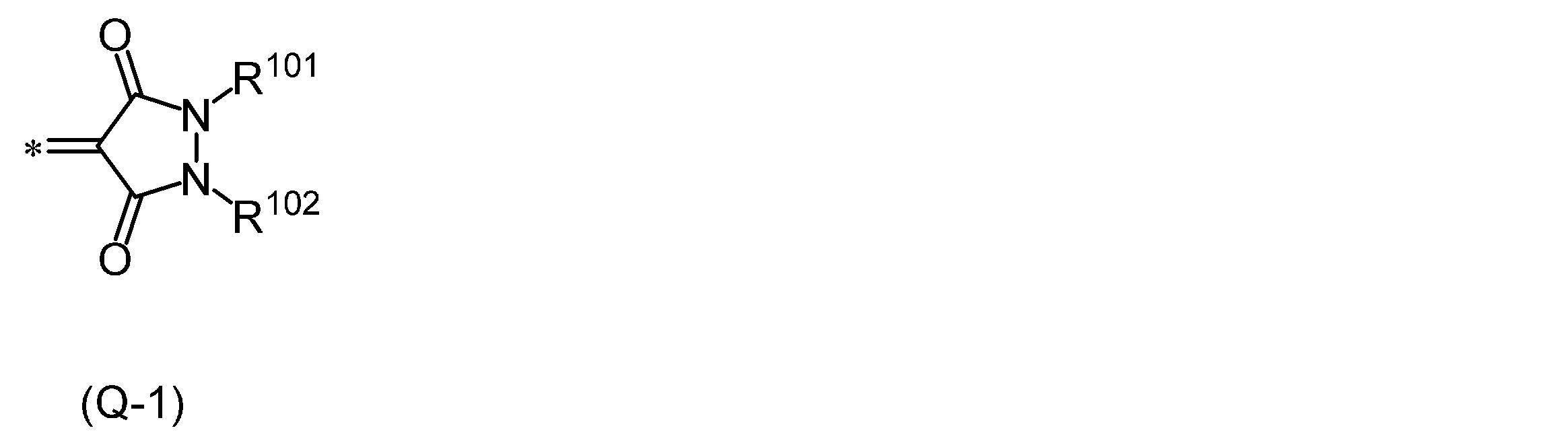
ただし、R101またはR102のいずれか一方が水素原子の時、他方はアルキル基、アラルキル基、アリール基、複素環基またはエチレン性不飽和結合を有する重合性基を含む基を表し、
R101またはR102のいずれか一方がメチル基の時、他方は水素原子、炭素数2以上のアルキル基、アラルキル基、アリール基、複素環基またはエチレン性不飽和結合を有する重合性基を含む基を表し、
R101またはR102のいずれか一方がフェニル基の時、他方は水素原子、アルキル基、アラルキル基、置換基を有するアリール基、複素環基またはエチレン性不飽和結合を有する重合性基を含む基を表す。
<2> R101およびR102は、各々独立して、水素原子、アルキル基、アラルキル基、アリール基または複素環基を表し、
R101またはR102のいずれか一方が水素原子の時、他方はアルキル基、アラルキル基、アリール基、複素環基を表し、
R101またはR102のいずれか一方がメチル基の時、他方は水素原子、炭素数2以上のアルキル基、アラルキル基、アリール基または複素環基を表し、
R101またはR102のいずれか一方がフェニル基の時、他方は水素原子、アルキル基、アラルキル基、置換基を有するアリール基または複素環基を表す、
<1>に記載の樹脂組成物。
<3> 上記式(1)で表される化合物が、式(3)で表される化合物である、<1>または<2>に記載の樹脂組成物;
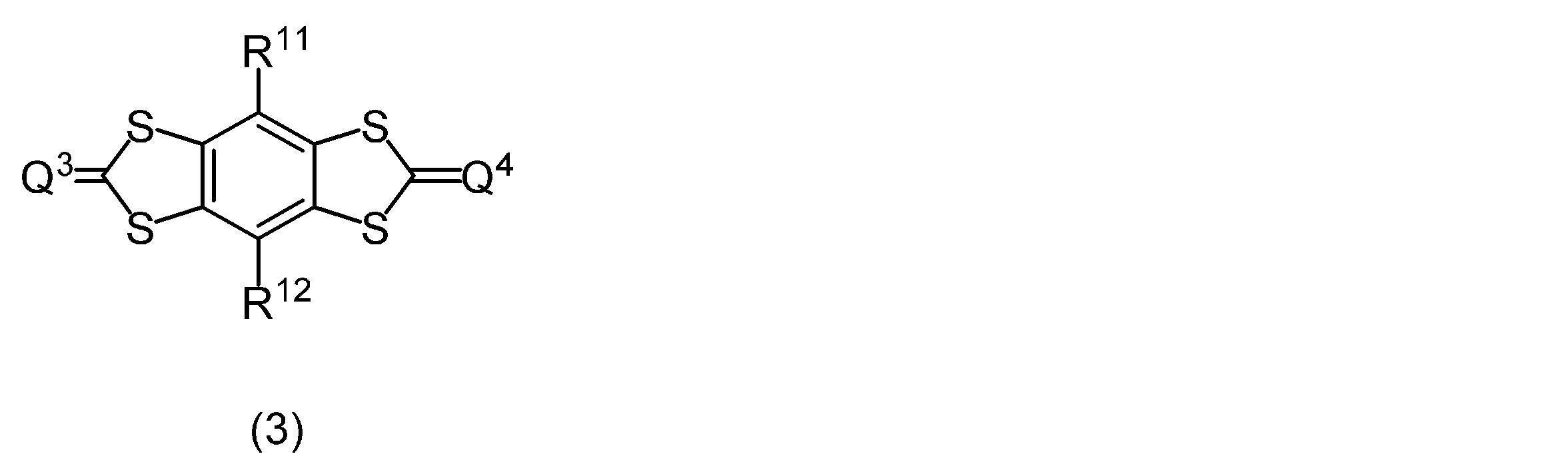
Q4は、=O、=S、=NRq11または=CRq12Rq13を表し、Rq11~Rq13は、各々独立して水素原子または置換基を表し、Rq12とRq13は互いに結合して環を形成してもよい;ただし、Rq12とRq13が結合して環を形成している場合、=CRq12Rq13はQ3と同一の構造ではない;
R11およびR12は、各々独立して、-OH、-O-Y11、-OC(=O)-Y11、-OC(=O)O-Y11、-OC(=O)NRy11-Y11、-OSO2-Y11またはエチレン性不飽和結合を有する重合性基を含む基を表し、Ry11は水素原子、アルキル基、アラルキル基またはアリール基を表し、Y11は、アルキル基、アラルキル基またはアリール基を表す。
<4> 上記式(3)のR11およびR12は、各々独立して、-OH、-O-Y11、-OC(=O)-Y11、-OC(=O)O-Y11、-OC(=O)NRy11-Y11または-OSO2-Y11を表し、Ry11は水素原子、アルキル基、アラルキル基またはアリール基を表し、Y11は、アルキル基、アラルキル基またはアリール基を表す、<3>に記載の樹脂組成物。
<5> 上記式(3)のR11、R12、Q3およびQ4の少なくとも一つは、エチレン性不飽和結合を有する重合性基を含む基を含む、<3>に記載の樹脂組成物。
<6> 上記樹脂が、(メタ)アクリル樹脂、ポリスチレン樹脂、ポリエステル樹脂、ポリウレタン樹脂、チオウレタン樹脂、ポリイミド樹脂、ポリアミド樹脂、エポキシ樹脂、ポリカーボネート樹脂、フタレート樹脂、セルロースアシレート樹脂および環状オレフィン樹脂から選ばれる少なくとも1種である、<1>~<5>のいずれか1つに記載の樹脂組成物。
<7> <1>~<6>のいずれか1つに記載の樹脂組成物を用いて得られる硬化物。
<8> <7>に記載の硬化物を含む光学部材。
<9> 式(1)で表される化合物を含む紫外線吸収剤;

Q2は、=O、=S、=NRq1または=CRq2Rq3を表し、Rq1~Rq3は、各々独立して水素原子または置換基を表し、Rq2とRq3は互いに結合して環を形成してもよい;ただし、Rq2とRq3が結合して環を形成している場合、=CRq2Rq3はQ1と同一の構造ではない;
R1およびR2は、各々独立して水素原子または置換基を表す;
X1~X4は、各々独立して-S-、-NRX1-、または、-SO2-を表し、RX1は水素原子またはアルキル基を表す;

ただし、R101またはR102のいずれか一方が水素原子の時、他方はアルキル基、アラルキル基、アリール基、複素環基またはエチレン性不飽和結合を有する重合性基を含む基を表し、
R101またはR102のいずれか一方がメチル基の時、他方は水素原子、炭素数2以上のアルキル基、アラルキル基、アリール基、複素環基またはエチレン性不飽和結合を有する重合性基を含む基を表し、
R101またはR102のいずれか一方がフェニル基の時、他方は水素原子、アルキル基、アラルキル基、置換基を有するアリール基、複素環基またはエチレン性不飽和結合を有する重合性基を含む基を表す。
<10> R101およびR102は、各々独立して、水素原子、アルキル基、アラルキル基、アリール基または複素環基を表し、
R101またはR102のいずれか一方が水素原子の時、他方はアルキル基、アラルキル基、アリール基、複素環基を表し、
R101またはR102のいずれか一方がメチル基の時、他方は水素原子、炭素数2以上のアルキル基、アラルキル基、アリール基または複素環基を表し、
R101またはR102のいずれか一方がフェニル基の時、他方は水素原子、アルキル基、アラルキル基、置換基を有するアリール基または複素環基を表す、
<9>に記載の紫外線吸収剤。
<11> 式(3)で表される化合物;
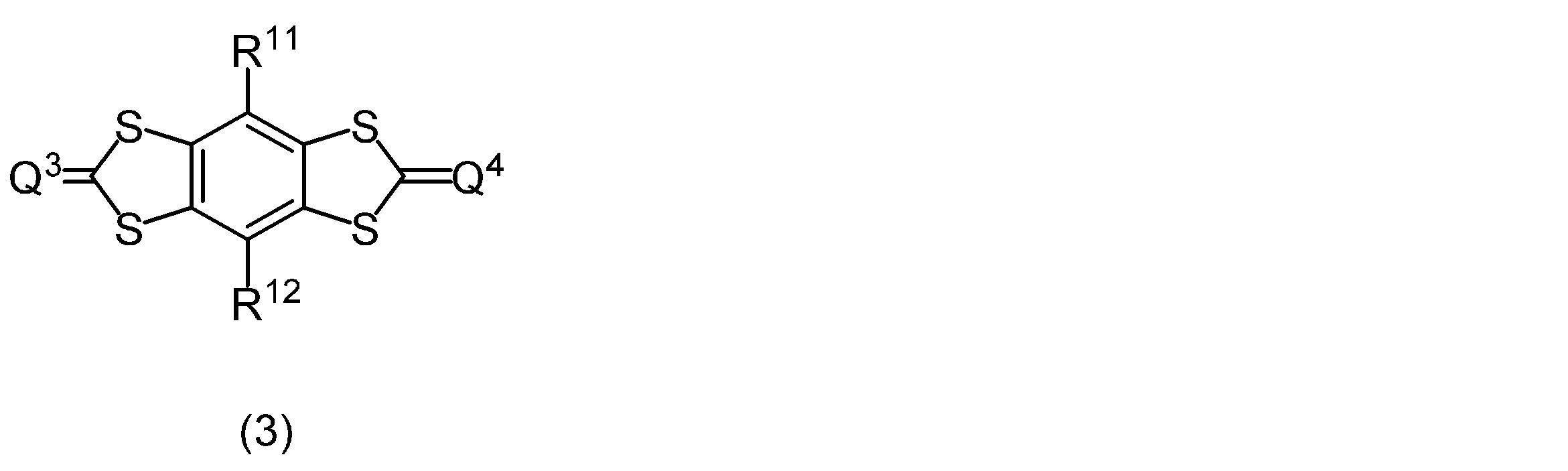
Q4は、=O、=S、=NRq11または=CRq12Rq13を表し、Rq11~Rq13は、各々独立して水素原子または置換基を表し、Rq12とRq13は互いに結合して環を形成してもよい;ただし、Rq12とRq13が結合して環を形成している場合、=CRq12Rq13はQ3と同一の構造ではない;
R11およびR12は、各々独立して、-OH、-O-Y11、-OC(=O)-Y11、-OC(=O)O-Y11、-OC(=O)NRy11-Y11、-OSO2-Y11またはエチレン性不飽和結合を有する重合性基を含む基を表し、Ry11は水素原子、アルキル基、アラルキル基またはアリール基を表し、Y11は、アルキル基、アラルキル基またはアリール基を表す;
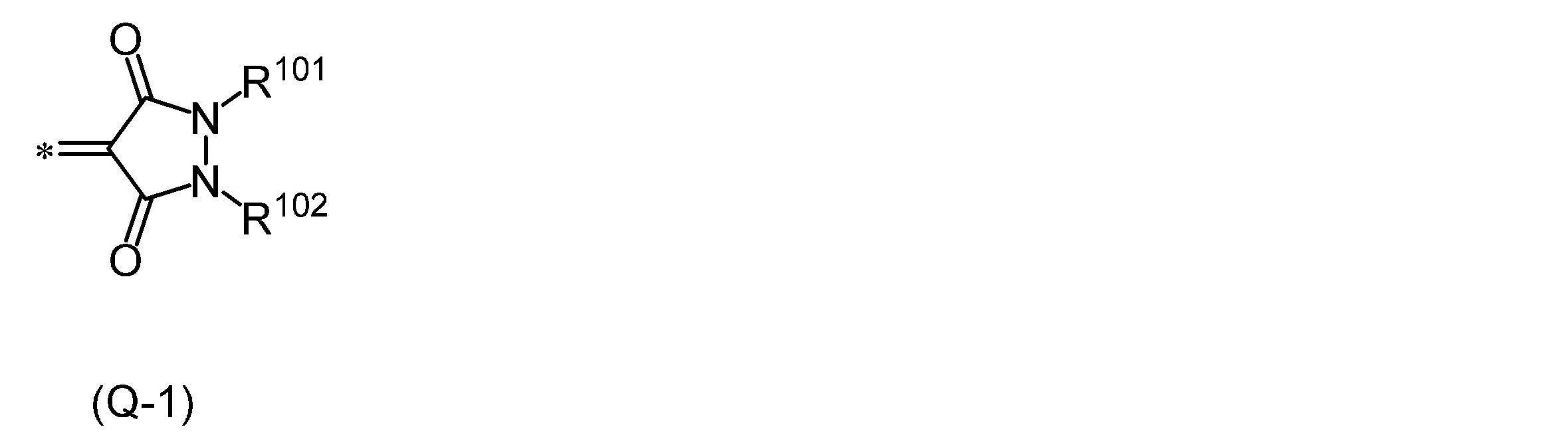
ただし、R101またはR102のいずれか一方が水素原子の時、他方はアルキル基、アラルキル基、アリール基、複素環基またはエチレン性不飽和結合を有する重合性基を含む基を表し、
R101またはR102のいずれか一方がメチル基の時、他方は水素原子、炭素数2以上のアルキル基、アラルキル基、アリール基、複素環基またはエチレン性不飽和結合を有する重合性基を含む基を表し、
R101またはR102のいずれか一方がフェニル基の時、他方は水素原子、アルキル基、アラルキル基、置換基を有するアリール基、複素環基またはエチレン性不飽和結合を有する重合性基を含む基を表す。
<12> 上記式(3)のR11およびR12は、各々独立して、-OH、-O-Y11、-OC(=O)-Y11、-OC(=O)O-Y11、-OC(=O)NRy11-Y11または-OSO2-Y11を表し、Ry11は水素原子、アルキル基、アラルキル基またはアリール基を表し、Y11は、アルキル基、アラルキル基またはアリール基を表し、
R101およびR102は、各々独立して、水素原子、アルキル基、アラルキル基、アリール基または複素環基を表し、
R101またはR102のいずれか一方が水素原子の時、他方はアルキル基、アラルキル基、アリール基または複素環基を表し、
R101またはR102のいずれか一方がメチル基の時、他方は水素原子、炭素数2以上のアルキル基、アラルキル基、アリール基または複素環基を表し、
R101またはR102のいずれか一方がフェニル基の時、他方は水素原子、アルキル基、アラルキル基、置換基を有するアリール基または複素環基を表す、
<11>に記載の化合物。
<13> 上記式(3)のR11、R12、Q3およびQ4の少なくとも一つは、エチレン性不飽和結合を有する重合性基を含む基を含む、<11>に記載の化合物。
<14> 式(4)で表される化合物と式(5)で表される化合物とを反応させて式(6)で表される化合物を製造する化合物の製造方法;
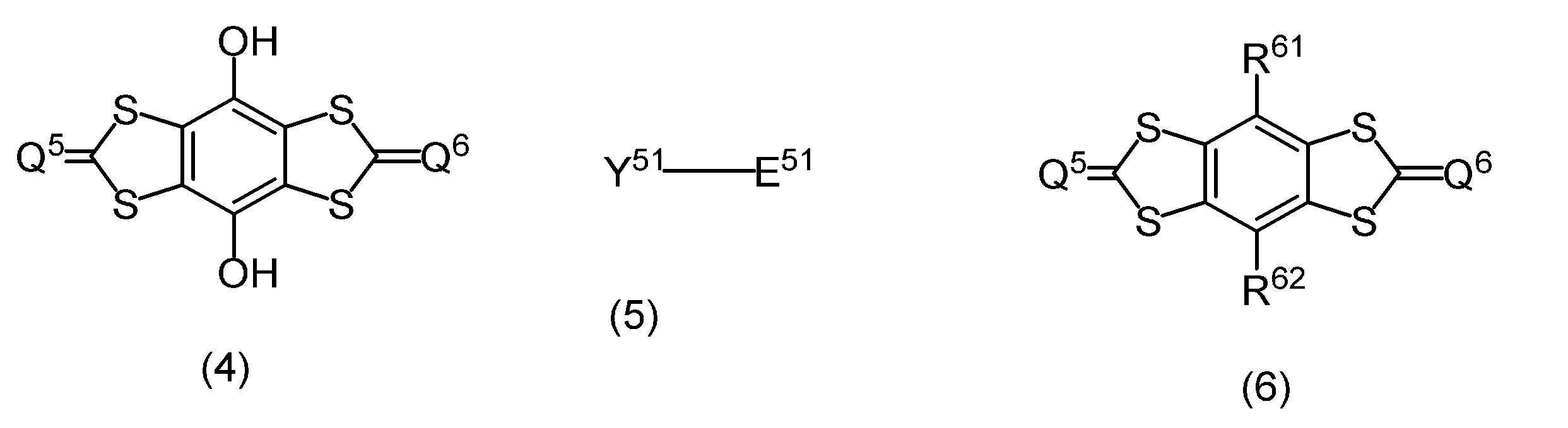
Q6は、=O、=S、=NRq21または=CRq22Rq23を表し、
Rq21~Rq23は、各々独立して水素原子または置換基を表し、Rq22とRq23は互いに結合して環を形成してもよい;ただし、Rq22とRq23が結合して環を形成している場合、=CRq22Rq23はQ5と同一の構造ではない;
式(5)中、E51は-COCl、-O(C=O)Cl、-NRe51(C=O)Cl、-NCO、-Cl、-Br、-Iまたは-SO2Re52を表し、
Re51は、水素原子、アルキル基、アラルキル基またはアリール基を表し、
Re52は-Clまたはアルコキシ基を表し、
Y51はアルキル基、アラルキル基またはアリール基を表す;
式(6)中、Q5は式(Q-1)で表される基を表し、
Q6は、=O、=S、=NRq21または=CRq22Rq23を表し、
Rq21~Rq23は、各々独立して水素原子または置換基を表し、Rq22とRq23は互いに結合して環を形成してもよい;ただし、Rq22とRq23が結合して環を形成している場合、=CRq22Rq23はQ5と同一の構造ではない;
R61およびR62は、各々独立して、-O-Y61、-OC(=O)-Y61、-OC(=O)O-Y61、-OC(=O)NRy61-Y61、または、-OSO2-Y61を表し、Ry61は水素原子、アルキル基、アラルキル基またはアリール基を表し、Y61は、アルキル基、アラルキル基またはアリール基を表す;
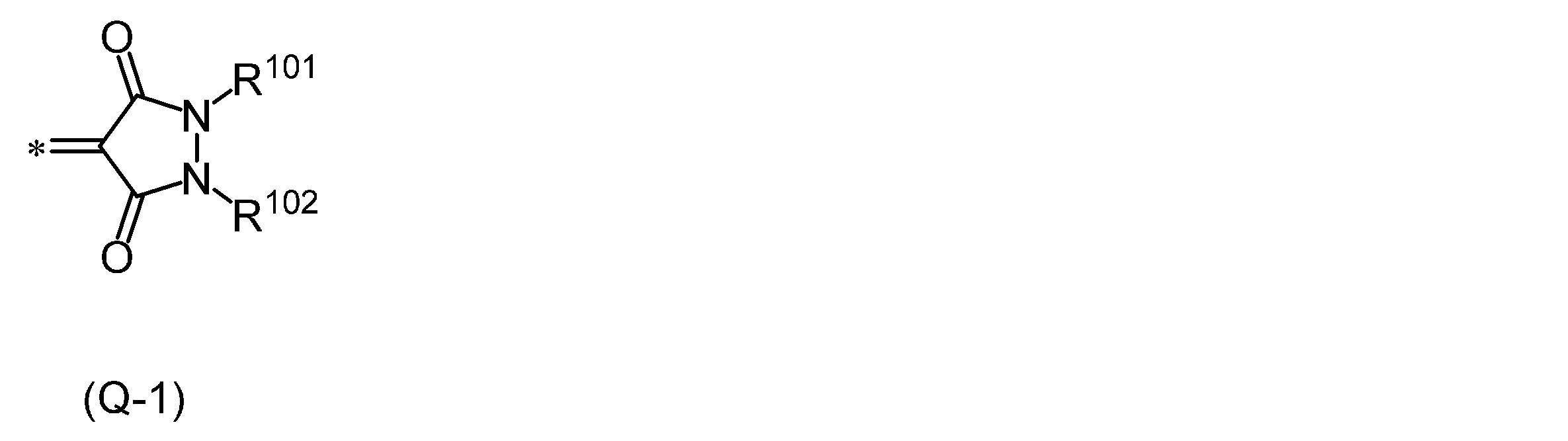
ただし、R101またはR102のいずれか一方が水素原子の時、他方はアルキル基、アラルキル基、アリール基、複素環基またはエチレン性不飽和結合を有する重合性基を含む基を表し、
R101またはR102のいずれか一方がメチル基の時、他方は水素原子、炭素数2以上のアルキル基、アラルキル基、アリール基、複素環基またはエチレン性不飽和結合を有する重合性基を含む基を表し、
R101またはR102のいずれか一方がフェニル基の時、他方は水素原子、アルキル基、アラルキル基、置換基を有するアリール基、複素環基またはエチレン性不飽和結合を有する重合性基を含む基を表す。
<15> R101およびR102は、各々独立して、水素原子、アルキル基、アラルキル基、アリール基または複素環基を表し、
R101またはR102のいずれか一方が水素原子の時、他方はアルキル基、アラルキル基、アリール基、複素環基を表し、
R101またはR102のいずれか一方がメチル基の時、他方は水素原子、炭素数2以上のアルキル基、アラルキル基、アリール基または複素環基を表し、
R101またはR102のいずれか一方がフェニル基の時、他方は水素原子、アルキル基、アラルキル基、置換基を有するアリール基または複素環基を表す、
<14>に記載の化合物の製造方法。
<16> <13>に記載の化合物由来の構造を含む重合体。
本明細書における基(原子団)の表記において、置換および無置換を記していない表記は、置換基を有さない基と共に置換基を有する基を包含する。例えば、「アルキル基」とは、置換基を有さないアルキル基(無置換アルキル基)のみならず、置換基を有するアルキル基(置換アルキル基)をも包含する。
本明細書において「~」を用いて表される数値範囲は、「~」の前後に記載される数値を下限値および上限値として含む範囲を意味する。
本明細書において、全固形分とは、樹脂組成物の全成分から溶剤を除いた成分の合計量をいう。
本明細書において、「(メタ)アクリレート」は、アクリレートおよびメタクリレートの双方、または、いずれかを表し、「(メタ)アクリル」は、アクリルおよびメタクリルの双方、または、いずれかを表し、「(メタ)アリル」は、アリルおよびメタリルの双方、または、いずれかを表し、「(メタ)アクリロイル」は、アクリロイルおよびメタクリロイルの双方、または、いずれかを表す。
本明細書において「工程」との語は、独立した工程を意味するだけではなく、他の工程と明確に区別できない場合であってもその工程の所期の作用が達成されれば、本用語に含まれる。
本明細書において、重量平均分子量(Mw)および数平均分子量(Mn)は、ゲルパーミエーションクロマトグラフィ(GPC)により測定したポリスチレン換算値として定義される。
本発明の樹脂組成物は、式(1)で表される化合物と、樹脂とを含むことを特徴とする。
式(1)で表される化合物は、波長400nm近傍の紫外線の吸収能に優れ、着色が少なく、かつ、光照射による分解などが生じにくい耐光性に優れた化合物である。このため、本発明の樹脂組成物は、波長400nm近傍の紫外線の吸収能に優れ、着色が少なく、耐光性に優れた硬化物などを製造することができる。
本発明の樹脂組成物は、式(1)で表される化合物(以下、特定化合物ともいう)を含む。

Q2は、=O、=S、=NRq1または=CRq2Rq3を表し、Rq1~Rq3は、各々独立して水素原子または置換基を表し、Rq2とRq3は互いに結合して環を形成してもよい;ただし、Rq2とRq3が結合して環を形成している場合、=CRq2Rq3はQ1と同一の構造ではない;
R1およびR2は、各々独立して水素原子または置換基を表す;
X1~X4は、各々独立して-S-、-NRX1-、または、-SO2-を表し、RX1は水素原子またはアルキル基を表す;
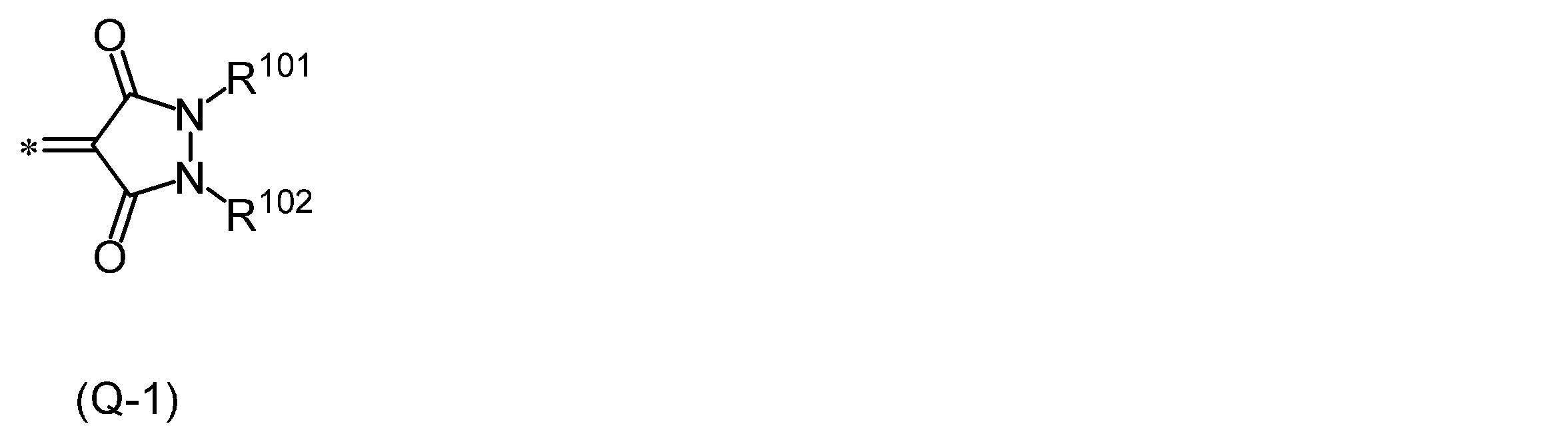
ただし、R101またはR102のいずれか一方が水素原子の時、他方はアルキル基、アラルキル基、アリール基、複素環基またはエチレン性不飽和結合を有する重合性基を含む基を表し、
R101またはR102のいずれか一方がメチル基の時、他方は水素原子、炭素数2以上のアルキル基、アラルキル基、アリール基、複素環基またはエチレン性不飽和結合を有する重合性基を含む基を表し、
R101またはR102のいずれか一方がフェニル基の時、他方は水素原子、アルキル基、アラルキル基、置換基を有するアリール基、複素環基またはエチレン性不飽和結合を有する重合性基を含む基を表す。
式(1)のR1およびR2が表す置換基としては、アルキル基、アリール基、アラルキル基、複素環基、エチレン性不飽和結合を有する重合性基を含む基、-OH、-O-Y11、-OC(=O)-Y11、-OC(=O)O-Y11、-OC(=O)NRy11-Y11、-OSO2-Y11、シアノ基、ハロゲン原子、ニトロ基が挙げられる。Ry11は水素原子、アルキル基、アラルキル基またはアリール基を表し、Y11は、アルキル基、アラルキル基またはアリール基を表す。
*-XT1-YT1-ZT1 ・・・(T1)
YT1は単結合または2価の連結基を表し、
ZT1はエチレン性不飽和結合を有する重合性基を表す。
上記2以上の炭化水素基を連結する連結基としては、-NH-、-S(=O)2-、-O-、-C(=O)-、-OC(=O)-、-C(=O)O-、-NHC(=O)-および-C(=O)NH-が挙げられ、-O-、-C(=O)-、-OC(=O)-、-C(=O)O-、-NHC(=O)-または-C(=O)NH-であることが好ましい。


一態様として、式(1)のR1およびR2は、各々独立して、-OH、-O-Y11、-OC(=O)-Y11、-OC(=O)O-Y11、-OC(=O)NRy11-Y11、または、-OSO2-Y11である態様が挙げられる。この態様においては、安定性に優れるという理由から、R1およびR2は、各々独立して、-OC(=O)-Y11、-O-Y11、または-OC(=O)NRy11-Y11であることがより好ましい。Ry11は水素原子またはアルキル基であることが好ましく、水素原子であることがより好ましい。Y11は、溶解性に優れるという理由からアルキル基であることが好ましく、直鎖または分岐のアルキル基であることがより好ましく、分岐のアルキル基であることが更に好ましい。
別の態様として、R1およびR2の少なくとも一方がエチレン性不飽和結合を有する重合性基を含む基である態様が挙げられる。この態様によれば、樹脂中でのブリードアウトを抑制できるという効果が得られる。
式(1)のX1~X4は、各々独立して-S-、-NRX1-、または、-SO2-を表し、RX1は水素原子またはアルキル基を表す。RX1が表すアルキル基の好ましい範囲は上述したアルキル基と同様である。RX1は、水素原子であることが好ましい。
式(1)のQ1は式(Q-1)で表される基を表す。
式(Q-1)のR101およびR102は、各々独立して、水素原子、アルキル基、アラルキル基、アリール基、複素環基またはエチレン性不飽和結合を有する重合性基を含む基を表す。
ただし、R101またはR102のいずれか一方が水素原子の時、他方はアルキル基、アラルキル基、アリール基、複素環基またはエチレン性不飽和結合を有する重合性基を含む基を表し、R101またはR102のいずれか一方がメチル基の時、他方は水素原子、炭素数2以上のアルキル基、アラルキル基、アリール基、複素環基またはエチレン性不飽和結合を有する重合性基を含む基を表し、R101またはR102のいずれか一方がフェニル基の時、他方は水素原子、アルキル基、アラルキル基、置換基を有するアリール基、複素環基またはエチレン性不飽和結合を有する重合性基を含む基を表す。
*-XV1-YV1-ZV1 ・・・(V1)
YV1は単結合または2価の連結基を表し、
ZV1はエチレン性不飽和結合を有する重合性基を表す。
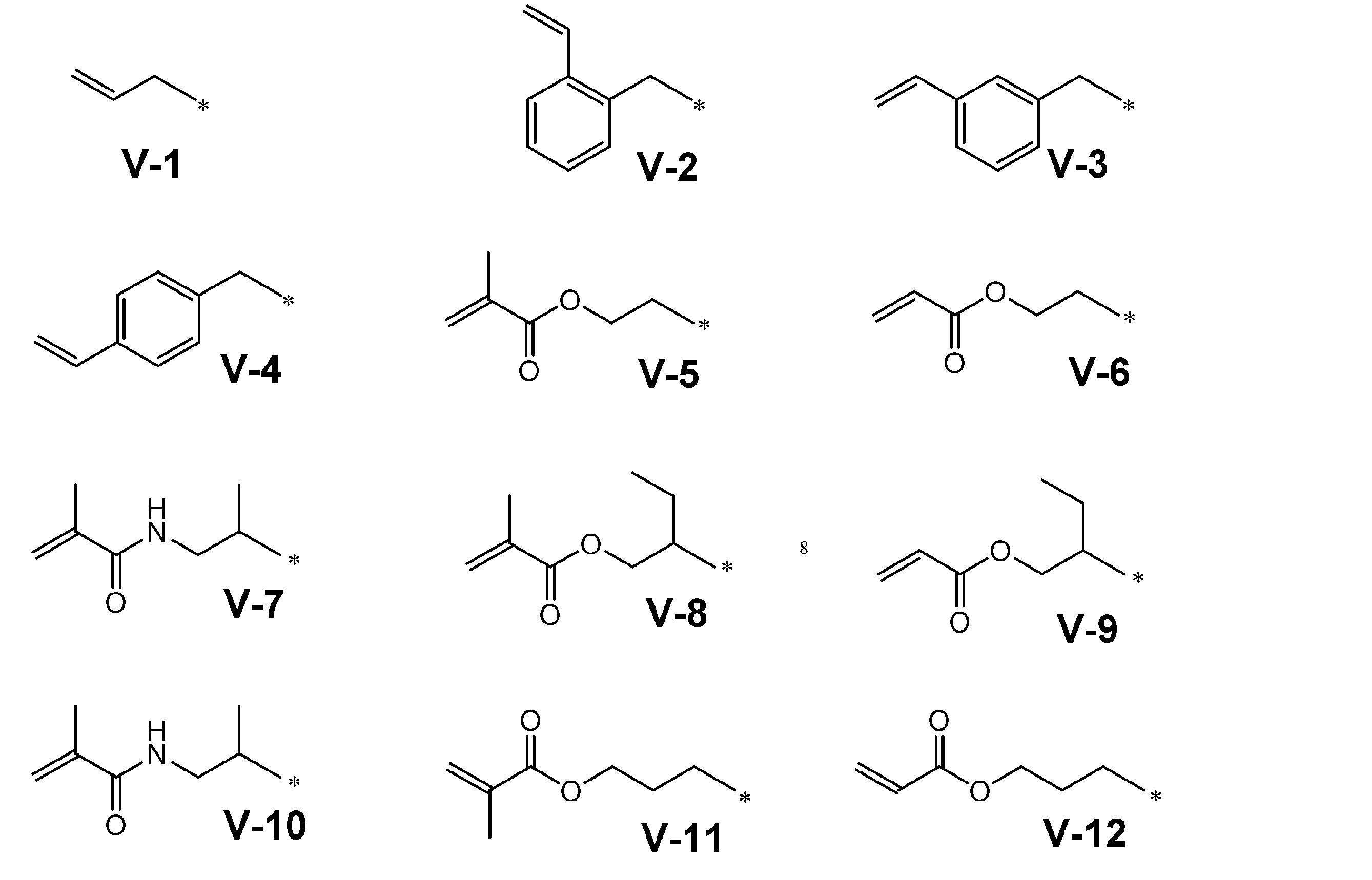
R101またはR102のいずれか一方が水素原子の時、他方はアルキル基、アラルキル基、アリール基、複素環基を表し、
R101またはR102のいずれか一方がメチル基の時、他方は水素原子、炭素数2以上のアルキル基、アラルキル基、アリール基または複素環基を表し、
R101またはR102のいずれか一方がフェニル基の時、他方は水素原子、アルキル基、アラルキル基、置換基を有するアリール基または複素環基を表す態様が挙げられる。
式(Q-1)のR101およびR102は、各々独立して、アルキル基またはアラルキル基であることが好ましく、アラルキル基であることがより好ましい。
R101およびR102がアルキル基である場合は、R101およびR102が表すアルキル基は、各々独立して炭素数2以上のアルキル基であることが好ましい。
式(1)のQ2は、=O、=S、=NRq1または=CRq2Rq3を表し、Rq1~Rq3は、各々独立して水素原子または置換基を表し、Rq2とRq3は互いに結合して環を形成してもよい。ただし、Rq2とRq3が結合して環を形成している場合、=CRq2Rq3はQ1と同一の構造ではない。
*-XU1-YU1-ZU1 ・・・(U1)
YU1は単結合または2価の連結基を表し、
ZU1はエチレン性不飽和結合を有する重合性基を表す。

Rq2およびRq3の少なくとも一方は、エチレン性不飽和結合を有する重合性基を含む基であることも好ましい。この態様においては、Rq2およびRq3の一方は、エチレン性不飽和結合を有する重合性基を含む基であり、他方は電子求引性基であることも好ましい。
また、式(1)のQ2が=CRq2Rq3であって、R1、R2、Rq2、Rq3、R101およびR102の少なくとも一つがエチレン性不飽和結合を有する重合性基を含む基であることが好ましく、R1、R2、Rq2、Rq3、R101およびR102の一つまたは二つがエチレン性不飽和結合を有する重合性基を含む基を含むことがより好ましい。
また、式(1)に含まれるエチレン性不飽和結合を有する重合性基の個数は、1~2個であることが好ましい。
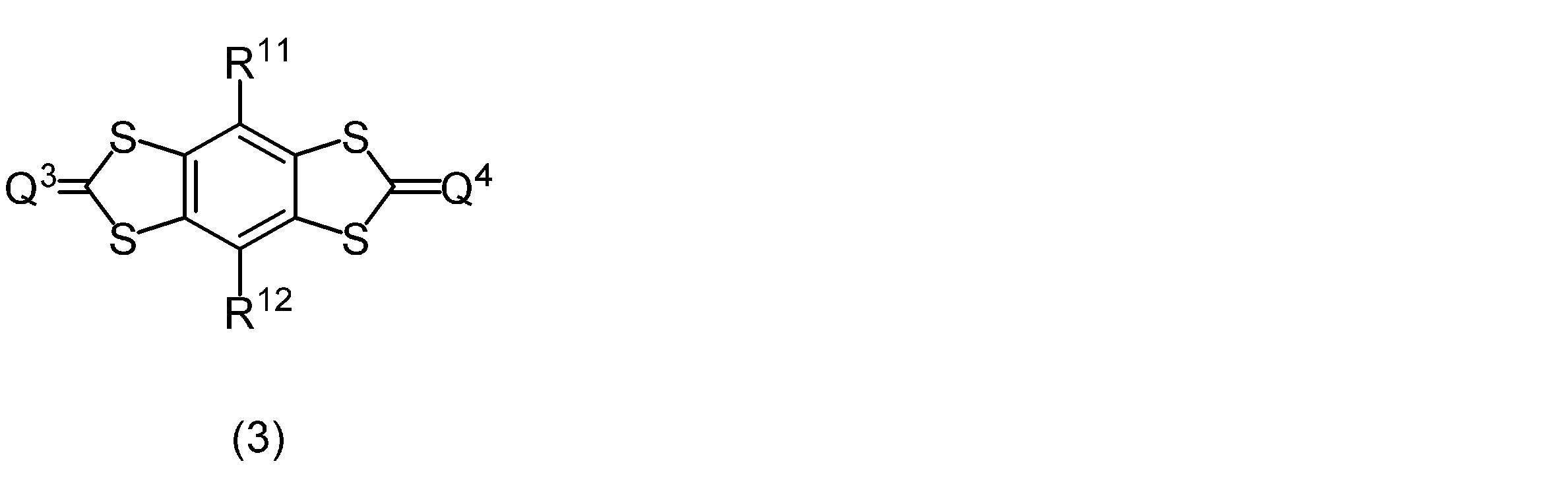
Q4は、=O、=S、=NRq11または=CRq12Rq13を表し、Rq11~Rq13は、各々独立して水素原子または置換基を表し、Rq12とRq13は互いに結合して環を形成してもよい;ただし、Rq12とRq13が結合して環を形成している場合、=CRq12Rq13はQ3と同一の構造ではない。
R11およびR12は、各々独立して、-OH、-O-Y11、-OC(=O)-Y11、-OC(=O)O-Y11、-OC(=O)NRy11-Y11、-OSO2-Y11またはエチレン性不飽和結合を有する重合性基を含む基を表し、Ry11は水素原子、アルキル基、アラルキル基またはアリール基を表し、Y11は、アルキル基、アラルキル基またはアリール基を表す。
また、式(3)のQ4が=CRq12Rq13であって、R11、R12、Rq12、Rq13、R101およびR102の少なくとも一つがエチレン性不飽和結合を有する重合性基を含む基であることが好ましく、R11、R12、Rq12、Rq13、R101およびR102の一つまたは二つがエチレン性不飽和結合を有する重合性基を含む基を含むことがより好ましい。
式(3)に含まれるエチレン性不飽和結合を有する重合性基の個数は、1~2個であることが好ましい。

Q6は、=O、=S、=NRq21または=CRq22Rq23を表し、
Rq21~Rq23は、各々独立して水素原子または置換基を表し、Rq22とRq23は互いに結合して環を形成してもよい;ただし、Rq22とRq23が結合して環を形成している場合、=CRq22Rq23はQ5と同一の構造ではない。
R61およびR62は、各々独立して、-O-Y61、-OC(=O)-Y61、-OC(=O)O-Y61、-OC(=O)NRy61-Y61、または、-OSO2-Y61を表し、Ry61は水素原子、アルキル基、アラルキル基またはアリール基を表し、Y61は、アルキル基、アラルキル基またはアリール基を表す。
置換基Tとしては、以下の基が挙げられる。
ハロゲン原子(例えば、塩素原子、臭素原子、ヨウ素原子);
アルキル基[直鎖、分岐、環状のアルキル基。具体的には、直鎖または分岐のアルキル基(好ましくは炭素数1~30の直鎖または分岐のアルキル基、例えばメチル基、エチル基、n-プロピル基、イソプロピル基、t-ブチル基、n-オクチル基、エイコシル基、2-クロロエチル基、2-シアノエチル基、2-エチルヘキシル基)、シクロアルキル基(好ましくは、炭素数3~30のシクロアルキル基、例えば、シクロヘキシル基、シクロペンチル基、4-n-ドデシルシクロヘキシル基)、ビシクロアルキル基(好ましくは、炭素数5~30のビシクロアルキル基、つまり、炭素数5~30のビシクロアルカンから水素原子を一個取り去った一価の基。例えば、ビシクロ[1,2,2]ヘプタン-2-イル基、ビシクロ[2,2,2]オクタン-3-イル基)、更に環構造が多いトリシクロ構造なども包含するものである。以下に説明する置換基の中のアルキル基(例えばアルキルチオ基のアルキル基)もこのような概念のアルキル基を表す。];
アルケニル基[直鎖、分岐、環状のアルケニル基。具体的には、直鎖または分岐のアルケニル基(好ましくは炭素数2~30の直鎖または分岐のアルケニル基、例えば、ビニル基、アリル基、プレニル基、ゲラニル基、オレイル基)、シクロアルケニル基(好ましくは、炭素数3~30のシクロアルケニル基。つまり、炭素数3~30のシクロアルケンの水素原子を一個取り去った一価の基である。例えば、2-シクロペンテン-1-イル基、2-シクロヘキセン-1-イル基)、ビシクロアルケニル基(好ましくは、炭素数5~30のビシクロアルケニル基、つまり二重結合を一個持つビシクロアルケンの水素原子を一個取り去った一価の基である。例えば、ビシクロ[2,2,1]ヘプト-2-エン-1-イル基、ビシクロ[2,2,2]オクト-2-エン-4-イル基)を包含するものである。];
アルキニル基(好ましくは、炭素数2~30の直鎖または分岐のアルキニル基。例えば、エチニル基、プロパルギル基);
複素環基(好ましくは5または6員の芳香族もしくは非芳香族のヘテロ環化合物から一個の水素原子を取り除いた一価の基であり、より好ましくは、炭素数3~30の5もしくは6員の芳香族の複素環基である。例えば、2-フリル基、2-チエニル基、2-ピリミジニル基、2-ベンゾチアゾリル基);
シアノ基;
ヒドロキシ基;
ニトロ基;
カルボキシル基;
アルコキシ基(好ましくは、炭素数1~30の直鎖または分岐のアルコキシ基。例えば、メトキシ基、エトキシ基、イソプロポキシ基、t-ブトキシ基、n-オクチルオキシ基、2-メトキシエトキシ基);
アリールオキシ基(好ましくは、炭素数6~30のアリールオキシ基。例えば、フェノキシ基、2-メチルフェノキシ基、4-t-ブチルフェノキシ基、3-ニトロフェノキシ基、2-テトラデカノイルアミノフェノキシ基);
ヘテロ環オキシ基(好ましくは、炭素数2~30のヘテロ環オキシ基。例えば、1-フェニルテトラゾール-5-オキシ基、2-テトラヒドロピラニルオキシ基);
アシルオキシ基(好ましくはホルミルオキシ基、炭素数2~30のアルキルカルボニルオキシ基、炭素数6~30のアリールカルボニルオキシ基。例えば、ホルミルオキシ基、アセチルオキシ基、ピバロイルオキシ基、ステアロイルオキシ基、ベンゾイルオキシ基、p-メトキシフェニルカルボニルオキシ基);
アルコキシカルボニルオキシ基(好ましくは、炭素数2~30のアルコキシカルボニルオキシ基。例えばメトキシカルボニルオキシ基、エトキシカルボニルオキシ基、t-ブトキシカルボニルオキシ基、n-オクチルカルボニルオキシ基);
アリールオキシカルボニルオキシ基(好ましくは、炭素数7~30のアリールオキシカルボニルオキシ基。例えば、フェノキシカルボニルオキシ基、p-メトキシフェノキシカルボニルオキシ基、p-n-ヘキサデシルオキシフェノキシカルボニルオキシ基);
アミノ基(好ましくは、アミノ基、炭素数1~30のアルキルアミノ基、炭素数6~30のアニリノ基。例えば、アミノ基、メチルアミノ基、ジメチルアミノ基、アニリノ基、N-メチル-アニリノ基、ジフェニルアミノ基);
アシルアミノ基(好ましくは、ホルミルアミノ基、炭素数2~30のアルキルカルボニルアミノ基、炭素数6~30のアリールカルボニルアミノ基。例えば、ホルミルアミノ基、アセチルアミノ基、ピバロイルアミノ基、ラウロイルアミノ基、ベンゾイルアミノ基、3,4,5-トリ-n-オクチルオキシフェニルカルボニルアミノ基);
アルコキシカルボニルアミノ基(好ましくは炭素数2~30のアルコキシカルボニルアミノ基。例えば、メトキシカルボニルアミノ基、エトキシカルボニルアミノ基、t-ブトキシカルボニルアミノ基、n-オクタデシルオキシカルボニルアミノ基、N-メチルーメトキシカルボニルアミノ基);
アリールオキシカルボニルアミノ基(好ましくは、炭素数7~30のアリールオキシカルボニルアミノ基。例えば、フェノキシカルボニルアミノ基、p-クロロフェノキシカルボニルアミノ基、m-n-オクチルオキシフェノキシカルボニルアミノ基);
スルファモイルアミノ基(好ましくは、炭素数0~30のスルファモイルアミノ基。例えば、スルファモイルアミノ基、N,N-ジメチルアミノスルホニルアミノ基、N-n-オクチルアミノスルホニルアミノ基);
アルキル又はアリールスルホニルアミノ基(好ましくは炭素数1~30のアルキルスルホニルアミノ基、炭素数6~30のアリールスルホニルアミノ基。例えば、メチルスルホニルアミノ基、ブチルスルホニルアミノ基、フェニルスルホニルアミノ基、2,3,5-トリクロロフェニルスルホニルアミノ基、p-メチルフェニルスルホニルアミノ基);
メルカプト基;
アルキルチオ基(好ましくは、炭素数1~30のアルキルチオ基。例えばメチルチオ基、エチルチオ基、n-ヘキサデシルチオ基);
アリールチオ基(好ましくは炭素数6~30のアリールチオ基。例えば、フェニルチオ基、p-クロロフェニルチオ基、m-メトキシフェニルチオ基);
ヘテロ環チオ基(好ましくは炭素数2~30のヘテロ環チオ基。例えば、2-ベンゾチアゾリルチオ基、1-フェニルテトラゾール-5-イルチオ基);
スルホ基;
アルキル又はアリールスルフィニル基(好ましくは、炭素数1~30のアルキルスルフィニル基、6~30のアリールスルフィニル基。例えば、メチルスルフィニル基、エチルスルフィニル基、フェニルスルフィニル基、p-メチルフェニルスルフィニル基);
アルキル又はアリールスルホニル基(好ましくは、炭素数1~30のアルキルスルホニル基、6~30のアリールスルホニル基。例えば、メチルスルホニル基、エチルスルホニル基、フェニルスルホニル基、p-メチルフェニルスルホニル基);
アリールオキシカルボニル基(好ましくは、炭素数7~30のアリールオキシカルボニル基。例えば、フェノキシカルボニル基、o-クロロフェノキシカルボニル基、m-ニトロフェノキシカルボニル基、p-t-ブチルフェノキシカルボニル基);
アルコキシカルボニル基(好ましくは、炭素数2~30のアルコキシカルボニル基。例えば、メトキシカルボニル基、エトキシカルボニル基、t-ブトキシカルボニル基、n-オクタデシルオキシカルボニル基);
カルバモイル基(好ましくは、炭素数1~30のカルバモイル基。例えば、カルバモイル基、N-メチルカルバモイル基、N,N-ジメチルカルバモイル基、N,N-ジ-n-オクチルカルバモイル基、N-(メチルスルホニル)カルバモイル基);
アリール又はヘテロ環アゾ基(好ましくは炭素数6~30のアリールアゾ基、炭素数3~30のヘテロ環アゾ基。例えば、フェニルアゾ基、p-クロロフェニルアゾ基、5-エチルチオ-1,3,4-チアジアゾール-2-イルアゾ基);
イミド基(好ましくは、N-スクシンイミド基、N-フタルイミド基);
ホスフィノ基(好ましくは、炭素数2~30のホスフィノ基。例えば、ジメチルホスフィノ基、ジフェニルホスフィノ基、メチルフェノキシホスフィノ基)
ホスフィニル基(好ましくは、炭素数2~30のホスフィニル基。例えば、ホスフィニル基、ジオクチルオキシホスフィニル基、ジエトキシホスフィニル基);
ホスフィニルオキシ基(好ましくは、炭素数2~30のホスフィニルオキシ基。例えば、ジフェノキシホスフィニルオキシ基、ジオクチルオキシホスフィニルオキシ基);
ホスフィニルアミノ基(好ましくは、炭素数2~30のホスフィニルアミノ基。例えば、ジメトキシホスフィニルアミノ基、ジメチルアミノホスフィニルアミノ基);
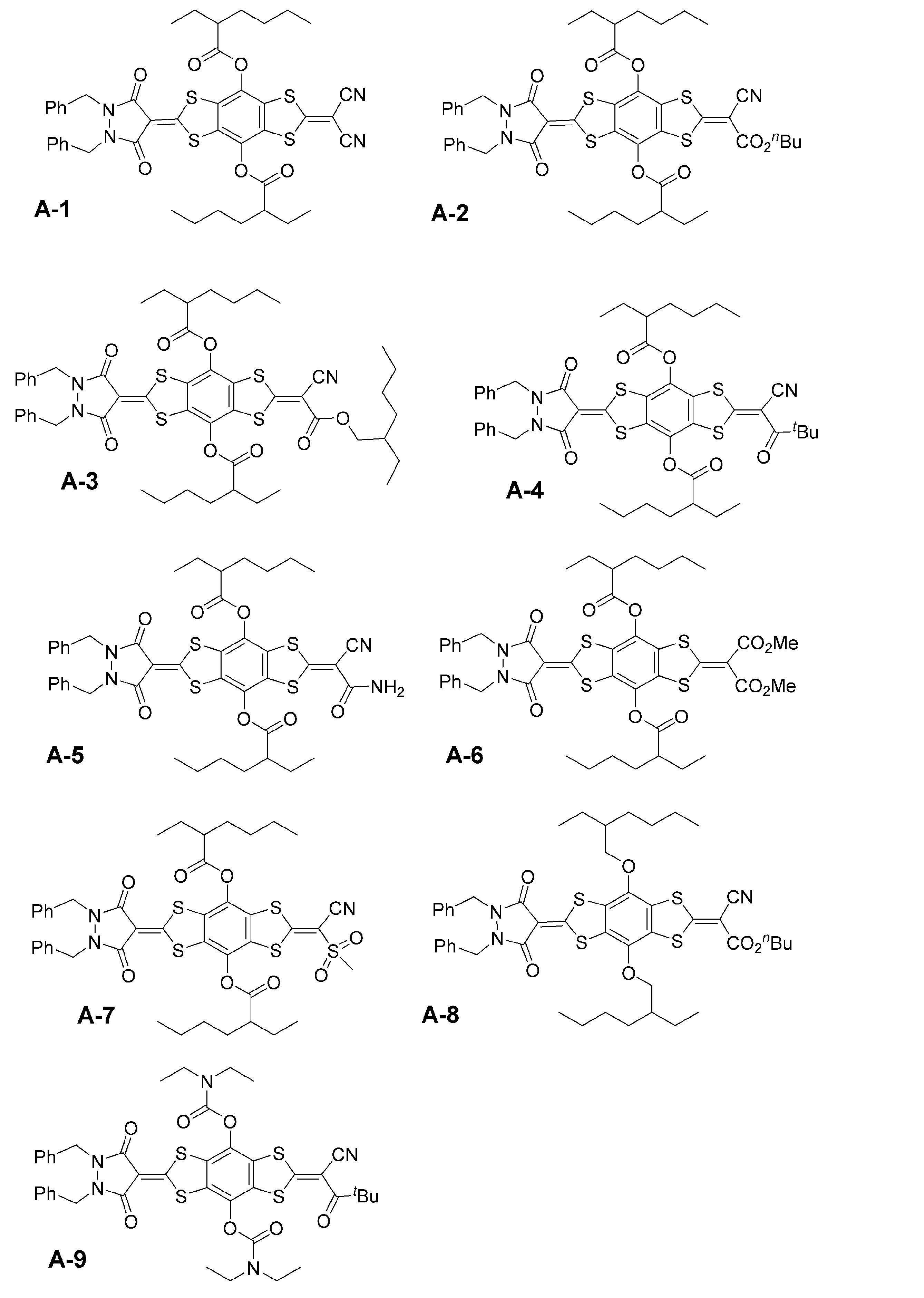
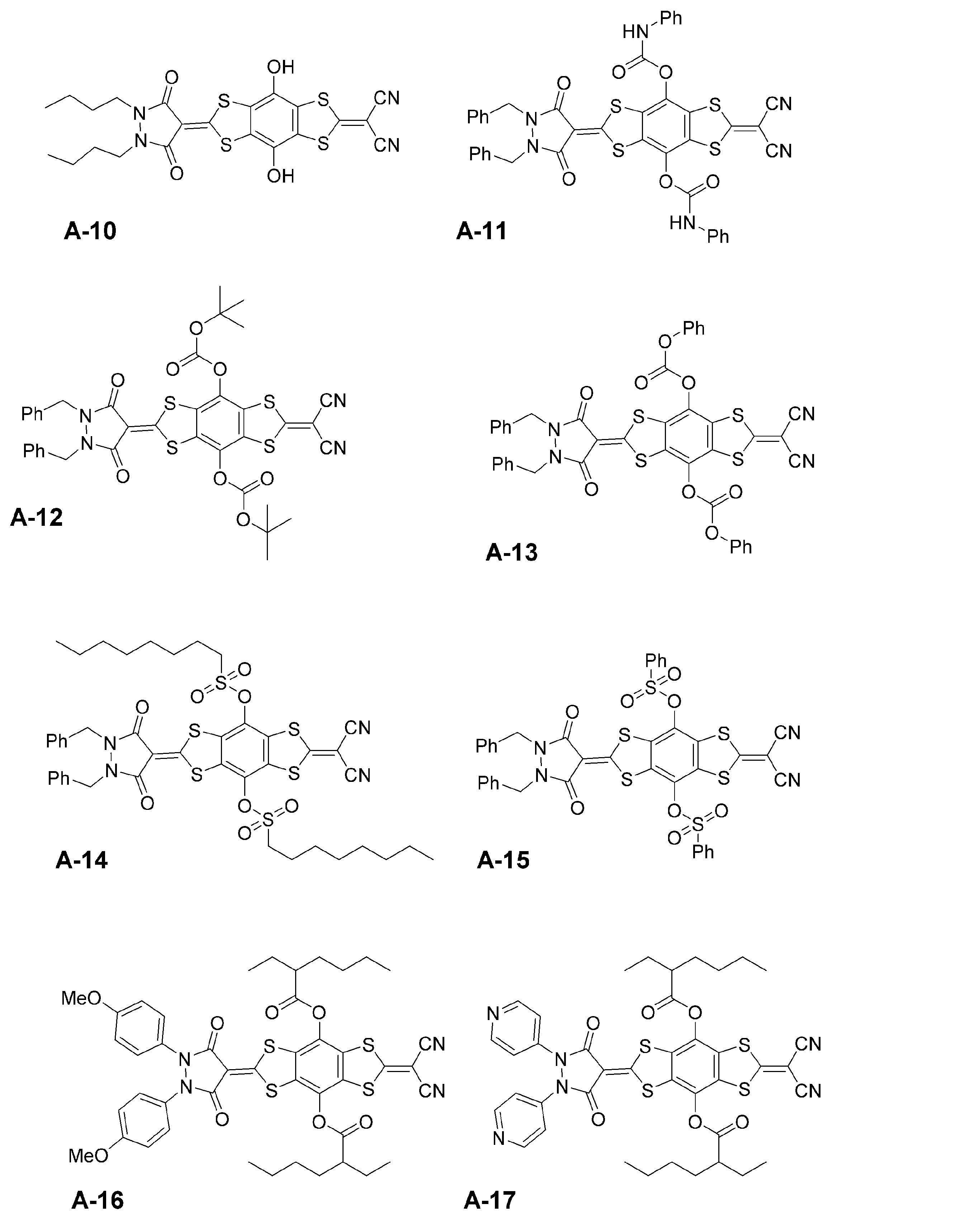
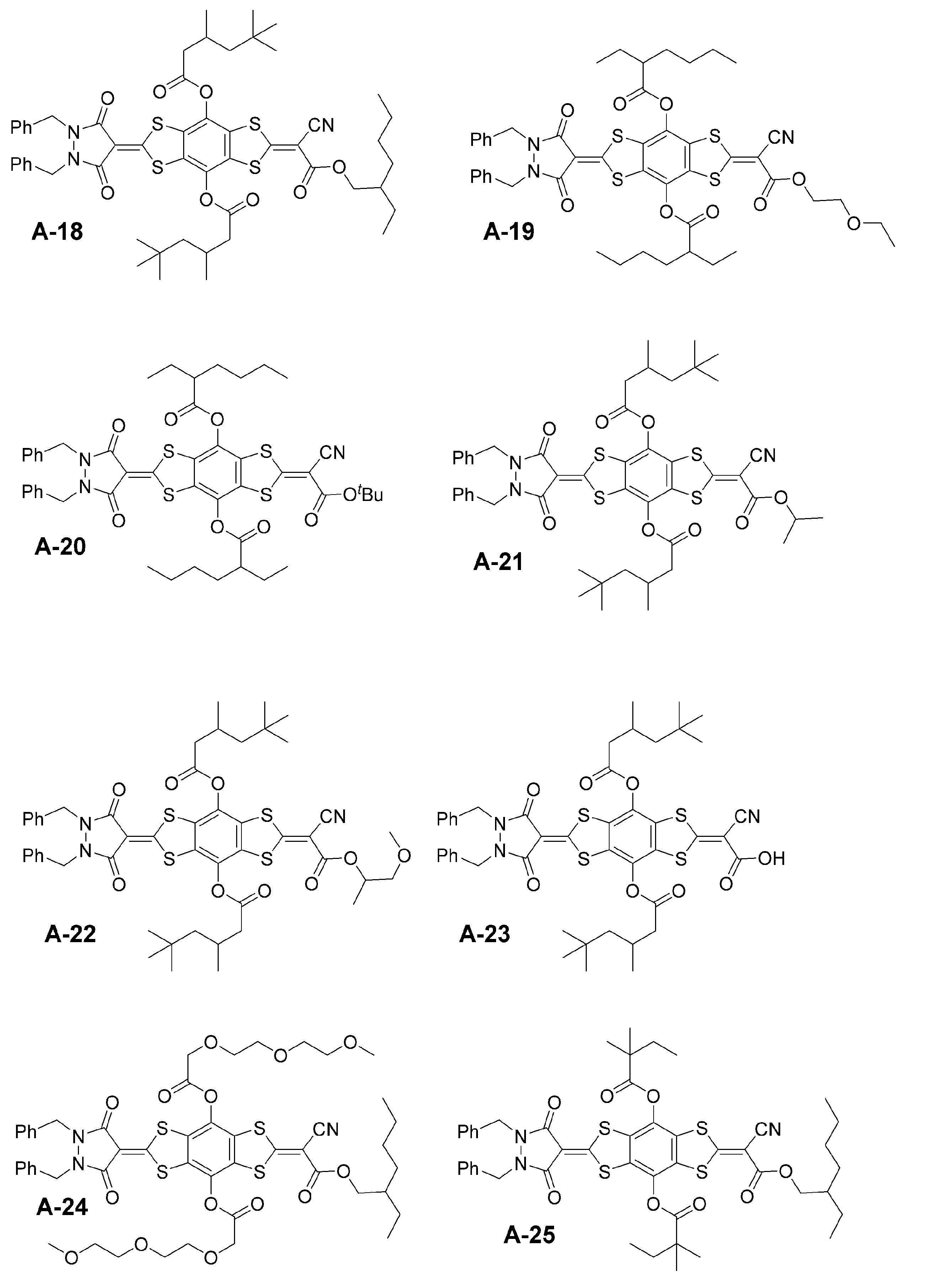


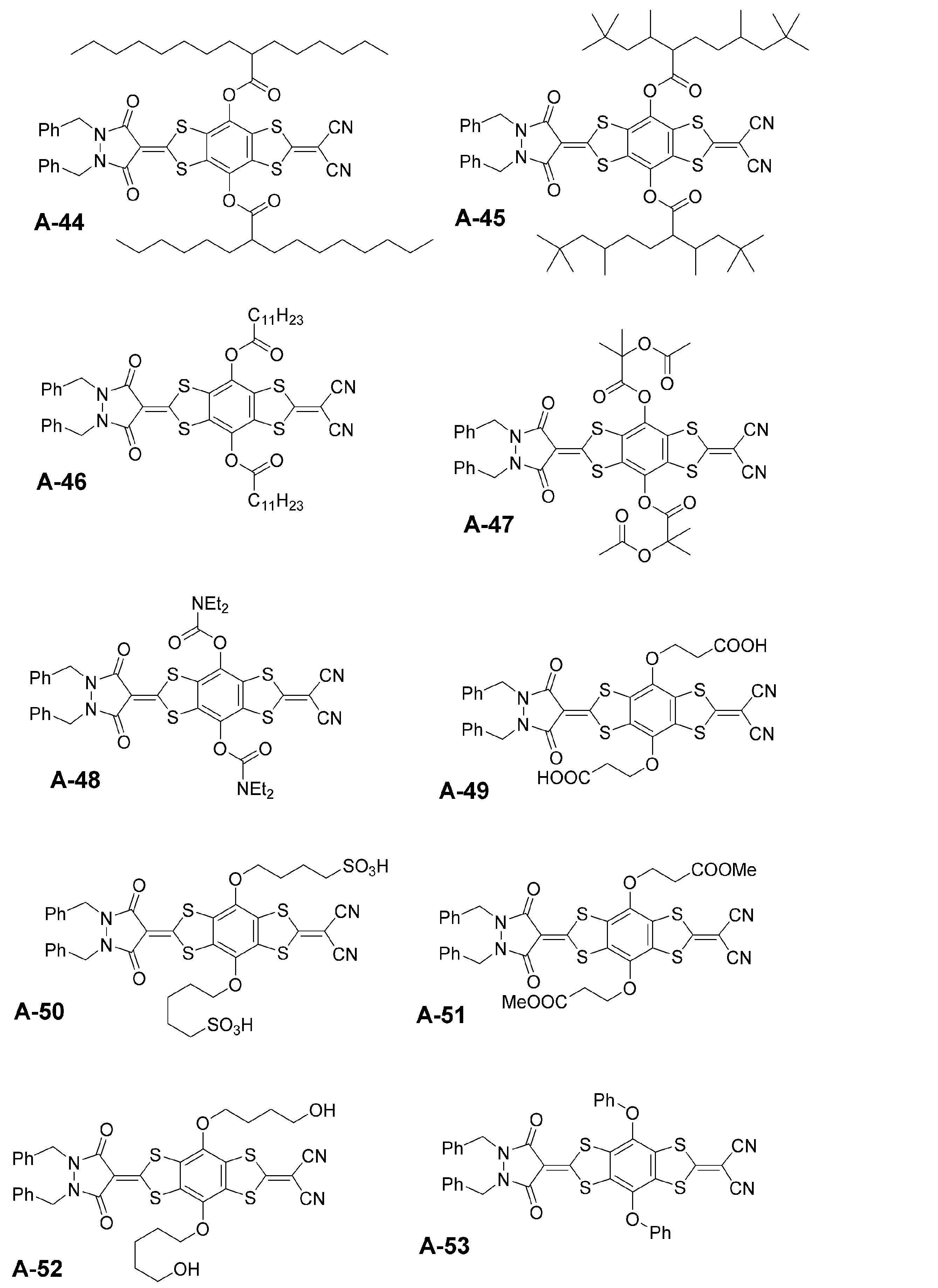
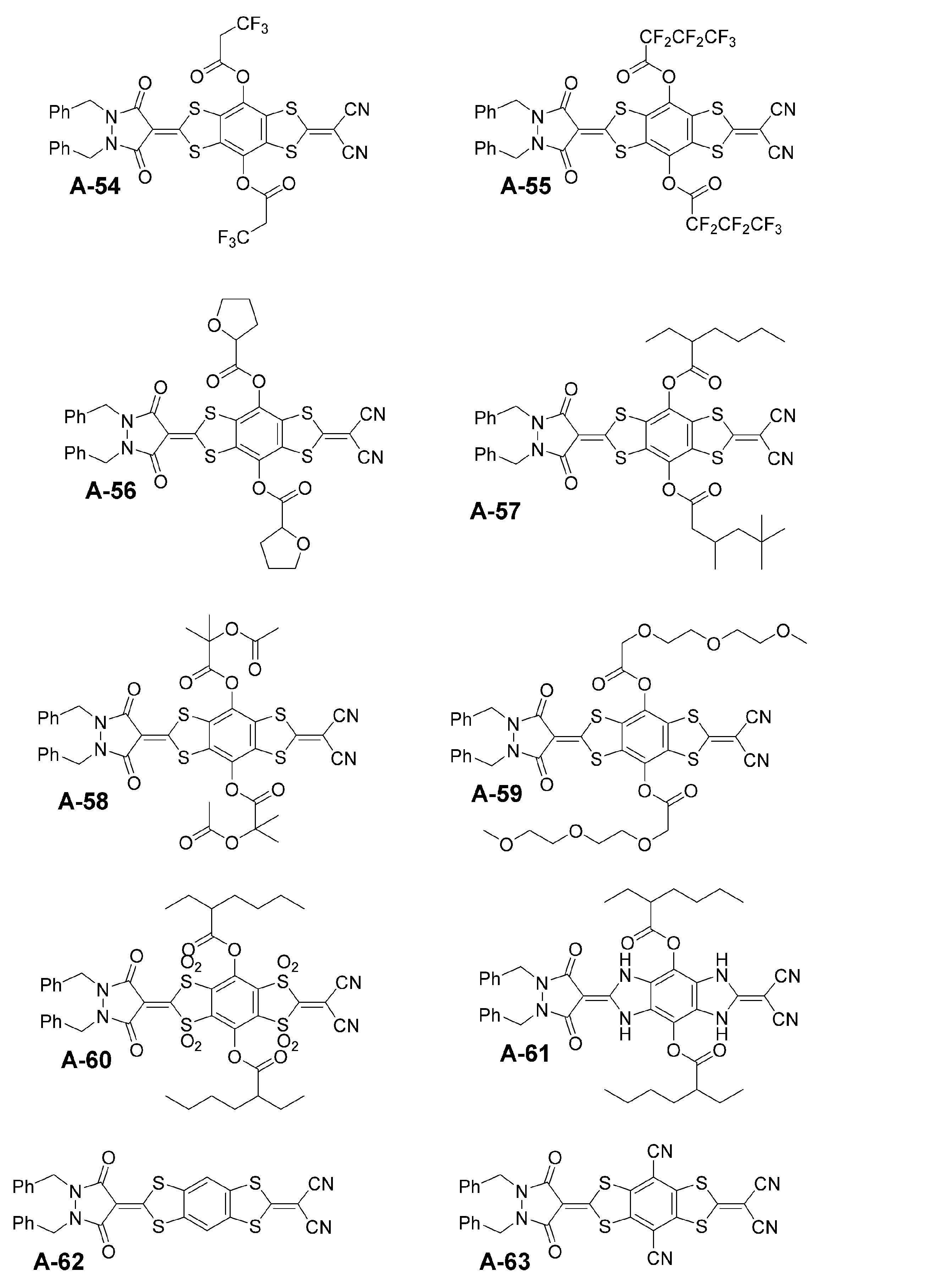
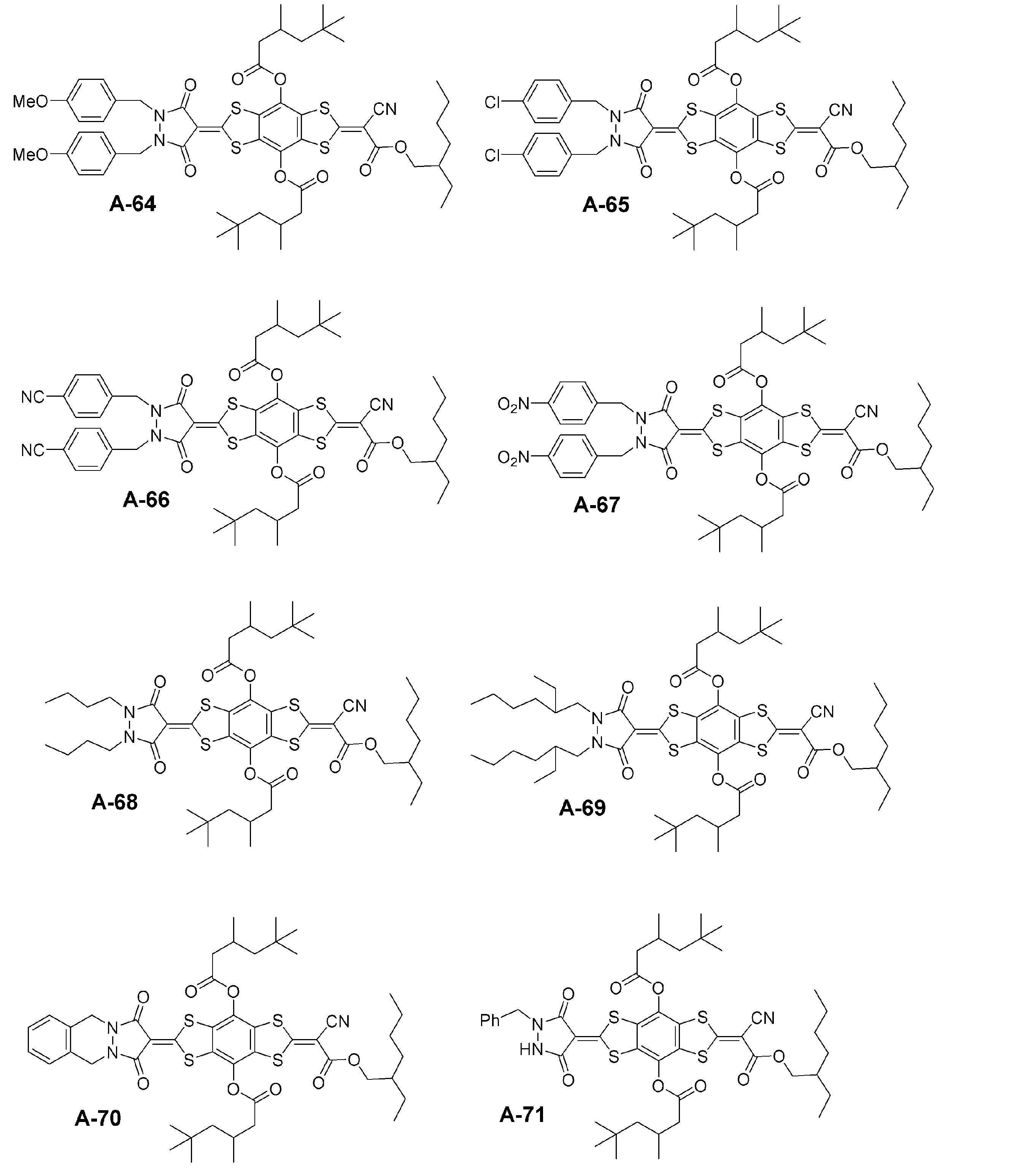
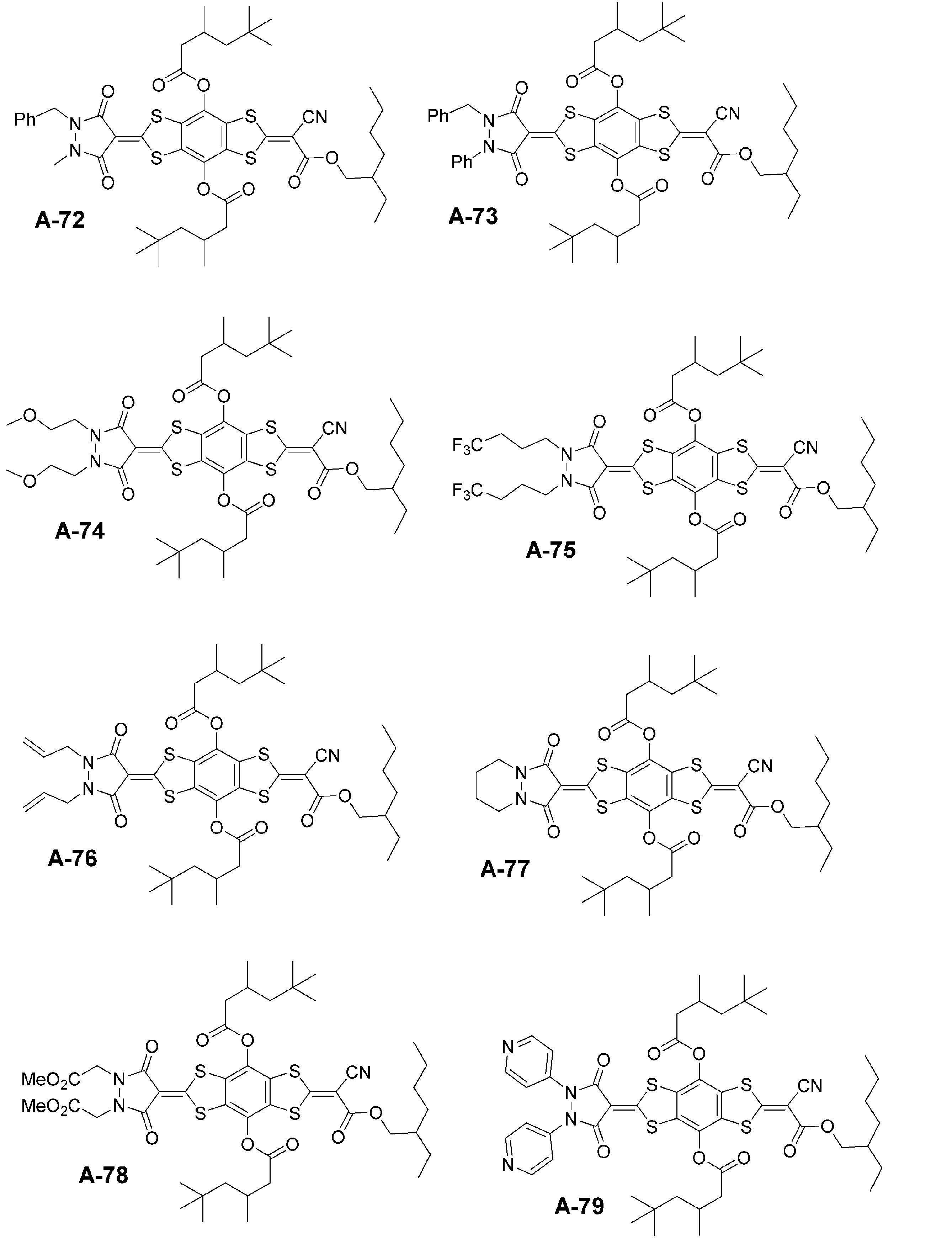
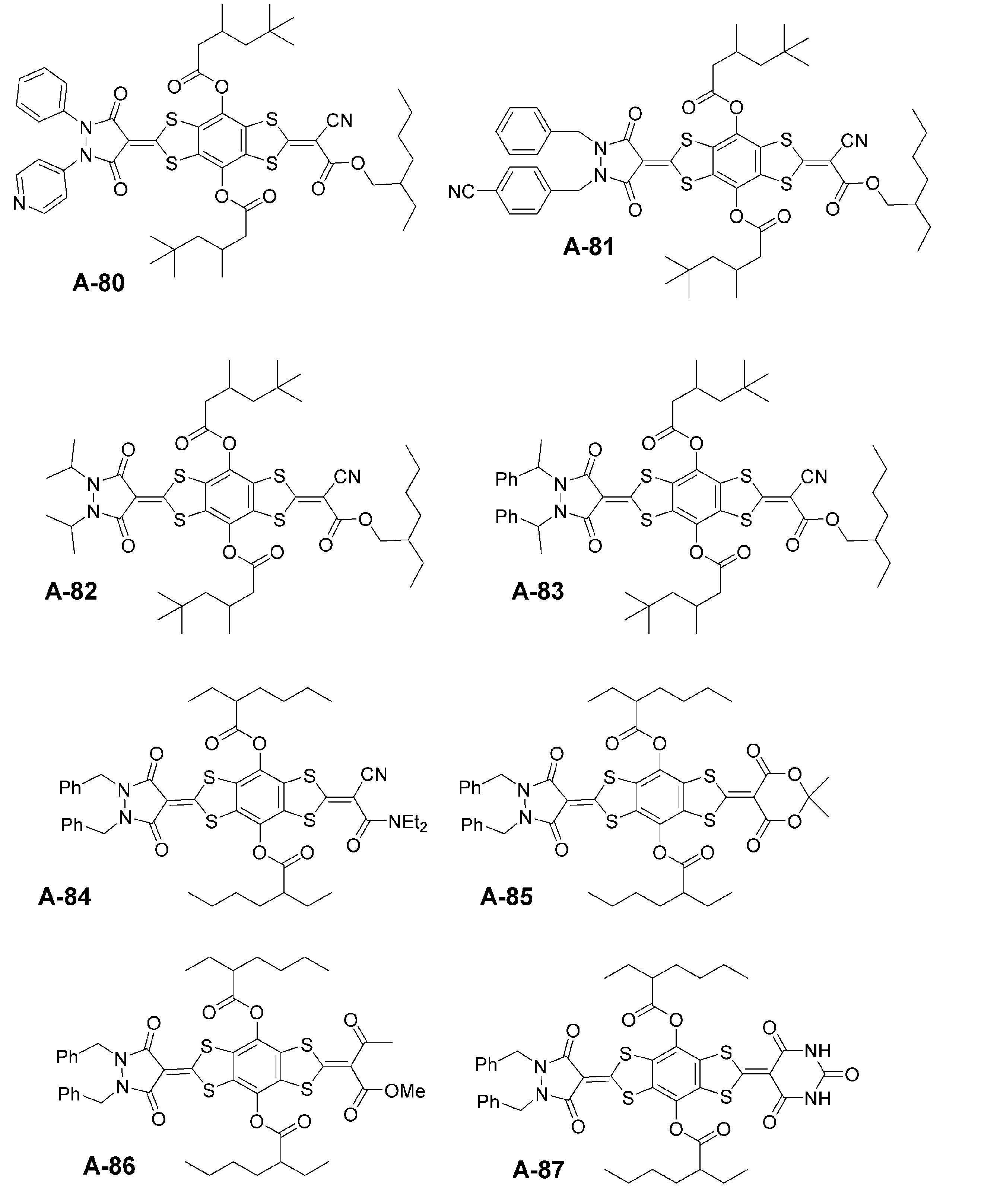


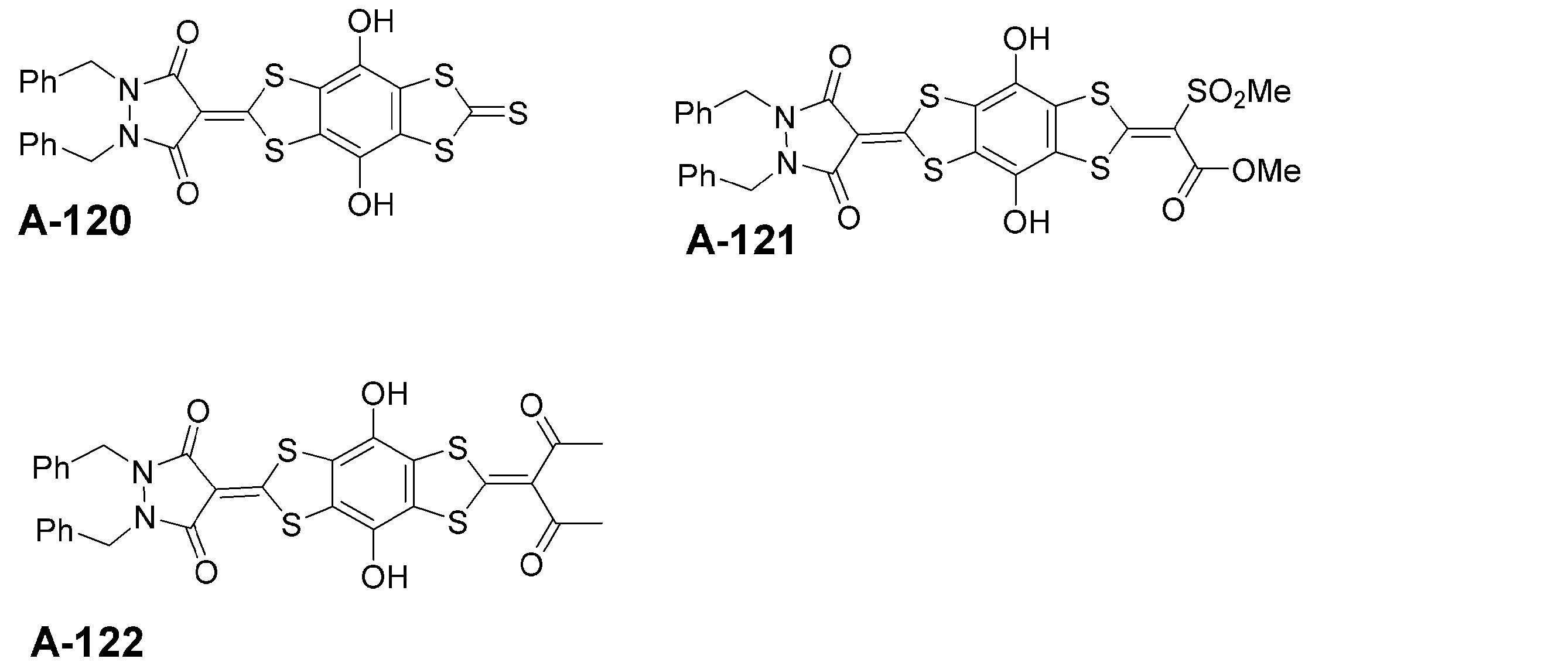

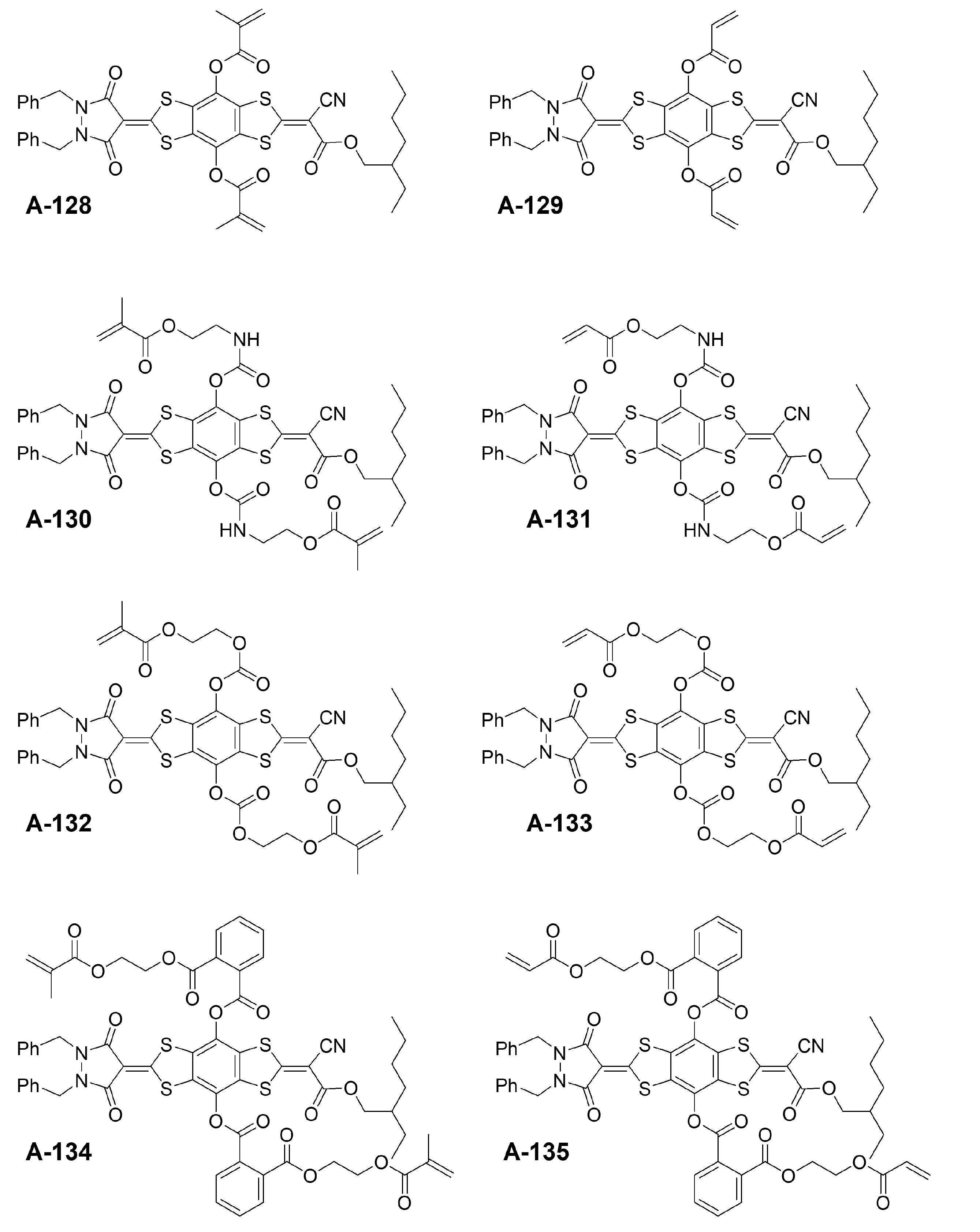
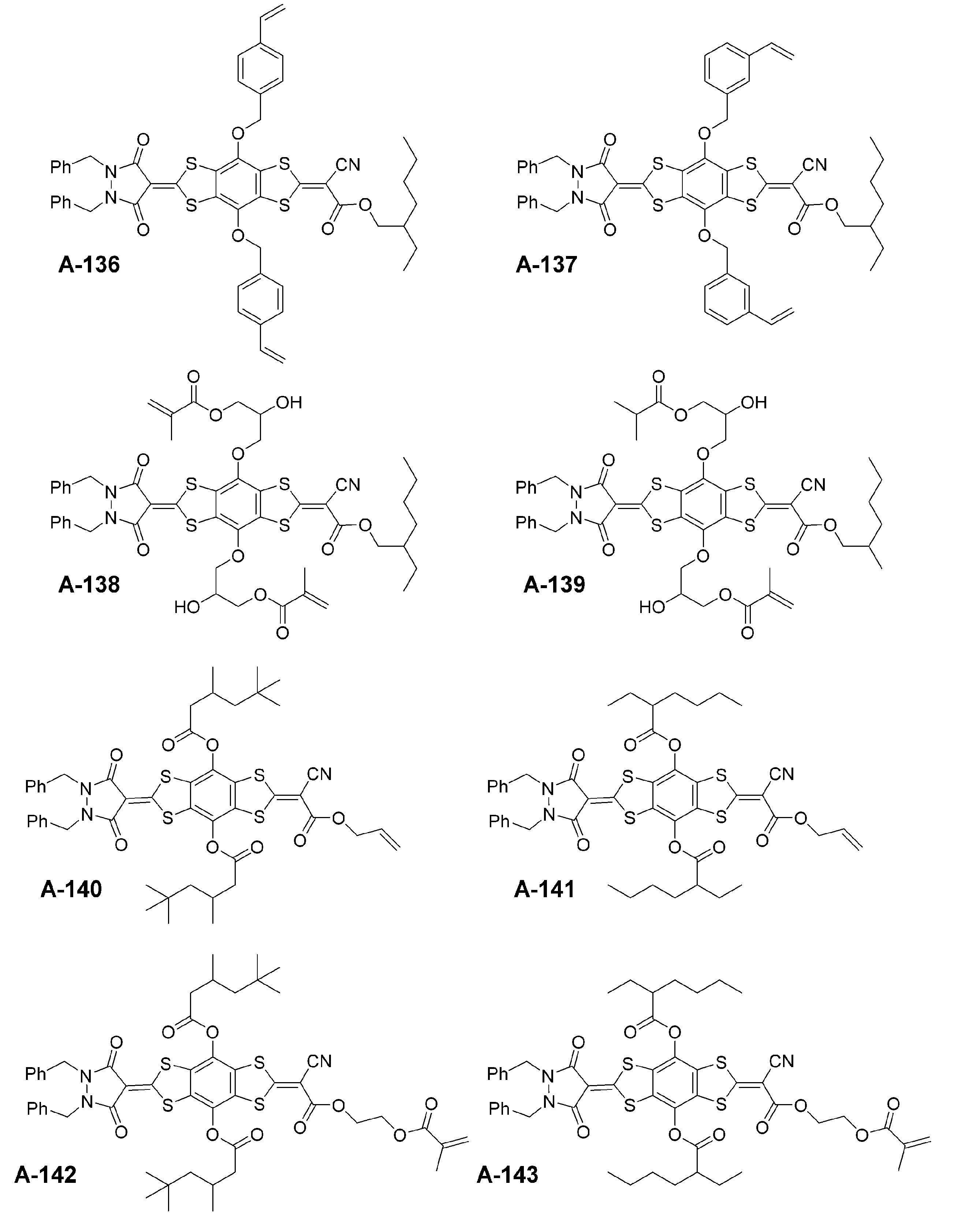

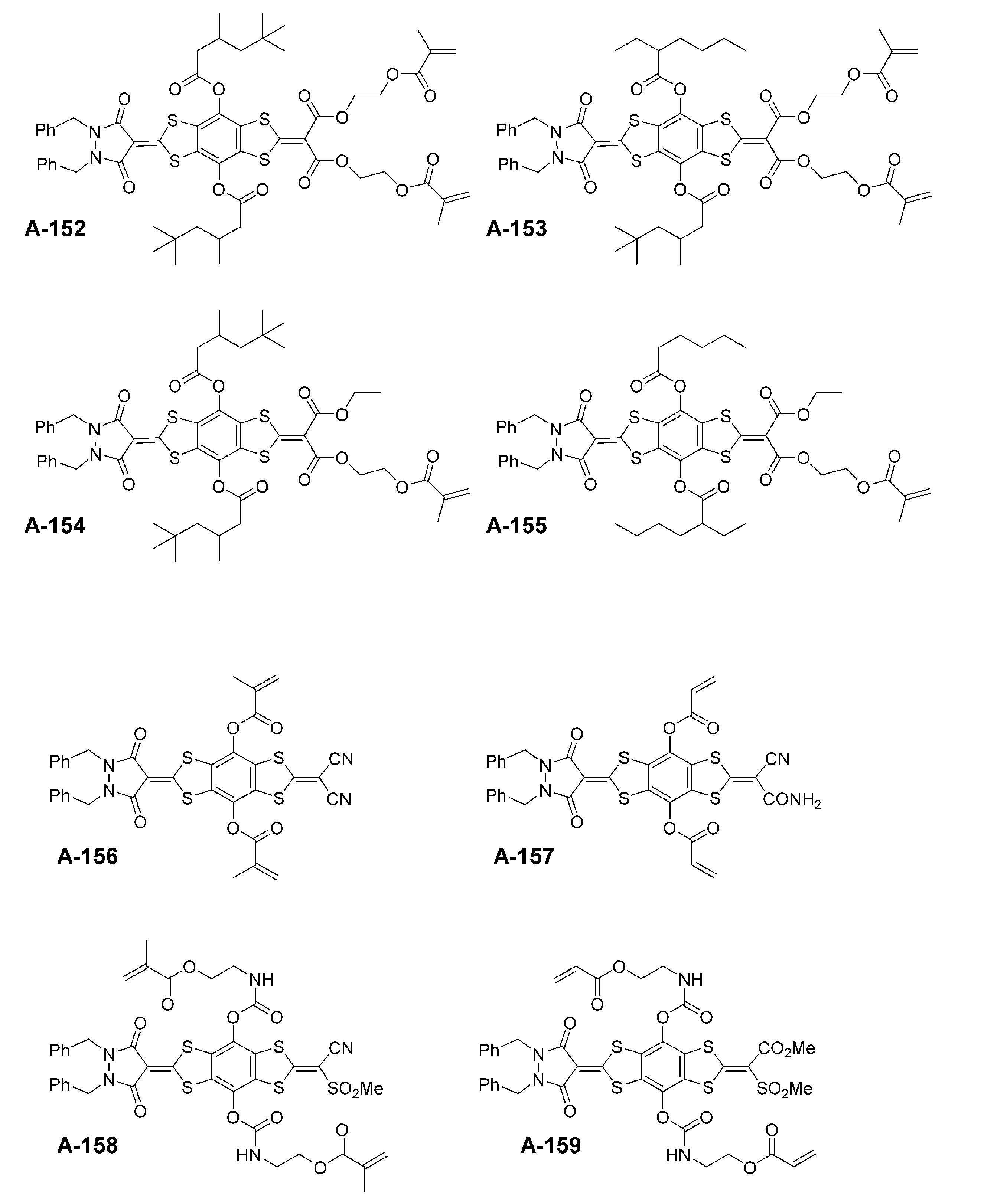

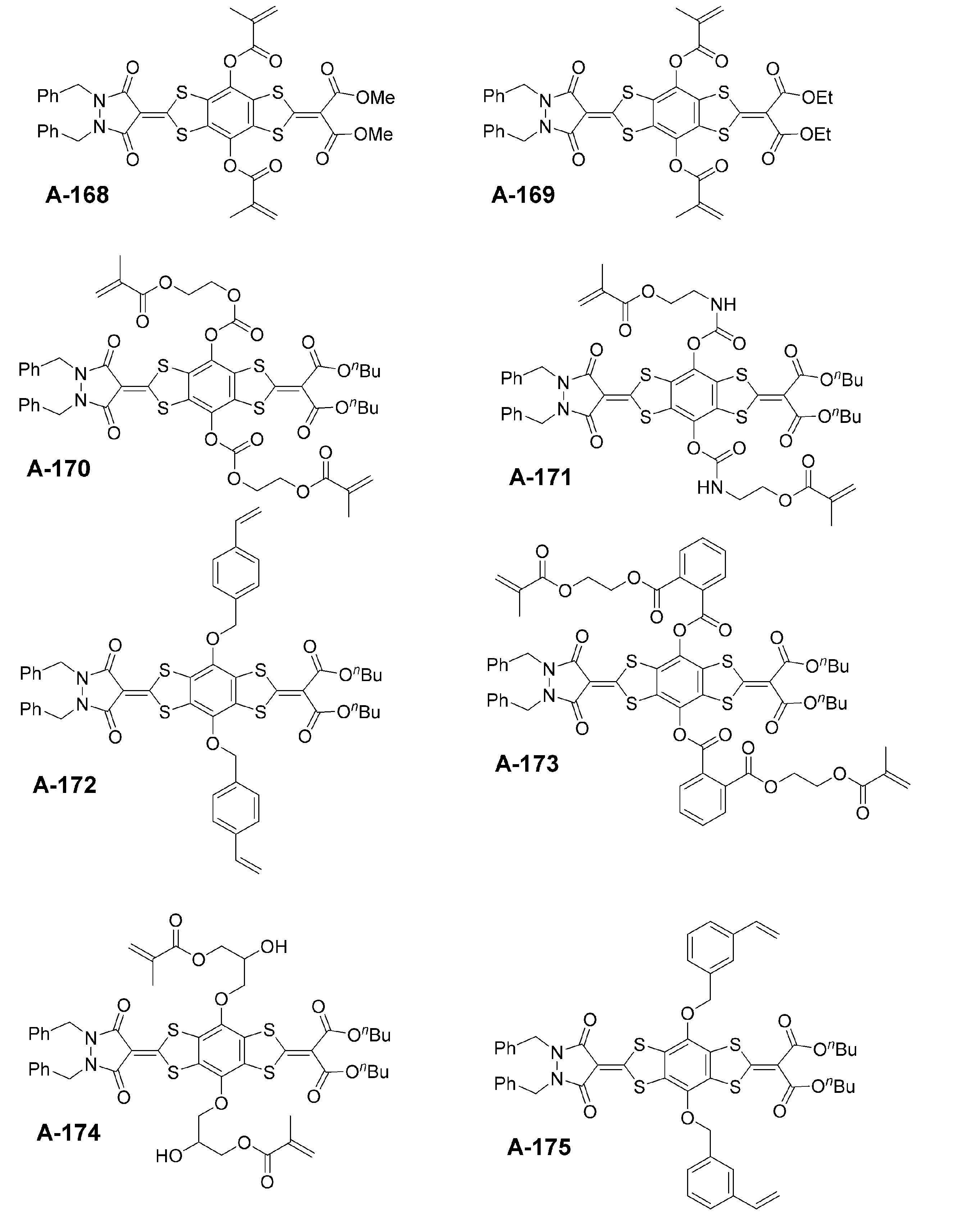


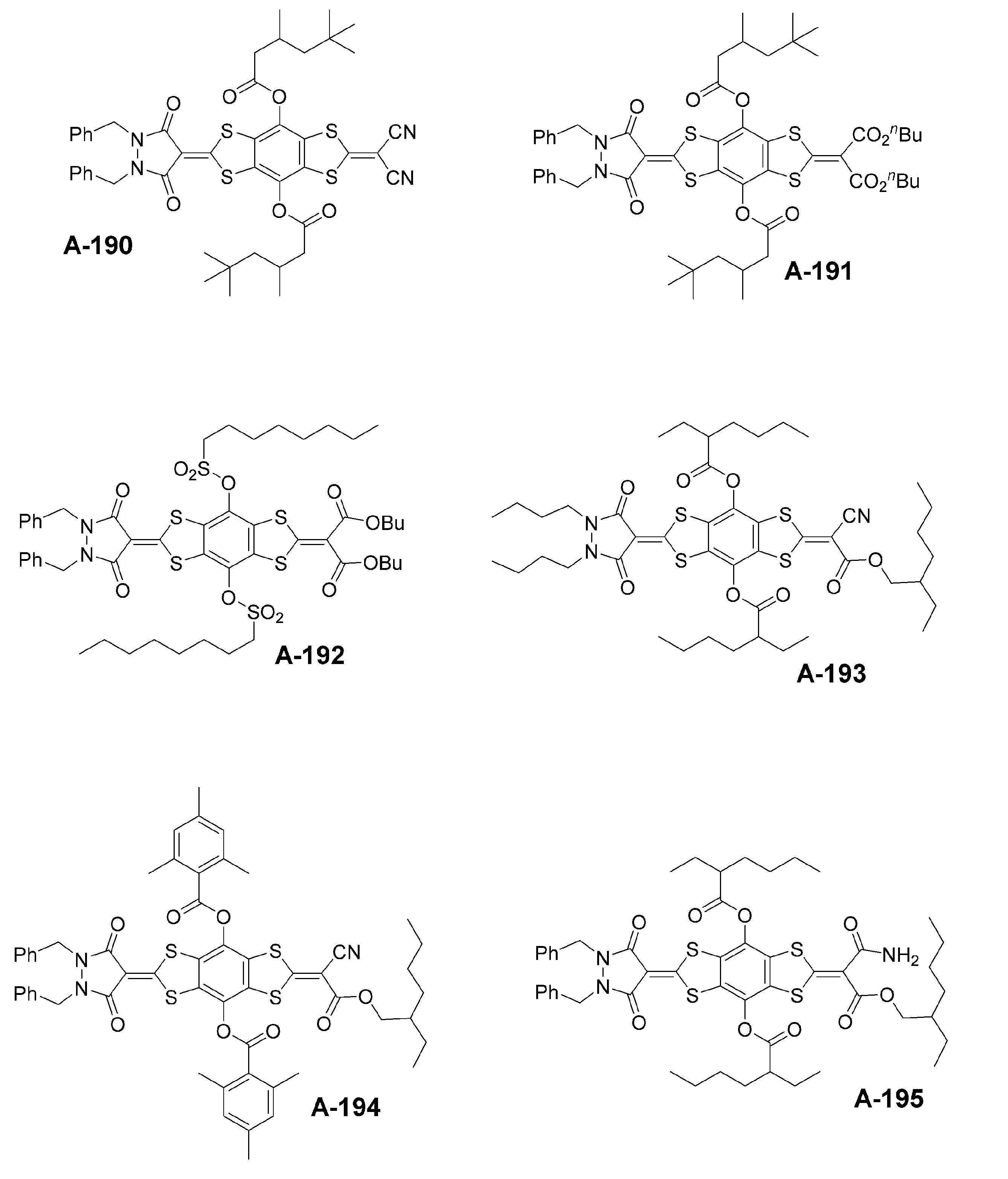


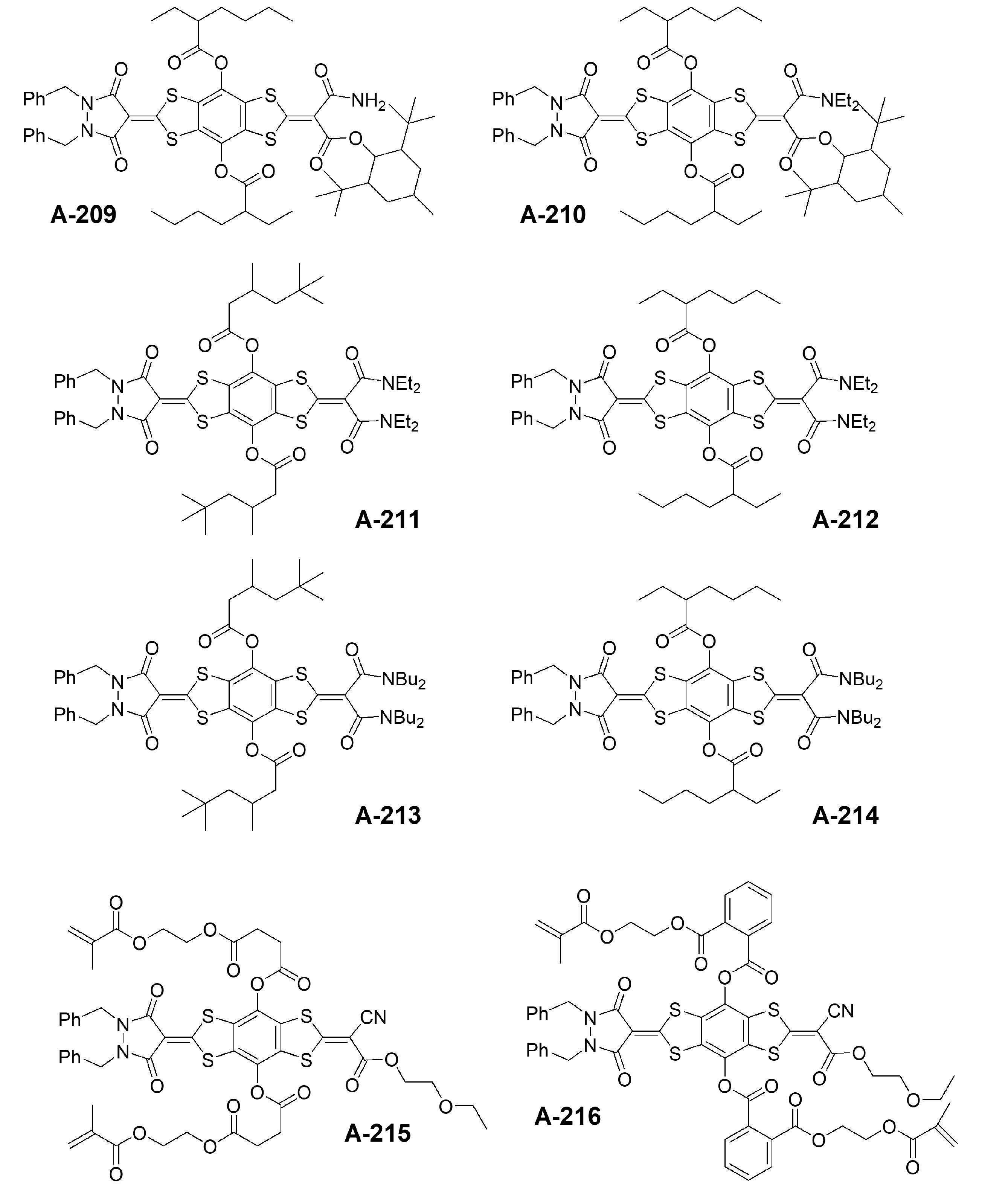

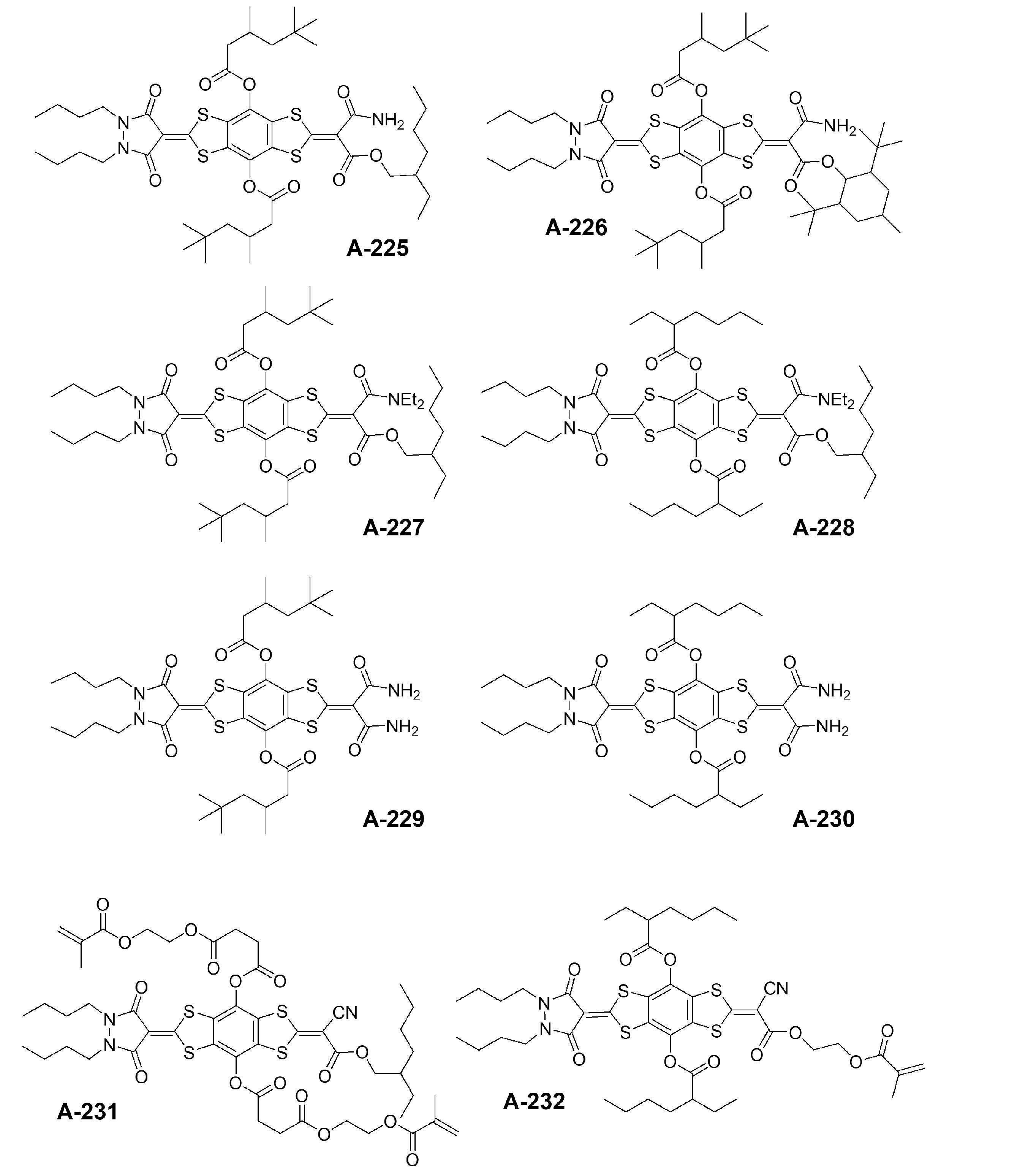

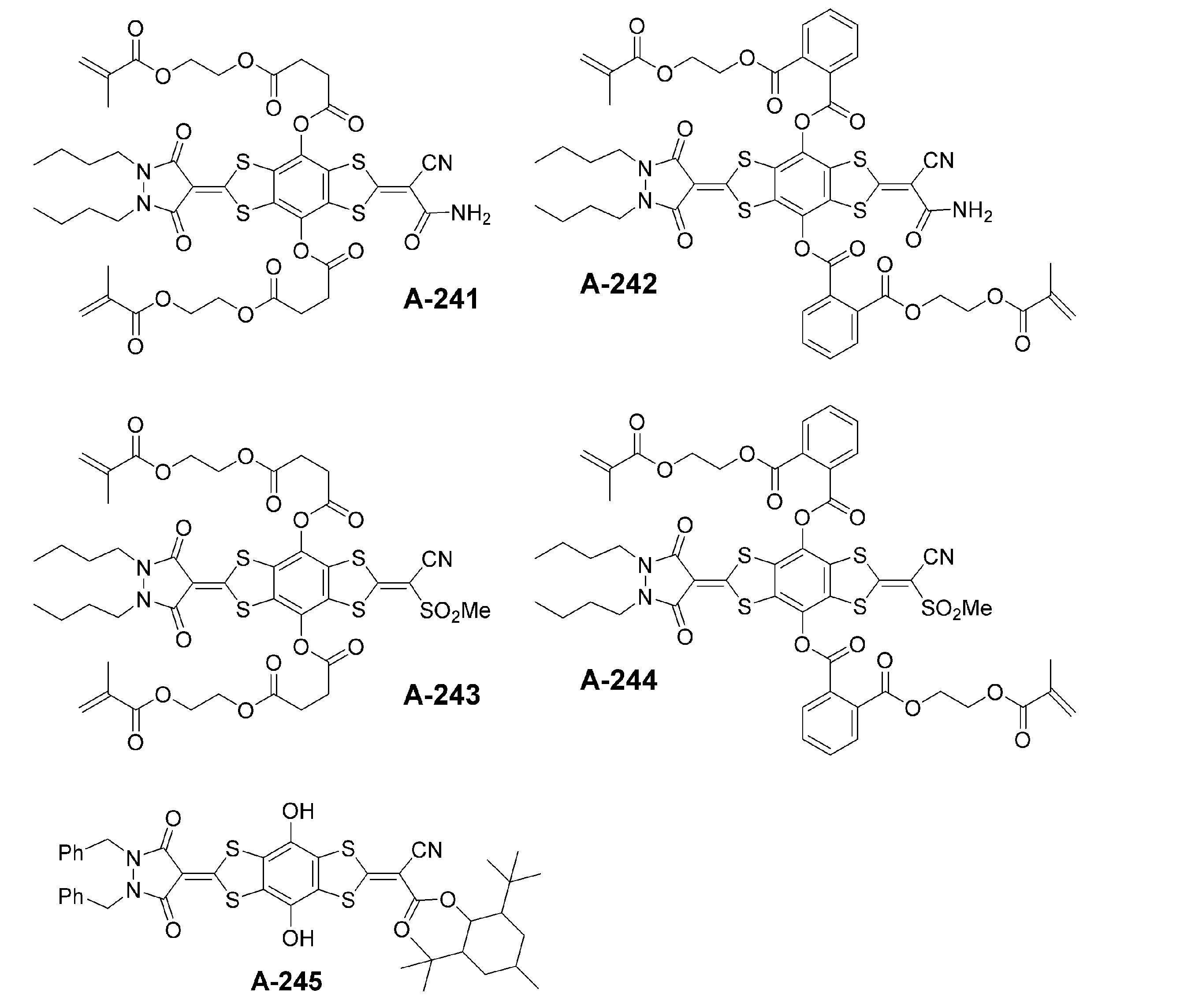
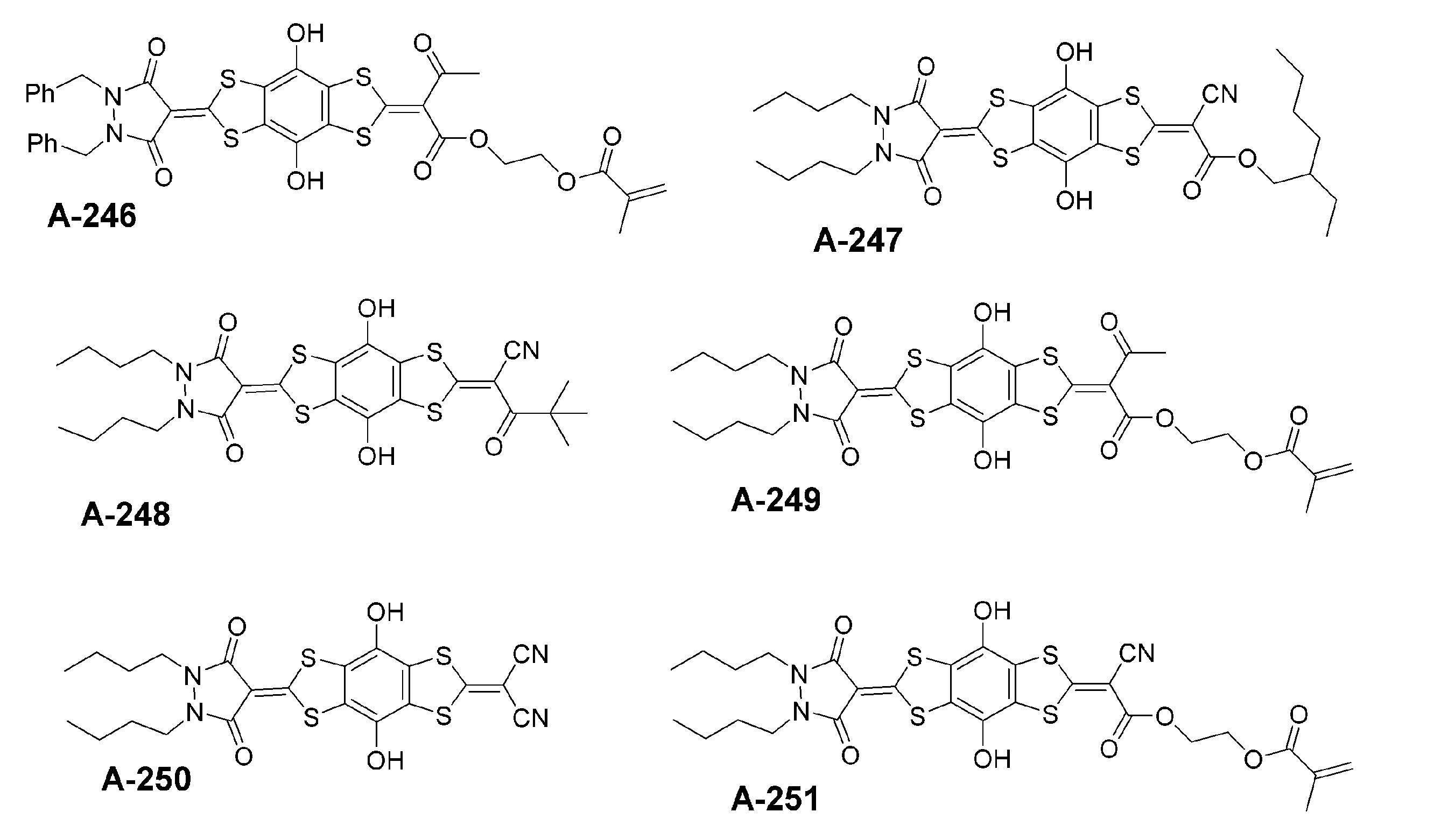
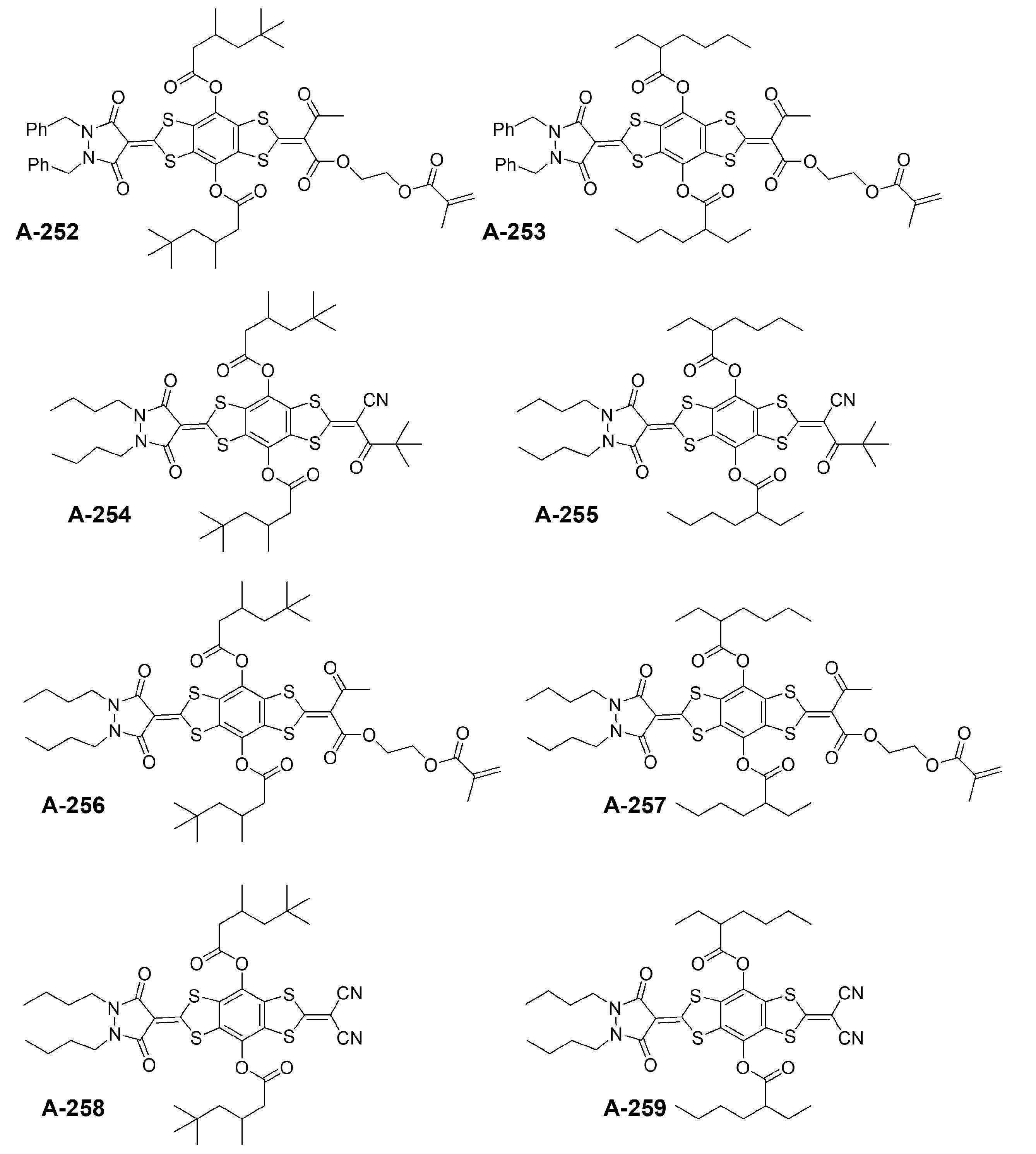

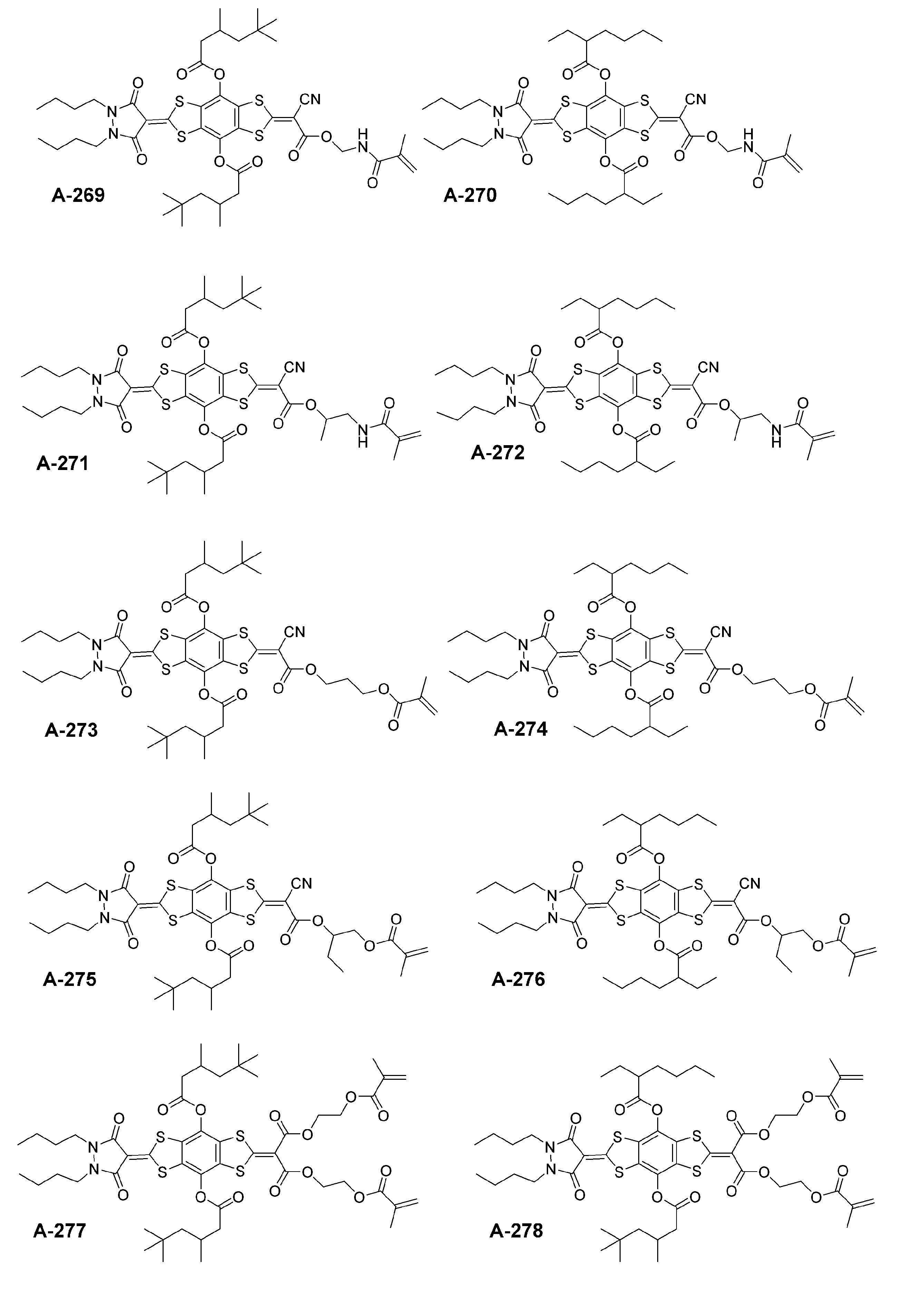
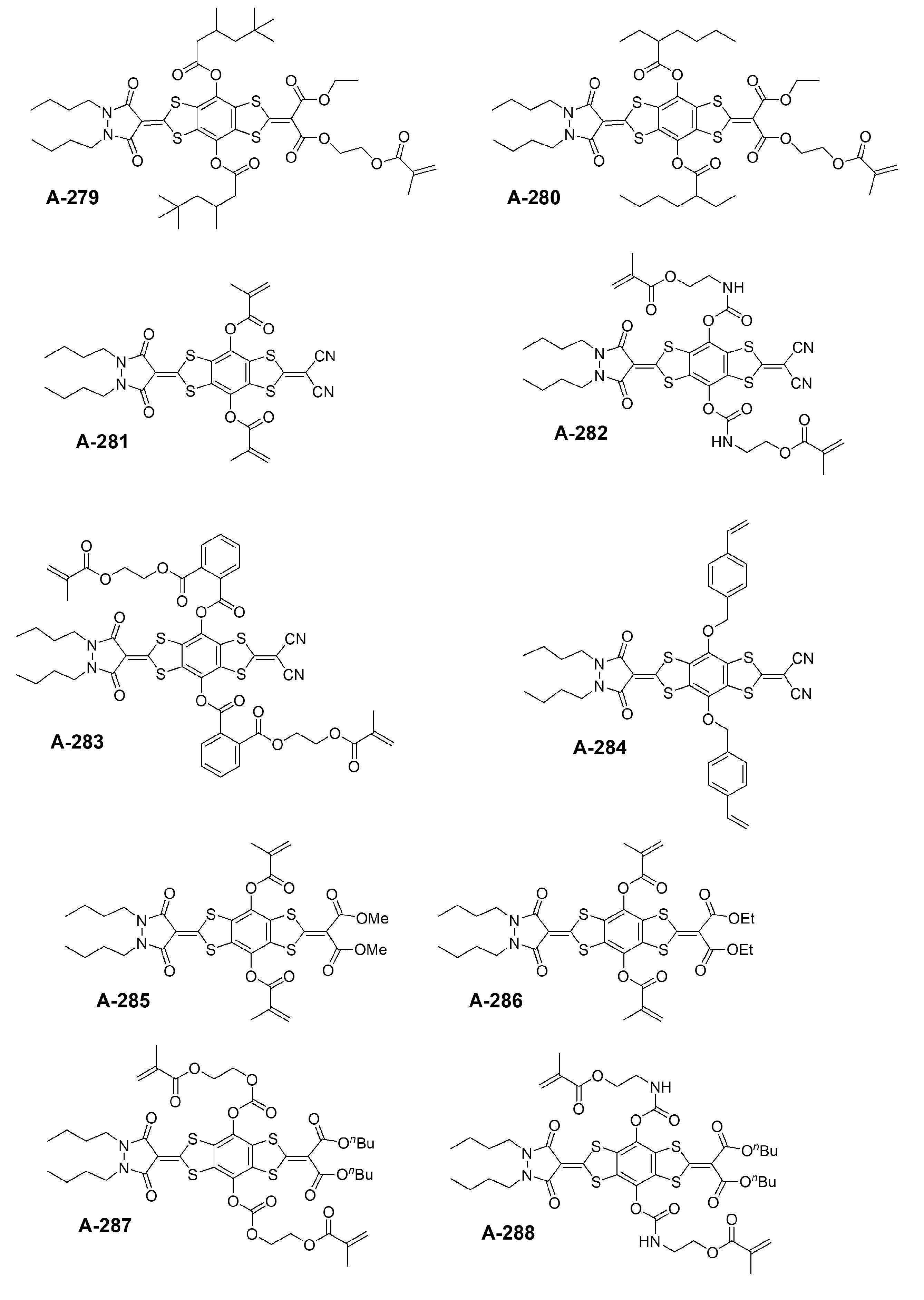
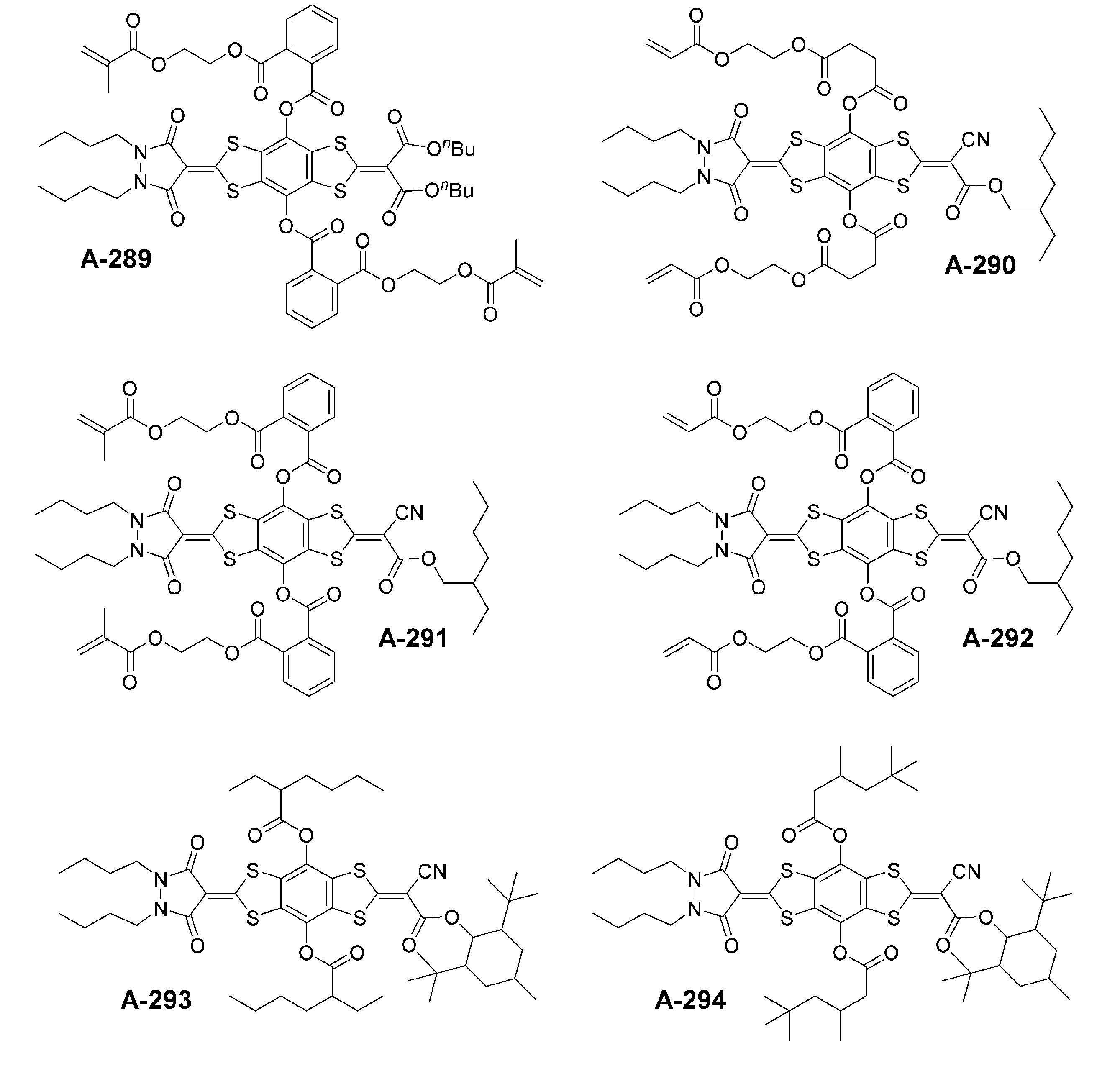
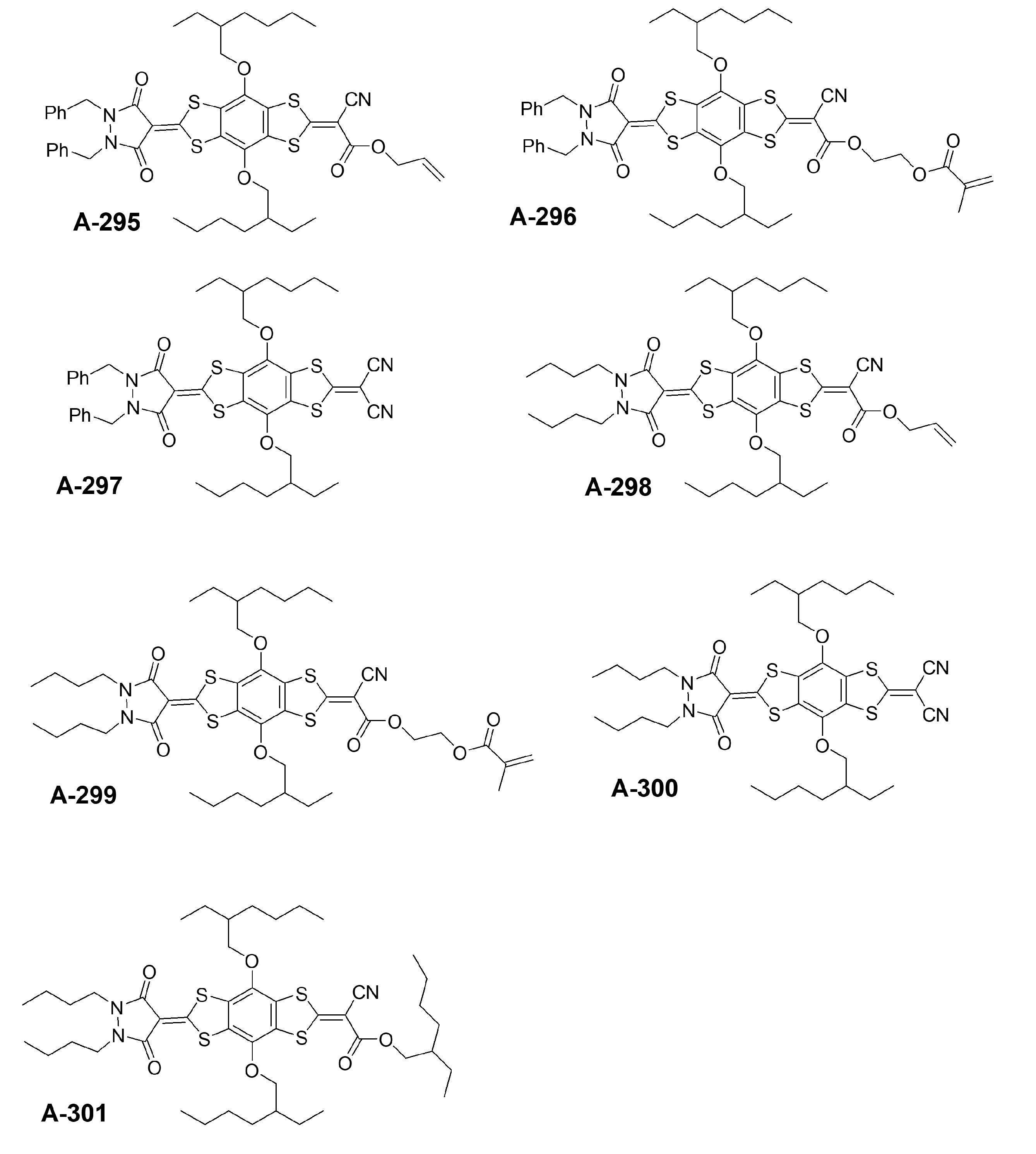
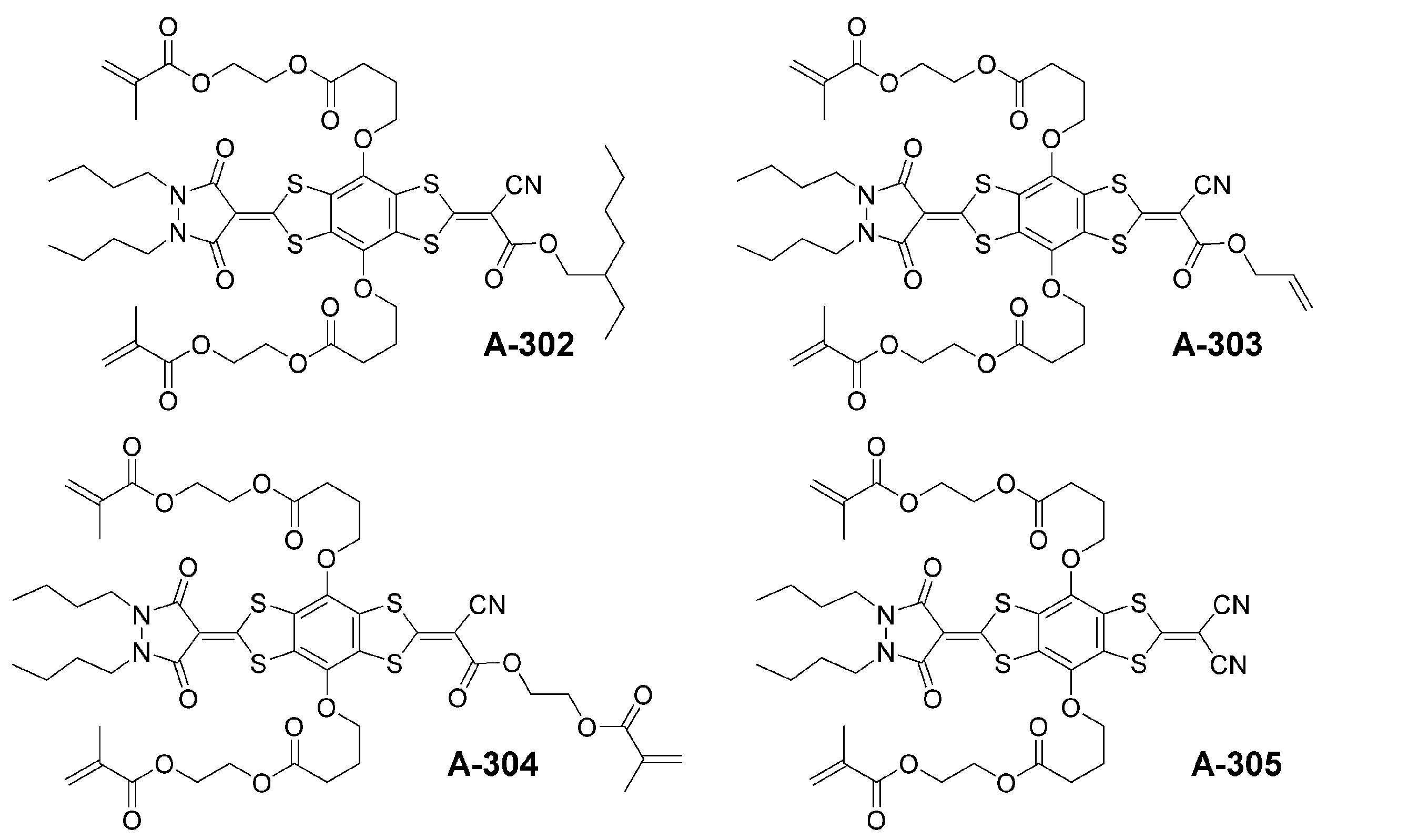

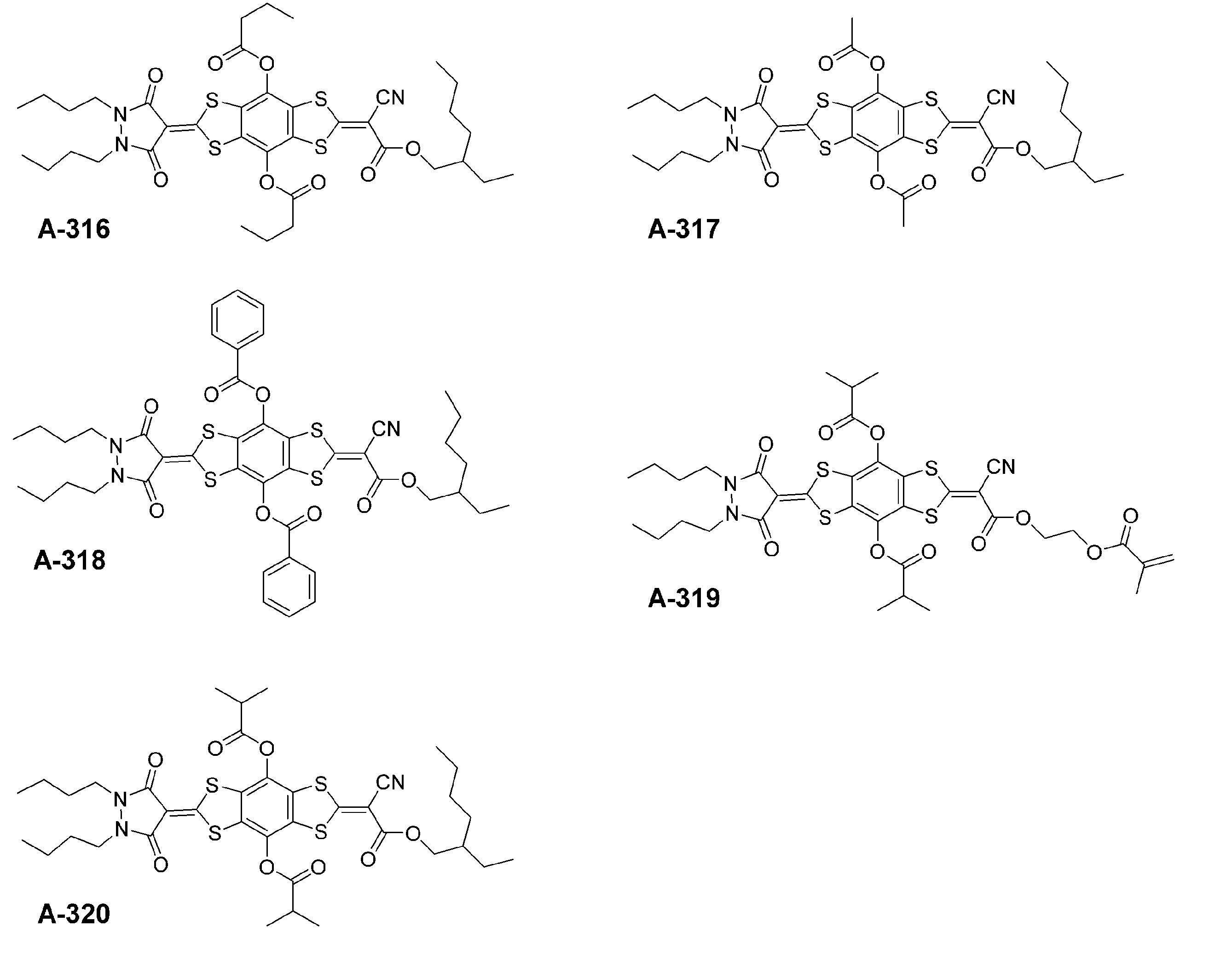
また、波長400nmのモル吸光係数は30000L/mol・cm以上であることが好ましく、40000L/mol・cm以上がより好ましく、50000L/mol・cm以上が更に好ましい。
また、波長440nmのモル吸光係数は1000L/mol・cm以下であることが好ましく、800L/mol・cm以下であることがより好ましく、600L/mol・cm以下であることが更に好ましい。
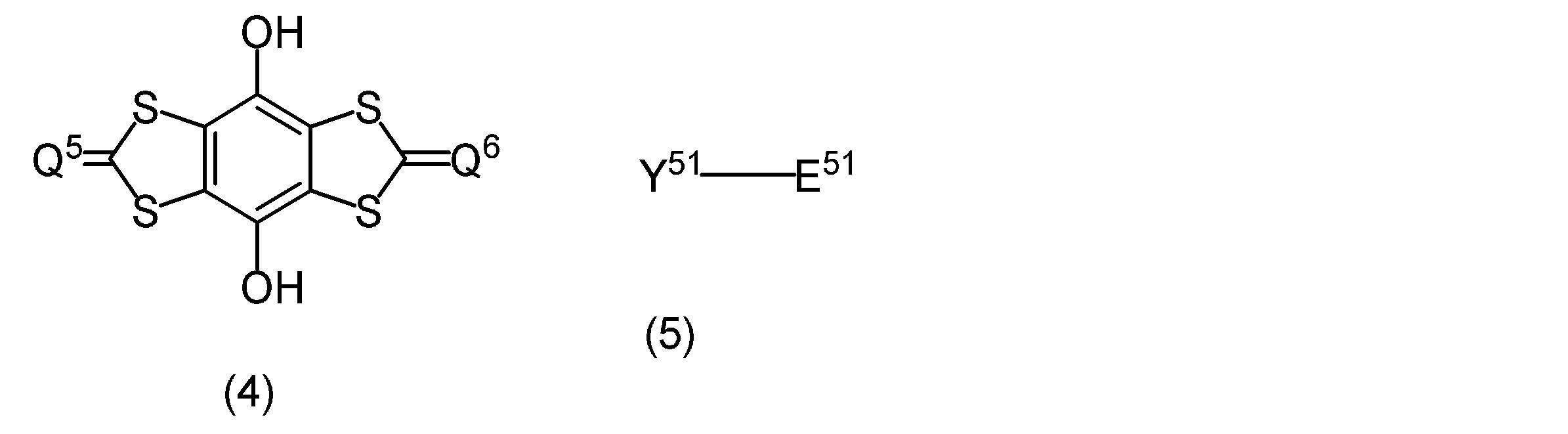
Q6は、=O、=S、=NRq21または=CRq22Rq23を表し、
Rq21~Rq23は、各々独立して水素原子または置換基を表し、Rq22とRq23は互いに結合して環を形成してもよい;ただし、Rq22とRq23が結合して環を形成している場合、=CRq22Rq23はQ5と同一の構造ではない。
Re51は、水素原子、アルキル基、アラルキル基またはアリール基を表し、
Re52は-Clまたはアルコキシ基を表し、
Y51はアルキル基、アラルキル基またはアリール基を表す。
式(5)のY51が表すアリール基の炭素数は、6~30が好ましく、6~20がより好ましく、6~15が更に好ましく、6~10が特に好ましく、6~8が最も好ましい。アリール基は置換基を有していてもよい。置換基としては上述した置換基Tで説明した基が挙げられる。
式(5)のY51が表すアラルキル基におけるアルキル部分の炭素数は、1~10が好ましく、1~5がより好ましく、1~3が更に好ましい。上記アラルキル基におけるアリール部分の炭素数は、6~30が好ましく、6~20がより好ましく、6~15が更に好ましく、6~10が特に好ましく、6~8が最も好ましい。アラルキル基は置換基を有していてもよい。置換基としては上述した置換基Tで説明した基が挙げられる。
特定化合物の含有量は、樹脂の100質量部に対して、0.01~50質量部であることが好ましい。下限は、0.05質量部以上であることが好ましく、0.1質量部以上であることがより好ましい。上限は、40質量部以下であることが好ましく、30質量部以下であることがより好ましく、20質量部以下であることが更に好ましい。
樹脂組成物は、特定化合物を1種のみ含んでいてもよく、2種以上含んでいてもよい。特定化合物を2種以上含む場合は、それらの合計量が上記範囲であることが好ましい。
本発明の樹脂組成物は樹脂を含有する。樹脂は、用途又は目的等に応じて求められる透明性、屈折率、加工性等の諸物性を満たす樹脂から適宜選択することができる。
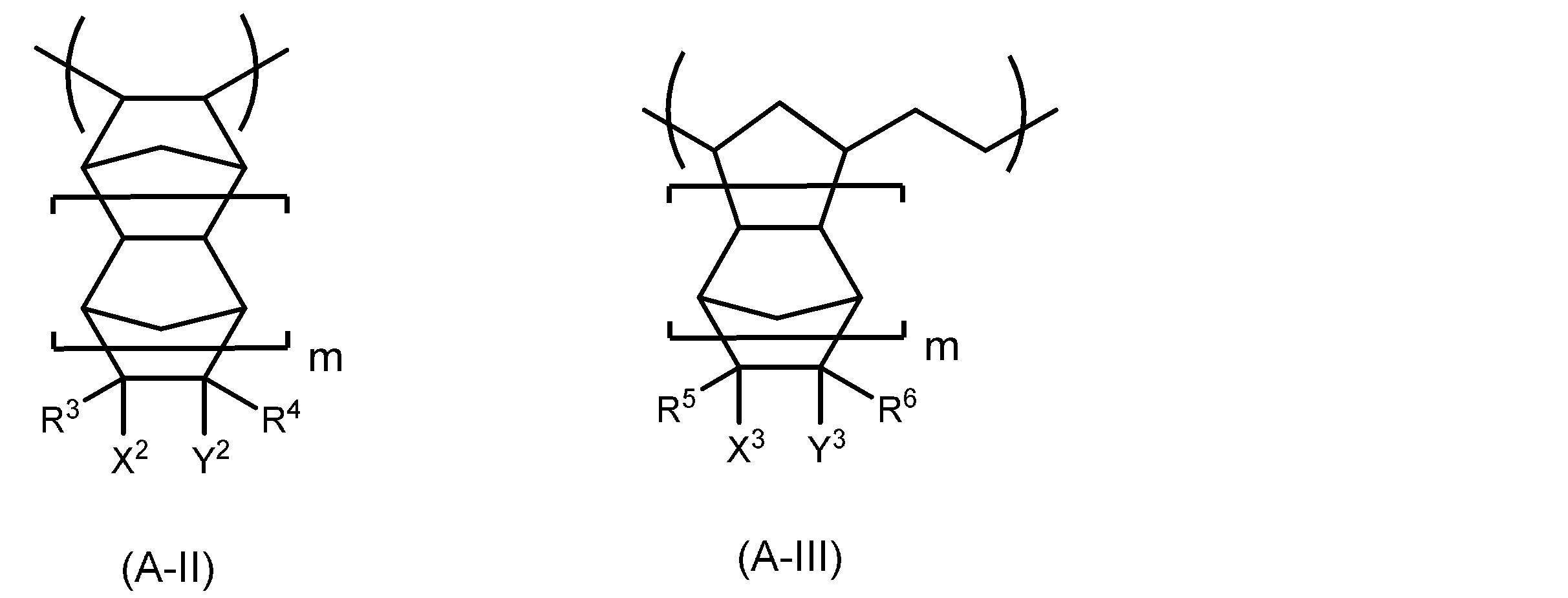
式(A-II)および式(A-III)のR3~R6は、各々独立に、水素原子又は炭素数1~10の炭化水素基を表す。
R3~R6が表す炭化水素基としては、アルキル基、アルケニル基、アルキニル基およびアリール基等が挙げられ、アルキル基又はアリール基であることが好ましい。
X2及びX3、Y2及びY3は、各々独立に、水素原子、炭素数1~10の炭化水素基、ハロゲン原子、ハロゲン原子で置換された炭素数1~10の炭化水素基、-(CH2)nCOOR11、-(CH2)nOCOR12、-(CH2)nNCO、-(CH2)nNO2、-(CH2)nCN、-(CH2)nCONR13R14、-(CH2)nNR13R14、-(CH2)nOZ1、-(CH2)nW1、又は、X2とY2若しくはX3とY3が互いに結合して形成する、(-CO)2O若しくは(-CO)2NR15を表す。
ここで、X2、X3、Y2及びY3としてとりうる上記各基におけるR11~R15は、各々独立に、水素原子又は炭素数1~20の炭化水素基を表し、Z1は炭化水素基又はハロゲンで置換された炭化水素基を表し、W1はSi(R16)pD(3-p)(R16は炭素数1~10の炭化水素基を表し、Dはハロゲン原子、-OCOR17又は-OR17(R17は炭素数1~10の炭化水素基)を表す。pは0~3の整数である)を表す。nは、0~10の整数であり、0~8が好ましく、0~6がより好ましい。
X2及びX3は、それぞれ、水素原子、-CH3、-C2H5が好ましく、透湿度の点で、水素原子が更に好ましい。
Y2及びY3は、各々独立に、水素原子、ハロゲン原子(特に塩素原子)又は-(CH2)nCOOR11(特に-COOCH3)が好ましく、透湿度の点で、水素原子が更に好ましい。
その他の基は、適宜に選択される。

本発明の樹脂組成物は、上述した特定化合物以外の紫外線吸収剤(以下、他の紫外線吸収剤ともいう)を含むことができる。この態様によれば、紫外領域の波長の光を広範囲にわたって遮光できる硬化物を形成することができる。
また、樹脂組成物の全固形分中における上述した特定化合物と他の紫外線吸収剤の合計の含有量は、0.01~50質量%であることが好ましい。下限は、0.05質量%以上であることが好ましく、0.1質量%以上であることがより好ましい。上限は、40質量%以下であることが好ましく、30質量%以下であることがより好ましく、20質量%以下であることがより好ましい。
樹脂組成物は、他の紫外線吸収剤を1種のみ含んでいてもよく、2種以上含んでいてもよい。他の紫外線吸収剤を2種以上含む場合は、それらの合計量が上記範囲であることが好ましい。
本発明の樹脂組成物は、重合性化合物を含有することができる。重合性化合物としては、エネルギー付与により重合硬化可能な化合物を制限なく用いることができる。重合性化合物は、ラジカル重合性化合物であってもよく、カチオン重合性化合物であってもよい。ラジカル重合性化合物としては、エチレン性不飽和結合含有基を有する化合物などが挙げられる。重合性化合物は、エチレン性不飽和結合含有基を有する化合物であることが好ましく、エチレン性不飽和結合含有基を2個以上有する化合物であることがより好ましい。重合性化合物に含まれるエチレン性不飽和結合含有基の数の上限は、15個以下であることが好ましく、10個以下であることがより好ましく、6個以下であることが更に好ましい。重合性化合物が有するエチレン性不飽和結合含有基としては、ビニル基、アリル基、(メタ)アクリロイル基などが挙げられる。
ラジカル重合性化合物としては、エチレン性不飽和結合含有基を有する化合物などが挙げられる。
ラジカル重合性化合物には、不飽和カルボン酸(例えば、アクリル酸、メタクリル酸、イタコン酸、クロトン酸、イソクロトン酸、マレイン酸等)、不飽和カルボン酸のエステル、及び不飽和カルボン酸のアミド、並びに、不飽和カルボン酸又はそのエステルもしくはアミドの(共)重合体が挙げられる。中でも、不飽和カルボン酸と脂肪族多価アルコールとのエステル、及び不飽和カルボン酸と脂肪族多価アミンとのアミド、並びに、これらの単独重合体もしくは共重合体が好ましい。
カチオン重合性化合物としては、カチオン重合性基を有する化合物が挙げられる。カチオン重合性基としては、エポキシ基及びオキセタニル基などの環状エーテル基、及び、ビニルエーテル基などが挙げられ、環状エーテル基であることが好ましい。また、カチオン重合性化合物は、カチオン重合性基を2個以上有する多官能のカチオン重合性化合物であることが好ましい。
樹脂組成物は、重合開始剤を含有することができる。重合開始剤は、エネルギーの付与により重合反応に必要な開始種を発生し得る化合物を用いることができる。重合開始剤としては、ラジカル重合開始剤およびカチオン重合開始剤が挙げられる。重合性化合物としてラジカル重合性化合物を用いた場合には、重合開始剤は、ラジカル重合開始剤であることが好ましい。重合性化合物としてカチオン重合性化合物を用いた場合には、重合開始剤は、カチオン重合開始剤であることが好ましい。
重合開始剤としては、例えば、光重合開始剤及び熱重合開始剤の中から適宜選択することができ、光重合開始剤が好ましい。光重合開始剤は、露光光により感光し、重合性化合物の重合を開始または促進する化合物である。光重合開始剤は、光ラジカル重合開始剤および光カチオン重合開始剤が挙げられ、光ラジカル重合開始剤であることが好ましい。光ラジカル重合開始剤は、波長300nm以上の活性光線に感応して、ラジカルを発生する化合物であることが好ましい。
光ラジカル重合開始剤としては、オキシム化合物、ハロゲン化炭化水素誘導体(例えば、トリアジン骨格を有する化合物、オキサジアゾール骨格を有する化合物など)、オキシジアゾール化合物、カルボニル化合物、ケタール化合物、ベンゾイン化合物、アクリジン化合物、有機過酸化物、アゾ化合物、クマリン化合物、アジド化合物、メタロセン化合物、ヘキサアリールビイミダゾール化合物、有機ホウ酸化合物、ジスルホン酸化合物、オニウム塩化合物、アセトフェノン化合物、アシルホスフィン化合物およびベンゾフェノン化合物等が挙げられる。
光カチオン重合開始剤としては、光照射を受けてプロトン酸又はルイス酸を発生する化合物であれば、特に制限されない。光酸発生剤は、波長300nm以上、より好ましくは波長300~450nmの活性光線に感応し、酸を発生する化合物が好ましい。光酸発生剤は、光照射によってpKaが4以下の酸を発生する化合物であることが好ましく、pKaが3以下の酸を発生する化合物であることがより好ましく、pKaが2以下の酸を発生する化合物であることが更に好ましい。
熱重合開始剤としては、特に制限はなく、公知の熱重合開始剤を用いることができる。例えば、2,2’-アゾビス(イソ酪酸)ジメチル、2,2’-アゾビスイソブチロニトリル、2,2’-アゾビス(2,4-ジメチル-4-メトキシバレロニトリル)、2,2’-アゾビス(2,4-ジメチルバレロニトリル)、ジメチル-2,2’-アゾビス(2-メチルプロピオネート)、2,2’-アゾビス(2-メチルブチロニトリル)、1,1’-アゾビス(シクロヘキサン-1-カルボニトリル)、2,2’-アゾビス(N-ブチル-2-メチルプロピオンアミド)、ジメチル 1,1’-アゾビス(1-シクロヘキサンカルボキシレート)、2,2’-アゾビス[2-(2-イミダゾリン-2-イル)プロパン]2塩酸塩等のアゾ系化合物;
1,1-ジ(t-ヘキシルペルオキシ)シクロヘキサン、1,1-ジ(t-ブチルペルオキシ)シクロヘキサン、2,2-ジ(4,4-ジ-(t-ブチルペルオキシ)シクロヘキシル)プロパン、t-ヘキシルペルオキシイソプロピルモノカーボネート、t-ブチルペルオキシ-3,5,5-トリメチルヘキサノエート、t-ブチルペルオキシラウレート、ジクミルペルオキシド、ジ-t-ブチルペルオキシド、t-ブチルペルオキシ-2-エチルヘキサノエート、t-ヘキシルペルオキシ-2-エチルヘキサノエート、クメンヒドロペルオキシド、t-ブチルヒドロペルオキシド等の有機過酸化物;
過硫酸カリウム、過硫酸アンモニウム、過酸化水素などの無機過酸化物;
などが挙げられる。
本発明の樹脂組成物は、触媒を含有することができる。触媒としては、塩酸、硫酸、酢酸、プロピオン酸等の酸触媒、水酸化ナトリウム、水酸化カリウム、トリエチルアミン等の塩基触媒などが挙げられる。樹脂組成物が触媒を含有する場合、触媒の含有量は、樹脂の100質量部に対し0.1~100質量部が好ましく、より好ましくは0.1~50質量部であり、更に好ましくは0.1~20質量部である。樹脂組成物は、触媒を1種類のみ含んでいてもよいし、2種類以上含んでいてもよい。触媒を2種類以上含む場合は、それらの合計量が上記範囲となることが好ましい。
本発明の樹脂組成物は、シランカップリング剤を含有することができる。この態様によれば、得られる膜の支持体との密着性をより向上させることができる。本発明において、シランカップリング剤は、加水分解性基とそれ以外の官能基とを有するシラン化合物を意味する。また、加水分解性基とは、ケイ素原子に直結し、加水分解反応及び縮合反応の少なくともいずれかによってシロキサン結合を生じ得る置換基をいう。加水分解性基としては、例えば、ハロゲン原子、アルコキシ基、アシルオキシ基などが挙げられ、アルコキシ基が好ましい。すなわち、シランカップリング剤は、アルコキシシリル基を有する化合物が好ましい。また、加水分解性基以外の官能基としては、例えば、ビニル基、(メタ)アリル基、(メタ)アクリロイル基、メルカプト基、エポキシ基、オキセタニル基、アミノ基、ウレイド基、スルフィド基、イソシアネート基、フェニル基などが挙げられ、アミノ基、(メタ)アクリロイル基およびエポキシ基が好ましい。シランカップリング剤の具体例としては、特開2009-288703号公報の段落番号0018~0036に記載の化合物、特開2009-242604号公報の段落番号0056~0066に記載の化合物が挙げられ、これらの内容は本明細書に組み込まれる。シランカップリング剤の市販品としては、綜研化学(株)のA-50(オルガノシラン)などが挙げられる。樹脂組成物の全固形分中におけるシランカップリング剤の含有量は、0.1~5質量%が好ましい。上限は、3質量%以下が好ましく、2質量%以下がより好ましい。下限は、0.5質量%以上が好ましく、1質量%以上がより好ましい。シランカップリング剤は、1種のみでもよく、2種以上でもよい。2種以上の場合は、合計量が上記範囲となることが好ましい。
本発明の樹脂組成物は、界面活性剤を含有することができる。界面活性剤としては、例えば、特許第4502784号公報の段落番号0017、及び特開2009-237362号公報の段落番号0060~0071に記載の界面活性剤が挙げられる。
樹脂組成物は、更に溶剤を含むことが好ましい。溶剤としては、特に限定は無く、水及び有機溶剤が挙げられる。溶剤は、有機溶剤であることが好ましい。
アルコール系溶剤の具体例としては、メタノール、エタノール、1-プロパノール、2-プロパノール、1-ブタノール、2-ブタノール、2-メチル-1-プロパノール、1-メトキシ-2-プロパノール、2-エトキシエタノール、2-ブトキシエタノール、エチレングリコール、プロピレングリコール、グリセリン等が挙げられる。
エステル系溶剤の具体例としては、酢酸メチル、酢酸エチル、酢酸-n-ブチル、酢酸イソブチル、ギ酸アミル、酢酸イソアミル、酢酸イソブチル、プロピオン酸ブチル、酪酸イソプロピル、酪酸エチル、酪酸ブチル、乳酸メチル、乳酸エチル、アルコキシ酢酸アルキルエステル類(例:アルコキシ酢酸メチル、アルコキシ酢酸エチル、アルコキシ酢酸ブチル(具体的には、メトキシ酢酸メチル、メトキシ酢酸エチル、メトキシ酢酸ブチル、エトキシ酢酸メチル、エトキシ酢酸エチル等が挙げられる。))、3-オキシプロピオン酸アルキルエステル類、2-オキシプロピオン酸アルキルエステル類、2-オキシ-2-メチルプロピオン酸メチル、2-オキシ-2-メチルプロピオン酸エチル、ピルビン酸メチル、ピルビン酸エチル、ピルビン酸プロピル、アセト酢酸メチル、アセト酢酸エチル、2-オキソブタン酸メチル、2-オキソブタン酸エチル、メチルセロソルブアセテート、エチルセロソルブアセテート、プロピレングリコールモノメチルエーテルアセテート、プロピレングリコールモノエチルエーテルアセテート、プロピレングリコールモノプロピルエーテルアセテート、3-エトキシプロピオン酸メチル、3-エトキシプロピオン酸エチル、エチレンカーボネート等が挙げられる。
エーテル系溶剤の具体例としては、ジエチレングリコールジメチルエーテル、テトラヒドロフラン、エチレングリコールモノメチルエーテル、エチレングリコールモノエチルエーテル、ジエチレングリコールモノメチルエーテル、ジエチレングリコールモノエチルエーテル、ジエチレングリコールモノブチルエーテル、プロピレングリコールモノメチルエーテル、ポリエチレングリコールモノアルキルエーテル、ポリプロピレングリコールモノアルキルエーテル、ポリエチレングリコール、ポリプロピレングリコール、エチレングリコールジアルキルエーテル、プロピレングリコールジアルキルエーテル、ポリエチレングリコールジアルキルエーテル、ポリプロピレングリコールジアルキルエーテル、ジオキサン等が挙げられる。
アミド系溶剤の具体例としては、N-メチルピロリドン、ジメチルホルムアミド、ジメチルアセトアミド等が挙げられる。
ケトン系溶剤の具体例としては、メチルエチルケトン、シクロヘキサノン、シクロペンタノン、2-ヘプタノン、3-ヘプタノン等が挙げられる。
炭化水素系溶剤の具体例としては、トルエン、キシレン等が挙げられる。
ハロゲン系溶剤の具体例としては、クロロホルム、メチレンクロライド等が挙げられる。
これらの有機溶剤は、2種以上を併用してもよい。
また、本発明の樹脂組成物を混練物として用いる場合には、樹脂組成物中における有機溶剤の含有量は、0.1質量%以下であることが好ましく、0.01質量%以下であることがより好ましい。
本発明の樹脂組成物を混練物として用いる場合には、本発明の樹脂組成物は可塑剤を含有することができる。可塑剤としては、フタル酸エステル系可塑剤、リン酸エステル系可塑剤、トリメリット酸エステル系可塑剤、脂肪酸エステル系可塑剤、ポリエステル系可塑剤、グリセリン系可塑剤およびポリアルキレングリコール系可塑剤などが挙げられ、フタル酸エステル系可塑剤およびリン酸エステル系可塑剤が好ましい。
リン酸エステル系可塑剤としては、リン酸トリメチル、リン酸トリエチル、リン酸トリブチル、リン酸トリフェニル、リン酸トリクレジルなどが挙げられる。
トリメリット酸エステル系可塑剤としては、トリメット酸トリブチル、トリメット酸トリス(2-エチルヘキシル)等が挙げられる。
脂肪酸エステル系可塑剤としては、アジピン酸ジメチル、アジピン酸ジエチル、アジピン酸ジプロピル、アジピン酸ジイソプロピル、アジピン酸ジブチル、アジピン酸ジイソブチル、ドデカン酸ジメチル、マレイン酸ジブチル、オレイン酸エチルなどが挙げられる。
ポリエステル系可塑剤としては、アジピン酸、セバチン酸、テレフタル酸、イソフタル酸、ナフタレンジカルボン酸、ジフェニルジカルボン酸、ロジンなどの酸成分と、プロピレングリコール、1,3-ブタンジオール、1,4-ブタンジオール、1,6-ヘキサンジオール、エチレングリコール、ジエチレングリコールなどのジオール成分からなるポリエステルや、ポリカプロラクトンなどのヒドロキシカルボン酸とのポリエステル等が挙げられる。これらのポリエステルは単官能カルボン酸若しくは単官能アルコールで末端封鎖されていてもよく、またエポキシ化合物などで末端封鎖されていてもよい。
グリセリン系可塑剤としては、グリセリンモノアセトモノラウレート、グリセリンジアセトモノラウレート、グリセリンモノアセトモノステアレート、グリセリンジアセトモノオレート及びグリセリンモノアセトモノモンタネート等が挙げられる。
ポリアルキレングリコール系可塑剤としては、ポリエチレングリコール、ポリプロピレングリコール、ポリテトラメチレングリコール、ビスフェノール類のエチレンオキシド付加重合体、ビスフェノール類のプロピレンオキシド付加重合体、ビスフェノール類のテトラヒドロフラン付加重合体などのポリアルキレングリコールあるいはその末端エポキシ変性化合物、末端エステル変性化合物、及び末端エーテル変性化合物等が挙げられる。
混練物は、可塑剤を1種のみ含んでいてもよく、2種以上含んでいてもよい。可塑剤を2種以上含む場合は、それらの合計量が上記範囲であることが好ましい。
樹脂組成物は、必要に応じて、酸化防止剤、光安定剤、加工安定剤、老化防止剤、相溶化剤などの任意の添加剤を適宜含有してもよい。これらの成分を適宜含有させることにより、得られる硬化物の各種特性を適宜調整できる。
本発明の樹脂組成物は、日光または紫外線を含む光に晒される可能性のある用途に好適に使用することもできる。具体例としては、住居、施設、輸送機器などの窓ガラス用のコーティング材またはフィルム;住居、施設、輸送機器などの内外装材および内外装用塗料;蛍光灯、水銀灯などの紫外線を発する光源用部材;太陽電池、精密機械、電子電気機器、表示装置用部材;食品、化学品、薬品などの容器または包装材;農工業用シート;スポーツウェア、ストッキング、帽子などの衣料用繊維製品および繊維;プラスチックレンズ、コンタクトレンズ、メガネ、義眼などのレンズまたはそのコーティング材;光学フィルタ、プリズム、鏡、写真材料などの光学用品;テープ、インクなどの文房具;標示板、標示器などとその表面コーティング材などが挙げられる。これらの詳細については、特開2009-263617号公報の段落番号0158~0218、特開2009-096971号公報の段落番号0161~0194の記載を参酌でき、この内容は本明細書に組み込まれる。
本発明の紫外線吸収剤は、上述した式(1)で表される化合物(特定化合物)を含む。式(1)で表される化合物については、上述した内容と同様である。紫外線吸収剤は、日光または紫外線を含む光に晒される可能性のある用途に好適に使用することもできる。これらの具体例としては上述したものが挙げられる。また、本発明の紫外線吸収剤は、包装材料、容器、塗料、塗膜、インク、繊維、建材、記録媒体、画像表示装置、太陽電池用カバーおよびガラス被膜などに用いることもできる。また、後述する光学部材に用いることもできる。
本発明の硬化物は、上述した本発明の樹脂組成物を用いて得られるものである。本明細書における「硬化物」には、樹脂組成物を乾燥させて固化された乾燥物、及び樹脂組成物が硬化反応する場合は、樹脂組成物を硬化反応させて硬化した硬化物が含まれる。
本発明の光学部材は、上述した本発明の樹脂組成物を用いて得られる硬化物を含む。本発明の硬化物は、上述した本発明の樹脂組成物を所望の形状に成形した成形物として得られるものでもよい。成形体の形状については、用途や目的に応じて適宜選択することができる。例えば、コーティング膜状、フィルム状、シート状、板状、レンズ状、管状、繊維状などが挙げられる。
本発明の重合体は、上述した式(3)で表される化合物のうち、R11、R12、Q3およびQ4の少なくとも一つがエチレン性不飽和結合を有する重合性基を含む基である構造の化合物由来の構造(以下、構造(3)ともいう)を含むものである。以下、上述した式(3)で表される化合物のうち、R11、R12、Q3およびQ4の少なくとも一つがエチレン性不飽和結合を有する重合性基を含む基である構造の化合物を特定化合物(3)ともいう。
本発明の重合体は、樹脂と混合して用いることもできる。樹脂としては、上述した本発明の樹脂組成物の項で説明した樹脂が挙げられる。
(合成例1) 中間体1-3の合成
以下のスキームに従い中間体1-1を合成した。下記スキーム中、中間体1-1の合成は、特開2009-263617号公報の段落番号0222、0223に記載の方法を参照し、1,2-ジブチルピラゾリジン-3,5ジオンの代わりに1,2-ジベンジルピラゾリジン-3,5ジオンを使用して行い、中間体1-1を77g(収率78%)得た。
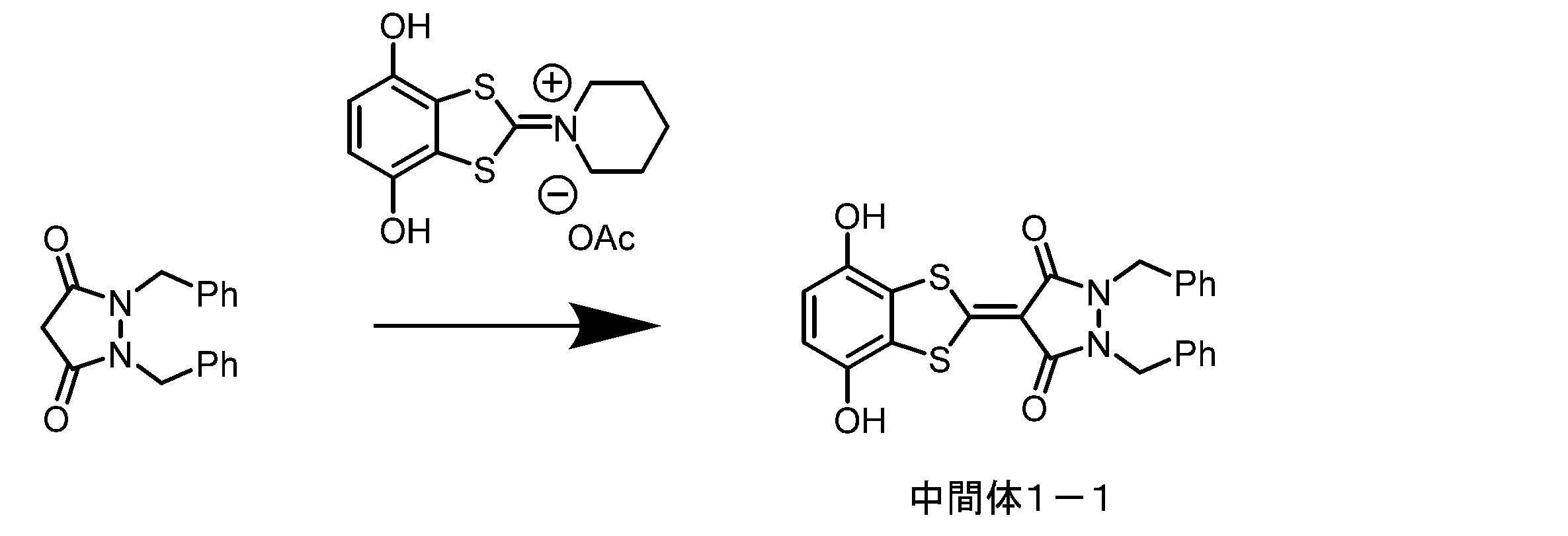


以下の合成スキームに従い、化合物A-104を合成した。中間体1-3の3.0g、マロノニトリルの0.58g、およびN-メチル-2-ピロリドンの150mlを加えて混合した後、80℃で1時間撹拌した。室温まで冷却した後、塩酸の1mLおよび水の150mlを加えて30分間撹拌した。析出した固体をろ取した後に、アセトニトリルの200mlを加えて、窒素雰囲気下で1時間加熱還流した。室温に冷却後、1時間室温で撹拌した後に固体をろ取し、アセトニトリルの100mlで洗浄することで、化合物A-104を2.1g(収率79%)得た。また、得られた化合物A-104のプロトン核磁気共鳴(1H-NMR、溶媒:重ジメチルスルホキシド(dDMSO))では、化学シフトδ 11.6(s、2H)、7.29(m、10H)、4.80(s、4H)であった。
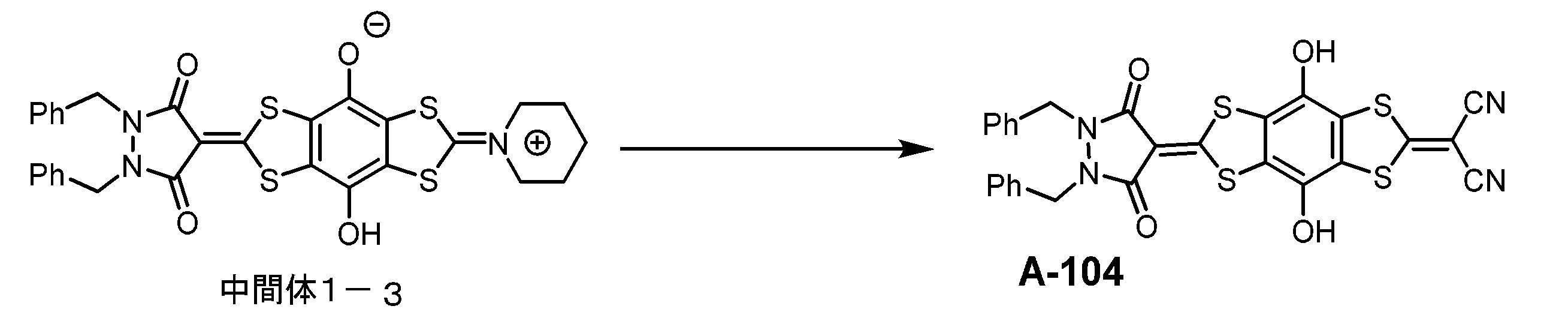
以下の合成スキームに従い、化合物A-1を合成した。化合物A-104の1.5g、トリエチルアミンの0.76g、2-エチルへキサノイルクロリドの1.0g、およびジメチルアセトアミドの30mlを加えて混合した後、20℃で1時間撹拌した。反応終了後、水の30mlを加えて30分撹拌した。析出した固体をろ取した後に、メタノールの30mlで洗浄した後、シリカゲルカラムクロマト精製を行い、化合物A-1を1.6g(収率75%)得た。また、得られた化合物A-1のプロトン核磁気共鳴(1H-NMR、溶媒:重水素化クロロホルム(CDCl3))では、化学シフトδ 7.27(m、6H)、7.10(m、4H)、4.75(s、4H)、2.69(m、2H)、1.8~1.6(m、8H)、1.5~1.3(m、8H)、1.10(m、6H)、0.94(m、6H)であった。
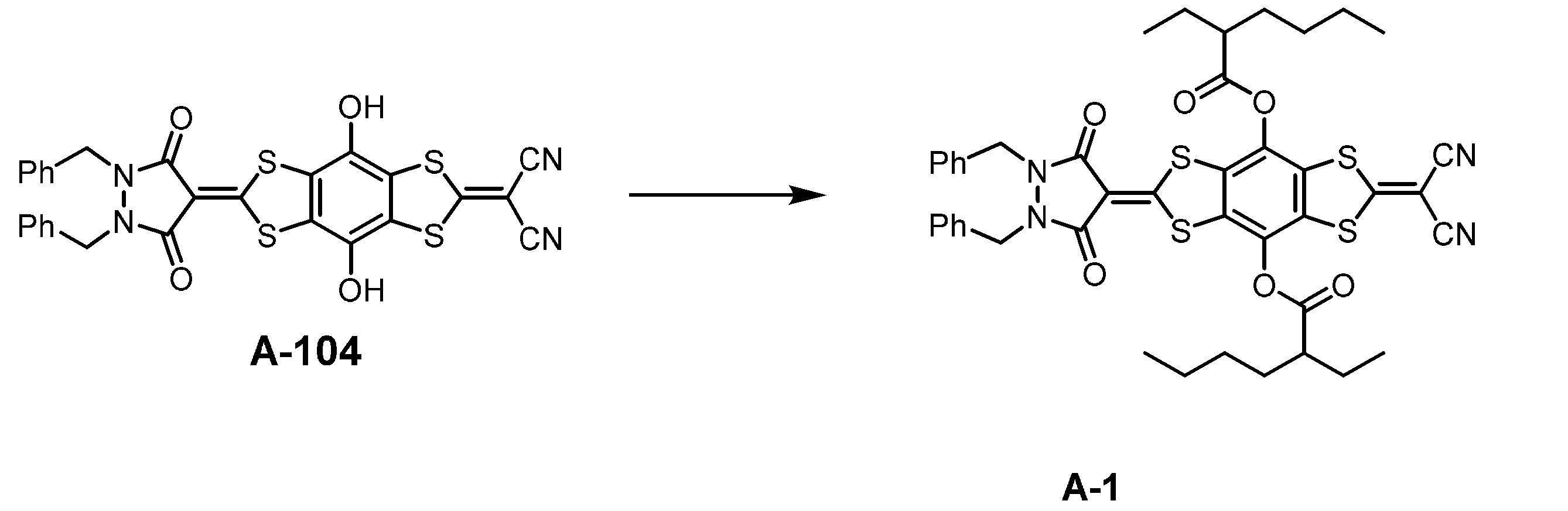
合成例2において、マロノニトリルの代わりにシアノ酢酸ノルマルブチルを使用する以外は合成例2と同様の方法で化合物A-105を0.71g(収率60%)得た。
1H-NMR(dDMSO):δ 11.5(s、2H)、7.28(m、10H)、4.80(s、4H)、4.24(t、2H)、1.62(m、2H)、1.37(m、2H)、0.92(t、3H)

合成例3において、化合物A-104の代わりに化合物A-105を使用する以外は合成例3と同様の方法で化合物A-2を0.61g(収率74%)得た。
1H-NMR(CDCl3):δ 7.27(m、6H)、7.10(m、4H)、4.75(s、4H)、4.28(t、2H)、2.69(m、2H)、1.91~1.71(m、10H)、1.60~1.44(m、10H)、1.15(m、6H)、0.96(m、9H)

合成例2において、マロノニトリルの代わりにシアノ酢酸2-エチルヘキシルを使用する以外は合成例2と同様の方法で化合物A-106を1.0g(収率78%)得た。
1H-NMR(dDMSO):δ 11.5(s、2H)、7.24(m、10H)、4.80(s、4H)、4.16(d、2H)、1.63(m、1H)、1.29(m、8H)、0.88(m、6H)

合成例3において、化合物A-104の代わりに化合物A-106を使用する以外は合成例3と同様の方法で化合物A-3を0.42g(収率68%)得た。
1H-NMR(CDCl3):δ 7.27(m、6H)、7.10(m、4H)、4.75(s、4H)、4.19(m、2H)、2.69(m、2H)、1.90~1.66(m、9H)、1.47~1.31(m、16H)、1.14(m、6H)、1.01~0.90(m、12H)
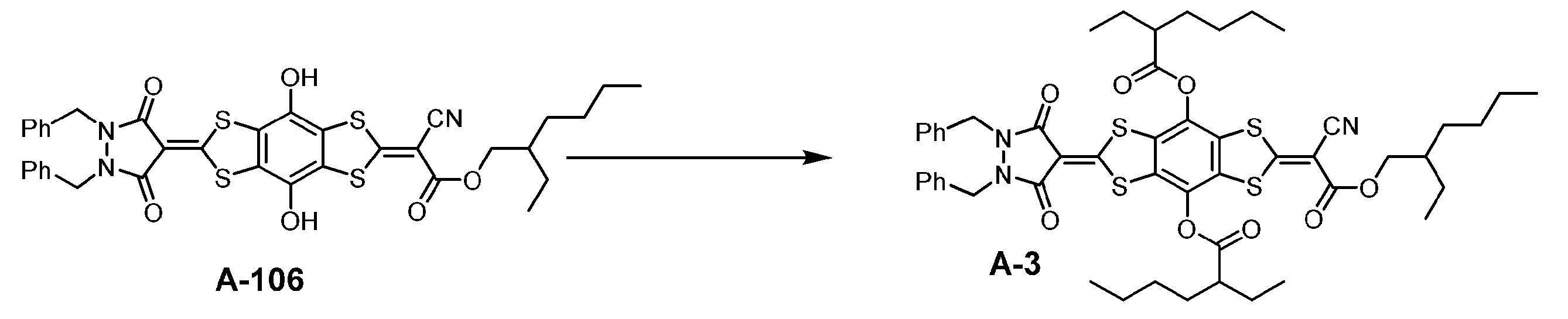
合成例7において、2-エチルへキサノイルクロリドの代わり3,5,5-トリメチルへキサノイルクロリドを使用する以外は合成例7と同様の方法で化合物A-18を0.33g(収率79%)得た。
1H-NMR(CDCl3):δ 7.27(m、6H)、7.10(m、4H)、4.76(s、4H)、4.19(m、2H)、2.77(m、2H)、2.56(m、2H)、2.24(m、2H)、1.67(m、1H)、1.55~1.32(m、12H)、1.18(m、6H)、0.98~0.90(m、24H)
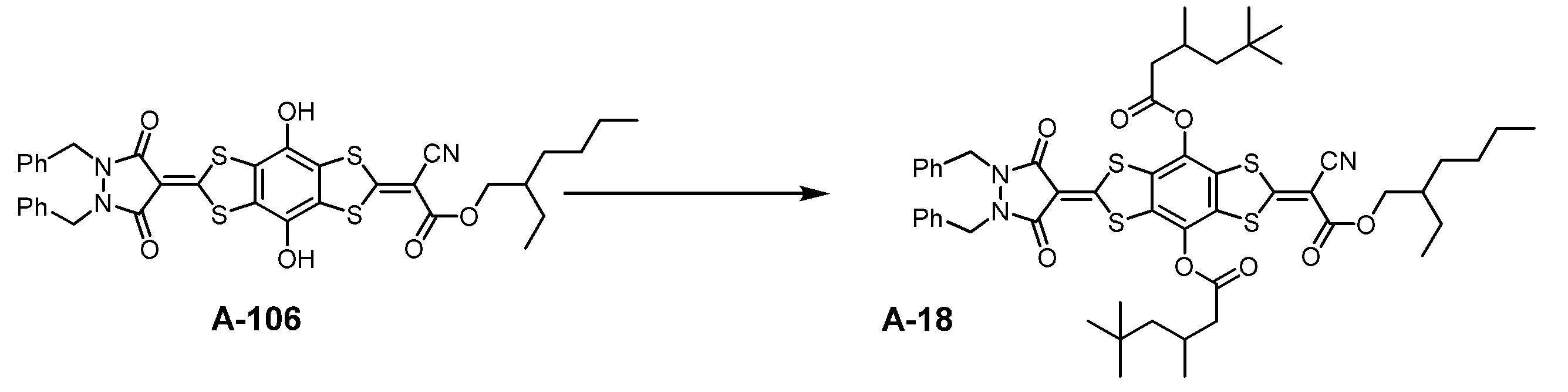
合成例2において、マロノニトリルの代わりにピバロイルアセトニトリルを使用する以外は合成例2と同様の方法で化合物A-107を1.1g(収率76%)得た。
1H-NMR(dDMSO):δ 11.5(s、2H)、7.29(m、10H)、4.80(s、4H)、1.34(s、9H)

合成例3において、化合物A-104の代わりに化合物A-107を使用する以外は合成例3と同様の方法で化合物A-4を0.43g(収率62%)得た。
1H-NMR(CDCl3):δ 7.27(m、6H)、7.10(m、4H)、4.75(s、4H)、2.71(m、2H)、1.8~1.6(m、8H)、1.48~1.45(m、8H)、1.39(s、9H)、1.15(m、6H)、0.99(m、6H)
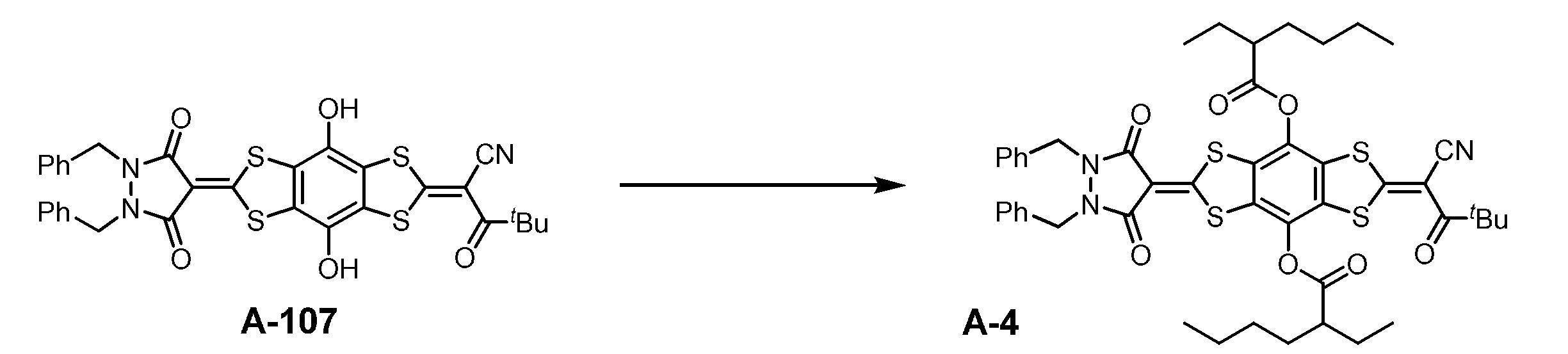
合成例2において、マロノニトリルの代わりに2-シアノアセトアミドを使用する以外は合成例2と同様の方法で化合物A-108を0.68g(収率75%)得た。
1H-NMR(dDMSO):δ 11.3(s、2H)、7.65(m、2H)、7.29(m、10H)、4.80(s、4H)

合成例3において、化合物A-104の代わりに化合物A-108を使用する以外は合成例3と同様の方法で化合物A-5を0.41g(収率58%)得た。
1H-NMR(CDCl3):δ 7.27(m、6H)、7.10(m、4H)、6.00(br、1H)、5.46(br、1H)、4.75(s、4H)、2.69(m、2H)、1.92~1.71(m、8H)、1.55~1.43(m、8H)、1.16(m、6H)、0.98(m、6H)

合成例1において、1,2-ジベンジルピラゾリジン-3,5ジオンの代わりにマロン酸ジメチルを使用する以外は合成例1と同様の方法で中間体2-3を得た。
次に、以下の合成スキームに従い、化合物A-109を合成した。中間体2-3の2.0gと1,2-ジベンジルピラゾリジン-3,5ジオン1.1gとN-メチル-2-ピロリドン100mlを加えて混合した後100℃で1時間撹拌した。室温まで冷却した後、塩酸1mL、水を150ml加え30分撹拌した。析出した固体をろ取した後に、アセトニトリル100mlを加えて、窒素雰囲気下で1時間加熱還流した。室温に冷却後、1時間室温で撹拌した後に固体をろ取し、アセトニトリル50mlで洗浄することで、化合物A-109を1.3g(収率52%)得た。
1H-NMR(dDMSO):δ 11.2(s、2H)、7.29(m、10H)、4.80(s、4H)、3.79(s、6H)
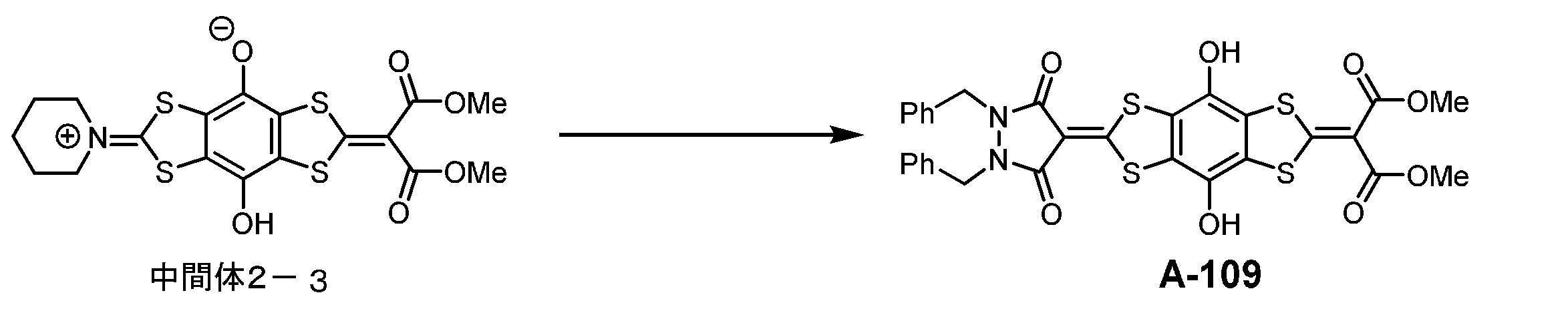
合成例3において、化合物A-104の代わりに化合物A-109を使用する以外は合成例3と同様の方法で化合物A-6を0.45g(収率65%)得た。
1H-NMR(CDCl3):δ 7.27(m、6H)、7.10(m、4H)、4.75(s、4H)、3.88(s、6H)、2.71(m、2H)、1.95~1.73(m、8H)、1.59~1.41(m、8H)、1.16(m、6H)、0.99(m、6H)
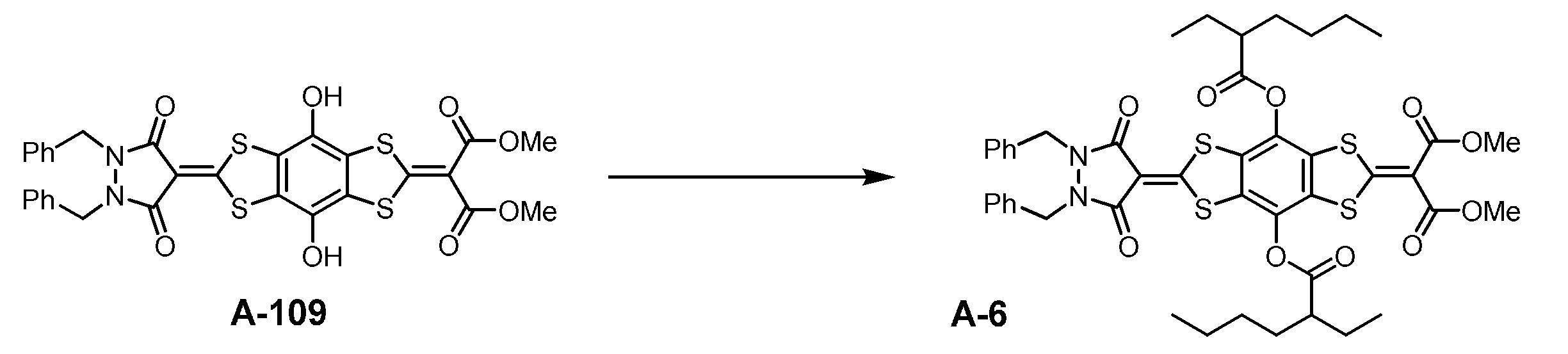
合成例13において、マロン酸ジメチルの代わりにメタンスルホニルアセトニトリルを、中間体2-3の代わりに中間体3-3使用する以外は合成例13と同様の方法で化合物A-110を1.2g(収率84%)得た。
1H-NMR(dDMSO):δ 11.5(s、2H)、7.29(m、10H)、4.80(s、4H)、3.36(s、3H)

合成例3において、化合物A-104の代わりに化合物A-110を使用する以外は合成例3と同様の方法で化合物A-7を0.63g(収率57%)得た。
1H-NMR(CDCl3):δ 7.27(m、6H)、7.10(m、4H)、4.75(s、4H)、3.19(s、3H)、2.68(m、2H)、1.91~1.74(m、8H)、1.50~1.40(m、8H)、1.13(m、6H)、0.97(m、6H)

合成例3において、2-エチルへキサノイルクロリドの代わりにラウロイルクロリドを使用する以外は合成例3と同様の方法で化合物A-46を0.48g(収率60%)得た。
1H-NMR(CDCl3):δ 7.27(m、6H)、7.10(m、4H)、4.77(s、4H)、2.73(t、2H)、1.82(dd、4H)、1.53~1.22(m、32H)、0.88(t、6H)
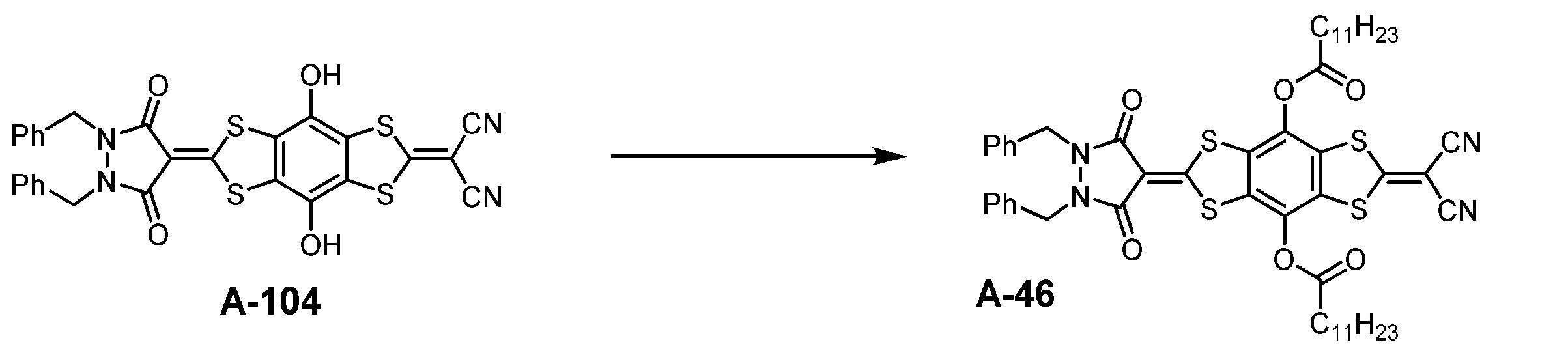
合成例3において、2-エチルへキサノイルクロリドの代わりに2-アセトキシイソブチリルクロリドを使用する以外は合成例3と同様の方法で化合物A-47を0.35g(収率61%)得た。
1H-NMR(CDCl3):δ 7.27(m、6H)、7.10(m、4H)、4.75(s、4H)、2.23(s、6H)、1.78(s、12H)
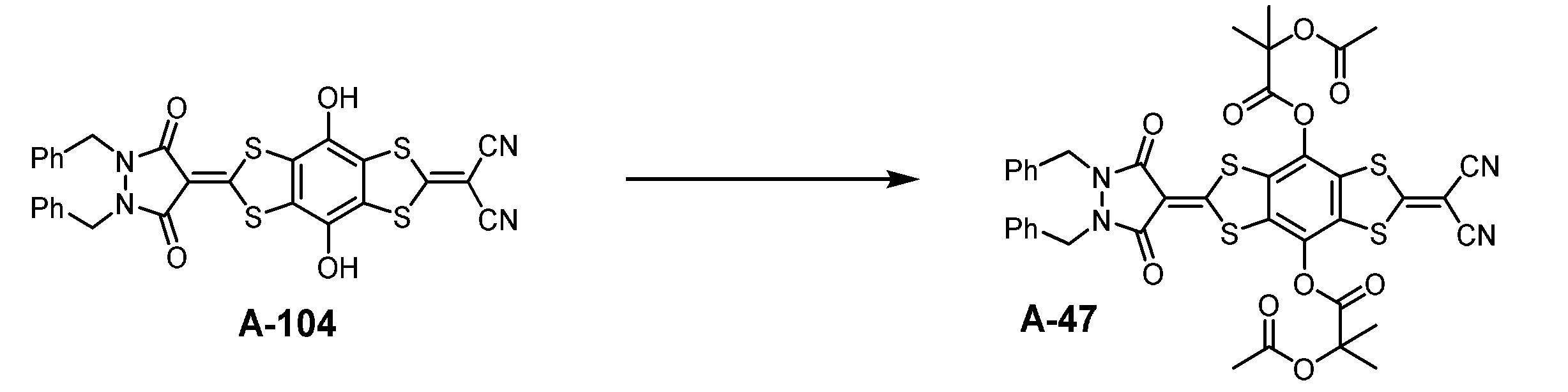
以下の合成スキームに従い、化合物A-44を合成した。化合物A-104の0.50gとトリエチルアミン0.42gと2-ヘキシルデカン酸0.60g、塩化チオニル0.28g、ジメチルアセトアミド20mlを加えて混合した後20℃で1時間撹拌した。反応終了後、水を30ml加え30分撹拌した。析出した固体をろ取した後に、メタノール30mlで洗浄したのち、カラム精製により化合物A-44を0.60g(収率67%)得た。
1H-NMR(CDCl3):δ 7.27(m、6H)、7.10(m、4H)、4.75(s、4H)、2.74(m、2H)、1.81~1.60(m、8H)、1.52~1.26(m、40H)、0.86(m、12H)
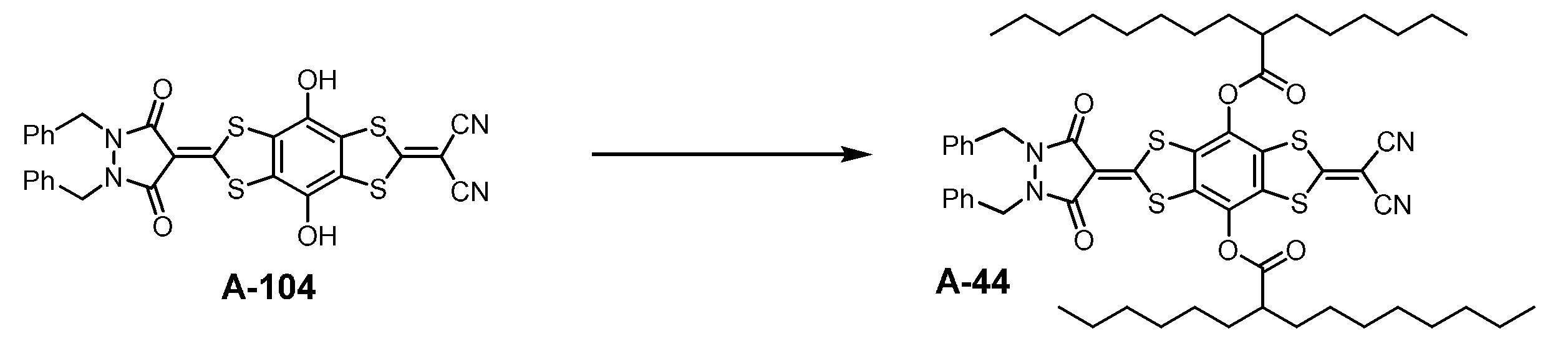
合成例19において、2-ヘキシルデカン酸の代わりに2,2,4,8,10,10-ヘキサメチルウンデカン-5-カルボン酸を使用する以外は合成例19と同様の方法で化合物A-45を0.50g(収率44%)得た。
1H-NMR(CDCl3):δ 7.27(m、6H)、7.10(m、4H)、4.74(s、4H)、2.64(m、2H)、2.15(m、1H)、1.96(m、1H)、1.83~1.68(m、4H)、1.52~1.15(m、22H)、1.13~1.05(m、22H)、0.98~0.89(m、18H)
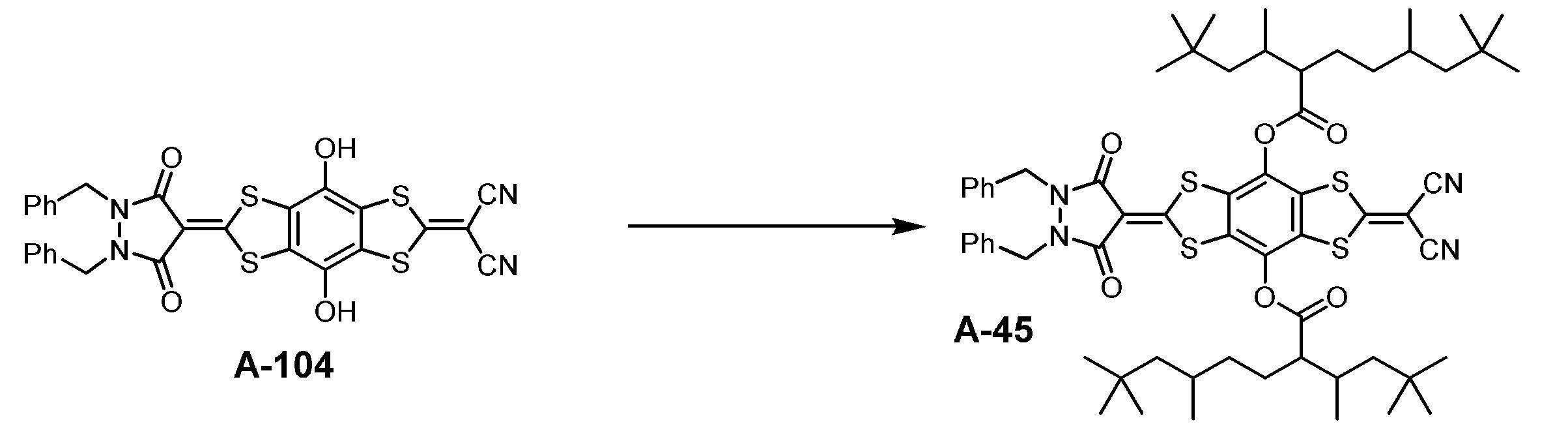
合成例19において、化合物A-104の代わりに化合物A-106を使用する以外は合成例19と同様の方法で化合物A-26を0.38g(収率58%)得た。
1H-NMR(CDCl3):δ 7.27(m、6H)、7.10(m、4H)、4.74(s、4H)、4.19(m、2H)、2.74(m、2H)、1.85(m、4H)、1.69(m、5H)、1.52~1.26(m、48H)、0.92~0.84(m、18H)
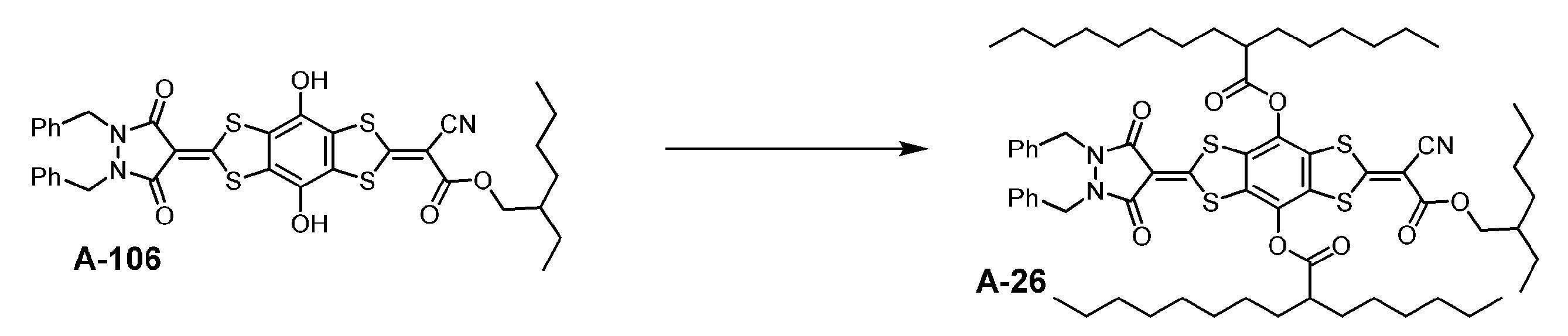
合成例2において、マロノニトリルの代わりにシアノ酢酸2-エトキシエチルを使用する以外は合成例2と同様の方法で化合物A-111を0.97g(収率80%)得た。
1H-NMR(dDMSO):δ 11.5(s、2H)、7.28(m、10H)、4.80(s、4H)、4.35(t、2H)、3.64(t、2H)、3.50(q、2H)、1.12(t、3H)

合成例3において、化合物A-104の代わりに化合物A-111を使用する以外は合成例3と同様の方法で化合物A-19を0.32g(収率78%)得た。
1H-NMR(CDCl3):δ 7.27(m、6H)、7.10(m、4H)、4.75(s、4H)、4.41(t、2H)、3.72(t、2H)、3.56(q、2H)、2.70(m、2H)、1.92~1.71(m、8H)、1.60~1.44(m、8H)、1.22~1.13(m、9H)、0.98(m、6H)

合成例7において、2-エチルへキサノイルクロリドの代わり2,2-ジメチルブチリルクロリドを使用する以外は合成例7と同様の方法で化合物A-25を0.28g(収率74%)得た。
1H-NMR(CDCl3):δ 7.27(m、6H)、7.10(m、4H)、4.76(s、4H)、4.19(m、2H)、1.89~1.69(m、3H)、1.44~1.25(m、20H)、1.10(m、6H)、0.94(m、6H)
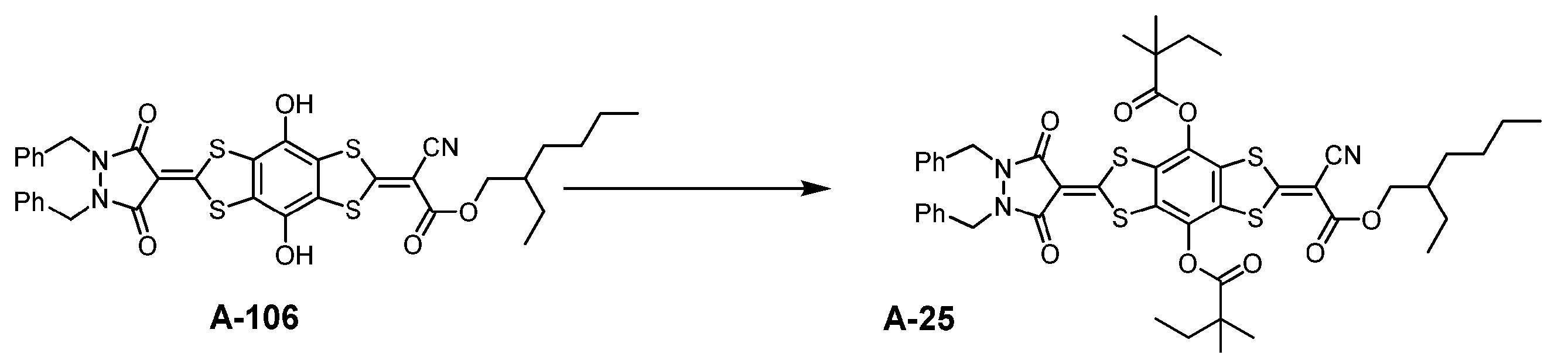
合成例2において、マロノニトリルの代わりにシアノ酢酸 tert-ブチルを使用する以外は合成例2と同様の方法で化合物A-112を0.31g(収率39%)得た。
1H-NMR(dDMSO):δ 11.5(s、2H)、7.28(m、10H)、4.80(s、4H)、1.51(t、9H)

合成例3において、化合物A-104の代わりに化合物A-112を使用する以外は合成例3と同様の方法で化合物A-20を0.28g(収率65%)得た。
1H-NMR(CDCl3):δ 7.27(m、6H)、7.10(m、4H)、4.75(s、4H)、2.69(m、2H)、1.88~1.76(m、8H)、1.54~1.44(m、17H)、1.13(m、6H)、0.99(m、6H)
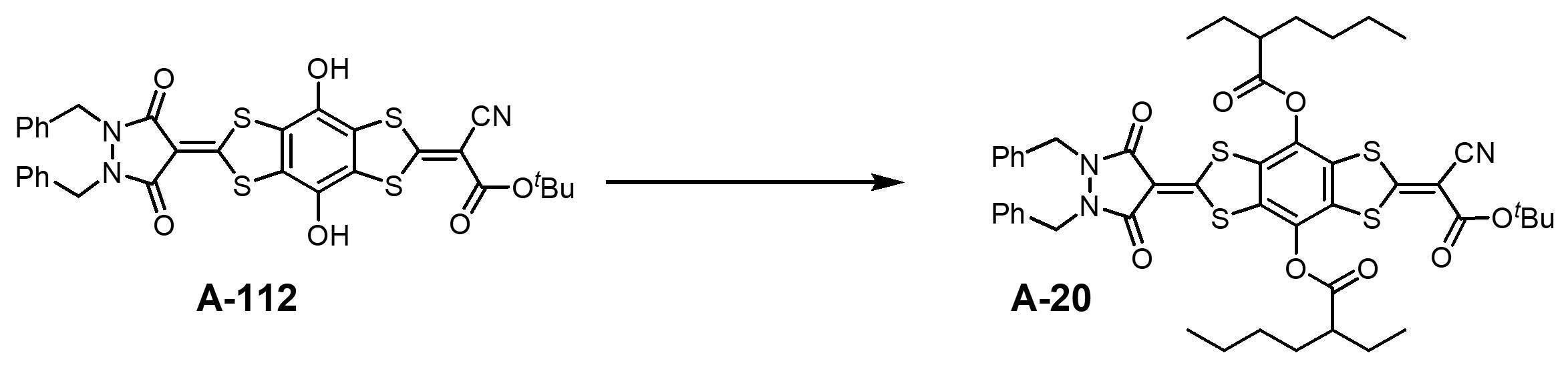
合成例7において、2-エチルへキサノイルクロリドの代わりにメタクリロイルクロリドを使用する以外は合成例7と同様の方法で化合物A-128を0.24(収率48%)得た。
1H-NMR(CDCl3):δ 7.27(m、6H)、7.10(m、4H)、6.52(d、2H)、6.00(d、2H)4.76(s、4H)、4.19(m、2H)、2.13(d、6H)、1.69(m、1H)、1.44~1.25(m、6H)、0.94(m、6H)

合成例2において、マロノニトリルの代わりにシアノ酢酸アリルを使用する以外は合成例2と同様の方法で化合物A-196を0.35g(収率81%)得た。
1H-NMR(dDMSO):δ 11.5(s、2H)、7.28(m、10H)、5.96(m、1H)、5.32(m、2H)、4.80(m、6H)

合成例3において、化合物A-104の代わりに化合物A-196を使用する以外は合成例3と同様の方法で化合物A-141を0.30g(収率74%)得た。
1H-NMR(CDCl3):δ 7.27(m、6H)、7.10(m、4H)、5.96(m、1H)、5.32(m、2H)、4.75(m、6H)、4.28(t、2H)、2.69(m、2H)、1.8~1.6(m、8H)、1.5~1.3(m、8H)、1.10(m、6H)、0.94(m、6H)であった。

合成例2において、マロノニトリルの代わりにシアノ酢酸メタクリル酸エチルを使用する以外は合成例2と同様の方法で化合物A-196を0.35g(収率93%)得た。
1H-NMR(dDMSO):δ 11.5(s、2H)、7.28(m、10H)、6.05(s、1H)、5.70(s、1H)、4.80(s、4H)、4.50(m、2H)、4.38(m、2H)、1.88(s、3H)

合成例3において、化合物A-104の代わりに化合物A-197を使用する以外は合成例3と同様の方法で化合物A-143を0.20g(収率45%)得た。
1H-NMR(CDCl3):δ 7.27(m、6H)、7.10(m、4H)、6.17(s、1H)、5.60(s、1H)、4.75(s、4H)、4.50(m、2H)、4.43(m、2H)、2.69(m、2H)、1.8~1.6(m、11H)、1.5~1.3(m、8H)、1.10(m、6H)、0.94(m、6H)であった。

合成例31において、2-エチルへキサノイルクロリドの代わりに、3,5,5-トリメチルへキサノイルクロリドを使用する以外は合成例3と同様の方法で化合物A-143を2.1g(収率60%)得た。
1H-NMR(CDCl3):δ 7.27(m、6H)、7.10(m、4H)、6.17(s、1H)、5.60(s、1H)、4.75(s、4H)、4.50(m、2H)、4.43(m、2H)、2.77(m、2H)、2.56(m、2H)、2.24(m、2H)、1.95(s、3H)、1.5~1.3(m、6H)、1.25(m、6H)、0.98(s、18H)であった。

合成例2において、マロノニトリルの代わりにシアノ酢酸2,6-ビス(1,1-ジメチルエチル)-4-メチルシクロヘキシルを使用する以外は合成例2と同様の方法で化合物A-245を3.0g(収率45%)得た。
1H-NMR(dDMSO):δ 11.5(s、2H)、7.24(m、10H)、5.73(s、1H)、4.80(s、4H)、1.6~1.2(m、7H)、0.99(m、3H)、0.85(s、18H)

合成例3において、化合物A-104の代わりに化合物A-245を使用する以外は合成例3と同様の方法で化合物A-201を2.1g(収率53%)得た。
1H-NMR(CDCl3):δ 7.27(m、6H)、7.10(m、4H)、5.80(s、1H)、4.75(s、4H)、2.69(m、2H)、1.9~1.0(m、29H)、0.98(m、9H)、0.87(s、18H)
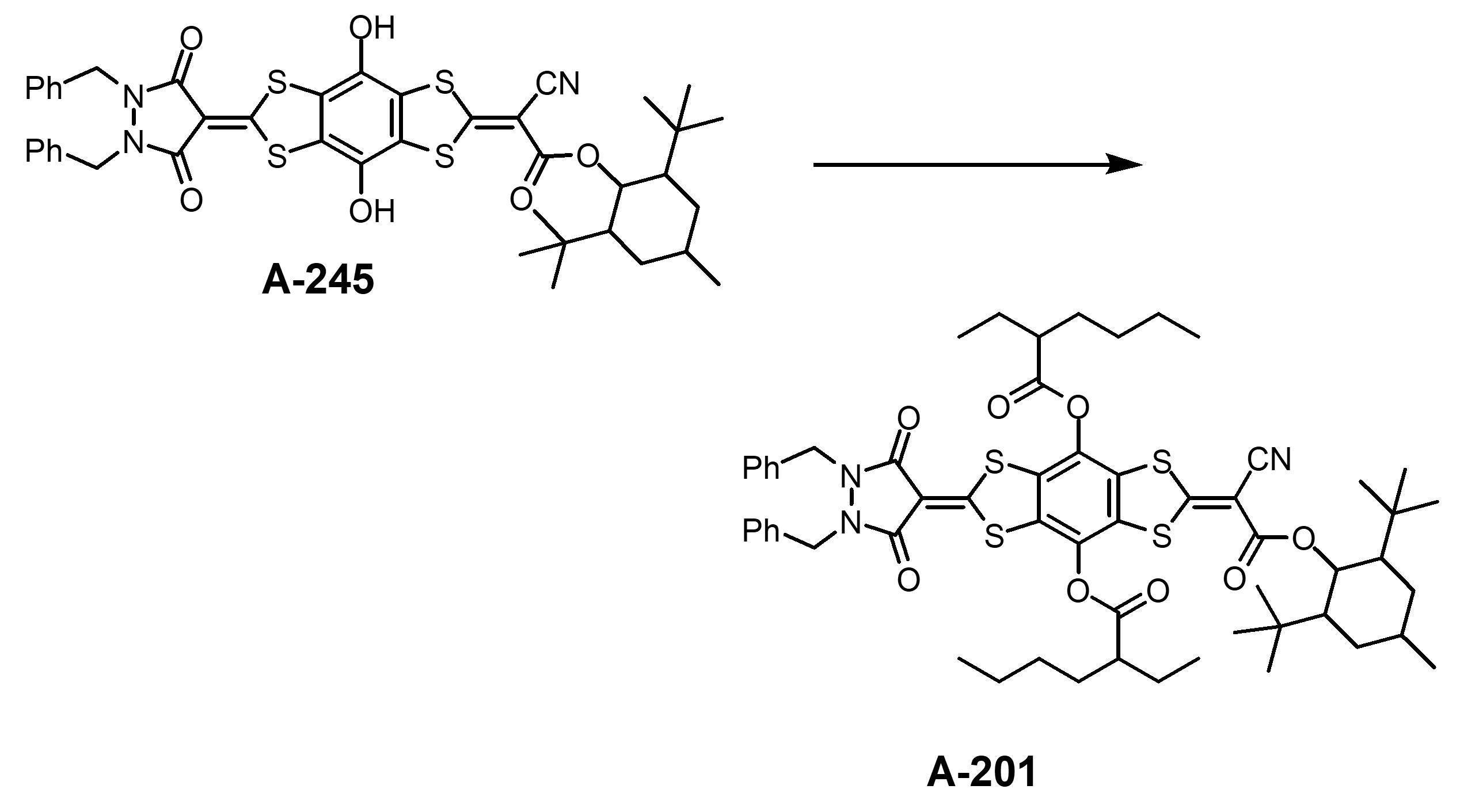
合成例1において、1,2-ジベンジルピラゾリジン-3,5ジオンの代わりに1,2-ブチルピラゾリジン-3,5ジオンを使用する以外は合成例1と同様の方法で中間体3-3を得た。
続いて、合成例2において、マロノニトリルの代わりにシアノ酢酸メタクリル酸エチルを、中間体1-3の代わりに中間体3-3を使用する以外は合成例2と同様の方法で化合物A-251を1.20g(収率91%)得た。
1H-NMR(dDMSO):δ 11.4(s、2H)、6.05(s、1H)、5.70(s、1H)、4.80(s、4H)、4.50(m、2H)、4.38(m、2H)、3.62(m、4H)、1.88(s、3H)、1.44(m、4H)、1.23(m、4H)、0.87(m、6H)、

合成例3において、化合物A-104の代わりに化合物A-251を使用する以外は合成例3と同様の方法で化合物A-232を0.70g(収率68%)得た。
1H-NMR(CDCl3):6.14(s、1H)、5.60(s、1H)、4.52(m、2H)、4.43(m、2H)、3.65(m、4H)、2.69(m、2H)、1.8~1.6(m、11H)、1.5~1.4(m、18H)、1.26(m、6H)、1.10(m、6H)、0.98(m、6H)、0.91(m、6H)であった。
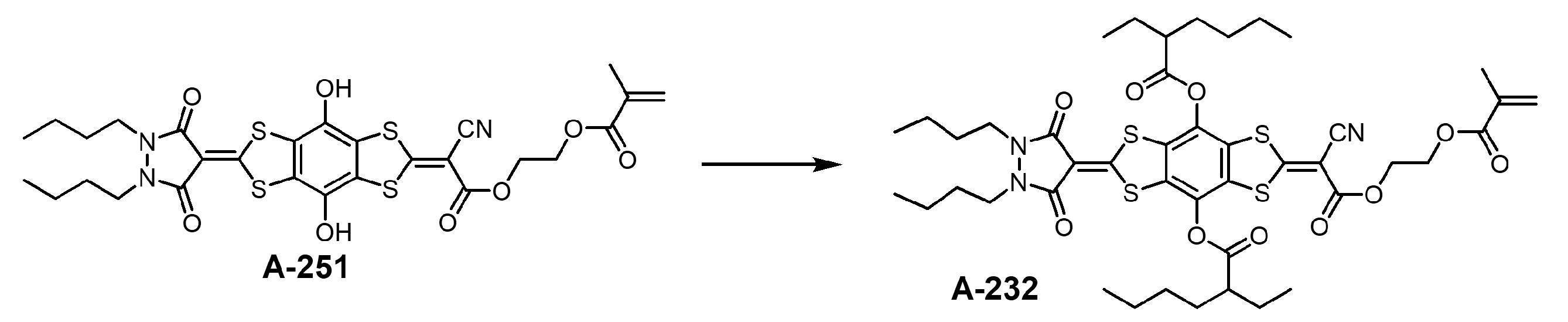
下記表に記載の化合物(例示化合物(1)~(44)、比較化合物(1)~(3))の2mgを酢酸エチル100mLに溶解した後、溶液の吸光度が0.6~1.2の範囲になるように酢酸エチルで希釈して試料溶液101~147を調製した。
各試料溶液についてそれぞれ1cm石英セルにて分光光度計(UV-1800PC、(株)島津製作所製)を用いて吸光度およびモル吸光係数を測定した。各試料溶液の吸収スペクトルから極大吸収波長(λmax)を測定し、以下の基準にしたがって長波長紫外線吸収能を評価した。
また、各試料溶液について、波長400nmにおける吸光度を1とした時の波長440nmにおける吸光度の比の値(吸光度比A440)を算出し、以下の基準で着色性を評価した。吸光度比A440の値が小さいほど、着色が少ないことを意味する。
評価結果を下記表に記す。長波長紫外線吸収能の欄のカッコ内の数値は、λmaxの値であり、着色性の欄のカッコ内の数値は、吸光度比A440の値である。また、下記表に極大吸収波長におけるモル吸光係数の値を、モル吸光係数の欄に記す。
A:λmaxが390nm以上
B:λmaxが370nm以上、390nm未満
C:λmaxが370nm未満
A:吸光度比A440が0.02未満
B:吸光度比A440が0.02以上
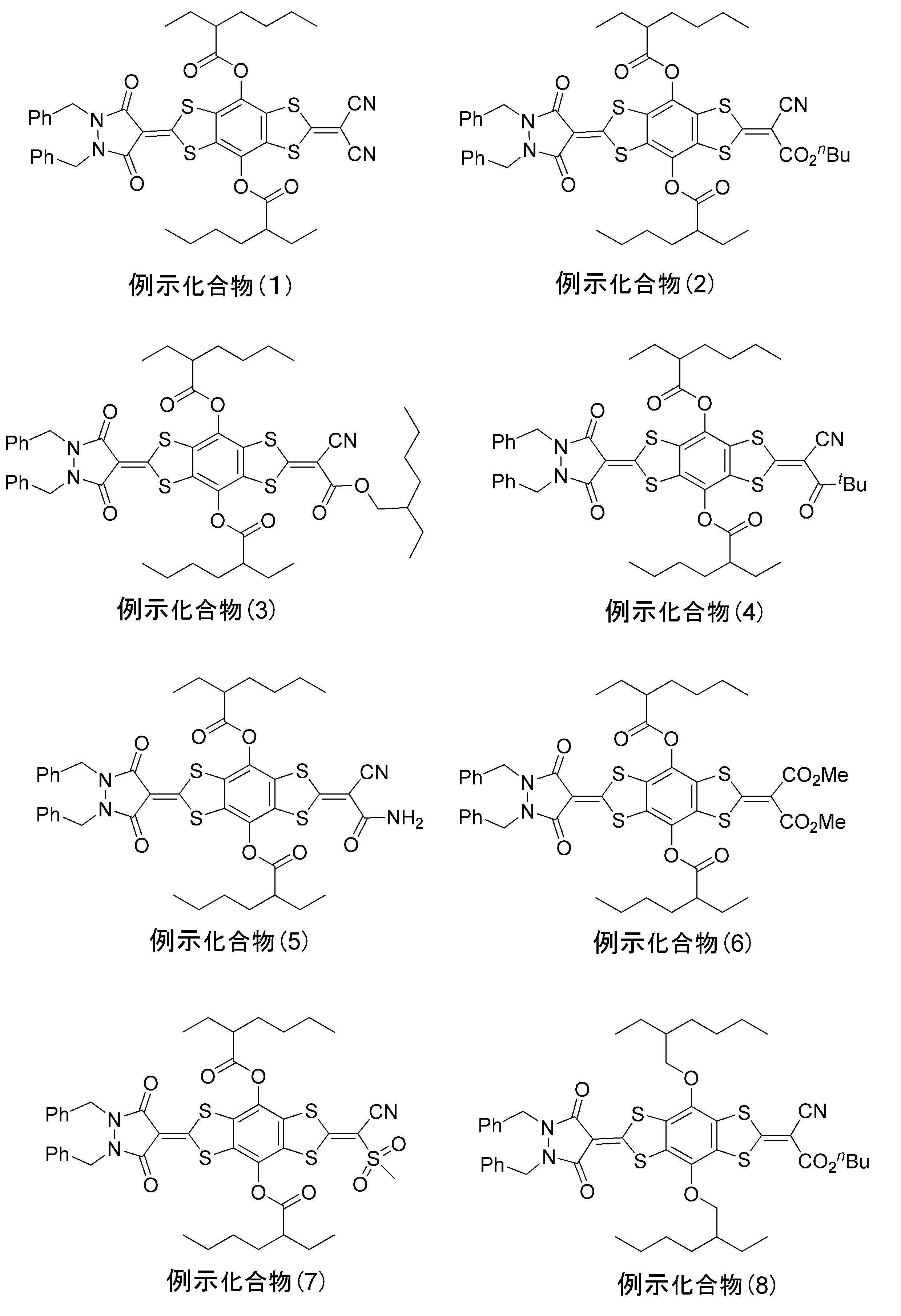
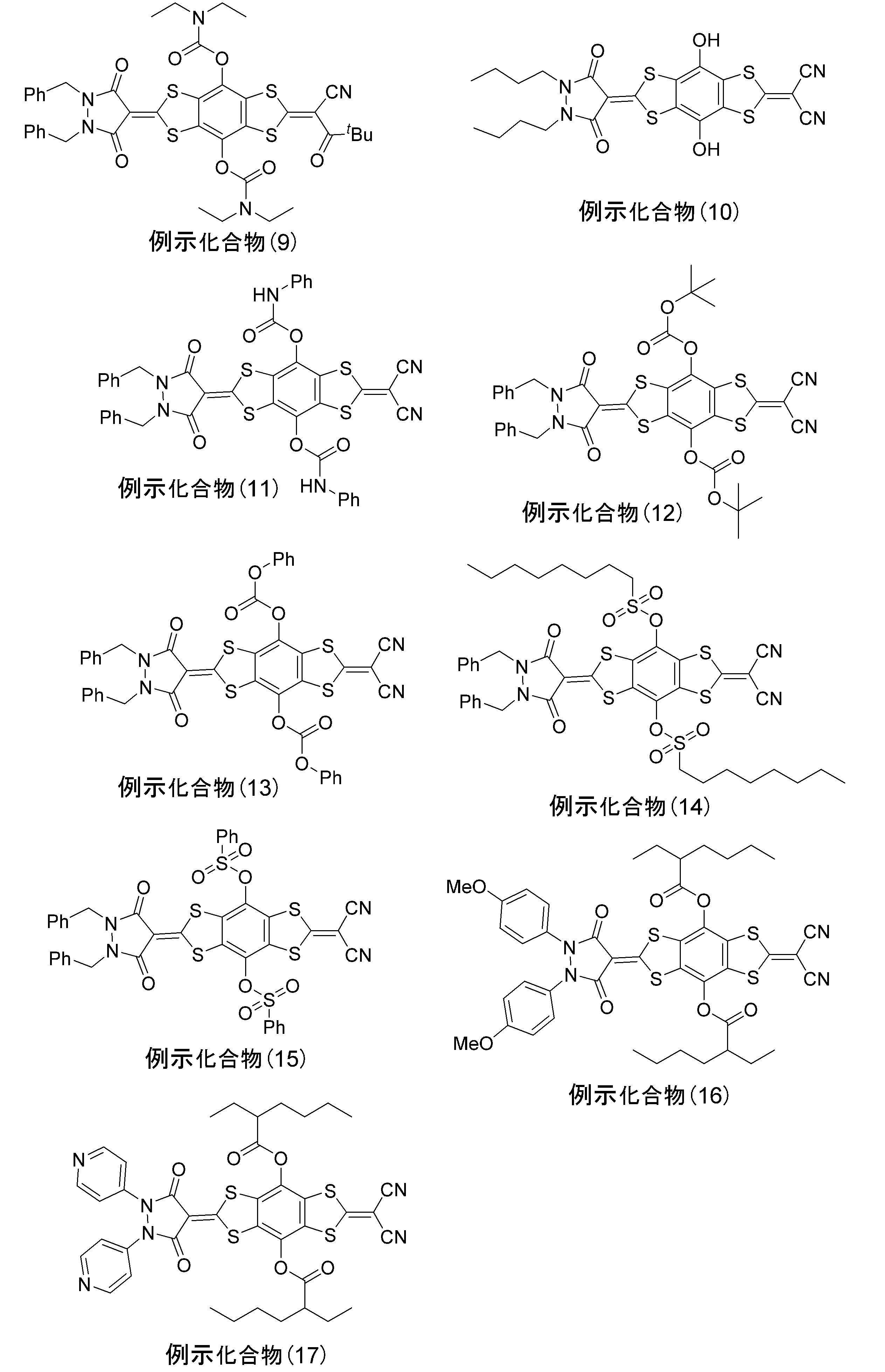

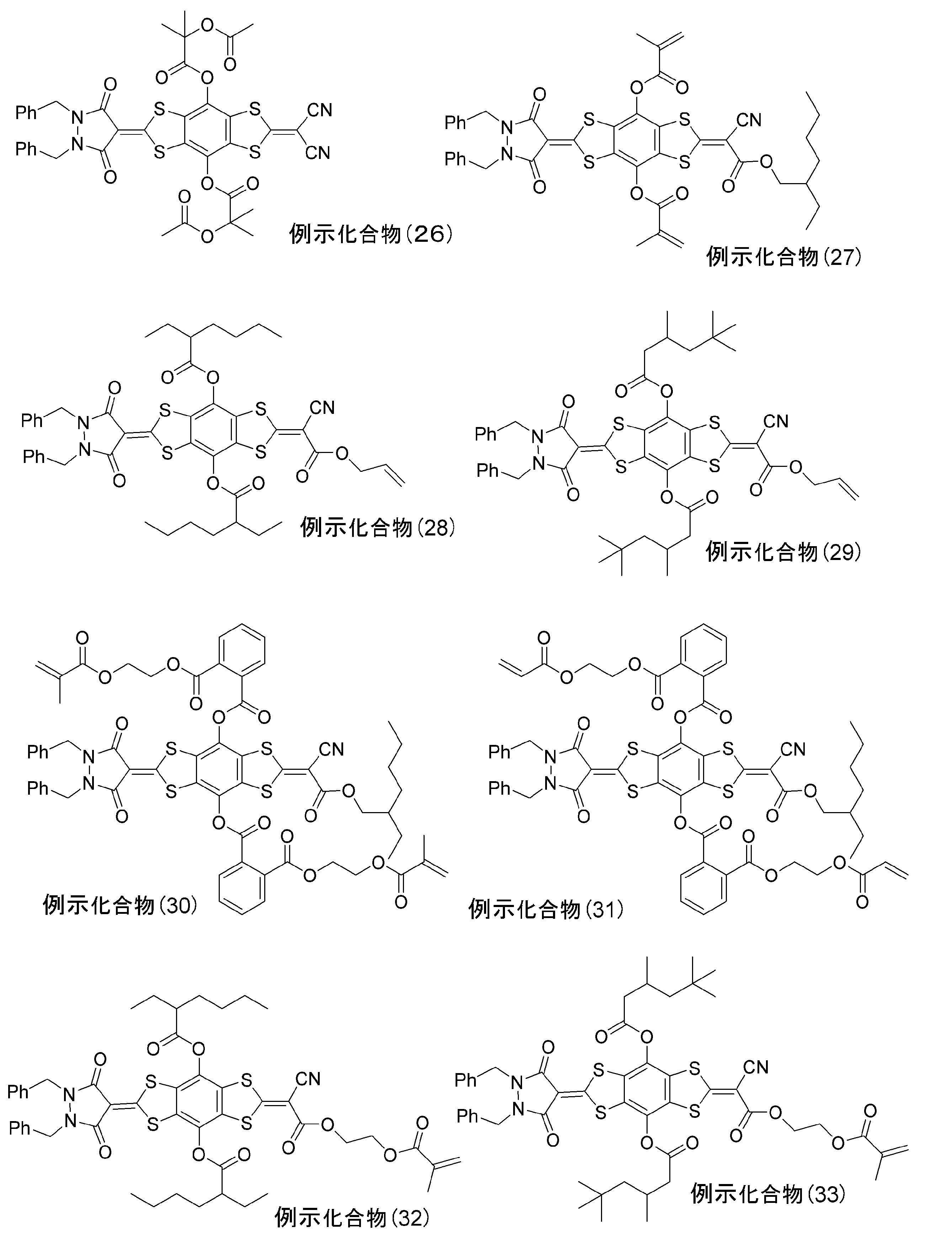
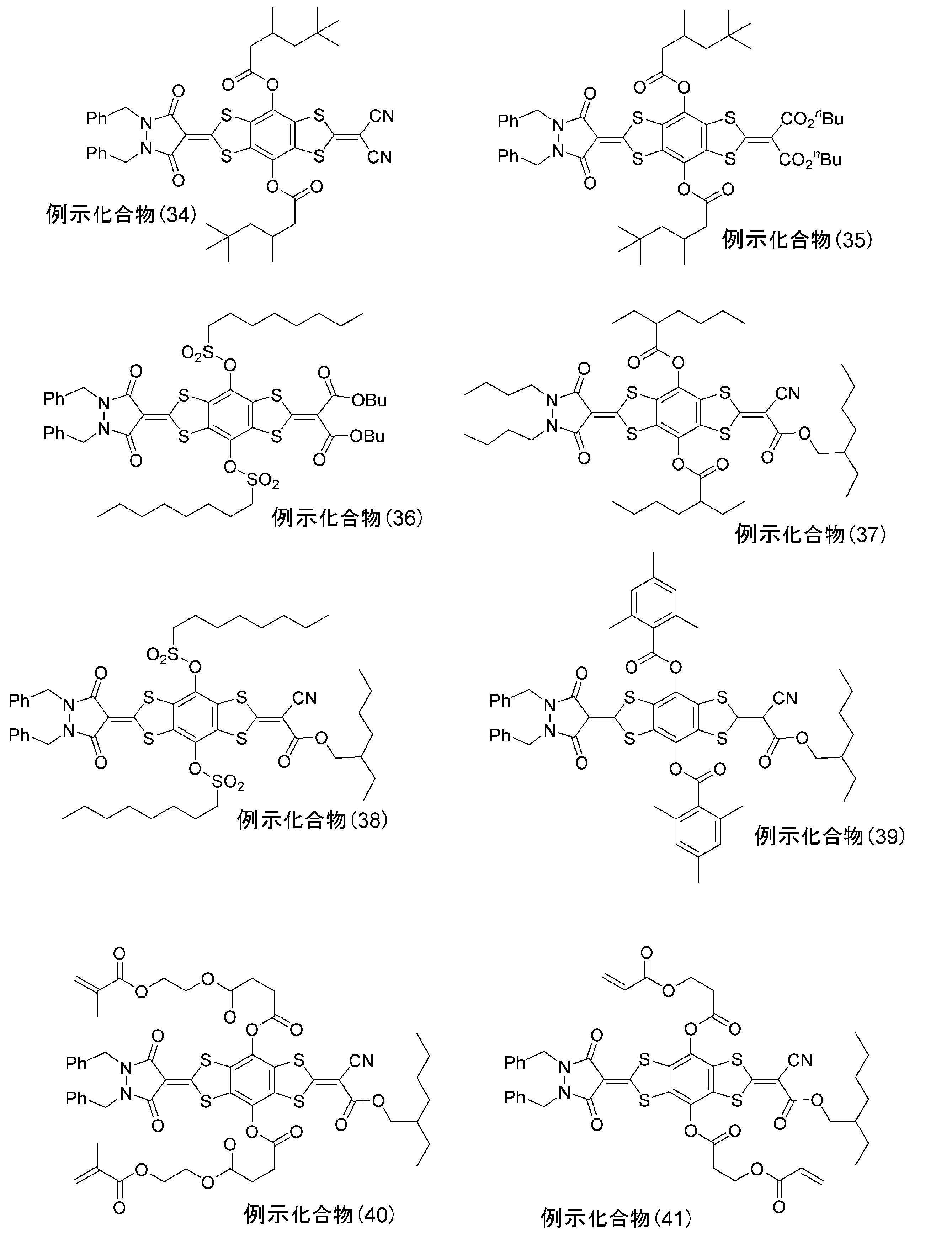

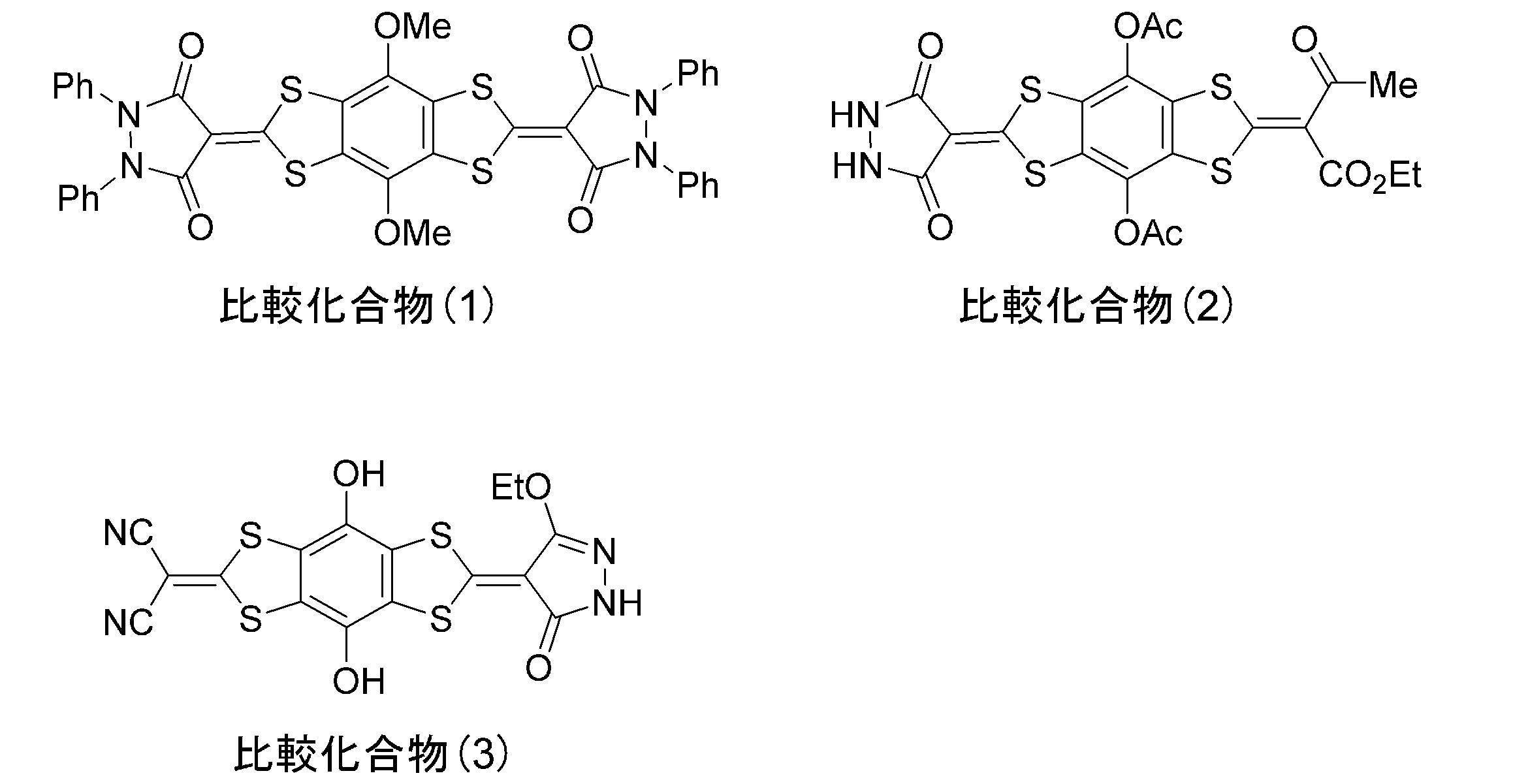
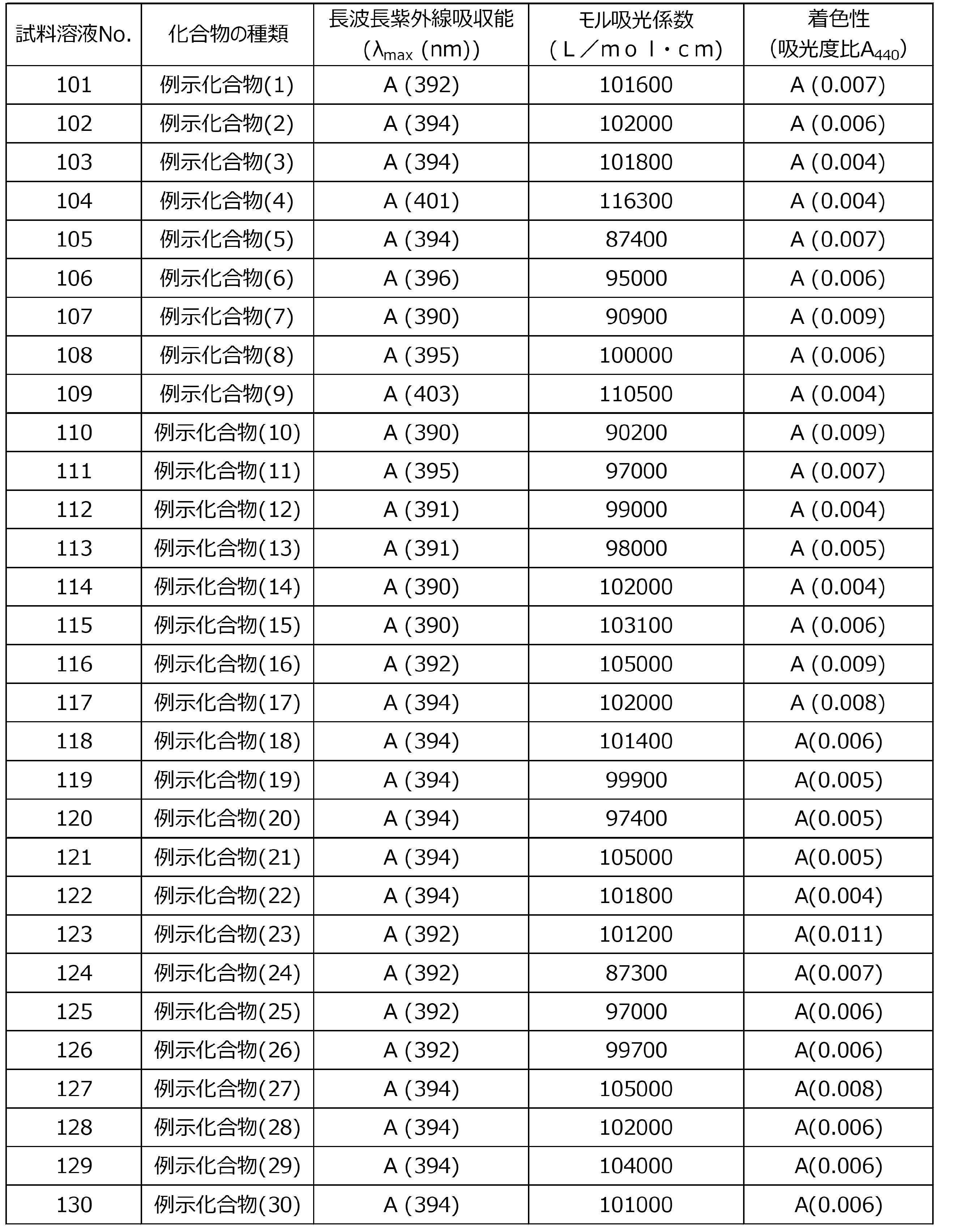

下記表に記載の化合物(例示化合物(1)~(44)、比較化合物(1)~(3))をクロロホルムの7.6gおよび(メタ)アクリル樹脂(ダイヤナールBR-80、三菱ケミカル(株)製、モノマー単位としてメチルメタクリレートを60質量%以上含有、Mw95000)の1.1gに溶解させて樹脂組成物を調製した。得られた樹脂組成物をガラス基板上にスピンコート塗布して塗布膜を形成し、得られた塗布膜を110℃で2分間乾燥させて、樹脂膜201~251を作製した。
樹脂膜201~251について、分光光度計(UV-1800PC、(株)島津製作所製)を用いて吸光度を測定した。各樹脂膜について得られたスペクトルチャートから極大吸収波長(λmax)を測定し、試験例1と同じ基準に従い、長波長紫外線吸収能を評価した。
また、各樹脂膜について、波長400nmにおける吸光度を1とした時の波長440nmにおける吸光度の比の値(吸光度比A440)を算出し、試験例1と同じ基準に従い、着色性を評価した。
評価結果を下記表に記す。長波長紫外線吸収能の欄のカッコ内の数値は、λmaxの値であり、着色性の欄のカッコ内の数値は、吸光度比A440の値である。
樹脂膜201~251について、下記の条件1にて耐光性試験を行い、極大吸収波長(λmax)での吸光度の維持率を求めて、耐光性を評価した。具体的には、分光光度計(UV-1800PC、(株)島津製作所製)を用いて樹脂膜のλmaxにおける吸光度を測定した後、樹脂膜を条件1にて3週間耐光性試験を行い、耐光性試験後の樹脂膜について、λmaxにおける吸光度を測定した。次いで、耐光性試験前後の樹脂膜のλmaxにおける吸光度の値を用いて、下記式より吸光度維持率(%)を算出し、下記の基準にて耐光性の評価を行った。吸光度維持率が高いほど、耐光性に優れていることを意味する。評価結果を下記表に示す。耐光性の欄のカッコ内の数値は、吸光度維持率の値である。
吸光度維持率(%)=(耐光性試験後の樹脂膜のλmaxでの吸光度/耐光性試験前の樹脂膜のλmaxでの吸光度)×100
AA:吸光度維持率が90%以上
A:吸光度維持率が85%以上
B:吸光度維持率が80%以上、85%未満
C:吸光度維持率が80%未満
装置:低温サイクルキセノンウェザーメーター(XL75、スガ試験機(株)製)
照度:90klx(40w/m2)
時間:3週間
環境:23℃、相対湿度50%


下記成分を混合して、樹脂組成物(光重合性組成物)を調製した。
紫外線吸収剤(下記表に記載の化合物) ・・・0.6質量部
重合性化合物(KAYARAD DPHA(日本化薬(株)製、エチレン性不飽和結合含有基を2個以上有する化合物) ・・・2.8質量部
樹脂(ダイヤナールBR-80(三菱ケミカル(株)製)) ・・・14.8質量部
光重合開始剤(下記表に記載の化合物) ・・・2.4質量部
溶剤(プロピレングリコールモノメチルエーテルアセテート) ・・・79.4質量部
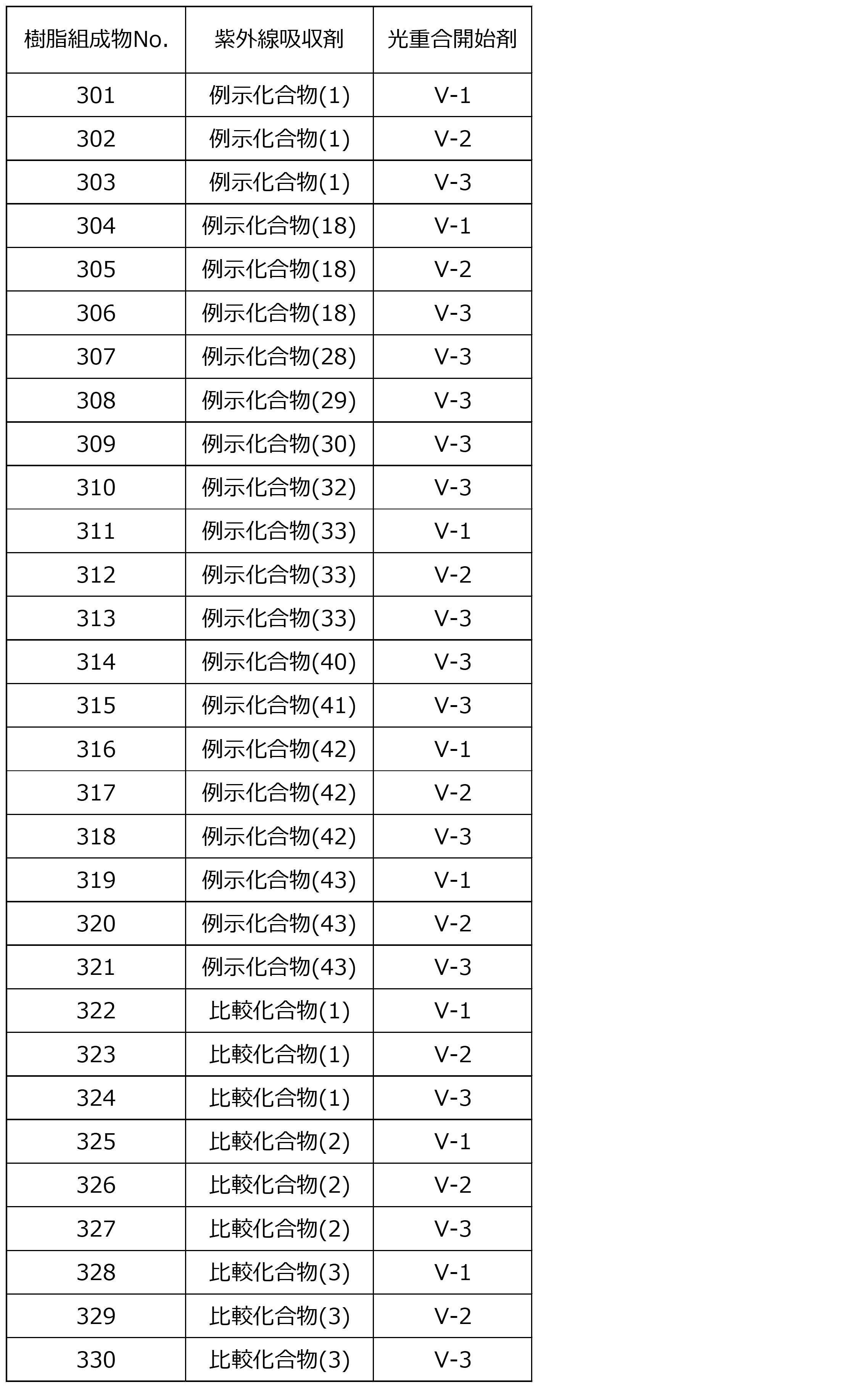
(紫外線吸収剤)
例示化合物(1)、(18)、(28)、(29)、(30)、(32)、(33)、(40)、(41)、(42)、(43)、比較化合物(1)~(3):上述した構造の化合物
V-1:Irgacure OXE01(BASF社製、オキシム化合物、光ラジカル重合開始剤)
V-2:Omnirad 2959(IGM Resins B.V.社製、ヒドロキシアセトフェノン化合物、光ラジカル重合開始剤)
V-3:Omnirad TPO(IGM Resins B.V.社製、アシルホスフィン化合物、光ラジカル重合開始剤)
上記樹脂組成物を、50mm×50mmのガラス基板(1737、コーニング社製)上に、製膜後の膜厚が1.5μmとなるようにスピンコート塗布し、120℃で5分間乾燥して樹脂組成物層を形成した。その後、樹脂組成物層に対し、i線ステッパー露光装置(UX-1000SM-EH04、ウシオ電機(株)製)を用い、1000mJ/cm2の露光量で全面露光することで、樹脂膜301~330を製造した。
樹脂組成物301~327については、露光前後の樹脂組成物層の極大吸収波長(λmax)における透過率の変化度(透過率の変化度1)は5%以下であった。
樹脂膜301~330について、下記の条件2にて極大吸収波長(λmax)での吸光度の維持率を求め、耐光性を評価した。具体的には、分光光度計(UV-1800PC、(株)島津製作所製)を用いて樹脂膜のλmaxにおける吸光度を測定した後、樹脂膜を条件2にて3日間耐光性試験を行い、耐光性試験後の樹脂膜について、λmaxにおける吸光度を測定した。次いで、耐光性試験前後の樹脂膜のλmaxにおける吸光度の値を用いて、下記式より吸光度維持率(%)を算出し、下記の基準にて耐光性の評価を行った。吸光度維持率が高いほど、耐光性に優れていることを意味する。評価結果を下記表に示す。耐光性の欄のカッコ内の数値は、吸光度維持率の値である。
吸光度維持率(%)=(耐光性試験後の樹脂膜のλmaxでの吸光度/耐光性試験前の樹脂膜のλmaxでの吸光度)×100
AA:吸光度維持率が75%以上
A:吸光度維持率が65%以上
B:吸光度維持率が50%以上、65%未満
C:吸光度維持率が50%未満
装置:低温サイクルキセノンウェザーメーター(XL75、スガ試験機(株)製)
照度:90klx(40w/m2)
時間:3日間
環境:23℃、相対湿度50%
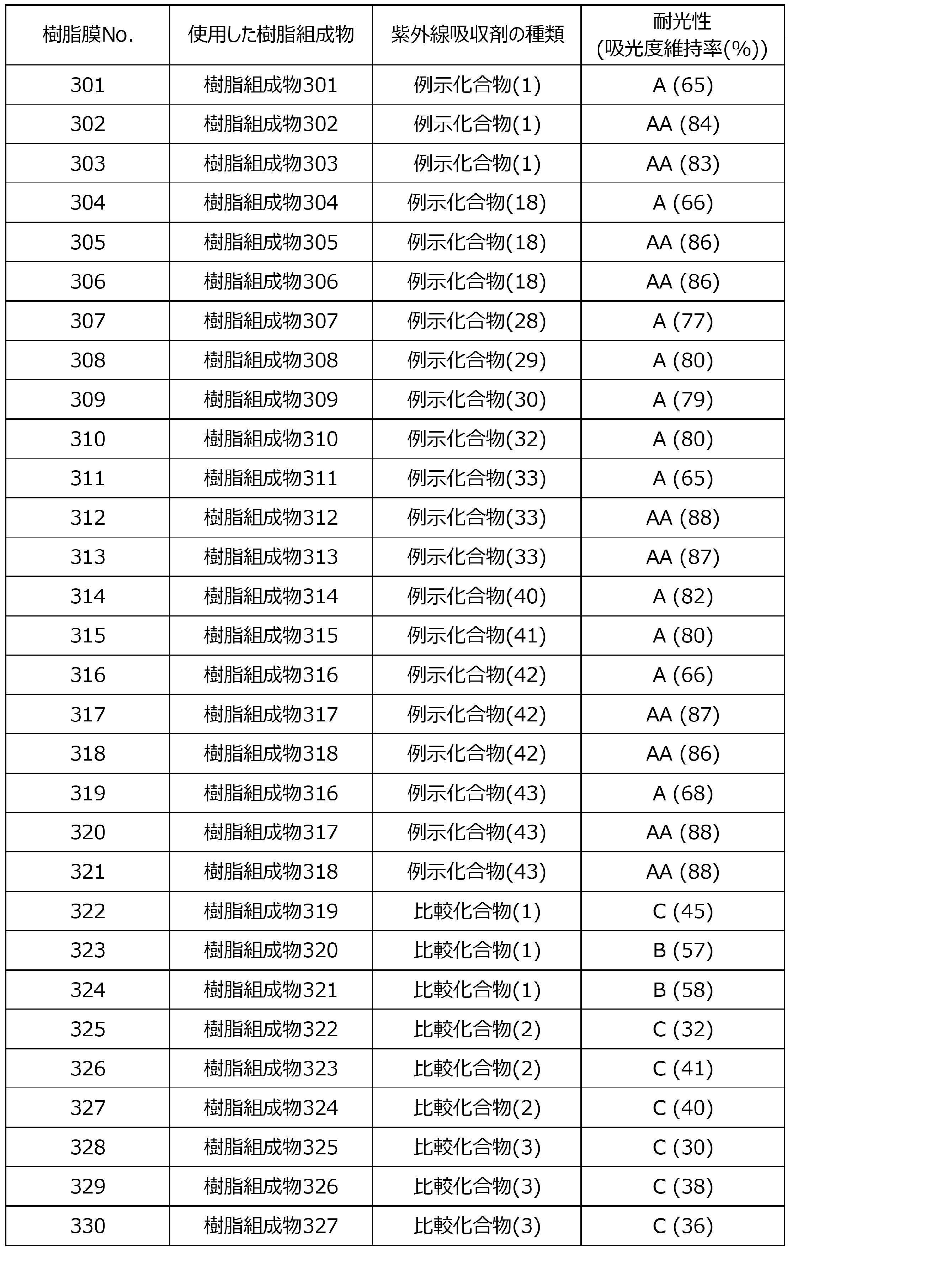
(組成物401~424、432~437の調製)
下記成分を混合して、組成物(光重合性組成物)401~424、432~437を調製した。
紫外線吸収剤(下記表に記載の化合物) ・・・2.0質量部
重合性化合物(下記表に記載の化合物) ・・・2.6質量部
樹脂(下記表に記載の樹脂) ・・・12.9質量部
光重合開始剤(下記表に記載の化合物) ・・・2.5質量部
溶剤(プロピレングリコールモノメチルエーテルアセテート) ・・・40.0質量部
溶剤(シクロペンタノン) ・・・40.0質量部
界面活性剤(KF-6001、信越化学工業(株)製、両末端カルビノル変性ポリジメチルシロキサン、水酸基価62mgKOH/g) ・・・0.02質量部
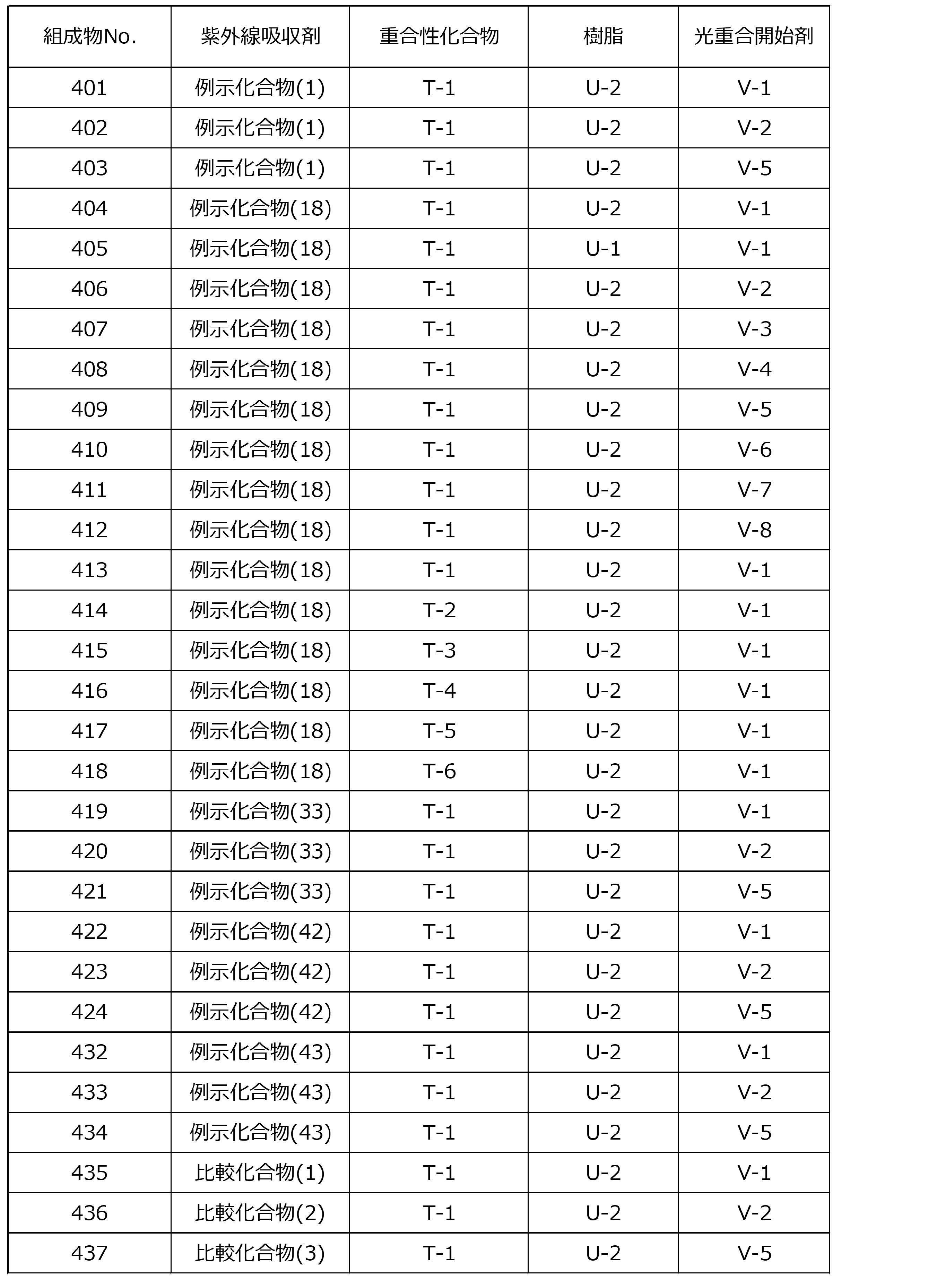
下記成分を混合して、組成物(光重合性組成物)425を調製した。
紫外線吸収剤(例示化合物(1)) ・・・2.0質量部
重合性化合物T-2 ・・・0.5質量部
重合性化合物T-4 ・・・1.5質量部
樹脂U-3 ・・・13.5質量部
光重合開始剤V-8 ・・・2.5質量部
溶剤(トルエン) ・・・80.0質量部
界面活性剤(KF-6001、信越化学工業(株)製、両末端カルビノール変性ポリジメチルシロキサン、水酸基価62mgKOH/g) ・・・0.02質量部
下記成分を混合して、組成物(光重合性組成物)426を調製した。
紫外線吸収剤(例示化合物(1)) ・・・2.0質量部
重合性化合物T-6 ・・・10.5質量部
重合性化合物T-1 ・・・5.0質量部
光重合開始剤V-1 ・・・2.2質量部
光重合開始剤V-5 ・・・0.3質量部
溶剤(酢酸エチル) ・・・40.0質量部
溶剤(シクロペンタノン) ・・・40.0質量部
界面活性剤(KF-6001、信越化学工業(株)製、両末端カルビノール変性ポリジメチルシロキサン、水酸基価62mgKOH/g) ・・・0.02質量部
下記成分を混合して、組成物(光重合性組成物)427を調製した。
紫外線吸収剤(例示化合物(1)) ・・・2.0質量部
重合性化合物T-5 ・・・5.0質量部
重合性化合物T-4 ・・・4.0質量部
樹脂U-1 ・・・6.5質量部
光重合開始剤V-1 ・・・2.0質量部
光重合開始剤V-6 ・・・0.5質量部
溶剤(酢酸エチル) ・・・40.0質量部
溶剤(シクロペンタノン) ・・・40.0質量部
界面活性剤(KF-6001、信越化学工業(株)製、両末端カルビノール変性ポリジメチルシロキサン、水酸基価62mgKOH/g) ・・・0.02質量部
下記成分を混合して、組成物(光重合性組成物)428を調製した。
紫外線吸収剤(例示化合物(1)) ・・・2.0質量部
重合性化合物T-7 ・・・60質量部
重合性化合物T-8 ・・・25質量部
重合性化合物T-9 ・・・15質量部
光重合開始剤V-9 ・・・8.0質量部
組成物428において、紫外線吸収剤を同量の例示化合物(18)、例示化合物(33)または例示化合物(42)に変更した以外は組成物428と同様にして組成物429~431を調製した。
例示化合物(1)、(18)、(33)、(42)、(43)、比較化合物(1)、(2)、(3):上述した構造の化合物
T-1:KAYARAD DPHA(日本化薬(株)製、エチレン性不飽和結合含有基を2個以上有する化合物)
T-2:NKエステルA-DPH-12E(新中村化学工業(株)製、エチレン性不飽和結合含有基を2個以上有する化合物)
T-3:ライトアクリレートDCP-A(共栄社化学(株)製、エチレン性不飽和結合含有基を2個以上有する化合物)
T-4:ベンジルメタクリレート
T-5:ビームセット577(3~6官能のウレタンアクリレート、荒川化学工業(株)製)
T-6:FA-512M(ジシクロペンテニルオキシエチルメタクリレート、昭和電工マテリアルズ(株)製)
T-7:サイクロマーM100(3,4-エポキシシクロヘキシルメチルメタクリレート、(株)ダイセル製)
T-8:OXT-221:3-エチル-3-{[(3-エチルオキセタン-3-イル)メトキシ]メチル}オキセタン、2官能オキセタン、東亞合成(株)製)
T-9:セロキサイド2021P(3’,4’-エポキシシクロヘキシルメチル3,4-エポキシシクロヘキサンカルボキシレート、2官能エポキシ、(株)ダイセル製)
U-1:ベンジルメタクリレート/メタクリル酸(75/25[質量比])の共重合体(重量平均分子量12000)の40質量%プロピレングリコールモノメチルエーテルアセテート溶液
U-2:ダイヤナールBR-80(三菱ケミカル(株)製)
U-3:アートンRX4500(JSR(株)製、Tg140℃、環状ポリオレフィン樹脂)
V-1:Omnirad TPO(IGM Resins B.V.社製、光ラジカル重合開始剤、アシルホスフィン化合物)
V-2:Omnirad 2959(IGM Resins B.V.社製、光ラジカル重合開始剤、ヒドロキシアセトフェノン化合物)
V-3:4,4’-ビス(ジエチルアミノ)ベンゾフェノン(光ラジカル重合開始剤、ベンゾフェノン化合物)
V-4:2,2’-ビス(2-クロロフェニル)-4,4’,5,5’-テトラフェニル-1,2’-ビイミダゾール(o-Cl-HABI)(光ラジカル重合開始剤、ヘキサアリールビイミダゾール化合物)
V-5:IRGACURE-OXE01(BASF社製、光ラジカル重合開始剤、オキシム化合物)
V-6 Omnirad 907(IGM Resins B.V.社製、光ラジカル重合開始剤、アミノアセトフェノン化合物)
V-7 Omnirad 369(IGM Resins B.V.社製、光ラジカル重合開始剤、アミノアセトフェノン化合物)
V-8 Omnirad 819(IGM Resins B.V.社製、光ラジカル重合開始剤、アシルホスフィン化合物)
V-9:CPI-210S(サンアプロ(株)製、光カチオン重合開始剤、スルホニウム塩)
[製造例4-1] 組成物401~435を用いた樹脂膜の製造
組成物401~435を、50mm×50mmのガラス基板(1737、コーニング社製)上に、製膜後の膜厚が1.5μmとなるようにスピンコート塗布し、100℃で2分間乾燥して組成物層を形成した。その後、組成物層に対し、i線ステッパー露光装置(UX-1000SM-EH04、ウシオ電機(株)製)を用い、1000mJ/cm2の露光量で全面露光した。次いで、ホットプレートを用いて、200℃で8分間加熱(ポストベーク)することで、樹脂膜401~432を製造した。
組成物401~435を用いて得られた樹脂膜401~435については、露光前後の組成物層の極大吸収波長(λmax)における透過率の変化度(透過率の変化度1)およびポストベーク前後の組成物層の極大吸収波長(λmax)における透過率の変化度(透過率の変化度2)はいずれも1%以下であった。
透過率の変化度1=|露光前の組成物層のλmaxにおける透過率-露光後の組成物層のλmaxにおける透過率|
透過率の変化度2=|ポストベーク前の組成物層のλmaxにおける透過率-ポストベーク後の組成物層のλmaxにおける透過率|
組成物436、437を用い、露光前の組成物層の極大吸収波長(λmax)における透過率が5~20%になるように組成物層の膜厚を調整した以外は製造例4-1と同様の方法にて樹脂膜436、437を製造した。
上記で得られた樹脂膜について、以下の条件3にて耐光性試験を行い、極大吸収波長(λmax)での透過率の減少度を算出した。具体的には、樹脂膜の極大吸収波長(λmax)における透過率を測定した後、樹脂膜を条件3にて耐光性試験を行った。耐光性試験後の樹脂膜の極大吸収波長(λmax)における透過率を測定し、下記式より透過率の減少度を算出した。
透過率の減少度(%)=(耐光性試験後の樹脂膜のλmaxにおける透過率)-(耐光性試験前の樹脂膜のλmaxにおける透過率)
装置:キセノンキセノンウェザーメーター(スガ試験機(株)製、XL75)
照度:90klx
試験期間:50時間
環境:23℃、相対湿度50%
A:着色無し
B:わずかに着色があるが実用レベルである

(合成例101) 重合体P-1の合成
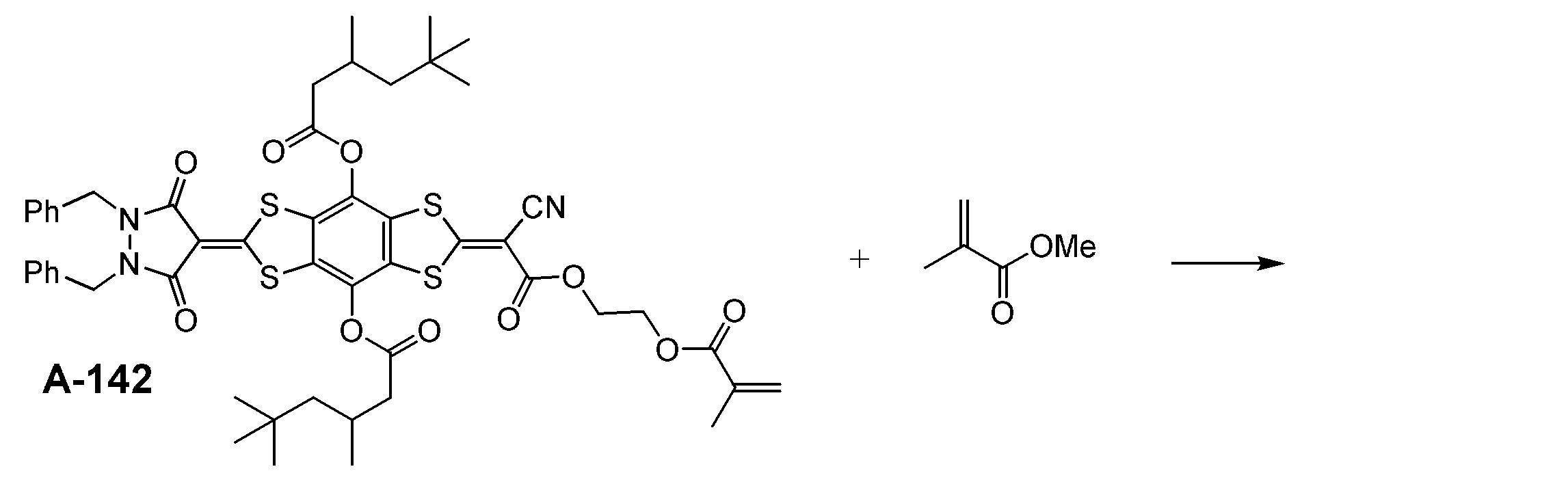
得られた重合体P-1の100mgをクロロホルム100mLに溶解し、吸収スペクトルを測定した。重合体P-1の極大吸収波長は399nm(吸光度1.61)であった。
重合体P-1は波長400nm近傍の波長の光を十分に遮蔽できるものであった。また、重合体P-1は着色の小さいものであった。

得られた重合体P-2の150mgをクロロホルム100mLに溶解し、吸収スペクトルを測定した。重合体P-2の極大吸収波長は399nm(吸光度1.45)と343nm(吸光度0・83)であった。重合体P-2は波長400nm近傍の波長の光を十分に遮蔽できるものであった。更には、350nmより短波の波長の光の遮蔽性にも優れていた。また、重合体P-2は着色の小さいものであった。
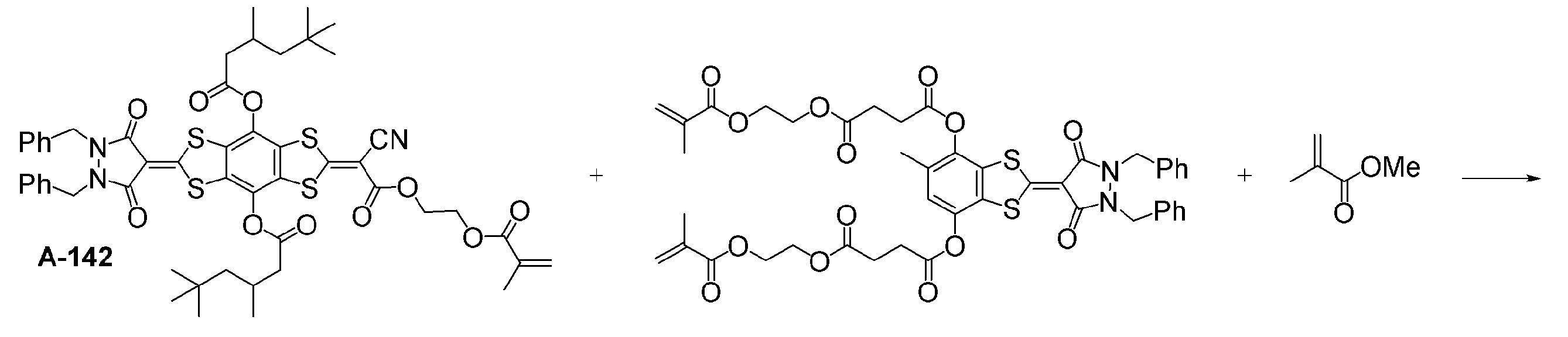
得られた重合体P-3の150mgをクロロホルム100mLに溶解し、吸収スペクトルを測定した。重合体P-3の極大吸収波長は399nm(吸光度2.12)と383nm(吸光度0.80)であった。重合体P-3は波長400nm近傍の波長の光を十分に遮蔽できるものであった。更には、350nmより短波の波長の光の遮蔽性にも優れていた。また、重合体P-3は着色の小さいものであった。
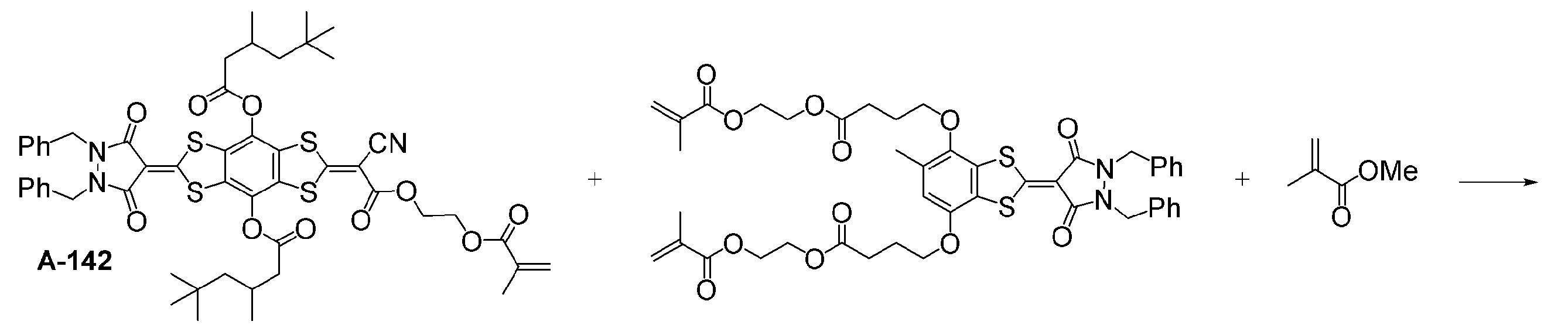
得られた重合体P-4の150mgをクロロホルム100mLに溶解し、吸収スペクトルを測定した。重合体P-4の極大吸収波長は399nm(吸光度2.31)と390nm(吸光度0.78)であった。重合体P-4は波長400nm近傍の波長の光を十分に遮蔽できるものであった。更には、350nmより短波の波長の光の遮蔽性にも優れていた。また、重合体P-4は着色の小さいものであった。

得られた重合体P-5の100mgをクロロホルム100mLに溶解し、吸収スペクトルを測定した。重合体P-5の極大吸収波長は397nm(吸光度1.57)であった。
重合体P-5は波長400nm近傍の波長の光を十分に遮蔽できるものであった。また、重合体P-5は着色の小さいものであった。

(実施例501) 樹脂膜501の製造
重合体P-1の500mg、クロロホルムの7.6g、及びポリメチルメタクリレート樹脂(ダイヤナールBR-80(モノマー単位としてメチルメタクリレート60質量%以上含有、重量平均分子量:95000、酸価:0mgKOH/g、三菱ケミカル(株)製)の1.1gを溶解させた樹脂組成物(樹脂溶液)を調製した。得られた樹脂組成物をガラス基板上にスピンコート塗布し、塗布膜を60℃で2分間乾燥させて、重合体P-1を含む厚み約10μmの樹脂膜501を形成した。樹脂膜501は、着色がほとんどなく、かつ、波長400nm近傍の波長の光の遮蔽性に優れていた。
実施例501において、重合体P-1の500mgを重合体P-2の500mgに変更したこと以外は、実施例501と同様にして樹脂膜502を形成した。樹脂膜502は、着色がほとんどなく、かつ、波長400nm近傍の波長の光の遮蔽性に優れていた。更には、350nmより短波の波長の光の遮蔽性にも優れていた。
実施例501において、重合体P-1の500mgを重合体P-3の500mgに変更したこと以外は、実施例501と同様にして樹脂膜503を形成した。樹脂膜503は、着色がほとんどなく、かつ、波長400nm近傍の波長の光の遮蔽性に優れていた。更には、350nmより短波の波長の光の遮蔽性にも優れていた。
実施例501において、重合体P-1の500mgを重合体P-4の500mgに変更したこと以外は、実施例501と同様にして樹脂膜504を形成した。樹脂膜504は、着色がほとんどなく、かつ、波長400nm近傍の波長の光の遮蔽性に優れていた。更には、350nmより短波の波長の光の遮蔽性にも優れていた。
実施例501において、重合体P-1の500mgを重合体P-5の500mgに変更したこと以外は、実施例501と同様にして樹脂膜505を形成した。樹脂膜505は、着色がほとんどなく、かつ、波長400nm近傍の波長の光の遮蔽性に優れていた。更には、350nmより短波の波長の光の遮蔽性にも優れていた。
実施例501において、重合体P-1の500mgを重合体P-6の1063mgに変更した以外は、実施例501と同様にして樹脂膜506を形成した。樹脂膜506の樹脂膜は、波長380~400nmの波長の光の遮蔽性が低いものであった。
実施例501~505及び比較例501で形成した樹脂膜501~506に対して、以下の条件4にて耐光性試験を行い、極大吸収波長(λmax)での吸光度維持率を求め、耐光性を評価した。具体的には、樹脂膜のλmaxにおける吸光度を測定した後、樹脂膜を以下の条件4にて耐光性試験を行い、耐光性試験後の樹脂膜について、λmaxにおける吸光度を測定した。照射前後のλmaxにおける吸光度の値から下記式より吸光度維持率(%)を算出した。吸光度維持率を下記表に示す。吸光度は、分光光度計UV-1800PC(島津製作所社製)を用い、その光の吸光度から求めた。
吸光度維持率(%)=(照射後のλmaxにおける吸光度/照射前のλmaxにおける吸光度)×100
なお、吸光度維持率が大きいほど耐光性に優れていることを示す。
(条件4)
装置:低温サイクルキセノンウェザーメーター(スガ試験機社:XL75)
照度:90klx(40w/m2)
時間:3週間
環境:23℃、相対湿度5%

(樹脂膜の製造)
ポリカーボネート樹脂(住化ポリカーボネート(株)製、SDポリカ301-30、ガラス転移点145~150℃)1kgと、下記表に記載の紫外線吸収剤0.8gをステンレス製タンブラーで1時間攪拌して混合物を得た。得られた混合物を二軸混練押出機(テクノベル(株)製、KZW15TW-45/60MG-NH)を用いて、280~320℃(原料投入口側の温度280℃、混練物の排出側の温度320℃)で1分溶融混練して、ペレット状の混練物を得た。得られたペレット状の混練物を80℃で3時間乾燥処理した後、プレス機で成形して厚さ0.15mmの樹脂膜(成形板)601~608を製造した。
樹脂膜601~608について、下記の条件5にて耐光性試験を行い、極大吸収波長(λmax)での吸光度維持率を求め、耐光性を評価した。具体的には、分光光度計(UV-1800PC、(株)島津製作所製)を用いて樹脂膜のλmaxにおける吸光度を測定した後、樹脂膜を条件5にて耐光性試験を行い、耐光性試験後の樹脂膜について、λmaxにおける吸光度を測定した。次いで、耐光性試験前後の樹脂膜のλmaxにおける吸光度の値を用いて、下記式より吸光度維持率(%)を算出し、下記の基準にて耐光性の評価を行った。吸光度維持率が高いほど、耐光性に優れていることを意味する。評価結果を下記表に示す。耐光性の欄のカッコ内の数値は、吸光度維持率の値である。
吸光度維持率(%)=(耐光性試験後の樹脂膜のλmaxでの吸光度/耐光性試験前の樹脂膜のλmaxでの吸光度)×100
AA:吸光度維持率が90%以上
A:吸光度維持率が85%以上
B:吸光度維持率が80%以上、85%未満
C:吸光度維持率が80%未満
装置:低温サイクルキセノンウェザーメーター(XL75、スガ試験機(株)製)
照度:90klx(40w/m2)
時間:24時間
環境:23℃、相対湿度50%

(樹脂膜701~705の製造)
ポリメタクリル酸メチル樹脂(PMMA)1kgと、下記表に記載の紫外線吸収剤の0.8gとをステンレス製タンブラーで1時間攪拌した。この混合物をベント式押出機で230~240℃にて溶融混合し、常法によって成形用ペレットを作製した。このペレットを80℃で3時間乾燥処理した後、プレス機で成形して厚さ0.15mmの樹脂膜を製造した。得られた樹脂膜について、試験例6と同様の方法で耐光性を評価した。
ポリエチレンテレフタラート(PET)のペレットを130℃で6時間乾燥したもの1kgと、下記表に記載の紫外線吸収剤の0.8gとをステンレス製タンブラーで1時間攪拌した。この混合物をベント式押出機で265-280℃にて溶融混合し、常法によって成形用ペレットを作製した。このペレットを80℃で3時間乾燥処理した後、プレス機で成形して厚さ0.15mmの樹脂膜を製造した。得られた樹脂膜について、試験例6と同様の方法で耐光性を評価した。
シクロオレフィンポリマー(COP)のペレットを100℃で6時間乾燥したもの1kgと、下記表に記載の紫外線吸収剤の0.8gとをステンレス製タンブラーで1時間攪拌した。この混合物をベント式押出機で260-290℃にて溶融混合し、常法によって成形用ペレットを作製した。このペレットを80℃で3時間乾燥処理した後、プレス機で成形して厚さ0.15mmの樹脂膜を製造した。得られた樹脂膜について、試験例6と同様の方法で耐光性を評価した。
ナイロン-66(PA-66)のペレットを80℃で16時間乾燥したもの1kgと、下記表に記載の紫外線吸収剤の0.8gとをステンレス製タンブラーで1時間攪拌した。この混合物をベント式押出機で270-290℃にて溶融混合し、常法によって成形用ペレットを作製した。このペレットを80℃で3時間乾燥処理した後、プレス機で成形して厚さ0.15mmの樹脂膜を製造した。得られた樹脂膜について、試験例6と同様の方法で耐光性を評価した。
ポリプロピレン(PP)のペレット1kgと、下記表に記載の紫外線吸収剤の0.8gとをステンレス製タンブラーで1時間攪拌した。この混合物をベント式押出機で230-250℃にて溶融混合し、常法によって成形用ペレットを作製した。このペレットを80℃で3時間乾燥処理した後、プレス機で成形して厚さ0.15mmの樹脂膜を製造した。得られた樹脂膜について、試験例1と同様の方法で耐光性を評価した。
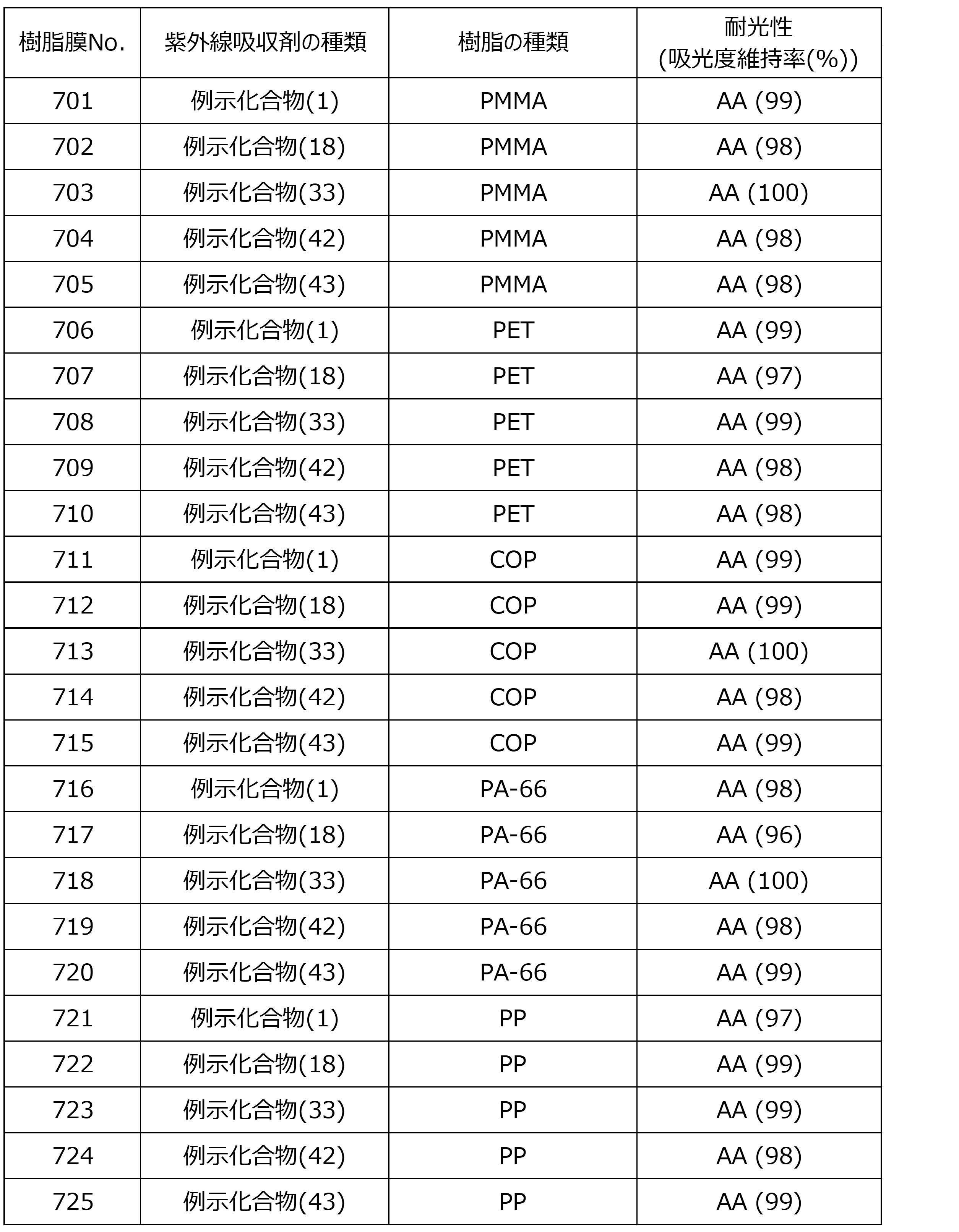
下記表に記載の化合物(例示化合物(1)、(18)、(33)、(42)、(43)、化合物C-1~C-3)をクロロホルムの7.6gおよび(メタ)アクリル樹脂(ダイヤナールBR-80、三菱ケミカル(株)製、モノマー単位としてメチルメタクリレートを60質量%以上含有、重量平均分子量95000)の1.1gに溶解させて樹脂組成物を調製した。得られた樹脂組成物をガラス基板上にスピンコート塗布して塗布膜を形成し、得られた塗布膜を110℃で2分間乾燥させて、樹脂801~815を製造した。
吸光度維持率(%)=(耐光性試験後の樹脂膜のλmaxでの吸光度/耐光性試験前の樹脂膜のλmaxでの吸光度)×100
AA:吸光度維持率が90%以上
A:吸光度維持率が85%以上
B:吸光度維持率が80%以上、85%未満
C:吸光度維持率が80%未満
装置:低温サイクルキセノンウェザーメーター(XL75、スガ試験機(株)製)
照度:90klx(40w/m2)
時間:3週間
環境:23℃、相対湿度50%
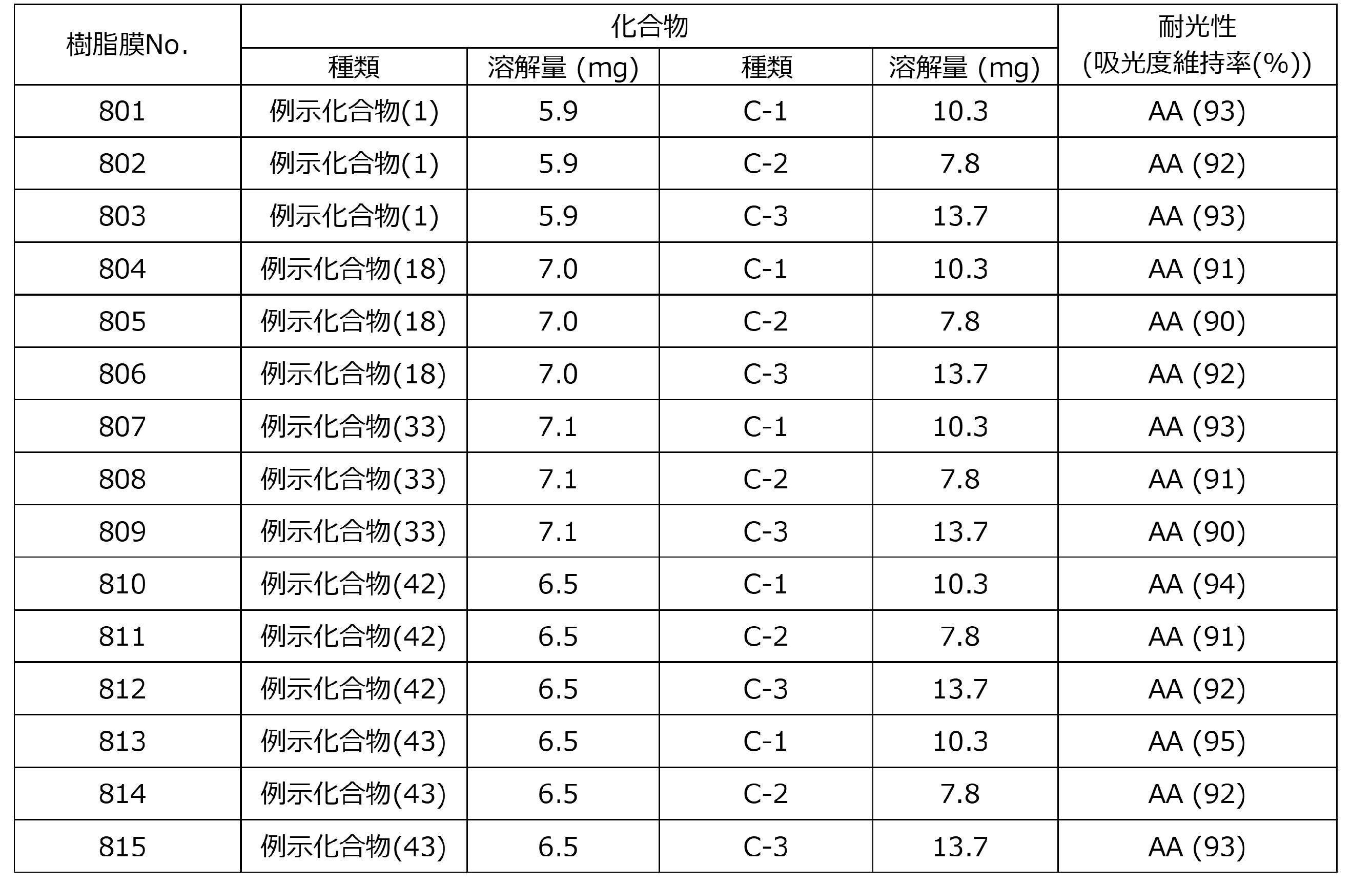

Claims (16)
- 式(1)で表される化合物と、樹脂と、を含む樹脂組成物;
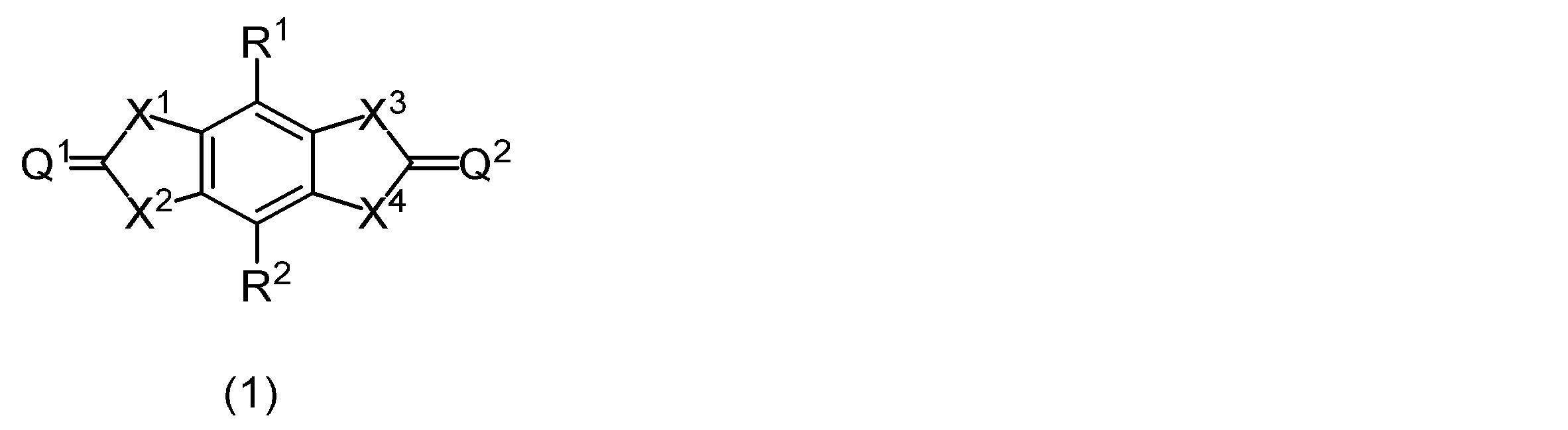
Q2は、=O、=S、=NRq1または=CRq2Rq3を表し、Rq1~Rq3は、各々独立して水素原子または置換基を表し、Rq2とRq3は互いに結合して環を形成してもよい;ただし、Rq2とRq3が結合して環を形成している場合、=CRq2Rq3はQ1と同一の構造ではない;
R1およびR2は、各々独立して水素原子または置換基を表す;
X1~X4は、各々独立して-S-、-NRX1-、または、-SO2-を表し、RX1は水素原子またはアルキル基を表す;

ただし、R101またはR102のいずれか一方が水素原子の時、他方はアルキル基、アラルキル基、アリール基、複素環基またはエチレン性不飽和結合を有する重合性基を含む基を表し、
R101またはR102のいずれか一方がメチル基の時、他方は水素原子、炭素数2以上のアルキル基、アラルキル基、アリール基、複素環基またはエチレン性不飽和結合を有する重合性基を含む基を表し、
R101またはR102のいずれか一方がフェニル基の時、他方は水素原子、アルキル基、アラルキル基、置換基を有するアリール基、複素環基またはエチレン性不飽和結合を有する重合性基を含む基を表す。 - R101およびR102は、各々独立して、水素原子、アルキル基、アラルキル基、アリール基または複素環基を表し、
R101またはR102のいずれか一方が水素原子の時、他方はアルキル基、アラルキル基、アリール基、複素環基を表し、
R101またはR102のいずれか一方がメチル基の時、他方は水素原子、炭素数2以上のアルキル基、アラルキル基、アリール基または複素環基を表し、
R101またはR102のいずれか一方がフェニル基の時、他方は水素原子、アルキル基、アラルキル基、置換基を有するアリール基または複素環基を表す、
請求項1に記載の樹脂組成物。 - 前記式(1)で表される化合物が、式(3)で表される化合物である、請求項1または2に記載の樹脂組成物;
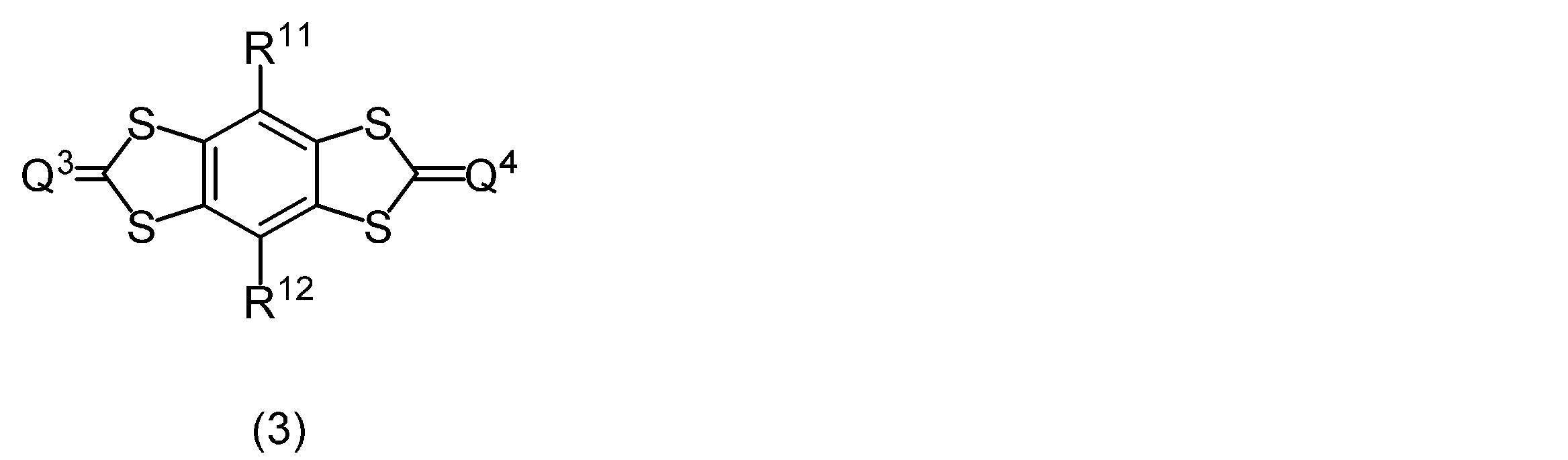
Q4は、=O、=S、=NRq11または=CRq12Rq13を表し、Rq11~Rq13は、各々独立して水素原子または置換基を表し、Rq12とRq13は互いに結合して環を形成してもよい;ただし、Rq12とRq13が結合して環を形成している場合、=CRq12Rq13はQ3と同一の構造ではない;
R11およびR12は、各々独立して、-OH、-O-Y11、-OC(=O)-Y11、-OC(=O)O-Y11、-OC(=O)NRy11-Y11、-OSO2-Y11またはエチレン性不飽和結合を有する重合性基を含む基を表し、Ry11は水素原子、アルキル基、アラルキル基またはアリール基を表し、Y11は、アルキル基、アラルキル基またはアリール基を表す。 - 前記式(3)のR11およびR12は、各々独立して、-OH、-O-Y11、-OC(=O)-Y11、-OC(=O)O-Y11、-OC(=O)NRy11-Y11または-OSO2-Y11を表し、Ry11は水素原子、アルキル基、アラルキル基またはアリール基を表し、Y11は、アルキル基、アラルキル基またはアリール基を表す、請求項3に記載の樹脂組成物。
- 前記式(3)のR11、R12、Q3およびQ4の少なくとも一つは、エチレン性不飽和結合を有する重合性基を含む基を含む、請求項3に記載の樹脂組成物。
- 前記樹脂が、(メタ)アクリル樹脂、ポリスチレン樹脂、ポリエステル樹脂、ポリウレタン樹脂、チオウレタン樹脂、ポリイミド樹脂、ポリアミド樹脂、エポキシ樹脂、ポリカーボネート樹脂、フタレート樹脂、セルロースアシレート樹脂および環状オレフィン樹脂から選ばれる少なくとも1種である、請求項1~5のいずれか1項に記載の樹脂組成物。
- 請求項1~6のいずれか1項に記載の樹脂組成物を用いて得られる硬化物。
- 請求項7に記載の硬化物を含む光学部材。
- 式(1)で表される化合物を含む紫外線吸収剤;
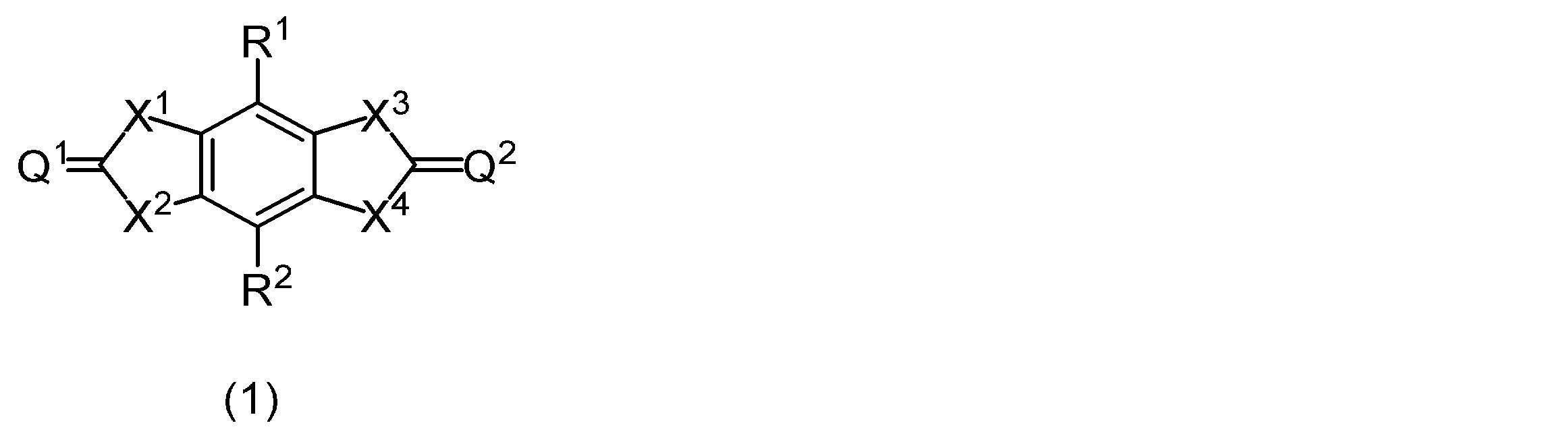
Q2は、=O、=S、=NRq1または=CRq2Rq3を表し、Rq1~Rq3は、各々独立して水素原子または置換基を表し、Rq2とRq3は互いに結合して環を形成してもよい;ただし、Rq2とRq3が結合して環を形成している場合、=CRq2Rq3はQ1と同一の構造ではない;
R1およびR2は、各々独立して水素原子または置換基を表す;
X1~X4は、各々独立して-S-、-NRX1-、または、-SO2-を表し、RX1は水素原子またはアルキル基を表す;
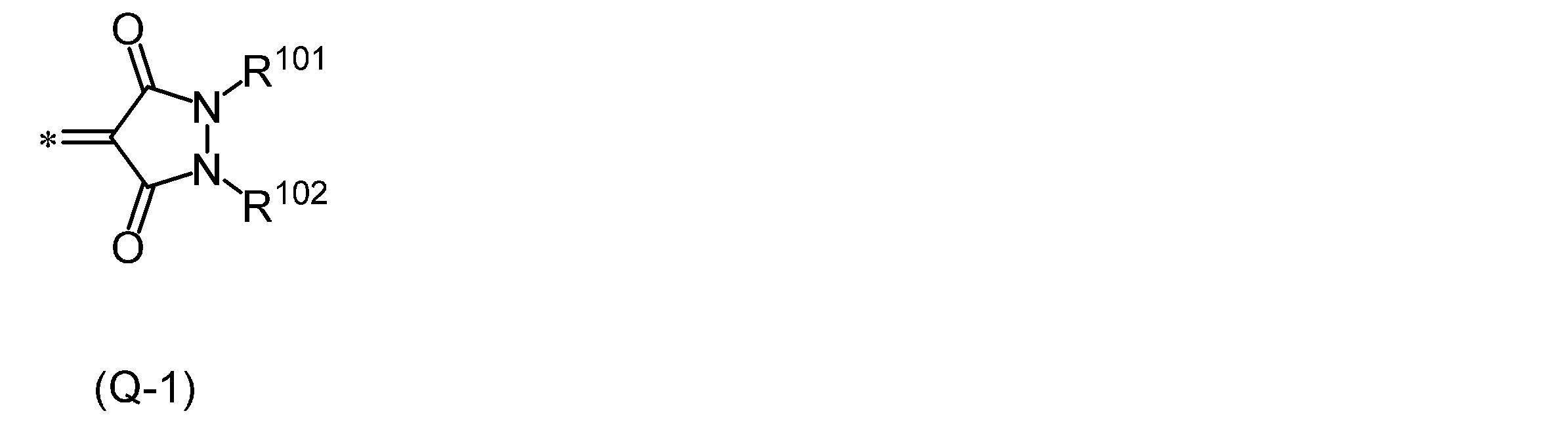
ただし、R101またはR102のいずれか一方が水素原子の時、他方はアルキル基、アラルキル基、アリール基、複素環基またはエチレン性不飽和結合を有する重合性基を含む基を表し、
R101またはR102のいずれか一方がメチル基の時、他方は水素原子、炭素数2以上のアルキル基、アラルキル基、アリール基、複素環基またはエチレン性不飽和結合を有する重合性基を含む基を表し、
R101またはR102のいずれか一方がフェニル基の時、他方は水素原子、アルキル基、アラルキル基、置換基を有するアリール基、複素環基またはエチレン性不飽和結合を有する重合性基を含む基を表す。 - R101およびR102は、各々独立して、水素原子、アルキル基、アラルキル基、アリール基または複素環基を表し、
R101またはR102のいずれか一方が水素原子の時、他方はアルキル基、アラルキル基、アリール基、複素環基を表し、
R101またはR102のいずれか一方がメチル基の時、他方は水素原子、炭素数2以上のアルキル基、アラルキル基、アリール基または複素環基を表し、
R101またはR102のいずれか一方がフェニル基の時、他方は水素原子、アルキル基、アラルキル基、置換基を有するアリール基または複素環基を表す、
請求項9に記載の紫外線吸収剤。 - 式(3)で表される化合物;

Q4は、=O、=S、=NRq11または=CRq12Rq13を表し、Rq11~Rq13は、各々独立して水素原子または置換基を表し、Rq12とRq13は互いに結合して環を形成してもよい;ただし、Rq12とRq13が結合して環を形成している場合、=CRq12Rq13はQ3と同一の構造ではない;
R11およびR12は、各々独立して、-OH、-O-Y11、-OC(=O)-Y11、-OC(=O)O-Y11、-OC(=O)NRy11-Y11、-OSO2-Y11またはエチレン性不飽和結合を有する重合性基を含む基を表し、Ry11は水素原子、アルキル基、アラルキル基またはアリール基を表し、Y11は、アルキル基、アラルキル基またはアリール基を表す;
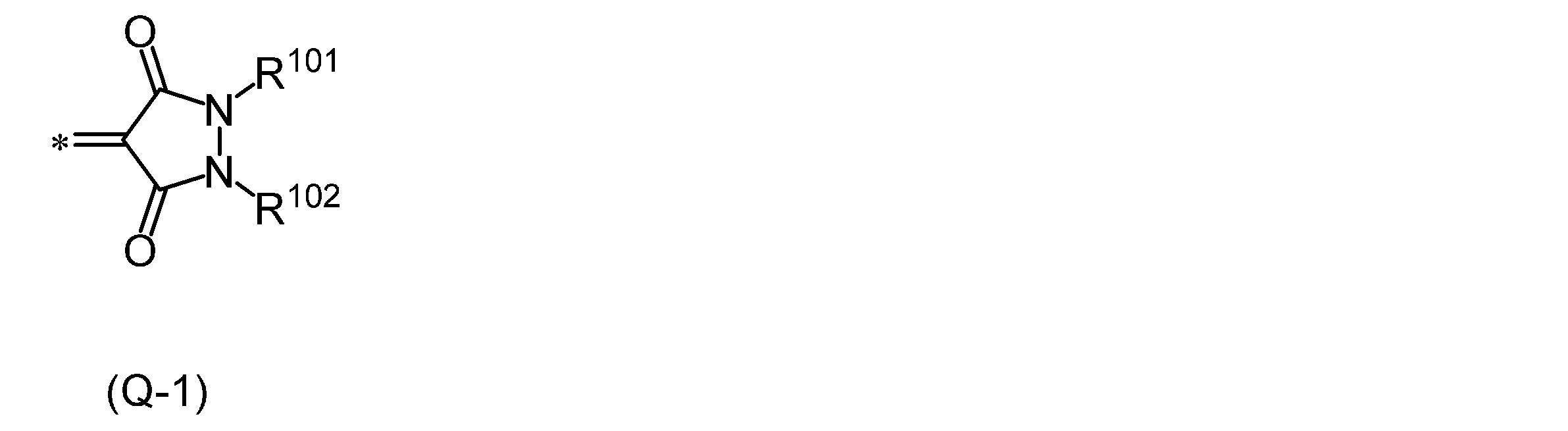
ただし、R101またはR102のいずれか一方が水素原子の時、他方はアルキル基、アラルキル基、アリール基、複素環基またはエチレン性不飽和結合を有する重合性基を含む基を表し、
R101またはR102のいずれか一方がメチル基の時、他方は水素原子、炭素数2以上のアルキル基、アラルキル基、アリール基、複素環基またはエチレン性不飽和結合を有する重合性基を含む基を表し、
R101またはR102のいずれか一方がフェニル基の時、他方は水素原子、アルキル基、アラルキル基、置換基を有するアリール基、複素環基またはエチレン性不飽和結合を有する重合性基を含む基を表す。 - 前記式(3)のR11およびR12は、各々独立して、-OH、-O-Y11、-OC(=O)-Y11、-OC(=O)O-Y11、-OC(=O)NRy11-Y11または-OSO2-Y11を表し、Ry11は水素原子、アルキル基、アラルキル基またはアリール基を表し、Y11は、アルキル基、アラルキル基またはアリール基を表し、
R101およびR102は、各々独立して、水素原子、アルキル基、アラルキル基、アリール基または複素環基を表し、
R101またはR102のいずれか一方が水素原子の時、他方はアルキル基、アラルキル基、アリール基または複素環基を表し、
R101またはR102のいずれか一方がメチル基の時、他方は水素原子、炭素数2以上のアルキル基、アラルキル基、アリール基または複素環基を表し、
R101またはR102のいずれか一方がフェニル基の時、他方は水素原子、アルキル基、アラルキル基、置換基を有するアリール基または複素環基を表す、
請求項11に記載の化合物。 - 前記式(3)のR11、R12、Q3およびQ4の少なくとも一つは、エチレン性不飽和結合を有する重合性基を含む基を含む、請求項11に記載の化合物。
- 式(4)で表される化合物と式(5)で表される化合物とを反応させて式(6)で表される化合物を製造する化合物の製造方法;

Q6は、=O、=S、=NRq21または=CRq22Rq23を表し、
Rq21~Rq23は、各々独立して水素原子または置換基を表し、Rq22とRq23は互いに結合して環を形成してもよい;ただし、Rq22とRq23が結合して環を形成している場合、=CRq22Rq23はQ5と同一の構造ではない;
式(5)中、E51は-COCl、-O(C=O)Cl、-NRe51(C=O)Cl、-NCO、-Cl、-Br、-Iまたは-SO2Re52を表し、
Re51は、水素原子、アルキル基、アラルキル基またはアリール基を表し、
Re52は-Clまたはアルコキシ基を表し、
Y51はアルキル基、アラルキル基またはアリール基を表す;
式(6)中、Q5は式(Q-1)で表される基を表し、
Q6は、=O、=S、=NRq21または=CRq22Rq23を表し、
Rq21~Rq23は、各々独立して水素原子または置換基を表し、Rq22とRq23は互いに結合して環を形成してもよい;ただし、Rq22とRq23が結合して環を形成している場合、=CRq22Rq23はQ5と同一の構造ではない;
R61およびR62は、各々独立して、-O-Y61、-OC(=O)-Y61、-OC(=O)O-Y61、-OC(=O)NRy61-Y61、または、-OSO2-Y61を表し、Ry61は水素原子、アルキル基、アラルキル基またはアリール基を表し、Y61は、アルキル基、アラルキル基またはアリール基を表す;
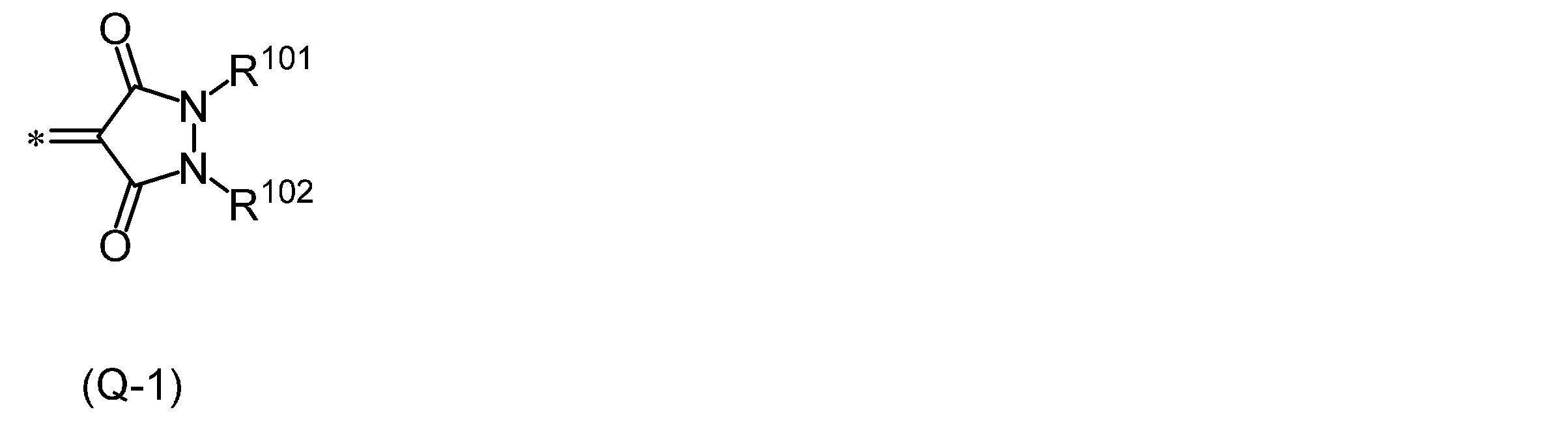
ただし、R101またはR102のいずれか一方が水素原子の時、他方はアルキル基、アラルキル基、アリール基、複素環基またはエチレン性不飽和結合を有する重合性基を含む基を表し、
R101またはR102のいずれか一方がメチル基の時、他方は水素原子、炭素数2以上のアルキル基、アラルキル基、アリール基、複素環基またはエチレン性不飽和結合を有する重合性基を含む基を表し、
R101またはR102のいずれか一方がフェニル基の時、他方は水素原子、アルキル基、アラルキル基、置換基を有するアリール基、複素環基またはエチレン性不飽和結合を有する重合性基を含む基を表す。 - R101およびR102は、各々独立して、水素原子、アルキル基、アラルキル基、アリール基または複素環基を表し、
R101またはR102のいずれか一方が水素原子の時、他方はアルキル基、アラルキル基、アリール基、複素環基を表し、
R101またはR102のいずれか一方がメチル基の時、他方は水素原子、炭素数2以上のアルキル基、アラルキル基、アリール基または複素環基を表し、
R101またはR102のいずれか一方がフェニル基の時、他方は水素原子、アルキル基、アラルキル基、置換基を有するアリール基または複素環基を表す、
請求項14に記載の化合物の製造方法。 - 請求項13に記載の化合物由来の構造を含む重合体。
Priority Applications (4)
| Application Number | Priority Date | Filing Date | Title |
|---|---|---|---|
| JP2023564899A JPWO2023100715A1 (ja) | 2021-12-02 | 2022-11-22 | |
| CN202280074175.XA CN118202006A (zh) | 2021-12-02 | 2022-11-22 | 树脂组合物、固化物、光学部件、紫外线吸收剂、化合物、化合物的制造方法及聚合物 |
| KR1020247014365A KR102955050B1 (ko) | 2021-12-02 | 2022-11-22 | 수지 조성물, 경화물, 광학 부재, 자외선 흡수제, 화합물, 화합물의 제조 방법 및 중합체 |
| US18/660,214 US20240327613A1 (en) | 2021-12-02 | 2024-05-09 | Resin composition, cured substance, optical member, ultraviolet absorber, compound, production method of compound, and polymer |
Applications Claiming Priority (6)
| Application Number | Priority Date | Filing Date | Title |
|---|---|---|---|
| JP2021-196054 | 2021-12-02 | ||
| JP2021196054 | 2021-12-02 | ||
| JP2022-070074 | 2022-04-21 | ||
| JP2022070074 | 2022-04-21 | ||
| JP2022137638 | 2022-08-31 | ||
| JP2022-137638 | 2022-08-31 |
Related Child Applications (1)
| Application Number | Title | Priority Date | Filing Date |
|---|---|---|---|
| US18/660,214 Continuation US20240327613A1 (en) | 2021-12-02 | 2024-05-09 | Resin composition, cured substance, optical member, ultraviolet absorber, compound, production method of compound, and polymer |
Publications (1)
| Publication Number | Publication Date |
|---|---|
| WO2023100715A1 true WO2023100715A1 (ja) | 2023-06-08 |
Family
ID=86612057
Family Applications (1)
| Application Number | Title | Priority Date | Filing Date |
|---|---|---|---|
| PCT/JP2022/043145 Ceased WO2023100715A1 (ja) | 2021-12-02 | 2022-11-22 | 樹脂組成物、硬化物、光学部材、紫外線吸収剤、化合物、化合物の製造方法および重合体 |
Country Status (4)
| Country | Link |
|---|---|
| US (1) | US20240327613A1 (ja) |
| JP (1) | JPWO2023100715A1 (ja) |
| TW (1) | TW202328144A (ja) |
| WO (1) | WO2023100715A1 (ja) |
Cited By (1)
| Publication number | Priority date | Publication date | Assignee | Title |
|---|---|---|---|---|
| WO2024203670A1 (ja) * | 2023-03-27 | 2024-10-03 | 富士フイルム株式会社 | 組成物、硬化物および光学部材 |
Families Citing this family (1)
| Publication number | Priority date | Publication date | Assignee | Title |
|---|---|---|---|---|
| KR102594786B1 (ko) * | 2019-07-09 | 2023-10-26 | 후지필름 가부시키가이샤 | 점착제 시트, 적층체, 표시 장치, 유기 일렉트로 루미네선스 표시 장치 |
Citations (3)
| Publication number | Priority date | Publication date | Assignee | Title |
|---|---|---|---|---|
| JP2009209343A (ja) * | 2007-08-16 | 2009-09-17 | Fujifilm Corp | 紫外線吸収剤及びこれを含む組成物 |
| JP2009209126A (ja) * | 2007-08-16 | 2009-09-17 | Fujifilm Corp | ヘテロ環化合物 |
| JP2009209344A (ja) * | 2007-08-16 | 2009-09-17 | Fujifilm Corp | 着色組成物およびインクジェット記録用インク |
-
2022
- 2022-11-22 JP JP2023564899A patent/JPWO2023100715A1/ja active Pending
- 2022-11-22 WO PCT/JP2022/043145 patent/WO2023100715A1/ja not_active Ceased
- 2022-11-30 TW TW111145992A patent/TW202328144A/zh unknown
-
2024
- 2024-05-09 US US18/660,214 patent/US20240327613A1/en active Pending
Patent Citations (3)
| Publication number | Priority date | Publication date | Assignee | Title |
|---|---|---|---|---|
| JP2009209343A (ja) * | 2007-08-16 | 2009-09-17 | Fujifilm Corp | 紫外線吸収剤及びこれを含む組成物 |
| JP2009209126A (ja) * | 2007-08-16 | 2009-09-17 | Fujifilm Corp | ヘテロ環化合物 |
| JP2009209344A (ja) * | 2007-08-16 | 2009-09-17 | Fujifilm Corp | 着色組成物およびインクジェット記録用インク |
Cited By (1)
| Publication number | Priority date | Publication date | Assignee | Title |
|---|---|---|---|---|
| WO2024203670A1 (ja) * | 2023-03-27 | 2024-10-03 | 富士フイルム株式会社 | 組成物、硬化物および光学部材 |
Also Published As
| Publication number | Publication date |
|---|---|
| US20240327613A1 (en) | 2024-10-03 |
| KR20240089187A (ko) | 2024-06-20 |
| JPWO2023100715A1 (ja) | 2023-06-08 |
| TW202328144A (zh) | 2023-07-16 |
Similar Documents
| Publication | Publication Date | Title |
|---|---|---|
| JP2010116528A (ja) | 光学フィルム及び該光学フィルムの製造方法 | |
| US20240327613A1 (en) | Resin composition, cured substance, optical member, ultraviolet absorber, compound, production method of compound, and polymer | |
| JP2010116529A (ja) | 光学フィルム及び該光学フィルムの製造方法 | |
| JP5566701B2 (ja) | 位相差フィルム | |
| JP7330295B2 (ja) | 樹脂組成物、硬化物、紫外線吸収剤、紫外線カットフィルタ、レンズ、保護材、化合物及び化合物の合成方法 | |
| US20230159675A1 (en) | Polymerizable composition, polymer, ultraviolet shielding material, laminate, compound, ultraviolet absorbing agent, and method of producing compound | |
| US12565600B2 (en) | Photopolymerizable composition, cured substance, and optical member | |
| KR102955050B1 (ko) | 수지 조성물, 경화물, 광학 부재, 자외선 흡수제, 화합물, 화합물의 제조 방법 및 중합체 | |
| WO2024203670A1 (ja) | 組成物、硬化物および光学部材 | |
| CN118202006A (zh) | 树脂组合物、固化物、光学部件、紫外线吸收剂、化合物、化合物的制造方法及聚合物 | |
| JP2025145664A (ja) | 組成物、硬化物および光学部材 | |
| CN116018373B (zh) | 紫外线吸收剂、树脂组合物、固化物、光学部件、紫外线吸收剂的制造方法及化合物 | |
| WO2022265028A1 (ja) | 混練物、混練物の製造方法、成形体および光学部材 | |
| JP2010091676A (ja) | 光学異方性積層体、該光学異方性積層体を含む光学フィルム及びその製造方法 | |
| US20250019368A1 (en) | Compound and production method thereof, polymerizable composition, resin composition, polymer, cured substance, and laminate | |
| CN121569222A (zh) | 组合物、树脂组合物、液体组合物、色素化合物及光学材料 | |
| WO2024024438A1 (ja) | 包接化合物及びその製造方法、重合性組成物、樹脂組成物、重合体、硬化物、並びに積層体 | |
| JP2011144216A (ja) | 光学フィルム及び光学フィルムの製造方法 |
Legal Events
| Date | Code | Title | Description |
|---|---|---|---|
| 121 | Ep: the epo has been informed by wipo that ep was designated in this application |
Ref document number: 22901148 Country of ref document: EP Kind code of ref document: A1 |
|
| ENP | Entry into the national phase |
Ref document number: 20247014365 Country of ref document: KR Kind code of ref document: A |
|
| WWE | Wipo information: entry into national phase |
Ref document number: 202280074175.X Country of ref document: CN |
|
| ENP | Entry into the national phase |
Ref document number: 2023564899 Country of ref document: JP Kind code of ref document: A |
|
| NENP | Non-entry into the national phase |
Ref country code: DE |
|
| 122 | Ep: pct application non-entry in european phase |
Ref document number: 22901148 Country of ref document: EP Kind code of ref document: A1 |