WO2023095690A1 - アンモニア燃料供給ユニット、及びボイラシステム - Google Patents
アンモニア燃料供給ユニット、及びボイラシステム Download PDFInfo
- Publication number
- WO2023095690A1 WO2023095690A1 PCT/JP2022/042496 JP2022042496W WO2023095690A1 WO 2023095690 A1 WO2023095690 A1 WO 2023095690A1 JP 2022042496 W JP2022042496 W JP 2022042496W WO 2023095690 A1 WO2023095690 A1 WO 2023095690A1
- Authority
- WO
- WIPO (PCT)
- Prior art keywords
- ammonia
- fuel supply
- ammonia fuel
- pipe
- boiler
- Prior art date
- Legal status (The legal status is an assumption and is not a legal conclusion. Google has not performed a legal analysis and makes no representation as to the accuracy of the status listed.)
- Ceased
Links
Images


Classifications
-
- F—MECHANICAL ENGINEERING; LIGHTING; HEATING; WEAPONS; BLASTING
- F23—COMBUSTION APPARATUS; COMBUSTION PROCESSES
- F23K—FEEDING FUEL TO COMBUSTION APPARATUS
- F23K5/00—Feeding or distributing other fuel to combustion apparatus
-
- F—MECHANICAL ENGINEERING; LIGHTING; HEATING; WEAPONS; BLASTING
- F23—COMBUSTION APPARATUS; COMBUSTION PROCESSES
- F23K—FEEDING FUEL TO COMBUSTION APPARATUS
- F23K5/00—Feeding or distributing other fuel to combustion apparatus
- F23K5/02—Liquid fuel
-
- F—MECHANICAL ENGINEERING; LIGHTING; HEATING; WEAPONS; BLASTING
- F23—COMBUSTION APPARATUS; COMBUSTION PROCESSES
- F23K—FEEDING FUEL TO COMBUSTION APPARATUS
- F23K5/00—Feeding or distributing other fuel to combustion apparatus
- F23K5/02—Liquid fuel
- F23K5/14—Details thereof
- F23K5/18—Cleaning or purging devices, e.g. filters
Definitions
- the present disclosure relates to ammonia fuel supply units and boiler systems.
- This application claims priority based on Japanese Patent Application No. 2021-190085 filed with the Japan Patent Office on November 24, 2021, the contents of which are incorporated herein.
- a boiler in which ammonia is supplied as fuel to the furnace is known.
- ammonia co-firing is performed in which ammonia is combusted together with coal in a furnace.
- the amount of ammonia used as fuel is very large compared to, for example, the amount of ammonia used as a catalyst for denitrification of combustion gas. Therefore, if ammonia as a fuel leaks during the process of being supplied to the boiler, the operation of the boiler will be greatly affected, and an effective measure for suppressing the leakage is desired.
- the above patent document does not disclose a specific configuration of the suppression measure.
- An object of the present disclosure is to provide an ammonia fuel supply unit and a boiler system that can reduce the risk of affecting boiler operation due to ammonia fuel leakage.
- An ammonia fuel supply unit comprises: an ammonia fuel supply pipe configured to supply ammonia fuel to the boiler; an outer tube that surrounds at least a portion of the ammonia fuel supply tube and forms a double tube structure together with the ammonia fuel supply tube.
- a boiler system includes: the ammonia fuel supply unit; and the boiler that generates steam using combustion gas generated by combustion of the ammonia fuel supplied from the ammonia fuel supply unit as a heat source.
- FIG. 1 is a schematic configuration diagram of a boiler system according to one embodiment
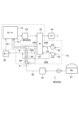
- FIG. 1 is a schematic configuration diagram of an ammonia fuel supply unit according to a first embodiment
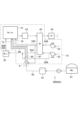
- FIG. FIG. 5 is a schematic configuration diagram of an ammonia fuel supply unit according to a second embodiment
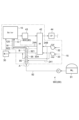
- FIG. 11 is a schematic configuration diagram of an ammonia fuel supply unit according to a third embodiment
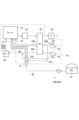
- FIG. 11 is a schematic configuration diagram of an ammonia fuel supply unit according to a fourth embodiment
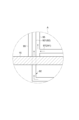
- FIG. 2C is a conceptual enlarged view of the area surrounded by the two-dot chain line A shown in FIGS. 2A to 2D
- FIG. 2C is a conceptual enlarged view of a region surrounded by a two-dot chain line B shown in FIGS. 2A and 2C
- expressions denoting relative or absolute arrangements such as “in a direction”, “along a direction”, “parallel”, “perpendicular”, “center”, “concentric” or “coaxial” are strictly not only represents such an arrangement, but also represents a state of relative displacement with a tolerance or an angle or distance to the extent that the same function can be obtained.
- expressions such as “identical”, “equal”, and “homogeneous”, which express that things are in the same state not only express the state of being strictly equal, but also have tolerances or differences to the extent that the same function can be obtained. It shall also represent the existing state.
- expressions that express shapes such as squares and cylinders do not only represent shapes such as squares and cylinders in a geometrically strict sense, but also include irregularities and chamfers to the extent that the same effect can be obtained.
- the shape including the part etc. shall also be represented.
- the expressions "comprising”, “including”, or “having” one component are not exclusive expressions excluding the presence of other components.
- symbol may be attached
- FIG. 1 is a schematic configuration diagram showing a boiler system 1 including a boiler using ammonia fuel and other fuels other than ammonia fuel as main fuels according to the present embodiment.
- the boiler 10 included in the boiler system 1 of the present embodiment burns other fuel and ammonia fuel with a burner, and the heat generated by this combustion is heat-exchanged with feed water or steam to generate superheated steam. It's a boiler.
- biomass fuels and solid fuels such as coal are used.
- Coal as solid fuel is, for example, pulverized pulverized coal fuel.
- the ammonia fuel is liquid ammonia or ammonia gas.
- the boiler 10 has a furnace 11 , combustion devices 20 and 50 and a combustion gas passage 12 .
- the furnace 11 has a hollow rectangular shape and is installed along the vertical direction.
- the furnace wall 101 which constitutes the inner wall surface of the furnace 11, is composed of a plurality of heat transfer tubes and fins connecting the heat transfer tubes. It is recovered by exchanging heat with steam and heat, and suppresses the temperature rise of the furnace wall 101 .
- the combustion devices 20 and 50 are installed in the lower region of the furnace 11.
- the combustion device 20 is configured to inject pulverized coal fuel into the interior of the furnace 11 .
- the combustion device 50 is also configured to inject ammonia fuel into the furnace 11 .
- Combustion device 20 has a plurality of burners 21 attached to furnace wall 101 , and combustion device 50 has a plurality of ammonia burners 51 .
- the tip of each burner 21 is provided with an injection nozzle (not shown) configured to inject pulverized coal fuel into the furnace 11 .
- An ammonia injection nozzle (not shown) is provided at the tip of each ammonia burner 51 .
- the ammonia injection nozzle is a two-fluid injection nozzle configured to atomize and inject liquid ammonia using an atomizing fluid such as steam. Alternatively, it may be a one-fluid injection nozzle configured to inject only liquid ammonia.
- the ammonia injection nozzle may be a gas injection nozzle.
- the burners 21 and the ammonia burners 51 are arranged at regular intervals along the circumferential direction of the furnace 11 (for example, four burners installed at each corner of the rectangular furnace 11) as one set. are arranged in multiple stages along the In the example of FIG. 1, one set of burners 21 is arranged in two stages, and one set of ammonia burners 51 is arranged in four stages. In FIG. 1, for convenience of illustration, only two burners out of one set are shown, and the respective sets are denoted by reference numerals 21 and 51. As shown in FIG.
- the shape of the furnace, the number of stages of burners, the number of burners in one stage, the arrangement of burners, etc. are not limited to this embodiment.
- the combustion method in the furnace 11 may be either a swirling combustion method or a facing combustion method. Both the shape of the furnace 11 and the arrangement of the plurality of burners 21 and the plurality of ammonia burners 51 may be changed as appropriate according to the combustion method employed.
- the burner 21 of the combustion device 20 is connected to a plurality of mills ( pulverizer) 31A, 31B (hereinafter collectively referred to as "mill 31" in some cases).
- the mill 31 has, for example, a crushing table (not shown) supported therein so as to be driven and rotatable, and a plurality of crushing rollers (not shown) above the crushing table so as to be rotatable in conjunction with the rotation of the crushing table. It is a configured vertical roller mill.
- the solid fuel pulverized by the cooperation of the pulverizing roller and the pulverizing table is conveyed to a classifier (not shown) provided in the mill 31 by primary air (carrier gas, oxidizing gas) supplied to the mill 31. .
- the pulverized coal fuel is classified into pulverized coal fuel having a particle size smaller than that suitable for combustion in the burner 21 and coarse pulverized coal fuel having a larger particle size.
- the pulverized coal fuel passes through a classifier and is supplied to the burner 21 through the pulverized coal fuel supply pipe 22 together with primary air. Coarse pulverized coal fuel that has not passed through the classifier falls by its own weight onto the grinding table inside the mill 31 and is ground again.
- the primary air (carrier gas, oxidizing gas) supplied to the mill 31 is sent to the mill 31 through an air pipe 30 from a primary air fan (PAF) 33 that takes in outside air.
- the air pipe 30 is a hot air guide pipe 30A through which the hot air heated by the air heater (air preheater) 42 out of the air sent from the primary air ventilator 33 flows, and the air pipe 30 is sent from the primary air ventilator 33. It has a cold air guide pipe 30B through which the cold air that is close to room temperature flows out of the air and does not pass through the air heater 42, and a carrier gas flow path 30C through which the hot air and the cold air flow together.
- the ammonia burner 51 of the combustion device 50 is connected to the ammonia fuel supply unit 90.
- the ammonia fuel supply unit 90 of the present embodiment includes an ammonia tank 91 and an ammonia fuel supply pipe 92 for supplying ammonia fuel (e.g., liquid ammonia) stored in the ammonia tank 91 to the combustion device 50 of the boiler 10. .
- ammonia fuel e.g., liquid ammonia
- a vaporizer 81 for vaporizing liquid ammonia may be provided in the ammonia fuel supply pipe 92 (details will be described later).
- the ammonia fuel supply unit 90 may further include an atomizing fluid supply pipe (not shown) for supplying the atomizing fluid to the combustion device 50 .
- An air register 23 is provided outside the furnace 11 at the position where the burner 21 and the ammonia burner 51 are mounted, and one end of an air duct (air duct) 24 is connected to the air register 23 .
- a forced draft fan (FDF) 32 is connected to the other end of the air duct 24 .
- the air supplied from the forced draft fan 32 is heated by an air preheater 42 installed in the air passage 24 (details will be described later), and passes through the air register 23 to the burner 21 to produce secondary air (combustion air, oxidizing air). gas) and introduced into the furnace 11.
- the combustion gas passage 12 is connected to the upper part of the furnace 11 in the vertical direction.
- superheaters 102A, 102B, and 102C (hereinafter collectively referred to as "superheaters 102" in some cases) are provided as heat exchangers for recovering the heat of the combustion gas.
- 103A, 103B (hereinafter sometimes collectively referred to as "reheater 103") and economizer 104 are provided, and the combustion gas generated in the furnace 11 and the inside of each heat exchanger are Heat exchange takes place between the circulating feedwater and steam.
- the arrangement and shape of each heat exchanger are not limited to the form described in FIG.
- the downstream side of the combustion gas passage 12 is connected to a flue 13 through which the combustion gas whose heat is recovered by the heat exchanger is discharged.
- An air preheater (air heater) 42 is provided between the flue 13 and the flue 24, and heat exchange is performed between the air flowing through the flue 24 and the combustion gas flowing through the flue 13, By heating the primary air supplied to the mill 31 and the secondary air supplied to the burner 21, further heat is recovered from the combustion gas after heat exchange with water or steam.
- a denitrification device 43 may be provided in the flue 13 at a position upstream of the air preheater 42 .
- the denitrification device 43 supplies a reducing agent, such as ammonia and urea water, which has the action of reducing nitrogen oxides, to the combustion gas flowing through the flue 13, and removes nitrogen oxides in the combustion gas supplied with the reducing agent.
- a reducing agent such as ammonia and urea water
- the gas duct 41 is provided with environmental equipment such as a dust collector 44 such as an electric dust collector for removing ash and the like in the combustion gas, a desulfurizer 46 for removing sulfur oxides, etc., and for guiding the exhaust gas to these environmental equipment.
- An induced draft fan (IDF: Induced Draft Fan) 45 is provided.
- the downstream end of the gas duct 41 is connected to a chimney 47, and the combustion gas treated by the environmental device is discharged out of the system as exhaust gas.
- pulverized and classified pulverized coal fuel is supplied to the burner 21 through the pulverized coal fuel supply pipe 22 together with primary air.
- ammonia fuel is supplied to the ammonia burner 51 from the ammonia fuel supply unit 90 .
- the secondary air heated by the air preheater 42 is supplied to the burner 21 and the ammonia burner 51 from the air duct 24 via the air register 23 .
- the burner 21 blows into the furnace 11 a pulverized coal fuel mixture in which pulverized coal fuel and primary air are mixed, and also blows secondary air into the furnace 11 .
- the pulverized coal fuel mixture blown into the furnace 11 is ignited and reacts with secondary air to form a flame.
- the ammonia burner 51 blows secondary air into the furnace 11 together with the ammonia fuel.
- the ammonia fuel blown into the furnace 11 reacts with secondary air and burns.
- High-temperature combustion gas generated by combustion of pulverized coal fuel and ammonia fuel rises inside the furnace 11 and flows into the combustion gas passage 12 .
- the timing at which the ammonia fuel is blown into the furnace 11 may be after the temperature inside the furnace 11 has risen to a certain temperature due to the combustion of the pulverized coal fuel. For example, when the boiler 10 is started, the pulverized coal fuel is exclusively fired, and then the ammonia fuel is blown into the furnace 11 to perform ammonia co-firing of the ammonia fuel and the pulverized coal fuel.
- the blowing of the pulverized coal fuel may be stopped and ammonia mono-firing may be performed.
- air is used as the oxidizing gas (primary air, secondary air). Stable combustion is achieved in the furnace 11 by adjusting the ratio of the amounts to within an appropriate range.
- the combustion gas flowing into the combustion gas passage 12 exchanges heat with water and steam in the superheater 102, the reheater 103, and the economizer 104 arranged inside the combustion gas passage 12, and then is discharged to the flue 13.
- Nitrogen oxides are removed by the denitrification device 43
- heat is exchanged with primary air and secondary air by the air preheater 42
- ash etc. are removed by the dust collector 44 , and desulfurization device 46 .
- After the sulfur oxides are removed at they are discharged from the stack 47 to the outside of the system.
- the arrangement of each heat exchanger in the combustion gas passage 12 and each device in the flue 13 to the gas duct 41 does not necessarily have to be arranged in the order described above with respect to the flow of the combustion gas.
- Solid fuels used in boilers may include coal, biomass fuels, petroleum coke (PC) fuels, petroleum residues, etc. instead of or in conjunction with pulverized coal fuels.
- the fuel for the boiler combined with ammonia fuel is not limited to solid fuel, and petroleum such as heavy oil, light oil and heavy oil, and liquid fuel such as factory waste liquid can also be used.
- gaseous fuels such as natural gas, various petroleum gases, and by-product gases generated in ironmaking processes can also be used.
- it can also be applied to a mixed combustion boiler that uses a combination of these various fuels.
- FIGS. 2A and 2C Configuration of Ammonia Fuel Supply Unit 90> 2A-4, details of the construction of the ammonia fuel supply unit 90 are illustrated.
- 2A-2D are conceptual illustrations of ammonia fuel supply units 90A-90D (90).
- FIG. 3 is a conceptual enlarged view of the area surrounded by the two-dot chain line A shown in FIGS. 2A to 2D.
- FIG. 4 is a conceptual enlarged view of the area surrounded by the two-dot chain line B shown in FIGS. 2A and 2C.
- ammonia fuel supply units 90A, 90B (90) illustrated in FIGS. 2A and 2B are applied to the boiler 10 employing the ammonia gas injection method.
- Ammonia fuel supply units 90C and 90D (90) illustrated in FIGS. 2C and 2D are applied to the boiler 10 in which the liquid ammonia injection method is adopted.
- the ammonia fuel supply units 90A to 90D (90) exemplified in FIGS. 2A to 2D include an ammonia fuel supply pipe 92 for supplying the ammonia fuel stored in the ammonia tank 91 to the boiler 10, as described above. .
- the ammonia fuel supply pipe 92 is a single pipe connected to the ammonia tank 91 and the combustion device 50 of the boiler 10 (see FIG. 1).
- the ammonia tank 91 is a tank installed outside the building 15 of the boiler 10. Ammonia tank 91 may not be provided. In this case, the upstream end of the ammonia fuel supply pipe 92 may be connected to a liquid ammonia pipeline.
- the ammonia fuel supply unit 90A, 90B illustrated in FIGS. 2A, 2B comprises at least one vaporizer 81 provided in the ammonia fuel supply pipe 92.
- the vaporizer 81 is configured to vaporize liquid ammonia supplied from the ammonia fuel supply unit 90 . Therefore, among the ammonia fuel supply pipes 92 of the ammonia fuel supply units 90A and 90B, the single pipes on the downstream side of the vaporizer 81 each form an ammonia gas supply path.
- the vaporizer 81 for example, directly or indirectly converts steam or condensed water generated in the boiler 10, hot air generated using exhaust heat from the boiler 10, or seawater outside the boiler system 1 into can be used as a heat source.
- the vaporizer 81 is not provided in the ammonia fuel supply pipe 92 of the ammonia fuel supply units 90C and 90D illustrated in FIGS. 2C and 2D.
- the ammonia fuel supply pipe 92 shown in the figure forms a liquid ammonia supply passage inside over the entire length of the passage.
- the ammonia fuel supply units 90A-90D are arranged to surround at least a portion of the ammonia fuel supply pipe 92, forming a double pipe structure together with the ammonia fuel supply pipe 92.
- An outer tube 95 is provided.
- the outer tube 95 exemplified in the figure is arranged so as to surround part of the ammonia fuel supply pipe 92 in the extending direction over the circumferential direction of the ammonia fuel supply pipe 92 .
- the outer tube 95 may be arranged so as to surround the ammonia fuel supply pipe 92 along the entire length of the flow path of the ammonia fuel supply pipe 92 (not shown). That is, the outer pipe 95 may be connected to the ammonia tank 91 and the combustion device 50 .
- the risk of ammonia fuel leaking from the ammonia fuel supply unit 90 can be reduced.
- the risk of ammonia fuel leaking from the ammonia fuel supply unit 90 can be reduced.
- the risk of ammonia gas leaking from the outer tube 95 is reduced
- ammonia fuel which is liquid ammonia or ammonia gas, leaks from the outer tube 95. Risk is reduced. Therefore, the ammonia fuel supply unit 90 that can reduce the risk of affecting the operation of the boiler 10 due to leakage of the ammonia fuel is realized.
- the outer tube 95 is placed only inside the building of the boiler 10 or outside the building. Therefore, outside the building 15 of the boiler 10, the outer pipe 95 is not arranged and the ammonia fuel supply pipe 92 is arranged as a single pipe. As shown in FIG. 3, the ammonia fuel supply pipe 92 is provided so as to pass through the wall constituting the building 15, and the upstream end of the outer pipe 95 is connected to the inner surface of the wall. there is If all the ammonia fuel supply pipes 92 from the ammonia tank 91 (see FIGS. 2A to 2D) to the boiler 10 are double pipes, the cost of the ammonia fuel supply unit 90 is increased.
- a double pipe structure may be formed in a part of the ammonia fuel supply pipe 92 inside the building 15 as illustrated in FIGS. 2A and 2C, or as illustrated in FIGS. 2B and 2D.
- a double pipe structure may be formed over the entire length of the channel of the ammonia fuel supply pipe 92 inside the building 15 . In either case, the above advantages can be obtained.
- outer tube 95 forms a purge gas flow path with ammonia fuel supply tube 92 .
- the purge gas illustrated in FIGS. 2A and 2B is hot air.
- the outer pipe 95 is connected via a bleed pipe 97 to a hot air duct 24A configured to guide the hot air heated by the air heater 42 to the boiler 10 . Therefore, hot air flows as purge gas into the intermediate space between the outer pipe 95 and the ammonia fuel supply pipe 92 shown in the figure.
- the purge gas illustrated in FIGS. 2C and 2D is air (cold air) that has not been heat-treated.
- the outer pipe 95 is connected via an air supply pipe 241 to a cool air duct 24B, which is an air duct (air duct) 24 configured to guide air in the atmosphere to the air heater 42.
- a cool air duct 24B which is an air duct (air duct) 24 configured to guide air in the atmosphere to the air heater 42.
- the ammonia fuel supply pipe 92 includes an inner pipe 921 positioned inside the outer pipe 95 and a hot air duct 24A positioned inside the boiler 10 and the inner pipe. and a connecting tube 922 connected to 921 .
- the outer wall portion of the hot air duct 24A is virtually illustrated by a chain double-dashed line W (the same applies to FIGS. 2B and 2D).
- the ammonia fuel is guided to the boiler 10 by the hot air duct 24A.
- the ammonia gas receives heat from the hot air, so condensation of the ammonia gas is unlikely to occur. Then, the ammonia gas flows as it is through the inner space of the hot air duct 24A indicated by the area surrounded by the chain double-dashed line W, and reaches the air nozzle provided in the boiler 10 . After that, ammonia gas is injected into the furnace 11 . Also, in the embodiment shown in FIG.
- the outer pipe 95 is not arranged inside the hot air duct 24A, and the double pipe structure is adopted only for part of the ammonia fuel supply pipe 92, so that the increase in cost can be suppressed. Therefore, it is possible to effectively reduce the risk of affecting the operation of the boiler 10 due to leakage of ammonia fuel while suppressing an increase in cost.
- Ammonia fuel supply unit 90A comprises a bleed pipe 97 configured to deliver hot air bled from hot air duct 24A to outer pipe 95 .
- the hot air extracted from the extraction pipe 97 flows between the outer pipe 95 and the inner pipe 921 as purge gas.
- the inner pipe 921 of the ammonia fuel supply unit 90 ⁇ /b>A forms an ammonia gas supply path inside, and the temperature of the ammonia gas flowing through the supply path is lower than the temperature of the hot air supplied from the bleed pipe 97 .
- the ammonia gas even if the ammonia gas leaks from the inner pipe 921 of the ammonia fuel supply pipe 92, the ammonia gas receives heat from the hot air, so condensation of the ammonia gas is suppressed. Therefore, even if ammonia gas leaks, the ammonia gas is led to the boiler 10 via the hot air duct 24A without condensing. Therefore, it is possible to prevent the leaked ammonia gas from remaining between the inner tube 921 and the outer tube 95 .
- the ammonia fuel supply unit 90C has an air supply pipe 241 .
- the air supply pipe 241 of this example is connected to the cold air duct 24B and the outer pipe 95 . Thereby, the cool air guided by the air supply pipe 241 flows between the outer pipe 95 and the inner pipe 921 as purge gas.
- the inner pipe 921 of the ammonia fuel supply unit 90C forms a liquid ammonia supply path inside, and the temperature of the liquid ammonia flowing through the supply path and the temperature of the cold air supplied from the air supply pipe 241 are substantially the same. be.
- cold air which is unheated air in the atmosphere, flows through the intermediate space between the outer pipe 95 and the inner pipe 921 as the purge gas. is less likely to change to ammonia gas, and vapor lock in the ammonia fuel supply pipe 92 can be suppressed.
- the pressure in the intermediate space between the inner pipe 921 and the outer pipe 95 is lower than the supply pressure in the ammonia fuel supply pipe 92 shown in FIG. 2C, even if liquid ammonia leaks from the inner pipe 921, The liquid ammonia vaporizes to ammonia gas and is carried to hot air duct 24A by cool air as purge gas.
- the air supply pipe 241 may not be branched from the cold air duct 24B, and may be a single pipe connected to a blower (not shown) and the outer pipe 95 .
- the ammonia fuel supply unit 90C illustrated in FIG. 2C includes a heat insulating mechanism 120 provided on the outer surface of the connecting single pipe 922.
- the heat insulating mechanism 120 of this example is a heat insulating material provided on the outer surface of the connecting single pipe 922 . According to the above configuration, the heat input from the hot air flowing through the hot air duct 24A to the liquid ammonia flowing through the connecting single pipe 922 can be suppressed, so vapor lock at the connecting single pipe 922 can be suppressed. Therefore, liquid ammonia can stably flow through the connecting single pipe 922 of the ammonia fuel supply unit 90 .
- Ammonia detectors 80A to 80D are provided in at least one of an intermediate space between the ammonia fuel supply pipe 92 and the outer pipe 95, a space communicating with the intermediate space, or a space outside the outer pipe 95.
- the ammonia detectors 80A and 80C illustrated in FIGS. 2A and 2C have a space between the outer wall of the hot air duct 24A and the connecting single pipe 922 indicated by the two-dot chain line W (that is, space communicating with the intermediate space).
- Ammonia detectors 80B and 80D illustrated in FIGS. 2B and 2D are provided outside the outer tube 95 (that is, in the outer space).
- the ammonia detector 80 of this example is a laser type gas measuring instrument configured to measure the ammonia concentration based on the spectrum of the laser light that has passed through the gas.
- a laser-based gas meter utilizes the principle that ammonia gas has a unique optical absorption spectrum. Then, the presence or absence of ammonia gas in the detection region is detected by spectrally analyzing the output result of the light-receiving element that receives the light irradiated toward the detection region where ammonia gas may exist.
- Ammonia detector 80 may be placed near boiler 10 such that the detection area includes furnace 11 of boiler 10 .
- the ammonia detector 80 can detect that ammonia fuel has leaked from the ammonia fuel supply pipe 92 or the outer pipe 95 . Therefore, the ammonia fuel supply unit 90 can enable post-facto treatment after the ammonia fuel leaks. For example, in embodiments in which the ammonia detector 80 is connected to an interlock (not shown) configured to cause a boiler trip, the detection result of the ammonia detector 80 indicates that the specified shutdown condition has been met. As a trigger, an interlock may be activated and a boiler trip may occur. As a result, the operator can restart the operation of the boiler 10 after taking appropriate measures (for example, repairing the pipe in which the ammonia fuel has leaked).
- An ammonia fuel supply unit (90) comprises: an ammonia fuel supply pipe (92) configured to supply ammonia fuel to the boiler (10); an outer tube (95) arranged to surround at least part of the ammonia fuel supply tube and forming a double tube structure together with the ammonia fuel supply tube.
- the ammonia fuel supply unit of 1) above comprising: The outer tube is arranged only inside the building, either inside or outside the building of the boiler.
- the cost of the ammonia fuel supply unit will increase.
- the ammonia fuel leaks inside the boiler building or outside the building, for example, the inside of the building needs to be ventilated, so the influence on the operation of the boiler is greater.
- the double pipe structure formed by the ammonia fuel supply pipe and the outer pipe is arranged only inside the building or outside the building of the boiler. Therefore, it is possible to effectively reduce the risk of affecting the operation of the boiler due to leakage of the ammonia fuel while suppressing an increase in cost.
- the outer pipe forms a purge gas flow path with the ammonia fuel supply pipe.
- the ammonia fuel supply unit of 3) above comprising: said outer tube is connected to a hot air duct (24A) configured to direct hot air heated by an air heater (42) to said boiler;
- the ammonia fuel supply pipe is an inner tube (921) arranged inside the outer tube;
- the ammonia fuel is guided to the boiler by the hot air duct. Since the leaked ammonia fuel flows into the furnace of the boiler, the risk of affecting the operation of the boiler due to the leakage of the ammonia fuel can be effectively reduced. Moreover, since the double-pipe structure is adopted only for part of the ammonia fuel supply pipe, it is possible to suppress the increase in cost. Therefore, it is possible to effectively reduce the risk of affecting the operation of the boiler due to leakage of the ammonia fuel while suppressing an increase in cost.
- the ammonia fuel supply unit of 4) above comprising: further comprising a heat insulating mechanism (120) provided on the outer surface of the connecting single pipe,
- the ammonia fuel supply pipe forms a supply channel for liquid ammonia inside.
- the heat input from the hot air flowing through the hot air duct to the liquid ammonia flowing through the connecting single pipe can be suppressed, so vapor lock in the connecting single pipe can be suppressed. Therefore, liquid ammonia can stably flow through the connecting single pipe of the ammonia fuel supply unit.
- the ammonia fuel supply unit of 4) or 5) above comprising: further comprising an air supply pipe (241) configured to send atmospheric air to the outer pipe without heat treatment;
- the ammonia fuel supply pipe forms a supply channel for liquid ammonia inside.
- the air in the atmosphere flows through the outer pipe as the purge gas, so the heat input from the purge gas to the liquid ammonia flowing through the inner pipe is suppressed.
- Liquid ammonia does not readily change to ammonia gas, and vapor lock in the ammonia fuel supply pipe can be suppressed.
- the liquid ammonia is vaporized into ammonia gas and flows to the hot air duct by air as purge gas. The ammonia gas then flows inside the hot air duct to the boiler. Therefore, it is possible to prevent the leaked liquid ammonia from remaining between the inner tube and the outer tube.
- the ammonia fuel supply unit of 4) above comprising: further comprising a bleed pipe (97) configured to deliver the hot air bled from the hot air duct to the outer pipe;
- the inner tube forms an ammonia gas supply path inside.
- the hot air bled from the hot air duct flows through the ammonia fuel supply pipe and the outer pipe, so even if the ammonia gas leaks from the inner pipe of the ammonia fuel supply pipe, the ammonia gas is , is led to the boiler via hot air ducts without condensing. Therefore, it is possible to prevent the leaked ammonia gas from remaining between the inner tube and the outer tube.
- the ammonia fuel supply unit of any of 1) through 7) above comprising: provided in at least one of an intermediate space between the ammonia fuel supply pipe and the outer pipe, a space communicating with the intermediate space, or an outer space in the outer pipe, and detects ammonia fuel. It further comprises an ammonia detector (80) configured.
- the ammonia fuel supply unit can allow for after-the-fact measures after ammonia fuel leaks.
- a boiler system (1) according to at least one embodiment of the present disclosure, an ammonia fuel supply unit (90) according to any one of 1) to 8) above; and the boiler (10) for generating steam using combustion gas generated by combustion of the ammonia fuel supplied from the ammonia fuel supply unit as a heat source.
- Boiler system 10 Boiler 15: Building 24A: Hot air duct 42: Air heater 80: Ammonia detector 90: Ammonia fuel supply unit 92: Ammonia fuel supply pipe 95: Outer pipe 97: Bleed pipe 120: Heat insulation mechanism 241: Air Supply pipe 921: Inner pipe 922: Connection single pipe
Landscapes
- Engineering & Computer Science (AREA)
- Chemical & Material Sciences (AREA)
- Combustion & Propulsion (AREA)
- Mechanical Engineering (AREA)
- General Engineering & Computer Science (AREA)
- Feeding And Controlling Fuel (AREA)
Applications Claiming Priority (2)
| Application Number | Priority Date | Filing Date | Title |
|---|---|---|---|
| JP2021-190085 | 2021-11-24 | ||
| JP2021190085A JP2023077011A (ja) | 2021-11-24 | 2021-11-24 | アンモニア燃料供給ユニット、及びボイラシステム |
Publications (1)
| Publication Number | Publication Date |
|---|---|
| WO2023095690A1 true WO2023095690A1 (ja) | 2023-06-01 |
Family
ID=86539591
Family Applications (1)
| Application Number | Title | Priority Date | Filing Date |
|---|---|---|---|
| PCT/JP2022/042496 Ceased WO2023095690A1 (ja) | 2021-11-24 | 2022-11-16 | アンモニア燃料供給ユニット、及びボイラシステム |
Country Status (2)
| Country | Link |
|---|---|
| JP (1) | JP2023077011A (https=) |
| WO (1) | WO2023095690A1 (https=) |
Cited By (1)
| Publication number | Priority date | Publication date | Assignee | Title |
|---|---|---|---|---|
| WO2025248868A1 (ja) * | 2024-05-30 | 2025-12-04 | 株式会社Ihi | アンモニアを使用する設備 |
Families Citing this family (2)
| Publication number | Priority date | Publication date | Assignee | Title |
|---|---|---|---|---|
| JP7529105B1 (ja) * | 2023-07-27 | 2024-08-06 | Jfeスチール株式会社 | アンモニア混合燃料の供給方法および装置 |
| JP2025032870A (ja) * | 2023-08-28 | 2025-03-12 | 三菱造船株式会社 | アンモニアガス配管設備、浮体、アンモニアガス配管設備の制御方法 |
Citations (7)
| Publication number | Priority date | Publication date | Assignee | Title |
|---|---|---|---|---|
| JPS5063630U (https=) * | 1973-10-09 | 1975-06-10 | ||
| JPH05203194A (ja) * | 1992-01-27 | 1993-08-10 | Techno Ryowa:Kk | 地域冷房システム |
| JPH0739724A (ja) * | 1993-07-27 | 1995-02-10 | Babcock Hitachi Kk | 高温排ガス脱硝設備のアンモニア注入装置 |
| JP2000257808A (ja) * | 1999-03-11 | 2000-09-22 | Babcock Hitachi Kk | 圧力容器、加圧流動層ボイラ及びアンモニア注入装置 |
| JP2012092732A (ja) * | 2010-10-27 | 2012-05-17 | Hitachi Ltd | 火力発電プラント |
| JP2018138863A (ja) * | 2017-02-24 | 2018-09-06 | 株式会社Ihi | 燃焼器及びボイラ |
| JP2021173166A (ja) * | 2020-04-20 | 2021-11-01 | 株式会社豊田中央研究所 | アンモニアを燃料とする内燃機関 |
Family Cites Families (1)
| Publication number | Priority date | Publication date | Assignee | Title |
|---|---|---|---|---|
| JP4508374B2 (ja) * | 2000-08-07 | 2010-07-21 | 三菱重工業株式会社 | ガス漏れ検知システム |
-
2021
- 2021-11-24 JP JP2021190085A patent/JP2023077011A/ja active Pending
-
2022
- 2022-11-16 WO PCT/JP2022/042496 patent/WO2023095690A1/ja not_active Ceased
Patent Citations (7)
| Publication number | Priority date | Publication date | Assignee | Title |
|---|---|---|---|---|
| JPS5063630U (https=) * | 1973-10-09 | 1975-06-10 | ||
| JPH05203194A (ja) * | 1992-01-27 | 1993-08-10 | Techno Ryowa:Kk | 地域冷房システム |
| JPH0739724A (ja) * | 1993-07-27 | 1995-02-10 | Babcock Hitachi Kk | 高温排ガス脱硝設備のアンモニア注入装置 |
| JP2000257808A (ja) * | 1999-03-11 | 2000-09-22 | Babcock Hitachi Kk | 圧力容器、加圧流動層ボイラ及びアンモニア注入装置 |
| JP2012092732A (ja) * | 2010-10-27 | 2012-05-17 | Hitachi Ltd | 火力発電プラント |
| JP2018138863A (ja) * | 2017-02-24 | 2018-09-06 | 株式会社Ihi | 燃焼器及びボイラ |
| JP2021173166A (ja) * | 2020-04-20 | 2021-11-01 | 株式会社豊田中央研究所 | アンモニアを燃料とする内燃機関 |
Cited By (1)
| Publication number | Priority date | Publication date | Assignee | Title |
|---|---|---|---|---|
| WO2025248868A1 (ja) * | 2024-05-30 | 2025-12-04 | 株式会社Ihi | アンモニアを使用する設備 |
Also Published As
| Publication number | Publication date |
|---|---|
| JP2023077011A (ja) | 2023-06-05 |
Similar Documents
| Publication | Publication Date | Title |
|---|---|---|
| WO2023095690A1 (ja) | アンモニア燃料供給ユニット、及びボイラシステム | |
| JP7630413B2 (ja) | ボイラシステム、及びボイラシステムの運転方法 | |
| JP7455781B2 (ja) | 発電プラント用のアンモニア供給ユニット、発電プラント用のアンモニア気化処理方法、及び発電プラント | |
| WO2016133116A1 (ja) | 排ガス熱回収システム | |
| TWI818615B (zh) | 氨燃料供應單元、發電廠、以及鍋爐之運轉方法 | |
| JP5854620B2 (ja) | ボイラ及びボイラの運転方法 | |
| JP6109718B2 (ja) | ボイラ | |
| JP7229796B2 (ja) | Bfgバーナ装置、これを備えたボイラ、及びbfgバーナ装置の運転方法 | |
| JP2024074568A (ja) | アンモニア燃料漏洩検出装置及びボイラシステム並びにアンモニア燃料漏洩検出方法 | |
| KR20240011777A (ko) | 버너, 및 보일러 | |
| JP2025006583A (ja) | ボイラ、ボイラの改造方法及びボイラの運転方法 | |
| JP2025002654A (ja) | バーナ及びボイラ並びに燃焼方法 | |
| JP6087796B2 (ja) | ボイラ | |
| KR102952925B1 (ko) | 보일러 시스템 및 보일러 시스템의 운전 방법 | |
| JP7680916B2 (ja) | 燃焼装置およびボイラ | |
| JP6087793B2 (ja) | ボイラ | |
| TW202613455A (zh) | 燃燒器及具備其的鍋爐 | |
| JP2025005024A (ja) | 燃焼装置及びボイラ並びに燃焼装置の改造方法 | |
| WO2026018585A1 (ja) | バーナ及びこれを備えたボイラ | |
| WO2024101074A1 (ja) | 脱硝制御装置及び脱硝装置 | |
| JP2025154300A (ja) | バーナ及びこれを備えたボイラ | |
| JP2025005036A (ja) | 予混合装置及びボイラ並びにボイラの改造方法 | |
| JP2018173061A (ja) | 発電装置及び発電方法 | |
| JP2024145455A (ja) | ボイラシステムおよびボイラシステムの運転方法 | |
| JP2026042289A (ja) | 換気システム及びボイラ |
Legal Events
| Date | Code | Title | Description |
|---|---|---|---|
| 121 | Ep: the epo has been informed by wipo that ep was designated in this application |
Ref document number: 22898474 Country of ref document: EP Kind code of ref document: A1 |
|
| NENP | Non-entry into the national phase |
Ref country code: DE |
|
| 122 | Ep: pct application non-entry in european phase |
Ref document number: 22898474 Country of ref document: EP Kind code of ref document: A1 |
|
| 122 | Ep: pct application non-entry in european phase |
Ref document number: 22898474 Country of ref document: EP Kind code of ref document: A1 |