WO2023089945A1 - 照射装置および照射方法 - Google Patents
照射装置および照射方法 Download PDFInfo
- Publication number
- WO2023089945A1 WO2023089945A1 PCT/JP2022/035084 JP2022035084W WO2023089945A1 WO 2023089945 A1 WO2023089945 A1 WO 2023089945A1 JP 2022035084 W JP2022035084 W JP 2022035084W WO 2023089945 A1 WO2023089945 A1 WO 2023089945A1
- Authority
- WO
- WIPO (PCT)
- Prior art keywords
- irradiation
- laser
- unit
- irradiated
- insect
- Prior art date
- Legal status (The legal status is an assumption and is not a legal conclusion. Google has not performed a legal analysis and makes no representation as to the accuracy of the status listed.)
- Ceased
Links
Images





Classifications
-
- A—HUMAN NECESSITIES
- A01—AGRICULTURE; FORESTRY; ANIMAL HUSBANDRY; HUNTING; TRAPPING; FISHING
- A01M—CATCHING, TRAPPING OR SCARING OF ANIMALS; APPARATUS FOR THE DESTRUCTION OF NOXIOUS ANIMALS OR NOXIOUS PLANTS
- A01M1/00—Stationary means for catching or killing insects
- A01M1/22—Killing insects by electric means
- A01M1/226—Killing insects by electric means by using waves, fields or rays, e.g. sound waves, microwaves, electric waves, magnetic fields, light rays
-
- A—HUMAN NECESSITIES
- A01—AGRICULTURE; FORESTRY; ANIMAL HUSBANDRY; HUNTING; TRAPPING; FISHING
- A01M—CATCHING, TRAPPING OR SCARING OF ANIMALS; APPARATUS FOR THE DESTRUCTION OF NOXIOUS ANIMALS OR NOXIOUS PLANTS
- A01M1/00—Stationary means for catching or killing insects
-
- G—PHYSICS
- G06—COMPUTING OR CALCULATING; COUNTING
- G06T—IMAGE DATA PROCESSING OR GENERATION, IN GENERAL
- G06T7/00—Image analysis
- G06T7/70—Determining position or orientation of objects or cameras
- G06T7/73—Determining position or orientation of objects or cameras using feature-based methods
-
- G—PHYSICS
- G06—COMPUTING OR CALCULATING; COUNTING
- G06T—IMAGE DATA PROCESSING OR GENERATION, IN GENERAL
- G06T2207/00—Indexing scheme for image analysis or image enhancement
- G06T2207/10—Image acquisition modality
- G06T2207/10028—Range image; Depth image; 3D point clouds
Definitions
- the present invention relates to an irradiation device and an irradiation method for irradiating pests with a laser.
- Patent Literature 1 discloses a pest control, weeding, and sterilization device that uses a rotating mirror to focus and irradiate a non-parallelized laser beam on an object to be irradiated.
- Non-Patent Document 1 discloses a technique for recognizing the type of insect from the frequency of the flapping of the insect's wings detected by the reflected light of the laser and irradiating the insect, which is an object to be irradiated, with the laser.
- One aspect of the present invention has been made in view of the above problems, and its purpose is to provide an irradiation device that can effectively suppress the behavior of insect pests.
- an irradiation device includes a detection unit that detects an insect that is an irradiation target, an identification unit that specifies position information of the irradiation target, and the position information and an irradiating unit that irradiates a sniper laser aiming at a specific portion of the object to be irradiated based on.
- an irradiation method includes a detection step of detecting an insect that is an irradiation target, a specifying step of specifying positional information of the irradiation target, the positional information and an irradiation step of aiming and irradiating a specific portion of the irradiation object with a sniper laser based on.
- the behavior of pests can be effectively suppressed.
- FIG. 4 is a diagram showing a state in which a sniping laser from the irradiation device is irradiated to an insect from the lateral side of the insect.
- FIG. 4 is a diagram showing how the sniping laser from the irradiation device is irradiated onto the insect from above.
- FIG. 4 is a diagram showing how the sniping laser from the irradiation device is irradiated onto the insect from below.
- FIG. 4 is a block diagram showing the configuration of an irradiation device according to another embodiment of the present invention.
- FIG. 4 is a diagram showing reactions of insects when laser light is applied to each part of the insect.
- FIG. 1 is a block diagram showing the configuration of an irradiation device 100 according to Embodiment 1.
- the irradiation device 100 includes an irradiation section 1 , a light receiving section 2 and a control section 3 .
- the irradiation device 100 is a device that detects an insect (pest) that is an object to be irradiated, and irradiates the pest with a laser beam targeting a specific part thereof.
- the object to be irradiated refers to a large insect pest having a total length of 20 to 60 mm, such as Spodoptera litura, Helicopter moth, Desert Locust, or Locust.
- Pests refer to insects that harm human production activities or daily life, and even the same insect can be either a pest or a beneficial insect depending on the circumstances. Therefore, not only insects that harm agricultural production, but also insects that harm everyday life, such as wasps and longhorn beetles, can be irradiated.
- the irradiation device 100 may be provided in a mobile robot such as a drone, mobile robot, or the like. Alternatively, the irradiation device 100 may be fixed so as to be able to snipe pests within a predetermined range.
- the irradiation unit 1 includes a drive circuit 11, light emitting elements 12a to 12c (a red LD (Laser Diode) 12a, a green LD 12b, and a blue LD 12c), collimator lenses 13a to 13c, half mirrors 14 and 15, and a variable focus lens. 16 and an optical scanning unit 17 .
- the irradiation unit 1 irradiates a predetermined range (irradiation space) with a scanning laser L1 at a predetermined cycle to scan the irradiation space.
- the irradiation space is, for example, a space from a laser light emitting portion (optical scanning portion 17) to a point several tens of meters away in a predetermined field of view (solid angle).
- the irradiation unit 1 irradiates a sniper laser L2 aiming at a specific part of the object to be irradiated based on the position information specified by the specifying unit 32, which will be described later.
- the sniper laser L2 is pulsed light with a pulse width of 0.01 to 0.2 seconds.
- the sniper laser L2 is typically irradiated upward from the lower side of the irradiation target in flight.
- the drive circuit 11 drives the light emitting elements 12a to 12c, the variable focus lens 16, and/or the optical scanning section 17 under the control of the drive circuit control section 33, which will be described later. Specifically, the driving circuit 11 applies a driving current to at least one of the light emitting elements 12a to 12c to irradiate laser light. The drive circuit 11 also applies a drive voltage to the variable focus lens 16 to adjust the focal length of the laser beam. The drive circuit 11 also applies a drive voltage to the optical scanning unit 17 to adjust the irradiation angle of the laser light.
- the driving circuit 11 applies a driving current to each of the light emitting elements 12a to 12c, and the scanning laser L1 having a power density of about 0.01 m to 100 mW/mm 2 is applied. to irradiate. Further, the drive circuit 11 applies a drive voltage to the variable focus lens 16 to adjust the focus to a distant point (that is, make the laser light a substantially parallel beam). Further, the drive circuit 11 applies a drive voltage to the optical scanning unit 17, and changes the irradiation angle of the scanning laser L1 over time so as to scan the irradiation space.
- a scanning mode a mode in which the driving circuit 11 performs the above operation when the irradiation device 100 scans the irradiation space.
- the driving circuit 11 applies a driving current to the blue LD 12c, and a sniping laser having a power density of about 0.1 to 10 W/mm 2 higher than that for scanning. Illuminate L2.
- the drive circuit 11 also applies a drive voltage to the variable focus lens 16 to focus the sniper laser L2 on a specific portion of the object to be irradiated.
- the beam spot diameter of the laser light may be 1 to 10 mm.
- the drive circuit 11 applies a drive voltage to the optical scanning unit 17, and adjusts the irradiation angle (irradiation direction) of the sniper laser L2 so that the sniper laser L2 irradiates a specific portion of the object to be irradiated.
- a mode in which the driving circuit 11 performs the above-described operation when the irradiation device 100 shoots an object to be irradiated is referred to as a shooting mode.
- the sniping laser L2 the blue LD 12c that emits blue light that is effectively absorbed by the object to be irradiated is used.
- the light emitting elements 12a to 12c are light sources that generate laser light.
- the light emitting elements 12a to 12c are a red LD 12a, a green LD 12b, and a blue LD 12c that irradiate RGB laser beams.
- the light emitting elements 12a to 12c emit laser light with an intensity corresponding to the drive current (or drive voltage) applied by the drive circuit 11.
- FIG. 1 A red LD 12a, a green LD 12b, and a blue LD 12c that irradiate RGB laser beams.
- the light emitting elements 12a to 12c emit laser light with an intensity corresponding to the drive current (or drive voltage) applied by the drive circuit 11.
- the collimating lenses 13a-13c are lenses for collimating the laser beams emitted from the light-emitting elements 12a-12c, respectively.
- the half mirrors 14 and 15 are multiplexers for combining laser beams of respective colors from the collimator lenses 13a to 13c.
- the combined laser light is supplied to the optical scanning section 17 through the variable focus lens 16 .
- variable focus lens 16 is an optical element for changing the focus of laser light.
- a variable focus lens 16 de-parallels the parallel laser beams from the half mirrors 14 and 15 .
- variable focus lens 16 includes a liquid lens.
- the liquid lens can change its focal length by deforming the lens surface by driving voltage.
- the variable focus lens 16 may also include a liquid crystal lens. In the liquid crystal lens, the refractive index of the liquid crystal changes depending on the drive voltage, thereby changing the focal length. With such a variable focus lens 16, the focus of the laser beam can be switched at high speed by applying a drive voltage.
- the variable focus lens 16 may include a movable lens that moves in the optical axis direction. Further, when irradiating a distant irradiation object, the focal point becomes longer, and the laser light becomes substantially parallel light (becomes nearly parallel).
- the optical scanning unit 17 is an optical element for adjusting the irradiation angle of laser light.
- the optical scanning unit 17 changes the optical path of the laser light from the variable focus lens 16 and causes the irradiation unit 1 to emit the laser light at a desired irradiation angle with respect to the optical axis of the incident light.
- the optical scanning unit 17 includes a movable mirror such as a galvanomirror. The rotation angle of the movable mirror changes according to the drive voltage applied by the drive circuit 11 .
- the optical scanning unit 17 may be a MEMS (Micro-Electro-Mechanical Systems) mirror.
- the light receiving section 2 includes a light receiving element 21 and a receiving circuit 22 .
- the light receiving unit 2 receives the reflected light R1 of the scanning laser L1, and generates a light receiving signal (three-dimensional image of the object to be detected and color information of the object to be detected) that enables the detection unit 31, which will be described later, to detect the object to be irradiated. do.
- the light-receiving unit 2 is a ranging sensor based on a TOF (Time-Of-Flight) method such as LiDAR (Light Detection and Ranging).
- the light receiving unit 2 receives the reflected light R1 of the scanning laser L1 irradiated by the irradiation unit 1 and reflected by the object to be detected existing in the irradiation space.
- the scanning laser L1 is intensity-modulated light such as a pulse or sine wave, and this modulation is performed by the driving circuit 11.
- the light receiving unit 2 detects the flight time of the laser light from the time delay (or phase delay) of the intensity change of the scanning light (scanning laser L1), and measures the distance from the irradiation device 100 to the object to be detected. .
- the light receiving unit 2 also acquires color information of the object to be detected in the irradiation space by receiving the reflected light R1 of the scanning laser L1 of each color.
- the object to be detected includes beneficial insects (honeybees, etc.) and leaves of trees on which insect pests rest, in addition to the pests that are irradiation objects.
- the light receiving element 21 receives the reflected light R1 reflected by the object to be detected and converts the reflected light R1 into an electric signal.
- the light receiving element 21 outputs an electrical signal to the receiving circuit 22 .
- the light receiving element 21 is, for example, a CCD (charge-coupled device), a CMOS (complementary metal-oxide semiconductor), or a photodiode.
- the light-receiving element 21 is, for example, a light-receiving element in which each light-receiving element corresponding to a predetermined partial space in the irradiation space (for receiving the reflected light R1 of the scanning laser L1 irradiated to the predetermined partial space) is arranged in an array. It may be an array.
- the light receiving element 21 may have each light receiving element (RGB pixel) which respectively receives the laser beam of each color.
- the receiving circuit 22 When the receiving circuit 22 receives the electrical signal of the reflected light R1 received from the light receiving element 21, the receiving circuit 22 receives the laser light from the time when the irradiation unit 1 irradiates the scanning laser L1 to the time when the light receiving element 21 receives the reflected light R1. is detected as the delay time (or phase delay) of the intensity change. Thereby, the receiving circuit 22 measures the distance from the irradiation device 100 to the object to be detected. Furthermore, the receiving circuit 22 generates a three-dimensional image (three-dimensional position information) of the object to be detected from the irradiation angle of the scanning laser L1 and the distance from the irradiation device 100 to the object to be detected.
- the receiving circuit 22 generates color information of the object to be detected based on the electrical signal received from the reflected light R1 of the scanning laser L1 of each color. Note that the receiving circuit 22 updates the three-dimensional image of the object to be detected and the color information of the object to be detected at a predetermined cycle (frame rate) at which the scanning laser L1 is irradiated.
- the control unit 3 includes a detection unit 31, an identification unit 32, and a drive circuit control unit 33.
- the control unit 3 controls each unit of the irradiation device 100 in an integrated manner.
- the detection unit 31 detects insects that are irradiation targets. Specifically, the detection unit 31 acquires the three-dimensional image of the object to be detected, the color information of the object to be detected, or the flight trajectory of the object to be detected from the receiving circuit 22 . The detection unit 31 determines whether or not the object to be detected is an insect (pest), which is the object to be irradiated, from the three-dimensional image of the object to be detected, the color information of the object to be detected, or the pattern of the flight trajectory. When the object to be detected is an insect that is the object to be irradiated, the detection unit 31 transmits a three-dimensional image of the object to be detected (the object to be irradiated) to the specifying unit 32 .
- insect insect
- the specifying unit 32 determines a specific part of the object to be irradiated. Specifically, the specifying unit 32 acquires a three-dimensional image of the irradiation object from the detecting unit 31 . The specifying unit 32 specifies, from the three-dimensional image of the object to be irradiated, those parts of the object that can be irradiated with the sniping laser L2. The specifying unit 32 determines, from among the parts that can be irradiated with the sniping laser L2, specific parts that can damage the irradiation target by irradiating the laser light according to the irradiation target. .
- the specifying unit 32 also specifies the position information of the irradiation target. Specifically, the specifying unit 32 acquires a three-dimensional image of the irradiation target at a predetermined cycle, thereby predicting the trajectory of the irradiation target. For example, when the irradiation target is flying, the three-dimensional position information of the future irradiation target is predicted in consideration of the flight pattern of the irradiation target. Thereby, the specifying unit 32 specifies the position information of the object to be irradiated, including the position of the specific part at the time when the irradiation unit 1 irradiates.
- the drive circuit control unit 33 When the drive circuit control unit 33 receives the position information of the object to be irradiated from the identification unit 32, it outputs an instruction to the drive circuit 11 to switch from the scanning mode to the sniping mode. At this time, the drive circuit control unit 33 controls the drive voltage of the drive circuit 11 so that the focal length of the variable focus lens 16 and the irradiation angle of the laser beam are based on the position information of the object to be irradiated.
- FIG. 2 is a diagram showing each part of the irradiation target object 50 (pest) of the irradiation device 100.
- FIG. FIG. 3 is a diagram showing how the irradiation target 50 is irradiated with the sniping laser L2 from the irradiation device 100 from the lateral side of the irradiation target 50.
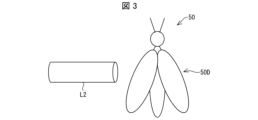
- FIG. 4 is a diagram showing how the target object 50 is irradiated with the sniper laser L2 from the irradiation device 100 from above the object to be irradiated 50.
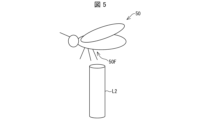
- FIG. 5 is a diagram showing how the target object 50 is irradiated with the sniper laser L2 from the irradiation device 100 from below the object 50 to be irradiated.
- an insect can be divided into multiple parts.
- the irradiation object 50 is divided into eight parts: wings 50A, haptics 50B, head 50C, back 50D, face 50E, chest 50F, abdomen 50G, and hips 50H.
- the wing 50A is the wing part of the insect.
- wings 50A may cover the side of the abdomen opposite to where the legs are located.
- the head 50C is the part of the head of the insect on the side opposite to the side where the mouth is located (dorsal side).
- the back 50D is the part of the insect's thorax opposite to the side where the legs are located.
- the face 50E is the part of the head of the insect on the side where the mouth is located.
- the chest 50F is the part of the insect's thorax on the side where the legs are located.
- the belly 50G is the part of the abdomen of the insect on the side where the legs are located.
- the hip 50H is the part where the reproductive organs of the insect are located.
- the specific parts that can effectively damage (wound) the irradiation object 50 are, for example, the chest 50F where the roots of the legs for movement are located, and the face 50E where the mouth for eating is located. , or the buttocks 50H where the reproductive organs are located. These specific parts are located below the irradiation target 50 in flight. Therefore, the irradiation device 100 irradiates the object 50 in flight with the sniping laser L2 from the bottom to the top, thereby aiming at a specific portion of the object 50 to be irradiated with the sniping laser L2. Can be irradiated.
- the sniper laser L2 from the irradiation device 100 is irradiated to a specific portion of the object 50 to be irradiated.
- the sniper laser L2 is irradiated laterally onto the wing 50A, back 50D, or chest 50F of the object 50 to be irradiated.
- the sniper laser L2 is irradiated onto the back 50D of the object 50 to be irradiated.
- the sniper laser L2 is applied to the chest 50F of the object 50 to be irradiated.
- the irradiation unit 1 does not irradiate the entire irradiation target 50 with the sniping laser L2, and snipes with a beam diameter (1 to 10 mm) smaller than the total length (20 to 60 mm) of the irradiation target 50 at the point of the irradiation target.
- the irradiation target object 50 is irradiated with the laser L2 for irradiation.
- the power density of the pulsed light having a predetermined energy can be increased compared to the case where the entire irradiation object 50 is irradiated with the sniper laser L2.
- the irradiation object 50 can be damaged more reliably.
- the ratio of the beam diameter to the total length of the irradiation object 50 may be, for example, 1/2 or less or 1/3 or less.
- the length of the insect's thorax or head is less than half the total length of the insect. Also, the length of the thorax or head of an insect is often less than 1/3 of the total length of the insect. Therefore, the length of each part (especially the chest 50F or the face 50E) of the irradiation object 50 in FIG.
- the object 50 to be irradiated is a pest with a total length of 20 mm
- the beam diameter is set to 6 mm or less
- only the chest 50F can be irradiated.
- the irradiation object 50 is a pest with a total length of 20 mm or less, for example, a pest with a total length of 10 mm
- the beam diameter may be set to 3 mm or less. Therefore, by irradiating the irradiation object 50 with a beam diameter of 1 ⁇ 3 or less with respect to the total length of the irradiation object 50, it is possible to irradiate only the effective portion with the laser beam. Therefore, the irradiation object 50 can be damaged by laser light with less energy.
- FIG. 6 is a flowchart showing an example of the processing flow of the irradiation device 100.
- FIG. An operation example in which the irradiation device 100 detects an irradiation target and irradiates a laser beam on a specific portion of the irradiation target with reference to FIG. 6 will be described below.
- the drive circuit control unit 33 first causes the drive circuit 11 to execute the scanning mode.
- the irradiation unit 1 irradiates the irradiation space with the scanning laser L1 at a predetermined cycle to scan the irradiation space (S1).
- the light receiving unit 2 receives the reflected light R1 of the scanning laser L1 and detects the object to be detected in the irradiation space (S2). Further, the light receiving unit 2 generates a three-dimensional image of the object to be detected and color information of the object to be detected.
- the detection unit 31 determines whether or not the object to be detected is an irradiation target based on the three-dimensional image of the object to be detected and the color information of the object to be detected (detection step S3). If the object to be detected is the object to be irradiated (YES in S3), the process proceeds to S4. If the object to be detected is not the object to be irradiated (NO in S3), the process returns to S2. That is, the irradiation device 100 scans the irradiation space until the irradiation target is detected.
- the specifying unit 32 determines a specific part that can damage the object by irradiating it with laser light (S4). Further, the specifying unit 32 acquires a three-dimensional image of the object to be irradiated at a predetermined cycle. Thereby, the specifying unit 32 predicts the trajectory of the object to be irradiated. That is, the specifying unit 32 specifies the position information of the object to be irradiated, including the position of the specific part at the time when the irradiation unit 1 irradiates (specification step S5). Note that the specifying unit 32 may omit S5 when determining that the object to be irradiated is stationary.
- the specifying unit 32 specifies position information of the object to be irradiated, including the position of a specific part in the three-dimensional image of the object to be irradiated.
- the identifying unit 32 may determine a different specific site according to the type of irradiation target (type of pest). This is because the effective part for sniping may differ depending on the object to be irradiated.
- the drive circuit control unit 33 receives the irradiation target position information from the identification unit 32, it outputs an instruction to the drive circuit 11 to switch from the scanning mode to the sniper mode.
- the irradiation unit 1 irradiates the sniper laser L2 aiming at a specific part of the object to be irradiated based on the positional information of the object to be irradiated (irradiation step S6).
- the drive circuit control section 33 outputs an instruction to the drive circuit 11 to switch from the sniper mode to the scanning mode.
- the object to be irradiated after sniping is tracked (S7). That is, the light receiving unit 2 detects the reflected light R1 from the irradiation object of the scanning laser L1, and generates a three-dimensional image of the irradiation object.
- the specifying unit 32 determines whether or not the sniping was successful (that is, whether effective damage was given to the irradiation target) from the three-dimensional image of the irradiation target (S8).
- the identification unit 32 determines that the sniping was successful. If the shooting was successful (YES in S8), the process returns to S2 to continue scanning the irradiation space. If the sniping was not successful (NO in S8), the process returns to S4 to continue sniping the object to be irradiated.
- the irradiation unit 1 does not irradiate the entire irradiation target 50 with the sniping laser L2, and irradiates the irradiation target 50 with the sniping laser L2 having a beam diameter smaller than the total length of the irradiation target 50 at the point of the irradiation target. are doing.
- the energy density of the laser beam having a predetermined energy can be increased compared to the case where the entire irradiation object 50 is irradiated with the sniper laser L2.
- the irradiation object 50 can be damaged more effectively.
- the detection unit 31 determines whether the detected object is a pest based on the color information of the detected object obtained by receiving laser light of each color. As a result, it is possible to improve the accuracy of identifying whether or not the insect is a pest. In addition, since the irradiation device 100 detects insect pests by scanning laser light, it is possible to determine whether or not an object to be detected is an insect pest even at night.
- FIG. 7 is a block diagram showing the configuration of the irradiation device 200 according to the second embodiment.
- the irradiation device 200 differs from the irradiation device 100 in that an irradiation unit 201 is provided instead of the irradiation unit 1 .
- the irradiation device 200 differs from the irradiation device 100 in that it includes a stereo color camera 221 (first imaging unit) and an infrared camera 222 (second imaging unit) instead of the light receiving unit 2 .
- the irradiation section 201 differs from the irradiation section 1 in that it includes an infrared LD 12d and a collimating lens 13d instead of the red LD 12a, the green LD 12b, and the collimating lenses 13a and 13b.
- the irradiation unit 1 emits the scanning laser L1, and the light receiving unit 2 receives the reflected light R1 of the scanning laser L1.
- the irradiation unit 201 does not emit the scanning laser L1, and the stereo color camera 221 captures image data P1 of a predetermined range. Specifically, using two or more stereo color cameras 221, image data P1 including a three-dimensional image of the object to be detected and color information of the object to be detected (with which the detection unit 31 can identify the object to be irradiated) is generated. get. Image data P ⁇ b>1 acquired by stereo color camera 221 is transmitted to detection unit 31 .
- the stereo color camera 221 may acquire the image data P1 at a predetermined cycle. Moreover, the stereo color camera 221 may be provided with a white light source (illumination) so as to be able to capture images even at night. Also, instead of the stereo color camera 221 as the first imaging unit, a stereo infrared camera for receiving infrared light to obtain an infrared image may be used. In this case, the stereo infrared camera obtains information (three-dimensional image) on the shape or size from the infrared image of the object. As a result, the first image capturing section can capture images even at night. Moreover, the stereo color camera 221 may also serve as an infrared camera 222 to be described later.
- the irradiation unit 201 emits the aiming laser L3 for aiming at the object to be irradiated based on the position information specified by the specifying unit 32. Aim and shoot.
- the drive circuit control unit 33 receives the position information of the object to be irradiated based on the image data P1 acquired by the stereo color camera 221, it outputs an instruction to start the aiming mode to the drive circuit 11. .
- the driving circuit 11 applies a driving current to the infrared LD 12d to irradiate the aiming laser L3 having a power density of approximately 0.01 m to 100 mW/mm 2 .
- the drive circuit 11 also applies a drive voltage to the variable focus lens 16 to focus the aiming laser L3 on a specific portion of the object to be irradiated. Further, the drive circuit 11 applies a drive voltage to the optical scanning unit 17, and adjusts the irradiation angle of the aiming laser L3 so that the aiming laser L3 irradiates a specific portion of the object to be irradiated.
- the infrared camera 222 captures image data P3 including the reflected light of the aiming laser L3. Based on the image data P3, the identifying unit 32 determines whether the sight of the irradiation unit 201 is aligned with a specific portion of the object to be irradiated. When the sight of the irradiation unit 201 is aligned with a specific part of the object to be irradiated, the drive circuit control unit 33 outputs an instruction to switch the scanning mode to the sniping mode to the drive circuit 11 . That is, the drive circuit control unit 33 outputs an instruction to the drive circuit 11 to apply a drive current to the blue LD 12c while maintaining the focal length of the variable focus lens 16 and the irradiation angle of the laser light.
- the irradiation device 200 aligns the sight with the infrared aiming laser L3 before irradiation with the sniping laser L2. hard to react. In other words, pests are less likely to notice during the aiming process than with visible light. The probability of sniping pests increases accordingly.
- the sniper laser L2 can be accurately irradiated to a specific portion of the object to be irradiated without using a high-precision ranging sensor such as LiDAR. That is, the structure of the irradiation unit 201 is simplified, and a relatively inexpensive system can irradiate a specific portion of the object to be irradiated.
- the irradiation device 200 includes a light receiving unit for detecting the reflected light of the infrared light irradiated by the infrared LD 12d and the light scanning unit 17 instead of the stereo color camera 221 and the infrared camera 222.
- a configuration using LiDAR may be used.
- information (three-dimensional image) on the shape, size, distance and angle of the pest is obtained by scanning with infrared light.
- the irradiation device 200 can omit the stereo color camera 221 and the infrared camera 222, and the system can be compact and inexpensive, and can aim at a specific part of a pest and shoot the pest without the pest noticing it.
- FIG. 8 shows the behavior of the insect when each part of the insect (wing 50A, antenna 50B, head 50C, back 50D, face 50E, chest 50F, abdomen 50G, and hip 50H) is irradiated with pulsed intensity-modulated laser light.
- the distance from the objective lens (AC080-016-A-ML manufactured by Solabo Co., Ltd.) to Spodoptera litura was about 3 m.
- a laser beam with a beam spot diameter of 6 mm, a wavelength of 448 nm (that is, blue laser beam), an output of 17.8 W, and a pulse length of 100 ms was used.
- the chest 50F was the most effective damage to Spodoptera litura. This is thought to be due to damage to the thoracic nervous system (ganglia, peripheral nerves, etc.) (or thoracic muscles) of Spodoptera litura.
- the face 50E was the site that could effectively damage Spodoptera litura. This is thought to be due to damage to the subesophageal nervous system.
- the proboscis remained extended. If the proboscis is damaged, Spodoptera litura is thought to be unable to forage.
- the reproductive organs of Spodoptera litura are damaged, so it is thought that breeding of Spodoptera litura can be reduced.
- the ganglia pass through the insect's head, thorax, and abdomen more leg-wise than dorsal-side. Therefore, it was generally more effective to snipe the legs than to snipe the dorsal side. However, the belly 50G had less immediate sniping effect than the chest 50F.
- the function of the irradiation apparatus 100 (hereinafter referred to as "apparatus") is a program for causing a computer to function as the apparatus, and the computer functions as each control block of the apparatus (especially each part included in the control unit 3). It can be realized by a program for
- the device comprises a computer having at least one control device (eg processor) and at least one storage device (eg memory) as hardware for executing the program.
- control device eg processor
- storage device eg memory
- the above program may be recorded on one or more computer-readable recording media, not temporary.
- the recording medium may or may not be included in the device.
- the program may be supplied to the device via any transmission medium, wired or wireless.
- control blocks can be realized by logic circuits.
- integrated circuits in which logic circuits functioning as the control blocks described above are formed are also included in the scope of the present invention.
- control blocks described above it is also possible to implement the functions of the control blocks described above by, for example, a quantum computer.
- each process described in each of the above embodiments may be executed by AI (Artificial Intelligence).
- AI Artificial Intelligence
- the AI may operate on the control device, or may operate on another device (for example, an edge computer or a cloud server).
- an irradiation device includes a detection unit that detects an insect that is an irradiation target, an identification unit that specifies position information of the irradiation target, and the position information and an irradiating unit that irradiates a sniper laser aiming at a specific portion of the object to be irradiated based on.
- An irradiation device includes a detection unit that detects an insect that is an irradiation target, a specifying unit that specifies position information of the irradiation target, and a sniper laser based on the position information. and an irradiating unit that irradiates a specific portion of an object.
- the specific part according to aspect 2 of the present invention is at least one of the part of the insect's thorax on the side where the legs are located and the part of the insect's head on the side where the mouth is located in the above aspect 1. Just do it.
- the specific site according to aspect 3 of the present invention may include the site where the reproductive organs of the insect are located in aspect 1 above.
- the irradiation unit of the irradiation apparatus in any one of aspects 1 to 3, emits the sniper laser having a beam diameter smaller than the total length of the irradiation object at a point of the irradiation object to the irradiation object. You can irradiate objects.
- the irradiation unit of the irradiation device irradiates a predetermined range with a scanning laser, and the irradiation device receives the reflected light of the scanning laser.
- the detection unit may include a light receiving unit that generates a light receiving signal that enables detection of the object to be irradiated.
- the irradiation device in any one of aspects 1 to 4, may include a first imaging unit that captures image data with which the detection unit can identify the irradiation target.
- the irradiation unit of the irradiation apparatus is, in any one of aspects 1 to 6, the aiming laser for aiming at the irradiation target before the irradiation with the sniping laser.
- the object may be irradiated with the light, and the irradiation device may include a second image pickup unit that picks up image data including the reflected light of the aiming laser.
- the irradiation unit of the irradiation device according to aspect 8 of the present invention may include a variable focus lens that changes the focal length of the sniping laser.
- An irradiation method includes a detection step of detecting an insect that is an irradiation target, a specifying step of specifying position information of the irradiation target, and a sniping laser based on the position information. and an irradiation step of aiming and irradiating a specific portion of the object.
- irradiation unit 2 light receiving unit 3 control unit 16 variable focus lens 31 detection unit 32 identification unit 50 irradiation target object 50E face (the part of the head of the insect on the side where the mouth is located) 50F chest (the part of the insect's thorax on the side where the legs are located) 50H buttocks (part where insect reproductive organs are located) 100, 200 Irradiation device 221 Stereo color camera (first imaging unit) 222 infrared camera (second imaging unit) L1 scanning laser L2 sniping laser L3 sighting lasers P1 and P3 image data R1 reflected light
Landscapes
- Life Sciences & Earth Sciences (AREA)
- Pest Control & Pesticides (AREA)
- Engineering & Computer Science (AREA)
- Insects & Arthropods (AREA)
- Wood Science & Technology (AREA)
- Zoology (AREA)
- Environmental Sciences (AREA)
- Computer Vision & Pattern Recognition (AREA)
- Physics & Mathematics (AREA)
- General Physics & Mathematics (AREA)
- Theoretical Computer Science (AREA)
- Catching Or Destruction (AREA)
Priority Applications (2)
| Application Number | Priority Date | Filing Date | Title |
|---|---|---|---|
| US18/710,932 US20250008939A1 (en) | 2021-11-17 | 2022-09-21 | Irradiation device and irradiation method |
| JP2023562159A JPWO2023089945A1 (https=) | 2021-11-17 | 2022-09-21 |
Applications Claiming Priority (2)
| Application Number | Priority Date | Filing Date | Title |
|---|---|---|---|
| JP2021187356 | 2021-11-17 | ||
| JP2021-187356 | 2021-11-17 |
Publications (1)
| Publication Number | Publication Date |
|---|---|
| WO2023089945A1 true WO2023089945A1 (ja) | 2023-05-25 |
Family
ID=86396774
Family Applications (1)
| Application Number | Title | Priority Date | Filing Date |
|---|---|---|---|
| PCT/JP2022/035084 Ceased WO2023089945A1 (ja) | 2021-11-17 | 2022-09-21 | 照射装置および照射方法 |
Country Status (3)
| Country | Link |
|---|---|
| US (1) | US20250008939A1 (https=) |
| JP (1) | JPWO2023089945A1 (https=) |
| WO (1) | WO2023089945A1 (https=) |
Cited By (2)
| Publication number | Priority date | Publication date | Assignee | Title |
|---|---|---|---|---|
| JP2023067535A (ja) * | 2021-11-01 | 2023-05-16 | 国立研究開発法人農業・食品産業技術総合研究機構 | 情報処理装置、飛翔生物駆除システム、害獣捕獲システム、情報処理方法、およびプログラム |
| CN116391693A (zh) * | 2023-06-07 | 2023-07-07 | 北京市农林科学院智能装备技术研究中心 | 天牛灭杀方法及系统 |
Families Citing this family (1)
| Publication number | Priority date | Publication date | Assignee | Title |
|---|---|---|---|---|
| US20250310503A1 (en) * | 2024-03-29 | 2025-10-02 | Wayne State University | Three-dimensional imaging system and method |
Citations (7)
| Publication number | Priority date | Publication date | Assignee | Title |
|---|---|---|---|---|
| KR20100036417A (ko) * | 2008-09-30 | 2010-04-08 | 옥은호 | 레이저 해충퇴치 장치 |
| KR20120124909A (ko) * | 2011-05-06 | 2012-11-14 | 김성수 | 레이저를 이용해 해충을 박멸하는 레이저 커튼 및 그 방법 |
| JP2015096041A (ja) * | 2013-11-15 | 2015-05-21 | 弘崇 新妻 | レーザーによる害獣と害虫の追い払い |
| CN105994226A (zh) * | 2016-08-02 | 2016-10-12 | 胡积宝 | 一种激光灭蚊方法 |
| CN108157347A (zh) * | 2018-02-01 | 2018-06-15 | 深圳阿牛牛科技有限公司 | 一种激光驱蚊装置 |
| CN109964898A (zh) * | 2019-04-26 | 2019-07-05 | 汇莱实业(深圳)有限公司 | 一种便携激光灭害虫装置 |
| US20210007342A1 (en) * | 2018-03-27 | 2021-01-14 | Fraunhofer-Gesellschaft Zur Forderung Angewandten Forschung E.V. | Device and method for subjecting a flying insect to lethal radiation |
Family Cites Families (8)
| Publication number | Priority date | Publication date | Assignee | Title |
|---|---|---|---|---|
| US5343652A (en) * | 1992-06-12 | 1994-09-06 | Johnson W Dudley | Method and apparatus for laser pest control |
| US8400348B1 (en) * | 1999-05-14 | 2013-03-19 | Applied Information Movement and Management, Inc. | Airborne biota monitoring and control system |
| US7501979B1 (en) * | 1999-05-14 | 2009-03-10 | Guice David L | Airborne biota monitoring and control system |
| US6766251B2 (en) * | 2001-02-05 | 2004-07-20 | Isca Technologies, Inc. | Method for pest management using pest identification sensors and network accessible database |
| EP2387307B1 (en) * | 2009-01-15 | 2018-11-14 | Tokitae LLC | System and method for tracking airborne organisms |
| ES2846792T3 (es) * | 2014-02-18 | 2021-07-29 | Onvector Tech Llc | Sistemas de detección de objetos |
| WO2017120196A1 (en) * | 2016-01-04 | 2017-07-13 | The Trustees Of Columbia University In The City Of New York | Apparatus to effect an optical barrier to pests |
| US10713536B1 (en) * | 2019-06-27 | 2020-07-14 | Guangdong Outdoor Technology Limited | Camera method with animal recognition function and monitoring camera |
-
2022
- 2022-09-21 US US18/710,932 patent/US20250008939A1/en active Pending
- 2022-09-21 WO PCT/JP2022/035084 patent/WO2023089945A1/ja not_active Ceased
- 2022-09-21 JP JP2023562159A patent/JPWO2023089945A1/ja active Pending
Patent Citations (7)
| Publication number | Priority date | Publication date | Assignee | Title |
|---|---|---|---|---|
| KR20100036417A (ko) * | 2008-09-30 | 2010-04-08 | 옥은호 | 레이저 해충퇴치 장치 |
| KR20120124909A (ko) * | 2011-05-06 | 2012-11-14 | 김성수 | 레이저를 이용해 해충을 박멸하는 레이저 커튼 및 그 방법 |
| JP2015096041A (ja) * | 2013-11-15 | 2015-05-21 | 弘崇 新妻 | レーザーによる害獣と害虫の追い払い |
| CN105994226A (zh) * | 2016-08-02 | 2016-10-12 | 胡积宝 | 一种激光灭蚊方法 |
| CN108157347A (zh) * | 2018-02-01 | 2018-06-15 | 深圳阿牛牛科技有限公司 | 一种激光驱蚊装置 |
| US20210007342A1 (en) * | 2018-03-27 | 2021-01-14 | Fraunhofer-Gesellschaft Zur Forderung Angewandten Forschung E.V. | Device and method for subjecting a flying insect to lethal radiation |
| CN109964898A (zh) * | 2019-04-26 | 2019-07-05 | 汇莱实业(深圳)有限公司 | 一种便携激光灭害虫装置 |
Cited By (4)
| Publication number | Priority date | Publication date | Assignee | Title |
|---|---|---|---|---|
| JP2023067535A (ja) * | 2021-11-01 | 2023-05-16 | 国立研究開発法人農業・食品産業技術総合研究機構 | 情報処理装置、飛翔生物駆除システム、害獣捕獲システム、情報処理方法、およびプログラム |
| JP7784698B2 (ja) | 2021-11-01 | 2025-12-12 | 国立研究開発法人農業・食品産業技術総合研究機構 | 情報処理装置、飛翔生物駆除システム、害獣捕獲システム、情報処理方法、およびプログラム |
| CN116391693A (zh) * | 2023-06-07 | 2023-07-07 | 北京市农林科学院智能装备技术研究中心 | 天牛灭杀方法及系统 |
| CN116391693B (zh) * | 2023-06-07 | 2023-09-19 | 北京市农林科学院智能装备技术研究中心 | 天牛灭杀方法及系统 |
Also Published As
| Publication number | Publication date |
|---|---|
| JPWO2023089945A1 (https=) | 2023-05-25 |
| US20250008939A1 (en) | 2025-01-09 |
Similar Documents
| Publication | Publication Date | Title |
|---|---|---|
| WO2023089945A1 (ja) | 照射装置および照射方法 | |
| US12240372B2 (en) | High intensity illumination systems and methods of use thereof | |
| US10051854B2 (en) | Unwanted plant removal system having variable optics | |
| US9609859B2 (en) | Unwanted plant removal system having a stabilization system | |
| IL321753A (en) | Autonomous laser weed eradication | |
| ES2763412T3 (es) | Sistema de control de plagas, método de control de plagas y programa de control de plagas | |
| JP5529947B2 (ja) | 自律刈取り機の知覚の教師無し適合を行うシステム、方法、および、装置 | |
| JP2015062412A (ja) | 不要植物の除去システム | |
| CN115209792B (zh) | 智能型远距离红外线补光灯组 | |
| JP2015062412A5 (https=) | ||
| US20220117780A1 (en) | Smart auxiliary diagnosis system and method for fundus oculi laser surgery | |
| WO2022101759A1 (en) | Light concentration weeding system | |
| CN118444260A (zh) | 一种基于灯光阵列的无人机视觉干扰方法及装置 | |
| KR102421330B1 (ko) | 농작물의 피해 방지를 위한 추적형 야생동물 퇴치장치 | |
| US20210333405A1 (en) | Lidar projection apparatus | |
| CN118840591A (zh) | 一种激光除虫方法 | |
| JP2021018079A (ja) | 撮像装置、計測装置、及び、計測方法 | |
| JP2024173748A (ja) | 照射装置および照射方法 | |
| Kare et al. | Build your own photonic fence to zap mosquitoes midflight [backwards star wars] | |
| IL296910A (en) | A self-propelled vehicle | |
| JP2025185486A (ja) | 移動式除去装置 | |
| Balaji et al. | Design and Development of a YOLOv8-Based Automatic Repellent System for Preventing Crop Raiding by Peacocks | |
| CN120391414A (zh) | 激光除草单元、智能农具及激光除草方法 | |
| WO2023181375A1 (ja) | 光照射装置及び光無線通信システム | |
| HK40112652A (zh) | 高强度照明系统及其使用方法 |
Legal Events
| Date | Code | Title | Description |
|---|---|---|---|
| 121 | Ep: the epo has been informed by wipo that ep was designated in this application |
Ref document number: 22895231 Country of ref document: EP Kind code of ref document: A1 |
|
| ENP | Entry into the national phase |
Ref document number: 2023562159 Country of ref document: JP Kind code of ref document: A |
|
| WWE | Wipo information: entry into national phase |
Ref document number: 18710932 Country of ref document: US |
|
| 122 | Ep: pct application non-entry in european phase |
Ref document number: 22895231 Country of ref document: EP Kind code of ref document: A1 |