WO2023074595A1 - 信号処理装置、認知機能改善システム、信号処理方法、及びプログラム - Google Patents
信号処理装置、認知機能改善システム、信号処理方法、及びプログラム Download PDFInfo
- Publication number
- WO2023074595A1 WO2023074595A1 PCT/JP2022/039423 JP2022039423W WO2023074595A1 WO 2023074595 A1 WO2023074595 A1 WO 2023074595A1 JP 2022039423 W JP2022039423 W JP 2022039423W WO 2023074595 A1 WO2023074595 A1 WO 2023074595A1
- Authority
- WO
- WIPO (PCT)
- Prior art keywords
- signal
- acoustic signal
- acoustic
- processing device
- signal processing
- Prior art date
- Legal status (The legal status is an assumption and is not a legal conclusion. Google has not performed a legal analysis and makes no representation as to the accuracy of the status listed.)
- Ceased
Links
Images







Classifications
-
- A—HUMAN NECESSITIES
- A61—MEDICAL OR VETERINARY SCIENCE; HYGIENE
- A61B—DIAGNOSIS; SURGERY; IDENTIFICATION
- A61B5/00—Measuring for diagnostic purposes; Identification of persons
- A61B5/24—Detecting, measuring or recording bioelectric or biomagnetic signals of the body or parts thereof
- A61B5/316—Modalities, i.e. specific diagnostic methods
- A61B5/369—Electroencephalography [EEG]
- A61B5/372—Analysis of electroencephalograms
- A61B5/374—Detecting the frequency distribution of signals, e.g. detecting delta, theta, alpha, beta or gamma waves
-
- A—HUMAN NECESSITIES
- A61—MEDICAL OR VETERINARY SCIENCE; HYGIENE
- A61B—DIAGNOSIS; SURGERY; IDENTIFICATION
- A61B5/00—Measuring for diagnostic purposes; Identification of persons
- A61B5/48—Other medical applications
- A61B5/486—Biofeedback
-
- A—HUMAN NECESSITIES
- A61—MEDICAL OR VETERINARY SCIENCE; HYGIENE
- A61M—DEVICES FOR INTRODUCING MEDIA INTO, OR ONTO, THE BODY; DEVICES FOR TRANSDUCING BODY MEDIA OR FOR TAKING MEDIA FROM THE BODY; DEVICES FOR PRODUCING OR ENDING SLEEP OR STUPOR
- A61M21/00—Other devices or methods to cause a change in the state of consciousness; Devices for producing or ending sleep by mechanical, optical, or acoustical means, e.g. for hypnosis
-
- G—PHYSICS
- G10—MUSICAL INSTRUMENTS; ACOUSTICS
- G10H—ELECTROPHONIC MUSICAL INSTRUMENTS; INSTRUMENTS IN WHICH THE TONES ARE GENERATED BY ELECTROMECHANICAL MEANS OR ELECTRONIC GENERATORS, OR IN WHICH THE TONES ARE SYNTHESISED FROM A DATA STORE
- G10H1/00—Details of electrophonic musical instruments
- G10H1/02—Means for controlling the tone frequencies, e.g. attack or decay; Means for producing special musical effects, e.g. vibratos or glissandos
- G10H1/06—Circuits for establishing the harmonic content of tones, or other arrangements for changing the tone colour
- G10H1/08—Circuits for establishing the harmonic content of tones, or other arrangements for changing the tone colour by combining tones
-
- G—PHYSICS
- G10—MUSICAL INSTRUMENTS; ACOUSTICS
- G10H—ELECTROPHONIC MUSICAL INSTRUMENTS; INSTRUMENTS IN WHICH THE TONES ARE GENERATED BY ELECTROMECHANICAL MEANS OR ELECTRONIC GENERATORS, OR IN WHICH THE TONES ARE SYNTHESISED FROM A DATA STORE
- G10H7/00—Instruments in which the tones are synthesised from a data store, e.g. computer organs
- G10H7/02—Instruments in which the tones are synthesised from a data store, e.g. computer organs in which amplitudes at successive sample points of a tone waveform are stored in one or more memories
-
- G—PHYSICS
- G10—MUSICAL INSTRUMENTS; ACOUSTICS
- G10K—SOUND-PRODUCING DEVICES; METHODS OR DEVICES FOR PROTECTING AGAINST, OR FOR DAMPING, NOISE OR OTHER ACOUSTIC WAVES IN GENERAL; ACOUSTICS NOT OTHERWISE PROVIDED FOR
- G10K15/00—Acoustics not otherwise provided for
- G10K15/02—Synthesis of acoustic waves
-
- G—PHYSICS
- G10—MUSICAL INSTRUMENTS; ACOUSTICS
- G10L—SPEECH ANALYSIS TECHNIQUES OR SPEECH SYNTHESIS; SPEECH RECOGNITION; SPEECH OR VOICE PROCESSING TECHNIQUES; SPEECH OR AUDIO CODING OR DECODING
- G10L21/00—Speech or voice signal processing techniques to produce another audible or non-audible signal, e.g. visual or tactile, in order to modify its quality or its intelligibility
- G10L21/02—Speech enhancement, e.g. noise reduction or echo cancellation
- G10L21/0316—Speech enhancement, e.g. noise reduction or echo cancellation by changing the amplitude
- G10L21/0364—Speech enhancement, e.g. noise reduction or echo cancellation by changing the amplitude for improving intelligibility
-
- G—PHYSICS
- G16—INFORMATION AND COMMUNICATION TECHNOLOGY [ICT] SPECIALLY ADAPTED FOR SPECIFIC APPLICATION FIELDS
- G16H—HEALTHCARE INFORMATICS, i.e. INFORMATION AND COMMUNICATION TECHNOLOGY [ICT] SPECIALLY ADAPTED FOR THE HANDLING OR PROCESSING OF MEDICAL OR HEALTHCARE DATA
- G16H20/00—ICT specially adapted for therapies or health-improving plans, e.g. for handling prescriptions, for steering therapy or for monitoring patient compliance
- G16H20/70—ICT specially adapted for therapies or health-improving plans, e.g. for handling prescriptions, for steering therapy or for monitoring patient compliance relating to mental therapies, e.g. psychological therapy or autogenous training
-
- G—PHYSICS
- G16—INFORMATION AND COMMUNICATION TECHNOLOGY [ICT] SPECIALLY ADAPTED FOR SPECIFIC APPLICATION FIELDS
- G16H—HEALTHCARE INFORMATICS, i.e. INFORMATION AND COMMUNICATION TECHNOLOGY [ICT] SPECIALLY ADAPTED FOR THE HANDLING OR PROCESSING OF MEDICAL OR HEALTHCARE DATA
- G16H40/00—ICT specially adapted for the management or administration of healthcare resources or facilities; ICT specially adapted for the management or operation of medical equipment or devices
- G16H40/60—ICT specially adapted for the management or administration of healthcare resources or facilities; ICT specially adapted for the management or operation of medical equipment or devices for the operation of medical equipment or devices
- G16H40/63—ICT specially adapted for the management or administration of healthcare resources or facilities; ICT specially adapted for the management or operation of medical equipment or devices for the operation of medical equipment or devices for local operation
-
- A—HUMAN NECESSITIES
- A61—MEDICAL OR VETERINARY SCIENCE; HYGIENE
- A61M—DEVICES FOR INTRODUCING MEDIA INTO, OR ONTO, THE BODY; DEVICES FOR TRANSDUCING BODY MEDIA OR FOR TAKING MEDIA FROM THE BODY; DEVICES FOR PRODUCING OR ENDING SLEEP OR STUPOR
- A61M21/00—Other devices or methods to cause a change in the state of consciousness; Devices for producing or ending sleep by mechanical, optical, or acoustical means, e.g. for hypnosis
- A61M2021/0005—Other devices or methods to cause a change in the state of consciousness; Devices for producing or ending sleep by mechanical, optical, or acoustical means, e.g. for hypnosis by the use of a particular sense, or stimulus
- A61M2021/0027—Other devices or methods to cause a change in the state of consciousness; Devices for producing or ending sleep by mechanical, optical, or acoustical means, e.g. for hypnosis by the use of a particular sense, or stimulus by the hearing sense
-
- A—HUMAN NECESSITIES
- A61—MEDICAL OR VETERINARY SCIENCE; HYGIENE
- A61M—DEVICES FOR INTRODUCING MEDIA INTO, OR ONTO, THE BODY; DEVICES FOR TRANSDUCING BODY MEDIA OR FOR TAKING MEDIA FROM THE BODY; DEVICES FOR PRODUCING OR ENDING SLEEP OR STUPOR
- A61M21/00—Other devices or methods to cause a change in the state of consciousness; Devices for producing or ending sleep by mechanical, optical, or acoustical means, e.g. for hypnosis
- A61M2021/0005—Other devices or methods to cause a change in the state of consciousness; Devices for producing or ending sleep by mechanical, optical, or acoustical means, e.g. for hypnosis by the use of a particular sense, or stimulus
- A61M2021/0044—Other devices or methods to cause a change in the state of consciousness; Devices for producing or ending sleep by mechanical, optical, or acoustical means, e.g. for hypnosis by the use of a particular sense, or stimulus by the sight sense
- A61M2021/005—Other devices or methods to cause a change in the state of consciousness; Devices for producing or ending sleep by mechanical, optical, or acoustical means, e.g. for hypnosis by the use of a particular sense, or stimulus by the sight sense images, e.g. video
-
- A—HUMAN NECESSITIES
- A61—MEDICAL OR VETERINARY SCIENCE; HYGIENE
- A61M—DEVICES FOR INTRODUCING MEDIA INTO, OR ONTO, THE BODY; DEVICES FOR TRANSDUCING BODY MEDIA OR FOR TAKING MEDIA FROM THE BODY; DEVICES FOR PRODUCING OR ENDING SLEEP OR STUPOR
- A61M2205/00—General characteristics of the apparatus
- A61M2205/35—Communication
- A61M2205/3576—Communication with non implanted data transmission devices, e.g. using external transmitter or receiver
- A61M2205/3584—Communication with non implanted data transmission devices, e.g. using external transmitter or receiver using modem, internet or Bluetooth®
-
- A—HUMAN NECESSITIES
- A61—MEDICAL OR VETERINARY SCIENCE; HYGIENE
- A61M—DEVICES FOR INTRODUCING MEDIA INTO, OR ONTO, THE BODY; DEVICES FOR TRANSDUCING BODY MEDIA OR FOR TAKING MEDIA FROM THE BODY; DEVICES FOR PRODUCING OR ENDING SLEEP OR STUPOR
- A61M2205/00—General characteristics of the apparatus
- A61M2205/50—General characteristics of the apparatus with microprocessors or computers
- A61M2205/502—User interfaces, e.g. screens or keyboards
- A61M2205/505—Touch-screens; Virtual keyboard or keypads; Virtual buttons; Soft keys; Mouse touches
-
- A—HUMAN NECESSITIES
- A61—MEDICAL OR VETERINARY SCIENCE; HYGIENE
- A61M—DEVICES FOR INTRODUCING MEDIA INTO, OR ONTO, THE BODY; DEVICES FOR TRANSDUCING BODY MEDIA OR FOR TAKING MEDIA FROM THE BODY; DEVICES FOR PRODUCING OR ENDING SLEEP OR STUPOR
- A61M2205/00—General characteristics of the apparatus
- A61M2205/58—Means for facilitating use, e.g. by people with impaired vision
- A61M2205/581—Means for facilitating use, e.g. by people with impaired vision by audible feedback
-
- A—HUMAN NECESSITIES
- A61—MEDICAL OR VETERINARY SCIENCE; HYGIENE
- A61M—DEVICES FOR INTRODUCING MEDIA INTO, OR ONTO, THE BODY; DEVICES FOR TRANSDUCING BODY MEDIA OR FOR TAKING MEDIA FROM THE BODY; DEVICES FOR PRODUCING OR ENDING SLEEP OR STUPOR
- A61M2230/00—Measuring parameters of the user
- A61M2230/08—Other bio-electrical signals
- A61M2230/10—Electroencephalographic signals
-
- G—PHYSICS
- G10—MUSICAL INSTRUMENTS; ACOUSTICS
- G10H—ELECTROPHONIC MUSICAL INSTRUMENTS; INSTRUMENTS IN WHICH THE TONES ARE GENERATED BY ELECTROMECHANICAL MEANS OR ELECTRONIC GENERATORS, OR IN WHICH THE TONES ARE SYNTHESISED FROM A DATA STORE
- G10H2220/00—Input/output interfacing specifically adapted for electrophonic musical tools or instruments
- G10H2220/155—User input interfaces for electrophonic musical instruments
- G10H2220/371—Vital parameter control, i.e. musical instrument control based on body signals, e.g. brainwaves, pulsation, temperature or perspiration; Biometric information
- G10H2220/376—Vital parameter control, i.e. musical instrument control based on body signals, e.g. brainwaves, pulsation, temperature or perspiration; Biometric information using brain waves, e.g. EEG
-
- G—PHYSICS
- G10—MUSICAL INSTRUMENTS; ACOUSTICS
- G10H—ELECTROPHONIC MUSICAL INSTRUMENTS; INSTRUMENTS IN WHICH THE TONES ARE GENERATED BY ELECTROMECHANICAL MEANS OR ELECTRONIC GENERATORS, OR IN WHICH THE TONES ARE SYNTHESISED FROM A DATA STORE
- G10H2250/00—Aspects of algorithms or signal processing methods without intrinsic musical character, yet specifically adapted for or used in electrophonic musical processing
- G10H2250/541—Details of musical waveform synthesis, i.e. audio waveshape processing from individual wavetable samples, independently of their origin or of the sound they represent
- G10H2250/645—Waveform scaling, i.e. amplitude value normalisation
Definitions
- the present disclosure relates to a signal processing device, a cognitive function improvement system, a signal processing method, and a program.
- Gamma waves refer to those whose frequency is included in the gamma band (25 to 140 Hz) among nerve vibrations obtained by capturing periodic nerve activity in the cortex of the brain by electrophysiological techniques such as electroencephalograms and magnetoencephalography.
- U.S. Patent No. 6,000,000 discloses adjusting the volume by increasing or decreasing the amplitude of sound waves or soundtracks to create rhythmic stimulation corresponding to stimulation frequencies for inducing brain wave entrainment. It is
- Multi-sensory Gamma Stimulation Ameliorates Alzheimer's-Associated Pathology and Improvements Cognition Cell 2019 Apr 4;177(2):256-271.e22. doi: 10.1016/j.cell.2019.02.014.
- the amplitude of the acoustic signal is increased or decreased, it may become difficult for the listener to hear the information contained in the acoustic signal (eg, singing, announcements, etc.). That is, increasing or decreasing the amplitude of the acoustic signal can detract from the listener's acoustic experience.
- the purpose of the present disclosure is to vary the amplitude of the acoustic signal while suppressing deterioration of the acoustic experience.
- a signal processing device includes means for receiving an input acoustic signal, means for acquiring a first acoustic signal having a periodic variation corresponding to the frequency of a gamma wave, and the acquired first acoustic signal. and means for outputting an output acoustic signal based on a second acoustic signal based on the input acoustic signal.
- FIG. 1 is a block diagram showing the configuration of an acoustic system according to a first embodiment
- FIG. 1 is a block diagram showing the configuration of a signal processing device according to a first embodiment
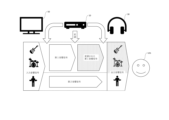
- FIG. FIG. 2 is an explanatory diagram of one aspect of the first embodiment
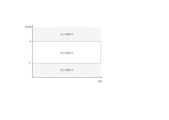
- FIG. 4 is an explanatory diagram of the frequency characteristics of an acoustic signal
- FIG. 4 is an explanatory diagram of temporal characteristics of an acoustic signal
- FIG. 4 is an explanatory diagram of characteristics of an output of an acoustic signal
- FIG. 10 is an explanatory diagram of one mode of modification 1;
- FIG. 10 is a diagram showing the overall flow of acoustic signal processing by the signal processing device of Modification 1;
- FIG. 10 is a diagram showing the overall flow of acoustic signal processing by the signal processing device of Modification 2; It is a block diagram which shows the structure of the signal processing apparatus of 2nd Embodiment.
- FIG. 11 is an explanatory diagram of one aspect of the second embodiment; It is a figure which shows the whole acoustic signal processing flow by the signal processing apparatus of 2nd Embodiment.
- FIG. 11 is an explanatory diagram of synthesizing adjusted auxiliary acoustic signals in the second embodiment;
- FIG. 11 is an explanatory diagram of synthesizing adjusted auxiliary acoustic signals in the second embodiment;
- FIG. 11 is an explanatory diagram of synthesizing auxiliary acoustic signals in the second embodiment;
- It is a figure which shows an experimental system. It is a figure which shows an experimental result.
- FIG. 1 is a block diagram showing the configuration of the acoustic system of the first embodiment.
- the sound system 1 includes a signal processing device 10, a sound output device 30, and a sound source device 50.
- the signal processing device 10 and the sound source device 50 are connected to each other via a predetermined interface capable of transmitting acoustic signals.
- the interface is, for example, SPDIF (Sony Philips Digital Interface), HDMI (High-Definition Multimedia Interface), pin connector (RCA pin), or an audio interface for headphones.
- the interface may be a wireless interface using Bluetooth (registered trademark) or the like.
- the signal processing device 10 and the sound output device 30 are similarly connected to each other via a predetermined interface.
- the acoustic signal in the first embodiment includes either or both of an analog signal and a digital signal.
- the signal processing device 10 performs acoustic signal processing on the input acoustic signal acquired from the sound source device 50 .
- Acoustic signal processing by the signal processing device 10 includes at least modulation processing of an acoustic signal (details will be described later).
- the acoustic signal processing by the signal processing device 10 may include conversion processing (for example, separation, extraction, or synthesis) of acoustic signals.
- the acoustic signal processing by the signal processing device 10 may further include acoustic signal amplification processing similar to that of an AV amplifier, for example.
- the signal processing device 10 sends the output acoustic signal generated by the acoustic signal processing to the acoustic output device 30 .
- the signal processing device 10 is an example of an information processing device.
- the sound output device 30 generates sound according to the output sound signal acquired from the signal processing device 10 .
- the sound output device 30 is, for example, a loudspeaker (which may include powered speakers), headphones, or earphones.
- the sound output device 30 can also be configured as one device together with the signal processing device 10 .
- the signal processing device 10 and the sound output device 30 can be mounted on a TV, radio, music player, AV amplifier, speaker, headphone, earphone, smart phone, or PC.
- the signal processing device 10 and the sound output device 30 constitute a cognitive function improvement system.
- the sound source device 50 sends out the input acoustic signal to the signal processing device 10 .
- the sound source device 50 is, for example, a TV, a radio, a music player, a smart phone, a PC, an electronic musical instrument, a telephone, a game machine, a game machine, or a device that conveys an acoustic signal by broadcasting or information communication.
- FIG. 2 is a block diagram showing the configuration of the signal processing device of the first embodiment.
- the signal processing device 10 includes a storage device 11, a processor 12, an input/output interface 13, and a communication interface 14.
- the signal processing device 10 is connected to the display 21 .
- the storage device 11 is configured to store programs and data.
- the storage device 11 is, for example, a combination of ROM (Read Only Memory), RAM (Random Access Memory), and storage (eg, flash memory or hard disk).
- the program and data may be provided via a network, or may be provided by being recorded on a computer-readable recording medium.
- Programs include, for example, the following programs. ⁇ OS (Operating System) program ⁇ Application program that executes information processing
- the data includes, for example, the following data. ⁇ Databases referenced in information processing ⁇ Data obtained by executing information processing (that is, execution results of information processing)
- the processor 12 is a computer that implements the functions of the signal processing device 10 by reading and executing programs stored in the storage device 11 . At least part of the functions of the signal processing device 10 may be realized by one or more dedicated circuits.
- Processor 12 is, for example, at least one of the following: ⁇ CPU (Central Processing Unit) ⁇ GPU (Graphic Processing Unit) ⁇ ASIC (Application Specific Integrated Circuit) ⁇ FPGA (Field Programmable Array) ⁇ DSP (digital signal processor)
- the input/output interface 13 is configured to acquire user instructions from input devices connected to the signal processing apparatus 10 and to output information to output devices connected to the signal processing apparatus 10 .
- the input device is, for example, the sound source device 50, physical buttons, keyboard, pointing device, touch panel, or a combination thereof.
- the output device is, for example, display 21, sound output device 30, or a combination thereof.
- the input/output interface 13 may include signal processing hardware such as A/D converters, D/A converters, amplifiers, mixers, filters, and the like.
- the communication interface 14 is configured to control communication between the signal processing device 10 and an external device (for example, the sound output device 30 or the sound source device 50).
- an external device for example, the sound output device 30 or the sound source device 50.
- the display 21 is configured to display images (still images or moving images).
- the display 21 is, for example, a liquid crystal display or an organic EL display.
- FIG. 3 is an explanatory diagram of one aspect of the first embodiment.
- the signal processing device 10 acquires an input acoustic signal from the sound source device 50.
- the signal processing device 10 generates a plurality of intermediate acoustic signals including a first acoustic signal and a second acoustic signal based on the input acoustic signal.
- the first acoustic signal is a partial signal corresponding to the acoustic component of the input acoustic signal whose sound source is a musical instrument
- the second acoustic signal is the acoustic component of the input acoustic signal whose sound source is vocal. is a partial signal corresponding to
- the signal processing device 10 generates a modulated first acoustic signal by modulating the first acoustic signal that is part of the intermediate acoustic signal.
- Modulation is, for example, amplitude modulation using a modulation function with a frequency of 35 Hz or more and 45 Hz or less.
- a change in amplitude (strength of volume) corresponding to the frequency is added to the first acoustic signal.
- the signal processing device 10 does not modulate the second acoustic signal, which is the remainder of the intermediate acoustic signal.
- the signal processing device 10 generates an output acoustic signal based on the partially modulated intermediate acoustic signal (that is, the modulated first acoustic signal and the second acoustic signal).
- the signal processing device 10 sends the output acoustic signal to the acoustic output device 30 .
- the sound output device 30 generates sound according to the output sound signal.
- a user US1 listens to the sound emitted from the sound output device 30.
- the user US1 is, for example, a patient with dementia, a pre-dementia group, or a healthy person who expects prevention of dementia.
- the output acoustic signal is based on the first acoustic signal modulated using a modulation function having a frequency between 35 Hz and 45 Hz. Therefore, when the user US1 listens to the sound emitted from the sound output device 30, gamma waves are induced in the brain of the user US1. As a result, an effect of improving the cognitive function of the user US1 (for example, treating or preventing dementia) can be expected.
- the second acoustic signal is not modulated, the deterioration of the acoustic experience of the user US1 with respect to the second acoustic signal is reduced.
- Fig. 17 is a diagram showing the experimental system.
- a sound stimulus (output sound) was presented through headphones to the subject in a quiet magnetically shielded room.
- An LCD monitor was placed in front of the experimental participants and a short silent animation video was played to keep the subject's level of consciousness constant.
- Active electrodes for electroencephalogram measurement were placed on the subject's head.
- an acoustic signal (total modulated sound) was also generated by amplitude-modulating the entire sound source before separation with the same modulation function.
- a 1 kHz sine wave and a modulated sine wave modulated with a 40 Hz sine wave were generated.
- a sound consisting of a pulse train with a period of 40 Hz (one pulse includes one sine wave of 1 kHz) was generated.
- the sound stimuli used in this experiment were a pulse train S1, a modulated 1 kHz sine wave S2, an unmodulated 1 kHz sine wave S3, a fully modulated news source S4, a partially modulated news source S5, and an unmodulated news source.
- FIG. 18 is a diagram showing experimental results. Specifically, FIG. 18 shows the average value and standard deviation of the PLI of 17 subjects for nine patterns of sound stimulation from S1 to S9. As shown in FIG. 18, PLI improvement was observed for all modulated tones (S2, S4, S5, S7 and S8) relative to unmodulated tones (S3, S6 and S9). All PLIs of unmodulated tones were less than 0.03.
- the PLI of the partially modulated sounds (S5 and S8) generated using the techniques of this disclosure is less than the PLI of the fully modulated sounds (S2, S4, and S7), but the unmodulated sounds (S3, S6, and S9) is significantly larger than the PLI of
- the voice part voice reading the news or singing voice
- the voice part of the partially modulated sound is not modulated and the clarity of the voice is not impaired. is less degraded in the acoustic experience for the listener than a fully modulated sound. That is, according to this experiment, it was shown that the user's gamma waves can be induced while suppressing the deterioration of the acoustic experience by using the technology of the present disclosure. This result indicates the possibility that the acoustic system can improve the user's cognitive function by outputting sound stimuli that the user does not feel uncomfortable even if they listen to it on a daily basis.
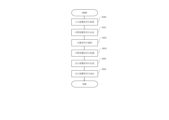
- FIG. 4 is a diagram showing the overall flow of acoustic signal processing by the signal processing device of the first embodiment.
- the processing in FIG. 4 is implemented by the processor 12 of the signal processing device 10 reading and executing the program stored in the storage device 11 .
- At least part of the processing in FIG. 4 may be realized by one or more dedicated circuits.
- FIG. 5 is an explanatory diagram of the frequency characteristics of an acoustic signal.
- FIG. 6 is an illustration of the temporal characteristics of an acoustic signal.
- FIG. 7 is an explanatory diagram of characteristics of the output of the acoustic signal.
- the acoustic signal processing in FIG. 4 is started when any of the following start conditions is satisfied. -
- the audio signal processing of FIG. 4 was called by another process or an instruction from the outside.
- the user performed an operation to call the acoustic signal processing in FIG. -
- the signal processing device 10 has entered a predetermined state (for example, the power has been turned on). ⁇ The specified date and time has arrived. - A predetermined time has passed since a predetermined event (for example, activation of the signal processing device 10 or previous execution of the acoustic signal processing in FIG. 4).
- the signal processing device 10 acquires an input acoustic signal (S110). Specifically, the signal processing device 10 receives an input acoustic signal sent from the sound source device 50 . In step S110, the signal processing device 10 may further perform A/D conversion of the input acoustic signal.
- the input acoustic signal corresponds, for example, to at least one of the following.
- - Music content e.g., singing, playing, or a combination thereof (i.e., music), which may include audio content that accompanies video content).
- - Audio content for example, reading, narration, announcement, broadcast play, solo performance, conversation, monologue, or a combination thereof, etc., may include audio content accompanying video content
- - Other acoustic content e.g., electronic, ambient, or mechanical sounds
- singing or audio content is not limited to sounds produced by human vocal organs, but may include sounds generated by speech synthesis technology.
- the signal processing device 10 After step S110, the signal processing device 10 generates an intermediate acoustic signal (S111). Specifically, the signal processing device 10 generates an intermediate acoustic signal including a plurality of acoustic signals based on the input acoustic signal acquired in step S110.
- the intermediate acoustic signal is not limited to two, and may include three or more acoustic signals, but the following description is based on the assumption that the intermediate acoustic signal includes the first acoustic signal and the second acoustic signal.
- the first acoustic signal and the second acoustic signal differ in at least one characteristic.
- one of the first acoustic signal and the second acoustic signal has a predetermined characteristic, and the other does not have the characteristic.
- one of the first acoustic signal and the second acoustic signal is qualitatively or quantitatively superior in a predetermined characteristic, and the other is qualitatively or quantitatively inferior in the characteristic.
- a feature may be determined based on an input operation by a user or others, an instruction from the outside, or may be determined by an algorithm.
- the signal processing device 10 may determine features for generating the intermediate acoustic signal based on the result of analyzing the input acoustic signal.
- the characteristic may be, for example, at least one of the following. ⁇ Characteristics of sounds (especially qualitative characteristics) ⁇ Frequency characteristics ⁇ Time characteristics ⁇ Amplitude characteristics ⁇ Output characteristics
- a sound feature is, for example, an acoustic component that satisfies one or more sound qualitative conditions.
- the sound quality condition may be, for example, a condition relating to at least one of the following. -
- the type of sound source e.g., object, instrument, vocal, music, speech, or input channel
- ⁇ Direction of arrival of sound ⁇ Effect of improving cognitive function or preventing dementia In the example of FIG. It has an acoustic component that
- a frequency feature is, for example, an acoustic component that satisfies one or more frequency conditions.
- the first acoustic signal does not include acoustic components in a specific frequency band f1-f2
- the second acoustic signal includes acoustic components in the frequency band f1-f2.
- a particular frequency band may be defined, for example, based on the frequency band of human voice.
- a temporal feature is, for example, an acoustic component that satisfies one or more temporal conditions.
- the first acoustic signal does not comprise acoustic components in a particular time interval t1-t2, and the second acoustic signal comprises such acoustic components.
- each time interval may be set periodically or may be set aperiodically.
- Amplitude features are, for example, acoustic components that satisfy one or more amplitude conditions.
- the amplitude characteristic is that the change in volume over time conforms to a predetermined pattern.
- Output features are, for example, sounds (acoustic components) that a listener perceives as coming from a sound source in a given direction or position.
- the output feature is, for example, an acoustic component that satisfies one or more output conditions.
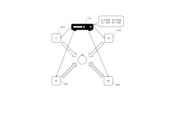
- the output condition is that the audio output device 30 is associated with a speaker in a specific direction that constitutes a surround system (that is, output from a specific speaker in the end).
- the sound output device 30 corresponds to a surround speaker system including speakers 30-1 to 30-4.
- a first acoustic signal is associated with a speaker 30-3, 30-4 in a particular direction (i.e., output from the rear left or rear right), and a second acoustic signal is associated with the speaker 30-3, 30-4 in question. (instead, associated with speakers 30-1, 30-2 (ie output from front left or front right)).
- the output condition is that the acoustic signal is associated with a virtual sound source set at a particular direction or position in the object audio.
- the input acoustic signal acquired in step S110 is preliminarily separated into an acoustic signal having a predetermined feature and an acoustic signal not having the feature (for example, if the input acoustic signal is step S111 can be omitted in the case of multi-channel audio signals associated with each speaker constituting a surround system. In this case, the input acoustic signal is treated as an intermediate acoustic signal.
- the signal processor 10 converts the input acoustic signal into an intermediate acoustic signal. .
- the signal processing device 10 extracts or separates acoustic signals having predetermined characteristics from the input acoustic signal.
- the signal processing apparatus 10 selects a target signal (S112). Specifically, the signal processing device 10 selects a part of the plurality of acoustic signals (for example, the first acoustic signal) included in the intermediate acoustic signal generated in step S111 as the target signal. Which acoustic signal to select as the target signal may be determined based on an input operation by the user or others, an instruction from the outside, or may be determined by an algorithm. For example, the signal processing device 10 may determine the target signal based on the characteristics of the acoustic signal included in the intermediate acoustic signal (balance between voice and music, volume change, type of music, timbre, or other characteristics). good. Thereby, the signal processing apparatus 10 can select the target signal so that the improvement effect of the cognitive function by modulation becomes higher, or select the target signal so as to make the user less uncomfortable.
- a target signal S112
- the signal processing device 10 selects a part of the plurality of acoustic signals (for example, the
- the signal processing apparatus 10 modulates the target signal (S113). Specifically, the signal processing apparatus 10 modulates the target signal selected in step S112. As an example, the signal processing device 10 amplitude-modulates the target signal using a modulation function having a frequency corresponding to a gamma wave (for example, a frequency of 35 Hz or more and 45 Hz or less).
- A(t) be a modulation function having a periodicity of 35 Hz or more and 45 Hz or less
- X(t) be a function representing the waveform of the first acoustic signal before modulation
- X(t) be the waveform of the modulated first acoustic signal
- the signal processing device 10 After step S113, the signal processing device 10 generates an output acoustic signal (S114). Specifically, the signal processing apparatus 10 divides the acoustic signal (hereinafter referred to as "non-target signal") that was not selected as the target signal in step S112 from among the intermediate acoustic signals and the target signal modulated in step S113. based on which an output acoustic signal is generated.
- the asymmetric signal and the modulated target signal match the output format of the sound output device 30 (for example, the asymmetric signal and the modulated target signal are multiplexers associated with each speaker that constitutes the surround system as the sound output device 30). channel sound signal), step S114 can be omitted.
- the non-target signal and the modulated target signal are treated as output acoustic signals.
- the signal processor 10 converts the asymmetrical signal and the modulated signal of interest into an output audio signal. Specifically, the signal processing device 10 synthesizes two or more acoustic signals of the asymmetric signal and the modulated target signal, or extracts or separates the acoustic signal from at least one of the asymmetric signal and the modulated target signal.
- the method of synthesizing the acoustic signal is not limited, for example, signal summation processing, HRTF (Head Related Transfer Function) convolution processing, transfer function convolution processing that provides position information of the sound source, or convolution processing of these A later summation process may be included.
- the signal processing device 10 may further perform at least one of amplification, volume control, and D/A conversion of the output sound signal.
- the signal processing device 10 transmits an output acoustic signal (S115). Specifically, the signal processing device 10 sends the output sound signal generated in step S114 to the sound output device 30 . The sound output device 30 generates sound according to the output sound signal. The signal processing device 10 ends the acoustic signal processing in FIG. 4 at step S115.
- the signal processing apparatus 10 may collectively perform the processing in FIG. 4 for an input sound signal having a certain reproduction period (for example, music content of one piece of music), or may perform the processing for each predetermined reproduction period of the input sound signal. The process of FIG. 4 may be repeated (for example, every 100 ms).
- the signal processing device 10 may continuously perform modulation processing on an input acoustic signal, such as modulation by analog signal processing, and output a modulated acoustic signal.
- the processing shown in FIG. 4 ends according to a specific termination condition (for example, the passage of a certain period of time, the user's operation, or the output history of the modulated sound reaching a predetermined state). You may
- the signal processing apparatus 10 modulates the amplitude of the first acoustic signal having a predetermined characteristic among the input acoustic signals to reduce the frequency of the gamma wave.
- a modulated first acoustic signal is generated having a corresponding amplitude change.
- the signal processing device 10 outputs an output acoustic signal based on the modulated first acoustic signal and the second acoustic signal of the input acoustic signal that does not have the predetermined characteristic.
- the amplitude of the first acoustic signal can be increased or decreased in a predetermined cycle while suppressing deterioration of the acoustic experience of the second acoustic signal.
- the sound output device 30 makes the user (for example, a dementia patient, a pre-dementia group, or a healthy person who expects to prevent dementia) listen to a sound according to such an output sound signal good.
- This induces gamma waves in the user's brain due to variations in the amplitude of the first acoustic signal.
- the effect of improving the user's cognitive function for example, treating or preventing dementia
- the first acoustic signal may be an acoustic signal including a sound (acoustic component) of a predetermined sound source type among the input acoustic signals.
- the first acoustic signal may be an acoustic signal comprising a sound (acoustic component) that a listener perceives as coming from a sound source in a predetermined direction, among the input acoustic signals.
- a sound acoustic component
- the first acoustic signal may be an acoustic signal including sounds (acoustic components) in a predetermined frequency band among the input acoustic signals.
- the first acoustic signal may be an acoustic signal comprising a sound (acoustic component) of a predetermined time interval among the input acoustic signals.
- the amplitude of the first acoustic signal can be increased or decreased in a predetermined period while suppressing the deterioration of the sound experience other than the sound in the predetermined time interval.
- the second acoustic signal may be an acoustic signal obtained by separating the first acoustic signal from the input acoustic signal.
- the output acoustic signal may have amplitude changes corresponding to frequencies between 35 Hz and 45 Hz. As a result, when the user hears the sound corresponding to the output acoustic signal, it can be expected that gamma waves will be induced in the user's brain.
- the input audio signal may be an audio signal corresponding to music content.
- the motivation of the user to listen to the sound corresponding to the output acoustic signal can be improved.
- Modification 1 is an example in which a first acoustic signal among input acoustic signals is modulated with a first modulation degree, and a second acoustic signal is modulated with a second modulation degree different from the first modulation degree.
- FIG. 8 is an explanatory diagram of one mode of Modification 1.
- the signal processing device 10 acquires an input acoustic signal from the sound source device 50 .
- the signal processing device 10 generates a plurality of intermediate acoustic signals including a first acoustic signal and a second acoustic signal based on the input acoustic signal.
- the first acoustic signal corresponds to the acoustic component of the input acoustic signal whose sound source is a musical instrument
- the second acoustic signal corresponds to the acoustic component of the input acoustic signal whose sound source is vocal.
- the signal processing device 10 modulates the first acoustic signal and the second acoustic signal included in the intermediate acoustic signal to generate the modulated first acoustic signal and the modulated second acoustic signal.
- Modulation is, for example, amplitude modulation using a modulation function with a frequency of 35 Hz or more and 45 Hz or less. As a result, a change in amplitude corresponding to the frequency is added to the acoustic signal.
- the signal processing device 10 uses different degrees of modulation for the first acoustic signal and the second acoustic signal.
- the signal processing device 10 modulates the first acoustic signal with a first degree of modulation, and modulates the second acoustic signal with a second degree of modulation that is smaller than the first degree of modulation. That is, the modulated first acoustic signal has a relatively sharp change in amplitude (strength of volume) corresponding to the frequency of the modulation function, and the modulated second acoustic signal has a relatively gentle change in amplitude corresponding to the frequency. (the deviation from the original sound is small).
- the signal processing device 10 generates an output acoustic signal based on the intermediate acoustic signals (that is, the modulated first acoustic signal and the modulated second acoustic signal) thus partially modulated with different degrees of modulation. .
- the signal processing device 10 sends the output acoustic signal to the acoustic output device 30 .
- the sound output device 30 generates sound according to the output sound signal.
- the user US1 listens to the sound emitted from the sound output device 30.
- the output acoustic signal is based on the first and second acoustic signals modulated using a modulation function having a frequency between 35 Hz and 45 Hz. Therefore, when the user US1 listens to the sound emitted from the sound output device 30, gamma waves are induced in the brain of the user US1. As a result, the effect of improving the cognitive function of the user US1 (for example, treating or preventing dementia) can be expected.
- the second acoustic signal is modulated with a relatively small second modulation depth, deterioration of the acoustic experience of the user US1 with respect to the second acoustic signal is suppressed.
- FIG. 9 is a diagram showing an overall flow of acoustic signal processing by the signal processing device of Modification 1. As shown in FIG.
- the acoustic signal processing in FIG. 9 is started when any of the following start conditions is satisfied. -
- the audio signal processing of FIG. 9 was called by another process or an instruction from the outside.
- the user performed an operation to call the acoustic signal processing in FIG. -
- the signal processing device 10 has entered a predetermined state (for example, the power has been turned on). ⁇ The specified date and time has arrived. - A predetermined time has passed since a predetermined event (for example, activation of the signal processing device 10 or previous execution of the acoustic signal processing in FIG. 9).
- the signal processing device 10 acquires an input acoustic signal (S110) and generates an intermediate acoustic signal (S111), as in FIG.
- the signal processing apparatus 10 selects a target signal (S212). Specifically, the signal processing device 10 selects a part of the plurality of acoustic signals (for example, the first acoustic signal) included in the intermediate acoustic signal generated in step S111 as the first target signal. Further, the signal processing device 10 selects a part of the plurality of acoustic signals (eg, second acoustic signal) included in the intermediate acoustic signal generated in step S111 as the second target signal. Which acoustic signal is selected as the first target signal or the second target signal may be determined based on an input operation by the user or others, an instruction from the outside, or may be determined by an algorithm.
- the signal processing device 10 generates the first target signal and the A second signal of interest may be determined.
- the signal processing device 10 selects the first target signal and the second target signal so that the effect of improving cognitive function by modulation is higher, or selects the first target signal and the second target signal so that the user feels less uncomfortable.
- a second target signal can be selected.
- the first signal of interest and the second signal of interest may be acoustic signals with different characteristics.
- one of the first target signal and the second target signal may be an acoustic signal having a predetermined characteristic, and the other may be an acoustic signal not having the characteristic.
- the signal processing apparatus 10 modulates the target signal (S213). Specifically, the signal processing apparatus 10 modulates the first target signal and the second target signal selected in step S212 with different degrees of modulation. As an example, the signal processing device 10 performs amplitude modulation using a modulation function having a frequency corresponding to a gamma wave (for example, a frequency of 35 Hz or more and 45 Hz or less) for the first target signal and the second target signal. It is done with the degree of modulation. Thereby, a change in amplitude corresponding to the frequency is added to the first target signal and the second target signal.
- a modulation function having a frequency corresponding to a gamma wave (for example, a frequency of 35 Hz or more and 45 Hz or less) for the first target signal and the second target signal. It is done with the degree of modulation. Thereby, a change in amplitude corresponding to the frequency is added to the first target signal and the second target signal.
- the first degree of modulation or the second degree of modulation may be determined based on an input operation by a user or others or an instruction from the outside, or may be determined by an algorithm.
- the signal processing device 10 uses the first modulation degree and the second 2 modulation depth may be determined. Thereby, the signal processing device 10 determines the first modulation degree and the second modulation degree so that the improvement effect of the cognitive function by modulation becomes higher, or determines the first modulation degree and the second modulation degree so that the user feels less uncomfortable.
- a second degree of modulation can be determined.
- the signal processing device 10 After step S213, the signal processing device 10 generates an output acoustic signal (S214). Specifically, the signal processing device 10 generates an output acoustic signal based on the first target signal and the second target signal modulated in step S213.
- the modulated first target signal and the modulated second target signal match the output format of the sound output device 30 (for example, the modulated first target signal and the modulated second target signal are used as the surround sound output device 30).
- step S214 can be omitted in the case of a multi-channel sound signal associated with each speaker constituting the system). In this case, the modulated first target signal and the modulated second target signal are treated as output acoustic signals.
- the signal processing device 10 when the modulated first target signal and the modulated second target signal do not match the output format of the sound output device 30, the signal processing device 10 outputs the modulated first target signal and the modulated second target signal. Convert to an acoustic signal.
- the signal processing device 10 synthesizes two or more acoustic signals of the modulated first target signal and the modulated second target signal, or combines at least one of the modulated first target signal and the modulated second target signal. to extract or separate an acoustic signal from
- the signal processing device 10 may further perform at least one of amplification and D/A conversion of the output acoustic signal.
- non-target signal an acoustic signal that was not selected as the target signal in step S212 (hereinafter referred to as "non-target signal") among the intermediate acoustic signals
- the signal processing device 10 converts the modulated first target signal and the modulated An output acoustic signal may be generated based on the second signal of interest and the signal of non-interest.
- the signal processing device 10 executes transmission of the output acoustic signal (S115), as in FIG.
- the signal processing device 10 ends the acoustic signal processing in FIG. 9 at step S115.
- the signal processing device 10 of Modification 1 amplitude-modulates the first acoustic signal among the intermediate acoustic signals based on the input acoustic signal with the first modulation degree. , amplitude-modulates the second acoustic signal of the intermediate acoustic signal with a second modulation degree different from the first modulation degree.
- the amplitude of both the first acoustic signal and the second acoustic signal can be increased or decreased in a predetermined period while suppressing the deterioration of the acoustic experience regarding the acoustic signal amplitude-modulated with a relatively small modulation index.
- the sound output device 30 makes the user (for example, a dementia patient, a pre-dementia group, or a healthy person who expects to prevent dementia) listen to a sound according to such an output sound signal good.
- This induces gamma waves in the user's brain due to variations in the amplitudes of the first and second acoustic signals.
- the signal processing device 10 amplitude-modulates the first acoustic signal with the first modulation function, and amplitude-modulates the second acoustic signal with the second modulation function different from the first modulation function, by the same processing as described above. may In this case as well, the same effect as in the case of using the first modulation degree and the second modulation degree can be expected.
- Modification 2 is an example in which each acoustic signal included in the intermediate acoustic signal is modulated with an individual degree of modulation.
- FIG. 10 is a diagram showing the overall flow of acoustic signal processing by the signal processing device of Modification 2. As shown in FIG.
- the acoustic signal processing in FIG. 10 is started when any of the following start conditions is satisfied. -
- the audio signal processing of FIG. 10 was called by another process or an instruction from the outside.
- the user performed an operation for calling the acoustic signal processing in FIG. -
- the signal processing device 10 has entered a predetermined state (for example, the power has been turned on). ⁇ The specified date and time has arrived. - A predetermined time has passed since a predetermined event (for example, activation of the signal processing device 10 or previous execution of the acoustic signal processing in FIG. 10).
- the signal processing device 10 acquires an input acoustic signal (S110) and generates an intermediate acoustic signal (S111), as in FIG.
- the signal processing apparatus 10 performs modulation index assignment (S312). Specifically, the signal processing device 10 individually assigns modulation degrees to each of the plurality of acoustic signals included in the intermediate acoustic signal generated in step S111.
- the modulation depth assigned to each acoustic signal is different. Any acoustic signal may be assigned a modulation depth of '0'. That is, any acoustic signal included in the intermediate acoustic signal may not be modulated.
- the degree of modulation assigned to each acoustic signal may be determined based on an input operation by a user or others, an instruction from the outside, or may be determined by an algorithm.
- the signal processing device 10 determines each degree of modulation based on the characteristics of a plurality of acoustic signals included in the intermediate acoustic signal (balance between voice and music, volume change, type of music, timbre, or other characteristics). You may Accordingly, the signal processing apparatus 10 can determine the degree of modulation such that the effect of improving the cognitive function by modulation becomes higher, or the degree of modulation becomes less uncomfortable for the user.
- the signal processing device 10 modulates the intermediate acoustic signal (S313). Specifically, the signal processing device 10 modulates each acoustic signal included in the intermediate acoustic signal with the modulation factor assigned in step S312. As an example, the signal processing device 10 performs amplitude modulation using a modulation function having a frequency corresponding to a gamma wave (for example, a frequency of 35 Hz or more and 45 Hz or less) for each acoustic signal with an individually assigned modulation degree. conduct. As a result, amplitude changes corresponding to the frequencies are added to each acoustic signal.
- a modulation function having a frequency corresponding to a gamma wave (for example, a frequency of 35 Hz or more and 45 Hz or less) for each acoustic signal with an individually assigned modulation degree. conduct.
- the signal processing device 10 After step S313, the signal processing device 10 generates an output acoustic signal (S314). Specifically, the signal processing device 10 generates an output acoustic signal based on the intermediate acoustic signal modulated in step S313.
- the modulated intermediate acoustic signal matches the output format of the sound output device 30 (for example, the modulated intermediate acoustic signal corresponds to a multi-channel acoustic signal associated with each speaker that constitutes the surround system as the sound output device 30 case)
- step S314 can be omitted. In this case, the modulated intermediate acoustic signal is treated as the output acoustic signal.
- the signal processor 10 converts the modulated intermediate acoustic signal into an output acoustic signal.
- the signal processing device 10 synthesizes two or more of a plurality of acoustic signals included in the intermediate acoustic signal, or extracts or separates an acoustic signal from at least one acoustic signal included in the modulated intermediate acoustic signal. do.
- the signal processing device 10 may further perform at least one of amplification and D/A conversion of the output acoustic signal.
- step S314 the signal processing device 10 executes transmission of the output acoustic signal (S115), as in FIG.
- the signal processing device 10 ends the acoustic signal processing of FIG. 10 at step S115.
- the signal processing apparatus 10 of Modification 2 modifies each acoustic signal included in the intermediate acoustic signal based on the input acoustic signal so that the amplitude modulate. This makes it possible to increase or decrease the amplitude of an acoustic signal to which a non-zero modulation index is assigned in a predetermined cycle while suppressing the deterioration of the acoustic experience of the acoustic signal amplitude-modulated with a relatively small modulation index.
- the sound output device 30 makes the user (for example, a dementia patient, a pre-dementia group, or a healthy person who expects to prevent dementia) listen to a sound according to such an output sound signal good.
- This induces gamma waves in the user's brain due to variations in the amplitude of the acoustic signal assigned a non-zero modulation index.
- the signal processing device 10 may modulate each acoustic signal included in the intermediate acoustic signal with an individually assigned modulation function by performing the same processing as described above. In this case as well, the same effects as in the case of using individually assigned modulation factors can be expected.
- FIG. 11 is a block diagram showing the configuration of the signal processing device of the second embodiment.
- the signal processing device 10 includes a storage device 11, a processor 12, an input/output interface 13, and a communication interface .
- the signal processing device 10 is connected to a display 21 and a signal generator 22 .
- the storage device 11, processor 12, input/output interface 13, communication interface 14, and display 21 are the same as in the first embodiment.
- the signal generator 22 generates an acoustic signal (hereinafter referred to as "auxiliary acoustic signal”) having periodic fluctuations corresponding to the frequency of the gamma waves.
- the auxiliary acoustic signal is, for example, a signal having pulses with a period corresponding to the frequency of gamma waves, but is not limited to this.
- the auxiliary sound signal may be a sine wave corresponding to the gamma wave frequency, or may be generated by applying amplitude modulation to any sound signal such as noise or music according to the gamma wave frequency.
- the auxiliary acoustic signal is preferably predetermined such that the component corresponding to the gamma wave frequency is greater than the reference, or adjusted so that the component is greater than the reference.
- the reference may be determined based on the component of the auxiliary acoustic signal that does not correspond to the gamma wave frequency, or may be determined based on the component of the input acoustic signal that corresponds to the gamma wave frequency.
- the auxiliary acoustic signal is a signal containing more components corresponding to the gamma wave frequency than the input acoustic signal.
- the modulation described in the first embodiment or its variants may be performed, or other modulations may be performed.
- Signal generator 22 is an example of an input device. Note that the function of the signal generator 22 may be implemented by the processor 12 . In this case, the signal processing device 10 does not have to be connected to the signal generator 22 .
- FIG. 12 is an explanatory diagram of one aspect of the second embodiment.
- the signal processing device 10 acquires an input acoustic signal from the sound source device 50 .
- the signal processing device 10 acquires an auxiliary acoustic signal.
- the signal processor 10 adjusts the auxiliary acoustic signal based on the input acoustic signal. However, the adjustment may be omitted, and in this case, the "adjusted auxiliary acoustic signal" should be replaced with the "auxiliary acoustic signal” in the following description.
- the signal processing device 10 generates a synthetic sound signal by combining (adding) the adjusted auxiliary sound signal to the input sound signal.
- the adjusted auxiliary acoustic signal has amplitude changes (volume strength) corresponding to frequencies of, for example, 35 Hz or more and 45 Hz or less. Therefore, in the process of generating the synthetic sound signal, the periodic variations corresponding to the gamma wave frequency in the input sound signal will be reinforced.
- the signal processing device 10 generates an output acoustic signal based on the synthesized acoustic signal in which the periodic variation corresponding to the frequency of the gamma wave is thus enhanced.
- the signal processing device 10 generates a stereo output sound signal based on the synthesized sound signal.
- the signal processing device 10 sends the output acoustic signal to the acoustic output device 30 .
- the sound output device 30 generates sound according to the output sound signal.
- the output sound signal output by the signal processing device 10 may be a signal of one channel or a signal of three or more channels depending on the configuration of the sound output device 30 .
- the user US1 listens to the sound emitted from the sound output device 30.
- the user US1 is, for example, a patient with dementia, a pre-dementia group, or a healthy person who expects prevention of dementia.
- the output acoustic signal is based on a synthesized acoustic signal enhanced with periodic variations corresponding to the gamma wave frequency. Therefore, when the user US1 listens to the sound emitted from the sound output device 30, gamma waves are induced in the brain of the user US1. As a result, an effect of improving the cognitive function of the user US1 (for example, treating or preventing dementia) can be expected.
- the synthesized audio signal contains the unmodulated components of the input audio signal, the deterioration of the user US1's audio experience with respect to the input audio signal is suppressed.
- FIG. 13 is a diagram showing the overall flow of acoustic signal processing by the signal processing device of the second embodiment.
- the processing of FIG. 13 is implemented by the processor 12 of the signal processing device 10 reading and executing the program stored in the storage device 11 . At least part of the processing in FIG. 13 may be realized by one or more dedicated circuits.
- FIG. 14 is an explanatory diagram of synthesizing adjusted auxiliary acoustic signals in the second embodiment.
- FIG. 15 is an explanatory diagram of synthesizing adjusted auxiliary acoustic signals in the second embodiment.
- FIG. 16 is an explanatory diagram of synthesizing auxiliary acoustic signals in the second embodiment.
- the acoustic signal processing of the second embodiment can be started in response to the establishment of the same start condition as the acoustic signal processing of the first embodiment.
- the signal processing device 10 acquires an input acoustic signal (S110), as in the first embodiment.
- the signal processing device 10 acquires an auxiliary acoustic signal (S411). Specifically, the signal processor 10 acquires the auxiliary acoustic signal generated by the signal generator 22 .
- the signal processing device 10 After step S411, the signal processing device 10 performs adjustment of the auxiliary acoustic signal (S412). Specifically, the signal processing device 10 adjusts the auxiliary acoustic signal based on the input acoustic signal acquired in step S110.
- the signal processing device 10 adjusts the amplitude of the input acoustic signal to periodic fluctuations (for example, pulse component ), the adjusted auxiliary acoustic signal is obtained.
- the signal processing device 10 may adjust the auxiliary acoustic signal so as to follow the instantaneous value of the input acoustic signal, or adjust the auxiliary acoustic signal so as to follow the average value of the input acoustic signal in a time window of a predetermined width.
- the signal processing device 10 adjusts the auxiliary sound so that the SN ratio (Signal-Noise Ratio) when the input sound signal and the adjusted auxiliary sound signal are the signal (S) and the noise (N), respectively, is constant. Determines the amount of signal amplitude adjustment.
- the auxiliary sound signal S412
- the user can hear the sound in which the periodic variation corresponding to the gamma wave frequency is enhanced.
- the magnitude of the amplitude of the periodic variation corresponding to the frequency of the gamma wave contained in the adjusted auxiliary acoustic signal changes so as to follow the amplitude change of the input acoustic signal.
- the signal processing device 10 adjusts the periodic fluctuation (for example, pulse component ) is changed in the opposite direction to obtain the adjusted auxiliary acoustic signal.
- the signal processing device 10 adjusts the auxiliary acoustic signal so as to follow an index that increases as the signal value of the input acoustic signal decreases.
- an index may be the reciprocal of the instantaneous value of the input acoustic signal, or may be a value obtained by subtracting the instantaneous value from a fixed value.
- such an index may be the reciprocal of the average value of the input acoustic signal in a time window of a predetermined width, or may be a value obtained by subtracting the average value from a fixed value.
- the auxiliary sound signal S412
- the user can hear the sound in which the periodic fluctuation corresponding to the gamma wave frequency is enhanced.
- the periodical variation corresponding to the frequency of the gamma wave is strengthened in the section that does not interfere with listening to the sound based on the input audio signal, thereby suppressing the deterioration of the user's audio experience.
- the "adjusted auxiliary acoustic signal” can be read as "auxiliary acoustic signal” in the following description. Even if the adjustment of the auxiliary sound signal (S412) is omitted, the user can hear the sound in which the periodic variation corresponding to the gamma wave frequency is enhanced, as shown in FIG. By omitting the adjustment of the auxiliary acoustic signal (S412), the amount of calculation of the signal processing device 10 can be reduced.
- step S413 synthesis of acoustic signals (S413) is performed. Specifically, the signal processing apparatus 10 generates a synthetic sound signal by combining the input sound signal obtained in step S110 with the adjusted auxiliary sound signal obtained in step S412.
- the signal processing device 10 After step S413, the signal processing device 10 generates an output acoustic signal (S414). Specifically, the signal processing device 10 generates the output sound signal based on the synthesized sound signal generated in step S413.
- Step S414 can be omitted. In this case, the synthesized acoustic signal is treated as the output acoustic signal.
- the signal processing device 10 converts the synthesized sound signal into an output sound signal.
- the signal processing device 10 synthesizes two or more acoustic signals out of the synthesized acoustic signals, or extracts or separates the acoustic signal from at least one of the synthesized acoustic signals.
- the method of synthesizing the acoustic signal is not limited, for example, signal summation processing, HRTF (Head Related Transfer Function) convolution processing, transfer function convolution processing that provides position information of the sound source, or convolution processing of these A later summation process may be included.
- the signal processing device 10 may further perform at least one of amplification, volume control, and D/A conversion of the output sound signal.
- the signal processing device 10 transmits the output acoustic signal (S115). Specifically, the signal processing device 10 sends the output sound signal generated in step S414 to the sound output device 30 . The sound output device 30 generates sound according to the output sound signal.
- the signal processing apparatus 10 ends the acoustic signal processing of FIG. 13 at step S115. Note that the signal processing apparatus 10 may collectively perform the processing in FIG. 13 for an input sound signal having a certain reproduction period (for example, music content of one piece of music), or may perform the processing for each predetermined reproduction period of the input sound signal. The process of FIG. 13 may be repeated (for example, every 100 ms).
- the signal processing device 10 may continuously perform modulation processing on an input acoustic signal, such as modulation by analog signal processing, and output a modulated acoustic signal.
- the processing shown in FIG. 13 ends according to a specific end condition (for example, the passage of a certain period of time, the user's operation, or the output history of modulated sound reaching a predetermined state). You may
- the signal processing device 10 of the second embodiment acquires an auxiliary acoustic signal having periodic fluctuations corresponding to the frequency of the gamma wave, and outputs an output acoustic signal based on As a result, the amplitude of the output sound signal can be increased or decreased in a predetermined cycle while allowing the user to experience the sound of the input sound signal. Furthermore, even if the sound output device 30 makes the user (for example, a dementia patient, a pre-dementia group, or a healthy person who expects to prevent dementia) listen to a sound according to such an output sound signal good. This induces gamma waves in the user's brain due to variations in the amplitude of the auxiliary acoustic signal. As a result, the effect of improving the user's cognitive function (for example, treating or preventing dementia) can be expected.
- the user's cognitive function for example, treating or preventing dementia
- the auxiliary acoustic signal may be a signal having pulses with a period corresponding to the frequency of the gamma waves. This allows the auxiliary acoustic signal to be generated by simple hardware or processing.
- the amplitude of the pulse included in the auxiliary acoustic signal may vary according to the amplitude of the input acoustic signal. This suppresses the adverse effect of the component corresponding to the frequency of the gamma wave on the acoustic experience based on the input acoustic signal, thereby making it easier for the user to listen to the component.
- the storage device 11 may be connected to the signal processing device 10 via the network NW.
- the display 21 may be built in the signal processing device 10 .
- an example of modulating at least one acoustic signal included in the intermediate acoustic signal based on the input acoustic signal was shown.
- an output acoustic signal may be generated based on an input acoustic signal and a modulated acoustic signal not derived from the input acoustic signal.
- the modulation function has a frequency of 35 Hz or more and 45 Hz or less
- the modulation function used by the signal processing device 10 is not limited to this, and any modulation function that affects the induction of gamma waves in the brain of the listener may be used.
- the modulation function may have frequencies between 25 Hz and 140 Hz.
- the frequency of the modulating function may change over time, and the modulating function may have a frequency below 35 Hz or a frequency above 45 Hz in part.
- the output sound signal generated by the signal processing device 10 is output to the sound output device 30 that emits a sound corresponding to the output sound signal for the user to hear has been described.
- the output destination of the output acoustic signal by the signal processing device 10 is not limited to this.
- the signal processing device 10 may output the output acoustic signal to an external storage device or information processing device via a communication network or by broadcasting. At this time, the signal processing device 10 may output the input acoustic signal that has not been modulated together with the output acoustic signal generated by the modulation processing to an external device.
- the external device can arbitrarily select and reproduce one of the unmodulated acoustic signal and the modulated acoustic signal.
- the signal processing device 10 may output information indicating the content of modulation processing to an external device together with the output acoustic signal.
- Information indicating the content of modulation processing includes, for example, any of the following.
- ⁇ Information indicating the sound source corresponding to the modulated target signal ⁇ Information indicating the channel corresponding to the modulated target signal ⁇ Information indicating characteristics of the modulated target signal ⁇ Information indicating the modulation function ⁇ Information indicating the degree of modulation ⁇ Information indicating sound volume
- the signal processing device 10 may change the additional information and output it to the external device together with the output sound signal.
- Modifications 1 and 2 described examples in which different degrees of modulation are applied to different acoustic signals. However, it is also possible to apply different modulation functions to different acoustic signals.
- the adjusted auxiliary acoustic signal may be combined with any of the acoustic signals described in the first embodiment or each modified example.
- the output audio signal may be output after synthesizing the adjusted auxiliary audio signal.
- the acoustic signal to be synthesized with the adjusted acoustic signal (hereinafter "base acoustic signal”) may be, for example, an input acoustic signal, an intermediate acoustic signal, a modulated acoustic signal, or an output acoustic signal.
- the input audio signal, the intermediate audio signal, the modulated audio signal, or the output audio signal includes a plurality of audio signals
- all of these audio signals may be used as the base audio signal, or only some of them may be used as the base audio signal. It may be used as a signal.
- the amplitude of the auxiliary acoustic signal can be adjusted according to changes in the amplitude of the base acoustic signal.
- the signal processing device 10 may switch whether to synthesize the auxiliary acoustic signal based on the input acoustic signal.
- the auxiliary acoustic signal may be synthesized with the input acoustic signal.
- the auxiliary sound signal is synthesized with the input sound signal. good too.
- Non-Patent Document 1 discloses that when 40-Hz sound stimulation induces gamma waves in the brain, amyloid ⁇ is reduced and cognitive function is improved. That is, by making the user hear the sound corresponding to the output acoustic signal output by the signal processing device 10, the amount of amyloid ⁇ in the brain of the user is reduced and the deposition is suppressed. It is expected to be useful for the prevention or treatment of various diseases.
- CAA cerebral amyloid angiopathy
- CAA is a disease in which amyloid ⁇ protein deposits on the walls of small blood vessels in the brain, making the walls of blood vessels fragile and causing cerebral hemorrhage and the like.
- the technology described in the above embodiments can be an innovative therapeutic method. That is, the sound system 1 comprising the signal processing device 10 and the sound output device 30 for allowing the user to hear a sound corresponding to the output sound signal output by the signal processing device 10 is used for treatment or prevention of cerebral amyloid angiopathy. It can also be used as a medical system for
- Sound system 10 Signal processing device 11: Storage device 12: Processor 13: Input/output interface 14: Communication interface 21: Display 30: Sound output device 50: Sound source device
Landscapes
- Health & Medical Sciences (AREA)
- Engineering & Computer Science (AREA)
- Life Sciences & Earth Sciences (AREA)
- Physics & Mathematics (AREA)
- General Health & Medical Sciences (AREA)
- Acoustics & Sound (AREA)
- Biomedical Technology (AREA)
- Public Health (AREA)
- Multimedia (AREA)
- Medical Informatics (AREA)
- Animal Behavior & Ethology (AREA)
- Heart & Thoracic Surgery (AREA)
- Veterinary Medicine (AREA)
- Psychology (AREA)
- Surgery (AREA)
- Molecular Biology (AREA)
- Pathology (AREA)
- Biophysics (AREA)
- Psychiatry (AREA)
- Primary Health Care (AREA)
- Epidemiology (AREA)
- Audiology, Speech & Language Pathology (AREA)
- General Engineering & Computer Science (AREA)
- Business, Economics & Management (AREA)
- Human Computer Interaction (AREA)
- Anesthesiology (AREA)
- Social Psychology (AREA)
- Computational Linguistics (AREA)
- Quality & Reliability (AREA)
- Signal Processing (AREA)
- Hematology (AREA)
- Hospice & Palliative Care (AREA)
- Developmental Disabilities (AREA)
- Child & Adolescent Psychology (AREA)
- General Business, Economics & Management (AREA)
- Biodiversity & Conservation Biology (AREA)
- Stereophonic System (AREA)
- Measurement And Recording Of Electrical Phenomena And Electrical Characteristics Of The Living Body (AREA)
- Circuit For Audible Band Transducer (AREA)
Priority Applications (5)
| Application Number | Priority Date | Filing Date | Title |
|---|---|---|---|
| JP2022574502A JP7307929B1 (ja) | 2021-10-25 | 2022-10-24 | 信号処理装置、認知機能改善システム、信号処理方法、及びプログラム |
| EP22886922.8A EP4425491A4 (en) | 2021-10-25 | 2022-10-24 | Signal processing device, system for improving cognitive functions, signal processing method and program |
| CN202280071648.0A CN118235198A (zh) | 2021-10-25 | 2022-10-24 | 信号处理装置、认知功能改善系统、信号处理方法以及程序 |
| US18/170,254 US20230190173A1 (en) | 2021-10-25 | 2023-02-16 | Signal processing apparatus and signal processing method |
| JP2023103696A JP2023126833A (ja) | 2021-10-25 | 2023-06-23 | 信号処理装置、認知機能改善システム、信号処理方法、及びプログラム |
Applications Claiming Priority (2)
| Application Number | Priority Date | Filing Date | Title |
|---|---|---|---|
| JP2021-173635 | 2021-10-25 | ||
| JP2021173635 | 2021-10-25 |
Related Child Applications (1)
| Application Number | Title | Priority Date | Filing Date |
|---|---|---|---|
| US18/170,254 Continuation US20230190173A1 (en) | 2021-10-25 | 2023-02-16 | Signal processing apparatus and signal processing method |
Publications (1)
| Publication Number | Publication Date |
|---|---|
| WO2023074595A1 true WO2023074595A1 (ja) | 2023-05-04 |
Family
ID=86158675
Family Applications (1)
| Application Number | Title | Priority Date | Filing Date |
|---|---|---|---|
| PCT/JP2022/039423 Ceased WO2023074595A1 (ja) | 2021-10-25 | 2022-10-24 | 信号処理装置、認知機能改善システム、信号処理方法、及びプログラム |
Country Status (5)
| Country | Link |
|---|---|
| US (1) | US20230190173A1 (https=) |
| EP (1) | EP4425491A4 (https=) |
| JP (2) | JP7307929B1 (https=) |
| CN (1) | CN118235198A (https=) |
| WO (1) | WO2023074595A1 (https=) |
Families Citing this family (2)
| Publication number | Priority date | Publication date | Assignee | Title |
|---|---|---|---|---|
| WO2025032644A1 (ja) * | 2023-08-04 | 2025-02-13 | Vie株式会社 | 情報処理方法、記録媒体及び情報処理装置 |
| EP4529228A1 (en) * | 2023-09-19 | 2025-03-26 | Sivantos Pte. Ltd. | Hearing system for neural entrainment and method of operating such a hearing system |
Citations (7)
| Publication number | Priority date | Publication date | Assignee | Title |
|---|---|---|---|---|
| JPS5732497A (en) * | 1980-08-06 | 1982-02-22 | Matsushita Electric Industrial Co Ltd | Echo adding unit |
| JPS6073694A (ja) * | 1983-09-30 | 1985-04-25 | ヤマハ株式会社 | 残響付加装置 |
| JPH04296200A (ja) * | 1991-03-26 | 1992-10-20 | Mazda Motor Corp | 音響装置 |
| JPH05344599A (ja) * | 1992-06-10 | 1993-12-24 | Matsushita Electric Ind Co Ltd | 効果音付加自動判別装置 |
| US6000000A (en) | 1995-10-13 | 1999-12-07 | 3Com Corporation | Extendible method and apparatus for synchronizing multiple files on two different computer systems |
| JP2020501853A (ja) | 2016-11-17 | 2020-01-23 | コグニート セラピューティクス,インク. | 視覚刺激を介した神経刺激のための方法およびシステム |
| JP2020014716A (ja) * | 2018-07-26 | 2020-01-30 | 株式会社フェイス | 音楽療法のための歌唱補助装置 |
Family Cites Families (2)
| Publication number | Priority date | Publication date | Assignee | Title |
|---|---|---|---|---|
| US12029573B2 (en) * | 2014-04-22 | 2024-07-09 | Interaxon Inc. | System and method for associating music with brain-state data |
| CN115038486B (zh) * | 2019-11-25 | 2024-04-09 | 加利福尼亚大学董事会 | 持续听觉脑刺激 |
-
2022
- 2022-10-24 JP JP2022574502A patent/JP7307929B1/ja active Active
- 2022-10-24 WO PCT/JP2022/039423 patent/WO2023074595A1/ja not_active Ceased
- 2022-10-24 CN CN202280071648.0A patent/CN118235198A/zh active Pending
- 2022-10-24 EP EP22886922.8A patent/EP4425491A4/en active Pending
-
2023
- 2023-02-16 US US18/170,254 patent/US20230190173A1/en active Pending
- 2023-06-23 JP JP2023103696A patent/JP2023126833A/ja active Pending
Patent Citations (7)
| Publication number | Priority date | Publication date | Assignee | Title |
|---|---|---|---|---|
| JPS5732497A (en) * | 1980-08-06 | 1982-02-22 | Matsushita Electric Industrial Co Ltd | Echo adding unit |
| JPS6073694A (ja) * | 1983-09-30 | 1985-04-25 | ヤマハ株式会社 | 残響付加装置 |
| JPH04296200A (ja) * | 1991-03-26 | 1992-10-20 | Mazda Motor Corp | 音響装置 |
| JPH05344599A (ja) * | 1992-06-10 | 1993-12-24 | Matsushita Electric Ind Co Ltd | 効果音付加自動判別装置 |
| US6000000A (en) | 1995-10-13 | 1999-12-07 | 3Com Corporation | Extendible method and apparatus for synchronizing multiple files on two different computer systems |
| JP2020501853A (ja) | 2016-11-17 | 2020-01-23 | コグニート セラピューティクス,インク. | 視覚刺激を介した神経刺激のための方法およびシステム |
| JP2020014716A (ja) * | 2018-07-26 | 2020-01-30 | 株式会社フェイス | 音楽療法のための歌唱補助装置 |
Non-Patent Citations (2)
| Title |
|---|
| MULTI-SENSORY GAMMA STIMULATION AMELIORATES ALZHEIMER'S-ASSOCIATED PATHOLOGY AND IMPROVES COGNITION CELL, vol. 177, no. 2, 4 April 2019 (2019-04-04), pages 256 - 271 |
| See also references of EP4425491A4 |
Also Published As
| Publication number | Publication date |
|---|---|
| JP2023126833A (ja) | 2023-09-12 |
| US20230190173A1 (en) | 2023-06-22 |
| JP7307929B1 (ja) | 2023-07-13 |
| EP4425491A4 (en) | 2025-03-19 |
| JPWO2023074595A1 (https=) | 2023-05-04 |
| CN118235198A (zh) | 2024-06-21 |
| EP4425491A1 (en) | 2024-09-04 |
Similar Documents
| Publication | Publication Date | Title |
|---|---|---|
| EP4210812B1 (en) | Methods and systems for neural stimulation via music and synchronized rhythmic stimulation | |
| US20150005661A1 (en) | Method and process for reducing tinnitus | |
| JP7307929B1 (ja) | 信号処理装置、認知機能改善システム、信号処理方法、及びプログラム | |
| CN102682761A (zh) | 个性化的声音处理系统和设备 | |
| US20110060436A1 (en) | Binaural audio and processing of audio signals | |
| CN111544737B (zh) | 改善了声场感的双耳节拍音响输出装置及其方法 | |
| US20230190174A1 (en) | Signal processing apparatus, and signal processing method | |
| JP7515801B2 (ja) | 信号処理装置、認知機能改善システム、信号処理方法、及びプログラム | |
| US11778402B2 (en) | Binaural beat sound output device having improved sound field and method therefor | |
| JP2025015036A (ja) | 信号処理装置、方法、プログラム、および認知機能改善システム | |
| WO2020080204A1 (ja) | 音響コンテンツ生成装置、音響コンテンツ生成方法、音響コンテンツ再生装置、音響コンテンツ再生方法、音響コンテンツ再生用プログラム、音響コンテンツ提供装置および音響コンテンツ配信システム | |
| CN118160035A (zh) | 信号处理装置、认知功能改善系统、信号处理方法以及程序 | |
| WO2024004925A1 (ja) | 信号処理装置、マイク付きイヤホン、信号処理方法、およびプログラム | |
| JP3444632B2 (ja) | Fmθを誘導する可聴音とその発生方法 | |
| JP2024003859A (ja) | 信号処理装置、認知機能改善システム、信号処理方法、およびプログラム | |
| US20250242128A1 (en) | Method of closed-loop modulation of audio data for neural oscillation suppression or enhancement | |
| EP4550310A1 (en) | Signal processing device, congnitive function improvement system, signal processing method, and program | |
| CN116092456A (zh) | 一种基于双耳拍频的3d脑波音乐生成方法及装置 | |
| WO2025032875A1 (ja) | 情報処理方法、記録媒体及び情報処理装置 | |
| JPH10328305A (ja) | 脳波誘導装置 | |
| JP2005279286A (ja) | Fmθを誘導する可聴音とその発生方法 | |
| JP2008295848A (ja) | リラクゼーション支援装置 | |
| JP2013165929A (ja) | リラクゼーション支援装置及びリラクゼーション支援音響の音源加工方法 |
Legal Events
| Date | Code | Title | Description |
|---|---|---|---|
| WWE | Wipo information: entry into national phase |
Ref document number: 2022574502 Country of ref document: JP |
|
| 121 | Ep: the epo has been informed by wipo that ep was designated in this application |
Ref document number: 22886922 Country of ref document: EP Kind code of ref document: A1 |
|
| WWE | Wipo information: entry into national phase |
Ref document number: 202280071648.0 Country of ref document: CN |
|
| WWE | Wipo information: entry into national phase |
Ref document number: 2022886922 Country of ref document: EP |
|
| NENP | Non-entry into the national phase |
Ref country code: DE |
|
| ENP | Entry into the national phase |
Ref document number: 2022886922 Country of ref document: EP Effective date: 20240527 |