WO2023068325A1 - 抗ガン剤、抗ガン剤のプロドラッグ、体外でガン細胞を死滅させる方法、ガンの治療方法、及びガンの治療装置 - Google Patents
抗ガン剤、抗ガン剤のプロドラッグ、体外でガン細胞を死滅させる方法、ガンの治療方法、及びガンの治療装置 Download PDFInfo
- Publication number
- WO2023068325A1 WO2023068325A1 PCT/JP2022/039079 JP2022039079W WO2023068325A1 WO 2023068325 A1 WO2023068325 A1 WO 2023068325A1 JP 2022039079 W JP2022039079 W JP 2022039079W WO 2023068325 A1 WO2023068325 A1 WO 2023068325A1
- Authority
- WO
- WIPO (PCT)
- Prior art keywords
- nitrogen
- cancer cells
- cancer
- cells
- human
- Prior art date
- Legal status (The legal status is an assumption and is not a legal conclusion. Google has not performed a legal analysis and makes no representation as to the accuracy of the status listed.)
- Ceased
Links
Images








Classifications
-
- A—HUMAN NECESSITIES
- A61—MEDICAL OR VETERINARY SCIENCE; HYGIENE
- A61K—PREPARATIONS FOR MEDICAL, DENTAL OR TOILETRY PURPOSES
- A61K41/00—Medicinal preparations obtained by treating materials with wave energy or particle radiation ; Therapies using these preparations
- A61K41/0057—Photodynamic therapy with a photosensitizer, i.e. agent able to produce reactive oxygen species upon exposure to light or radiation, e.g. UV or visible light; photocleavage of nucleic acids with an agent
- A61K41/0061—5-aminolevulinic acid-based PDT: 5-ALA-PDT involving porphyrins or precursors of protoporphyrins generated in vivo from 5-ALA
-
- A—HUMAN NECESSITIES
- A61—MEDICAL OR VETERINARY SCIENCE; HYGIENE
- A61N—ELECTROTHERAPY; MAGNETOTHERAPY; RADIATION THERAPY; ULTRASOUND THERAPY
- A61N5/00—Radiation therapy
- A61N5/10—X-ray therapy; Gamma-ray therapy; Particle-irradiation therapy
-
- A—HUMAN NECESSITIES
- A61—MEDICAL OR VETERINARY SCIENCE; HYGIENE
- A61K—PREPARATIONS FOR MEDICAL, DENTAL OR TOILETRY PURPOSES
- A61K31/00—Medicinal preparations containing organic active ingredients
- A61K31/185—Acids; Anhydrides, halides or salts thereof, e.g. sulfur acids, imidic, hydrazonic or hydroximic acids
- A61K31/19—Carboxylic acids, e.g. valproic acid
- A61K31/195—Carboxylic acids, e.g. valproic acid having an amino group
- A61K31/197—Carboxylic acids, e.g. valproic acid having an amino group the amino and the carboxyl groups being attached to the same acyclic carbon chain, e.g. gamma-aminobutyric acid [GABA], beta-alanine, epsilon-aminocaproic acid or pantothenic acid
-
- A—HUMAN NECESSITIES
- A61—MEDICAL OR VETERINARY SCIENCE; HYGIENE
- A61K—PREPARATIONS FOR MEDICAL, DENTAL OR TOILETRY PURPOSES
- A61K31/00—Medicinal preparations containing organic active ingredients
- A61K31/33—Heterocyclic compounds
- A61K31/395—Heterocyclic compounds having nitrogen as a ring hetero atom, e.g. guanethidine or rifamycins
- A61K31/435—Heterocyclic compounds having nitrogen as a ring hetero atom, e.g. guanethidine or rifamycins having six-membered rings with one nitrogen as the only ring hetero atom
- A61K31/44—Non condensed pyridines; Hydrogenated derivatives thereof
- A61K31/4412—Non condensed pyridines; Hydrogenated derivatives thereof having oxo groups directly attached to the heterocyclic ring
-
- A—HUMAN NECESSITIES
- A61—MEDICAL OR VETERINARY SCIENCE; HYGIENE
- A61K—PREPARATIONS FOR MEDICAL, DENTAL OR TOILETRY PURPOSES
- A61K31/00—Medicinal preparations containing organic active ingredients
- A61K31/33—Heterocyclic compounds
- A61K31/395—Heterocyclic compounds having nitrogen as a ring hetero atom, e.g. guanethidine or rifamycins
- A61K31/495—Heterocyclic compounds having nitrogen as a ring hetero atom, e.g. guanethidine or rifamycins having six-membered rings with two or more nitrogen atoms as the only ring heteroatoms, e.g. piperazine or tetrazines
- A61K31/505—Pyrimidines; Hydrogenated pyrimidines, e.g. trimethoprim
- A61K31/513—Pyrimidines; Hydrogenated pyrimidines, e.g. trimethoprim having oxo groups directly attached to the heterocyclic ring, e.g. cytosine
-
- A—HUMAN NECESSITIES
- A61—MEDICAL OR VETERINARY SCIENCE; HYGIENE
- A61K—PREPARATIONS FOR MEDICAL, DENTAL OR TOILETRY PURPOSES
- A61K31/00—Medicinal preparations containing organic active ingredients
- A61K31/33—Heterocyclic compounds
- A61K31/395—Heterocyclic compounds having nitrogen as a ring hetero atom, e.g. guanethidine or rifamycins
- A61K31/53—Heterocyclic compounds having nitrogen as a ring hetero atom, e.g. guanethidine or rifamycins having six-membered rings with three nitrogens as the only ring hetero atoms, e.g. chlorazanil, melamine
-
- A—HUMAN NECESSITIES
- A61—MEDICAL OR VETERINARY SCIENCE; HYGIENE
- A61K—PREPARATIONS FOR MEDICAL, DENTAL OR TOILETRY PURPOSES
- A61K31/00—Medicinal preparations containing organic active ingredients
- A61K31/70—Carbohydrates; Sugars; Derivatives thereof
- A61K31/7042—Compounds having saccharide radicals and heterocyclic rings
- A61K31/7052—Compounds having saccharide radicals and heterocyclic rings having nitrogen as a ring hetero atom, e.g. nucleosides, nucleotides
- A61K31/706—Compounds having saccharide radicals and heterocyclic rings having nitrogen as a ring hetero atom, e.g. nucleosides, nucleotides containing six-membered rings with nitrogen as a ring hetero atom
- A61K31/7064—Compounds having saccharide radicals and heterocyclic rings having nitrogen as a ring hetero atom, e.g. nucleosides, nucleotides containing six-membered rings with nitrogen as a ring hetero atom containing condensed or non-condensed pyrimidines
- A61K31/7068—Compounds having saccharide radicals and heterocyclic rings having nitrogen as a ring hetero atom, e.g. nucleosides, nucleotides containing six-membered rings with nitrogen as a ring hetero atom containing condensed or non-condensed pyrimidines having oxo groups directly attached to the pyrimidine ring, e.g. cytidine, cytidylic acid
-
- A—HUMAN NECESSITIES
- A61—MEDICAL OR VETERINARY SCIENCE; HYGIENE
- A61K—PREPARATIONS FOR MEDICAL, DENTAL OR TOILETRY PURPOSES
- A61K31/00—Medicinal preparations containing organic active ingredients
- A61K31/70—Carbohydrates; Sugars; Derivatives thereof
- A61K31/7042—Compounds having saccharide radicals and heterocyclic rings
- A61K31/7052—Compounds having saccharide radicals and heterocyclic rings having nitrogen as a ring hetero atom, e.g. nucleosides, nucleotides
- A61K31/706—Compounds having saccharide radicals and heterocyclic rings having nitrogen as a ring hetero atom, e.g. nucleosides, nucleotides containing six-membered rings with nitrogen as a ring hetero atom
- A61K31/7064—Compounds having saccharide radicals and heterocyclic rings having nitrogen as a ring hetero atom, e.g. nucleosides, nucleotides containing six-membered rings with nitrogen as a ring hetero atom containing condensed or non-condensed pyrimidines
- A61K31/7068—Compounds having saccharide radicals and heterocyclic rings having nitrogen as a ring hetero atom, e.g. nucleosides, nucleotides containing six-membered rings with nitrogen as a ring hetero atom containing condensed or non-condensed pyrimidines having oxo groups directly attached to the pyrimidine ring, e.g. cytidine, cytidylic acid
- A61K31/7072—Compounds having saccharide radicals and heterocyclic rings having nitrogen as a ring hetero atom, e.g. nucleosides, nucleotides containing six-membered rings with nitrogen as a ring hetero atom containing condensed or non-condensed pyrimidines having oxo groups directly attached to the pyrimidine ring, e.g. cytidine, cytidylic acid having two oxo groups directly attached to the pyrimidine ring, e.g. uridine, uridylic acid, thymidine, zidovudine
-
- A—HUMAN NECESSITIES
- A61—MEDICAL OR VETERINARY SCIENCE; HYGIENE
- A61K—PREPARATIONS FOR MEDICAL, DENTAL OR TOILETRY PURPOSES
- A61K41/00—Medicinal preparations obtained by treating materials with wave energy or particle radiation ; Therapies using these preparations
-
- A—HUMAN NECESSITIES
- A61—MEDICAL OR VETERINARY SCIENCE; HYGIENE
- A61K—PREPARATIONS FOR MEDICAL, DENTAL OR TOILETRY PURPOSES
- A61K47/00—Medicinal preparations characterised by the non-active ingredients used, e.g. carriers or inert additives; Targeting or modifying agents chemically bound to the active ingredient
- A61K47/50—Medicinal preparations characterised by the non-active ingredients used, e.g. carriers or inert additives; Targeting or modifying agents chemically bound to the active ingredient the non-active ingredient being chemically bound to the active ingredient, e.g. polymer-drug conjugates
- A61K47/51—Medicinal preparations characterised by the non-active ingredients used, e.g. carriers or inert additives; Targeting or modifying agents chemically bound to the active ingredient the non-active ingredient being chemically bound to the active ingredient, e.g. polymer-drug conjugates the non-active ingredient being a modifying agent
- A61K47/68—Medicinal preparations characterised by the non-active ingredients used, e.g. carriers or inert additives; Targeting or modifying agents chemically bound to the active ingredient the non-active ingredient being chemically bound to the active ingredient, e.g. polymer-drug conjugates the non-active ingredient being a modifying agent the modifying agent being an antibody, an immunoglobulin or a fragment thereof, e.g. an Fc-fragment
- A61K47/6835—Medicinal preparations characterised by the non-active ingredients used, e.g. carriers or inert additives; Targeting or modifying agents chemically bound to the active ingredient the non-active ingredient being chemically bound to the active ingredient, e.g. polymer-drug conjugates the non-active ingredient being a modifying agent the modifying agent being an antibody, an immunoglobulin or a fragment thereof, e.g. an Fc-fragment the modifying agent being an antibody or an immunoglobulin bearing at least one antigen-binding site
- A61K47/6851—Medicinal preparations characterised by the non-active ingredients used, e.g. carriers or inert additives; Targeting or modifying agents chemically bound to the active ingredient the non-active ingredient being chemically bound to the active ingredient, e.g. polymer-drug conjugates the non-active ingredient being a modifying agent the modifying agent being an antibody, an immunoglobulin or a fragment thereof, e.g. an Fc-fragment the modifying agent being an antibody or an immunoglobulin bearing at least one antigen-binding site the antibody targeting a determinant of a tumour cell
-
- A—HUMAN NECESSITIES
- A61—MEDICAL OR VETERINARY SCIENCE; HYGIENE
- A61N—ELECTROTHERAPY; MAGNETOTHERAPY; RADIATION THERAPY; ULTRASOUND THERAPY
- A61N5/00—Radiation therapy
- A61N5/10—X-ray therapy; Gamma-ray therapy; Particle-irradiation therapy
- A61N5/1077—Beam delivery systems
- A61N5/1078—Fixed beam systems
-
- A—HUMAN NECESSITIES
- A61—MEDICAL OR VETERINARY SCIENCE; HYGIENE
- A61P—SPECIFIC THERAPEUTIC ACTIVITY OF CHEMICAL COMPOUNDS OR MEDICINAL PREPARATIONS
- A61P35/00—Antineoplastic agents
-
- C—CHEMISTRY; METALLURGY
- C12—BIOCHEMISTRY; BEER; SPIRITS; WINE; VINEGAR; MICROBIOLOGY; ENZYMOLOGY; MUTATION OR GENETIC ENGINEERING
- C12N—MICROORGANISMS OR ENZYMES; COMPOSITIONS THEREOF; PROPAGATING, PRESERVING, OR MAINTAINING MICROORGANISMS; MUTATION OR GENETIC ENGINEERING; CULTURE MEDIA
- C12N5/00—Undifferentiated human, animal or plant cells, e.g. cell lines; Tissues; Cultivation or maintenance thereof; Culture media therefor
- C12N5/06—Animal cells or tissues; Human cells or tissues
- C12N5/0602—Vertebrate cells
- C12N5/0679—Cells of the gastro-intestinal tract
-
- C—CHEMISTRY; METALLURGY
- C12—BIOCHEMISTRY; BEER; SPIRITS; WINE; VINEGAR; MICROBIOLOGY; ENZYMOLOGY; MUTATION OR GENETIC ENGINEERING
- C12N—MICROORGANISMS OR ENZYMES; COMPOSITIONS THEREOF; PROPAGATING, PRESERVING, OR MAINTAINING MICROORGANISMS; MUTATION OR GENETIC ENGINEERING; CULTURE MEDIA
- C12N5/00—Undifferentiated human, animal or plant cells, e.g. cell lines; Tissues; Cultivation or maintenance thereof; Culture media therefor
- C12N5/06—Animal cells or tissues; Human cells or tissues
- C12N5/0602—Vertebrate cells
- C12N5/0693—Tumour cells; Cancer cells
-
- G—PHYSICS
- G21—NUCLEAR PHYSICS; NUCLEAR ENGINEERING
- G21K—HANDLING OF PARTICLES OR IONISING RADIATION NOT OTHERWISE PROVIDED FOR; IRRADIATION DEVICES; GAMMA RAY OR X-RAY MICROSCOPES
- G21K5/00—Irradiation devices
- G21K5/04—Irradiation devices with beam-forming means
-
- A—HUMAN NECESSITIES
- A61—MEDICAL OR VETERINARY SCIENCE; HYGIENE
- A61N—ELECTROTHERAPY; MAGNETOTHERAPY; RADIATION THERAPY; ULTRASOUND THERAPY
- A61N5/00—Radiation therapy
- A61N5/10—X-ray therapy; Gamma-ray therapy; Particle-irradiation therapy
- A61N2005/1085—X-ray therapy; Gamma-ray therapy; Particle-irradiation therapy characterised by the type of particles applied to the patient
- A61N2005/1087—Ions; Protons
-
- A—HUMAN NECESSITIES
- A61—MEDICAL OR VETERINARY SCIENCE; HYGIENE
- A61N—ELECTROTHERAPY; MAGNETOTHERAPY; RADIATION THERAPY; ULTRASOUND THERAPY
- A61N5/00—Radiation therapy
- A61N5/10—X-ray therapy; Gamma-ray therapy; Particle-irradiation therapy
- A61N2005/1092—Details
- A61N2005/1098—Enhancing the effect of the particle by an injected agent or implanted device
-
- C—CHEMISTRY; METALLURGY
- C12—BIOCHEMISTRY; BEER; SPIRITS; WINE; VINEGAR; MICROBIOLOGY; ENZYMOLOGY; MUTATION OR GENETIC ENGINEERING
- C12N—MICROORGANISMS OR ENZYMES; COMPOSITIONS THEREOF; PROPAGATING, PRESERVING, OR MAINTAINING MICROORGANISMS; MUTATION OR GENETIC ENGINEERING; CULTURE MEDIA
- C12N2501/00—Active agents used in cell culture processes, e.g. differentation
- C12N2501/06—Anti-neoplasic drugs, anti-retroviral drugs, e.g. azacytidine, cyclophosphamide
-
- C—CHEMISTRY; METALLURGY
- C12—BIOCHEMISTRY; BEER; SPIRITS; WINE; VINEGAR; MICROBIOLOGY; ENZYMOLOGY; MUTATION OR GENETIC ENGINEERING
- C12N—MICROORGANISMS OR ENZYMES; COMPOSITIONS THEREOF; PROPAGATING, PRESERVING, OR MAINTAINING MICROORGANISMS; MUTATION OR GENETIC ENGINEERING; CULTURE MEDIA
- C12N2529/00—Culture process characterised by the use of electromagnetic stimulation
Definitions
- the present invention relates to an anticancer agent, a prodrug of an anticancer agent, a method for killing cancer cells outside the body, a cancer treatment method, and a cancer treatment device.
- proton therapy can be expected to spread if the survival rate of cancer patients increases due to proton therapy.
- the 5-year survival rate is extremely low (8.5%, 2009-2011), which is difficult to cure by proton therapy, pancreatic cancer in Japanese men Another cause of death by far the highest (24.2% of all 220,339 male cancer deaths, 2019) Glioblastoma with grade 4 symptoms of lung cancer, brain tumor and low 5-year survival rate of less than 10% It can be expected to increase the survival rate of cancer patients such as dissemination and lymphoma, which are feared by causing cancer metastasis, as well as organ-specific cancers such as.
- proton beam therapy can be expected to be applied to breast cancer for which non-invasive treatment is desired.
- an object of the present invention is to provide an anticancer drug that specifically kills cancer cells, a prodrug of the anticancer drug, a method for killing cancer cells outside the body, a cancer treatment method, and a cancer treatment device. at least part of
- a prodrug of an anticancer agent comprising 5-fluorouracil, wherein nitrogen is nitrogen-15, for use in the treatment of cancer.
- a method for killing cancer cells in vitro comprising (a) accumulating nitrogen-15 in cancer cells in vitro, and (b) irradiating cancer cells in vitro with a proton beam.
- the method of killing cancer cells in vitro according to [38], wherein the accumulating nitrogen-15 in the cancer cells comprises giving the cancer cells any of the anticancer agents described above.
- a method of treating cancer comprising (a) accumulating nitrogen-15 in cancer cells of a human or non-human animal, and (b) irradiating the human or non-human animal with a proton beam.
- Accumulating nitrogen-15 in cancer cells of a human or non-human animal comprises administering to the human or non-human animal a prodrug of any of the anticancer agents described above, [41] A method for treating cancer according to .
- a cancer treatment device comprising an irradiation device for irradiating a human or non-human animal having nitrogen-15 accumulated in cancer cells with a proton beam.
- an anticancer drug that specifically kills cancer cells, a prodrug of the anticancer drug, a method for killing cancer cells outside the body, a cancer treatment method, and a cancer treatment device.
- FIG. 2 is a schematic diagram showing the pathway by which protoporphyrin IX derived from 5-aminolevulinic acid is converted to heme.
- FIG. 2 is a schematic diagram showing resonance energy positions due to 15 N( 1 H, ⁇ 1 ⁇ ) 12 C resonance nuclear reaction.
- FIG. 2 is a diagram showing the relationship between the laboratory system and the centroid system in the 15 N( 1 H, ⁇ 1 ⁇ ) 12 C resonance nuclear reaction.
- FIG. 4 is a diagram comparing the LET of protons and product ions;
- FIG. 3 is a diagram showing the proton energy dependence of the reaction cross section of the 15 N( 1 H, ⁇ 1 ⁇ ) 12 C resonance nuclear reaction.
- FIG. 2 is a schematic diagram showing that 15 N resonant nuclear reactions occur in cancer cells.
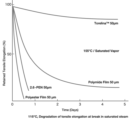
- FIG. 2 is a diagram showing the thermal hydrolysis resistance of Torelina (registered trademark) (see Non-Patent Document 8).
- 1 is a table showing the gas permeability of Torelina (registered trademark) films (see Non-Patent Document 9).
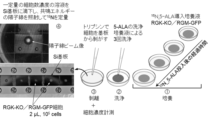
- BRIEF DESCRIPTION OF THE DRAWINGS It is a schematic diagram which shows the cancer treatment apparatus which concerns on embodiment. 1 is a diagram showing a method for quantifying 15 N accumulated in normal cells and cancer cells, respectively, according to Example 1.
- FIG. 4 is a graph showing gamma-ray spectra obtained by quantifying 15 N accumulated in normal cells and cancer cells, respectively, according to Example 1.
- FIG. 2 is a graph showing the amount of 15 N_5-ALA uptake in normal cells and cancer cells, respectively, according to Example 1.
- FIG. 2 is a gene structure diagram of the pUC4-KIXX plasmid according to Example 2.
- FIG. 10 is a photograph showing E. coli colonies when the 15 N isotope ratio in pUC4-KIXX according to Example 2 was varied.
- FIG. 10 is a photograph of RGM-GFP cells cultured in a medium containing no 15N_5-ALA immediately after proton beam irradiation according to Example 3.
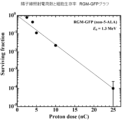
- FIG. 10 is a graph showing the results of assuming the survival rate of RGM-GFP cells cultured in a medium containing no 15N — 5-ALA according to Example 3, versus the proton beam irradiation charge amount.
- FIG. 4 is a photograph of RGK-KO cells immediately after proton beam irradiation according to Example 3.
- FIG. Fig. 3 is a photograph of cells cultured in a medium containing and without 15N_5-ALA. Fig.
- FIG. 2 shows a photograph of RGK-KO cells 24 hours after proton beam irradiation according to Example 3, and a photograph of cells cultured in a medium containing 15N_5-ALA.
- FIG. 10 is a photograph of a cell holder that allows cells to be held alive in vacuum according to Example 4.
- FIG. 10 is a graph showing changes over time in the degree of vacuum when living cells according to Example 4 are held in a vacuum.
- the anticancer agent according to the embodiment contains a substance that contains nitrogen-15 and specifically accumulates in cancer cells.
- Nitrogen (N) is one of six essential major elements (O, C, H, N, Ca, P), which accounts for 2.6% of human body weight and can be present in all parts of the body. Nitrogen-15 is also written as 15N . 15 N is one of the naturally occurring stable isotopes of nitrogen and consists of 7 protons and 8 neutrons. 15 N accounts for 0.364% of all nitrogen on earth. 15 N is also present in the body in the same proportion.
- the substance containing nitrogen-15 and specifically accumulating in cancer cells may be 5-aminolevulinic acid, wherein nitrogen is nitrogen-15.
- 5-Aminolevulinic acid (5-ALA) is synthesized in all cells and is known as the starting material for the porphyrin synthetic pathway. In normal cells, heme necessary for energy metabolism is synthesized from 5-aminolevulinic acid through seven steps of enzymatic reactions. Heme released from proteins promotes the production of active oxygen and becomes a factor of oxidative stress that damages DNA and lipids.
- the chemical formula of 5-aminolevulinic acid is as follows.
- N of 5-aminolevulinic acid is replaced with 15N .
- a 5-aminolevulinic acid in which the nitrogen is nitrogen-15 is also denoted as 15 N_5-ALA.
- the chemical formula of 5-aminolevulinic acid, wherein nitrogen is nitrogen-15, is as follows.
- the anticancer drug according to the embodiment is administered to humans or non-human animals.
- administration routes include, but are not limited to, topical administration, enteral administration including oral administration, and parenteral administration.
- the administered anticancer drug is taken up into cells.
- protoporphyrin IX derived from 5-aminolevulinic acid whose nitrogen is nitrogen-15 is converted into heme by iron-adding enzyme (FECH).
- FECH iron-adding enzyme
- nitrogen-15 accumulates specifically in cancer cells, but not in normal cells.
- FIG. 2 shows a barycentric energy diagram of the proton capture resonance nuclear reaction of nitrogen-15 nuclei (unit: MeV).
- nitrogen-15 nuclei unit: MeV
- the proton is captured by the nitrogen-15 nucleus and the oxygen-16 composite nucleus 16 O * is formed.
- 16 O * in an excited state emits the most stable 4 He 2+ nucleus ( ⁇ -ray) among atomic nuclides and immediately becomes the first excited level of the carbon-12 nucleus, and 4. from the 12 C * excited level. It emits a 43 MeV gamma ray and becomes a ground state 12 C nucleus.
- the series of resonant nuclear reactions is represented by the following formula (1).
- 15 N( 1 H, ⁇ 1 ⁇ ) 12 C (1) where 1 of ⁇ 1 represents the first excited level of 12 C * , the energy difference E 0 with the 16 O * excited level is distributed to the kinetic energies of 4 He and 12 C * according to the law of conservation of momentum, 4 He and 12 C * are released as product ions.
- the center-of-gravity system that is, the coordinate system in which the centers of gravity of protons and nitrogen 15 move at a velocity V G , the 16 O * composite nucleus is stationary.
- the center-of-gravity velocity is expressed by the following equation (2).
- Figure 3 shows the relationship between the laboratory system and the center of gravity system.
- the velocities V H and V N of protons and 15 N in the center-of-mass system are given by u H ⁇ V G and ⁇ V G respectively, and the resonance energy ⁇ 0 is the proton is equal to the kinetic energy of
- the resonant nuclear reaction represented by the formula (8) only emits gamma rays with high penetrating power, and does not bring about radiation action specific to cancer cells, which is the purpose of this embodiment. However, due to the extremely high stability of 4 He 2+ and 12 C * nuclei, the resonant nuclear reaction channel represented by Eqs. occur with a high probability.
- the order of nuclear reaction probabilities is represented by the following equation (9). (Reaction probability of Equation 1)>(Reaction probability of Equation 7)>>(Reaction probability of Equation 8) (9)
- FIG. 5 shows the reaction cross section for each proton resonance energy of the 15 N ( 1 H, ⁇ 1 ⁇ ) 12 C resonance nuclear reaction defined by equation (3) corresponding to the excitation level of the 16 O * compound nucleus.
- FIG. 6 shows the residual range from the p-stopping point indicating the reaction position of the proton in the body for the resonance energy of the proton beam, and the range of the reaction product ions on the scale of the residual range. .
- FIG. 7 shows the resonance energy of the 15 N( 1 H, ⁇ 1 ⁇ ) 12 C resonance nuclear reaction, the reaction position of protons in the body (residual range), and the reaction product ions ( 4 He 2+ , 12 C 6+ ). range and the value of the biological ionization effect (Bragg's peak).
- protoporphyrin IX in which nitrogen is nitrogen-15, is synthesized especially in the mitochondria. Therefore, although it is not bound by theory, as shown in FIG. 8, in cancer cells, proton beam irradiation causes many 15N resonance nuclear reactions in mitochondria, damages mitochondria, and kills cancer cells. it is conceivable that.
- the method for producing 5-aminolevulinic acid in which nitrogen is 15 nitrogen is not particularly limited.
- Ordinary 5-aminolevulinic acid is produced by the photosynthetic bacterium Rhodobacter. sphaeroides IFO12203-based 5th mutant (CR-520), 6th mutant (CR-606), and 7th mutant capable of producing 5-aminolevulinic acid under aerobic conditions It is biosynthesized by feeding a strain (CR-720) with glycine and succinate, precursors of 5-aminolevulinic acid.
- Nitrogen utilization in microalgae, Escherichia coli, etc. can directly take in (NH 4 ) + ions and is suitable as a recovery route for nitrogen-15.
- the (NH 4 ) + ions taken in are incorporated into the glutamic acid synthesis cycle by glutamine synthetase to synthesize glutamic acid.
- the use of the C5 pathway, in which 5-ALA is synthesized by three enzymes (GltX, HemA, HemL) from glutamic acid synthesized by ⁇ -KG ( ⁇ -ketoglutarate) of the TCA (TriCarboxylic Acid) cycle that takes in glucose, is useful in biotechnology. It can be used in pharmaceuticals as a means of producing 5-aminolevulinic acid, where the nitrogen is 15 nitrogen.
- Substances that contain nitrogen-15 and specifically accumulate in cancer cells are not limited to 5-aminolevulinic acid, whose nitrogen is nitrogen-15.
- a substance containing nitrogen-15 and specifically accumulating in cancer cells may be 5-fluorouracil, wherein the nitrogen is nitrogen-15.
- the substance containing nitrogen-15 and specifically accumulating in cancer cells may be a prodrug of 5-fluorouracil, wherein the nitrogen is nitrogen-15.
- prodrugs of 5-fluorouracil where nitrogen is nitrogen-15 include tegafur where nitrogen is nitrogen-15, tegafur uracil where nitrogen is nitrogen-15, tegafur gimeracil oteracil potassium where nitrogen is nitrogen-15, nitrogen is nitrogen-15, and capecitabine, where nitrogen is nitrogen-15.
- the substance containing nitrogen-15 and specifically accumulating in cancer cells may be a molecular target therapeutic agent in which nitrogen is nitrogen-15.
- Molecularly targeted therapeutic agents have, for example, a portion that binds to cancer cells.
- Molecularly targeted therapeutic agents for example, have a moiety that binds to biomolecules that are specifically expressed in cancer cells.
- the moiety that binds to a biomolecule specifically expressed in cancer cells may contain nitrogen-15.
- the portion that binds to a biomolecule specifically expressed in cancer cells may be an antibody or part of an antibody.
- the targeted drug may be an antibody-drug conjugate (ADC), where the nitrogen is nitrogen-15, which targets and kills tumor cells while sparing healthy cells.
- ADC antibody-drug conjugate
- the molecularly targeted drug may be an antibody or part of an antibody in which nitrogen is nitrogen-15 that targets HER2 (human epidermal growth factor receptor 2) glycoprotein present on the surface of breast cancer cells.
- Antibodies or portions of antibodies targeting HER2 in which the nitrogen is nitrogen-15 may be obtained, for example, by substituting nitrogen-15 in Trastuzumab (trade name Herceptin).
- 15 N used in the cancer therapeutic drug according to the embodiment is one of six essential high-abundance elements, and can be supplied to all parts of the body.
- 15 N used in the cancer therapeutic drug according to the embodiment only occupies 0.364% of total nitrogen in nature, and the 15 N anticancer drug accumulates in cancer cells at a high rate, thereby specifically targeting cancer cells. It is possible to kill.
- 15 N used in cancer therapeutic agents is a stable isotope. If N is replaced with 15 N in an already approved cancer drug, even if the cancer drug with 15 N replaced with N is administered to a cancer patient, the burden on the patient will be Equivalent to therapeutic drugs.
- 15 N used in the cancer therapeutic drug according to the embodiment has exactly the same chemical action as nitrogen 14 ( 14 N), which exists at 99.636% in nature.
- 14 N nitrogen 14
- 99.636% of the nitrogen is 14N
- 15N 15N
- a high concentration for example, a ratio of 98% or more
- the chemical action in the body of the cancer therapeutic drug is exactly the same, and the toxicity does not change.
- a method for killing cancer cells in vitro according to an embodiment exhibits a therapeutic effect of a cancer drug containing nitrogen-15.
- cancer cells containing nitrogen 15 It becomes possible to accurately evaluate the therapeutic effect of a therapeutic drug.
- the method of killing cancer cells outside the body includes sealing cancer cells and optionally normal cells with a polymer film in vacuum together with the culture medium. This makes it possible to keep the cells alive in a vacuum vessel through which the proton beam passes.
- the polymer film that seals the cancer cells and optionally normal cells together with the culture medium in a vacuum may be a polyethylene sulfide material, such as Torelina (Toray Industries, Inc.). Commercially available films may also be used. As shown in FIG. 9, the polyethylene sulfide film is extremely stable against thermal hydrolysis (see Non-Patent Document 5). Further, as shown in FIG. 10, TORELINA has a property of being highly permeable to oxygen, nitrogen, and carbon dioxide, but extremely low in being permeable to water vapor (see Non-Patent Document 5).
- the properties of the TORELINA film that are extremely stable against thermal hydrolysis cancer cells, and optionally normal cells, are exposed to high-density excitation by proton beams while being in contact with an aqueous solution for culture. can be stably sealed in vacuum together with the culture medium. Due to the extremely low water vapor permeability of the TORELINA film, even if the vacuum side surface of the film becomes negative pressure due to the extremely high hydrophobicity of the TORELINA fiber at the interface where the aqueous solution and the TORELINA film come into contact, the water molecules are converted to water vapor.
- the medium can exist in a liquid state. While the culture medium maintains its liquid state, highly permeable oxygen and carbon dioxide are maintained dissolved in the liquid, and the oxygen and carbon dioxide necessary for the cells to maintain their viability remain in the medium. resulting in an environment maintained at
- a device having the function of sealing a polymeric film such as a torelina film may be used.
- the instrument having the sealing function may be configured to obtain a degree of vacuum necessary for irradiation with high-energy proton beams, desirably a degree of vacuum of 1 ⁇ 10 ⁇ 3 Pa or less.
- the instrument having the sealing function may be made of a soft stainless steel with a very low carbon content (0.007% or less), product name Clean Star B (Daido Special Steel Co., Ltd.).
- the instrument having the sealing function may have a sealing surface having a semicircular cross section.
- a hard layer of iron nitride having a surface layer thickness of 100 nm is formed on the seal surface by N2 ion implantation, and adhesion due to elastic deformation of the seal surface when tightening, and the property of being easily peeled off when opened, (see Patent Documents 2 and 3).
- An anti-cancer agent comprising nitrogen-15 is administered to the cancer cells and optionally normal cells prior to placing the cancer cells and optionally normal cells in the vacuum vessel.
- a polymeric film such as a torelina film, is sealed with the sealing surface to keep the cancer cells, and optionally normal cells, together with the culture medium, in a vacuum vessel in a viable state. This keeps the cancer cells, and optionally the normal cells, which have taken up 15 N intracellularly along with the anti-cancer drug, in the vacuum vessel. It is therefore possible to kill cancer cells in vitro by bombarding 15 N in cancer cells, and optionally normal cells, with protons to produce resonant nuclear reactions.
- the cancer treatment apparatus includes an irradiation device 20 that irradiates a human 10 or a non-human animal having nitrogen 15 accumulated in cancer cells with a proton beam.
- the human 10 or non-human animal has been administered an anti-cancer agent or a prodrug of an anti-cancer agent as described above.
- the cancer treatment apparatus according to the embodiment may further include an accelerator that accelerates the proton beam.
- the accelerator may comprise a laser plasma.
- Rat gastric mucosa-derived cells (RGM-GFP) were prepared as normal cells, and rat gastric mucosa -derived cancer cells (RGK-KO) were prepared as cancer cells. The difference was confirmed as follows. Rat gastric mucosa-derived cells and rat gastric mucosa-derived cancer cells are both stomach-derived and have the same gene sequence, so they are widely used in anticancer drug research (see Non-Patent Documents 6 and 7).
- FIG. 12 shows a schematic diagram of the measurement of 15 N uptake.
- 15 N_5-ALA was administered to RGM-GFP cells and RGK-KO cells grown to 80% confluence, and the cells were treated at 0, 0.5, 1, 3, 6, 12 and 24 hours after administration. , respectively, prepared cell samples after passage. The cells were washed three times with fresh medium to remove 15 N_5-ALA remaining on the cell surface. Cells growing on the bottom of the petri dish by adding trypsin were peeled off from the petri dish, and the concentration of released cells was measured.
- FIG. 13 shows the measured gamma ray spectrum. Since the main peak at 4.43 MeV and two annihilation gamma-ray peaks (3.92 MeV S.E. and 3.41 MeV D.E.) form a broad peak, gamma rays in the energy range of 2.98 MeV to 4.85 MeV The dose was integrated and the natural background (white dots in the figure) subtracted to give the effective gamma dose. The amount of 15 N_5-ALA uptake into the cells was determined as an absolute value based on the gamma ray dose from the sample to which the 15 N_5-ALA aqueous solution with a defined concentration was dropped. The results are shown in FIG. Twenty-four hours after 15 N_5-ALA was given, the uptake of 15 N_5-ALA by cancer cells was more than five times that of normal cells.
- RGM-GFP and RGK-KO were cultured in a 35 mm dish in an incubator (37° C., 5% CO 2 ) for 3 to 4 days to 80% confluence.
- PBS phosphate-buffered saline
- the number of cells was counted with an automatic counter (Invitrogen Countess (registered trademark)) and adjusted to 1.0 ⁇ 10 5 cells/2 ⁇ L.
- the silicon substrate is set in a vacuum vessel after drying, and the cells on the silicon substrate are irradiated with a proton beam from a 1 MV tandem accelerator (University of Tsukuba, Applied Accelerator Division) to generate resonance nuclei with 15 N. 4.43 MeV gamma rays emitted by the reaction were measured with a BGO detector installed outside the vacuum vessel.
- a sapphire plate was irradiated with a proton beam, the beam area was measured from the fluorescence image, and the gamma-ray dose normalized to the unit proton beam charge was obtained from the relative ratio to the sample area dropped onto the silicon substrate.
- Intracellular nitrogen-15 was quantified by comparing the gamma-ray dose normalized to the proton-beam charge amount from the 15 N_5-ALA aqueous solution sample with the concentration defined by the proton-beam charge amount.
- Example 1 The reagents used in Example 1 are as follows. 5-aminolevulinic acid hydrochloride: 018-13133 (Fujifilm Wako Pure Chemical Industries) 15 N aminolevulinic hydrochloride: N1371 (Medical Isotope) 0.5% Trypsin-EDTA (10x): 15400054 TrypLE Select Enzyme (1X), no phenol red 100ml: 12563011 (Glibco) 10 ⁇ D-PBS: 048-29805 (Fujifilm Wako Pure Chemical Industries) D (+)-glucose: 049-31165 (Fujifilm Wako Pure Chemical Industries)
- FIG. 15 shows the gene structure of the circular artificial plasmid DNA pUC4-KIXX (3914 bps). Since pUC4-KIXX has an ampicillin-resistant gene and a kanamycin-resistant gene, E. coli transformed with pUC4-KIXX exhibits resistance to ampicillin and kanamycin. Modifications in which the isotope ratio 15 N/( 14 N+ 15 N) of N in pUC4-KIXX was stepwise changed to natural abundance ratios of 0.364%, 25%, 50%, 75%, and 98% or more pUC4-KIXX was prepared.
- E. coli transformed with each modified pUC4-KIXX were cultured in medium containing 100 ⁇ g/mL ampicillin and medium containing 20 ⁇ g/mL kanamycin and irradiated with proton beams.
- E. coli transformed with pUC4-KIXX without 15 N E. coli transformed with pUC4-KIXX containing 15 N had 15 N
- the number of colonies of E. coli transformed with pUC4-KIXX with a 15 N isotope ratio of 75% or higher was 10 3 times higher. decreased by 1 or more.
- E. coli transformed with pUC4-KIXX not containing 15 N was not killed in large numbers by proton irradiation. Therefore, the fact that a large number of E. coli transformed with the modified pUC4-KIXX died indicates that the 15 N( 1 H, ⁇ 1 ⁇ ) 12 C resonance nuclear reaction damaged the ampicillin resistance gene and the kanamycin resistance gene, and the E. coli drug This is thought to be due to loss of tolerance.
- Example 3 Rat gastric mucosa-derived cancer cells (RGK-KO) and normal cells (RGM-GFP) were uniformly cultured in 35 mm dishes containing appropriate media for 7 days, and cells were added so that all dishes were 80% confluent. made preparations. 15 N_5-ALA was added to the medium 24 hours before proton beam irradiation, and culture conditions were maintained for 24 hours under the same conditions in both media so as to allow comparison with the medium without 15 N_5-ALA. .
- RGK-KO cells and RGM-GFP cells cultured in a medium containing 15N_5 -ALA, and RGK-KO cells and RGM-GFP cells cultured in a medium not containing 15N_5 -ALA were placed in a vacuum together with the culture medium. and was irradiated with a proton beam with a predetermined amount of ion charge.
- the energy of the proton beam was 1.3 MeV to match the resonance energy of 1.21 MeV, considering the energy attenuation of the proton beam due to the culture medium sealed in vacuum and the torelina film.
- FIG. 18 shows fluorescence micrographs observed immediately after proton irradiation (within 3 hours) of RGM-GFP cells cultured in a medium containing no 15 N_5-ALA.
- the upper part shows images of RGM-GFP cells that metabolize fluorescent proteins through genetic recombination, and the lower part shows photographs of dead cells identified by the DAPI staining method for staining the intranuclear DNA of dead cells.
- the number of dead cells that is, the number of cells in the fluorescent protein image (the number of viable cells) and the number of DAPI-stained fluorescent images
- the number of fluorescent protein image cells relative to the sum of the number of cells (the number of dead cells) is increasing.
- RGM-GFP cells cultured in a medium containing no 15 N_5-ALA were irradiated with a proton beam, and the relationship between the amount of irradiation charge and the cell viability is shown in FIG. A logarithmic relationship was found for both, indicating the characteristic of biological radiation damage of proton beams.
- FIG. 20 shows photographs of RGK-KO cells cultured in media containing and not containing 15 N_5-ALA immediately after proton beam irradiation.
- the photograph in FIG. 20 shows the case where the proton beam irradiation charge amount is 4.0 nC for both cells.
- RGK-KO cells also contain a gene that metabolizes a fluorescent protein, and the cells exhibit a red color under a fluorescence microscope.
- RGK-KO cells cultured in a medium containing no 15 N_5-ALA showed 4671 cells in the fluorescent protein image, 3179 cells in the DAPI-stained fluorescent image, and a survival rate of 59.5%.
- the number of cells in the fluorescent protein image was 4522
- the number of cells in the DAPI-stained fluorescent image was 1622
- the survival rate was 73.5%.
- FIG. 21 shows photographs of the cells 24 hours after RGK-KO cells cultured in a medium containing 15 N_5-ALA were irradiated with a proton beam at a charge amount of 4.0 nC.
- the survival rates of the cells which were 73.5% and 85.5% within 3 hours immediately after irradiation, decreased to 40.5% and 10.6%, respectively, after 24 hours.
- the tendency for the survival rate of RGK-KO cells to decrease sharply over time indicates that 15 N_5-ALA taken up by RGK-KO cells is involved in the metabolic pathway induced by protoporphyrin IX in cancer cells. showing.
- Example 4 As a method for exterminating cancer cells outside the body, a vacuum sealing joint (hereinafter referred to as "CS flange") having a sealing function made of Torelina film (thickness 4 ⁇ m, Toray Industries, Inc.) and Clean Star is used. Then, the RGM-GFP cells and RGK-KO cells were sealed, placed in a vacuum vessel, and held in vacuum. In FIG. 22, a silicon crystal substrate with a diameter of 15 mm and a thickness of 0.5 mm is placed in a circular dish with a depth of 1.0 mm made of high-purity silicon, and RGM-GFP cells and RGK-KO cells are placed on the substrate together with the culture medium. A photograph of dropping and sealing with TORELINA film is shown. A thin carbon film (Toray KP Film Co., Ltd.) was vapor-deposited on one side surface of the TORELINA film to avoid damage due to electrical discharge caused by the proton beam.
- CS flange vacuum sealing joint having a sealing function made of To
- the RGM-GFP cells and RGK-KO cells were sealed together with the culture medium, and evacuated with a dry pump (TSU071E, pumping speed of 60 L/s, ultimate vacuum of 10 -5 Pa, PFEIFFER). It was confirmed that the vacuum dropped at the same speed as the evacuation process without a cell sample.
Landscapes
- Health & Medical Sciences (AREA)
- Life Sciences & Earth Sciences (AREA)
- Chemical & Material Sciences (AREA)
- General Health & Medical Sciences (AREA)
- Public Health (AREA)
- Veterinary Medicine (AREA)
- Animal Behavior & Ethology (AREA)
- Engineering & Computer Science (AREA)
- Pharmacology & Pharmacy (AREA)
- Medicinal Chemistry (AREA)
- Epidemiology (AREA)
- Biomedical Technology (AREA)
- Organic Chemistry (AREA)
- Bioinformatics & Cheminformatics (AREA)
- Nuclear Medicine, Radiotherapy & Molecular Imaging (AREA)
- Zoology (AREA)
- Wood Science & Technology (AREA)
- Genetics & Genomics (AREA)
- Biotechnology (AREA)
- Molecular Biology (AREA)
- General Engineering & Computer Science (AREA)
- Cell Biology (AREA)
- Biochemistry (AREA)
- Pathology (AREA)
- General Chemical & Material Sciences (AREA)
- Radiology & Medical Imaging (AREA)
- Chemical Kinetics & Catalysis (AREA)
- Microbiology (AREA)
- High Energy & Nuclear Physics (AREA)
- Physics & Mathematics (AREA)
- Immunology (AREA)
- Oncology (AREA)
- Gastroenterology & Hepatology (AREA)
- Medicines That Contain Protein Lipid Enzymes And Other Medicines (AREA)
- Radiation-Therapy Devices (AREA)
- Pharmaceuticals Containing Other Organic And Inorganic Compounds (AREA)
- Acyclic And Carbocyclic Compounds In Medicinal Compositions (AREA)
- Peptides Or Proteins (AREA)
- Micro-Organisms Or Cultivation Processes Thereof (AREA)
- Medicinal Preparation (AREA)
Priority Applications (4)
| Application Number | Priority Date | Filing Date | Title |
|---|---|---|---|
| JP2023508530A JP7455316B2 (ja) | 2021-10-20 | 2022-10-20 | 抗ガン剤、抗ガン剤のプロドラッグ、体外でガン細胞を死滅させる方法、ガンの治療方法、及びガンの治療装置 |
| CN202280070780.XA CN118159293A (zh) | 2021-10-20 | 2022-10-20 | 抗癌药、抗癌药的前药、在体外杀灭癌细胞的方法、癌症的治疗方法、以及癌症的治疗装置 |
| EP22883629.2A EP4420678A4 (en) | 2021-10-20 | 2022-10-20 | ANTICANCER AGENT, PRODRUGATION OF AN ANTICANCER AGENT, IN VITRO METHOD FOR DESTRUCTING CANCER CELLS, CANCER THERAPY METHOD AND CANCER THERAPY DEVICE |
| US18/702,620 US20240424103A1 (en) | 2021-10-20 | 2022-10-20 | Anticancer agent, prodrug of anticancer agent, method for killing cancer cell in vitro, cancer treatement method, and cancer treatment device |
Applications Claiming Priority (2)
| Application Number | Priority Date | Filing Date | Title |
|---|---|---|---|
| JP2021-172003 | 2021-10-20 | ||
| JP2021172003 | 2021-10-20 |
Publications (1)
| Publication Number | Publication Date |
|---|---|
| WO2023068325A1 true WO2023068325A1 (ja) | 2023-04-27 |
Family
ID=86058319
Family Applications (1)
| Application Number | Title | Priority Date | Filing Date |
|---|---|---|---|
| PCT/JP2022/039079 Ceased WO2023068325A1 (ja) | 2021-10-20 | 2022-10-20 | 抗ガン剤、抗ガン剤のプロドラッグ、体外でガン細胞を死滅させる方法、ガンの治療方法、及びガンの治療装置 |
Country Status (5)
| Country | Link |
|---|---|
| US (1) | US20240424103A1 (https=) |
| EP (1) | EP4420678A4 (https=) |
| JP (1) | JP7455316B2 (https=) |
| CN (1) | CN118159293A (https=) |
| WO (1) | WO2023068325A1 (https=) |
Citations (13)
| Publication number | Priority date | Publication date | Assignee | Title |
|---|---|---|---|---|
| JPS648586B2 (https=) | 1983-05-02 | 1989-02-14 | Matsushita Electric Ind Co Ltd | |
| JPH1112197A (ja) * | 1997-06-18 | 1999-01-19 | Cosmo Sogo Kenkyusho:Kk | 悪性腫瘍診断剤及び治療剤 |
| JP2003096098A (ja) * | 2001-09-25 | 2003-04-03 | Nippon Sanso Corp | 安定同位体標識抗体及びその製造方法ならびにこれを用いた検出方法 |
| JP2008022994A (ja) * | 2006-07-19 | 2008-02-07 | Japan Atomic Energy Agency | 粒子線治療装置 |
| JP4520219B2 (ja) | 2004-05-28 | 2010-08-04 | 協和発酵バイオ株式会社 | 5−アミノレブリン酸の製造法 |
| JP5392752B2 (ja) | 2009-02-18 | 2014-01-22 | 独立行政法人産業技術総合研究所 | 超低炭素ステンレス鋼製フランジおよび継ぎ手並びに超低炭素ステンレス鋼製封止用弁 |
| JP2014177421A (ja) * | 2013-03-14 | 2014-09-25 | Univ Of Fukui | 陽子線治療用増感剤、及びそれを用いた陽子線治療法 |
| JP2016216404A (ja) * | 2015-05-22 | 2016-12-22 | 国立大学法人北海道大学 | 陽子線治療用増感剤および陽子線治療方法 |
| JP2018058822A (ja) * | 2016-08-03 | 2018-04-12 | ファイザー・インク | ヘテロアリールスルホンをベースとするコンジュゲーションハンドル、これらの調製のための方法、および抗体薬物コンジュゲートの合成におけるこれらの使用 |
| JP2018527402A (ja) * | 2015-09-22 | 2018-09-20 | シントン・バイオファーマシューティカルズ・ビー.ブイ.Synthon Biopharmaceuticals B.V. | T−dm1難治性がん患者のsyd985処置 |
| WO2018237241A1 (en) * | 2017-06-22 | 2018-12-27 | University Of Virginia Patent Foundation | Proton activated atomic medicine |
| WO2021029391A1 (ja) * | 2019-08-09 | 2021-02-18 | 国立研究開発法人産業技術総合研究所 | 人工遺伝子及び遺伝子変異方法 |
| CN112834680A (zh) * | 2020-12-31 | 2021-05-25 | 苏州海科医药技术有限公司 | 一种测定肿瘤患者血浆中替加氟、吉美嘧啶和5-氟尿嘧啶浓度的方法 |
Family Cites Families (4)
| Publication number | Priority date | Publication date | Assignee | Title |
|---|---|---|---|---|
| JP6234064B2 (ja) * | 2012-05-23 | 2017-11-22 | キヤノン株式会社 | 重合体、前記重合体を用いた核磁気共鳴分析用または磁気共鳴イメージング用の造影剤、化合物、前記重合体を用いた核磁気共鳴分析方法および磁気共鳴イメージング方法 |
| US10314551B2 (en) * | 2015-06-16 | 2019-06-11 | The Trustees Of Princeton University | Detector, three-dimensional direct positron imaging unit, and method to estimate the differential of the radiation dose provided to cancer cells and healthy tissues during hadrotherapy |
| EP3266470A1 (en) * | 2016-07-06 | 2018-01-10 | Fyzikální ústav AV CR, v.v.i. | Device and method for imaging and enhanced proton-therapy treatment using nuclear reactions |
| US11771779B2 (en) * | 2018-01-26 | 2023-10-03 | Hadasit Medical Research Services & Development Limited | Non-metallic magnetic resonance contrast agent |
-
2022
- 2022-10-20 US US18/702,620 patent/US20240424103A1/en active Pending
- 2022-10-20 CN CN202280070780.XA patent/CN118159293A/zh active Pending
- 2022-10-20 WO PCT/JP2022/039079 patent/WO2023068325A1/ja not_active Ceased
- 2022-10-20 JP JP2023508530A patent/JP7455316B2/ja active Active
- 2022-10-20 EP EP22883629.2A patent/EP4420678A4/en active Pending
Patent Citations (13)
| Publication number | Priority date | Publication date | Assignee | Title |
|---|---|---|---|---|
| JPS648586B2 (https=) | 1983-05-02 | 1989-02-14 | Matsushita Electric Ind Co Ltd | |
| JPH1112197A (ja) * | 1997-06-18 | 1999-01-19 | Cosmo Sogo Kenkyusho:Kk | 悪性腫瘍診断剤及び治療剤 |
| JP2003096098A (ja) * | 2001-09-25 | 2003-04-03 | Nippon Sanso Corp | 安定同位体標識抗体及びその製造方法ならびにこれを用いた検出方法 |
| JP4520219B2 (ja) | 2004-05-28 | 2010-08-04 | 協和発酵バイオ株式会社 | 5−アミノレブリン酸の製造法 |
| JP2008022994A (ja) * | 2006-07-19 | 2008-02-07 | Japan Atomic Energy Agency | 粒子線治療装置 |
| JP5392752B2 (ja) | 2009-02-18 | 2014-01-22 | 独立行政法人産業技術総合研究所 | 超低炭素ステンレス鋼製フランジおよび継ぎ手並びに超低炭素ステンレス鋼製封止用弁 |
| JP2014177421A (ja) * | 2013-03-14 | 2014-09-25 | Univ Of Fukui | 陽子線治療用増感剤、及びそれを用いた陽子線治療法 |
| JP2016216404A (ja) * | 2015-05-22 | 2016-12-22 | 国立大学法人北海道大学 | 陽子線治療用増感剤および陽子線治療方法 |
| JP2018527402A (ja) * | 2015-09-22 | 2018-09-20 | シントン・バイオファーマシューティカルズ・ビー.ブイ.Synthon Biopharmaceuticals B.V. | T−dm1難治性がん患者のsyd985処置 |
| JP2018058822A (ja) * | 2016-08-03 | 2018-04-12 | ファイザー・インク | ヘテロアリールスルホンをベースとするコンジュゲーションハンドル、これらの調製のための方法、および抗体薬物コンジュゲートの合成におけるこれらの使用 |
| WO2018237241A1 (en) * | 2017-06-22 | 2018-12-27 | University Of Virginia Patent Foundation | Proton activated atomic medicine |
| WO2021029391A1 (ja) * | 2019-08-09 | 2021-02-18 | 国立研究開発法人産業技術総合研究所 | 人工遺伝子及び遺伝子変異方法 |
| CN112834680A (zh) * | 2020-12-31 | 2021-05-25 | 苏州海科医药技术有限公司 | 一种测定肿瘤患者血浆中替加氟、吉美嘧啶和5-氟尿嘧啶浓度的方法 |
Non-Patent Citations (9)
Also Published As
| Publication number | Publication date |
|---|---|
| CN118159293A (zh) | 2024-06-07 |
| EP4420678A4 (en) | 2025-12-24 |
| US20240424103A1 (en) | 2024-12-26 |
| EP4420678A1 (en) | 2024-08-28 |
| JPWO2023068325A1 (https=) | 2023-04-27 |
| JP7455316B2 (ja) | 2024-03-26 |
Similar Documents
| Publication | Publication Date | Title |
|---|---|---|
| Chen et al. | Low dose of X‐ray‐excited long‐lasting luminescent concave nanocubes in highly passive targeting deep‐seated hepatic tumors | |
| CN1112946C (zh) | 快中子治疗的硼中子捕获增强作用 | |
| Kozempel et al. | Prospective carriers of 223Ra for targeted alpha particle therapy | |
| Li et al. | Platinum nanoparticles: An exquisite tool to overcome radioresistance | |
| Zaboronok et al. | Polymer-stabilized elemental boron nanoparticles for boron neutron capture therapy: Initial irradiation experiments | |
| EP3424561B1 (en) | Boron neutron capture treating system and alpha-amino acid-like boron trifluoride compounds for use in treating tumors | |
| WO2012048099A2 (en) | Nanoparticle-loaded cells | |
| Zhang et al. | Nanoscintillator‐mediated x‐ray‐triggered boosting transformation of Fe3+ into Fe2+ for enhancing tumor ferroptosis/immunotherapy | |
| MX2010013322A (es) | Nanoparticulas inorganicas de alta densidad para destruir celulas in vivo. | |
| US20240002419A1 (en) | Radiation-activated tetravalent platinum complex and use thereof | |
| Ostroushko et al. | The physicochemical properties and influence on living organisms of nanocluster polyoxomolybdates as prospective bioinspired substances (based on materials from the plenary lecture) | |
| Ren et al. | Tb-Doped core–shell–shell nanophosphors for enhanced X-ray induced luminescence and sensitization of radiodynamic therapy | |
| US20230111402A1 (en) | Systems, methods, and biomaterials for radiation therapy | |
| Shi et al. | Boosting simultaneous uranium decorporation and reactive oxygen species scavenging efficiency by lacunary polyoxometalates | |
| Alizadeh et al. | Low-energy electron generation for biomolecular damage inquiry: Instrumentation and methods | |
| Yasui et al. | Boron neutron capture in prostate cancer cells | |
| JP7455316B2 (ja) | 抗ガン剤、抗ガン剤のプロドラッグ、体外でガン細胞を死滅させる方法、ガンの治療方法、及びガンの治療装置 | |
| US9327025B2 (en) | Enriched 10-boron composition for cancer therapy and a method of synthesizing the same | |
| Fithroni et al. | Novel Drug Delivery Particles Can Provide Dual Effects on Cancer “Theranostics” in Boron Neutron Capture Therapy | |
| Flockhart et al. | A metabolite of the 2-nitroimidazole misonidazole with radiosensitizing properties | |
| Yamamoto | 5-Aminolevulinic Acid-Based Radiodynamic Therapy for Malignant Gliomas: A Conceptual Framework for Mitochondria-Centered Mechanisms, Target Cell States and Translational Perspectives | |
| US7572458B2 (en) | Boron compound-layered double hydroxide nanohybrid, method of preparing the boron compound-LDH nanohybrid, and pharmaceutical composition comprising the boron compound-LDH nanohybrid | |
| EP2755665B1 (en) | A particulate system for use in diminishing cell growth/inducing cell killing | |
| Harada et al. | Innovation of hyaluronic acid-protamine microparticles and their kinetics in vivo | |
| Terakawa et al. | PIXE Analysis of a Murine Fibrosarcoma Tumor Treated With a Vascular Disrupting Agent AVE8062 |
Legal Events
| Date | Code | Title | Description |
|---|---|---|---|
| WWE | Wipo information: entry into national phase |
Ref document number: 2023508530 Country of ref document: JP |
|
| 121 | Ep: the epo has been informed by wipo that ep was designated in this application |
Ref document number: 22883629 Country of ref document: EP Kind code of ref document: A1 |
|
| WWE | Wipo information: entry into national phase |
Ref document number: 18702620 Country of ref document: US |
|
| WWE | Wipo information: entry into national phase |
Ref document number: 202280070780.X Country of ref document: CN |
|
| WWE | Wipo information: entry into national phase |
Ref document number: 2022883629 Country of ref document: EP |
|
| NENP | Non-entry into the national phase |
Ref country code: DE |
|
| ENP | Entry into the national phase |
Ref document number: 2022883629 Country of ref document: EP Effective date: 20240521 |