WO2023047567A1 - 中間装置、通信方法、およびプログラム - Google Patents
中間装置、通信方法、およびプログラム Download PDFInfo
- Publication number
- WO2023047567A1 WO2023047567A1 PCT/JP2021/035305 JP2021035305W WO2023047567A1 WO 2023047567 A1 WO2023047567 A1 WO 2023047567A1 JP 2021035305 W JP2021035305 W JP 2021035305W WO 2023047567 A1 WO2023047567 A1 WO 2023047567A1
- Authority
- WO
- WIPO (PCT)
- Prior art keywords
- qpn
- request
- requester
- destination information
- responder
- Prior art date
- Legal status (The legal status is an assumption and is not a legal conclusion. Google has not performed a legal analysis and makes no representation as to the accuracy of the status listed.)
- Ceased
Links
Images




Classifications
-
- G—PHYSICS
- G06—COMPUTING OR CALCULATING; COUNTING
- G06F—ELECTRIC DIGITAL DATA PROCESSING
- G06F15/00—Digital computers in general; Data processing equipment in general
- G06F15/16—Combinations of two or more digital computers each having at least an arithmetic unit, a program unit and a register, e.g. for a simultaneous processing of several programs
- G06F15/163—Interprocessor communication
- G06F15/173—Interprocessor communication using an interconnection network, e.g. matrix, shuffle, pyramid, star, snowflake
- G06F15/17306—Intercommunication techniques
- G06F15/17331—Distributed shared memory [DSM], e.g. remote direct memory access [RDMA]
-
- G—PHYSICS
- G06—COMPUTING OR CALCULATING; COUNTING
- G06F—ELECTRIC DIGITAL DATA PROCESSING
- G06F15/00—Digital computers in general; Data processing equipment in general
- G06F15/16—Combinations of two or more digital computers each having at least an arithmetic unit, a program unit and a register, e.g. for a simultaneous processing of several programs
- G06F15/163—Interprocessor communication
- G06F15/173—Interprocessor communication using an interconnection network, e.g. matrix, shuffle, pyramid, star, snowflake
- G06F15/17356—Indirect interconnection networks
Definitions
- the present invention relates to an intermediate device, a communication method, and a program.
- RDMA Remote Direct Memory Access
- SSD Solid State Drive
- GPU Graphics Processing Unit
- RDMA is a communication model that transfers data using a Queue Pair (QP) consisting of a Send Queue (SQ) and a Receive Queue (RQ).
- QP Queue Pair
- SQ Send Queue
- RQ Receive Queue
- the communication unit of RDMA is a communication request called WR (Work Request), which is loaded on SQ/RQ in units of WQE (Work Queue Element).
- WQEs corresponding to the queue size of the SQ/RQ can be stacked in the SQ/RQ by FIFO (First-In-First-Out).
- FIFO First-In-First-Out
- the present invention has been made in view of the above, and aims to realize high-bandwidth data transfer even on network services with a large RTT (Round Trip Time).
- An intermediate device is an intermediate device disposed between a first device and a second device that transfer data using remote direct memory access, and destination information of the first device from packets transmitted and received when establishing a connection between the first device and the second device.
- a registration unit is provided for extracting a combination of destination information of the second device and registering it in a destination table.
- An intermediate device includes a management unit that manages a message sequence number representing the completion state of the request in the second device in a management table, and the management unit controls the second device when establishing a connection.
- the management unit controls the second device when establishing a connection.
- the destination information of the device as a key
- the destination information of the first device and the initialized message sequence number are registered in the management table, and the message sequence number is changed when a predetermined request is received from the first device. and acquires destination information of the first device and a post-transition message sequence number from the management table, generates a pseudo-response to the request, and returns it to the first device.
- a communication method is a communication method by an intermediate device disposed between a first device and a second device that transfer data using remote direct memory access, the intermediate device comprising: forwarding packets between the first device and the second device, and transferring packets transmitted and received when establishing a connection between the first device and the second device; A combination of the destination information of the device and the destination information of the second device is extracted and registered in the destination table.
- the intermediate device manages a message sequence number representing the completion state of the request in the second device in a management table, and when establishing a connection, the intermediate device manages the destination information of the second device.
- the destination information of the first device and the initialized message sequence number are registered in the management table, and when a predetermined request is received from the first device, the message sequence number is transitioned, and the management table destination information of the first device and the post-transition message sequence number from, generate a pseudo-response to the request and return it to the first device.
- high-bandwidth data transfer can be realized even on network services with large RTT (Round Trip Time).
- FIG. 1 is a diagram for explaining an RDMA communication model.
- FIG. 2 is a diagram showing an example of the configuration of a communication system including the intermediate device of this embodiment.
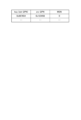
- FIG. 3 is a diagram showing an example of a Queue Pair Number table.
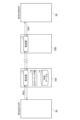
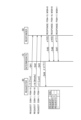
- FIG. 4 is a sequence diagram showing an example of the flow of processing when establishing a connection.
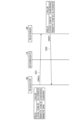
- FIG. 5 is a sequence diagram showing an example of the flow of processing when a connection is released.
- FIG. 6 is a diagram showing an example of the configuration of a communication system including the intermediate device of this embodiment.
- FIG. 7 is a diagram showing an example of the Work Queue table.
- FIG. 8 is a sequence diagram showing an example of the flow of processing during data transfer.
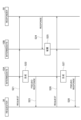
- FIG. 9 is a sequence diagram showing an example of the flow of processing during data transfer.
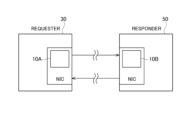
- FIG. 10 is a diagram showing an example in which the intermediate device is configured on the NIC.
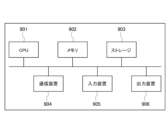
- FIG. 11 is a diagram illustrating an example of a hardware configuration of an intermediate device
- QPN Management of Queue Pair Number
- An example of a communication system including an intermediate device 10A that manages a pair of QPNs of the requester 30 and the QPN of the responder 50 will be described with reference to FIG.
- a QPN is a number assigned to each endpoint of a QP.
- the SQ/RQ recognizes the QPN of the opposite side, and includes the destination QPN in the header when generating RDMA packets such as requests and responses.
- FIG. 2 is a diagram showing an example of the configuration of a communication system including intermediate devices 10A and 10B of this embodiment.
- Intermediate devices 10A and 10B are arranged between requester 30 and responder 50 that transfer data using RDMA. More specifically, the intermediate device 10A is placed in front of the long distance network on the requester 30 side, and the intermediate device 10B is placed in front of the long distance network on the responder 50 side. Note that the requester 30 is sometimes called local, and the responder 50 is called remote.
- the intermediate device 10A includes a transfer unit 11, a snooping unit 14, and a Queue Pair Number (QPN) table 15.
- QPN Queue Pair Number
- the transfer unit 11 transfers the request from the requester 30 to the responder 50 and transfers the response from the responder 50 to the requester 30 .
- Requests and responses sent and received between the requester 30 and the responder 50 include REQ, REP, and RTU at connection establishment, requests and responses at data transfer, and DREQ and DREP at connection release.
- the snooping unit 14 intercepts RDMA-CM packets transmitted and received between the requester 30 and the responder 50 in the RDMA Communication Management (RDMA-CM) connection establishment phase, and determines the QPN of the requester 30 and the QPN of the responder 50 A bidirectional QPN entry with a pair is registered in the QPN table 15.
- RDMA-CM RDMA Communication Management
- the requester 30 and responder 50 set a Communication ID (CID) as an identifier for uniquely identifying communication in the connection. This CID does not change until the connection is destroyed.
- the QPNs of the requester 30 and the responder 50 are also uniquely identified in association with the CIDs of the requester 30 and the responder 50, respectively.
- the CID and QPN are exchanged between the requester 30 and the responder 50 in the connection establishment phase, and a CID pair and QPN pair are established.
- the connection establishment phase consists of a 3-way handshake of ConnectRequest (REQ), ConnectReply (REP) and ReadyToUse (RTU).
- the snooping unit 14 intercepts RDMA-CM packets transmitted and received between the requester 30 and the responder 50 in the RDMA-CM connection release phase, and deletes the corresponding QPN entry from the QPN table 15 .
- connection release phase consists of a DisconnectRequest (DREQ) and DisconnectReply (DREP) handshake.
- DREQ DisconnectRequest
- DREP DisconnectReply
- the QPN table 15 associates and manages pairs of local side (requester side) QPNs and remote side (responder side) QPNs using CIDs as keys.
- FIG. 3 shows an example of the QPN table 15. As shown in FIG. When a connection is established between the requester 30 and the responder 50, a QPN entry keyed by the Local CID for uniquely identifying the connection from the perspective of the requester 30 and a QPN entry for uniquely identifying the connection from the perspective of the responder 50 A QPN entry is created in the QPN table 15 with the Local CID for the key.
- the QPN assigned to the QP on the requester 30 side is registered in the Local QPN
- the QPN assigned to the QP on the responder 50 side is registered in the Remote QPN.
- the QPN assigned to the responder 50 side of the QP is registered in the Local QPN
- the QPN assigned to the requester 30 side of the QP is registered in the Remote QPN.
- the intermediate device 10B includes a transfer unit 11.
- the transfer unit 11 transfers the request from the requester 30 to the responder 50 and transfers the response from the responder 50 to the requester 30 in the same way as the transfer unit 11 of the intermediate device 10A.
- the intermediate devices 10A and 10B are illustrated as the intermediate device 10. As shown in FIG. 4, the intermediate devices 10A and 10B are illustrated as the intermediate device 10. As shown in FIG. 4, the intermediate devices 10A and 10B are illustrated as the intermediate device 10. As shown in FIG. 4, the intermediate devices 10A and 10B are illustrated as the intermediate device 10. As shown in FIG. 4, the intermediate devices 10A and 10B are illustrated as the intermediate device 10. As shown in FIG. 4, the intermediate devices 10A and 10B are illustrated as the intermediate device 10.
- step S11 the requester 30 transmits REQ to the responder 50.
- REQ includes Local CID and Local QPN.
- the Local CID included in the REQ is an identifier for the requester 30 to identify the connection.
- the Local QPN included in REQ is the QPN given to the QP of requester 30 .
- the intermediate device 10 When forwarding the REQ to the responder 50, the intermediate device 10 creates a QPN entry with the Local CID included in the REQ as a key in the QPN table 15, and sets the Local QPN of the QPN entry to the Local QPN included in the REQ (QPN of the requester 30). ).
- REP includes Local CID, Remote CID, and Local QPN.
- the Local CID included in the REP is an identifier for the responder 50 to identify the connection.
- the Remote CID included in REP is an identifier for the requester 30 to identify the connection, and is the same as the Local CID included in REQ.
- the Local QPN included in the REP is the QPN given to the responder 50 .
- the intermediate device 10 When forwarding the REP to the requester 30, the intermediate device 10 searches the QPN table 15 for a QPN entry whose key is the Remote CID included in the REP, and sets the Remote QPN of the QPN entry to the Local QPN (QPN of the responder 50) included in the REP. ). In addition, the intermediate device 10 creates a reverse QPN entry in the QPN table 15 using the Local CID included in the REP as a key. Specifically, the intermediate device 10 creates a QPN entry in the QPN table 15 in which the Local CID included in the REP is used as a key, the QPN of the responder 50 is registered in the Local QPN, and the QPN of the requester 30 is registered in the Remote QPN.
- RTU includes Local CID and Remote CID.
- a connection is established between the requester 30 and the responder 50, and a two-way QPN entry pairing the QPN of the requester 30 and the QPN of the responder 50 is created in the QPN table 15.
- data transfer is performed between the requester 30 and the responder 50 .
- the intermediate device 10 transfers packets between the requester 30 and the responder 50, and generates and sends a pseudo-response.
- the intermediate devices 10A and 10B are illustrated as the intermediate device 10. As shown in FIG. 5, the intermediate devices 10A and 10B are illustrated as the intermediate device 10. As shown in FIG. 5, the intermediate devices 10A and 10B are illustrated as the intermediate device 10. As shown in FIG. 5, the intermediate devices 10A and 10B are illustrated as the intermediate device 10. As shown in FIG. 5, the intermediate devices 10A and 10B are illustrated as the intermediate device 10. As shown in FIG. 5, the intermediate devices 10A and 10B are illustrated as the intermediate device 10. As shown in FIG.
- step S31 the requester 30 transmits DREQ to the responder 50.
- DREQ includes Local CID, Remote CID, and Remote QPN.
- the Local CID included in the DREQ is an identifier for the requester 30 to identify the connection.
- the Remote CID included in the DREQ is an identifier for the responder 50 to identify the connection.
- the Remote QPN included in the DREQ is the QPN given to the responder 50 .
- the intermediate device 10 transfers the DREQ to the responder 50.
- DREP When the responder 50 receives the DREQ, it transmits the DREP to the requester 30 in step S32.
- DREP includes Local CID and Remote CID.
- the Local CID included in the DREP is an identifier for the responder 50 to identify the connection.
- the Remote CID included in the DREP is an identifier for the requester 30 to identify the connection.
- the intermediate device 10 When forwarding the DREP to the responder 50, the intermediate device 10 searches for a QPN entry whose key is the Local CID included in the DREP and deletes it from the QPN table 15, and searches for a QPN entry whose key is the Remote CID included in the DREP. and delete it from the QPN table 15.
- connection between the requester 30 and the responder 50 is released, and the QPN entry corresponding to the connection is deleted from the QPN table 15.
- MSN Management of Message Sequence Number
- An example of a communication system including an intermediate device 10A that manages MSNs will be described with reference to FIG.
- the MSN is a numerical value that indicates to what extent the request from the requester 30 has been completed by the responder 50 in communication whose service type is Reliable Connection (RC).
- the MSN is described in the ACK Extender Transport Header (AETH) of the ACK and notified to the requester 30 .
- a Send Sequence Number (SSN) corresponding to this MSN on a one-to-one basis is set in the WQE of the requester 30 .
- Requester 30 releases WQE of SSN up to the value described in MSN when ACK is received.
- the responder 50 manages the MSN state from the header information of the received request.
- MSN is a sequence number for each message
- PSN Packet Sequence Number
- FIG. 6 is a diagram showing an example of the configuration of a communication system including intermediate devices 10A and 10B of this embodiment. Similar to the communication system shown in FIG. 2, intermediate devices 10A and 10B are placed between requester 30 and responder 50 that transfer data using RDMA.
- the intermediate device 10A includes a transfer unit 11, a generation unit 12, a tracing unit 16, and a Work Queue (WQ) table 17.
- the intermediate device 10A may include the snooping unit 14 and the QPN table 15 shown in FIG.
- the transfer unit 11 transfers the request from the requester 30 to the responder 50 and transfers the response from the responder 50 to the requester 30 .
- the generation unit 12 picks up a request transmitted from the requester 30 and flagged as Only or Last at the time of data transfer, generates a pseudo-response to the request, and sends the generated pseudo-response to the requester 30. return.
- the generator 12 uses the same PSN value as the Only or Last request.
- the generating unit 12 refers to the WQ table 17, which will be described later, and determines the destination QPN and MSN to be included in the pseudo-response.
- the requester 30 Upon receiving the pseudo-response, the requester 30 recognizes it as a response from the responder 50 and releases the WQE of the SSN up to the value described in the MSN of the pseudo-response.
- the tracing unit 16 uses the QPN of the responder 50 as a key to register a WQ entry having the QPN and MSN of the requester 30 in the WQ table 17 described later. At this time, the tracing unit 16 resets the MSN of the WQ entry to 0.
- the tracing unit 16 may use the creation of the QPN entry in the QPN table 15 as a trigger to create a WQ entry and register it in the WQ table 17 . At this time, using the Remote QPN of the QPN entry as a key, create a WQ entry with Local QPN and MSN.
- the tracing unit 16 identifies message units based on the header information of the request received from the requester 30, and changes the MSN value. Specifically, when the tracing unit 16 receives a request with the Only or Last flag set, it simulates the MSN state of the responder 50 by changing the MSN value of the corresponding WQ entry.
- the tracing unit 16 may delete the WQ entry in the WQ table 17 after releasing the connection. For example, when the snooping unit 14 in FIG. 2 deletes a QPN entry, the tracing unit 16 deletes a WQ entry whose key is the QPN corresponding to the deleted QPN entry.
- the WQ table 17 manages the QPN (src QPN) and MSN of the requester 30 using the QPN (dst QPN) of the responder 50 as a key.
- FIG. 7 shows an example of the WQ table 17. As shown in FIG. In the WQ table 17, a WQ entry having the QPN and MSN of the requester 30 transmitting the request is registered using the QPN of the responder 50 receiving the request as a key.
- the generator 12 When generating a pseudo-response to a request, the generator 12 searches for a WQ entry with a key that matches the QPN of the request destination, and generates a pseudo-response with the MSN value of that WQ entry. Set the src QPN of the WQ entry to the destination QPN of the pseudo-response.
- the intermediate device 10B includes a transfer unit 11 and a discarding unit 13.
- the transfer unit 11 transfers the request from the requester 30 to the responder 50 and transfers the response from the responder 50 to the requester 30 in the same way as the transfer unit 11 of the intermediate device 10A.
- the discarding unit 13 discards the true response from the responder 50 to the request from the requester 30 at the time of data transfer. This prevents the requester 30 from receiving duplicate responses.
- the discarding unit 13 may discard messages that may cause the requester 30 to malfunction among the messages returned from the responder 50 to the requester 30 .
- the intermediate device 10A may be provided with the discarding unit 13 and the intermediate device 10B may not be arranged.
- step S21 the requester 30 adds WQE to SQ and transmits the request to the responder 50.
- the request contains the data to transfer.
- the request is transferred to the responder 50 via the intermediate devices 10A, 10B.
- the intermediate device 10A refers to the WQ table 17, determines the destination QPN, and generates a pseudo-response to the request.
- the intermediate device 10A returns the pseudo-response to the requester 30.
- the requester 30 releases the WQE of the SQ.
- intermediate device 10A forwards the request, generates a pseudo-response, and returns it to requester 30 (steps S27, S28). .
- the responder 50 transmits a response to the requester 30 in step S24.
- the intermediate device 10B discards the received response.
- the responder 50 when it receives a request, it returns the response, and the intermediate device 10B discards the response.
- FIG. 9 the intermediate devices 10A and 10B are illustrated as the intermediate device 10. As shown in FIG. 9, the intermediate devices 10A and 10B are illustrated as the intermediate device 10. As shown in FIG. 9, the intermediate devices 10A and 10B are illustrated as the intermediate device 10. As shown in FIG. 9, the intermediate devices 10A and 10B are illustrated as the intermediate device 10. As shown in FIG. 9, the intermediate devices 10A and 10B are illustrated as the intermediate device 10. As shown in FIG. 9, the intermediate devices 10A and 10B are illustrated as the intermediate device 10.
- the r in the figure represents a request, and the number following r represents a PSN.
- the r17 request is a request with the Last flag set.
- Intermediate device 10 forwards the request to responder 50, and responder 50 receives the request.
- intermediate device 10 Upon receiving the r17 request with the Last flag set, intermediate device 10 transitions the MSN value of the corresponding WQ entry in step S44, generates a pseudo-response having the post-transition MSN value, and requests requester 30 Send to Pa in the figure represents a pseudo-response, and the number following pa represents PSN. Numbers in parentheses represent MSNs.
- the requester 30 Upon receiving the pseudo-response, the requester 30 releases the WQE with the SSN up to the MSN value of the pseudo-response.
- the MSN of the pseudo-response is 1, so the requester 30 has released the WQE with an SSN of 1 or less.
- the responder 50 transmits a response to the requester 30 in steps S45 to S47.
- a indicates the response
- the number following a indicates the PSN. Numbers in parentheses represent MSNs.
- the intermediate device 10 discards the response received from the responder 50 without transferring it to the requester 30 .
- the intermediate device 10A of this embodiment is the intermediate device 10A arranged between the requester 30 and the responder 50 that transfer data using RDMA.
- the intermediate device 10A extracts a combination of the QPN of the requester 30 and the QPN of the responder 50 from packets transmitted and received when establishing a connection between the requester 30 and the responder 50, and registers it in the QPN table 15.
- FIG. 10A the intermediate device 10A can specify the return destination of the pseudo-response when the connection is established.
- the intermediate device 10A of this embodiment manages the MSN representing the completion state of the request in the responder 50 in the WQ table 17, and uses the QPN of the responder 50 as a key when establishing a connection, and the QPN of the requester 30 and the MSN initialized to 0. is registered in the WQ table 17, and when a request with a Last or Only flag is received from the requester 30, the MSN number is transitioned, and a pseudo response to the request is generated from the MSN after transition and the QPN of the requester 30 and return it to the requester 30 .
- the requester 30 releases the WQE of the SQ in response to the pseudo-response from the intermediate device 10A, even if the RTT between the requester 30 and the responder 50 is large, the requester 30 does not wait for the response from the responder 50, and the high bandwidth data transfer can be realized. Long-distance high-speed transfer of PUSH-type data from the requester 30 to the responder 50, especially RDMA Write data transfer, can be realized.
- the intermediate device 10B may be configured on the NIC of the responder 50 device.
- the intermediate devices 10A and 10B may be configured by physical servers or may be configured by virtual servers.
- a network device such as a switch or router may have the functionality of the intermediate devices 10A, 10B.
- the intermediate devices 10A and 10B described above include, for example, a central processing unit (CPU) 901, a memory 902, a storage 903, a communication device 904, an input device 905, and an output device as shown in FIG. 906 can be used.
- CPU central processing unit
- memory 902 a storage 903, a communication device 904, an input device 905, and an output device as shown in FIG. 906
- intermediate devices 10A and 10B are implemented by CPU 901 executing a predetermined program loaded on memory 902 .
- This program can be recorded on a computer-readable recording medium such as a magnetic disk, optical disk, or semiconductor memory, or distributed via a network.
Landscapes
- Engineering & Computer Science (AREA)
- Physics & Mathematics (AREA)
- Computer Hardware Design (AREA)
- Theoretical Computer Science (AREA)
- Mathematical Physics (AREA)
- Software Systems (AREA)
- General Engineering & Computer Science (AREA)
- General Physics & Mathematics (AREA)
- Data Exchanges In Wide-Area Networks (AREA)
- Computer And Data Communications (AREA)
Priority Applications (3)
| Application Number | Priority Date | Filing Date | Title |
|---|---|---|---|
| JP2023549286A JP7801603B2 (ja) | 2021-09-27 | 2021-09-27 | 中間装置、通信方法、およびプログラム |
| PCT/JP2021/035305 WO2023047567A1 (ja) | 2021-09-27 | 2021-09-27 | 中間装置、通信方法、およびプログラム |
| US18/693,464 US20240394215A1 (en) | 2021-09-27 | 2021-09-27 | Intermediate apparatus, communication method, and program |
Applications Claiming Priority (1)
| Application Number | Priority Date | Filing Date | Title |
|---|---|---|---|
| PCT/JP2021/035305 WO2023047567A1 (ja) | 2021-09-27 | 2021-09-27 | 中間装置、通信方法、およびプログラム |
Publications (1)
| Publication Number | Publication Date |
|---|---|
| WO2023047567A1 true WO2023047567A1 (ja) | 2023-03-30 |
Family
ID=85720268
Family Applications (1)
| Application Number | Title | Priority Date | Filing Date |
|---|---|---|---|
| PCT/JP2021/035305 Ceased WO2023047567A1 (ja) | 2021-09-27 | 2021-09-27 | 中間装置、通信方法、およびプログラム |
Country Status (3)
| Country | Link |
|---|---|
| US (1) | US20240394215A1 (https=) |
| JP (1) | JP7801603B2 (https=) |
| WO (1) | WO2023047567A1 (https=) |
Families Citing this family (2)
| Publication number | Priority date | Publication date | Assignee | Title |
|---|---|---|---|---|
| WO2023058232A1 (ja) * | 2021-10-08 | 2023-04-13 | 日本電信電話株式会社 | 通信システム、中間装置、通信方法、および、プログラム |
| US20250365235A1 (en) * | 2024-05-24 | 2025-11-27 | Cisco Technology, Inc. | Incast congestion management |
Citations (2)
| Publication number | Priority date | Publication date | Assignee | Title |
|---|---|---|---|---|
| JP2007235674A (ja) * | 2006-03-02 | 2007-09-13 | Nec Corp | 通信装置および通信方法 |
| JP2010061194A (ja) * | 2008-09-01 | 2010-03-18 | Hitachi Ltd | データ転送装置 |
Family Cites Families (1)
| Publication number | Priority date | Publication date | Assignee | Title |
|---|---|---|---|---|
| US10659254B2 (en) * | 2017-07-10 | 2020-05-19 | Fungible, Inc. | Access node integrated circuit for data centers which includes a networking unit, a plurality of host units, processing clusters, a data network fabric, and a control network fabric |
-
2021
- 2021-09-27 US US18/693,464 patent/US20240394215A1/en active Pending
- 2021-09-27 WO PCT/JP2021/035305 patent/WO2023047567A1/ja not_active Ceased
- 2021-09-27 JP JP2023549286A patent/JP7801603B2/ja active Active
Patent Citations (2)
| Publication number | Priority date | Publication date | Assignee | Title |
|---|---|---|---|---|
| JP2007235674A (ja) * | 2006-03-02 | 2007-09-13 | Nec Corp | 通信装置および通信方法 |
| JP2010061194A (ja) * | 2008-09-01 | 2010-03-18 | Hitachi Ltd | データ転送装置 |
Non-Patent Citations (1)
| Title |
|---|
| KUGA, YOHEI: "PCIe device emulation method by software that can cooperate with physical machine", IPSJ SIG TECHNICAL REPORT, vol. 2019-OS-147, no. 1, 17 July 2019 (2019-07-17), JP , pages 1 - 6, XP009544800, ISSN: 2188-8795 * |
Also Published As
| Publication number | Publication date |
|---|---|
| JPWO2023047567A1 (https=) | 2023-03-30 |
| US20240394215A1 (en) | 2024-11-28 |
| JP7801603B2 (ja) | 2026-01-19 |
Similar Documents
| Publication | Publication Date | Title |
|---|---|---|
| JP6803422B2 (ja) | ミドルウェアおよびアプリケーションの実行のための設計されたシステムに対するサービス妨害(dos:denial of service)攻撃を防止するためのシステムおよび方法、ならびに、ミドルウェアおよびアプリケーションの実行のための設計されたシステムにおいてサブネットアドミニストレータ(sa:subnet administrator)アクセスに基づいて信頼性のある接続(rc:reliable connection)をサポートするためのシステムおよび方法 | |
| US7640364B2 (en) | Port aggregation for network connections that are offloaded to network interface devices | |
| CN101247393B (zh) | 用于防止ip欺骗和促进专用数据区的解析的系统和方法 | |
| US8176187B2 (en) | Method, system, and program for enabling communication between nodes | |
| US7966380B2 (en) | Method, system, and program for forwarding messages between nodes | |
| TWI252651B (en) | System, method, and product for managing data transfers in a network | |
| US6950885B2 (en) | Mechanism for preventing unnecessary timeouts and retries for service requests in a cluster | |
| US7099337B2 (en) | Mechanism for implementing class redirection in a cluster | |
| US7254620B2 (en) | Storage system | |
| CN104052574A (zh) | 在网络控制器和交换机之间控制数据的传输的方法和系统 | |
| JP2015503154A (ja) | Pcieスイッチング・ネットワークにおけるパケット伝送を実現する方法、装置、システム、及び記憶媒体 | |
| US8396981B1 (en) | Gateway for connecting storage clients and storage servers | |
| CN117812027B (zh) | Rdma加速组播方法、装置、设备及存储介质 | |
| JP7801603B2 (ja) | 中間装置、通信方法、およびプログラム | |
| US8072883B2 (en) | Internet small computer systems interface (iSCSI) distance acceleration device | |
| JP5344382B2 (ja) | ネットワークシステム及びフレーム通信方法 | |
| WO2022259452A1 (ja) | 中間装置、通信方法、およびプログラム | |
| US8150996B2 (en) | Method and apparatus for handling flow control for a data transfer | |
| WO2021134860A1 (zh) | 负载均衡方法、设备及系统 | |
| KR100431206B1 (ko) | 고속 라우터에서 분산 포워딩을 위한 테이블 관리 방법 | |
| CN109413142A (zh) | 一种Linux下的iSCSI虚拟代理实现方法 | |
| Nikitinskiy et al. | A stateless transport protocol in software defined networks | |
| WO2014098185A1 (ja) | コントローラ、メッセージ配信システム、メッセージ配信方法およびプログラム | |
| CN119996404A (zh) | 一种基于rdma协议的远距离数据传输方法 |
Legal Events
| Date | Code | Title | Description |
|---|---|---|---|
| 121 | Ep: the epo has been informed by wipo that ep was designated in this application |
Ref document number: 21958440 Country of ref document: EP Kind code of ref document: A1 |
|
| WWE | Wipo information: entry into national phase |
Ref document number: 2023549286 Country of ref document: JP |
|
| WWE | Wipo information: entry into national phase |
Ref document number: 18693464 Country of ref document: US |
|
| NENP | Non-entry into the national phase |
Ref country code: DE |
|
| 122 | Ep: pct application non-entry in european phase |
Ref document number: 21958440 Country of ref document: EP Kind code of ref document: A1 |