WO2022259319A1 - 波長クロスコネクト装置及び波長クロスコネクト方法 - Google Patents
波長クロスコネクト装置及び波長クロスコネクト方法 Download PDFInfo
- Publication number
- WO2022259319A1 WO2022259319A1 PCT/JP2021/021585 JP2021021585W WO2022259319A1 WO 2022259319 A1 WO2022259319 A1 WO 2022259319A1 JP 2021021585 W JP2021021585 W JP 2021021585W WO 2022259319 A1 WO2022259319 A1 WO 2022259319A1
- Authority
- WO
- WIPO (PCT)
- Prior art keywords
- wavelength
- band
- output
- wss
- wavelength band
- Prior art date
- Legal status (The legal status is an assumption and is not a legal conclusion. Google has not performed a legal analysis and makes no representation as to the accuracy of the status listed.)
- Ceased
Links
Images




Classifications
-
- H—ELECTRICITY
- H04—ELECTRIC COMMUNICATION TECHNIQUE
- H04Q—SELECTING
- H04Q11/00—Selecting arrangements for multiplex systems
- H04Q11/0001—Selecting arrangements for multiplex systems using optical switching
- H04Q11/0005—Switch and router aspects
-
- H—ELECTRICITY
- H04—ELECTRIC COMMUNICATION TECHNIQUE
- H04B—TRANSMISSION
- H04B10/00—Transmission systems employing electromagnetic waves other than radio-waves, e.g. infrared, visible or ultraviolet light, or employing corpuscular radiation, e.g. quantum communication
- H04B10/27—Arrangements for networking
-
- H—ELECTRICITY
- H04—ELECTRIC COMMUNICATION TECHNIQUE
- H04Q—SELECTING
- H04Q11/00—Selecting arrangements for multiplex systems
- H04Q11/0001—Selecting arrangements for multiplex systems using optical switching
- H04Q11/0005—Switch and router aspects
- H04Q2011/0007—Construction
- H04Q2011/0011—Construction using wavelength conversion
-
- H—ELECTRICITY
- H04—ELECTRIC COMMUNICATION TECHNIQUE
- H04Q—SELECTING
- H04Q11/00—Selecting arrangements for multiplex systems
- H04Q11/0001—Selecting arrangements for multiplex systems using optical switching
- H04Q11/0005—Switch and router aspects
- H04Q2011/0007—Construction
- H04Q2011/0016—Construction using wavelength multiplexing or demultiplexing
-
- H—ELECTRICITY
- H04—ELECTRIC COMMUNICATION TECHNIQUE
- H04Q—SELECTING
- H04Q11/00—Selecting arrangements for multiplex systems
- H04Q11/0001—Selecting arrangements for multiplex systems using optical switching
- H04Q11/0005—Switch and router aspects
- H04Q2011/0052—Interconnection of switches
- H04Q2011/006—Full mesh
-
- H—ELECTRICITY
- H04—ELECTRIC COMMUNICATION TECHNIQUE
- H04Q—SELECTING
- H04Q2213/00—Indexing scheme relating to selecting arrangements in general and for multiplex systems
- H04Q2213/076—Distributing frame; Cross connect
Definitions
- the present invention relates to a wavelength cross-connect device and a wavelength cross-connect method used for multi-band transmission in which wavelength multiplexed signal light obtained by multiplexing optical signals of different wavelength bands is transmitted through optical fibers.
- a wavelength cross-connect device used in a multi-band transmission system is an optical transmission line composed of one or more optical fibers or multi-core fibers for transmitting wavelength multiplexed signal light in which optical signals of different wavelength bands are multiplexed. is an optical node that connects arbitrary paths in an optical network.
- wavelength cross-connect device wavelength-multiplexed signal light transmitted from an input-side route is output to an arbitrary output-side route via a plurality of WSSs (Wavelength Selective Switches).
- a conventional wavelength cross-connect device first demultiplexes an optical signal in each wavelength band of wavelength-multiplexed signal light that has been multiband-transmitted for each of M paths on the input side. For example, optical signals in the S-band, C-band, and L-band wavelength bands multiplexed into the wavelength-multiplexed signal light are demultiplexed.
- each wavelength band is S band of 1460 nm to 1530 nm, C band of 1530 nm to 1565 nm, and L band of 1565 nm to 1625 nm in order from the short wavelength side.
- Each optical signal of S band, C band and L band is assigned to S band, C band and L band of optical fiber as a route at the time of transmission.
- the demultiplexed S-band, C-band and L-band (each wavelength band) optical signals are input to each WXC (Wavelength Cross Connect) section provided for each wavelength band.
- WXC Widelength Cross Connect
- the WSS of each wavelength band deployed on the input side of the WXC performs processing such as attenuation adjustment on the optical signal of each wavelength band, and each wavelength on the output side is mesh-connected to the WSS on the input side. It is input to the band WSS.
- the input S-band, C-band, and L-band optical signals are multiplexed by the WSS on the output side, and the wavelength-multiplexed signal light resulting from this multiplexing is multiband-transmitted to M output-side routes. .
- Non-Patent Document 1 describes a conventional technique related to this type of wavelength cross-connect device.
- the present invention has been made in view of such circumstances, and aims to suppress the difference in transmission performance of each optical signal in different wavelength bands in an optical network and improve the utilization efficiency of each wavelength band in the optical network. Make it an issue.
- the present invention provides a wavelength cross-connect device, wherein each light in a different wavelength band that has been multiband-transmitted for each of a plurality of optical transmission lines composed of one or a plurality of optical fibers.
- a wavelength band switching unit for branching each wavelength-multiplexed signal light obtained by multiplexing signals into a predetermined number, performing wavelength band conversion for each of the predetermined number of branched wavelength-multiplexed signal lights, and outputting the wavelength band switching unit; a plurality of first input side WSSs for branching and outputting respective wavelength multiplexed signal lights output from the wavelength band switching unit; and a plurality of first output side WSSs mesh-connected to the first input side WSSs. and a WXC (Wavelength Cross Connect) unit for inputting the wavelength multiplexed signal light branched at the first input side WSS to the first output side WSS, changing the route, and then outputting it to the output transmission line.
- WXC Widelength Cross Connect
- the present invention it is possible to suppress differences in transmission performance of optical signals in different wavelength bands in an optical network, and improve utilization efficiency of each wavelength band in the optical network.
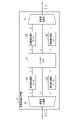
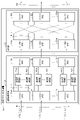
- FIG. 1 is a block diagram showing the configuration of a wavelength cross-connect device applied to a multiband transmission system according to an embodiment of the present invention
- FIG. 4 is a block diagram showing the configuration of a wavelength band switching processor of the wavelength cross-connect device of the embodiment
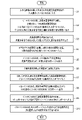
- FIG. 5 is a flowchart for explaining wavelength cross-connect operations by the wavelength cross-connect device of the embodiment
- 1 is a block diagram showing the configuration of a multi-band transmission system configured by connecting each node provided with a wavelength cross-connect device of an embodiment in a ring with an optical transmission line
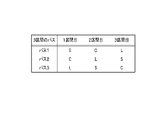
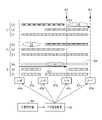
- FIG. 5 is a diagram showing a table of different wavelength bands transmitted on each path between nodes in the multi-band transmission system shown in FIG. 4;
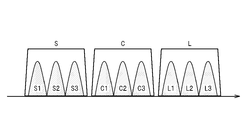
- FIG. 4 is a diagram showing wavelengths in S-band, C-band, and L-band as different wavelength bands;
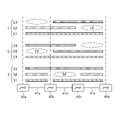
- FIG. 2 is a diagram showing optical signals of respective wavelengths in different wavelength bands, S band, C band, and L band, which are transmitted between a plurality of nodes, for explaining the wavelength continuity constraint;
- FIG. 10 is an explanatory diagram of path setting example 1;
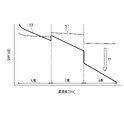
- FIG. 2 is a graph showing the optical signal-to-noise ratio (SNR) in the S-band, C-band and L-band;
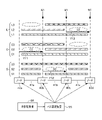
- FIG. 2 is a diagram showing optical signals of respective wavelengths in different wavelength bands, S band, C band, and L band, which are transmitted between a plurality of nodes, for explaining capacity restrictions due to inter-band stimulated Raman scattering;
- SNR optical signal-to-noise ratio
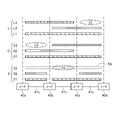
- FIG. 11 is an explanatory diagram of path setting example 2;
- FIG. 4 is a block diagram showing another configuration of the wavelength band switching processor of the wavelength cross-connect device of the embodiment;
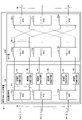
- FIG. 4 is a block diagram showing the configuration of a wavelength cross-connect device according to Modification 1 of the present embodiment;
- FIG. 4 is an explanatory diagram of processing for converting wavelengths in a wavelength band into wavelengths in a different wavelength band;
- FIG. 9 is a block diagram showing the configuration of a wavelength cross-connect device according to Modification 2 of the present embodiment;
- FIG. 1 is a block diagram showing the configuration of a wavelength cross-connect device applied to a multiband transmission system according to an embodiment of the present invention.
- the wavelength cross-connect device 1 shown in FIG. 1 includes a wavelength band switching section 10 and a WXC section 20.
- the wavelength band switching unit 10 is connected to each of M input routes indicated by symbol Mi, and receives M wavelength multiplexed signal lights 1a, 1b, . ⁇ 1 ⁇ Q>WSS (Wavelength Selective Switch) 11a, 11b, . Furthermore, M wavelength band switching processors #1 to #j, each of which consists of j, are provided between the ⁇ 1 ⁇ Q> WSSs 11a to 11m on the input side and the ⁇ Q ⁇ 1> WSSs 12a to 12m on the output side. Prepare.
- each of the M routes Mi is composed of one or more optical fibers. 1a ⁇ S, C, L>, 1b ⁇ S, C, L>, 1m ⁇ S, and 1m ⁇ S, as shown in FIG. S-band, C-band, and L-band optical signals are multiplexed as indicated by C, L>.
- the ⁇ 1 ⁇ Q> WSSs 11a to 11m on the input side constitute a second input side WSS described in the claims.
- the ⁇ Q ⁇ 1> WSSs 12a to 12m on the output side constitute a second output WSS described in the claims.
- the ⁇ 1 ⁇ Q> WSSs 11a to 11m on the input side have one input port and Q output ports (referred to as Q output ports), and the ⁇ Q ⁇ 1> WSSs 12a to 12m on the output side have Q input ports (referred to as Q output ports). Q input port) and one output port.
- Q j+1.
- the output port and the input port are counted as first, second, . . . from the top of the drawing.
- the first ⁇ 1 ⁇ Q> WSS 11a Q-branchs the wavelength-multiplexed signal light 1a that has been transmitted in multiple bands (S-band, C-band, and L-band wavelength bands), and Q-branchs the Q-branched wavelength-multiplexed signal light 1a. Output from the output port. Among the output Q wavelength multiplexed signal lights 1a, the first wavelength multiplexed signal light 1a is output to the first input port of the ⁇ Q ⁇ 1>WSS 12a on the output side.
- the 2nd to Qth wavelength multiplexed signal lights 1a are subjected to wavelength band conversion and the like in wavelength band switching processing units #1 to #j described later, and then are sent to ⁇ Q ⁇ 1>WSS 12a from the 2nd to Qth inputs. input to the port.
- the WSS has a function of performing Q-branching by outputting each optical signal of wavelength multiplexed signal light input from an input port from an arbitrary output port, instead of simple Q-branching by a coupler or the like.
- the ⁇ Q ⁇ 1> WSSs 12a to 12m on the output side have the same function. It has a processing function for outputting to WSSs 21a to 21m.
- Each of the wavelength band switching processing units #1 to #j has the same function, and as shown in FIG. It comprises band converters 32 and 33 , a ⁇ K ⁇ K> WSS 34 , a plurality of output-side wavelength band converters 35 and 36 , and a wavelength band combiner 37 .
- the ⁇ K ⁇ K> WSS 34 constitutes the specific WSS described in the claims.
- the input-side wavelength band converters 32 and 33 constitute an input-side converter described in the claims.
- the wavelength band converters 35 and 36 on the output side constitute an output-side converter described in the claims.
- the wavelength band demultiplexing unit 31 generates wavelength multiplexed signal light in which optical signals in the S band, C band, and L band input from the ⁇ Q ⁇ 1> WSSs 12a to 12m (FIG. 1) of the wavelength band switching unit 10 are multiplexed. are demultiplexed, and the demultiplexed S-band, C-band and L-band optical signals are output.
- the C band is assumed to be one wavelength band (specific wavelength band) that can be processed by the ⁇ K ⁇ K> WSS 34 .
- the ⁇ K ⁇ K> WSS 34 can process only optical signals in a specific wavelength band (C band). Therefore, the demultiplexed C-band optical signal is input to the ⁇ K ⁇ K> WSS 34 as it is.
- the wavelength band conversion unit 32 on the input side of the ⁇ K ⁇ K>WSS 34 converts the S-band optical signal into a C-band optical signal and outputs it to the ⁇ K ⁇ K>WSS 34 .
- the wavelength band converter 33 converts the L-band optical signal into a C-band optical signal and outputs the optical signal to the ⁇ K ⁇ K> WSS 34 .
- the wavelength band converter 35 on the output side converts the C-band optical signal into an S-band optical signal and outputs the converted signal to the wavelength band multiplexer 37 .
- the wavelength band converter 36 converts the C-band optical signal into an L-band optical signal and outputs the L-band optical signal to the wavelength band multiplexer 37 .
- the ⁇ K ⁇ K> WSS 34 converts the wavelength bands of the optical signals multiplexed into the wavelength multiplexed signal lights 1a to 1m input from the optical transmission line Mi on the input side of the wavelength cross-connect device 1 (FIG. 1) to different wavelengths. Perform processing to convert to bands.
- the C-band optical signal demultiplexed by the wavelength band demultiplexer 31 is input to the second input port of the ⁇ K ⁇ K> WSS 34, it is transmitted from the first output port to the wavelength band converter 35. It is input and converted into an S-band optical signal by the wavelength band converter 35 .
- This example is conversion processing for converting a C-band optical signal input from an input path Mi into an S-band optical signal and transmitting the converted signal to an output-side optical transmission line Mo (FIG. 1).
- the wavelength band multiplexing unit 37 multiplexes the S-band, C-band, and L-band optical signals, and outputs them to the second input ports of ⁇ Q ⁇ 1> WSSs 12a to 12m on the output side shown in FIG.
- the WXC unit 20 shown in FIG. 1 includes M ⁇ 1 ⁇ N> WSSs 21a, 21b, . 21m, and M ⁇ N ⁇ 1> WSSs 22a, 22b, .
- the M ⁇ 1 ⁇ N> WSSs 21a to 21m on the input side constitute the first input side WSS described in the claims.
- the M ⁇ N ⁇ 1> WSSs 22a to 22m on the output side constitute the first output side WSS described in the claims.
- the output ports of the ⁇ N ⁇ 1> WSSs 22a to 22m on the output side are connected to M output routes denoted by symbol Mo for outputting wavelength multiplexed signal light.
- the ⁇ 1 ⁇ N> WSSs 21a to 21m on the input side may be optical couplers such as 1 ⁇ N optical fiber couplers.
- the full mesh connection is as follows. That is, in the ⁇ 1 ⁇ N> WSSs 21a to 21m on the input side, the N output ports (N output ports) of the first WSS 21a are the N ports of the second to Mth WSSs 22b to 22m, excluding the first WSS on the output side. connected to an input port. In this way, the N output ports of every ⁇ 1 ⁇ N> WSSs 21a to 21m are connected to the N input ports of every ⁇ N ⁇ 1> WSSs 22a to 22m, excluding the WSS on the output side of the same number as the WSS on the input side. It is This connection constitutes a path through which the wavelength multiplexed signal light output from the N output ports of the ⁇ 1 ⁇ N> WSSs 21a to 21m is redirected.
- the ⁇ 1 ⁇ N> WSSs 21a to 21m on the input side have the same function, and are equipped with a function capable of collectively selecting and switching the wavelengths of multibands (wavelength bands of S, C, and L bands).
- the WSS 21a splits the wavelength multiplexed signal light 1a input from one input port and outputs this split wavelength multiplexed signal light 1a from the N output ports.
- the ⁇ N ⁇ 1> WSSs 22a to 22m on the output side have the same function, and are equipped with a function capable of collectively selecting and switching the wavelengths of multibands. Taking the first output side WSS 22a as a representative, the WSS 22a sequentially selects each wavelength multiplexed signal light input from N input ports and outputs them from one output port to one output route.
- step S1 shown in FIG. 3 wavelength multiplexed signal lights 1a to 1m multiband-transmitted for each of M input routes shown in FIG. It is input to one input port every 11m.
- Optical signals of S band, C band and L band are multiplexed for each wavelength multiplexed signal light 1a to 1m.
- each of the ⁇ 1 ⁇ Q> WSSs 11a to 11m Q-branchs the respective wavelength multiplexed signal lights 1a to 1m, and outputs them directly to the first input ports of the output side ⁇ Q ⁇ 1> WSSs 12a to 12m. together with the wavelength band switching processing units #1 to #j.
- step S3 the wavelength band switching processors #1 to #j demultiplex the input S-band, C-band and L-band wavelength multiplexed signal light in the wavelength band demultiplexer 31 shown in FIG. It outputs demultiplexed S-band, C-band and L-band optical signals.
- the C-band optical signal is input to the ⁇ K ⁇ K> WSS 34 as it is.
- the S-band optical signal is output to the wavelength band converter 32
- the L-band optical signal is output to the wavelength band converter 33 .
- step S4 the wavelength band conversion unit 32 converts the S-band optical signal into a C-band optical signal and outputs the converted signal to the ⁇ K ⁇ K> WSS 34 .
- the wavelength band converter 33 converts the L-band optical signal into a C-band optical signal and outputs the optical signal to the ⁇ K ⁇ K> WSS 34 .
- the C-band optical signal is output to the ⁇ K ⁇ K> WSS 34 without conversion.
- step S5 the ⁇ K ⁇ K> WSS 34 outputs C-band optical signals input from K (three) input ports from K output ports required for wavelength band conversion.
- a C-band optical signal input from the second input port of the ⁇ K ⁇ K> WSS 34 is output to the wavelength band converter 35 from the first output port.
- step S ⁇ b>6 the wavelength band conversion unit 35 converts the C-band optical signal into an S-band optical signal and outputs the converted optical signal to the wavelength band multiplexing unit 37 .
- the wavelength band converter 36 converts the C-band optical signal into an L-band optical signal and outputs the L-band optical signal to the wavelength band multiplexer 37 .
- step S7 the wavelength band multiplexing unit 37 multiplexes the S-band, C-band, and L-band optical signals, converts them into wavelength multiplexed signal light, and converts them to ⁇ Q ⁇ 1> WSSs 12a to 12m shown in FIG. to the 2nd to Qth input ports of .
- each of the ⁇ Q ⁇ 1> WSSs 12a to 12m sequentially selects the S-band, C-band and L-band wavelength multiplexed signal lights input from the Q input port, ⁇ 1 ⁇ N> Output to one input port of WSS 21a to 21m.
- the ⁇ 1 ⁇ N> WSSs 21a to 21m divide the wavelength multiplexed signal light 1a input from one input port into N branches, and transmit the N branched wavelength multiplexed signal lights from the N output ports to ⁇ N ⁇ 1>WSSs 22a to 22m. 22m to N input ports.
- the first WSS 21a wavelength multiplexed signal light is output from this N output port to the N input ports of the second to Mth WSSs 22b to 22m on the output side, excluding the first one. Such an output redirects the wavelength multiplexed signal light.
- each of the ⁇ N ⁇ 1> WSSs 22a to 22m on the output side sequentially selects S-band, C-band, and L-band wavelength-multiplexed signal light input from N input ports, and selects one from one output port. Output to the output route.
- the wavelength cross-connect device 1 includes a wavelength band switching unit 10 and a WXC unit 20 .
- the wavelength band switching unit 10 receives optical signals in different wavelength bands (S band, C band and L band) that have been multi-band-transmitted for each of M optical transmission lines composed of one or more optical fibers.
- S band, C band and L band wavelength bands
- Each of the multiplexed wavelength-multiplexed signal lights is branched into a predetermined number of wavelength-multiplexed signal lights, and the predetermined number of branched wavelength-multiplexed signal lights are converted in wavelength band and output.
- the WXC unit 20 includes ⁇ 1 ⁇ N> WSSs 21a to 21m as a plurality of first input WSSs for branching and outputting respective wavelength multiplexed signal lights output from the wavelength band switching unit 10, and the ⁇ 1 ⁇ N> WSSs 21a to 21m.
- ⁇ N ⁇ 1> WSSs 22a to 22m as a plurality of second output side WSSs mesh-connected to the >WSSs 21a to 21m.
- the wavelength-multiplexed signal light branched by the ⁇ 1 ⁇ N> WSSs 21a to 21m is input to the ⁇ N ⁇ 1> WSSs 22a to 22m, changed in direction, and then output to the output transmission line Mo.
- the wavelength cross-connect device 1 converts the wavelength band of the wavelength multiplexed signal light in which the optical signals of different wavelength bands transmitted in the multiband are multiplexed by the wavelength band switching unit, and then converts the wavelength band to the WXC unit. You can change the route with and output to the output side route.
- wavelength band conversion can be performed on a link-by-link basis and a wavelength-by-wavelength basis, which will be described later.
- the wavelength in the vacant wavelength band of the optical transmission line between the nodes 40a and 40b (for example, the wavelength C1 in the C band) is converted by the wavelength cross-connect device 1 on the front side of the section between the nodes 40a and 40b.
- the wavelengths in the wavelength band in the wavelength vacant section can be set to be usable in this manner, the usable capacity of the network can be improved. That is, it is possible to improve the utilization efficiency of the network of the multiband transmission system.
- a multiband transmission system (also referred to as system) 40 shown in FIG. 41b, 41c, 41d, 41e, and 41f are connected in a ring shape.
- the above-mentioned link unit is the unit of the optical transmission line 41a that connects two adjacent node (for example, nodes 40a and 40b) sections in the system 40. In other words, it is the unit of two adjacent node intervals.
- optical signals of different wavelength bands are transmitted through optical transmission lines 41a, 41b, and 41c between nodes 40a, 40b, 40c, and 40d starting at node 40a and ending at node 40d.
- Multiband transmission has been limited to transmission in one wavelength band in one path.
- the nodes 40a-40b-40c-40d are also referred to as nodes 40a . . . 40d.
- the path 1 passing through the optical transmission lines 41a to 41c transmits only the optical signal in the S band
- Path 2 was limited to transmitting only C-band optical signals
- path 3 was limited to transmitting only L-band optical signals.
- multiband transmission is characterized by a power transition from an optical signal with a short wavelength to an optical signal with a long wavelength. Therefore, in the above example, the transmission performance of the optical signal in the S band of path 1 is poor, the transmission performance of the optical signal in the C band of path 2 is normal, and the transmission performance of the optical signal in the L band of path 3 is low. In many cases, the transmission performance of optical signals is improved. In this way, there was a deviation in transmission performance among the paths 1, 2, and 3.
- Transmission performance is determined by parameters such as the transmission band and amount of loss as the performance of devices (optical products) such as optical fibers, and stimulated Raman scattering (SRS), which is one of the nonlinear optical effects. .
- the above parameters are strongly band dependent. Since the transmission performance depends on the wavelength band used as described above, deviations occur between different wavelength bands.
- the wavelength cross-connect device 1 can change the wavelength band for each section (link unit) between the nodes 40a...40d.
- an S-band optical signal is transmitted in the first section (between nodes 40a-40b), and an S-band optical signal is transmitted in the second section (between nodes 40b).
- C-band optical signals are transmitted.
- An L-band optical signal is transmitted in the third section (between nodes 40c and 40d).
- the C-band optical signal is transmitted in the first section
- the L-band optical signal is transmitted in the second section
- the S-band optical signal is transmitted in the third section.
- an L-band optical signal is transmitted in the first section
- an S-band optical signal is transmitted in the second section
- a C-band optical signal is transmitted in the third section.
- the S band of the optical signal consists of wavelengths S1, S2 and S3
- the C band consists of wavelengths C1, C2 and C3
- the L band consists of wavelengths L1, L2 and L3.
- the wavelength cross-connect device 1 can set any wavelength in different wavelength bands for each of the paths 1, 2, and 3 in each node 40a-40b-40c-40d section.
- an S-band wavelength S1 is set for the path 1 of the optical transmission line 41a between the nodes 40a and 40b
- a C-band wavelength C1 is set for the path 2 of the optical transmission line 41b between the nodes 40b and 40c
- An L-band wavelength L1 is set for the path 3 of the optical transmission line 41c in the -40d section, and optical signals can be transmitted at the set wavelengths S1, C1, and L1.
- wavelength continuity constraint refers to the need to continuously transmit the same wavelength within one wavelength band on one path between the nodes 40a...40d.
- the wavelength cross-connect device 1 can convert the wavelength band on a wavelength-by-wavelength basis, so for example, the wavelength C2 shown in the elliptical dashed frame of the C band between the nodes 40a and 40b can be set. Furthermore, a wavelength S2 shown in an elliptical dashed frame in the S band between the nodes 40b-40c can be set, and a wavelength L2 shown in the L band elliptical dashed frame between the nodes 40c to 40d can be set.
- the wavelength C2 of the waveband C is used between the nodes 40a and 40b
- the wavelength S2 of the waveband S is used between the nodes 40b and 40c
- the wavelength L2 of the waveband L is used between the nodes 40c and 40d. can transmit optical signals.
- the free wavelengths indicated by the dashed elliptical frames can be used to transmit optical signals in such a way that wavelength collision can be avoided, so the capacity of the network can be improved. That is, it is possible to improve the utilization efficiency of the network of the multiband transmission system.
- path setting example 1 will be described with reference to FIG.
- a path setting device 55 is connected to each of the nodes 40a to 40d.
- the path setting device 55 is connected to an external terminal 56 such as a personal computer for placing an order for path setting.
- a plurality of arrows W1 indicate wavelength band switching points.
- the path setting device 55 manages the usage of wavelengths between the nodes 40a...40d. For example, when an order for setting a new path between the nodes 40a .
- the device 55 checks the availability of wavelengths.
- the path setting device 55 gives the following instructions (1) to (4) in response to confirmation of the wavelength availability.
- the path setting device 55 instructs the node 40a to transmit the C-band wavelength C2 to the node 40b as indicated by the arrow Y11 in order to set an optical path on the optical transmission line 41a.
- the path setting device 55 switches the C-band of the input optical signal of wavelength C2 to the S-band to the node 40b as indicated by the arrow Y12. , to convert it into an optical signal of wavelength S2 and transmit it to node 40c.
- the path setting device 55 switches the S-band of the input optical signal of the wavelength S2 to the L-band to the node 40c as indicated by the arrow Y13. , to convert it into an optical signal of wavelength L2 and transmit it to the node 40d.
- the path setting device 55 may instruct the node 40d to return to the S-band wavelength S2. This is done when the usable wavelength band is determined at the start and end points of the path.
- the SNR of the S-band, C-band, and L-band increases as the frequency of the wavelength band increases, in other words, as the wavelength of the wavelength band increases, as indicated by the solid line 52. It decreases as it becomes shorter.
- the SNR is the worst in the S band. For this reason, as indicated by the dashed horizontal bar 54 in FIG. 10, optical signals cannot be transmitted through the S band between the nodes 40a-40b-40c-40d.
- the wavelength cross-connect device 1 can convert the wavelength band in units of wavelengths
- the wavelengths of different wavelength bands can be set as follows in the wavelength vacant section indicated by the elliptical dashed line frame. That is, the wavelength C3 is set between the nodes 40a and 40b, the wavelength S3 is set between the nodes 40b and 40c, and the wavelength L3 is set between the nodes 40c and 40d.
- the wavelength C3 of the waveband C is used between the nodes 40a and 40b
- the wavelength S3 of the waveband S is used between the nodes 40b and 40c
- the wavelength L3 of the waveband L is used between the nodes 40c and 40d.
- optical signals can be transmitted while mitigating the effects of inter-band stimulated Raman scattering.
- path setting example 2 will be described with reference to FIG. However, as shown in FIG. 8, each of the nodes 40a to 40d is connected with a path setting device 55 to which an external terminal 56 is connected.
- the path setting device 55 manages the usage of wavelengths between the nodes 40a...40d. For example, when an order for setting a new path between the nodes 40a to 40d is added by the external terminal 56, the path setting device 55 confirms the availability of wavelengths. In the example of FIG. 11, it is possible to set a path between the nodes 40a to 40d at wavelength S3. However, if, for example, it is specified that up to two consecutive links can be set for the wavelength S3 as a setting condition, paths cannot be set for the optical transmission lines 41a, 41b, and 41c for the wavelength S3.
- the path setting device 55 issues the following instructions (1) to (4) in response to confirmation of the wavelength availability.
- the path setting device 55 instructs the node 40a to transmit an optical signal having a wavelength S3 in the S band to the node 40b, as indicated by an arrow Y21, in order to set an optical path in the optical transmission line 41a. instruct.
- Path setting device 55 sends the input optical signal of wavelength S3 to node 40c as it is, as indicated by arrow Y21, in order to set an optical path on optical transmission line 41b for node 40b. Instruct to send.
- the path setting device 55 switches the S-band of the input optical signal of wavelength S3 to the L-band in order to set an optical path on the optical transmission line 41c to the node 40c, as indicated by an arrow Y22. , is converted into an optical signal of wavelength L3 and transmitted to the node 40d.
- the path setting device 55 may instruct the node 40d to return to the S-band wavelength S2. This is done when the usable wavelength band is determined at the start and end points of the path.
- optical signals can be transmitted between the nodes 40a to 40d while avoiding the inter-band stimulated Raman scattering, so it is possible to avoid capacity restrictions due to the inter-band stimulated Raman scattering. Therefore, it is possible to improve the usage capacity of the network in the multi-band transmission system and improve the utilization efficiency of the network.
- the network efficiency decreases from 100% due to wavelength continuity restrictions, and further due to capacity restrictions due to the effects of inter-band stimulated Raman scattering.
- the decrease in network efficiency can be suppressed.
- the wavelength band switching unit 10 splits each of the wavelength multiplexed signal lights 1a to 1m for each optical transmission line into a predetermined number and outputs them as a plurality (M) of second input WSSs ⁇ 1 ⁇ Q >WSS 11a to 11m.
- ⁇ 1 ⁇ Q> A plurality of (M ) wavelength band switching processing units #1 to #j.
- the WXC unit 20 selects the wavelength multiplexed signal light output from the wavelength band switching processing units #1 to #j and the wavelength multiplexed signal light directly output from the ⁇ 1 ⁇ Q> WSSs 11a to 11m one by one.
- ⁇ Q ⁇ 1> WSSs 12a to 12m as second output side WSSs that output to the ⁇ 1 ⁇ N> WSSs 21a to 21m.
- the wavelength band switching processing unit for example, wavelength band switching processing Since it is sufficient to increase the number in units of part #1), the number can be easily increased.
- the wavelength band switching processors #1 to #j include a wavelength band demultiplexer 31, wavelength band converters 32 and 33 as input side converters, ⁇ K ⁇ K> WSS 34 as a specific WSS,
- the configuration includes wavelength band converters 35 and 36 as output side converters and a wavelength band multiplexer 37 .
- the wavelength band demultiplexing unit 31 demultiplexes and outputs optical signals of different wavelength bands multiplexed into wavelength multiplexed signal light from one output port of each ⁇ 1 ⁇ Q> WSS 11a to 11m on the input side.
- the wavelength band conversion units 32 and 33 as input side conversion units convert optical signals in wavelength bands other than a predetermined specific wavelength band among the optical signals in different wavelength bands demultiplexed by the wavelength band demultiplexing unit 31. , into an optical signal of the specific wavelength band.
- the ⁇ K ⁇ K> WSS 34 has the same number of input ports and output ports as the number of demultiplexed waves in the wavelength band demultiplexing unit 31, and can process only a specific wavelength band.
- the specific wavelength band converted by the converters 32 and 33 or the specific wavelength band within the different wavelength bands demultiplexed is output from the output port so as to be converted into a predetermined wavelength band.
- Wavelength band converters 35 and 36 as output side converters convert optical signals in a specific wavelength band output from output ports into optical signals in a predetermined wavelength band.
- the wavelength band multiplexing unit 37 multiplexes the respective optical signals of different wavelength bands from the wavelength band conversion units 35 and 36, converts them into wavelength multiplexed signal light, and transmits them to each ⁇ Q ⁇ 1> WSS 12a to 12m on the output side. Output.
- the ⁇ K ⁇ K> WSS 34 allows a specific wavelength band converted by the wavelength band converters 32 and 33 on the input side, or a specific wavelength band within a different wavelength band demultiplexed by the wavelength band demultiplexer 31 A waveband is output from the output port to convert to a predetermined waveband.
- one ⁇ K ⁇ K> WSS 34 can convert optical signals of different wavelength bands into optical signals of a predetermined wavelength band, so that the wavelength band switching processors #1 to #j can be miniaturized.
- Waveband switching processing units #1 to #j shown in FIG. 1 may be configured such that wavelength band switching processing unit #1 is representatively shown in FIG. 12 in addition to the configuration shown in FIG.
- Waveband switching processing unit #1 shown in FIG. configured as follows.
- P is the same number as ⁇ 1 ⁇ P> the number of output ports of WSS 61, the number of input ports of ⁇ P ⁇ 1> WSS 63, and the number of wavelength band converters 62a to 62f.
- either one of ⁇ 1 ⁇ P>WSS 61 and ⁇ P ⁇ 1>WSS 63 may be an optical coupler such as a 1 ⁇ P or P ⁇ 1 optical fiber coupler.
- the ⁇ 1 ⁇ P> WSS 61 constitutes the first WSS described in the claims.
- the ⁇ P ⁇ 1> WSS 63 constitutes the second WSS described in the claims.
- the ⁇ 1 ⁇ P> WSS 61 P-splits each optical signal of the S band, C band and L band of different wavelength bands multiplexed with the wavelength multiplexed signal light input from the ⁇ 1 ⁇ Q> WSS 11a (FIG. 1). do.
- This P-branching is performed by including a predetermined number of optical signals of the same wavelength band.
- two S-band, C-band and L-band optical signals are included and P-branched as follows. That is, the S-band optical signals are output to the wavelength band conversion units 62a and 62b, the C-band optical signals are output to the wavelength band conversion units 62c and 62d, and the L-band optical signals are output to the wavelength band conversion units 62e and 62d. output.
- the wavelength band converter 62 a converts the S band into a C band optical signal
- the wavelength band converter 62 b converts the S band into an L band optical signal and outputs the signal to the input port of the ⁇ P ⁇ 1> WSS 63
- the wavelength band converter 62 c converts the C band into an S band optical signal
- the wavelength band converter 62 d converts the C band into an L band optical signal and outputs it to the input port of the ⁇ P ⁇ 1> WSS 63
- the wavelength band converter 62e converts the L-band into an S-band optical signal
- the wavelength band converter 62f converts the L-band into a C-band optical signal for output to the input port of the ⁇ P ⁇ 1> WSS 63 .
- WSS 63 multiplexes two S-band, C-band, and L-band input to P input ports, and sends wavelength-multiplexed signal light to ⁇ Q ⁇ 1> WSS 12a shown in FIG. Output.
- the wavelength band switching processor #1 having a simple configuration can convert different wavelength bands multiplexed into wavelength multiplexed signal light for each input transmission line into optical signals of other different wavelength bands.
- WSS that can handle at least two or more wavelength bands may be used in the wavelength band switching processing unit #1 shown in FIG. 2 or FIG.
- the input side WSSs 11a to 11m and the output side WSSs 12a to 12m of the wavelength band switching section 10 shown in FIG. WSS that can handle may be used.
- the WSS 34 capable of processing the S-band, C-band and L-band shown in FIG. instead of the WSS 34 capable of processing the S-band, C-band and L-band shown in FIG.
- the WSS of the E-band and S-band and the WSS of the C-band and L-band may be provided.
- the configuration may be such that each of the four wavelength bands can be processed in half.
- FIG. 13 is a block diagram showing the configuration of a wavelength cross-connect device according to Modification 1 of the embodiment of the present invention.
- the first ⁇ 1 ⁇ Q> WSS 11aA converts the wavelength-multiplexed signal light 1a transmitted in multiband (wavelength bands of S band, C band and L band) into an optical signal of either S band, C band or L band.
- an optical signal in any one of the Q-branched wavelength bands is output from any one of the Q output ports.
- an L-band optical signal is output from the first Q output port
- an S-band optical signal is output from the second output port
- a C-band optical signal is output from the j-th output port.
- the wavelength band converters #1A to #jA perform processing to convert the wavelength bands (S band, C band and L band) output from the input side ⁇ 1 ⁇ Q> WSSs 11aA to 11mA into different wavelength bands.
- the wavelength band converter #1A connected to the output port of the ⁇ 1 ⁇ Q> WSS 11aA converts the S band of the wavelength band to the C band
- the wavelength band converter #jA converts the C band to the L band.
- the L-band optical signal output from the first output port of ⁇ 1 ⁇ Q> WSS 11aA is output to the first input port of ⁇ Q ⁇ 1> WSS 12a on the output side.
- the S-band optical signal output from the second output port is output to the wavelength band converter #1A and converted into a C-band optical signal.
- the C-band optical signal output from the j-th output port is output to the wavelength band converter #jA and converted into an L-band optical signal.
- the wavelength cross-connect device 1A of this modified example 1 it is possible to obtain the same effects as in the above-described embodiment. Further, since the wavelength band conversion units #1A to #jA of the modified example 1 can be configured with a simpler and smaller configuration than the wavelength band switching processing units #1 to #j of the embodiment, the wavelength cross-connect device 1A can be reduced accordingly. Miniaturization can be achieved.
- the wavelength band converters #1A to #jA shift the wavelengths in the wavelength band of the wavelength multiplexed signal lights 1a to 1m (for example, the wavelength S1 in the S band) to the longer wavelength side or the shorter wavelength side to shift the wavelengths to different wavelength bands. (wavelength C2 in C band).
- This shift is set as follows. For example, in the wavelength band converter #1A connected to the input side WSS 11aA ( ⁇ 1 ⁇ Q>WSS 11aA), as indicated by arrow Y1 in FIG. It is set to be shifted by ⁇ +3> and converted to the wavelength C1 in the C band. As a result, the S-band wavelength S1 of the wavelength multiplexed signal light 1a branched by the input side WSS 11aA is converted into the C-band wavelength C1 by the wavelength band converter #1A and output to the second input port of the output side WSS 12b. be done.
- the S-band wavelength S2 of the branched wavelength multiplexed signal light 1a is converted into the C-band wavelength C3 by the wavelength band converter #jA and output to the j-th input port of the output side WSS 12b.
- the wavelength band converter #1A of the other group (1+j) connected to the input side WSS 11aA as indicated by the arrow Y3 in FIG. -8> to convert to the S-band wavelength S1.
- the wavelength L3 of the L band of the branched wavelength multiplexed signal light 1a is converted into the wavelength S1 of the S band by the wavelength band converter #1A of the other set (1+j), and the other set of the output side WSS 12b is converted. It is output to the first input port of (1+j).
- the wavelength band converter #jA of another group (1+j) connected to the input side WSS 11aA as indicated by the arrow Y4 in FIG. -5> to convert to the S-band wavelength S1.
- the C-band wavelength C3 of the branched wavelength multiplexed signal light 1a is converted into the S-band wavelength S1 by the wavelength band converter #jA of the other set (1+j), and the other set of the output side WSS 12b is converted.
- the wavelength band converters #1A to #jA of the wavelength cross-connect device 1A enable wavelength conversion across a plurality of wavelength bands in wavelength multiplexed signal lights 1a to 1m.
- FIG. 15 is a block diagram showing the configuration of a wavelength cross-connect device according to Modification 2 of the embodiment of the present invention.
- the wavelength cross-connect device 1B of Modification 2 shown in FIG. 15 differs from the wavelength cross-connect device 1 (FIG. 1) of the above embodiment in that the wavelength band switching unit 10B includes ⁇ Q ⁇ 1> WSSs 12a to 12m (FIG. 1). ). Also, the WXC unit 20B has ⁇ Q ⁇ N> WSSs 21aB to 21mB in place of the ⁇ 1 ⁇ N> WSSs 21a to 21m (FIG. 1), and the N output ports of the ⁇ Q ⁇ N> WSSs 21aB to 21mB are replaced by ⁇ N ⁇ 1 >The configuration is mesh-connected to N input ports of WSSs 22a to 22m.
- the ⁇ Q ⁇ N> WSSs 21aB to 21mB constitute the third input side WSS described in the claims.
- WSSs 21aB to 21mB are provided with Q input ports and N output ports, and wavelength multiplexing input from ⁇ 1 ⁇ Q> WSSs 11a to 11m and wavelength band switching processing units #1 to #j to Q input ports is performed. A process for selectively outputting the signal light to any one of the N output ports is performed.
- transmission of optical signals between the wavelength band switching unit 10B and the WXC unit 20B can be realized using an optical device ( ⁇ Q ⁇ N> WSS 21aB to 21mB) capable of transmitting N wavelength multiplexed signal lights. .
- the ⁇ Q ⁇ N> WSSs 21aB to 21mB in the wavelength cross-connect device 1B shown in FIG. 15 can be similarly replaced and applied in the wavelength cross-connect device 1A shown in FIG.
- wavelength cross-connect devices 1, 1A, and 1B by monitoring the usage status of the wavelength band switching processing units #1 to #j or the wavelength band conversion units #1A to #jA and dynamically powering off , it is possible to reduce power consumption during operation. Further, the amount of wavelength shift in the wavelength band converters #1A to #jA can be arbitrarily selected, and even if one of the wavelength band converters #1A to #jA fails, other wavelength band converters can be converted by remote control. It is possible to suppress the influence of the failure by substituting for the part.
- a wavelength cross-connect device which is a wavelength-multiplexed signal obtained by multiplexing optical signals of different wavelength bands that have been multi-band-transmitted for each of a plurality of optical transmission lines composed of one or more optical fibers.
- a wavelength band switching unit for branching each light into a predetermined number, performing wavelength band conversion for each branched predetermined number of wavelength multiplexed signal lights, and outputting from the wavelength band switching unit
- a plurality of first input side WSSs for branching and outputting respective wavelength multiplexed signal lights, and a plurality of first output side WSSs mesh-connected to the first input side WSSs, wherein the first input side WSSs and a WXC (Wavelength Cross Connect) unit for inputting the branched wavelength multiplexed signal light to the first output side WSS, changing the route, and outputting it to an output transmission line.
- the wavelength cross-connect device converts the wavelength band of the wavelength multiplexed signal light in which the optical signals of different wavelength bands transmitted in the multiband are multiplexed by the wavelength band switching unit, and then converted by the WXC unit. You can change the route and output to the output side route.
- wavelength band conversion can be performed on a link-by-link basis and a wavelength-by-wavelength basis.
- the wavelength in the vacant wavelength band of the optical transmission line in the node section (for example, the wavelength C1 in the C band) can be converted and used by the wavelength cross-connect device on the front side of the node section. Since the wavelengths in the wavelength band in the wavelength vacant section can be set to be usable in this manner, the usable capacity of the network can be improved. That is, it is possible to improve the utilization efficiency of the network of the multiband transmission system.
- the wavelength band switching unit includes a plurality of second input side WSSs for branching each of the wavelength multiplexed signal lights for each of the optical transmission lines into a predetermined number and outputting the same, and from a plurality of wavelength band switching processing units for outputting wavelength multiplexed signal light obtained by converting wavelength bands of optical signals multiplexed in output wavelength multiplexed signal light into different wavelength bands; and from the plurality of wavelength band switching processing units a second output side WSS that outputs to the first input side WSS of the WXC section while selecting one of the output wavelength multiplexed signal light and the wavelength multiplexed signal light directly output from the second input side WSS;
- the wavelength cross-connect device according to (1) above, characterized by comprising:
- the number of wavelength band switching in the wavelength band switching unit when the amount of wavelength-multiplexed signal light transmitted in multiband transmission increases and it is desired to increase the number of wavelength band switching in the wavelength band switching unit, the number can be increased in units of wavelength band switching processing units. Good and easy to increase.
- the wavelength band switching processing unit includes a wavelength band demultiplexing unit for demultiplexing and outputting optical signals of different wavelength bands multiplexed with the wavelength multiplexed signal light from the second input side WSS; an input-side converter that converts an optical signal in a wavelength band other than a predetermined specific wavelength band among the optical signals in different wavelength bands, into an optical signal in the specific wavelength band; having the same number of input ports and output ports, capable of processing only the specific wavelength band, and the specific wavelength band input from the input port converted by the input side converter, or the demultiplexed different wavelengths a specific WSS output from the output port so as to convert a specific wavelength band within the band into a predetermined wavelength band; and a wavelength band multiplexing unit that multiplexes the optical signals of different wavelength bands from the output side conversion unit, converts them into wavelength multiplexed signal light, and outputs them to the second output side WSS.
- the wavelength cross-connect device characterized by comprising:
- the specific wavelength band converted by the input-side conversion unit or the specific wavelength band within a different wavelength band demultiplexed by the wavelength band demultiplexing unit is converted into a predetermined wavelength band by the specific WSS. is output from the output port as follows.
- one specific WSS can convert each optical signal of a different wavelength band into an optical signal of a predetermined wavelength band, so that the wavelength band switching processor can be miniaturized.
- the wavelength band switching processing unit includes a first WSS that branches different wavelength bands multiplexed into the wavelength multiplexed signal light from the second input side WSS, including a predetermined number of optical signals of the same wavelength band; wavelength band converters of the same number as the number of branches for converting optical signals of wavelength bands branched by the first WSS into optical signals of different wavelength bands; and light of each wavelength band converted by the wavelength band converters.
- a wavelength band switching processor having a simple configuration can convert different wavelength bands multiplexed into wavelength multiplexed signal light for each input transmission line into optical signals of other different wavelength bands.
- the second input side WSS splits the wavelength multiplexed signal light for each optical transmission line into optical signals of any one of wavelength bands, and converts any one of the split optical signals of any one wavelength band to any one of the wavelength bands.
- a wavelength band conversion unit that performs processing for outputting from one output port and converts an optical signal of one wavelength band output from one output port of the second input side WSS into a different wavelength band instead of the wavelength band switching processing unit.
- the wavelength band conversion section has a simpler and smaller configuration than the wavelength band switching processing section, so the size of the wavelength cross-connect device can be reduced accordingly.
- the wavelength band conversion unit shifts the wavelength of the optical signal of one wavelength band output from one output port of the second input side WSS to the longer wavelength side or the shorter wavelength side to shift the wavelength of the different wavelength band.
- the wavelength band switching section does not include the second output side WSS, and the WXC section replaces the first input side WSS and outputs wavelength multiplexed signal light from the second input side WSS without conversion. and a plurality of input ports to which the wavelength multiplexed signal light output from the wavelength band switching processing unit is input, and a plurality of output ports mesh-connected to the input ports of the first output side WSS.
- the third input side WSS has a plurality of input ports for wavelength multiplexed signal light input without conversion from the second input side WSS and wavelength multiplexed signal light input from the wavelength band switching processing unit.
- transmission of optical signals between the wavelength band switching unit and the WXC unit can be realized using optical devices (second output side WSS and second input side WSS) capable of transmitting a plurality of wavelength multiplexed signal lights. .
- wavelength cross-connect device 10 wavelength band switching unit 11a to 11m, 11aA to 11mA ⁇ 1 ⁇ Q> WSS (second input side WSS) 12a to 12m ⁇ Q x 1> WSS (second output side WSS) 20 WXC part 21a to 21m ⁇ 1 ⁇ N> WSS (first input side WSS) 21aB to 21mB ⁇ Q ⁇ N> WSS (third input side WSS) 22a to 22m ⁇ N x 1> WSS (first output side WSS) 31 wavelength band demultiplexer 32, 33 wavelength band converter (input side converter) 34 ⁇ K ⁇ K> WSS (specific WSS) 35, 36 wavelength band converter (output side converter) 37 wavelength band combining unit 61 ⁇ 1 ⁇ P> WSS (first WSS) 62a to 62f wavelength band converter 63 ⁇ P ⁇ 1> WSS (second WSS) #1 to #j wavelength band switching processing unit #1A to #jA wavelength band conversion unit
Landscapes
- Engineering & Computer Science (AREA)
- Computer Networks & Wireless Communication (AREA)
- Computing Systems (AREA)
- Physics & Mathematics (AREA)
- Electromagnetism (AREA)
- Signal Processing (AREA)
- Optical Communication System (AREA)
- Use Of Switch Circuits For Exchanges And Methods Of Control Of Multiplex Exchanges (AREA)
Priority Applications (3)
| Application Number | Priority Date | Filing Date | Title |
|---|---|---|---|
| PCT/JP2021/021585 WO2022259319A1 (ja) | 2021-06-07 | 2021-06-07 | 波長クロスコネクト装置及び波長クロスコネクト方法 |
| US18/567,525 US12563323B2 (en) | 2021-06-07 | 2021-06-07 | Wavelength cross connect device, and wavelength cross connect method |
| JP2023527163A JP7694655B2 (ja) | 2021-06-07 | 2021-06-07 | 波長クロスコネクト装置及び波長クロスコネクト方法 |
Applications Claiming Priority (1)
| Application Number | Priority Date | Filing Date | Title |
|---|---|---|---|
| PCT/JP2021/021585 WO2022259319A1 (ja) | 2021-06-07 | 2021-06-07 | 波長クロスコネクト装置及び波長クロスコネクト方法 |
Publications (1)
| Publication Number | Publication Date |
|---|---|
| WO2022259319A1 true WO2022259319A1 (ja) | 2022-12-15 |
Family
ID=84425041
Family Applications (1)
| Application Number | Title | Priority Date | Filing Date |
|---|---|---|---|
| PCT/JP2021/021585 Ceased WO2022259319A1 (ja) | 2021-06-07 | 2021-06-07 | 波長クロスコネクト装置及び波長クロスコネクト方法 |
Country Status (3)
| Country | Link |
|---|---|
| US (1) | US12563323B2 (cg-RX-API-DMAC7.html) |
| JP (1) | JP7694655B2 (cg-RX-API-DMAC7.html) |
| WO (1) | WO2022259319A1 (cg-RX-API-DMAC7.html) |
Cited By (1)
| Publication number | Priority date | Publication date | Assignee | Title |
|---|---|---|---|---|
| WO2024183463A1 (zh) * | 2023-03-03 | 2024-09-12 | 华为技术有限公司 | 光传输装置以及光传输系统 |
Families Citing this family (1)
| Publication number | Priority date | Publication date | Assignee | Title |
|---|---|---|---|---|
| CN114063215B (zh) * | 2020-07-30 | 2023-08-22 | 华为技术有限公司 | 一种波长选择开关和光交换设备、系统 |
Citations (4)
| Publication number | Priority date | Publication date | Assignee | Title |
|---|---|---|---|---|
| JP2003198485A (ja) * | 2001-12-28 | 2003-07-11 | Nec Corp | クロスコネクト装置及び光通信システム |
| US20040153492A1 (en) * | 2002-09-20 | 2004-08-05 | Xiaojun Cao | Efficient optical network design using multi-granular optical cross-connects with wavelength band switching |
| EP2773057A1 (en) * | 2013-02-27 | 2014-09-03 | Alcatel Lucent | Optical network node and method of transmitting wavelength multiplexed optical data signals |
| JP2020137042A (ja) * | 2019-02-25 | 2020-08-31 | 富士通株式会社 | 伝送装置及び伝送システム |
Family Cites Families (10)
| Publication number | Priority date | Publication date | Assignee | Title |
|---|---|---|---|---|
| JP2002101432A (ja) * | 2000-07-21 | 2002-04-05 | Fujitsu Ltd | 光スイッチ網、光クロスコネクト装置および光分岐・挿入装置 |
| US20050089027A1 (en) * | 2002-06-18 | 2005-04-28 | Colton John R. | Intelligent optical data switching system |
| JP2004254157A (ja) * | 2003-02-21 | 2004-09-09 | Fujitsu Ltd | 光クロスコネクト装置 |
| US20080181605A1 (en) * | 2007-01-30 | 2008-07-31 | Paparao Palacharla | Multi-degree optical node architectures |
| US8909043B2 (en) * | 2011-02-04 | 2014-12-09 | Nec Laboratories America, Inc. | Routing, wavelength assignment, and spectrum allocation in wavelength convertible flexible optical wavelength-division multiplexing networks |
| CN104753623B (zh) * | 2013-12-25 | 2018-04-27 | 华为技术有限公司 | 一种光交换装置 |
| US11979226B2 (en) * | 2020-02-04 | 2024-05-07 | Nippon Telegraph And Telephone Corporation | Wavelength cross connect device and wavelength cross connect method |
| US12316383B2 (en) * | 2020-07-06 | 2025-05-27 | Nippon Telegraph And Telephone Corporation | Wavelength cross connect device, multiband transmission system, and multiband transmission method |
| US12244346B2 (en) * | 2020-07-06 | 2025-03-04 | Nippon Telegraph And Telephone Corporation | Wavelength cross connect device and wavelength cross connect method |
| US12684272B2 (en) * | 2021-06-07 | 2026-07-14 | Ntt, Inc. | Wavelength cross connect device, and wavelength cross connect method |
-
2021
- 2021-06-07 US US18/567,525 patent/US12563323B2/en active Active
- 2021-06-07 JP JP2023527163A patent/JP7694655B2/ja active Active
- 2021-06-07 WO PCT/JP2021/021585 patent/WO2022259319A1/ja not_active Ceased
Patent Citations (4)
| Publication number | Priority date | Publication date | Assignee | Title |
|---|---|---|---|---|
| JP2003198485A (ja) * | 2001-12-28 | 2003-07-11 | Nec Corp | クロスコネクト装置及び光通信システム |
| US20040153492A1 (en) * | 2002-09-20 | 2004-08-05 | Xiaojun Cao | Efficient optical network design using multi-granular optical cross-connects with wavelength band switching |
| EP2773057A1 (en) * | 2013-02-27 | 2014-09-03 | Alcatel Lucent | Optical network node and method of transmitting wavelength multiplexed optical data signals |
| JP2020137042A (ja) * | 2019-02-25 | 2020-08-31 | 富士通株式会社 | 伝送装置及び伝送システム |
Cited By (1)
| Publication number | Priority date | Publication date | Assignee | Title |
|---|---|---|---|---|
| WO2024183463A1 (zh) * | 2023-03-03 | 2024-09-12 | 华为技术有限公司 | 光传输装置以及光传输系统 |
Also Published As
| Publication number | Publication date |
|---|---|
| US20240422456A1 (en) | 2024-12-19 |
| JP7694655B2 (ja) | 2025-06-18 |
| US12563323B2 (en) | 2026-02-24 |
| JPWO2022259319A1 (cg-RX-API-DMAC7.html) | 2022-12-15 |
Similar Documents
| Publication | Publication Date | Title |
|---|---|---|
| US7164861B2 (en) | Node apparatus, optical wavelength division multiplexing network, and system switching method | |
| US6741811B2 (en) | Optical cross-connect device and system having the device | |
| JP7609272B2 (ja) | 波長クロスコネクト装置及び波長クロスコネクト方法 | |
| JP5063558B2 (ja) | 光中継装置 | |
| US20050286896A1 (en) | Hybrid optical ring network | |
| US7844177B2 (en) | Optical signal changeover device and optical signal changeover method | |
| JP7472982B2 (ja) | 波長クロスコネクト装置、マルチバンド伝送システム及びマルチバンド伝送方法 | |
| US8406625B2 (en) | Apparatus and method for cross-connecting optical path in wavelength division multiplexing system | |
| JP7694655B2 (ja) | 波長クロスコネクト装置及び波長クロスコネクト方法 | |
| WO2017041222A1 (zh) | 一种wdm系统中的oadm节点及方法 | |
| US7577361B2 (en) | Optical network system and optical coupling apparatus | |
| JP4852491B2 (ja) | 光クロスコネクトスイッチ機能部及び光クロスコネクト装置 | |
| JP7687395B2 (ja) | 波長クロスコネクト装置及び波長クロスコネクト方法 | |
| US7120360B2 (en) | System and method for protecting traffic in a hubbed optical ring network | |
| US20040208540A1 (en) | Node and wavelength division multiplexing ring network | |
| US20250330257A1 (en) | Wavelength cross connect device and wavelength cross connect method | |
| EP1427122B1 (en) | Bidirectional wavelength division multiplexing self-healing ring network | |
| JP2024126813A (ja) | 波長変換装置、光伝送装置及び波長変換方法 | |
| JP2010056676A (ja) | 光分岐挿入多重化装置、及び光レベル調整方法 | |
| US20230067932A1 (en) | Wavelength cross connect device and wavelength cross connect method | |
| JP5081726B2 (ja) | 光伝送システム | |
| JP5068233B2 (ja) | 光中継装置 | |
| JP5200812B2 (ja) | 光送信装置、光受信装置及び波長多重光伝送システム | |
| JP2005303730A (ja) | 光分岐挿入装置及び光分岐挿入装置体 | |
| WO2025197117A1 (ja) | 光伝送装置、および光伝送システム |
Legal Events
| Date | Code | Title | Description |
|---|---|---|---|
| 121 | Ep: the epo has been informed by wipo that ep was designated in this application |
Ref document number: 21945000 Country of ref document: EP Kind code of ref document: A1 |
|
| WWE | Wipo information: entry into national phase |
Ref document number: 2023527163 Country of ref document: JP |
|
| WWE | Wipo information: entry into national phase |
Ref document number: 18567525 Country of ref document: US |
|
| NENP | Non-entry into the national phase |
Ref country code: DE |
|
| 122 | Ep: pct application non-entry in european phase |
Ref document number: 21945000 Country of ref document: EP Kind code of ref document: A1 |
|
| WWG | Wipo information: grant in national office |
Ref document number: 18567525 Country of ref document: US |