WO2022219917A1 - 情報処理方法及び情報処理システム - Google Patents
情報処理方法及び情報処理システム Download PDFInfo
- Publication number
- WO2022219917A1 WO2022219917A1 PCT/JP2022/006246 JP2022006246W WO2022219917A1 WO 2022219917 A1 WO2022219917 A1 WO 2022219917A1 JP 2022006246 W JP2022006246 W JP 2022006246W WO 2022219917 A1 WO2022219917 A1 WO 2022219917A1
- Authority
- WO
- WIPO (PCT)
- Prior art keywords
- communication
- quality
- remote operation
- information processing
- insurance premium
- Prior art date
- Legal status (The legal status is an assumption and is not a legal conclusion. Google has not performed a legal analysis and makes no representation as to the accuracy of the status listed.)
- Ceased
Links
Images




Classifications
-
- G—PHYSICS
- G06—COMPUTING OR CALCULATING; COUNTING
- G06Q—INFORMATION AND COMMUNICATION TECHNOLOGY [ICT] SPECIALLY ADAPTED FOR ADMINISTRATIVE, COMMERCIAL, FINANCIAL, MANAGERIAL OR SUPERVISORY PURPOSES; SYSTEMS OR METHODS SPECIALLY ADAPTED FOR ADMINISTRATIVE, COMMERCIAL, FINANCIAL, MANAGERIAL OR SUPERVISORY PURPOSES, NOT OTHERWISE PROVIDED FOR
- G06Q40/00—Finance; Insurance; Tax strategies; Processing of corporate or income taxes
- G06Q40/08—Insurance
-
- G—PHYSICS
- G05—CONTROLLING; REGULATING
- G05D—SYSTEMS FOR CONTROLLING OR REGULATING NON-ELECTRIC VARIABLES
- G05D1/00—Control of position, course, altitude or attitude of land, water, air or space vehicles, e.g. using automatic pilots
- G05D1/0011—Control of position, course, altitude or attitude of land, water, air or space vehicles, e.g. using automatic pilots associated with a remote control arrangement
- G05D1/0022—Control of position, course, altitude or attitude of land, water, air or space vehicles, e.g. using automatic pilots associated with a remote control arrangement characterised by the communication link
-
- G—PHYSICS
- G05—CONTROLLING; REGULATING
- G05D—SYSTEMS FOR CONTROLLING OR REGULATING NON-ELECTRIC VARIABLES
- G05D1/00—Control of position, course, altitude or attitude of land, water, air or space vehicles, e.g. using automatic pilots
- G05D1/20—Control system inputs
- G05D1/22—Command input arrangements
- G05D1/221—Remote-control arrangements
- G05D1/226—Communication links with the remote-control arrangements
-
- G—PHYSICS
- G06—COMPUTING OR CALCULATING; COUNTING
- G06Q—INFORMATION AND COMMUNICATION TECHNOLOGY [ICT] SPECIALLY ADAPTED FOR ADMINISTRATIVE, COMMERCIAL, FINANCIAL, MANAGERIAL OR SUPERVISORY PURPOSES; SYSTEMS OR METHODS SPECIALLY ADAPTED FOR ADMINISTRATIVE, COMMERCIAL, FINANCIAL, MANAGERIAL OR SUPERVISORY PURPOSES, NOT OTHERWISE PROVIDED FOR
- G06Q30/00—Commerce
- G06Q30/02—Marketing; Price estimation or determination; Fundraising
- G06Q30/0283—Price estimation or determination
-
- G—PHYSICS
- G06—COMPUTING OR CALCULATING; COUNTING
- G06Q—INFORMATION AND COMMUNICATION TECHNOLOGY [ICT] SPECIALLY ADAPTED FOR ADMINISTRATIVE, COMMERCIAL, FINANCIAL, MANAGERIAL OR SUPERVISORY PURPOSES; SYSTEMS OR METHODS SPECIALLY ADAPTED FOR ADMINISTRATIVE, COMMERCIAL, FINANCIAL, MANAGERIAL OR SUPERVISORY PURPOSES, NOT OTHERWISE PROVIDED FOR
- G06Q50/00—Information and communication technology [ICT] specially adapted for implementation of business processes of specific business sectors, e.g. utilities or tourism
- G06Q50/40—Business processes related to the transportation industry
-
- G—PHYSICS
- G05—CONTROLLING; REGULATING
- G05D—SYSTEMS FOR CONTROLLING OR REGULATING NON-ELECTRIC VARIABLES
- G05D2105/00—Specific applications of the controlled vehicles
- G05D2105/20—Specific applications of the controlled vehicles for transportation
- G05D2105/22—Specific applications of the controlled vehicles for transportation of humans
-
- G—PHYSICS
- G05—CONTROLLING; REGULATING
- G05D—SYSTEMS FOR CONTROLLING OR REGULATING NON-ELECTRIC VARIABLES
- G05D2107/00—Specific environments of the controlled vehicles
- G05D2107/10—Outdoor regulated spaces
- G05D2107/13—Spaces reserved for vehicle traffic, e.g. roads, regulated airspace or regulated waters
-
- G—PHYSICS
- G05—CONTROLLING; REGULATING
- G05D—SYSTEMS FOR CONTROLLING OR REGULATING NON-ELECTRIC VARIABLES
- G05D2109/00—Types of controlled vehicles
- G05D2109/10—Land vehicles
-
- H—ELECTRICITY
- H04—ELECTRIC COMMUNICATION TECHNIQUE
- H04W—WIRELESS COMMUNICATION NETWORKS
- H04W4/00—Services specially adapted for wireless communication networks; Facilities therefor
- H04W4/30—Services specially adapted for particular environments, situations or purposes
- H04W4/40—Services specially adapted for particular environments, situations or purposes for vehicles, e.g. vehicle-to-pedestrians [V2P]
- H04W4/44—Services specially adapted for particular environments, situations or purposes for vehicles, e.g. vehicle-to-pedestrians [V2P] for communication between vehicles and infrastructures, e.g. vehicle-to-cloud [V2C] or vehicle-to-home [V2H]
Definitions
- the present disclosure relates to an information processing method and an information processing system for calculating an insurance premium for operating a mobile object.
- Patent Document 1 a method of calculating an insurance premium for the operation of a mobile object based on a combination of the attributes of the driver and the driving operation.
- Patent Document 1 does not disclose a method of calculating insurance premiums for remote operation of a mobile object.
- the risks are not the same when the occupants of the mobile body operate the mobile body and when the remote control of the mobile body is performed, With the insurance premium calculation method, it is difficult to calculate the insurance premium for remote operation.
- the present disclosure provides an information processing method and the like capable of calculating insurance premiums for remote operations.
- An information processing method is an information processing method executed by a computer, in which a remote operation to be performed on a mobile object is acquired in accordance with an instruction via communication from a remote operator terminal, and the remote operation is performed.
- the quality of the communication when the remote control is performed is acquired, the insurance premium for the remote operation is calculated based on the quality of the remote operation and the communication, and the calculated insurance premium is output.
- FIG. 1 is a diagram illustrating an example of an information processing system according to an embodiment.
- FIG. 2 is a sequence diagram showing an example of information flow when insurance premiums are calculated.
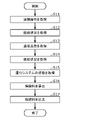
- FIG. 3 is a flow chart showing an example of the operation of the information processing system according to the embodiment.
- FIG. 4 is an example of a table showing risks for each combination of remote operation content (operation) and communication quality.
- FIG. 5 is an example of a table showing risks for each combination of remote operation content (task) and communication quality.
- FIG. 6 is a table showing an example of communication quality types acquired for remote operation contents.
- FIG. 7 is a table showing an example of weighting of communication quality for remote operation contents.
- FIG. 8 is a table showing an example of the type of communication quality acquired with respect to the conditions of the route along which the mobile unit moves.
- FIG. 9 is a table showing an example of weighting of communication quality with respect to conditions of paths along which mobile bodies move.
- An information processing method is an information processing method executed by a computer, which obtains a remote operation to be performed on a mobile body according to an instruction via communication from a remote operator terminal, A process of acquiring the quality of the communication when the operation is performed, calculating an insurance premium for the remote operation based on the quality of the remote operation and the communication, and outputting the calculated insurance premium.
- the quality of communication between the remote operator terminal and the mobile object affects the risk of remote operation. This is because if the quality of communication is poor, it becomes difficult to perform correct remote control, and the risk of remote control increases. Therefore, it is possible to calculate the insurance premium for remote operation based on the quality of communication when remote operation is performed.
- the risk of the remote operation may be determined according to the quality of the communication, and the insurance premium may be calculated based on the determined risk.
- the type of communication quality is selected according to the remote operation, and in calculating the insurance premium, the insurance premium is calculated based on the remote operation and the selected type of communication quality. good too.
- the type of communication quality that affects the risk of remote operation may differ depending on the content of remote operation. Therefore, it is possible to accurately calculate insurance premiums based on the type of communication quality selected according to remote control. In addition, since the types of acquired communication quality can be reduced, it is possible to reduce the amount of calculation when calculating insurance premiums.
- the quality of the communication may be weighted according to the remote operation, and the insurance premium may be calculated based on the remote operation and the weighted quality of the communication.
- the degree of impact of communication quality on the risk of remote control may differ. Therefore, it is possible to accurately calculate insurance premiums based on the quality of communication weighted according to remote control.
- the type of communication quality may be calculated based on the quality of the selected type of communication.
- the type of communication quality that affects the risk of remote control may differ depending on the route conditions of the mobile body on which remote control is performed (eg, road context, weather, traffic volume, etc.). Therefore, it is possible to accurately calculate insurance premiums based on the type of communication quality selected according to the status of the route of the remote-controlled mobile body. In addition, since the types of acquired communication quality can be reduced, it is possible to reduce the amount of calculation when calculating insurance premiums.
- the mobile object to be remotely controlled For example, further obtaining the conditions of a route along which the mobile object to be remotely controlled moves, weighting the quality of the communication according to the condition of the route, and calculating the insurance premium based on the remote control and the weighting.
- the insurance premium may be calculated based on the quality of the communication.
- the degree of impact of communication quality on the risk of remote control may differ depending on the route of the mobile object on which remote control is performed. Therefore, insurance premiums can be accurately calculated based on the quality of communication weighted according to the status of the route of the remote-controlled mobile body.
- a detection situation around the mobile object to be remotely operated is acquired, and in calculating the insurance premium, the insurance premium is calculated based on the detection situation, the quality of the remote operation and the communication.
- detection conditions around the remote-controlled mobile object e.g., weather, sensor viewing angle, image recognition detection distance, surrounding environment discrimination accuracy such as roads, detectable objects type, stationary state of the detected object or sensing frequency, etc.
- Poor detection conditions e.g. dark surroundings due to cloudy weather, narrow viewing angle of the sensor, short detection distance for image recognition, inability to distinguish road types such as sidewalks, roadways, or intersections, inability to detect bicycles, detection objects If it is not clear whether the robot is moving or stopped, or the frequency of sensing is low, it becomes difficult to perform remote operation correctly, and the risk of remote operation increases. Therefore, by using not only the quality of communication when remote operation is performed, but also the detected situation around the mobile object to be remotely operated, the insurance premium for remote operation can be calculated with high accuracy.
- the quality of the remote operation and the communication may be used to calculate the insurance premium.
- the state of the operation system of the mobile service using the remote-controlled mobile object (for example, the state of the automatic driving system, the state of the remote control system, or the state of the voice communication system, etc.) ) can affect the risks of remote operation.
- a system failure in the operation system for example, a failure such as inability to operate automatically, inability to operate remotely, or poor voice communication
- the remote operation may include at least one of an actuator operation for movement control of the moving body and a movement control task of the moving body.
- the communication quality may include at least one of communication rate, communication delay, or communication loss.
- the insurance premium for remote control can be calculated based on the communication rate, communication delay, or communication loss when remote control is performed.
- An information processing system includes a remote operation acquisition unit that acquires a remote operation performed on a mobile body according to an instruction via communication from a remote operator terminal, and communication when the remote operation is performed. a communication quality acquisition unit that acquires the quality of the remote operation, a calculation unit that calculates an insurance premium for the remote operation based on the quality of the remote operation and the communication, and an output unit that outputs the calculated insurance premium Prepare.
- FIG. 1 is a diagram showing an example of an information processing system 1 according to an embodiment.
- the information processing system 1 is a system for calculating insurance premiums for remote control of mobile objects.
- Mobile objects are monitored and remotely controlled by a remote control system. Specifically, the moving body is monitored and remotely controlled by a remote monitoring operator via a remote control system.
- the mobile object is, for example, a vehicle, but the mobile object may be a mobile object other than a vehicle (for example, a robot, an aircraft, a ship, etc.).
- the information processing system 1 is an example of a computer that executes an information processing method.
- the components that make up the information processing system 1 may be provided in one housing, or may be distributed. When the components constituting the information processing system 1 are distributed and arranged, the information processing method may be executed by a plurality of computers.
- the information processing system 1 is realized by, for example, a server.
- the information processing system 1 may be part of a remote control system.
- the information processing system 1 includes a remote operation acquisition unit 10, a communication quality acquisition unit 20, a route status acquisition unit 30, a detection status acquisition unit 40, a system status acquisition unit 50, a calculation unit 60, and an output unit 70.
- the information processing system 1 is a computer including a processor, communication interface, memory, and the like.
- the memory is ROM (Read Only Memory), RAM (Random Access Memory), etc., and can store programs executed by the processor.
- the remote operation acquisition unit 10, the communication quality acquisition unit 20, the route status acquisition unit 30, the detection status acquisition unit 40, the system state acquisition unit 50, the calculation unit 60, and the output unit 70 are processors and It is implemented by a communication interface or the like.
- the remote operation acquisition unit 10 acquires the remote operation performed on the mobile object according to the instruction of the remote monitoring operator via communication from the remote operator terminal provided in the remote control system. For example, a remote operator terminal and a mobile unit perform wireless communication, and remote operation is performed on the mobile unit through the wireless communication.
- Remote operation includes, for example, at least one of an actuator operation for movement control of a mobile body and a movement control task of a mobile body.
- the remote operation acquiring unit 10 acquires the content of the remote operation (for example, information indicating what kind of remote operation was performed and to what extent).
- the remote operation acquisition unit 10 acquires operations such as a steering wheel, accelerator or brake operation, or tasks such as obstacle avoidance or road shouldering. Also, for example, the remote operation acquiring unit 10 acquires how much the steering wheel, accelerator, brake, or the like is operated.
- the communication quality acquisition unit 20 acquires the quality of communication between the remote operator terminal provided in the remote control system and the mobile object when remote control is performed. For example, the communication quality acquisition unit 20 acquires the communication quality of sensing data or mobility data transmitted and received between a mobile object and a remote operator terminal when remote operation is performed.
- Communication quality includes, for example, at least one of communication rate, communication delay, or communication loss. In other words, communication quality types include communication rate, communication delay, and communication loss.
- the remote control acquisition unit 10 selects the type of communication quality according to the remote control. Further, the remote operation acquiring unit 10 weights the communication quality according to the remote operation. Details of selection of the type of communication quality and weighting of communication quality according to remote control will be described later.
- the route status acquisition unit 30 acquires the status of the route along which the remote-controlled mobile body travels.
- the conditions of the route are, for example, the weather on the route, the traffic volume of the route, or the road context of the route (crosswalk or roadway, etc.).
- the route status acquisition unit 30 selects the type of communication quality according to the acquired route status.
- the route status acquisition unit 30 weights the communication quality according to the acquired route status. The details of selection of the type of communication quality and weighting of communication quality according to route conditions will be described later.
- the detection status acquisition unit 40 acquires the detection status around the moving object to be remotely controlled.
- the detection status around the mobile body may be the detection status of a sensor mounted on the mobile body (for example, a camera or LiDAR (Light Detection and Ranging), etc.), or the detection status of an infrastructure sensor around the mobile body. There may be.
- the detection status is, for example, the viewing angle of the sensor, the detection distance of image recognition by the sensor, or the frequency of sensing.
- the system status acquisition unit 50 acquires the status of the operation system of the mobile service using the remotely controlled mobile object.
- the state of the operation system is, for example, the state of the automatic driving system, the state of the remote control system, or the state of the voice communication system, etc.
- the system state acquisition unit 50 determines whether each of these systems is normal or abnormal. or get
- the calculation unit 60 calculates an insurance premium for remote operation based on the acquired quality of remote operation and communication. Details of the calculation unit 60 will be described later.
- the output unit 70 outputs the calculated insurance premium.
- the output unit 70 outputs the calculated insurance premium to the demonstrator, service operator, or the like.
- FIG. 2 is a sequence diagram showing an example of information flow when insurance premiums are calculated.
- FIG. 2 shows the flow of information between the mobile unit, remote control system, remote monitoring operator, and information processing system 1 .
- pre-processing from step S1 to step S8 is performed before the insurance premium is calculated.
- sensing data, mobility data, etc. are transmitted from the mobile object to the remote control system (step S1).
- the remote control system can calculate the quality of communication between the remote control system and the mobile object (step S2).
- calculation of communication quality may also be performed periodically.
- the remote monitoring operator remotely operates the mobile object via the remote control system (step S3).
- a remote monitoring operator remotely operates a mobile object by operating a steering wheel, an accelerator, a brake, or the like provided in the remote control system while watching images of the surroundings of the mobile object.
- the remote control system transmits to the information processing system 1 remote control information indicating the details of the remote control to be performed on the mobile object (step S4). Thereby, the information processing system 1 can acquire the remote operation.
- the remote control system transmits to the information processing system 1 the status of the route along which the remote-controlled moving body travels, which is obtained from a server that manages weather, traffic volume, map information, or the like (step S5).
- the information processing system 1 can acquire the status of the route along which the remote-controlled moving object moves.
- the remote control system transmits communication quality information indicating the calculated communication quality to the information processing system 1 (step S6). Thereby, the information processing system 1 can acquire the communication quality when the remote operation is performed.
- the remote control system transmits to the information processing system 1 detection status information indicating the detection status of the surroundings of the remote-operated mobile body acquired from the mobile body or the infrastructure around the mobile body (step S7).
- the information processing system 1 can acquire the detection status around the moving object to be remotely controlled.
- the remote control system is a system that indicates the status of a mobile service operation system that uses a mobile object that is remotely controlled, obtained from a server that manages an automatic driving system, a remote control system, or a voice communication system.
- the state information is transmitted to the information processing system 1 (step S8).
- the information processing system 1 can acquire the state of the operation system of the mobile service using the remote-controlled mobile object.
- the information processing system 1 calculates insurance premiums for remote operation using various types of information including communication quality acquired in the processes from step S4 to step S8 (step S9).
- FIG. 3 is a flow chart showing an example of the operation of the information processing system 1 according to the embodiment. Since the information processing system 1 is an example of a computer that executes the information processing method according to the embodiment, FIG. 3 is also a flowchart showing an example of the information processing method according to the embodiment.
- the remote operation acquisition unit 10 acquires a remote operation performed on a mobile object according to an instruction via communication from a remote operator terminal (step S11).
- the remote operation acquiring unit 10 acquires information that a remote operation such as a steering wheel operation, an accelerator operation, or a brake operation has been performed as the content of the remote operation, and also acquires information such as the steering wheel operation angle, the accelerator depression amount, or the brake depression amount. and so on.
- the remote operation acquisition unit 10 acquires an obstacle avoidance or roadside approach based on the situation around the mobile object (such as the situation of obstacles around the mobile object or the position of the mobile object) when the remote operation is performed. You may acquire the information that tasks, such as, were performed.
- the route status acquisition unit 30 acquires the status of the route along which the remote-controlled mobile body travels (step S12). For example, the route status acquisition unit 30 obtains, as the route status, a road context such as whether it is a crosswalk or a roadway, weather such as whether it is cloudy or light rain, or types of obstacles on the route (types of pedestrians, bicycles, automobiles, etc.). Get the traffic volume per
- step S12 may be performed when there is a need to acquire the status of the route.
- the case where it is necessary to acquire the route status is, for example, the case where the information processing system 1 receives a request for highly accurate calculation of insurance premiums from an insurance business operator or a user's terminal.
- the communication quality acquisition unit 20 acquires the quality of communication when remote control is performed (step S13).
- the communication quality acquisition unit 20 acquires communication quality of types such as communication rate, communication delay, or communication loss.
- the calculator 60 determines the risk of remote operation according to the acquired communication quality.
- a method for determining the risk of remote operation will be described with reference to FIGS. 4 and 5.
- FIG. 4 is an example of a table showing risks for each combination of remote operation content (operation) and communication quality.
- FIG. 5 is an example of a table showing risks for each combination of remote operation content (task) and communication quality.
- the calculation unit 60 determines the risk of remote operation by referring to a table such as that shown in FIG. 4 or FIG. As shown in FIG. 4, for example, when the content of the remote operation performed on the mobile body is steering wheel operation and the communication rate at that time is low, the risk of the remote operation is determined as "risk a". . Further, as shown in FIG. 5, for example, when the content of the remote control performed on the mobile body is obstacle avoidance and the communication rate at that time is low, the risk of the remote control is defined as "risk j". I judge. For example, “Risk a”, “Risk b”, “Risk c”, . . . are predetermined. For example, the content of remote operation and communication should be adjusted so that the risk is higher when remote operation is performed with low (bad) communication quality than when remote operation is performed with high (good) communication quality. A risk is set for each combination with quality.
- the type of communication quality to be acquired may be selected according to the details of the remote operation. This will be described with reference to FIG.
- FIG. 6 is a table showing an example of communication quality types acquired for remote operation content.
- the remote operation acquisition unit 10 selects communication delay as the type of communication quality to be acquired. This is because the communication delay can greatly affect the risk of remote steering operation. Also, if the content of the remote control is to operate both the steering wheel and the accelerator, or to avoid obstacles, communication delay, communication loss, and communication rate are selected as the types of communication quality to be acquired. This is because communication delay, communication loss, and communication rate can greatly affect the risk of remote steering and accelerator operation and obstacle avoidance. Note that the combination of the content of the remote operation and the type of communication quality to be acquired shown in FIG. 6 is an example, and the combination is not limited to these.
- the acquired communication quality may be weighted according to the details of the remote operation. This will be described with reference to FIG.
- FIG. 7 is a table showing an example of the weight of communication quality for remote operation content.
- the contents of the remote operation may be subdivided. Specifically, in the case of a steering wheel operation, the operation may be subdivided into whether it is a sudden operation or not, and in the case of an obstacle avoidance task, it may be subdivided into whether it is fixed object avoidance or moving object avoidance. good too.
- the remote operation acquisition unit 10 gives a large weight to the communication delay, a medium weight to the communication loss, and a large weight to the communication rate. This is because the communication delay or communication rate can greatly affect the risk of sudden steering operation by remote control. Weighting on the communication quality changes the magnitude of the determined risk. For example, when the communication quality is not weighted, the risk determined when the communication rate is low when the steering wheel is suddenly operated remotely is heavily weighted as shown in FIG. , the risk of remote operation is weighted.
- the type of communication quality to be acquired may be selected according to the conditions of the route along which the mobile body moves. This will be described with reference to FIG.
- FIG. 8 is a table showing an example of the type of communication quality acquired with respect to the conditions of the route along which the mobile body moves.
- the route status acquisition unit 30 selects communication delay as the type of communication quality to be acquired (in other words, does not select communication loss or communication rate). . This is because communication delays can greatly affect the risk of remote control at pedestrian crossings. At this time, the route status acquisition unit 30 may acquire the traffic volume at the crosswalk as the status of the route. No need to select. Further, when the road context is a roadway, communication delay, communication loss, and communication rate are selected as types of communication quality to be acquired. This is because communication delay, communication loss, and communication rate can greatly affect the risk of remote control on the roadway. For example, communication delay, communication loss and communication rate can affect the risk of sudden remote control for avoidance of parked vehicles on the roadway. It should be noted that the combination of the route status and the acquired communication quality type shown in FIG. 8 is an example, and is not limited to these.
- the acquired communication quality may be weighted according to the conditions of the route along which the mobile body travels. This will be described with reference to FIG.
- Fig. 9 is a table showing an example of the weight of the communication quality with respect to the status of the route along which the mobile body moves.
- the route status acquisition unit 30 gives a large weight to the communication delay, a medium weight to the communication loss, and a large weight to the communication rate. This is because the communication delay or communication rate can greatly affect the risk of remote control on the roadway. Weighting on the communication quality changes the magnitude of the determined risk. For example, when the communication quality is not weighted, the risk determined when the communication rate is low when remote control is performed on the roadway is heavily weighted as shown in FIG. becomes larger as the risk of remote operation is weighted.
- the detection status acquisition unit 40 acquires the detection status around the mobile object to be remotely controlled (step S14).
- the detection status acquisition unit 40 as the detection status, the weather, the viewing angle of the sensor, the detection distance of image recognition by the sensor, the determination accuracy of the surrounding environment such as a road, the type of detectable object, the stop state of the detected object, or , sensing frequency, etc.
- sensing accuracy and the like may be acquired in remote operation during light rain. If the road environment is complex, road types such as sidewalk, roadway or intersection may be determined. Wheelchairs, strollers, trash on the road, etc. may be detected. It may be determined whether the vehicle is stopped as the stopped state of the detected object. Further, when remote control is performed to return to autonomous movement after falling into a groove, image recognition accuracy and the like may be acquired since detection is performed by image recognition of the groove.
- step S14 may be performed when there is a need to acquire the detection status.
- the case where it is necessary to acquire the detection status is, for example, the case where the information processing system 1 receives a request for highly accurate calculation of insurance premiums from an insurance business operator or a user's terminal.
- the system state acquisition unit 50 acquires the state of the operation system of the mobile service using the remote-controlled mobile object (step S15).
- the system state acquisition unit 50 acquires the state of the automatic driving system, the state of the remote control system, the state of the voice communication system, or the like as the state of the operation system.
- the state of a voice call system for example, a system having a function to say "a moving object will pass" to the person
- a voice call system for example, a system having a function to say "a moving object will pass" to the person
- step S15 may be performed when there is a need to acquire the state of the operation system.
- the case where it is necessary to acquire the state of the operation system is, for example, the case where the information processing system 1 receives a request for highly accurate calculation of insurance premiums from an insurance business operator or a user's terminal.
- the calculation unit 60 calculates an insurance premium for remote operation based on the quality of remote operation and communication (step S16). For example, the calculation unit 60 determines the risk of remote operation as described with reference to FIGS. 4 and 5, and calculates insurance premiums based on the determined risk. For example, the calculation unit 60 calculates insurance premiums so that the higher the risk of remote operation, the higher the insurance premium, and the lower the insurance premium, the lower the risk of remote operation.
- the calculation unit 60 may calculate the insurance premium based on the remote operation and the quality of the type of communication selected by the remote operation acquisition unit 10 or the route status acquisition unit 30.
- the quality of the type of communication selected by the remote operation acquisition unit 10 or the route status acquisition unit 30 may be calculated based on the remote operation and the quality of the type of communication selected by the remote operation acquisition unit 10 or the route status acquisition unit 30.
- there are types of communication quality for example, communication rate, communication delay, or communication loss
- a type of communication quality may be selected, and an insurance premium may be calculated based on the selected type of communication quality.
- insurance premiums can be calculated with high accuracy.
- the types of acquired communication quality can be reduced, it is possible to reduce the amount of calculation when calculating insurance premiums.
- the calculation unit 60 may calculate insurance premiums based on the remote operation and the quality of communication weighted by the remote operation acquisition unit 10 or the route status acquisition unit 30 .
- the quality of communication may be weighted with respect to the contents of the remote operation or the condition of the route, and the insurance premium may be calculated based on the weighted quality of communication.
- insurance premiums can be calculated with high accuracy.
- the calculation unit 60 may calculate insurance premiums based on the detection status of the surroundings of the mobile object to be remotely controlled and the quality of the remote control and communication.
- the detection conditions around the mobile object that is remotely operated may affect the risk of remote operation.
- insurance premium calculation may be performed. Since detection conditions around the moving object are also used for calculating the insurance premium, the insurance premium can be calculated with high accuracy.
- the calculation unit 60 may calculate insurance premiums based on the state of the operating system of a mobile service using a remotely controlled mobile object, the quality of remote control and communication.
- the state of the operation system of the mobile service using the remote-controlled mobile object may affect the risk of remote operation.
- Premium calculations may also be based on the state of the operating system of the service. Since the state of the operation system is also used for calculating the insurance premium, the insurance premium can be calculated with high accuracy.
- the output unit 70 outputs the calculated insurance premium (step S17). This allows the verifier, service operator, or the like to grasp the insurance premium for remote operation.
- the quality of communication between the remote operator terminal and the mobile object affects the risk of remote operation. This is because if the quality of communication is poor, it becomes difficult to perform correct remote control, and the risk of remote control increases. Therefore, it is possible to calculate the insurance premium for remote operation based on the quality of communication when remote operation is performed.
- the information processing system 1 includes the route status acquisition unit 30, the detection status acquisition unit 40, and the system state acquisition unit 50.
- the route status acquisition unit 30 and the detection status acquisition unit 40 and at least one of the system state acquisition unit 50 may not be provided.
- the quality of communication need not be weighted according to the remote control, and the insurance premium need not be calculated based on the remote control and the weighted quality of communication.
- the present disclosure can be implemented as a program for causing a processor to execute the steps included in the information processing method.
- the present disclosure can be implemented as a non-temporary computer-readable recording medium such as a CD-ROM recording the program.
- each step is executed by executing the program using hardware resources such as the CPU, memory, and input/output circuits of the computer.
- hardware resources such as the CPU, memory, and input/output circuits of the computer.
- each step is executed by the CPU acquiring data from a memory, an input/output circuit, or the like, performing an operation, or outputting the operation result to the memory, an input/output circuit, or the like.
- each component included in the information processing system 1 may be configured with dedicated hardware or realized by executing a software program suitable for each component.
- Each component may be realized by reading and executing a software program recorded in a recording medium such as a hard disk or a semiconductor memory by a program execution unit such as a CPU or processor.
- a part or all of the functions of the information processing system 1 according to the above embodiment are typically realized as an LSI, which is an integrated circuit. These may be made into one chip individually, or may be made into one chip so as to include part or all of them. Further, circuit integration is not limited to LSIs, and may be realized by dedicated circuits or general-purpose processors.
- An FPGA Field Programmable Gate Array
- a reconfigurable processor that can reconfigure the connections and settings of the circuit cells inside the LSI may be used.
- the present disclosure also includes various modifications in which a person skilled in the art makes modifications to each embodiment of the present disclosure, as long as they do not deviate from the gist of the present disclosure.
- the present disclosure can be applied to a system for remotely controlling mobile objects.
Landscapes
- Business, Economics & Management (AREA)
- Engineering & Computer Science (AREA)
- Physics & Mathematics (AREA)
- Accounting & Taxation (AREA)
- Finance (AREA)
- General Physics & Mathematics (AREA)
- Development Economics (AREA)
- Strategic Management (AREA)
- Theoretical Computer Science (AREA)
- General Business, Economics & Management (AREA)
- Marketing (AREA)
- Economics (AREA)
- Technology Law (AREA)
- Aviation & Aerospace Engineering (AREA)
- Radar, Positioning & Navigation (AREA)
- Remote Sensing (AREA)
- Automation & Control Theory (AREA)
- Health & Medical Sciences (AREA)
- General Health & Medical Sciences (AREA)
- Human Resources & Organizations (AREA)
- Primary Health Care (AREA)
- Tourism & Hospitality (AREA)
- Entrepreneurship & Innovation (AREA)
- Game Theory and Decision Science (AREA)
- Financial Or Insurance-Related Operations Such As Payment And Settlement (AREA)
Priority Applications (4)
| Application Number | Priority Date | Filing Date | Title |
|---|---|---|---|
| EP22787845.1A EP4325419A4 (en) | 2021-04-12 | 2022-02-16 | INFORMATION PROCESSING METHOD AND INFORMATION PROCESSING SYSTEM |
| CN202280026266.6A CN117157660A (zh) | 2021-04-12 | 2022-02-16 | 信息处理方法以及信息处理系统 |
| JP2023514359A JP7697000B2 (ja) | 2021-04-12 | 2022-02-16 | 情報処理方法及び情報処理システム |
| US18/371,559 US20240013312A1 (en) | 2021-04-12 | 2023-09-22 | Information processing method and information processing system |
Applications Claiming Priority (2)
| Application Number | Priority Date | Filing Date | Title |
|---|---|---|---|
| JP2021067253 | 2021-04-12 | ||
| JP2021-067253 | 2021-04-12 |
Related Child Applications (1)
| Application Number | Title | Priority Date | Filing Date |
|---|---|---|---|
| US18/371,559 Continuation US20240013312A1 (en) | 2021-04-12 | 2023-09-22 | Information processing method and information processing system |
Publications (1)
| Publication Number | Publication Date |
|---|---|
| WO2022219917A1 true WO2022219917A1 (ja) | 2022-10-20 |
Family
ID=83639609
Family Applications (1)
| Application Number | Title | Priority Date | Filing Date |
|---|---|---|---|
| PCT/JP2022/006246 Ceased WO2022219917A1 (ja) | 2021-04-12 | 2022-02-16 | 情報処理方法及び情報処理システム |
Country Status (5)
| Country | Link |
|---|---|
| US (1) | US20240013312A1 (https=) |
| EP (1) | EP4325419A4 (https=) |
| JP (1) | JP7697000B2 (https=) |
| CN (1) | CN117157660A (https=) |
| WO (1) | WO2022219917A1 (https=) |
Citations (5)
| Publication number | Priority date | Publication date | Assignee | Title |
|---|---|---|---|---|
| JPH03536B2 (https=) | 1985-10-08 | 1991-01-08 | Metsutsuraa Gmbh | |
| US10373259B1 (en) * | 2014-05-20 | 2019-08-06 | State Farm Mutual Automobile Insurance Company | Fully autonomous vehicle insurance pricing |
| JP2020061163A (ja) * | 2018-10-13 | 2020-04-16 | Global Mobility Service株式会社 | 車両遠隔制御システム、車載器、車両、サーバ、車両遠隔制御方法、車両遠隔制御プログラム及び記憶媒体 |
| WO2020202405A1 (ja) * | 2019-03-29 | 2020-10-08 | 本田技研工業株式会社 | 情報処理装置、移動体、プログラム及び方法 |
| WO2021065559A1 (ja) * | 2019-10-04 | 2021-04-08 | ソニー株式会社 | 情報処理システム、および情報処理方法、並びに情報処理装置 |
Family Cites Families (13)
| Publication number | Priority date | Publication date | Assignee | Title |
|---|---|---|---|---|
| WO2010092620A1 (ja) * | 2009-02-13 | 2010-08-19 | パイオニア株式会社 | 情報記録装置、情報記録装置の制御方法およびそのプログラム |
| WO2010097708A2 (en) * | 2009-02-27 | 2010-09-02 | Picosmos Il, Ltd | Apparatus, method and system for collecting and utilizing digital evidence |
| US10657597B1 (en) * | 2012-02-17 | 2020-05-19 | United Services Automobile Association (Usaa) | Systems and methods for dynamic insurance premiums |
| US9792654B1 (en) * | 2013-03-15 | 2017-10-17 | United Services Automobile Association (Usaa) | Insurance claim processing via streaming video |
| US20160189303A1 (en) * | 2014-03-21 | 2016-06-30 | Gil Emanuel Fuchs | Risk Based Automotive Insurance Rating System |
| US10354330B1 (en) | 2014-05-20 | 2019-07-16 | State Farm Mutual Automobile Insurance Company | Autonomous feature use monitoring and insurance pricing |
| WO2016040914A1 (en) * | 2014-09-12 | 2016-03-17 | Brain Sentinel, Inc. | Method and apparatus for communication between a sensor and a managing device |
| CN106462160B (zh) * | 2015-03-31 | 2019-05-28 | 深圳市大疆创新科技有限公司 | 用于分析飞行行为的系统和方法 |
| US10534968B1 (en) * | 2015-04-16 | 2020-01-14 | State Farm Mutual Automobile Insurance Company | Verifying odometer mileage using captured images and optical character recognition (OCR) |
| US10762573B2 (en) * | 2015-09-03 | 2020-09-01 | Metropolitan Life Insurance Co. | System and method for sensor-enhanced insurance coverage and monitoring service |
| US20190034857A1 (en) * | 2017-07-28 | 2019-01-31 | Nuro, Inc. | Food and beverage delivery system on autonomous and semi-autonomous vehicle |
| US12002068B2 (en) * | 2018-09-28 | 2024-06-04 | Allstate Insurance Company | Data processing system with machine learning engine to provide output generation functions |
| US11615478B2 (en) * | 2021-02-19 | 2023-03-28 | Allstate Insurance Company | Selectively shared vehicle-based telematics |
-
2022
- 2022-02-16 WO PCT/JP2022/006246 patent/WO2022219917A1/ja not_active Ceased
- 2022-02-16 JP JP2023514359A patent/JP7697000B2/ja active Active
- 2022-02-16 CN CN202280026266.6A patent/CN117157660A/zh active Pending
- 2022-02-16 EP EP22787845.1A patent/EP4325419A4/en not_active Withdrawn
-
2023
- 2023-09-22 US US18/371,559 patent/US20240013312A1/en not_active Abandoned
Patent Citations (5)
| Publication number | Priority date | Publication date | Assignee | Title |
|---|---|---|---|---|
| JPH03536B2 (https=) | 1985-10-08 | 1991-01-08 | Metsutsuraa Gmbh | |
| US10373259B1 (en) * | 2014-05-20 | 2019-08-06 | State Farm Mutual Automobile Insurance Company | Fully autonomous vehicle insurance pricing |
| JP2020061163A (ja) * | 2018-10-13 | 2020-04-16 | Global Mobility Service株式会社 | 車両遠隔制御システム、車載器、車両、サーバ、車両遠隔制御方法、車両遠隔制御プログラム及び記憶媒体 |
| WO2020202405A1 (ja) * | 2019-03-29 | 2020-10-08 | 本田技研工業株式会社 | 情報処理装置、移動体、プログラム及び方法 |
| WO2021065559A1 (ja) * | 2019-10-04 | 2021-04-08 | ソニー株式会社 | 情報処理システム、および情報処理方法、並びに情報処理装置 |
Non-Patent Citations (1)
| Title |
|---|
| See also references of EP4325419A4 |
Also Published As
| Publication number | Publication date |
|---|---|
| CN117157660A (zh) | 2023-12-01 |
| JP7697000B2 (ja) | 2025-06-23 |
| JPWO2022219917A1 (https=) | 2022-10-20 |
| EP4325419A1 (en) | 2024-02-21 |
| EP4325419A4 (en) | 2024-06-19 |
| US20240013312A1 (en) | 2024-01-11 |
Similar Documents
| Publication | Publication Date | Title |
|---|---|---|
| JP6845894B2 (ja) | 自動運転車両におけるセンサー故障を処理するための方法 | |
| US11458991B2 (en) | Systems and methods for optimizing trajectory planner based on human driving behaviors | |
| US20220309920A1 (en) | Controlling vehicle-infrastructure cooperated autonomous driving | |
| JP6754856B2 (ja) | 自動運転車両のためのセンサー集約フレームワーク | |
| JP6894471B2 (ja) | 自動運転車(adv)のサブシステムによるパトロールカーのパトロール | |
| JP7030044B2 (ja) | 自律走行車(adv)に対して車両とクラウド間のリアルタイム交通地図を構築するためのシステム | |
| US10755007B2 (en) | Mixed reality simulation system for testing vehicle control system designs | |
| CN109937343B (zh) | 用于自动驾驶车辆交通预测中的预测轨迹的评估框架 | |
| CN108334077B (zh) | 确定自动驾驶车辆的速度控制的单位增益的方法和系统 | |
| US20210191394A1 (en) | Systems and methods for presenting curated autonomy-system information of a vehicle | |
| US20230202504A1 (en) | Dynamic route information interface | |
| RU2750243C2 (ru) | Способ и система для формирования траектории для беспилотного автомобиля (sdc) | |
| CN114207627B (zh) | 用于路径规划系统的极端情况检测和收集 | |
| CN116803784A (zh) | 密集车辆环境中的自主控制 | |
| JP2018158719A (ja) | 自動運転車両に用いられる制御型の計画と制御システム | |
| CN111259712B (zh) | 用于车辆行为预测的压缩环境特征的表示 | |
| JP6908674B2 (ja) | 自動運転車両を動作させるための所定のキャリブレーションテーブルに基づく車両制御システム | |
| CN117130298A (zh) | 用于评估自动驾驶系统的方法、装置及存储介质 | |
| US20240169126A1 (en) | Simulation fidelity for end-to-end vehicle behavior | |
| US20230195830A1 (en) | Calibration metrics for measuring trajectory prediction | |
| CN113753040A (zh) | 预测弱势道路用户乱穿马路行为 | |
| CN114670839B (zh) | 评估自动驾驶车辆的驾驶行为的方法、装置、电子设备 | |
| CN114604241A (zh) | 车辆驾驶风险评估方法、装置、电子设备及边缘计算设备 | |
| US20230256994A1 (en) | Assessing relative autonomous vehicle performance via evaluation of other road users | |
| CN113734191B (zh) | 人工地虚造传感器数据以发起用于自动驾驶车辆的安全动作 |
Legal Events
| Date | Code | Title | Description |
|---|---|---|---|
| 121 | Ep: the epo has been informed by wipo that ep was designated in this application |
Ref document number: 22787845 Country of ref document: EP Kind code of ref document: A1 |
|
| WWE | Wipo information: entry into national phase |
Ref document number: 2023514359 Country of ref document: JP |
|
| WWE | Wipo information: entry into national phase |
Ref document number: 2022787845 Country of ref document: EP |
|
| NENP | Non-entry into the national phase |
Ref country code: DE |
|
| ENP | Entry into the national phase |
Ref document number: 2022787845 Country of ref document: EP Effective date: 20231113 |
|
| WWW | Wipo information: withdrawn in national office |
Ref document number: 2022787845 Country of ref document: EP |