WO2022181784A1 - 生体情報取得装置、生体情報取得システム、生体情報取得方法及び生体情報取得プログラム - Google Patents
生体情報取得装置、生体情報取得システム、生体情報取得方法及び生体情報取得プログラム Download PDFInfo
- Publication number
- WO2022181784A1 WO2022181784A1 PCT/JP2022/007995 JP2022007995W WO2022181784A1 WO 2022181784 A1 WO2022181784 A1 WO 2022181784A1 JP 2022007995 W JP2022007995 W JP 2022007995W WO 2022181784 A1 WO2022181784 A1 WO 2022181784A1
- Authority
- WO
- WIPO (PCT)
- Prior art keywords
- biometric information
- information acquisition
- terminal device
- wireless communication
- acquisition device
- Prior art date
- Legal status (The legal status is an assumption and is not a legal conclusion. Google has not performed a legal analysis and makes no representation as to the accuracy of the status listed.)
- Ceased
Links
Images







Classifications
-
- G—PHYSICS
- G16—INFORMATION AND COMMUNICATION TECHNOLOGY [ICT] SPECIALLY ADAPTED FOR SPECIFIC APPLICATION FIELDS
- G16H—HEALTHCARE INFORMATICS, i.e. INFORMATION AND COMMUNICATION TECHNOLOGY [ICT] SPECIALLY ADAPTED FOR THE HANDLING OR PROCESSING OF MEDICAL OR HEALTHCARE DATA
- G16H10/00—ICT specially adapted for the handling or processing of patient-related medical or healthcare data
- G16H10/60—ICT specially adapted for the handling or processing of patient-related medical or healthcare data for patient-specific data, e.g. for electronic patient records
-
- A—HUMAN NECESSITIES
- A61—MEDICAL OR VETERINARY SCIENCE; HYGIENE
- A61B—DIAGNOSIS; SURGERY; IDENTIFICATION
- A61B5/00—Measuring for diagnostic purposes; Identification of persons
- A61B5/02—Detecting, measuring or recording for evaluating the cardiovascular system, e.g. pulse, heart rate, blood pressure or blood flow
- A61B5/0205—Simultaneously evaluating both cardiovascular conditions and different types of body conditions, e.g. heart and respiratory condition
-
- A—HUMAN NECESSITIES
- A61—MEDICAL OR VETERINARY SCIENCE; HYGIENE
- A61B—DIAGNOSIS; SURGERY; IDENTIFICATION
- A61B5/00—Measuring for diagnostic purposes; Identification of persons
- A61B5/0002—Remote monitoring of patients using telemetry, e.g. transmission of vital signals via a communication network
- A61B5/0015—Remote monitoring of patients using telemetry, e.g. transmission of vital signals via a communication network characterised by features of the telemetry system
-
- G—PHYSICS
- G06—COMPUTING OR CALCULATING; COUNTING
- G06F—ELECTRIC DIGITAL DATA PROCESSING
- G06F16/00—Information retrieval; Database structures therefor; File system structures therefor
- G06F16/10—File systems; File servers
- G06F16/18—File system types
- G06F16/182—Distributed file systems
-
- G—PHYSICS
- G16—INFORMATION AND COMMUNICATION TECHNOLOGY [ICT] SPECIALLY ADAPTED FOR SPECIFIC APPLICATION FIELDS
- G16H—HEALTHCARE INFORMATICS, i.e. INFORMATION AND COMMUNICATION TECHNOLOGY [ICT] SPECIALLY ADAPTED FOR THE HANDLING OR PROCESSING OF MEDICAL OR HEALTHCARE DATA
- G16H40/00—ICT specially adapted for the management or administration of healthcare resources or facilities; ICT specially adapted for the management or operation of medical equipment or devices
- G16H40/60—ICT specially adapted for the management or administration of healthcare resources or facilities; ICT specially adapted for the management or operation of medical equipment or devices for the operation of medical equipment or devices
- G16H40/63—ICT specially adapted for the management or administration of healthcare resources or facilities; ICT specially adapted for the management or operation of medical equipment or devices for the operation of medical equipment or devices for local operation
-
- G—PHYSICS
- G16—INFORMATION AND COMMUNICATION TECHNOLOGY [ICT] SPECIALLY ADAPTED FOR SPECIFIC APPLICATION FIELDS
- G16Y—INFORMATION AND COMMUNICATION TECHNOLOGY SPECIALLY ADAPTED FOR THE INTERNET OF THINGS [IoT]
- G16Y20/00—Information sensed or collected by the things
- G16Y20/40—Information sensed or collected by the things relating to personal data, e.g. biometric data, records or preferences
-
- G—PHYSICS
- G16—INFORMATION AND COMMUNICATION TECHNOLOGY [ICT] SPECIALLY ADAPTED FOR SPECIFIC APPLICATION FIELDS
- G16H—HEALTHCARE INFORMATICS, i.e. INFORMATION AND COMMUNICATION TECHNOLOGY [ICT] SPECIALLY ADAPTED FOR THE HANDLING OR PROCESSING OF MEDICAL OR HEALTHCARE DATA
- G16H40/00—ICT specially adapted for the management or administration of healthcare resources or facilities; ICT specially adapted for the management or operation of medical equipment or devices
- G16H40/60—ICT specially adapted for the management or administration of healthcare resources or facilities; ICT specially adapted for the management or operation of medical equipment or devices for the operation of medical equipment or devices
- G16H40/67—ICT specially adapted for the management or administration of healthcare resources or facilities; ICT specially adapted for the management or operation of medical equipment or devices for the operation of medical equipment or devices for remote operation
Definitions
- the present disclosure relates to a biometric information acquisition device, a biometric information acquisition system, a biometric information acquisition method, and a biometric information acquisition program.
- biometric information measured by a measuring device is stored in a database server, and the biometric information can be referenced by accessing the database server using a terminal device owned by the user (for example, See Table 2005/104933).
- biometric information acquisition of an unspecified number of users has been carried out using biometric information acquisition devices with functions such as thermometers, sphygmomanometers, and urinalysis devices placed in towns.
- biometric information acquisition devices with functions such as thermometers, sphygmomanometers, and urinalysis devices placed in towns.
- thermometers thermometers
- sphygmomanometers sphygmomanometers
- urinalysis devices placed in towns.
- Re-Table 2005/104933 does not describe a mode in which the number of users whose biometric information is to be acquired by the information communication device is an unspecified number of users.
- biometric information is considered to be a type of personal information, it is desirable to reduce the risk of unauthorized use of biometric information by administrators of biometric information acquisition devices and database servers, or of network interception. . That is, it is desirable to ensure confidentiality so that others cannot refer to the biometric information.
- the present disclosure provides a biometric information acquisition device, biometric information acquisition system, biometric information acquisition method, and biometric information acquisition program that can ensure confidentiality.
- a first aspect of the present disclosure is a biometric information acquisition device that includes at least a first processor, the first processor establishes a connection by wireless communication with a terminal device owned by a user, After acquiring information, storing the biometric information in an external database server, sharing a storage address indicating a storage location of the biometric information in the database server with the terminal device via wireless communication, and sharing the storage address with the terminal device , disconnects the wireless communication connection with the terminal device.
- the first processor may delete the connection history with the terminal device after sharing the storage address with the terminal device.
- the first processor receives specification of a storage address from the terminal device before storing the biometric information in the database server, and according to the storage address specified by the terminal device,
- the biometric information may be stored in a database server.
- the first processor may encrypt the biometric information using a predetermined method, and store the encrypted biometric information in the database server.
- the first processor receives a public key from the terminal device and stores the biometric information encrypted using the public key in the database server. good.
- the first processor may establish a connection with the terminal device through wireless communication when the connection with the terminal device through wireless communication is permitted.
- the first processor establishes a connection by wireless communication with the terminal device when the terminal device is within a communicable range of wireless communication. may be established.
- the first processor is permitted in advance to connect to the terminal device through wireless communication, and the terminal device performs wireless communication. If it is within a possible range, it may establish a connection by wireless communication with the terminal device.
- the biometric information acquisition device to be permitted to be connected by wireless communication includes the identification information of the biometric information acquisition device and the biometric information acquired by the biometric information acquisition device. It is set in advance according to at least one of the type of information and the installation location of the biometric information acquisition device, and the first processor determines whether the terminal device includes the own device in the connection permission targets set in advance in the terminal device, and the terminal device is A connection may be established by wireless communication with the terminal device when it is within the communicable range of wireless communication.
- the biological information acquisition device may be available to an unspecified number of users.
- the biological information includes body temperature, heart rate, electrocardiogram, myoelectricity, blood pressure, body weight, body fat percentage, muscle mass, bone density, blood sugar level, urinary sugar, urinary protein and It may be indicative of at least one of urinary occult blood.
- the wireless communication may be a communication method using at least one of Bluetooth, BLE beacons, and RFID.
- a thirteenth aspect of the present disclosure is a biometric information acquisition system comprising the biometric information acquisition device according to the above aspect and a terminal device including a second processor.
- the second processor creates a data file that associates and records the storage address shared with the biometric information acquisition device and the information related to the biometric information acquisition device. may be created.
- the second processor creates a data file related to the biometric information acquisition device when a connection is established by wireless communication with the biometric information acquisition device, Creation of data files relating to other biometric information acquisition devices may be prohibited until the storage address shared with the biometric information acquisition device is recorded in the data file.
- the second processor refers to a storage address recorded in a data file created in the past, and stores data in a plurality of database servers.
- a storage address may be specified so that the biometric information is distributed and stored, and the first processor may store the biometric information in the database server according to the storage address specified by the second processor.
- the data file includes a storage address shared with the biometric information acquisition device, identification information of the biometric information acquisition device, biometric information acquired by the biometric information acquisition device, and The type of information and the information indicating at least one of the installation locations of the biological information acquisition device are recorded in association with each other, and the second processor refers to the data file created in the past to perform the current wireless communication. Even if the storage address is specified so that the biometric information is stored in a database server different from the database server indicated by the storage address associated with the same information as the information on the biometric information acquisition device with which the connection is established. good.
- the second processor when a connection is established with the biological information acquisition device by wireless communication, the second processor establishes a connection with the biological information acquisition device.
- a connection through wireless communication with another biometric information acquisition device may be prohibited until the connection through wireless communication is released.
- a nineteenth aspect of the present disclosure is a biometric information acquisition method, which establishes a connection by wireless communication with a terminal device owned by a user, acquires the user's biometric information, and stores the biometric information in an external database server. Then, the storage address indicating the storage location of the biometric information in the database server is shared with the terminal device via wireless communication, and after sharing the storage address with the terminal device, the connection with the terminal device is released via wireless communication. It is run by a computer.
- a twentieth aspect of the present disclosure is a biometric information acquisition program that establishes a connection by wireless communication with a terminal device owned by a user, acquires the biometric information of the user, and stores the biometric information in an external database server. Then, the storage address indicating the storage location of the biometric information in the database server is shared with the terminal device via wireless communication, and after sharing the storage address with the terminal device, the connection with the terminal device is released via wireless communication. It is intended to be executed by a computer.
- the biometric information acquisition device, biometric information acquisition system, biometric information acquisition method, and biometric information acquisition program of the present disclosure can ensure confidentiality.
- FIG. 1 is a schematic configuration diagram of a biometric information acquisition system;
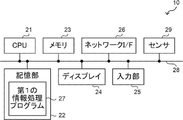
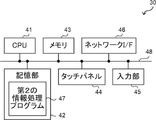
- FIG. It is a block diagram which shows an example of the hardware constitutions of a biometric information acquisition apparatus. It is a block diagram which shows an example of the hardware constitutions of a terminal device. It is a block diagram which shows an example of a functional structure of a biometric information acquisition apparatus and a terminal device. It is an example of biometric information.
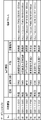
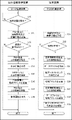
- FIG. 4 is a diagram for explaining processing in a terminal device; It is an example of a data file. It is an example of a screen displayed on the terminal device. 4 is a flow chart showing an example of information processing according to the first exemplary embodiment; It is an example of a table that defines biometric information acquisition devices to which connection is permitted.
- FIG. 9 is a flow chart showing an example of information processing according to the second exemplary embodiment.
- FIG. 6 is a flowchart showing an example of storage address designation processing;
- the biometric information acquisition system 1 includes at least one biometric information acquisition device 10, at least one terminal device 30 having a different owner, and at least one DB (DataBase) server 8.
- each DB server 8 may have a different administrator and management company.
- the DB server 8 may be virtualized.
- the DB server 8 is an example of the database server of the present disclosure.
- the biometric information acquisition device 10 and the terminal device 30 (indicated by the solid line in FIG. 1), the biometric information acquisition device 10 and the DB server 8 (indicated by the broken line in FIG. 1), and the terminal device 30 and the DB server 8 (indicated by the dotted line in FIG. 1) ) are connected to each other.
- the biometric information acquisition device 10 and the terminal device 30 are capable of communicating with each other through wireless communication.
- the biometric information acquisition device 10 and the DB server 8 can communicate with each other through wired or wireless communication.
- the terminal device 30 and the DB server 8 can communicate with each other through wired or wireless communication.
- the communication method of wireless communication between the biological information acquisition device 10 and the terminal device 30 is a known short-range wireless communication method such as Bluetooth (registered trademark), BLE (Bluetooth Low Energy) beacon, and RFID (Radio Frequency Identifier). At least one is applicable.
- a known wireless communication method such as Wi-Fi (registered trademark) is used as a communication method for wireless communication between the biological information acquisition device 10 and the DB server 8 and wireless communication between the terminal device 30 and the DB server 8. Appropriately applicable.
- the biometric information acquisition device 10 has a function of acquiring the user's biometric information.
- Biological information is, for example, information indicating at least one of body temperature, heart rate, electrocardiogram, myoelectricity, blood pressure, weight, body fat percentage, muscle mass, bone density, blood sugar level, urinary sugar, urinary protein, and urinary occult blood. be.
- the biometric information acquisition device 10 is a device that can be used by an unspecified number of users, and is used in hospitals, pharmacies, department stores, shopping malls, convenience stores, stations, airports, companies, public halls, facilities for the elderly, and hot spring facilities. It is installed in places where people gather.
- the DB server 8 has a database that receives the biometric information acquired by the biometric information acquisition device 10 and stores the received biometric information. Also, the DB server 8 transmits the biometric information stored in the database to the terminal device 30 in response to a request from the terminal device 30 .
- the user's biometric information acquired by the biometric information acquisition device 10 is stored in the DB server 8 .
- the biometric information acquisition device 10 transmits the storage address on the DB server 8 indicating the storage location of the biometric information to the terminal device 30 of the user.
- the terminal device 30 receives the biometric information by accessing the DB server 8 indicated by the received storage address. Therefore, the user can use the terminal device 30 owned by the user to refer to the biometric information stored in the DB server 8 at any timing. A configuration for realizing these functions will be described below.
- the biological information acquisition device 10 includes a CPU (Central Processing Unit) 21, a non-volatile storage unit 22, and a memory 23 as a temporary storage area.
- the biological information acquisition device 10 also includes a display 24 such as a liquid crystal display, an input unit 25 such as buttons, a network I/F (Interface) 26 for wireless communication with the terminal device 30 and an external network (not shown), and , includes a sensor 29 for measuring biometric information.
- the CPU 21, the storage unit 22, the memory 23, the display 24, the input unit 25, the network I/F 26, and the sensor 29 are connected via a bus 28 such as a system bus and a control bus so that various information can be exchanged with each other. .
- the storage unit 22 is implemented by a storage medium such as a HDD (Hard Disk Drive), SSD (Solid State Drive), flash memory, or the like.
- the storage unit 22 stores a first information processing program 27 for the biological information acquisition device 10 .
- the CPU 21 reads out the first information processing program 27 from the storage unit 22 , expands it in the memory 23 , and executes the expanded first information processing program 27 .
- the CPU 21 is an example of the first processor of the present disclosure.
- thermometer for example, a thermometer, an electrocardiograph, a sphygmomanometer, a body composition meter, a blood glucose meter, a urinalysis device, or any other known measuring device capable of measuring the various biological information described above can be applied.
- the sensor 29 may be incorporated in the biometric information acquisition device 10, or may be an independent device connected to the biometric information acquisition device 10 via wired or wireless communication so that biometric information can be exchanged. may be
- the terminal device 30 is a device owned by the user, and can be a wearable terminal such as a smart phone, tablet terminal, or smart watch.
- a wearable terminal such as a smart phone, tablet terminal, or smart watch.
- FIG. 3 the terminal device 30 includes a CPU 41, a nonvolatile storage unit 42, and a memory 43 as a temporary storage area.
- the terminal device 30 also includes a touch panel 44, an input unit 45 such as buttons, and a network I/F 46 for wireless communication with the biometric information acquisition device 10 and an external network (not shown).
- the CPU 41, the storage unit 42, the memory 43, the touch panel 44, the input unit 45, and the network I/F 46 are connected via a bus 48 such as a system bus and a control bus so that various types of information can be exchanged with each other.
- the storage unit 42 is realized by storage media such as HDD, SSD, and flash memory, for example.
- a second information processing program 47 for the terminal device 30 is stored in the storage unit 42 .
- the CPU 41 reads out the second information processing program 47 from the storage unit 42 , expands it in the memory 43 , and executes the expanded second information processing program 47 .
- the CPU 41 is an example of the second processor of the present disclosure.
- the biological information acquisition device 10 includes an acquisition section 12 , a first guidance section 14 , a first communication section 16 and a first management section 18 .
- the CPU 21 functions as the acquisition section 12, the first guidance section 14, the first communication section 16, and the first management section .
- the acquisition unit 12 acquires the user's biological information measured by the sensor 29 .
- the biological information includes the type of biological information, the measured value of the biological information, and the measurement result represented by at least one of the negative or positive determination result based on the measured value.
- date and time information indicating the date and time when the biometric information was acquired is added to the biometric information.
- the first guidance unit 14 uses the display 24 to provide various types of guidance to the user. For example, the first guidance unit 14 displays guidance such as a method of measuring biological information by the sensor 29 on the display 24 .
- the first communication unit 16 establishes a connection with the terminal device 30 by wireless communication. Specifically, the first communication unit 16 requests connection by wireless communication to the terminal device 30 that is within the communicable range of wireless communication (that is, the distance that radio waves reach for wireless communication). In this case, the first communication unit 16 may transmit information about its own device (hereinafter referred to as “device information”) together with the storage address to the terminal device 30 via wireless communication.
- the device information is, for example, information indicating at least one of the identification information of the biometric information acquisition device 10, the type of biometric information acquired by the biometric information acquisition device 10, and the installation location of the biometric information acquisition device 10 (FIG. 7). reference).
- the first communication unit 16 requests connection to the terminal device 30 detected as being closest according to the electric field strength and the like. good too.
- the first communication unit 16 establishes a connection with the terminal device 30 through wireless communication when the connection with the terminal device 30 through wireless communication is permitted.
- “Establishing a connection” means establishing a state in which the biometric information acquisition device 10 and the terminal device 30 are connected one-to-one. For example, when the wireless communication method is Bluetooth, the first communication unit 16 performs pairing with the terminal device 30 .
- the first communication unit 16 stores the biometric information acquired by the acquisition unit 12 in the external DB server 8 . After storing the biometric information in the DB server 8, the first communication unit 16 transmits, via wireless communication, the storage address indicating the storage location of the biometric information in the DB server 8 to the terminal device 30 with which the connection has been established. .
- the "storage address" is represented by, for example, a URL (Uniform Resource Locator), and may be a unique address according to the device information and date/time information of the biometric information acquisition device 10 (see FIG. 7). After transmitting the storage address to the terminal device 30 , the first communication unit 16 disconnects from the terminal device 30 through wireless communication.
- the first management unit 18 deletes the connection history with the terminal device 30 .
- “Erase the connection history” means erasing the information necessary for the connection acquired when establishing the connection with the terminal device 30 by wireless communication. That is, the biometric information acquisition device 10 and the terminal device 30 establish a temporary connection when transmitting/receiving the storage address.
- the wireless communication method is Bluetooth
- the first manager 18 cancels the pairing.
- the biometric information acquisition device 10 that has acquired the biometric information of another user may be placed within the wireless communication range of the terminal device 30 . Therefore, the terminal device 30 has a function of not establishing a connection with the biometric information acquisition device 10 that has acquired the biometric information of another user, and not receiving a storage address.
- An example of the functional configuration of the terminal device 30 according to the present exemplary embodiment will be described below with reference to FIGS. 4 and 6. FIG.
- the terminal device 30 includes a second guidance section 34, a second communication section 36 and a second management section 38.
- the CPU 41 functions as the second guidance section 34 , the second communication section 36 and the second management section 38 .
- FIG. 6 shows the processing of the terminal device 30 in chronological order when the terminal device 30 and the biological information acquisition device 10A establish a connection by wireless communication.
- the black circles in FIG. 6 indicate the points in time when the biological information acquisition device 10A requests the terminal device 30 to establish a connection through wireless communication
- the white circles indicate when the biological information acquisition device 10A disconnects from the terminal device 30. indicate time points.
- biometric information acquisition devices 10B and 10C acquire biometric information of other users who are placed within the wireless communication range of the terminal device 30.
- Black circles indicate the points in time when the biometric information acquisition devices 10B and 10C can request the terminal device 30 for connection by wireless communication.
- the second communication unit 36 receives a connection request and device information by wireless communication from the biological information acquisition device 10A.
- the second guidance unit 34 uses the touch panel 44 to provide various types of guidance to the user. For example, when there is a request for connection by wireless communication from the biometric information acquisition device 10A, the second guidance unit 34 causes the touch panel 44 to display guidance such as "Do you want to connect to the biometric information acquisition device?" , the user is allowed to select whether or not to permit the connection with the biometric information acquisition device 10A. That is, the user operates the touch panel 44 to input a selection as to whether or not to permit connection with the biometric information acquisition device 10 . When the connection is permitted by the user, the second communication unit 36 establishes a connection by wireless communication with the biological information acquisition device 10A.
- FIG. 7 shows an example of a data file.
- the "data file” is a file for associating and recording the storage address received from the biometric information acquisition device 10A and the device information regarding the biometric information acquisition device 10A.
- Data files 101 to 105 are data files in which storage addresses have already been recorded.
- a data file 106 is a data file relating to the biometric information acquisition device 10A with which a connection is currently established by wireless communication, and at this point in time the storage address has not yet been recorded.
- a data file is created for each biometric information acquisition device 10 with which a connection has been established, and is accumulated in the storage unit 42 of the terminal device 30, for example.
- the second communication unit 36 receives the storage address from the biological information acquisition device 10 via wireless communication. After receiving the storage address, the second communication unit 36 disconnects the biometric information acquisition device 10 from wireless communication. The second management unit 38 records the storage address received by the second communication unit 36 in the data file.
- the second management unit 38 creates data files related to the other biometric information acquisition devices 10B and 10C (hereinafter referred to as data files) until the storage address received from the biometric information acquisition device 10A is recorded in the created data file related to the biometric information acquisition device 10A. , called “other data files”). Specifically, the second management unit 38 sets the period from when the second communication unit 36 establishes connection with the biological information acquisition device 10A to when the storage address is recorded in the data file (hereinafter referred to as “other data file (hereinafter referred to as “creation prohibition period”), the creation of other data files is prohibited.
- the second management unit 38 may It never creates files.
- the terminal device 30 can There is no need to receive storage addresses related to biometric information. Note that even if it is not during the other data file creation prohibition period, for example, if the user refuses to connect to the biometric information acquisition device 10, the connection will not be established and the other data file will not be created.
- the second management unit 38 refers to the recorded data file, requests the DB server 8 indicated by the storage address to transmit the biometric information, and sends the biometric information to the DB server 8. Biometric information may be received.
- a request for browsing by the user may be made via the touch panel 44, for example.
- the second guidance unit 34 may present the device information recorded in the data file so that the user can selectively request which biometric information to view based on the device information.
- the second guide unit 34 may display the biometric information received from the DB server 8 on the touch panel 44 .
- FIG. 8 shows an example of a screen D displayed on the touch panel 44 by the second guide section 34. As shown in FIG. In the example of FIG. 8, the maximum body temperature for each date is shown by a line graph, and the urine protein determination result for each date is shown by changing the color of the plot. In this manner, the second guide section 34 may process the biometric information into an easy-to-see form using graphs, color coding, and the like, and display the information.
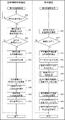
- FIG. 9 shows a flowchart showing the first information processing executed in the biological information acquisition device 10 and a flowchart showing the second information processing executed in the terminal device 30 side by side.
- FIG. 9 shows a flowchart showing the first information processing executed in the biological information acquisition device 10 and a flowchart showing the second information processing executed in the terminal device 30 side by side.
- the CPU 21 executes the first information processing program 27 to execute the first information processing shown in FIG.
- the first information processing is started, for example, when the user instructs the start of processing via the input unit 25 .
- step S10 the first communication unit 16 waits until the terminal device 30 is detected within the communicable range of wireless communication. If the determination in step S10 is affirmative (that is, if the terminal device 30 is detected), the process proceeds to step S11, and the first communication unit 16 requests connection by wireless communication to the terminal device 30, and transmits device information. . After that, in step S12, it waits until the connection by wireless communication is permitted or prohibited.
- step S12 determines whether the connection with the terminal device 30 is permitted. If the determination in step S12 is affirmative (that is, if the connection with the terminal device 30 is permitted), the process proceeds to step S13, and the first communication unit 16 establishes connection with the terminal device 30 by wireless communication.
- step S ⁇ b>14 the acquisition unit 12 acquires the user's biological information measured by the sensor 29 .
- step S ⁇ b>15 the first communication unit 16 stores the biometric information acquired in step S ⁇ b>14 in the external DB server 8 .
- step S16 the first communication unit 16 transmits the storage address indicating the storage location of the biometric information in the DB server 8 to the terminal device 30 via wireless communication for the biometric information stored in the DB server 8 in step S15.
- step S ⁇ b>17 the first communication unit 16 disconnects from the terminal device 30 through wireless communication.
- step S18 the first management unit 18 deletes the connection history with the terminal device 30 with which the connection was established in steps S13 to S17, and ends the first information processing.
- step S12 determines whether the connection with the terminal device 30 is prohibited. If the determination in step S12 is negative (that is, if the connection with the terminal device 30 is prohibited), the first information processing ends.
- the CPU 41 executes the second information processing program 47 to execute the second information processing shown in FIG.
- the second information processing is started when a connection request is received from the biological information acquisition device 10 (step S31).
- step S31 the second communication unit 36 receives a connection request and device information from the biological information acquisition device 10 by wireless communication.
- the second guide unit 34 displays on the touch panel 44 a guide for allowing the user to select whether or not to permit connection with the biometric information acquisition device 10, and waits until the connection is permitted or prohibited.
- step S32 determines whether the connection with the biometric information acquisition device 10 is permitted. If the determination in step S32 is affirmative (that is, if the connection with the biometric information acquisition device 10 is permitted), the process proceeds to step S33, and the second communication unit 36 establishes a connection with the biometric information acquisition device 10 by wireless communication. do.
- step S34 the second management unit 38 creates a data file regarding the biometric information acquisition device 10 with which connection has been established in step S33.
- step S35 the second management unit 38 prohibits creation of other data files related to the biometric information acquisition device 10 other than the biometric information acquisition device 10 with which the connection was established in step S33.
- step S36 the second communication unit 36 receives, via wireless communication, the storage address from the biological information acquisition device 10 with which the connection was established in step S33.
- step S ⁇ b>37 the second communication unit 36 disconnects from the biological information acquisition device 10 through wireless communication.
- step S38 the second manager 38 records the storage address received in step S36 in the data file created in step S34.
- step S39 the second management unit 38 cancels the prohibition of creating other data files that has been prohibited since step S35, and ends the second information processing.
- step S32 determines whether connection with the biometric information acquisition device 10 is prohibited. If the determination in step S32 is negative (that is, if connection with the biometric information acquisition device 10 is prohibited), establish connection with the biometric information acquisition device 10, create a data file, receive a storage address, and so on. Without doing so, the second information processing ends.
- the biometric information acquisition device 10 includes at least one processor, and the processor establishes a connection by wireless communication with the terminal device 30 owned by the user, acquires the user's biometric information, and obtains the biometric information. is stored in the external DB server 8, the storage address indicating the storage location of the biometric information in the DB server 8 is shared with the terminal device 30 via wireless communication, and after sharing the storage address with the terminal device 30, the terminal device 30 is disconnected by wireless communication. That is, the biometric information acquisition device 10 establishes a temporary connection with the terminal device 30 owned by the user from whom the biometric information is acquired, shares only the storage address, and does not transmit or receive the biometric information. can be secured.
- the biometric information acquisition device 10 confirms with the user whether or not connection via wireless communication with the terminal device 30 is possible, and if permitted, wireless communication with the terminal device 30 is performed.
- the mode of establishing a connection has been described, it is not limited to this.
- the first communication unit 16 may establish a connection by wireless communication with the terminal device 30 when the terminal device 30 is within a wireless communication range. That is, the first communication unit 16 may automatically connect to the terminal device 30 within the communicable range of wireless communication without confirming whether or not the connection is possible with the user.
- the first communication unit 16 when the first communication unit 16 is permitted to connect to the terminal device 30 via wireless communication in advance and the terminal device 30 is within the communicable range of the wireless communication, the first communication unit 16 connects to the terminal device 30 via wireless communication.
- a connection may be established.
- the biometric information acquisition device 10 to be permitted to be connected via wireless communication is set in advance according to the device information, so that when the biometric information acquisition device 10 is to be permitted to be connected, , the connection with the terminal device 30 may be automatically established.
- the second communication unit 36 determines whether the biometric information acquisition device 10 is included in the connection permission targets. The determination may be performed, for example, by collating the received device information with a table in which the biometric information acquisition device 10 to be permitted to be connected is predetermined based on the device information.
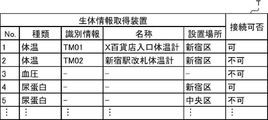
- FIG. 10 shows an example of a table T in which the biometric information acquisition devices 10 to which wireless communication connection is permitted are preset according to device information. In FIG. 10, when the "connectability" is "permitted”, the connection is permitted, and when "not permitted", the connection is not permitted.
- the table T may be set in advance by the user and stored in the storage unit 42, for example.
- whether or not to permit connection may be individually set according to the identification information of the biometric information acquisition device 10.
- FIG. Further, for example, No. in FIG. 3, whether or not to permit connection may be individually set according to the type of biometric information acquired by the biometric information acquisition device 10 .
- No. in FIG. 4 and no. 5 whether or not to allow connection may be individually set according to the installation location of the biometric information acquisition device 10 .
- whether or not to allow connection may be set individually according to the name of the biometric information acquisition device 10, such as making the biometric information acquisition device 10 whose name includes “entrance” subject to connection permission. Moreover, you may combine these suitably.
- FIG. 1 and no. 2 whether or not to permit connection may be individually set according to the identification information of the biometric information acquisition device 10.
- FIG. 3 whether or not to permit connection may be individually set according to the type of biometric information acquired by the biometric information acquisition device 10 .
- No. in FIG. 4 and no. 5 whether or not to allow connection may be individually set according to the installation location
- wards are illustrated as an example of the "installation location", but not limited to this, for example, prefectures, municipalities, facilities, and structures in facilities such as entrances and exits and toilets Whether or not connection is possible may be set individually according to the object or the like.
- the second communication unit 36 transmits the determination result to the biometric information acquisition device 10 .
- the first communication unit 16 establishes connection with the terminal device 30 by wireless communication when receiving the determination result that the device is a connection-permitted target. That is, the biometric information acquiring apparatus 10 performs wireless communication with the terminal device 30 when the self-device is included in the connection permission targets set in advance in the terminal device 30 and the terminal device 30 is within the communicable range of the wireless communication. You may establish a connection with
- the period from when the terminal device 30 establishes connection with the biometric information acquisition device 10 to when the storage address is recorded in the data file is the other data file creation prohibition period.
- the form which carries out was demonstrated, it does not restrict to this. It is sufficient if the terminal device 30 can avoid receiving storage addresses related to biometric information of other users.
- the other data file creation prohibition period a period from establishing a connection with the biometric information acquisition device 10 to disconnecting the biometric information acquisition device 10 through wireless communication may be applied.
- connection with another biometric information acquisition device 10 while the terminal device 30 is establishing connection with a certain biometric information acquisition device 10 it is possible to prevent the biometric information of other users from being connected. It is possible to avoid receiving the storage address. That is, when the connection with the biological information acquisition device 10 is established through wireless communication, the second management unit 38 of the terminal device 30 waits until the connection with the biological information acquisition device 10 through wireless communication is released. A connection through wireless communication with the biometric information acquisition device 10 may be prohibited.
- the first communication unit 16 encrypts the biometric information acquired by the acquisition unit 12 using a predetermined method, and stores the encrypted biometric information in the DB server 8.
- a predetermined method known methods such as public key cryptography, common key cryptography, and block chain can be appropriately applied. By encrypting the biometric information, confidentiality can be further improved.
- the terminal device 30 when applying the public key cryptosystem, has a set of a public key and a private key.
- the second communication unit 36 of the terminal device 30 transmits the public key to the biometric information acquisition device 10 when the connection with the biometric information acquisition device 10 is established.
- the first communication unit 16 of the biometric information acquisition device 10 receives the public key from the terminal device 30 and stores the biometric information encrypted using the received public key in the DB server 8 .
- the second guiding unit 34 When referencing the biometric information stored in the DB server 8 in the terminal device 30, the second guiding unit 34 receives the encrypted biometric information from the DB server 8 and decrypts it using the secret key.
- the terminal device 30 records the storage address in the data file after disconnecting from the biometric information acquisition device 10, but these processes are performed in order. You can replace it. That is, the terminal device 30 may record the storage address in the data file while establishing connection with the biometric information acquisition device 10, and release the connection with the biometric information acquisition device 10 after recording.
- the biometric information acquisition device 10 is provided with known payment means using, for example, cash, credit cards, IC (Integrated Circuit) cards, QR codes (registered trademark), etc., and the user may be provided with a function to settle the usage fee.
- the biometric information acquisition device 10 may settle the usage fee before the sensor 29 measures the biometric information.
- the biometric information acquisition device 10 stores the biometric information in the DB server 8 and transmits the storage address indicating the storage destination to the terminal device 30, but this exemplary embodiment , a form in which the terminal device 30 designates a storage address will be described.
- the terminal device 30 designates a storage address by the terminal device 30, for example, when there are a plurality of DB servers 8 that can be accessed by the terminal device 30, biometric information related to the same user can be distributed and stored. can be improved.
- An example of the functions of the biological information acquisition device 10 and the terminal device 30 according to the present exemplary embodiment will be described below, but duplicate descriptions of the same configurations and actions as in the first exemplary embodiment will be omitted.
- the terminal device 30 has a candidate list of multiple DB servers 8 that the terminal device 30 can access.
- the candidate list of the DB server 8 is stored in the storage unit 42, for example.
- the second management unit 38 refers to the storage addresses recorded in the data files (see FIG. 7) created in the past, and sets the storage addresses so that the biometric information is distributed and stored in a plurality of DB servers 8.
- the second communication unit 36 receives a connection request and device information from the biometric information acquisition device 10 through wireless communication, and establishes a connection with the biometric information acquisition device 10 through wireless communication.
- the second management unit 38 refers to the data file created in the past, and stores the same device information as the device information related to the biometric information acquisition device 10 currently connected by wireless communication.
- the storage address is designated so that the biometric information is stored in a DB server 8 different from the DB server 8 indicated by .
- biometric information having the same device information in different DB servers 8 .
- the second communication unit 36 receives the device information shown in FIG. 12 (corresponding to No. 106 shown in FIG. 7).
- the second management unit 38 collates the data file list shown in FIG. 7 with the device information shown in FIG.
- the device information shown in FIG. 12 corresponds to No. in FIG. No. 101 of FIG. 1 DB server 8 (https://abcd.com/) is excluded from the designation candidates.
- no. 102 indicates that the type and installation location are No. 1; 103 indicates that the installation location is No. 104 are of the same type, so No. 104 in FIG. 2 and No. 3 is also excluded from the designation candidates.
- the second management unit 38 selects the remaining No. from the candidate list of the DB server 8 in FIG.
- the storage address is specified so that the DB server 8 of No. 4 is the storage destination of the biometric information.
- the storage address may be specified so that the same DB server 8 is used as the storage destination for pieces of biometric information having non-identical device information.
- the second management unit 38 may specify storage addresses so that biometric information having at least one of the same device information is stored in different DB servers 8 .
- a storage address may be specified so that pieces of biometric information that partially overlap among device information are stored in the same DB server 8 .
- the second management unit 38 stores biometric information with a low degree of matching of device information (that is, there is little matching among device information such as type, identification information, and installation location) in the same DB server 8. It is preferable to specify the storage address to store in the .
- the first communication unit 16 receives designation of a storage address from the terminal device 30 before storing the biometric information in the DB server 8 . Also, the first communication unit 16 stores the biometric information acquired by the acquisition unit 12 in the DB server 8 according to the storage address specified by the terminal device 30 .
- FIG. 13 shows a flowchart showing the first information processing executed in the biological information acquisition device 10 and a flowchart showing the second information processing executed in the terminal device 30 side by side.
- FIG. 13 shows a flowchart showing the first information processing executed in the biological information acquisition device 10 and a flowchart showing the second information processing executed in the terminal device 30 side by side.
- the CPU 21 executes the first information processing program 27 to execute the first information processing shown in FIG.
- the first information processing is started, for example, when the user instructs the start of processing via the input unit 25 .
- step S50 the first communication unit 16 waits until the terminal device 30 is detected within the communicable range of wireless communication. If the determination in step S50 is affirmative (that is, if the terminal device 30 is detected), the process proceeds to step S51, and the first communication unit 16 requests the terminal device 30 to connect by wireless communication, and transmits device information. . After that, in step S52, it waits until the connection by wireless communication is permitted or prohibited.
- step S52 determines whether the connection with the terminal device 30 is permitted. If the determination in step S52 is affirmative (that is, if the connection with the terminal device 30 is permitted), the process proceeds to step S53, and the first communication unit 16 establishes connection with the terminal device 30 by wireless communication.
- step S ⁇ b>54 the acquisition unit 12 acquires the user's biological information measured by the sensor 29 .
- step S57 the first communication unit 16 receives the storage address indicating the storage location of the biometric information from the terminal device 30.
- the first communication unit 16 stores the biometric information acquired in step S54 in the DB server 8 indicated by the storage address received from the terminal device 30 in step S57.
- step S ⁇ b>59 the first communication unit 16 disconnects from the terminal device 30 through wireless communication.
- step S60 the first management unit 18 deletes the connection history with the terminal device 30 with which the connection was established in steps S53 to S59, and ends the first information processing.
- step S52 determines whether the connection with the terminal device 30 is prohibited. If the determination in step S52 is negative (that is, if the connection with the terminal device 30 is prohibited), the first information processing ends.
- the CPU 41 executes the second information processing program 47 to execute the second information processing shown in FIG.
- the second information processing is started when a connection request is received from the biometric information acquisition device 10 (step S71).
- step S71 the second communication unit 36 receives a connection request and device information from the biological information acquisition device 10 by wireless communication.
- the second guidance unit 34 displays on the touch panel 44 guidance for allowing the user to select whether or not to permit connection with the biological information acquisition device 10, and waits until the connection is permitted or prohibited.
- step S72 determines whether the connection with the biometric information acquisition device 10 is permitted. If the determination in step S72 is affirmative (that is, if the connection with the biometric information acquisition device 10 is permitted), the process proceeds to step S73, and the second communication unit 36 establishes a connection with the biometric information acquisition device 10 by wireless communication. do.
- step S74 the second management unit 38 creates a data file regarding the biometric information acquisition device 10 with which connection has been established in step S73.
- step S75 the second management unit 38 prohibits creation of other data files related to the biometric information acquisition device 10 other than the biometric information acquisition device 10 with which the connection was established in step S73.
- step S76 the second management unit 38 executes storage address designation processing (details will be described later), and designates a storage address indicating a storage destination of biometric information.
- step S77 the second communication unit 36 transmits the storage address specified in step S76 to the biometric information acquisition device 10 via wireless communication.
- step S ⁇ b>79 the second communication unit 36 disconnects from the biological information acquisition device 10 through wireless communication.
- step S80 the second manager 38 records the storage address specified at step S76 in the data file created at step S74.
- step S81 the second management unit 38 cancels the prohibition of creating other data files, which has been prohibited since step S75, and ends the second information processing.
- step S72 determines whether connection with the biometric information acquisition device 10 is prohibited. If the determination in step S72 is negative (that is, if connection with the biometric information acquisition device 10 is prohibited), establish connection with the biometric information acquisition device 10, create a data file, specify a storage address, and the like. Without doing so, the second information processing ends.
- step S76 The storage address designation process in step S76 will be described with reference to FIG.
- the CPU 41 executes the second information processing program 47 to execute the storage address designation process shown in FIG.
- step S90 the second management unit 38 refers to the data file created in the past (see FIG. 7), and finds the same device information as the device information related to the biological information acquisition device 10 currently connected by wireless communication. Determine whether there is a data file associated with the information. If the determination in step S90 is affirmative (that is, if there is a data file associated with the same device information as the device information regarding the biometric information acquisition device 10 with which connection is currently established), the process proceeds to step S91.
- step S91 the second management unit 38 selects the DB server 8 indicated by the storage address recorded in the data file associated with the same device information as the device information related to the biological information acquisition device 10 to which connection is currently established. It is excluded from the candidates for the DB server 8 (see FIG. 11).
- step S ⁇ b>92 the second management unit 38 determines whether any candidates for the DB server 8 remain.
- step S90 determines whether the determination in step S90 is negative (that is, if there is no data file associated with the same device information as the device information related to the biological information acquisition device 10 to which connection is currently established), and if the determination in step S92 is positive (i.e. If a candidate for the DB server 8 remains), the process proceeds to step S93.
- step S93 the second management unit 38 designates the DB server 8 from among the remaining candidates, and terminates this storage address designation process.
- step S92 determines whether the DB server 8 is a candidate for the DB server 8 remaining. If the determination in step S92 is negative (that is, if there are no candidates for the DB server 8 remaining), the process proceeds to step S94.
- step S94 the second management unit 38 records the device information having a low degree of matching with the received device information (that is, the device information regarding the biological information acquisition device 10 with which connection is currently established) in the associated data file.
- the DB server 8 indicated by the stored address is specified, and this storage address specifying process is terminated.
- the terminal device 30 refers to the storage addresses recorded in the data files created in the past, and distributes the biometric information to the plurality of DB servers 8. Specify the storage address as it is stored. That is, when there are a plurality of DB servers 8 that can be accessed by the terminal device 30, biometric information can be stored in a distributed manner, thereby further improving confidentiality.
- the terminal device 30 records the storage address in the data file after disconnecting from the biometric information acquisition device 10.
- the order of these processes is You can replace it. That is, the terminal device 30 may record the storage address in the data file while establishing connection with the biometric information acquisition device 10, and release the connection with the biometric information acquisition device 10 after recording.
- the biometric information acquisition device 10 stores the biometric information in the DB server 8 while establishing connection with the terminal device 30, and after the storage, the connection with the terminal device 30 is terminated.
- the mode of releasing has been described, the order of these processes may be changed. That is, after receiving the storage address from the terminal device 30, the biometric information acquisition device 10 may disconnect from the terminal device 30, and then store the biometric information in the DB server 8 indicated by the storage address.
- the storage address may be shared between the biometric information acquisition device 10 and the terminal device 30, may be set by the biometric information acquisition device 10, It may be set by the terminal device 30 .
- the biometric information acquisition device 10 of the present disclosure includes at least a first processor, and the first processor establishes a wireless communication connection with the terminal device 30 owned by the user and acquires the user's biometric information.
- the biometric information is stored in the external DB server 8
- the storage address indicating the storage location of the biometric information in the DB server 8 is shared with the terminal device 30 via wireless communication
- the connection with the terminal device 30 by wireless communication is released. Note that the order of these processes may be changed as appropriate.
- the various processors include, in addition to the CPU, which is a general-purpose processor that executes software (programs) and functions as various processing units, circuits such as FPGAs (Field Programmable Gate Arrays), etc. Programmable Logic Device (PLD) which is a processor whose configuration can be changed, ASIC (Application Specific Integrated Circuit) etc. Circuits, etc. are included.
- the CPU which is a general-purpose processor that executes software (programs) and functions as various processing units, circuits such as FPGAs (Field Programmable Gate Arrays), etc.
- Programmable Logic Device PLD which is a processor whose configuration can be changed, ASIC (Application Specific Integrated Circuit) etc. Circuits, etc. are included.
- One processing unit may be composed of one of these various processors, or a combination of two or more processors of the same type or different types (for example, a combination of multiple FPGAs, a combination of a CPU and an FPGA). combination). Also, a plurality of processing units may be configured by one processor.
- a single processor is configured by combining one or more CPUs and software.
- a processor functions as multiple processing units.
- SoC System on Chip
- the various processing units are configured using one or more of the above various processors as a hardware structure.
- an electric circuit combining circuit elements such as semiconductor elements can be used.
- the first information processing program 27 is stored (installed) in advance in the storage unit 22, but the present invention is not limited to this.
- the first information processing program 27 is recorded in a recording medium such as a CD-ROM (Compact Disc Read Only Memory), a DVD-ROM (Digital Versatile Disc Read Only Memory), and a USB (Universal Serial Bus) memory. may be provided.
- the first information processing program 27 may be downloaded from an external device via a network.
- the technology of the present disclosure extends to a storage medium that non-temporarily stores an information processing program in addition to the information processing program.
- the second information processing program 47 is stored (installed) in advance in the storage unit 42, but is not limited to this.
- the second information processing program 47 may be provided in a form recorded on a recording medium such as a CD-ROM, a DVD-ROM, and a USB memory.
- the second information processing program 47 may be downloaded from an external device via a network.
- the technology of the present disclosure extends to a storage medium that non-temporarily stores an information processing program in addition to the information processing program.
- the technology of the present disclosure can also appropriately combine each of the exemplary embodiments described above.
- the description and illustration shown above are detailed descriptions of the parts related to the technology of the present disclosure, and are merely examples of the technology of the present disclosure.
- the above descriptions of configurations, functions, actions, and effects are descriptions of examples of configurations, functions, actions, and effects of portions related to the technology of the present disclosure. Therefore, unnecessary parts may be deleted, new elements added, or replaced with respect to the above-described description and illustration without departing from the gist of the technology of the present disclosure. Needless to say.
Landscapes
- Health & Medical Sciences (AREA)
- Engineering & Computer Science (AREA)
- Life Sciences & Earth Sciences (AREA)
- Biomedical Technology (AREA)
- Public Health (AREA)
- General Health & Medical Sciences (AREA)
- Medical Informatics (AREA)
- Primary Health Care (AREA)
- Physics & Mathematics (AREA)
- Epidemiology (AREA)
- Cardiology (AREA)
- Physiology (AREA)
- Animal Behavior & Ethology (AREA)
- Surgery (AREA)
- Molecular Biology (AREA)
- Heart & Thoracic Surgery (AREA)
- Pathology (AREA)
- Veterinary Medicine (AREA)
- Biophysics (AREA)
- General Business, Economics & Management (AREA)
- Business, Economics & Management (AREA)
- Theoretical Computer Science (AREA)
- Pulmonology (AREA)
- Computing Systems (AREA)
- Data Mining & Analysis (AREA)
- Databases & Information Systems (AREA)
- General Engineering & Computer Science (AREA)
- General Physics & Mathematics (AREA)
- Computer Networks & Wireless Communication (AREA)
- Medical Treatment And Welfare Office Work (AREA)
- Measuring And Recording Apparatus For Diagnosis (AREA)
Abstract
第1のプロセッサを少なくとも備え、前記第1のプロセッサは、ユーザが所有する端末装置との無線通信による接続を確立し、前記ユーザの生体情報を取得し、前記生体情報を外部のデータベースサーバに格納し、前記データベースサーバにおける前記生体情報の格納先を示す格納アドレスを、前記端末装置と前記無線通信を介して共有し、前記格納アドレスを前記端末装置と共有した後に、前記端末装置との前記無線通信による接続を解除する生体情報取得装置。
Description
本開示は、生体情報取得装置、生体情報取得システム、生体情報取得方法及び生体情報取得プログラムに関する。
従来、測定装置により測定した生体情報を、データベースサーバに格納し、ユーザが所有する端末装置を用いてデータベースサーバにアクセスすることで、生体情報を参照可能とする技術が知られている(例えば再表2005/104933号公報参照)。
近年、街なかに配置された体温計、血圧計及び尿検査装置等の機能を有する生体情報取得装置によって、不特定多数のユーザの生体情報を取得することが行われている。このような不特定多数のユーザの生体情報をデータベースサーバに格納し、各ユーザが所有する端末装置によって当該ユーザの生体情報を参照可能とする技術が望まれている。しかしながら、再表2005/104933号公報には、情報通信機器が生体情報を取得する対象のユーザが不特定多数である場合の形態についての記載がない。
また、生体情報は個人情報の一種であると考えられるため、生体情報取得装置及びデータベースサーバの管理者が生体情報を許可なく利用したり、ネットワークの傍受が行われたりするリスクを低減させることが望ましい。すなわち、他者が生体情報を参照できないよう、秘匿性を確保することが望ましい。
本開示は、秘匿性を確保できる生体情報取得装置、生体情報取得システム、生体情報取得方法及び生体情報取得プログラムを提供する。
本開示の第1の態様は、生体情報取得装置であって、第1のプロセッサを少なくとも備え、第1のプロセッサは、ユーザが所有する端末装置との無線通信による接続を確立し、ユーザの生体情報を取得し、生体情報を外部のデータベースサーバに格納し、データベースサーバにおける生体情報の格納先を示す格納アドレスを、端末装置と無線通信を介して共有し、格納アドレスを端末装置と共有した後に、端末装置との無線通信による接続を解除する。
本開示の第2の態様は、上記態様において、第1のプロセッサは、格納アドレスを端末装置と共有した後に、端末装置との接続履歴を消去してもよい。
本開示の第3の態様は、上記態様において、第1のプロセッサは、生体情報をデータベースサーバに格納する前に、端末装置から格納アドレスの指定を受け、端末装置によって指定された格納アドレスに従って、生体情報をデータベースサーバに格納してもよい。
本開示の第4の態様は、上記態様において、第1のプロセッサは、生体情報を、予め定められた方式で暗号化し、暗号化した生体情報をデータベースサーバに格納してもよい。
本開示の第5の態様は、上記第4の態様において、第1のプロセッサは、端末装置から公開鍵を受信し、公開鍵を用いて暗号化した生体情報を、データベースサーバに格納してもよい。
本開示の第6の態様は、上記態様において、第1のプロセッサは、端末装置との無線通信による接続が許可された場合に、端末装置との無線通信による接続を確立してもよい。
本開示の第7の態様は、上記第1の態様から第5の態様において、第1のプロセッサは、端末装置が無線通信の通信可能範囲にある場合に、端末装置との無線通信による接続を確立してもよい。
本開示の第8の態様は、上記第1の態様から第5の態様において、第1のプロセッサは、端末装置との無線通信による接続が予め許可されており、かつ端末装置が無線通信の通信可能範囲にある場合に、端末装置との無線通信による接続を確立してもよい。
本開示の第9の態様は、上記第8の態様においては、端末装置において、無線通信による接続許可対象の生体情報取得装置が、生体情報取得装置の識別情報、生体情報取得装置が取得する生体情報の種類、及び生体情報取得装置の設置場所の少なくとも1つに応じて予め設定され、第1のプロセッサは、端末装置において予め設定された接続許可対象に自装置が含まれ、かつ端末装置が無線通信の通信可能範囲にある場合に、端末装置との無線通信による接続を確立してもよい。
本開示の第10の態様は、上記態様に係る生体情報取得装置は、不特定多数のユーザが利用可能であってもよい。
本開示の第11の態様は、上記態様において、生体情報は、体温、心拍、心電、筋電、血圧、体重、体脂肪率、筋肉量、骨密度、血糖値、尿糖、尿蛋白及び尿潜血の少なくとも1つを示すものであってもよい。
本開示の第12の態様は、上記態様において、無線通信は、Bluetooth、BLEビーコン及びRFIDの少なくとも1つを用いた通信方式であってもよい。
本開示の第13の態様は、生体情報取得システムであって、上記態様に係る生体情報取得装置と、第2のプロセッサを備えた端末装置と、を備える。
本開示の第14の態様は、上記第13の態様において、第2のプロセッサは、生体情報取得装置と共有した格納アドレスと、当該生体情報取得装置に関する情報と、を関連付けて記録するデータファイルを作成してもよい。
本開示の第15の態様は、上記第14の態様において、第2のプロセッサは、生体情報取得装置との無線通信による接続が確立された場合、当該生体情報取得装置に関するデータファイルを作成し、当該データファイルに生体情報取得装置と共有した格納アドレスを記録するまで、他の生体情報取得装置に関するデータファイルの作成を禁止してもよい。
本開示の第16の態様は、上記第14の態様又は第15の態様において、第2のプロセッサは、過去に作成されたデータファイルに記録された格納アドレスを参照して、複数のデータベースサーバに生体情報が分散して格納されるように、格納アドレスを指定し、第1のプロセッサは、第2のプロセッサによって指定された格納アドレスに従って、生体情報をデータベースサーバに格納してもよい。
本開示の第17の態様は、上記第16の態様において、データファイルには、生体情報取得装置と共有した格納アドレスと、当該生体情報取得装置の識別情報、当該生体情報取得装置が取得した生体情報の種類、及び当該生体情報取得装置の設置場所の少なくとも1つを示す情報と、が関連付けて記録され、第2のプロセッサは、過去に作成されたデータファイルを参照して、現在無線通信による接続が確立されている生体情報取得装置に関する情報と同一の情報が関連付けられた格納アドレスが示すデータベースサーバとは異なるデータベースサーバを、生体情報の格納先とするように、格納アドレスを指定してもよい。
本開示の第18の態様は、上記第13の態様から第17の態様において、第2のプロセッサは、生体情報取得装置との無線通信による接続が確立された場合、当該生体情報取得装置との無線通信による接続が解除されるまで、他の生体情報取得装置との無線通信による接続を禁止してもよい。
本開示の第19の態様は、生体情報取得方法であって、ユーザが所有する端末装置との無線通信による接続を確立し、ユーザの生体情報を取得し、生体情報を外部のデータベースサーバに格納し、データベースサーバにおける生体情報の格納先を示す格納アドレスを、端末装置と無線通信を介して共有し、格納アドレスを端末装置と共有した後に、端末装置との無線通信による接続を解除する処理をコンピュータが実行するものである。
本開示の第20の態様は、生体情報取得プログラムであって、ユーザが所有する端末装置との無線通信による接続を確立し、ユーザの生体情報を取得し、生体情報を外部のデータベースサーバに格納し、データベースサーバにおける生体情報の格納先を示す格納アドレスを、端末装置と無線通信を介して共有し、格納アドレスを端末装置と共有した後に、端末装置との無線通信による接続を解除する処理をコンピュータに実行させるためのものである。
上記態様によれば、本開示の生体情報取得装置、生体情報取得システム、生体情報取得方法及び生体情報取得プログラムは、秘匿性を確保できる。
以下、図面を参照して、本開示の技術を実施するための形態例を詳細に説明する。
[第1例示的実施形態]
図1を参照して、本例示的実施形態に係る生体情報取得システム1の構成の一例について説明する。図1に示すように、生体情報取得システム1は、少なくとも1台の生体情報取得装置10と、それぞれ所有者が異なる少なくとも1台の端末装置30と、少なくとも1台のDB(DataBase)サーバ8と、を含んで構成される。なお、DBサーバ8が複数ある場合、それぞれのDBサーバ8の管理者及び管理会社は異なっていてもよい。また、DBサーバ8は仮想化されていてもよい。DBサーバ8が、本開示のデータベースサーバの一例である。
図1を参照して、本例示的実施形態に係る生体情報取得システム1の構成の一例について説明する。図1に示すように、生体情報取得システム1は、少なくとも1台の生体情報取得装置10と、それぞれ所有者が異なる少なくとも1台の端末装置30と、少なくとも1台のDB(DataBase)サーバ8と、を含んで構成される。なお、DBサーバ8が複数ある場合、それぞれのDBサーバ8の管理者及び管理会社は異なっていてもよい。また、DBサーバ8は仮想化されていてもよい。DBサーバ8が、本開示のデータベースサーバの一例である。
生体情報取得装置10と端末装置30(図1に実線で図示)、生体情報取得装置10とDBサーバ8(図1に破線で図示)、及び、端末装置30とDBサーバ8(図1に点線で図示)は、それぞれ接続されている。具体的には、生体情報取得装置10と端末装置30は、無線通信により互いに通信可能とされている。生体情報取得装置10とDBサーバ8は、有線又は無線通信により互いに通信可能とされている。端末装置30とDBサーバ8は、有線又は無線通信により互いに通信可能とされている。
生体情報取得装置10と端末装置30との間の無線通信の通信方式は、Bluetooth(登録商標)、BLE(Bluetooth Low Energy)ビーコン及びRFID(Radio Frequency Identifier)等の公知の近距離無線通信方式の少なくとも1つを適用できる。生体情報取得装置10とDBサーバ8との間の無線通信、及び端末装置30とDBサーバ8との間の無線通信の通信方式は、Wi-Fi(登録商標)等の公知の無線通信方式を適宜適用できる。
生体情報取得装置10は、ユーザの生体情報を取得する機能を有する。生体情報とは、例えば、体温、心拍、心電、筋電、血圧、体重、体脂肪率、筋肉量、骨密度、血糖値、尿糖、尿蛋白及び尿潜血の少なくとも1つを示す情報である。また、生体情報取得装置10は、不特定多数のユーザが利用可能な装置であり、例えば、病院、薬局、百貨店、ショッピングモール、コンビニエンスストア、駅、空港、会社、公民館、高齢者施設及び温泉施設等の人が集まる場所に設置される。
DBサーバ8は、生体情報取得装置10により取得された生体情報を受信し、受信した生体情報を格納するデータベースを有する。また、DBサーバ8は、端末装置30からの要求に応じて、データベースに格納された生体情報を端末装置30に送信する。
本例示的実施形態に係る生体情報取得システム1において、生体情報取得装置10により取得されたユーザの生体情報は、DBサーバ8に格納される。生体情報取得装置10は、生体情報の格納先を示すDBサーバ8上の格納アドレスを、ユーザの端末装置30に送信する。端末装置30は、受信した格納アドレスが示すDBサーバ8にアクセスすることで、生体情報を受信する。したがって、ユーザは、自身が所有する端末装置30を用いて、DBサーバ8に格納された生体情報を任意のタイミングで参照できる。以下、これらの機能を実現するための構成について説明する。
図2を参照して、本例示的実施形態に係る生体情報取得装置10のハードウェア構成の一例を説明する。図2に示すように、生体情報取得装置10は、CPU(Central Processing Unit)21、不揮発性の記憶部22、及び一時記憶領域としてのメモリ23を含む。また、生体情報取得装置10は、液晶ディスプレイ等のディスプレイ24、ボタン等の入力部25、端末装置30及び外部のネットワーク(不図示)との無線通信を行うネットワークI/F(Interface)26、並びに、生体情報を測定するセンサ29を含む。CPU21、記憶部22、メモリ23、ディスプレイ24、入力部25、ネットワークI/F26及びセンサ29は、システムバス及びコントロールバス等のバス28を介して相互に各種情報の授受が可能に接続されている。
記憶部22は、例えば、HDD(Hard Disk Drive)、SSD(Solid State Drive)及びフラッシュメモリ等の記憶媒体によって実現される。記憶部22には、生体情報取得装置10における第1の情報処理プログラム27が記憶される。CPU21は、記憶部22から第1の情報処理プログラム27を読み出してからメモリ23に展開し、展開した第1の情報処理プログラム27を実行する。CPU21が本開示の第1のプロセッサの一例である。
センサ29としては、例えば体温計、心電計、血圧計、体組成計、血糖値測定器及び尿検査装置等の、上記の各種生体情報を測定できる公知の測定器を適用できる。なお、センサ29は、生体情報取得装置10に組み込まれていてもよいし、独立した装置であって、生体情報取得装置10と有線又は無線通信により生体情報の授受が可能に接続されている装置であってもよい。
端末装置30は、ユーザが所有する装置であり、例えば、スマートフォン、タブレット端末、及びスマートウォッチ等のウェアラブル端末を適用できる。図3を参照して、本例示的実施形態に係る端末装置30のハードウェア構成の一例を説明する。図3に示すように、端末装置30は、CPU41、不揮発性の記憶部42、及び一時記憶領域としてのメモリ43を含む。また、端末装置30は、タッチパネル44、ボタン等の入力部45、並びに、生体情報取得装置10及び外部のネットワーク(不図示)との無線通信を行うネットワークI/F46を含む。CPU41、記憶部42、メモリ43、タッチパネル44、入力部45及びネットワークI/F46は、システムバス及びコントロールバス等のバス48を介して相互に各種情報の授受が可能に接続されている。
記憶部42は、例えば、HDD、SSD及びフラッシュメモリ等の記憶媒体によって実現される。記憶部42には、端末装置30における第2の情報処理プログラム47が記憶される。CPU41は、記憶部42から第2の情報処理プログラム47を読み出してからメモリ43に展開し、展開した第2の情報処理プログラム47を実行する。CPU41が本開示の第2のプロセッサの一例である。
次に、図4を参照して、本例示的実施形態に係る生体情報取得装置10の機能的な構成の一例について説明する。図4に示すように、生体情報取得装置10は、取得部12、第1案内部14、第1通信部16及び第1管理部18を含む。CPU21が第1の情報処理プログラム27を実行することにより、取得部12、第1案内部14、第1通信部16及び第1管理部18として機能する。
取得部12は、センサ29によって測定したユーザの生体情報を取得する。図5に示すように、生体情報には、生体情報の種類と、生体情報の測定値、及び当該測定値に基づく陰性又は陽性の判定結果の少なくとも一方により表される測定結果と、が含まれる。また、生体情報には、当該生体情報が取得された日時を示す日時情報が付与される。
第1案内部14は、ディスプレイ24を用いて、ユーザに対する各種案内を行う。例えば、第1案内部14は、センサ29による生体情報の測定方法等の案内をディスプレイ24に表示する。
第1通信部16は、端末装置30との無線通信による接続を確立する。具体的には、第1通信部16は、無線通信の通信可能範囲(すなわち、無線通信の電波が届く距離)にある端末装置30に対して、無線通信による接続を要求する。この場合、第1通信部16は、格納アドレスとともに、自装置に関する情報(以下、「装置情報」という)を端末装置30に無線通信を介して送信してもよい。装置情報とは、例えば、生体情報取得装置10の識別情報、生体情報取得装置10が取得する生体情報の種類、及び生体情報取得装置10の設置場所の少なくとも1つを示す情報である(図7参照)。なお、第1通信部16は、無線通信の通信可能範囲内に複数の端末装置30がある場合、電界強度等に応じて最も近いと検出した端末装置30に対して接続を要求するようにしてもよい。
その後、第1通信部16は、端末装置30との無線通信による接続が許可された場合に、端末装置30との無線通信による接続を確立する。「接続を確立する」とは、生体情報取得装置10と端末装置30とが1対1で接続された状態にすることを意味する。例えば、無線通信の方式がBluetoothである場合は、第1通信部16は端末装置30とペアリングを行う。
また、第1通信部16は、取得部12により取得した生体情報を外部のDBサーバ8に格納する。生体情報をDBサーバ8に格納した後、第1通信部16は、DBサーバ8における生体情報の格納先を示す格納アドレスを、接続を確立している端末装置30に無線通信を介して送信する。「格納アドレス」は、例えばURL(Uniform Resource Locator)により表され、生体情報取得装置10の装置情報及び日時情報に応じてユニークなアドレスであってもよい(図7参照)。格納アドレスを端末装置30に送信した後、第1通信部16は、端末装置30との無線通信による接続を解除する。
第1通信部16により格納アドレスを端末装置に送信した後に、第1管理部18は、端末装置30との接続履歴を消去する。「接続履歴を消去する」とは、端末装置30と無線通信による接続を確立したときに取得される、当該接続に必要な情報を消去することを意味する。すなわち、生体情報取得装置10と端末装置30とは、格納アドレスの送受信を行う場合に、その場限りの接続を行う。例えば、無線通信の方式がBluetoothである場合は、第1管理部18はペアリングの解除を行う。なお、第1管理部18が接続履歴を消去した後に、第1通信部16が端末装置30と無線通信による接続を再度確立するためには、接続に必要な情報を再度取得する必要がある。例えば、無線通信の方式がBluetoothである場合は、再度のペアリングが必要となる。
ところで、端末装置30の無線通信の通信可能範囲内には、他のユーザの生体情報を取得した生体情報取得装置10が配置される場合がある。そこで、端末装置30は、他のユーザの生体情報を取得した生体情報取得装置10との接続の確立、及び格納アドレスの受信等を行わないような機能を有する。以下、図4及び図6を参照して、本例示的実施形態に係る端末装置30の機能的な構成の一例について説明する。
図4に示すように、端末装置30は、第2案内部34、第2通信部36及び第2管理部38を含む。CPU41が第2の情報処理プログラム47を実行することにより、第2案内部34、第2通信部36及び第2管理部38として機能する。
図6を参照して、第2案内部34、第2通信部36及び第2管理部38における処理を時系列で説明する。図6は、端末装置30と生体情報取得装置10Aとが無線通信による接続を確立する場合における、端末装置30の処理を時系列で示している。また、図6における黒丸は、生体情報取得装置10Aが端末装置30に対して無線通信による接続の要求をした時点を示し、白丸は、生体情報取得装置10Aが端末装置30との接続を解除した時点を示す。
また、生体情報取得装置10B及び10Cは、端末装置30の無線通信の通信可能範囲内に配置された、他のユーザの生体情報を取得したものを想定している。生体情報取得装置10B及び10Cが、端末装置30に対して無線通信による接続の要求をし得る時点を、黒丸で示している。
図6に示すように、まず、第2通信部36は、生体情報取得装置10Aから、無線通信による接続の要求、及び装置情報を受信する。第2案内部34は、タッチパネル44を用いて、ユーザに対する各種案内を行う。例えば、第2案内部34は、生体情報取得装置10Aから無線通信による接続の要求があった場合、「生体情報取得装置との接続を行いますか?」等の案内をタッチパネル44に表示させることで、生体情報取得装置10Aとの接続を許可するか否かをユーザに選択させる。すなわち、ユーザは、タッチパネル44を操作して、生体情報取得装置10との接続を許可するか否かの選択を入力する。ユーザにより接続が許可された場合、第2通信部36は、生体情報取得装置10Aとの無線通信による接続を確立する。
第2通信部36により生体情報取得装置10Aとの無線通信による接続が確立された場合、第2管理部38は、当該生体情報取得装置10Aに関するデータファイルを作成する。図7にデータファイルの一例を示す。図7に示すように、「データファイル」とは、生体情報取得装置10Aから受信した格納アドレスと、当該生体情報取得装置10Aに関する装置情報と、を関連付けて記録するためのファイルである。図7に示すNo.101~105のデータファイルは、既に格納アドレスを記録済みのデータファイルである。No.106のデータファイルは、現在無線通信による接続が確立されている生体情報取得装置10Aに関するデータファイルであり、この時点ではまだ格納アドレスが記録されていない。図7に示すように、データファイルは、接続が確立された生体情報取得装置10ごとに作成され、例えば、端末装置30の記憶部42に蓄積されていく。
第2管理部38によりデータファイルが作成された後、第2通信部36は、生体情報取得装置10から、格納アドレスを無線通信を介して受信する。格納アドレスを受信した後、第2通信部36は、生体情報取得装置10との無線通信による接続の解除を行う。第2管理部38は、第2通信部36が受信した格納アドレスを、データファイルに記録する。
また、第2管理部38は、作成した生体情報取得装置10Aに関するデータファイルに、生体情報取得装置10Aから受信した格納アドレスを記録するまで、他の生体情報取得装置10B及び10Cに関するデータファイル(以下、「他データファイル」という)の作成を禁止する。具体的には、第2管理部38は、第2通信部36が生体情報取得装置10Aとの接続を確立してから、データファイルに格納アドレスを記録するまでの期間(以下、「他データファイル作成禁止期間」という)において、他データファイルの作成を禁止する。
例えば、図6に示すように、他データファイル作成禁止期間において、仮に生体情報取得装置10B及び10Cから接続の要求を受信しても、第2管理部38が生体情報取得装置10B及び10Cに関するデータファイルの作成をすることはない。これにより、端末装置30の無線通信の通信可能範囲内に、他のユーザの生体情報を取得した生体情報取得装置10B及び10Cが配置された場合であっても、端末装置30が他のユーザの生体情報に関する格納アドレスの受信等を行うことはない。なお、他データファイル作成禁止期間でなくても、例えばユーザが生体情報取得装置10との接続を拒否した場合には、接続が確立されず、他データファイルが作成されることはない。
第2管理部38は、ユーザから閲覧の要求があった場合に、記録済みのデータファイルを参照し、格納アドレスが示すDBサーバ8に対して生体情報を送信するよう要求し、DBサーバ8から生体情報を受信してもよい。ユーザによる閲覧の要求は、例えばタッチパネル44を介して行われてもよい。この場合、第2案内部34は、データファイルに記録された装置情報を提示し、ユーザが装置情報に基づいてどの生体情報を閲覧するかを選択的に要求できるようにしてもよい。
また、第2案内部34は、DBサーバ8から受信した生体情報をタッチパネル44に表示させてもよい。図8に、第2案内部34がタッチパネル44に表示する画面Dの一例を示す。図8の例では、日付毎の最高体温を折れ線グラフで示し、日付毎の尿蛋白の判定結果をプロットの色を変えて示している。このように、第2案内部34は、生体情報を、グラフ及び色分け等を用いて見やすい形式に加工して表示してもよい。
次に、図9を参照して、本例示的実施形態に係る生体情報取得装置10及び端末装置30の作用を説明する。図9には、生体情報取得装置10において実行される第1の情報処理を示すフローチャートと、端末装置30において実行される第2の情報処理を示すフローチャートと、を並べて示している。上述したように、生体情報取得装置10と、端末装置30と、の間で行われる処理があるので、分かりやすさのため、各装置間で対応するステップは並べて記載している。
まず、生体情報取得装置10において実行される第1の情報処理について説明する。生体情報取得装置10において、CPU21が第1の情報処理プログラム27を実行することによって、図9に示す第1の情報処理が実行される。第1の情報処理は、例えば、ユーザにより入力部25を介して処理の開始が指示された場合に開始される。
ステップS10で、第1通信部16は、無線通信の通信可能範囲に端末装置30を検出するまで待機する。ステップS10が肯定判定の場合(すなわち端末装置30を検出した場合)、ステップS11に移行し、第1通信部16は、端末装置30に対して無線通信による接続を要求し、装置情報を送信する。その後、ステップS12で、無線通信による接続が許可又は禁止されるまで待機する。
ステップS12が肯定判定の場合(すなわち端末装置30との接続が許可された場合)、ステップS13に移行し、第1通信部16は、端末装置30との無線通信による接続を確立する。ステップS14で、取得部12は、センサ29によって測定したユーザの生体情報を取得する。ステップS15で、第1通信部16は、ステップS14で取得した生体情報を外部のDBサーバ8に格納する。
ステップS16で、第1通信部16は、ステップS15でDBサーバ8に格納した生体情報について、DBサーバ8における生体情報の格納先を示す格納アドレスを、端末装置30に無線通信を介して送信する。ステップS17で、第1通信部16は、端末装置30との無線通信による接続を解除する。ステップS18で、第1管理部18は、ステップS13~S17で接続を確立していた端末装置30との接続履歴の消去を行い、本第1の情報処理を終了する。
一方、ステップS12が否定判定の場合(すなわち端末装置30との接続が禁止された場合)は、そのまま本第1の情報処理を終了する。
次に、端末装置30において実行される第2の情報処理について説明する。端末装置30において、CPU41が第2の情報処理プログラム47を実行することによって、図9に示す第2の情報処理が実行される。第2の情報処理は、生体情報取得装置10から接続要求を受信する(ステップS31)と開始される。
ステップS31で、第2通信部36は、生体情報取得装置10から、無線通信による接続の要求、及び装置情報を受信する。ステップS32で、第2案内部34は、生体情報取得装置10との接続を許可するか否かをユーザに選択させる案内をタッチパネル44に表示し、接続が許可又は禁止されるまで待機する。
ステップS32が肯定判定の場合(すなわち生体情報取得装置10との接続が許可された場合)、ステップS33に移行し、第2通信部36は、生体情報取得装置10との無線通信による接続を確立する。ステップS34で、第2管理部38は、ステップS33で接続を確立した生体情報取得装置10に関するデータファイルを作成する。ステップS35で、第2管理部38は、ステップS33で接続を確立した生体情報取得装置10以外の生体情報取得装置10に関する他データファイルの作成を禁止する。
ステップS36で、第2通信部36は、ステップS33で接続を確立した生体情報取得装置10から、格納アドレスを無線通信を介して受信する。ステップS37で、第2通信部36は、生体情報取得装置10との無線通信による接続を解除する。ステップS38で、第2管理部38は、ステップS36で受信した格納アドレスを、ステップS34で作成したデータファイルに記録する。ステップS39で、第2管理部38は、ステップS35から禁止していた他データファイルの作成の禁止を解除し、本第2の情報処理を終了する。
一方、ステップS32が否定判定の場合(すなわち生体情報取得装置10との接続が禁止された場合)は、生体情報取得装置10との接続の確立、データファイルの作成及び格納アドレスの受信等を行うことなく、そのまま本第2の情報処理を終了する。
以上説明したように、生体情報取得装置10は、少なくとも1つのプロセッサを備え、プロセッサは、ユーザが所有する端末装置30との無線通信による接続を確立し、ユーザの生体情報を取得し、生体情報を外部のDBサーバ8に格納し、DBサーバ8における生体情報の格納先を示す格納アドレスを、端末装置30と無線通信を介して共有し、格納アドレスを端末装置30と共有した後に、端末装置30との無線通信による接続を解除する。すなわち、生体情報取得装置10は、生体情報の取得元のユーザが所有する端末装置30とその場限りの接続を行って格納アドレスのみを共有し、生体情報の送受信は行わないので、秘匿性を確保できる。
なお、上記第1例示的実施形態においては、生体情報取得装置10が、端末装置30との無線通信による接続の可否をユーザに確認し、許可された場合に、端末装置30との無線通信による接続を確立する形態について説明したが、これに限らない。例えば、第1通信部16は、端末装置30が無線通信の通信可能範囲にある場合に、端末装置30との無線通信による接続を確立してもよい。すなわち、第1通信部16は、ユーザに接続の可否を確認することなく、無線通信の通信可能範囲にある端末装置30と自動で接続してもよい。
また例えば、第1通信部16は、端末装置30との無線通信による接続が予め許可されており、かつ端末装置30が無線通信の通信可能範囲にある場合に、端末装置30との無線通信による接続を確立してもよい。具体的には、端末装置30において、無線通信による接続許可対象の生体情報取得装置10を装置情報に応じて予め設定しておくことで、生体情報取得装置10が接続許可対象である場合には、端末装置30との接続を自動で確立してもよい。
この場合、第2通信部36は、生体情報取得装置10から受信した装置情報に基づいて、当該生体情報取得装置10が接続許可対象に含まれるか否かを判定する。判定は、例えば、装置情報に基づいて接続許可対象の生体情報取得装置10が予め定められたテーブルと、受信した装置情報と、を照合することで行ってもよい。図10に、無線通信による接続許可対象の生体情報取得装置10が、装置情報に応じて予め設定されたテーブルTの一例を示す。図10において、「接続可否」が「可」のものは接続許可対象であり、「不可」のものは接続許可対象ではない。テーブルTは、例えば、ユーザによって予め設定され、記憶部42に記憶されていてもよい。
例えば、図10のNo.1及びNo.2に示すように、生体情報取得装置10の識別情報に応じて、接続可否を個別に設定してもよい。また例えば、図10のNo.3に示すように、生体情報取得装置10が取得する生体情報の種類に応じて、接続可否を個別に設定してもよい。また例えば、図10のNo.4及びNo.5に示すように、生体情報取得装置10の設置場所に応じて、接続可否を個別に設定してもよい。また例えば、「入口」が名称に含まれる生体情報取得装置10は接続許可対象とする等、生体情報取得装置10の名称に応じて、接続可否を個別に設定してもよい。また、これらを適宜組み合わせてもよい。なお、図10においては、「設置場所」の一例として区を例示しているが、これに限らず、例えば、都道府県、市区町村、施設、並びに入退場口及びトイレ等の施設内の構造物等に応じて、接続可否を個別に設定してもよい。
第2通信部36は、生体情報取得装置10が接続許可対象に含まれるか否かの判定が完了すると、判定結果を生体情報取得装置10に送信する。生体情報取得装置10において、第1通信部16は、自装置が接続許可対象であるとの判定結果を受信した場合、端末装置30との無線通信による接続を確立する。すなわち、生体情報取得装置10は、端末装置30において予め設定された接続許可対象に自装置が含まれ、かつ端末装置30が無線通信の通信可能範囲にある場合に、端末装置30との無線通信による接続を確立してもよい。
また、上記第1例示的実施形態においては、端末装置30が、生体情報取得装置10との接続を確立してから、データファイルに格納アドレスを記録するまでの期間を他データファイル作成禁止期間とする形態について説明したが、これに限らない。端末装置30が、他のユーザの生体情報に関する格納アドレスの受信等を行うことを避けられればよい。例えば、他データファイル作成禁止期間として、生体情報取得装置10との接続を確立してから、当該生体情報取得装置10との無線通信による接続が解除されるまでの期間を適用してもよい。
また例えば、端末装置30が、ある生体情報取得装置10との接続を確立している最中に、他の生体情報取得装置10との接続を禁止することによっても、他のユーザの生体情報に関する格納アドレスの受信等を行うことを避けられる。すなわち、端末装置30の第2管理部38は、生体情報取得装置10との無線通信による接続が確立された場合、当該生体情報取得装置10との無線通信による接続が解除されるまで、他の生体情報取得装置10との無線通信による接続を禁止してもよい。
また、上記第1例示的実施形態において、第1通信部16は、取得部12により取得した生体情報を、予め定められた方式で暗号化し、暗号化した生体情報をDBサーバ8に格納するようにしてもよい。暗号化の手法としては、公開鍵暗号方式、共通鍵暗号方式及びブロックチェーン等の公知の手法を適宜適用できる。生体情報を暗号化することで、秘匿性をより向上させることができる。
例えば、公開鍵暗号方式を適用する場合、端末装置30が公開鍵と秘密鍵の組を有する。端末装置30の第2通信部36は、生体情報取得装置10との接続が確立された場合に、生体情報取得装置10に対して公開鍵を送信する。生体情報取得装置10の第1通信部16は、端末装置30から公開鍵を受信し、受信した公開鍵を用いて暗号化した生体情報を、DBサーバ8に格納する。端末装置30においてDBサーバ8に格納された生体情報を参照する場合は、第2案内部34が、DBサーバ8から暗号化された生体情報を受信し、秘密鍵を用いて復号する。
また、上記第1例示的実施形態においては、端末装置30が、生体情報取得装置10との接続を解除した後に、データファイルに格納アドレスを記録する形態について説明したが、これらの処理は順番を入れ替えてもよい。すなわち、端末装置30は、生体情報取得装置10と接続を確立している間にデータファイルに格納アドレスを記録し、記録後に生体情報取得装置10との接続を解除してもよい。
また、上記第1例示的実施形態において、生体情報取得装置10が、例えば、現金、クレジットカード、IC(Integrated Circuit)カード及びQRコード(登録商標)等を用いた公知の支払い手段を備え、ユーザに利用料金を決済させる機能を備えていてもよい。例えば、生体情報取得装置10は、センサ29によって生体情報を測定する前に、利用料金を決済してもよい。
[第2例示的実施形態]
上記第1例示的実施形態においては、生体情報取得装置10がDBサーバ8に生体情報を格納し、格納先を示す格納アドレスを端末装置30に送信する形態について説明したが、本例示的実施形態においては、端末装置30が格納アドレスを指定する形態について説明する。端末装置30が格納アドレスを指定することで、例えば、端末装置30がアクセス可能なDBサーバ8が複数ある場合に、同一のユーザに関する生体情報を分散して格納させることができるので、秘匿性をより向上させることができる。以下、本例示的実施形態に係る生体情報取得装置10及び端末装置30の機能の一例について説明するが、第1例示的実施形態と同様の構成及び作用については重複する説明を省略する。
上記第1例示的実施形態においては、生体情報取得装置10がDBサーバ8に生体情報を格納し、格納先を示す格納アドレスを端末装置30に送信する形態について説明したが、本例示的実施形態においては、端末装置30が格納アドレスを指定する形態について説明する。端末装置30が格納アドレスを指定することで、例えば、端末装置30がアクセス可能なDBサーバ8が複数ある場合に、同一のユーザに関する生体情報を分散して格納させることができるので、秘匿性をより向上させることができる。以下、本例示的実施形態に係る生体情報取得装置10及び端末装置30の機能の一例について説明するが、第1例示的実施形態と同様の構成及び作用については重複する説明を省略する。
図11に示すように、端末装置30は、端末装置30がアクセス可能な複数のDBサーバ8の候補リストを有する。DBサーバ8の候補リストは、例えば記憶部42に記憶される。第2管理部38は、過去に作成されたデータファイル(図7参照)に記録された格納アドレスを参照して、複数のDBサーバ8に生体情報が分散して格納されるように、格納アドレスを指定する。
具体的には、第2通信部36が、生体情報取得装置10から無線通信による接続の要求、及び装置情報を受信し、生体情報取得装置10との無線通信による接続を確立する。その後、第2管理部38は、過去に作成されたデータファイルを参照して、現在無線通信による接続が確立されている生体情報取得装置10に関する装置情報と同一の装置情報が関連付けられた格納アドレスが示すDBサーバ8とは異なるDBサーバ8を、生体情報の格納先とするように、格納アドレスを指定する。
秘匿性をより向上させるためには、装置情報が同一の生体情報同士を、異なるDBサーバ8に格納することが好ましい。例えば、第2通信部36が、図12に示す装置情報(図7に示すNo.106に対応)を受信したとする。第2管理部38は、図7に示すデータファイルリストと、図12に示す装置情報とを照合する。図12に示す装置情報は、図7のNo.101の種類、識別情報、名称及び設置場所の各装置情報の全てと同一なため、図11のNo.1のDBサーバ8(https://abcd.com/)を指定候補から除外する。同様に、No.102は種類及び設置場所が、No.103は設置場所が、No.104は種類が、それぞれ同一なため、図11のNo.2及びNo.3のDBサーバ8も指定候補から除外する。第2管理部38は、図11のDBサーバ8の候補リストのうち、残ったNo.4のDBサーバ8を生体情報の格納先とするように、格納アドレスを指定する。
なお、第2管理部38は、例えば図7のNo.101とNo.105に示すように、装置情報が非同一の生体情報同士については、同一のDBサーバ8を格納先とするように、格納アドレスを指定してもよい。
また、第2管理部38は、装置情報のうち少なくとも1つが同一の生体情報同士が、異なるDBサーバ8に格納されるよう格納アドレスを指定すればよい。例えば、図7のNo.101とNo.103に示すように、装置情報のうち一部が重複する生体情報同士を、同一のDBサーバ8に格納するよう格納アドレスを指定してもよい。この場合、第2管理部38は、装置情報の一致度が低い(すなわち、種類、識別情報及び設置場所等の装置情報のうち、一致するものが少ない)生体情報同士を、同一のDBサーバ8に格納するよう格納アドレスを指定することが好ましい。
生体情報取得装置10においては、第1通信部16が、生体情報をDBサーバ8に格納する前に、端末装置30から格納アドレスの指定を受ける。また、第1通信部16は、端末装置30によって指定された格納アドレスに従って、取得部12により取得した生体情報をDBサーバ8に格納する。
次に、図13を参照して、本例示的実施形態に係る生体情報取得装置10及び端末装置30の作用を説明する。図13には、生体情報取得装置10において実行される第1の情報処理を示すフローチャートと、端末装置30において実行される第2の情報処理を示すフローチャートと、を並べて示している。上述したように、生体情報取得装置10と、端末装置30と、の間で行われる処理があるので、分かりやすさのため、各装置間で対応するステップは並べて記載している。
まず、生体情報取得装置10において実行される第1の情報処理について説明する。生体情報取得装置10において、CPU21が第1の情報処理プログラム27を実行することによって、図13に示す第1の情報処理が実行される。第1の情報処理は、例えば、ユーザにより入力部25を介して処理の開始が指示された場合に開始される。
ステップS50で、第1通信部16は、無線通信の通信可能範囲に端末装置30を検出するまで待機する。ステップS50が肯定判定の場合(すなわち端末装置30を検出した場合)、ステップS51に移行し、第1通信部16は、端末装置30に対して無線通信による接続を要求し、装置情報を送信する。その後、ステップS52で、無線通信による接続が許可又は禁止されるまで待機する。
ステップS52が肯定判定の場合(すなわち端末装置30との接続が許可された場合)、ステップS53に移行し、第1通信部16は、端末装置30との無線通信による接続を確立する。ステップS54で、取得部12は、センサ29によって測定したユーザの生体情報を取得する。
ステップS57で、第1通信部16は、端末装置30から生体情報の格納先を示す格納アドレスを受信する。ステップS58で、第1通信部16は、ステップS54で取得した生体情報を、ステップS57で端末装置30から受信した格納アドレスが示すDBサーバ8に格納する。ステップS59で、第1通信部16は、端末装置30との無線通信による接続を解除する。ステップS60で、第1管理部18は、ステップS53~S59で接続を確立していた端末装置30との接続履歴の消去を行い、本第1の情報処理を終了する。
一方、ステップS52が否定判定の場合(すなわち端末装置30との接続が禁止された場合)は、そのまま本第1の情報処理を終了する。
次に、端末装置30において実行される第2の情報処理について説明する。端末装置30において、CPU41が第2の情報処理プログラム47を実行することによって、図13に示す第2の情報処理が実行される。第2の情報処理は、生体情報取得装置10から接続要求を受信する(ステップS71)と開始される。
ステップS71で、第2通信部36は、生体情報取得装置10から、無線通信による接続の要求、及び装置情報を受信する。ステップS72で、第2案内部34は、生体情報取得装置10との接続を許可するか否かをユーザに選択させる案内をタッチパネル44に表示し、接続が許可又は禁止されるまで待機する。
ステップS72が肯定判定の場合(すなわち生体情報取得装置10との接続が許可された場合)、ステップS73に移行し、第2通信部36は、生体情報取得装置10との無線通信による接続を確立する。ステップS74で、第2管理部38は、ステップS73で接続を確立した生体情報取得装置10に関するデータファイルを作成する。ステップS75で、第2管理部38は、ステップS73で接続を確立した生体情報取得装置10以外の生体情報取得装置10に関する他データファイルの作成を禁止する。
ステップS76で、第2管理部38は、格納アドレス指定処理(詳細は後述)を実行し、生体情報の格納先を示す格納アドレスを指定する。ステップS77で、第2通信部36は、生体情報取得装置10に対して、ステップS76で指定した格納アドレスを無線通信を介して送信する。ステップS79で、第2通信部36は、生体情報取得装置10との無線通信による接続を解除する。ステップS80で、第2管理部38は、ステップS76で指定した格納アドレスを、ステップS74で作成したデータファイルに記録する。ステップS81で、第2管理部38は、ステップS75から禁止していた他データファイルの作成の禁止を解除し、本第2の情報処理を終了する。
一方、ステップS72が否定判定の場合(すなわち生体情報取得装置10との接続が禁止された場合)は、生体情報取得装置10との接続の確立、データファイルの作成及び格納アドレスの指定等を行うことなく、そのまま本第2の情報処理を終了する。
図14を参照して、上記ステップS76の格納アドレス指定処理を説明する。端末装置30において、CPU41が第2の情報処理プログラム47を実行することによって、図14に示す格納アドレス指定処理が実行される。
ステップS90で、第2管理部38は、過去に作成されたデータファイル(図7参照)を参照して、現在無線通信による接続が確立されている生体情報取得装置10に関する装置情報と同一の装置情報が関連付けられたデータファイルがあるか否かを判定する。ステップS90が肯定判定の場合(すなわち現在接続が確立されている生体情報取得装置10に関する装置情報と同一の装置情報が関連付けられたデータファイルがある場合)、ステップS91に移行する。
ステップS91で、第2管理部38は、現在接続が確立されている生体情報取得装置10に関する装置情報と同一の装置情報が関連付けられたデータファイルに記録された格納アドレスが示すDBサーバ8を、DBサーバ8の候補(図11参照)から除外する。ステップS92で、第2管理部38は、DBサーバ8の候補が残っているかを判定する。
ステップS90が否定判定の場合(すなわち現在接続が確立されている生体情報取得装置10に関する装置情報と同一の装置情報が関連付けられたデータファイルがない場合)、及びステップS92が肯定判定の場合(すなわちDBサーバ8の候補が残っている場合)は、ステップS93に移行する。ステップS93で、第2管理部38は、残っている候補の中からDBサーバ8を指定し、本格納アドレス指定処理を終了する。
一方、ステップS92が否定判定の場合(すなわちDBサーバ8の候補が残っていない場合)は、ステップS94に移行する。ステップS94で、第2管理部38は、受信した装置情報(すなわち現在接続が確立されている生体情報取得装置10に関する装置情報)との一致度が低い装置情報が関連付けられたデータファイルに記録された格納アドレスが示すDBサーバ8を指定し、本格納アドレス指定処理を終了する。
以上説明したように、本第2例示的実施形態に係る端末装置30は、過去に作成されたデータファイルに記録された格納アドレスを参照して、複数のDBサーバ8に生体情報が分散して格納されるように、格納アドレスを指定する。すなわち、端末装置30がアクセス可能なDBサーバ8が複数ある場合に、分散して生体情報を格納させることができるので、秘匿性をより向上させることができる。
なお、上記第2例示的実施形態においては、端末装置30が、生体情報取得装置10との接続を解除した後に、データファイルに格納アドレスを記録する形態について説明したが、これらの処理は順番を入れ替えてもよい。すなわち、端末装置30は、生体情報取得装置10と接続を確立している間にデータファイルに格納アドレスを記録し、記録後に生体情報取得装置10との接続を解除してもよい。
また、上記第2例示的実施形態においては、生体情報取得装置10が、端末装置30と接続を確立している間に生体情報をDBサーバ8に格納し、格納後に端末装置30との接続を解除する形態について説明したが、これらの処理は順番を入れ替えてもよい。すなわち、生体情報取得装置10は、端末装置30から格納アドレスを受信した後、端末装置30との接続を解除し、その後に生体情報を格納アドレスが示すDBサーバ8に格納してもよい。
上記第1及び第2例示的実施形態において説明したように、格納アドレスは、生体情報取得装置10と端末装置30間で共有されればよく、生体情報取得装置10が設定してもよいし、端末装置30が設定してもよい。すなわち、本開示の生体情報取得装置10は、第1のプロセッサを少なくとも備え、第1のプロセッサは、ユーザが所有する端末装置30との無線通信による接続を確立し、ユーザの生体情報を取得し、生体情報を外部のDBサーバ8に格納し、DBサーバ8における生体情報の格納先を示す格納アドレスを、端末装置30と無線通信を介して共有し、格納アドレスを端末装置30と共有した後に、端末装置30との無線通信による接続を解除する。なお、これらの処理の順番は、適宜入れ替えてもよい。
また、上記各例示的実施形態において、例えば、取得部12、第1案内部14、第1通信部16及び第1管理部18、並びに第2案内部34、第2通信部36及び第2管理部38といった各種の処理を実行する処理部(processing unit)のハードウェア的な構造としては、次に示す各種のプロセッサ(processor)を用いることができる。上記各種のプロセッサには、前述したように、ソフトウェア(プログラム)を実行して各種の処理部として機能する汎用的なプロセッサであるCPUに加えて、FPGA(Field Programmable Gate Array)等の製造後に回路構成を変更可能なプロセッサであるプログラマブルロジックデバイス(Programmable Logic Device:PLD)、ASIC(Application Specific Integrated Circuit)等の特定の処理を実行させるために専用に設計された回路構成を有するプロセッサである専用電気回路等が含まれる。
1つの処理部は、これらの各種のプロセッサのうちの1つで構成されてもよいし、同種又は異種の2つ以上のプロセッサの組み合わせ(例えば、複数のFPGAの組み合わせや、CPUとFPGAとの組み合わせ)で構成されてもよい。また、複数の処理部を1つのプロセッサで構成してもよい。
複数の処理部を1つのプロセッサで構成する例としては、第1に、クライアント及びサーバ等のコンピュータに代表されるように、1つ以上のCPUとソフトウェアの組み合わせで1つのプロセッサを構成し、このプロセッサが複数の処理部として機能する形態がある。第2に、システムオンチップ(System on Chip:SoC)等に代表されるように、複数の処理部を含むシステム全体の機能を1つのIC(Integrated Circuit)チップで実現するプロセッサを使用する形態がある。このように、各種の処理部は、ハードウェア的な構造として、上記各種のプロセッサの1つ以上を用いて構成される。
更に、これらの各種のプロセッサのハードウェア的な構造としては、より具体的には、半導体素子などの回路素子を組み合わせた電気回路(circuitry)を用いることができる。
また、上記各例示的実施形態では、第1の情報処理プログラム27が記憶部22に予め記憶(インストール)されている態様を説明したが、これに限定されない。第1の情報処理プログラム27は、CD-ROM(Compact Disc Read Only Memory)、DVD-ROM(Digital Versatile Disc Read Only Memory)、及びUSB(Universal Serial Bus)メモリ等の記録媒体に記録された形態で提供されてもよい。また、第1の情報処理プログラム27は、ネットワークを介して外部装置からダウンロードされる形態としてもよい。さらに、本開示の技術は、情報処理プログラムに加えて、情報処理プログラムを非一時的に記憶する記憶媒体にもおよぶ。
同様に、上記各例示的実施形態では、第2の情報処理プログラム47が記憶部42に予め記憶(インストール)されている態様を説明したが、これに限定されない。第2の情報処理プログラム47は、CD-ROM、DVD-ROM、及びUSBメモリ等の記録媒体に記録された形態で提供されてもよい。また、第2の情報処理プログラム47は、ネットワークを介して外部装置からダウンロードされる形態としてもよい。さらに、本開示の技術は、情報処理プログラムに加えて、情報処理プログラムを非一時的に記憶する記憶媒体にもおよぶ。
本開示の技術は、上記各例示的実施形態例を適宜組み合わせることも可能である。以上に示した記載内容及び図示内容は、本開示の技術に係る部分についての詳細な説明であり、本開示の技術の一例に過ぎない。例えば、上記の構成、機能、作用及び効果に関する説明は、本開示の技術に係る部分の構成、機能、作用及び効果の一例に関する説明である。よって、本開示の技術の主旨を逸脱しない範囲内において、以上に示した記載内容及び図示内容に対して、不要な部分を削除したり、新たな要素を追加したり、置き換えたりしてもよいことはいうまでもない。
2021年2月26日に出願された日本国特許出願2021-030782号の開示は、その全体が参照により本明細書に取り込まれる。本明細書に記載された全ての文献、特許出願及び技術規格は、個々の文献、特許出願及び技術規格が参照により取り込まれることが具体的かつ個々に記された場合と同程度に、本明細書中に参照により取り込まれる。
Claims (20)
- 第1のプロセッサを少なくとも備え、
前記第1のプロセッサは、
ユーザが所有する端末装置との無線通信による接続を確立し、
前記ユーザの生体情報を取得し、
前記生体情報を外部のデータベースサーバに格納し、
前記データベースサーバにおける前記生体情報の格納先を示す格納アドレスを、前記端末装置と前記無線通信を介して共有し、
前記格納アドレスを前記端末装置と共有した後に、前記端末装置との前記無線通信による接続を解除する
生体情報取得装置。 - 前記第1のプロセッサは、
前記格納アドレスを前記端末装置と共有した後に、前記端末装置との接続履歴を消去する
請求項1に記載の生体情報取得装置。 - 前記第1のプロセッサは、
前記生体情報を前記データベースサーバに格納する前に、前記端末装置から前記格納アドレスの指定を受け、
前記端末装置によって指定された前記格納アドレスに従って、前記生体情報を前記データベースサーバに格納する
請求項1又は請求項2に記載の生体情報取得装置。 - 前記第1のプロセッサは、
前記生体情報を、予め定められた方式で暗号化し、
暗号化した前記生体情報を前記データベースサーバに格納する
請求項1から請求項3の何れか1項に記載の生体情報取得装置。 - 前記第1のプロセッサは、
前記端末装置から公開鍵を受信し、
前記公開鍵を用いて暗号化した前記生体情報を、前記データベースサーバに格納する
請求項4に記載の生体情報取得装置。 - 前記第1のプロセッサは、
前記端末装置との前記無線通信による接続が許可された場合に、前記端末装置との前記無線通信による接続を確立する
請求項1から請求項5の何れか1項に記載の生体情報取得装置。 - 前記第1のプロセッサは、
前記端末装置が前記無線通信の通信可能範囲にある場合に、前記端末装置との前記無線通信による接続を確立する
請求項1から請求項5の何れか1項に記載の生体情報取得装置。 - 前記第1のプロセッサは、
前記端末装置との前記無線通信による接続が予め許可されており、かつ前記端末装置が前記無線通信の通信可能範囲にある場合に、前記端末装置との前記無線通信による接続を確立する
請求項1から請求項5の何れか1項に記載の生体情報取得装置。 - 前記端末装置において、前記無線通信による接続許可対象の生体情報取得装置が、生体情報取得装置の識別情報、生体情報取得装置が取得する前記生体情報の種類、及び生体情報取得装置の設置場所の少なくとも1つに応じて予め設定され、
前記第1のプロセッサは、
前記端末装置において予め設定された接続許可対象に自装置が含まれ、かつ前記端末装置が前記無線通信の通信可能範囲にある場合に、前記端末装置との前記無線通信による接続を確立する
請求項8に記載の生体情報取得装置。 - 不特定多数のユーザが利用可能である
請求項1から請求項9の何れか1項に記載の生体情報取得装置。 - 前記生体情報は、体温、心拍、心電、筋電、血圧、体重、体脂肪率、筋肉量、骨密度、血糖値、尿糖、尿蛋白及び尿潜血の少なくとも1つを示す
請求項1から請求項10の何れか1項に記載の生体情報取得装置。 - 前記無線通信は、Bluetooth、BLEビーコン及びRFIDの少なくとも1つを用いた通信方式である
請求項1から請求項11の何れか1項に記載の生体情報取得装置。 - 請求項1から請求項12の何れか1項に記載の生体情報取得装置と、
第2のプロセッサを備えた前記端末装置と、
を備えた生体情報取得システム。 - 前記第2のプロセッサは、
前記生体情報取得装置と共有した前記格納アドレスと、当該生体情報取得装置に関する情報と、を関連付けて記録するデータファイルを作成する
請求項13に記載の生体情報取得システム。 - 前記第2のプロセッサは、
前記生体情報取得装置との前記無線通信による接続が確立された場合、当該生体情報取得装置に関する前記データファイルを作成し、
当該データファイルに前記生体情報取得装置と共有した前記格納アドレスを記録するまで、他の生体情報取得装置に関する前記データファイルの作成を禁止する
請求項14に記載の生体情報取得システム。 - 前記第2のプロセッサは、
過去に作成された前記データファイルに記録された前記格納アドレスを参照して、複数のデータベースサーバに前記生体情報が分散して格納されるように、前記格納アドレスを指定し、
前記第1のプロセッサは、
前記第2のプロセッサによって指定された前記格納アドレスに従って、前記生体情報を前記データベースサーバに格納する
請求項14又は請求項15に記載の生体情報取得システム。 - 前記データファイルには、前記生体情報取得装置と共有した前記格納アドレスと、当該生体情報取得装置の識別情報、当該生体情報取得装置が取得した前記生体情報の種類、及び当該生体情報取得装置の設置場所の少なくとも1つを示す情報と、が関連付けて記録され、
前記第2のプロセッサは、
過去に作成された前記データファイルを参照して、現在前記無線通信による接続が確立されている前記生体情報取得装置に関する前記情報と同一の情報が関連付けられた前記格納アドレスが示すデータベースサーバとは異なるデータベースサーバを、前記生体情報の格納先とするように、前記格納アドレスを指定する
請求項16に記載の生体情報取得システム。 - 前記第2のプロセッサは、
前記生体情報取得装置との前記無線通信による接続が確立された場合、当該生体情報取得装置との前記無線通信による接続が解除されるまで、他の生体情報取得装置との前記無線通信による接続を禁止する
請求項13から請求項17の何れか1項に記載の生体情報取得システム。 - ユーザが所有する端末装置との無線通信による接続を確立し、
前記ユーザの生体情報を取得し、
前記生体情報を外部のデータベースサーバに格納し、
前記データベースサーバにおける前記生体情報の格納先を示す格納アドレスを、前記端末装置と前記無線通信を介して共有し、
前記格納アドレスを前記端末装置と共有した後に、前記端末装置との前記無線通信による接続を解除する
処理をコンピュータが実行する生体情報取得方法。 - ユーザが所有する端末装置との無線通信による接続を確立し、
前記ユーザの生体情報を取得し、
前記生体情報を外部のデータベースサーバに格納し、
前記データベースサーバにおける前記生体情報の格納先を示す格納アドレスを、前記端末装置と前記無線通信を介して共有し、
前記格納アドレスを前記端末装置と共有した後に、前記端末装置との前記無線通信による接続を解除する
処理をコンピュータに実行させるための生体情報取得プログラム。
Priority Applications (2)
| Application Number | Priority Date | Filing Date | Title |
|---|---|---|---|
| JP2023502549A JPWO2022181784A1 (ja) | 2021-02-26 | 2022-02-25 | |
| US18/451,843 US12433494B2 (en) | 2021-02-26 | 2023-08-18 | Biological information acquisition device, biological information acquisition system, biological information acquisition method, and biological information acquisition program |
Applications Claiming Priority (2)
| Application Number | Priority Date | Filing Date | Title |
|---|---|---|---|
| JP2021030782 | 2021-02-26 | ||
| JP2021-030782 | 2021-02-26 |
Related Child Applications (1)
| Application Number | Title | Priority Date | Filing Date |
|---|---|---|---|
| US18/451,843 Continuation US12433494B2 (en) | 2021-02-26 | 2023-08-18 | Biological information acquisition device, biological information acquisition system, biological information acquisition method, and biological information acquisition program |
Publications (1)
| Publication Number | Publication Date |
|---|---|
| WO2022181784A1 true WO2022181784A1 (ja) | 2022-09-01 |
Family
ID=83049230
Family Applications (1)
| Application Number | Title | Priority Date | Filing Date |
|---|---|---|---|
| PCT/JP2022/007995 Ceased WO2022181784A1 (ja) | 2021-02-26 | 2022-02-25 | 生体情報取得装置、生体情報取得システム、生体情報取得方法及び生体情報取得プログラム |
Country Status (3)
| Country | Link |
|---|---|
| US (1) | US12433494B2 (ja) |
| JP (1) | JPWO2022181784A1 (ja) |
| WO (1) | WO2022181784A1 (ja) |
Citations (2)
| Publication number | Priority date | Publication date | Assignee | Title |
|---|---|---|---|---|
| WO2015046130A1 (ja) * | 2013-09-25 | 2015-04-02 | テルモ株式会社 | 生体情報管理システム及び生体情報管理方法 |
| JP2016031588A (ja) * | 2014-07-28 | 2016-03-07 | ソニー株式会社 | 情報処理装置、情報処理方法およびプログラム |
Family Cites Families (3)
| Publication number | Priority date | Publication date | Assignee | Title |
|---|---|---|---|---|
| CN100544668C (zh) | 2004-04-28 | 2009-09-30 | 爱科来株式会社 | 数据处理装置、测量装置和数据收集方法 |
| CN105122771B (zh) * | 2012-11-28 | 2019-04-12 | 博能电子公司 | 用于在蓝牙设备中提供服务的方法和装置 |
| US11382510B2 (en) * | 2019-02-13 | 2022-07-12 | Sports Data Labs, Inc. | Biological data tracking system and method |
-
2022
- 2022-02-25 JP JP2023502549A patent/JPWO2022181784A1/ja active Pending
- 2022-02-25 WO PCT/JP2022/007995 patent/WO2022181784A1/ja not_active Ceased
-
2023
- 2023-08-18 US US18/451,843 patent/US12433494B2/en active Active
Patent Citations (2)
| Publication number | Priority date | Publication date | Assignee | Title |
|---|---|---|---|---|
| WO2015046130A1 (ja) * | 2013-09-25 | 2015-04-02 | テルモ株式会社 | 生体情報管理システム及び生体情報管理方法 |
| JP2016031588A (ja) * | 2014-07-28 | 2016-03-07 | ソニー株式会社 | 情報処理装置、情報処理方法およびプログラム |
Non-Patent Citations (2)
| Title |
|---|
| OKUDA MASAKI, HAZAMA SEIYA, KAJI KATSUHIKO, NAITO KAT-SUHIRO, MIZUNO TADANORI, CHUJO NAOYA, AICHI :: "Development of Helth Promotion System Using Smart- phone and Fitness Equipment", THE 81ST NATIONAL CONVENTION OF THE IPSJ (2019). PROCEEDINGS OF THE NATIONAL CONVENTIONS, vol. 1, 28 February 2019 (2019-02-28), pages 4 - 4-656, XP055961773 * |
| らいら, 国内ではAnytime Fitness恵比寿店からスタート 「GymKit」対応マシンが日本上陸! non-official translation (Raira. Launched at Anytime Fitness, Ebisu in Japan. GymKit-compatible machines hit Japan!) らいら, 国内ではAnytime Fitness恵比寿店からスタート 「GymKit」対応マシンが日本上陸! non-official translation (Raira. Launched at Anytime Fitness, Ebisu in Japan. GymKit-compatible machines hit Japan!) * |
Also Published As
| Publication number | Publication date |
|---|---|
| US20230395219A1 (en) | 2023-12-07 |
| JPWO2022181784A1 (ja) | 2022-09-01 |
| US12433494B2 (en) | 2025-10-07 |
Similar Documents
| Publication | Publication Date | Title |
|---|---|---|
| US11327906B2 (en) | Storage device having a wireless communication function | |
| JP6771534B2 (ja) | 複数のブロックチェーンに基づいたデータ共有方法 | |
| US10469462B2 (en) | Apparatus and method for managing virtual subscriber indentity module | |
| KR101200814B1 (ko) | 근거리 무선 통신 기반의 개인 건강 기록 관리 방법 및 시스템 | |
| KR101763827B1 (ko) | 블록체인 기반 의료데이터전송시스템, 방법 및 프로그램 | |
| US10380376B2 (en) | System and method for protecting and controlling access to analytical results of a diagnostic test assay | |
| JP6625807B2 (ja) | 会議室予約システム、会議室予約方法および会議室予約プログラム | |
| US20180053200A1 (en) | Incentivizing sharing of wearable technology sensor data | |
| US20170303119A1 (en) | Information processing system, method of obtaining monitor information, and sensor device | |
| EP3252989B1 (en) | Information processing apparatus, control method, and program | |
| US20230061868A1 (en) | Control method, communication terminal, non-transitory computer-readable recording medium, and information providing method | |
| CN115065488B (zh) | 一种授权认证系统 | |
| US11283884B2 (en) | Methods for the sharing of location data between a source device of a user and a third party's destination device, corresponding server, source device of a user, third party's destination device, and computer program | |
| WO2022181784A1 (ja) | 生体情報取得装置、生体情報取得システム、生体情報取得方法及び生体情報取得プログラム | |
| JP2009111975A (ja) | 管理装置用カード、計測装置、ヘルスケアシステム、及び生体データの通信方法 | |
| KR20220144671A (ko) | 허가형 블록체인에 기반하여 암 검진 데이터를 공유하기 위한 방법 및 장치 | |
| JP2019053493A (ja) | クレジットカード、使用可能化方法、およびプログラム | |
| US8572216B2 (en) | Social network building | |
| EP2753107A1 (en) | Method and System for Processing a Data Transfer Related to a Data-Storing Card | |
| Moudgil et al. | Cloud-based secure smartcard healthcare monitoring and tracking system | |
| WO2022181783A1 (ja) | 生体情報取得装置、生体情報取得システム、生体情報取得方法及び生体情報取得プログラム | |
| JP2010286980A (ja) | 情報処理装置、情報処理システム及びプログラム | |
| JP7099811B2 (ja) | クレジットカード、端末装置、使用制限方法、情報処理方法、およびプログラム | |
| AU2015101271A4 (en) | A hotel management system adapted for interfacing with authorised mobile communication devices | |
| JP6403534B2 (ja) | 情報処理装置、端末装置及びプログラム |
Legal Events
| Date | Code | Title | Description |
|---|---|---|---|
| 121 | Ep: the epo has been informed by wipo that ep was designated in this application |
Ref document number: 22759818 Country of ref document: EP Kind code of ref document: A1 |
|
| DPE1 | Request for preliminary examination filed after expiration of 19th month from priority date (pct application filed from 20040101) | ||
| WWE | Wipo information: entry into national phase |
Ref document number: 2023502549 Country of ref document: JP |
|
| NENP | Non-entry into the national phase |
Ref country code: DE |
|
| 122 | Ep: pct application non-entry in european phase |
Ref document number: 22759818 Country of ref document: EP Kind code of ref document: A1 |