WO2022180814A1 - 認証方法、認証プログラム、および情報処理装置 - Google Patents
認証方法、認証プログラム、および情報処理装置 Download PDFInfo
- Publication number
- WO2022180814A1 WO2022180814A1 PCT/JP2021/007473 JP2021007473W WO2022180814A1 WO 2022180814 A1 WO2022180814 A1 WO 2022180814A1 JP 2021007473 W JP2021007473 W JP 2021007473W WO 2022180814 A1 WO2022180814 A1 WO 2022180814A1
- Authority
- WO
- WIPO (PCT)
- Prior art keywords
- image
- captured
- authentication
- vein
- camera
- Prior art date
- Legal status (The legal status is an assumption and is not a legal conclusion. Google has not performed a legal analysis and makes no representation as to the accuracy of the status listed.)
- Ceased
Links
Images





Classifications
-
- G—PHYSICS
- G07—CHECKING-DEVICES
- G07C—TIME OR ATTENDANCE REGISTERS; REGISTERING OR INDICATING THE WORKING OF MACHINES; GENERATING RANDOM NUMBERS; VOTING OR LOTTERY APPARATUS; ARRANGEMENTS, SYSTEMS OR APPARATUS FOR CHECKING NOT PROVIDED FOR ELSEWHERE
- G07C9/00—Individual registration on entry or exit
- G07C9/30—Individual registration on entry or exit not involving the use of a pass
- G07C9/32—Individual registration on entry or exit not involving the use of a pass in combination with an identity check
- G07C9/37—Individual registration on entry or exit not involving the use of a pass in combination with an identity check using biometric data, e.g. fingerprints, iris scans or voice recognition
-
- G—PHYSICS
- G06—COMPUTING OR CALCULATING; COUNTING
- G06T—IMAGE DATA PROCESSING OR GENERATION, IN GENERAL
- G06T7/00—Image analysis
-
- G—PHYSICS
- G07—CHECKING-DEVICES
- G07C—TIME OR ATTENDANCE REGISTERS; REGISTERING OR INDICATING THE WORKING OF MACHINES; GENERATING RANDOM NUMBERS; VOTING OR LOTTERY APPARATUS; ARRANGEMENTS, SYSTEMS OR APPARATUS FOR CHECKING NOT PROVIDED FOR ELSEWHERE
- G07C9/00—Individual registration on entry or exit
- G07C9/10—Movable barriers with registering means
- G07C9/15—Movable barriers with registering means with arrangements to prevent the passage of more than one individual at a time
-
- G—PHYSICS
- G07—CHECKING-DEVICES
- G07C—TIME OR ATTENDANCE REGISTERS; REGISTERING OR INDICATING THE WORKING OF MACHINES; GENERATING RANDOM NUMBERS; VOTING OR LOTTERY APPARATUS; ARRANGEMENTS, SYSTEMS OR APPARATUS FOR CHECKING NOT PROVIDED FOR ELSEWHERE
- G07C9/00—Individual registration on entry or exit
- G07C9/30—Individual registration on entry or exit not involving the use of a pass
- G07C9/38—Individual registration on entry or exit not involving the use of a pass with central registration
Definitions
- This case relates to an authentication method, an authentication program, and an information processing device.
- Biometric authentication technology has been disclosed that narrows down candidates by authentication using first biometric information (e.g., facial features) and performs personal authentication by authentication using second biometric information (e.g., palm vein features) (e.g., , see Patent Document 1).
- first biometric information e.g., facial features
- second biometric information e.g., palm vein features
- an object of the present invention is to provide an authentication method, an authentication program, and an information processing apparatus that can reduce complexity during multi-biometric authentication.
- the authentication method when biometric information is acquired by a sensor provided at a gate, the face of a person who is about to pass through the gate is photographed by a camera installed so as to be included in the photographing range. determining whether or not a face image satisfying a first criterion is included in one captured image; Authentication is performed using the biometric information, and if the facial image that satisfies the first criterion is not included, the camera is instructed to shoot, and the camera newly shoots a second shot image, In the authentication method, a computer executes a process of performing authentication using the face image included in the second captured image and the biometric information.
- the complexity of multi-biometric authentication can be reduced.
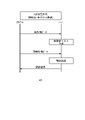
- FIG. 1 is a diagram illustrating a multi-biometric authentication process.
- FIG. 2A is a diagram showing an example of a gate placed at the entrance of a store, building, etc.
- FIG. 2B is a diagram showing an example of an image displayed on a display device provided near the gate.
- FIG. 3 is a block diagram illustrating the overall configuration of the multi-biometric authentication system according to the first embodiment
- FIG. 4 is a functional block diagram of the control unit and server of the gate management system.
- FIG. 5A is a diagram showing an example of data stored in the facial feature DB
- FIG. 5B is a diagram showing an example of data stored in the list storage unit
- FIG. ) is a diagram showing an example of data stored in a vein DB.
- FIG. 5A is a diagram showing an example of data stored in the facial feature DB
- FIG. 5B is a diagram showing an example of data stored in the list storage unit
- FIG. ) is a diagram showing an example of data stored in a
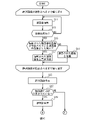
- FIG. 6 is a flowchart (part 1) showing an example of processing executed in the multi-biometric authentication system.
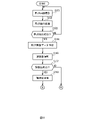
- FIG. 7 is a flowchart (part 2) showing an example of processing executed in the multi-biometric authentication system.
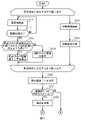
- FIG. 8 is a flowchart (part 3) showing an example of processing executed in the multi-biometric authentication system.
- FIG. 9 is a flowchart (part 4) showing an example of processing executed in the multi-biometric authentication system.
- FIG. 10 is a flowchart illustrating an example of processing according to a modification of the first embodiment;
- FIG. 11 is a flowchart (part 1) illustrating an example of processing according to the second embodiment;
- FIG. 12 is a flowchart (part 2) illustrating an example of processing according to the second embodiment;
- FIG. 13 is a flowchart (part 3) illustrating an example of processing according to the second embodiment
- FIG. 14 is a flowchart (part 4) illustrating an example of processing according to the second embodiment
- FIG. 15 is a flowchart illustrating an example of processing according to a modification of the second embodiment
- FIG. 16A is a block diagram illustrating the hardware configuration of a controller of the gate management system
- FIG. 16B is a block diagram illustrating the hardware configuration of the server.
- Biometric authentication is a technology that uses biometric features such as fingerprints, face, and veins to verify a person's identity.
- biometric authentication when confirmation is required, biometric information for verification obtained by a sensor is compared with pre-registered biometric information, and it is determined whether or not the degree of similarity is equal to or greater than the threshold for identity determination. By judging, the identity is verified.
- Biometric authentication is used in various fields such as bank ATMs and entrance/exit management.
- biometric authentication There are two types of biometric authentication: 1:1 authentication that confirms a match with registered biometric information specified by an ID, card, etc., and 1:N authentication that searches for matching registered biometric information from multiple registered biometric information. .
- 1:N authentication is often desired from the viewpoint of convenience.
- biometric information fluctuates depending on acquisition conditions and the like, the more the number of registered biometric information to be searched, the higher the possibility of erroneous matching. For this reason, it is practiced to perform 1:N authentication after narrowing down the search set by using a simple PIN code or the like to make the search set sufficiently small.
- the extent to which it can be reduced to a practical level depends on the biometric authentication method. However, even if it is simple, PIN code input impairs convenience, so a biometric authentication system that does not require an ID or a card is desired.
- a modality is a type of biometric feature, such as fingerprint, vein, iris, face shape, palm shape, and the like. Therefore, fingerprints and veins on the same finger are different modalities. Since it is inconvenient to input multiple modalities individually, a method of acquiring palm veins at the same time as fingerprint input and a method of capturing a face image at the time of palm vein input have been proposed.
- a method of narrowing down candidates by face recognition in the first authentication and identifying the person by palm veins in the second authentication for example, a list of N user IDs that are candidates for face authentication is created, and 1:N authentication using palm veins is performed in the set of obtained user ID lists to identify the user. Processing is performed.
- the client acquires facial feature data from the camera and sends it to the server.
- the server collates each registered facial feature data with acquired facial feature data for a plurality of users whose facial feature data and vein feature data are registered in advance.
- the server extracts user IDs whose degree of similarity is greater than or equal to a threshold, and creates a candidate list including the extracted user IDs.
- the client acquires vein characteristic data from the vein sensor and sends it to the server.
- the server collates the acquired vein characteristic data with the registered vein characteristic data of the user ID described in the candidate list.
- the server determines that authentication has succeeded if there is a user ID whose similarity is equal to or greater than the threshold, and that authentication has failed if there is no user ID whose similarity is equal to or greater than the threshold.
- the server sends the result of this second authentication to the client.
- multi-biometric authentication by narrowing down the candidates for vein authentication, which requires a long processing time, it is possible to shorten the time required for identity verification.
- Such a multi-authentication system is used, for example, for the management of gates placed at the entrances and exits of shops and buildings, as shown in Fig. 2(A). That is, a camera 10 for photographing a face image and a vein sensor 20 for acquiring a palm vein image (hereinafter referred to as a vein image) are provided at the entrance/exit of the store, and multi-biometric authentication is performed when entering the store. Then, when the personal authentication succeeds, the door 50 opens and the user can enter the store.
- the door 50 remains closed, a message such as "Authentication failed" is displayed on the display device 30, and the face image and vein image are acquired again. At this time, the user is required to face the camera 10 and place the palm again on the vein sensor 20 . However, it is troublesome and stressful for the user to be requested to reacquire both the face image and the vein image regardless of the cause when personal authentication fails.
- FIG. 3 is a block diagram illustrating the overall configuration of the multi-biometric authentication system 300 according to the first embodiment.
- the multi-biometric authentication system 300 has a configuration in which the server 100 and the gate management system 200 are connected via a network NW such as the Internet or LAN (Local Area Network).
- NW such as the Internet or LAN (Local Area Network).
- the server 100 functions as an information processing apparatus according to this embodiment.
- authentication processing is required to open and close a gate (see FIG. 2A) provided at the entrance of a store.
- the gate management system 200 includes a camera 10, a vein sensor 20, a display device 30, an actuator 40, a control section 60, and the like.
- the camera 10 is installed near the gate provided at the entrance of the store, and captures an image including the face of the user who is about to pass through the gate.
- the vein sensor 20 is installed at the gate, for example, as shown in FIG. 2(A), so that the user can hold the palm over the vein sensor 20 at the timing of entering the store.
- the vein sensor 20 captures a palm vein image of the user.
- the display device 30 is, for example, a liquid crystal display, and displays images being captured by the camera 10 and messages to the user under the control of the control unit 60 .
- the actuator 40 opens and closes the gate door 50 under the control of the control unit 60 .
- the control unit 60 uses the camera 10 and the vein sensor 20 to acquire information necessary for multi-biometric authentication and transmit it to the server 100 . Also, it controls the camera 10 , the vein sensor 20 , the display device 30 , and the actuator 40 based on the authentication result received from the server 100 .
- FIG. 4 is a functional block diagram of the control unit 60 and the server 100 of the gate management system 200.
- FIG. 4 is a functional block diagram of the control unit 60 and the server 100 of the gate management system 200.
- the control unit 60 includes a face detection unit 61, a facial feature extraction unit 62, a vein detection unit 63, a vein feature extraction unit 64, a device control unit 66, a face image storage unit 67, and a vein image storage unit 68.
- the face detection unit 61 , face feature extraction unit 62 , vein detection unit 63 , vein feature extraction unit 64 , face image storage unit 67 , and vein image storage unit 68 may be provided in the server 100 .
- the face detection unit 61 detects faces from images captured by the camera 10 .
- the facial feature extraction unit 62 extracts facial feature data from the facial image data stored in the facial image storage unit 67 or the facial image data acquired from the image captured by the camera 10 .
- the facial feature extraction unit 62 sends the extracted facial feature data to the list creation unit 11 via the network NW.
- the vein detection unit 63 detects veins from the vein image captured by the vein sensor 20 .
- the vein feature extraction unit 64 extracts vein feature data from the vein image data.
- the vein feature extraction unit 64 transmits the extracted vein feature data to the vein authentication unit 14 via the network NW.
- the device control unit 66 controls the camera 10, the vein sensor 20, the display device 30, and the actuator 40 based on the authentication results or instructions received from the server 100.
- the face image storage unit 67 stores the image captured by the camera 10 or the face image data obtained from the image captured by the camera 10 .
- the vein image storage unit 68 stores the vein image captured by the vein sensor 20 or the vein data acquired from the vein image.
- the server 100 includes a list creation unit 11, a vein data reading unit 13, a vein authentication unit 14, an output unit 15, a facial feature DB 16, a list storage unit 17, and a vein DB 18.
- the facial feature database (DB) 16 stores each user's facial feature data associated with each user's user ID.
- the list creation unit 11 receives the user's facial feature data from the facial feature extraction unit 62 .
- the list creation unit 11 calculates the degree of similarity between the facial feature data of each user read from the facial feature DB 16 and the received facial feature data as a score, and extracts user IDs whose scores are equal to or greater than a threshold as candidate IDs. By doing so, a candidate list is created and stored in the list storage unit 17 .
- the list storage unit 17 stores a candidate list in which each candidate ID and the score calculated by the list creation unit 11 are linked.
- the vein data reading section 13 Upon receiving the vein feature data from the vein feature extraction section 64 , the vein data reading section 13 reads the vein data of the candidates included in the candidate list stored in the list storage section 17 from the vein DB 18 .
- the vein DB 18 stores each user's facial feature data associated with each user's user ID.
- the vein authentication unit 14 uses the vein characteristic data received by the vein data reading unit 13 and the vein data read by the vein data reading unit 13 to perform vein authentication. For example, the vein authentication unit 14 calculates the degree of similarity between the received vein characteristic data and the read vein data, and determines that authentication has succeeded when there is vein data with a degree of similarity greater than or equal to a threshold. Note that the threshold in this case is set to a value high enough to identify one user.
- the output unit 15 transmits the result of the authentication process and various instructions based on the result of the authentication process to the device control unit 66 .
- FIG. 6 to 9 are flowcharts showing an example of processing executed in the multi-biometric authentication system 300.
- FIG. It is assumed that no data is stored in face image storage unit 67, vein image storage unit 68, and list storage unit 17 at the start of this process.
- biometric information and a face image are obtained at the same time.
- the vein sensor 20 captures a vein image (step S1), and the captured vein image is stored in the vein image storage unit 68 (step S3). On the other hand, the camera 10 takes an image (step S5).
- the face detection unit 61 determines whether or not a face has been detected in the image captured by the camera 10 (step S7). Specifically, the face detection unit 61 determines whether or not the image captured by the camera 10 includes a face image.
- step S7/NO If no face is detected (step S7/NO), the process proceeds to step S35, which will be described later. On the other hand, if a face is detected (step S7/YES), face authentication processing is performed using face image data obtained from the image shot in step S5 (step S9).
- the facial feature extraction unit 62 extracts facial feature data from the facial image data obtained from the image captured in step S5, and transmits the facial feature data to the list creation unit 11.
- the list creating unit 11 reads the facial feature data of each user from the facial feature DB 16 and calculates the degree of similarity between the received facial feature data and the facial feature data of each user as a score. Then, the list creation unit 11 creates a candidate list (see FIG. 5B) by extracting user IDs whose scores are equal to or higher than the threshold as candidate IDs, and stores the list in the list storage unit 17 . Note that, in this embodiment, the list creation unit 11 does not create a candidate list when there is no user whose score is equal to or higher than the threshold.
- the candidate list is not stored in the list storage unit 17 and remains empty.
- a possible reason why there is no user whose score is equal to or higher than the threshold is that the face image included in the image captured in step S5 does not meet the criteria required for face authentication.
- the vein detection unit 63 determines whether or not the face authentication process has succeeded (step S30). For example, when the candidate list is stored in the list storage unit 17, the vein detection unit 63 determines that the face authentication process has succeeded. If the face authentication process is successful (step S30/YES), the vein detection unit 63 determines whether veins are detected in the vein image stored in the vein image storage unit 68 (step S31).
- step S31/NO vein authentication processing cannot be performed, so the process proceeds to step S53, which will be described later.
- step S32 vein authentication processing is performed (step S32).
- the vein feature extraction unit 64 extracts vein feature data from the vein image data acquired from the vein image stored in the vein image storage unit 68 and transmits the vein feature data to the vein authentication unit 14 .
- the vein data reading unit 13 reads the vein data of the candidates included in the candidate list stored in the list storage unit 17 from the vein DB 18 .
- the vein authentication unit 14 performs vein authentication by calculating the degree of similarity between the received vein data and the read vein data.
- the output unit 15 determines whether or not the vein authentication has succeeded (step S33). For example, the output unit 15 determines that the authentication has succeeded when the highest similarity among the calculated similarities is equal to or higher than the threshold.
- step S34 the process of permitting entry is performed (step S34), and the process shown in FIGS. 6 to 9 ends.
- the output unit 15 transmits information indicating that the authentication process has succeeded to the device control unit 66 of the gate management system 200 .
- the device control unit 66 controls the actuator 40 to open the gate door 50 . This allows the user to enter the store.
- step S33/NO if vein authentication fails (step S33/NO), the process proceeds to step S53, which will be described later.
- step S30/NO the camera 10 is instructed to take a face image again (step S35). That is, if the image captured by the camera 10 does not include a face image that satisfies the criteria, the camera 10 is instructed to recapture the face image (step S35).
- the output unit 15 transmits to the device control unit 66 information instructing re-capture of the face image.
- the device control section 66 causes the camera 10 to re-capture the face image based on the instruction.
- the camera 10 takes a picture (step S37).
- the face detection unit 61 determines whether or not a face has been detected in the image newly captured by the camera 10 (step S39).
- step S39/NO If no face is detected (step S39/NO), return to step S37. If a face is detected (step S39/YES), face authentication processing is performed (step S41).
- the facial feature extraction unit 62 extracts facial feature data from the facial image data acquired from the image newly captured by the camera 10 and transmits it to the list creation unit 11 .
- List creation unit 11 creates a candidate list using the received facial feature data and stores it in list storage unit 17 .
- the vein data reading unit 13 determines whether or not the face authentication process has succeeded (step S43), as in step S30. If the face authentication process fails (step S43/NO), the process returns to step S37.
- vein authentication is performed using the vein image stored in the vein image storage unit 68, as in steps S31 and S32 (steps S45 and S47). .
- the vein image is not re-captured.
- vein authentication is performed using the vein image stored in the vein image storage unit 68 . Therefore, the process of requesting the user to reacquire the vein image can be suppressed, and the user is not forced to perform unnecessary operations (reacquisition of the vein image). As a result, complexity at the time of multi-biometric authentication can be suppressed, and user's stress can be reduced.
- the output unit 15 determines whether or not vein authentication has succeeded (step S49), as in step S33. If the vein authentication is successful (step S49/YES), the process of permitting entry to the store is performed (step S51) as in step S34, and the process shown in FIGS. 6 to 9 ends.
- vein authentication fails, the face authentication process is successful, but there is a problem with the face image data, so a candidate list that does not include the user is created. It is not possible to identify whether vein authentication failed due to a problem. Therefore, when the vein authentication fails (step S33/NO, step S51/NO), a process of reacquiring both the face image and the vein image is performed.
- step S53 the camera 10 is instructed to retake a face image.
- steps S55 to S61 are executed in the same manner as steps S37 to S43.
- the vein sensor 20 is instructed to recapture a vein image (step S63). Specifically, the output unit 15 transmits information instructing recapture of the vein image to the device control unit 66 . Based on the instruction, for example, the device control unit 66 causes the display device 30 to display a message requesting the user to reposition the palm, and causes the vein sensor 20 to capture a vein image.
- the vein sensor 20 newly captures a vein image (step S65).
- the vein detection unit 63 performs vein detection processing on the vein image (step S66), and determines whether veins have been detected (step S67). If the vein could not be detected (step S67/NO), the process returns to step S65.
- vein authentication processing is performed using a newly captured vein image (step S69).
- the vein feature extraction unit 64 extracts vein feature data from the vein image data acquired from the vein image newly captured by the vein sensor 20 and transmits the vein feature data to the vein authentication unit 14 .
- the vein data reading unit 13 reads the vein data of the candidates included in the candidate list stored in the list storage unit 17 from the vein DB 18 .
- the vein authentication unit 14 performs vein authentication by calculating the degree of similarity between the received vein data and the read vein data.
- the output unit 15 determines whether or not vein authentication has succeeded (step S71), as in steps S33 and S49. If the vein authentication is successful (step S71/YES), similarly to steps S34 and S51, store entry permission processing is executed (step S73), and the processing shown in FIGS. 6 to 9 ends.
- step S71/NO if vein authentication fails (step S71/NO), personal authentication failure processing is performed (step S75), and the processing shown in FIGS. 6 to 9 ends.
- the output unit 15 transmits information indicating that the personal authentication has failed to the device control unit 66 .
- the device control unit 66 causes the display device 30 to display a message such as "Authentication failed.”
- a message may be displayed instructing the user to perform authentication for entering the store by another method (for example, QR code (registered trademark)).
- the display device 30 is, for example, placed in a standby state so that the image captured by the camera 10 is not displayed on the display device 30.
- step S7/YES and step S30/YES when the vein image is acquired, if the image captured by the camera 10 includes a face image that satisfies the criteria (step S7/YES and step S30/YES), Multiple biometric authentication is performed using the obtained vein image and face image. On the other hand, if the image captured by the camera 10 does not include a face image that satisfies the criteria (step S7/NO or step S30/NO), the camera 10 is instructed to re-capture (step S35). Then, multiple biometric authentication is performed using the image included in the image newly captured by the camera 10 and the vein image stored in the vein image storage unit 68 . In this way, when there is a problem with the facial image, the vein image is not acquired again, so the user is not forced to perform unnecessary operations. As a result, the complexity of multi-biometric authentication can be suppressed, and the user's stress can be reduced.
- the process of acquiring face image data may be repeated until the vein image is captured by the vein sensor 20 .
- the display device 30 is normally put into a standby state so that the image captured by the camera 10 is not displayed. Sometimes, an image being captured by the camera 10 is displayed on the display device 30. - ⁇
- the image captured by the camera 10 is always displayed on the display device 30 provided near the camera 10, the image of the user is displayed on the display device 30 before the user approaches the gate (see FIG. 2 ( B) See), so the user may feel uncomfortable as if he or she is being monitored.
- the image being captured by the camera 10 is not normally displayed on the display device 30. Therefore, compared to the case where the image being captured by the camera 10 is always displayed on the display device 30, the user's discomfort is reduced. can be reduced.
- the user since the user does not feel that the image is being captured, the user's natural movement is not hindered.
- users can use multi-biometric authentication without being aware that their faces are being photographed.
- FIG. 10 is a flowchart showing an example of processing according to a modification of the first embodiment.
- the camera 10 first takes an image (step S11).
- the face detection unit 61 determines whether or not a face is detected in the image captured by the camera 10 at a predetermined sampling period (step S13).
- step S13/NO If no face is detected (step S13/NO), return to step S11. If a face is detected (step S13/YES), face detection unit 61 determines whether the quality of the face image included in the photographed image is higher than the quality of the face image stored in face image storage unit 67. It is determined whether or not (step S15).
- step S15/NO If the quality of the captured face image is lower than the quality of the face image stored in the face image storage section 67 (step S15/NO), the face detection section 61 discards the captured image (step S19). .
- step S15/YES if the quality of the photographed face image is higher than the quality of the face image stored in the face image storage unit 67 (step S15/YES), the face image data acquired from the photographed image is converted into the face image. It overwrites and saves in the storage unit 67 (step S17). It should be noted that if no face image data is stored in the face image storage unit 67, the determination in step S15 is affirmative regardless of the quality of the acquired face image, and the face image data acquired from the photographed image is It is stored in the face image storage unit 67 .
- steps S11 to S19 are repeated until the vein sensor 20 captures a vein image.
- the facial image data of the highest quality among the facial image data of the user is stored in the facial image storage section 67 by the processing of steps S15 to S19.
- the probability of success of face authentication increases, and the possibility of reacquiring the face image can be reduced, so that the process of reacquiring the face image can be suppressed. That is, it is possible to reduce the possibility of forcing the user to perform unnecessary operations (operations to reacquire the face image), and to suppress the complexity of authentication.
- step S25 the vein detection unit 63 stores the vein image in the vein image storage unit 68.
- the facial feature extraction unit 62 determines whether facial image data is stored in the facial image storage unit 67 (step S27). If the face image data is not saved (step S27/NO), it means that the image including the face image could not be acquired. In this case, the processing from step S35 in FIG. 7 is executed to re-capture the face image.
- step S27/YES face authentication processing is performed using the face image data stored in the face image storage unit 67 (step S28).
- the facial feature extraction unit 62 extracts facial feature data from the facial image data stored in the facial image storage unit 67 and transmits it to the list creation unit 11 .
- the list creating unit 11 reads the facial feature data of each user from the facial feature DB 16 and calculates the degree of similarity between the received facial feature data and the facial feature data of each user as a score. Then, the list creation unit 11 creates a candidate list by extracting user IDs whose scores are equal to or greater than the threshold as candidate IDs, and stores the candidate list in the list storage unit 17 .
- step S30 in FIG. 7 After that, the processing from step S30 in FIG. 7 is executed.
- the possibility of acquiring an image containing a facial image is increased. This can reduce the possibility that the face image must be acquired again because the face image is not included in the image captured by the camera 10 .
- the face image data with the best quality among the photographed face images is stored in the face image storage unit 67, the probability of success of face authentication increases and the possibility of obtaining the face image again can be reduced. As a result, it is possible to suppress the process of acquiring the face image again, so that it is possible to further suppress the complexity of multi-biometric authentication.
- the number of candidates included in the candidate list can be reduced compared to the case of using all face images acquired before the vein image is taken.
- veins can be detected from the vein image
- face authentication processing may be started.
- 11 to 14 are flowcharts showing an example of processing according to the second embodiment.
- the vein sensor 20 captures a vein image (step S101).
- the vein detection unit 63 performs vein detection processing on the palm vein image captured by the vein sensor 20 (step S102).
- the vein detection unit 63 determines whether or not the vein detection is successful (step S103).
- vein detection unit 63 stores the vein image data obtained from the vein image captured by the vein sensor 20 in step S101 in the vein image storage unit 68 (step S104). .
- the camera 10 takes a picture (step S106).
- the face detection unit 61 determines whether or not a face has been detected in the image captured by the camera 10 (step S107). Specifically, the face detection unit 61 determines whether or not the image captured by the camera 10 includes a face image.
- step S107/NO If the face could not be detected (step S107/NO), the process proceeds to step S135 in FIG.
- step S107/YES face authentication processing is performed using face image data obtained from the image captured by the camera 10 in step S106 (step S108). Since the process of step S108 is the same as that of step S9 in FIG. 6, detailed description thereof will be omitted.
- the vein data reading unit 13 determines whether or not the face authentication process has succeeded (step S130). For example, when the candidate list is stored in the list storage unit 17, the vein data reading unit 13 determines that the face authentication process has succeeded. If the face authentication process is successful (step S130/YES), the vein authentication process is performed using the vein image data stored in the vein image storage unit 68 (step S131).
- the vein feature extraction unit 64 extracts vein feature data from the vein image data stored in the vein image storage unit 68 and transmits it to the vein authentication unit 14 .
- the vein data reading unit 13 reads the vein data of the candidates included in the candidate list stored in the list storage unit 17 from the vein DB 18 .
- the vein authentication unit 14 performs vein authentication by calculating the degree of similarity between the received vein data and the read vein data.
- the output unit 15 determines whether or not vein authentication has succeeded (step S132), as in step S33 of FIG. If the vein authentication is successful (step S132/YES), the process of permitting entry is performed (step S133) in the same manner as in step S34 of FIG. 7, and the processes of FIGS. 11 to 14 end.
- step S132/NO if vein authentication fails (step S132/NO), the process proceeds to step S153, which will be described later.
- step S107/NO If the face cannot be detected in the image captured by the camera 10 in step S106 (step S107/NO), or if the face authentication process using the face image data acquired from the image captured by the camera 10 fails ( Step S130/NO), similarly to step S35 in FIG. 7, the camera 10 is instructed to re-capture a face image (step S135). That is, if the image captured by the camera 10 does not include a face image that satisfies the criteria, the camera 10 is instructed to recapture the face image.
- steps S137 to S143 are performed in the same manner as steps S37 to S43 in FIG.
- step S143 if the face authentication process fails (step S143/NO), the process returns to step S137. On the other hand, if face authentication processing is successful (step S143/YES), vein authentication processing is performed using the vein image data stored in the vein image storage unit 68, as in step S131 (step S145).
- the camera 10 recaptures the face image. Use image data. That is, the vein image is not acquired again. As a result, the complexity of multi-biometric authentication can be suppressed, and the user's stress can be reduced.
- the output unit 15 determines whether or not vein authentication has succeeded (step S149), as in step S132. If the vein authentication is successful (step S149/YES), a process of permitting entry is performed (step S151) as in step S133, and the process of FIGS. 11 to 14 ends.
- steps S153 to S175 are executed in the same manner as steps S53 to S75 in FIGS. 8 and 9, and the processing in FIGS. 11 to 14 ends.
- the vein image data stored in the vein image storage unit 68 is image data in which veins are detected. That is, the quality of vein image data satisfies a predetermined standard. This ensures that the vein authentication process can be performed. Therefore, the period from when the re-capture of the face image is instructed to the time of authentication using the face image data and the vein image data included in the image re-captured by the camera 10 (the period of steps S135 to S145). , the vein image is not reacquired. As a result, the output of a message requesting reacquisition of vein images is suppressed, and the complexity at the time of multi-biometric authentication can be suppressed.
- both the face image and the vein image are reacquired. can reduce the possibility of As a result, reacquisition processing of information required for authentication can be suppressed, and complexity at the time of multi-biometric authentication can be suppressed.
- the process of acquiring face image data may be repeated until the vein detection unit 63 detects veins in the vein image.
- the display device 30 is normally placed in a standby state so that the image captured by the camera 10 is not displayed. It is assumed that the image being captured by the camera 10 is displayed on the display device 30 when the camera 10 re-captures the face image.
- FIG. 15 is a flowchart showing an example of processing according to a modification of the second embodiment.
- steps S111 to S119 are repeated in the same way as steps S11 to S19 of FIG. 10 until the vein detection unit 63 detects veins in the vein image.
- the face image data with the highest quality among the user's face image data is stored in the face image storage unit 67. Note that if an image including the user's face is not captured before the vein detection unit 63 detects veins in the vein image, face image data is not stored in the face image storage unit 67, and the face image storage unit 67 stores remains empty.
- the vein sensor 20 captures a vein image (step S121).
- the vein detection unit 63 performs vein detection processing on the vein image (step S123). The processes of steps S121 and S123 are repeated until the vein detector 63 detects veins in the vein image.
- the vein detection unit 63 detects veins in the vein image
- the vein detection unit 63 stores vein image data obtained from the vein image in which the veins are detected in the vein image storage unit 68 (step S125).
- the facial feature extraction unit 62 determines whether facial image data is stored in the facial image storage unit 67 (step S127). If the face image data is not saved (step S127/NO), it means that the image including the face image could not be obtained. In this case, the processing from step S135 in FIG. 12 is executed to re-capture the face image.
- step S127/YES face authentication processing is performed using the face image data stored in the face image storage unit 67 (step S128).
- the facial feature extraction unit 62 extracts facial feature data from the facial image data stored in the facial image storage unit 67 and transmits it to the list creation unit 11 .
- the list creating unit 11 creates a candidate list using the received facial feature data and the facial feature data of each user stored in the facial feature DB 16 and stores it in the list storage unit 17 .
- the possibility of obtaining an image containing a face image increases by taking pictures with the camera 10 until veins are detected in the vein image. This can reduce the possibility that the face image must be acquired again because the face image is not included in the image captured by the camera 10 .
- the face image data with the highest quality among the photographed face images is stored in the face image storage unit 67, the probability of successful face authentication increases.
- the possibility of having to acquire the face image again can be reduced, so that the process of acquiring the face image again can be suppressed, and the complexity at the time of multi-biometric authentication can be further suppressed.
- the number of candidates included in the candidate list can be reduced compared to the case of using all face images acquired until veins are detected in vein images.
- the vein image data stored in the vein image storage unit 68 is image data in which veins are detected, as in the second embodiment.
- FIG. 16A is a block diagram illustrating the hardware configuration of the controller 60 of the gate management system 200. As shown in FIG.
- control unit 60 includes a CPU (Central Processing Unit) 601, a RAM (Random Access Memory) 602, a storage device 603, and an interface 604.
- CPU Central Processing Unit
- RAM Random Access Memory
- a CPU 601 is a central processing unit and includes one or more cores.
- a RAM 602 is a volatile memory that temporarily stores programs executed by the CPU 601 and data processed by the CPU 601 .
- Storage device 603 is a non-volatile storage device. As the storage device 603, for example, a ROM (Read Only Memory), a solid state drive (SSD) such as a flash memory, a hard disk driven by a hard disk drive, or the like can be used.
- a storage device 603 stores a control program.
- An interface 604 is an interface device with an external device.
- the interface 604 includes an interface device with the camera 10, an interface device with the vein sensor 20, an interface device with the display device 30, an interface device with the actuator 40, and an interface device with a LAN (Local Area Network).
- LAN Local Area Network
- the face detection section 61, the facial feature extraction section 62, the vein detection section 63, the vein feature extraction section 64, and the device control section 66 of the control section 60 are realized.
- the face detection unit 61, the facial feature extraction unit 62, the vein detection unit 63, the vein feature extraction unit 64, and the device control unit 66 may use hardware such as a dedicated circuit.
- the face image storage unit 67 and the vein image storage unit 68 are implemented by the storage device 603 .
- FIG. 16B is a block diagram illustrating the hardware configuration of the server 100.
- FIG. 16B is a block diagram illustrating the hardware configuration of the server 100.
- the server 100 includes a CPU 101, a RAM 102, a storage device 103, and an interface 104.
- the CPU 101 is a central processing unit and includes one or more cores.
- the RAM 102 is a volatile memory that temporarily stores programs executed by the CPU 101, data processed by the CPU 101, and the like.
- the storage device 103 is a non-volatile storage device. As the storage device 103, for example, a ROM, a solid state drive (SSD) such as a flash memory, a hard disk driven by a hard disk drive, or the like can be used.
- the storage device 103 stores programs.
- the interface 104 is an interface device with an external device. For example, interface 104 includes an interface device with a LAN.
- the CPU 101 executes the programs to implement the list creation unit 11, the vein data reading unit 13, the vein authentication unit 14, and the output unit 15.
- Hardware such as a dedicated circuit may be used as the list creating unit 11, the vein data reading unit 13, the vein authentication unit 14, and the output unit 15.
- FIG. Also, the facial feature DB 16 , the list storage unit 17 , and the vein DB 18 are implemented by the storage device 103 .
- the vein sensor 20 is an example of a sensor provided at the gate.
- a vein image captured by the vein sensor 20 or vein image data acquired from the vein image captured by the vein sensor 20 is an example of biometric information.
- the face detection section 61 is an example of an acquisition section. Face detection unit 61 and vein data readout unit 13 are examples of a determination unit.
- the list creation unit 11 and the vein authentication unit 14 are examples of the authentication unit.
- the output unit 15 is an example of an instruction unit and a suppression unit.
- processing functions can be realized by a computer.
- a program is provided that describes the processing contents of the functions that the processing device should have.
- the above processing functions are realized on the computer.
- a program describing the processing content can be recorded in a computer-readable storage medium (excluding carrier waves).
- the program When the program is distributed, it is sold in the form of a portable storage medium such as a DVD (Digital Versatile Disc) or CD-ROM (Compact Disc Read Only Memory) on which the program is recorded. It is also possible to store the program in the storage device of the server computer and transfer the program from the server computer to another computer via the network.
- a portable storage medium such as a DVD (Digital Versatile Disc) or CD-ROM (Compact Disc Read Only Memory) on which the program is recorded. It is also possible to store the program in the storage device of the server computer and transfer the program from the server computer to another computer via the network.
- a computer that executes a program stores, for example, a program recorded on a portable storage medium or a program transferred from a server computer in its own storage device. The computer then reads the program from its own storage device and executes processing according to the program. The computer can also read the program directly from the portable storage medium and execute processing according to the program. In addition, the computer can also execute processing in accordance with the received program each time the program is transferred from the server computer.
Landscapes
- Physics & Mathematics (AREA)
- General Physics & Mathematics (AREA)
- Engineering & Computer Science (AREA)
- Human Computer Interaction (AREA)
- Computer Vision & Pattern Recognition (AREA)
- Theoretical Computer Science (AREA)
- Collating Specific Patterns (AREA)
Priority Applications (3)
| Application Number | Priority Date | Filing Date | Title |
|---|---|---|---|
| PCT/JP2021/007473 WO2022180814A1 (ja) | 2021-02-26 | 2021-02-26 | 認証方法、認証プログラム、および情報処理装置 |
| JP2023501975A JPWO2022180814A1 (https=) | 2021-02-26 | 2021-02-26 | |
| US18/358,338 US20230377399A1 (en) | 2021-02-26 | 2023-07-25 | Authentication method, storage medium, and information processing device |
Applications Claiming Priority (1)
| Application Number | Priority Date | Filing Date | Title |
|---|---|---|---|
| PCT/JP2021/007473 WO2022180814A1 (ja) | 2021-02-26 | 2021-02-26 | 認証方法、認証プログラム、および情報処理装置 |
Related Child Applications (1)
| Application Number | Title | Priority Date | Filing Date |
|---|---|---|---|
| US18/358,338 Continuation US20230377399A1 (en) | 2021-02-26 | 2023-07-25 | Authentication method, storage medium, and information processing device |
Publications (1)
| Publication Number | Publication Date |
|---|---|
| WO2022180814A1 true WO2022180814A1 (ja) | 2022-09-01 |
Family
ID=83048723
Family Applications (1)
| Application Number | Title | Priority Date | Filing Date |
|---|---|---|---|
| PCT/JP2021/007473 Ceased WO2022180814A1 (ja) | 2021-02-26 | 2021-02-26 | 認証方法、認証プログラム、および情報処理装置 |
Country Status (3)
| Country | Link |
|---|---|
| US (1) | US20230377399A1 (https=) |
| JP (1) | JPWO2022180814A1 (https=) |
| WO (1) | WO2022180814A1 (https=) |
Cited By (1)
| Publication number | Priority date | Publication date | Assignee | Title |
|---|---|---|---|---|
| WO2025191814A1 (ja) * | 2024-03-14 | 2025-09-18 | 日本電気株式会社 | 情報処理装置、情報処理方法、及び記録媒体 |
Families Citing this family (3)
| Publication number | Priority date | Publication date | Assignee | Title |
|---|---|---|---|---|
| GB2610414B (en) * | 2021-09-03 | 2024-08-14 | Integrated Design Ltd | Anti-climb system |
| USD1120379S1 (en) * | 2023-09-01 | 2026-03-24 | Dormakaba Deutschland Gmbh | Access control device |
| CN118379765B (zh) * | 2024-03-26 | 2025-01-28 | 国网黑龙江省电力有限公司齐齐哈尔供电公司 | 一种基于指纹识别的网络验证方法及系统 |
Citations (3)
| Publication number | Priority date | Publication date | Assignee | Title |
|---|---|---|---|---|
| JP2007154472A (ja) * | 2005-12-02 | 2007-06-21 | Hitachi Information & Control Solutions Ltd | 指静脈認証装置および指静脈認証方法 |
| JP2009259085A (ja) * | 2008-04-18 | 2009-11-05 | Takumi Vision株式会社 | 生体認証システム及び認証方法 |
| JP2019128880A (ja) | 2018-01-26 | 2019-08-01 | 富士通フロンテック株式会社 | 認証システム、認証装置、認証プログラム、および認証方法 |
-
2021
- 2021-02-26 WO PCT/JP2021/007473 patent/WO2022180814A1/ja not_active Ceased
- 2021-02-26 JP JP2023501975A patent/JPWO2022180814A1/ja not_active Withdrawn
-
2023
- 2023-07-25 US US18/358,338 patent/US20230377399A1/en not_active Abandoned
Patent Citations (3)
| Publication number | Priority date | Publication date | Assignee | Title |
|---|---|---|---|---|
| JP2007154472A (ja) * | 2005-12-02 | 2007-06-21 | Hitachi Information & Control Solutions Ltd | 指静脈認証装置および指静脈認証方法 |
| JP2009259085A (ja) * | 2008-04-18 | 2009-11-05 | Takumi Vision株式会社 | 生体認証システム及び認証方法 |
| JP2019128880A (ja) | 2018-01-26 | 2019-08-01 | 富士通フロンテック株式会社 | 認証システム、認証装置、認証プログラム、および認証方法 |
Cited By (1)
| Publication number | Priority date | Publication date | Assignee | Title |
|---|---|---|---|---|
| WO2025191814A1 (ja) * | 2024-03-14 | 2025-09-18 | 日本電気株式会社 | 情報処理装置、情報処理方法、及び記録媒体 |
Also Published As
| Publication number | Publication date |
|---|---|
| JPWO2022180814A1 (https=) | 2022-09-01 |
| US20230377399A1 (en) | 2023-11-23 |
Similar Documents
| Publication | Publication Date | Title |
|---|---|---|
| US11625835B2 (en) | Alias capture to support searching for an object-of-interest | |
| WO2022180814A1 (ja) | 認証方法、認証プログラム、および情報処理装置 | |
| JP7147860B2 (ja) | 生体認証装置、生体認証方法、及び生体認証プログラム | |
| JP7248348B2 (ja) | 顔認証装置、顔認証方法、及びプログラム | |
| JP2019128880A (ja) | 認証システム、認証装置、認証プログラム、および認証方法 | |
| CN112364825B (zh) | 用于人脸识别的方法、装置和计算机可读存储介质 | |
| KR20100041562A (ko) | 인증 대상자의 얼굴 인식과 지문 인식을 통한 사용자 인증 수행 방법 및 시스템 | |
| US20230008004A1 (en) | Authentication method, non-transitory computer-readable storage medium for storing authentication program, and information processing apparatus | |
| US20220327191A1 (en) | Authentication method, information processing device, and non-transitory computer-readable storage medium for storing authentication program | |
| EP4693231A1 (en) | Determination method, determination program, and information processing device | |
| US20230013232A1 (en) | Control method, storage medium, and information processing device | |
| JP7033228B1 (ja) | 認証システム、認証方法および認証プログラム | |
| JP7468626B2 (ja) | 認証装置、認証方法、プログラム | |
| CN110991239B (zh) | 一种身份验证方法、装置、设备和计算机可读存储介质 | |
| WO2023188332A1 (ja) | 人物特定装置、人物特定方法、および人物特定プログラム | |
| WO2022249378A1 (ja) | 情報提示方法、情報提示プログラム、および情報処理装置 | |
| WO2024236682A1 (ja) | 判定方法、判定プログラム、および情報処理装置 | |
| JP2022092227A (ja) | 本人確認システム、本人確認用サーバ、及び方法 | |
| JP2022025827A (ja) | 認証方法、認証プログラム、および情報処理装置 | |
| JP2012084099A (ja) | 生体認証失敗情報を活用した生体認証システム |
Legal Events
| Date | Code | Title | Description |
|---|---|---|---|
| 121 | Ep: the epo has been informed by wipo that ep was designated in this application |
Ref document number: 21927914 Country of ref document: EP Kind code of ref document: A1 |
|
| ENP | Entry into the national phase |
Ref document number: 2023501975 Country of ref document: JP Kind code of ref document: A |
|
| WWE | Wipo information: entry into national phase |
Ref document number: 2021927914 Country of ref document: EP |
|
| NENP | Non-entry into the national phase |
Ref country code: DE |
|
| ENP | Entry into the national phase |
Ref document number: 2021927914 Country of ref document: EP Effective date: 20230926 |
|
| 122 | Ep: pct application non-entry in european phase |
Ref document number: 21927914 Country of ref document: EP Kind code of ref document: A1 |