WO2022176531A1 - 医療管理システム、医療管理装置及び医療管理方法 - Google Patents
医療管理システム、医療管理装置及び医療管理方法 Download PDFInfo
- Publication number
- WO2022176531A1 WO2022176531A1 PCT/JP2022/002754 JP2022002754W WO2022176531A1 WO 2022176531 A1 WO2022176531 A1 WO 2022176531A1 JP 2022002754 W JP2022002754 W JP 2022002754W WO 2022176531 A1 WO2022176531 A1 WO 2022176531A1
- Authority
- WO
- WIPO (PCT)
- Prior art keywords
- image information
- patient
- priority
- processing
- medical management
- Prior art date
- Legal status (The legal status is an assumption and is not a legal conclusion. Google has not performed a legal analysis and makes no representation as to the accuracy of the status listed.)
- Ceased
Links
Images




Classifications
-
- G—PHYSICS
- G16—INFORMATION AND COMMUNICATION TECHNOLOGY [ICT] SPECIALLY ADAPTED FOR SPECIFIC APPLICATION FIELDS
- G16H—HEALTHCARE INFORMATICS, i.e. INFORMATION AND COMMUNICATION TECHNOLOGY [ICT] SPECIALLY ADAPTED FOR THE HANDLING OR PROCESSING OF MEDICAL OR HEALTHCARE DATA
- G16H80/00—ICT specially adapted for facilitating communication between medical practitioners or patients, e.g. for collaborative diagnosis, therapy or health monitoring
-
- G—PHYSICS
- G16—INFORMATION AND COMMUNICATION TECHNOLOGY [ICT] SPECIALLY ADAPTED FOR SPECIFIC APPLICATION FIELDS
- G16H—HEALTHCARE INFORMATICS, i.e. INFORMATION AND COMMUNICATION TECHNOLOGY [ICT] SPECIALLY ADAPTED FOR THE HANDLING OR PROCESSING OF MEDICAL OR HEALTHCARE DATA
- G16H30/00—ICT specially adapted for the handling or processing of medical images
- G16H30/40—ICT specially adapted for the handling or processing of medical images for processing medical images, e.g. editing
-
- G—PHYSICS
- G06—COMPUTING OR CALCULATING; COUNTING
- G06F—ELECTRIC DIGITAL DATA PROCESSING
- G06F3/00—Input arrangements for transferring data to be processed into a form capable of being handled by the computer; Output arrangements for transferring data from processing unit to output unit, e.g. interface arrangements
- G06F3/14—Digital output to display device ; Cooperation and interconnection of the display device with other functional units
-
- G—PHYSICS
- G06—COMPUTING OR CALCULATING; COUNTING
- G06T—IMAGE DATA PROCESSING OR GENERATION, IN GENERAL
- G06T5/00—Image enhancement or restoration
- G06T5/50—Image enhancement or restoration using two or more images, e.g. averaging or subtraction
-
- G—PHYSICS
- G16—INFORMATION AND COMMUNICATION TECHNOLOGY [ICT] SPECIALLY ADAPTED FOR SPECIFIC APPLICATION FIELDS
- G16H—HEALTHCARE INFORMATICS, i.e. INFORMATION AND COMMUNICATION TECHNOLOGY [ICT] SPECIALLY ADAPTED FOR THE HANDLING OR PROCESSING OF MEDICAL OR HEALTHCARE DATA
- G16H30/00—ICT specially adapted for the handling or processing of medical images
- G16H30/20—ICT specially adapted for the handling or processing of medical images for handling medical images, e.g. DICOM, HL7 or PACS
-
- G—PHYSICS
- G16—INFORMATION AND COMMUNICATION TECHNOLOGY [ICT] SPECIALLY ADAPTED FOR SPECIFIC APPLICATION FIELDS
- G16H—HEALTHCARE INFORMATICS, i.e. INFORMATION AND COMMUNICATION TECHNOLOGY [ICT] SPECIALLY ADAPTED FOR THE HANDLING OR PROCESSING OF MEDICAL OR HEALTHCARE DATA
- G16H40/00—ICT specially adapted for the management or administration of healthcare resources or facilities; ICT specially adapted for the management or operation of medical equipment or devices
- G16H40/20—ICT specially adapted for the management or administration of healthcare resources or facilities; ICT specially adapted for the management or operation of medical equipment or devices for the management or administration of healthcare resources or facilities, e.g. managing hospital staff or surgery rooms
-
- G—PHYSICS
- G16—INFORMATION AND COMMUNICATION TECHNOLOGY [ICT] SPECIALLY ADAPTED FOR SPECIFIC APPLICATION FIELDS
- G16H—HEALTHCARE INFORMATICS, i.e. INFORMATION AND COMMUNICATION TECHNOLOGY [ICT] SPECIALLY ADAPTED FOR THE HANDLING OR PROCESSING OF MEDICAL OR HEALTHCARE DATA
- G16H40/00—ICT specially adapted for the management or administration of healthcare resources or facilities; ICT specially adapted for the management or operation of medical equipment or devices
- G16H40/60—ICT specially adapted for the management or administration of healthcare resources or facilities; ICT specially adapted for the management or operation of medical equipment or devices for the operation of medical equipment or devices
- G16H40/67—ICT specially adapted for the management or administration of healthcare resources or facilities; ICT specially adapted for the management or operation of medical equipment or devices for the operation of medical equipment or devices for remote operation
-
- H—ELECTRICITY
- H04—ELECTRIC COMMUNICATION TECHNIQUE
- H04N—PICTORIAL COMMUNICATION, e.g. TELEVISION
- H04N7/00—Television systems
- H04N7/18—Closed-circuit television [CCTV] systems, i.e. systems in which the video signal is not broadcast
-
- G—PHYSICS
- G06—COMPUTING OR CALCULATING; COUNTING
- G06T—IMAGE DATA PROCESSING OR GENERATION, IN GENERAL
- G06T2207/00—Indexing scheme for image analysis or image enhancement
- G06T2207/20—Special algorithmic details
- G06T2207/20212—Image combination
- G06T2207/20221—Image fusion; Image merging
-
- G—PHYSICS
- G16—INFORMATION AND COMMUNICATION TECHNOLOGY [ICT] SPECIALLY ADAPTED FOR SPECIFIC APPLICATION FIELDS
- G16H—HEALTHCARE INFORMATICS, i.e. INFORMATION AND COMMUNICATION TECHNOLOGY [ICT] SPECIALLY ADAPTED FOR THE HANDLING OR PROCESSING OF MEDICAL OR HEALTHCARE DATA
- G16H20/00—ICT specially adapted for therapies or health-improving plans, e.g. for handling prescriptions, for steering therapy or for monitoring patient compliance
- G16H20/40—ICT specially adapted for therapies or health-improving plans, e.g. for handling prescriptions, for steering therapy or for monitoring patient compliance relating to mechanical, radiation or invasive therapies, e.g. surgery, laser therapy, dialysis or acupuncture
Definitions
- the present disclosure relates to a medical management system, a medical management device, and a medical management method.
- a surgery management system has been proposed that enables remote support for operators by setting up a medical office strategy desk (central monitoring room) that monitors individual patients in multiple operating rooms.
- This surgery management system is an example of a medical management system.
- the surgery management system it is assumed that the information to be acquired will change depending on the use of applications such as image processing on the server when monitoring and supporting surgery, and the surgery situation. In order to cope with this, optimization of the processing load of the server (server processing) is required.
- Patent Document 1 discloses optimization of server processing in the operating room, but as described above, there is a demand for optimization of server processing in accordance with the medical office strategy desk that can monitor individual patients in multiple operating rooms. It is
- the present disclosure proposes a medical management system, a medical management device, and a medical management method capable of optimizing the processing of handling image information for each patient.
- a medical management system includes an acquisition unit that sequentially acquires image information for each patient, a priority setting unit that dynamically sets the priority of processing for the image information for each patient, the priority a processing unit that determines a processing amount for each piece of image information based on the degree of processing, and performs processing on the image information for each patient based on the determined processing amount for each piece of image information; a generation unit that integrates the image information to generate integrated image information; and a display unit that displays the integrated image based on the integrated image information.
- FIG. 4 is a diagram showing an example of an integrated image according to the first embodiment;
- FIG. It is a figure showing an example of a schematic structure of an operating room system concerning a 1st embodiment.
- FIG. 2nd Embodiment It is a figure which shows an example of the integrated image which concerns on a modification.
- FIG. 4 shows the structural example of the hardware which concerns on each embodiment or each modification.
- low-cost servers may not be able to provide sufficient signal processing (eg, 4K image processing, modality integration processing, annotation processing, etc.) for all video signals. This leads to missing the timing to give an instruction due to insufficient image quality, etc., and there is a risk of failure of the operation and reduction in efficiency. Therefore, in order for the strategy desk in the medical office to issue appropriate instructions instantaneously, appropriate signal processing must be performed on the video signal from the operating room at appropriate timing.
- sufficient signal processing eg, 4K image processing, modality integration processing, annotation processing, etc.
- the processing amount of video signals from each operating room is suppressed by reduction and frame skipping. Restricting the amount of processing in this way degrades the image quality, resulting in insufficient information to provide sufficient instructions.
- additional signal processing may be performed on the image of the operating room without suppressing the amount of processing, so that the supervisor can control the timing of issuing instructions due to deterioration in image quality, etc. to reduce overlooking
- information with sufficient quality to issue instructions with appropriate signal processing allows the supervisor to issue appropriate instructions at the appropriate time, thereby improving surgical efficiency and reducing supervisor fatigue.
- a processing load is allocated to an operating room that seems to require supervision, and a processing load is not allocated to an operating room that does not seem to require supervision.
- the total amount of calculation required of the server is suppressed, so that a low-cost server can implement processing that responds to ever-changing requests. Details will be described in each embodiment.
- FIG. 1 is a diagram showing an example of a schematic configuration of a medical management system 10 according to the first embodiment.
- the medical management system 10 is a system that enables a supervisor to issue instructions to each operating room by means of voice, annotation images, or the like while observing conditions in a plurality of operating rooms.
- the medical management system 10 includes a plurality of operating room systems (operating room devices) 20, a medical management device 30, and a supervisory room device 40. These operating room system 20, medical management device 30, and supervision room device 40 are configured to be able to transmit and receive various types of information. This transmission/reception is performed via a communication network such as wireless or wired.
- a communication network such as wireless or wired.
- the operating room system 20 is built for each operating room and has various devices. In the example of FIG. 1, three operating room systems 20 are provided. Each of these operating room systems 20 acquires patient image information (video information) by various imaging devices (for example, endoscopes, various cameras, X-ray imaging devices, etc.) installed in the operating room, and acquires The patient image information obtained is transmitted to the medical management apparatus 30 . Details of the operating room system 20 will be described later.
- the medical management device 30 receives image information for each patient transmitted from each operating room system 20, and executes resource allocation processing for the image information for each patient. Further, the medical management apparatus 30 executes various processes on the image information for each patient based on resource allocation, integrates the processed image information to generate integrated image information, and transmits the integrated image information to the supervisory room apparatus 40 . do.
- This medical management device 30 is an example of a server device and functions as a centralized signal processing device. Details of the medical management apparatus 30 will be described later.
- the supervisory room device 40 receives the integrated image information transmitted from the medical management device 30, displays the integrated image G based on the received integrated image information, and provides it to the supervisor.
- This supervision room device 40 is a device that is handled by a supervisor (remote monitoring staff), and is installed, for example, in a medical office strategy desk (central monitoring room).
- the supervisor visually recognizes the integrated image G displayed by the medical management device 30, performs an input operation on the supervisory room device 40, and issues instructions to each operating room by voice, annotation image, or the like.
- Supervisors may include, for example, remote medical office strategy desk veterans, specialized medical personnel, and the like. The details of the supervision room device 40 will be described later.
- each operating room system 20, medical management device 30, and supervision room device 40 may be provided in a large hospital (eg, university hospital, etc.).
- the medical management device 30 functions as a server device, for example, but may be realized by cloud computing.
- each operating room system 20 may be installed in a plurality of hospitals, and the supervisory room apparatus 40 may be installed in a hospital different from the hospital in which the operating room systems 20 are installed.
- each hospital on a remote island may be provided with the operating room system 20, and a university hospital in Tokyo may be provided with the supervision room apparatus 40.
- the medical management system 10 can also be applied to ICUs (intensive care units), HCUs (intensive care units), CCUs (cardiovascular disease intensive care units), and the like.
- An operating room or treatment room is an example of a medical room. Usually, there is one patient in the operating room, but there may be more than one patient in the treatment room. However, since there may be multiple patients in the operating room depending on the case, the number of patients in the operating room or treatment room is not particularly limited.
- FIG. 2 is a diagram showing an example of a schematic configuration of the medical management device 30 and supervisory room device 40 according to the first embodiment.
- the medical management apparatus 30 includes an acquisition unit 31, a priority setting unit 32, a processing unit 33, a generation unit 34, and a provision unit 35.
- the acquisition unit 31 sequentially receives and acquires image information for each patient transmitted from each operating room system 20 .
- the priority setting unit 32 dynamically sets the processing priority of the image information for each patient acquired by the acquisition unit 31 during service execution (for example, each time information is acquired).
- the processing unit 33 determines the amount of processing for each piece of image information based on the priority set by the priority setting unit 32, and performs various processes on the image information for each patient based on the determined amount of processing for each piece of image information. . Examples of various types of processing include reduction processing, color conversion processing, CT superposition processing, annotation processing, 4K image processing, modality integration processing, and the like.
- the generation unit 34 integrates the processed image information for each patient to generate integrated image information.
- the providing unit 35 transmits the integrated image information generated by the generating unit 34 to the supervisor's room device 40 .
- the supervision room device 40 includes a communication section 41, a display section 42, an input section 43, and a control section 44.
- the communication unit 41 transmits and receives various types of information to and from the medical management apparatus 30 by wire or wirelessly via a communication network.
- the communication unit 41 receives various information such as integrated image information transmitted from the medical management apparatus 30 and provides the display unit 42 with the received information.
- the display unit 42 displays various types of information such as integrated image information provided from the communication unit 41 (for example, integrated image G).
- the input unit 43 receives various operations such as an input operation from a supervisor who is a user.
- the control unit 44 issues instructions to each unit such as the communication unit 41 and the display unit 42 to control each unit.
- each functional unit such as the acquisition unit 31, the priority setting unit 32, the processing unit 33, the generation unit 34, the provision unit 35, the communication unit 41, the display unit 42, the input unit 43, the control unit 44, etc. , may be configured by hardware and/or software.
- the configuration of each of these functional units is not particularly limited.
- each of the functional units described above uses computers such as the CPU (Central Processing Unit) and MPU (Micro Control Unit) to store programs in advance in the ROM (Read Only Memory) and use the RAM (Random Access Memory) as a work area. It may be realized by being executed as Also, each functional unit may be implemented by an integrated circuit such as an ASIC (Application Specific Integrated Circuit) or an FPGA (Field-Programmable Gate Array).
- CPU Central Processing Unit
- MPU Micro Control Unit
- ROM Read Only Memory
- RAM Random Access Memory
- each functional unit may be implemented by an integrated circuit such as an ASIC (Application Specific Integrated Circuit) or an FPGA (Field-Programmable Gate Array).
- ASIC Application Specific Integrated Circuit
- FPGA Field-Programmable Gate Array
- the display unit 42 may be realized by a display device such as a liquid crystal display or an organic EL (Electro-Luminescence) display.
- the input unit 43 may be realized by, for example, a keyboard, a mouse, a touch panel, or the like. Note that the input unit 43 may be realized by an input device that receives an input operation by user's voice.
- FIG. 3 is a diagram showing an example of resource allocation processing of the medical management apparatus 30 according to the first embodiment.
- the acquisition unit 31 receives and acquires video signals (image information) of individual patients from each operating room system 20 in real time (Video rx).
- a video signal is image information including a plurality of temporally consecutive images.
- Video information is an example of image information.
- the priority setting unit 32 sets the priority of the video signal for each patient (priority). For example, the priority setting unit 32 sets the priority of the video signal corresponding to the patient in the operating room to which the supervisor pays attention based on the patient selection information transmitted from the supervisory room device 40 to high. Set low priority for non-patient video signals (low).
- the supervisor operates the input unit 43 of the supervisory room device 40 to select a patient in the operating room of interest (for example, a patient in the operating room who wants to be closely supervised).
- controller 44 generates patient selection information indicating the patient selected by the supervisor.
- the communication unit 41 transmits the patient selection information generated by the control unit 44 to the medical management apparatus 30 .
- the input unit 43 for example, a touch panel is used.
- operating room selection information indicating the operating room may be used as the patient selection information.
- the processing unit 33 distributes image size reduction processing (shrink) and color conversion processing (color correction) that matches the display unit 42 of the supervisor's room device 40 to the video signals whose priority is set to low. Based on this processing allocation, the processing unit 33 performs reduction processing and color conversion processing on the video signal whose priority is set to low. Note that the color conversion processing is an example of minimum processing required for supervision by a supervisor.
- the processing unit 33 does not allocate image size reduction processing (shrink) to video signals whose priority is set to high, and performs color conversion processing (color correction processing) in accordance with the display unit 42 of the supervisory room device 40 . ), CT superimposition processing (CT fusion) and remote annotation processing (Remote Annotation) are distributed. Based on this processing allocation, the processing unit 33 performs color conversion processing, CT superimposition processing, and remote annotation processing on video signals for which the priority is set to high, without performing image size reduction processing.
- image size reduction processing shrink
- color conversion processing color correction processing
- CT fusion CT superimposition processing
- Remote annotation processing Remote Annotation
- the priority setting unit 32 preferentially allocates resources to specific video signals. That is, the processing unit 33 determines the processing amount for each video signal based on the priority, and processes the video signal for each patient based on the determined processing amount for each video signal.
- the generating unit 34 integrates each video signal that has undergone various processes by the processing unit 33 and generates integrated image information (MUX).
- the providing unit 35 transmits the integrated image information generated by the generating unit 34 to the supervisory room device 40 (Video tx). This integrated image information is received by the supervisory room device 40 , and the integrated image G based on the integrated image information is displayed by the display section 42 of the supervisory room device 40 .
- the cost of the entire system can be reduced by executing the signal processing on the side of the medical management apparatus 30 instead of making each camera of the operating room system 20 perform the signal processing.
- having the priority setting unit 32 enables appropriate load distribution and avoids excessive configuration of the medical management apparatus 30 .
- the results of processing on the medical management apparatus 30 side can be distributed as the contents displayed on the monitor by the supervision room apparatus 40 . If the signal processing is performed on the supervisor's room device 40 side, the video transmission band becomes large.
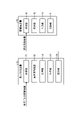
- FIG. 4 is a diagram showing an example of integrated image G according to the first embodiment.
- the integrated image G includes an image G1 of the patient in the operating room (OR#0), an image G2 of the patient in the operating room (OR#1), and an image G3 of the patient in the operating room (OR#2). It is composed of That is, the integrated image G is an image formed by integrating the images G1 to G3.
- This integrated image G is displayed by the display section 42 of the supervisory room device 40 .
- the display unit 42 presents images (videos) from a plurality of cameras to the supervisor using PinP (Picture in Picture) or the like.
- the supervisor can view the integrated image G and give advice and instructions to medical personnel such as surgeons and assistants in each operating room.
- a user such as a supervisor (remote monitoring staff), for example, operates the input unit 43 of the supervisory room device 40 to input voice or an annotation image to a medical worker such as an operator or an assistant in each operating room. to give advice and instructions.
- Advice, instructions, etc. may be sent to each operating room system 20 via the communication network and the medical management device 30, or may be sent directly to each operating room system 20 via the communication network.
- Voice advice and instructions may be given to medical workers such as surgeons and assistants in each operating room through voice output devices (for example, speakers) in facilities such as hospitals.
- FIG. 5 is a diagram showing an example of a schematic configuration of an operating room system 5100 according to the first embodiment.
- the external server 5113 corresponds to the medical management apparatus 30 in the example of FIG.
- the operating room system 5100 a group of devices installed in the operating room are connected to each other via an operating room controller (OR controller) 5107 and an input/output controller (I/F controller) 5109 so as to be able to cooperate with each other. It is composed by This operating room system 5100 is configured with an IP (Internet Protocol) network capable of transmitting and receiving 4K/8K video, and input and output video and control information for each device are transmitted and received via the IP network.
- IP Internet Protocol
- FIG. 5 shows, as an example, a group of various devices 5101 for endoscopic surgery, a ceiling camera 5187 provided on the ceiling of the operating room for imaging the hands of the operator, and a camera 5187 provided on the ceiling of the operating room.
- a surgical field camera 5189 for capturing an overall view, a plurality of display devices 5103A to 5103D, a patient bed 5183, and lighting 5191 are shown.
- the device group 5101 includes various medical devices for acquiring images and videos, such as a master-slave endoscopic surgical robot and an X-ray imaging device. good.
- the device group 5101, the ceiling camera 5187, the operating field camera 5189, the display devices 5103A to 5103C, and the input/output controller 5109 each include IP converters 5115A to 5115F (hereinafter, when not distinguished here, the code is 5115). connected through IP converters 5115D, 5115E, and 5115F on the video source side (camera side) convert video from individual medical imaging devices (endoscopes, surgical microscopes, X-ray imaging devices, operating field cameras, pathological imaging devices, etc.). is IP-converted and transmitted over the network.
- the IP converters 5115A to 5115D on the video output side (monitor side) convert the video transmitted via the network into a monitor-specific format and output it.
- the IP converter on the video source side functions as an encoder
- the IP converter on the video output side functions as a decoder.
- the IP converter 5115 may have various image processing functions, such as resolution conversion processing according to the output destination, endoscopic image rotation correction and camera shake correction, object recognition processing, and the like. Further, partial processing such as feature information extraction for analysis by the server, which will be described later, may be included. These image processing functions may be inherent in the connected medical imaging device or may be externally upgradable.
- the IP converter on the display side can perform processing such as synthesizing a plurality of images (PinP processing, etc.) and superimposing annotation information.
- the protocol conversion function of the IP converter is a function that converts the received signal into a converted signal conforming to a communication protocol that can be communicated over a network (eg, the Internet). good too.
- Signals that can be received and protocol-converted by the IP converter are digital signals, such as video signals and pixel signals.
- the IP converter may be incorporated inside the device on the video source side or inside the device on the video output side.
- the device group 5101 belongs to, for example, an endoscopic surgery system, and includes an endoscope and a display device that displays an image captured by the endoscope.
- the display devices 5103A to 5103D, the patient bed 5183 and the lighting 5191 are devices installed in the operating room, for example, separately from the endoscopic surgery system. Each device used for these surgeries or diagnoses is also called a medical device.
- Operating room controller 5107 and/or input/output controller 5109 cooperate to control the operation of the medical equipment.
- the operating room includes a surgical robot (surgical master-slave) system and a medical image acquisition device such as an X-ray imaging device, these devices can also be connected as the device group 5101 .
- the operating room controller 5107 comprehensively controls processing related to image display in medical equipment. Specifically, among the devices provided in the operating room system 5100, the device group 5101, the ceiling camera 5187, and the operating field camera 5189 have a function of transmitting information to be displayed during surgery (hereinafter also referred to as display information). device (hereinafter also referred to as originating device). Also, the display devices 5103A to 5103D can be devices to which display information is output (hereinafter also referred to as output destination devices). The operating room controller 5107 has a function of controlling the operations of the source device and the output destination device, acquiring display information from the source device, and transmitting the display information to the output destination device for display or recording. have Note that the display information includes various images captured during surgery, various information related to surgery (for example, patient's physical information, past examination results, information on surgical procedures, etc.).
- the device group 5101 can transmit, as display information, information about the image of the surgical site within the patient's body cavity captured by the endoscope.
- display information information about the image of the operator's hand captured by the ceiling camera 5187 can be transmitted.
- surgical field camera 5189 as display information, information about an image showing the state of the entire operating room captured by the surgical field camera 5189 can be transmitted. Note that if there is another device having an imaging function in the operating room system 5100, the operating room controller 5107 receives information about the image captured by the other device from the other device as display information. may be obtained.
- the operating room controller 5107 causes at least one of the display devices 5103A to 5103D, which are output destination devices, to display the acquired display information (that is, images captured during surgery and various types of information related to surgery).
- the display device 5103A is a display device suspended from the ceiling of the operating room
- the display device 5103B is a display device installed on the wall surface of the operating room
- the display device 5103C is a display device installed in the operating room. It is a display device installed on a desk
- the display device 5103D is a mobile device (for example, a tablet PC (Personal Computer)) having a display function.
- the input/output controller 5109 controls input/output of video signals to/from connected devices.
- the input/output controller 5109 controls input/output of video signals based on the control of the operating room controller 5107 .
- the input/output controller 5109 is composed of, for example, an IP switcher or the like, and controls high-speed transfer of image (video) signals between devices arranged on the IP network.
- the operating room system 5100 may also include devices outside the operating room.
- the devices outside the operating room can be, for example, servers connected to networks built inside and outside the hospital, PCs used by medical staff, projectors installed in hospital conference rooms, and the like. If such an external device is located outside the hospital, the operating room controller 5107 can also cause the display information to be displayed on other hospital display devices, such as via a teleconferencing system, for telemedicine purposes.
- the external server 5113 is, for example, an in-hospital server outside the operating room or a cloud server, and may be used for image analysis, data analysis, and the like.
- image information in the operating room is sent to the external server 5113, additional information is generated by recognition and analysis processing using big data analysis and AI (machine learning) by the server, and fed back to the display device in the operating room.
- AI machine learning
- the IP converter 5115H connected to the video equipment in the operating room transmits data to the external server 5113 and analyzes the video.
- the data to be transmitted may be a surgical image itself from an endoscope or the like, metadata extracted from the image, data indicating the operation status of connected equipment, or the like.
- the operating room system 5100 is provided with a centralized operation panel 5111.
- the user can give instructions to the operating room controller 5107 via the centralized operation panel 5111 regarding the input/output control of the input/output controller 5109 and the operation of the connected equipment. Also, the user can switch the image display via the centralized operation panel 5111 .
- the centralized operation panel 5111 is configured by providing a touch panel on the display surface of the display device. Note that the centralized operation panel 5111 and the input/output controller 5109 may be connected via an IP converter 5115J.
- the IP network may be configured as a wired network, or part or all of the network may be configured as a wireless network.
- the video source side IP converter has a wireless communication function, and the received video is sent to the output side IP converter via a wireless communication network such as the 5th generation mobile communication system (5G) or the 6th generation mobile communication system (6G). may be sent to
- 5G 5th generation mobile communication system
- 6G 6th generation mobile communication system
- the image information for each patient is sequentially acquired by the acquisition unit 31, and the processing priority for the acquired image information for each patient is given priority. It is dynamically set by the degree setting unit 32 .
- the processing amount for each image information is determined by the processing unit 33 based on the set priority, and the processing unit 33 processes the image information for each patient based on the determined processing amount for each image information.
- the image information for each patient subjected to the processing is integrated by the generation unit 34 to generate integrated image information, and the integrated image G is displayed by the display unit 42 based on the generated integrated image information.
- the priority of image information for each patient is dynamically set, and the image information for each patient is processed based on the amount of processing for each image information determined based on the set priority. Therefore, the process of handling image information for each patient can be optimized.
- the priority setting unit 32 can determine the amount of processing for each piece of image information according to the user's selection. integrated image G can be obtained.
- the processing unit 33 can determine the amount of processing for each image information by changing the number of processing programs for at least one image information among the image information for each patient based on the priority.
- the process of handling image information for each patient can be easily optimized.
- processing programs include programs (applications) for reduction processing, color conversion processing, CT superimposition processing, remote annotation processing, and the like.
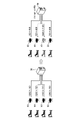
- FIG. 6 is a diagram showing an example of resource allocation processing of the medical management apparatus 30 according to the second embodiment. The following description will focus on the differences from the first embodiment, and other descriptions will be omitted.
- the medical management apparatus 30 side confirms the image according to the patient selection information transmitted from the supervisory room apparatus 40 or the patient's status (for example, the phase of surgery, the degree of bleeding, the patient's expression, etc.) to control the number of pixels.
- the priority setting unit 32 can determine the status of each patient based on the image information of each patient. It is not necessary for the surgical field camera in the operating room and the camera in the treatment room to always take high-resolution images. can be suppressed.
- multiple cameras 50 are provided in treatment rooms (eg, ICU, HCU, CCU, etc.). These cameras 50 are cameras whose imaging pixel count and the like can be controlled from the medical management apparatus 30 .
- the camera 50 for example, a camera capable of IP transmission may be used.
- the priority setting unit 32 detects deterioration of the patient's condition, for example, according to the patient's status, while the image is being captured in HD 1280 ⁇ 720p (see FIG. 6). , the video signal of the patient is given higher priority than the video signals of other patients.
- the processing unit 33 changes the number of imaging pixels of the patient related to the video signal with the highest priority from 1280 ⁇ 720p to 3840 ⁇ 2160p of 4K (see FIG. 6). At this time, the processing unit 33 changes the number of imaging pixels of patients with low priority other than the patient from 1280 ⁇ 720p to 720 ⁇ 480p (see FIG. 6). By changing the image size of the camera and adjusting the amount of data in this way, it is possible to suppress the communication bandwidth of the video signal input to the medical management apparatus 30 and the calculation processing in the medical management apparatus 30 .
- the processing unit 33 changes the data amount of at least one of the image information for each patient based on the priority (for example, changing from HD to 4K, changing bit depth or frame rate). etc.), it becomes possible to determine the amount of processing for each image information, so that the processing for handling image information for each patient can be easily optimized.
- the priority for example, changing from HD to 4K, changing bit depth or frame rate. etc.
- the processing unit 33 allocates resources by changing the signal processing flow. (See FIG. 3), but resource allocation may be performed by the following control.
- the processing unit 33 may be a GPU, MIG (Multi Instance GPU) technology may be used to control the number of instances (number of processing programs) allocated to the video signal and allocate resources.
- An instance is a program execution unit.
- the processing unit 33 may control the bit depth of the video signal (eg, 10 bit/pix ⁇ 8 bit/pix) and frame rate (eg, 60 Hz ⁇ 30 Hz) to allocate resources. That is, the processing unit 33 may change the data amount of the video signal based on the priority, and may change the communication bandwidth of the video signal based on the priority. Even with such resource allocation, it is possible to optimize processing for handling image information for each patient, as in the first embodiment.
- the priority setting unit 32 sets the priority of the video signal for each patient based on the patient selection information transmitted from the supervisor's room device 40, but the invention is not limited to this. Specifically, the supervisor manually selects the image of the patient in the operating room that the supervisor pays attention to by using the input unit 43 such as a touch panel, and sets the priority of the video signal of the patient in the operating room to be high, but this is not the only option. Instead, priority setting may be implemented by any of the following or a combination thereof.
- the priority setting unit 32 analyzes the image information for each patient and automatically sets the priority based on the analysis results. For example, the priority setting unit 32 determines the status of each patient (for example, the phase of surgery, the degree of bleeding, the patient's facial expression, etc.) based on the image information of each patient, and sets the priority based on the status. may be implemented. In addition, the priority setting unit 32 is based on voice data from medical personnel such as doctors and nurses corresponding to the patient (for example, voices and volume etc. explicitly requesting advice from the monitor), or based on the patient Priority setting may be performed based on each vital data (for example, heart rate, blood pressure, oxygen saturation, etc.).
- each vital data for example, heart rate, blood pressure, oxygen saturation, etc.
- the priority setting unit 32 may perform priority setting based on patient order data so as to periodically change the patient of interest.
- the order data is data indicating the patient's order, and is set in advance, but can be changed by the user.
- the priority is set to be the highest for each predetermined time period (for example, ten minutes or several tens of minutes) in order from the first.
- the priority setting unit 32 preferentially executes the manual priority setting.
- the priority setting unit 32 executes automatic priority setting (priority change) from the integrated image G (a plurality of images G1 to G3). Notify recommended images.
- Candidates for which execution of automatic priority setting is recommended for example, image G2, which is a candidate as shown in FIG. may indicate that there are candidates for At this time, the words Ga of "out select” may be superimposed on the image G2, and the words Gb of "manual select" may be superimposed on the image G3.
- a notification function for emphasizing and notifying the candidate image G2 it is possible to change the color of the frame or change the thickness of the frame, for example, in addition to blinking the frame.
- a sound output unit such as a speaker for outputting sound may be provided to inform the supervisor by sound such as voice that there are other candidates.
- the priority setting unit 32 may preferentially execute the automatic priority setting.
- the priority setting unit 32 can give priority to automatic priority setting depending on whether the image information is the image information of the patient in the operating room or the image information of the patient in the treatment room. is.
- the priority setting unit 32 prioritizes manual priority setting when the image information is image information of a patient in the operating room, and performs automatic priority setting when the image information is image information of a patient in the treatment room. may take precedence.
- each component of each device illustrated is functionally conceptual and does not necessarily need to be physically configured as illustrated.
- the specific form of distribution and integration of each device is not limited to the one shown in the figure, and all or part of them can be functionally or physically distributed and integrated in arbitrary units according to various loads and usage conditions. Can be integrated and configured.
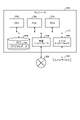
- FIG. 8 is a diagram showing a configuration example of hardware that implements the functions of information equipment such as the medical management apparatus 30 and the supervision room apparatus 40 according to each embodiment or each modification.
- the computer 500 has a CPU 510 , a RAM 520 , a ROM 530 , a HDD (Hard Disk Drive) 540 , a communication interface 550 and an input/output interface 560 .
- the parts of computer 500 are connected by bus 570 .
- the CPU 510 operates based on programs stored in the ROM 530 or HDD 540 and controls each section. For example, the CPU 510 loads programs stored in the ROM 530 or HDD 540 into the RAM 520 and executes processes corresponding to various programs.
- the ROM 530 stores a boot program such as a BIOS (Basic Input Output System) executed by the CPU 510 when the computer 500 is started, a program depending on the hardware of the computer 500, and the like.
- BIOS Basic Input Output System
- the HDD 540 is a computer-readable recording medium that non-temporarily records programs executed by the CPU 510 and data used by such programs.
- the HDD 540 is a recording medium that records an information processing program according to the present disclosure, which is an example of the program data 541 .
- the communication interface 550 is an interface for connecting the computer 500 to an external network 580 (Internet as an example).
- CPU 510 receives data from another device or transmits data generated by CPU 510 to another device via communication interface 550 .
- the input/output interface 560 is an interface for connecting the input/output device 590 and the computer 500 .
- CPU 510 receives data from an input device such as a keyboard or mouse via input/output interface 560 .
- the CPU 510 also transmits data to an output device such as a display, speaker, or printer via the input/output interface 560 .
- the input/output interface 560 may function as a media interface for reading programs and the like recorded on a predetermined recording medium (media).
- media include optical recording media such as DVD (Digital Versatile Disc) and PD (Phase change rewritable Disk), magneto-optical recording media such as MO (Magneto-Optical disk), tape media, magnetic recording media, or semiconductor A memory or the like is used.
- the CPU 510 of the computer 500 executes the information processing program loaded on the RAM 520 to obtain the acquisition unit 31, the priority setting unit 32, the processing unit 33, a generating unit 34, a providing unit 35, and the like, and implement all or part of the functions.
- the HDD 540 also stores information processing programs and data (eg, various images G1 to G3, integrated image G, etc.) according to the present disclosure.
- CPU 510 reads and executes program data 541 from HDD 540 , as another example, these programs may be obtained from another device via external network 580 .
- the present technology can also take the following configuration.
- an acquisition unit that sequentially acquires image information for each patient; a priority setting unit that dynamically sets the priority of processing for the image information for each patient; a processing unit that determines a processing amount for each piece of image information based on the priority, and performs processing on the image information for each patient based on the determined processing amount for each piece of image information; a generator that integrates the processed image information for each patient to generate integrated image information; a display unit that displays an integrated image based on the integrated image information;
- the medical management system according to (1) above.
- the priority setting unit analyzes the image information for each patient and sets the priority based on the analysis result.
- the priority setting unit determines the status of each patient based on the image information of each patient, and sets the priority based on the status.
- the priority setting unit sets the priority based on voice data of a medical worker corresponding to the patient.
- the medical management system according to any one of (1) to (4) above.
- the priority setting unit sets the priority based on the vital data for each patient.
- the priority setting unit sets the priority based on the order data of the patient.
- the processing unit changes the number of processing programs for at least one of the image information among the image information for each patient based on the priority.
- the medical management system according to any one of (1) to (7) above.
- the processing unit changes a data amount of at least one of the image information among the image information for each patient based on the priority.
- the medical management system according to any one of (1) to (8) above.
- the processing unit changes a communication bandwidth of at least one of the image information among the image information for each patient based on the priority.
- the medical management system according to any one of (1) to (9) above.
- the priority setting unit includes manual priority setting for setting the priority based on a user's selection, and automatic priority setting for analyzing the image information for each patient and setting the priority based on the analysis result.
- the manual priority setting When executing and, the manual priority setting is preferentially executed, The medical management system according to any one of (1) to (10) above. (12) When the manual priority setting is preferentially executed, the priority setting unit notifies an image for which execution of the automatic priority setting is recommended from among the integrated images.
- a medical management device comprising: (14) the computer Image information for each patient is acquired sequentially, dynamically setting a processing priority for the image information for each patient; determining a processing amount for each of the image information based on the priority; performing processing on the image information for each patient based on the determined amount of processing for each image information; Integrating the processed image information for each patient to generate integrated image information; medical management methods.
- a medical management apparatus comprising part of the medical management system according to any one of (1) to (12) above.
- REFERENCE SIGNS LIST 10 medical management system 20 operating room system 30 medical management device 31 acquisition unit 32 priority setting unit 33 processing unit 34 generation unit 35 provision unit 40 supervisory room device 41 communication unit 42 display unit 43 input unit 44 control unit 50 camera G integrated image G1 image G2 image G3 image
Landscapes
- Engineering & Computer Science (AREA)
- Health & Medical Sciences (AREA)
- Medical Informatics (AREA)
- Epidemiology (AREA)
- General Health & Medical Sciences (AREA)
- Primary Health Care (AREA)
- Public Health (AREA)
- Theoretical Computer Science (AREA)
- Biomedical Technology (AREA)
- Radiology & Medical Imaging (AREA)
- Nuclear Medicine, Radiotherapy & Molecular Imaging (AREA)
- General Business, Economics & Management (AREA)
- Business, Economics & Management (AREA)
- Physics & Mathematics (AREA)
- General Physics & Mathematics (AREA)
- General Engineering & Computer Science (AREA)
- Human Computer Interaction (AREA)
- Multimedia (AREA)
- Signal Processing (AREA)
- Pathology (AREA)
- Medical Treatment And Welfare Office Work (AREA)
Priority Applications (2)
| Application Number | Priority Date | Filing Date | Title |
|---|---|---|---|
| JP2023500669A JPWO2022176531A1 (https=) | 2021-02-19 | 2022-01-26 | |
| US18/546,201 US20240120073A1 (en) | 2021-02-19 | 2022-01-26 | Medical management system, medical management device, and medical management method |
Applications Claiming Priority (2)
| Application Number | Priority Date | Filing Date | Title |
|---|---|---|---|
| JP2021025095 | 2021-02-19 | ||
| JP2021-025095 | 2021-02-19 |
Publications (1)
| Publication Number | Publication Date |
|---|---|
| WO2022176531A1 true WO2022176531A1 (ja) | 2022-08-25 |
Family
ID=82931573
Family Applications (1)
| Application Number | Title | Priority Date | Filing Date |
|---|---|---|---|
| PCT/JP2022/002754 Ceased WO2022176531A1 (ja) | 2021-02-19 | 2022-01-26 | 医療管理システム、医療管理装置及び医療管理方法 |
Country Status (3)
| Country | Link |
|---|---|
| US (1) | US20240120073A1 (https=) |
| JP (1) | JPWO2022176531A1 (https=) |
| WO (1) | WO2022176531A1 (https=) |
Cited By (1)
| Publication number | Priority date | Publication date | Assignee | Title |
|---|---|---|---|---|
| WO2024090228A1 (ja) * | 2022-10-26 | 2024-05-02 | 伊知朗 竹政 | 情報処理装置、情報処理システム及び情報処理プログラム |
Families Citing this family (1)
| Publication number | Priority date | Publication date | Assignee | Title |
|---|---|---|---|---|
| JP2023151273A (ja) * | 2022-03-31 | 2023-10-16 | キヤノン株式会社 | 画像処理装置、画像処理方法、顕微鏡システム、プログラム及び記憶媒体 |
Citations (4)
| Publication number | Priority date | Publication date | Assignee | Title |
|---|---|---|---|---|
| US20060206011A1 (en) * | 2005-03-08 | 2006-09-14 | Higgins Michael S | System and method for remote monitoring of multiple healthcare patients |
| JP2007214831A (ja) * | 2006-02-09 | 2007-08-23 | Hitachi Kokusai Electric Inc | 映像処理システム |
| JP2008272301A (ja) * | 2007-05-01 | 2008-11-13 | Olympus Medical Systems Corp | 医療システム及び医療機器制御装置 |
| JP2020086730A (ja) * | 2018-11-20 | 2020-06-04 | 富士フイルム株式会社 | 優先度判定装置、方法およびプログラム |
Family Cites Families (2)
| Publication number | Priority date | Publication date | Assignee | Title |
|---|---|---|---|---|
| JP7011728B2 (ja) * | 2018-09-28 | 2022-01-27 | 株式会社ソニー・インタラクティブエンタテインメント | 画像データ出力装置、コンテンツ作成装置、コンテンツ再生装置、画像データ出力方法、コンテンツ作成方法、およびコンテンツ再生方法 |
| WO2022195696A1 (ja) * | 2021-03-16 | 2022-09-22 | オリンパスメディカルシステムズ株式会社 | 医療支援システムおよび医療支援方法 |
-
2022
- 2022-01-26 WO PCT/JP2022/002754 patent/WO2022176531A1/ja not_active Ceased
- 2022-01-26 US US18/546,201 patent/US20240120073A1/en active Pending
- 2022-01-26 JP JP2023500669A patent/JPWO2022176531A1/ja not_active Abandoned
Patent Citations (4)
| Publication number | Priority date | Publication date | Assignee | Title |
|---|---|---|---|---|
| US20060206011A1 (en) * | 2005-03-08 | 2006-09-14 | Higgins Michael S | System and method for remote monitoring of multiple healthcare patients |
| JP2007214831A (ja) * | 2006-02-09 | 2007-08-23 | Hitachi Kokusai Electric Inc | 映像処理システム |
| JP2008272301A (ja) * | 2007-05-01 | 2008-11-13 | Olympus Medical Systems Corp | 医療システム及び医療機器制御装置 |
| JP2020086730A (ja) * | 2018-11-20 | 2020-06-04 | 富士フイルム株式会社 | 優先度判定装置、方法およびプログラム |
Cited By (3)
| Publication number | Priority date | Publication date | Assignee | Title |
|---|---|---|---|---|
| WO2024090228A1 (ja) * | 2022-10-26 | 2024-05-02 | 伊知朗 竹政 | 情報処理装置、情報処理システム及び情報処理プログラム |
| JPWO2024090228A1 (https=) * | 2022-10-26 | 2024-05-02 | ||
| JP7736943B2 (ja) | 2022-10-26 | 2025-09-09 | 伊知朗 竹政 | 情報処理装置、情報処理システム及び情報処理プログラム |
Also Published As
| Publication number | Publication date |
|---|---|
| JPWO2022176531A1 (https=) | 2022-08-25 |
| US20240120073A1 (en) | 2024-04-11 |
Similar Documents
| Publication | Publication Date | Title |
|---|---|---|
| US9984206B2 (en) | System and method for medical resource scheduling in a distributed medical system | |
| US8797155B2 (en) | Distributed medical sensing system and method | |
| EP2973105B1 (en) | Surgical imaging system and method for processing surgical images | |
| US20080249376A1 (en) | Distributed Patient Monitoring System | |
| EP2990972A1 (en) | Telemedicine system for remote consultation, diagnosis and medical treatment services | |
| US20110267418A1 (en) | Telemedicine system | |
| US20200135330A1 (en) | Medical image processing apparatus, medical image processing method, and computing device | |
| WO2022176531A1 (ja) | 医療管理システム、医療管理装置及び医療管理方法 | |
| EP4376402A1 (en) | Information processing system, information processing method, and program | |
| WO2016119034A1 (pt) | Sistema, equipamento e processo para a realização e documentação de procedimento profissional assistido à distância em tempo real | |
| US20180122518A1 (en) | Method for monitoring and controlling patient parameters and transmitting medical information and a system for carrying out the method | |
| JP7521538B2 (ja) | 医療イメージングシステム、医療イメージング方法及び画像処理装置 | |
| US10952596B2 (en) | Medical image processing device and image processing method | |
| US20100318380A1 (en) | Controller for telemedicine applications | |
| JP7695620B2 (ja) | 医療用制御システム、画像処理サーバ、画像変換装置、および制御方法 | |
| US20250139742A1 (en) | Video processing system, medical information processing system, and operation method | |
| JP2015191377A (ja) | 医療情報集約出力装置 | |
| US20250107688A1 (en) | Information processing method, information processing system, and program | |
| CN211858162U (zh) | 多功能移动式远程医疗装置 | |
| US12619780B2 (en) | Information processing system and information processing method | |
| US20250132022A1 (en) | Medical information processing system, determining method, and program | |
| US20250191787A1 (en) | Information processing apparatus, information processing terminal, information processing method, and program | |
| CN110970118A (zh) | 一种多显示器显示患者相关病历和检查影像系统 | |
| WO2023189520A1 (ja) | 情報処理システム、情報処理方法、及び、プログラム | |
| Chimiak et al. | Multimedia features of a dynamically adaptive telemedicine system |
Legal Events
| Date | Code | Title | Description |
|---|---|---|---|
| 121 | Ep: the epo has been informed by wipo that ep was designated in this application |
Ref document number: 22755855 Country of ref document: EP Kind code of ref document: A1 |
|
| ENP | Entry into the national phase |
Ref document number: 2023500669 Country of ref document: JP Kind code of ref document: A |
|
| WWE | Wipo information: entry into national phase |
Ref document number: 18546201 Country of ref document: US |
|
| NENP | Non-entry into the national phase |
Ref country code: DE |
|
| 122 | Ep: pct application non-entry in european phase |
Ref document number: 22755855 Country of ref document: EP Kind code of ref document: A1 |