WO2022158583A1 - 低フラン酸ダイズ - Google Patents
低フラン酸ダイズ Download PDFInfo
- Publication number
- WO2022158583A1 WO2022158583A1 PCT/JP2022/002307 JP2022002307W WO2022158583A1 WO 2022158583 A1 WO2022158583 A1 WO 2022158583A1 JP 2022002307 W JP2022002307 W JP 2022002307W WO 2022158583 A1 WO2022158583 A1 WO 2022158583A1
- Authority
- WO
- WIPO (PCT)
- Prior art keywords
- mutation
- soybean
- gene
- base
- codon
- Prior art date
- Legal status (The legal status is an assumption and is not a legal conclusion. Google has not performed a legal analysis and makes no representation as to the accuracy of the status listed.)
- Ceased
Links
Images





Classifications
-
- A—HUMAN NECESSITIES
- A01—AGRICULTURE; FORESTRY; ANIMAL HUSBANDRY; HUNTING; TRAPPING; FISHING
- A01H—NEW PLANTS OR NON-TRANSGENIC PROCESSES FOR OBTAINING THEM; PLANT REPRODUCTION BY TISSUE CULTURE TECHNIQUES
- A01H1/00—Processes for modifying genotypes ; Plants characterised by associated natural traits
- A01H1/02—Methods or apparatus for hybridisation; Artificial pollination ; Fertility
-
- A—HUMAN NECESSITIES
- A01—AGRICULTURE; FORESTRY; ANIMAL HUSBANDRY; HUNTING; TRAPPING; FISHING
- A01H—NEW PLANTS OR NON-TRANSGENIC PROCESSES FOR OBTAINING THEM; PLANT REPRODUCTION BY TISSUE CULTURE TECHNIQUES
- A01H5/00—Angiosperms, i.e. flowering plants, characterised by their plant parts; Angiosperms characterised otherwise than by their botanic taxonomy
- A01H5/10—Seeds
-
- A—HUMAN NECESSITIES
- A01—AGRICULTURE; FORESTRY; ANIMAL HUSBANDRY; HUNTING; TRAPPING; FISHING
- A01H—NEW PLANTS OR NON-TRANSGENIC PROCESSES FOR OBTAINING THEM; PLANT REPRODUCTION BY TISSUE CULTURE TECHNIQUES
- A01H6/00—Angiosperms, i.e. flowering plants, characterised by their botanic taxonomy
- A01H6/54—Leguminosae or Fabaceae, e.g. soybean, alfalfa or peanut
-
- A—HUMAN NECESSITIES
- A01—AGRICULTURE; FORESTRY; ANIMAL HUSBANDRY; HUNTING; TRAPPING; FISHING
- A01H—NEW PLANTS OR NON-TRANSGENIC PROCESSES FOR OBTAINING THEM; PLANT REPRODUCTION BY TISSUE CULTURE TECHNIQUES
- A01H6/00—Angiosperms, i.e. flowering plants, characterised by their botanic taxonomy
- A01H6/54—Leguminosae or Fabaceae, e.g. soybean, alfalfa or peanut
- A01H6/542—Glycine max [soybean]
-
- A—HUMAN NECESSITIES
- A23—FOODS OR FOODSTUFFS; TREATMENT THEREOF, NOT COVERED BY OTHER CLASSES
- A23D—EDIBLE OILS OR FATS, e.g. MARGARINES, SHORTENINGS OR COOKING OILS
- A23D9/00—Other edible oils or fats, e.g. shortenings or cooking oils
-
- A—HUMAN NECESSITIES
- A23—FOODS OR FOODSTUFFS; TREATMENT THEREOF, NOT COVERED BY OTHER CLASSES
- A23K—FODDER
- A23K10/00—Animal feeding-stuffs
- A23K10/30—Animal feeding-stuffs from material of plant origin, e.g. roots, seeds or hay; from material of fungal origin, e.g. mushrooms
-
- A—HUMAN NECESSITIES
- A23—FOODS OR FOODSTUFFS; TREATMENT THEREOF, NOT COVERED BY OTHER CLASSES
- A23L—FOODS, FOODSTUFFS OR NON-ALCOHOLIC BEVERAGES, NOT OTHERWISE PROVIDED FOR; PREPARATION OR TREATMENT THEREOF
- A23L33/00—Modifying nutritive qualities of foods; Dietetic products; Preparation or treatment thereof
-
- A—HUMAN NECESSITIES
- A23—FOODS OR FOODSTUFFS; TREATMENT THEREOF, NOT COVERED BY OTHER CLASSES
- A23L—FOODS, FOODSTUFFS OR NON-ALCOHOLIC BEVERAGES, NOT OTHERWISE PROVIDED FOR; PREPARATION OR TREATMENT THEREOF
- A23L33/00—Modifying nutritive qualities of foods; Dietetic products; Preparation or treatment thereof
- A23L33/10—Modifying nutritive qualities of foods; Dietetic products; Preparation or treatment thereof using additives
- A23L33/115—Fatty acids or derivatives thereof; Fats or oils
-
- A—HUMAN NECESSITIES
- A61—MEDICAL OR VETERINARY SCIENCE; HYGIENE
- A61K—PREPARATIONS FOR MEDICAL, DENTAL OR TOILETRY PURPOSES
- A61K36/00—Medicinal preparations of undetermined constitution containing material from algae, lichens, fungi or plants, or derivatives thereof, e.g. traditional herbal medicines
- A61K36/18—Magnoliophyta (angiosperms)
- A61K36/185—Magnoliopsida (dicotyledons)
- A61K36/48—Fabaceae or Leguminosae (Pea or Legume family); Caesalpiniaceae; Mimosaceae; Papilionaceae
-
- A—HUMAN NECESSITIES
- A61—MEDICAL OR VETERINARY SCIENCE; HYGIENE
- A61P—SPECIFIC THERAPEUTIC ACTIVITY OF CHEMICAL COMPOUNDS OR MEDICINAL PREPARATIONS
- A61P3/00—Drugs for disorders of the metabolism
- A61P3/02—Nutrients, e.g. vitamins, minerals
-
- C—CHEMISTRY; METALLURGY
- C07—ORGANIC CHEMISTRY
- C07K—PEPTIDES
- C07K14/00—Peptides having more than 20 amino acids; Gastrins; Somatostatins; Melanotropins; Derivatives thereof
- C07K14/415—Peptides having more than 20 amino acids; Gastrins; Somatostatins; Melanotropins; Derivatives thereof from plants
-
- C—CHEMISTRY; METALLURGY
- C11—ANIMAL OR VEGETABLE OILS, FATS, FATTY SUBSTANCES OR WAXES; FATTY ACIDS THEREFROM; DETERGENTS; CANDLES
- C11B—PRODUCING, e.g. BY PRESSING RAW MATERIALS OR BY EXTRACTION FROM WASTE MATERIALS, REFINING OR PRESERVING FATS, FATTY SUBSTANCES, e.g. LANOLIN, FATTY OILS OR WAXES; ESSENTIAL OILS; PERFUMES
- C11B1/00—Production of fats or fatty oils from raw materials
- C11B1/10—Production of fats or fatty oils from raw materials by extracting
-
- C—CHEMISTRY; METALLURGY
- C12—BIOCHEMISTRY; BEER; SPIRITS; WINE; VINEGAR; MICROBIOLOGY; ENZYMOLOGY; MUTATION OR GENETIC ENGINEERING
- C12N—MICROORGANISMS OR ENZYMES; COMPOSITIONS THEREOF; PROPAGATING, PRESERVING, OR MAINTAINING MICROORGANISMS; MUTATION OR GENETIC ENGINEERING; CULTURE MEDIA
- C12N15/00—Mutation or genetic engineering; DNA or RNA concerning genetic engineering, vectors, e.g. plasmids, or their isolation, preparation or purification; Use of hosts therefor
- C12N15/09—Recombinant DNA-technology
- C12N15/63—Introduction of foreign genetic material using vectors; Vectors; Use of hosts therefor; Regulation of expression
- C12N15/79—Vectors or expression systems specially adapted for eukaryotic hosts
- C12N15/82—Vectors or expression systems specially adapted for eukaryotic hosts for plant cells, e.g. plant artificial chromosomes (PACs)
- C12N15/8241—Phenotypically and genetically modified plants via recombinant DNA technology
- C12N15/8242—Phenotypically and genetically modified plants via recombinant DNA technology with non-agronomic quality (output) traits, e.g. for industrial processing; Value added, non-agronomic traits
- C12N15/8243—Phenotypically and genetically modified plants via recombinant DNA technology with non-agronomic quality (output) traits, e.g. for industrial processing; Value added, non-agronomic traits involving biosynthetic or metabolic pathways, i.e. metabolic engineering, e.g. nicotine, caffeine
- C12N15/8247—Phenotypically and genetically modified plants via recombinant DNA technology with non-agronomic quality (output) traits, e.g. for industrial processing; Value added, non-agronomic traits involving biosynthetic or metabolic pathways, i.e. metabolic engineering, e.g. nicotine, caffeine involving modified lipid metabolism, e.g. seed oil composition
Definitions
- the present invention relates to modified soybeans with reduced furanic acid content in fats and oils contained in soybeans.
- Soybeans are the world's major source of plant-derived edible fats and oils. Since the composition of fatty acids contained in fats and oils directly affects the quality of fats and oils, modification of the fatty acid composition is a major issue in breeding soybeans as well.
- edible oils and fats are degraded by light, heat, and the like, and generate odors that pose a problem in terms of flavor.
- soybean oils and fats generate a peculiar odor called "light odor" (or "light exposure odor”) in the presence of light, and also generate a "cooking odor” due to cooking with heat.
- Patent Document 1 Japanese Patent No. 4290222
- the present invention has been made in consideration of the above circumstances, and provides modified soybeans and the like shown below.
- the mutation introduced into the Glyma20g34340 gene is (i) a mutation occurring in the base of the codon encoding the 410th amino acid residue of the protein encoded by the gene; (ii) a mutation occurring in the base of the codon encoding the 688th amino acid residue of the protein encoded by the gene, or (iii) a base present at the boundary between the 17th exon and the intron of the gene.
- the mutation (i) is a mutation in which a codon for glycine is replaced with a codon for aspartic acid.
- the mutation (i) is a mutation in which G (guanine), which is the 1519th base in the cDNA of the Glyma20g34340 gene, is replaced with A (adenine).
- the mutation (ii) is a mutation in which an aspartic acid codon is replaced with an asparagine codon.
- the present invention it is possible to provide a modified soybean with a reduced furanic acid content (amount of furanic acid produced) in the oil contained in the soybean.
- the edible oil derived from the modified soybean and the food containing the edible oil are different from those containing conventional soybean oil.
- the irritating odor derived from soybean oil is suppressed.
- the edible oil derived from the modified soybean is more suppressed in viscosity, color tone, and increase in oxidation when heated than conventional soybean oil.
- foods and the like containing the modified soybean or processed modified soybean have a good flavor with reduced bean odor. Therefore, the modified soybean is excellent in usefulness and practicality.
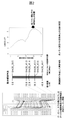
- FIG. 2 is a diagram showing an overview of identification of the locus region of the mutant gene using the segregating population obtained by crossing of Toyoshirome and Mutant 1.
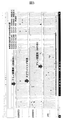
- FIG. 2 shows DNA polymorphisms and nucleotide polymorphisms found in the Glyma20g34340 gene for mutants 1 to 3 having a low furanic acid content phenotype.
- FIG. 4 shows the DNA polymorphism found in the Glyma04g05690 gene (Glyma04G054100 gene) for Mutant 4, which has a low furanic acid content phenotype.
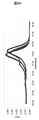
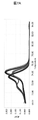
- FIG. 10 is a diagram showing genotyping results for DNA polymorphisms at positions 42, 720, and 119 of soybean chromosome 20 possessed by Mutant 1 (#65) by PCR using a high-melting curve.
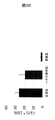
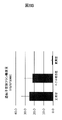
- FIG. 10 is a diagram showing the relationship between DNA polymorphisms at positions 42, 720, and 119 of soybean chromosome 20 possessed by Mutant 1 (#65) and furanic acid content.
- FIG. 10 is a diagram showing genotyping results for DNA polymorphisms at positions 42, 720, and 119 of soybean chromosome 20 possessed by Mutant 1 (#65) by PCR using a high-melting curve.
- FIG. 10 is a diagram showing the relationship between DNA polymorphisms at positions 42, 720, and 119
- FIG. 10 is a diagram showing genotyping results for DNA polymorphisms at positions 42, 717, and 581 of soybean chromosome 20 possessed by Mutant 2 (16SN253) by PCR using a high-melting curve.
- FIG. 2 is a diagram showing the relationship between the DNA polymorphism at position 42,717,581 of soybean chromosome 20 possessed by Mutant 2 (16SN253) and furanic acid content.
- FIG. 10 is a diagram showing genotyping results for DNA polymorphisms at positions 42, 717, and 998 of soybean chromosome 20 possessed by Mutant 3 (16SN693) by PCR using a high-melting curve.
- FIG. 10 is a diagram showing genotyping results for DNA polymorphisms at positions 42, 717, and 998 of soybean chromosome 20 possessed by Mutant 3 (16SN693) by PCR using a high-melting curve.
- FIG. 10 is a diagram showing the relationship between DNA polymorphism at position 42,717,998 of soybean chromosome 20 possessed by Mutant 3 (16SN693) and furanic acid content.
- FIG. 10 is a diagram showing genotyping results for DNA polymorphisms at positions 4, 340, and 379 of soybean chromosome 4 possessed by Mutant 4 (16SN279) by PCR using a high-melting curve.
- FIG. 4 is a diagram showing the relationship between the DNA polymorphism at position 4,340,379 of soybean chromosome 4 possessed by Mutant 4 (16SN279) and furanic acid content.
- modified soybean in which the content of furanic acid in the oil contained in soybean is reduced by genetic mutation (hereinafter referred to as “soybean of the present invention” or “modified soybean of the present invention”) may be called) is provided.
- the term “soybean” means the whole or part of an individual soybean plant, and in addition to the individual plant, organs of the individual plant (seeds, etc.), cells or organelles derived from the individual plant, etc. It can also mean a partial structure.
- the term "genetic mutation” may be mutation due to genetic recombination (modification of genetic properties by genetic recombination technology), or non-genetic recombination mutation, such as random mutation or genome editing. It may be a mutation due to such as, and is not limited. Examples of random mutation include treatment with a drug (e.g., ethyl methanesulfonic acid (EMS), nitrosomethyl urea, nitrosomethyl urethane, etc.), mutation by ultraviolet irradiation, Diversify TM PCR, and Error-prone PCR. Methods, rolling circle amplification (RCA) methods, error-prone RCA methods, mutations introduced using various known random mutagenesis kits, etc., are not particularly limited and can be employed as appropriate.
- EMS ethyl methanesulfonic acid
- nitrosomethyl urea nitrosomethyl urethane, etc.
- UV irradiation Diversify TM PCR
- the mutation introduced into the gene by each of the above methods may be, for example, any one mutation selected from the group consisting of missense mutation, nonsense mutation, frameshift mutation and null mutation. , may be a combination of two or more mutations, and is not limited.
- missense mutation means a mutation in which the type of amino acid encoded by a codon changes due to base change or substitution within a codon of a nucleic acid sequence.
- nonsense mutation means a mutation in which a change or substitution within a codon of a nucleic acid sequence changes the codon to a stop codon, and the ORF region 3' to the codon is not translated.
- Nonsense mutations are also called stop mutations.
- frameshift mutation means a mutation in which the reading frame of a codon is shifted in a region on the 3' side of the insertion or deletion site due to the insertion or deletion of a base.
- a “null mutation” refers to a mutation in which the nucleotide sequence encoding the protein is either completely deleted or the presence of the nucleotide sequence does not allow expression of a functional protein.
- the soybean before gene mutation (the soybean that is the source of the modified soybean of the present invention) is a soybean breeding (that is, soybean original) that has not undergone any modification of genetic properties by genetic recombination or the like. It may be a soybean cultivar that has undergone selective breeding or the like by introducing some kind of genetic modification to such a soybean progenitor, and is not limited, for example, "Fukuyutaka”, “Toyoshirome” ”, “Murayutaka”, and “Bay”.
- the modified soybean of the present invention is characterized in that the content of furanic acid in the oil contained in the soybean is reduced, and the content is, for example, 0 mass ppm or more and 20 mass ppm or less.
- 0 mass ppm or more and 15 mass ppm or less Preferably, 0 mass ppm or more and 10 mass ppm or less, 0 mass ppm or more and 5 mass ppm or less, 0 mass ppm or more and 3 mass ppm or less, 0 mass ppm or more and 1 mass ppm or less It may be 0 ppm by mass.
- the reduced furanic acid in the modified soybean of the present invention is not limited to, but is 3,4-dimethyl-5-pentyl-2-furanonanoic acid (also referred to as "F3") represented by the following structural formula. is preferred.
- the modified soybean of the present invention preferably has a mutation introduced into (or contains) the Glyma20g34340 gene and/or the Glyma04g05690 gene.
- “mutation-introduced” or “mutation-containing” means that a mutated gene is retained in soybean cells, preferably the mutated gene is retained in the genome of the soybean. means to be Moreover, the mutation may be a loss-of-function mutation of the above gene.
- JGI Joint Genome Institute
- Phytozome https://phytozome.jgi.doe.gov/pz/portal.html
- genome sequence information and cDNA base sequence information of the gene amino acid sequence information of the protein encoded by the gene and the Information such as the base sequence region (CDS) that encodes the amino acid sequence is registered.
- CDS base sequence region
- the cDNA nucleotide sequence of the Glyma20g34340 gene is shown in SEQ ID NO:1, and the amino acid sequence of the protein encoded by the Glyma20g34340 gene is shown in SEQ ID NO:2.
- SEQ ID NO: 5 shows the nucleotide sequence of the pre-mRNA of the Glyma20g34340 gene (sequence obtained by converting the notation of the genomic DNA sequence to RNA (converting thymine (T) to uracil (U))).
- T thymine
- U uracil
- the version of the database is Wm82. a2.
- the gene name is described as “Glyma.20G201400.1” or “Glyma.20G201400.”
- the cDNA nucleotide sequence of the Glyma04g05690 gene is shown in SEQ ID NO:3, and the amino acid sequence of the protein encoded by the Glyma04g05690 gene is shown in SEQ ID NO:4.
- the Glyma04g05690 gene is Wm82. a2.
- the gene name is written as "Glyma.04G054100.1" or "Glyma.04G054100.”
- the mutation introduced into the Glyma20g34340 gene is not limited, but includes, for example, the following gene mutations (i) to (iii).
- the mutation (i) is preferably, for example, a mutation in which a codon for glycine is replaced with a codon for aspartic acid. Specifically, it includes a mutation in which G (guanine) at the 1519th base in the cDNA (SEQ ID NO: 1) of the Glyma20g34340 gene is replaced with A (adenine).
- the mutation (ii) is preferably, for example, a mutation in which a codon for aspartic acid is replaced with a codon for asparagine. Specifically, it includes a mutation in which G (guanine) at the 2352nd base in the cDNA (SEQ ID NO: 1) of the Glyma20g34340 gene is replaced with A (adenine).
- the mutation (iii) is, for example, a mutation occurring in a base that defines the boundary with an intron located immediately after the 17th exon of the gene, preferably the pre-mRNA of the Glyma20g34340 gene At least one or more of "GU” (7180th to 7181st) and "AG” (7267th to 7268th) that designate the intron boundary specified by the 7180th to 7268th bases in (SEQ ID NO: 5) More preferably, the 7180th base G (guanine) in the pre-mRNA (SEQ ID NO: 5) is replaced with A (adenine). .
- Examples of the modified soybean of the present invention in which the mutation (i) above has been introduced into the Glyma20g34340 gene include the "#65” line (hereinafter also referred to as "LF65”) soybean cultivar.
- LF65 the number "FERM BP-22392”
- Examples of the modified soybean of the present invention into which the mutation (ii) is introduced include the "16SN253" line soybean cultivar, and an example of the modified soybean of the present invention into which the mutation (iii) is introduced.
- the mutation introduced into the Glyma04g05690 gene is not limited, but includes, for example, a mutation occurring in the base of the codon encoding the 64th amino acid residue of the protein encoded by the gene.
- the mutation preferably includes, for example, a mutation in which an arginine codon is replaced with a cysteine codon.
- it includes a mutation in which C (cytosine) at the 483rd base in the cDNA (SEQ ID NO: 3) of the Glyma04g05690 gene is replaced with T (thymine).
- Examples of the modified soybean of the present invention in which the above mutation is introduced into the Glyma04g05690 gene include the "16SN279" line (hereinafter also referred to as "16SN279”) soybean cultivar, which has the accession number "FERM BP- 22413” as an international deposit on January 14, 2021 at the Patent Organism Depositary Center, National Institute of Technology and Evaluation ( ⁇ 292-0818 Room 2-5-8 120, Kazusa Kamatari, Kisarazu City, Chiba Prefecture). ing.
- soybean oil and fat extracted from the soybean of the present invention are provided.
- the present invention also provides a food, feed, or pharmaceutical composition (or drug) containing the above materials and the above soybean oil.
- processed soybean means a product obtained by subjecting soybeans to treatments such as enzymatic treatment, pulverization, drying, heating, freezing and purification. Specific examples of processed soybeans include full-fat soybean flour, defatted soybean flour, and soybean protein.
- Food means things that are eaten and eaten for the purpose of nutrient intake and taste. Soybean has been ingested as food for a long time.
- the soybean of the present invention may be eaten as a fresh food such as green soybeans, may be eaten as a fermented food such as natto, and may be used as a processed food such as dried beans, miso, soy sauce, tofu, yuba, soy milk, and kinako. You may eat or drink.
- Foods made from the processed soybean are not limited, but for example, hamburgers, patties, dumplings, fried chicken, sausages, croquettes, nuggets, steamed dumplings, pork cutlets, chicken fillets, minced meat, fried rice, and other cooked rice.
- Examples include processed meat foods such as meat ingredients and meat ingredients for instant noodles, in which part or all of the meat contained in processed meat foods is replaced with processed soybean products, and bakery foods such as cookies, cakes, donuts, and bread.
- soybean oil There are no restrictions on the use of soybean oil, but it can be used, for example, as frying oil, frying oil, rice cooking oil, and pouring oil.
- Foods containing soybean oil include fried foods, stir-fried foods, cooked rice, rice crackers, noodles, seasonings such as mayonnaise and dressings, powdered oils and fats, and processed oil foods such as margarine and shortening.
- soybean of the present invention Since the soybean of the present invention has reduced furanic acid in the soybean fat and oil and suppressed odor in bright light and heated odor, it is expected that consumers will have less resistance to use it for eating and drinking.
- the soybean of the present invention can also be used as a material for supplements, health functional foods, and foods for specified health uses.
- “Feed” means a material that is fed to domesticated animals, and includes livestock, poultry, fish farming, pets, and the like. Soybeans are widely used in livestock such as cattle, pigs, chickens, and poultry feed and pet food.
- “Pharmaceutical composition” or “pharmaceutical product”) means a substance for diagnosing, treating, or preventing a target disease when administered to a subject such as a human or an animal, and such efficacy is obtained. Quasi-drugs may be included as long as possible. Isoflavones contained in soybeans are known to exhibit agonistic effects on estrogen receptors, and are also used as therapeutic agents for osteoporosis.
- a new modified soybean species in which a mutation (such as a loss-of-function mutation) has been introduced into the Glyma20g34340 gene and/or the Glyma04g05690 gene can be produced.
- a mutation such as a loss-of-function mutation
- the soybean species of the present invention with other soybean species that are resistant to specific pests and/or cultivation conditions, the furanic acid content in the oil contained in soybeans is reduced and the specific pests and/or new varieties of soybeans can be created that are tolerant to the growing conditions.
- crossbreeding means crossbreeding between two individuals with different genetic compositions, resulting in the formation of hybrids. Backcrossing is preferred as the crossing method.
- Backcrossing is the crossing of a child born between parent A with mutation and parent B without mutation (existing soybean cultivar such as Fukuyutaka) with parent B (existing soybean cultivar such as Fukuyutaka). , a method of obtaining progeny that retain the mutant gene and have the properties of parent B.
- the soybean of the present invention preferably has mutations in the Glyma20g34340 gene and/or the Glyma04g05690 gene. can be screened for soybeans characterized by a reduced furanic acid content of
- a method for detecting a mutated gene (a) Amplification when at least one of the oligonucleotide probe containing the nucleotide sequence of the mutation site of the Glyma20g34340 gene and/or the Glyma04g05690 gene possessed by the modified soybean of the present invention and/or the nucleotide sequence of the gene and its complementary sequence is amplified A step of amplifying and/or hybridizing the Glyma20g34340 gene and/or Glyma04g05690 gene of the soybean to be tested using oligonucleotide primers prepared so that the mutation site is included in the fragment, and (b) A method comprising the step of detecting a mutation site by analyzing the processed product.
- detection methods include known methods such as the PCR method, TaqMan PCR method, sequencing method, and microarray method, particularly when the loss-of-function mutation is a single nucleotide polymorphism (SNP). Examples include, but are not limited to, the Invader method and the TILLING method.
- the PCR method it is preferable to prepare a primer whose 3' end portion has a sequence complementary to the base sequence of the mutation site.
- the primers designed in this way are used, when the template sample has a mutation, the primer completely hybridizes to the template, and the polymerase elongation reaction proceeds. , the nucleotide at the 3' end of the primer is mismatched with the template, so no extension reaction occurs.
- PCR amplification is performed using such primers, and the amplified product is analyzed by agarose gel electrophoresis or the like. If an amplified product of a predetermined size can be confirmed, it means that the sample template has mutations. If there is no amplification product, it can be determined that the template has no mutation.
- PCR and agarose gel electrophoresis see Sambrook, Fritsch and Maniatis, "Molecular Cloning: A Laboratory Manual” 2nd Edition (1989), Cold Spring Harbor Laboratory Press.
- the TaqMan PCR method is a method that utilizes a fluorescently labeled allele-specific oligo and a PCR reaction with Taq DNA polymerase (Livak, KJ Genet. Anal. 14, 143 (1999); Morris T. et al. ., J. Clin. Microbiol., 34, 2933 (1996)).
- the sequencing method is a method of analyzing the presence or absence of mutation by amplifying the region containing the mutation by PCR and sequencing the DNA sequence using a dye terminator or the like (Sambrook, Fritsch and Maniatis, "Molecular Cloning: A Laboratory Manual, 2nd Edition (1989), Cold Spring Harbor Laboratory Press).
- DNA microarrays are those in which one ends of nucleotide probes are immobilized on a support in the form of an array, and include DNA chips, gene chips, microchips, bead arrays, and the like.
- DNA microarray assays such as DNA chips include the GeneChip assay (Affymetrix; see US Pat. Nos. 6,045,996, 5,925,525, and 5,858,659).
- GeneChip technology utilizes miniaturized high-density microarrays of oligonucleotide probes attached to chips.
- the invader method includes hybridization of two types of reporter probes and one type of invader probe specific to each allele of genetic polymorphisms such as SNPs to template DNA, and a special method of recognizing and cleaving the structure of DNA. 14, 143-149 (1999); Morris T. et al., J. Clin. Microbiol. 34, 2933 (1996); Lyamichev, V. et al., Science, 260, 778-783 (1993), etc.).
- the TILLING (Targeting Induced Local Lesion IN Genomes) method is a method of screening mutation mismatches in the genome of a population of mutagenized mutants by PCR amplification and treatment with CEL I nuclease.
- CEL I nuclease is an endonuclease that specifically cleaves mismatched portions of double-stranded DNA. If the sample contains mutations in the Glyma20g34340 gene and/or the Glyma04g05690 gene, the PCR product will have a mismatched portion, but if it contains no mutations, no mismatches will occur. Therefore, if the mutation exists, the mismatched pair site of the PCR product will be cleaved, and if the mutation does not exist, the PCR product will not be cleaved.
- oligonucleotides constructed to contain mutation sites in the Glyma20g34340 gene and/or the Glyma04g05690 gene are used as probes or primers. Accordingly, the present invention also provides oligonucleotides engineered to include mutation sites in the Glyma20g34340 gene and/or the Glyma04g05690 gene.
- the primers or probes used are designed so that the SNP site exists at the 3' or 5' end of the base sequence of the primer or probe, or is complementary.
- the oligonucleotide is designed so that the SNP exists in the middle of the entire length of the base sequence.
- the “central” refers to the central region where the number of bases toward the 5′ end and the number of bases toward the 3′ end are approximately the same as the SNP bases, and the oligonucleotide has an odd number of bases.
- the "center” is preferably the central 5 bases, more preferably the central 3 bases, and even more preferably the most central 1 base.
- the "center” is preferably 4 bases in the center, more preferably 2 bases in the center.
- the oligonucleotide of the present invention when used as an allele probe in the invader method, the oligonucleotide may be a fragment that hybridizes with the Glyma20g34340 gene and/or the Glyma04g05690 gene containing the mutation site, or a complementary sequence thereof, and a fragment that does not hybridize. (Flap portion) is preferably bound via the gene sequence of the mutation site or its complementary sequence.
- the hybridization reaction is performed under stringent conditions.
- the length of the base sequence of the oligonucleotide of the present invention is preferably designed to be at least 10 bases, more preferably 10 to 200 bases, still more preferably 15 to 150 bases, most preferably 18 to 80 bases. be.
- the oligonucleotide sequence can be used as a probe for detecting a test gene, and can be used as both a forward (sense) primer and a reverse (antisense) primer.
- oligonucleotide primers or oligonucleotide probes designed as described above can be chemically synthesized by known means and methods, and are generally synthesized using a commercially available chemical synthesizer. It is also possible to add a fluorescent label (for example, FITC, FAM, VIC, Redmond Dye, etc.) and a quencher to the fluorescent label in advance to the probe to automate the work.
- a fluorescent label for example, FITC, FAM, VIC, Redmond Dye, etc.
- Microarray A microarray can be produced by fixing one end of the oligonucleotide of the present invention described above to a support such as glass, silicon, or gel.
- Oligonucleotide arrays are manufactured, for example, by photochemical synthesis (Affymetrix), which combines solid-phase chemical synthesis and photolithographic manufacturing techniques used in the semiconductor industry. Using photolithographic masks to define the boundaries of chemical reaction sites on the chip and performing specific chemical synthesis steps to construct high-density arrays with oligonucleotide probes attached at predetermined locations on the array. can be done.
- Kit in another aspect of the present invention, there is provided a kit for detecting mutations in the Glyma20g34340 gene and/or the Glyma04g05690 gene, which contains the oligonucleotide of the present invention and/or a microarray produced using the oligonucleotide.
- a kit for detecting mutations in the Glyma20g34340 gene and/or the Glyma04g05690 gene which contains the oligonucleotide of the present invention and/or a microarray produced using the oligonucleotide.
- such kits include detection reaction solutions, control oligonucleotides, containers used for detection reactions, instructions for use, etc. may be included.
- soybean (Glycine max (L.) Merr.) varieties used as materials are as follows. (i) Fukuyutaka (ii) Toyoshirome The soybean cultivar Fukuyutaka was used to generate mutant populations. M1 seeds obtained by immersing soybean seeds (M0 seeds) in a 0.3% ethyl methanesulfonic acid (EMS) aqueous solution as a mutagen overnight and then rinsing them in running water for 8 hours were sown in a field, M1 individuals were cultivated according to a conventional method. For the plants that maintained fertility, one M2 seed was collected from each plant and stored. The following year, the stored M2 seeds were sown again in the field to cultivate M2 individuals.
- EMS ethyl methanesulfonic acid
- TITEC gas blowing unit
- soybean oil 4 mg was weighed, and 600 ⁇ l of 0.2 M KOH-MeOH was added and mixed. After adding 80 ⁇ l of 2M HCl and mixing for 1 minute, 600 ⁇ l of a hexane solution containing an internal standard (methyl behenate-d3, concentration 10 ⁇ g/ml) was added and mixed for 2 minutes. After centrifugation at 13000 rpm for 3 minutes, 500 ⁇ l of upper layer was transferred to a new 1.5 ml tube.
- an internal standard methyl behenate-d3, concentration 10 ⁇ g/ml
- a 1 ⁇ L aliquot of the prepared sample was analyzed splitless on a gas chromatograph-mass spectrometer.
- the analysis conditions of the instrument are as follows: helium gas as carrier gas, flow rate of about 1 ml/min, HP-88 (Agilent: ⁇ 0.25 mm ⁇ 60 m) column, analysis time of 20 minutes, inlet temperature of 250° C., mass spectrometry.
- the meter junction temperature was set at 230°C, the ion source temperature at 230°C, and the quadrupole mass filter temperature at 150°C.
- the temperature conditions of the column oven during the analysis time were as follows: after holding at 100°C for 1 minute, the temperature was raised to 200°C at 20°C/min over 5 minutes, and then raised to 240°C at 10°C/min over 4 minutes. Allow to warm and hold at 240° C. for 4 minutes. After that, the temperature was raised to 250° C. at 10° C./min over 1 minute and held for 5 minutes. From the obtained chromatogram and mass spectrum data, the peak areas of the internal standard (IS: molecular weight 357) and furanic acid (F3 (3,4-dimethyl-5-pentyl-2-furanonanoic acid): molecular weight 336) were determined. Ratios were used as phenotypic data.
- IS molecular weight 357
- furanic acid F3 (3,4-dimethyl-5-pentyl-2-furanonanoic acid
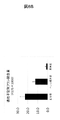
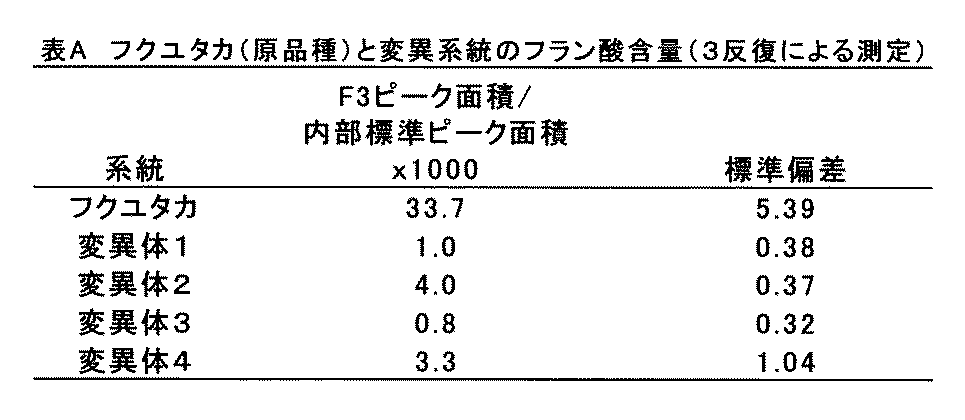
- Mutant screening From the 2831 mutant population lines produced from the soybean cultivar Fukuyutaka, the furanic acid of each line was analyzed using the above method, and 4 lines (mutants 1 to 4) were identified as mutant lines related to furanic acid production. Repeated experiments using seeds derived from different individuals confirmed that the mutations possessed by the four identified lines were genetically fixed (Table A, Fig. 1).
- Literature A Yamagata, Y.; , A. Yoshimura, T.; Anai, and S.; Watanabe, Selection criteria for SNP loci to maximize robustness of high-resolution melting analysis for plant breeding. Breed. Sci. 68:488-498, 2018.
- Document B Md. Abdur Rauf Sarkar,Wakana Otsu,Akihiro Suzuki,Fumio Hashimoto,Toyoaki Anai,Satoshi Watanabe,Single ⁇ base deletion in GmCHR5 increases the genistein ⁇ to ⁇ daidzein ratio in soybean seed. Breed. Sci. 70:265-276, 2020.
- the Glyma20g34340 gene (the gene name is Glyma.20G201400 in the database (Phytozome) version Wm82.a2.v1) present between 41M and 45M base pairs on soybean chromosome 20 .1 or Glyma.20G201400.
- mutant 1 is a mutation in which the 42nd, 720th, and 119th bases in the soybean chromosome 20 sequence are substituted from C to T (that is, the cDNA of the Glyma20g34340 gene A mutation in which G (guanine) at the 1519th base in (SEQ ID NO: 1) is replaced with A (adenine); however, the direction of the cDNA sequence is opposite (reverse) to the chromosomal sequence , the substituted base in the chromosomal sequence and the substituted base in the cDNA sequence are in a complementary relationship.
- the 410th amino acid was changed from glycine to aspartic acid.
- Mutant 2 is a mutation in which the 42nd, 717th, and 581st bases in the soybean chromosome 20 sequence are substituted from C to T (i.e., the cDNA of the Glyma20g34340 gene (SEQ ID NO: 1) A mutation in which G (guanine) at the 2352nd base is replaced with A (adenine); however, since the direction of the cDNA sequence is opposite (reverse) to the chromosomal sequence, and the substituted base in the cDNA sequence are in a complementary relationship), and the 688th amino acid in the amino acid sequence (SEQ ID NO: 2) encoded by the cyclopropane fatty acyl phospholipid synthase gene was changed from aspartic acid to asparagine.
- Mutant 3 is a mutation in which the 42,717,998th base in the soybean chromosome 20 sequence is substituted from C to T (that is, the pre-mRNA sequence of the Glyma20g34340 gene (SEQ ID NO: A mutation in 5) in which G (guanine) at the 7180th base is replaced with A (adenine); however, the direction of the pre-mRNA sequence is opposite (reverse) to the chromosomal sequence , the substituted base in the chromosomal sequence and the substituted base in the pre-mRNA sequence are in a complementary relationship).
- the GU-AG sequence necessary for gene splicing located at the boundary of the intron (present at both ends of the intron) located immediately after the 17th exon of the cyclopropane fatty acyl phospholipid synthase gene (more specifically, The 7180th to 7181st “GU” sequences and the 7267th to 7268th “AG” sequences in the pre-mRNA sequence (SEQ ID NO: 5), which are necessary for intron splicing (markers for splicing), are AU. It was considered that the change to the -AG sequence caused abnormal splicing in the intron (sequence specified by the 7180th to 7268th bases in SEQ ID NO: 5) (Fig. 3).
- Mutant 4 did not have mutations caused by EMS treatment in the Glyma20g34340 gene, so the Glyma04g05690 gene listed as a homologous gene of the Glyma20g34340 gene on the database (Phytozome) (the version of the database (Phytozome) is Wm82). .a2.v1, the gene name is Glyma.04G054100).
- mutant 4 is a mutation in which the 4th, 340th, and 379th bases in the soybean chromosome 4 sequence are substituted from G (guanine) to A (adenine) (that is, Glyma04g05690 A mutation in which C (cytosine), which is the 483rd base in the gene cDNA (SEQ ID NO: 3), is replaced with T (thymine); however, the substituted base in the chromosomal sequence and the substituted base in the cDNA sequence ), and the 64th amino acid in the amino acid sequence (SEQ ID NO: 4) encoded by the Glyma04g05690 gene was changed from arginine to cysteine (Fig.
- the 102nd to 377th amino acids of the Glyma04g05690 gene were predicted to be involved in the function of cyclopropane fatty-acyl-phospholipid synthase and related methyltransferases, and the 559th to 848th amino acids of the Glyma20g34340 gene were predicted to have similar functions.
- DNA fragments containing polymorphic DNA were amplified by PCR using the DNA of each individual as a template.
- the genotype of each individual was discriminated by detecting the difference in the base contained in the PCR fragment and the difference in temperature when the DNA melted from the double strand to the single strand (Fig. 5A). Since the normal type has a C base and the mutant type has a T base, the peak of the change in melting temperature (hereinafter referred to as the melting temperature) is the normal type (blue plot in FIG. 5A). It exhibits a higher melting temperature compared to the mold (red plot in FIG. 5A). On the other hand, since heterozygous individuals have both normal and mutant DNAs, the melting temperatures of PCR fragments show different patterns (orange plots in FIG.
- Mutant 2 (also referred to as “16SN253”) has a mutation in which base 42,717,581 of soybean chromosome 20 is substituted from C to T, and a primer (forward primer: TCGTATTTATATGTCTTTGGGCA (SEQ ID NO: 8) Design a reverse primer: GGACCGCATCAATTTTGT (SEQ ID NO: 9)), amplify a PCR fragment containing the DNA polymorphism of this mutant strain by PCR, and detect the difference in the bases contained in the PCR fragment in the same manner as above. was detected as the difference in the melting temperature of The normal form has C and exhibits a higher melting temperature peak than the mutant form T (Fig. 6A).
- Mutant 3 (also referred to as “16SN693”) has the 42,717,998th base of soybean chromosome 20 substituted from C to T, and a primer for amplifying this mutation by PCR (forward primer :AGAAAATCTCTCCTGATTGAAA (SEQ ID NO: 10), reverse primer: AGTAATAAGATAGCAATCAAAGGCA (SEQ ID NO: 11)) were designed, and the nucleotide polymorphism contained in the PCR fragment was detected as a difference in the melting temperature of the PCR fragment.
- the PCR fragment with the normal C allele shows a higher melting temperature than the PCR fragment with the mutant T (Fig. 7A).
- a primer forward primer: TCATCACCAGGAGACTCACG (sequence No. 12) and a reverse primer: AAGTTGGGAGGAGGGTTTG (SEQ ID NO: 13)
- TCATCACCAGGAGACTCACG sequence No. 12
- a reverse primer AAGTTGGGAGGAGGGTTTG (SEQ ID NO: 13)
- mutant lines 1 to 4 shown in this example have the property that the furanic acid content in the oil contained in soybean is reduced compared to the original cultivar Fukuyutaka, and Cyclopropane fatty-acyl-phospholipid It was clarified that mutations in the Glyma20g34340 and Glyma04g05690 genes, which are thought to encode synthase and related methyltransferases, are responsible for the decrease in the furanic acid content of each mutant line.
- the extracted oil was refined by general refining methods such as degumming, deacidification, decolorization, and deodorization.
- 0.4% by mass and 2.5% by mass of 85% aqueous phosphoric acid solution and 2.5% by mass respectively of 85% phosphoric acid aqueous solution and warm water are added to the extracted oil heated to 80° C., stirred for 30 minutes, and the aqueous phase is removed by centrifugation. A degummed oil was obtained.
- 0.05% by mass of an 85% aqueous phosphoric acid solution and 0.6% of a 15% NaOH aqueous solution are added to the degummed oil heated to 80° C.
- the furanic acid (F3) in the soybean oil sampled from #65 was below the detection limit.
- the soybean oil and fat collected from #65 was superior in light resistance to the soybean oil and fat collected from Fukuyutaka et al.
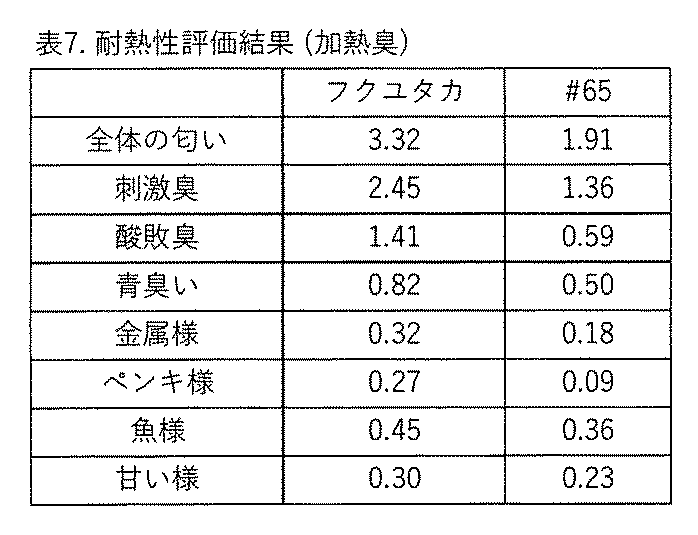
- the heat resistance was also excellent, and the increase in color tone, oxidation, and viscosity during heating was suppressed, and the heating odor was also suppressed.
- Soymilk 150g of each soybean was soaked in water overnight. After lightly washing with water, 750 g of water (5 times the amount of dry soybeans) was added and pulverized with a mixer. It was heated in a pan until it boiled and then heated for 10 minutes over low heat. The soybean curd refuse and soybean milk were separated to obtain soybean milk.
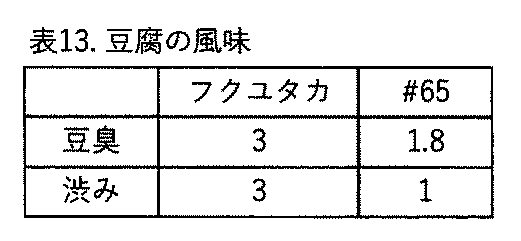
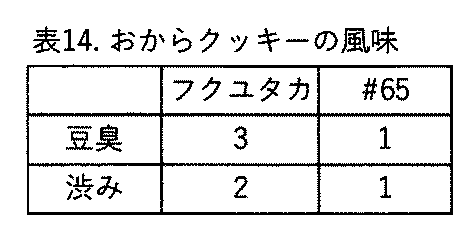
- Processed foods made from #65 or processed products of #65 soybeans have less bean odor and astringency than processed foods made from Fukuyutaka or processed products of Fukuyutaka soybeans, and have good flavor. had
- the present invention it is possible to provide a modified soybean in which the furanic acid content (the amount of furanic acid produced) in the oil contained in the soybean is reduced.
- the edible oil derived from the modified soybean and the food containing the edible oil are different from those containing conventional soybean oil.
- the irritating odor derived from soybean oil is suppressed.
- the edible oil derived from the modified soybean is more suppressed in viscosity, color tone, and increase in oxidation when heated than conventional soybean oil.
- foods and the like containing the modified soybean or processed modified soybean have a good flavor with reduced bean odor. Therefore, the modified soybean is excellent in usefulness and practicality.
Landscapes
- Health & Medical Sciences (AREA)
- Life Sciences & Earth Sciences (AREA)
- Chemical & Material Sciences (AREA)
- Engineering & Computer Science (AREA)
- Genetics & Genomics (AREA)
- Natural Medicines & Medicinal Plants (AREA)
- Botany (AREA)
- Biotechnology (AREA)
- Polymers & Plastics (AREA)
- General Health & Medical Sciences (AREA)
- Organic Chemistry (AREA)
- Mycology (AREA)
- Molecular Biology (AREA)
- Zoology (AREA)
- Environmental Sciences (AREA)
- Developmental Biology & Embryology (AREA)
- Nutrition Science (AREA)
- Oil, Petroleum & Natural Gas (AREA)
- Physiology (AREA)
- Food Science & Technology (AREA)
- Bioinformatics & Cheminformatics (AREA)
- Wood Science & Technology (AREA)
- General Engineering & Computer Science (AREA)
- Biomedical Technology (AREA)
- Microbiology (AREA)
- Medicinal Chemistry (AREA)
- Veterinary Medicine (AREA)
- Biochemistry (AREA)
- Pharmacology & Pharmacy (AREA)
- Biophysics (AREA)
- Animal Behavior & Ethology (AREA)
- Public Health (AREA)
- Epidemiology (AREA)
- Plant Pathology (AREA)
- Alternative & Traditional Medicine (AREA)
- Medical Informatics (AREA)
- Physics & Mathematics (AREA)
- Cell Biology (AREA)
- Animal Husbandry (AREA)
- Chemical Kinetics & Catalysis (AREA)
Abstract
Description
一般に、食用油脂は、光や熱等によって劣化し、風味上問題になる臭いが発生する。特にダイズ油脂は、光の存在下で「明所臭(あるいは「曝光臭」)」と呼ばれる特有の臭いを発生したり、加熱調理等による「加熱臭」を発生したりする。そのため、ダイズ油脂を高い割合で含む食用油脂、あるいは、ダイズ油脂を含む食品等は、賞味に耐えうる品質を保証することができないとの指摘がある(特許文献1)。こういった明所臭や加熱臭の発生の要因としては、ダイズ油脂を構成する脂肪酸組成中の「フラン酸(フラン脂肪酸)」の分解物であると考えられている。
特許文献1:特許第4290222号公報
(1)遺伝子変異によりダイズに含まれる油脂中のフラン酸の含有割合が低減された改変ダイズ。
(2)前記含有割合が0質量ppm以上20質量ppm以下である、上記(1)に記載のダイズ。
(3)前記フラン酸が、3,4−ジメチル−5−ペンチル−2−フランノナン酸である、上記(1)又は(2)に記載のダイズ。
(5)前記遺伝子に導入された変異が、ミスセンス変異、ナンセンス変異、フレームシフト変異及びヌル変異からなる群から選択されるいずれかの変異である、上記(4)に記載のダイズ。
(i)該遺伝子によりコードされるタンパク質の第410番目のアミノ酸残基をコードするコドンの塩基に生じた変異、
(ii)該遺伝子によりコードされるタンパク質の第688番目のアミノ酸残基をコードするコドンの塩基に生じた変異、又は
(iii)該遺伝子の第17番目のエキソンとイントロンの境界に存在する塩基に生じた変異
である、上記(4)又は(5)に記載のダイズ。
(8)前記(i)の変異が、Glyma20g34340遺伝子のcDNAにおける第1519番目の塩基であるG(グアニン)が、A(アデニン)に置換された変異である、上記(7)に記載のダイズ。
(9)前記(ii)の変異が、アスパラギン酸のコドンからアスパラギンのコドンに置換される変異である、上記(6)に記載のダイズ。
(11)前記(iii)の変異が、Glyma20g34340遺伝子のmRNA前駆体における第7180番目の塩基であるG(グアニン)が、A(アデニン)に置換された変異である、上記(6)に記載のダイズ。
(12)Glyma04g05690遺伝子に導入された変異が、該遺伝子によりコードされるタンパク質の第64番目のアミノ酸残基をコードするコドンの塩基に生じた変異である、上記(4)又は(5)に記載のダイズ。
(14)前記変異が、Glyma04g05690遺伝子のcDNAにおける第483番目の塩基であるC(シトシン)が、T(チミン)に置換された変異である、上記(13)に記載のダイズ。
(15)フクユタカの改変ダイズである、上記(1)~(14)のいずれか1項に記載のダイズ。
(17)受託番号がFERM BP−22413である16SN279ダイズ。
(18)上記(1)~(17)のいずれか1項に記載のダイズ又はその処理物を含む、食品用、飼料用又は医薬組成物用の材料。
(20)上記(1)~(17)のいずれか1項に記載のダイズから抽出されたダイズ油脂。
(21)上記(20)に記載のダイズ油脂を含む、食品、飼料又は医薬組成物。
(22)上記(1)~(17)のいずれか1項に記載のダイズ同士、又は当該ダイズと他のダイズ種とを交雑させることを含む、改変ダイズの製造方法。
発明の効果
本発明においては、前述のとおり、遺伝子変異によりダイズに含まれる油脂中のフラン酸の含有割合が低減された改変ダイズ(以下、「本発明のダイズ」又は「本発明の改変ダイズ」と称することがある)が提供される。
本発明において、「ダイズ」とは、ダイズの植物個体の全体又は一部を意味し、植物個体のほか、該植物個体の器官(種子等)、該植物個体由来の細胞又は細胞小器官などの部分構造体を意味する場合もある。
本発明の改変ダイズは、ダイズに含まれる油脂中のフラン酸の含有割合が低減されたものであることを特徴とし、当該含有割合は、例えば、0質量ppm以上20質量ppm以下であることが好ましく、0質量ppm以上15質量ppm以下、0質量ppm以上10質量ppm以下、0質量ppm以上5質量ppm以下、0質量ppm以上3質量ppm以下、0質量ppm以上1質量ppm以下であってもよく、さらには0質量ppmであってもよい。

上記Glyma20g34340遺伝子、及びGlyma04g05690遺伝子の詳細については、例えば、公知の各種データベースの1つである、「Joint Genome Institute(JGI)」(https://jgi.doe.gov/)のウェブサイト中の「Phytozome」(https://phytozome.jgi.doe.gov/pz/portal.html)において、当該遺伝子のゲノム配列情報やcDNAの塩基配列情報、及び当該遺伝子によりコードされるタンパク質のアミノ酸配列情報や当該アミノ酸配列をコードする塩基配列領域(CDS)の情報などが登録されている。
なお、Glyma20g34340遺伝子は、上記データベース(Phytozome)の版がWm82.a2.v1では、遺伝子名が「Glyma.20G201400.1」又は「Glyma.20G201400」と表記されている。
他方、上記Glyma04g05690遺伝子のcDNAの塩基配列を配列番号3に示し、Glyma04g05690遺伝子によりコードされるタンパク質のアミノ酸配列を配列番号4に示す。
なお、Glyma04g05690遺伝子は、上記データベース(Phytozome)の版がWm82.a2.v1では、遺伝子名が「Glyma.04G054100.1」又は「Glyma.04G054100」と表記されている。
ここで、当該(i)の変異は、例えば、グリシンのコドンからアスパラギン酸のコドンに置換される変異が好ましく挙げられる。詳しくは、Glyma20g34340遺伝子のcDNA(配列番号1)における第1519番目の塩基であるG(グアニン)がA(アデニン)に置換された変異が挙げられる。
ここで、当該(ii)の変異は、例えば、アスパラギン酸のコドンからアスパラギンのコドンに置換される変異が好ましく挙げられる。詳しくは、Glyma20g34340遺伝子のcDNA(配列番号1)における第2352番目の塩基であるG(グアニン)が、A(アデニン)に置換された変異が挙げられる。
ここで、当該(iii)の変異は、例えば、該遺伝子の第17番目のエキソンの直後に位置するイントロンとの境界を定める塩基に生じた変異が挙げられ、好ましくは、Glyma20g34340遺伝子のmRNA前駆体(配列番号5)における第7180番目~第7268番目の塩基により特定さるイントロンの境界を指定する「GU」(第7180~7181番目)及び「AG」(第7267~7268番目)の少なくとも1つ以上の塩基に導入される変異が挙げられ、より好ましくは、該mRNA前駆体(配列番号5)における第7180番目の塩基であるG(グアニン)が、A(アデニン)に置換された変異が挙げられる。
ここで、当該変異は、例えば、アルギニンのコドンからシステインのコドンに置換される変異が好ましく挙げられる。詳しくは、Glyma04g05690遺伝子のcDNA(配列番号3)における第483番目の塩基であるC(シトシン)が、T(チミン)に置換された変異が挙げられる。
Glyma04g05690遺伝子に上記変異が導入された本発明の改変ダイズの例としては、「16SN279」系統(以下、「16SN279」とも称する)のダイズ品種が挙げられ、当該ダイズ品種は、受託番号「FERM BP−22413」として、独立行政法人製品評価技術基盤機構 特許生物寄託センター(〒292−0818 千葉県木更津市かずさ鎌足2−5−8 120号室)に、2021年1月14日付けで、国際寄託されている。
本発明においては、前述の本発明の改変ダイズ又はその処理物を含む、食品用、飼料用又は医薬組成物(若しくは医薬品)用の材料が提供される。また、本発明においては、前述の本発明のダイズから抽出されるダイズ油脂も提供される。さらに本発明においては、上記材料や上記ダイズ油脂を含む、食品、飼料又は医薬組成物(若しくは医薬品)も提供される。
「ダイズの処理物」とは、ダイズに、例えば酵素処理、粉末化、乾燥、加熱、凍結、精製などの処理を施して得られるものを意味する。ダイズの処理物の具体例としては、全脂ダイズ粉、脱脂ダイズ粉、ダイズタンパク質等が挙げられる。
「医薬組成物」(又は「医薬品」)とは、人や動物などの対象に投与することにより、対象の疾病の診断、治療又は予防を行うための物を意味し、このような効能が得られる限りにおいて医薬部外品を含み得る。ダイズに含まれるイソフラボンは、エストロゲン受容体に対してアゴニスト作用を示すことが知られており、骨粗鬆症の治療薬としても用いられている。
本発明のダイズの特徴を有する新種の改変ダイズは、本発明のダイズ(ダイズ種)同士、あるいは本発明のダイズ(ダイズ種)と他のダイズ種と交雑させることにより製造(作出)することができる。このようにして得られる新たな改変ダイズも、前記2.項等で述べたように、ダイズに含まれる油脂中のフラン酸の含有割合が低減されたという特徴を有するものである。
好ましくは、本発明のダイズ種を他のダイズ種と交雑させることにより、Glyma20g34340遺伝子及び/又はGlyma04g05690遺伝子に変異(機能欠失型変異など)が導入された、新種の改変ダイズを作製することができる。例えば、本発明のダイズ種を、特定の害虫及び/又は栽培条件に耐性を有する他のダイズ種と交雑させることにより、ダイズに含まれる油脂中のフラン酸含有量が低減され、かつ特定の害虫及び/又は栽培条件に耐性を有する新種のダイズを作製することができる。
本発明のダイズは、好ましくは、Glyma20g34340遺伝子及び/又はGlyma04g05690遺伝子に変異を有するので、これらのいずれかの遺伝子(又は両方の遺伝子)の変異を検出することにより、ダイズに含まれる油脂中のフラン酸含有割合が低減された特徴を有するダイズをスクリーニングすることができる。
(a)本発明の改変ダイズが有するGlyma20g34340遺伝子及び/又はGlyma04g05690遺伝子の変異部位の塩基配列を含むオリゴヌクレオチドプローブ、及び/又は前記遺伝子の塩基配列及びその相補配列の少なくとも一方を増幅したときの増幅断片中に前記変異部位が含まれるように作製されたオリゴヌクレオチドプライマーを用いて被検ダイズのGlyma20g34340遺伝子及び/又はGlyma04g05690遺伝子について増幅処理及び/又はハイブリダイゼーション処理を行う工程、並びに、
(b)前記処理物を分析することにより変異部位を検出する工程
を含む方法が挙げられる。
PCR法の場合、3’末端部分が変異部位の塩基配列に相補的な配列を有するようなプライマーを作製することが好ましい。このように設計されたプライマーを用いると、鋳型となるサンプルが変異を有する場合には、プライマーが完全に鋳型にハイブリダイズするため、ポリメラーゼ伸長反応が進むが、鋳型が変異を有しない場合には、プライマーの3’末端のヌクレオチドが鋳型とミスマッチを生じるので、伸長反応は起こらない。したがって、このようなプライマーを用いてPCR増幅を行い、増幅産物をアガロースゲル電気泳動などによって分析し、所定のサイズの増幅産物が確認できれば、サンプルである鋳型が変異を有していることになり、増幅産物が存在しない場合には、鋳型が変異を有していないものと判断できる。PCR及びアガロースゲル電気泳動については、以下を参照:Sambrook,Fritsch and Maniatis,”Molecular Cloning:A Laboratory Manual”2nd Edition(1989),Cold Spring Harbor Laboratory Press。
シークエンス法とは、変異を含む領域をPCRにて増幅させ、Dye Terminatorなどを用いてDNA配列をシークエンスすることで、変異の有無を解析する方法である(Sambrook,Fritsch and Maniatis,”Molecular Cloning:A Laboratory Manual”2nd Edition(1989),Cold Spring Harbor Laboratory Press)。
DNAマイクロアレイは、ヌクレオチドプローブの一端が支持体上にアレイ状に固定されたものであり、DNAチップ、Geneチップ、マイクロチップ、ビーズアレイ等を含むものである。DNAチップなどのDNAマイクロアレイアッセイとしてはGeneChipアッセイが挙げられる(Affymetrix社;米国特許第6,045,996号、同第5,925,525号、及び同第5,858,659号参照)。GeneChip技術は、チップに貼り付けたオリゴヌクレオチドプローブの小型化高密度マイクロアレイを利用するものである。
TILLING(Targeting Induced Local Lesions IN Genomes)法とは、変異導入した突然変異体集団のゲノム中の変異ミスマッチをPCR増幅とCEL Iヌクレアーゼ処理によってスクリーニングする方法である。CEL Iヌクレアーゼとは、二本鎖DNAのミスマッチ部分を特異的に切断するエンドヌクレアーゼである。サンプルが、Glyma20g34340遺伝子及び/又はGlyma04g05690遺伝子に変異を含む場合、上記PCR産物にはミスマッチ部分が生じるが、変異を含まない場合には、ミスマッチは生じない。従って、変異が存在する場合には、PCR産物のミスマッチペア部位が切断されることになり、変異が存在しない場合には、PCR産物は切断されない。従って、CEL Iヌクレアーゼ処理したPCR産物をアガロース電気泳動などで分析し、核酸配列の長さを比較することにより、変異の有無を容易に確認することができる。CEL Iヌクレアーゼの詳細については、以下の文献を参照できる:Oleykowski et al.,Nucleic Acids Research,vol.26,No.20,4597−4602(1998)。
インベーダー法によってGlyma20g34340遺伝子及び/又はGlyma04g05690遺伝子の変異を検出する場合、用いるプライマー若しくはプローブは、SNP部位が当該プライマー若しくはプローブの塩基配列の3’若しくは5’端に存在するように設計し、又は相補配列の3’若しくは5’端に存在するように設計し、又は前2者(プライマー若しくはプローブ、又は相補配列)の3’若しくは5’端から4塩基内、好ましくは2塩基内に存在するように設計する。あるいは、オリゴヌクレオチドの塩基配列全長の中央にSNPが存在するように設計する。「中央」とは、SNPの塩基よりも5’端に向かう塩基の数と、3’端に向かう塩基の数とがほぼ同数となる中心部の領域をいい、オリゴヌクレオチドの塩基数が奇数の場合は、「中央」は、中心部の5塩基が好ましく、より好ましくは中心部の3塩基、さらに好ましくは最も中心部の1塩基である。また、オリゴヌクレオチドの塩基数が偶数の場合は、「中央」は、中心部の4塩基が好ましく、より好ましくは中心部の2塩基である。
本発明のオリゴヌクレオチドをサンプル中の核酸分子にハイブリダイズさせる場合、そのハイブリダイゼーション反応は、ストリンジェントな条件下で行われる。
本発明のオリゴヌクレオチドの塩基配列の長さは、少なくとも10塩基となるように設計することが好ましく、より好ましくは10~200塩基、さらに好ましくは15~150塩基、最も好ましくは18~80塩基である。当該オリゴヌクレオチド配列は、被検遺伝子を検出するためのプローブとして使用することができ、またフォワード(センス)プライマー及びリバース(アンチセンス)プライマーのどちらに使用してもよい。
なお、プローブには、予め蛍光標識(例えば、FITC、FAM、VIC、Redmond Dye等)及び蛍光標識に対するクエンチャーを付加して作業の自動化を図ることも可能である。
前述した本発明のオリゴヌクレオチドの一端をガラス、シリコン、ゲルなどの支持体に固定することでマイクロアレイを作製することができる。オリゴヌクレオチドのアレイは、例えば固相化学合成法と半導体産業において用いられているフォトリソグラフィー製造技術とを組み合わせた光照射化学合成法(Affymetrix社)により製造される。チップの化学反応部位の境界を明確するためにフォトリソグラフィーマスクを利用し、特定の化学合成工程を行うことによって、アレイの所定の位置にオリゴヌクレオチドプローブが貼り付けられた高密度アレイを構築することができる。
本発明の別の態様においては、本発明のオリゴヌクレオチド及び/又は該オリゴヌクレオチドを用いて作製したマイクロアレイを含む、Glyma20g34340遺伝子及び/又はGlyma04g05690遺伝子の変異検出用キットが提供される。このようなキットには、本発明のオリゴヌクレオチド又は該オリゴヌクレオチドを用いて作製したマイクロアレイ以外にも、検出反応用の溶液、コントロール用のオリゴヌクレオチド、検出反応に利用する容器、使用説明書などが含まれていてもよい。
材料として使用したダイズ(Glycine max(L.)Merr.)品種は以下の通りである。
(i) フクユタカ
(ii) トヨシロメ
変異集団の作製にはダイズ品種フクユタカを用いた。変異原として0.3%のエチルメタンスルホン酸(EMS)水溶液中にダイズ種子(M0種子)を1晩浸漬した後、流水中で8時間すすぐことにより得られたM1種子を圃場に播種し、常法に従ってM1個体を栽培した。稔性を保持していた植物体については個体当たり1粒ずつのM2種子を回収し保存した。翌年、保存しておいたM2種子を、再度圃場に播種しM2個体を栽培した。各M2個体から得られたM3種子を個体別に回収した2831系統を、低フラン酸含量の変異系統の選抜に用いた。トヨシロメ、フクユタカは別途、下記に記載された手順に従って変異系統との交配を行い、分離集団の育成に用いた。なお、上記の「M0」は変異を起こす前の元の品種を表し、「M1」は変異を起こした当初の世代であり、その後の世代が順に「M2」、「M3」となる。
ダイズ種子の種子粉末100~500mgを秤量し、5mlのヘキサンを加えて激しく攪拌した後、60℃のアルミブロック(TAITEC:DTC−1CN)上で30分間、保温した。次に、超音波洗浄機(SHARP:UT−204)中で30分間超音波処理をした後、定性ろ紙(Whatman:No.1 φ82mm)を用いてろ過し、ろ液を回収した。残渣に再び5mlのヘキサンを加えて攪拌、60℃の保温、超音波洗浄機を用いた抽出を繰り返し、ろ液を再度回収した。ガス吹きつけユニット(TAITEC:EN1−25)を用いて約30分間空気を吹きつけ、ろ液中に含まれるヘキサンを完全に揮発させた。遠心管中の油脂を回収しダイズ油脂のメチルエステル化に供試した。
得られたクロマトグラム、マススペクトルデータから内部標準(IS:分子量357)とフラン酸(F3(3,4−ジメチル−5−ペンチル−2−フランノナン酸):分子量336)のピーク面積を求め、その比を表現型データとして用いた。
ダイズ品種フクユタカで作製した突然変異集団2831系統から、上記の手法を用いて各系統のフラン酸を分析し、4系統(変異体1~4)をフラン酸の産生量に関する変異系統として同定した。異なる個体に由来する種子を用いた反復実験から、同定した4系統が持つ変異が遺伝的に固定していることを確認した(表A、図1)。
ダイズ突然変異集団から選抜した変異系統の持つ変異遺伝子を同定するために遺伝分析を行った。変異体1とトヨシロメを人工交配によって交配し、雑種種子を得た。交配は晴天時の午前中に行った。開花前日のトヨシロメの花を母親に、開花当日の変異体1の花から得た花粉を父親に用いた。具体的には、開花前日のトヨシロメの花について、がく、花びら(旗弁、翼弁、竜骨弁)をピンセットで取り除き、葯が裂開していないことを目視で確認後、葯を取り除き、柱頭のめしべを露出させた。当日開花した変異体1の花からおしべと柱頭をピンセットで取り出し、葯が裂開していることを目視で確認した後に、おしべの先端(花粉)を用意した母親(トヨシロメ)のめしべの先端へ軽く触れ、受粉を行った。得られた雑種個体(F1個体)を栽培し、自殖種子を得てこれを分離集団(F2集団)として、82個体を栽培した。
文献B:Md.Abdur Rauf Sarkar,Wakana Otsu,Akihiro Suzuki,Fumio Hashimoto,Toyoaki Anai,Satoshi Watanabe,Single−base deletion in GmCHR5 increases the genistein−to−daidzein ratio in soybean seed.Breed.Sci.70:265−276,2020.
変異体1~4、フクユタカ、トヨシロメを対象に、次世代シークエンス解析によって全ゲノム塩基配列解析を行った。各個体の葉から抽出したDNAをNovogene社NGS受託解析サービスに送付し、各系統あたり170億塩基のゲノム情報を取得した。公共のデータベースである、「Joint Genome Institute(JGI)」(https://jgi.doe.gov/)のウェブサイト中の「Phytozome」(https://phytozome.jgi.doe.gov/pz/portal.html)から、ダイズのゲノム情報(Gmax_189_hardmasked.fa)を取得し、変異体1~4、フクユタカ、トヨシロメの次世代シークエンス解析から得られた塩基配列情報を、前掲の文献Bに記載されている方法で、ダイズのゲノム配列と比較し、EMS処理によって生じた変異系統(変異体1~4)に特有の塩基多型(変異)を同定した。
その結果、変異体4(「16SN279」とも表記する)は、ダイズ4番染色体配列中の第4,340,379番目の塩基がG(グアニン)からA(アデニン)に置換した変異(すなわち、Glyma04g05690遺伝子のcDNA(配列番号3)における第483番目の塩基であるC(シトシン)が、T(チミン)に置換された変異;但し、当該染色体配列中の置換塩基と、当該cDNA配列中の置換塩基とは、相補関係にある。)を持ち、Glyma04g05690遺伝子によりコードされるアミノ酸配列(配列番号4)の中の、第64番目のアミノ酸がアルギニンからシステインへ変化していた(図4)。Glyma04g05690遺伝子の102番目から377番目のアミノ酸はCyclopropane fatty−acyl−phospholipid synthase and related methyltransferasesの機能に関与すると予測され、Glyma20g34340遺伝子の559番目から848番目のアミノ酸において同様の機能を持つと予測された。
それぞれの変異系統(変異体1~4)で同定したDNA多型を対象に各個体の持つ遺伝子型を判別できるDNAマーカーを開発し、低フラン酸含量の表現型との関連を確認した。DNA多型を対象にPCR法で遺伝子型を識別できるDNAマーカーを開発するために、文献Aに記載されている方法を用いた。具体的には、変異体1が持つ42,720,119番目の塩基を挟み込むように、PCRに用いるプライマー(フォワードプライマー:ACTATACGATTGAACTTTCAGGCTT(配列番号6)、リバースプライマー:GCTTCCTAGAATGCCATGAGCT(配列番号7))を設計し、各個体のDNAを鋳型にPCR法によって、多型DNAを含むDNA断片を増幅した。PCR断片に含まれる塩基の違いをDNAが2本鎖から1本鎖へ融解する際の温度の違いを検出することで、各個体の持つ遺伝子型を判別した(図5A)。正常型はCの塩基を持ち、変異型はTの塩基を持つために、融解温度の変化量のピーク(以後、融解温度とする)は、正常型(図5A中の青色のプロット)が変異型(図5A中の赤色のプロット)に比べて高い融解温度を示す。一方、ヘテロ接合型の個体では正常型と変異型のDNAのいずれも持つことから、PCR断片の融解温度は異なるパターン(図5A中の橙色のプロット)を示す。上記に記載したトヨシロメと変異体1の交配によって得られた分離集団の各個体が示すフラン酸含量は、作製したDNAマーカーの遺伝子型によって明確に区別することができた。従って、変異体1が持つ42,720,119番目の塩基多型によって低フラン酸含量の表現型を説明できる(図5B)。
(1)ダイズ種子
佐賀大学の圃場にて栽培、収穫した下記種子を用いた。
1.フクユタカ
2.#65(低フラン酸系統):実施例1で作製した変異体1
ブレンダーで粉砕した各ダイズ種子を50℃に加熱したヘキサンに浸漬し、得られた浸漬液からヘキサンを蒸留回収して油分を抽出した。
上記抽出油を一般的な精製方法である脱ガム、脱酸、脱色、脱臭処理にて精製した。
まず、80℃に加温させた抽出油に対して、85%リン酸水溶液および温水をそれぞれ0.4質量%、2.5質量%添加し、30分間撹拌後、水相を遠心除去して脱ガム油を得た。
次に、80℃に加温させた脱ガム油に対して、85%リン酸水溶液を0.05質量%、15%NaOH水溶液を0.6%それぞれ添加し、15分間撹拌後、水相を遠心除去した。得られた油相に対して、80℃でイオン交換水を15質量%添加し、15分間撹拌後、再度水相を遠心除去して脱酸油を得た。
次に、上記で得られた脱色油に対して、250℃及び減圧下で2.0質量%の水蒸気を45分間吹き込んで脱臭処理を施し、前記処理油に対して、クエン酸を25質量ppm添加して脱臭油を得た。
前記1.項で精製した各ダイズ種子由来の脱臭油を用いて、下記(1)~(3)の項目に関する評価を実施した。
(1)一般性状
脂肪酸組成:基準油脂分析試験法2.4.2.3−2013に則って測定した。
フラン酸(F3):特許第6714001号公報(又はWO2017/033674)の段落[0055]~[0058]に記載の方法に則って測定した。
10mlのバイアル瓶に脱臭油5gを入れ、1000luxで1週間照射させ、下記項目を評価した。なお、光照射前に各脱臭油のフラン酸含量を測定した。
POV:基準油脂分析試験法2.5.2.2−2013に則って測定した。
明所臭:光照射後サンプルについて、ブロックヒーターで100℃に加熱した後に明所臭を評価した。(n=2)
300mLビーカーに油100gを張り込み、180℃で加熱した(5hr毎にサンプリングを実施し、合計20hrまで加熱)。
酸価:基準油脂分析試験法2.3.1−2013に則って測定した。
色調:AOCS Cc13j−97に則って、ロビボンド自動比色計を用いて測定した。
粘度:30℃においてE型粘度計を用いて測定した。
加熱臭:加熱15hr後の油に対して、14名のパネルが各評価項目を0~5点(下記参照)で評価し、その平均値を評価値とした。
5:非常に強く感じる
4:強く感じる
3:やや強く感じる
2:やや感じる
1:あまり感じない
0:感じない
上記(1)~(3)の各評価の結果を、表1~7に示す。


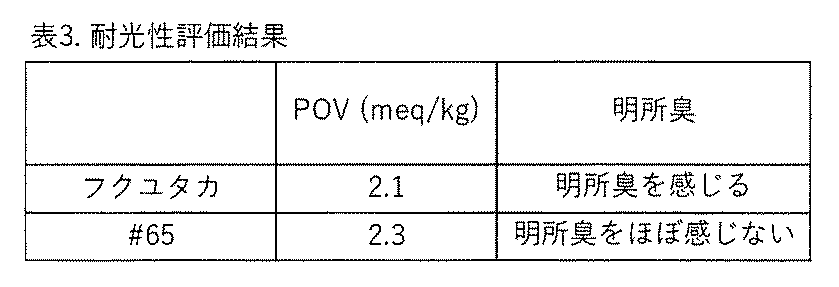
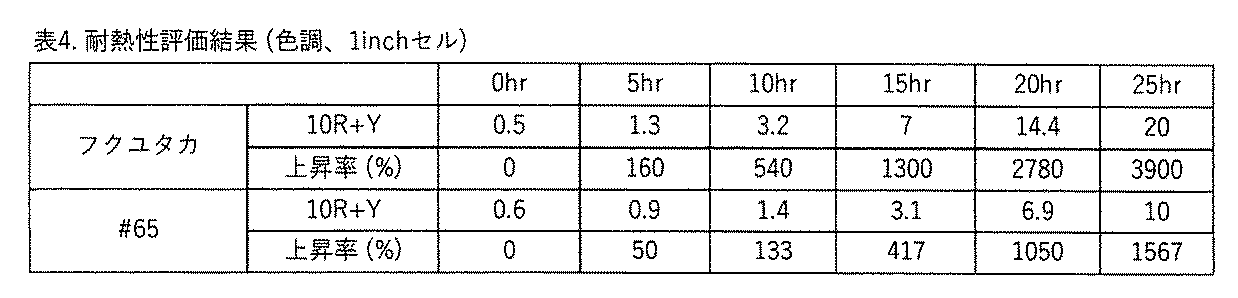
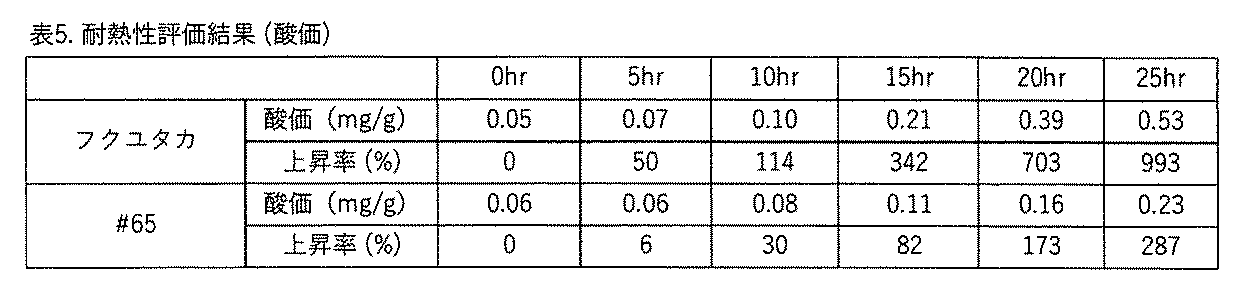
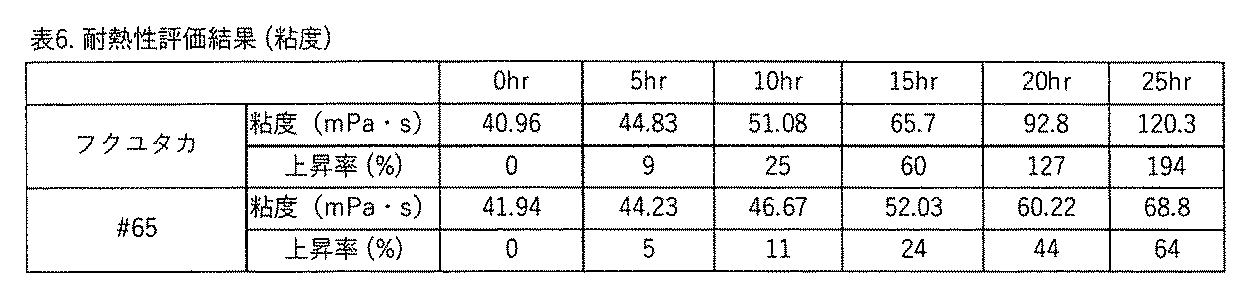
(1)前記1.項で用いた各ダイズ(フクユタカ、#65(低フラン酸系統))を用い、下記(i)~(v)の加工食品を試作した。
(i)ダイズハンバーグ
(ii)豆乳
(iii)豆腐
(iv)おからクッキー
(v)ダイズ粉クッキー
(i)ダイズハンバーグ
各ダイズ150gを4倍以上の水に1晩漬け、鍋で30分~1時間煮た。
ダイズ水煮200gをフードプロセッサーでペースト状にし、表8中の※の材料と合わせてよくこねた。
成形して、油を引いたフライパンで焼いた。
3分半でひっくり返し、さらに2分半焼き、ダイズハンバーグを得た。
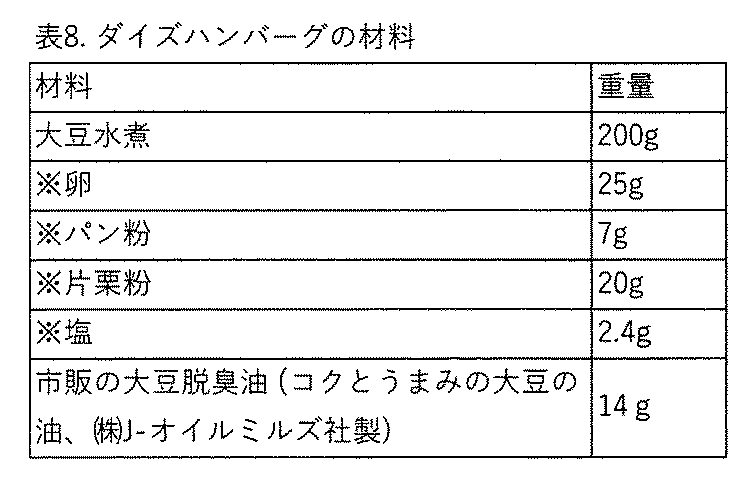
各ダイズ150gを水に一晩浸けた。
軽く水で洗い、水750g(乾燥時のダイズに対して5倍量)添加し、ミキサーで粉砕した。
鍋で沸騰するまで加熱し、さらに弱火で10分加熱した。
さらしで濾し、おからと豆乳を分別し、豆乳を得た。
上記(ii)の各ダイズ由来の豆乳を鍋に入れ、75~80℃に加熱後、火を消した。
にがりを豆乳に対して1.5質量%添加し、少し撹拌した後、蓋をして10分蒸らした。
さらしを敷いたざるで水気を切り、豆腐を得た。
上記(ii)で豆乳と分別した各ダイズ由来のおからの水分をよく絞り、生おからを得た。
表9に記載された材料をボウルに入れよく混ぜた。
冷蔵庫で1時間ほど寝かせ、成形した。
170℃に予熱したオーブンで25分焼き、おからクッキーを得た。

各ダイズをミキサーで粉砕し、ダイズ粉を得た。
表10に記載された材料をボウルに入れよく混ぜた。
薄く広げて冷蔵庫で1時間ほど寝かせた。
型抜き後、170度に予熱したオーブンで20分焼いた。

各加工食品について、4名のパネルが、「ダイズっぽさ(豆臭)」、「後味の渋み(渋み)」を1~3点(下記参照)で評価し、その平均値を評価値とした。その評価の結果を、表11~15に示す。
評価点数:
1:全く感じない
2:やや感じる
3:はっきり感じる


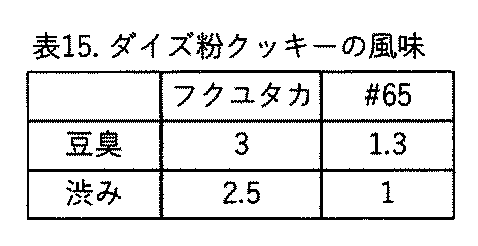
Claims (22)
- 遺伝子変異によりダイズに含まれる油脂中のフラン酸の含有割合が低減された改変ダイズ。
- 前記含有割合が0質量ppm以上20質量ppm以下である、請求項1に記載のダイズ。
- 前記フラン酸が、3,4−ジメチル−5−ペンチル−2−フランノナン酸である、請求項1又は2に記載のダイズ。
- Glyma20g34340遺伝子及び/又はGlyma04g05690遺伝子に変異が導入されたものである、請求項1~3のいずれか1項に記載のダイズ。
- 前記遺伝子に導入された変異が、ミスセンス変異、ナンセンス変異、フレームシフト変異及びヌル変異からなる群から選択されるいずれかの変異である、請求項4に記載のダイズ。
- Glyma20g34340遺伝子に導入された変異が、
(i)該遺伝子によりコードされるタンパク質の第410番目のアミノ酸残基をコードするコドンの塩基に生じた変異、
(ii)該遺伝子によりコードされるタンパク質の第688番目のアミノ酸残基をコードするコドンの塩基に生じた変異、又は
(iii)該遺伝子の第17番目のエキソンとイントロンの境界に存在する塩基に生じた変異
である、請求項4又は5に記載のダイズ。 - 前記(i)の変異が、グリシンのコドンからアスパラギン酸のコドンに置換される変異である、請求項6に記載のダイズ。
- 前記(i)の変異が、Glyma20g34340遺伝子のcDNAにおける第1519番目の塩基であるG(グアニン)が、A(アデニン)に置換された変異である、請求項7に記載のダイズ。
- 前記(ii)の変異が、アスパラギン酸のコドンからアスパラギンのコドンに置換される変異である、請求項6に記載のダイズ。
- 前記(ii)の変異が、Glyma20g34340遺伝子のcDNAにおける第2352番目の塩基であるG(グアニン)が、A(アデニン)に置換された変異である、請求項9に記載のダイズ。
- 前記(iii)の変異が、Glyma20g34340遺伝子のmRNA前駆体における第7180番目の塩基であるG(グアニン)が、A(アデニン)に置換された変異である、請求項6に記載のダイズ。
- Glyma04g05690遺伝子に導入された変異が、該遺伝子によりコードされるタンパク質の第64番目のアミノ酸残基をコードするコドンの塩基に生じた変異である、請求項4又は5に記載のダイズ。
- 前記変異が、アルギニンのコドンからシステインのコドンに置換される変異である、請求項12に記載のダイズ。
- 前記変異が、Glyma04g05690遺伝子のcDNAにおける第483番目の塩基であるC(シトシン)が、T(チミン)に置換された変異である、請求項13に記載のダイズ。
- フクユタカの改変ダイズである、請求項1~14のいずれか1項に記載のダイズ。
- 受託番号がFERM BP−22392であるLF65ダイズ。
- 受託番号がFERM BP−22413である16SN279ダイズ。
- 請求項1~17のいずれか1項に記載のダイズ又はその処理物を含む、食品用、飼料用又は医薬組成物用の材料。
- 請求項18に記載の材料を含む、食品、飼料又は医薬組成物。
- 請求項1~17のいずれか1項に記載のダイズから抽出されたダイズ油脂。
- 請求項20に記載のダイズ油脂を含む、食品、飼料又は医薬組成物。
- 請求項1~17のいずれか1項に記載のダイズ同士、又は当該ダイズと他のダイズ種とを交雑させることを含む、改変ダイズの製造方法。
Priority Applications (3)
| Application Number | Priority Date | Filing Date | Title |
|---|---|---|---|
| CA3208445A CA3208445A1 (en) | 2021-01-21 | 2022-01-14 | Soybeans having low furan fatty acid content |
| JP2022576766A JP7820735B2 (ja) | 2021-01-21 | 2022-01-14 | 低フラン酸ダイズ |
| US18/272,831 US20240298599A1 (en) | 2021-01-21 | 2022-01-14 | Soybeans having low furan fatty acid content |
Applications Claiming Priority (2)
| Application Number | Priority Date | Filing Date | Title |
|---|---|---|---|
| JP2021-007795 | 2021-01-21 | ||
| JP2021007795 | 2021-01-21 |
Publications (1)
| Publication Number | Publication Date |
|---|---|
| WO2022158583A1 true WO2022158583A1 (ja) | 2022-07-28 |
Family
ID=82548819
Family Applications (1)
| Application Number | Title | Priority Date | Filing Date |
|---|---|---|---|
| PCT/JP2022/002307 Ceased WO2022158583A1 (ja) | 2021-01-21 | 2022-01-14 | 低フラン酸ダイズ |
Country Status (4)
| Country | Link |
|---|---|
| US (1) | US20240298599A1 (ja) |
| JP (1) | JP7820735B2 (ja) |
| CA (1) | CA3208445A1 (ja) |
| WO (1) | WO2022158583A1 (ja) |
Families Citing this family (1)
| Publication number | Priority date | Publication date | Assignee | Title |
|---|---|---|---|---|
| CN121294726B (zh) * | 2025-12-10 | 2026-03-31 | 安徽农业大学 | 一种与大豆籽粒总嘌呤含量相关的InDel分子标记及其应用 |
Citations (1)
| Publication number | Priority date | Publication date | Assignee | Title |
|---|---|---|---|---|
| WO2017033674A1 (ja) * | 2015-08-24 | 2017-03-02 | 株式会社J-オイルミルズ | 大豆油の製造方法、混合油の製造方法、及び大豆油の明所臭を抑制する方法 |
Family Cites Families (2)
| Publication number | Priority date | Publication date | Assignee | Title |
|---|---|---|---|---|
| JP5665004B2 (ja) * | 2009-06-22 | 2015-02-04 | 国立大学法人佐賀大学 | ダイズ油脂中のオレイン酸含量を増加させる突然変異体及びその原因遺伝子 |
| CA2878287A1 (en) * | 2012-07-06 | 2014-01-09 | Bayer Cropscience Nv | Soybean rod1 gene sequences and uses thereof |
-
2022
- 2022-01-14 US US18/272,831 patent/US20240298599A1/en active Pending
- 2022-01-14 JP JP2022576766A patent/JP7820735B2/ja active Active
- 2022-01-14 WO PCT/JP2022/002307 patent/WO2022158583A1/ja not_active Ceased
- 2022-01-14 CA CA3208445A patent/CA3208445A1/en active Pending
Patent Citations (1)
| Publication number | Priority date | Publication date | Assignee | Title |
|---|---|---|---|---|
| WO2017033674A1 (ja) * | 2015-08-24 | 2017-03-02 | 株式会社J-オイルミルズ | 大豆油の製造方法、混合油の製造方法、及び大豆油の明所臭を抑制する方法 |
Non-Patent Citations (3)
| Title |
|---|
| ANAI TOYOAKI: "Development of soybean mutant resources and identification of novel mutant alleles", IKUSHUGAKU KENKYU - BREEDING RESEARCH, NIHON IKUSHU GAKKAI, TOKYO, JP, vol. 22, no. 2, 1 December 2020 (2020-12-01), JP , pages 174 - 177, XP055952075, ISSN: 1344-7629, DOI: 10.1270/jsbbr.20J18 * |
| KITAMURA, KEISUKE: "Characteristics and uitlization of lipoxygenase deficient soybean", SHOKUHIN TO KAGAKU - FOOD SCIENCE, SHOKUHIN TO KAGAKUSHA, OSAKA, vol. 38, no. 8, 1 January 1996 (1996-01-01), JP , pages 102 - 107, XP009538425, ISSN: 0037-4105 * |
| SANO TAKASHI, OKABE RYO, IWAHASHI MAIKO, IMAGI JUN, SATO TOSHIRO, YAMASHITA TOSHIYUKI, FUKUSAKI EIICHIRO, BAMBA TAKESHI: "Effect of Furan Fatty Acids and 3-Methyl-2,4-nonanedione on Light-Induced Off-Odor in Soybean Oil", JOURNAL OF AGRICULTURAL AND FOOD CHEMISTRY, AMERICAN CHEMICAL SOCIETY, US, vol. 65, no. 10, 15 March 2017 (2017-03-15), US , pages 2136 - 2140, XP055952076, ISSN: 0021-8561, DOI: 10.1021/acs.jafc.6b05056 * |
Also Published As
| Publication number | Publication date |
|---|---|
| CA3208445A1 (en) | 2022-07-28 |
| US20240298599A1 (en) | 2024-09-12 |
| JP7820735B2 (ja) | 2026-02-26 |
| JPWO2022158583A1 (ja) | 2022-07-28 |
Similar Documents
| Publication | Publication Date | Title |
|---|---|---|
| JP5665004B2 (ja) | ダイズ油脂中のオレイン酸含量を増加させる突然変異体及びその原因遺伝子 | |
| NZ789396A (en) | Inbred transgenic canola line ns-b50027-4 and seeds thereof | |
| JP2015128438A (ja) | 高ベータ−コングリシニン含量を有する作物学的エリート大豆 | |
| CN107787181A (zh) | 通过细胞质雄性不育水稻中更高的异交率提高杂交种子生产以及相关材料和方法 | |
| US20210015062A1 (en) | High Protein Oat Species | |
| CN101090970B (zh) | 具有低亚麻酸的高产量大豆植物 | |
| US11785907B2 (en) | Wheat lines, plants, and grain with increased beta-glucan content | |
| EA039899B1 (ru) | РАСТЕНИЯ Brassica С УСТОЙЧИВОСТЬЮ К РАСТРЕСКИВАНИЮ СТРУЧКОВ | |
| JP7820735B2 (ja) | 低フラン酸ダイズ | |
| US20110252490A1 (en) | Methods and Compositions for Increased Alpha-Prime Beta-Conglycinin Soybeans | |
| US20110010793A1 (en) | Methods and Compositions for Increased Yield | |
| Prieto et al. | Development and cytogenetic characterisation of a double goat grass-barley chromosome substitution in tritordeum | |
| Bharti | GENOMIC PROFILING FOR ERUCIC ACID IN EUROPEAN GERMPLASM OF BRASSICA JUNCEA (L.) | |
| Prasanna | Genetic diversity and marker trait association studies in linseed (Linum usitatissimum L.) | |
| REDDY | GENETIC CHARACTERIZATION AND MOLECULAR STUDIES FOR BRAN OIL USING SSR MARKERS IN RICE (Oryza sativa L.). | |
| Ghumatkar | MOLECULAR CHARACTERIZATION OF SEX IN SIMAROUBA USING RAPD AND ISSR MARKERS | |
| HK1161031A (en) | Genomically multiplied rapeseed plants, compositions derived therefrom and uses of same |
Legal Events
| Date | Code | Title | Description |
|---|---|---|---|
| 121 | Ep: the epo has been informed by wipo that ep was designated in this application |
Ref document number: 22742702 Country of ref document: EP Kind code of ref document: A1 |
|
| ENP | Entry into the national phase |
Ref document number: 2022576766 Country of ref document: JP Kind code of ref document: A |
|
| ENP | Entry into the national phase |
Ref document number: 3208445 Country of ref document: CA |
|
| WWE | Wipo information: entry into national phase |
Ref document number: 18272831 Country of ref document: US |
|
| NENP | Non-entry into the national phase |
Ref country code: DE |
|
| 122 | Ep: pct application non-entry in european phase |
Ref document number: 22742702 Country of ref document: EP Kind code of ref document: A1 |