WO2022138923A1 - セラミド合成促進剤 - Google Patents
セラミド合成促進剤 Download PDFInfo
- Publication number
- WO2022138923A1 WO2022138923A1 PCT/JP2021/048218 JP2021048218W WO2022138923A1 WO 2022138923 A1 WO2022138923 A1 WO 2022138923A1 JP 2021048218 W JP2021048218 W JP 2021048218W WO 2022138923 A1 WO2022138923 A1 WO 2022138923A1
- Authority
- WO
- WIPO (PCT)
- Prior art keywords
- ionized water
- alkaline ionized
- ceramide synthesis
- phosphorus
- water
- Prior art date
- Legal status (The legal status is an assumption and is not a legal conclusion. Google has not performed a legal analysis and makes no representation as to the accuracy of the status listed.)
- Ceased
Links
Images





Classifications
-
- A—HUMAN NECESSITIES
- A61—MEDICAL OR VETERINARY SCIENCE; HYGIENE
- A61P—SPECIFIC THERAPEUTIC ACTIVITY OF CHEMICAL COMPOUNDS OR MEDICINAL PREPARATIONS
- A61P17/00—Drugs for dermatological disorders
-
- A—HUMAN NECESSITIES
- A23—FOODS OR FOODSTUFFS; TREATMENT THEREOF, NOT COVERED BY OTHER CLASSES
- A23L—FOODS, FOODSTUFFS OR NON-ALCOHOLIC BEVERAGES, NOT OTHERWISE PROVIDED FOR; PREPARATION OR TREATMENT THEREOF
- A23L2/00—Non-alcoholic beverages; Dry compositions or concentrates therefor; Preparation or treatment thereof
- A23L2/52—Adding ingredients
-
- A—HUMAN NECESSITIES
- A23—FOODS OR FOODSTUFFS; TREATMENT THEREOF, NOT COVERED BY OTHER CLASSES
- A23L—FOODS, FOODSTUFFS OR NON-ALCOHOLIC BEVERAGES, NOT OTHERWISE PROVIDED FOR; PREPARATION OR TREATMENT THEREOF
- A23L33/00—Modifying nutritive qualities of foods; Dietetic products; Preparation or treatment thereof
- A23L33/10—Modifying nutritive qualities of foods; Dietetic products; Preparation or treatment thereof using additives
-
- A—HUMAN NECESSITIES
- A61—MEDICAL OR VETERINARY SCIENCE; HYGIENE
- A61K—PREPARATIONS FOR MEDICAL, DENTAL OR TOILETRY PURPOSES
- A61K33/00—Medicinal preparations containing inorganic active ingredients
-
- A—HUMAN NECESSITIES
- A61—MEDICAL OR VETERINARY SCIENCE; HYGIENE
- A61K—PREPARATIONS FOR MEDICAL, DENTAL OR TOILETRY PURPOSES
- A61K33/00—Medicinal preparations containing inorganic active ingredients
- A61K33/06—Aluminium, calcium or magnesium; Compounds thereof, e.g. clay
-
- A—HUMAN NECESSITIES
- A61—MEDICAL OR VETERINARY SCIENCE; HYGIENE
- A61K—PREPARATIONS FOR MEDICAL, DENTAL OR TOILETRY PURPOSES
- A61K33/00—Medicinal preparations containing inorganic active ingredients
- A61K33/06—Aluminium, calcium or magnesium; Compounds thereof, e.g. clay
- A61K33/12—Magnesium silicate
-
- A—HUMAN NECESSITIES
- A61—MEDICAL OR VETERINARY SCIENCE; HYGIENE
- A61K—PREPARATIONS FOR MEDICAL, DENTAL OR TOILETRY PURPOSES
- A61K33/00—Medicinal preparations containing inorganic active ingredients
- A61K33/20—Elemental chlorine; Inorganic compounds releasing chlorine
-
- A—HUMAN NECESSITIES
- A61—MEDICAL OR VETERINARY SCIENCE; HYGIENE
- A61K—PREPARATIONS FOR MEDICAL, DENTAL OR TOILETRY PURPOSES
- A61K33/00—Medicinal preparations containing inorganic active ingredients
- A61K33/42—Phosphorus; Compounds thereof
-
- A—HUMAN NECESSITIES
- A61—MEDICAL OR VETERINARY SCIENCE; HYGIENE
- A61K—PREPARATIONS FOR MEDICAL, DENTAL OR TOILETRY PURPOSES
- A61K35/00—Medicinal preparations containing materials or reaction products thereof with undetermined constitution
- A61K35/02—Medicinal preparations containing materials or reaction products thereof with undetermined constitution from inanimate materials
-
- A—HUMAN NECESSITIES
- A61—MEDICAL OR VETERINARY SCIENCE; HYGIENE
- A61K—PREPARATIONS FOR MEDICAL, DENTAL OR TOILETRY PURPOSES
- A61K8/00—Cosmetics or similar toiletry preparations
- A61K8/18—Cosmetics or similar toiletry preparations characterised by the composition
- A61K8/19—Cosmetics or similar toiletry preparations characterised by the composition containing inorganic ingredients
- A61K8/24—Phosphorous; Compounds thereof
-
- A—HUMAN NECESSITIES
- A61—MEDICAL OR VETERINARY SCIENCE; HYGIENE
- A61K—PREPARATIONS FOR MEDICAL, DENTAL OR TOILETRY PURPOSES
- A61K8/00—Cosmetics or similar toiletry preparations
- A61K8/18—Cosmetics or similar toiletry preparations characterised by the composition
- A61K8/19—Cosmetics or similar toiletry preparations characterised by the composition containing inorganic ingredients
- A61K8/25—Silicon; Compounds thereof
-
- A—HUMAN NECESSITIES
- A61—MEDICAL OR VETERINARY SCIENCE; HYGIENE
- A61P—SPECIFIC THERAPEUTIC ACTIVITY OF CHEMICAL COMPOUNDS OR MEDICINAL PREPARATIONS
- A61P43/00—Drugs for specific purposes, not provided for in groups A61P1/00-A61P41/00
-
- A—HUMAN NECESSITIES
- A61—MEDICAL OR VETERINARY SCIENCE; HYGIENE
- A61Q—SPECIFIC USE OF COSMETICS OR SIMILAR TOILETRY PREPARATIONS
- A61Q19/00—Preparations for care of the skin
-
- A—HUMAN NECESSITIES
- A61—MEDICAL OR VETERINARY SCIENCE; HYGIENE
- A61Q—SPECIFIC USE OF COSMETICS OR SIMILAR TOILETRY PREPARATIONS
- A61Q19/00—Preparations for care of the skin
- A61Q19/08—Anti-ageing preparations
-
- A—HUMAN NECESSITIES
- A23—FOODS OR FOODSTUFFS; TREATMENT THEREOF, NOT COVERED BY OTHER CLASSES
- A23L—FOODS, FOODSTUFFS OR NON-ALCOHOLIC BEVERAGES, NOT OTHERWISE PROVIDED FOR; PREPARATION OR TREATMENT THEREOF
- A23L29/00—Foods or foodstuffs containing additives; Preparation or treatment thereof
- A23L29/015—Inorganic compounds
-
- A—HUMAN NECESSITIES
- A61—MEDICAL OR VETERINARY SCIENCE; HYGIENE
- A61K—PREPARATIONS FOR MEDICAL, DENTAL OR TOILETRY PURPOSES
- A61K2800/00—Properties of cosmetic compositions or active ingredients thereof or formulation aids used therein and process related aspects
- A61K2800/80—Process related aspects concerning the preparation of the cosmetic composition or the storage or application thereof
- A61K2800/83—Electrophoresis; Electrodes; Electrolytic phenomena
Definitions
- the present invention relates to a ceramide synthesis promoter.
- Skin ceramide is biosynthesized in epidermal keratinized cells through various enzymatic reactions after forming a sphingosine skeleton using the amino acids L-serine and palmitic acid as starting materials.
- the metabolism of ceramide is impaired by aging, UV exposure, dry skin, rough skin, atopic dermatitis, senile xeroderma, psoriasis and the like. As a result, the amount of ceramide in each layer is reduced, which causes, for example, a decrease in the moisturizing function and the barrier function of the skin.
- Non-Patent Document 1 acylceramide, which has a structure in which linoleic acid is bound to the ⁇ -hydroxyl group of ceramide and has a fatty acid chain length of C28 or more, is extremely hydrophobic and essential for skin barrier function.
- An object of the present invention is to provide a novel ceramide synthesis promoter.
- Item 1 A ceramide synthesis accelerator containing alkaline ionized water obtained by electrolyzing an aqueous solution containing a mineral salt containing silicon and phosphorus.
- Item 2. Item 2. The ceramide synthesis promoter according to Item 1, wherein the alkaline ionized water contains 0.4 to 400 mass ppm of silicon and 2 to 800 mass ppm of phosphorus.
- Item 3. Item 2. The ceramide synthesis promoter according to Item 1 or 2, wherein the alkaline ionized water further contains at least one mineral selected from the group consisting of calcium, potassium, sodium, and magnesium.
- An electrolysis step in which the alkaline ionized water electrolyzes an aqueous solution containing a mineral salt containing silicon and phosphorus and water, and the alkaline water on the cathode side obtained in the step and a mineral containing silicon and phosphorus.
- the ceramide synthesis accelerator according to any one of Items 1 to 6 above, which is obtained by an electron supply step of mixing with a salt to obtain a mixed solution and supplying electrons to the mixed solution.
- Item 8 The ceramide synthesis promoter according to any one of Items 1 to 7, wherein the ceramide synthesis promoter contains a ceramide synthesis gene expression promoter.
- the ceramide synthesis gene expression promoter comprises at least one gene expression promoter selected from the group consisting of an ELOVL4 gene expression promoter, an ELOVL7 gene expression promoter, a CerS3 gene expression promoter, and a SPTLC2 gene expression promoter.
- the ceramide synthesis promoter according to any one of the above items 1 to 8.
- Item 10 The ceramide synthesis promoter according to any one of Items 1 to 9, wherein the ceramide synthesis promoter contains an ELOVL4 gene expression promoter.
- Item 11 The ceramide synthesis promoter according to any one of Items 1 to 9, wherein the ceramide synthesis promoter contains an ELOVL7 gene expression promoter.
- Item 19 Use for promoting ceramide synthesis of alkaline ionized water obtained by electrolyzing an aqueous solution containing a mineral salt containing silicon and phosphorus.
- Item 20. Item 19. The use according to Item 19, wherein the alkaline ionized water contains 0.4 to 400 mass ppm of silicon and 2 to 800 mass ppm of phosphorus.
- Item 21. 19. The use according to Item 19 or 20, wherein the alkaline ionized water further contains at least one mineral selected from the group consisting of calcium, potassium, sodium, and magnesium.
- Item 22 The use according to any one of Items 19 to 21, wherein chlorine is further contained in the alkaline ionized water.
- Item 26 A method of promoting ceramide synthesis A method using alkaline ionized water obtained by electrolyzing an aqueous solution containing a mineral salt containing silicon and phosphorus.
- Item 27 Item 2. The method according to Item 26, wherein the alkaline ionized water contains 0.4 to 400 mass ppm of silicon and 2 to 800 mass ppm of phosphorus.
- Item 28 Item 6. The method according to Item 26 or 27 above, wherein the alkaline ionized water further contains at least one mineral selected from the group consisting of calcium, potassium, sodium, and magnesium.
- Item 29 The method according to any one of Items 26 to 28 above, wherein chlorine is further contained in the alkaline ionized water.
- Item 30 A method of promoting ceramide synthesis A method using alkaline ionized water obtained by electrolyzing an aqueous solution containing a mineral salt containing silicon and phosphorus.
- Item 27 Item 2. The method according to Item 26, wherein
- Item 33 A method for producing a ceramide synthesis accelerator.
- a method for producing a ceramide synthesis accelerator which comprises a step of electrolyzing an aqueous solution containing a mineral salt containing silicon and phosphorus.
- Item 3. The method for producing a ceramide synthesis accelerator according to Item 33, wherein the alkaline ionized water contains 0.4 to 400 mass ppm of silicon and 2 to 800 mass ppm of phosphorus.
- Item 35 Item 3.
- An electrolysis step in which the alkaline ionized water electrolyzes an aqueous solution containing a mineral salt containing silicon and phosphorus and water, and the alkaline water on the cathode side obtained in the step and a mineral containing silicon and phosphorus.
- ceramide synthesis promoter containing alkaline ionized water obtained by electrolyzing an aqueous solution containing a mineral salt containing silicon and phosphorus.
- Alkaline ionized water obtained by electrolyzing an aqueous solution containing a mineral salt containing silicon and phosphorus has an ELOVL4 gene expression promoting effect, an ELOVL7 gene expression promoting effect, and a CerS3 gene expression promoting effect involved in the synthesis of ceramides, particularly acylceramides. Since it has an effect and an effect of promoting SPTLC2 gene expression, it is possible to promote the synthesis of ceramide. Therefore, the ceramide synthesis promoter of the present invention is effective in preventing or treating skin disorders induced by a decrease in ceramide.
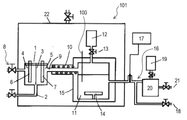
- FIG. 1 is a schematic diagram illustrating an apparatus for producing alkaline ionized water.
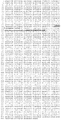
- FIG. 2 is a diagram showing the gene sequence of human ELOVL4 (SEQ ID NO: 1).
- FIG. 3 is a diagram showing the gene sequence of human ELOVL7 (SEQ ID NO: 2).
- FIG. 4 is a diagram showing the gene sequence of human CerS3 (SEQ ID NO: 3).
- FIG. 5A is a diagram showing the gene sequence of human SPTLC2 (SEQ ID NO: 4).
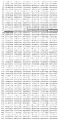
- FIG. 5B is a diagram showing the gene sequence of human SPTLC2 (SEQ ID NO: 4), and shows the continuation of FIG. 5A.
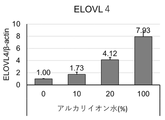
- FIG. 6 is a diagram showing the expression level of ELOVL4 mRNA in alkaline ionized water.
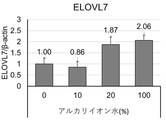
- FIG. 7 is a diagram showing the expression level of ELOVL7 mRNA in alkaline ionized water.
- FIG. 8 is a diagram showing the expression level of CerS3 mRNA in alkaline ionized water.
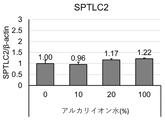
- FIG. 9 is a diagram showing the expression level of SPTLC2 mRNA in alkaline ionized water.
- FIG. 10 is a diagram showing the results of evaluating the expression fluctuations of ELOVL4 and CerS3 proteins by Western blotting.
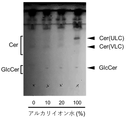
- FIG. 11 is a diagram showing the results of evaluation by thin layer chromatography.
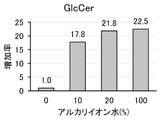
- FIG. 12 is a graph showing the rate of increase in color development intensity in the GlcCer region of each density in FIG.
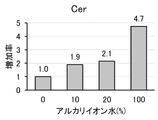
- FIG. 13 is a graph showing the rate of increase in color development intensity in the Cer region of each density in FIG.
- the ceramide synthesis accelerator of the present invention contains alkaline ionized water (hereinafter, may be simply referred to as "alkaline ionized water”) obtained by electrolyzing an aqueous solution containing a mineral salt containing silicon and phosphorus. It is a feature. Since alkaline ionized water obtained by electrolyzing an aqueous solution containing a mineral salt containing silicon and phosphorus has an action of promoting the expression of genes involved in ceramide synthesis, it can promote the synthesis of ceramide. , The ceramide synthesis promoter of the present invention is effective in preventing or treating skin disorders induced by a decrease in ceramide.
- the alkaline ionized water obtained by electrolyzing an aqueous solution containing a mineral salt containing silicon and phosphorus contains silicon and phosphorus.
- silicon (Si) is about 0.4 to 400 mass ppm (mg / L), preferably about 0.8 to 390 mass ppm, and more preferably about 1.0 to 380 mass ppm in the alkaline ionized water.
- phosphorus (P) is contained in an amount of about 2 to 800 mass ppm, preferably about 4 to 780 mass ppm, and more preferably about 10 to 770 mass ppm. Elemental analysis was performed by inductively coupled plasma (ICP) emission spectroscopy (SPECTRO ACROSII manufactured by Hitachi High-Tech Science Co., Ltd.).
- the alkaline ionized water obtained by electrolyzing an aqueous solution containing silicon and a mineral salt containing phosphorus may contain phosphorus and other elements other than silicon, and for example, calcium (Ca) may be 0.0001 to 900 mass ppb. About 0.001 to 800 mass ppm, more preferably about 0.01 to 700 mass ppm, potassium (K) about 0.0005 to 3000 mass ppm, preferably about 1 to 2900 mass ppm, more preferably about 5 to 2800 mass.
- magnesium (Mg) about 0.0001 to 300 mass ppb, preferably about 0.001 to 250 mass ppm, more preferably about 0.01 to 200 mass ppm, sodium (Na) about 34 to 8000 mass ppm, preferably about 34 to 8000 mass ppm. It may contain about 40 to 7900 mass ppm, more preferably about 50 to 7800 mass ppm.
- chlorine (Cl) may be contained in the alkaline ionized water obtained by electrolyzing an aqueous solution containing a mineral salt containing silicon and phosphorus, and for example, chlorine (Cl) is 1.5 to 1.5 to. It may be contained in an amount of about 450 mg / kg, preferably about 1.5 to 440 mg / kg, and more preferably about 1.5 to 430 mg / kg.
- the silicon contained in the alkaline ionized water can be present in a state of silicate ions such as H 3 SiO 4 ⁇ , H 5 Si 2 O 7 ⁇ , H 5 Si 3 O 9 ⁇ and the like.
- Phosphorus contained in the alkaline ionized water can be present in the state of phosphate ions, for example, H 2 PO 4- , H 3 P 2 O 7- , H 4 P 3 O 10- , and the like.
- the pH of alkaline ionized water obtained by electrolyzing an aqueous solution containing a mineral salt containing silicon and phosphorus is usually about 10 to 12.5.
- the surface tension is usually 70 mN / m or less, preferably about 50 to 69 mN / m, and more preferably about 55 to 68 mN / m. Further, the alkaline ionized water physically contains an excessive amount of electrons.
- the alkaline ionized water used in the present invention includes an electrolysis step of electrolyzing an aqueous solution containing a mineral salt containing silicon and phosphorus and water, and the alkaline water on the cathode side obtained in the above step, silicon and phosphorus. It can be obtained by an electron supply step of mixing with a mineral salt containing the above water to obtain a mixed solution and supplying electrons to the mixed solution.
- a mineral salt containing silicon and phosphorus for example, an electrolyte containing silicon and phosphorus obtained from seawater can be used. Seawater can be used without particular limitation, and for example, Japanese seawater can be used.
- Mineral salts containing silicon and phosphorus may be added in an amount of about 0.001 to 3% by mass of the amount of water used.
- the method for producing alkaline ionized water includes a deoxidizing step of deoxidizing an aqueous solution containing a mineral salt containing silicon and phosphorus and water to reduce the dissolved oxygen concentration to 1 ppm or less, and the above-mentioned method. It is preferable to include a stabilizing step of applying a pressure of 1 kg / cm 2 to 12 kg / cm 2 to a mixed solution of alkaline water on the cathode side and a mineral salt containing silicon and phosphorus.
- the mineral salt containing silicon and phosphorus mixed with the alkaline water on the cathode side the same mineral salt containing silicon and phosphorus used in the electrolysis step can be used, for example, Japan. It is possible to use the one collected from the seawater of.
- the first step is an electrolysis step of electrolyzing an aqueous solution containing water and a mineral salt containing silicon and phosphorus.
- Pure water, ion-exchanged water, etc. can be used as the raw material water.
- a mineral salt containing silicon and phosphorus obtained from seawater as a supporting electrolyte is dissolved. It is preferable to use water in which the concentration of dissolved oxygen in the water is reduced to 1 ppm or less by deoxidizing treatment.
- the deoxidizing treatment there are a physical treatment method and a chemical treatment method, and conventionally, a method of using the chemical treatment method alone or a method of using the physical treatment method and the chemical treatment method in combination is adopted.
- the physical treatment method include degassing treatment using a heating degassing device, a membrane degassing device, and the like.
- Examples of the chemical treatment method include a method of adding hydrazine, sodium sulfite, a saccharide (glycose, etc.) as a deoxidizing agent.
- a deoxidizing treatment for example, the oxygen removing agent can be added to water.
- the electrolysis is performed in a closed space such as an electrolytic cell.
- the inside of the electrolytic cell is preferably an inert atmosphere such as nitrogen and carbon dioxide.
- electrolysis is carried out in the electrolytic tank. It is also possible to put an oxygen scavenger into the electrolytic bath when performing in.
- the electric energy applied by electrolysis is preferably 1000 W to 3000 W.
- the second step is an electron supply step of mixing the alkaline water on the cathode side obtained in the first step with a mineral salt containing silicon and phosphorus to obtain a mixed solution, and supplying electrons to the mixed solution.
- the alkaline water on the cathode side obtained by electrolysis is taken out from the electrolytic cell and supplied to the mixing tank. It is preferable that the mixing tank is provided with a means for supplying a mineral salt containing silicon and phosphorus obtained from seawater and an electron supply means for supplying electricity to alkaline water.
- silicon-containing raw material examples include alkali metal silicates such as sodium silicate and potassium silicate; alkaline earth metal silicates such as calcium silicate; magnesium silicate and the like. Can be mentioned.
- the content of silicon contained in the mixed solution is preferably about 0.005 to 5% by mass, more preferably 0.01 to 1% by mass, when the total amount of the mixed solution is 100% by mass. ..
- Examples of the phosphorus-containing raw material include alkali metal phosphates such as sodium phosphate and potassium phosphate; alkaline earth metal phosphates such as calcium phosphate; magnesium phosphate and the like. ..
- the content of phosphorus contained in the mixed solution is preferably about 0.005 to 5% by mass, more preferably 0.01 to 1% by mass, when the total amount of the mixed solution is 100% by mass. ..
- the mass ratio of the silicon-containing mineral salt added to the alkaline water to the phosphorus-containing mineral salt is preferably 1: 0.5 to 1.5.
- Electrons can be supplied by contacting the cathode terminal with alkaline water on the cathode side obtained by electrolysis. Electrons are discharged from the cathode electrons, and many electrons are supplied to alkaline water.
- a direct current is applied to the cathode terminal.
- the voltage of the direct current applied to the cathode terminal is, for example, 10 to 1000 V, preferably 50 to 300 V, and more preferably 100 to 300 V. It is considered that the produced alkaline ionized water can effectively exert the expression action of the ceramide synthase gene by supplying electrons to the mixed solution.
- a direct current having a voltage of 100 to 300 V is applied to the mixing tank and the amount of electricity emitted from the cathode electrons is 1000 to 3000 W.
- a pressure of 1 kg / cm 2 to 12 kg / cm 2 (98 to 1177 kPa) to the mixing tank, and more preferably 2 kg / cm 2 to 6 kg / cm 2 (196 to 588 kPa). Applying pressure improves the stability of alkaline ionized water.
- the inside of the mixing tank is preferably an inert atmosphere such as nitrogen and carbon dioxide. It is also possible to put an oxygen scavenger into the mixing tank. It is preferable that the mixing tank is insulated from the ambient temperature by a heat insulating means so as not to be affected by the ambient temperature, and the inside of the mixing tank is adjusted to the range of -5 ° C to 25 ° C by the temperature adjusting means. ..
- the temperature of the mixed solution is preferably 0 ° C to 10 ° C.
- the mixing tank is preferably arranged in an isolation tank isolated from the outside air atmosphere, and the isolation tank is preferably filled with nitrogen or carbon dioxide. As a result, deterioration of alkaline ionized water can be prevented, so that the performance can be maintained for a long period of time.
- alkaline ionized water By stabilizing the alkaline ionized water in the above mixing tank for 24 to 36 hours, the final product, alkaline ionized water, can be obtained.
- the obtained alkaline ionized water can be taken out directly from the alkaline ionized water outlet.
- alcohol can be mixed with alkaline ionized water and taken out from the outlet of the mixed alkaline ionized water.
- the alcohol it is preferable to use an alcohol having a high compatibility with water, and examples thereof include methanol, ethanol, and isopropyl alcohol.
- FIG. 1 shows a schematic diagram illustrating an apparatus for producing alkaline ionized water.
- the alkaline ionized water producing apparatus 101 includes an electrolytic cell 1 and a mixing tank 11, and the electrolytic cell 1 and the mixing tank 11 are connected by an alkaline water outlet pipe 9.
- a water pipe 2 is connected to the electrolytic cell 1, and raw water (an aqueous solution containing a mineral salt containing silicon and phosphorus and water) is supplied by the water pipe 2.
- the electrolytic cell 1 has an anode chamber 4 and a cathode chamber 5 partitioned by a diaphragm 3.
- the anode chamber 4 is provided with an anode 6, and the cathode chamber 5 is provided with a cathode 7. Electrolytic current is applied to both electrodes, acidic water is taken out from the acidic water discharge pipe 8 connected to the anode chamber 4, and alkaline water is taken out from the alkaline water outlet pipe 9 connected to the cathode chamber 5.
- the alkaline water is cooled by a cooling device 10 provided with a cooling pipe in which a refrigerant is circulated while passing through the alkaline water outlet pipe 9, and is introduced into the mixing tank 11.
- the mixing tank 11 is connected to the alkaline water outlet pipe 9, the raw material liquid storage tank 12, and the outlet pipe 16.
- the raw material liquid is supplied to the mixing tank 11 from the raw material liquid storage tank 12 via the inflow amount adjusting device 13.
- the amount of raw material liquid supplied is adjusted by the amount of electricity that is energized.
- As the raw material liquid a mineral salt containing silicon and phosphorus collected from Japanese seawater is used.
- a stirring device 14 is provided in the mixing tank 11 so that the alkaline ionized water and the raw material liquid are uniformly mixed.
- the cathode terminal 100 is arranged in the mixing tank 11. A direct current of 200 V is applied to the cathode terminal 100.
- the amount of electricity emitted from the cathode terminal 100 is preferably 1000 W to 3000 W.
- the mixing tank 11 is insulated by the heat insulating means 15 so as not to be affected by the ambient temperature, and the internal temperature is adjusted to about 15 ° C to 25 ° C by the temperature adjusting means (not shown).
- the temperature of the mixing tank 11 is preferably about 0 ° C to 10 ° C.
- the pH of the alkaline ionized water derived from the mixing tank 11 is measured by the pH measuring means 17 provided in the outlet pipe 16.
- the pH of the alkaline ionized water taken out from the mixing tank 11 is preferably about 10 to 12.5.
- the outlet pipe 16 connected to the mixing tank 11 is branched into an alkaline ionized water outlet pipe 18 and a mixed alkaline ionized water outlet pipe 21.
- the alkaline ionized water in the mixing tank 11 is directly taken out from the alkaline ionized water outlet pipe 18.
- the alkaline ionized water can also be mixed with alcohol to obtain mixed alkaline ionized water.
- alkaline ionized water and alcohol may be mixed in the alcohol mixing tank 20 in which alcohol is injected from the alcohol storage tank 19 and taken out as mixed alkaline ionized water from the mixed alkaline ionized water outlet pipe 21.
- alcohol to be mixed with alkaline ionized water alcohol having a high compatibility with water, for example, methanol, ethanol, isopropyl alcohol and the like can be used.
- the above-mentioned alkaline ionized water production apparatus 101 is isolated from the outside air by being housed in the isolation chamber 22.
- the isolation chamber 22 is replaced with nitrogen or is coupled to the outside air atmosphere by a ventilation device filled with carbon dioxide, an oxygen scavenger, or the like.
- alkaline ionized water obtained by electrolyzing an aqueous solution containing a mineral salt containing silicon and phosphorus.
- examples of commercially available products include trade names S-100 and S-100G (both manufactured by AI System Products Co., Ltd.).
- the alkaline ionized water obtained by the above-mentioned production method has an excellent ceramide synthase expression promoting action and can be used as a ceramide synthesizing gene expression promoting agent.
- Alkaline ionized water obtained by electrolyzing an aqueous solution containing a mineral salt containing silicon and phosphorus exerts a gene expression promoting effect on ceramide synthesis, particularly acyl ceramide synthesis.
- ELOVL extreme long chain fatty acid elongating enzyme
- the alkaline ionized water containing silicon and phosphorus can be used as an ELOVL4 gene expression promoter, an ELOVL7 gene expression promoter, a CerS3 gene expression promoter, and a SPTLC2 gene expression promoter.
- the ceramide synthesis accelerator of the present invention can be used alone, but may contain additives.
- the additive include sodium chloride, various vitamins, glucose and the like.
- the ceramide synthesis promoter of the present invention can be blended with various compositions such as pharmaceuticals, quasi-drugs, foods and drinks, cosmetics, etc. to obtain a composition having a ceramide synthesis promoting action.
- the form of the food or drink containing the ceramide synthesis promoter of the present invention is not particularly limited.
- Specific forms of food and drink include, for example, general foods, general beverages, supplements, health foods, foods with functional claims, foods with insurance functions such as specified health foods and foods for specific purposes, soft drinks, tea beverages, drinks, etc.
- Examples thereof include alcoholic beverages such as wine, confectionery, rice and rice, breads, noodles, delicatessen, seasonings and the like.
- the form of the drug or quasi-drug containing the ceramide synthesis promoter of the present invention is not particularly limited. Specific examples thereof include an internal preparation, an external preparation, and the like, and it is preferable to use the skin external preparation.
- the form of the cosmetic or quasi-drug containing the ceramide synthesis promoter of the present invention is not particularly limited.
- Specific dosage forms include, for example, capsules, tablets, powders, granules, liquids and the like.
- the dose of the ceramide synthesis promoter of the present invention can be determined in consideration of the patient's age, gender, body weight, usage, dose and the like. Examples of the usage include application, oral administration, and vascular injection (drip).
- alkaline ionized water containing 0.001 to 1.5% by mass of a silicon compound and a phosphorus compound can be applied to the skin.
- the dose is preferably about 100 to 200 mL / day of alkaline ionized water containing 0.001 to 1.5% by mass of a silicon compound and a phosphorus compound.
- the dose of the ceramide synthesis gene expression promoter of the present invention in the case of vascular injection is preferably about 100 to 500 mL / day of alkaline ionized water containing 0.001 to 1.5% by mass of a silicon compound and a phosphorus compound.
- composition of a pharmaceutical product or the like containing the ceramide synthesis promoter of the present invention has a high effect of promoting ceramide synthesis by promoting the expression of the ceramide synthesis gene. It is effective for such things.
- Pharmaceuticals or non-pharmaceutical products containing the ceramide synthesis promoter of the present invention include, for example, atopic dermatitis, acne, burns, wounds, gangrene, pressure ulcers, and pressure ulcers. , Pyoderma, herpes zoster, scalp eczema, epidermal abscess, simple herpes, chickenpox, malignant skin tumor, water bug, etc. can be used as a preventive or therapeutic agent.
- the cosmetic containing the ceramide synthesis promoter of the present invention can be used as a skin moisturizer, a skin dryness inhibitor, a skin roughness inhibitor, a sunburn repair agent, a whitening agent and the like.
- the present invention includes the use of alkaline ionized water obtained by electrolyzing an aqueous solution containing a mineral salt containing silicon and phosphorus for promoting ceramide synthesis. Further, the present invention includes a method for promoting ceramide synthesis, which uses alkaline ionized water obtained by electrolyzing an aqueous solution containing a mineral salt containing silicon and phosphorus. The present invention also includes a method for producing a ceramide synthesis accelerator, which comprises a step of electrolyzing an aqueous solution containing a mineral salt containing silicon and phosphorus.
- alkaline ionized water was produced as follows. Ion-exchanged water was prepared as the raw material water. Ion-exchanged water was produced by removing impurities from tap water using an ion-exchange resin (manufactured by Samsung). An aqueous solution prepared by adding 1% by mass of a mineral salt containing silicon and phosphorus collected from Japanese seawater to ion-exchanged water was introduced into an electrolytic cell 1 through a water guide tube 2, and electricity was passed through the anode 6 and the cathode 7. The conditions for electrolysis were a voltage of 200 V and an electric energy of 2500 W.
- the ion-exchanged water was electrolyzed, acidic water was generated in the anode chamber 4, and alkaline water was generated in the cathode chamber 5.
- the acidic water generated in the anode chamber 4 was discharged from the acidic water discharge pipe 8.
- the alkaline water generated in the cathode chamber 5 was led out to the alkaline water outlet pipe 9, and the alkaline water passing through the alkaline water outlet pipe 9 was cooled by the cooling device 10 and introduced into the mixing tank 11.
- the mixing tank 11 the cooled alkaline water and the silicon and phosphorus-containing mineral salts collected from the Japanese seawater supplied from the raw material liquid storage tank 12 were mixed by the stirring device 14.
- the mineral salt containing silicon and phosphorus collected from Japanese seawater in the raw material liquid storage tank 12 contains the silicon and phosphorus-containing mineral salt collected from Japanese seawater in the mixed liquid in the mixing tank 11. However, it was adjusted and supplied by the inflow amount adjusting device 13 so as to be 0.3% by mass.
- the mixed solution was stored at a pressure of 294 kPa and a temperature of 4 ⁇ 3 ° C. for 24 hours. During storage, electrons were emitted from the cathode terminal 100 into the mixed solution.
- the alkaline ionized water was taken out from the outlet pipe 16, the pH of the alkaline ionized water was measured by the pH measuring means 17, and then the alkaline ionized water was taken out from the alkaline ionized water outlet pipe 18.
- the alkaline ionized water of Example 1 taken out from the alkaline ionized water outlet tube was subjected to elemental analysis using ICP emission spectroscopy (manufacturing company: Hitachi High-Tech Science Co., Ltd., product name: SPECTRO ARCOSII). As a result, it was found that silicon was contained in 100 mass ppm and phosphorus was contained in 760 mass ppm. Further, in detail, it was found that sodium was contained in an amount of 7500 mass ppm, potassium was contained in an amount of 2700 mass ppm, calcium was contained in an amount of 0.2 mass ppm, and magnesium was contained in an amount of 0.1 mass ppm or less.
- Example 1 the alkaline ionized water (Sample 1) of Example 1 taken out from the electrolytic water outlet tube is separately sent to the Japan Food Research Laboratories Center.
- the measurement was performed using the following combustion-electrolysis titration method.
- a combustion-coulometric titration method about 10 mg of the above sample 1 was burned using a chlorine / sulfur analyzer TSX-10 manufactured by Nittoseiko Analytech Co., Ltd., and the chloride ion concentration was calculated by optimizing the coulometric amount. ..
- the amount of chlorine in the sample can be obtained regardless of whether it is organic chlorine or inorganic chlorine.
- the amount of organic chlorine the value obtained by subtracting the amount of inorganic chlorine from the total amount of chlorine was used.
- the amount of inorganic chlorine was determined by extracting 5 g of a sample with hot water and measuring chlorine ions in the extract by an ion chromatograph method. As a result, it was found that the alkaline ionized water of Example 1 contained 410 mg / kg of chlorine.
- the surface tension of the alkaline ionized water obtained in Example 1 was measured using the Wilhelmy method. As a result, the surface tension of the alkaline ionized water obtained in Example 1 was about 65.41 mN / m (20 ° C.). When the surface tension of purified water was measured by the same method, it was about 72.96 mN / m (20 ° C.). Therefore, the alkaline ionized water containing a mineral salt containing silicon and phosphorus used in the present invention. The surface tension was about 7.55 mN / m lower than the surface tension of purified water.
- Example 2 Alkaline ionized water was produced in the same manner as in Example 1 except that the raw material of the mineral salt containing silicon and phosphorus was changed from seawater in Japan to seawater in Okinawa Prefecture. As a result of elemental analysis of the obtained alkaline ionized water using ICP emission spectroscopy in the same manner as in Example 1, it was found that silicon was contained in 370 mass ppm and phosphorus was contained in 450 mass ppm. Further, in detail, it was found that sodium was contained in an amount of 6900 mass ppm, potassium was contained in an amount of 1 mass ppm or less, calcium was contained in an amount of 0.9 mass ppm or less, and magnesium was contained in an amount of 0.3 mass ppm or less.
- Example 2 As a result of measuring chlorine contained in the alkaline ionized water obtained in Example 2 at the Japan Food Research Laboratories using the combustion-coulometric titration method in the same manner as in Example 1, Example 2 It was found that 410 mg / kg of chlorine was contained in the alkaline ionized water.
- Test Example 1 The effect of the alkaline ionized water produced in Example 1 on the gene expression of the enzyme related to ceramide synthesis was investigated. On the actual skin, the alkaline ionized water is neutralized by the sebum or sweat of the skin before reaching the keratinized cells, or is collected in the stratum corneum. Therefore, in Test Example 1, Example 1 is used. Alkaline ionized water was diluted 20 times and evaluated with alkaline ionized water based on this concentration (100%). The same applies to Test Examples 2 and 3.
- ELOVL4 very long chain fatty acid extender enzyme 4
- ELOVL7 very long chain fatty acid extender enzyme 7
- CerS3 ceramide synthase 3
- SPTLC2 ceramide synthase
- FIG. 2 shows the gene sequence of human ELOVL4 (SEQ ID NO: 1).
- FIG. 3 shows the gene sequence of human ELOVL7 (SEQ ID NO: 2).
- FIG. 4 shows the gene sequence of human CerS3 (SEQ ID NO: 3).
- 5A and 5B show the gene sequence of human SPTLC2 (SEQ ID NO: 4).
- Table 1 shows the sequence of the forward primer of the ELOVL4 primer (SEQ ID NO: 5) and the sequence of the reverse primer (SEQ ID NO: 6), the sequence of the forward primer of the ELOVL7 primer (SEQ ID NO: 7), and the sequence of the reverse primer (SEQ ID NO: 8). ), The sequence of the forward primer of the primer of CerS3 (SEQ ID NO: 9), the sequence of the reverse primer (SEQ ID NO: 10), the sequence of the forward primer of the primer of SPTLC2 (SEQ ID NO: 11), and the sequence of the reverse primer (SEQ ID NO: 12). , ⁇ -actin (endogenous control) primer sequence (SEQ ID NO: 13) and reverse primer sequence (SEQ ID NO: 14) are shown.
- the primer binds to the complementary strand of the forward primer and the reverse primer, and the DNA fragment is amplified by the PCR reaction between the two.
- the bold black frame portion in each sequence is the sequence to which the primer binds (the complementary strand of the forward primer and the reverse primer), and the underlined portion shows the sequence to be amplified by the PCR reaction.
- ⁇ Reagent> ⁇ Formasan (MTT): manufactured by Dojin Chemical Co., Ltd.
- Microtest plate for cell culture 96well flat bottom low evaporation type, manufactured by FALCON ⁇ Fetal Bovine Serum (FBS): manufactured by Biosera ⁇ Dulbecco's Modified Eagle's Medium Eagle Medium: DMEM): WAKO, TriPure Isolation Reagent (TriPure Reagent): Takara Bio, Random Primer: Takara Bio, Reverse Transcriptase: RevatraAce, TOYOBO, THUNDERBIRD (registered trademark) SYBR qPCR Mix: TOYOBO Manufactured by ⁇ Equipment> -Microplate Reader: ARVO MX1420 MULTIABEL COUNTER made by WALLAC was used.
- -Real Time PCR Step One Real Time PCR (48well) manufactured by Thermo Fisher Scientific was used.
- the prepared cDNA was used to quantify the mRNAs of ELOVL4, ELOVL7, CerS3, and SPTLC2 by the Real Time-PCR method. Beta-actin was used as an endogenous control. The Comparative ⁇ Ct method was used for the data analysis.
- Real time-PCR was performed by Step One (Thermo Fisher Scientific). Real time-PCR was performed using TOYOBO THUNDERBIRD® SYBR qPCR Mix.
- the results of ELOVL4 mRNA expression by alkaline ionized water are shown in FIG. 6, the results of ELOVL7 mRNA expression are shown in FIG. 7, the results of CerS3 mRNA expression are shown in FIG. 8, and the results of SPTLC2 mRNA expression are shown in FIG. Shown in.
- the mRNA expression level was shown as a relative value when the expression level of ⁇ -actin was 1.
- alkaline ionized water promoted ELOVL4 mRNA expression. From FIG. 7, the expression of ELOVL7 mRNA was also observed. From FIG. 8, it can be seen that alkaline ionized water promoted the expression of CerS3 mRNA. From FIG. 9, it can be seen that alkaline ionized water promoted the expression of SPTLC2 mRNA.
- the cells were collected with cytolytic solution (50 mM Tris-HCl, 150 mM NaCl, 1% NP-40, 1 mM EDTA, pH 7.4) and centrifuged (10,000 rpm, 10 minutes, 4 ° C). The supernatant was used as a protein extract.
- the protein extract was separated by SDS-PAGE (SDS-polyacrylamide gel electrophoresis), then the protein was transferred to a nitrocellulose membrane and blocked with a phosphate buffer solution containing 2% skim milk.
- Rabbit anti-CerS3 antibody (Cusabio, 2,000-fold diluted) was used to detect CerS3, rabbit anti-ELOVL4 antibody (Cusabio, 1,000-fold diluted) was used to detect ELOVL4, and mouse anti- ⁇ was used to detect ⁇ -actin.
- -Actin antibody (Wako Pure Drug, 3,000-fold dilution) was used to react with the nitrocellulose membrane. The nitrocellulose membrane is thoroughly washed with phosphate buffer and then targeted with peroxidase-labeled goat anti-rabbit IgG antibody (KPL, 5,000-fold dilution) or peroxidase-labeled goat anti-mouse IgG antibody (Jackson, 3,000-fold dilution). The protein was labeled with peroxidase. Detection was performed with a luminescent reagent (Immunostar LD, WAKO pure drug) and photographed with a luminograph (Ato). The results are shown in FIG.
- the lipid remaining in the upper layer was recovered by adding chloroform, stirring, and then centrifuging (5 minutes, 900 xg, room temperature) to collect the lower layer.
- the lipid fraction was dried on a centrifugal evaporator, dissolved in chloroform: methanol (2: 1, v / v), and then stored at ⁇ 20 ° C. until analysis.
- Thin layer chromatography was developed in the following order. (1) Chloroform: Methanol: Water (40:10: 1, v / v) was used to develop the sample from the place where the sample was added to a place 2 cm, and then the thin layer plate was dried.
- Chloroform Methanol: Water (40: 10: 1, v / v) was used to develop the sample up to 5 cm from the place where the sample was added, and then the thin layer plate was dried.
- Lipids on the developed thin layer plate are detected by sufficiently spraying with an 8% (v / v) phosphoric acid aqueous solution in which 3% (w / v) copper sulfate is dissolved, and then heating on a hot plate at 180 ° C. did.
- VLC in FIG. 11 indicates a very long chain (generally, a carbon chain longer than 20 carbons)
- ULC indicates an ultra long chain (generally, a carbon chain of 26 carbons or more).
- Table 2 shows the Rf values of the main spots in the GlcCer region and the Cer region in FIG. 11.
- the color development intensity of each region was measured using image processing software ImageJ (NIH) after acquiring an image with a photographing device LumiCube (manufactured by Liponix Co., Ltd.).
- Table 3 and FIG. 12 show the rate of increase in the color development intensity of the GlcCer region when the color development intensity of the GlcCer region was 1 when the alkaline ionized water was 0% (when cultured in a medium (DMEM) to which no alkaline ionized water was added).
- Table 3 and FIG. 13 show the rate of increase in the color development intensity of the Cer region when the color development intensity of the Cer region is 1 when the alkaline ionized water is 0%.
- Electrolyzer 2 Water guide tube 3 Diaphragm 4 Anodium 5 Cathode room 6 Cathode 7 Cathode 8 Acidic water discharge tube 9 Alkaline water outlet tube 10 Cooling device 11 Mixing tank 12 Raw material liquid storage tank 13 Inflow amount adjusting device 14 Stirring device 15 Insulation means 16 Outlet pipe 17 pH measuring means 18 Alkaline ionized water outlet pipe 19 Alcohol storage tank 20 Alcohol mixing tank 21 Mixed alkaline ionized water outlet pipe 22 Isolation chamber 100 Cathode electron 101 Alkaline ionized water production equipment
Landscapes
- Health & Medical Sciences (AREA)
- Life Sciences & Earth Sciences (AREA)
- Chemical & Material Sciences (AREA)
- Animal Behavior & Ethology (AREA)
- General Health & Medical Sciences (AREA)
- Public Health (AREA)
- Veterinary Medicine (AREA)
- Epidemiology (AREA)
- Medicinal Chemistry (AREA)
- Inorganic Chemistry (AREA)
- Pharmacology & Pharmacy (AREA)
- Engineering & Computer Science (AREA)
- Polymers & Plastics (AREA)
- Nutrition Science (AREA)
- Birds (AREA)
- Dermatology (AREA)
- Food Science & Technology (AREA)
- Bioinformatics & Cheminformatics (AREA)
- Nuclear Medicine, Radiotherapy & Molecular Imaging (AREA)
- Chemical Kinetics & Catalysis (AREA)
- General Chemical & Material Sciences (AREA)
- Organic Chemistry (AREA)
- Mycology (AREA)
- Gerontology & Geriatric Medicine (AREA)
- Cosmetics (AREA)
- Pharmaceuticals Containing Other Organic And Inorganic Compounds (AREA)
- Coloring Foods And Improving Nutritive Qualities (AREA)
- Medicines Containing Material From Animals Or Micro-Organisms (AREA)
- Non-Alcoholic Beverages (AREA)
- Measuring Or Testing Involving Enzymes Or Micro-Organisms (AREA)
Priority Applications (3)
| Application Number | Priority Date | Filing Date | Title |
|---|---|---|---|
| JP2022571685A JP7486235B2 (ja) | 2020-12-25 | 2021-12-24 | セラミド合成促進剤 |
| EP21911060.8A EP4268833A4 (en) | 2020-12-25 | 2021-12-24 | CERAMIDE SYNTHESIS PROMOTER |
| JP2024070707A JP7655599B2 (ja) | 2020-12-25 | 2024-04-24 | セラミド合成促進剤 |
Applications Claiming Priority (2)
| Application Number | Priority Date | Filing Date | Title |
|---|---|---|---|
| JP2020217526 | 2020-12-25 | ||
| JP2020-217526 | 2020-12-25 |
Publications (1)
| Publication Number | Publication Date |
|---|---|
| WO2022138923A1 true WO2022138923A1 (ja) | 2022-06-30 |
Family
ID=82158200
Family Applications (1)
| Application Number | Title | Priority Date | Filing Date |
|---|---|---|---|
| PCT/JP2021/048218 Ceased WO2022138923A1 (ja) | 2020-12-25 | 2021-12-24 | セラミド合成促進剤 |
Country Status (3)
| Country | Link |
|---|---|
| EP (1) | EP4268833A4 (cg-RX-API-DMAC7.html) |
| JP (2) | JP7486235B2 (cg-RX-API-DMAC7.html) |
| WO (1) | WO2022138923A1 (cg-RX-API-DMAC7.html) |
Families Citing this family (1)
| Publication number | Priority date | Publication date | Assignee | Title |
|---|---|---|---|---|
| JP7486235B2 (ja) * | 2020-12-25 | 2024-05-17 | 株式会社エー・アイ・システムプロダクト | セラミド合成促進剤 |
Citations (2)
| Publication number | Priority date | Publication date | Assignee | Title |
|---|---|---|---|---|
| JP2010100606A (ja) * | 2008-09-25 | 2010-05-06 | Ai System Product:Kk | 塗薬 |
| JP2016069323A (ja) * | 2014-09-30 | 2016-05-09 | 株式会社レドックス | スキンケア用又は毛髪手入れ用液体組成物 |
Family Cites Families (9)
| Publication number | Priority date | Publication date | Assignee | Title |
|---|---|---|---|---|
| JP2001278735A (ja) * | 2000-03-30 | 2001-10-10 | Kawaken Fine Chem Co Ltd | 電解海洋深層水含有化粧料 |
| KR100850378B1 (ko) * | 2006-10-16 | 2008-08-04 | 서희동 | 해양 심층수로부터 환원성 알칼리이온 음료수의 제조방법 |
| JP5301584B2 (ja) * | 2011-02-18 | 2013-09-25 | 株式会社サニープレイス | 毛髪処理剤 |
| JP5823202B2 (ja) * | 2011-07-29 | 2015-11-25 | 株式会社サニープレイス | 毛髪処理剤、及び当該毛髪処理剤を使用した毛髪処理方法 |
| JP5738143B2 (ja) * | 2011-09-26 | 2015-06-17 | 株式会社サニープレイス | 毛髪処理剤及び毛髪処理方法 |
| JP5721287B2 (ja) * | 2013-11-08 | 2015-05-20 | 株式会社活亜興 | 還元水素水、及び酸化還元塩と風化貝化石配合の健康補助食品 |
| CN110123662A (zh) * | 2019-04-30 | 2019-08-16 | 杭州伊瑟奇生物科技有限公司 | 基于电离剥离效果的牙胶及对口腔细菌和牙垢的剥离方法 |
| KR102097265B1 (ko) * | 2019-09-02 | 2020-04-06 | 코스맥스 주식회사 | 전해물질을 포함하는 보습 및 피부장벽 개선용 화장료 조성물 |
| JP7486235B2 (ja) | 2020-12-25 | 2024-05-17 | 株式会社エー・アイ・システムプロダクト | セラミド合成促進剤 |
-
2021
- 2021-12-24 JP JP2022571685A patent/JP7486235B2/ja active Active
- 2021-12-24 EP EP21911060.8A patent/EP4268833A4/en not_active Withdrawn
- 2021-12-24 WO PCT/JP2021/048218 patent/WO2022138923A1/ja not_active Ceased
-
2024
- 2024-04-24 JP JP2024070707A patent/JP7655599B2/ja active Active
Patent Citations (2)
| Publication number | Priority date | Publication date | Assignee | Title |
|---|---|---|---|---|
| JP2010100606A (ja) * | 2008-09-25 | 2010-05-06 | Ai System Product:Kk | 塗薬 |
| JP2016069323A (ja) * | 2014-09-30 | 2016-05-09 | 株式会社レドックス | スキンケア用又は毛髪手入れ用液体組成物 |
Non-Patent Citations (5)
| Title |
|---|
| See also references of EP4268833A4 |
| SHIRAKURA ET AL., LIPID IN HEALTH AND DISEASE, vol. 11, 2012, pages 108 |
| TETSUO SHU: "The treatment effect of the atopic dermatitis by electrolytic-reduction ion water lotion", 1 January 2010 (2010-01-01), XP055423085, Retrieved from the Internet <URL:http://www.adwatis.com/fichiers/files/Treatment of atopic dermatits with ERI.pdf> [retrieved on 20171109] * |
| YAKUGAKU, ZASSHI, vol. 137, no. 10, 2017, pages 1201 - 1208 |
| YAMAMOTO HIROYUKI, IKEDA MITSUO, OKAJIMA YOSHINAO, OKAJIMA MASAHIRO: "Electrolytic-reduction ion water induces ceramide synthesis in human skin keratinocytes", DD&T DRUG DISCOVERIES & THERAPEUTICS, INTERNATIONAL ADVANCEMENT CENTER FOR MEDICINE & HEALTH RESEARCH CO., LTD., JAPAN, vol. 15, no. 5, 31 October 2021 (2021-10-31), Japan , pages 248 - 253, XP055945515, ISSN: 1881-7831, DOI: 10.5582/ddt.2021.01091 * |
Also Published As
| Publication number | Publication date |
|---|---|
| JP2024096208A (ja) | 2024-07-12 |
| EP4268833A4 (en) | 2024-09-04 |
| EP4268833A1 (en) | 2023-11-01 |
| JPWO2022138923A1 (cg-RX-API-DMAC7.html) | 2022-06-30 |
| JP7655599B2 (ja) | 2025-04-02 |
| JP7486235B2 (ja) | 2024-05-17 |
Similar Documents
| Publication | Publication Date | Title |
|---|---|---|
| Hunt et al. | Highly Saturated Endonuclear Phosphatidylcholine Is Synthesizedin Situ and Colocated with CDP-choline Pathway Enzymes | |
| Rigutto et al. | Activation of dual oxidases Duox1 and Duox2 | |
| RU2663127C2 (ru) | Селенсодержащие композиции и их применение для лечения и предотвращения заболеваний или состояний, связанных с митохондриальной дисфункцией | |
| EP3277675B1 (en) | Heterocyclic modulators of lipid synthesis | |
| WO2014175001A1 (ja) | 美白促進剤またはアトピー性皮膚炎改善剤 | |
| KR20170105697A (ko) | 발모 촉진 활성 및 멜라닌 생성 촉진 활성을 나타내는 펩타이드 및 이의 용도 | |
| EP1679316A1 (en) | Stable vitamin b6 derivative | |
| JP7655599B2 (ja) | セラミド合成促進剤 | |
| EP4071241A1 (en) | Mono-hydroxy or di-hydroxy derivatives of polyunsaturated fatty acids, production method therefor, and use thereof | |
| JP5224719B2 (ja) | 毛乳頭細胞増殖促進剤、テストステロン5α−リダクターゼ阻害剤、アンドロゲン受容体結合阻害剤、血管内皮増殖因子産生促進剤、骨形成タンパク質−2産生促進剤、インスリン様増殖因子−1産生促進剤、育毛剤及び頭髪化粧料 | |
| TW200400957A (en) | A method of producing tocotrienol-enriched preparations | |
| WO2011162416A1 (en) | Agent for suppressing the formation of abnormal skin cells caused by exposure to light | |
| HK40093034A (en) | Ceramide synthesis promoter | |
| Avetikov et al. | Energy metabolism disorders in rat salivary glands tissues in connection with chronic sodium nitrate intoxication | |
| KR20140033344A (ko) | 블레오마이신 수해 효소 생성 촉진제 | |
| JP5854592B2 (ja) | 抗酸化剤及び抗炎症剤 | |
| KR102682748B1 (ko) | Sh3bp4 억제 물질을 포함하는 피부 미백용 조성물 및 sh3bp4 억제 물질의 스크리닝 방법 | |
| JP2006290873A (ja) | アクアポリン発現促進剤 | |
| EP1626710B1 (en) | Use of 2,2,3,3, tetramethylcyclopropane carboxylic acid derivatives for treating psychiatric disorders | |
| KR20170062862A (ko) | Lipa 억제를 통한 흑색종 예방 또는 치료제, 및 그 스크리닝 방법 | |
| Zhang et al. | Sturgeon roe-derived tetrapeptide NLPL attenuates oxidative stress associated skin senescence endpoints, accompanied by increased NAD+, improved telomere-associated biomarkers, and enhanced ECM-related readouts | |
| CN119679655B (zh) | 含棕榈酰三肽-5的组合物、护肤品和用途 | |
| JP2020519622A (ja) | イソトレチノインとペプチドの結合体 | |
| Todorov et al. | Effects of orotic and 5-aminoorotic acids on the free radicals accumulation in rat blood serum | |
| Ma et al. | THE ANTI-PHOTOAGING ACTIVITY OF DEEP SEA WATER ON HACAT KERATINOCYTE INDUCED BY UVB VIA SUPPRESSION MMPS AND MAPKS/NF-Ƙ B SIGNALING PATHWAY. |
Legal Events
| Date | Code | Title | Description |
|---|---|---|---|
| 121 | Ep: the epo has been informed by wipo that ep was designated in this application |
Ref document number: 21911060 Country of ref document: EP Kind code of ref document: A1 |
|
| ENP | Entry into the national phase |
Ref document number: 2022571685 Country of ref document: JP Kind code of ref document: A |
|
| NENP | Non-entry into the national phase |
Ref country code: DE |
|
| ENP | Entry into the national phase |
Ref document number: 2021911060 Country of ref document: EP Effective date: 20230725 |