WO2022113638A1 - 情報処理装置、情報処理方法 - Google Patents
情報処理装置、情報処理方法 Download PDFInfo
- Publication number
- WO2022113638A1 WO2022113638A1 PCT/JP2021/039867 JP2021039867W WO2022113638A1 WO 2022113638 A1 WO2022113638 A1 WO 2022113638A1 JP 2021039867 W JP2021039867 W JP 2021039867W WO 2022113638 A1 WO2022113638 A1 WO 2022113638A1
- Authority
- WO
- WIPO (PCT)
- Prior art keywords
- user
- head
- transfer function
- related transfer
- function information
- Prior art date
- Legal status (The legal status is an assumption and is not a legal conclusion. Google has not performed a legal analysis and makes no representation as to the accuracy of the status listed.)
- Ceased
Links
Images











Classifications
-
- H—ELECTRICITY
- H04—ELECTRIC COMMUNICATION TECHNIQUE
- H04R—LOUDSPEAKERS, MICROPHONES, GRAMOPHONE PICK-UPS OR LIKE ACOUSTIC ELECTROMECHANICAL TRANSDUCERS; ELECTRIC HEARING AIDS; PUBLIC ADDRESS SYSTEMS
- H04R5/00—Stereophonic arrangements
- H04R5/02—Spatial or constructional arrangements of loudspeakers
-
- H—ELECTRICITY
- H04—ELECTRIC COMMUNICATION TECHNIQUE
- H04S—STEREOPHONIC SYSTEMS
- H04S7/00—Indicating arrangements; Control arrangements, e.g. balance control
- H04S7/30—Control circuits for electronic adaptation of the sound field
- H04S7/301—Automatic calibration of stereophonic sound system, e.g. with test microphone
-
- H—ELECTRICITY
- H04—ELECTRIC COMMUNICATION TECHNIQUE
- H04S—STEREOPHONIC SYSTEMS
- H04S7/00—Indicating arrangements; Control arrangements, e.g. balance control
- H04S7/30—Control circuits for electronic adaptation of the sound field
- H04S7/302—Electronic adaptation of stereophonic sound system to listener position or orientation
- H04S7/303—Tracking of listener position or orientation
-
- H—ELECTRICITY
- H04—ELECTRIC COMMUNICATION TECHNIQUE
- H04R—LOUDSPEAKERS, MICROPHONES, GRAMOPHONE PICK-UPS OR LIKE ACOUSTIC ELECTROMECHANICAL TRANSDUCERS; ELECTRIC HEARING AIDS; PUBLIC ADDRESS SYSTEMS
- H04R2420/00—Details of connection covered by H04R, not provided for in its groups
- H04R2420/07—Applications of wireless loudspeakers or wireless microphones
-
- H—ELECTRICITY
- H04—ELECTRIC COMMUNICATION TECHNIQUE
- H04S—STEREOPHONIC SYSTEMS
- H04S2400/00—Details of stereophonic systems covered by H04S but not provided for in its groups
- H04S2400/01—Multi-channel, i.e. more than two input channels, sound reproduction with two speakers wherein the multi-channel information is substantially preserved
-
- H—ELECTRICITY
- H04—ELECTRIC COMMUNICATION TECHNIQUE
- H04S—STEREOPHONIC SYSTEMS
- H04S2420/00—Techniques used stereophonic systems covered by H04S but not provided for in its groups
- H04S2420/01—Enhancing the perception of the sound image or of the spatial distribution using head related transfer functions [HRTF's] or equivalents thereof, e.g. interaural time difference [ITD] or interaural level difference [ILD]
Definitions
- This technique relates to an information processing device and an information processing method related to sound reproduction using head-related transfer function information.
- Patent Document 1 discloses a technique for providing an optimum sound image localization to a user by measuring a transfer function from a speaker of a television receiver to the ear of a user (listener).
- the acquired head-related transfer function information can be used even if the audio signal providing device (or providing unit) that generates and transmits the audio signal to the audio signal reproducing device (or audio signal reproducing unit) is different. Is. However, in reality, there is a problem that every time a new audio signal providing device is started to be used, it is forced to perform an operation or a process for acquiring head-related transfer function information.
- This technique was made in view of the above circumstances, and aims to reduce the burden on the user related to the acquisition of head-related transfer function information and the processing burden on the information processing device.
- a signal acquisition unit that acquires an audio signal, a storage unit that stores head transmission function information corresponding to the user, and the head transmission function information corresponding to the user are other information.
- HRTF head related transfer function
- the transmission function acquisition unit in the information processing apparatus described above acquires the head transmission function information corresponding to the user from the storage unit, and stores the head transmission function information corresponding to the user in the storage unit. If not, the head transmission function information corresponding to the user may be acquired from the other information processing apparatus. As a result, when the corresponding head-related transfer function information is stored in the storage unit of the information processing device, it is not necessary to issue an acquisition request to another information processing device.
- the user A user interface processing unit that performs user interface processing for obtaining the corresponding head-related transfer function information may be provided. For example, a process of displaying information for downloading an application for calculating head-related transfer function information to a user terminal is executed.
- the user interface processing unit in the information processing apparatus described above executes, as the user interface processing, a process of selecting whether or not to execute a process for obtaining the head-related transfer function information corresponding to the user. good. This makes it possible to indicate the intention to avoid the process for obtaining the head-related transfer function information when the user spares the trouble of calculating the head-related transfer function information peculiar to the user.
- the user interface processing unit in the above-mentioned information processing apparatus may execute a process of displaying guidance information for installing an application on a user terminal as the user interface process. As a result, the user can install an appropriate application by operating according to the display.
- the information processing device described above may include a transmission processing unit that transmits the audio signal to the playback device.
- Such an information processing device is, for example, a television receiver, a personal computer, a tablet terminal, or the like. In particular, it is suitable for an information processing terminal that is likely to be shared by a plurality of people.
- the playback device is a headphone or earphone worn by the user. Headphones include those that are worn on the head so as to cover the ears and those that are hung on the neck.
- the detection unit whether or not to apply the head-related transfer function information to the audio signal when the detection unit detects the connection of the playback device and the detection unit detects the connection of the playback device. It may be provided with a user interface processing unit that performs user interface processing for selecting. This makes it possible, for example, to display the display unit of the television receiver to select whether or not to perform surround playback using head-related transfer function information when the headphones are connected to the television receiver. Become.
- the function application unit in the information processing apparatus described above applies the first application process for applying the head-related transfer function information corresponding to the user to the audio signal, and the standard head-related transfer function information for the audio. It may be possible to execute the second application process applied to the signal. For example, even when the user is busy and does not have time to perform an operation for acquiring head-related transfer function information, it is possible to perform acoustic output using standard head-related transfer function information.
- the user interface processing unit in the information processing apparatus described above can execute user interface processing for selecting whether to execute the first application processing or the second application processing when the connection of the reproduction device is detected. It may have been done. As a result, the user can select whether to experience the sound reproduction to which the head-related transfer function information unique to the user is applied or to experience the sound reproduction to which the head-related transfer function information common to all users is applied.
- the user interface processing unit in the information processing apparatus described above is capable of executing user interface processing for experiencing the sound field constructed by the audio signal after the head related transfer function information is applied. good. For example, some users may not be aware that sound reproduction to which head-related transfer function information is applied is possible.
- the user interface processing unit in the above-mentioned information processing apparatus may be capable of executing user interface processing for performing login processing for the user.
- a user can be identified by performing a login operation by the user according to the login process.
- the user interface processing unit in the above-mentioned information processing apparatus transfers the user interface processing for performing the login processing for the user and the head transmission function information corresponding to the user specified as a result of the login processing. It may be possible to execute a user interface process for allowing the user to experience the sound field constructed by the audio signal generated by the second application process when the acquisition unit cannot be acquired.
- the case where the head-related transfer function information corresponding to the user specified by the login process cannot be obtained is, for example, the case where the user has not experienced the acoustic output to which the head-related transfer function information specialized for himself / herself is applied. be.
- the storage unit in the information processing apparatus described above may store the head-related transfer function information corresponding to the user in association with the reproduction device. This makes it possible to acquire head-related transfer function information corresponding to the user specified by login processing or the like without performing communication processing with other information processing devices.
- the storage unit in the information processing apparatus may store a plurality of combinations of the head-related transfer function information corresponding to the user and the reproduction device. This makes it possible to acquire head-related transfer function information corresponding to each user even when the information processing device is shared and used by a plurality of users.
- a user interface process for switching between an applied state in which the head-related transfer function information is applied to the audio signal and a non-applied state in which the head-related transfer function information is not applied to the audio signal is executed. It may be provided with a enabled user interface processing unit. As a result, for example, the user can switch whether or not to apply the head-related transfer function information according to the content of the content.
- a user interface processing unit capable of executing user interface processing for switching the head-related transfer function information corresponding to the user to the head-related transfer function information corresponding to another user. May be provided. As a result, when the information processing apparatus is used by a plurality of users, the optimum head-related transfer function information can be applied to each user.
- the information processing device described above may be a television receiver provided with a display unit capable of displaying an image.
- the head transmission function corresponding to the user from another information processing device such as a server device.
- the process of acquiring information is executed on the television receiver.
- the user interface process for performing the login process for the user and the head transmission function information corresponding to the user specified as a result of the login process are stored in the storage unit.
- the transmission function acquisition unit includes the user interface processing unit capable of executing the above, and the transmission function acquisition unit inputs the head transmission function information corresponding to the user calculated based on the information transmitted from the user terminal to the other information processing. It may be obtained from the device.
- the information processing method executed by the information processing apparatus includes a process of acquiring an audio signal, a process of storing head-related transfer function information corresponding to the user, and the head-related transfer function information corresponding to the user.
- a process of determining whether or not the information is stored in another information processing device a process of acquiring the head-related transfer function information corresponding to the user, and a head-related transfer corresponding to the user with respect to the audio signal. It is equipped with a process to apply function information. Even with such an information processing method, the same operation as that of the information processing apparatus according to the present technology can be obtained.
- the configuration of the sound reproduction system 2 having the television receiver 1 as the information processing device of the present technology will be described with reference to FIG.
- the sound reproduction system 2 includes a television receiver 1, a first reproduction device 3, a communication network 4, a server device 5, a smartphone 6, and a second reproduction device 7.
- the configuration shown in FIG. 1 is an example, and the sound reproduction system 2 may be configured to include only the television receiver 1, the first reproduction device 3, the communication network 4, and the server device 5.
- An information processing device other than the John receiver 1 and the smartphone 6 may be provided, or an audio signal reproduction device (headphones, earphones, etc.) other than the first playback device 3 and the second playback device 7 may be provided.
- the television receiver 1 is an example of the information processing device according to the present embodiment, and transmits (folds) the audio signal generated by applying the head transmission function information HRTF to the audio signal to the audio signal reproduction device. It is an information processing device that performs processing.
- the first playback device 3 is a device that reproduces an audio signal, and is, for example, an earphone, a headphone, or a neckband speaker.
- the neckband speaker 3A as the first reproduction device 3 will be taken as an example.
- the neckband speaker 3A outputs an acoustic sound by receiving an audio signal to which the head-related transfer function information HRTF is applied from the television receiver 1 and reproducing the signal.
- the audio signal before applying the head-related transfer function information HRTF is described as "uncorrected audio signal SA”
- the audio signal after applying the head-related transfer function information HRTF is referred to as "corrected audio signal”. It is described as "SB".
- the audio signal reproduction device may have both a function as an information processing device and a function as the first reproduction device 3.
- an earphone or headphone as an audio signal reproduction device receives and processes a generator that outputs an audio signal generated by applying (folding) the head related transfer function information HRTF and an audio signal reproduction device that is generated. It may be provided with a reproduction unit for performing the above.
- the communication network 4 is not particularly limited, and other than the Internet, for example, an intranet, an extranet, a LAN (Local Area Network), a CATV (Community Antenna TeleVision) communication network, a virtual private network, and a telephone.
- a line network, mobile communication network, satellite communication network, etc. are assumed. Further, various examples are assumed for the transmission medium constituting all or a part of the communication network 4. For example, even if it is wired such as IEEE (Institute of Electrical and Electronics Engineers) 1394, USB (Universal Serial Bus), power line carrier, telephone line, infrared rays such as IrDA (Infrared Data Association), Bluetooth (registered trademark), 802.11 wireless , Mobile phone network, satellite line, terrestrial digital network, etc. can also be used wirelessly.
- the server device 5 is another information processing device different from the television receiver 1, and is a device that provides various functions and information. Specifically, it is possible to provide a function of storing and managing the head-related transfer function information HRTF for each user, a function related to login, and the like.
- the server device 5 can execute a process of acquiring the head related transfer function information HRTF corresponding to the user specified by the login process from the database and transmitting it to the television receiver 1 and the smartphone 6.
- the head-related transfer function information HRTF managed by the server device 5 may be the head-related transfer function itself or a coefficient used for the head-related transfer function. These are collectively called head-related transfer function information HRTF.
- the smartphone 6 transmits the corrected audio signal SB generated by applying the head-related transfer function information HRTF to the pre-corrected audio signal SA to the second playback device 7 as an audio signal reproduction device. It is an information processing device that performs processing. Further, in the following description, the smartphone 6 is regarded as an example of a user terminal described later used by the user. That is, the smartphone 6 is a terminal that transmits the corrected audio signal SB to the second playback device 7, and is a user terminal operated by the user in order to realize various processes described later. Of course, a device such as a PC (Personal Computer) or a tablet other than the smartphone 6 may be used as a user terminal.
- a PC Personal Computer
- the second playback device 7 is a device that reproduces an audio signal, and is, for example, an earphone, a headphone, or a neckband speaker.
- the wireless earphone 7A as the second playback device 7 will be taken as an example.
- the wireless earphone 7A outputs an acoustic sound by receiving the corrected audio signal SB from the smartphone 6 and performing reproduction.
- the server device 5 has an image of both ears of the user A taken by using the smartphone 6 and a head transmission calculated from the image with respect to the user information such as the user ID (Identification) that identifies the user A.
- Function information HRTF information is associated and stored.
- the user information and the head related transfer function information HRTF may be stored in the server device 5, and the ear image may not be stored in the server device 5.
- user A is simply referred to as "user".
- the CPU 71 of the computer device loads a program stored in a non-volatile memory unit 74 such as a ROM 72 or an EEPROM (Electrically Erasable Programmable Read-Only Memory), or a storage unit 79 into a RAM 73.
- a non-volatile memory unit 74 such as a ROM 72 or an EEPROM (Electrically Erasable Programmable Read-Only Memory), or a storage unit 79 into a RAM 73.
- the RAM 73 also appropriately stores data and the like necessary for the CPU 71 to execute various processes.
- the CPU 71, ROM 72, RAM 73, and non-volatile memory unit 74 are connected to each other via a bus 83.
- An input / output interface 75 is also connected to the bus 83.
- An input unit 76 including an operator and an operation device is connected to the input / output interface 75.
- various controls and operation devices such as a keyboard, a mouse, a key, a dial, a touch panel, a touch pad, and a remote controller are assumed.
- the user's operation is detected by the input unit 76, and the signal corresponding to the input operation is interpreted by the CPU 71.
- a display unit 77 made of an LCD or an organic EL panel and an audio output unit 78 made of a speaker or the like are connected to the input / output interface 75 as one or as a separate body.
- the display unit 77 is a display unit that performs various displays, and is composed of, for example, a display device provided in a housing of a computer device, a separate display device connected to the computer device, and the like.
- the display unit 77 executes the display of various images for image processing, moving images to be processed, and the like on the display screen based on the instruction of the CPU 71. Further, the display unit 77 displays various operation menus, icons, messages, etc., that is, as a GUI (Graphical User Interface) based on the instruction of the CPU 71.
- GUI Graphic User Interface
- the input / output interface 75 may be connected to a storage unit 79 composed of a hard disk, a solid-state memory, or the like, or a communication unit 80 composed of a modem or the like.
- the communication unit 80 performs communication processing via a transmission line such as the Internet, wired / wireless communication with various devices, bus communication, and the like.
- a drive 81 is also connected to the input / output interface 75, if necessary, and a removable storage medium 82 such as a magnetic disk, an optical disk, a magneto-optical disk, or a semiconductor memory is appropriately mounted.
- the drive 81 can read data files such as image files and various computer programs from the removable storage medium 82.
- the read data file is stored in the storage unit 79, and the image and sound included in the data file are output by the display unit 77 and the sound output unit 78. Further, the computer program or the like read from the removable storage medium 82 is installed in the storage unit 79 as needed.
- software for the processing of the present embodiment can be installed via network communication by the communication unit 80 or removable storage medium 82.
- the software may be stored in the ROM 72, the storage unit 79, or the like in advance.
- the information processing devices that make up the television receiver 1, the server device 5, and the smartphone 6 are not limited to a single computer device as shown in FIG. 2, but a plurality of computer devices are systematized. It may be configured.
- the plurality of computer devices may be systematized by a LAN or the like, or may be arranged in a remote place by a VPN or the like using the Internet or the like.
- the plurality of information processing devices may include an information processing device as a server group (cloud) that can be used by a cloud computing service.
- the neckband speaker 3A as the first reproduction device 3 and the wireless earphone 7A as the second reproduction device 7 may have a functional block as a computer device as shown in FIG.
- the neckband speaker 3A and the wireless earphone 7A do not have to have all the functional configurations shown in FIG. 2, and may have only a part of them. This also applies to the television receiver 1, the server device 5, and the smartphone 6.
- the television receiver 1 includes a control unit 8 (CPU 71), a storage unit 9 (storage unit 79), a communication unit 10 (communication unit 80), and a speaker device 11 (audio output unit 78).
- a control unit 8 CPU 71
- storage unit 9 storage unit 79
- communication unit 10 communication unit 80
- speaker device 11 audio output unit 78
- the control unit 8 has various functions by operating the CPU 71 of the television receiver 1 as a computer device as shown in FIG. 2 based on a program. Specifically, the control unit 8 functions as a detection unit 21, a user interface processing unit 22, a determination processing unit 23, a transfer function acquisition unit 24, a signal acquisition unit 25, a function application unit 26, and a transmission processing unit 27.
- the detection unit 21 performs a process of detecting that an audio signal reproduction device such as a neckband speaker 3A is connected to the television receiver 1. Specifically, connection detection is performed based on short-range wireless communication, wired communication, or the like performed by the communication unit 10. Alternatively, the detection unit 21 may detect that the neckband speaker 3A is close to the television receiver 1.
- the user interface processing unit 22 performs various user interface processing for generating the corrected audio signal SB to which the head related transfer function information HRTF is applied.
- the user interface will be referred to as UI (User Interface).
- the UI processing unit 22 is capable of executing a process for the user to log in. In order for the user to enjoy the optimum acoustic output for himself / herself using the neckband speaker 3A, what kind of head-related transfer function information HRTF is applied to the uncorrected audio signal SA to generate the corrected audio signal SB. It will be important.
- the UI processing unit 22 obtains information for acquiring the head related transfer function information HRTF corresponding to the user by specifying the user through the login operation of the user.
- the UI process for login may be, for example, a process of presenting an interface for inputting a user ID and password, or a smartphone or the like in which a user uses a web page for performing a login operation. It may be a process of displaying information for displaying on the user terminal (for example, two-dimensional code information).
- the UI processing unit 22 determines the UI processing for selecting whether or not the pre-correction audio signal SA is corrected using the head-related transfer function information HRTF, and what kind of head-related transfer function information HRTF is applied. It is possible to execute UI processing to be selected.
- the user can select not to perform the correction using the head related transfer function information HRTF via the UI provided by the UI processing unit 22.
- the head-related transfer function information HRTF not only the head-related transfer function information HRTF corresponding to the specified user but also the standard head-related transfer function information HRTF effective for many users is stored in the storage unit 9. If so, the UI processing unit 22 can execute UI processing that can select whether to apply the head-related transfer function information HRTF corresponding to the user or the standard head-related transfer function information HRTF. May be. This UI process may be executed in response to the detection unit 21 detecting the connection of the neckband speaker 3A or the like.
- the head-related transfer function information HRTF corresponding to the user is not stored in the storage unit 9 and cannot be acquired from the server device 5, the head-related transfer function information HRTF corresponding to the user is calculated. It is possible to execute UI processing for executing the processing of. Specifically, whether or not to perform a process showing a procedure for calculating the head-related transfer function information HRTF corresponding to the user and an operation for obtaining the head-related transfer function information HRTF corresponding to the user according to the procedure. It is possible to execute the process of making a selection. Further, it may be possible to execute a process of displaying a two-dimensional code for installing an application for photographing a user's ear.
- the UI processing unit 22 may be capable of executing UI processing for a demo experience. For example, the process of displaying a demo screen for experiencing the acoustic output to which the standard head-related transfer function information HRTF is applied, or the head-related transfer function information HRTF actually corresponding to the user is acquired after the demo experience is completed.
- the UI processing unit 22 executes a process of presenting a guide for the purpose.
- the UI processing for such a demo experience may be executed according to the detection unit 21 detecting the connection of the neckband speaker 3A or the like. That is, the processing may be feasible by the cooperation of the detection unit 21 and the UI processing unit 22.
- Such a demo experience may be executed, for example, when the head related transfer function information HRTF corresponding to the user specified by the login process cannot be acquired.
- the UI processing unit 22 outputs a state in which an acoustic output is performed based on the corrected audio signal SB to which the head related transfer function information HRTF is applied, and an acoustic output using the uncorrected audio signal SA.
- UI processing may be performed to switch between the state to be performed and the state to be performed.
- the UI processing unit 22 may perform UI processing for selecting whether or not to apply the head related transfer function information HRTF. Thereby, the user can appropriately select whether or not to perform the correction to apply the head related transfer function information HRTF.
- the television receiver 1 may be used not only by one person but also by a plurality of people such as a family member.
- the UI processing unit 22 has a head-related transfer function of a plurality of users stored in the storage unit 9. It may be possible to execute a UI process for selecting which head-related transfer function information HRTF to use among the information HRTFs, or a UI process for selecting whether or not to apply the head-related transfer function information HRTF in the first place.
- Such processing can be realized, for example, by the cooperation of the detection unit 21 and the UI processing unit 22.
- a notification process for notifying the user which user is performing the correction using the head related transfer function information HRTF may be executed.
- the user can perform an operation of selecting the head related transfer function information HRTF so as to generate the corrected audio signal SB using the head related transfer function information HRTF corresponding to the notification process of the UI processing unit 22.
- the UI process for such a notification may be, for example, a voice notification process, a notification process for displaying character information on the screen, or a user terminal used by the user. It may be a notification process for notifying using.
- the UI processing unit 22 performs UI processing for newly registering a user, UI processing for registering the first playback device 3, and linking the registered user with the first playback device 3. It may be possible to execute UI processing or the like for performing the UI processing. Further, the UI processing unit 22 may be capable of executing UI processing for associating the user terminal used by the user with the television receiver 1. Further, the UI processing unit 22 may be capable of executing UI processing for displaying a list of users registered in the television receiver 1. The users displayed in the user list are users whose head related transfer function information HRTF information is stored in the storage unit 9, and users whose head related transfer function information HRTF information is stored in the server device 5, but the television image is received.
- the determination processing unit 23 performs processing for determining whether or not the head related transfer function information HRTF corresponding to the user is stored in the storage unit 9. Further, the determination processing unit 23 performs a process of determining whether or not the head related transfer function information HRTF corresponding to the user is stored in the server device 5 as another information processing device. The determination result of whether or not the head related transfer function information HRTF corresponding to the user is stored in the storage unit 9 is notified to the transfer function acquisition unit 24.
- the determination processing unit 23 can specify the user who is the target of the determination processing by various methods. For example, the above-mentioned determination processing may be performed on a user selected by the user on the UI screen provided by the UI processing unit 22. As a result, a determination process is executed as to whether or not the head related transfer function information HRTF corresponding to the selected user is stored in the storage unit 9.
- the above determination process may be performed for the user who last used the neckband speaker 3A.
- the television receiver 1 has a camera function
- a user who intends to use the television receiver 1 is specified by performing image processing using an image captured by the camera function.
- the above determination process may be performed for the user.
- information for identifying a user may be received from the neckband speaker 3A connected to the television receiver 1, and the above determination process may be performed for the user.
- the information associated with the audio signal reproduction device and the user who uses the audio signal reproduction device is stored in the storage unit 9, and the associated user is specified by specifying the audio signal reproduction device detected by the detection unit 21. You may specify and perform the above-mentioned determination process.
- the transfer function acquisition unit 24 acquires the head related transfer function information HRTF corresponding to the user based on the determination result of the determination processing unit 23. Specifically, when the head-related transfer function information HRTF corresponding to the user is stored in the storage unit 9, the transfer function acquisition unit 24 acquires the head-related transfer function information HRTF from the storage unit 9. On the other hand, when the head related transfer function information HRTF corresponding to the user is not stored in the storage unit 9, the transfer function acquisition unit 24 stores information that identifies the user with respect to the server device 5 as another information processing device. By transmitting, the head related transfer function information HRTF corresponding to the user is acquired from the server device 5. If the determination processing unit 23 determines that the head related transfer function information HRTF corresponding to the user is not stored in either the storage unit 9 or the server device 5, the transfer function acquisition unit 24 informs the user. The corresponding head related transfer function information HRTF is not acquired.
- the transfer function acquisition unit 24 may have the function of the determination processing of the determination processing unit 23. For example, the determination processing unit 23 does not determine whether or not the head-related transfer function information HRTF is stored in the storage unit 9, but the transfer function acquisition unit 24 acquires the head-related transfer function information HRTF from the storage unit 9. If the attempt cannot be obtained, it may be determined that the head related transfer function information HRTF is not stored in the storage unit 9. Then, the transfer function acquisition unit 24 may acquire the head-related transfer function information HRTF from the server device 5 when the head-related transfer function information HRTF cannot be acquired from the storage unit 9. Further, when the transfer function acquisition unit 24 cannot acquire the head related transfer function information HRTF from the server device 5, it may be determined that the head related transfer function information HRTF is not stored in the server device 5 in the server device 5. .
- the transfer function acquisition unit 24 If the transfer function acquisition unit 24 cannot acquire the head related transfer function information HRTF corresponding to the user from either the storage unit 9 or the server device 5, the transfer function acquisition unit 24 notifies the UI processing unit 22 to that effect. Upon receiving this notification, the UI processing unit 22 executes UI processing for newly calculating the head related transfer function information HRTF corresponding to the user.
- the signal acquisition unit 25 acquires the uncorrected audio signal SA from the RAM 73, the removable storage medium 82, the communication unit 10, and the like, and delivers it to the speaker device 11, the communication unit 10, and the function application unit 26.
- the acquired uncorrected audio signal SA is transmitted to the speaker device 11. Further, when the acoustic output is performed from the neckband speaker 3A without applying the head related transfer function information HRTF, the uncorrected audio signal SA is transmitted to the neckband speaker 3A via the communication unit 10.
- the acquired uncorrected audio signal SA is transmitted to the function application unit 26.
- the function application unit 26 applies the head related transfer function information HRTF to the pre-correction audio signal SA to generate the corrected audio signal SB.
- the head-related transfer function information HRTF to be applied may be corresponding to the user as a listener or may be standard.
- first application process the process of applying the head-related transfer function information HRTF corresponding to the user
- second application process the process of applying the standard head-related transfer function information HRTF
- the transmission processing unit 27 applies the uncorrected audio signal SA, the corrected audio signal SB to which the head-related transfer function information HRTF corresponding to the user is applied, and the corrected head-related transfer function information HRTF to which the standard head-related transfer function information HRTF is applied. A process of transmitting an audio signal SB or the like to the neckband speaker 3A is performed. Therefore, the transmission processing unit 27 controls the communication unit 10.
- the transmission processing unit 27 can transmit the corrected audio signal SB or the like to which the head-related transfer function information HRTF corresponding to the user specified by the determination processing unit 23 is applied to the neckband speaker 3A. There is.
- the storage unit 9 functions as a storage unit 79 in the television receiver 1 as a computer device.
- the storage unit 9 stores head-related transfer function information HRTFs, standard head-related transfer function information HRTFs, and the like corresponding to the user used in the first application process. Further, user information and the like may be stored in the storage unit 9. Further, in that case, the user information that can be specified by the user and the head-related transfer function information HRTF may be stored in association with each other so that the head-related transfer function information HRTF corresponding to each user can be specified.
- the information of the audio signal reproduction device such as the neckband speaker 3A may be associated and stored.
- a plurality of data may be stored according to a plurality of users, or one data corresponding to one user who uses the television receiver 1 may be stored.
- the communication unit 10 functions as a communication unit 80 in the television receiver 1 as a computer device.
- the communication unit 10 can execute transmission processing and reception processing according to various communication modes.
- the communication unit 10 may be capable of directly transmitting the uncorrected audio signal SA and the corrected audio signal SB to the neckband speaker 3A using wired communication or wireless communication (Bluetooth or the like).
- the communication unit 10 may be capable of transmitting the uncorrected audio signal SA and the corrected audio signal SB to the neckband speaker 3A via the relay device HU connected by the wired optical cable.
- the communication between the relay device HU and the neckband speaker 3A may be wireless communication or wired communication.
- the relay device HU may be capable of wireless communication with the neckband speaker 3A by pairing with the neckband speaker 3A.
- the communication unit 10 may be capable of transmitting the compressed uncorrected audio signal SA and the corrected audio signal SB to the neckband speaker 3A.
- the corrected audio signal SB transmitted by the communication unit 10 is a television receiver 1 to which the head-related transfer function information HRTF is applied. That is, the information processed into information for 2 channels according to the number of output channels of the neckband speaker 3A is transmitted from the communication unit 10. This is suitable for wireless communication because the amount of communication is reduced as compared with transmitting a multi-channel audio signal of 3 channels or more from the communication unit 10 to the neckband speaker 3A.
- the neckband speaker 3A since it is not necessary to perform the process of applying the head related transfer function information HRTF in the neckband speaker 3A, the neckband speaker 3A does not have to be provided with a high-performance arithmetic processing unit. Therefore, it is possible to suppress the increase in size and cost of the neckband speaker 3A. In addition, it is possible to suppress failure and discomfort at the time of wearing due to heat generation caused by mounting the high-performance arithmetic processing unit on the neckband speaker 3A.
- the speaker device 11 functions as an audio output unit 78 in the television receiver 1 as a computer device.
- the speaker device 11 functions as an audio signal reproduction unit when the audio signal is output from the television receiver 1 without being transmitted to the neckband speaker 3A.
- Neckband speaker configuration> A configuration example of the neckband speaker 3A will be described with reference to FIG. The neckband speaker 3A does not have to have all the configurations shown in FIG.
- the neckband speaker 3A includes a control unit 31, a storage unit 32, a communication unit 33, and an output unit 34.
- the control unit 31 is capable of executing various processes such as processes necessary for reproducing an audio signal, and is configured by a CPU 71 or the like in a computer device.
- the storage unit 32 functions as a storage unit 79 in the neckband speaker 3A as a computer device.
- the stored information includes, for example, information for specifying the neckband speaker 3A such as serial number, model number information, and manufacturer information, and information for specifying a listener such as a user ID.
- the storage unit 32 may be used as a buffer memory or a cache memory for the audio signal received from the television receiver 1.
- the user information stored in the storage unit 32 may be for one person or for a plurality of people.
- the output unit 34 outputs an audio signal based on the control of the control unit 31.
- the output unit 34 functions as an audio output unit 78 in the neckband speaker 3A as a computer device.
- the control unit 31 functions as, for example, an identification information acquisition unit 41, a user information acquisition unit 42, a reproduction processing unit 43, a reception processing unit 44, and a transmission processing unit 45.
- the identification information acquisition unit 41 performs a process of acquiring identification information or the like that can identify the neckband speaker 3A from the storage unit 32.
- the user information acquisition unit 42 performs a process of acquiring information or the like that can identify the user using the neckband speaker 3A from the storage unit 32.
- the reproduction processing unit 43 receives the encoded audio signal from the communication unit 33, decodes it, and outputs the encoded audio signal to the output unit 34 to reproduce the audio signal.
- the reception processing unit 44 performs processing for receiving compressed data of the uncorrected audio signal SA and the corrected audio signal SB from the television receiver 1. Further, the received data is stored in the storage unit 32 as needed.
- the transmission processing unit 45 performs a process of transmitting the above-mentioned various information stored in the storage unit 32 to another device such as the television receiver 1.
- control unit 31 can execute UI processing for registering user information, various notification processing, and the like. Further, the control unit 31 can also execute processing related to pairing of the neckband speaker 3A and the television receiver 1.
- UI processing> A screen displayed on the display unit D of the television receiver 1 by a process executed by the UI processing unit 22 of the television receiver 1, a screen displayed on the display unit Ds of the smartphone 6 operated by the user, and the like will be described. ..
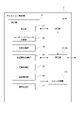
- the setting start screen 91 as shown in FIG. 6 is displayed on the display unit D of the television receiver 1. Is displayed. This makes it possible to start the initial setting process for performing the acoustic output from the television receiver 1 from the neckband speaker 3A.
- a start button 91a for starting the setting and a hold button 91b for holding the setting without starting it immediately are arranged.
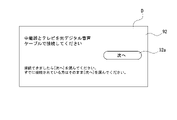
- connection instruction screen 92 as shown in FIG. 7 is displayed on the display unit D of the television receiver 1.
- connection instruction screen 92 is a screen for urging the user to connect the relay device HU to the television receiver 1.
- the next button 92a is arranged on the connection instruction screen 92.
- a user who has connected the relay device HU or a user who has already connected the relay device HU can proceed with the initial setting process by selecting the next button 92a.
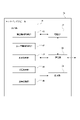
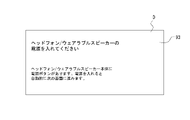
- the playback device connection instruction screen 93 as shown in FIG. 8 is displayed on the display unit D of the television receiver 1. Will be done.
- the playback device connection instruction screen 93 is a screen for instructing pairing of the neckband speaker 3A as an audio signal reproduction device and the relay device HU.
- the pairing of the neckband speaker 3A and the relay device HU is automatically performed, for example, by turning on the power of the neckband speaker 3A.
- the display unit D of the television receiver 1 automatically displays the initial stage as shown in FIG.
- the setting completion notification screen 94 is displayed.
- buttons such as a button for selecting whether or not to experience 3D surround playback to which the head related transfer function information HRTF is applied are arranged.
- a demo experience button 94a and a demo non-experience button 94b are arranged on the initial setting completion notification screen 94.
- the screens described below are not displayed.
- a screen prompting the user to log in or a screen for selecting the head related transfer function information HRTF may be displayed.
- the demo experience button 94a When the demo experience button 94a is selected, the demo experience video is displayed on the display unit D of the television receiver 1, and the sound is output from the neckband speaker 3A.
- the acoustic output at this time is based on the corrected audio signal SB to which the standard head-related transfer function information HRTF is applied to the uncorrected audio signal SA.
- the optimization selection screen 95 as shown in FIG. 11 is displayed on the display unit D of the television receiver 1.
- the optimization execution button 95a and the optimization non-execution button 95b are arranged on the optimization selection screen 95.
- the optimization execution button 95a is an option selected when performing optimum settings specific to the user who uses the newly connected neckband speaker 3A.
- the non-optimization non-execution button 95b is an option to be selected when such personal optimization is not performed.
- the setting completion screen 96 as shown in FIG. 12 is displayed.
- a completion button 96a is arranged on the setting completion screen 96, and the user can return to the screen display before the setting such as the viewing screen by selecting the completion button 96a.
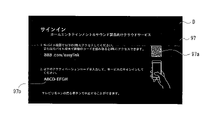
- the optimization procedure screen 97 as shown in FIG. 13 is displayed on the display unit D.
- a guidance code 97a which is a two-dimensional code for guiding to a website for performing a personal optimization operation
- an activation code 97b for identifying the television receiver 1, and the like are displayed. It is displayed.
- the guided website is, for example, a web page managed by the server device 5.
- it may be a guide code 97a for installing application software for performing an optimization operation.
- the user can easily start or install a specific application by operating the smartphone 6 and reading the guidance code 97a.
- the account selection screen 98 as shown in FIG. 14 is displayed on the display unit D. May be good.
- account options 98a and 98b for selecting an account and other account options 98c for selecting another account that is not displayed are arranged.
- various display modes such as an e-mail address, an account name, and a user name can be considered.
- the code input screen 99 as shown in FIG. 15 is displayed on the display unit Ds (screen) of the smartphone 6. ..
- the code input screen 99 has an input field 99a for inputting an activation code and a next button 99b.
- the activation code is transmitted to the server device 5.
- the server device 5 identifies the television receiver 1 being used by the user based on the activation code received from the smartphone 6.
- the server device 5 notifies the smartphone 6 that the information identifying the television receiver 1 has been received.
- the identification completion notification screen 100 as shown in FIG. 16 is displayed on the display unit Ds of the smartphone 6 in response to receiving the notification.
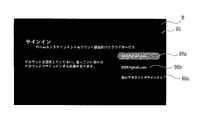
- the sign-in screen 101 as shown in FIG. 17 is displayed on the display unit Ds of the smartphone 6.
- This sign-in is for using various services provided by the server device 5.
- the sign-in screen 101 is a screen for signing in by various methods in order to use the service provided by the server device 5.
- the service for the head related transfer function information HRTF provided by the server device 5 will be referred to as "HRTF service”.
- HRTF service the service for the head related transfer function information provided by the server device 5
- other services provided by information processing devices other than the server device 5, such as accounts of various SNS (Social Network Service), are referred to as “other services”.
- the account for using other services is described as "account for other services”.
- a first selection button 101a for signing in with an account for an HRTF service and a second selection button 101a for signing in with an account for another service are displayed.
- the selection button 101b is arranged.
- an account creation button 101c for creating an account for the HRTF service is arranged for a user who does not have those accounts.
- the sign-in information input screen 102 as shown in FIG. 18 is displayed on the display unit Ds of the smartphone 6.
- a sign-in information input field 102a and a sign-in button 102b for inputting sign-in information for other services are arranged.
- a create button or the like for creating an account for another service may be arranged on the sign-in information input screen 102.
- the account creation screen 103 is a screen for creating an account for the HRTF service. On the account creation screen 103, an input field 103a for inputting various user information, a creation button, and the like are arranged.
- a sign-up screen for the HRTF service may be displayed for a user who has already created an account for the HRTF service.
- the server device 5 determines whether or not the head related transfer function information HRTF corresponding to the user who signed up has been acquired, and if not, that is, If the head-related transfer function information HRTF corresponding to the user is not stored in the database managed by the server device 5, the process proceeds to the process for calculating the head-related transfer function information HRTF corresponding to the user.
- the process of acquiring the head-related transfer function information HRTF corresponding to the user for example, the user's ear is photographed using the smartphone 6, the shape of the ear is estimated, and the head-related transfer function information HRTF is calculated. , The process of uploading the calculation result to the server device 5 is executed.
- the ear shape estimation process and the head related transfer function information HRTF calculation process may be executed by either the smartphone 6 or the server device 5. Further, as described above, the image of the ear may be stored in the server device 5.
- the process of downloading the head-related transfer function information HRTF corresponding to the user to the television receiver 1 is performed. And proceed. Even after the head-related transfer function information HRTF is calculated by photographing the user's ears, the process proceeds to the process of downloading the head-related transfer function information HRTF corresponding to the user to the television receiver 1.
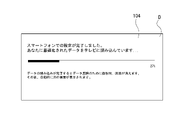
- the download screen 104 as shown in FIG. 20 is displayed on the display unit D of the television receiver 1.
- a progress bar or the like is arranged on the download screen 104.
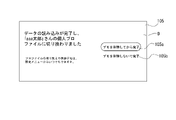
- the completion screen 105 As shown in FIG. 21 is displayed. Similar to the initial setting completion notification screen 94 (see FIG. 10), the demo experience button 105a and the demo non-experience button 105b are arranged on the completion screen 105.
- the demo experience button 105a When the user selects the demo experience button 105a, it becomes possible to experience the acoustic output to which the optimum head-related transfer function information HRTF corresponding to the user is applied. Thereby, it is possible to compare the case where the standard head-related transfer function information HRTF is applied and the case where the head-related transfer function information HRTF corresponding to the user is applied. In particular, by making the content that can be experienced when the demo experience button 94a on the initial setting completion notification screen 94 is pressed and the content that can be experienced when the demo experience button 94a on the completion screen 105 is pressed, the difference is made. Can be grasped more clearly.
- the server device 5 transmits user information (user ID, account information, etc.) to the television receiver 1.
- user information user ID, account information, etc.
- the television receiver 1 can acquire information for identifying the user in use.
- the server device 5 manages the specified television receiver 1 in association with user information.
- the television receiver 1 stores the head related transfer function information HRTF associated with the selected account in the storage unit 9 or the server device 5. Determine if it is.
- the target head-related transfer function information HRTF is stored in the storage unit 9 of the television receiver 1, the head-related transfer function information HRTF corresponding to the user is acquired from the storage unit 9 of the television receiver 1.
- the server device 5 responds to the user while performing the UI processing for displaying each screen shown in FIGS. 20 and 21. A process of downloading the head-related transfer function information HRTF to the television receiver 1 is performed.
- the head-related transfer function information HRTF corresponding to the user is not stored in either the storage unit 9 of the television receiver 1 or the server device 5, a new ear image is taken using the smartphone 6.
- the head related transfer function information HRTF corresponding to the user is calculated and downloaded to the television receiver 1.
- the head-related transfer function information HRTF corresponding to the user is transmitted to the television receiver. It can be downloaded to 1. As a result, the user can experience 3D surround reproduction to which the optimum head-related transfer function information HRTF corresponding to himself / herself is applied.
- the television receiver 1 detects the connection of the neckband speaker 3A in step S101.
- the television receiver 1 presents information for identifying the television receiver in step S102.
- the activation code 97b or the like on the optimization procedure screen 97 illustrated in FIG. 13 is displayed on the display unit D.
- the code information is provided to the smartphone 6.
- code information such as an activation code and serial information for identifying the television receiver 1 are transmitted from the television receiver 1 to the smartphone 6. You may send it.
- the smartphone 6 After acquiring the code information, the smartphone 6 performs a process of accepting a login operation or the like in step S201.
- This process is a process of accepting a user's input operation on, for example, the sign-in screen 101 shown in FIG. 17, the sign-in information input screen 102 shown in FIG. 18, the account creation screen 103 shown in FIG.
- login information is transmitted from the smartphone 6 to the server device 5.
- the server device 5 After receiving the login information, the server device 5 performs a login process in step S301.
- the result information of the login process is transmitted to the smartphone 6.
- the smartphone 6 performs a process of displaying a menu screen or the like for the HRTF service according to the result of the login process (step S202).
- server device 5 may acquire code information, serial information, and the like for identifying the television receiver 1 from the smartphone 6 together with the login information.
- step S302 the server device 5 performs a process of associating the television receiver 1 with the user's account information based on the received information.
- the television receiver 1 acquires information for specifying the neckband speaker 3A from the neckband speaker 3A in step S103.
- the television receiver 1 performs a process of generating profile information about the user in step S104.
- the profile information includes the neckband speaker 3A and the user information.
- the user information may be information input by the user using the television receiver 1, or user information associated with the television receiver 1 in the association process of step S302 executed by the server device 5. May be acquired from the server device 5, or the user information input to the user as a result of the login operation on the smartphone 6 may be acquired from the smartphone 6.
- the television receiver 1 may transmit the information of the neckband speaker 3A specified in step S103 to the server device 5.
- a process of associating not only the information specifying the television receiver 1 and the account information of the user but also the information specifying the neckband speaker 3A is executed. May be good.
- step S401 the television receiver 1 determines whether or not the head related transfer function information HRTF for the user is stored in the storage unit 9. If it is determined that the television receiver 1 is not stored, the television receiver 1 performs a request process for the server device 5 to acquire the head related transfer function information HRTF corresponding to the user in step S402.
- the head-related transfer function information HRTF is transmitted from the server device 5. Further, when the corresponding head-related transfer function information HRTF is not managed, the television receiver 1 is notified that the head-related transfer function information HRTF is not stored in the server device 5.
- step S403 the television receiver 1 determines whether or not the head related transfer function information HRTF corresponding to the user can be acquired.
- the television receiver 1 executes various processes for calculating the user's head related transfer function information HRTF in step S404. For example, a process of displaying a two-dimensional code for installing a software application for photographing the ear on the display unit D is executed. It should be noted that various processes for calculating the user's head related transfer function information HRTF may be executed on the smartphone 6 or may be executed by the cooperation between the television receiver 1 and the smartphone 6. .. Further, a UI process may be executed in which the user selects whether or not to calculate the head related transfer function information HRTF corresponding to the user.
- step S405 the television receiver 1 performs a process of downloading the head related transfer function information HRTF corresponding to the user.
- step S406 the television receiver 1 applies the head related transfer function information HRTF to the uncorrected audio signal SA to generate the corrected audio signal SB.
- the user can enjoy the acoustic output based on the corrected audio signal SB to which the head related transfer function information HRTF corresponding to the user is applied.
- the television receiver 1 performs a process of determining whether or not to apply the head related transfer function information HRTF based on various audio signals. Specifically, it will be described with reference to FIG. 24.
- step S501 the television receiver 1 determines whether the audio signal of the reproduced content is multi-channel or stereo 2-channel.
- the audio signal to be determined is the uncorrected audio signal SA.
- the television receiver 1 determines in step S502 whether or not the 3D surround setting is valid.
- the 3D surround setting may be appropriately set by the user. In other words, the user may be able to switch the 3D surround setting by executing the UI processing that allows the UI processing unit 22 to switch ON / OFF of the 3D surround setting. Alternatively, the 3D surround setting may be automatically set based on the audio signal before correction and the information of the reproduced content.
- the television receiver 1 When it is determined that the 3D surround setting is valid, the television receiver 1 performs the corrected audio signal SB converted into stereo 2 channels by the downmix process to which the head related transfer function information HRTF corresponding to the user is applied in step S503. Generate.
- the television receiver 1 transmits the corrected audio signal SB to the neckband speaker 3A in step S504. This allows the user to experience optimal 3D surround using the neckband speaker 3A.
- step S502 If it is determined in step S502 that 3D surround is not valid, that is, if it is determined that the audio signal of the reproduced content is multi-channel but 3D surround is not valid, the television receiver 1 performs downmix processing in step S505. Perform stereo 2 channel.
- step S504 the television receiver 1 transmits the stereo 2-channel audio signal to the neckband speaker 3A.
- step S501 When it is determined in step S501 that the audio signal of the reproduced content is stereo 2 channel, the television receiver 1 determines whether or not the 3D surround setting is valid in step S506.
- the television receiver 1 When it is determined that the 3D surround setting is valid, the television receiver 1 generates the uncorrected audio signal SA which is multi-channelized by the upmix processing in step S507.
- the television receiver 1 generates a corrected audio signal SB by performing a downmix process to which the head related transfer function information HRTF is applied in step S503, and the corrected audio signal SB is used as a neckband speaker in step S504. Transmit to 3A.
- step S506 If it is determined in step S506 that 3D surround is not valid, that is, if it is determined that the audio signal of the reproduced content is stereo 2 channels and 3D surround is not valid, the television receiver 1 determines that stereo 2 channels are not valid in step S504. The audio signal is transmitted to the neckband speaker 3A as it is.
- the television receiver 1 applies appropriate processing to the audio signal based on the audio signal of the reproduced content and the 3D surround setting, and transmits the audio signal to the neckband speaker 3A.
- the user can enjoy the optimum acoustic output.
- the neckband speaker 3A is configured to manage profile information for a plurality of users.
- the neckband speaker 3A includes a control unit 31, a storage unit 32, a communication unit 33, and an output unit 34.
- the control unit 31 switches between the identification information acquisition unit 41, the reproduction processing unit 43, the reception processing unit 44, the transmission processing unit 45, the profile information management unit 46, and the user interface processing unit (UI processing unit) 47. It functions as a processing unit 48.
- the profile information management unit 46 can manage a plurality of profile information.
- One profile information is configured to include information for identifying a user.
- the profile information management unit 46 may be capable of transmitting profile information corresponding to the user to the television receiver 1.
- the corrected audio signal SB to which the head-related transfer function information HRTF corresponding to the user is applied is generated in the television receiver 1.
- the user may be specified, for example, according to the user's selection, depending on the mode in which the user wears the neckband speaker 3A, or by analyzing the voiceprint of the wearing user. You may. Various methods other than this can be considered.
- the profile information management unit 46 is capable of registering and deleting profile information.
- the UI processing unit 47 performs, for example, a process of detecting a user operation on an operator for selecting profile information, a voice output process for notifying the selected profile information, and the like. Further, when the neckband speaker 3A is provided with a small display unit, the notification processing may be performed using the display unit.
- the switching processing unit 48 switches the profile information.
- the profile information is switched each time the wearing user changes, and the switched profile information is transmitted to the television receiver 1 by the profile information management unit 46.
- an appropriate head-related transfer function information HRTF can be selected based on the profile information received from the neckband speaker 3A, and the corrected audio signal SB can be generated.
- the head related transfer function information HRTF corresponding to one user is one has been described, but there may be a plurality of head-related transfer function information HRTFs.
- various audio signal reproduction devices have different characteristics. Therefore, when one user uses a plurality of audio signal reproduction devices, the head related transfer function information HRTF may be generated and managed for each audio signal reproduction device.
- head-related transfer function information HRTFs may be generated depending on the number and position of virtual sound sources.
- multiple types of head-related transfer function information HRTFs corresponding to one user are managed, and the user can experience an acoustic output to which an appropriate head-related transfer function information HRTF is applied according to the content to be played. It will be possible.
- the television receiver 1 may be managed by associating the audio signal reproduction device with the user. That is, the television receiver 1 detects that the connected audio signal reproduction device has been changed, estimates that the user has been replaced, and newly adds the head-related transfer function information HRTF to be applied to the uncorrected audio signal SA. It may be switched to the one corresponding to various users.
- the television receiver 1 may execute a process of notifying which user the currently applied head related transfer function information HRTF belongs to. Further, this notification processing may be executed by an audio signal reproduction device such as a neckband speaker 3A instead of the television receiver 1.
- the television receiver 1 as an information processing device corresponds to a signal acquisition unit 25 for acquiring an audio signal, a storage unit 9 for storing head-related transfer function information HRTF corresponding to the user, and a user.
- a determination processing unit 23 that determines whether or not the head-related transfer function information HRTF is stored in the storage unit 9, a transmission function acquisition unit 24 that acquires the head-related transfer function information HRTF corresponding to the user, and an audio signal (correction). It includes a function application unit 26 that applies head-related transfer function information HRTF corresponding to the user to the front audio signal SA).
- the transfer function acquisition unit 24 does not store the head-related transfer function information HRTF corresponding to the user in the storage unit 9, the head-related transfer function corresponding to the user is transmitted from another information processing device (for example, the server device 5). Acquire function information HRTF.
- the newly purchased information processing device television, stereo, etc.
- the head related transfer function information HRTF it has been calculated so far.
- User-specific head-related transfer function information HRTF can be acquired from other information processing devices. Therefore, it is not necessary to newly execute a process for calculating (generating) the user-specific head-related transfer function information HRTF, and the processing load can be reduced.
- An audio signal reproduction device such as the neckband speaker 3A can function as such an information processing device. That is, the neckband speaker 3A has a signal acquisition unit 25 for acquiring the pre-correction audio signal SA, a storage unit 32 for storing the head related transfer function information HRTF, a determination processing unit 23, a transfer function acquisition unit 24, and a function application. A unit 26 may be provided.
- the corrected audio signal SB is generated from the uncorrected audio signal SA in the neckband speaker 3A, so that the processing load of generating the corrected audio signal SB in the television receiver 1 is reduced.
- an increase in the processing load of the television receiver 1 may become a problem. According to the configuration, such a problem can be avoided.
- the transfer function acquisition unit 24 in the television receiver 1 acquires the head-related transfer function information HRTF corresponding to the user from the storage unit 9, and the head-related transfer function information HRTF corresponding to the user is stored in the storage unit 9. If not, the head related transfer function information HRTF corresponding to the user may be acquired from another information processing device (server device 5). As a result, when the corresponding head-related transfer function information HRTF is stored in the storage unit 9 of the television receiver 1, it is not necessary to issue an acquisition request to another information processing device. As a result, the amount of communication can be reduced, and the processing load of other information processing devices can be reduced.
- the television receiver 1 is a user when the head related transfer function information HRTF corresponding to the user is not stored in the storage unit 9 and cannot be acquired from another information processing device (server device 5).
- a user interface processing unit 22 that performs user interface processing (UI processing) for obtaining head-related transfer function information HRTF corresponding to the above may be provided. For example, a process of displaying information for downloading an application for calculating head-related transfer function information HRTF to a user terminal (smartphone 6) is executed. As a result, the user can smoothly perform the operation for acquiring the head related transfer function information HRTF. Further, by having the user operate according to the display, it is possible to make the user perform an appropriate operation, and it is possible to reduce the possibility of performing an erroneous operation or the like.
- An audio signal reproduction device such as the neckband speaker 3A can function as such an information processing device.
- the user interface processing unit 22 in the television receiver 1 may execute a process of selecting whether or not to execute a process for obtaining the head related transfer function information HRTF corresponding to the user as the user interface process. For example, by selecting the hold button 91b in FIG. 6 or the optimization non-execution button 95b in FIG. 11, it is selected not to execute the process for obtaining the head related transfer function information HRTF corresponding to the user. Can be done. This makes it possible to indicate the intention to avoid the process for obtaining the head-related transfer function information HRTF when the user spares the trouble of calculating the head-related transfer function information HRTF unique to the user. .. Therefore, it is not necessary to execute the process that the user feels unnecessary, so that the convenience of the user can be improved.
- the user interface processing unit 22 of the television receiver 1 performs a process of displaying guidance information (two-dimensional code, web page link information, etc.) for installing an application on a user terminal (smartphone 6) as a user interface process. You may do it. As a result, the user can install an appropriate application by operating according to the display. Therefore, it is possible to save the trouble of searching for an application and improve the convenience of the user. In addition, it is possible to prevent the user from giving up experiencing the acoustic output to which the head related transfer function information HRTF is applied without finding a suitable application.
- the television receiver 1 may include a transmission processing unit 27 that transmits an audio signal to a reproduction device (audio signal reproduction device).
- a reproduction device audio signal reproduction device
- Such an information processing device is, for example, a television receiver 1, a personal computer, a tablet terminal, or the like. In particular, it is suitable for an information processing terminal that is likely to be shared by a plurality of people.
- the playback device is a headphone or earphone worn by the user. Headphones include those that are worn on the head so as to cover the ears and those that are hung on the neck. Even if the head-related transfer function information HRTF corresponding to the user is not stored in the information processing device such as the television receiver 1, the user-specific head-related transfer function information HRTF calculated so far can be used for other head-related transfer function information HRTFs. It can be obtained from a television receiver 1 or the like as an information processing device.
- the detection unit 21 that detects the connection of the reproduction device (audio signal reproduction device) and the head related transfer function information HRTF applied to the audio signal when the detection unit 21 detects the connection of the reproduction device.
- a user interface processing unit 22 that performs user interface processing for selecting whether or not to perform the above may be provided. Thereby, for example, when the headphone (neckband speaker 3A) is connected to the television receiver 1, whether or not surround reproduction using the head related transfer function information HRTF is performed on the display unit D of the television receiver 1. It is possible to display to select.
- the function application unit 26 in the television receiver 1 applies the first application process of applying the head-related transfer function information HRTF corresponding to the user to the audio signal, and the standard head-related transfer function information HRTF to the audio signal. It may be possible to execute the second application process to be applied. For example, even if the user is busy and does not have time to perform an operation for acquiring the head-related transfer function information HRTF, it is possible to perform acoustic output using the standard head-related transfer function information HRTF. .. This makes it possible to perform acoustic reproduction with a certain degree of three-dimensional acoustic effect even if the user-specific head-related transfer function information HRTF cannot be acquired.
- the user interface processing unit 22 in the television receiver 1 performs user interface processing for selecting whether to execute the first application process or the second application process when the connection of the reproduction device (audio signal reproduction device) is detected. It may be made feasible. Specifically, the first process can be executed by selecting the optimization execution button 95a in FIG. 11, and the second process can be executed by selecting the demo experience button 94a in FIG. 10. As a result, the user can select whether to experience the sound reproduction to which the head-related transfer function information HRTF unique to the user is applied, or to experience the sound reproduction to which the head-related transfer function information HRTF common to all users is applied. ..
- the user interface processing unit 22 in the television receiver 1 executes user interface processing for experiencing the sound field constructed by the audio signal (corrected audio signal SB) after the head related transfer function information HRTF is applied. It may be possible. For example, some users may not be aware that sound reproduction to which head-related transfer function information HRTF is applied is possible. In order to inform such a user that sound reproduction to which the head related transfer function information HRTF is applied is possible, a sound field constructed by an audio signal after the head related transfer function information HRTF is applied is provided. By executing the user interface process for experiencing, it is possible to give the user an awareness and give an opportunity to perform an operation for acquiring the head related transfer function information HRTF.
- the user interface processing unit 22 in the television receiver 1 may be capable of executing user interface processing for performing login processing for the user.
- a user can be identified by performing a login operation by the user according to the login process.
- the head-related transfer function information HRTF specialized for the specified user can be acquired, and the optimum acoustic output for the user can be provided.
- the user interface processing unit 22 in the television receiver 1 transmits the user interface processing for performing the login processing for the user and the head transmission function information HRTF corresponding to the user specified as a result of the login processing. Even if it is possible to execute user interface processing for letting the user experience the sound field constructed by the audio signal (corrected audio signal SB) generated by the second application processing when good.
- the case where the head-related transfer function information HRTF corresponding to the user specified by the login process cannot be acquired is, for example, the case where the user has not experienced the acoustic output to which the head-related transfer function information HRTF specialized for himself / herself is applied. And so on.
- the user can be made aware of the attractiveness of the acoustic output to which the head-related transfer function information HRTF is applied by executing the process for experiencing the acoustic output to which the head-related transfer function information HRTF is applied. ..
- the storage unit 9 in the television receiver 1 may store the head-related transfer function information HRTF corresponding to the user in association with the reproduction device (audio signal reproduction device). This makes it possible to acquire the head related transfer function information HRTF corresponding to the user specified by the login process or the like without performing the communication process with another information processing device (for example, the server device 5 or the like). Therefore, the optimum acoustic output can be provided to the logged-in user. Further, even when the information processing apparatus does not have a communication function, it is possible to provide an acoustic output suitable for the user.
- the storage unit 9 in the television receiver 1 may store a plurality of combinations of the head-related transfer function information HRTF corresponding to the user and the reproduction device (audio signal reproduction device). This makes it possible to acquire the head related transfer function information HRTF corresponding to each user even when the information processing apparatus is shared and used by a plurality of users. Therefore, it is possible to provide an optimum acoustic output for each user.
- the television receiver 1 it is possible to execute user interface processing for switching between an applied state in which the head-related transfer function information HRTF is applied to the audio signal and a non-applied state in which the head-related transfer function information HRTF is not applied to the audio signal.
- It may be provided with a user interface processing unit. That is, the user interface processing unit 22 may be capable of executing user interface processing for switching whether to transmit the uncorrected audio signal SA or the corrected audio signal SB to the playback device.
- the user can switch whether or not the head related transfer function information HRTF is applied according to the content of the content. Therefore, it is possible to provide an optimum acoustic output as needed. Further, when the head-related transfer function information HRTF is switched to the non-applied state, the processing load of the information processing apparatus can be reduced.
- a user interface processing unit capable of executing user interface processing for switching the head-related transfer function information corresponding to the user to the head-related transfer function information corresponding to another user. May be provided.
- the information processing device described above may be a television receiver 1 provided with a display unit capable of displaying an image.
- another information processing device such as the server device 5 responds to the user.
- the process of acquiring the head related transfer function information HRTF is executed in the television receiver 1.
- the user-specific head-related transfer function information HRTF already calculated by the smartphone 6 or the like can be used by the television receiver 1. Therefore, for the user who has already calculated the head-related transfer function information HRTF, it is not necessary to execute the calculation process of the head-related transfer function information HRTF again, so that the processing load of the television receiver 1 can be reduced.
- the user interface process for performing the login process for the user and the head related transfer function information HRTF corresponding to the user specified as a result of the login process are not stored in the storage unit 9 and other than that.
- the user interface processing unit 22 that can execute the user interface processing to be displayed on the unit D may be provided.
- the transfer function acquisition unit 24 may acquire the head related transfer function information HRTF corresponding to the user calculated based on the information transmitted from the user terminal from another information processing device.
- a signal acquisition unit that acquires audio signals, and A storage unit that stores head-related transfer function information corresponding to the user, A determination processing unit that determines whether or not the head-related transfer function information corresponding to the user is stored in another information processing device.
- a transfer function acquisition unit that acquires the head-related transfer function information corresponding to the user, An information processing device including a function application unit that applies the head-related transfer function information corresponding to the user to the audio signal.
- the transfer function acquisition unit The head-related transfer function information corresponding to the user is acquired from the storage unit, and when the head-related transfer function information corresponding to the user is not stored in the storage unit, the user from the other information processing device.
- the information processing apparatus which acquires the head-related transfer function information corresponding to the above.
- the information processing apparatus according to (2) above comprising a user interface processing unit that performs user interface processing for obtaining the information.
- the information processing apparatus executes a process of displaying guidance information for installing an application on a user terminal as the user interface process.
- a detection unit that detects the connection of the playback device, A user interface processing unit that performs user interface processing for selecting whether or not to apply the head-related transfer function information to the audio signal when the detection unit detects the connection of the playback device ( The information processing apparatus according to 6).
- the function application unit applies the first application process of applying the head-related transfer function information corresponding to the user to the audio signal, and the standard head-related transfer function information to the audio signal.
- the information processing apparatus which is capable of executing the second application process.
- the user interface processing unit is capable of executing a user interface process for selecting whether to execute the first application process or the second application process when the connection of the playback device is detected (8).
- the information processing device described in. (10)
- the user interface processing unit is capable of executing user interface processing for experiencing the sound field constructed by the audio signal after the head related transfer function information is applied, from the above (7) to the above (9). ) Is described in any of the information processing devices.
- the information processing apparatus according to any one of (7) to (10) above, wherein the user interface processing unit is capable of executing user interface processing for performing login processing for the user.
- the user interface processing unit The second application when the transmission function acquisition unit cannot acquire the user interface processing for performing the login processing for the user and the head transmission function information corresponding to the user specified as a result of the login processing.
- the information processing apparatus according to (9) above, wherein the user interface processing for allowing the user to experience the sound field constructed by the audio signal generated by the processing can be executed.
- the information processing device according to any one of (6) to (12) above, wherein the storage unit stores the head-related transfer function information corresponding to the user in association with the reproduction device.
- the information processing device (13) above, wherein the storage unit stores a plurality of combinations of the head-related transfer function information corresponding to the user and the reproduction device.
- a user interface processing unit capable of executing user interface processing for switching between an applied state in which the head-related transfer function information is applied to the audio signal and a non-applied state in which the head-related transfer function information is not applied to the audio signal.
- the information processing apparatus according to any one of the above (1) to (14).
- the information processing apparatus according to any one of (15) above.
- the information processing apparatus which is a television receiver provided with a display unit capable of displaying an image.
- the user interface process for performing the login process for the user and the head transmission function information corresponding to the user specified as a result of the login process are not stored in the storage unit and are acquired from other information processing devices.
- the transfer function acquisition unit acquires the head-related transfer function information corresponding to the user calculated based on the information transmitted from the user terminal from the other information processing apparatus (17).
Landscapes
- Physics & Mathematics (AREA)
- Engineering & Computer Science (AREA)
- Acoustics & Sound (AREA)
- Signal Processing (AREA)
- Stereophonic System (AREA)
Priority Applications (2)
| Application Number | Priority Date | Filing Date | Title |
|---|---|---|---|
| JP2022565155A JP7771977B2 (ja) | 2020-11-25 | 2021-10-28 | 情報処理装置、情報処理方法 |
| US18/253,090 US12495265B2 (en) | 2020-11-25 | 2021-10-28 | Information processing device and information processing method |
Applications Claiming Priority (2)
| Application Number | Priority Date | Filing Date | Title |
|---|---|---|---|
| JP2020-195497 | 2020-11-25 | ||
| JP2020195497 | 2020-11-25 |
Publications (1)
| Publication Number | Publication Date |
|---|---|
| WO2022113638A1 true WO2022113638A1 (ja) | 2022-06-02 |
Family
ID=81755766
Family Applications (1)
| Application Number | Title | Priority Date | Filing Date |
|---|---|---|---|
| PCT/JP2021/039867 Ceased WO2022113638A1 (ja) | 2020-11-25 | 2021-10-28 | 情報処理装置、情報処理方法 |
Country Status (3)
| Country | Link |
|---|---|
| US (1) | US12495265B2 (https=) |
| JP (1) | JP7771977B2 (https=) |
| WO (1) | WO2022113638A1 (https=) |
Cited By (1)
| Publication number | Priority date | Publication date | Assignee | Title |
|---|---|---|---|---|
| JPWO2022124084A1 (https=) * | 2020-12-09 | 2022-06-16 |
Citations (3)
| Publication number | Priority date | Publication date | Assignee | Title |
|---|---|---|---|---|
| WO2020138257A1 (ja) * | 2018-12-28 | 2020-07-02 | ソニー株式会社 | 情報処理装置、情報処理方法及び情報処理プログラム |
| US20200257548A1 (en) * | 2019-02-08 | 2020-08-13 | Sony Corporation | Global hrtf repository |
| WO2020195084A1 (ja) * | 2019-03-22 | 2020-10-01 | ソニー株式会社 | 音響信号処理装置、音響信号処理システム、および音響信号処理方法、並びにプログラム |
Family Cites Families (1)
| Publication number | Priority date | Publication date | Assignee | Title |
|---|---|---|---|---|
| JP2011259299A (ja) | 2010-06-10 | 2011-12-22 | Sony Corp | 頭部伝達関数生成装置、頭部伝達関数生成方法及び音声信号処理装置 |
-
2021
- 2021-10-28 WO PCT/JP2021/039867 patent/WO2022113638A1/ja not_active Ceased
- 2021-10-28 US US18/253,090 patent/US12495265B2/en active Active
- 2021-10-28 JP JP2022565155A patent/JP7771977B2/ja active Active
Patent Citations (3)
| Publication number | Priority date | Publication date | Assignee | Title |
|---|---|---|---|---|
| WO2020138257A1 (ja) * | 2018-12-28 | 2020-07-02 | ソニー株式会社 | 情報処理装置、情報処理方法及び情報処理プログラム |
| US20200257548A1 (en) * | 2019-02-08 | 2020-08-13 | Sony Corporation | Global hrtf repository |
| WO2020195084A1 (ja) * | 2019-03-22 | 2020-10-01 | ソニー株式会社 | 音響信号処理装置、音響信号処理システム、および音響信号処理方法、並びにプログラム |
Cited By (2)
| Publication number | Priority date | Publication date | Assignee | Title |
|---|---|---|---|---|
| JPWO2022124084A1 (https=) * | 2020-12-09 | 2022-06-16 | ||
| JP7800443B2 (ja) | 2020-12-09 | 2026-01-16 | ソニーグループ株式会社 | 再生装置、再生方法、情報処理装置、情報処理方法、およびプログラム |
Also Published As
| Publication number | Publication date |
|---|---|
| JP7771977B2 (ja) | 2025-11-18 |
| US20240015460A1 (en) | 2024-01-11 |
| JPWO2022113638A1 (https=) | 2022-06-02 |
| US12495265B2 (en) | 2025-12-09 |
Similar Documents
| Publication | Publication Date | Title |
|---|---|---|
| CN110741651B (zh) | 用于呈现指示推荐内容的通知的方法、系统和介质 | |
| US11113022B2 (en) | Method, system and interface for controlling a subwoofer in a networked audio system | |
| US10244056B2 (en) | Method and apparatus for transferring remote session data | |
| JP6628354B2 (ja) | サーバ装置、プログラム、及び通信システム | |
| CN106465036B (zh) | 配置经由家庭音频回放系统的音频的回放 | |
| WO2019149049A1 (zh) | 一种业务处理方法、终端、服务器及相关产品 | |
| KR20130064796A (ko) | 원격 장치 상에서의 적응성 미디어 콘텐츠 스크러빙 | |
| US11563855B1 (en) | Customized audio mixing for users in virtual conference calls | |
| US8693714B2 (en) | System and method for controlling an audio feature of a hearing assistance device | |
| US11113092B2 (en) | Global HRTF repository | |
| JP5349656B1 (ja) | 映像処理装置及びその制御方法 | |
| JP7771977B2 (ja) | 情報処理装置、情報処理方法 | |
| US12602197B2 (en) | Configuration of platform application with audio profile of a user | |
| CN117836754A (zh) | 一种音频控制方法及显示设备 | |
| US20240015462A1 (en) | Voice processing system, voice processing method, and recording medium having voice processing program recorded thereon | |
| US11792581B2 (en) | Using Bluetooth / wireless hearing aids for personalized HRTF creation | |
| JP7450591B2 (ja) | 音声信号処理装置、音声信号処理装置の制御方法、及びプログラム | |
| CN113407147A (zh) | 音频播放方法、装置、设备及存储介质 | |
| JP6592676B2 (ja) | プログラム、情報処理方法、及び通信システム | |
| JP2022052798A (ja) | 音響処理装置、音響処理方法、および音響処理プログラム | |
| US10802789B2 (en) | Information processing device, reproducing device, and information processing method | |
| EP3295667B1 (en) | Method, system and interface for controlling a subwoofer in a networked audio system | |
| US12573407B2 (en) | Quick audio profile using voice assistant | |
| JP5522216B2 (ja) | ネットワーク機器およびワイヤレスネットワークシステム | |
| US10206009B2 (en) | Contents processing device and contents processing system |
Legal Events
| Date | Code | Title | Description |
|---|---|---|---|
| 121 | Ep: the epo has been informed by wipo that ep was designated in this application |
Ref document number: 21897614 Country of ref document: EP Kind code of ref document: A1 |
|
| ENP | Entry into the national phase |
Ref document number: 2022565155 Country of ref document: JP Kind code of ref document: A |
|
| WWE | Wipo information: entry into national phase |
Ref document number: 18253090 Country of ref document: US |
|
| NENP | Non-entry into the national phase |
Ref country code: DE |
|
| 122 | Ep: pct application non-entry in european phase |
Ref document number: 21897614 Country of ref document: EP Kind code of ref document: A1 |