WO2022107573A1 - 腫瘍微小環境をターゲットとする光免疫療法に用いる医薬組成物、治療効果確認のためのマーカー、及び検査方法 - Google Patents
腫瘍微小環境をターゲットとする光免疫療法に用いる医薬組成物、治療効果確認のためのマーカー、及び検査方法 Download PDFInfo
- Publication number
- WO2022107573A1 WO2022107573A1 PCT/JP2021/039999 JP2021039999W WO2022107573A1 WO 2022107573 A1 WO2022107573 A1 WO 2022107573A1 JP 2021039999 W JP2021039999 W JP 2021039999W WO 2022107573 A1 WO2022107573 A1 WO 2022107573A1
- Authority
- WO
- WIPO (PCT)
- Prior art keywords
- cells
- pharmaceutical composition
- pit
- nir
- tumor
- Prior art date
- Legal status (The legal status is an assumption and is not a legal conclusion. Google has not performed a legal analysis and makes no representation as to the accuracy of the status listed.)
- Ceased
Links
Images








Classifications
-
- A—HUMAN NECESSITIES
- A61—MEDICAL OR VETERINARY SCIENCE; HYGIENE
- A61K—PREPARATIONS FOR MEDICAL, DENTAL OR TOILETRY PURPOSES
- A61K31/00—Medicinal preparations containing organic active ingredients
- A61K31/33—Heterocyclic compounds
- A61K31/395—Heterocyclic compounds having nitrogen as a ring hetero atom, e.g. guanethidine or rifamycins
- A61K31/40—Heterocyclic compounds having nitrogen as a ring hetero atom, e.g. guanethidine or rifamycins having five-membered rings with one nitrogen as the only ring hetero atom, e.g. sulpiride, succinimide, tolmetin, buflomedil
- A61K31/409—Heterocyclic compounds having nitrogen as a ring hetero atom, e.g. guanethidine or rifamycins having five-membered rings with one nitrogen as the only ring hetero atom, e.g. sulpiride, succinimide, tolmetin, buflomedil having four such rings, e.g. porphine derivatives, bilirubin, biliverdine
-
- A—HUMAN NECESSITIES
- A61—MEDICAL OR VETERINARY SCIENCE; HYGIENE
- A61K—PREPARATIONS FOR MEDICAL, DENTAL OR TOILETRY PURPOSES
- A61K39/00—Medicinal preparations containing antigens or antibodies
- A61K39/395—Antibodies; Immunoglobulins; Immune serum, e.g. antilymphocytic serum
-
- A—HUMAN NECESSITIES
- A61—MEDICAL OR VETERINARY SCIENCE; HYGIENE
- A61K—PREPARATIONS FOR MEDICAL, DENTAL OR TOILETRY PURPOSES
- A61K41/00—Medicinal preparations obtained by treating materials with wave energy or particle radiation ; Therapies using these preparations
-
- A—HUMAN NECESSITIES
- A61—MEDICAL OR VETERINARY SCIENCE; HYGIENE
- A61K—PREPARATIONS FOR MEDICAL, DENTAL OR TOILETRY PURPOSES
- A61K45/00—Medicinal preparations containing active ingredients not provided for in groups A61K31/00 - A61K41/00
-
- A—HUMAN NECESSITIES
- A61—MEDICAL OR VETERINARY SCIENCE; HYGIENE
- A61K—PREPARATIONS FOR MEDICAL, DENTAL OR TOILETRY PURPOSES
- A61K47/00—Medicinal preparations characterised by the non-active ingredients used, e.g. carriers or inert additives; Targeting or modifying agents chemically bound to the active ingredient
- A61K47/50—Medicinal preparations characterised by the non-active ingredients used, e.g. carriers or inert additives; Targeting or modifying agents chemically bound to the active ingredient the non-active ingredient being chemically bound to the active ingredient, e.g. polymer-drug conjugates
- A61K47/51—Medicinal preparations characterised by the non-active ingredients used, e.g. carriers or inert additives; Targeting or modifying agents chemically bound to the active ingredient the non-active ingredient being chemically bound to the active ingredient, e.g. polymer-drug conjugates the non-active ingredient being a modifying agent
- A61K47/68—Medicinal preparations characterised by the non-active ingredients used, e.g. carriers or inert additives; Targeting or modifying agents chemically bound to the active ingredient the non-active ingredient being chemically bound to the active ingredient, e.g. polymer-drug conjugates the non-active ingredient being a modifying agent the modifying agent being an antibody, an immunoglobulin or a fragment thereof, e.g. an Fc-fragment
-
- A—HUMAN NECESSITIES
- A61—MEDICAL OR VETERINARY SCIENCE; HYGIENE
- A61P—SPECIFIC THERAPEUTIC ACTIVITY OF CHEMICAL COMPOUNDS OR MEDICINAL PREPARATIONS
- A61P35/00—Antineoplastic agents
-
- A—HUMAN NECESSITIES
- A61—MEDICAL OR VETERINARY SCIENCE; HYGIENE
- A61P—SPECIFIC THERAPEUTIC ACTIVITY OF CHEMICAL COMPOUNDS OR MEDICINAL PREPARATIONS
- A61P37/00—Drugs for immunological or allergic disorders
- A61P37/02—Immunomodulators
- A61P37/04—Immunostimulants
-
- G—PHYSICS
- G01—MEASURING; TESTING
- G01N—INVESTIGATING OR ANALYSING MATERIALS BY DETERMINING THEIR CHEMICAL OR PHYSICAL PROPERTIES
- G01N33/00—Investigating or analysing materials by specific methods not covered by groups G01N1/00 - G01N31/00
- G01N33/48—Biological material, e.g. blood, urine; Haemocytometers
- G01N33/50—Chemical analysis of biological material, e.g. blood, urine; Testing involving biospecific ligand binding methods; Immunological testing
- G01N33/53—Immunoassay; Biospecific binding assay; Materials therefor
Definitions
- immune checkpoint molecules especially immune checkpoint molecules expressed in tumors, biomarkers for confirming the therapeutic effect, and test methods.
- NIR-PIT Near Infrared Photoimmunotherapy
- NIR-PIT Near Infrared Photoimmunotherapy
- photoimmunotherapy is a target of tumor cells or the like by irradiating with near-infrared light. It is a treatment that specifically kills cells. It is a new treatment method that can remove only the target cells from the local area without damaging the surrounding cells, and it is attracting attention because it does not burden the patient.
- a complex is prepared in which a molecule excited by near-infrared rays is bound to a specific binding molecule such as an antibody that binds to a target molecule specifically expressed in a target cell. It is a therapeutic method in which the prepared complex is bound to a target molecule, irradiated with light, and induced to cause necrotic cell death in the target cell by a photochemical reaction.
- NIR-PIT is being clinically tested on RM-1929, a complex in which IRDye® 700DX (IR700) is bound to cetuximab, an antibody that targets the epidermal growth factor receptor (EGFR).
- RM-1929 is in the process of Phase III trials and was approved in Japan in September 2020, ahead of the rest of the world.
- EGFR has been found to be expressed in various solid cancers such as esophageal cancer, lung cancer, colon cancer, and pancreatic cancer, in addition to head and neck cancer, which is the subject of clinical trials. Can be applied.
- NIR-PIT can be prepared as a complex in which IR700 is bound to a molecule such as an antibody that specifically binds to a target molecule expressed on the cell surface of a tumor cell, and thus various target molecules. It is possible to target and apply. Therefore, it is possible to target not only EGFR, which is currently undergoing clinical trials, but also so-called cancer antigens that are specifically expressed in tumors such as HER2, PSMA, and CEA, and are widely used in various tumors. It is a therapeutic method that can be applied (Patent Document 1, Non-Patent Document 1).
- NIR-PIT NIR-PIT
- the target molecule such as EGFR
- the complex does not bind to the cells that do not express the target molecule or only weakly express the target molecule, or the binding is not sufficient and the effect cannot be obtained. Therefore, patients to whom NIR-PIT can be applied are limited to patients in which the target molecule is highly expressed on the tumor surface. It is also known that tumors have heterogeneity due to the accumulation of new genomic abnormalities even within a single tumor. Therefore, NIR-PIT, which kills only cells in which high expression of the target molecule is observed, cannot induce cell death in all tumor cells, and cell death is not induced because the target molecule is not expressed.
- NIR-PIT is a topical therapy for light-irradiated tumors and has little effect on metastatic tumors.
- a treatment method that is effective even for a patient whose antigen expression level is low and ineffective by conventional treatment with NIR-PIT or an antibody, or light irradiation is performed.
- the challenge is to create a therapeutic method that is effective not only locally but also for metastatic tumors.
- the present invention relates to the following pharmaceutical compositions, test methods, and markers.
- a test method for confirming the effect of a pharmaceutical composition that enhances tumor immunity of a subject wherein the pharmaceutical composition is a pharmaceutical composition used for near-infrared ray immunotherapy, and is irradiated with near-infrared light.
- a pharmaceutical composition for metastatic cancer and / or prevention of recurrence wherein a complex in which a near-infrared ray-sensitive substance is bound to a specific binding molecule is used as an active ingredient, and the specific binding molecule is a tumor.
- a pharmaceutical composition for metastatic cancer and / or for preventing recurrence which is a molecule that binds to an immune checkpoint molecule expressed in cells.
- a pharmaceutical composition for enhancing tumor immunity of a target wherein a complex in which a near-infrared ray-sensitive substance is bound to a specific binding molecule is used as an active ingredient, and the specific binding molecule is a tumor cell.
- the pharmaceutical composition according to (15) or (16), wherein the specific binding molecule is an antibody or a functional antibody fragment.
- the pharmaceutical composition according to any one of (15) to (17), wherein the near-infrared ray sensitive substance is a phthalocyanine dye.
- the pharmaceutical composition according to (18), wherein the phthalocyanine dye is IR700.
- a near-red feature is that a pharmaceutical composition containing a complex in which a near-infrared ray-sensitive substance is bound to a specific binding molecule that binds to a target molecule other than the above is administered as an active ingredient and irradiated with light. External photoimmunotherapy.
- a combination therapy characterized in that the pharmaceutical composition according to one of the above is administered, and near-infrared ray immunotherapy is used to treat tumors and improve bone marrow suppression.
- 26) In the near-infrared ray immunotherapy of (24) or (25), a sample is obtained from a subject before and after light irradiation, and B cells, T cells, CD4 + T cells, and CD8 + T cells in the sample are obtained. , MDSC, monosphere / macrophages, dendritic cells, G-CSF, IL-6, KC, MIP-2, and immunotherapy is checked by changes in the markers before and after light irradiation.
- Near-infrared ray immunotherapy characterized by confirming the therapeutic effect of near-infrared ray immunotherapy targeting point molecules and performing multiple light irradiations when the treatment is judged to be effective.
- PD-L1-F (ab') 2 -IR700 The production of PD-L1-F (ab') 2 -IR700 is shown.
- mice Microscopic image showing changes in cells after light irradiation.
- the figure which shows the effect of NIR-PIT in a mouse in vivo tumor model The analysis results by (A) luciferase activity and (B) tumor volume are shown. The figure which shows the effect on the survival of NIR-PIT in a mouse in vivo tumor model. The figure which shows the result of having examined the effect of NIR-PIT using a mouse in vivo tumor model. Results of examination using lung cancer cell line LL / 2. The analysis results by (A) IVIS image, (B) luciferase activity, and (C) tumor volume are shown. The figure which shows the result of having examined the effect of NIR-PIT using a mouse in vivo tumor model. Results of a study using the prostate cancer cell line Tramp-C2.
- the analysis results by (A) IVIS image, (B) luciferase activity, and (C) tumor volume are shown.
- the analysis results by (A) IVIS image, (B) luciferase activity, (C) tumor volume, and (D) survival curve are shown.
- the results of (A) in vitro and (B) in vivo experimental systems are shown.
- Patent Document 1 and Non-Patent Document 1 also describe many molecules specifically expressed in cancer cells such as EGFR, HER2, PSMA, and CEA. Furthermore, it is also described to target molecules involved in immune checkpoints such as CD25, PD-1, PD-L1, PD-L2, and CTLA-4.
- immune checkpoint molecules such as PD-1 / PD-L1 described in the above literature are considered as one of the tumor antigens expressed on the surface of cancer cells, like molecules such as EGFR. Not too much. That is, it is considered as a local therapy for cancers in which immune checkpoint molecules such as PD-1 / PD-L1 are highly expressed as target molecules.
- the present inventor presents that NIR-PIT targeting PD-L1 not only has the conventional effect of killing tumor cells at a site irradiated with light, but also expresses PD-L1 in tumor cells that did not lead to cell death. It was found that enhancement, induction of immune response, and modification of the cancer microenvironment occur, synergistically activating antitumor immunity.
- the therapeutic effect of the anti-PD-L1 antibody itself is enhanced, and even when the expression of PD-L1 is low, NIR-PIT is applied multiple times. It has been found that it can be a therapeutic method that produces a therapeutic effect by performing it. It was also found that by inducing an immune response, it has an effect on tumors in sites not irradiated with light, that is, it also has an effect on metastatic sites. Furthermore, it was found that the effect is applied to tumors that did not exist at the time of light irradiation, that is, it is due to immunological memory, and the effect of preventing recurrence can be expected. These effects are completely different in that they induce an immune response in addition to the effects of conventional NIR-PIT, which has a local effect on tumors in which the target molecule is highly expressed.
- NIR-PIT targeting molecules involved in immune checkpoints expressed in tumor cells.
- Such molecules include PD-L2, CD78, B7 (CD80 / CD86), Galectin-9, HVEM, CD137L, B7-H4, B7-H3, CD112, CD155, MHC II, CD200R, in addition to PD-L1.
- it can also be applied to molecules that will be identified as immune checkpoint molecules in the future.
- Examples of the specific binding molecule that binds to an immune checkpoint molecule that is expressed in a tumor such as PD-L1 include an antibody and an aptamer.
- any substance that specifically binds to the target molecule may be used, and an antibody can be particularly preferably used.
- the antibody is not limited to an antigenic antibody, and includes a Fab fragment, a Fab'fragment, an F (ab') 2 fragment, a single-stranded Fv, a disulfide-stabilized V region fragment (dsFv), an rIgG fragment, a minibody, a diabody, or a CDR.
- any one containing a region that specifically binds to an antigen, such as a peptide may be used.
- an antigen such as a peptide
- Fab fragment, Fab'fragment, F (ab') 2 fragment, single-stranded Fv, disulfide-stabilized V region fragment It is preferable to use an antibody having no Fc region such as dsFv).
- Antibodies that do not have an Fc region, such as Fab fragments, Fab'fragments, and F (ab') 2 fragments, are hereinafter referred to as functional antibody fragments.
- anti-mouse PD-L1 antibody is used in the following examples, it is not limited to the anti-PD-L1 antibody and can be used as a target if it is a molecule involved in an immune checkpoint whose expression is observed in tumor cells. What you can do is as described above.
- Antibodies to human PD-L1 include durvalumab, atezolizumab, and avelumab, which have already been approved in each country and used for treatment. These antibodies are used for the treatment of malignant melanoma, non-small cell lung cancer, Hodgkin lymphoma, head and neck cancer, gastric cancer, malignant pleural mesothelioma, etc.
- NIR-PIT any tumor that is found even a little is the target of NIR-PIT that targets PD-L1.
- anti-PD-L1 antibodies that will be developed in the future and antibodies against immune checkpoint molecules that are expressed in tumor cells can also be applied to NIR-PIT.
- a photosensitizer is bound to the above-mentioned specific binding molecule.
- a photosensitizer is a substance that induces cell death in a target cell by a photochemical reaction.
- high-energy photons that is, light with a short wavelength.
- it is necessary to use a wavelength longer than that of ultraviolet rays because it is necessary to prevent non-specific damage to the DNA of normal cells existing around the tumor cells. Therefore, it is preferable to select a near-infrared ray sensitive substance.
- a phthalocyanine-based photosensitizer As a compound suitable for this condition, there is a phthalocyanine-based photosensitizer.
- IR700 IRDye700DX, LI-COR Biosciences
- IR700DX IRDye700DX, LI-COR Biosciences
- Patent Document 2 Using the NHS ester of IR700, it can be conjugated to a specific binding molecule by covalent bonding.
- the complex can be administered locally or systemically using any method. Specifically, it is administered by intramuscular administration by injection into the affected area, subcutaneous administration, intradermal administration, intravenous administration, or intraperitoneal administration, inhalation, ointment, application, application, nasal instillation, or parenteral means by instillation.
- oral administration may be used. It can be appropriately selected depending on the target tumor, but it is usually preferable to perform systemic administration such as intravenous administration.
- parenteral preparations are injectable fluids that include pharmaceutically acceptable and physiologically acceptable fluids such as water as a vehicle, saline solution, equilibrium salt solution, aqueous dextrose, or glycerol. including. It may contain small amounts of non-toxic auxiliary substances such as preservatives and pH buffers, such as sodium acetate or sorbitan monolaurate.
- pharmaceutically acceptable and physiologically acceptable fluids such as water as a vehicle, saline solution, equilibrium salt solution, aqueous dextrose, or glycerol. including. It may contain small amounts of non-toxic auxiliary substances such as preservatives and pH buffers, such as sodium acetate or sorbitan monolaurate.
- the therapeutically effective dose of the complex depends on the target disease, but can be appropriately set according to the disease and symptoms. For example, it can be appropriately set between 0.1 mg and 1000 mg per 60 kg of body weight. Since the dose varies depending on the administration method such as intravenous administration, local administration, and intraperitoneal administration, it may be appropriately set. In addition, the administration may be selected according to the disease, symptom, therapeutic effect, such as single administration or multiple administration.
- NIR-PIT using an antibody that binds to PD-L1 enhances PD-L1 expression in tumor cells as a result of treatment. That is, the expression of PD-L1 can be induced in tumor cells by the initial treatment. Therefore, by performing NIR-PIT a plurality of times, PD-L1 expression is low in the first treatment, and even if a large effect cannot be obtained, the therapeutic effect by the subsequent light irradiation can be expected. Furthermore, since it also induces innate immunity, it is highly possible that a remarkable effect can be obtained by multiple treatments. It is generally said that an effective amount of an antibody drug is maintained in the body for 2 to 3 weeks. Therefore, it is possible to obtain a strong effect by irradiating light multiple times within 2 to 3 weeks after one administration.
- the irradiation interval is not particularly limited, but it is preferable to wait for the enhancement of PD-L1 expression in tumor cells and the induction of innate immunity before irradiation.
- various irradiation schedules can be set, such as irradiation every day, every other day, or every few days to a week.
- an LED, an LED laser, a light beam that has passed through a filter, or the like may be used to irradiate a therapeutic dose having an appropriate wavelength.
- the treatment dose may be appropriately determined to be a dose of 1 to 1000 J / cm 2 and an irradiation time of about 5 seconds to 1 hour.
- a light guide catheter, an endoscopic light guide fiber, a puncture irradiation fiber, a blood vessel light guide catheter, a drain indwelling light guide device, or an implantable body is used as a device to be introduced into the diseased trunk and irradiated.
- a light irradiation device such as a mold, a sticking mold, or a bracelet mold can be used.
- the complex When the complex is systemically administered as a pharmaceutical composition by intravenous injection, the complex may be irradiated with near-infrared rays after accumulating in the lesion in consideration of the time for the complex to accumulate in the lesion.
- the time for the complex to accumulate in the lesion is, for example, about 5 minutes to 48 hours.
- light irradiation can be performed in a shorter time after administration than in the case of systemic administration.
- Anti-mouse PD-L1 antibody (In vivo Mab anti-mouse PD-L1 (B7-H1), BIO XCELL) was cleaved with pepsin to purify F (ab') 2 (FIG. 1 (A)).
- IR700 was bound to F (ab') 2 purified from anti-mouse PD-L1 antibody and F (ab') 2 purified from control IgG (Rat IgG2b Isotype control (anti KLH), BIO XCELL) and combined. The body was made. Fluorescence of the complex F (ab') 2 to which IR700 was bound was observed by irradiation with near-infrared light (FIG. 1 (B)).
- the complex obtained by binding IR700 to anti-mouse PD-L1 antibody F (ab') 2 is bound to PD-L1-F (ab') 2 -IR700 and IR700 to control IgG antibody F (ab') 2 .
- the complex is described as control IgG-F (ab') 2 -IR700.
- MC38 luc LL / 2 luc
- Trump-C2 luc and B16F0 luc
- PD-L1 expression in each cell was confirmed by flow cytometry after binding PD-L1-F (ab') 2 -IR700 (FIG. 2).
- binding of PD-L1-F (ab') 2 -IR700 was observed, and it was confirmed that PD-L1 was expressed. Since PD-L1 is expressed across organs, it is suggested that NIR-PIT targeting PD-L1 can be widely applied to various cancers.
- NIR-PIT The effects of NIR-PIT were investigated using these cell lines.
- MC38, LL / 2, Trump-C2 cell lines were seeded on a 12-well plate at 1 ⁇ 10 5 cells / well, and after culturing for 24 hours, PD-L1-F (ab') 2 -IR700 became 10 ⁇ g / ml.
- the cells were irradiated with near-infrared rays by changing the intensity from 0 to 128 J / cm 2 using an LED having an emission wavelength of 690 nm.
- the differential interference contrast microscope images before and after irradiation with near-infrared rays, staining with IR700, Propidium Iodide (PI), and Hoechst, and superposition of each staining are shown (FIG. 3).
- the photograph shows an example of irradiating near infrared rays at 16 J / cm 2 .
- the nuclei were stained by PI after light irradiation, and the staining by Hoechst disappeared, indicating that cell death was induced by light irradiation.
- PD-L1-F (ab') 2 -IR700 was added at a concentration of 10 ⁇ g / ml, and the light intensity was 0 to 128 J / cm 2 .
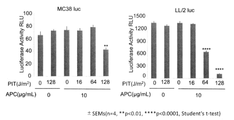
- the proportion of dead cells was analyzed by PI staining (Fig. 4). In any cell line, cell death is not induced even if light irradiation is performed when PD-L1-F (ab') 2 -IR700 (APC: Antibody Photosensitizer Conjugate in the figure) is not added.
- PD-L1-F (ab') 2 -IR700 was added, and when irradiated with light, a decrease in luciferase activity was observed regardless of the light energy intensity. That is, it is shown that NIR-PIT induces cell death. It was shown that cell death was induced by binding PD-L1-F (ab') 2 -IR700 to cells and irradiating them with near-infrared light by either the PI staining method or the luciferase assay analysis method. rice field. However, stronger light energy is required to induce cell death comparable to PIT for highly expressed tumor-expressed antigens such as EGFR. Although not shown here, similar results have been obtained with other cell lines.
- PD-L1-F (ab') 2 -IR700 only by intravenous injection
- PD-L1-F (ab') 2 -IR700 was divided into 4 groups of the group (PIT) that was irradiated with light after intravenous injection, and the effect of photoimmunotherapy was examined.
- mice 9-week-old mice (C57BL / 6) were inoculated subcutaneously on the dorsal side with 2 ⁇ 10 6 MC38 luc cells. Three days later, 100 ⁇ g of PD-L1-F (ab') 2 -IR700 or control IgG-F (ab') 2 -IR700 was intravenously injected into the group to which the antibody-IR700 complex was administered. For the group to be irradiated with light, light irradiation was performed at 75 J / cm 2 one day after the antibody administration. The day of light irradiation is set to day0. Experiments are being conducted with 7 to 9 animals in each group.
- the therapeutic effect was achieved by measuring the estimated tumor volume and the luciferase activity of the tumor.
- the estimated tumor volume was calculated as major axis ⁇ minor axis 2 ⁇ 1/2 by measuring the major axis and minor axis of the tumor.
- Luciferase activity was measured by intraperitoneal administration of D-luciferin (7.5 mg / ml, 200 ⁇ l) and using the IVIS® imaging system. The unit of light emission to be measured was radiance, and the analysis was performed by Living Image Software®.
- the luciferase activity was not attenuated, and strong luminescence was observed from day 1 to day 3.
- PIT in which PD-L1-F (ab') 2 -IR700 was intravenously injected and irradiated with near-infrared rays, a remarkable decrease in luciferase activity was observed.
- FIG. 8 shows changes in radiance and tumor volume of luciferase activity over time. The relative changes are shown with the values of Day 0 before irradiation with near-infrared rays set to 1 respectively. The luciferase activity was significantly low until the 3rd day of light irradiation in the group (PIT) in which PD-L1-F (ab') 2 -IR700 was intravenously injected and photoimmunotherapy was performed with near-infrared light irradiation.
- PIT group in which PD-L1-F (ab') 2 -IR700 was intravenously injected and photoimmunotherapy was performed with near-infrared light irradiation.
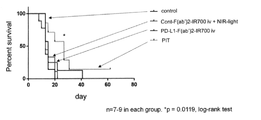
- the survival curve of each group is shown (Fig. 9).
- PIT photoimmunotherapy group
- a marked prolongation of survival was observed, and some individuals survived after 2 months. This individual had no tumor recurrence over the observation period and survived for several more months.
- control and control IgG-F (ab') 2 -IR700 were administered and irradiated with light
- death of all individuals was confirmed around 20 days.
- PD-L1-F (ab') 2 -IR700 was administered and no light irradiation
- Individuals that survived for about 40 days were observed.
- the effect of anti-PD-L1 antibody administration is considered to be somewhat, no individual was found to survive for more than 60 days, as seen in the photoimmunotherapy group.
- photoimmunotherapy targeting PD-L1 an immune checkpoint molecule expressed in cancer
- Conventional photoimmunotherapy targets cancer markers that are highly expressed on the surface of cancer cells, and has not been applicable to tumors in which the target molecule is not expressed or is poorly expressed.
- the immune checkpoint molecule when targeting an immune checkpoint molecule, as long as the immune checkpoint molecule is expressed, it can be any tumor regardless of the organ from which it is derived, even if it is considerably underexpressed. However, it is possible to treat it, and it is considered that it can be applied to more patients. This is a decisive difference from conventional near-infrared ray immunotherapy.
- the day of light irradiation is set to day0.
- IVIS image (FIG. 12 (A)
- luciferase activity (FIG. 12 (B)
- tumor volume up to day 13 (FIG. 12) before light irradiation on the day of light irradiation and 1 to 3 days after light irradiation.
- C survival curve
- FOG. 12 (D) survival curve
- the luciferase activity up to the third day was shown in the PD-L1-F (ab') 2 -IR700 administration group (PD-L1-F (ab') 2 -IR700) on the left side (L) that was not irradiated with light. Although the luciferase activity tended to decrease as compared with the control IgG-F (ab') 2 -IR700 administration group (Cont-F (ab') 2 -IR700), no significant difference was observed (Fig.). 12 (B)).
- the tumor volume was higher than that of the control IgG-F (ab') 2 -IR700 administration group even on the left side (L), which was not irradiated with light in the PD-L1-F (ab') 2 -IR700 administration group.
- Significant differences were observed on days 1, 3 and 6.
- the fact that NIR-PIT had the effect of reducing the tumor volume even for tumors that were not irradiated with light indicates that a therapeutic effect was also produced for the metastatic region.
- the abscopal effect is known to have an effect not only on the irradiated site but also on distant metastatic lesions.
- Near-infrared ray immunotherapy targeting molecules involved in immune checkpoints had an effect that could be called the photoabscopal effect, which also had an effect on metastatic lesions.
- the photoabscopal effect is an effect peculiar to near-infrared ray immunotherapy targeting molecules involved in immune checkpoints, which does not occur in conventional near-infrared ray immunotherapy for highly expressed targets such as EGFR.
- the therapeutic effect also improved, and all individuals died on the 15th day in the control IgG-F (ab') 2 -IR700 administration group, whereas the PD-L1-F (ab') 2 -IR700 administration group died. In, some individuals survived until the 25th day, and a significant improvement in prognosis was also observed.
- mice 9-week-old mice (C57BL / 6) were inoculated subcutaneously on the right dorsolateral side with 2 ⁇ 10 6 MC38 luc cells, respectively, and 3 days later, PD- 100 ⁇ g of L1-F (ab') 2 -IR700 or control IgG-F (ab') 2 -IR700 was intravenously injected (day -1), and one day later, light irradiation was performed at 75 J / cm 2 (day). 0). The next day, 2 ⁇ 10 6 MC38 luc cells were inoculated subcutaneously on the left dorsalis side (day 1), and the tumor volume on the left dorsalis side was measured over time (FIG.
- Mouse colon cancer cells MC38 luc were seeded on a 12-well plate at 1 ⁇ 10 5 / well, PD-L1-F (ab') 2 -IR700 was added to 10 ⁇ g / mL after 24 hours, and 6 hours later.
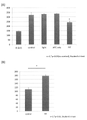
- the expression of PD-L1 was evaluated by flow cytometry 5 days after irradiation with 2 light of 32 J / cm.
- PD-L1 was detected using an anti-PD-L1 antibody. As shown in FIG.
- mice were euthanized 7 days after irradiation, tumor cells were taken out, and PD-L1 expression was analyzed using flow cytometry in the same manner as in the in vitro system (FIG. 14 (B)).
- PD-L1-F (ab') 2 -IR700 induced severe inflammation at the tumor site and induced PD-L1 expression in the remaining tumor. This can be said to be the immune editing function of this treatment.
- NIR-PIT which targets PD-L1
- PD-L1 is performed by performing NIR-PIT targeting PD-L1. It is shown that the expression of is enhanced. If photoimmunotherapy using PD-L1-F (ab') 2 -IR700 is performed again after the expression is enhanced, it is possible to further induce cell death of tumor cells that could not be killed by the initial treatment. Become.
- NIR-PIT targeting immune checkpoint molecules can be expected to be higher when used in combination with other NIR-PITs.
- NIR-PIT for a tumor-highly expressed target such as EGFR and NIR-PIT targeting PD-L1
- a tumor with high EGFR expression in a tumor irradiated with near-infrared light The cells can be killed first.
- tumor cells that do not express or underexpress EGFR, as well as tumor cells at metastases can be killed by NIR-PIT that targets PD-L1.
- PD-L1 expression is induced by multiple treatments, tumor cells that do not express EGFR due to mutation can be completely removed. As a result, remission may be obtained even for tumors that may recur with conventional NIR-PIT.
- activation markers of CD8 (+) T cells and NK cells after light irradiation were measured.
- 2 ⁇ 10 6 MC38 luc cells were inoculated subcutaneously on the dorsal side of the mouse.
- 100 ⁇ g of PD-L1-F (ab') 2 -IR700 was intravenously injected, and one day later, light irradiation was performed at 75 J / cm 2 , and 1.5 hours later, the tumor was euthanized and inside the tumor (Fig. 15).
- CD4 anti-mouse CD4 cloneRM4-5
- CD8 anti-mouse CD8a clone53.67
- CD3 anti-mouse CD3e clone145-2c11
- NK anti-mouse NK1.1 clonePK136
- NG1.1 -2 anti-mouse IL-2 blueJES6-5H4
- CD69 anti-mouse CD69 cloneH1.2F3
- CD25 anti-mouse CD25 blueeBio3C7
- CD107a anti-mouse CD107aClone.
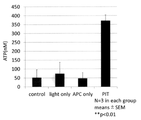
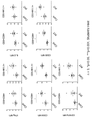
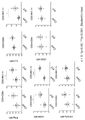
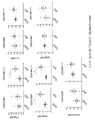
- IFN ⁇ was found to be significantly increased by NK cells, and the expression of CD69 and CD25 was found to be significantly increased by photoimmunotherapy in CD8 (+) T cells and NK cells (Fig. 15).
- IFN ⁇ and IL-2 expression was found to be significantly increased in NK cells, and CD69 expression was found to be significantly increased in CD8 (+) T cells and NK cells (FIG. 16).
- IFN ⁇ expression was significantly increased in NK cells, and CD69 expression was significantly increased in CD8 (+) T cells and NK cells.
- CD8 (+) T cells and NK cells was observed as the regression of tumor cells in the metastatic region shown above and the suppression of growth of the tumor inoculated on the opposite side after NIR-PIT.
- T cells, CD4 + T cells, and CD8 + T cells were significantly decreased in both 6 hours and 24 hours after light irradiation as compared with those before irradiation (naive). It is considered that these cells may decrease in the blood because they migrated to the tumor part irradiated with light.
- MDSC Myeloid-derived suppressor cell
- monocytes / macrophages Mono / M ⁇
- dendritic cells DC
- Any blood cell with a significant difference can be used as a marker to confirm the therapeutic effect of photoimmunotherapy targeting PD-L1.
- MDSC is hardly observed in blood before the start of photoimmunotherapy, if this is used as an index of therapeutic effect, it is possible to determine an effective patient by applying photoimmunotherapy. That is, if an increase in MDSC is observed after photoimmunotherapy, it can be predicted that the patient will have a therapeutic effect.
- PD-L1 expression is expected to increase after the first treatment, and it is predicted that the therapeutic effect will be further enhanced. Therefore, it is desirable to perform multiple phototherapy. Since the antibody drug usually stays in the body for 2 to 3 weeks, the tumor part to which light irradiation was performed by irradiating the patient with the above-mentioned blood cell marker fluctuation multiple times within this period, A response can be expected at the metastatic site. In humans, light irradiation is usually performed at 300 J / cm 2 , but if the effect is weak, stronger light irradiation may be performed. The number of treatments, the treatment interval, and the irradiation energy can be appropriately set by using the fluctuation of blood cell markers such as MDSC after light irradiation as an index.
- G-CSF granulocyte-colony stimulating factor: granulocyte colony stimulating factor
- IL-6 granulocyte colony stimulating factor
- KC keratinoticte-derivated chemokines: chemokines derived from keratinocytes
- MIP-2 macrophage-inflammation
- the blood cells and cytokine markers that were changed by photoimmunotherapy targeting PD-L1 can be measured in peripheral blood, and can be confirmed as early as 6 hours, so PD.
- -It is a very effective means for confirming the therapeutic effect of photoimmunotherapy targeting L1.
- G-CSF has the effect of stimulating the bone marrow and increasing the blood cell count. It can also be expected to have the effect of suppressing the side effects of chemotherapy.
- Bone marrow suppression is a side effect in which bone marrow stem cells are damaged and the function of producing blood cell components such as white blood cells, platelets, and red blood cells does not work normally, resulting in a decrease in blood cell components.
- infectious diseases, anemia, bleeding, etc. appear, but it is difficult to be aware of them, and in the case of complications such as infectious diseases, problems such as inability to continue treatment arise.
- anthracycline-based drugs such as taxane-based drugs such as paclitaxel and docetaxel are often observed as side effects of drugs classified as necrotizing-causing anticancer drugs. Daunorubicin, epirubicin and the like, binca alkaloid drugs such as binblastin and bincristin, and anticancer antibiotics such as mitomycin C and the like.
- some molecular-targeted drugs and radiation therapy may also cause myelosuppression depending on the irradiation site.
- NIR-PIT which targets PD-L1
- NIR-PIT which targets immune checkpoint molecules expressed on tumor cells, can be applied to any cancer. Furthermore, as shown in the above Examples, the complex of the anti-PD-L1 antibody and the photosensitive substance induces the expression of PD-L1 after the first NIR-PIT, so that the expression of PD-L1 is low. A therapeutic effect can be expected for cases by irradiating with light multiple times. Conventional NIR-PIT has no effect unless the target molecule is highly expressed on the cell surface, and there have been many cases in which treatment has been difficult.
- NIR-PIT targeting PD-L1 is considered to be applicable to many cases because it induces PD-L1 expression by treatment even if PD-L1 expression is low at the start of treatment.
- it not only induces cell death at the site irradiated with light, but also induces innate immunity, so that it has a systemic therapeutic effect, that is, an effect on metastatic sites, and further recurrence. It is excellent in that it has a preventive effect.
- it since it can be expected to enhance tumor immunity, it can also be used as a method for enhancing the effects of other immune checkpoint inhibitors.
- NIR-PIT which targets molecules highly expressed in tumor cells such as EGFR
- cell death is induced for the target molecule, gene mutation occurs in the target molecule, and the target molecule is expressed. It can also be expected to be effective against tumor cells that have not been or have been mutated so that the antibody does not bind to the target molecule.
- NIR-PIT targeting highly expressed molecules even for tumor cells that could not induce cell death, by using in combination with NIR-PIT targeting immune checkpoint molecules, Since it may induce cell death, it can be expected to improve the prognosis and prevent recurrence.
- NIR-PIT targeting PD-L1 has an increase in G-CSF, it can be expected to have an effect of increasing the number of blood cells. Therefore, it is used in combination with chemotherapy or radiotherapy that causes myelosuppression. By doing so, the effect of reducing side effects can be expected.
Landscapes
- Health & Medical Sciences (AREA)
- Life Sciences & Earth Sciences (AREA)
- Chemical & Material Sciences (AREA)
- Medicinal Chemistry (AREA)
- Immunology (AREA)
- General Health & Medical Sciences (AREA)
- Animal Behavior & Ethology (AREA)
- Pharmacology & Pharmacy (AREA)
- Public Health (AREA)
- Veterinary Medicine (AREA)
- Engineering & Computer Science (AREA)
- Epidemiology (AREA)
- Bioinformatics & Cheminformatics (AREA)
- Hematology (AREA)
- Nuclear Medicine, Radiotherapy & Molecular Imaging (AREA)
- Biomedical Technology (AREA)
- Organic Chemistry (AREA)
- General Chemical & Material Sciences (AREA)
- Microbiology (AREA)
- Molecular Biology (AREA)
- Urology & Nephrology (AREA)
- Chemical Kinetics & Catalysis (AREA)
- Cell Biology (AREA)
- Physics & Mathematics (AREA)
- Biochemistry (AREA)
- General Physics & Mathematics (AREA)
- Pathology (AREA)
- Food Science & Technology (AREA)
- Biotechnology (AREA)
- Mycology (AREA)
- Analytical Chemistry (AREA)
- Gastroenterology & Hepatology (AREA)
- Medicines That Contain Protein Lipid Enzymes And Other Medicines (AREA)
- Pharmaceuticals Containing Other Organic And Inorganic Compounds (AREA)
- Medicinal Preparation (AREA)
- Medicines Containing Antibodies Or Antigens For Use As Internal Diagnostic Agents (AREA)
Priority Applications (2)
| Application Number | Priority Date | Filing Date | Title |
|---|---|---|---|
| JP2022563666A JPWO2022107573A1 (https=) | 2020-11-17 | 2021-10-29 | |
| JP2024187290A JP7614690B1 (ja) | 2020-11-17 | 2024-10-24 | 腫瘍微小環境をターゲットとする光免疫療法に用いる医薬組成物、治療効果確認のためのマーカー、及び検査方法 |
Applications Claiming Priority (2)
| Application Number | Priority Date | Filing Date | Title |
|---|---|---|---|
| JP2020-190697 | 2020-11-17 | ||
| JP2020190697 | 2020-11-17 |
Publications (1)
| Publication Number | Publication Date |
|---|---|
| WO2022107573A1 true WO2022107573A1 (ja) | 2022-05-27 |
Family
ID=81708741
Family Applications (1)
| Application Number | Title | Priority Date | Filing Date |
|---|---|---|---|
| PCT/JP2021/039999 Ceased WO2022107573A1 (ja) | 2020-11-17 | 2021-10-29 | 腫瘍微小環境をターゲットとする光免疫療法に用いる医薬組成物、治療効果確認のためのマーカー、及び検査方法 |
Country Status (2)
| Country | Link |
|---|---|
| JP (2) | JPWO2022107573A1 (https=) |
| WO (1) | WO2022107573A1 (https=) |
Cited By (1)
| Publication number | Priority date | Publication date | Assignee | Title |
|---|---|---|---|---|
| CN117159711A (zh) * | 2023-08-01 | 2023-12-05 | 中国科学院基础医学与肿瘤研究所(筹) | 一种抗体偶联物及其制备方法和在制备近红外光免疫疗法用药物中的用途 |
Citations (4)
| Publication number | Priority date | Publication date | Assignee | Title |
|---|---|---|---|---|
| WO2019199751A1 (en) * | 2018-04-10 | 2019-10-17 | The United States Of America, As Represented By The Secretary, Department Of Health And Human Services | Combination of near infrared photoimmunotherapy targeting cancer cells and host-immune activation |
| WO2019246322A1 (en) * | 2018-06-21 | 2019-12-26 | Shimadzu Corporation | Method and apparatus for testing near infrared-photoimmunotherapy treatment |
| KR20200008823A (ko) * | 2018-07-17 | 2020-01-29 | 서울대학교산학협력단 | 면역관문억제제가 표면에 결합된 광열 나노입자 및 면역조절제를 포함하는 암 치료 또는 암 전이 억제용 약학적 조성물 |
| WO2020179749A1 (ja) * | 2019-03-05 | 2020-09-10 | 国立大学法人東海国立大学機構 | 標的特異的複合体及びその用途 |
-
2021
- 2021-10-29 WO PCT/JP2021/039999 patent/WO2022107573A1/ja not_active Ceased
- 2021-10-29 JP JP2022563666A patent/JPWO2022107573A1/ja active Pending
-
2024
- 2024-10-24 JP JP2024187290A patent/JP7614690B1/ja active Active
Patent Citations (4)
| Publication number | Priority date | Publication date | Assignee | Title |
|---|---|---|---|---|
| WO2019199751A1 (en) * | 2018-04-10 | 2019-10-17 | The United States Of America, As Represented By The Secretary, Department Of Health And Human Services | Combination of near infrared photoimmunotherapy targeting cancer cells and host-immune activation |
| WO2019246322A1 (en) * | 2018-06-21 | 2019-12-26 | Shimadzu Corporation | Method and apparatus for testing near infrared-photoimmunotherapy treatment |
| KR20200008823A (ko) * | 2018-07-17 | 2020-01-29 | 서울대학교산학협력단 | 면역관문억제제가 표면에 결합된 광열 나노입자 및 면역조절제를 포함하는 암 치료 또는 암 전이 억제용 약학적 조성물 |
| WO2020179749A1 (ja) * | 2019-03-05 | 2020-09-10 | 国立大学法人東海国立大学機構 | 標的特異的複合体及びその用途 |
Non-Patent Citations (3)
| Title |
|---|
| NAGAYA TADANOBU: "Near Infrared Photoimmunotherapy (NIR-PIT) as a New Cancer Treatment", SHINSHU MEDICAL JOURNAL - SHINSHU IGAKU ZASSHI, SHINSHU UNIVERSITY, SCHOOL OF MEDICINE, NAGANO, JP, vol. 68, no. 2, 10 April 2020 (2020-04-10), JP , pages 83 - 95, XP055932124, ISSN: 0037-3826, DOI: 10.11441/shinshumedj.68.83 * |
| NAGAYA TADANOBU; NAKAMURA YUKO; SATO KAZUHIDE; HARADA TOSHIKO; CHOYKE PETER L; HODGE JAMES W; SCHLOM JEFFREY; KOBAYASHI HISATAKA: "Near infrared photoimmunotherapy with avelumab, an anti-programmed death-ligand 1 (PD-L1) antibody.", ONCOTARGET, IMPACT JOURNALS LLC, UNITED STATES, vol. 8, no. 5, 31 January 2017 (2017-01-31), United States , pages 8807 - 8817, XP002792102, ISSN: 1949-2553, DOI: 10.18632/oncotarget.12410 * |
| SATO KAZUHIDE: "Attempt to conquer lung cancer using light: Local antitumor immunity triple enhancement", SCIENTIFIC RESEARCH FUND GRANT PROGRAM RESEARCH RESULTS REPORT, NAGOYA UNIVERSITY, JP, 19 February 2021 (2021-02-19), JP, pages 1 - 9, XP055932136, Retrieved from the Internet <URL:https://kaken.nii.ac.jp/ja/grant/KAKENHI-PROJECT-18K15923/> [retrieved on 20220616] * |
Cited By (1)
| Publication number | Priority date | Publication date | Assignee | Title |
|---|---|---|---|---|
| CN117159711A (zh) * | 2023-08-01 | 2023-12-05 | 中国科学院基础医学与肿瘤研究所(筹) | 一种抗体偶联物及其制备方法和在制备近红外光免疫疗法用药物中的用途 |
Also Published As
| Publication number | Publication date |
|---|---|
| JP2025013957A (ja) | 2025-01-28 |
| JP7614690B1 (ja) | 2025-01-16 |
| JPWO2022107573A1 (https=) | 2022-05-27 |
Similar Documents
| Publication | Publication Date | Title |
|---|---|---|
| Kobayashi et al. | Near-infrared photoimmunotherapy of cancer: A new approach that kills cancer cells and enhances anti-cancer host immunity | |
| JP7316862B2 (ja) | 小細胞肺癌に対する標的療法 | |
| US20210228633A1 (en) | Combination immune therapy and cytokine control therapy for cancer treatment | |
| Shabaneh et al. | Systemically administered low-affinity HER2 CAR T cells mediate antitumor efficacy without toxicity | |
| JP2022522775A (ja) | Lilrb4結合抗体およびその使用方法 | |
| WO2022102695A1 (ja) | 抗b7-h3抗体-薬物コンジュゲート投与による中皮腫の治療 | |
| JP2026021442A (ja) | 抗体-薬物コンジュゲート投与による転移性脳腫瘍の治療 | |
| US20220257765A1 (en) | Target-specific conjugate and use therefor | |
| Mustafa et al. | Nanobodies: a game-changer in cell-mediated immunotherapy for cancer | |
| JP7614690B1 (ja) | 腫瘍微小環境をターゲットとする光免疫療法に用いる医薬組成物、治療効果確認のためのマーカー、及び検査方法 | |
| JP2019011317A (ja) | 溶血性レンサ球菌の菌体を含む製剤との併用療法 | |
| Zhou et al. | Low-dose radiotherapy synergizes with iRGD-antiCD3-modified T cells by facilitating T cell infiltration | |
| JP2024521105A (ja) | 肺癌の処置用組成物及び方法 | |
| Li et al. | Overall review of curative impact and barriers of CAR-T cells in osteosarcoma | |
| US20240100053A1 (en) | Pharmaceutical composition | |
| US20220363776A1 (en) | Methods and pharmaceutical composition for the treatment of ovarian cancer, breast cancer or pancreatic cancer | |
| WO2025089339A1 (ja) | がんの治療剤 | |
| FR2789587A1 (fr) | Moyens pour la regulation de la differenciation hematopoietique | |
| Sirini | N-glycosylation inhibition hinders immunosuppressive tumor microenvironment cells improving CAR T cell efficacy | |
| Verma et al. | OX40 and CD40 Agonists for the Treatment of Lung Cancer | |
| WO2024204688A1 (ja) | 医薬 | |
| EP4536712A1 (en) | Methods and compositions for enhanced antigen presentation in the tumor microenvironment |
Legal Events
| Date | Code | Title | Description |
|---|---|---|---|
| 121 | Ep: the epo has been informed by wipo that ep was designated in this application |
Ref document number: 21894447 Country of ref document: EP Kind code of ref document: A1 |
|
| ENP | Entry into the national phase |
Ref document number: 2022563666 Country of ref document: JP Kind code of ref document: A |
|
| NENP | Non-entry into the national phase |
Ref country code: DE |
|
| 122 | Ep: pct application non-entry in european phase |
Ref document number: 21894447 Country of ref document: EP Kind code of ref document: A1 |