WO2022097624A1 - 機械学習装置、洗浄予測装置、及び洗浄システム - Google Patents
機械学習装置、洗浄予測装置、及び洗浄システム Download PDFInfo
- Publication number
- WO2022097624A1 WO2022097624A1 PCT/JP2021/040347 JP2021040347W WO2022097624A1 WO 2022097624 A1 WO2022097624 A1 WO 2022097624A1 JP 2021040347 W JP2021040347 W JP 2021040347W WO 2022097624 A1 WO2022097624 A1 WO 2022097624A1
- Authority
- WO
- WIPO (PCT)
- Prior art keywords
- cleaning
- processing
- machine
- conditions
- unit
- Prior art date
- Legal status (The legal status is an assumption and is not a legal conclusion. Google has not performed a legal analysis and makes no representation as to the accuracy of the status listed.)
- Ceased
Links
Images



Classifications
-
- G—PHYSICS
- G05—CONTROLLING; REGULATING
- G05B—CONTROL OR REGULATING SYSTEMS IN GENERAL; FUNCTIONAL ELEMENTS OF SUCH SYSTEMS; MONITORING OR TESTING ARRANGEMENTS FOR SUCH SYSTEMS OR ELEMENTS
- G05B19/00—Program-control systems
- G05B19/02—Program-control systems electric
- G05B19/18—Numerical control [NC], i.e. automatically operating machines, in particular machine tools, e.g. in a manufacturing environment, so as to execute positioning, movement or co-ordinated operations by means of program data in numerical form
- G05B19/404—Numerical control [NC], i.e. automatically operating machines, in particular machine tools, e.g. in a manufacturing environment, so as to execute positioning, movement or co-ordinated operations by means of program data in numerical form characterised by control arrangements for compensation, e.g. for backlash, overshoot, tool offset, tool wear, temperature, machine construction errors, load, inertia
-
- G—PHYSICS
- G05—CONTROLLING; REGULATING
- G05B—CONTROL OR REGULATING SYSTEMS IN GENERAL; FUNCTIONAL ELEMENTS OF SUCH SYSTEMS; MONITORING OR TESTING ARRANGEMENTS FOR SUCH SYSTEMS OR ELEMENTS
- G05B19/00—Program-control systems
- G05B19/02—Program-control systems electric
- G05B19/18—Numerical control [NC], i.e. automatically operating machines, in particular machine tools, e.g. in a manufacturing environment, so as to execute positioning, movement or co-ordinated operations by means of program data in numerical form
- G05B19/406—Numerical control [NC], i.e. automatically operating machines, in particular machine tools, e.g. in a manufacturing environment, so as to execute positioning, movement or co-ordinated operations by means of program data in numerical form characterised by monitoring or safety
- G05B19/4065—Monitoring tool breakage, life or condition
-
- G—PHYSICS
- G06—COMPUTING OR CALCULATING; COUNTING
- G06N—COMPUTING ARRANGEMENTS BASED ON SPECIFIC COMPUTATIONAL MODELS
- G06N3/00—Computing arrangements based on biological models
- G06N3/02—Neural networks
- G06N3/08—Learning methods
- G06N3/09—Supervised learning
-
- G—PHYSICS
- G16—INFORMATION AND COMMUNICATION TECHNOLOGY [ICT] SPECIALLY ADAPTED FOR SPECIFIC APPLICATION FIELDS
- G16Y—INFORMATION AND COMMUNICATION TECHNOLOGY SPECIALLY ADAPTED FOR THE INTERNET OF THINGS [IoT]
- G16Y10/00—Economic sectors
- G16Y10/25—Manufacturing
-
- G—PHYSICS
- G16—INFORMATION AND COMMUNICATION TECHNOLOGY [ICT] SPECIALLY ADAPTED FOR SPECIFIC APPLICATION FIELDS
- G16Y—INFORMATION AND COMMUNICATION TECHNOLOGY SPECIALLY ADAPTED FOR THE INTERNET OF THINGS [IoT]
- G16Y20/00—Information sensed or collected by the things
- G16Y20/20—Information sensed or collected by the things relating to the thing itself
-
- G—PHYSICS
- G16—INFORMATION AND COMMUNICATION TECHNOLOGY [ICT] SPECIALLY ADAPTED FOR SPECIFIC APPLICATION FIELDS
- G16Y—INFORMATION AND COMMUNICATION TECHNOLOGY SPECIALLY ADAPTED FOR THE INTERNET OF THINGS [IoT]
- G16Y40/00—IoT characterised by the purpose of the information processing
- G16Y40/30—Control
-
- G—PHYSICS
- G05—CONTROLLING; REGULATING
- G05B—CONTROL OR REGULATING SYSTEMS IN GENERAL; FUNCTIONAL ELEMENTS OF SUCH SYSTEMS; MONITORING OR TESTING ARRANGEMENTS FOR SUCH SYSTEMS OR ELEMENTS
- G05B2219/00—Program-control systems
- G05B2219/30—Nc systems
- G05B2219/35—Nc in input of data, input till input file format
- G05B2219/35111—Automatically search for clean up regions, generate clean up tool pass
-
- G—PHYSICS
- G05—CONTROLLING; REGULATING
- G05B—CONTROL OR REGULATING SYSTEMS IN GENERAL; FUNCTIONAL ELEMENTS OF SUCH SYSTEMS; MONITORING OR TESTING ARRANGEMENTS FOR SUCH SYSTEMS OR ELEMENTS
- G05B2219/00—Program-control systems
- G05B2219/30—Nc systems
- G05B2219/49—Nc machine tool, till multiple
- G05B2219/49049—Coolant serves as lubrication and also to take away swarf, chips
Definitions
- the present invention relates to a machine learning device, a cleaning prediction device, and a cleaning system.
- Patent Documents 1 to 3 propose a technique of measuring the accumulated amount of chips using a visual sensor and determining whether or not to wash (clean).
- One aspect of the machine learning device of the present disclosure is to clean an arbitrary machining condition for an arbitrary work by an arbitrary machine tool and the inside of the processing machine in which the work is machined according to the machining condition by an arbitrary cleaning device.
- Processing under the processing conditions included in the input data and the input data acquisition unit that acquires the input data including the cleaning conditions of the above and the state information indicating the degree of contamination in the processing machine before processing according to the processing conditions.
- a label acquisition unit that acquires state information in the processing machine after cleaning under the cleaning conditions as label data, input data acquired by the input data acquisition unit, and label data acquired by the label acquisition unit. It is equipped with a learning unit that executes supervised learning and generates a trained model using.
- One aspect of the cleaning prediction device of the present disclosure includes a trained model generated by the machine learning device of (1), machining conditions to be performed prior to machining by a machine tool, and cleaning conditions for predetermined cleaning. And the input unit for inputting the current state information in the processing machine of the machine tool, the processing conditions to be performed from now on input by the input unit, the cleaning conditions, and the state information in the current processing machine. , Is input to the trained model, and is provided with a prediction unit that predicts the state information in the processing machine after processing under the processing conditions to be performed and cleaning under the cleaning conditions.
- One aspect of the cleaning system of the present disclosure includes the cleaning prediction device and the cleaning device of (2).
- FIG. 1 is a functional block diagram showing a functional configuration example of the cleaning system according to the first embodiment.
- the cleaning system 1 includes a machine tool 10, a cleaning prediction device 20, and a machine learning device 30.
- the machine tool 10, the cleaning prediction device 20, and the machine learning device 30 may be directly connected to each other via a connection interface (not shown). Further, the machine tool 10, the cleaning prediction device 20, and the machine learning device 30 may be connected to each other via a network (not shown) such as a LAN (Local Area Network) or the Internet. In this case, the machine tool 10, the cleaning prediction device 20, and the machine learning device 30 include a communication unit (not shown) for communicating with each other by such a connection. As will be described later, the machine tool 10 may include a cleaning prediction device 20 and a machine learning device 30.
- the machine tool 10 is a machine tool known to those skilled in the art, and has a cleaning device 101, a measuring device 102, and a control device 103 incorporated therein.
- the machine tool 10 operates based on the operation command of the control device 103.
- the cleaning device 101 and the control device 103 may be devices independent of the machine tool 10.
- the cleaning device 101 is a cleaning device known to those skilled in the art.
- the cleaning device 101 operates a pump (not shown) included in the cleaning device 101 based on a control command generated by the control device 103 executing a cleaning program, and a cleaning nozzle (not shown) included in the cleaning device 101.
- a cleaning liquid such as coolant from (not shown)
- the predetermined cleaning means cleaning conditions (for example, the angle and injection amount of the cleaning nozzle, the location in the processing machine, the cleaning route, the cleaning time, etc.) for cleaning the inside of the processing machine according to the type and processing content of the machine tool 10. ) Is the cleaning preset in the cleaning program.
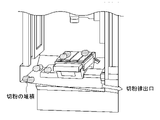
- FIG. 2A is a diagram showing an example of a state of chip accumulation seen from the side surface of the machine tool 10 in the processing machine.
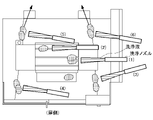
- FIG. 2B is a diagram showing an example of predetermined cleaning as seen from the upper surface in the processing machine. In FIG. 2B, the lower side is the door side of the machine tool 10.
- the cleaning device 101 repeats a predetermined cleaning in which the cleaning nozzle is moved in the cleaning paths (1) to (6) based on the cleaning program, for example, by repeating the predetermined number of cleanings included in the cleaning conditions.
- the chips in the processing machine of the machine tool 10 are removed.
- the cleaning device 101 may be attached to a robot (not shown) or built in the robot (not shown) to clean the inside of the machine tool 10.
- the machine tool 10 may include a robot control device (not shown).
- the measuring device 102 measures, for example, the degree of contamination in the machine tool 10 from a predetermined position on the entire machine tool 10 or at least one point of interest after the work is machined on the machine tool 10. You may. Specifically, the measuring device 102 uses a known method (for example, Japanese Patent Application Laid-Open No. 2018-153872) to measure the inside of the uncleaned processing machine in advance and obtain the whole or at least the inside of the processing machine. Based on the difference from the measured value of one point of interest, the amount of difference (area, volume, etc.) in each part to be cleaned in the processing machine, the ratio of brightness of the difference (%), etc. are determined as stains in the processing machine. It may be calculated as the degree of. As the measuring device 102, a visual sensor, an infrared laser, an ultrasonic measuring instrument, or the like can be used.
- the control device 103 is a numerical control device known to those skilled in the art, generates an operation command based on control information, and transmits the generated operation command to the machine tool 10, the cleaning device 101, and the measuring device 102. As a result, the control device 103 controls the operations of the machine tool 10, the cleaning device 101, and the measuring device 102. Further, the control device 103 may also output the control information to the cleaning prediction device 20 via a communication unit of a machine tool 10 (not shown). The control information includes the machining program, the cleaning program, and the parameter values set in the control device 103. Further, the control device 103 also outputs state information indicating the degree of contamination in the machine tool of the current machine tool 10 measured by the measuring device 102 via a communication unit of the machine tool 10 (not shown) to the cleaning prediction device 20. You may.
- the cleaning prediction device 20 includes the machining conditions to be performed from now on included in the control information from the control device 103, the cleaning conditions for predetermined cleaning, and the current machine tool 10 prior to the machining of the workpiece by the machine tool 10. You may acquire the state information in the processing machine of.
- the cleaning prediction device 20 processes the acquired processing conditions, cleaning conditions, and current state information in the processing machine under the processing conditions to be performed by inputting the acquired processing conditions into the trained model provided from the machine learning device 30 described later. It is possible to predict the state information in the processing machine of the machine tool 10 after cleaning under the cleaning conditions.
- the degree of dirt in the processing machine is mainly due to chips generated and accumulated in a large amount by processing the work by the tool of the machine tool 10. Therefore, in order to consider the generation of chips, the machining conditions include the type of machine tool 10, the material of the work (iron-based, non-iron-based), the type of cutting tool, the spindle speed, the feed rate, the depth of cut, and The number of workpieces produced may be included.
- the type of cutting tool is related to the shape of chips, and the spindle speed, feed rate, and cutting amount are related to the amount of chips.
- the state information includes the degree of dirt in the processing machine, as will be described later.
- the cleaning prediction device 20 "the degree of dirt in the processing machine" and machine learning for generating a trained model will be described.
- the "degree of stain in the processing machine” is the measured value of the entire processing machine or at least one point of interest obtained by measuring the inside of the processing machine without stains in advance by the measuring device 102. It is the amount of difference (area, volume, etc.) in each part to be cleaned in the processing machine, the ratio of the brightness of the difference (%), etc., which is calculated based on the difference. That is, the "degree of dirt in the processing machine" of the machine tool 10 immediately after cleaning is "0%".
- the "degree of dirt in the processing machine” is the amount of difference (area, volume, etc.) in each part of the processing machine to be cleaned measured by the measuring device 102 as the machining of the work by the machine tool 10 is repeated.
- the value corresponds to the ratio (%) of the brightness of the difference.
- the preset maximum permissible limit value is ⁇ .
- the machine learning device 30 is, for example, an arbitrary machining condition for an arbitrary work in machining by an arbitrary machine tool and a cleaning condition for cleaning the inside of the processing machine in which the work is machined according to the machining condition by an arbitrary cleaning device. And the state information indicating the degree of contamination in the processing machine before processing according to the processing conditions, and the state information are acquired as input data. Further, the machine learning device 30 acquires the state information (degree of dirt in the processing machine) in the processing machine after processing under the processing conditions in the acquired input data and cleaning under the cleaning conditions as a label (correct answer). The machine learning device 30 performs supervised learning using the training data of the set of the acquired input data and the label, and constructs a trained model described later. By doing so, the machine learning device 30 can provide the constructed trained model to the cleaning prediction device 20. The machine learning device 30 will be specifically described.
- the machine learning device 30 has an input data acquisition unit 301, a label acquisition unit 302, a learning unit 303, and a storage unit 304.
- the input data acquisition unit 301 can use any machining conditions for any work in machining by any machine tool and any machining conditions in the machining machine in which the workpiece is machined according to the machining conditions, via a communication unit (not shown).
- the cleaning conditions for cleaning by the cleaning device and the state information indicating the degree of contamination in the processing machine before processing according to the processing conditions are acquired from the control device 103 or the like as input data.
- the input data acquisition unit 301 outputs the acquired input data to the storage unit 304.
- the label acquisition unit 302 acquires data indicating the degree of stain in the processing machine after processing under the processing conditions in the input data and cleaning under the cleaning conditions as label data (correct answer data), and stores the acquired label data in the storage unit 304. Output to.
- the learning unit 303 receives the set of the above-mentioned input data and the label as training data, and by performing supervised learning using the received training data, the processing conditions to be performed and the cleaning conditions (for example, predetermined cleaning) are performed.
- a trained model 250 that predicts the degree of dirt in the processing machine after processing under the processing conditions to be performed and cleaning under the cleaning conditions based on the number of cleanings) and the degree of dirt in the current processing machine is constructed. do.
- the learning unit 303 provides the constructed learned model 250 to the cleaning prediction device 20. It is desirable to prepare a large number of training data for supervised learning. For example, training data may be acquired from each of the control devices 103 of the machine tool 10 in various places actually operating in the customer's factory or the like.
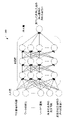
- FIG. 3 is a diagram showing an example of the trained model 250 provided in the cleaning predictor 20 of FIG.
- the trained model 250 includes the processing conditions to be performed from now on such as the type of machine tool and the material of the work, the cleaning conditions for the predetermined number of cleanings, and the stains in the current processing machine.
- An example is an example of a multi-layer neural network in which the state information of the degree is used as an input layer and the data indicating the "degree of stain" in the processing machine after processing under the processing conditions to be performed and cleaning under the cleaning conditions is used as the output layer.
- the machining conditions to be performed include the type of machine tool, the material of the work (iron-based, non-iron-based), the type of cutting tool, the spindle speed, the feed rate, the cutting amount, and the number of workpieces produced. Is included.
- the learning unit 303 when new training data is acquired after the trained model 250 is constructed, the learning unit 303 further performs supervised learning on the trained model 250 to construct the trained model 250 once. May be updated.
- the above-mentioned supervised learning may be performed by online learning, batch learning, or mini-batch learning.
- Online learning is a learning method in which supervised learning is performed immediately each time the work is processed by the machine tool 10 and training data is created. Further, in batch learning, while the work is machined by the machine tool 10 and training data is repeatedly created, a plurality of training data corresponding to the repetition are collected, and all the collected training data are collected. It is a learning method that uses supervised learning.
- mini-batch learning is a learning method in which supervised learning is performed each time training data is accumulated to some extent, which is intermediate between online learning and batch learning.
- the storage unit 304 is a RAM (Random Access Memory) or the like, and is input data acquired by the input data acquisition unit 301, label data acquired by the label acquisition unit 302, and a trained model 250 constructed by the learning unit 303. And so on.
- the machine learning for generating the trained model 250 included in the cleaning prediction device 20 has been described above. Next, the cleaning prediction device 20 in the operation phase will be described.
- the cleaning prediction device 20 in the operation phase includes an input unit 201, a prediction unit 202, a decision-making unit 203, a notification unit 204, and a storage unit 205.
- the cleaning prediction device 20 includes an arithmetic processing unit (not shown) such as a CPU (Central Processing Unit) in order to realize the operation of the functional block shown in FIG. Further, the cleaning prediction device 20 is temporarily required for an auxiliary storage device (not shown) such as a ROM (Read Only Memory) or HDD storing various control programs, or an arithmetic processing device to execute the program. It includes a main storage device (not shown) such as a RAM for storing data.
- the arithmetic processing device reads the OS and application software from the auxiliary storage device, and while deploying the read OS and application software to the main storage device, arithmetic processing based on these OS and application software is performed. Do it. Based on this calculation result, the cleaning prediction device 20 controls each hardware. As a result, the processing by the functional block of FIG. 1 is realized. That is, the cleaning prediction device 20 can be realized by the cooperation of hardware and software.
- the input unit 201 Prior to machining the workpiece by the machine tool 10, the input unit 201 is, for example, based on the control information of the control device 103, the machining conditions to be performed, the cleaning conditions for the predetermined number of cleanings, and the stains in the current processing machine. Enter the degree status information.
- the input unit 201 outputs to the prediction unit 202 the acquired processing conditions to be performed, the cleaning conditions for the predetermined number of cleaning operations, and the state information of the degree of contamination in the current processing machine.
- the prediction unit 202 inputs the processing conditions to be performed, the cleaning conditions of the predetermined number of cleanings, and the state information of the degree of contamination in the current processing machine into the trained model 250 of FIG. 3, and the processing to be performed from now on. Predict the state information of "degree of dirt" in the processing machine after processing under the conditions and cleaning under the cleaning conditions. In order to determine the cleaning timing with the largest number of workpieces produced by the decision-making unit 203 described later, the number of cleanings of the predetermined cleaning under the cleaning conditions is set to “0”. That is, the prediction unit 202 predicts the degree of contamination in the processing machine immediately before the cleaning timing in which cleaning in the processing machine is required.
- the decision-making unit 203 determines the cleaning timing with the largest number of workpieces produced, based on the state information of the degree of contamination in the processing machine predicted by the prediction unit 202. Specifically, the decision-making unit 203 determines whether or not the cleaning timing in the processing machine requires cleaning based on the comparison between the predicted value of the degree of contamination in the processing machine and the preset threshold value.
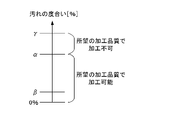
- FIG. 4 is a diagram showing an example of the degree of contamination in the processing machine. As shown in FIG. 4, for example, the degree of contamination in the processing machine is "0%" immediately after cleaning, and the degree of contamination increases as the work is repeatedly machined by the machine tool 10.
- a predetermined ratio ⁇ which is the degree of contamination in the processing machine, is used as a threshold value.
- the predetermined ratio ⁇ (hereinafter, also referred to as “threshold value ⁇ ”) may be appropriately set according to the environment of the factory where the machine tool 10 is installed, the processing content of the machine tool 10, and the like.
- the predetermined ratio ⁇ when the degree of contamination in the processing machine is less than the predetermined ratio ⁇ , it can be considered that there is no chip in the processing machine, and the predetermined ratio ⁇ which is the degree of contamination in the processing machine is processed.
- the threshold value indicates that there is no need to clean the inside of the machine and there are no chips.
- the decision-making unit 203 determines whether or not the degree of contamination in the processing machine predicted by the prediction unit 202 is less than the threshold value ⁇ . For example, when the predicted degree of contamination in the processing machine is less than the threshold value ⁇ , the decision-making unit 203 increases the number of workpieces produced under the processing conditions to be performed by one (predetermined number), and increases the number of workpieces produced.
- the prediction unit 202 is made to predict the degree of contamination in the processing machine after processing under the processing conditions to be performed and cleaning under the cleaning conditions, and the number of workpieces produced is within the range where the predicted degree of contamination in the processing machine is less than the threshold value ⁇ . Determine the most frequent cleaning timing.
- the decision-making unit 203 reduces the number of workpieces produced under the machining conditions to be performed by one (predetermined number), and reduces the number of workpieces produced.
- the prediction unit 202 is made to predict the degree of stain in the processing machine after processing under the processing conditions to be performed and cleaning under the cleaning conditions, and the work production is performed within the range where the predicted degree of contamination in the processing machine is less than the threshold value ⁇ . Determine the cleaning timing with the highest number.
- the notification unit 204 outputs the cleaning timing with the largest number of workpieces produced by the decision-making unit 203 to an output device (not shown) such as a liquid crystal display included in the machine tool 10 and / or the control device 103. good. By doing so, the notification unit 204 can recommend to the user (operator) the cleaning timing with the largest number of workpieces produced determined by the decision-making unit 203. Further, the notification unit 204 may notify by voice via a speaker (not shown).
- the storage unit 205 is a ROM, an HDD, or the like, and may store the trained model 250 together with various control programs.
- FIG. 5 is a flowchart illustrating a prediction process of the cleaning prediction device 20 in the operation phase.
- step S11 prior to machining the workpiece by the machine tool 10, the input unit 201 uses the control information of the control device 103 to determine the machining conditions to be performed, the cleaning conditions of the predetermined number of cleanings "0", and the current cleaning conditions. Enter the state information of the degree of dirt in the processing machine.
- step S12 the prediction unit 202 inputs the processing conditions to be performed, the cleaning conditions of the predetermined number of cleanings “0”, and the state information of the degree of contamination in the current processing machine into the trained model 250. , Predict the state information of "degree of stain” in the processing machine after processing under the processing conditions to be performed and cleaning under the cleaning conditions.
- the decision-making unit 203 determines the cleaning timing with the largest number of workpieces produced within the range in which the predicted value of the degree of contamination in the processing machine predicted in step S12 is less than the threshold value ⁇ . For example, when the predicted degree of contamination in the processing machine is less than the threshold value ⁇ , the decision-making unit 203 increases the number of workpieces produced under the processing conditions to be performed by one (predetermined number), and increases the number of workpieces produced.
- the prediction unit 202 is made to predict the degree of contamination in the processing machine after processing under the processing conditions to be performed and cleaning under the cleaning conditions, and the number of workpieces produced is within the range where the predicted degree of contamination in the processing machine is less than the threshold value ⁇ . Determine the most frequent cleaning timing.
- the decision-making unit 203 reduces the number of workpieces produced under the machining conditions to be performed by one (predetermined number), and reduces the number of workpieces produced.
- the prediction unit 202 is made to predict the degree of stain in the processing machine after processing under the processing conditions to be performed and cleaning under the cleaning conditions, and the work production is performed within the range where the predicted degree of contamination in the processing machine is smaller than the threshold value ⁇ . Determine the cleaning timing with the highest number.
- step S14 the notification unit 204 notifies the cleaning timing with the largest number of workpieces produced determined in step S13.
- the cleaning prediction device 20 has the processing conditions to be performed from now on related to the processing, the cleaning conditions for the predetermined number of cleaning times, and the current processing prior to the processing of the work by the machine tool 10.
- the state information including the degree of dirt in the machine is input to the trained model 250, and the state information of the degree of dirt in the machine tool after being processed and washed is predicted.
- the cleaning prediction device 20 determines the cleaning timing with the largest number of workpieces produced based on the comparison between the predicted value of the predicted degree of contamination in the processing machine and the threshold value.
- the cleaning prediction device 20 eliminates the confirmation by the visual sensor during processing, and can prevent the accumulation of chips with the minimum cleaning frequency.
- the trained model 250 in the cleaning prediction device 20 it is not necessary for the worker to determine the necessity of cleaning in the processing machine, and the burden on the worker can be reduced.
- the first embodiment has been described above.
- the cleaning prediction device 20 As described above, the cleaning prediction device 20 according to the first embodiment produces a work based on the processing conditions to be performed, the cleaning conditions for predetermined cleaning, and the degree of contamination in the processing machine of the current machine tool. Determine the cleaning timing with the highest number.
- the cleaning prediction device 20a according to the second embodiment will be performed from now on based on the processing conditions to be performed, the cleaning conditions for predetermined cleaning, and the degree of contamination in the processing machine of the current machine tool. It differs from the first embodiment in that it determines the minimum number of cleanings in the processing machine after processing under the processing conditions.
- the predicted value of the degree of contamination in the processing machine after processing according to the processing conditions is set to be less than the threshold value ⁇ .
- the processing conditions with the largest number of workpieces in the range where the degree of contamination in the processing machine is less than the threshold value ⁇ the minimum number of predetermined cleanings in the cleaning at the cleaning timing with the largest number of workpieces produced. The number of washes can be determined.
- the cleaning prediction device 20a according to the second embodiment eliminates the confirmation by the visual sensor during processing, and can prevent the accumulation of chips with the minimum cleaning frequency.
- the second embodiment will be described.
- FIG. 6 is a functional block diagram showing a functional configuration example of the cleaning system according to the second embodiment.
- the elements having the same functions as the elements of the cleaning system 1 of FIG. 1 are designated by the same reference numerals, and detailed description thereof will be omitted.
- the cleaning system 1A includes a machine tool 10, a cleaning prediction device 20a, and a machine learning device 30.
- the machine tool 10 includes a cleaning device 101, a measuring device 102, and a control device 103.
- the cleaning device 101, the measuring device 102, and the control device 103 have the same functions as the cleaning device 101, the measuring device 102, and the control device 103 according to the first embodiment.
- the machine learning device 30 includes an input data acquisition unit 301, a label acquisition unit 302, a learning unit 303, and a storage unit 304.
- the input data acquisition unit 301, the label acquisition unit 302, the learning unit 303, and the storage unit 304 have the same functions as the input data acquisition unit 301, the label acquisition unit 302, the learning unit 303, and the storage unit 304 according to the first embodiment.
- the cleaning prediction device 20a includes an input unit 201, a prediction unit 202, a decision-making unit 203a, a notification unit 204, and a storage unit 205.
- the input unit 201, the prediction unit 202, the notification unit 204, and the storage unit 205 have the same functions as the input unit 201, the prediction unit 202, the notification unit 204, and the storage unit 205 according to the first embodiment.
- the decision-making unit 203a has the least predetermined cleaning in the processing machine after processing under the processing conditions to be performed, based on the state information of the degree of stain in the processing machine after processing and cleaning predicted by the prediction unit 202. Determine the number of washes for the washer. Specifically, the decision-making unit 203a compares the predicted value of the degree of contamination in the processing machine with the preset threshold value ⁇ indicating that there is no chip in the processing machine, and the chip is in the processing machine. Determine if there is. When the degree of contamination in the processing machine predicted by the prediction unit 202 is equal to or higher than the threshold value ⁇ , the decision-making unit 203a determines that there are chips in the processing machine.
- the decision-making unit 203a sets the number of cleanings of a predetermined cleaning under the input cleaning conditions by one (predetermined number) so that the predicted degree of contamination in the processing machine is less than the threshold value ⁇ .
- the degree of stains in the processing machine is predicted by the prediction unit 202 under the cleaning conditions in which the number of cleanings is increased and the number of cleanings in the predetermined cleaning is increased.
- the number of cleanings of the predetermined cleaning that is the smallest in the cleaning in the processing machine after processing is determined.
- the decision-making unit 203a determines that there are no chips in the processing machine.
- the decision-making unit 203a reduces the number of cleanings of a predetermined cleaning by one (predetermined number) under the input cleaning conditions, and stains the inside of the processing machine under the cleaning conditions in which the number of cleanings of the predetermined cleaning is reduced.
- the degree of cleaning in the processing machine is predicted by the prediction unit 202, and the number of cleanings in the processing machine after processing under the processing conditions to be performed is the smallest predetermined number of times in the range where the predicted degree of stain in the processing machine is less than the threshold value ⁇ . decide.
- FIG. 7 is a flowchart illustrating a prediction process of the cleaning prediction device 20a in the operation phase.
- step S21 prior to machining the workpiece by the machine tool 10, the input unit 201 uses the control information of the control device 103 to determine the machining conditions to be performed, the cleaning conditions for the predetermined number of cleanings, and the current processing machine. Enter the state information of the degree of dirt.
- step S22 the prediction unit 202 inputs the processing conditions to be performed, the cleaning conditions of the predetermined number of cleanings, and the state information of the degree of contamination in the current processing machine into the trained model 250, and performs the processing from now on. Predict the state information of the "degree of dirt" in the processing machine after processing under the processing conditions and cleaning under the cleaning conditions.
- step S23 the decision-making unit 203a determines that the predicted value of the degree of contamination in the processing machine predicted in step S22 is less than the threshold value ⁇ , and is the least predetermined in cleaning the inside of the processing machine after processing under the processing conditions to be performed. Determine the number of washes for the washer. For example, the decision-making unit 203a increases the number of cleanings of a predetermined cleaning by one (predetermined number) under the cleaning conditions input in step S21, and stains the inside of the processing machine under the cleaning conditions in which the number of cleanings of the predetermined cleaning is increased.
- the degree of cleaning in the processing machine is predicted by the prediction unit 202, and the number of cleanings in the processing machine after processing under the processing conditions to be performed is the smallest predetermined number of times in the range where the predicted degree of stain in the processing machine is less than the threshold value ⁇ . decide.
- the decision-making unit 203a reduces the number of cleanings of the predetermined cleaning under the input cleaning conditions by one (predetermined number).
- the prediction unit 202 is made to predict the degree of stain in the processing machine under the cleaning condition in which the number of cleanings of the predetermined cleaning is reduced, and the predicted degree of contamination in the processing machine is within the range of the threshold ⁇ or less, and the processing is performed under the processing conditions to be performed.
- the number of cleanings of the predetermined cleaning that is the smallest in the cleaning in the processing machine after the cleaning is determined.
- step S24 the notification unit 204 notifies the minimum number of washings determined in step S23.
- the cleaning prediction device 20a includes the molding conditions to be performed in the future, the cleaning conditions for the predetermined number of cleanings, and the current processing prior to the processing of the work by the machine tool 10.
- the state information including the degree of dirt in the machine is input to the trained model 250, and the state information of the degree of dirt in the machine tool after being processed and washed is predicted.
- the cleaning prediction device 20a is based on the comparison between the predicted value of the predicted degree of stain in the processing machine and the threshold value, and is the least predetermined cleaning in the cleaning in the processing machine after processing under the processing conditions to be performed. Determine the number of times.
- the cleaning prediction device 20a eliminates the confirmation by the visual sensor during processing, and can prevent the accumulation of chips with the minimum cleaning frequency. Further, by using the trained model 250 in the cleaning prediction device 20a, it is not necessary for the worker to determine the necessity of cleaning in the processing machine, and the burden on the worker can be reduced.
- the second embodiment has been described above.
- the cleaning prediction device 20, 20a, and the machine learning device 30 are not limited to the above-described embodiment, and are modified to the extent that the object can be achieved. , Including improvements, etc.
- the machine learning device 30 is exemplified as a device different from the machine tool 10, the control device 103, and the cleaning prediction devices 20 and 20a, but a part of the machine learning device 30 or The machine tool 10, the control device 103, or the cleaning prediction devices 20 and 20a may have all the functions.
- the cleaning prediction devices 20 and 20a are exemplified as devices different from the machine tool 10 and the control device 103, but a part or all of the cleaning prediction devices 20 and 20a are exemplified.
- the function of the above may be provided in the machine tool 10 or the control device 103.
- the server may include, for example, a part or all of the input unit 201, the prediction unit 202, the decision-making unit 203, the notification unit 204, and the storage unit 205 of the cleaning prediction device 20.
- the server may include, for example, a part or all of the input unit 201, the prediction unit 202, the decision-making unit 203a, the notification unit 204, and the storage unit 205 of the cleaning prediction device 20a.
- each function of the cleaning prediction devices 20 and 20a may be realized by using the virtual server function or the like on the cloud.
- the cleaning prediction devices 20 and 20a may be a distributed processing system in which the functions of the cleaning prediction devices 20 and 20a are appropriately distributed to a plurality of servers.
- the control device 103 sets the same predetermined cleaning content for each cleaning frequency in the cleaning program, and performs the predetermined cleaning on the cleaning device 101.
- the number of washes was increased, but the number of washes is not limited to this.
- the control device 103 may change the predetermined cleaning content for each cleaning frequency in the cleaning program because the chips in the processing machine of the machine tool 10 decrease as the cleaning frequency progresses.
- FIG. 8A is a diagram showing an example of the first predetermined cleaning.
- FIG. 8B is a diagram showing an example of a second predetermined cleaning. As shown in FIG.
- the control device 103 performs predetermined cleaning by moving the cleaning nozzle of the cleaning device 101 in the cleaning paths (1) to (4) based on the cleaning program, and removes chips in the processing machine. ..
- the control device 103 causes the measuring device 102 to measure the inside of the processing machine after the first predetermined cleaning. Based on the measurement result of the measuring device 102, for example, as shown in FIG. 8B, when chips remain only in the lower left portion of the processing machine, the control device 103 performs the second predetermined cleaning of the portion.
- a cleaning route that removes only chips may be set in the cleaning program. By doing so, the cleaning prediction device 20a can further shorten the cleaning time.
- the cleaning prediction devices 20 and 20a are acquired from one machine tool 10 by using the trained model 250 provided by the machine learning device 30.
- the degree of contamination in the processing machine after processing under the processing conditions and cleaning under the cleaning conditions was predicted, but the present invention is not limited to this.
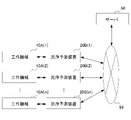
- the server 50 stores the trained model 250 generated by the machine learning device 30, and m cleaning prediction devices 20B (1) to 20B (m) connected to the network 60.
- the trained model 250 may be shared (m is an integer of 2 or more). As a result, the trained model 250 can be applied even if a new machine tool and a cleaning prediction device are arranged.
- Each of the cleaning prediction devices 20B (1) to 20B (m) is connected to each of the machine tools 10A (1) to 10A (m). Further, each of the machine tools 10A (1) to 10A (m) corresponds to the machine tool 10 of FIG. Each of the cleaning prediction devices 20B (1) to 20B (m) corresponds to the cleaning prediction device 20 of FIG. 1 or the cleaning prediction device 20a of FIG.
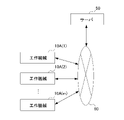
- the server 50 operates as, for example, the cleaning prediction devices 20 and 20a, and is to be performed for each of the machine tools 10A (1) to 10A (m) connected to the network 60.
- the degree of contamination in the processing machine after processing under the processing conditions and cleaning under the cleaning conditions may be predicted.
- the trained model 250 can be applied even if a new machine tool is placed.
- the functions included in the cleaning prediction devices 20, 20a, and the machine learning device 30 in the first embodiment and the second embodiment can be realized by hardware, software, or a combination thereof, respectively.
- what is realized by software means that it is realized by a computer reading and executing a program.
- Each component included in the cleaning prediction devices 20, 20a, and the machine learning device 30 can be realized by hardware, software, or a combination thereof including an electronic circuit or the like. If realized by software, the programs that make up this software are installed on the computer. In addition, these programs may be recorded on removable media and distributed to users, or may be distributed by being downloaded to a user's computer via a network. In addition, when configured with hardware, some or all of the functions of each component included in the above device are, for example, ASIC (Application Specific Integrated Circuit), gate array, FPGA (Field Programmable Gate Array), CPLD ( It can be configured by an integrated circuit (IC) such as a Complex (Programmable Logical Device).
- ASIC Application Specific Integrated Circuit
- FPGA Field Programmable Gate Array
- CPLD It can be configured by an integrated circuit (IC) such as a Complex (Programmable Logical Device).
- Non-transitory computer-readable media include various types of tangible recording media (Tangible studio media). Examples of non-temporary computer-readable media include magnetic recording media (eg, flexible disks, magnetic tapes, hard disk drives), magneto-optical recording media (eg, magneto-optical disks), CD-ROMs (Read Only Memory), CD-. R, CD-R / W, semiconductor memory (for example, mask ROM, PROM (Programmable ROM), EPROM (Erasable PROM), flash ROM, RAM) are included.
- the program may also be supplied to the computer by various types of temporary computer-readable media (Transition computer readable medium).
- temporary computer readable media include electrical, optical, and electromagnetic waves.
- the temporary computer-readable medium can supply the program to the computer via a wired communication path such as an electric wire and an optical fiber, or a wireless communication path.
- the step of describing the program to be recorded on the recording medium is not only the processing performed in chronological order but also the processing executed in parallel or individually even if it is not necessarily processed in chronological order. Also includes.
- the machine learning device, the cleaning prediction device, and the cleaning system of the present disclosure can take various embodiments having the following configurations.
- the machine learning device 30 of the present disclosure uses an arbitrary cleaning device to clean any machining conditions for any workpiece by any machining machine and the inside of the processing machine in which the workpiece is machined according to the machining conditions.
- the input data acquisition unit 301 that acquires input data including conditions and state information indicating the degree of contamination in the processing machine before processing according to the processing conditions, and processing under the processing conditions included in the input data and cleaning under the cleaning conditions.
- the machining conditions are at least the type of machine tool, the material of the work, the type of cutting tool, the spindle rotation speed, the feed speed, the cutting amount, and the number of works to be machined.
- the cleaning conditions may include at least the number of cleanings of a predetermined cleaning, including the number of workpieces produced.
- the cleaning prediction device 20 of the present disclosure includes the trained model 250 generated by the machine learning device 30 according to (1) or (2), and the machining conditions to be performed prior to machining by the machine tool 10.
- the input unit 201 for inputting the cleaning conditions of the predetermined cleaning and the state information in the processing machine of the current machine tool 10, the processing conditions to be performed from now on input by the input unit 201, the cleaning conditions, and the current processing. It is provided with a prediction unit 202 that inputs the state information in the machine tool to the trained model 250, processes the machine tool under the processing conditions to be performed, and predicts the state information in the machine tool after cleaning under the cleaning conditions. According to the cleaning prediction device 20, it is possible to eliminate the confirmation by the visual sensor during processing and prevent the accumulation of chips with the minimum cleaning frequency.
- the number of workpieces produced is based on a comparison between the predicted value included in the state information in the processing machine predicted by the prediction unit 202 and a preset threshold value.
- a decision-making unit 203 for determining the most cleaning timing may be provided. By doing so, the cleaning predictor 20 can minimize the time spent on cleaning.
- the decision-making unit 203 may be provided to determine the minimum number of cleanings of a predetermined cleaning in the cleaning in the processing machine after processing in. By doing so, the cleaning predictor 20a can minimize the time spent on cleaning.
- the predetermined cleaning may change the cleaning content according to the determined number of cleanings. By doing so, the cleaning prediction device 20a can further shorten the cleaning time.
- the trained model 250 is accessiblely connected to the cleaning prediction devices 20 and 20a from the cleaning prediction devices 20 and 20a via the network 60. You may prepare for. By doing so, the cleaning prediction devices 20 and 20a can apply the trained model 250 even if the new machine tool 10 is arranged.
- the cleaning prediction device 20 or 20a according to any one of (3) to (7) may include the machine learning device 30 according to (1) or (2). By doing so, the cleaning prediction devices 20 and 20a can exert the same effect as any of (1) to (7).
- the cleaning systems 1 and 1A of the present disclosure include the cleaning prediction devices 20 and 20a according to any one of (3) to (8) and the cleaning device 101.
- the cleaning systems 1 and 1A can have the same effect as any of (1) to (8).
- the cleaning device 101 may be provided in the processing machine of the machine tool 10. By doing so, the cleaning systems 1 and 1A can have the same effect as any of (1) to (8).
- the cleaning device 101 may be attached to the robot or built into the robot. By doing so, the cleaning systems 1 and 1A can have the same effect as any of (1) to (8).
Landscapes
- Engineering & Computer Science (AREA)
- Physics & Mathematics (AREA)
- Computing Systems (AREA)
- Manufacturing & Machinery (AREA)
- General Physics & Mathematics (AREA)
- Automation & Control Theory (AREA)
- Human Computer Interaction (AREA)
- Theoretical Computer Science (AREA)
- Computational Linguistics (AREA)
- Life Sciences & Earth Sciences (AREA)
- General Health & Medical Sciences (AREA)
- Molecular Biology (AREA)
- Data Mining & Analysis (AREA)
- General Engineering & Computer Science (AREA)
- Biophysics (AREA)
- Mathematical Physics (AREA)
- Software Systems (AREA)
- Biomedical Technology (AREA)
- Artificial Intelligence (AREA)
- Evolutionary Computation (AREA)
- Health & Medical Sciences (AREA)
- Business, Economics & Management (AREA)
- Accounting & Taxation (AREA)
- Development Economics (AREA)
- Economics (AREA)
- General Business, Economics & Management (AREA)
- Auxiliary Devices For Machine Tools (AREA)
- Numerical Control (AREA)
- Testing And Monitoring For Control Systems (AREA)
- General Factory Administration (AREA)
Abstract
Description
特許文献1~3では、視覚センサを用いて切粉の堆積量を計測し、洗浄(清掃)するか否かを判断する技術が提案されている。
また、視覚センサによる切粉の堆積量を確認する方法も、ワークを加工する毎に視覚センサで確認するか、数個のワークを加工した後に、視覚センサで確認するかは、作業者が経験的に決めている。
また、加工機内を洗浄(清掃)している間や視覚センサで切粉の堆積量を確認している間は、加工機でワークを加工することができない。
このため、ワークの生産性を上げるには、加工以外に費やされる時間を極力少なくする必要があり、加工機内の洗浄回数や視覚センサによる確認の時間は極力少なくする必要がある。
本実施形態の構成について図面を用いて詳細に説明する。ここでは、これから行う加工条件と、所定の洗浄の洗浄条件と、現在の工作機械の加工機内の汚れの度合いと、に基づいて、ワーク生産数が最も多い洗浄タイミングを決定する場合を例示する。なお、本発明は、後述するように、これから行う加工条件と、所定の洗浄の洗浄条件と、現在の工作機械の加工機内の汚れの度合いと、に基づいて、これから行う加工条件で加工した後の加工機内の洗浄において最も少ない所定の洗浄の洗浄回数を決定する場合に対しても適用可能である。
ここで、所定の洗浄とは、工作機械10の種類や加工内容に応じて、加工機内を洗浄する洗浄条件(例えば、洗浄ノズルの角度や噴射量、加工機内の場所、洗浄経路、洗浄時間等)が洗浄プログラムにおいて予め設定された洗浄である。そして、洗浄条件には、所定の洗浄が基本的な洗浄の単位とし、所定の洗浄の洗浄回数も設定されている。
図2Aは、工作機械10の加工機内の側面から見た切粉堆積の様子の一例を示す図である。図2Bは、加工機内の上面から見た所定の洗浄の一例を示す図である。なお、図2Bでは、下側が工作機械10の扉側である。
図2Bに示すように、洗浄装置101は、例えば、洗浄プログラムに基づいて(1)から(6)の洗浄経路で洗浄ノズルを動かす所定の洗浄を、洗浄条件に含まれる洗浄回数繰り返すことで、工作機械10の加工機内の切粉を除去する。
また、洗浄装置101は、ロボット(図示しない)に取り付けられ、又はロボット(図示しない)に内蔵されて、工作機械10の加工機内を洗浄するようにしてもよい。この場合、工作機械10は、ロボット制御装置(図示しない)を含んでもよい。
また、制御装置103は、図示しない工作機械10の通信部を介して測定装置102により測定された現在の工作機械10の加工機内の汚れの度合いを示す状態情報を洗浄予測装置20にも出力してもよい。
また、状態情報には、後述するように、加工機内の汚れの度合いが含まれる。
ここで、洗浄予測装置20を説明する前に、「加工機内の汚れの度合い」、及び学習済みモデルを生成するための機械学習について説明する。
「加工機内の汚れの度合い」は、上述したように、測定装置102が、汚れが付いていない加工機内を予め測定して取得された加工機内の全体又は少なくとも1つの着目点の測定値との差に基づいて算出される、加工機内の洗浄対象の各部分における差分の量(面積、体積等)や、当該差分の明るさの割合(%)等である。すなわち、洗浄直後における工作機械10の「加工機内の汚れの度合い」は、「0%」となる。そして、「加工機内の汚れの度合い」は、工作機械10によるワークの加工が繰り返されるに従い測定装置102により測定された加工機内の洗浄対象の各部分における差分の量(面積、体積等)や、当該差分の明るさの割合(%)に応じた値となる。なお、予め設定された最大許容限界値をγとする。
機械学習装置30は、例えば、予め、任意の工作機械による加工における任意のワークに対する任意の加工条件と、該加工条件によってワークが加工された加工機内を任意の洗浄装置によって洗浄するための洗浄条件と、加工条件による加工前の加工機内の汚れ度合いを示す状態情報と、を入力データとして取得する。
また、機械学習装置30は、取得した入力データにおける加工条件で加工して洗浄条件で洗浄した後の加工機内の状態情報(加工機内の汚れの度合い)をラベル(正解)として取得する。
機械学習装置30は、取得した入力データとラベルとの組の訓練データにより教師あり学習を行い、後述する学習済みモデルを構築する。
そうすることで、機械学習装置30は、構築した学習済みモデルを洗浄予測装置20に提供することができる。
機械学習装置30について、具体的に説明する。
入力データ取得部301は、学習フェーズにおいて、図示しない通信部を介して、任意の工作機械による加工における任意のワークに対する任意の加工条件と、該加工条件によってワークが加工された加工機内を任意の洗浄装置によって洗浄するための洗浄条件と、加工条件による加工前の加工機内の汚れ度合いを示す状態情報と、を入力データとして制御装置103等から取得する。入力データ取得部301は、取得した入力データを記憶部304に対して出力する。
そして、学習部303は、構築した学習済みモデル250を洗浄予測装置20に対して提供する。
なお、教師あり学習を行うための訓練データは、多数用意されることが望ましい。例えば、顧客の工場等で実際に稼働している様々な場所の工作機械10の制御装置103のそれぞれから訓練データが取得されてもよい。
ここで、これから行う加工条件には、上述したように、工作機械の種類、ワークの材質(鉄系、非鉄系)、切削工具の種類、主軸回転数、送り速度、切り込み量、及びワーク生産数が含まれる。
なお、洗浄条件として、所定の洗浄の洗浄回数としたが、洗浄時間(=(所定の洗浄の洗浄時間)×(洗浄回数))でもよい。
オンライン学習とは、工作機械10によるワークの加工が行われ、訓練データが作成される都度、即座に教師あり学習を行うという学習方法である。また、バッチ学習とは、工作機械10によるワークの加工が行われ、訓練データが作成されることが繰り返される間に、繰り返しに応じた複数の訓練データを収集し、収集した全ての訓練データを用いて、教師あり学習を行うという学習方法である。さらに、ミニバッチ学習とは、オンライン学習と、バッチ学習の中間的な、ある程度訓練データが溜まるたびに教師あり学習を行うという学習方法である。
以上、洗浄予測装置20が備える学習済みモデル250を生成するための機械学習について説明した。
次に、運用フェーズにおける洗浄予測装置20について説明する。
図1に示すように、運用フェーズにおける洗浄予測装置20は、入力部201、予測部202、意思決定部203、通知部204、及び記憶部205を含んで構成される。
なお、洗浄予測装置20は、図1の機能ブロックの動作を実現するために、CPU(Central Processing Unit)等の図示しない演算処理装置を備える。また、洗浄予測装置20は、各種の制御用プログラムを格納したROM(Read Only Memory)やHDD等の図示しない補助記憶装置や、演算処理装置がプログラムを実行する上で一時的に必要とされるデータを格納するためのRAMといった図示しない主記憶装置を備える。
なお、後述する意思決定部203によりワーク生産数が最も多い洗浄タイミングを決定するために、洗浄条件における所定の洗浄の洗浄回数は「0」とする。すなわち、予測部202は、加工機内の洗浄が必要となる洗浄タイミング直前の加工機内の汚れの度合いを予測する。
具体的には、意思決定部203は、加工機内の汚れの度合いの予測値と、予め設定された閾値との比較に基づいて、加工機内の洗浄が必要な洗浄タイミングか否かを判定する。
図4は、加工機内の汚れの度合いの一例を示す図である。図4に示すように、例えば、加工機内の汚れの度合いは、洗浄直後で「0%」であり、工作機械10により繰り返しワークが加工されることによりその汚れの度合いは増加する。例えば、加工機内の汚れの度合いが所定の割合α未満の場合、工作機械10は所望の加工品質でワークを加工することができる。一方、汚れの度合いが所定の割合α以上の場合、工作機械10は所望の加工品質でワークを加工することができない。
以下の説明では、加工機内の汚れの度合いである所定の割合αを閾値とする。なお、所定の割合α(以下、「閾値α」ともいう)は、工作機械10が設置された工場の環境や、工作機械10の加工内容等に応じて適宜設定されてもよい。
また、後述するように、加工機内の汚れの度合いが所定の割合β未満の場合、加工機内の切粉が無いと見なすことができるとし、加工機内の汚れの度合いである所定の割合βを加工機内の洗浄が不要で切粉が無い状態を示す閾値とする。ここで、γ>α>βとする。
そうすることで、通知部204は、意思決定部203により決定されたワーク生産数が最も多い洗浄タイミングをユーザ(オペレータ)に推奨することができる。また、通知部204は、スピーカ(図示せず)を介して音声により通知してもよい。
次に、本実施形態に係る洗浄予測装置20の予測処理に係る動作について説明する。
図5は、運用フェーズにおける洗浄予測装置20の予測処理について説明するフローチャートである。
一方、意思決定部203は、予測された加工機内の汚れの度合いが閾値α以上となる場合、これから行う加工条件のワーク生産数を、1つ(所定の数)ずつ減らし、ワーク生産数を減らしたこれから行う加工条件で加工して洗浄条件で洗浄した後の加工機内の汚れの度合いを予測部202に予測させ、予測された加工機内の汚れの度合いが閾値αより小さい範囲内で、ワーク生産数が最も多い洗浄タイミングを決定する。
これにより、洗浄予測装置20は、加工中の視覚センサによる確認を無くし、極力少ない洗浄頻度で切粉の堆積を防ぐことができる。
また、洗浄予測装置20は、学習済みモデル250を用いることにより、作業員が加工機内の洗浄の必要性を判断する必要がなくなり、作業員の負担を軽減することができる。
以上、第1実施形態について説明した。
次に、第2実施形態について説明する。上述したように、第1実施形態に係る洗浄予測装置20は、これから行う加工条件と、所定の洗浄の洗浄条件と、現在の工作機械の加工機内の汚れの度合いと、に基づいて、ワーク生産数が最も多い洗浄タイミングを決定する。これに対して、第2実施形態に係る洗浄予測装置20aは、これから行う加工条件と、所定の洗浄の洗浄条件と、現在の工作機械の加工機内の汚れの度合いと、に基づいて、これから行う加工条件で加工した後の加工機内の洗浄において最も少ない所定の洗浄の洗浄回数を決定する点で、第1実施形態と相違する。なお、当該加工条件により加工した後の加工機内の汚れの度合いの予測値は閾値α未満とする。また、加工機内の汚れの度合いが閾値α未満の範囲内で、ワーク生産数が最も多い加工条件とすることで、ワーク生産数が最も多い洗浄タイミングでの加工機内の洗浄において最も少ない所定の洗浄の洗浄回数を決定することができる。
これにより、第2実施形態に係る洗浄予測装置20aは、加工中の視覚センサによる確認を無くし、極力少ない洗浄頻度で切粉の堆積を防ぐことができる。
以下、第2実施形態について説明する。
図6に示すように、洗浄システム1Aは、工作機械10、洗浄予測装置20a、及び機械学習装置30を有する。
工作機械10は、洗浄装置101、測定装置102、及び制御装置103を含む。
洗浄装置101、測定装置102、及び制御装置103は、第1実施形態に係る洗浄装置101、測定装置102、及び制御装置103と同様の機能を有する。
機械学習装置30は、入力データ取得部301、ラベル取得部302、学習部303、及び記憶部304を含む。
入力データ取得部301、ラベル取得部302、学習部303、及び記憶部304は、第1実施形態に係る入力データ取得部301、ラベル取得部302、学習部303、及び記憶部304と同様の機能を有する。
洗浄予測装置20aは、入力部201、予測部202、意思決定部203a、通知部204、及び記憶部205を含む。
入力部201、予測部202、通知部204、及び記憶部205は、第1実施形態に係る入力部201、予測部202、通知部204、及び記憶部205と同様の機能を有する。
具体的には、意思決定部203aは、加工機内の汚れの度合いの予測値と、予め設定された加工機内に切粉が無いことを示す閾値βとの比較に基づいて、加工機内に切粉が有るか否かを判定する。意思決定部203aは、予測部202により予測された加工機内の汚れの度合いが閾値β以上の場合、加工機内に切粉が有ると判定する。この場合、意思決定部203aは、例えば、予測された加工機内の汚れの度合いが閾値β未満となるように、入力された洗浄条件における所定の洗浄の洗浄回数を1つ(所定の数)ずつ増やし、所定の洗浄の洗浄回数を増やした洗浄条件で加工機内の汚れの度合いを予測部202に予測させ、予測された加工機内の汚れの度合いが閾値β未満の範囲で、これから行う加工条件で加工した後の加工機内の洗浄において最も少ない所定の洗浄の洗浄回数を決定する。
一方、意思決定部203aは、予測部202により予測された加工機内の汚れの度合いが閾値β未満の場合、加工機内に切粉が無いと判定する。この場合、意思決定部203aは、例えば、入力された洗浄条件における所定の洗浄の洗浄回数を1つ(所定の数)ずつ減らし、所定の洗浄の洗浄回数を減らした洗浄条件で加工機内の汚れの度合いを予測部202に予測させ、予測された加工機内の汚れの度合いが閾値β未満の範囲で、これから行う加工条件で加工した後の加工機内の洗浄において最も少ない所定の洗浄の洗浄回数を決定する。
次に、本実施形態に係る洗浄予測装置20aの予測処理に係る動作について説明する。
図7は、運用フェーズにおける洗浄予測装置20aの予測処理について説明するフローチャートである。
これにより、洗浄予測装置20aは、加工中の視覚センサによる確認を無くし、極力少ない洗浄頻度で切粉の堆積を防ぐことができる。
また、洗浄予測装置20aは、学習済みモデル250を用いることにより、作業員が加工機内の洗浄の必要性を判断する必要がなくなり、作業員の負担を軽減することができる。
以上、第2実施形態について説明した。
上述の第1実施形態及び第2実施形態では、機械学習装置30は、工作機械10、制御装置103、及び洗浄予測装置20、20aと異なる装置として例示したが、機械学習装置30の一部又は全部の機能を、工作機械10、制御装置103、又は洗浄予測装置20、20aが備えるようにしてもよい。
また例えば、上述の第1実施形態及び第2実施形態では、洗浄予測装置20、20aは、工作機械10や制御装置103と異なる装置として例示したが、洗浄予測装置20、20aの一部又は全部の機能を、工作機械10又は制御装置103が備えるようにしてもよい。
あるいは、洗浄予測装置20の入力部201、予測部202、意思決定部203、通知部204、及び記憶部205の一部又は全部を、例えば、サーバが備えるようにしてもよい。また、洗浄予測装置20aの入力部201、予測部202、意思決定部203a、通知部204、及び記憶部205の一部又は全部を、例えば、サーバが備えるようにしてもよい。また、クラウド上で仮想サーバ機能等を利用して、洗浄予測装置20、20aの各機能を実現してもよい。
さらに、洗浄予測装置20、20aは、洗浄予測装置20、20aの各機能を適宜複数のサーバに分散される、分散処理システムとしてもよい。
また例えば、上述の第2実施形態では、制御装置103は、図2Bに示すように、洗浄プログラムにおいて洗浄回数毎の所定の洗浄の内容を同じに設定して、洗浄装置101に所定の洗浄を洗浄回数だけ行わせたが、これに限定されない。例えば、制御装置103は、洗浄回数が進むにつれて工作機械10の加工機内の切粉が減少することから、洗浄プログラムにおいて洗浄回数毎の所定の洗浄の内容を変えてもよい。
図8Aは、1回目の所定の洗浄の一例を示す図である。図8Bは、2回目の所定の洗浄の一例を示す図である。
図8Aに示すように、制御装置103は、洗浄プログラムに基づいて(1)から(4)の洗浄経路で洗浄装置101の洗浄ノズルを動かす所定の洗浄を行い、加工機内の切粉を除去する。制御装置103は、1回目の所定の洗浄後の加工機内を測定装置102に測定させる。制御装置103は、測定装置102の測定結果に基づいて、例えば、図8Bに示すように、加工機内の左下の箇所のみに切粉が残っている場合、2回目の所定の洗浄として当該箇所の切粉のみを除去する洗浄経路を洗浄プログラムに設定するようにしてもよい。
そうすることで、洗浄予測装置20aは、洗浄時間をより短縮することができる。
また例えば、上述の第1実施形態及び第2実施形態では、洗浄予測装置20、20aは、機械学習装置30から提供された学習済みモデル250を用いて、1つの工作機械10から取得したこれから行う加工条件で加工して洗浄条件で洗浄した後の加工機内の汚れの度合いを予測したが、これに限定されない。例えば、図9に示すように、サーバ50は、機械学習装置30により生成された学習済みモデル250を記憶し、ネットワーク60に接続されたm個の洗浄予測装置20B(1)~20B(m)と学習済みモデル250を共有してもよい(mは2以上の整数)。これにより、新たな工作機械、及び洗浄予測装置が配置されても学習済みモデル250を適用することができる。
なお、洗浄予測装置20B(1)~20B(m)の各々は、工作機械10A(1)~10A(m)の各々と接続される。
また、工作機械10A(1)~10A(m)の各々は、図1の工作機械10に対応する。洗浄予測装置20B(1)~20B(m)の各々は、図1の洗浄予測装置20又は図6の洗浄予測装置20aに対応する。
あるいは、図10に示すように、サーバ50は、例えば、洗浄予測装置20、20aとして動作し、ネットワーク60に接続された工作機械10A(1)~10A(m)の各々に対して、これから行う加工条件で加工して洗浄条件で洗浄した後の加工機内の汚れの度合いを予測してもよい。これにより、新たな工作機械が配置されても学習済みモデル250を適用することができる。
この機械学習装置30によれば、加工中の視覚センサによる確認を無くし、極力少ない洗浄頻度で切粉の堆積を防げる学習済みモデルを生成することができる。
そうすることで、機械学習装置30は、工作機械10の加工機内の汚れの度合いを精度良く予測することができる学習済みモデル250を生成することができる。
この洗浄予測装置20によれば、加工中の視覚センサによる確認を無くし、極力少ない洗浄頻度で切粉の堆積を防ぐことができる。
そうすることで、洗浄予測装置20は、洗浄に費やされる時間を極力少なくすることができる。
そうすることで、洗浄予測装置20aは、洗浄に費やされる時間を極力少なくすることができる。
そうすることで、洗浄予測装置20aは、洗浄時間をより短縮することができる。
そうすることで、洗浄予測装置20、20aは、新たな工作機械10が配置されても学習済みモデル250を適用することができる。
そうすることで、洗浄予測装置20、20aは、(1)から(7)のいずれかと同様の効果を奏することができる。
この洗浄システム1、1Aは、(1)から(8)のいずれかと同様の効果を奏することができる。
そうすることで、洗浄システム1、1Aは、(1)から(8)のいずれかと同様の効果を奏することができる。
そうすることで、洗浄システム1、1Aは、(1)から(8)のいずれかと同様の効果を奏することができる。
10 工作機械
101 洗浄装置
102 測定装置
103 制御装置
20、20a 洗浄予測装置
201 入力部
202 予測部
203 意思決定部
204 通知部
205 記憶部
250 学習済みモデル
30 機械学習装置
301 入力データ取得部
302 ラベル取得部
303 学習部
304 記憶部
Claims (11)
- 任意の工作機械による任意のワークに対する任意の加工条件と、該加工条件によって前記ワークが加工された加工機内を任意の洗浄装置によって洗浄するための洗浄条件と、前記加工条件による加工前の前記加工機内の汚れ度合いを示す状態情報と、を含む入力データを取得する入力データ取得部と、
前記入力データに含まれる前記加工条件で加工して前記洗浄条件で洗浄した後の前記加工機内の状態情報をラベルデータとして取得するラベル取得部と、
前記入力データ取得部により取得された入力データと、前記ラベル取得部により取得されたラベルデータと、を用いて、教師あり学習を実行し、学習済みモデルを生成する学習部と、
を備える機械学習装置。 - 前記加工条件は、少なくとも工作機械の種類、ワークの材質、切削工具の種類、主軸回転数、送り速度、切り込み量、及び加工するワークの数を示すワーク生産数を含み、
前記洗浄条件は、少なくとも所定の洗浄の洗浄回数を含む、
請求項1に記載の機械学習装置。 - 請求項1又は請求項2に記載の機械学習装置により生成された学習済みモデルと、
工作機械による加工に先立って、これから行う加工条件と、所定の洗浄の洗浄条件と、現在の前記工作機械の加工機内の状態情報と、を入力する入力部と、
前記入力部により入力された前記これから行う加工条件と、前記洗浄条件と、前記現在の加工機内の状態情報と、を前記学習済みモデルに入力し、前記これから行う加工条件で加工して前記洗浄条件で洗浄した後の前記加工機内の状態情報を予測する予測部と、
を備える洗浄予測装置。 - 前記予測部により予測された前記加工機内の状態情報に含まれる予測値と、予め設定された閾値との比較に基づいて、ワーク生産数が最も多い洗浄タイミングを決定する意思決定部を備える、請求項3に記載の洗浄予測装置。
- 前記予測部により予測された前記加工機内の状態情報に含まれる予測値と、予め設定された閾値との比較に基づいて、前記これから行う加工条件で加工した後の前記加工機内の洗浄において最も少ない前記所定の洗浄の洗浄回数を決定する意思決定部を備える、請求項3に記載の洗浄予測装置。
- 前記所定の洗浄は、決定された前記洗浄回数の回数に応じて洗浄内容を変える、請求項5に記載の洗浄予測装置。
- 前記学習済みモデルを、前記洗浄予測装置からネットワークを介してアクセス可能に接続されるサーバに備える、請求項3から請求項6のいずれか1項に記載の洗浄予測装置。
- 請求項1又は請求項2に記載の機械学習装置を備える、請求項3から請求項7のいずれか1項に記載の洗浄予測装置。
- 請求項3から請求項8のいずれか1項に記載の洗浄予測装置と、
洗浄装置と、
を備える洗浄システム。 - 前記洗浄装置は、前記工作機械の加工機内に設けられる、請求項9に記載の洗浄システム。
- 前記洗浄装置は、ロボットに取り付けられる、又は前記ロボットに内蔵される、請求項9に記載の洗浄システム。
Priority Applications (4)
| Application Number | Priority Date | Filing Date | Title |
|---|---|---|---|
| US18/031,293 US20230376002A1 (en) | 2020-11-09 | 2021-11-02 | Machine learning device, cleaning prediction device, and cleaning system |
| DE112021004645.4T DE112021004645T5 (de) | 2020-11-09 | 2021-11-02 | Maschinen-Lernvorrichtung, Reinigungsvorhersagevorrichtung und Reinigungssystem |
| CN202180072594.5A CN116367958B (zh) | 2020-11-09 | 2021-11-02 | 机器学习装置、清洗预测装置以及清洗系统 |
| JP2022560777A JP7453409B2 (ja) | 2020-11-09 | 2021-11-02 | 機械学習装置、洗浄予測装置、及び洗浄システム |
Applications Claiming Priority (2)
| Application Number | Priority Date | Filing Date | Title |
|---|---|---|---|
| JP2020186745 | 2020-11-09 | ||
| JP2020-186745 | 2020-11-09 |
Publications (1)
| Publication Number | Publication Date |
|---|---|
| WO2022097624A1 true WO2022097624A1 (ja) | 2022-05-12 |
Family
ID=81457229
Family Applications (1)
| Application Number | Title | Priority Date | Filing Date |
|---|---|---|---|
| PCT/JP2021/040347 Ceased WO2022097624A1 (ja) | 2020-11-09 | 2021-11-02 | 機械学習装置、洗浄予測装置、及び洗浄システム |
Country Status (6)
| Country | Link |
|---|---|
| US (1) | US20230376002A1 (ja) |
| JP (1) | JP7453409B2 (ja) |
| CN (1) | CN116367958B (ja) |
| DE (1) | DE112021004645T5 (ja) |
| TW (1) | TWI912399B (ja) |
| WO (1) | WO2022097624A1 (ja) |
Cited By (1)
| Publication number | Priority date | Publication date | Assignee | Title |
|---|---|---|---|---|
| JP7483162B1 (ja) * | 2023-07-26 | 2024-05-14 | 三菱電機株式会社 | 切粉堆積領域推定装置、切粉除去装置、切粉堆積領域推定方法及びプログラム |
Families Citing this family (2)
| Publication number | Priority date | Publication date | Assignee | Title |
|---|---|---|---|---|
| EP4074458A4 (en) * | 2019-12-09 | 2024-01-10 | DMG Mori Co., Ltd. | Information processing device, machine tool, and information processing system |
| EP4375915A4 (en) * | 2021-07-21 | 2025-07-16 | Resonac Corp | MATERIAL DESIGN ASSISTANCE DEVICE, MATERIAL DESIGN ASSISTANCE METHOD, AND PROGRAM |
Citations (3)
| Publication number | Priority date | Publication date | Assignee | Title |
|---|---|---|---|---|
| JP2018153872A (ja) * | 2017-03-15 | 2018-10-04 | ファナック株式会社 | 洗浄工程最適化装置及び機械学習装置 |
| JP2019111637A (ja) * | 2017-12-26 | 2019-07-11 | ファナック株式会社 | 切粉除去装置及び情報処理装置 |
| JP2020179433A (ja) * | 2019-04-23 | 2020-11-05 | ファナック株式会社 | 機械学習装置、予測装置、及び制御装置 |
Family Cites Families (21)
| Publication number | Priority date | Publication date | Assignee | Title |
|---|---|---|---|---|
| US5559713A (en) * | 1994-11-22 | 1996-09-24 | Western Atlas, Inc. | Chip buildup detection and control method and apparatus |
| KR20000065123A (ko) * | 1996-04-30 | 2000-11-06 | 안자키 사토루 | 공작기계의공구이상검출방법및장치 |
| US8206197B2 (en) * | 2007-04-20 | 2012-06-26 | Ebara Corporation | Polishing apparatus and program thereof |
| JP6181687B2 (ja) | 2015-03-13 | 2017-08-16 | ファナック株式会社 | 加工により発生した切粉を除去可能な加工機システム |
| JP2016215343A (ja) * | 2015-05-22 | 2016-12-22 | ファナック株式会社 | 清掃手段を備えた工作機械 |
| JP6618724B2 (ja) | 2015-07-01 | 2019-12-11 | 株式会社Fuji | 工作機械、ワーク清掃方法 |
| JP6306544B2 (ja) * | 2015-08-11 | 2018-04-04 | ファナック株式会社 | 工作機械の洗浄システム |
| JP6367782B2 (ja) * | 2015-11-20 | 2018-08-01 | ファナック株式会社 | 工作機械 |
| JP6203808B2 (ja) * | 2015-11-27 | 2017-09-27 | ファナック株式会社 | ファンモータの清掃間隔を学習する機械学習器、モータ制御システムおよび機械学習方法 |
| JP6356655B2 (ja) | 2015-12-10 | 2018-07-11 | ファナック株式会社 | 加工屑を除去する機能を有する加工システム |
| CN106055613A (zh) * | 2016-05-26 | 2016-10-26 | 华东理工大学 | 一种基于混合范数的数据分类训练数据库清洗方法 |
| US10269545B2 (en) * | 2016-08-03 | 2019-04-23 | Lam Research Corporation | Methods for monitoring plasma processing systems for advanced process and tool control |
| JP6542839B2 (ja) * | 2017-06-07 | 2019-07-10 | ファナック株式会社 | 制御装置及び機械学習装置 |
| JP2019030917A (ja) * | 2017-08-04 | 2019-02-28 | オークマ株式会社 | 加工屑検出装置および工作機械 |
| US11449027B2 (en) * | 2017-12-12 | 2022-09-20 | Mandelli Srl | Method and a system for reducing vibrations in a mechanical processing for removal of chippings |
| CN108620950B (zh) * | 2018-05-08 | 2021-02-02 | 华中科技大学无锡研究院 | 一种车削刀具加工状态监测方法及系统 |
| JP6898371B2 (ja) * | 2019-02-28 | 2021-07-07 | ファナック株式会社 | 加工条件調整装置及び加工条件調整システム |
| JP6751790B1 (ja) * | 2019-03-15 | 2020-09-09 | Dmg森精機株式会社 | 工作機械の切り屑処理装置及び切り屑処理方法 |
| JP6959288B2 (ja) * | 2019-04-02 | 2021-11-02 | ファナック株式会社 | 工作機械 |
| WO2022066211A1 (en) * | 2020-09-25 | 2022-03-31 | Ecolab Usa Inc. | Machine learning classification or scoring of cleaning outcomes in cleaning machines |
| US20240229234A1 (en) * | 2023-01-05 | 2024-07-11 | Applied Materials, Inc. | Cleaning operations based on deposition thickness |
-
2021
- 2021-10-29 TW TW110140403A patent/TWI912399B/zh active
- 2021-11-02 DE DE112021004645.4T patent/DE112021004645T5/de active Pending
- 2021-11-02 US US18/031,293 patent/US20230376002A1/en active Pending
- 2021-11-02 WO PCT/JP2021/040347 patent/WO2022097624A1/ja not_active Ceased
- 2021-11-02 JP JP2022560777A patent/JP7453409B2/ja active Active
- 2021-11-02 CN CN202180072594.5A patent/CN116367958B/zh active Active
Patent Citations (3)
| Publication number | Priority date | Publication date | Assignee | Title |
|---|---|---|---|---|
| JP2018153872A (ja) * | 2017-03-15 | 2018-10-04 | ファナック株式会社 | 洗浄工程最適化装置及び機械学習装置 |
| JP2019111637A (ja) * | 2017-12-26 | 2019-07-11 | ファナック株式会社 | 切粉除去装置及び情報処理装置 |
| JP2020179433A (ja) * | 2019-04-23 | 2020-11-05 | ファナック株式会社 | 機械学習装置、予測装置、及び制御装置 |
Cited By (2)
| Publication number | Priority date | Publication date | Assignee | Title |
|---|---|---|---|---|
| JP7483162B1 (ja) * | 2023-07-26 | 2024-05-14 | 三菱電機株式会社 | 切粉堆積領域推定装置、切粉除去装置、切粉堆積領域推定方法及びプログラム |
| WO2025022595A1 (ja) * | 2023-07-26 | 2025-01-30 | 三菱電機株式会社 | 切粉堆積領域推定装置、切粉堆積領域推定方法及び切粉除去装置 |
Also Published As
| Publication number | Publication date |
|---|---|
| JPWO2022097624A1 (ja) | 2022-05-12 |
| CN116367958B (zh) | 2025-10-24 |
| TWI912399B (zh) | 2026-01-21 |
| CN116367958A (zh) | 2023-06-30 |
| TW202219843A (zh) | 2022-05-16 |
| DE112021004645T5 (de) | 2023-06-29 |
| US20230376002A1 (en) | 2023-11-23 |
| JP7453409B2 (ja) | 2024-03-19 |
Similar Documents
| Publication | Publication Date | Title |
|---|---|---|
| WO2022097624A1 (ja) | 機械学習装置、洗浄予測装置、及び洗浄システム | |
| JP6502983B2 (ja) | 洗浄工程最適化装置及び機械学習装置 | |
| JP7000376B2 (ja) | 機械学習装置、予測装置、及び制御装置 | |
| KR102370446B1 (ko) | 절삭 가공 기기의 절삭력을 추정하기 위한 가공 예측 모델 생성 방법 | |
| Galindo-Salcedo et al. | Smart manufacturing applications for inspection and quality assurance processes | |
| JP6832327B2 (ja) | 生産プロセス中に異常なワークピースを自動検出するためのデータ駆動方法 | |
| JP7424807B2 (ja) | 機械学習装置、消費電力予測装置、及び制御装置 | |
| JP2019111637A (ja) | 切粉除去装置及び情報処理装置 | |
| US20220197273A1 (en) | Method and device for monitoring a milling process | |
| JP2021536626A (ja) | 物理的システムのモデルを構築するための方法 | |
| JP2025000746A (ja) | 情報処理方法、情報処理装置、システム、物品の製造方法、プログラム、記録媒体 | |
| JP2018181217A (ja) | 加減速制御装置 | |
| Zhai et al. | Formulation and solution for the predictive maintenance integrated job shop scheduling problem | |
| EP3969230A1 (en) | Artificial intelligence in discrete manufacturing | |
| JP7277272B2 (ja) | 機械学習装置、予測装置、及び制御装置 | |
| JP7369856B2 (ja) | 工具状態学習装置、工具状態推定装置、制御装置、工具状態学習方法、及び工具状態推定方法 | |
| JP7691554B2 (ja) | 情報処理装置、及び情報処理方法 | |
| JP6962964B2 (ja) | 機械学習装置、画面予測装置、及び制御装置 | |
| US20150331980A1 (en) | Apparatus and method for classifying context types for multivariate modeling | |
| CN114063575A (zh) | 信息处理设备、控制方法、生产系统、制造方法和介质 | |
| JP7364452B2 (ja) | 機械学習装置、ノズル状態予測装置、及び制御装置 | |
| JP7364431B2 (ja) | 機械学習装置、予測装置、及び制御装置 | |
| JP7372439B2 (ja) | 機械学習装置、予測装置、及び制御装置 | |
| KR20230063751A (ko) | 인공지능 기반의 cnc 공작기계의 공구 마모 예측 방법, 장치, 시스템 | |
| Dadfarnia et al. | A simulation-based approach to assess condition monitoring-enabled maintenance in manufacturing |
Legal Events
| Date | Code | Title | Description |
|---|---|---|---|
| 121 | Ep: the epo has been informed by wipo that ep was designated in this application |
Ref document number: 21889177 Country of ref document: EP Kind code of ref document: A1 |
|
| ENP | Entry into the national phase |
Ref document number: 2022560777 Country of ref document: JP Kind code of ref document: A |
|
| 122 | Ep: pct application non-entry in european phase |
Ref document number: 21889177 Country of ref document: EP Kind code of ref document: A1 |
|
| WWG | Wipo information: grant in national office |
Ref document number: 202180072594.5 Country of ref document: CN |