WO2022071582A1 - 脂質ナノ粒子 - Google Patents
脂質ナノ粒子 Download PDFInfo
- Publication number
- WO2022071582A1 WO2022071582A1 PCT/JP2021/036449 JP2021036449W WO2022071582A1 WO 2022071582 A1 WO2022071582 A1 WO 2022071582A1 JP 2021036449 W JP2021036449 W JP 2021036449W WO 2022071582 A1 WO2022071582 A1 WO 2022071582A1
- Authority
- WO
- WIPO (PCT)
- Prior art keywords
- group
- lipid
- lipid nanoparticles
- nucleic acid
- cl4f
- Prior art date
- Legal status (The legal status is an assumption and is not a legal conclusion. Google has not performed a legal analysis and makes no representation as to the accuracy of the status listed.)
- Ceased
Links
Images


Classifications
-
- A—HUMAN NECESSITIES
- A01—AGRICULTURE; FORESTRY; ANIMAL HUSBANDRY; HUNTING; TRAPPING; FISHING
- A01K—ANIMAL HUSBANDRY; AVICULTURE; APICULTURE; PISCICULTURE; FISHING; REARING OR BREEDING ANIMALS, NOT OTHERWISE PROVIDED FOR; NEW BREEDS OF ANIMALS
- A01K67/00—Rearing or breeding animals, not otherwise provided for; New or modified breeds of animals
- A01K67/027—New or modified breeds of vertebrates
-
- A—HUMAN NECESSITIES
- A61—MEDICAL OR VETERINARY SCIENCE; HYGIENE
- A61K—PREPARATIONS FOR MEDICAL, DENTAL OR TOILETRY PURPOSES
- A61K31/00—Medicinal preparations containing organic active ingredients
- A61K31/70—Carbohydrates; Sugars; Derivatives thereof
- A61K31/7088—Compounds having three or more nucleosides or nucleotides
- A61K31/7105—Natural ribonucleic acids, i.e. containing only riboses attached to adenine, guanine, cytosine or uracil and having 3'-5' phosphodiester links
-
- A—HUMAN NECESSITIES
- A61—MEDICAL OR VETERINARY SCIENCE; HYGIENE
- A61K—PREPARATIONS FOR MEDICAL, DENTAL OR TOILETRY PURPOSES
- A61K31/00—Medicinal preparations containing organic active ingredients
- A61K31/70—Carbohydrates; Sugars; Derivatives thereof
- A61K31/7088—Compounds having three or more nucleosides or nucleotides
- A61K31/713—Double-stranded nucleic acids or oligonucleotides
-
- A—HUMAN NECESSITIES
- A61—MEDICAL OR VETERINARY SCIENCE; HYGIENE
- A61K—PREPARATIONS FOR MEDICAL, DENTAL OR TOILETRY PURPOSES
- A61K47/00—Medicinal preparations characterised by the non-active ingredients used, e.g. carriers or inert additives; Targeting or modifying agents chemically bound to the active ingredient
- A61K47/06—Organic compounds, e.g. natural or synthetic hydrocarbons, polyolefins, mineral oil, petrolatum or ozokerite
- A61K47/16—Organic compounds, e.g. natural or synthetic hydrocarbons, polyolefins, mineral oil, petrolatum or ozokerite containing nitrogen, e.g. nitro-, nitroso-, azo-compounds, nitriles, cyanates
- A61K47/18—Amines; Amides; Ureas; Quaternary ammonium compounds; Amino acids; Oligopeptides having up to five amino acids
-
- A—HUMAN NECESSITIES
- A61—MEDICAL OR VETERINARY SCIENCE; HYGIENE
- A61K—PREPARATIONS FOR MEDICAL, DENTAL OR TOILETRY PURPOSES
- A61K47/00—Medicinal preparations characterised by the non-active ingredients used, e.g. carriers or inert additives; Targeting or modifying agents chemically bound to the active ingredient
- A61K47/06—Organic compounds, e.g. natural or synthetic hydrocarbons, polyolefins, mineral oil, petrolatum or ozokerite
- A61K47/22—Heterocyclic compounds, e.g. ascorbic acid, tocopherol or pyrrolidones
-
- A—HUMAN NECESSITIES
- A61—MEDICAL OR VETERINARY SCIENCE; HYGIENE
- A61K—PREPARATIONS FOR MEDICAL, DENTAL OR TOILETRY PURPOSES
- A61K47/00—Medicinal preparations characterised by the non-active ingredients used, e.g. carriers or inert additives; Targeting or modifying agents chemically bound to the active ingredient
- A61K47/06—Organic compounds, e.g. natural or synthetic hydrocarbons, polyolefins, mineral oil, petrolatum or ozokerite
- A61K47/28—Steroids, e.g. cholesterol, bile acids or glycyrrhetinic acid
-
- A—HUMAN NECESSITIES
- A61—MEDICAL OR VETERINARY SCIENCE; HYGIENE
- A61K—PREPARATIONS FOR MEDICAL, DENTAL OR TOILETRY PURPOSES
- A61K47/00—Medicinal preparations characterised by the non-active ingredients used, e.g. carriers or inert additives; Targeting or modifying agents chemically bound to the active ingredient
- A61K47/44—Oils, fats or waxes according to two or more groups of A61K47/02-A61K47/42; Natural or modified natural oils, fats or waxes, e.g. castor oil, polyethoxylated castor oil, montan wax, lignite, shellac, rosin, beeswax or lanolin
-
- A—HUMAN NECESSITIES
- A61—MEDICAL OR VETERINARY SCIENCE; HYGIENE
- A61K—PREPARATIONS FOR MEDICAL, DENTAL OR TOILETRY PURPOSES
- A61K48/00—Medicinal preparations containing genetic material which is inserted into cells of the living body to treat genetic diseases; Gene therapy
-
- A—HUMAN NECESSITIES
- A61—MEDICAL OR VETERINARY SCIENCE; HYGIENE
- A61K—PREPARATIONS FOR MEDICAL, DENTAL OR TOILETRY PURPOSES
- A61K48/00—Medicinal preparations containing genetic material which is inserted into cells of the living body to treat genetic diseases; Gene therapy
- A61K48/0008—Medicinal preparations containing genetic material which is inserted into cells of the living body to treat genetic diseases; Gene therapy characterised by an aspect of the 'non-active' part of the composition delivered, e.g. wherein such 'non-active' part is not delivered simultaneously with the 'active' part of the composition
- A61K48/0025—Medicinal preparations containing genetic material which is inserted into cells of the living body to treat genetic diseases; Gene therapy characterised by an aspect of the 'non-active' part of the composition delivered, e.g. wherein such 'non-active' part is not delivered simultaneously with the 'active' part of the composition wherein the non-active part clearly interacts with the delivered nucleic acid
- A61K48/0033—Medicinal preparations containing genetic material which is inserted into cells of the living body to treat genetic diseases; Gene therapy characterised by an aspect of the 'non-active' part of the composition delivered, e.g. wherein such 'non-active' part is not delivered simultaneously with the 'active' part of the composition wherein the non-active part clearly interacts with the delivered nucleic acid the non-active part being non-polymeric
-
- A—HUMAN NECESSITIES
- A61—MEDICAL OR VETERINARY SCIENCE; HYGIENE
- A61K—PREPARATIONS FOR MEDICAL, DENTAL OR TOILETRY PURPOSES
- A61K48/00—Medicinal preparations containing genetic material which is inserted into cells of the living body to treat genetic diseases; Gene therapy
- A61K48/0008—Medicinal preparations containing genetic material which is inserted into cells of the living body to treat genetic diseases; Gene therapy characterised by an aspect of the 'non-active' part of the composition delivered, e.g. wherein such 'non-active' part is not delivered simultaneously with the 'active' part of the composition
- A61K48/0025—Medicinal preparations containing genetic material which is inserted into cells of the living body to treat genetic diseases; Gene therapy characterised by an aspect of the 'non-active' part of the composition delivered, e.g. wherein such 'non-active' part is not delivered simultaneously with the 'active' part of the composition wherein the non-active part clearly interacts with the delivered nucleic acid
- A61K48/0041—Medicinal preparations containing genetic material which is inserted into cells of the living body to treat genetic diseases; Gene therapy characterised by an aspect of the 'non-active' part of the composition delivered, e.g. wherein such 'non-active' part is not delivered simultaneously with the 'active' part of the composition wherein the non-active part clearly interacts with the delivered nucleic acid the non-active part being polymeric
-
- A—HUMAN NECESSITIES
- A61—MEDICAL OR VETERINARY SCIENCE; HYGIENE
- A61K—PREPARATIONS FOR MEDICAL, DENTAL OR TOILETRY PURPOSES
- A61K9/00—Medicinal preparations characterised by special physical form
- A61K9/0012—Galenical forms characterised by the site of application
- A61K9/0019—Injectable compositions; Intramuscular, intravenous, arterial, subcutaneous administration; Compositions to be administered through the skin in an invasive manner
-
- A—HUMAN NECESSITIES
- A61—MEDICAL OR VETERINARY SCIENCE; HYGIENE
- A61K—PREPARATIONS FOR MEDICAL, DENTAL OR TOILETRY PURPOSES
- A61K9/00—Medicinal preparations characterised by special physical form
- A61K9/10—Dispersions; Emulsions
- A61K9/127—Synthetic bilayered vehicles, e.g. liposomes or liposomes with cholesterol as the only non-phosphatidyl surfactant
- A61K9/1271—Non-conventional liposomes, e.g. PEGylated liposomes or liposomes coated or grafted with polymers
- A61K9/1272—Non-conventional liposomes, e.g. PEGylated liposomes or liposomes coated or grafted with polymers comprising non-phosphatidyl surfactants as bilayer-forming substances, e.g. cationic lipids or non-phosphatidyl liposomes coated or grafted with polymers
-
- A—HUMAN NECESSITIES
- A61—MEDICAL OR VETERINARY SCIENCE; HYGIENE
- A61K—PREPARATIONS FOR MEDICAL, DENTAL OR TOILETRY PURPOSES
- A61K9/00—Medicinal preparations characterised by special physical form
- A61K9/14—Particulate form, e.g. powders, Processes for size reducing of pure drugs or the resulting products, Pure drug nanoparticles
-
- A—HUMAN NECESSITIES
- A61—MEDICAL OR VETERINARY SCIENCE; HYGIENE
- A61K—PREPARATIONS FOR MEDICAL, DENTAL OR TOILETRY PURPOSES
- A61K9/00—Medicinal preparations characterised by special physical form
- A61K9/48—Preparations in capsules, e.g. of gelatin, of chocolate
- A61K9/50—Microcapsules having a gas, liquid or semi-solid filling; Solid microparticles or pellets surrounded by a distinct coating layer, e.g. coated microspheres, coated drug crystals
- A61K9/51—Nanocapsules; Nanoparticles
- A61K9/5107—Excipients; Inactive ingredients
- A61K9/5123—Organic compounds, e.g. fats, sugars
-
- A—HUMAN NECESSITIES
- A61—MEDICAL OR VETERINARY SCIENCE; HYGIENE
- A61P—SPECIFIC THERAPEUTIC ACTIVITY OF CHEMICAL COMPOUNDS OR MEDICINAL PREPARATIONS
- A61P1/00—Drugs for disorders of the alimentary tract or the digestive system
- A61P1/16—Drugs for disorders of the alimentary tract or the digestive system for liver or gallbladder disorders, e.g. hepatoprotective agents, cholagogues, litholytics
-
- A—HUMAN NECESSITIES
- A61—MEDICAL OR VETERINARY SCIENCE; HYGIENE
- A61P—SPECIFIC THERAPEUTIC ACTIVITY OF CHEMICAL COMPOUNDS OR MEDICINAL PREPARATIONS
- A61P43/00—Drugs for specific purposes, not provided for in groups A61P1/00-A61P41/00
-
- C—CHEMISTRY; METALLURGY
- C12—BIOCHEMISTRY; BEER; SPIRITS; WINE; VINEGAR; MICROBIOLOGY; ENZYMOLOGY; MUTATION OR GENETIC ENGINEERING
- C12N—MICROORGANISMS OR ENZYMES; COMPOSITIONS THEREOF; PROPAGATING, PRESERVING, OR MAINTAINING MICROORGANISMS; MUTATION OR GENETIC ENGINEERING; CULTURE MEDIA
- C12N15/00—Mutation or genetic engineering; DNA or RNA concerning genetic engineering, vectors, e.g. plasmids, or their isolation, preparation or purification; Use of hosts therefor
- C12N15/09—Recombinant DNA-technology
- C12N15/11—DNA or RNA fragments; Modified forms thereof; Non-coding nucleic acids having a biological activity
-
- C—CHEMISTRY; METALLURGY
- C12—BIOCHEMISTRY; BEER; SPIRITS; WINE; VINEGAR; MICROBIOLOGY; ENZYMOLOGY; MUTATION OR GENETIC ENGINEERING
- C12N—MICROORGANISMS OR ENZYMES; COMPOSITIONS THEREOF; PROPAGATING, PRESERVING, OR MAINTAINING MICROORGANISMS; MUTATION OR GENETIC ENGINEERING; CULTURE MEDIA
- C12N15/00—Mutation or genetic engineering; DNA or RNA concerning genetic engineering, vectors, e.g. plasmids, or their isolation, preparation or purification; Use of hosts therefor
- C12N15/09—Recombinant DNA-technology
- C12N15/11—DNA or RNA fragments; Modified forms thereof; Non-coding nucleic acids having a biological activity
- C12N15/111—General methods applicable to biologically active non-coding nucleic acids
-
- C—CHEMISTRY; METALLURGY
- C12—BIOCHEMISTRY; BEER; SPIRITS; WINE; VINEGAR; MICROBIOLOGY; ENZYMOLOGY; MUTATION OR GENETIC ENGINEERING
- C12N—MICROORGANISMS OR ENZYMES; COMPOSITIONS THEREOF; PROPAGATING, PRESERVING, OR MAINTAINING MICROORGANISMS; MUTATION OR GENETIC ENGINEERING; CULTURE MEDIA
- C12N15/00—Mutation or genetic engineering; DNA or RNA concerning genetic engineering, vectors, e.g. plasmids, or their isolation, preparation or purification; Use of hosts therefor
- C12N15/09—Recombinant DNA-technology
- C12N15/63—Introduction of foreign genetic material using vectors; Vectors; Use of hosts therefor; Regulation of expression
-
- C—CHEMISTRY; METALLURGY
- C12—BIOCHEMISTRY; BEER; SPIRITS; WINE; VINEGAR; MICROBIOLOGY; ENZYMOLOGY; MUTATION OR GENETIC ENGINEERING
- C12N—MICROORGANISMS OR ENZYMES; COMPOSITIONS THEREOF; PROPAGATING, PRESERVING, OR MAINTAINING MICROORGANISMS; MUTATION OR GENETIC ENGINEERING; CULTURE MEDIA
- C12N15/00—Mutation or genetic engineering; DNA or RNA concerning genetic engineering, vectors, e.g. plasmids, or their isolation, preparation or purification; Use of hosts therefor
- C12N15/09—Recombinant DNA-technology
- C12N15/87—Introduction of foreign genetic material using processes not otherwise provided for, e.g. co-transformation
- C12N15/88—Introduction of foreign genetic material using processes not otherwise provided for, e.g. co-transformation using microencapsulation, e.g. using amphiphile liposome vesicle
-
- C—CHEMISTRY; METALLURGY
- C12—BIOCHEMISTRY; BEER; SPIRITS; WINE; VINEGAR; MICROBIOLOGY; ENZYMOLOGY; MUTATION OR GENETIC ENGINEERING
- C12N—MICROORGANISMS OR ENZYMES; COMPOSITIONS THEREOF; PROPAGATING, PRESERVING, OR MAINTAINING MICROORGANISMS; MUTATION OR GENETIC ENGINEERING; CULTURE MEDIA
- C12N5/00—Undifferentiated human, animal or plant cells, e.g. cell lines; Tissues; Cultivation or maintenance thereof; Culture media therefor
- C12N5/10—Cells modified by introduction of foreign genetic material
-
- C—CHEMISTRY; METALLURGY
- C12—BIOCHEMISTRY; BEER; SPIRITS; WINE; VINEGAR; MICROBIOLOGY; ENZYMOLOGY; MUTATION OR GENETIC ENGINEERING
- C12N—MICROORGANISMS OR ENZYMES; COMPOSITIONS THEREOF; PROPAGATING, PRESERVING, OR MAINTAINING MICROORGANISMS; MUTATION OR GENETIC ENGINEERING; CULTURE MEDIA
- C12N15/00—Mutation or genetic engineering; DNA or RNA concerning genetic engineering, vectors, e.g. plasmids, or their isolation, preparation or purification; Use of hosts therefor
- C12N15/09—Recombinant DNA-technology
- C12N15/11—DNA or RNA fragments; Modified forms thereof; Non-coding nucleic acids having a biological activity
- C12N15/113—Non-coding nucleic acids modulating the expression of genes, e.g. antisense oligonucleotides; Antisense DNA or RNA; Triplex- forming oligonucleotides; Catalytic nucleic acids, e.g. ribozymes; Nucleic acids used in co-suppression or gene silencing
-
- C—CHEMISTRY; METALLURGY
- C12—BIOCHEMISTRY; BEER; SPIRITS; WINE; VINEGAR; MICROBIOLOGY; ENZYMOLOGY; MUTATION OR GENETIC ENGINEERING
- C12N—MICROORGANISMS OR ENZYMES; COMPOSITIONS THEREOF; PROPAGATING, PRESERVING, OR MAINTAINING MICROORGANISMS; MUTATION OR GENETIC ENGINEERING; CULTURE MEDIA
- C12N2310/00—Structure or type of the nucleic acid
- C12N2310/10—Type of nucleic acid
- C12N2310/14—Type of nucleic acid interfering nucleic acids [NA]
-
- C—CHEMISTRY; METALLURGY
- C12—BIOCHEMISTRY; BEER; SPIRITS; WINE; VINEGAR; MICROBIOLOGY; ENZYMOLOGY; MUTATION OR GENETIC ENGINEERING
- C12N—MICROORGANISMS OR ENZYMES; COMPOSITIONS THEREOF; PROPAGATING, PRESERVING, OR MAINTAINING MICROORGANISMS; MUTATION OR GENETIC ENGINEERING; CULTURE MEDIA
- C12N2320/00—Applications; Uses
- C12N2320/30—Special therapeutic applications
- C12N2320/32—Special delivery means, e.g. tissue-specific
Definitions
- the present invention relates to lipid nanoparticles useful as gene delivery carriers that can be selectively delivered to the liver or spleen.
- Lipid nanoparticles are used as carriers for encapsulating fat-soluble drugs and nucleic acids such as siRNA (short interfering RNA) and mRNA and delivering them to target cells.
- nucleic acids such as siRNA (short interfering RNA) and mRNA
- lipid nanoparticles that serve as carriers for efficiently delivering nucleic acids such as siRNA into target cells they are electrically neutral at physiological pH and cationic under weakly acidic pH environments such as endosomes.
- Lipid nanoparticles containing variable pH-sensitive cationic lipids as constituent lipids have been reported (Patent Document 1 and Non-Patent Document 1).
- pH-sensitive cationic lipid for example, Jayaraman et al. Developed DLin-MC3-DMA and achieved 0.005 mg siRNA / kg at ED50 in factor VII (F7) knockdown in mouse liver (non-patented). Document 2). The present inventors have also developed their own pH-sensitive cationic lipids YSK05 and YSK13-C3, and have achieved 0.06 and 0.015 mg siRNA / kg as ED50 in F7 knockdown, respectively (). Non-patent documents 3-5). In addition, Maier et al.
- Non-Patent Document 9 the endosome escape efficiency of lipid nanoparticles containing these pH-sensitive cationic lipids is still only about a few percent (Non-Patent Document 9), and it is possible to further improve bioavailability. The development of new technology is desired.
- Non-Patent Document 10 discloses a unique lipid-like substance cKK -E12 through high-throughput screening and achieved 0.002 mg siRNA / kg at ED50 in F7 knockdown. Although this technique is the best in the literature in terms of activity, there is no knowledge in terms of safety such as toxicity at high doses and biodegradability of lipids.
- An object of the present invention is to provide lipid nanoparticles serving as gene delivery carriers that can be selectively delivered to the liver or spleen, and to provide lipid nanoparticles having excellent stability.
- the present inventors have high selectivity for the liver or spleen and highly express it specifically for the liver or spleen in lipid nanoparticles containing a pH-sensitive cationic lipid having a branched-chain hydrogen chain as a constituent lipid. We have found it useful as a gene delivery carrier and completed the present invention.
- the present invention provides the following lipid nanoparticles.
- d represents an integer from 0 to 3; R 3 and R 4 are independently C 1-4 alkyl groups or C 2-4 alkenyl groups (the C 1-4 alkyl groups or C 2 ), respectively.
- the -4 alkenyl group indicates that one or two hydrogen atoms may be substituted with a phenyl group), whereas R 3 and R 4 are bonded to each other to form a 5- to 7-membered non-aromatic heterocycle (the).
- One or two hydrogen atoms in the ring may be substituted with a C 1-4 alkyl group or a C 2-4 alkenyl group)) to form a group represented by) or 5 to 7 members.
- Non-aromatic heterocyclic group (where the group is attached to (O-CO) b- by a carbon atom and one or two hydrogen atoms in the ring are C 1-4 alkyl groups or C 2-4 . It may be substituted with an alkenyl group)]
- [1-6] The lipid nanoparticle according to any one of [1-3] to [1-5], wherein the nucleic acid is a gene expressed in liver cells.
- [1-7] A pharmaceutical composition containing the lipid nanoparticles according to any one of [1-1] to [1-6] as an active ingredient.
- [1-8] The pharmaceutical composition according to the above [1-7], which is used for gene therapy.
- [1-9] The lipid nanoparticles according to any one of [1-1] to [1-6] above, in which a foreign gene of interest to be expressed in liver cells is encapsulated, are subjected to a test animal (provided that the lipid nanoparticles are used). A method for expressing a foreign gene, which is administered to (excluding humans) to express the foreign gene in the liver of the test animal.
- the -4 alkenyl group indicates that one or two hydrogen atoms may be substituted with a phenyl group), whereas R 3 and R 4 are bonded to each other to form a 5- to 7-membered non-aromatic heterocycle (the).
- One or two hydrogen atoms in the ring may be substituted with a C 1-4 alkyl group or a C 2-4 alkenyl group)) to form a group represented by) or 5 to 7 members.
- Non-aromatic heterocyclic group where the group is attached to (O-CO) b- by a carbon atom and one or two hydrogen atoms in the ring are C 1-4 alkyl groups or C 2-4 .
- a lipid nanoparticle containing a pH-sensitive cationic lipid represented by, a stereoisomer or a mixture thereof, and a nucleic acid is mRNA or plasmid DNA.
- the pH-sensitive cationic lipid is the lipid nanoparticles of [2-1] represented by the following formula:
- the -4 alkenyl group indicates that one or two hydrogen atoms may be substituted with a phenyl group), whereas R 3 and R 4 are bonded to each other to form a 5- to 7-membered non-aromatic heterocycle (the).
- One or two hydrogen atoms in the ring may be substituted with a C 1-4 alkyl group or a C 2-4 alkenyl group)) to form a group represented by) or 5 to 7 members.
- Non-aromatic heterocyclic group where the group is attached to (O-CO) b- by a carbon atom and one or two hydrogen atoms in the ring are C 1-4 alkyl groups or C 2-4 . It may be substituted with an alkenyl group)]
- a pharmaceutical composition for delivery to the spleen containing a pH-sensitive cationic lipid represented by, and a stereoisomer or a mixture thereof.
- the -4 alkenyl group indicates that one or two hydrogen atoms may be substituted with a phenyl group), whereas R 3 and R 4 are bonded to each other to form a 5- to 7-membered non-aromatic heterocycle (the).
- One or two hydrogen atoms in the ring may be substituted with a C 1-4 alkyl group or a C 2-4 alkenyl group)) to form a group represented by) or 5 to 7 members.
- Non-aromatic heterocyclic group where the group is attached to (O-CO) b- by a carbon atom and one or two hydrogen atoms in the ring are C 1-4 alkyl groups or C 2-4 . It may be substituted with an alkenyl group)]
- the pH-sensitive cationic lipid represented by excluding the pH-sensitive cationic lipid of the following formula: ), Its stereoisomer or a mixture of stereoisomers.
- d represents an integer from 0 to 3; R 3 and R 4 are independently C 1-4 alkyl groups or C 2-4 alkenyl groups (the C 1-4 alkyl groups or C 2 ), respectively.
- the -4 alkenyl group indicates that one or two hydrogen atoms may be substituted with a phenyl group), whereas R 3 and R 4 are bonded to each other to form a 5- to 7-membered non-aromatic heterocycle (the).
- One or two hydrogen atoms in the ring may be substituted with a C 1-4 alkyl group or a C 2-4 alkenyl group)) to form a group represented by) or 5 to 7 members.
- Non-aromatic heterocyclic group (where the group is attached to (O-CO) b- by a carbon atom and one or two hydrogen atoms in the ring are C 1-4 alkyl groups or C 2-4 . It may be substituted with an alkenyl group)]
- a pH-sensitive cationic lipid represented by, a stereoisomer thereof or a mixture of stereoisomers thereof, Lipid nanoparticle formulation containing.
- [5-3] The lipid nanoparticle preparation of [5-1] or [5-2], wherein the nucleic acid is mRNA.
- [5-4] The lipid nanoparticle preparation according to any one of [5-1] to [5-3], wherein the lipid nanoparticles are suspended in an aqueous solution.
- [5-5] The lipid nanoparticle preparation according to [5-4], wherein the concentration of the disaccharide is 1% by weight to 20% by weight.
- [5-6] A lipid nanoparticle preparation according to either [5-4] or [5-5], which has a pH of 6.8 to 8.0 at 25 ° C. [5-7] The lipid nanoparticle preparation according to any one of [5-1] to [5-3], which has been freeze-dried. [5-8] A resuspension preparation to which water or an aqueous solution is added to the lipid nanoparticle preparation of [5-7].
- the -4 alkenyl group indicates that one or two hydrogen atoms may be substituted with a phenyl group), whereas R 3 and R 4 are bonded to each other to form a 5- to 7-membered non-aromatic heterocycle (the).
- One or two hydrogen atoms in the ring may be substituted with a C 1-4 alkyl group or a C 2-4 alkenyl group)) to form a group represented by) or 5 to 7 members.
- Non-aromatic heterocyclic group where the group is attached to (O-CO) b- by a carbon atom and one or two hydrogen atoms in the ring are C 1-4 alkyl groups or C 2-4 .
- the chemical formula of the pH-sensitive cationic lipid is as follows: Represented by A production method comprising at least a step of reacting an alkylcarboxylic acid and an alkyl halide in the presence of organic lithium, dimethylpropylene urea (DMPU) and tetrahydrofuran (THF) to obtain a branched fatty acid.
- DMPU dimethylpropylene urea
- THF tetrahydrofuran
- [6-2] The volume ratio of the tetrahydrofuran (THF) to the dimethylpropylene urea (DMPU) in the step is 10: 1 to 1: 1 (v / v).
- [6-3] The method for producing [6-1] or [6-2], wherein the organolithium is lithium diisopropylamide (LDA).
- [6-4] The production method according to any one of [6-1] to [6-3], wherein the alkyl halide is iodoalkyl.
- [6-5] The production method according to any one of [6-1] to [6-4], further comprising a step of purifying the branched fatty acid by reverse phase chromatography.
- R3 and R4 are bonded to each other to form a 5- to 7-membered non-aromatic heterocycle (one or two of the rings).
- the hydrogen atom may be substituted with a C1-4 alkyl group or a C2-4 alkenyl group)).
- Group represented by or a 5- to 7-membered non-aromatic heterocyclic group (where the group is attached to (O-CO) b- by a carbon atom and one or two hydrogen atoms in the ring are C1. It may be substituted with a -4 alkyl group or a C2-4 alkenyl group)].
- the chemical formula of the pH-sensitive cationic lipid is as follows: Represented by A production method comprising at least a step of hydrolyzing and heat-treating a reaction solution obtained by reacting a malonic acid ester and an alkyl halide in the presence of a base to obtain a branched fatty acid.
- the lipid nanoparticles according to the present invention can highly express the encapsulated gene in the liver or spleen. Therefore, the lipid nanoparticles are useful as a liver-specific gene delivery carrier or a spleen-specific gene delivery carrier used for gene therapy. Further, the lipid nanoparticles according to the present invention are excellent in stability.
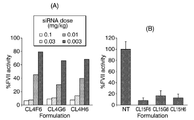
- FIG. 1A shows the results of lipid nanoparticles prepared using CL4F6, CL4G6, or CL4H6, and FIG. 1B shows the results of lipid nanoparticles prepared using CL15F6, CL15G6, or CL15H6. be. It is a figure which showed the result of having calculated the F7 enzyme activity (%) in the relative plasma of the mouse to which each F7siRNA-loaded lipid nanoparticle was administered in Example 1.
- FIG. FIG. 2A shows the results of mice administered with lipid nanoparticles prepared using CL4F6, CL4G6, or CL4H6, and FIG.
- FIG. 2B shows lipid nanoparticles prepared using CL15F6, CL15G6, or CL15H6. It is the result of mice treated with particles.
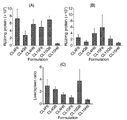
- Example 2 it is a figure which showed the measurement result of the Nluc activity (RLU / mg protein) in the liver and the spleen of the mouse to which each Nluc mRNA-carrying lipid nanoparticle was administered.
- Example 3 it is a figure which showed the measurement result of the Fluc activity of the HeLa-GFP cell which introduced each pFluc-loaded lipid nanoparticle.
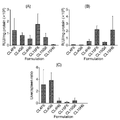
- FIG. 3 is a diagram showing measurement results of Fluc activity (RLU / mg protein) in the liver and spleen of mice to which each pFluc-loaded lipid nanoparticle was administered in Example 3.
- X1 to X2 (X1 and X2 are real numbers satisfying X1 ⁇ X2)" means "X1 or more and X2 or less”.
- the lipid nanoparticles according to the present invention are lipid nanoparticles containing a pH-sensitive cationic lipid represented by the following general formula (I) (hereinafter, may be referred to as “pH-sensitive cationic lipid of the present invention”).
- pH-sensitive cationic lipid of the present invention lipid nanoparticles containing a pH-sensitive cationic lipid represented by the following general formula (I)
- Constituents of Lipid Nanoparticles The lipid nanoparticles according to the present invention have high selectivity for the liver or spleen by providing the pH-sensitive cationic lipid represented by the general formula (I) as the constituent lipid.
- a represents an integer of 3 to 5, but is preferably 4.
- b indicates 0 or 1. When b is 0, it means that the -O-CO- group does not exist and it is a single bond.
- R 1 and R 2 each independently represent a group represented by the following general formula (A).
- R 11 and R 12 each independently represent a linear or branched C 2-15 alkyl group (alkyl group having 2 to 15 carbon atoms); c is 0 or 1. ; V indicates an integer of 4 to 12.
- R 11 and R 12 are preferably linear or branched C 2-12 alkyl groups (alkyl groups having 2 to 12 carbon atoms) independently of each other. It is more preferably a chain or branched C 5-12 alkyl group (alkyl group having 5 to 12 carbon atoms), and a linear or branched C 5-10 alkyl group (5 to 10 carbon atoms). Alkyl group) is even more preferable, and a linear or branched C6-9 alkyl group (alkyl group having 6 to 9 carbon atoms) is most preferable. Further, in the pH-sensitive cationic lipid of the present invention, R 1 and R 2 may be groups represented by the general formula (A), and may be the same group or different groups. ..
- X represents a group represented by the following general formula (B) or a 5- to 7-membered non-aromatic heterocyclic group.
- the 5- to 7-membered non-aromatic heterocyclic group indicated by X is bonded to (O-CO) b- by a carbon atom.
- d represents an integer of 0 to 3. When d is 0, it means that the-(CH 2 ) -group does not exist and it is a single bond.
- R 3 and R 4 independently form a C 1-4 alkyl group (alkyl group having 1 to 4 carbon atoms) or a C 2-4 alkenyl group (alkenyl group having 1 to 4 carbon atoms), respectively. show.
- the C 1-4 alkyl group or C 2-4 alkenyl group indicated by R 3 and R 4 may have one or two hydrogen atoms substituted with a phenyl group.
- R 3 and R 4 may be a C 1-4 alkyl group or a C 2-4 alkenyl group, and may be the same group or different groups.
- Examples of the C 1-4 alkyl group include a methyl group, an ethyl group, a propyl group, an isopropyl group, an n-butyl group, an isobutyl group and a tert-butyl group.
- the C2-4 alkenyl group includes a vinyl group, a 1-propenyl group, a 2-propenyl group, a 1-methylvinyl group, a 2-methyl-1-propenyl group, a 1-butenyl group, a 2-butenyl group and a 3-butenyl group. The group is mentioned.
- R 3 and R 4 may be bonded to each other to form a 5- to 7-membered non-aromatic heterocycle.
- Examples of the 5- to 7-membered non-aromatic heterocycle formed by binding R 3 and R 4 to each other include 1-pyrrolidinyl group, 1-piperidinyl group, 1-morpholinyl group, and 1-piperazinyl group. ..
- one or two hydrogen atoms in the ring become a C 1-4 alkyl group or a C 2-4 alkenyl group. It may be replaced.
- two hydrogen atoms in the ring are substituted with a C 1-4 alkyl group or a C 2-4 alkenyl group, they may be substituted with the same group or different groups. May be good.
- heteroatom contained in the heterocyclic group examples include a nitrogen atom, an oxygen atom, and a sulfur atom. ..
- the heteroatom constituting the heterocycle in the heterocyclic group may be one, or the same or different heteroatoms may be two or more.
- the heterocycle in the heterocyclic group may be a saturated heterocycle or may contain one or more double bonds, but the heterocycle does not become an aromatic ring.
- R 1 and R 2 are independent, and in the general formula (A), R 11 and R 12 are independent and linear.
- X is a 5- to 7-membered non-aromatic heterocyclic group (provided that it is attached to (O-CO) b- by a carbon atom in the heterocyclic group), preferably 1-pyrrolidinyl group, 1-piperidinyl group, 1-.
- R 1 and R 2 are independent, and in the general formula (A), R 11 and R 12 are independent and linear.
- R 3 and R 4 are independently C 1-4 alkyl groups or C 2-4 alkenyl groups (C 1-4 represented by R 3 and R 4 ).
- the alkyl group or C 2-4 alkenyl group is preferably a compound in which one or two hydrogen atoms may be substituted with a phenyl group).
- R 1 and R 2 are independent of each other
- R 11 and R 12 are independent of each other, and the linear or branched C 5- It is a 12 alkyl group, c is 1, v is an integer of 6 to 10, a is an integer of 3 to 5, b is 1, and X is a 5 to 7 member non-aromatic.
- Heterocyclic groups (provided that they are attached to (O-CO) b- by a carbon atom in the heterocyclic group), preferably 1-pyrrolidinyl group, 1-piperidinyl group, 1-morpholinyl group, or 1-piperazinyl group ( A compound that is bonded to (O-CO) b- by a carbon atom in the ring and one hydrogen atom may be substituted with a C 1-4 alkyl group or a C 2-4 alkenyl group).
- R 1 and R 2 are independent of each other, and in the general formula (A), R 11 and R 12 are independent of each other, and the linear or branched C 5- It is a 12 alkyl group, c is 1, v is an integer of 6 to 10, a is an integer of 3 to 5, b is 0, and X is of the general formula (B).
- D is 0, and R 3 and R 4 are independently C 1-4 alkyl groups or C 2-4 alkenyl groups (C 1-4 alkyl groups or C 2-4 alkenyl groups indicated by R 3 and R 4 , respectively. Is preferably a compound in which one or two hydrogen atoms may be substituted with a phenyl group).
- R 1 and R 2 are independent of each other in the general formula (I), and R 11 and R 12 of the general formula (A) are independent of each other.
- Is 1, and X is 1-pyrrolidinyl group, 1-piperidinyl group, 1-morpholinyl group, or 1-piperazinyl group (bonded to (O-CO) b- by a carbon atom in the ring, and one The hydrogen atom may be substituted with a C 1-4 alkyl group or a C 2-4 alkenyl group), or in the general formula (I), R 1 and R 2 are independent and general formulas, respectively.
- R 11 and R 12 are independently linear or branched C 6-9 alkyl groups, c is 1, and v is an integer of 6 to 10.
- a is an integer of 3 to 5
- b is
- X is 0 in the general formula (B)
- R 3 and R 4 are independently C 1-4 .
- Compounds that are alkyl groups are preferred.
- R 1 and R 2 are independent of each other in the general formula (I), and R 11 and R 12 of the general formula (A) are independent of each other.
- X is a 1-pyrrolidinyl group, a 1-piperidinyl group, a 1-morpholinyl group, or a 1-piperazinyl group (bonded to (O-CO) b- by a carbon atom in the ring, and one hydrogen atom is C.
- R 1 and R 2 are independently of the general formula (A).
- R 11 and R 12 are independently branched C 6-9 alkyl groups, c is 1, v is an integer of 6 to 10, and a is 3 to 5.
- b is 1 and X is a 1-pyrrolidinyl group, a 1-piperidinyl group, a 1-morpholinyl group, or a 1-piperazinyl group (bonded to (O-CO) b- by a carbon atom in the ring).
- R 1 and R 2 are the same group, and in the general formula (A), R 11 and R 12 are independently linear.
- B is 1, X is 1-pyrrolidinyl group, 1-piperidinyl group, 1-morpholinyl group, or 1-piperazinyl group (bonded to (O-CO) b- by a carbon atom in the ring.
- R 11 and R 12 are independently linear C 6-9 alkyl groups, c is 1, and v is an integer of 6 to 10. Yes, a is an integer of 3 to 5, b is 0, X is 0 in the general formula (B), and R 3 and R 4 are independently C 1-4 alkyl.
- R 1 and R 2 are the same group, and in general formula (A), R 11 and R 12 are independently branched C 6-9 . It is an alkyl group, c is 1, v is an integer of 6 to 10, a is an integer of 3 to 5, b is 0, and X is the general formula (B). Of these, a compound in which d is 0 and R 3 and R 4 are independently C 1-4 alkyl groups; is particularly preferable.
- the pH-sensitive cationic lipid of the present invention is, for example, a pH-sensitive cationic lipid having the following structure, a stereoisomer thereof, or a mixture thereof:
- the present invention relates, in one aspect, to the pH sensitive cationic lipids of the present invention.
- the pKa of the pH-sensitive cationic lipid represented by the general formula (I) is not particularly limited, but can be selected, for example, from about 4.0 to 9.0, preferably about 4.5 to 8.5. It is preferable to select the type of each substituent so as to give a range of pKa.
- the pH-sensitive cationic lipid represented by the general formula (I) can be easily produced, for example, by the method specifically shown in the examples of the present specification. By appropriately selecting raw material compounds, reagents, reaction conditions and the like with reference to this production method, those skilled in the art can easily produce any lipid included in the range of the general formula (I).
- the group represented by the general formula (A) is a group having a branched structure in which two hydrocarbon chains (R 11 and R 12 ) are linked to a -CO-O- group. That is, the pH-sensitive cationic lipid of the present invention has two branched-chain hydrocarbon chains (R 1 and R 2 ), and these hydrocarbon chains are embedded in the lipid membrane of the lipid nanoparticles. Becomes a hydrophobic scaffold.
- the lipid nanoparticles according to the present invention are characterized by high selectivity for the liver or spleen by using the pH-sensitive cationic lipid of the present invention having a hydrophobic scaffold having a branched chain structure as a constituent component of the lipid. Have.
- the pH-sensitive cationic lipid of the present invention constituting the lipid nanoparticles according to the present invention may be only one kind or two or more kinds.
- the amount of the pH-sensitive cationic lipids of the present invention is the present among the lipid molecules constituting the lipid nanoparticles. It means the total amount of lipid molecules corresponding to the pH-sensitive cationic lipids of the present invention.
- the ratio of the amount of the pH-sensitive cationic lipid of the present invention to the total amount of lipids constituting the lipid nanoparticles is preferably 20 mol% or more.
- this book relates to the total amount of lipids constituting the lipid nanoparticles in the lipid nanoparticles according to the present invention.
- the proportion of the amount of the pH-sensitive cationic lipid of the present invention is more preferably 30 mol% or more, further preferably 30 to 70 mol%, still more preferably 40 to 60 mol%.
- lipid other than the pH-sensitive cationic lipid of the present invention a lipid generally used for forming a liposome can be used.
- examples of such lipids include phospholipids, sterols or sterol derivatives, glycolipids, saturated or unsaturated fatty acids and the like. These can be used alone or in combination of two or more.
- phospholipids examples include phosphatidylserine, phosphatidylinositol, phosphatidylglycerol, phosphatidylethanolamine, phosphatidylcholine, cardiolipin, plasmalogen, ceramide phosphatidylglycerol phosphate, glycerophospholipids such as phosphatidic acid; Sphingophospholipids such as phosphorylethanolamine; and the like can be mentioned. Further, phospholipids derived from natural products such as egg yolk lecithin and soybean lecithin can also be used.
- the fatty acid residues in the glycerophospholipid and the sphingolin lipid are not particularly limited, and examples thereof include saturated or unsaturated fatty acid residues having 12 to 24 carbon atoms, and saturated or unsaturated fatty acid residues having 14 to 20 carbon atoms. Fatty acid residues are preferred. Specific examples include acyl groups derived from fatty acids such as lauric acid, myristic acid, palmitic acid, palmitoleic acid, stearic acid, oleic acid, linoleic acid, linolenic acid, arachidic acid, arachidonic acid, behenic acid, and lignoceric acid. Can be done. When these glycerolipids or sphingolipids have two or more fatty acid residues, all the fatty acid residues may be the same group or different groups from each other.
- sterols or sterol derivatives examples include animal-derived sterols such as cholesterol, cholesterol succinic acid, lanosterol, dihydrolanosterol, desmostolol, and dihydrocholesterol; plants such as stigmasterol, cytosterol, ⁇ -sitosterol, campesterol, and brushcasterol.
- Derived sterols (phytosterols) examples thereof include sterols derived from microorganisms such as thymostolol and ergosterol.
- glycolipid examples include glycosphingolipids such as sulfoxyribosylglyceride, diglycosyldiglyceride, digalactosyldiglyceride, galactosyldiglyceride and glycosyldiglyceride; glycosphingolipids such as galactosylcerebroside, lactosylcerebroside and ganglioside; Be done.
- saturated or unsaturated fatty acids include saturated or unsaturated fatty acids having 12 to 20 carbon atoms such as palmitic acid, oleic acid, stearic acid, arachidonic acid, and myristic acid.
- the constituent lipid of the lipid nanoparticles according to the present invention preferably contains a neutral lipid, more preferably a phospholipid or a sterol, and preferably contains a sterol, in addition to the pH-sensitive cationic lipid of the present invention. It is even more preferable, and it is even more preferable to contain cholesterol.
- the lipid nanoparticles according to the present invention preferably contain a polyalkylene glycol-modified lipid as a lipid component.
- the polyalkylene glycol is a hydrophilic polymer, and the surface of the lipid nanoparticles can be modified with the polyalkylene glycol by constructing the lipid nanoparticles using the polyalkylene glycol-modified lipid as the lipid film-constituting lipid.
- surface modification with polyalkylene glycol it may be possible to enhance the stability of lipid nanoparticles such as retention in blood.
- polyethylene glycol for example, polyethylene glycol, polypropylene glycol, polytetramethylene glycol, polyhexamethylene glycol and the like can be used.
- the molecular weight of the polyalkylene glycol is, for example, about 300 to 10,000, preferably about 500 to 10,000, and more preferably about 1,000 to 5,000.
- stearylylated polyethylene glycol for example, PEG45 stearate (STR-PEG45)
- PEG45 stearate STR-PEG45
- the ratio of the polyalkylene glycol-modified lipid to the total amount of lipid constituting the lipid nanoparticles according to the present invention is liver selectivity or spleen selectivity by the pH-sensitive cationic lipid of the present invention, specifically, according to the present invention.
- the amount is not particularly limited as long as it does not impair the liver-specific gene expression activity or the spleen-specific gene expression activity when the lipid nanoparticles are used as the gene carrier.
- the ratio of the polyalkylene glycol-modified lipid to the total amount of lipids constituting the lipid nanoparticles is preferably 0.5 to 3 mol%.
- the lipid nanoparticles according to the present invention can be appropriately surface-modified, if necessary.
- modifying the surface of the lipid nanoparticles according to the present invention with a hydrophilic polymer or the like the retention in blood can be enhanced.
- surface modification can be performed by using the lipid modified with these modifying groups as the constituent lipid of the lipid nanoparticles.
- examples of the lipid derivative for enhancing blood retention include glycophorin, ganglioside GM1, phosphatidylinositol, ganglioside GM3, glucuronic acid derivative, glutamic acid derivative, polyglycerin phospholipid derivative and the like. Can also be used.
- examples of hydrophilic polymers for enhancing blood retention include Amylose, amylopectin, chitosan, mannan, cyclodextran, pectin, carrageenan and the like.
- the lipid nanoparticles can be surface-modified with an oligosaccharide compound having 3 or more sugars.
- the type of the oligosaccharide compound having 3 or more sugars is not particularly limited, but for example, an oligosaccharide compound to which about 3 to 10 sugar units are bound can be used, and preferably about 3 to 6 sugar units are bound. Oligosaccharide compounds can be used.
- an oligosaccharide compound which is preferably a trimer to a hexamer of glucose can be used, and more preferably an oligosaccharide compound which is a trimer or a tetramer of glucose can be used.
- isomaltotriose, isopanone, maltotriose, maltotetraose, maltopentaose, maltohexaose and the like can be preferably used, and among these, malto in which glucose is ⁇ 1-4 bound can be preferably used.
- Further preferred are triose, maltotetraose, maltopentaose, or maltohexaose.
- the amount of surface modification of the lipid nanoparticles by the oligosaccharide compound is not particularly limited, but is, for example, about 1 to 30 mol%, preferably about 2 to 20 mol%, and more preferably about 5 to 10 mol% with respect to the total amount of lipid. Is.
- the method for surface-modifying the lipid nanoparticles with the oligosaccharide compound is not particularly limited, and for example, a liposome (International Publication No. 2007/102481) in which the surface of the lipid nanoparticles is modified with a simple sugar such as galactose or mannose is known. Therefore, the surface modification method described in this publication can be adopted. All disclosures of the above publications are included as disclosures of the present specification by reference.
- the lipid nanoparticles according to the present invention can be imparted with any one or more functions such as a temperature change sensitive function, a membrane permeation function, a gene expression function, and a pH sensitive function.
- a temperature change sensitive function such as a temperature change sensitive function, a membrane permeation function, a gene expression function, and a pH sensitive function.
- the lipid nanoparticles according to the present invention are one or more selected from the group consisting of antioxidants such as tocopherol, propyl gallate, ascorbyl palmitate, or butylated hydroxytoluene, charged substances, and membrane polypeptides. May contain the substance of.
- the charged substance that imparts a positive charge include saturated or unsaturated aliphatic amines such as stearylamine and oleylamine, and examples of the charged substance that imparts a negative charge include disetylphosphate and cholesterylhemis. Examples thereof include cusinate, phosphatidylserine, phosphatidylinositol, and phosphatidic acid.
- the membrane polypeptide include a membrane superficial polypeptide, a membrane endogenous polypeptide, and the like. The blending amount of these substances is not particularly limited, and can be appropriately selected depending on the intended purpose.
- the size of the lipid nanoparticles according to the present invention is preferably 400 nm or less, preferably 300 nm or less, because high delivery efficiency can be easily obtained for liver cells or spleen cells in the living body. It is more preferable that the particle size is 200 nm or less, and more preferably 150 nm or less.
- the average particle size of the lipid nanoparticles means the number average particle size measured by a dynamic light scattering (DLS) method. The measurement by the dynamic light scattering method can be performed by a conventional method using a commercially available DLS device or the like.
- the polydispersity index (PDI) of the lipid nanoparticles according to the present invention is about 0.01 to 0.7, preferably about 0.01 to 0.6, and more preferably about 0.03 to 0.3.
- the zeta potential at pH 7.4 can be in the range of ⁇ 50 mV to 5 mV, preferably in the range of ⁇ 45 mV to 5 mV.
- the form of the lipid nanoparticles according to the present invention is not particularly limited, and examples thereof include single membrane liposomes, multilamellar liposomes, spherical micelles, and atypical layered structures as the forms dispersed in an aqueous solvent.
- the lipid nanoparticles according to the present invention are preferably single membrane liposomes or multilamellar liposomes.
- the lipid nanoparticles according to the present invention preferably contain the target component to be delivered into the target cell inside the particles covered with the lipid membrane.
- the component contained in the lipid nanoparticles according to the present invention is not particularly limited as long as it can be contained.
- Arbitrary substances such as nucleic acids, saccharides, peptides, low molecular weight compounds, and metal compounds can be encapsulated in the lipid nanoparticles according to the present invention.
- Nucleic acid is preferable as the component to be included in the lipid nanoparticles according to the present invention.
- the nucleic acid may be DNA, RNA, or an analog or derivative thereof (eg, peptide nucleic acid (PNA), phosphorothioate DNA, etc.).
- the nucleic acid to be included in the lipid nanoparticles according to the present invention may be a single-stranded nucleic acid, a double-stranded nucleic acid, a linear nucleic acid, or a cyclic nucleic acid.
- the lipid nanoparticles according to the invention include the pH sensitive cationic lipids of the invention, stereoisomers thereof or mixtures of stereoisomers thereof, and nucleic acids.
- the nucleic acid to be encapsulated in the lipid nanoparticles according to the present invention is preferably a nucleic acid containing a foreign gene for expression in the target cell, and is a nucleic acid that functions to express the foreign gene in the cell by being taken up into the cell. It is more preferable to have.
- the foreign gene may be a gene originally contained in the genomic DNA of a target cell (preferably liver cell and spleen cell), or may be a gene not contained in the genomic DNA.
- Examples of such a nucleic acid include a gene expression vector containing a nucleic acid having a base sequence encoding a gene of interest to be expressed.
- the gene expression vector may be present as an extrachromosomal gene in the introduced cell, or may be incorporated into genomic DNA by homologous recombination.
- the gene expression vector to be included in the lipid nanoparticles according to the present invention is not particularly limited, and a vector generally used in gene therapy or the like can be used.
- the gene expression vector to be encapsulated in the lipid nanoparticles according to the present invention is preferably a nucleic acid vector such as a plasmid vector.
- the plasmid vector may remain circular or may be encapsulated in the lipid nanoparticles according to the present invention in a state of being cut linearly in advance.
- the gene expression vector can be designed by a conventional method using a commonly used molecular biological tool based on the base sequence information of the gene to be expressed, and can be produced by various known methods. ..
- the nucleic acid to be encapsulated in the lipid nanoparticles according to the present invention is also preferably a functional nucleic acid that controls the expression of the target gene existing in the target cell.
- the functional nucleic acid include antisense oligonucleotides, antisense DNA, antisense RNA, siRNA, microRNA, and mRNA.
- it may be a plasmid DNA (pDNA) that serves as a siRNA expression vector that expresses siRNA in cells.
- the siRNA expression vector can be prepared from a commercially available siRNA expression vector, and may be appropriately modified.
- the nucleic acid to be encapsulated in the lipid nanoparticles according to the present invention is preferably mRNA or pDNA because of its good selectivity for the liver or spleen.
- the lipid nanoparticles according to the invention comprise a pH sensitive cationic lipid of the invention, a stereoisomer or mixture thereof, and a nucleic acid, wherein the nucleic acid is mRNA or plasmid. It is DNA.
- the method for producing lipid nanoparticles according to the present invention is not particularly limited, and any method available to those skilled in the art can be adopted.
- all lipid components are dissolved in an organic solvent such as chloroform, and a lipid film is formed by vacuum drying with an evaporator or spray drying with a spray dryer, and then the components are encapsulated in the lipid nanoparticles.
- it can be produced by adding an aqueous solvent containing a nucleic acid or the like to the above-dried mixture and further emulsifying it with an emulsifier such as a homogenizer, an ultrasonic emulsifier, or a high-pressure jet emulsifier.
- lipid nanoparticles it can also be produced by a well-known method for producing liposomes, for example, a reverse phase evaporation method. If it is desired to control the size of lipid nanoparticles, it may be subjected to extrusion (extrusion filtration) under high pressure using a membrane filter having a uniform pore size or the like.
- composition of the aqueous solvent is not particularly limited, and examples thereof include a phosphate buffer solution, a citrate buffer solution, a buffer solution such as a phosphate buffered physiological saline solution, a physiological saline solution, and a medium for cell culture. Can be done.
- aqueous solvents can stably disperse lipid nanoparticles, but also glucose, galactose, mannose, fructose, inositol, ribose, xylose sugar monosaccharides, lactose, sucrose, cellobiose, trehalose, Disaccharides such as maltose, trisaccharides such as raffinose and mereginose, polysaccharides such as cyclodextrin, sugars (aqueous solutions) such as sugar alcohols such as erythritol, xylitol, sorbitol, mannitol and martitol, glycerin, diglycerin and polyglycerin.
- Polyhydric alcohol such as propylene glycol, polypropylene glycol, ethylene glycol, diethylene glycol, triethylene glycol, polyethylene glycol, ethylene glycol monoalkyl ether, diethylene glycol monoalkyl ether, and 1,3-butylene glycol may be added. ..
- aqueous solution such as propylene glycol, polypropylene glycol, ethylene glycol, diethylene glycol, triethylene glycol, polyethylene glycol, ethylene glycol monoalkyl ether, diethylene glycol monoalkyl ether, and 1,3-butylene glycol may be added. ..
- aqueous solution such as propylene glycol, polypropylene glycol, ethylene glycol, diethylene glycol, triethylene glycol, polyethylene glycol, ethylene glycol monoalkyl ether, diethylene glycol monoalkyl ether, and 1,3-butylene glycol may be added. ..
- the pH of the aqueous solvent should be set from weakly
- the lipid nanoparticles according to the present invention can also be produced by an alcohol dilution method using a flow path.
- a solution in which a lipid component is dissolved in an alcohol solvent and a solution in which a water-soluble component to be included in the lipid nanoparticles is dissolved in an aqueous solvent are introduced from separate flow paths and merged.
- This is a method for producing lipid nanoparticles.
- the flow path used for production since a nano-sized lipid particle formation system having high particle size controllability can be formed, the flow is made in a micro-sized flow path through which the raw material solution is flowed, as described in Patent Document 2. It is preferable to use a flow path structure having a simple two-dimensional structure in which baffles (obstruction plates) having a constant width with respect to the road width are alternately arranged from both side surfaces.
- the aqueous solvent used in the alcohol dilution method the above-mentioned solvent can be used.
- aqueous dispersion of lipid nanoparticles is freeze-dried or spray-dried, for example, glucose, galactose, mannose, fructose, inositol, ribose, xylose sugar monosaccharide, lactose, sucrose, cellobiose, trehalose, etc.
- disaccharides such as maltoose, trisaccharides such as raffinose and mereginose, polysaccharides such as cyclodextrin, and sugars such as sugar alcohols such as erythritol, xylitol, sorbitol, mannitol and martitol (aqueous solution).
- sugars such as sugar alcohols such as erythritol, xylitol, sorbitol, mannitol and martitol
- sugars such as sugar alcohols such as erythritol, xylitol, sorbitol, mannitol and martitol
- the saccharides, glycerin, diglycerin, polyglycerin, propylene glycol, polypropylene glycol, ethylene glycol, diethylene glycol, triethylene glycol, polyethylene glycol, and ethylene glycol monoalkyl ether are used.
- Diethylene glycol monoalkyl ether, polyhydric alcohol (aqueous solution) such as 1,3-butylene glycol may be used to improve stability.
- the lipid nanoparticles according to the present invention are freeze-dried.
- the present invention relates to, in one aspect, a lipid nanoparticle preparation containing the pH-sensitive cationic lipid of the present invention, its stereoisomer or a mixture of stereoisomers thereof.
- the invention comprises (i) sterols or sterol derivatives, (ii) polyalkylene glycol-modified lipids, (iii) nucleic acids, (iv) buffers, (v) disaccharides and (vi) the pH of the invention.
- the present invention relates to a lipid nanoparticle preparation containing a sensitive cationic lipid, its steric isomer or a mixture of steric isomers thereof.
- Examples of the sterol or the sterol derivative include cholesterol, sitosterol and the like, and cholesterol is preferable.
- examples of the polyalkylene glycol-modified lipid include polyethylene glycol-modified lipid and polypropylene glycol-modified lipid, and polyethylene glycol-modified lipid is preferable.
- examples of the nucleic acid include siRNA, pDNA, mRNA and the like, and mRNA is preferable.
- Examples of the buffer include a HEPES buffer, a phosphate buffer, a Tris buffer and the like.
- examples of the disaccharide include lactose, sucrose, cellobiose, trehalose, maltose and the like, and sucrose is preferable.
- the concentration of the disaccharide in the lipid nanoparticle preparation is, for example, 1% by weight to 20% by weight, preferably 5% by weight to 15% by weight.
- the molar ratio of sterols or sterol derivatives to pH-sensitive cationic lipids, their stereoisomers or mixtures of stereoisomers is, for example, 68.5: 20-28.5: 60.
- the lipid nanoparticle preparation may be prepared by suspending the lipid nanoparticles in an aqueous solution.
- the pH of the lipid nanoparticle preparation of the present invention is, for example, 5.5 to 8.5, preferably 6.8 to 8.0 at 25 ° C.
- the present invention relates to, in one aspect, a resuspended preparation in which a lipid nanoparticle preparation is resuspended by the addition of water or an aqueous solution.
- the lipid nanoparticles of the present invention are excellent in stability.
- the lipid nanoparticles of the present invention are stable for, for example, 1 week or 1 week or more when stored at -80 ° C, and / or 1 week, 2 weeks, 3 weeks, 4 weeks, 5 weeks when stored at 5 ° C. Or stable for 5 weeks or longer and / or 1 week, 2 weeks, 3 weeks, 4 weeks, 5 weeks or 5 weeks or more when stored at 25 ° C, and / or 3 days when stored at 40 ° C. It is stable for 1 week, 2 weeks, 3 weeks, 4 weeks, 5 weeks or 5 weeks or more.
- the lipid nanoparticles were allowed to stand at a predetermined temperature, and after storage for a predetermined period, the average particle size, PDI, and nucleic acid encapsulation rate were compared with the values immediately after preparation, and the average particles were compared.
- Lipid nanos that satisfy all three conditions that the diameter is maintained within ⁇ 20 nm based on the preparation date of lipid nanoparticles, the PDI is 0.2 or less, high uniformity is maintained, and the nucleic acid encapsulation rate is maintained at 80% or more.
- Particles may be defined as lipid nanoparticles with good quality.
- lipid nanoparticles that have been kept in good quality for 1 week or more when left at 5 ° C or lipid nanoparticles that have been kept in good quality for 1 week or more when left at 40 ° C for stability. It may be evaluated as an excellent lipid nanoparticle.
- the gene expression vector encapsulated in the lipid nanoparticles is selectively expressed in the liver or spleen rather than other organs.
- the siRNA expression vector encapsulated in the lipid nanoparticles is selectively expressed in the liver or spleen rather than other organs. , The expression of the gene targeted by the expression vector is suppressed.
- lipid nanoparticle according to the present invention containing a foreign gene of interest to be expressed in the liver cell or spleen cell is administered to a test animal, the foreign gene is expressed in the liver or spleen of the test animal. Can be done.
- the lipid nanoparticles according to the present invention function as gene expression carriers targeting the liver or spleen.
- the lipid nanoparticles according to the present invention are useful as an active ingredient of a pharmaceutical composition used for gene therapy, and in particular, an effective pharmaceutical composition used for gene therapy targeting the liver or spleen. It is useful as an ingredient.
- the present invention in one aspect, relates to a pharmaceutical composition for liver delivery comprising the pH sensitive cationic lipid of the present invention, a stereoisomer thereof or a mixture thereof.
- the invention in another aspect, relates to a pharmaceutical composition for spleen delivery comprising the pH sensitive cationic lipids of the invention, stereoisomers thereof or mixtures of stereoisomers thereof.
- the animal to which the lipid nanoparticles according to the present invention is administered is not particularly limited, and may be a human or a non-human animal.
- non-human animals include mammals such as cows, pigs, horses, sheep, goats, monkeys, dogs, cats, rabbits, mice, rats, hamsters and guinea pigs, and birds such as chickens, quails and ducks.
- the pH sensitive cationic lipids of the present invention are, for example, the basic skeleton, 7- (4- (dipropylamino) butyl) tridecane-1,7,13-triol or. It is synthesized by condensing 5,11-dihydroxy 5- (6-hydroxyhexyl) undecyl 1-methylpiperidin-4-carboxylate with a branched fatty acid.
- the present invention in one aspect, relates to a method for producing a pH-sensitive cationic lipid of the present invention, a stereoisomer thereof or a mixture thereof.
- the method for producing a pH-sensitive cationic lipid of the present invention is to react an alkylcarboxylic acid with an alkyl halide in the presence of organolithium, dimethylpropylene urea (DMPU) and tetrahydrofuran (THF). At least includes a step (step A) of obtaining a branched fatty acid.
- DMPU dimethylpropylene urea
- THF tetrahydrofuran
- the alkylcarboxylic acid is, for example, octanoic acid, decanoic acid, tridecanoic acid, hexanoic acid, heptanic acid, octanoic acid, nonanoic acid, decanoic acid, undecanoic acid, dodecanoic acid, tridecanoic acid, tetradecanoic acid, pentadecanoic acid, Hexadecenoic acid.
- the alkyl halide is, for example, 1-iodohexane, 1-iodobutane, 2-iodohexane, 1-bromohexane, iodomethane, iodoethane, 1-iodopropane, 1-iodobutane, 1-iodopentane, 1-.
- the organolithium is, for example, lithium diisopropylamide lithium (LDA), t-butyllithium, n-butyllithium.
- a reaction solution obtained by reacting a malonic acid ester with an alkyl halide in the presence of a base is hydrolyzed and heat-treated. At least a step of obtaining a branched fatty acid (step B) is included.
- the malonic acid ester is, for example, dimethyl malonate, diethyl malonate, diisopropyl malonate, and preferably dimethyl malonate.
- the alkyl halide is, for example, iodoalkyl
- the iodoalkyl is, for example, 1-iodohexane, 1-iodopropane, 2-iodohexane.
- the base is, for example, sodium hydride, calcium hydride, sodium ethoxydo and bis (trismethylsilyl) amidolith, preferably sodium hydride.
- the hydrolysis treatment is carried out using, for example, any of sodium hydroxide, calcium hydroxide and lithium hydroxide.
- the heat treatment is carried out at the same time as and / or after the hydrolysis treatment, preferably at 120 ° C to 170 ° C, more preferably at 150 ° C to 170 ° C.
- the method further comprises the step of purifying the branched fatty acid by reverse phase chromatography.
- the branched fatty acid used for the synthesis of can be obtained in higher yield by performing in step B than in step A.
- the branched fatty acid used for the synthesis of the pH-sensitive cationic lipid of the present invention may be obtained, for example, by the method described in Japanese Patent No. 2756756.
- Ethyl-3- (3-dimethylaminopropyl) carbodiimide) (3.0 mmol) was added and reacted overnight at room temperature. After distilling off the solvent using a rotary evaporator, the solvent was suspended in ethyl acetate, and the insoluble material was removed by filtration. The filtrate was washed separately with 0.5N aqueous sodium oxide solution and saturated brine. Anhydrous sodium sulfate was added to the organic layer for dehydration. After filtering this, the solvent was distilled off using a rotary evaporator to obtain a crude product.
- the crude product was purified by subjecting it to silica gel chromatography [elution solvent; dichloromethane: methanol (continuous gradient)] and 7- (4- (dipropylamino) butyl) -7-hydroxytridecane-1,13-.
- Silica gel (2-hexyldecanoate) (CL4F6) was obtained.
- lipid nanoparticles were prepared by an alcohol dilution method using a channel.
- a microfluidic device "iLiNP” with a built-in mixer manufactured by Lilac Pharma Co., Ltd. was used.
- an ethanol solution adjusted to a lipid concentration of 8 mM and an acetate buffer (25 mM, pH 4.0) adjusted to a siRNA concentration of 71.1 ⁇ g / mL were added at 0.375 mL / min and 1.125 mL / min, respectively.
- the solution was sent into the microchannel, and the lipid nanoparticle solution excreted from the channel was recovered.
- the lipid nanoparticle solution was placed in a dialysis membrane (MWCO 12,000-14,000), and the external aqueous phase was dialyzed against 20 mM MES buffer (pH 6.0) at 4 ° C. for 2 hours or more. Then, the external aqueous phase was replaced with PBS ( ⁇ ) (pH 7.4), and the dialysis was further performed at 4 ° C. for 2 hours or more, and then the lipid nanoparticle solution was recovered from the dialysis membrane.
- cholesterol cholesterol
- PEG-DMG polyethylene glycol 2000-modified dimyristoylglycerol
- ⁇ Measurement of pKa of lipid nanoparticles The pKa of lipid nanoparticles was measured using p-toluidino-2-naphthalene sulfonic acid (TNS). First, TNS (final concentration: 0.75 ⁇ M) and lipid nanoparticles (final concentration: 30 mM) were mixed in a buffer solution adjusted to each pH. The fluorescence intensity of the prepared mixture was measured with a microplate reader. Among the measured values, the highest value and the lowest value were defined as 100% and 0% charge rates, respectively, and the pH indicating the 50% charge rate was calculated as pKa.
- Example 1 Using pH-sensitive cationic lipid, cholesterol, and PEG-DMG in a molar ratio of 50:50: 1, lipid nanoparticles loaded with siRNA for F7 (F7 siRNA-loaded lipid nanoparticles) were prepared by an alcohol dilution method. bottom. CL4F6, CL4G6, CL4H6, CL15F6, CL15G6, or CL15H6 was used as the pH-sensitive cationic lipid.
- lipid nanoparticles produced using pH-sensitive cationic lipid X are referred to as X-LNP.
- lipid nanoparticles prepared using the pH-sensitive cationic lipids CL4F6, CL4G6, CL4H6, CL15F6, CL15G6, or CL15H6 can be obtained from CL4F-LNP, CL4G6-LNP, CL4H6-LNP, CL15F-LNP, CL15G6-, respectively. It is called LNP or CL15H6-LNP.
- the base sequence of siRNA for F7 is shown in Table 1. In the table, uppercase letters represent natural RNA (only T is natural DNA), lowercase letters represent 2'-fluoro modifiers, and * represents phosphorothioate binding.
- Each of the prepared lipid nanoparticles had an average particle diameter of 80 to 120 nm and a siRNA encapsulation rate of 90% or more.
- the results of measuring the pKa of each lipid nanoparticle are shown in FIGS. 1 (A) and 1 (B).
- lipid nanoparticles produced using CL4F6, CL4G6, CL15F6, or CL15G6 having a branched scaffold structure are produced using CL4H6 or CL15H6 having a linear scaffold structure. It showed a lower pKa compared to the lipid nanoparticles.
- each prepared F7 siRNA-loaded lipid nanoparticle was administered to ICR mice (4 weeks old, female), and the in vivo F7 knockdown activity was examined. Specifically, each F7 siRNA-loaded lipid nanoparticle was intravenously administered to ICR mice at 0.003 to 0.1 mg siRNA / kg, and plasma F7 enzyme activity was measured 24 hours later. The relative plasma F7 enzyme activity (%) of the mice to which each F7 siRNA-loaded lipid nanoparticle was administered was calculated, assuming that the plasma F7 enzyme activity of the untreated mice was 100%. The results are shown in FIGS. 2 (A) and 2 (B). FIG. 2B shows the results of intravenous administration of each F7 siRNA-loaded lipid nanoparticle at 0.1 mg siRNA / kg.
- the lipid nanoparticles produced by using CL4F6, CL4G6, CL15F6, or CL15G6 having a branched scaffold structure are produced by using CL4H6 or CL15H6 having a linear scaffold structure. It showed the same in vivo F7 knockdown activity as compared with the lipid nanoparticles. From these results, it was clarified that lipid nanoparticles having CL4F6, CL4G6, CL15F6, and CL15G6 as constituent lipids are useful as siRNA delivery carriers.
- Example 2 Lipid nanoparticles carrying mRNA instead of siRNA were prepared, and the in vivo gene expression activity was examined.
- mRNA a pDNA encoding NanoLuc® luciferase (Nluc) (manufactured by Promega) was prepared by in vitro transcription reaction (Nluc mRNA).
- pH-sensitive cationic lipids pH-sensitive cationic lipids, DSPC (1,2-distearoyl-sn-glycero-3-phosphocholine), cholesterol, and PEG-DMG were used in a composition with a molar ratio of 60:10:40: 1 to dilute the alcohol.
- lipid nanoparticles loaded with Nluc mRNA lipid nanoparticles loaded with Nluc mRNA
- CL4F6, CL4G6, CL4H6, CL15F6, CL15G6, or CL15H6 was used as the pH-sensitive cationic lipid.
- the average particle size, PDI, zeta potential, and mRNA encapsulation rate of the prepared lipid nanoparticles were examined. The measurement results are shown in Table 2.
- "CL” means a cationic lipid.
- the average particle size calculated by the dynamic light scattering method was 70 to 130 nm (Table 2).
- the mRNA encapsulation rate was less than 80% for CL4H6-LNP, and 90% or more for all LNPs containing other cationic lipids.
- each prepared Nluc mRNA-loaded lipid nanoparticle was administered to ICR mice (4 weeks old, female), and the in vivo gene expression activity was examined. Specifically, ICR mice were intravenously administered with each Nluc mRNA-loaded lipid nanoparticle at 0.04 mg mRNA / kg, and Nluc activity in the liver and spleen after 24 hours was measured. Nluc activity was measured by a luminometer (RLU) and corrected by the amount of protein quantified by the BCA method.
- RLU luminometer
- FIG. 3 shows the measurement results of Nluc activity (RLU / mg protein) in the liver and spleen of mice to which each Nluc mRNA-loaded lipid nanoparticle was administered.
- FIG. 3A is a measurement result of Nluc activity in the liver
- FIG. 3B is a measurement result of Nluc activity in the spleen.
- the liver selectivity of gene expression was calculated by dividing the gene expression activity in the liver by the gene expression activity in the spleen.
- FIG. 3C is a diagram showing the calculation results of [Nluc activity in liver] / [Nluc activity in spleen] of mice to which each Nluc mRNA-loaded lipid nanoparticle was administered. As shown in FIG.
- mice administered CL4F6-LNP, CL15F6-LNP, and CL15G6-LNP showed the same Nluc activity as mice administered CL4H6-LNP in the liver.
- the mice administered with CL4F6-LNP and CL4G6-LNP showed higher liver selectivity than the mice administered with CL4H6-LNP.
- mice treated with CL15F6-LNP and CL15G6-LNP showed higher liver selectivity than mice treated with CL15H6-LNP.
- the lipid nanoparticles containing pH-sensitive cationic lipids having a branched scaffold structure are lipid nanoparticles containing pH-sensitive cationic lipids having a linear scaffold structure when mRNA is encapsulated. It has been found to be more selective to the liver and useful as a delivery carrier for specific delivery to the liver.
- Example 3 Lipid nanoparticles loaded with pDNA instead of siRNA were prepared, and the in vivo gene expression activity was examined.
- pDNA a plasmid (pFluc) expressing firefly luciferase (Fluc) under the CMV promoter was used.
- pH-sensitive cationic lipids, DSPC, cholesterol, and PEG-DMG were used in a composition having a molar ratio of 50:10:40: 1.5, and pFluc-loaded lipid nanoparticles (pFluc-loaded) were loaded by an alcohol dilution method. Lipid nanoparticles) were prepared. CL4F6, CL4G6, CL4H6, CL15F6, CL15G6, or CL15H6 was used as the pH-sensitive cationic lipid. Further, the N / P ratio in the microchannel was set to 9.
- the average particle size, PDI, zeta potential, and mRNA encapsulation rate of the prepared lipid nanoparticles were examined. The measurement results are shown in Table 3.
- "CL” means a cationic lipid.
- the average particle size calculated by the dynamic light scattering method was 90 to 150 nm (Table 3).
- Regarding the pDNA encapsulation rate, CL4H6-LNP and CL15H6-LNP were 70% and 82%, respectively.
- the lipid nanoparticles containing other cationic lipids showed a good pDNA encapsulation rate of 90% or more.
- the pFluc-loaded lipid nanoparticles were introduced into cultured cells, and the in vitro gene expression activity was examined. Specifically, HeLa-GFP cells cultured in a 96-well plate were transfected with 0.0625 ⁇ g pDNA / well of pFluc-loaded lipid nanoparticles, and the Fluc activity was measured after 24 hours. As a positive control, pFluc was introduced into HeLa-GFP cells using the introduction reagent "Lipofectamine 3000" (manufactured by Thermo Fisher Scientific). Fluc activity was measured by a luminometer (RLU) and corrected by the amount of protein quantified by the BCA method.
- RLU luminometer
- FIG. 4 shows the measurement results of the Fluc activity of HeLa-GFP cells into which each pFluc-loaded lipid nanoparticle was introduced.
- "Lipo3K” means a positive control gene-introduced using Lipofectamine 3000.
- cells introduced with CL15F6-LNP showed higher activity than cells introduced with CL4H6-LNP, CL15H6-LNP, and positive control.
- the average particle size, PDI, zeta potential, and mRNA encapsulation rate of the prepared lipid nanoparticles were examined. The measurement results are shown in Table 4.
- "CL” means a cationic lipid.
- the average particle size calculated by the dynamic light scattering method was 70 to 125 nm (Table 4).
- each prepared pFluc-loaded lipid nanoparticle was administered to ICR mice (4 weeks old, female), and the in vivo gene expression activity was examined. Specifically, ICR mice were intravenously administered with each pFluc-loaded lipid nanoparticle at 0.5 mg mRNA / kg, and Fluc activity in the liver and spleen after 6 hours was measured. Fluc activity was measured by a luminometer (RLU) and corrected by the amount of protein quantified by the BCA method.
- RLU luminometer
- FIG. 5 shows the measurement results of Fluc activity (RLU / mg protein) in the liver and spleen of mice to which each pFluc-loaded lipid nanoparticle was administered.
- FIG. 5A is a measurement result of Fluc activity in the liver
- FIG. 5B is a measurement result of Fluc activity in the spleen.
- the liver selectivity of gene expression was calculated by dividing the gene expression activity in the liver by the gene expression activity in the spleen.
- FIG. 5C is a diagram showing the calculation results of [Fluc activity in liver] / [Fluc activity in spleen] of mice to which each pFluc-loaded lipid nanoparticle was administered. As shown in FIG.
- the Fluc activity in the liver was superior to the mice treated with CL4F6-LNP and CL15F6-LNP than the mice treated with CL4H6-LNP and CL15H6-LNP.
- the mice administered with CL4F6-LNP and CL4G6-LNP showed higher liver selectivity than the mice administered with CL4H6-LNP.
- mice treated with CL15F6-LNP and CL15G6-LNP showed higher liver selectivity than mice treated with CL15H6-LNP.
- lipid nanoparticles containing pH-sensitive cationic lipids having a branched-chain scaffold structure even when pDNA is encapsulated have a direct scaffold structure. It was found that the lipid nanoparticles containing the chain-type pH-sensitive cationic lipid have higher selectivity to the liver and are useful as a delivery carrier for specific delivery to the liver.
- the solvent was suspended in ethyl acetate, and then washed separately with a 0.5N aqueous sodium hydroxide solution and saturated brine. Anhydrous sodium sulfate was added to the organic layer for dehydration. After filtering this, the solvent was distilled off using a rotary evaporator to obtain a crude product.
- the above-mentioned branched fatty acid was synthesized as follows using a linear fatty acid or dimethyl malonate as a raw material.
- the crude product was purified by subjecting it to ODS-ized silica gel chromatography [elution solvent; acetonitrile / isopropanol (50:50): water (10 mM ammonium acetate) (continuous gradient)] to obtain a branched fatty acid.
- the crude product was purified by subjecting it to ODS-ized silica gel chromatography [elution solvent; acetonitrile / isopropanol (50:50): water (10 mM ammonium acetate) (continuous gradient)] to obtain a branched fatty acid.
- lipid nanoparticles using CL4F6 derivative and CL15F6 derivative 1.
- Preparation and evaluation of mRNA-loaded lipid nanoparticles ⁇ Preparation of mRNA-loaded lipid nanoparticles (mRNA-LNP)> Lipid nanoparticles were prepared by an alcohol dilution method using a channel. A microfluidic device with a built-in mixer "NanoAssemblr" (manufactured by Precision Nano Systems) was used as the flow path.
- an ethanol solution adjusted to a lipid concentration of 8 mM and a citric acid buffer solution (50 mM, pH 3.5) adjusted to an mRNA concentration of 46.1 ⁇ g / mL were microchannels at 3 mL / min and 9 mL / min, respectively.
- the solution was sent into the water, and the lipid nanoparticle solution excreted from the flow path was recovered.
- the lipid nanoparticle solution was diluted 10-fold with 20 mM HEPES buffer (9% HEPES buffer, pH 7.45) and then concentrated in an ultrafiltration unit to recover the lipid nanoparticle solution.
- lipid nanoparticles > pH-sensitive cationic lipids, DSPC (1,2-distearoyl-sn-glycero-3-phosphocholine, oilification industry), cholesterol (nakalitesk), and DMG-PEG2K (oilification industry) in a molar ratio of 50:10:
- Lipid nanoparticles loaded with Fluc mRNA Fluc mRNA-loaded lipid nanoparticles were prepared by an alcohol dilution method using a composition of 38.5: 1.5.
- CleanCap® FLuc mRNA 5moU
- TriLink Biotechnologies was used for Fluc mRNA.
- ⁇ Measurement of average particle size and PDI of lipid nanoparticles The average particle size ( ⁇ -Average) and PDI of lipid nanoparticles in PBS ( ⁇ ) were measured using an analyzer “Zetasizer Nano ZSP” (manufactured by Malvern) using a dynamic light scattering method.
- pKa of lipid nanoparticles was measured using p-toluidino-2-naphthalene sulfonic acid (TNS).
- TNS p-toluidino-2-naphthalene sulfonic acid
- lipid nanoparticles final concentration: 60 ⁇ M
- the fluorescence intensity of the prepared mixture was measured with a microplate reader.
- the excitation wavelength was calculated with the measured value at pH 3.5 as the 100% charge rate, the measured value at pH 9.5 as the 0% charge rate, and the pH indicating the 50% charge rate as pKa.
- ⁇ Nucleic acid encapsulation rate of lipid nanoparticles The encapsulation rate of siRNA and mRNA of lipid nanoparticles was measured with Ribogreen reagent.
- a solution diluted with TE buffer so that the concentration of the lipid nanoparticles was 8 ⁇ g / mL as the nucleic acid concentration was prepared as a solution for measuring the nanoparticle surface nucleic acid concentration.
- a solution for measuring the total nucleic acid concentration was prepared by adding 1.2 ⁇ g / mL X-triton100 so that the concentration of the lipid nanoparticles was 1% (w / w) as the nucleic acid concentration.
- the nucleic acid encapsulation rate of each lipid nanoparticle was calculated by the following formula.
- Encapsulation rate% (Nucleic acid concentration of total nucleic acid concentration measurement solution ( ⁇ g / mL) -Nucleic acid concentration of nanoparticle surface nucleic acid concentration measurement solution ( ⁇ g / mL)) ⁇ Nucleic acid concentration of total nucleic acid concentration measurement solution ( ⁇ g / mL) mL) x 100
- the mRNA encapsulation rate was less than 80% for CL4F 6-2-LNP and CL4F 16-1-LNP, while it was 80% or more for LNPs containing other cationic lipids.
- the average particle size of CL15F6 derivative nanoparticles in Table 7 was over 300 nm for CL15F 6-4-LNP and CL15F 7-3-LNP, but 90 to 200 nm for LNP containing other cationic lipids. rice field.
- small and highly uniform particles were formed except for CL15F 6-4-LNP, CL15F 7-3-LNP, CL15F 16-0-LNP, and CL15H6-LNP.
- the mRNA encapsulation rate was less than 80% for CL15F 6-4-LNP and CL15F 7-3-LNP, while it was 80% or more for LNPs containing other cationic lipids.
- each prepared Fluc mRNA-loaded lipid nanoparticle was administered to Balb / c mice (Japan Charles River, 7 weeks old, female), and the in vivo gene expression activity was examined. Specifically, Balb / c mice were intravenously administered with each Fluc mRNA-loaded lipid nanoparticle at 0.1 mg mRNA / kg, and Fluc activity in the liver and spleen after 6 hours was measured.
- Fluc activity VivoGlo Luciferin, In VivoGrade (Promega, P1041) dissolved in PBS at 15 mg / mL was administered from the tail vein to 1.5 mg per mouse, and then in vivo imaging system (PerkinElmer, IVIS200). ).
- the unit of Fluc activity is the emission intensity per unit area (Avg Radiance [p / s / cm2 / sr]) at the maximum emission wavelength of about 560 nm.
- Tables 5 to 7 show the measurement results of Fluc activity (Avg Radiance [p / s / cm2 / sr]) in the liver and spleen of mice to which each Fluc mRNA-loaded lipid nanoparticle was administered.
- the Fluc activity of CL4F6 derivative nanoparticles in Tables 5 and 6 in the liver was CL4F6-containing Fluc mRNA lipid nanoparticles in mice administered with CL4F 8-6, CL4F 9-7, or CL4F 11-6-containing Fluc mRNA-loaded lipid nanoparticles. It showed higher Fluc activity than the mice treated with the particles.
- the Fluc activity of CL4F6 derivative nanoparticles in the spleen is CL4F 7-5, CL4F 8-4, CL4F 9-3, CL4F 10-2, CL4F 8-6, CL4F 10-4, CL4F 10-5, CL4F 12 -4, CL4F 13-3, CL4F 14-2, CL4F 7-4, CL4F 8-5, CL4F 9-4, or CL4F 9-5 containing Fluc mRNA lipid nanoparticles in mice treated with CL4F6 containing Fluc mRNA lipids. It showed higher Fluc activity than the nanoparticles treated with nanoparticles.
- the Fluc activity of CL15F6 derivative nanoparticles in Table 7 is CL15F 9-7, CL15F 11-5, CL15F 11-6, CL15F 10-8, CL15F 11-7, CL15F 11-9, CL15F 12-10, or Mice to which CL15F 14-2-containing Fluc mRNA-loaded lipid nanoparticles were administered showed higher Fluc activity than mice to which CL15F6-containing Fluc mRNA lipid nanoparticles were administered.
- the Fluc activity of CL15F6 in Table 7 in the spleen is CL15F 6-4, CL15F 7-3, CL15F 7-5, CL15F 9-3, CL15F 9-5, CL15F 10-5, CL15F 13-3, CL15F 11-6.
- siRNA-loaded lipid nanoparticles Lipid nanoparticles loaded with siRNA instead of mRNA were prepared and examined for in vivo F7 knockdown activity.
- the siRNA-loaded lipid nanoparticles were prepared in the same manner as described above except that the N / P ratio in the microchannel was set to 6.
- the base sequence of siRNA for F7 is shown in Table 8. In the table, uppercase letters represent natural RNA (only T is natural DNA), lowercase letters represent 2'-fluoro modifiers, and * represents phosphorothioate binding.
- pH-sensitive cationic lipids pH-sensitive cationic lipids, DSPC (1,2-distearoyl-sn-glycero-3-phosphocholine), cholesterol, and PEG-DMG were used in a composition with a molar ratio of 50:10: 38.5: 1.5.
- a lipid nanoparticle F7 siRNA-loaded lipid nanoparticle loaded with siRNA for F7 was prepared by an alcohol dilution method.
- the average particle size, PDI, siRNA encapsulation rate, and pKa of the prepared lipid nanoparticles were examined.
- the measurement results of the CL4F6 derivative nanoparticles are shown in Tables 9 and 10, and the measurement results of the CL15F6 derivative nanoparticles are shown in Table 11.
- the average particle size of CL4F6 derivative nanoparticles is 60 to 280 nm, and the siRNA encapsulation rate is 90% or more for CL4F 6-2-LNP, while 90% or more for LNP containing other cationic lipids. showed that. Particles with small PDI and high uniformity were formed except for CL4F 16-2-LNP.
- the average particle size of CL15F6 derivative nanoparticles was over 300 nm for CL15F 6-2-LNP, but 85 to 290 nm for all LNPs containing other cationic lipids.
- the siRNA encapsulation rate was 90% or more for all LNPs. Particles with small PDI and high uniformity were formed except for CL15F 6-2-LNP, CL15F 6-4-LNP, CL15F 7-3-LNP, and CL15F 16-0-LNP.
- each prepared F7 siRNA-loaded lipid nanoparticle was administered to Balb / c mice (Japanese Charles River, 5 weeks old, female), and the in vivo F7 knockdown activity was examined.
- the F7 siRNA-loaded lipid nanoparticles containing the lipids shown in Table 9 were 0.025 mg siRNA / kg, and the F7 siRNA-loaded lipid nanoparticles containing the lipids shown in Tables 10 and 11 were obtained.
- the relative plasma F7 enzyme activity (%) of the mice to which each F7 siRNA-loaded lipid nanoparticle was administered was calculated, assuming that the plasma F7 enzyme activity of the untreated group mice was 100%.
- the ratio was calculated by setting the relative plasma F7 enzyme activity (%) of the mice to which the F7siRNA-loaded lipid nanoparticles containing MC3 were administered as 1.
- the measurement results of the CL4F6 derivative nanoparticles are shown in Tables 9 and 10, and the measurement results of the CL15F6 derivative nanoparticles are shown in Table 11.
- the F7siRNA-loaded lipid nanoparticles containing CL4F 10-4, CL4F 8-5, CL4F 9-5, or CL4F 12-6 in Tables 9 and 10 showed higher knockdown activity than the MC3-containing F7siRNA-loaded lipid nanoparticles. rice field.
- the knockdown activity was higher than that of the F7siRNA-loaded lipid nanoparticles containing MC3.
- ⁇ Nucleic acid encapsulation rate of lipid nanoparticles The encapsulation rate of pDNA of lipid nanoparticles was measured using a Picogreen® reagent (Quant-iTTM dsDNA Assay Kit, broad range, manufactured by Thermofisher Scientific).
- the nucleic acid concentration of the nanoparticle surface nucleic acid concentration measurement solution was 1.6 ⁇ g / mL
- the nucleic acid concentration of the total nucleic acid concentration measurement solution was 24 ng / mL
- the nucleic acid concentration used for the calibration curve was 0 to 0.
- the concentration was 5 ⁇ g / mL, and the method was the same as that for measuring the encapsulation rate of siRNA and mRNA except that the Picogreen® reagent (Quant-iT TM dsDNA Assay Kit, broad range, manufactured by Thermofisher Scientific) was used as the measurement reagent.
- .. Encapsulation rate% (Nucleic acid concentration of total nucleic acid concentration measurement solution ( ⁇ g / mL) -Nucleic acid concentration of nanoparticle surface nucleic acid concentration measurement solution ( ⁇ g / mL)) ⁇ (Nucleic acid concentration of total nucleic acid concentration measurement solution ( ⁇ g) / ML))) x 100
- Lipid nanoparticles were prepared by an alcohol dilution method using a channel.
- a microfluidic device with a built-in mixer "NanoAssemblr" manufactured by Precision Nano Systems was used as the flow path. Specifically, first, an ethanol solution adjusted to a lipid concentration of 8 mM and a citric acid buffer solution (50 mM, pH 3.5) adjusted to an mRNA concentration of 46.1 ⁇ g / mL were microchannels at 3 mL / min and 9 mL / min, respectively.
- the solution was sent into the water, and the lipid nanoparticle solution excreted from the flow path was recovered.
- the lipid nanoparticle solution was diluted 10-fold with 20 mM HEPES buffer (9% HEPES buffer, pH 7.45) and then concentrated in an ultrafiltration unit to recover the lipid nanoparticle solution.
- lipid nanoparticles A pH-sensitive cationic lipid, DSPC (1,2-distearoyl-sn-glycero-3-phosphocholine), cholesterol, and PEG-DMG were used in a composition with a molar ratio of 50:10: 38.5: 1.5.
- Lipid nanoparticles loaded with Fluc mRNA Fluc mRNA-loaded lipid nanoparticles were prepared by the alcohol dilution method.
- CleanCap® FLuc mRNA 5moU) manufactured by TriLink Biotechnologies was used.
- ⁇ Measurement of average particle size and PDI of lipid nanoparticles The average particle size ( ⁇ -Average) and PDI of lipid nanoparticles in PBS ( ⁇ ) were measured using an analyzer “Zetasizer Nano ZSP” (manufactured by Malvern) using a dynamic light scattering method.
- ⁇ Nucleic acid encapsulation rate of lipid nanoparticles The encapsulation rate of mRNA of lipid nanoparticles was measured using Ribogreen (manufactured by life technologies). ⁇ Evaluation of storage stability> Lipid nanoparticles were allowed to stand at ⁇ 80 ° C., 5 ° C., 25 ° C., and 40 ° C., and after storage for each period, the average particle size, PDI, and nucleic acid encapsulation rate were measured.
- Lipid nanos that satisfy all three conditions that the average particle size is maintained within ⁇ 20 nm based on the LNP preparation date, the PDI is 0.2 or less, high uniformity is maintained, and the nucleic acid encapsulation rate is maintained at 80% or more. Regarding the particles, it was judged that the quality was kept good.
- lipid nanoparticles carrying each Fluc mRNA were allowed to stand at -80 ° C, 5 ° C, 25 ° C, and 40 ° C, respectively, and after storage for each period, the average particle size, PDI, and nucleic acid encapsulation rate were measured. 13 and 14 show the periods during which it was determined that the particles were well maintained. Lipid nanoparticles whose quality has been kept good for one week or longer after being allowed to stand at 5 ° C. can be evaluated as having excellent stability.
- Lipid nanoparticles having various compositions were prepared by an alcohol dilution method using a channel.
- a microfluidic device with a built-in mixer "NanoAssemblr" manufactured by Precision Nano Systems was used as the flow path. Specifically, first, an ethanol solution adjusted to a lipid concentration of 8 mM and a citrate buffer solution (50 mM, pH 3.5) adjusted to a nucleic acid concentration of 46.1 ⁇ g / mL were microchannels at 3 mL / min and 9 mL / min, respectively.
- the solution was sent into the water, and the lipid nanoparticle solution excreted from the flow path was recovered.
- the lipid nanoparticle solution was diluted 10-fold with 20 mM HEPES buffer (9% HEPES buffer, pH 7.45) and then concentrated in an ultrafiltration unit to recover the lipid nanoparticle solution.
- Lipids were prepared with the compositions shown in Tables 15-18.
- CL4F 10-5, CL4F 9-7, CL4F 8-4, CL4F6, CL15 10-5 and CL15F6 were used as pH-sensitive cationic lipids.
- lipids include cholesterol (Nakalitesk), ⁇ -sitosterol (22,23-Dihydrostigmasterol, beta-Sitosterol, 5-Stigmasten-3 ⁇ -ol, ⁇ -Dihydrofucosterol, 24 ⁇ -Ethylcholesterol, Sigma-Aldrich) DSPC (1,2-) Distearoyl-sn-glycero-3-phosphocholine, COATSOME MC-8080, Yuka Sangyo), DMG-PEG2K (1,2-Dimyristoyl-rac-glycero-3-methylpolyoxyethylen, SUNBRIGHT GM-020, Yuka Sangyo Co., Ltd.) DOPC ( 1,2-Dioleoyl-sn-glycero-3-phosphocholine, COATSOME MC-8181, oil industry), DOPE (1,2-Dioleoyl-sn-glycero-3-phosphoethanolamine, COATSOME ME-81
- ⁇ Evaluation of storage stability> The prepared lipid nanoparticles were allowed to stand at 40 ° C., and after storage for each period, the average particle size, PDI, and nucleic acid encapsulation rate were measured. We evaluated whether the quality was kept good according to the following criteria: Good ( ⁇ ): The particle size is within ⁇ 20 nm of the particle size immediately after preparation, the PDI is 0.2 or less, and the encapsulation rate is 80% or more; Not good (x): The particle size is more than ⁇ 20 nm of the particle size immediately after preparation, or the encapsulation rate is less than 80%. It can be evaluated that the lipid nanoparticles whose quality is kept good for one week or more after being allowed to stand at 40 ° C. are excellent in stability.
- Fetal bovine serum in E-MEM medium L-glutamine, phenol red, sodium pyruvate, non-essential amino acids, 1,500 mg / L sodium hydrogen carbonate
- 10% serum Fetal Bovine Serum Characterized, Corning
- 1% antibiotic Penicillin-Streptomycin (10,000 U / mL), Thermo Fisher) were added.
- HEK293 cells Human fetal kidney cells 293 (HEK293 cells) were added to a 96-well white plate (SIGMA) at 2.0 ⁇ 10 4 cells / well, cultured overnight at 37 ° C. in a 5% CO 2 atmosphere, and then lipid nanon. Particles were added at 100 ng / well in terms of mRNA content. After culturing for 24 hours under the same conditions, a 300 ⁇ g / mL luciferin solution (Beetle luciferin, Promega) was added at 100 ⁇ g / well, and the emission intensity was measured with a multi-plate reader (EnSight multimode plate reader, Perkin Elmer).
- SIGMA 96-well white plate
- the above-mentioned luciferin solution was added to the well to which only the medium was added and the cell well to which the lipid nanoparticles were not added, the measurement was carried out in the same manner, and the value obtained by subtracting the emission intensity of the medium well as the background was adopted.
- the emission intensity of the cell wells to which lipid nanoparticles were not added was below the background.
- E-MEM medium L-glutamine, phenol red, sodium pyruvate, non-essential amino acids, 1,500 mg / L sodium hydrogen carbonate
- product code 055-08975 Wako Junyakusha
- Fetal bovine serum Fetal Bovine Serum Characterized, Corning
- antibiotics Penicillin-Streptomycin (10,000 U / mL), Thermo Fisher) 1% were used.
- Human fetal kidney cells 293 (HEK293 cells) were added to a 96-well black plate (SIGMA) at 2.0 ⁇ 10 4 cells / well, cultured overnight at 37 ° C.
- the fluorescence intensity (excitation wavelength 587 nm / fluorescence wavelength 610 nm) was measured with a multi-plate reader (Ensight multimode plate reader, Perkin Elmer). At that time, a well to which only the medium was added and a cell well to which the lipid nanoparticles were not added were also prepared, and the measurement was performed in the same manner, and the value obtained by subtracting the luminescence intensity of the medium well as the background was adopted. The fluorescence intensity of the cell wells to which lipid nanoparticles were not added was below the background.
Landscapes
- Health & Medical Sciences (AREA)
- Life Sciences & Earth Sciences (AREA)
- Chemical & Material Sciences (AREA)
- Engineering & Computer Science (AREA)
- Genetics & Genomics (AREA)
- General Health & Medical Sciences (AREA)
- Bioinformatics & Cheminformatics (AREA)
- Biomedical Technology (AREA)
- Molecular Biology (AREA)
- Biotechnology (AREA)
- Organic Chemistry (AREA)
- Animal Behavior & Ethology (AREA)
- Veterinary Medicine (AREA)
- Public Health (AREA)
- Pharmacology & Pharmacy (AREA)
- Medicinal Chemistry (AREA)
- Zoology (AREA)
- Wood Science & Technology (AREA)
- General Engineering & Computer Science (AREA)
- Epidemiology (AREA)
- Biochemistry (AREA)
- Physics & Mathematics (AREA)
- Biophysics (AREA)
- Microbiology (AREA)
- Plant Pathology (AREA)
- Chemical Kinetics & Catalysis (AREA)
- General Chemical & Material Sciences (AREA)
- Oil, Petroleum & Natural Gas (AREA)
- Nanotechnology (AREA)
- Optics & Photonics (AREA)
- Nuclear Medicine, Radiotherapy & Molecular Imaging (AREA)
- Dispersion Chemistry (AREA)
- Environmental Sciences (AREA)
- Gastroenterology & Hepatology (AREA)
- Dermatology (AREA)
- Proteomics, Peptides & Aminoacids (AREA)
- Animal Husbandry (AREA)
- Biodiversity & Conservation Biology (AREA)
- Cell Biology (AREA)
- Organic Low-Molecular-Weight Compounds And Preparation Thereof (AREA)
Priority Applications (9)
| Application Number | Priority Date | Filing Date | Title |
|---|---|---|---|
| CN202180067522.1A CN116367718A (zh) | 2020-10-02 | 2021-10-01 | 脂质纳米粒子 |
| IL301837A IL301837A (en) | 2020-10-02 | 2021-10-01 | lipid nanoparticle |
| US18/247,612 US12458605B2 (en) | 2020-10-02 | 2021-10-01 | Lipid nanoparticle |
| KR1020237014747A KR20230080451A (ko) | 2020-10-02 | 2021-10-01 | 지질 나노 입자 |
| EP21875878.7A EP4223314A4 (en) | 2020-10-02 | 2021-10-01 | LIPID NANOPARTICLE |
| CA3194148A CA3194148A1 (en) | 2020-10-02 | 2021-10-01 | Lipid nanoparticle |
| JP2022554148A JPWO2022071582A1 (https=) | 2020-10-02 | 2021-10-01 | |
| CN202511824200.3A CN121698765A (zh) | 2020-10-02 | 2021-10-01 | pH敏感性阳离子性脂质、脂质纳米粒子、含有脂质纳米粒子的医药用组合物以及脂质纳米粒子的用途 |
| AU2021355199A AU2021355199A1 (en) | 2020-10-02 | 2021-10-01 | Lipid nanoparticle |
Applications Claiming Priority (2)
| Application Number | Priority Date | Filing Date | Title |
|---|---|---|---|
| JP2020-167928 | 2020-10-02 | ||
| JP2020167928 | 2020-10-02 |
Publications (1)
| Publication Number | Publication Date |
|---|---|
| WO2022071582A1 true WO2022071582A1 (ja) | 2022-04-07 |
Family
ID=80951742
Family Applications (1)
| Application Number | Title | Priority Date | Filing Date |
|---|---|---|---|
| PCT/JP2021/036449 Ceased WO2022071582A1 (ja) | 2020-10-02 | 2021-10-01 | 脂質ナノ粒子 |
Country Status (10)
| Country | Link |
|---|---|
| US (1) | US12458605B2 (https=) |
| EP (1) | EP4223314A4 (https=) |
| JP (1) | JPWO2022071582A1 (https=) |
| KR (1) | KR20230080451A (https=) |
| CN (2) | CN121698765A (https=) |
| AU (1) | AU2021355199A1 (https=) |
| CA (1) | CA3194148A1 (https=) |
| IL (1) | IL301837A (https=) |
| TW (1) | TW202228652A (https=) |
| WO (1) | WO2022071582A1 (https=) |
Cited By (6)
| Publication number | Priority date | Publication date | Assignee | Title |
|---|---|---|---|---|
| WO2023191050A1 (ja) * | 2022-03-31 | 2023-10-05 | 日東電工株式会社 | がん送達用医薬組成物または免疫賦活用組成物 |
| WO2024018761A1 (ja) | 2022-07-19 | 2024-01-25 | 国立大学法人北海道大学 | 中性脂質及び脂質ナノ粒子 |
| WO2024024156A1 (ja) * | 2022-07-29 | 2024-02-01 | 国立大学法人北海道大学 | 脂質ナノ粒子および医薬組成物 |
| WO2024071409A1 (ja) * | 2022-09-30 | 2024-04-04 | 国立大学法人北海道大学 | 核酸複合体組成物、遺伝子導入用脂質粒子及びそれを用いた遺伝子導入方法 |
| EP4501359A4 (en) * | 2022-03-31 | 2025-12-03 | Univ Hokkaido Nat Univ Corp | Lipid nanoparticles |
| WO2026009946A1 (ja) * | 2024-07-04 | 2026-01-08 | 日東電工株式会社 | 非対称構造脂質 |
Families Citing this family (2)
| Publication number | Priority date | Publication date | Assignee | Title |
|---|---|---|---|---|
| WO2025180480A1 (zh) * | 2024-03-01 | 2025-09-04 | 北京剂泰医药科技有限公司 | 靶向肌肉的脂质纳米颗粒 |
| TW202602853A (zh) * | 2024-03-21 | 2026-01-16 | 日商日東電工股份有限公司 | pH—敏感性陽離子脂質、包含其之脂質奈米顆粒及傳遞核酸之方法 |
Citations (6)
| Publication number | Priority date | Publication date | Assignee | Title |
|---|---|---|---|---|
| JP2756756B2 (ja) | 1993-06-01 | 1998-05-25 | 小野薬品工業株式会社 | ペンタン酸誘導体、その製造方法およびそれらを含有する薬剤 |
| WO2007102481A1 (ja) | 2006-03-07 | 2007-09-13 | National University Corporation Hokkaido University | 目的物質の核内送達用ベクター |
| JP2015505838A (ja) * | 2011-12-07 | 2015-02-26 | アルニラム・ファーマシューティカルズ・インコーポレーテッド | 活性薬剤の送達のための分岐アルキルおよびシクロアルキルを末端とする生分解性脂質 |
| WO2015178343A1 (ja) * | 2014-05-20 | 2015-11-26 | 国立大学法人北海道大学 | siRNA細胞内送達のための脂質膜構造体 |
| WO2018230710A1 (ja) * | 2017-06-15 | 2018-12-20 | 国立大学法人北海道大学 | siRNA細胞内送達のための脂質膜構造体 |
| JP2019151589A (ja) * | 2018-03-02 | 2019-09-12 | 国立大学法人北海道大学 | 脂質ナノ粒子 |
Family Cites Families (2)
| Publication number | Priority date | Publication date | Assignee | Title |
|---|---|---|---|---|
| HUE053990T2 (hu) | 2015-07-22 | 2021-08-30 | Nitto Denko Corp | Nanorészecske liofilizált formák készítményei és eljárások |
| CN110520214B (zh) | 2017-04-13 | 2023-03-21 | 国立大学法人北海道大学 | 使用流路构造体的脂质粒子或微胞的形成方法 |
-
2021
- 2021-10-01 AU AU2021355199A patent/AU2021355199A1/en active Pending
- 2021-10-01 IL IL301837A patent/IL301837A/en unknown
- 2021-10-01 WO PCT/JP2021/036449 patent/WO2022071582A1/ja not_active Ceased
- 2021-10-01 CA CA3194148A patent/CA3194148A1/en active Pending
- 2021-10-01 US US18/247,612 patent/US12458605B2/en active Active
- 2021-10-01 CN CN202511824200.3A patent/CN121698765A/zh active Pending
- 2021-10-01 KR KR1020237014747A patent/KR20230080451A/ko active Pending
- 2021-10-01 TW TW110136757A patent/TW202228652A/zh unknown
- 2021-10-01 JP JP2022554148A patent/JPWO2022071582A1/ja active Pending
- 2021-10-01 EP EP21875878.7A patent/EP4223314A4/en active Pending
- 2021-10-01 CN CN202180067522.1A patent/CN116367718A/zh active Pending
Patent Citations (6)
| Publication number | Priority date | Publication date | Assignee | Title |
|---|---|---|---|---|
| JP2756756B2 (ja) | 1993-06-01 | 1998-05-25 | 小野薬品工業株式会社 | ペンタン酸誘導体、その製造方法およびそれらを含有する薬剤 |
| WO2007102481A1 (ja) | 2006-03-07 | 2007-09-13 | National University Corporation Hokkaido University | 目的物質の核内送達用ベクター |
| JP2015505838A (ja) * | 2011-12-07 | 2015-02-26 | アルニラム・ファーマシューティカルズ・インコーポレーテッド | 活性薬剤の送達のための分岐アルキルおよびシクロアルキルを末端とする生分解性脂質 |
| WO2015178343A1 (ja) * | 2014-05-20 | 2015-11-26 | 国立大学法人北海道大学 | siRNA細胞内送達のための脂質膜構造体 |
| WO2018230710A1 (ja) * | 2017-06-15 | 2018-12-20 | 国立大学法人北海道大学 | siRNA細胞内送達のための脂質膜構造体 |
| JP2019151589A (ja) * | 2018-03-02 | 2019-09-12 | 国立大学法人北海道大学 | 脂質ナノ粒子 |
Non-Patent Citations (16)
| Title |
|---|
| DONG, PROCEEDINGS OF THE NATIONAL ACADEMY OF SCIENCES OF THE UNITED STATES OF AMERICA, vol. 111, no. 11, 2014, pages 3955 - 3960 |
| GILLERON ET AL., NATURE BIOTECHNOLOGY, vol. 31, no. 7, 2013, pages 638 - 646 |
| JAYARAMAN ET AL., ANGEWANDTE CHEMIE INTERNATIONAL EDITION, vol. 51, 2012, pages 8529 - 8533 |
| LEUNG ET AL., JOURNAL OF PHYSICAL CHEMISTRY C NANOMATER INTERFACES, vol. 116, no. 34, 2012, pages 18440 - 18450 |
| MAIER ET AL., MOLECULAR THERAPY, vol. 21, no. 8, 2013, pages 1570 - 1578 |
| NAKAMURA TAKASHI, KOHARU YAMADA, YUSUKE SATO, HIDEYOSHI HARASHIMA: "Lipid nanoparticles fuse with cell membranes of immune cells at low temperatures leading to the loss of transfection activity", INTERNATIONAL JOURNAL OF PHARMACEUTICS, vol. 587, 17 July 2020 (2020-07-17), XP055917777, DOI: 10.1016/j.ijpharm.2020.119652 * |
| NAKAMURA TAKASHI, KUROI MOEKA, FUJIWARA YUKI, WARASHINA SHOTA, SATO YUSUKE, HARASHIMA HIDEYOSHI: "Small-sized, stable lipid nanoparticle for the efficient delivery of siRNA to human immune cell lines", SCIENTIFIC REPORTS, vol. 6, no. 1, 1 December 2016 (2016-12-01), XP055917771, DOI: 10.1038/srep37849 * |
| NAKAMURA TAKASHI, YAMADA KOHARU, FUJIWARA YUKI, SATO YUSUKE, HARASHIMA HIDEYOSHI: "Reducing the Cytotoxicity of Lipid Nanoparticles Associated with a Fusogenic Cationic Lipid in a Natural Killer Cell Line by Introducing a Polycation-Based siRNA Core", MOLECULAR PHARMACEUTICS, AMERICAN CHEMICAL SOCIETY, US, vol. 15, no. 6, 4 June 2018 (2018-06-04), US , pages 2142 - 2150, XP055917778, ISSN: 1543-8384, DOI: 10.1021/acs.molpharmaceut.7b01166 * |
| NAKAMURA TAKASHI: "Development of a Nano DDS for Cancer Immunotherapy Based on Llipid Nanoparticles", YAKUGAKU ZASSHI, THE PHARMACEUTICAL SOCIETY OF JAPAN, vol. 138, no. 12, 1 January 2018 (2018-01-01), pages 1443 - 1449, XP055917782 * |
| SATO ET AL., JOURNAL OF CONTROLLED RELEASE, vol. 295, 2019, pages 140 - 152 |
| SATO ET AL., MOLECULAR THERAPY, vol. 24, 2016, pages 788 - 795 |
| See also references of EP4223314A4 |
| WATANABE ET AL., SCIENTIFIC REPORTS, vol. 4, 2014, pages 4750 |
| WITTRUP ET AL., NATURE BIOTECHNOLOGY, vol. 33, no. 8, 2015, pages 870 - 876 |
| XU ET AL., MOLECULAR PHARMACEUTICS, vol. 11, 2014, pages 1424 - 1434 |
| YAMAMOTO ET AL., JOURNAL OF HEPATOLOGY, vol. 64, 2016, pages 547 - 555 |
Cited By (6)
| Publication number | Priority date | Publication date | Assignee | Title |
|---|---|---|---|---|
| WO2023191050A1 (ja) * | 2022-03-31 | 2023-10-05 | 日東電工株式会社 | がん送達用医薬組成物または免疫賦活用組成物 |
| EP4501359A4 (en) * | 2022-03-31 | 2025-12-03 | Univ Hokkaido Nat Univ Corp | Lipid nanoparticles |
| WO2024018761A1 (ja) | 2022-07-19 | 2024-01-25 | 国立大学法人北海道大学 | 中性脂質及び脂質ナノ粒子 |
| WO2024024156A1 (ja) * | 2022-07-29 | 2024-02-01 | 国立大学法人北海道大学 | 脂質ナノ粒子および医薬組成物 |
| WO2024071409A1 (ja) * | 2022-09-30 | 2024-04-04 | 国立大学法人北海道大学 | 核酸複合体組成物、遺伝子導入用脂質粒子及びそれを用いた遺伝子導入方法 |
| WO2026009946A1 (ja) * | 2024-07-04 | 2026-01-08 | 日東電工株式会社 | 非対称構造脂質 |
Also Published As
| Publication number | Publication date |
|---|---|
| EP4223314A4 (en) | 2026-04-22 |
| EP4223314A1 (en) | 2023-08-09 |
| US20240024252A1 (en) | 2024-01-25 |
| AU2021355199A1 (en) | 2023-05-25 |
| KR20230080451A (ko) | 2023-06-07 |
| CN116367718A (zh) | 2023-06-30 |
| TW202228652A (zh) | 2022-08-01 |
| IL301837A (en) | 2023-06-01 |
| CN121698765A (zh) | 2026-03-20 |
| US12458605B2 (en) | 2025-11-04 |
| AU2021355199A9 (en) | 2024-09-26 |
| CA3194148A1 (en) | 2022-04-07 |
| JPWO2022071582A1 (https=) | 2022-04-07 |
Similar Documents
| Publication | Publication Date | Title |
|---|---|---|
| WO2022071582A1 (ja) | 脂質ナノ粒子 | |
| US20230132645A1 (en) | Lipid membrane structure for delivery into sirna cell | |
| CN107406396A (zh) | 阳离子性脂质 | |
| JP6570188B2 (ja) | siRNA細胞内送達のための脂質膜構造体 | |
| JP2019151589A (ja) | 脂質ナノ粒子 | |
| US20250205362A1 (en) | Lipid nanoparticles | |
| WO2023191050A1 (ja) | がん送達用医薬組成物または免疫賦活用組成物 | |
| EP4559896A1 (en) | Ph-sensitive cationic lipid and lipid nanoparticle | |
| US20260048021A1 (en) | Neutral lipid and lipid nanoparticle | |
| KR20260033596A (ko) | 이온화 가능한 지질 | |
| EP4722195A1 (en) | Ph-sensitive cationic lipid and lipid nanoparticles | |
| WO2026009946A1 (ja) | 非対称構造脂質 | |
| TW202606646A (zh) | 非對稱結構脂質 | |
| CN119019272A (zh) | 可电离脂质、包含其的组合物及其用途 | |
| WO2024024156A1 (ja) | 脂質ナノ粒子および医薬組成物 | |
| CN119241584A (zh) | 一类氨基磷酸酯类脂质化合物的制备与应用 |
Legal Events
| Date | Code | Title | Description |
|---|---|---|---|
| 121 | Ep: the epo has been informed by wipo that ep was designated in this application |
Ref document number: 21875878 Country of ref document: EP Kind code of ref document: A1 |
|
| ENP | Entry into the national phase |
Ref document number: 3194148 Country of ref document: CA |
|
| WWE | Wipo information: entry into national phase |
Ref document number: 18247612 Country of ref document: US |
|
| ENP | Entry into the national phase |
Ref document number: 2022554148 Country of ref document: JP Kind code of ref document: A |
|
| ENP | Entry into the national phase |
Ref document number: 20237014747 Country of ref document: KR Kind code of ref document: A |
|
| WWE | Wipo information: entry into national phase |
Ref document number: 202317031115 Country of ref document: IN |
|
| NENP | Non-entry into the national phase |
Ref country code: DE |
|
| ENP | Entry into the national phase |
Ref document number: 2021875878 Country of ref document: EP Effective date: 20230502 |
|
| ENP | Entry into the national phase |
Ref document number: 2021355199 Country of ref document: AU Date of ref document: 20211001 Kind code of ref document: A |
|
| WWG | Wipo information: grant in national office |
Ref document number: 18247612 Country of ref document: US |