WO2022064691A1 - 集荷支援装置、集荷支援方法、及び、プログラム記録媒体 - Google Patents
集荷支援装置、集荷支援方法、及び、プログラム記録媒体 Download PDFInfo
- Publication number
- WO2022064691A1 WO2022064691A1 PCT/JP2020/036625 JP2020036625W WO2022064691A1 WO 2022064691 A1 WO2022064691 A1 WO 2022064691A1 JP 2020036625 W JP2020036625 W JP 2020036625W WO 2022064691 A1 WO2022064691 A1 WO 2022064691A1
- Authority
- WO
- WIPO (PCT)
- Prior art keywords
- pickup
- target
- collection
- support device
- appearance
- Prior art date
- Legal status (The legal status is an assumption and is not a legal conclusion. Google has not performed a legal analysis and makes no representation as to the accuracy of the status listed.)
- Ceased
Links
Images





Classifications
-
- H—ELECTRICITY
- H04—ELECTRIC COMMUNICATION TECHNIQUE
- H04N—PICTORIAL COMMUNICATION, e.g. TELEVISION
- H04N7/00—Television systems
- H04N7/18—Closed-circuit television [CCTV] systems, i.e. systems in which the video signal is not broadcast
- H04N7/181—Closed-circuit television [CCTV] systems, i.e. systems in which the video signal is not broadcast for receiving images from a plurality of remote sources
-
- G—PHYSICS
- G06—COMPUTING OR CALCULATING; COUNTING
- G06V—IMAGE OR VIDEO RECOGNITION OR UNDERSTANDING
- G06V10/00—Arrangements for image or video recognition or understanding
- G06V10/70—Arrangements for image or video recognition or understanding using pattern recognition or machine learning
- G06V10/74—Image or video pattern matching; Proximity measures in feature spaces
- G06V10/761—Proximity, similarity or dissimilarity measures
-
- B—PERFORMING OPERATIONS; TRANSPORTING
- B65—CONVEYING; PACKING; STORING; HANDLING THIN OR FILAMENTARY MATERIAL
- B65G—TRANSPORT OR STORAGE DEVICES, e.g. CONVEYORS FOR LOADING OR TIPPING, SHOP CONVEYOR SYSTEMS OR PNEUMATIC TUBE CONVEYORS
- B65G47/00—Article or material-handling devices associated with conveyors; Methods employing such devices
- B65G47/74—Feeding, transfer, or discharging devices of particular kinds or types
- B65G47/90—Devices for picking-up and depositing articles or materials
- B65G47/905—Control arrangements
-
- G—PHYSICS
- G06—COMPUTING OR CALCULATING; COUNTING
- G06Q—INFORMATION AND COMMUNICATION TECHNOLOGY [ICT] SPECIALLY ADAPTED FOR ADMINISTRATIVE, COMMERCIAL, FINANCIAL, MANAGERIAL OR SUPERVISORY PURPOSES; SYSTEMS OR METHODS SPECIALLY ADAPTED FOR ADMINISTRATIVE, COMMERCIAL, FINANCIAL, MANAGERIAL OR SUPERVISORY PURPOSES, NOT OTHERWISE PROVIDED FOR
- G06Q10/00—Administration; Management
- G06Q10/08—Logistics, e.g. warehousing, loading or distribution; Inventory or stock management
-
- G—PHYSICS
- G06—COMPUTING OR CALCULATING; COUNTING
- G06Q—INFORMATION AND COMMUNICATION TECHNOLOGY [ICT] SPECIALLY ADAPTED FOR ADMINISTRATIVE, COMMERCIAL, FINANCIAL, MANAGERIAL OR SUPERVISORY PURPOSES; SYSTEMS OR METHODS SPECIALLY ADAPTED FOR ADMINISTRATIVE, COMMERCIAL, FINANCIAL, MANAGERIAL OR SUPERVISORY PURPOSES, NOT OTHERWISE PROVIDED FOR
- G06Q50/00—Information and communication technology [ICT] specially adapted for implementation of business processes of specific business sectors, e.g. utilities or tourism
- G06Q50/10—Services
-
- G—PHYSICS
- G06—COMPUTING OR CALCULATING; COUNTING
- G06Q—INFORMATION AND COMMUNICATION TECHNOLOGY [ICT] SPECIALLY ADAPTED FOR ADMINISTRATIVE, COMMERCIAL, FINANCIAL, MANAGERIAL OR SUPERVISORY PURPOSES; SYSTEMS OR METHODS SPECIALLY ADAPTED FOR ADMINISTRATIVE, COMMERCIAL, FINANCIAL, MANAGERIAL OR SUPERVISORY PURPOSES, NOT OTHERWISE PROVIDED FOR
- G06Q50/00—Information and communication technology [ICT] specially adapted for implementation of business processes of specific business sectors, e.g. utilities or tourism
- G06Q50/60—Business processes related to postal services
-
- G—PHYSICS
- G06—COMPUTING OR CALCULATING; COUNTING
- G06T—IMAGE DATA PROCESSING OR GENERATION, IN GENERAL
- G06T1/00—General purpose image data processing
- G06T1/0014—Image feed-back for automatic industrial control, e.g. robot with camera
-
- G—PHYSICS
- G06—COMPUTING OR CALCULATING; COUNTING
- G06T—IMAGE DATA PROCESSING OR GENERATION, IN GENERAL
- G06T7/00—Image analysis
- G06T7/70—Determining position or orientation of objects or cameras
- G06T7/73—Determining position or orientation of objects or cameras using feature-based methods
-
- G—PHYSICS
- G06—COMPUTING OR CALCULATING; COUNTING
- G06V—IMAGE OR VIDEO RECOGNITION OR UNDERSTANDING
- G06V20/00—Scenes; Scene-specific elements
- G06V20/20—Scenes; Scene-specific elements in augmented reality scenes
-
- G—PHYSICS
- G06—COMPUTING OR CALCULATING; COUNTING
- G06V—IMAGE OR VIDEO RECOGNITION OR UNDERSTANDING
- G06V20/00—Scenes; Scene-specific elements
- G06V20/50—Context or environment of the image
-
- H—ELECTRICITY
- H04—ELECTRIC COMMUNICATION TECHNIQUE
- H04N—PICTORIAL COMMUNICATION, e.g. TELEVISION
- H04N7/00—Television systems
- H04N7/18—Closed-circuit television [CCTV] systems, i.e. systems in which the video signal is not broadcast
- H04N7/183—Closed-circuit television [CCTV] systems, i.e. systems in which the video signal is not broadcast for receiving images from a single remote source
-
- G—PHYSICS
- G06—COMPUTING OR CALCULATING; COUNTING
- G06T—IMAGE DATA PROCESSING OR GENERATION, IN GENERAL
- G06T2207/00—Indexing scheme for image analysis or image enhancement
- G06T2207/10—Image acquisition modality
- G06T2207/10004—Still image; Photographic image
- G06T2207/10012—Stereo images
Definitions
- This disclosure relates to a pickup support device and the like.
- a service in which the workers of the collection and delivery company (hereinafter, simply referred to as workers) leave the luggage in the place specified by the recipient.
- workers the workers of the collection and delivery company
- it is also being considered to provide a service in which a pickup requester puts a pickup request for pickup in a pickup place designated by the client, such as in front of a front door, and a worker collects the cargo.
- a collection service it is necessary to specify the package to be collected at the collection location.
- Patent Document 1 an air vehicle that detects a sign for identifying a load to be picked up in an image of a pickup area, acquires a pickup position of the load based on the position of the sign, and flies to the pickup position. It has been disclosed.
- the sign is a code indicating the identification information of the cargo, and is added to the cargo to be collected and the case for storing the cargo.
- Patent Document 2 discloses a technique for presenting the position of an article to be collected in an article collection place such as an article warehouse.
- the collection requester When using the flying object according to Patent Document 1, the collection requester needs to prepare a case with a sign or attach the sign to the luggage. That is, the collection requester needs to add information for identifying the package to be collected to the package.
- the information for identifying the package is an identification number and code (bar code, two-dimensional code) for identifying the package, such as the above-mentioned sign printed on the package or on the collection slip attached to the package. Including) etc.
- the information for identifying such a package identifies the package to be collected.
- One of the purposes of the present disclosure is to solve the above-mentioned problems and provide a pickup support device or the like that can determine the pickup target at the place indicated in the pickup request even when the information for identifying the luggage is not attached to the luggage. It is to be.
- the pickup support device is a determination means for determining whether or not the object is the pickup target based on the information on the appearance of the pickup target and the information on the appearance of the object at the position related to the pickup request. It is provided with an output means for outputting the determined result.
- the collection support method determines whether or not the object is the collection target based on the information on the appearance of the collection target and the information on the appearance of the object at the position related to the collection request, and the result of the determination. Is output.
- the program recording medium determines whether or not the object is the pickup target based on the information on the appearance of the pickup target and the information on the appearance of the object at the position related to the pickup request on the computer.
- the program that executes the processing and the output processing that outputs the judgment result is recorded non-temporarily.
- the pickup target can be determined at the place indicated in the pickup request.
- First Embodiment In the first embodiment, a case where a collection / delivery company instructs a worker to collect a load based on a collection request from a collection requester, and the worker collects the load placed at the collection position will be described.
- the place to put the goods at the pick-up position can be appropriately selected by the pick-up requester, for example, next to the entrance door, in the post box, in the luggage receiving box, or in the locker.
- the worker may receive the luggage from a person at the collection position.
- the luggage may be three-dimensional or flat.
- the collected luggage is collected, for example, at a luggage collection point and then delivered to the delivery location indicated in the pickup request.
- FIG. 1 is a block diagram illustrating the configuration of the pickup support system 1 according to the first embodiment.
- the pickup support system 1 includes a pickup support device 100, a client terminal 200, and a worker terminal 300.
- the collection support device 100 is a server or the like used by a collection / delivery company.
- the pickup support device 100 receives information regarding the appearance of the pickup target A related to the pickup request from the client terminal 200. Further, in the first embodiment, the pickup support device 100 receives information regarding the appearance of the object X placed at the pickup position from the worker terminal 300.
- the information on the appearance includes, for example, photographing data obtained by photographing an object (collection target A or object X), the size of the object, and the three-dimensional shape (three-dimensional shape) of the object. Further, the information regarding the appearance may include information regarding the color, pattern, or type of the package of the object.
- the information regarding the type of the package is, for example, information indicating whether the object is contained in a cardboard box, a paper bag or a plastic bag, or is wrapped in a cushioning material.
- the shooting data to be received may be a still image or a moving image.
- the client terminal 200 is a mobile phone, a tablet, a personal computer, or the like used by a user who requests collection.
- the client terminal 200 accepts the input of the pickup request by the user.
- the client terminal 200 includes a camera that captures the pickup target A. If the client terminal 200 is not provided with a camera, the client terminal 200 may receive shooting data of the pickup target A from an external device (not shown).
- the client terminal 200 transmits the shooting data of the pickup target A to the pickup support device 100. Further, the client terminal 200 generates a pickup request including the pickup position and transmits it to the pickup support device 100.
- the pickup request generated by the client terminal 200 may include the address of the pickup position, as well as the place where the pickup target A is placed at the pickup position such as the side of the entrance door, the inside of the post, or the inside of the luggage receiving box. .. Further, the pickup request may include the requester's desired pickup time zone, the weight of the pickup target A, information for identifying the pickup requester, and the like.
- the worker terminal 300 is a mobile phone, a tablet, a wearable device, or the like used by a worker who collects the pickup target A.
- the worker terminal 300 includes a camera that photographs an object X placed at a pickup position.
- the worker terminal 300 may receive the photographing data of the object X from an external device (not shown).
- the worker terminal 300 transmits the photographed data of the object X to the pickup support device 100. Further, the worker terminal 300 may receive the determination result from the pickup support device 100 and display it on a display (not shown).
- the client terminal 200 and the worker terminal 300 do not have to be equipped with a camera. Further, in this case, the client terminal 200 and the worker terminal 300 do not have to receive the shooting data from the external device.
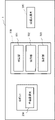
- FIG. 2 is a block diagram illustrating the configuration of the pickup support device 100.
- the pickup support device 100 includes a determination unit 101 and an output unit 102.
- the determination unit 101 determines whether or not the object is a pickup target based on the information regarding the appearance of the pickup target and the information regarding the appearance of the object at the position related to the pickup request.
- the output unit 102 outputs the result determined by the determination unit 101.
- the determination result includes the determination that the object at the position related to the pickup request is the pickup target or the determination that the object is not the pickup target.
- the output unit 102 outputs the determination result to, for example, the worker terminal 300.
- the determination unit 101 may determine whether or not the object is a pickup target by using the photographing data obtained by photographing the object as the information regarding the appearance of the object.
- the client places the pickup target A in an arbitrary place, shoots the pickup target A from one or more directions using the client terminal 200, and acquires the shooting data.
- the client can see the appearance when viewed from six directions of front, back, left and right side surfaces, top surface, and bottom surface when a certain direction toward the pickup target A having a three-dimensional shape is set as the front surface.
- you may shoot from two or more directions. It should be noted that photography of some surfaces such as the bottom surface may be omitted as appropriate.
- the worker uses the worker terminal 300 to shoot the object X placed at the pickup position from one or more directions, and acquires the shooting data.
- the worker may photograph the object X from two or more directions in the same manner as the client.
- the determination unit 101 determines, for example, whether the shooting data of the pickup target A from one direction matches any of the plurality of shooting data of the object X from the plurality of directions. Alternatively, the determination unit 101 may determine whether the imaging data of the object X from one direction matches any of the plurality of imaging data of the pickup target A from the plurality of directions.
- the determination unit 101 uses, for example, a known image similarity calculation technique to compare the captured data of the object X with the captured data of the pickup target A to calculate the similarity, and the similarity is equal to or higher than the threshold value. In this case, it may be determined that the shooting data match. In this case, the determination unit 101 calculates the degree of similarity by using, for example, the color of each region in the shooting data, the pattern, and the shape of the object included in the shooting data as feature quantities.
- the determination unit 101 uses a known pattern matching technique to compare the image of the object X extracted from the captured data with the image of the pickup target A to calculate the similarity, and when the similarity is equal to or higher than the threshold value. In addition, it may be determined that the shooting data match.
- the determination unit 101 determines that, for example, in a set of a predetermined number or more of the shooting data of the collection target A and the shooting data of the object X, the object X matches the shooting data of the object X and the shooting data of the collection target A. It is determined that the item is to be collected.
- the shooting data taken at the time of collection may include images of a plurality of objects X.
- the determination unit 101 may, for example, extract images of a plurality of objects X and compare the images with the images of the pickup target A. Then, the determination unit 101 determines, for example, the object X whose similarity is larger than that of the other objects X among the plurality of objects X as the collection target A.
- the collection target A related to the collection request may be photographed by the client terminal 200 with the collection target A placed at the collection position, and photography data including the background of the collection target A may be acquired.
- the worker terminal 300 may acquire shooting data including the background of the object X.
- the determination unit 101 may compare the photographed data of the pickup target A including the background with the photographed data of the object X including the background. As a result, it is possible to prevent the object placed in a place different from the collection request from being collected.
- the determination unit 101 may further determine whether the object X is the collection target A based on the size of the collection target A and the size of the object X at the collection position. According to this, the determination unit 101 can discriminate objects having similar shapes and different sizes.
- the determination unit 101 may further include a measurement unit (not shown) that measures the size of the object (collection target A and object X) from the shooting data.
- the client terminal 200 and the worker terminal 300 may have a part or all of the functions of the measuring unit. In this case, the determination unit 101 receives the size of the object measured from the client terminal 200 and the worker terminal 300.
- the measuring unit recognizes the shape of an object from shooting data shot from one direction using existing image recognition technology. After that, the measuring unit measures the size of the object.
- the measuring unit measures, for example, the height and width of the object when the object is viewed from one direction.
- the measuring unit may measure the length of each side of the recognized object shape, the length from one side to the other side, the length from the center of gravity of the shape to an arbitrary point of the contour, and the like. ..
- the measuring unit may measure the size of the object by using, for example, the parallax of two shooting data shot from substantially the same direction. Further, the measuring unit may measure the size of the object based on the size of the reference object whose size is known together with the object.
- the measuring unit predicts the three-dimensional shape of the object in the depth direction from the data taken from one direction, and measures the depth in addition to the height and width of the object as the size of the object. good.
- the measuring unit may recognize the shape of the object and measure the size of the object based on the distance information instead of the shooting data.
- the distance information represents the distance between the object and the sensor.
- the distance information is acquired by an infrared sensor or the like provided in the client terminal 200 and the worker terminal 300, and is transmitted to the measurement unit. When distance information is used, it is not necessary to use the shooting data for measuring the size.
- the measuring unit may further measure the size of the object viewed from another direction by the same method.
- the determination unit 101 may further include a collation unit (not shown) that collates the size of the pickup target A viewed from one or more directions with the size of the object X viewed from one or more directions.
- the collating unit determines that the sizes of the pickup target A and the object X match.
- the determination unit 101 sets the object X to the collection target A. Is determined to be.
- the collating unit may collate whether the size of the pickup target A in a certain direction matches any of the sizes of the objects X from a plurality of directions.
- the determination unit 101 may determine that the object X is the pickup target A when the measured sizes match in the set of two or more directions.
- the determination unit 101 may determine the collection target A based on the three-dimensional data of the collection target A related to the collection request and the three-dimensional data of the object X at the collection position.
- the three-dimensional data represents, for example, the position of the surface of an object in a predetermined three-dimensional coordinate space.
- the three-dimensional data indicates the three-dimensional shape of the object, and may also indicate the size of the object. Since the three-dimensional shape of the object can be compared by comparing the three-dimensional data, the determination unit 101 can discriminate even if the pickup target has a different shape depending on the viewing direction.
- the determination unit 101 may include a three-dimensional data generation unit (not shown) that generates the three-dimensional data.
- the determination unit 101 compares the three-dimensional data of the generated object X with the three-dimensional data of the pickup target A.
- the resolution of the three-dimensional data may be such that the rough overall shape can be measured.
- the function of the three-dimensional data generation unit may be provided in the client terminal 200 and the worker terminal 300. In this case, the determination unit 101 receives the three-dimensional data from the client terminal 200 and the worker terminal 300.
- the three-dimensional data generation unit may generate three-dimensional data using shooting data obtained by shooting an object from a plurality of directions received from the client terminal 200 or the worker terminal 300.
- the three-dimensional data generation unit may estimate the three-dimensional shape of the object from one or more still images and generate the three-dimensional data.
- the 3D data generation unit may generate 3D data based on the 3D scan data of the object obtained by using the infrared rays and the laser provided in the client terminal 200 or the worker terminal 300.
- the collection support device 100 does not use the shooting data for generating the three-dimensional data, the collection support device 100 does not have to receive the shooting data from the client terminal 200 and the worker terminal 300.
- the determination unit 101 may include a collation unit (not shown) that collates the three-dimensional shape of the object.
- the collating unit calculates the similarity by comparing the three-dimensional data of the object X with the three-dimensional data of the pickup target A using a known three-dimensional (three-dimensional) shape similarity calculation technique, and when the similarity is equal to or higher than the threshold value. It is determined that the three-dimensional shapes match.
- the determination unit 101 determines that the object X is the collection target A.
- the collection target A and the object X at the collection position may be photographed while being held by the collection requester or the worker.
- the determination unit 101 compares the shooting data, the size of the object, and the three-dimensional shape of the object based on the color, shape, position, etc. of the hand, excluding the hand included in the shooting data or the three-dimensional data. You may.
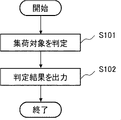
- FIG. 3 is a flowchart illustrating the processing of the pickup support device 100.
- the determination unit 101 determines whether or not the object is a pickup target based on the information regarding the appearance of the pickup target and the information regarding the appearance of the object at the position related to the pickup request (step S101).
- the output unit 102 outputs the determination result (step S102).
- FIG. 4 is a sequence diagram showing an operation example of the pickup support system 1.
- the client terminal 200 photographs the pickup target under the pickup requester (step S201).
- the client terminal 200 transmits a collection request including shooting data to be collected and information for specifying the collection position to the collection support device 100.
- FIG. 5 is a diagram showing an example of a pickup request screen displayed on the requester terminal 200 when receiving input of information relating to a pickup request. For example, on the pickup request screen, the client inputs the pickup date and time, the pickup position, the destination of the luggage, and the shooting data of the pickup target A.
- the pickup support device 100 transmits the pickup instruction to the worker terminal 300.
- the pickup instruction includes the pickup date and time and the pickup position. Further, the pickup instruction may include shooting data of the pickup target A related to the pickup request.
- the worker who sees the delivery instruction heads for the pickup position indicated in the pickup instruction at the pickup date and time.
- the worker searches for a pickup target by referring to the shooting data of the pickup target A related to the pickup request.
- the worker terminal 300 photographs the object X found by the worker at the pickup position (step S203), and transmits the photographed data to the pickup support device 100.
- the determination unit 101 of the pickup support device 100 determines whether the photographed object X is the pickup target A based on the received imaging data of the object (step S204). Next, the output unit 102 of the pickup support device outputs the determination result (step S205), and transmits the determination result to the worker terminal 300.
- the worker confirms the determination result displayed on the display of the worker terminal 300, and if the photographed object is the object to be picked up, the worker picks up the object.
- the worker terminal 300 transmits a pickup completion notification to the client terminal 200 via the pickup support device 100.
- the pickup support device 100 may transmit a pickup completion notification including the shooting data used for determining the pickup target to the requester terminal 200.
- the collection target can be determined at the place indicated in the collection request.
- the reason is that the determination unit 101 determines whether or not the object is a pickup target based on the information regarding the appearance of the pickup target and the information regarding the appearance of the object at the position related to the pickup request.
- the worker may add information for specifying the package to the collection target.
- the printing unit (not shown) of the worker terminal 300 may print a collection slip based on a collection request once the collection target is specified.
- the pickup slip indicates, for example, an identification number for identifying the pickup / delivery request or the cargo, which is given by the pickup support device 100 or the like, and the destination of the cargo included in the pickup request.
- the worker attaches the printed collection slip to the collection target.
- the worker terminal 300 When there is no candidate for pickup, the worker terminal 300 cannot transmit the information regarding the appearance of the object X described above to the pickup support device 100. In this case, the worker terminal 300 may transmit an image of the pickup position and the position information of the current location to the pickup support device 100.
- the determination unit 101 compares the received image and position information of the pickup position with the image and position information related to the pickup request, and determines that there is no pickup target A at the pickup position.
- FIG. 6 is a diagram showing an example of a confirmation screen displayed on the display of the client terminal 200.
- the determination unit 101 determines that the object X is the pickup target A.
- the determination unit 101 determines that the object X is not a pickup target.
- the worker terminal 300 may transmit information regarding the appearance of another object X to the pickup support device 100. Further, the worker terminal 300 may perform an operation when there is no object at the above-mentioned collection position.
- the worker terminal 300 tells the collection support device 100 to stop the collection. You may send it.
- the pickup support device 100 may send a pickup cancellation notice including an image of the pickup position to the client terminal 200.
- the determination unit 101 cannot determine the pickup target.
- the collection support device 100 sets the detected plurality of objects X as candidates for collection, and transmits the shooting data including the plurality of candidates to the client terminal 200.
- the client terminal 200 displays the shooting data and accepts the selection of the pickup target A from the pickup requester.
- the determination unit 101 determines that the selected object X is the pickup target A.
- the collection support device 100 notifies the worker terminal 300 of the object X selected in the determination result, and the worker collects the selected collection target A.
- the pickup support device 100 may send an instruction to stop the pickup to the worker terminal 300.
- the collection support device 100 can specify the collection target.
- the reason is that the collection support device 100 transmits the photographing data of the object X to the collection requester, and the determination unit 101 determines that the object X is the collection target A based on the input by the collection requester. be.
- the robot may collect the load. That is, in the above description, the action of the worker may be replaced with the action performed by the robot.
- Robots that collect cargo include unmanned ground vehicles and unmanned aerial vehicles (drones).
- the worker terminal 300 is replaced with a robot.
- the collection support device 100 may be mounted on the robot, or may be provided on the server of the collection / delivery company that manages the robot.
- FIG. 7 is a block diagram illustrating the configuration of the pickup support system 1 according to this modification.
- the pickup support device 100 may include an instruction unit 103 that instructs the robot to collect the cargo at the position related to the pickup request.
- the same parts as those of the above-described embodiment will be omitted.
- the robot acquires the position information of the robot by GPS (Global Positioning System) or the like.
- GPS Global Positioning System
- the robot stores the road, the exterior of the building, the image of the interior of the building, etc. in advance by associating it with the map, compares the stored image with the image taken by the camera, and acquires the current position information. May be good. If a flying drone picks up luggage, the drone may pick up luggage placed on the balcony of the building.
- the robot transmits the information on the appearance of the object X acquired from the object X at the position to the collection support device 100 at the position related to the collection request.
- the output unit 102 of the pickup support device 100 notifies the robot of the determination result.
- the robot collects the object X.
- the robot may grab the object X by an arm, or may hook the object by an arbitrary mechanism.
- the packing service worker or the robot may bring a case such as a box suitable for the collection target to the collection position according to the three-dimensional data related to the collection request. After the pickup target is determined, the worker or the robot stores the pickup target in the case. Further, the robot may pack the pickup target by using the packing material that can be freely deformed by using the three-dimensional data of the object X at the pickup position.
- the robot may use, for example, a stretchable box, a sheet, or the like as a packing material.
- the present disclosure may be used for the collection of garbage and recycled products in addition to the collection of deliveries.
- a user who wishes to collect garbage uses the client terminal 200 to take a picture of the garbage and sends a collection request (collection request) to the collection support device 100.
- the garbage collector sends a collection instruction to the worker terminal 300.
- the determination unit 101 determines that the garbage placed at the designated place is the collection target, the worker collects the garbage.
- each component of the pickup support device 100 indicates a block of functional units.
- a part or all of each component of each device may be realized by any combination of the computer 500 and the program.
- the pickup support device 100 and the client terminal 200 may be realized by a single computer 500.
- the pickup support device 100 and the worker terminal 300 may be realized by a single computer 500.
- the worker terminal 300 may include each component (determination unit 101, output unit 102) of the collection support device 100.
- FIG. 8 is a block diagram showing an example of the hardware configuration of the computer 500.
- the computer 500 may include, for example, a CPU (Central Processing Unit) 501, a ROM (Read Only Memory) 502, a RAM (Random Access Memory) 503, a program 504, a storage device 505, a drive device 507, and a communication interface 508. , Input device 509, input / output interface 511, and bus 512.
- a CPU Central Processing Unit
- ROM Read Only Memory
- RAM Random Access Memory
- program 504 a storage device 505, a drive device 507, and a communication interface 508.
- Input device 509 input / output interface 511, and bus 512.
- the program 504 includes an instruction for realizing each function of each device.
- the program 504 is stored in the ROM 502, the RAM 503, and the storage device 505 in advance.
- the CPU 501 realizes each function of each device by executing the instruction included in the program 504.
- the CPU 501 of the pickup support device 100 realizes the function of the pickup support device 100 by executing the instruction included in the program 504.
- the RAM 503 may store data processed in each function of each device.
- the pickup request of the pickup support device 100 may be stored in the RAM 503 of the computer 500.
- the drive device 507 reads and writes the recording medium 506.
- the communication interface 508 provides an interface with a communication network.
- the input device 509 is, for example, a mouse, a keyboard, or the like, and receives input of information from a collection and delivery company or the like.
- the output device 510 is, for example, a display, and outputs (displays) information to a collection / delivery company or the like.
- the input / output interface 511 provides an interface with peripheral devices. Bus 512 connects each component of these hardware.
- the program 504 may be supplied to the CPU 501 via the communication network, or may be stored in the recording medium 506 in advance, read by the drive device 507, and supplied to the CPU 501.
- FIG. 8 Note that the hardware configuration shown in FIG. 8 is an example, and components other than these may be added or may not include some components.
- each device may be realized by any combination of a computer and a program, which are different for each component.
- a plurality of components included in each device may be realized by any combination of one computer and a program.
- each component of each device may be realized by a general-purpose or dedicated circuitry including a processor or the like, or a combination thereof. These circuits may be composed of a single chip or a plurality of chips connected via a bus. A part or all of each component of each device may be realized by the combination of the circuit or the like and the program described above.
- each component of each device when a part or all of each component of each device is realized by a plurality of computers, circuits, etc., the plurality of computers, circuits, etc. may be centrally arranged or distributed.
- At least a part of the pickup support system 1 may be provided in the SAAS (Software as a Service) format. That is, at least a part of the functions for realizing the pickup support device 100 may be executed by software executed via the network.
- SAAS Software as a Service
- [Appendix 1] A determination means for determining whether or not the object is the pickup target based on the information on the appearance of the pickup target and the information on the appearance of the object at the position related to the pickup request. Output means to output the judgment result and A pickup support device equipped with.
- the determination means determines whether or not the object is the pickup target by comparing the imaging data of the collection target with the imaging data of the object as information regarding the appearance.
- the pickup support device according to Appendix 1.
- the shooting data of the pickup target and the shooting data of the object include the background of the pickup target and the background of the object, respectively.
- the determination means determines whether or not the object is the collection target by comparing the shape of the collection target with the shape of the object as information regarding the appearance.
- the pickup support device according to any one of Supplementary note 1 to 3.
- the robot is further provided with an instruction means for instructing the robot to collect the cargo at the position.
- the output means notifies the robot of the determination result, and the output means notifies the robot.
- the robot transmits information on the appearance of the object acquired from the object at the position at the position to the collection support device, and when the collection support device notifies that the object is the object to be collected, the robot is notified.
- the collection support device according to any one of Supplementary note 1 to 4, which collects an object.
- the determination process determines whether or not the object is the collection target by comparing the shape of the collection target with the shape of the object as information regarding the appearance.
- the program recording medium according to any one of Supplementary note 16 to 18.
- the program includes a process of instructing the robot to collect the goods at the position when the collection request is received. Further including a process of receiving information on the appearance of the object acquired from the object at the position at the position from the robot. The output process notifies the robot of the determination result, and the output process notifies the robot.
- the program recording medium according to any one of Supplementary note 16 to 19, wherein the robot collects the object when notified that the object is the object to be collected.
- Collection support device 101 Judgment unit 102 Output unit 200 Client terminal 300 Worker terminal 500 Computer
Landscapes
- Engineering & Computer Science (AREA)
- Theoretical Computer Science (AREA)
- Physics & Mathematics (AREA)
- General Physics & Mathematics (AREA)
- Business, Economics & Management (AREA)
- Multimedia (AREA)
- Computer Vision & Pattern Recognition (AREA)
- Health & Medical Sciences (AREA)
- General Health & Medical Sciences (AREA)
- Tourism & Hospitality (AREA)
- Economics (AREA)
- General Business, Economics & Management (AREA)
- Human Resources & Organizations (AREA)
- Strategic Management (AREA)
- Marketing (AREA)
- Computing Systems (AREA)
- Evolutionary Computation (AREA)
- Signal Processing (AREA)
- Software Systems (AREA)
- Artificial Intelligence (AREA)
- Medical Informatics (AREA)
- Databases & Information Systems (AREA)
- Primary Health Care (AREA)
- Mechanical Engineering (AREA)
- Robotics (AREA)
- Development Economics (AREA)
- Entrepreneurship & Innovation (AREA)
- Operations Research (AREA)
- Quality & Reliability (AREA)
- Management, Administration, Business Operations System, And Electronic Commerce (AREA)
- Image Analysis (AREA)
Priority Applications (4)
| Application Number | Priority Date | Filing Date | Title |
|---|---|---|---|
| PCT/JP2020/036625 WO2022064691A1 (ja) | 2020-09-28 | 2020-09-28 | 集荷支援装置、集荷支援方法、及び、プログラム記録媒体 |
| US18/021,659 US20230306713A1 (en) | 2020-09-28 | 2020-09-28 | Pickup support device, pickup support method, and program recording medium |
| JP2022551091A JP7586185B2 (ja) | 2020-09-28 | 2020-09-28 | 集荷支援装置、集荷支援方法、及び、プログラム |
| JP2024194291A JP2025020315A (ja) | 2020-09-28 | 2024-11-06 | プログラム、及び、集荷支援方法 |
Applications Claiming Priority (1)
| Application Number | Priority Date | Filing Date | Title |
|---|---|---|---|
| PCT/JP2020/036625 WO2022064691A1 (ja) | 2020-09-28 | 2020-09-28 | 集荷支援装置、集荷支援方法、及び、プログラム記録媒体 |
Publications (1)
| Publication Number | Publication Date |
|---|---|
| WO2022064691A1 true WO2022064691A1 (ja) | 2022-03-31 |
Family
ID=80845081
Family Applications (1)
| Application Number | Title | Priority Date | Filing Date |
|---|---|---|---|
| PCT/JP2020/036625 Ceased WO2022064691A1 (ja) | 2020-09-28 | 2020-09-28 | 集荷支援装置、集荷支援方法、及び、プログラム記録媒体 |
Country Status (3)
| Country | Link |
|---|---|
| US (1) | US20230306713A1 (https=) |
| JP (2) | JP7586185B2 (https=) |
| WO (1) | WO2022064691A1 (https=) |
Families Citing this family (1)
| Publication number | Priority date | Publication date | Assignee | Title |
|---|---|---|---|---|
| JP7644341B2 (ja) * | 2021-04-13 | 2025-03-12 | 株式会社デンソーウェーブ | 機械学習装置及びロボットシステム |
Citations (3)
| Publication number | Priority date | Publication date | Assignee | Title |
|---|---|---|---|---|
| WO2017154595A1 (ja) * | 2016-03-11 | 2017-09-14 | 株式会社プロドローン | 生体探索システム |
| JP2019006356A (ja) * | 2017-06-28 | 2019-01-17 | エスゼット ディージェイアイ テクノロジー カンパニー リミテッドSz Dji Technology Co.,Ltd | 飛行体、集荷支援装置、集荷制御方法、集荷支援方法、プログラム、及び記録媒体 |
| WO2020084976A1 (ja) * | 2018-10-26 | 2020-04-30 | パナソニックIpマネジメント株式会社 | 集荷システム、及び、集荷方法 |
Family Cites Families (11)
| Publication number | Priority date | Publication date | Assignee | Title |
|---|---|---|---|---|
| JP2004526644A (ja) * | 2001-03-30 | 2004-09-02 | ユナイテッド パーセル サービス オブ アメリカ インコーポレイテッド | 荷物収集およびどこからどこへでも配送に関する電子運送システム |
| JP2006155130A (ja) * | 2004-11-29 | 2006-06-15 | Nec Corp | 物品回収システム、物品回収方法及び業者サーバ |
| JP5247854B2 (ja) * | 2011-07-06 | 2013-07-24 | 株式会社インスピーディア | 集荷システムおよび集荷方法 |
| FR3057687B1 (fr) * | 2016-10-19 | 2021-01-22 | Pa Cotte Sa | Systeme d'acheminement d'objets par des individus d'une communaute, procedant a un controle du contenu par imagerie lors du transfert de l'emballage entre individus |
| CA3046345C (en) * | 2017-01-12 | 2021-06-15 | United Parcel Service Of America, Inc. | Drop box item deposit sensor system and methods of using the same |
| US10625941B2 (en) * | 2017-01-30 | 2020-04-21 | Walmart Apollo, Llc | Distributed autonomous robot systems and methods |
| JP2018126798A (ja) * | 2017-02-06 | 2018-08-16 | セイコーエプソン株式会社 | 制御装置、ロボットおよびロボットシステム |
| US20200020093A1 (en) * | 2018-07-12 | 2020-01-16 | TerraClear Inc. | Object identification and collection system and method |
| DE112019000125B4 (de) * | 2018-10-30 | 2021-07-01 | Mujin, Inc. | Systeme, vorrichtungen und verfahren zur automatisierten verpackungsregistrierung |
| US20200193368A1 (en) * | 2018-12-12 | 2020-06-18 | Aptiv Technologies Limited | Transporting objects using autonomous vehicles |
| AU2020353686B2 (en) * | 2019-09-26 | 2022-02-03 | Versatile Natures Ltd. | Method for monitoring lifting events at a construction site |
-
2020
- 2020-09-28 US US18/021,659 patent/US20230306713A1/en active Pending
- 2020-09-28 WO PCT/JP2020/036625 patent/WO2022064691A1/ja not_active Ceased
- 2020-09-28 JP JP2022551091A patent/JP7586185B2/ja active Active
-
2024
- 2024-11-06 JP JP2024194291A patent/JP2025020315A/ja active Pending
Patent Citations (3)
| Publication number | Priority date | Publication date | Assignee | Title |
|---|---|---|---|---|
| WO2017154595A1 (ja) * | 2016-03-11 | 2017-09-14 | 株式会社プロドローン | 生体探索システム |
| JP2019006356A (ja) * | 2017-06-28 | 2019-01-17 | エスゼット ディージェイアイ テクノロジー カンパニー リミテッドSz Dji Technology Co.,Ltd | 飛行体、集荷支援装置、集荷制御方法、集荷支援方法、プログラム、及び記録媒体 |
| WO2020084976A1 (ja) * | 2018-10-26 | 2020-04-30 | パナソニックIpマネジメント株式会社 | 集荷システム、及び、集荷方法 |
Also Published As
| Publication number | Publication date |
|---|---|
| JP2025020315A (ja) | 2025-02-12 |
| JPWO2022064691A1 (https=) | 2022-03-31 |
| JP7586185B2 (ja) | 2024-11-19 |
| US20230306713A1 (en) | 2023-09-28 |
Similar Documents
| Publication | Publication Date | Title |
|---|---|---|
| US11373320B1 (en) | Detecting inventory changes by comparing image data | |
| US12073571B1 (en) | Tracking objects in three-dimensional space | |
| JP7251569B2 (ja) | 店舗装置、店舗管理方法、プログラム | |
| US11922728B1 (en) | Associating events with actors using digital imagery and machine learning | |
| US10909667B1 (en) | Image rectification using transformation data | |
| US11030442B1 (en) | Associating events with actors based on digital imagery | |
| US10268892B1 (en) | System and methods for volume dimensioning for supply chains and shelf sets | |
| US11393207B1 (en) | Multi-video annotation | |
| US10839203B1 (en) | Recognizing and tracking poses using digital imagery captured from multiple fields of view | |
| US11284041B1 (en) | Associating items with actors based on digital imagery | |
| US12131288B1 (en) | Generating tidiness data associated with items at an inventory location | |
| US11468698B1 (en) | Associating events with actors using digital imagery and machine learning | |
| US11468681B1 (en) | Associating events with actors using digital imagery and machine learning | |
| JP2019046309A (ja) | 荷物管理システム | |
| JP2017171448A (ja) | 投影指示装置、荷物仕分けシステムおよび投影指示方法 | |
| US10346659B1 (en) | System for reading tags | |
| JP6590153B2 (ja) | 投影指示装置、荷物仕分けシステムおよび投影指示方法 | |
| JP2017171443A (ja) | 投影指示装置、荷物仕分けシステムおよび投影指示方法 | |
| JP2017171444A (ja) | 投影指示装置、荷物仕分けシステムおよび投影指示方法 | |
| JP2025020315A (ja) | プログラム、及び、集荷支援方法 | |
| US11599737B1 (en) | System for generating tags | |
| KR102488693B1 (ko) | 무인택배 관리시스템 | |
| JP7425450B2 (ja) | 誤配送防止システム、管理コンピュータ、作業者端末装置、並びにプログラム | |
| JP2017171447A (ja) | 投影指示装置、荷物仕分けシステムおよび投影指示方法 | |
| US12592096B1 (en) | Modeling and detecting shopping events using visual images and machine learning |
Legal Events
| Date | Code | Title | Description |
|---|---|---|---|
| 121 | Ep: the epo has been informed by wipo that ep was designated in this application |
Ref document number: 20955284 Country of ref document: EP Kind code of ref document: A1 |
|
| ENP | Entry into the national phase |
Ref document number: 2022551091 Country of ref document: JP Kind code of ref document: A |
|
| NENP | Non-entry into the national phase |
Ref country code: DE |
|
| 122 | Ep: pct application non-entry in european phase |
Ref document number: 20955284 Country of ref document: EP Kind code of ref document: A1 |