WO2022018833A1 - 人検知システム、サーバ装置、人検知方法、コンピュータ可読媒体、及びマスク - Google Patents
人検知システム、サーバ装置、人検知方法、コンピュータ可読媒体、及びマスク Download PDFInfo
- Publication number
- WO2022018833A1 WO2022018833A1 PCT/JP2020/028329 JP2020028329W WO2022018833A1 WO 2022018833 A1 WO2022018833 A1 WO 2022018833A1 JP 2020028329 W JP2020028329 W JP 2020028329W WO 2022018833 A1 WO2022018833 A1 WO 2022018833A1
- Authority
- WO
- WIPO (PCT)
- Prior art keywords
- identification information
- personal belongings
- information
- pair
- belongings
- Prior art date
- Legal status (The legal status is an assumption and is not a legal conclusion. Google has not performed a legal analysis and makes no representation as to the accuracy of the status listed.)
- Ceased
Links
Images




Classifications
-
- G—PHYSICS
- G06—COMPUTING OR CALCULATING; COUNTING
- G06Q—INFORMATION AND COMMUNICATION TECHNOLOGY [ICT] SPECIALLY ADAPTED FOR ADMINISTRATIVE, COMMERCIAL, FINANCIAL, MANAGERIAL OR SUPERVISORY PURPOSES; SYSTEMS OR METHODS SPECIALLY ADAPTED FOR ADMINISTRATIVE, COMMERCIAL, FINANCIAL, MANAGERIAL OR SUPERVISORY PURPOSES, NOT OTHERWISE PROVIDED FOR
- G06Q50/00—Information and communication technology [ICT] specially adapted for implementation of business processes of specific business sectors, e.g. utilities or tourism
- G06Q50/10—Services
Definitions
- This disclosure relates to a human detection system, a server device, a human detection method, a computer-readable medium, and a mask.
- the contact is not limited to the case of physical contact, but also includes the case of being located within a predetermined distance, the case of being in the same store, etc., and the case of being close to each other to a certain extent.
- the methods for making it possible to grasp the person who has come into contact with the infectious disease patient it is conceivable to obtain the movement history of the infectious disease patient and publish it.
- Patent Document 1 describes the relationship between a position-specified object and another object or a specific place to the position-specified object.
- a positioning system that identifies based on the proximity of an object is described.
- the position of the object is determined based on the signal generated from the object classifier connected to the object.
- an object classifier can be attached to the patient to track the patient's movements throughout the hospital and to track the movement of contact-infectious patients in a medical facility.
- Patent Document 2 describes an infectious disease patient behavior history collection / analysis system that can collect and manage behavior history information of infectious disease patients and analyze / confirm contact history without invading the privacy of infectious disease patients. There is.
- the personal terminal is notified that there is a possibility of contact with the infectious disease patient.
- the information notified here is only the possibility of contact, and the part related to personal information such as contact place and date and time is protected by going to a public medical institution and making it available only face-to-face. ing.
- Patent Document 3 detects and suppresses the occurrence of infectious diseases due to airborne infections by identifying, tracking and isolating potentially infected persons using RFID technology and other automatic identification systems. A face mask with built-in functions is described.
- RFID is an abbreviation for Radio Frequency Identifier.
- Patent Document 1 When operating a system that can grasp contact with infectious disease patients, it is preferable to have many people use the system. However, in a system with insufficient privacy protection, many people hesitate to use the system, and it is difficult to increase the number of users. In this respect, the system described in Patent Document 1 can grasp the movement of the patient, which may infringe on privacy. Further, in the system described in Patent Document 2, the part related to personal information such as the contact place and the date and time can be decrypted or obtained by password authentication and can be obtained face-to-face, so that the protection for privacy is protected. Is not enough. Further, with the technique of Patent Document 3, it is not possible for a person other than the infected person to grasp the possibility of proximity to the infected person.
- An object of the present disclosure is a human detection system, a server device, a human detection method, a computer-readable medium, and a mask capable of detecting a person who may have come into contact with an infectious disease patient while protecting the privacy of the person. To provide.
- the person detection system includes a detection device and a server device, and the detection device detects personal belongings identification information which is identification information of a person's personal belongings, and detects the personal belongings.
- a pair of the position information indicating the hash value of the position identification information, which is the identification information of the position, and the personal belongings identification information about the personal belongings is transmitted to the server device, and the server device receives from the detection device.
- the device has a storage device for storing the pair and receives the first information which is the personal belongings identification information about the personal belongings of the infectious disease patient, the location information associated with the first information as a pair is specified.
- the personal belongings identification information associated with other position information indicating the same hash value as the specified position information as a pair is output.
- the server device detects the personal belongings identification information which is the identification information of the personal belongings, and shows the hash value of the position identification information which is the identification information of the position where the personal belongings are detected. From the detection device that transmits the pair of the location information and the personal belongings identification information about the personal belongings, the storage device that stores the pair when the pair is received, and the personal belongings identification information about the personal belongings of the infectious disease patient. When the first information is received, the position information associated with the first information as a pair is specified, and the position information is associated with other position information showing the same hash value as the specified position information as a pair. It has a processing device that outputs personal belongings identification information.
- the personal belongings identification information which is the identification information of the personal belongings is detected, and the hash value of the position identification information which is the identification information of the position where the personal belongings are detected is used.
- the server device From the detection device that transmits the pair of the indicated position information and the personal belongings identification information about the personal belongings, the server device stores the reception step of receiving the pair and the server device stores the pair received from the detection device.
- the storage step to be performed and the server device receive the first information which is the personal belongings identification information about the personal belongings of the infectious disease patient, the location information associated with the first information as a pair is specified. It is provided with an output step for outputting personal belongings identification information associated as a pair with other position information indicating the same hash value as the specified position information.
- the computer-readable medium detects the personal belongings identification information, which is the identification information of a person's personal belongings, on the computer, and the position identification information, which is the identification information of the position where the personal belongings are detected.
- the first information which is the personal belongings identification information about the personal belongings of the sick patient
- the location information associated with the first information as a pair is specified, and the same hash value as the specified location information is shown.
- the present disclosure provides a human detection system, a server device, a human detection method, a computer-readable medium, and a mask capable of detecting a person who may have come into contact with an infectious disease patient while protecting the privacy of the person. be able to.
- FIG. It is a figure which shows one configuration example of the person detection system which concerns on Embodiment 1.
- FIG. It is a block diagram which shows one configuration example of the server apparatus in the person detection system of FIG. It is a block diagram which shows one configuration example of the detection device in the person detection system of FIG. It is a flow diagram for demonstrating the processing example in the server apparatus in the person detection system of FIG. It is a figure which shows one configuration example of the person detection system which concerns on Embodiment 2.
- It is a schematic diagram which shows an example of the mask used in the person detection system of FIG. It is a figure for demonstrating the assignment example of the position identification information with respect to the image taken by the image pickup apparatus in the person detection system of FIG.
- FIG. 1 It is a schematic diagram for demonstrating the processing example in the person detection system of FIG. It is a figure which shows an example of the notification displayed on the terminal apparatus in FIG. It is a schematic diagram which shows one configuration example of the person detection system which concerns on Embodiment 3. It is a figure which shows an example of the hardware composition of a device.
- FIG. 1 is a diagram showing a configuration example of a person detection system (hereinafter, this system) according to the first embodiment.
- FIG. 2 is a block diagram showing a configuration example of a server device in this system
- FIG. 3 is a block diagram showing a configuration example of a detection device in this system.
- this system includes a server device 1 and one or a plurality of detection devices 2-1 and 2, ..., 2-N (N is an integer of 1 or more).
- the detection devices 2-1 and 2-2, ..., 2-N will be described as the detection device 2 when they are not distinguished.
- Each detection device 2 can communicate with the server device 1 via a network or the like.
- the detection device 2 detects the identification information (individual belongings identification information) of a person's belongings. That is, the detection device 2 does not detect a person, but instead detects the identification information of the belongings. Then, the detection device 2 transmits a pair of the position information indicating the hash value of the identification information (position identification information) of the position where the possession was detected and the possession identification information about the possession to the server device 1. do. The detected position cannot be recognized from this hash value.
- This hash value may be stored in advance in the detection device 2, but it can also be calculated from the position identification information stored in advance by the detection device 2.
- the hash function for calculating the hash value stored in advance or the hash function used for the calculation by the detection device 2 (also referred to as a one-way hash function or a one-way hash function) does not matter.
- the server device 1 receives a pair of position identification information and personal belongings identification information from the detection device 2 and stores it in the storage device (storage device 12 of FIG. 2) provided.
- the pair can be received and stored each time detection is made from each of the N detection devices 2.
- the movement history (position history) of the belongings is accumulated in the storage device 12 instead of the movement history (position history) of the person.
- the server device 1 can be configured as a single unit, it can also be configured as a distributed system, and in that case, the storage device 12 can be configured in a housing separate from the main body of the server device 1.
- the server device 1 When the server device 1 receives the personal belongings identification information (hereinafter referred to as the first information for distinction) about the personal belongings of the infectious disease patient, the server device 1 transfers the location information associated with the first information as a pair. Identify. For example, after the infectious disease patient is designated by the medical institution, the personal belongings identification information about the infectious disease patient is registered in the server device 1 as the first information from the operation unit provided in the external device or the server device 1. be able to. Regardless of the type of infectious disease, infectious diseases of concern such as contact infection, airborne infection, and droplet infection can be mentioned, and more specifically, for example, COVID-19 (coronavirus disease 2019) and influenza.
- infectious diseases of concern such as contact infection, airborne infection, and droplet infection can be mentioned, and more specifically, for example, COVID-19 (coronavirus disease 2019) and influenza.
- the case where the first information is received can refer to the case where the information transmitted or input to the server device 1 from the external device or the operation unit is received, but the received pair includes the first information. It can also include the case where it can be determined that it is possible.
- the personal belongings identification information that is not stored in the storage device 12 as a pair is received and registered as the personal belongings identification information of the infectious disease patient from the external device or the operation unit (before receiving the pair).
- the server device 1 grasps that the first information has been received at the stage of receiving the pair including the registered personal belongings identification information of the infectious disease patient, and associates the first information with the first information as a pair. You will be able to identify the location information that has been set.
- the server device 1 outputs the personal belongings identification information associated as a pair with other location information showing the same hash value as the specified location information.
- the fact that the same hash value is associated with the two belongings identification information means that the two persons were staying at the same position (for example, in the same store). Therefore, the personal belongings identification information output here is the personal belongings identification information possessed by a person (contact person) who may have come into contact with the infectious disease patient. In this embodiment, the output destination does not matter.
- the contact is not limited to the case of physical contact, but also includes the case of being located within a predetermined distance, the case of being in the same store, or the like, and the case of being close to each other to a certain extent.
- the server device 1 identifies the location information associated with the identification information in response to receiving the identification information (first information) of the infectious disease patient's belongings, and the identified location information. Outputs personal belongings identification information corresponding to other location information indicating the same hash value as.
- the server device 1 can include a processing device 11 and a storage device 12.
- the server device 1 may include a communication unit (not shown) for communicating with the detection device 2 and the like.
- the storage device 12 is a device that stores the pair when the pair is received from the detection device 2.
- the processing device 11 executes the above-described processing as the processing of the server device 1. That is, when the processing device 11 receives the first information, it identifies the position information associated with the first information as a pair, and as a pair with other position information showing the same hash value as the specified position information. Output the associated belongings identification information.
- the processing device 11 can function as a control unit that controls the entire server device 1, and the storage control for the storage device 12 can also be executed on the processing device 11 side.
- the processing device 11 can be realized by, for example, a CPU (Central Processing Unit), a working memory, a non-volatile storage device that stores a control program, or the like.
- the storage device and the storage device 12 may be combined into one device.
- the processing device 11 can be configured to include an IC (Integrated Circuit).
- the detection device 2 in this system can include a control unit 21, a detection unit 22, and a communication unit 23 that control the entire detection device 2.
- the control unit 21 can be realized by, for example, a CPU, a work memory, a non-volatile storage device that stores a control program, or the like, and can be configured to include an IC.
- the detection unit 22 is a part that detects personal belongings identification information. It is advisable to determine the installation position of the detection device 2 and the detection range of the detection unit 22 so that the detection of the personal belongings identification information can be appropriately performed in consideration of the type of personal belongings and the like.
- the communication unit 23 communicates with the server device 1.
- the communication unit 23 and the communication unit on the server device 1 side can be configured by a communication interface or the like.
- the detection device 2 can be configured as a single device, but can also be constructed as a distributed system.
- each of the plurality of devices is provided with a control unit, a detection unit, and a communication unit
- each detection unit 22 performs a part of the detection process, and information is sent to one device (or a device without a detection unit). Can be sent and aggregated.
- the control unit of the device comprehensively determines whether or not the personal belongings identification information is detected, and the communication unit 23 of the device may transmit the pair to the server device 1. Thereby, for example, if the detection is performed by the detection unit in the same store, it can be treated as the same detection position.
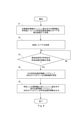
- FIG. 4 is a flow chart for explaining a processing example in the server device 1 in this system.
- the detection device 2 detects the belongings identification information, and transmits a pair of the position information indicating the hash value of the position identification information and the belongings identification information to the server device 1.
- the server device 1 receives this pair from the detection device 2 (step S1), and stores the received pair in the storage device 12 (step S2).
- the server device 1 determines whether or not the personal belongings identification information (that is, the first information) about the personal belongings of the infectious disease patient has been received (step S3), and waits until it is received.
- the determination in step S3 is that the infectious disease patient has been designated by the medical institution and the personal belongings identification information (first information) for the infectious disease patient has been designated, and has it been registered in the server device 1. It can be determined whether or not.
- the determination in step S3 can be a determination as to whether or not the above registration has been completed, which is executed every predetermined period.
- the first information about a plurality of infectious disease patients may be registered.
- step S3 the server device 1 specifies the position information associated with the first information as a pair (step S4).
- the server device 1 outputs the personal belongings identification information associated as a pair with other position information indicating the same hash value as the specified position information (step S5). Steps S4 and S5 can be performed for each infectious disease patient (ie, for each first piece of information).
- step S3 it has been described that the determination in step S3 is executed every time the belongings identification information is received and stored. For example, the processes of steps S1 to S2 and the processes of steps S3 to S5 are executed in parallel. And so on. Note that steps S1, step S2, and steps S3 to S5 can be referred to as a reception step, a storage step, and an output step, respectively.
- this system can detect a contact person with an infectious disease patient based on their belongings instead of a person, and it is not necessary to identify an individual and protect the privacy of the person. can.
- the output destination of the personal belongings identification information about the contact person is set to the output destination that can be viewed by a person, a person who may have come into contact with an infectious disease patient (a person detected as a contact person) while considering privacy. ), But it becomes easy to grasp it.
- the position identification information that is, the movement information of the person
- the server device 1 since the position identification information (that is, the movement information of the person) of the position where the person's belongings are detected is hashed and transmitted to the server device 1, the confidentiality is high and the detected position can be recognized. However, it is possible to protect human privacy from the perspective of human behavior.
- this system that realizes these privacy protections can reduce the number of people who hesitate to introduce it, so it is possible to increase the number of users of the system. Further, in this system, by arranging the detection device 2 at a high density, the accuracy of contact identification can be improved.
- this system detects people who are detected by the same or nearby detection device as the infectious disease patient, based on the detection status of the infectious disease patient's belongings and the detection status of other people's belongings. It can be detected as a contact with an infectious disease patient. Therefore, this system can be referred to as an infectious disease patient tracking system, a contact detection system, a personal belongings identification system, a person tracking system, or the like.
- FIG. 5 is a diagram showing a configuration example of a person detection system (hereinafter, this system) according to the second embodiment.
- FIG. 6 is a schematic diagram showing an example of a mask used in the human detection system of FIG.
- this system includes a server device 5 and a plurality of image pickup devices 7.
- the server device 5 is an example of the server device 1, and includes a control unit 51 corresponding to the processing device 11, a storage unit 52 corresponding to the storage device 12, and a communication unit 53 for communicating with the image pickup device 7 and the like. ..
- the image pickup device 7 is an example of the detection device 2, and various types of devices such as a visible light camera and an infrared camera can be applied.
- the image pickup apparatus 7 includes a control unit 71 corresponding to the control unit 21, an image pickup unit 72 which is an example of the detection unit 22, and a communication unit 73 corresponding to the communication unit 23. It should be noted that this embodiment can be applied to a detection device other than the image pickup device, except for an example specialized in imaging.
- the mask 6 has the personal belongings identification information 62 printed on the main body 61 of the mask 6.
- the personal belongings identification information 62 can also be referred to as a mask ID.
- the mask 6 is printed with the personal belongings identification information 62 on the main body 61 or the like with ink that cannot be visually recognized by humans (hereinafter, invisible ink).
- the correspondence between the personal belongings identification information 62 and the personal belongings is not disclosed to anyone other than the person who possesses the personal belongings.
- the personal belongings identification information 62 is shown as a star-shaped mark for simplification, but if it is information unique to a person, a two-dimensional bar code, an arrangement of numbers, letters, symbols, etc. , Any notation may be adopted.
- the above invisible ink is preferably an ink that cannot be visually recognized by humans.
- the invisible ink may be visible to humans by using a specific tool.
- the image pickup apparatus 7 is configured to be able to detect the invisible ink.
- the image pickup device 7 can be realized by using an infrared camera, or can be realized by using an infrared camera and a device that irradiates infrared light.
- the personal belongings identification information 62 can be information represented by unevenness formed by pressing the surface of the main body 61, and even with such unevenness, at least when it is worn, it cannot be read by others. Can be done.
- the image pickup unit 72 takes a picture of the mask 6 attached by the person 9, and stores the image obtained by the picture in the internal memory.
- the control unit 71 detects the personal belongings identification information 62 from the image.
- the image pickup unit 72 acquires either one or both of a moving image and a still image.
- the image pickup apparatus 7 may be provided with a motion sensor (not shown) so as to start the image pickup when a person is detected and end the image pickup when the person is no longer detected.
- the control unit 71 of the image pickup apparatus 7 sets a pair of the position information indicating the hash value of the position identification information at the position where the possession is detected and the possession identification information about the possession to the server device via the communication unit 73. Send to 5.
- This position identification information can be used as device identification information for identifying the image pickup device 7. That is, the position of the personal belongings (mask 6 in this example) can be represented by the identification information of the image pickup apparatus 7 that has detected the personal belongings identification information (in this example, the personal belongings identification information 62) of the personal belongings. By using such device identification information, the position identification information can be uniquely determined for the detection device such as the image pickup device 7. However, if it is desired to treat the detection positions as the same in the same store, the same position identification information may be assigned to a plurality of image pickup devices 7 provided in the store.
- the image pickup device 7 can be installed and set so that the image pickup range is wider than the range that can be regarded as contact with the infectious disease patient.
- the settings here are settings such as the shooting magnification and the shooting angle. Therefore, the imaging range can be divided into a plurality of areas (partial imaging areas), and different detection positions can be assigned to each area. Such an example will be described with reference to FIG. 7.
- FIG. 7 is a diagram for explaining an example of assigning position identification information to an image captured by the image pickup apparatus 7 in this system.
- the image pickup apparatus 7 can be set so that the entire image pickup range 70 is divided into two areas 70a and 70b.
- the left half and the right half of the image corresponding to the entire imaging range 70 can be obtained for the area 70a and the area 70b, respectively.
- different position identification information is assigned to the area 70a and the area 70b, respectively.
- the control unit 71 detects the belongings identification information for each of the left half image corresponding to the area 70a and the right half image corresponding to the area 70b.
- the control unit 71 uses the hash value of the position identification information assigned to the area 70a to generate a pair with the possession identification information.
- the control unit 71 uses the hash value of the position identification information assigned to the area 70b to generate a pair with the belongings identification information. do.
- the control unit 71 since people wearing different masks exist at the same time in the areas 70a and 70b, the control unit 71 has two types of different hash values and different personal belongings identification information via the communication unit 73. The pair will be transmitted to the server device 5. On the other hand, when the areas 70a and 70b are not set and one position identification information is used for the entire imaging range 70, in the scene of FIG. 7, the control unit 71 has a common hash value via the communication unit 73. Moreover, two types of pairs having different personal belongings identification information will be transmitted to the server 5.
- different position identification information can be assigned to a plurality of areas included in the imaging range of the imaging device 7.
- the position of the belongings can be represented by the position identification information of the area including the belongings in the image captured by the image pickup apparatus 7.
- the area is different, it is stored as a different hash value, so that even if an infectious disease patient exists in the adjacent area, it is not detected as a contact person.
- the image pickup apparatus 7 is configured so that such an area can be set from an provided operation unit (not shown) or an external device, and in particular, the number of areas and the division method can be set. It is preferable to keep it.
- FIG. 7 While referring to FIG. 7, an example in which a plurality of areas are set by dividing the entire imaging range of the imaging device 7 is given, but other setting methods can also be adopted. Further, for example, in the case of the mask 6, it is possible to assume that the mask 6 is falling on the floor, so that the part having the entire imaging range is not included in any area, such as not including the floor side in any area. It can also be set.
- the device identification information of the image pickup device 7 the device identification information is assigned only to a part of the entire imaging range, and the device identification information is not assigned to other areas in the same way. be able to. As a result, it is possible to transmit a pair of the personal belongings identification information and the device identification information (position identification information) of the personal belongings only for the personal belongings located in the range to which the device identification information is assigned. ..
- the pair transmitted from the image pickup apparatus 7 is received by the server apparatus 5 and stored in the storage unit 52. Then, when the control unit 51 receives the first information, the control unit 51 identifies the position information associated with the first information as a pair, and as a pair with other position information showing the same hash value as the specified position information. Output the associated belongings identification information.
- the personal belongings identification information output in this way is the personal belongings identification information of the pair having the same hash value as the location information when the infectious disease patient was detected, the same position as the infectious disease patient regardless of the date and time. You will be judged as a contact just by being in. If the remaining period of a pathogen such as a virus or a bacterium that causes an infectious disease is long, the pathogen may remain on an object such as a table or a door for a long time. Can also be expected to be beneficial.
- the contact person may be determined by further considering the date and time of proximity.
- the server device 5 may execute the following processing. That is, the server device 5 stores the date and time information representing the detection date and time of the belongings identification information in the storage unit 52 in association with the position information. For example, the detection date and time can be determined by the date and time when the server device 5 receives the position information. Then, after performing the location information specifying process, the server device 5 is associated with other location information that shows the same hash value as the specified location information and whose date and time information matches or is within a predetermined period as a pair. Output personal belongings identification information.
- control unit 51 extracts from the personal belongings identification information output without adding the date and time information that the date and time information matches or is within a predetermined period, and finally outputs the information. It may be used as the target personal belongings identification information.
- the date and time information may be acquired by the image pickup device 7.
- the image pickup device 7 transmits the date and time information indicating the date and time when the personal belongings identification information was detected to the server device 5 together with the pair.
- the server device 5 stores the date and time information received from the image pickup device 7 in the storage unit 52 together with the pair. Then, after performing the location information specifying process, the server device 5 is associated with other location information that shows the same hash value as the specified location information and whose date and time information matches or is within a predetermined period as a pair. All you have to do is output the personal belongings identification information.
- the date and time information can also be hashed.
- the image pickup apparatus 7 may include the date and time information indicating the detected date and time in the position information and transmit the date and time information to the server device 5. That is, the image pickup apparatus 7 may hash the information including the position information and the date and time information and transmit it to the server apparatus 5.
- the date and time information can be set as information indicating the date and the time zone.
- FIG. 8 is a schematic diagram for explaining a processing example in this system
- FIG. 9 is a diagram showing an example of a notification displayed on the terminal device in FIG.
- this system is used by a person who may image the mask 6 or itself by any of the image pickup devices 7 (7-1, 7-2, ..., 7-N). It can be constructed by including the terminal device 8 to be used.
- the terminal device 8 include a mobile phone (including a smartphone) and a mobile PC (Personal Computer).
- the terminal device 8 may include a control unit 81 that controls the entire terminal device 8, a display unit 82 that displays information, and a communication unit 83 that communicates with the server device 5 and the like.
- the control unit 81 can be realized by, for example, a CPU, a work memory, a non-volatile storage device that stores a control program, or the like, and can be realized including, for example, an IC.
- the output destination of the belongings identification information in the server device 5 can be the terminal device 8 connected to the server device 5 via the network.
- the output destination can be all terminal devices 8 registered in advance in the storage unit 52 or the like as notification destinations in the server device 5.
- the server device 5 does not need to associate the user's terminal device 8 with the personal belongings identification information of the personal belongings used by the user, and the user can know the possibility of contact.
- the image pickup apparatus 7-1 can obtain the possession identification information of the two masks based on the captured image (step S11). Then, the image pickup device 7-1 sets a pair of the hash value of the position identification information (for example, the device identification information of the image pickup device 7-1) and the date and time information and the personal belongings identification information for each of the person 9a and the person 9b as a server device. It is transmitted to 5 (step S12). As a result, the server device 5 stores this pair. Although only an example in which the date and time information is hashed together with the position identification information is given here, the date and time may be considered by another method.
- the person 9b is positive in the infectious disease test at the hospital (indicated as infectious disease patient 9bx for distinction) and registered with a public health institution such as a health center (step S13).
- the public health institution publishes the personal belongings identification information (mask ID) of the mask used by the infectious disease patient 9bx in the space where the image pickup device 7-1 is installed on the site provided by the institution, or the server device. It is transmitted to 5 (step S14).
- the mask ID may be registered in the server device 5 based on the published information.
- the server device 5 When the server device 5 receives this mask ID, it sets a positive flag for this mask ID to specify the position information paired with the mask ID for which the positive flag is set, and has the same hash value as the specified position information. The mask ID of other position information indicating is extracted. The extracted mask ID becomes the mask ID of the mask used by the contact person. Then, the server device 5 transmits the extracted mask ID to all the terminal devices 8 in which the notification destinations are registered (step S15).
- the user of the terminal device 8 can determine whether or not he / she is a contact by comparing the mask ID received from the server device 5 by the terminal device 8 with the mask ID of the user's own mask. Further, when the mask ID is disclosed on the above site, the user can browse the site on the terminal device 8 or the like and compare it with his / her own ID. Alternatively, the terminal device 8 may compare the mask ID of its own mask registered in advance with the personal belongings identification information received from the server device 5. In that case, since the mask IDs of the terminal device 8 used by the person 9a match, it is preferable that the control unit 81 display the pop-up message 84 on the display unit 82 as shown in FIG.
- the possibility of contact with the infectious disease patient (infected person) and the date and time thereof are included, so that the user can trace his / her own memory and grasp the contact location. If the date and time are included, it can be applied to the example where the date and time information is not hashed. However, the date and time information does not have to be included in the content to be notified.
- the server device may perform the following processing. That is, when the server device 5 receives an inquiry (query) including the personal belongings identification information from the terminal device 8, whether or not the personal belongings identification information included in the inquiry matches the personal belongings identification information to be output. Is judged, and the judgment result is returned.
- the terminal device 8 may executably store, for example, an application program that automatically (or according to a user operation) sends such a query at predetermined intervals.
- this system can be constructed to deal with each of multiple types of infectious diseases.
- the server device 5 can be configured so that an infectious disease patient can be designated from an external device or an provided operation unit.
- the server device 5 possesses each type of infectious disease by processing each type of infectious disease so that the infectious disease can be distinguished, or by storing a pair together with information indicating the type of infectious disease.
- the product identification information may be output.
- Examples of processing for each type of infectious disease in the server device 5 so that the infectious disease can be distinguished include the following. That is, by making the predetermined period of the date and time information different according to the type of infectious disease, the processing for each type can be performed. Further, by changing the area allocation in the image pickup apparatus 7, it is possible to perform processing for each type. For example, the imaging device 7 divides the imaging range into 12 and processes the infectious disease A as 12 areas, and the infectious disease B by integrating four adjacent areas and treating them as three areas. , Area allocation can be changed.
- FIG. 10 is a schematic diagram showing a configuration example of a person detection system (hereinafter, this system) according to the third embodiment.
- this system includes, as a detection device, an image pickup device (for example, an infrared camera) 7a described as an image pickup device 7 in the second embodiment, an RFID reader 7b, and a smart tag reader 7c.
- an image pickup device for example, an infrared camera
- the RFID reader 7b, and the smart tag reader 7c are connected to the server device 5a corresponding to the server device 5 in the second embodiment via a network.
- the image pickup apparatus 7a detects the mask ID of the mask 6a worn by the persons 9a and 9b, and for each of the detected mask IDs, a pair of the mask ID and the position information indicating the hash value of the apparatus identification information is provided to the server apparatus 5a.
- the RFID reader 7b detects the mask ID from the RFID code of the RFID tag embedded in the mask 6b worn by the people 9c and 9d. Then, the RFID reader 7b transmits a pair of the mask ID and the position information indicating the hash value of the device identification information to the server device 5a for each of the detected mask IDs.
- the smart tag reader 7c detects the Bluetooth (registered trademark) smart tag 6c possessed by the persons 9e and 9f and detects the tag ID. Then, the smart tag reader 7c transmits a pair of the tag ID and the position information indicating the hash value of the device identification information to the server device 5a for each of the detected tag IDs.
- the processing after the pair transmission is basically the same as that of the second embodiment, and these three types of pairs are stored in the server device 5a, and the three types are processed without distinction or processed for each type, and the contact person.
- the personal belongings identification information of the personal belongings possessed by the server will be output.
- FIG. 11 is a diagram showing an example of the hardware configuration of the device.
- the device 100 shown in FIG. 11 can have a processor 101, a memory 102, and an interface (I / F) 103.
- the processor 101 may be, for example, a microprocessor, an MPU (Micro Processor Unit), a CPU, or the like.
- the processor 101 may include a plurality of processors.
- the memory 102 is composed of, for example, a combination of a volatile memory and a non-volatile memory.
- the function in each device described in each embodiment is realized by the processor 101 reading and executing the program stored in the memory 102. At this time, information can be sent and received from other devices via the communication interface as the I / F 103.
- the device 100 is a detection device, input / output for a sensor or the like for detection can be performed via an input / output interface as an I / F 103.
- Non-temporary computer-readable media include various types of tangible storage mediums.
- Examples of non-temporary computer-readable media include magnetic recording media (eg, flexible disks, magnetic tapes, hard disk drives), magneto-optical recording media (eg, magneto-optical disks).
- this example includes a CD-ROM (Read Only Memory), a CD-R, and a CD-R / W.
- semiconductor memory for example, mask ROM, PROM (Programmable ROM), EPROM (Erasable PROM), flash ROM, RAM (RandomAccessMemory)).
- the program may also be supplied to the computer by various types of transient computer readable medium.
- Examples of temporary computer readable media include electrical, optical, and electromagnetic waves.
- the temporary computer-readable medium can supply the program to the computer via a wired communication path such as an electric wire and an optical fiber, or a wireless communication path.
- the present disclosure may also take a form as a person detection method including the above-mentioned reception step, storage step, and output step.
- the other examples are as described in each embodiment.
- the above program is a program for causing a computer (a computer to function as a server device) to execute each step in the above-mentioned human detection method.
- the detection device is Detects personal belongings identification information, which is personal personal belongings identification information, A pair of the position information indicating the hash value of the position identification information, which is the identification information of the position where the belongings are detected, and the belongings identification information about the belongings is transmitted to the server device.
- the server device is It has a storage device that stores the pair received from the detection device, and has a storage device.
- the position of the personal belongings is represented by the position identification information of the area including the personal belongings in the image captured by the imaging device.
- the person detection system according to any one of Supplementary note 1 to 3. The server device is The date and time information indicating the detection date and time of the belongings identification information is stored in the storage device together with the pair. Outputs personal belongings identification information that shows the same hash value as the specified location information and is associated with other location information whose date and time information matches or is within a predetermined period as a pair.
- the person detection system according to any one of Supplementary note 1 to 5. The server device transmits the belongings identification information to be output to the terminal device registered in advance.
- the server device When the server device receives an inquiry including the personal belongings identification information from the terminal device, the server device determines whether or not the personal belongings identification information included in the inquiry matches the personal belongings identification information to be output, and determines. Reply the result of The person detection system according to any one of Supplementary note 1 to 7.
- the position information indicating the hash value of the position identification information, which is the identification information of the position where the personal belongings are detected by detecting the personal belongings identification information, which is the identification information of the personal belongings, and the personal belongings identification information about the personal belongings.
- a storage device that stores the pair when the pair is received from the detection device that transmits the pair, and a storage device that stores the pair.
- the location information associated with the first information as a pair is specified, and the same hash value as the specified location information is shown.
- a processing device that outputs personal belongings identification information associated with other location information as a pair, and Have, Server device. (Appendix 10) The belongings are masks The personal belongings identification information is information printed on the mask.
- the server device according to Appendix 9. (Appendix 11) The personal belongings identification information is information printed on the mask with invisible ink.
- the position of the personal belongings is represented by the identification information of the detection device that has detected the personal belongings identification information of the personal belongings.
- the server device according to any one of Supplementary note 9 to 11.
- the detection device has an image pickup device, and different position identification information is assigned to a plurality of areas included in the image pickup range of the image pickup device.
- the position of the personal belongings is represented by the position identification information of the area including the personal belongings in the image captured by the imaging device.
- the server device according to any one of Supplementary note 9 to 11.
- the processing device is The date and time information indicating the detection date and time of the belongings identification information is stored in the storage device together with the pair. Outputs personal belongings identification information that shows the same hash value as the specified location information and is associated with other location information whose date and time information matches or is within a predetermined period as a pair.
- the server device according to any one of Supplementary note 9 to 13.
- the processing device transmits the belongings identification information to be output to the terminal device registered in advance.
- the server device according to any one of Supplementary note 9 to 14.
- the processing apparatus determines whether or not the personal belongings identification information included in the inquiry matches the personal belongings identification information to be output, and determines. Reply the result of The server device according to any one of Supplementary note 9 to 15.
- Position information indicating the hash value of the position identification information which is the identification information of the position where the personal belongings are detected by detecting the personal belongings identification information, which is the identification information of the personal belongings, and the personal belongings identification information about the personal belongings. From the detection device that transmits the pair, the server device receives the pair, and the reception step. A storage step in which the server device stores a pair received from the detection device, and When the server device receives the first information which is the personal belongings identification information about the personal belongings of the infectious disease patient, the location information associated with the first information as a pair is specified, and the identified location information is combined with the specified location information.
- the belongings are masks
- the personal belongings identification information is information printed on the mask.
- the personal belongings identification information is information printed on the mask with invisible ink.
- the position of the personal belongings is represented by the identification information of the detection device that has detected the personal belongings identification information of the personal belongings.
- the detection device has an image pickup device, and different position identification information is assigned to a plurality of areas included in the image pickup range of the image pickup device.
- the position of the personal belongings is represented by the position identification information of the area including the personal belongings in the image captured by the imaging device.
- the person detection method according to any one of Supplementary note 17 to 19.
- the storage step stores date and time information representing the detection date and time of the belongings identification information together with the pair.
- the output step outputs personal belongings identification information that shows the same hash value as the specified position information and is associated with other position information whose date and time information matches or is within a predetermined period as a pair.
- the person detection method according to any one of Supplementary note 17 to 21.
- the output step transmits the belongings identification information to be output to the terminal device registered in advance.
- the person detection method according to any one of Supplementary note 17 to 22.
- Appendix 24 In the output step, when the server device receives an inquiry including the personal belongings identification information from the terminal device, whether or not the personal belongings identification information included in the inquiry matches the personal belongings identification information to be output. Is judged and the judgment result is returned.
- the person detection method according to any one of Supplementary note 17 to 23.
- Position information indicating the hash value of the position identification information which is the identification information of the position where the personal belongings are detected by detecting the personal belongings identification information, which is the identification information of the personal belongings, and the personal belongings identification information about the personal belongings.
- the receiving step of receiving the pair from the detection device that transmits the pair of A storage step for storing the pair received from the detection device, and When the first information, which is the personal belongings identification information about the personal belongings of the infectious disease patient, is received, the location information associated with the first information as a pair is specified, and the same hash value as the specified location information is shown.
- the belongings are masks
- the personal belongings identification information is information printed on the mask.
- the personal belongings identification information is information printed on the mask with invisible ink.
- the position of the personal belongings is represented by the identification information of the detection device that has detected the personal belongings identification information of the personal belongings.
- the detection device has an image pickup device, and different position identification information is assigned to a plurality of areas included in the image pickup range of the image pickup device.
- the position of the personal belongings is represented by the position identification information of the area including the personal belongings in the image captured by the imaging device.
- the computer-readable medium according to any one of the appendices 25 to 27.
- the storage step stores date and time information representing the detection date and time of the belongings identification information together with the pair.
- the output step outputs personal belongings identification information that shows the same hash value as the specified position information and is associated with other position information whose date and time information matches or is within a predetermined period as a pair.
- the computer-readable medium according to any one of the appendices 25 to 29.
- the output step transmits the belongings identification information to be output to the terminal device registered in advance.
- the computer-readable medium according to any one of Supplementary Provisions 25 to 30.
- Appendix 32 When the output step receives an inquiry including the personal belongings identification information from the terminal device, the output step determines whether or not the personal belongings identification information included in the inquiry matches the personal belongings identification information to be output, and determines. Reply the result of The computer-readable medium according to any one of the appendices 25 to 31.
- Appendix 33 A mask on which personal belongings identification information is printed with ink that cannot be visually recognized by humans, which is used in the human detection system described in Appendix 3.
Landscapes
- Business, Economics & Management (AREA)
- Tourism & Hospitality (AREA)
- Health & Medical Sciences (AREA)
- Economics (AREA)
- General Health & Medical Sciences (AREA)
- Human Resources & Organizations (AREA)
- Marketing (AREA)
- Primary Health Care (AREA)
- Strategic Management (AREA)
- Physics & Mathematics (AREA)
- General Business, Economics & Management (AREA)
- General Physics & Mathematics (AREA)
- Engineering & Computer Science (AREA)
- Theoretical Computer Science (AREA)
- Management, Administration, Business Operations System, And Electronic Commerce (AREA)
Priority Applications (2)
| Application Number | Priority Date | Filing Date | Title |
|---|---|---|---|
| PCT/JP2020/028329 WO2022018833A1 (ja) | 2020-07-21 | 2020-07-21 | 人検知システム、サーバ装置、人検知方法、コンピュータ可読媒体、及びマスク |
| JP2022538535A JP7533586B2 (ja) | 2020-07-21 | 2020-07-21 | 人検知システム、サーバ装置、人検知方法、及びプログラム |
Applications Claiming Priority (1)
| Application Number | Priority Date | Filing Date | Title |
|---|---|---|---|
| PCT/JP2020/028329 WO2022018833A1 (ja) | 2020-07-21 | 2020-07-21 | 人検知システム、サーバ装置、人検知方法、コンピュータ可読媒体、及びマスク |
Publications (1)
| Publication Number | Publication Date |
|---|---|
| WO2022018833A1 true WO2022018833A1 (ja) | 2022-01-27 |
Family
ID=79729125
Family Applications (1)
| Application Number | Title | Priority Date | Filing Date |
|---|---|---|---|
| PCT/JP2020/028329 Ceased WO2022018833A1 (ja) | 2020-07-21 | 2020-07-21 | 人検知システム、サーバ装置、人検知方法、コンピュータ可読媒体、及びマスク |
Country Status (2)
| Country | Link |
|---|---|
| JP (1) | JP7533586B2 (https=) |
| WO (1) | WO2022018833A1 (https=) |
Citations (4)
| Publication number | Priority date | Publication date | Assignee | Title |
|---|---|---|---|---|
| JP2009240368A (ja) * | 2008-03-28 | 2009-10-22 | Fukuda Denshi Co Ltd | 患者識別情報付与装置及び院内患者の識別情報付与方法 |
| JP2010516298A (ja) * | 2006-01-25 | 2010-05-20 | カンザー,スティーブ,エイチ. | Rfidを利用して空気感染による伝染病を発見および抑制するための飛沫回収装置および方法 |
| JP2011070248A (ja) * | 2009-09-24 | 2011-04-07 | Hitachi Solutions Ltd | 感染症患者行動履歴収集・分析システム |
| WO2019124103A1 (ja) * | 2017-12-20 | 2019-06-27 | マクセル株式会社 | 端末機器、本人認証システムおよび本人認証方法 |
Family Cites Families (1)
| Publication number | Priority date | Publication date | Assignee | Title |
|---|---|---|---|---|
| JP6704072B1 (ja) * | 2019-01-22 | 2020-06-03 | 株式会社バンダイ | 情報処理システム |
-
2020
- 2020-07-21 WO PCT/JP2020/028329 patent/WO2022018833A1/ja not_active Ceased
- 2020-07-21 JP JP2022538535A patent/JP7533586B2/ja active Active
Patent Citations (4)
| Publication number | Priority date | Publication date | Assignee | Title |
|---|---|---|---|---|
| JP2010516298A (ja) * | 2006-01-25 | 2010-05-20 | カンザー,スティーブ,エイチ. | Rfidを利用して空気感染による伝染病を発見および抑制するための飛沫回収装置および方法 |
| JP2009240368A (ja) * | 2008-03-28 | 2009-10-22 | Fukuda Denshi Co Ltd | 患者識別情報付与装置及び院内患者の識別情報付与方法 |
| JP2011070248A (ja) * | 2009-09-24 | 2011-04-07 | Hitachi Solutions Ltd | 感染症患者行動履歴収集・分析システム |
| WO2019124103A1 (ja) * | 2017-12-20 | 2019-06-27 | マクセル株式会社 | 端末機器、本人認証システムおよび本人認証方法 |
Also Published As
| Publication number | Publication date |
|---|---|
| JP7533586B2 (ja) | 2024-08-14 |
| JPWO2022018833A1 (https=) | 2022-01-27 |
Similar Documents
| Publication | Publication Date | Title |
|---|---|---|
| WO2021228752A2 (en) | Method for issuing a verified health pass, its use for entering a venue and distance tracing method | |
| US20200137357A1 (en) | Wireless Augmented Video System and Method to Detect and Prevent Insurance Billing Fraud and Physical Assault for Remote Mobile Application | |
| KR101754150B1 (ko) | 영상 분석을 이용한 병원 내의 의료용 안전 보호구 착용상태 모니터링 시스템 및 방법 | |
| US20160110833A1 (en) | Occupancy Indicator | |
| US12080099B2 (en) | Face mask detection system and method | |
| JP6624340B2 (ja) | 入場管理システムおよび入場管理方法 | |
| WO2022034572A1 (en) | Methods and systems of prioritizing treatments, vaccination, testing and/or activities while protecting the privacy of individuals | |
| JP6786906B2 (ja) | 健康状態管理システム | |
| JP6933317B1 (ja) | 情報処理装置、情報処理システム、情報処理方法、情報端末及びプログラム | |
| KR20190136815A (ko) | 영상 정보를 이용한 감염의심자의 동선 분석 시스템 및 이를 이용한 동선 분석 방법 | |
| WO2022118439A1 (ja) | 情報処理装置、情報処理システム、情報処理方法及び非一時的なコンピュータ可読媒体 | |
| US11848077B2 (en) | First-aid information provision system, information display device, information output device, first-aid information provision method, and recording medium | |
| CN104853305A (zh) | 一种查看患者位置的方法、装置、终端及服务器 | |
| KR20200118287A (ko) | 병원 방문객 관리 방법 및 장치 | |
| US12456341B2 (en) | Health based digital functionality and access control | |
| JP2023532117A (ja) | 現在のヘルスステータスの証明 | |
| WO2022018833A1 (ja) | 人検知システム、サーバ装置、人検知方法、コンピュータ可読媒体、及びマスク | |
| KR102388874B1 (ko) | 감염병 환자 추적 시스템, 방법 및 컴퓨터프로그램 | |
| KR20180041508A (ko) | 유헬스 환경에서의 에이전트와 데이터매니저간의 상호 인증방법 | |
| JPWO2017179143A1 (ja) | 通信端末識別情報特定処理システム | |
| Culler et al. | CoVista: A unified view on privacy sensitive mobile contact tracing effort | |
| US20180352427A1 (en) | Protective device for protecting the privacy of a person | |
| KR20140011170A (ko) | 응급환자 구조 시스템 및 그 서비스 방법 | |
| JP2023180313A (ja) | 医療業界において、職種の真否を確認しながら、やりとりできるリモートメッセージデータ送受信システム | |
| Seegolam et al. | A Generic Contact Tracing Framework |
Legal Events
| Date | Code | Title | Description |
|---|---|---|---|
| 121 | Ep: the epo has been informed by wipo that ep was designated in this application |
Ref document number: 20946447 Country of ref document: EP Kind code of ref document: A1 |
|
| ENP | Entry into the national phase |
Ref document number: 2022538535 Country of ref document: JP Kind code of ref document: A |
|
| NENP | Non-entry into the national phase |
Ref country code: DE |
|
| 122 | Ep: pct application non-entry in european phase |
Ref document number: 20946447 Country of ref document: EP Kind code of ref document: A1 |