WO2022004116A1 - 電力系統監視制御システム及び方法 - Google Patents
電力系統監視制御システム及び方法 Download PDFInfo
- Publication number
- WO2022004116A1 WO2022004116A1 PCT/JP2021/017170 JP2021017170W WO2022004116A1 WO 2022004116 A1 WO2022004116 A1 WO 2022004116A1 JP 2021017170 W JP2021017170 W JP 2021017170W WO 2022004116 A1 WO2022004116 A1 WO 2022004116A1
- Authority
- WO
- WIPO (PCT)
- Prior art keywords
- assumed
- power
- failure
- assumed failure
- power system
- Prior art date
- Legal status (The legal status is an assumption and is not a legal conclusion. Google has not performed a legal analysis and makes no representation as to the accuracy of the status listed.)
- Ceased
Links
Images







Classifications
-
- G—PHYSICS
- G05—CONTROLLING; REGULATING
- G05B—CONTROL OR REGULATING SYSTEMS IN GENERAL; FUNCTIONAL ELEMENTS OF SUCH SYSTEMS; MONITORING OR TESTING ARRANGEMENTS FOR SUCH SYSTEMS OR ELEMENTS
- G05B23/00—Testing or monitoring of control systems or parts thereof
- G05B23/02—Electric testing or monitoring
- G05B23/0205—Electric testing or monitoring by means of a monitoring system capable of detecting and responding to faults
- G05B23/0259—Electric testing or monitoring by means of a monitoring system capable of detecting and responding to faults characterized by the response to fault detection
- G05B23/0286—Modifications to the monitored process, e.g. stopping operation or adapting control
- G05B23/0291—Switching into safety or degraded mode, e.g. protection and supervision after failure
-
- G—PHYSICS
- G06—COMPUTING OR CALCULATING; COUNTING
- G06Q—INFORMATION AND COMMUNICATION TECHNOLOGY [ICT] SPECIALLY ADAPTED FOR ADMINISTRATIVE, COMMERCIAL, FINANCIAL, MANAGERIAL OR SUPERVISORY PURPOSES; SYSTEMS OR METHODS SPECIALLY ADAPTED FOR ADMINISTRATIVE, COMMERCIAL, FINANCIAL, MANAGERIAL OR SUPERVISORY PURPOSES, NOT OTHERWISE PROVIDED FOR
- G06Q50/00—Information and communication technology [ICT] specially adapted for implementation of business processes of specific business sectors, e.g. utilities or tourism
- G06Q50/06—Energy or water supply
-
- G—PHYSICS
- G06—COMPUTING OR CALCULATING; COUNTING
- G06Q—INFORMATION AND COMMUNICATION TECHNOLOGY [ICT] SPECIALLY ADAPTED FOR ADMINISTRATIVE, COMMERCIAL, FINANCIAL, MANAGERIAL OR SUPERVISORY PURPOSES; SYSTEMS OR METHODS SPECIALLY ADAPTED FOR ADMINISTRATIVE, COMMERCIAL, FINANCIAL, MANAGERIAL OR SUPERVISORY PURPOSES, NOT OTHERWISE PROVIDED FOR
- G06Q10/00—Administration; Management
- G06Q10/06—Resources, workflows, human or project management; Enterprise or organisation planning; Enterprise or organisation modelling
- G06Q10/063—Operations research, analysis or management
- G06Q10/0635—Risk analysis of enterprise or organisation activities
-
- G—PHYSICS
- G06—COMPUTING OR CALCULATING; COUNTING
- G06Q—INFORMATION AND COMMUNICATION TECHNOLOGY [ICT] SPECIALLY ADAPTED FOR ADMINISTRATIVE, COMMERCIAL, FINANCIAL, MANAGERIAL OR SUPERVISORY PURPOSES; SYSTEMS OR METHODS SPECIALLY ADAPTED FOR ADMINISTRATIVE, COMMERCIAL, FINANCIAL, MANAGERIAL OR SUPERVISORY PURPOSES, NOT OTHERWISE PROVIDED FOR
- G06Q10/00—Administration; Management
- G06Q10/20—Administration of product repair or maintenance
-
- H—ELECTRICITY
- H02—GENERATION; CONVERSION OR DISTRIBUTION OF ELECTRIC POWER
- H02J—ELECTRIC POWER NETWORKS; CIRCUIT ARRANGEMENTS OR SYSTEMS FOR SUPPLYING OR DISTRIBUTING ELECTRIC POWER; SYSTEMS FOR STORING ELECTRIC ENERGY
- H02J13/00—Circuit arrangements for providing remote monitoring or remote control of equipment in a power distribution network
- H02J13/10—Circuit arrangements for providing remote monitoring or remote control of equipment in a power distribution network characterised by displaying of information or by user interaction, e.g. supervisory control and data acquisition [SCADA] systems
-
- H—ELECTRICITY
- H02—GENERATION; CONVERSION OR DISTRIBUTION OF ELECTRIC POWER
- H02J—ELECTRIC POWER NETWORKS; CIRCUIT ARRANGEMENTS OR SYSTEMS FOR SUPPLYING OR DISTRIBUTING ELECTRIC POWER; SYSTEMS FOR STORING ELECTRIC ENERGY
- H02J13/00—Circuit arrangements for providing remote monitoring or remote control of equipment in a power distribution network
- H02J13/12—Monitoring network conditions, e.g. electrical magnitudes or operational status
-
- H—ELECTRICITY
- H02—GENERATION; CONVERSION OR DISTRIBUTION OF ELECTRIC POWER
- H02J—ELECTRIC POWER NETWORKS; CIRCUIT ARRANGEMENTS OR SYSTEMS FOR SUPPLYING OR DISTRIBUTING ELECTRIC POWER; SYSTEMS FOR STORING ELECTRIC ENERGY
- H02J3/00—Circuit arrangements for AC mains or AC distribution networks
- H02J3/001—Arrangements for handling faults or abnormalities, e.g. emergencies or contingencies
- H02J3/0012—Arrangements for handling faults or abnormalities, e.g. emergencies or contingencies characterised by the contingency detection means in AC networks, e.g. using phasor measurement units [PMU], synchrophasors or contingency analysis
-
- G—PHYSICS
- G05—CONTROLLING; REGULATING
- G05B—CONTROL OR REGULATING SYSTEMS IN GENERAL; FUNCTIONAL ELEMENTS OF SUCH SYSTEMS; MONITORING OR TESTING ARRANGEMENTS FOR SUCH SYSTEMS OR ELEMENTS
- G05B2223/00—Indexing scheme associated with group G05B23/00
- G05B2223/06—Remote monitoring
Definitions
- the present invention relates to a power system monitoring and control system and method, and is particularly suitable for application to a power system monitoring and control system including a system stabilization system.
- the generated power is supplied to consumers via transmission lines, but the upper limit of the amount of power that can be sent to each transmission line is determined by the operation standards of the transmission line.
- the power system operator can maintain the heat capacity and stability (transient stability, voltage stability, frequency, etc.) of each transmission line in the event of a failure based on the results of preliminary simulations and desk studies.
- the power capacity, etc. are calculated, and the lowest value (that is, the strictest value) among these is set as the operation standard of the transmission line.
- the amount of power flowing to the transmission line can be increased (the operation standard is relaxed) by using the grid stabilization system.
- the “system stabilization system” means that if a failure occurs in the power system due to an earthquake, lightning strike, tsunami, etc., the effect will spread and it will develop into a situation where a large power outage may occur. Refers to a system that has a function to prevent it.
- the grid stabilization system is a generator (subject to electronic control) that should be power-restricted in order to maintain stable power system in the event of multiple possible failures, and a target that should be load-restricted. (Negative control target) holds a control table registered in advance.
- the system stabilization system determines the electronic control target or negative control target according to the failure content by referring to the control table, and the determined electronic control target or negative.
- the stability of the power system is maintained by disconnecting the control target from the power system. Since the stability at the time of failure can be maintained by the function of such a system stabilization system, the amount of electric power flowing through the transmission line can be increased, and the operation standard can be relaxed.
- Patent Document 1 states that "system constraints, which are technical constraints in various parts of the power system, and plan information, which is a plan for power procurement, are acquired from the market management system. Then, the modified system constraint, which is the result of reviewing the system constraint, is generated, and the generated modified grid constraint is output to the market management system. " The "system constraint” in Patent Document 1 corresponds to the "operational standard" in the present application.
- Patent Document 1 when the control table of the system stabilization system is generated, a fixed failure that is assumed to occur in the target power system is used. This failure was determined based on the results of prior simulations and desk studies. 4 equipment failures (N-4 failures) and power supply 1 due to the occurrence of large-scale disasters such as earthquakes and tsunamis and rare disasters. Failures such as site dropouts are not covered. Therefore, a control table corresponding to this type of disaster (large-scale disaster or rare frequency disaster) is not generated, and there is a possibility that blackout may occur when these disasters occur.
- N-4 failures equipment failures
- power supply 1 due to the occurrence of large-scale disasters such as earthquakes and tsunamis and rare disasters. Failures such as site dropouts are not covered. Therefore, a control table corresponding to this type of disaster (large-scale disaster or rare frequency disaster) is not generated, and there is a possibility that blackout may occur when these disasters occur.
- the grid stabilization system is a protection system, it is necessary to be fully accountable for the generation and update of its control table. If it is a fixed failure that is expected, it is possible to fulfill the responsibility by disclosing the conditions and results of prior simulation and desk examination, but the failure that is assumed when generating the control table is the situation. When changing dynamically according to the situation, it is necessary to ensure the transparency of the change conditions and results.
- the present invention has been made in consideration of the above points, and an object of the present invention is to propose a power system monitoring and control system and a method capable of improving the supply reliability and resilience of the power system while fulfilling accountability.
- a control table in which control targets to be controlled in order to stably maintain the power system when the failure occurs for each type of failure is held, and the failure is stored in the power system.
- the occurrence of the failure assumed in the power system based on predetermined disaster information.
- the assumed disaster that is the content of the disaster that is expected to occur at the assumed failure point.
- Assumed failure including the estimated failure content estimation unit that estimates the contents for each assumed failure point, the estimation result of the assumed disaster content estimation unit, and the location and aspect of each failure that is expected to occur in the power system.
- a hypothetical failure change unit that changes the assumed failure data based on the data and the assumed failure change rule including the assumed failure data change rule, and a control table generation unit that generates the control table based on the assumed failure data.
- the control table generation unit updates the control table based on the assumed failure data changed by the assumed failure changing unit.
- a control table in which control targets to be controlled in order to stably maintain the power system when the failure occurs for each type of failure is held, and when the failure occurs in the power system. It is a power system monitoring control method executed in a power system monitoring control system that controls the control target according to the type of the failure according to the control table, and is assumed to be the power system based on predetermined disaster information. Based on the first step of estimating the assumed failure point, which is the occurrence point of the failure, and the disaster information and the estimation result of the assumed failure point, the content of the disaster expected to occur at the assumed failure point.
- a fourth step to update the table is provided.
- N-4 failures four equipment failures
- the present invention it is possible to realize a power system monitoring and control system and a method capable of improving the supply reliability and resiliency of the power system while fulfilling accountability.
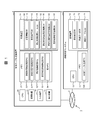
- FIG. 1 shows the power system monitoring and control system according to the present embodiment as a whole.
- the power system monitoring and control system 1 includes a system stabilization system 3 and a power system monitoring and control device 4 connected via the network 2.
- the system stabilization system 3 is an electronic control target or negative control for each failure (hereinafter, this is referred to as an assumed failure) that is expected to occur in the target power system (hereinafter, this is referred to as a target power system).
- the control table 76 (Fig. 9A) in which the target is registered is held, and when an assumed failure occurs in the target power system, the necessary electronic control target and negative control target are disconnected from the target power system based on the control table 76. It is a computer device that has a function to control the output.
- This system stabilization system 3 is configured to include information processing resources such as a CPU (Central Processing Unit) 10, a memory 11, and a storage device 12.
- the CPU 10 is a processor that controls the operation of the entire system stabilization system 3.
- the memory 11 is composed of a RAM (RandomAccessMemory) and the like, and is used as a work memory of the CPU 10.
- the storage device 12 is composed of a non-volatile storage device such as a hard disk device or SSD (Solid State Drive), and is used for storing data and programs to be retained for a long period of time.
- the power system monitoring control device 4 is a computer device having a function of updating the control table 76 held by the system stabilization system 3, and is a CPU 20, a memory 21, a storage device 22, a communication device 23, an input device 24, and a display device 25. Is configured with.
- the communication device 23 is a communication device that controls a protocol at the time of communication with the system stabilization system 3 via the network 2, and is composed of a NIC (Network Interface Card) or the like.
- the input device 24 is used for the operator of the power system monitoring and control device 4 (hereinafter, simply referred to as an operator) to input necessary information and instructions to the power system monitoring and control device 4, for example, a keyboard and a mouse. It is composed of a pointing device such as a touch panel and / or a voice instruction device.
- the display device 25 is used for displaying necessary screens and information, and is composed of a display device such as a liquid crystal display or an organic EL (Electro Luminescence) display, for example.
- a printer device or an audio output device may be applied in place of or in addition to the display device.
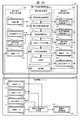
- FIG. 2 shows a logical configuration of the power system monitoring and control device 4 and the system stabilization system 3 according to the present embodiment.
- the power system monitoring and control device 4 includes a assumed failure change input database group 30, a assumed failure change unit 31, and a assumed failure change result database group 32.
- the assumed failure change input database group 30 is composed of a disaster information database 40, an assumed failure database 42, and a assumed failure change rule database 44.
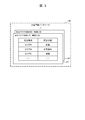
- the disaster information database 40 is a database in which disaster information 41 created in advance for each, for example, a 30-minute time zone (hereinafter, simply referred to as a time zone) is stored.
- the "disaster information” in the present embodiment describes the location ("disaster point") and content ("disaster content”) of a disaster that may occur in the target power system or has occurred in the past during the corresponding time zone. It is a combination of information.
- the disaster information 41 for each time zone is registered in the disaster information database 40. For example, in the case of the example of FIG.
- the "disaster point" in the disaster information 41 is not limited to the "area”, and may be a transmission line, a substation, or the like in the area, or may be information on other points.
- the "disaster content" in the disaster information database 40 is not limited to a large-scale disaster such as a typhoon, an earthquake, a landslide, or a tsunami, but may be a content related to meteorological conditions such as heavy snow, heavy rain, strong wind, and sunshine. The same applies to the following.
- the "time zone" in the disaster information 41 may be any date and time in the past or future. If the time zone is the past date and time, the "disaster point” and “disaster content” of the disaster information 41 are actual results, and if the time zone is the future date and time, the “disaster” of the disaster information 41 "Points" and “disaster details” are forecasts.
- the disaster information 41 in the past time zone may be the disaster information of a virtual disaster that is not the actual result. By doing so, it is possible to change the assumed failure described later according to various disasters in each time zone.
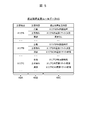
- the assumed failure database 42 is a database in which data (hereinafter, referred to as assumed failure data) 43 for a plurality of fixed assumed failures created in advance for the target power system are registered. As shown in FIG. 4, the assumed failure data 43 has a table configuration including a failure location column 43A and a failure aspect column 43B. In the assumed failure data 43, one row corresponds to one assumed failure related to the target power system.
- failure aspect is a combination of the phase, number of lines, failure mode, etc. of the failed line.
- “3 ⁇ 6LG (ABCA'B'C')" in FIG. 4 means a three-phase six-wire ground fault. It means that the A phase, the B phase and the C phase and the A'phase, the B'phase and the C'phase have a ground fault.
- the assumed failure change rule database 44 is data of rules for changing the assumed failure registered in the assumed failure database 42 (hereinafter, this is referred to as an assumed failure change rule) (hereinafter, this is referred to as assumed failure change rule data).
- This is a database in which 45 is stored, and is created in advance by the operator.
- the assumed failure change rule data 45 has a table configuration including a disaster point column 45A, a disaster content column 45B, and an assumed failure change content column 45C. In the assumed failure change rule data 45, one line corresponds to one assumed failure change rule.
- the assumed failure change content column 45C stores the assumed failure change content (hereinafter, referred to as the assumed failure change content) when the corresponding disaster content occurs at the corresponding disaster point. Since the assumed failure change contents differ depending on the combination of the disaster point and the disaster content, each assumed failure change content corresponds to the combination of the disaster point and the disaster content.
- FIG. 5 shows that there is no assumed failure even when a “tsunami” occurs in “area A”.
- the assumed failure change unit 31 includes an assumed failure point estimation unit 50, an assumed disaster content estimation unit 51, an assumed failure change unit 52, a changed assumed failure transmission unit 53, and a display unit 54.
- the assumed failure point estimation unit 50 is embodied by the CPU 20 (FIG. 1) of the power system monitoring and control device 4 executing the assumed failure point estimation program 50P (FIG. 1) stored in the memory 21 (FIG. 1). It is a functional part.
- the assumed failure point estimation unit 50 is based on each disaster information 41 registered in the disaster information database 40, and is used at all points in the target power system where an assumed failure may occur due to some kind of disaster (hereinafter, this). Is called an assumed failure point), and it has a function to estimate each time zone.
- the assumed failure point estimation unit 50 registers the data representing each assumed failure point for each estimated time zone as the assumed failure point estimation result data 61 in the assumed failure point estimation result database 60 of the assumed failure change result database group 32 described later. At the same time, it is output to the assumed disaster content estimation unit 51.
- the assumed disaster content estimation unit 51 is a functional unit embodied by executing the assumed disaster content estimation program 51P (FIG. 1) stored in the memory 21 by the CPU 20 of the power system monitoring and control device 4.
- the assumed disaster content estimation unit 51 is based on the assumed failure point estimation result data 61 for each time zone given by the assumed failure point estimation unit 50 and each disaster information 41 registered in the disaster information database 40. It has a function to estimate the content of a disaster that is expected to occur at each assumed failure point (hereinafter referred to as the assumed disaster content) for each time zone.
- the assumed disaster content estimation unit 51 uses data representing a combination of each assumed failure point for each time zone and the estimated disaster content estimated for the assumed failure point as the assumed disaster content estimation result data 63, and the assumed failure change result described later.
- the estimated disaster content estimation result of the database group 32 is registered in the database 62 and output to the assumed failure change unit 52.
- the assumed failure change unit 52 is a functional unit embodied by executing the assumed failure change program 52P (FIG. 1) stored in the memory 21 by the CPU 20 of the power system monitoring and control device 4.
- the assumed failure change unit 52 includes the assumed failure content estimation result data 63 for each time zone given by the assumed failure content estimation unit 51, the assumed failure data 43 stored in the assumed failure database 42, and the assumed failure change rule. It has a function of calculating all assumed failures for each time zone based on the assumed failure change rule data 45 stored in the database 44.
- the assumed failure change unit 52 registers the estimated failure data for each calculated time zone as the assumed failure change result data 65 in the assumed failure change result database 64 of the assumed failure change result database group 32 described later, and also registers the assumed failure after the change. Output to the transmitter 53.
- the post-change assumed failure transmission unit 53 is a functional unit embodied by executing the post-change assumed failure transmission program 53P stored in the memory 21 by the CPU 20 of the power system monitoring and control device 4.
- the post-change assumed failure transmission unit 53 transmits the assumed failure change result data 65 for each time zone given by the assumed failure change unit 52 to the system stabilization system 3 via the communication device 23 (FIG. 1).
- the display unit 54 is a functional unit embodied by the CPU 20 of the power system monitoring and control device 4 executing the display program 54P stored in the memory 21.
- the display unit 54 displays the estimated failure point estimation result data 61 for each time zone stored in the assumed failure point estimation result database 60 and the assumed disaster content estimation for each time zone registered in the assumed disaster content estimation result database 62.
- the assumed failure change result display screen 80 described later with respect to FIG. 10 is generated.
- the display unit 54 outputs the screen data of the generated assumed failure change result display screen 80 to the display device 25 (FIG. 1), so that the assumed failure change result display screen 80 is displayed on the display device 25.
- the assumed failure change result database group 32 is composed of the assumed failure point estimation result database 60, the assumed disaster content estimation result database 62, and the assumed failure change result database 64.
- the assumed failure point estimation result database 60 is a database used for managing the assumed failure points estimated by the assumed failure point estimation unit 50 of the assumed failure change unit 31 as described above. As shown in FIG. 6, the assumed failure point estimation result database 60 stores the assumed failure point estimation result data 61 for each time zone. Each assumed failure point estimation result data 61 includes data representing all assumed failure points in the corresponding time zone. Therefore, in the case of the example of FIG. 6, the occurrence point (assumed failure point) of some kind of failure assumed at "0:00" of "YYYY / MM / DD" estimated by the assumed failure point estimation unit 50 is "Area A". , "Area B" and "Area C".
- the assumed disaster content estimation result database 62 is a database used for managing the assumed failure content of each assumed failure point for each time zone estimated by the assumed disaster content estimation unit 51. As shown in FIG. 7, the assumed disaster content estimation result database 62 stores the assumed disaster content for each assumed failure point for each time zone. Therefore, in the case of the example of FIG. 7, the assumed disaster content of "Area A”, which is the assumed failure point of "0:00" of "YYYY / MM / DD" estimated by the assumed disaster content estimation unit 51, is "typhoon". , It is shown that the assumed disaster content of "Area B” is "landslide” and the assumed disaster content of "Area C” is "tsunami".
- the assumed failure change result database 64 is a database used for managing the change result of the assumed failure changed by the assumed failure change unit 52. As shown in FIG. 8, the assumed failure change result database 64 stores the assumed failure change result data 65, which is the assumed failure data 43 (FIG. 4) after the update for each time zone. Therefore, in the case of the example of FIG. 8, for each assumed failure shown in FIG. 4, “transmission line A1 (transmission end)” and “transmission line A1 (transmission end)” are set as assumed failures of “0:00” of “YYYY / MM / DD”.
- the assumed failure point estimation result database 60, the assumed disaster content estimation result database 62, and the assumed failure change result database 64 contain the assumed failure point estimation result data 61, the assumed disaster content estimation result data 63, or the assumed failure change, respectively, as calculation results. Not only the result data 65 but also the result data at the time of intermediate processing is stored so that it can be diverted in an appropriate situation.
- the system stabilization system 3 includes a assumed failure database 70, a system data database 72, a control table generation unit 74, and a control table database 75.
- the assumed failure database 70 of the system stabilization system 3 is a database having the same configuration as the assumed failure database 42 (FIG. 4) of the power system monitoring and control device 4.
- the assumed failure database 70 stores the same assumed failure data 71 as the assumed failure data 43 stored in the assumed failure database 42, and when the assumed failure data 43 is updated, the assumed failure is synchronized with this.
- the data 71 is updated in the same manner.
- the grid data database 72 is a database used for managing grid data 73 necessary for power system power flow calculation, state estimation, and time series change calculation.
- the grid data database 72 contains data such as the grid configuration of the power system, line impedance (R + jX), capacitance to ground (susceptance: jB), threshold of pad data required for grid configuration and state estimation, generator data, and , Other necessary data is stored in advance as system data 73.
- the control table generation unit 74 is a functional unit embodied by the CPU 10 (FIG. 1) of the system stabilization system 3 executing the control table generation program 74P (FIG. 1) stored in the memory 11 (FIG. 1). be.
- the control table generation unit 74 generates the control table 76 based on the assumed failure data 71 stored in the assumed failure database 70 and the system data 73 stored in the system data database 72, and controls the generated control table 76. Store in table database 75.
- the control table generation unit 74 receives the assumed failure change result.
- a new control table 76 for each time zone is generated based on the data 65, the assumed failure data 71 stored in the assumed failure database 70, and the system data 73 stored in the system data database 72, respectively.
- the control table 76 created at this time is a relaxed control table on the premise that the system stabilization system 3 is used.
- control table generation unit 74 overwrites the data of the new control table 76 for each generated time zone with the data of the control table 76 up to that point stored in the control table database 75.
- the control table 76 stored in the control table database 75 is updated to the new control table 76.
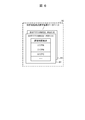
- the control table database 75 is a database used for managing the control table 76 for each time zone generated by the control table generation unit 74. As shown in FIG. 9A, the data of the control table 76 for each time zone is stored in the control table database 75.
- Each control table 76 contains information on the failure types and control targets of all failures (assumed failures) that are expected to occur in the corresponding time zone.
- the "failure type” is information on the "failure location” that indicates the location of the failure (assumed failure) that is expected to occur in the corresponding time zone, and the “failure aspect” that indicates the aspect of the failure that is expected at that failure location. It is composed of the information of.
- the "control target” stores information indicating an electronic control target or a negative control target (hereinafter, collectively referred to as a control target) to be disconnected when an assumed failure corresponding to a corresponding time zone occurs. To.
- transmission line A1 (transmission end)
- transmission line A1 power receiving end
- transmission line A1 power receiving end
- 3 ⁇ 6LG ABSCA'B'C'
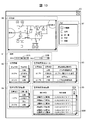
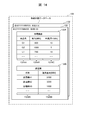
- FIG. 10 shows the assumed failure change displayed on the display device 25 (FIG. 1) by the display unit 54 (FIG. 2) of the power system monitoring and control device 4 as described above.
- a configuration example of the result display screen 80 is shown.
- the assumed failure change result display screen 80 has a time zone designation area 81, a disaster information display area 82, an assumed failure change rule display area 83, an assumed failure estimation result display area 84, an assumed failure change result display area 85, and a system diagram display area. It is configured to include 86 and a legend display area 87.
- the time zone designation area 81 is provided with a date designation column 81A and a time zone designation column 81B, and the date for which the content of the assumed failure data 43 after the change is to be confirmed is selected by a pull-down method in the date designation column 81A. It can be displayed, and the start time of the time zone within the date for which the assumed failure data 43 after the change is to be confirmed can be selected by the pull-down method and displayed in the time zone designation field 81B.
- the time zone designated by the time zone designated area 81 is referred to as a designated time zone.
- the disaster information display area 82 displays a list of disaster information 41 in the designated time zone registered in the disaster information database 40 (FIG. 3), and the assumed failure change rule display area 83 displays the assumed failure change rule database.
- a list of assumed failure change rules registered as assumed failure change rule data 45 is displayed in 44 (FIG. 2).
- the assumed disaster estimation result display area 84 a list of assumed disaster contents for each assumed failure location in the designated time zone stored in the assumed disaster content estimation result database 62 (FIG. 7) is displayed, and the assumed failure change result display is displayed.
- the area 85 a list of each assumed failure (failure location and failure aspect) in the designated time zone after the change changed by the assumed failure changing unit 52 (FIG. 2) is displayed.
- the "list of assumed failures in the specified time zone after the change" is provided with a change column 85A corresponding to each assumed failure after the change, and has been changed from the original contents (FIG. 10).
- a check mark 85B is displayed in the change column 85A corresponding to the assumed failure (added in the above). As a result, the operator can immediately recognize which assumed failure has been changed based on the check mark 85B.
- system diagram of the target power system is displayed in the system diagram display area 86, and the legend such as a symbol in the system diagram is displayed in the legend display area 87.
- the operator can easily recognize the position of the disaster occurrence point or the assumed failure point based on the system diagram or the legend.
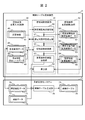
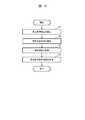
- FIG. 11 shows a series of processes executed by the power system monitoring and control device 4 in order to update the control table 76 held by the system stabilization system 3 as described above. (Hereinafter, this is referred to as a first power system monitoring control process).
- the assumed failure point estimation unit 50 (FIG. 2) causes a failure that is assumed to occur in the target power system.
- the occurrence point (assumed failure point) is estimated for each time zone, and the estimation result is registered as the assumed failure point estimation result data 61 in the assumed failure point estimation result database 60 (FIG. 6) and the assumed disaster content estimation unit 51 ( Output to FIG. 2) (S1).
- the assumed failure point estimation unit 50 includes the "disaster” included in the disaster information 41 based on the disaster information 41 (FIG. 3) for each time zone stored in the disaster information database 40 (FIG. 1). All the "points" are extracted, and the assumed failure point estimation result data 61 in which each of the extracted "disaster points" is designated as the assumed failure point is registered in the assumed failure point estimation result database 60 and output to the assumed disaster content estimation unit 51. ..
- the assumed disaster content estimation unit 51 (FIG. 2) estimates the assumed disaster content of each assumed failure point for each time zone, and the estimation result is used as the assumed disaster content estimation result data 63, and the assumed disaster content estimation result database. It is registered in 62 and output to the assumed failure change unit 52 (S2).
- the assumed disaster content estimation unit 51 has each time zone in the disaster information 41 based on the disaster information 41 (FIG. 3) stored in the disaster information database 40 (FIG. 1). Acquire the "disaster content" of the "disaster point” as the assumed disaster content of the corresponding assumed failure point. Then, the assumed disaster content estimation unit 51 generates the assumed disaster content estimation result data 63 described above with respect to FIG. 7 based on the acquired assumed disaster content of each assumed failure point, and uses the generated assumed disaster content estimation result data 63 as the assumed disaster. It is registered in the content estimation result database 62 and output to the assumed failure change unit 52.
- the assumed failure change unit 52 (FIG. 2) is registered as the assumed failure change rule data 45 in the assumed failure content estimation result data 63 given by the assumed disaster content estimation unit 51 and the assumed failure change rule database 44. Based on each assumed failure change rule, the assumed failure data 43 registered in the assumed failure database 42 is updated (S3).
- the assumed failure change unit 52 sets each combination of the assumed failure point and the assumed failure content in the assumed failure content estimation result data 63 for each time zone, and the combination of the disaster point and the disaster content of each assumed failure change rule, respectively.
- the assumed failure change content (“assumed failure change content” in Fig. 5) of the assumed failure change rule that matches the combination of the assumed failure point and the assumed failure content with the combination of the disaster point and the disaster content is assumed. Extract from change rules.
- the combination of the assumed failure point in the estimated disaster content estimation result of “date YYYY / MM / DD time 0:00” is “Area A” and the assumed disaster content is “typhoon” is shown in FIG. Since the disaster point matches the combination of "Area A” and the disaster content is “typhoon”, the assumed failure change unit 52 performs the "4 line ground fault in area A" which is the assumed failure change content of the assumed failure change rule. Extract. Further, in the same manner as this, the assumed failure change unit 52 is the “area B power supply 1 site dropout” which is the assumed failure change content of the assumed failure change rule corresponding to the combination of “area B” and “landslide” in FIG. And “Dropout of power supply 1 site in area BC" which is the content of the assumed failure change of the assumed failure change rule corresponding to the combination of "Area C” and “Tsunami” are extracted respectively.
- the assumed failure change unit 52 generates the assumed failure change result data 65 by adding each assumed failure change content extracted as described above to the original assumed failure data 43 (FIG. 4). For example, in the case of the above example, as shown in FIG. 8, simultaneous occurrence of a 3-phase 6-line ground fault failure at each transmission end of the transmission line A1 and the transmission line A2 (the failure point is "transmission line A1 (transmission end) +".
- the assumed failure change unit 52 registers the assumed failure change result data 65 for each time zone generated as described above in the assumed failure change result database 64, and outputs the changed assumed failure transmission unit 53.
- the post-change assumed failure transmission unit 53 outputs the assumed failure change result data 65 to the system stabilization system 3 (S4), and this series of first power system monitoring and control processes is completed.
- control table generation unit 74 (FIG. 2) of the system stabilization system 3 generates a new control table 76 for each time zone after the update.
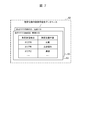
- the control table 76 before the update has the contents as shown in FIG. 9A
- the control table 76 at “0:00” of “YYYY / MM / DD” is shown in FIG. 9B.
- simultaneous occurrence of 3-phase 6-line ground fault failure at each transmission end of transmission line A1 and transmission line A2 is "transmission line A1 (transmission end) + transmission line A2 (transmission end)".
- the failure aspect is "3 ⁇ 6LG (ABCA'B'C')" + “3 ⁇ 6LG (ABCA'B'C')” line) and the power supply site B1 is dropped (the failure point is "power supply site B1", the failure aspect is A control table 76 is generated in which the row of "dropout") and the simultaneous dropout of power supply sites B1 and B2 (the row where the failure location of the failure type is "power supply site B1 + B2" and the failure aspect is "dropout") are added.
- control table 76 for each time zone generated in this way is overwritten with the data of the control table 76 previously stored in the control table database 75, whereby the control table 76 is updated.
- control is also performed for 4 equipment failures (N-4 failures) and 1 power supply site dropout due to the occurrence of large-scale disasters such as earthquakes and tsunamis and rare disasters. Since the table 76 can be created, it is possible to prevent a large-scale power outage or the like from occurring even when such a disaster occurs.
- the power system monitoring and control system 1 by presenting the assumed failure change rule data 45 and displaying the assumed failure change result display screen 80, it is possible to show the basis for the contents of the control table 76. , The accountability to the control table 76 can be fully fulfilled.
- FIG. 12 showing the corresponding parts with the same reference numerals with FIGS. 1 is the second embodiment.
- the power system monitoring control system 90 is shown.
- the power system monitoring and control system 90 includes a power system monitoring and control device 91 and a market management system 92 connected via the network 2, and a system stabilization system (not shown).
- the power system monitoring and control device 91 updates the control table for each time zone in the same manner as in the first embodiment, and has a function of calculating the state of the power system for each time zone based on the updated control table. It is a equipped computer device.
- the power system monitoring and control device 91 manages the market of the data of the control table for each time zone after these updates and the data representing the calculated state of the power system for each time zone (hereinafter, this is referred to as grid state data). Send to system 92.
- the power system monitoring and control device 91 is composed of a computer device including a CPU 20, a memory 21, a storage device 22, a communication device 23, an input device 24, and a display device 25.
- a computer device including a CPU 20, a memory 21, a storage device 22, a communication device 23, an input device 24, and a display device 25.
- the assumed failure point estimation program 50P, the assumed disaster content estimation program 51P, and the assumed failure change program 52P, the control table generation program 100P, the system state calculation program 101P, the transmission program 102P, and the display program 103P are stored in the memory 21. The program.
- the storage device 22 of the power system monitoring and control device 91 includes a disaster information database 40, an assumed failure database 42, an assumed failure change rule database 44, an assumed failure point estimation result database 60, an assumed disaster content estimation result database 62, and an assumed failure change.
- the system data database 104, the control table database 105, and the system status data database 106 are stored.
- the market management system 92 is a computer system installed in the electric power trading market and having a function of managing transactions of electric power products (hereinafter referred to as market products) in the electric power trading market. Further, in addition to such a function, the market management system 92 monitors the power system based on the updated control table for each time zone given by the power system monitoring and control device 91, the system status data for each time zone, and the like.
- the adjustment power that the business operator (general power transmission and distribution business operator) that owns the control device 91 should procure from the electric power trading market for each time zone is calculated and calculated as a procurement plan (hereinafter referred to as a coordination power procurement plan). It is also equipped with a function to provide the operator with a coordination power procurement plan.
- the market management system 92 includes information processing resources such as a CPU 110, a memory 111, and a storage device 112. Since the configurations and functions of the CPU 110, the memory 111, and the storage device 112 are the same as those of the corresponding parts (CPU 10, memory 11 or storage device 12) of the system stabilization system 3 of the first embodiment described above with respect to FIG. The description here is omitted.
- the adjustment power procurement plan creation program 113P which will be described later, is stored in the memory 111 of the market management system 92. Further, the storage device 112 of the market management system 92 stores a system data database 114, a control table database 115, a system status data database 116, a market data database 117, and a coordination power procurement planning database 118.
- FIG. 13 having the same reference numerals as those corresponding to FIG. 2 shows the logical configuration of the power system monitoring and control device 91 and the market management system 92 according to the present embodiment.
- the power system monitoring and control device 91 includes a assumed failure change input database group 120, a assumed failure change unit 121, and a assumed failure change result database group 122.
- the assumed failure change input database group 120 is composed of a disaster information database 40, an assumed failure database 42, an assumed failure change rule database 44, and a system data database 104. Since the disaster information database 40, the assumed failure database 42, and the assumed failure change rule database 44 are databases having the same configuration and contents as described above with respect to FIGS. 3 to 5, the description thereof is omitted here.
- system data database 104 is a database having the same configuration and contents as the system data database 72 (FIG. 2) of the first embodiment, the description thereof is omitted here.
- the system data 130 stored in the system data database 104 has the same contents as the system data 73 stored in the system data database 72 of the first embodiment.
- the assumed failure change unit 121 is composed of an assumed failure point estimation unit 50, an assumed disaster content estimation unit 51, an assumed failure change unit 52, a control table generation unit 100, a system state calculation unit 101, a transmission unit 102, and a display unit 103. ..
- the assumed failure point estimation unit 50, the assumed disaster content estimation unit 51, and the assumed failure change unit 52 are functional units having the above-mentioned functions, respectively.
- control table generation unit 100 has a function embodied by the CPU 20 (FIG. 12) of the power system monitoring control device 91 executing the control table generation program 100P (FIG. 12) stored in the memory 21 (FIG. 12). It is a department.
- the control table generation unit 100 performs the first implementation based on the assumed failure change result data 65 for each time zone given by the assumed failure change unit 52 and the system data 130 stored in the system data database 104.
- the control table 131 for each time zone is generated in the same manner as in the control table generation unit 74 (FIG. 2) of the form. Then, the control table generation unit 100 stores the generated control table 131 in the control table database 105 and outputs it to the system state calculation unit 101.
- the control table 131 created at this time is a relaxed control table on the premise of using a system stabilization system. Further, in the following, the control table 131 is already stored in the control table database 105, and the control table generation unit 100 is based on the assumed failure change result data 65 for each time zone given by the assumed failure change unit 52. A new control table 131 after the update is generated, and the generated new control table 131 is stored in the control table database 105 by overwriting the original control table 131 and output to the system state calculation unit 101. do.
- the system state calculation unit 101 is a functional unit embodied by executing the system state calculation program 101P (FIG. 12) stored in the memory 21 by the CPU 20 of the power system monitoring and control device 91.
- the system state calculation unit 101 should procure the time to be procured from the electric power trading market as a coordinating force on the assumption that the control of the corresponding controlled object registered in the updated control table 131 is executed when each assumed failure occurs. Calculate the power for each band and the new operation standard for each transmission line at that time.
- the grid state calculation unit 101 stores the calculated power to be procured and the operation standard for each time zone in the grid status data database 106 as the grid status data 132 for each time zone, and the grid status for each time zone.
- the data 132 and the data of the control table 131 for each time zone given by the control table generation unit 100 are output to the transmission unit 102.
- the transmission unit 102 is a functional unit embodied by the CPU 20 of the power system monitoring and control device 91 executing the transmission program 102P (FIG. 12) stored in the memory 21.
- the transmission unit 102 transmits the system state data 132 for each time zone and the data of the control table 131 for each time zone given by the system state calculation unit 101 to the market management system 92 via the communication device 23 (FIG. 12). do.
- the display unit 103 is a functional unit embodied by the CPU 20 of the power system monitoring and control device 91 executing the display program 103P (FIG. 16) stored in the memory 21.
- the display unit 103 includes the estimated failure point estimation result data 61 for each time zone stored in the assumed failure point estimation result database 60 and the estimated disaster content estimation for each time zone registered in the assumed disaster content estimation result database 62.
- Based on the system state data 132 for each time zone stored in 106 for example, a predetermined screen including various information included in the assumed failure change result display screen 80 described above for FIG. 10 is displayed.
- the assumed failure change result database group 122 is composed of the assumed failure point estimation result database 60, the assumed disaster content estimation result database 62, the assumed failure change result database 64, the control table database 105, and the system status data database 106.
- the assumed failure point estimation result database 60, the assumed disaster content estimation result database 62, and the assumed failure change result database 64 have the configurations and contents as described above for FIGS. 6 to 8, respectively, the description here is described. Omit. Further, since the control table database 105 has the same configuration and contents as the control table database 76 (FIG. 9A) of the first embodiment, the description thereof is omitted here.
- the systematic state data database 106 is a database used for managing the systematic state data 132 for each time zone calculated by the systematic state calculation unit 101 as described above.
- the grid state data 132 is information on electric power for each time zone to be procured as a coordinating power from the power trading market calculated by the grid state calculation unit 101 as described above (hereinafter, this is the coordinating power). It includes 132A (referred to as procured power information) and 132B (hereinafter referred to as transmission line information) regarding new operational standards for each transmission line for each time zone.
- Coordinating power procurement power information 132A includes name information 132AA, which is information on the names of market products that should be procured from the power trading market as coordinating power during the corresponding time period, and procurement, which is information on the amount of the market products to be procured.
- the electric power information 132AB and the unit price information 132AC which is the information of the bid unit price of the corresponding market product are included.
- the transmission line information 132B includes the transmission line name information 132BA which is the information of the name of each transmission line and the operation standard information 132BB which is the information of the relaxed new operation standard of the transmission line.
- the market management system 92 includes a system data database 114, a control table database 115, a system status data database 116, a market data database 117, a coordination power procurement plan creation unit 113, and a coordination power procurement plan database 118. Is configured with.
- the system data database 114 is a database having the same configuration as the system data database 104 of the power system monitoring and control device 91.
- the system data database 114 stores the same system data 140 as the system data 130 stored in the system data database 104, and when the system data 130 of the system data database 104 is updated, it synchronizes with this.
- the system data 140 of the system data database 114 is also updated in the same manner.
- the control table database 115 and the grid status data database 116 also have the same configuration as the control table database 105 and the grid status data database 106 of the power system monitoring and control device 91, respectively, and the control table transmitted from the power system monitoring and control device 91. 141 and system state data 142 are stored respectively. Further, in the market data database 117, bid information of each market product for each time zone is stored as market data 143.
- the coordination power procurement plan creation unit 113 is embodied by the CPU 110 (FIG. 12) of the market management system 92 executing the coordination power procurement plan creation program 113P (FIG. 12) stored in the memory 111 (FIG. 2). It is a functional part.
- the coordination power procurement plan creation unit 113 has the system data 140 stored in the system data database 114, the control table 141 for each time zone stored in the control table database 115, and the time zone stored in the system status data database 116. Based on the grid status data 142 for each system and the market data 143 stored in the market data database 117, the power procurement plan for each time zone that should be procured from the power trading market as adjustment power (hereinafter referred to as adjustment power procurement). (Called a plan) 144 is created, and the created adjustment power procurement plan 144 for each time zone is stored in the adjustment power procurement plan database 118.
- the coordination power procurement plan database 118 is a database used for managing the coordination power procurement plan 144 for each time zone created by the coordination power procurement plan creation unit 113.
- the coordination power procurement plan 144 registered in the coordination power procurement plan database 118 is notified to the business operator (general power transmission and distribution business operator) having the power system monitoring and control device 91.
- the business operator procures electricity as a coordinating power from the electric power trading market for each time zone in accordance with this coordinating power procurement plan 144.
- FIG. 15 shows the electric power for generating or calculating the control table 131 for each time zone after the update as described above and the system status data 132 for each time zone.
- the flow of a series of processes (hereinafter, this is referred to as a second power system monitoring and control process) executed in the system monitoring and control device 91 is shown.
- steps S10 to step are performed by the assumed failure point estimation unit 50, the assumed disaster content estimation unit 51, and the assumed failure change unit 52.
- S12 is executed in the same manner as in steps S1 to S3 of the first power system monitoring and control process described above for FIG. 11.
- control table generation unit 100 determines each time zone based on the assumed failure change result data 65 for each time zone given by the assumed failure change unit 52 and the system data 130 stored in the system data database 104.
- a new control table 131 is generated, the generated control table 131 is stored in the control table database 105, and is output to the system state calculation unit 101 (S13).
- the system state calculation unit 101 determines each assumed failure based on the new control table 131 for each time zone given by the control table generation unit 100 and the system data 130 stored in the system data database 104. Assuming that the control of the corresponding controlled object registered in the new control table 131 is executed when it occurs, the power for each time zone to be procured as adjustment power from the power trading market and the new power for each transmission line. Calculate each of the operational standards.
- Electricity for each time zone that should be procured as adjustment power from the electric power trading market is an optimization calculation with the amount of electric power procured from the electric power trading market as the objective function and the system constraints at normal times and assumed failures as constraints. It can be calculated by using methods such as Security Constrained Optimal Power Flow and Security Constrained Economic Dispatch.
- the grid status calculation unit 101 stores the calculated electric power (procurement capacity) for each time zone and the new operation standard of each transmission line as grid status data 132 for each time zone in the grid status data database 106.
- the system state data 132 for each time zone and the data of the control table 131 for each time zone given by the control table generation unit 100 are output to the transmission unit 102 (S14).
- the transmission unit 102 outputs the system state data 132 and the data of the control table 131 for each time zone given by the system state calculation unit 101 to the market management system 92 (S15), and the second power in this series.
- the system monitoring control process ends.
- the procurement plan of the adjustment power in the market management system 92 is based on the relaxed new control table 131. Since it is calculated, not only can the system stability be maintained by the system stabilization system even when a system failure occurs due to a disaster, but it is also possible to procure inexpensive adjustment power by using the new relaxed control table 131. , The operating cost of the system operator can be reduced.
- the operation standard information 132BB of the transmission line information 132B represents the relaxed operation standard calculated based on the relaxed control table, and the adjusting power is procured power.
- Procured power of information 132A Information 132AB represents the procured power that meets the relaxed operational standards. Therefore, the market management system 92 sets the operational standard of each transmission line and the procured power of the market product as the constraint condition and the initial value, and evaluates the system stability based on the new control table 131 after the update. Since the procurement plan can be calculated from the initial point where the procurement cost is low under the relaxed conditions, it is possible to procure cheaper adjustment power.
- FIG. 16 showing a portion corresponding to FIG. 12 with the same reference numeral shows the power system monitoring and control system 150 according to the third embodiment.
- the power system monitoring and control system 150 includes a power system monitoring and control device 151 and a central power supply command system 152 connected via the network 2, and a system stabilization system (not shown).
- the power system monitoring and control device 151 updates the control table for each time zone in the same manner as in the second embodiment, and has a function of calculating the state of the power system for each time zone based on the updated control table. It is a equipped computer device.
- the power system monitoring and control device 151 centrally feeds the data of the control table for each time zone after these updates and the data representing the calculated power system status for each time zone (hereinafter, this is referred to as system status data). It is transmitted to the command system 152.
- the central power supply command system 152 is a system having a function of formulating a future power supply and demand plan based on past power demand, weather forecast, etc., and adjusting the output of a generator according to the drafted supply and demand plan.
- the central power supply command system 152 of the present implementation activates which generator and how much adjustment power is used based on the updated control table and system status data for each time zone given by the power system monitoring and control device 151. It generates an adjustment force activation command for each time zone, such as whether to make it, and activates the necessary adjustment force by adjusting the output of the required generator based on the generated adjustment force activation command.
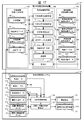
- FIG. 17 shows the logical configuration of the power system monitoring and control device 151 and the central power supply command system 152.
- the power system monitoring and control device 151 is stored in the system state calculation unit 161 of the assumed failure change unit 160 and the system state data database 163 of the assumed failure change result database group 162. It has the same configuration as the power system monitoring and control device 91 (FIG. 13) of the second embodiment except for the contents of the above.
- the system state calculation unit 161 is a functional unit embodied by the CPU 20 (FIG. 16) of the power system monitoring and control device 151 executing the system state calculation program 161P (FIG. 16) stored in the memory 21 (FIG. 16). Is.
- the system state calculation unit 161 serves as an adjustment force for each time zone on the premise that the control of the corresponding control target registered in the updated control table 131 (FIG. 17) is executed when each assumed failure occurs. Calculate the generated power of each generator to be output and the new operation standard of each transmission line for each time zone.
- the system state calculation unit 161 stores the calculated 6 electric powers for each time zone and the operation standard as system state data 164 for each time zone in the system state data database 163, and also stores the system state data for each time zone.
- the 164 and the data of the control table 131 for each time zone given by the control table generation unit 100 are output to the transmission unit 102.
- the data of the control table 131 for each time zone and the system state data 154 for each time zone are transmitted from the transmission unit 102 to the central power supply command system 152.
- the display unit 165 is a functional unit embodied by the CPU 20 of the power system monitoring and control device 151 executing the display program 165P (FIG. 16) stored in the memory 21.
- the display unit 165 estimates the assumed failure point estimation result data 61 for each time zone stored in the assumed failure point estimation result database 60 and the estimated disaster content estimation for each time zone registered in the assumed disaster content estimation result database 62.
- FIG. 18 shows the configuration of the system state data 164 of the present embodiment.
- the system state data 164 of the present embodiment is information on the output power of each generator to be output as the adjustment force for each time zone calculated by the system state calculation unit 161 (hereinafter, this). Is referred to as generator information) 164A and transmission line information 164B are included.
- the generator information 164A includes name information 164AA, which is information on the name of the generator whose output should be controlled in order to generate adjustment power in the corresponding time zone, and information on the power to be output from the generator as procurement power. It includes a certain output information 164AB and price information 164AC which is information on the fuel cost (fuel cost per unit power) required to output 1kWh of electric power to the corresponding generator. Further, the transmission line information 164B includes the transmission line name information 164BA which is the information of the name of each transmission line and the operation standard information 164BB which is the information of the relaxed new operation standard of the transmission line.
- the central power supply command system 152 includes a grid data database 114, a control table database 115, a grid status data database 170, a demand forecast data database 171 and a power generation / demand plan data database 172, a coordination power procurement result data database 173, and a supply / demand plan creation. It is configured to include a unit 174, an adjustment force activation command value calculation unit 175, a supply / demand planning database 176, and an adjustment force activation command value database 177.
- the system data database 114 is a database having the same configuration as the system data database 104 of the power system monitoring and control device 151.
- the system data database 114 stores the same system data 140 as the system data 130 stored in the system data database 104, and when the system data 130 of the system data database 104 is updated, it synchronizes with this.
- the system data 140 of the system data database 114 is also updated in the same manner.
- the control table database 115 and the grid status data database 170 are also databases having the same configurations as the control table database 105 and the grid status data database 163 of the power system monitoring and control device 151, respectively, and have been transmitted from the power system monitoring and control device 151.
- the control table 141 and the system state data 180 are stored respectively.
- the demand forecast data database 171 stores the demand forecast data 181 which is the data of the forecast result of the power demand in each future time zone calculated in advance based on the past results and the weather forecast. Furthermore, in the power generation / demand plan data database 172, power generation plans and demand plans for each future time zone submitted by power generation companies, electricity retailers, balancing groups, resource aggregators, etc. are stored as power generation / demand plan data 182. Will be done. Further, the adjustment power procurement result data database 173 stores the adjustment power procurement result data 183 representing the adjustment power procurement results up to that point.
- the supply and demand plan creation unit 174 is a functional unit embodied by executing the supply and demand plan creation program 174P stored in the memory 111 (FIG. 16) by the CPU 110 (FIG. 16) of the central power supply command system 152.
- the supply / demand planning unit 174 has the system data 140 stored in the system data database 114, the control table 141 for each time zone stored in the control table database 115, and the time zone stored in the system status data database 170.
- a supply and demand plan 178 which is a demand and supply plan for each future time zone, is created, and the created supply and demand plan 178 is used as a supply and demand plan.
- the adjustment force activation command value calculation unit 175 is embodied by the CPU 110 (FIG. 16) of the central power supply command system 152 executing the adjustment force activation command value calculation program 175P stored in the memory 111 (FIG. 16). It is a functional part.
- the adjustment power activation command value calculation unit 175 has the supply and demand plan 178 for each time zone created by the supply and demand plan creation unit 174, the power generation / demand plan data 182 stored in the power generation / demand plan data database 172, and the adjustment power. Adjustment power command value to be actually activated for each future time zone based on the adjustment power procurement result data 183 stored in the procurement result data database 173 (hereinafter, this is referred to as the adjustment power activation command value). ) 179 is calculated, and the adjusted adjustment force activation command value for each calculated time zone is stored in the adjustment force activation command value database 177.
- the supply and demand plan database 176 is a database used for managing the supply and demand plan for each time zone created by the supply and demand plan creation unit 174 as described above.
- the supply and demand plan 178 stored in the supply and demand plan database 176 is subsequently used when controlling the output power of each generator.
- the adjustment force activation command value database 177 is a database used for managing the adjustment force activation command value 179 for each future time zone calculated by the adjustment force activation command value calculation unit 175 as described above. According to the adjustment force activation command value 179 stored in the adjustment force activation command value database 177, the output control of the corresponding generator for activating the adjustment force is performed by the central power supply command system 152 for each future time zone. ..
- the supply plan and the adjustment force activation command value by each generator are calculated based on the control table stored in the control table database of the power system monitoring and control device. Therefore, not only can the system stability be maintained by the system stabilization system even when a system failure occurs due to a disaster, but it is also possible to formulate a supply plan and activate adjustment power with a cheaper generator, and the system operator. Operation cost can be reduced.
- the operation standard information 164BB of each transmission line represents the operation standard relaxed by the updated control table 131 (FIG. 17), and the output of the generator information 164A.
- Information 164AB represents the state of the generator that meets the operational standards relaxed by the updated control table 131. Therefore, the central power supply command system 152 (FIG. 16) sets the operation standard and the generator state as the constraint condition and the initial value, and evaluates the system stability based on the relaxed control table 131, so that the relaxed constraint condition is used. Since the supply and demand plan 178 (Fig. 17) and the adjustment power activation command value 179 (Fig. 17) can be calculated from the initial point where the fuel cost is low, the supply and demand plan can be formulated and the adjustment power can be activated by a cheaper engine. be able to.
- the power system monitoring and control device 4 is separated from the system stabilization system 3, the market management system 92, or the central power supply command system 152.
- the present invention is not limited to this, and all the functions of the power system monitoring and control device 4 are mounted on the system stabilization system 3, the market management system 92, or the central power supply command system 152.
- some of the functions of the power system monitoring and control device 4 may be mounted on the system stabilization system, the market management system 92, or the central power supply command system 1523.
- the power system monitoring and control device 4 separately from the system stabilization system 3, the market management system 92, or the central power supply command system 152, the existing system stabilization system 3, the market management system 92, or the central power supply command system can be provided.
- the effect intended by the present invention can be obtained while using 152 almost as it is.
- the disaster information 41 includes information on both the location and the content of the disaster is described, but the present invention is not limited to this, and the present invention is not limited to this. It may include information on only one of the origin and the content.
- the assumed failure change rule includes information on both the disaster location and the disaster content and information on the assumed failure change content.
- the invention is not limited to this, and may include only information on one of the disaster location and the content of the disaster, and information on the content of the assumed failure change.
- the coordination power procurement planning unit 113 of the market management system 92 procures the coordination power only from the electric power trading market
- the present invention is not limited to this. Instead, in addition to procuring the adjusting power from the electric power trading market, the adjusting power may be procured by controlling the output of the generator.
- the adjustment force activation command value calculation unit 175 of the central power supply command system 152 controls the output of the generator to procure the adjustment force.
- the present invention is not limited to this, and in addition to the output control of the generator, the adjustment power may be procured from the electric power trading market.
- the present invention can be widely applied to power system monitoring and control systems having various configurations including a system stabilizing system.
Landscapes
- Engineering & Computer Science (AREA)
- Business, Economics & Management (AREA)
- Human Resources & Organizations (AREA)
- Economics (AREA)
- General Physics & Mathematics (AREA)
- Physics & Mathematics (AREA)
- Strategic Management (AREA)
- Tourism & Hospitality (AREA)
- Power Engineering (AREA)
- Entrepreneurship & Innovation (AREA)
- Theoretical Computer Science (AREA)
- Marketing (AREA)
- General Business, Economics & Management (AREA)
- Health & Medical Sciences (AREA)
- Quality & Reliability (AREA)
- Operations Research (AREA)
- Automation & Control Theory (AREA)
- Game Theory and Decision Science (AREA)
- Educational Administration (AREA)
- Development Economics (AREA)
- Public Health (AREA)
- Water Supply & Treatment (AREA)
- General Health & Medical Sciences (AREA)
- Primary Health Care (AREA)
- Supply And Distribution Of Alternating Current (AREA)
- Remote Monitoring And Control Of Power-Distribution Networks (AREA)
- Management, Administration, Business Operations System, And Electronic Commerce (AREA)
Priority Applications (2)
| Application Number | Priority Date | Filing Date | Title |
|---|---|---|---|
| US17/998,312 US12613519B2 (en) | 2020-07-01 | 2021-04-30 | Power system monitoring control system and method |
| EP21834669.0A EP4178073A4 (en) | 2020-07-01 | 2021-04-30 | SYSTEM AND METHOD FOR MONITORING AND CONTROLLING A POWER SUPPLY SYSTEM |
Applications Claiming Priority (2)
| Application Number | Priority Date | Filing Date | Title |
|---|---|---|---|
| JP2020-114285 | 2020-07-01 | ||
| JP2020114285A JP7544518B2 (ja) | 2020-07-01 | 2020-07-01 | 電力系統監視制御システム及び方法 |
Publications (1)
| Publication Number | Publication Date |
|---|---|
| WO2022004116A1 true WO2022004116A1 (ja) | 2022-01-06 |
Family
ID=79315767
Family Applications (1)
| Application Number | Title | Priority Date | Filing Date |
|---|---|---|---|
| PCT/JP2021/017170 Ceased WO2022004116A1 (ja) | 2020-07-01 | 2021-04-30 | 電力系統監視制御システム及び方法 |
Country Status (4)
| Country | Link |
|---|---|
| US (1) | US12613519B2 (https=) |
| EP (1) | EP4178073A4 (https=) |
| JP (1) | JP7544518B2 (https=) |
| WO (1) | WO2022004116A1 (https=) |
Families Citing this family (2)
| Publication number | Priority date | Publication date | Assignee | Title |
|---|---|---|---|---|
| WO2025231049A1 (en) * | 2024-04-30 | 2025-11-06 | Resilient Entanglement, Inc. | Systems and methods for quantum-ai-based energy management in power systems |
| WO2026084203A1 (ko) * | 2024-10-18 | 2026-04-23 | 에이치디한국조선해양 주식회사 | Mvdc전기추진선박의 전력계통 보호 방법 및 그 장치 |
Citations (7)
| Publication number | Priority date | Publication date | Assignee | Title |
|---|---|---|---|---|
| JP2011078303A (ja) * | 2009-09-29 | 2011-04-14 | Korea Electric Power Corp | 距離継電装置、距離継電処理システム及び距離継電処理方法 |
| CN103942729A (zh) * | 2014-04-15 | 2014-07-23 | 国网辽宁省电力有限公司沈阳供电公司 | 一种基于最小配电区域的城市配电网灾害风险评估方法 |
| JP2015094685A (ja) * | 2013-11-13 | 2015-05-18 | 東北電力株式会社 | 送電線雷故障位置標定方法及びシステム |
| US20150169024A1 (en) * | 2012-06-17 | 2015-06-18 | Nation-E Ltd | Disaster recovery system and method |
| CN104915787A (zh) * | 2015-06-23 | 2015-09-16 | 广州供电局有限公司 | 设备故障率修正及配电网可靠性评估的方法及系统 |
| JP2019071710A (ja) | 2017-10-06 | 2019-05-09 | 株式会社日立製作所 | 市場対応信頼度管理装置及び市場対応信頼度管理システム |
| WO2019238140A1 (zh) * | 2019-01-08 | 2019-12-19 | 中国南方电网有限责任公司超高压输电公司检修试验中心 | 一种变电站或换流站耦连回路地震风险评估方法 |
Family Cites Families (13)
| Publication number | Priority date | Publication date | Assignee | Title |
|---|---|---|---|---|
| JP5088628B2 (ja) | 2008-07-09 | 2012-12-05 | 清水建設株式会社 | 停電評価装置 |
| JP5501700B2 (ja) * | 2009-09-09 | 2014-05-28 | 三菱重工業株式会社 | 被災範囲推定装置及びプログラム |
| JP5542398B2 (ja) * | 2009-09-30 | 2014-07-09 | 株式会社日立製作所 | 障害の根本原因解析結果表示方法、装置、及びシステム |
| KR20120058617A (ko) * | 2009-11-04 | 2012-06-07 | 가부시키가이샤 엔.티.티.도코모 | 재해 정보 제공 시스템 및 재해 정보 제공 방법 |
| JP5616311B2 (ja) | 2011-10-31 | 2014-10-29 | 株式会社日立製作所 | 系統安定化システム及び系統安定化方法 |
| JP6173946B2 (ja) | 2014-02-28 | 2017-08-02 | 株式会社日立製作所 | 電力系統監視装置、電力系統制御装置及び電力系統監視方法 |
| AU2014404749A1 (en) * | 2014-08-26 | 2017-01-12 | Swiss Reinsurance Company Ltd. | Disaster risk management and financing system, and corresponding method thereof |
| JP6498894B2 (ja) * | 2014-09-16 | 2019-04-10 | 株式会社東芝 | 系統安定化システム |
| WO2016051958A1 (ja) * | 2014-09-30 | 2016-04-07 | 日本電気株式会社 | 電力管理装置、電力管理方法、電力管理システム、及び、プログラム |
| JP6967364B2 (ja) * | 2017-04-07 | 2021-11-17 | 株式会社日立製作所 | 電力系統安定化装置および電力系統安定化方法 |
| JP6779171B2 (ja) * | 2017-04-27 | 2020-11-04 | 株式会社日立製作所 | 運用支援装置及び運用支援方法 |
| WO2019143386A1 (en) * | 2018-01-17 | 2019-07-25 | Siemens Aktiengesellschaft | Autonomous restoration of power systems after natural disasters |
| JP7514748B2 (ja) * | 2020-12-04 | 2024-07-11 | 株式会社日立製作所 | 電力系統運用計画作成支援装置および方法 |
-
2020
- 2020-07-01 JP JP2020114285A patent/JP7544518B2/ja active Active
-
2021
- 2021-04-30 EP EP21834669.0A patent/EP4178073A4/en active Pending
- 2021-04-30 WO PCT/JP2021/017170 patent/WO2022004116A1/ja not_active Ceased
- 2021-04-30 US US17/998,312 patent/US12613519B2/en active Active
Patent Citations (7)
| Publication number | Priority date | Publication date | Assignee | Title |
|---|---|---|---|---|
| JP2011078303A (ja) * | 2009-09-29 | 2011-04-14 | Korea Electric Power Corp | 距離継電装置、距離継電処理システム及び距離継電処理方法 |
| US20150169024A1 (en) * | 2012-06-17 | 2015-06-18 | Nation-E Ltd | Disaster recovery system and method |
| JP2015094685A (ja) * | 2013-11-13 | 2015-05-18 | 東北電力株式会社 | 送電線雷故障位置標定方法及びシステム |
| CN103942729A (zh) * | 2014-04-15 | 2014-07-23 | 国网辽宁省电力有限公司沈阳供电公司 | 一种基于最小配电区域的城市配电网灾害风险评估方法 |
| CN104915787A (zh) * | 2015-06-23 | 2015-09-16 | 广州供电局有限公司 | 设备故障率修正及配电网可靠性评估的方法及系统 |
| JP2019071710A (ja) | 2017-10-06 | 2019-05-09 | 株式会社日立製作所 | 市場対応信頼度管理装置及び市場対応信頼度管理システム |
| WO2019238140A1 (zh) * | 2019-01-08 | 2019-12-19 | 中国南方电网有限责任公司超高压输电公司检修试验中心 | 一种变电站或换流站耦连回路地震风险评估方法 |
Non-Patent Citations (1)
| Title |
|---|
| See also references of EP4178073A4 |
Also Published As
| Publication number | Publication date |
|---|---|
| US20230221716A1 (en) | 2023-07-13 |
| EP4178073A4 (en) | 2024-07-24 |
| EP4178073A1 (en) | 2023-05-10 |
| JP7544518B2 (ja) | 2024-09-03 |
| US12613519B2 (en) | 2026-04-28 |
| JP2022012452A (ja) | 2022-01-17 |
Similar Documents
| Publication | Publication Date | Title |
|---|---|---|
| AU2012201790B2 (en) | Systems and methods for synchronizing switching within a power distribution network | |
| Li et al. | Probability-based seismic resilience assessment method for substation systems | |
| Li et al. | Probability‐based seismic reliability assessment method for substation systems | |
| WO2022004116A1 (ja) | 電力系統監視制御システム及び方法 | |
| US20130116843A1 (en) | Outage schedule management apparatus and method in ems | |
| JP2023171430A (ja) | 優先度算出装置および優先度算出プログラム | |
| US20220383431A1 (en) | Electric Power System Planning Operation Device, Method, and System | |
| EP4139864A1 (en) | Electrical power grid interconnections | |
| JP2025001037A (ja) | 停電リスク評価システムおよび停電リスク評価方法 | |
| Baca et al. | Use of advanced microgrids to support community resilience | |
| Iakubovskii et al. | A model for power shortage minimization in electric power systems given constraints on controlled sections | |
| Chen et al. | ERCOT experience in using online stability analysis in real-time operations | |
| Bhatt et al. | Dynamic scheduling of operating energy and reserve in electricity market with ramp rate constraints | |
| Dialynas et al. | Modelling and evaluation of microgrids reliability and operational performance and its impact on service quality | |
| US11968074B2 (en) | Method for operating a control arrangement for an energy network, and control arrangement | |
| JP2022108996A (ja) | 電源管理装置及び電源管理プログラム | |
| Doyle | Highly Available Nuclear Power in a Microgrid Configuration for the ORNL Distribution System | |
| Ahmad et al. | Contingency analysis and reliability evaluation of Bangladesh power system | |
| Alshammari et al. | Power system performance quality indices | |
| CN119231763B (zh) | 基于电力系统的电站集中监控方法、装置、设备及其介质 | |
| Cho et al. | Design of a distribution database with customer daily load patterns | |
| Eggington et al. | Timescales of Ionospheric Response during a Geomagnetic Storm: Combining Global MHD Simulations and Observation Data | |
| Zhou et al. | A Function-Based Simulation Generalized Framework to Model Seismic Resilience of Interdependent Critical Infrastructure Systems | |
| Kumar et al. | System integrity protection scheme for Southern grid | |
| Wen et al. | Software implementation of risk-based dispatch |
Legal Events
| Date | Code | Title | Description |
|---|---|---|---|
| 121 | Ep: the epo has been informed by wipo that ep was designated in this application |
Ref document number: 21834669 Country of ref document: EP Kind code of ref document: A1 |
|
| NENP | Non-entry into the national phase |
Ref country code: DE |
|
| ENP | Entry into the national phase |
Ref document number: 2021834669 Country of ref document: EP Effective date: 20230201 |