WO2022003911A1 - ワークフロー整合性確保装置、ワークフロー整合性確保方法、および、ワークフロー整合性確保プログラム - Google Patents
ワークフロー整合性確保装置、ワークフロー整合性確保方法、および、ワークフロー整合性確保プログラム Download PDFInfo
- Publication number
- WO2022003911A1 WO2022003911A1 PCT/JP2020/026039 JP2020026039W WO2022003911A1 WO 2022003911 A1 WO2022003911 A1 WO 2022003911A1 JP 2020026039 W JP2020026039 W JP 2020026039W WO 2022003911 A1 WO2022003911 A1 WO 2022003911A1
- Authority
- WO
- WIPO (PCT)
- Prior art keywords
- workflow
- execution
- consistency
- control target
- unit
- Prior art date
- Legal status (The legal status is an assumption and is not a legal conclusion. Google has not performed a legal analysis and makes no representation as to the accuracy of the status listed.)
- Ceased
Links
Images


Classifications
-
- G—PHYSICS
- G06—COMPUTING OR CALCULATING; COUNTING
- G06Q—INFORMATION AND COMMUNICATION TECHNOLOGY [ICT] SPECIALLY ADAPTED FOR ADMINISTRATIVE, COMMERCIAL, FINANCIAL, MANAGERIAL OR SUPERVISORY PURPOSES; SYSTEMS OR METHODS SPECIALLY ADAPTED FOR ADMINISTRATIVE, COMMERCIAL, FINANCIAL, MANAGERIAL OR SUPERVISORY PURPOSES, NOT OTHERWISE PROVIDED FOR
- G06Q10/00—Administration; Management
- G06Q10/06—Resources, workflows, human or project management; Enterprise or organisation planning; Enterprise or organisation modelling
- G06Q10/063—Operations research, analysis or management
- G06Q10/0633—Workflow analysis
-
- G—PHYSICS
- G06—COMPUTING OR CALCULATING; COUNTING
- G06F—ELECTRIC DIGITAL DATA PROCESSING
- G06F11/00—Error detection; Error correction; Monitoring
- G06F11/30—Monitoring
-
- G—PHYSICS
- G06—COMPUTING OR CALCULATING; COUNTING
- G06F—ELECTRIC DIGITAL DATA PROCESSING
- G06F9/00—Arrangements for program control, e.g. control units
- G06F9/06—Arrangements for program control, e.g. control units using stored programs, i.e. using an internal store of processing equipment to receive or retain programs
- G06F9/46—Multiprogramming arrangements
- G06F9/54—Interprogram communication
- G06F9/542—Event management; Broadcasting; Multicasting; Notifications
Definitions
- the present invention relates to a workflow consistency ensuring device, a workflow consistency ensuring method, and a workflow consistency ensuring program.
- Patent Document 1 discloses a method of constructing a linked service by adding a new service or a new API by combining a catalog and an adapter.
- Patent Document 1 only discloses a method of linking services A, B, C, ..., When a failure occurs during processing of a workflow related to the service (for example, during construction of request service X). , There was a problem that the data consistency of the entire workflow could not be ensured.
- the present invention has been made in view of the above circumstances, and an object of the present invention is to provide a technique capable of ensuring data integrity of the entire workflow even if a failure occurs during the processing of workflows related to a plurality of services. It is to be.
- the workflow consistency ensuring device of one aspect of the present invention includes a storage unit that stores history information of the workflow execution state related to the control target controlled by the REST API (Representational State Transfer Application Programming Interface), and the history information from the storage unit. Is provided, the execution state of the workflow is periodically grasped by using the history information, and the control unit for deleting the control target related to the workflow whose execution state is a failure is provided.
- REST API Real State Transfer Application Programming Interface
- the workflow consistency ensuring device stores the history information of the workflow execution state regarding the control target controlled by the REST API (Representational State Transfer Application Programming Interface) in the storage unit.
- a step is performed, the history information is read from the storage unit, the execution state of the workflow is periodically grasped using the history information, and the control target related to the workflow whose execution state is a failure is deleted.
- the workflow consistency assurance program of one aspect of the present invention is a program that causes a computer to function as the workflow consistency assurance device.
- the data consistency of the entire workflow can be ensured.
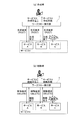
- FIG. 1 is a reference diagram at the time of explaining the problem.
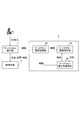
- FIG. 2 is a configuration diagram showing a configuration of a workflow consistency ensuring device.
- FIG. 3 is a diagram showing an example of parameters included in the workflow execution history management information.
- FIG. 4 is a diagram showing a specific example of the workflow execution process.
- FIG. 5A is a diagram showing a specific example of workflow execution history management information.
- FIG. 5B is a diagram showing a specific example of workflow execution history management information.
- FIG. 5C is a diagram showing a specific example of workflow execution history management information.
- FIG. 5D is a diagram showing a specific example of workflow execution history management information.
- FIG. 6 is a flow chart showing a new registration operation of the workflow execution history.
- FIG. 6 is a flow chart showing a new registration operation of the workflow execution history.
- FIG. 7 is a flow chart showing a change registration operation of the workflow execution history.
- FIG. 8 is a flow chart showing a failure registration operation of the workflow execution history.
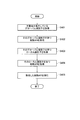
- FIG. 9 is a flow diagram showing the operation of ensuring workflow consistency.
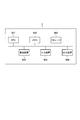
- FIG. 10 is a configuration diagram showing a hardware configuration of the workflow consistency ensuring device.
- the present invention relates to a technique for providing a request service X requested by a user.
- it is a technology that uses REST API (Representational State Transfer Application Programming Interface) to link multiple services A, B, C, etc. required to provide request service X.
- REST API Real-Time Transfer Application Programming Interface
- the workflow execution unit 1 uses the REST API to generate a generation request (POST / serviceA) for generating the service A. It sends to the server, sends a service B generation request (POST / serviceB) after the service A generation is completed, and sends a service C generation request (POST / serviceC) after the service B generation is completed. If a failure occurs at this timing, service C is not generated and request service X is not generated. On the other hand, service A and service B have been generated, and the data consistency cannot be ensured. In this case, it is necessary to delete service A and service B.
- the workflow execution unit 1 sends a deletion request (DELETE / serviceA) for deleting the service A to the server using the REST API. Then, after the deletion of service A is completed, the deletion request of service B (DELETE / serviceB) is sent, and after the deletion of service B is completed, the deletion request of service C (DELETE / serviceC) is sent. If a failure occurs at this timing, service C is not deleted and request service X is not deleted either. On the other hand, service A and service B have been deleted, and data consistency cannot be ensured. In this case, service C needs to be deleted.
- the execution history of the workflow executed by the workflow execution unit 1 is managed, and the execution state (completion, failure) of the workflow is periodically confirmed by using the execution history, and the execution state is caused by the occurrence of a failure. Is "failed" and the data of the resource where the data inconsistency has occurred is automatically deleted.
- the workflow identifier and the workflow execution time are taken into consideration when a failure occurs during workflow execution.
- the consistency of the workflow is ensured based on the execution history.
- FIG. 2 is a configuration diagram showing a configuration of the workflow consistency assurance device 2 according to the present embodiment.
- a workflow execution unit (execution unit) 1 that executes a workflow related to the controlled object 3 is also drawn.
- the control target 3 is a processing unit (entity of each processing, data group required for each processing) of each service A, B, C, ... Necessary for providing the request service X requested by the user.
- the workflow execution unit 1 has a function of accepting an application for request service X from the user terminal of the user and executing a workflow according to the type of application (generate, change, delete). For example, when the workflow execution unit 1 accepts the creation of the request service X, it uses the REST API to generate a plurality of services A, B, C, ... Required for providing the request service X so as to be able to cooperate with each other. do. When the workflow execution unit 1 accepts the deletion of the request service X, it deletes all the services A, B, C, ... Related to the request service X by using the REST API.
- the workflow execution unit 1 transmits a copy of the data processed at the time of workflow execution to the workflow consistency assurance device 2 as workflow execution history information, and registers it in the workflow history registration unit 21 of the workflow consistency assurance device 2. It has a function to do.
- the workflow consistency assurance device 2 includes a workflow history registration unit 21, a workflow history storage unit 22, and a workflow consistency assurance unit 23.
- the workflow history registration unit (registration unit) 21 has a function of receiving data duplication (history information) from the workflow execution unit 1 and registering it in the workflow history storage unit 22 as workflow execution history management information. At this time, the workflow history registration unit 21 executes a hidden registration process for registering the data from the workflow execution unit 1 in the workflow history storage unit 22 regardless of the workflow execution process of the workflow execution unit 1.
- the workflow execution unit 1 simply passes data to the workflow history registration unit 21, and is not aware of the registration process of the workflow history registration unit 21 (internal processing of the workflow consistency assurance device 2), so that "hidden registration” is performed. It becomes “processing".
- the workflow history storage unit (storage unit) 22 has a function of storing the workflow execution history management information registered by the workflow history registration unit 21. That is, the workflow history storage unit 22 stores the history information of the workflow execution state related to the control target 3 controlled by the workflow execution unit 1 by the REST API.
- FIG. 3 is a diagram showing an example of parameters included in the workflow execution history management information.
- the workflow execution history management information includes, for example, a "global identifier” that uniquely indicates the parent workflow in the upper row, a “local identifier” that uniquely indicates the child workflow in the lower row, and the execution status of the workflow (execution, completion, failure).
- "Execution state” indicating, "Execution API” indicating the content of the API executed for the control target 3
- "Delete API” for deleting the content of the execution API and the content of the API are in the control target 3.
- Control target reflection time indicating the reflected time
- Control target release time indicating the time when the API content is released from the control target 3 by change order, deletion order, etc.
- the API content is executed as an order
- the "system reflection time” indicating the time when the API was changed and the “system release time” indicating the time when the API contents were canceled as an order due to the execution of the change order, deletion order, etc. are saved in association with each other. These parameters are stored in the workflow execution history management information for each workflow.
- the workflow consistency assurance unit (control unit) 23 reads the workflow execution history management information from the workflow history storage unit 22, periodically confirms the workflow execution status using the read workflow execution history management information, and the execution status is changed. It has a function to delete the control target 3 related to the workflow which is "failure". Specifically, the workflow consistency assurance unit 13 searches for a workflow identifier (global identifier, local identifier) whose execution status is "failure” based on the workflow execution time (control target reflection time, system reflection time). Then, by acquiring and executing the deletion API corresponding to the identifier of the searched workflow, the control target 3 related to the workflow whose execution status is "failure" is deleted.
- a workflow identifier global identifier, local identifier
- the workflow history storage unit 22 performs a workflow based on the workflow identifier, the workflow execution state, the workflow execution time, the control target reflection time, and the deletion API for resolving the inconsistency. Since the workflow execution history by the execution unit 1 is managed and the workflow consistency assurance unit 23 deletes the control target 3 related to the workflow whose execution state is "failure", the data consistency can be ensured.
- deletion API is stored in the workflow execution history management information, it is possible to easily and surely delete the control target 3.
- a resource-oriented API such as REST API
- the workflow execution history related to the multi-stage workflow can be appropriately managed.
- information related to the time axis such as the control target reflection time and the control target release time indicating the reflection on the control target 3, the system reflection time and the system release time indicating the order execution, and the like are managed, so that the search is performed. You can easily search for the latest status based on the current time of the hour.
- FIG. 4 is a diagram showing a specific example of the workflow execution process.
- 5A to 5D are diagrams showing specific examples of workflow execution history management information updated according to the workflow execution process of FIG.
- the workflow is divided into two stages: a global workflow that generates both services A and service B to generate the request service X, and a local workflow that generates each of service A and service B. It shall be.
- the workflow hierarchy is not limited to two stages, and may be three or more stages.
- the "service” is a service actually used by the user. For example, subscribing to an electronic magazine.
- the "order” is to input various necessary settings to the server or computer system so that the "service” requested by the user can be provided.
- Step S1 When the request service X is applied by the user, the global workflow execution unit 11 of the workflow execution unit 1 generates the request service X (POST / serviceX). At this time, the workflow history registration unit 21 of the workflow consistency ensuring device 2 puts the workflow execution history management information on the first line.
- Step S3 Next, the global workflow execution unit 11 executes order A-1 (POST / A-1) from the service A generation function 121 to the service A, and normally responds from the service A to the execution of the order A-1. Will be notified that has been returned.
- the workflow history registration unit 21 sets the workflow execution history management information on the third line.
- Step S4 Next, in the global workflow execution unit 11, the service A generation function 121 executes the order A-2 (POST / A-2) for the service A, and the service A normally responds to the execution of the order A-2. Will be notified that has been returned. At this time, the workflow history registration unit 21 sets the workflow execution history management information on the fourth line.
- the workflow history registration unit 21 sets the workflow execution history management information on the fifth line.
- Step S6 Next, the global workflow execution unit 11 calls the service B generation function 122 of the local workflow execution unit 12, and causes the called service B generation function 122 to execute the generation workflow to the service B (POST / serviceB). At this time, the workflow history registration unit 21 sets the workflow execution history management information on the sixth line.
- Step S7 Next, in the global workflow execution unit 11, the service B generation function 122 executes the order B-1 (POST / B-1) to the service B, and the service B normally responds to the execution of the order B-1. Will be notified that has been returned. At this time, the workflow history registration unit 21 sets the workflow execution history management information on the seventh line.
- the service B generation function 122 executes the order B-1 (POST / B-1) to the service B, and the service B normally responds to the execution of the order B-1. Will be notified that has been returned.
- the workflow history registration unit 21 sets the workflow execution history management information on the seventh line.
- the workflow consistency ensuring unit 23 acquires and executes the deletion API necessary for ensuring data consistency from the workflow execution history management information, so that the order A-1, the order A-2, the service A, and the order B- Delete 1 This ensures data integrity for request service X.
- Workflow execution history management information is managed on a time axis and workflow execution status (execution, completion, failure), and data consistency can be ensured by executing the subsequent steps based on these.
- Step 5 the workflow consistency assurance unit 23 executes the deletion API of "service A” acquired in step 2, and executes the deletion API of "order B-1" acquired in step 4.
- order A-1, order A-2, service A, and order B-1 are deleted, so that the data inconsistency is resolved.
- workflow history registration unit 21 hides these processes and registers the workflow execution history according to the types of new registration / change / failure.
- workflow execution unit 1 does not need to be aware of the internal processing of the workflow history registration unit 21.
- the workflow execution unit 1 simply passes a copy of the data processed at the time of workflow execution to the workflow history registration unit 21, and the process for ensuring data consistency is a workflow consistency that is a different processing entity from the workflow execution unit 1. This is performed by the securing device 2.
- the workflow execution unit 1 can focus on the workflow execution process, and is freed from the troublesome need to perform the data consistency assurance process.
- FIG. 6 is a flow chart showing a new registration operation of the workflow execution history.
- Step S101 The workflow history registration unit 21 receives the "global identifier", "local identifier”, “execution state”, “execution API”, and “deletion API” as input information from the workflow execution unit 1.
- Step S102 Next, the workflow history registration unit 21 determines whether or not the "execution state" of the input information is "execution”. If the "execution state" is "execution”, the process proceeds to step S103. If the "execution state” is not "execution", the process proceeds to step S104.
- Step S103 When the "execution state" of the input information is "execution", the workflow history registration unit 21 automatically adds the "current time” to the “system reflection time”, and “control target reflection time” and “control target cancellation”. "Infinity” is automatically added to "Time” and "System release time”. Then, the process proceeds to step S105.
- Step S104 When the "execution status" of the input information is not “execution”, the workflow history registration unit 21 automatically adds the "current time” to the "control target reflection time” and “system reflection time”, and “control target release time”. , "Infinity” is automatically added to "System release time”. Then, the process proceeds to step S105.
- Step S105 Finally, the workflow history registration unit 21 adds the input information automatically added in step S103 or step S104 to the last line of the workflow execution history management information.
- FIG. 7 is a flow chart showing a change registration operation of the workflow execution history.
- Step S201 The workflow history registration unit 21 receives the "global identifier", "local identifier”, “execution state”, “execution API”, and “deletion API” as input information from the workflow execution unit 1.
- Step S202 Next, in the workflow history registration unit 21, the record in which the "global identifier" of the workflow execution history management information matches the "global identifier" of the input information and the "system reflection time” of the workflow execution history management information is the latest time. To get.
- Step S203 Next, the workflow history registration unit 21 automatically adds the "current time” to the "system release time” of the acquired record, and invalidates the record.
- Step S204 the workflow history registration unit 21 automatically adds the "current time” to the "control target reflection time” and “system reflection time” to the input information in step S201, and then adds the "control target release time” and "system”. "Infinity” is automatically added to "Release time”.
- Step S205 Finally, the workflow history registration unit 21 adds the input information that has been automatically added to the last line of the workflow execution history management information.
- FIG. 8 is a flow chart showing a failure registration operation of the workflow execution history.
- Step S301 The workflow history registration unit 21 receives the "global identifier”, "local identifier”, “execution state”, “execution API”, and “deletion API” as input information from the workflow execution unit 1.
- Step S302 the workflow history registration unit 21 automatically adds the "current time” to the “system reflection time” and adds "Infinity” to the "control target reflection time”, “control target cancellation time”, and "system cancellation time”. Add automatically.
- Step S303 Next, the workflow history registration unit 21 adds the input information that has been automatically added to the last line of the workflow execution history management information.
- Step S304 Next, the workflow history registration unit 21 acquires a record in which the "global identifier" of the input information is designated as the "local identifier" of the workflow execution history management information.
- Step S305 Next, the workflow history registration unit 21 automatically adds the "current time” to the "system release time” of the acquired record, and invalidates the record.
- Step S306 the workflow history registration unit 21 duplicates the invalidated record, updates the "execution status" to “failure”, updates the "system reflection time” to "current time”, and executes the workflow as a new record. Add to the last line of history management information.
- Step S307 the workflow history registration unit 21 acquires a record in which the "global identifier" or “local identifier” of the workflow execution history management information is "null", and adds the "current time” as the "system release time”. Invalidate the record.
- Step S308 the workflow history registration unit 21 duplicates the record invalidated in step S307, updates the "execution status" to "failure", updates the "system reflection time” to "current time”, and updates the new record. Add to the last line of workflow execution history management information.
- FIG. 9 is a flow diagram showing the operation of ensuring workflow consistency.
- the following steps S401 to S405 correspond to the above procedures 1 to 5, respectively.
- Step S401 From the workflow execution history management information, the workflow consistency assurance unit 23 determines that the "local identifier" is “null”, the "execution status” is “failure”, the "system reflection time” is before the “current time”, and the “system is canceled”. Get the global identifier after "time” is "current time”.
- Step S402 the workflow consistency assurance unit 23 matches the global identifier acquired by the "global identifier" from the workflow execution history management information, the "control target reflection time” is before the "current time”, and the "system release time”. Get the deletion API included in the records after "current time”.
- Step S403 Next, in the workflow consistency assurance unit 23, from the workflow execution history management information, the "global identifier" matches the global identifier acquired in step S401, and the "control target reflection time” is "current time” or later, "system release”. Gets the local identifier contained in the record whose "time” is after the "current time”.
- Step S404 Next, in the workflow consistency assurance unit 23, from the workflow execution history management information, the "global identifier" matches the local identifier acquired in step S403, and the "control target reflection time” is before the "current time", ". Get the deletion API included in the record whose "system release time” is after "current time”.
- Step S405 Finally, the workflow consistency ensuring unit 23 executes the deletion API acquired in step S402 and step S404, respectively. This can eliminate the data inconsistency.
- the workflow consistency assurance device 2 has a workflow history storage unit 22 for storing workflow execution history management information of a workflow execution state related to a control target controlled by the REST API, and a workflow from the workflow history storage unit 22.
- the workflow consistency assurance unit 23 which reads out the execution history management information, periodically grasps the execution state of the workflow using the workflow execution history management information, and deletes the control target 3 related to the workflow whose execution state is unsuccessful. Therefore, even if a failure occurs during the processing of the workflow related to a plurality of services, the data consistency of the entire workflow can be ensured.
- the present invention is not limited to the above embodiment.
- the present invention can be modified in a number of ways within the scope of the gist of the present invention.
- the workflow consistency ensuring device 2 of the present embodiment described above has, for example, as shown in FIG. 10, a CPU (Central Processing Unit, processor) 901, a memory 902, and a storage (HDD: Hard Disk Drive, SSD: Solid). It can be realized by using a general-purpose computer system including a StateDrive) 903, a communication device 904, an input device 905, and an output device 906.
- the memory 902 and the storage 903 are storage devices.
- each function of the workflow consistency ensuring device 2 is realized by executing a predetermined program loaded on the memory 902 by the CPU 901.
- the workflow consistency assurance device 2 may be implemented on one computer.
- the workflow consistency ensuring device 2 may be implemented by a plurality of computers.
- the workflow consistency ensuring device 2 may be a virtual machine mounted on a computer.
- the program for the workflow consistency assurance device 2 can be stored in a computer-readable recording medium such as HDD, SSD, USB (Universal Serial Bus) memory, CD (Compact Disc), DVD (Digital Versatile Disc).
- the program for the workflow consistency ensuring device 2 can also be distributed via the communication network.
Landscapes
- Engineering & Computer Science (AREA)
- Business, Economics & Management (AREA)
- Theoretical Computer Science (AREA)
- Human Resources & Organizations (AREA)
- Physics & Mathematics (AREA)
- General Physics & Mathematics (AREA)
- Strategic Management (AREA)
- Software Systems (AREA)
- Economics (AREA)
- Entrepreneurship & Innovation (AREA)
- Quality & Reliability (AREA)
- General Engineering & Computer Science (AREA)
- Educational Administration (AREA)
- Game Theory and Decision Science (AREA)
- Marketing (AREA)
- Operations Research (AREA)
- Tourism & Hospitality (AREA)
- General Business, Economics & Management (AREA)
- Multimedia (AREA)
- Development Economics (AREA)
- Management, Administration, Business Operations System, And Electronic Commerce (AREA)
Priority Applications (3)
| Application Number | Priority Date | Filing Date | Title |
|---|---|---|---|
| US18/012,303 US20230316191A1 (en) | 2020-07-02 | 2020-07-02 | Workflow consistency ensuring device, workflow consistency ensuring method, and workflow consistency ensuring program |
| PCT/JP2020/026039 WO2022003911A1 (ja) | 2020-07-02 | 2020-07-02 | ワークフロー整合性確保装置、ワークフロー整合性確保方法、および、ワークフロー整合性確保プログラム |
| JP2022532960A JPWO2022003911A1 (https=) | 2020-07-02 | 2020-07-02 |
Applications Claiming Priority (1)
| Application Number | Priority Date | Filing Date | Title |
|---|---|---|---|
| PCT/JP2020/026039 WO2022003911A1 (ja) | 2020-07-02 | 2020-07-02 | ワークフロー整合性確保装置、ワークフロー整合性確保方法、および、ワークフロー整合性確保プログラム |
Publications (1)
| Publication Number | Publication Date |
|---|---|
| WO2022003911A1 true WO2022003911A1 (ja) | 2022-01-06 |
Family
ID=79315828
Family Applications (1)
| Application Number | Title | Priority Date | Filing Date |
|---|---|---|---|
| PCT/JP2020/026039 Ceased WO2022003911A1 (ja) | 2020-07-02 | 2020-07-02 | ワークフロー整合性確保装置、ワークフロー整合性確保方法、および、ワークフロー整合性確保プログラム |
Country Status (3)
| Country | Link |
|---|---|
| US (1) | US20230316191A1 (https=) |
| JP (1) | JPWO2022003911A1 (https=) |
| WO (1) | WO2022003911A1 (https=) |
Citations (7)
| Publication number | Priority date | Publication date | Assignee | Title |
|---|---|---|---|---|
| JPH10149306A (ja) * | 1996-11-18 | 1998-06-02 | Nippon Telegr & Teleph Corp <Ntt> | サービス連携装置およびその生成装置 |
| JP2003150572A (ja) * | 2001-11-19 | 2003-05-23 | Mitsubishi Electric Corp | 連携サービス保証システム |
| JP2015106272A (ja) * | 2013-11-29 | 2015-06-08 | Kddi株式会社 | Webサービスシステム、Webサービスメッセージ仲介方法およびプロキシサーバ |
| JP2016171560A (ja) * | 2015-03-10 | 2016-09-23 | 株式会社リコー | 情報処理システム、情報処理装置、及び情報処理方法 |
| JP2018190205A (ja) * | 2017-05-08 | 2018-11-29 | 日本電信電話株式会社 | 事業者間一括サービス管理装置および事業者間一括サービス管理方法 |
| WO2019208098A1 (ja) * | 2018-04-23 | 2019-10-31 | 日本電信電話株式会社 | 連携処理再開装置、および、連携処理再開方法 |
| JP2020027308A (ja) * | 2018-08-09 | 2020-02-20 | 日本電信電話株式会社 | 原子性保証装置および原子性保証方法 |
Family Cites Families (15)
| Publication number | Priority date | Publication date | Assignee | Title |
|---|---|---|---|---|
| GB2276737A (en) * | 1993-03-30 | 1994-10-05 | Ibm | Fault-tolerant transaction-oriented data processing |
| DE69738646T2 (de) * | 1996-08-28 | 2008-11-13 | Hitachi, Ltd. | Verfahren zur Ausführung eines Prozesses und Betriebsmittelzugriffsverfahren in einem Computer-System |
| US6192483B1 (en) * | 1997-10-21 | 2001-02-20 | Sun Microsystems, Inc. | Data integrity and availability in a distributed computer system |
| JP4094752B2 (ja) * | 1998-11-27 | 2008-06-04 | 株式会社日立製作所 | トランザクション処理方法及びその実施装置並びにその処理プログラムを記録した媒体 |
| US8468042B2 (en) * | 2006-06-05 | 2013-06-18 | International Business Machines Corporation | Method and apparatus for discovering and utilizing atomic services for service delivery |
| US9021299B2 (en) * | 2011-02-18 | 2015-04-28 | Ab Initio Technology Llc | Restarting processes |
| JP6064734B2 (ja) * | 2013-03-27 | 2017-01-25 | 富士通株式会社 | ワークフロー制御プログラム、装置および方法 |
| JP6152675B2 (ja) * | 2013-03-27 | 2017-06-28 | 富士通株式会社 | ワークフロー制御プログラム、装置および方法 |
| US9977654B2 (en) * | 2014-06-20 | 2018-05-22 | Asset, S.r.L. | Method of developing an application for execution in a workflow management system and apparatus to assist with generation of an application for execution in a workflow management system |
| EP3182355A1 (en) * | 2015-12-16 | 2017-06-21 | Mastercard International Incorporated | A method and system of processing a transaction on a server |
| US20170255886A1 (en) * | 2016-03-03 | 2017-09-07 | Hewlett-Packard Development Company, L.P. | Workflow execution |
| US10719414B2 (en) * | 2018-05-11 | 2020-07-21 | Cisco Technology, Inc. | Rollback for cloud native workflows |
| JP2021089466A (ja) * | 2019-12-02 | 2021-06-10 | 株式会社日立製作所 | 計算機システム |
| WO2024024068A1 (ja) * | 2022-07-28 | 2024-02-01 | 株式会社日立製作所 | ワークフロー設計支援システム、ワークフロー設計支援方法 |
| US12099432B2 (en) * | 2023-01-06 | 2024-09-24 | Stripe, Inc. | Workflows |
-
2020
- 2020-07-02 US US18/012,303 patent/US20230316191A1/en not_active Abandoned
- 2020-07-02 WO PCT/JP2020/026039 patent/WO2022003911A1/ja not_active Ceased
- 2020-07-02 JP JP2022532960A patent/JPWO2022003911A1/ja active Pending
Patent Citations (7)
| Publication number | Priority date | Publication date | Assignee | Title |
|---|---|---|---|---|
| JPH10149306A (ja) * | 1996-11-18 | 1998-06-02 | Nippon Telegr & Teleph Corp <Ntt> | サービス連携装置およびその生成装置 |
| JP2003150572A (ja) * | 2001-11-19 | 2003-05-23 | Mitsubishi Electric Corp | 連携サービス保証システム |
| JP2015106272A (ja) * | 2013-11-29 | 2015-06-08 | Kddi株式会社 | Webサービスシステム、Webサービスメッセージ仲介方法およびプロキシサーバ |
| JP2016171560A (ja) * | 2015-03-10 | 2016-09-23 | 株式会社リコー | 情報処理システム、情報処理装置、及び情報処理方法 |
| JP2018190205A (ja) * | 2017-05-08 | 2018-11-29 | 日本電信電話株式会社 | 事業者間一括サービス管理装置および事業者間一括サービス管理方法 |
| WO2019208098A1 (ja) * | 2018-04-23 | 2019-10-31 | 日本電信電話株式会社 | 連携処理再開装置、および、連携処理再開方法 |
| JP2020027308A (ja) * | 2018-08-09 | 2020-02-20 | 日本電信電話株式会社 | 原子性保証装置および原子性保証方法 |
Non-Patent Citations (1)
| Title |
|---|
| TAKAHASHI, KENSUKE; IKEGAYA, TOMOKI; KANEMARU, SHO; TOYOSHIMA, TSUYOSHI: "An Order History Management Method for Fault Recovery", IEICE TECHNICAL REPORT, vol. 119, no. 438 (ICM2019-53), 24 February 2020 (2020-02-24), pages 67 - 72, XP009534174, ISSN: 2432-6380 * |
Also Published As
| Publication number | Publication date |
|---|---|
| US20230316191A1 (en) | 2023-10-05 |
| JPWO2022003911A1 (https=) | 2022-01-06 |
Similar Documents
| Publication | Publication Date | Title |
|---|---|---|
| EP3629518B1 (en) | Interoperability of zero-knowledge proof enabled blockchains | |
| CN109684307B (zh) | 一种数据存储方法、装置、设备及存储介质 | |
| CN109086388B (zh) | 区块链数据存储方法、装置、设备及介质 | |
| CN109710190B (zh) | 一种数据存储方法、装置、设备及存储介质 | |
| US8996611B2 (en) | Parallel serialization of request processing | |
| US7769721B2 (en) | Data recovery method in differential remote backup for a NAS system | |
| CN113396407A (zh) | 用于利用区块链技术扩充数据库应用的系统和方法 | |
| CN112395264B (zh) | 分布式存储系统中逻辑目标与卷之间映射的处理方法 | |
| CN113570460B (zh) | 在区块链中并发执行交易的方法和装置 | |
| US20120330890A1 (en) | Propagating tables while preserving cyclic foreign key relationships | |
| CN116049306B (zh) | 数据同步方法、装置、电子设备以及可读存储介质 | |
| CN102279857A (zh) | 一种实现数据复制的方法及系统 | |
| JP4277873B2 (ja) | トランザクション処理装置、トランザクション処理方法 | |
| JP5976779B2 (ja) | キャッシュメモリ構造および方法 | |
| US20150135004A1 (en) | Data allocation method and information processing system | |
| CN108959548B (zh) | 业务请求的处理方法及装置 | |
| CN106528830A (zh) | 一种恢复文件索引目录的方法和装置 | |
| CN112463880B (zh) | 一种区块链数据存储方法及相关装置 | |
| WO2022003911A1 (ja) | ワークフロー整合性確保装置、ワークフロー整合性確保方法、および、ワークフロー整合性確保プログラム | |
| TWI769796B (zh) | 利用索引物件來進行簡易儲存服務無縫遷移的方法、主裝置以及儲存伺服器 | |
| US11507457B2 (en) | Method, electronic device and computer program product for storage management | |
| JP2015022353A (ja) | データ管理サーバのスナップショット作成システム、および、サーバクラスタのスナップショット作成システム | |
| US20200249876A1 (en) | System and method for data storage management | |
| US7720816B2 (en) | System and method for managing log information | |
| CN118277160A (zh) | 数据库系统的控制方法、程序产品、存储介质和设备 |
Legal Events
| Date | Code | Title | Description |
|---|---|---|---|
| 121 | Ep: the epo has been informed by wipo that ep was designated in this application |
Ref document number: 20943595 Country of ref document: EP Kind code of ref document: A1 |
|
| ENP | Entry into the national phase |
Ref document number: 2022532960 Country of ref document: JP Kind code of ref document: A |
|
| NENP | Non-entry into the national phase |
Ref country code: DE |
|
| 122 | Ep: pct application non-entry in european phase |
Ref document number: 20943595 Country of ref document: EP Kind code of ref document: A1 |