WO2021261128A1 - 出力装置、方法、及びプログラム - Google Patents
出力装置、方法、及びプログラム Download PDFInfo
- Publication number
- WO2021261128A1 WO2021261128A1 PCT/JP2021/019028 JP2021019028W WO2021261128A1 WO 2021261128 A1 WO2021261128 A1 WO 2021261128A1 JP 2021019028 W JP2021019028 W JP 2021019028W WO 2021261128 A1 WO2021261128 A1 WO 2021261128A1
- Authority
- WO
- WIPO (PCT)
- Prior art keywords
- blood
- image
- excretion
- excrement
- extracted
- Prior art date
- Legal status (The legal status is an assumption and is not a legal conclusion. Google has not performed a legal analysis and makes no representation as to the accuracy of the status listed.)
- Ceased
Links
Images






Classifications
-
- G—PHYSICS
- G06—COMPUTING OR CALCULATING; COUNTING
- G06T—IMAGE DATA PROCESSING OR GENERATION, IN GENERAL
- G06T7/00—Image analysis
- G06T7/0002—Inspection of images, e.g. flaw detection
- G06T7/0012—Biomedical image inspection
-
- G—PHYSICS
- G06—COMPUTING OR CALCULATING; COUNTING
- G06T—IMAGE DATA PROCESSING OR GENERATION, IN GENERAL
- G06T7/00—Image analysis
- G06T7/90—Determination of colour characteristics
-
- G—PHYSICS
- G01—MEASURING; TESTING
- G01N—INVESTIGATING OR ANALYSING MATERIALS BY DETERMINING THEIR CHEMICAL OR PHYSICAL PROPERTIES
- G01N33/00—Investigating or analysing materials by specific methods not covered by groups G01N1/00 - G01N31/00
- G01N33/48—Biological material, e.g. blood, urine; Haemocytometers
- G01N33/483—Physical analysis of biological material
-
- G—PHYSICS
- G01—MEASURING; TESTING
- G01N—INVESTIGATING OR ANALYSING MATERIALS BY DETERMINING THEIR CHEMICAL OR PHYSICAL PROPERTIES
- G01N33/00—Investigating or analysing materials by specific methods not covered by groups G01N1/00 - G01N31/00
- G01N33/48—Biological material, e.g. blood, urine; Haemocytometers
- G01N33/50—Chemical analysis of biological material, e.g. blood, urine; Testing involving biospecific ligand binding methods; Immunological testing
-
- G—PHYSICS
- G06—COMPUTING OR CALCULATING; COUNTING
- G06T—IMAGE DATA PROCESSING OR GENERATION, IN GENERAL
- G06T7/00—Image analysis
- G06T7/0002—Inspection of images, e.g. flaw detection
- G06T7/0012—Biomedical image inspection
- G06T7/0014—Biomedical image inspection using an image reference approach
- G06T7/0016—Biomedical image inspection using an image reference approach involving temporal comparison
-
- G—PHYSICS
- G06—COMPUTING OR CALCULATING; COUNTING
- G06T—IMAGE DATA PROCESSING OR GENERATION, IN GENERAL
- G06T7/00—Image analysis
- G06T7/60—Analysis of geometric attributes
- G06T7/62—Analysis of geometric attributes of area, perimeter, diameter or volume
-
- G—PHYSICS
- G06—COMPUTING OR CALCULATING; COUNTING
- G06V—IMAGE OR VIDEO RECOGNITION OR UNDERSTANDING
- G06V10/00—Arrangements for image or video recognition or understanding
- G06V10/20—Image preprocessing
- G06V10/25—Determination of region of interest [ROI] or a volume of interest [VOI]
-
- G—PHYSICS
- G06—COMPUTING OR CALCULATING; COUNTING
- G06V—IMAGE OR VIDEO RECOGNITION OR UNDERSTANDING
- G06V10/00—Arrangements for image or video recognition or understanding
- G06V10/40—Extraction of image or video features
- G06V10/56—Extraction of image or video features relating to colour
-
- G—PHYSICS
- G06—COMPUTING OR CALCULATING; COUNTING
- G06V—IMAGE OR VIDEO RECOGNITION OR UNDERSTANDING
- G06V20/00—Scenes; Scene-specific elements
- G06V20/50—Context or environment of the image
- G06V20/52—Surveillance or monitoring of activities, e.g. for recognising suspicious objects
-
- G—PHYSICS
- G06—COMPUTING OR CALCULATING; COUNTING
- G06T—IMAGE DATA PROCESSING OR GENERATION, IN GENERAL
- G06T2207/00—Indexing scheme for image analysis or image enhancement
- G06T2207/10—Image acquisition modality
- G06T2207/10024—Color image
-
- G—PHYSICS
- G06—COMPUTING OR CALCULATING; COUNTING
- G06T—IMAGE DATA PROCESSING OR GENERATION, IN GENERAL
- G06T2207/00—Indexing scheme for image analysis or image enhancement
- G06T2207/30—Subject of image; Context of image processing
- G06T2207/30004—Biomedical image processing
Definitions
- This disclosure relates to a technique for outputting excretion information.
- Patent Document 1 a plurality of color cameras attached to a toilet seat are used to photograph stool before it falls into a water-sealed portion excreted from a living body, and the color of the surface of the stool is detected and detected from the photographed stool image.
- a plurality of color cameras attached to a toilet seat are used to photograph stool before it falls into a water-sealed portion excreted from a living body, and the color of the surface of the stool is detected and detected from the photographed stool image.
- Patent Document 1 since the change in the color of stool is only monitored, whether the bleeding during excretion is bleeding due to trauma such as hemorrhoids or bleeding due to abnormalities in the digestive system such as the large intestine and the small intestine. It is not possible to distinguish between bleeding due to abnormalities in the bladder or urinary tract.
- the present disclosure has been made to solve such a problem, and whether the bleeding at the time of excretion is bleeding due to trauma such as anus, or bleeding due to an abnormality in the bladder, urinary tract, or digestive system.
- the purpose is to provide a technology capable of outputting the information necessary for determining whether or not the disease is occurring.
- the output device is an output device that outputs excretion information, and is an acquisition unit that acquires a plurality of images taken in chronological order by a camera installed so that the inside of the bowl of the toilet can be photographed, and each image.
- a first extraction unit that includes time information indicating the shooting time and extracts excretion images indicating excretion in the acquired plurality of images, and a blood image indicating blood in the acquired plurality of images.
- a second determination unit determines the bleeding start timing based on the time information corresponding to the blood image and determines the blood size indicating the size of the blood based on the blood image.
- an output unit that generates information including the excretion start timing, the bleeding start timing, and the blood size as the excretion information, and outputs the generated excretion information.
- bleeding during excretion includes bleeding due to trauma near the anus such as hemorrhoids, and is not necessarily bleeding due to abnormalities in the digestive system. Also, bleeding due to trauma is not as serious as bleeding due to digestive system abnormalities. Therefore, when there is bleeding, if it is uniformly regarded as having an abnormality in the digestive system, appropriate treatment cannot be performed and the user's anxiety is unnecessarily aggravated. To prevent such a situation, it is necessary to distinguish the type of bleeding during excretion.
- Patent Document 1 the change in stool color is monitored, but the excretion start timing, the bleeding start timing, and the blood size are not monitored. Therefore, it is not possible to distinguish whether the bleeding during excretion is bleeding due to trauma such as hemorrhoids or bleeding due to an abnormality in the digestive system.
- the present disclosure has been made to solve such a problem, and whether the bleeding at the time of excretion is bleeding due to trauma such as anus, or bleeding due to an abnormality in the bladder, urinary tract, or digestive system.
- the purpose is to provide a technology capable of outputting the information necessary for determining whether or not the disease is occurring.
- the output device is an output device that outputs excretion information, and includes an acquisition unit that acquires a plurality of images taken in chronological order by a camera installed so that the inside of the bowl of the toilet can be photographed.
- the image includes time information indicating the shooting time, a first extraction unit for extracting excretion images indicating excretion in the acquired plurality of images, and a blood image showing blood in the acquired plurality of images.
- the second determination is to determine the bleeding start timing based on the time information corresponding to the blood image and to determine the blood size indicating the size of the blood based on the blood image.
- a plurality of images taken in chronological order by a camera installed so that the inside of the bowl of the toilet bowl can be photographed are acquired, and excretion images showing excretion are extracted and acquired from the acquired multiple images.
- a blood image showing blood is extracted from the plurality of images, the excretion start timing is determined based on the extracted excretion image, the bleeding start timing and the blood size are determined from the extracted blood image, and the excretion start timing is determined.
- Excretion information including blood bleeding start timing, and blood size is output.
- this configuration outputs the information necessary to determine whether the bleeding during excretion is bleeding due to trauma such as the anus or bleeding due to an abnormality in the bladder, urinary tract, or digestive system. be able to.
- the second determination unit further determines the color of the blood based on the blood image, and the excretion information may include color information indicating the determined color of the blood.
- the first determination unit determines the type of the excrement based on the color of the blood and the size of the blood, and the excretion information may include the determined type of the excrement.
- the type of excrement may include red stool and black stool.
- red stool containing bright red blood is excreted, and when there is an abnormality in the digestive system such as the small intestine and duodenum behind the large intestine, black stool containing dark blood is present. It has the characteristic of being excreted. According to this configuration, whether the excrement is red stool or black stool is presented, so that useful information for identifying the location of bleeding can be output.
- the second extraction unit may extract as the blood image a region in which a predetermined number or more of pixels having a predetermined pixel value indicating the blood are continuous in the plurality of images.
- a region in which a predetermined number or more of pixels having a predetermined pixel value indicating blood are continuous is extracted as a blood image. It is possible to prevent an object or noise from being extracted as a blood image.
- the second determination unit determines the shape of the blood based on the blood image, and the excretion information may include shape information indicating the shape of the blood.
- the administrator can output useful information for determining the illness of the excretor.
- the shape of the blood may include linear and dot shapes.
- stool containing linear blood may be excreted, and in the case of hemorrhoids, stool with punctate blood may be excreted.
- shape information indicating whether the shape of the excrement is linear or punctate is output, so that useful information for accurately determining polyps and hemorrhoids can be output.
- the first extraction unit extracts a specific area, which is a predetermined area including the drainage port of the toilet bowl, in each of the plurality of images, and extracts the excrement image in the specific area. May be good.
- the excrement image can be extracted only in a specific area including the drainage port where the excrement is likely to exist, so that the processing efficiency can be improved.
- the second extraction unit may extract a specific area, which is a predetermined area including the drainage port of the toilet bowl, in each of the plurality of images, and extract the blood image in the specific area. good.
- the blood image can be extracted only in a specific area including the drainage port where blood is likely to be present, so that the processing efficiency can be improved.
- the output unit when the output unit determines that the excretor has left the seat based on the seating data output from the seating sensor that detects the excretion person's seating on the toilet bowl, the output unit outputs the excretion information to the server. You may.
- excretion information is output when absenteeism is detected. Therefore, the excretion information is efficiently output while reducing the communication load as compared with the mode of outputting the excretion information for each image. can.
- the server can manage the excretion information, and the memory resource of the output device can be saved.
- a method in another aspect of the present disclosure is a method in an output device that outputs excretion information, in which a plurality of images taken sequentially by a camera installed so that the inside of a bowl of a toilet bowl can be photographed are acquired, and each image is obtained.
- the excretion image showing excretion is extracted from the acquired plurality of images including the time information indicating the shooting time, and the blood image showing blood is extracted from the acquired plurality of images, and the excretion image is
- the excretion start timing is determined based on the time information corresponding to the excretion image
- the bleeding start timing is determined based on the time information corresponding to the blood image.
- a blood size indicating the size of the blood is determined based on the blood image, and information including the excretion start timing, the bleeding start timing, and the blood size is output as the excretion information.
- the program in still another aspect of the present disclosure is a program in an output device that outputs excretion information, and a plurality of programs sequentially photographed by a camera installed in the processor of the output device so that the inside of the bowl of the toilet bowl can be photographed. Images are acquired, each image contains time information indicating the shooting time, an excretion image showing excretion is extracted from the acquired plurality of images, and a blood image showing blood is obtained from the acquired plurality of images.
- the excretion start timing is determined based on the time information corresponding to the excretion image, and when the blood image is extracted, the time information corresponding to the blood image is used.
- the bleeding start timing is determined based on the blood image, and the blood size indicating the blood size is determined based on the blood image, and information including the excretion start timing, the bleeding start timing, and the blood size is excreted.
- the present disclosure allows such a program to be distributed via a computer-readable non-temporary recording medium such as a CD-ROM or a communication network such as the Internet.
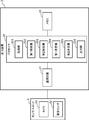
- FIG. 1 is a block diagram showing an example of the overall configuration of the excrement management system 1 according to the first embodiment of the present disclosure.
- the excrement management system 1 is a system introduced in facilities such as geriatric facilities and hospitals, and manages the state of excrement of users who use the facilities.
- the user is, for example, a care recipient receiving care at a geriatric facility and a patient receiving treatment at a hospital.
- the excrement management system 1 includes an output device 2, a server 3, a display device 4, and a sensor unit 5.
- the output device 2, the server 3, and the display device 4 are connected to each other so as to be able to communicate with each other via the network NT.
- the network NT is a wide area communication network including, for example, an Internet communication network and a mobile phone communication network.
- the output device 2 and the sensor unit 5 are installed in the toilet bowl and are communicably connected via the communication path 6.
- the communication path 6 is a communication path for short-range wireless communication such as Bluetooth (registered trademark), infrared communication, and NFC.
- the communication path 6 may be a wired communication path.
- the output device 2 acquires the sensing data acquired by the sensor unit 5 via the communication path 6.
- the output device 2 analyzes the sensing data, generates excretion information described later, and transmits the generated excretion information to the server 3.
- the server 3 generates excretion history information including the received excretion information and stores it in the excretion history database described later.
- the display device 4 acquires excretion history information from the server 3 via the network NT as necessary, generates a display image to be described later from the excretion history information, and displays the generated display image on the display.
- the sensing data includes images and sitting data described later.
- the server 3 is, for example, a cloud server including one or more computers.
- the display device 4 is, for example, a computer owned by an administrator.
- the display device 4 may be, for example, a stationary computer, a smartphone, or a tablet computer.
- the manager is, for example, a caregiver of the care recipient, a care manager, or a doctor in charge of treating the patient.
- FIG. 2 is a diagram for explaining the arrangement positions of the sensor unit 5 and the output device 2 in the embodiment of the present disclosure.
- the toilet bowl 101 includes a bowl portion 101a and an edge portion 101b.
- the edge portion 101b is a member arranged at the upper end of the toilet bowl 101 and defining the opening of the toilet bowl 101.
- the bowl portion 101a is a member that is arranged below the edge portion 101b and receives excrement.
- the sensor unit 5 is hung on the edge portion 101b.
- a drainage port (not shown) is provided at the bottom of the bowl portion 101a.
- the excrement excreted in the bowl portion 101a is discharged to the sewer pipe through the drain port. That is, the toilet bowl 101 is a flush toilet.
- a toilet seat 102 for a user to sit on is provided on the upper part of the toilet bowl 101.
- the toilet seat 102 rotates up and down. The user sits with the toilet seat 102 lowered on the toilet bowl 101.
- a water storage tank 103 for storing wash water for flowing excrement into the sewer is provided.
- FIG. 3 is a block diagram showing an example of the configuration of the output device 2 and the sensor unit 5 shown in FIG.
- the sensor unit 5 includes a camera 51 and a seating sensor 52.
- the camera 51 is installed in the toilet bowl 101 so that the bowl portion 101a can take a picture.
- the camera 51 is, for example, a high-sensitivity, wide-angle camera capable of capturing a color image having three color components of R (red) component, G (green) component, and B (blue). ..
- the camera 51 may be a monochrome camera.
- a camera that illuminates an object with an infrared light emitting diode and a white light emitting diode and photographs the object is widely used.
- the camera 51 is composed of a high-sensitivity camera having a 1/4 inch CMOS. Further, the camera 51 is composed of a wide-angle camera having a horizontal angle of view of 120 degrees and a vertical angle of view of 100 degrees. Note that these numerical values for the number of inches and the number of angles of view are merely examples, and other values may be adopted.
- the camera 51 photographs the inside of the bowl portion 101a at a predetermined frame rate, includes time information indicating the shooting time in the obtained image, and transmits an image including the time information to the output device 2.
- the time information is information including the year, month, day, hour, minute, and second, for example, 15:00:00 on April 1, 2021. However, this is an example, and the time information may be information including hours, minutes, and seconds.
- the seating sensor 52 detects whether or not the user is sitting on the toilet seat 102.
- the seating sensor 52 includes, for example, an illuminance sensor that detects the illuminance around the bowl portion 101a and a distance measuring sensor that detects the distance of an object around the bowl portion 101a.
- an illuminance sensor that detects the illuminance around the bowl portion 101a
- a distance measuring sensor that detects the distance of an object around the bowl portion 101a.
- the seating sensor 52 may be configured by a pressure sensor that detects the pressure of the user sitting on the toilet seat 102 instead of the illuminance sensor and the distance measuring sensor.
- the seating sensor 52 is composed of a pressure sensor, the seating sensor 52 is provided on the toilet seat 102. Further, the seating sensor 52 may be configured as either an illuminance sensor or a distance measuring sensor. The seating sensor 52 detects whether or not the user is seated at a predetermined sampling rate, and constantly outputs the seating data indicating the detection result to the output device 2.
- the output device 2 includes a communication circuit 21, a processor 22, and a memory 23.
- the communication circuit 21 is a communication circuit that connects the output device 2 to the network NT and the communication path 6.
- the communication circuit 21 receives an image transmitted from the camera 51 at a predetermined frame rate.
- the predetermined frame rate has an arbitrary value in the range of, for example, 1 to 120 fps.
- the communication circuit 21 receives the seating data transmitted from the seating sensor 52 at a predetermined sampling rate. Further, the communication circuit 21 transmits the excretion information to the server 3.
- the processor 22 is composed of, for example, a central processing unit, and includes an acquisition unit 221, a first extraction unit 222, a second extraction unit 223, a first determination unit 224, a second determination unit 225, and an output unit 226.
- the acquisition unit 221 to the output unit 226 may be realized by the processor 22 executing a predetermined program, or may be configured by a dedicated hardware circuit.
- the acquisition unit 221 acquires a plurality of images taken by the camera 51 in time series using the communication circuit 21. Further, the acquisition unit 221 acquires the seating data by using the communication circuit 21.
- the first extraction unit 222 extracts an excrement image showing excrement from a plurality of images acquired by the acquisition unit 221.
- the first extraction unit 222 may extract as an excrement image a region in which a predetermined number or more of pixels having a predetermined pixel value indicating excrement are continuous in each of the plurality of images.
- Excrement includes stool and urine. However, in the following description, for convenience of explanation, excrement will be described as stool.
- the “pixel having a predetermined pixel value indicating excrement” refers to, for example, a pixel having a pixel value within a predetermined range with respect to a pixel value for each color component indicating excrement.
- the color components are, for example, R (red), G (green), and B (blue).
- the "pixel value for each color component” refers to a pixel value of R, a pixel value of G, and a pixel value of B.
- the "pixel value for each color component” is referred to as an "RGB value”.
- the predetermined range refers to a predetermined range of RGB values that can be regarded as excrement.
- the "predetermined number” refers to the number of pixels corresponding to the minimum size that can be regarded as excrement.
- the second extraction unit 223 extracts a blood image showing blood from a plurality of images acquired by the acquisition unit 221.
- the second extraction unit 223 may extract as a blood image a region in which a predetermined number or more of pixels having a predetermined RGB value indicating blood are continuous in a specific area of a plurality of images.
- the “pixel having a predetermined RGB value indicating blood” refers to, for example, a pixel having an RGB value within a predetermined range with respect to a predetermined RGB value indicating blood.
- the predetermined range refers to a predetermined range of RGB values that can be regarded as blood. In trauma such as hemorrhoids, blood is distributed in dots. Therefore, a plurality of blood images may be extracted in one image.
- the first determination unit 224 determines the excretion start timing based on the time information corresponding to the extracted excrement image.
- the "time information corresponding to the excrement image” refers to the time information included in the image from which the excrement image is extracted.
- the second determination unit 225 determines the bleeding start timing based on the time information corresponding to the blood image extracted by the first extraction unit 222 and makes the blood image. Based on the blood size, which indicates the size of the blood, is determined.
- the "time information corresponding to the bleeding image” refers to the time information included in the image from which the bleeding image is extracted.
- the output unit 226 generates excretion information including the excretion start timing, the bleeding start timing, and the blood size.
- the output unit 226 assigns a time stamp and a user ID to the generated excretion information, and outputs the excretion information to which the time stamp and the user ID are attached to the server 3 by using the communication circuit 21.
- the time stamp includes the excretion start date and time and the excretion end date and time.
- the user ID is an identifier that identifies the excretor.
- the user ID may be, for example, data input to the user at the time of sitting, or may be data predetermined for the toilet bowl 101.
- FIG. 4 is a block diagram showing an example of the configuration of the server 3.
- the server 3 includes a communication circuit 31, a processor 32, and a memory 33.
- the communication circuit 31 connects the server 3 to the network NT.
- the processor 32 is composed of, for example, a CPU, and controls the entire server 3.
- the processor 32 acquires excretion information from the output device 2 using the communication circuit 31, generates excretion history information from the received excretion information, and stores the generated excretion history information in the excretion history database 331.
- the excretion history information includes a user ID, a time stamp, and excretion information.
- the memory 33 is composed of a non-volatile storage device such as a solid state drive or a hard disk drive, and stores the excretion history database 331.
- the excretion history database 331 is a database that stores one excretion history information in one record.
- FIG. 5 is a block diagram showing an example of the configuration of the display device 4.
- the display device 4 includes a communication circuit 41, a processor 42, a memory 43, a display 44, and an operation unit 45.
- the communication circuit 41 connects the display device 4 to the network NT.
- the communication circuit 41 receives the excretion history information from the server 3.
- the processor 42 is composed of, for example, a CPU, acquires excretion history information transmitted from the server 3 using the communication circuit 41, and generates and generates a display image based on the excretion information included in the acquired excretion history information.
- the display image is displayed on the display 44. This allows the administrator to confirm the user's excretion information.
- the memory 43 is composed of a non-volatile rewritable storage device such as a flash memory.
- the display 44 is composed of a display device such as a liquid crystal display panel and an organic EL panel.
- the operation unit 45 is composed of a keyboard, a mouse, a touch panel, and the like, and receives instructions from the user.
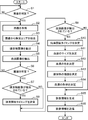
- FIG. 6 is a flowchart showing an example of processing of the output device 2 according to the embodiment of the present disclosure.
- step S1 the acquisition unit 221 determines whether or not the user has been seated on the toilet bowl 101 based on the seating data.
- the seating data includes "ON” data indicating seating when the user is seated.
- the seating data includes "OFF” data indicating that the user is not seated when the user is not seated. Therefore, the acquisition unit 221 may determine that the user is seated if the seating data includes "ON” data, and may determine that the user is not seated if the seating data includes "OFF" data.
- step S1 When it is determined that the user is seated on the toilet bowl 101 (YES in step S1), the acquisition unit 221 acquires an image from the camera 51 (step S2). On the other hand, when it is determined that the user is not seated on the toilet bowl 101 (NO in step S1), the process waits in step S1.
- step S3 the first extraction unit 222 extracts a specific area from the image acquired in step S2.
- FIG. 8 is a diagram showing an example of the specific area 80.
- the specific area 80 is a rectangular area including all or a part of the drainage port 104 in the image G1.
- the coordinates of the specific area 80 are predetermined from the mounting position and the angle of view of the camera 51.
- step S4 the first extraction unit 222 extracts a region in the specific area 80 in which a predetermined number or more of pixels having a predetermined RGB value indicating excrement are continuous as an excrement image.
- FIG. 9 is a diagram showing an example of the bowl portion 101a in a state where the excrement 701 is present.
- excrement 701 is excreted in the vicinity of the drain port 104. Since the excreta bleeds, there is blood 702 in the center of the excrement 701.
- a predetermined number or more of pixels having a predetermined RGB value indicating excrement 701 appear continuously. Therefore, an excrement image showing excrement 701 is extracted from this image.
- step S5 the second extraction unit 223 extracts a region in the specific area 80 in which a predetermined number or more of pixels having a predetermined RGB value indicating blood are continuous as a blood image.
- a predetermined number or more of pixels having a predetermined RGB value indicating blood appear continuously in the image obtained by photographing this state. Therefore, a blood image showing blood 702 is extracted from this image.
- step S6 the output unit 226 determines whether or not the user has left the seat based on the seating data.
- the output unit 226 may determine that the user has left the seat.
- step S6 If it is not determined that the person has left the seat (NO in step S6), the process returns to step S2, and the processes of steps S2 to S5 are executed for the next image. On the other hand, if it is determined that the person has left the seat (YES in step S6), the process proceeds to step S7.
- step S7 the first determination unit 224 determines whether or not the excrement image has been extracted by the process of step S4. If the excrement image has been extracted (YES in step S7), the process proceeds to step S8, and if the excrement image has not been extracted (NO in step S7), the process proceeds to step S9.
- the first determination unit 224 corresponds to the excrement image extracted from the image acquired during the period from when the user sits down to when the user leaves the seat (hereinafter, referred to as “excretion period”). Determine the timing of excretion start based on the information.
- the first determination unit 224 may determine the earliest imaging time among the imaging times indicated by the time information corresponding to one or more excrement images extracted during the excretion period as the excretion start timing.
- step S9 the second determination unit 225 determines whether or not the blood image has been extracted by the process of step S5. If the blood image has been extracted (YES in step S9), the process proceeds to step S10, and if the blood image has not been extracted (NO in step S9), the process proceeds to step S15.
- the second determination unit 225 determines the bleeding start timing based on the time information corresponding to the blood image extracted from the image acquired during the excretion period.
- the second determination unit 225 determines the earliest imaging time among the imaging times indicated by the time information corresponding to the blood image extracted during the excretion period as the bleeding start timing.
- the second determination unit 225 counts the number of pixels of the blood image for the blood image extracted from the image acquired during the excretion period, and determines the number of counted pixels as the blood size.
- the second determination unit 225 may determine the blood size for each of the plurality of images.
- the second determination unit 225 may determine the total number of pixels of the plurality of blood images as the blood size.
- the second determination unit 225 determines the color of blood based on the blood image extracted from the image acquired during the excretion period.
- the second determination unit 225 may determine the color of blood for each of the plurality of images.
- the blood color is divided into a first color group including a plurality of reference colors indicating red stool and a second color group including a plurality of reference colors indicating black stool.
- the memory 23 stores the RGB values of the reference colors constituting the first color group. Further, the memory 23 stores the RGB values of the reference colors constituting the second color group.
- the second determination unit 225 may determine the color of blood as follows.
- the second determination unit 225 calculates the RGB average value, which is the average value of the RGB values of each pixel constituting the blood image extracted from the target image.
- the RGB average value is composed of the average value of R, the average value of G, and the average value of B of the pixels constituting the blood image.
- the second determination unit 225 determines the closest reference color from the reference colors stored in the memory 23 with respect to the calculated RGB average value as the blood color. For example, if the second determination unit 225 determines as the blood color the reference color that minimizes the distance (for example, the Euclidean distance) between the calculated RGB average value and the RGB value of each reference color stored in the memory 23. good.
- the first determination unit 224 determines the type of excrement based on the blood size determined in step S11 and the blood color determined in step S12.
- the first determination unit 224 may determine the type of excrement for each of the plurality of images.
- Types of excrement include red stool and black stool.
- Red stool is a bright red stool that is excreted due to an abnormality in the large intestine.
- Black stool is a dark red stool excreted due to an abnormality in the digestive system deeper than the large intestine such as the small intestine and duodenum.
- red stool and black stool have a size larger than a predetermined standard size. Therefore, when the blood size is equal to or larger than the reference size and the blood color has the reference color of the first color group, the first determination unit 224 may determine that the stool is red. Further, when the blood color size is equal to or larger than the reference size and the blood color has the reference color of the second color group, the first determination unit 224 may determine that the stool is black.
- the second determination unit 225 determines the shape of blood from the blood image extracted during the excretion period.
- the determined blood shape includes punctate and linear. If there are polyps in the digestive system, linear blood may appear in the excrement. In the case of trauma such as hemorrhoids, punctate blood may appear in the excrement. Therefore, if the shape of at least one blood image extracted during the excretion period is linear, the second determination unit 225 may determine that the shape of blood is linear. Further, the second determination unit 225 may determine that the shape of the blood is punctate if the shape of at least one blood image extracted during the excretion period is punctate.
- the second determination unit 225 fits the circumscribing rectangle to the blood image, calculates the ratio of the second side to the first side of the circumscribing rectangle, and if the calculated ratio is equal to or more than a predetermined ratio indicating a linear shape.
- the shape of blood may be determined to be linear.
- the first side is a side longer than the second side.
- the second determination unit 225 may determine that the shape of the blood is punctate when one or a plurality of blood images of a predetermined size or less are extracted from the target image.
- step S15 the output unit 226 generates excretion information including the presence / absence of bleeding, excretion start timing, bleeding start timing, blood color, excrement type, and blood shape.
- the output unit 226 may include the presence or absence of bleeding in the excretion information when it is determined to be YES in step S9, and may include the excretion information without bleeding when it is determined to be NO in step S9.
- step S16 the output unit 226 assigns a user ID and a time stamp to the generated excretion information, and transmits the excretion information to which the user ID and the time stamp are added to the server 3 using the communication circuit 21.
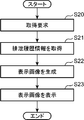
- FIG. 7 is a flowchart showing an example of processing when the display device 4 displays the excretion information display screen.
- the processor 42 transmits a request for acquisition of excretion history information to the server 3 using the communication circuit 41.
- the administrator may display a predetermined input screen on the display 44 by invoking a predetermined application, and input necessary items on the input screen by operating the operation unit 45.
- the processor 42 may generate an acquisition request including the input necessary items and send it to the server 3.
- Necessary items include, for example, a user ID and a period of excretion history information to be acquired.
- the server 3 acquires the excretion history information corresponding to the user ID and the period included in the acquisition request from the excretion history database 331, and transmits the acquired excretion history information to the display device 4.
- step S21 the processor 42 acquires excretion history information using the communication circuit 41.
- the processor 42 can acquire the excretion information of the user having the corresponding user ID in the corresponding period.
- the excretion information corresponding to a certain excretion is acquired.
- step S22 the processor 42 generates a display screen based on the excretion information.
- step S23 the processor 42 displays the display screen on the display 44.
- FIG. 10 is a diagram showing a display screen 900 displayed on the display 44 of the display device 4.
- the display screen 900 includes display fields 901 to 909.
- the display field 901 displays the name of the corresponding user.
- the display field 902 displays the date and time of excretion.
- the display field 903 indicates the presence or absence of bleeding.
- the display field 904 displays the bleeding start timing.
- the display field 905 displays the excretion start timing.
- the display column 906 displays the color of stool (excrement).
- the display column 906 displays the reference color having the highest frequency among the reference colors indicating the blood colors corresponding to the plurality of images.
- the display field 906 may switch the color of the blood to be displayed among the colors of blood corresponding to the plurality of images according to the operation from the administrator. Further, the display field 906 may automatically switch the color of the blood to be displayed among the colors of blood corresponding to the plurality of images. Here, a panel showing the color of excrement is displayed. This allows the user to easily check the color of the excrement.
- the display column 907 displays the type of excrement (stool).
- the type of stool was red stool, it is displayed as "red stool”.
- the display column 907 may display the type of excrement having the highest frequency among the types of excrement corresponding to the plurality of images. Further, when the mode of switching the color of the stool displayed in the display field 906 is adopted, the display field 907 may switch the type of stool to be displayed in conjunction with the switching.
- the display field 908 displays the shape of blood.
- the display column 908 is blank because the shape of the blood does not correspond to either a linear shape or a dot shape.
- the display field 909 displays the blood size.
- the display field 909 may display the average value of the blood sizes corresponding to the plurality of images as the blood size. Further, when the mode of switching the color of the stool displayed in the display field 906 is adopted, the display field 909 may switch the color of the blood to be displayed in conjunction with the switching.
- the display screen 900 displays the bleeding start timing and the excretion start timing. Therefore, for example, if the bleeding start timing is before the excretion start timing and the blood size is large, the administrator can determine that the cause of the bleeding is an abnormality in the digestive system. Further, in this case, the location of bleeding is deeper than the large intestine or the large intestine with reference to the type of excrement (stool) displayed in the display column 907 and the color of the excrement (stool) displayed in the display column 906. It is possible to make a judgment as to whether or not it is.
- the administrator can determine that the cause of the bleeding is trauma such as hemorrhoids.
- the information necessary for determining whether the bleeding at the time of excretion is a bleeding due to trauma or a bleeding due to an abnormality of the digestive system is presented to the administrator. be able to.
- red stool and black stool are shown as the types of excrement, but the present disclosure is not limited to this, and the type of excrement may include green stool and white stool. good.
- the first determination unit 224 determines the excrement when the distance between the color of the excrement image extracted by the first extraction unit 222 and the predetermined reference color indicating green stool stored in the memory 23 is equal to or less than the threshold value.
- the type of stool may be determined to be green stool.
- the first determination unit 224 determines the excrement when the distance between the color of the excrement image extracted by the first extraction unit 222 and the predetermined reference color indicating white stool stored in the memory 23 is equal to or less than the threshold value.
- the type may be determined to be white stool.
- White stool may be excreted when infected with rotavirus.
- Green stool may be excreted when infected with colon virus.
- alert information is displayed on the display device 4 of the administrator who manages the corresponding user. May be sent. Push notification can be adopted as the transmission mode of the alert information.
- the display device 4 that has received this alert information pushes the alert information.
- the administrator can promptly grasp the abnormality of the corresponding user and take appropriate measures.
- the output unit 226 may include the image of the specific area 80 acquired during the excretion period in the excretion information.
- the display device 4 that has received the excretion information may switch the image of the specific area 80 included in the received excretion information in time series on the display screen 900 and display it. Further, in this case, the display device 4 may change the color of the stool displayed in the display field 906 in conjunction with the switching of the image of the specific area 80 displayed on the display screen 900.
- the excrement may be urine.
- the urine excretion start timing can be adopted as the excretion start timing.
- the first determination unit 224 may determine the respective excretion start timings of the urine and stool.
- the first extraction unit 222 extracts a region in which a predetermined number of pixels having a predetermined RGB value indicating urine are continuously present as a urine image in the image acquired by the camera 51.
- the first determination unit 224 may determine the earliest imaging time among the imaging times indicated by the corresponding time information among the urine images extracted during the excretion period as the urination start timing.
- the output unit 226 may generate information indicating which of the excretion start timing and the bleeding start timing comes first, and include the information in the excretion information. In this case, the output unit 226 may generate information indicating which timing is earlier and how much earlier, and may include the information in the excretion information.
- the second determination unit 225 is highly likely to be hematuria. You may judge.
- the output unit 226 may include information indicating that there is a high possibility of hematuria in the excretion information. This makes it possible to output information necessary for determining an abnormality in the bladder or urinary tract.
Landscapes
- Engineering & Computer Science (AREA)
- Physics & Mathematics (AREA)
- General Physics & Mathematics (AREA)
- Theoretical Computer Science (AREA)
- Health & Medical Sciences (AREA)
- Life Sciences & Earth Sciences (AREA)
- Computer Vision & Pattern Recognition (AREA)
- General Health & Medical Sciences (AREA)
- Biomedical Technology (AREA)
- Chemical & Material Sciences (AREA)
- Multimedia (AREA)
- Molecular Biology (AREA)
- Hematology (AREA)
- Immunology (AREA)
- Urology & Nephrology (AREA)
- Nuclear Medicine, Radiotherapy & Molecular Imaging (AREA)
- Radiology & Medical Imaging (AREA)
- Quality & Reliability (AREA)
- Geometry (AREA)
- Medical Informatics (AREA)
- Medicinal Chemistry (AREA)
- Food Science & Technology (AREA)
- Analytical Chemistry (AREA)
- Biochemistry (AREA)
- Pathology (AREA)
- Microbiology (AREA)
- Cell Biology (AREA)
- Biotechnology (AREA)
- Biophysics (AREA)
- Measuring And Recording Apparatus For Diagnosis (AREA)
Priority Applications (3)
| Application Number | Priority Date | Filing Date | Title |
|---|---|---|---|
| JP2022532404A JP7618674B2 (ja) | 2020-06-26 | 2021-05-19 | 出力装置、方法、及びプログラム |
| CN202180044744.1A CN115803623A (zh) | 2020-06-26 | 2021-05-19 | 输出装置、方法以及程序 |
| US18/085,118 US12293550B2 (en) | 2020-06-26 | 2022-12-20 | Output device, method, and non-transitory computer readable recording medium |
Applications Claiming Priority (2)
| Application Number | Priority Date | Filing Date | Title |
|---|---|---|---|
| US202063044747P | 2020-06-26 | 2020-06-26 | |
| US63/044,747 | 2020-06-26 |
Related Child Applications (1)
| Application Number | Title | Priority Date | Filing Date |
|---|---|---|---|
| US18/085,118 Continuation US12293550B2 (en) | 2020-06-26 | 2022-12-20 | Output device, method, and non-transitory computer readable recording medium |
Publications (1)
| Publication Number | Publication Date |
|---|---|
| WO2021261128A1 true WO2021261128A1 (ja) | 2021-12-30 |
Family
ID=79282494
Family Applications (1)
| Application Number | Title | Priority Date | Filing Date |
|---|---|---|---|
| PCT/JP2021/019028 Ceased WO2021261128A1 (ja) | 2020-06-26 | 2021-05-19 | 出力装置、方法、及びプログラム |
Country Status (4)
| Country | Link |
|---|---|
| US (1) | US12293550B2 (https=) |
| JP (1) | JP7618674B2 (https=) |
| CN (1) | CN115803623A (https=) |
| WO (1) | WO2021261128A1 (https=) |
Families Citing this family (2)
| Publication number | Priority date | Publication date | Assignee | Title |
|---|---|---|---|---|
| WO2022149342A1 (ja) * | 2021-01-06 | 2022-07-14 | パナソニックホールディングス株式会社 | 排泄物判定方法、排泄物判定装置、及び排泄物判定プログラム |
| KR20240008606A (ko) * | 2022-07-12 | 2024-01-19 | 경북대학교 산학협력단 | 대변이미지 분석 시스템 및 방법 |
Citations (5)
| Publication number | Priority date | Publication date | Assignee | Title |
|---|---|---|---|---|
| JP2016004005A (ja) * | 2014-06-18 | 2016-01-12 | 関根 弘一 | 大便色検知装置 |
| JP2018146244A (ja) * | 2017-03-01 | 2018-09-20 | 株式会社Lixil | 便器装置、及び便座装置 |
| JP2019530858A (ja) * | 2016-08-30 | 2019-10-24 | アウトセンス ダイアグノスティクス リミテッド | 身体排出物の分析 |
| JP2020516422A (ja) * | 2017-04-07 | 2020-06-11 | トイ ラボズ、インコーポレイテッド | 浴室環境で使用するバイオモニタリング・デバイス、方法、及びシステム |
| CN111305338A (zh) * | 2020-02-14 | 2020-06-19 | 宁波五维检测科技有限公司 | 基于粪便生态评价的疾病预警系统、健康监测环以及马桶 |
Family Cites Families (7)
| Publication number | Priority date | Publication date | Assignee | Title |
|---|---|---|---|---|
| JP2007252805A (ja) * | 2006-03-24 | 2007-10-04 | Konica Minolta Holdings Inc | データ検出装置及びデータ検出方法 |
| JP2010075455A (ja) * | 2008-09-26 | 2010-04-08 | Toto Ltd | 排泄情報測定装置 |
| JP6742663B2 (ja) * | 2016-02-04 | 2020-08-19 | 株式会社Lixil | 便器装置 |
| US20200008299A1 (en) * | 2016-10-21 | 2020-01-02 | Bao Tran | Flexible printed electronics |
| US20190247650A1 (en) * | 2018-02-14 | 2019-08-15 | Bao Tran | Systems and methods for augmenting human muscle controls |
| GB201906199D0 (en) * | 2019-05-02 | 2019-06-19 | Belgian Volition Sprl | Method for the detection of cancer |
| WO2021174474A1 (zh) * | 2020-03-05 | 2021-09-10 | 厦门波耐模型设计有限责任公司 | 一种马桶式尿便检测机器人及其物联网系统 |
-
2021
- 2021-05-19 WO PCT/JP2021/019028 patent/WO2021261128A1/ja not_active Ceased
- 2021-05-19 JP JP2022532404A patent/JP7618674B2/ja active Active
- 2021-05-19 CN CN202180044744.1A patent/CN115803623A/zh active Pending
-
2022
- 2022-12-20 US US18/085,118 patent/US12293550B2/en active Active
Patent Citations (5)
| Publication number | Priority date | Publication date | Assignee | Title |
|---|---|---|---|---|
| JP2016004005A (ja) * | 2014-06-18 | 2016-01-12 | 関根 弘一 | 大便色検知装置 |
| JP2019530858A (ja) * | 2016-08-30 | 2019-10-24 | アウトセンス ダイアグノスティクス リミテッド | 身体排出物の分析 |
| JP2018146244A (ja) * | 2017-03-01 | 2018-09-20 | 株式会社Lixil | 便器装置、及び便座装置 |
| JP2020516422A (ja) * | 2017-04-07 | 2020-06-11 | トイ ラボズ、インコーポレイテッド | 浴室環境で使用するバイオモニタリング・デバイス、方法、及びシステム |
| CN111305338A (zh) * | 2020-02-14 | 2020-06-19 | 宁波五维检测科技有限公司 | 基于粪便生态评价的疾病预警系统、健康监测环以及马桶 |
Also Published As
| Publication number | Publication date |
|---|---|
| JP7618674B2 (ja) | 2025-01-21 |
| US20230117389A1 (en) | 2023-04-20 |
| CN115803623A (zh) | 2023-03-14 |
| JPWO2021261128A1 (https=) | 2021-12-30 |
| US12293550B2 (en) | 2025-05-06 |
Similar Documents
| Publication | Publication Date | Title |
|---|---|---|
| CN109729710B (zh) | 猫用厕所使用状况管理系统以及猫用厕所 | |
| JP7617101B2 (ja) | 排出物判定方法、排出物判定装置、及び排出物判定プログラム | |
| US20250082310A1 (en) | Feces color detection device | |
| JP7661393B2 (ja) | サーバ装置、分析方法、及びプログラム | |
| KR102592841B1 (ko) | 정보 처리 시스템, 정보 처리 장치, 정보 처리 방법, 및 비일시적 컴퓨터 판독가능 매체 | |
| US20230070807A1 (en) | Systems and methods for assessing colonoscopy preparation | |
| JP2007252805A (ja) | データ検出装置及びデータ検出方法 | |
| US12614277B2 (en) | Output device, method, non-transitory computer readable recording medium and display device | |
| WO2021261128A1 (ja) | 出力装置、方法、及びプログラム | |
| US20240090879A1 (en) | Information processing method, information processing device, and non-transitory computer readable recording medium storing information processing program | |
| JPWO2022254740A5 (https=) | ||
| KR100680678B1 (ko) | 배설물측정장치 | |
| CN118715434A (zh) | 排泄物判定系统、排泄物判定方法及排泄物判定装置 | |
| JP7808634B2 (ja) | 情報処理装置、情報処理方法、及びプログラム | |
| US20250148589A1 (en) | Excrement analysis apparatus, excrement analysis method, pre-colonoscopy state confirmation apparatus, state confirmation system, state confirmation method, and non-transitory computer-readable medium | |
| WO2015068494A1 (ja) | 器官画像撮影装置 | |
| JP2008002137A (ja) | 洋風便器装置 | |
| CN117396981A (zh) | 信息处理方法、信息处理装置以及信息处理程序 | |
| JP7803052B2 (ja) | データ変換方法、介護情報変換装置、および、当該データ変換方法をコンピューターに実行させるプログラム | |
| KR20170039323A (ko) | 식습관 정보와 연계한 건강확인용 변기시스템 |
Legal Events
| Date | Code | Title | Description |
|---|---|---|---|
| 121 | Ep: the epo has been informed by wipo that ep was designated in this application |
Ref document number: 21828641 Country of ref document: EP Kind code of ref document: A1 |
|
| ENP | Entry into the national phase |
Ref document number: 2022532404 Country of ref document: JP Kind code of ref document: A |
|
| NENP | Non-entry into the national phase |
Ref country code: DE |
|
| 122 | Ep: pct application non-entry in european phase |
Ref document number: 21828641 Country of ref document: EP Kind code of ref document: A1 |