WO2021256503A1 - エタノールアミンリン酸の定量方法、定量用のオキシドレダクターゼ、定量用組成物、定量用キット、センサーチップ、及びセンサー - Google Patents
エタノールアミンリン酸の定量方法、定量用のオキシドレダクターゼ、定量用組成物、定量用キット、センサーチップ、及びセンサー Download PDFInfo
- Publication number
- WO2021256503A1 WO2021256503A1 PCT/JP2021/022845 JP2021022845W WO2021256503A1 WO 2021256503 A1 WO2021256503 A1 WO 2021256503A1 JP 2021022845 W JP2021022845 W JP 2021022845W WO 2021256503 A1 WO2021256503 A1 WO 2021256503A1
- Authority
- WO
- WIPO (PCT)
- Prior art keywords
- eap
- oxidoreductase
- oxidase
- quantification
- ethanolamine
- Prior art date
- Legal status (The legal status is an assumption and is not a legal conclusion. Google has not performed a legal analysis and makes no representation as to the accuracy of the status listed.)
- Ceased
Links
Images





Classifications
-
- C—CHEMISTRY; METALLURGY
- C12—BIOCHEMISTRY; BEER; SPIRITS; WINE; VINEGAR; MICROBIOLOGY; ENZYMOLOGY; MUTATION OR GENETIC ENGINEERING
- C12Q—MEASURING OR TESTING PROCESSES INVOLVING ENZYMES, NUCLEIC ACIDS OR MICROORGANISMS; COMPOSITIONS OR TEST PAPERS THEREFOR; PROCESSES OF PREPARING SUCH COMPOSITIONS; CONDITION-RESPONSIVE CONTROL IN MICROBIOLOGICAL OR ENZYMOLOGICAL PROCESSES
- C12Q1/00—Measuring or testing processes involving enzymes, nucleic acids or microorganisms; Compositions therefor; Processes of preparing such compositions
- C12Q1/26—Measuring or testing processes involving enzymes, nucleic acids or microorganisms; Compositions therefor; Processes of preparing such compositions involving oxidoreductase
-
- C—CHEMISTRY; METALLURGY
- C12—BIOCHEMISTRY; BEER; SPIRITS; WINE; VINEGAR; MICROBIOLOGY; ENZYMOLOGY; MUTATION OR GENETIC ENGINEERING
- C12N—MICROORGANISMS OR ENZYMES; COMPOSITIONS THEREOF; PROPAGATING, PRESERVING, OR MAINTAINING MICROORGANISMS; MUTATION OR GENETIC ENGINEERING; CULTURE MEDIA
- C12N9/00—Enzymes; Proenzymes; Compositions thereof; Processes for preparing, activating, inhibiting, separating or purifying enzymes
- C12N9/0004—Oxidoreductases (1.)
- C12N9/0012—Oxidoreductases (1.) acting on nitrogen containing compounds as donors (1.4, 1.5, 1.6, 1.7)
- C12N9/0014—Oxidoreductases (1.) acting on nitrogen containing compounds as donors (1.4, 1.5, 1.6, 1.7) acting on the CH-NH2 group of donors (1.4)
- C12N9/0022—Oxidoreductases (1.) acting on nitrogen containing compounds as donors (1.4, 1.5, 1.6, 1.7) acting on the CH-NH2 group of donors (1.4) with oxygen as acceptor (1.4.3)
-
- C—CHEMISTRY; METALLURGY
- C12—BIOCHEMISTRY; BEER; SPIRITS; WINE; VINEGAR; MICROBIOLOGY; ENZYMOLOGY; MUTATION OR GENETIC ENGINEERING
- C12Q—MEASURING OR TESTING PROCESSES INVOLVING ENZYMES, NUCLEIC ACIDS OR MICROORGANISMS; COMPOSITIONS OR TEST PAPERS THEREFOR; PROCESSES OF PREPARING SUCH COMPOSITIONS; CONDITION-RESPONSIVE CONTROL IN MICROBIOLOGICAL OR ENZYMOLOGICAL PROCESSES
- C12Q1/00—Measuring or testing processes involving enzymes, nucleic acids or microorganisms; Compositions therefor; Processes of preparing such compositions
- C12Q1/001—Enzyme electrodes
- C12Q1/005—Enzyme electrodes involving specific analytes or enzymes
-
- C—CHEMISTRY; METALLURGY
- C12—BIOCHEMISTRY; BEER; SPIRITS; WINE; VINEGAR; MICROBIOLOGY; ENZYMOLOGY; MUTATION OR GENETIC ENGINEERING
- C12Q—MEASURING OR TESTING PROCESSES INVOLVING ENZYMES, NUCLEIC ACIDS OR MICROORGANISMS; COMPOSITIONS OR TEST PAPERS THEREFOR; PROCESSES OF PREPARING SUCH COMPOSITIONS; CONDITION-RESPONSIVE CONTROL IN MICROBIOLOGICAL OR ENZYMOLOGICAL PROCESSES
- C12Q1/00—Measuring or testing processes involving enzymes, nucleic acids or microorganisms; Compositions therefor; Processes of preparing such compositions
- C12Q1/34—Measuring or testing processes involving enzymes, nucleic acids or microorganisms; Compositions therefor; Processes of preparing such compositions involving hydrolase
- C12Q1/42—Measuring or testing processes involving enzymes, nucleic acids or microorganisms; Compositions therefor; Processes of preparing such compositions involving hydrolase involving phosphatase
-
- C—CHEMISTRY; METALLURGY
- C12—BIOCHEMISTRY; BEER; SPIRITS; WINE; VINEGAR; MICROBIOLOGY; ENZYMOLOGY; MUTATION OR GENETIC ENGINEERING
- C12Y—ENZYMES
- C12Y104/00—Oxidoreductases acting on the CH-NH2 group of donors (1.4)
- C12Y104/03—Oxidoreductases acting on the CH-NH2 group of donors (1.4) with oxygen as acceptor (1.4.3)
- C12Y104/03021—Primary-amine oxidase (1.4.3.21), i.e. VAP-1
-
- C—CHEMISTRY; METALLURGY
- C12—BIOCHEMISTRY; BEER; SPIRITS; WINE; VINEGAR; MICROBIOLOGY; ENZYMOLOGY; MUTATION OR GENETIC ENGINEERING
- C12Q—MEASURING OR TESTING PROCESSES INVOLVING ENZYMES, NUCLEIC ACIDS OR MICROORGANISMS; COMPOSITIONS OR TEST PAPERS THEREFOR; PROCESSES OF PREPARING SUCH COMPOSITIONS; CONDITION-RESPONSIVE CONTROL IN MICROBIOLOGICAL OR ENZYMOLOGICAL PROCESSES
- C12Q1/00—Measuring or testing processes involving enzymes, nucleic acids or microorganisms; Compositions therefor; Processes of preparing such compositions
- C12Q1/001—Enzyme electrodes
- C12Q1/004—Enzyme electrodes mediator-assisted
Definitions
- At least one of the first oxidoreductase and the second oxidoreductase may be an oxidase.
- primary amine oxidase monoamine oxidase, diamine oxidase, polyamine oxidase, ethanolamine oxidase, tyramine oxidase, phenylethylamine oxidase, benzylamine oxidase, histamine oxidase, serotonin oxidase, spermine oxidase, spermine oxidase, ⁇
- oxidases selected from alanine oxidase, ⁇ -aminobutyric acid (GABA) oxidase, taurine oxidase, cadaverine oxidase, and agmatin oxidase, which are used in the EAP quantification method.
- GABA ⁇ -aminobutyric acid
- an EAP quantification kit containing phosphatase and oxidoreductase acting on EA is provided.
- the action time of the oxidoreductase can be, for example, 5 seconds to 180 minutes, preferably 0.5 minutes to 60 minutes, more preferably 1 minute to 30 minutes, and further preferably 1 minute to 10 minutes.
- the operating temperature depends on the optimum temperature of the oxidoreductase to be used, but is, for example, 20 ° C to 45 ° C, and the temperature used for a normal enzymatic reaction can be appropriately selected.
- Possible buffers include, for example, N- [tris (hydroxymethyl) methyl] glycine, phosphate, acetate, carbonate, tris (hydroxymethyl) -aminomethane, borate, citrate, dimethylglutamic acid.
- Examples thereof include salt, tricine, HEPES, MES, Bis-Tris, ADA, PIPES, ACES, MOPSO, BES, MOPS, TES, DIPSO, TAPSO, POPSO, HEPPSO, EPPS, Tricine, Bicine, TAPS, phthalic acid, tartrate acid and the like. ..
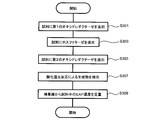
- step S105 the mediator is reduced by oxidoreductase acting on EA, and the reduced mediator is reacted with a color-developing or fading reagent.
- a color-developing or fading substrate used in the present invention in addition to DCIP (2,6-Dichlorophenolindophenol), for example, a tetrazolium compound (Tetrazolium blue, Nitro-tetrazolium blue, Water soluble terrazolium (WST) -1, WST, WST) -1. WST-4, WST-5, WST-8, WST-9) and the like can be mentioned.
- step S105 hydrogen peroxide is generated by an oxidase that acts on EA, and the generated hydrogen peroxide is reacted with a color-developing reagent by utilizing the catalytic reaction of peroxidase.
- a color-developing or fading substrate used in the present invention include ADPS (N-ethyl-N-sulfopropyl-3-methoxyaniline), ALPS (N-ethyl-N-sulfopropylaniline), and TOPS.
- step S301 the oxidoreductase used to eliminate free EA and other amines in the sample
- step S305 the oxidoreductase used to quantify the EA released by the action of phosphatase from EAP, which is the target substance for quantification
- Different types may be used, or the same type may be used.
- Oxidoreductase may be used as at least one of oxidoreductase used for scavenging free amines such as EA in a sample and oxidoreductase used for quantifying EA released by the action of phosphatase from EAP, which is a target substance for quantification.
- Oxidoreductase may be used. It should be noted that the concentration of the enzyme suitable for scavenging, the concentration of the enzyme suitable for quantification, the substrate specificity of the enzyme used, and the like can be appropriately set.
- the oxidoreductase used in the present invention may be a multimer or a monomer.
- the present invention is used.
- the oxidoreductase used may be a multimer or the subunit (monomer).
- the oxidoreductase used in the EAP quantification method according to the present invention may be an oxidoreductase produced by a naturally occurring microorganism or an oxidoreductase produced by a transformed microorganism. From the viewpoint of efficient large-scale expression of the enzyme, the enzyme can be efficiently expressed in large quantities by using the transformed microorganism.
- the oxidoreductase used in the method for quantifying EAP according to the present invention may be TDH produced by Paracoccus denigricans, or TDH produced by Escherichia coli transformed with a plasmid containing the TDH gene derived from Paracoccus denitrigicans.
- Oxidoreductase can be efficiently expressed in large quantities by using Escherichia coli transformed with a plasmid containing the TDH gene derived from denitrigicans.
- the oxidoreductase used in the EAP quantification method according to the present invention may be PEAOX produced by Arthrobacter globiformis or PEAOX produced by Escherichia coli transformed with a plasmid containing the PEAOX gene derived from Arthrobacter globiformis.
- Escherichia coli transformed with a plasmid containing the PEAOX gene derived from Arthrobacter globiformis By using Escherichia coli transformed with a plasmid containing the PEAOX gene derived from Arthrobacter globiformis, oxidoreductase can be efficiently expressed in large quantities.
- the oxidoreductase used in the EAP quantification method according to the present invention may be an amine oxidase (LcAOX) produced by Richtemia colibifera, or may be a plasmid containing the LcAOX gene having the base sequence of SEQ ID NO: 3 derived from Richtemia colibifera.
- LcAOX amine oxidase
- it may be an amine oxidase produced by transformed Escherichia coli
- oxidoreductase can be efficiently expressed in large quantities by using Escherichia coli transformed with a plasmid containing the LcAOX gene derived from Richtemia corymbifera.
- the oxidoreductase used in the EAP quantification method according to the present invention may be an amine oxidase (SrAOX3925) produced by Syncephalastrum racemosum, or a plasmid containing the SrAOX3925 gene having the base sequence of SEQ ID NO: 5 derived from Syncephalastrum racemosum.
- SrAOX3925 an amine oxidase produced by transformed E. coli
- oxidoreductase can be efficiently expressed in large quantities by using E. coli transformed with a plasmid containing the SrAOX3925 gene derived from Syncephalastrum racemosum.
- Amino acid sequence identity can be determined by programs such as GENETYX® (registered trademark) (Genetics Co., Ltd.) maximum matching and search homology, or DNASIS (registered trademark) Pro (Hitachi Solutions Co., Ltd.) maximum matching and multiple alignment, or CLUSTAL W. It can be calculated by a program such as multiple alignment.
- GENETYX® registered trademark
- DNASIS registered trademark
- Pro Hetachi Solutions Co., Ltd.
- CLUSTAL W CLUSTAL W. It can be calculated by a program such as multiple alignment.
- the identity of amino acid sequences when the amino acid sequences of two or more oxidoreductases are aligned, the positions of amino acids that are the same in the two or more oxidoreductases can be examined. Based on this information, the same region in the amino acid sequence can be determined.
- a strain such as yeast may be transformed with the obtained plasmid to obtain a strain such as yeast having a DNA encoding oxidoreductase.
- Known methods for transformation into yeast include, for example, a method using lithium acetate (MethodsMol. Cell. Biol., 5, 255-269 (1995)) and electroporation (J Microbiol Methods 55 (2003) 481). -484) and the like can be preferably used, but the transformation is not limited to this, and transformation may be carried out by using various arbitrary methods including a spheroplast method, a glass bead method and the like.
- host cells include filamentous fungi such as the genus Aspergillus and the genus Trichoderma.
- the method for producing a transformant of the filamentous fungus is not particularly limited, and examples thereof include a method of inserting the transformant into the host filamentous fungus in a manner in which the DNA encoding oxidoreductase is expressed according to a conventional method. Specifically, a DNA construct in which the gene encoding the oxidoreductase of the present invention is inserted between the expression-inducing promoter and the terminator is prepared, and then the host filamentous fungus is transformed with the DNA construct containing the gene encoding the oxidoreductase.
- a DNA fragment consisting of an expression-inducing promoter-a gene encoding oxidoreductase-a terminator prepared for transforming a host filamentous fungus and a recombinant vector containing the DNA fragment are collectively referred to as a DNA construct.
- the method of inserting into the host filamentous fungus in a manner in which the gene encoding oxidoreductase is expressed is not particularly limited, but for example, a method of directly inserting into the chromosome of the host organism by using homologous recombination, or a plasmid vector. Examples thereof include a method of introducing into a host filamentous fungus by linking it on the host.
- the promoter is not particularly limited, and examples thereof include an appropriate expression-inducing promoter and a constitutive promoter, and examples thereof include a tef1 promoter, an alp promoter, and an amy promoter.
- the terminator is also not particularly limited, and examples thereof include an alp terminator, an amy terminator, and a tef1 terminator.
- the absorptivity is measured by reacting a reduced product produced by a redox reaction catalyzed by oxidoreductase with a reagent containing an absorbent substance that reacts with the reduced product (hereinafter referred to as "absorbent reagent").
- absorbent reagent a reagent containing an absorbent substance that reacts with the reduced product
- ADOS, ALOS, and TOOS develop color when condensed with 4-aminoantipyrine.
- DA-64 and DA-67 do not require 4-aminoantipyrine and develop color when prescribed alone.
- the color development reaction is catalyzed by peroxidase.
- examples of the consumer to be measured include dissolved oxygen, and the amount of dissolved oxygen in the reaction solution can be measured using a dissolved oxygen meter or the like.
- the degree of color development (amount of change in absorbance) of the above-mentioned measuring reagent can be measured by a spectrophotometer, an automatic biochemical analyzer, or the like, and the EAP contained in the sample can be measured by comparing with the absorbance of a standard sample. ..
- step S205 the oxidase added in step S201 acts on the EA converted in step S203.
- the reaction product produced by this reaction can be detected.
- Step S205 is the same as Step S103 except that the already added oxidase acts on EA, and is the same as Step S105 in that the reaction product produced in the redox reaction is detected. Is omitted.
- the reaction conditions of the oxidase used in the present invention may be any conditions as long as they act on the EA and efficiently catalyze the oxidation reaction.
- the enzyme generally has an optimum temperature and an optimum pH showing the highest activity. Therefore, the reaction conditions are preferably near the optimum temperature and the optimum pH.
- the reaction conditions of PEAOX a temperature of 37 ° C. and a pH of 8.5, which will be described later, can be preferably used, but the reaction conditions are not limited thereto.
- the oxidase used in the EAP quantification method according to the present invention may be an oxidase produced by a naturally occurring microorganism or an oxidase produced by a transformed microorganism. From the viewpoint of efficient large-scale expression of the enzyme, the enzyme can be efficiently expressed in large quantities by using the transformed microorganism.
- the oxidase used in the method for quantifying EAP according to the present invention may be LcAOX produced by Richtemia colibifera, or transformed with a plasmid containing the LcAOX gene having the nucleotide sequence of SEQ ID NO: 3 derived from Richtemia colibifera.
- LcAOX produced by Richtemia colibifera
- a plasmid containing the LcAOX gene having the nucleotide sequence of SEQ ID NO: 3 derived from Richtemia colibifera.
- it may be an amine oxidase produced by Escherichia coli, oxidase can be efficiently expressed in large quantities by using Escherichia coli transformed with a plasmid containing the LcAOX gene derived from Richtemia corymbifera.
- the oxidase used in the EAP quantification method according to the present invention may be SrAOX3926 produced by Syncephalastrum racemosum, or transformed with a plasmid containing the SrAOX3926 gene having the base sequence of SEQ ID NO: 6 derived from Syncephalastrum racemosum.
- it may be an amine oxidase produced by Escherichia coli, it can be efficiently expressed in large quantities by using Escherichia coli transformed with a plasmid containing the SrAOX3926 gene derived from Syncephalastrum racemosum.
- yeast or filamentous fungus may be used as the host cell used for the expression of oxidase.
- the method may follow the same method as the above-mentioned expression of oxidoreductase, and detailed description thereof will be omitted.
- the oxidase may have an amino acid substitution that enhances the reactivity with EAP.
- the Arthrobacter globiformis-derived PEAOX having the amino acid sequence of SEQ ID NO: 9 may have an amino acid substitution at the position corresponding to phenylalanine at position 105 and / or at the position corresponding to leucine at position 358.
- the enzyme disclosed in JP-A-2014-233219 may be used as the oxidase.
- a EAP quantification kit containing a reagent that reacts with phosphatase, an oxidase, and hydrogen peroxide produced by adding the oxidase may be provided.
- the EAP quantification kit may include phosphatase, a first reagent containing an oxidase, and a second reagent containing a reagent that reacts with hydrogen peroxide produced by adding the oxidase. It also further comprises a third reagent containing an oxidoreductase or oxidase that acts on at least one amine other than ethanolamine phosphate, with the third reagent prior to the addition of the first and second reagents. It may be configured to be added to the sample.
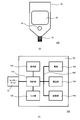
- the oxidase can be immobilized on the electrode by cross-linking, coating with a dialysis membrane, encapsulation in a polymer matrix, use of a photocrosslinkable polymer, use of an electrically conductive polymer, use of an oxidation / reduction polymer, or the like.
- the oxidase of the present invention can be applied to various electrochemical measurement methods by using potentiostat, galvanostat, or the like.
- Electrochemical measurement methods include various methods such as amperometry, potentiometry and coulometry. For example, by measuring the current value generated by applying +600 mV to +1000 mV (vs. Ag / AgCl) to hydrogen peroxide generated when oxidase reacts with EAP by the amperometry method with a hydrogen peroxide electrode. , The concentration of EAP in the sample can be calculated. For example, a calibration curve can be created by measuring current values for known EAP concentrations (0, 50, 100, 150, 200 ⁇ M) and plotting against the EAP concentration.
- Reagents Alkaline phosphatase recombinant, highly active (Roche) 4-aminoantipyrine (4-AA) (Fuji Film Wako Pure Chemical Industries, Ltd.), Taurine (Fuji Film Wako Pure Chemical Industries, Ltd.), ⁇ -alanine (Fuji Film Wako) Kojunyaku Co., Ltd.), Ethanolamine Phosphate (EAP) (Tokyo Chemical Industry Co., Ltd.), Ethanolamine (EA) (Tokyo Chemical Industry Co., Ltd.), N-Ethyl-N- (2-Hydroxy-3-sulfopropyl) -3-Methylaniline (TOOS) (Dojin Chemical Industries, Ltd.), Western Wasabi Peroxidase (POD) (Toyo Spinning Co., Ltd.) and KOD-plus-Neo (Toyo Spinning Co., Ltd.)
- the plasmid (pKK223-3-LrHP) for expression of a hypothetical protein (LrHP, GenBank ID CDS02610.1) derived from Richtheimia ramosa having the amino acid sequence of SEQ ID NO: 11 is a plasmid (pKK223-3-LrHP) manufactured by In-Fusion® HD Cloning Kit (Clon). Made using.
- the LrHP gene having the base sequence of SEQ ID NO: 4 has the first half portion (lrhp_flag1) in which the DNA sequences of SEQ ID NO: 15 and SEQ ID NO: 16 are sequentially bound in the direction from the 5'end to the 3'end, and the intermediate portion described in SEQ ID NO: 17. It was divided into (lrhp_frag2) and the latter half (lrhp_frag3) in which the DNA sequences of SEQ ID NO: 18 and SEQ ID NO: 19 were sequentially bound in the direction from the 5'end to the 3'end, and the synthesis was outsourced to Integrated DNA Technologies.
- the LrHP-producing strain was inoculated into 2.5 ml of LB-amp medium (ampicillin concentration 50 ⁇ g / ml) charged in a test tube, and seeds were cultured overnight at 37 ° C. and 160 rpm. 1.5 ml of the seed culture solution was inoculated into 150 ml of LB-amp medium (ampicillin concentration 50 ⁇ g / ml) containing 0.02 mM CuSO 4 and 0.1 mM IPTG charged in a Sakaguchi flask, and cultured at 25 ° C. for 20 hours.
- the pellet obtained by centrifuging 150 ml of the culture solution at 6,500 ⁇ g for 10 minutes was resuspended in 20 mM Tris-HCl pH 7.5. After ultrasonically crushing the cell suspension, the mixture was centrifuged at 20,400 ⁇ g for 15 minutes to collect the supernatant, which was used as a crude enzyme solution.
- the eluted fraction was concentrated with Amicon Ultra Ultracel-30K and purified with a HiRoad® 26/60 Superdex 200 column.
- 10 mM Bis-Tris-HCl (pH 7.0) containing 150 mM NaCl was used.
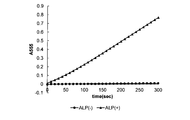
- FIG. 6 shows the measurement results of EAP oxidation activity when ALP was added.
- the measurement start time is 0 seconds.
- no change in absorbance was observed when ALP was not added (indicated by black circles in the figure).
- an increase in absorbance with time was observed immediately after the addition of LrHP (indicated by a black triangle in the figure).
- Such a linear increase in absorbance was similar to the increasing tendency when EA was directly used as a substrate instead of allowing phosphatase to act on EAP. Therefore, it was clarified that most of 1 mM EAP was converted to EA by ALP, and the change in absorbance could be measured.
- the final concentrations of EA, ⁇ -alanine, taurine, and EAP were 10.4 ⁇ M, 29 ⁇ M, 39.5 ⁇ M, and 1.5 ⁇ M, respectively.
- the measurement was suspended, 10 ⁇ l (25 U / ml) of alkaline phosphatase was added to the cuvette, mixed by pipetting, immediately set in a spectrophotometer, and the absorbance at 555 nm was measured over time for 500 seconds.
- the plasmid (pKK223-3-AgPEAOX) for expression of Arthrobacter globiformis-derived phenylethylamine oxidase (AgPEAOX, UniProt ID P46881) having the amino acid sequence of SEQ ID NO: 9 uses In-Fusion® HD Cloning Kit (Clontech). And made.
- the AgPEAOX-producing strain was inoculated into 2.5 ml of LB-amp medium (ampicillin concentration 50 ⁇ g / ml) charged in a test tube, and seeds were cultured overnight at 37 ° C. and 160 rpm. 1 ml of the seed culture solution was inoculated into 150 ml of LB-amp medium (ampicillin concentration 50 ⁇ g / ml) containing 0.1 mM CuSO 4 and 0.1 mM IPTG charged in a Sakaguchi flask, and cultured at 25 ° C. for 16 hours.
Landscapes
- Chemical & Material Sciences (AREA)
- Life Sciences & Earth Sciences (AREA)
- Organic Chemistry (AREA)
- Health & Medical Sciences (AREA)
- Wood Science & Technology (AREA)
- Engineering & Computer Science (AREA)
- Zoology (AREA)
- Proteomics, Peptides & Aminoacids (AREA)
- Bioinformatics & Cheminformatics (AREA)
- Genetics & Genomics (AREA)
- General Health & Medical Sciences (AREA)
- Biochemistry (AREA)
- General Engineering & Computer Science (AREA)
- Microbiology (AREA)
- Biotechnology (AREA)
- Molecular Biology (AREA)
- Physics & Mathematics (AREA)
- Analytical Chemistry (AREA)
- Biophysics (AREA)
- Immunology (AREA)
- Biomedical Technology (AREA)
- Medicinal Chemistry (AREA)
- Measuring Or Testing Involving Enzymes Or Micro-Organisms (AREA)
Priority Applications (3)
| Application Number | Priority Date | Filing Date | Title |
|---|---|---|---|
| JP2022531871A JPWO2021256503A1 (https=) | 2020-06-17 | 2021-06-16 | |
| EP21825674.1A EP4170041A4 (en) | 2020-06-17 | 2021-06-16 | METHOD FOR QUANTIFICATION OF ETHANOLAMINE PHOSPHATE, OXIDE REDUCTASE FOR QUANTIFICATION, QUANTIFICATION COMPOSITION, QUANTIFICATION KIT, SENSOR CHIP AND SENSOR |
| US18/067,158 US20230203559A1 (en) | 2020-06-17 | 2022-12-16 | Method for quantifying ethanolamine phosphate, oxidoreductase for quantification, quantification composition, quantification kit, sensor chip, and sensor |
Applications Claiming Priority (2)
| Application Number | Priority Date | Filing Date | Title |
|---|---|---|---|
| JP2020104881 | 2020-06-17 | ||
| JP2020-104881 | 2020-06-17 |
Related Child Applications (1)
| Application Number | Title | Priority Date | Filing Date |
|---|---|---|---|
| US18/067,158 Continuation US20230203559A1 (en) | 2020-06-17 | 2022-12-16 | Method for quantifying ethanolamine phosphate, oxidoreductase for quantification, quantification composition, quantification kit, sensor chip, and sensor |
Publications (1)
| Publication Number | Publication Date |
|---|---|
| WO2021256503A1 true WO2021256503A1 (ja) | 2021-12-23 |
Family
ID=79267982
Family Applications (1)
| Application Number | Title | Priority Date | Filing Date |
|---|---|---|---|
| PCT/JP2021/022845 Ceased WO2021256503A1 (ja) | 2020-06-17 | 2021-06-16 | エタノールアミンリン酸の定量方法、定量用のオキシドレダクターゼ、定量用組成物、定量用キット、センサーチップ、及びセンサー |
Country Status (4)
| Country | Link |
|---|---|
| US (1) | US20230203559A1 (https=) |
| EP (1) | EP4170041A4 (https=) |
| JP (1) | JPWO2021256503A1 (https=) |
| WO (1) | WO2021256503A1 (https=) |
Citations (8)
| Publication number | Priority date | Publication date | Assignee | Title |
|---|---|---|---|---|
| JP2005052034A (ja) * | 2003-08-01 | 2005-03-03 | Asahi Kasei Pharma Kk | エタノールアミン含有リン脂質の分析方法および組成物 |
| JP2007222055A (ja) | 2006-02-22 | 2007-09-06 | Noda Inst For Scient Res | 染色体領域欠失株の作製方法 |
| WO2007125779A1 (ja) | 2006-04-25 | 2007-11-08 | Kikkoman Corporation | 熱安定性に優れた真核型アマドリアーゼ、その遺伝子及び組換え体dna、並びに熱安定性に優れた真核型アマドリアーゼの製造法 |
| WO2011019072A1 (ja) | 2009-08-12 | 2011-02-17 | ヒューマン・メタボローム・テクノロジーズ株式会社 | うつ病のバイオマーカー、うつ病のバイオマーカーの測定法、コンピュータプログラム、及び記憶媒体 |
| WO2013069645A1 (ja) | 2011-11-10 | 2013-05-16 | ヒューマン・メタボローム・テクノロジーズ株式会社 | エタノールアミンリン酸の測定方法 |
| JP2014233219A (ja) | 2013-05-31 | 2014-12-15 | 国立大学法人福島大学 | エタノールアミンオキシダーゼ |
| JP2016045112A (ja) * | 2014-08-25 | 2016-04-04 | 株式会社 レオロジー機能食品研究所 | エーテルリン脂質の定量方法 |
| JP2019092511A (ja) * | 2016-09-30 | 2019-06-20 | ヒューマン・メタボローム・テクノロジーズ株式会社 | エタノールアミンリン酸の測定方法 |
Family Cites Families (2)
| Publication number | Priority date | Publication date | Assignee | Title |
|---|---|---|---|---|
| JPWO2020122231A1 (ja) * | 2018-12-13 | 2021-10-21 | キッコーマン株式会社 | エタノールアミンリン酸の定量方法、定量用のオキシドレダクターゼ、定量用組成物、定量用キット及び定量用センサー |
| CN109813781B (zh) * | 2019-02-01 | 2020-07-17 | 厦门大学 | 一种胺脱氢酶电极及其制备方法和应用 |
-
2021
- 2021-06-16 WO PCT/JP2021/022845 patent/WO2021256503A1/ja not_active Ceased
- 2021-06-16 EP EP21825674.1A patent/EP4170041A4/en active Pending
- 2021-06-16 JP JP2022531871A patent/JPWO2021256503A1/ja active Pending
-
2022
- 2022-12-16 US US18/067,158 patent/US20230203559A1/en active Pending
Patent Citations (8)
| Publication number | Priority date | Publication date | Assignee | Title |
|---|---|---|---|---|
| JP2005052034A (ja) * | 2003-08-01 | 2005-03-03 | Asahi Kasei Pharma Kk | エタノールアミン含有リン脂質の分析方法および組成物 |
| JP2007222055A (ja) | 2006-02-22 | 2007-09-06 | Noda Inst For Scient Res | 染色体領域欠失株の作製方法 |
| WO2007125779A1 (ja) | 2006-04-25 | 2007-11-08 | Kikkoman Corporation | 熱安定性に優れた真核型アマドリアーゼ、その遺伝子及び組換え体dna、並びに熱安定性に優れた真核型アマドリアーゼの製造法 |
| WO2011019072A1 (ja) | 2009-08-12 | 2011-02-17 | ヒューマン・メタボローム・テクノロジーズ株式会社 | うつ病のバイオマーカー、うつ病のバイオマーカーの測定法、コンピュータプログラム、及び記憶媒体 |
| WO2013069645A1 (ja) | 2011-11-10 | 2013-05-16 | ヒューマン・メタボローム・テクノロジーズ株式会社 | エタノールアミンリン酸の測定方法 |
| JP2014233219A (ja) | 2013-05-31 | 2014-12-15 | 国立大学法人福島大学 | エタノールアミンオキシダーゼ |
| JP2016045112A (ja) * | 2014-08-25 | 2016-04-04 | 株式会社 レオロジー機能食品研究所 | エーテルリン脂質の定量方法 |
| JP2019092511A (ja) * | 2016-09-30 | 2019-06-20 | ヒューマン・メタボローム・テクノロジーズ株式会社 | エタノールアミンリン酸の測定方法 |
Non-Patent Citations (8)
| Title |
|---|
| "GenBank", Database accession no. CDS02610.1 |
| "UniProt", Database accession no. P46881 |
| J MICROBIOL METHODS, vol. 55, 2003, pages 481 - 484 |
| KAWAMURA N: "Plasma metabolome analysis of patients with major depressive disorder", PSYCHIATRY CLIN NEUROSCI., vol. 72, no. 5, May 2018 (2018-05-01), pages 349 - 361 |
| METHODS MOL. CELL. BIOL., vol. 5, 1995, pages 255 - 269 |
| MOL. GEN. GENET., vol. 218, 1989, pages 99 - 104 |
| OZEKI ET AL., BIOSCI. BIOTECHNOL. BIOCHEM., vol. 59, 1995, pages 1133 |
| See also references of EP4170041A4 |
Also Published As
| Publication number | Publication date |
|---|---|
| JPWO2021256503A1 (https=) | 2021-12-23 |
| EP4170041A4 (en) | 2024-07-17 |
| US20230203559A1 (en) | 2023-06-29 |
| EP4170041A1 (en) | 2023-04-26 |
Similar Documents
| Publication | Publication Date | Title |
|---|---|---|
| JP4278066B2 (ja) | 糖化蛋白質測定用組成物 | |
| JP5897463B2 (ja) | フルクトシルアミノ酸オキシダーゼ | |
| JP5870027B2 (ja) | フルクトシルペプチジルオキシダーゼおよび糖化タンパク質アッセイ用センサー | |
| US11879149B2 (en) | Quantification method of ethanolamine phosphate, oxidoreductase for quantification, composition for quantification, kit for quantification and sensor for quantification | |
| US20170355967A1 (en) | Amadoriase having enhanced dehydrogenase activity | |
| US20230203559A1 (en) | Method for quantifying ethanolamine phosphate, oxidoreductase for quantification, quantification composition, quantification kit, sensor chip, and sensor | |
| US20220186284A1 (en) | Method for quantifying citrulline, oxidoreductase for quantification, composition for quantification, kit for quantification, and method for evaluating activity of peptidylarginine deiminase | |
| JP2025060182A (ja) | エタノールアミンオキシドレダクターゼ改変体、エタノールアミンリン酸の定量用組成物、定量用キット、定量用電極、定量用センサーチップ、定量用センサー及びエタノールアミンリン酸の定量方法 | |
| JP7695892B2 (ja) | 25-ヒドロキシビタミンd3の定量方法、定量用組成物、定量用キット、電極、センサーチップ、及びセンサー | |
| US20240102075A1 (en) | Method for quantifying 25-hydroxyvitamin d, hydroxylase, quantification composition, quantification kit, electrode, sensor chip, and sensor | |
| HK1171049A (en) | Fructosyl amino acid oxidase | |
| HK1171049B (en) | Fructosyl amino acid oxidase | |
| HK1172930B (en) | Fructosyl peptidyl oxidase and sensor for assaying a glycated protein |
Legal Events
| Date | Code | Title | Description |
|---|---|---|---|
| 121 | Ep: the epo has been informed by wipo that ep was designated in this application |
Ref document number: 21825674 Country of ref document: EP Kind code of ref document: A1 |
|
| ENP | Entry into the national phase |
Ref document number: 2022531871 Country of ref document: JP Kind code of ref document: A |
|
| NENP | Non-entry into the national phase |
Ref country code: DE |
|
| ENP | Entry into the national phase |
Ref document number: 2021825674 Country of ref document: EP Effective date: 20230117 |