WO2021255899A1 - 情報処理装置、制御方法及び記憶媒体 - Google Patents
情報処理装置、制御方法及び記憶媒体 Download PDFInfo
- Publication number
- WO2021255899A1 WO2021255899A1 PCT/JP2020/023979 JP2020023979W WO2021255899A1 WO 2021255899 A1 WO2021255899 A1 WO 2021255899A1 JP 2020023979 W JP2020023979 W JP 2020023979W WO 2021255899 A1 WO2021255899 A1 WO 2021255899A1
- Authority
- WO
- WIPO (PCT)
- Prior art keywords
- information
- surface state
- environmental information
- inference
- environmental
- Prior art date
- Legal status (The legal status is an assumption and is not a legal conclusion. Google has not performed a legal analysis and makes no representation as to the accuracy of the status listed.)
- Ceased
Links
Images




Classifications
-
- A—HUMAN NECESSITIES
- A61—MEDICAL OR VETERINARY SCIENCE; HYGIENE
- A61B—DIAGNOSIS; SURGERY; IDENTIFICATION
- A61B5/00—Measuring for diagnostic purposes; Identification of persons
- A61B5/16—Devices for psychotechnics; Testing reaction times ; Devices for evaluating the psychological state
- A61B5/165—Evaluating the state of mind, e.g. depression, anxiety
-
- A—HUMAN NECESSITIES
- A61—MEDICAL OR VETERINARY SCIENCE; HYGIENE
- A61B—DIAGNOSIS; SURGERY; IDENTIFICATION
- A61B5/00—Measuring for diagnostic purposes; Identification of persons
- A61B5/0059—Measuring for diagnostic purposes; Identification of persons using light, e.g. diagnosis by transillumination, diascopy, fluorescence
- A61B5/0077—Devices for viewing the surface of the body, e.g. camera, magnifying lens
-
- A—HUMAN NECESSITIES
- A61—MEDICAL OR VETERINARY SCIENCE; HYGIENE
- A61B—DIAGNOSIS; SURGERY; IDENTIFICATION
- A61B5/00—Measuring for diagnostic purposes; Identification of persons
- A61B5/72—Signal processing specially adapted for physiological signals or for diagnostic purposes
- A61B5/7235—Details of waveform analysis
- A61B5/7264—Classification of physiological signals or data, e.g. using neural networks, statistical classifiers, expert systems or fuzzy systems
- A61B5/7267—Classification of physiological signals or data, e.g. using neural networks, statistical classifiers, expert systems or fuzzy systems involving training the classification device
-
- A—HUMAN NECESSITIES
- A61—MEDICAL OR VETERINARY SCIENCE; HYGIENE
- A61B—DIAGNOSIS; SURGERY; IDENTIFICATION
- A61B5/00—Measuring for diagnostic purposes; Identification of persons
- A61B5/72—Signal processing specially adapted for physiological signals or for diagnostic purposes
- A61B5/7271—Specific aspects of physiological measurement analysis
- A61B5/7278—Artificial waveform generation or derivation, e.g. synthesizing signals from measured signals
-
- G—PHYSICS
- G16—INFORMATION AND COMMUNICATION TECHNOLOGY [ICT] SPECIALLY ADAPTED FOR SPECIFIC APPLICATION FIELDS
- G16H—HEALTHCARE INFORMATICS, i.e. INFORMATION AND COMMUNICATION TECHNOLOGY [ICT] SPECIALLY ADAPTED FOR THE HANDLING OR PROCESSING OF MEDICAL OR HEALTHCARE DATA
- G16H50/00—ICT specially adapted for medical diagnosis, medical simulation or medical data mining; ICT specially adapted for detecting, monitoring or modelling epidemics or pandemics
- G16H50/20—ICT specially adapted for medical diagnosis, medical simulation or medical data mining; ICT specially adapted for detecting, monitoring or modelling epidemics or pandemics for computer-aided diagnosis, e.g. based on medical expert systems
-
- A—HUMAN NECESSITIES
- A61—MEDICAL OR VETERINARY SCIENCE; HYGIENE
- A61B—DIAGNOSIS; SURGERY; IDENTIFICATION
- A61B2560/00—Constructional details of operational features of apparatus; Accessories for medical measuring apparatus
- A61B2560/02—Operational features
- A61B2560/0242—Operational features adapted to measure environmental factors, e.g. temperature, pollution
Definitions
- the present disclosure relates to technical fields of information processing devices, control methods, and storage media for estimating the internal state of a person.
- Patent Document 1 discloses a system for estimating a stress level of a subject using biological information and environmental information of the subject.
- An object of the present disclosure is to provide an information processing device, a control method, and a storage medium capable of suitably estimating an internal surface state in view of the above-mentioned problems.
- One aspect of the information processing apparatus is an environmental information acquisition means for acquiring environmental information, which is information about the environment, and an internal state for estimating the internal state of a group existing in the environment indicated by the environmental information based on the environmental information. It is an information processing device having an estimation means.
- One aspect of the control method is a control method in which environmental information, which is information about the environment, is acquired by a computer, and based on the environmental information, the internal state of a group existing in the environment indicated by the environmental information is estimated. ..
- One aspect of the storage medium is an environmental information acquisition means for acquiring environmental information, which is information about the environment, and an internal state estimation for estimating the internal state of a group existing in the environment indicated by the environmental information based on the environmental information. It is a storage medium in which a program that makes a computer function as a means is stored.
- the configuration of the inner surface state estimation system in the first embodiment is shown.
- the hardware configuration of the information processing device is shown.
- This is an example of a functional block of an information processing device.
- the first example of the functional block of the inner surface state estimation part is shown.
- a second example of the functional block of the inner surface state estimation unit is shown. It is a schematic block diagram of the system which generates inference device information.
- the first example of the functional block of the learning apparatus is shown.
- a second example of the functional block of the learning device is shown.
- a third example of the functional block of the learning device is shown.
- a fourth example of the functional block of the learning device is shown.
- the schematic configuration of the internal surface state estimation system according to the modified example is shown.
- the functional block diagram of the information processing apparatus in 2nd Embodiment is shown.
- the functional block diagram of the information processing apparatus in 3rd Embodiment is shown.
- FIG. 1 shows the configuration of the internal surface state estimation system 100 according to the first embodiment.
- the inner surface state estimation system 100 mainly includes an information processing device 1, a sensor 3, and a storage device 4.
- the inner surface state estimation system 100 preferably estimates the inner surface state of a group existing under the environment based on the information about the environment in the target space (also referred to as “target space Tag”).
- group refers to all the people existing in the target space Stag, and may be one person or a plurality of people.
- the target space Tag may be indoors or outdoors.
- the target space Stag is, for example, a space where outdoor facilities (including parks, outdoor concert venues, station squares, etc.) exist, spaces inside indoor facilities (including stores, event halls, and other buildings or parts of buildings), and trains. Alternatively, it may be a space in a vehicle such as a bus, or an area divided by an administrative division or the like.
- the information processing device 1 performs data communication with the sensor 3 and the storage device 4 via a communication network or by direct communication by radio or wire. Then, the information processing device 1 estimates the internal state of the target group based on the sensor signal “Sd” supplied from the sensor 3 and the information stored in the storage device 4. After that, the information processing apparatus 1 may further perform predetermined control based on the estimation result of the inner surface state. As the above-mentioned control, the information processing apparatus 1 performs display control for presenting the estimation result of the inner surface state to the user, operation control of the device for shifting the inner surface state of the group to the desired inner surface state, and the like. May be good. Such control may be performed by an external device that has received the estimation result of the inner surface state from the information processing device 1.
- the sensor 3 is one or a plurality of sensors that detect (sensing) information necessary for generating information (also referred to as "environmental information Ie") related to the environment of the target space Stag, and is a sensor signal "Sd" indicating the detection result.
- the environmental information IE is information that directly or indirectly indicates, for example, the degree of environmental inferiority in the target space Stag, or the number of people or the degree of congestion of the group in the target space Stag. Then, the sensor 3 detects the information used for generating such environmental information Ie.
- the sensor signal Sd used to generate the environmental information Ie regarding the degree of environmental deterioration is output by a measuring instrument that measures arbitrary gas information such as temperature, humidity, carbon dioxide concentration, oxygen concentration, and carbon monoxide concentration. It is a signal to do.
- the sensor signal Sd used to generate the environmental information Ie indicating the degree of environmental inferiority is a signal output by the illuminance sensor that measures the illuminance.
- the sensor signal Sd used for generating the environmental information Ie regarding the number of people or the degree of congestion of the group is, for example, a camera (shooting unit) that generates an image of the target space Stag.
- the information processing apparatus 1 can grasp the detected number of people by using a means for automatically detecting a person from an image generated by the camera, and can estimate the number of groups or the degree of congestion in the target space Stag. ..
- the sensor signal Sd used to generate the environmental information Ie regarding the number of people or the degree of congestion of the group is a signal output by the motion sensor provided in the target space Stag.
- the sensor signal Sd used to generate environmental information Ie regarding the number of people or the degree of congestion is a signal output by an IC card reader or the like that manages entry / exit using an IC (Integrated Circuit) card such as an employee ID card. Is.
- the sensor signal Sd used to generate environmental information Ie regarding the number of people in a group or the degree of congestion is a signal output by a sensor that measures the weight of a vehicle such as a train or a bus.
- the sensor signal Sd used to generate the environmental information Ie regarding the number of people or the degree of congestion of the group is the communication congestion (for example, band) such as wireless LAN (Local Area Network) or GPS (Global Positioning System). It is a signal output by the device that measures.
- the above-mentioned device is, for example, a wireless LAN device or a GPS receiver.
- the storage device 4 is a memory that stores various information necessary for estimation processing of the internal state of the group by the information processing device 1.
- the storage device 4 may be an external storage device such as a hard disk connected to or built in the information processing device 1, or may be a storage medium such as a flash memory. Further, the storage device 4 may be a server device that performs data communication with the information processing device 1. Further, the storage device 4 may be composed of a plurality of devices.
- the storage device 4 stores the inference device information D1.
- the inference device information D1 is a parameter or the like necessary for constructing an inference device for inferring the internal state of the target group based on the environmental information Ie.
- This inferior may be a machine learning-based model such as a neural network or a support vector machine, or may be a statistical model such as a regression model.
- the inference device information D1 is a layer structure, a neuron structure of each layer, a number of filters and a filter size in each layer, and a weight of each element of each filter. Includes various parameters such as.
- the inference device information D1 may include parameters of the inference device for each index representing the inner surface state.
- the configuration of the internal surface state estimation system 100 shown in FIG. 1 is an example, and various changes may be made to the configuration.
- the information processing device 1 incorporates at least one of an input device that accepts user input and an output device (for example, a display, a speaker, etc.) that outputs predetermined information to the user, or is electrically connected to these. May be good.
- the information processing device 1 may be composed of a plurality of devices. In this case, the plurality of devices constituting the information processing device 1 exchange information necessary for executing the pre-assigned process among the plurality of devices.
- FIG. 2 shows the hardware configuration of the information processing apparatus 1.
- the information processing apparatus 1 includes a processor 11, a memory 12, and an interface 13 as hardware.
- the processor 11, the memory 12, and the interface 13 are connected via the data bus 19.
- the processor 11 executes a predetermined process by executing the program stored in the memory 12.
- the processor 11 is a processor such as a CPU (Central Processing Unit), a GPU (Graphics Processing Unit), and a quantum processor.
- the memory 12 is composed of various volatile memories such as RAM (Random Access Memory) and ROM (Read Only Memory) and non-volatile memory.
- the memory 12 stores a program executed by the information processing apparatus 1. Further, the memory 12 is used as a working memory and temporarily stores information and the like acquired from the storage device 4.
- the memory 12 may function as the storage device 4.
- the storage device 4 may function as the memory 12 of the information processing device 1.
- the program executed by the information processing apparatus 1 may be stored in a storage medium other than the memory 12.
- the interface 13 is an interface for electrically connecting the information processing device 1 and another device.
- the interface for connecting the information processing device 1 and another device may be a communication interface such as a network adapter for transmitting / receiving data to / from another device based on the control of the processor 11 by wire or wirelessly. good.
- the information processing apparatus 1 and the other apparatus may be connected by a cable or the like.
- the interface 13 includes a hardware interface compliant with USB (Universal Serial Bus), SATA (Serial AT Atchment), etc. for exchanging data with other devices.
- the interface 13 may perform an interface operation with various external devices such as an input device, a display device, and a sound output device.
- the hardware configuration of the information processing device 1 is not limited to the configuration shown in FIG.
- the information processing apparatus 1 may include at least one of an input unit, a display unit, and a sound output unit.
- FIG. 3 is an example of a functional block of the information processing apparatus 1 relating to the estimation processing of the inner surface state of the group in the target space Stag.
- the processor 11 of the information processing device 1 functionally has an environment measurement unit 15, an internal surface state estimation unit 16, and a control unit 17.
- the blocks in which data is exchanged are connected by a solid line, but the combination of blocks in which data is exchanged is not limited to FIG. The same applies to the figures of other functional blocks described later.
- the environment measurement unit 15 measures the environment of the target space Tag based on the sensor signal Sd supplied from the sensor 3, and generates the environment information Ie corresponding to the measurement result. For example, the environment measurement unit 15 determines the degree of environmental inferiority in the target space Stag, the number of groups in the target space Stag, or the degree of congestion of the group in the target space Stag (for example, the number of people per unit area) based on the sensor signal Sd. Generates environmental information Ie that directly or indirectly indicates at least one of them. In this case, the environment measurement unit 15 obtains the environment information Ie from the sensor signal Sd by, for example, referring to the parameters for configuring the look-up table or the calculator (including the calculation formula) stored in advance in the memory 12. calculate.
- the above calculator may be, for example, an arbitrary learning model trained to calculate the environmental information Ie when an image obtained by capturing the target space Stag or another sensor signal Sd is input.
- the environmental measurement unit 15 supplies the generated environmental information Ie to the internal surface state estimation unit 16.
- the inner surface state estimation unit 16 estimates the inner surface state of the group in the target space Stag based on the environmental information Ie supplied from the environmental measurement unit 15, and the information indicating the estimated inner surface state (also referred to as “inner surface state information Ii”). To be called) is supplied to the control unit 17.
- the inner surface state estimation unit 16 configures the inference device by referring to the inference device information D1, and acquires the inner surface state information Ii by inputting the environment information Ie into the configured inference device.
- the internal state estimation unit 16 is at least one or a plurality of stress, comfort, (mental) health, happiness, or other indicators of the internal state of the group existing in the target space Stag. Internal surface state information Ii indicating an index value is generated. The details of the processing of the inner surface state estimation unit 16 will be described later.
- the control unit 17 performs predetermined control based on the inner surface state information Ii supplied from the inner surface state estimation unit 16.
- the control unit 17 controls to store the inner surface state information Ii in the memory 12 or the storage device 4 in association with the estimated date and time, the identification information of the target space Tag, and the like.
- the control unit 17 controls to output the inner surface state information Ii to an output device (not shown).
- the control unit 17 evaluates whether the inner surface state of the target group is good or bad (for example, evaluation of whether it is within the allowable range) based on the inner surface state information Ii, and outputs according to the evaluation result (for example, temperature adjustment). Etc. may be displayed or audio output).
- control unit 17 controls the device for adjusting the environment in the target space Tag based on the inner surface state information Ii.
- the control unit 17 may perform the same evaluation as in the second example and control the device according to the evaluation result.
- the control unit 17 may transmit the inner surface state information Ii to an external device that performs output control based on the second example or device control based on the third example.
- each component may be realized by recording a necessary program in an arbitrary non-volatile storage medium and installing it as needed. It should be noted that each of these components is not limited to being realized by software by a program, and may be realized by any combination of hardware, firmware, and software. Further, each of these components may be realized by using a user-programmable integrated circuit such as an FPGA (field-programmable gate array) or a microcomputer. In this case, this integrated circuit may be used to realize a program composed of each of the above components. As described above, each component may be realized by any controller including hardware other than the processor. The above is the same in other embodiments described later.
- FIG. 4A shows a first example of the functional block of the inner surface state estimation unit 16.
- the inner surface state estimation unit 16 has a first inference unit 21 and a second inference unit 22.
- the inference device information D1 includes the first inference device information D11 and the second inference device information D12.
- the first inference unit 21 infers the feature amount of biological information estimated for the target group (also referred to as "biological information feature amount Fb") based on the environmental information Ie.
- the first inference unit 21 refers to the first inference device information D11 and is an inference device learned to infer the biological information feature amount Fb when the environmental information Ie is input (“first inference device”). Also called.). Then, the first inference unit 21 acquires the biological information feature amount Fb by inputting the environmental information Ie into the configured first inference device.
- the first inferior may be a model based on machine learning such as a neural network or a support vector machine, or may be a statistical model such as a regression model.
- the biological information is, for example, information such as a heart rate, a sweating amount, a skin temperature, or an amount of movement.
- the first inference unit 21 may calculate a biological information feature amount Fb corresponding to one type of biological information feature amount, and a plurality of biological information feature amounts Fb corresponding to a plurality of types of biological information feature amounts. May be calculated.
- the first inferior is provided as many as the number of biometric information feature quantities Fb
- the inferior information D1 is a parameter of a plurality of first inferiors for calculating a plurality of biometric information feature quantities Fb. Etc. may be included.
- the first inferior may be learned to infer a plurality of biometric feature quantities Fb from the environmental information Ie.
- the second inference unit 22 outputs the inner surface state information Ii indicating the index value of the inner surface state based on the biological information feature amount Fb.
- the second inference unit 22 is learned to refer to the second inference device information D12 and output the inner surface state information Ii indicating the index value of the inner surface state when the biological information feature amount Fb is input. It constitutes an inference device (also referred to as a "second inference device"). Then, the second inference unit 22 inputs the biological information feature amount Fb into the configured second inference device, and outputs the inner surface state information Ii indicating the index value of the inner surface state.
- the second inferior may be a model based on machine learning or a statistical model such as a regression model. Further, the second inferior may be a threshold value for calculating an index value of the inner surface state from the biological information feature amount Fb, a simple formula, a look-up table, or the like. Further, the second inference device information D12 for constituting the second inference device is previously based on various established methods or findings (knowledge base) for estimating the internal state of a person from the biological information of the person or the feature amount thereof. It may be prepared information.
- the second inference unit 22 may output the inner surface state information Ii indicating the index value of one inner surface state, or may output the inner surface state information Ii indicating the index value of a plurality of inner surface states.
- a second inference device is provided for each index of the inner surface state to be calculated, and the second inference unit 22 uses an appropriate second inference device for each index of the inner surface state to be calculated.
- Generate state information Ii In this case, the parameter of the second inference device associated with each index of the inner surface state is included in the second inference device information D12.
- the second inference unit 22 may output the inner surface state information Ii indicating the index values of the plurality of inner surface states by using one second inference device.
- a plurality of biological information feature quantities Fb are supplied from the first inference unit 21, and the biological information feature quantity to be input to the second inference device for each index of the internal state to be calculated.
- the second inference device information D12 or the like includes information on a weighted value to be applied to each biometric information feature amount Fb for each index of the inner surface state to be calculated. Even if the second inferior is learned to output the inner surface state information Ii indicating the index values of the plurality of inner surface states from the plurality of biological information feature quantities Fb without using the weighting information as described above. good.
- FIG. 4B shows a second example of the functional block of the inner surface state estimation unit 16.
- the inner surface state estimation unit 16 has an inference unit 23.
- the inference unit 23 refers to the inference device information D1 and constitutes an inference device (also referred to as a “third inference device”) learned to directly output the internal state information Ii from the environment information Ie. Then, the inference unit 23 acquires the internal state information Ii by inputting the environment information Ie into the third inference device.
- the third inferior may be a model based on machine learning or a statistical model such as a regression model.
- the inference device information D1 includes parameters and the like for constituting the third inference device.
- the inference device information D1 may include parameters of the third inferior associated with each index of the inner surface state to be calculated. ..
- the internal surface state estimation unit 16 can suitably generate the internal surface state information Ii indicating the internal surface state of the target group by any of the configurations of the first example and the second example.
- FIG. 5 is a schematic configuration diagram of a system that generates inference device information D1.
- the system has a learning device 6 that can refer to the learning data D2.
- the learning device 6 has the same configuration as that of the information processing device 1 shown in FIG. 2, for example, and mainly includes a processor 24, a memory 25, an interface 26, and a data bus 29 for electrically connecting these. Have. Then, the learning device 6 refers to the learning data D2 and generates or updates the inference device information D1 by learning at least one of the first inference device, the second inference device, and the third inference device described above. ..
- the learning device 6 may be an information processing device 1 or any device other than the information processing device 1.
- the learning data D2 is a learning data set including a combination of input data and correct answer data for learning the inference device.
- the training data D2 includes a training data set used for training at least one of the first inference device, the second inference device, or the third inference device described above.
- FIG. 6A shows a first example of a functional block of the learning device 6.
- the learning device 6 learns the first inference device and the second inference device used in the inner surface state estimation unit 16 shown in FIG. 4A, and is the first inference device learning unit. 61 and a second inference device learning unit 62 are included.
- the first inference device learning unit 61 and the second inference device learning unit 62 are realized by, for example, the processor 24 of the learning device 6.
- the training data D2 includes the first training data D21 and the second training data D22.
- the first learning data D21 is a learning data set including a plurality of combinations of the environmental information Ie and the biological information feature amount Fb.
- the second learning data D22 is a learning data set including a combination of the biological information feature amount Fb and the inner surface state information Ii indicating the index value of the inner surface state.
- the first inference device learning unit 61 learns the first inference device using the environmental information Ie included in the first learning data D21 as input data and the biometric information feature amount Fb as correct answer data. In this case, the first inference device learning unit 61 minimizes the error (loss) between the inference result of the first inference device when the environment information Ie is input and the biometric information feature amount Fb which is the correct answer data. , Determine the parameters of the first inferior.
- the algorithm for determining the above parameters to minimize the loss may be any learning algorithm used in machine learning such as gradient descent or backpropagation.
- the second inference device learning unit 62 uses the biometric information feature amount Fb included in the second learning data D22 as input data and the inner surface state information Ii indicating the index value of the inner surface state as correct answer data of the second inference device. Do learning.
- the learning device 6 is the first inference device information D11 necessary for configuring the first inference device and the second inference device used in the inner surface state estimation unit 16 shown in FIG. 4 (A). And the second inference device information D12 can be suitably generated.
- FIG. 6B shows a second example of the functional block of the learning device 6.
- the learning device 6 learns the first inference device used in the inner surface state estimation unit 16 shown in FIG. 4A, and has the first inference device learning unit 61.
- the parameters for constructing the second inference device have already been obtained as the second inference device information D12, and the learning device 6 of the first inference device does not learn the second inference device. Only learn.
- the learning device 6 can suitably generate the first inference device information D11 used by the inner surface state estimation unit 16 shown in FIG. 4 (A).
- FIG. 7A shows a third example of the functional block of the learning device 6.
- the learning device 6 learns the third inference device used in the inner surface state estimation unit 16 shown in FIG. 4 (B), and has the third inference device learning unit 63.
- the learning data D2 includes a combination of the environmental information Ie and the inner surface state information Ii indicating the index value of the inner surface state as a learning data set.
- the above-mentioned "internal state index value" includes not only the detected biological information but also the internal state index value obtained from a questionnaire such as a questionnaire.
- the third inference device learning unit 63 learns the third inference device by using the environment information Ie included in the learning data D2 as input data and the inner surface state information Ii indicating the index value of the inner surface state as correct answer data.
- the learning device 6 can suitably generate the inference device information D1 necessary for constructing the third inference device used in the inner surface state estimation unit 16 shown in FIG. 4 (B).
- FIG. 7B shows a fourth example of the functional block of the learning device 6.
- the learning device 6 learns the third inference device used in the inner surface state estimation unit 16 shown in FIG. 4 (B), and the second inference unit 22 and the third inference device are used. It has a learning unit 63. Further, the learning device 6 refers to the first learning data D21 including a plurality of combinations of the environmental information Ie and the biological information feature amount Fb as the learning data set as the learning data.
- the second inference unit 22 configures the second inference device by referring to the second inference device information D12, extracts the biometric information feature amount Fb registered as correct answer data in the first learning data D21, and extracts the biometric information feature amount Fb.
- the inner surface state information Ii indicating the index value of the inner surface state is generated from the feature amount Fb. Then, the second inference unit 22 supplies the inner surface state information Ii indicating the index value of the inferred inner surface state to the third inference device learning unit 63 as correct answer data.
- the third inference device learning unit 63 acquires the environmental information Ie corresponding to the biological information feature amount Fb supplied to the second inference unit 22 as input data from the first learning data D21, and the second inference unit 22 outputs it.
- the internal state information Ii to be performed is acquired as correct answer data.
- the third inference device learning unit 63 learns the third inference device based on the combination of the acquired environmental information Ie and the internal state information Ii.
- the third inference device learning unit 63 generates the parameters of the third inference device obtained by learning as the inference device information D1.
- the learning device 6 uses the first learning data D21 that does not require the index value of the inner surface state, and is the correct answer data of the third inference device based on the second inference device prepared in advance.
- the inner surface state information Ii is generated.
- the learning device 6 can suitably generate the inference device information D1 necessary for the configuration of the third inference device that outputs the inner surface state information Ii from the environment information Ie.
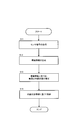
- FIG. 8 is an example of a flowchart showing a processing procedure of the information processing apparatus 1 according to the first embodiment.
- the information processing apparatus 1 may execute the processing of the flowchart shown in FIG. 8 at a timing designated by the user, or may repeatedly execute the processing at a predetermined time interval.
- the information processing apparatus 1 acquires the sensor signal Sd generated by the sensor 3 (step S11).
- the information processing apparatus 1 receives the sensor signal Sd relating to the environment in the target space Stag from the sensor 3 via the interface 13.
- the environment measurement unit 15 of the information processing apparatus 1 generates the environment information Ie based on the sensor signal Sd acquired in step S11 (step S12).
- the environmental measurement unit 15 directly or indirectly generates information as the environmental information IE that directly or indirectly indicates, for example, at least one of the degree of environmental inferiority in the target space Stage, the number of people in the target space Tag, and the degree of congestion.
- the internal surface state estimation unit 16 of the information processing apparatus 1 estimates the internal surface state of the group in the target space Stage based on the environmental information Ie generated in step S12 (step S13).
- the inner surface state estimation unit 16 configures the inference device by referring to the inference device information D1, and acquires the inner surface state information Ii by inputting the environment information Ie into the configured inference device.
- the inference device may be a combination of the first inference device and the second inference device (see FIG. 4 (A)), or may be a third inference device (see FIG. 4 (B)).
- the control unit 17 controls the inner surface state information Ii generated by the inner surface state estimation unit 16 (step S14).
- the information processing apparatus 1 processes the sensor signal Sd generated by the sensor 3 in real time to estimate the inner surface state of the group at the current time, but instead estimates the sensor signal Sd generated by the sensor 3. Based on the accumulated information, the internal state of the group may be estimated at any time in the past.
- FIG. 9 shows a schematic configuration of the internal surface state estimation system 100A according to the modified example.
- the storage device 4A stores the sensor storage information D3.
- the sensor storage information D3 is the storage information of the sensor signal Sd generated by the sensor 3 shown in FIG. 1, and each sensor signal Sd is associated with the date and time information (time stamp) generated by the sensor 3. ing.
- the information processing apparatus 1A has the same configuration as that of the information processing apparatus 1 shown in FIGS. 2 and 3 and the like. Then, the information processing apparatus 1A extracts, for example, the sensor signal Sd corresponding to the time or time zone specified by the user input or the like from the sensor storage information D3, and the target space Tag corresponding to the designated time or time zone. Estimate the internal state of the group.
- the information processing apparatus 1A estimates the inner surface state of the group at an arbitrary timing in the past by referring to the sensor storage information D3 accumulating the sensor signal Sd generated in the past. be able to.
- the information processing apparatus 1 or the information processing apparatus 1A estimates the internal state of the group with high accuracy by using the environmental information that can be easily acquired as compared with the biological information.
- the estimation result of the internal state of the group by the information processing device 1 or the information processing device 1A can be widely utilized in various fields such as urban transportation, city planning, public health, and change of the in-store environment.
- the timetable can be reexamined so that the passenger's internal state becomes a desirable state according to the estimation result of the past internal state of the passenger in the vehicle such as a train.
- the departure time of the vehicle may be changed or the air conditioning in the vehicle may be adjusted according to the estimation result of the inner surface condition of the passenger in real time in the vehicle. It is also possible to detect a place where the inner surface condition of the group is always favorable and select the detected place as a candidate for a tourist spot.
- the flow line is changed, the arrangement of products is changed, and the product is entered so that the internal condition of the customer in the store is in a desirable state. It is also possible to limit the stores.
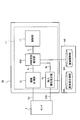
- FIG. 10 shows a functional block diagram of the information processing apparatus 1B according to the second embodiment.
- the information processing apparatus 1B according to the second embodiment estimates the internal state of the group in consideration of the individual attributes of the group in the target space Stag.
- the same components as those in the first embodiment are appropriately designated by the same reference numerals, and the description thereof will be omitted as appropriate.
- the information processing apparatus 1B has the hardware configuration shown in FIG. 2 as in the first embodiment, and the interface 13 of the information processing apparatus 1B includes an environment measurement unit 15, an internal surface state estimation unit 16B, and a control unit 17. , The personal attribute estimation unit 18. Further, the storage device 4B stores the inference device information D1 and the attribute estimation information D4.
- the individual attribute estimation unit 18 estimates the attributes (also referred to as “individual attributes”) of each individual in the group existing in the target space Stage based on the sensor signal “Sda” supplied from the sensor 3.
- the personal attribute indicates one or more attributes that affect the estimation of the internal state, such as gender, age (age), hobbies, tastes, and personality.
- the sensor signal Sda supplied from the sensor 3 may be any information that can be used for estimating personal attributes, and may be a part of the sensor signal Sd acquired by the environment measurement unit 15, and may be a part of the sensor signal Sd. It may be different.
- the sensor signal Sda is, for example, an image generated by a camera that captures the target space Stag.
- the personal attribute estimation unit 18 estimates the personal attribute of the group in the target space Stage based on the sensor signal Sda by referring to the attribute estimation information D4, and the personal attribute information “Ia” indicating the estimated personal attribute. Is supplied to the inner surface state estimation unit 16B.
- the individual attribute estimation unit 18 estimates the gender, age, etc. of each individual as individual attributes
- the individual attribute estimation unit 18 estimates these individual attributes based on the image generated by the camera that captures the target space Stag.
- the personal attribute estimation unit 18 uses a technique of determining a hobby, taste, personality, etc. from the behavior of a certain person acquired by the camera to obtain an image generated by the camera that captures the target space Stag. Based on this, personal attributes such as hobbies, tastes, and personalities may be estimated.
- the personal attribute estimation unit 18 determines the personal attribute using the card information or the like
- the personal attribute estimation unit 18 reads the questionnaire result or the like acquired in advance from the card information, so that various hobbies, tastes, personalities, etc. are obtained. You may recognize the personal attributes of.
- Attribute estimation information D4 is information necessary for estimating an individual attribute from the sensor signal Sda.
- the attribute estimation information D4 is, for example, a parameter of an inference device that infers the individual attribute of each person in the image when the image is input.
- the inference device is a learning model based on machine learning such as a neural network or a support vector machine, and the attribute estimation information D4 includes the parameters of the inference device generated by the learning. ..
- the attribute estimation information D4 may include parameters of each inferior for inferring each individual attribute.
- the inner surface state estimation unit 16B estimates the inner surface state of the group in the target space Stag based on the environmental information Ie supplied from the environment measurement unit 15 and the personal attribute information Ia supplied from the personal attribute estimation unit 18.
- the inner surface state information Ii indicating the estimation result is supplied to the control unit 17.
- the inner surface state estimation unit 16B estimates the inner surface state for each subgroup (also referred to as “same attribute group”) having individual attributes of the same classification in the group in the target space Stag, and the inner surface of each same attribute group.
- Internal surface state information Ii indicating the estimation result of the state is generated.
- the above-mentioned classification may be any classification based on individual attributes, such as classification by gender, classification by age, or classification by a combination thereof.
- the inference device information D1 includes the parameters of the inference device learned for each classification based on the personal attribute, and the internal state estimation unit 16B is assigned to the same attribute group of the target based on the personal attribute information Ia. Select the inference device to apply to. Then, the inner surface state estimation unit 16B inputs the environmental information Ie to the selected inferior device, and outputs the inner surface state information Ii indicating the inner surface state of the target same attribute group.
- the above-mentioned inference device may be a combination of the first inference device and the second inference device described with reference to FIG. 4 (A), and the third inference device described with reference to FIG. 4 (B). There may be.
- the learning device 6 learns the inference device that outputs the internal state information Ii when the environment information Ie and the personal attribute information Ia are input, and the inference device information D1 indicating the parameters of the inference device is used. It is stored in the storage device 4. Then, the inner surface state estimation unit 16B acquires the inner surface state information Ii for each same attribute group by inputting the environmental information Ie and the corresponding personal attribute information Ia into the inference device for each same attribute group.
- the above-mentioned inference device may be a combination of the first inference device and the second inference device described with reference to FIG. 4 (A), and the third inference device described with reference to FIG. 4 (B). There may be.
- the control unit 17 performs predetermined control based on the inner surface state information Ii for each of the same attribute groups supplied from the inner surface state estimation unit 16B.
- the control unit 17 is, for example, based on the inner surface state information Ii of each same attribute group, and the representative value (average value, weighted average value, median value, maximum value) of the index of the inner surface state of the whole group in the target space Stag. , The minimum value, etc.) is calculated, and arbitrary control described in the first embodiment is performed based on the representative value.
- FIG. 11 is an example of a flowchart showing the processing procedure of the information processing apparatus 1B in the second embodiment.
- the information processing apparatus 1B may execute the processing of the flowchart shown in FIG. 11 at a timing designated by the user, or may repeatedly execute the processing at a predetermined time interval.
- the information processing apparatus 1B acquires the sensor signal Sd and the sensor signal Sda generated by the sensor 3 (step S21).
- the information processing apparatus 1B receives the sensor signal Sd relating to the environment in the target space Stag and the sensor signal Sda for estimating the individual attribute of the group in the target space Stag from the sensor 3 via the interface 13.
- the sensor signal Sda may be a part of the sensor signal Sd.
- the environment measurement unit 15 of the information processing apparatus 1B generates the environment information Ie based on the sensor signal Sd acquired in step S11. Further, the personal attribute estimation unit 18 of the information processing apparatus 1B refers to the attribute estimation information D4 and generates the personal attribute information Ia of the group in the target space Tag based on the sensor signal Sda (step S22).
- the internal state estimation unit 16B estimates the internal state of the group based on the environmental information Ie and the personal attribute information Ia with reference to the inferior information D1 (step S23).
- the inner surface state estimation unit 16B estimates the inner surface state for each of the same attribute groups, which are small groups having the same personal attributes, and generates the inner surface state information Ii indicating the index value of the inner surface state for each same attribute group. do.
- the control unit 17 performs predetermined control based on the inner surface state information Ii generated by the inner surface state estimation unit 16B (step S24).
- the information processing apparatus 1B can more accurately estimate the internal state of the group in the target space Stag by further considering the attributes of the individuals constituting the group.
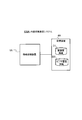
- FIG. 12 is a functional block diagram of the information processing apparatus 1X according to the third embodiment.
- the information processing apparatus 1X mainly includes environmental information acquisition means 15X and internal surface state estimation means 16X.
- the environmental information acquisition means 15X acquires the environmental information "Ie" which is the information about the environment.
- the environmental information acquisition means 15X can be the environmental measurement unit 15 in the first embodiment (including a modification, the same applies hereinafter).
- the environmental information acquisition means 15X may receive the environmental information Ie from an external device having a function corresponding to the environmental measurement unit 15 in the first embodiment.
- the internal state estimation means 16X estimates the internal state of a group existing in the environment indicated by the environmental information Ie based on the environmental information Ie.
- the inner surface state estimation means 16X can be the inner surface state estimation unit 16 in the first embodiment or the inner surface state estimation unit 16B in the second embodiment.
- FIG. 13 is an example of a flowchart executed by the information processing apparatus 1X in the third embodiment.
- the environmental information acquisition means 15X acquires the environmental information Ie, which is information about the environment (step S21).
- the inner surface state estimation means 16X estimates the inner surface state of the group existing in the environment indicated by the environmental information Ie based on the environmental information Ie (step S22).
- the information processing apparatus 1X according to the third embodiment can suitably estimate the internal state of a group existing in a specific environment.
- Non-temporary computer-readable media include various types of tangible storage media.
- Examples of non-temporary computer-readable media include magnetic storage media (eg, flexible disks, magnetic tapes, hard disk drives), magneto-optical storage media (eg, magneto-optical disks), CD-ROMs (ReadOnlyMemory), CD-Rs, Includes CD-R / W, semiconductor memory (eg, mask ROM, PROM (Programmable ROM), EPROM (Erasable PROM), flash ROM, RAM (RandomAccessMemory)).
- the program may also be supplied to the computer by various types of temporary computer readable medium.
- temporary computer-readable media include electrical, optical, and electromagnetic waves.
- the temporary computer-readable medium can supply the program to the computer via a wired communication path such as an electric wire and an optical fiber, or a wireless communication path.
- Environmental information acquisition means for acquiring environmental information, which is information about the environment, Based on the environmental information, an internal state estimation means for estimating the internal state of a group existing in the environment indicated by the environmental information, and an internal state estimation means.
- Information processing device with.
- Appendix 2 The information according to Appendix 1, wherein the internal surface state estimating means estimates a biological information feature amount indicating the feature amount of the biological information of the group based on the environmental information, and estimates the internal surface state from the biological information feature amount. Processing equipment.
- Appendix 3 Further possessing an individual attribute estimation means for estimating the attributes of the individuals constituting the group, The information processing device according to Appendix 1 or 2, wherein the internal surface state estimation means estimates the internal surface state based on the environmental information and the attributes of the individual.
- Appendix 4 The information processing device according to Appendix 3, wherein the personal attribute estimation means estimates the personal attribute based on an image generated by an imaging unit that photographs a space in which the group exists.
- the internal state estimation means includes a first inference device learned to infer a biological information feature amount indicating the feature amount of the biological information of the group when the environmental information is input, and the biological information feature amount.
- the information processing apparatus according to any one of Supplementary note 1 to 4, which estimates the inner surface state based on the second inference device learned to infer the inner surface state when input.
- the internal surface state estimation means estimates the internal surface state based on an inference device learned to make an inference about the internal surface state when the environmental information is input, according to any one of the items 1 to 4.
- Appendix 7 When a combination of the environmental information and the biological information feature amount indicating the feature amount of the biological information of the group is given as learning data, the inference device uses the environmental information as input data and uses the biological information feature amount as the input data.
- Environmental information acquisition means for acquiring environmental information, which is information about the environment
Landscapes
- Health & Medical Sciences (AREA)
- Life Sciences & Earth Sciences (AREA)
- Engineering & Computer Science (AREA)
- Physics & Mathematics (AREA)
- Public Health (AREA)
- Medical Informatics (AREA)
- Biomedical Technology (AREA)
- Pathology (AREA)
- General Health & Medical Sciences (AREA)
- Animal Behavior & Ethology (AREA)
- Biophysics (AREA)
- Heart & Thoracic Surgery (AREA)
- Psychiatry (AREA)
- Molecular Biology (AREA)
- Surgery (AREA)
- Artificial Intelligence (AREA)
- Veterinary Medicine (AREA)
- Signal Processing (AREA)
- Physiology (AREA)
- Computer Vision & Pattern Recognition (AREA)
- Mathematical Physics (AREA)
- Hospice & Palliative Care (AREA)
- Evolutionary Computation (AREA)
- Social Psychology (AREA)
- Psychology (AREA)
- Fuzzy Systems (AREA)
- Educational Technology (AREA)
- Child & Adolescent Psychology (AREA)
- Developmental Disabilities (AREA)
- Primary Health Care (AREA)
- Epidemiology (AREA)
- Databases & Information Systems (AREA)
- Data Mining & Analysis (AREA)
- Measurement Of The Respiration, Hearing Ability, Form, And Blood Characteristics Of Living Organisms (AREA)
- Medical Treatment And Welfare Office Work (AREA)
Priority Applications (6)
| Application Number | Priority Date | Filing Date | Title |
|---|---|---|---|
| PCT/JP2020/023979 WO2021255899A1 (ja) | 2020-06-18 | 2020-06-18 | 情報処理装置、制御方法及び記憶媒体 |
| US18/009,850 US11986301B2 (en) | 2020-06-18 | 2020-06-18 | Information processing device, control method, and storage medium |
| JP2022531203A JP7501627B2 (ja) | 2020-06-18 | 2020-06-18 | 情報処理装置、制御方法及びプログラム |
| US18/630,117 US12262996B2 (en) | 2020-06-18 | 2024-04-09 | Information processing device, control method, and storage medium |
| US19/051,238 US20250176883A1 (en) | 2020-06-18 | 2025-02-12 | Information processing device, control method, and storage medium |
| US19/051,240 US20250176884A1 (en) | 2020-06-18 | 2025-02-12 | Information processing device, control method, and storage medium |
Applications Claiming Priority (1)
| Application Number | Priority Date | Filing Date | Title |
|---|---|---|---|
| PCT/JP2020/023979 WO2021255899A1 (ja) | 2020-06-18 | 2020-06-18 | 情報処理装置、制御方法及び記憶媒体 |
Related Child Applications (2)
| Application Number | Title | Priority Date | Filing Date |
|---|---|---|---|
| US18/009,850 A-371-Of-International US11986301B2 (en) | 2020-06-18 | 2020-06-18 | Information processing device, control method, and storage medium |
| US18/630,117 Continuation US12262996B2 (en) | 2020-06-18 | 2024-04-09 | Information processing device, control method, and storage medium |
Publications (1)
| Publication Number | Publication Date |
|---|---|
| WO2021255899A1 true WO2021255899A1 (ja) | 2021-12-23 |
Family
ID=79267675
Family Applications (1)
| Application Number | Title | Priority Date | Filing Date |
|---|---|---|---|
| PCT/JP2020/023979 Ceased WO2021255899A1 (ja) | 2020-06-18 | 2020-06-18 | 情報処理装置、制御方法及び記憶媒体 |
Country Status (3)
| Country | Link |
|---|---|
| US (4) | US11986301B2 (https=) |
| JP (1) | JP7501627B2 (https=) |
| WO (1) | WO2021255899A1 (https=) |
Cited By (3)
| Publication number | Priority date | Publication date | Assignee | Title |
|---|---|---|---|---|
| CN114877490A (zh) * | 2022-04-02 | 2022-08-09 | 重庆市特种设备检测研究院 | 一种用于电梯故障时的通风控制方法及装置 |
| JPWO2023195117A1 (https=) * | 2022-04-07 | 2023-10-12 | ||
| WO2025013276A1 (ja) * | 2023-07-13 | 2025-01-16 | アクシオヘリックス株式会社 | 被補助者の状態監視システム |
Families Citing this family (1)
| Publication number | Priority date | Publication date | Assignee | Title |
|---|---|---|---|---|
| JP7589103B2 (ja) * | 2021-04-27 | 2024-11-25 | 京セラ株式会社 | 電子機器、電子機器の制御方法、及びプログラム |
Citations (9)
| Publication number | Priority date | Publication date | Assignee | Title |
|---|---|---|---|---|
| JP2011186521A (ja) * | 2010-03-04 | 2011-09-22 | Nec Corp | 感情推定装置および感情推定方法 |
| JP2015017753A (ja) * | 2013-07-11 | 2015-01-29 | 富士電機株式会社 | 空気調和機の制御装置および空気調和機の制御方法 |
| JP2016057057A (ja) * | 2014-09-05 | 2016-04-21 | アイシン精機株式会社 | エネルギー管理システム |
| JP2017205531A (ja) * | 2012-01-23 | 2017-11-24 | 株式会社ニコン | 電子機器 |
| JP2018062190A (ja) * | 2016-10-11 | 2018-04-19 | 公益財団法人鉄道総合技術研究所 | 車内空調方法及びシステム |
| US20180202678A1 (en) * | 2017-01-17 | 2018-07-19 | International Business Machines Corporation | Regulating environmental conditions within an event venue |
| WO2018211559A1 (ja) * | 2017-05-15 | 2018-11-22 | 日本電気株式会社 | 設定値算出システム、方法およびプログラム |
| WO2019087537A1 (ja) * | 2017-10-30 | 2019-05-09 | ダイキン工業株式会社 | 空調制御装置 |
| CN110378605A (zh) * | 2019-07-23 | 2019-10-25 | 上海应用技术大学 | 动态测量群体舒适度的方法和系统 |
Family Cites Families (1)
| Publication number | Priority date | Publication date | Assignee | Title |
|---|---|---|---|---|
| JP2019096116A (ja) | 2017-11-24 | 2019-06-20 | 株式会社東芝 | 情報処理装置、情報処理方法、およびプログラム |
-
2020
- 2020-06-18 JP JP2022531203A patent/JP7501627B2/ja active Active
- 2020-06-18 WO PCT/JP2020/023979 patent/WO2021255899A1/ja not_active Ceased
- 2020-06-18 US US18/009,850 patent/US11986301B2/en active Active
-
2024
- 2024-04-09 US US18/630,117 patent/US12262996B2/en active Active
-
2025
- 2025-02-12 US US19/051,238 patent/US20250176883A1/en active Pending
- 2025-02-12 US US19/051,240 patent/US20250176884A1/en active Pending
Patent Citations (9)
| Publication number | Priority date | Publication date | Assignee | Title |
|---|---|---|---|---|
| JP2011186521A (ja) * | 2010-03-04 | 2011-09-22 | Nec Corp | 感情推定装置および感情推定方法 |
| JP2017205531A (ja) * | 2012-01-23 | 2017-11-24 | 株式会社ニコン | 電子機器 |
| JP2015017753A (ja) * | 2013-07-11 | 2015-01-29 | 富士電機株式会社 | 空気調和機の制御装置および空気調和機の制御方法 |
| JP2016057057A (ja) * | 2014-09-05 | 2016-04-21 | アイシン精機株式会社 | エネルギー管理システム |
| JP2018062190A (ja) * | 2016-10-11 | 2018-04-19 | 公益財団法人鉄道総合技術研究所 | 車内空調方法及びシステム |
| US20180202678A1 (en) * | 2017-01-17 | 2018-07-19 | International Business Machines Corporation | Regulating environmental conditions within an event venue |
| WO2018211559A1 (ja) * | 2017-05-15 | 2018-11-22 | 日本電気株式会社 | 設定値算出システム、方法およびプログラム |
| WO2019087537A1 (ja) * | 2017-10-30 | 2019-05-09 | ダイキン工業株式会社 | 空調制御装置 |
| CN110378605A (zh) * | 2019-07-23 | 2019-10-25 | 上海应用技术大学 | 动态测量群体舒适度的方法和系统 |
Cited By (5)
| Publication number | Priority date | Publication date | Assignee | Title |
|---|---|---|---|---|
| CN114877490A (zh) * | 2022-04-02 | 2022-08-09 | 重庆市特种设备检测研究院 | 一种用于电梯故障时的通风控制方法及装置 |
| JPWO2023195117A1 (https=) * | 2022-04-07 | 2023-10-12 | ||
| JP7769923B2 (ja) | 2022-04-07 | 2025-11-14 | 日本電気株式会社 | グループ生成装置、グループ生成方法、及びプログラム |
| WO2025013276A1 (ja) * | 2023-07-13 | 2025-01-16 | アクシオヘリックス株式会社 | 被補助者の状態監視システム |
| JPWO2025013276A1 (https=) * | 2023-07-13 | 2025-01-16 |
Also Published As
| Publication number | Publication date |
|---|---|
| JPWO2021255899A1 (https=) | 2021-12-23 |
| US20240252085A1 (en) | 2024-08-01 |
| US11986301B2 (en) | 2024-05-21 |
| US20230148924A1 (en) | 2023-05-18 |
| US20250176884A1 (en) | 2025-06-05 |
| US20250176883A1 (en) | 2025-06-05 |
| US12262996B2 (en) | 2025-04-01 |
| JP7501627B2 (ja) | 2024-06-18 |
Similar Documents
| Publication | Publication Date | Title |
|---|---|---|
| US20240252085A1 (en) | Information processing device, control method, and storage medium | |
| US20220139070A1 (en) | Learning apparatus, estimation apparatus, data generation apparatus, learning method, and computer-readable storage medium storing a learning program | |
| US11058209B2 (en) | Beauty counseling information providing device and beauty counseling information providing method | |
| WO2019116679A1 (ja) | 情報処理装置、情報処理方法、およびプログラム | |
| US20170154293A1 (en) | Customer service appraisal device, customer service appraisal system, and customer service appraisal method | |
| US20210042700A1 (en) | Index computation device, prediction system, progress prediction evaluation method, and program | |
| US20160217322A1 (en) | System and method for inspecting emotion recognition capability using multisensory information, and system and method for training emotion recognition using multisensory information | |
| KR101988334B1 (ko) | 이동 전화기 및 이동전화기에서 재생되는 미디어 컨텐츠의 효율성 분석 방법 | |
| WO2017022306A1 (ja) | 情報処理システム、及び情報処理方法 | |
| KR102011887B1 (ko) | 동공 추적을 이용한 온라인 강의의 수강태도 감독 시스템 | |
| Komai et al. | Elderly person monitoring in day care center using Bluetooth Low Energy | |
| KR102030131B1 (ko) | 적외선 영상을 이용한 연속적인 피부 상태 측정 방법 | |
| CN109711434A (zh) | 获取和评估vqa系统的训练数据的方法、装置、设备和介质 | |
| JP7084962B2 (ja) | 推定プログラム、推定装置、推定方法、生成プログラム、生成装置及び生成方法 | |
| CN114550918A (zh) | 一种基于绘画特征数据的心理障碍测评方法及系统 | |
| US20240185124A1 (en) | Learning device, stress estimation device, learning method, stress estimation method, and storage medium | |
| JP2021089595A (ja) | 管理装置および管理方法 | |
| Dingil et al. | An Activity‐Based Travel Personalization Tool Driven by the Genetic Algorithm | |
| JP6658402B2 (ja) | フレームレート判定装置、フレームレート判定方法及びフレームレート判定用コンピュータプログラム | |
| WO2016068501A1 (ko) | 도형을 이용한 심리상담 방법 | |
| US12555488B2 (en) | Information processing device, determination method, and storage medium for determining an approach based on task evaluation | |
| JP2021089594A (ja) | 制御装置および制御方法 | |
| KR102598784B1 (ko) | 선별진료소 방문여부를 판단하는 비대면 사이니지 시스템 및 그 방법 | |
| US12367988B2 (en) | Image display apparatus, image display system, image display method, and non-transitory computer readable medium | |
| JP2020042709A (ja) | 聴衆間の心理状態の類似度合を評定するシステム |
Legal Events
| Date | Code | Title | Description |
|---|---|---|---|
| 121 | Ep: the epo has been informed by wipo that ep was designated in this application |
Ref document number: 20940770 Country of ref document: EP Kind code of ref document: A1 |
|
| ENP | Entry into the national phase |
Ref document number: 2022531203 Country of ref document: JP Kind code of ref document: A |
|
| NENP | Non-entry into the national phase |
Ref country code: DE |
|
| 122 | Ep: pct application non-entry in european phase |
Ref document number: 20940770 Country of ref document: EP Kind code of ref document: A1 |