WO2021241702A1 - 表示装置、評価方法および評価システム - Google Patents
表示装置、評価方法および評価システム Download PDFInfo
- Publication number
- WO2021241702A1 WO2021241702A1 PCT/JP2021/020264 JP2021020264W WO2021241702A1 WO 2021241702 A1 WO2021241702 A1 WO 2021241702A1 JP 2021020264 W JP2021020264 W JP 2021020264W WO 2021241702 A1 WO2021241702 A1 WO 2021241702A1
- Authority
- WO
- WIPO (PCT)
- Prior art keywords
- evaluation
- model
- data
- display
- display area
- Prior art date
- Legal status (The legal status is an assumption and is not a legal conclusion. Google has not performed a legal analysis and makes no representation as to the accuracy of the status listed.)
- Ceased
Links
Images
Classifications
-
- G—PHYSICS
- G05—CONTROLLING; REGULATING
- G05B—CONTROL OR REGULATING SYSTEMS IN GENERAL; FUNCTIONAL ELEMENTS OF SUCH SYSTEMS; MONITORING OR TESTING ARRANGEMENTS FOR SUCH SYSTEMS OR ELEMENTS
- G05B23/00—Testing or monitoring of control systems or parts thereof
- G05B23/02—Electric testing or monitoring
-
- G—PHYSICS
- G06—COMPUTING OR CALCULATING; COUNTING
- G06F—ELECTRIC DIGITAL DATA PROCESSING
- G06F3/00—Input arrangements for transferring data to be processed into a form capable of being handled by the computer; Output arrangements for transferring data from processing unit to output unit, e.g. interface arrangements
- G06F3/01—Input arrangements or combined input and output arrangements for interaction between user and computer
- G06F3/048—Interaction techniques based on graphical user interfaces [GUI]
- G06F3/0481—Interaction techniques based on graphical user interfaces [GUI] based on specific properties of the displayed interaction object or a metaphor-based environment, e.g. interaction with desktop elements like windows or icons, or assisted by a cursor's changing behaviour or appearance
-
- G—PHYSICS
- G05—CONTROLLING; REGULATING
- G05B—CONTROL OR REGULATING SYSTEMS IN GENERAL; FUNCTIONAL ELEMENTS OF SUCH SYSTEMS; MONITORING OR TESTING ARRANGEMENTS FOR SUCH SYSTEMS OR ELEMENTS
- G05B23/00—Testing or monitoring of control systems or parts thereof
- G05B23/02—Electric testing or monitoring
- G05B23/0205—Electric testing or monitoring by means of a monitoring system capable of detecting and responding to faults
- G05B23/0218—Electric testing or monitoring by means of a monitoring system capable of detecting and responding to faults characterised by the fault detection method dealing with either existing or incipient faults
- G05B23/0224—Process history based detection method, e.g. whereby history implies the availability of large amounts of data
- G05B23/024—Quantitative history assessment, e.g. mathematical relationships between available data; Functions therefor; Principal component analysis [PCA]; Partial least square [PLS]; Statistical classifiers, e.g. Bayesian networks, linear regression or correlation analysis; Neural networks
-
- G—PHYSICS
- G06—COMPUTING OR CALCULATING; COUNTING
- G06F—ELECTRIC DIGITAL DATA PROCESSING
- G06F3/00—Input arrangements for transferring data to be processed into a form capable of being handled by the computer; Output arrangements for transferring data from processing unit to output unit, e.g. interface arrangements
- G06F3/01—Input arrangements or combined input and output arrangements for interaction between user and computer
- G06F3/048—Interaction techniques based on graphical user interfaces [GUI]
- G06F3/0484—Interaction techniques based on graphical user interfaces [GUI] for the control of specific functions or operations, e.g. selecting or manipulating an object, an image or a displayed text element, setting a parameter value or selecting a range
- G06F3/04847—Interaction techniques to control parameter settings, e.g. interaction with sliders or dials
-
- G—PHYSICS
- G06—COMPUTING OR CALCULATING; COUNTING
- G06N—COMPUTING ARRANGEMENTS BASED ON SPECIFIC COMPUTATIONAL MODELS
- G06N20/00—Machine learning
-
- G—PHYSICS
- G06—COMPUTING OR CALCULATING; COUNTING
- G06Q—INFORMATION AND COMMUNICATION TECHNOLOGY [ICT] SPECIALLY ADAPTED FOR ADMINISTRATIVE, COMMERCIAL, FINANCIAL, MANAGERIAL OR SUPERVISORY PURPOSES; SYSTEMS OR METHODS SPECIALLY ADAPTED FOR ADMINISTRATIVE, COMMERCIAL, FINANCIAL, MANAGERIAL OR SUPERVISORY PURPOSES, NOT OTHERWISE PROVIDED FOR
- G06Q10/00—Administration; Management
- G06Q10/06—Resources, workflows, human or project management; Enterprise or organisation planning; Enterprise or organisation modelling
-
- G—PHYSICS
- G06—COMPUTING OR CALCULATING; COUNTING
- G06N—COMPUTING ARRANGEMENTS BASED ON SPECIFIC COMPUTATIONAL MODELS
- G06N20/00—Machine learning
- G06N20/10—Machine learning using kernel methods, e.g. support vector machines [SVM]
-
- G—PHYSICS
- G06—COMPUTING OR CALCULATING; COUNTING
- G06N—COMPUTING ARRANGEMENTS BASED ON SPECIFIC COMPUTATIONAL MODELS
- G06N3/00—Computing arrangements based on biological models
- G06N3/02—Neural networks
- G06N3/04—Architecture, e.g. interconnection topology
- G06N3/0464—Convolutional networks [CNN, ConvNet]
-
- G—PHYSICS
- G06—COMPUTING OR CALCULATING; COUNTING
- G06N—COMPUTING ARRANGEMENTS BASED ON SPECIFIC COMPUTATIONAL MODELS
- G06N5/00—Computing arrangements using knowledge-based models
- G06N5/01—Dynamic search techniques; Heuristics; Dynamic trees; Branch-and-bound
Definitions
- the present invention relates to a display device, an evaluation method and an evaluation system.
- process data has been acquired from a plurality of sensors installed on a controlled object such as a plant, and based on this, the operating status of the controlled object has been monitored and controlled.
- Evaluation models may be used to monitor the operational status of controlled objects based on process data. It is possible to determine whether or not the controlled object is operating normally based on the evaluation result obtained by evaluating the process data acquired from the controlled object according to a predetermined evaluation model.
- Patent Document 1 discloses a model information display method for efficiently comparing a plurality of evaluation models. According to this model information display method, when a plurality of evaluation models are selected, a plurality of evaluation models are displayed at the same time so that the amount of information displayed differs depending on the number of selected evaluation models. Therefore, it becomes possible to efficiently compare a plurality of evaluation models.
- the model information display method described in Patent Document 1 merely provides a display method that enables comparison of a plurality of evaluation models. Therefore, the work required to obtain an appropriate evaluation model cannot be sufficiently streamlined.
- an object of the present invention is to provide a display device, an evaluation method, and an evaluation system capable of efficiently acquiring an appropriate evaluation model.
- the present disclosure provides a display device provided with a display screen.
- This display screen is configured so that a plurality of evaluation models can be selectably displayed in the first display area, and the evaluation result of the evaluation data by the selected first evaluation model can be displayed in the second display area. It is configured so that the evaluation result of the evaluation data by the selected second evaluation model can be displayed in the third display area.
- the evaluation data is data evaluated by the evaluation model. For example, it is possible to evaluate process data (including raw data that has not been calculated) acquired from a plurality of sensors installed in a controlled object such as a plant as evaluation data. Process data may fluctuate depending on the season and other environments, even if controlled based on the same control data. Further, the evaluation data may fluctuate even if it is controlled based on the same control data due to changes over time of parts and the like of the controlled object.
- the first evaluation criterion of the evaluation by the first evaluation model can be set and displayed in the fourth display area of the display screen, and the evaluation by the second evaluation model is performed in the fifth display area of the display screen.
- the second evaluation criterion is configured to be configurable so that the second display area can display the evaluation result of the evaluation data by the selected first evaluation model based on the set first evaluation criterion.
- the third display area may be configured so that the evaluation result of the evaluation data by the selected second evaluation model can be displayed based on the set second evaluation criterion.
- the sixth display area of the display screen is configured so that the period of the evaluation data can be set and displayed, and the second display area displays the evaluation result of the evaluation data of the set period by the first evaluation model.
- the third display area may be configured to be capable of displaying the evaluation result of the evaluation data for the set period by the second evaluation model.
- the period of evaluation data means the period during which evaluation data was acquired.
- the first evaluation model is generated based on a training data range (a plurality of training data belonging to a predetermined range) by a machine learning model having a predetermined parameter
- the display device further comprises a display screen.
- the 7 display area is configured so that the parameter value and the training data range can be set and displayed
- the second display area is the evaluation result of the evaluation data by the evaluation model generated by the machine learning model having the set parameter value. May be configured to be displayable.
- at least a part of the parameter value or the learning data range may be configurable and displayed in the 7th display area.
- the machine learning model includes a model using a neural network such as a convolutional neural network (CNN), a model using a regression model such as Gaussian process regression, and a model using a tree algorithm such as a decision tree.
- a neural network such as a convolutional neural network (CNN)
- CNN convolutional neural network
- a model using a regression model such as Gaussian process regression
- a tree algorithm such as a decision tree.
- Learning data is sometimes called teacher data.
- the training data includes, for example, process data when a controlled object such as a plant is operating well.
- the learning data includes, for example, process data when a controlled object such as a plant is operating well at high output, process data when operating well at medium output, and good operation at low output. Includes process data when doing.
- Machine learning parameters include variables that can be set. When the parameters are different, different evaluation models are generated based on the same training data.
- the parameters include hyperparameters, for example, the number of layers such as a decision tree, the number of units in an intermediate layer in a neural network, parameters indicating load attenuation, and the like.
- the first display area may be configured so that a machine learning model having a set parameter value can be selectively displayed in the first display area together with a plurality of evaluation models.
- information indicating that the evaluation model has been used in the past in order to evaluate the process data acquired from the controlled object among the plurality of evaluation models, and the information acquired from the controlled object.
- at least one of the information indicating that the evaluation model is currently used may be configured to be displayable.
- the first display area may be configured to display the evaluation model selected from the plurality of evaluation models so that it can be duplicated or deleted.
- evaluation data is evaluated by a step of selectively displaying a plurality of evaluation models in the first display area of the display screen and a first evaluation model selected in the second display area of the display screen.
- a step of displaying the result and a step of displaying the evaluation result of the evaluation data by the selected second evaluation model are included in the third display area of the display screen.
- This disclosure provides an evaluation system.
- This evaluation system is a means for selecting a plurality of evaluation models, a means for acquiring evaluation results of evaluation data by the selected first evaluation model, and evaluation data by the selected second evaluation model. It is provided with a means for obtaining the evaluation result of.
- This disclosure provides an evaluation system for evaluating the operating status of a plant.
- This evaluation system is acquired from the first evaluation model generated as training data from the process data acquired from the sensors installed in the plant in the first period, and from the sensors installed in the plant in the second period.
- a means for selecting a second evaluation model generated by using the process data as training data is provided.
- the first evaluation model selected evaluates the evaluation data acquired from the sensors installed in the plant.
- the evaluation results are configured to be displayed.
- the second evaluation model selected evaluates the same evaluation data obtained from the sensors installed in the plant.
- the evaluation results are configured to be displayed.
- the evaluation data may include process data when the operating status of the plant becomes abnormal.
- the first evaluation model may be one generated based on learning data by a machine learning model having one or a plurality of parameters set to a predetermined value. One or more parameters may be configured to be configurable. When a parameter is newly set, a new evaluation model may be generated by a machine learning model having the set parameter.
- This disclosure provides an evaluation method for evaluating the operating status of a plant.
- This evaluation method is acquired from the first evaluation model generated as learning data from the process data acquired from the sensors installed in the plant in the first period, and from the sensors installed in the plant in the second period.
- a step of selectively displaying the second evaluation model generated from the process data as training data in the first display area of the display screen is included.
- a step of displaying the evaluation result of the evaluation data by the selected first evaluation model in the second display area of the display screen and the selected second evaluation model in the third display area of the display screen are used.
- Controlled objects to which the present invention applies include plants.
- the plant is intended for a power plant including a boiler, an incinerator plant, a chemical plant, a wastewater treatment plant, etc., for which process data can be obtained.
- the process data includes uncalculated data acquired from a sensor or the like.
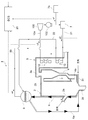
- FIG. 1 is a schematic view showing the overall configuration of the plant 1 according to the present embodiment.
- the plant 1 according to the present embodiment is, for example, a power plant provided with a circulating fluidized bed boiler (Circulating Fluidized Bed type) that burns fuel to generate steam while circulating a circulating material such as silica sand that flows at a high temperature.
- a circulating fluidized bed boiler that burns fuel to generate steam while circulating a circulating material such as silica sand that flows at a high temperature.
- a circulating fluidized bed boiler that burns fuel to generate steam while circulating a circulating material such as silica sand that flows at a high temperature.
- a circulating material such as silica sand that flows at a high temperature.
- non-fossil fuels woody biomass, waste tires, waste plastics, sludge, etc.
- the steam generated in the plant 1 is used to drive the turbine 100.
- the plant 1 is configured to burn fuel in the furnace 2, separate the circulating material from the exhaust gas by a cyclone 3 functioning as a solid air separating device, and return the separated circulating material to the furnace 2 for circulation. There is.
- the separated circulating material is returned to the lower part of the furnace 2 via the circulating material recovery pipe 4 connected below the cyclone 3.
- the lower part of the circulation material recovery pipe 4 and the lower part of the furnace 2 are connected to each other via a loop seal portion 4a having a narrowed flow path.
- a predetermined amount of the circulating material is stored in the lower part of the circulating material recovery pipe 4.
- the exhaust gas from which the circulating material has been removed by the cyclone 3 is supplied to the rear flue 5 via the exhaust gas flow path 3a.
- the boiler is equipped with a furnace 2 for burning fuel and a heat exchanger for generating steam or the like using the heat obtained by the combustion.
- a fuel supply port 2a for supplying fuel is provided in the middle portion of the furnace 2, and a gas outlet 2b for discharging combustion gas is provided in the upper portion of the furnace 2.
- the fuel supplied to the furnace 2 from the fuel supply device (not shown) is supplied to the inside of the furnace 2 through the fuel supply port 2a.
- a furnace wall pipe 6 for heating the boiler feed water is provided on the furnace wall of the furnace 2. The boiler water supply flowing through the furnace wall pipe 6 is heated by combustion in the furnace 2.
- the air for combustion and flow introduced from the lower air supply line 2c causes solid matter including fuel supplied from the fuel supply port 2a to flow, and the fuel flows while flowing, for example, about 800 to 900.
- Burn at ° C. The combustion gas generated in the furnace 2 is introduced into the cyclone 3 with a circulating material.
- the cyclone 3 separates the circulating lumber and the gas by the centrifugal separation action, returns the circulating lumber separated through the circulating lumber recovery pipe 4 to the furnace 2, and returns the combustion gas from which the circulating lumber is removed to the exhaust gas flow path 3a. To the rear flue 5.
- the bed material in the furnace stays at the bottom.
- the bed material may contain a bed material having a coarse particle size unsuitable for circulating flow and exhaust combustion contaminants, and the bed material unsuitable for these circulating materials may cause flow failure. Therefore, in order to suppress flow failure, in the furnace 2, the bed material in the furnace is continuously or intermittently discharged to the outside from the discharge port 2d at the bottom.
- the discharged bed material is supplied to the furnace 2 again after removing unsuitable substances such as metal and coarse particle size on a circulation line (not shown), or is discarded as it is.
- the circulatory material of the circulatory furnace 2 circulates in the circulatory system including the circulatory furnace 2, the cyclone 3, and the circulatory material recovery pipe 4.
- the rear flue 5 has a flow path for flowing the gas discharged from the cyclone 3 to the rear stage.
- the rear flue 5 has a superheater 10 for generating superheated steam and an economizer 12 for preheating the boiler water supply as an exhaust heat recovery unit for recovering the heat of the exhaust gas.
- the exhaust gas flowing through the rear flue 5 is heat-exchanged with the steam flowing through the superheater 10 and the economizer 12 and the boiler supply water to be cooled. Further, it has a steam drum 8 for storing boiler water supply that has passed through the economizer 12, and the steam drum 8 is also connected to a furnace wall pipe 6.
- the economizer 12 transfers the heat of the exhaust gas to the boiler water supply to preheat the boiler water supply.
- the economizer 12 is connected to the pump 7 by a pipe 21 while being connected to the steam drum 8 by a pipe 22.
- the boiler water supplied from the pump 7 to the economizer 12 via the pipe 21 and preheated by the economizer 12 is supplied to the steam drum 8 via the pipe 22.
- a precipitation pipe 8a and a furnace wall pipe 6 are connected to the steam drum 8.
- the boiler water supply in the steam drum 8 descends from the precipitation pipe 8a, is introduced into the furnace wall pipe 6 on the lower side of the furnace 2, and flows toward the steam drum 8.
- the boiler water supply in the furnace wall pipe 6 is heated by the combustion heat generated in the furnace 2 and evaporates in the steam drum 8 to become steam.
- a saturated steam pipe 8b for discharging internal steam is connected to the steam drum 8.
- the saturated steam pipe 8b connects the steam drum 8 and the superheater 10.
- the steam in the steam drum 8 is supplied to the superheater 10 via the saturated steam pipe 8b.
- the superheater 10 uses the heat of the exhaust gas to superheat the steam to generate superheated steam.
- the superheated steam passes through the pipe 10a, is supplied to the turbine 100 outside the plant 1, and is used for power generation.
- the pressure and temperature of the steam discharged from the turbine 100 is lower than the pressure and temperature of the steam discharged from the superheater 10.
- the pressure of the steam supplied to the turbine 100 is about 10 to 17 MPa, and the temperature is about 530 to 570 ° C.
- the pressure of the steam discharged from the turbine 100 is about 3 to 5 MPa, and the temperature is about 350 to 400 ° C.
- a condenser 102 is provided downstream of the turbine 100.
- the steam discharged from the turbine 100 is supplied to the condenser 102, condensed in the condenser 102 and returned to saturated water, and then supplied to the pump 7.
- a generator that converts the kinetic energy obtained by the rotation of the turbine 100 into electrical energy is connected to the turbine 100.
- the pump 7a supplies make-up water so as to keep the water level of the condenser 102 constant.
- FIG. 1 shows a make-up water flow rate u1 (an example of “process data”) replenished by the pump 7a.
- the process data handled in this embodiment may be arbitrary data related to the plant 1, but may be, for example, data measured by a sensor for the state of the plant 1 (an example of “process data”), and more specifically. May include measured values such as temperature, pressure and flow rate of plant 1.
- FIG. 1 shows a boiler supply water flow rate u2 (an example of “process data”) supplied from the pump 7 to the economizer 12. Further, FIG. 1 shows a boiler outlet steam flow rate u3 (an example of “process data”) supplied from the superheater 10 to the turbine 100, and a saturated steam flow rate u4 (“process”) supplied from the steam drum 8 to the superheater 10. An example of "data”) is shown.
- the make-up water flow rate u1 may be controlled to follow the saturated steam flow rate u4. Further, it may be controlled to adjust the boiler supply water flow rate u2 while monitoring both the boiler outlet steam flow rate u3 (or the superheated steam flow rate) and the liquid level of the steam drum 8.
- the DCS (Distributed Control System, FIG. 2) 20 receives the process data of the plant 1 such as the make-up water flow rate u1, the boiler supply water flow rate u2, the boiler outlet steam flow rate u3, and the saturated steam flow rate u4 from the plant 1, and operates the plant 1. Monitor the situation and monitor the plant 1 for any abnormalities.
- the process data related to the plant 1 may be other data.
- the process data relating to the plant 1 may be other data such as temperature and pressure, or data calculated based on a plurality of process data.
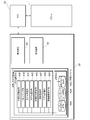
- FIG. 2 is a diagram showing a functional block of the evaluation system 30 according to the present embodiment.
- the DCS 20 is a distributed control system for controlling the plant 1.
- the DCS 20 acquires process data from a sensor or the like installed in the plant 1 and supplies a control signal for controlling the plant 1 to the plant 1 based on the process data.
- the evaluation system 30 acquires process data from the evaluation model management devices 40 and DCS 20 for managing and generating an evaluation model for evaluating the operating status of the plant 1, and based on a predetermined evaluation model selected, the evaluation system 30 is a plant.
- An image for managing and generating an evaluation model by the monitoring device 50 and the evaluation model management device 40 of the plant 1 for monitoring the operating status of 1 and the operating status of the plant 1 monitored by the monitoring device 50 of the plant 1 are displayed.
- a display device 60 is provided for this purpose.
- Each component constituting the evaluation system 30 does not have to be integrally configured.
- a part or all of the evaluation model management device 40 may be provided at a remote location and may be communicably connected to other components via a communication network such as the Internet.
- the evaluation model management device 40 includes a storage unit 42 and a model selection unit 44.
- the storage unit 42 includes a process data storage unit 42A, a cleansing rule storage unit 42B, and a learned model storage unit 42C.
- the process data storage unit 42A stores the process data acquired from the DCS 20.
- the process data may include, for example, process data of plant 1 or another plant over a long period of time.
- the process data includes training data (teacher data) for generating an evaluation model.
- the training data includes, for example, process data when a controlled object such as plant 1 is operating at high output, process data when operating well at medium output, and operating well at low output. It may include process data when it is.
- the training data may include process data when the controlled object is operating satisfactorily, that is, to achieve a predetermined output, and process data when the controlled object causes an abnormality. Further, the process data may be stored in association with the time information in which the process data was acquired. Further, the process data may be stored in association with the output when the process data was acquired and the state of operation in good condition. The process data does not necessarily have to be acquired via the DCS 20, and may be acquired directly from the plant 1, for example.
- the cleansing rule storage unit 42B stores a rule for executing data cleansing for extracting learning data from process data. For example, when it is desired to extract learning data when the operating condition of the plant 1 is good, a rule for executing cleansing that removes data that leads to performance deterioration is stored.
- the trained model storage unit 42C stores a plurality of trained models generated based on the training data by the machine learning model.
- the machine learning model is, for example, a Gaussian process regression model.
- the training data is, for example, process data when plant 1 or a similar plant was operating well at high output in January 2020, process data when plant 1 was operating well at medium output, and so on. There are three types of process data during the same period, which are process data when plant 1 is operating well at low output.
- the trained model storage unit 42C stores this process data as training data and a trained model generated based on a predetermined machine learning model as one of the evaluation models. Similarly, the trained model storage unit 42C stores a plurality of trained models as evaluation models. The physical configuration of the storage unit 42 will be described later.
- the model selection unit 44 selects an evaluation model to be used for evaluating the process data acquired from the DCS 20.
- the learning period registration unit 44A of the model selection unit 44 registers and stores the period of the process data extracted as the learning data.
- the worker can register the learning period from the display screen of the display device 60. For example, if each period during which the plant has been operating well at high output, medium output, and low output is known in advance, the worker can register those periods as learning periods.
- the model learning unit 44C can generate a trained model using the process data acquired during the period registered in the learning period registration unit 44A as training data.
- the cleansing unit 44B executes the cleansing process of the process data. Specifically, the process data of a predetermined period extracted by the learning period registration unit 44A is subjected to a cleansing process based on the cleansing rule stored in the cleansing rule storage unit 42B, and is evaluated by performing predetermined machine learning. Remove unsuitable process data to generate the model.
- the model learning unit 44C performs machine learning according to a predetermined machine learning model based on the process data which is the learning data, generates an evaluation model, and stores it in the trained model storage unit 42C. Specifically, the process data acquired during the period registered in the learning period registration unit 44A is acquired from the process data storage unit 42A, and the process data subjected to the cleansing process by the cleansing unit 44B is learned data. Machine learning is performed as an evaluation model.
- the model selection unit 44D accepts the selection of the evaluation model by the operator and selects the evaluation model used for the evaluation by the model evaluation unit 44G.
- the model selection unit 44D can select, for example, two or more evaluation models at the same time.
- the model selection unit 44D displays a plurality of evaluation models stored in the trained model storage unit 42C on the display screen of the display device 60 so as to be selectable. The operator can select a plurality of evaluation models to be used for evaluation from the evaluation models displayed on the display screen.
- the evaluation period registration unit 44E registers and stores the period of the process data extracted as the evaluation data.
- the evaluation period registration unit 44E displays the evaluation period on the display screen of the display device 60 so that the evaluation period can be set. The operator can register the evaluation period from the display screen of the display device 60.
- the model evaluation unit 44G evaluates the process data acquired during the period registered in the evaluation period registration unit 44E as evaluation data.
- the threshold value registration unit 44F accepts the setting of the threshold value (an example of "evaluation standard") by the worker, registers and stores it as the evaluation standard in the evaluation by the model evaluation unit 44G.
- the threshold value registration unit 44F can register and store the set threshold value for each evaluation model by the model evaluation unit 44G.
- the threshold value registration unit 44F displays the threshold value on the display screen of the display device 60 so that the threshold value can be set for each evaluation model selected by the model selection unit 44D. The operator can register the threshold value for each evaluation model from the display screen of the display device 60.
- the model evaluation unit 44G evaluates the evaluation data according to the evaluation model. Specifically, process data acquired during the evaluation period registered by the evaluation period registration unit 44E is input as evaluation data into a plurality of evaluation models selected by the model selection unit 44D, and evaluation results are obtained. When the threshold value is registered in the threshold value registration unit 44F, the model evaluation unit 44G is used as an evaluation standard for obtaining an evaluation result.
- the evaluation result display unit 44H displays the evaluation result of the evaluation data by the selected evaluation model on the display screen of the display device 60 for each evaluation model.
- the monitoring device 50 monitors the plant 1 by evaluating the process data acquired from the DCS 20 according to the finally selected evaluation model. For example, the monitoring device 50 evaluates the process data currently acquired from the DCS 20 according to the finally selected evaluation model and the set threshold value, and displays an alarm or the like when the process data exceeding the threshold value is acquired. It is possible to display it on the display screen of the device 60.
- the display device 60 receives control signals (including data) for displaying the above-mentioned various information from the evaluation model management device 40 and the monitoring device 50, and displays them on the display screen.
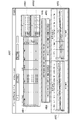
- FIG. 3 is an example of the display screen D1 of the display device 60.
- a plurality of evaluation models are displayed in the area AR1 (an example of the "first display area") of the display device 60.
- the worker can select a plurality of evaluation models from the displayed evaluation models.
- the model No. is in the area AR1. 1 to model No.
- Nine evaluation models up to 8 are displayed in a selectable manner. The worker can select the evaluation model by checking the check box provided in the "evaluation model selection" column.
- the model No. 4 and model No. It is shown that the evaluation model of 7 is selected.
- the column of "learning date and time” indicates the date and time when the corresponding evaluation model was generated.
- the "production operation” column indicates whether the corresponding evaluation model has been used to monitor plant 1 by the monitoring device 50 now or in the past.
- the model No. The evaluation model of No. 1 is currently used for monitoring the plant 1 by the monitoring device 50, and the model No. 1 is used. It is shown that the evaluation model of No.
- the “above threshold” column and the “below threshold” column are cases where an upper threshold (an example of "evaluation criterion") and a lower threshold are set as evaluation criteria for the corresponding evaluation model. Display it. For example, when the value of the process data exceeds the threshold value with respect to the reference value, it may be determined that the operating condition of the plant 1 is not good.
- the area AR81 and the area AR82 of the display screen D1 have the No. 1 selected in the area AR1. 7 and No.
- the contents of the training data used to generate the evaluation model of 4 are shown.
- the worker can determine whether the evaluation model to be selected is generated based on the appropriate training data for evaluating the evaluation data. .. That is, when the controlled object is an object whose state changes from moment to moment due to the season, weather, other environment, and changes over time, such as plant 1, it is generated based on learning data similar to the evaluation data to be evaluated. By selecting an evaluation model, it is possible to improve the evaluation accuracy.
- the display device 60 displays the contents of the learning model that generated the evaluation model selected in the region AR1, the operator can increase the possibility of acquiring an appropriate evaluation model. It will be possible.
- the evaluation system 30 can extract process data obtained in a plurality of discrete periods as learning data for generating one evaluation model.
- one evaluation model is generated based on the process data obtained in the three periods of the learning period 1 to the learning period 3. That is, when the controlled object is an object that can take a plurality of states of low output, medium output, and high output as in plant 1, the training data is configured to include each state and an evaluation model is generated. By doing so, it becomes possible to generate a highly versatile evaluation model.
- the operator can confirm that the training data is configured to include the process data of the plant 1 indicating a good operating condition in each state. become.
- the display device 60 is configured so that the learning period of the evaluation model to be generated can be set without transition from the display screen D1 by the worker directly inputting the learning period in the area in the display screen D1. You may.
- the period of the evaluation data that is, the evaluation period of the plant 1 is displayed in the area AR6 (an example of the "sixth display area") of the display screen D1.
- the worker can set the period in which the process data evaluated by the evaluation model is acquired.
- the display device 60 enables acquisition of an appropriate evaluation model.
- the worker can determine whether or not the selected evaluation model is appropriate by checking the evaluation results by a plurality of evaluation models while different evaluation periods, for example. For example, it is possible to confirm the evaluation result by the evaluation model when the period of the evaluation data is set so as to include the time when the abnormality occurred in the plant 1, and confirm whether or not the evaluation model can detect the abnormality. become.
- the evaluation model shows the abnormality. It becomes possible to confirm whether or not it is detected. Since the display screen D1 is provided with an area AR6 for setting the period of the evaluation data, and an area AR2 and an area AR3 for displaying the evaluation result by the evaluation model, the operator can display them at the same time. It becomes possible to quickly obtain an appropriate evaluation model.
- the area AR4 (an example of the "fourth display area”) and the area AR5 (an example of the "fifth display area”) of the display screen D1 have a threshold value as an example of the evaluation criteria by the evaluation model selected in the area AR1. Is displayed.
- the operator sets the model No. It is possible to set a threshold value in the evaluation by the evaluation model of 7.
- the operator inputs the upper limit and the lower limit of the threshold value in the region AR5 to obtain the model No. It is possible to set a threshold value in the evaluation by the evaluation model of 4.
- the threshold value is set so that the abnormality is detected, and the evaluation data of the period during which the plant 1 is operating well is used.
- the threshold value can be configured to be set by an index such as an absolute value, a ratio to a reference value, and a deviation.
- the evaluation result of the evaluation data by one of the selected evaluation models is displayed in the area AR2 (an example of the "second display area") of the display screen D1, and the area AR3 (an example of the "third display area”) is displayed. Displays the evaluation result of the evaluation data by the other selected evaluation model.
- the estimated expected value calculated based on the learning data is shown by a solid line as the evaluation result
- the upper limit threshold value and the lower limit threshold value based on the estimated expected value are shown by a broken line.
- the values of a plurality of evaluation data are shown discretely.
- the values of the training data may be shown discretely.
- a good movable range is shown in a two-dimensional space where the horizontal axis is the boiler load of plant 1 (an example of "process data”) and the vertical axis is the temperature difference between the top and bottom of the furnace (an example of "process data”).
- the evaluation result is displayed by showing the region that can be determined, that is, the region surrounded by the upper limit threshold to the lower limit threshold including the solid line indicating the estimated expected value, and the position of the evaluation data in the same two-dimensional space.
- the mode for showing the evaluation result is not limited to this.
- the degree of deviation from the optimum operating area may be scored and the evaluation result may be shown by an index called soundness.
- the evaluation result may be shown only by characters.
- two process data are selected as training data so that the range of good operating conditions and the position of the evaluation data can be distinguished in the two-dimensional space centered on the two process data.
- the worker can easily grasp the evaluation result.
- No. since there is evaluation data that exceeds a good movable range, No. According to the evaluation model of No. 7, it is determined that an abnormality has occurred in the plant 1.
- the region AR3 has No. 1 for the same evaluation data.
- the evaluation results by the evaluation model of 4 are shown. Since the evaluation results of the same index are shown in the region AR2 and the region AR3 for the same evaluation data, the operator can easily compare the evaluation models.
- the training data for different evaluation models do not necessarily have to be different, and some or all of them may be the same. For example, it is possible to generate different evaluation models by making some of the parameters different. Therefore, it becomes possible to generate different evaluation models based on the same training data.
- the evaluation result based on the changed evaluation data is displayed in the area AR1.
- the operator changes the threshold value of the area AR4 and presses the "evaluation" button of the area AR4 with an input means such as a mouse the evaluation result based on the changed threshold value is displayed in the area AR1.
- various process data to be adopted as learning data and evaluation data can be selected.
- two or more process data having a correlation with the anomaly can be selected.
- blasts such as tube leaks, where the metal material of the pipes (tubes) that make up the boiler is damaged and punctures, and the steam inside leaks to the outside.
- It may be used as training data and evaluation data so as to include process data obtained from a plurality of AE (Acoustic Emission) sensors provided in a boiler tube or the like in order to detect a blowout.
- AE Acoustic Emission
- Process data includes information indicating the temperature of the piping system (including temperature information directly or indirectly acquired from the sensor and information indicating the temperature difference of a predetermined part), information indicating the amount of heat collected, and valve opening.
- Information, information indicating the temperature of the gas medium, and the like may be acquired, and based on this, evaluation may be performed simultaneously according to a plurality of evaluation models.
- the present invention can be used to select an evaluation model for detecting the presence or absence of a predetermined abnormality based on the above.
- the evaluation results can be displayed in various forms.
- the operating status of the plant may be scored according to the degree of deviation from the optimum region and indicated by an index called soundness.
- the evaluation result may be displayed as text information.
- the parameter values (including hyperparameters) of the parameters that can be set when performing machine learning based on the learning data may be displayed so that the operator can set them.
- Machine learning parameters vary depending on the machine learning model.
- the display device 60 may be configured so that the operator can set and display the number of layers such as a decision tree, the number of units in the intermediate layer in the neural network, and parameters indicating load attenuation. For example, when the operator presses "add new model" shown in the area AR7 (an example of the "seventh display area") of the display screen D1 by the input means, the display device 60 sets a new parameter value. It is configured to transition to the display screen.
- the model learning unit 44C When the worker inputs a new parameter value, the model learning unit 44C performs machine learning according to the parameter value and generates a new evaluation model.
- the worker can also set new learning data together with the parameter values. For example, the worker can change the period of the learning data on the display screen and set the learning data in a shorter period or a longer period.
- the model learning unit 44C performs machine learning based on the set new learning data, and generates a new evaluation model.
- the display device 60 may be configured to directly allow the operator to set and input at least a part of the parameter value or the learning data in the area AR7 of the display screen D1 without changing the screen. For example, if overfitting of the evaluation model is observed in region AR3, the operator can change the parameter values to alleviate overfitting in region AR7. Further, the worker can set the learning data for a longer period in order to alleviate the overfitting in the area AR7.
- the model learning unit 44C performs machine learning according to a newly set parameter value or a learning period, and generates a new evaluation model. Further, the display device 60 can display the evaluation result by the new evaluation model in the area AR3. With such a configuration, the worker can observe the evaluation result while adjusting the range of the parameter value or the training data, so that an appropriate evaluation model can be efficiently obtained. ..
- the display device 60 may be configured to allow the evaluation model selected by the operator to be deleted or duplicated. For example, by configuring the evaluation model that cannot be evaluated accurately to allow the worker to delete it, it is possible to efficiently acquire an appropriate evaluation model. In addition, by duplicating an existing evaluation model and changing and evaluating the evaluation criteria of the duplicated evaluation model, it becomes possible to efficiently acquire an appropriate evaluation model.
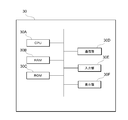
- FIG. 4 is a block diagram showing a physical configuration for realizing the evaluation system 30.
- the evaluation system 30 includes a CPU (Central Processing Unit) 30A corresponding to a calculation unit, a RAM (RandomAccessMemory) 30B corresponding to a storage unit, a ROM (Read onlyMemory) 30C corresponding to a storage unit, and a communication unit 30D. And an input unit 30E and a display unit 30F.
- Each of these configurations is connected to each other via a bus or a communication network so that data can be transmitted and received.
- the evaluation system 30 is composed of one computer will be described, but the evaluation system 30 may be realized by combining a plurality of computers.
- a display constituting a different display unit for displaying other information may be provided.
- the configuration shown in FIG. 4 is an example, and the evaluation system 30 may have configurations other than these, or may not have a part of these configurations.
- a part of the configuration may be provided in a remote place.
- all or part of the storage unit 30C may be provided in a remote location.
- the CPU 30A may be configured to acquire information from a storage unit 30C provided at a remote location via a communication network.
- the CPU 30A is an arithmetic unit including a computer processor that executes a computer program stored in the RAM 30B or the ROM 30C and performs each arithmetic processing shown in the present implementation. That is, the CPU 30A realizes each function executed by each unit of the model selection unit 44 according to the computer program, and causes the operator to acquire an appropriate evaluation model. Further, the CPU 30A may realize a monitoring function in which the monitoring device 50 monitors the plant 1 based on the process data under the selected evaluation model. Further, the CPU 30A may realize each function executed by the DCS 20. The CPU 30A receives various data from the input unit 30E and the communication unit 30D, displays the calculation result of the data on the display unit 30F, or stores it in the RAM 30B or the ROM 30C.
- the RAM 30B is a storage element that rewritably records information such as data, and may be composed of a semiconductor storage element such as a DRAM, SRAM, MRAM, NOR memory, or NAND memory.
- the RAM 30B can realize each function of the storage unit 42 by storing the computer program executed by the CPU 30A, the process data of the plant 1, the cleansing rule, the trained model, and the like.
- the primary storage element such as DRAM or SRAM may be configured to store the evaluation result or the like by the evaluation model.
- the ROM 30C is a storage element capable of reading information, and may be composed of, for example, a semiconductor storage element such as a write-protected NOR memory, a magnetic storage medium such as an HDD, or an optical storage medium such as a DVD.
- the ROM 30C may store a computer program executed by the CPU 30A and other data that cannot be rewritten.
- the communication unit 30D is an interface for connecting the evaluation system 30 to the DCS20 and other devices.
- the communication unit 30D may be connected to a communication network such as the Internet.
- the input unit 30E receives data input from an operator, and may be composed of, for example, a keyboard, a touch panel, or a microphone.
- the display unit 30F visually displays various arithmetic processing results shown in the present embodiment by the CPU 30A and the monitoring state of the plant 1 by the monitoring device 50.
- a display such as an LCD (Liquid Crystal Display). It may be configured.
- the display unit 30F realizes each function executed by the display device 60.
- the computer program for executing the various processes shown in the present embodiment may be stored in a storage medium readable by a computer such as ROM 30C and provided, or may be provided by a communication network connected by the communication unit 30D. May be provided via.
- various operations included in the present embodiment are realized by the CPU 30a executing the monitoring program. It should be noted that these physical configurations are examples and do not necessarily have to be independent configurations.
- the CPU 30A and the RAM 30B may be composed of a packaged LSI (Large-Scale Integration).
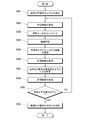
- FIG. 5 is a flowchart showing, for example, an example of an evaluation method for comparing an existing evaluation model with a newly generated evaluation model.
- the evaluation system 30 (CPU 30A operating according to a computer program) reads out the existing trained model stored in the trained model storage unit 42C, and causes the area AR1 of the display device 60 to display the existing trained model. ..
- the operator uses the input unit 30E to select one or more trained models (sometimes referred to as "evaluation model") from the plurality of trained models displayed in the area AR1 (step). S41).
- the region AR81 or region AR82 shows information about the training data used to generate the selected trained model, allowing the operator to select the appropriate trained model.
- the model selection unit 44D accepts the input of the worker and selects the trained model to be evaluated.
- the worker inputs the period information using the input unit 30E, and registers the period of the training data (sometimes referred to as the "learning period") for generating a new trained model.
- the learning period registration unit 44A accepts the input of the worker, registers the learning period, and acquires the process data corresponding to this learning period from the process data storage unit 42A (step S42).
- the period information may be input by the worker by allowing the worker to input the period information into the area AR81 or the area AR82.
- the learning period may be different for each trained model, may be the same, or may be set so as to partially overlap.
- the cleansing unit 44B cleanses the process data corresponding to the learning period according to the cleansing rule stored in the cleansing rule storage unit 42B, and the data unsuitable for machine learning and the process data not used for machine learning (for example, a predetermined abnormality).
- the process data that does not affect the abnormality or has a small effect) and the like are removed (step S43).
- the model learning unit 44C performs machine learning based on the training data data cleansed by the cleansing unit 44B, and generates a new trained model (step S44).
- the evaluation system 30 may be configured so that the operator can set the parameter value of the machine learning model (for example, the number of layers of the neural network).
- the trained model generated by the model learning unit 44C is stored in the trained model storage unit 42C.
- the threshold value registration unit 44F accepts the input of the worker and registers the threshold value for each trained model (step S45).
- the evaluation period registration unit 44D accepts the input of the worker, registers the evaluation period, and acquires the process data acquired from the process data storage unit 42A during the evaluation period as evaluation data (step S46).
- the operator can evaluate whether or not the trained model to be evaluated can correctly detect the abnormality by, for example, selecting the evaluation period so as to include the time when the plant 1 has an abnormality. ..
- the model evaluation unit 44G evaluates the evaluation data based on the existing trained model.
- the evaluation result display unit 44H provides the display device 60 with information included in the area AR2 including the evaluation result.
- the model evaluation unit 44G evaluates the evaluation data based on the new trained model generated in step S44 and the threshold value set in step S45.
- the evaluation result display unit 44H provides the display device 60 with information included in the area AR3 including the evaluation result (step S47).
- the display device 60 receives the evaluation result from the evaluation system 30, and displays the evaluation result in the area AR2 and the area AR3 (step S48).
- the operator looks at the evaluation results displayed in the regions AR2 and AR3, and determines whether or not the newly generated trained model is appropriate for monitoring the plant 1 (step S49). ..
- the operator may determine whether the trained model is appropriate by re-executing the evaluation by changing the evaluation period or the threshold value, if necessary. For example, if the evaluation result by the newly generated trained model can evaluate the operation status of the plant 1 more accurately than the evaluation result by the existing trained model, the newly generated trained model is trained. It is possible to determine that the model is appropriate.
- the operator presses the setting button for the "production model" displayed in the area AR4 or the area AR5 corresponding to the newly generated learned model by using the input unit 30E.
- the trained model storage unit 42 stores the newly generated trained model (step S50).
- the newly generated trained model can be displayed in the region AR1 as one of the existing trained models from the next time onward.
- the monitoring device 50 may start monitoring the plant 1 based on the process data acquired from the DCS 20 according to one or a plurality of trained models including the newly generated trained model.
- step S49 If it is determined in step S49 that the generated trained model is inappropriate, the process returns to step S42 again.
- a new trained model may be generated by changing the parameters of the machine learning model.
- the evaluation method, and the evaluation system shown in the present embodiment it is possible to efficiently acquire an appropriate evaluation model.
- the evaluation result can be displayed on the same screen.
- by changing the parameters it is possible to adjust an existing evaluation model or a new evaluation model, easily generate a different evaluation model, and compare the evaluation results with the evaluation results of other evaluation models. become.
- the evaluation method, and the evaluation system according to the present embodiment it is possible to easily create an evaluation model, adjust the evaluation model, and compare the evaluation models with each other. Therefore, an appropriate evaluation model can be obtained. It becomes possible to acquire efficiently.
- the present invention can be used for applications other than selecting an evaluation model for detecting an abnormality in a plant called a blowout. For example, select an evaluation model to detect a decrease in power generation efficiency, clogging of pipes, temperature abnormality of each element of a plant such as a furnace, change in viscosity of a fluid such as gas, etc., or to judge detectability. It is possible to apply the present invention to this. Further, it is possible to apply the present invention not only to detect anomalies but also to select and generate an evaluation model for improving a process executed in a facility such as each plant based on process data.
- the present invention can be applied to processes performed in facilities other than thermal power plants.
- process data for abnormalities related to processes executed in each facility such as chemical plants, oil refineries, refineries, steel factories, etc. (for example, signs of gas leakage due to rot of pipes, etc.).
- multiple types of sensors such as a plurality of temperature sensors and AE sensors are arranged in a piping system in which a branch pipe is welded to a main pipe, and process data such as temperature information acquired at a predetermined sampling frequency using these sensors. It is possible to apply the present invention to select and generate an evaluation model for assessing fluid leakage potential based on.
- the present invention can be modified in various ways as long as it does not deviate from the gist thereof.
- some components or functions in one embodiment may be replaced with other components or functions.
- the model learning unit 44C generates a new trained model by machine learning, but is not limited to this, and is configured to generate a trained model based on, for example, a regression equation. You may. Also, it is not always necessary to perform each step shown in the flowchart.
Landscapes
- Engineering & Computer Science (AREA)
- Theoretical Computer Science (AREA)
- Physics & Mathematics (AREA)
- General Physics & Mathematics (AREA)
- General Engineering & Computer Science (AREA)
- Business, Economics & Management (AREA)
- Human Computer Interaction (AREA)
- Entrepreneurship & Innovation (AREA)
- Human Resources & Organizations (AREA)
- Software Systems (AREA)
- Economics (AREA)
- Strategic Management (AREA)
- Mathematical Physics (AREA)
- Evolutionary Computation (AREA)
- Automation & Control Theory (AREA)
- Artificial Intelligence (AREA)
- Marketing (AREA)
- Computer Vision & Pattern Recognition (AREA)
- Educational Administration (AREA)
- Operations Research (AREA)
- Quality & Reliability (AREA)
- Tourism & Hospitality (AREA)
- General Business, Economics & Management (AREA)
- Game Theory and Decision Science (AREA)
- Data Mining & Analysis (AREA)
- Medical Informatics (AREA)
- Development Economics (AREA)
- Computing Systems (AREA)
- Testing And Monitoring For Control Systems (AREA)
- Testing, Inspecting, Measuring Of Stereoscopic Televisions And Televisions (AREA)
Priority Applications (4)
| Application Number | Priority Date | Filing Date | Title |
|---|---|---|---|
| JP2022526647A JP7785670B2 (ja) | 2020-05-28 | 2021-05-27 | 制御装置、評価方法および評価システム |
| EP21814384.0A EP4160343A4 (en) | 2020-05-28 | 2021-05-27 | DISPLAY DEVICE, ASSESSMENT METHOD AND ASSESSMENT SYSTEM |
| KR1020227045975A KR20230017857A (ko) | 2020-05-28 | 2021-05-27 | 표시장치, 평가방법 및 평가시스템 |
| US17/994,165 US12572249B2 (en) | 2020-05-28 | 2022-11-25 | Display device, evaluation method, and evaluation system |
Applications Claiming Priority (2)
| Application Number | Priority Date | Filing Date | Title |
|---|---|---|---|
| JP2020093098 | 2020-05-28 | ||
| JP2020-093098 | 2020-05-28 |
Related Child Applications (1)
| Application Number | Title | Priority Date | Filing Date |
|---|---|---|---|
| US17/994,165 Continuation US12572249B2 (en) | 2020-05-28 | 2022-11-25 | Display device, evaluation method, and evaluation system |
Publications (1)
| Publication Number | Publication Date |
|---|---|
| WO2021241702A1 true WO2021241702A1 (ja) | 2021-12-02 |
Family
ID=78744919
Family Applications (1)
| Application Number | Title | Priority Date | Filing Date |
|---|---|---|---|
| PCT/JP2021/020264 Ceased WO2021241702A1 (ja) | 2020-05-28 | 2021-05-27 | 表示装置、評価方法および評価システム |
Country Status (6)
| Country | Link |
|---|---|
| US (1) | US12572249B2 (cg-RX-API-DMAC7.html) |
| EP (1) | EP4160343A4 (cg-RX-API-DMAC7.html) |
| JP (1) | JP7785670B2 (cg-RX-API-DMAC7.html) |
| KR (1) | KR20230017857A (cg-RX-API-DMAC7.html) |
| TW (1) | TWI802887B (cg-RX-API-DMAC7.html) |
| WO (1) | WO2021241702A1 (cg-RX-API-DMAC7.html) |
Cited By (3)
| Publication number | Priority date | Publication date | Assignee | Title |
|---|---|---|---|---|
| CN116739967A (zh) * | 2022-03-10 | 2023-09-12 | 欧姆龙株式会社 | 检查系统以及ai模型数据的管理方法 |
| WO2024080088A1 (ja) * | 2022-10-13 | 2024-04-18 | 住友重機械工業株式会社 | 支援装置、支援方法及びプログラム |
| JP2024116844A (ja) * | 2023-02-16 | 2024-08-28 | 株式会社オービック | 異常検知調整装置、異常検知調整方法、および、異常検知調整プログラム |
Citations (7)
| Publication number | Priority date | Publication date | Assignee | Title |
|---|---|---|---|---|
| JP2012138044A (ja) * | 2010-12-28 | 2012-07-19 | Toshiba Corp | プロセス状態監視装置 |
| JP2013246508A (ja) * | 2012-05-23 | 2013-12-09 | Katsuya Owaki | 銘柄抽出システム、プログラム、相場情報表示装置 |
| JP2015203936A (ja) * | 2014-04-14 | 2015-11-16 | 株式会社日立製作所 | 状態監視装置 |
| WO2017168458A1 (ja) * | 2016-03-28 | 2017-10-05 | 日本電気株式会社 | 予測モデル選択システム、予測モデル選択方法および予測モデル選択プログラム |
| JP2018124851A (ja) * | 2017-02-02 | 2018-08-09 | アズビル株式会社 | 支援装置および支援方法 |
| JP2018206283A (ja) | 2017-06-09 | 2018-12-27 | アズビル株式会社 | モデル情報表示方法および装置 |
| US20190385070A1 (en) * | 2018-06-15 | 2019-12-19 | Johnson Controls Technology Company | Adaptive training and deployment of single chiller and clustered chiller fault detection models for connected chillers |
Family Cites Families (17)
| Publication number | Priority date | Publication date | Assignee | Title |
|---|---|---|---|---|
| US7444191B2 (en) * | 2005-10-04 | 2008-10-28 | Fisher-Rosemount Systems, Inc. | Process model identification in a process control system |
| WO2011046228A1 (ja) | 2009-10-15 | 2011-04-21 | 日本電気株式会社 | システム運用管理装置、システム運用管理方法、及びプログラム記憶媒体 |
| US9626458B2 (en) * | 2011-06-14 | 2017-04-18 | Nec Corporation | Evaluation model generation device, evaluation model generation method, and evaluation model generation program |
| JP5284433B2 (ja) * | 2011-09-14 | 2013-09-11 | 株式会社東芝 | プロセス監視・診断・支援装置 |
| US10963810B2 (en) * | 2014-06-30 | 2021-03-30 | Amazon Technologies, Inc. | Efficient duplicate detection for machine learning data sets |
| WO2016047118A1 (ja) * | 2014-09-26 | 2016-03-31 | 日本電気株式会社 | モデル評価装置、モデル評価方法、及び、プログラム記録媒体 |
| US20170323013A1 (en) * | 2015-01-30 | 2017-11-09 | Ubic, Inc. | Data evaluation system, data evaluation method, and data evaluation program |
| US10839717B2 (en) * | 2016-01-11 | 2020-11-17 | Illinois Tool Works Inc. | Weld training systems to synchronize weld data for presentation |
| CN109643085B (zh) * | 2016-08-23 | 2022-05-10 | 埃森哲环球解决方案有限公司 | 实时工业设备生产预测和操作优化 |
| JP6178480B1 (ja) * | 2016-10-20 | 2017-08-09 | 株式会社Fronteo | データ分析システム、その制御方法、プログラム、及び、記録媒体 |
| JP2018116545A (ja) * | 2017-01-19 | 2018-07-26 | オムロン株式会社 | 予測モデル作成装置、生産設備監視システム、及び生産設備監視方法 |
| US20180218277A1 (en) * | 2017-01-30 | 2018-08-02 | General Electric Company | Systems and methods for reliability monitoring |
| US10828790B2 (en) * | 2017-11-16 | 2020-11-10 | Google Llc | Component feature detector for robotic systems |
| JP7190143B2 (ja) * | 2018-10-09 | 2022-12-15 | 株式会社スカイマティクス | 診断支援システム及びその方法 |
| JP7320705B2 (ja) * | 2019-12-24 | 2023-08-04 | パナソニックIpマネジメント株式会社 | 学習用データの評価方法、プログラム、学習用データの生成方法、学習済みモデルの生成方法、及び学習用データの評価システム |
| JP7409080B2 (ja) * | 2019-12-27 | 2024-01-09 | 富士通株式会社 | 学習データ生成方法、学習データ生成プログラムおよび情報処理装置 |
| JP2021174387A (ja) * | 2020-04-28 | 2021-11-01 | 三菱重工業株式会社 | モデル評価装置、モデル評価方法、及びプログラム |
-
2021
- 2021-05-27 TW TW110119217A patent/TWI802887B/zh active
- 2021-05-27 EP EP21814384.0A patent/EP4160343A4/en active Pending
- 2021-05-27 WO PCT/JP2021/020264 patent/WO2021241702A1/ja not_active Ceased
- 2021-05-27 KR KR1020227045975A patent/KR20230017857A/ko active Pending
- 2021-05-27 JP JP2022526647A patent/JP7785670B2/ja active Active
-
2022
- 2022-11-25 US US17/994,165 patent/US12572249B2/en active Active
Patent Citations (7)
| Publication number | Priority date | Publication date | Assignee | Title |
|---|---|---|---|---|
| JP2012138044A (ja) * | 2010-12-28 | 2012-07-19 | Toshiba Corp | プロセス状態監視装置 |
| JP2013246508A (ja) * | 2012-05-23 | 2013-12-09 | Katsuya Owaki | 銘柄抽出システム、プログラム、相場情報表示装置 |
| JP2015203936A (ja) * | 2014-04-14 | 2015-11-16 | 株式会社日立製作所 | 状態監視装置 |
| WO2017168458A1 (ja) * | 2016-03-28 | 2017-10-05 | 日本電気株式会社 | 予測モデル選択システム、予測モデル選択方法および予測モデル選択プログラム |
| JP2018124851A (ja) * | 2017-02-02 | 2018-08-09 | アズビル株式会社 | 支援装置および支援方法 |
| JP2018206283A (ja) | 2017-06-09 | 2018-12-27 | アズビル株式会社 | モデル情報表示方法および装置 |
| US20190385070A1 (en) * | 2018-06-15 | 2019-12-19 | Johnson Controls Technology Company | Adaptive training and deployment of single chiller and clustered chiller fault detection models for connected chillers |
Non-Patent Citations (1)
| Title |
|---|
| See also references of EP4160343A4 |
Cited By (4)
| Publication number | Priority date | Publication date | Assignee | Title |
|---|---|---|---|---|
| CN116739967A (zh) * | 2022-03-10 | 2023-09-12 | 欧姆龙株式会社 | 检查系统以及ai模型数据的管理方法 |
| WO2024080088A1 (ja) * | 2022-10-13 | 2024-04-18 | 住友重機械工業株式会社 | 支援装置、支援方法及びプログラム |
| JP2024116844A (ja) * | 2023-02-16 | 2024-08-28 | 株式会社オービック | 異常検知調整装置、異常検知調整方法、および、異常検知調整プログラム |
| JP7886284B2 (ja) | 2023-02-16 | 2026-07-07 | 株式会社オービック | 異常検知調整装置、異常検知調整方法、および、異常検知調整プログラム |
Also Published As
| Publication number | Publication date |
|---|---|
| US20230093661A1 (en) | 2023-03-23 |
| EP4160343A1 (en) | 2023-04-05 |
| EP4160343A4 (en) | 2023-10-25 |
| US12572249B2 (en) | 2026-03-10 |
| KR20230017857A (ko) | 2023-02-06 |
| TW202213014A (zh) | 2022-04-01 |
| JP7785670B2 (ja) | 2025-12-15 |
| TWI802887B (zh) | 2023-05-21 |
| JPWO2021241702A1 (cg-RX-API-DMAC7.html) | 2021-12-02 |
Similar Documents
| Publication | Publication Date | Title |
|---|---|---|
| US12572249B2 (en) | Display device, evaluation method, and evaluation system | |
| Shu et al. | Abnormal situation management: Challenges and opportunities in the big data era | |
| JP7557606B2 (ja) | 装置及びシステム | |
| TWI777331B (zh) | 顯示工廠的狀態之系統、顯示工廠的狀態之裝置及顯示工廠的狀態之方法 | |
| TWI888705B (zh) | 顯示裝置、控制裝置、控制方法及程式 | |
| JP7557639B2 (ja) | 装置及びシステム | |
| JP7625004B2 (ja) | 表示装置、表示方法、制御装置及びコンピュータプログラム | |
| JP7413012B2 (ja) | システム及び方法 | |
| JP7661360B2 (ja) | 表示装置、制御装置、制御方法及びコンピュータプログラム | |
| JP7701370B2 (ja) | 表示装置、制御装置、制御方法及びコンピュータプログラム | |
| TWI877460B (zh) | 顯示裝置、顯示方法、控制裝置及電腦程式 | |
| TWI808504B (zh) | 顯示裝置、顯示方法、控制裝置及電腦程式 | |
| JP7719793B2 (ja) | 表示装置、表示方法、制御装置、制御方法及びコンピュータプログラム | |
| TW202526545A (zh) | 裝置、工廠管理系統、方法及程式 | |
| WO2022102349A1 (ja) | 表示装置、制御装置、制御方法及びコンピュータプログラム | |
| TWI891071B (zh) | 支援裝置、支援方法及程式 |
Legal Events
| Date | Code | Title | Description |
|---|---|---|---|
| 121 | Ep: the epo has been informed by wipo that ep was designated in this application |
Ref document number: 21814384 Country of ref document: EP Kind code of ref document: A1 |
|
| ENP | Entry into the national phase |
Ref document number: 2022526647 Country of ref document: JP Kind code of ref document: A |
|
| ENP | Entry into the national phase |
Ref document number: 20227045975 Country of ref document: KR Kind code of ref document: A |
|
| NENP | Non-entry into the national phase |
Ref country code: DE |
|
| ENP | Entry into the national phase |
Ref document number: 2021814384 Country of ref document: EP Effective date: 20230102 |