WO2021234763A1 - 室内温度推定装置、プログラム及び室内温度推定方法 - Google Patents
室内温度推定装置、プログラム及び室内温度推定方法 Download PDFInfo
- Publication number
- WO2021234763A1 WO2021234763A1 PCT/JP2020/019590 JP2020019590W WO2021234763A1 WO 2021234763 A1 WO2021234763 A1 WO 2021234763A1 JP 2020019590 W JP2020019590 W JP 2020019590W WO 2021234763 A1 WO2021234763 A1 WO 2021234763A1
- Authority
- WO
- WIPO (PCT)
- Prior art keywords
- room temperature
- period
- learning
- control device
- temperature
- Prior art date
- Legal status (The legal status is an assumption and is not a legal conclusion. Google has not performed a legal analysis and makes no representation as to the accuracy of the status listed.)
- Ceased
Links
Images


Classifications
-
- F—MECHANICAL ENGINEERING; LIGHTING; HEATING; WEAPONS; BLASTING
- F24—HEATING; RANGES; VENTILATING
- F24F—AIR-CONDITIONING; AIR-HUMIDIFICATION; VENTILATION; USE OF AIR CURRENTS FOR SCREENING
- F24F11/00—Control or safety arrangements
- F24F11/30—Control or safety arrangements for purposes related to the operation of the system, e.g. for safety or monitoring
-
- F—MECHANICAL ENGINEERING; LIGHTING; HEATING; WEAPONS; BLASTING
- F24—HEATING; RANGES; VENTILATING
- F24F—AIR-CONDITIONING; AIR-HUMIDIFICATION; VENTILATION; USE OF AIR CURRENTS FOR SCREENING
- F24F11/00—Control or safety arrangements
- F24F11/62—Control or safety arrangements characterised by the type of control or by internal processing, e.g. using fuzzy logic, adaptive control or estimation of values
- F24F11/63—Electronic processing
- F24F11/64—Electronic processing using pre-stored data
-
- F—MECHANICAL ENGINEERING; LIGHTING; HEATING; WEAPONS; BLASTING
- F24—HEATING; RANGES; VENTILATING
- F24F—AIR-CONDITIONING; AIR-HUMIDIFICATION; VENTILATION; USE OF AIR CURRENTS FOR SCREENING
- F24F11/00—Control or safety arrangements
- F24F11/62—Control or safety arrangements characterised by the type of control or by internal processing, e.g. using fuzzy logic, adaptive control or estimation of values
- F24F11/63—Electronic processing
-
- F—MECHANICAL ENGINEERING; LIGHTING; HEATING; WEAPONS; BLASTING
- F24—HEATING; RANGES; VENTILATING
- F24F—AIR-CONDITIONING; AIR-HUMIDIFICATION; VENTILATION; USE OF AIR CURRENTS FOR SCREENING
- F24F2110/00—Control inputs relating to air properties
- F24F2110/10—Temperature
Definitions
- This disclosure relates to an indoor temperature estimation device, a program, and an indoor temperature estimation method.
- Patent Document 1 describes a technique for predicting the future room temperature of a living room as an off-time predicted room temperature when the air conditioner does not adjust the temperature based on the room temperature history information and the operation history information of the air conditioner. Further, a technique for predicting the future room temperature of a living room when the air conditioner regulates the temperature as the on-time predicted room temperature is disclosed.
- the room temperature is affected by both the state of the external environment such as the air temperature and the operation of the temperature control device such as an air conditioner.
- the relationship between room temperature and these factors is complicated in order to deal with these effects collectively.
- the temperature control device disclosed in Patent Document 1 predicts the room temperature when it is off, the room temperature is affected by the temperature control device for a certain period after switching from on to off.
- room temperature is affected by the outside environment. Therefore, the model for room temperature estimation is complicated.
- one or more aspects of the present disclosure are intended to allow simplification of the model for estimating room temperature.
- the room temperature estimation device stores room temperature history information indicating the history of the room temperature, which is the room temperature in the learning period, which is the period for learning, with respect to the room temperature, which is the room temperature.
- the information storage unit, the operation history information storage unit that stores the operation history information indicating the operation history of the temperature control device that controls the room temperature in the learning period, and the outdoor state are the states in the learning period. From the external environment information storage unit that stores the external environment information indicating the learning state and the operation history information, the learning affected period, which is the period in which the room temperature is affected by the temperature control device in the learning period, and the above.
- the room temperature history information and the non-learning environment information are referred to the influence presence / absence determination unit for specifying the learning influence-free period, which is the period in which the room temperature is not affected by the temperature control device, and the learning influence-free period is described.
- a room temperature model generation unit that generates a room temperature model showing the relationship between the state and the room temperature, and the room temperature model with reference to the non-learning environment information are used.
- the effect-free room temperature estimation unit that estimates the learning temporary room temperature, which is the room temperature when it is assumed that there is no effect from the temperature control device during the learning effect period. It is characterized by comprising a room temperature change model generation unit that generates a room temperature change model showing a change in the room temperature by the temperature control device by learning the learning room temperature and the learning tentative room temperature during the learning influence period.
- the indoor temperature estimation device is an operation plan showing an operation plan of the temperature control device for controlling the room temperature in the target period which is the period for estimating the room temperature with respect to the room temperature which is the room temperature.
- An operation plan information storage unit for storing information
- a non-target environment information storage unit for storing non-target environment information indicating a target state which is the target state in the target period
- the state and the room temperature By referring to the room temperature model storage unit that stores the room temperature model showing the relationship, the room temperature change model storage unit that stores the room temperature change model showing the room temperature change by the temperature control device, and the operation plan information, the object is described.
- the effect presence / absence determination unit that specifies the target affected period, which is the period during which the room temperature is affected by the temperature control device, and the target non-affected period, which is the period during which the room temperature is not affected by the temperature control device.
- the effect-free room temperature estimation unit that estimates the first estimated room temperature, which is the room temperature in the target period, from the target state using the room temperature model, and the operation.
- the plan information the change of the room temperature in the target affected period from the set temperature of the temperature control device in the target affected period and the first estimated room temperature using the room temperature change model.
- the affected room temperature estimation unit that estimates the second estimated room temperature, which is the room temperature in the target affected period. It is characterized by comprising an integrated unit that produces an estimation result of the room temperature in the target period.
- the computer stores room temperature history information indicating the history of the learning room temperature, which is the room temperature in the learning period, which is the period for learning, with respect to the room temperature, which is the room temperature.
- the operation history information storage unit that stores the operation history information indicating the operation history of the temperature control device that controls the room temperature, and the outdoor state, the learning state that is the state in the learning period. From the operation history information of the external environment information storage unit that stores the external environment information indicating the above, the period with learning influence, which is the period during which the room temperature is affected by the temperature control device, and the temperature control device.
- the room temperature model generation unit that generates a room temperature model showing the relationship between the state and the room temperature by learning the learning room temperature, the learning affected period using the room temperature model with reference to the non-learning environment information.
- the effect of estimating the learning temporary room temperature which is the room temperature when it is assumed that there is no influence by the temperature control device
- the room temperature estimation unit the room temperature history information, and the operation history information
- the room temperature estimation unit the room temperature history information, and the operation history information
- it is characterized in that it functions as a room temperature change model generation unit that generates a room temperature change model showing the change in the room temperature by the temperature control device.
- the program according to the second aspect of the present disclosure is an operation plan showing an operation plan of a temperature control device for controlling the room temperature in a target period, which is a period for estimating the room temperature, with respect to the room temperature, which is the room temperature.
- Operation plan to store information Regarding the outdoor state the non-target environment information storage unit that stores the non-target environment information indicating the target state that is the target state in the target period, the relationship between the state and the room temperature.
- the room temperature model storage unit that stores the indicated room temperature model the room temperature change model storage unit that stores the room temperature change model indicating the change in room temperature by the temperature control device, and the operation plan information
- the said Impact presence / absence determination unit that specifies the target affected period, which is the period during which the room temperature is affected by the temperature control device, and the target non-affected period, which is the period during which the room temperature is not affected by the temperature control device.
- the effect-free room temperature estimation unit for estimating the first estimated room temperature, which is the room temperature in the target period, and the operation plan information are referred to from the target state using the room temperature model.
- the change in the room temperature during the target affected period is estimated from the set temperature of the temperature control device during the target affected period and the first estimated room temperature.
- the affected room temperature estimation unit that estimates the second estimated room temperature, which is the room temperature in the target affected period, and the first estimated room temperature and the second estimated room temperature, the said in the target period. It is characterized by functioning as an integrated unit that generates an estimation result of room temperature.
- the indoor temperature estimation method is the learning from the operation history information showing the operation history in the learning period, which is the learning period, of the temperature control device that controls the room temperature, which is the room temperature.
- a learning-affected period which is a period in which the room temperature is affected by the temperature control device
- a learning-free period which is a period in which the room temperature is not affected by the temperature control device
- a room temperature model showing the relationship between the state and the room temperature is generated, and with reference to the non-learning environment information, the room temperature model is used in the learning affected period.
- the learning room temperature which is the room temperature when it is assumed that there is no influence by the temperature control device, is estimated, and the learning room temperature and the learning during the learning influence period are referred to with reference to the room temperature history information and the operation history information.
- the temporary room temperature it is characterized in that a room temperature change model showing the change in the room temperature by the temperature control device is generated.
- the room temperature estimation method is an operation plan showing an operation plan of a temperature control device for controlling the room temperature in a target period, which is a period for estimating the room temperature, with respect to the room temperature, which is the room temperature.
- a target period which is a period for estimating the room temperature, with respect to the room temperature, which is the room temperature.
- the room temperature model showing the relationship between the state and the room temperature is used by specifying the period and referring to the non-target environment information indicating the target state which is the state in the target period with respect to the outdoor state.
- the first estimated room temperature which is the room temperature in the target period
- the room temperature change model showing the change in the room temperature by the temperature control device is used.
- the room temperature is the room temperature in the target affected period. It is characterized in that the estimated room temperature of 2 is estimated, and the estimation result of the room temperature in the target period is generated by integrating the first estimated room temperature and the second estimated room temperature.
- the model for estimating room temperature can be simplified.
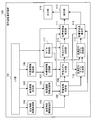
- FIG. 1 is a block diagram schematically showing the configuration of the indoor temperature estimation device 100 according to the embodiment.
- the room temperature estimation device 100 includes an interface unit (hereinafter referred to as an I / F unit) 101, a room temperature information acquisition unit 102, a room temperature history information storage unit 103, a temperature control information acquisition unit 104, and a temperature control information storage unit 105.
- I / F unit interface unit
- External environment information acquisition unit 106 external environment information storage unit 107, influence presence / absence determination unit 108, room temperature model generation unit 109, room temperature model storage unit 110, no effect room temperature estimation unit 111, and room temperature change model.
- the indoor temperature estimation device 100 estimates the room temperature in the future, present or past, if necessary.
- the I / F unit 101 communicates with other devices.
- the I / F unit 101 connects to a network and communicates with other devices.
- the room temperature information acquisition unit 102 acquires room temperature information indicating the room temperature, which is the temperature of the room to be estimated.
- the room temperature information acquisition unit 102 acquires room temperature information from a sensor or the like in a room connected to a network (not shown) via, for example, the I / F unit 101.
- the room temperature information acquisition unit 102 stores the acquired room temperature information in the room temperature history information storage unit 103 as room temperature history information together with the date and time.
- the room temperature history information storage unit 103 stores the room temperature history information.
- the room temperature history information is information indicating the date and time and the room temperature. It is assumed that the room temperature history information storage unit 103 stores at least the history of the learning room temperature, which is the room temperature in the learning period, which is the learning period, as the room temperature history information.
- the temperature control information acquisition unit 104 acquires temperature control information related to the operation of the temperature control device that affects the temperature of the room to be estimated.
- the temperature control information includes operation plan information showing the operation plan of the temperature control device in the target period, which is the period for estimating the room temperature, and operation history information showing the operation history of the temperature control device before the target period. include.
- the temperature control information acquisition unit 104 acquires temperature control information from a temperature control device in a room connected to a network (not shown) via, for example, the I / F unit 101.
- the temperature control device is, for example, an air conditioner, but any device that can control the temperature of the room such as an oil fan heater, a gas fan heater, a stove, hot water heating, central heating, floor heating, a cold fan or a dry mist. good.
- the temperature control information storage unit 105 stores the temperature control information.
- the temperature control information includes the operation planning information and the operation history information as described above. Therefore, the temperature control information acquisition unit 104 functions as an operation plan information storage unit for storing operation plan information and an operation history information storage unit for storing operation history information. It is assumed that the operation history information includes the operation history of the temperature control device at least during the learning period.
- the outside environment information acquisition unit 106 acquires outside environment information indicating the state of the outdoor environment outside the room to be estimated.
- the outside environment information is, for example, weather information of the area to which the room belongs.
- the outside environment information includes at least the non-target environment information indicating the target state which is the outdoor state in the target period and the state history information indicating the outdoor state before the target period.
- the external environment information may indicate humidity, solar radiation, weather, cloud cover, precipitation, atmospheric pressure, wind speed, and the like.
- the external environment information acquisition unit 106 may be acquired from a service provider or the like that provides weather information connected to a network (not shown) via, for example, the I / F unit 101, or is connected to a network (not shown). It may be obtained from an outdoor sensor.
- the external environment information acquisition unit 106 may acquire the future temperature in the weather forecast as the non-target environmental information as the weather information, and it is acquired by the outdoor sensor.
- the future temperature may be predicted from the temperature, and the predicted temperature may be used as non-target environmental information.
- the external environment information storage unit 107 stores external environment information.
- the external environment information includes the non-target environment information and the state history information. Therefore, the external environment information storage unit 107 functions as a non-target environment information storage unit for storing non-target environment information and a state history information storage unit for storing state history information. It is assumed that the state history information includes non-learning environment information indicating a learning state which is a state in the learning period.
- the influence presence / absence determination unit 108 determines whether or not the room temperature is affected by the temperature control device in a certain period based on the temperature control information stored in the temperature control information storage unit 105.
- the period here includes the past, present and future.
- the influence presence / absence determination unit 108 determines the period in which the temperature control device is ON and the predetermined period from the start of the temperature control device OFF as the affected period, and determines the other period as the non-affected period. ..
- the predetermined period is, for example, the period from the start of OFF, specifically, 4 hours. As will be described later, the influence of the temperature control device is attenuated as time passes after turning off. Therefore, the effect is large immediately after OFF and decreases with the passage of time. Since the rate of attenuation varies depending on the case, it is preferable that the predetermined period is determined according to the situation.
- the period may be determined depending on the material of the building, such as 4 hours if the building to which the room belongs is made of wood and 6 hours if the building is made of reinforced concrete.
- the period may be determined based on the floor plan, size, window size, ventilation or heat insulation of the room.
- the period may be determined based on the room temperature change model.
- the period may be changed depending on the data acquisition status. For example, a period of 4 hours may be used before sufficient learning is performed, and a period may be determined based on the room temperature change model after learning the room temperature change model.
- the influence presence / absence determination unit 108 has a learning influence period, which is a period in which the room temperature is affected by the temperature control device, and a learning influence period, which is a period in which the room temperature is not affected by the temperature control device. Specify the period.
- the learning influence period is a period in which the temperature control device is turned on and a predetermined period after the temperature control device is turned off in the learning period.
- the period without learning influence is a period other than the learning period with learning influence.
- the influence presence / absence determination unit 108 determines the target affected period, which is the period in which the room temperature is affected by the temperature control device, and the target non-effect period, which is the period in which the room temperature is not affected by the temperature control device. Identify.
- the target affected period is a period during which the temperature control device is turned on and a predetermined period after the temperature control device is turned off.
- the target non-impact period is a period other than the target impact period within the target period.
- the room temperature model generation unit 109 generates a room temperature model showing the relationship between the outdoor state and the room temperature by learning the learning state and the learning room temperature in the period without learning influence by referring to the room temperature history information and the room temperature outside environment information. do.
- the room temperature model generation unit 109 can create a room temperature model by learning the room temperature in a period without the influence of the temperature control device based on the room temperature learning data created based on the room temperature history information and the outside environment information.
- the room temperature model generation unit 109 generates a room temperature model, which is a trained model that estimates the optimum room temperature in the unaffected period from the room temperature history information and the outside environment information.
- the room temperature learning data is data in which the room temperature indicated by the room temperature history information and the state indicated by the outside environment information are associated with each other in the unaffected period included in the learning period.
- the room temperature model storage unit 110 stores the room temperature model.
- the room temperature model may be generated by the room temperature model generation unit 109, or may be acquired by the model acquisition unit 117 from a network (not shown) via the I / F unit 101, as will be described later.
- the influence-free room temperature estimation unit 111 estimates the room temperature from the influence-free room temperature model stored in the room temperature model storage unit 110, the room temperature history information, and the outside environment information.
- the influence-free room temperature estimation unit 111 refers to the non-learning environment information, and uses a room temperature model to obtain a learning temporary room temperature, which is the room temperature when it is assumed that there is no influence by the temperature control device during the learning influence period. presume.
- the learning temporary room temperature is given to the affected room temperature estimation unit 114.
- the influence-free room temperature estimation unit 111 estimates the first estimated room temperature, which is the room temperature in the target period, from the target state by referring to the non-target environment information.
- the first estimated room temperature is given to the affected room temperature estimation unit 114 and the integration unit 115.
- the room temperature change model generation unit 112 refers to the room temperature history information and the operation history information, and learns the learning room temperature and the learning tentative room temperature during the period with learning influence, thereby producing a room temperature change model showing the change in room temperature by the temperature control device. Generate.
- the room temperature change model generation unit 112 learns the room temperature change during the period affected by the temperature control device based on the room temperature change learning data created based on the room temperature history information and the temperature control information.
- the room temperature change model generation unit 112 generates a room temperature change model, which is a trained model that estimates the optimum room temperature change in the affected period from the room temperature history information and the temperature control information.
- the room temperature change learning data is data generated from the operating state of the room temperature indicated by the room temperature history information and the temperature control device indicated by the temperature control information during the affected period included in the learning period.
- the room temperature change model generation unit 112 has a temperature difference between the temporary learning room temperature at the time when the temperature control device is turned on and the set temperature of the temperature control device, and after the temperature control device is turned on.
- the ON period room temperature change model showing the change in room temperature from when the temperature control device is turned on until the temperature control device is turned off, and the temperature control device are turned off.
- Temperature control by learning the temperature difference between the temporary learning room temperature at the time when the temperature control device was turned off and the learning room temperature when the temperature control device was turned off, and the learning room temperature in the time series after the temperature control device was turned off.
- An OFF period temperature change model showing a change in temperature from when the device is turned off until a predetermined period elapses is generated as a room temperature change model.
- the room temperature change model storage unit 113 stores the room temperature change model.
- the room temperature change model may be generated by the room temperature change model generation unit 112, or may be acquired by the model acquisition unit 117 from a network (not shown) via the I / F unit 101, as will be described later.
- the affected room temperature estimation unit 114 determines the affected room temperature, which is the room temperature when the temperature control device is affected, from the room temperature change model stored in the room temperature change model storage unit 113, the room temperature history information, and the temperature control information. presume.
- the affected room temperature estimation unit 114 uses the room temperature change model by referring to the operation plan information, and from the set temperature of the temperature control device in the target affected period and the target provisional room temperature, in the target affected period. By estimating the change in room temperature, the affected room temperature, which is the room temperature during the target affected period, is estimated.
- the affected room temperature is also referred to as the second estimated room temperature.
- the integrated unit 115 integrates the affected room temperature estimated by the affected room temperature estimation unit 111 and the affected room temperature estimated by the affected room temperature estimation unit 114 to estimate the room temperature during the target period. Generate estimated room temperature information showing the results. For example, the integrated unit 115 can generate an integrated room temperature estimation result by connecting the room temperature estimated during the affected period and the room temperature estimated during the unaffected period. The estimated room temperature information is given to the output unit 116.
- the output unit 116 outputs estimated room temperature information.
- the output unit 116 may display the estimated room temperature information on a display unit such as a display (not shown), and may display the estimated room temperature information on another device connected to a network (not shown) via the I / F unit 101. Estimated room temperature information may be sent.
- the model acquisition unit 117 acquires a room temperature model from the network via the I / F unit 101, and stores the room temperature model in the room temperature model storage unit 110. Further, the model acquisition unit 117 acquires a room temperature change model from the network via the I / F unit 101, and stores the room temperature change model in the room temperature change model storage unit 113. For example, the model acquisition unit 117 acquires a room temperature model when the room temperature model generation unit 109 does not generate a room temperature model, and acquires a room temperature change model when the room temperature change model generation unit 112 does not generate a room temperature change model. Just do it.
- the room temperature estimation device 100 described above can be realized by a computer 120 as shown in FIG. As shown in FIG. 2, the computer 120 includes an auxiliary storage device 121, a communication device 122, a memory 123, and a processor 124.
- the auxiliary storage device 121 stores programs and data necessary for processing by the indoor temperature estimation device 100.
- the communication device 122 communicates with another device.
- the memory 123 provides a working area for the processor 124.
- the processor 124 executes the processing in the room temperature estimation device 100.
- room temperature information acquisition unit 102 For example, room temperature information acquisition unit 102, temperature control information acquisition unit 104, external environment information acquisition unit 106, influence presence / absence determination unit 108, room temperature model generation unit 109, no effect room temperature estimation unit 111, room temperature change model generation unit 112, with influence.
- the room temperature estimation unit 114, the integration unit 115, the output unit 116, and the model acquisition unit 117 are realized by the processor 124 reading the program stored in the auxiliary storage device 121 into the memory 123 and executing the program. Can be done.
- the room temperature history information storage unit 103, the temperature control information storage unit 105, the external environment information storage unit 107, the room temperature model storage unit 110, and the room temperature change model storage unit 113 are realized by the processor 124 using the auxiliary storage device 121. Can be done.
- the I / F unit 101 can be realized by the processor 124 using the communication device 122.
- the above program may be provided through a network, or may be recorded on a recording medium and provided. That is, the above program may be provided as, for example, a program product.
- the indoor temperature estimation device 100 may be built in the temperature control device or may be a separate device. Further, the indoor temperature estimation device 100 may exist on the cloud server. Further, the indoor temperature estimation device 100 may be divided into a plurality of configurations and may be realized by a plurality of devices.
- the operation of the indoor temperature estimation device 100 differs between the learning phase and the utilization phase.
- the learning phase and the utilization phase do not have to be divided into periods, and may be repeated alternately or in parallel.
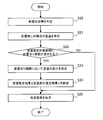
- FIG. 3 is a flowchart showing a learning process of the indoor temperature estimation device 100.
- the order of the steps in this flowchart is an example, and the order may be changed.
- the room temperature history information storage unit 103, the temperature control information storage unit 105, and the external environment information storage unit 107 are provided with necessary information by the room temperature information acquisition unit 102, the temperature control information acquisition unit 104, and the external environment information acquisition unit 106. It shall be remembered.
- FIG. 4 is a graph showing an example of room temperature history information, temperature control information, and external environment information used in the learning process of the indoor temperature estimation device 100.
- FIG. 4 shows information on the day before the day when the learning process is performed.
- the temperature control device is an air conditioner that harmonizes the air
- the room is a room of a wooden house.
- the learning period is one day before the day when the learning process is performed.
- the solid line L1 in FIG. 4 represents the room temperature indicated by the room temperature history information.
- the alternate long and short dash line L2 in FIG. 4 represents the air temperature indicated by the outside environment information.
- the air temperature is the temperature observed in the area to which the room belongs.
- the arrows and ON and OFF in FIG. 4 represent the operating states indicated by the temperature control information.
- the air conditioner is off from 0:00 am to 6:00 am in one day. Further, from 6:00 am to 9:00 am, the air conditioner is ON and its set temperature is 20 ° C. Furthermore, the air conditioner is off from 9:00 am to 12:00 pm. The following learning process will be described using this example.
- the influence presence / absence determination unit 108 has an influence period in which the temperature control equipment has an influence on the room temperature and an influence of the temperature control equipment on the room temperature based on the operation history information included in the temperature control information. It is determined that there is no influence period (S10).
- the period with influence here is also referred to as the period with learning influence, and the period without influence here is also referred to as the period without learning influence.
- FIG. 5 shows an example of the result of the influence presence / absence determination. In FIG. 5, the result of the determination is indicated by a dotted arrow. As shown in FIG. 5, the period during which the temperature control device is ON, that is, from 6:00 am to 9:00 am is an affected period.
- a predetermined period from the start of OFF when the temperature control device is turned OFF is also an affected period.
- the predetermined period is 4 hours from the start of OFF. Therefore, the period from 9:00 am to 1:00 pm is an affected period.
- the no-effect period is a period other than that, and in one day of this example, the no-effect period is from 0:00 am to 6:00 am and from 1:00 pm to 12:00 pm.
- the reason why the predetermined period is set to 4 hours in this example is that the influence of the temperature control device has almost disappeared 4 hours after the start of OFF, and the subsequent explanation of the room temperature change model generation will be given. Describe in detail.
- the room temperature model generation unit 109 learns the room temperature in the unaffected period by so-called supervised learning using the room temperature learning data based on the combination of the room temperature history information and the outside environment information.
- supervised learning is a method of learning the characteristics of the learning data by giving the learning data having a combination of the input and the output (correct answer) to the learning device, and inferring the output from the input. To say.
- the solid line L3 in FIG. 5 represents an example of room temperature during the unaffected period used for learning.
- the room temperature here is also referred to as a learning room temperature.
- the alternate long and short dash line L4 in FIG. 5 shows an example of the temperature used for learning.
- the air temperature here is also called the learning temperature as a learning state.
- the learning data in this example is data in which these temperatures and room temperature (correct answer) are associated with each other during the no-effect period.
- the room temperature at the time to be estimated for example, 8:00 pm
- the past for example, 7:00 pm, one hour before
- the temperature of the past and the room temperature of the past for example, 7:00 pm, which is one hour ago
- the temperature of the building to which the room belongs is affected by the air temperature, it is preferable to input the air temperature.
- the building is affected by the past external environment by storing heat, it is preferable to input the past temperature.
- the room is affected by the past room temperature by storing heat, it is preferable to input the past room temperature.
- the building Since the building is warmed by solar radiation, it is appropriate to add the amount of solar radiation as an input. Since buildings are affected by humidity and precipitation, it is preferable to add humidity and precipitation as input. Further, weather, cloud cover, atmospheric pressure, wind speed, etc. may be added to the input.
- the input may be reduced so that the output can be obtained even from a small number of inputs.
- the estimated value can be obtained from the model even if there is no room temperature in the past.
- an estimated value can be obtained from the model even if there is no temperature.
- the room temperature model generation unit 109 learns according to, for example, linear regression. Specifically, the room temperature model generation unit 109 learns the weighting coefficient so that the square error between the linear weighted sum of the inputs and the output (correct answer) described above is minimized.
- a learning algorithm different from the above may be used. For example, support vector regression, random forest regression, neural network model, etc. may be used.
- the room temperature model generation unit 109 generates a trained model by executing the above learning.
- the room temperature model storage unit 110 stores the room temperature model generated by the room temperature model generation unit 109 (S12).
- the affected room temperature estimation unit 111 estimates the room temperature using the room temperature model stored in the room temperature model storage unit 110 during the affected period (S13).
- the room temperature estimated here is also referred to as a learning temporary room temperature.
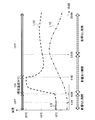
- FIG. 6 is a graph showing an example of the room temperature estimation result.
- the broken line L5 represents the room temperature estimated in step S13.
- the affected period is a period affected by the temperature control device, but since the room temperature model learns the room temperature during the non-affected period, in step S13, it is assumed that the temperature control device has no effect. Room temperature is estimated.
- This room temperature estimation result is used to learn the room temperature change by the temperature control device.
- This step S13 is important for learning the room temperature change representing the change between the case where the temperature control device is affected and the case where the temperature control device is not affected.
- it is not possible to detect room temperature without the influence of the temperature control equipment during the period when the temperature control equipment has the influence. Therefore, it is not possible to measure the change value between the room temperature when there is an influence of the temperature control device and the room temperature when there is no influence, and supervised learning cannot be performed.
- the room temperature when there is no such effect cannot be detected, but the value can be obtained indirectly by estimating using the room temperature model.
- the solid line L6 in FIG. 6 represents the room temperature during the no-effect period, and the alternate long and short dash line L4 represents the air temperature. These values can actually be detected.
- the room temperature change model generation unit 112 is subjected to so-called supervised learning based on the room temperature change learning data based on the combination of the room temperature history information, the temperature control information, and the outside environment information, in the affected period.
- the room temperature change is learned, and a room temperature change model, which is a trained model, is generated (S14).
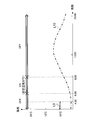
- FIG. 7 is a graph for explaining a room temperature change model during an affected period.
- the temperature control device is turned on at the set temperature of 20 ° C. at 6:00 am when the room temperature is 10.5 ° C.
- the difference between the set temperature at 6:00 am at the start of ON and the room temperature is the temperature difference D1 at the start of ON, the value of D1 is 9.5 ° C.
- the temperature control device was turned off.
- the room temperature estimated at 9:00 am when there was no effect was 12.2 ° C.
- This value is the value estimated in step S13. Assuming that the difference between the room temperature at 9:00 am at the start of OFF and the room temperature estimated when there is no effect is the temperature difference D2 at the start of OFF, the D2 value is 7.7 ° C.
- the room temperature change model is divided into two, a room temperature change model after ON during the period when the temperature control device is ON and a room temperature change model after OFF during a predetermined period from the start of OFF of the temperature control device. Can be done.
- the room temperature is considered to approach the set temperature of the temperature control device. Therefore, it is considered that the temperature difference between the room temperature and the set temperature is attenuated as compared with the time when the ON is started.
- the degree of attenuation depends on the performance of the temperature control device, the size of the room, and the like. Therefore, in order to estimate the room temperature change with high accuracy, it is desirable to learn the room temperature change model according to each room. However, it is also effective to acquire and use a trained model trained in a room with similar attributes.
- the temperature difference at the start of ON and the elapsed time from the start of ON are input, and the temperature difference between the set temperature during the ON period and the room temperature is output (correct answer) and input. It is the data that associates the output with each other.
- the room temperature change model generation unit 112 prepares, for example, an exponential function, a linear function, a power function, etc. as a model, selects a function so as to minimize the square error between the model output and the correct answer data, and selects the function. Determine the parameters to characterize.
- the model may be a sum of functions as described above, or may be a nonparametric model. Functions may be trained using genetic algorithms or neural networks.
- a room temperature change model is generated after ON.
- the output of the room temperature change model after ON may be the temperature difference between the set temperature and the room temperature, or may be the room temperature estimated by subtracting the temperature difference from the set temperature, or from the estimated room temperature.
- the estimated room temperature change may be obtained by subtracting the estimated room temperature when there is no effect.
- the room temperature change model after ON will be described as outputting an estimated room temperature change.
- the room temperature that has been excessively warmed or cooled by the temperature control device approaches an unaffected state due to heat transfer. That is, it is considered that the temperature difference between the room temperature and the room temperature estimated when there is no influence is attenuated as compared with the time when the OFF is started.
- the degree of attenuation depends on the heat insulation performance or size of the room. Therefore, in order to estimate the room temperature change with high accuracy, it is desirable to learn the room temperature change model according to each room. However, it is also effective to acquire and use a trained model trained in a room with similar attributes.
- the learning data in this example inputs the temperature difference at the start of OFF and the elapsed time from the start of OFF, and outputs the temperature difference between the room temperature during the OFF period and the room temperature estimated when there is no effect (correct answer). ), Which is the data in which the input and the output are related to each other.
- the room temperature change model generation unit 112 prepares, for example, an exponential function, a linear function, a power function, etc. as a model, selects a function so as to minimize the square error between the model output and the correct answer data, and selects the function. Determine the parameters to characterize.
- the model may be a sum of functions as described above, or may be a nonparametric model. Functions may be trained using genetic algorithms or neural networks. By executing the above learning, a room temperature change model is generated after turning off.
- the room temperature change model after OFF is modeled as an exponential function represented by the following equation (1). Assuming that heat transfer is due to heat conduction, the heat flow is proportional to the temperature difference, and the solution at that time is an exponential function.
- ⁇ T ⁇ T OFF exp (- ⁇ t) (1)
- t is the elapsed time from the start of OFF
- ⁇ T is the temperature difference between the room temperature t hours after the start of OFF and the room temperature estimated when there is no effect
- ⁇ T OFF is the room temperature at the start of OFF.
- ⁇ represents the speed of decay.
- the predetermined period may be determined based on the room temperature change model after OFF.
- the influence presence / absence determination unit 108 may determine, for example, the period until ⁇ T attenuates to 10% or less of ⁇ T OFF as the period with influence, and the period after that as the period without influence.
- the influence presence / absence determination unit 108 may determine that the period until ⁇ T decays to 1 ° C. or lower is the period with influence, and the period after that is the period without influence.
- the values given here as an example are examples, and a predetermined period may be determined by another value.
- the room temperature change model storage unit 113 stores the room temperature change model generated by the room temperature change model generation unit 112 (S15). This step is omitted if the room temperature change model is not generated.
- the model acquisition unit 117 may acquire the room temperature model and the room temperature change model from the network via the I / F unit 101. Then, the model acquisition unit 117 may store the room temperature model in the room temperature model storage unit 110 and store the room temperature change model in the room temperature change model storage unit 113. Even in such a case, it is desirable that the room temperature model and the room temperature change model are generated by the same processing as the flowchart shown in FIG.
- FIG. 8 is a flowchart showing an estimation process of the indoor temperature estimation device 100.
- the order of the steps in this flowchart is an example, and the order may be changed.
- the room temperature history information storage unit 103, the temperature control information storage unit 105, and the external environment information storage unit 107 are provided with necessary information by the room temperature information acquisition unit 102, the temperature control information acquisition unit 104, and the external environment information acquisition unit 106. It shall be remembered.
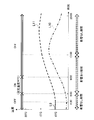
- FIG. 9 is a graph showing an example of room temperature history information, temperature control information, and external environment information used in the estimation process of the indoor temperature estimation device 100.
- FIG. 9 shows data on the day when the estimation process is performed, and the temperature control device is specifically an air conditioner.
- the estimation process is performed at 4:30 am.
- the solid line L9 in FIG. 9 represents the room temperature indicated by the room temperature history information stored in the room temperature history information storage unit 103, and stores the room temperature up to 4:30 am when the estimation process is performed.
- the alternate long and short dash line L10 in FIG. 9 represents the air temperature indicated by the external environment information stored in the external environment information storage unit 107.
- the temperature is the forecast temperature for the area to which the room belongs.
- the air temperature here is the target temperature as the target state.
- the arrows and ON and OFF in FIG. 9 represent the motion plan indicated by the motion plan information included in the temperature control information.
- it is scheduled to be OFF from 0:00 am to 6:00 am
- the air conditioner is ON from 6:00 am to 9:00 am
- the set temperature is 20 ° C. It is scheduled, and the air conditioner will be off from 9:00 am to 12:00 pm. Subsequent estimation processing will be described using this example.
- the influence presence / absence determination unit 108 is based on the operation plan information included in the temperature control information, and has an influence period in which the room temperature is affected by the temperature control device and an influence period in which the room temperature is not affected by the temperature control device. Is determined (S20).
- the period with influence here is also referred to as the period with influence on the target, and the period without influence here is also referred to as the period without influence on the target.
- the period during which the temperature control device is ON that is, from 6:00 am to 9:00 am is an affected period.
- the predetermined period from the start of OFF of the temperature control device is also an affected period, but in this example, the predetermined period is 4 hours from the start of OFF. Therefore, the period from 9:00 am to 1:00 pm is an affected period.
- the no-effect period is another period, and in this example, it is from 0:00 am to 6:00 am and from 1:00 pm to 12:00 pm.
- the influence-free room temperature estimation unit 111 estimates the room temperature using the room temperature model stored in the room temperature model storage unit 110 (S21).
- the room temperature estimated here is also referred to as a first estimated room temperature.
- the broken line L11 in FIG. 10 shows an example of the room temperature estimation result. In this example, the room temperature up to 4:30 am and the room temperature after 4:30 am are estimated using the forecast temperature. Since the room temperature model learns the room temperature during the no-effect period, the estimation result indicates the room temperature when the temperature control device is continuously turned off.
- the room temperature model used may be input only to air temperature or only to room temperature. For example, when the input is only room temperature, the estimation accuracy deteriorates as time passes from the time when the input room temperature is obtained, but the estimation process of the indoor temperature estimation device 100 is performed without acquiring the external environment information. Is possible.
- the integration unit 115 determines whether or not the room temperature estimation target period, which is the room temperature estimation target period, includes an affected period (S22). If the room temperature estimation target period includes the affected period (Yes in S22), the process proceeds to step S23, and if the room temperature estimation target period does not include the affected period (No in S22), the process proceeds to step S23. The process proceeds to step S25.
- the affected room temperature estimation unit 114 uses the room temperature change model stored in the room temperature change model storage unit 113 to influence the room temperature history information, the temperature control information, and the room temperature when there is no effect. By estimating the change in room temperature during the period with influence, the room temperature during the period with influence is estimated.
- the room temperature estimated here is also referred to as a second estimated room temperature.
- the temperature difference at the start of ON can be estimated from the set temperature at 6:00 am at the start of ON and the room temperature when there is no influence, and the temperature difference at the start of ON can be estimated as the room temperature after ON.
- the room temperature change during the ON period can be estimated.
- the difference between the room temperature at 9:00 am, which is the start of OFF, and the room temperature when there is no effect at that time in the room temperature change estimation result during the ON period is defined as the temperature difference at the start of OFF, and after OFF.
- the integrated unit 115 is the final room temperature estimation result by integrating the room temperature estimation result given by the affected room temperature estimation unit 111 and the room temperature change estimation result given by the affected room temperature estimation unit 114. Generate an integrated room temperature estimation result (S24).
- the integration unit 115 integrates the room temperature during the unaffected period estimated by the affected room temperature estimation unit 111 and the room temperature during the affected period estimated by the affected room temperature estimation unit 114. Generate room temperature estimation results.
- the broken line L12 in FIG. 11 shows an example of the room temperature shown in the integrated room temperature estimation result.
- step S25 the output unit 116 outputs the integrated room temperature estimation result.
- the integrated unit 115 uses the room temperature estimation result estimated in step S21 as the integrated room temperature estimation result. Is given to the output unit 116.
- the output integrated room temperature estimation result is used as follows. For example, suppose the temperature control device is an air conditioner and the room is the living room of the user's house.
- the room temperature estimation device 100 predicts the future room temperature when the air conditioner is OFF, and when the predicted room temperature is high and may cause heat stroke of the user, or when the predicted change in the room temperature is expected. When there is a risk of significantly destabilizing the user's blood pressure, the user is notified of the estimated room temperature or the air conditioner is controlled to prevent the user's health damage in advance.
- the room temperature estimation device 100 notifies the user of the room temperature at the time of returning home by predicting the room temperature after the air conditioner is turned on, and informs the user of the air conditioner so that the room becomes comfortable when returning home. Prompts for operation settings. Further, the indoor temperature estimation device 100 predicts the room temperature after the air conditioner is turned off, for example, to show the user that comfort can be maintained even if the air conditioner is turned off a little before the work time, and promotes energy saving.
- the indoor temperature estimation device 100 learns by classifying the cases according to the presence or absence of the influence of the temperature control device and using the room temperature model in the no influence period and the room temperature change model in the influence period.
- the finished model can be simplified.
- the room temperature model in the unaffected period can simplify the model by removing the influence of the temperature control device, and the room temperature change model in the affected period is a model by passing the influence of the outside environment to the room temperature model. Can be simplified.
- the more complicated the model the more likely it is that overfitting will occur, and more learning data will be required to improve accuracy.
- the number of data required to satisfy the required estimation accuracy when training the model can be reduced, and thus the start of service provision using the room temperature estimated value can be accelerated. can.
- the amount of data to be processed or stored when using the model can be reduced, and the calculation load can be reduced.
- the present disclosure is not limited to these embodiments.
- an example of the learning process and the estimation process when the temperature control device warms the room is shown, but the learning process and the estimation process can be performed in the same manner when the temperature control device cools the room.
- Room temperature estimation device 101 I / F unit, 102 Room temperature information acquisition unit, 103 Room temperature history information storage unit, 104 Temperature control information acquisition unit, 105 Temperature control information storage unit, 106 External environment information acquisition unit, 107 External environment information Storage unit, 108 Impact presence / absence determination unit, 109 Room temperature model generation unit, 110 Room temperature model storage unit, 111 Impact-free room temperature estimation unit, 112 Room temperature change model generation unit, 113 Room temperature change model storage unit, 114 Impacted room temperature estimation unit, 115 Integration part, 116 output part, 117 model acquisition part.
Landscapes
- Engineering & Computer Science (AREA)
- Signal Processing (AREA)
- Chemical & Material Sciences (AREA)
- Combustion & Propulsion (AREA)
- Mechanical Engineering (AREA)
- General Engineering & Computer Science (AREA)
- Physics & Mathematics (AREA)
- Fuzzy Systems (AREA)
- Mathematical Physics (AREA)
- Air Conditioning Control Device (AREA)
Priority Applications (5)
| Application Number | Priority Date | Filing Date | Title |
|---|---|---|---|
| PCT/JP2020/019590 WO2021234763A1 (ja) | 2020-05-18 | 2020-05-18 | 室内温度推定装置、プログラム及び室内温度推定方法 |
| DE112020007213.4T DE112020007213T5 (de) | 2020-05-18 | 2020-05-18 | Einrichtung zum Schätzen einer Innenraumtemperatur, Programm und Verfahren zum Schätzen einer Innenraumtemperatur |
| JP2022523746A JP7499851B2 (ja) | 2020-05-18 | 2020-05-18 | 室内温度推定装置、プログラム、室内温度推定方法及び温度制御機器 |
| US17/917,255 US12410936B2 (en) | 2020-05-18 | 2020-05-18 | Indoor-temperature estimation apparatus, non-transitory computer-readable medium, and indoor-temperature estimation method |
| CN202080100771.1A CN115552182A (zh) | 2020-05-18 | 2020-05-18 | 室内温度估计装置、程序以及室内温度估计方法 |
Applications Claiming Priority (1)
| Application Number | Priority Date | Filing Date | Title |
|---|---|---|---|
| PCT/JP2020/019590 WO2021234763A1 (ja) | 2020-05-18 | 2020-05-18 | 室内温度推定装置、プログラム及び室内温度推定方法 |
Publications (1)
| Publication Number | Publication Date |
|---|---|
| WO2021234763A1 true WO2021234763A1 (ja) | 2021-11-25 |
Family
ID=78708208
Family Applications (1)
| Application Number | Title | Priority Date | Filing Date |
|---|---|---|---|
| PCT/JP2020/019590 Ceased WO2021234763A1 (ja) | 2020-05-18 | 2020-05-18 | 室内温度推定装置、プログラム及び室内温度推定方法 |
Country Status (5)
| Country | Link |
|---|---|
| US (1) | US12410936B2 (https=) |
| JP (1) | JP7499851B2 (https=) |
| CN (1) | CN115552182A (https=) |
| DE (1) | DE112020007213T5 (https=) |
| WO (1) | WO2021234763A1 (https=) |
Families Citing this family (3)
| Publication number | Priority date | Publication date | Assignee | Title |
|---|---|---|---|---|
| KR102950870B1 (ko) * | 2020-08-20 | 2026-04-09 | 삼성전자주식회사 | 전자 장치 및 그 제어 방법 |
| US12259150B2 (en) * | 2022-06-27 | 2025-03-25 | Saudi Arabian Oil Company | Systems and methods for intelligent HVAC distribution |
| CN118729476A (zh) * | 2024-07-03 | 2024-10-01 | 深圳Tcl新技术有限公司 | 空调调节方法、装置、电子设备及计算机可读存储介质 |
Citations (4)
| Publication number | Priority date | Publication date | Assignee | Title |
|---|---|---|---|---|
| JP2017067427A (ja) * | 2015-10-01 | 2017-04-06 | パナソニックIpマネジメント株式会社 | 空調制御方法、空調制御装置及び空調制御プログラム |
| JP2019100687A (ja) * | 2017-12-08 | 2019-06-24 | パナソニックIpマネジメント株式会社 | 空調制御方法及び空調制御装置 |
| JP2019184154A (ja) * | 2018-04-10 | 2019-10-24 | 三菱電機株式会社 | 空調装置 |
| JP2020060331A (ja) * | 2018-10-11 | 2020-04-16 | 株式会社富士通ゼネラル | 空気調和機、データ送信方法及び空気調和システム |
Family Cites Families (12)
| Publication number | Priority date | Publication date | Assignee | Title |
|---|---|---|---|---|
| DE60303742T2 (de) * | 2002-05-15 | 2006-08-10 | Sanden Corp., Isesaki | Steuereinrichtung |
| JP5950610B2 (ja) | 2012-02-16 | 2016-07-13 | 三菱電機株式会社 | 空気調和機 |
| JP2013204985A (ja) | 2012-03-29 | 2013-10-07 | Panahome Corp | 室内温度制御システム及びそれを具えた建物 |
| US9910449B2 (en) * | 2013-04-19 | 2018-03-06 | Google Llc | Generating and implementing thermodynamic models of a structure |
| US9857238B2 (en) * | 2014-04-18 | 2018-01-02 | Google Inc. | Thermodynamic model generation and implementation using observed HVAC and/or enclosure characteristics |
| JP6723799B2 (ja) * | 2016-04-08 | 2020-07-15 | 三菱電機ビルテクノサービス株式会社 | 空調吹き出し温度推定装置及びプログラム |
| JP6827470B2 (ja) | 2016-08-04 | 2021-02-10 | シャープ株式会社 | 空調制御システム |
| JP6861373B2 (ja) | 2016-12-05 | 2021-04-21 | パナソニックIpマネジメント株式会社 | 制御方法及び制御システム |
| US10704796B2 (en) * | 2017-01-06 | 2020-07-07 | Johnson Controls Technology Company | HVAC system with timeseries dimensional mismatch handling |
| US11162701B2 (en) * | 2020-02-25 | 2021-11-02 | Mitsubishi Electric Research Laboratories, Inc. | Controlling HVAC system by inversing airflow dynamics |
| KR102950870B1 (ko) * | 2020-08-20 | 2026-04-09 | 삼성전자주식회사 | 전자 장치 및 그 제어 방법 |
| CN114992814B (zh) * | 2022-06-20 | 2023-12-15 | 南京天加环境科技有限公司 | 一种空调舒适性的控制方法、系统及空调 |
-
2020
- 2020-05-18 US US17/917,255 patent/US12410936B2/en active Active
- 2020-05-18 DE DE112020007213.4T patent/DE112020007213T5/de active Pending
- 2020-05-18 WO PCT/JP2020/019590 patent/WO2021234763A1/ja not_active Ceased
- 2020-05-18 CN CN202080100771.1A patent/CN115552182A/zh active Pending
- 2020-05-18 JP JP2022523746A patent/JP7499851B2/ja active Active
Patent Citations (4)
| Publication number | Priority date | Publication date | Assignee | Title |
|---|---|---|---|---|
| JP2017067427A (ja) * | 2015-10-01 | 2017-04-06 | パナソニックIpマネジメント株式会社 | 空調制御方法、空調制御装置及び空調制御プログラム |
| JP2019100687A (ja) * | 2017-12-08 | 2019-06-24 | パナソニックIpマネジメント株式会社 | 空調制御方法及び空調制御装置 |
| JP2019184154A (ja) * | 2018-04-10 | 2019-10-24 | 三菱電機株式会社 | 空調装置 |
| JP2020060331A (ja) * | 2018-10-11 | 2020-04-16 | 株式会社富士通ゼネラル | 空気調和機、データ送信方法及び空気調和システム |
Also Published As
| Publication number | Publication date |
|---|---|
| US12410936B2 (en) | 2025-09-09 |
| JP7499851B2 (ja) | 2024-06-14 |
| DE112020007213T5 (de) | 2023-03-09 |
| JPWO2021234763A1 (https=) | 2021-11-25 |
| CN115552182A (zh) | 2022-12-30 |
| US20230123181A1 (en) | 2023-04-20 |
Similar Documents
| Publication | Publication Date | Title |
|---|---|---|
| KR102212663B1 (ko) | 목표 온도를 기반으로 하는 빌딩의 열·공조 시스템에 대한 공급 전력 제어 방법 및 장치 | |
| CN115167562B (zh) | 一种机房温度控制方法和装置 | |
| Moon et al. | Development of a thermal control algorithm using artificial neural network models for improved thermal comfort and energy efficiency in accommodation buildings | |
| US10107513B2 (en) | Thermodynamic modeling for enclosures | |
| JP5663596B2 (ja) | Hvac制御システムおよび方法 | |
| JP5572799B2 (ja) | 空調システム制御装置 | |
| CN106842914B (zh) | 一种温度控制节能处理方法、装置及系统 | |
| JP2020154785A (ja) | 予測方法、予測プログラムおよびモデル学習方法 | |
| Soudari et al. | Learning based personalized energy management systems for residential buildings | |
| Biemann et al. | Data center HVAC control harnessing flexibility potential via real-time pricing cost optimization using reinforcement learning | |
| WO2021234763A1 (ja) | 室内温度推定装置、プログラム及び室内温度推定方法 | |
| CN116227725A (zh) | 一种建筑物空调系统的负荷预测方法、装置及电子设备 | |
| JP2020067270A (ja) | 空調制御プログラム、空調制御方法および空調制御装置 | |
| KR20230093678A (ko) | 강화학습을 이용한 건물의 에너지를 관리하는 장치 및 방법 | |
| EP3771957A1 (en) | Method and system for controlling of heating, ventilation and air conditioning | |
| JP2021004703A (ja) | カビ抑制システムおよびプログラム | |
| CN117408170A (zh) | 一种适用于数据中心水冷系统的节能预测控制方法 | |
| Soudari et al. | Predictive smart thermostat controller for heating, ventilation, and air-conditioning systems | |
| CN118442680A (zh) | 空调智能控制方法、装置、设备及介质 | |
| CN119065411A (zh) | 用于温度控制的预测模型训练方法及温度控制方法和系统 | |
| Ozawa et al. | Data-driven HVAC control using symbolic regression: design and implementation | |
| US20200278130A1 (en) | Operation control method, storage medium, and operation control device | |
| JP7332865B2 (ja) | 情報処理方法、情報処理装置、及びプログラム | |
| US20210033299A1 (en) | Method and system for controlling heating, ventilation and air conditioning | |
| CN113310176A (zh) | 信息处理装置 |
Legal Events
| Date | Code | Title | Description |
|---|---|---|---|
| 121 | Ep: the epo has been informed by wipo that ep was designated in this application |
Ref document number: 20936427 Country of ref document: EP Kind code of ref document: A1 |
|
| ENP | Entry into the national phase |
Ref document number: 2022523746 Country of ref document: JP Kind code of ref document: A |
|
| 122 | Ep: pct application non-entry in european phase |
Ref document number: 20936427 Country of ref document: EP Kind code of ref document: A1 |
|
| WWG | Wipo information: grant in national office |
Ref document number: 17917255 Country of ref document: US |