WO2021230131A1 - 軽度認知障害治療剤 - Google Patents
軽度認知障害治療剤 Download PDFInfo
- Publication number
- WO2021230131A1 WO2021230131A1 PCT/JP2021/017368 JP2021017368W WO2021230131A1 WO 2021230131 A1 WO2021230131 A1 WO 2021230131A1 JP 2021017368 W JP2021017368 W JP 2021017368W WO 2021230131 A1 WO2021230131 A1 WO 2021230131A1
- Authority
- WO
- WIPO (PCT)
- Prior art keywords
- opc
- cilostazol
- cognitive impairment
- dose
- mild cognitive
- Prior art date
- Legal status (The legal status is an assumption and is not a legal conclusion. Google has not performed a legal analysis and makes no representation as to the accuracy of the status listed.)
- Ceased
Links
Images

Classifications
-
- A—HUMAN NECESSITIES
- A61—MEDICAL OR VETERINARY SCIENCE; HYGIENE
- A61P—SPECIFIC THERAPEUTIC ACTIVITY OF CHEMICAL COMPOUNDS OR MEDICINAL PREPARATIONS
- A61P25/00—Drugs for disorders of the nervous system
- A61P25/28—Drugs for disorders of the nervous system for treating neurodegenerative disorders of the central nervous system, e.g. nootropic agents, cognition enhancers, drugs for treating Alzheimer's disease or other forms of dementia
-
- A—HUMAN NECESSITIES
- A61—MEDICAL OR VETERINARY SCIENCE; HYGIENE
- A61K—PREPARATIONS FOR MEDICAL, DENTAL OR TOILETRY PURPOSES
- A61K31/00—Medicinal preparations containing organic active ingredients
- A61K31/33—Heterocyclic compounds
- A61K31/395—Heterocyclic compounds having nitrogen as a ring hetero atom, e.g. guanethidine or rifamycins
- A61K31/435—Heterocyclic compounds having nitrogen as a ring hetero atom, e.g. guanethidine or rifamycins having six-membered rings with one nitrogen as the only ring hetero atom
- A61K31/47—Quinolines; Isoquinolines
- A61K31/4709—Non-condensed quinolines and containing further heterocyclic rings
Definitions
- the present invention belongs to the technical field of a therapeutic agent for cognitive disorders.
- the present invention relates to a therapeutic agent for mild cognitive impairment containing cilostazol as an active ingredient.
- the present invention relates to a therapeutic agent for mild cognitive impairment containing cilostazol as an active ingredient, and relates to a dosage of the cilostazol.
- Mild cognitive impairment is a condition just before dementia. Although memory impairment such as forgetfulness in dementia occurs, the symptoms are still mild, and it is a disease located between the normal state and dementia. In MCI, mild cognitive impairment is initially observed, regardless of the type of harmful protein that accumulates, but at this point irreversible degeneration of cranial nerve tissue is often not yet present. Whether or not the condition is MCI is clinically diagnosed from the following matters. ⁇ Is the complaint of memory disorder recognized by the person or family? ⁇ Is there any objective disorder of one or more cognitive functions (memory, orientation, etc.)? ⁇ Is activity of daily living normal? ⁇ In dementia Isn't it?
- Alzheimer's disease there are several types of dementia depending on the abnormal part of the brain, such as Alzheimer's disease, cerebrovascular dementia, frontotemporal dementia, Lewy body dementia, and Parkinson's disease. Dementia associated with this is known. Many of these dementias have pathologically irreversible neurodegeneration.
- a typical dementia is the Alzheimer type, which accounts for about 50% to 70% of dementia (Non-Patent Document 1).
- MCI the stage of MCI, which is one step before the onset of Alzheimer's disease, accumulation of amyloid beta in the brain, which is the cause of Alzheimer's disease, is observed as in Alzheimer's disease. Therefore, if the MCI is left untreated, it is considered that Alzheimer-type dementia will develop in a few years. While it is difficult to completely cure Alzheimer's disease, MCI due to Alzheimer's disease can delay the onset of dementia with appropriate therapeutic intervention.
- MOCA Montorial Cognitive Assessment
- MCI is an inspection method consisting of visuospatial / executive function, naming, memory, attention, recitation, word recall, abstract concept, delayed reproduction, and orientation.
- MCI is 25 points or less, and the sensitivity is 80 to 100% and the specificity is 50 to 87%.
- the main object of the present invention is to provide a method and a therapeutic agent for preventing or delaying the progression from mild cognitive impairment to dementia. Another issue is to provide effective methods and therapeutic agents for improving cognitive function in patients with mild cognitive impairment.
- a composition containing sirostazole or a salt thereof as an active ingredient which is administered to a subject to determine a second dose of the active ingredient for treating mild cognitive impairment or dementia. Mild, the active ingredient is administered to the subject at an initial dose prior to the decision, or the active ingredient is administered to the subject at a second dose after the initial dose is administered to the subject.
- a therapeutic agent for cognitive impairment or dementia [2] After administration of the initial dose of the active ingredient to the subject, the abundance of cilostazol, OPC-13015, and / or other metabolites in the sample derived from the subject is measured in the above [1]. The therapeutic agent for mild cognitive impairment or dementia described.
- the second dose of the active ingredient of cilostazol in the subject is based on the abundance ratio of cilostazol or OPC-13015 in the cognitive dysfunction exacerbation group known to have exacerbated cognitive dysfunction.
- the dose is determined to be higher than the initial dose within the range of the pharmaceutically acceptable dose of cilostazol, as described above.
- the therapeutic agent for mild cognitive impairment or dementia according to [4] or [5].
- the therapeutic agent for mild cognitive impairment or dementia according to paragraph 1.
- Mild cognitive impairment according to any one of the above [2] to [7] in which sampling from the subject is performed within the range of 1 hour to 7 hours after administration of the initial dose of the active ingredient.
- a therapeutic agent for disorders or dementia [9] The therapeutic agent for mild cognitive impairment or dementia according to any one of the above [2] to [8], wherein the sample is plasma.
- a therapeutic agent for cognitive impairment or dementia [12] The therapeutic agent for mild cognitive impairment or dementia according to any one of the above [1] to [11], wherein the dementia is Alzheimer's disease. [13] The therapeutic agent for mild cognitive impairment or dementia according to any one of the above [1] to [11], wherein the mild cognitive impairment is a decrease in orientation. [14] The therapeutic agent for mild cognitive impairment or dementia according to any one of the above [1] to [13], wherein the agent is an orally-administered preparation. [15] The therapeutic agent for mild cognitive impairment or dementia according to any one of the above [1] to [14], wherein the subject has not been diagnosed with intermittent claudication or stroke.
- a method for determining a second dose of cilostazol for treating mild cognitive impairment or dementia comprising the following steps 1-3: 1. 1. The abundance of cilostazol and OPC-13015 in a sample derived from a subject to which a composition containing cilostazol or a salt thereof as an active ingredient was administered at an initial dose, or in addition to them, OPC-13213 and / or OPC-13217. The process of measuring the abundance, 2. 2. 2.
- the ratio, or the abundance ratio of OPC-13015 to the total abundance of cilostazol, OPC-13015 and OPC-13213 and / or OPC-13217, and the abundance ratio of cilostazol, or OPC-13015 in the subject is the ratio, or the abundance ratio of OPC-13015 to the total abundance of cilostazol, OPC-13015 and OPC-13213 and / or OPC-13217, and the abundance ratio of cilostazol, or OPC-13015 in the subject.
- the abundance ratio of cilostazol or OPC-13015 to the total abundance of cilostazol and OPC-13015 in the cognitive dysfunction exacerbated group known to be exacerbated, or cilostazol, OPC-13015.
- the sample derived from the subject is sampled within the range of 1 hour to 7 hours after administration of the initial dose of the active ingredient, according to any one of the above [16] to [18]. The method described.
- the method according to any one of the above [16] to [19], wherein the sample is plasma.
- a treatment system for mild cognitive impairment or dementia comprising an analyzer for measuring the abundance of sirostazole, OPC-13015, and / or other metabolites in.
- the analyzer is an apparatus selected from the group consisting of LC, LC-MS, LC-MS / MS, and an ELISA analyzer. Dementia treatment system.
- the present invention in the treatment of mild cognitive impairment or dementia, it is possible to prevent or delay the progression to dementia. It is also expected to improve cognitive function in patients with mild cognitive impairment.
- the upper left figure shows the result of cilostazol
- the upper right figure shows the result of OPC-13015
- the lower figure shows the result of OPC-13213 + OPC-13217.
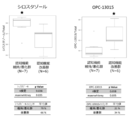
- the vertical axis shows the ratio of the plasma concentration of each compound to the total plasma concentration (Total) of cilostazol, OPC-13015, and OPC-13213 + OPC-13217. It represents the relationship between the plasma concentration ratio of cilostazol or its metabolites and the improvement of cognitive function.
- the left figure shows the result of cilostazol
- the right figure shows the result of OPC-13015.
- the vertical axis shows the ratio of the plasma concentration of each compound to the total plasma concentration (Total) of cilostazol and OPC-13015.
- cilostazol is a general term for 6- [4- (1-cyclohexyl-1H-tetrazol-5-yl) butoxy] -3,4-dihydroquinoline-2 (1H) -one. It is the name and has the structure of Chemical formula 1 below, and is sold in Japan by Otsuka Pharmaceutical Co., Ltd. under the trade name of "Pletal (registered trademark)" as an antiplatelet agent.
- Cilostazol has a high platelet aggregation inhibitory effect, as well as a phosphodiesterase inhibitory effect, an anti-ulcer effect, an antihypertensive effect, an anti-inflammatory effect, etc. It is widely used as an anti-asthma agent and also as a phosphodiesterase inhibitor.
- cilostazol has been shown to be effective in preventing the progression of Alzheimer's disease or improving cognitive function (Ihara M, et al; PLoS One. 2014; 9 (2): e89516).
- OPC-13015 is 6- [4- (1-cyclohexyl-1H-tetrazol-5-yl) butoxy] -2 (1H) -quinolinone
- OPC-13213 is 3,4-.
- Dihydro-6- [4- [1- (trans-4-hydroxycyclohexyl) -1H-tetrazole-5-yl) butoxy] -2 (1H) -quinolinone
- the common name of OPC-13217 is 3,4.
- OPC-13015 is 3,4-dehydrocilostazol
- OPC-13213 and OPC-13217 are 4'-hydroxycilostazol. It was
- MCI cognitive impairment
- CDR Clinical Dementia Rating
- MMSE Mini-Mental State Examination
- HDS-R Hasegawa Simple Intelligence Scale
- Clock drawing test CDT: Locking Driving Test
- Mini-Cog ABC dementia scale
- ABS-DS ABC Dementia Scale
- MCI mild cognitive impairment
- the MMSE has a total of 11 items: time orientation, location orientation, immediate reproduction and delayed reproduction of 3 words, calculation, article name, sentence repetition, 3 stages of oral instructions, writing instructions, writing instructions, and graphic copying. It is a cognitive function test with a perfect score of 30 points. Dementia is suspected with a score of 23 or less for the MMSE (sensitivity 81%, specificity 89%). Mild cognitive impairment (MCI) is suspected with a score of 27 or less (sensitivity 45-60%, specificity 65-90%).
- a score of 22 to 26 is a level at which mild cognitive impairment is suspected, but a score above 20 is a level at which self-reliance can be maintained (not dementia), and a score of 20 or less is a level at which dementia is suspected. If the score is below 14 points, a guardianship system is required, and 14 to 20 points in the meantime is a level that requires assistance / assistance.
- the CDR evaluates the severity of six items: memory, orientation, judgment and problem-solving, social adaptation, family status and hobbies / interests, and long-term care status on a five-point scale. Overall, health (CDR: 0), suspected dementia (CDR: 0.5), mild dementia (CDR: 1), moderate dementia (CDR: 2), severe dementia (CDR:) It is rated as one of 3).
- HDS-R is a 30-point cognitive function test consisting of 9 items: age, orientation, immediate memorization and delayed reproduction of 3 words, calculation, reverse number recitation, article memorization, and language fluency.
- Examples of “dementia” include Alzheimer-type dementia (AD), vascular (cerebral vascular) dementia (VD), Lewy body dementia (DLB), frontotemporal dementia (FTLD), and frontal region.
- AD Alzheimer-type dementia
- VD vascular vascular
- DLB Lewy body dementia
- FTLD frontotemporal dementia
- AD Alzheimer-type dementia
- AD Alzheimer-type dementia
- the “therapeutic agent” treats mild cognitive impairment or dementia, and such treatment includes, for example, prevention and improvement. Therefore, the “therapeutic agent” also includes concepts such as “preventive agent” and “improving agent”.
- therapeutic agent for mild cognitive impairment or dementia contains sirostazole or a salt thereof as an active ingredient.
- therapeutic agent of the present invention contains sirostazole or a salt thereof as an active ingredient.
- the therapeutic agent of the present invention is preferably an oral-administered preparation, more preferably a solid oral-administered preparation such as a tablet, a capsule, or a powder, and the oral-administered preparation will be described in detail below unless otherwise specified.
- the "subject" according to the present invention is usually a human being who suffers from mild cognitive impairment or dementia, but may be a person who does not suffer from mild cognitive impairment or dementia.
- mammals other than humans may be used, and specifically, for example, primates (monkeys, marmosets), rodents (mouses, rats, guinea pigs, etc.), rabbits, dogs, cats, pigs, cows, sheep, etc. Horses are mentioned.
- the cilostazol in the therapeutic agent of the present invention is preferably a free form, but may be a salt of cilostazol.
- the salt is not particularly limited as long as it is a pharmaceutically acceptable salt, and for example, a hydrochloride, a sulfate, a nitrate, a phosphate, a carbonate, a hydrogen carbonate, a hydrobromide, and a hydroiodide.
- Inorganic acid salts such as salts, formates, acetates, propionates, trifluoroacetates, citrates, lactates, tartrates, oxalates, maleates, fumarates, mandelates, glutarates.
- Salt malate, benzoate, phthalate, ascorbate, methanesulfonate, ethanesulfonate, isethionate, benzenesulfonate, p-toluenesulfonate, asparagate, glutamate Organic acid salts such as.
- the salt also includes hydrates and solvates. Hereinafter, it is also simply referred to as cilostazol, including the salt of cilostazol.
- the initial dose according to the invention precedes the determination of a second dose (discussed below) of the active ingredient for administration to a subject to treat mild cognitive impairment or dementia.
- the initial dose can be determined by the physician based on the results of a normal physician's diagnosis and, in some cases, the results of appropriate psychological tests. Specifically, for example, 50 mg or 100 mg of cilostazol once or twice a day is appropriate.
- the dose may be higher or lower, and the number of administrations may be higher or lower.
- the second dose according to the present invention is the dose of cilostazol determined based on the results after the initial dose of cilostazol.
- the determination of the second dose is usually the step of administering the initial dose of cilostazol to the subject and then measuring the abundance of cilostazol, OPC-13015, and / or other metabolites in the sample from the subject. It is done by including.
- the second dose is cilostazol or OPC-13015 with respect to the total abundance of cilostazol and OPC-13015 measured in the sample derived from the subject after the initial dose of cilostazol was administered to the subject.
- the second dose is based on the above-mentioned abundance ratio of cilostazol or OPC-13015 in the cognitive dysfunction improvement / maintenance group known to have improved or maintained cognitive dysfunction. Determined at a higher than initial dose within the pharmaceutically acceptable dose of cilostazol if the abundance of cilostazol in a person is higher than its reference level or if the abundance of OPC-13015 is below that reference level. You can also do it.
- the second dose is based on the above-mentioned abundance ratio of cilostazol or OPC-13015 in the cognitive dysfunction exacerbation group known to have exacerbated cognitive dysfunction, in addition to or independently of the above-mentioned reference level.
- the initial dose is within the pharmaceutically acceptable dose of cilostazol. Higher doses can also be determined.
- the second dose is a cognitive dysfunction amelioration / maintenance group known to have ameliorated or maintained cognitive dysfunction
- cognitive The cutoff value was determined from the value of cilostazol or OPC-13015 in both groups of the cognitive dysfunction exacerbation group known to have exacerbated dysfunction, and the value was used as a reference level to determine the abundance ratio of cilostazol in the subject. Can also be determined at a higher dose than the initial dose within the pharmaceutically acceptable dose range of cilostazol if is above the reference level or if the abundance ratio of OPC-13015 is below the reference level.
- the second dose is usually higher than the initial dose, but may be the same or a small amount depending on the side effects and effects. Specifically, the second dose varies depending on the abundance of cilostazol, OPC-13015, etc. in the sample derived from the subject, and is, for example, 50 mg, 100 mg, 150 mg, 200 mg, 250 mg, 300 mg once a day. It can be mentioned about 3 to 3 times.
- Sampling from subjects should be done within the range of 1 hour to 7 hours, preferably 30 minutes to 2 hours after the initial dose of cilostazol, but shorter if necessary. It can also be done for hours or long hours.
- the sample from the subject is not particularly limited as long as the abundance of cilostazol, OPC-13015, etc. in the living body can be measured, but plasma and serum are suitable, and plasma is preferable. If the sample is plasma, the "abundance" is usually the plasma concentration.
- the sample When the sample is a blood sample, it can be a plasma sample from which blood cell components have been separated and removed by a method such as centrifugation. It is preferable that the plasma sample has been deproteinized by pretreatment using a deproteinization method. Examples of the deproteinization method include a method utilizing insolubilization by denaturation of a protein and physical removal.
- Examples of the method utilizing insolubilization by denaturation of the protein include a method using an organic solvent, a method using an acid, and a method using heat denaturation (heating, cooling, etc.). Among these, the method using an organic solvent is preferable.
- organic solvent a polar solvent miscible with water is suitable, and examples thereof include methanol, ethanol, acetonitrile, and acetone. Of these, methanol and acetonitrile are preferable.
- Such deproteinization can be performed by using, for example, sample dispensing, reagent dispensing, stirring, suction filtration, heating, and centrifugation.
- Suitable methods for measuring the abundance or abundance ratio of sirostazole, OPC-13015, etc. in the sample include, for example, LC (Liquid Chromatography: Liquid Chromatography), LC-MS (Liquid Chromatography-Mass Spectrometry:). Liquid chromatograph-mass spectrometry), immunological analysis, ECL (Electrochemiluminescence) can be mentioned.
- various detectors such as an absorption detector such as an ultraviolet-visible absorption detector and a light emission detector such as a fluorescence detector are used to quantify the abundance amount or abundance ratio from the peak area of the chromatogram. There is a way to do it.
- Examples of the LC-MS method include a SIM method (Selected Ion Monitoring) using a single mass spectrometry (MS) detector and an MRM method (Multiple Reaction Monitoring) using a tandem mass spectrometry (MS / MS, etc.) detector. : Multiple reaction monitoring method) or SRM method (Selected Reaction Monitoring: selective reaction monitoring method) can be mentioned.
- the MRM method SRM method
- SRM method is preferable from the viewpoint of high-sensitivity analysis.
- Examples of the immunological analysis method include an ELISA method (Enzyme-Linked Immunosorbent Assay: Enzyme Immunoassay Method), a FLISA method (Fluorescense Linked Immunososorbent Assay: Fluorescence Immunoassay Method), and an RIA method (Radioimmunoassay: Radioimmunoassay).
- an ELISA method Enzyme-Linked Immunosorbent Assay: Enzyme Immunoassay Method
- a FLISA method Fluorescense Linked Immunososorbent Assay: Fluorescence Immunoassay Method
- an RIA method Radioimmunoassay: Radioimmunoassay.
- the ELISA method and the FLISA method are preferable from the viewpoint of safety and the like.
- LC Liquid Chromatograph
- MS Liquid Chromatograph-Mass Spectrometer
- LC-MS / MS ELISA analyzer
- ECL analyzer ECL analyzer
- the therapeutic agents of the present invention can be used for the treatment of mild cognitive impairment (MCI) or dementia. Mild cognitive impairment and dementia are as described above.
- the therapeutic agent of the present invention is particularly preferably used for the treatment of mild cognitive impairment. In addition, it is more preferable to use it for deterioration of orientation and recent memory among mild cognitive impairment.
- mild cognitive impairment which is a pre-stage of dementia
- the therapeutic agent of the present invention it is possible to prevent the progression to dementia.
- the therapeutic agent of the present invention is preferably used for, for example, a subject who has not been diagnosed with intermittent claudication or stroke, or a subject who has mild cognitive impairment in stroke.
- a commercially available cilostazol preparation can be used as it is.
- cilostazol as is, or in a pharmaceutically acceptable non-toxic and inert carrier, in the range of 0.01-99.5% by weight, preferably in the range of 0.5-90% by weight. It can be manufactured and used by blending in.
- the carrier include solid, semi-solid or liquid diluents, fillers and other prescribing aids. These can be used alone or in combination of two or more.
- the dosage form of the therapeutic agent of the present invention includes, for example, a powder, a capsule, a tablet (including an orally fast-disintegrating tablet OD), a sugar coating, a granule, a powder, and a suspension in a solid or liquid dose unit.
- a powder for example, a powder, a capsule, a tablet (including an orally fast-disintegrating tablet OD), a sugar coating, a granule, a powder, and a suspension in a solid or liquid dose unit.
- Liquids, syrups, elixirs, troches and the like, and parenteral preparations such as injections, instillations, suppositories and the like can be taken. It may be a sustained release preparation.
- the injection may be an injection kit or an infusion kit prepared at the time of use.
- the powder can be produced by making cilostazol into an appropriate fineness.
- the average particle size is usually 10 ⁇ m or less, preferably 7 ⁇ m or less, and more preferably 5 ⁇ m or less.
- the "average particle diameter” is a volume average particle diameter, when measured by a laser diffraction method, the particle diameter (D 50, median diameter) of cumulative distribution of the smaller is 50% refers to.
- the pulverization may be performed by either dry pulverization or wet pulverization, and can be performed by using, for example, a jet mill, a hammer mill, a rotary ball mill, a vibrating ball mill, a shaker mill, a rod mill, a tube mill or the like.
- the powder can be produced by finely grinding cilostazol and then mixing it with a similarly finely divided pharmaceutical carrier such as starch, edible carbohydrates such as mannitol.
- a flavoring agent, a preservative, a dispersant, a coloring agent, a fragrance and the like can be arbitrarily added.
- Capsules are first produced by filling the powdered powder, powder, or granules as described in the section of tablets into the outer skin of a capsule such as a gelatin capsule. can do. It can also be produced by mixing a lubricant or a fluidizing agent, for example, colloidal silica, talc, magnesium stearate, calcium stearate, or solid polyethylene glycol into a powder, and then performing a filling operation.
- a lubricant or a fluidizing agent for example, colloidal silica, talc, magnesium stearate, calcium stearate, or solid polyethylene glycol into a powder, and then performing a filling operation.
- disintegrants and solubilizers such as carboxymethyl cellulose, calcium carboxymethyl cellulose, low-substituted hydroxypropyl cellulose, croscarmellose sodium, sodium carboxymethyl starch, calcium carbonate, sodium carbonate.
- fine powder of cilostazol can be suspended and dispersed in vegetable oil, polyethylene glycol, glycerin, and a surfactant, and this can be wrapped in a gelatin sheet to form a soft capsule.
- Tablets can be produced by adding excipients to make a powder mixture, granulating or slagging, then adding a disintegrant or lubricant, and then tableting.
- the powder mixture can be produced by mixing an appropriately powdered substance with the above-mentioned diluent or base.
- Binders eg, sodium carboxymethyl cellulose, methyl cellulose, hydroxypropylmethyl cellulose, gelatin, polyvinylpyrrolidone, polyvinyl alcohol
- dissolution retarders eg, paraffin
- reabsorbents eg, quaternary salts
- Adsorbents eg bentonite, kaolin
- the powder mixture can be first moistened with a binder, such as syrup, starch paste, gum arabic, cellulose solution or polymer substance solution, stirred and mixed, dried and pulverized into granules.
- a binder such as syrup, starch paste, gum arabic, cellulose solution or polymer substance solution
- stearic acid, stearate, talc, mineral oil or the like as a lubricant to the granules thus produced, it is possible to prevent them from adhering to each other.
- Tablets can also be produced by directly tableting after mixing cilostazol with a fluidly inert carrier without going through the steps of granulation or slagging as described above.
- the tablets thus produced can be film-coated or sugar-coated.
- a transparent or translucent protective coating consisting of a shellac hermetic coating, a coating of sugar or polymeric material and a polishing coating of wax can also be used.
- orally administered formulations such as liquids, syrups, lozenges, and elixirs, can also be in dose unit form such that a fixed amount contains a fixed amount of cilostazol.
- the syrup agent can be produced by dissolving cilostazol or the like in an appropriate flavor aqueous solution.
- Elixirs can be prepared by using a non-toxic alcoholic carrier.
- the suspending agent can be produced by dispersing cilostazol or the like in a non-toxic carrier.
- solubilizers, emulsifiers eg, ethoxylated isostearyl alcohols, polyoxyethylene sorbitol esters
- preservatives eg, peppermint oil, saccharin
- flavor-imparting agents eg, peppermint oil, saccharin
- dose-based formulations for oral administration can be microencapsulated.
- the formulation can also be coated or embedded in polymers, waxes, etc. to prolong the duration of action and provide sustained release.
- the parenteral preparation can be in the form of a liquid dose unit for subcutaneous / muscular or intravenous injection, for example, in the form of a solution or suspension.
- the parenteral pharmaceutical product is to suspend or dissolve a fixed amount of cilostazol in a non-toxic liquid carrier suitable for the purpose of injection, for example, an aqueous or oily medium, and then sterilize the suspension or solution.
- a non-toxic liquid carrier suitable for the purpose of injection, for example, an aqueous or oily medium
- Can be manufactured by Non-toxic salts or salt solutions can be added to make the injection isotonic. Further, stabilizers, preservatives, emulsifiers and the like can also be added. Similarly, it can be a drip preparation.
- Suppositories are solids in which sirostazole is soluble or insoluble in low melting point water, such as polyethylene glycol, cocoa butter, semi-synthetic fats and oils [eg, Witepsol®], higher esters (eg, palmitic acid myristyl esters). ) Or a mixture thereof can be dissolved or suspended.
- low melting point water such as polyethylene glycol, cocoa butter, semi-synthetic fats and oils [eg, Witepsol®], higher esters (eg, palmitic acid myristyl esters).
- Examples of the administration method of the therapeutic agent of the present invention include oral administration, intravenous administration, portal vein administration, subcutaneous administration, infusion administration, and local administration (eg, transmucosal administration, nasal administration, inhalation administration, transdermal administration). Can be mentioned.
- the number of administrations varies depending on the type and dose of the active ingredient, the dosage form, the condition of the patient, etc., but can be administered, for example, once to several times a day or at intervals of one day to several days.
- Method for determining a second dose of sirostazole for treating mild cognitive impairment or dementia according to the present invention Determines a second dose of sirostazole for treating mild cognitive impairment or dementia according to the present invention.
- the method (hereinafter referred to as “the method of the present invention”) includes the following steps 1 to 3. 1. 1. The abundance of cilostazol and OPC-13015 in a sample derived from a subject to which a composition containing cilostazol or a salt thereof as an active ingredient was administered at an initial dose, or in addition to them, OPC-13213 and / or OPC-13217. The process of measuring the abundance, 2. 2.
- the method of the invention further comprises cilostazol or OPC-relative to the total abundance of cilostazol and OPC-13015 in the cognitive dysfunction amelioration / maintenance group known to have ameliorated or maintained cognitive dysfunction.
- a step of comparing with the ratio can be included. By including this step, the second dose is based on the above abundance ratio of cilostazol or OPC-13015 in the cognitive dysfunction amelioration / maintenance group known to have ameliorated or maintained cognitive dysfunction.
- the initial dose is within the pharmaceutically acceptable dose of cilostazol. It can be determined at higher doses.
- the abundance ratio of cilostazol or OPC-13015 to the total abundance of cilostazol and OPC-13015 in the cognitive dysfunction exacerbation group known to be exacerbated or A step of comparing the abundance ratio of OPC-13015 with respect to the total abundance of cilostazol, OPC-13015 and OPC-13213 and / or OPC-13217 with the abundance ratio of cilostazol or OPC-13015 in the subject. Can be included.
- cilostazol has been known to be effective in preventing the progression of Alzheimer's disease or improving cognitive function and also in MCI, it has been known that a certain amount of cilostazol is used regardless of the patient. Since it was administered to patients, there are individual differences in the degree of improvement in dementia function, and if the dose of cilostazol is increased, side effects such as headache may occur. By including it, the second dose can be determined more accurately, and the appropriate cilostazol dose for improving cognitive function can be determined for each patient.
- the sample derived from the subject in step 1 is sampled within the range of 1 hour to 7 hours after the initial dose administration of cilostazol, preferably within the range of 30 minutes to 2 hours. It was done. If necessary, it may be sampled for a shorter time or a longer time.
- the sample is not particularly limited as long as the abundance of cilostazol, OPC-13015, etc. in the living body can be measured, but plasma and serum are suitable, and plasma is preferable. If the sample is plasma, the "abundance" is usually the plasma concentration.
- the blood cell component can be removed by centrifugation or the like to obtain a plasma sample.
- the plasma sample is preferably pretreated. Examples of the pretreatment include the same as those described above in the description of the therapeutic agent of the present invention. Similarly, pretreatment by a deproteinization method using an organic solvent such as methanol or acetonitrile is preferable. Similarly, the deproteinization can be performed by using sample dispensing, reagent dispensing, stirring, suction filtration, heating, centrifugation and the like.
- An appropriate method for measuring the abundance or abundance ratio of cilostazol, OPC-13015, etc. in the sample is the same as described above, and is, for example, LC method, LC-MS method (for example, SIM method, MRM method). SRM method)), immunological analysis method (for example, ELISA method, FLISA method), ECL method can be mentioned.
- LC liquid crystal display
- LC-MS liquid crystal display
- LC-MS / MS ELISA
- ECL analyzer an analyzer and an ECL analyzer can be mentioned.
- LC-MS and LC-MS / MS are preferable.
- the method of the present invention can determine a second dose of sirostazole for treating mild cognitive impairment and dementia
- the method of the present invention provides mild cognitive impairment, disorientation and mild cognitive impairment in stroke. It is preferred to use when determining a second dose of sirostazole for treating a subject with complications.
- the method of the invention is preferably used to determine a second dose of cilostazol for treating Alzheimer's disease.
- treatment system for mild cognitive impairment or dementia according to the present invention is the therapeutic agent of the present invention and the subject. Includes an analyzer for measuring the abundance of sirostazole, OPC-13015, and / or other metabolites in a sample from the subject after administration of the initial dose of the active ingredient to.
- the system of the present invention can further include a sample pretreatment device.
- a sample pretreatment device include a sample dispensing device, a reagent dispensing device, a stirring device, a suction filtration device, a heating device, and a centrifuge device.
- a sample pretreatment device that integrates the functions of all these devices or the functions of at least one of these devices can be mentioned. From the viewpoint of ease of operation and reduction of the risk of infection from biological samples, a fully automatic sample pretreatment device equipped with sample dispensing, reagent dispensing, stirring, suction filtration or centrifugation, and heating functions is available. preferable.
- the analyzer in the system of the present invention include LC, LC-MS, LC-MS / MS, ELISA analyzer, and ECL analyzer. Of these, LC-MS and LC-MS / MS are preferable.
- the therapeutic method for patients with mild cognitive impairment or dementia according to the present invention is sirostazole or a salt thereof. Includes a second dose of the syrostazole or a salt thereof to the patient who received the initial dose.
- the total amount of the initial dose and the second dose of cilostazol or a salt thereof may be larger than the oral dose of 100 mg of cilostazol or a salt thereof.
- sirostazole can be treated at a dose higher than the initial dose within the pharmaceutically acceptable dose range, and in the treatment of mild cognitive impairment or dementia, prevention or progression to dementia can be prevented or progressed. It can be expected to delay and improve cognitive function.
- the total amount of the initial dose and the second dose of cilostazol or a salt thereof may be 200 mg or less per day.
- sirostazole can be treated at a dose higher than the initial dose within the pharmaceutically acceptable dose range, and in the treatment of mild cognitive impairment or dementia, prevention or progression to dementia can be prevented or progressed. It can be expected to delay and improve cognitive function.
- the method of the present invention further comprises taking a biological sample from the patient after administering the initial dose of cilostazol or a salt thereof to the patient and before administering the second dose, and detecting OPC-13015 in the biological sample. May be further included. Further including the step of taking a biological sample from the patient and detecting OPC-13213 in the biological sample after the initial dose of cilostazol or a salt thereof is administered to the patient and before the second dose is administered. good. Further, the time for detecting OPC-13015 and / or OPC-13213 may be in the range of 1 hour to 7 hours after the initial dose is administered and after the initial dose is administered.
- the method of the present invention further comprises measuring the relative amount of cilostazol or a salt thereof, OPC-13015, and / or OPC-13213. In addition, the method of the present invention further calculates the abundance ratio of any one of cilostazol, a salt thereof, and OPC-13015 based on the total amount of cilostazol or a salt thereof, OPC-13015, and / or OPC-13213. Further included.
- the method for detecting OPC-13015 in a patient with mild cognitive impairment or dementia according to the present invention is mild cognitive impairment or cognition. It comprises a step of detecting sirostazole or a salt thereof in a biological sample collected from a patient with dementia and a step of detecting OPC-13015 in a biological sample collected from a patient with mild cognitive impairment or dementia.
Landscapes
- Health & Medical Sciences (AREA)
- Engineering & Computer Science (AREA)
- Biomedical Technology (AREA)
- Pharmacology & Pharmacy (AREA)
- Neurosurgery (AREA)
- Life Sciences & Earth Sciences (AREA)
- Animal Behavior & Ethology (AREA)
- General Health & Medical Sciences (AREA)
- Public Health (AREA)
- Veterinary Medicine (AREA)
- Neurology (AREA)
- Medicinal Chemistry (AREA)
- Bioinformatics & Cheminformatics (AREA)
- Chemical & Material Sciences (AREA)
- Hospice & Palliative Care (AREA)
- Epidemiology (AREA)
- Psychiatry (AREA)
- Chemical Kinetics & Catalysis (AREA)
- General Chemical & Material Sciences (AREA)
- Nuclear Medicine, Radiotherapy & Molecular Imaging (AREA)
- Organic Chemistry (AREA)
- Pharmaceuticals Containing Other Organic And Inorganic Compounds (AREA)
- Investigating Or Analysing Biological Materials (AREA)
Priority Applications (5)
| Application Number | Priority Date | Filing Date | Title |
|---|---|---|---|
| US17/924,447 US20230270737A1 (en) | 2020-05-11 | 2021-05-06 | Therapeutic Agent for Mild Cognitive Impairment |
| CN202180034439.4A CN115551508A (zh) | 2020-05-11 | 2021-05-06 | 轻度认知障碍治疗剂 |
| JP2022521858A JP7587218B2 (ja) | 2020-05-11 | 2021-05-06 | 軽度認知障害治療剤 |
| EP21805235.5A EP4151213A4 (en) | 2020-05-11 | 2021-05-06 | THERAPEUTIC FOR MILD COGNITIVE IMPAIRMENT |
| JP2024189461A JP2025010627A (ja) | 2020-05-11 | 2024-10-29 | 軽度認知障害治療剤 |
Applications Claiming Priority (2)
| Application Number | Priority Date | Filing Date | Title |
|---|---|---|---|
| JP2020-083163 | 2020-05-11 | ||
| JP2020083163 | 2020-05-11 |
Publications (1)
| Publication Number | Publication Date |
|---|---|
| WO2021230131A1 true WO2021230131A1 (ja) | 2021-11-18 |
Family
ID=78525720
Family Applications (1)
| Application Number | Title | Priority Date | Filing Date |
|---|---|---|---|
| PCT/JP2021/017368 Ceased WO2021230131A1 (ja) | 2020-05-11 | 2021-05-06 | 軽度認知障害治療剤 |
Country Status (5)
| Country | Link |
|---|---|
| US (1) | US20230270737A1 (https=) |
| EP (1) | EP4151213A4 (https=) |
| JP (2) | JP7587218B2 (https=) |
| CN (1) | CN115551508A (https=) |
| WO (1) | WO2021230131A1 (https=) |
Citations (1)
| Publication number | Priority date | Publication date | Assignee | Title |
|---|---|---|---|---|
| WO2013187075A1 (ja) * | 2012-06-15 | 2013-12-19 | 公益財団法人先端医療振興財団 | 軽度認知障害の予防および/または治療剤 |
Family Cites Families (4)
| Publication number | Priority date | Publication date | Assignee | Title |
|---|---|---|---|---|
| TWI323660B (en) * | 2003-02-25 | 2010-04-21 | Otsuka Pharma Co Ltd | Pten inhibitor or maxi-k channels opener |
| WO2009133128A1 (en) * | 2008-04-29 | 2009-11-05 | Pharnext | Combination compositions for treating alzheimer disease and related disorders with zonisamide and acamprosate |
| KR20120010800A (ko) * | 2010-07-27 | 2012-02-06 | 인제대학교 산학협력단 | 실로스타졸 또는 이의 약리학적 허용가능한 염을 유효성분으로 함유하는 퇴행성 신경질환 치료 및 예방용 약학조성물 |
| CN108430474A (zh) * | 2015-12-25 | 2018-08-21 | 大塚制药株式会社 | 包含阿立哌唑和西洛他唑的药物 |
-
2021
- 2021-05-06 WO PCT/JP2021/017368 patent/WO2021230131A1/ja not_active Ceased
- 2021-05-06 EP EP21805235.5A patent/EP4151213A4/en active Pending
- 2021-05-06 JP JP2022521858A patent/JP7587218B2/ja active Active
- 2021-05-06 CN CN202180034439.4A patent/CN115551508A/zh active Pending
- 2021-05-06 US US17/924,447 patent/US20230270737A1/en active Pending
-
2024
- 2024-10-29 JP JP2024189461A patent/JP2025010627A/ja active Pending
Patent Citations (1)
| Publication number | Priority date | Publication date | Assignee | Title |
|---|---|---|---|---|
| WO2013187075A1 (ja) * | 2012-06-15 | 2013-12-19 | 公益財団法人先端医療振興財団 | 軽度認知障害の予防および/または治療剤 |
Non-Patent Citations (7)
| Title |
|---|
| BLENNOW KDE LEON MJZETTERBERG H.: "Alzheimer's disease", LANCET, vol. 368, no. 9533, 29 July 2006 (2006-07-29), pages 387 - 403 |
| FU C J; TATA P N V; OKADA K; AKIYAMA H; BRAMER S L: "Simultaneous quantitative determination of cilostazol and its metabolites in human plasma by high-performance liquid chromatography", JOURNAL OF CHROMATOGRAPHY B, vol. 728, no. 2, 28 May 1999 (1999-05-28), pages 251 - 262, XP004169154, ISSN: 0378-4347, DOI: 10.1016/S0378-4347(99)00104-8 * |
| IHARA M ET AL., PLOS ONE, vol. 9, no. 2, 2014, pages e89516 |
| MAKI TAKAKUNI, OKAMOTO YOKO, CARARE ROXANA O., HASE YOSHIKI, HATTORI YORITO, HAWKES CHERYL A., SAITO SATOSHI, YAMAMOTO YUMI, TERAS: "Phosphodiesterase III inhibitor promotes drainage of cerebrovascular β-amyloid", ANNALS OF CLINICAL AND TRANSLATIONAL NEUROLOGY, vol. 1, no. 8, 1 August 2014 (2014-08-01), GB, pages 519 - 533, XP055867442, ISSN: 2328-9503, DOI: 10.1002/acn3.79 * |
| P. N. V TATA ET AL., J. PHARM. BIOMED. ANAL., vol. 18, 1998, pages 441 - 451 |
| See also references of EP4151213A4 |
| YONGGE LIU , YASMIN SHAKUR , MASUHIRO YOSHITAKE , JUN-ICHI KAMBAYASHI: "Cilostazol (Pletal): A dual inhibitor of cyclic nucleotide phosphodiesterase type 3 and adenosine uptake", CARDIOVASCULAR DRUG REVIEWS, vol. 19, no. 4, 1 January 2001 (2001-01-01), pages 369 - 386, XP002973725, ISSN: 0897-5957 * |
Also Published As
| Publication number | Publication date |
|---|---|
| CN115551508A (zh) | 2022-12-30 |
| US20230270737A1 (en) | 2023-08-31 |
| JP7587218B2 (ja) | 2024-11-20 |
| EP4151213A4 (en) | 2024-05-29 |
| EP4151213A1 (en) | 2023-03-22 |
| JP2025010627A (ja) | 2025-01-22 |
| JPWO2021230131A1 (https=) | 2021-11-18 |
Similar Documents
| Publication | Publication Date | Title |
|---|---|---|
| JP6037615B2 (ja) | 肝性脳症を治療する方法 | |
| US20250326711A1 (en) | Solid dispersions and pharmaceutical compositions comprising a substituted indane and methods for the preparation and use thereof | |
| EP2153829A1 (en) | Methods of preventing, treating and diagnosing disorders of protein aggregation | |
| EP4076461B1 (en) | Lumateperone for use in schizophrenia treatment | |
| CN114269722B (zh) | 麦角硫因、s-甲基-麦角硫因及其用途 | |
| Fleishaker et al. | Pharmacokinetic interaction between verapamil and almotriptan in healthy volunteers | |
| US20180311230A1 (en) | Use of laquinimod to delay huntington's disease progression | |
| Stone et al. | Frontiers in Alzheimer’s disease therapeutics | |
| BG64300B1 (bg) | Използване на фанхинон за лечение на болестта на алцхаймер | |
| JP7587218B2 (ja) | 軽度認知障害治療剤 | |
| JP2018538344A (ja) | アリピプラゾール及びシロスタゾールを用いた医薬 | |
| Johansson et al. | Steady-state pharmacokinetics of tacrine in long-term treatment of Alzheimer patients | |
| JPWO2015190568A1 (ja) | ストレス性疾患の予防および/または治療用医薬 | |
| André et al. | Delirium following ingestion of marijuana present in chocolate cookies | |
| Smerikarova et al. | A brief review of analytical methods for the estimation of ttr kinetic stabilizers in pharmaceutical formulations and biological matrices | |
| RU2772693C1 (ru) | Твердые дисперсии и фармацевтические композиции, включающие замещенный индан, и способы их приготовления и применения | |
| CA3117563C (en) | Solid dispersions and pharmaceutical compositions comprising a substituted indane and methods for the preparation and use thereof | |
| EP4678188A1 (en) | Pharmaceutical composition for treating, preventing, or managing bilirubin-induced neurological dysfunction, psychiatric disorders associated with jaundice, or psychiatric disorders caused by bilirubin udp-glucuronosyltransferase gene mutations | |
| KR20200094132A (ko) | 골관절염 통증의 치료를 위한 mPGES-1 저해제 | |
| WO2026024901A1 (en) | Methods of using bicyclic compounds as triggering receptor expressed on myeloid cells (trem2) agonists | |
| JP2024521282A (ja) | 抗うつ・抗不安の置換桂皮アミド化合物 | |
| GUO et al. | RelationshiPamong serum concentrations, doses and clinical responses of quetiapine fumarate inPatients with schizophrenia | |
| Gurumurthy et al. | Standardization of the method for estimation of ethambutol in pharmaceutical preparations and biological fluid | |
| WO2020102326A1 (en) | Methods for determining and increasing nad levels | |
| Zhang et al. | Biochemical mechanism of comparison studies of clozapine and quetiapine by metabonomic method in rats |
Legal Events
| Date | Code | Title | Description |
|---|---|---|---|
| 121 | Ep: the epo has been informed by wipo that ep was designated in this application |
Ref document number: 21805235 Country of ref document: EP Kind code of ref document: A1 |
|
| ENP | Entry into the national phase |
Ref document number: 2022521858 Country of ref document: JP Kind code of ref document: A |
|
| NENP | Non-entry into the national phase |
Ref country code: DE |
|
| ENP | Entry into the national phase |
Ref document number: 2021805235 Country of ref document: EP Effective date: 20221212 |