WO2021200901A1 - T前駆細胞の製造方法 - Google Patents
T前駆細胞の製造方法 Download PDFInfo
- Publication number
- WO2021200901A1 WO2021200901A1 PCT/JP2021/013465 JP2021013465W WO2021200901A1 WO 2021200901 A1 WO2021200901 A1 WO 2021200901A1 JP 2021013465 W JP2021013465 W JP 2021013465W WO 2021200901 A1 WO2021200901 A1 WO 2021200901A1
- Authority
- WO
- WIPO (PCT)
- Prior art keywords
- cells
- cell
- medium
- progenitor
- fibronectin
- Prior art date
- Legal status (The legal status is an assumption and is not a legal conclusion. Google has not performed a legal analysis and makes no representation as to the accuracy of the status listed.)
- Ceased
Links
Images


Classifications
-
- A—HUMAN NECESSITIES
- A61—MEDICAL OR VETERINARY SCIENCE; HYGIENE
- A61P—SPECIFIC THERAPEUTIC ACTIVITY OF CHEMICAL COMPOUNDS OR MEDICINAL PREPARATIONS
- A61P37/00—Drugs for immunological or allergic disorders
- A61P37/02—Immunomodulators
- A61P37/04—Immunostimulants
-
- C—CHEMISTRY; METALLURGY
- C12—BIOCHEMISTRY; BEER; SPIRITS; WINE; VINEGAR; MICROBIOLOGY; ENZYMOLOGY; MUTATION OR GENETIC ENGINEERING
- C12N—MICROORGANISMS OR ENZYMES; COMPOSITIONS THEREOF; PROPAGATING, PRESERVING, OR MAINTAINING MICROORGANISMS; MUTATION OR GENETIC ENGINEERING; CULTURE MEDIA
- C12N5/00—Undifferentiated human, animal or plant cells, e.g. cell lines; Tissues; Cultivation or maintenance thereof; Culture media therefor
- C12N5/06—Animal cells or tissues; Human cells or tissues
- C12N5/0602—Vertebrate cells
- C12N5/0634—Cells from the blood or the immune system
- C12N5/0636—T lymphocytes
-
- A—HUMAN NECESSITIES
- A61—MEDICAL OR VETERINARY SCIENCE; HYGIENE
- A61K—PREPARATIONS FOR MEDICAL, DENTAL OR TOILETRY PURPOSES
- A61K40/00—Cellular immunotherapy
- A61K40/10—Cellular immunotherapy characterised by the cell type used
- A61K40/11—T-cells, e.g. tumour infiltrating lymphocytes [TIL] or regulatory T [Treg] cells; Lymphokine-activated killer [LAK] cells
-
- A—HUMAN NECESSITIES
- A61—MEDICAL OR VETERINARY SCIENCE; HYGIENE
- A61K—PREPARATIONS FOR MEDICAL, DENTAL OR TOILETRY PURPOSES
- A61K40/00—Cellular immunotherapy
- A61K40/40—Cellular immunotherapy characterised by antigens that are targeted or presented by cells of the immune system
-
- C—CHEMISTRY; METALLURGY
- C12—BIOCHEMISTRY; BEER; SPIRITS; WINE; VINEGAR; MICROBIOLOGY; ENZYMOLOGY; MUTATION OR GENETIC ENGINEERING
- C12N—MICROORGANISMS OR ENZYMES; COMPOSITIONS THEREOF; PROPAGATING, PRESERVING, OR MAINTAINING MICROORGANISMS; MUTATION OR GENETIC ENGINEERING; CULTURE MEDIA
- C12N5/00—Undifferentiated human, animal or plant cells, e.g. cell lines; Tissues; Cultivation or maintenance thereof; Culture media therefor
- C12N5/06—Animal cells or tissues; Human cells or tissues
- C12N5/0602—Vertebrate cells
- C12N5/0634—Cells from the blood or the immune system
- C12N5/0647—Haematopoietic stem cells; Uncommitted or multipotent progenitors
-
- C—CHEMISTRY; METALLURGY
- C12—BIOCHEMISTRY; BEER; SPIRITS; WINE; VINEGAR; MICROBIOLOGY; ENZYMOLOGY; MUTATION OR GENETIC ENGINEERING
- C12N—MICROORGANISMS OR ENZYMES; COMPOSITIONS THEREOF; PROPAGATING, PRESERVING, OR MAINTAINING MICROORGANISMS; MUTATION OR GENETIC ENGINEERING; CULTURE MEDIA
- C12N2500/00—Specific components of cell culture medium
- C12N2500/02—Atmosphere, e.g. low oxygen conditions
-
- C—CHEMISTRY; METALLURGY
- C12—BIOCHEMISTRY; BEER; SPIRITS; WINE; VINEGAR; MICROBIOLOGY; ENZYMOLOGY; MUTATION OR GENETIC ENGINEERING
- C12N—MICROORGANISMS OR ENZYMES; COMPOSITIONS THEREOF; PROPAGATING, PRESERVING, OR MAINTAINING MICROORGANISMS; MUTATION OR GENETIC ENGINEERING; CULTURE MEDIA
- C12N2500/00—Specific components of cell culture medium
- C12N2500/05—Inorganic components
- C12N2500/10—Metals; Metal chelators
- C12N2500/20—Transition metals
- C12N2500/24—Iron; Fe chelators; Transferrin
- C12N2500/25—Insulin-transferrin; Insulin-transferrin-selenium
-
- C—CHEMISTRY; METALLURGY
- C12—BIOCHEMISTRY; BEER; SPIRITS; WINE; VINEGAR; MICROBIOLOGY; ENZYMOLOGY; MUTATION OR GENETIC ENGINEERING
- C12N—MICROORGANISMS OR ENZYMES; COMPOSITIONS THEREOF; PROPAGATING, PRESERVING, OR MAINTAINING MICROORGANISMS; MUTATION OR GENETIC ENGINEERING; CULTURE MEDIA
- C12N2501/00—Active agents used in cell culture processes, e.g. differentation
- C12N2501/10—Growth factors
- C12N2501/115—Basic fibroblast growth factor (bFGF, FGF-2)
-
- C—CHEMISTRY; METALLURGY
- C12—BIOCHEMISTRY; BEER; SPIRITS; WINE; VINEGAR; MICROBIOLOGY; ENZYMOLOGY; MUTATION OR GENETIC ENGINEERING
- C12N—MICROORGANISMS OR ENZYMES; COMPOSITIONS THEREOF; PROPAGATING, PRESERVING, OR MAINTAINING MICROORGANISMS; MUTATION OR GENETIC ENGINEERING; CULTURE MEDIA
- C12N2501/00—Active agents used in cell culture processes, e.g. differentation
- C12N2501/10—Growth factors
- C12N2501/125—Stem cell factor [SCF], c-kit ligand [KL]
-
- C—CHEMISTRY; METALLURGY
- C12—BIOCHEMISTRY; BEER; SPIRITS; WINE; VINEGAR; MICROBIOLOGY; ENZYMOLOGY; MUTATION OR GENETIC ENGINEERING
- C12N—MICROORGANISMS OR ENZYMES; COMPOSITIONS THEREOF; PROPAGATING, PRESERVING, OR MAINTAINING MICROORGANISMS; MUTATION OR GENETIC ENGINEERING; CULTURE MEDIA
- C12N2501/00—Active agents used in cell culture processes, e.g. differentation
- C12N2501/10—Growth factors
- C12N2501/145—Thrombopoietin [TPO]
-
- C—CHEMISTRY; METALLURGY
- C12—BIOCHEMISTRY; BEER; SPIRITS; WINE; VINEGAR; MICROBIOLOGY; ENZYMOLOGY; MUTATION OR GENETIC ENGINEERING
- C12N—MICROORGANISMS OR ENZYMES; COMPOSITIONS THEREOF; PROPAGATING, PRESERVING, OR MAINTAINING MICROORGANISMS; MUTATION OR GENETIC ENGINEERING; CULTURE MEDIA
- C12N2501/00—Active agents used in cell culture processes, e.g. differentation
- C12N2501/10—Growth factors
- C12N2501/155—Bone morphogenic proteins [BMP]; Osteogenins; Osteogenic factor; Bone inducing factor
-
- C—CHEMISTRY; METALLURGY
- C12—BIOCHEMISTRY; BEER; SPIRITS; WINE; VINEGAR; MICROBIOLOGY; ENZYMOLOGY; MUTATION OR GENETIC ENGINEERING
- C12N—MICROORGANISMS OR ENZYMES; COMPOSITIONS THEREOF; PROPAGATING, PRESERVING, OR MAINTAINING MICROORGANISMS; MUTATION OR GENETIC ENGINEERING; CULTURE MEDIA
- C12N2501/00—Active agents used in cell culture processes, e.g. differentation
- C12N2501/10—Growth factors
- C12N2501/165—Vascular endothelial growth factor [VEGF]
-
- C—CHEMISTRY; METALLURGY
- C12—BIOCHEMISTRY; BEER; SPIRITS; WINE; VINEGAR; MICROBIOLOGY; ENZYMOLOGY; MUTATION OR GENETIC ENGINEERING
- C12N—MICROORGANISMS OR ENZYMES; COMPOSITIONS THEREOF; PROPAGATING, PRESERVING, OR MAINTAINING MICROORGANISMS; MUTATION OR GENETIC ENGINEERING; CULTURE MEDIA
- C12N2501/00—Active agents used in cell culture processes, e.g. differentation
- C12N2501/20—Cytokines; Chemokines
- C12N2501/23—Interleukins [IL]
- C12N2501/2303—Interleukin-3 (IL-3)
-
- C—CHEMISTRY; METALLURGY
- C12—BIOCHEMISTRY; BEER; SPIRITS; WINE; VINEGAR; MICROBIOLOGY; ENZYMOLOGY; MUTATION OR GENETIC ENGINEERING
- C12N—MICROORGANISMS OR ENZYMES; COMPOSITIONS THEREOF; PROPAGATING, PRESERVING, OR MAINTAINING MICROORGANISMS; MUTATION OR GENETIC ENGINEERING; CULTURE MEDIA
- C12N2501/00—Active agents used in cell culture processes, e.g. differentation
- C12N2501/20—Cytokines; Chemokines
- C12N2501/23—Interleukins [IL]
- C12N2501/2306—Interleukin-6 (IL-6)
-
- C—CHEMISTRY; METALLURGY
- C12—BIOCHEMISTRY; BEER; SPIRITS; WINE; VINEGAR; MICROBIOLOGY; ENZYMOLOGY; MUTATION OR GENETIC ENGINEERING
- C12N—MICROORGANISMS OR ENZYMES; COMPOSITIONS THEREOF; PROPAGATING, PRESERVING, OR MAINTAINING MICROORGANISMS; MUTATION OR GENETIC ENGINEERING; CULTURE MEDIA
- C12N2501/00—Active agents used in cell culture processes, e.g. differentation
- C12N2501/20—Cytokines; Chemokines
- C12N2501/23—Interleukins [IL]
- C12N2501/2307—Interleukin-7 (IL-7)
-
- C—CHEMISTRY; METALLURGY
- C12—BIOCHEMISTRY; BEER; SPIRITS; WINE; VINEGAR; MICROBIOLOGY; ENZYMOLOGY; MUTATION OR GENETIC ENGINEERING
- C12N—MICROORGANISMS OR ENZYMES; COMPOSITIONS THEREOF; PROPAGATING, PRESERVING, OR MAINTAINING MICROORGANISMS; MUTATION OR GENETIC ENGINEERING; CULTURE MEDIA
- C12N2501/00—Active agents used in cell culture processes, e.g. differentation
- C12N2501/20—Cytokines; Chemokines
- C12N2501/26—Flt-3 ligand (CD135L, flk-2 ligand)
-
- C—CHEMISTRY; METALLURGY
- C12—BIOCHEMISTRY; BEER; SPIRITS; WINE; VINEGAR; MICROBIOLOGY; ENZYMOLOGY; MUTATION OR GENETIC ENGINEERING
- C12N—MICROORGANISMS OR ENZYMES; COMPOSITIONS THEREOF; PROPAGATING, PRESERVING, OR MAINTAINING MICROORGANISMS; MUTATION OR GENETIC ENGINEERING; CULTURE MEDIA
- C12N2501/00—Active agents used in cell culture processes, e.g. differentation
- C12N2501/40—Regulators of development
- C12N2501/42—Notch; Delta; Jagged; Serrate
-
- C—CHEMISTRY; METALLURGY
- C12—BIOCHEMISTRY; BEER; SPIRITS; WINE; VINEGAR; MICROBIOLOGY; ENZYMOLOGY; MUTATION OR GENETIC ENGINEERING
- C12N—MICROORGANISMS OR ENZYMES; COMPOSITIONS THEREOF; PROPAGATING, PRESERVING, OR MAINTAINING MICROORGANISMS; MUTATION OR GENETIC ENGINEERING; CULTURE MEDIA
- C12N2501/00—Active agents used in cell culture processes, e.g. differentation
- C12N2501/60—Transcription factors
-
- C—CHEMISTRY; METALLURGY
- C12—BIOCHEMISTRY; BEER; SPIRITS; WINE; VINEGAR; MICROBIOLOGY; ENZYMOLOGY; MUTATION OR GENETIC ENGINEERING
- C12N—MICROORGANISMS OR ENZYMES; COMPOSITIONS THEREOF; PROPAGATING, PRESERVING, OR MAINTAINING MICROORGANISMS; MUTATION OR GENETIC ENGINEERING; CULTURE MEDIA
- C12N2501/00—Active agents used in cell culture processes, e.g. differentation
- C12N2501/70—Enzymes
- C12N2501/72—Transferases [EC 2.]
- C12N2501/727—Kinases (EC 2.7.)
-
- C—CHEMISTRY; METALLURGY
- C12—BIOCHEMISTRY; BEER; SPIRITS; WINE; VINEGAR; MICROBIOLOGY; ENZYMOLOGY; MUTATION OR GENETIC ENGINEERING
- C12N—MICROORGANISMS OR ENZYMES; COMPOSITIONS THEREOF; PROPAGATING, PRESERVING, OR MAINTAINING MICROORGANISMS; MUTATION OR GENETIC ENGINEERING; CULTURE MEDIA
- C12N2506/00—Differentiation of animal cells from one lineage to another; Differentiation of pluripotent cells
- C12N2506/45—Differentiation of animal cells from one lineage to another; Differentiation of pluripotent cells from artificially induced pluripotent stem cells
-
- C—CHEMISTRY; METALLURGY
- C12—BIOCHEMISTRY; BEER; SPIRITS; WINE; VINEGAR; MICROBIOLOGY; ENZYMOLOGY; MUTATION OR GENETIC ENGINEERING
- C12N—MICROORGANISMS OR ENZYMES; COMPOSITIONS THEREOF; PROPAGATING, PRESERVING, OR MAINTAINING MICROORGANISMS; MUTATION OR GENETIC ENGINEERING; CULTURE MEDIA
- C12N2533/00—Supports or coatings for cell culture, characterised by material
- C12N2533/50—Proteins
- C12N2533/52—Fibronectin; Laminin
Definitions
- the present invention relates to a method for producing T progenitor cells, a medium for T progenitor cell differentiation, and a T progenitor cell inducer.
- Hematopoietic stem cell transplantation is the current standard treatment for many malignant and non-malignant hematopoietic disorders.
- HSCs hematopoietic stem cells
- the patient Prior to injecting (transplanting) the donor transplant, hematopoietic stem cells (HSCs), the patient should undergo a pretreatment regimen that includes chemotherapy or chemoradiotherapy.
- This pretreatment seriously damages the thymic microenvironment, resulting in delayed rearrangement of peripheral CD4 + and CD8 + T cells, making them vulnerable to opportunistic infections.
- the most vulnerable component of the thymic microenvironment to chemoradiotherapy is thymic epithelial cells, which cause long-term impairment of thymic formation after transplantation.
- infusion therapy of in vitro-derived T progenitor (proT) by hematopoietic stem cell transplantation promotes recovery of thymocytes damaged by irradiation. It is known. Therefore, in recent years, research and development of cell therapy (proT therapy) using T progenitor cells has been promoted for the purpose of recovery of T cells due to thoracic gland damage after radiotherapy.
- Non-Patent Document 1 a feeder-free system based on immobilized Delta-like 4 (DLL4) can be used for differentiation into T cells, and T is used in an allogeneic mouse model of hematopoietic stem cell transplantation. It has been described that progenitor cells were differentiated and expanded to increase thymic lymphocyte neoplasia.
- DLL4 immobilized Delta-like 4
- Non-Patent Document 2 describes IL-7, Flt3-ligand, stem cell factor (SCF), and thrombopoietin (SCF) on a plate coated with Delta-like-4 (DL-4) of CD34 + umbilical blood cells. After culturing in a medium containing thrombopoietin), CD34 using FACS - / CD7 - by removing the myeloid cells, T progenitor cells have been described that were obtained.
- SCF stem cell factor
- SCF thrombopoietin
- Non-Patent Document 3 CD34 + / CD43 - / CD184 - / CD73 - a haemogenic endothelium, TPO on OP-DLL4 stromal cells, by culturing in a medium containing Flt-3L, BMP4, IL11, SCF and IL7 , Hematopoietic multipotent progenitor CD45 + / RUNX1C hi / MYB hi / TAL1 hi / GATA2 hi can be obtained.
- Non-Patent Document 4 CD34 + hematopoietic Stem / Progenitor Cell (HSPC) is expanded and then co-cultured with OP-DL1 cells in a medium containing IL-7, Flt-3 and SCF. It is described that T progenitor cells were obtained by doing so.
- HSPC hematopoietic Stem / Progenitor Cell
- Non-Patent Document 5 states that Stem Regenin 1 (SR1), an aromatic hydrocarbon receptor (AHR) antagonist, promoted the expansion of CD34 + cells, and that the AHR antagonist differentiated hematopoietic stem cells. It is described that NOD-SCID repopulating cells (SRCs) are proliferated by preventing the disease.
- SR1 Stem Regenin 1
- AHR aromatic hydrocarbon receptor
- An object of the present invention is to provide a method for producing T progenitor cells, a medium for differentiating T progenitor cells, and an agent for inducing T progenitor cells, which can produce T progenitor cells with high efficiency.
- CD34 + cells in particular, CD34 + / CD43 - / CD184 - / CD73 - cells
- SR1 is an aromatic hydrocarbon receptor antagonists It was found that T progenitor cells can be differentiated with high efficiency by culturing in a medium containing the cells. It was also found that it is desirable that such a medium further contains retronectin, DLL4 and IL-3.
- the present invention has been completed by further studying based on these findings, and provides the following method for producing T progenitor cells, a medium for T progenitor cell differentiation, and a T progenitor cell inducer.
- a method for producing T progenitor cells (1) A method including a step of culturing CD34 + cells in a medium containing an aromatic hydrocarbon receptor antagonist. [2] The method according to [1], wherein the medium further comprises at least one selected from the group consisting of fibronectin, fibronectin fragments, Delta like 4 (DLL4), and interleukin-3 (IL-3). [2a] The culture is performed in the presence of at least one selected from the group consisting of fibronectin, fibronectin fragments, Delta like 4 (DLL4), and interleukin-3 (IL-3), according to [1]. the method of.
- iPS cell induced pluripotent stem cell
- [7] The method according to any one of [1] to [6b], wherein the aromatic hydrocarbon receptor antagonist is Stem Regenin-1 (SR1).
- SR1 Stem Regenin-1
- [8] The method according to any one of [1] to [7], wherein the culture is a culture in the absence of feeder cells.
- [8a] (X) The method according to any one of [1] to [8], further comprising the step of preparing iPS cells, and using the iPS cell-derived CD34 + cells in step (1).
- [8b] (Y) The method according to any one of [1] to [8a], further comprising a step of inducing differentiation of pluripotent stem cells into CD34 + cells, and using the CD34 + cells in step (1). ..
- [8c] (Z) hematopoietic vascular endothelial cells from CD34 + cells obtained in step (Y) further comprises the step of selecting (CD34 + / CD43 - / CD184 - - / CD73 cells), according to [8b] the method of.
- T progenitor cells obtained by the method according to any one of [1] to [8c].
- a cell transplant therapy agent comprising the T progenitor cells according to [19].
- a kit for T progenitor cell differentiation containing an aromatic hydrocarbon receptor antagonist.
- the kit according to [21] further comprising at least one selected from the group consisting of fibronectin, fibronectin fragments, DLL4, and IL-3.
- the kit according to [21] further comprising fibronectin and / or fragments thereof, as well as DLL4.
- T progenitor cells can be produced from CD34 + cells with high efficiency.
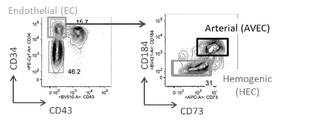
- the results of flow cytometry obtained by antibody-staining a cell population containing CD34 + cells obtained by differentiating from induced pluripotent stem cells are shown.
- the results of flow cytometry obtained by antibody-staining a cell population containing T progenitor cells obtained by differentiating from induced pluripotent stem cells are shown.
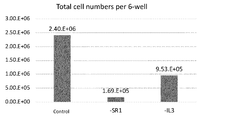
- the results of measuring the number of cells in the cell population including T progenitor cells obtained by differentiation from induced pluripotent stem cells are shown (control conditions, conditions excluding IL-3 from control conditions (-IL-3), control).
- culture refers to maintaining and / or proliferating cells in an in vitro environment.
- culturing is meant sustaining and / or growing cells extra-tissue or in vitro, eg, in a cell culture dish or flask.
- pluripotent stem cell refers to embryonic stem cells (ES cells) and similar pluripotent differentiation, that is, various tissues of the living body (endoblast, mesophyll, exo). Refers to cells that have the potential to differentiate into (all of the embryos). Examples of cells having pluripotency similar to ES cells include "induced pluripotent stem cells” (sometimes referred to as “iPS cells” in the present specification).
- population means two or more cells of the same type or different types. “Population” also means a mass of cells of the same or different types.
- the "hematopoietic stem cell” is a multipotent stem cell that can differentiate into a blood cell lineage cell.
- Hematopoietic stem cells are mainly present in the bone marrow in the human body, and are found in leukocytes (neutrophils, eosinophils, basophils, lymphocytes, monocytes, macrophages), erythrocytes, platelets, mast cells, dendritic cells, etc. Differentiate.
- leukocytes neutrils, eosinophils, basophils, lymphocytes, monocytes, macrophages
- erythrocytes erythrocytes
- platelets erythrocytes
- mast cells dendritic cells
- hematopoietic progenitor cells are cells capable of differentiating into hematopoietic cells such as lymphocytes, eosinophils, neutrophils, basal spheres, erythrocytes, and megakaryocytes. Hematopoietic progenitor cells can be recognized by being positive for the surface antigens CD34 and / or CD43.
- positive (+) means that a protein or gene is expressed in a detectable amount by a method known in the art.
- the reporter protein is expressed together with the protein, and the target protein is detected by detecting the reporter protein.
- Gene detection can be performed using, for example, a nucleic acid amplification method and / or a nucleic acid detection method such as RT-PCR, microarray, biochip and RNAseq.
- negative (-) means that the expression level of a protein or gene is less than the lower limit of detection by all or any of the above-mentioned known methods.
- the lower limit of detection of protein or gene expression may vary depending on each method.
- the "cell surface marker” is expressed on the cell surface, which can be labeled (stained) with a fluorescent substance and can easily detect, concentrate, isolate, etc., cells expressing the cell marker.
- the cell marker is a gene that is specifically expressed (positive marker) or not expressed (negative marker) in a predetermined cell type, specifically, as an mRNA produced by transcription of the gene in the genome, or by translation of the mRNA.
- a protein it refers to a substance that produces (positive marker) or does not produce (negative marker).
- the detection of such a cell surface marker can be performed by using an immunological assay using an antibody specific to the cell surface marker, for example, ELISA, immunostaining, or flow cytometry.
- expression is defined as transcription and / or translation of a particular nucleotide sequence driven by an intracellular promoter.
- T progenitor cell means a hematopoietic cell generated in the process of differentiating from a hematopoietic stem cell (HSC) to a CD3-positive T cell in a human body, and is positive for CD34 and CD7. There are (CD34 + / CD7 + cells). Also, as used herein, proT can be negative for CD43, CD1a and / or CD116.
- the CD34 + cells used in the present invention are not particularly limited, and for example, CD34 + cells derived in vitro according to a known method (for example, hematopoietic progenitor cells (HPC)) are differentiated from pluripotent stem cells. It may be a CD34 + cell obtained by induction), or it may be a CD34 + cell isolated from a living tissue by a known method.
- a known method for example, hematopoietic progenitor cells (HPC)
- HPC hematopoietic progenitor cells
- CD34 + cells can be produced by subjecting pluripotent stem cells to a method known per se.
- pluripotent stem cells are iPS cells
- hematopoietic progenitor cells are differentiated by the methods described in, for example, International Publication No. 2017/221975, International Publication No. 2018/135646 and Cell Reports 2 (2012) 1722-1735. It can be induced to produce CD34 + cells.
- the biological tissue from which the above-mentioned CD34 + cells are isolated is not limited as long as it contains the CD34 + cells, and examples thereof include bone marrow, umbilical cord blood, blood, and thymus.
- the CD34 + cells and pluripotent stem cells used in the present invention are preferably GMP (Good Manufacturing Practice) standard cells from the viewpoint of therapeutic application.
- pluripotent stem cells examples include embryonic stem cells (embryonic stem cells), induced pluripotent stem cells (iPS cells), embryonic tumor cells (EC cells), and embryonic reproductive stem cells. (EG cells), preferably iPS cells (more preferably human iPS cells).
- embryonic stem cells embryonic stem cells
- iPS cells induced pluripotent stem cells
- EC cells embryonic tumor cells
- EG cells embryonic reproductive stem cells.
- iPS cells preferably human iPS cells.
- the pluripotent stem cell is an ES cell or an arbitrary cell derived from a human embryo, the cell may be a cell produced by destroying an embryo, or a cell produced without destroying an embryo. It may be, preferably a cell produced without destroying the embryo.
- ES cells various mouse ES cell lines established by inGenious targeting laboratory, RIKEN (RIKEN), etc. can be used for mouse ES cells, and Wisconsin University for human ES cells.
- RIKEN RIKEN
- human ES cell lines established by NIH, RIKEN, Kyoto University, National Center for Child Health and Development, Cellartis, etc. are available.
- human ES cell lines CHB-1 to CHB-12 strains sold by ESIBio, RUES1 strains, RUES2 strains, HUES1 to HUES28 strains, etc.
- H1 strains sold by WiCell Research, H9 strains, etc.
- KhES-1, KhES-2, KhES-3, KhES-4, KhES-5, SSES1, SSES2, SSES3, etc. to be sold can be used.
- “Induced pluripotent stem cells” refers to cells obtained by introducing a specific factor (nuclear reprogramming factor) into mammalian somatic cells or undifferentiated stem cells and reprogramming them.
- a specific factor nuclear reprogramming factor
- iPS induced pluripotent stem cells
- Yamanaka et al. By introducing four factors, Oct3 / 4, Sox2, Klf4, and c-Myc, into mouse fibroblasts.
- iPS cells derived from human cells (Takahashi K, Yamanaka) established by introducing the same four factors into human fibroblasts. S., et al.
- Nanog-iPS cells (Okita, K., Ichisaka, T. , And Yamanaka, S. (2007). Nature 448, 313-317.), iPS cells produced by a method that does not contain c-Myc (Nakagawa M, Yamanaka S., et al. Nature Biotechnology, (2008) 26 , 101-106), iPS cells established by introducing 6 factors by virus-free method (Okita K et al. Nat. Methods 2011 May; 8 (5): 409-12, Okita K et al. Stem Cells. 31 (3): 458-66.) Can also be used.
- induced pluripotent stem cells Yu J., Thomson JA. Et al., Science (2007) 318: 1917-1920.
- Induced pluripotent stem cells produced by Daley et al. Park IH, Daley GQ. Et al., Nature (2007) 451: 141-146
- induced pluripotent stem cells produced by Sakurada et al. Japanese Patent Laid-Open No. 2008-307007 and the like can also be used.
- iPS cell lines established by NIH, RIKEN, Kyoto University, etc. can be used.
- human iPS cell line RIKEN's HiPS-RIKEN-1A strain, HiPS-RIKEN-2A strain, HiPS-RIKEN-12A strain, Nips-B2 strain, Kyoto University's Ff-I01s04 strain, QHJI strain, RWMH
- the method for producing T progenitor cells of the present invention is (1) culturing CD34 + cells in a medium containing an aromatic hydrocarbon receptor antagonist (sometimes referred to as "medium for T progenitor cell differentiation" in the present specification). It is characterized by including a process.
- the medium for T progenitor cell differentiation uses the medium used for culturing animal cells as the basal medium and contains an aromatic hydrocarbon receptor antagonist.
- the basal medium is not particularly limited as long as it can be used for culturing animal cells.
- IMDM medium Medium 199 medium, Eagle's Minimum Essential Medium (EMEM) medium, ⁇ MEM medium, Doulbecco's modified Eagle's Medium (DMEM) medium
- Examples include Ham's F12 medium, RPMI 1640 medium, Fischer's medium, MCDB 131 medium, Neurobasal Medium (Life Technologies), StemSpan SFEM II (StemCell technologies), and a mixed medium thereof.
- Aryl hydrocarbon receptors are transcription factors that belong to the Per / ARNT / SIM (PAS) family.
- AHR is inactive when no ligand is bound, and when an aromatic hydrocarbon compound binds as a ligand, it translocates into the nucleus and forms a heterodimer with a molecule called ARNT (AhR Nuclear Translocator) in the nucleus. It activates transcription by binding to a foreign response sequence (Xenobiotic response element; XRE) on DNA.
- Aryl hydrocarbon receptor antagonists are substances that inhibit at least part or all of the reactions that occur when an agonist binds to AHR. AHR antagonists may act directly on AHR or indirectly on AHR through action on another substance.
- the aromatic hydrocarbon receptor antagonist is not particularly limited, and examples thereof include proteins, peptides, nucleic acids such as low molecular weight compounds, high molecular weight compounds, antibodies and fragments thereof, and specific examples thereof are SR1 (4- (2). -((2- (Benzo [b] thiophen-3-yl) -9-isopropyl-9H-purine-6-yl) amino) ethyl) phenol), ⁇ -naphthoflavone, 1,4-dihydroxyanthraquinone, 1, 5-Dihydroxyanthraquinone, 1,8-dihydroxyanthraquinone, galangin, resveratrol, PD98059, CH-223191, GNF-351, TSU-16, 6,2', 4'-trimethoxyflavone, 3', 4'- Examples of dimethoxyflavones and AHR antagonists include the compounds described in International Publication No. 2012/015914. Of these, SR1
- the concentration of the AHR antagonist in the medium is not particularly limited as long as T progenitor cells can be produced, and is appropriately adjusted depending on the type of AHR antagonist used.
- the concentration can be 0.1 nM to 300 nM, preferably 0.1 nM to 100 nM.
- the medium for T progenitor cell differentiation further contains at least one selected from the group consisting of fibronectin, a fragment of fibronectin, DLL4, and IL-3.
- the medium for T progenitor cell differentiation more preferably contains two or more of (i) fibronectin and / or a fragment thereof, (ii) DLL4, and (iii) IL-3, and particularly preferably contains three of them. preferable. It is also desirable that the medium for T progenitor cell differentiation further contains fibronectin and / or a fragment thereof, DLL4, and IL-3.
- the fibronectin (FN) fragment described above is selected from fragments contained in the FN binding domain, cell adhesion domain or heparin binding domain.
- the fibronectin fragment may include, for example, at least one fragment selected from III 1 , III 2 , III 3 , III 7 , III 8 , III 9 , III 11 , III 12 , III 13 and CS-1. Further, it may be a fragment in which a plurality of domains are repeatedly linked.
- a fragment containing a cell adhesion domain containing a ligand for VLA-5, a heparin binding domain, a CS-1 domain containing a ligand for VLA-4, III 1 and the like can be used. ..
- CH-296 is commercially available under the name RetroNectin (trade name).
- RetroNectin trade name
- 2/3 of the polypeptide of the C-terminal side of the III 1 are commercially available with Fibronectin Fragment III 1 -C name.
- FN and / or a fragment thereof may be used by immobilizing on a suitable solid phase, for example, a cell culture carrier such as a cell culture equipment, beads, a membrane, or a slide glass. Immobilization of FN and / or fragments thereof on the solid phase can be performed, for example, according to the method described in WO 00/09168.
- the concentration of FN and / or fragments thereof in the medium is not particularly limited as long as T progenitor cells can be produced, and is preferably 0.001 ⁇ g / mL to 500 ⁇ g / mL, more preferably 0.01 ⁇ g / mL to 500 ⁇ g / mL. preferable.
- immobilization to a solid phase may be carried out using a solution of FN and / or a fragment thereof having the above concentration. Culturing of cell populations in the presence of FN and / or fragments thereof is described in WO 03/080817 and can be carried out with reference to this. DLL4 can also be used by immobilizing it on a cell culture carrier in the same manner. When FN and / or a fragment thereof, or DLL4 is immobilized on a solid phase and used, these may not be contained in the medium for T progenitor cell differentiation.
- the concentration of DLL4 in the medium is not particularly limited as long as T progenitor cells can be produced, and is preferably 0.001 ⁇ g / mL to 500 ⁇ g / mL, more preferably 0.01 ⁇ g / mL to 500 ⁇ g / mL, for example.
- the concentration of IL-3 in the medium can be, for example, 0.5 ng / mL to 1000 ng / mL, preferably 1 ng / mL to 500 ng / mL, more preferably 1 ng / mL to 300 ng / mL. preferable.
- the medium for T progenitor cell differentiation includes, for example, stem cell factor (SCF), thrombopoietin (TPO), Flt3L (Fms-like tyrosine kinase 3 ligand), IL-6, IL- 7 etc. may be included.
- SCF stem cell factor
- TPO thrombopoietin
- Flt3L Flt3L (Fms-like tyrosine kinase 3 ligand)
- IL-6 IL- 7 etc.
- the medium for T progenitor cell differentiation may contain serum or may be serum-free, and more preferably serum-free.
- Medium for T progenitor cell differentiation also includes serum substitutes (eg albumin, transferrin, Knockout Serum Replacement (KSR), fatty acids, insulin, collagen precursors, trace elements, 2-mercaptoethanol, 3'-thiolglycerol, ITS- Supplements, etc.) may be contained.
- serum substitutes eg albumin, transferrin, Knockout Serum Replacement (KSR), fatty acids, insulin, collagen precursors, trace elements, 2-mercaptoethanol, 3'-thiolglycerol, ITS- Supplements, etc.
- serum substitutes eg albumin, transferrin, Knockout Serum Replacement (KSR), fatty acids, insulin, collagen precursors, trace elements, 2-mercaptoethanol, 3'-thiolglycerol, ITS- Supplements, etc.
- the medium used in the present invention is one of lipids, amino acids (non-essential amino acids, etc.), L-glutamine, vitamins, growth factors, cytokines, antibiotics, antioxidants, pyruvic acid, buffers, inorganic salts, etc.
- the above substances can also be contained.
- the medium for T progenitor cell differentiation using a medium having a known composition (chemically-defined) that does not contain substances such as serum whose components are not clear reduces the difference between lots of the medium and stabilizes the quality of T. It is desirable because progenitor cells can be prepared.
- the pH of the medium for T progenitor cell differentiation is usually 7.0 to 7.8, preferably 7.2 to 7.6.
- the medium is preferably sterilized by methods such as filtration, ultraviolet irradiation, heat sterilization, and irradiation in order to prevent contamination before use.
- the medium for T progenitor cell differentiation can be prepared in a solution form, a dry form, or a concentrated form (for example, 2 ⁇ to 1000 ⁇ ).
- a concentrated form for example, 2 ⁇ to 1000 ⁇ .
- the liquid used for diluting the medium in the dry form or the concentrated form is appropriately selected from water, a buffer aqueous solution, a physiological salt aqueous solution and the like.
- the present invention further provides a kit for T progenitor cell differentiation.
- the T progenitor cell differentiation kit contains the same components as the T progenitor cell differentiation medium described above.
- the T progenitor cell differentiation kit comprises an appropriate solid phase (eg, cell culture equipment, beads, etc.) on which the aromatic hydrocarbon receptor antagonist, fibronectin and / or fragments thereof and DLL4 are immobilized.
- Cell culture carriers such as membranes and slide glasses), as well as IL-3.
- fibronectin and / or fragments thereof and DLL4 may already be immobilized on a suitable solid phase or are designed to be immobilized on a suitable solid phase during use. It may be the one that is.
- the culture in the present invention may be either adhesive culture or suspension culture.
- the production method of the present invention be carried out in the absence of feeder cells. Since the production method of the present invention can be cultured in the absence of feeder cells, T progenitor cells having uniform properties can be stably produced without contamination with substances whose components are not clear. Is possible.
- feeder cells in the absence of feeder cells or “feeder-free” basically means that the feeder cells are not contained, and that a medium or the like preconditioned by culturing the feeder cells is not used. .. Therefore, the medium does not contain substances such as growth factors and cytokines secreted from feeder cells.
- the "feeder cell” or “feeder” means a cell that is co-cultured with another type of cell, supports the cell, and provides an environment in which the cell can grow.
- the feeder cells may be of the same species as the cells they support, or they may be of a different species.
- human skin fibroblasts or human embryonic stem cells may be used as human cell feeders, primary cultures of mouse embryonic fibroblasts, and immortalized mouse embryonic fibroblasts may be used. ..
- Feeder cells can be inactivated by irradiation, mitomycin C treatment, or the like.
- the culture conditions of the production method of the present invention are not particularly limited, and the culture temperature is, for example, about 37 to 42 ° C, preferably about 37 to 39 ° C. Further, the culture period is not particularly limited, and a person skilled in the art can appropriately determine the culture period while monitoring the number of T progenitor cells and the like, for example, 10 days or more. In the culture of the present invention, passage may be performed as many times as necessary to obtain a desired amount of T progenitor cells, and the medium may be added or exchanged. The culture in the present invention can be carried out using a known CO 2 incubator.
- the CD34 + cells used in the production method of the present invention are CD34-expressing (CD34 + ) cells. In one embodiment, it is a cell that expresses CD34 and does not express CD7 (CD34 + / CD7 ⁇ ). In another embodiment, the CD34 + cell is a hematopoietic endothelial cell (HEC).
- CD34 + / CD7 ⁇ hematopoietic endothelial cell
- the hematopoietic vascular endothelial cells express CD34, CD43, CD184 and do not express CD73 (CD34 + / CD43 - / CD184 - / CD73 -) is a cell (Incidentally, CD34 + / CD43 - / CD184 - / CD73 - because cells do not express CD7, CD34 + / CD43 - / CD184 - / CD73 - cells CD34 + / CD7 - / CD43 - / CD184 - / CD73 - also denoted as cells).
- CD34 + / CD43 - / CD184 - / CD73 - because cells do not express CD7, CD34 + / CD43 - / CD184 - / CD73 - cells CD34 + / CD7 - / CD43 - / CD184 - / CD73 - also denoted as cells).
- the production method of the present invention may further include a step of preparing (X) iPS cells.
- Examples of the method for preparing iPS cells include the methods described above.
- the iPS cells prepared here were induced to differentiate into CD34 + cells, it can be used the CD34 + cells in the culture of step (1).
- step (X) when pluripotent stem cells other than iPS cells are used, in the step (X), other pluripotent stem cells are prepared in place of the iPS cells.
- the production method of the present invention may further include a step of inducing differentiation of (Y) pluripotent stem cells into CD34 + cells.
- the differentiation-induced CD34 + cells can be used for culturing in step (1).
- Induction of differentiation of pluripotent stem cells into CD34 + cells can be carried out according to known methods, and when pluripotent stem cells are iPS cells, for example, WO 2017/22 1975, WO 2018 / CD34 + cells can be produced by inducing differentiation of hematopoietic progenitor cells by the methods described in 135646 and Cell Reports 2 (2012) 1722-1735.
- step hematopoietic vascular endothelial cells from CD34 + cells obtained in (Y) further comprise the step of selecting (CD34 + / CD43 - cells / CD184 - - / CD73) May be good.
- hematopoietic vascular endothelial cells from CD34 + cells can be performed according to known methods, such as flow cytometry, magnetic cell separation and the like.
- the T progenitor cell inducer of the present invention can use the same components as the above-mentioned T progenitor cell differentiation medium.
- the T-progenitor cell differentiation medium and the T-progenitor cell-inducing agent of the present invention can induce differentiation of T-progenitor cells by using them in the above-mentioned production method.
- the production method of the present invention the medium for differentiating T progenitor cells and the T precursor cell inducing agent enable the production of T progenitor cells with high efficiency.
- the T progenitor cells produced by the production method of the present invention are useful for the treatment of animals (particularly humans) having a condition requiring an increase in the number of T cells.
- a condition requiring an increase in the number of T cells is a condition in which the number of T cells in the blood is reduced as compared with a healthy animal (for example, a condition after anticancer drug treatment and / or radiotherapy, acquired immunodeficiency). Syndrome (AIDS)).
- AIDS acquired immunodeficiency).
- the T progenitor cells produced by the production method of the present invention are useful in cell therapy for the purpose of recovery of T cells due to thymic damage after radiotherapy, for example.
- the present invention provides a pharmaceutical composition containing T progenitor cells produced by the above production method (particularly, a cell transplantation therapeutic agent), and a cell therapy method using the T progenitor cells.
- the subject to which T cells are isolated has the same HLA type as the subject to which T progenitor cells are administered. More preferably, it is the same subject to which the progenitor cells are administered.
- the pharmaceutical composition of the present invention can be produced as an oral / parenteral preparation by mixing an effective amount of T progenitor cells with a pharmaceutically acceptable carrier according to known means.
- the pharmaceutical composition of the present invention is usually produced as a parenteral preparation such as an injection, a suspension, or an infusion.
- Pharmaceutically acceptable carriers include, for example, solvents, bases, diluents, excipients, soothing agents, buffers, preservatives, stabilizers, suspending agents, isotonic agents, surfactants, etc. Diluent aids and the like can be mentioned.
- the dose of the pharmaceutical composition of the present invention can be appropriately determined according to various conditions such as the weight, age, sex, and symptoms of the patient.
- the pharmaceutical composition of the present invention is applied to mammals including humans.
- Example 1 Examination of production method of CD34 + CD7 + T progenitor cells iPS cells (Ff-) donated by the iPS Cell Research Institute of Kyoto University as a cell population containing hematopoietic endothelial cells (HECs).
- I01s04 strain Suspended cells obtained by differentiating a healthy human peripheral blood mononuclear cell (derived from a healthy human peripheral blood mononuclear cell) according to a known method (for example, the method described in Cell Reports 2 (2012) 1722-1735 and WO 2017/22 1975). A group was used.
- the Ff-I01s04 strain was seeded at 1 ⁇ 10 6 cells / well on a 6-well plate treated with ultra-low adhesion (Day 0), and EB medium (10 ⁇ g / ml human insulin on StemPro34, 5.5 ⁇ g / ml human).
- the cells were cultured in a medium supplemented with 50 ng / ml bFGF, 50 ng / ml VEGF, and 50 ng / ml SCF for another 4 days (Day 8) to obtain a cell population containing HEC.
- the floating cell population containing HEC was stained with the following antibody set.
- Hematopoietic endothelial cells derived from iPS cells were sorted by BD FACS Aria Fusion (Fig. 1), and Fc-tagged recombinant human delta- 5,000 seeds were sown per well of a 24-well plate on a plate coated with like 4 (DLL4-Fc; Sinobiological).
- the plate was prepared under the concentration conditions of 5 ⁇ g / ml RN and 5 ⁇ g / ml DLL4-Fc.
- StemSpan SFEM II StemSpan SFEM II (StemCell technologies) was used as the basal medium for culturing.
- SCF stem cell factor
- Flt3L 300 ng / ml rh Fms-like tyrosine kinase 3 ligand
- TPO 100 ng /
- Example 2 Evaluation of thymic engraftment ability of T progenitor cells 2 days after birth neonate NOD.Cg-Prkdc scid Il2rg tm1Wjl / SzJ (NSG) mice (Nippon Charles River Co., Ltd.) from iPS cells in Example 1
- a cell population containing 5 ⁇ 10 5 T progenitor cells induced was 30 ⁇ l (10 ⁇ l D-PBS (-), 10 ⁇ l 250 ⁇ g / ml anti-human mouse IL-7 antibody (M25, BioXCell) and 10 ⁇ l. It was suspended in 50 ⁇ g / ml rhIL-7) and transplanted into the liver. Thymus was collected 4 weeks after administration and the presence of human CD45-positive blood cells was evaluated with a flow cytometer.
- Example 3 Evaluation of importance of SR1 and IL-3 in T progenitor cell production iPS cell-derived hematopoietic endothelial cells (HECs) prepared by the same method as in Example 1 were subjected to BD FACS Aria Fusion. After sorting, the cells were resuspended in StemSpan SFEM II medium and seeded in culture vessels (6-well plates) coated with RN and DLL4-Fc (22,5000 cells / 6 wells).
- HECs iPS cell-derived hematopoietic endothelial cells
- Additive factors are 300 ng / ml recombinant human (rh) stem cell factor (R & D systems), 300 ng / ml rh Fms-like tyrosine kinase 3 ligand (peprotech), 100 ng / ml rh thrombopoietin (peprotech), 100 ng / Conditions (control conditions) and control conditions with the addition of ml rh interleukin 7 (peprotech), 100 ng / ml rh interleukin 6 (peprotech), 10 ng / ml rh interleukin 3 (peprotech) and 1 nM StemReginin 1 (SR1, Calbiochem).
- rh recombinant human stem cell factor
- peprotech 300 ng / ml rh Fms-like tyrosine kinase 3 ligand
- peprotech 100 ng / ml rh thrombo
Landscapes
- Health & Medical Sciences (AREA)
- Life Sciences & Earth Sciences (AREA)
- Engineering & Computer Science (AREA)
- Biomedical Technology (AREA)
- Immunology (AREA)
- General Health & Medical Sciences (AREA)
- Chemical & Material Sciences (AREA)
- Organic Chemistry (AREA)
- Bioinformatics & Cheminformatics (AREA)
- Zoology (AREA)
- Biotechnology (AREA)
- Wood Science & Technology (AREA)
- Genetics & Genomics (AREA)
- Animal Behavior & Ethology (AREA)
- Public Health (AREA)
- Veterinary Medicine (AREA)
- Hematology (AREA)
- Epidemiology (AREA)
- Cell Biology (AREA)
- Microbiology (AREA)
- Biochemistry (AREA)
- General Engineering & Computer Science (AREA)
- Developmental Biology & Embryology (AREA)
- Medicinal Chemistry (AREA)
- Pharmacology & Pharmacy (AREA)
- Chemical Kinetics & Catalysis (AREA)
- General Chemical & Material Sciences (AREA)
- Nuclear Medicine, Radiotherapy & Molecular Imaging (AREA)
- Micro-Organisms Or Cultivation Processes Thereof (AREA)
- Medicines Containing Material From Animals Or Micro-Organisms (AREA)
- Virology (AREA)
Priority Applications (4)
| Application Number | Priority Date | Filing Date | Title |
|---|---|---|---|
| US17/915,940 US20230159891A1 (en) | 2020-03-31 | 2021-03-30 | T cell progenitor production method |
| CN202180026181.3A CN115516084A (zh) | 2020-03-31 | 2021-03-30 | T细胞祖细胞的制造方法 |
| JP2022512264A JPWO2021200901A1 (https=) | 2020-03-31 | 2021-03-30 | |
| EP21779615.0A EP4130253A4 (en) | 2020-03-31 | 2021-03-30 | METHOD FOR PRODUCING T-LYMPHOCYTE PROGENITORS |
Applications Claiming Priority (2)
| Application Number | Priority Date | Filing Date | Title |
|---|---|---|---|
| JP2020062512 | 2020-03-31 | ||
| JP2020-062512 | 2020-03-31 |
Publications (1)
| Publication Number | Publication Date |
|---|---|
| WO2021200901A1 true WO2021200901A1 (ja) | 2021-10-07 |
Family
ID=77928963
Family Applications (1)
| Application Number | Title | Priority Date | Filing Date |
|---|---|---|---|
| PCT/JP2021/013465 Ceased WO2021200901A1 (ja) | 2020-03-31 | 2021-03-30 | T前駆細胞の製造方法 |
Country Status (6)
| Country | Link |
|---|---|
| US (1) | US20230159891A1 (https=) |
| EP (1) | EP4130253A4 (https=) |
| JP (1) | JPWO2021200901A1 (https=) |
| CN (1) | CN115516084A (https=) |
| TW (1) | TW202204609A (https=) |
| WO (1) | WO2021200901A1 (https=) |
Families Citing this family (1)
| Publication number | Priority date | Publication date | Assignee | Title |
|---|---|---|---|---|
| WO2020061256A1 (en) * | 2018-09-19 | 2020-03-26 | FUJIFILM Cellular Dynamics, Inc. | Protein l for activation and expansion of chimeric antigen receptor-modified immune cells |
Citations (13)
| Publication number | Priority date | Publication date | Assignee | Title |
|---|---|---|---|---|
| WO2000009168A1 (en) | 1998-08-11 | 2000-02-24 | The United States Of America, Represented By Department Of Health And Human Services | A method of transducing mammalian cells, and products related thereto |
| WO2003080817A1 (fr) | 2002-03-25 | 2003-10-02 | Takara Bio Inc. | Procede de production de lymphocyte cytotoxique |
| WO2007069666A1 (ja) | 2005-12-13 | 2007-06-21 | Kyoto University | 核初期化因子 |
| US20080233610A1 (en) | 2007-03-23 | 2008-09-25 | Thomson James A | Somatic cell reprogramming |
| WO2008118220A2 (en) | 2006-11-28 | 2008-10-02 | Veritainer Corporation | Radiation detection unit for mounting a radiation sensor to a container crane |
| WO2008124133A1 (en) | 2007-04-07 | 2008-10-16 | Whitehead Institute For Biomedical Research | Reprogramming of somatic cells |
| WO2008151058A2 (en) | 2007-05-30 | 2008-12-11 | The General Hospital Corporation | Methods of generating pluripotent cells from somatic cells |
| JP2008307007A (ja) | 2007-06-15 | 2008-12-25 | Bayer Schering Pharma Ag | 出生後のヒト組織由来未分化幹細胞から誘導したヒト多能性幹細胞 |
| US20090047263A1 (en) | 2005-12-13 | 2009-02-19 | Kyoto University | Nuclear reprogramming factor and induced pluripotent stem cells |
| WO2012015914A2 (en) | 2010-07-27 | 2012-02-02 | Trustees Of Boston University | Aryl hydrocarbon receptor (ahr) modifiers as novel cancer therapeutics |
| WO2017221975A1 (ja) | 2016-06-23 | 2017-12-28 | 国立大学法人京都大学 | Cd4cd8両陽性t細胞の製造方法 |
| WO2018135646A1 (ja) | 2017-01-20 | 2018-07-26 | 国立大学法人京都大学 | CD8α+β+細胞傷害性T細胞の製造方法 |
| WO2018146297A1 (en) * | 2017-02-13 | 2018-08-16 | Assistance Publique - Hopitaux De Paris | Method for generating t cells progenitors |
Family Cites Families (2)
| Publication number | Priority date | Publication date | Assignee | Title |
|---|---|---|---|---|
| EP2788476B1 (en) * | 2011-12-08 | 2019-05-22 | Fred Hutchinson Cancer Research Center | Compositions and methods for enhanced generation of hematopoietic stem/progenitor cells |
| CA3077344A1 (en) * | 2017-09-29 | 2019-04-04 | Regents Of The University Of Minnesota | Methods of making, expanding, and using a human progenitor t cell |
-
2021
- 2021-03-30 JP JP2022512264A patent/JPWO2021200901A1/ja active Pending
- 2021-03-30 TW TW110111630A patent/TW202204609A/zh unknown
- 2021-03-30 CN CN202180026181.3A patent/CN115516084A/zh active Pending
- 2021-03-30 EP EP21779615.0A patent/EP4130253A4/en active Pending
- 2021-03-30 WO PCT/JP2021/013465 patent/WO2021200901A1/ja not_active Ceased
- 2021-03-30 US US17/915,940 patent/US20230159891A1/en active Pending
Patent Citations (17)
| Publication number | Priority date | Publication date | Assignee | Title |
|---|---|---|---|---|
| WO2000009168A1 (en) | 1998-08-11 | 2000-02-24 | The United States Of America, Represented By Department Of Health And Human Services | A method of transducing mammalian cells, and products related thereto |
| WO2003080817A1 (fr) | 2002-03-25 | 2003-10-02 | Takara Bio Inc. | Procede de production de lymphocyte cytotoxique |
| JP2008283972A (ja) | 2005-12-13 | 2008-11-27 | Kyoto Univ | 誘導多能性幹細胞の製造方法 |
| WO2007069666A1 (ja) | 2005-12-13 | 2007-06-21 | Kyoto University | 核初期化因子 |
| US20090047263A1 (en) | 2005-12-13 | 2009-02-19 | Kyoto University | Nuclear reprogramming factor and induced pluripotent stem cells |
| WO2008118220A2 (en) | 2006-11-28 | 2008-10-02 | Veritainer Corporation | Radiation detection unit for mounting a radiation sensor to a container crane |
| US20080233610A1 (en) | 2007-03-23 | 2008-09-25 | Thomson James A | Somatic cell reprogramming |
| WO2008124133A1 (en) | 2007-04-07 | 2008-10-16 | Whitehead Institute For Biomedical Research | Reprogramming of somatic cells |
| WO2008151058A2 (en) | 2007-05-30 | 2008-12-11 | The General Hospital Corporation | Methods of generating pluripotent cells from somatic cells |
| JP2008307007A (ja) | 2007-06-15 | 2008-12-25 | Bayer Schering Pharma Ag | 出生後のヒト組織由来未分化幹細胞から誘導したヒト多能性幹細胞 |
| WO2009007852A2 (en) | 2007-06-15 | 2009-01-15 | Izumi Bio, Inc | Multipotent/pluripotent cells and methods |
| WO2009006930A1 (en) | 2007-06-15 | 2009-01-15 | Izumi Bio, Inc. | Human pluripotent stem cells induced from undifferentiated stem cells derived from a human postnatal tissue |
| WO2009006997A1 (en) | 2007-06-15 | 2009-01-15 | Izumi Bio, Inc. | Human pluripotent stem cells and their medical use |
| WO2012015914A2 (en) | 2010-07-27 | 2012-02-02 | Trustees Of Boston University | Aryl hydrocarbon receptor (ahr) modifiers as novel cancer therapeutics |
| WO2017221975A1 (ja) | 2016-06-23 | 2017-12-28 | 国立大学法人京都大学 | Cd4cd8両陽性t細胞の製造方法 |
| WO2018135646A1 (ja) | 2017-01-20 | 2018-07-26 | 国立大学法人京都大学 | CD8α+β+細胞傷害性T細胞の製造方法 |
| WO2018146297A1 (en) * | 2017-02-13 | 2018-08-16 | Assistance Publique - Hopitaux De Paris | Method for generating t cells progenitors |
Non-Patent Citations (19)
| Title |
|---|
| BOITANO ET AL., SCIENCE, vol. 329, no. 10, 2010, pages 1345 - 1348 |
| CELL REPORTS, vol. 2, 2012, pages 1722 - 1735 |
| DITADI A. ET AL.: "Human definitive haemogenic endothelium and arterial vascular endothelium represent distinct lineages", NAT. CELL BIOL., vol. 17, no. 5, 2015, pages 580 - 591, XP055498258, DOI: 10.1038/ncb3161 * |
| DITADI ET AL., NATURE CELL BIOL, vol. 17, no. 5, 2015, pages 580 - 591 |
| HUANGFU D.MELTON, DA. ET AL., NATURE BIOTECHNOLOGY, vol. 26, no. 7, 2008, pages 795 - 797 |
| J. BIOCHEM., vol. 110, 1991, pages 284 - 291 |
| KIM JB.SCHOLER HR. ET AL., NATURE, vol. 454, 2008, pages 646 - 650 |
| OKITA K ET AL., NAT. METHODS, vol. 8, no. 5, May 2011 (2011-05-01), pages 409 - 12 |
| OKITA K ET AL., STEM CELLS, vol. 31, no. 3, pages 458 - 66 |
| OKITA, K.ICHISAKA, T.YAMANAKA, S., NATURE, vol. 451, 2007, pages 141 - 146 |
| RIEMANN ET AL., STEM CELLS, vol. 30, no. 8, 2012, pages 1771 - 1780 |
| See also references of EP4130253A4 |
| SHI Y.DING S. ET AL., CELL STEM CELL, vol. 3, 2008, pages 568 - 574 |
| SINGH ET AL., BLOOD ADVANCES, vol. 3, no. 20, 2019, pages 2934 - 2948 |
| SINGH J. ET AL.: "Generation and function of progenitor T cells from StemRegenin-1-expanded CD 34+ human hematopoietic progenitor cells", BLOOD ADV., vol. 3, no. 20, 2019, pages 2934 - 2948, XP055926118 * |
| SMITH ET AL., JCI INSIGHT, vol. 2, no. 10, 2017, pages e92056 |
| TAKAHASHI KYAMANAKA S ET AL., CELL, vol. 131, 2007, pages 861 - 872 |
| TAKAHASHI KYAMANAKA S, CELL, vol. 126, 2006, pages 663 - 676 |
| YU J.THOMSON JA. ET AL., SCIENCE, vol. 318, 2007, pages 1917 - 1920 |
Also Published As
| Publication number | Publication date |
|---|---|
| JPWO2021200901A1 (https=) | 2021-10-07 |
| EP4130253A1 (en) | 2023-02-08 |
| EP4130253A4 (en) | 2024-05-29 |
| TW202204609A (zh) | 2022-02-01 |
| CN115516084A (zh) | 2022-12-23 |
| US20230159891A1 (en) | 2023-05-25 |
Similar Documents
| Publication | Publication Date | Title |
|---|---|---|
| US12129486B2 (en) | Methods for directed differentiation of pluripotent stem cells to immune cells | |
| JP6529541B2 (ja) | 幹細胞よりナチュラルキラー細胞を発生させる方法 | |
| JP2018531025A6 (ja) | 多能性幹細胞の免疫細胞への分化を誘導する方法 | |
| KR101861171B1 (ko) | 투석된 혈청이 있는 심근세포 배지 | |
| JP7016102B2 (ja) | T細胞又はnk細胞の製造方法、t細胞又はnk細胞の培養用培地、t細胞又はnk細胞の培養方法、未分化t細胞の未分化状態を維持する方法及びt細胞又はnk細胞の増殖促進剤 | |
| JPWO2019070021A1 (ja) | iPS細胞由来の遺伝的多様性を有するT細胞集団の製造方法 | |
| WO2021200901A1 (ja) | T前駆細胞の製造方法 | |
| KR20240005792A (ko) | B 계통 세포의 분화 및 확장을 위한 조성물 및 방법 | |
| CN116096858A (zh) | 用于分化造血细胞的系统和方法 | |
| KR20250075707A (ko) | 심장 섬유아세포의 제조 방법 | |
| US20190062699A1 (en) | Highly functional hepatocyte and use thereof | |
| KR20240056604A (ko) | 수임 심장 전구세포의 제조 방법 | |
| US12480093B2 (en) | Production of megakaryocytes in bioreactors | |
| US20220233665A1 (en) | Medicinal composition | |
| WO2024248141A1 (ja) | T前駆細胞の製造方法 | |
| JP2007238473A (ja) | 造血幹細胞の維持増幅を促進する因子及び造血幹細胞の増幅方法 | |
| WO2006085482A1 (ja) | 造血幹細胞の自己複製因子及び増幅方法 |
Legal Events
| Date | Code | Title | Description |
|---|---|---|---|
| 121 | Ep: the epo has been informed by wipo that ep was designated in this application |
Ref document number: 21779615 Country of ref document: EP Kind code of ref document: A1 |
|
| ENP | Entry into the national phase |
Ref document number: 2022512264 Country of ref document: JP Kind code of ref document: A |
|
| NENP | Non-entry into the national phase |
Ref country code: DE |
|
| ENP | Entry into the national phase |
Ref document number: 2021779615 Country of ref document: EP Effective date: 20221031 |