WO2021162065A1 - 食道扁平上皮癌の検出を補助する方法 - Google Patents
食道扁平上皮癌の検出を補助する方法 Download PDFInfo
- Publication number
- WO2021162065A1 WO2021162065A1 PCT/JP2021/005110 JP2021005110W WO2021162065A1 WO 2021162065 A1 WO2021162065 A1 WO 2021162065A1 JP 2021005110 W JP2021005110 W JP 2021005110W WO 2021162065 A1 WO2021162065 A1 WO 2021162065A1
- Authority
- WO
- WIPO (PCT)
- Prior art keywords
- seq
- esophageal squamous
- esophageal
- cell carcinoma
- cancer
- Prior art date
- Legal status (The legal status is an assumption and is not a legal conclusion. Google has not performed a legal analysis and makes no representation as to the accuracy of the status listed.)
- Ceased
Links
Images




Classifications
-
- C—CHEMISTRY; METALLURGY
- C12—BIOCHEMISTRY; BEER; SPIRITS; WINE; VINEGAR; MICROBIOLOGY; ENZYMOLOGY; MUTATION OR GENETIC ENGINEERING
- C12N—MICROORGANISMS OR ENZYMES; COMPOSITIONS THEREOF; PROPAGATING, PRESERVING, OR MAINTAINING MICROORGANISMS; MUTATION OR GENETIC ENGINEERING; CULTURE MEDIA
- C12N15/00—Mutation or genetic engineering; DNA or RNA concerning genetic engineering, vectors, e.g. plasmids, or their isolation, preparation or purification; Use of hosts therefor
- C12N15/09—Recombinant DNA-technology
- C12N15/11—DNA or RNA fragments; Modified forms thereof; Non-coding nucleic acids having a biological activity
- C12N15/113—Non-coding nucleic acids modulating the expression of genes, e.g. antisense oligonucleotides; Antisense DNA or RNA; Triplex- forming oligonucleotides; Catalytic nucleic acids, e.g. ribozymes; Nucleic acids used in co-suppression or gene silencing
-
- C—CHEMISTRY; METALLURGY
- C12—BIOCHEMISTRY; BEER; SPIRITS; WINE; VINEGAR; MICROBIOLOGY; ENZYMOLOGY; MUTATION OR GENETIC ENGINEERING
- C12Q—MEASURING OR TESTING PROCESSES INVOLVING ENZYMES, NUCLEIC ACIDS OR MICROORGANISMS; COMPOSITIONS OR TEST PAPERS THEREFOR; PROCESSES OF PREPARING SUCH COMPOSITIONS; CONDITION-RESPONSIVE CONTROL IN MICROBIOLOGICAL OR ENZYMOLOGICAL PROCESSES
- C12Q1/00—Measuring or testing processes involving enzymes, nucleic acids or microorganisms; Compositions therefor; Processes of preparing such compositions
- C12Q1/68—Measuring or testing processes involving enzymes, nucleic acids or microorganisms; Compositions therefor; Processes of preparing such compositions involving nucleic acids
- C12Q1/6869—Methods for sequencing
-
- C—CHEMISTRY; METALLURGY
- C12—BIOCHEMISTRY; BEER; SPIRITS; WINE; VINEGAR; MICROBIOLOGY; ENZYMOLOGY; MUTATION OR GENETIC ENGINEERING
- C12Q—MEASURING OR TESTING PROCESSES INVOLVING ENZYMES, NUCLEIC ACIDS OR MICROORGANISMS; COMPOSITIONS OR TEST PAPERS THEREFOR; PROCESSES OF PREPARING SUCH COMPOSITIONS; CONDITION-RESPONSIVE CONTROL IN MICROBIOLOGICAL OR ENZYMOLOGICAL PROCESSES
- C12Q1/00—Measuring or testing processes involving enzymes, nucleic acids or microorganisms; Compositions therefor; Processes of preparing such compositions
- C12Q1/68—Measuring or testing processes involving enzymes, nucleic acids or microorganisms; Compositions therefor; Processes of preparing such compositions involving nucleic acids
- C12Q1/6876—Nucleic acid products used in the analysis of nucleic acids, e.g. primers or probes
- C12Q1/6883—Nucleic acid products used in the analysis of nucleic acids, e.g. primers or probes for diseases caused by alterations of genetic material
- C12Q1/6886—Nucleic acid products used in the analysis of nucleic acids, e.g. primers or probes for diseases caused by alterations of genetic material for cancer
-
- G—PHYSICS
- G01—MEASURING; TESTING
- G01N—INVESTIGATING OR ANALYSING MATERIALS BY DETERMINING THEIR CHEMICAL OR PHYSICAL PROPERTIES
- G01N33/00—Investigating or analysing materials by specific methods not covered by groups G01N1/00 - G01N31/00
- G01N33/48—Biological material, e.g. blood, urine; Haemocytometers
- G01N33/50—Chemical analysis of biological material, e.g. blood, urine; Testing involving biospecific ligand binding methods; Immunological testing
Definitions
- the present invention relates to a method for assisting the detection of esophageal squamous epithelial cancer.
- Esophageal cancer is a common carcinoma with a poor prognosis all over the world.
- improvement has been observed due to the development of treatment technology and perioperative management, the treatment results are still poor, and it has been reported that the 5-year survival rate is about 20% even in developed countries (Non-Patent Document 1).
- One of the causes of poor prognosis for esophageal cancer is that many patients are found in the advanced stage (Non-Patent Document 2).
- Non-Patent Documents 3 and 4 On the other hand, in the case of early esophageal cancer, especially mucosal cancer, almost all patients can be expected to be cured by endoscopic treatment.
- MicroRNAs are small RNAs consisting of 19-25 base pairs and are classified as non-coding RNAs that do not encode proteins. MicroRNAs are known to have many effects by controlling multiple messenger RNAs, and in particular, microRNAs possessed by cancer cells have the function of promoting cancer progression and avoiding tumor suppressor mechanisms. It has been clarified to have. MicroRNAs exist stably in the state of being encapsulated in exosomes, and these "circulating" microRNAs are used as communication tools between cells and tissues and are important for creating favorable conditions for cancer progression and metastasis. Plays a role. Since the expression profiles of cancer patients and healthy subjects are significantly different, circulating microRNAs are expected to be put into practical use as diagnostic biomarkers for cancer. In fact, many carcinomas have been investigated, and there are multiple reports on esophageal cancer (Non-Patent Documents 8 to 12).
- NGS next-generation sequencer
- Isoforms of these microRNAs are slightly different in number of bases and sequences from mature microRNAs and are called isomiRs.
- isomiR Although the function of isomiR has not been completely clarified, it is considered to have an important role in cancer progression as well as mature microRNA (Non-Patent Documents 13 and 14).
- a novel miR-451a isomiR associated with amelanotypic phenotype, acts as a tumor suppressor in melanoma by retarding cell migration and invasion.
- Nejad C, Pillman KA, Siddle KJ, Pepin G, Anko ML, McCoy CE, et al. MiR-222 isoforms are differentially regulated by type-I interferon. RNA. 2018; 24: 332-41.
- An object of the present invention is to provide a novel method for assisting the detection of esophageal squamous epithelial carcinoma, which has high specificity and can accurately detect esophageal squamous epithelial carcinoma.
- the present invention has been completed by finding that miRNAs or isoform miRNAs of the above are significantly increased in patients with esophageal squamous epithelial cancer.
- the base sequences contained in the test sample isolated from the living body are SEQ ID NO: 2, SEQ ID NO: 7, SEQ ID NO: 19, SEQ ID NO: 1, SEQ ID NO: 15, SEQ ID NO: 17, SEQ ID NO: 14, SEQ ID NO: 16 , SEQ ID NO: 13, SEQ ID NO: 18, SEQ ID NO: 4, SEQ ID NO: 11, SEQ ID NO: 5, SEQ ID NO: 24, SEQ ID NO: 3, SEQ ID NO: 12, SEQ ID NO: 20, SEQ ID NO: 6, SEQ ID NO: 10, SEQ ID NO: 9, SEQ ID NO: 13.
- the present invention provides a novel method for assisting the detection of esophageal squamous epithelial carcinoma, which has high specificity and can detect esophageal squamous epithelial carcinoma relatively accurately.
- the mean value of Panel Index was significantly higher in the esophageal squamous epithelial cancer patient group than in the healthy group (13.3 ⁇ 8.9 vs. 3.1 ⁇ 1.3, p ⁇ 0.001).
- the cutoff value of Panel index was 4.0, the sensitivity and specificity were 93.8% and 81% (A).
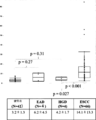
- the Panel Index was significantly higher in the esophageal squamous cell carcinoma patient group than in the healthy group (16.8 ⁇ 21.2 vs. 3.6 ⁇ 1.3, p ⁇ 0.001), and when the same cutoff value was used. Sensitivity and specificity were 88.9% and 72.2% (B). It is a figure which shows the comparison of the Panel Index in the esophageal adenocarcinoma, severe dysplasia, and esophageal squamous epithelial cancer patients obtained in the following Examples.
- the average value of the Panel Index of patients with esophageal adenocarcinoma was 4.2 ⁇ 1.7, and that of patients with severe dysplasia was 6.2 ⁇ 4.5, which was significantly lower than that of patients with esophageal squamous epithelial cancer (14.1 ⁇ 13.3), while that of the healthy group. No significant difference was observed (3.2 ⁇ 1.3).
- the Panel Index of the esophageal squamous epithelial cancer patient group is shown in a boxplot by clinical stage (A) and pathological stage (B). The values were significantly higher than those in the healthy group at all stages.
- Clinical stage IV (31.2 ⁇ 28.9) tends to be higher than other stages [stage I (11.4 ⁇ 6.3), stage II (13.8 ⁇ 7.2), stage III (12.8 ⁇ 11.7)]. There was, but no significant difference was found.
- Pathological stage IV (27.3 ⁇ 17.8) is also from other stages [stage IA (10.9 ⁇ 7.2), stage IB (12.8 ⁇ 6.2), stage II (10.9 ⁇ 6.1), stage III (8.8 ⁇ 6.6) The value was high, but no significant difference was observed.
- the preoperative Panel Index of 4 patients with postoperative recurrence was set to 1.0, showing changes over time. In all cases, it decreased after treatment compared with before treatment, and in 3 cases, it increased again at the time of recurrence. It is a figure which shows the diagnostic usefulness of miR / isomiR used for the diagnostic panel obtained in the following Example.
- miR-574-3p 3'deletion A
- miR-205-5p 3'deletion G
- miR-30a-5p C
- the ROC curve showing the diagnostic accuracy is shown.
- miRNA or the like As described above, in the method of the present invention, the presence of a specific miRNA or isoform miR (isomiR) (hereinafter, may be referred to as “miRNA or the like” for convenience) contained in the test sample isolated from the living body. Use the amount as an index.
- miRNAs and the like are known, and their nucleotide sequences are as shown in the sequence listing. A list of miRNAs and the like used in the method of the present invention is shown in Table 1 below.
- test sample is not particularly limited as long as it is a body fluid containing miRNA or the like, but a blood sample (including plasma, serum and whole blood) is usually preferably used. Methods for extracting total RNA in serum or plasma are well known and are specifically described in the Examples below.
- next-generation sequencer It is preferable to measure (quantify) the abundance of each miRNA, etc. using a next-generation sequencer.
- the model is not limited as long as it is a device that reads an array such as a next-generation sequencer.
- cut-off value of the abundance of each miRNA or the like used for the determination there is a statistically significant difference (p ⁇ 0.05, preferably p ⁇ 0.01, more preferably p ⁇ 0.01 in the t-test) for each miRNA or the like with respect to healthy subjects. It is preferable to use the presence or absence of 0.001) as a reference. Specifically, for example, the number of log2 reads (cutoff value) at the plot point where the false positive rate is the best value (the lowest value) can be set for each miRNA or the like. Examples of cut-off values for the abundance of each miRNA and the like are shown in Table 1 above.
- the cutoff values shown in Table 1 are merely examples, and other values can be adopted as the cutoff values as long as there is a statistically significant difference. Also, different populations of patients and healthy individuals for whom data are collected have different best cutoff values. However, usually, the cutoff value can be set within the range of ⁇ 20% of the cutoff value shown in Table 1, particularly within the range of ⁇ 10%.
- esophageal squamous epithelial carcinoma can be treated.
- Methods for treating esophageal squamous epithelial cancer include surgery (including surgery using an endoscope), anticancer drug treatment such as cisplatin and 5-FU, radiotherapy, and combinations thereof.
- the treatment strategies of the inventors of the present application were determined according to the clinical stage and the patient's condition.
- endoscopic resection is performed, and for submucosal cancer without lymph node metastasis, surgery is performed, and adjuvant treatment is performed based on pathological findings.
- surgery is performed after preoperative treatment if the general condition is good.
- Curative chemical radiation may be selected if the patient's wishes or general condition are judged to be unsuitable for surgery. If accompanied by distant metastasis, give systemic chemotherapy.
- RNA extraction After obtaining the consent of the patient, 2 ml of peripheral blood of the preoperative patient (or healthy control) was collected. The sera were separated by centrifugation at 3000 rpm for 10 minutes at 4 ° C. The supernatant was collected as a serum sample in a new tube and stored at -80 ° C until use. Total RNA was extracted using Qiagen's miReasy according to the protocol.
- the number of reads of all samples was assumed to be 1 million reads, and each small RNA was compared by the number of reads per 1 million reads (Normalize, standardized).
- To search for candidates for diagnostic biomarkers we compared the mean read numbers of miR / isomiR detected in the patient and healthy groups (Student t-test).
- the definition of the diagnostic biomarker was defined as that it can be detected in 90% or more of the samples in the patient group and the healthy group, and that the difference is more than doubled with a significant difference (p ⁇ 0.05) in the comparison of the average values.
- MiR / isomiR satisfying this definition was examined by multivariate linear regression analysis, and a diagnostic panel for esophageal squamous epithelial cancer was prepared.
- the Panel index is calculated from the number of readings of miR / isomiR selected for the diagnostic panel and the index indicating the importance of each miR / isomiR produced as a result of multivariate analysis.
- ROC curves showing the accuracy of diagnosis of esophageal squamous epithelial carcinoma were created for miR / isomiR and Panel index selected for the diagnostic panel.
- Panel Index Relationship with clinical stage and pathological stage
- Figure 6A shows the Panel Index for each clinical stage in patients with esophageal squamous epithelial cancer.
- the average values of the Panel Index were 11.4 ⁇ 6.3, 13.8 ⁇ 7.2, 12.8 ⁇ 11.7, and 31.2 ⁇ 28.9 in stages I, II, III, and IV, respectively.
- stage IV stage IV
- stage I-III stage IV
- a similar tendency was observed when the Panel Index was examined for each pathological stage.
- Patients with clinical stage I tended to have a lower Panel Index than patients with other advanced stages, but were clearly higher than the healthy group.
- the ROC curve showing the usefulness of diagnosis in stage I patients and healthy groups shows that the AUC is 0.93 (95% CI, 0.85-1.0, p ⁇ 0.001; Fig. 11), and the sensitivity is 91.0% when the cutoff value is 4.0.
- the specificity was 77.4%.
- FIG. 8 shows changes over time in the Panel Index of 4 cases with postoperative recurrence. In all 4 cases, a decrease was observed after treatment compared to before treatment, and in 3 cases, a re-elevation was observed at the time of recurrence (Fig. 13).
Landscapes
- Life Sciences & Earth Sciences (AREA)
- Health & Medical Sciences (AREA)
- Chemical & Material Sciences (AREA)
- Engineering & Computer Science (AREA)
- Organic Chemistry (AREA)
- Genetics & Genomics (AREA)
- Molecular Biology (AREA)
- Zoology (AREA)
- Proteomics, Peptides & Aminoacids (AREA)
- Wood Science & Technology (AREA)
- Immunology (AREA)
- Biotechnology (AREA)
- Biomedical Technology (AREA)
- Microbiology (AREA)
- Analytical Chemistry (AREA)
- Biochemistry (AREA)
- General Health & Medical Sciences (AREA)
- Physics & Mathematics (AREA)
- General Engineering & Computer Science (AREA)
- Bioinformatics & Cheminformatics (AREA)
- Pathology (AREA)
- Biophysics (AREA)
- Hematology (AREA)
- Urology & Nephrology (AREA)
- General Physics & Mathematics (AREA)
- Food Science & Technology (AREA)
- Medicinal Chemistry (AREA)
- Cell Biology (AREA)
- Plant Pathology (AREA)
- Hospice & Palliative Care (AREA)
- Oncology (AREA)
- Measuring Or Testing Involving Enzymes Or Micro-Organisms (AREA)
Priority Applications (1)
| Application Number | Priority Date | Filing Date | Title |
|---|---|---|---|
| JP2022500456A JPWO2021162065A1 (https=) | 2020-02-10 | 2021-02-10 |
Applications Claiming Priority (2)
| Application Number | Priority Date | Filing Date | Title |
|---|---|---|---|
| JP2020021005 | 2020-02-10 | ||
| JP2020-021005 | 2020-02-10 |
Publications (1)
| Publication Number | Publication Date |
|---|---|
| WO2021162065A1 true WO2021162065A1 (ja) | 2021-08-19 |
Family
ID=77293070
Family Applications (1)
| Application Number | Title | Priority Date | Filing Date |
|---|---|---|---|
| PCT/JP2021/005110 Ceased WO2021162065A1 (ja) | 2020-02-10 | 2021-02-10 | 食道扁平上皮癌の検出を補助する方法 |
Country Status (2)
| Country | Link |
|---|---|
| JP (1) | JPWO2021162065A1 (https=) |
| WO (1) | WO2021162065A1 (https=) |
Cited By (1)
| Publication number | Priority date | Publication date | Assignee | Title |
|---|---|---|---|---|
| CN115323066A (zh) * | 2022-09-23 | 2022-11-11 | 中国农业科学院北京畜牧兽医研究所 | 一种与鸡产蛋数和连产性状杂种优势相关的miRNA及其应用 |
Citations (7)
| Publication number | Priority date | Publication date | Assignee | Title |
|---|---|---|---|---|
| CN101851682A (zh) * | 2010-06-25 | 2010-10-06 | 中国人民解放军南京军区南京总医院 | 一种用于检测食管鳞状细胞癌的微小核糖核酸组合及其应用 |
| JP2011501943A (ja) * | 2007-10-11 | 2011-01-20 | ジ・オハイオ・ステイト・ユニバーシティ・リサーチ・ファウンデイション | 食道腺癌の診断及び治療のための方法及び組成物 |
| CN105176983A (zh) * | 2015-09-23 | 2015-12-23 | 河南师范大学 | 一种用于检测食管鳞癌相关血清miRNAs基因的试剂盒 |
| WO2019117270A1 (ja) * | 2017-12-13 | 2019-06-20 | 国立大学法人広島大学 | 頭頸部がんの検出を補助する方法 |
| US20190249262A1 (en) * | 2016-10-21 | 2019-08-15 | Thomas Jefferson University | Leveraging the presence or absence of mirna isoforms for recommending therapy in cancer patients |
| JP2019529351A (ja) * | 2016-08-04 | 2019-10-17 | ベイラー リサーチ インスティテュートBaylor Research Institute | 食道癌を診断するおよび治療するための方法 |
| CN111826438A (zh) * | 2019-04-19 | 2020-10-27 | 深圳大学 | 一组辅助诊断食管鳞癌的miRNA标志物及其应用 |
-
2021
- 2021-02-10 WO PCT/JP2021/005110 patent/WO2021162065A1/ja not_active Ceased
- 2021-02-10 JP JP2022500456A patent/JPWO2021162065A1/ja active Pending
Patent Citations (7)
| Publication number | Priority date | Publication date | Assignee | Title |
|---|---|---|---|---|
| JP2011501943A (ja) * | 2007-10-11 | 2011-01-20 | ジ・オハイオ・ステイト・ユニバーシティ・リサーチ・ファウンデイション | 食道腺癌の診断及び治療のための方法及び組成物 |
| CN101851682A (zh) * | 2010-06-25 | 2010-10-06 | 中国人民解放军南京军区南京总医院 | 一种用于检测食管鳞状细胞癌的微小核糖核酸组合及其应用 |
| CN105176983A (zh) * | 2015-09-23 | 2015-12-23 | 河南师范大学 | 一种用于检测食管鳞癌相关血清miRNAs基因的试剂盒 |
| JP2019529351A (ja) * | 2016-08-04 | 2019-10-17 | ベイラー リサーチ インスティテュートBaylor Research Institute | 食道癌を診断するおよび治療するための方法 |
| US20190249262A1 (en) * | 2016-10-21 | 2019-08-15 | Thomas Jefferson University | Leveraging the presence or absence of mirna isoforms for recommending therapy in cancer patients |
| WO2019117270A1 (ja) * | 2017-12-13 | 2019-06-20 | 国立大学法人広島大学 | 頭頸部がんの検出を補助する方法 |
| CN111826438A (zh) * | 2019-04-19 | 2020-10-27 | 深圳大学 | 一组辅助诊断食管鳞癌的miRNA标志物及其应用 |
Non-Patent Citations (3)
| Title |
|---|
| GUO LI, ZHENG LIANG, ZHAO YANG, WANG QIANYUN: "Profiling and Bioinformatic Analyses Indicate Differential circRNA and miRNA/isomiR Expression and Interactions", BIOMED RESEARCH INTERNATIONAL, vol. 2018, 8518563, 1 January 2018 (2018-01-01), pages 1 - 9, XP055848340, ISSN: 2314-6133, DOI: 10.1155/2018/8518563 * |
| IBUKI YUTA, NISHIYAMA YUKIE, TSUTANI YASUHIRO, EMI MANABU, HAMAI YOICHI, OKADA MORIHITO, TAHARA HIDETOSHI: "Circulating microRNA/isomiRs as novel biomarkers of esophageal squamous cell carcinoma", PLOS ONE, vol. 15, no. 4, 6 April 2020 (2020-04-06), pages 1 - 18, XP055848342, DOI: 10.1371/journal.pone.0231116 * |
| YUTA IBUKI: "O45-1 Exploratory research on blood microRNA/isorniR , which is a biomaker for esophageal cancer by analysis of next-generation sequencing", JAPANESE JOURNAL OF GASTROENTEROLOGICAL SURGERY, vol. 52, no. S1, 1 July 2019 (2019-07-01), pages 417, XP055848338 * |
Cited By (2)
| Publication number | Priority date | Publication date | Assignee | Title |
|---|---|---|---|---|
| CN115323066A (zh) * | 2022-09-23 | 2022-11-11 | 中国农业科学院北京畜牧兽医研究所 | 一种与鸡产蛋数和连产性状杂种优势相关的miRNA及其应用 |
| CN115323066B (zh) * | 2022-09-23 | 2025-01-24 | 中国农业科学院北京畜牧兽医研究所 | 一种与鸡产蛋数和连产性状杂种优势相关的miRNA及其应用 |
Also Published As
| Publication number | Publication date |
|---|---|
| JPWO2021162065A1 (https=) | 2021-08-19 |
Similar Documents
| Publication | Publication Date | Title |
|---|---|---|
| Wang et al. | Evidence for serum miR-15a and miR-16 levels as biomarkers that distinguish sepsis from systemic inflammatory response syndrome in human subjects. | |
| CA2799163C (en) | Methods and algorithms for aiding in the detection of cancer | |
| Skallevold et al. | Salivary biomarkers in lung cancer | |
| Guo et al. | Evaluating the diagnostic and prognostic value of long non-coding RNA SNHG15 in pancreatic ductal adenocarcinoma. | |
| Ibuki et al. | Circulating microRNA/isomiRs as novel biomarkers of esophageal squamous cell carcinoma | |
| Li et al. | Plasma circular RNA panel acts as a novel diagnostic biomarker for colorectal cancer detection | |
| Wang et al. | Investigation of serum miR-411 as a diagnosis and prognosis biomarker for non-small cell lung cancer. | |
| EP2521920A2 (en) | Protein markers for lung cancer detection and methods of using thereof | |
| Zheng et al. | Identification of serum MicroRNAs as novel biomarkers in esophageal squamous cell carcinoma using feature selection algorithms | |
| JP2023113877A (ja) | 膵がんの検出を補助する方法 | |
| Peng et al. | The mSHOX2 is capable of assessing the therapeutic effect and predicting the prognosis of stage IV lung cancer | |
| JP2023113881A (ja) | 乳がんの検出を補助する方法 | |
| Radwan et al. | Evaluation of circulating microRNAs-211 and 25 as diagnostic biomarkers of colorectal cancer | |
| EP3931571A1 (en) | Protein signature for the diagnosis of colorectal cancer and/or pre-cancerous stage thereof | |
| Gong et al. | Diagnostic and prognostic performance of microRNA-25, carbohydrate antigen 19-9, carcinoembryonic antigen, and carbohydrate antigen 125 in pancreatic ductal adenocarcinoma | |
| Guo et al. | Plasma extracellular vesicle long RNA profiling identifies a diagnostic signature for stage I lung adenocarcinoma | |
| Han et al. | Extracellular vesicle protein panel enables early lung cancer detection in a large clinical cohort | |
| CN106153917B (zh) | 两组胰腺癌血浆诊断标志物谱及其应用 | |
| Arrieta et al. | Molecular detection and prognostic value of epithelial markers mRNA expression in peripheral blood of advanced non-small cell lung cancer patients | |
| Linke et al. | Quantification of mitochondrial cfDNA reveals new perspectives for early diagnosis of colorectal cancer | |
| WO2021162065A1 (ja) | 食道扁平上皮癌の検出を補助する方法 | |
| Prasopdee et al. | Investigation of plasma cell-free DNA and MiRNA in cholangiocarcinoma and opisthorchiasis viverrini patients | |
| Rodríguez‐Ces et al. | Circulating Cell‐Free DNA Concentration as a Biomarker in Head and Neck Cancer | |
| Kong et al. | Circ_0004592: An auxiliary diagnostic biomarker for gastric cancer | |
| Bica et al. | miRNA patterns in male LUSC patients-the 3-way mirror: Tissue, plasma and exosomes |
Legal Events
| Date | Code | Title | Description |
|---|---|---|---|
| 121 | Ep: the epo has been informed by wipo that ep was designated in this application |
Ref document number: 21753098 Country of ref document: EP Kind code of ref document: A1 |
|
| ENP | Entry into the national phase |
Ref document number: 2022500456 Country of ref document: JP Kind code of ref document: A |
|
| NENP | Non-entry into the national phase |
Ref country code: DE |
|
| 122 | Ep: pct application non-entry in european phase |
Ref document number: 21753098 Country of ref document: EP Kind code of ref document: A1 |