WO2021161564A1 - 水中のでんぷん濃度の測定方法および装置 - Google Patents
水中のでんぷん濃度の測定方法および装置 Download PDFInfo
- Publication number
- WO2021161564A1 WO2021161564A1 PCT/JP2020/033091 JP2020033091W WO2021161564A1 WO 2021161564 A1 WO2021161564 A1 WO 2021161564A1 JP 2020033091 W JP2020033091 W JP 2020033091W WO 2021161564 A1 WO2021161564 A1 WO 2021161564A1
- Authority
- WO
- WIPO (PCT)
- Prior art keywords
- water
- starch
- starch concentration
- measuring
- iodine
- Prior art date
- Legal status (The legal status is an assumption and is not a legal conclusion. Google has not performed a legal analysis and makes no representation as to the accuracy of the status listed.)
- Ceased
Links
Images

Classifications
-
- D—TEXTILES; PAPER
- D21—PAPER-MAKING; PRODUCTION OF CELLULOSE
- D21H—PULP COMPOSITIONS; PREPARATION THEREOF NOT COVERED BY SUBCLASSES D21C OR D21D; IMPREGNATING OR COATING OF PAPER; TREATMENT OF FINISHED PAPER NOT COVERED BY CLASS B31 OR SUBCLASS D21G; PAPER NOT OTHERWISE PROVIDED FOR
- D21H21/00—Non-fibrous material added to the pulp, characterised by its function, form or properties; Paper-impregnating or coating material, characterised by its function, form or properties
- D21H21/02—Agents for preventing deposition on the paper mill equipment, e.g. pitch or slime control
- D21H21/04—Slime-control agents
-
- G—PHYSICS
- G01—MEASURING; TESTING
- G01N—INVESTIGATING OR ANALYSING MATERIALS BY DETERMINING THEIR CHEMICAL OR PHYSICAL PROPERTIES
- G01N21/00—Investigating or analysing materials by the use of optical means, i.e. using sub-millimetre waves, infrared, visible or ultraviolet light
- G01N21/01—Arrangements or apparatus for facilitating the optical investigation
- G01N21/03—Cuvette constructions
- G01N21/05—Flow-through cuvettes
-
- G—PHYSICS
- G01—MEASURING; TESTING
- G01N—INVESTIGATING OR ANALYSING MATERIALS BY DETERMINING THEIR CHEMICAL OR PHYSICAL PROPERTIES
- G01N21/00—Investigating or analysing materials by the use of optical means, i.e. using sub-millimetre waves, infrared, visible or ultraviolet light
- G01N21/17—Systems in which incident light is modified in accordance with the properties of the material investigated
- G01N21/25—Colour; Spectral properties, i.e. comparison of effect of material on the light at two or more different wavelengths or wavelength bands
- G01N21/27—Colour; Spectral properties, i.e. comparison of effect of material on the light at two or more different wavelengths or wavelength bands using photo-electric detection ; circuits for computing concentration
-
- G—PHYSICS
- G01—MEASURING; TESTING
- G01N—INVESTIGATING OR ANALYSING MATERIALS BY DETERMINING THEIR CHEMICAL OR PHYSICAL PROPERTIES
- G01N21/00—Investigating or analysing materials by the use of optical means, i.e. using sub-millimetre waves, infrared, visible or ultraviolet light
- G01N21/75—Systems in which material is subjected to a chemical reaction, the progress or the result of the reaction being investigated
-
- G—PHYSICS
- G01—MEASURING; TESTING
- G01N—INVESTIGATING OR ANALYSING MATERIALS BY DETERMINING THEIR CHEMICAL OR PHYSICAL PROPERTIES
- G01N21/00—Investigating or analysing materials by the use of optical means, i.e. using sub-millimetre waves, infrared, visible or ultraviolet light
- G01N21/75—Systems in which material is subjected to a chemical reaction, the progress or the result of the reaction being investigated
- G01N21/77—Systems in which material is subjected to a chemical reaction, the progress or the result of the reaction being investigated by observing the effect on a chemical indicator
- G01N21/78—Systems in which material is subjected to a chemical reaction, the progress or the result of the reaction being investigated by observing the effect on a chemical indicator producing a change of colour
Definitions
- the present invention relates to a method and an apparatus for measuring starch concentration in manufacturing process water and wastewater of a pulp and paper factory or a food factory.
- melted and gelatinized starch is used for various purposes such as fixing agents for paper strength agents, pasting agents, fixing pigments, and preventing ink bleeding.
- the excess starch used remains in the water and serves as a nutrient source for microorganisms, causing problems such as deterioration of product quality such as slime damage and deposit generation, and shutdown of paper machines.
- Measuring and monitoring the residual starch concentration in real time and controlling the emission amount is an important issue not only for maintaining product quality but also for preventing water pollution and reducing environmental load.
- a method using an iodine solution or potassium iodide solution using an iodine starch reaction as a reagent is common. This is a method that uses the principle that iodine develops bluish purple and magenta when it enters between starch molecules to form a clathrate compound.
- iodine solution and hydrochloric acid are used as reagents.
- this method it was necessary to dilute a 0.5 mol / L (1N) iodine solution 500 times in order to adjust the degree of color development.
- This diluted iodine solution has poor stability and is easily decomposed by light, so it is necessary to put it in a light-shielding bottle, and basically it is necessary to prepare it every measurement day. Therefore, it was not suitable for continuous measurement with equipment in the field.
- a potassium iodide solution and a hydrogen peroxide / sulfuric acid mixed solution are used as reagents.
- iodine is liberated from the potassium iodide solution with hydrogen peroxide under sulfuric acid acidity, and this free iodine is reacted with starch.
- the potassium iodide solution in this method is relatively stable as a reagent, but has the following problems.
- Hydrogen peroxide for liberating iodine easily reacts with reducing substances (sodium sulfite and thiourea dioxide) used as bleaching agents, microorganisms, metal salts and organic substances in the papermaking process and is easily consumed, resulting in iodine.
- the amount of iodine released becomes unstable, and the measurement error tends to increase.
- an Eberus polarization analysis method for measuring optical rotation and an enzyme method for quantifying starch by decomposing it into glucose using enzymes such as peroxidase and glucose oxidase are known. These methods also require the use of special equipment, expensive enzyme reagents, etc., and are not suitable for continuous analysis of starch concentration.
- the povidone iodine used in the present invention is widely used as a disinfectant.
- the method of liberating iodine from potassium iodide with a diluted iodine solution or hydrogen peroxide has a problem in terms of reagent stability. It is irrational to prepare and replace reagents daily in a field-based continuous measuring device. In addition, it is difficult to stabilize the release of the reagent iodine with hydrogen peroxide in a water test in which the water quality fluctuates drastically.
- An object of the present invention is to provide the following starch concentration measuring method and apparatus in water, which have excellent stability of reagents used and facilitate maintenance and management of the starch concentration measuring apparatus.
- a method for measuring starch concentration in water in which povidone iodine is added to the test water, then the absorbance is measured, and the starch concentration in the test water is measured based on the measured absorbance.
- Povidone iodine is a complex of polyvinylpyrrolidone (PVP) and iodine, and is widely used as a mouthwash and disinfectant.
- PVP polyvinylpyrrolidone
- Povidone iodine has better stability than iodine solution.
- iodine diluent N / 500 iodine solution
- 90% of povidone iodine diluted to 0.5% remains after one month at room temperature and light-shielding conditions.
- the data are introduced in the literature (“Stability of 0.5% povidone iodine solution prepared by dilution and comparison of various povidone iodine preparations” Masaki Uchida (Department of Pharmacy, Faculty of Pharmaceutical Sciences, Josai University) et al. Medical Pharmacy Vol40.No, 2 (2014) ).
- povidone iodine is used as a disinfectant, it is highly versatile and easy to obtain. Furthermore, since povidone iodine is easily soluble in water, its concentration can be easily adjusted, and it has properties very suitable as a reagent.
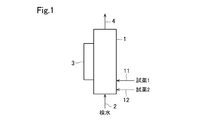
- FIG. 1 is a block diagram of a starch concentration measuring device.
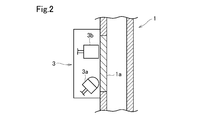
- FIG. 2 is a vertical cross-sectional view of the starch concentration measuring device.
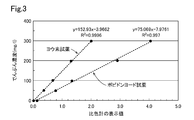
- FIG. 3 is a graph showing the results of Examples and Comparative Examples.
- FIG. 4 is a graph showing an example of a calibration curve.
- the starch concentration in the test water is measured by adding povidone iodine to the water test and measuring the colorimetry (absorbance measurement).
- This method is suitable for application when the starch concentration in the test water is about 10 to 600 mg / L, particularly about 20 to 400 mg / L.
- the amount of povidone iodine added to the test water is preferably about 0.1 to 3 mg / L, particularly about 0.2 to 2 mg / L.
- Povidone iodine is preferably added to the test water as an aqueous solution having a concentration of 500 to 50,000 mg / L, particularly 2,000 to 20,000 mg / L.
- the wavelength at which the absorbance is measured is preferably 450 to 700 nm, particularly 500 to 600 nm.
- the starch concentration in the test water is measured based on the calibration curve of the absorbance and the starch concentration prepared in advance using a starch aqueous solution of known concentration.
- Povidone iodine may be added and the absorbance may be measured using a continuous measurement device. An example of this continuous measuring device will be described with reference to FIGS. 1 and 2.
- the water sample collected by an autosampler or the like is introduced from one end side (lower end side in FIGS. 1 and 2) of the flow cell 1 of this continuous measuring device.
- reagent 1 composed of a povidone iodine aqueous solution and reagent 2 composed of an acid or alkaline aqueous solution are provided for one end side (or inflow pipe 2).
- lines 11 and 12 having a metering pump.
- the absorbance is measured by the color sensor 3.
- a part of the flow cell 1 is a translucent window portion 1a, and the color sensor 3 is arranged outside the translucent window portion 1a.
- the color sensor 3 has a light emitting element 3a and a light receiving element 3b.
- test water or wash water After measuring the absorbance, the test water or wash water is passed through the flow cell 1, and the measured drainage is discharged from the pipe 4.
- the absorbance of the test water to which reagents 1 and 2 were added was obtained from the difference between the absorbance of the test water to which reagents 1 and 2 were added and the absorbance (blank value) of the test water alone. Then, the starch concentration in the test water is obtained based on the calibration curve obtained in advance.
- Unmanned automatic measurement is performed at intervals of about 5 minutes, and the measured value can be immediately monitored by remote monitoring, and an alarm is issued or the slime control agent and COD decrease automatically according to the measured value.
- the agent can be added, and the starch concentration in water can be easily and automatically controlled.
- Real-time measurement / monitoring of water starch concentration and concentration control enable labor saving and automation
- Improvement of operability in paper manufacturing process and product quality improvement by reducing excess starch in water (11) Wastewater treatment field Reduction of water pollution risk, reduction of environmental load, prevention of eutrophication
- a conventional method in which 3.5% hydrochloric acid (reagent A) and N / 500 iodine solution (reagent B) are used, the reagents A and B are added to the test water, and colorimetric measurement is performed 3 minutes later. ), The measurement time is about 5 minutes per sample, and the pre-reagent preparation time is 10 minutes.
- the reagents C and D were added to the test water, and 10 minutes later.
- the measurement time is about 10 minutes per sample.
- reagent 1 3.5% hydrochloric acid was used as reagent 1
- 0.5% povidone iodine was used as reagent 2
- reagents 1 and 2 were added to the test water, and colorimetric measurement was performed 3 minutes later.
- the measurement time is about 3 minutes per sample.
- reagent 1 3.5% hydrochloric acid was used as reagent 1
- 0.5% povidone iodine 0.5% povidone iodine was used as reagent 2
- test water was collected in a flow cell by a tube pump, and reagents 1 and 2 were collected. Is added to the flow cell, the mixture is automatically stirred, and the absorbance of the RGB value is measured after 3 minutes, the measurement time is about 3 minutes.
- the starch concentration can be automatically calculated, equipped with a measurement upper limit alarm and an external output terminal, and linked with a slime control agent, starch oxidizing agent and COD lowering agent addition equipment to monitor and manage the starch concentration in water.
- an inorganic flocculant such as aluminum sulfate, ferric chloride or PAC, or a polymer flocculant such as melamine resin, phenol resin, polyacrylic acid or polyacrylamide can be used.
- Example 1 The water test used in this example was prepared by diluting a 1% raw starch solution that had been previously heated and dissolved in alkaline with pure water, and having a starch concentration of 0 mg / L, 50 mg / L, 100 mg / L, 200 mg / L, 300 mg. It is a standard dilution series of / L.
- povidone iodine a povidone iodine solution manufactured by Yoshida Pharmaceutical Co., Ltd. was diluted with 10% to a concentration of 0.5 wt%.
- a portable colorimeter with a measurement wavelength of 528 nm (HACH2470 manufactured by Hack Co., Ltd.) was used.
- Example 1 The starch concentration was measured in the same manner as in Example 1 except that the test water was 3.2 mL, 3.4 mL of 3.5% hydrochloric acid was added, and 0.4 mL of N / 500 iodine solution was added. The results are shown in FIG.
- Example 2 and 3 Measurement by the continuous measuring device shown in FIGS. 1 and 2]
- Example 3 the recovered water containing pulp from the corrugated cardboard base paper factory was allowed to stand for 1 hour, and the starch concentration of 0 mg / L, 50 mg / L, 100 mg / L, 200 mg obtained by adding the above 1% raw starch solution to the obtained supernatant was obtained. Each test water of / L and 300 mg / L was used.
- the above diluted starch standard solution was automatically sampled into the flow cell using an autosampler.
- 3.5% hydrochloric acid as reagent 1 was injected into the flow cell by a micrometering pump at 3% of the flow cell volume, and 0.5% povidone iodine as reagent 2 was injected at 3% of the flow cell volume, and the mixture was stirred.
- Example 1 is based on the conventional test method using an iodine solution as a reagent, except that the second reagent is changed to povidone iodine.
Landscapes
- Physics & Mathematics (AREA)
- Chemical & Material Sciences (AREA)
- Immunology (AREA)
- Life Sciences & Earth Sciences (AREA)
- Analytical Chemistry (AREA)
- Biochemistry (AREA)
- General Health & Medical Sciences (AREA)
- General Physics & Mathematics (AREA)
- Health & Medical Sciences (AREA)
- Pathology (AREA)
- Engineering & Computer Science (AREA)
- Chemical Kinetics & Catalysis (AREA)
- Plasma & Fusion (AREA)
- Mathematical Physics (AREA)
- Theoretical Computer Science (AREA)
- Spectroscopy & Molecular Physics (AREA)
- Investigating Or Analysing Materials By The Use Of Chemical Reactions (AREA)
- Investigating Or Analyzing Non-Biological Materials By The Use Of Chemical Means (AREA)
- Investigating Or Analysing Materials By Optical Means (AREA)
Abstract
【解決手段】検水にポビドンヨードを添加し、次いで吸光度を測定し、測定された吸光度に基づいて検水中のでんぷん濃度を測定する方法。検水が導入されるセルと、該セル内に、又は該セルに導入される検水にポビドンヨード水溶液を供給する手段と、該セル内の液の吸光度を測定する手段とを有する検水中のでんぷん濃度の測定装置。用いる試薬の安定性に優れ、でんぷん濃度測定装置の保守管理が容易となる水中のでんぷん濃度測定方法及び装置が提供される。
Description
本発明は、紙パルプ工場や食品工場の製造工程水および排水などにおけるでんぷん濃度を測定する方法及び装置に関する。
製紙工場では、溶解させ糊化したでんぷんを、紙力剤や貼合剤、顔料の定着やインクのにじみ防止など様々な用途で用いている。用いたでんぷんの余剰分は水中に残留し、微生物の栄養源となり、スライム障害やデポジット発生といった製品の品質低下や抄紙機の操業停止などの障害を引き起こす。
食品工場などのでんぷん含有排水では、残留でんぷんはBOD・COD源として水質汚濁の原因となる。
残留でんぷん濃度をリアルタイムで測定かつモニタリングして排出量をコントロールすることは、製品品質の維持のみならず、水質汚濁防止および環境負荷低減を図る上での重要な課題である。
水中でんぷん濃度の測定には、ヨウ素でんぷん反応を利用したヨウ素液またはヨウ化カリウム溶液を試薬に用いる方法が一般的である。これはヨウ素がでんぷん分子間に入り込んで包接化合物を作るときに青紫、赤紫色に発色する原理を用いる方法である。
従来は、紙パルプ工場や食品工場の製造工程水および排水から人が検水を採取し、試験室などの屋内環境で測定日毎にヨウ素試薬を調合し、比色計で分析を行い、得られた結果を見て製造ラインへのでんぷん添加量調整ならびに、スライムコントロール剤やCOD低下剤などを投入し、水中のでんぷん濃度をコントロールしていた。
ヨウ素でんぷん反応を利用した従来のでんぷん濃度測定方法の一例では、試薬にヨウ素液および塩酸を用いる。この方法では、発色度の調整のため0.5mol/L(1N)ヨウ素液を500倍に希釈する必要があった。この希釈ヨウ素液は、安定性が悪く、光により容易に分解するため遮光瓶に入れる必要があり、基本的には測定日毎に調製する必要があった。そのため、現場における機器による連続測定には不向きであった。
ヨウ素でんぷん反応を利用したでんぷん濃度測定方法の従来の別の一例では、試薬にヨウ化カリウム溶液と過酸化水素・硫酸混合液を用いる。この方法では、硫酸酸性下において過酸化水素によりヨウ化カリウム溶液からヨウ素を遊離させ、この遊離ヨウ素をでんぷんと反応させる。
この方法におけるヨウ化カリウム溶液は、試薬として比較的安定であるが、以下の問題がある。
(1) ヨウ素を遊離させるための過酸化水素は、製紙プロセスでは漂白剤として用いられる還元物質(亜硫酸ソーダや二酸化チオ尿素)や微生物、金属塩や有機物と反応して消耗しやすく、その結果ヨウ素の遊離量が不安定になり、測定誤差が大きくなり易い。
(2) 過酸化水素の酸化力で遊離するヨウ素量を一定に保ち測定を安定させるために、検水中のパルプや縣濁物質および微生物を濾過して取り除く前処理が必要である。
(1) ヨウ素を遊離させるための過酸化水素は、製紙プロセスでは漂白剤として用いられる還元物質(亜硫酸ソーダや二酸化チオ尿素)や微生物、金属塩や有機物と反応して消耗しやすく、その結果ヨウ素の遊離量が不安定になり、測定誤差が大きくなり易い。
(2) 過酸化水素の酸化力で遊離するヨウ素量を一定に保ち測定を安定させるために、検水中のパルプや縣濁物質および微生物を濾過して取り除く前処理が必要である。
従ってこのヨウ化カリウム溶液と過酸化水素・硫酸混合液を用いる方法も、連続測定には向かなかった。
その他のでんぷん定量法としては、旋光度を測定するエーベルス偏光分析法(ISO10520)や、ペルオキシダーゼやグルコースオキシダーゼ等の酵素を用い、でんぷんをグルコースにまで分解して定量する酵素法が知られている。これらの方法も、特殊な機器や高価な酵素試薬等を用いる必要があり、でんぷん濃度の連続分析には不向きである。
なお、本発明で用いるポビドンヨードは殺菌剤として広く用いられている。
"でんぷんの検出と定量-その問題点"川村信一郎 澱粉工業学会誌第16巻第2号(1968)
上述の通り、希釈ヨウ素液や過酸化水素でヨウ化カリウムからヨウ素を遊離させる方法には、試薬の安定性の面で課題がある。現場設置型の連続測定装置において試薬を毎日調製・交換することは、非合理的である。また、水質変動の激しい検水において過酸化水素により試薬ヨウ素の遊離を安定化させることは困難である。
本発明は、用いる試薬の安定性に優れ、でんぷん濃度測定装置の保守管理が容易となる、以下の水中のでんぷん濃度測定方法及び装置を提供することを目的とする。
[1] 検水にポビドンヨードを添加し、次いで吸光度を測定し、測定された吸光度に基づいて検水中のでんぷん濃度を測定する、水中のでんぷん濃度測定方法。
[2] 検水が導入されるセルと、該セル内に、又は該セルに導入される検水にポビドンヨード水溶液を供給する手段と、該セル内の液の吸光度を測定する手段とを有する水中のでんぷん濃度の測定装置。
[3] 前記セルの一部が透明部となっており、前記吸光度の測定手段が該透明部の外側に配置されている[2]の水中のでんぷん濃度の測定装置。
[4] [1]の検水中のでんぷん濃度測定方法によって求めた検水中のでんぷん濃度に基づいて、該検水を採取した水系に対し、スライムコントロール剤又はCOD低下剤を添加する水系への薬注制御方法。
ポビドンヨードは、ポリビニルピロリドン(PVP)とヨウ素の複合体であり、うがい薬や消毒薬として広く用いられている。
ポビドンヨードは、ヨウ素液に比べ良好な安定性を有する。例えば、ヨウ素希釈液(N/500ヨウ素液)が常温、遮光条件において1週間程度で劣化するのに比べ、0.5%に希釈したポビドンヨードは室温、遮光条件で1か月後に90%残存するデータが文献で紹介されている(“希釈調製した0.5%ポビドンヨード液の安定性および各種ポビドンヨード製剤の比較”内田昌希(城西大学薬学部薬学科)ほか 医学薬学Vol40.No,2(2014))。
また、ポビドンヨードは、消毒薬として用いられているため、汎用性が高く、入手も容易である。さらに、ポビドンヨードは、水に易溶であるので、濃度調整も容易で、試薬として非常に適した特性を有している。
従って、ヨウ素でんぷん反応を用いた現場設置型のでんぷん連続測定装置の試薬としてポビドンヨードを用いることで、試薬の長期安定性、調製または交換頻度の問題、および検水中の成分による測定値のばらつきを解決し、水中でんぷん濃度の長期連続測定が可能となる。
本発明では、検水にポビドンヨードを添加し、比色測定(吸光度測定)することにより、検水中のでんぷん濃度を測定する。
この方法は、検水中のでんぷん濃度が、10~600mg/L特に20~400mg/L程度であるときに適用するのに好適である。
検水に添加するポビドンヨードの添加量は、0.1~3mg/L特に0.2~2mg/L程度が好適である。
ポビドンヨードは、500~50,000mg/L特に2,000~20,000mg/Lの濃度の水溶液として検水に添加することが好ましい。
検水に対しては、必要に応じ酸又はアルカリを添加し、pHを1~5、特に2~4とすることが好ましい。
検水にポビドンヨード及び必要に応じ酸又はアルカリを添加した後、必要に応じ撹拌し、1~10分、特に3~5分経過した後、吸光度測定を行うことが好ましい。吸光度測定を行うときの波長は450~700nm特に500~600nmが好適である。
予め濃度既知のでんぷん水溶液を用いて作成しておいた吸光度とでんぷん濃度との検量線に基づいて、検水中のでんぷん濃度が測定される。ポビドンヨードの添加及び吸光度測定は、連続測定式の装置を用いて行ってもよい。この連続測定装置の一例について図1,2を参照して説明する。
図1,2の通り、この連続測定装置のフローセル1の一端側(図1,2では下端側)から、オートサンプラー等によって採取された検水が導入される。フローセル1内に規定量の検水が導入された後、検水導入を停止し、該一端側(又は流入配管2)に対しポビドンヨード水溶液よりなる試薬1と、酸又はアルカリの水溶液よりなる試薬2とを定量ポンプを有するライン11,12によって添加する。次いで、撹拌手段(図示略)によって所定時間撹拌した後、カラーセンサ3によって吸光度を測定する。
フローセル1の一部は透光性窓部1aとなっており、カラーセンサ3は該透光性窓部1aの外側に配置されている。カラーセンサ3は、発光素子3aと受光素子3bとを有している。
吸光度測定後、検水又は洗浄水をフローセル1に通水し、測定排液を、配管4から排出する。
試薬1,2を添加した検水の吸光度と、検水のみの吸光度(ブランク値)との差より、でんぷん呈色反応により着色した検水の吸光度を求める。そして、予め求めておいた検量線に基づいて、検水中のでんぷん濃度を求める。
かかる測定方法及び装置によると、次の効果が得られる。
(1) 測定毎にヨウ素液を希釈し試薬を調合することの手間の省略
(2) 希釈によるヨウ素液の易分解性による計測値変動の解消
(3) 過酸化水素によりヨウ化カリウム溶液からヨウ素を遊離させる測定法における検水中の還元物質、有機物による測定誤差の解消
(4) ヨウ素液試薬の刺激性の解消
(5) ポビドンヨードの安全性と汎用性ならびに、易溶解性による試薬製造時間・コストの改善
(6) 製造現場における水中でんぷんの連続自動測定・モニタリング装置の実現
(7) 従来、人の手で行っていた水中でんぷんの分析を、連続的に自動で測定することが可能となる。
(8) 5分毎程度の間隔で無人で自動測定を行い、測定値は遠隔モニタリングで即時に監視することができ、かつ測定値に応じて警報の発報や自動でスライムコントロール剤、COD低下剤を投入することが可能で、水中のでんぷん濃度を容易に自動管理することが可能になる。
(9) 水中でんぷん濃度のリアルタイム測定・監視および濃度管理による省力化、自動化が可能になる
(10) 水中の過剰でんぷん低減による製紙製造工程での操業性改善、製品品質向上
(11) 排水処理分野における水質汚濁リスクの低減、環境負荷低減、富栄養化防止
(1) 測定毎にヨウ素液を希釈し試薬を調合することの手間の省略
(2) 希釈によるヨウ素液の易分解性による計測値変動の解消
(3) 過酸化水素によりヨウ化カリウム溶液からヨウ素を遊離させる測定法における検水中の還元物質、有機物による測定誤差の解消
(4) ヨウ素液試薬の刺激性の解消
(5) ポビドンヨードの安全性と汎用性ならびに、易溶解性による試薬製造時間・コストの改善
(6) 製造現場における水中でんぷんの連続自動測定・モニタリング装置の実現
(7) 従来、人の手で行っていた水中でんぷんの分析を、連続的に自動で測定することが可能となる。
(8) 5分毎程度の間隔で無人で自動測定を行い、測定値は遠隔モニタリングで即時に監視することができ、かつ測定値に応じて警報の発報や自動でスライムコントロール剤、COD低下剤を投入することが可能で、水中のでんぷん濃度を容易に自動管理することが可能になる。
(9) 水中でんぷん濃度のリアルタイム測定・監視および濃度管理による省力化、自動化が可能になる
(10) 水中の過剰でんぷん低減による製紙製造工程での操業性改善、製品品質向上
(11) 排水処理分野における水質汚濁リスクの低減、環境負荷低減、富栄養化防止
なお、3.5%塩酸(試薬A)とN/500 ヨウ素液(試薬B)とを用い、検水に該試薬A,Bを添加し3分後に比色測定する従来法(ヨウ素液希釈法)では、測定時間は1検体当り約5分であり、事前試薬調成時間は10分である。
また、10%硫酸+16.5%過酸化水素混合溶液(試薬C)と0.3% ヨウ化カリウム溶液(試薬D)とを用い、検水に該試薬C,Dを添加し、10分後に比色測定する従来法(ヨウ素ヨウ化カリウム法)では、測定時間は1検体当り約10分である。
これに対し、本発明方法の一例によると、試薬1として3.5%塩酸を用い、試薬2として0.5%ポビドンヨードを用い、検水に試薬1,2を添加し3分後に比色測定してでんぷん濃度を求める場合、測定時間は1検体当り約3分で足りる。
また、図1,2の連続測定装置を用い、試薬1として3.5%塩酸を用い、試薬2として0.5%ポビドンヨードを用い、チューブポンプにより検水をフローセルに採取し、試薬1,2をフローセル内に添加し自動で撹拌を行い、3分後にRGB値の吸光度測定を行う場合、測定時間は約3分で足りる。また、でんぷん濃度を自動算出し、測定上限警報や外部出力端子を備え、スライムコントロール剤、でんぷんの酸化剤やCOD低下剤添加設備と連動させ、水中のでんぷん濃度を監視、管理することもできる。COD低下剤としては硫酸アルミニウム、塩化第二鉄、PAC等の無機凝集剤や、メラミン樹脂、フェノール樹脂、ポリアクリル酸、ポリアクリルアミド等の高分子凝集剤などを用いることができる。
[実施例1]
本実施例で用いた検水は、あらかじめアルカリ性で加熱溶解させた濃度1%の生でんぷん溶液を純水で希釈し、でんぷん濃度0mg/L,50mg/L,100mg/L,200mg/L,300mg/Lの標準希釈系列としたものである。
本実施例で用いた検水は、あらかじめアルカリ性で加熱溶解させた濃度1%の生でんぷん溶液を純水で希釈し、でんぷん濃度0mg/L,50mg/L,100mg/L,200mg/L,300mg/Lの標準希釈系列としたものである。
ポビドンヨードとしては、吉田製薬(株)製ポピヨドン液10%を希釈して0.5wt%濃度としたものを用いた。
比色計としては、測定波長528nmポータブル比色計(ハック社製HACH2470)を用いた。
各検水に3.5%塩酸0.3mL及び0.5%ポビドンヨード0.3mLを添加し3分後に上記比色計で比色測定し、指示値に一定の係数を乗じた値をでんぷん値とした。結果を図3に示す。
[比較例1]
検水を3.2mLとし、3.5%塩酸を4.4mL添加し、N/500ヨウ素液を0.4mL添加したこと以外は実施例1と同様にして、でんぷん濃度を測定した。結果を図3に示す。
検水を3.2mLとし、3.5%塩酸を4.4mL添加し、N/500ヨウ素液を0.4mL添加したこと以外は実施例1と同様にして、でんぷん濃度を測定した。結果を図3に示す。
[実施例2,3:図1,2の連続測定装置による測定]
実施例2では、検水として、純水に上記1%の生でんぷん溶液を添加したでんぷん濃度0mg/L,50mg/L,100mg/L,200mg/L,300mg/Lの各検水を用いた。
実施例2では、検水として、純水に上記1%の生でんぷん溶液を添加したでんぷん濃度0mg/L,50mg/L,100mg/L,200mg/L,300mg/Lの各検水を用いた。
実施例3では、段ボール原紙工場のパルプを含む回収水を1時間静置し、得られた上澄みに上記1%生でんぷん溶液を添加したでんぷん濃度0mg/L,50mg/L,100mg/L,200mg/L,300mg/Lの各検水を用いた。
なお、この上澄み水にはでんぷんを消費する微生物や有機物が含まれるため、でんぷん添加から30分以内で測定を終了するようにした。また、実施例2,3ではでんぷん水溶液の前処理は省略した。
オートサンプラーにより上記希釈でんぷん標準液をフローセル内へ自動採水した。次いで微量定量ポンプによりフローセルへ試薬1として3.5%塩酸をフローセル容量の3%注入し、試薬2として0.5%ポビドンヨードをフローセル容量の3%注入し、撹拌した。
3分後に、フローセルに固定されたカラーセンサによりRGB値を測定し、RGB値を吸光度に換算し、ヨウ素法の比色分析から得られた測定値と比較して検量線を作成し、でんぷんの濃度式を求めた。結果を図4に示す。
<結果・考察>
上記実施例1は、第二試薬をポビドンヨードに変更したこと以外は、従来のヨウ素液を試薬とした試験法に準じるものである。
上記実施例1は、第二試薬をポビドンヨードに変更したこと以外は、従来のヨウ素液を試薬とした試験法に準じるものである。
ポータブル比色計(ハック社製HACH2470)の指示値を比較したところ、図3の通り、比例関係が認められ、でんぷん測定試薬として問題ないことが判明した。
本発明を特定の態様を用いて詳細に説明したが、本発明の意図と範囲を離れることなく様々な変更が可能であることは当業者に明らかである。
本出願は、2020年2月14日付で出願された日本特許出願2020-023612に基づいており、その全体が引用により援用される。
本出願は、2020年2月14日付で出願された日本特許出願2020-023612に基づいており、その全体が引用により援用される。
1 フローセル
3 カラーセンサ
3 カラーセンサ
Claims (4)
- 検水にポビドンヨードを添加し、次いで吸光度を測定し、測定された吸光度に基づいて検水中のでんぷん濃度を測定する、水中のでんぷん濃度測定方法。
- 検水が導入されるセルと、
該セル内に、又は該セルに導入される検水にポビドンヨード水溶液を供給する手段と、
該セル内の液の吸光度を測定する手段と
を有する水中のでんぷん濃度の測定装置。 - 前記セルの一部が透明部となっており、前記吸光度の測定手段が該透明部の外側に配置されている請求項2の水中のでんぷん濃度の測定装置。
- 請求項1の検水中のでんぷん濃度測定方法によって求めた検水中のでんぷん濃度に基づいて、該検水を採取した水系に対し、スライムコントロール剤又はCOD低下剤を添加する水系への薬注制御方法。
Priority Applications (1)
| Application Number | Priority Date | Filing Date | Title |
|---|---|---|---|
| CN202080060929.7A CN114303052A (zh) | 2020-02-14 | 2020-09-01 | 水中淀粉浓度的测定方法和装置 |
Applications Claiming Priority (2)
| Application Number | Priority Date | Filing Date | Title |
|---|---|---|---|
| JP2020023612A JP6954387B2 (ja) | 2020-02-14 | 2020-02-14 | 水中のでんぷん濃度の連続測定方法および装置 |
| JP2020-023612 | 2020-02-14 |
Publications (1)
| Publication Number | Publication Date |
|---|---|
| WO2021161564A1 true WO2021161564A1 (ja) | 2021-08-19 |
Family
ID=77292264
Family Applications (1)
| Application Number | Title | Priority Date | Filing Date |
|---|---|---|---|
| PCT/JP2020/033091 Ceased WO2021161564A1 (ja) | 2020-02-14 | 2020-09-01 | 水中のでんぷん濃度の測定方法および装置 |
Country Status (3)
| Country | Link |
|---|---|
| JP (1) | JP6954387B2 (ja) |
| CN (1) | CN114303052A (ja) |
| WO (1) | WO2021161564A1 (ja) |
Citations (7)
| Publication number | Priority date | Publication date | Assignee | Title |
|---|---|---|---|---|
| JP2000140858A (ja) * | 1998-11-12 | 2000-05-23 | Kurita Water Ind Ltd | スライム抑制方法、添加剤及び冷却水循環装置 |
| JP2010100945A (ja) * | 2008-10-21 | 2010-05-06 | Kurita Water Ind Ltd | 紙の製造方法 |
| JP2012072518A (ja) * | 2010-09-29 | 2012-04-12 | Kurita Water Ind Ltd | 紙の製造方法 |
| WO2015005404A1 (ja) * | 2013-07-09 | 2015-01-15 | 栗田工業株式会社 | スライム抑制方法 |
| WO2017168045A1 (en) * | 2016-03-31 | 2017-10-05 | Kemira Oyj | A method and system for determination of starch in a sample |
| CN110387761A (zh) * | 2018-04-16 | 2019-10-29 | 瑞辰星生物技术(广州)有限公司 | 回收造纸白水中游离淀粉的方法 |
| US20190360922A1 (en) * | 2018-05-22 | 2019-11-28 | Buckman Laboratories | Determination of starch in a sample at an industrial facility |
Family Cites Families (1)
| Publication number | Priority date | Publication date | Assignee | Title |
|---|---|---|---|---|
| CN103472015B (zh) * | 2013-09-17 | 2016-02-17 | 四川农业大学 | 基于碘-淀粉显色体系动态吸光度定量分析法 |
-
2020
- 2020-02-14 JP JP2020023612A patent/JP6954387B2/ja active Active
- 2020-09-01 CN CN202080060929.7A patent/CN114303052A/zh active Pending
- 2020-09-01 WO PCT/JP2020/033091 patent/WO2021161564A1/ja not_active Ceased
Patent Citations (7)
| Publication number | Priority date | Publication date | Assignee | Title |
|---|---|---|---|---|
| JP2000140858A (ja) * | 1998-11-12 | 2000-05-23 | Kurita Water Ind Ltd | スライム抑制方法、添加剤及び冷却水循環装置 |
| JP2010100945A (ja) * | 2008-10-21 | 2010-05-06 | Kurita Water Ind Ltd | 紙の製造方法 |
| JP2012072518A (ja) * | 2010-09-29 | 2012-04-12 | Kurita Water Ind Ltd | 紙の製造方法 |
| WO2015005404A1 (ja) * | 2013-07-09 | 2015-01-15 | 栗田工業株式会社 | スライム抑制方法 |
| WO2017168045A1 (en) * | 2016-03-31 | 2017-10-05 | Kemira Oyj | A method and system for determination of starch in a sample |
| CN110387761A (zh) * | 2018-04-16 | 2019-10-29 | 瑞辰星生物技术(广州)有限公司 | 回收造纸白水中游离淀粉的方法 |
| US20190360922A1 (en) * | 2018-05-22 | 2019-11-28 | Buckman Laboratories | Determination of starch in a sample at an industrial facility |
Non-Patent Citations (2)
| Title |
|---|
| "Handbook of Starch Science", 1 March 1978, ASAKURA PUBLISHING CO. LTD, article "8. Preparation and Measurement of Starches and Their Components" * |
| HIDAKA KATSUHIKO: "Transition and latest technology of slime control", JAPAN TAPPI JOURNAL, vol. 68, no. 10, 1 October 2014 (2014-10-01) * |
Also Published As
| Publication number | Publication date |
|---|---|
| JP2021128091A (ja) | 2021-09-02 |
| CN114303052A (zh) | 2022-04-08 |
| JP6954387B2 (ja) | 2021-10-27 |
Similar Documents
| Publication | Publication Date | Title |
|---|---|---|
| Baga et al. | A simple spectrophotometric determination of hydrogen peroxide at low concentrations in aqueous solution | |
| Chai et al. | Rapid determination of hydrogen peroxide in the wood pulp bleaching streams by a dual-wavelength spectroscopic method | |
| Sunil et al. | Spectrophotometric determination of hydrogen peroxide in water and cream samples | |
| Domínguez-Henao et al. | Assessment of a colorimetric method for the measurement of low concentrations of peracetic acid and hydrogen peroxide in water | |
| McBeath et al. | Analytical quantification of aqueous permanganate: Direct and indirect spectrophotometric determination for water treatment processes | |
| CN109612951A (zh) | 用于检测水中余氯/总氯的检测剂及其制备方法和检测方法 | |
| Carlsson et al. | The miniaturisation of the standard method based on the N, N′-diethyl-p-phenylenediamine (DPD) reagent for the determination of free or combined chlorine | |
| US5438002A (en) | Colorimetric processes for the determination and control of the peracid content in a solution, in the presence of hydrogen peroxide | |
| Jensen et al. | Interferences by monochloramine and organic chloramines in free available chlorine methods. 2. N, N-Diethyl-p-phenylenediamine | |
| CA2687091A1 (en) | Continuous monitor for cyanide and cyanogen blood agent detection in water | |
| Miró et al. | Application of flowing-stream techniques to water analysis: Part II. General quality parameters and anionic compounds: Halogenated, Sulphur and metalloid species | |
| JP6954387B2 (ja) | 水中のでんぷん濃度の連続測定方法および装置 | |
| JP2010060437A (ja) | 過酢酸濃度測定用試薬及び過酢酸濃度測定方法 | |
| El-Feky | An improved and validated p-dimethylaminobenzaldehyde procedure for the spectrophotometric determination of urea | |
| Palomeque et al. | Flow injection biamperometric determination of metronidazole with on-line photodegradation | |
| RU2231060C2 (ru) | Водный раствор на основе азокрасителя, способ его получения и его применение | |
| Busch et al. | Bleaches and sterilants | |
| Melchert et al. | An environmentally friendly flow system for high-sensitivity spectrophotometric determination of free chlorine in natural waters | |
| Afşar et al. | Spectrophotometric determination of hydrogen peroxide using tris (1, 10-phenanthroline) iron (II) | |
| US5155048A (en) | Organic reagent for the colorimetric detection of chlorine and ozone in drinking water | |
| JP4073437B2 (ja) | ハロゲン量測定方法 | |
| Midgley | A bromide-selective electrode-redox electrode cell for the potentiometric determination of bromine and free residual chlorine | |
| JPH11116205A (ja) | 二酸化塩素水製造時の原料溶液供給流量の選定方法及びこれを用いた二酸化塩素水の製造方法 | |
| Wasito et al. | Free Chlorine Determination in Disinfectant Product using Visible Spectrophotometry based on Prussian Blue Degradation | |
| Olenin et al. | Sols of silver nanoparticles as analytical reagents for the determination of active chlorine in water samples by spectrophotometry and photometric titration |
Legal Events
| Date | Code | Title | Description |
|---|---|---|---|
| 121 | Ep: the epo has been informed by wipo that ep was designated in this application |
Ref document number: 20918610 Country of ref document: EP Kind code of ref document: A1 |
|
| NENP | Non-entry into the national phase |
Ref country code: DE |
|
| 122 | Ep: pct application non-entry in european phase |
Ref document number: 20918610 Country of ref document: EP Kind code of ref document: A1 |