WO2021090901A1 - ネコ科動物の炎症状態の評価方法 - Google Patents
ネコ科動物の炎症状態の評価方法 Download PDFInfo
- Publication number
- WO2021090901A1 WO2021090901A1 PCT/JP2020/041434 JP2020041434W WO2021090901A1 WO 2021090901 A1 WO2021090901 A1 WO 2021090901A1 JP 2020041434 W JP2020041434 W JP 2020041434W WO 2021090901 A1 WO2021090901 A1 WO 2021090901A1
- Authority
- WO
- WIPO (PCT)
- Prior art keywords
- urine
- lipid
- metabolites
- concentration
- amount
- Prior art date
- Legal status (The legal status is an assumption and is not a legal conclusion. Google has not performed a legal analysis and makes no representation as to the accuracy of the status listed.)
- Ceased
Links
Images










Classifications
-
- G—PHYSICS
- G01—MEASURING; TESTING
- G01N—INVESTIGATING OR ANALYSING MATERIALS BY DETERMINING THEIR CHEMICAL OR PHYSICAL PROPERTIES
- G01N33/00—Investigating or analysing materials by specific methods not covered by groups G01N1/00 - G01N31/00
- G01N33/48—Biological material, e.g. blood, urine; Haemocytometers
- G01N33/483—Physical analysis of biological material
- G01N33/487—Physical analysis of biological material of liquid biological material
- G01N33/493—Physical analysis of biological material of liquid biological material urine
Definitions
- the present invention relates to a method for evaluating an inflammatory state of a feline animal.
- the present invention also relates to a method for determining a therapeutic effect on inflammation in felines.
- CRP C-reactive protein
- SAA serum amyloid A
- An object of the present invention is to provide a novel method for evaluating the inflammatory state of cats. It is also an object of the present invention to provide a novel method for determining a therapeutic effect on inflammation in felines.
- a method for evaluating an inflammatory state of a feline which comprises a step of measuring the amount or concentration of lipid and / or its metabolite in the urine of the feline.
- the above-mentioned [1] further includes a step of determining the presence or absence of an inflammatory state in a feline animal from which urine has been collected, using the amount or concentration of lipid and / or its metabolite in the urine of the feline animal as an index. Evaluation method described in.
- [3] The evaluation method according to the above [1] or [2], further comprising a step of comparing the amount or concentration of lipids and / or metabolites thereof in the urine of felines with a reference value.
- the reference value is a value set based on the amount or concentration of the lipid and / or its metabolite in the urine of a healthy feline that is not inflamed.
- the evaluation method described in any of. [5] The evaluation method according to any one of the above [1] to [4], which is a method for diagnosing an inflammatory state of a feline animal.
- a method for determining a therapeutic effect on feline inflammation which comprises a step of measuring the amount or concentration of lipids and / or metabolites thereof in the urine of felines.
- Judgment method [8] The determination method according to the above [6] or [7], further comprising a step of comparing the amount or concentration of lipids and / or metabolites thereof in the urine of felines with a reference value.
- the reference value is the amount or concentration of lipids and / or their metabolites in the urine of felines before treatment or the amount of lipids and / or their metabolites in the urine of inflamed felines.
- the determination method according to any one of the above [6] to [8] which is a value set based on the concentration.
- the determination method according to any one of the above [6] to [9], wherein the treatment for inflammation of cats is drug therapy.
- the lipid metabolites are 9,10-DiHOME, 12,13-DiHOME, Lyso-PAF, PGB 2 , tetranor-PGEM, 6-keto-PGF 1 ⁇ , 6,15-diketo-13, 14-dihydro.
- lipid metabolite is one or more selected from the group consisting of an arachidonic acid metabolite, an eicosapentaenoic acid metabolite and a docosahexaenoic acid metabolite. Inflammatory markers.
- a kit for evaluating the inflammatory state of felines which comprises a means for quantifying lipids and / or metabolites thereof in feline urine.
- Inflammation of felines which comprises a step of determining the presence or absence of an inflammatory state using the concentration as an index, and (N) a step of performing treatment for inflammation in a feline determined to be inflamed. Treatment method.
- the inflammatory state of cats can be easily evaluated by measuring the amount or concentration of lipids and / or their metabolites in the urine of cats.
- the therapeutic effect on inflammation of felines can be easily determined by measuring the amount or concentration of lipids and / or metabolites thereof in the urine of felines.
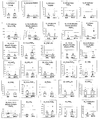
- FIG. 1 shows the results of comparing the amounts of lipid metabolites in urine of healthy cats (control group) and cystitis cats (cystitis group).
- the following lipid metabolites correspond to the notation in parentheses: tetranor-PGFM (tetranor-Prostaglandin F Metabolite; 9S, 11R-dihydroxy-15-oxo-2,3,4,5-tetranor-prostaglandin).
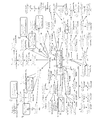
- FIG. 2 shows a metabolic map of each lipid.
- ⁇ indicates that p ⁇ 0.1 in the Mann-Whitney test.
- FIG. 3 shows a metabolic map of arachidonic acid (AA).
- AA arachidonic acid
- ⁇ indicates that p ⁇ 0.1 in the Mann-Whitney test.
- FIG. 4 shows each lipid metabolite metabolized from arachidonic acid (AA), eicosapentaenoic acid (EPA), docosahexaenoic acid (DHA) and arachidonylethanolamide (AEA) and oleoylethanolamide (OEA). .. ⁇ indicates that p ⁇ 0.1 in the Mann-Whitney test.
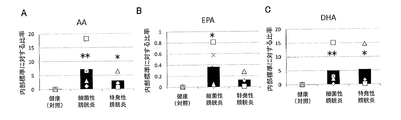
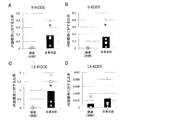
- FIG. 5 shows urinary lipids (AA, EPA, DHA) of healthy cats (control group), cats with bacterial cystitis (bacterial cystitis group) and cats with idiopathic cystitis (idiopathic cystitis group). ) Is shown as a result of comparison. * And ** indicate p ⁇ 0.1 and p ⁇ 0.05 in the Mann-Whitney test, respectively.
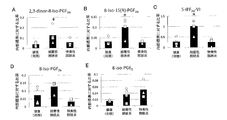
- FIG. 6 shows a lipid mediator downstream of AA-derived COX in the urine of healthy cats (control group), cats with bacterial cystitis (bacterial cystitis group), and cats with idiopathic cystitis (idiopathic cystitis group). The result of comparing the amount of is shown.
- FIG. 7 shows a lipid mediator downstream of AA-derived LOX in the urine of healthy cats (control group), cats with bacterial cystitis (bacterial cystitis group), and cats with idiopathic cystitis (idiopathic cystitis group). The result of comparing the amount of is shown. ** indicates p ⁇ 0.05 in the Mann-Whitney test.
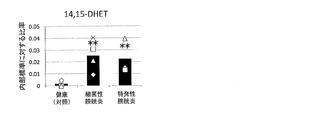
- FIG. 8 shows a lipid mediator downstream of AA-derived CYP in the urine of healthy cats (control group), cats with bacterial cystitis (bacterial cystitis group), and cats with idiopathic cystitis (idiopathic cystitis group). The result of comparing the amount of is shown.
- FIG. 9 shows a lipid mediator downstream of AA-derived OX in the urine of healthy cats (control group), cats with bacterial cystitis (bacterial cystitis group), and cats with idiopathic cystitis (idiopathic cystitis group). The result of comparing the amount of is shown. * Indicates p ⁇ 0.1 in the Mann-Whitney test.
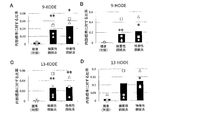
- FIG. 10 shows a lipid mediator downstream of LA-derived LOX in the urine of healthy cats (control group), cats with bacterial cystitis (bacterial cystitis group), and cats with idiopathic cystitis (idiopathic cystitis group). The result of comparing the amount of is shown.
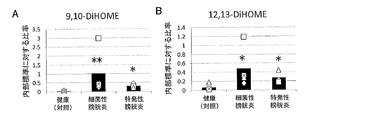
- FIG. 11 shows a lipid mediator downstream of LA-derived CYP in the urine of healthy cats (control group), cats with bacterial cystitis (bacterial cystitis group), and cats with idiopathic cystitis (idiopathic cystitis group). The result of comparing the amount of is shown. * And ** indicate p ⁇ 0.1 and p ⁇ 0.05 in the Mann-Whitney test, respectively.
- FIG. 12 shows a lipid mediator downstream of EPA-derived LOX in the urine of healthy cats (control group), cats with bacterial cystitis (bacterial cystitis group), and cats with idiopathic cystitis (idiopathic cystitis group).
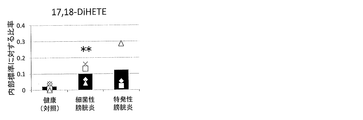
- FIG. 13 shows a lipid mediator downstream of EPA-derived CYP in the urine of healthy cats (control group), cats with bacterial cystitis (bacterial cystitis group), and cats with idiopathic cystitis (idiopathic cystitis group). The result of comparing the amount of is shown. ** indicates p ⁇ 0.05 in the Mann-Whitney test.
- FIG. 14 shows the amount of other lipid mediators in the urine of healthy cats (control group), cats with bacterial cystitis (group with bacterial cystitis) and cats with idiopathic cystitis (group with idiopathic cystitis). The result of comparison is shown.
- FIG. 15 shows the results of comparing the amounts of urinary lipids (AA, EPA, DHA) in healthy cats (control group) and systemic inflamed cats (systemic inflamed group). * Indicates p ⁇ 0.1 in the Mann-Whitney test.
- FIG. 16-1 shows the results of comparing the amounts of lipid mediators downstream of AA-derived COX in the urine of healthy cats (control group) and cats with systemic inflammation (systemic inflammation group). * Indicates p ⁇ 0.1 in the Mann-Whitney test.
- FIG. 16-2 is a continuation of FIG. 16-1.
- FIG. 17 shows the results of comparing the amounts of lipid mediators downstream of AA-derived LOX in the urine of healthy cats (control group) and cats with systemic inflammation (systemic inflammation group).
- FIG. 18 shows the results of comparing the amounts of AA-derived CYP downstream lipid mediators in the urine of healthy cats (control group) and systemic inflamed cats (systemic inflamed group). ** indicates p ⁇ 0.05 in the Mann-Whitney test.
- FIG. 19 shows the results of comparing the amounts of lipid mediators downstream of AA-derived OX in the urine of healthy cats (control group) and cats with systemic inflammation (systemic inflammation group). * And ** indicate p ⁇ 0.1 and p ⁇ 0.05 in the Mann-Whitney test, respectively.
- FIG. 18 shows the results of comparing the amounts of AA-derived CYP downstream lipid mediators in the urine of healthy cats (control group) and systemic inflamed cats (systemic inflamed group). ** indicates p ⁇ 0.05 in the Mann-
- FIG. 20 shows the results of comparing the amount of lipid mediator downstream of LA-derived LOX in the urine of healthy cats (control group) and cats with systemic inflammation (systemic inflammation group). * Indicates p ⁇ 0.1 in the Mann-Whitney test.
- FIG. 21 shows the results of comparing the amounts of LA-derived CYP downstream lipid mediators in the urine of healthy cats (control group) and systemic inflamed cats (systemic inflamed group). * Indicates p ⁇ 0.1 in the Mann-Whitney test.
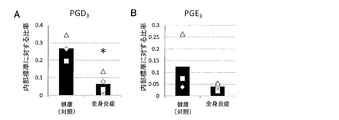
- FIG. 22 shows the results of comparing the amounts of EPA-derived COX downstream lipid mediators in the urine of healthy cats (control group) and systemic inflamed cats (systemic inflamed group).
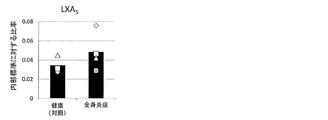
- FIG. 23 shows the results of comparing the amounts of EPA-derived LOX downstream lipid mediators in the urine of healthy cats (control group) and systemic inflamed cats (systemic inflamed group).
- FIG. 24 shows the results of comparing the amounts of EPA-derived CYP downstream lipid mediators in the urine of healthy cats (control group) and systemic inflamed cats (systemic inflamed group). * Indicates p ⁇ 0.1 in the Mann-Whitney test.
- FIG. 25 shows the results of comparing the amounts of other lipid mediators in the urine of healthy cats (control group) and systemic inflamed cats (systemic inflamed group). * Indicates p ⁇ 0.1 in the Mann-Whitney test.
- the "cat family” refers to an animal belonging to the cat family, and examples thereof include domestic cats.
- inflammation is a biological defense reaction against tissue damage caused by the invasion of microorganisms (infection of bacteria or viruses) or physical / chemical action, and causes redness or redness in a part of the body. Symptoms that cause symptoms such as heat, swelling, and pain. Inflammation includes those caused by diseases (for example, inflammatory diseases of each tissue such as cystitis, nephritis, hepatitis, stomatitis) and systemic inflammation (systemic increase in leukocytes and fever due to trauma and acute renal failure). Inflammatory condition), cancer, rheumatism, and those involved in the onset and exacerbation of allergic diseases.
- diseases for example, inflammatory diseases of each tissue such as cystitis, nephritis, hepatitis, stomatitis
- systemic inflammation systemic increase in leukocytes and fever due to trauma and acute renal failure. Inflammatory condition
- cancer rheumatism
- rheumatism those involved in the onset and exa
- the "lipid” refers to a lipid decomposed by enzyme-dependent oxidation or enzyme-independent oxidation (lipid as a substrate to be metabolized), and an example of the lipid is arachidonic acid (AA).
- AA arachidonic acid
- Eicosapentaenoic acid EPA
- eicosapentaenoic acid DHA
- docosahexaenoic acid DHA
- LA linoleic acid
- the "lipid metabolite” means a decomposition product of lipid produced by decomposition by enzyme-dependent oxidation (OX; non-enzymatic oxidation) in a living body, and an inflammatory reaction. Includes lipid mediators with physiological effects related to. Enzyme-dependent oxidation proceeds by lipid-metabolizing enzymes present in the body.
- the enzyme include a lipid-metabolizing enzyme associated with an inflammatory reaction (preferably a lipid-metabolizing enzyme activated by inflammation), and examples thereof include cyclooxygenase (COX) and lipoxygenase (LOX) (eg, 5-).
- COX cyclooxygenase
- LOX lipoxygenase
- CYP cytochrome p450
- CYP cytochrome P450
- lipid metabolites in the present invention include arachidonic acid metabolites, eicosapentaenoic acid metabolites, docosahexaenoic acid metabolites and linoleic acid metabolites.
- Lipid metabolites tend to be higher (or higher) in the urine of inflamed felines than in non-inflamed felines (lipid metabolite X). It can be classified as one (lipid metabolite Y) in which the amount or concentration in the urine of an inflamed feline tends to be lower (or lower) than that of a non-inflamed feline.
- lipid metabolite X examples include COX metabolites of arachidonic acid (eg, prostaglandin A2 (PGA 2 ; prostaglandin A2), prostaglandin B2 (PGB 2 ; prostaglandin B2), prostaglandin D2 (PGD 2 ;).
- arachidonic acid eg, prostaglandin A2 (PGA 2 ; prostaglandin A2), prostaglandin B2 (PGB 2 ; prostaglandin B2), prostaglandin D2 (PGD 2 ;).
- prostaglandin D2 prostaglandin E2
- prostaglandin F2 ⁇ prostaglandin F2 ⁇
- prostaglandin J2 prostaglandin J2
- tetranor-PGEM tetranor-PGEM
- tetranor-PGEM tetranor-PGEM
- tetranor-PGEM tetranor- prostaglandin E Metabolite; 9,15-dioxo-11-hydroxy-13,14-dihydro-2,3,4,5-tetranor-prostan-1,20-diacid (9,15-dioxo-11-hydroxy-13) , 14-dihydro-2,3,4,5-tetranor-prostan-1,20-dioic acid)
- 6-keto-prostaglandin F1 ⁇ 6-keto-PGF 1 ⁇ ; 6-keto-prostaglandin F1 ⁇
- 6,15-Diketo-13,14-dihydro-prostaglandin F1 ⁇ 6,15 -diketo
- ⁇ and ⁇ in the names of lipid metabolites may be expressed as a and b, respectively, and the subscript notation may not be used (for example, “PGF 2 ⁇ ” is referred to as “PGF 2a ” or “PGF 2a”. It may be referred to as "PGF2a").
- lipid metabolites Y is, OX metabolites of arachidonic acid (e.g., 8-iso -PGF 2 ⁇ (8-iso-PGF 2 ⁇ )) and EPA-derived COX metabolites (e.g., PGD 3) can be mentioned , Preferably those having a characteristic that the concentration in the urine of an inflamed cat family is lower than the reference value.
- a method for evaluating and detecting an inflammatory state of a feline animal is provided.
- inflammation including cystitis
- the evaluation method of the present invention is characterized by associating the urinary lipids of felines and their metabolites with the possibility of inflammatory conditions in the test subject.
- a step of measuring the amount or concentration of lipids and / or metabolites thereof in the urine of felines is carried out.
- the concentration of lipid and its metabolite can be measured by a known method.
- the concentration of lipid and its metabolite can be measured by mass spectrometry or immunoassay such as ELISA and immunochromatography. ..
- mass spectrometry include liquid chromatography-mass spectrometry (LC-MS), liquid chromatography-tandem mass spectrometry (LC-MSMS), and high performance liquid chromatography-mass spectrometry (HPLC-MS).
- Immunoassay is an analytical method that uses a detectably labeled anti-lipid antibody or anti-lipid metabolite antibody, or a detectably labeled antibody against an anti-lipid antibody or anti-lipid metabolite antibody (secondary antibody). Depending on the antibody labeling method, it is classified into enzyme immunoassay (EIA or ELISA), radioimmunoassay (RIA), fluorescence immunoassay (FIA), fluorescence polarization immunoassay (FPIA), chemiluminescence immunoassay (CLIA), etc., all of which are the present invention. Can be used for. From the viewpoint of accurately measuring the concentration of lipid metabolites having similar structures, measurement by mass spectrometry (particularly LC-MSMS and HPLC-MSMS) is preferable.
- Step (B) a step of determining the presence or absence of an inflammatory state in a feline animal from which urine was collected, based on the amount or concentration of lipid and / or its metabolite measured in step (A). Can be further included.
- Step (B) is a step of comparing the amount or concentration of lipids and / or their metabolites in the urine of (B-1) felines with a predetermined reference value, and (B-2a) collecting urine.
- Steps (B-2a) and (B-2b) may be performed either or both depending on the type of lipid and its metabolite as an index.
- “in an inflamed state” is used in the sense of including the case where inflammation is occurring in addition to the case where inflammation is occurring.
- “inflamed” is used to include the case of suffering from (or possibly suffering from) cystitis.
- the reference value can be calculated and determined from the measured values of the amounts or concentrations of lipids and their metabolites in samples of non-inflammatory felines (normal subjects). Such normal subjects are preferably healthy felines without the disease being treated, but may be felines with diseases other than inflammation (including cystitis).
- the average value, the percentile value, the maximum value or the minimum value of the normal target group can be used. Any value can be selected as the percentile value, for example, 5, 10, 15, 20, 25, 30, 40, 50, 60, 70, 75, 80, 85, 90 or 95.
- the number of normal subjects and affected subjects when calculating the reference value is preferably a plurality of cases, and may be, for example, 2 cases or more, 5 cases or more, 10 cases or more, 20 cases or more, or 50 cases or more.
- the reference value is a numerical value that distinguishes the presence or absence of an inflammatory state in carrying out the evaluation method of the present invention, and can be called a cutoff value or a boundary value in this sense.
- the reference value shall be calculated from the amount or concentration of lipids and their metabolites in samples of inflamed felines (affected subjects), with non-inflammatory felines (normal subjects) as comparison targets. You can also. For example, for the normal subject group and the affected subject group, the amount or concentration of lipid and / or its metabolite in a urine sample is measured, and the obtained measured value is used for statistical analysis such as ROC analysis to cut off. You can set the value.
- the creation of the ROC curve (Receiver Operating Characteristic Curve (ROC)) and the setting of the cutoff value based on the ROC curve are well known, and can be appropriately set by those skilled in the art from the viewpoint of sensitivity and specificity. ..
- the amount or concentration of lipid and / or lipid metabolite X in the urine of a feline from which urine was collected is not in an inflammatory state (normal).
- it is 1.9 times or more, about 2.0 times or more, about 2.5 times or more, or about 3 times or more, it can be a step of determining that the test subject is in an inflammatory state.
- the amount or concentration of lipid metabolite Y in the urine of a feline animal from which urine was collected is not in an inflammatory state, but the urine of a feline animal (normal subject). It is lower than the average value of the amount or concentration of the lipid metabolite Y in the medium, or about 0.9 times or less, about 0.8 times or less, about 0.7 times or less, about the average value.
- it is 0.6 times or less, about 0.5 times or less, about 0.4 times or less, or about 0.3 times or less, it can be a step of determining that the test subject is in an inflammatory state.
- the evaluation method of the present invention it is possible to detect that a cat is inflamed. Therefore, the evaluation method of the present invention can be used as an auxiliary for diagnosing whether or not a feline is inflamed, and in some cases, it may be determined whether or not a feline is inflamed. Ultimately, it can be done by a veterinarian in combination with the findings of.
- inflammation occurring in cats can be quantitatively detected based on urine collected from cats. That is, the evaluation method of the present invention is advantageous in that inflammation can be detected easily and accurately while reducing the burden on cats. According to the evaluation method of the present invention, since evaluation can be performed based on urine collected by a non-invasive method, it is applicable to cats for which it is not easy to adopt an invasive method such as blood sampling. It is also very advantageous in that it can be done.
- Diagnosis method there is also provided a method for diagnosing inflammation (including cystitis) in felines.
- the diagnostic method of the present invention can be carried out in the same manner as the evaluation method of the present invention. That is, a step of measuring the amount or concentration of lipid and / or its metabolite in the urine of (A') feline is carried out.
- the presence or absence of an inflammatory state in a feline from which urine is collected is determined based on the amount or concentration of lipid and / or its metabolite measured in step (B') (A').
- the steps to be performed can be further included.
- Step (B') is a step of comparing the amount or concentration of lipids and / or their metabolites in the urine of (B'-1) felines with a predetermined reference value, and (B'-2a).
- a subject is determined to be in an inflamed state if the amount or concentration of lipids and / or lipid metabolites X in the urine of the feline from which the urine was collected is above or above the reference value.
- Step and (B'-2b) If the amount or concentration of lipid metabolite Y in the urine of the feline from which the urine was collected is below or below the reference value, the subject is in an inflammatory state. It can be carried out by the process of determining that it is in.
- the steps (A'), (B'), (B'-1), (B'-2a) and (B'-2b) are the steps (A), (B) and (B'-1). ), (B'-2a) and (B'-2b), respectively, and can be carried out according to the description of the evaluation method of the present invention.
- the therapeutic effect on inflammation occurring in the feline can be determined by using the lipid and / or its metabolite in the urine of the feline as an index. That is, the determination method of the present invention is characterized in that lipids in the urine of felines and their metabolites are associated with the therapeutic effect on inflammation of felines.
- the step of measuring the amount or concentration of lipid and / or its metabolite in the urine of (C) felines is carried out in the same manner as the evaluation method of the present invention.
- the concentration of lipid and its metabolite can be measured in the same manner as the evaluation method of the present invention.
- the feline animal to be tested can be the subject to be tested after or during treatment.
- examples of the treatment for inflammation whose therapeutic effect can be determined by the determination method of the present invention include drug therapy and dietary therapy.
- drug therapy include treatment with therapeutic agents for inflammation, and examples of such therapeutic agents include pharmaceuticals such as NSAIDs and steroids.
- the degree of therapeutic effect on inflammation of treated felines is determined based on the amount or concentration of lipid and / or its metabolite measured in step (D) (C).
- the steps to be performed can be further included.
- Step (D) is a step of comparing the amount or concentration of lipid and / or its metabolite in the urine of (D-1) feline with a predetermined reference value, and (D-2a) collecting urine.
- a step of determining a therapeutic effect When the amount or concentration of lipid and / or lipid metabolite X in the urine of felines is less than or lower than the reference value, a step of determining a therapeutic effect and (D- 2b) When the amount or concentration of lipid metabolite Y in the urine of felines from which urine has been collected is equal to or higher than the reference value or higher than the reference value, the step of determining that there is a therapeutic effect. Can be done. Steps (D-2a) and (D-2b) may be performed either or both depending on the type of lipid and its metabolite as an index.
- the term "therapeutic effect" includes not only complete healing of the inflammatory condition but also improvement or alleviation of the inflammatory condition.
- the amount or concentration of lipid and / or lipid metabolite X in the urine of a feline from which urine was collected is not in an inflammatory state (normal). Approximately 1.3 times or less, about 1.2 times or less, about 1.1 times or less, or about 1. When it is 05 times or less, or less than or equal to the average value, it can be a step of determining that there is a therapeutic effect (for example, the inflammatory state may have completely healed).
- the amount or concentration of lipid metabolite Y in the urine of a feline animal from which urine was collected is not in an inflammatory state, but the urine of a feline animal (normal subject). It is about 0.7 times or more, about 0.8 times or more, about 0.9 times or more or about 0.95 times or more, or about 0.95 times or more, or about 0.9 times or more, or about 0.95 times or more, compared with the average value of the amount or concentration of the lipid metabolite Y in the medium. When it is equal to or higher than the average value, it can be a step of determining that there is a therapeutic effect (for example, the inflammatory state may have completely healed).
- the reference value used in the determination method of the present invention can be set according to the description in the evaluation method of the present invention, but in addition to this, in the determination method of the present invention, lipids in the urine of felines before treatment and / or A measured value of the amount or concentration of the metabolite can be used as a reference value.
- the determination method of the present invention is that before or after the start of treatment for inflammation in a feline (preferably promptly after the start, for example, within 1-2 hours, within a few hours, or 1). Within days) may further include measuring the amount or concentration of lipids and / or their metabolites in the urine of the subject.
- the amount or concentration of lipid and / or lipid metabolite X in the urine of the cat family from which the urine was collected is less than or equal to the measured value before the treatment, or the measured value before the treatment. If it is lower than, it can be determined that it has a therapeutic effect (it tends to improve or alleviate the inflammatory state), and in step (D-2b), a lipid metabolite in the urine of the cat family from which the urine was collected.
- the amount or concentration of Y is equal to or higher than the pre-treatment measured value, or higher than the pre-treatment measured value, it can be determined that there is a therapeutic effect (they tends to improve or alleviate the inflammatory state).
- the therapeutic effect can be determined in a feline animal treated for inflammation, so that the effectiveness of the treatment for inflammation performed on the feline animal can be verified. it can. Then, if no therapeutic effect is observed, the treatment can be discontinued and another treatment plan can be made. Therefore, the determination method of the present invention can be used as an auxiliary for determining the effectiveness of treatment for inflammation, and the determination of whether or not the treatment is effective is finally combined with other findings in some cases. Can be done by a veterinarian.
- the determination method of the present invention is also advantageous in that wasteful dosing can be suppressed, which in turn can contribute to reduction of medical expenses and reduction of patient burden.
- the effectiveness of the treatment can be determined based on the urine collected by the non-invasive method. Therefore, the therapeutic effect is determined by an invasive method such as blood sampling. It is also advantageous in that it can be applied to felines, which is not easy to do.
- a marker comprising lipids and / or metabolites thereof for use in assessing the inflammatory state of felines and lipids and / or as inflammatory markers in felines.
- the "inflammation marker of a feline animal” refers to a substance whose presence and amount are indicators of the presence or absence of inflammation in a feline animal and the severity of the symptom, and for detecting, identifying, evaluating, etc. the inflammation. It can be used as a marker for.
- lipids and / or their metabolites can be used as markers for distinguishing inflammation in felines, and lipids and / or their metabolites can be used to evaluate the severity of inflammation in felines.
- the inflammatory markers of the present invention can be used for diagnostic purposes. That is, according to the present invention, the use of a diagnostic marker for feline cystitis or systemic inflammation and a lipid and / or a metabolite thereof as a diagnostic marker for feline cystitis or systemic inflammation is provided. To.
- kits for evaluating the inflammatory state of a feline which comprises a means for quantifying lipids and / or metabolites in the urine of the feline.
- the kit of the present invention is typically a kit used to evaluate the inflammatory state of a feline according to the evaluation method of the present invention.
- Means for quantifying lipids and their metabolites include, for example, substances that specifically bind to the lipids or their metabolites, typically antibodies to the lipids or their metabolites.
- Means for quantifying lipids or their metabolites also include mass spectrometers used in mass spectrometry as described above.
- the kit of the present invention when the means for quantifying the lipid and its metabolite is an antibody, the kit of the present invention is a reagent necessary for measuring the concentration of the lipid or its metabolite by an immunoassay utilizing the antibody ( And in some cases devices).
- kits of the present invention include a kit for measuring the concentration of lipid and its metabolite by the sandwich method, which includes a microtiter plate and an anti-lipid antibody and / or an anti-lipid metabolite antibody for capture. And an anti-lipid antibody and / or an anti-lipid metabolite antibody labeled with alkaline phosphatase or peroxidase, and a substrate for alkaline phosphatase or a substrate for peroxidase.
- kits of the present invention also include a kit for measuring the concentration of lipid and its metabolite by a sandwich method using a secondary antibody, which includes a microtiter plate, an anti-lipid antibody for capture, and a kit.
- a kit for measuring the concentration of lipid and its metabolite by a sandwich method using a secondary antibody which includes a microtiter plate, an anti-lipid antibody for capture, and a kit.
- anti-lipid metabolite antibody, anti-lipid antibody and / or anti-lipid metabolite antibody as primary antibody and anti-lipid antibody and / or anti-lipidase metabolite antibody labeled with alkaline phosphatase or peroxidase as secondary antibody.
- Antibodies to and a substrate for alkaline phosphatase or a substrate for peroxidase may be included.
- the above kit can be used, for example, as follows. First, a capture antibody is fixed on a microtiter plate, urine of a feline animal is appropriately diluted and added thereto, and then incubated to remove the urine and washed. Subsequently, the primary antibody is added for incubation and washing, and the enzyme-labeled secondary antibody is further added for incubation, and then a substrate is added for color development. The concentration of lipid and its metabolite can be determined by measuring the color development using a microtiter plate reader or the like.
- the labeled antibody is not limited to an enzyme-labeled antibody, radioactive material (25 I, 131 I, 35 S, 3 H , etc.), fluorescent substance (fluorescein isothiocyanate, rhodamine, dansyl chloride, phycoerythrin, It may be an antibody labeled with tetramethylrhodamine isothiocyanate, near-infrared fluorescent material, etc.), a luminescent substance (luciferase, luciferin, equolin, etc.), nanoparticles (gold colloid, quantum dots, etc.). It is also possible to use a biotinylated antibody as a labeled antibody and add labeled avidin or streptavidin to the kit.
- kit of the present invention include a kit for measuring the concentration of lipid and its metabolite by immunochromatography, which is a first anti-lipid antibody and / or anti-lipid metabolism labeled with gold colloid or the like.
- An antibody storage unit in which a product antibody is stored and a second anti-lipid antibody and / or anti-lipid metabolite antibody (preferably an antibody that recognizes another epitope of the anti-lipid antibody and lipid metabolite) are lined up on a cellulose membrane or the like.
- the determination unit fixed in a shape can be connected by a narrow groove.
- the above kit can be used, for example, as follows. First, when urine is added to the antibody storage or the urine receiving part adjacent to the antibody storage, the labeled antibody and the lipid and / or its metabolite are bound to each other in the antibody storage to form a lipid-labeled antibody complex and / or lipid metabolism. It becomes a substance-labeled antibody complex, and the complex moves to the determination unit through the groove due to the capillary phenomenon. Subsequently, when the complex was captured by a fixed second anti-lipid antibody and / or anti-lipid metabolite antibody, a red line appeared in the determination part due to the plasmon effect of colloidal gold, and the anti-lipid The presence of antibodies and / or lipid metabolites can be detected.
- the kit in this case can be provided in the form of a stick such as an inspection stick, and the inspection stick may further include an absorbent paper for absorbing a biological sample, a desiccant and the like.
- the kit of the present invention when the means for quantifying lipids and their metabolites is a mass spectrometer, the kit of the present invention includes an internal standard device in some cases in addition to the mass spectrometer. By using the internal standard, it is possible to correct the extraction efficiency and the ionization efficiency for each analysis when measuring with a mass spectrometer. Internal standards used for mass spectrometry include deuterated lipids or deuterated lipid metabolites.
- kit of the present invention can be carried out according to the description of the evaluation method and the determination method of the present invention.
- Treatment for inflammation is performed on felines evaluated to have an inflammatory state by the evaluation method of the present invention or felines evaluated to have an inflammatory state by the diagnostic method of the present invention. Can be carried out. Therefore, according to the fifth aspect of the present invention, (A) the step of measuring the amount or concentration of lipids and / or their metabolites in feline urine, and (B) in feline urine. Using the amount or concentration of lipids and / or their lipid metabolites as an index, the step of determining the presence or absence of an inflammatory state in a feline from which urine was collected, and (N) a feline determined to be inflamed.
- a method of treating feline inflammation comprising the step of performing treatment for inflammation.
- analysis of urine of felines and determination of the presence or absence of an inflammatory state that is, steps (A), (B), (B-1), (B-2a) and (B-2b))
- steps (A), (B), (B-1), (B-2a) and (B-2b)) can be carried out according to the description of the evaluation method of the present invention and the diagnostic method of the present invention.
- treatment for inflammation in felines can be carried out according to the description of the determination method of the present invention.
- Example 1 Analysis of urinary lipids in cats (1) In Example 1, urinary lipids in cats with cystitis were analyzed.
- the detected lipids (121 types) were divided into 13 types of groups based on their physical characteristics, and internal standard substances were set for each group (see Table 2). Quantitative error caused during lipid extraction by dividing the peak area value calculated from the chromatogram of each lipid by the peak area value of the above-mentioned corresponding internal standard substance using LabSolutions LCMS (Version 5.65, Shimadzu Corporation), etc. Was corrected.
- the lipid concentration (vertical axis in FIGS. 1 and 5 to 25) is shown as the value obtained by dividing the peak area value of lipid by the peak area value of the internal standard substance and then further dividing the value of creatinine in urine of each sample. .. Urinary creatinine concentration was measured using the lab assay creatinine (Fujifilm Wako Pure Chemical Industries, Ltd.).
- Lipid mediators downstream of AA-derived cyclooxygenase (COX) of n-6 fatty acids are PGB 2 (Fig. 3B), tetranor-PGEM (Fig. 1-3, Fig. 3C), 6-keto-PGF 1 ⁇ (Fig. 1-12, FIG. 3D), 6,15-diketo-13, 14-dihydro-PGF 1 ⁇ (Fig. 1-23, Fig. 3E) 11-dehydro-TXB 2 (Fig. 1-44, Fig. 3E), 20-hydroxy-PGE2 (Fig. 1-23, Fig. 3E). 3G) and fatty acid-PGDM (Fig. 3H).
- COX AA-derived cyclooxygenase
- the lipid mediators downstream of the n-6 fatty acid linoleic acid (LA) -derived COX were 9-KODE (Fig. 3C), 9-HODE (Fig. 3D) and 13-HODE (Fig. 3E).
- the lipid mediators downstream of LA-derived cytochrome p450 (CYP) of n-6 fatty acids were 9,10-DiHOME (Fig. 2A) and 12,13-DiHOME (Fig. 2B).
- the lipid mediator downstream of EPA-derived lipoxygenase (LOX), an n-3 fatty acid was LXA 5 (Fig. 4D).
- Lipid mediators other than the above were 8-iso-PGF3 ⁇ (Fig. 4E), Lyso-PAF) (Fig. 2F) and OEA) (Fig. 4F).
- Example 2 Analysis of urinary lipids in cats (2) In Example 2, among cystitis, bacterial cystitis and idiopathic cystitis cat urinary lipids were analyzed.
- AA-derived COX downstream lipid mediator results are as shown in FIG. Lipid mediators downstream of AA-derived COX of n-6 fatty acids in both bacterial cystitis and idiopathic cystitis: prostaglandin A2 (PGA 2 ) (Fig. 6A); prostaglandin B2 (PGB 2 ) (Fig.) 6B); tetranor-PGEM (Figure 6C); prostaglandin F2 ⁇ (PGF 2 ⁇ ) (FIG. 6D); 6- keto -PGF 1 ⁇ (6-keto-PGF 1 ⁇ ) ( Fig. 6E); and 6,15- diketo - It was confirmed that 13,14-dihydro-PGF 1 ⁇ (6,15-diketo-13,14-dihydro-PGF 1 ⁇ ) (Fig. 6F) increased.
- Lipid mediator results downstream of LOX are as shown in FIG. It was confirmed that both bacterial cystitis and idiopathic cystitis increased the lipid mediator: 15-HETE downstream of AA-derived LOX, which is an n-6 fatty acid.
- Lipid mediator results downstream of CYP are as shown in FIG. It was confirmed that both bacterial cystitis and idiopathic cystitis increased the lipid mediators: 14,15-DHET downstream of AA-derived CYPs of n-6 fatty acids.
- lipid mediator downstream of LOX derived from mosquitoes are as shown in FIG.
- Lipid mediators downstream of LA-derived LOX of n-6 fatty acids in both bacterial cystitis and idiopathic cystitis 9-KODE (Fig. 10A); 9-HODE (Fig. 10B); 13-KODE (Fig. 10C). And 13-HODE (Fig. 10D) was confirmed to increase.
- lipid mediator downstream of the LA-derived CYP were as shown in FIG. Lipid mediators downstream of LA-derived CYPs of n-6 fatty acids: 9,10-DiHOME (Fig. 11A); and 12,13-DiHOME (Fig. 11B) are increased in both bacterial cystitis and idiopathic cystitis. It was confirmed that.
- Example 3 Analysis of urinary lipids in cats (2) In Example 3, urinary lipids in cats with systemic inflammation were analyzed.
- AA-derived COX downstream lipid mediator results are as shown in FIG. It was confirmed that systemic inflammation increased the lipid mediators: PGD 2 (Fig. 16A); and PGB 2 (Fig. 16F) downstream of the n-6 fatty acid AA-derived cyclooxygenase (COX).
- Lipid mediator results downstream of LOX are as shown in FIG. In systemic inflammation, it was confirmed that the lipid mediator 15-HETE downstream of AA-derived lipoxygenase (LOX), which is an n-6 fatty acid, increased.
- LOX AA-derived lipoxygenase
- Lipid mediator results downstream of CYP are as shown in FIG. In systemic inflammation, it was confirmed that the lipid mediators 14,15-DHET downstream of AA-derived CYP of n-6 fatty acids increased.
- lipid mediator downstream of LOX derived from mosquitoes are as shown in FIG.
- lipid mediators downstream of LA-derived LOX of n-6 fatty acids 9-HODE (Fig. 20A); 9-KODE (Fig. 20B); 13-HODE (Fig. 20C); and 13-KODE (Fig. 20D).
- 9-HODE Fig. 20A
- 9-KODE Fig. 20B
- 13-HODE Fig. 20C
- 13-KODE Fig. 20D
- Lipid mediator results downstream of CYP derived from coEPA are as shown in FIG. In systemic inflammation, it was confirmed that the lipid mediator: 17,18-DiHETE downstream of EPA-derived LOX, which is an n-3 fatty acid, increased.
Landscapes
- Health & Medical Sciences (AREA)
- Engineering & Computer Science (AREA)
- Life Sciences & Earth Sciences (AREA)
- Biomedical Technology (AREA)
- Urology & Nephrology (AREA)
- Physics & Mathematics (AREA)
- Chemical & Material Sciences (AREA)
- Molecular Biology (AREA)
- Hematology (AREA)
- Biophysics (AREA)
- Food Science & Technology (AREA)
- Medicinal Chemistry (AREA)
- Analytical Chemistry (AREA)
- Biochemistry (AREA)
- General Health & Medical Sciences (AREA)
- General Physics & Mathematics (AREA)
- Immunology (AREA)
- Pathology (AREA)
- Investigating Or Analysing Biological Materials (AREA)
Abstract
本発明は、ネコ科動物の炎症状態の新規な評価方法と、ネコ科動物の炎症に対する治療効果の新規な判定方法の提供を目的とする。本発明によれば、ネコ科動物の尿中の脂質および/またはその代謝物の濃度を測定する工程を含んでなる、ネコ科動物の炎症状態の評価方法が提供される。本発明によればまた、ネコ科動物の尿中の脂質および/またはその代謝物の濃度を測定する工程を含んでなる、ネコ科動物の炎症に対する治療効果の判定方法が提供される。
Description
本願は、先行する米国仮出願である62/930,714(出願日:2019年11月5日)の優先権の利益を享受するものであり、その開示内容全体は引用することにより本明細書の一部とされる。
本発明は、ネコ科動物の炎症状態の評価方法に関する。本発明はまた、ネコ科動物の炎症に対する治療効果の判定方法に関する。
様々な疾患の背景には炎症が存在するため、診断の第一歩として簡便に体の炎症状態を評価することが不可欠である。ヒトやイヌでは血液中のC反応性タンパク質(CRP;C-reactive protein)や血清アミロイドA(SAA;serum amyloid A)が炎症マーカーとして広く用いられているが、ネコではCRPの血中濃度は炎症時でもほとんど変動しないため、主にSAAが炎症マーカーとして使用されている(非特許文献1および非特許文献2)。しかしながら、ネコは一般的に症状が分かりづらく病気を隠す傾向にあることや、採血時に暴れるなどして血液検査の負担が大きいこともあり、より簡便な方法で炎症状態を把握できる炎症マーカーが求められていた。
Vet J. 2010 Jul;185(1):23-7.
Vet Immunol Immunopathol. 1999 Mar 29;68(1):91-8.
本発明は、ネコ科動物の炎症状態の新規な評価方法を提供することを目的とする。本発明はまた、ネコ科動物の炎症に対する治療効果の新規な判定方法の提供を目的とする。
本発明者らは今般、炎症を生じているネコ科動物の尿中の脂質および/またはその代謝物の量が健康なネコ科動物の尿中の当該脂質および/またはその代謝物とは異なることを確認した。本発明者らは、前記の脂質および/またはその代謝物の濃度を指標とすることにより、ネコ科動物の炎症状態を評価できることを見出した。本発明はこれらの知見に基づくものである。
本発明によれば以下の発明が提供される。
[1]ネコ科動物の尿中の脂質および/またはその代謝物の量または濃度を測定する工程を含んでなる、ネコ科動物の炎症状態の評価方法。
[2]ネコ科動物の尿中の脂質および/またはその代謝物の量または濃度を指標にして、尿を採取したネコ科動物の炎症状態の有無を決定する工程をさらに含む、上記[1]に記載の評価方法。
[3]ネコ科動物の尿中の脂質および/またはその代謝物の量または濃度と参照値とを比較する工程をさらに含む、上記[1]または[2]に記載の評価方法。
[4]参照値が、炎症状態にない健康なネコ科動物の尿中の当該脂質および/またはその代謝物の量または濃度に基づいて設定された値である、上記[1]~[3]のいずれかに記載の評価方法。
[5]ネコ科動物の炎症状態の診断方法である、上記[1]~[4]のいずれかに記載の評価方法。
[6]ネコ科動物の尿中の脂質および/またはその代謝物の量または濃度を測定する工程を含んでなる、ネコ科動物の炎症に対する治療効果の判定方法。
[7]ネコ科動物の尿中の脂質および/またはその代謝物の量または濃度を指標にして、ネコ科動物の炎症に対する治療効果の程度を決定する工程をさらに含む、上記[6]に記載の判定方法。
[8]ネコ科動物の尿中の脂質および/またはその代謝物の量または濃度と参照値とを比較する工程をさらに含む、上記[6]または[7]に記載の判定方法。
[9]参照値が、治療前のネコ科動物の尿中の脂質および/またはその代謝物の量または濃度または炎症を生じているネコ科動物の尿中の脂質および/またはその代謝物の量または濃度に基づいて設定された値である、上記[6]~[8]のいずれかに記載の判定方法。
[10]ネコ科動物の炎症に対する治療が、薬物療法である、上記[6]~[9]のいずれかに記載の判定方法。
[11]炎症が全身炎症または膀胱炎である、上記[1]~[5]のいずれかに記載の評価方法または上記[6]~[10]のいずれかに記載の判定方法。
[12]前記脂質が、アラキドン酸、エイコサペンタエン酸およびドコサヘキサエン酸からなる群から選択される1種または2種以上である、上記[1]~[5]および[11]のいずれかに記載の評価方法または上記[6]~[11]のいずれかに記載の判定方法。
[13]前記脂質代謝物が、アラキドン酸代謝物、エイコサペンタエン酸代謝物およびドコサヘキサエン酸代謝物からなる群から選択される1種または2種以上である、上記[1]~[5]、[11]および[12]のいずれかに記載の評価方法または上記[6]~[12]のいずれかに記載の判定方法。
[14]前記脂質代謝物が、炎症を生じているネコ科動物の尿中の量または濃度が健康なネコ科動物の尿中の量または濃度よりも高い傾向にあるものである、上記[1]~[5]および[11]~[13]のいずれかに記載の評価方法または上記[6]~[13]のいずれかに記載の判定方法。
[15]前記脂質代謝物が、9,10-DiHOME、12,13-DiHOME、Lyso-PAF、PGB2、tetranor-PGEM、6-keto-PGF1α、6,15-diketo-13,14-dihydro-PGF1α、2,3-dinor-8-iso-PGF2α、8-iso-15(R)-PGF2α、8-iso-PGE2、LXA5、17,18-DiHETE、PGA2、PGF2α、PGD2、PGJ2、11-dehydro-TXB2、15-keto-PGE2、15-HETE、14,15-DHET、5-iPF2α-VI、9-KODE、9-HODE、13-KODE、13-HODE、8-iso-PGF3α、20-hydroxy-PGE2、tetranor-PGDM、PGE1-EAおよびOEAからなる群から選択される1種または2種以上である、上記[14]に記載の評価方法または判定方法。
[16]前記脂質代謝物が、炎症を生じているネコ科動物の尿中の量または濃度が健康なネコ科動物の尿中の量または濃度よりも低い傾向にあるものである、上記[1]~[5]および[11]~[13]のいずれかに記載の評価方法または上記[6]~[13]のいずれかに記載の判定方法。
[17]前記脂質代謝物が、8-iso-PGF2αおよび/またはPGD3である、上記[16]に記載の評価方法または判定方法。
[18]前記脂質代謝物の濃度を質量分析法により測定する、上記[1]~[5]および[11]~[17]のいずれかに記載の評価方法または上記[6]~[17]のいずれかに記載の判定方法。
[19]脂質および/またはその代謝物を含んでなる、ネコ科動物の炎症マーカー。
[20]前記脂質が、アラキドン酸、エイコサペンタエン酸およびドコサヘキサエン酸からなる群から選択される1種または2種以上である、上記[19]に記載の炎症マーカー。
[21]前記脂質代謝物が、アラキドン酸代謝物、エイコサペンタエン酸代謝物およびドコサヘキサエン酸代謝物からなる群から選択される1種または2種以上である、上記[19]または[20]に記載の炎症マーカー。
[22]ネコ科動物の尿中の脂質および/またはその代謝物の定量手段を含んでなる、ネコ科動物の炎症状態の評価用キット。
[23](A)ネコ科動物の尿中の脂質および/またはその代謝物の量または濃度を測定する工程と、(B)ネコ科動物の尿中の脂質および/またはその代謝物の量または濃度を指標にして、炎症状態の有無を決定する工程と、(N)炎症を生じていると決定されたネコ科動物に、炎症に対する治療を実施する工程を含んでなる、ネコ科動物の炎症の治療方法。
[1]ネコ科動物の尿中の脂質および/またはその代謝物の量または濃度を測定する工程を含んでなる、ネコ科動物の炎症状態の評価方法。
[2]ネコ科動物の尿中の脂質および/またはその代謝物の量または濃度を指標にして、尿を採取したネコ科動物の炎症状態の有無を決定する工程をさらに含む、上記[1]に記載の評価方法。
[3]ネコ科動物の尿中の脂質および/またはその代謝物の量または濃度と参照値とを比較する工程をさらに含む、上記[1]または[2]に記載の評価方法。
[4]参照値が、炎症状態にない健康なネコ科動物の尿中の当該脂質および/またはその代謝物の量または濃度に基づいて設定された値である、上記[1]~[3]のいずれかに記載の評価方法。
[5]ネコ科動物の炎症状態の診断方法である、上記[1]~[4]のいずれかに記載の評価方法。
[6]ネコ科動物の尿中の脂質および/またはその代謝物の量または濃度を測定する工程を含んでなる、ネコ科動物の炎症に対する治療効果の判定方法。
[7]ネコ科動物の尿中の脂質および/またはその代謝物の量または濃度を指標にして、ネコ科動物の炎症に対する治療効果の程度を決定する工程をさらに含む、上記[6]に記載の判定方法。
[8]ネコ科動物の尿中の脂質および/またはその代謝物の量または濃度と参照値とを比較する工程をさらに含む、上記[6]または[7]に記載の判定方法。
[9]参照値が、治療前のネコ科動物の尿中の脂質および/またはその代謝物の量または濃度または炎症を生じているネコ科動物の尿中の脂質および/またはその代謝物の量または濃度に基づいて設定された値である、上記[6]~[8]のいずれかに記載の判定方法。
[10]ネコ科動物の炎症に対する治療が、薬物療法である、上記[6]~[9]のいずれかに記載の判定方法。
[11]炎症が全身炎症または膀胱炎である、上記[1]~[5]のいずれかに記載の評価方法または上記[6]~[10]のいずれかに記載の判定方法。
[12]前記脂質が、アラキドン酸、エイコサペンタエン酸およびドコサヘキサエン酸からなる群から選択される1種または2種以上である、上記[1]~[5]および[11]のいずれかに記載の評価方法または上記[6]~[11]のいずれかに記載の判定方法。
[13]前記脂質代謝物が、アラキドン酸代謝物、エイコサペンタエン酸代謝物およびドコサヘキサエン酸代謝物からなる群から選択される1種または2種以上である、上記[1]~[5]、[11]および[12]のいずれかに記載の評価方法または上記[6]~[12]のいずれかに記載の判定方法。
[14]前記脂質代謝物が、炎症を生じているネコ科動物の尿中の量または濃度が健康なネコ科動物の尿中の量または濃度よりも高い傾向にあるものである、上記[1]~[5]および[11]~[13]のいずれかに記載の評価方法または上記[6]~[13]のいずれかに記載の判定方法。
[15]前記脂質代謝物が、9,10-DiHOME、12,13-DiHOME、Lyso-PAF、PGB2、tetranor-PGEM、6-keto-PGF1α、6,15-diketo-13,14-dihydro-PGF1α、2,3-dinor-8-iso-PGF2α、8-iso-15(R)-PGF2α、8-iso-PGE2、LXA5、17,18-DiHETE、PGA2、PGF2α、PGD2、PGJ2、11-dehydro-TXB2、15-keto-PGE2、15-HETE、14,15-DHET、5-iPF2α-VI、9-KODE、9-HODE、13-KODE、13-HODE、8-iso-PGF3α、20-hydroxy-PGE2、tetranor-PGDM、PGE1-EAおよびOEAからなる群から選択される1種または2種以上である、上記[14]に記載の評価方法または判定方法。
[16]前記脂質代謝物が、炎症を生じているネコ科動物の尿中の量または濃度が健康なネコ科動物の尿中の量または濃度よりも低い傾向にあるものである、上記[1]~[5]および[11]~[13]のいずれかに記載の評価方法または上記[6]~[13]のいずれかに記載の判定方法。
[17]前記脂質代謝物が、8-iso-PGF2αおよび/またはPGD3である、上記[16]に記載の評価方法または判定方法。
[18]前記脂質代謝物の濃度を質量分析法により測定する、上記[1]~[5]および[11]~[17]のいずれかに記載の評価方法または上記[6]~[17]のいずれかに記載の判定方法。
[19]脂質および/またはその代謝物を含んでなる、ネコ科動物の炎症マーカー。
[20]前記脂質が、アラキドン酸、エイコサペンタエン酸およびドコサヘキサエン酸からなる群から選択される1種または2種以上である、上記[19]に記載の炎症マーカー。
[21]前記脂質代謝物が、アラキドン酸代謝物、エイコサペンタエン酸代謝物およびドコサヘキサエン酸代謝物からなる群から選択される1種または2種以上である、上記[19]または[20]に記載の炎症マーカー。
[22]ネコ科動物の尿中の脂質および/またはその代謝物の定量手段を含んでなる、ネコ科動物の炎症状態の評価用キット。
[23](A)ネコ科動物の尿中の脂質および/またはその代謝物の量または濃度を測定する工程と、(B)ネコ科動物の尿中の脂質および/またはその代謝物の量または濃度を指標にして、炎症状態の有無を決定する工程と、(N)炎症を生じていると決定されたネコ科動物に、炎症に対する治療を実施する工程を含んでなる、ネコ科動物の炎症の治療方法。
本発明によれば、ネコ科動物の尿中の脂質および/またはその代謝物の量または濃度を測定することでネコの炎症状態を簡便に評価できる点で有利である。本発明によればまた、ネコ科動物の尿中の脂質および/またはその代謝物の量または濃度を測定することでネコ科動物の炎症に対する治療効果を簡便に判定できる点で有利である。
<<定義>>
本発明において「ネコ科動物」は、ネコ科に属する動物をいい、例えば、イエネコが挙げられる。
本発明において「ネコ科動物」は、ネコ科に属する動物をいい、例えば、イエネコが挙げられる。
本発明において「炎症」とは、生体が微生物の侵入(細菌やウイルスの感染)や物理的・化学的作用などによる組織の障害に対する生体防御反応であり、身体の一部に発赤(redness)や熱感(heat)、腫脹(swelling)、疼痛(pain)などの徴候が生じる症候のことをいう。炎症には、疾患(例えば、膀胱炎、腎炎、肝炎、口内炎等の各組織の炎症性疾患)に起因するものや、全身炎症(外傷や急性腎不全により白血球の増加や発熱等の全身性の炎症を呈している状態)、がんやリウマチ、アレルギー疾患の発症や憎悪に関与するものが挙げられる。
本発明において「脂質」とは、酵素依存的酸化または酵素非依存的酸化により分解される脂質(代謝を受ける基質としての脂質)をいい、脂質の例としては、アラキドン酸(AA;arachidonic acid)、エイコサペンタエン酸(EPA;eicosapentaenoic acid)、ドコサヘキサエン酸(DHA;docosahexaenoic acid)およびリノール酸(LA;linoleic acid)が挙げられる。
本発明において「脂質代謝物」とは、生体において酵素依存的酸化(enzymatic oxidation)または酵素非依存的酸化(OX;non-enzymatic oxidation)による分解で生じた脂質の分解物を意味し、炎症反応に関連する生理作用を持った脂質メディエーターを包含する。酵素依存的酸化は、生体内に存在する脂質代謝酵素により進行する。当該酵素としては、炎症反応に関連する脂質代謝酵素(好ましくは炎症により活性化される脂質代謝酵素)が挙げられ、例えば、シクロオキシゲナーゼ(COX;cyclooxygenase)、リポキシゲナーゼ(LOX;lipoxygenase)(例えば、5-LOX、15―LOX)、シトクロムp450(CYP;cytochrome P450)が挙げられる。
本発明において脂質代謝物の例としては、アラキドン酸代謝物、エイコサペンタエン酸代謝物、ドコサヘキサエン酸代謝物およびリノール酸代謝物が挙げられる。脂質代謝物は、炎症を生じているネコ科動物の尿中の量または濃度が炎症を生じていないネコ科動物と比較して高い(または上回る)傾向にあるもの(脂質代謝物X)と、炎症を生じているネコ科動物の尿中の量または濃度が炎症を生じていないネコ科動物と比較して低い(または下回る)傾向にあるもの(脂質代謝物Y)に分類できる。脂質代謝物Xの例としては、アラキドン酸のCOX代謝物(例えば、プロスタグランジンA2(PGA2;prostaglandin A2)、プロスタグランジンB2(PGB2;prostaglandin B2)、プロスタグランジンD2(PGD2;prostaglandin D2)、プロスタグランジンE2(PGE2;prostaglandin E2)、プロスタグランジンF2α(PGF2α;prostaglandin F2α)、プロスタグランジンJ2(PGJ2;prostaglandin D2)、テトラノル-PGEM(tetranor-PGEM;tetranor-prostaglandin E Metabolite;9,15-ジオキソ-11-ヒドロキシ-13,14-ジヒドロ-2,3,4,5-テトラノル-プロスタン-1,20-ニ酸(9,15-dioxo-11-hydroxy-13、14-dihydro-2,3,4,5-tetranor-prostan-1,20-dioic acid))、6-ケト-プロスタグランジンF1α(6-ケト-PGF1α;6-keto- prostaglandin F1α)、6,15-ジケト-13,14-ジヒドロ-プロスタグランジンF1α(6,15-ジケト-13,14-ジヒドロ-PGF1α;6,15-diketo-13,14-dihydro- prostaglandin F1α)、20-ヒドロキシ-PGE2(20-hydroxy-PGE2)、テトラノル-PGDM(tetranor-PGEM;tetranor-Prostaglandin D Metabolite;9S-ヒドロキシ-11,15-ジオキソ-2,3,4,5-テトラノル-プロスタン-1,20-二酸(9S-hydroxy-11,15-dioxo-2,3,4,5-tetranor-prostan-1,20-dioic acid))、アラキドン酸のLOX代謝物(例えば、15-HETE(15-ヒドロキシ-5Z,8Z,11Z,13E-エイコサテトラエン酸(15-hydroxy-5Z,8Z,11Z,13E-eicosatetraenoic acid)))、アラキドン酸のCYP代謝物(例えば、14,15-DHET(4,15-ジヒドロキシ-5Z,8Z,11Z-エイコサトリエン酸(4,15-dihydroxy-5Z,8Z,11Z-eicosatrienoic acid)))、アラキドン酸のOX代謝物(例えば、2,3-ジノル-8-イソ-PGF2α(2,3-dinor-8-iso-PGF2α)、8-イソ-15(R)-PGF2α(8-iso-15(R)-PGF2α)、5-iPF2α-VI(5-iPF2α-VI;(8β)-5,9α,11α-トリヒドロキシ-プロスタ-6E,14Z-ジエン-1-酸((8β)-5,9α,11α-trihydroxy-prosta-6E,14Z-dien-1-oic acid))、8-イソ-PGF2α(8-iso-PGF2α)、8-イソ-PGE2(8-iso-PGE2)、リノール酸のCOX代謝物(例えば、9-KODE(9-オキソ-10E,12Z-オクタデカジエン酸(9-oxo-10E,12Z-octadecadienoic acid))、9-HODE(9-ヒドロキシ-10E,12Z-オクタデカジエン酸(9-hydroxy-10E,12Z-octadecadienoic acid))、13-KODE(13-オキソ-9Z,11E-オクタデカジエン酸(13-oxo-9Z,11E-octadecadienoic acid))、13-HODE((±)-13-ヒドロキシ-9Z,11E-オクタデカジエン酸((±)-13-hydroxy-9Z,11E-octadecadienoic acid)))、リノール酸のCYP代謝物(例えば、9,10-DiHOME(9,10-ジヒドロキシ-12Z-オクタデセン酸(9,10-dihydroxy-12Z-octadecenoic acid))、12,13-DiHOME(12,13-ジヒドロキシ-9Z-オクタデセン酸(12,13-dihydroxy-9Z-octadecenoic acid)))、EPAのLOX代謝物(例えば、LAX5(リポキシンA5(Lipoxin A5)))、EPAのCYP代謝物(例えば、17,18-DiHETE(17,18-ジヒドロキシ-5Z,8Z,11Z,14Z-エイコサテトラエン酸(17,18-dihydroxy-5Z,8Z,11Z,14Z-eicosatetraenoic acid)))、EPAの上記以外の代謝物(例えば、8-イソ-PGF3α(8-iso-PGF3α)その他の脂質代謝物(例えば、Lyso-PAF(リゾ血小板活性化因子;lyso-platelet-activating factor)、PGE1-EA(PGE1-エタノールアミン(PGE1-ethanolamine)、OEA(オレオイルエタノールアミド;oleoylethanolamide)が挙げられ、好ましくは炎症を生じているネコ科動物の尿中の濃度が参照値よりも高いという特徴を有するものが挙げられる。なお、本明細書中で脂質代謝物の名称におけるα、βはそれぞれa、bと表記することがあり、下付き表記を使用しない場合もある(例えば、「PGF2α」は「PGF2a」あるいは「PGF2a」と表記することがある)。
また、脂質代謝物Yの例としては、アラキドン酸のOX代謝物(例えば、8-イソ-PGF2α(8-iso-PGF2α))およびEPA由来COX代謝物(例えば、PGD3)が挙げられ、好ましくは炎症を生じているネコ科動物の尿中の濃度が参照値よりも低いという特徴を有するものが挙げられる。
<<評価方法>>
本発明の第一の側面によれば、ネコ科動物の炎症状態の評価方法および検出方法が提供される。本発明の評価方法によれば、ネコ科動物の尿中の脂質および/またはその代謝物を指標にして炎症(膀胱炎を含む)を検出することができる。すなわち、本発明の評価方法は、ネコ科動物の尿中の脂質およびその代謝物を被験対象における炎症状態の可能性と関連づけることを特徴とする。
本発明の第一の側面によれば、ネコ科動物の炎症状態の評価方法および検出方法が提供される。本発明の評価方法によれば、ネコ科動物の尿中の脂質および/またはその代謝物を指標にして炎症(膀胱炎を含む)を検出することができる。すなわち、本発明の評価方法は、ネコ科動物の尿中の脂質およびその代謝物を被験対象における炎症状態の可能性と関連づけることを特徴とする。
本発明の評価方法においては、まず、(A)ネコ科動物の尿中の脂質および/またはその代謝物の量または濃度を測定する工程を実施する。脂質およびその代謝物の濃度の測定は、公知の方法により実施することができ、例えば、質量分析法や、ELISA法およびイムノクロマト法等のイムノアッセイにより脂質およびその代謝物の濃度を測定することができる。質量分析法の例としては、液体クロマトグラフィー-マススペクトロメトリー法(LC-MS)、液体クロマトグラフィー-タンデムマススペクトロメトリー法(LC-MSMS)、高速液体クロマトグラフィー-マススペクトロメトリー法(HPLC-MS)および高速液体クロマトグラフィー-タンデムマススペクトロメトリー法(HPLC-MSMS)が挙げられる。イムノアッセイは、検出可能に標識した抗脂質抗体もしくは抗脂質代謝物抗体、または検出可能に標識した、抗脂質抗体もしくは抗脂質代謝物抗体に対する抗体(二次抗体)を用いる分析法である。抗体の標識法により、エンザイムイムノアッセイ(EIAまたはELISA)、ラジオイムノアッセイ(RIA)、蛍光イムノアッセイ(FIA)、蛍光偏光イムノアッセイ(FPIA)、化学発光イムノアッセイ(CLIA)等に分類され、これらのいずれも本発明に用いることができる。構造が類似した脂質代謝物の濃度を正確に測定する観点から、質量分析法(特に、LC-MSMSおよびHPLC-MSMS)による測定が好ましい。
本発明の評価方法においては、(B)工程(A)で測定された脂質および/またはその代謝物の量または濃度に基づいて、尿を採取したネコ科動物の炎症状態の有無を決定する工程をさらに含むことができる。工程(B)は、(B-1)ネコ科動物の尿中の脂質および/またはその代謝物の量または濃度とあらかじめ定めた参照値とを比較する工程と、(B-2a)尿を採取したネコ科動物の尿中の脂質および/または脂質代謝物Xの量または濃度が参照値以上であるか、または参照値よりも高い場合に、被験対象が炎症状態にあると決定する工程と、(B-2b)尿を採取したネコ科動物の尿中の脂質代謝物Yの量または濃度が参照値以下であるか、または参照値よりも低い場合に、被験対象が炎症状態にあると決定する工程により実施することができる。工程(B-2a)および(B-2b)は指標とする脂質およびその代謝物の種類により、いずれか一方を実施しても、両方を実施してもよい。なお、「炎症状態にある」とは、炎症を生じていることに加え、炎症を生じている可能性がある場合も含む意味で用いられるものとする。また、「炎症状態にある」とは、膀胱炎に罹患している(あるいは膀胱炎に罹患している可能性がある)場合を含む意味で用いられるものとする。
ここで、参照値は、炎症状態にないネコ科動物(正常対象)の試料における脂質およびその代謝物の量または濃度の測定値から算出し、決定することができる。このような正常対象は、治療中の疾患がない健康なネコ科動物が好ましいが、炎症(膀胱炎を含む)以外の疾患を有するネコ科動物であってもよい。上記の参照値の決定方法においては、正常対象群の平均値、パーセンタイル値または最大値または最小値を使用することができる。パーセンタイル値は任意の値を選択することができ、例えば、5、10、15、20、25、30、40、50、60、70、75、80、85、90または95とすることができる。参照値を算出する際の正常対象および罹患対象の例数は複数例が好ましく、例えば、2例以上、5例以上、10例以上、20例以上または50例以上とすることができる。なお、参照値は本発明の評価方法を実施する上で炎症状態の有無を区別する数値であり、この意味においてカットオフ値または境界値といいうる。
本発明において参照値は、炎症状態にないネコ科動物(正常対象)を比較対象とし、炎症状態にあるネコ科動物(罹患対象)の試料における脂質およびその代謝物の量または濃度から算出することもできる。例えば、正常対象群と、罹患対象群について、尿試料における脂質および/またはその代謝物の量または濃度を測定し、得られた測定値を用いてROC解析等の統計解析を行うことによりカットオフ値を設定することができる。ROC曲線(受信者動作特性曲線(ROC;Receiver Operatorating Charasteristic curve))の作成とROC曲線に基づくカットオフ値の設定は周知であり、感度や特異度の観点から当業者が適宜設定することができる。
本発明の評価方法の工程(B-2a)は、例えば、尿を採取したネコ科動物の尿中の脂質および/または脂質代謝物Xの量または濃度が、炎症状態にないネコ科動物(正常対象)の尿中の当該脂質および/または脂質代謝物Xの量または濃度の平均値よりも高いか、あるいは、該平均値と比較して約1.05倍以上、約1.1倍以上、約1.2倍以上、約1.3倍以上、約1.4倍以上、約1.5倍以上、約1.6倍以上、約1.7倍以上、約1.8倍以上、約1.9倍以上、約2.0倍以上、約2.5倍以上または約3倍以上である場合に、被験対象が炎症状態にあると決定する工程とすることができる。
本発明の評価方法の工程(B-2b)は、例えば、尿を採取したネコ科動物の尿中の脂質代謝物Yの量または濃度が、炎症状態にないネコ科動物(正常対象)の尿中の当該脂質代謝物Yの量または濃度の平均値よりも低いか、あるいは、該平均値と比較して約0.9倍以下、約0.8倍以下、約0.7倍以下、約0.6倍以下、約0.5倍以下、約0.4倍以下または約0.3倍以下である場合に、被験対象が炎症状態にあると決定する工程とすることができる。
本発明の評価方法によれば、ネコ科動物に炎症が生じていることを検出することができる。従って、本発明の評価方法は、ネコ科動物に炎症が生じているか否かの診断に補助的に用いることができ、ネコ科動物が炎症を生じているか否かの判断は、場合によっては他の所見と組み合わせて、最終的には獣医師が行うことができる。
本発明の評価方法によれば、ネコ科動物から採取した尿に基づいて定量的にネコ科動物に生じている炎症を検出することができる。すなわち、本発明の評価方法は、ネコ科動物への負担を軽減しつつ、簡便かつ的確に炎症を検出できる点で有利である。本発明の評価方法によればまた、非侵襲的な方法により採取された尿に基づいて評価を行うことができることから、採血等の侵襲的な方法を採ることが容易ではないネコ科動物に適用することができる点でも非常に有利である。
<<診断方法>>
本発明の別の側面によればまた、ネコ科動物の炎症(膀胱炎を含む)の診断方法が提供される。本発明の診断方法は本発明の評価方法と同様に実施することができる。すなわち、(A’)ネコ科動物の尿中の脂質および/またはその代謝物の量または濃度を測定する工程を実施する。本発明の診断方法においては、(B’)工程(A’)で測定された脂質および/またはその代謝物の量または濃度に基づいて、尿を採取したネコ科動物の炎症状態の有無を決定する工程をさらに含むことができる。工程(B’)は、(B’-1)ネコ科動物の尿中の脂質および/またはその代謝物の量または濃度とあらかじめ定めた参照値とを比較する工程と、(B’-2a)尿を採取したネコ科動物の尿中の脂質および/または脂質代謝物Xの量または濃度が参照値以上であるか、または参照値よりも高い場合に、被験対象が炎症状態にあると決定する工程と、(B’-2b)尿を採取したネコ科動物の尿中の脂質代謝物Yの量または濃度が参照値以下であるか、または参照値よりも低い場合に、被験対象が炎症状態にあると決定する工程により実施することができる。前記工程(A’)、(B’)、(B’-1)、(B’-2a)および(B’-2b)は、前記工程(A)、(B)および、(B’-1)、(B’-2a)および(B’-2b)にそれぞれ対応し、本発明の評価方法の記載に従って実施することができる。
本発明の別の側面によればまた、ネコ科動物の炎症(膀胱炎を含む)の診断方法が提供される。本発明の診断方法は本発明の評価方法と同様に実施することができる。すなわち、(A’)ネコ科動物の尿中の脂質および/またはその代謝物の量または濃度を測定する工程を実施する。本発明の診断方法においては、(B’)工程(A’)で測定された脂質および/またはその代謝物の量または濃度に基づいて、尿を採取したネコ科動物の炎症状態の有無を決定する工程をさらに含むことができる。工程(B’)は、(B’-1)ネコ科動物の尿中の脂質および/またはその代謝物の量または濃度とあらかじめ定めた参照値とを比較する工程と、(B’-2a)尿を採取したネコ科動物の尿中の脂質および/または脂質代謝物Xの量または濃度が参照値以上であるか、または参照値よりも高い場合に、被験対象が炎症状態にあると決定する工程と、(B’-2b)尿を採取したネコ科動物の尿中の脂質代謝物Yの量または濃度が参照値以下であるか、または参照値よりも低い場合に、被験対象が炎症状態にあると決定する工程により実施することができる。前記工程(A’)、(B’)、(B’-1)、(B’-2a)および(B’-2b)は、前記工程(A)、(B)および、(B’-1)、(B’-2a)および(B’-2b)にそれぞれ対応し、本発明の評価方法の記載に従って実施することができる。
<<判定方法>>
本発明の第二の側面によれば、ネコ科動物に生じている炎症に対する治療効果の判定方法が提供される。本発明の判定方法によれば、ネコ科動物の尿中の脂質および/またはその代謝物を指標にして当該ネコ科動物に生じている炎症に対する治療効果を判定することができる。すなわち、本発明の判定方法は、ネコ科動物の尿中の脂質およびその代謝物をネコ科動物の炎症に対する治療効果と関連づけることを特徴とする。
本発明の第二の側面によれば、ネコ科動物に生じている炎症に対する治療効果の判定方法が提供される。本発明の判定方法によれば、ネコ科動物の尿中の脂質および/またはその代謝物を指標にして当該ネコ科動物に生じている炎症に対する治療効果を判定することができる。すなわち、本発明の判定方法は、ネコ科動物の尿中の脂質およびその代謝物をネコ科動物の炎症に対する治療効果と関連づけることを特徴とする。
本発明の判定方法においては、本発明の評価方法と同様に、(C)ネコ科動物の尿中の脂質および/またはその代謝物の量または濃度を測定する工程を実施する。脂質およびその代謝物の濃度の測定は、本発明の評価方法と同様に行うことができる。
本発明の判定方法は治療効果を判定するものであるため、被験対象であるネコ科動物は治療後の、あるいは治療中の被験対象とすることができる。ここで、本発明の判定方法によって治療効果を判定できる炎症に対する治療としては、例えば、薬物療法や食餌療法が挙げられる。薬物療法としては、炎症の治療薬による治療が挙げられ、そのような治療薬の例としては、NSAIDsやステロイド等の医薬品が挙げられる。
本発明の判定方法においては、(D)工程(C)で測定された脂質および/またはその代謝物の量または濃度に基づいて、治療を受けたネコ科動物の炎症に対する治療効果の程度を決定する工程をさらに含むことができる。工程(D)は、(D-1)ネコ科動物の尿中の脂質および/またはその代謝物の量または濃度とあらかじめ定めた参照値とを比較する工程と、(D-2a)尿を採取したネコ科動物の尿中の脂質および/または脂質代謝物Xの量または濃度が参照値以下であるか、または参照値よりも低い場合に、治療効果があると決定する工程と、(D-2b)尿を採取したネコ科動物の尿中の脂質代謝物Yの量または濃度が参照値以上であるか、または参照値よりも高い場合に、治療効果があると決定する工程により実施することができる。工程(D-2a)および(D-2b)は指標とする脂質およびその代謝物の種類により、いずれか一方を実施しても、両方を実施してもよい。なお、「治療効果がある」とは、炎症状態の完全治癒に加えて、炎症状態の改善または緩和も含む。
本発明の判定方法の工程(D-2a)は、例えば、尿を採取したネコ科動物の尿中の脂質および/または脂質代謝物Xの量または濃度が、炎症状態にないネコ科動物(正常対象)の尿中の当該脂質および/または脂質代謝物Xの量または濃度の平均値と比較して約1.3倍以下、約1.2倍以下、約1.1倍以下または約1.05倍以下であるか、あるいは、該平均値以下である場合に、治療効果がある(例えば、炎症状態が完全に治癒した可能性がある)と決定する工程とすることができる。
本発明の判定方法の工程(D-2b)は、例えば、尿を採取したネコ科動物の尿中の脂質代謝物Yの量または濃度が、炎症状態にないネコ科動物(正常対象)の尿中の脂質代謝物Yの量または濃度の平均値と比較して約0.7倍以上、約0.8倍以上、約0.9倍以上または約0.95倍以上であるか、あるいは、該平均値以上である場合に、治療効果がある(例えば、炎症状態が完全に治癒した可能性がある)と決定する工程とすることができる。
本発明の判定方法において使用する参照値は本発明の評価方法における記載に従って設定することができるが、本発明の判定方法ではこれに加えて治療前のネコ科動物の尿中の脂質および/またはその代謝物の量または濃度の測定値を参照値として使用することができる。この場合、本発明の判定方法は、ネコ科動物について炎症に対する治療を開始する前に、あるいは開始後(好ましくは開始後すみやかに、例えば、1~2時間以内に、数時間以内に、または1日以内に)、被験対象の尿中における脂質および/またはその代謝物の量または濃度を測定する工程をさらに含んでいてもよい。また、工程(D-2a)では、尿を採取したネコ科動物の尿中の脂質および/または脂質代謝物Xの量または濃度が治療前の測定値以下であるか、または治療前の測定値よりも低い場合に、治療効果がある(炎症状態の改善または緩和傾向にある)と決定することができ、工程(D-2b)では、尿を採取したネコ科動物の尿中の脂質代謝物Yの量または濃度が治療前の測定値以上であるか、または治療前の測定値よりも高い場合に、治療効果がある(炎症状態の改善または緩和傾向にある)と決定することができる。
本発明の判定方法によれば、炎症に対する治療を受けたネコ科動物において、当該治療効果を判定することができるため、ネコ科動物に対して行った炎症に対する治療の有効性を検証することができる。そして、治療効果が認められない場合にはその治療を中止し、別の治療計画を立てることができる。従って、本発明の判定方法は、炎症に対する治療の有効性の判断に補助的に用いることができ、治療が有効か否かの判断は、場合によっては他の所見と組み合わせて、最終的には獣医師が行うことができる。本発明の判定方法はまた、無駄な投薬を抑制することができ、ひいては医療費削減や患者負担軽減に資することができる点で有利である。
本発明の判定方法によればまた、非侵襲的な方法により採取された尿に基づいて治療の有効性の判定を行うことができることから、採血等の侵襲的な方法によって当該治療効果を判定することが容易ではないネコ科動物に適用することができる点でも有利である。
<<炎症マーカー>>
本発明の第三の側面によれば、脂質および/またはその代謝物を含んでなる、ネコ科動物の炎症状態の評価に用いるためのマーカーと、ネコ科動物の炎症マーカーとしての脂質および/またはその代謝物の使用が提供される。本発明において「ネコ科動物の炎症マーカー」は、その存在および量がネコ科動物の炎症の有無やその症状の重篤度の指標となる物質をいい、炎症を検出、識別、評価等するためのマーカーとして用いることができるものである。すなわち、本発明によれば、脂質および/またはその代謝物をネコ科動物の炎症識別マーカーとして使用することができるとともに、脂質および/またはその代謝物をネコ科動物の炎症の重篤度の評価に使用することができる。本発明の炎症マーカーは診断目的で使用することができる。すなわち、本発明によれば、ネコ科動物の膀胱炎または全身炎症の診断用マーカーと、ネコ科動物の膀胱炎または全身炎症の診断用マーカーとしての脂質および/またはその代謝物の使用が提供される。
本発明の第三の側面によれば、脂質および/またはその代謝物を含んでなる、ネコ科動物の炎症状態の評価に用いるためのマーカーと、ネコ科動物の炎症マーカーとしての脂質および/またはその代謝物の使用が提供される。本発明において「ネコ科動物の炎症マーカー」は、その存在および量がネコ科動物の炎症の有無やその症状の重篤度の指標となる物質をいい、炎症を検出、識別、評価等するためのマーカーとして用いることができるものである。すなわち、本発明によれば、脂質および/またはその代謝物をネコ科動物の炎症識別マーカーとして使用することができるとともに、脂質および/またはその代謝物をネコ科動物の炎症の重篤度の評価に使用することができる。本発明の炎症マーカーは診断目的で使用することができる。すなわち、本発明によれば、ネコ科動物の膀胱炎または全身炎症の診断用マーカーと、ネコ科動物の膀胱炎または全身炎症の診断用マーカーとしての脂質および/またはその代謝物の使用が提供される。
<<キット>>
本発明の第四の側面によれば、ネコ科動物の尿中の脂質および/またはその代謝物の定量手段を含んでなる、ネコ科動物の炎症状態の評価用キットが提供される。本発明のキットは、典型的には、本発明の評価方法に従ってネコ科動物の炎症状態を評価するために用いられるキットである。脂質およびその代謝物の定量手段としては、例えば、該脂質またはその代謝物に特異的に結合する物質が挙げられ、典型的には脂質またはその代謝物に対する抗体である。脂質またはその代謝物の定量手段としてはまた、前記のような質量分析法に使用する質量分析計が挙げられる。
本発明の第四の側面によれば、ネコ科動物の尿中の脂質および/またはその代謝物の定量手段を含んでなる、ネコ科動物の炎症状態の評価用キットが提供される。本発明のキットは、典型的には、本発明の評価方法に従ってネコ科動物の炎症状態を評価するために用いられるキットである。脂質およびその代謝物の定量手段としては、例えば、該脂質またはその代謝物に特異的に結合する物質が挙げられ、典型的には脂質またはその代謝物に対する抗体である。脂質またはその代謝物の定量手段としてはまた、前記のような質量分析法に使用する質量分析計が挙げられる。
本発明のキットにおいて、脂質およびその代謝物の定量手段が抗体である場合には、本発明のキットは該抗体を利用するイムノアッセイにより脂質またはその代謝物の濃度を測定するために必要な試薬(および場合によっては装置)を含むものである。
本発明のキットの例としては、サンドイッチ法によって脂質およびその代謝物の濃度を測定するキットが挙げられ、該キットは、マイクロタイタープレートと、捕捉用の抗脂質抗体および/または抗脂質代謝物抗体と、アルカリホスファターゼまたはペルオキシダーゼで標識した抗脂質抗体および/または抗脂質代謝物抗体と、アルカリホスファターゼの基質またはペルオキシダーゼの基質とを含んでいてもよい。
本発明のキットの例としてはまた、二次抗体を使用したサンドイッチ法によって脂質およびその代謝物の濃度を測定するキットが挙げられ、該キットは、マイクロタイタープレートと、捕捉用の抗脂質抗体および/または抗脂質代謝物抗体と、一次抗体としての抗脂質抗体および/または抗脂質代謝物抗体と、二次抗体としての、アルカリホスファターゼまたはペルオキシダーゼで標識した抗脂質抗体および/または抗脂質代謝物抗体に対する抗体と、アルカリホスファターゼの基質またはペルオキシダーゼの基質とを含んでいてもよい。
上記キットは、例えば、以下のようにして使用することができる。まず、マイクロタイタープレートに捕捉用抗体を固定し、ここにネコ科動物の尿を適宜希釈して添加した後インキュベートし、該尿を除去して洗浄する。続いて、一次抗体を添加してインキュベートおよび洗浄を行い、さらに酵素標識した二次抗体を添加してインキュベートを行った後、基質を加えて発色させる。マイクロタイタープレートリーダー等を用いて発色を測定することにより、脂質およびその代謝物の濃度を求めることができる。
本発明のキットにおいて、標識抗体は、酵素標識した抗体に限定されず、放射性物質(25I、131I、35S、3H等)、蛍光物質(フルオレセインイソチオシアネート、ローダミン、ダンシルクロリド、フィコエリトリン、テトラメチルローダミンイソチオシアネート、近赤外蛍光材料等)、発光物質(ルシフェラーゼ、ルシフェリン、エクオリン等)、ナノ粒子(金コロイド、量子ドット)等で標識した抗体であってもよい。また、標識抗体としてビオチン化抗体を用い、標識したアビジンまたはストレプトアビジンをキットに加えることもできる。
本発明のキットの例としてはさらに、イムノクロマト法によって脂質およびその代謝物の濃度を測定するキットが挙げられ、該キットは、金コロイドなどで標識した第1の抗脂質抗体および/または抗脂質代謝物抗体が格納された抗体格納部と、第2の抗脂質抗体および/または抗脂質代謝物抗体(好ましくは抗脂質抗体および脂質代謝物の別のエピトープを認識する抗体)をセルロース膜などにライン状に固定した判定部とが細い溝でつながれた構成とすることができる。
上記キットは、例えば、以下のようにして使用することができる。まず、抗体格納部あるいは抗体格納部に隣接する尿受部に尿を添加すると、抗体格納部で標識抗体と脂質および/またはその代謝物が結合して脂質-標識抗体複合体および/または脂質代謝物-標識抗体複合体となり、当該複合体が毛細管現象により溝を通って判定部に移動する。続いて、当該複合体が、固定された第2の抗脂質抗体および/または抗脂質代謝物抗体に捕捉されると、金コロイドのプラズモン効果により、赤色のラインが判定部に出現し、抗脂質抗体および/または脂質代謝物の存在を検出することができる。この場合のキットは検査用スティック等のスティック状の形態で提供することができ、該検査用スティックは生体試料を吸収するための吸収紙や、乾燥剤等をさらに備えていてもよい。
本発明のキットにおいて、脂質およびその代謝物の定量手段が質量分析計である場合には、本発明のキットは質量分析計に加えて、場合によっては内部標準装置を含むものである。内部標準を用いることにより質量分析器による測定の際に、分析毎の抽出効率およびイオン化効率を補正することができる。質量分析に使用する内部標準としては、重水素化脂質または重水素化脂質代謝物が挙げられる。
本発明のキットは、上記に加えて、本発明の評価方法および判定方法の記載に従って実施することができる。
<<治療方法>>
本発明の評価方法により炎症状態を有すると評価されたネコ科動物あるいは本発明の診断方法により炎症状態を有すると評価されたネコ科動物に対しては、炎症(膀胱炎を含む)に対する治療を実施することができる。従って、本発明の第五の側面によれば、(A)ネコ科動物の尿中の脂質および/またはその代謝物の量または濃度を測定する工程と、(B)ネコ科動物の尿中の脂質および/またはその脂質代謝物の量または濃度を指標にして、尿を採取したネコ科動物の炎症状態の有無を決定する工程と、(N)炎症を生じていると決定されたネコ科動物に、炎症に対する治療を実施する工程を含んでなる、ネコ科動物の炎症の治療方法が提供される。本発明の治療方法のうちネコ科動物の尿の分析と炎症状態の有無の決定(すなわち、工程(A)、(B)、(B-1)、(B-2a)および(B-2b))は、本発明の評価方法の記載および本発明の診断方法に従って実施することができる。また、ネコ科動物の炎症に対する治療は、本発明の判定方法の記載に従って実施することができる。
本発明の評価方法により炎症状態を有すると評価されたネコ科動物あるいは本発明の診断方法により炎症状態を有すると評価されたネコ科動物に対しては、炎症(膀胱炎を含む)に対する治療を実施することができる。従って、本発明の第五の側面によれば、(A)ネコ科動物の尿中の脂質および/またはその代謝物の量または濃度を測定する工程と、(B)ネコ科動物の尿中の脂質および/またはその脂質代謝物の量または濃度を指標にして、尿を採取したネコ科動物の炎症状態の有無を決定する工程と、(N)炎症を生じていると決定されたネコ科動物に、炎症に対する治療を実施する工程を含んでなる、ネコ科動物の炎症の治療方法が提供される。本発明の治療方法のうちネコ科動物の尿の分析と炎症状態の有無の決定(すなわち、工程(A)、(B)、(B-1)、(B-2a)および(B-2b))は、本発明の評価方法の記載および本発明の診断方法に従って実施することができる。また、ネコ科動物の炎症に対する治療は、本発明の判定方法の記載に従って実施することができる。
以下の例に基づき本発明をより具体的に説明するが、本発明はこれらの例に限定されるものではない。
例1:ネコの尿中脂質の解析(1)
例1では、膀胱炎のネコの尿中脂質について解析した。
例1では、膀胱炎のネコの尿中脂質について解析した。
(1)方法
ア 尿サンプル
尿サンプルとして、健康なネコの尿(n=5(対照群)、ピジョン動物愛護病院もしくは東京大学附属動物医療センター腎泌尿器科(臨床病理学研究室)より提供)と膀胱炎のネコの尿(n=14(膀胱炎群)、東京大学附属動物医療センター腎泌尿器科(臨床病理学研究室)より提供)を使用した(尿サンプルは解析まで-80℃で保存)。対照群と膀胱炎群のネコは、身体検査(視診(口腔内検査など)、体重・体温測定、触診、聴診)、尿検査(尿のpHや尿糖、尿比重の検査、顕微鏡観察)、血液検査などの結果から獣医師に健康、膀胱炎とそれぞれ診断されたものである。上記の尿サンプルのうち、データとしては対照群(n=4)、膀胱炎群(n=11)を使用した。
ア 尿サンプル
尿サンプルとして、健康なネコの尿(n=5(対照群)、ピジョン動物愛護病院もしくは東京大学附属動物医療センター腎泌尿器科(臨床病理学研究室)より提供)と膀胱炎のネコの尿(n=14(膀胱炎群)、東京大学附属動物医療センター腎泌尿器科(臨床病理学研究室)より提供)を使用した(尿サンプルは解析まで-80℃で保存)。対照群と膀胱炎群のネコは、身体検査(視診(口腔内検査など)、体重・体温測定、触診、聴診)、尿検査(尿のpHや尿糖、尿比重の検査、顕微鏡観察)、血液検査などの結果から獣医師に健康、膀胱炎とそれぞれ診断されたものである。上記の尿サンプルのうち、データとしては対照群(n=4)、膀胱炎群(n=11)を使用した。
イ 尿の調製
上記アの尿サンプルを15000rpm、4℃で10分間遠心分離した。上清200μLに0.1%ギ酸水300μLおよび表2に示す内部標準溶液10μLを加え試料溶液を調製した。この試料溶液を固相抽出カートリッジ(OASIS HLB μElute、Waters社)に負荷し、カートリッジを蒸留水200μL、ヘキサン200μLで洗浄した後、カートリッジに付着させた脂質メディエーターを100%メタノール100μLで溶出した。
上記アの尿サンプルを15000rpm、4℃で10分間遠心分離した。上清200μLに0.1%ギ酸水300μLおよび表2に示す内部標準溶液10μLを加え試料溶液を調製した。この試料溶液を固相抽出カートリッジ(OASIS HLB μElute、Waters社)に負荷し、カートリッジを蒸留水200μL、ヘキサン200μLで洗浄した後、カートリッジに付着させた脂質メディエーターを100%メタノール100μLで溶出した。
ウ 脂質の測定
上記イで調製した溶出液をLCMS-8060(島津製作所)に注入し、下記の手順で尿中の脂質(脂質メディエーターに代謝される基質脂肪酸および脂質メディエーター)を測定した。
上記イで調製した溶出液をLCMS-8060(島津製作所)に注入し、下記の手順で尿中の脂質(脂質メディエーターに代謝される基質脂肪酸および脂質メディエーター)を測定した。
<LC条件>
液体クロマトグラフィー質量分析に用いた条件は以下の通りである。
分析カラム:KinetexC8(2.1mmI.D.×150mm、2.6μm、Phenomenex)
移動相A:0.1%ギ酸
移動相B:アセトニトリル
流速:0.4mL/分
注入量:5μL
カラム温度:40℃
グラジエントプログラム:表1に示される通りである。
液体クロマトグラフィー質量分析に用いた条件は以下の通りである。
分析カラム:KinetexC8(2.1mmI.D.×150mm、2.6μm、Phenomenex)
移動相A:0.1%ギ酸
移動相B:アセトニトリル
流速:0.4mL/分
注入量:5μL
カラム温度:40℃
グラジエントプログラム:表1に示される通りである。

<MS条件>
質量分析器:LCMS-8060(島津製作所)
測定プログラム:LC/MS/MSメソッドパッケージ 脂質メディエーターver.2(島津製作所)
ネブライザーガス流量:3L/分
ヒ―ティングガス流量:10L/分
インターフェイス温度:300℃
ドライイングガス流量:10L/分
DL温度:250℃
ヒートブロック温度:400℃
イオン化モード:ESI+/-
内部標準溶液:組成は表2に示される通りである。
質量分析器:LCMS-8060(島津製作所)
測定プログラム:LC/MS/MSメソッドパッケージ 脂質メディエーターver.2(島津製作所)
ネブライザーガス流量:3L/分
ヒ―ティングガス流量:10L/分
インターフェイス温度:300℃
ドライイングガス流量:10L/分
DL温度:250℃
ヒートブロック温度:400℃
イオン化モード:ESI+/-
内部標準溶液:組成は表2に示される通りである。

エ データ処理
上記測定プログラムに従って、検出された脂質(121種)を物性に基づいて13種類のグループに分割し、各グループに対して内部標準物質を設定した(表2参照)。LabSolutions LCMS(Version5.65、島津製作所)を用いて、各脂質のクロマトグラムから算出したピーク面積値を、上記の対応する内部標準物質のピーク面積値で除することによって脂質抽出時に生じる定量誤差等を補正した。脂質の濃度(図1および5~25の縦軸)は、脂質のピーク面積値を内部標準物質のピーク面積値で除した後に、各サンプルの尿中クレアチニンの値をさらに除した値として示した。尿中クレアチニンの濃度はラボアッセイクレアチニン(富士フイルム和光純薬)を使用して測定した。
上記測定プログラムに従って、検出された脂質(121種)を物性に基づいて13種類のグループに分割し、各グループに対して内部標準物質を設定した(表2参照)。LabSolutions LCMS(Version5.65、島津製作所)を用いて、各脂質のクロマトグラムから算出したピーク面積値を、上記の対応する内部標準物質のピーク面積値で除することによって脂質抽出時に生じる定量誤差等を補正した。脂質の濃度(図1および5~25の縦軸)は、脂質のピーク面積値を内部標準物質のピーク面積値で除した後に、各サンプルの尿中クレアチニンの値をさらに除した値として示した。尿中クレアチニンの濃度はラボアッセイクレアチニン(富士フイルム和光純薬)を使用して測定した。
オ 統計学的解析
健康ネコ(対照群)と膀胱炎のネコ(膀胱炎群)の尿サンプルについて、脂質およびその代謝物の尿中の量を比較し、マンホイットニーの有意差検定を行った(*はp<0.1、**はp<0.05をそれぞれ示す)。
健康ネコ(対照群)と膀胱炎のネコ(膀胱炎群)の尿サンプルについて、脂質およびその代謝物の尿中の量を比較し、マンホイットニーの有意差検定を行った(*はp<0.1、**はp<0.05をそれぞれ示す)。
(2)結果
結果は、図1、図2、図3および図4に示す通りであった。膀胱炎では、脂質メディエーターに代謝される基質であるn-6系脂肪酸のアラキドン酸(AA)(図3A、図4A)、n-3系脂肪酸のエイコサペンタエン酸(EPA)(図4B)およびドコサヘキサエン酸(DHA)(図4C)が増加していることが確認された。
結果は、図1、図2、図3および図4に示す通りであった。膀胱炎では、脂質メディエーターに代謝される基質であるn-6系脂肪酸のアラキドン酸(AA)(図3A、図4A)、n-3系脂肪酸のエイコサペンタエン酸(EPA)(図4B)およびドコサヘキサエン酸(DHA)(図4C)が増加していることが確認された。
また、膀胱炎では、以下の脂質メディエーターが増加することが確認された。n-6系脂肪酸のAA由来シクロオキシゲナーゼ(COX)下流の脂質メディエーターは、PGB2(図3B)、tetranor-PGEM(図1-3、図3C)、6-keto-PGF1α(図1-12、図3D)、6,15-diketo-13,14-dihydro-PGF1α(図1-23、図3E)11-dehydro-TXB2(図1-44、図3E)、20-hydroxy-PGE2(図3G)およびtetranor-PGDM(図3H)であった。n-6系脂肪酸のリノール酸(LA)由来COX下流の脂質メディエーターは、9-KODE(図3C)、9-HODE(図3D)および13-HODE(図3E)であった。n-6系脂肪酸のLA由来シトクロムp450(CYP)下流の脂質メディエーターは、9,10-DiHOME(図2A)と12,13-DiHOME(図2B)であった。n-3系脂肪酸のEPA由来リポキシゲナーゼ(LOX)下流の脂質メディエーターは、LXA5であった(図4D)。上記以外の脂質メディエーターとしては、8-iso-PGF3α(図4E)、Lyso-PAF)(図2F)とOEA)(図4F)であった。
例2:ネコの尿中脂質の解析(2)
例2では、膀胱炎のうち細菌性膀胱炎と特発性膀胱炎のネコの尿中脂質について解析した。
例2では、膀胱炎のうち細菌性膀胱炎と特発性膀胱炎のネコの尿中脂質について解析した。
(1)方法
ア 尿サンプル
尿サンプルとして、健康なネコの尿(n=4(対照群)、例1と同じもの)、細菌性膀胱炎のネコの尿(n=4(細菌性膀胱炎群)、ピジョン動物愛護病院もしくは東京大学附属動物医療センター腎泌尿器科(臨床病理学研究室)より提供)および特発性膀胱炎のネコの尿(n=3(特発性膀胱炎)、東京大学附属動物医療センター腎泌尿器科(臨床病理学研究室)より提供)を使用した(尿サンプルは解析まで-80℃で保存)。細菌性膀胱炎群と特発性膀胱炎群のネコは、身体検査(視診(口腔内検査など)、体重・体温測定、触診、聴診)、尿検査(尿のpHや尿糖、尿比重の検査、顕微鏡観察)、血液検査などの検査結果から獣医師の診断により細菌性膀胱炎(ブドウ球菌や大腸菌等の細菌感染に起因する)または特発性膀胱炎(細菌感染や結石、結晶等が見られないが膀胱炎の症状を呈する)と診断されたものである。
ア 尿サンプル
尿サンプルとして、健康なネコの尿(n=4(対照群)、例1と同じもの)、細菌性膀胱炎のネコの尿(n=4(細菌性膀胱炎群)、ピジョン動物愛護病院もしくは東京大学附属動物医療センター腎泌尿器科(臨床病理学研究室)より提供)および特発性膀胱炎のネコの尿(n=3(特発性膀胱炎)、東京大学附属動物医療センター腎泌尿器科(臨床病理学研究室)より提供)を使用した(尿サンプルは解析まで-80℃で保存)。細菌性膀胱炎群と特発性膀胱炎群のネコは、身体検査(視診(口腔内検査など)、体重・体温測定、触診、聴診)、尿検査(尿のpHや尿糖、尿比重の検査、顕微鏡観察)、血液検査などの検査結果から獣医師の診断により細菌性膀胱炎(ブドウ球菌や大腸菌等の細菌感染に起因する)または特発性膀胱炎(細菌感染や結石、結晶等が見られないが膀胱炎の症状を呈する)と診断されたものである。
イ 尿の調製
例1(1)イの記載と同様にして尿を調製した。
例1(1)イの記載と同様にして尿を調製した。
ウ 脂質の測定
例1(1)ウの記載と同様にして、尿中の脂質(脂質メディエーターに代謝される基質脂肪酸および脂質メディエーター)を測定した。
例1(1)ウの記載と同様にして、尿中の脂質(脂質メディエーターに代謝される基質脂肪酸および脂質メディエーター)を測定した。
エ データ処理
例1(1)エの記載と同様にして行った。
例1(1)エの記載と同様にして行った。
オ 統計学的解析
例1(1)オの記載と同様にして行った。
例1(1)オの記載と同様にして行った。
(2)結果
<脂質メディエーターに代謝される基質脂肪酸>
ア アラキドン酸、エイコサペンタエン酸、ドコサヘキサエン酸
結果は、図5に示す通りであった。細菌性膀胱炎と特発性膀胱炎の双方で、n-6系脂肪酸のAA(図5A)およびn-3系脂肪酸のEPA(図5B)とDHA(図5C)が増加することが確認された。
<脂質メディエーターに代謝される基質脂肪酸>
ア アラキドン酸、エイコサペンタエン酸、ドコサヘキサエン酸
結果は、図5に示す通りであった。細菌性膀胱炎と特発性膀胱炎の双方で、n-6系脂肪酸のAA(図5A)およびn-3系脂肪酸のEPA(図5B)とDHA(図5C)が増加することが確認された。
<n-6系脂肪酸>
イ AA由来COX下流の脂質メディエーター
結果は、図6に示す通りであった。細菌性膀胱炎と特発性膀胱炎の双方で、n-6系脂肪酸のAA由来COX下流の脂質メディエーター:プロスタグランジンA2(PGA2)(図6A);プロスタグランジンB2(PGB2)(図6B);tetranor-PGEM(図6C);プロスタグランジンF2α(PGF2α)(図6D);6-ケト-PGF1α(6-keto-PGF1α)(図6E);および6,15-ジケト-13,14-ジヒドロ-PGF1α(6,15-diketo-13,14-dihydro-PGF1α)(図6F)が増加することが確認された。
イ AA由来COX下流の脂質メディエーター
結果は、図6に示す通りであった。細菌性膀胱炎と特発性膀胱炎の双方で、n-6系脂肪酸のAA由来COX下流の脂質メディエーター:プロスタグランジンA2(PGA2)(図6A);プロスタグランジンB2(PGB2)(図6B);tetranor-PGEM(図6C);プロスタグランジンF2α(PGF2α)(図6D);6-ケト-PGF1α(6-keto-PGF1α)(図6E);および6,15-ジケト-13,14-ジヒドロ-PGF1α(6,15-diketo-13,14-dihydro-PGF1α)(図6F)が増加することが確認された。
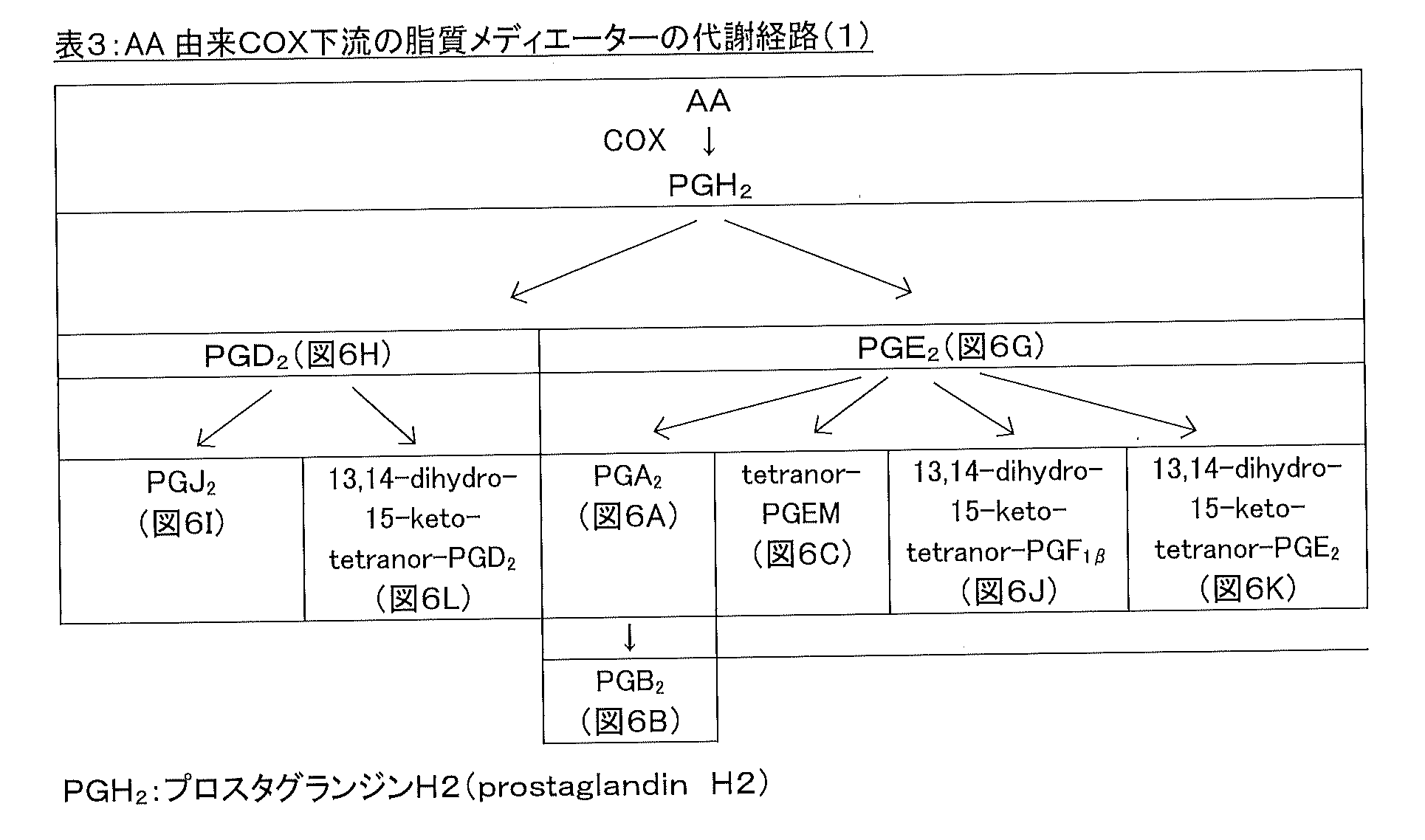
AA由来COX下流の脂質メディエーターの代謝経路は、表3および表4に示す通りである。
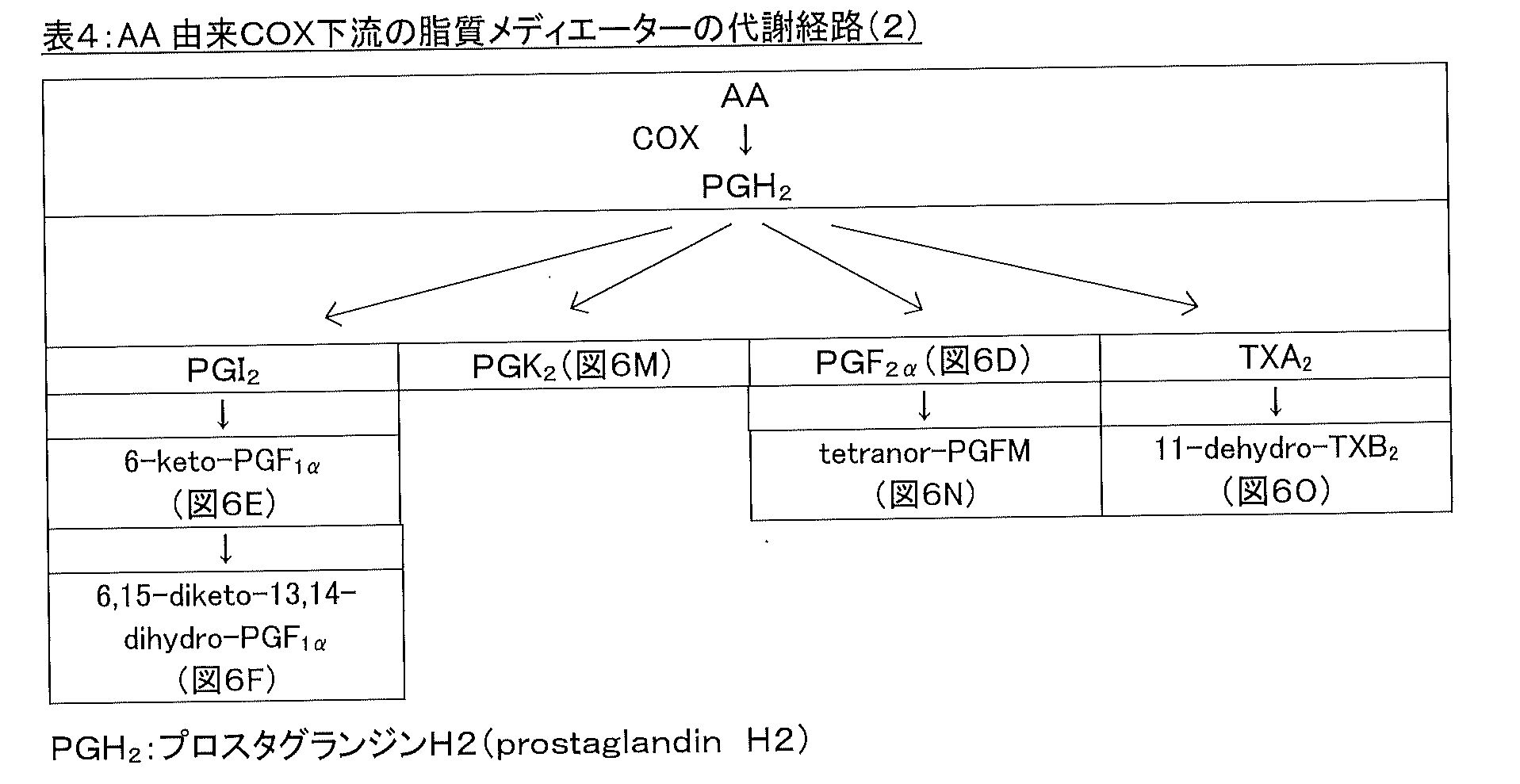
ウ LOX下流の脂質メディエーター
結果は、図7に示す通りであった。細菌性膀胱炎と特発性膀胱炎の双方で、n-6系脂肪酸のAA由来LOX下流の脂質メディエーター:15-HETEが増加することが確認された。
結果は、図7に示す通りであった。細菌性膀胱炎と特発性膀胱炎の双方で、n-6系脂肪酸のAA由来LOX下流の脂質メディエーター:15-HETEが増加することが確認された。
エ CYP下流の脂質メディエーター
結果は、図8に示す通りであった。細菌性膀胱炎と特発性膀胱炎の双方で、n-6系脂肪酸のAA由来CYP下流の脂質メディエーター:14,15-DHETが増加することが確認された。
結果は、図8に示す通りであった。細菌性膀胱炎と特発性膀胱炎の双方で、n-6系脂肪酸のAA由来CYP下流の脂質メディエーター:14,15-DHETが増加することが確認された。
オ OX下流の脂質メディエーター
結果は、図9に示す通りであった。細菌性膀胱炎と特発性膀胱炎の双方で、AA由来、酵素非依存的酸化(OX)下流の脂質メディエーター:2,3-ジノル-8-イソ-PGF2α(2,3-dinor-8-iso-PGF2α)(図9A);8-iso-15(R)-PGF2α(8-iso-15(R)-PGF2α)(図9B);5-イソプロスタグランジンF2α-VI(5-iPF2α-VI;iso prostaglandin F2α-VI)(図9C);および8-イソ-PGE2(8-iso-PGE2)(図9E)が増加することが確認された。
結果は、図9に示す通りであった。細菌性膀胱炎と特発性膀胱炎の双方で、AA由来、酵素非依存的酸化(OX)下流の脂質メディエーター:2,3-ジノル-8-イソ-PGF2α(2,3-dinor-8-iso-PGF2α)(図9A);8-iso-15(R)-PGF2α(8-iso-15(R)-PGF2α)(図9B);5-イソプロスタグランジンF2α-VI(5-iPF2α-VI;iso prostaglandin F2α-VI)(図9C);および8-イソ-PGE2(8-iso-PGE2)(図9E)が増加することが確認された。
カ LA由来LOX下流の脂質メディエーター
結果は、図10に示す通りであった。細菌性膀胱炎と特発性膀胱炎の双方で、n-6系脂肪酸のLA由来LOX下流の脂質メディエーター:9-KODE(図10A);9-HODE(図10B);13-KODE(図10C);および13-HODE(図10D)が増加することが確認された。
結果は、図10に示す通りであった。細菌性膀胱炎と特発性膀胱炎の双方で、n-6系脂肪酸のLA由来LOX下流の脂質メディエーター:9-KODE(図10A);9-HODE(図10B);13-KODE(図10C);および13-HODE(図10D)が増加することが確認された。
キ LA由来CYP下流の脂質メディエーター
結果は、図11に示す通りであった。細菌性膀胱炎と特発性膀胱炎の双方で、n-6系脂肪酸のLA由来CYP下流の脂質メディエーター:9,10-DiHOME(図11A);および12,13-DiHOME(図11B)が増加することが確認された。
結果は、図11に示す通りであった。細菌性膀胱炎と特発性膀胱炎の双方で、n-6系脂肪酸のLA由来CYP下流の脂質メディエーター:9,10-DiHOME(図11A);および12,13-DiHOME(図11B)が増加することが確認された。
<n-3系脂肪酸>
ク EPA由来LOX下流の脂質メディエーター
結果は、図12に示す通りであった。細菌性膀胱炎と特発性膀胱炎の双方で、n-3系脂肪酸のEPA由来LOX下流の脂質メディエーター:LXA5(図12A)が増加することが確認された。
ク EPA由来LOX下流の脂質メディエーター
結果は、図12に示す通りであった。細菌性膀胱炎と特発性膀胱炎の双方で、n-3系脂肪酸のEPA由来LOX下流の脂質メディエーター:LXA5(図12A)が増加することが確認された。
ケ EPA由来CYP下流の脂質メディエーター
結果は、図13に示す通りであった。細菌性膀胱炎と特発性膀胱炎の双方で、n-3系脂肪酸のEPA由来CYP下流の1個の脂質メディエーター;17,18-DiHETEが増加することが確認された。
結果は、図13に示す通りであった。細菌性膀胱炎と特発性膀胱炎の双方で、n-3系脂肪酸のEPA由来CYP下流の1個の脂質メディエーター;17,18-DiHETEが増加することが確認された。
コ その他(上記以外)の脂質メディエーター
結果は、図14に示す通りであった。細菌性膀胱炎と特発性膀胱炎の双方で、その他(上記以外)の脂質メディエーターとしてLyso-PAFが増加することが確認された。
結果は、図14に示す通りであった。細菌性膀胱炎と特発性膀胱炎の双方で、その他(上記以外)の脂質メディエーターとしてLyso-PAFが増加することが確認された。
例3:ネコの尿中脂質の解析(2)
例3では、全身炎症のネコの尿中脂質について解析した。
例3では、全身炎症のネコの尿中脂質について解析した。
(1)方法
ア 尿サンプル
尿サンプルとして、健康なネコの尿(n=3(対照群)、ピジョン動物愛護病院もしくは東京大学附属動物医療センター腎泌尿器科(臨床病理学研究室)より提供)と全身炎症のネコの尿(n=4(全身炎症群)、東京大学附属動物医療センター腎泌尿器科(臨床病理学研究室)より提供)を使用した(尿サンプルは解析まで-80℃で保存)。全身炎症群のネコは、外傷や急性腎不全を患い、白血球の増加や発熱などを呈し、全身性の炎症が起こっていると獣医師により診断されたものである。
ア 尿サンプル
尿サンプルとして、健康なネコの尿(n=3(対照群)、ピジョン動物愛護病院もしくは東京大学附属動物医療センター腎泌尿器科(臨床病理学研究室)より提供)と全身炎症のネコの尿(n=4(全身炎症群)、東京大学附属動物医療センター腎泌尿器科(臨床病理学研究室)より提供)を使用した(尿サンプルは解析まで-80℃で保存)。全身炎症群のネコは、外傷や急性腎不全を患い、白血球の増加や発熱などを呈し、全身性の炎症が起こっていると獣医師により診断されたものである。
イ 尿の調製
例1(1)イの記載と同様にして尿を調製した。
例1(1)イの記載と同様にして尿を調製した。
ウ 脂質の測定
例1(1)ウの記載と同様にして、尿中の脂質(脂質メディエーターに代謝される基質脂肪酸および脂質メディエーター)を測定した。
例1(1)ウの記載と同様にして、尿中の脂質(脂質メディエーターに代謝される基質脂肪酸および脂質メディエーター)を測定した。
エ データ処理
例1(1)エの記載と同様にして行った。
例1(1)エの記載と同様にして行った。
オ 統計学的解析
例1(1)オの記載と同様にして行った。
例1(1)オの記載と同様にして行った。
(2)結果
<脂質メディエーターに代謝される基質脂肪酸>
ア アラキドン酸、エイコサペンタエン酸、ドコサヘキサエン酸
結果は、図15に示す通りであった。全身炎症では、n-6系脂肪酸のAA(図15A)およびn-3系脂肪酸のEPA(図15B)とDHA(図15C)が増加することが確認された。
<脂質メディエーターに代謝される基質脂肪酸>
ア アラキドン酸、エイコサペンタエン酸、ドコサヘキサエン酸
結果は、図15に示す通りであった。全身炎症では、n-6系脂肪酸のAA(図15A)およびn-3系脂肪酸のEPA(図15B)とDHA(図15C)が増加することが確認された。
<n-6系脂肪酸>
イ AA由来COX下流の脂質メディエーター
結果は、図16に示す通りであった。全身炎症では、n-6系脂肪酸のAA由来シクロオキシゲナーゼ(COX)下流の脂質メディエーター:PGD2(図16A);およびPGB2(図16F)が増加することが確認された。
イ AA由来COX下流の脂質メディエーター
結果は、図16に示す通りであった。全身炎症では、n-6系脂肪酸のAA由来シクロオキシゲナーゼ(COX)下流の脂質メディエーター:PGD2(図16A);およびPGB2(図16F)が増加することが確認された。
ウ LOX下流の脂質メディエーター
結果は、図17に示す通りであった。全身炎症では、n-6系脂肪酸のAA由来リポキシゲナーゼ(LOX)下流の脂質メディエーター:15-HETEが増加することが確認された。
結果は、図17に示す通りであった。全身炎症では、n-6系脂肪酸のAA由来リポキシゲナーゼ(LOX)下流の脂質メディエーター:15-HETEが増加することが確認された。
エ CYP下流の脂質メディエーター
結果は、図18に示す通りであった。全身炎症では、n-6系脂肪酸のAA由来CYP下流の脂質メディエーター:14,15-DHETが増加することが確認された。
結果は、図18に示す通りであった。全身炎症では、n-6系脂肪酸のAA由来CYP下流の脂質メディエーター:14,15-DHETが増加することが確認された。
オ OX下流の脂質メディエーター
結果は、図19に示す通りであった。全身炎症では、AA由来、OX下流の脂質メディエーター:8-イソ-PGE2(8-iso-PGE2)(図19B)は増加することが確認された。
結果は、図19に示す通りであった。全身炎症では、AA由来、OX下流の脂質メディエーター:8-イソ-PGE2(8-iso-PGE2)(図19B)は増加することが確認された。
また、全身炎症では、AA由来、OX下流の脂質メディエーター:8-iso-PGF2α(8-iso-PGF2α)(図19A)は減少することが確認された。
カ LA由来LOX下流の脂質メディエーター
結果は、図20に示す通りであった。全身炎症では、n-6系脂肪酸のLA由来LOX下流の脂質メディエーター:9-HODE(図20A);9-KODE(図20B);13-HODE(図20C);および13-KODE(図20D)が増加することが確認された。
結果は、図20に示す通りであった。全身炎症では、n-6系脂肪酸のLA由来LOX下流の脂質メディエーター:9-HODE(図20A);9-KODE(図20B);13-HODE(図20C);および13-KODE(図20D)が増加することが確認された。
キ LA由来CYP下流の脂質メディエーター
結果は、図21に示す通りであった。全身炎症では、n-6系脂肪酸のLA由来CYP下流の脂質メディエーター:9,10-DiHOME(図21A);および12,13-DiHOME(図21B)が増加することが確認された。
結果は、図21に示す通りであった。全身炎症では、n-6系脂肪酸のLA由来CYP下流の脂質メディエーター:9,10-DiHOME(図21A);および12,13-DiHOME(図21B)が増加することが確認された。
<n-3系脂肪酸>
ク EPA由来COX下流の脂質メディエーター
結果は、図22に示す通りであった。全身炎症では、n-3系脂肪酸のEPA由来COX下流の脂質メディエーター:PGD3(図22A)は減少することが確認された。
ク EPA由来COX下流の脂質メディエーター
結果は、図22に示す通りであった。全身炎症では、n-3系脂肪酸のEPA由来COX下流の脂質メディエーター:PGD3(図22A)は減少することが確認された。
ケ EPA由来LOX下流の脂質メディエーター
結果は、図23に示す通りであった。全身炎症では、n-3系脂肪酸のEPA由来LOX下流の脂質メディエーター:LXA5が増加することが確認された。
結果は、図23に示す通りであった。全身炎症では、n-3系脂肪酸のEPA由来LOX下流の脂質メディエーター:LXA5が増加することが確認された。
コ EPA由来CYP下流の脂質メディエーター
結果は、図24に示す通りであった。全身炎症では、n-3系脂肪酸のEPA由来LOX下流の脂質メディエーター:17,18-DiHETEが増加することが確認された。
結果は、図24に示す通りであった。全身炎症では、n-3系脂肪酸のEPA由来LOX下流の脂質メディエーター:17,18-DiHETEが増加することが確認された。
サ 上記以外の脂質メディエーター
結果は、図25に示す通りであった。全身炎症では、上記以外の脂質メディエーターとして、Lyso-PAF(図25A)が増加することが確認された。
結果は、図25に示す通りであった。全身炎症では、上記以外の脂質メディエーターとして、Lyso-PAF(図25A)が増加することが確認された。
Claims (21)
- ネコ科動物の尿中の脂質および/またはその代謝物の量または濃度を測定する工程を含んでなる、ネコ科動物の炎症状態の評価方法。
- ネコ科動物の尿中の脂質および/またはその代謝物の量または濃度を指標にして、尿を採取したネコ科動物の炎症状態の有無を決定する工程をさらに含む、請求項1に記載の評価方法。
- ネコ科動物の尿中の脂質および/またはその代謝物の量または濃度と参照値とを比較する工程をさらに含む、請求項1または2に記載の評価方法。
- 参照値が、炎症状態にない健康なネコ科動物の尿中の当該脂質および/またはその代謝物の量または濃度に基づいて設定された値である、請求項1~3のいずれか一項に記載の評価方法。
- ネコ科動物の炎症状態の診断方法である、請求項1~4のいずれか一項に記載の評価方法。
- ネコ科動物の尿中の脂質および/またはその代謝物の量または濃度を測定する工程を含んでなる、ネコ科動物の炎症に対する治療効果の判定方法。
- ネコ科動物の尿中の脂質および/またはその代謝物の量または濃度を指標にして、ネコ科動物の炎症に対する治療効果の程度を決定する工程をさらに含む、請求項6に記載の判定方法。
- ネコ科動物の尿中の脂質および/またはその代謝物の量または濃度と参照値とを比較する工程をさらに含む、請求項6または7に記載の判定方法。
- 参照値が、治療前のネコ科動物の尿中の脂質および/またはその代謝物の量または濃度または炎症を生じているネコ科動物の尿中の脂質および/またはその代謝物の量または濃度に基づいて設定された値である、請求項6~8のいずれか一項に記載の判定方法。
- ネコ科動物の炎症に対する治療が、薬物療法である、請求項6~9のいずれか一項に記載の判定方法。
- 炎症が全身炎症または膀胱炎である、請求項1~5のいずれか一項に記載の評価方法または請求項6~10のいずれか一項に記載の判定方法。
- 前記脂質が、アラキドン酸、エイコサペンタエン酸およびドコサヘキサエン酸からなる群から選択される1種または2種以上である、請求項1~5および11のいずれか一項に記載の評価方法または請求項6~11のいずれか一項に記載の判定方法。
- 前記脂質代謝物が、アラキドン酸代謝物、エイコサペンタエン酸代謝物およびドコサヘキサエン酸代謝物からなる群から選択される1種または2種以上である、請求項1~5、11および12のいずれか一項に記載の評価方法または請求項6~12のいずれか一項に記載の判定方法。
- 前記脂質代謝物が、炎症を生じているネコ科動物の尿中の量または濃度が健康なネコ科動物の尿中の量または濃度よりも高い傾向にあるものである、請求項1~5および11~13のいずれか一項に記載の評価方法または請求項6~13のいずれか一項に記載の判定方法。
- 前記脂質代謝物が、炎症を生じているネコ科動物の尿中の量または濃度が健康なネコ科動物の尿中の量または濃度よりも低い傾向にあるものである、請求項1~5および11~13のいずれか一項に記載の評価方法または請求項6~13のいずれか一項に記載の判定方法。
- 前記脂質代謝物の濃度を質量分析法により測定する、請求項1~5および11~15のいずれか一項に記載の評価方法または請求項6~15のいずれか一項に記載の判定方法。
- 脂質および/またはその代謝物を含んでなる、ネコ科動物の炎症マーカー。
- 前記脂質が、アラキドン酸、エイコサペンタエン酸およびドコサヘキサエン酸からなる群から選択される1種または2種以上である、請求項17に記載の炎症マーカー。
- 前記脂質代謝物が、アラキドン酸代謝物、エイコサペンタエン酸代謝物およびドコサヘキサエン酸代謝物からなる群から選択される1種または2種以上である、請求項17または18に記載の炎症マーカー。
- ネコ科動物の尿中の脂質および/またはその代謝物の定量手段を含んでなる、ネコ科動物の炎症状態の評価用キット。
- (A)ネコ科動物の尿中の脂質および/またはその代謝物の量または濃度を測定する工程と、(B)ネコ科動物の尿中の脂質および/またはその代謝物の量または濃度を指標にして、炎症状態の有無を決定する工程と、(N)炎症を生じていると決定されたネコ科動物に、炎症に対する治療を実施する工程を含んでなる、ネコ科動物の炎症の治療方法。
Priority Applications (1)
| Application Number | Priority Date | Filing Date | Title |
|---|---|---|---|
| JP2021555117A JPWO2021090901A1 (ja) | 2019-11-05 | 2020-11-05 |
Applications Claiming Priority (2)
| Application Number | Priority Date | Filing Date | Title |
|---|---|---|---|
| US201962930714P | 2019-11-05 | 2019-11-05 | |
| US62/930,714 | 2019-11-05 |
Publications (1)
| Publication Number | Publication Date |
|---|---|
| WO2021090901A1 true WO2021090901A1 (ja) | 2021-05-14 |
Family
ID=75849139
Family Applications (1)
| Application Number | Title | Priority Date | Filing Date |
|---|---|---|---|
| PCT/JP2020/041434 Ceased WO2021090901A1 (ja) | 2019-11-05 | 2020-11-05 | ネコ科動物の炎症状態の評価方法 |
Country Status (2)
| Country | Link |
|---|---|
| JP (1) | JPWO2021090901A1 (ja) |
| WO (1) | WO2021090901A1 (ja) |
Cited By (1)
| Publication number | Priority date | Publication date | Assignee | Title |
|---|---|---|---|---|
| WO2025032923A1 (ja) * | 2023-08-04 | 2025-02-13 | 株式会社島津製作所 | エイコサノイドを含む生体試料の前処理方法 |
Citations (7)
| Publication number | Priority date | Publication date | Assignee | Title |
|---|---|---|---|---|
| JP2003250575A (ja) * | 2002-03-04 | 2003-09-09 | Tohoku Techno Arch Co Ltd | ネコ腎臓病診断マーカー |
| JP2006189461A (ja) * | 2001-03-28 | 2006-07-20 | Heska Corp | 動物において早期腎疾患を検出する方法 |
| WO2011078307A1 (ja) * | 2009-12-25 | 2011-06-30 | 協和メデックス株式会社 | 尿検体中のサブスタンスpの測定方法 |
| US20140039063A1 (en) * | 2011-01-04 | 2014-02-06 | National Jewish Health | Leukotrienes and asthma exacerbation risk |
| JP2014507159A (ja) * | 2011-02-24 | 2014-03-27 | ヒルズ・ペット・ニュートリシャン・インコーポレーテッド | ネコの腎障害を診断および治療する組成物および方法 |
| WO2018142379A1 (en) * | 2017-02-06 | 2018-08-09 | Joslin Diabetes Center, Inc. | Methods and compositions for treating metabolic disorders |
| WO2020137172A1 (ja) * | 2018-12-27 | 2020-07-02 | 公立大学法人奈良県立医科大学 | 間質性膀胱炎の診断方法 |
-
2020
- 2020-11-05 JP JP2021555117A patent/JPWO2021090901A1/ja active Pending
- 2020-11-05 WO PCT/JP2020/041434 patent/WO2021090901A1/ja not_active Ceased
Patent Citations (7)
| Publication number | Priority date | Publication date | Assignee | Title |
|---|---|---|---|---|
| JP2006189461A (ja) * | 2001-03-28 | 2006-07-20 | Heska Corp | 動物において早期腎疾患を検出する方法 |
| JP2003250575A (ja) * | 2002-03-04 | 2003-09-09 | Tohoku Techno Arch Co Ltd | ネコ腎臓病診断マーカー |
| WO2011078307A1 (ja) * | 2009-12-25 | 2011-06-30 | 協和メデックス株式会社 | 尿検体中のサブスタンスpの測定方法 |
| US20140039063A1 (en) * | 2011-01-04 | 2014-02-06 | National Jewish Health | Leukotrienes and asthma exacerbation risk |
| JP2014507159A (ja) * | 2011-02-24 | 2014-03-27 | ヒルズ・ペット・ニュートリシャン・インコーポレーテッド | ネコの腎障害を診断および治療する組成物および方法 |
| WO2018142379A1 (en) * | 2017-02-06 | 2018-08-09 | Joslin Diabetes Center, Inc. | Methods and compositions for treating metabolic disorders |
| WO2020137172A1 (ja) * | 2018-12-27 | 2020-07-02 | 公立大学法人奈良県立医科大学 | 間質性膀胱炎の診断方法 |
Non-Patent Citations (11)
| Title |
|---|
| BALGOMA DAVID, LARSSON JOHAN, ROKACH JOSHUA, LAWSON JOHN A., DAHAM KAMERAN, DAHLÉN BARBRO, DAHLÉN SVEN-ERIK, WHEELOCK CRAIG E.: "Quantification of Lipid Mediator Metabolites in Human Urine from Asthma Patients by Electrospray Ionization Mass Spectrometry: Controlling Matrix Effects", ANALYTICAL CHEMISTRY, vol. 85, no. 16, 17 July 2013 (2013-07-17), pages 7866 - 7874, XP055821742 * |
| HOSHI FUMIO: "Strategies for feline idiopathic cystitis evidence-based treatment recommendations, pathophzsiology", URINARY GLZCOSAMINOGLZCANS GAGS CONCENTRATION, no. 340, 1 October 2017 (2017-10-01), pages 8 - 13 * |
| KIND TOBIAS: "Interstitial Cystitis-Associated Urinary Metabolites Identified by Mass-Spectrometry Based Metabolomics Analysis", SCIENTIFIC REPORTS, vol. 6, no. 1, 2016, pages 1 - 9, XP055721759 * |
| KOBAYASHI YUI, NAKAMURA TATSURO, KOBAYASHI KOJI, MURATA TAKAHISA: "The profile of urinary lipid metabolites in cats", JOURNAL OF VETERINARY MEDICAL SCIENCE, vol. 82, no. 7, 5 June 2020 (2020-06-05), pages 1017 - 1020, XP055821721 * |
| LEMBERGER STEPHANIE I.K. ET AL.: "Comparison of urine protein profiles in cats without urinary tract disease and cats with idiopathic cystitis, bacterial urinary tract infection, or urolithiasis", AMERICAN JOURNAL OF VETERINARY RESEARCH, vol. 72, no. 10, October 2011 (2011-10-01), pages 1407 - 1415, XP055821722 * |
| MARTINO-COSTA A.L., MALHÃO F., LOPES C., DIAS-PEREIRA P.: "Renal Interstitial Lipid Accumulation in Cats with Chronic Kidney Disease", JOURNAL OF COMPARATIVE PATHOLOGY, vol. 157, no. 2-3, 2017, pages 75 - 79, XP055821720 * |
| NORRIS CAROL R ET AL.: "Concentrations of cysteinyl leukotrienes in urine and bronchoalveolar lavage fluid of cats with experimentally induced asthma", AMERICAN JOURNAL OF VETERINARY RESEARCH, vol. 64, no. 11, November 2003 (2003-11-01), pages 1449 - 1453, XP009022957, DOI: 10.2460/ajvr.2003.64.1449 * |
| SATO R ET AL.: "Urinary Excretion of N-acetyl-beta-D-Glucosaminidase and Its Isoenzymes in Cats with Urinary Disease", JOURNAL OF VETERINARY MEDICAL SCIENCE, vol. 64, no. 4, 25 April 2002 (2002-04-25), pages 367 - 371, XP055821732 * |
| SONG WEN - LIANG ET AL.: "Tetranor PGDM, an Abundant Urinary Metabolite Reflects Biosynthesis of Prostaglandin D2 in Mice and Humans", JOURNAL OF BIOLOGICAL CHEMISTRY, vol. 283, no. 2, 11 January 2008 (2008-01-11), pages 1179 - 1188, XP055097681, DOI: 10.1074/jbc.M706839200 * |
| TREUTLEIN G., DEEG C.A., HAUCK S.M., AMANN B., HARTMANN K., DORSCH R.: "Follow-up protein profiles in urine samples during the course of obstructive feline idiopathic cystitis", VETERINARY JOURNAL, vol. 198, no. 3, December 2013 (2013-12-01), pages 625 - 630, XP055821735 * |
| WOOLCOCK ANDREW D., LEISERING ASHLEY, DESHUILLERS PIERRE, ROQUE-TORRES JANET, MOORE GEORGE E.: "Feline urinary F2-isoprostanes measured by enzyme-linked immunoassay and gas chromatography-mass spectroscopy are poorly correlated", JOURNAL OF VETERINARY DIAGNOSTIC INVESTIGATION, vol. 32, no. 5, 5 July 2020 (2020-07-05), pages 648 - 655, XP055821717 * |
Cited By (1)
| Publication number | Priority date | Publication date | Assignee | Title |
|---|---|---|---|---|
| WO2025032923A1 (ja) * | 2023-08-04 | 2025-02-13 | 株式会社島津製作所 | エイコサノイドを含む生体試料の前処理方法 |
Also Published As
| Publication number | Publication date |
|---|---|
| JPWO2021090901A1 (ja) | 2021-05-14 |
Similar Documents
| Publication | Publication Date | Title |
|---|---|---|
| TWI704348B (zh) | 腎疾病之檢查方法 | |
| JP4323744B2 (ja) | 全血中の分析物の測定 | |
| Rau et al. | Evaluation of procalcitonin for predicting septic multiorgan failure and overall prognosis in secondary peritonitis: a prospective, international multicenter study | |
| EP2281203B1 (en) | A marker for graft failure and mortality | |
| Lopes et al. | Disposable electrochemical immunosensor for analysis of cystatin C, a CKD biomarker | |
| EP4031871B1 (en) | Methods for predicting patient response to dmards | |
| Nabity et al. | Urinary biomarkers of kidney disease in dogs and cats | |
| Nuntnarumit et al. | N-terminal probrain natriuretic peptide and patent ductus arteriosus in preterm infants | |
| JP4516124B2 (ja) | 肝線維症の診断方法 | |
| CN106574923B (zh) | 食物过敏的检验方法及检验用试剂盒 | |
| Pedersen et al. | Body size, but neither age nor asymptomatic mitral regurgitation, influences plasma concentrations of dimethylarginines in dogs | |
| JP7804591B2 (ja) | 敗血症状態の予測 | |
| US8110371B2 (en) | Identifying organ damage | |
| Okada et al. | Circulating S100A8/A9 is potentially a biomarker that could reflect the severity of experimental colitis in rats | |
| WO2005080982A1 (ja) | A型及びb型急性大動脈解離と急性心筋梗塞の鑑別方法及び鑑別用キット | |
| JP6956429B2 (ja) | 食物アレルギーのバイオマーカー、食物アレルギーの検査方法、尿検体検査用キット、及び尿検体検査用スティック | |
| Uztimür et al. | Evaluation of the use of different sensitive cardiac biomarkers in determining myocardial damage in cows with subclinical and clinical ketoses | |
| Park et al. | Evaluation of plasma prealbumin as a novel inflammatory biomarker in dogs: a pilot study | |
| JP2008509410A (ja) | 肝線維症の診断方法 | |
| Dong et al. | Recent advances in rapid detection of Helicobacter pylori by lateral flow assay | |
| Karimi-Dehkordi et al. | The value of kidney biochemical parameters in diagnosis of acute tubular necrosis (ATN) in chickens | |
| US11181538B2 (en) | Oxidative stress biomarkers testing in canines | |
| JP2007163151A (ja) | 対象生物の生理状態を判定する方法 | |
| KR102163693B1 (ko) | 노화 및 항노화 바이오마커 및 그의 용도 | |
| Sakarin et al. | Proteomic analysis of the serum in dogs with pulmonary hypertension secondary to myxomatous mitral valve disease: the preliminary study |
Legal Events
| Date | Code | Title | Description |
|---|---|---|---|
| 121 | Ep: the epo has been informed by wipo that ep was designated in this application |
Ref document number: 20885663 Country of ref document: EP Kind code of ref document: A1 |
|
| ENP | Entry into the national phase |
Ref document number: 2021555117 Country of ref document: JP Kind code of ref document: A |
|
| NENP | Non-entry into the national phase |
Ref country code: DE |
|
| 122 | Ep: pct application non-entry in european phase |
Ref document number: 20885663 Country of ref document: EP Kind code of ref document: A1 |