WO2021084643A1 - 認証装置、認証方法及び記録媒体 - Google Patents
認証装置、認証方法及び記録媒体 Download PDFInfo
- Publication number
- WO2021084643A1 WO2021084643A1 PCT/JP2019/042533 JP2019042533W WO2021084643A1 WO 2021084643 A1 WO2021084643 A1 WO 2021084643A1 JP 2019042533 W JP2019042533 W JP 2019042533W WO 2021084643 A1 WO2021084643 A1 WO 2021084643A1
- Authority
- WO
- WIPO (PCT)
- Prior art keywords
- authentication
- iris
- target person
- captured image
- authentication target
- Prior art date
- Legal status (The legal status is an assumption and is not a legal conclusion. Google has not performed a legal analysis and makes no representation as to the accuracy of the status listed.)
- Ceased
Links
Images






Classifications
-
- G—PHYSICS
- G06—COMPUTING OR CALCULATING; COUNTING
- G06V—IMAGE OR VIDEO RECOGNITION OR UNDERSTANDING
- G06V40/00—Recognition of biometric, human-related or animal-related patterns in image or video data
- G06V40/10—Human or animal bodies, e.g. vehicle occupants or pedestrians; Body parts, e.g. hands
- G06V40/18—Eye characteristics, e.g. of the iris
-
- G—PHYSICS
- G06—COMPUTING OR CALCULATING; COUNTING
- G06V—IMAGE OR VIDEO RECOGNITION OR UNDERSTANDING
- G06V40/00—Recognition of biometric, human-related or animal-related patterns in image or video data
- G06V40/10—Human or animal bodies, e.g. vehicle occupants or pedestrians; Body parts, e.g. hands
- G06V40/18—Eye characteristics, e.g. of the iris
- G06V40/193—Preprocessing; Feature extraction
-
- G—PHYSICS
- G06—COMPUTING OR CALCULATING; COUNTING
- G06T—IMAGE DATA PROCESSING OR GENERATION, IN GENERAL
- G06T7/00—Image analysis
- G06T7/0002—Inspection of images, e.g. flaw detection
-
- G—PHYSICS
- G06—COMPUTING OR CALCULATING; COUNTING
- G06V—IMAGE OR VIDEO RECOGNITION OR UNDERSTANDING
- G06V40/00—Recognition of biometric, human-related or animal-related patterns in image or video data
- G06V40/10—Human or animal bodies, e.g. vehicle occupants or pedestrians; Body parts, e.g. hands
- G06V40/16—Human faces, e.g. facial parts, sketches or expressions
-
- G—PHYSICS
- G06—COMPUTING OR CALCULATING; COUNTING
- G06V—IMAGE OR VIDEO RECOGNITION OR UNDERSTANDING
- G06V40/00—Recognition of biometric, human-related or animal-related patterns in image or video data
- G06V40/10—Human or animal bodies, e.g. vehicle occupants or pedestrians; Body parts, e.g. hands
- G06V40/16—Human faces, e.g. facial parts, sketches or expressions
- G06V40/168—Feature extraction; Face representation
- G06V40/171—Local features and components; Facial parts ; Occluding parts, e.g. glasses; Geometrical relationships
-
- G—PHYSICS
- G06—COMPUTING OR CALCULATING; COUNTING
- G06T—IMAGE DATA PROCESSING OR GENERATION, IN GENERAL
- G06T2207/00—Indexing scheme for image analysis or image enhancement
- G06T2207/30—Subject of image; Context of image processing
- G06T2207/30196—Human being; Person
- G06T2207/30201—Face
Definitions
- the present invention relates to an authentication device and an authentication method for authenticating an authentication target person, and a technical field of a recording medium in which a computer program for causing a computer to execute the authentication method is recorded.
- Information on the iris characteristics of the authentication target person is generated from the captured image obtained by photographing the authentication target person, and the authentication target person is selected based on the generated information on the iris characteristics.
- An authentication device for authenticating is known (see, for example, Patent Documents 1 to 3).
- Patent Document 4 is mentioned as a prior art document related to the present invention.
- the photographed image obtained by photographing the person to be authenticated is an image suitable for authenticating the person to be authenticated based on the information regarding the characteristics of the iris of the person to be authenticated.
- the photographed image obtained by photographing the person to be authenticated is an image suitable for authenticating the person to be authenticated based on the information regarding the characteristics of the iris of the person to be authenticated.
- the photographed image obtained by photographing the person to be authenticated is an image suitable for authenticating the person to be authenticated based on the information regarding the characteristics of the iris of the person to be authenticated.
- the photographed image obtained by photographing the person to be authenticated is an image suitable for authenticating the person to be authenticated based on the information regarding the characteristics of the iris of the person to be authenticated.
- the photographed image obtained by photographing the person to be authenticated is an image suitable for authenticating the person to be authenticated based on the information regarding the characteristics of the iris of the person to be authenticated.
- the photographed image obtained by photographing the person to be authenticated is
- the authentication devices described in Patent Documents 1 to 3 described above are based on a photographed image that is not suitable for authenticating the authentication target person, and the iris of the authentication target person. It is possible to generate information about the features and authenticate the person to be authenticated based on the generated information about the features of the iris. However, if the captured image is not an image suitable for authenticating the person to be authenticated, the authentication accuracy of the authentication device may decrease.
- An object of the present invention is to provide an authentication device, an authentication device, an authentication method, and a recording medium capable of solving the above-mentioned technical problems.
- One aspect of the authentication device is an iris authentication means for authenticating the authentication target person based on the iris feature information regarding the iris characteristics of the authentication target person in the captured image obtained by photographing the authentication target person. Based on the facial feature information about the facial features of the authentication target person in the captured image, the predetermined condition that the captured image should be satisfied as an image used to authenticate the authentication target person using the iris feature information. The operation of the iris authentication means when it is determined that the captured image satisfies the predetermined condition, and the captured image satisfies the predetermined condition. The operation of the iris authentication means when it is determined that there is no iris authentication means is different.
- One aspect of the authentication method is an authentication step in which the authentication target person is authenticated based on the iris feature information regarding the iris characteristics of the authentication target person in the captured image obtained by photographing the authentication target person. Based on the facial feature information about the facial features of the authentication target person in the captured image, the predetermined condition that the captured image should be satisfied as an image used to authenticate the authentication target person using the iris feature information.
- the operation performed in the authentication step when it is determined that the captured image satisfies the predetermined condition, and the captured image satisfies the predetermined condition, including a determination step of determining whether or not the photographed image satisfies the predetermined condition. It is different from the operation performed in the authentication step when it is determined that the conditions are not satisfied.
- the recording medium is a non-temporary recording medium in which a computer program that causes a computer to execute an authentication method is recorded, and the authentication method is in a captured image obtained by photographing a person to be authenticated.
- the above-mentioned The captured image includes a determination step of determining whether or not the captured image satisfies a predetermined condition to be satisfied as an image used for authenticating the authentication target person using the iris feature information, and the captured image includes the predetermined.
- the operation performed in the authentication step when it is determined that the conditions are satisfied is different from the operation performed in the authentication step when it is determined that the captured image does not satisfy the predetermined conditions.
- the operation when the captured image is determined to satisfy the predetermined condition and the operation when the captured image is determined not to satisfy the predetermined condition are determined. It is possible to suppress a decrease in authentication accuracy based on the iris feature information as compared with the case where the operation is exactly the same.
- FIG. 1 is a block diagram showing an overall configuration of the authentication system of the present embodiment.
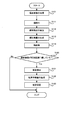
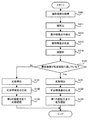
- FIG. 2 is a flowchart showing a flow of an authentication operation executed by the authentication device of the present embodiment.
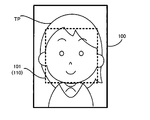
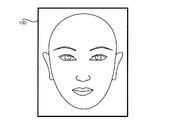
- FIG. 3 is a plan view showing an example of a photographed image.
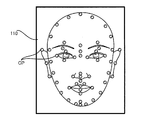
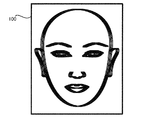
- FIG. 4 is a plan view showing an example of a plurality of facial feature points detected on the facial image.
- FIG. 5 is a plan view showing an authentication target person reflected in the captured image.
- FIG. 6 is a plan view showing an authentication target person reflected in the captured image.
- FIG. 7 is a plan view showing an authentication target person reflected in the captured image.
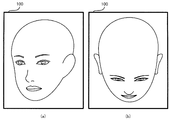
- 8 (a) and 8 (b) are plan views showing the authentication target person reflected in the photographed image.
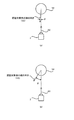
- FIG. 9 (a) is a plan view schematically showing an authentication target person facing the direction in which the camera exists
- FIG. 9 (b) shows authentication facing a direction different from the direction in which the camera exists. It is a top view which shows the subject typically.
- FIG. 10 (a) is a plan view schematically showing an authentication target person facing a direction deviated from the direction in which the camera is present
- FIG. 10 (b) is a plan view schematically showing a person to be authenticated. It is a top view which shows typically the authentication subject person who is facing a deviated direction.
- FIG. 11 is a plan view schematically showing an authentication target person facing a direction deviated upward from the direction in which the camera exists.
- FIG. 12 is a plan view showing an authentication target person reflected in the captured image.
- FIG. 13 is a plan view showing an authentication target person reflected in the captured image.
- FIG. 14 is a flowchart showing the flow of the authentication operation executed by the authentication system of the first modification.
- FIG. 15 is a block diagram showing the configuration of the authentication device of the second modification.
- the authentication device the authentication method, and the embodiment of the recording medium will be described with reference to the drawings.
- the authentication system SYS to which the authentication device, the authentication method, and the embodiment of the recording medium are applied will be described.
- FIG. 1 is a block diagram showing a configuration of the authentication system SYS of the present embodiment.
- the authentication system SYS authenticates (in other words, identifies or identifies) the authentication target person TP based on the facial features of the authentication target person TP (for example, a human). Further, the authentication system SYS authenticates the authentication target person TP based on the characteristics of the iris of the authentication target person TP.
- the authentication system SYS includes a camera 1 and an authentication device 2 in order to authenticate the authentication target person TP.
- the camera 1 and the authentication device 2 are communicably connected to each other via the communication network 3.
- the communication network 3 may include a wired network or a wireless network.
- Camera 1 is a photographing device capable of photographing the authentication target person TP.
- the camera 1 captures the face of the authentication target person TP. Therefore, the camera 1 shoots the authentication target person TP at the timing when the face of the authentication target person TP is included in the shooting range (in other words, the shooting angle of view) of the camera 1.
- the captured image 100 obtained by the camera 1 photographing the authentication target person TP is used to authenticate the authentication target person TP based on the facial features of the authentication target person TP and the iris characteristics of the authentication target person TP. .. Therefore, it is preferable that the camera 1 has a resolution capable of distinguishing the facial features and the iris features (typically, the iris pattern) of the authentication target person TP from the captured image 100. ..
- the authentication device 2 acquires (that is, receives) the captured image 100 captured by the camera 1 via the communication network 3.
- the authentication device 2 executes an authentication operation for authenticating the authentication target person TP reflected in the photographed image 100 based on the acquired photographed image 100.
- the authentication device 2 includes an arithmetic unit 21, a storage device 22, and a communication device 23.
- the arithmetic unit 21, the storage device 22, and the communication device 23 are connected via the data bus 24.
- the arithmetic unit 21 includes, for example, at least one of a CPU (Central Processing Unit) and a GPU (Graphic Processing Unit).
- the arithmetic unit 21 reads a computer program.
- the arithmetic unit 21 may read the computer program stored in the storage device 22.
- the arithmetic unit 21 may read a computer program stored in a recording medium that is readable by a computer and is not temporary by using a recording medium reading device (not shown).
- the arithmetic unit 21 may acquire a computer program from a device (not shown) arranged outside the authentication device 2 via the communication device 23 (that is, it may be downloaded or read).
- the arithmetic unit 21 executes the read computer program.
- a logical functional block for executing the operation to be performed by the authentication device 2 (specifically, the above-mentioned authentication operation) is realized in the arithmetic unit 21. That is, the arithmetic unit 21 can function as a controller for realizing a logical functional block for executing the authentication operation.
- FIG. 1 shows an example of a logical functional block realized in the arithmetic unit 21 to execute the authentication operation.
- a face detection unit 211 in the arithmetic unit 21, as logical functional blocks, a face detection unit 211, a face feature amount generation unit 212, a face recognition unit 213, an image determination unit 214, and an iris detection unit
- the 215, the iris feature amount generation unit 216, and the iris recognition unit 217 are realized.
- the face detection unit 211, the face feature amount generation unit 212, and the face recognition unit 213 mainly execute a face recognition operation for authenticating the authentication target person TP based on the face features of the authentication target person TP.
- the iris detection unit 215, the iris feature amount generation unit 216, and the iris recognition unit 217 mainly execute an iris authentication operation for authenticating the authentication target person TP based on the iris characteristics of the authentication target person TP. That is, in the present embodiment, the authentication operation is an operation including a face authentication operation and an iris authentication operation.
- the authentication operation is an operation including a face authentication operation and an iris authentication operation.
- the face feature amount generation unit 212 is an example of the generation means.
- the face recognition unit 213 is an example of face recognition means.
- the image determination unit 214 is an example of the determination means.
- the iris recognition unit 217 is an example of an iris recognition means.
- the storage device 22 can store desired data.
- the storage device 22 may temporarily store the computer program executed by the arithmetic unit 21.
- the storage device 22 may temporarily store data temporarily used by the arithmetic unit 21 while the arithmetic unit 21 is executing a computer program.
- the storage device 22 may store data stored by the authentication device 2 for a long period of time.
- the storage device 22 may include at least one of a RAM (Random Access Memory), a ROM (Read Only Memory), a hard disk device, a magneto-optical disk device, an SSD (Solid State Drive), and a disk array device. Good. That is, the storage device 22 may include a recording medium that is not temporary.
- the communication device 23 can communicate with the camera 1 via the communication network 3.
- the communication device 23 can acquire (that is, receive) the captured image 100 captured by the camera 1 from the camera 1 via the communication network 3.
- FIG. 2 is a flowchart showing the flow of the authentication operation executed by the authentication device 2.
- the communication device 23 acquires the captured image 100 captured by the camera 1 via the communication network 3 (step S101). That is, the communication device 23 acquires the captured image 100 each time the camera 1 captures the captured image 100 (step S101).
- the operations of steps S111 to S123 which will be described later, are executed. Therefore, it can be said that the authentication device 2 substantially starts the authentication operation shown in FIG. 2 (particularly, the operation of steps S101 to S123 described later) each time the camera 1 captures the captured image 100.
- the face detection unit 211 detects the face of the authentication target person TP reflected in the captured image 100 acquired in step S101 (step S111).
- the face detection unit 211 may detect the face of the authentication target person TP reflected in the captured image 100 by using an existing method for detecting the face of the person reflected in the image.
- an example of a method of detecting the face of the authentication target person TP reflected in the captured image 100 will be briefly described.
- FIG. 3 which is a plan view showing an example of the captured image 100
- the captured image 100 includes not only the face of the authentication target person TP, but also a part other than the face of the authentication target person TP and the background of the authentication target person TP. May be reflected.
- the face detection unit 211 identifies the face area 101 in which the face of the authentication target person TP is reflected from the captured image 100.
- the face region 101 is, for example, a rectangular region, but may be a region having another shape.
- the face detection unit 211 extracts an image portion included in the specified face region 101 of the captured image 100 as the face image 110.
- the face feature amount generation unit 212 detects a plurality of face feature points (hereinafter referred to as “face feature points CP”) of the authentication target person TP based on the face image 110 (step S112).
- face feature points CP a plurality of face feature points
- FIG. 4 which is a plan view showing an example of a plurality of face feature point CPs detected on the face image 110
- the face feature amount generation unit 212 is the authentication target person TP included in the face image 110.
- a characteristic part of the face is detected as a facial feature point CP.
- the facial feature amount generation unit 212 uses at least a part of the facial contour, eyes, eyebrows, eyebrows, ears, nose, mouth and chin of the authentication target TP as a plurality of facial feature points CP. It is being detected.
- FIG. 4 (further, FIG. 5 and the like described later), the drawing of the hair of the authentication target person TP is omitted for the sake of simplification of the drawing.
- the face feature amount generation unit 212 generates (in other words, calculates or specifies) the face feature amount of the authentication target person TP based on the plurality of face feature point CPs detected in step S112 (step S113). ..
- the facial feature amount of the authentication target person TP (hereinafter referred to as “face feature amount”) is arbitrary information regarding the facial feature amount of the authentication target person TP.
- the facial feature amount is arbitrary information that quantitatively (or qualitatively) indicates the facial features of the authentication target person TP.
- the facial feature amount is information (for example, vector information) that quantitatively indicates a plurality of facial feature point CPs.
- the facial feature amount is an example of facial feature information.
- the face recognition unit 213 authenticates the authentication target person TP whose face is detected in step S111 based on the face feature amount generated in step S113 (step S114).
- the face recognition unit 213 may authenticate the authentication target person TP by using an existing method for authenticating a person based on the face feature amount (that is, an existing face recognition method).
- an existing method for authenticating a person based on the face feature amount that is, an existing face recognition method.
- the face recognition unit 213 searches the face recognition database (DataBase) for records that satisfy the face recognition conditions determined according to the face feature amount generated in step S113.
- the face recognition DB includes a plurality of records in which the face feature amount of one person and the identification information for uniquely identifying one person are associated with each other.
- the face feature amount included in each record is an example of collation feature information for collating with the face feature amount generated in step S113.
- the face recognition unit 213 searches for a record satisfying the face recognition condition by collating the face feature amount generated in step S113 with the face feature amount included in the face recognition DB.
- the face recognition unit 213 may search the face recognition DB for a record satisfying the face recognition condition that the face feature amount is the same as the face feature amount generated in step S113.
- a record having the same face feature amount as the face feature amount generated in step S113 means a record having a face feature amount having a similarity with the face feature amount generated in step S113 higher than a predetermined threshold value TH_face.
- the face recognition unit 213 When a record satisfying the face recognition condition exists in the face recognition DB, the face recognition unit 213 authenticates that the authentication target person TP is a person specified by the identification information included in the record satisfying the face recognition condition. .. If the record satisfying the face recognition condition does not exist in the face recognition DB, the face recognition unit 213 determines that the authentication target person TP is a person who cannot be authenticated. That is, the face recognition unit 213 determines that the authentication target person TP cannot be authenticated.
- the image determination unit 214 executes the iris recognition operation by the captured image 100 acquired in step S101. It is determined whether or not the predetermined condition to be satisfied as the captured image 100 used for the image 100 is satisfied (step S120).
- the predetermined condition is, for example, that the captured image 100 is an image suitable for the iris recognition operation. Therefore, in the present embodiment, in step S120, the image determination unit 214 determines whether or not the captured image 100 is an image suitable for the iris authentication operation.
- the image suitable for the iris recognition operation means an image capable of appropriately generating the feature amount of the iris of the authentication target person TP reflected in the photographed image 100 from the photographed image 100. Good.
- the image suitable for the iris authentication operation may mean an image capable of maintaining the authentication accuracy by the iris authentication operation at a certain level or higher.
- the image determination unit 214 determines whether or not the captured image 100 is an image suitable for the iris authentication operation based on the plurality of facial feature point CPs detected in step S112.
- the image determination unit 214 determines whether or not the captured image 100 is an image suitable for the iris authentication operation based on the plurality of facial feature point CPs detected in step S112.
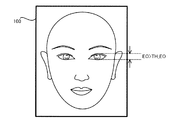
- the image determination unit 214 may determine whether or not the captured image 100 is an image suitable for the iris recognition operation based on the eye opening EO of the authentication target person TP reflected in the captured image 100. .. That is, the predetermined condition may include the first condition regarding the eye opening EO of the authentication target person TP.
- the eye opening EO is an index value that increases as the eyes are wide open. For example, as shown in FIG. 5, which is a plan view showing the authentication target person TP reflected in the captured image 100, when the eyes of the authentication target person TP are relatively wide open, the authentication target person TP It is assumed that most of the iris is reflected in the captured image 100.
- FIG. 6 which is a plan view showing the authentication target person TP reflected in the captured image 100, the eyes of the authentication target person TP are not relatively wide open (for example, at least partially closed).
- the iris of the authentication target TP is at least partially hidden by the eyelids of the authentication target TP.
- a part (or most) of the iris of the authentication target person TP is not reflected in the captured image 100. Therefore, if the eyes of the authentication target person TP are not relatively wide open, the iris feature amount may not be generated properly, and as a result, the authentication target person TP may not be properly authenticated by the iris recognition operation.
- there is sex That is, it is assumed that the authentication target person TP to be authenticated as one person may not be authenticated as one person by the iris recognition operation. In some cases, it is assumed that the authentication target person TP to be authenticated as one person may be erroneously authenticated as another person different from one person by the iris recognition operation.
- the image determination unit 214 determines whether the eye opening EO of the authentication target person TP is larger than the predetermined opening TH_EO. It may be determined whether or not.
- the image determination unit 214 determines that the captured image 100 is an image suitable for the iris recognition operation. May be good.
- the image determination unit 214 determines that the captured image 100 is not an image suitable for the iris recognition operation. You may.
- the predetermined opening TH_EO is a state in which the iris recognition operation can be appropriately executed because the eyes of the authentication target person TP (or a general person) are relatively wide open, and the authentication target person TP. It is preferable to set a desired value that can be distinguished based on the eye opening EO from the state in which the iris recognition operation may not be properly executed because the eyes are not relatively wide open. ..
- the image determination unit 214 may calculate the eye opening EO based on the face feature point CP related to the eye among the plurality of face feature point CPs. For example, the image determination unit 214 determines the eye aspect ratio (for example, the ratio of the vertical eye size to the horizontal eye size) of the authentication target TP based on the facial feature point CP related to the eye. It may be calculated as the opening degree EO. For example, the image determination unit 214 may calculate the size of the eyes in the vertical direction of the eyes of the authentication target person TP as the eye opening EO based on the face feature point CP related to the eyes.
- the eye aspect ratio for example, the ratio of the vertical eye size to the horizontal eye size
- the image determination unit 214 may calculate the size of the eyes in the vertical direction of the eyes of the authentication target person TP as the eye opening EO based on the face feature point CP related to the eyes.
- the predetermined opening degree TH_EO is fixed, the eyes of the authentication target person TP with relatively small eyes are opened even though the eyes are relatively wide open. It may be determined that the degree EO is smaller than the predetermined opening degree TH_EO. That is, in a situation where the photographed image 100 should be determined to be an image suitable for the iris recognition operation because the authentication target person TP has the eyes relatively wide open, the authentication target person TP relatively opens the eyes. There is a possibility that the captured image 100 is erroneously determined not to be an image suitable for the iris authentication operation due to the erroneous determination that the image is not wide open.
- the opening EO of the eyes of the authentication target TP is larger than the predetermined opening TH_EO even though the authentication target TP having relatively large eyes does not open the eyes relatively wide.
- the authentication target person TP has the eyes relatively large.
- the captured image 100 is determined to be an image suitable for the iris authentication operation due to the erroneous determination that the image is open.
- the image determination unit 214 may determine whether or not the eye opening of the authentication target person TP is larger than the predetermined opening degree TH_EO based on the time change of the eye opening EO of the authentication target person TP. Good. For example, when a plurality of captured images 100 are acquired by the camera 1 continuously photographing the authentication target person TP, the image determination unit 214 opens the eyes for each of the plurality of captured images 100. By calculating the degree EO, the time change of the opening degree EO of the eyes may be specified. As a result, the image determination unit 214 can specify the maximum value of the eye opening EO of the authentication target person TP.
- the image determination unit 214 may change the predetermined opening degree TH_EO so that the predetermined opening degree TH_EO becomes smaller as the maximum value of the eye opening degree EO of the authentication target person TP becomes smaller.
- the image determination unit 214 can appropriately determine whether or not the captured image 100 is an image suitable for the iris recognition operation, regardless of the individual difference in the eye opening EO of the authentication target person TP. ..
- the image determination unit 214 appropriately determines whether or not the captured image 100 is an image suitable for the iris authentication operation. can do.
- the image determination unit 214 sets the eye opening EO at a certain time (that is, the instantaneous value of the eye opening EO specified from the captured image 100) to the maximum value (or average value) of the eye opening EO. ) May be used as the opening EO of the eyes.
- the image determination unit 214 can appropriately determine whether or not the captured image 100 is an image suitable for the iris recognition operation, regardless of the individual difference in the eye opening EO of the authentication target person TP. it can.
- the image determination unit 214 may determine whether or not the captured image 100 is an image suitable for the iris recognition operation based on the orientation of the face of the authentication target person TP reflected in the captured image 100. That is, the predetermined condition may include a second condition regarding the orientation of the face of the authentication target person TP. For example, as shown in FIG. 7, which is a plan view showing the authentication target person TP reflected in the captured image 100, the authentication target person TP faces the direction in which the camera 1 exists (for example, the authentication target person TP is When facing the camera 1), the camera 1 can photograph the iris of the authentication target person TP from the front.
- FIGS. 8 (a) and 8 (b) which are plan views showing the authentication target person TP reflected in the captured image 100, the direction different from the direction in which the camera 1 exists is the authentication target.
- the camera 1 captures the iris of the person to be authenticated TP from an oblique direction. Note that FIG. 8 (a) and 8 (b), which are plan views showing the authentication target person TP reflected in the captured image 100, the direction different from the direction in which the camera 1 exists is the authentication target.
- the camera 1 captures the iris of the person to be authenticated TP from an oblique direction. Note that FIG.
- FIG. 8A shows the authentication target person TP facing a direction laterally deviated from the direction in which the camera 1 exists (that is, a direction deviated along the horizontal direction), and FIG. 8B is shown. ) Indicates a certification target person TP facing a direction deviated downward from the direction in which the camera 1 exists (that is, a direction deviated along the vertical direction). Therefore, when the authentication target person TP faces a direction different from the direction in which the camera 1 exists, the iris feature amount is larger than that in the case where the authentication target person TP faces the direction in which the camera 1 exists. It is assumed that it may not be generated properly, and as a result, the authentication target person TP may not be properly authenticated by the iris recognition operation.
- the image determination unit 214 determines whether or not the authentication target person TP is facing the direction in which the camera 1 exists in order to determine whether or not the captured image 100 is an image suitable for the iris recognition operation. You may. When the authentication target person TP faces the direction in which the camera 1 exists (see FIG. 7), the image determination unit 214 may determine that the captured image 100 is an image suitable for the iris authentication operation. On the other hand, when the authentication target person TP faces a direction different from the direction in which the camera 1 exists (see FIGS. 8A and 8B), the image determination unit 214 uses the captured image 100. May be determined that is not an image suitable for the iris recognition operation.
- FIG. 9A schematically showing the authentication target person TP facing the direction in which the camera 1 exists.
- the angle ⁇ formed by the direction in which the face of the authentication target person TP is facing and the direction in which the optical axis AX of the camera 1 extends is relatively small.
- the angle ⁇ formed by the direction in which the face of the authentication target TP is facing and the direction in which the optical axis AX of the camera 1 extends is relatively large.
- the image determination unit 214 determines the direction in which the face of the authentication target person TP is facing and the optical axis AX of the camera 1 in order to determine whether or not the authentication target person TP is facing the direction in which the camera 1 exists. It may be determined whether or not the angle ⁇ formed by the extending direction is smaller than the predetermined angle TH_ ⁇ . In other words, the image determination unit 214 determines whether or not the angle ⁇ formed by the axis VD along the direction in which the face of the authentication target TP is facing and the optical axis AX of the camera 1 is smaller than the predetermined angle TH_ ⁇ . You may judge.
- the image determination unit 214 may determine that the authentication target person TP is facing the direction in which the camera 1 exists.
- the angle ⁇ is larger than the predetermined angle TH_ ⁇ , the image determination unit 214 may determine that the authentication target person TP is facing a direction different from the direction in which the camera 1 exists.
- the predetermined angle TH_ ⁇ authenticates a state in which the iris recognition operation can be appropriately executed because the authentication target person TP faces the direction in which the camera 1 exists, and a direction different from the direction in which the camera 1 exists.
- a desired state in which the iris recognition operation may not be properly executed because the subject TP is oriented can be distinguished from the angle ⁇ (that is, the orientation of the authentication target TP's face with respect to the camera 1). It is preferably set to a value.
- the state in which the authentication target person TP is facing a direction different from the direction in which the camera 1 is present is from the direction in which the camera 1 is present.
- the state in which the authentication target TP is facing the direction shifted to the side that is, the direction shifted along the horizontal direction
- the direction shifted up and down from the direction in which the camera 1 exists that is, the direction shifted along the vertical direction.
- the direction includes the state in which the authentication target person TP is facing. Therefore, as shown in FIG. 10A, the image determination unit 214 is the authentication target person TP in the plane along the horizontal plane (in FIG. 10A, the XY plane orthogonal to the Z axis extending in the vertical direction).
- the angle ⁇ _h which is the angle ⁇ formed by the axis VD along the direction in which the face is facing and the optical axis AX of the camera 1, is smaller than the predetermined angle TH_ ⁇ _h, which is an example of the predetermined angle TH_ ⁇ .
- the axis VD and the camera along the direction in which the face of the certified person TP is facing in the plane along the vertical plane (YZ plane in FIG. 10B).
- the angle ⁇ _v which is the angle ⁇ formed by the optical axis AX of 1, is smaller than the predetermined angle TH_ ⁇ _v, which is an example of the predetermined angle TH_ ⁇ .
- the image determination unit 214 may determine that the authentication target person TP is facing the direction in which the camera 1 exists. ..
- the image determination unit 214 sets the authentication target TP in a direction different from the direction in which the camera 1 exists. It may be determined that it is suitable.
- the camera 1 is in a state in which the authentication target person TP is facing a direction deviated up and down from the direction in which the camera 1 exists (that is, a direction deviated along the vertical direction).
- the angle ⁇ _v is one angle
- the angle ⁇ _v is the same one angle.
- the possibility that the camera 1 can appropriately capture the iris is increased. This is because the authentication target person TP faces the direction deviated downward from the direction in which the camera 1 exists, and the authentication target person TP faces the direction deviated upward from the direction in which the camera 1 exists. This is because there is a high possibility that an object such as an eyelid or an eyelash that interferes with proper photographing of the iris is located between the iris and the camera 1. Therefore, as shown in FIG.
- the image determination unit 214 has a predetermined angle TH_ ⁇ _v that is compared with the angle ⁇ _v when the authentication target person TP faces a direction deviated downward from the direction in which the camera 1 exists.
- predetermined angle TH_ ⁇ _v_down a predetermined angle to be compared with the angle ⁇ _v when the authentication target person TP faces a direction deviated upward from the direction in which the camera 1 exists.
- the predetermined angle TH_ ⁇ _v may be set so as to be different from TH_ ⁇ _v (hereinafter referred to as "predetermined angle TH_ ⁇ _v_up").
- the predetermined angle TH_ ⁇ _v may be set so that the predetermined angle TH_ ⁇ _v_down is smaller than the predetermined angle TH_ ⁇ _v_up.
- the angle ⁇ _v is greater than the predetermined angle TH_ ⁇ _v. Therefore, it is relatively easy to determine that the authentication target person TP is facing a direction different from the direction in which the camera 1 exists. That is, if the captured image 100 is not an image suitable for the iris authentication operation, it is relatively easy to determine.
- the image determination unit 214 may calculate the face orientation of the authentication target person TP based on the plurality of face feature point CPs. For example, the image determination unit 214 identifies the symmetry in at least one of the eyes, eyebrows, eyebrows, ears, nose, mouth and chin in the left-right direction based on the facial feature point CP, and based on the specified symmetry, The face orientation of the authentication target person TP may be calculated.
- the image determination unit 214 may determine whether or not the captured image 100 is an image suitable for the iris recognition operation based on the degree of blurring of the face of the authentication target person TP reflected in the captured image 100. That is, the predetermined condition may include a third condition regarding the blurring of the face of the authentication target person TP. For example, as shown in FIG. 12, which is a plan view showing the authentication target person TP reflected in the captured image 100, when the degree of blurring of the face of the authentication target person TP is relatively high, the authentication target person TP The iris may also be reflected in the captured image 100 in a state where the degree of blurring is relatively high.
- the degree of blurring of the iris of the authentication target person TP has a correlation with the degree of blurring of the face of the authentication target person TP because the iris is included in the face. Therefore, when the degree of facial blurring of the authentication target person TP is relatively high, the iris feature amount may not be appropriately generated as compared with the case where the degree of facial blurring of the authentication target person TP is relatively low. As a result, it is assumed that the authentication target person TP may not be properly authenticated by the iris authentication operation.
- the image determination unit 214 allows the degree of blurring of the face of the authentication target person TP reflected in the captured image 100 to be an allowable value. It may be determined whether or not it fits within TH_B. When the degree of blurring of the face of the authentication target person TP is within the permissible value TH_B (that is, the degree of blurring of the face of the authentication target person TP is relatively low) (see FIG. It may be determined that the captured image 100 is an image suitable for the iris authentication operation.
- the image determination unit. 214 may determine that the captured image 100 is not an image suitable for the iris authentication operation.
- the permissible value TH_B is a state in which the iris recognition operation can be appropriately executed because the degree of blurring of the face of the authentication target person TP is relatively low, and the degree of blurring of the face of the authentication target person TP is relatively high. It is preferable to set a desired value that can be distinguished from the degree of facial blur in a state in which the iris recognition operation may not be properly executed due to the high value.
- the image determination unit 214 may calculate the degree of facial blur of the authentication target person TP based on a plurality of facial feature point CPs. For example, as for the blurring of the face of the authentication target person TP, the authentication target person TP moves relatively fast (that is, blurs) with respect to the camera 1, or the camera 1 moves relatively fast with respect to the authentication target person TP. It occurs when you do (that is, shake). Therefore, the image determination unit 214 may calculate the degree of blurring of the face of the authentication target person TP based on the amount of movement of the face feature point CP indicating the same portion of the authentication target person TP per unit time.
- the image determination unit 214 calculates the degree of blurring of the face of the authentication target person TP so that the degree of blurring of the face of the authentication target person TP increases as the amount of movement of the same face feature point CP per unit time increases. You may.
- the blurring of the face of the authentication target person TP may occur even when the focus position of the optical system (for example, the lens) included in the camera 1 is not properly adjusted to the authentication target person TP.
- the image determination unit 214 may calculate the degree of facial blur of the authentication target person TP without being based on the plurality of face feature point CPs. For example, the image determination unit 214 detects the edge of the authentication target person TP reflected in the captured image 110, and the larger the edge (in other words, the thicker the edge), the more the degree of blurring of the face of the authentication target person TP becomes. The degree of blurring of the face of the authentication target person TP may be calculated so as to increase the size.
- the authentication device 2 executes the iris authentication operation.
- Steps S121 to S123 the iris detection unit 215 detects the iris of the authentication target person TP reflected in the captured image 100 (or the face image 110 detected in step S111) acquired in step S101 (or). Step S121).
- the iris detection unit 215 detects the iris of the authentication target person TP based on the plurality of face feature point CPs detected in step S112 in order to execute the face recognition operation.
- the iris detection unit 215 detects the iris of the authentication target person TP based on the facial feature point CP related to the eyes. Specifically, as shown in FIG. 13, the iris detection unit 215 reflects the eyes of the authentication target person TP from the captured image 100 based on the face feature point CP (particularly, the face feature point CP related to the eyes). Identify the eye area 102.
- the eye region 102 is, for example, a rectangular region, but may be a region having another shape. After that, the iris detection unit 215 identifies the iris region 103 in which the iris of the authentication target person TP is reflected from the specified eye region 102.
- the iris detection unit 215 identifies the iris region 103 from the eye region 102 that is a part of the captured image 100. Just do it. Therefore, the processing load of the authentication device 2 required to identify the iris region 103 is reduced.
- the iris region 103 is, for example, a rectangular region, but may be a region having another shape.
- the iris detection unit 215 extracts an image portion included in the specified iris region 103 of the captured image 100 as the iris image 130.
- the iris feature amount generation unit 216 generates (in other words, calculates or specifies) the iris feature amount of the authentication target person TP based on the iris image 130 (step S122).
- the iris feature amount of the authentication target person TP (hereinafter referred to as “iris feature amount”) is arbitrary information regarding the iris feature amount of the authentication target person TP.
- the iris feature quantity is arbitrary information that quantitatively (or qualitatively) indicates the iris feature of the certified person TP.
- the iris feature is information (eg, vector information) that quantitatively indicates the iris pattern.
- the iris feature quantity is an example of iris feature information.
- the iris recognition unit 217 authenticates the authentication target person TP in which the iris is detected in step S121 based on the iris feature amount generated in step S122 (step S123).
- the iris recognition unit 217 may authenticate the person to be authenticated TP by using an existing method for authenticating a person based on the iris feature amount (that is, an existing iris recognition method).
- an existing method for authenticating a person based on the iris feature amount that is, an existing iris recognition method.
- the iris recognition unit 217 searches the iris recognition database (DataBase) for records that satisfy the iris recognition condition determined according to the iris feature amount generated in step S122.
- DataBase iris recognition database
- the iris authentication DB includes a plurality of records in which the iris feature amount of one person and the identification information for uniquely identifying one person are associated with each other.
- the iris feature amount included in each record is an example of collation feature information for collating with the iris feature amount generated in step S122.
- the iris recognition unit 217 searches for a record satisfying the iris recognition condition by collating the iris feature amount generated in step S122 with the iris feature amount included in the iris recognition DB.
- the iris recognition unit 217 may search the iris recognition DB for a record satisfying the iris recognition condition that the iris feature amount is the same as the iris feature amount generated in step S122.
- a record having the same iris feature amount as the iris feature amount generated in step S122 means a record having an iris feature amount having a similarity with the iris feature amount generated in step S122 higher than the predetermined threshold TH_iris.
- the iris authentication unit 217 authenticates that the authentication target person TP is a person specified by the identification information included in the record satisfying the iris authentication condition. .. If the record satisfying the iris authentication condition does not exist in the iris authentication DB, the iris authentication unit 217 determines that the authentication target person TP is a person who cannot be authenticated. That is, the iris recognition unit 217 determines that the authentication target person TP cannot be authenticated.
- the authentication device 2 ends the authentication operation shown in FIG.
- the authentication device 2 may start the authentication operation shown in FIG. 2 again after a predetermined time has elapsed. That is, the authentication device 2 may restart the process of step S101 after completing the process of step S123. In other words, the authentication operation shown in FIG. 2 may be repeated.
- step S120 determines whether the captured image 100 is determined not to be an image suitable for the iris authentication operation as a result of the determination in step S120 (step S120: No).
- the authentication device 2 performs iris authentication from step S121 to step S123. Do not perform any action. Specifically, the iris detection unit 215 does not detect the iris of the authentication target person TP, the iris feature amount generation unit 216 does not generate the iris feature amount, and the iris recognition unit 217 does not generate the iris feature amount, based on the iris feature amount.
- Authentication target person TP is not authenticated.
- the captured image 100 is suitable for the iris recognition operation.
- an operation different from the case where the captured image 100 is determined to be an image suitable for the iris recognition operation is executed.
- the authentication device 2 ends the authentication operation shown in FIG.
- the authentication device 2 may start the authentication operation shown in FIG. 2 again after a predetermined time has elapsed. That is, when it is determined that the captured image 100 is not an image suitable for the iris authentication operation (step S120: No), the authentication device 2 may restart the process of step S101.
- the authentication device 2 executes an iris recognition operation when it is determined that the captured image 100 is not an image suitable for the iris recognition operation. do not. Therefore, it is less likely that the iris recognition unit 217 will erroneously authenticate that the authentication target person TP to be authenticated as one person is another person different from one person. Alternatively, the possibility that the iris recognition unit 217 erroneously determines that the authentication target person TP to be authenticated as one person is a person who cannot be authenticated is reduced.
- the authentication device 2 can authenticate the authentication target person TP while maintaining a relatively high authentication accuracy.
- the authentication device 2 can authenticate the authentication target person TP while maintaining the authentication accuracy at a certain level or higher.
- the authentication device 2 whether the captured image 100 is an image suitable for the iris authentication operation based on the information generated for executing the face authentication operation (specifically, a plurality of face feature point CPs). Judge whether or not. Therefore, it is not necessary to generate the dedicated information for determining whether or not the captured image 100 is an image suitable for the iris authentication operation separately from the information generated for executing the face authentication operation. .. Therefore, the authentication device 2 is relative to the authentication device of the comparative example in which it is necessary to generate dedicated information for determining whether or not the captured image 100 is an image suitable for the iris recognition operation. With a very low processing load, it is possible to determine whether or not the captured image 100 is an image suitable for the iris authentication operation.
- the authentication device 2 may specify the iris region 103 from the eye region 102, which is a part of the captured image 100, instead of specifying the iris region 103 from the entire captured image 100. That is, instead of detecting the iris from the entire captured image 100, the authentication device 2 may detect the iris from the eye region 102 which is a part of the captured image 100. This is because the authentication device 2 diverts the information (specifically, a plurality of face feature point CPs) generated for executing the face authentication operation in order to detect the iris. Therefore, the authentication device 2 can detect the iris with a relatively low processing load as compared with the authentication device of the comparative example in which it is necessary to detect the iris from the entire captured image 100.
- the authentication device 2 determines the first condition regarding the eye opening EO of the authentication target person TP, that is, the authentication target person TP. At least one of the second condition regarding the orientation of the face and the third condition regarding the blurring of the face of the person to be authenticated TP can be used. Therefore, the authentication device 2 can appropriately determine whether or not the captured image 100 is an image suitable for the iris recognition operation.
- FIG. 14 is a flowchart showing the flow of the authentication operation executed by the authentication system SYSA of the first modification.
- the authentication device 2 executes the operations from step S101 to step S120. Further, also in the first modification, if the captured image 100 is determined to be an image suitable for the iris recognition operation in step S120 (step S120: Yes), the authentication device 2 moves from step S121 to step S123. Performs the iris recognition operation of.
- step S131 the authentication device 2 executes the iris authentication operation.
- the iris detection unit 215 detects the iris of the authentication target person TP reflected in the captured image 100 (or the face image 110 detected in step S111) acquired in step S101 (step S131).
- the iris feature amount generation unit 216 generates the iris feature amount of the authentication target person TP based on the iris image 130 (step S132).
- the operation of step S131 may be the same as the operation of step S121.
- the operation of step S132 may be the same as the operation of step S122.
- the iris recognition unit 217 authenticates the authentication target person TP in which the iris is detected in step S131 based on the iris feature amount generated in step S132 (step S133). Specifically, the iris authentication unit 217 authenticates the authentication target person TP by searching the iris authentication DB for a record satisfying the iris authentication condition. That is, the iris recognition unit 217 authenticates the authentication target person TP by searching for a record having an iris feature amount having a similarity with the iris feature amount generated in step S132 higher than the predetermined threshold TH_iris.
- the method of authenticating the authentication target person TP in step S133 is different from the method of authenticating the authentication target person TP in step S123. That is, when the iris authentication unit 217 determines that the captured image 100 is an image suitable for the iris authentication operation, the iris authentication unit 217 authenticates the authentication target person TP by the first authentication method based on the iris feature amount and photographs. When it is determined that the image 100 is not an image suitable for the iris authentication operation, the authentication target person TP is authenticated by a second authentication method different from the first authentication method based on the iris feature amount.
- the first and second authentication methods may differ in that the predetermined threshold value TH_iris used in the first authentication method is different from the predetermined threshold value TH_iris used in the second authentication method.
- the first and second authentication methods may differ in that the predetermined threshold TH_iris used in the second authentication method is larger than the predetermined threshold TH_iris used in the first authentication method.
- the larger the predetermined threshold value TH_iris the more difficult it is to satisfy the iris recognition condition that the similarity with the iris feature amount generated in step S132 has a higher iris feature amount than the predetermined threshold value TH_iris. Therefore, it can be said that the first and second authentication methods are different in that the second authentication method is less likely to have records satisfying the iris authentication condition than the first authentication method. ..
- the iris authentication condition is compared with the first authentication operation. It is less likely that there are records that meet.
- the iris recognition unit 217 erroneously authenticates that the authentication target person TP to be authenticated as one person is another person different from the one person based on the low-precision iris feature amount information. It is less likely to end up. Therefore, since the false authentication of the authentication target person TP is reduced, the deterioration of the authentication accuracy of the authentication target person TP is suppressed.
- the number of captured images 100 required to generate the iris feature amount used in the first authentication method is the iris feature amount used in the second authentication method. It may differ in that it differs from the number of captured images 100 required to generate.
- the first and second authentication methods use the iris feature amount used in the second authentication method rather than the number of captured images 100 required to generate the iris feature amount used in the first authentication method. It may differ in that the number of captured images 100 required for generation is larger.
- the iris recognition unit 217 has a degree of similarity with all of the plurality of iris feature quantities as time-series data generated from the plurality of captured images 100 transmitted from the camera 1 as time-series data from the predetermined threshold TH_iris.
- the iris recognition unit 217 does not authenticate the person to be authenticated TP as a person unless a record satisfying the relatively strict iris recognition condition is searched.
- the first and second authentication methods are the second authentication method. It can be said that it differs in that it is less likely that a record satisfying the iris authentication condition exists than the authentication method of 1.
- the first Compared with the authentication operation, it is less likely that there is a record having an iris feature whose similarity to all of the plurality of inaccurate iris features is higher than the predetermined threshold TH_iris.
- the iris recognition unit 217 erroneously authenticates that the authentication target person TP to be authenticated as one person is another person different from the one person based on the low-precision iris feature amount information. It is less likely to end up. Therefore, since the false authentication of the authentication target person TP is reduced, the deterioration of the authentication accuracy of the authentication target person TP is suppressed.
- the authentication system SYSa of the first modification can also appropriately enjoy the effects that can be enjoyed by the above-mentioned authentication system SYS.
- the authentication system SYSb of the second modification is different from the above-mentioned authentication system SYS in that it includes an authentication device 2b instead of the authentication device 2.
- Other features of the authentication system SYSb of the second modification may be the same as the other features of the authentication system SYS described above. Therefore, the authentication device 2b of the second modification will be described below with reference to FIG.
- FIG. 15 is a block diagram showing the configuration of the authentication device 2b of the second modification.
- a logical functional block for executing the face recognition operation is not realized in the arithmetic unit 21. It differs in that it is also good.
- the authentication device 2b is different from the authentication device 2 in that at least one of the face detection unit 211, the face feature amount generation unit 212, and the face authentication unit 213 does not have to be realized in the arithmetic unit 21.
- FIG. 2 shows an example in which all of the face feature amount generation unit 212 and the face recognition unit 213 are not realized in the arithmetic unit 21.
- the authentication device 2b is different from the authentication device 2 in that the face recognition operation does not have to be executed.
- Other features of the authentication device 2b of the second modification may be the same as the other features of the authentication device 2 described above.
- the image determination unit 214 uses information (for example, for example) generated to execute the face authentication operation in order to determine whether or not the captured image 100 is an image suitable for the iris authentication operation. Facial feature point CP) is used. Further, the iris detection unit 215 uses the information generated for executing the face recognition operation (for example, the face feature point CP) in order to detect the iris. Therefore, in the second modification, the communication device 23 may acquire information on the facial features of the authentication target person TP (for example, information on the face feature point CP, etc.) from the outside of the authentication device 2b.
- information for example, for example, for example, information generated to execute the face authentication operation in order to determine whether or not the captured image 100 is an image suitable for the iris authentication operation. Facial feature point CP
- the iris detection unit 215 uses the information generated for executing the face recognition operation (for example, the face feature point CP) in order to detect the iris. Therefore, in the second modification, the communication device 23 may acquire information on the facial features of the authentication target person
- the information regarding the facial features of the authentication target person TP acquired by the communication device 23 is used for the image determination unit 214 to determine whether or not the captured image 100 is an image suitable for the iris authentication operation and / or the iris detection unit. 215 may be used to detect the iris. Alternatively, even when the authentication device 2 does not execute the face authentication operation, the authentication device 2 may include a face detection unit 211 and / or a face feature amount generation unit 212. As for the information about the face area 101 (face image 110) detected by the face detection unit 211 and / or the face feature amount (or face feature point CP) generated by the face feature amount generation unit 212, the captured image 100 performs the iris authentication operation.
- the image determination unit 214 may be used to determine whether or not the image is suitable, and / or the iris detection unit 215 may be used to detect the iris.
- the image determination unit 214 captures the captured image 100 based on the plurality of face feature point CPs detected in step S112 of FIG. 2 in order to execute the face recognition operation. Is determined whether or not the image is suitable for the iris recognition operation. However, the image determination unit 214 may determine whether or not the captured image 100 is an image suitable for the iris authentication operation based on arbitrary information generated for executing the face recognition operation. For example, the image determination unit 214 determines whether or not the captured image 100 is an image suitable for the iris recognition operation based on the face feature amount generated in step S113 of FIG. 2 to execute the face recognition operation. You may. For example, the image determination unit 214 may use the face area 101 detected in step S111 of FIG.
- the face recognition operation (or the face image 110 which is an image portion including the face area 101 of the captured image 100). It may be determined whether or not the captured image 100 is an image suitable for the iris recognition operation based on the information regarding the above. Alternatively, the image determination unit 214 determines whether or not the captured image 100 is an image suitable for the iris recognition operation based on the information regarding the facial features of the authentication target person TP generated independently of the face recognition operation. You may.
- the iris detection unit 215 that detects the iris also uses a plurality of face feature point CPs detected in step S112 of FIG. 2 in order to execute the face recognition operation, similarly to the image determination unit 214.
- the iris detection unit 215, like the image determination unit 214 may also detect the iris based on arbitrary information generated to perform the face recognition operation.
- the iris detection unit 215, like the image determination unit 214 may also detect the iris based on the information regarding the facial features of the authentication target person TP generated independently of the face recognition operation.
- the authentication system SYS includes a single camera 1.
- the authentication system SYS may include a plurality of cameras 1.
- the authentication system SYS mainly performs iris recognition by photographing the first camera 1 that generates a photographed image 100 mainly used for the face authentication operation by photographing the authentication target person TP and the authentication target person TP. It may be provided with a second camera 1 that generates a captured image 100 used for operation.
- the authentication device 2 may perform the operations from step S111 to step S114 shown in FIG. 2 using the captured image 100 captured by the first camera 1. Further, the authentication device 2 may perform the operations from step S121 to step S123 shown in FIG. 2 using the captured image 100 captured by the second camera 1.
- the relative positional relationship between the first camera 1 and the second camera 1 is preferably information known to the authentication device 2. If the relative positional relationship between the first camera 1 and the second camera 1 is information known to the authentication device 2, the authentication device 2 may be used in a plurality of captured images 100 captured by the first camera 1. The position (that is, coordinates) of the facial feature point CP can be converted into the position (that is, coordinates) in the captured image 100 captured by the second camera 1. As a result, the authentication device 2 detects the iris in the captured image 100 captured by the second camera 1 based on the plurality of facial feature point CPs generated from the captured image 100 captured by the first camera 1. be able to.
- a generation means for generating the facial feature information based on the captured image, and A face recognition means for authenticating the authentication target person based on the face feature information generated by the generation means is further provided.
- the iris authentication means authenticates the authentication target person based on the iris feature information.
- the authentication device according to Appendix 1 or 2, wherein the iris authentication means does not authenticate the person to be authenticated based on the iris feature information when it is determined that the captured image does not satisfy the predetermined conditions.
- Appendix 4 When it is determined that the captured image satisfies the predetermined condition, the iris authentication means authenticates the authentication target person by the first authentication method based on the iris feature information. When it is determined that the captured image does not satisfy the predetermined condition, the iris authentication means is different from the first authentication method and is the authentication target by the second authentication method based on the iris feature information.
- the authentication device according to any one of Appendix 1 to 3 for authenticating a person.
- the person to be authenticated is the person to be authenticated.
- the authentication device according to Appendix 4 wherein the threshold value used in the second authentication method is larger than the threshold value used in the first authentication method.
- the iris feature information is generated based on the captured image. The number of captured images used to generate the iris feature information in the second authentication method is larger than the number of captured images used to generate the iris feature information in the first authentication method. Many Authentication devices according to Appendix 4 or 5.
- Appendix 7 The authentication device according to any one of Appendix 1 to 6, wherein the predetermined condition includes a first condition relating to the opening degree of the eyes of the person to be authenticated included in the photographed image.
- Appendix 8 The authentication device according to Appendix 7, wherein the first condition includes a condition that the opening degree of the eyes is larger than a predetermined opening degree.
- Appendix 9 The authentication device according to any one of Appendix 1 to 8, wherein the predetermined condition includes a second condition relating to the orientation of the face of the authentication target person included in the captured image.
- [Appendix 13] The authentication device according to any one of Supplementary note 1 to 12, wherein the predetermined condition includes a third condition relating to blurring of the face of the authentication target person included in the photographed image.
- the predetermined condition includes a third condition relating to blurring of the face of the authentication target person included in the photographed image.
- the third condition includes a condition that the degree of blurring is within an allowable value.
- An authentication process in which the authentication target person is authenticated based on the iris feature information regarding the iris characteristics of the authentication target person in the captured image obtained by photographing the authentication target person, and Based on the facial feature information related to the facial features of the authentication target person in the captured image, the predetermined conditions to be satisfied as the image used for authenticating the authentication target person by using the iris feature information.
- Different authentication methods. [Appendix 16] A computer program that lets a computer perform an authentication method The authentication method is An authentication process in which the authentication target person is authenticated based on the iris feature information regarding the iris characteristics of the authentication target person in the captured image obtained by photographing the authentication target person, and Based on the facial feature information related to the facial features of the authentication target person in the captured image, the predetermined conditions to be satisfied as the image used for authenticating the authentication target person by using the iris feature information.
- the authentication method is An authentication process in which the authentication target person is authenticated based on the iris feature information regarding the iris characteristics of the authentication target person in the captured image obtained by photographing the authentication target person, and Based on the facial feature information related to the facial features of the authentication target person in the captured image, the predetermined conditions to be satisfied as the image used for authenticating the authentication target person by using the iris feature information. Including a determination step in which it is determined whether or not the above conditions are satisfied. An operation performed in the authentication step when it is determined that the captured image satisfies the predetermined condition, and an operation performed in the authentication step when it is determined that the captured image does not satisfy the predetermined condition. A recording medium that is different from.
- the present invention can be appropriately modified within the scope of the claims and within the scope not contrary to the gist or idea of the invention which can be read from the entire specification, and the authentication device, the authentication method, the computer program and the recording medium accompanied by such the modification are also changed. It is included in the technical idea of the present invention.
- SYSTEM authentication system 1 Camera 2 Authentication device 21 Computing device 211 Face detection unit 212 Face feature amount generation unit 213 Face recognition unit 214 Image judgment unit 215 Iris detection unit 216 Iris feature amount generation unit 217 Iris recognition unit 22 Storage device 23 Communication device 100 Captured image 101 Face area 110 Face image 102 Eye area 103 Iris area 130 Iris image CP Face feature points
Landscapes
- Engineering & Computer Science (AREA)
- Health & Medical Sciences (AREA)
- Physics & Mathematics (AREA)
- General Physics & Mathematics (AREA)
- Theoretical Computer Science (AREA)
- General Health & Medical Sciences (AREA)
- Human Computer Interaction (AREA)
- Multimedia (AREA)
- Oral & Maxillofacial Surgery (AREA)
- Computer Vision & Pattern Recognition (AREA)
- Ophthalmology & Optometry (AREA)
- Quality & Reliability (AREA)
- Collating Specific Patterns (AREA)
- Image Analysis (AREA)
Priority Applications (4)
| Application Number | Priority Date | Filing Date | Title |
|---|---|---|---|
| JP2021553952A JP7367770B2 (ja) | 2019-10-30 | 2019-10-30 | 認証装置、認証方法及び記録媒体 |
| US17/770,353 US20220406094A1 (en) | 2019-10-30 | 2019-10-30 | Authentication apparatus, authentication method and recording medium |
| EP19950305.3A EP4053788A4 (en) | 2019-10-30 | 2019-10-30 | AUTHENTICATION DEVICE, AUTHENTICATION METHOD AND REGISTRATION MEDIA |
| PCT/JP2019/042533 WO2021084643A1 (ja) | 2019-10-30 | 2019-10-30 | 認証装置、認証方法及び記録媒体 |
Applications Claiming Priority (1)
| Application Number | Priority Date | Filing Date | Title |
|---|---|---|---|
| PCT/JP2019/042533 WO2021084643A1 (ja) | 2019-10-30 | 2019-10-30 | 認証装置、認証方法及び記録媒体 |
Publications (1)
| Publication Number | Publication Date |
|---|---|
| WO2021084643A1 true WO2021084643A1 (ja) | 2021-05-06 |
Family
ID=75714916
Family Applications (1)
| Application Number | Title | Priority Date | Filing Date |
|---|---|---|---|
| PCT/JP2019/042533 Ceased WO2021084643A1 (ja) | 2019-10-30 | 2019-10-30 | 認証装置、認証方法及び記録媒体 |
Country Status (4)
| Country | Link |
|---|---|
| US (1) | US20220406094A1 (https=) |
| EP (1) | EP4053788A4 (https=) |
| JP (1) | JP7367770B2 (https=) |
| WO (1) | WO2021084643A1 (https=) |
Cited By (1)
| Publication number | Priority date | Publication date | Assignee | Title |
|---|---|---|---|---|
| WO2024069762A1 (ja) * | 2022-09-27 | 2024-04-04 | 日本電気株式会社 | 情報処理システム、情報処理方法、及び記録媒体 |
Citations (8)
| Publication number | Priority date | Publication date | Assignee | Title |
|---|---|---|---|---|
| JP2000102524A (ja) | 1998-09-29 | 2000-04-11 | Oki Electric Ind Co Ltd | 個体識別装置 |
| JP2005317049A (ja) | 2001-04-17 | 2005-11-10 | Matsushita Electric Ind Co Ltd | 個人認証装置および方法 |
| JP2006025968A (ja) | 2004-07-14 | 2006-02-02 | Matsushita Electric Ind Co Ltd | 瞳孔検出装置および虹彩認証装置 |
| JP2007011666A (ja) * | 2005-06-30 | 2007-01-18 | Matsushita Electric Ind Co Ltd | 認証装置および認証方法 |
| WO2013145496A1 (ja) | 2012-03-27 | 2013-10-03 | 日本電気株式会社 | 情報処理装置、情報処理方法、及びプログラム |
| JP2017055250A (ja) * | 2015-09-09 | 2017-03-16 | 富士通株式会社 | 表示制御装置、表示制御方法および表示制御プログラム |
| JP2017151556A (ja) * | 2016-02-22 | 2017-08-31 | 富士通株式会社 | 電子機器、認証方法および認証プログラム |
| JP2018124733A (ja) * | 2017-01-31 | 2018-08-09 | ソニー株式会社 | 電子機器、情報処理方法およびプログラム |
Family Cites Families (7)
| Publication number | Priority date | Publication date | Assignee | Title |
|---|---|---|---|---|
| JP2006031103A (ja) | 2004-07-12 | 2006-02-02 | Toshiba Corp | 生体認証装置、生体認証方法および通行制御装置 |
| US8958608B2 (en) * | 2013-06-04 | 2015-02-17 | Ut-Battelle, Llc | Frontal view reconstruction for iris recognition |
| US20160364609A1 (en) * | 2015-06-12 | 2016-12-15 | Delta ID Inc. | Apparatuses and methods for iris based biometric recognition |
| CN105279492B (zh) * | 2015-10-22 | 2018-11-09 | 北京天诚盛业科技有限公司 | 虹膜识别的方法和装置 |
| JP6840478B2 (ja) | 2016-07-07 | 2021-03-10 | キヤノン株式会社 | 電子機器 |
| US10445574B2 (en) * | 2016-07-18 | 2019-10-15 | Samsung Electronics Co., Ltd. | Method and apparatus for iris recognition |
| CN109284725A (zh) * | 2018-09-30 | 2019-01-29 | 武汉虹识技术有限公司 | 虹膜识别的方法及装置、电子设备、可读存储介质 |
-
2019
- 2019-10-30 JP JP2021553952A patent/JP7367770B2/ja active Active
- 2019-10-30 WO PCT/JP2019/042533 patent/WO2021084643A1/ja not_active Ceased
- 2019-10-30 US US17/770,353 patent/US20220406094A1/en not_active Abandoned
- 2019-10-30 EP EP19950305.3A patent/EP4053788A4/en not_active Withdrawn
Patent Citations (8)
| Publication number | Priority date | Publication date | Assignee | Title |
|---|---|---|---|---|
| JP2000102524A (ja) | 1998-09-29 | 2000-04-11 | Oki Electric Ind Co Ltd | 個体識別装置 |
| JP2005317049A (ja) | 2001-04-17 | 2005-11-10 | Matsushita Electric Ind Co Ltd | 個人認証装置および方法 |
| JP2006025968A (ja) | 2004-07-14 | 2006-02-02 | Matsushita Electric Ind Co Ltd | 瞳孔検出装置および虹彩認証装置 |
| JP2007011666A (ja) * | 2005-06-30 | 2007-01-18 | Matsushita Electric Ind Co Ltd | 認証装置および認証方法 |
| WO2013145496A1 (ja) | 2012-03-27 | 2013-10-03 | 日本電気株式会社 | 情報処理装置、情報処理方法、及びプログラム |
| JP2017055250A (ja) * | 2015-09-09 | 2017-03-16 | 富士通株式会社 | 表示制御装置、表示制御方法および表示制御プログラム |
| JP2017151556A (ja) * | 2016-02-22 | 2017-08-31 | 富士通株式会社 | 電子機器、認証方法および認証プログラム |
| JP2018124733A (ja) * | 2017-01-31 | 2018-08-09 | ソニー株式会社 | 電子機器、情報処理方法およびプログラム |
Cited By (3)
| Publication number | Priority date | Publication date | Assignee | Title |
|---|---|---|---|---|
| WO2024069762A1 (ja) * | 2022-09-27 | 2024-04-04 | 日本電気株式会社 | 情報処理システム、情報処理方法、及び記録媒体 |
| JPWO2024069762A1 (https=) * | 2022-09-27 | 2024-04-04 | ||
| JP7800712B2 (ja) | 2022-09-27 | 2026-01-16 | 日本電気株式会社 | 情報処理システム、情報処理方法、及び記録媒体 |
Also Published As
| Publication number | Publication date |
|---|---|
| EP4053788A1 (en) | 2022-09-07 |
| US20220406094A1 (en) | 2022-12-22 |
| EP4053788A4 (en) | 2022-10-19 |
| JPWO2021084643A1 (https=) | 2021-05-06 |
| JP7367770B2 (ja) | 2023-10-24 |
Similar Documents
| Publication | Publication Date | Title |
|---|---|---|
| JP2020074174A (ja) | モバイル・デバイスを用いてキャプチャしたイメージを使用する指紋ベースのユーザ認証を実行するためのシステムおよび方法 | |
| US12217548B2 (en) | Authentication device, authentication method, and recording medium | |
| US8264327B2 (en) | Authentication apparatus, image sensing apparatus, authentication method and program therefor | |
| JP5170094B2 (ja) | なりすまし検知システム、なりすまし検知方法およびなりすまし検知用プログラム | |
| Parveen et al. | Face anti-spoofing methods | |
| KR20190060671A (ko) | 홍채 인식 기반 사용자 인증 장치 및 방법 | |
| JP7582392B2 (ja) | デバイス、表示方法、およびプログラム | |
| CN113614731A (zh) | 使用软生物特征的认证验证 | |
| US20160366317A1 (en) | Apparatuses and methods for image based biometric recognition | |
| JP5480532B2 (ja) | 画像処理装置、画像処理方法、及び同方法をコンピュータに実行させるプログラム | |
| KR102807290B1 (ko) | 화상 처리 장치, 화상 처리 방법 및 화상 처리 프로그램 | |
| JP2018081402A (ja) | 画像処理装置、画像処理方法、及びプログラム | |
| KR101919138B1 (ko) | 원거리 멀티 생체 인식 방법 및 장치 | |
| JPWO2020065851A1 (ja) | 虹彩認証装置、虹彩認証方法、虹彩認証プログラムおよび記録媒体 | |
| JP7367770B2 (ja) | 認証装置、認証方法及び記録媒体 | |
| KR101362597B1 (ko) | 사용자 인증기능을 갖는 이동통신단말기 및 그 사용자인증방법 | |
| KR20200049936A (ko) | 생체 인식 장치 및 방법 | |
| WO2022083479A1 (zh) | 采集人脸图像的方法、装置及电子设备 | |
| JP2011159030A (ja) | 被写体認証装置、被写体認証方法及びプログラム | |
| JP2008015871A (ja) | 認証装置、及び認証方法 | |
| TWI875480B (zh) | 假冒偵測系統及假冒偵測程式 | |
| CN120236313B (zh) | 人脸多特征融合的充电发卡机识别身份认证方法及系统 | |
| KR101718244B1 (ko) | 얼굴 인식을 위한 광각 영상 처리 장치 및 방법 | |
| Hemalatha et al. | A study of liveness detection in face biometric systems | |
| WO2025187040A1 (ja) | 情報処理システム、情報処理装置、情報処理方法及び記録媒体 |
Legal Events
| Date | Code | Title | Description |
|---|---|---|---|
| 121 | Ep: the epo has been informed by wipo that ep was designated in this application |
Ref document number: 19950305 Country of ref document: EP Kind code of ref document: A1 |
|
| ENP | Entry into the national phase |
Ref document number: 2021553952 Country of ref document: JP Kind code of ref document: A |
|
| NENP | Non-entry into the national phase |
Ref country code: DE |
|
| ENP | Entry into the national phase |
Ref document number: 2019950305 Country of ref document: EP Effective date: 20220530 |