WO2021033338A1 - 分析システム、装置、制御方法、及びプログラム - Google Patents
分析システム、装置、制御方法、及びプログラム Download PDFInfo
- Publication number
- WO2021033338A1 WO2021033338A1 PCT/JP2019/041150 JP2019041150W WO2021033338A1 WO 2021033338 A1 WO2021033338 A1 WO 2021033338A1 JP 2019041150 W JP2019041150 W JP 2019041150W WO 2021033338 A1 WO2021033338 A1 WO 2021033338A1
- Authority
- WO
- WIPO (PCT)
- Prior art keywords
- information
- display
- item
- template
- algorithm
- Prior art date
- Legal status (The legal status is an assumption and is not a legal conclusion. Google has not performed a legal analysis and makes no representation as to the accuracy of the status listed.)
- Ceased
Links
Images





Classifications
-
- G—PHYSICS
- G06—COMPUTING OR CALCULATING; COUNTING
- G06N—COMPUTING ARRANGEMENTS BASED ON SPECIFIC COMPUTATIONAL MODELS
- G06N20/00—Machine learning
-
- G—PHYSICS
- G06—COMPUTING OR CALCULATING; COUNTING
- G06N—COMPUTING ARRANGEMENTS BASED ON SPECIFIC COMPUTATIONAL MODELS
- G06N5/00—Computing arrangements using knowledge-based models
- G06N5/02—Knowledge representation; Symbolic representation
- G06N5/022—Knowledge engineering; Knowledge acquisition
-
- G—PHYSICS
- G06—COMPUTING OR CALCULATING; COUNTING
- G06Q—INFORMATION AND COMMUNICATION TECHNOLOGY [ICT] SPECIALLY ADAPTED FOR ADMINISTRATIVE, COMMERCIAL, FINANCIAL, MANAGERIAL OR SUPERVISORY PURPOSES; SYSTEMS OR METHODS SPECIALLY ADAPTED FOR ADMINISTRATIVE, COMMERCIAL, FINANCIAL, MANAGERIAL OR SUPERVISORY PURPOSES, NOT OTHERWISE PROVIDED FOR
- G06Q10/00—Administration; Management
- G06Q10/04—Forecasting or optimisation specially adapted for administrative or management purposes, e.g. linear programming or "cutting stock problem"
-
- G—PHYSICS
- G06—COMPUTING OR CALCULATING; COUNTING
- G06Q—INFORMATION AND COMMUNICATION TECHNOLOGY [ICT] SPECIALLY ADAPTED FOR ADMINISTRATIVE, COMMERCIAL, FINANCIAL, MANAGERIAL OR SUPERVISORY PURPOSES; SYSTEMS OR METHODS SPECIALLY ADAPTED FOR ADMINISTRATIVE, COMMERCIAL, FINANCIAL, MANAGERIAL OR SUPERVISORY PURPOSES, NOT OTHERWISE PROVIDED FOR
- G06Q10/00—Administration; Management
- G06Q10/06—Resources, workflows, human or project management; Enterprise or organisation planning; Enterprise or organisation modelling
-
- G—PHYSICS
- G06—COMPUTING OR CALCULATING; COUNTING
- G06Q—INFORMATION AND COMMUNICATION TECHNOLOGY [ICT] SPECIALLY ADAPTED FOR ADMINISTRATIVE, COMMERCIAL, FINANCIAL, MANAGERIAL OR SUPERVISORY PURPOSES; SYSTEMS OR METHODS SPECIALLY ADAPTED FOR ADMINISTRATIVE, COMMERCIAL, FINANCIAL, MANAGERIAL OR SUPERVISORY PURPOSES, NOT OTHERWISE PROVIDED FOR
- G06Q30/00—Commerce
- G06Q30/02—Marketing; Price estimation or determination; Fundraising
- G06Q30/0201—Market modelling; Market analysis; Collecting market data
-
- G—PHYSICS
- G06—COMPUTING OR CALCULATING; COUNTING
- G06Q—INFORMATION AND COMMUNICATION TECHNOLOGY [ICT] SPECIALLY ADAPTED FOR ADMINISTRATIVE, COMMERCIAL, FINANCIAL, MANAGERIAL OR SUPERVISORY PURPOSES; SYSTEMS OR METHODS SPECIALLY ADAPTED FOR ADMINISTRATIVE, COMMERCIAL, FINANCIAL, MANAGERIAL OR SUPERVISORY PURPOSES, NOT OTHERWISE PROVIDED FOR
- G06Q30/00—Commerce
- G06Q30/02—Marketing; Price estimation or determination; Fundraising
- G06Q30/0241—Advertisements
- G06Q30/0242—Determining effectiveness of advertisements
Definitions
- the present invention relates to the generation of a prediction model.
- Patent Document 1 based on the attribute of the user who made a reservation regarding the area where the business operator is located, the demand for the target of the business of the business operator and corresponding to the attribute of the user is predicted. The technology is disclosed.
- Patent Document 2 discloses a technique that facilitates analysis of business data using a template.
- Patent Document 2 is intended to make it easier to grasp past achievements by statistically analyzing past data, and does not mention making predictions. Therefore, the technology for facilitating prediction by data analysis is not disclosed.
- the present invention has been made in view of the above-mentioned problems, and one of the objects thereof is to provide a technique for facilitating prediction by data analysis.
- the analysis system of the present invention has 1) an input receiving unit that accepts an input that specifies one of a plurality of template information.
- the template information is item definition information that specifies an item of each input data used for generating a prediction model, algorithm definition information that specifies an algorithm for generating a prediction model, and view definition information that specifies a display mode of information about the prediction model. including.
- the analysis system of the present invention further acquires 2) input data corresponding to each item specified by the item definition information of the specified template information and specifies it by the algorithm definition information of the specified template information.
- the prediction model generation unit that generates the prediction model by processing the input data acquired based on the specified template information, and 3) the prediction model generated in the display mode specified by the view definition information of the specified template information. It has a display information generation unit that generates display information that represents information.
- the apparatus of the present invention has 1) an input receiving unit that accepts an input that specifies one of a plurality of template information.
- the template information is item definition information that specifies an item of each input data used for generating a prediction model, algorithm definition information that specifies an algorithm for generating a prediction model, and view definition information that specifies a display mode of information about the prediction model. including.
- the input receiving unit further accepts the specification of the input data corresponding to the item for each item specified by the item definition information of the specified template information.
- the apparatus of the present invention further has a display information generation unit that generates display information representing information regarding the prediction model in a display mode specified by 2) view definition information of the specified template information.
- the prediction model is generated by processing the specified input data based on the algorithm specified in the algorithm definition information of the specified template information.
- the first control method of the present invention is performed by a computer.
- the control method has 1) an input reception step for accepting an input for designating one of a plurality of template information.
- the template information is item definition information that specifies an item of each input data used for generating a prediction model, algorithm definition information that specifies an algorithm for generating a prediction model, and view definition information that specifies a display mode of information about the prediction model. including.
- the control method further obtains input data corresponding to each item specified in 2) item definition information of the specified template information, and is specified by the algorithm definition information of the specified template information.
- the prediction model generation step to generate the prediction model by processing the input data acquired based on the algorithm, and 3) the information about the prediction model generated in the display mode specified by the view definition information of the specified template information. It has a display information generation step for generating the display information to be represented.
- the second control method of the present invention is performed by a computer.
- the control method has 1) an input reception step for accepting an input for designating one of a plurality of template information.
- the template information is item definition information that specifies an item of each input data used for generating a prediction model, algorithm definition information that specifies an algorithm for generating a prediction model, and view definition information that specifies a display mode of information about the prediction model. including.
- the input acceptance step for each item specified in the item definition information of the specified template information, the specification of the input data corresponding to the item is further accepted.
- the control method further includes 2) a display information generation step of generating display information representing information about the prediction model in a display mode specified by the view definition information of the designated template information.
- the prediction model is generated by processing the specified input data based on the algorithm specified in the algorithm definition information of the specified template information.
- each block diagram unless otherwise specified, each block represents a functional unit configuration rather than a hardware unit configuration.
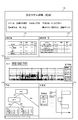
- FIG. 1 is a diagram for explaining an outline of the analysis system 2000 of the present embodiment. Note that FIG. 1 is an example for facilitating understanding of the analysis system 2000, and the functions of the analysis system 2000 are not limited to those shown in FIG.
- the analysis system 2000 analyzes the input data, generates a prediction model, and outputs information about the generated prediction model.
- the method of generating the prediction model and the mode in which the information is output about the generated prediction model are defined in advance as templates.
- the information representing this template is referred to as template information 10.
- the template information 10 includes item definition information 12, algorithm definition information 14, and view definition information 16.
- the item definition information 12 is information for specifying an item of each input data used for generating a prediction model. For example, suppose that information about a product or information about a store is used to generate a prediction model that predicts the sales of a product for each store. In this case, in the template information 10 for generating the prediction model, the item definition information 12 includes an item corresponding to "information about the product" (such as "product master") and an item corresponding to "information about the store” (information about the store). "Store master” etc.) are included.
- the algorithm definition information 14 specifies an algorithm for generating a prediction model. For example, suppose that multiple types of AI engines are prepared as program modules that embody algorithms for generating prediction models. In this case, the algorithm definition information 14 indicates information (AI engine identification information) that identifies one of the plurality of types of AI engines. However, the algorithm definition information 14 may include the AI engine itself instead of the identification information of the AI engine. Moreover, the one that embodies the algorithm used to generate the prediction model is not limited to the AI engine.
- the view definition information 16 specifies a display mode of information regarding the generated prediction model.
- the view definition information 16 includes a type and structure of a chart used to represent information about a prediction model, an arrangement of a plurality of charts, and the like.
- the analysis system 2000 accepts the designation of the template information 10 in order to realize the generation of the prediction model using the template information 10 described above.
- the analysis system 2000 acquires the designated template information 10, and acquires the input data corresponding to each item specified by the item definition information 12 included in the template information 10. Further, the analysis system 2000 processes the acquired input data based on the algorithm specified by the algorithm definition information 14 included in the template information 10 and generates a prediction model. Further, the analysis system 2000 uses the view definition information 16 included in the template information 10 to generate display information.
- the display information represents information about the prediction model in the display mode specified by the view definition information 16.
- Example of action effect It is not easy to apply the forecast by data analysis to the field of business. For example, it is difficult to properly select a prediction model generation algorithm. It is also difficult to understand what kind of data is needed to generate a prediction model. Furthermore, it is difficult to grasp the appropriate view of the prediction results.
- the item definition information 12 in which the items of the input data used for generating the prediction model are defined the algorithm definition information 14 in which the algorithm used for generating the prediction model is defined, and Template information 10 is provided as a set of view definition information 16 in which how to show the analysis result is defined, and the prediction model is generated and the analysis result is browsed by using the template information 10. Therefore, the user can easily perform data analysis related to his / her own business by designating the template information 10 corresponding to the business. Therefore, according to the present invention, prediction using data analysis can be easily performed.
- the selection of an algorithm suitable for business is performed by a data analysis professional called a data scientist.
- a data scientist since the number of data scientists is limited, if a data scientist is requested each time data is analyzed, there is a problem that the time required for data analysis becomes long and the cost becomes high.
- the present invention if used, for example, by creating template information 10 suitable for each business in advance, the data scientist's knowledge can be easily spread to people in the business field. become. Therefore, it is possible to reduce the time and cost required for data analysis. Further, since the knowledge of the data scientist can be summarized in the form of template information 10, it is not necessary for the data scientist to deal with similar work individually, and there is an advantage that the work of the data scientist can be made more efficient.
- FIG. 2 is a diagram illustrating the functional configuration of the analysis system 2000 of the first embodiment.
- the analysis system 2000 has an input reception unit 2020, a prediction model generation unit 2040, and a display information generation unit 2060.
- the input reception unit 2020 accepts the designation of the template information 10.
- the prediction model generation unit 2040 acquires the input data corresponding to each item specified in the item definition information 12 of the designated template information 10. Further, the prediction model generation unit 2040 generates a prediction model by processing the input data acquired based on the algorithm specified by the algorithm definition information 14 of the designated template information 10.
- the display information generation unit 2060 generates display information by using the view definition information 16.
- Each functional component of the analysis system 2000 may be realized by hardware (eg, a hard-wired electronic circuit) that realizes each functional component, or a combination of hardware and software (eg, electronic). It may be realized by a combination of a circuit and a program that controls it).
- hardware eg, a hard-wired electronic circuit
- software eg, electronic
- It may be realized by a combination of a circuit and a program that controls it).
- a case where each functional component of the analysis system 2000 is realized by a combination of hardware and software will be further described.
- FIG. 3 is a diagram illustrating a calculator 1000 for realizing the analysis system 2000.
- the computer 1000 is an arbitrary computer.
- the computer 1000 is a stationary computer such as a PC (Personal Computer) or a server machine.
- the computer 1000 is a portable computer such as a smartphone or a tablet terminal.
- the computer 1000 may be a dedicated computer designed to realize the analysis system 2000, or may be a general-purpose computer. In the latter case, for example, by installing a predetermined application on the computer 1000, the computer 1000 realizes at least a part of the functions of the analysis system 2000.
- the application is an application composed of a program for realizing any one or more of the functional components of the analysis system 2000.
- the analysis system 2000 may be composed of a back-end server 40 that generates a prediction model and a front-end server 30 that functions as an interface between the user terminal 20 and the back-end server 40 (see FIG. 5). ..
- the front-end server 30 and the back-end server 40 are realized by computers 1000 that are different from each other.
- the computer 1000 that realizes the front-end server 30 is installed with an application for realizing the function that the front-end server 30 has among the functions of the analysis system 2000.
- an application for realizing the function that the back-end server 40 has among the functions of the analysis system 2000 is installed.
- the computer 1000 has a bus 1020, a processor 1040, a memory 1060, a storage device 1080, an input / output interface 1100, and a network interface 1120.
- the bus 1020 is a data transmission line for the processor 1040, the memory 1060, the storage device 1080, the input / output interface 1100, and the network interface 1120 to transmit and receive data to and from each other.
- the method of connecting the processors 1040 and the like to each other is not limited to the bus connection.
- the processor 1040 is various processors such as a CPU (Central Processing Unit), a GPU (Graphics Processing Unit), and an FPGA (Field-Programmable Gate Array).
- the memory 1060 is a main storage device realized by using RAM (Random Access Memory) or the like.
- the storage device 1080 is an auxiliary storage device realized by using a hard disk, an SSD (Solid State Drive), a memory card, a ROM (Read Only Memory), or the like.
- the input / output interface 1100 is an interface for connecting the computer 1000 and the input / output device.
- an input device such as a keyboard and an output device such as a display device are connected to the input / output interface 1100.
- the network interface 1120 is an interface for connecting the computer 1000 to the communication network.
- This communication network is, for example, LAN (Local Area Network) or WAN (Wide Area Network).
- LAN Local Area Network
- WAN Wide Area Network
- the analyzer and the user terminal are communicably connected via the network interface 1120.
- the storage device 1080 stores a program module (a program module that realizes the above-mentioned application) that realizes each functional component of the analysis system 2000.
- the processor 1040 realizes the function corresponding to each program module by reading each of these program modules into the memory 1060 and executing the program module.
- FIG. 4 is a diagram illustrating an embodiment of the analysis system 2000.
- the analysis system 2000 is composed of a front-end server 30 and a back-end server 40.
- the front-end server 30 provides a user with a Web site for using the analysis system 2000.
- a user who wants to use the analysis system 2000 first accesses the front-end server 30 by using the user terminal 20.
- the front-end server 30 provides the user terminal 20 with a Web page for designating template information 10 and input data.
- the user specifies the template information 10 and the input data by using the provided Web page on the user terminal 20.
- the front-end server 30 causes the back-end server 40 to execute the analysis by using the designated template information 10 and the input data.
- the front-end server 30 causes the back-end server 40 to execute analysis by transmitting a predetermined command including information received from the user terminal 20 such as the identification information of the template information 10 to the back-end server 40.
- the back-end server 40 generates a prediction model by executing the analysis in response to this instruction.
- the back-end server 40 transmits information representing the analysis result (information about the prediction model) to the front-end server 30.
- the front-end server 30 generates display information by processing the information received from the back-end server 40 by using the view definition information 16 of the template information 10. Then, the front-end server 30 outputs display information to the user terminal.
- this display information is a Web page on which information about the prediction model can be browsed in the display mode defined in the view definition information 16 of the template information 10.
- the display information may be provided as a file such as a PDF file.
- the implementation form of the analysis system 2000 is not limited to the above-mentioned example.
- the front-end server 30 and the back-end server 40 may be realized by one computer.
- the user terminal 20 may have a function equivalent to that of the front-end server 30. That is, a function of accepting the designation of template information 10 and input data, a function of instructing the back-end server 40 to execute analysis, a function of receiving analysis results from the back-end server 40, and display information from the received analysis results.
- the user terminal 20 is provided with the function to be generated (that is, an application that realizes the function of interacting with the back-end server 40 is installed in the user terminal).
- the user terminal 20 may have both the functions of the front-end server 30 and the back-end server 40. That is, the analysis system 2000 is realized by a computer operated by the user (applications that realize all the functions of the analysis system 2000 are installed in the user terminal 20).
- FIG. 5 is a flowchart illustrating a flow of processing executed by the analysis system 2000 of the first embodiment.
- the input reception unit 2020 receives the designation of the template information 10 (S102).
- the prediction model generation unit 2040 acquires the designated template information 10 (S104).
- the prediction model generation unit 2040 acquires the input data corresponding to each item specified by the item definition information 12 included in the acquired template information 10 (S106).
- the prediction model generation unit 2040 generates a prediction model by analyzing the acquired input data based on the algorithm specified by the algorithm definition information 14 included in the acquired template information 10 (S108).
- the display information generation unit 2060 generates display information for the generated prediction model (S110).
- the display information generation unit 2060 outputs display information (S112).
- the input reception unit 2020 receives the designation of the template information 10 (S102). For example, the input reception unit 2020 provides the user with a list of available template information 10, and causes the user to specify (select) the template information 10.
- FIG. 6 is a diagram illustrating a search screen 50 that provides a list of template information 10.
- the search screen 50 is displayed on a display device that can be controlled from the user terminal 20.
- the search screen 50 is realized by the Web page provided by the front-end server 30 described above.
- the search screen 50 includes an identification information designation area 52, a name designation area 54, a search button 56, and a search result display area 58.
- the search button 56 When the search button 56 is pressed while nothing is entered in the identification information designation area 52 or the name designation area 54, the search result display area 58 contains all the template information 10 stored in the template storage device 60. Information is displayed.
- the identification information includes information about only the template information 10 including the character string input in the identification information designation area 52. , Is displayed in the search result display area 58.
- the search result is information about only the template information 10 in which the character string input in the name designation area 54 is included in the name. It is displayed in the display area 58.
- the search for template information 10 is not limited to those using identification information and names.
- the template information 10 includes information indicating an industry in which the template can be used, a solution provided by using the template, and the like.
- Industries include, for example, retail, manufacturing, logistics, insurance, or finance.
- Solutions include, for example, demand forecasting and anomaly detection.
- an input area for designating an industry or a solution is provided on the search screen 50.
- the input reception unit 2020 searches for the template information 10 in the designated industry or solution, and displays the information about the corresponding template information 10 in the search result display area 58. This makes it possible to easily select the template information 10 according to the industry and the solution.
- the input reception unit 2020 may provide a function of searching the template information 10 that the same user has used in the past. By doing so, the user can easily use the template information 10 used in the past again easily.
- the prediction model generation unit 2040 acquires the designated template information 10 (S104).
- an existing technique can be used as a specific technique for acquiring the designated template information 10.
- the prediction model generation unit 2040 acquires the designated template information 10 by reading it from the template storage device 60.
- the prediction model generation unit 2040 acquires the input data corresponding to the item specified in the item definition information 12 (S106).
- the item definition information 12 includes information representing an item of input data used for generating a prediction model.
- Input data items can also be referred to as input data types. For example, various items such as a calendar, a product master, a store master, weather data, sales data, and customer number data can be adopted as items.
- the prediction model generation unit 2040 acquires specific data representing the customer master (a file in which information about the customer is recorded, a table on a database, etc.).
- the acquisition of input data is realized by accepting from the user the designation of the input data corresponding to the item specified by the item definition information 12.
- the user provides the prediction model generation unit 2040 with an input file in which input data for the item is stored for each item specified in the item definition information 12.
- the provision of the input file is realized, for example, by transmitting the input file from the user terminal 20 to the front-end server 30.
- an input file is stored in advance in a storage device accessible from the front-end server 30, and identification information (path, etc.) of the input file is specified from the user terminal 20 to the front-end server 30. You may.
- the method of providing input data is not limited to the method of using files.
- the data stored in the database is used as the input data.
- the user may specify the data (for example, a table) in the database in which the data for the item is stored for each item specified by the item definition information 12.
- the prediction model generation unit 2040 acquires input data from the database according to the designation by the user.
- the data corresponding to one item may be divided into more detailed items.
- the data of the item called the product master may include a plurality of types of data such as a product code and a product name for each product.
- the former item is referred to as a large item and the latter item is referred to as a minor item.
- minor item is associated with the major item in this way, the association between the major item and the minor item is further defined in the item definition information 12.
- the prediction model generation unit 2040 When a plurality of small items are associated with a large item, in order for the prediction model generation unit 2040 to correctly interpret the input data obtained in association with the large item, the prediction model generation unit 2040 reduces the input data. It must be possible to interpret each item separately. Therefore, for example, the input data is configured in a format that can be distinguished for each sub-item defined in the item definition information 12. As a data format in which the input data can be distinguished for each sub-item, for example, the csv format can be handled. In general, a csv file can contain a definition of a column name for each column and one or more records with data for each column.
- the input data can be interpreted separately for each sub-item.
- the format of the input file does not necessarily have to be the csv format.
- the input data corresponding to one large item may be treated as a table on the database, and each column of the table may be treated as a small item.
- the prediction model generation unit 2040 needs to be able to specify the correspondence between the sub-items in the item definition information 12 and the sub-items in the input data. Therefore, for example, the name of each sub-item in the input data is matched in advance with the name of each sub-item in the item definition information 12. By doing so, the prediction model generation unit 2040 can interpret the input data corresponding to the major item for each minor item corresponding to the major item.
- the input receiving unit 2020 accepts an input that specifies the correspondence between the sub-items in the input data and the sub-items in the item definition information 12.
- the prediction model generation unit 2040 interprets the input data using the designated correspondence.
- FIG. 7 is a diagram illustrating a screen 70 for designating the correspondence between the sub-items in the input data and the sub-items in the item definition information 12.
- the table on the left side shows a list of small items associated with a large item called a product master in the item definition information 12.
- the table on the right shows a list of minor items in the file goods_master.csv given as input data corresponding to the major item called product master. If a database table is specified instead of a file here, the column name of each column of the specified table is displayed in the table on the right.
- the user can drag and drop each sub-item shown in the table on the right to a cell in the column called mapping on the left.
- mapping on the left the association of small items is realized.
- the user drags and drops the sub-item "group_code” in the table on the right to the cell next to the sub-item "classification code” in the table on the left.
- the sub-item "classification code” in the item definition information 12 and the sub-item "group_code” in the input file are associated with each other.
- the user can specify the correspondence between the sub-item in the item definition information 12 and the sub-item in the input data. It is not limited to the method of accepting the designation by. For example, this correspondence may be specified by the order of the sub-items. For example, a rule that "the order of the sub-items in the item definition information 12 and the order of the sub-items in the input data match" is defined in advance. By using this rule, the prediction model generation unit 2040 can grasp the correspondence between the sub-items in the item definition information 12 and the sub-items in the input data.
- the prediction model generation unit 2040 generates a prediction model by processing the input data based on the algorithm specified in the algorithm definition information 14.
- various machine learning algorithms such as heterogeneous mixture learning (Patent Document 3), RAPID time series analysis (Non-Patent Document 1), neural network, or SVM (Support Vector Machine) are handled. be able to.
- the prediction model generation unit 2040 is provided with an AI engine, which is a program module that realizes each of various machine learning algorithms.
- the algorithm definition information 14 includes identification information that identifies one of the plurality of AI engines.
- the prediction model generation unit 2040 generates a prediction model by using the AI engine specified by the identification information included in the algorithm definition information 14.
- the same AI engine may be used for multiple analysis types (regression, discrimination, etc.).
- the algorithm definition information 14 further includes information indicating the type of analysis to be performed (the type of prediction model to be generated).
- the type of prediction model to be generated For example, in the template information 10 for generating a prediction model for predicting the sales of a product by heterogeneous mixture learning, it is "AI engine: heterogeneous mixture learning, analysis type: regression".
- AI engine heterogeneous mixture learning, analysis type: discrimination.
- the algorithm definition information 14 also includes information indicating the correspondence between the objective variable and the explanatory variable of the AI engine and the input data.
- the objective variable and the explanatory variable need only have some relation with one or more sub-items specified in the item definition information 12, and do not have to completely match the sub-items.
- the objective variable is "sales". It can be the difference from the moving average of the numbers.
- algorithm definition information 14 may further define hyperparameters to be set in the AI engine.
- Hyperparameters include the depth of trees in heterogeneous learning and the depth of layers in neural networks.
- the prediction model generation unit 2040 may be provided with information for specifying the preprocessing to be performed on the input data before inputting to the AI engine.
- the learning accuracy can be improved by performing scale conversion, etc., instead of using the input data as it is. Therefore, in the item definition information 12, such preprocessing to be added to the input data is defined.
- a process of extracting only a part of input data as a processing target is defined as a preprocessing.
- a process of converting the input data format into a predetermined format (a format that can be interpreted by the AI engine) defined for each AI engine is also defined as a preprocessing.
- the algorithm definition information 14 may include a program module itself that realizes preprocessing, and identification information (function name, etc.) and setting information (arguments, etc.) for calling a program that realizes preprocessing. May be included. In the latter case, various preprocessings are provided in advance in the prediction model generation unit 2040. Then, in the algorithm definition information 14, the identification information of the preprocessing to be used and the setting information of the preprocessing are defined so that the prediction model generation unit 2040 executes the desired preprocessing.
- the prediction model (prediction target) generated by the analysis using one template information 10 is not limited to one.
- template information 10 for predicting the number of sales is prepared for each store and each product.
- the target of the forecast is the number of sales for each combination of "stores and products". Therefore, when this template information 10 is used, a prediction model for each store and each product is generated.
- What kind of prediction model is created by the analysis using one template information 10 is defined in advance by the algorithm definition information 14. That is, in the template information 10 for generating a prediction model for predicting the number of sales for each store and each product, the objective variable is defined in advance in the form of "sales for each store and each product". Therefore, the prediction model generation unit 2040 generates a prediction model for each store and each product.
- the prediction model generation unit 2040 not only generates the prediction model but also evaluates (verifies) its accuracy.
- the prediction model generation unit 2040 divides the input data into training data and verification data. Then, the prediction model generation unit 2040 generates a prediction model (learning of the model) using the training data, and verifies the prediction model using the verification data.
- the prediction model generation unit 2040 may perform so-called cross validation. As a specific method for dividing the input data to generate and evaluate the model in this way, existing technology can be used.
- the prediction model generation unit 2040 may execute the prediction using the prediction model in addition to the generation and verification of the prediction model.
- the prediction model generation unit 2040 divides the input data into test data used for prediction and other data (data used for learning and verification). Then, the prediction model generation unit 2040 generates and verifies the prediction model in the latter, and then executes the prediction using the test data.
- existing technology can be used for a specific method of dividing the input data in this way to generate and verify a prediction model, and to make a prediction.
- the analysis system 2000 does not necessarily have to generate a prediction model and execute the prediction immediately.
- the user first uses the analysis system 2000 to generate and verify a prediction model.
- the generated prediction model is stored in a storage device accessible from the analysis system 2000. After that, when it becomes necessary for the user to make a prediction, the user makes a prediction using a prediction model generated in advance.
- the method of dividing the input data may be fixedly defined regardless of the template information 10, may be defined by the template information 10, or may be specified by the user. For example, when the input data is divided by the period, the user specifies the period of the input data to be used for each of the learning data, the verification data, and the test data.
- the execution of the prediction using the prediction model does not necessarily have to be executed by the analysis system 2000.
- the analysis system 2000 is configured by the front-end server 30 and the back-end server 40 as described above, the prediction using the prediction model may be executed by the user terminal 20.
- the prediction model generated by the analysis system 2000 is stored in a storage device accessible from the user terminal 20.
- the display information generation unit 2060 generates display information about the prediction model generated by the prediction model generation unit 2040 in the display mode defined by the view definition information 16 of the designated template information 10 (S110). For example, information about a predictive model is displayed using a visually easy-to-understand diagram. Therefore, the view definition information 16 includes definitions such as a type and a structure for each of one or more figures included in the display information. Any type of diagram such as a table, a scatter plot, a line graph, and a bar graph can be adopted. The structure of the table contains, for example, the definition of each column. The structure of the graph includes, for example, a definition of each axis. Further, the view definition information 16 further includes information that determines the overall arrangement of the plurality of figures and other information.
- the view definition information 16 corresponding to such a screen will be described while exemplifying a screen that can be generated as display information by the display information generation unit 2060.
- the display information is composed of a scatter plot screen for displaying a scatter plot, a list screen for displaying a list, and a detail screen for displaying detailed information. These screens are configured so that they can move back and forth between them.
- a prediction model regression model
- Cross-validation is used to generate the prediction model. Therefore, a plurality of prediction models are generated for each prediction target. For example, suppose that among the input data, the input data used for learning and verification is divided into five periods. In this case, five prediction models are generated for each prediction target.
- FIG. 8 is a diagram illustrating a scatter plot screen 80.
- the horizontal axis of the scatter plot is the number of sales indicated by the input data for verification.
- the vertical axis of the scatter plot is the verification error rate (error rate in the verification of the prediction model).
- the error rate referred to here is a value representing the degree of deviation between the predicted value output by the prediction model and the actual value shown in the input data. Specifically, it is a value obtained by dividing the average of the absolute values of the differences between the actual values and the predicted values by the average of the absolute values of the actual values.
- the representative prediction model is the best prediction model selected by the display information generation unit 2060 based on a predetermined criterion.
- a standard regarding the magnitude of the error, a criterion regarding the magnitude of the influence of the explanatory variable on the objective variable, and the like can be adopted.
- the criteria for selecting the best prediction model are defined in, for example, view definition information 16. However, the criteria for selecting the best prediction model may be specified by user operation. Further, the representative prediction model itself may be specified by user operation.
- the details of the prediction model corresponding to the data point are displayed (pop-up window 82). Specifically, the identification information of the prediction target, the identification information of the best prediction model, the selection criteria of the best prediction model, the evaluation index (error rate, etc.) of each section (learning interval, verification interval, and prediction interval), etc. Information is displayed.
- FIG. 9 is a diagram illustrating a list screen.
- the user can transition the screen to the list screen 90 by pressing the list button on the scatter plot screen 80 or the detail screen 130 described later.
- the list included in the list screen 90 shows information about a representative prediction model for each prediction target.
- FIG. 10 is a diagram illustrating a scatter plot screen 110 for one prediction target.
- data points are plotted for each of a plurality of prediction models generated for one prediction target, "store S1, product classification G1".
- the horizontal axis is the learning error rate (error rate at the end of learning), and the vertical axis is the verification error rate.
- the details of the prediction model corresponding to the data point are displayed.
- the best prediction model automatically selected based on a predetermined criterion and the data points of the prediction model specified by the user can be distinguished from other prediction models. It is highlighted (filled).
- FIG. 11 is a diagram illustrating a list screen 120 for one prediction target.
- information on a plurality of prediction models generated for one prediction target is displayed in a list.
- screens showing information about each of the plurality of models are generated only when there are a plurality of prediction models. Therefore, in this case, a screen focusing on one prediction model is displayed as an initial screen, such as the screens illustrated in FIGS. 10 and 11.
- the display information may include a detailed screen.
- the detail screen is a screen showing detailed information about one selected prediction target.
- the transition to the detail screen can be realized, for example, by pressing the detail button with one prediction target selected on the scatter plot screen 80 or the list screen 90 in which information about all prediction targets is displayed. ..
- the transition to the detail screen can be realized by pressing the detail button on the scatter plot screen 110 or the list screen 120 in which the information about the selected prediction target is displayed.
- the detail screen may include various information such as information on evaluation indexes, information on explanatory variables, graphs on errors, information on the configuration of prediction models, and information on hyperparameters.
- the configuration included in the detail screen may differ depending on the type of AI engine used to generate the prediction model.
- FIG. 12 is a diagram illustrating a detailed screen. This example is a case where heterogeneous learning is used as an AI engine.
- the detailed screen 130 of FIG. 12 includes an evaluation index area 131, an explanatory variable list area 132, a graph area 134, a gate tree area 135, and a prediction formula area 136.
- evaluation index area 131 information on the evaluation index is displayed in a list. Specifically, for each evaluation index, the values of the evaluation indexes calculated at the time of learning (at the time of model generation), at the time of verification, and at the time of prediction execution are shown.
- various ones such as an error rate, a mean square error (RMSE: Root Mean Square Error), and a mean square error (MSE: Mean Square Error) can be used.
- RMSE Root Mean Square Error
- MSE Mean Square Error
- the explanatory variable list area 132 information on each explanatory variable is displayed in a list.
- NULL indicates how many of the input records containing the data corresponding to the explanatory variable were missing the data.
- NULL is 3/358 because the data of the latest past holiday elapsed days was missing in 3 of the 358 records. Shown.
- the minimum and maximum indicate the minimum and maximum values in the input data for the explanatory variable, respectively.
- explanatory variables indicate category values such as the day of the week and the weather.
- the category values contained in at least one record are listed.
- the explanatory variable that indicates the day of the week as the value five types of values "Monday, Tuesday, Thursday, Saturday, Sunday" are shown in the entered 100 records, and for "Wednesday, Friday". Was not shown in any of the records.
- the explanatory variable list area 132 five category values of "Monday, Tuesday, Thursday, Saturday, and Sunday" are shown for this explanatory variable instead of the minimum and maximum.
- the graph area 134 a graph showing information about the prediction model is displayed.
- the horizontal axis represents time.
- the time change of the predicted value (output of the prediction model) at the time of learning, the time change of the actual value (value of the input data), and the time change of the error are shown.
- the time change of the formula number used for the prediction is also shown.
- the Kadoki area 135 shows the overall structure of the prediction model generated by heterogeneous learning.
- the prediction model generated by heterogeneous mixture learning has a tree structure (gate tree) representing conditional branching, and also has a prediction formula in each leaf. Therefore, in the gate tree area 135, the gate tree and the number of samples (the number of records included in the input data) for the prediction formula in each leaf are shown.
- the condition shown in the node of the gate tree is described as "condition 1" or the like, but in reality, a specific conditional expression is described in the node. ..
- Prediction formula area 136 shows the coefficients of each explanatory variable for the selected prediction formula. When "Stack" is selected, the sum of the coefficients of each explanatory variable for all prediction formulas is displayed.
- the detailed screen 130 of FIG. 12 is a screen suitable when heterogeneous mixture learning is used as the AI engine.
- the AI engine When using other AI engines, at least some areas will be different.
- a regression model was generated as a prediction model.
- the information to be provided for the discriminant model may differ from the information to be provided for the regression model.
- the evaluation index of the discrimination model is different from the evaluation index of the regression model. Therefore, when the discrimination model is generated, the evaluation index of the discrimination model is displayed on each of the screens described above.
- the evaluation index of the discrimination model includes the precision rate (true positive / ⁇ true positive + false positive ⁇ ), recall rate (true positive / ⁇ true positive + false negative ⁇ ), and F value (harmonic mean of precision rate and recall rate). ) Etc. can be adopted.
- each of the above-mentioned screens contains a lot of information on the accuracy of the prediction model, and is particularly suitable for confirming the accuracy of the prediction model.
- the analysis results (ie, display information) provided by the analysis system 2000 are not limited to those particularly suitable for confirming the accuracy of the prediction model, and may be particularly suitable for other purposes.
- information particularly suitable for confirming the relationship between the prediction target and each explanatory variable may be provided. For example, suppose that you analyze for each product which advertising medium is effective in increasing sales of that product. In this case, in the prediction model for predicting the sales of the product, the amount of advertisement for each advertising medium can be used as an explanatory variable. Then, by generating a prediction model using a machine learning algorithm (for example, heterogeneous mixture learning) that can quantify the degree to which each explanatory variable contributes to prediction, the degree to which each advertising medium contributes to product sales is calculated. can do. Therefore, for example, the analysis system 2000 can easily confirm the relationship between the sales of the product to be predicted and the advertising medium which is an explanatory variable (the degree to which each advertising medium contributes to sales, etc.) as display information. Provide screen etc.
- a machine learning algorithm for example, heterogeneous mixture learning
- Timing to generate display information When handling a plurality of types of screens as display information, a plurality of information having different timings to be displayed may be handled as display information. In such a case, the plurality of pieces of information may be generated at once and collectively provided to the user, or may be generated at different timings and individually provided to the user. In the latter case, for example, the display information generation unit 2060 generates each information at a timing when the information should be displayed (that is, a timing required by the user).
- the front-end server 30 first generates a Web page representing a screen (initial screen of the analysis result) to be displayed on the display device of the user terminal 20 as an analysis result, and transmits the analysis result to the user terminal 20.
- a request based on the operation (such as a request indicating the identification information of the pressed button) is transmitted from the user terminal 20 to the front-end server 30.
- the front-end server 30 generates a Web page representing a new screen (that is, a transition destination screen) to be provided to the user terminal 20 based on the received request, and transmits the generated Web page to the user terminal 20. ..
- the screen output as display information may differ depending on the type of algorithm used to generate the prediction model. Therefore, for example, as the view definition information 16, information indicating the type of the prediction model generation algorithm can be used.
- view definition information 16 indicates the identification information of the AI engine used to generate the prediction model (heterogeneous mixture learning, RAPID time series analysis, SVM, etc.) and the analysis type (regression analysis or discriminant analysis).
- the information necessary for generating the display information hereinafter, the display template
- the display template the display template in the case where the pair is shown in the view definition information 16 is stored in the storage device. I will do it.
- the display template indicates the type and structure of the figures to be included in the screen, the arrangement of each figure, and the like.
- the display information generation unit 2060 reads the display template stored in association with the identification information of the AI engine and the analysis type indicated by the view definition information 16 from the storage device, and generates display information using the read display template. ..
- the identification information and analysis type of the AI engine can also be used as the algorithm definition information 14.
- the common information is used in the algorithm definition information 14 and the view definition information 16 in this way, it is not necessary to duplicate these common information in the template information 10, and these common information is referred to as the algorithm definition information 14. It is preferable to treat it as both of the view definition information 16.
- the display information is particularly suitable for confirming the accuracy of the prediction model (hereinafter, accuracy confirmation type) and for confirming the relationship between the prediction target and each explanatory variable. It can be classified into various types (hereinafter, relationship confirmation type). Therefore, the view definition information 16 may further indicate such a type of purpose of use.
- a display template is prepared corresponding to each combination of the type of purpose of use, the identification information of the AI engine, and the analysis type, and stored in the storage device.
- the display information generation unit 2060 reads a display template corresponding to the combination of the type of purpose of use, the identification information of the AI engine, and the analysis type indicated by the view definition information 16 from the storage device, and uses the read display template to display the display information. Generate.
- the view definition information 16 may further include a parameter that specifies information to be included in the display information. For example, as described above, various evaluation indexes such as an error rate, a mean square error, or a mean square error can be adopted as the evaluation index of the prediction model. Therefore, in the view definition information 16, which of these various evaluation indexes is to be included in the display information is specified. In this case, the display information generation unit 2060 generates display information so that the evaluation index shown in the view definition information 16 is included.
- a parameter that specifies information to be included in the display information For example, as described above, various evaluation indexes such as an error rate, a mean square error, or a mean square error can be adopted as the evaluation index of the prediction model. Therefore, in the view definition information 16, which of these various evaluation indexes is to be included in the display information is specified. In this case, the display information generation unit 2060 generates display information so that the evaluation index shown in the view definition information 16 is included.
- An example of other parameters is the name of the evaluation index in the displayed information.
- an evaluation index called an error rate is used as an index showing the low creditworthiness of a model.
- the error rate can be specified as the evaluation index to be included in the display information, and "low credit rating of the model" can be specified as the name of the error rate.
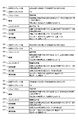
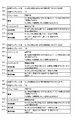
- the template information 10 has the attributes of analysis template name 302, analysis template ID 304, solution 306, outline 308, engine type 310, objective variable 312, output value 314, and item definition 316.
- the view definition information 16 is omitted. A specific example of the view definition information 16 will be described later.
- the analysis template name 302 indicates the name of the template information 10. Further, the analysis template ID 304 indicates the identification information of the template information 10. These pieces of information are displayed, for example, on the search screen 50 that allows the user to select the template information 10 (see FIG. 6).
- Solution 306 indicates the type of solution provided by the analysis performed by template information 10. For example, as described above, the type of solution can be used to search the template information 10.
- Outline 308 is information indicating an outline of the analysis performed by the template information 10. For example, by displaying this information on the search screen 50 or the like described above, the user can refer to it when selecting the template information 10.
- the engine type 310, the objective variable 312, and the output value 314 are information constituting the algorithm definition information 14.
- the engine type 310 indicates the identification information of the AI engine used to generate the prediction model. In FIG. 13 and the like, the name of the AI engine is shown in the engine type 310 for the sake of clarity. However, the engine type 310 can be arbitrary information (identification number, etc.) that can identify the AI engine.
- the objective variable 312 represents the objective variable of the prediction model to be generated.
- the objective variable 312 is a variable that is a target for minimizing an error when a prediction model is generated by learning using input data.
- the output value 314 indicates a value output from the prediction model (prediction result of the prediction model) when the prediction model is used.
- the objective variable is "the ratio of the number of daily sales to the moving average of the number of sales for each store and each product classification"
- the output value is "1 for each store and each product classification”. The number of sales in the future ".
- the "ratio of the number of daily sales to the moving average of the number of sales" is calculated for each store and each product classification so that the error is minimized. Learning is done in.
- the prediction result output from the prediction model the number of sales one day ahead is output by using the moving average and the ratio to it.
- Item definition 316 is information corresponding to item definition information 12. That is, the item definition 316 represents an item of data used in the prediction model. Here, in FIG. 13 and the like, the major items are shown in the item definition 316, and the minor items are omitted.
- a common large item can be used in a plurality of template information 10, it is preferable to prepare a correspondence between the large item and the small item separately from the template information 10. By doing so, the correspondence between the large item and the small item can be managed separately from the template information 10, and the time and effort for the management can be reduced.
- FIGS. 13 to 19 are templates for the following predictions, respectively.
- ⁇ Fig. 13 Forecast of the number of sales
- Fig. 14 Forecast of the number of customers
- Fig. 15 Forecast of the number of shipments
- Fig. 16 Forecast of the quantity of ordered products
- Fig. 17 Forecast of the number of maintenance parts delivered
- Fig. 18 Forecast of failure Prediction / Fig. 19: Determining whether or not there is a failure
- FIG. 13 is a diagram illustrating template information 10 used for forecasting the number of sales.
- the objective variables 312 of the template information T01, T02, and T03 are different from each other.
- the template information T01 to T03 are "the ratio of the number of sales one day ahead to the moving average of the number of sales for each store and each product category” and “the number of sales for each store and each product category”.
- the objective variables are "the difference in the number of sales one day ahead with respect to the moving average” and "the ratio of the number of sales one day ahead to the moving average of the number of sales for each store and each product".
- the output value 314 is common to the template information T01 and T02, while the template information T03 is different from the other two. Specifically, the output value 314 in the template information T01 and T02 is "the number of sales in one day for each store and each product category", whereas the output value 314 in the template information T03 is "for each store and a single product”. The number of sales per day ahead. "
- the solution 306 is "demand forecast”
- the engine type 310 is “heterogeneous mixture learning”
- the item definition 316 is "calendar, product master, store master, weather data, sales data, and customer number data”. Is common to all template information 10.
- FIG. 14 is a diagram illustrating template information 10 used for predicting the number of customers.
- the objective variables 312 of the template information T11, T12, and T13 are different from each other.
- the template information T11 to T13 are "the ratio of the number of customers one day ahead to the moving average of the number of customers for each store” and “the difference in the number of customers one day ahead to the moving average of the number of customers for each store", respectively.
- the number of customers one day ahead for each store is used as the objective variable.
- the output value 314 is "the number of customers one day ahead”
- the solution 306 is “demand forecast”
- the engine type 310 is “heterogeneous mixture learning”
- the item definition 316 is "calendar, store master, weather”. The point that it is "data and customer number data” is common to all template information 10.
- FIG. 15 is a diagram illustrating template information 10 used for predicting the number of shipments.
- the objective variables 312 of the template information T21, T22, and T23 are different from each other.
- the template information T21 to T23 are "ratio of the number of shipments one day ahead to the moving average of the number of shipments by shipping center and by product classification” and “shipment by shipping center and by product classification, respectively”.
- the objective variables are "the difference in the number of shipments one day ahead to the moving average of the number” and "the ratio of the number of shipments one day ahead to the moving average of the number of shipments for each shipping center and each individual product".
- the template information T21 and T22 are common, while the template information T23 is different from the other two.
- the output value 314 in the template information T21 and T22 is "the number of shipments in one day ahead for each shipping center and each product classification”
- the output value 314 in the template information T23 is "for each shipping center and for each product classification”. The number of shipments of each product one day ahead.
- the solution 306 is "demand forecast”
- the engine type 310 is “heterogeneous mixture learning”
- the item definition 316 is "calendar, product master, meteorological data, base master, and shipping data”. It is common to the template information 10 of.
- FIG. 16 is a diagram illustrating template information 10 used for forecasting the order quantity of products.
- the objective variable 312 and the output value 314 are both "order quantity in 3 months ahead for each product”.
- the objective variable 312 and the output value 314 are both "order quantity 6 months ahead for each product”.
- the input data is divided into learning and evaluation for each product, and a prediction model is generated and evaluated.
- the input data is randomly divided into the learning and the evaluation, and the prediction model is generated and evaluated.
- the reference for such data division is included in the algorithm definition information 14 as a hyperparameter given to the AI engine, for example.
- solution 306 is “demand forecast”
- engine type 310 is “heterogeneous mixture learning”
- item definition 316 is "order record, large project order record, product master, empire DI (Diffusion Index), BOJ Tankan”.
- Monthly exchange, estimate data, calendar, additional calendar ” is common to all template information 10.
- FIG. 17 is a diagram illustrating template information 10 used for predicting the number of maintenance parts to be delivered.
- the objective variables 312 of the template information T41 to T43 are different from each other. Specifically, the template information T41 to T43 have "the number of shipments one month ahead by parts", “the number of shipments two months ahead by parts”, and “the number of shipments three months ahead by parts”, respectively. It is used as the objective variable. The same applies to the output value 314.
- FIG. 18 is a diagram illustrating template information 10 used for predicting a failure of a device.
- the objective variable 312 and the output value 314 are both "whether or not the device fails 7 days in advance for each device".
- the prediction models generated by the template information 10 illustrated in FIGS. 13 to 17 are all regression models, while the prediction models generated by the template information 10 illustrated in FIGS. 18 and 19 described later are discrimination models. It becomes.
- the template information T51 to T53 differ in the learning algorithm of the prediction model.
- the engine type 310 is heterogeneous learning
- the engine type 310 is RAPID time series analysis.
- preprocessing for processing and totaling the failure record of the device and the data of the sensor group mounted on the device is performed on an hourly basis.
- preprocessing is performed for processing and tabulating the device failure record, the data of the sensor group mounted on the device, and the data of the sensor group around the device on an hourly basis.
- template information T53 such preprocessing for processing and totaling in hourly units is not performed. The definition of such preprocessing is included in the algorithm definition information 14.
- FIG. 19 is a diagram illustrating template information 10 used for determining whether or not it is in a failure state.
- the objective variable 312 and the output value 314 are both "whether or not the device is in a failure state for each device".
- Template information T61 and T62 have different preprocessing for input data.
- preprocessing for processing and totaling the failure record of the device and the data of the sensor group mounted on the device is performed on an hourly basis.
- preprocessing is performed for processing and tabulating the device failure record, the data of the sensor group mounted on the device, and the data of the sensor group around the device on an hourly basis.
- the engine type 310 is "heterogeneous mixture learning”
- the solution 306 is "abnormality detection”
- the item definition 316 is "equipment sensor data, peripheral device sensor data, failure record data”. It is common to the template information 10.
- the template information 10 can include information such as "analysis type”, "purpose of use type”, “presence or absence of evaluation index”, and "name of evaluation index” as the view definition information 16.
- the engine type 310 can also be used as the view definition information 16.
- a display template is prepared in association with the set of analysis type, engine type, and purpose of use type.
- Presence or absence of use of evaluation index: use all evaluation indexes means to include all evaluation indexes prepared corresponding to the analysis type in the display information. For example, in this case, since the analysis type is regression analysis, all the evaluation indexes (applicability rate, recall rate, F value, etc.) prepared as evaluation indexes for regression analysis are included in the display information. .. Further, "name of evaluation index: no change” means that the name of the evaluation index is used as it is as the name of the evaluation index (for example, the error rate is displayed as it is as "error rate").
- a part of the contents of the template information 10 may be customized by the user. That is, the user can select a favorite template information 10 from the pre-registered template information 10 and use it as it is, or can customize and use a part of the selected template information 10.
- Customization of the template information 10 may be performed when executing the analysis, or may be performed in advance prior to the analysis. In the latter case, it is preferable that the analysis system 2000 registers the customized template information 10 as new template information 10 (stores it in the template storage device 60). In this case, when the user specifies the template information 10 (S102), the template information 10 customized by the user can be selected in the same manner as the existing template information 10. Therefore, the user can execute the analysis using the template information 10 by designating the template information 10 customized and registered in advance at the time of analysis.
- the customized template information 10 can be registered in the analysis system 2000. By doing so, the customized template information 10 can be used for the next and subsequent analysis.
- the template information includes item definition information that specifies an item of each input data used for generating a prediction model, algorithm definition information that specifies an algorithm for generating a prediction model, and a view definition that specifies a display mode of information about the prediction model. Including information For each item specified in the item definition information of the specified template information, input data corresponding to the item is acquired, and the said is based on the algorithm specified in the algorithm definition information of the specified template information.
- a predictive model generator that generates a predictive model by processing the acquired input data
- An analysis system including a display information generation unit that generates display information representing information related to the generated prediction model in a display mode specified by the view definition information of the specified template information. 2.
- the input receiving unit outputs a display representing each item specified by the item definition information, and accepts the designation of the input data corresponding to the item for each item.
- the item definition information indicates one or more major items. A plurality of small items are associated with the large items.
- the input reception unit 2. Accepts the designation of input data corresponding to the major item, and further accepts the input for specifying the correspondence relationship between the plurality of minor items corresponding to the major item and the plurality of minor items included in the input data.
- the algorithm definition information includes a machine learning program used to generate the prediction model, or includes identification information of the machine learning program.
- the analysis system described in any one. The algorithm definition information includes preprocessing for converting the value contained in the input data into the format required by the machine learning program.
- the analysis system described in. 6 The algorithm definition information includes preprocessing for converting the value included in the input data into a value that improves the accuracy of the prediction model generated by the machine learning program.
- a display template showing information necessary for generating the display information is defined in association with the combination of the identification information of the algorithm used for generating the prediction model and the type of analysis using the prediction model.
- the view definition information indicates the identification information of the algorithm and the type of analysis.
- the display information generation unit acquires the display template corresponding to the combination of the identification information of the algorithm indicated by the view definition information of the specified template information and the analysis type, and uses the display template. 1. Generate the display information.
- the analysis system according to any one of 6 to 6.
- the display template is defined in association with a combination of algorithm identification information, type of analysis, and type of purpose for which the display information is used.
- the view definition information further indicates the purpose of use of the display information.
- the display information generation unit acquires the display template corresponding to the combination of the identification information of the algorithm indicated by the view definition information of the specified template information, the type of analysis, and the purpose of use of the display information.
- the analysis system described in. 9. It has an input reception unit that accepts input that specifies one of a plurality of template information.
- the template information includes item definition information that specifies an item of each input data used for generating a prediction model, algorithm definition information that specifies an algorithm for generating a prediction model, and a view definition that specifies a display mode of information about the prediction model.
- the input receiving unit further accepts the designation of the input data corresponding to the item for each item specified by the item definition information of the specified template information. It has a display information generation unit that generates display information representing information about the prediction model in the display mode specified by the view definition information of the specified template information.
- the prediction model is an apparatus generated by processing the specified input data based on the algorithm specified by the algorithm definition information of the specified template information. 10.
- the input receiving unit outputs a display representing each item specified by the item definition information, and accepts the designation of the input data corresponding to the item for each item.
- the item definition information indicates one or more major items. A plurality of small items are associated with the large items.
- the input reception unit 2. Accepts the designation of input data corresponding to the major item, and further accepts the input for designating the correspondence between the plurality of minor items corresponding to the major item and the plurality of minor items included in the input data.
- the algorithm definition information includes a machine learning program used to generate the prediction model, or includes identification information of the machine learning program. To 11. The device according to any one. 13.
- the algorithm definition information includes preprocessing for converting the value contained in the input data into the format required by the machine learning program.
- the algorithm definition information includes a preprocessing that converts a value contained in the input data into a value that improves the accuracy of the prediction model generated by the machine learning program.
- the device described in. 15. A display template showing information necessary for generating the display information is defined in association with the combination of the identification information of the algorithm used for generating the prediction model and the type of analysis using the prediction model.
- the view definition information indicates the identification information of the algorithm and the type of analysis.
- the display information generation unit acquires the display template corresponding to the combination of the identification information of the algorithm indicated by the view definition information of the specified template information and the analysis type, and uses the display template.
- the display template is defined in association with a combination of algorithm identification information, type of analysis, and type of purpose for which the display information is used.
- the view definition information further indicates the purpose of use of the display information.
- the display information generation unit acquires the display template corresponding to the combination of the identification information of the algorithm indicated by the view definition information of the specified template information, the type of analysis, and the purpose of use of the display information. , 15.
- the device described in. 17. A control method performed by a computer It has an input reception step that accepts an input that specifies one of a plurality of template information.
- the template information includes item definition information that specifies an item of each input data used for generating a prediction model, algorithm definition information that specifies an algorithm for generating a prediction model, and a view definition that specifies a display mode of information about the prediction model.
- item definition information that specifies an item of each input data used for generating a prediction model
- algorithm definition information that specifies an algorithm for generating a prediction model
- view definition that specifies a display mode of information about the prediction model.
- a predictive model generation step that generates a predictive model by processing the acquired input data,
- a control method comprising a display information generation step of generating display information representing information regarding the generated prediction model in a display mode specified by the view definition information of the specified template information. 18.
- a display representing each item specified by the item definition information is output, and for each of the items, the designation of input data corresponding to the item is accepted.
- the item definition information indicates one or more major items. A plurality of small items are associated with the large items.
- Accepts the designation of input data corresponding to the major item and further accepts the input for designating the correspondence between the plurality of minor items corresponding to the major item and the plurality of minor items included in the input data.
- the algorithm definition information includes a machine learning program used to generate the prediction model, or includes identification information of the machine learning program. To 19. The control method according to any one. 21.
- the algorithm definition information includes preprocessing for converting a value contained in the input data into a format required by the machine learning program.
- the algorithm definition information includes preprocessing for converting a value contained in the input data into a value that improves the accuracy of the prediction model generated by the machine learning program.
- a display template showing information necessary for generating the display information is defined in association with the combination of the identification information of the algorithm used for generating the prediction model and the type of analysis using the prediction model.
- the view definition information indicates the identification information of the algorithm and the type of analysis. In the display information generation step, the display template corresponding to the combination of the identification information of the algorithm and the analysis type indicated by the view definition information of the specified template information is acquired, and the display template is used.
- the control method according to any one of 22. 24.
- the display template is defined in association with a combination of algorithm identification information, type of analysis, and type of purpose for which the display information is used.
- the view definition information further indicates the purpose of use of the display information.
- the display template corresponding to the combination of the identification information of the algorithm indicated by the view definition information of the specified template information, the type of analysis, and the purpose of use of the display information is acquired.
- 23. The control method described in. 25.
- a control method performed by a computer It has an input reception step that accepts an input that specifies one of a plurality of template information.
- the template information includes item definition information that specifies an item of each input data used for generating a prediction model, algorithm definition information that specifies an algorithm for generating a prediction model, and a view definition that specifies a display mode of information about the prediction model.
- the specification of the input data corresponding to the item is further accepted. It has a display information generation step of generating display information representing information about a prediction model in a display mode specified by the view definition information of the specified template information.
- the prediction model is a control method generated by processing the specified input data based on the algorithm specified by the algorithm definition information of the specified template information. 26.
- a display representing each item specified by the item definition information is output, and for each of the items, the specification of the input data corresponding to the item is accepted.
- the item definition information indicates one or more major items. A plurality of small items are associated with the large items.
- the algorithm definition information includes a machine learning program used to generate the prediction model, or includes identification information of the machine learning program. ⁇ 27. The control method according to any one. 29.
- the algorithm definition information includes preprocessing for converting a value contained in the input data into a format required by the machine learning program. 28.
- the algorithm definition information includes a preprocessing that converts a value contained in the input data into a value that improves the accuracy of the prediction model generated by the machine learning program. 28.
- a display template showing information necessary for generating the display information is defined in association with the combination of the identification information of the algorithm used for generating the prediction model and the type of analysis using the prediction model.
- the view definition information indicates the identification information of the algorithm and the type of analysis.
- the display template corresponding to the combination of the identification information of the algorithm and the analysis type indicated by the view definition information of the specified template information is acquired, and the display template is used. 2. Generate the display information.
- the display template is defined in association with a combination of algorithm identification information, type of analysis, and type of purpose for which the display information is used.
- the view definition information further indicates the purpose of use of the display information.
- the display template corresponding to the combination of the identification information of the algorithm indicated by the view definition information of the specified template information, the type of analysis, and the purpose of use of the display information is acquired.
- 31. The control method described in. 33. 17.
- Template information 12 Item definition information 14 Algorithm definition information 16 View definition information 20 User terminal 30 Front-end server 40 Back-end server 50 Search screen 52 Identification information designation area 54 Name designation area 56 Search button 58 Search result display area 60 Template storage device 70 Screen 80 Scatter plot screen 82 Pop-up window 90 List screen 110 Scatter plot screen 120 List screen 130 Detailed screen 131 Evaluation index area 132 Explanatory variable list area 134 Graph area 135 Kadoki area 136 Predictive formula area 302 Analysis template name 304 Analysis template ID 306 Solution 308 Overview 310 Engine type 312 Objective variable 314 Output value 316 Item definition 1000 Computer 1020 Bus 1040 Processor 1060 Memory 1080 Storage device 1100 Input / output interface 1120 Network interface 2000 Analysis system 2020 Input reception unit 2040 Prediction model generation unit 2060 Display information generation Department
Landscapes
- Engineering & Computer Science (AREA)
- Business, Economics & Management (AREA)
- Strategic Management (AREA)
- Theoretical Computer Science (AREA)
- Development Economics (AREA)
- Physics & Mathematics (AREA)
- General Physics & Mathematics (AREA)
- Economics (AREA)
- Entrepreneurship & Innovation (AREA)
- Finance (AREA)
- Accounting & Taxation (AREA)
- General Business, Economics & Management (AREA)
- Game Theory and Decision Science (AREA)
- Human Resources & Organizations (AREA)
- Marketing (AREA)
- General Engineering & Computer Science (AREA)
- Data Mining & Analysis (AREA)
- Software Systems (AREA)
- Mathematical Physics (AREA)
- Artificial Intelligence (AREA)
- Evolutionary Computation (AREA)
- Computing Systems (AREA)
- Operations Research (AREA)
- Quality & Reliability (AREA)
- Tourism & Hospitality (AREA)
- Computational Linguistics (AREA)
- Educational Administration (AREA)
- Computer Vision & Pattern Recognition (AREA)
- Medical Informatics (AREA)
- Management, Administration, Business Operations System, And Electronic Commerce (AREA)
- Information Retrieval, Db Structures And Fs Structures Therefor (AREA)
Priority Applications (2)
| Application Number | Priority Date | Filing Date | Title |
|---|---|---|---|
| US17/634,076 US20220351051A1 (en) | 2019-08-22 | 2019-10-18 | Analysis system, apparatus, control method, and program |
| JP2021540620A JP7371690B2 (ja) | 2019-08-22 | 2019-10-18 | 分析システム、装置、制御方法、及びプログラム |
Applications Claiming Priority (2)
| Application Number | Priority Date | Filing Date | Title |
|---|---|---|---|
| JP2019-152096 | 2019-08-22 | ||
| JP2019152096 | 2019-08-22 |
Publications (1)
| Publication Number | Publication Date |
|---|---|
| WO2021033338A1 true WO2021033338A1 (ja) | 2021-02-25 |
Family
ID=74661024
Family Applications (1)
| Application Number | Title | Priority Date | Filing Date |
|---|---|---|---|
| PCT/JP2019/041150 Ceased WO2021033338A1 (ja) | 2019-08-22 | 2019-10-18 | 分析システム、装置、制御方法、及びプログラム |
Country Status (3)
| Country | Link |
|---|---|
| US (1) | US20220351051A1 (https=) |
| JP (1) | JP7371690B2 (https=) |
| WO (1) | WO2021033338A1 (https=) |
Cited By (5)
| Publication number | Priority date | Publication date | Assignee | Title |
|---|---|---|---|---|
| WO2023276051A1 (ja) * | 2021-06-30 | 2023-01-05 | 日本電気株式会社 | 売上情報処理装置、売上情報処理方法、及びプログラム |
| WO2023276049A1 (ja) * | 2021-06-30 | 2023-01-05 | 日本電気株式会社 | 店舗データ処理装置、店舗データ処理方法、及びプログラム |
| JP7320809B1 (ja) | 2022-10-18 | 2023-08-04 | 株式会社サマデイ | Aiサーバ用インターフェースシステム、及び非認知スキルブラッシュアップシステム |
| JP2024013501A (ja) * | 2022-07-20 | 2024-02-01 | Lineヤフー株式会社 | 情報処理装置、情報処理方法および情報処理プログラム |
| JP2024075045A (ja) * | 2022-11-22 | 2024-06-03 | 株式会社日立製作所 | 計算機システム及びモデルの評価方法 |
Citations (4)
| Publication number | Priority date | Publication date | Assignee | Title |
|---|---|---|---|---|
| JP2001160045A (ja) * | 1999-12-03 | 2001-06-12 | Hitachi Ltd | 需要予測システム |
| JP2016134053A (ja) * | 2015-01-21 | 2016-07-25 | 日通システム株式会社 | 経営管理支援システム、経営管理支援方法、及び、経営管理支援プログラム |
| WO2017094207A1 (ja) * | 2015-11-30 | 2017-06-08 | 日本電気株式会社 | 情報処理システム、情報処理方法および情報処理用プログラム |
| JP2017520068A (ja) * | 2014-05-23 | 2017-07-20 | データロボット, インコーポレイテッド | 予測データ分析のためのシステムおよび技術 |
Family Cites Families (2)
| Publication number | Priority date | Publication date | Assignee | Title |
|---|---|---|---|---|
| US10496925B2 (en) * | 2015-11-10 | 2019-12-03 | Impetus Technologies, Inc. | System and method for visualizing data analytics models |
| US11783223B2 (en) * | 2019-06-01 | 2023-10-10 | Apple Inc. | Techniques for machine language model creation |
-
2019
- 2019-10-18 US US17/634,076 patent/US20220351051A1/en not_active Abandoned
- 2019-10-18 JP JP2021540620A patent/JP7371690B2/ja active Active
- 2019-10-18 WO PCT/JP2019/041150 patent/WO2021033338A1/ja not_active Ceased
Patent Citations (4)
| Publication number | Priority date | Publication date | Assignee | Title |
|---|---|---|---|---|
| JP2001160045A (ja) * | 1999-12-03 | 2001-06-12 | Hitachi Ltd | 需要予測システム |
| JP2017520068A (ja) * | 2014-05-23 | 2017-07-20 | データロボット, インコーポレイテッド | 予測データ分析のためのシステムおよび技術 |
| JP2016134053A (ja) * | 2015-01-21 | 2016-07-25 | 日通システム株式会社 | 経営管理支援システム、経営管理支援方法、及び、経営管理支援プログラム |
| WO2017094207A1 (ja) * | 2015-11-30 | 2017-06-08 | 日本電気株式会社 | 情報処理システム、情報処理方法および情報処理用プログラム |
Cited By (12)
| Publication number | Priority date | Publication date | Assignee | Title |
|---|---|---|---|---|
| WO2023276051A1 (ja) * | 2021-06-30 | 2023-01-05 | 日本電気株式会社 | 売上情報処理装置、売上情報処理方法、及びプログラム |
| JPWO2023276051A1 (https=) * | 2021-06-30 | 2023-01-05 | ||
| WO2023276049A1 (ja) * | 2021-06-30 | 2023-01-05 | 日本電気株式会社 | 店舗データ処理装置、店舗データ処理方法、及びプログラム |
| JP7582475B2 (ja) | 2021-06-30 | 2024-11-13 | 日本電気株式会社 | 売上情報処理装置、売上情報処理方法、及びプログラム |
| JP2024013501A (ja) * | 2022-07-20 | 2024-02-01 | Lineヤフー株式会社 | 情報処理装置、情報処理方法および情報処理プログラム |
| JP7320809B1 (ja) | 2022-10-18 | 2023-08-04 | 株式会社サマデイ | Aiサーバ用インターフェースシステム、及び非認知スキルブラッシュアップシステム |
| JP7320810B1 (ja) | 2022-10-18 | 2023-08-04 | 株式会社サマデイ | Aiサーバ用インターフェースシステム |
| WO2024084996A1 (ja) * | 2022-10-18 | 2024-04-25 | 株式会社サマデイ | Aiサーバ用インターフェースシステム |
| WO2024084995A1 (ja) * | 2022-10-18 | 2024-04-25 | 株式会社サマデイ | Aiサーバ用インターフェースシステム、及び非認知スキルブラッシュアップシステム |
| JP2024059541A (ja) * | 2022-10-18 | 2024-05-01 | 株式会社サマデイ | Aiサーバ用インターフェースシステム |
| JP2024059115A (ja) * | 2022-10-18 | 2024-05-01 | 株式会社サマデイ | Aiサーバ用インターフェースシステム、及び非認知スキルブラッシュアップシステム |
| JP2024075045A (ja) * | 2022-11-22 | 2024-06-03 | 株式会社日立製作所 | 計算機システム及びモデルの評価方法 |
Also Published As
| Publication number | Publication date |
|---|---|
| JPWO2021033338A1 (https=) | 2021-02-25 |
| JP7371690B2 (ja) | 2023-10-31 |
| US20220351051A1 (en) | 2022-11-03 |
Similar Documents
| Publication | Publication Date | Title |
|---|---|---|
| US20240256561A1 (en) | Systems and methods for data processing and enterprise ai applications | |
| JP7371690B2 (ja) | 分析システム、装置、制御方法、及びプログラム | |
| US20230083891A1 (en) | Methods and systems for integrated design and execution of machine learning models | |
| US20240193481A1 (en) | Methods and systems for identification and visualization of bias and fairness for machine learning models | |
| JP7107926B2 (ja) | 予測データ分析のためのシステムおよび関連する方法および装置 | |
| US8417715B1 (en) | Platform independent plug-in methods and systems for data mining and analytics | |
| US12339935B2 (en) | Industry specific machine learning applications | |
| US9747574B2 (en) | Project assessment tool | |
| US20180349793A1 (en) | Employing machine learning and artificial intelligence to generate user profiles based on user interface interactions | |
| CN112200538A (zh) | 数据处理方法、装置、设备及存储介质 | |
| Kandula | FALCON 2.0 SNAPPY REPORTS A NOVEL TOPSIS-DRIVEN APPROACH FOR REAL-TIME MULTI-ATTRIBUTE DECISION ANALYSIS | |
| Abu-Mahfouz et al. | A novel feature engineering-based hybrid approach for precise construction cost estimation using fuzzy-AHP and artificial neural networks | |
| US20240311861A1 (en) | Real-time marketplace for competitive pay | |
| CN116542779A (zh) | 基于人工智能的产品推荐方法、装置、设备及存储介质 | |
| US20230153843A1 (en) | System to combine intelligence from multiple sources that use disparate data sets | |
| Bougnol et al. | Improving productivity using government data: The case of US Centers for Medicare & Medicaid's ‘Nursing Home Compare’ | |
| Schobel et al. | Business process intelligence tools | |
| Khorrami Chokami et al. | A copula-based data augmentation strategy for the sensitivity analysis of extreme operational losses | |
| US20250078102A1 (en) | Information processing apparatus, information processing method, and non-transitory computer-readable storage medium | |
| Supplies | How Online Retailers Can Fulfill Orders Faster and Cheaper in Structured RDC–FDC Networks | |
| Mureithi | Predictive Analytics Model for Small and Medium Enterprises in Kenya, Forecasting on Supply and Demand | |
| Fatima et al. | Automation Bot for Real Estate Agents Using RPA and Machine Learning | |
| Liu | Predicting Customer Satisfaction in E-commerce through Ensemble Learning Strategies and Multidimensional Feature Analysis | |
| CN117032636A (zh) | 一种中台服务流程的构建方法、装置、系统及存储介质 | |
| RU161579U1 (ru) | Информационная технология анализа процессов функционирования организационно-технической системы |
Legal Events
| Date | Code | Title | Description |
|---|---|---|---|
| 121 | Ep: the epo has been informed by wipo that ep was designated in this application |
Ref document number: 19942382 Country of ref document: EP Kind code of ref document: A1 |
|
| ENP | Entry into the national phase |
Ref document number: 2021540620 Country of ref document: JP Kind code of ref document: A |
|
| NENP | Non-entry into the national phase |
Ref country code: DE |
|
| 122 | Ep: pct application non-entry in european phase |
Ref document number: 19942382 Country of ref document: EP Kind code of ref document: A1 |