WO2021029090A1 - プログラム、チャレンジ支援システム、チャレンジ支援方法、端末 - Google Patents
プログラム、チャレンジ支援システム、チャレンジ支援方法、端末 Download PDFInfo
- Publication number
- WO2021029090A1 WO2021029090A1 PCT/JP2020/001999 JP2020001999W WO2021029090A1 WO 2021029090 A1 WO2021029090 A1 WO 2021029090A1 JP 2020001999 W JP2020001999 W JP 2020001999W WO 2021029090 A1 WO2021029090 A1 WO 2021029090A1
- Authority
- WO
- WIPO (PCT)
- Prior art keywords
- challenge
- token
- contract
- user
- transaction
- Prior art date
- Legal status (The legal status is an assumption and is not a legal conclusion. Google has not performed a legal analysis and makes no representation as to the accuracy of the status listed.)
- Ceased
Links
Images
















Classifications
-
- G—PHYSICS
- G06—COMPUTING OR CALCULATING; COUNTING
- G06Q—INFORMATION AND COMMUNICATION TECHNOLOGY [ICT] SPECIALLY ADAPTED FOR ADMINISTRATIVE, COMMERCIAL, FINANCIAL, MANAGERIAL OR SUPERVISORY PURPOSES; SYSTEMS OR METHODS SPECIALLY ADAPTED FOR ADMINISTRATIVE, COMMERCIAL, FINANCIAL, MANAGERIAL OR SUPERVISORY PURPOSES, NOT OTHERWISE PROVIDED FOR
- G06Q20/00—Payment architectures, schemes or protocols
- G06Q20/04—Payment circuits
- G06Q20/06—Private payment circuits, e.g. involving electronic currency used among participants of a common payment scheme
-
- G—PHYSICS
- G06—COMPUTING OR CALCULATING; COUNTING
- G06Q—INFORMATION AND COMMUNICATION TECHNOLOGY [ICT] SPECIALLY ADAPTED FOR ADMINISTRATIVE, COMMERCIAL, FINANCIAL, MANAGERIAL OR SUPERVISORY PURPOSES; SYSTEMS OR METHODS SPECIALLY ADAPTED FOR ADMINISTRATIVE, COMMERCIAL, FINANCIAL, MANAGERIAL OR SUPERVISORY PURPOSES, NOT OTHERWISE PROVIDED FOR
- G06Q30/00—Commerce
- G06Q30/02—Marketing; Price estimation or determination; Fundraising
-
- G—PHYSICS
- G06—COMPUTING OR CALCULATING; COUNTING
- G06Q—INFORMATION AND COMMUNICATION TECHNOLOGY [ICT] SPECIALLY ADAPTED FOR ADMINISTRATIVE, COMMERCIAL, FINANCIAL, MANAGERIAL OR SUPERVISORY PURPOSES; SYSTEMS OR METHODS SPECIALLY ADAPTED FOR ADMINISTRATIVE, COMMERCIAL, FINANCIAL, MANAGERIAL OR SUPERVISORY PURPOSES, NOT OTHERWISE PROVIDED FOR
- G06Q50/00—Information and communication technology [ICT] specially adapted for implementation of business processes of specific business sectors, e.g. utilities or tourism
- G06Q50/10—Services
-
- G—PHYSICS
- G16—INFORMATION AND COMMUNICATION TECHNOLOGY [ICT] SPECIALLY ADAPTED FOR SPECIFIC APPLICATION FIELDS
- G16H—HEALTHCARE INFORMATICS, i.e. INFORMATION AND COMMUNICATION TECHNOLOGY [ICT] SPECIALLY ADAPTED FOR THE HANDLING OR PROCESSING OF MEDICAL OR HEALTHCARE DATA
- G16H20/00—ICT specially adapted for therapies or health-improving plans, e.g. for handling prescriptions, for steering therapy or for monitoring patient compliance
- G16H20/30—ICT specially adapted for therapies or health-improving plans, e.g. for handling prescriptions, for steering therapy or for monitoring patient compliance relating to physical therapies or activities, e.g. physiotherapy, acupressure or exercising
-
- G—PHYSICS
- G16—INFORMATION AND COMMUNICATION TECHNOLOGY [ICT] SPECIALLY ADAPTED FOR SPECIFIC APPLICATION FIELDS
- G16Y—INFORMATION AND COMMUNICATION TECHNOLOGY SPECIALLY ADAPTED FOR THE INTERNET OF THINGS [IoT]
- G16Y20/00—Information sensed or collected by the things
Definitions
- the present invention relates to a program, a challenge support system, a challenge support method, and a terminal.
- Challenges include, for example, walking to maintain and improve health, going to a health checkup, quitting smoking, studying English conversation, and so on.
- an object of the present invention is to provide a program capable of realizing a challenge support system that enhances the possibility of a user achieving a challenge.
- the terminal connected to the Internet satisfies the contract conditions regarding the challenge including the conditions for achieving the challenge to be achieved by the first user and the deadline for completing the challenge.
- the first smart contract that generates a transaction for allocating the first token and the first smart contract that allocates the first token to the first user
- the process of sending the transaction used for the allocation of the second smart contract to the second smart contract is executed.
- the first token allocated by the first smart contract when the challenge is achieved is allocated to the second user based on the balance of the second token allocated by the first user. It becomes possible to do.
- the first user can distribute the second token to the second user before the start of the challenge, in the process of completing the challenge, or before and after the completion of the challenge.
- the second user can obtain the distribution of the first token by holding the second token. Therefore, let the second user actively support the challenge of the first user in order to obtain the first token, and obtain the second token, which is the consideration for the support, from the first user. Is given the motive.
- the first user is motivated to perform the challenge by being supported by the second user. By creating a situation in which the second user is involved to challenge the achievement of the challenge instead of the first user alone, the possibility that the first user will achieve the challenge is increased.
- the program may cause the terminal to execute a process of generating token issuance information used for issuing a second token and a process of transmitting the token issuance information to the blockchain network.
- the second token can be issued by the first user operating the terminal.
- the ratio of distribution to the second user can be appropriately adjusted. The ratio is adjusted so that the users with a high degree of contribution who support the first user receive more of the second token. Therefore, the first user can easily encourage the second user and other users to support themselves. Therefore, it is more likely that the first user will complete the challenge by gaining more support.
- the program generates a transaction in the terminal used for distributing a second token from the second user to the third user, and a second token from the second user to the third user.
- the process of sending the transaction used for the allocation to the second smart contract may be executed.
- the second user can send the second token to the third user.
- the second token can be distributed from time to time.
- the second token will be distributed to users different from the user selected by the first user. Therefore, it becomes possible to receive support from more users, and the possibility that the first user accomplishes the challenge increases.
- the program has a third based on the balance of the second token by the third smart contract.
- a process of generating a transaction used for token allocation and a process of transmitting a transaction used for a third token allocation based on the balance of the second token to a third smart contract may be executed.
- the balance of the third token is managed based on the balance of the second token.
- the second token a temporary token for the support of each challenge of the first user and the third token as a long-term token for a plurality of challenges of the first user.
- the first user Will be able to win long-term support.
- the first user who has a sense of security that he has gained long-term support, gains stable motivation for the challenge. Therefore, the possibility that the first user accomplishes the challenge increases.
- the program generates a transaction in the terminal used for the distribution of the third token based on the balance of the second token and the difficulty of the challenge by the third smart contract, and the second token.
- the process of transmitting the transaction used for the allocation of the third token based on the balance of the third token and the difficulty of the challenge to the third smart contract may be executed.
- the third challenge By allocating the third token based on the difficulty of the challenge, in each challenge, instead of uniformly allocating the third token from the balance of the second token, the third challenge It is possible to appropriately allocate the third token according to the difficulty level.
- the program performs a process of generating information indicating the interruption of the challenge on the terminal, and a first token according to the allocation setting of the first token when the challenge is interrupted on the first smart contract.
- the process of transmitting the information indicating the interruption of the challenge to the first smart contract may be executed.
- the challenge can be interrupted and the convenience as a system is improved.
- the program performs a process of acquiring a destination for transmitting information about the challenge of the first user to the terminal, and a predetermined user of the blockchain network to a predetermined user of the blockchain network in the blockchain network.
- the process of transmitting the information about the challenge of the first user to the destination may be executed.
- a predetermined user of the blockchain network can distribute a predetermined token to the first user.
- the first user can be supported by the predetermined user by causing the first user to receive tokens from the predetermined user based on the information about the challenge. Therefore, the possibility that the first user accomplishes the challenge increases.
- the program according to another aspect of the present invention is for a terminal connected to the Internet, for a contract condition regarding a challenge including a condition for achieving a challenge to be achieved by a first user and a deadline for achieving the challenge, and a challenge.
- the contract conditions are satisfied with the process of generating contract information including the amount of the first token to be deposited in, the allocation setting of the first token when the challenge is successful, and the allocation setting of the first token when the challenge is unsuccessful.
- a first smart contract that determines whether or not the contract conditions are based on the contract conditions and the determination data used for determining the contract conditions, and generates a transaction for allocating the first token based on the determination result of the contract conditions.
- a process of sending a contract generation transaction based on contract information to the blockchain network is executed in order to generate the contract in the blockchain network connected to the Internet.
- the first smart contract for achieving the challenge can be generated from the terminal connected to the Internet. Any terminal connected to the Internet can freely generate the first smart contract related to the challenge, so that the challenge can be achieved according to the purpose of each user.
- the motivation for the user's challenge is increased, and the possibility that the user completes the challenge is increased.
- the program allocates the first token to the terminal according to the process of generating information indicating the interruption of the challenge and the allocation setting of the first token to the first smart contract when the challenge is interrupted.
- a process of transmitting information indicating the interruption of the challenge to the first smart contract may be executed.
- the creator of the first smart contract related to the challenge can interrupt the challenge, improving the convenience of the system.
- the first smart contract may calculate the achievement level of the challenge based on the contract conditions and the judgment data, and generate a transaction for allocating the first token based on the calculated achievement level. ..
- the first token is distributed based on the achievement level. If the difficulty of the challenge is set high, the challenge may be interrupted or unsuccessful. In this case, even if the challenge is interrupted, the first token is distributed, so that the user's motivation for the challenge can be maintained and the achievement of the challenge can be promoted.
- the determination data may include end determination data for determining the end of the challenge.
- the first smart contract can acquire information (Oracle) for determining the end of the challenge from the outside, and the challenge can be surely ended.
- the end determination data may include data related to the date and time.
- the first smart contract cannot automatically acquire the date and time information from the Internet or the blockchain network, the date and time information can be transmitted to the first smart contract. Therefore, when the deadline for the challenge has passed, the challenge can be reliably completed.
- the terminal connected to the Internet satisfy the contract conditions regarding the challenge including the conditions for achieving the challenge to be achieved by the first user and the deadline for completing the challenge? Whether or not it is determined, and a transaction for allocating the first token is generated based on the determination result of the contract conditions, which can be distributed from the first user to the second user, and is valid after the determination is made.
- a transaction for allocating the first token is generated based on the determination result of the contract conditions, which can be distributed from the first user to the second user, and is valid after the determination is made.
- To generate a smart contract on the blockchain network that manages the balance of the second token and generates a transaction that distributes the second token to the second user based on the judgment result of the contract conditions.
- the process of sending the contract generation transaction to the blockchain network is executed.
- the first user can distribute the second token, which becomes valid after it is determined whether or not the contract conditions related to the challenge are satisfied, to the second user.
- the second user is motivated to support the challenge of the first user in order to validate the second token.
- the first user is motivated to perform the challenge by being supported by the second user.
- the terminal connected to the Internet is satisfied with the contract conditions relating to the challenge including the conditions for achieving the challenge to be achieved by a predetermined user and the deadline for completing the challenge.
- a first smart contract that determines whether or not it is based on the contract conditions and the determination data used to determine the contract conditions, and a block connected to the Internet based on the determination result transmitted from the first smart contract.
- a second smart contract that manages the balance of tokens in the chain network, and a blockchain network that has tokens are accumulated, and the accumulated tokens are distributed based on the determination result transmitted from the first smart contract.
- a process of generating a transaction for betting a token on a prediction of a judgment result and a transaction for betting a token on a prediction of a judgment result are transmitted to the second smart contract. Process and execute.
- the second smart contract allocates tokens by betting tokens on the judgment result of the challenge of the first user and managing the balance of tokens based on the judgment result. Therefore, more users are interested in the first challenge in an attempt to increase their tokens.
- the first user has a lot of interest in his / her challenge, he / she tries to complete the challenge in order to respond to the interest. Therefore, the possibility that the first user accomplishes the challenge increases.
- the challenge support system includes a first terminal and a second terminal connected to the Internet, the first terminal for achieving a challenge to be achieved by the first user.
- Contract terms for the challenge including conditions and deadlines for completing the challenge, the amount of first tokens to deposit for the challenge, the allocation of the first tokens upon success of the challenge, and the first tokens upon failure of the challenge
- the contract information generation unit that generates contract information including allocation settings and whether or not the contract conditions are satisfied are determined based on the contract conditions and the judgment data used for determining the contract conditions, and based on the judgment result of the contract conditions.
- the first transaction that sends a contract generation transaction based on the contract information to the blockchain network in order to generate a smart contract that generates a transaction that allocates the first token to the blockchain network connected to the Internet.
- the second terminal includes a generation unit, a determination data acquisition unit that acquires determination data used for determining contract conditions, and a second transaction generation unit that transmits determination data to a smart contract. Be prepared.
- a smart contract is generated on the blockchain network by the contract information generated by the first terminal.
- the first token is deposited in the smart contract.
- the user is motivated to perform the challenge in order to obtain a first token that is distributed depending on whether the contract conditions for the challenge are met.
- the judgment data used for the judgment of the contract conditions is by the second terminal. Sent to smart contract.
- the smart contract determines whether or not the contract conditions are satisfied according to the determination data.
- the user can create a challenge that is promised to be rewarded for the challenge result by generating a smart contract on the blockchain network.
- the challenge support system motivates the user to perform the challenge and increases the user's chances of completing the challenge by increasing the credibility of rewarding the outcome of the challenge.
- FIG. 1 shows a challenge support system according to the first embodiment.
- the challenge support system 1 includes a fund provider terminal 10, a challenger terminal 20, supporter terminals 30, 30A, an operator terminal 40, an Internet 50, a blockchain network 55, and a determination data transmission terminal 60.
- the Internet 50 is configured so that the fund provider terminal 10, the challenger terminal 20, the supporter terminals 30, 30A, the operator terminal 40, and the determination data transmission terminal 60 are connected via the network N.
- the blockchain network 55 is connected to the Internet 50.
- the blockchain network 55 is a system in which a plurality of terminals share and manage a ledger in which transactions are recorded.
- a blockchain is data in which a plurality of blocks are connected in a chain shape in a time series, and each block contains transaction data in a certain period.
- the blockchain technology has a feature that it is difficult to falsify the history because a plurality of blocks are added while retaining the past information.
- Ethereum which can realize a smart contract
- blockchain network 55 is used as the blockchain network 55.
- Other blockchain networks that can realize smart contracts may be used.
- FIG. 2 shows a block diagram of the fund provider terminal 10.
- the fund provider terminal 10 is an information processing terminal having a function of communicating with the operator terminal 40, the Internet 50, and the blockchain network 55 via the network N.
- smartphones, PCs, tablets and the like can be mentioned, but the present invention is not limited to these.
- the fund provider terminal 10 includes an input unit 111, a display unit 112, a communication unit 113, a control unit 114, a storage unit 115, and an imaging unit 116.
- the input unit 111 accepts an operation from the user.
- the display unit 112 displays information to the user.
- the input unit 111 and the display unit 112 may be integrated like a touch panel or the like.
- the communication unit 113 communicates with an external terminal via the network N.
- the challenge application 80 is stored in the storage unit 115.
- the image pickup unit 116 is used for acquiring an image or the like.
- the user account and password of the challenge application 80 are stored in the storage unit 115 based on the information input through the input unit 111.
- the fund provider terminal 10 transmits the user identification information regarding the stored user account to the operator terminal 40.
- the user identification information is information generated by using a part or all of the member information acquired by having the user input the challenge application 80 at the time of installation or startup, for example.
- the user identification information includes a name, a gender, a date of birth, an account name, a public address of a determination data transmission terminal used by the user, and the like.
- the control unit 114 includes a CPU and a memory.
- the control unit 114 reads the challenge application 80 (program) stored in the storage unit 115 into the RAM and executes it by the CPU, so that the key generation unit 121, the address generation unit 122, the address acquisition unit 123, and the wallet are executed. It functions as a unit 124, a transaction generation unit 125, a challenge setting unit 126, and a contract information generation unit 127.
- the key generation unit 121 generates a unique private key / public key pair for each user of the fund provider terminal 10.
- the generated private key is stored in the storage unit 115.
- the private key is used for digital signature when transmitting a transaction to the blockchain network 55. It is desirable that the private key be generated when offline, usually stored offline, and connectable as needed.
- the address generation unit 122 generates a public address in the blockchain network 55 based on the public key generated by the key generation unit 121.
- the generated public address of the funder is stored in storage 115.
- the public address is used to identify the user of the blockchain network 55.
- Ether will be referred to as ETHER.
- the abbreviation for ETHE is ETH.
- the address generation unit 122 associates the generated public address with the user identification information and transmits it to the operator terminal 40 described later. By associating the public address with the user identification information, it can be confirmed that a certain public address in the blockchain network 55 is a user of the challenge support system 1.
- the address acquisition unit 123 acquires another public address in the blockchain network 55 from the operator terminal 40 or another terminal. When acquiring another public address from the operator terminal 40, the address acquisition unit 123 communicates with the operator terminal 40 via the network N and acquires another public address stored in the operator terminal 40.
- Another public address is acquired by reading an image such as a two-dimensional barcode indicating the public address with the imaging unit 116.
- another public address is acquired by acquiring a public address represented by an image or text generated by another terminal via the network N.
- the public address acquired by the address acquisition unit 123 is stored in the storage unit 115.
- the address acquisition unit 123 will use the user identification information. Can also be obtained.
- the acquired user identification information is stored in the storage unit 115.
- the address acquisition unit 123 can acquire the contract address of the smart contract related to the challenge in the blockchain network 55 from the operator terminal 40 or another terminal.
- the wallet unit 124 has a function of managing the balance of virtual currency.
- the virtual currency in the first embodiment is a token independently issued by ETHER or the blockchain network 55.
- the wallet unit 124 acquires the balance of the virtual currency from the transaction history recorded in the blockchain network 55. The acquired balance can be confirmed by the user by displaying it on the display unit 112.
- the wallet unit 124 generates fund payment data including the public address of the remittance destination or the account name corresponding to the public address of the remittance destination and the remittance amount. For example, the wallet unit 124 generates fund payment data including an account designated by the user and a remittance amount via the input unit 111.
- the terms remittance and funds are used to mean the movement of virtual currency, and the target of movement is not limited to ETHER, but also includes other tokens.
- the transaction generation unit 125 generates a transaction signed by the private key stored in the storage unit 115 and transmits it to the blockchain network 55. For example, the transaction generation unit 125 generates a transaction signed with the private key stored in the storage unit 115 based on the fund payment data generated by the wallet unit 124, and transmits the transaction to the blockchain network 55. If the transaction is approved on the blockchain network 55, the transfer of funds based on the transaction is stored on the blockchain network 55.
- the wallet unit 124 may acquire a list of challenge contracts, which will be described later, from the operator terminal 40 and display it in a format that can be selected by the user. Further, when the wallet unit 124 transmits the public address of the storage unit 115 when acquiring the list of challenge contracts, the list of contract addresses of the challenge contracts in which the user is registered in the operator terminal 40 as a fund provider. May be made available.
- the challenge setting unit 126 acquires the settings related to the challenge created by the fund provider from the user and generates the setting data.
- the setting data includes information such as the public address of the fund provider, the public address of the challenger who challenges the challenge, the public address of the operator, the amount of funds, the challenge start deadline, and the challenge period. It also includes contract conditions such as the specific content of the challenge to achieve the challenge, the conditions for achieving the challenge, the setting of the allocation of funds when the challenge is successful, and the setting of the allocation of funds when the challenge fails.
- the contract information generation unit 127 compiles the contract code written in the Solidity language by solc based on the setting data generated by the challenge setting unit 126, and generates the compiled contract code.
- the transaction generation unit 125 transmits the compiled contract code generated by the contract information generation unit 127 to the blockchain network 55 as a transaction.
- a smart contract challenge contract 501 is generated on the blockchain network 55, as shown in FIG.
- the Challenge Contract 501 will be described later.
- the language used by the funder terminal 10 is not limited to the Solidity language, and other languages capable of generating smart contracts on the blockchain network 55 can be used.
- the challenge contract 501 generated in the blockchain network 55 has a contract address in the blockchain network 55. Funds deposited by the funder are sent and held at the contract address of Challenge Contract 501.
- the contract address of the challenge contract 501 is transmitted from the blockchain network 55 to the funder terminal 10 and acquired, or the funder terminal 10 acquires the challenge contract 501 from the blockchain network 55.
- the acquired contract address of the challenge contract 501 is transmitted from the fund provider terminal 10 to the operator terminal 40 together with the setting data generated by the challenge setting unit 126.
- FIG. 3 shows a block diagram of the challenger terminal 20.
- the challenger terminal 20 is an information processing terminal having a function of communicating with the operator server and the blockchain network 55 via the network N.
- smartphones, PCs, tablets and the like can be mentioned, but the present invention is not limited to these.
- the challenger terminal 20 includes an input unit 211, a display unit 212, a communication unit 213, a control unit 214, a storage unit 215, and an imaging unit 216.
- the input unit 211, the display unit 212, the communication unit 213, and the image pickup unit 216 are the same as the input unit 111, the display unit 112, the communication unit 113, and the image pickup unit 116.
- the challenger terminal 20 transmits its own user identification information to the operator terminal 40.
- the challenge application 80 is stored in the storage unit 215.
- the control unit 214 includes a CPU and a memory.
- the control unit 214 reads the challenge application 80 (program) stored in the storage unit 215 into the RAM and executes it by the CPU, so that the key generation unit 221 and the address generation unit 222, the address acquisition unit 223, and the wallet are executed. It functions as a unit 224, a transaction generation unit 225, a determination data acquisition unit 226, and a token issuance information generation unit 227.
- the key generation unit 221, the address generation unit 222, the address acquisition unit 223, the wallet unit 224, and the transaction generation unit 225 are the key generation unit 121, the address generation unit 122, the address acquisition unit 123, the wallet unit 124, and the transaction generation unit 125. Has the same function as.
- the private key generated by the key generation unit 221 is stored in the storage unit 215.
- the challenger's public address generated by the address generation unit 222 is stored in the storage unit 215.
- the determination data acquisition unit 226 records the determination data used for determining whether or not the contract conditions are satisfied in the storage unit 215 in the information input in the input unit 211 or in the challenger terminal 20. Get from the information.
- the information recorded in the storage unit 215 includes, for example, exercise information such as the number of steps aggregated by the pedometer function of the smartphone and recorded in the storage unit 215. Alternatively, there is exercise information such as the number of steps recorded in the storage unit 215 from a terminal capable of measuring the number of external steps via the communication unit 213.
- Arbitrary data such as data that serves as evidence of activities for achieving the challenge and data that includes either "success” or "failure” of the challenge can be used as the judgment data.
- the judgment data can include data indicating "interruption" of the challenge.
- data indicating the "interruption" of the challenge is transmitted to the blockchain network 55, the challenge contract 501 can be set to perform a predetermined process.
- the judgment data includes the end judgment data that determines the success or failure of the challenge.
- the end determination data is, for example, the result of the final day in a challenge that spans a plurality of days. Further, the end determination data may be information on the date and time for determining whether the challenge deadline has been passed.
- the transaction generation unit 225 generates a transaction signed with the private key stored in the storage unit 215 in order to transmit the determination data to the smart contract.
- the transaction generation unit 225 transmits a transaction related to the determination data to the smart contract.
- the data of the smart contract that is the destination of the transaction is updated.
- the destination is, for example, the contract address of Challenge Contract 501.
- the transaction generation unit 225 acquires the contract address of the smart contract from the operator terminal 40 and sends it to the user as the transaction destination. It may be displayed in a selectable format.
- the address acquisition unit 223 transmits the public address of the challenger to obtain the contract address of the smart contract in which the user is registered as a challenger in the operator terminal 40. You may be able to get the list.
- the determination data acquisition unit 226 generates a hash value that uniquely identifies the content, and transmits only the generated hash value as a transaction to the blockchain network 55. ..
- the actual content is transmitted to the operator terminal 40 together with the hash value.
- the image includes, for example, a meal image taken by the challenger, a body measurement result image taken by the challenger, and the like.
- the token issuance information generation unit 227 generates token issuance information for issuing tokens in the blockchain network 55.
- the token issuance information includes the total number of tokens issued, the token name, the token unit notation, etc.
- the token issuance information generation unit 227 acquires these information and generates token issuance information based on the user's input from the input unit 211.
- the transaction generation unit 225 transmits a transaction to the blockchain network 55 based on the token issuance information. If the transaction is approved on the blockchain network 55, a token contract is generated on the blockchain network 55.
- a token contract which is a smart contract for managing the balance of tokens, is generated means that tokens are issued.
- the token contract has a contract address in the blockchain network 55.
- the token contract manages the token balance in the blockchain network 55 by recording the state of the public address that owns the issued token and the token balance with respect to the public address.
- a thank-you token contract 502 is generated as a token contract.
- the Thanks Token Contract 502 will be described later.
- the challenge application 80 in the challenger terminal 20 may be able to realize the challenge setting unit 126 and the contract information generation unit 127 in the funder terminal 10.
- the challenge application 80 in the fund provider terminal 10 may be feasible to realize the determination data acquisition unit 226 and the token issuance information generation unit 227 in the challenger terminal 20. That is, the funder terminal 10 and the challenger terminal 20 are distinguished by the position of the funder and the position of the challenger, but the distinction between the two can be arbitrarily exchanged. Also, the funder and the challenger may be the same person.
- FIG. 4 shows a block diagram of the supporter terminal 30.
- the supporter terminal 30 is an information processing terminal having a function of communicating with the operator server and the blockchain network 55 via the network N.
- smartphones, PCs, tablets and the like can be mentioned, but the present invention is not limited to these.
- the supporter terminal 30 includes an input unit 311, a display unit 312, a communication unit 313, a control unit 314, a storage unit 315, and an imaging unit 316.
- the input unit 311, the display unit 312, the communication unit 313, and the image pickup unit 316 are the same as the input unit 111, the display unit 112, the communication unit 113, and the image pickup unit 116.
- the supporter terminal 30 transmits its own user identification information to the operator terminal 40.
- the challenge application 80 is stored in the storage unit 315.
- the control unit 314 includes a CPU and a memory.
- the control unit 314 reads the challenge application 80 (program) stored in the storage unit 315 into the RAM and executes it by the CPU, so that the key generation unit 321 and the address generation unit 322, the address acquisition unit 323, and the wallet are executed. It functions as a unit 324 and a transaction generation unit 325.
- the key generation unit 321, the address generation unit 322, the address acquisition unit 323, the wallet unit 324, and the transaction generation unit 325 include the key generation unit 121, the address generation unit 122, the address acquisition unit 123, the wallet unit 124, and the transaction generation unit 125. Has the same function as.
- the public address of the supporter generated by the address generation unit 322 is stored in the storage unit 315.
- the supporter terminal 30 functions as a terminal capable of transmitting and receiving virtual currency in the blockchain network 55.
- the supporter terminal 30A is the same as the supporter terminal 30.
- the challenge application 80 in the supporter terminal 30 can realize the challenge setting unit 126 and the contract information generation unit 127 in the funder terminal 10, or the determination data acquisition unit 226 and the token issuance information generation unit 227 in the challenger terminal 20. There may be. That is, the fund provider terminal 10, the challenger terminal 20, and the supporter terminal 30 can arbitrarily switch their distinctions according to the challenge.
- the operator terminal 40 includes an input unit 411, a communication unit 413, a control unit 414, and a storage unit 415.
- the operator terminal 40 is a server device.
- the input unit 411 and the communication unit 413 are the same as those of the input unit 111 and the communication unit 113.
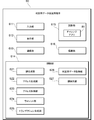
- Challenge DB4151, member DB4152, and content DB4153 are stored as a database (DB) in the storage unit 415.
- the control unit 414 includes a CPU and a memory.
- the control unit 414 reads the program stored in the storage unit 415 into the RAM and executes it by the CPU to generate the key generation unit 421, the address generation unit 422, the address acquisition unit 423, the wallet unit 424, and the transaction generation. It functions as a unit 425, a challenge setting unit 426, a contract information generation unit 427, a token issuance information generation unit 428, a site providing unit 431, a member registration unit 432, and a content receiving unit 433.
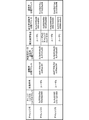
- the challenge DB 4151 stores information about the challenge challenged by the user of the challenge support system 1 for each challenge.
- the information about the challenge includes the contract address of the challenge contract 501 that defines the challenge, the contract conditions, and the like.
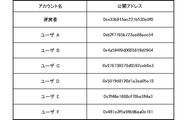
- the member DB 4152 contains user identification information such as name, gender, date of birth, account name, public address of each user, related challenge information related to the member, and the like. It is desirable to be registered.
- Each public address shown in FIG. 6 is a fictitious address for explanation, and the number of digits of the address is different from the actual address used in Ethereum. The same applies to other figures.
- the contract address of the Thanks Token Contract 502 may be registered.
- the contract address of the smart contract that defines the challenge to which the user is associated and the participation attribute to the campaign are stored.
- the participation attribute is set to "a funder” indicating that the person is the creator of the challenge, "a challenger” indicating that the person is the challenger of the challenge, and the like.
- the related challenge information can store information about any challenge associated with the user.
- the content DB 4153 stores information related to the content such as images and sounds, which is evidence of activities for achieving the challenge of the challenge support system 1.
- the content DB 4153 stores the content and the hash value generated from the content.
- the hash value is information that uniquely identifies the content. By using the hash value, it is not necessary to record an image file or the like on the blockchain network 55. Therefore, the content itself is kept secret without being disclosed by the blockchain network 55. If the content can be uniquely identified from the data recorded in the blockchain network 55, data different from the hash value may be used.
- the key generation unit 421, the address generation unit 422, the address acquisition unit 423, the wallet unit 424, and the transaction generation unit 425 include the key generation unit 121, the address generation unit 122, the address acquisition unit 123, the wallet unit 124, and the transaction generation unit 125. It has a similar function.
- the private key generated by the key generation unit 421 is stored in the storage unit 415.
- the operator's public address generated by the address generation unit 422 is stored in the storage unit 415.
- the public address of the operator can be acquired by the fund provider terminal 10 by the address acquisition unit 123 of the fund provider terminal 10.
- the challenge setting unit 426 and the contract information generation unit 427 are the same as the challenge setting unit 126 and the contract information generation unit 127.
- the challenge setting unit 426 and the contract information generation unit 427 enable the operator to create a challenge.
- the operator terminal 40 may create the challenge by receiving the contract information generated externally and transmitting the contract generation transaction to the blockchain network 55.
- the token issuance information generation unit 428 like the token issuance information generation unit 227, enables the operator to issue tokens on the blockchain network 55.
- the operator terminal 40 may issue the token by receiving the token issuance information generated externally and transmitting it to the blockchain network 55.
- the site providing unit 431 provides a website for using the challenge support system 1 on the network N.
- funders, challengers, and refunders who can refund funds can register as members.
- the site providing unit 431 transmits a web page described in HTML (HyperText Markup Language) or the like to the terminal used by the user, and receives the input result or the like by the user from the terminal.
- HTML HyperText Markup Language
- the member registration unit 432 receives the user identification information from the user's terminal and registers it in the member DB 4152.
- the member registration unit 432 receives the member DB 4152 based on the received user identification information. Register the data in.
- the member registration unit 432 When the member registration unit 432 receives the public address together with the user identification information from the terminal that downloaded the challenge application 80, the member registration unit 432 stores the public address in the member DB 4152 specified by the user identification information.
- the content receiving unit 433 receives content such as image data and audio data from the challenger terminal 20 or the determination data transmitting terminal 60 described later, and stores the content in the content DB 4153.
- the content receiving unit 433 receives a hash value that uniquely identifies the content together with the content, and stores the received hash value and the content in the content DB 4153.
- the blockchain network 55 is provided with Challenge Contract 501, Thanks Token Contract 502, and Cheering Token Contract 503.
- the challenge contract 501 is a smart contract generated based on the contract information generated by the contract information generation unit 127 of the fund provider terminal 10 or the contract information generation unit 427 of the operator terminal 40.
- the Sunkus token contract 502 is a smart contract generated based on the token issuance information generated by the token issuance information generation unit 227 of the challenger terminal 20.
- the cheerleading token contract 503 is a smart contract generated based on the token issuance information generated by the token issuance information generation unit 428 of the operator terminal 40.
- a challenge contract 501, a thank-you token contract 502, and a cheering token contract 503 provided on the blockchain network 55 constitute a dapp (Decentralized application) having a function of increasing the possibility of a user achieving a certain challenge.
- the user uses dapp by paying a predetermined usage fee via client terminals such as the fund provider terminal 10 and the challenger terminal 20.
- the usage fee in Ethereum is GAS.
- the determination data transmission terminal 60 includes an input unit 611, a display unit 612, a communication unit 613, a control unit 614, a storage unit 615, and an imaging unit 616.
- the input unit 611, the display unit 612, the communication unit 613, and the image pickup unit 616 are the same as the input unit 111, the display unit 112, the communication unit 113, and the image pickup unit 116.
- the determination data transmission terminal 60 transmits the stored user identification information to the operator terminal 40.
- the challenge application 81 is stored in the storage unit 615.
- Control unit 614 Includes CPU and memory.
- the challenge application 81 (program) stored in the storage unit 615 is read into the RAM and executed by the CPU, so that the key generation unit 621, the address generation unit 622, the address acquisition unit 623, and the wallet are executed. It functions as a unit 624, a transaction generation unit 625, a determination data acquisition unit 626, and a key concealment unit 627.
- the key generation unit 621, the address generation unit 622, the address acquisition unit 623, and the transaction generation unit 625 have the same functions as the key generation unit 121, the address generation unit 122, the address acquisition unit 123, and the transaction generation unit 125.
- the determination data acquisition unit 626 has the same function as the determination data acquisition unit 226.
- the key concealment unit 627 has a function of preventing the user of the determination data transmission terminal 60 from transferring the private key generated by the key generation unit 621 to another terminal.
- a general wallet of virtual currency has a function of displaying information necessary for transferring or backing up a private key to a user. For example, the wallet displays the private key as an image or displays Mnemonic.
- the key concealment unit 627 restricts the transfer of the private key by limiting the function of displaying the information necessary for transferring the private key and backing up the private key to the user.
- Identification of whether or not the transaction is really sent by the sender in the blockchain network 55 is performed by each node of the blockchain network 55 verifying whether or not the transaction is signed by the sender's private key. Signing a transaction with the sender's private key indicates that the transaction was sent by the owner himself.
- the judgment data can be sent to Challenge Contract 501 using another terminal or software. If you use another terminal or software to send the judgment data signed with your own private key, in Challenge Contract 501, whether the judgment data is data from the terminal owned by the user, other terminals or software It is indistinguishable whether the data is from.
- the smart contract can confirm that the determination data signed by using the private key of the determination data transmission terminal 60 is sent from the determination data transmission terminal 60.
- step S101 the operator terminal 40 transmits a transaction for generating the cheering token contract 503 to the blockchain network 55.
- step S102 the transaction is approved by the blockchain network 55, and the cheering token contract 503 is generated in the blockchain network 55.
- step S103 the blockchain network 55 transmits the contract address CA3 of the cheering token contract 503 to the operator terminal 40.
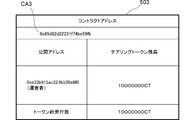
- FIG. 11 shows an initial example of the cheering token contract 503 generated in the blockchain network 55.
- the currency unit of the cheerleading token is "CT”.
- the public address of "0x69d " is the contract address CA3 of the cheering token contract 503.
- the public address of "0xe33 " is the public address of the operator corresponding to the private key stored in the operator terminal 40.
- the cheerleading token contract 503 distributes the cheerleading token to other users in exchange for ETHER.
- the cheerleading token contract 503 adds the public address of the cheerleading token holder and manages the balance of the cheerleading tokens with respect to the public address, as shown in FIG.
- step S104 the challenger terminal 20 transmits a transaction for generating the thanks token contract 502 to the blockchain network 55.
- step S105 the transaction is approved by the blockchain network 55, and the thanks token contract 502 is generated in the blockchain network 55.
- FIG. 13 shows an initial example of the Sunkus token contract 502 generated in the blockchain network 55.
- the currency unit of the cheerleading token is "TT”.
- the public address of "0x202 " is the contract address CA2 of the Sunkus token contract 502.
- the public address of "0xb2f " is the challenger's public address A2 corresponding to the private key stored in the challenger terminal 20.
- the user having the public address of "0xb2f " is referred to as user A.
- step S106 the blockchain network 55 transmits the contract address CA2 of the Sunkus token contract 502 to the challenger terminal 20.
- step S107 the challenger terminal 20 transmits the contract address CA2, the challenger user identification information, and the challenger's public address A2 to the operator terminal 40.
- step S108 the operator terminal 40 transmits the contract address CA2, the challenger user identification information, and the public address A2 to the fund provider terminal 10.
- the fund provider terminal 10 can store the contract address CA2 of the Sunkus token contract 502 and the challenger's public address A2 in association with each other.
- the fund provider terminal 10 stores the account name and the public address in association with each other.
- the public address of the Sunkus token contract is blank.
- step S109 the fund provider terminal 10 generates contract information based on the contract address CA2, the challenger user identification information, the public address A2, the contract conditions, and the like.
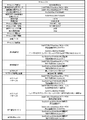
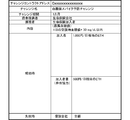
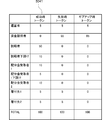
- FIG. 15 shows an example of the contract information generated at this time.
- the contract information shown in FIG. 15 is contract information when the user A creates a challenge A, which is a challenge of walking a certain number of steps or more in a day by himself / herself.
- the contents of the contract information are as follows.
- the challenger can challenge during the period from July 1, 2019 to July 31, 2019.
- the target number of steps is 8000 steps per day.
- the challenger chooses any 20 days from the period.
- the challenge is accomplished by the challenger walking 8000 steps per day for 10 or more days, which may be continuous or intermittent.
- the deposit amount is 1 ETH.
- Step count data is used to determine the success or failure of the challenge.
- the step count data is stored in the smart contract.
- the contract information is provided with an item of "judgment data transmission terminal public address".
- the public address corresponding to this item corresponds to the public address of the determination data transmission terminal 60.
- the public address of the determination data transmission terminal 60 may be included in the user identification information of the challenger, or may be included in the user identification information of the fund provider. When the determination data transmission terminal 60 is not used, no special setting is made.
- the challenge information includes items for "challenge start date" and "challenge end deadline".
- the challenge start date is the day when the challenger starts the challenge.
- the challenge start date can be, for example, the date when the first transmission of the determination data is performed.
- the challenge end deadline is the deadline for completing the challenge. In FIG. 15, the challenge must be completed 20 days after the challenge start date. If July 5, 2019 is the challenge start date, the challenge end deadline will be July 24, 2019.
- the contract information has an item of "challenge achievement". This item is provided for the challenge contract 501 to calculate and store the achievement level of the challenge from the step count data and the target step count in the challenge process.
- the degree of achievement can be calculated as, for example, the ratio of the current number of steps to the target number of steps to be achieved in the challenge.
- the deposit will be distributed to the allocation destination determined for each failure based on the allocation setting.
- the allocation destination and allocation amount can be set freely.
- the allocation amount may be set as a percentage of the deposit amount.
- the amount of ETHE to be distributed may be directly set. The operator's fee is deducted, for example 2% of the deposit.
- a public address can be obtained from an image read by the imaging unit 116 of the fund provider terminal 10 and used as an allocation destination. As shown in FIG. 14, it is also possible to use a public address stored in the storage unit 115 of the funder terminal 10.
- the allocation status of funds includes refund, donation and confiscation, respectively, and from the fund provider terminal 10, the allocation setting specified so that the total of the amounts specified for refund, donation and confiscation matches the fund amount is set.
- Sent For the refund, any refund destination holding the public address of Ethereum and any amount can be specified.
- For donations you can specify any donation destination that holds the public address of Ethereum and any amount.
- An operator fee may be paid to the operator when the challenge succeeds, fails, or is interrupted.
- the public address stored in the storage unit 115 can be synchronized with the user identification information stored in the operator terminal 40, and when the address of another user changes, the new address is automatically acquired. Can be done.
- Challenge interruptions include interruptions due to give-up and interruptions due to self-demolition.
- a give-up interruption is an interruption caused by a funder or challenger giving up on completing a challenge and sending information indicating the interruption of the challenge to a smart contract as a transaction.
- Suspension due to self-demolition causes troubles such as lack of funds from Challenge Contract 501 for some reason, and when the operator self-disassembles Challenge Contract 501 at the request of the user, police, law, court or government There may be an order, request or request from an institution, or the operator may have determined that it is necessary on its own. In the case of interruption due to self-demolition, the operator sends a transaction to challenge contract 501 to self-disassemble challenge contract 501.
- the deposit In the case of giving up, the deposit will be distributed in consideration of give-up pattern A, in which the deposit is distributed to a predetermined allocation destination after deducting the operator's fee, and the degree of achievement of the challenge until giving up.
- give-up pattern B In the case of giving up, the deposit will be distributed in consideration of give-up pattern A, in which the deposit is distributed to a predetermined allocation destination after deducting the operator's fee, and the degree of achievement of the challenge until giving up.
- give-up pattern B in which the deposit is distributed to the same distribution destination as when the challenge is successful, and the balance after deducting the operator's fee is returned to the fund provider.
- the deposit can be distributed to a self-disassembly mode A in which a part of the funds is returned to the fund provider, a self-disassembly mode B in which the entire amount is remitted to the operator, and the like.
- step S110 the funder terminal 10 transmits a contract generation transaction for generating a challenge contract 501 to the blockchain network 55 based on the contract information.
- step S111 the contract generation transaction is approved by the blockchain network 55, and the challenge contract 501 is generated in the blockchain network 55.
- the generated challenge contract 501 includes the contract address CA1 of the challenge contract 501 represented by "0x202 " in FIG. 16 and the data of the challenge result, in addition to the contract information described in FIG.
- the challenge result is information indicating whether the deposit is distributed according to the result of success, failure, give-up pattern A, give-up pattern B, self-demolition mode A, or self-demolition mode B.
- step S112-1 the blockchain network 55 transmits the contract address CA1 of the challenge contract 501 to the funder terminal 10.
- step S112-2 the fund provider terminal 10 remits the deposit amount to the challenge contract 501 with the contract address CA1 as the destination.
- the challenge contract 501 holds the deposit amount as a balance associated with the contract address CA1.
- the fund provider terminal 10 transmits the contract information and the contract address CA1 to the operator terminal 40.
- the operator terminal 40 records information about each challenge in the challenge DB 4151.
- the information stored in the "Distribution recipient" item may include a smart contract such as Challenge Contract 501.
- the information stored in the item of "Distribution recipient public address" may include the contract address of the smart contract.
- the operator terminal 40 records the user identification information of the user and the challenge related to the user in the member DB 4152 for each user.
- step S114 the operator terminal 40 transmits the contract information and the challenge information including the contract address CA1 to the challenger terminal 20. This allows the challenger to obtain information about the content of the challenge and to which contract address the determination data should be sent.
- step S121 shown in FIG. 10 the challenger transmits determination data from the challenger terminal 20 to the challenge contract during the challenge period.
- the challenger terminal 20 does not necessarily have to be used for transmitting the determination data.
- the determination data may be transmitted to the challenge contract using the determination data transmission terminal 60.
- FIG. 20 shows the determination data transmitted from the challenger terminal 20 to the challenge contract, and the data structure stored in the challenge contract 501 by the transmitted transaction.
- the generation date and time of the block of the blockchain network 55 in which the transaction is stored is added to the data of FIG.
- the number of days achieved is recorded by Challenge Contract 501.
- step S123 the challenger sends a transaction for allocating the thanks token to the thanks token contract to the supporters who support the challenge.
- the challenger acquires and stores the address of the user of the challenge support system 1 in which the challenge application 81 is installed on the supporter terminal 30 from the operator terminal 40.
- the challenger can allocate thanks tokens to each address.
- step S124 the balance of the Thanks Token Contract 502 is updated when the transaction is approved by the blockchain network 55. By updating the balance of the Thanks Token Contract 502, the Thanks Tokens will be distributed to the supporters.
- a supporter to whom a thank-you token has been distributed by a challenger can redistribute the thank-you token to other supporters.
- the original supporter who redistributes needs to know the public address of the redistribute destination.
- Sunkus tokens can be distributed from time to time.
- FIG. 22 An example of the balance of the Sunkus Token Contract 502 after the distribution and reallocation of Sunkus tokens is shown.
- the balance of user A who is a challenger is 0.
- the challenger terminal 20 has acquired the public addresses of each of the user D, the user E, and the user F, and distributed the thanks token to each of them.
- User A allocated 20 TT to user D, 50 TT to user E, and 30 TT to user F.
- Sunkus token balance (1) the result of redistributing 10 TT from the user F to the user G having the supporter terminal 30A which the user A does not initially grasp is the Sunkus token balance (2) in FIG.
- step S125 the challenger terminal 20 transmits the end determination data to the challenge contract 501.
- the end determination data may be transmitted from the determination data transmission terminal 60 as in step S126. Further, it may be transmitted from the operator terminal 40 as in step S127.
- the end judgment data is used by the challenge contract 501 to judge the success or failure of the challenge. For example, suppose that there is a challenge of walking 8000 steps or more per day for 10 days out of 20 days from July 5th to July 24th according to the contract information of FIG. At this time, it is assumed that he has walked more than 8,000 steps for 9 days from July 5th to July 13th. In this case, the success of the challenge is determined to be the end when 10,000 steps are sent as the step count data on July 14.
- the data of 10,000 steps on July 14 becomes the "end judgment step count data".
- the success of the challenge is confirmed when the transaction for transmitting the end determination step count data is approved by the blockchain network 55.
- Challenge Contract 501 cannot judge the success or failure of the challenge.
- the smart contract may take in the date information by the block time recorded by the miner who mined the block in the blockchain network 55.
- the date information may be fetched by using the function of other blockchain networks.
- the smart contract in the first embodiment requires information about some date from the outside. Therefore, in Challenge Contract 501, if the step count data is not sent even after July 24, it cannot be set to be regarded as a challenge failure. Stakeholders such as funders and operators may send date information to smart contracts as transactions.
- the operator has not sent the step count data to the funder or challenger on July 25 or 26. May be notified by e-mail or notification on the application.
- the operator can know the state of the data in the challenge contract 501 by directly referring to the information from the application or the challenge contract 501.
- the challenger is originally required to send all the steps during the challenge period at an appropriate timing, but if he / she does not fulfill it, after a certain grace period after the end of the challenge period, the number of steps is not sent as described later. If the number of steps is zero, it will be treated by Challenge Contract 501.
- Challenge Contract 501 is unsent from the challenger on July 24th. Since the number of steps of is treated as zero, the challenge contract 501 determines that the challenge has failed. In this case, the information regarding the date from the fund provider is the "end determination date data".
- the challenge contract 501 automatically starts to move as determined in advance.
- Challenge achievement judgment is possible by sending the end judgment data to Challenge Contract 501.
- the challenge contract 501 of the blockchain network 55 performs the challenge achievement determination process.
- step S129 the challenge contract 501 performs the ETHER allocation process based on the determination result.
- an internal transaction in Ethereum is a transaction generated by a smart contract triggered by a transaction received from a challenger or the like.
- step S130 the Thanks Token Contract 502 to which ETHER is allocated from Challenge Contract 501 performs the distribution process of ETHER to the supporters based on the balance of Sunkus tokens.
- ETHER based on the Sunkus token balance will be described by taking the case based on the Sunkus token balance (2) in FIG. 22 as an example.
- Challenge Contract 501 holds 1 ETH of deposit.
- 0.8 ETH will be allocated to Sunkus Token Contract 502.
- 0.16 ETH is allocated to user D
- 0.4 ETH is allocated to user E
- 0.16 ETH is allocated to user F
- 0.08 ETH is allocated to user G.
- the Sunkus token contract 502 may be distributed in the same manner not only when ETHER but also when various tokens are sent to the Sunkus token contract 502.
- the challenge defined by Challenge Contract 501 may be another type of challenge that is different from the challenge related to the number of steps. Variations of the challenge will be described with reference to FIGS. 23 to 26.
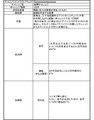
- FIG. 23 shows the contents of the smart contract regarding the safe driving challenge.
- the determination data is information on the speed of the car, whether or not the seatbelt is worn, sudden braking, and sudden start from the car or the smartphone owned by the driver.
- An IoT device having a wallet function may be used for acquiring and transmitting the determination data.
- Information may be transferred from the IoT device to a smartphone or the like, and a transaction signed with the private key of the wallet of the application built in the smartphone may be sent to the blockchain network.
- the shipping company may create a smart contract for the challenge of automatically sending ETHER and tokens to the truck driver if the criteria are met in one day's driving.
- FIG. 24 shows the contents of a smart contract regarding the blood glucose spike prevention challenge.
- Blood sugar spikes in which blood sugar levels rise sharply, have become a problem. For example, skipping breakfast and consuming large amounts of sugar for lunch causes blood sugar spikes. Blood sugar spikes can be prevented by taking measures such as eating vegetables and seaweed at the beginning of a meal and preventing long-term hunger. Blood glucose data from a device that can continuously measure blood glucose by attaching it to the arm is transferred to a smartphone, etc., and a transaction signed with the private key of the wallet of the application built into the smartphone is sent to the blockchain network. You may.
- the insurance company may create a smart contract as shown in FIG. 24 so that the insured can learn a lifestyle that does not cause the blood sugar level to rise sharply. Subscribers do not take it seriously without a short-term financial return. First, give a lecture on how to prevent blood sugar spikes and start the challenge.
- Figure 25 shows the contents of the smart contract for the child study challenge.
- the IoT device sends the information that he / she has studied to the smart contract for a certain period of time, and ETHE or online as a reward to the IoT device wallet or the child's wallet. Tokens that can be used in the game will be sent.
- ETHE is sent to the IoT device
- the color of the IoT device changes according to the accumulated ETHE, and the child is motivated to study by recognizing that if he / she sees the color change and studies a lot, his / her pocket money will increase. Increase.
- the amount of reward should be adjusted according to the financial level of the parent. By sending some EQER to your brothers when you succeed, you will not interfere with your studies.
- FIG. 26 shows the contents of the smart contract regarding the smoking cessation challenge. Assume self-financed treatment, not insurance-covered treatment. For patients who wish to quit smoking, doctors prescribe a smoking cessation challenge of 600,000 yen in the hospital. The patient pays 600,000 yen to the hospital. The hospital will make a smoking cessation challenge smart contract using 550,000 yen worth of Ether, which is obtained by subtracting 50,000 yen from profits and expenses. Whether or not the patient has achieved smoking cessation may be determined by the physician using a device that measures CO in exhaled breath.
- the CO in the exhaled breath may be measured by the IoT device for CO measurement, and the data may be sent from the wallet built in the IoT device to the smart contract, and the smart contract may judge the success or failure of the smoking cessation challenge. You may prescribe a higher quit smoking challenge.
- virtual currency is required for generating various smart contracts such as challenge contract 501, transmitting various transactions, and depositing deposits in the blockchain network 55.
- Funders, etc. purchase virtual currency from virtual currency exchanges, etc. Another example of how to purchase virtual currency will be described.
- Funders, challengers, supporters, etc. may purchase virtual currency and tokens at convenience stores, etc.
- the purchaser purchases a gift certificate with information on virtual currency and tokens. If you scrape a part of the gift certificate, you will get a two-dimensional barcode.
- the two-dimensional barcode is the private key of the gift certificate wallet.
- the issuer of the gift certificate sends the same amount of virtual currency and tokens as those written on the gift certificate to the public address of this gift certificate wallet in advance.
- the issuer of the gift certificate shall not store any private key information of the gift certificate, but shall store and manage only the public address of the gift certificate.
- the purchaser reads the 2D barcode with his own app and imports the gift certificate wallet into the app. Since the user will acquire the private key information of the gift certificate wallet, the gift certificate wallet can be used freely.
- a two-dimensional barcode which is the same private key as above, is issued. You may import the gift certificate wallet into the app by using the app on the spot and scanning the 2D barcode.
- the gift certificate issuer only needs to create a private key when requested by the ATM and send the money to the corresponding public address.
- the money In the case of a gift certificate such as paper, the money must be sent to the gift certificate wallet in advance.
- the two-dimensional barcode contains private key information and has a value substantially similar to that of a cash voucher, so care must be taken when handling it.
- the private key of the gift certificate wallet When the private key of the gift certificate wallet is read, there will be two wallets in the purchaser's app, the wallet that was originally owned and the gift certificate wallet. In other words, you have two private keys to manage your cryptocurrencies. The purchaser sends the entire balance of the gift voucher wallet to the wallet that originally owned it and deletes the gift voucher wallet.
- the purchaser goes to the cashier at the convenience store and tells the clerk that he wants virtual currency and tokens. After paying the cash, the clerk reads the wallet's 2D barcode that was originally in the buyer's app. This is the buyer's public address. Convenience stores may send their virtual currency and tokens directly to their public address.
- the virtual currency and the purchaser's public address are sent as a transaction from the convenience store terminal to the smart contract created by the gift certificate issuer, the virtual currency and tokens will be sent directly from the smart contract to the purchaser's wallet. It may be.
- the screen 801 of FIG. 27 is provided with a challenge column 8011, a funder column 8012, a challenger column 8013, and a deposit amount column 8014.
- the challenge name is entered in the challenge field 8011.
- the funder's account name is displayed in the funder column 8012 and the challenger column 8013.
- the buttons BT1 or BT2 of the funder column 8012 and the challenger column 8013 are selected, the screen 802 shown in FIG. 28 is displayed.
- the account name stored in the terminal and the public address are displayed in association with each other.
- the user can select funders and challengers by selecting each row.
- the user can add an account name and address pair by selecting the button BT4 in FIG.
- the deposit amount column 8014 of FIG. 27 the deposit amount deposited by the fund provider is input.
- the button BT3 on the screen 801 the screen 803 of FIG. 29 is displayed.
- the screen 803 is provided with a deadline column 8031 and a condition column 8032.
- the deadline column 8031 the startable period and the endable period of the challenge are entered.
- the condition field 8032 the type of challenge, the number of days for executing the challenge, the number of steps, and the number of days to be achieved are input.
- the screen 804 is provided with a success allocation column 8041, a failure allocation column 8042, and a GAS fee column 8043.
- the account name of the user who receives the funds at the time of success and the amount to be received are entered.
- 2% of the deposit amount will be allocated as an operator fee.
- the operator fee may be set freely.
- an amount for subsidizing the GAS fee required when the challenger sends the step count information to the smart contract is entered.
- the screen 805 of FIG. 31 is displayed.
- the screen 805 has a give-up selection field 8051 and a give-up pattern selection field 8052.
- the user can select whether to enable give-up by selecting the item in the give-up selection field 8051.
- the user can select the method of allocating the deposit at the time of giving up by selecting the item of the give-up pattern selection field 8052.
- the screen 806 of FIG. 32 is displayed.
- the conditions set up to this point are displayed as a list on the screen 806.
- buttons BT8 on the screen 805 it is possible to generate the screen 806 for reading and folding the information of the challenge to be created by another terminal as shown in FIG. 33. By reading the generated image by another terminal, the other terminal can acquire information about the challenge.
- the program described in the first embodiment can be stored in a storage medium.
- the storage medium in which the program is stored may be a non-transitory storage medium (Non-transitory computer readable medium).
- the non-temporary storage medium is not particularly limited, but may be, for example, a storage medium such as a USB memory or a CD-ROM.
- the fund provider terminal 10 generates the challenge contract 501, but there may be a plurality of smart contracts created for the challenge support. It is possible to build a smart contract so that multiple smart contracts perform linked processing, and create a challenge with more complicated conditions set.
- the challenge support system 1A further includes a sponsor company terminal 70 as shown in FIG. 34.
- the sponsoring company terminal has an account and a public address in the blockchain network 55A.
- the supporting company is, for example, a beverage maker.
- the challenger purchases the beverage of the beverage maker of the sponsoring company.
- An image showing the address of the website is attached to the beverage.
- By reading the image attached to the beverage it is possible to access the website of the operator or the sponsoring company.
- On the website enter the name, age, place of residence, own public address, challenge contract contract address, Sunkus token contract contract address, etc. as information about the challenger.
- the sponsoring company sends ETHE, product exchange tokens, cheering tokens, etc. issued by the sponsoring company on the blockchain network 55A to the challenge contract.
- Product exchange tokens and the like sent to the Challenge Contract may be activated in stages according to the degree of achievement of the Challenge.
- Product exchange tokens can be exchanged for beverages from supporting companies.
- the value of product exchange tokens the number of tokens that can be exchanged for product exchange tokens, the expiration date, and the available area can be freely designed.
- the exchange does not have to be one-to-one, and one product exchange token may be exchanged for five beverages.
- Product exchange tokens are managed in the user's wallet.
- the user goes to the convenience store and obtains it by reading the token receiving public address held by the convenience store next to the cash register with the application.
- the user sends a product exchange token to that address.
- the convenience store confirms whether the product exchange token received at the token receiving public address held by the convenience store is valid.
- the convenience store gives the beverage to the user in exchange for the received product exchange token.
- the convenience store will settle the product exchange token with the operator or the sponsoring company at a later date.
- the convenience store In order not to bother the user, the convenience store generates a transaction in which the convenience store acquires the public address of the wallet of the user's product exchange token and sends the product exchange token from the user to the convenience store by its own terminal.
- the confirmation screen of the generated transaction is displayed in the user's application, the user approves the content, and the transaction is sent, the user's product exchange token is passed to the convenience store.
- the challenge support system 1B according to the third embodiment is different in that the blockchain network 55B is provided with the Sunkus token contract 502A, the Sunkus token contract 502B, and the Sunkus token contract 502C, as shown in FIG. 35.
- the Sunkus Token Contract 502A and Sunkus Token Contract 502C are smart contracts that manage the balance of tokens distributed by the challenger to the support of the supporter for each challenge, similar to the Sunkus Token Contract 502 in the first embodiment.
- Sunkus Token Contract 502C is related to a challenge different from the challenge related to Sunkus Token Contract 502A.
- Thanks Token Contract 502B represents the contribution of continuous support to the challenger.
- the balance of Sunkus Token Contract 502B is updated based on Sunkus Token Contract 502A.
- the Thanks Token Contract 502B manages a different token balance than the Thanks Token Contract 502A.
- the currency unit of the token is TTA for Sunkus Token Contract 502A, TTB for Sunkus Token Contract 502B, and TTC for Sunkus Token Contract 502C.
- the initial balance of TTB is 0 from user A to user D. It is assumed that the distribution of tokens by the Thanks Token Contract 502A for a challenge is shown in FIG. 37.
- the amount to be added to the balance of the Thanks Token Contract 502B is determined based on the token balance of the Thanks Token Contract 502A.
- the addition amount in the Sunkus Token Contract 502B is the amount obtained by multiplying the ratio to the issued token by the difficulty coefficient for each user of the Sunkus Token Contract 502A.
- the difficulty level of the challenge related to the Thanks Token Contract 502A has a difficulty coefficient of 0.8.
- the addition amount in the Sunkus Token Contract 502B is the amount obtained by multiplying the ratio to the issued token by the difficulty coefficient for each user of the Sunkus Token Contract 502C.
- the difficulty coefficient of the challenge related to the Thanks Token Contract 502C is 0.2.
- Sunkus Token Contract 502B The balance of Sunkus Token Contract 502B is updated as shown in FIG. 39 by the addition amount determined based on the token distribution by Sunkus Token Contract 502A and Sunkus Token Contract 502C.
- the fourth embodiment will be described.
- the fourth embodiment differs from the first embodiment in that the blockchain network 55C has the Challenge and Thanks Token Contract 504, as shown in FIG. 40.
- the Challenge and Thanks Token Contract 504 serves as both the Challenge Contract 501 and the Thanks Token Contract 502 in the first embodiment.
- the Challenge and Thanks Token Contract 504 distributes three types of tokens corresponding to each challenge result to each related party at the start of the challenge, as shown in the token balance 5041 shown in FIG. 41.
- the token corresponding to the result will be valid after the challenge result is determined to be either success, failure or give-up.
- the challenger can send his token to the subcontractor in anticipation of his success.
- Distribution Recipients on Successful Challenges can similarly distribute tokens to subcontractors.
- the tokens at the time of success will be valid, so the subcontractors to whom the tokens have been distributed will support the challenger more positively.
- the Challenge and Thanks Token Contract 504 may manage one type of token, as in the token balance 5041A shown in FIG. 43.
- tokens When managing one type of token, tokens will be distributed to each party as an initial allocation at the start of the challenge.
- the person who receives the token can subcontract it for cooperation. For example, suppose a challenger gives a subcontractor 0.2 tokens. If the challenge is successful, the subcontractor will have 12 tokens, which is 60 times 0.2 tokens, because the challenger's tokens will be multiplied by 60 according to the success allocation.
- tokens are given to the challenger, the distribution recipient, etc. during the challenge, and the tokens are valued according to the challenge result. This allows the Thanks token to be challenged while adding value to the token itself, rather than acting as a medium for distribution.
- the fifth embodiment will be described.
- the fifth embodiment differs from the first embodiment in that the blockchain network 55D has the expected contract 505, as shown in FIG. 44.
- Prediction Contract 505 makes predictions about the challenge process, successes and failures by the challenger and pays a stake with cheerleading tokens.
- the forecast contract 505 automatically pays a certain fee to the creator of the forecast contract as soon as it receives the cheerleading token from the supporter or the like.
- a cheering token will also be sent to Challenge Contract 501.
- the cheering tokens accumulated and held in Challenge Contract 501 are distributed to the parties concerned under the same conditions as the distribution of successful challenges when the challenge is successful, for example.
- This cheerleading token sent to Challenge Contract 501 provides an incentive to take risks and take on challenges such as walking by depositing your own money or someone else's money.
Landscapes
- Business, Economics & Management (AREA)
- Engineering & Computer Science (AREA)
- Strategic Management (AREA)
- Accounting & Taxation (AREA)
- Physics & Mathematics (AREA)
- General Business, Economics & Management (AREA)
- General Physics & Mathematics (AREA)
- Theoretical Computer Science (AREA)
- Health & Medical Sciences (AREA)
- Development Economics (AREA)
- Finance (AREA)
- General Health & Medical Sciences (AREA)
- Economics (AREA)
- Marketing (AREA)
- Primary Health Care (AREA)
- Tourism & Hospitality (AREA)
- Computing Systems (AREA)
- Game Theory and Decision Science (AREA)
- Human Resources & Organizations (AREA)
- Entrepreneurship & Innovation (AREA)
- Life Sciences & Earth Sciences (AREA)
- Biophysics (AREA)
- Physical Education & Sports Medicine (AREA)
- Epidemiology (AREA)
- Medical Informatics (AREA)
- Public Health (AREA)
- Management, Administration, Business Operations System, And Electronic Commerce (AREA)
- Financial Or Insurance-Related Operations Such As Payment And Settlement (AREA)
Priority Applications (5)
| Application Number | Priority Date | Filing Date | Title |
|---|---|---|---|
| US17/633,946 US20220294650A1 (en) | 2019-08-09 | 2020-01-21 | Program, challenge assistance system, challenge assistance method, and terminal |
| EP20853149.1A EP4012637A4 (en) | 2019-08-09 | 2020-01-21 | PROGRAM, TASK ASSISTANCE SYSTEM, TASK ASSISTANCE METHOD AND TERMINAL |
| KR1020227005020A KR102482357B1 (ko) | 2019-08-09 | 2020-01-21 | 프로그램, 챌린지 지원 시스템, 챌린지 지원 방법, 단말 |
| CN202080055709.5A CN114341906A (zh) | 2019-08-09 | 2020-01-21 | 程序、挑战支持系统、挑战支持方法及终端 |
| JP2020517617A JP6762647B1 (ja) | 2019-08-09 | 2020-01-21 | プログラム、チャレンジ支援システム、チャレンジ支援方法、端末 |
Applications Claiming Priority (2)
| Application Number | Priority Date | Filing Date | Title |
|---|---|---|---|
| JP2019147695 | 2019-08-09 | ||
| JP2019-147695 | 2019-08-09 |
Publications (1)
| Publication Number | Publication Date |
|---|---|
| WO2021029090A1 true WO2021029090A1 (ja) | 2021-02-18 |
Family
ID=74569565
Family Applications (1)
| Application Number | Title | Priority Date | Filing Date |
|---|---|---|---|
| PCT/JP2020/001999 Ceased WO2021029090A1 (ja) | 2019-08-09 | 2020-01-21 | プログラム、チャレンジ支援システム、チャレンジ支援方法、端末 |
Country Status (2)
| Country | Link |
|---|---|
| JP (2) | JP7464334B2 (https=) |
| WO (1) | WO2021029090A1 (https=) |
Cited By (1)
| Publication number | Priority date | Publication date | Assignee | Title |
|---|---|---|---|---|
| CN115733620A (zh) * | 2022-11-14 | 2023-03-03 | 北京航空航天大学 | 一种基于任意提交人的侧链状态提交方法 |
Families Citing this family (4)
| Publication number | Priority date | Publication date | Assignee | Title |
|---|---|---|---|---|
| JPWO2022202973A1 (https=) * | 2021-03-26 | 2022-09-29 | ||
| JP7199680B1 (ja) | 2022-06-02 | 2023-01-06 | 株式会社ノックバックワークス | 情報処理装置、情報処理方法及び情報処理プログラム |
| JP2024095097A (ja) * | 2022-12-28 | 2024-07-10 | トヨタ自動車株式会社 | データ管理システム、データ管理方法およびサーバ |
| WO2025047595A1 (ja) * | 2023-09-01 | 2025-03-06 | ソニーグループ株式会社 | プログラム、情報処理方法 |
Citations (4)
| Publication number | Priority date | Publication date | Assignee | Title |
|---|---|---|---|---|
| JPS586428B2 (ja) * | 1977-09-19 | 1983-02-04 | シャープ株式会社 | 自動選局装置 |
| JP2011034544A (ja) * | 2009-07-31 | 2011-02-17 | Shinnosuke Hirose | 目標や日課の実行有無によって報酬提供や罰金を課す目標達成支援システム |
| JP2019091402A (ja) * | 2017-11-16 | 2019-06-13 | パナソニック インテレクチュアル プロパティ コーポレーション オブ アメリカPanasonic Intellectual Property Corporation of America | 取引管理システム、取引管理方法およびプログラム |
| JP2019133630A (ja) * | 2018-01-29 | 2019-08-08 | パナソニック インテレクチュアル プロパティ コーポレーション オブ アメリカPanasonic Intellectual Property Corporation of America | 制御方法、コントローラ、データ構造及び電力取引システム |
Family Cites Families (1)
| Publication number | Priority date | Publication date | Assignee | Title |
|---|---|---|---|---|
| JP5806428B1 (ja) | 2014-06-02 | 2015-11-10 | 楠 信子 | 目標選択及びご褒美提供の支援システム |
-
2020
- 2020-01-21 WO PCT/JP2020/001999 patent/WO2021029090A1/ja not_active Ceased
- 2020-09-07 JP JP2020150023A patent/JP7464334B2/ja active Active
-
2024
- 2024-03-26 JP JP2024050320A patent/JP2024081720A/ja active Pending
Patent Citations (4)
| Publication number | Priority date | Publication date | Assignee | Title |
|---|---|---|---|---|
| JPS586428B2 (ja) * | 1977-09-19 | 1983-02-04 | シャープ株式会社 | 自動選局装置 |
| JP2011034544A (ja) * | 2009-07-31 | 2011-02-17 | Shinnosuke Hirose | 目標や日課の実行有無によって報酬提供や罰金を課す目標達成支援システム |
| JP2019091402A (ja) * | 2017-11-16 | 2019-06-13 | パナソニック インテレクチュアル プロパティ コーポレーション オブ アメリカPanasonic Intellectual Property Corporation of America | 取引管理システム、取引管理方法およびプログラム |
| JP2019133630A (ja) * | 2018-01-29 | 2019-08-08 | パナソニック インテレクチュアル プロパティ コーポレーション オブ アメリカPanasonic Intellectual Property Corporation of America | 制御方法、コントローラ、データ構造及び電力取引システム |
Cited By (2)
| Publication number | Priority date | Publication date | Assignee | Title |
|---|---|---|---|---|
| CN115733620A (zh) * | 2022-11-14 | 2023-03-03 | 北京航空航天大学 | 一种基于任意提交人的侧链状态提交方法 |
| CN115733620B (zh) * | 2022-11-14 | 2024-04-19 | 北京航空航天大学 | 一种基于任意提交人的侧链状态提交方法 |
Also Published As
| Publication number | Publication date |
|---|---|
| JP7464334B2 (ja) | 2024-04-09 |
| JP2021028827A (ja) | 2021-02-25 |
| JP2024081720A (ja) | 2024-06-18 |
Similar Documents
| Publication | Publication Date | Title |
|---|---|---|
| JP7464334B2 (ja) | プログラム、チャレンジ支援システム、チャレンジ支援方法、端末 | |
| JP6762647B1 (ja) | プログラム、チャレンジ支援システム、チャレンジ支援方法、端末 | |
| JP6830719B1 (ja) | 高信頼データ取引システム、および高信頼データ取引方法 | |
| US11164666B2 (en) | System and method for rewarding healthy behaviors and exchanging health related data | |
| US20220044231A1 (en) | Attempt assistance system | |
| JP2020095489A (ja) | 地域通貨管理システム、地域通貨管理方法、および地域通貨流通基盤 | |
| KR101558131B1 (ko) | 기부 매개 방법 | |
| US20160240045A1 (en) | Application for baby delivery pool | |
| KR20230080879A (ko) | 블록체인 기반 신체 활동 보상 시스템 및 방법 | |
| JP7531467B2 (ja) | 情報処理装置、情報処理方法及びプログラム | |
| JP2023174321A (ja) | 情報処理装置、情報処理方法及び情報処理プログラム | |
| KR102321495B1 (ko) | 소셜 네트워킹 서비스에서 사용자들의 활동 보상과 광고 거래를 실행하는 시스템 및 방법 | |
| JP2025107296A (ja) | チャレンジ支援システム | |
| JP7564388B1 (ja) | 情報処理装置、情報処理方法、及び情報処理プログラム | |
| JP6385025B1 (ja) | 携帯端末装置、およびサービス提供システム | |
| JP7224064B2 (ja) | ソーシャルネットワーキングサービスにおいてユーザーの活動補償と広告取引を実行するシステムおよび方法 | |
| JP7150954B1 (ja) | 付与装置、付与方法及び付与プログラム | |
| JP7706788B2 (ja) | 従業員動機付システム | |
| JP7372431B1 (ja) | 情報処理装置、情報処理システム、情報処理方法および情報処理プログラム | |
| WO2024142157A1 (ja) | 情報処理システム、方法及びコンピュータプログラム | |
| JP2026074586A (ja) | 従業員動機付システム |
Legal Events
| Date | Code | Title | Description |
|---|---|---|---|
| ENP | Entry into the national phase |
Ref document number: 2020517617 Country of ref document: JP Kind code of ref document: A |
|
| 121 | Ep: the epo has been informed by wipo that ep was designated in this application |
Ref document number: 20853149 Country of ref document: EP Kind code of ref document: A1 |
|
| NENP | Non-entry into the national phase |
Ref country code: DE |
|
| ENP | Entry into the national phase |
Ref document number: 20227005020 Country of ref document: KR Kind code of ref document: A |
|
| ENP | Entry into the national phase |
Ref document number: 2020853149 Country of ref document: EP Effective date: 20220309 |